
KZYX News
1,162 episodes — Page 14 of 24
Ep 512Measure B to fund substance use disorder treatment
October 12, 2022 — The Measure B Oversight Committee is seeking a contractor to provide substance use disorder treatment. Measure B is a sales tax initiative to fund mental health facilities that passed in 2017. The tax was a half-cent for the first five years, and has now decreased to an eighth of a cent. An eleven-member oversight committee is tasked with making recommendations to the Board of Supervisors on how to spend the money. Last month’s meeting of the Measure B Oversight Committee included a discussion about a $3.1 million proposal from the Ford Street Project to offer substance use disorder treatment, or SUDT. Last week, Behavioral Health Director Dr. Jeanine Miller, who sits on the committee, spoke with the Board of Supervisors about what they’d like to see in a request for proposals, or RFP, from contractors competing to offer the service. Supervisor Glenn McGourty was shocked to learn that 75 people in Mendocino County died last year from drug overdose. Miller clarified that the number ruled out people who intentionally took their own lives. “Really, really terrible,” McGourty remarked, adding that he thinks the number points to the need for treatment. Supervisor Dan Gjerde wanted to make sure Measure B funds wouldn’t be used to pay for a program that could be funded by the state. “My concern with the Ford Street Project isn’t what they’re proposing. My concern was that they were seeking local tax dollars for what I suspect the state would be happy to fund,” he explained. “For example, the state’s making significant money available for homeless housing, or for people who are in danger of becoming homeless, and I would think that people who have serious substance abuse issues are certainly in danger of becoming homeless. So I would just be concerned if we were to use local tax dollars, which are very precious and minimal, even if it’s Measure B funds, to pay for something that we think the state is likely to fund.” Miller told him the details haven’t all been hammered out yet, and she was monitoring the availability of state grants. Supervisor Ted Williams signaled that he is likely to vote in favor of a proposal requesting evidence-based treatment plans that meet with the approval of local doctors. Miller suggested inviting some of them to help write the proposal. “I appreciate the RFP. I think that’s the right process, given the dollar amount. We have finite funds. I would prefer (to) see evidence-based, medically supervised substance abuse treatment. Is that a possibility?” Williams asked Miller. Miller told him “we can put out a request for whatever type of services we want…in that RFP we can put in a request for specific services, or all of the services, and then get the proposals we get, and go off of those by opening up types of SUDT (substance abuse disorder treatment) services.” WIlliams told her that “I don’t want to guide that process, as the county supervisor. You’re our expert. I want to trust you. It would be helpful if we could involve local physicians. When I have local physicians calling me and telling me they don’t support what we’re doing, that it may have benefits, but is it the best use of funds, that’s concerning. It’s a red flag. Is there a way early in the process to make sure that we’re including local physicians so we at least capture their ideas about what they need?” Miller said discussions at the Measure B Oversight Committee meeting had included a conversation about the composition of a stakeholder group as part of writing the RFP, “so we can definitely include a couple of medical community members in that RFP to get their feedback,” she said. Miller also assured Williams that the RFP would come back to the full Board of Supervisors for its approval before it is posted. Measure B funds have also been used to purchase a behavioral health training center in Redwood Valley. Miller told the Board that although the training center is coming in $285,000 under budget, more IT equipment is needed, and there’s a marketing campaign underway to rent the hall. It’s mostly unused, even as the memory of pandemic restrictions fades. There is also a Measure B funded Crisis Residential Treatment facility in Ukiah, where people in moderate psychiatric crisis can spend up to thirty days in treatment. It’s currently $264,000 under budget. The facility opened in April, so it is still too early to tell if initial financial projections of a neutral impact on the budget were accurate. A mobile crisis response team of three mental healthcare staff working with the sheriff’s department and the Ukiah police department has responded to 212 calls so far. An architect is designing the tear-down of an old nursing home on Whitmore Lane in Ukiah to build a Measure-B funded psychiatric health facility, or puff, on the site. The original estimate was $19.5 million, but that estimate has grown by about a million. The current estimated completion ...
Ep 511Cannabis ad hoc recommendations too late for some
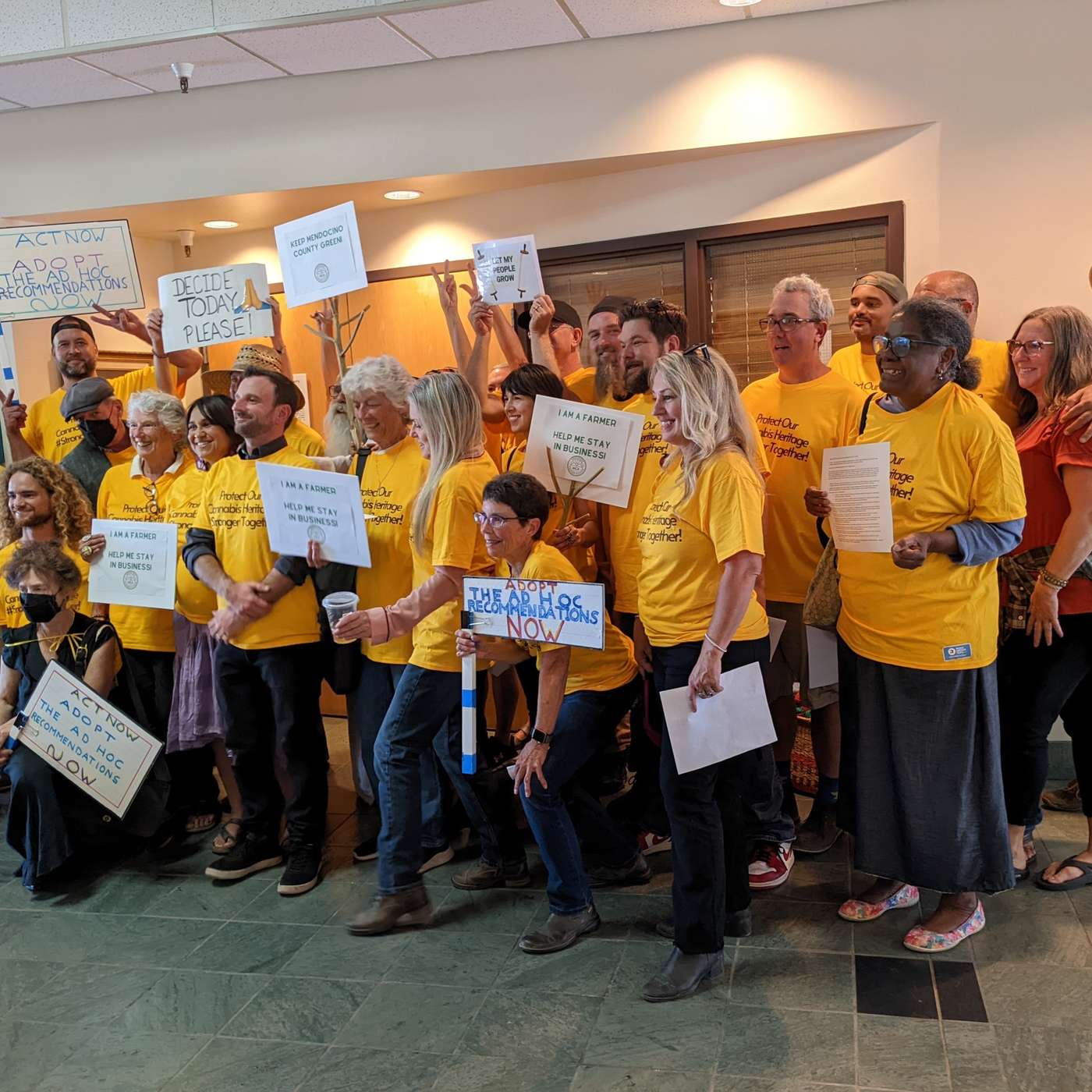
October 11, 2022 — The Board of Supervisors went through a dozen recommendations from a cannabis ad hoc committee led by Supervisors John Haschak and Glenn McGourty last week, sending five of them to another committee. Supervisors received assurance that other items are already being addressed, but cannabis advocates who stayed in the chambers until after 7:00 at night complained about a lack of urgency as state deadlines loom and operators give up on ever making it through the permit process. Mark Schaeffer, who has chimed in on cannabis policy at every step of the ordinance and now serves as the policy chair of the Mendocino Cannabis Alliance, wept as he spoke about losing his farm. “I used to say I had a ten thousand square foot farm in Comptche,” he said. “It’s closed. Not only can I not pay for my taxes, likely I’m going to lose my land, and I don’t even have enough money to get fuel to get home. But I’m here. Why? Because I put everything into compliance. Because I believed. I believed in myself, my government, my community. Neither the county nor the state has given any of us a pathway to success. They have not given us a pathway at all. And now we perish.” Most of the ad hoc’s recommendations had to do with streamlining processes so local operators will have a better chance at complying with annual state license requirements. Because the county’s ordinance did not go through California environmental review, individual growers have been struggling to keep up with regulatory requirements as they are being crafted. Another process that has often been described, including by the Mendocino County Grand Jury, as building the airplane while it’s flying, is the rollout of the equity grant program, which was designed to aid cannabis business owners who were harmed by the war on drugs. The committee’s first recommendation was a three-part reiteration of Board direction to align the county’s program with the state’s requirements. Applicants have complained that the county has been stricter and more meticulous than the state, out of fear that the state could reclaim funds that were improperly awarded. Haschak laid out his position. “I know that there have been issues that have gone on and on and on, for six months, a year, about trying to clarify whether a solar panel is the right size, whether the number of jars is right for the business, and that kind of stuff,” he said. “And if it’s allowable by the state, then we should just go with it and move on. Because the way I see it is, the role of the (Mendocino Cannabis) Department really needs to be getting people to their state licensure.” Cannabis Department Director Kristin Nevedal said she believes she is already implementing that direction. She added that, although there have been bottlenecks in the equity grant program and very few awards have actually been made, no one has been outright denied at this point. Nevedal secured another nearly $18 million in grant funds to help local cannabis business people: the Local Jurisdiction Assistance Grant Program. She described her planned approach to applications for that grant, which she hopes will save her department from multiple rounds of review, and circumvent the need to bring in outside contractors. “I think that these will come to us, this is the hope, review ready,” she said of the upcoming grant applications. “And if they aren’t review ready, we will not be issuing an award, and folks can make corrections and apply in the next round. And I’m thinking the rounds for grant applications will be short. Thirty days. We’ll announce ahead of time, it will open for thirty days, it will close, we’ll do reviews, we’ll award, we’ll announce another opening.” Nevedal told supervisors that she expects the cannabis department’s upcoming move to the Willits Justice Center will help remedy some of the department’s shortfalls — but she’s not sure exactly how long the move itself will take. Another proposed simplification involved several steps that have not yet been completed. The ad hoc recommended that the cannabis department provide a ‘no objection’ status for every document or requirement that it’s referred to a state agency, after the agency has been unresponsive for thirty days. But this is problematic, when the county does not have a contract with the California Department of Fish and Wildlife, the main state agency responsible for environmental review and approval. Nevedal said her department has referred about 100 sensitive species and habitat reviews to CDFW, and that a contract is on its way to being finalized. “It came to us as an unsigned document,” she said of the contract. “So we’ll work it through approvals at the county level. Once it’s signed at the county, I’m sure CDFW is eager to sign it so that we can pay them for the reviews they have conducted…and they have staff waiting to conduct further reviews. So I think they’re just as eager as the county to move this contrac...
Ep 510Federal legality of grant program debated
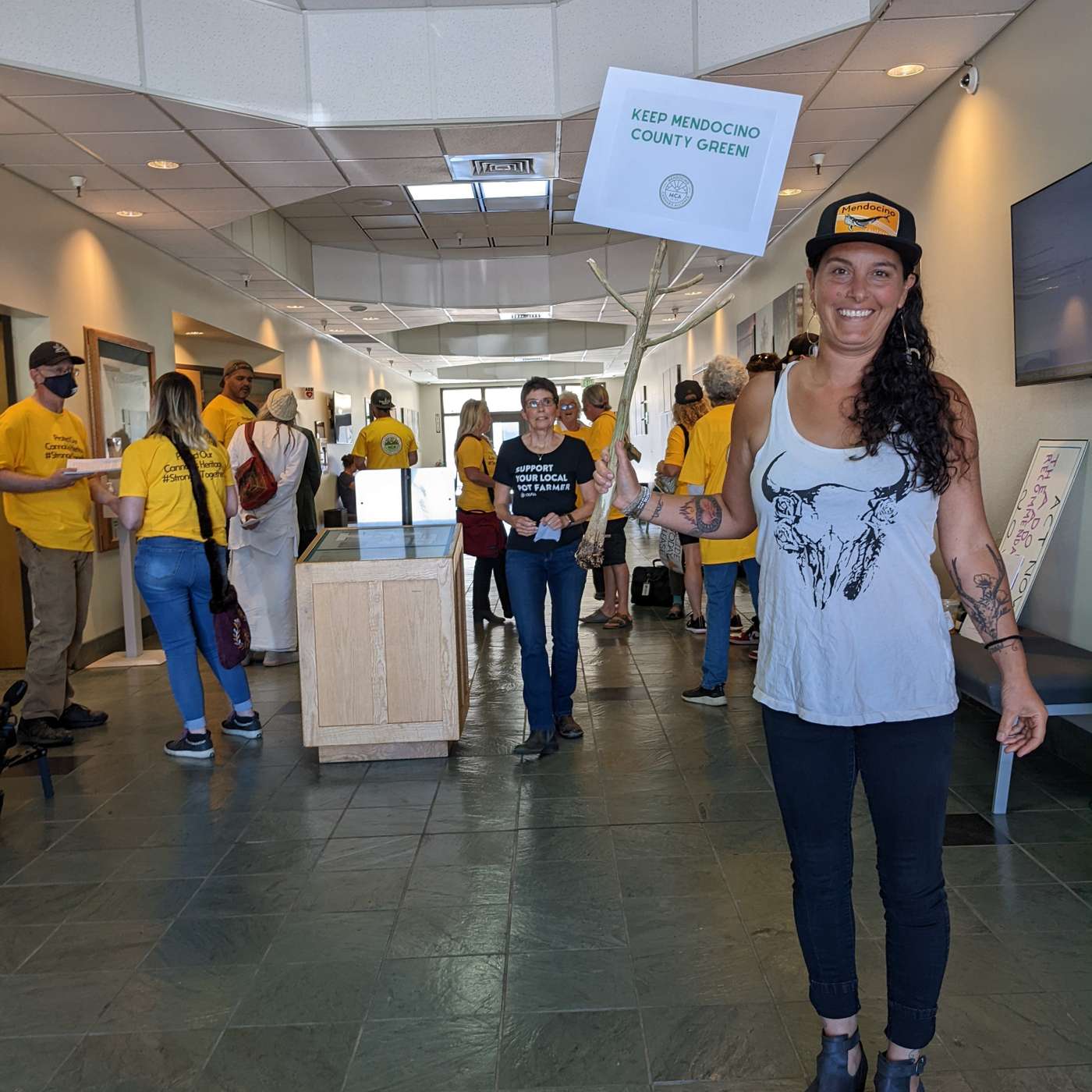
October 5, 2022 — Members of the rapidly dwindling cannabis community showed up en masse at the Board of Supervisors meeting this week, to speak about the hardships of the market, the recommendations of the cannabis ad hoc committee, and a proposal to limit the cannabis equity grant program. Dozens of cannabis business people in yellow T-shirts waited in the hallway outside the Board of Supervisors chambers on Tuesday afternoon as the Board held an extended closed session that lasted until after 3:00 pm. Monique Ramirez, a farmer and policy advocate for the Mendocino Cannabis Alliance, had driven down from Covelo, a week before she was due to give birth to her second child. “Our harvest is going wonderful, especially with the great weather we’ve had,” she said. “The market, that’s a whole other story. Not doing so great.” Other farmers who were spending a sunny fall day off the farm described offers of $350 and even $100 a pound for their product. Ramirez said she was still struggling to sell last year’s product from her cottage farm, which is the smallest license type. “For us, $200-$300 a pound does not work when you’re yielding maybe 80-100 pounds, max,” she explained. Ramirez told the Board that the reason she is such a staunch legal policy advocate is that she was raided years ago. She was harmed by the war on drugs, which makes her eligible for a cannabis equity grant. The much-delayed program was the subject of a Grand Jury report this year. This week, Supervisor Ted Williams sponsored an item proposing that staff limit the program to “legitimate government purposes,” and to “void any program elements found to be impermissible under federal law.” The grant guidelines are set by the state. The item was not accompanied by explanatory materials, which was frustrating to some of the leading cannabis advocates in the room. Supervisor John Haschak didn’t think the feds were much of a threat. “We’ve been into this program for two years,” he said. “And so what is the concern right now? You know, I don’t hear that the feds are coming. We can’t even get the federal government to deal with the cartel growers in this county.” In a brief interview after the meeting, Supervisor Ted Williams, who sponsored the item, said that he has been asking County Counsel for a long time if the grant program is legal, or if it exposes the county to legal liability for violating federal laws about cannabis cultivation. “It appeared (on this week’s agenda) because I finally got a different answer,” he said. He was particularly worried that the state currently allows grant funds to be used to pay the start-up costs of cannabis businesses. County Counsel Christian Curtis insisted on getting majority board approval before he would answer the question of whether or not grant applications are in keeping with federal law. After a three-vote approval, with Dan Gjerde and Maureen Mulheren dissenting, he offered his opinion. “With respect to whether the activities that were to be funded by the grant program were compliant with federal law: no,” he said. The activities that are to be funded are the cultivation of cannabis. Cultivation of cannabis remains unlawful under federal law. The review that my office conducted was for the purposes of determining whether or not the applications met the requirements of the grant program and state law. Those that went through, we did believe met those requirements and were consistent with the statute, the guidance put out by the state, et cetera. Whether the underlying grant program is consistent with federal law, I can’t say that it is.” But Hannah Nelson, an attorney with thirty years’ experience in cannabis and criminal law, offered a history lesson on the county’s original permitting program, originally enacted in 2008, which sought to regulate cannabis cultivation locally, in contravention of federal law. “The feds came in and threatened to intervene with the county for starting a permitting program, and that’s why that program shut down,” she said. “But the specific reason was because at the time, that was under Prop 215, and the State of California basically only had the Attorney General’s guidelines, which were pretty loosey-goosey. And the feds said, when California enacts a complete, robust regulatory system, we’ll back off.” In a memo to the Board, Nelson wrote that “each year since 2015, the federal budget was passed with a specific amendment that prohibited the feds from spending money on pursuing cases regarding medical cannabis (later expanded to recreational) if the activity was in conformance with state law where the activity was legal in that state.” During the October 4 meeting, Nelson opined that the risk of running afoul of federal regulations is minimal at best, and that if county counsel thought differently, he should have addressed it long ago. “This is an issue without a problem,” she declared, as farmers laughed and cheered. “And it has been...
Ep 509"That's the way the system works"
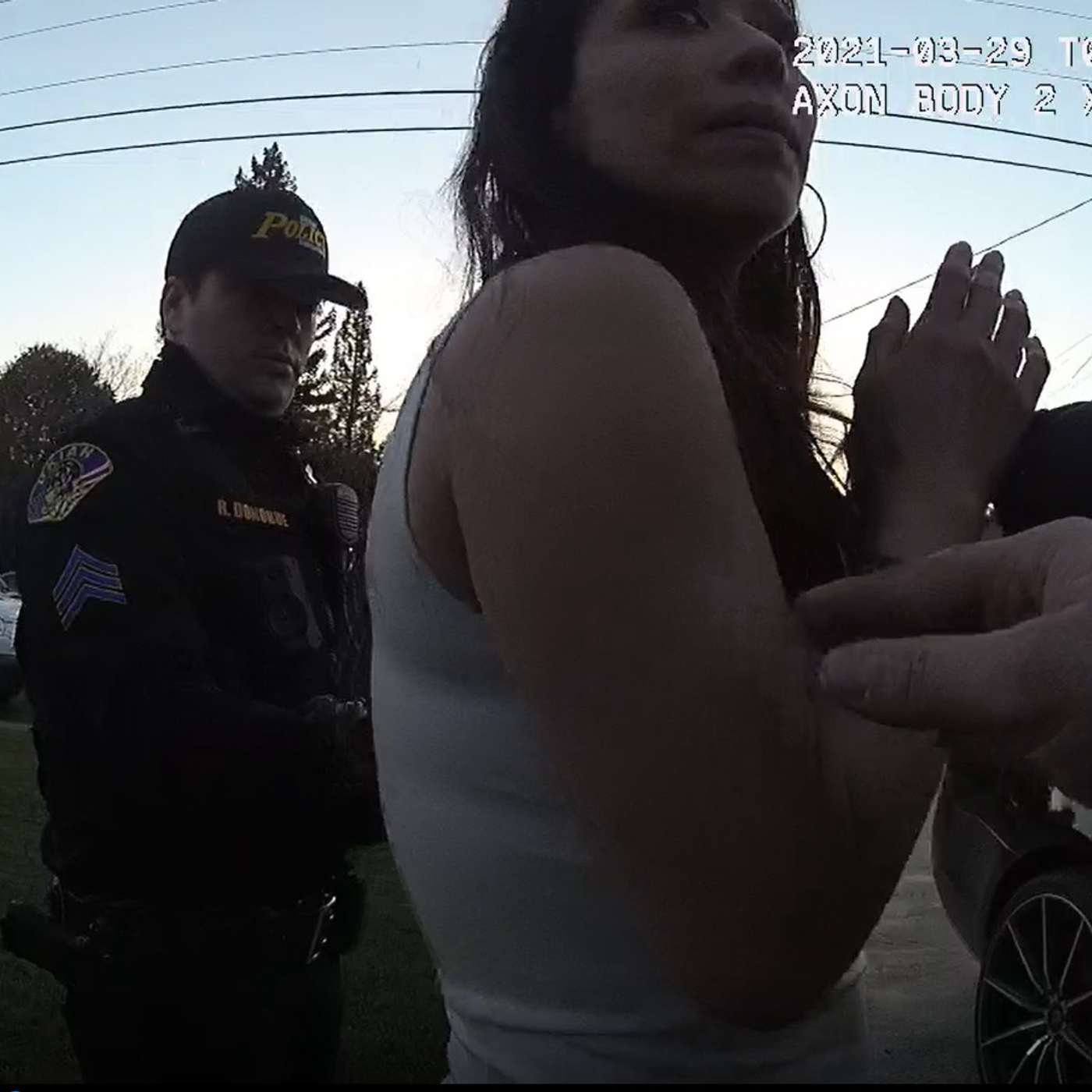
October 4, 2022 — During an investigation last year into a collision where no one was hurt and no property was damaged, Ukiah police broke several bones in a man’s face and handcuffed a woman in her own home, even after she indicated she was willing to cooperate. Officers had a case against Arturo Valdes, who was accused by another motorist of causing a minor accident in the parking lot of the Ross Department store a little after 6:30 pm on March 28. The victim didn’t speak English, but KZYX obtained police body camera video of him describing the incident to Ukiah Police Officer Daniel Parker with the help of a witness. The victim said he had stopped suddenly to avoid hitting pedestrians, when Valdes, who was behind him, bumped into him with a lifted black GMC truck. He said Valdes “said a bunch of bad things in English and Spanish,” and drove off fast, with a woman and two small children in the vehicle. He told Parker he wanted insurance information, and, according to his volunteer translator, and to “get him in trouble, because it’s not fair, he’s driving drunk with two kids in the back.” According to a written police report, the victim added in a followup interview that Valdes asked him if he wanted to fight. Surveillance video from outside the Ross department store isn’t high quality, but it does show that a man matching Valdes’ distinct appearance did bump into another car that afternoon. But Valdes didn’t admit it, when Officer Eric Rodello and Sergeant Rondald Donahue questioned him. He said “no,” when officers asked if he had just been “involved in a little traffic collision,” and told them that his black truck was missing. Police found the truck about a block away from his home the next morning. Valdes wasn’t the only one providing bad information. Police dispatch had reported erroneously that he was currently on DUI probation, though that had expired in December. And when Valdes said he wouldn’t answer any questions until his lawyer arrived, officers told him he didn’t have a right to an attorney. Valdes’ attorney, Richard Middlebrook, says that was another piece of misinformation. “That is a flagrant lie, and a misstatement of almost every bit of case law, ever,” he remarked in an interview over the summer. It’s hard to see exactly what happened in the next few minutes. Valdes walked away. The officers reached for him. He tried to shake them off and then to stand up as the three men flailed on the ground. It took about eleven seconds for Donahue to break Valdes’ nose and fracture his sinus and eye socket. Middlebrook said the couple’s private Ring camera footage provided a better view of what happened. Later that night at the hospital, Valdes and Donahue argued over what happened during that eleven seconds. Valdes insisted that “I never intended to swing.” Donahue said, “To me, it looked like you were. So I grabbed your hand and I tried to take you to the ground. You pushed forward. I actually fell backwards. I got up. We pushed you to the ground.” “Both of you were on the ground. I never swung at you. I had every ability to swing at you, and I never did,” Valdes argued. “Like you said, he was flipped over, and I never.” “You flipped him over your back,” Donahue said. “Yes,” Valdes replied. “And I never, never, never intentioned to swing.” Donahue assured Valdes that he would include that in his report, and true to his word, he made a note of it. Before taking him to the hospital, though, Rodello and Donahue knocked on the door to speak with Elizabeth Valdes, Arturo’s wife. She took a few steps backwards with her small son in her arms. I was not able to discern from the video that she was stumbling, but the officers judged that she was so intoxicated it would be in the child’s best interests for Officer Parker to care for him until CPS arrived. “What happened with your husband, I apologize,” Donahue said. “That should never happen. I wish it would have went different. What I want you to do, though, please, just go ahead and put the baby down. My partner — actually, I have a little bit of blood on my hands, so I’m not gonna do anything.” Elizabeth Valdes flinched and sobbed, “this is so horrible.” Parker held the boy and tried to amuse him by giving him shiny police department stickers. After a few minutes, Elizabeth Valdes began to walk towards them slowly. She pressed her hands together for a few moments when she reached the man and her child, then held her hands out for him to give the baby back. After warning her that she was about to be arrested, Rodello and Donahue cuffed her, without reading her rights or informing her of any charges. In his report, Rodello wrote that Elizabeth Valdes “continued to be uncooperative, and was upsetting the children.” But about twenty minutes later, he didn’t take her up on it when she told him she would provide the information he said he needed. “Do you have insurance on the truck in there?” he asked. “Of co...

Ep 508Sheriff suspends restorative justice program with connections to "orgasmic meditation" organization
October 5, 2022 — Mendocino County Sheriff Matt Kendall suspended a “prison monastery” program at the jail on Monday afternoon amid revelations that Unconditional Freedom, the organization running the program, was linked to OneTaste, a company intimately connected to the Institute of OM, which touts the supposed neurological and spiritual benefits of an expensive clitoral stimulation technique called Orgasmic Meditation, or OM. The Institute of OM Foundation, which generates white papers and studies on the practice, claimed in a press release to have raised over $2 million “to support rigorous, peer-reviewed scientific research into partnered stimulation and the physiological and psychological effects of Orgasmic Meditation ("OM").” Kendall was concerned that inmates would be vulnerable to exploitation through the so-called spiritual curriculum, which revolved around a self-published book called “The Art of Soulmaking,” by OneTaste founder Nicole Daedone.The program included a penpal component with mystery address labels and unknown correspondents. One of the Unconditional Freedom volunteers also worked at Juvenile Hall, though he was never alone with inmates, and the curriculum was not in use among the minors. A Bloomberg piece from 2018 reported former OneTaste members’ allegations that the company pressured its sales team to work long hours selling seats at OneTaste events, often to pay off staggering debts they themselves had incurred to receive higher and higher levels of certification in “the practice,” which consists of one person stroking a woman’s clitoris for exactly 15 minutes, often in a group setting. And in 2020, the BBC released a ten-part podcast called the “Orgasm Cult,” which interviewed subject matter experts and chronicled the experiences of people who claimed that the organization engaged in abusive and controlling practices to make money from sex. An attorney for Unconditional Freedom insisted that there is no legal connection between OneTaste and Unconditional Freedom, though they share key personnel, a website, and a mailing address According to OneTaste’s website, which went live this year, there does seem to be some kind of relationship between the service organization and a company that’s been dogged by reports of financially and sexually exploitive practices. Numerous professional profiles and advertisements for past OneTaste events identify eight current or former OneTaste personnel among the Unconditional Freedom volunteers who appear in months-long correspondence between Kate Feigin, the inmate services coordinator for the Mendocino County jail, and the organization’s leadership. (The connection between Unconditional Freedom and OneTaste was initially reported last year by B.T. Linhden.) Unconditional Freedom shares an EIN (Employer Identification Number, issued by the IRS to track business tax reporting), with another organization the OneTaste Foundation. The Foundation is legally distinct from OneTaste, though intimately connected with it. A 2014 press release issued by OneTaste for an event called an “Orgasmic Meditation Xperience” in San Francisco states that, All proceeds from ticket sales will go to the OneTaste Foundation, which exists to convert trauma into triumph through the practices of narrative therapy and Orgasmic Meditation. It aims to advance an innovative method of holistic reconciliation which serves to liberate both victims and perpetrators from debilitating, negative narratives.” Until a few days ago, the OneTaste website featured a photograph of a Mendocino County jail inmate whom we were able to identify by distinctive tattoos that were visible in photographs Feigin attached to an email she sent to Marcus Ratnathicam, the Executive Director of Unconditional Freedom and a former coach at OneTaste. The picture was replaced shortly after we started asking questions. Visitors to the OneTaste website, which features highly sexual content, can quickly follow a series of links to the Unconditional Freedom website, where they can still view images of inmates and video testimonies by a variety of participants identified as “Builders of the monastery.” We spoke with Unconditional Freedom attorney Caren Callahan about how the program measures the success of the program with inmates. She did not know how much public money it saves. The eight-week curriculum includes brief before-and-after surveys, where inmates self-report a 24% reduction in depression, 23% less use of drugs and alcohol (which they are not supposed to have in the jail anyway), and 16% less anger. Objective measurements like recidivism and post-release employment, housing, and sobriety were not immediately available. Kendall had some rough metrics. He said Unconditional Freedom’s garden program alone saved the jail $10,000 in food costs last year. “And it’s going to be more this year, because prices of things have gone up,” he predicted. The jail is also working to gathe...
Ep 507California Coastal Commission Chair discusses sea level rise
With glaciers melting and cliffsides crumbling, coastal dwellers are beginning to come to terms with sea level rise in the very future. Just this year, the Ocean Protection Council put out a multi-agency state action plan for mitigating some of the worst expected damages. On August 23, the League of Women Voters hosted a talk by California Coastal Commission Chair Donne Brownsey, who tried to communicate a sense of urgency about the threat.
Ep 506Indigenous people's day celebration in Covelo
California’s Governor Gavin Newsom issued a proclamation declaring October 10, 2022, as “Indigenous Peoples' Day” in the State of California. Community members in Covelo got together at the Round Valley high School to celebrate.

Ep 505Cemetery Districts on the Mendocino Coast, Unseen & Unknown
Cemetery Districts can easily fall into the category of unseen government. On the Mendocino Coast we have two Cemetery Districts with volunteer boards of directors appointed by the County Supervisors. They’re funded by a combination of property tax, donations and revenue from plot sales. The property tax is not listed on your tax bill as a line item so you might not know if you are in one. Gary Quinton a board member from the Westport-Ten Mile District and Laurie Hill the general manager and board secretary of the Mendocino-Little River District answer my questions about how the districts run, what services they provide and how people can access those services.
Ep 504Programa de entrenamianto para emergencias Listos Mendocino
Octibre 10 - 2022. Por Victor Palomino. La temporada de incendios forestales tradicionalmente alcanza su punto máximo entre julio y octubre, pero los funcionarios meteorológicos advierten sobre la posibilidad de incendios peligrosos antes de que termine la primavera. Para las personas que no hablan inglés, el acceso a la información de emergencia ha sido históricamente mínima o inexistente. Por este motivo en el condado de Mendocino, UVA Vecinos en Acción está realizando sesiones de capacitación en español de seguridad durante emergencias. Listos Mendocino es el nombre del programa de preparación para emergencias creado en Santa Bárbara que hoy se usa en todo el estado para ayudar a la comunidad a estar lista durante situaciones de emergencia. Los miembros de la comunidad también pueden inscribirse en un programa de certificación donde aprenden las herramientas para enseñar la capacitación básica en sus comunidades. UVA está llevando a cabo el programa de entrenadores por primera vez en Ukiah. Uva está realizando la capacitación los días 22 y 23 de octubre, más información en la página de facebook de UVA
Ep 503Listos, emergency preparedness class for Spanish speakers (bilingual)
October 10, 2022--Victor Palomino reports. Wildfire season traditionally peaks between July and October, but weather officials are warning of the possibility of dangerous fires before spring is over. For non-English speakers, access to emergency preparedness information has been historically minimal to non-existant. For this reason, in Mendocino County, Uva Vecinos en Acción (UVA) is holding safety training sessions in Spanish called "Listos Mendocino."
Ep 502Bank in Covelo considering closing
The Tri Counties bank in Covelo recently told account holders it is considering closing the branch permanently.
Ep 501Gathering Time, Pomo Art During the Pandemic
Gathering Time, Pomo Art During the Pandemic, is the first exhibit of Contemporary Pomo art to ever show at the Grace Hudson Museum. The multi-media show stems from a collaboration between the museum and Eastern Pomo artist Meyo Marrufo, who serves as guest curator. The exhibition features artwork from numerous Pomo artists created during the dark time of the pandemic. During lockdown, Pomo artists throughout Mendocino, Lake and Sonoma counties continued to create beautiful and hopeful pieces aimed to promote healing and keep their people and culture alive. The exhibit showcases the wide range of skills of these Pomo artists, and celebrates the resilience of Pomo people.
Ep 500Noticias Locales Octubre 3, 2022
Conversación con Cristina Llop de los Servicios de autoayuda de las cortes del condado de Mendocino

Ep 499How will Measure O help the Fort Bragg and other County Libraries
The public libraries on the coast in Fort Bragg and Point Arena are part of the larger county library system. Measure O is a 1/8 percent sales tax for library services that is replacing a sunsetting sales tax. Janice Marcell represents district 4 at the Library Advisory Board. She is with us to talk about the libraries and how they are funded.
Ep 498Mendocino county officials prepare for midterm elections
Mendocino county officials prepare for final days of the 2022 elections circle
Ep 497Noticiero de KZYX. Septiembre 26
información de DACA con los servicios de inmigración de las Caridades Católicas y reporte de la celebración de la herencia hispana en Ukiah.
Ep 496DACA recipients await final rule
For the past couple of weeks, the news about immigration has been dominated by political theater. But for thousands of DACA recipients the attention is on the Biden’s administration’s announcement of changes to the DACA program.
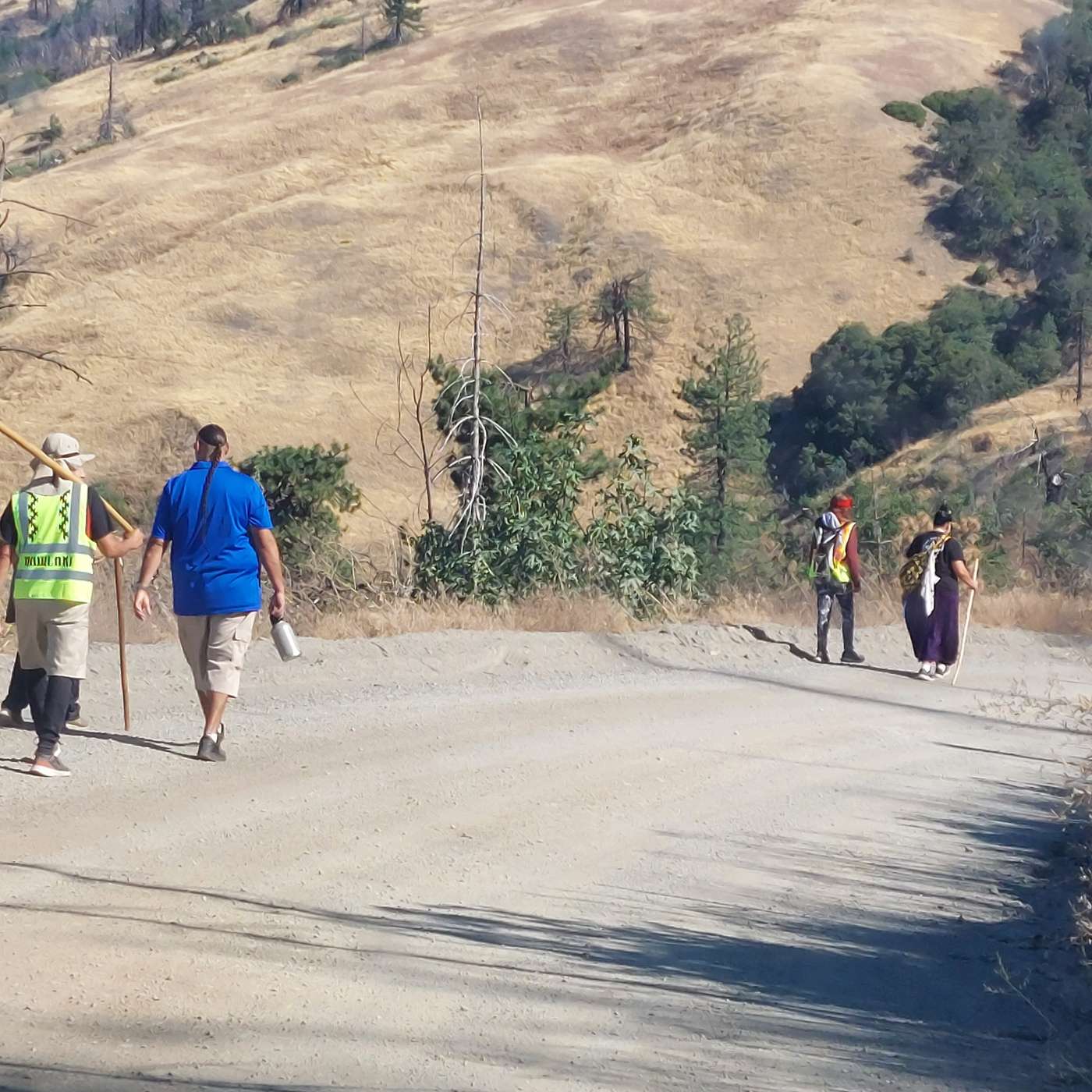
Ep 495Annual Nome Cult walk takes place from Chico to Round Valley
The Nome Cult Walk is an annual trek that happens each September from Chico to Round Valley in memory of indigenous people who were forced to walk the trail in 1863. KZYX's Eileen Russell reports

Ep 491Volunteer Fire Departments' Challenges
PIO John Allison of Westport Volunteer Fire Department and Chief Dave Latoof of Mendocino Volunteer Fire Department discuss funding mechanisms and the challenges of volunteer fire and rescue.

Ep 494Mendocino libraries and bookstores celebrate Banned Books Week
From September 18-24, Mendocino libraries and bookstores celebrate Banned Books Week, an national event sponsored by the American Library Association. Banned Books Week celebrates the freedom to read by spotlighting efforts of censorship. The American Library Association tracks a rising trend in book challenges in the United States; eight months into 2022, the number of attempts to ban or restrict library resources in schools, universities and public libraries is on track to exceed record counts from 2021, with over 1,600 targeted titles. In 2022, most of the titles target LGBTQ people and themes. Listen to Ukiah Branch Librarian Melissa Eleftherion Carr, and bookseller Toni Wheeler, speak about local attempts to censor books and the rather surprising outcomes.
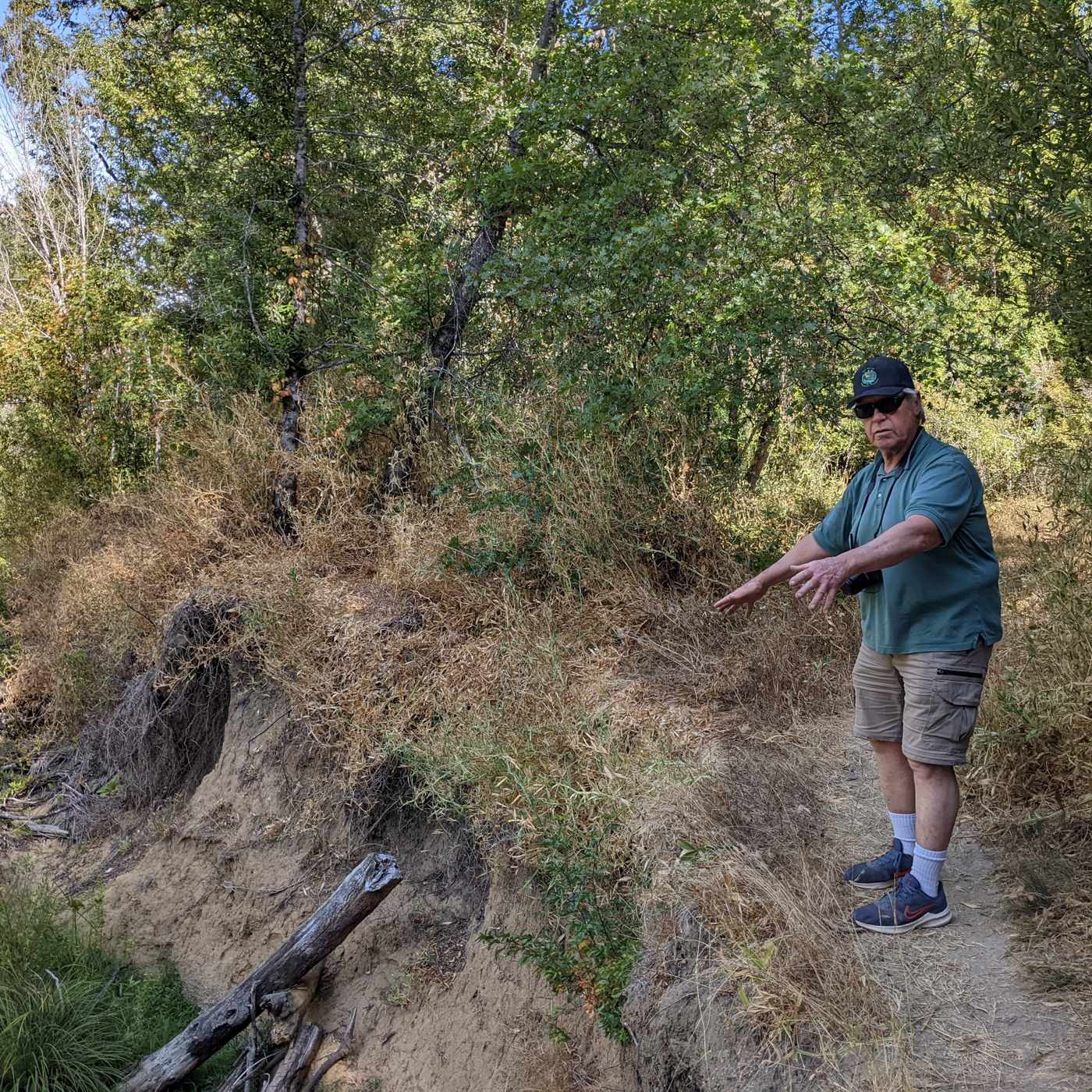
Ep 493Waterways restoration in Laytonville
September 20, 2022 — Erosion is a form of pollution, especially alongside waterways, as pieces of the terrestrial landscape make their way into rivers and streams, damaging fishbearing habitat.Now, several private landowners in Laytonville are working with the Eel River Recovery Project, using EPA money distributed by the State Water Resources Control Board, to remediate over 600 feet of erosion on four creeks that feed into the South Fork of the Eel River. Patrick Higgins, the director of the Eel River Recovery Project, gave an overview on Saturday morning as he led a tour along Cahto Creek. The four projects are “relatively substantial,” he said. “Two on Cahto Creek here, along the Cahto Trail. And one at Mill Creek, above Little Case Creek. And one at Black Oak Ranch along Streeter Creek. And these are all salmonid-bearing streams.” Each site ranges from a hundred feet to about 180 feet long, so Higgins notes that “they’re pretty big open sores, where dirt’s pouring into the creek. And that’s not good for the private land interests, but it’s also a form of pollution,” which fills in downstream pools and salmon nests. It can also cause rivers to get shallower, widening and heating up as the cold water comes to the surface. The Eel River Recovery Project sent surveys to all the landowners in the basin, asking them if they had problems with riparian erosion, then chose to work on the four sites that had the highest potential for sediment pollution and the most significance for fish habitat.The work is scheduled to take place between July and October of next year. Mostly, it consists of engineering features that will affect the velocity of the river where its flows have been altered by human activity — or the lack of it, like building bridges and roads, and allowing conifers to overtop oak forests and absorb groundwater that some scientists believe would otherwise join the river.Dennis Hogan owns property near what he calls the Mulligan Bridge. He’s working on improving forest health and remediating a section of riverbank that he says has receded steadily since he moved onto the place in 1989. He’s also raising willow and other riparian saplings to plant on the newly engineered riverbank, once the heavy machinery gets out of the way. “The streambed is lower than it used to be, by quite a bit,” he told visitors on Saturday. The nearby bridge has concrete abutments, which could account for narrowing the river channel, causing the water to rush through with great velocity. And Hogan said the rate of erosion seems to have increased since a large oak on the riverbank came down about five years ago. Philip Buehler is the foreman of BioEngineering Associates in Laytonville, which designs riverbank stabilization projects. On Saturday afternoon, he told a small group of landowners and nature lovers about the forces at work in the creek under Mulligan Bridge. He’s taken a lead role in designing the structures that will be installed next year, and will be in charge of the crew that puts them in“What’s happening here is really common on creeks,” he said. “You can see we’re on a slight outside bend of the creek here on this side. With any outside bend, the water is moving faster over here than it is on the inside…we have all this blackberry and other vegetation that is strengthening that side of the creek. You can see where Dennis has cleared, just behind the blackberry, it’s really sandy, fine sediment. During high flows, when that part of the bank is inundated over there, you’re getting slower water velocity in all of that vegetation. The vegetation is absorbing the energy of the flowing creek, and slowing the water down. When it’s slowed down, sediment drops out and gets deposited over there. That’s what’s moving this creek eighty feet this way, is sediment being deposited over there, vegetation growing up over time. Over here (on the eroded side), we have no erosion-resistant vegetation, so it’s stronger over there than it is over here.”Buehler took a few moments to talk more about bioengineering at the end of the tour on Streeter Creek at the Hog Farm. That’s another erosion site where a section of fencing dangles in midair about ten feet from the edge of the riverbank. “Bioengineering is a type of technology where we build living structures, generally out of locally harvested willow plants,” he said. “So we build our structures out of rock, live willow, and erosion control fabrics…the gist of it is, the projects are living things. They grow over time, they stabilize the river bank, and they have a lot of benefits for the creek in general.”At Hogan’s property, Buehler plans to put in five structures made out of boulders, live willow branches, and root wads to coax the river into creating more deep water pools for young salmonids. “What we want to do here is move the channel, so it’s flowing in the middle here, more to that side, rather than against this bank,” he explained. He expects the root wads to create turbule

Ep 492Coho salmon spotted in Mill Creek
September 19, 2022 — The rain arrived over the weekend, bringing relief to firefighters and salmon alike. In Mill Creek, which makes its way to the South Fork of the Eel River in Laytonville, coho salmon surprised a leading fisheries biologist.Patrick Higgins, director of the Eel River Recovery Project, sent out an email last week, reporting that he couldn’t believe his eyes when he saw coho near some restoration sites, just a few days after a scorching heat wave.On Saturday afternoon, just before the clouds moved in, he led a tour of the restoration sites, including a visit to a shaded pool tucked into a bend of Mill Creek where living shadows flickered among the rocks. “I didn’t know that coho still actively used Mill Creek, so it was kind of a minor miracle when I went in there last Wednesday, and there were these beautiful showy fish,” he marveled. “And not the steelhead, and no warm water fish, just mostly coho…it’s a sign of resilience…it’s a further illustration that we do need to improve the habitat here for fish like coho, that like three feet of colder water…and then we also found them at the Varnhagen Cahto Creek Ranch, so that means the adult coho went by there, and other coho in that year class also went by, and temporarily used the habitats that we’re going to improve…the coho probably went by here in late December, early January, which was the last flood peak, and that’s exactly perfect for their spawn timing. And then the rain skinnied out between January and March, and so there were fewer steelhead juveniles to compete with them, so it was just kind of the luck of the draw.” Landowner Joe Faigon said the site has been affected by events ranging from the great flood of 1964 to a variety of non-indigenous practices in the last two hundred years. Little Case Creek comes into Mill Creek at his property, he said. “And Little Case Creek has a longer history of rich guys redirecting it. And it's pretty much a straight run…Nine tenths of the year, it’s dry as a bone until it gets wet, and then it’s like a fire hose. Geigers and the local kids would use this corner as a swimming hole during the summer because it became that deep, mostly because of this log jam and the stuff they did over there to keep the meadow from flooding. And it was probably used as a sluice channel, way back,” when loggers used rivers to transport logs to the mills. The practice scoured the river bottoms and tore out many of the bends in the channel that slowed down the water velocity and created refugia for wildlife.Higgins is studying a number of factors at this site and several others in the Eel River and its tributaries. “We’re doing an analysis of flow in Cahto Creek and Mill Creek, to see how they differ in flow from Alder Creek, which is an old growth system over in Angelo Reserve,” he said, as fingerling coho flickered in and out of visibility. “Likely we will see that flood peaks are greater on Cahto and Mill than in Alder, and also that base flows are maintained better on Alder, and that the descent of the hydrograph reflects greater evapotranspiration,” he predicted. He added that the ponds in Mill Creek had been just about dry for a week during the Labor Day heat wave, but, “as you can see, it’s flowing beautifully, just from the cold nighttime temperatures, and the trees reducing evapotranspiration. When the pool is disconnected, they have to kind of scour around for food.” He paused to watch a fish snap a bug off the surface. “That’s almost always true of watching fish,” he said, in what may be a time-lapse analogy of humanity’s history of endangering species and then trying to restore them. “You come up to the creek, you see very little. First of all, you probably scared everything. Now we’ve been here for about five minutes. And they’re all just kind of going, okay. We’ve got to eat lunch.”
Ep 490Hispanic Heritage month celebration (Bilingual)
September 15 marks the beginning of the Hispanic heritage month, a time when the nation reflects and celebrates the contributions of Latinos in all aspects of our communities. In Ukiah, the Spanish language newspaper Al Punto is organizing an event on Sunday September 18 to bring together all the Latino American cultures. El 15 de septiembre marca el comienzo del mes de la herencia hispana, un momento en que la nación refleja y celebra las contribuciones de los latinos en todos los aspectos de nuestras comunidades. En Ukiah, el periódico en español Al Punto está organizando un evento el domingo 18 de septiembre para reunir a todas las culturas latinoamericanas.
Ep 489COVID 19 boosters and update (Bilingual)
Public health official Dr. Andrew Coren talks about the COVID 19 booster and flu vaccine. El Dr. Andrew Coren, funcionario de salud pública, habla sobre el refuerzo de COVID 19 y la vacuna contra la gripe.
Ep 488Conversaciones con el Concejal de Ukiah Juan Orozco Episodio 2
Conversación mensual sobre cómo funciona el gobierno de la ciudad y educación cívica básica. Episodio 2 Mes de la herencia hispana y las reuniones del concejo.
Ep 487KZYX News Headlines. September 9. 2022.
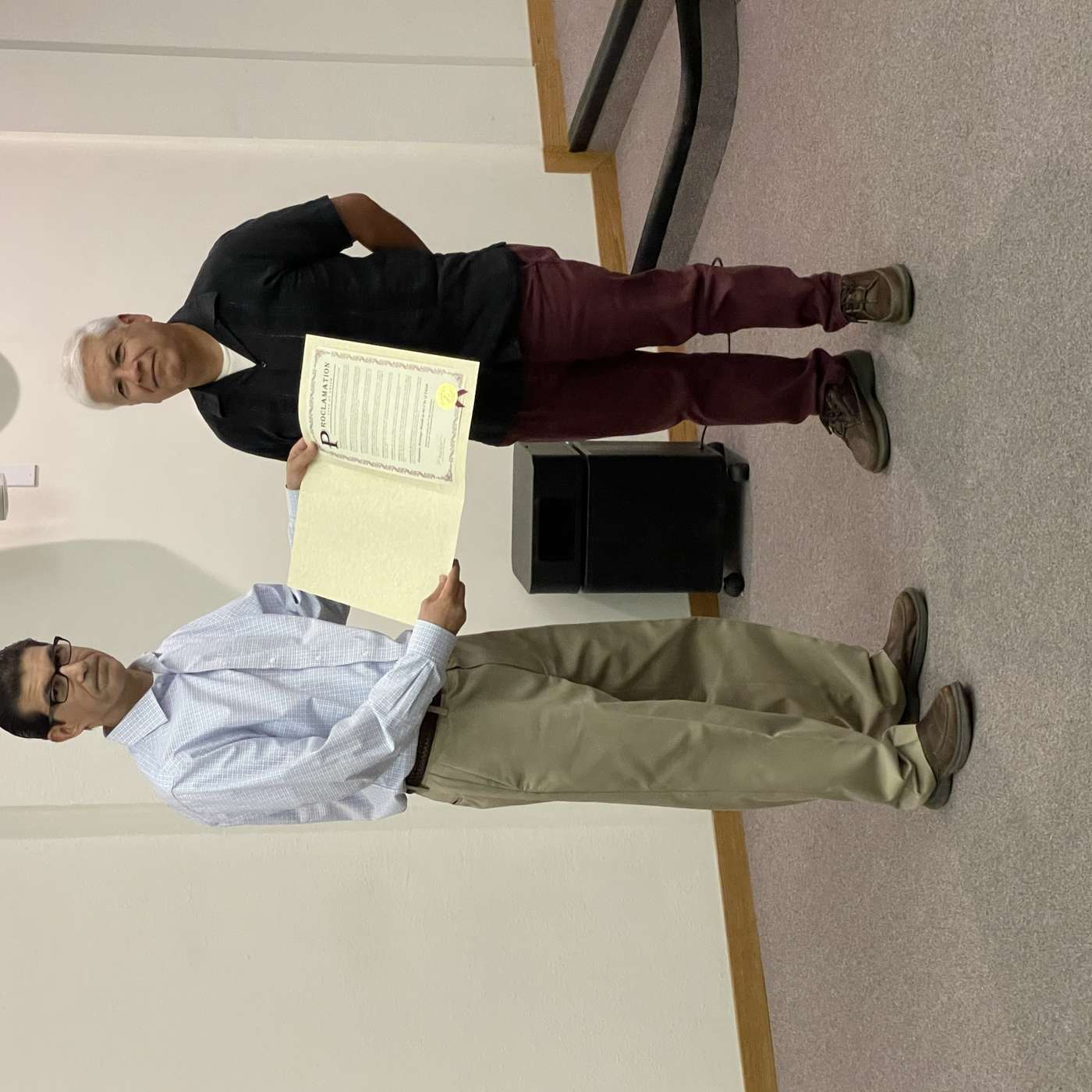
Ep 486City of Ukiah Hispanic Heritage Month Proclamation
Ukiah Vice Mayor Josefina Duenas opened Wednesday's city council meeting where the The city of Ukiah recognized the contributions of Latinos and Latino culture, issuing the proclamation of September as the Hispanic heritage month. City council member Juan Orozco read the proclamation acknowledging the contribution in different sectors from people whose ancestors came from Spain, Mexico, the Caribbean and Central and South America.Council member Orozco is part of the city committee that for the last 3 years has recognized the Hispanic heritage month.Dr. Joe Vargas receive the proclamation representing the community. Dr. Vargas said that he has seen progress in representation of Latino in the city, but knows that the younger generations need to get involved to continue the Hispanic representation in all sectors. The Hispanic heritage month goes from mid September to mid October and is the time for street festivals and celebrations. The city of Ukiah is collaborating in an event with local organizations and business.
Ep 484City of Mendocino Public Water
Over the last few years of drought, the village of Mendocino has struggled to keep the water flowing to taps. Dry wells, water imports from adjacent communities and even emergency hauling from as far away as Ukiah has kept this town afloat. The State of California’s Division of Drinking Water and the SAFER program are assessing the situation. Recently appointed MCCSD board member Donna Feiner and MCCSD Superintendent Ryan Rhoades explain the state’s interest and the obstacles they face.

Ep 485Ukiah High School’s burgeoning Women’s Empowerment Club
Ukiah High School’s burgeoning Women’s Empowerment Club, founded in 2021 and over 30 members strong, continues to hold weekly meetings to address systems of oppression that prevent women’s rights to thrive as realities on their campus and in society. Members of The Women’s Empowerment Club research feminist topics to create informative presentations, which are then shared at the weekly meetings. Club members analyze data, reports, and articles on selected topics to create power-point presentations that serve to educate club members and spark discussions. The Club is also active in the community; the group organized a protest in front of Ukiah’s courthouse in protest of the overturn of Roe vs. Wade, and fundraises for Project Sanctuary and Planned Parenthood.
Ep 483Exibición de Inmigración Art Center Ukiah's
El mes de septiembre y octubre se celebra el mes de la herencia hispana en los estados unidos, un mes de eventos dedicados a reconocer los aportes de la cultura latina en los diferentes sectores de nuestra sociedad. También es un momento en donde organizaciones culturales buscan mostrar el trabajo de las comunidades inmigrantes. Este es el caso de Ukiah center for the arts, una organización de arte sin fines de lucro que está haciendo un llamado a artistas inmigrantes de cualquier país para su exhibición de Octubre titulada. Inmigración, ni de aquí ni de allá. Las noticias de KZYX visitaron la galería para hablar del evento.
Ep 482Frist Friday Art Events (extended version)
The first Friday of the month, galleries and art spaces in Mendocino county open their doors to the public for an evening of new exhibitions. KCYZ talked with the organizers of three events happening around the area. Grace Hudson museum presents the exhibit. Gathering Time: Pomo Artists in a Time of Pandemic The Ukiah Center for the Arts exhibition for the month of September is a Salon style exhibit. Ukiah Playhouse Theater: Clarence Darrow
Ep 481As Logging Resumes JDSF Activists Tell CalFire "No More Broken Promises"
August 29, 2022--Over 100 Forest Activists gathered in Caspar on the Mendocino Coast on Sunday, August 28, at a Youth Led Rally to protect Jackson Demonstration State Forest. The rally, called by youth climate activists, took on heightened significance after CalFire announced this week they would resume logging on four controversial Timber Harvest Plans that were shut down last year due to protests, including tree sits and road blockades. Trees could start falling as soon as today. CalFire’s decision to re-start logging operations came as a shock to activists. This announcement came just two days after CalFire released what they called “A New Vision” for JDSF, describing CalFire’s plans to Update the Management Plan to demonstrate forest restoration, expand the Jackson Advisory group, and establish some form of Tribal co-management. Government to government negotiations about the future of JDSF are ongoing between the State and the Coyote Valley Band of Pomo Indians, but the tribe was not consulted or informed about the resumption of logging. Chairman Michael Hunter said the news calls into question the state’s seriousness about co-managing his tribe's ancestral lands. Sunday's Rally took place at the entrance to JDSF in Caspar, next to the Caspar 500 logging plan, home to large redwoods known as Mama Tree and the Gemini Tree. Buffie Schmidt of the Sherwood Valley Band of Pomo and Bernadette Smith of the Manchester/Point Arena Band of Pomo Indians welcomed the group with a prayer and songs. Her daughter Suzette Smith spoke at the rally about her people's connection to the forest and the pain of watching it be logged. Another rally organizer, Ravel Gauthier, expressed their frustration with Calfire. And Sara Rose, co-founder with Ravel Gauthier, of Mendocino Youth For Climate, made the connection between ecological and racial justice in the fight against climate change. Activists are calling for a number of rallies to protect the forests of Jackson State. They will gather Monday from 1-3pm at Camp 20 Recreation area out Hwy 20 west of Willits, near the entrance to the Chamberlain Creek THP, at 4pm they will rally at fort Bragg Town Hall and march to Cal Fire’s headquarters on North Main Street. Tuesday there is a rally in Sacramento from 11-1 at the California Natural Resources Agency on P Street, followed by a legislative walk.
Ep 480Excess litter and garbage removed from Covelo during "Free Dump Week"
As part of The Clean California Act, over 4000 cubic yards of waste were removed from Covelo free of charge. Caltrans partnered with Solid Waste of Willits and community members with the Round Valley Municipal Advisory Committee to offer a free week of services at the Covelo transfer station.

Ep 479Women's Healthcare Access on The Coast
The women’s healthcare access debate is top of mind throughout the country, since the Supreme Court overturned Roe v Wade. But access to care was not equal even before that landmark decision. On the Mendocino coast, women can face physical and economic stress regardless of their age and choices about having a family. We talked to Lucresha Renteria, the executive director of the Mendocino Coast Clinics and Judy Leach, the president of the Adventist Health Fort Bragg Hospital about access to care. We also talked to a new mom about her experience during pregnancy and delivery.
Ep 478UVA's Community meeting (bilingual)
Ukiah Vecinos en Acción held their community meeting with conversations about equity and community issues.
Ep 477Latino services in Willits (bilingual)
In 2002, a group of students of English as a second language and their teacher in Willits got together to solve the need for services and referrals for immigrants, forming what today is the nonprofit Nuestra Alianza. Nuestra Alianza works on a train the trainer program, creating a sense of family in their work. Sergio Perez, started as a student in the summer class 18 years ago, then serve as a volunteer for the organization and now he is helping with administrationDina Hutton was the English teacher to the group that founded Nuestra Alianza and continues to be part of it today. She said that the organization is based in Willits because that’s where the need was. Nuestra Alinza serves communities in Mendocino county and is looking to get more funding to continue services and outreach. Perez said that they used to serve other communities around Mendocino county, but due to funding they are only serving Willits for the moment. But are looking for grants to continue expanding services. Since the beginning the organizations use a model of listening to the community to create programs and find resources.This grassroots approach continues to be the strength of Nuestra Alianza, investing in the generations that will continue the work of guiding new immigrants navigate their new home. More information can be found at www.nuestraalianza.orgEn 2002 un grupo de estudiantes de inglés como segundo idioma y su profesor en Willits se unieron para resolver la necesidad de un lugar de servicios y referencias para inmigrantes formando lo que hoy es la organización sin fines de lucro Nuestra Alianza, una organización al servicio de los inmigrantes que aún hoy mantiene su enfoque de base.Nuestra Alianza trabaja en un programa de formación de formadores, creando un sentido de familia en su trabajo.Sergio Pérez, comenzó como estudiante en la clase de verano hace 18 años, luego se desempeñó como voluntario para la organización y ahora está ayudando con la administración.Dina Hutton fue la profesora de inglés del grupo que fundó Nuestra Alianza y sigue siendo parte del jabalí en la actualidad. Ella dijo que la organización tiene su sede en Willits porque ahí es donde estaba la necesidad.Nuestra Alinza sirve a las comunidades en el condado de Mendocino y busca obtener más fondos para continuar con los servicios y la divulgación. Pérez dijo que solían servir a otras comunidades alrededor del condado de Mendocino, pero debido a la financiación, por el momento solo están sirviendo a Willits. Pero están buscando subvenciones para seguir ampliando los servicios. Desde el principio las organizaciones utilizan un modelo de escuchar a la comunidad para crear programas y encontrar recursos.Este enfoque de base continúa siendo la fortaleza de Nuestra Alianza, invirtiendo en las generaciones que continuarán el trabajo de guiar a los nuevos inmigrantes a navegar por su nuevo hogar.Se puede encontrar más información en www.nuestraalianza.org
Ep 476Board considering media exemption to fees for records
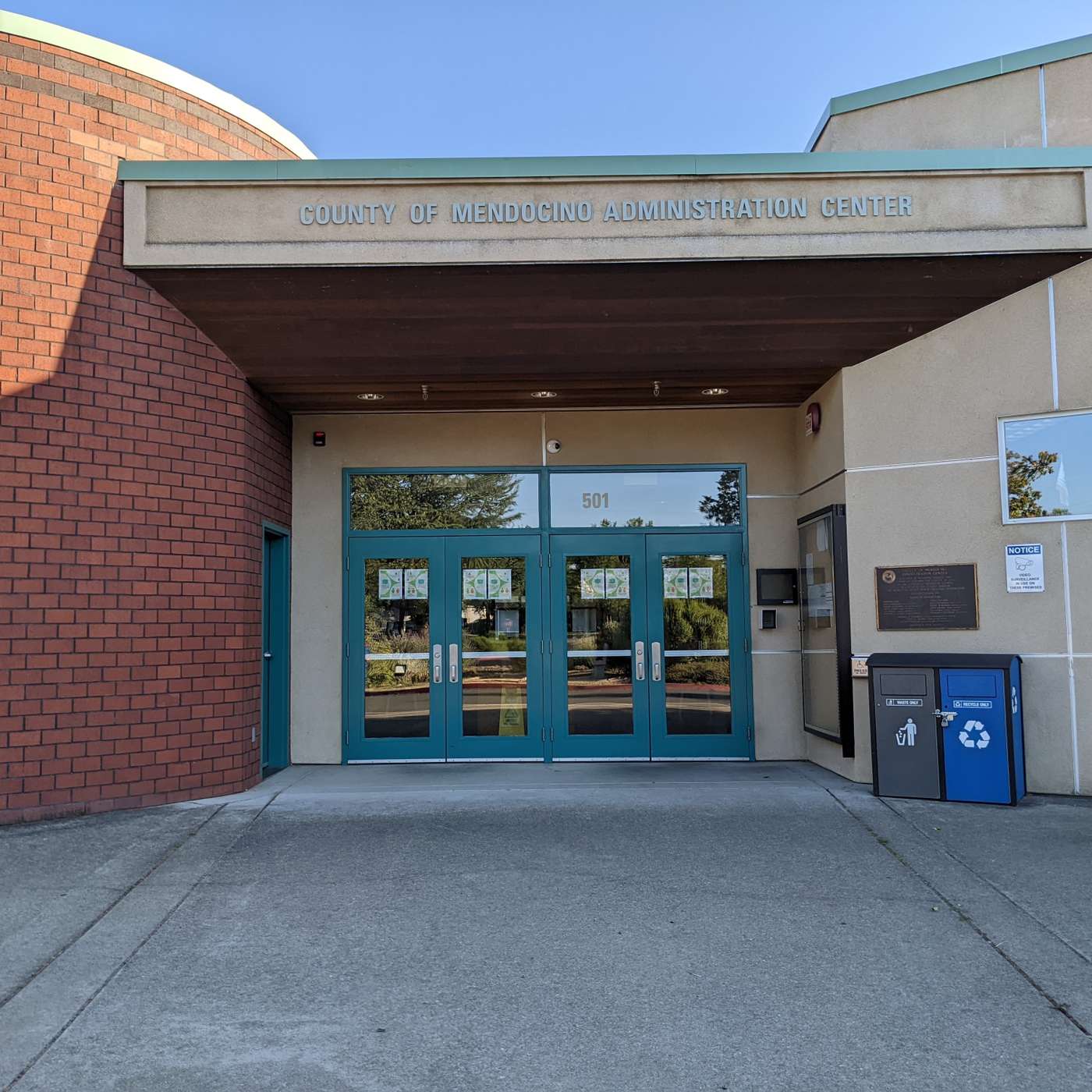
August 22, 2022 — The Board of Supervisors last week discussed a media exemption to a new ordinance that charges hefty fees for public records. On June 21, the Board passed the ordinance, after hearing from County Counsel Christian Curtis that some people requesting public records were doing so in order to conduct market research or to take up county government time. He said then that the county receives about 4.7 public records requests per day, and that fulfilling them takes about 20-30% of his attorneys’ time. He told the Board then that one person who is upset about a code enforcement issue is responsible for about 5% of the requests. Members of the local media objected in person and by voicemail at the time, including Kate Maxwell, the publisher of the Mendocino Voice, Zack Cinek, who has an email newsletter on Substack called Newsboy, and me (Sarah Reith). It is unclear if anyone shared their opinion with the Board in writing, because February 8 is the last time that letters criticizing a proposed policy were attached to the agenda so the public could see them. The fees are broken down into three categories: for duplicating documents, searching for documents that have not been specifically described, and specialized search and review fees, for when a request calls for staff to sift through records that are disclosable as well as those that are not. Requesters will be charged $20 an hour to search for documents and refile them. The charge for attorney time to sort out the public documents from those that are confidential is $150 an hour, or $50 an hour if non-attorney staff undertakes the task. The county will update the requester each time they’ve run through $50 worth of searching, and the requester can decide then whether or not to make another $50 deposit. Over-and underpayments are to be reconciled when the records are provided. Last week, the Board agreed to create a public records request grant program for local media organizations to request the public records. Curtis told the Board that this would not have an adverse effect on the budget, though the stated reason that public correspondence has not been uploaded to the agendas for most of the year is that the county cannot afford to hire clerks. Supervisor Glenn McGourty asked Curtis if there would be an application and vetting process for people requesting the media grant. “I think that’s going to be necessary,” Curtis said. “I don’t want to create a program that’s going to increase the overall amount of administrative work in a way that exceeds the benefit that’s being received…what we’re thinking is a relatively short application form. Something that would really just establish some basic criteria and would not require substantial vetting. For most media organizations, I think it’s going to be relatively straightforward to determine eligibility and be able to get that on file. I don’t know that it’s going to have to be exceptionally arduous for the ones that are more borderline. The more we can have simple, objective criteria, whether that’s circulation, et cetera. I really want to make sure that I’m clear on this up front. From a First Amendment standpoint, every piece of criteria is going to have to be viewpoint neutral. So we can’t look at things like the quality of the reporting, how accurate we think the information is. It’s really got to be something that’s tied to things like circulation, something that is showing that this is something that is effectively reaching a sufficiently sized audience to be a worthwhile investiture of the public funds and an efficient use of the resources. And then it’s really up to the media organizations and what has been referred to as the marketplace of ideas to be able to sort out where to go from there.” I want to say here that I spoke again during public comment, and was encouraged to receive an invitation from County Counsel to work with his office offline to hammer out some of the complexities involved. My situation is that I am employed by KZYX, the public radio station in Mendocino County. I freelance for other outlets, and sometimes people volunteer to help me with research. Often, they wish to remain anonymous. I accepted the invitation at the time, and I remain encouraged by the willingness to consider my input. But I ultimately bowed out of the meeting after reflecting that I do not personally believe the ordinance is perfectable. Michael Katz, the Executive Director of the Mendocino Cannabis Alliance, summed up the experience of many of us who wish to have free and easy access to public documents. “Just limiting it to media is something that is also not necessarily as beneficial as it could be for the whole community,” he argued. “There are many groups here that are engaged actively with the County and the goings-on there, and have constituencies. And there is, due to substantial understaffing…a lack of transparency in certain things. And so in the past when ite...
Ep 475"We have examined the budget, and the claims of no money just don't add up."
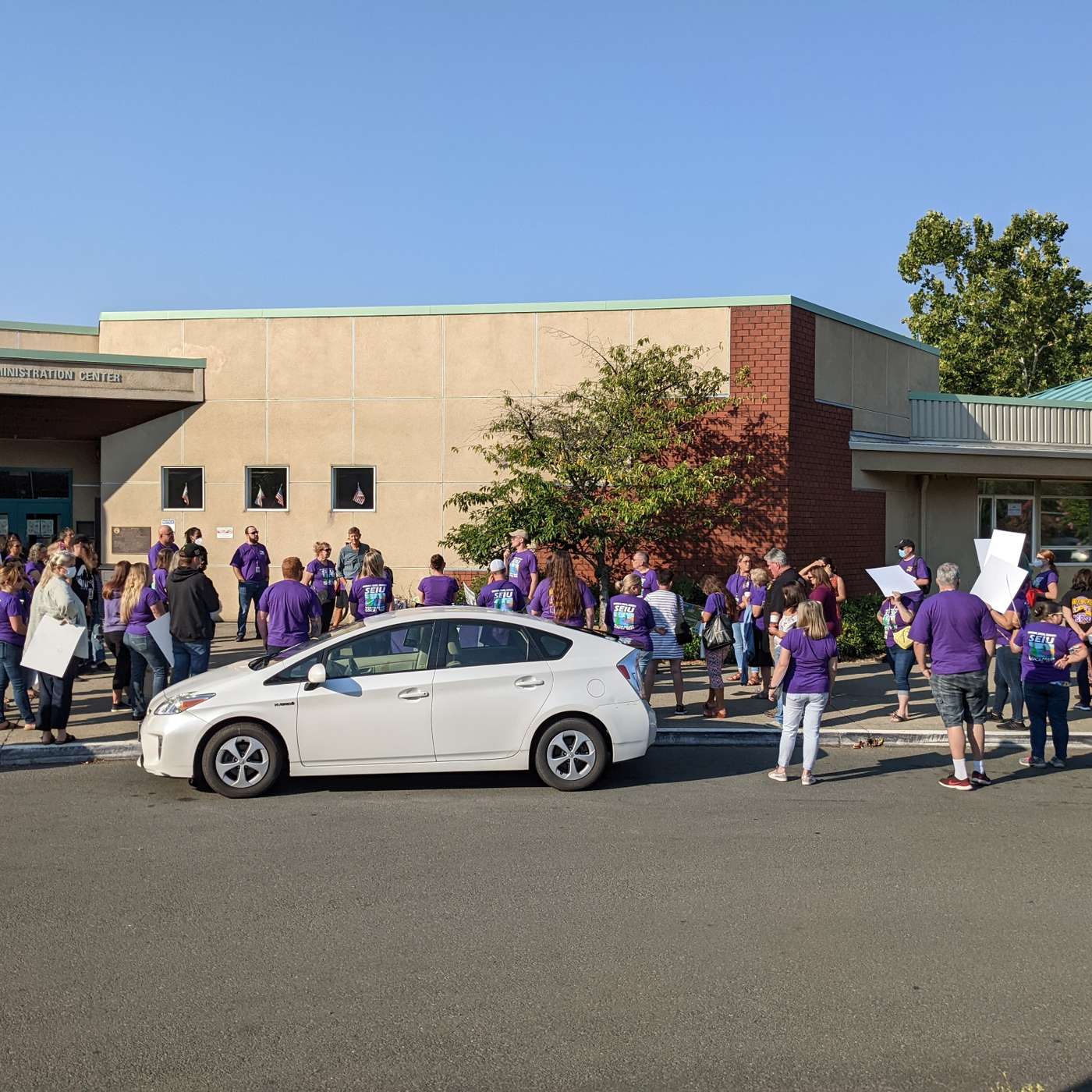
August 18 — Union members packed into the Board of Supervisors chambers at last week’s meeting, scoffing at claims of a financial crisis and calling for an increase in pay. “We’ve been hearing that the county can’t afford a cost of living increase because there’s a financial crisis,” said Patrick Hickey, the field representative for SEIU Local 1021, which represents most of the county’s unionized workers. “But is there? In a word: no.” The county has asked for a year-long pause in negotiations over a Cost of Living Adjustment (COLA) to assess the financial situation on the national as well as local levels. And the Board contemplated a program to exempt media from paying fees for public records act requests, even as a new system of including public comment on meeting agendas has drastically reduced the public discourse. Hickey argued that in the last five years, the county has overestimated expenses and underestimated revenues, sometimes by more than 100% for one source of tax funds. Union members clapped and cheered as he shared his data points with the Board. “The only potential funding shortfall is in cannabis taxes,” he declared; “which everyone who was paying attention knew was coming. But every other funding stream is increasing. How can the Board take action to support county employees? Number one: there are 264 funded, unfilled positions. Repurpose some of those funds. The county has argued that there is no money there because it gets used up by overtime and extra help. But you need to look at the actual data. If you review the past budgets, and the recently released annual comprehensive financial report, you will see that that is not true. There is an increase in overtime and extra help, but it doesn’t come close to using up the savings when those positions are not filled. Number two: for this year’s budget, the county has projected no increase in sales tax revenues. Let’s take a look at how well the county has done in forecasting sales and use tax revenues.” In the last five years, he said, “actual revenues are regularly higher than projected, and expenses are regularly lower than projected. The budget is a fiction, designed to make the Board look prudent and effective. The Board needs to understand this, and make decisions accordingly.” Not all of the presentations were quite as data-driven. Jessica Christensen shared responses to county job postings on Facebook. “We are advertising that your check can be up to $1850 per paycheck,” she began. “Up to. And this is what the public had to say about that: ‘Mendocino County is a gorgeous place to live. But the job market couldn’t suck harder if it attached a nozzle to it.’” She went on, including some frank language from users of the site, as union members laughed and held up their signs. Union President Julie Beardsley predicted what will happen if more workers become dissatisfied and leave the county. “Falling behind in employee compensation will result in a lack of services, phones not being answered, long wait times for permits, and it will put the most vulnerable in our county at risk,” she declared. The public is also no longer privy to correspondence with the Board of Supervisors on matters of public interest. Up until the beginning of June, comments addressed to the Board about items under discussion during the meetings would be attached to the pertinent agenda item. They were often plentiful, and they ranged from expert opinion to angry one-liners. But a new system, called Granicus, requires commenters to create a password-protected account, which has not caught on. I was first surprised on June 21, when it appeared that no one besides supervisors and county staff had anything to say about a controversial proposal for a sales tax. Since then, only county documents have appeared on the agendas. Since the new system was in place, I have obtained at least three important letters about topics that are clearly in the public interest — just not by way of the agenda. Chamise Cubbison, the elected Treasurer-Tax Collector/Auditor-Controller, wrote to the Board of Supervisors on August 2, characterizing assertions they had made about the county’s budget as false. Earlier that day, the Board had agreed to ask the State Controller to help the county with its budget, due to an alleged financial crisis. Cubbison informed the Board that the meeting had been full of misinformation, and that she had not been given a chance to respond. That letter made its way into my hands informally. On July 29, Cannabis Department Director Kristin Nevedal wrote to the Board of Supervisors about updates to the manual for the cannabis equity grant program. Mismanagement and delays in administering the direct grants to qualified applicants were the subject of a recent Grand Jury report, called “Building the Airplane While it’s Flying.” I also obtained this piece of correspondence, from a public servant to elected representatives, infor...

Ep 474Board discusses cannabis equity grant program
August 17 — A consent calendar item on the agenda for this week’s Board of Supervisors meeting revived concerns about mismanagement and delays at the equity cannabis grant program, which was the topic of a recent Grand Jury report. And cannabis issues will now be directed to the General Government committee, a standing committee that meets every other month under Brown Act requirements and will bring proposals to the full board. Cannabis advocates have long requested a standing committee, but will now work with two supervisors who have not been serving on the more limited ad hoc. The equity grant is a state-funded direct grant program that is supposed to provide some assistance to people in the cannabis industry who can prove they were harmed by the war on drugs. In 2020, the county received $2.2 million in round one funding. It has also received roughly $800,000 in round two funding. Ten percent of those funds can be used for administrative costs. On Tuesday, the Board was asked to approve an amendment to the contract with the company hired to administer the grant, Elevate Impact, by over $83,000 in back pay, for work performed between February and August of this year. The expectation was that the contractor would do 95% of the work administering the funds, but that number has been closer to 50%. Five checks have found their way into the hands of applicants, and 47 approved grant applications are under review at County Counsel’s office, to make sure the funds won’t be misused . Supervisor John Haschak pulled the item for a more fulsome discussion, saying, “dealing with this amount of people and almost $300,000 of administration and untold amounts of administration from our cannabis department, because we’re taking on half of the workload…I would just like to see the county compensated, rather than these outside entities.” Monique Ramirez, a grant recipient, reeled off a list of difficulties she’s encountered with the program. “I have a really hard time seeing us potentially give more money to the LEEP program when they have not effectively done their job to this point,” she said. “Back in February, I submitted a very lengthy memo about the equity program, detailing, I believe there were 123 emails with the correspondence in the back and forth that I had to go through just to get to the point of finally getting my check…even my check wasn’t issued correctly.” Haschak had a number of complaints about the contract with Elevate Impact. “The county is expending time and resources on these equity grants,” he declared. “But we do need to get the equity grants out. It’s been way too long, and it’s been way too micromanaged.” When Supervisor Ted Williams asked him if he would be willing to bring back an agenda item with a proposal, Haschak said he thought the cannabis department should bring back a proposal to the Board, “because I don’t understand the contract. None of us understand the contract with Elevate. We haven’t seen any information for it.” The Grand Jury report, called “Building the Airplane While It’s Flying,” found that Elevate Impact, the contractor hired by the county, lacks experience in rural capital improvements projects. Cannabis Department Director Kristin Nevedal said the contractor does not have a team of planners on staff, and that the county didn’t have enough information about the applications in advance to realize that planners would be necessary. She also said the program had been on hold for months, starting in April. “It was on hold for three months,” she said, “during which time we could not proceed with county reviews. We proceeded with department approval, but we couldn’t proceed with moving those proposals through Cobblestone,” the county’s multi-department contract management system. The information about the pause was news to Michael Katz, the Executive Director of the Mendocino Cannabis Alliance, who also said that growers have long been trying to bring their parcels into compliance with CEQA. The earliest iterations of the program, he said, required the involvement of Planning and Building Services. In an interview, he lamented that from the beginning, “expert stakeholder input was not integrated to create a more successful program.” To the question about whether or not the county will be able to pay itself for administering the grant, Nevedal said that, with the payments to Elevate Impact, the county was close to the $300,000 administrative cap that’s allowed for the $3 million in grant funds. “WIthout the contract administrators, we would have to drastically staff up,” she said. “We do not have allocations for staff for grant purposes. Nor have we budgeted for staff for grant purposes…if the Board were to not proceed with the Elevate contract, we would have to cease processing equity applications until such time as we had allocations from the Board for staffing specific to this program.’ County Counsel Christian Curtis told the Board...
Ep 473Drought Task Force to form water resources team
August 16: The Drought Task Force Committee met Monday morning to hammer out more details about how to form a water agency, now being called a water resource team. But questions about where the entity is going, and what it will ultimately do, remain. The formalization of the task force, which is now a Board of Supervisors standing committee currently meeting under the rubric of the Public Health, Safety, and Resource committee, is part of a state mandate to respond to the drought. While potable water and ag water are top of mind at the moment, the scope of the drought is immense. And the extent of local expertise is unknown, with regional experts scattered among 42 water agencies. There are no licensed hydrogeologists in Mendocino County, and hydrologists are thin on the ground. The county did not use all the funds from last year’s $2 million grant from the State Department of Water Resources to haul water from Ukiah to Fort Bragg. That program was administered by the Department of Transportation, which is where the water agency is currently housed. DoT Director Howard Dashiell gave committee members Supervisors John Haschak and Glenn McGourty an update on the remaining money. “If you just look at the contract commitment we’ve got, like, eight or nine hundred thousand dollars for sure that’s available, but if we don’t start hauling water and we don’t meet some of those contract commitments, it could be a million. Those are the estimates…I looked at the grant eligible activities, and didn’t see a lot of flexibility there. Some of the other things like, I know the community would really like to do groundwater monitoring in many of our basins, and trying to get a handle on what the capacity of some of our aquifers are, I didn’t see those kinds of activities, which have been popular in the past, as eligible under that particular grant.” In the meantime, the state is opening up applications for $300 million in urban grant awards, and Round Valley won a grant of close to half a million dollars to monitor groundwater in Covelo. For now, the Board of Supervisors has agreed to work with the UC Davis Cooperative Extension to hire a consultant to come up with proposals for countywide water projects. The process of hiring the consultant could take four or five months. The county hired GEI Consultants last year to work on establishing a standalone water agency. Depending on how much more work they do on their current $306,000 contract, there is between $40,000 and $80,000 left over. Dashiell told the committee what he’s looking for, in response to his request for proposals from a consultant. “A lot of times I’ll put out a proposal for a bridge — I’m sorry to keep using road and bridge examples, because that’s really what I know,” he began. “But I know I want to get from this side of the river to the other side. And often I’ll get a proposal that just blows my socks off on how to do that. So to some extent I’m looking for whoever proposes on this, how to take this bucket of things we said we want, and gives us a nice proposal on how to do that. And obviously, that’ll be translated into a contract the Board and the public will get to look at.” Devon Boer, the Executive Director of the Mendocino County Farm Bureau, wants more clarity on who will be responsible for what. “In terms of the consultant, I’m still not 100% clear on what role UC potentially could play,” she said. “Who is going to be in the role of the standard everyday water agency requirements related to the quagga zebra mussels, some of the issues with water rights up here on the east side of Ukiah, the USGS gauge and other things, are sort of the everyday responsibilities of the water agency…if there’s going to be money expense, we want to see it be productive and complementary to what’s happening, and at this point in time, I’m just not sure, personally, where this is going.” During the budget workshops, the Board authorized $250,000 from the PG&E settlement funds for the water agency. Earlier this month, they agreed to spend up to $190,000 a year on assembling the team. If the money is not spent, it will go back into the PG&E fund. Jim Shields, the manager of the Laytonville County Water District, urged the committee to compile the expertise he says the county already has, and argued for a five-member technical advisory committee that would prioritize capital projects. “Water production is overseen and managed by local government public utility professionals who are the true experts in water related matters,” he said. “They’re the most valuable resource the county has available to rely and depend on at this time for their expertise and professional insights into water related matters. What we need to do is send out a letter to all the water agencies in the county, requesting they get this information to us…I believe this is something we need to get started as soon as possible.” Deborah Edelman, the water program manage...
Ep 472Conversación con el Concejal de Ukiah Juan Orozco Episodio 1
Primer episodio de una serie de conversaciones con el Concejal de la ciudad de Ukiah Juan Orozco explicando cómo se maneja la ciudad, cuál es el trabajo de los concejales y las responsabilidades cívicas de las personas.
Ep 471City of Ukiah multilingual access (Bilingual)
The city of Ukiah has tools for non-English speakers to access information and communicate with the local government.

Ep 470Fort Bragg City Council decides against sales tax for workforce housing
August 11, 2022 — The Fort Bragg City Council had second thoughts this week about its own plans for a sales tax that would have been used to fund workforce housing. The proposal for a ⅜ cent sales tax would have been a general tax, needing only a simple majority to pass and going into the city’s general fund. An oversight committee was going to make sure the estimated $650,000 to $800,000 a year was used for the stated purpose, but that’s not guaranteed with general taxes, as former interim city manager David Spaur, who now works as a consultant for the city, explained. “Having the funds go into the general fund, and then earmarking or designating them towards your specific purpose, allows you to build that account for your specific purpose, but in the event of an emergency, if the Council needed the funds for police, or for fire, or for flood or famine, those funds would be available to you,” he said. “But the oversight committee would want you to possibly replace those funds and backfill them at a later date, or find alternative sources of revenue to replace those funds.” Council member Tess Albin Smith asked Spaur what the city could do with less than a million dollars a year. She said $800,000 “does not seem like enough to do anything with workforce housing. So I’m wondering, are we just going to save it up until we get enough? What would we do with $800,000? What’s the plan?” Spaur replied that the money “will allow you to leverage your housing community development funds for $800,000 into $1.6 million. So with a 50% match, you can double it. You can accrue those funds over several years. You can use those funds to purchase property, or a down payment on property, and then use grant funds and others to close on that property. So it’s a good start. It’s a good bite at the apple. Obviously, you’re going to need a couple bites at the apple. You’ve got a housing crisis going on, and you need to find revenue sources specifically for workforce housing, for the workers, and have that housing be deed-restricted. You also need the funds. So creating some source that helps the city apply for other grants and leverage the funds is needed, whether it be this source or another source.” There will be two taxes on the county ballot in November. During public comment, Supervisor Dan Gjerde told the council that he’s worried that a third ballot measure asking for a tax would doom all three. Fractions of two already-existing taxes are sunsetting: Measure B, a special tax to fund mental healthcare facilities; and Measure A, for the libraries. Library supporters got enough signatures to put a quarter cent proposal, Measure O, on November’s ballot. The Board of Supervisors is also asking voters to approve Measure P, another quarter cent sales tax for fighting fire and fire prevention. Gjerde was key in getting the Board of Supervisors to drop its original idea to include funding water projects, in part by arguing that the Board does not have the political credibility of a citizens group. “I think this is a great, worthy proposal that you have,” he said. “My concern is the timing….One thing you should know is, in the last couple of years, California courts have ruled that if the voters collect signatures and put a tax on the ballot for a specific purpose, it only takes a 50% (plus one majority) to pass. So the library folks have figured that out, and that’s part of the reason why they went directly to the voters. First of all, they gathered support by getting people to sign up to put it on the ballot. Secondly, they know it only takes 50% (plus one majority to pass) and they can guarantee how the money is being spent. So with this proposal, if there was a sales tax, if the voters here in Fort Bragg, if we were to collect signatures and put it on the ballot, it could potentially be ready for the next election. At the latest, that would be March of 2024, the presidential primary…I actually think there’s an advantage, when you have fewer things on the ballot. I think people are better able to understand the proposal itself. And I think they are therefore more likely to vote yes. I think if they don’t know enough about a proposal, they’re more likely to vote no. Anyway, again, I’m just concerned that if there are three taxes on this election, they’re more likely to all go down in defeat.” Mayor Bernie Norvell cited the lack of trust in government at the county as he agreed with most of his colleagues that now is the wrong time to ask voters to pay more taxes. “I’m going to fall in line here,” he said. “I think the timing is just not right for a general tax. I don’t think there’s trust in government right now. If you have followed the county, they got a lot of heat. I don’t think there’s trust with the county right now. I do think they’ll get their library tax. I hope they get their fire tax. I think we’re in a better position than the county with government trust, and I would hate to see this project g...
Ep 469"Crisis is a strong word;" but county's finances need a careful eye
August 10, 2022 — The new fiscal year is off to a rocky start, with miscommunication about the health plan deficit, uncertainty about federal disaster reimbursements, and the county’s main labor union filing a complaint with the state in the midst of contract negotiations. Last week, the Board of Supervisors agreed to ask the state controller for help with its books after Supervisor Ted Williams declared that the county was in a financial crisis. Chamise Cubbison, the newly elected Treasurer-Tax Collector/Auditor-Controller, wrote a letter to the board saying the discussion was full of misinformation, while retired Treasurer-Tax Collector Shari Schapmire said the county is “absolutely not” in a financial crisis. CEO Darcie Antle said crisis is a strong word to describe the county’s financial situation, but there are areas of concern, including close to $70 million in long term debt service and rising interest rates as the county contemplates refinancing bonds to fund the new jail. Eleven million dollars in disaster reimbursements from FEMA is still outstanding. And Antle described the confluence of events that led up to the sudden news about last year’s $3.6 million shortfall in the county health plan. She recalled that just before COVID, and the high-dollar claims that followed, the county had a robust reserve in the health plan. “The prior Auditor-Controller came forward in 16/17 and stated that our reserve for the health plan, the fund balance, was too high,” she recalled; “and that the State Controller was concerned about that, and recommended that we spend down that amount of money. I think we spent down roughly $6 million through a health holiday. That occurred in 17/18 and 18/19. In the quarter of October through December of each respective year, employees and the county did not pay the premium for those months. So those were health holidays, which equated to about a $6 million spend-down. In December of 2019, who would imagine we would be going into COVID…claims increased, acuities increased, over the last three years.” In August of last year, Antle met with former Auditor-Controller Lloyd Weer to discuss a $1.1 million deficit in the health plan. She stated that in 2021, “that information was reported to the Board, a couple of times…At that time, the team, the HR team, and the Executive Office, did ask for an increase in the health plan, and that increase went into effect January 1 of 2022 at a 12% increase,” which Antle says was well within the amount allowed by the county’s contracts with its labor unions. There was a delay in reporting the additional $2.5 million deficit to the board, and Antle said her team did report the inaccurate number. She said the $1.1 million deficit was on a cash basis, “which can be seen by any department running a month to actual report. That is what was obtained by the Executive Office, the HR office, and what was clearly understood by our outside actuary. The $2.5 million, which is the number that was missing from the original $3.6 million, that was on an accrual basis on the balance sheet, and the balance sheet is balanced once per year by the outside auditors. The balance sheet for 2021, because of the delay in the outside audit, was not completed and submitted to the auditor (because they complete and submit to the auditor), until the end of June, early July, of 2022. So we can clearly see that from the financial statement now. But that wasn’t what was reported. And again, the team reported twice, publicly, a $1.1 (million deficit). Nothing was brought forward to clarify those statements. So is this misdoing on anyone’s part, or is this part of a transition? We had our Auditor-Controller retire. Our Treasurer-Tax Collector retired. We have a new person stepping into a dual role that had never been filled here before. I’m stepping into my new role as well. So I think everybody needs to continue to work together, and come together as a tem, and make sure that there is transparency and communication to the Board, and to the public.” The county is currently in negotiations with its labor unions, which also want more budget information. Last month, SEIU Local 1021 filed a complaint with the Public Employees Relations Board (PERB) about lengthy delays in fulfilling requests for detailed information, which Deputy CEO Cherie Johnson said she’s working to supply. The county has until August 18 to respond to PERB about the complaint, and is likely to face a number of deadlines to produce the rest of the information to the union negotiators. The union is asking for a 5% Cost Of Living Adjustment, or COLA, and Antle said she is asking for a one-year pause on that part of the negotiation. “We really want to assess the financial stability of the county at this time,” she said. “Coming out of COVID, not receiving all our reimbursement from FEMA, going into a possible economic downturn. We really just want to understand the fiscal position. We are ...

Ep 468Financial crisis? "Absolutely not."
August 9, 2022 — The Mendocino County Board of Supervisors is facing fierce criticism after its unanimous decision last week to send a letter to the state controller, asking for help with the county’s books. “I think we have a financial crisis here, and we just don’t know how bad it is,” said Supervisor Ted Williams, during a discussion about projected cost overruns at the project to build a new jail. But the county’s own financial experts say the real problems are miscommunication, misinformation, and a lack of financial understanding at the leadership level. On Tuesday afternoon, after last week’s Board of Supervisors meeting, Chamise Cubbison, the newly elected Treasurer-Tax Collector/Auditor-Controller, wrote a letter to the Board, complaining that “there was a lot of misinformation discussed at today’s meeting and no opportunity for rebuttal or open discussion. I would hope the Board would seek information directly before spreading rumors.” She took on Williams’ assertion that he hasn’t been able to get a credible financial report the whole time he’s been in office, writing that the statement that “outside auditor recommendations are being ignored and not implemented is false.” She claims that she had already explained to Williams that the outside auditor makes adjustments to the information depending on where it’s being reported, whether on a financial statement or to the state or federal government. And in an interview, Retired Treasurer Tax-Collector Shari Schapmire said that she believes “the majority of this board is ill-equipped to comprehend the financial complexities that are inherent in the operation of the county.” She added that overall, communication deteriorated during COVID, but she thinks most of the board members “also lack the communication skills to have any dialogue with any staff outside the CEO’s office that may be able to assist them. Right out of the chute, I want to say I do not believe the state controller’s office needs to access the records or clean anything up.” Asked if she thinks there is a financial crisis, Schapmire said, “Absolutely not…I do not believe there is a financial crisis. I’ve been through a financial crisis. I know what a financial crisis is. And I cannot imagine that we would be there, less than five months after I have retired.” She took umbrage at Board comments about a lack of skill in the financial offices, particularly Supervisor Glenn McGourty’s assertion that he supports “a professional financial office, which is what most big organizations have, where you appoint people based on their skill set and a proven track record of handling money well. And if we look back through Mendocino County’s history at the Auditor-Controller and Tax Collector-Treasurer, we don’t see that pattern.” Schapmire drew on history to refute the claim, saying, “If you go back a decade ago and look at the financial meltdown, there was an unbelievable effort in place by the CEO, Auditor, Treasurer-Tax Collector, and the sitting Board of Supervisors, all working together to address several financial issues that the county was facing. And despite these claims, this group was extremely qualified to address those catastrophic issues and they were addressed. And I think there absolutely was a proven track record of those individuals that were there at the time, me being one of them. We handled this during the most dire of times. And I think if Supervisor McGourty hasn’t seen this, he wasn’t paying attention the last decade…It almost feels like they have some inadequacies at the Board, and it’s almost like they’re publicly airing irresponsible and inaccurate information because they’re trying to deflect from those inadequacies.” Cubbison emphasized the theme that financial information is available, and laid out some details about a breakdown in communication. She wrote that shortly before his retirement last year, she and former Auditor-Controller Lloyd Weer met with members of the Executive Office fiscal team to discuss the projected deficits in the health plan, which they expected would keep growing. The shortfall in the health plan for fiscal year 2020/2021 was $3.6 million. The projected shortfall this year is another $4 million. “It is unfortunate that the CEO’s office and the Health Plan consultants did not sound the alarm sooner on the growing deficit, but that is not because the information was not available,” she wrote. “Mr. Weer and I both believed that the CEO’s office would present the issue during the already scheduled future Board agenda item to go over the Health Plan. We were both surprised that a higher Health Plan contribution rate was not requested at that meeting.” Schapmire thinks the Board should have allowed the auditor’s office to replace Weer as soon as possible. Leaving the top position vacant for months, and then consolidating the offices of Treasurer-Tax Collector and Auditor-Controller were two decisions that leave her with “v...
Ep 467Board moves forward with plan to create water agency
August 8, 2022 — The Board of Supervisors agreed in a narrow vote last week to approve the idea of a water agency. During budgeting in June, the board agreed to allocate $250,000 from the PG&E settlement to form the agency. And, to comply with a new law, SB 552, which requires drought planning, the board agreed unanimously to formalize the drought task force into a standing committee, consisting of Supervisors Glenn McGourty and John Haschak. At the moment, the Department of Transportation is in charge of water issues, but McGourty told the board that he thinks the county should create a water resources team consisting of the drought committee and county staff collaborating with experts at the U.C. Davis Cooperative Extension. Some of them, including McGourty himself, have already done water studies in Mendocino County. In 2012, McGourty led a study on ag water use in the Navarro River watershed. CEO Darcie Antle offered a quick calculation of how much she thinks it will cost to hire a consultant for a quarter million dollars. “If you are going to be payin ga consultant $200 an hour for roughly a thousand hours, our staff would be required to attend the meetings as well to stay current,” she said. “I believe that happened last year, where I had Sara Pierce on most of the meetings, and also Judy Morris or Steve Dunnicliff, as well as Brent, who helped coordinate all the calls with CalOES. So for every consultant hour you’re probably looking at two or three hours of staff time…if we’re going to do the grant writing, and I don’t believe we want to pay a consultant that amount of money to help write our grants. We have another contract out for grant writing. Typically, for every grant, it’s costing us anywhere from six to ten thousand dollars per grant, so it’s going to add up quickly. I would estimate roughly, with the staffing level that we’re out, we would be doubling the amount.” Haschak favored another proposal, by Department of Transportation Director Howard Dashiell, to use internal staff. “I just don’t think that we need this consultant, who’s going to be working 58% of the time at $200 an hour to do these things,” he said. “I think that we can do it internally. The long term is, we need to put it out there to get a person who can learn the ropes and learn the business and provide that over a long term. Because this is a one-shot deal, and we don’t even need it.” But McGourty argued that the subject matter is too complex not to bring in experts who are already connected at the state level and are alert to funding opportunities for local projects. “Mr. Chairman, I’m wondering if you could pull up the MCWA implementation plan and go to page 14,” he remarked. “There is a task list that has been identified, based on stakeholder comments. I think this might be helpful to Supervisor Haschak, about the complexity of what he’s expecting to sort of spontaneously happen.” Supervisor Dan Gjerde reminded the board of his position on the use of public money for water districts. “I’m not convinced of this allocation at this time,” he said. “Supervisor McGourty, I heard you say that very little has been done since the water agency was disbanded. I actually think that’s not accurate. It may accurately describe some of the inaction of some of the water districts in our county. I don’t think it accurately describes some of the action of many of our water districts in this county, during the time that the county water agency was going. And I think the unevenness of leadership by the water districts throughout the county, some failing to do their job, looking for a handout but not willing to charge their customers enough to help themselves, other water districts in the county asking their ratepayers to pay what I would say are the state rates for water so they would have the resources to solve their problems and aggressively seek state grants. You know, there’s a disparity of leadership between the different water districts in this county, and I don’t want to reward the lack of leadership by some of the water districts with county funds.” Devon Boer, the Executive Director of the Mendocino County Farm Bureau, invited Gjerde to a meeting to discuss the complexities. “We do have some of our residents who live outside of an actual organized district,” she pointed out. “And some of the unknowns that have been discussed, such as the water hauling extraction ordinance, which is going to the Planning Commission. We’ve got the Governor’s Executive ORder N722, which is being punted over to Environmental Health…those are the questions I’ve been receiving from individuals with wells outside of districts, who are now looking at various county departments that might be providing them with various directions, lack of oversight, and perhaps not having qualifications for looking at hydrogeology…that’s been the downturn of our county, is we don’t have any sort of specific level of expertise. We’ve got different s...
Ep 466Abortion access constrained even where it remains legal
August 4, 2022 — Abortion remains legal in California, but there have been barriers to access since well before the Supreme Court overturned Roe vs. Wade. In Mendocino county, where poverty is high and roads are long, religious hospitals and federally funded clinics dominate the healthcare landscape. But the pandemic has legitimized telehealth, and the use of abortion pills is on the rise. Organizations whose mission it is to increase access are flush with volunteers. Gloria Martinez, the Senior Director of Operations at Planned Parenthood Northern California, said her affiliate calls on an organization called Access Reproductive Justice about once a week to give patients a ride or airfare, or even to help cover the cost of abortion. Access Reproductive Justice is not accepting applications for volunteers at this time due to overwhelming interest. Martinez says Planned Parenthood is upping its availability. “We’re actually doing good on access,” she said. “Which means that most individuals can access an appointment within seven days…the reason we’ve been able to maintain our access as such — and in some cases, depending on the week and the location, they can get in sooner than the seven days — the reason we have been able to maintain that level of access is we’ve been planning for it by increasing hours, making sure we have more evening hours availab.e weekend hours as well, and then alsoy increasing our staffing and the number of staff members who are trained to provide abortion services, not just providers, but also frontline staff.” But religious hospitals, which manage one out of five hospital beds in the country, and all the hospitals in Mendocino County, routinely deny abortion care. In 2019, when the Mendocino Coast Healthcare District Board was looking for a larger hospital to take over the small hospital in Fort Bragg, the ACLU sent the board a letter reminding it that, as a public entity, the MCHD was required under the California Constitution to provide abortion services. The letter urged the board “to prioritize partnership with an entity that will not restrict care at MCDH based on religious doctrine.” Dawn Hofberg is a retired Physician Assistant who is part of a reproductive access group that worked to make sure that medication abortions remained available in the former North Coast Family Clinic before it transferred to Adventist control. “It seemed like there was an agreement that whatever services were currently being provided in the community would be continued by Adventist, should they take over,” she recalled. “Of course, the biggest thing on the table was OB-GYN, which was eliminated…we could see that OB-GYN was going to be taken away, but we decided to form this group to make sure that some kind of abortion services on the coast would continue. We would very much like to have both medical abortion and surgical be options for our community, but at this point, all surgical abortions are done in Ukiah or Santa Rosa, through Planned Parenthood or other private clinics.” The Adventist clinic provides medication abortion about once or twice a month, with referrals from Mendocino Coast Clinics through its Blue Door program. Mendocino Coast Clinics is prohibited from offering abortions because it is a federally funded clinic and the Hyde Amendment to the Medicaid appropriation prevents the use of federal funds for abortion services. Adventist would not discuss its abortion policies with us, but in 2019, during a proposed merger with another hospital in Delano, Adventist Health told the Attorney General that, while “Medical abortions are performed in Adventist Health facilities…Abortions are not performed on demand, without medical justification.” In non-life threatening situations where a pregnant woman requests an abortion, the hospital convenes an ethics committee to make a recommendation. Hospitals have long been allowed to deny patients certain kinds of healthcare, even when it was supposed to be a constitutional right. Lori Freedman is a sociologist and Associate Professor at UCSF, and a researcher with the Bixby Center for Global Reproductive Health. “We have a lot of conscience protections in the United States,” she said. “Some scholars have called it conscience creep. Initially, when abortion was legalized in 1973, there was the first conscience clause, the Church Amendment, that said no one would be forced to provide abortions. But importantly, that got broadened to cover institutions. Once it was determined that institutions have conscience rights, that paved the way for all Catholic hospitals to have a doctrine” which overrode the consciences of the people who work within the hospitals. Freedman said there is a lot of good abortion legislation going forward in California, but she can’t think of a way that any of it would affect the protections that religious hospitals enjoy. On the national level, she would like to see the repeal of the Weld...
Ep 464Noticias en Español Agosto 8
Entrevista con Adrian Mata, organizador del mercado de empresarios jovenes La Familia
Ep 465Newscast August 5
KZYX Newscast for August 5. Sarah Right report on the Potter Valley Hydropower plant, followed by a bilingual interview with La Familia, a group of young Latino entrepreneurs and Stacey Sheldon with the Ukiah Observatory Park.

Ep 464Community puts on RoeRage Ukiah event in response to overturning of Roe v Wade
Following the Supreme Court’s overturning of the reproductive rights bill Roe v. Wade, members of Mendocino Country are now speaking up about the injustice. RoeRage Ukiah is a small orginazation that was born out from the reproductive rallies following the overturning of Roe on June 24th, 2022. Ellen Weed, a Ukiah local, had been gathering stories about women who had abortions or suffered from a lack of abortion accessibilty. In gathering these stories, Ellen Weed gathered a group called RoeRage to organize a free event where community can share and listen to these stories. KZYX spoke with Ellen Weed about why local women have organized themselves. Weed hopes the community gathering will inspire and motivate others to keep advocating for women’s rights. She comments that when she was younger, before Roe v Wade existed, women were disempowered to speak up for themselves. She says she is inspired by the younger generations of women showing up for themselves. RoeRage Ukiah will take place this Saturday, August 6 at 7:00 pm, outside of the Ukiah Playhouse Theater. Weed invites all to bring chairs or blankets to sit on and listening ears.