
KZYX News
1,162 episodes — Page 12 of 24
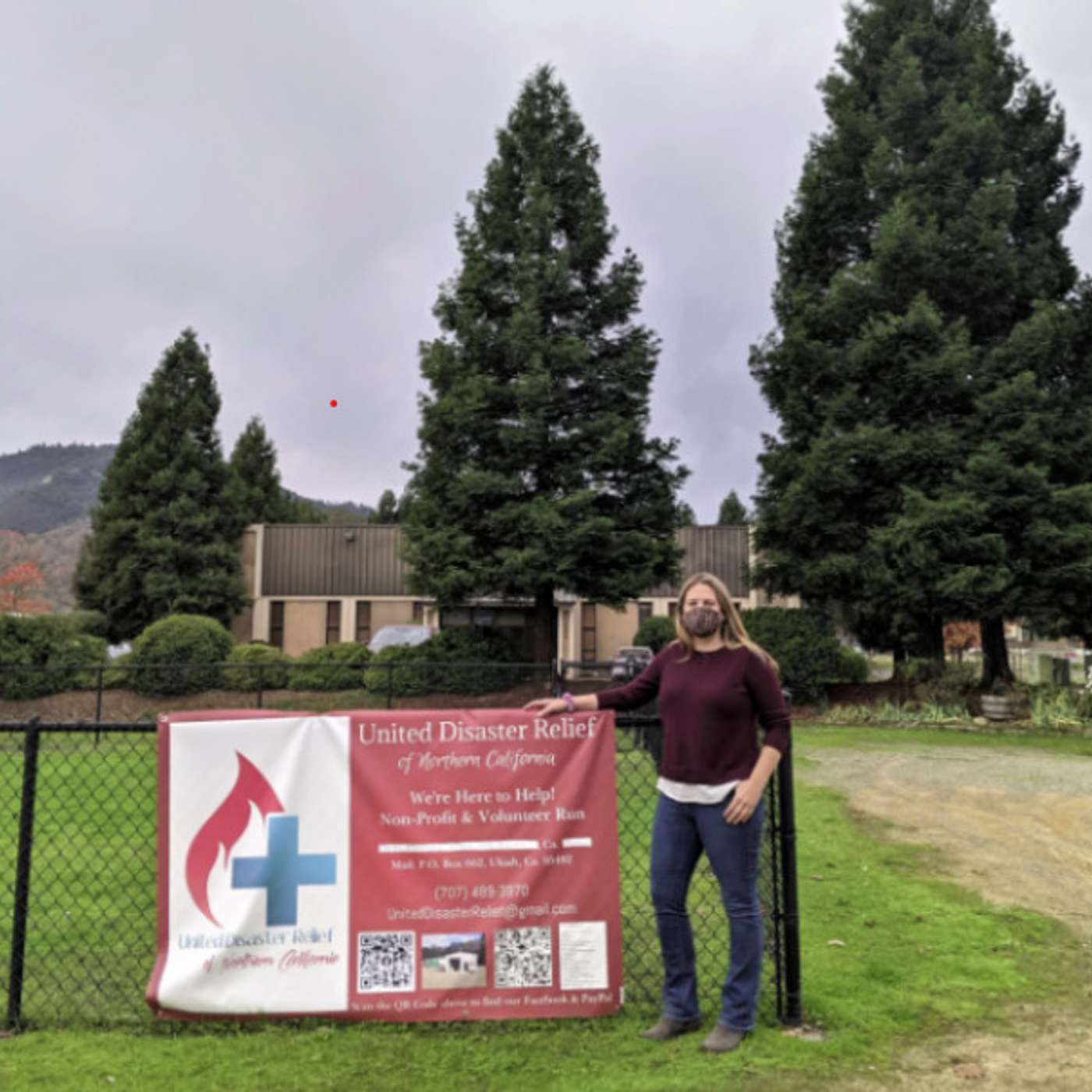
Ep 613Disabled man, service dog displaced by snow damage
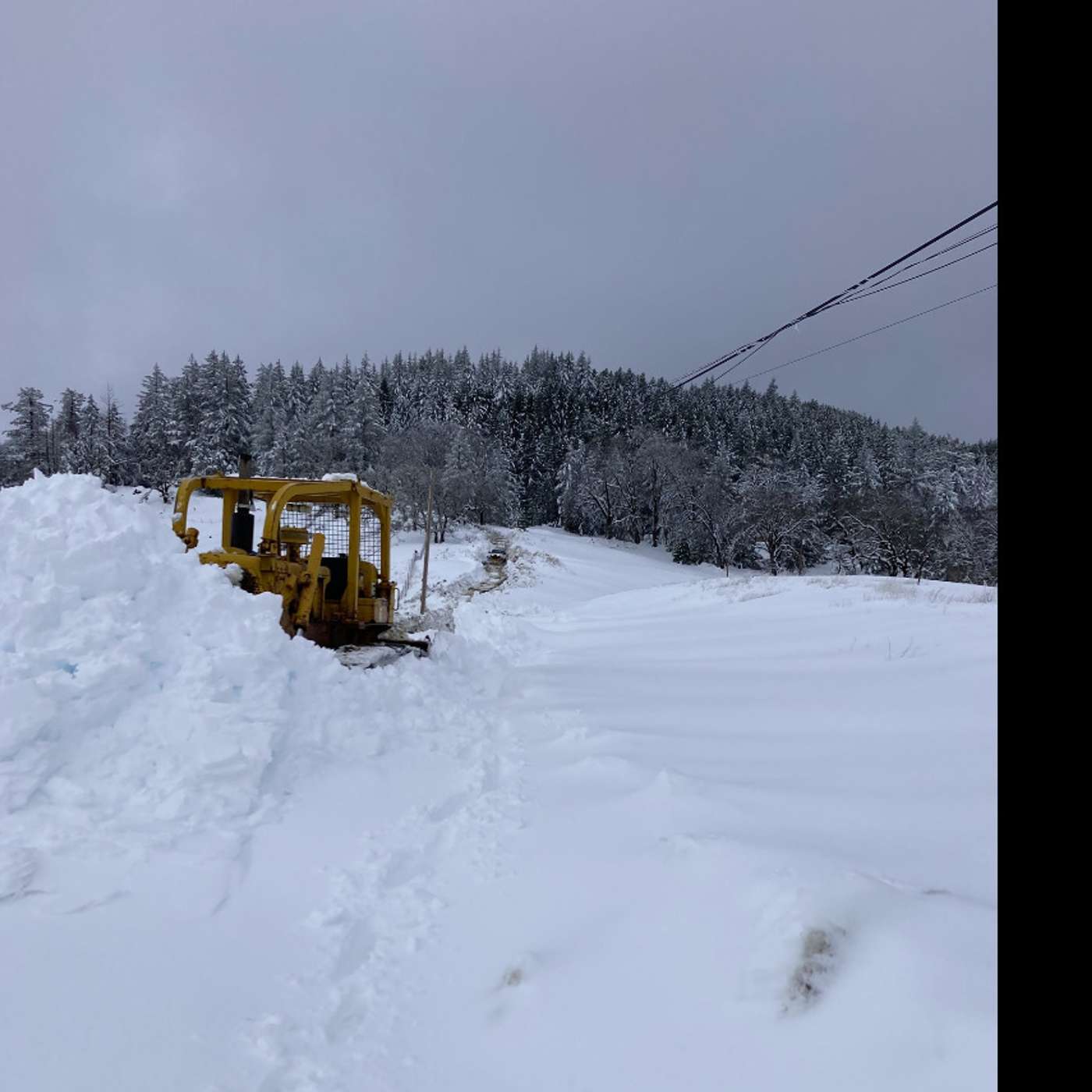
Ep 612Residents snowed in for weeks
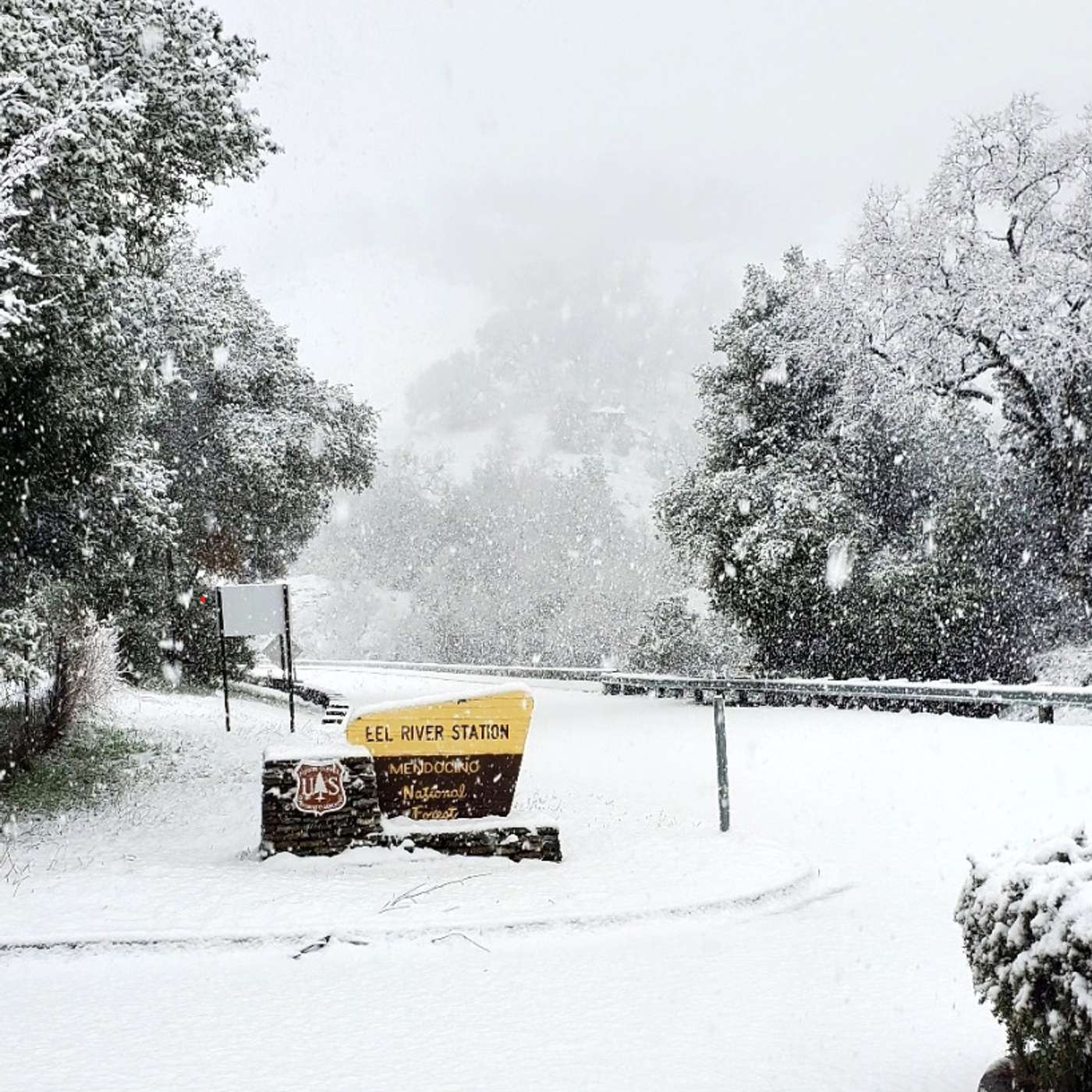
Ep 611Planning Commission supports Bella Vista proposal; eight feet of snow in Nat'l Forest
Ep 610"We will not be pitted against one another"
Ep 609County declares local emergency

Ep 608Temporary cannabis tax relief proposal heading for Board of Supervisors
Ep 607Stranded motorist rescued
Ep 606Neighbors rely on each other in historic storms
Ep 605Storms catching region off-guard

Ep 604Battle over Richardson Grove proposal continues
Ep 603Fire at Round Valley Indian Healthcare Center
Ep 602Agency moves on Skunk Train
Ep 601"We're going to have to look at cuts." Supervisors look at funding needs in budget workshop
Ep 600"A shocking conversation:" Cannabis dept wants to use grant funds to pay its own expenses
Ep 599Great Redwood Trail extension south of Ukiah paused

Ep 598Winter storms hitting Mendocino County
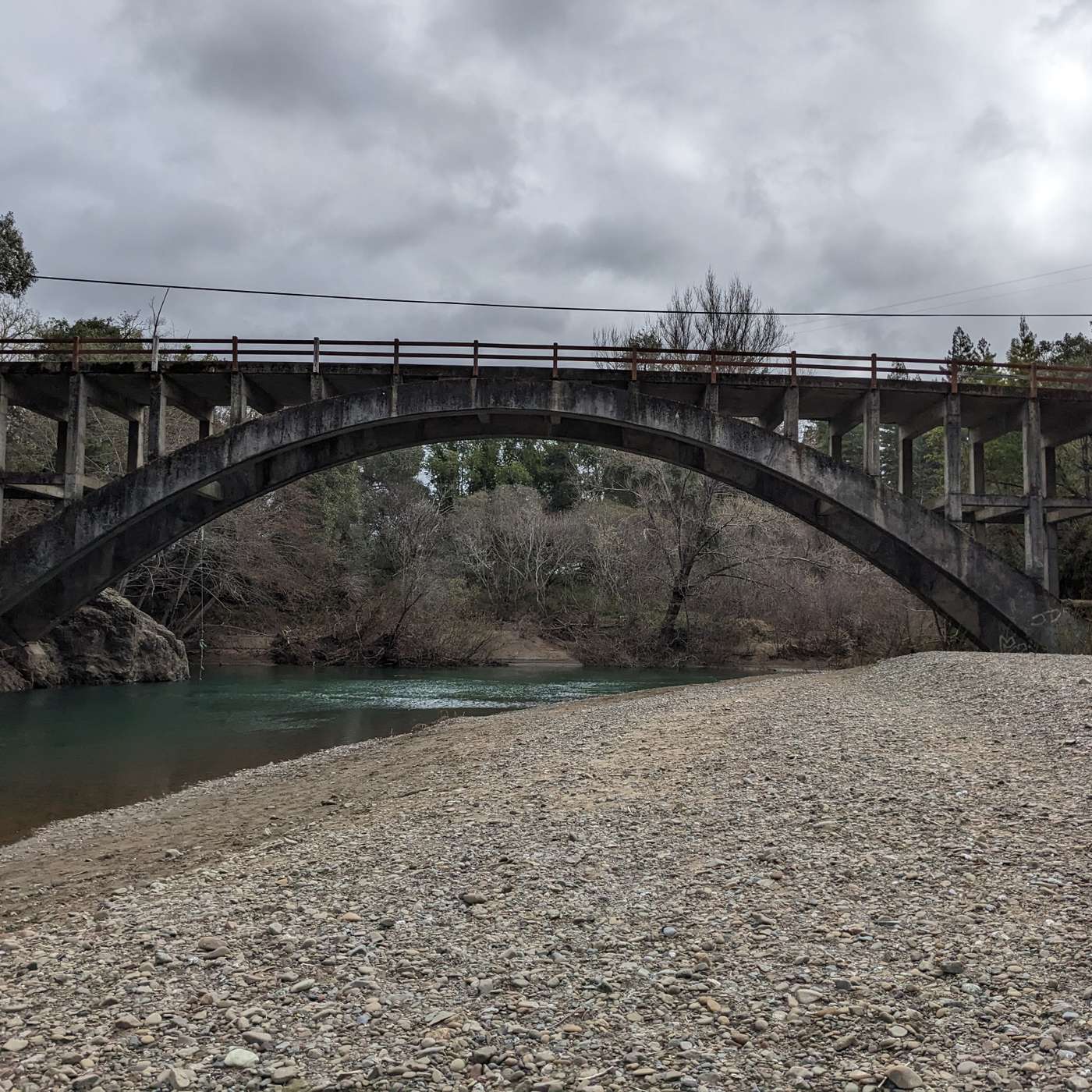
Ep 597Community groups, Huffman consider amenities for Philo Beach

Ep 596Food banks gearing up for end of emergency benefits
Ep 595Ending state of emergency means changes in emergency benefits
Ep 594Great Redwood trail costly; trees at risk
Ep 593Old Howard Hospital comes down

Ep 592Khadijah Britton's family remembers
Ep 591BOS declines outside legal opinions

Ep 590Anderson Valley Housing Association releases housing needs assessment
Ep 589Cannabis advocacy group implores state intervention in Mendocino County permitting process
Ep 588Inmate dies in Mendocino County jail

Ep 587Economic woes hit shelter animals hard
Economic woes are hitting shelter animals hard, as would-be adopters struggle with rising costs, housing insecurity, and the difficulty of finding affordable veterinary care. The result is that animal shelters across the country are at capacity. Some shelters have even re-instituted the practice of euthanizing for lack of space. Mendocino County Animal Shelter is not destroying animals to make room at this time, but dog lovers had a scare late last month when eight large-breed dogs were placed on a euthanasia list. The list was quickly mothballed, but the shelter is still pleading with people to foster and adopt animals. Becca Edwards is the dog kennel manager for the Humane Society of Inland Mendocino County in Redwood Valley. On a Friday afternoon, most of the eighty or so dogs under her care were in foster homes, ready to come pouring back in for their chance at adoption over the weekend. Edwards says permanent homes are in short supply. “It’s not so much that we’re seeing more animals coming in,” she said. “The numbers are pretty consistent. It’s that we’re not having the same outcomes. Since the pandemic, people are also struggling, so keeping animals, or getting animals, is probably not top of their priority list at the moment. So we’re seeing less outcomes, more intakes. During the pandemic… any adoptable animal here was gone within days, especially puppies, small dogs, they were just flying out the doors. What we’re seeing now is not so much the returns, but the halting of that process, because people are just not feeling secure in bringing on a new family member. Or they don’t have the financial resources or housing. Our returns have stayed pretty consistent. We usually get a couple a month coming back to us. I think animals are just not having the easy way out that they used to.” Jane Baldwin is the assistant manager at the Milo Foundation Sanctuary outside of Willits, on a sprawling 285-acre property with a variety of animals. The sanctuary is at capacity with about 120 dogs, two pigs, about thirty cats, a hibernating turtle, and a goat suffering from CL, a chronic bacterial disease that afflicts goats and sheep. “If you would like him,” Baldwin said of the goat, “He’s lonely.” All the animals are up for adoption. Baldwin says some of the dogs come from shelters in other parts of the state, where they are in danger of being euthanized. “We get lots of mamas with very young puppies, and if we don’t take them, they're just going to euthanize all of them,” she said. “So it’s an absolute crisis. It’s like if there’s an earthquake and a flood and a wildfire all at the same time, that’s what it is. There’s just so many nice, nice dogs, and there are just too many. We are doing the best we can, and that’s why we really want people to foster. Because if you foster one dog, that makes a spot for another dog that we can save.” There are dogs in the house and the backyard and the office, as well as in kennels all over the property. One new arrival is a large young male brindle with a happy disposition who was rescued from Creekside Cabins, which was recently evacuated. Baldwin recognizes that economic hardship and housing insecurity play a large role in the animals’ plight. “We get a lot of people who want to surrender their dog because they have to move,” she said. “Everybody knows about the housing crisis.” Baldwin also points to the high cost of spay neuter services, and a shortage of veterinarians. In an email, Richard Molinari, the Animal Shelter Director for Mendocino County, wrote that for almost two years, animal shelters were instructed to not perform (spay neuter surgeries), then perform” them at a lower level. He added that, “We here at Animal Care Services only conducted approximately 2000 surgeries in 2020 and 2000 in 2021. Prior years we did approximately 3000 a year,” which he believes led to more animals being born. He noted that, “Inflation has played a part into this equation as well. It costs approximately $1,400 a year to keep a dog…when finances are hard, pets are the first to go.” A lot of dogs take a circuitous route to their final homes, like my dog Chance. He was one of those less-charismatic adult dogs who was picked up in Covelo by Bones Pet Rescue, taken to the county shelter, then to the Humane Society in Redwood Valley. Other dogs, with recognizable breed characteristics, used to find their niche with breed-specific rescues. But Edwards says that’s not the case anymore. “Before, when we’d have German Shepherd surrenders, we’d tell them to contact German Shepherd rescues,” she recalls. “But they’re all full. So we’re not getting that same outlet for these breeds.” And shelters have to be aware of the resources that go into dogs that are a little more difficult. “When we have a behavior case, we’re very sensitive to the fact that that specific dog or dogs need our time. Piling them on will not service the ones we currently have, so we have t...
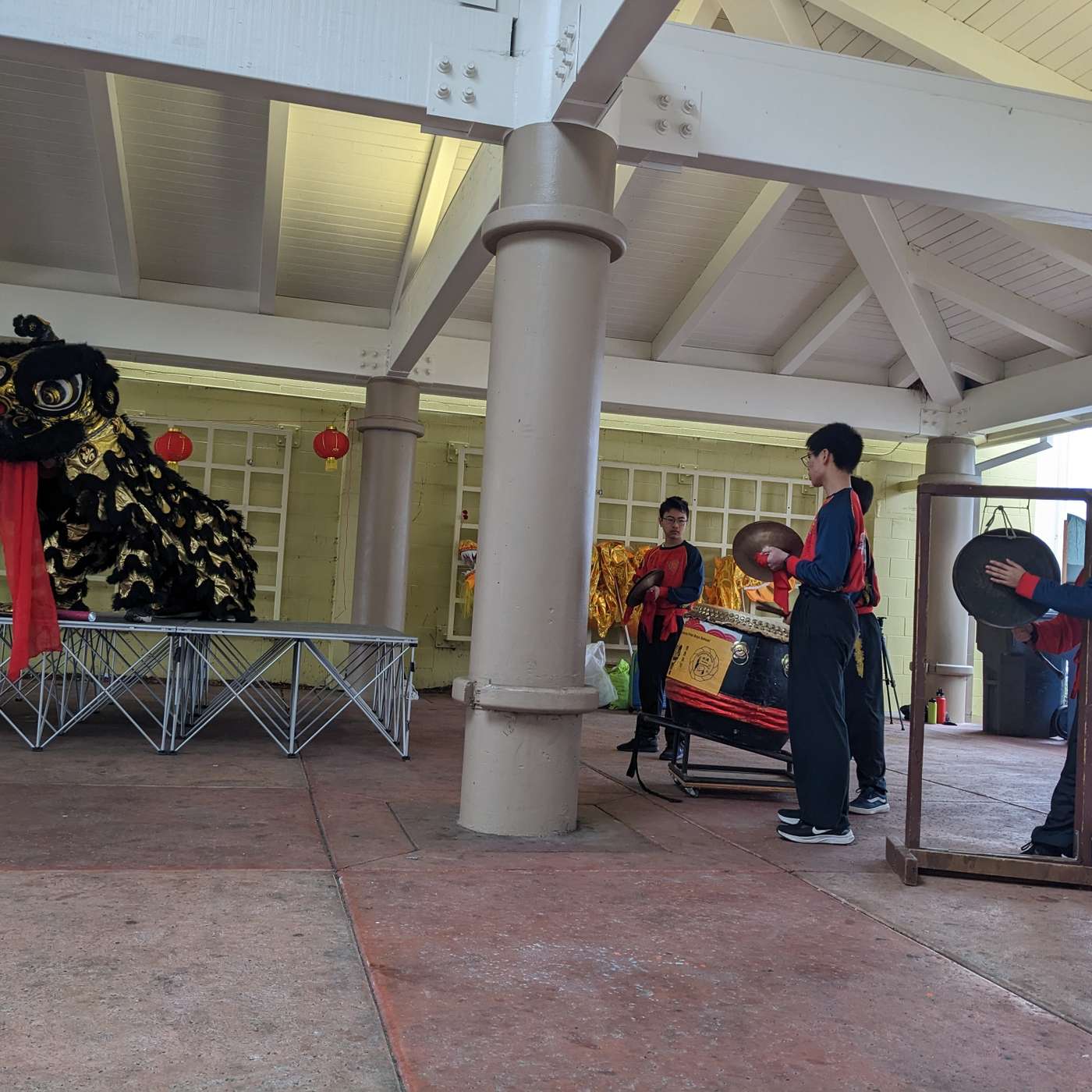
Ep 586Lantern Festival returns to Ukiah
New year’s blessings typically include wishes for a long life. Sunday, the last day of the lunar new year celebrations, coincided with the 115th birthday of Edie Ceccarelli, the third oldest person in the world. At Alex Thomas Plaza in Ukiah, the Lantern Festival was back, after three years’ pandemic hiatus. Instilling Goodness Elementary and Developing Virtue Secondary Schools from the City of Ten Thousand Buddhas offered lion and dragon dances, music, art and food for the public. The festivities opened at noon, under the pavilion as a sporadic downpour soaked the streets. To the accompaniment of gongs and cymbals, a black and gold lion opened a scroll announcing the Year of the Water Rabbit, worked up the courage to leap onto a table, and uncovered a plate of treats, which it flung into the crowd. Teacher H.T. coordinates the dance groups for the boys’ school. He took a quick break between acts to explain the lion dance, as students dashed through the rain to put away their costumes and set up for the Chinese orchestra performance. The celebration opens with a lion dance because, “Once upon a time, during harvest time,” the farmers came out to find that all their crops had disappeared. So one day, they decided to use gongs and cymbals to scare away whatever had been destroying the crops. The lion dance is something like a spring cleaning ritual, to scare away whatever evil thing that might have bad designs on the crop. “So that’s why, every Lunar New Year, we start with the lion dance,” he concluded. There was another kind of dancing, too. At a long table in what little sunlight there was, Dale, who teaches Chinese at the elementary and secondary schools, was guiding children through what she calls “a dance on the paper.” Calligraphy, she explained, “needs a lot of practice. But the process is very attractive to me. It’s a different kind of cultivation…It’s good training, to train your focus.” Dale’s focus never wavered, as the orchestra struck up a tune and the rain crashed down sideways. And after years of pandemic, a little rainstorm wasn’t dampening H.T.’s spirits. “I’m excited for the kids,” he reflected. “Because they’ve got something to do.” The last three years have been hard, but as he watched the first-year students take their places for their performance, he predicted that, “Now, we’ll be able to get them coming back. You see how they’re working slowly up. And I’m hoping next year and the following year, we’ll get better and better.” Up the hill in Willits, Edie Ceccarelli, who’s seen more new years than almost everyone who’s ever lived, was being honored with a drive-by birthday parade. Lauren Schmitt from KMUD news talked with Evelyn Persico, a relative and trustee of the super-centenarian, which is what gerontologists call people over 110. “She was born at home in 1908,” Persico related. “I can hardly put it into words, what she’s experienced. Her father was a very hard-working man...there were four girls and three boys in the family, and they lived thorough times that were nose to the grindstone, so to speak. He came to the United States from Italy, and he ended up here in Willits working for the railroads. The railroads were just making the racks from the city to Eureka. What they experienced is going back to the Model T Ford to now, to the space age. Edie was always a very active person…she and her siblings would walk out to the valley here and dig up potatoes for 50 cents a day…her life has been amazingly healthy.” Persico related the famous Ceccarelli tip for a long life: “A glass of wine with dinner, and stay out of other people’s business, just mind your own business, and play. She had a great philosophy…the thing that’s been hard for Edie is that she’s the survivor. Her family, her brothers and sisters, are gone. Her daughter and three granddaughters are gone, and her son-in-law just passed away,” a few years ago. “She’s the sole survivor. And that is very hard. That’s why she says, why am I still here? I just say, well, God’s not ready for you yet. It’s hard to wrap your head around it, but spending so many years with her now, I feel like God has given me a piece of what he gave to her, because I have loved doing for her, and loving her, and knowing her, and just being a part of her life.”
Ep 585Maps and wildlife discussed at BoS meeting
The Board of Supervisors heard an update last week on the non-lethal wildlife exclusionary program. They also proceeded with the development of a pilot program that would ask voters to approve the creation of a benefit zone to assess residents of Brooktrails and surrounding areas to maintain evacuation routes on private roads. And, while supervisors concluded that the county is not in a position to craft an ordinance to protect riparian areas and wetlands, they agreed to have Supervisor Glenn McGourty work with relevant agencies to collect maps of Mendocino County to organize the information about those areas. The county no longer has a contract with USDA’s Wildlife Services, which offered non-lethal as well as lethal solutions to problems people have with wild animals. Citizens groups complained that Wildlife Services killed hundreds of animals that did not present a problem, while the agency itself insisted that the majority of its calls resulted in non-lethal assistance. Acting Ag Commissioner Andrew Smith told the Board that members of the public can contact either his department or county Animal Services for small wildlife nuisance animals. California Fish and Wildlife deals with larger nuisance animals or sick, injured, or orphaned wild animals. CDFW is the only agency that can issue a depredation permit for wildlife conflicts. The UC Cooperative Extension offers education and surveys about non-lethal wildlife control. Maps were key to the next two discussions. Residents in Brooktrails have already used the private FirCo road to evacuate during the Oak Fire. There are memorandums of understanding in place to continue using that road as well as the sewer easement road, but Department of Transportation Director Howard Dashiell said that LAFCO, the Local Agency Formation Commission, was seeking a durable written recorded right, plus a district boundary map to form a community services district. He confessed that his figures were “spitball numbers,” but he estimated that the cost of that would be about $100,000. Ongoing maintenance, he estimated, would be $45-50,000 a year. The aim is to cover the costs by assessing each parcel that would use the evacuation route a certain fee, perhaps $30 a year. Keith Rutledge, of Sherwood Firewise communities, told the Board he’s confident that residents would vote to approve the benefit zone to maintain the evacuation routes. “These access routes can be used by CalFire or the sheriff or any emergency personnel, with or without maintenance, with or without access agreements for public emergency purposes,” he said. “We’re not talking about permission for use for emergency access. We’re talking about permission to maintain the vegetation along those routes so they can be used for evacuation. When CalFire comes through and bulldozes through an area to get access to something they don’t currently have, they will come back and repair that. Typically, they’ll come back and do the wattling and the stream restoration. It takes a long time, but they do take responsibility for the damages they cause. So if there were some terrible situation where there were damages caused, that would be the case. However, what we’re trying to do is create a road surface that can be used by emergency vehicles that has the clearings and turnouts and all the safety features so that there won’t be those damages, and they can quickly respond, like they did during the Oak incident.” The Board voted to send Dashiell back to LAFCO with a revocable license for the project, and to proceed with a ballot. In environmental policy, the Board heard from senior CDFW scientist Jennifer Garrison about the need to establish protections for riparian, stream and wetland areas. She began by summing up their fragility, and their role in the ecosystem. “California has lost 91% of its wetlands,” she said. “And in CDFW’s northern region, which induces Mendocino County, it is estimated that only 25% of riparian habitats remain, due to land conversion and development…wetlands and riparian corridors benefit us all, humans, wildlife, and the environment. They contribute to the scenic value of Mendocino County and are host to many recreational activities. They store floodwater, protect land and structures against erosion, storm surges and flooding. Wetlands recharge groundwater and riparian corridors, trap sediment, and filter pollutants, preventing those substances from entering streams. Wetlands are habitat for over half of the listed threatened and endangered species in California. These areas are vital habitat for the majority of wildlife species as they provide water, food, and movement corridors. They are also the primary habitat for many mammal, bird, and amphibian species.” Garrison said CDFW supports setbacks from waterways, but that would reduce the amount of usable land on riparian or streamside parcels. Supervisor John Haschak siad the proposal was to seek a grant to hire a consulta...
Ep 584Books closed, with $2.2 million carry-forward
During a presentation on the county’s fiscal year-end close, the Board of Supervisors learned that there may be a $2.2 million carry-forward from last year. Treasurer Tax Collector Auditor Controller Chamisse Cubbison qualified the number by saying that up to half of it may already be committed. Supervisor Ted Williams tried to get some specifics. “What is the exact amount of the carry-forward?” he asked. “That’s kind of got a big asterisk next to it,” Cubbison told him. “I’m looking at roughly about $2.2 million, but there are encumbrances, which mean there are prior-period obligations, that we are still going to be paying for in this year.” She added that, “I can’t give you any confidence that the Board has not already committed a million of that to something.” Known funding needs come out to a little over $6.6 million, though $1.6 million of that is questionable. Shortfalls in the cannabis department and the costs of winter storm damage are still unknown. Last year’s health plan deficit stands at $3.6 million, and the growing shortfall for the jail expansion is over $1.4 million. FEMA, the Federal Emergency Management Agency, is expected to reimburse the county for the $1.6 million it spent on the now-concluded Project RoomKey, a program to provide temporary housing for homeless people who were especially vulnerable to covid. County staff reported that other counties have learned they will not be reimbursed for their Project RoomKey expenses, but so far, Mendocino County has not been told to stop waiting on the FEMA check. The Board agreed to send letters to higher-level representatives and state organizations about the importance of receiving the money. Supervisors previewed this year’s budget struggle as they shared strong and sometimes differing opinions on parks, the employee healthcare plan, and the county’s growing share in the construction of the new jail building. Supervisor Dan Gjerde, who announced at last week’s meeting that he will not seek a fourth term, expressed frustration over the county paying more than what he views as its fair share of the health plan. Last year, the county switched over from the self-funded model to an insurance pool, but the deficit from months of not paying into the previous plan, followed by high claims during covid, remains. “I know we’re not supposed to discuss much about what happens during closed session,” Gjerde began. “However, I think it’s fair to say, there was almost no discussion by the Executive Office staff about the fiscal impacts of twice asking this Board to approve, which we did, at their request, six-month extensions where the employees would not pay 25% of the cost of the healthcare plan. Twice we were asked to do it, twice we approved it, and it had a direct fiscal impact on our budget.” Employees currently pay 16% of their healthcare costs. Premiums are not due to go up until the next round of negotiations, in June. The current contracts, with a 2% COLA, were finally hammered out at the end of last year. Supervisor Maureen Mulheren said she had her reasons for declining to insist that employees pay the full 25% of the healthcare premium. “I am not going to say that the Executive Office did not fully inform us about the costs or about the impacts,’ she declared. “I am a grown person, and understood the way that I was voting, and that I didn’t want to put that additional impact on our employees during an inflation, during a summer where we had gas prices well over five dollars. So I just want to be very clear that I was informed about the costs.” But Gjerde insisted that this was not the only instance where staff had let the board down. “My other example is the jail project,” he said. “Each time the costs of this project have gone up, the presentation to the Board has always been, here is the new incremental extra cost. It’s just another blank. It’s just another blank. And it’s only been in the last six months, mostly because some of us on the Board have been articulating this, that, wait a second. Take a step back. Look at the big picture here. This is a State program to realign State prisoners into county jails. And I’m glad that we’re finally getting our act together and preparing a timeline and a budget, showing the cost increase and how much of this is attributed to State inaction versus county inaction — it looks like the vast majority of it is on the State side — but I feel like county staff, who are responsible for projects like this, that balloon out of control, need to step it up, and not just throw this onto the Board’s lap and say, just come up with another blank millions of dollars out of the General Fund. We do not have those millions of dollars.” Mulheren and Gjerde disagreed again, after Gjerde restated his position that the county should figure out how to unburden itself of the expense of maintaining a half-dozen neighborhood parks. Mulheren said the large inland parks are much more than ...
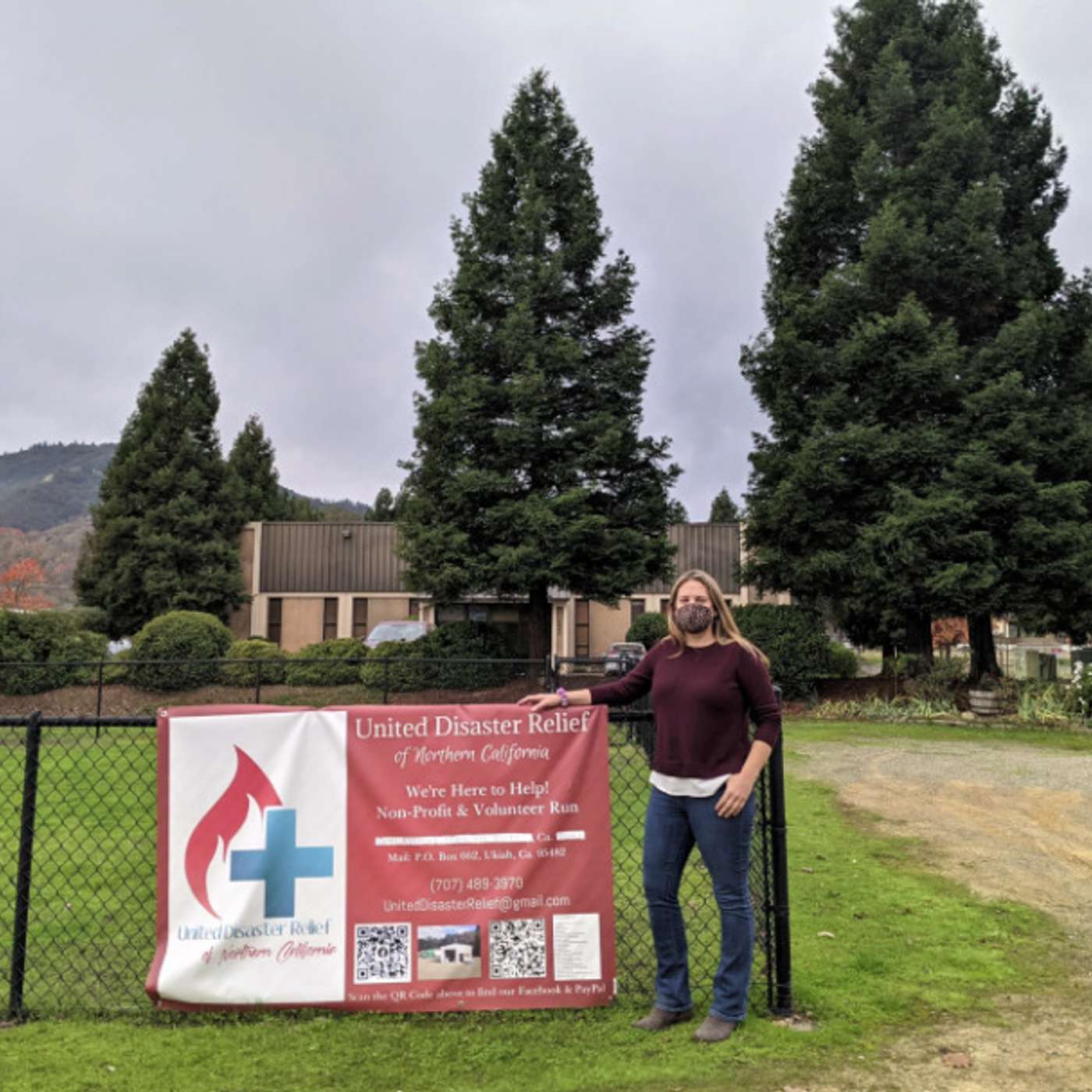
Ep 583"If they're stuck, they're stuck."
Life after Creekside Cabins has begun for former residents of the campground that was declared a public health menace on January 21st, weeks after a sinkhole in the driveway made it impossible to drive off the property. A temporary bridge allowed for a brief evacuation last week, but the majority of trailers, vehicles, and belongings were abandoned. The former residents who made it over the bridge are mostly in temporary living situations. Danilla Sands, Director of United Disaster Relief of Northern California, gave an update Tuesday afternoon, after spending hours on the phone trying to get a tow for an SUV and a trailer belonging to a displaced family of eight. She did not succeed, and that night, she discovered the vehicle had been stolen. Sands reported that a majority of the former residents have relocated to Mendocino Redwoods and RV, formerly KOA, in Willits. The county has paid for 30-day space rentals at the park, which is a temporary campground. “Mendocino RV folks have been really kind,” Sands noted. “But there are some that are still stranded on the side of the road. There are a couple that are still sleeping in their cars,” including one woman who couldn’t abandon her beloved pitbull. “There are some being put up in a hotel by Good Samaritans who live in Willits.” UDRNC has been able to put up four people in a hotel, through a grant. “We are working with them, talking about chipping away every day on some type of plan for the next step,” Sands said. “If you want a rental, let's put in the rental applications. If you need assistance with getting your vehicle registered so you can legally be in a park long term, let’s work with our partners, North Coast Opportunities, to see if your vehicle can be registered. What are these next steps, so we’re not in the same chaos that we were in last week at the last minute.” Twenty-five trailers and 21 personal vehicles were abandoned behind the sinkhole last week, among tons of other personal belongings. About 8-10 of the trailers were already abandoned, but Sands said that one belonged to a woman who had been in the hospital during the evacuation, so she had no opportunity to gather up her possessions during the brief window of time that the temporary bridge was available. “One gentleman could not get his pop-up back in,” Sands recalled, because the bridge was too narrow. The pop-up had been extended for the entire time he had been living onsite, “So to have hours to try to maneuver this pop-up to try to get it back in, it didn’t work unfortunately, for one of our families.” The bridge was in place from 8:00 am Wednesday, January 25, to 5:00 pm the next day, plus one hour early the following Friday morning. It was closed at night. One family with a child got stuck behind the sinkhole, because they didn’t know about the additional early-morning hour that was offered after residents protested the closure on Thursday night. The protest bought a few more hours at that time for people to flee, resulting in four more trailers making it over the bridge that night and Friday morning. But Sands said the family “got stuck behind, because they didn’t realize that we advocated with other people to get them an extra hour Friday morning. So come 5:00 Thursday, the night before, they thought, well, that’s it. And then another lady’s staying back with dogs. They have nowhere to bring them.” Many rentals won’t take large dogs, for insurance reasons. “As far as we know, it’s between the property owner and the state to decide on the next plans on that culvert being fixed,” Sands said. “We have not heard any indications of it getting fixed anytime soon.” The Board of Supervisors decided last week to direct County Counsel Christian Curtis to pursue litigation against Houser Holdings, LLC, which owns the Creekside Cabins property. Curtis said during open session that, due to salmon spawning season, he does not expect it to be possible to start construction for at least another six months. “There is really no other way in and out of there, unless you had some large equipment, like a backhoe, to get through some backwoods, and get okayed through a property owner,” Sands described. “There’s really no proper way to get any other trailers out right now. So if they’re stuck, they’re stuck.” Sands is always on the lookout for volunteers, even for one hour a week or once a month. She is grateful for donations, and said that a needs list for former Creekside Cabins residents is available at the UDRNC website. For example, “We have several people who need trailer propane heaters,” she said, noting that temperatures have been dropping below freezing at night in Willits. “These people need continued support,” she said. “And if not this disaster, we have several house fires throughout the year, and then we have fire season again coming up. People know that we need to save this disaster resource center. We’re boots on the ground, we’re right there in the beginn...
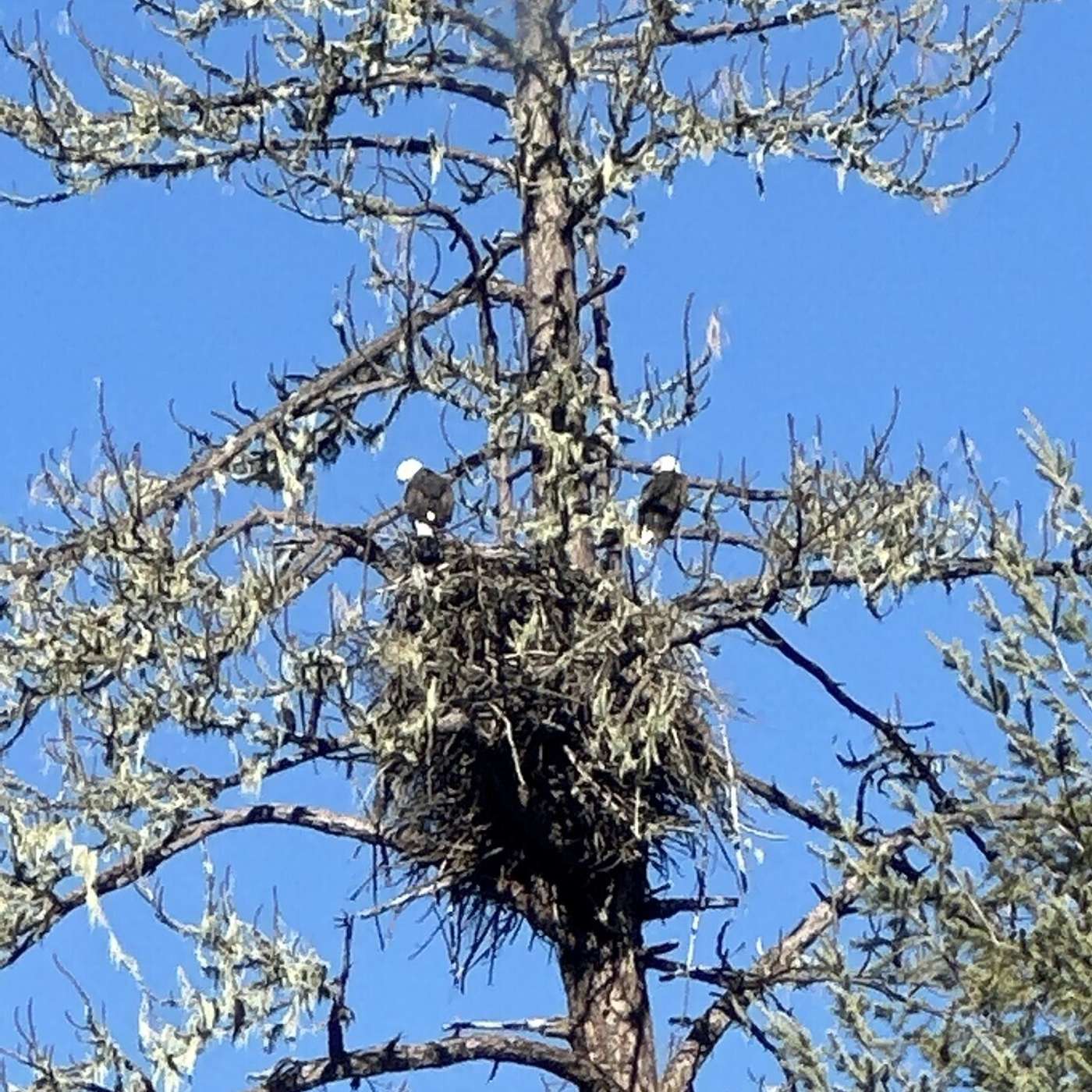
Ep 582Powerlines endangering eagles' nest to be buried
A Ponderosa pine tree in Potter Valley, and the decades’ old bald eagle nest high in its branches, appear to be safe from PG&E crews that tried to remove them two years in a row due to their proximity to powerlines. Now, after protesters from all over the state joined local activists and a nearby tribe to ensure that the tree remained standing, PG&E has declared that its “preferred solution” is to bury the lines. That would obviate the utility’s stated safety concerns about the tree possibly falling onto the line and sparking a fire. The pine, which is dying and shows damage from a beetle infestation, did not budge during the recent series of atmospheric rivers, though other trees went down all over the county. Joseph Seidell, a tenant on the property, grew to love the birds. Their nest is just a few yards from the driveway on one side, and a few more yards away from the public road on another, making them local celebrities in the bird-watching community. Seidell started a GoFundMe campaign to underground the lines last year, but it fizzled. “It made the most sense,” he said. “It was a very obvious solution because the nest was very happily sitting up there with plenty of years to go, according to the arborist. So we said, why should we take it down? It’s provided all this habitat, and there’s an obvious solution to put the lines underground. PG&E didn’t want to burden the expense, so we started a fundraiser. And we weren’t raising the money. It was a very large amount of money, close to a quarter million dollars…finally we found out recently that they said they were going to do it, through a lot of pressure…this would be the perfect win, win, win: win for the eagles, win for you, and win for us.” Polly Girvin is an environmental and social justice advocate who has long been affiliated with the Coyote Valley Band of Pomo Indians. She marveled at the effectiveness of the seven activists who kept vigil at the tree for over a week, saying, “I really want to say, it was the seven valiant souls who endured an atmospheric river downpour for seven days to document that the nest was active, and to stay until the federal nesting protective period under the U.S. Fish and Wildlife regulations was activated, which was January 16th.” On January 11, activists rebuffed an attempt by PG&E crews to cut down the tree, just hours before the Coyote Valley Band of Pomo Indians sent a letter to the U.S. Fish and Wildlife, requesting government to government consultations. Congressman Jared Huffman also weighed in, telling us that he has “had deep concerns about Fish and Wildlife’s ability to fulfill its mission with integrity for a number of years…If this was a permit U.S. Fish and Wildlife had to grant; if the law, facts and science compelled them,” he insisted; “They should have included tribal consultation. But they dropped the ball.” Some neighbors say they remember first seeing the nest, which is just across the Eel River from Cape Horn Dam, in the mid-eighties. It’s consistently produced young, though not every year, and PG&E biologists believe that in some years, the pair has used an alternate nest site less than a mile away. But last year, the pair fledged at least one eaglet in the much-contested nest. This year, they returned, shortly after U.S. Fish and Wildlife issued the permit to take it down. But Peter Galvin, who is the director of programs and co-founder of the Center for Biological Diversity, as well as a member of EPIC, the Environmental Protection Information Center, wondered if the agency had satisfied all the requirements before giving PG&E the nod. “I suggested we look into whether the Section 106 Consultation under the National Historic Preservation Act had been done,” he recalled; “and because EPIC had been working closely with the Coyote Valley Band on the Jackson Demonstration State Forest, they already had good communications set up. And just maybe ten or fifteen minutes after the inquiry, the answer came back no. No, that didn’t happen, and they're concerned about this and they’re upset that that didn’t happen. So we caucused further and by later that day, the tribe had sent in a letter of objection that they had not received the necessary and legally required government to government consultation. We found out further that the Fish and Wildlife Service had issued a permit in early January for this action, only days after sending a letter, asking if the Coyote Valley Band had any concerns, and that this letter was sent over the holidays, and they didn’t wait for a response, and it turned out they did have concerns.” Linda Marlin, the owner of the property where the eagle tree resides, said last week that PG&E was preparing an easement document for her to sign, so that the work can commence. PG&E had shut off electric power to the property, and was supplying generators and fuel to the residents. A fuel delivery truck had damaged the driveway during one of the storms, an
Ep 581State Parks suffered moderate damage during storm systems
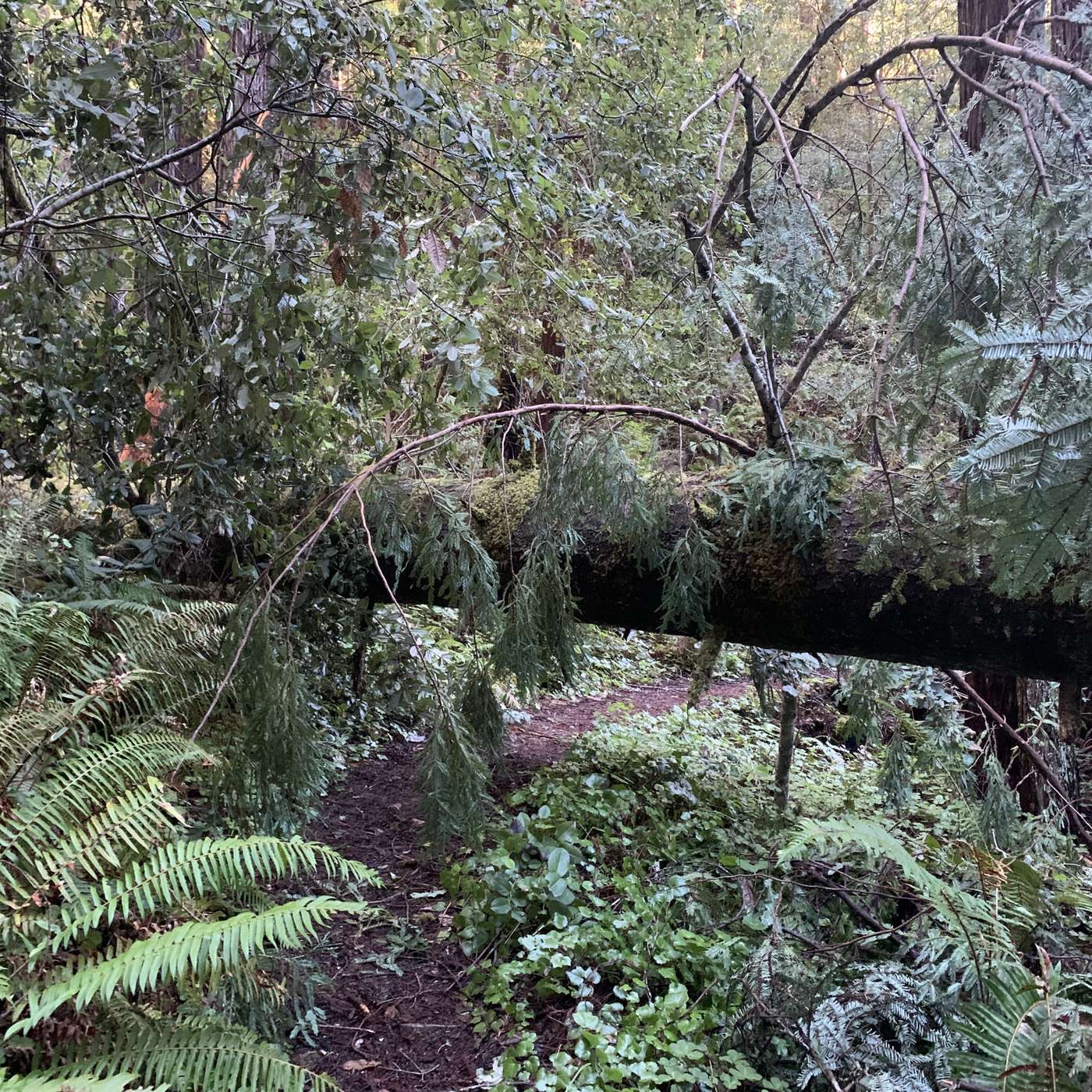
The recent series of atmospheric rivers knocked down old growth trees and inflicted moderate structural damage in Mendocino State parks. Preliminary estimates for clean up and repair after the storms range from half a million to a million dollars. More precise numbers will be available after a thorough investigation of the costs to replace a couple of bridges over Little River, in the Van Damme State Park. Terry Bertels is the District Superintendent for the Sonoma Mendocino Coast District of California State Parks. The district has 23 parks, 17 of which are in Mendocino County. The parking lot at Van Damme beach was especially hard hit with water and debris, which called for a significant cleanup effort. “Then as you go further inland from the beach parking lot, we had as many as 70 trees that came down across trails in Van Damme,” he said. “We had two bridges across Little River that are basically destroyed and will have to be re-engineered and rebuilt. That’s obviously going to take a little bit of time. So that was probably the worst damage across a unit that we had. Certainly, we had a lot of tree damage across the district. We lost, I believe it was four old growth trees across three different park units. We lost one significant old growth in Montgomery Woods, we lost one significant old growth and then a small probably old growth in Hendy Woods, and then we lost one old growth in Armstrong Redwoods near Guerneville. Of course, there’s no coming back from the loss of an old growth. So those are especially painful. Beyond that, we had trees that came down in campgrounds,” which are starting to open up again. Mendocino Woodlands State Park also lost a water tank from a tree falling on it, and a vehicle was damaged. “Just lots and lots of trees across the district that have come down,” Bertels concluded. Some of the fallen trees had to be cleared away from roads and trails, but at least one in Hendy Woods and another in Montgomery Woods will remain to continue serving a role in the ecosystem. One in Hendy Woods fell next to a trail, so the hole will be filled, but Bertels said of the tree that, “As it sits right now, it’s a pretty healthy tree that’s lying on the ground, and in all likelihood it’s going to continue to serve the park as a nurse tree for insects and decay fungi and you name it…Certainly the one in Montgomery Woods, it basically exploded when it hit the ground, so it’s going to serve the park as well. I think the intention is, they had a long life doing what they did, and now they’ll have a long life serving the rest of the ecosystem in the parks.” Tourist destinations were affected, too, like the barn at Spring Ranch, which is a popular wedding venue, with a seating capacity of 200 people. Bertels reported that the barn further back from Highway 1 lost a portion of the roof from the south side. “The barn’s not in great shape,” he conceded; “but we did have hopes and designs to try to get that roof replaced and do some structural repairs inside to keep it upright. The plan right now is to have an architect of historical structures come in and review the structure and give us an idea of whether it’s feasible to get it on better footing.” That has yet to be determined. Another visitor favorite was breached by the waves. While wet winters used to be common, Bertels doesn’t think the last series of storm systems is a return to the old normal. “I think there was some deferred damage,” he reflected. “We haven’t paid for it for a number of years because we haven’t had these extreme storms, so there was more out there that was waiting to fail, just waiting for that extreme event…the series of atmospheric rivers that came through, coupled with the winds, coupled with the high swells that we got, there’s just a lot going on with these storms. Case in point would be Point Cabrillo State Historic Park, in the lighthouse. Over its history, there have been three times that waves have come up over the cliff’s edge and swamped the lighthouse, and this was one of them. Those types of things don’t happen that often. They do happen, but they don’t happen every year…it definitely was out of the ordinary.” Bertels is optimistic that being part of the disaster declaration will make his district eligible for more funding for recovery operations and repairs, especially for the bridges. “I hope that’s the case, because those aren’t going to be cheap,” he predicted; “and it’s going to be hard for us to do it if we don’t have that assistance.” State parks won’t be closed, but Bertels asks visitors to be patient and try not to get hurt. “Keep an open eye and be careful,” he advised. “Stay out (of closed areas) if you can, but if you just can’t help yourself, know that the hazards are there, and keep an eye out for them.”
Ep 580Majority of vehicles, belongings abandoned in mad dash to evacuate
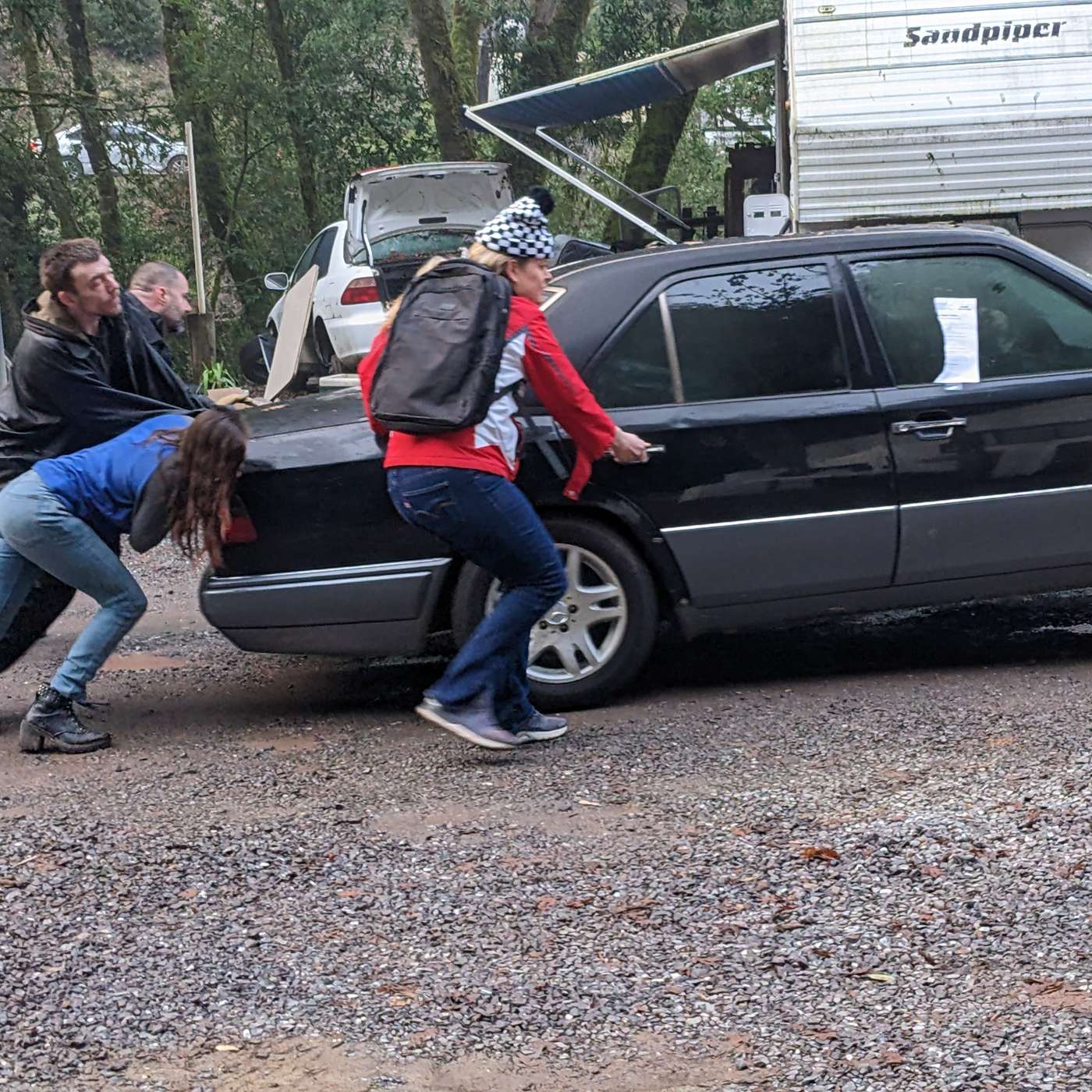
Creekside Cabins residents eked out a few more hours of evacuation time after Thursday night’s occupation of the bridge over the sinkhole that opened up between the RV park and Highway 101 on December 30th. The county paid a contractor to lay down a temporary bridge on Wednesday and Thursday, but contrary to expectations, the bridge was not available after 5:00 pm. Last night, residents refused to move off the bridge, which bought time for a stream of fully packed vehicles and one more RV to make it out of the property, which public Health Officer Dr. Andy Coren and the Board of Supervisors deemed a public health emergency earlier this week. Residents got one more hour yesterday morning, starting at 7:00 if they could. At 6:30, Danilla Sands, Director of United Disaster Relief of Northern California, was standing on the road with a headlamp on, persuading the bridge crew to let truck drivers get in to pull trailers out. Three of them were there with sturdy pickup trucks, gassed up and ready to move. One of them was Jerry, a resident who got out early and spent the day yesterday hauling out neighbors’ trailers. By 7:15, he was over the bridge with a trailer belonging to a couple who had packed yesterday but had been unable to get a truck to haul them. Within fifteen minutes, he had taken their trailer to a nearby turnout, dropped it by the side of the road, and raced back into the park to haul away another neighbor’s home. They weren’t ready, so he went back out to reconnect to the first trailer and drop it off again, this time at a nearby campground. Two more trucks also pulled in at first light, driven by contractors working for United Disaster Relief of Northern California, under North Coast Opportunities. Each of them extracted a trailer as well. One of them was so long, it scraped deep gouges into the hillside near the pullout where drivers had to angle their trucks to approach the narrow bridge correctly. One resident who crossed the bridge last night came back with a hitch for a car that wouldn’t start. Mendocino County Sheriff’s Office North Sector Commander Lieutenant Dustin Lorenzo helped the family and Sands push it onto the hitch. By 8:10, everyone who was ready to get out had done so. Seven minutes later, the bridge removal operation began. It took fifteen minutes to load it onto the flatbed of a semi. Twenty-five trailers and RV’s and 21 cars and pickup trucks remain, along with what must be tons of abandoned personal belongings. As the excavator moved dirt above the crumpled culvert, we took a few moments to talk with Sands, next to a building that used to be called the clubhouse. She estimated that fifteen trailers and mobile homes had made it out of the park before the bridge was removed. There’s not a good count on how many people remained, either because they don’t have anywhere else to go or because they didn’t get ready in the brief window of opportunity. There was no single, coordinated effort to organize an evacuation that was chaotic and largely ineffectual, as the majority of people’s belongings and vehicles remain. The county insists that the property owner should have fixed the culvert weeks ago, and that the bridge must come out now to avoid falling afoul of California Fish and Wildlife’s guidelines around erosion control and fish-bearing streams. Sands said United Disaster Relief of Northern California and North Coast Opportunities got donations of time, supplies, and money from community members, and that “We were blessed” to get a grant from the Mendocino County Community Foundation to help people with vehicular expenses, like gas cards, registration, and insurance, so they could legally get on the road and find a campsite somewhere else. Volunteers spent hours at the DMV this week, trying to register some of the trailers. Sands has spreadsheets for her clients, and can reel off how many of them are in the campground in Willits, how many have gotten hotel rooms, and how many plan to head out of the county. Some have found rentals, and at least one was sleeping in a car. Three former residents are in the hospital or recently gotten out, and had no chance to retrieve their things before the bridge came out. “We will continue to work with them,” Sands vowed. “They’ve had less than two days, less than 16 hours to pack all of their items with no help, because when the bridge was closed and everyone’s getting off work, nobody was able to come out here and help them pack…this is something that would take six months to do, and you can see visually here that a vast majority of the vehicles and trailers and belongings are still here. And they will remain here.”
Ep 579Creekside residents occupy bridge
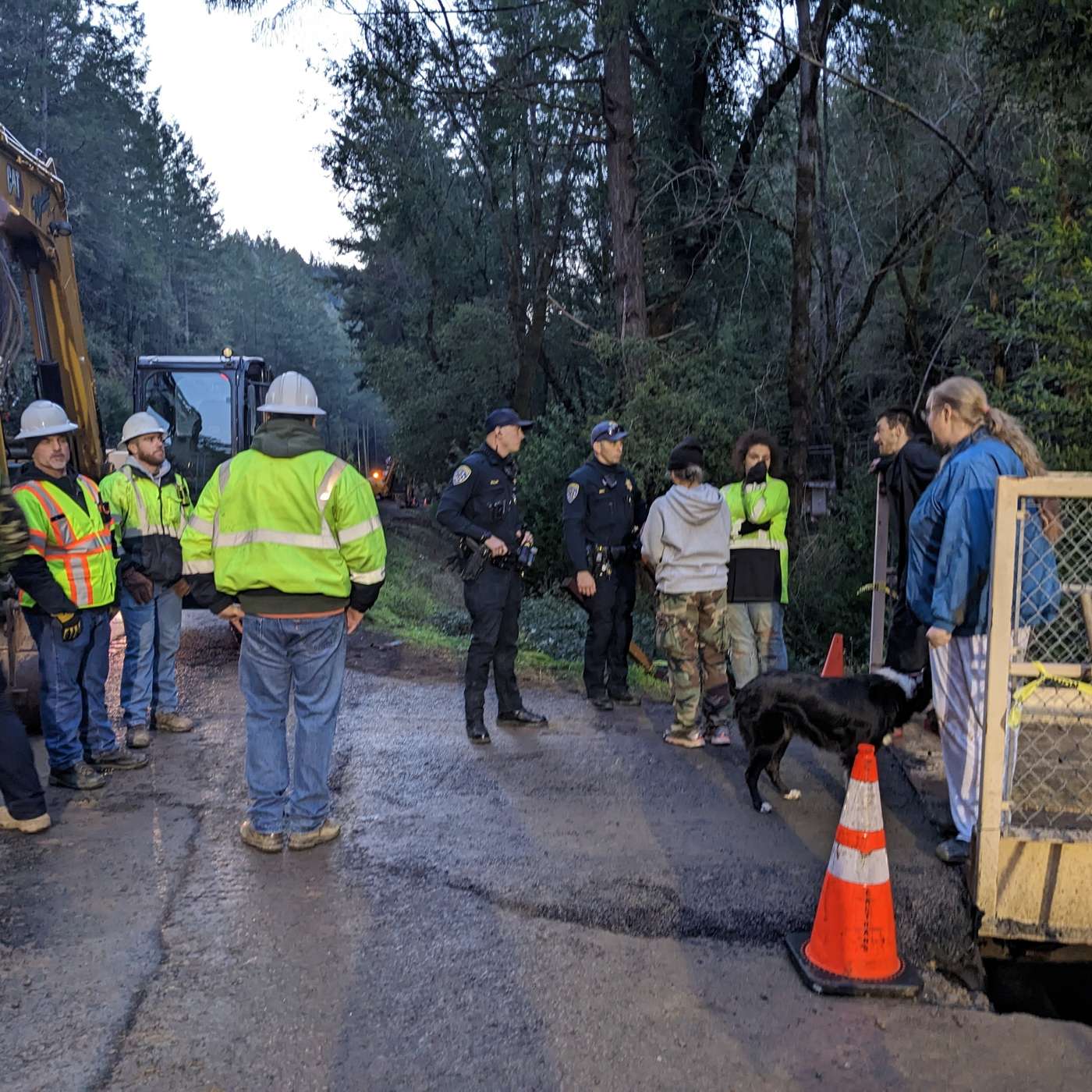
Residents at Creekside Cabins occupied the temporary bridge between the RV park and Highway 101 last night, counter-blocking an excavator that was moving into position to prevent access to the property. Residents originally had between 8:00 am Wednesday and 5:00 last night to evacuate. Now, after last night’s standoff, they’ll be allowed another hour this morning to get off the property that’s been declared a public health emergency after a sinkhole opened up in the driveway, blocking access. By quarter after five last night, nine trailers had been hauled, most of them by a driver for United Disaster Relief of Northern California. Passenger cars and pickup trucks had been streaming over the bridge for hours, and at least one mobile home containing a family with six kids had inched onto the highway, belching smoke and smelling of bad brakes. Amid conflicting information and spotty cell phone and internet access, residents didn’t fully understand the immediacy of the situation until very close to the deadline. At 5:13, with sunset approaching and a line of cars creeping toward the exit, a crewmember began to move the excavator onto the bridge. Shaylene Harvey walked towards him with her dog, a four-year-old Australian shepherd named Lilly. We can’t repeat most of what she had to say, but before she sat down on the bridge, she implored the crew to, “Just let the last few people out.” “Let us be homeless on this side of the bridge!” she screamed, as Randy and Mitzi Feta began to cross in their car, fully loaded with personal belongings, houseplants, and two huskies. Their trailer, packed to capacity, was left behind as the huskies howled and Mitzi sobbed into her hands. “I’m trying to enforce the order,” the crewmember said, after backing the excavator away from the bridge to the side of the road and disembarking. Another resident wept as he described his situation. “They paid a quarter million to put this bridge in,” he said. “And they could have put a permanent one in for way less than that…I don’t know why they did this, and now they gave us two days…I have three children, a five-year-old, a twelve-year-old, and a seventeen-year-old, that I have to find a house for.” Everyone on the premises was committing a misdemeanor, but no was cited, as a Highway Patrol Officer arrived on the scene and asked frantic residents to explain what was going on. “Why do you want to get your trailers out?” he asked, amid the sound of heavy equipment backing up, people screaming, and the dogs voicing their displeasure. “Because we’re all going to be homeless,” Harvey exclaimed. “Do you not know what’s going on?” He did not. Residents briefed him at the scene, as more highway patrol arrived, quickly reinforced by sheriff’s deputies. Shortly after 6:00 pm, a MedStar ambulance and Willits fire truck arrived, responding to a woman experiencing an oxygen-related medical emergency inside the park. We spoke with Randy Feta just as the sirens subsided and firefighters spilled out of the truck and ran across the road, over the bridge, and into the campground. “The thing is, they gave us some directions to get out of here, otherwise they’re shutting the place down, that’s fine and dandy,” he said. “We followed the directions, we packed, we’re ready to go, now we got no place to sleep. My car’s packed, my trailer’s packed, there’s no room, no nothing. We're ready to go. Now they won’t let us go…I want to get out,” he exclaimed. “I packed all day. I got a bad back, a bad neck, I’m disabled, I’m elderly, and I packed hard to get ready to go. I’m just following the directions. I did everything.” The Fetas had packed so tightly that the bed in their trailer was inaccessible, so they slept in their car last night. On the bridge, occupying residents moved out of the way to allow Manny, another resident we spoke with earlier this week, to cross over and get out. He told us yesterday he spent the whole day getting his trailer registered, but he wasn’t hauling it with the pickup truck he’d been working on. When we walked into the park in near-total darkness hours later, his trailer was still there, with the lights on. One former resident was on scene with a one-ton truck, offering to haul people out for whatever they could pay. Aaron Rusty Deeson observed that, “Unfortunately, most of the residents out here have not been able to afford to purchase or maintain a one-ton vehicle to haul these large trailers they live in with. About half the residents still have all of their belongings here. Most of the residents spent the last 24 or 48 hours getting everything ready. At the last minute, they were ready to go, but there were just not enough vehicles available to get them out of here in a timely manner. I mean, it’s been chaos.” There is one road in the campground, heavily potholed and barely wide enough to be called a one-lane thoroughfare. At the back of the property, so far from the road it was imposs...
Ep 578Residents of Creekside Cabins ill-equipped to move on
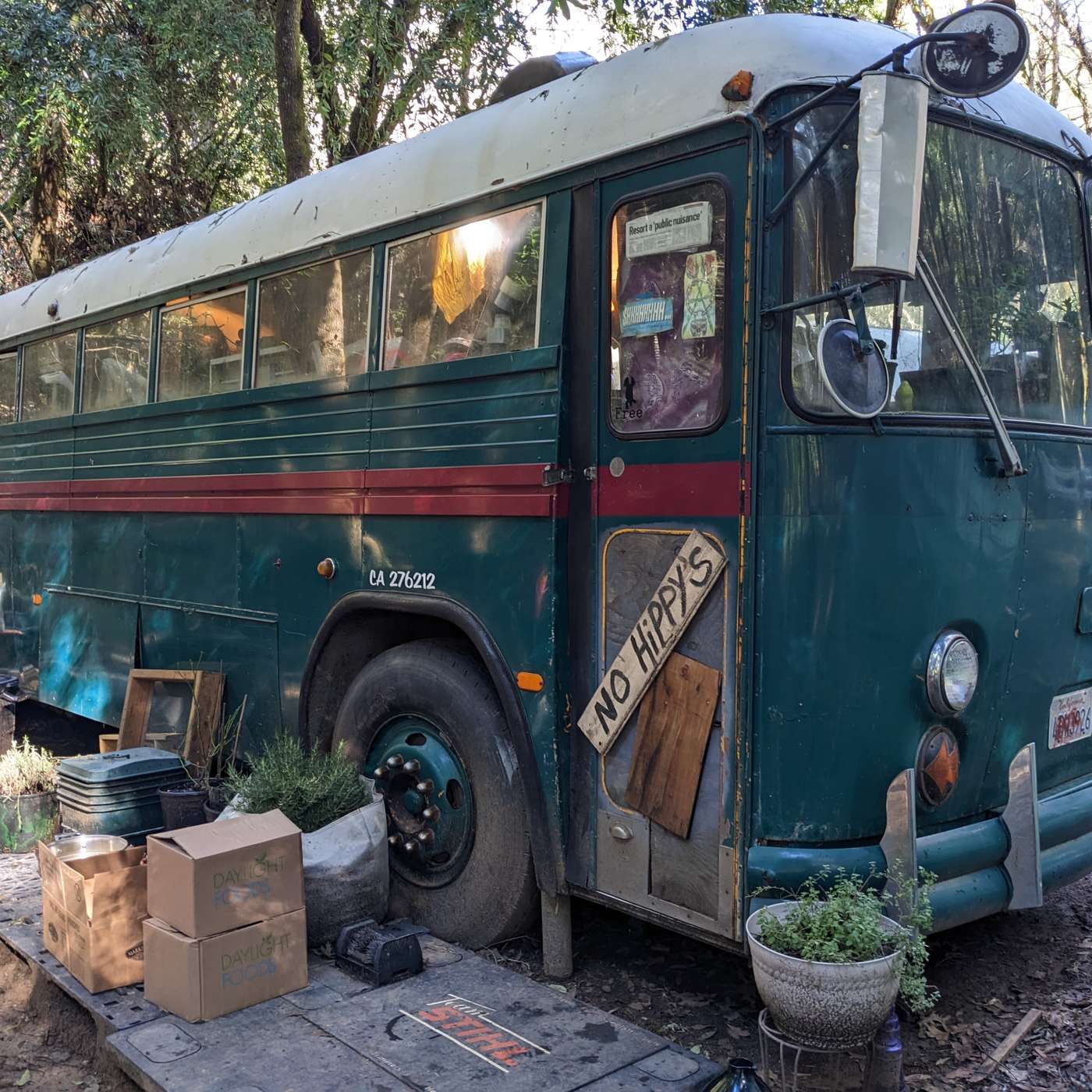
Residents at Creekside Cabins, an RV park just north of Willits, have been ordered to be off the premises today, due to a public health emergency. An order ratified this week by the Board of Supervisors says anyone on the premises after 5:00 pm Wednesday will face misdemeanor charges. But many residents have nowhere to go, and their vehicles aren’t in any shape to get them there if they did. Information about the pending eviction started to come out a week ago, but communications and other services at the park are primitive, according to Janet, who said the power went out the day she had to call an ambulance for her husband. “The county continually puts their press releases on their Facebook page, expecting all of us to have access to the internet,” she said. “There are maybe five who have access to the internet. We are in a dead zone for cell phones. I use the wi-fi, and calls get dropped constantly. We can’t even call 911 from here.” Information of all kinds arrives slowly. A boil water notice, dated January 18, is posted all over the grounds. Residents are advised to boil their water or add bleach to it, based on a sample of raw untreated water from one of the wells that took place on December 27th and tested positive for unspecified bacteria. The county paid a private contractor to install the bridge yesterday morning. It’s scheduled to be removed by 5:00 tonight. With less than two full days to complete the move, none of the trailers had been towed out by 1:00 yesterday afternoon. People were trying to repair vehicles, but many expect to leave most of their belongings behind as they head into an uncertain future. Woodrow Still is sure he’s being wrongfully evicted. A woman in a truck beside him began to weep as we spoke. The truck runs, but the brakes make a lot of noise. “It’s not right,” Still insisted. “I don’t know what else to say…They’re breaking the law by saying we only got three days to move out, and not giving us a 90-day notice or anything. It’s not our fault that they can’t get the road fixed, or the bridge fixed. It’s just wrong.” “This is my home,” wept the woman in the pickup truck. Asked what they were going to do, Still said, “What can we do? What can we do? We can sit here and fight, and get tickets, because I heard they’re having sheriffs come here tomorrow, to make sure people get out.” “I think they’re trying to scare us,” said the woman. “And it’s working.” Several residents have gardens, and elaborate outdoor shrines to dead loved ones. Still described some of what he’ll be leaving behind. “It’s a lot of river stones,” he said; “A lot of picking and carrying and packing and placing, and art. It’s art. It’s a shrine to our dead sister. And now we gotta leave it. Because how are we supposed to pack it out? You can’t pack something like that back up.” A few spaces down, their neighbor Manny has trained a sucker from a bay tree to grow into an archway to the entrance of a postage stamp yard. He may be one of the lucky ones. “I hope so,” he said, when I asked him if he’d be ready to be out by the next day. “I’ve got people who are supposed to tow me,” he said. “And I got an RV spot that I’m trying to get. So I’ve got to insure this by tomorrow or today.” Asked if he was able to come up with move-in expenses, he said, “I have most of it.” Randy Feta is confident he’ll find a place in San Francisco, where he and his wife originally come from. He knows just about everything about all his neighbors, and is quick to heap praise and sympathy on everyone. “I’m really hurting and really worried about all these people that are from up here, and the people who are settled and been here fifteen, twenty years in this one place,” he said. “And they’re disabled. They can’t afford to move. Even if they get help to move out of here, they can’t afford another spot that they’re going to…I just don’t see no sense to put all the money they’ve been spending on all this manpower, and not fix the problem…All these people are going to be out on the street, and going to the government for help.” Near the back of the property, Denise, who’s worked her way out of homelessness once, lives in a 35-foot-long 1973 green bus with a sign on the door that says, “No Hippys.” “It usually runs beautifully, but my starter’s been fried,” she reflected. “And I need to replace that. They didn’t give me enough time to order the part, so that I can get out of here. I have a couple options in the next town north. However, feasibility is near impossible to get it there now. And I’m not really comfortable leaving my stuff here.” She’s been hitchhiking to work or getting rides from friends, “But it’s been really difficult, having to hitchhike, having to haul in all my own supplies and haul out trash. It’s been a challenge. I don’t know where it’s going to go from here. I’m on the fence about what to do.” A friend of hers who came to visit just before the sinkhole opened ...
Ep 577Board of Supervisors ratifies state of emergency at Creekside Cabins
The Board of Supervisors ratified a state of emergency and order to close Creekside Cabins just north of Willits yesterday, amid conflicting claims about the safety of the water. On December 30, a sinkhole opened up outside the property, stranding about fifty residents and making vehicular access to their homes impossible. Today, the county is installing a temporary bridge to the property that will be in place for two days only, so residents can move out. After 5:00 tomorrow afternoon, the area will be closed to everyone, residents included, and staying onsite will be considered a misdemeanor. CEO Darcie Antle reported that county Code Enforcement, Public Health, and Environmental Health had toured Creekside Cabins on Friday, January 20. “At that time, there was a number of health concerns due to sewage on the ground and running into the creeks,” she said. They submitted their findings to Public Health Officer Dr. Andy Coren, who declared a public health emergency. The closure order specifies that the area is inaccessible for septic processing, garbage collection, and deliveries. Supervisor John Haschak described the situation as “tragic,” saying, “Unfortunately, it hasn’t been fixed by the private property owner…but I think everyone who has been involved has been working diligently and cooperatively to try to resolve the problem. There have been endless hours that the County and the State have put in to trying to resolve this issue. So I totally support the resolution, even though it’s very unfortunate, the situation that we’re in.” Theresa Thurman, the property owner, told the Board she used a “honey pot” to pump the RVs, and that the leakage was treated properly, according to rules set by Housing and Community Development, the state agency that is in charge of mobile home parks. “Because I have to do what HCD tells me,” she told the Board. “I’m not governed by the County. And so I’ve never said I wouldn’t work with you, ever. I don’t appreciate that going out into the public. I don’t appreciate the fact that my water’s been treated as if it’s not okay and it’s not good, when in fact it is okay and good.” Zachary Rounds of the State Water Resource Control Board’s Division of Drinking Water told us in an interview yesterday that there were high levels of E.coli in the raw well water on Thursday, January 19, though the treated water for drinking showed undetectable levels of coliform bacteria. Still, the Water Board issued a boil water notice, because the treatment is not adequate to assure that the water is free of E. coli. Thurman asked Public Health Officer Dr. Andy Coren about the tests. “Are you all aware that it tested negative for the treated water?” she asked. “Are you aware of that? I need to understand. Dr. Coren, are you aware of that?” Coren told her that, “That is not my understanding.” Zachary Rounds said that over the weekend, two consecutive tests of the raw water wells showed non-detectable levels of E. Coli. His agency was planning to downgrade the boil water notice to a precautionary boil water notice, though that had not gone out by the time the Board of Supervisors agreed to close the park. Rounds explained that because the well at the park is so shallow, it is susceptible to surface water and must be filtered and disinfected as rigorously as surface water before it can be used for drinking. However, the water treatment system at Creekside Cabins does not provide that level of treatment, which is why boiling the water is still considered an advisable precaution. A county press release that went out last night stated that, “The confirmed prevalence of E. coli in the drinking water and the existence of sewage water on the ground of the campground both present a major public health risk for the community in the affected area.” And Haschak told us the drinking water was only one of many factors leading to the closure. Another is the lack of access. The county only has a two-day permit from Caltrans to install the temporary bridge to allow the residents to move out. The cost of installing and removing the bridge, and having two people on traffic control 24-7, is approximately $250,000. Supervisor Ted Williams asked Thurman what her plan for fixing the sinkhole is, and she told him the sinkhole is on Caltrans property. We were not able to confirm the status of the property ownership and encroachment permits by our deadline. “Is the sinkhole on your property?” Williams asked Thurman. “No,” Thurman said. “It’s on, actually, state highway public right-of-way property…So if the encroachment permit is on their property, then they’re the ones that need to fix it.” Williams opined that, “I think this would be between the property owner and CalTrans. I don’t think the county is a party. The county doesn’t own any of the land involved.” County Counsel Christian Curtis told the Board that he, too, has spoken to state agencies, and that the out...
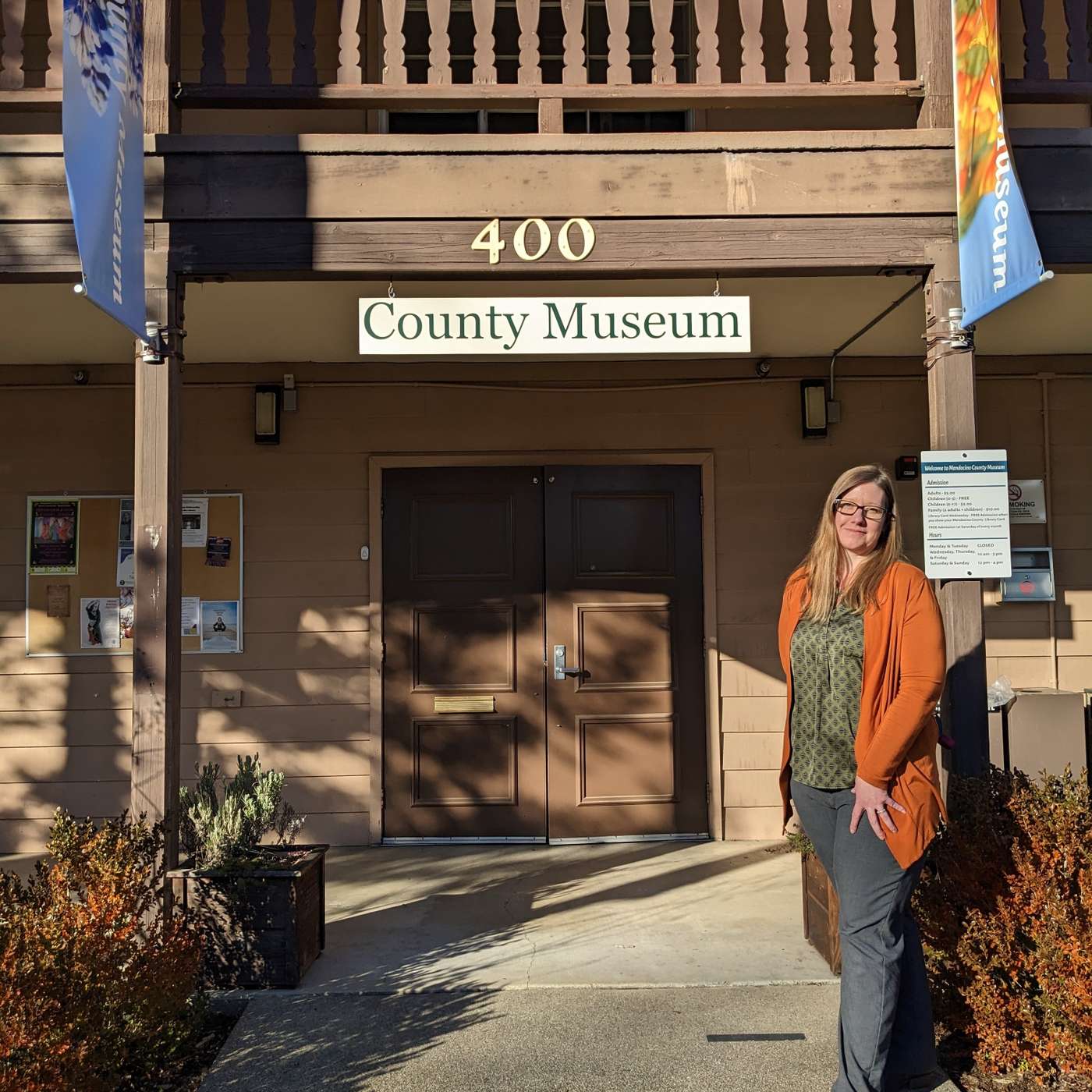
Ep 576County Museum asking public to weigh in
The Mendocino County Museum received an outpouring of community support last year, when word spread that the county fiscal team had suggested closing it as a cost-saving measure. That idea was quickly abandoned, and now the museum is rolling out a strategic plan, which includes a survey and public events around the county to find out what community members want from their museum. Museum Administrator Karen Mattson, a trained curator, is happy to show off the work that’s gone on behind the scenes to keep track of the collection. “We’ve been working really hard,” she said. “It’s a huge undertaking, to keep things organized. If you think about the library, everything has a place and a shelf and a number. And a museum is the same way. It’s really important to stay on top of things.” In a library of objects, “Organization is everything. Except beyond that, every object that you see has a corresponding file that tells us the history and significance of it. So those things have to be kept together, because we’re not keeping objects, we’re keeping stories. We’re keeping history, so documentation is everything.” Some of those stories are from the past, and some are about current events, placed in a historical context. The newest exhibit, Exploramos Juntos, is a bilingual collaboration with Nuestra Alianza, an educational and outreach organization in Willits. The display includes costumes and photography from a local Spanish-language summer camp, where children learn about Latino cultures. “All of the photographs you see were taken by two local photographers from their community events this summer,” Mattson said, pausing beside a display of masks and other objects, which was accompanied by a photograph of children wearing them as they performed a traditional dance called the Dance of the Iguana. “We would have people coming in and recognizing themselves or their friends or their family. They were able to give tours for and with us about what the exhibit was about. So that was really fun. I haven’t had an experience quite like that, where everything was so current that you know the people.” Mattson believes we are always making history, and, “It’s important to document what we’re doing now.” Some of the stories feel well-known until you come face-to-face with a room full of carefully marked boxes containing the details. Thomas Layton, an archaeologist who researched the story of the sunken Frolic, just donated several boxes of pottery that is contemporaneous with the vessels that were on board the famous shipwreck when it went down off the Mendocino coast in 1850. The museum has permission from the state to be custodians of the collection. Though this particular pottery was not on The Frolic, “It would be period appropriate…so you can actually see some of the pottery and ceramics whole,” Mattson explained. The museum is in the early phases of planning an exhibit around The Frolic, “Because we know that people have requested it, and having these collections will make it a much more dynamic exhibit.” The museum has an aquarium containing chunks of pottery still embedded in sea floor strata from around the sunken ship, as well as a wetsuit belonging to one the divers who retrieved the artifacts. Most of those items are not on display. After months of meeting in committee with volunteers and advisors, Mattson says it’s time to figure out how to tell which of the carefully cataloged stories. “Right now what we’re having is a conversation about three things,” she said. One is how to make better use of the physical space in the museum for more exhibits. Another is improving the research arm, possibly by cultivating volunteers, including docents. Infrastructure is another focus. The survey right now includes a list of themes that potential visitors would be most interested in. “We will be using that data to find out, hey, what is it people really want?” Mattson promised. “Do they want to prioritize shipwrecks over something else? And we will definitely try to use that feedback to prioritize what we do, time-wise.” The main hall with Nuestra Alianza display is a huge rambling space, which Mattson thinks can be divided up to showcase a wider variety of smaller exhibits. “We’re really trying to find a better balance, and making smaller spaces,” she said. “So one of the challenges we have with this huge hall is, it’s not sustainable. What we know is, maybe if we have some smaller cases, we can still tell those themed stories, and maybe satisfy the community better, because we’ll have more stories out. Then we could rotate the contents of those cases, but the themes would still be addressing more of our collection…But we don’t really want to go further before we find out what people want.” The survey is available on the museum’s website, and asks about use of the museum, demographic information, and what kinds of exhibits and programming respondents are interested in. Community forums will sta...
Ep 575Kevin Murray accuser files civil suit
A previously anonymous victim of disgraced former Ukiah police sergeant Kevin Murray has filed a claim in civil court for sexual assaults that she says escalated in violence in the spring and summer of 2014. She’s seeking unspecified compensatory damages, including the costs of medical and related expenses, against Murray, the City of Ukiah, and the Ukiah Police Department. Civil suits, unlike criminal prosecutions such as the one Murray faced last summer, do not result in jail time. In July of last year, Murray was facing seven felonies, including the rape of a woman identified as Jane Doe. He pled no contest to a charge of misdemeanor false imprisonment of Jane Doe. Multiple counts of sexual battery and burglaries perpetrated against another woman, known as S.Y., were reduced to one felony count of dissuading a victim from reporting a crime. Another count of drug possession, stemming from methamphetamine in his work locker, was also dropped. But a two-year-old District Attorney’s office investigation into the crimes against Jane Doe never found its way to the agency that prepared Murray’s sentencing recommendation. Only her written victim impact statement was attached to the document that appeared in court on the day of his sentencing for much-reduced charges. That same statement is one of the exhibits in her complaint, which was filed last month with the Mendocino County Superior Court. Her real name also appears, but we’ve decided to continue referring to her as Jane Doe at this time. In August, Judge Ann Moorman sentenced Murray to two years’ probation and no time in jail aside from the 104 days he had already spent in custody. On that day, Deputy District Attorney Heidi Larson told the court that, “It is a bit dismaying to the People that Sonoma County (which prepared Murray’s sentencing recommendation), did not get Jane Doe’s report.” Kris Hoyer, who is in charge of investigations at the Sonoma County Probation Department, told us in September that he was unaware of the People’s dismay. The front page of the sentencing recommendation prepared by his department has a note on it saying, “We cannot take into account any of the conduct involving victim Jane Doe from the 2014 incident(s), with the sole exception being the impact statement that she has provided.” Sonoma County Probation Deputy Chief Wardell Anderson said that his department did not receive a response to that communication from the Mendocino County District Attorney’s Office, which was prosecuting the case. The DA and Judge Ann Moorman both had the authority to extend the deadline and provide more information. In her statement, Jane Doe implored the court to send Murray to jail for assaulting her twice, once while armed with what she believes was his service weapon. Murray will no longer be allowed to possess any weapons, but he was not even required to register as a sex offender. Jane Doe’s recent complaint includes a detailed report written by retired District Attorney investigator Kevin Bailey in February of 2021. He related her description of friendship turned enmity with Murray’s now ex-wife, unspecified trouble that the victim had with her own ex-husband, and her fear of Murray in his professional capacity as a Ukiah police officer. We are going to share some of those graphic details now. Bailey wrote that in 2014, Jane Doe, recently single, was friends with Murray and his fiancee, who was a professional colleague. The two women had a falling-out during the wedding preparations. Then, late at night on April 10, Murray allegedly appeared at Jane Doe’s house, drunk and wearing civilian clothes. Bailey wrote that she thought he had come to offer sympathy for the death of her dog, who had died the previous day after being attacked. But she said he began fondling her and insisted that she orally copulate him, even grabbing her by the hair. Bailey wrote that she told him the second assault took place two or three months later, when Murray allegedly arrived at her house late at night, again drunk and in civilian clothes. She claimed he used a condom during a vaginal rape, after which he removed the condom, “tied it off at the top, and placed it into his pocket.” Prior to the assault, she said he removed a gun and a knife from his person and that he set them both on the bed, telling her that he always carried a gun when he came to her house. Bailey wrote that in their recorded conversation, Jane Doe told him that her teenaged son came home on his bicycle, and Murray left through a side door. She said Murray returned a few hours later to retrieve his weapons, and that was the last face-to-face contact she had with him. When Bailey asked her why she did not report the incident to law enforcement, she said, “It’s because I was a frequent flier. People always look at me and think, there is that girl. She is always calling the cops on her ex-husband…How am I going to tell the police that another cop did...
Ep 574“The largest price setback that this fishery has ever seen”
Fresh crab will be hitting the docks this weekend, after the Dungeness crab season opened on the North Coast with historically low prices. Fishermen will be selling at $2.25 a pound, which is less than half of last year’s price. Lauren Schmitt, of KMUD news, spoke with Harrison Ibach, President of the Humboldt Fishermen’s Marketing Association as he was setting pots on Tuesday. While crab boats contended with rough weather in the Humboldt Bay this week, residents at Creekside Cabins, a community on privately-owned land north of Willits, are still living with the aftermath of the most recent winter storms. Code enforcement declared a public nuisance at the property last week, due to a sinkhole that blocked vehicle access to the property. County social workers are scheduled to be on site today to advise residents. According to a county press release, an exit-only temporary bridge is due to be installed next week. The only vehicles that will be allowed to enter the property will be those that are there to remove things. The press release states that “At this time there is no existing plan for permanent access to the site, so this will seriously compromise the ability of sewer, garbage and emergency response to provide service to the site.” And OptumServe, a state-provided covid testing service that has also offered covid treatment, is ending its services in Mendocino County. The site at the Ukiah fairgrounds closed yesterday, while the site at the Veterans Services building in Fort Bragg is scheduled to close next Tuesday.

Ep 569Healthy Sea Stars Regain Territory Along the Coast
A healthy Sunflower Sea Star was spotted off the Mendocino Coast for the first time in over 8 years. Commercial diver Grant Downie, and Nature Conservancy Kelp Project Director, Tristin McHugh talk about the importance of the species and the current efforts to track sea stars locally and statewide. Photo of Sunflower Sea Star provided by Grant Downie.

Ep 573Fort Bragg taps city funds to rent rooms for homeless. Eagles get reprieve
At a special meeting over the holiday weekend, the Fort Bragg City Council agreed to use $25,000 from a city fund to continue the emergency winter shelter program at the Motel 6. Weeks of heavy rain have led to more than a ten-fold increase in room rentals for homeless people each month since November. And a pair of bald eagles in Potter Valley have gotten another reprieve, with the Coyote Valley Band of Pomo Indians calling for government-to-government consultations and Congressman Jared Huffman blasting the U.S. Fish and Wildlife Service for granting a permit to remove the nest without engaging the tribe. At Monday’s brief meeting of the Fort Bragg City Council, Police Chief Neil Cervenka reported that the city has spent all $36,000 the county has given the city to rent rooms for homeless people during inclement weather or on nights that extreme cold is expected. The city rented 11 rooms in November for 14 people. That number shot up to 130 rentals for 62 people in December, 12 of them children and nine of them elderly. The city has already paid for 101 rentals in January of this year for 65 people, 11 of them children and eight of them elderly. Cervenka reported that he’s negotiated $50 off the nightly price of the rooms and that the city has found other solutions for homeless people who are not from the Fort Bragg area. Eight people who used the voucher program for one night last month were not from the coast, and four people this month were from elsewhere. Of those four out-of-towners, he said, three were reunited with family members in other parts of the state and other states. “And then the big win in November was, seven of the 62 unique individuals who were non-coastal were placed in Hospitality House,” Cervenka reported. “While we are getting some dry weather, the clear skies mean cold nights. So we are expecting more. Right now, we have used all $36,000 of the original grant amount, and we have no more funding in the extreme weather shelter. Long range forecasting, which is very imprecise, shows several more weeks of rain coming up, which is very good for our aquifers…but it’s not good for those folks who don’t have shelter. I re-negotiated the rate of the room last week to $99.99 plus tax per night,” which is the weekend rate. In addition to voting unanimously to approve the use of the $25,000 from the city’s fund, the council expects an item on next week’s Board of Supervisors agenda discussing a match from the county. Fort Bragg City Manager Peggy Ducey said she expects to be reimbursed from the state Office of Emergency Services and the Federal Emergency Management Agency, once disaster declarations for the current emergency have been determined. The City Council agreed to fold the reimbursement monies back into the fund for housing the homeless. The city’s emergency winter shelter program ends on April 30. *** And in Potter Valley, a Ponderosa pine tree containing a decades-old bald eagles’ nest has been spared for another year. Earlier this month, U.S Fish & Wildlife granted PG&E a permit to remove the nest, giving the utility until February first, two weeks after the official start of the breeding season. But yesterday, U.S Fish & Wildlife wrote in an email that as of January 13, that permit is invalid, “and they are not presently authorized to remove the nest.” An agency spokesperson elaborated that, “The bald eagle pair is currently visiting and refurbishing the nest and the breeding season has begun. As such, the nest meets the definition of an ‘in-use’ and active nest, thus the permit is no longer valid.” We documented one of the eagles landing on the tree near the nest on January 9. On January 11, after a brief confrontation between activists and a PG&E tree-cutting crew, Michael Hunter, the Chairman of the nearby Coyote Valley Band of Pomo Indians, wrote to the U.S. Fish and Wildlife Service, requesting government-to-government consultation with the agency. “We understand that the U.S. Fish and Wildlife Service has already issued the permit prior to initiating consultation and that there was a brief opportunity for “public comment” under the National Environmental Policy Act,” he wrote. However, “The Coyote Valley Band of Pomo Indians is a sovereign nation with a government-to government relationship with the United States and that relationship requires more substantial consultation than is awarded to “the public” under the National Environmental Policy Act. We also believe that agency duties and obligations under the National Historic Preservation Act are implicated and unfulfilled as well.” Congressman Jared Huffman agreed, saying he finds it “unacceptable” if the agency granted the permit without tribal consultation, and that he “share(s) the concern that a federal agency would not know better.” He blasted the agency, revealing that he has “had deep concerns about Fish and Wildlife’s ability to fulfill its mission with integrity for a number of ye...
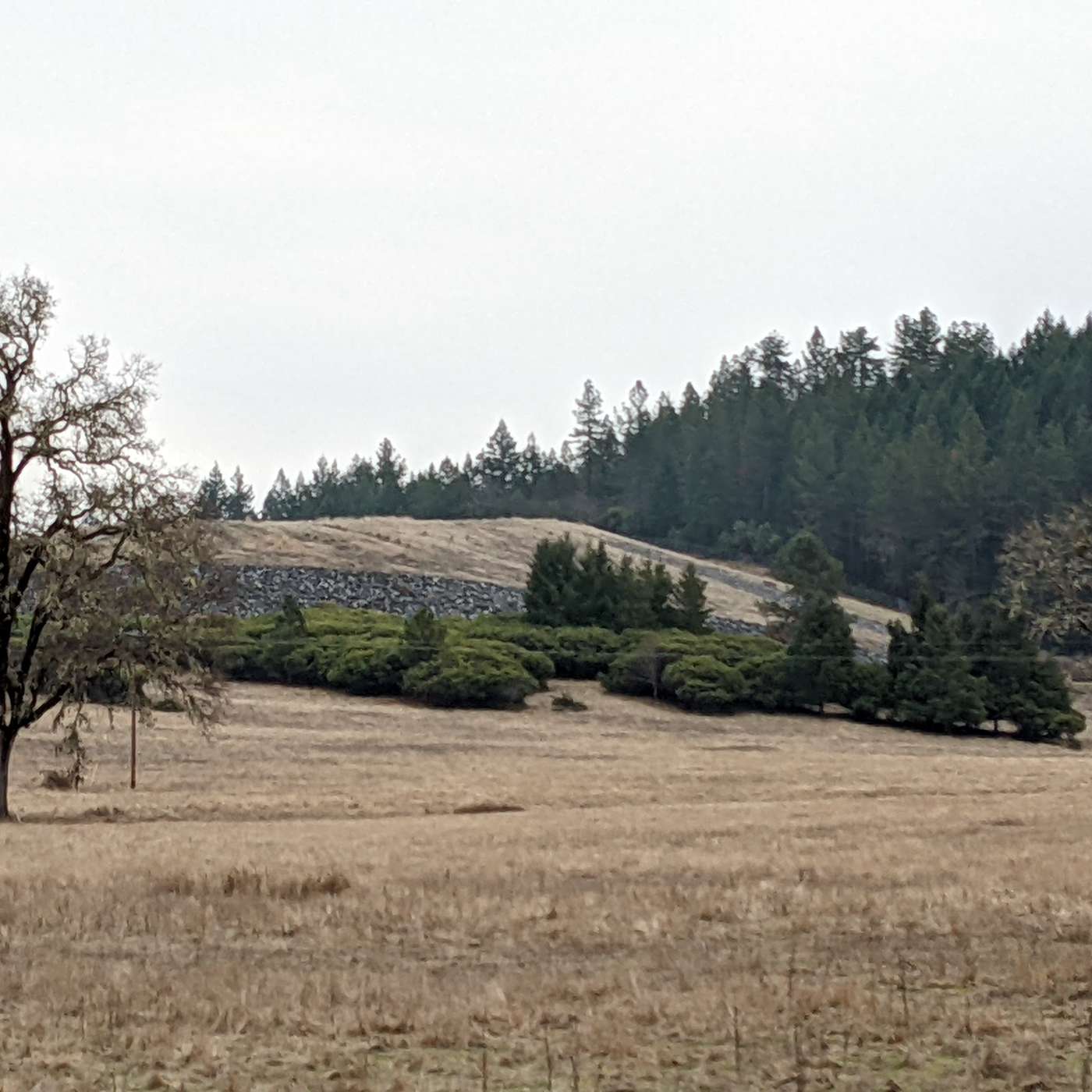
Ep 572What's next for the Laytonville landfill
The closed landfill in Laytonville has long loomed large as a source of grief in the community. Some residents of the unincorporated area and the neighboring Cahto Rancheria are sure that contaminants are causing damage to the environment and their health. The bottom of the landfill is unlined, which means water can percolate into the historic waste and then back out again into the soil and groundwater. The local water district tests some of the nearby wells and finds that the water is free of the most concerning contaminants. But in the last decade, increased levels of multiple different kinds of salts and minerals that are frequently associated with landfill waste have been found in a well on the southeast corner of the county’s monitoring network, which includes ten wells. And an environmental consultant working for the tribe says two of the three wells he’s working with show troubling indicators. He’s planning to install a half dozen more wells this year. The state has also called for more monitoring wells, as the county prepares for maintenance on the landfill cap, drainage system, and roads on the seven-acre site. After government-to-government consultations between the tribe and the California Environmental Protection Agency, the county and the tribe have signed an MOU to work together on the project. Chris Watt, of the North Coast Regional Water Quality Board, shared some context about what’s currently known about the elements in the county’s well, and why more monitoring is needed. “This well at the southeast corner of the landfill has been monitored for multiple decades,” he said in a recent interview. “Beginning about ten or more years ago, that well, as we looked at the statistics, began to record an increasing trend in what we call indicator parameters. Indicator parameters are minerals and salts that are present in the groundwater. And we are seeing increasing values of those over time. Landfill waste can generate those salts and minerals, so our assumption is that those are originating from the landfill, and show that there is movement of groundwater from the landfill through that well. All of these are found naturally in the groundwater, so they’re not what we would call synthetic contaminants. They can be associated with the landfill waste, and they can originate from either those minerals and salts dissolving into the groundwater as water moves through the waste, or they can be dissolved through the rocks as the landfill waste changes the chemistry of its environment. So these aren’t what we would traditionally call pollutants, per se. They’re indicators that there is movement of groundwater from the landfill in the direction of that well. Some of these have exceeded what we would call secondary drinking water standards. So we are tracking this, and asking the county to expand their monitoring network to determine how far and where this movement of salts and minerals has gone.” Watt says it’s significant that the southeast corner is most affected by the landfill. “Traditionally, the model for how water has moved in this area of the landfill has been, it’s moved in a northerly direction,” he noted. “However, this trend in indicator parameters, these salts and minerals that we’re finding to the southeast, suggest that there is a component of flow to the southeast. This is going to require an update in our conceptual model of the landfill and in the monitoring program for the landfill, which the county is working on as they prepare their engineering documents to do a fix on the landfill cap…at a minimum, it’s going to be an expansion of the monitoring well network to the southeast. The county’s land that they control ends near this well, so they’re working with their neighbors, the Cahto Tribe, to obtain access and design a monitoring program that’s going to have to be located on the Rancheria property.” The exact number and location of the new wells hasn’t been worked out yet. The county will hire a contractor, who will meet with the Cahto Tribal Council and the Laytonville Municipal Advisory Council, and then present a proposal to the Water Board for its review, before installing more wells. Nothing will happen in a hurry. Massive cleanup is one of many possible outcomes, but Watt thinks it’s too early to predict what will come of the increased monitoring. “So there’s a monitoring program that the county implements, that’s a series of wells,” he summarized. “Some of them are for water, some of them are what we call a gas well, so they do gas samples. Landfills can generate gasses, and so they monitor that as well. The monitoring network, I think we’ve established, needs to be changed. The county has been monitoring these wells for decades. There are thousands of data points which we are using in our conceptual model of evaluation…This last ten years of data has said we need to change this. Things with landfills don’t move quickly, in terms of actions. They’re exp...
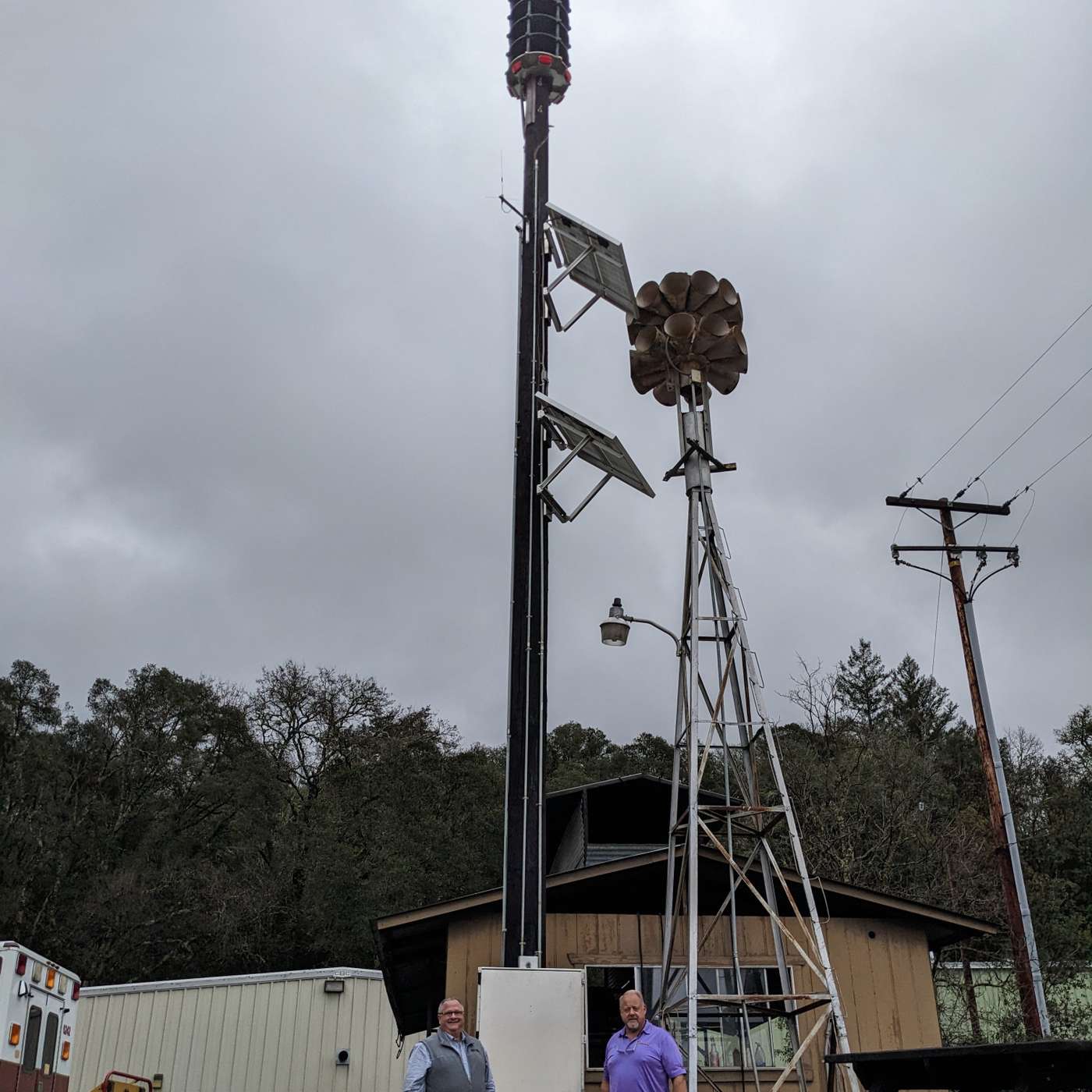
Ep 571Redwood Valley anticipates more notification sirens
Redwood Valley residents gathered in the firehouse on Saturday morning for a demonstration of a warning siren and updates on plans to increase the number of sirens to notify people in remote areas of a pending emergency. One siren, installed at the station in August 2021, has a range of about one square mile. Kerry Robinson is the chief of the Redwood Valley Calpella Fire District, which has 23 volunteers and four paid staff. He reflected on Saturday morning’s test and how expanding the notification system has been a long-standing desire of the community. “My impression was, it was very, very loud,” he reported. “I walked outside and just went, oh, my. And then they stopped the siren, and you could just hear it echoing through the valley…This is one of the things I’m very very concerned about, being the fire chief here in Redwood Valley. The community is my number one priority, so I want to make sure the community is well taken care of. The community has spoken and spoken several times, asking when the project would be completed. And then the county stepped up and said, hey, we can help out with a grant. So I’m really looking forward to getting this project going. I was there in the 2017 fires. It was horrible.” The 2017 firestorm was on Supervisor Glenn McGourty’s mind, too. “I’m really excited about this, because after the 2017 disaster here in Redwood Valley, one of the things everyone noted was, it would have been really great to have had some kind of warning,” he recalled. “And then we had failures of our cell system and everything else, so it really was tragic, the way that we couldn’t get the word out. So this is part of a long term investment process that the county has gone through, first with PG&E funds, and then we supported Measure P, which passed.” Measure P was a ten-year quarter-cent general sales tax measure that voters approved in November. The Board of Supervisors referred it to the ballot. It’s estimated to raise $4 million a year for essential services like ambulances and firefighters. Because it is a general tax, it is not a binding measure. Chief Robinson said there are several different ways to activate the sirens, either with cell phones or a landline or even manually, in the event of another collapse of key infrastructure. He said plans for exactly what it will cost to expand the system, precisely how many more sirens will be added, and where they will go, are still in the early phase. The current estimate for how many more sirens will be needed is four. So far, the project has cost $60,000, mainly from the PG&E disaster settlement. Charles Clugston is the president of CTC Mass Notification Systems, the distributor of the siren system. He shared some technical details. “We have four batteries in there, and it’s solar powered,” he explained. “We’re at 560 megahertz. So it’s like a foghorn, so it travels really far. Like when someone drives up behind you, like a young kid, and they have a lot of bass in the car, you feel it. It’s like that.” He added that even if the telephone pole holding up the siren were to snap, the siren would continue to sound. The system also includes a number of tests for deficits of its various components. The weekend’s test relied largely on citizen feedback from residents who called in to report how well they heard it, from which parts of the valley. Clugston said there will be more testing of the siren’s sound quality, combining the data from previous years and this weekend, to determine where the next sirens will be positioned. Brad Cox represents Whelan Engineering, which designs and implements the systems. He spoke about the local challenges of finding the right location for more sirens. In Northern California, with its ridges and valleys, “it is a task to get covered at times,” he noted. His company’s units have a range of 5,800-6,100 feet, but the size of the unit is not always as much of a concern as the terrain, which dictates how far the sound can travel. For that reason, the system is designed around the targeted area. If there are ridges all the way around a site, he said, “There’s no sense in putting the large one in, because (the sound) is not going over the ridge. It’s going to go up and that’s where it will stop. So some of the areas may have the smaller one, because it doesn’t need the large one. It doesn’t benefit them anymore. So that’s part of our planning, is to find out where we need them, what size we need, and then develop a plan and deliver it back to the county.” There will be further analysis and public hearings before the project proceeds. The units will be “on the ground” within about three and a half months of placing an order, and then the installation and bureaucratic hurdles will begin. Clugston hopes to start installation within a year. Chief Robinson took an opportunity to talk up his department. “We’ll get through this project here,” he predicted; “and we’ve got some additional fire engines that ...
Ep 570Cost overruns, delays on new jail project climb
Cost overruns and delays at the new jail county continue, with exasperation on all sides at inaccurate estimates, delays at the state level, a continuing lack of financial information, and fears that the county will be unable to meet its obligations. The new estimated date to complete construction, which has not yet begun, is May 2025, rather than March 2024, which was the originally anticipated milestone. The new cost estimate is more than ten million dollars higher than the original, with an estimated funding shortfall of $1.4 million. Supervisor Dan Gjerde expressed frustration over the estimates provided by contractor Nacht and Lewis, the architecture firm that’s been working on the design phase of the project. “We may be about one year behind schedule at this point, but now the costs are estimated by Nacht and Lewis as being 42% higher than originally estimated,” he calculated. “I don’t know if Nacht and Lewis has any insurance policy or anything. To what extent do they validate, when they’re hired by customers, that they are providing agencies with a good estimate when agencies submit a grant application, because for example, had we known when we applied that the costs were going to be substantially higher, we could have asked for a grant form the state for more than $25 million. We asked for $25 million because Nacht and Lewis said the project would cost $26 million, and it required a minimal county match. At this point, the county match has ballooned from one million to I think it’s about $12 million at this point or more. So I really wonder about the ethical practices of Nacht and Lewis, if they are that far off the mark…and just finally, ultimately, I feel like the county needs to make a full court press to go back to the state and say, hey, this is your program. You’re realigning people from state prisons into county jails. It’s in the best interests of the public that we do that, but it’s not bearable for a small rural poor county like Mendocino to pay so much of the share of this project that was originally a state project.” With the books not yet closed for the last fiscal year, Supervisor Glenn McGourty, who is the new chair this year, tried to get an idea of how the county will pay for its share of the project. That information is still not available, according to CEO Darcie Antle. “Any thoughts about how we’re going to afford this?” he asked. Antle told him she hopes the fiscal year 22/23 books will be closed soon, at which point the executive office will have an estimate of the carry-forward. There will be a budget workshop for the upcoming fiscal year at the next regular Board of Supervisors meeting on January 24. “This is a real horror show of signing up for something that you don’t really know the price for, and it keeps escalating, making it very, very difficult for us to meet all of the other things that we want to do for the county,” McGourty noted. Eric Fadness, of Nacht and Lewis, said the delays and overruns are due to factors that are beyond his control. He also told the board that the limit on the amount the county could have applied for to build the jail was $25 million. “Any additional costs to the project would have to come out of county cash match,” he said. “We do not control the construction market. We do our best to estimate the ongoing escalation in costs, but we don’t have a crystal ball to predict the escalation that’s occurring now, with inflation, supply chain delays…I’d also like to point out that we don’t control the state’s process. And the delays to the project have largely been due to state delays in approving the ground lease for the project. That took well over a year of processing for that to occur. And we were held up in our time frames to complete the construction documents while those processes were occurring. And then recently, with the state fire marshal's office. Many other counties are experiencing delays with state fire marshall review and approval. You’re not alone. But we can’t control that process.That is a process that only the state fire marshall has control of…Unfortunately, where we’re at today, the costs have increased significantly, mainly because of the delays, and because of the current market.” Sheriff Matt Kendall was blunt about his assessment of the state’s responsibility for the jail, emphasizing that many inmates who used to be housed in state prisons are now in county facilities. “The state of California is beginning to, for lack of better terms, beginning to step away from many of the responsibilities that they had in the past,” he opined. “I think they are working on some unrealistic numbers. We are seeing a reduction in the state prison population that is probably, based on what I can see, very reliant on some of the covid precautions that were taken, and those numbers are going to jump back up. And when that occurs, I think that we've all got to be ready…The state has stepped away from some of the...
Ep 568Eagle tree receives uncertain reprieve
A small group of activists from across California has gathered in Potter Valley to protect a dying Ponderosa pine tree containing a decades-old bald eagles’ nest. On January 5, the US Fish and Wildlife Service issued a permit to PG&E to remove the tree, on the grounds that it poses a hazard to a nearby power line. PG&E de-activated the line over the summer, and is providing generator power to residents on the property at no extra cost — on the condition that they do not support efforts to protect the nest. Tom Wheeler, Executive Director of EPIC, the Environmental Protection Information Center, said he’s still “still investigating all potential opportunities” to keep the tree standing, but that “the ability to get into court to stop this is difficult,” in such a short time span. During the two-week public comment period on the permit, which ended on December 27, Wheeler complained that “scheduling a public comment deadline to fall squarely within the winter holiday season is dispiriting, especially as the Service has recognized that this nest removal is the subject of significant public controversy.” One can only assume that this was intentional to depress otherwise substantial and hostile comments.” Earlier this week, he expressed disgust with PG&E, saying, “This is what a multi-billion dollar industry invests in: to fight over a tree;” and added he was “impressed by the community that’s worked to protest the removal.” Environmental indigenous activist Polly Girvin said Monday the group plans to defend the nest for the duration, and that she’s there on behalf of her great-grandchildren. “I’m here because they massacred the oaks at Coyote Valley,” the home of the Coyote Valley Band of Pomo Indians in Redwood Valley, she said. “It was a very traumatic experience, and I heard the same thing happened at the Yokayo Rancheria. So I’m here in support and solidarity in this Potter Valley territory, just because they have been really decimating the oaks on two reservations that I know of. They went way overboard.” Breeding season officially starts on January 15. Last year, an eagle landed in the nest as a PG&E biologist and local bird-lovers looked on. Plans to cut the tree were called off, and the pair successfully raised a chick last year. A spokesperson for Fish and Wildlife said PG&E can cut the tree during the breeding season, “in the event the tree poses an emergency or hazard situation.” The Service’s ordinance does not allow intentional, lethal take of eagles, but it is permissible to remove an in-use nest “to alleviate an existing emergency, or to prevent a rapidly developing safety emergency” that could harm humans or eagles. US Fish and Wildlife pointed out that “Eagle nests commonly blow out of trees during winter storms, and nest trees occasionally fall down.” But on Monday morning, after a series of atmospheric rivers and gale-force winds, the nest tree, which is just a few hundred yards from the Eel River, was still standing firm. An activist named Bat described what he saw during Sunday night’s downpour. “Right across the street, that power line was all snapped up,” he said “And then they had to come out here and redo this whole line.” He added that crews made no attempt to come through the gate to cut down the eagle tree, but “We were here, trying to be in the way of them getting to this tree, so we were just standing by the gate and keeping watch.” The fallen tree, a moss-covered oak which was still cut up by the side of the road, had been marked with a yellow spray paint dot. A branch of poison oak twined around its trunk still bore a piece of red plastic tape. The marks do not comport with standard forestry markings, and their meaning has been known to change from year to year. PG&E did not provide an explanation for the meaning of the dot and the tape on the tree that fell Sunday. The eagles’ nest is just inside the gate to the driveway of a private property off of a narrow, nominally paved public road. There is another dirt driveway across the road that leads to Cape Horn Dam, part of the hydropower facility that is owned by PG&E. The dam was briefly threatened in 2017, when a firestorm caused by PG&E tore through Potter Valley and Redwood Valley. The birds seem to have gotten used to curious humans, and they made several appearances as people talked and got in and out of cars and opened umbrellas and set up a canopy. One activist was especially moved by the sight of an eagle that perched in a nearby snag, taking her measure before flying off to roost in the Ponderosa pine again. Isabella Azizi is a member of Idle no More SF Bay, an environmental organization that started as an Indigenous women’s prayer group focusing on Native American sovereignty, land and water protection. She left her home in Oakland early Monday morning to accompany activist and videographer Peter Menchini to the site. “It was such a blessing to be able to see the eagle this mornin...
Ep 567Persistent rain patterns impact Covelo residents
January 10, 2023 -- Persistent rain patterns impact Covelo residents with fallen trees, power outages, and dangerous road conditions. KZYX reporter Eileen Russell interviews Mendocino County Sheriff Matt Kendall and Covelo Fire Department volunteer Linda Marshall to find out how the latest storms have affected essential services. The National Weather Service is predicting another seven days of rain and snow at lower elevations early in the week. By Eileen Russell
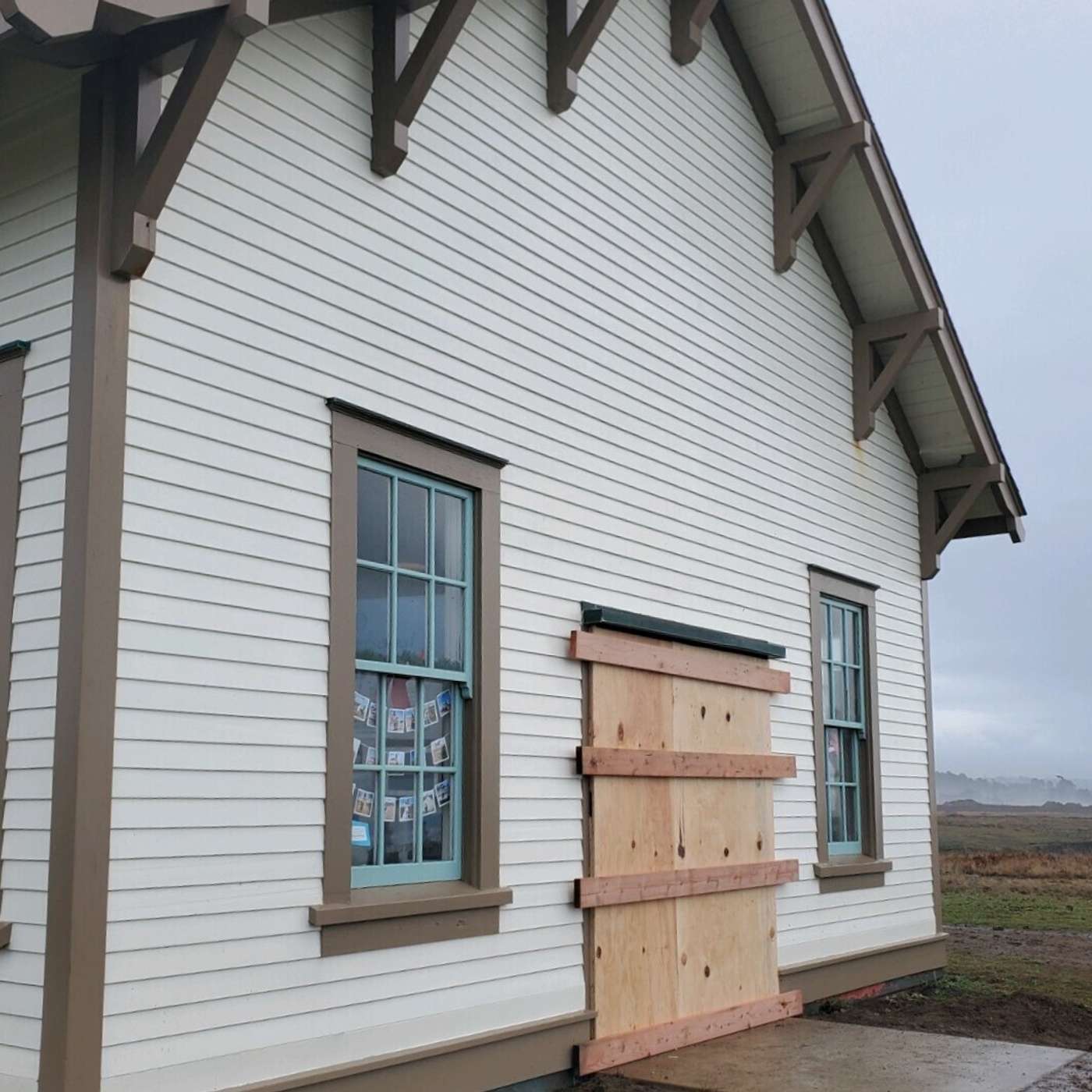
Ep 566Point Cabrillo Lighthouse Damaged by 30 Foot Waves
On January 4th 30-foot waves overtopped the cliff at Point Cabrillo and slammed into the light house. It was the worst damage on the coast from the major storm that walloped California, bringing torrential rains, gales, floods and high surf. State Parks Superintendent Loren Rex explains the damage at Point Cabrillo and other local parks. Photo provided by California State Parks

Ep 563Volunteers Continue the Century Old Tradition of Counting Birds
For 49 years, bird enthusiasts have gathered in Manchester to participate in the annual Christmas Bird Count. The Fort Bragg Bird Count has been around for 12 years. Dave Jensen and Tim Bray lead the counts under the umbrella of the Mendocino Coast Audubon Society. And it’s not just about counting birds. The count information is shared with the National Audubon Society and joins over a hundred years of scientific data that tracks the health of our winged neighbors. This data is used by researchers, conservation groups and governments to better understand how the birds of North America are faring in modern times. Dave and Tim talk about the numbers and some interesting finds.Photo provided by Lisa Walker-Roseman
Ep 565Much of Laytonville's water safe
As the County prepares to hire a contractor to repair the 25-year-old cap on the Laytonville landfill, old questions about contaminants are rising to the surface. A 2020 report found that one of the groundwater wells had detected contamination that triggered extra reporting requirements and a study about how to take corrective action. The landfill is monitored by a network of ten wells, plus gas probes and devices that monitor the depth and pressure of the groundwater. In the first half of 2020, the well on the southeast corner of the site showed increased levels of several elements, including iron, manganese, chloride, calcium, sodium, sulfate and arsenic. After the reports about the anomalies in the well, the Cahto Tribe, whose rancheria borders the closed dumpsite, initiated government-to-government consultations with the California Environmental Protection Agency, and the county signed an agreement with the tribe about how to conduct the repairs on the cap with tribal input and keep their consultant, Dr. Deitrick McGinnis, apprised of work on the landfill. McGinnis says two of the three wells he’s working with have shown signs of contamination he suspects are from the historic garbage. He wants to put in a half-dozen more wells to collect more data. “This is not an inexpensive endeavor,” McGinnis acknowledged. “I think that we’re going to see, at least on this side of things, at least another million dollars spent before we have a good handle on it. Expanding the system could double that price. And then cleaning up landfills, if you get lucky and it isn’t much of a problem, you know, it can only be seven figures. If it goes the other way, you just start putting zeros behind things.” He hastened to add that the project is “very much in the assessment phase right now, so I hate to scare anybody. But it's not ten thousand dollars.” He thinks he could spend half a million dollars on a first phase groundwater assessment, and another half million for soil analysis. McGinnis said the work has been funded so far mainly by federal grants specific to the Tribe, which has leveraged the funds for more grants from the EPA, the Bureau of Indian Affairs, and the Bureau of Reclamation. The Tribe has also received Environmental Justice funding from the State of California, “which I think speaks loudly to what this problem really means,” McGinnis concluded. A 2016 report by an Alaska-based firm called Ahtna found soil contaminants that Sandy Karinen, a retired state environmental scientist, thinks merit another look. “They found hex-chrome, they found arsenic at exceedingly high levels. Arsenic here has been very high, and they found chloroform,” she said. “So what this report said is, you’ve got to do a whole lot more sampling.” The Rancheria is within the jurisdiction of the Laytonville County Water District, which treats its water to a high standard, according to District Manager Jim Shields. “That water is perfectly safe to use for all purposes,” said Shields. “We do thousands of tests a year. We do tests we don’t even have to do. We’re not even required by any of our regulatory agencies to test for PCB and hexavalent chromium. We do that on our own. We do tests, on a regular basis, for PCBs and chrome 6. I’ve done that from day one. Why do I do it when we don’t have to do it? I do it because I’m a responsible member of this community. I listen to people. If people have concerns over those issues, I’m going to do what I can to ensure and guarantee that there are not those sorts of contamination risks here. In fact, we just completed our annual PCB and chrome 6 tests. They're very expensive to do, and once again, it came up negative. Especially the test for PCBs. It’s a very broad scale kind of full-gamut test. Never, ever, ever have we ever found any of that in our water.” Shields says about 20 years ago, he worked with scientists from EPA Region 9 to test ten private wells near the old dump, and found microscopic levels of cattle dip and DDT, a pesticide used by loggers, but nothing he thinks could be attributed to the landfill. “We continue to test private drinking wells,” he emphasized. “They are the drinking wells that are immediately adjacent to the landfill. There’s an old well on the rez that’s no longer active. It hasn't been active on the rez since 1969, because they’ve been on city water since then. So these wells that we test, and we’re primarily testing them for PCBs and chrome 6, they are literally right next door to the landfill, downslope gradient, so that if there’s anything escaping or migrating off of that landfill, boy, most likely, you’re going to see that stuff in those wells.” Shields is the longtime editor of the Laytonville Observer and says he kept close track of state and federal investigations into the illegal disposal of hexavalent chromium, or chrome 6, a highly toxic industrial contaminant. In 1996, the City of Willits sued Remco Hydraulic...