
KZYX News
1,162 episodes — Page 13 of 24
Ep 564County, Tribe, taking a closer look at landfill site
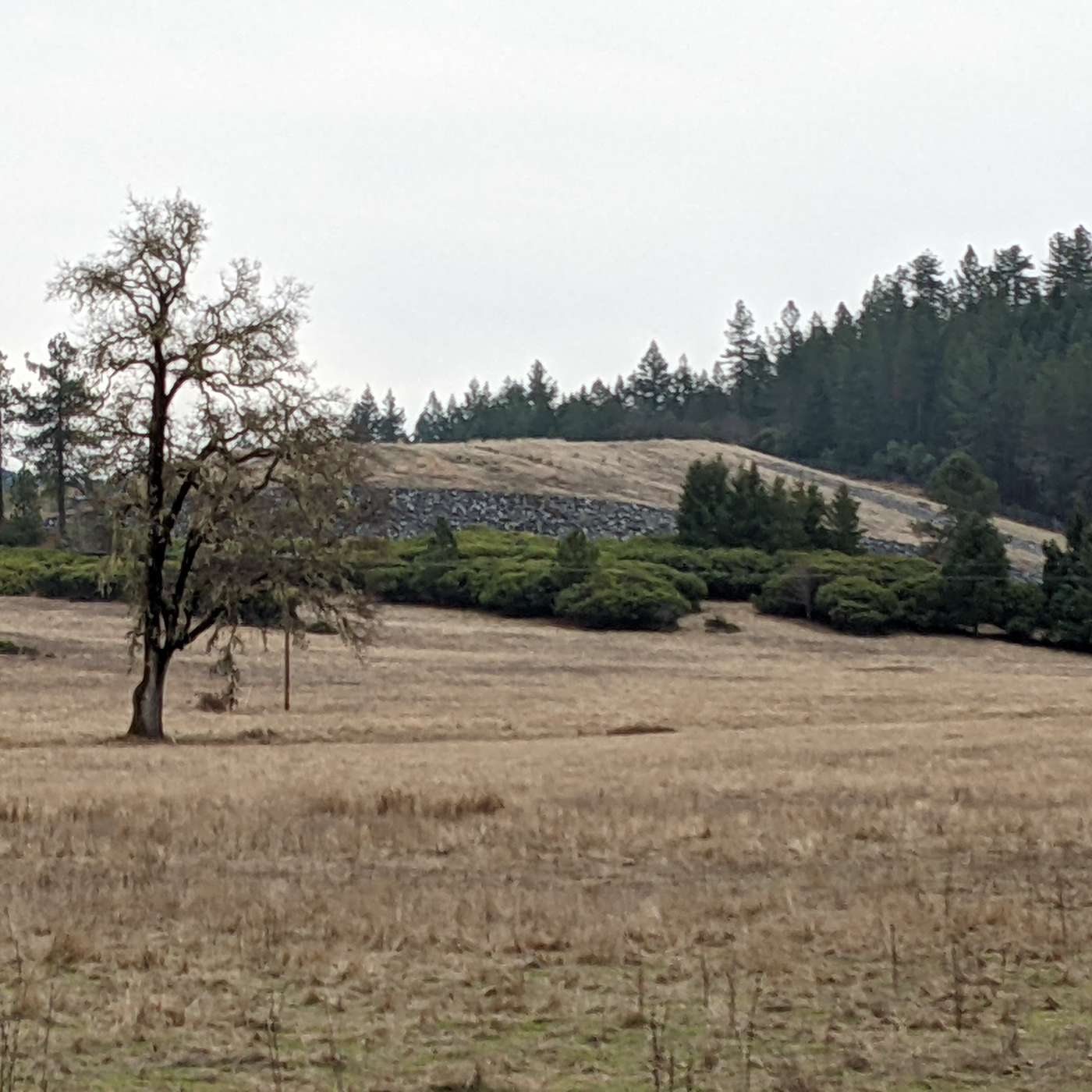
As the County prepares to hire a contractor to repair the 25-year-old cap on the Laytonville landfill, old questions about contaminants are rising to the surface. A 2020 report found that one of the groundwater wells had detected contamination that triggered extra reporting requirements and a study about how to take corrective action. The landfill is monitored by a network of ten wells, plus gas probes and devices that monitor the depth and pressure of the groundwater. In the first half of 2020, the well on the southeast corner of the site showed increased levels of several elements, including iron, manganese, chloride, calcium, sodium, sulfate and arsenic. After the reports about the anomalies in the well, the Cahto Tribe, whose rancheria borders the closed dumpsite, initiated government-to-government consultations with the California Environmental Protection Agency, and the county signed an agreement with the tribe about how to conduct the repairs on the cap with tribal input and keep their consultant, Dr. Deitrick McGinnis, apprised of work on the landfill. McGinnis says two of the three wells he’s working with have shown signs of contamination he suspects are from the historic garbage. He wants to put in a half-dozen more wells to collect more data. “This is not an inexpensive endeavor,” McGinnis acknowledged. “I think that we’re going to see, at least on this side of things, at least another million dollars spent before we have a good handle on it. Expanding the system could double that price. And then cleaning up landfills, if you get lucky and it isn’t much of a problem, you know, it can only be seven figures. If it goes the other way, you just start putting zeros behind things.” He hastened to add that the project is “very much in the assessment phase right now, so I hate to scare anybody. But it's not ten thousand dollars.” He thinks he could spend half a million dollars on a first phase groundwater assessment, and another half million for soil analysis. McGinnis said the work has been funded so far mainly by federal grants specific to the Tribe, which has leveraged the funds for more grants from the EPA, the Bureau of Indian Affairs, and the Bureau of Reclamation. The Tribe has also received Environmental Justice funding from the State of California, “which I think speaks loudly to what this problem really means,” McGinnis concluded. A 2016 report by an Alaska-based firm called Ahtna found soil contaminants that Sandy Karinen, a retired state environmental scientist, thinks merit another look. “They found hex-chrome, they found arsenic at exceedingly high levels. Arsenic here has been very high, and they found chloroform,” she said. “So what this report said is, you’ve got to do a whole lot more sampling.” The Rancheria is within the jurisdiction of the Laytonville County Water District, which treats its water to a high standard, according to District Manager Jim Shields. “That water is perfectly safe to use for all purposes,” said Shields. “We do thousands of tests a year. We do tests we don’t even have to do. We’re not even required by any of our regulatory agencies to test for PCB and hexavalent chromium. We do that on our own. We do tests, on a regular basis, for PCBs and chrome 6. I’ve done that from day one. Why do I do it when we don’t have to do it? I do it because I’m a responsible member of this community. I listen to people. If people have concerns over those issues, I’m going to do what I can to ensure and guarantee that there are not those sorts of contamination risks here. In fact, we just completed our annual PCB and chrome 6 tests. They're very expensive to do, and once again, it came up negative. Especially the test for PCBs. It’s a very broad scale kind of full-gamut test. Never, ever, ever have we ever found any of that in our water.” Shields says about 20 years ago, he worked with scientists from EPA Region 9 to test ten private wells near the old dump, and found microscopic levels of cattle dip and DDT, a pesticide used by loggers, but nothing he thinks could be attributed to the landfill. “We continue to test private drinking wells,” he emphasized. “They are the drinking wells that are immediately adjacent to the landfill. There’s an old well on the rez that’s no longer active. It hasn't been active on the rez since 1969, because they’ve been on city water since then. So these wells that we test, and we’re primarily testing them for PCBs and chrome 6, they are literally right next door to the landfill, downslope gradient, so that if there’s anything escaping or migrating off of that landfill, boy, most likely, you’re going to see that stuff in those wells.” Shields is the longtime editor of the Laytonville Observer and says he kept close track of state and federal investigations into the illegal disposal of hexavalent chromium, or chrome 6, a highly toxic industrial contaminant. In 1996, the City of Willits sued Remco Hydraulic...
Ep 561Rails to trails lawsuits hinge on historic right of way agreements
December 30, 2022 — Lawsuits about rails to trails projects have become an industry, according to an expert in the history of public lands in the U.S. In northern California, close to 300 private landowners are suing the federal Department of Justice over the Great Redwood Trail. Planning efforts for the future recreational trail are the responsibility of a state agency after the Surface Transportation Board, a national body that regulates railroads, ruled that the span of line between Willits and Eureka can be abandoned and railbanked. But portions of the trail run through or alongside private property, and some of those landowners are demanding compensation for land they say was taken from them by the Surface Transportation Board’s decision. They maintain that the value of their property has been degraded. John Leshy, Emeritus Professor at UC Hastings College of the law, is author of the book, “Our Common Ground: A History of American’s Public Lands.” From their beginning, railroads have played a central role in the interplay of public and private property...
Ep 560Lawsuits over Great Redwood Trail accumulate
December 20, 2022 — The Great Redwood Trail has had a string of successes this year. The Surface Transportation Board, the federal entity that regulates railroads, has rebuffed efforts by local and out of state rail interests that wanted to use the line for its original purpose. Two months ago, the Board ruled that the Great Redwood Trail Agency will be allowed to railbank the track from Willits to Eureka, or build the trail directly on top of if by filling it in with dirt and aggregate. Senator Mike McGuire announced that the state is awash in funds for trail projects. He hopes neighboring landowners will benefit from the increased economic activity he expects from outdoor recreation, but lawsuits are proliferating. Almost three hundred landowners with property adjacent to the future trail in Mendocino, Humboldt, and Trinity counties are suing the federal government to compensate them for land they say was taken from them by the Surface Transportation Board’s order. They believe the trail will reduce the value of their property by using it for a purpose that has nothing to do with the original railroad easement — which they claim was terminated when the line was abandoned. Thor Hearne is a lawyer representing sixteen landowners in Mendocino and Humboldt counties. He’s taken rails to trails cases all over the country, in what has become a specialized area of jurisprudence.
Ep 559PG&E asks to transfer Potter Valley Project license to subsidiary
December 29, 2022 — The license for the Potter Valley Project is undergoing a variety of considerations. As PG&E prepares its plan for decommissioning the inter-basin hydropower project that diverts water from the Eel River into the Russian River, the Federal Energy Regulatory Commission, or FERC, announced that it is considering reopening the license. That means that, although it granted PG&E an annual license in April, it’s thinking about adding requirements for a number of wildlife protection and habitat monitoring measures that were proposed in March by the National Marine Fisheries Service, another federal regulatory agency. PG&E argues that the decommissioning process will provide plenty of opportunity to review protective measures, and that there’s no evidence of harm to embattled salmon. But FERC appears to have taken notice of legal threats by environmental groups claiming the project violates the Endangered Species Act. FERC has accepted comments for and against the proposed reopening of the license, and PG&E has pledged to submit its decommissioning documents by January of 2025. By that time, the project may technically be under new ownership. This month, PG&E asked FERC to allow it to transfer a list of hydropower projects to a new Delaware-based LLC called Pacific Generation, writing that the transfers “are part of a broader corporate reorganization being undertaken to facilitate raising equity for PG&E’s utility needs.” PG&E spokesman Paul Moreno noted in an email that, “Nothing will change for Potter Valley or the decommission process. Pacific Generation LLC will be a majority-owned subsidiary of PG&E, which will own other PG&E hydropower facilities as well as natural gas power plants and some solar arrays and battery storage. It was not created just for (the) Potter Valley Project.” PG&E assured FERC that it plans to “remain the majority and controlling owner of Pacific Generation;” and that its employees “will continue to operate and maintain the assets…just as they do today.” The restructuring would have to be approved by the California Public Utilities Commission (CPUC) , which in 2023 will also set the rates for the next four years. In September, PG&E requested that CPUC expedite the process, completing testimony, hearings, and filing of briefs by May first. Mark Toney, the Executive Director of The Utility Reform Network, or TURN, a ratepayer advocacy group, said TURN is “opposing the deal strenuously.” One of TURN’s many worries is that if PG&E goes bankrupt again, its assets could be out of reach of settlements. TURN filed an objection to PG&E’s proposal and the request for expediting the proceeding, declaring that, “this application benefits shareholders, and an expedited schedule would only serve to benefit shareholders…not avoid ratepayer harm.” TURN also asked if it was reasonable for PG&E to indemnify Pacific Generation for wildfire damages caused by PG&E’s equipment, writing that “The Commission should examine whether this would result in an unreasonable transfer of risks.” Environmentalists are concerned, too. Redgie Collins is legal counsel for California Trout, one of the groups that filed a notice of intent to sue PG&E for harming endangered species. Collins is also a steering committee member of the Hydropower Reform Coalition, a statewide consortium of environmental groups dedicated to “restoring environmental and recreational values at hydropower projects presently being relicensed,” according to its website. The licenses for three of the 21 hydropower plants PG&E wants to transfer to Pacific Generation are being surrendered, while seven are up for renewal. Collins suspects that PG&E is “trying to sneak bad assets into its portfolio,” in part by overstating how viable they are. In its transfer application to FERC, PG&E wrote that Potter Valley is a 9.4-megawatt project, though it hasn’t generated any power since a transformer broke down over the summer. Earlier this year, Moreno said the utility expected to recoup the unspecified costs of replacing the failed equipment within five years. But by mid-December, PG&E filed a brief update with FERC, stating that, “PG&E is currently in the process of considering long-term planning associated with Power Generation’s portfolio. As a result, numerous projects are being reassessed to ensure resources are utilized prudently, including the Potter Valley transformer replacement project.” Collins also speculates that if the transfer is approved, the company could raise debt on some of its projects. The utility insists that the transfer should enable Pacific Generation to issue debt at lower rates than PG&E, but TURN worries that “the total amount of debt could very well increase as a result of this transaction.” One thing is certain: ratepayers will cover the costs of decommissioning. Mark Pocta, a program manager at the Public Advocate’s Office at
Ep 558Public health officials recommendations during the holidays (bilingual)
December 23, 2022 -- For the last couple of weeks the term tripledemic has been around and we ask the Mendocino public health director Dr. Andrew Coren about it and how to stay healthy during the holidays. This is a bilingual report Durante las últimas semanas ha existido el término triplepandemia y cuando llegamos a las últimas semanas del año le preguntamos al director de salud pública de Mendocino, Andrew Coren, al respecto y cómo mantenerse saludable durante las vacaciones.
Ep 5572022 fire season review
December 21, 2022 -- The winter solstice reminded us that we have come to the end of another fire season in northern California. 2022 was a mild season compared to other years and it help firefighters and other organizations to train, recruit and fortify collaborations between agencies to continue their mission of preventing and aiding during natural disasters. KZYX asked Cal Fire to give us an update on the 2022 fire season.

Ep 556Mendocino voters pass Measure O tax to fund libraries
Branch Librarian Josh Bennett for the Round Valley Public Library sits down with KZYX News reporter Eileen Russell to discuss how the Measure O tax that passed in November will impact the library.
Ep 555City of Ukiah swears in new council
December 15, 2022 -- The pledge of allegiance kicked off the December 5th, 2022 Ukiah City Council meeting. With the city council election results in, outgoing mayor Jim Brown, who did not get re-elected, was honored with a standing ovation as he exited the dais before the swearing in of newly elected and re-elected council members. Two current members, Mari Rodin and Juan Orozco, will continue to serve alongside Josephina Duenas and Doug Crane. Susan Sher, retired attorney and Environmental activist, is newly elected to the council. The council voted to seat Mari Rodin as Ukiah’s new mayor. She spoke to KZYX about her reaction to the election results and the priorities of the council. By Stacey Sheldon
Ep 554Tourism Commission seeks to increase assessment
December 12, 2022, Sarah Reith — The Board of Supervisors gave a less-than-resounding nod of approval to the first step of an effort to increase tax assessments on businesses that appeal to tourists. The Mendocino County Tourism Commission and a contractor called Civitas Advisors told the Board that they believe the county should allow the Business Improvement District, or BID, to double its assessment from one to two percent on all lodging concerns, including campgrounds. The Commission also wants to evaluate the option of collecting a 1% assessment from what it calls “tourist facing” businesses, including restaurants and tasting rooms. The businesses and local government bodies in the cities and the unincorporated parts of the county would have to agree to the higher rate, which the businesses would pass on to their customers. According to Commission Executive Director Travis Scott, the 2% assessment is an industry standard in northern California. The Commission’s efforts to promote the county are funded by the current 1% assessment, plus fifty cents on the dollar from the county general fund. The proposed higher assessment is intended to save the county money on marketing itself to visitors. The Commission’s final goal is to reconfigure the parameters of the Business Improvement District, including its structure and the length of its contract. But yesterday, Emily Brown, of Civitas, told the Board that all she wants at the moment is access to information about the county sales tax and transient occupancy tax, to see if the plan is even worth pursuing. Supervisor Dan Gjerde was skeptical, saying, “You already know exactly how much the existing lodging produces, because you already receive a 1% BID from the existing lodging. The only thing you don’t have now is the assessment on the campgrounds, in terms of lodging. But we have a 10% ToT tax that the county is donating, per voter proposal, to the fire departments. But we already have that data. You just do a multiplier, or a division, of the ten percent tax that the campgrounds are collecting. And I believe it’s about $700,000 a year, so 1% would be $70,000 a year, one and a half would be a hundred and five. So that doesn’t need any new information from the county Treasurer (Tax Collector) Auditor (Controller)’s office. I don’t want to release the information about restaurants because that just stirs up a hornet’s nest, county-wide…it’s going to slow down this process, and we’re going to be voting on our county budget, and you will not have approval from any of the cities, I predict, if the restaurants are included in the discussion. And so what does that do? Well, 40% of the BID, right now, comes from the four cities. If you lose all that BID collection from the cities, you’ve gained almost nothing, even if you go from a one to a two percent BID. Because now you’ve lost 40% of your revenue. So your net increase is infinitesimal. And then you’re still going to be looking for a match from the county. Which we don’t have.” Supervisor Glenn McGourty had a different take, explaining his support by reasoning that, “What we’re doing is we’re giving them (the businesses) the information. This is what it looks like if you decide to do this. This is what it’s going to cost you. This is how much money would be raised. You decide, not us. And then I think that that is a very different message than saying, we’re all going to fail because we know you’re opposed.” Martha Barra, an influential local business woman, said she thinks this is the wrong time to ask for an increased assessment, but that tourism is poised to overtake other sectors of the economy. “Marijuana is dead,” she declared. “If you saw the front page of the Press Democrat on Sunday, when cannabis goes from $4000 a pound to $100 a pound, there’s no way that those growers can even work to become legal. So we’ve got tourism, and we need to put our efforts into making our county pristine, beautiful, and attractive. And as our businesses start doing better, this will be our hope for our county.” Michael Katz, Executive Director of the Mendocino Cannabis Alliance, refuted one of Barra’s points. “Cannabis is not dead in Mendocino County,” he insisted. “It is also in a downturn — a significant downturn, part of which has been exacerbated by the Mendocino Cannabis Department and the Board (of Supervisors), but that is something that can be resolved. The few things that have (been) shown to provide reliable revenue recently have been tourism and cannabis.” He added that he supports funding the Commission to continue drawing tourists, many of whom he believes are drawn by the county’s reputation for high-quality cannabis. Supervisor Ted Williams invoked the county’s ongoing budget woes, but eventually voted with Supervisors McGourty and Maureen Mulheren to grant Civitas the razor-thin margin it needed to access the financial data and to craft a nondisclosure agreement about it. “...

Ep 553Fort Bragg City Council Race Was Down to the Wire
On Monday December 12th the Fort Bragg City Council swore in their newly elected and re-elected members. Three of the current council members will continue to serve, Marcia Rafanan, Lindy Peters and Tess Albin-Smith. Albin-Smith ran as a write in candidate and won by just three votes. Jason Godeke, a local artist with several prominent murals in Fort Bragg and a middle school art teacher is the only new council member. We sat down with Godeke and Albin-Smith to get their thoughts on the election. Photo of Jason Godeke, by Michelle Blackwell
Ep 552County $6.1 million in the hole
December 12, 2022, Sarah Reith — The Board of Supervisors is looking for $6.1 million to balance its books for Fiscal Year 2021/22, as costs and interest rates soar and sales tax decreases. The county reached a tentative agreement with its largest employee union for a 2% Cost of Living Adjustment, which it might be able to fund with a pension reserve account. The self-funded healthcare plan that was in place when the county racked up a $3.6 million deficit has now been swapped out for a pool plan that will require an increase in employee contributions. That’s supposed to save the county $685,000 a year, but unknown future obligations are likely to be sizable. At last week’s budget workshop, the Board reviewed an analysis of the costs for building the new jail for mentally ill inmates, which includes millions in staffing. The Board also heard a reminder that the county is still waiting on more than $9 million of covid relief money promised by FEMA. That money has been borrowed from the treasury, and the interest is not recoverable. And there’s been no paper trail documenting the direction that former auditor Lloyd Weer allegedly received from the State Controller’s office in 2016, telling him the county should spend down the healthcare reserves by not paying into the health plan for three months out of the year or requiring employees to pay into it. Supervisor Ted Williams described the situation to Assembly member Jim Wood last week, and asked him for help from the state. “I don’t know, when I’ve voted on balanced budgets in the past, whether they were actually balanced,” Williams said. “That’s coming to light. We have a health plan that was millions over, and part of that was due to a holiday. I understand that’s because we got a call from the state. The state said we had accumulated too much money. We needed to spend it down. I don’t know what department of the state or why they would have done that by phone instead of writing…our finances are in such disarray, if I were in the state’s position, I would be looking at this rural county, thinking, we need to conserve them, clean up this mess and then give control back. Do you have any thoughts on how we move forward? We don’t have the local labor pool, we don’t have the funds to hire the staffing. It sounds like we have an office that was based on paper and spreadsheets, not automated systems. I think the Board and staff want to move forward and get our books in order, but we don’t know how.” Wood was noncommittal, saying, “We’re happy to work with you on that. Those are issues that we’re becoming aware of. I don’t know where there is potential for state resources there, but one of the things I’m always pushing for in my role is more technical assistance and support for rural counties.” Acting Deputy CEO Sara Pierce told the Board the county has received $9.1 million in covid money from FEMA and is still waiting for another $9.4 million. Supervisor John Haschak questioned her and CEO Darcie Antle. Pierce said when the county receives the amount FEMA has promised, it will go into the county’s disaster recovery budget unit, since that unit “is currently sitting in a $10 million deficit.” “How does that deficit show up?” Haschak asked. “Are we using reserves to cover that deficit at this point?” Antle told him that she believes the county is paying interest to the treasury, as it is for the money it borrowed to cover the health plan deficit. “And so that interest won’t be recoverable,” Haschak deduced. “When FEMA finally pays us, it will just be the base pay.” “Correct,” Antle confirmed. The Board also learned that the new jail will cost the county $2.5 million a year in employee wages and benefits. General Services Agency Director Janelle Rau explained why expectations for ongoing facilities costs at the new jail have risen. “We’re moving towards a cost of ownership model, versus the historical practice of what is contained in the Board’s Policy 33 regarding facility maintenance,” she said. That policy, last amended in 2007, states that seventy cents per square foot is to be funded for future capital costs. The standards for the cost of ownership model, which includes a capital reserve that budgets for ongoing facilities upkeep, is closer to $3 a square foot. Projections under the new model are sobering, and possibly more realistic. Rau told the Board that, “What we’ve estimated now, based on that expanded footprint, would be an additional $175,000. Again, currently the Board is not funding capital maintenance reserves. Funding is occurring on a project by project basis.” Supervisor Dan Gjerde argued for several belt-tightening initiatives, including consolidating dispatch services, offering employees the option of a less comprehensive healthcare plan, and unloading county parks. “How can we maintain the pretense that we’re going to keep these five or six county parks that are basically neighborhood park...
Ep 551United Disaster Relief work and challenges during the 2022 fire season
December 8, 2022 -- As we approach the end of the year holidays, the United Disaster Relief continues their mission of helping people impacted by natural and man made disasters in most of northern California. KZYX news talked to the organization director Danilla Sands about their work and the challenges of the 2022 fire season. More information at www.udrnc.org
Ep 550Board discusses limiting public comment on cannabis; indoor masks recommended
December 7, 2022, Sarah Reith — Supervisor Ted Williams asked County Counsel for advice on limiting public comment related to agendized cannabis issues, leading to a swift warning from a leading cannabis attorney. The query follows close on the heels of the Board approving a controversial ordinance approving a fee schedule for public records requests. In health-related topics that arose at the regular December 6 Board of Supervisors meeting: Representatives from SEIU 2015, the caregivers union, advocated for higher pay, claiming that fast-food workers make more than those who take care of disabled, poverty-stricken people. Caregiver Priscilla Tarver was among the speakers arguing that low pay makes it difficult to hire enough caregivers. “We just want to be recognized as a serious profession,” she told the Board. “That’s what it is. You know that we came in in diapers, we’re going out in diapers. Somebody’s going to be taking care of you at some point. You’re going to want that person to like to do their job. And if they get paid well enough, they're going to like to come to work, and take care of you.” Public Health Officer Dr. Andy Coren urged people to get up to date on their flu and covid vaccines, and to take other precautions against infection. “Since our community risk level worsened last week, I strongly recommend masking now in all indoor public spaces,” he said. “Yes, they are uncomfortable, but not nearly as uncomfortable as a hospital bed or a ventilator, or even caring for yourself for weeks at home.” Coren said the local medical system is so strained by the spate of respiratory illnesses that recently a sick child had to be transported out of state. Children are hit especially hard by the flu and RSV. This week, Adventist Health Ukiah Valley announced that it is offering an after-hours pediatric clinic on Mondays and Thursdays from 4:00 p.m. to 8:00 p.m., primarily for established pediatric patients exhibiting respiratory symptoms. Same-day appointments for sick children can be made by calling the Pediatric clinic at 707-463-7459. Much of yesterday’s morning discussion revolved around cannabis items that were on the consent calendar. One was a retroactive contract for $185,000 with Elevate Impact, the contractor administering the cannabis equity grant program. Department Director Kristin Nevedal said that was due to a missing invoice. But the item that got the most attention was a recommendation to approve the manual for the Local Jurisdiction Assistance Grant Program. The county received an $18 million allotment from the state to help cultivators satisfy environmental requirements as they struggle to comply with state regulations. That item came before Supervisors Maureen Mulheren and Dan Gjerde at the General Government Committee meeting in October. The Mendocino Cannabis Alliance urged the Board not to approve the manual, arguing that too much money will be used for administration and that they believe the guidelines are more restrictive than those allowed by the state. Williams asked County Counsel Christian Curtis if the Board is obliged to hear the public. “I think it was our understanding that public comment would be heard at the General Government Committee, not there and then again at a Board of Supervisors session,” he said. “What is proper?” Curtis told him that, “The Brown Act doesn’t require public comment at the full Board meeting if the item was previously heard at a standing committee. That’s specifically a committee exclusively of members of this Board, meeting in a Brown Act-compliant manner. So as long as there’s opportunity for the public to comment there, you don’t essentially have to repeat the public comment at the Board level itself, unless the legislative body, which would be the Board, determines there’s been a substantial change in the item between when it was at the committee and when it came to the full Board.” Long-time cannabis attorney Hannah Nelson called in with a rebuttal, saying, “Just because the Brown Act potentially allows for that process to be utilized, to restrict public comment on agenda items heard specifically in standing committees in the past, doesn’t mean that it’s necessarily a good or responsible thing to do.” Nelson argued that the full Board could benefit from public comment on items that are agendized just 72 hours before public meetings, and that often more nuance is available when people have more time to absorb the material. And cannabis is not the only topic that is subject to multiple rounds of discussion. Nelson added that she believes, “It’s going to be very important to apply any rule of this sort across every single standing committee. And I’m sure that the citizens and press will be interested to see if the Board would be applying any such rule equally across all issues and all committees. I hope this Board considers the limited time spent on public expression is valuable, from their constituents,...

Ep 541Unusual Species Stranded Along Mendocino Coast
An interview with Sarah Grimes, the stranding coordinator for the Mendocino Coast about the five deceased whales spotted in 2022. Twice the number Grimes normally sees. Grimes talks about the unusual species that stranded this year, including a Sperm whale and a Hubbs beaked whale. Photo courtesy of Sarah Grimes.
Ep 549County unions to get ARPA bonus; final election results are in
December 5, 2022, Sarah Reith — An agreement between the county and its largest employee union is coming before the membership this week, with a side letter granting workers a bonus from the American Rescue Plan Act, or ARPA fund. And the “triple-demic,” or flu, RSV, and covid season, is compounded by staff shortages, including substitute teachers, which means administrative staff and even school principals have been taking on classroom duties. Final election results came in on Friday, with some shakeups in key races. The top three vote getters for the Fort Bragg City Council long term were newcomer Jason Godeke, with 26.14% of the vote, incumbent Marcia Rafanan, with 16.08%, and incumbent Tes s Albin-Smith, with just over 12%. Incumbent Lindy Peters swept the short-term race with 78.31%. In the Ukiah City Council race, newcomer Susan Sher netted the most votes, with 22.61%. Incumbents Juan Orozco and Mari Rodin stayed on, with 21.35% and 21.16%, respectively, edging out Mayor Jim Brown, who garnered 19.53%. John Redding, the only incumbent who ran for the Mendocino Coast Healthcare District board, won the lowest percentage of the vote, with 12.64%. James Jade Tippett won the highest, with 27.78%, followed by Lee Finney, who won 21.73%, and Susan Savage, with 19.96%. Two countywide taxes passed with slim margins, while a parcel tax in Hopland was defeated. Measure P, a quarter cent ten-year general tax, passed the threshold of a simple majority with 55.17% of the vote. The measure asked voters for their approval to use an estimated four million dollars a year to fund “essential services, including fire protection and prevention.” The language is non-binding. Measure O, a special sales tax to fund the libraries, passed with 60.82% of the vote. This tax essentially doubles the current eighth of a cent sales tax and removes the expiration date, making it effective until it is repealed. Measure N, a parcel tax intended to fund emergency medical response and fire protection services for the Hopland fire protection district, required a two-thirds majority and was defeated, with 56.7%. Medical woes are hitting schools hard, with substitute teachers struggling to provide instruction to classes where sometimes only half of the enrolled students are present. Doug Shald, the communications officer for Ukiah Unified School District, which has about 7,000 students, said the district is trying a variety of programs, from in-person and online tutoring, to after-school programs, to make up for learning loss caused by absences due to illness. County employees have contended with illness, too, with social workers and nurses putting in long hours at the height of the pandemic. Julie Beardsley is the president of SEIU 1021, which represents the largest county employee union. She’s been part of the negotiating team advocating for the county to use some of its $16.8 million allotment from the American Rescue Plan Act for an employee bonus. Last week, negotiators representing SEIU 1021 and four other county labor unions signed side letters, separate from their pending contracts, awarding ARPA bonuses to employees. “The American Rescue Plan Act, ARPA, provided money to the counties to help offset the effects of the pandemic,” she said over the weekend. “This money was supposed to be designated for businesses who were in financial trouble. Also, a lot of counties designated it as a thank-you for the work that their employees did. Because you know, during the pandemic, people worked just so many hours overtime, and often at risk to their own health. I mean, we had nurses and social workers going into homes where they knew everyone had covid. And yet that was their job and so they went in and they did what they needed to do. So this money really was a thank-you. And the regular staff, full-time staff, will get $3,000. It will be taxable, so it won’t be the full $3,000. And we also were able to secure a bonus for our extra help staff.” Employees who worked an average of 20-47 hours per pay period will get a bonus of $1500. SEIU 1021 has been in contract negotiations with the county since spring of this year. A tentative agreement has yet to be ratified. The union membership will hold meetings about it this week, and vote on whether or not they accept the terms, which have not been made public yet. The Board of Supervisors will hold a final vote before it can be approved. Beardsley thanked county CEO Darcie Antle and Deputy CEO Cherie Johnson for their work on the agreement, as well as the Board of Supervisors, whom she regards as pro-labor. “I appreciate that,” she concluded.
Ep 548Fort Bragg to purchase property for three more reservoirs
December 1, 2022, Sarah Reith — The Fort Bragg City Council voted unanimously this week to purchase over 580 acres from the Mendocino Coast Recreation and Park District, for the purpose of building three 45-acre-foot reservoirs. That’s about 14.7 million gallons each, which is also the capacity of the currently existing Summers Lane reservoir. John Smith, Fort Bragg’s Operations Manager, reported to the Council that, even with that reservoir and the desalination plant, the city, which sells water to nearby communities, is likely to be dependent on stored water for quite some time. The city relies solely on surface water from the Noyo River and two spring-fed sources, Newman Gulch and Waterfall Gulch. Smith said production from the gulches is way down, and dry conditions are likely to continue. “Newman Gulch and Waterfall Gulch, as I've mentioned before, have been decreasing steadily in the last ten years,” he told the Council. “Most recently in the last five years, Waterfall has decreased by 67%, which is a lot. And Newman, as well, 42% down. Where we do gain some ground in the reverse osmosis world, we’re losing ground elsewhere.” The city is now in the process of purchasing the six parcels in the property, which, including escrow, could take 4-6 weeks. The maximum amount the city agreed to pay for the land is just over $2.4 million. Though the reservoirs will be covered to reduce evaporation and algae growth, Smith plans to make accommodations for helicopters to pull water for fire suppression. He’s optimistic about finding grant funding to build solar panel covers and a substation for each reservoir, but Smith was careful not to raise the council’s expectations for that particular benefit. “The reservoir solar cover,” he specified; “that’s not a promise. That’s a hope, and something that we will definitely be pursuing.” In a brief interview after the meeting, Smith said that when he looked into the solar project in 2015, the estimated cost was $7-8 million for each reservoir, at $5 million per substation and $3 million for the solar panels. The whole array could generate a total three megawatts of energy, enough to power the city’s facilities. Smith expects the reservoirs themselves will take thirty acres of land, leaving 550 acres for basic outdoor recreation. The property is currently zoned for timber production, but the city plans to annex it and place it in conservation. “Develop a community forest is what we expect to do with it,” he said. “Most of those sensitive species and habitat, you just can’t touch it. You can’t move it. There’s no development, really, that’s possible out there. It’s so sensitive and so rare.” The reservoirs themselves will not be available for aquatic recreation. According to a staff report, the California Department of Fish and Wildlife has six recommendations to protect and rehabilitate the native plant life, which has suffered from illegal dumping and off-road driving. The recommendations include installing wildlife-friendly fencing, removing concrete rubble and barriers, placing boardwalks on the existing trails, removing invasive species, and installing an on-site manager to discourage illegal use of the property. “Water supply for the reservoirs,” Smith said: “We’re going to fill them during the winter months, as mentioned. We’ve got the pump station at the water plant to help fill them.” He reported that he has spoken with LafCo (the Local Agency Formation Commission), which found nothing complicated about the city’s plans to annex the property. He added that the water rights are based on the reservoirs’ status as off-stream storage of diverted water, which is the same as the Summers Lane reservoir. “The Department of Drinking Water (is) always happy to see us add something that’s going to help our water situation,” he noted. As for Fish and Wildlife, he assured the Council, the agency is “very excited about off-stream storage.” Mayor Bernie Norvell said he was glad to preserve the majority of the property, and be in a position to continue delivering water to other towns. “It was really difficult, certainly for me, last year, to have to shut off those outside water sales,” he said. “So this goes a long way in that direction. I’m really proud of that. So thank you.” Rain is in the forecast for Fort Bragg through the weekend, but the amounts have decreased drastically over the last ten years.During public comment, Shelley Green reminded the council that conservation is an important strategy as overall rainfall dwindles. “Folks in the community did conserve 30% of their water use this year,” she told the Council; “and when we had the Fort Bragg bucket brigade, I developed a simple spreadsheet where people could determine exactly where and how much water they were using in their homes, and learned simple behavior changes and perhaps adapt their plumbing, between $30-$50 per household, in order to cut their use by 50%. So that’s anothe...
Ep 547More pediatric beds needed
November 29, 20222, Sarah Reith — Cold and flu season arrived early this year, with an extra hard-hitting strain of RSV, or respiratory syncytial virus, which can be dangerous for children and elderly people. With dwindling numbers of pediatric beds available nationwide, kids who need to be hospitalized often have to travel out of the county to receive a high level of care. Doctor Casey Johnston, a pediatrician who works in Ukiah and Lakeport, says that on top of covid, this is a particularly bad season for respiratory illnesses. “There’s several different reasons why it’s a bad year,” she said. “Normally we see surges in influenza and RSV. Every few years there’s a worse year for those conditions. We also have covid now, and actually there are some cases of people getting covid and the flu at the same time. So when your immune system gets hit with one thing, you’re more susceptible to get another virus. And then also a lot of people weren’t getting the normal exposures the last couple of years and building immunity. So we’re seeing a lot of particularly young kids get hit hard with these illnesses, especially flu and RSV.” The three afflictions present similarly, with cough, congestion, fevers, and body aches. Dr. Johnston recommends lots of rest, and especially hydration. “Because once a kid starts to get dehydrated, they feel worse, and they don’t want to drink, and then it just gets worse and worse. So hydration is key,” she explained. Babies suffering from RSV often experience a lot of mucus buildup, from the nostrils to the lower airways, which can lead to bronchiolitis, a serious illness. This can be addressed with common over-the-counter bulb suction devices, which can be found at any drugstore and feature easy-to-follow instructions. “It’s important to know when to get urgent medical care,” Dr. Johnston emphasized. “There’s a lot of things we can try at home, but if your child or baby is breathing really rapidly or using a lot of muscles, for instance you can see their ribs because their chest muscles are working so hard to move their lungs, then that would be a reason to bring your child in immediately to get medical care. Another reason is altered mental status. So they’re excessively fatigued. They’re not wanting to wake up, or if they’re dehydrated, they’re not wanting to drink fluids. They’re not making the normal number of wet diapers if they’re still in diapers. Those are also reasons to get medical intervention. Another thing, too, is if fevers are persisting for more than four days, that might be a sign that there is another infection, such an ear infection or pneumonia. So that would be a reason to get medical care, too.” The Biden administration has resisted calls to declare an emergency that would make it easier for communities to request state and federal aid, saying assistance would be provided on a case by case basis. Mendocino County has not yet requested state or federal aid, but “Our ER’s right now are packed,” Dr. Johnston said. “There aren’t many hospital beds for kids…the ICU’s in the state are packed as well. It is really difficult to get an ICU bed for kids right now.” She said the pediatric team at U.C. Davis is offering its resources, including consultations, to local practitioners, “So we have state and local resources,” she reflected. But the nationwide shortage of pediatric beds is not helping. “Over the last couple of decades, the number of hospital beds for kids has decreased,” she said. “And the number of hospitals with pediatric wards has decreased….part of that has to do with the effectiveness of vaccines. We’re seeing a lot less meningitis, a lot less pneumonia and serious bacterial infections, thank goodness. So there is probably a little bit less need right now. But when we have these surges of respiratory illness, RSV, and really sick kids, we need those resources still. So it is a tough situation. And we definitely need more pediatric beds.”

Ep 546Commission orders removal of Klamath dams
November 28, 2022 — Today, we’ll be sharing a story from our friends at KMUD pubic radio in Southern Humboldt county. Stella Gerkins reported that on November 17, the Federal Energy Regulatory Commission, issued a license surrender order for the lower Klamath river hydroelectric project, owned by energy giant Pacificorp. FERC Chairman Richard Glick spoke about the reasons for the surrender order on the 17th.

Ep 545Eating the elephant
November 23, 2022, Sarah Reith — The cannabis department is moving from the county administrative campus on Low Gap Road in Ukiah to the Justice Center in Willits. The new office will open Monday, with counter service. But the department is still short-staffed. At last week’s cannabis department meeting, Director Kristin Nevedal said the majority of permits were issued without environmental review, which might not be completed until 2024. “CEQA is not occurring,” she said. “And it will not occur until we have contract planning staff trained and working through permits. Depending on what that timing looks like, and how quickly we can move through applications, we may not fully review CEQA documents until 2024.” Nevedal calculated that each application review takes 200 hours of staff time, though the hours have not been tracked by software. With the ability to track the time more precisely, fees are likely to go up. “Two hundred hours is an estimate, largely because there have not been time studies conducted,” she conceded. “So we’re estimating it will take 200 hours to do an application review, a CEQA review, and potentially conduct any necessary inspection…we will be billing $600 and some odd change…to the permit holder.” When the department moves to another system, she added, “We will be doing time tracking. And then if time starts to run over, we will be billing applicants and permit holders directly based on the weighted hourly rate, which right now is $90 an hour, but may be more for consultants that have your application. So until we have time tracking software in place (which is not currently the case) we will not be billing extra hours, although I can say that we are hemorrhaging funds because our permit fees do not cover the extensive review that’s occurring by the department.” The department’s plan for prioritizing review of license applications starts with provisional licenses that will be subject for renewal in July of next year, and places those that are subject to renewal later in the year further back in the line. As to whether or not CEQA review can take place concurrently with renewing the provisional licenses, Nevedal revisited the need for more help. “Our goal is to meet the deadlines for folks who are renewing those provisional licenses on or after July first,” Nevedal said. “A lot of it really depends on if we can get a full twenty or more contract planners in place by early January and really start moving through these applications. We are not willing to jeopardize applicants’ renewals by taking on CEQA review that doesn’t need to happen. I know folks are anxious. I’m anxious to get into those CEQA document reviews as well.” The county had a contract with the California Department of Fish and Wildlife for just over $230,000 to conduct site specific habitat reviews for sensitive species. That contract expired on November second. Details about arrangements for upcoming reviews are sparse. “The contract with CDFW and the contract I mentioned earlier,” Nevedal said before offering an update; “we have some meetings scheduled to square away all of those items including invoicing and restarting the referral process, so I cannot give you a timeline for when the new contract will come forward to the Board of Supervisors until we have been able to meet whe (C)DFW on next steps on reinstating reviews and receiving the invoice for the reviews that have already occurred.” Long-time cannabis advocate Paul Hansbury laid out a key component of the entire situation. “I’m a little bit confused,” he began. “It seems to me that we’re looking at things to renew the provisional, instead of moving forward to an annual. So I guess what you’re doing by July first is saying that you have a complete submission but no review. But if you had a review you could submit that to them, and then we could just skip the renewal of the provisional, and go directly to the annual, if it were already reviewed. So I’m just wondering what’s holding up the review process.” Nevedal told him it was a combination of staffing, direction from the Board of Supervisors, and state requirements. “I have limited staff,” she said. “We’re working on these contractors. And we are prioritizing keeping as many people in this program as possible. Which means we have to do our best and make sure that we have a strategy in place to ensure that folks are eligible for provisional license renewal. Folks cannot cultivate without both local authorization and a state license. So in order to meet the Board’s directive of keeping as many people in this program as possible, we must ensure folks are eligible for provisional license renewal. If folks fall out of those provisional licenses, it’s going to be really hard for them to stay in the program because they’ll lose their ability to cultivate. I know folks are anxious to transition into an annual. You have until the end of 2025 to transition from your provisional to yo...
Ep 544Fort Bragg City Council gets to work on citizens commission recommendations
November 17, 2022, Sarah Reith — The Fort Bragg City Council voted this week to carry out six recommendations by a citizens commission that was convened in 2020 to find out if changing the city’s name was supported by its residents. Fort Bragg was named for Braxton Bragg, a Confederate general who never set foot in the town but was highly respected by a soldier who served with him in the U.S. Mexican war. Bragg also took part in the Second Seminole War against the indigenous people in what is now the state of Florida. In the summer of 2020, as the country entered a racial reckoning in the wake of George Floyd’s murder, the Fort Bragg City Council considered a ballot measure asking residents if they wanted to change the city’s name. The question led to an in-person City Council meeting in the midst of the pandemic, where members of the public spoke for hours on a wide variety of opinions regarding the history of the city and the nation, and which aspects of it deserve what kind of emphasis. The council convened a citizens’ commission to research the question and “the deeper systemic issue of racism.” The commission met for more than sixty hours over the course of a year and a half. Earlier this year, it came back to the City Council with six recommendations, not including a name change. The most complicated of those was to craft a memorandum of understanding, or MOU, between the Council, the school district, and local tribes, to present “a more complete and inclusive history of the local area,” according to a staff memo attached to this week’s agenda. City Manager Peggy Ducey said she expected the negotiations around crafting the MOU would form the “backbone” of the city’s approach to the rest of the recommendations. “I couldn’t go into those meetings and sit and tell the tribal groups what’s important to them and what’s not important,” she told the Council. “But as we look into this MOU, we’re needing something that’s meaningful, not something that simply has words of, we’re going to get along and play together nicely.” An ad hoc committee including two City Council members will get to work on the MOU in January. The makeup of the City Council is expected to change significantly in the new year.* Two more recommendations were creating a cultural center and appointing a local history working group to educate the community and its visitors about the role of indigenous people in the area. Mary Rose Kaczorowski, a candidate for City Council, spoke about her hopes for the cultural center. “I hope that the city recognizes that this should not just be us Europeans who have ideas, but the Native tribes be telling their own story without our interference, '' she said. “Because some of the archives that I have seen by cultural institutions are not accurate, and also have racist tones.” Council member Marcia Rafanan asked Cristal Muñoz, a city administrative analyst, to specify which tribes would be involved in making decisions, and alluded to the complexity of the task ahead. “It says tribes. Local tribes,” she noted. “Can you define that a little more, please?” Muñoz replied that the Sherwood Band of Pomo Indians have been involved with negotiations around the Blue Economy, “so I think that’s where we would start, and then invite any other tribes that would be interested, in.” “Okay,” Rafanan said. “And that could get messy, too.” She noted that one inland tribe has gatherings on a local coastal property. “Thank you, Cristal,” she concluded. Muñoz expects some of the recommendations will tie in with one another. She outlined a scenario where the educational initiatives, including an outdoor public event, could lead to funding opportunities as state priorities begin to lean more favorably toward Native Americans, particularly AB 1703, the California Indian Education Act, which encourages local Indian Education Task Forces. “So the parallel plan, number two, will be the creation of a local working history group,” she explained. “The working history group will coordinate with the historical society to develop these activities, to create a meeting space, and to seek grant funding for historical plaques, trails, and other informational materials. The second part of that would be to organize the North Coast Day. This could be done with the Visit Fort Bragg to develop an inclusive and diverse community event on the coastal trail. This would be a kickoff for the fundraiser for a potential cultural center, and then also to seek grants to fund the cultural center.” A recommendation to create a policy that would prioritize returning lands to local coastal tribes does not seem to be fully fleshed out yet, according to Vice-Mayor Jessica Morsell Haye, who chaired the citizens commission. “It would basically be a policy that would cause city staff, whatever the project is, to stop and look and see if there is an opportunity to shift some of the property or give some land bac...

Ep 543Former Ukiah police chief accused of sexual assault
November 15, 2022, Sarah Reith — Noble Waidelich, the former Ukiah Police Chief, has been accused of sexually assaulting a woman on June 13th of this year while on duty. The Sonoma County Sheriff’s Office handled the investigation, but details are sparse. Mike Geniella, a longtime reporter for the Press Democrat and former spokesman for District Attorney David Eyster, has called for Eyster to recuse himself from the case because of his aggressive treatment of a woman who is now pursuing Waidelich in civil court, claiming domestic violence. Geniella reported on the State Attorney General’s review of the most recent allegation, and a few days ago, he broke the news that the AG had refused Eyster’s request to step away from the case. Geniella spoke with KZYX on Monday. “So the case is back in Eyster’s lap,” Geniella said. “He’s had it for five months now. The details are sketchy, but we do know now, thanks to the Attorney General’s office, that what’s facing the former police chief is an accusation of sexual assault of a woman while on duty. That has been impossible to pin down until now. There’s really been a wall of silence — the blue wall of silence, around this case. Coming on the heels of the Sergeant Murray case, and how close these two cases are linked, in terms of the Ukiah police department, and what’s been going on there for quite some time, it’s left people wondering, what’s happening here?” In August, Eyster’s office prosecuted former Ukiah Police Sergeant Kevin Murray on charges much reduced from the original sex crimes and burglaries Murray was facing. One victim’s records were left out of the plea deal entirely, and Murray emerged with a sentence of two years probation and no jail time. “The District Attorney has not said one word,” Geniella continued. “He’s not said one word about the Sergeant Murray case. He’s not said one word about the former police chief’s case. He simply is not talking, and frankly, no one else in law enforcement is talking.” When Waidelich was first fired back in mid-June, Geniella spoke out about his opinion that Eyster should recuse himself, due to his history with Waidelich’s earlier accuser. But the Attorney General’s letter to Eyster, dated November 3, addresses matters of public opinion, and assures him that “the perception of a conflict does not require recusal or disqualification of the local elected prosecutor.” Geniella insists that this is not entirely a matter of public perception. “Being aware of a pending lawsuit involving Noble Waidelich and a former county probation officer who used to work in the District Attorney’s office and later became a probation officer,” he said, referring to Amanda Carley’s suit against Waidelich for domestic abuse; “The D.A. declined to prosecute (Waidelich), based on her complaints that were investigated by the Mendocino County Sheriff’s Department. Not only did he decline to prosecute, but he took the extraordinary step of placing her on a so-called Brady list, which in effect says, a law enforcement officer cannot be relied upon to be a witness. And as a result she ultimately left the county and went to southern California and became a criminal investigator for the state, so clearly someone thought she was truthful. I believe that the Attorney General’s office is saying two things: one: public perception, Mr. Eyster, is not the issue. He has the results of the Sonoma County outside investigation into this matter. He is the District Attorney. He has the latitude, just as he did with the earlier case, to make the decision…I think the District Attorney finds himself in a very difficult position here. All these people are known. We know who the victim is.” The alleged victim remains anonymous, but Geniella maintains that “she is a friend of top law enforcement leaders…it’s just my speculation, but the State Attorney General’s office said, Mr. Eyster, it’s not public perception. It’s, you do your job. And they kicked it back. The next question is, what is the District Attorney doing with this case?” Geniella said he hasn’t seen the letter Eyster wrote to the Attorney General’s office, just the AG’s response to Eyster’s letter. “So all we know at this moment, whatever facts of the matter we have, is from the State Attorney General…but no specifics. There’s no mention of earlier involvement with the police chief’s behavior. There’s no charge. We simply have no information. The only information we have at this point is thanks to the response of the State Attorney General.” You can read more of Mike Geniella’s work on MendoFever and at the Anderson Valley Advertiser.

Ep 542Board considers ordinance that would allow tiny homes on wheels
November 14, 2022, Sarah Reith — A discussion about establishing regulations for tiny homes on wheels led to a call for more regulations, more freedom, and more flexibility in housing at last week’s Board of Supervisors meeting. After the Board updated the building code, as it’s required to do every three years, supervisors turned their attention to recommendations for moveable tiny homes, which would be licensed and registered with the DMV but also required to meet the standards of stick-built homes, including sanitation hookups and water supply, fire agency requirements, and building permits. Lindsay Wood, the “tiny home lady,” made her case, saying that tiny homes are catching on all over the state as a solution to several persistent economic woes. She told the Board she had had her own tiny home built in Ukiah, and that she is working on developing a company to build more in the area. “The Ukiah High School is actively building two tiny homes,” through a Career Technical Education program, she said. “We have a lot of opportunities to train our youth and also house more people, offering workforce housing, agriculture housing, and so much more, so that people like myself, who grew up here since 1980, can actually afford to live here.” Supervisor Glenn McGourty asked Planning and Building Director Julia Krog about the current state of tiny home regulations in the county. She told him it is permissible to build a tiny home that is not on wheels, “as long as you meet building code standards.” “So this is just a portable version of a tiny home,” he surmised. “That’s correct,” she replied. “Right now you are only able to use things like recreational vehicles that are built on a chassis for movement for temporary uses.” But a recommendation that tiny homes be situated on a concrete or asphalt pad drew criticism from Supervisor Dan Gjerde as well as environmental consultants who spoke about the need for a grading ordinance. Gjerde, who has long been an advocate for additional dwelling units and affordable housing policies, asked that the regulations not establish permanent concrete foundations as the default standard. And he expressed some skepticism about the whole idea. “We don’t really want to see a bunch of asphalt or concrete placed where it's not needed,” he said. “And you know, these tiny homes may be here today, gone tomorrow. Who’s to say how long they’ll stay on a piece of property. It could be something of a fad.” He went further, explaining that he was concerned about the possibility of tiny homes affecting the character of the neighborhood, particularly if there was not a more conventional house on the property as a primary residence. “If in 2022, or 2023, we suddenly say, well, you know, for decades you've needed to build a stick-built house on a foundation, but beginning now, a neighboring vacant property could have nothing on it more than a tiny home, especially when you’re talking smaller parcels in more suburban conditions, I think it really could be out of character with the rest of the neighborhood,” he said. Supervisor Ted Williams leaped in with a defense of personal liberties and the environment. “I’m weighing consistency, what people expect in a neighborhood, with government intruding on an individual’s right to live in a small house,” he argued. “And imagine a neighborhood where all parcels on all sides are developed with 2500 square foot houses. And somebody decides they want to live in a 300 square foot house. Maybe that’s all they can afford. Maybe that’s all the resources they want to use. I don’t know if it’s government’s job to say no, you have to build a large house. What’s wrong with somebody choosing to live in a very minimalist, I mean if we all did that, we would have less of a climate impact.” Gjerde worried that residents of tiny homes would spend most of their time outdoors, possibly making noise that would disturb the neighbors. McGourty took the opportunity to point out the lack of a noise ordinance. “Noise is noise,” he pointed out. “And I have neighbors who live two miles from me, but their big diesel pump is right next door to me. I think that we should have standards for noise in Mendocino County that don’t exceed 55 decibels at the property line, which is kind of standard in a lot of communities, and that would address the issue in the end.” Two environmental consultants who had hoped to speak about a presentation on riparian and wetlands protections added their concerns about creating a policy that they thought could lead to unregulated grading. That item was rescheduled, but Estelle Clifton and Heather Morrison warned of possible environmental damage if tiny homes are allowed under a ministerial permit, an “over the counter” authorization that's granted to projects that meet local zoning requirements. Clifton introduced herself as a biological consultant and registered professional forester who has worked in ...
Ep 540Spanish Language newspaper celebrates 12 years in Mendocino county
December 02, 2022 -- By Victor Palomino The Spanish-language newspaper Al Punto celebrates twelve years serving the community with information in Mendocino County and surrounding areas. Al Punto has a circulation of 5 to 10 thousand copies and is distributed in Mendocino County and parts of Lake county and Cloverdale in Sonoma County. For 12 years, Al Punto has been the source of vital information in Spanish during events such as forest fires, power outages and the COVID-19 pandemic. Al Punto has also become an organizer of events for the Latino community like the Children's Day and Hispanic Heritage Month. Al Punto will be celebrating its 12 anniversary during the month of December and can be found online in periodicoalpunto.com
Ep 539Descubre el Bosque an environmental day for Spanish speakers (bilingual)
November 30, 2022 -- Mendocino county has a diverse environment but for Spanish speakers in the area enjoying the outdoors is something that can be difficult for many reasons including language barriers. The Center for Environmental Inquiries at Sonoma State University has created a partnership with Crecer Conciencia, a Latino environmental organization to offer outdoor events in Spanish. This Saturday, they are organizing Descubre el Bosque an environmental day for Spanish speakers at the Galbreath reservation in Yorkville.
Ep 538Mendocino Latinx celebrate Thanksgiving
November 24, 2022 -- For many immigrants, holidays are a way to understand a new country and create the little things that make one feel part of where you are and remember where you come from. Latinos in Mendocino county told KZYX how they celebrate the Thanksgiving holiday.
Ep 537Covelo beautification project discussed at Caltrans community meeting
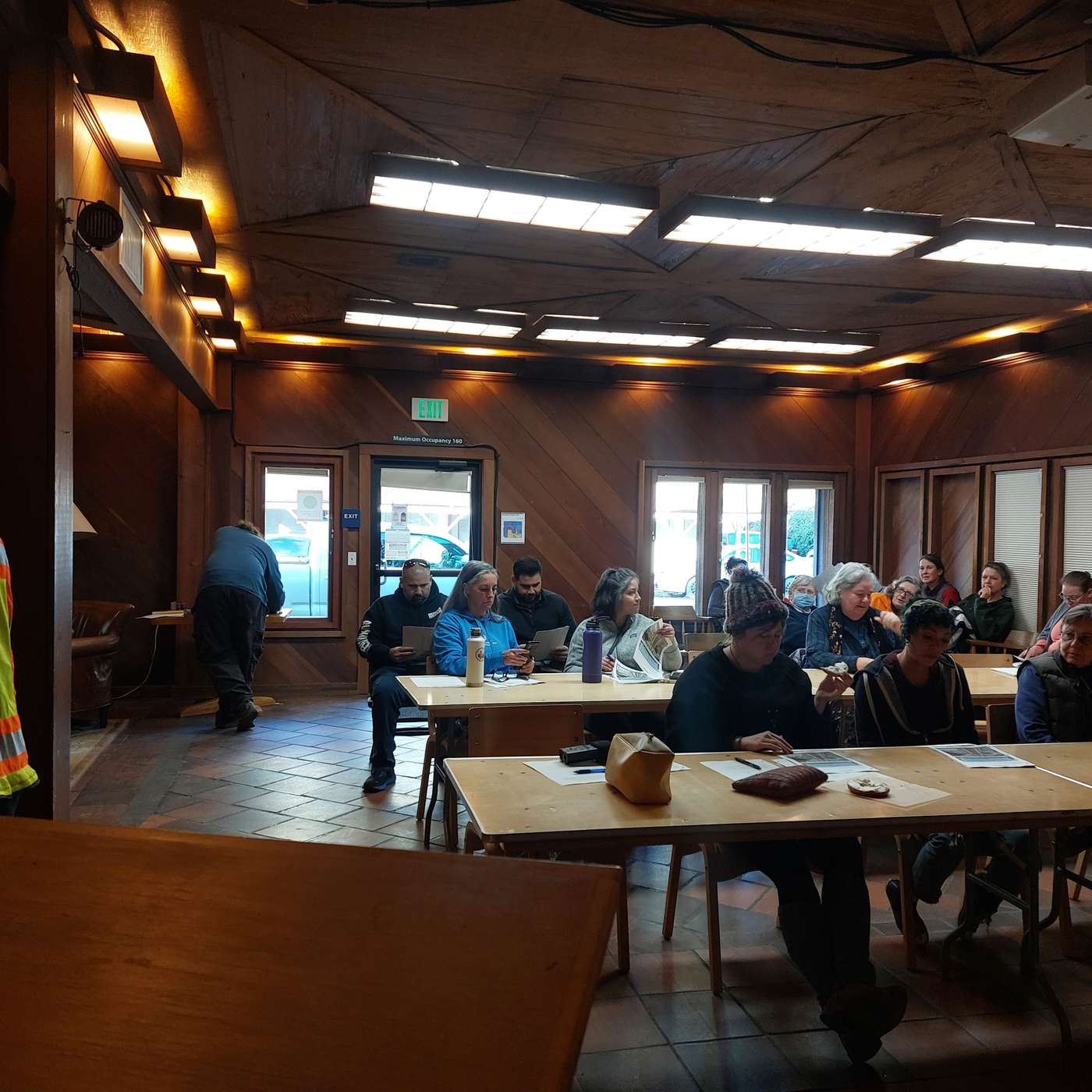
Covelo has a downtown area that sits on either side of Highway 162, and which is about to receive a facelift from Caltrans. With grant funding from the Clean California Act, a beautification project has already been funded which aims to beautify Covelo as well as make it safer and more user friendly. Community members had a chance to walk the project area last Tuesday when representatives from Caltrans came out to present project options and get community feedback. They are still seeking community input by providing a survey that can be found on the Round Valley Area Municipal Advisory Council at mac.roundvalley.org. The survey closes Monday, November 28 at midnight.
Ep 536Mendocino Council of Governments - Unseen Government Series
The Mendocino Council of Governments is run by private enterprise. It was originally created to respond to regional transportation needs, later it took on state mandated housing allocations and now is adding planning for regional climate change impacts. Mendocino is one of three California counties that hires a private firm to manage its state transportation funds according to Supervisor Dan Gjerde. Gjerde and the MCOG Executive Director Nephele Barrett answer questions about the purpose, processes, and efficacy of MCOG.
Ep 535Mendocino elections officials continue ballot counting for the midterm election
November 15, 2022 - - The 15th day of November is the last day to receive electoral ballots in Mendocino and county Election officials are moving forward counting the ballots to present the official elections reports. California state law gives election officials 30 days from election day to complete the canvass and certify the election. But this year's election calendar may present a delay on the final results. Election results will be posted on the Mendocino county website www.mendocinocounty.org
Ep 534California Creative Corps Grant Comes to Mendocino County
November 11, 2022 -- The Arts Council of Mendocino County is one of 19 Upstate California Arts Councils that will soon receive over 3 million dollars in grant funding from a statewide program called the California Creative Corps. The California Creative Corps is a pilot program aimed to help communities recover from the impacts of the pandemic. The grant program invites artists to identify areas of need in their community, and to then create projects to ameliorate these issues.The program is funded through the state’s 2021, one time allocation of 60 million dollars to the California Arts Council. The Arts Council of Mendocino will partner with the Nevada Arts Council to help local artists identify areas of need in our unique neighborhoods, brainstorm projects, and apply for grants when the money becomes available in the spring of 2023.
Ep 533Willits teachers union asks school board for a living wage
November 10, 2022 -- Members of the Willits Teachers Union appeared at the November school board meeting for the Willits Unified School District to demand the need for a living wage. Under the slogan of "Professional pay for professional services" the union members, parents and students packed Willits High School's media center to present their discontent with the current situation at the school district.
Ep 532Board seeks cause of $4 million health plan deficit
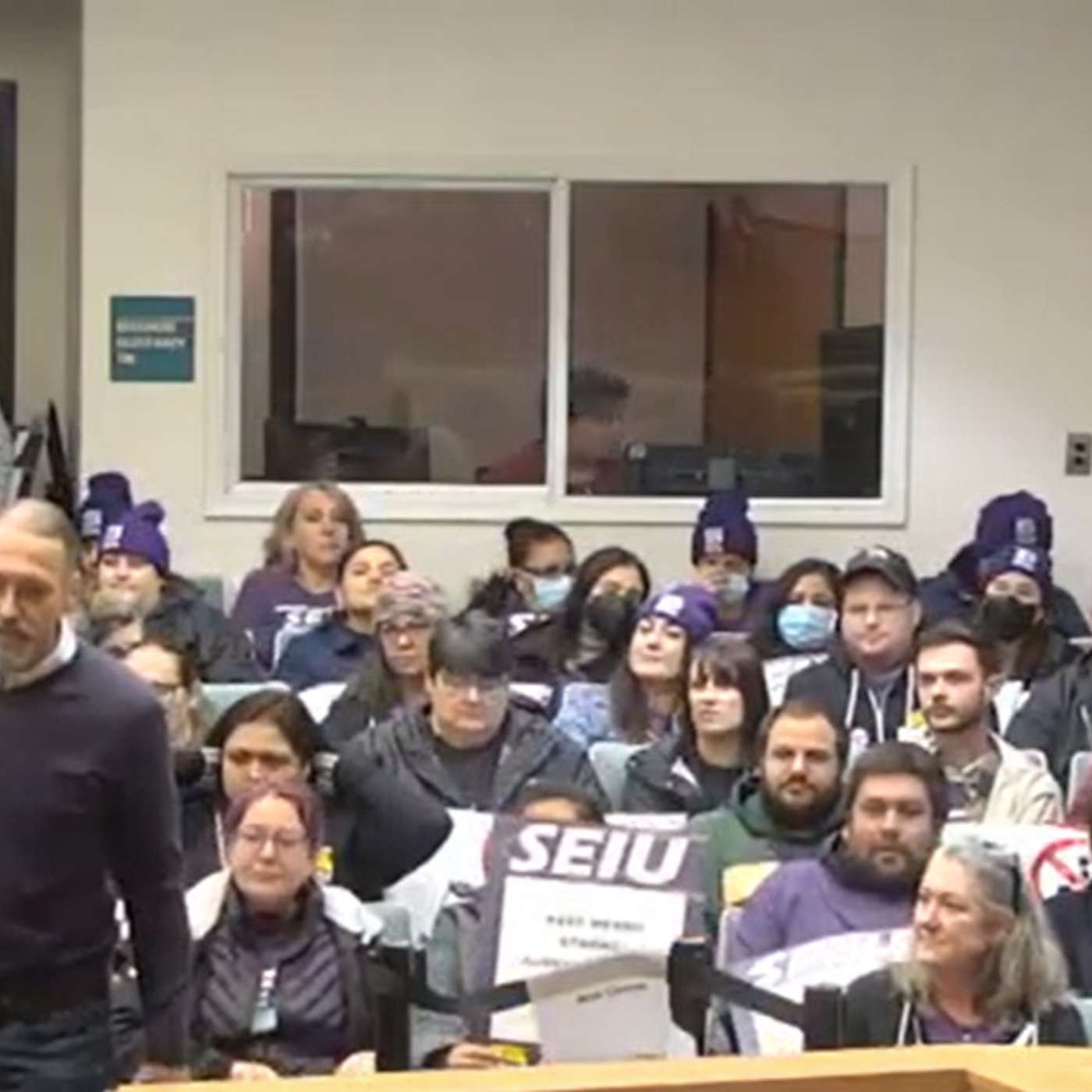
November 9, 2022 — The Mendocino County Board of Supervisors attempted Tuesday to close in on who and what is responsible for the multi-million shortfall in the health plan, which has caused as-yet unknown damage to the county’s fiscal health. The county has set aside $4.6 million from the American Rescue Plan Act, or ARPA funds, to patch the hole in the health plan deficit, which accumulated over two and half years but didn’t come to light until April of this year. In addition to the $4 million projected deficit, this week’s CEO report stated that there was an incurred but not reported loss of $2.6 million in Fiscal Year 20/21. CEO Darcie Antle reported previously that in fiscal year 16/17, then-Auditor Controller Lloyd Weer said the State Controller recommended spending down an overly robust reserve in the health plan. The county and its employees responded with a health holiday, which means neither party made health insurance payments for three months out of the year for fiscal years 17/18 and 18/19. Supervisor Dan Gjerde identified a key flaw in that approach at Tuesday’s Board of Supervisors meeting. “It was represented to the Board by the elected auditor, Lloyd Weer, that the State of California was telling him that the reserves were too large,” he recalled. “And that they needed to be drawn down. At the time, their proposal was to only extend the holiday to the employees. Well, the county, the plan sponsor, is paying 75% of the plan. So the Board said, well, we’ll have the holiday, but both parties benefit equally. When employees have a pay holiday, so will the county. What the managers should have said was well, we weren’t proposing that. We’ll need to scale that back to maybe one month, because both parties are having a holiday. They never said that. They just went ahead and implemented a three-month pay holiday for both the employees and the employers and they did not speak up, as they should have, and said, well the math doesn’t work with that.” Deputy CEO Cherie Johnson told the Board that Weer was the only one who knew exactly what the communication from the state had been. “I have not ever seen any documentations from the State, stating that the health plan reserves or savings needed to be drawn down,” she told the Board. “That was information that I had received from the auditor’s office. We did talk with our broker. He had never seen that either, and he said other counties had not received that information.” Now, in the wake of the pandemic, the deficit is one of many heavy blows to the local economy. Cannabis taxes are lagging in a lackluster market, and the county has yet to see millions in disaster reimbursements from FEMA. County workers, feeling the pinch of inflation and frustrated by the lack of a cost of living adjustment, or COLA, packed the chambers to overflowing during public comment, with social workers citing staggering caseloads and union leadership warning of an impending worker exodus. SEIU 1021, the county’s largest union, is asking for a 2% COLA, but county negotiators won’t budge. Antle reported that the county is offering each employee a one-time payment of $3,000 from the ARPA fund, but is asking for a year-long pause in the COLA until last year’s fiscal books are closed. In early October, the county switched over from its self-funded health plan to a fully funded plan called PRISM health, an insurance pool for counties and other public entities that allowed employees to stay with their current healthcare providers. Health plan premium increases have been frozen until fiscal year 23/24. But even with a new health plan, supervisors wanted to talk about how the old plan’s deficit spiraled out of control. Gjerde said the Board got bad information about the health holiday. “At no time was the Board advised that it would result in depleting all of the reserves and actually creating a deficit,” he emphasized. “That’s been new information since we've had a changeover in auditor and new people managing the healthcare fund and new eyes on the healthcare fund. I believe there should have been better advice given to the Board.” County Counsel Christian Curtis conceded that the Board had gotten bad information. “In some cases, the information that was put into the sheets as to what balances you were drawing out, and what one-time funds you were using, may have been incorrectly entered into the spreadsheets before they went to the Board, and that you may have had that erroneous information in front of you at the time that those decisions were made,” he said. When Supervisor Glenn McGourty asked him who would have entered the information, Curtis replied that the CEO may “be able to speak to that a little bit better. My understanding is they were generated by the auditor’s office.” Supervisor John Haschak pointed out that more than one party was supposed to be keeping track of the health plan. “We’ve been paying an actuarial to manage th...
Ep 531Election day (Bilingual)
November 08, 2022 - - Today marks the end of this year's election cycle. In California, the electoral contest has at stake the governorship and several congressional positions at the state and national levels, in Mendocino county, voters in several localities will decide positions of city councils and measures for libraries and fire department funding. But for election officials and voter support organizations the focus of the day is to make sure that everyone eligible has access to exercise their right to vote. Hoy marca el final del ciclo electoral de este año. En California, la contienda electoral tiene en juego la gubernatura y varios cargos en el Congreso a nivel estatal y nacional, en el condado de Mendocino, los votantes de varias localidades decidirán posiciones de los ayuntamientos y medidas para el financiamiento de bibliotecas y bomberos. Pero para los funcionarios electorales y las organizaciones de apoyo a los votantes, el enfoque del día es asegurarse de que todas las personas elegibles tengan acceso para ejercer su derecho al voto.
Ep 530BoS declares tree mortality emergency, prioritizes water projects
November 7, 2022 — The Board of Supervisors adopted a resolution proclaiming a local emergency related to tree mortality last week. The Board also agreed to prioritize one water project per district and hire a consultant to organize what it will take to carry out the projects. Supervisor John Haschak noted that trees are dying off at an alarming rate in all the county’s ecosystems, due in large part to increased aridity and bark beetles. The bark beetles, which have long plagued fir trees, are now also making inroads in redwood and hardwood forests, which haven’t been stressed by the infestation until recently. He summed up what he hoped to accomplish with the resolution. “Not only do we need to replant trees, but we also need to create healthy forests,” he said. “That’s one of the critical issues in combating this tree mortality, is that our forests are stressed, not only from the aridity, the drought, but also from overcrowding and some of those other issues. So we need to look at the holistic approach of how do we manage these forests, and how do we create healthy forests? So if we can get grant funding to do that and focus on those kinds of issues, that’s what we’re trying to get.” Haschak added that he expects the resolution will bring the county in line with neighboring jurisdictions and the rest of the state, which in 2014 declared a tree mortality emergency. The declaration eight years ago stated that “the scale of this tree die-off is unprecedented in modern history;” and predicted that it will contribute to wildfires that will release thousands of tons of pollutants and be beyond the capacities of the firefighting systems in place. Supervisor Ted Williams had a provocative and still unanswered question about dead standing trees. “Supervisor Haschak, do you think it’s a good idea to continue poisoning trees, given that we already have so many dead from natural causes?” he asked. “Are you talking about Measure V?” Haschak asked. Williams clarified that he was, and Haschak replied, “Well, we weren’t looking at that issue in this. We were looking at this global tree die-off that’s happening, whether they’re poisoned or not.” Elizabeth Salamone, the general manager of the Russian River Flood Control and Water Conservation Improvement District, offered a comment on how forest health is connected to water quality. “We need surface water and groundwater sustainability in order to support the forests,” she declared. “And there will be, and is, grant funding that supports nature-based solutions, which need to happen across many sectors, across many agencies, a lot of collaboration in that, so that water-based issues can work hand-in-hand with the reforestation.” Salamone was on hand to offer her services to help collect data from the county’s 42 water agencies, after Supervisor Glenn McGourty presented on the five top priority water projects for a consultant to take up with a water agency, once the consultant is hired and the agency is up and running. An exact price tag for the agency remains elusive, but the county is working on a draft memorandum of understanding with the UC Cooperative Extension office, in hopes of taking some of the burden off of county staff. The extension plans to start recruiting for a hydrology and climate change advisor starting early next year. McGourty started with the first district, where he reported that a joint powers authority is working to consolidate the water districts of the Ukiah Valley. This is in keeping with the goals of the state water agencies, which he says have funding available for the purpose. In the second district, he cited groundwater recharge, which would divert some of the Russian River’s overflow onto a flood plain, where, theoretically, it would infiltrate the water table. He suggested Riverside Park on the eastern end of Ukiah for a pilot project. He said the priority for the third district was mapping the groundwater basins, and reported that Round Valley has already received funding to start the task. He suggested more reservoirs for the fourth district, including floating solar panels to reduce evaporation and provide some power. For the fifth district, he said the top priority is the long-wished-for modernization or replacement of the wastewater treatment plant, which has a price tag of $4 million and is still in the conceptual design phase. Williams said the projects were not the final list, but that the Board asked for it to make sure that any funds for water projects were spread equally around the county. “Glenn came to us with a request for money,” he recalled; “and I think we said, it looks like it could all go to, say, the Potter Valley Project, and we need to make sure there’s improvements all throughout the county. There’s water problems everywhere, and the request was that Supervisor McGourty come back with a plan that provided a project in each district.” The Potter Valley Project, whi...
Ep 529Planning Commission mulls short-term rental resolution
November 4, 2022 — The Planning Commission Thursday discussed a resolution that seeks to clarify the interpretation of how a single-family residence can be used as a short-term rental. The four commissioners present did not make a decision, since Commissioner Marie Jones, who is half of an ad hoc committee that prepared a report on the issue, was unable to attend the meeting. The committee was convened in December of last year. The report was not attached to the agenda. The resolution states that if the entire house is rented out for less than a month and the owners don’t live there, that qualifies it as a vacation rental, which the commission finds is not an allowable use without a major use permit. Some commissioners signaled that they were not inclined to require a major use permit for homeowners renting out a room or two in the homes they live in. Chair Alison Pernell said the resolution is a stopgap measure, not a dramatic overhaul of the county’s vacation rental policies. “We are not writing a new ordinance,” she emphasized. “We are not changing an ordinance. This is a resolution that will affect how staff interprets vacation rentals, because we are working with an antiquated zoning ordinance that existed before the current proliferation of vacation rentals. There’s really one of two places in the current zoning ordinance where that can be interpreted through. One is transient habitation, one is room and board. Prior to this discussion at the Commission level, vacation rentals have been run through room and board, and so the discussion now is, where is the best location in our ordinance to run vacation rentals through? This Commission does anticipate reviewing an updated zoning ordinance for inland Mendocino County sometime in 2023, which will more permanently address this issue.” Though it took no action, the Commission heard public comment for about an hour, from people who rely on income from short-term rentals to those who fear that those rentals are dissolving the communities where people settle in and form an interest in the community. Stephanie Gold, who is on the board of the Anderson Valley Housing Association, called in to voice some of the frequent concerns of housing advocates. “The AVHA is always monitoring housing stock availability for rentals,” she said. “There’s a real crisis in AV when it comes to long-term workforce rental availability. In fact, we did a housing needs assessment survey recently, and there were multiple responses from people who had lost their housing because their homes had been turned into short-term rentals. We understand that there are some people in the Valley who rent out a spare room or a small cottage on their property for additional income, and that’s one kind of situation, but there are also many properties owned by people who don’t live on the premises who have turned them into short-term rentals because it’s more lucrative, and perhaps that could be approached differently, where it would be limited more vigorously to address the workforce housing shortage.” Jo Bradley said that her work with the Mendocino County Tourism Commission has led her to believe that illegal rentals are having an outsized effect on workforce housing — and the county general fund. “I would suggest that we tighten up what we’re doing to get these places into compliance and then start looking at it,” she opined. “We have this problem on the coast, but those problems are also inland. And in the capacity of the jobs that I have done for the Tourism Commission, I am finding a lot of them. They’re in Anderson Valley, they’re up the 101 corridor, and then obviously on the coast…we need the ToT (transient occupancy tax). That’s the money that goes right into our general fund, and that’s fine if people are paying. I think if we were able to round up all the illegals, we would find that we have a better income, and you would then be able to say yes or no and make your decisions with a little better information.” But Spencer Brewer said getting legal isn’t easy under the current system. He told the Commission he’s been an airbnb host on a private road in Redwood Valley for 12 years, ever since the music industry crashed and he converted his recording studio into a rental space. “Over the years, we’ve paid well over five figures in taxes,” he related. “I have tried three times to get a business license, and all times were denied. Because first, Building and Planning had a moratorium on this type of license, until the ordinance was reviewed and voted on by the Board (of Supervisors). The next two times, they asked for me to do a major use permit, because of the ordinance not being updated on a county-maintained road, which is one of the issues at hand right now. This has not been addressed, but at the August first, 2017 meeting, where this issue was initially brought up, several of us addressed the Board of Supervisors, and a vote was taken at that tim...

Ep 523Fort Bragg to Pilot Second Desal Unit
The City of Fort Bragg is looking at an innovative way to set up a second desal plant that uses ocean waves for power. John Smith the Director of Public Works is with us today to talk about the pilot project.

Ep 528Board steps up hires for financial offices
November 2, 2022 — The Board of Supervisors passed an ordinance establishing an appeals process for cannabis cultivators whose permits have been denied, over the objections of advocates who found it inadequate. Much of yesterday’s morning session was spent in a discussion with Treasurer Tax Collector Auditor Controller Chamisse Cubbison, about financial reports and how to speed up recruiting staff for her office. The appeals process was on the consent calendar, but Supervisor John Haschak pulled it for discussion. Mendocino Cannabis Alliance Director Michael Katz called in to cite the reasons he thought it should be abandoned: “We strongly object to the passing of it, as it does not provide an equitable appeals process for local licensees; it does not allow continued cultivation or operation during an appeal; it does not address the outstanding vegetation modification issues; it does not include previously directed Board amendments; and it does not reduce the likelihood of lawsuits against the county,” he said. County Counsel Christian Curtis said the ordinance only applies to people who never got their permits, and that there is a different appeals process in place for those whose permits are being revoked. “That’s a process that does allow continued operation during the revocation process,” he said. “There’s a hearing at the end. You know, once they have the permit, essentially it’s a different footing, in terms of what has to happen, in terms of investigation, penalties that are assessed or any rights that are taken away. What we’re talking about here is a situation in which someone never had a permit…were ultimately determined by the Department not to be in compliance and not able to obtain a permit. As it stands in the ordinance right now, that determination is final. And once that determination is made, they have to stop.” The Board passed the consent calendar, including the appeals process, unanimously. In other cannabis news, the cannabis department is moving from the Ukiah campus on Low Gap to the Willits Justice Center this month. The desk will be closed from November 14 through the holiday weekend, to resume on November 28 at the new location. Some tension came up in the discussion involving the board, CEO Darcie Antle, and Cubbison, who relayed in great detail how much work she has to do with limited staff as supervisors press for year-end closing numbers, carryover, and answers to questions about uncollected cannabis tax. Cubbison complained that the reports she gets from the CEO’s office do not appear to have been reviewed carefully, and the board directed Antle to make sure they have been scrutinized more closely before they get to Cubbison’s office. Wendy DeLong, an employee under Cubbison, told the Board she thought the planning was a little late, coming months after supervisors voted to place one person at the head of both departments. “If you had come up with a plan for this, and there was a transition plan in place,” she opined; “things would have been a lot smoother if you had gotten the employees’ buy-in, if you would have got some cooperation. If you had timed it correctly, we would not be in this situation we are in right now, of just having this desperate lack of people in these two departments.” Supervisor Dan Gjerde said he was especially interested in filling positions that would result in more local tax collection. Cubbison said when she gets the high-level analyst she needs, she expects the new hire to spend a certain amount of time on that task “So it does have to do with that,” she said. “It also has the desire to work with some of the reporting needs for cannabis and the property tax. So being able to have an analyst to be able to help assist with the data reporting and analysis in terms of the collections side. I can’t say exactly to what percent, but I would say it would probably be about 50% related to the revenue side of the house, in making sure that we are either collecting what we should be, or are able to report on it.” Supervisors Glenn McGourty and Ted Williams expressed their wish for a speedy hire. “It just makes it sound like this is a really critical position,” McGourty said. “It should be the number one position, probably, that we are trying to recruit as a county right now, in terms of upper-level management. So I personally urge the Board to support moving this forward as fast as possible.” “Well, I think we probably all support that,” Williams said. “It’s a matter of, what can we do to expedite it. Supervisor McGourty, do you feel like you have an answer to your question, or do you want us to light a bigger fire?” “Light a bigger fire,” McGourty replied. Human Resources Director William Schurtz said the analyst’s classification was changed in September. Now it needs to be changed again, which means that at the earliest, the county could have a list of qualified applicants ready for review by the middle ...
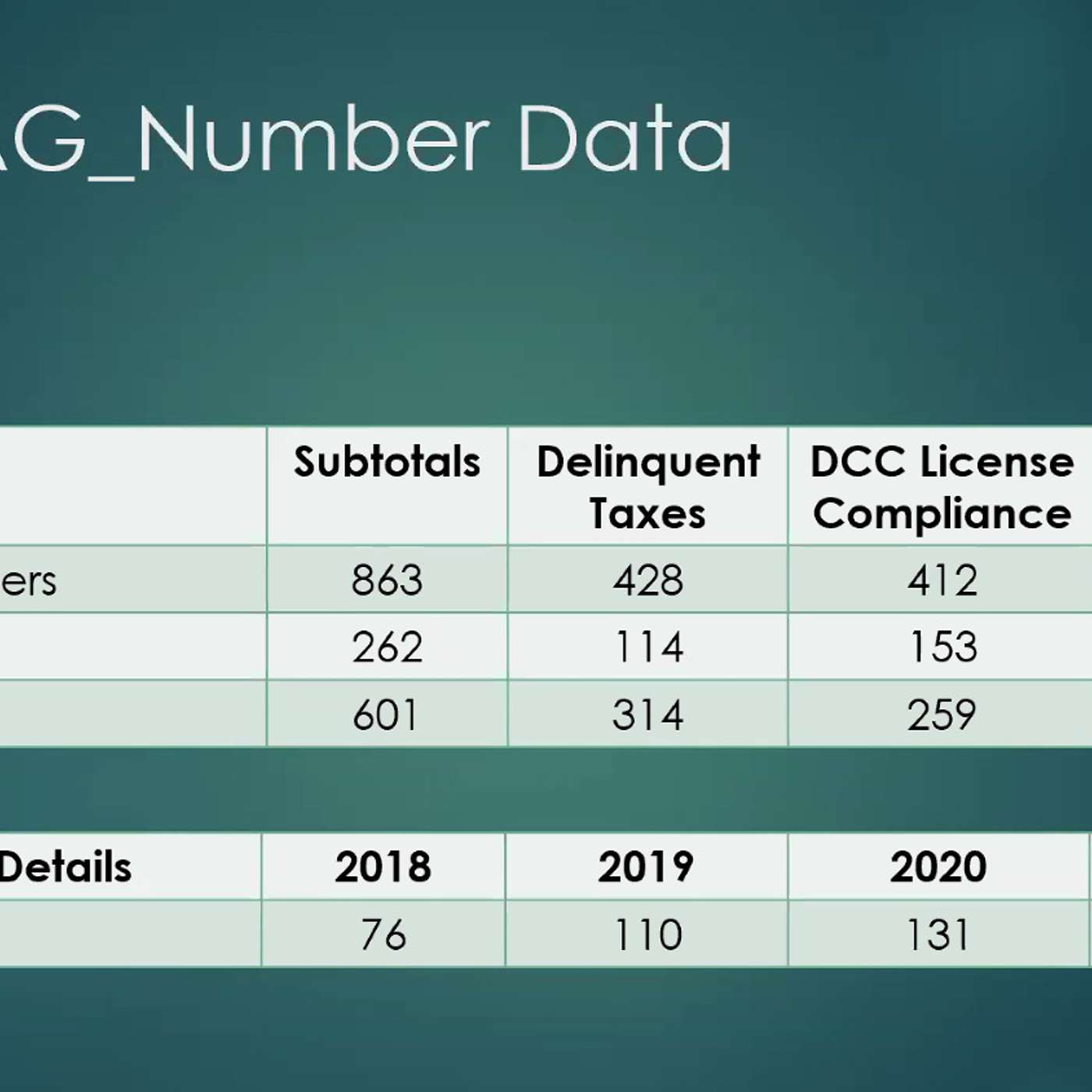
Ep 527Application reviews stalled for majority of cannabis cultivators
November 1 , 2022 — Cannabis growers are frustrated with the latest delay in processing the paperwork they need to renew their annual county permits, which they fear could lead to missing deadlines for full state licensure. Many growers continue to operate under provisional licenses or even embossed receipts, as they work to come into compliance with state and county regulations. The majority of growers in the county, 590 out of 863, have been “deprioritized,” meaning their materials will not be reviewed until they “satisfy the conditions needed to reprioritize their applications,” according to the Mendocino Cannabis Department. At last week’s public Cannabis Department meeting, Director Kristin Nevedal said she had sent out the notices to people who are either delinquent on tax payments or who do not have a valid state license on record with the county. She said her department has made multiple attempts to get a record of the state licenses since the Department of Cannabis Control stopped sending updates to local jurisdictions. Multiple requests and exhaustive searches have not yielded the information they needed about the licenses. Staff has searched and cross-checked what information they do have through portals and databases. “We have no way, just like the public has no way, to type an address or an APN (Assessor Parcel Number) into the state license search, and find a license,” she explained. Mendocino Cannabis Alliance Executive Director Michael Katz said there was a simpler way to get the information. “It sounded like there was a lot of time spent into this process, looking for the state license information, and that despite multiple outreaches and multiple efforts, that there was no way for the department to get this information, which is really curious,” he said. “Because I just forwarded to you and the cannabis program an email from the DCC (Department of Cannabis Control) that was received on October 26 within three hours of being asked for, that included a list of all licensees in the state by county, APN number, address information. And so if this is a piece of information that can be gathered within three hours by anyone emailing the DCC, I’m wondering why the cannabis department isn’t able to access that information. As far as streamlining goes, how come the easiest path has not been identified, and all of this time, effort and energy went into this very complicated process that has really now challenged further the applicants and the department?” Brandy Moulton restated the question, which Nevedal answered succinctly. “Saying that you couldn’t get it from the DCC, it feels kind of like a copout,” Moulton opined. “The PRA (Public Records Act request) can be simply one sentence long. I’d be happy to draft that for you. It could even include active, expired and pending licenses. I do know the MCA (Mendocino Cannabis Alliance) pulled this list years ago when the fires were happening years back to get cultivators access to their properties, so it’s not new. So given your comments about staff time and the difficulties you guys are facing, does the department intend to request that info now to alleviate the burden on staff, and if not, why?” “The department does not currently have a plan to PRA the DCC for license material because we hadn’t considered it until today,” Nevedal replied. Many of the recipients of the notice do have licenses. Katz said more than half of them also have receipts for taxes paid. Nevedal maintained that the lack of a license was often only one reason applications were not currently under review, and that sending out notices was the most efficient way to obtain the materials she needs. “No license on file, meaning that we had nothing to search, triggered a deprioritization notice,” she reiterated. “And, again, most folks have multiple things going on: taxes, and licensing questions. We ran this as one program. Breaking it into two programs, here’s all of our license questions, we’re asking all these people license questions, and then going back to a second list of license questions for taxes alone, would have created twice as much communication with applicants from the department as coupling these pieces together into one notice process. It also would have meant licenses coming in in separate emails, and then a whole separate stream of tax documents coming in separate emails. Because again, I know a few of you are just having license issues or just having tax issues. But the vast majority of deprioritization notices went to folks who have both tax delinquencies and license issues. And there's no way to streamline the program by breaking it into two separate requests.” Jude Thilman, president of the Mendocino Cannabis Alliance, said applicants were taken by surprise. The Alliance also sent out a survey, which netted 34 responses. All but two of the respondents reported that they have state licenses, most of them provisional. “I’m ve...
Ep 526Measure B to review long-term financial plan
October 27, 2022 — Measure B, the half-cent sales tax to fund mental health, is heading into its fifth year, when the tax will be reduced from a half-cent to an eighth of a cent. The behavioral health training center in Redwood Valley and the critical residential treatment center in Ukiah are now open. A crisis respite center in Fort Bragg could be open by the end of the year, and preparations to demolish a building and build a psychiatric health facility in Ukiah are underway. But now, with the prospect of much less revenue and several buildings to maintain, the 11-member oversight committee is turning its attention to how to pay for long-term maintenance of the physical infrastructure. Two items at Wednesday’s special meeting dovetailed with one another. County facilities director Janelle Rau offered a presentation about the maintenance and life cycle costs of the Measure B-owned buildings, which have been added to the county’s list of assets. Commissioner Sherrie Ebyam proposed developing a long-term financial plan, including projected revenue and ongoing costs, and expectations for the prudent reserve. The prudent reserve for Measure B is currently 6.85%, following the county’s policy per advice from former county CEO and Measure B oversight commissioner Carmel Angelo. Rau told the committee that the numbers she estimates for maintaining a 20-year life cycle for the buildings is rough, because one is new, another is not yet built, and the other hasn’t been used for very long. “So that’s the CRT (critical residential treatment center), the puff (psychiatric health facility), and then the training center in Redwood Valley,” she clarified. “From an operational perspective, it’s approximately $155,000 per year. That’s the total of the three buildings. So Redwood Valley is approximately $35,000. The psychiatric health facility we’re estimating at between $78,000 and $80,000, and then the CRT was an estimate of $42,000. And again, that’s an annual cost to operate, separate and aside from the services that are included in that. From a capital asset management perspective, over a 20-year period, for a total of the three buildings, we estimated $3 million: $553,000 for the CRT, the psychiatric health facility a little over $2 million, and then the Redwood Valley training center, approximately $400,000.” Dr. Jeanine Miller, who is the current chair of the committee and the head of the county’s Behavioral Health Department, posed the question that may have been on everyone’s minds when she asked, “Do we need a capital facilities reserve for Measure B to be able to maintain these buildings for twenty years?” Commissioner and county CEO Darcie Antle said, “My question would be, if it’s not Measure B, Jeanine, are you going to have money? Because otherwise it’s going to come back to the general fund, and that’s not likely an option.” Miller replied that, without a plan, the money for maintenance and repairs could come out of the very services the buildings are supposed to house. “Behavioral Health would not have that if we do not have it through Measure B,” she confirmed. “I don't know where those costs would come (from). It would actually come from having to reduce client care overall. There isn’t going to be any revenue on these buildings. If we were to be generating revenue they would most likely be running in a hole, which means we’d be using Measure treatment dollars to maintain them at a zero budget. So there isn’t going to be a revenue to maintain these facilities, because the services are not going to cover themselves, so we are trying to make it so the services do cover themselves, which means not creating a large rent to maintain the buildings.” Miller added that the current plan for a prudent reserve is not specifically a capital reserve. “At the time, what we brought forth for the prudent reserve was to cover treatment services long term, knowing that the psychiatric health facility is not going to be 100% covered. It’s going to require Measure B dollars to operate. We’ve known that from day one. We also don’t know if the crisis residential treatment will or will not be able to operate at a zero dollar amount. Will it be able to cover all of its costs? This year is really going to tell us whether or not we’re able to cover all costs or what that looks like long term. So when we brought a prudent reserve forward, that’s why we brought it forward...we didn’t want to build a building and then four years from now, we do not have the funds because we’re not bringing enough in, and then how do we fund that loss for those facilities.” The eight commissioners present voted 6-2, with Commissioners Tom Allman and Donna Moschetti dissenting, to ask the county’s Behavioral Health and facilities departments to put together a multi-year financial estimate for the committee to review at a future meeting. Commissioners agreed that a crisis stabilization unit was beyond the financia...
Ep 525Mendocino County Halloween celebrations
October 31, 2022 - This past weekend Mendocino county started the celebration of the spookiest holiday of the year, Halloween, n ancient celebration tied to the harvest and in many cultures also has a connection with the spiritual world. In modern western cultures, Halloween is a time when people of all ages have the opportunity to dress up as their favorite characters and go door to door collecting candy.
Ep 524Naturalized citizens path to vote (Bilingual)

Ep 522Railbanking authorized; master plan introduced
October 26, 2022 — The Surface Transportation Board, the federal entity that regulates railroads, issued another ruling on the Great Redwood Trail this week, deciding that the agency can convert 176 miles of line to a trail. The Great Redwood Trail Agency will be allowed to railbank the track, which means filling it in with aggregate or dirt so that the railroad ties serve as a frame for the trail. The track runs from Commercial Street in Willits, where the Skunk Train depot is, to just outside Eureka. Robert Pinoli, the President and CEO of Mendocino Railway, the Skunk Train’s parent company, did not know what the Agency’s plans regarding the depot are. Representatives for the Agency and the State Coastal Conservancy, which is now in charge of the trail, have not addressed our question about the depot. Last week, the Surface Transportation Board rejected Mendocino Railway’s bid to purchase thirteen miles of track from the depot to Longvale. A few hours after the Surface Transportation Board’s Monday- afternoon approval to railbank the line, Senator Mike McGuire held a virtual Town Hall to unveil the first step of the trail’s “master plan,” a process he expects will take two to three years before building the trail can begin. Karyn Gear, of the State Coastal Conservancy, is the Executive Director of the Great Redwood Trail Agency. The Conservancy has been involved in conservation projects on the shoreline as well as inland rivers bearing anadromous fish. Gear spoke about her organization’s role in the planning process. “The Conservancy was asked by Senator McGuire and the Legislature to take a leadership role in doing the master planning for this project, and also to help be the interim staff for the Great Redwood Trail Agency,” she began. “The Legislature appropriated ten million dollars to the Conservancy to do just that, to help move this project forward. So the first thing we did, after we started looking for additional staff with expertise to work on this, was to start to develop a request for proposals to look for consulting firms to help with the master planning process.” The Conservancy settled on Alta Planning and Design, which has offices all over the state. McGuire insisted that there is plenty of money for the project, announcing that, “We have the funding sources for all of the trail master plan, and we have money in the bank for construction. We were able to secure ten and a half million dollars in state funds to pay for the staffing and master plan of the Great Redwood Trail. This is going to take us through the next several years of hard work and planning the trail. And a half billion dollars, five hundred million dollars, has been secured for the State Coastal Conservancy for projects that will help us fight our climate crisis and build trails of statewide significance. That includes the Great Redwood Trail.” McGuire and members of the Trail Agency hope that private landowners alongside the trail will take advantage of opportunities to offer hospitality services and amenities to trail users. Wild camping will not be allowed, but the senator enthused about one site that he said has already committed to providing a campground. “Eventually, what you’re going to see are authorized camping spots throughout the trail,” he said. “In fact, just last year…the state, along with the Wildland Conservation Board, just purchased the old Lone Pine Ranch,” a remote forested property on the eastern bank of the Eel River, on the border of Mendocino and Trinity counties. It was formerly owned by Dean Witter, who bought it in the 1940’s. It stayed in his family until his heirs decided to sell it to conservation groups. The Conservation Fund’s website says that, “For many years, our partners at The Wildlands Conservancy owned a 3,000-acre portion of the Lone Pine Ranch. But in 2019, they sought our help to protect the remaining 26,000 acres…The support for this project has been tremendous with the help of Governor Newsom, Secretary of Natural Resources Crowfoot, the Center for Biological Diversity, California Wildlife Conservation Board, and the California State Coastal Conservancy.” McGuire described the property as “some of the most spectacular land that you’ve ever seen. It’s 30,000 acres. It will have 12 miles of riverfront trail. That’s going to be our first authorized campground. You’re going to have restrooms there, be able to stock up on provisions and water. This is a game changer for the trail.” Deven Young, with Alta Planning and Design, which is preparing the master plan, said that the design could include enhanced access for CalFire vehicles, though McGuire pointed out that trail users are not among the main culprits, when it comes to human-caused fires. And McGuire referred to a ranger service that he hopes to deploy along the trail to pick up trash and assist travelers. Young spoke about ideas to create solar-powered hotspots that would enable hikers to cal...
Ep 521BoS discusses ordinance to establish appeals process for cannabis permit denials
October 25, 2022 — The Board of Supervisors is working on amending the cannabis cultivation ordinance to add a new ordinance that will establish an appeals process for applicants whose permits have been denied. The amendment could go live as soon as December, after a fee hearing and a second reading. The effort to craft the appeals ordinance is taking place concurrently with an attempt to clarify what kind of tree removal cultivators can engage in, and what evidentiary standards should be required to prove that they are not damaging the environment by removing trees to improve their cultivation sites. Outside legal counsel is scheduled to bring the tree removal item before a Board of Supervisors standing committee in December. Last week, the full Board discussed the amendment that will establish how permit applicants can appeal a denial. Cannabis Department Director Kristin Nevedal told the Board that for now, only applicants who never got as far as the portal are being denied. She added that the process of renewing permits has involved a certain amount of correspondence. Nevedal told the Board that, “The only individuals that have been denied since the Board directive to pause denials until the appeals ordinance has been completed are those who failed to submit materials through the 2021 portal, and then a smaller portion of folks who failed to submit in 2021 but were allowed into the 2022 corrections portal and then failed to submit again. They have been denied as well. So what we’re struggling with currently in regards to a lack of response is issued permits that are undergoing renewal. So we have renewals, not in all cases, but in a number of instances, taking an incredibly long time because folks will not respond with full application packets in a timely manner. So we’re constantly sending notices. It’s a fifteen-day notice, and then it’s a seven-day notice, and then we still don’t have the materials we need at the department to conduct the review. We have not denied issued permit holders when they are undergoing that renewal review for failure to complete their renewal application.” In a memo to the Board, longtime cannabis attorney Hannah Nelson noted that the appeals process does not include a provision that would allow growers to continue growing while their case is in the appeals process. She wrote that, “Here we have cultivators that have waited 5 ½ years for the County to get its act together regarding processing the application…As such, the appeals provisions should include protections from abrupt termination of their continued right to cultivate, unless there is an imminent harm or safety concern to people or the environment.” She elaborated on her position in a call to the Board during the meeting, with a reminder that State deadlines are coming up fast. “With respect to not allowing people to continue to cultivate, i.e. a stay pending the appeal,” she began. “I think that there may be a way to break up the egregious violations and the people who were completely non-responsive, versus the majority of people who are going to fall into these more nuanced areas. You have to remember the context here, which is, not only does code enforcement have the ability to immediately go and require those plants to be cut down, but there’s the possibility that at this point, particularly if it’s after next March, that there will be no entry back into the State licensing system.” County Counsel Christian Curtis offered an explanation of the balance his office is trying to strike with the ordinance. “One of the things that the Board had really, I think, if I may say, struggled with, is the question of balancing the fairness of people who have some pretty good faith bases, with those that may be egregious violators, but may go ahead and put in an appeal merely to be able to extend their cultivation period for some length of time, while they're able to go ahead and harvest,” he noted. Mendocino Cannabis Alliance Executive Director Michael Katz and Chantal Simonpietri, an environmental consultant who works largely with cannabis cultivators, presented arguments against the characterization of growers as egregious violators. “It seems like there’s more of a concern of egregious actors trying to take advantage of the appeals process to stay in the licensed cannabis industry, which as many of you may know, is less profitable than the unlicensed industry,” Katz observed. “So if somebody is trying to appeal to stay in it, odds are they are not these egregious actors of whom you’re speaking. So it would be a shame for you to get caught up and have less ability to have a meaningful appeals process because of these concerns.” Simonpietri added that, “On these egregious actors, I don’t think there’s that many out there that are still involved. Unless they’re really, really, not that smart, honestly. It’s not worth it to stay in at that point.” The question of tree removal is expected ...
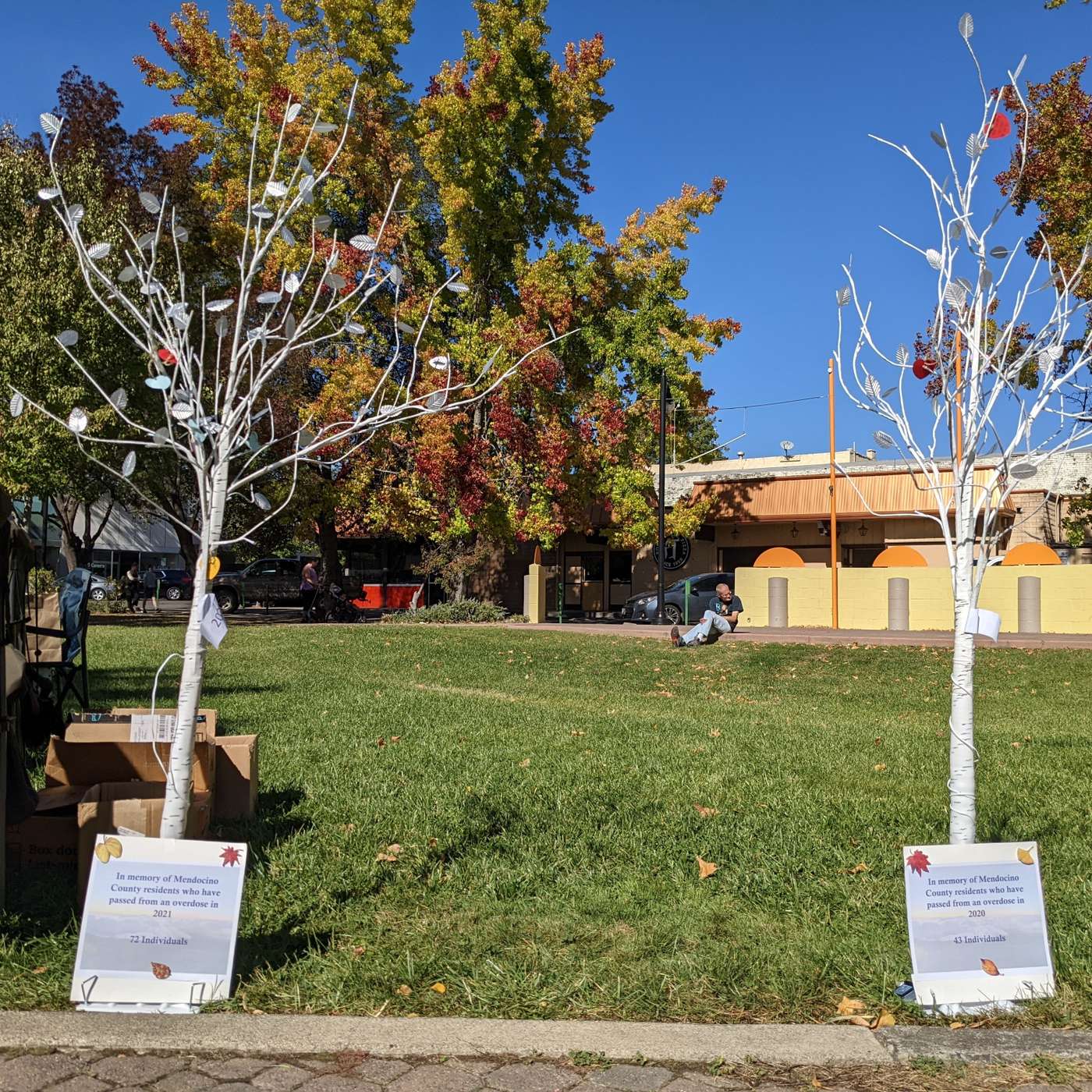
Ep 520Drug overdose deaths up in Mendocino County
October 24, 2022 — Drug overdose deaths increased dramatically last year, with the availability of ever more powerful synthetic and addictive drugs. Dr. Jeanine Miller, the director of the county’s Behavioral Health Department, told the Board of Supervisors last week that opioids and synthetic drugs are taking a heavy toll.* “We went from 43 (overdose deaths) in 2020 to 72 in 2021,” she said. Three additional people who died from overdose were determined to have intentionally committed suicide. “When we look at opioids as a whole, we’re looking at natural, semi-synthetic, and synthetic. That’s our number one. If we separate that out, and just look at the synthetic, which is fentanyl, our number one overdose is actually methamphetamine, followed very close to fentanyl. We believe fentanyl would be actually the number one if it wasn’t for Narcan and Naloxone, and we continue to work on getting that in our community.” The opioid blocker Naloxone was first approved as a fast-acting medication for opioid overdose in 1971. But Narcan, the nasal spray that can reverse overdose within minutes, only received tentative FDA approval in 2018, with final approval granted in April of the following year. Since then, it’s become a mainstay for first responders. A smattering of communities across the country have installed vending machines, where people can help themselves to a free box of Narcan. Some local organizations offer it for free to people suffering from drug addiction, and to their friends and family members. On Saturday during Farmers Market, county, tribal, and non-profit workers set up tables in Alex Thomas Plaza in Ukiah to share information about drug overdose and treatment, and to spread the word about the rising death rate. Lindsey Daugherty, the Executive Director of NAMI Mendocino, the local branch of the National Alliance on Mental Illness, spoke about what’s still being learned about Narcan. Some reports indicate that people who have overdosed multiple times require more than one dose of Narcan to be revived. “There is some research out there to suggest that we are developing some kind of an immunity to the Narcan,” she said. “Or that the opiates are becoming stronger and stronger, or being taken in higher doses. So that is one theory. Another theory is that it can take a couple of doses of Narcan to bring someone back to consciousness. Typically, you would give a dose and wait two minutes to see how that goes, and give another as needed.” She added that “Narcan itself is not psychoactive. It’s an opiate blocker, so it blocks the opiate receptors in the brain, stops that person from being high immediately, and throws them into acute withdrawal, so really intense withdrawal symptoms.” She pointed out that Narcan is still relatively new, but that “There is no known side effects currently to giving people multiple doses of opiate blocker.” Gabriel Ray, who works for the Pinoleville Nation’s Native American Youth and Family Empowerment Program, is working on an approach he hopes will prevent kids from needing emergency treatment. He said he is “teaching kids about their culture. I think it’s important to know your history, where you came from…we don’t know our culture. We’re picking up other types of culture, and sometimes that may be gang culture. So getting to our kids younger is good, and then working with the families. Having as much support as we can provide to our tribal families.” Ray has offered talking circles in schools, and has a whole program called Boys with Braids, to teach kids about the cultural significance of long hair, and to discourage bullying. The Pinoleville Pomo Nation is the owner of New Life Clinic, an outpatient medication assisted treatment program that’s been in Ukiah for about a year. Physician Assistant Noah Schutz gave an overview of the program, which includes three medications: Suboxone, which is widely available as an outpatient treatment; the traditional Methadone; and Naltrexone, what Schutz calls “a full antagonist.” He said many of the clinic’s approximately 155 patients have found out about the clinic’s services by word of mouth, but also through referrals from the hospital, probation, parole, and jail. “Basically, it’s giving our facility a call, and just saying, we’re interested in treatment, and we set up a time, ideally that day, if not the day after, to get people some care,” he concluded. Jill Ells is the manager of the county’s Substance Use Disorder Treatment program. She has been in the field for 23 years, and said, “I’ve never seen the likes of what is happening with our county right now. With the nation.” She explained that residential treatment is available, but some patients, especially kids, have to travel a long way to get it. The Ukiah Recovery Center offers residential treatment locally, and people with insurance through Partnership Health Plan can take advantage of services in seven counties, including Mendocino, that...
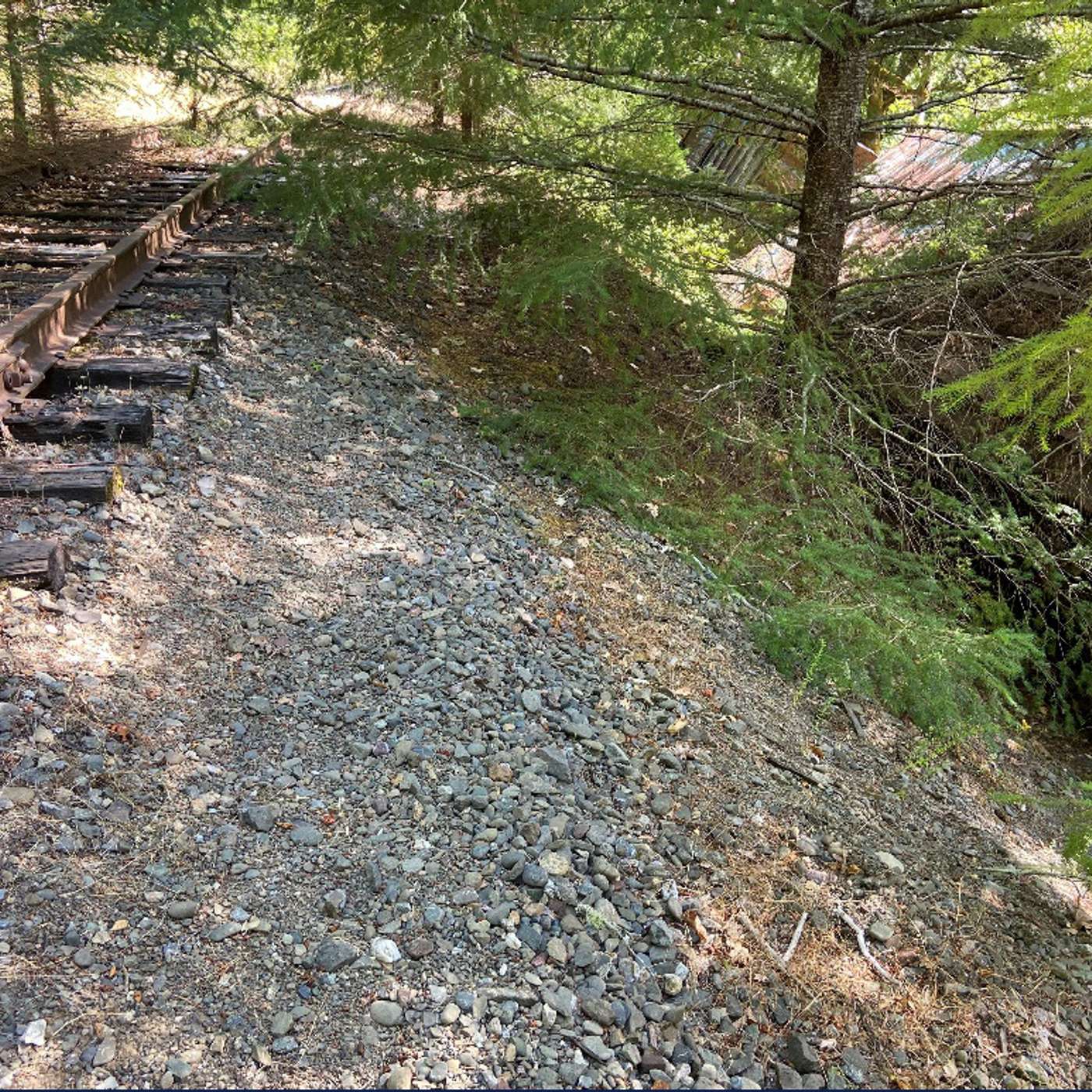
Ep 519Skunk Train's bid to purchase line rejected
October 21, 2022 — The Great Redwood Trail overcame a major hurdle late yesterday afternoon, when a federal regulator turned down the Skunk Train’s offer to buy 13 miles of track north of Willits. The Great Redwood Trail Agency, which owns the track, had asked the Surface Transportation Board, which regulates railroads, to allow it to abandon the track so it could start the process of converting it into a trail. The Board approved the abandonment, effective on June 19, unless it received a formal notice from an entity intending to buy part or all of the line. The Skunk Train, also known as Mendocino Railway, did so. Last Saturday,it filed its bid, known as an Offer of Financial Assistance, which the Board rejected within the five-day legal timeframe. The Board also lifted the hold on its authorization to abandon the line, which means that as of Tuesday, October 25, the entire 176 miles of track from Willits to just outside Eureka is officially an abandoned railway. There is no appeals process, and the Board will take up further issues around converting the railway into a trail in the next few days. The Great Redwood Trail Agency is working closely with Senator Mike McGuire, the California Coastal Commission, and environmental groups including Friends of the Eel River, to build a 320-mile trail alongside or on top of the railroad line from Marin to the Humboldt Bay. The Agency also holds the deed to the Willits yard, or depot on Commercial Street, which is a critical part of the Skunk Train’s infrastructure. Last month, Robert Pinoli, the President and CEO of Mendocino Railway, told a judge he feared that if the line were abandoned, his company would no longer be able to use the yard. Pinoli was the only witness in a three-and-a-half day eminent domain trial, where Mendocino Railway is suing a landowner just outside of Willits, claiming that short lines like the Skunk Train are a vital element of the nation’s infrastructure. As such, Pinoli argued, the Skunk should be authorized to take the property because its use of it would serve the most public benefit. The eminent domain trial seemed to conclude about a week before the Great Redwood Trail Agency signed the deed to the Willits yard, but it’s since been reopened. It will start up again on November third. The process of converting the railway into a trail appeared to be threatened over the summer, when an anonymous “Coal Train” interest based in Wyoming declared its intent to purchase all 176 miles of the track and use it to carry coal from the midwest and ship it overseas from the port in Humboldt Bay. That plan was scuttled when badly redacted bank statements showed that the company was flat broke. The Skunk Train’s challenge remained, though. On Saturday, it made good on its stated intent to buy the track from Willits to Longvale. In a 271-page Offer of Financial Assistance, the company argued that the Great Redwood Trail Agency had grossly overestimated the maintenance and rehabilitation costs of the line; that the Skunk Train had a potential client for its freight shipping services; and that it has the financial wherewithal to purchase the track for about five and a half million dollars. The company estimated that rebuilding the track would cost an additional seven to nine million dollars. The Great Redwood Trail Agency’s attorney, Charles Montange, argued that “In order to show financial responsibility, MR (Mendocino Railway) must show available assets sufficient to cover purchase price and rehabilitation and other costs of sustaining the initial two years of operation.” The Agency calculated that the purchase price, rehabilitation costs, and the two years operation and maintenance would come out to a little over $39 million. The entire northern portion of the line is so unsafe that in 1998, the Federal Railroad Administration embargoed it, meaning that it is illegal to use the line. And a tunnel on the Mendocino Railway line between Willits and Fort Bragg has collapsed multiple times. There is no connection between the Mendocino Railway short line and the national rail network. Pinoli testified last month that to his knowledge, the last time Mendocino Railway interchanged a freight train with another train was the day before Thanksgiving of 1998. He did not know the last time a freight train left Mendocino County. Mendocino Railway did not include its assets or the name of its potential shipping client in the public filing of its Offer of Financial Assistance. The Surface Transportation Board did have access to that information, and it found that the Railway “failed to demonstrate…that it has, or within a reasonable amount of time will have, the funds necessary to not only acquire the 13-mile rail segment, but to rehabilitate, maintain, and operate it as well.” The Great Redwood Trail Agency hired Marie Jones, a Fort Bragg consultant, to conduct a market analysis of Mendocino Railway from Longvale to Willits. She w...
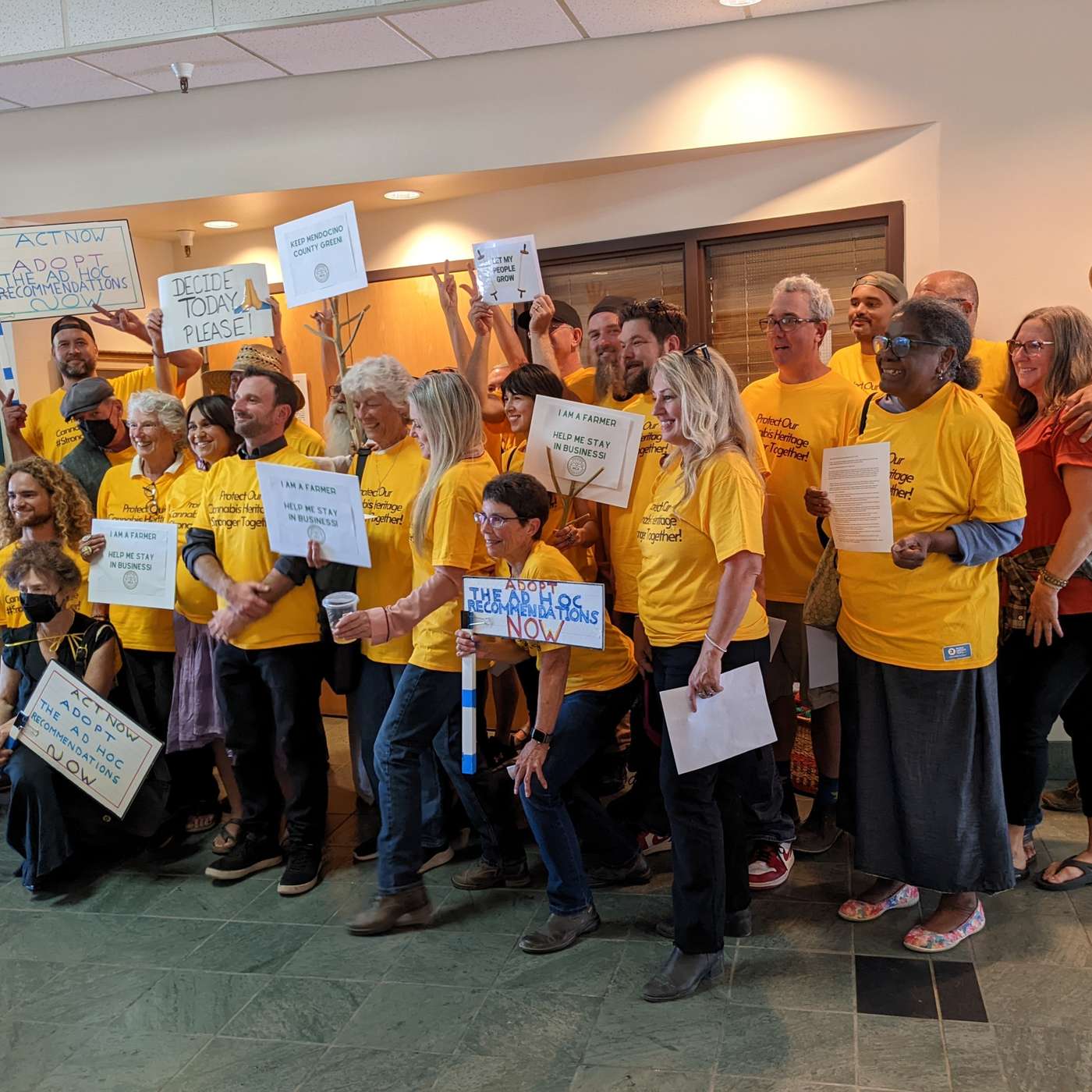
Ep 518Committee refines cannabis recommendations
October 18, 2022 — With harvest season underway, cannabis is in the spotlight at the Board of Supervisors chambers. Earlier this month, at a meeting that dragged on until after 7:00 pm, the Board discussed a dozen recommendations by the cannabis ad hoc committee, consisting of Supervisors John Haschak and Glenn McGourty. Several of the recommendations were passed to the General Government standing committee, which is made up of Supervisors Maureen Mulheren and Dan Gjerde. The composition could change next year, with the rotation of positions on the board. The question of vegetation modification, referred to politely as veg mod purgatory, is still hanging in the air, as an outside legal firm ponders the details. Growers have worried that their permits could be revoked or denied if they remove trees and vegetation from around their grow sites, even if it was for fire safety or because the vegetation was diseased. At Monday’s General Government standing committee meeting, County Counsel Christian Curtis asked for more time to prepare an affidavit for growers to present as evidence that they have removed a tree for legitimate purposes. “The primary issue here is not so much the issue of whether or not trees can be removed,” he said. “I think that’s pretty clear from the ordinance that they can, unless it’s a commercial species, with certain provisos…I see from the recommendation put forward from the ad hoc, there are some features there that model what we’ve been working on…we’re working with the department on a potential affidavit process to essentially establish as a starting point where people are, establish compliance with the ordinance with respect to the tree removal…a big part of the issue is, when you have the affidavit, what are the appropriate standards for the departments to apply when they think there may be something false in the affidavit, what may be the appropriate standard, both to investigate, and once having investigated, what would be an appropriate standard to apply, based on what they have.” Attorney Hannah Nelson, who outlined the idea about the affidavit in a memo to the Board, summarized the historical context of policies that haven’t always arrived at a tidy conclusion. “This is after five and a half years, the sixth department head slash manager in the third department, and processes have changed, and so I think that it’s important to note that it’s not just about the evidentiary standards, but also inclusion of standards such as, can dead trees be removed or not,” she opined. Michael Katz, Executive Director of the Mendocino Cannabis Alliance, urged the committee to avail itself of Nelson’s legal memos. Last month, she submitted several pages on tree removal, with details about the affidavit and a critique of the current vegetation modification notice process. “Hannah is a thirty-year expert attorney who successfully litigated the first case for the federal government to have to return medical cannabis to a patient,” he said. “So she really knows what she’s talking about. And for her to provide dozens and dozens of pages of specific language recommendations that are then be either ignored or unseen or asked for repeatedly, and not actually absorbed and integrated, the county is losing money by not utilizing this free resource and instead hiring outside counsels to come up with things that are already established law.” The issue will come back before the committee next month. Another item that came before the committee was a suggestion from the ad hoc to create a process to resolve disputes over permits without denying them. The intent is to keep the current applicants on track to getting their state licenses by next summer. Cannabis Department Director Kristin Nevedal said she could craft such a policy, but that it might include a fee. During public comment, Susan Tibben referred to the next big grant that will soon be available to growers. Nevedal succeeded in securing an $18 million local jurisdiction assistance grant program from the state, specifically to help growers comply with environmental requirements for their state licensure. Ten million dollars of the grant will be available to applicants, in awards up to $100,000. The first application window will open in mid-January, and be open for four weeks. After six to eight weeks to process the applications, the window will open again. Tibben thought there would be enough money in the department that applicants disputing an issue in their permits should be able talk with a planner at no extra cost. “The idea of staff hour fees tied in any way to a fee for the permittee is just absolutely unacceptable,” she opined. “You know, earlier today, $18 million was referenced with regard to the LJAGP (local jurisdiction assistance grant program), with $10 million earmarked for grantees, so that would leave $8 million, and also our tax dollars…so please do not even consider a hierarchy of department a...
Ep 517Regenerative cannabis farms documentary premieres in Covelo
A new documentary called Tending the Garden made it's premiere in Covelo at the Library Commons last Friday. The film weaves the stories of three regenerative cannabis farms who integrate practices into their gardens that sequester carbon and improve life on the planet. Covelo's Blaire and Daniel AuClaire of Radicle Farms were one of the families featured.
Ep 516Undocumented Students Action Week at Mendocino College (Bilingual)
California is one of the states where undocumented students can get access to higher education, this week the California Community College Foundation is holding the 6th annual Undocumented Students Action Week. In Ukiah, the Mendocino College's Dream Center is organizing activities for students and staff.

Ep 515Plans for more housing in Ukiah Valley underway
October 17, 2022 — The City of Ukiah and a private developer spoke to a citizens group last week about a variety of plans to increase housing stock in the Ukiah Valley. Plans for a housing project on 171 lots at the south end of town are getting closer to breaking ground. And the city is updating its general plan for 2040, with an eye toward land use, infrastructure, and agriculture, among other elements. A new state law and a focus on accessory dwelling units are meant to make it easier and more affordable to build more housing within city limits. Jesse Davis, Planning Manager with the City of Ukiah, and Jake Morley, a developer with Guillen Construction, spoke about their work at a meeting of the inland Mendocino County Housing Action Team on Thursday morning. The proposed project, Bella Vista, has been under consideration in one form or another for about a decade. It is a modification to a proposed subdivision formerly called Gardens Gate, a nearly fifty-acre property just outside Ukiah city limits, on South State Street. A map of the proposal shows that it is centered between Gobalet Lane and Plant Road, and extends west near Oak Knoll Road and Oak Court. The lot sizes range from about 3,500 square feet to just over 18,000 square feet. The plan includes four point four acres of open space, and a roundabout at South State Street and Plant Road. It is in the Willow County Water District. Jake Morley calls himself the “paper project manager” for Guillen Construction, which means he’s been coordinating the studies and other preparatory materials for the development agreement with the county. He said 39 of the 171 lots will be age-restricted to people 55 years old or older; and that ten percent of the balance of the lots will be dedicated to moderate-income housing. He said the homes for seniors will be between a thousand and 1250 square feet, with extra wide hallways and bathrooms, and the larger homes will be between 1400 and 1800 square feet, to accommodate more residents. He said Guillen has been working through the studies for the project for the last three years, and “we’re hoping to be before the (Mendocino County) Planning Commission by the end of the year, and Board of Supervisors by the start of the year. Then off to PG&E to go through their process, and start moving dirt, hopefully in spring or the end of summer of the following year.” Morley said he couldn’t predict exactly how much the homes will cost, as the costs of building fluctuate, but said he expects them to be affordable for people in the community. Morley added that Guillen Construction was planning another subdivision called Vineyard Crossing, just north of Ukiah, but, “we’re giving it a long, hard look right now…that fragmentation of water doesn’t really lend to making sure we have a project. So that’s kind of where that sits right now.” In addition to updating the general plan, the city is working to consolidate the water districts in the Ukiah Valley and update the city’s “sphere of influence,” the areas on the edges of town where it can provide various services and annex land. The city is not planning to annex the Bella Vista property at this time. Davis, the planning manager, hopes the items about water district consolidation and the sphere of influence will be ready to bring to the CIty of Ukiah Planning Commission in more detail on October 26, next Wednesday. Davis focused on smaller-scale approaches to building more housing within the city, to fill what he calls the “missing middle.” This includes accessory dwelling units, cottage court developments (defined as a group of small homes “arranged around a shared court visible from the street”); duplexes, triplexes, fourplexes, and other kinds of second units. “And that’s where we see the potential for infill to really be expanded in the city of Ukiah,” Davis said. He added that the city has three pre-designed sets of plans for accessory dwelling units, which are supposed to help homebuilders cut down on the costs of adding a living space to a property. The plans didn’t generate much interest when they were first introduced, but in the last year, Davis reported, “We now have two developments that are utilizing those plan sets to help expedite the plan review and move projects forward, here in Ukiah.” A new state law, SB9, is another strategy that is supposed to increase residential developments. Davis explained that SB9 allows R1, or small residential properties, to be subdivided to accommodate four residential units, in a number of combinations. The city is using SB9 to allow a property owner to build an accessory dwelling unit on a lot that already has three units, which, prior the law’s passage last year, was a non-conforming usage for the city’s R1 code. The law has a number of restrictions, including a requirement that the owner live on-site, and a prohibition on short-term rentals. “It’s a very extensive law, that a lot of jurisdictions are st...
Ep 514Conversaciones Civicas, John Haschak Supervisor del distrito 3 del condado de Montecino
Conversaciones cívicas es un espacio para explicar como funciona nuestro gobierno local. En este episodio hablamos con el Supervisor del Distrito tres del Condado de Mendocino John Haschak quien nos cuenta que hace los supervisores del condado y cuál es la participación de los ciudadanos en las tomas de decisiones en Mendocino.

Ep 513Round Valley celebrates Indigenous Peoples Day
Indigenous People's Day was celebrated Friday at the Round Valley High School. The event was well attended by all facets of the community, and traditional music, food, art, and culture was shared.