
KZYX News
1,162 episodes — Page 21 of 24
Ep 163Round Valley High School student makes film about culture, climate change
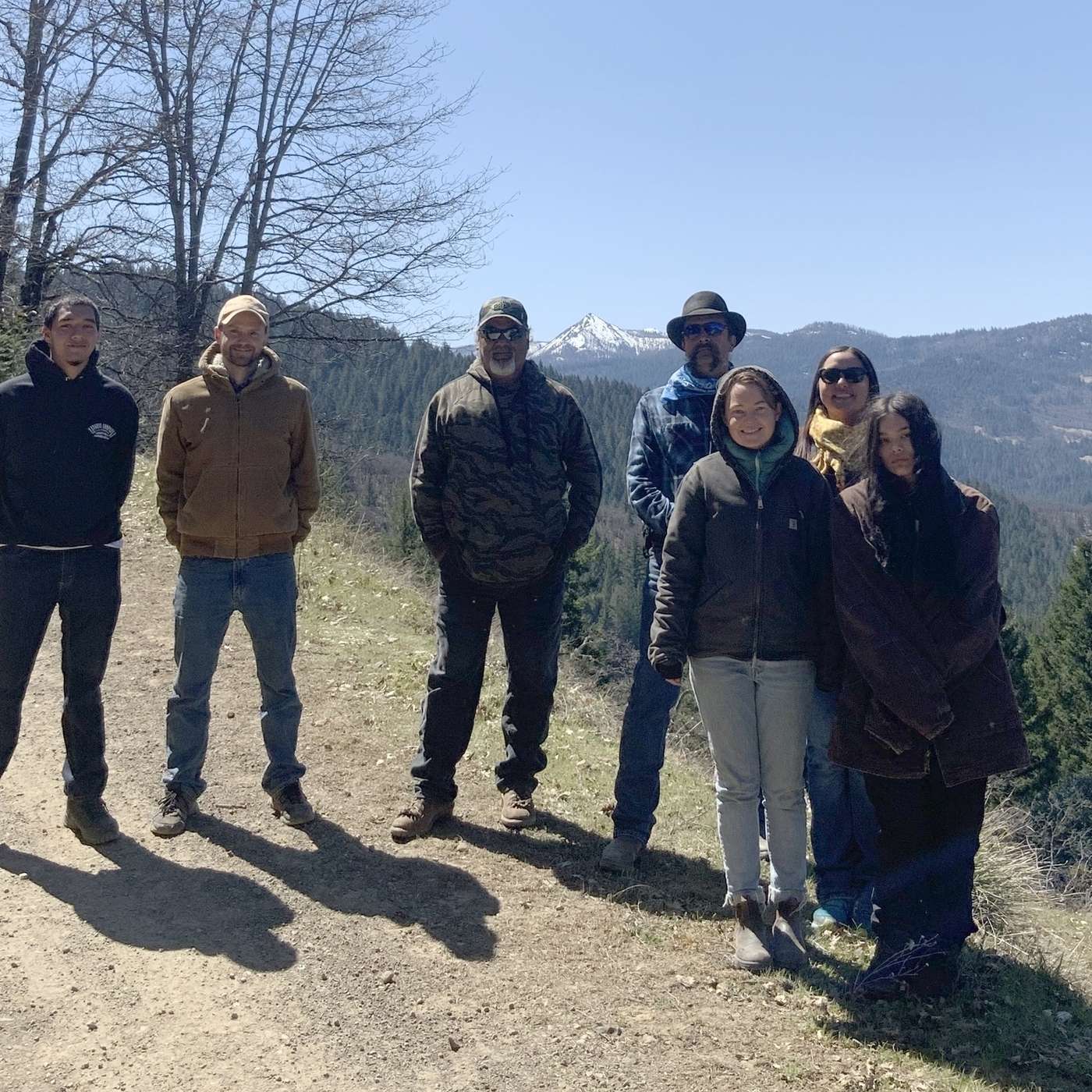
June 8, 2021 — As the region heads into a massive drought and the start of fire season, there are some signs of optimism about humanity’s ability to reverse some of the damage it’s done. Gerald “Bam” Britton, a senior at Round Valley High School in Covelo, recently made a film with a title that sounds like a line from a poem about nature. From River to Ridge and From Fish to Fire is a series of interviews with scientists and Tribal elders about the relationship between fire and water, different trees on the landscape, and the now-scant runs of salmon and steelhead in the Eel. Britton won an internship from the Public Broadcasting Service through KEET TV in Eureka earlier this year, and worked with the Eel River Recovery Project to meet up with interviewees in the field. Last week, he was featured on the PBS Student Media Showcase for his work about cultural response to climate change. Britton is headed off to Northwest Indian College in Washington to major in Native Environmental Science. He got a head start on that, in his interview with Vernon “Woods” Wilson, a former Cahto Tribal chair and champion of controlled burns. Wilson explained how fir trees in the lower Tenmile Creek, which are no longer controlled by prescribed burns, suck up huge amounts of water and then choke out the oaks, which are a keystone species.
Ep 162Citizens' group readying to repeal cannabis ordinance
June 7, 2021 — On Wednesday, the Board of Supervisors voted 4-1, with John Haschak dissenting, to waive the first reading of a cannabis cultivation ordinance which, if it becomes law, will allow grows of up to ten percent on ag and rangeland parcels over ten acres. Ellen Drell is working with a citizens group called Save Our Water, Wildlife, and Way of Life to repeal the ordinance. Most of the supervisors want to pass the ordinance before June 30, because after that, the county will be required to conduct an environmental impact review, which they fear would be costly and time-consuming. But Kate Marienchild, who wrote Secrets of the Oak Woodlands: Plants and Animals Among California’s Oaks, thinks an EIR is the right thing to do.
Ep 161Board adopts ordinance, with 10% expansion
June 4, 2021 — The Board of Supervisors voted 4-1 to adopt chapter 22.18, the phase III cannabis cultivation ordinance that will allow cultivation on up to 10% of ag or rangeland parcels that are ten acres or larger. They also directed staff to come back with another ordinance this summer that will allow growers in those zones to phase in to larger operations. The board was struggling to pass the ordinance before June 30. After that, the state requires local jurisdictions to conduct what supervisors fear would be a costly and time consuming environmental impact review. But the last time the ordinance came before the Planning Commission, that body recommended a ten percent expansion with a 2-acre cap. If the board changed the commission’s recommendations too much, the ordinance would have needed another round of review by both bodies, which would probably take longer than a month. Most of the board believes an EIR would take years, during which time no one in the county would get a state license and progress toward legal cultivation would come to a halt. The possibility of expansion has spurred preparations for a referendum to repeal the ordinance…
Ep 158Cannabis program manager talks numbers
June 3, 2021 — The Board of Supervisors is holding a special meeting today to decide on a new cannabis cultivation ordinance, which some are calling Phase III and others are referring to as 2218, after the new chapter that will enter the county code if the supervisors pass the proposed ordinance. The current ordinance, 10A17, was crafted before the state developed its own regulations. The two systems are not compatible, and the current environmental mitigations were developed specifically for the now misfit ordinance. Endless negotiations between the county and state agencies have taken place. Meanwhile, many applicants for the early 10A17 program have languished. Quite a few of them don’t even have the permit that would bring them one step closer to the state annual license they’ll need to be legal by the end of the year. At an informational meeting last night, Mendocino County cannabis program manager Kristin Nevedal provided the numbers of how many applicants there are, and what it took to issue three more permits.
Ep 160Board considers tax relief for small cannabis farmers
June 3, 2021 — The Board of Supervisors took a look at tax relief options for small cannabis farmers, with an eye toward passing the tax burden on to farms larger than 10,000 square feet yesterday. And law enforcement critic David Ayster called in to critique the Board and the Sheriff for the quality of their discourse during last month’s discussion about the proposed audit. Public Health Officer Dr. Andy Coren called in to tell the board that Mendocino County’s yellow tier status is being adjudicated, due to some unfavorable metrics.
Ep 159No audit for sheriff's department
May 28, 2021 — The Board of Supervisors declined to conduct a proposed audit of the sheriff’s department this week, opting instead to hold a workshop where the sheriff and the auditor will answer questions.
Ep 157New mural of Khadijah Britton to be unveiled in Ukiah
Ep 156County surging; Coren predicts return to orange tier
May 25, 2021 — Public Health Officer Andy Coren told the Board of Supervisors today that the county is in a covid-19 surge. Though there are no outbreaks in the county at this time, Coren expects the county to be demoted to the orange tier by June 2.
Ep 155Board calls for feasibility study of locating PHF at Whitmore Lane
May 25, 2021 — The Board of Supervisors voted unanimously yesterday to use Measure B funds for a psychiatric health facility, or puff, and to conduct a study on the feasibility of locating it on Whitmore Lane, in the unincorporated fifth district portion of south Ukiah. The county purchased the 26,601 square foot building with two point two million dollars of CARES Act federal funding last August. Repairing the roof appeared on an original document with suggestions for how to use the funds from the PG&E settlement, though now the possibility of a partial demolition is under consideration. CEO Carmel Angelo told the board that the Ranch Proposal, for the county to buy a rural parcel of land and build a multi-purpose mental health care facility, is no longer being pursued. Operators for the county’s psychiatric health facilities are emerging. The Board of Supervisors has approved a contract with Redwood Community Services to run the critical residential treatment facility that’s being built on Orchard Avenue in Ukiah. It’s expected to be up and running in November. Dr. Jenine Miller, the head of the county’s Behavioral Health and Recovery Services Department, wrote in a letter to the board that Telecare Corporation, an Alameda-based mental healthcare organization, had received a conditional award letter to operate the puff. Telecare, according to the letter, is the largest provider of county contracted PHF services in California, with 122 beds. In a letter to the board, Miller cited operating costs of between $5.7 and $7 million a year, with Medi-Cal, Medicare, realignment, Measure B, and private insurance as funding sources. She wrote that Lake County had expressed an interest in using the facility, which would reduce operating costs. She added that projected costs vary widely due to Medi-Cal payment regulations. Early in its tenure, the Measure B Citizens Oversight Commission hired Lee Kemper to conduct a study and write a report about mental health needs in Mendocino County. Ros Liberty, who serves on the Commission, wondered about the long term return on the investment in a PHF. He said that, according to the Kemper report, the county could expect to see a reduction of about 50% in the need for a PHF, provided there were more services available to people in the early stages of a mental health crisis. “I don’t think this conversation is complete without at least looking at the possibility that maybe, instead of a PHF, we spend more money on advanced services before people get into that kind of crisis, per Kemper report recommendation,” he suggested. And Jan McGourty, a former member of the Commission, called in to urge the board to figure out exactly what kind of PHF, and what kind of services, they want. If the facility ends up at Whitmore Lane, the building will have to garner a higher rating than it currently has with OSHPD, the Office of Statewide Health Planning and Development, the agency that approves hospital expansions and building plans and analyzes California’s healthcare infrastructure, according the USC Annenberg Center for Health Journalism. As the meeting adjourned with unanimous direction to conduct a feasibility study on locating the puff at Whitmore Lane, Angelo added that she would include regular updates in her CEO report.
Ep 154Haschak Town Hall covers drought, fire, and cannabis
May 24, 2021 — Supervisor John Haschak met virtually with a friendly crowd at a town hall organized by Willits Mayor Madge Strong and the Willits Economic Localization group. Residents talked about water, fire, money, cannabis, and public safety. Haschak, who is on a drought ad hoc committee, said the county is considering asking residents for a 20% voluntary reduction in water usage. He didn’t have exact numbers for emergency drought funding from the state, but he said projects that are well planned and ready to go would be more likely to get the money when it comes. One woman from Laytonville said her well has already gone dry, which she attributes to large pot grows in her neighborhood. Haschak also touched on the status of the public safety advisory committee, in response to a question about a presentation that South Coast Organizing for Radical Equity is scheduled to make to the board on Tuesday, encouraging an audit of the sheriff’s office. But it was the proposed cannabis ordinance that drew the most comment. Haschak has been the lone dissenting vote on the proposal, which has been through the planning commission twice and is expected to come back to the board on June second. Organizers around the county are preparing to get a referendum on the ballot to repeal the ordinance, in anticipation of its approval. The first training in gathering signatures was yesterday, and more are scheduled throughout the week. Charles Sargenti had been organizing an effort for another referendum that would have only called for a partial repeal. Late last month, on the day the board sent the proposed ordinance back to the planning commission, supporters of a referendum held a rally outside the empty board chambers. Haschak took a question from kzyx about when the meetings will be open to in-person participation again. Reportedly, the board chambers are currently being renovated, though county staff can be seen at the front of the room during meetings. Cannabis activist Paul Hansbury is familiar with difficulties posed by permits. “It’s interesting that after a year and a half of lockdown and quarantine, that they’re getting around to renovations in the chambers,” he remarked, to laughter. “Unless they had to get a building permit.”
Ep 153Extended interview with cannabis program manager on $18 million potential windfall
In this extended interview with Mendocino County cannabis program manager Kristin Nevedal, we’ll hear about how the county will make use of a multi-million dollar windfall — if the Legislature approves Governor Gavin Newsom’s proposal to allocate $100 million to bringing provisional license holders through the system to annual state licensure. Mendocino county’s allotment would be $18,084,837, based on the anticipated cost of bringing 1149 locally authorized growers into full compliance with CEQA.
Ep 152Cannabis windfall for Mendocino County in Governor's proposal
May 21, 2021 — The county is anticipating big changes around cannabis between now and the end of June. Chapter 22.18, the proposed new county cultivation ordinance, has gone through two rounds of review by the Planning Commission and is due before the Board of Supervisors again soon. Hovering over that process is the possibility of a referendum, if enough voters essentially recall the ordinance. More recently, the governor proposed to spend $100 million statewide to help growers with provisional licenses get through the system and obtain annual state licenses. The legislature will decide on the proposed budget at the end of June. If they accept the governor’s proposal, Mendocino County could receive more than $18 million to get its licensing program in order. KZYX spoke with Mendocino County cannabis program manager Kristin Nevedal Thursday, shortly after she received a briefing about the funding.
Ep 150"The time is now:" MOVE2030 calls for economic development
May 19, 2021 — The pandemic has been an economic catastrophe as well as a health disaster. In Mendocino County, where 98% of the businesses are small, the blows have kept landing. Now a group representing a variety of local interests has assembled economic data and a plan they think will help the county climb out of a slump following multiple disasters and long-term stagnation. A little over a year ago, the county received a grant from the Economic Development Department to come up with resiliency strategies after the fires. West Business Development Center contracted with the county, and assembled a group that is now called MOVE2030, to do the research and report back with ideas. Executive Director Maryann Petrillo says the time is now. Paul Garza, who assembled much of the data for the team’s analysis, said that even before the most recent crises, the county was in a weak financial position. The average annual income in Mendocino County is $20,000 below the national average. But that doesn’t mean the cost of living is commensurate with low wages. A real living wage for a local family of four would be $27 an hour, plus benefits. The group has a few requests for the Board of Supervisors. They want ordinances that will simplify licensing and permitting requirements. And they want an employee of the county to help bring together local economic and educational players to form a business hub where entities like non-profits and chambers of commerce could coordinate their approach. And Garza envisions a grant writing clearinghouse, because there have been instances where two organizations with a similar mission each assumed the other was applying for a particular grant, so neither of them did so. We’ll hear about the connection between local private industry, non-profits, and what MOVE2030 wants from the Board of Supervisors.
Ep 151Bloody Island Massacre Remembered in Lake County
May 18, 2021--Annie Esposito reports on a Sunrise Ceremony this weekend, organized by Clayton Duncan of Robinson Rancheria, to remember the Massacre of 400 Indigenous Pomo people on May 15, 2850 by the US Calvary. Story produced by Alicia Bales for KZYX.
Ep 149Potter Valley speaks up on settlement funds
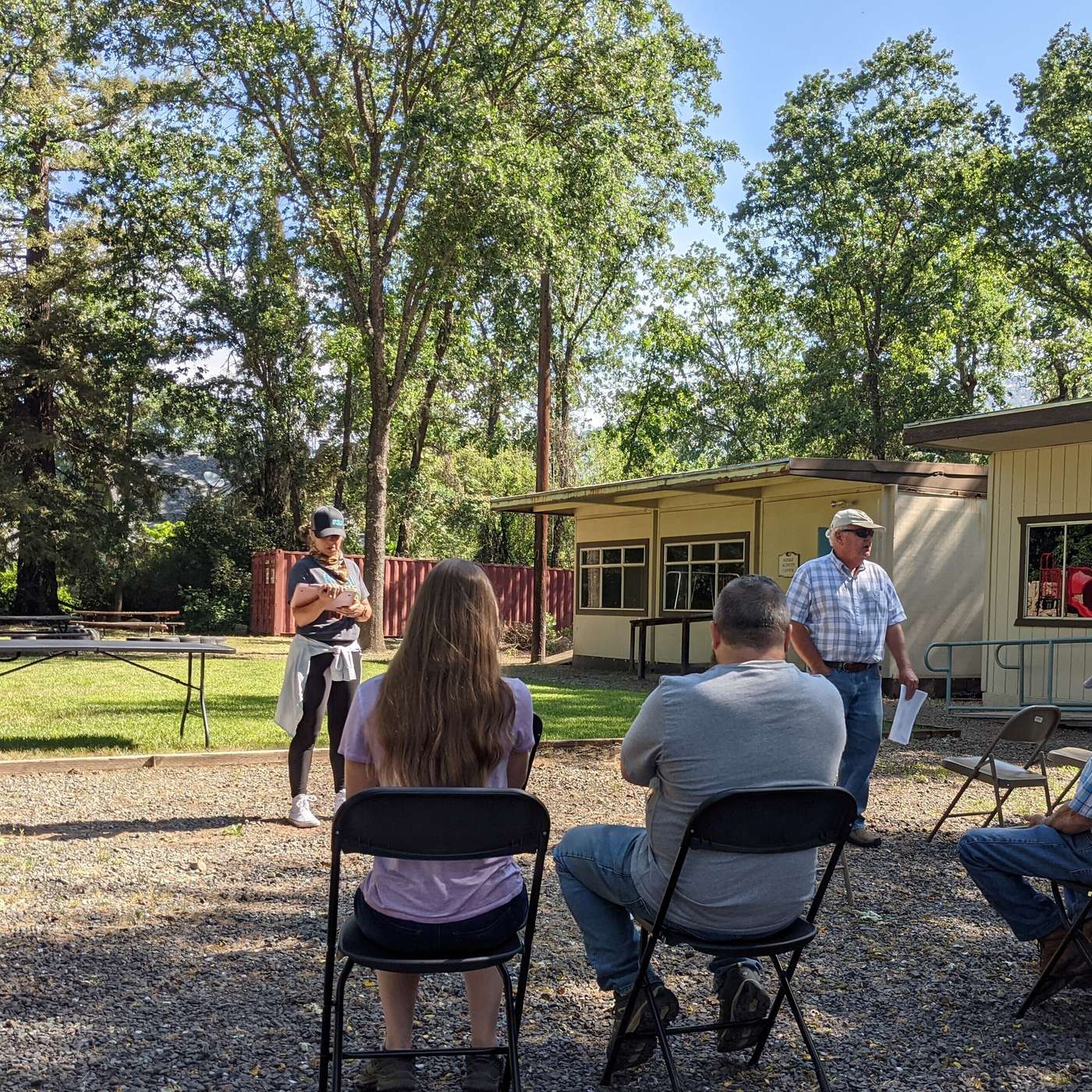
May 17, 2021 — Supervisors Glenn McGourty and Maureen Mulheren held a community meeting with residents of Potter Valley on Saturday morning, to talk about what they’d like from the $22 million PG&E settlement for damage caused by the 2017 firestorm.
Ep 148Redwood Valley MAC talks money, water, cannabis
May 13, 2021 — Last night’s meeting of the Redwood Valley Municipal Advisory Council hinged on the familiar topics of cannabis enforcement, water, and how to spend the $22 million PG&E settlement.
Ep 146Board of Supervisors talks settlement, enforcement
May 12, 2021 — The Board of Supervisors heard initial plans for organizing an enhanced cannabis enforcement program yesterday. And fire departments that fought the fire in 2017, as well as the Redwood Valley County Water Agency, made the case for why they think they should get a share of the $22 million PG&E settlement.

Ep 145"Not your fathers drought" - North Coast politicians and water managers meet to discuss water security
Little River, 5/11/21 - Reps. Jared Huffman, Mike Thompson, and other notable North Coast water managers and politicians gathered at a virtual summit yesterday morning to discuss the severe drought facing the North Coast and the state. No new policies were announced, but Senator Mike McGuire announced that the state senate is moving on a $3.4 billion drought relief package and Huffman listened to water leaders who made a resounding and sometimes plaintive call for state and federal money to weather this year's water crisis and prepare for the future.
Ep 144First Friday is back in town
May 10, 2021 — There was dancing in the streets in Ukiah, as the first First Friday since the pandemic got underway. Postcards from Mecca lined the walls of the Grace Hudson Museum, offering glimpses of adventure and associations with lengthy travails in the desert. Masked art lovers flocked cautiously to the Corner Gallery.
Ep 143Planning Commission refines proposed ordinance amendments
May 7, 2021 — The Planning Commission hammered out further refinements to the proposed cannabis cultivation ordinance at a meeting that ended at a civilized hour yesterday. The Board of Supervisors is anxious to pass a phase III ordinance before June 30, after which the state will require environmental review that county counsel estimates could take three to five years. But the board made significant enough changes to the planning commission’s original suggestions that the document needed another round trip through the deliberating bodies. The least popular proposed amendment is one that would allow growers in agland and rangeland to grow cannabis on up to 10% of their parcel size, provided there’s enough water and that the land has been previously used for agriculture. Already, citizens’ groups are preparing to gather signatures for two referenda that would repeal all or part of whatever ordinance the board eventually passes. One letter-writer promised the Commission that she intends to work every day on the referendum if commissioners support the ordinance as presented by the Board of Supervisors.
Ep 142BoS considers 3rd quarter budget
May 5, 2021 — The Board of Supervisors held its third quarter budget workshop yesterday and heard a covid briefing from public health officer Dr. Andy Coren. Though the forecast for non-departmental revenues, mostly from taxes, is over $80 million, the board is bracing for several possible blows, including inflation, the loss of cannabis taxes, and the as-yet unknown fiscal impacts of drought. And, although the county’s positive test numbers are down, so are the numbers of people getting tested. There’s still a vaccination gap between whites and Hispanics, with 57% of the Caucasian population vaccinated and only 40% of Hispanic people. The numbers do not reflect shots administered by Indian Health Services, VA, or pharmacies. And Coren said more variants have turned up in the county, including the case of the UK variant reported on Friday.
Ep 141Cannabis facilities ordinance amendments contentious, too
May 4, 2021 — In the last few hours of a meeting that lasted for three days, the Board of Supervisors hammered out amendments to a cannabis facilities ordinance that clarified farmers markets, cannabis tours, and invited a few legal threats. The cannabis cultivation amendments typically draw ore than four hundred letters to the Board of Supevisors or the Planning Commission, and hours of public comment. The facilities amendments brought in fifteen letters and about a dozen comments, but they were no less contentious.
Ep 140Mendocino water managers expect wells to run dry this year
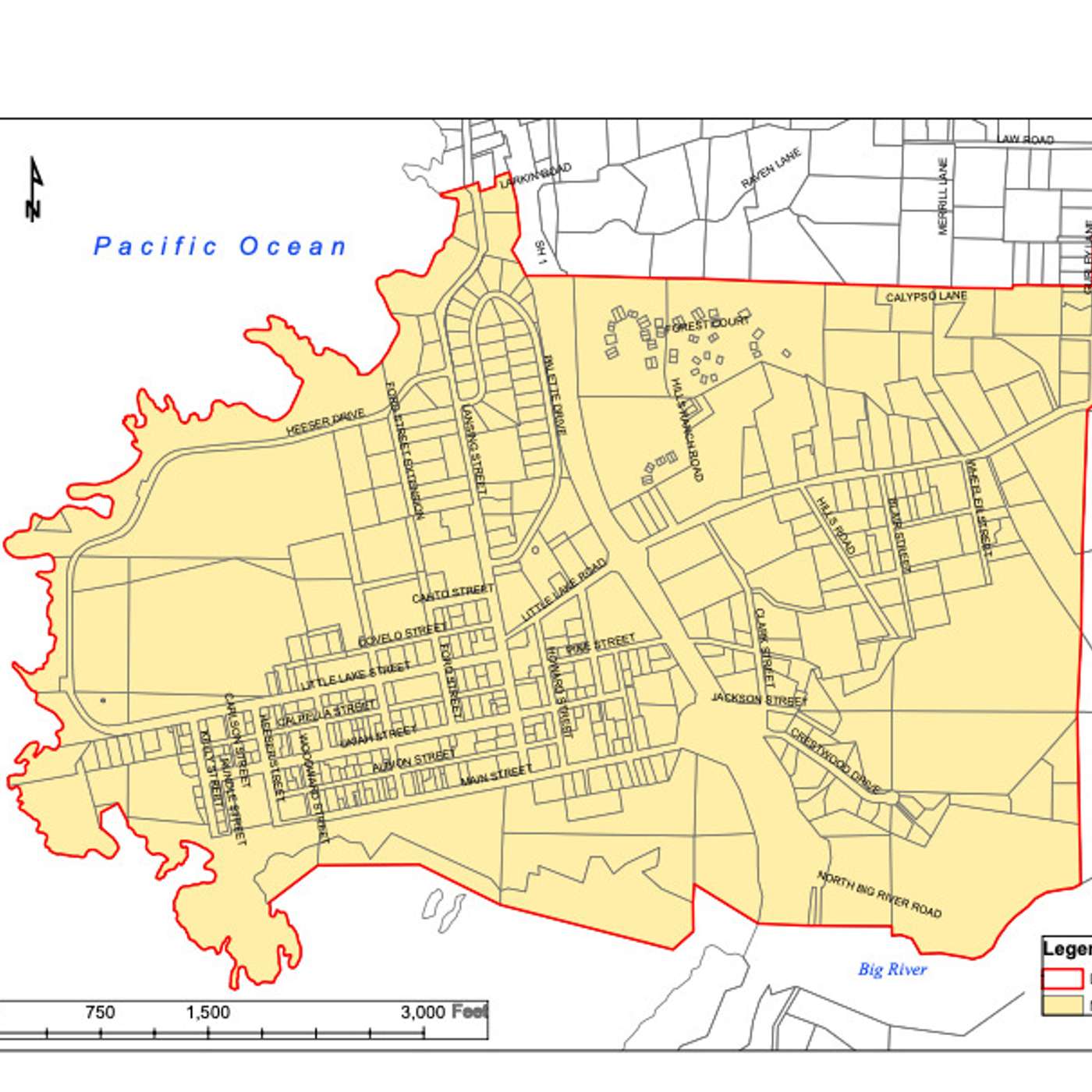
The town of Mendocino is already at a stage three water shortage and eyeing a stage four, which would trigger mandatory 40% reductions in water allotments for all users, according to district superintendent Ryan Rhoades. The Mendocino Community Services District Board is holding a meeting May 3, at which they are expected to raise the drought level. This year, the town of Mendocino received less than half of their average rainfall — only around 18 inches. Usually, closer to 40 inches of rainfall. To make matters worse, this is the second dry year in a row for Mendocino, and all of California. Last year, the town of Mendocino recorded just over 20 inches of rainfall.
Ep 139Noyo Theatre celebrates history, prepares for the future
April 30, 2021 — The county moved into the yellow tier this week, which means movie theaters can open with 50% maximum capacity, more if everyone can prove they’ve been vaccinated or have a recent negative test. That’s just in time for the independently owned Noyo Theatre in Willits, which is reopening May 4, the 81st anniversary of its premiere. Owners Lois and Jeff Hoover are history buffs and movie lovers. To them, the two are inextricable. We’ll hear about how the theater has come through history and current events, and how the Hoovers plan to keep it going into the future.
Ep 138Board of Supervisors sends Phase III back to Planning Commission
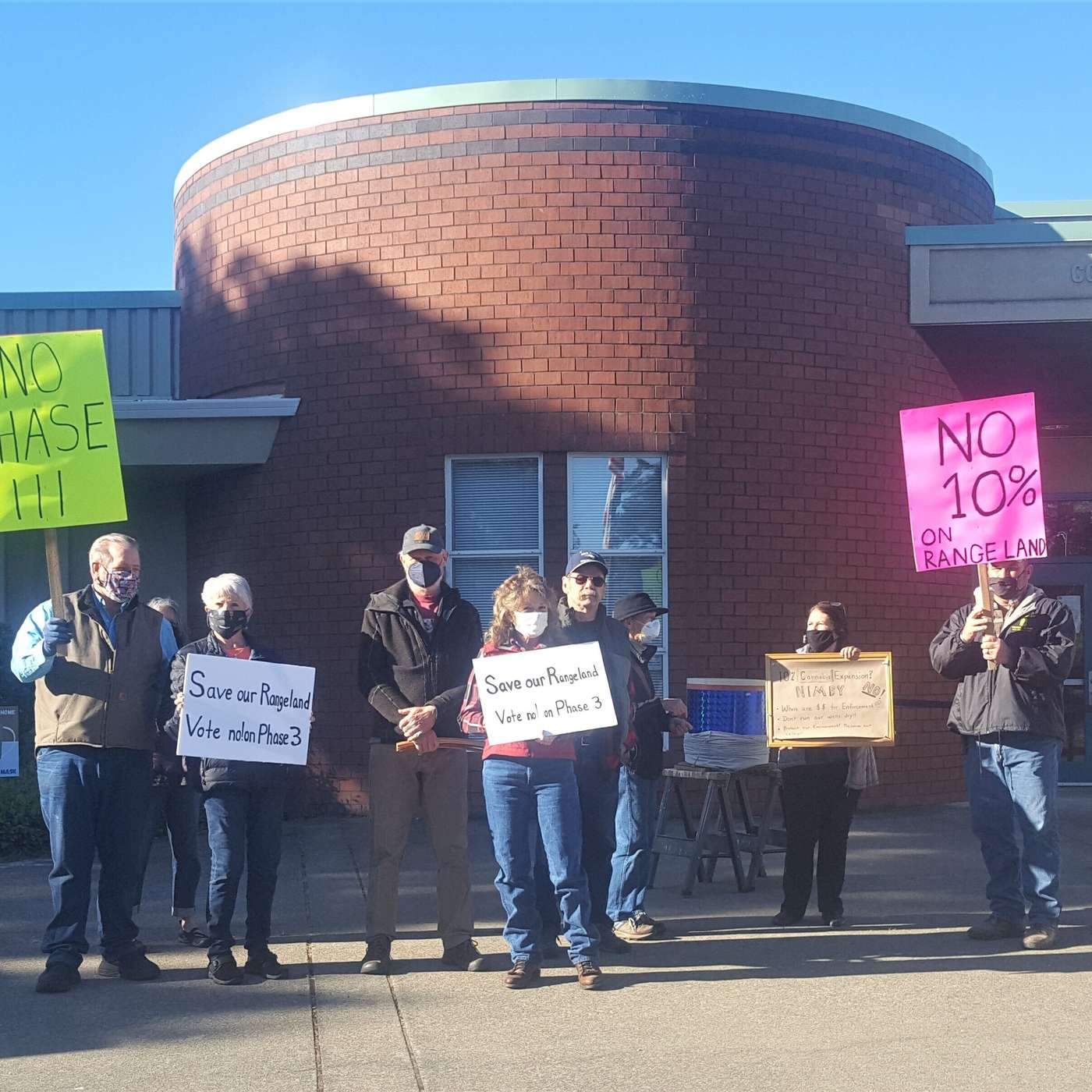
April 28 — The Board of Supervisors sent recommendations for a reworked cannabis cultivation ordinance back to the Planning Commission for another round of review. Yesterday’s nine and a half hour long meeting was held after an early-morning rally protesting the expansion of cannabis grows into rangeland during a drought. In spite of assurances that no new permits will be granted without water, deliberations were dogged by talk of a referendum that would undo the ordinance. Social media comments as the meeting was underway revolved largely around the lack of water and calls to recall the supervisors. At the same time, the current phase I ordinance is only open to growers who have already proven to their local government that they were committing the felony of cultivating a schedule 1 narcotic prior to 2016. The lack of enforcement is one of the things that led Andrew Hilkey, of the Water Equity Group in Willits, to carry a sign outside the empty board chambers. Ellen Drell, of the Willits Environmental Center, is already thinking about what it would take to carry out a referendum. But the board is also up against pressure to comply with state law. County counsel Christian Curtis cautioned that drafting an entirely new ordinance would require a years-long process of environmental review. And the current ordinance is not immune to legal challenges. The board is counting on a separate effort to beef up enforcement following the Humboldt County model, using real time aerial surveillance, large fines and property liens to discourage illegal grows. Most cultivation in the county is illegal. And, according to County Counsel Christian Curtis, without amending the ordinance, that could soon include cultivation that’s currently legal.
Ep 137BLM rally demands police accountability, sheriff's audit
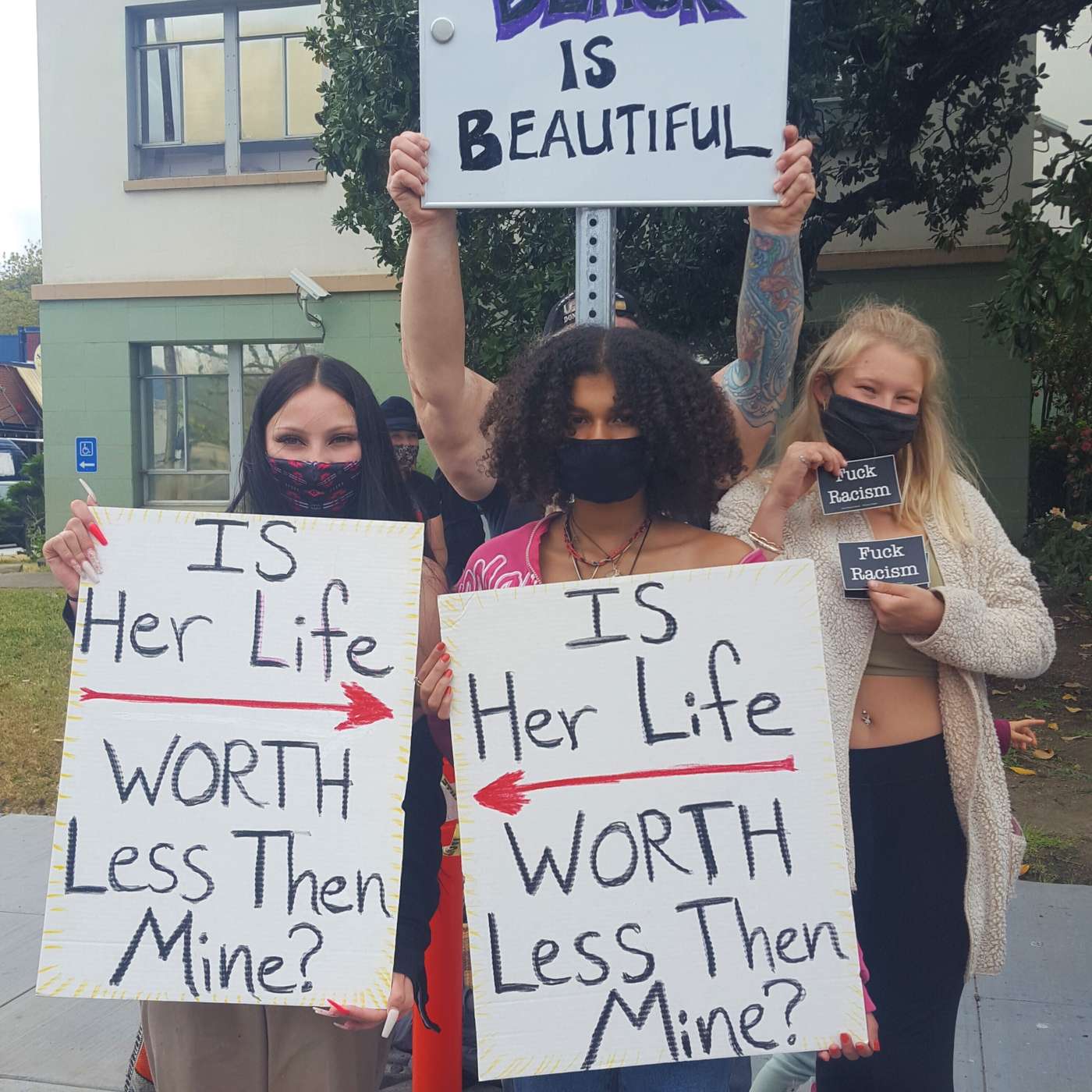
April 26, 2021 — Black Lives Matter activists rallied in front of the Ukiah courthouse Saturday to demand police accountability after the beating of Gerardo Magdaleno and to request an audit of the sheriff’s department. Troyle Tognoli is a local Black Lives Matter organizer. She is also a member of Ukiah’s recently formed Equity and Diversity committee, which is meeting this Wednesday. The Ukiah Police Department has not released the names of the officers involved in the Magdaleno beating , though according to police logs, Saul Perez, the responding officer, continues to respond to calls. Tognoli talked about the petition, which declares that “the undersigned are horrified at the video of Ukiah Police Department officers beating a naked man in a state of mental health crisis.” The petition addresses the police statement, which uses a euphemism to describe two officers simultaneously punching Magdaleno in the head, by adding, “We do not accept the “distraction strikes” claim, and this situation was dangerously escalated by the officers themselves.” We’ll hear from young rally-goers and longtime activists about what’s important to them, and what they’d like to see next.
Ep 136Homeless encampment shut down in Ukiah
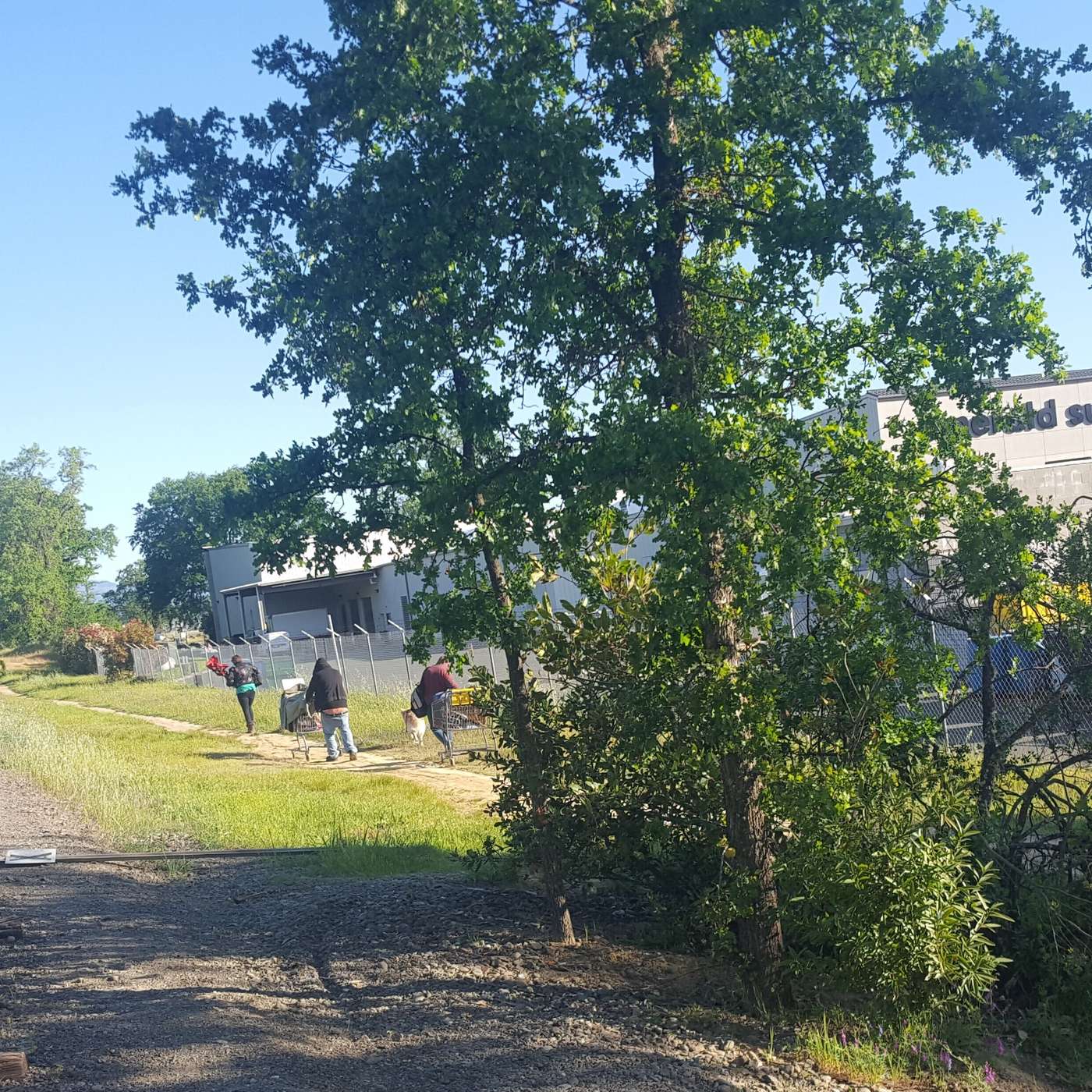
April 23, 2021 — A small homeless encampment on the south end of Ukiah was closed down earlier this week. Shortly after 8am on Tuesday, city workers began removing items that had been left behind by six to ten residents, some of whom have been living there since “Tent City” off Hastings Avenue was cleared out in June. Notices were stapled to nearby trees and utility poles by Friday, announcing that the property along the railroad tracks from Airport Road to Norgard Lane would be cleared on April 20th. The city has an easement alongside the tracks, which is part of long-terms plans for the Great Redwood Trail.
Ep 135As drought worsens Ukiah is well prepared, Fort Bragg anticipates water shortages
It’s no secret that our county, along with the entire state, is in a drought. Lake Mendocino is at a historic low, Fort Bragg’s main source of water is flowing at half its normal level, and Ukiah water manager reckons that parts of the Russian River may run dry towards the end of the drought year. But what will that mean for Mendocino County residents?
Ep 134Governor proclaims drought emergency from the bottom of the lake
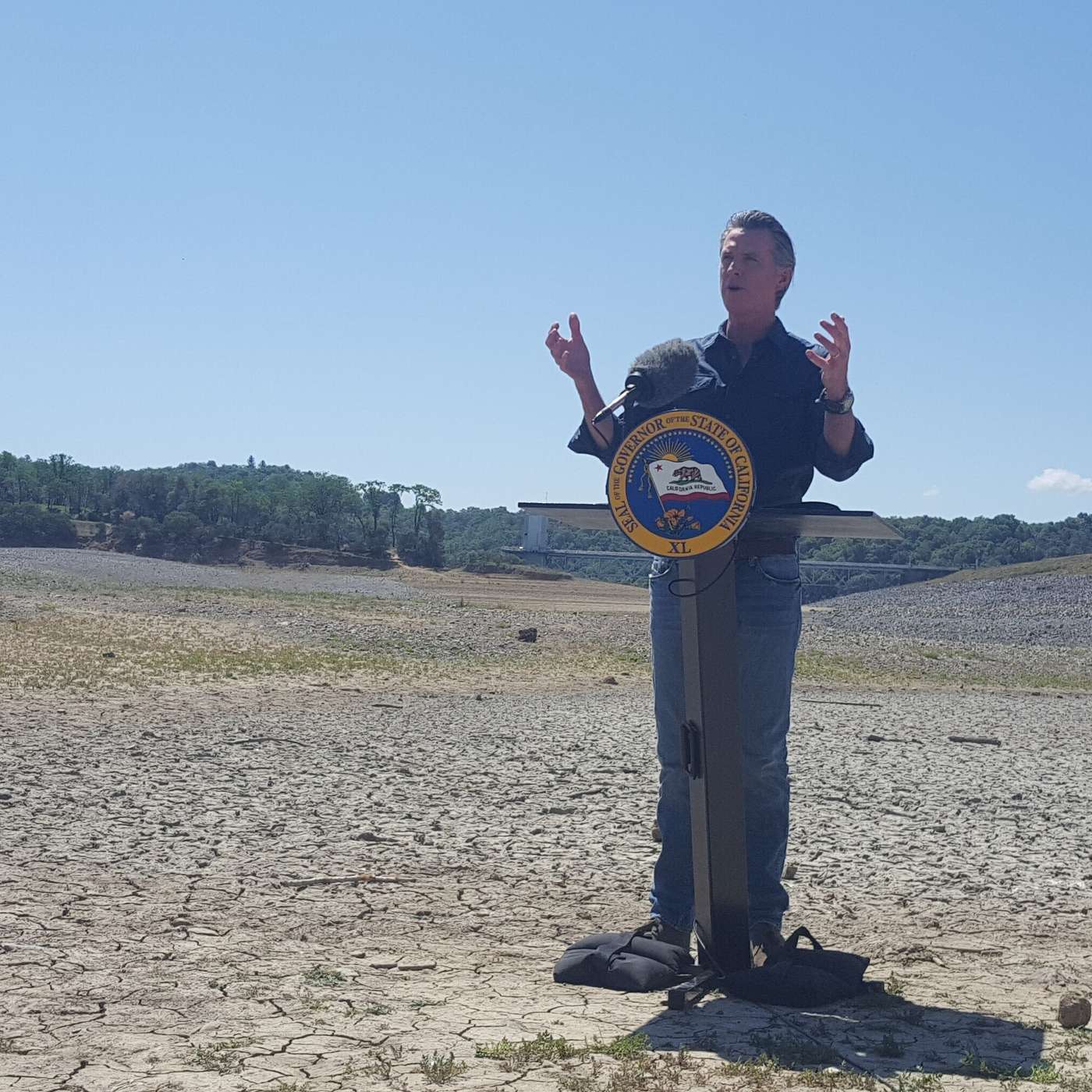
April 21, 2021 — A day after the board of supervisors declared a state of emergency due to drought, Governor Gavin Newsom stood at the bottom of Lake Mendocino and signed a proclamation declaring a drought emergency in Mendocino and Sonoma counties. There was very little moisture in the basin of the lake this afternoon, a few hundred feet from the south boat ramp where dignitaries suffered in dark clothes and black shoes and a few dispirited geese nibbled on the parched grass. At one point, the breeze picked up a cloud of dust that swirled in front of the governor. Newsom said his administration has been preparing for the drought for months. None of the strategies involve water mandates, though Wade Crowfoot, Secretary of the California Natural Resources Agency, said water rights could be curtailed.
Ep 133Cannabis cultivation ordinance refined
April 21, 2021 — At an inconclusive eleven and a half hour meeting this week, the Board of Supervisors agreed 4-1 to allow cannabis expansion on parcels meeting a narrowly defined set of requirements. And, with the drought expected to be in full swing by the time the season begins, growers under the new ordinance will not be getting plants in the ground this year. The ordinance was not fully hammered out on Monday night. Supervisors heard more than six hours of public comment and ended the meeting after dinner by going over a ten-point memo submitted by Supervisor Glenn McGourty. Most of the recommendations by the Planning Commission were left for another meeting next week, when the board will also hold a hearing on cannabis facilities. On Monday, supervisors tackled the issue that’s come to define the phase III debate in the final hour of the meeting. Prior to the meeting, local environmentalists and Supervisor John Haschak sponsored a poster that flew around the internet, urging residents to “say no to big grow” and stating that the proposed land use ordinance “puts profits over people, wildlife, public safety and the environment.” Last week, scientists from the California Department of Fish and Wildlife said that site-specific review does not begin to address the cumulative impacts of cannabis grows. But photos accompanying the scientific presentation showed egregious violations of any ordinance. Supervisors resolved to address growing frustration with the lack of enforcement by directing staff to write a new enforcement procedure in line with that of Humboldt County, which relies on real-time aerial surveillance, hefty fines, and property liens. Still, a lack of confidence in the county’s ability to carry out a detailed policy characterized much of this week’s debate. Callers invoked the failure of Measure AF, the so-called heritage initiative of 2016, and some floated the possibility of another initiative to overturn the supervisors’ decision if it was unpopular. And employees of at least one legal cannabis company called in during working hours to urge the board to allow the 10% expansion, praising their employer for treating them fairly and paying them well.
Ep 132Tenants moving in to Live Oak
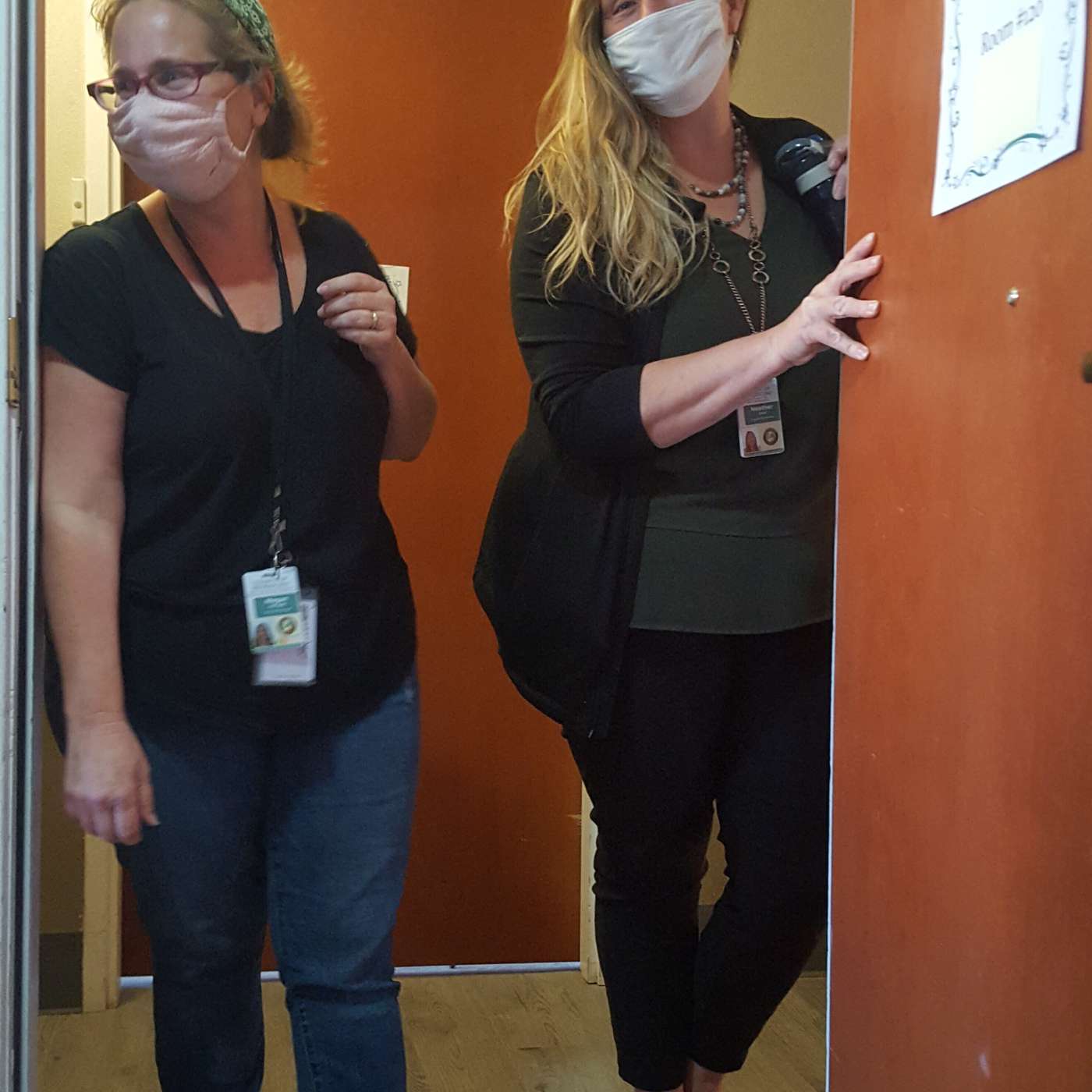
April 19, 2021 — Today, about seventy people who have been homeless or at high risk for it are moving into Live Oak Apartments, a former Best Western Inn in Ukiah. The building is part of the state’s Project Homekey initiative. Last year, counties got money specifically to buy lodging establishments and convert them into permanent housing for vulnerable populations. Mendocino County received $9.6 million, and has spent most of the time since purchasing the building installing kitchenettes and remodeling common areas. The priorities have been seniors, veterans, families with kids, and people who are especially susceptible to a bad outcome if they get covid-19. One 70-year-old wheelchair-bound tenant has been living in a car for a year. Another elderly tenant’s story is largely unknown due to severe short-term memory loss. Megan van Sant, a senior program manager with the county’s Health and Human Services Agency, has been able to unravel that this tenant does have a work history and therefore access to social security benefits, but has no ID, no bank cards, and no memory of where their money is. Van Sant gave a tour of the building last week, before anyone had moved any of their things into the rooms. Beds were stripped, and a few light fixtures were laid out on countertops, prior to being installed. Some of the rooms had multiple sinks, to satisfy funding requirements about kitchenettes and facilities. There will be 25 children in the building, including one with special needs, whose single parent had to stop working when school closed. But sometimes it’s just bad credit that makes it hard to get ahead. Four of the living units are double rooms, to accommodate families with several children. Another single parent is blind and will have to seek regular treatments at the dialysis center, which is a block away in a neighborhood shopping complex. As of last week, 37 households had been accepted into the program. Some of those households consist of one person, while others are multigenerational families. Ten of the rooms will be empty until they’re equipped with kitchenettes. The funding to keep the building staffed and maintained is coming from a variety of social services programs. Housing vouchers will pay for rooms with kitchenettes, and veterans typically get benefits through HUD-Vash, a federal housing program. Some tenants are getting help from CalWorks, some have social security or retirement benefits, and some of them have jobs. Whatever their source of income, they have committed to paying 30% of it toward housing here. And there are rapid rehousing grants that are available for the first few months after tenants move in. Sex offenders, people with a recent felony history, and arsonists cannot be housed here, even one person whom van Sant referred to as “a mild arsonist.” Also, it’s against the law to discriminate against people based on where they are from, so it would be illegal to offer services only to people who satisfy some criteria of being local. However, van Sant said that after selecting applicants without knowing where they were from, only one was from out of the county. Still, there’s only so much that can be done with one project, even with a multimillion dollar windfall from the state. “And again, we prioritized veterans, seniors, families with children. We never even had the opportunity to look at anybody who didn’t fit one of those categories. Because the demand was so high,” van Sant recalled. “And frankly, there are individuals who have a level of care that exceeds what we can provide in this building. So there are homeless individuals who have very complicated needs, and we were very clear that’s not a level of care that we can provide here.”
Ep 131Board moves to adopt cannabis enforcement policies in line with Humboldt County's
April 16, 2021 — The Board of Supervisors decided this week to follow Humboldt County’s approach to code enforcement against cannabis scofflaws, which includes real time aerial surveillance, hefty fines, and property liens. And scientists with the California Dept of Fish and Wildlife told the board that the proposed cannabis cultivation ordinance to replace Phase III does not adequately address the cumulative impacts that cannabis grows have on water bodies and habitat loss. On the same day the board heard from water managers around the county about the severity of the current drought, Angela Liebenberg, a CDFW environmental scientist specializing in cannabis enforcement, offered an analysis of the proposed ordinance.
Ep 130Redwood Valley residents prioritize how to spend PG&E settlement
April 16, 2021 — Redwood Valley residents met with county supervisors this week to start on a wish list for community needs that could be funded with some of the $22 million settlement from PG&E. Suggestions ranged from new fire trucks to improvements on the grange, which served as a community hub during the 2017 firestorm. And, with roughly 200 agricultural water connections getting shut off in a few days, fire hydrants and water security were top of mind. The board has received the first formal presentations from entities making the case for some of the money, but has not laid out any parameters or priorities as to how the funds will be distributed.

Ep 129With Mendocino already experiencing extreme drought, water leaders plan for long summer ahead
LITTLE RIVER, 4/15/21 - Inland reservoirs have hit historic lows, the coast is preparing to rely on trucking water in from out of town, and dry, hot weather is on the horizon. On Monday, First District County Supervisor Glen McGourty held a "water workshop," where water leaders from around the region came together to discuss the drought and how it should be handled.
Ep 128Water managers detail 'dire' drought
April 14, 2021 — Supervisor Glenn McGourty organized a water informational session at this week’s board of Supervisors meeting, calling on the board to come up with an emergency response to the drought. With Lake Mendocino lower than it’s ever been, Redwood Valley Water District is shutting off irrigation services to its 200 agricultural customers on April 19. Jared Walker, the district general manager, is expecting to reduce water to fifty gallons per person per day for critical public health and safety water use only. Don Seymour, a principal engineer with Sonoma County Water Agency, said the current drought is set to surpass 1976-77 as the "drought of record." Sean White, the director of water and sewer for the City of Ukiah, says the city plans to rely heavily on groundwater and produce about a thousand acre feet from a recycled water system that was completed in 2019. Water is tight on the coast, too. Fort Bragg received just 17 inches of rain this year, a little over a third of its average annual precipitation. John Smith, the city’s director of public works, says the local water source is not as easily measured as Lake Mendocino. The Mendocino County Resource Conservation District is kicking off a campaign to save water, but McGourty brought up a lot of unanswered questions, including the need for a Board strategy to meet the crisis, when conservation should start, what the parameters should be, and how to regulate trucked water.
Ep 127Board hears pitches for settlement funds
Supervisors did not vote on any of the proposals, though most of them got a nod from at least one member of the board. The next round of presentations is scheduled for May fourth. The Redwood Valley Municipal Advisory Council will discuss the settlement fund at its meeting this Wednesday at 5pm.
Ep 126Industrial hemp pilot program underway
April 8, 2021 — Mendocino County’s two-year industrial hemp pilot program got started this week, with one participant, in District 3. The hemp will be grown for CBD, and is part of a study about how much water the crop requires. Elizabeth Garcia, with the County Agricultural Department, shares details in this interview.
Ep 125Friends remember Joe Louis Wildman
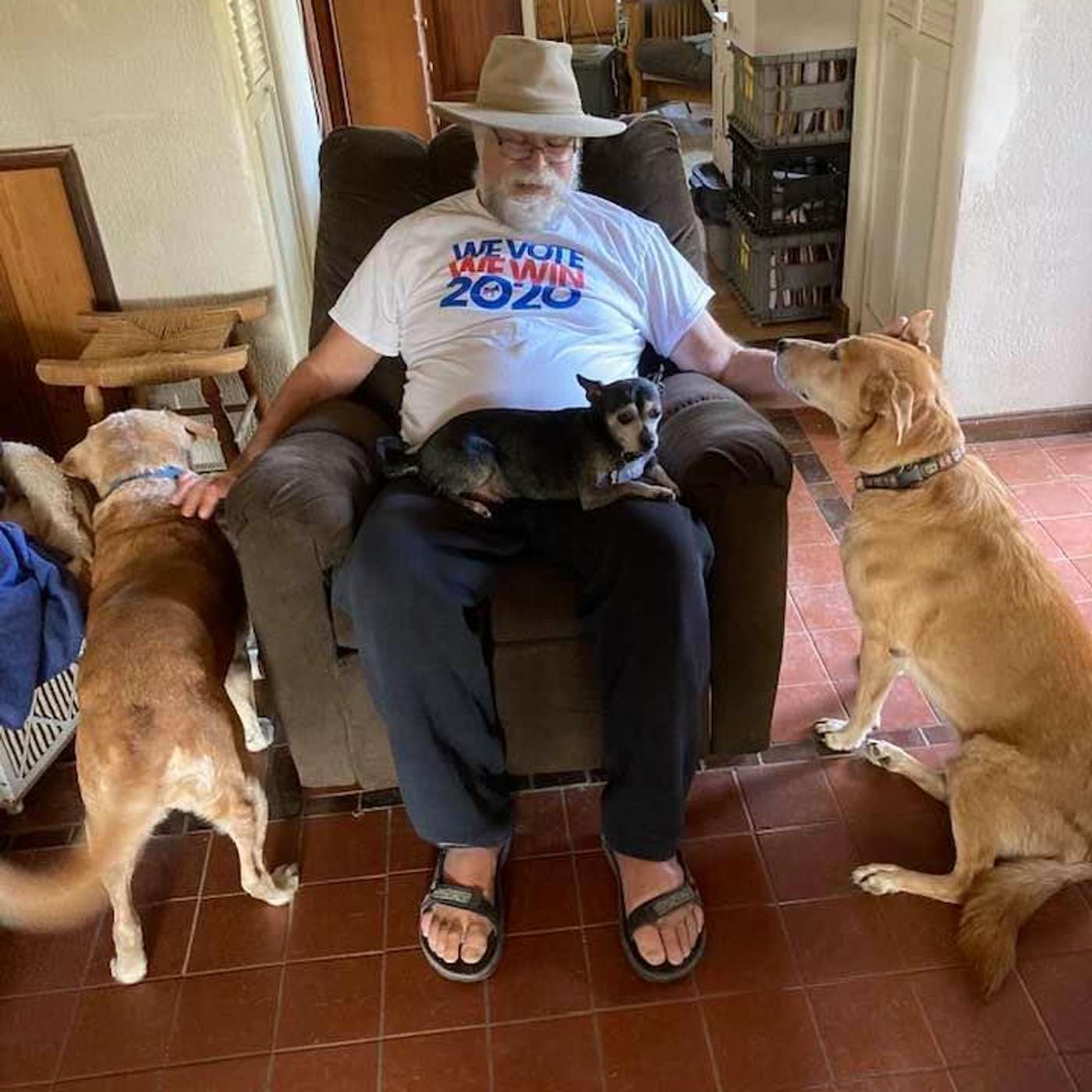
April 7, 2021 — Joe Louis Wildman, a longtime union organizer and Democratic activist, died Sunday, not long after retiring. He was the Secretary Treasurer of the North Bay Labor Council, an SEIU representative, and a business agent with operating Engineers Local #3. He was also Treasurer for the Inland Mendocino Democratic Club, and the owner of the Sprinter van that served as the club’s mobile headquarters during the pandemic. Raul Gardeia is an organizer with SEIU Local 2015. He lost a valuable mentor, one who was steeped in the dynamics of rural politics and encouraged him to go to grad school to get a degree from the University of Massachusetts in union activism. “He was an incredible resource, someone full of so much knowledge and history of county politics, and the history of the Mendocino County labor movement. It’s not easy to find a lot of the information unless you find someone who lived it,” Gardenia says. “Joe was someone who had a lot of ideals without ideology.” Val Muchowski, a longtime Democratic activist, worked alongside Wildman for twenty years. “Joe started off as a Green, so we were kind of on different teams for a while,” she recalled. “But then he became a Democrat, and a very active Democrat. He worked for years as a labor representative, and he had a keen wit and a cutting humor, which made him very fun to work with.” She described him as “very effective,” and told a story about how Wildman decided to drum up some money for the Democratic Party by inviting Fiona Ma, the California State Treasurer, to an event at Black Oak Coffee in Ukiah. “I said, sure, let’s do it, if we can,” Muchowski said. “We raised $3,000 for Democrats at that time. That was pretty good, with less than 100 people in the room,” she concluded. Gardenia added that Wildman, who had been counting down the days to his retirement, spent more time than ever at the union hall as a volunteer. “In the last several weeks, I saw him more than I ever had before...I think he was doing more work as a volunteer, I saw him more after he decided he was no longer going to work.” Before he died, Wildman had a chance to work on a historic campaign to elect two Democratic senators in Georgia. On December 10, he talked to Annie Esposito and Steve Scalmanini for Corporations and Democracy, about driving the mobile headquarters to Atlanta. “You know, everyone acts like driving a long time is hard, but it’s no harder than sitting on your couch,” he told his hosts. “I put a lot of strain on my right ankle. That’s about it. Everything else is sitting in the chair, watching the states go by.” Gardeia says no one can fill Wildman’s shoes. “We’re going to have a recall election sometime later this year, and we’re not going to have that voice, grumbling about it but still doing the work, preventing bad stuff from happening in our state.” There will be a political rally supporting AB 1400, guaranteed healthcare for all on April 17, starting at noon in the Low Gap parking lot in Ukiah and wending its way to Alex Thomas Plaza. It’s what Wildman would have been working on now, and references to him are sure to abound. The Raging Grannies will sing “I dreamed I saw Joe Wildman,” and local democratic leaders will speak. A few weeks before he died, Wildman wrote a poem that now seems prophetic: I am walking backward in time and slimming down, now wearing clothes that haven't fit in years. They are no more out of style now than they ever were. I am walking backward in time getting stronger with each step and closer to where we last diverged. I hope you'll join me now and walk me closer to when we met. To when I first walked you home. I am walking backward in time, but you cannot walk me back into the womb. You can, I hope, walk with me, back until I am no more. It is, I hope, your turn to walk with me the rest of the way. To walk me, slowly, all the way home.
Ep 124Magdaleno lawyer discusses case
April 7, 2021 — The family of Gerardo Magdaleno, the mentally ill man who was beaten by Ukiah police last week, is preparing to sue the city. Their lawyer, Isaak Schwaiger, is a civil rights attorney who specializes in police brutality cases. The case has not been filed yet, but Schwaiger says “It is primarily an excessive force lawsuit...but it also has a component that’s derived from the Americans with Disabilities Act.” Another claim will be inadequate training at the UPD for dealing with people having a mental health crisis. There will be a money damages claim, but Schwaiger also plans to ask for reform at the department. Ukiah Police Chief Justin Wyatt posted a brief statement on Facebook, but has not responded to requests for interviews or a press conference. The department issued a press release signed by a subordinate the day after the incident. It’s not Schwaiger’s first time in Ukiah. He also represents Christopher Rasku, who was beaten by former UPD sergeant Kevin Murray in 2018. Murray was fired last year after being charged by the District Attorney with sex crimes, burglary, and possession of methamphetamine. Schwaiger says Murray broke eight of Rasku’s ribs after forcibly entering his home. Murray was promoted to sergeant after the incident. “Not maybe the best candidate for sergeant that the department could have picked,” Schwaiger remarked. Rasku was charged with resisting arrest, but those charges were dropped after bystander video and body cam footage contradicted Murray’s account. Magdaleno is also facing felony charges of resisting or threatening an officer. “It’s practically guaranteed,” Schwaiger says. “Because of a court case from many years ago, Heck vs. Humphries, if a person is found guilty of resisting arrest, that can bar them from seeking justice in the civil courts for the use of excessive force. Police officers know this, and therefore when they use force on someone they arrest them for arresting. It’s their insurance policy so they don’t get sued.” Magdaleno’s case is a civil case, because only district attorneys, not private citizens, can bring criminal cases. The Rasku case is against Murray directly. The claim against the city was dismissed early in the litigation, but Schwaiger expects the matter to either go to trial or settle soon. Schwaiger plans to sue the officers involved in this case under fictitious names until their identities come out in discovery. “It’ll say John Doe #1 fired a Taser into a naked and defenseless man,” Schwaiger explained. “It’ll say John Doe #2 kicked the man in the head. And it’ll say John Doe #3 punched him about the head twelve times. And it will identify them like that, and once the case opens up, we will learn their true identities and amend the complaint to conform to that evidence.” Schwaiger, a wartime veteran of the Marine Corps, says “I see things that cops do on Main Street every single day that would have had marines court-martialed if they did it in Iraq. People talk about the militarization of the police. I almost wish they were more militarized, in the real sense of the word. Meaning that there was discipline, and accountability.”
Ep 123Magdaleno supporters decry police violence, call for mental health services
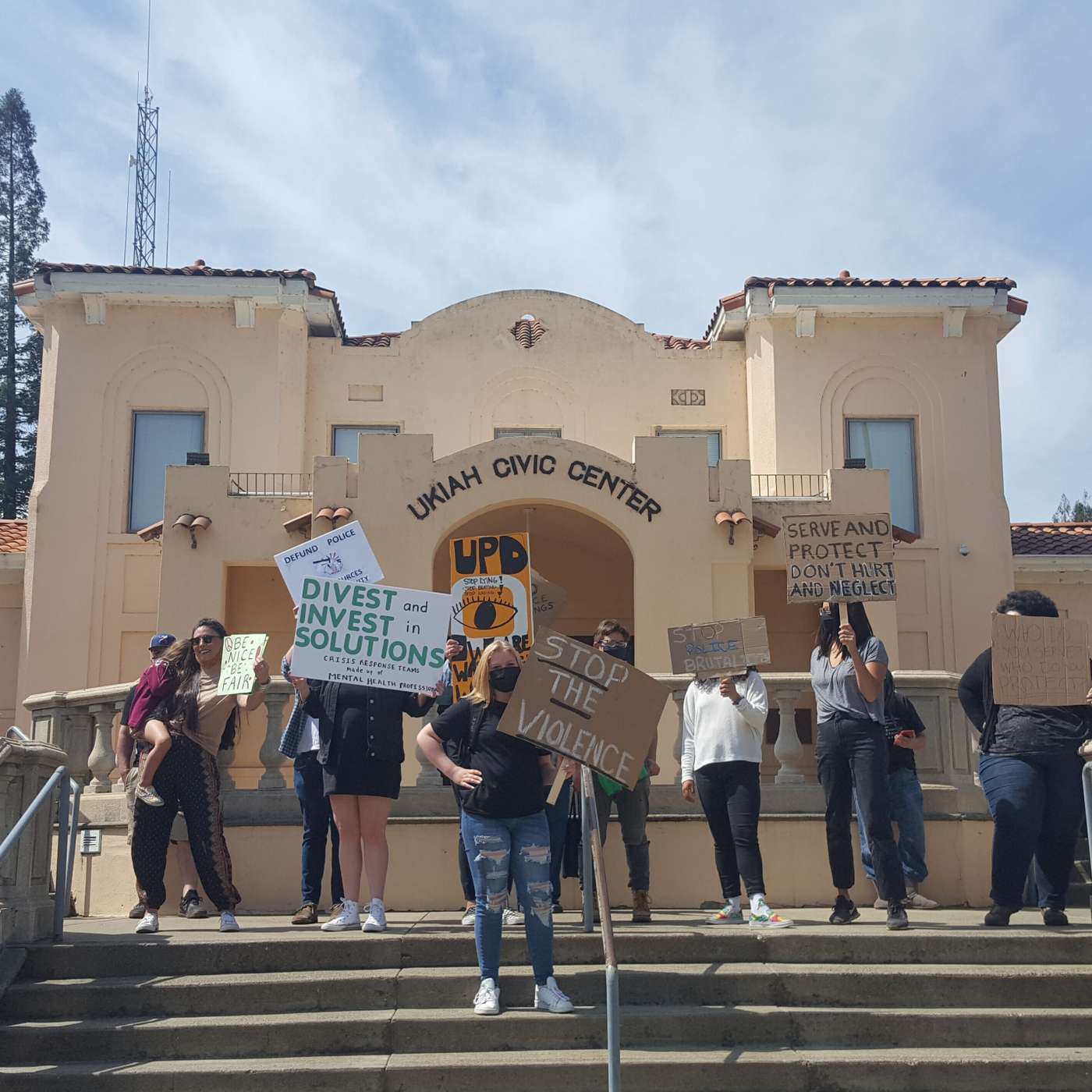
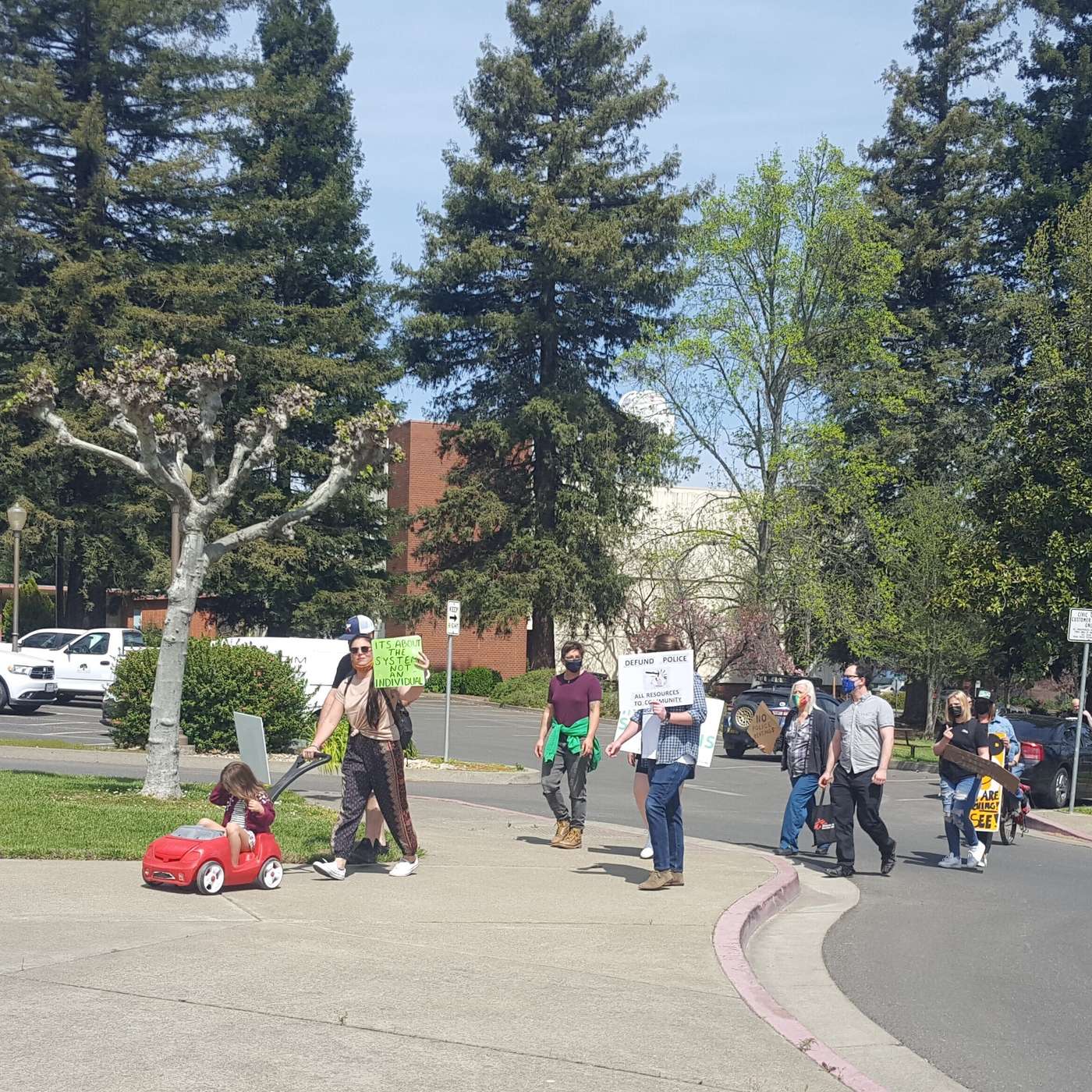
April 5, 2021 — A little over a dozen people marched on Civic Center in Ukiah Saturday, calling for an end to police brutality and more mental health services in the wake of Gerardo Magdaleno’s beating at the hands of Ukiah police officers. On April first, Magdaleno, a schizophrenic bipolar man, took some non-prescription drugs after running out of his psychiatric medications. He was wandering nude on south state street when an encounter with Ukiah Police Officers escalated into officers tear-gassing, Tasing, kicking, and punching Magdaleno multiple times in the head. Videos began circulating online almost immediately. Magdelano was taken to jail after a medical clearance, but returned to the hospital the next morning. By Saturday night, he was at home with his family after his sister posted bail. He was charged with public intoxication, possession of drug paraphernalia, and felony resisting or threatening an officer. Early Saturday afternoon, protesters broke out signs similar to the ones they carried during last summer’s Black Lives Matter protests in the wake of George Floyd’s death beneath the knee of now-former Minnneapolis police officer Derek Chauvin. At the head of the procession in Ukiah was Josie Ann Zolata Batiste, expertly steering her daughter Odessa’s red wagon through the construction on State Street. “There’s no reason for violence, there’s no reason for two, three, four, five cops on one person,” she said. “I’m pretty much disgusted. And sad. It’s scary to have a daughter, it’s scary to be Latin...I love Ukiah, and I’ll never stop sticking up for Ukiah, but I feel like we’re spiraling out of control as well as the rest of the country.” Shy, who witnessed part of the incident, came from Philo to participate in the march. “I put it together once I saw the videos,” they said. “I thought perhaps he was sick because I saw the firefighter and thought that he was getting care and was concerned because of the amount of police cars, and seeing the report knew it was not care, it was violence.” A woman named Ashley wore a cap that said “You Are on Native Land” and carried a sign that said “Divest and Invest in Solutions.” She said she had a Native American uncle who was killed by San Diego police while having a mental health breakdown. “I think Ukiah police could adopt, like my sign says, a crisis response team made up of mental health professionals to respond to these types of mental health crises that we saw on the videos.” Jordan Uggla, too, wants more mental health resources. In early September of last year, the Board of Supervisors approved a recommendation by the Measure B Citizens Oversight Committee to use Measure B money to fund mobile outreach teams that would pair psychiatric workers with sheriff’s deputies. Thursday’s incident took place on the border of the city and county jurisdictions. “I would be happy to pay more taxes to fund support for marginalized people, for disabled people, for mental health services,” he said; “and I’m not very happy that my taxes money is going to pay police officers that beat people that are in crisis when it’s not necessary.” When reminded that we are paying more taxes, with Measure B, Uggla said, “Great.” One of the videos shows Magdeleno being punched in the head for about twenty seconds straight, sometimes simultaneously by two officers who are pinning him to the ground. Ukiah police chief Justin Wyatt had no comment on Friday, but a press release signed by a subordinate described the blows as distraction strikes, which “allowed the officers a brief opportunity to place Magdaleno into handcuffs, and the technique was ceased.” A man named Cooper believes it’s time to rethink the budget. “The response always ends up with police departments getting a larger budget, and that’s never going to solve the problem,” he said, echoing other calls for more money to go toward mental health services. Asked what he thought about the press release that characterized the blows as “distraction strikes,” he said, “yeah, that was pretty offensive. You could look at it and understand exactly what they’re doing...it sounds like something made up to justify looking for an excuse to punch the man in the face.”
Ep 122Ukiah Police officers beat naked mentally ill man
April 2, 2021 —In the wake of a summer of protests against police brutality, two short videos from behind a shop window show four Ukiah police officers repeatedly punching a man whose sisters have identified as Gerardo Magdaleno. One shows the nude man getting up off the ground and walking slowly toward an officer. The officer shouts at him repeatedly to get back on the ground. The video is blurry, but according to Ukiah police logs at that address, Officer Saul Perez responded a few minutes before 3pm. Another video shows two officers holding the man down on his back by the arms and punching his head repeatedly while a third officer stands by, rolling up his sleeves. A fourth runs toward the scene and grabs his legs. They force him onto his belly and three officers hold him down while one continues to deliver short, sharp blows to his head. A third video, filmed from across the street, shows the nude man standing underneath the sign for Alderwood Apartments, about a car’s length from an officer. A minute and twelve seconds in, another officer approaches, walking fast. Both policemen raise their arms, pointing something at the man. Ten seconds later, the man falls over backward and the beating begins. Magdaleno, a schizophrenic military veteran, had been staying with his sister, Luna Magdaleno. She said her brother left around noon yesterday. He had been out of his medications for two days and taken LSD. She found out what happened to him that afternoon, when someone sent her the videos. “He wasn’t being aggressive or disrespectful,” she said. “I understand that being nude in public is indecent exposure, but you can clearly tell that he’s in his own world at that moment. For the cops to come and do that thing to him the way that they did, instead of de-escalating the situation, they made it worse. They’re saying, in the report that they’re printing, that one of the cops was hurt, but he was injured obviously because they beat the fuck out of my brother.” Another sister, Nemesis Garcia, said Luna sent her the videos right away, while she was at work. “I was just a chaos, like, I couldn’t even finish what I was doing,” she said. “He wasn’t even attacking them. They did an oath to protect people, and what they’re doing is not protecting people. They’re violating that oath.” Ukiah Police Chief Justin Wyatt said he was unable to comment at this time. A press release that came out this afternoon said Magdaleno failed to respond to simple orders and that he took a fighting stance when officers issued instructions. The original call for service was made to the Mendocino County Sheriff’s Office, but Ukiah Police regularly monitor radio traffic from MCSO in order to assist, especially if the call is on the border between the two jurisdictions. According to the press release, Magdaleno was running in and out of traffic while naked, and that he appeared to be intoxicated. Black Lives Matter activist Troyle Tognoli would like to hear what the chief has to say, especially in the wake of former officer Kevin Murray facing multiple criminal charges, including sexual assault. “That would send a huge echo as to why these things are occurring, what steps are being taken, if any, to address it, and just how deep are we into this type of behavior. You know, UPD, there was a time when they were really pulling their shit together. But this is not good.” Ukiah Mayor Juan Orozco said he believes a lack of training is to blame. “This man didn’t have a weapon,” he said, “he didn’t seem to be threatening, so why go about the way they did it? And it’s clearly a lack of training.” “That is bullshit,” said Tognoli. “What you saw is the training. I’m not sure it’s sanctioned by the department, and I would doubt very seriously it is. Considering we have the Eight Can’t Wait campaign, that the Ukiah Police Department has endorsed, they have spoken publicly about really wanting to change some of their policies and practices.” Magdaleno and Garcia said earlier this afternoon that they’re trying to find their brother. Magdaleno bailed him out this morning, after he spent the night in jail and returned to the hospital. Lt. John Bednar of the Mendocino County jail said the Ukiah police sent Magdaleno to a local hospital for a medical clearance before bringing him in for booking. He spent the night in jail and went back to the hospital sometime before seven o’ clock this morning. His sisters say that nurses at the Ukiah hospital told them they had no record of him. Unofficially, they learned that he had facial fractures and a concussion. He’s been charged with two misdemeanor counts of disorderly conduct and possession of drug paraphernalia. He’s also charged with resisting or threatening an officer, which is a felony. Magdeleno is skeptical. “My brother was butt naked,” she said. “Where in the fuck is he gonna put the drugs? Up his ass?” The press release said that, following the alteration with Magdaleno, officers loca...
Ep 121The best part about volunteering
April 2, 2021 — Yesterday, every Californian over the age of fifty became eligible for a vaccine. Later this month, every Californian over the age of 16 will be eligible. There haven’t been any clinics for first doses for weeks, but a combination of paid staff and volunteers are busy at second dose clinics around the county. With limited or unknown supplies, getting volunteers where they can be useful is a logistical challenge. Molly Rosenhal is a program coordinator with the NCO volunteer network, which contracts with the county to send the right people to public health clinics. She says that people with medical expertise, including retired healthcare workers, can register with a state network called Disaster Healthcare Volunteers and ask to be assigned to the Mendocino County unit, where their names will appear on Rosenthal’s spreadsheet in due course. There are also some fee waivers for people who have recently retired. We’ll hear details, and a few words from two particularly dedicated volunteers.
Ep 120Why oak woodlands matter
April 1, 2021 — Spring is here, and new growth is everywhere. But unlike the fields of yellow mustard that signal the beginning of the short season, some of that growth is old and slow. Like an 18-inch diameter, breast-height scrub oak, which could have been on the landscape since your great-great-great grandmother was born. Jennifer Riddell and Andrea Davis, fellow co-presidents of the Sanhedrin Chapter of the California Native Plant Society, recently encouraged the Board of Supervisors to adopt an ordinance to protect oak woodlands, which was originally supposed to be part of the Phase III cannabis ordinance. Their letter to the board cites a study estimating that Mendocino County oak forests store more than 28 and half million tons of carbon. They asked for strong protections for rangelands, because those areas contain the bulk of our oak woodlands and upland watersheds. But now, with Phase III coming before the board next month with recommendations from the Planning Commission, the oak woodlands ordinance has been sent to committee and is waiting on an inventory of the trees. That inventory isn’t likely to include a lot of young trees, which are out-competed by fast-growing non-native grasses and devoured by other non-native species like turkeys and pigs. Riddell believes that, with all the complicated pressures oak woodlands already face, they need as much protection as they can get. We’ll hear why oak trees matter, some of the pressures they face, and some ideas for protecting them.
Ep 119Dr. Doohan on the Ranch Proposal for a psychiatric health facility
March 31, 2021 — With Old Howard Hospital decisively off the table for use as a psychiatric health facility, the Board of Supervisors last week directed county staff to look into two other possibilities. One is using the property at Whitmore Lane in Ukiah, formerly an alternative quarantine site, now in need of a $2.8 million roof. The other is finding a parcel somewhere in the unincorporated part of the county, purchasing it, and building a psychiatric facility where there would be fewer neighbors to object. That idea was sketched out in a proposal by Dr. Mimi Doohan, the deputy health officer, earlier this month. Doohan spoke with kzyx last week.
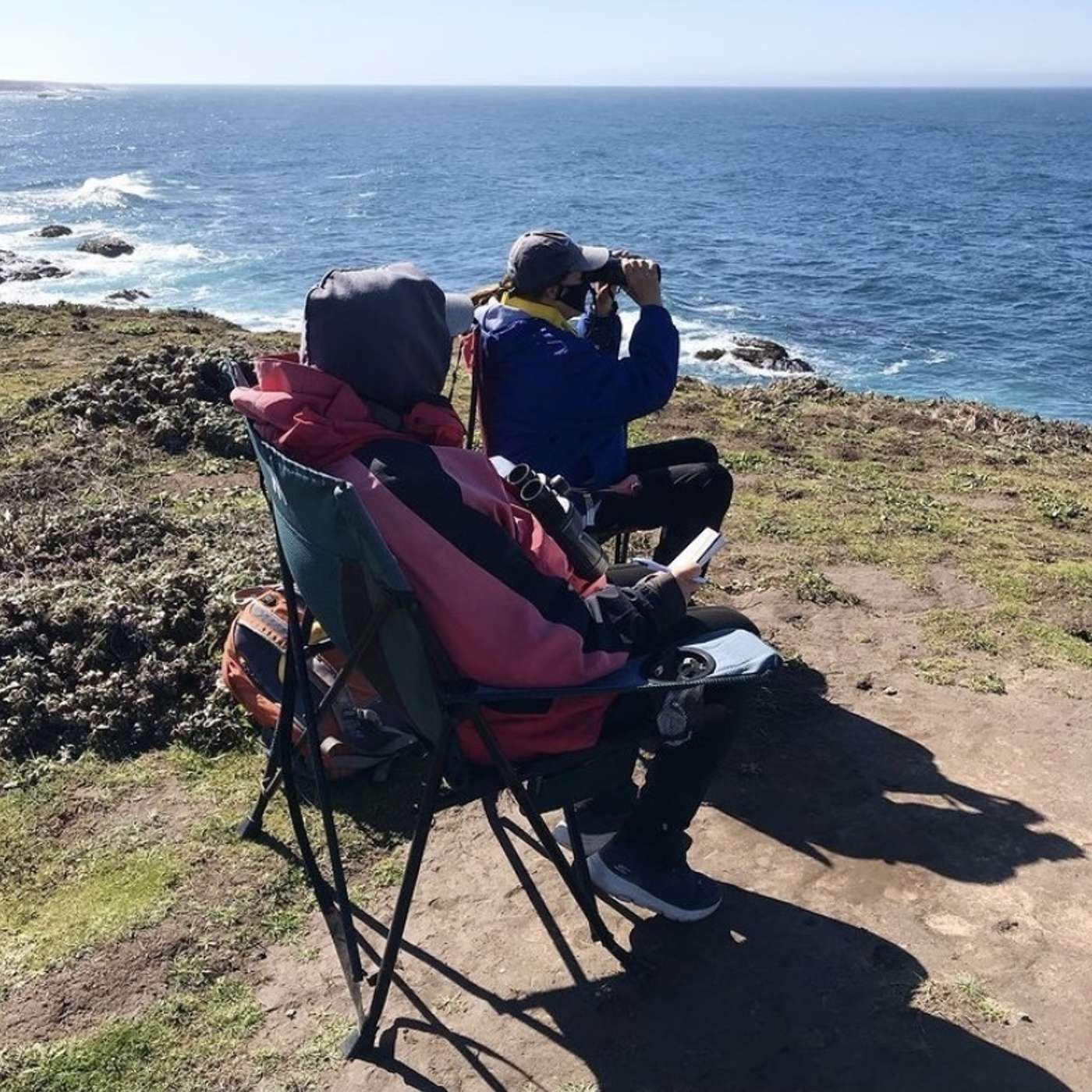
Ep 118Local whale watchers contribute to a global species population count
POINT ARENA, 3/26/21 - When the weather is favorable, Teresa (Tree) and Scott Mercer drive out to the end of the windy Point Arena bluff, right near the lighthouse, where they position themselves above the rocky shore line in two camping chairs pointing south, out to sea. Snacks at the ready and binoculars in hand, they settle in for a four to seven hour stint of whale watching. The Mercers, who are both retired, are whale watching experts. They actually met on a whale watching boat. These days they spend over a thousand hours a year peering out into the wild, turquoise-blue Pacific ocean, braving the wind and the rain and watching whales travel north and south off of the rocky Mendocino Coast, recording whale numbers, movement, and anything out of the ordinary. Along with other whale watchers who do similar work up and down the Pacific’s eastern shores, the Mercers create a census of the global gray whale population and of other marine species. In general, the gray whale population is stable, but the species has been experiencing an unusual mortality event over the past three years, meaning that more grays have been stranded, washing up on shores, than normal. Unusual mortality events like this can point to deeper problems in the ocean. All of the information the Mercers collect helps other scientists piece together a story about the health of the ocean and the entire planet, which is always important, but especially so the era of climate change.
Ep 117"Ranch concept" would deplete Measure B funds
March 23, 2021 — A detailed proposal for building a psychiatric health facility in a rural part of the county was filed under public expression on the agenda for yesterday’s Board of Supervisors meeting, though the item came up Monday during Measure B discussions. On Monday, the board asked staff to come back with two proposals for a psychiatric health facility, one called the Ranch concept for a rural puff, and the other for Whitmore Lane. Earlier this month, Deputy Public Health Officer Dr. Mimi Doohan sent the Board a 12-page outline of the “Ranch concept,” proposing to use $30 million of Measure B funds to purchase an as-yet-unidentified property, construct the puff, and operate it for two years. The current Measure B fund balance is just under $23 million. Yesterday, the board authorized over $320,000 of Measure B money to remodel the training center, purchase a gun locker, and reimburse the sheriff’s office for a law enforcement training. Ongoing sources of funding for the puff, according to the Ranch proposal, are possible from philanthropy and the State of California through a $750 million dollar allocation in the new budget. The document states that “It is recommended that the County own the property and any buildings for a PHF;” partly to ensure that local people have priority. The proposal leans heavily on a concept called “the lean startup,” and provides a link to an article in the Harvard Business Review, which describes this as an approach that “favors experimentation over elaborate planning,” and declares that “A business plan is essentially a research exercise written in isolation at a desk before an entrepreneur has even begun to build a product. The assumption is that it’s possible to figure out most of the unknowns of a business in advance, before you raise money and actually execute the idea.” The lack of a strategic plan has plagued the Measure B committee for years. After quoting from the article, which is geared toward technology startups and small businesses, the proposal goes into a wealth of detail, including staffing ratios and the qualifications of the dietician. Social Services, rehabilitation, and pharmaceutical services, including a pharmacist who would make regular reports, could be provided in kind by the hospital, funded by cost savings. Security could be provi ded in kind by the sheriff’s department, also funded by cost savings. Adventist Health did not respond to requests for more information about its involvement in drafting the document, but Sheriff Matt Kendall said he was never consulted about the proposal. He added that deputies are too valuable to provide security to a facility.
Ep 116"The sandwich needs to be a puff"
March 22, 2021 — The Board of Supervisors agreed to work on dedicating staff and funding to an economic development program run by West Business Development Center. Supervisors also agreed to spend Measure B money to remodel the behavioral health training center in Redwood Valley, purchase a gun locker for the site, and reimburse the sheriff’s office for crisis intervention training for law enforcement. And, now that the county is in the fourth year of collecting the half-cent sales tax, the board requested proposals on what it would take to get a psychiatric health facility going in different locations. The one cannabis item, which came up briefly at the end of the day, generated the most correspondence, including eighteen lots of 25 letters each that were forwarded from the Planning Commission. The board established a moratorium on Phase III cannabis cultivation permitting, in preparation for a new controversial chapter in the county code, which has not been finalized yet. Move2030 is an economic development program based, according to Paul Garza, the chair of West Business Development Center, on data and research. The work was funded by a grant from the U.S Economic Development Administration. Garza said that, in spite of an economy concentrated in too few industries that don’t provide a living wage, which he declared was $27 an hour for a family of four, there were bright spots in using biomass for sustainable product development, manufacturing in cannabis, food, beer wine and distilleries, and metal. Some of the biggest challenges, according to surveys, are access to technology and startup funds. Michelle Hutchins, the Superintendent of the Mendocino County Office of Education, was enthusiastic about using the program to fine-tune workforce training. Supervisor Dan Gjerde was all in, citing a study by economists with Sonoma Clean Power that projected a grim recovery for Mendocino County. He said he approved of West’s request for a staff person and funding to continue its work. Supervisors Ted Williams and Maureen Mulheren agreed to bring a proposal back to the full board within a month. The board also agreed unanimously to authorize close to $300,000 of Measure B money to remodel the Behavioral Health Training Center, including fire sprinklers. Another $8400 of Measure B money went to purchasing a gun locker, though Jan McGourty called in to say she thought it was inappropriate. Another $12,400 of Measure B funds went to reimbursing the sheriff’s department for a training that is usually paid for by NAMI, the National Alliance of Mental Illness. This particular training was not held at a county building, though, so NAMI refused to pay for it, according to Jan McGourty. The board chose to reimburse the training this one time, but to have a plan moving forward. Supervisors also called for more plans about possible locations for a puff, one on a ranch somewhere in the unincorporated county, and another at the property on Whitmore Lane, which CEO Carmel Angelo called “a free fixer-upper,” because it was purchased with $2.2 million of CARES Act funding. It will need a new roof, though, which will cost close to $3 million. Williams urged Dr. Jenine Miller, the head of behavioral health to research the options. “Maybe this is like ordering a sandwich,” he analogized. “We have some check-mark boxes, and we need to know which ingredients we can throw in there for a total of about seven bucks. I think we need our director to bring forward those check-boxes. And if a puff is one, great, if not, give us a few more we can choose from...pick a location, tell us what the options are, and let’s vote on it.” Supervisor John Haschak gave a general idea of what he would be voting for. “I think that there’s pretty much consensus that the sandwich needs to be a puff,” he opined.
Ep 115Planning Commission recommends expansion between one acre and 5%
March 22, 2021 — At a meeting that lasted nearly twelve hours, the Planning Commission agreed to recommend some of the expansion that was the main point of contention in 302 letters and four hours of public comment. The Commission held two hearings on Friday, one on a cannabis facilities ordinance proposed by the Board of Supervisors, and another on a proposed major change to cultivation policy. Phase III is likely going to be replaced with a new chapter in the county code, which its proponents argue will give existing small cultivators a pathway to getting a state license at the beginning of next year. The facilities proposal did not garner a huge amount of public opposition, though a member of the St Francis church in Hopland and the president of the guild wrote letters to oppose a provision that would allow cannabis facilities within 600 feet of a church. But the cultivation ordinance was another matter altogether. There was one item that drew united opposition from environmentalists, the Farm Bureau, one wing of the cannabis business community, several local MACs, and retired Sheriff Tom Allman. This was a proposal to allow property owners to apply to grow cannabis on 10% of a legal parcel zoned agland, upland residential, or Rangeland. Under the new proposal, each grow would be subject to site-specific environmental review before receiving a discretionary permit. Some fear this would result in onerous environmental requirements, while others worry that protections wouldn’t be nearly enough. Still others, like Devon Jones, the executive director of the Farm Bureau, don’t have faith in the process as it stands now. Sheriff Matt Kendall called in to make a case for resources to be allocated for enforcement. With unforeseen overtime, the sheriff’s office is currently projected to be more than a million and a half dollars over budget. The Commission agreed to recommend that the board allocate resources to the Sheriff’s office and Planning and Building to implement the new ordinance, but couldn’t agree on exactly how much expansion in which zones they should allow. They eventually settled on recommending an increase between one acre and 5%.
Ep 114No Getaway for Hopland; perfect storm of absences converges on Planning Commission
March 19, 2021 — The Planning Commission came up short at its regular meeting yesterday, with only three of the seven commissioners available for an application to extend a cell phone tower that generated about twenty letters of opposition. Without a quorum, though, the item was automatically permissible, due to federal law about the length of time allowed to review the application. A proposal for a campsite in Hopland was roundly rejected. The Commission is meeting again today to discuss the widely unpopular Phase III cannabis ordinance, which, if it passes, would result in each grow being subject to site-specific review as part of a discretionary permit process. And the days of ‘line-jumping’ to get a vaccine could be coming to a close. Earlier this week, 246 inmates at the Mendocino County Jail were offered the Johnson & Johnson vaccine, which requires only one shot. Fewer than half of them accepted it, for a total of 111, according to Lt. John Bednar, a spokesman for the jail. There’s no formal arrangement with public health at this time to vaccinate more inmates as they come in. Yesterday, a perfect storm of absences converged on the Planning Commission as it took up the question of whether or not to allow Crown Castle, the owner of an AT&T cell tower in Laytonville, to increase the height of the tower by 20 feet. Last month, the Board of Supervisors approved an ordinance to reduce the number of commissioners from seven to five, eliminating the agricultural seat held by Greg Nelson and the timber seat held by Randy Jacobzoon. But that ordinance doesn’t go into effect until next week, which means that four commissioners must be present to constitute a quorum. Jacobzoon was absent, the second district seat is still vacant, and two of the commissioners recused themselves due to a conflict of interest and prior work on the project. Letters opposing the height expansion cited a range of concerns, from the tower not fulfilling the needs of people who don’t use AT&T to those who felt it would pose a hazard to the children attending the nearby Spy Rock School. The item had been carried over from last month, but Deputy County Counsel Matthew Kiedrowski explained that time had run out. “And any extensions of that are available only with the written consent of the applicant,” he concluded. The applicant, through an attorney, respectfully declined the invitation to continue the matter. Later in the afternoon, the five commissioners present chose unanimously to reject an application by a company called Getaway House to turn a remote parcel off of Old Toll Road in Hopland into a campground designed to attract people from the Bay Area looking to relax in a natural setting. The proposed project included 45 RV campers on gravel pads, plus a lodge and a residence for an on-site manager. A hundred seventy oak trees were slated for removal, which would have necessitated replanting trees elsewhere and a ten-year monitoring period to ensure their survival.The applicant, Stephen Maulden, said he was preparing to buy the parcel from Brutocao Vineyards and was willing to dedicate part of it to a conservation easement. The area is a known wildlife corridor, connecting populations that roam as far as the Mayacamas Mountains. The 90-acre site is zoned Rangeland, where some forms of recreational use are allowable with a major use permit. But the water source is on a neighboring parcel, and the Farm Bureau worried that the proposed use would make it difficult for the property to be returned to agricultural purposes. Commissioner Alison Pernell countered that a fence would hamper the movement of wildlife. Only one of the thirty letters that came in supported the project, and that was from people in Washington state attesting to the company’s ability to be good neighbors. But Wendel Nicolaus, a neighboring vineyard owner, hired a lawyer, a biologist and a fire protection engineer to speak about the inadequacies of the application, including fire danger, the lack of a traffic study, and a tiny one-lane bridge that would make it difficult to escape the area in the event of a fire. Jones summed up some of her reasons for not approving the project: “I understand why you were attracted to this site, it’s high up, it has beautiful views, it’s in an amazing natural setting,” she conceded. “But unfortunately those are also the characteristics that lead it to be difficult to approve.”
Ep 113Proposed ordinances 'decoupled'
March 18, 2021 — The Board of Supervisors decoupled a proposed oak woodlands ordinance from the proposed Phase III cannabis ordinance last week and sent it to committee, pending an inventory of the oak woodlands in the county. Michael Jones, the UC Cooperative Extension Forest Advisor for Mendocino, Lake and Sonoma Counties, said the most recent data puts the local acres of oak woodlands and mixed hardwood canopy at 650,000, which is one of the highest percentages of such coverage in the state. But, with historically poor land management practices, fire suppression, climate change, and a host of other complications, local oaks also face a wide variety of pressures. Initially, the oak woodlands ordinance was supposed to be adopted prior to or at the same time as the Phase III cannabis ordinance. But Assistant Director of Planning and Building Julia Krog said that Phase III, which is coming before the Planning Commission tomorrow, proposes that every cannabis grow will be subject to a site-specific discretionary review process. This would presumably include rigorous environmental reviews for every proposed project. Jones referred to a study led by his predecessor, Greg Giusti, saying that there are many elements to a successful oak woodland protection program, including a voluntary program and general plan amendments. He cited “A Planner’s Guide to Oak Woodlands,” which advises forest and resource managers to assess what they have, determine what they want, how to get it, and how to get the desired results. The Sanhedrin Chapter of the California Native Plant Society sent a letter to the board saying that “Data are needed to make good policy, but any attempt to improve the available data should not preclude immediate oak protections in Mendocino County.” But Farm Bureau Executive Director Devon Jones echoed the call for an assessment of the oak baseline. She was also concerned with replanting requirements and regulatory redundancy. “The State Board and other governing documents do exist in precedent to oak tree removal connected to cannabis,” she pointed out. “So I’m just interested to see what sort of cohesion is going to take place in moving through the discretionary review process.” She and Michael Jones are likely to work with Supervisors Glenn McGourty and John Haschak, the supervisorial ad hoc committee charged with assessing the woodlands. Phase III is not popular, judging from the 100 or so public comments that had come into the Planning Commission as of yesterday afternoon. Haschak, who serves on the cannabis ad hoc committee with Supervisor Ted Williams, has come out against a proposal that would allow property owners to apply for a permit to grow cannabis on ten percent of their land. And he, like many environmentalists, is concerned about the possibility that Rangeland could be deemed agriculturally appropriate for growing cannabis. And a lot of people have an eye on ever-lowering aquifers. But Kristin Nevedal, the county’s new cannabis program manager, does not expect more water use with the possible upcoming changes. She spoke earlier this week at a town hall hosted by the Cannabis Business Association of Mendocino County, moderated by Kate Maxwell of The Mendocino Voice. She said the state regulates water rigorously, from discharge requirements to rules around wells and storing surface water during the dry season. “And then the local jurisdiction also has the ability to further restrict water hauling,” she added. “So I think if we move into a more heavily regulated program where folks aren’t cultivating before they’ve gone through the local approval and the state approval and obtained all of their permits, we shouldn’t see expansion of surface water draws and more water consumption.” Wiliams, who has championed the discretionary permit approach, argues that the process would allow for more overall environmental and neighborhood protections; and that the changes are the only way to align the county’s rules with the state rules, thus creating a pathway to state licensure by January. But Patrick Sellers, board chair of the Mendocino Cannabis Alliance, doesn’t believe Phase III will help the Phase I growers who are stuck in a years’-long limbo. And he thinks the environmental regulations under the proposed changes are overly onerous. “I think what this does is really just provide a narrow pathway for a limited number of well capitalized businesses who can handle the rigorous discretionary review process that’s being proposed, which is more than is necessary and is more than is done in other jurisdictions and essentially leaves the existing tax-paying operator in the dust, potentially cutting them out for good.” He also worried that, with CEQA considering cumulative environmental impacts, one large farm could create as much of an impact as several small farms, thus reducing the likelihood that the small farms would be approved. The Planning Commission will take up the cultivati...