
Hoover Institution
500 episodes — Page 6 of 10
Trump’s First Hundred Days
Hoover political scientists David Brady and Doug Rivers diagnose the Trump presidency’s health based on polling data and the state of antiglobalization populism on the eve of France’s presidential vote. Will European Union resentment, like many a would-be invader, fail to make it across the English Channel?
The Road to Tax Reform
Richard Epstein explains what's good, what's bad, and what's missing in the recent tax reform proposals issued by the Trump Administration.
The Tenets of Progressive Nihilism
Victor Davis Hanson looks at how the Left's rhetoric on the environment, immigration, and higher education have become increasingly divorced from reality.
The Media vs. Donald Trump
Recorded on April 13, 2017 No presidency in the post–Watergate era has had this contentious a relationship with the Fourth Estate. Rarely have correspondents and news outlets been this boisterous in their objection to the policies and personality of a sitting president. Dan Balz, chief correspondent for the Washington Post and best-selling author and veteran observer of the Washington scene, assesses the current state of political journalism and what if anything can be done to mend the Trump-media rift.
France, Immigration, and the EU
Richard Epstein reacts to the first round of balloting in the French presidential election and explains the implications for the broader state of politics in Europe.
Lessons from the Post-Vietnam Era
Victor Davis Hanson looks at how American warfare has changed since Vietnam and explains the implications for today's policymakers.
Trump’s First Hundred Days
As the Trump presidency approaches its first notable milestone, we check in with Victor Davis Hanson, Hoover senior fellow and proprietor of The Classicist podcast, on the administration’s early moves. It was Victor Davis Hanson who saw the Trump train approaching long before it overran the political establishment. Does he think Trump’s “traditionalist” appeal is still working? Where is there room for presidential improvement?
Privacy & Power: A Transatlantic Dialogue In The Shadow Of The NSA-Affair
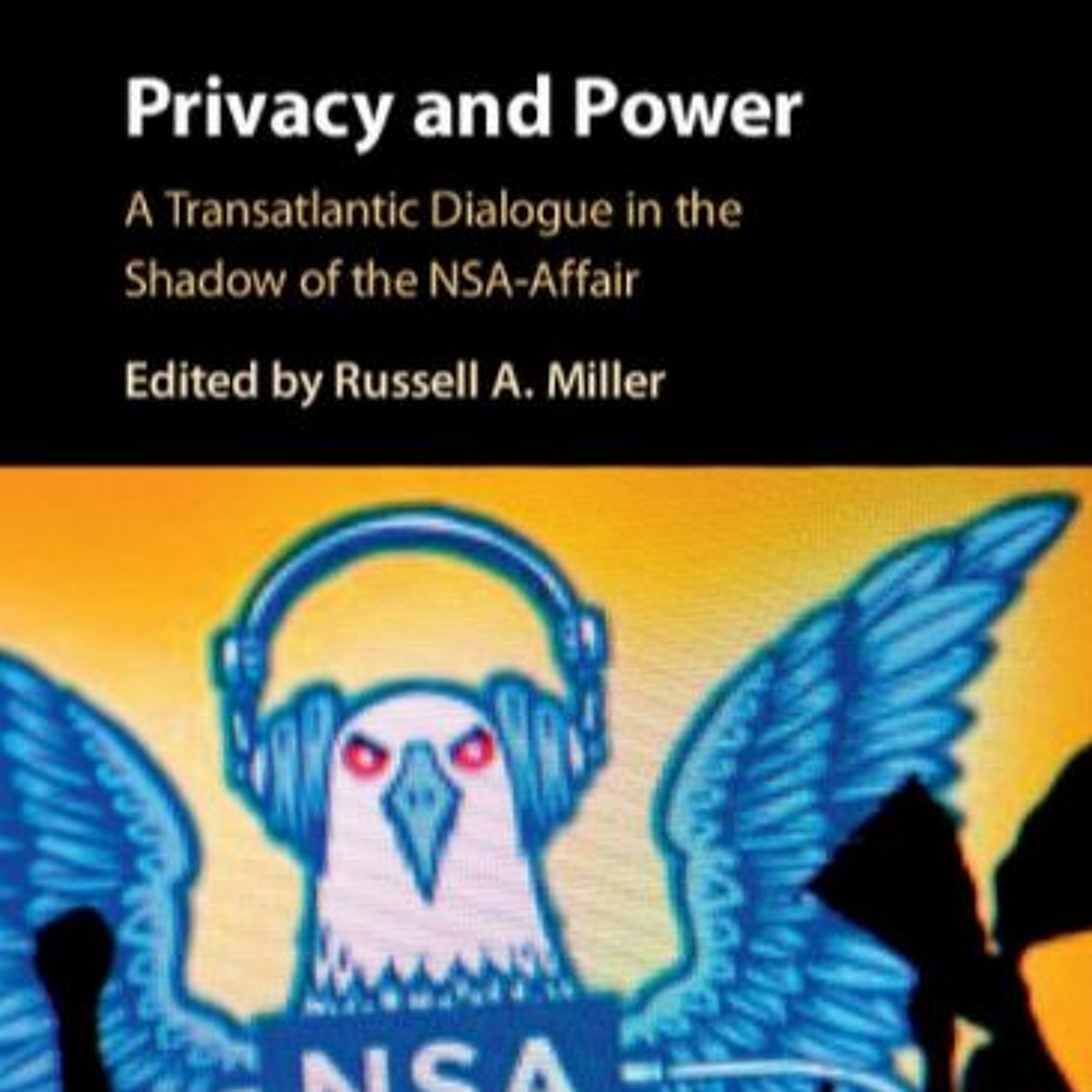
The Hoover Institution hosted "Privacy & Power: A Transatlantic Dialogue in the Shadow of the NSA-Affair" on Tuesday, April 18, 2017 from 5:00pm - 7:00pm EST. The Hoover Institution's National Security, Technology and Law Working Group, along with Hoover's Washington, DC office discussed Privacy and Power: A Transatlantic Dialogue in the Shadow of the NSA-Affair. Benjamin Wittes (Hoover working group member and senior fellow at the Brookings Institution), Russell Miller (professor of law at Washington & Lee University School of Law) and Prof. Ralf Poscher (professor of law at University of Freiberg) discussed fundamental differences in the way that Americans and Europeans approach the issues of privacy and intelligence-gathering. Edward Snowden’s revelations of American intelligence-gathering and surveillance activities around the world stirred widespread resentment and dramatic law and policy responses in Europe. It is clear that there is almost nothing on which Americans and Europeans differ so dramatically as the questions of privacy and security. In dozens of contributions from leading commentators, scholars, and policymakers from both sides of the Atlantic, Privacy and Power definitively documents and critically engages with those differences. The book’s opening section acknowledges that Snowden’s revelations, and the startling glimpse they give us into the implications of our new big-data era, challenge us to reconsider our old notions of privacy. The book’s second section, featuring contributions from Benjamin Wittes (Brookings) and Anne Peters (Heidelberg Max Planck Institute), distills, embodies, and frames the transatlantic debate on these issues in these succinct terms: “Germany needs to grow up” and “American needs to obey the law”. The book’s third section consists in a collection of chapters from leading American and European privacy law experts that both substantiates the transatlantic divide and exposes the diversity of views within those spheres. A fourth section features commentary from experts on the supranational and international law implicated by these issues, thereby giving the European Union privacy and data-protection regimes the central role in the debate they are due. The book’s final section concludes with a collection of cultural commentary offering profound and challenging insights into the deeper causes of the American and European differences on these issues.
The Environment
As Earth Day approaches, Hoover senior fellow Terry Anderson rates the new interior secretary and the Environmental Protection Agency (EPA) administrator and suggests some free-market environmental principles for the two to pursue. Also should the Trump administration revisit the century-old monument-designation authority used as never before during the Obama years but wildly unpopular across parts of the American West?
The Conflict in Syria
Richard Epstein weighs the merits of President Trump's decision to strike Syria after the Assad regime's use of chemical weapons.
North Korea
As tensions mount on the Korean Peninsula, the possibility increases of a US military strike against the rogue regime of Kim Jong-un. Tom Henriksen, a Hoover senior fellow emeritus and author of multiple books on US military and diplomatic approaches to the non-Western world and rogue regimes, discusses the policy options available to the Trump administration in dealing with North Korea.
The Civic Cost of Illegal Immigration
Victor Davis Hanson examines how permissive attitudes towards illegal immigration undermine respect for the rule of law and traditional notions of citizenship.
Political Culture with Thomas Sowell
Recorded on October 31, 2011 Thomas Sowell has studied and taught economics, intellectual history, and social policy at institutions that include Cornell, UCLA, and Amherst. Now a senior fellow at the Hoover Institution, Sowell has published more than a dozen books. His most recent book is The Thomas Sowell Reader.
Thomas Sowell on Everything
Recorded on May 7, 2012 On the occasion of the publication of a new edition of his book Intellectuals and Society, Thomas Sowell returns to Uncommon Knowledge for a wide-ranging interview.
Intellectuals and Race
Recorded on May 16, 2013 Thomas Sowell discusses is newest book, Intellectuals and Race, which argues that the impact of intellectuals' ideas and crusades on the larger society, both past and present, is the ultimate concern.
Thomas Sowell Brings the World into Focus through an Economics Lens
Recorded on December 19, 2014 In this episode of Uncommon Knowledge, Peter Robinson interviews Hoover fellow and author Thomas Sowell, on his 5th edition of Basic Economics: A Common Sense Guide to the Economy. In this interview, Sowell brings the world into clearer focus through a basic understanding of the fundamental economic principles and how they explain our lives. Sowell draws on lively examples from around the world and from centuries of history.
Wealth, Poverty, and Politics
Recorded on September 18, 2015 Hoover Institution fellow Thomas Sowell discusses poverty around the world and in the United States. Poverty in America, he says, compared to the rest of the world, is not severe. Many poor people in poverty in the United States have one or two cars, central heating, and cell phones. The real problem for the poor is the destruction of the family, which Sowell argues dramatically increased once welfare policies were introduced in the 1960s.
More Wealth, Poverty, and Politics
Recorded on September 8, 2016 Hoover Institution fellow Thomas Sowell discusses inequality and how it is part of the human condition. Sowell notes that political and ideological struggles have led to a dangerous confusion about income inequality in America. We cannot properly understand inequality if we focus on the distribution of wealth and ignore wealth production factors such as geography, demography, and culture. What is important is not inequality but human capital; once human capital is unleashed it creates an enormous amount of wealth for people of all classes. In addition there needs to be a sense of humility and gratitude for the generations that have gone before us for the prosperity we have today.
Tax Reform...But How?
Richard Epstein examines the principles that should guide efforts to reform America's tax system.
The Challenges of Reforming Healthcare in a Partisan Era
Recorded on March 22, 2017 In a lively debate Avik Roy and John Podhoretz discuss health care coverage and whether the American Health Care Act (AHCA), created to replace Obamacare/Affordable Care Act (ACA), will solve our health care problems. They both agree that if we could begin again we would never design a health care system like ours, but, since we cannot start over, how can we make things better. They debate whether universal health care coverage is a good idea, how to provide health care coverage to the most needy, and allow the wealthy and more capable citizens to choose and pay for their own coverage. Roy thinks the system the Affordable Care Act put in place caters too much to the wealthy and that the AHCA will just exacerbate health care inequality. Podhoretz and Roy’s debate ranges from health care to race, inequality, history, and the election of 2016. They note that the Republicans and Democrats are split/disagree on many issues and ideas. Trump voters watch different TV shows and movies, read different newspapers, and have different cultural experiences than the Clinton supporters; therefore the two parties see the world through very different lenses. They examine the changes in the Republican and Democratic Parties over time, including their involvement in the Civil Rights movement and the rise of identity politics and racism. The interview ends with a question on fatherhood and how it shapes both Podhoretz's and Roy's thinking as journalists and public intellectuals. Podhoretz does not want to foist his feelings and views on his children but notes that the media no longer make it possible for children to keep their innocence. Roy dreads sending his children to public schools and discusses some of the problems facing parents and children today. Roy says that parents can choose the environment in which they will raise their children and that there is no need to turn their children over to popular culture.
World War I, A Century Later
On the 100th anniversary of America's entry into World War I, Victor Davis Hanson looks at the Great War's legacy in terms of politics, foreign policy, and military history.
The Gorsuch Nomination
As the US Senate decides the fate of Supreme Court nominee Neil Gorsuch, we look at the fragile state of the federal judicial nomination process. Hoover senior fellow Michael McConnell, who served alongside Gorsuch on the Tenth Circuit Court of Appeals, offers insights into the judge, the merits of the Senate’s “nuclear option,” and what it’s like to endure a confirmation process.
Trump's Energy Plan and the Environment
Richard Epstein looks at Donald Trump's recent executive orders on energy and environmental issues, explaining how free-market economics can be reconciled with good environmental stewardship.

The Way Of The Strangers: Encounters With The Islamic State
The Hoover Institution hosted "The Way of the Strangers: Encounters with the Islamic State" on Tuesday, March 28, 2017 from 5:00pm - 7:00pm EST. The Hoover Institution's National Security, Technology and Law Working Group, along with Hoover's Washington, DC office held a discussion with author of The Way of Strangers, Graeme Wood. Hoover working group member and senior fellow at the Brookings Institution Benjamin Wittes, along with Samuel Tadros, distinguished visiting fellow at the Hoover Institution, interviewed Wood, who discussed his definitive, electrifying account of the strategy, psychology, and theology driving the Islamic State. The Way of the Strangers is an intimate journey into the minds of the Islamic State's true believers. From the streets of Cairo to the mosques of London, Graeme Wood interviews supporters, recruiters, and sympathizers of the group. We meet an Egyptian tailor who once made bespoke suits for Paul Newman and now wants to live, finally, under Shariah; a Japanese convert who believes that the eradication of borders-one of the Islamic State's proudest achievements-is a religious imperative; and a charming, garrulous Australian preacher who translates the group's sermons and threats into English and is accused of recruiting for the organization. We also learn about a prodigy of Islamic rhetoric, now stripped of the citizenship of the nation of his birth and determined to see it drenched in blood. Wood speaks with non-Islamic State Muslim scholars and jihadists, and explores the group's idiosyncratic, coherent approach to Islam. The Islamic State is bent on murder and apocalypse, but its followers find meaning and fellowship in its utopian dream. Its first caliph, Abu Bakr al Baghdadi, has declared that he is the sole legitimate authority for Muslims worldwide. The theology, law, and emotional appeal of the Islamic State are key to understanding it-and predicting what its followers will do next. Through character study and analysis, Wood provides a clear-eyed look at a movement that has inspired so many people to abandon or uproot their families. Many seek death-and they will be the terror threat of the next decade, as they strike back against the countries fighting their caliphate. Just as Lawrence Wright's The Looming Tower informed our understanding of Al Qaida, Graeme Wood's The Way of the Strangers will shape how we see a new generation of terrorists.
The Gorsuch Confirmation
Richard Epstein analyzes the confirmation hearings of Supreme Court nominee Neil Gorsuch, compares and contrasts the judge with the late Justice Scalia, and considers the potential demise of the filibuster.
The Historical Benefits of Trade
Recorded on December 2, 2016 Professor Douglas Irwin defends the benefits of free trade and explains why protectionism, high tariffs, and currency wars could cause economic problems. Irwin explains the misconceptions around trade surpluses and deficits and the historical consequences and benefits of trade. He talks about an absolute versus comparative advantage with trade and why and how a trade deficit with China still benefits the United States. Irwin refers to Adam Smith’s view of trade in explaining the absolute advantage of trade. Smith argued for unregulated foreign trade, reasoning that if one country can produce a good, for example, steel, at lower costs than another country, and if a different country can produce another good, for example, an iPhone, at lower costs, then it is beneficial to both parties/countries to exchange those goods. This has become known as the absolute advantage argument for both international and domestic trade. Irwin notes that trade still benefits the United States enormously and that striking back at other countries by imposing new barriers to trade and/or ripping up existing agreements would be self-destructive. Finally, Irwin talks about problems within the American economy, how too many people are not working, which cannot be blamed entirely on the trade deficits. Some reasons people cannot find jobs are mechanization, efficiency, productivity, technology, and skills. Irwin discusses a few options for helping people with limited education and few skills survive, including paying a basic wage, improving our educational system, and reducing regulations so the costs of hiring an employee are not as steep.
Senator Tom Cotton, Immigration Reform, and the RAISE Act
Recorded on February 28, 2017 Senator Tom Cotton of Arkansas joins Peter Robinson to discuss the Reforming American Immigration for Strong Employment (RAISE) Act, an immigration reformation bill he is cosponsoring. He notes that American workers have been getting a raw deal since the immigration laws were changed in 1965. The American workers’ wages have not gone up but income inequality has. Senator Cotton thinks this is largely due to flooding the labor market with millions of low-skilled, low-wage workers. In rethinking our immigration policies we need to look at whether our laws are serving the American people. Senator Cotton uses examples of the different approaches Norway and Sweden have had toward immigrants and refugees as illustrations of what America should and shouldn't do concerning refugee resettlement and immigration. He argues that Norway has a limited yet stable system for refugee resettlement compared to the unstable Swedish system, which has economic and security problems. Senator Cotton claims that the legal immigration system as it currently is set up in America is hurting the American worker. A desire to protect American workers drove him to cosponsor the RAISE Act. He explains that the RAISE Act is a threefold bill that will prioritize visas for immediate family members only, eliminate the diversity lottery for immigration visas, and limit the number of incoming refugees to 50,000 a year. Reducing immigration, he argues, will help American workers because millions of Americans who are not now in the workforce will be able to find jobs. Senator Cotton argues that America’s current immigration policies strain our resources, disrupt integration of other recently arrived immigrants, and lower wages for the working class. He notes that immigration is an area in which elites are disconnected from the reality of what most citizens’ face. Only one thing has stopped the elites from their desired immigration policy: two-thirds to three-quarters of Americans consistently oppose any increase in immigration. Americans want an immigration policy to be in the economic and social interests of American citizens. Additionally, Senator Cotton and Robinson discuss the role of Congress and whether it can reassert itself in an age where the president and the courts have been gaining influence. He then analyzes the classified leaks that have occurred since President Trump was sworn in and Congress's role in resolving the issues.
Trump on Trade
Richard Epstein warns of the dangers of Donald Trump's position on international trade, and considers controversies about trade deficits, the border adjustment tax, and job losses due to automation.
Education Reform
President Trump calls it “the civil rights issue of our time,” offering low-income families their choice of better schools. Checker Finn, a Hoover Institution senior fellow and chair of Hoover’s Task Force on K-12 Education, assesses the state of vouchers, charter schools, and the Trump administration’s willingness to take on an establishment “blob” that’s dead set against reform.
Free Speech on College Campuses
Richard Epstein looks at recent on-campus controversies involving Charles Murray and Milo Yiannopoulos and examines what can be done about the increasingly hostile environment in American higher education.
US Military
President Trump wants a nearly 10 percent increase in defense spending. Is the new administration on the right track? Hoover research fellow Kori Schake, coauthor with Defense Secretary James Mattis of Warriors and Citizens, a book detailing the civil-military gap–civilian leaders out of touch with the realities of military life and wartime service–discusses the peaks and valleys of a military buildup.
The Affordable Housing Crisis
Richard Epstein looks at how both federal interference and local regulations conspire to drive up the cost of housing.
Immigration Reform
Comprehensive immigration reform is dead in Washington, but there’s a step-by-step approach on the economics, safety, and fairness of immigration reform that’s feasible if the president and congressional leaders are willing to try it.
US and Russian relations
What to make of U.S.-Russian relations? Michael McFaul, the Hoover Institution’s Peter and Helen Bing Senior Fellow and US ambassador to Moscow from 2012-2014, deciphers the riddle, wrapped in a mystery, inside an enigma, that is the coming diplomacy between Donald Trump and Vladimir Putin.
The Inevitable Failures of a Two-State Solution
Richard Epstein argues that a two-state solution between Israelis and Palestinians is destined to fail (at least in the short-term) and that the uneasy status quo may actually be the best option available to both sides.
The Art of Presidential Transitions
As the Trump presidency reaches its four-week mark, questions persist as to a personnel void within the new administration: hundreds of subcabinet presidential appointments still unfilled that are necessary to manage the labyrinth of federal departments and agencies properly. Annelise Anderson, a Hoover senior fellow and veteran of two presidential transitions, discusses why policy confusion may be at the heart of the Trump administration’s awkward start.
Diagnosing the Democrats
Victor Davis Hanson examines the early initiatives coming out of the Trump Administration and reflects on whether the new president's momentum is sustainable over the long run.
The Healthcare Logjam
Richard Epstein looks at recent setbacks to Obamacare -- including the implosion of state exchanges -- and describes what Congressional Republicans can do to reform the system without compounding uncertainty.
Tax Reform during the forty-fifth Presidency
President Trump has indicated that a “phenomenal” tax reform will materialize in two to three weeks. John Cochrane, Hoover senior fellow and author of the Grumpy Economist blog, walks us through the intricacies of what may evolve and why a carbon tax espoused by Hoover’s George Shultz makes economic sense.
Trump’s First Two Weeks
Only two weeks into the job and President Trump hasn’t lacked for action – or drama. That includes executive orders, meetings with foreign leaders, a Supreme Court pick and an open question as to implementing an ambitious agenda. Hoover polling experts explain how the busy pace has affected Trump’s approval numbers and what that bodes for his presidency moving forward.
Is Trumpism Sustainable?
Victor Davis Hanson examines the early initiatives coming out of the Trump Administration and reflects on whether the new president's momentum is sustainable over the long run.
Neil Gorsuch and the Supreme Court
Richard Epstein weighs in on the nomination of Neil Gorsuch for the Supreme Court and explains what makes an effective justice.
David Davenport: Rugged Individualism Dead or Alive?
Based on his new Hoover Institution Press book, Rugged Individualism: Dead or Alive? co-authored with his longtime Pepperdine colleague Gordon Lloyd, David Davenport discusses our unique brand of individualism that dates back to the American founding. Davenport begins with the articulation of American individualism in the Declaration of Independence, following it through its safeguarding in the US Constitution, its flourishing in westward expansion, and its declining in the face of progressive ideology and New Deal politics. He also discusses the ebbs and flows of our “rugged individualism” through the decades since, from the great society to the Reagan revolution, as well as Herbert Hoover’s role as one of that philosophy’s most ardent champions.
Kori Schake: National Security Challenges for the New Administration
The international security climate may be volatile, but according to Research Fellow Kori Schake the most serious threat to the United States is domestic policy failure. Drawing on her work with Secretary of Defense Jim Mattis and former commander of the US Strategic Command James O. Ellis Jr. in the Blueprint for America project, Schake explains a number of key insights for strengthening the domestic institutions and policies underlying US national security strategy. After turning outward to explore what she and her Blueprint coauthors identify as the most serious external threats to US security, Schake closes by identifying a new challenge to cohesive strategy that is emerging in 2017: lack of consensus within the Trump cabinet and between the new administration and Congress.
How America Lost Its Secrets
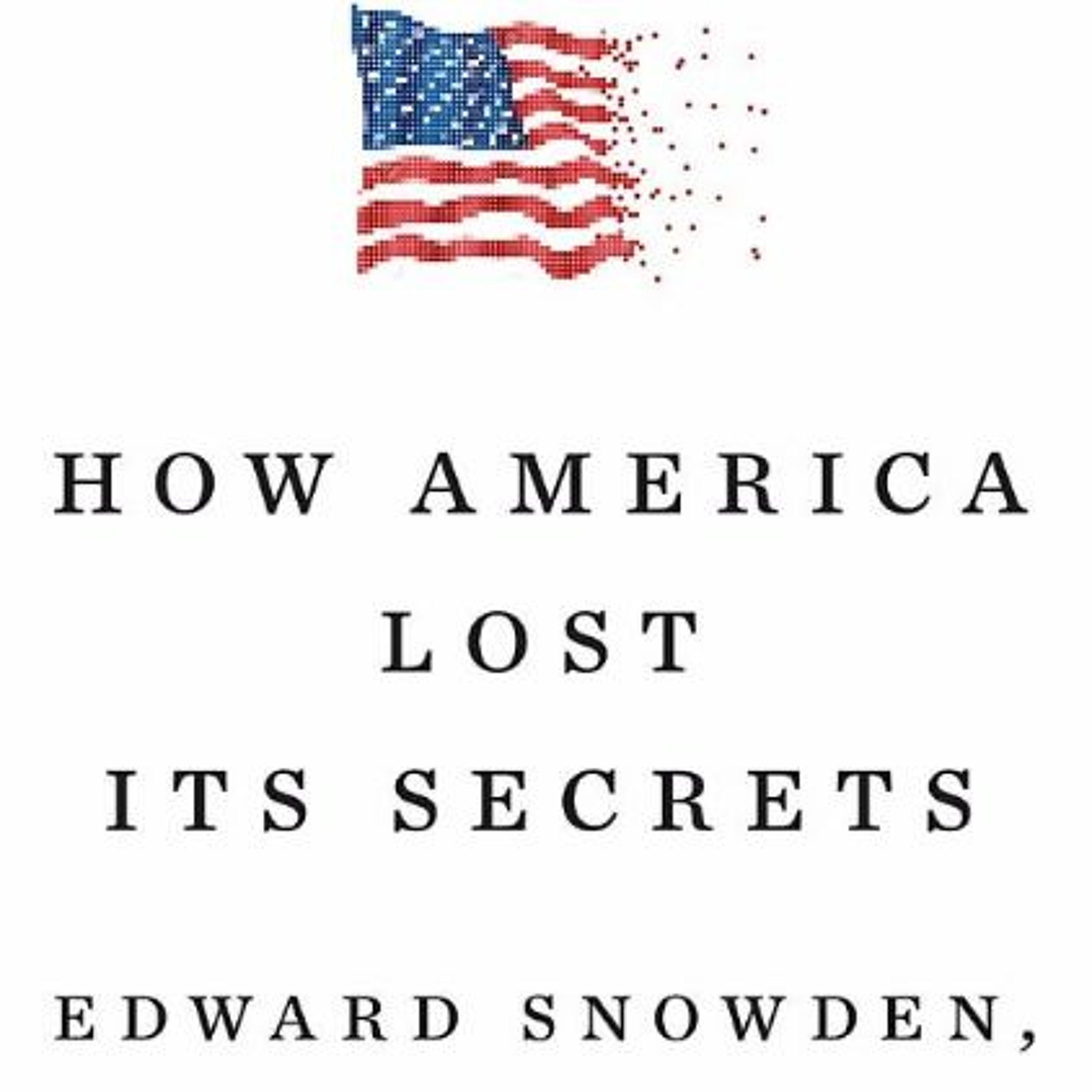
The Hoover Institution hosts a discussion on "How America Lost its Secrets" with author Edward Epstein on Wednesday, February 1, 2017 from 5:00pm - 7:0pm EST. The Hoover Institution's National Security, Technology and Law Working Group, along with Hoover's Washington, DC office, invite you to a discussion with author of How America Lost its Secrets, Edward Epstein. Hoover working group member and senior fellow at the Brookings Institution Benjamin Wittes will interview Epstein, who will discuss hacker turned avenging angel Edward Snowden while revealing the vulnerabilities of our national security system. After details of American government surveillance were published in 2013, Edward Snowden, formerly a subcontracted IT analyst for the NSA, became the center of an international controversy: Was he a hero, traitor, whistle-blower, spy? Was his theft legitimized by the nature of the information he exposed? When is it necessary for governmental transparency to give way to subterfuge? Edward Jay Epstein brings a lifetime of journalistic and investigative acumen to bear on these and other questions, delving into both how our secrets were taken and the man who took them. He makes clear that by outsourcing parts of our security apparatus, the government has made classified information far more vulnerable; how Snowden sought employment precisely where he could most easily gain access to the most sensitive classified material; and how, though he claims to have acted to serve his country, Snowden is treated as a prized intelligence asset in Moscow, his new home.
California: A State Divided
Victor Davis Hanson explains how political and cultural changes in California have eroded the state's status as a national leader.
Trump's Immigration Controversy
Richard Epstein considers the legal and policy merits of Donald Trump's decision to crack down on immigration from several Muslim-majority countries and to build a border wall with Mexico.
Trump's First Week
Richard Epstein analyzes the major initiatives on health care, trade, immigration, regulation, and crime coming out of the first week of the Trump Administration.
Poll Position: California Versus Trump
Two days before the presidential inauguration, we took a look at the contentious relationship between Donald Trump and California. In addition, we analyzed a Hoover Golden State Poll that gauged Californians’ attitudes toward various aspects of the Trump agenda: immigration, Obamacare repeal, tax reform. Finally, as California braces for another round of storms, we look at the politics of water in 2017.
A Regulation Revolution
Richard Epstein examines efforts by the new Republican Congress to restrict the power of federal regulators, and explains the history of how unelected administrators came to hold so much political power.