
Good Beer Hunting
743 episodes — Page 6 of 15
CL-076 Jonny Garrett shines a light in the dark
EIn times of crisis, people tend to turn to the comfort of familiarity, whether it be revisiting the family recipes they enjoyed as a kid or just attempting to relive some idealized version of the good old days. Over the past year, between quarantines, lockdowns, and political strife, nostalgia has made a big comeback, in everything from the music we're listening to, to the very beers we drink. I'd be lying if I said I haven't been reaching for more of my tried-and-true favorites during the pandemic. If the world is crumbling around me, at least the last thing I'll taste will be the predictable deliciousness of a Sierra Nevada Pale Ale with a soundtrack of glorious '90s pop to accompany it. But there are more beers from the recent past to rediscover, and none more ripe for such examination than the humble Black IPA. Underappreciated by the masses but beloved by brewers from all over, the Black IPA has always been polarizing. Jonny Garrett dives deep into the history of the misunderstood style, its origins, evolution, and surprising (albeit small) comeback over the past year in his piece titled "Darkest Before the Dawn — The Unlikely Return of Black IPA," which was published on Good Beer Hunting on April 6, 2021. By "comeback" I mostly mean people waxing poetic about the style, but there have also been a handful of enterprising masochists who refuse to let it go the way of the Brut IPA. Bless them for it. In this conversation, Jonny and I will discuss exactly who is asking for Black IPAs, how examining the style for this story sparked some surprising positivity for him personally, and what it was like talking to beer icons brewing at powerhouses like The Alchemist and Firestone Walker. We'll also talk about how Hazies and Black IPAs were both born in the same small corner of Vermont, how their paths diverged so completely, and why it's so important to relish the small joy found in a glass of good beer.

EP-305 Tiffanie Barriere of the Drinking Coach
ETiffanie Barriere is the epitome of southern hospitality—warm, kind, and welcoming. She's just the person you'd want as your drinking coach, which is fitting: The Drinking Coach is a moniker given to her by a friend, and it eventually became the name of the Instagram account where she shares stories of uncelebrated Black people throughout history, with a cocktail alongside. Tiffanie is more than an incredible bartender—she's a teacher, a mentor, and a historian, using her platform to shed light on long-forgotten stories. Tiffanie started her journey at One Flew South, the first upscale restaurant in Hartsfield-Jackson Atlanta International Airport. She worked as the beverage director at the restaurant for seven years, during the time when it was recognized as the "Best Airport Bar in the World" at Tales of the Cocktail. Now, as an independent bartender, Tiffanie is getting her own recognition for her contributions to the bartending and service world. Earlier this year, she was featured on the cover of Imbibe Magazine's 75 People to Watch issue, and most recently announced her involvement in the Jubilee project, a venture by award-winning food and nutrition journalist Toni Tipton-Martin. In our conversation, Tiffanie and I talk about what sparked her interested in service and how it grew into a passion. She shares the difficulties of striking out on her own as an independent bartender, and also talks about inspiration, and why she is her ancestors' wildest dreams come true.

CL-075 Bailey Berg Drinks Beer In The Last Frontier
EHow does one survive in a place where temperatures regularly hit negative 30 degrees Fahrenheit, if not below that? A toasty Barleywine might hit the spot, but in the 49th state of the Union, residents are just as likely to pick up a classic IPA or Vienna Lager as they are an Imperial Stout. How, why, and when did Alaska, of all places, become a beer destination? In Bailey Berg's first piece for Good Beer Hunting, titled "Way Up North — Exploring the Growing Beer Scene in Fairbanks, Alaska," which was published on April 27, 2021, the Anchorage resident explores the rise and embrace of local craft beer in one of the vastest frontiers on Earth. There are fewer than a million people across the entire state, but the amount of independent breweries continues to rise, thanks to a streak of independence, ingenuity, and adventure that tends to define those who call the severe, but beautiful, landscape their home. In our first podcast conversation together, Berg enlightens me to the spirit of entrepreneurship required to thrive in the burgeoning beer scene in Fairbanks, why being the first to accomplish something specific holds such sway when you're on the edge of the world, how unique obstacles—like the mere access to ingredients like water—force brewers to squeeze every last bit of use out of what they have available, and why Alaskans are going to do what they like to do relatively free of outside influence. She'll also tell me how much a pint of beer costs at the literal end of the road, and how common it is to see wild moose wandering around the streets. (It's apparently a lot more common than I realized.) I strongly encourage listeners to scroll through her photographs within the article during this conversation: She captures snowpacks and sled dogs, the pints and the people, all framed beneath the mystical emerald serpent of the aurora borealis twinkling across the night sky. Let's travel together to the Land of the Midnight Sun with Bailey Berg.
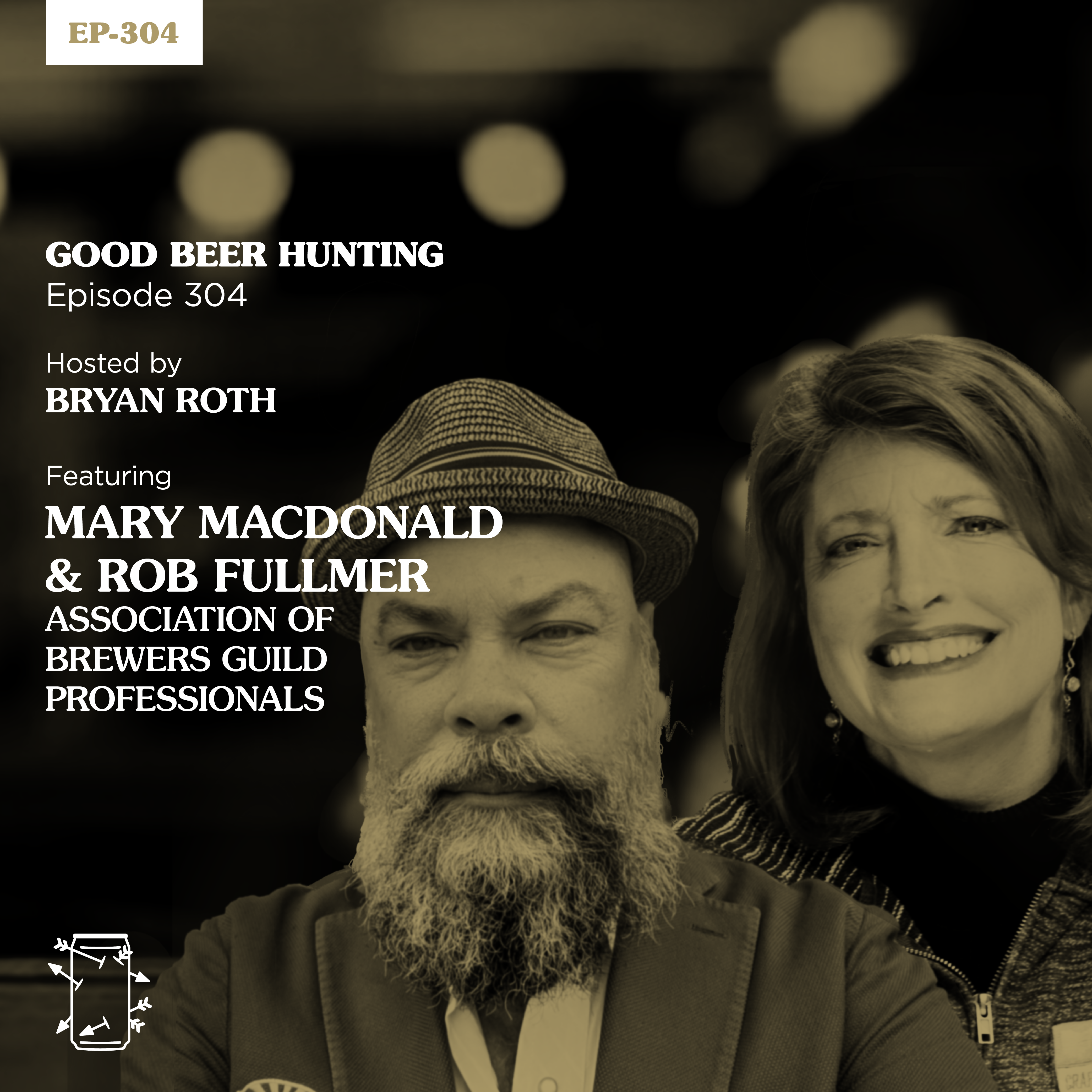
EP-304 Mary MacDonald and Rob Fullmer, Association of Brewers Guild Professionals
EThroughout the COVID-19 pandemic, there have been countless stories of how individual people and businesses have adjusted, learned new things, and survived. At Good Beer Hunting we've had a collection of audio and written stories specifically asking what these transitions meant for state brewers guilds, the organizations that act as advocates and lobbyists for craft breweries across the country. In May 2020, we had a podcast that looked at survival for these groups in the moment, and in this episode, we get something of an update by way of a new organization to … help these organizations. We're chatting with Mary MacDonald and Rob Fullmer about the Association of Brewers Guild Professionals, a new group with the goal of providing networking, educational, and professional development opportunities to advance state brewers guild executive directors and their teams. Mary leads the state guild in Ohio and Rob in Arizona, and in this conversation you'll learn about why this new super team-up was necessary, what issues are most pressing to advance legislation that can benefit craft breweries, and the forces making advocacy difficult in a legal and political landscape that has shifted dramatically during the pandemic. What goes on in state capitals and behind closed doors doesn't always sound as exciting as the latest Hazy IPA or other new release, but the anecdotes and insight you'll hear from Mary and Rob showcase what's happening right now that can support or even save your local breweries.

CL-074 Maurizio Maestrelli is Drinking in Italy's Garden
EItaly is definitely not what anyone would consider part of Europe's traditional brewing heartland: In terms of beverages, the Southern European country is mostly known for its amazing wines, which complement its world-class cuisine. But since the mid-90s, Italy has developed a relatively small but dynamic brewing scene, which originally started in the country's north, before spreading throughout the Italian peninsula. Brewers like Agostino Arioli at Birrificio Italiano—not far from Lake Como, north of Milan—have inspired beer makers in the U.S. and the U.K. to make their own Italian-style Pilsners, after Birrificio Italiano's Tipopils. Other Italian brewers have experimented with the country's native wine grapes, resulting in Italian Grape Ale, one of Italy's first "native" beer styles to gain international attention. In this episode, I talk to Maurizio Maestrelli, one of Italy's leading drinks writers and the author of a recent article, "Grape News — How a New Generation of Italian Brewers Created Italian Grape Ale," that ran in our Mother of Invention series, created in partnership with Guinness. We discuss the history of Italian Grape Ale and the origins of the Italian craft beer boom, including some of the leading figures of Italy's beer renaissance, like Teo Musso at Birra Baladin and Nicola Perra at Birrificio Barley. We also talk about Italy's other "indigenous" beer style, Chestnut Ale, and the rich relationship Italians have with food of all kinds. As Maurizio notes, Italians don't just think of "citrus" as a flavor. Instead, they'll say they're identifying the aroma of lemon or chinotto, citron or bergamot. Italian brewers who make Italian Grape Ales will say that beers using the same type of grape can have very different grape flavors, if those grapes were merely grown on different parts of the same island. While recording this podcast, we did experience some technical difficulties with a bit of noise that comes in and out—we apologize for that. If you're interested in how Italy has embraced good beer—and created several good beer styles of its own—I think you'll find the discussion worth your while.
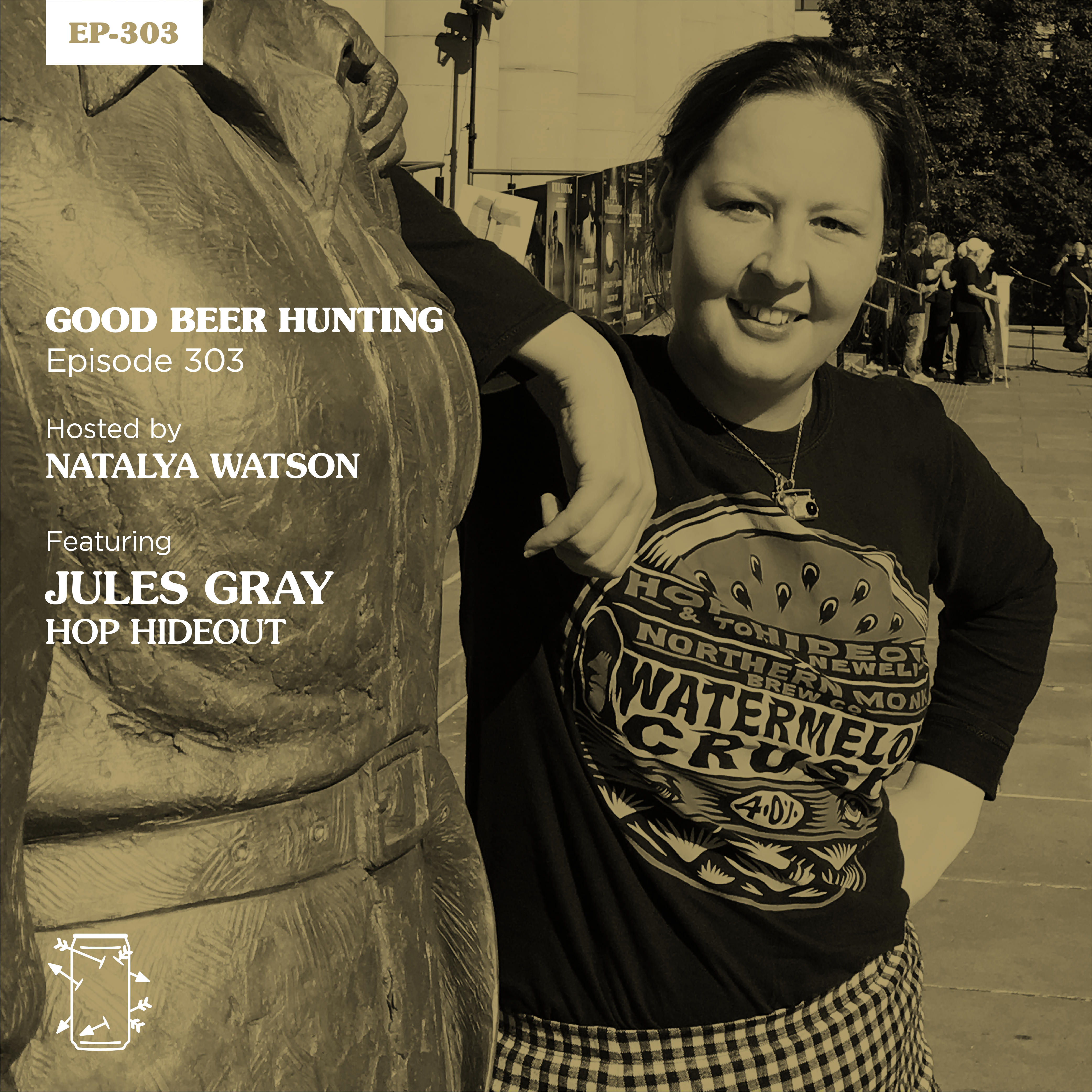
EP-303 Jules Gray of Hop Hideout
EJules Gray describes herself as "someone that likes to keep busy." Not only is she the founder of Hop Hideout—one of the U.K.'s first drink-in bottle shops, which opened in Sheffield, northern England, back in 2013—she's also the organizer of Sheffield Beer Week; the Indie Beer Feast beer festival; and Indie Beer Shop Day, a new initiative she launched during the pandemic to celebrate independent beer retailers across the country. Initially a standalone retailer in the back of an antiques center in Sheffield's Abbeydale neighborhood, Hop Hideout relocated in March 2019 to a brand-new food hall in the city center. Just one year later, Jules' business had to evolve yet again, in response to COVID-19. In a way, she was lucky: As Hop Hideout's previous location was outside of the city center, Jules had begun offering mail orders and Sheffield home delivery years before, and she had all the systems in place (and a loyal local customer base) to help weather the pandemic. But despite the advantages of her new site in terms of location, footfall, and trade, not having her own brick-and-mortar space meant not qualifying for any initial government grants. As a result, she couldn't control access to her own business, as she had to work within the hours set by the food hall. Despite these challenges, she lights up when she talks about her local deliveries and how important they were, not only for her customers and their sense of social connection, but also for her own mental health. It's clear that for Jules, her business is about a lot more than beer: It's about connecting with her customers and celebrating not only the local beer industry, but the city more broadly. Full of pride for Sheffield, her adopted home, Jules shares what she loves most about the city; what inspired her to start Sheffield Beer Week and its associated festival, Indie Beer Feast; and why it should be on all of our must-visit lists once lockdown lifts. She also reminds us of the importance of independent retailers to the broader beer ecosystem, and discusses how her new initiative, Indie Beer Shop Day, celebrates the positive role such outlets play as centers of guidance, education, and discovery.
CL-073 Michael Kiser believes in you
EWorking in media today feels weirdly similar to trying to navigate the Fire Swamp in the classic 1987 film The Princess Bride. Success is possible, but the path is surrounded by quicksand, Rodents of Unusual Size, and numerous other obstacles along the way. It's tenuous at the best of times, and damn near impossible under trying circumstances—like during a pandemic, for example. It requires ingenuity, a propensity for risk, and a bit of gut feeling. Good Beer Hunting operates a little differently than many other media companies, in everything from the stories we tell to the revenue streams that support those stories. But if you're looking for a complete history of GBH, this isn't that podcast. In this conversation with Michael Kiser, co-founder and creative director, we focus on some of the meatier pieces GBH has published that, at first glance, fall outside most people's expectations of beer media. Exploring subjects like non-disclosure agreements, concepts like hyperreality, historical deep-dives, and other topics far from the clickbait-esque model of contemporary media has positioned GBH as a … I'll say unique figure in beer conversations. Michael and I discuss who we think is reading GBH and why; how conversations and beer culture have changed over the years, and how they've also stayed the same; our role in media and the beer industry at large; why making people mad is inevitable, and why it's sometimes important; how balancing heady—and crucial—topics like racism against more lighthearted narratives sparks surprising, and sometimes dangerous, responses from readers; what stories have surprised him; and the ones he still wants to tell.

SL-028 U.S. Goes All-In on RTDs, is the U.K. SOL?
EYou may have read or heard industry pros or journalists like me throw around these acronyms lately—FMBs and RTDs. They stand for flavored malt beverages—that's the FMB—and ready-to-drink cocktails—the RTD. In layman terms, they're the industry stand-in for what we all see on store shelves as hard seltzer, alcoholic tea, or canned cocktails from the likes of Cutwater Spirits or Fling Craft Cocktails. And most important, whether we're talking about FMBs or RTDs, both categories are wildly successful, making boatloads of money, and are changing ideas and expectations in the beverage alcohol industry. So in this episode of the podcast I'm chatting with fellow Sightlines reporters Kate Bernot and Jonny Garret to better understand the impact of these kinds of drinks in the U.S., where Kate is based, and the U.K., where Jonny will explain to us why hard seltzers haven't yet become a world-changing thing like they have in the states. We're talking data, research, and stories from both their reporting to give better and broader context on what has the potential to be one of the biggest industry stories of this summer in both countries. This kind of analysis is part of the insights we share with Good Beer Hunting's Sightlines Premium newsletter and expert community. Sightlines Premium is an extension of our newsy Sightlines coverage, which has a goal of combining objective data and real-world anecdotes to help industry pros make informed decisions about managing a portfolio, how and where they should focus their access to market, and more. If you're leading a company in the beer or alcohol space, Sightlines Premium is for you. And this will give you a sense of the kind of direct advice and consultation we offer in our weekly newsletter and online community. For more information, visit goodbeerhunting.com/sightlines-premium. This is the GBH Sightlines team of myself, Kate Bernot, and Jonny Garrett. Listen in. If you liked what you heard in this episode, consider learning more about Sightlines Premium and what we offer industry decision makers. You can find information about our weekly subscriber newsletter at goodbeerhunting.com/sightlines-premium.
EP-302 AJ Cox, Brewer and Anthropologist
EIn beer, even the heaviest intellectual conversations around topics like racism or worker exploitation tend to hit a natural barrier after a couple of pints. That slow fizzle doesn't happen when you speak to A.J. Cox. In fact, her obvious passion for human rights only increases the longer the conversation goes on. Cox is a brewer and pro-union academic with an affinity for Marxism and social justice. She's worked in beer both in the United States as well as Ireland, where her tenure at Heaney Brewery was interrupted by the onset of COVID-19. Her research relating to social anthropology extends across the globe, focusing on the history of labor, how today's inequities have evolved from said foundations, and how that all relates to the beer industry. Our conversation for this podcast touches on many of her points of passion and expertise. We discuss how low pay exacerbates inequality and contributes to a continued lack of diversity within the craft beer industry, how consent differentiates between sexuality and sexism (and how they relate to influencer culture), and the ways that neoliberalism contributes to the economic stranglehold of capitalism. We'll also touch on how the perceived value of certain jobs in beer can create disparities of access, how non-disclosure agreements (or NDAs) can harm efforts to reduce sexual harassment or discrimination, what Marxism really means, and what to expect if you follow her on social media. (Don't worry—it's mostly dogs and beer.)
CL-072 Katie Mather and The Dream Turned Reality
EHave you ever dreamed a dream so perfect, so grand, so utopian that it seems impossible to turn into reality? Katie Mather has—but unlike most people, she transformed her vision into something tangible. The pastoral landscape of Clitheroe, a village in northwestern England, provided an ideal backdrop for Mather's dream to crystallize. Despite the copious amounts of lemons the pandemic dealt out, Mather and her husband, Tom, decided to make lemonade in the form of a Lilliputian shop and bar-in-progress that focuses on simple, high-quality drinks and small bites. They dubbed it Corto: a hat tip to a Spanish beer tradition that encourages a midday sip and snack, because doesn't everyone deserve a small respite from reality? In her first piece for Good Beer Hunting, titled "The Bar at the End of the World," published on March 24, 2021, Mather shares how, when, and why the two decided to create a space for community, camaraderie, and craft beer, even as she grappled with a positive COVID diagnosis last fall. (Don't worry—she's better now.) Just a quick note for listeners: There are a few moments of brief audio breaks while Mather is talking. Do not change the channel—it's us, not you. (It turns out Wi-Fi in the middle of nowhere can be a bit spotty.) But I promise, small hiccups aside, this conversation has the potential to transport listeners to an idyllic land, full of promise and flavor. Throughout the discussion, she reveals the inspiration of the pair's blossoming oasis, shares their goals (both during and post-pandemic), the value they find in sourcing artisanal food and drink to share with their small community, and how opportunities disguised as dead ends can bring forth some of the sweetest outcomes.
FF-028 John Gross Knows Your Runtime
EWelcome to a Fervent Few episode of the Good Beer hunting Podcast The Fervent Few is our subscriber community - made up of 100s of beer fans, professionals, and curious readers from around the world who directly support our editorial with their monthly contributions and help form a direct connection between our editorial and creative teams. We share stories, meet up for special events, and create fun gear for beer fans. You should join - visit goodbeerhunting.com/ferventfew to learn more and join the club. Today's guest is John Gross haling from Austin, Texas, and he leads our Fervent few movie channel. His background as a critic and content director for Alamo Drafthouse Cinema makes him a helluva curator.

EP-301 Stacey Ayeh, founder of Rock Leopard Brewing
EWhile Rock Leopard is relatively new to the scene, Ayeh is not. He's worked in the alcohol industry since 2002, when on a trip to Sweden he discovered Kopparberg cider. Seeing its potential he persuaded the company to let him be the UK agent, launching a brand that went on national prominence. Sadly larger distributors saw its potential too, and without an exclusivity agreement Ayeh was forced aside. That was the first of several setbacks that have come to plague Ayeh, but never define him. After frustrating experiences at controversial start-ups like London Fields Brewery and Magic Spells, he finally struck out on his own, determined to have complete control over his career. He founded Rock Leopard back in 2017 but spent years learning to brew himself, refining his recipes and getting feedback from the industry. Unfortunately, many retailers were resistant to buying his first few commercial contract-brewed beers and Ayeh suspects it had little to do with the liquid. In this episode we talk through his early career before exploring the possible ageism and racism that made opening Rock Leopard so hard, and how cornering Paul Jones of Cloudwater Brew Co at a tap takeover changed everything for the brewery. We also look at how Ayeh's experiences have led him to add a strong equal rights campaign element to his brand, something he admits to being much more passionate about than the excellent beers he now produces.

EP-300 Briana Brake + Atinuke Akintola Diver of This Belongs to Us
EThe way we find and tell stories of beer is changing, and in recent years, what was once relegated to magazines, websites, and podcasts is becoming more common in film. As craft beer's trajectory has gone more mainstream, the awareness of the industry and its collection of people and stories has made a longer form, visual format another powerful path to explore the many ways a pint connects to different aspects of our lives and culture. In this episode, we're exploring what that means, and two people from in front of and behind the camera. Tinu Diver has a background in writing, law, and documentary film, and her new project is "This Belongs To Us," a documentary that follows the journey of Black women brewers in the U.S. South to explore how a craft and tradition that began in Africa became synonymous with white, male, blue-collar identity in the United States. You'll also hear from Brianna Brake, who came to brewing with an education in computer science and law, and is now brewer and founder of North Carolina's Spaceway Brewery and one of the featured women in Tinu's film. This conversation covers similar themes explored in This Belongs To Us, which was recently featured at the Sundance Film Festival. Tinu and Bri share their experiences and perspective of being Black, entrepreneurial women, the ways they've come to view the U.S. beer industry, and the many kinds of stories that are weaved between beverage alcohol, history, culture, and more. You'll hear about all kinds of historical, systemic, and current barriers faced by Black-owned breweries and Black people, like those challenge Bri faced when she tried to secure funding for her brewery. As production of This Belongs To Us enters its final act, there's much Tinu and Bri are still wrestling with, and you'll get a taste of what you can expect from the documentary in this conversation.
EP-299 Michelle McGrath of the American Cider Association
EAs a total percentage of the beverage alcohol industry, cider hasn't really changed much in recent years. It amounts to about 1% and has been successfully static. I know a lack of growth doesn't really sound like a success, and 1% doesn't sound like a lot, but trust me on this one. Or, rather, trust Michelle McGrath. She's the executive director of the American Cider Association and while it's certainly her job to speak highly of the category and the success of her members, she's bringing the data to back it up in this conversation about a category that often gets overlooked in a country more interested in narratives of hard seltzers, ready-to-drink, canned cocktails, spirits, or Hazy IPAs. But the maturation of cider as a category and industry is fascinating, especially as a drink that's holding its own as so many other options have entered the market. Again, that 1% doesn't sound thrilling, but wait until we put it in context of how hard things are for beer right now. Aside from the story of cider as a pure agricultural product, there's also another area worth our attention, and that's the outsized role that small cider producers are playing. The largest, national brands are lagging, and these small and independent businesses have picked up the slack—which might sound familiar to the stories of the beer world we hear so often. 1% is a small number, but it feels a bit bigger when you learn about how it's maintained. When Michelle and I recently spoke, she just finished hosting the industry's annual conference, CiderCon, so a lot of these things were fresh on our minds, and her's was full of stories to give context to a category that may be just 1%, but according to Nielsen, has grown 10 times its size over the last decade.

EP-298 Sara Kazmer of Elsewhere Brewing
EEvery brewery has a story, and along with the beer they brew, their narrative is what helps to set them apart. A great story can captivate and connect with consumers, and help build brand loyalty—something any business owner would love to have. And when a couple opens a brewery together, there's a good chance their love story will become a foundational part of the business's identity. That was certainly true for Sara and Sam Kazmer, owners of Elsewhere Brewing Co. in Atlanta's Grant Park neighborhood. Their incredible, Lifetime-esque love story starts across the world, in a bar in Italy. Before they started out on their brewery venture, Sara suggested the couple travel the world, collecting experiences and knowledge that would later build out the story of Elsewhere, and influence their beer program, food menu, and the vibe of their brewery. In our conversation, we'll talk about how intentional Sara was with creating the story of Elsewhere. Sara shares how she wanted Elsewhere to stray away from the traditional industrial feel of other breweries to create a space that felt inviting to women and men alike. We'll discuss the amount of detail that went into designing Elsewhere, from the handmade tiling to the plants decorating the space. We'll also cover the difficulties of opening and operating a brewery in the middle of a pandemic, how Sara's experience working in taprooms helped prepare her for it, and insights into the craft beer scene in Atlanta. Keep an ear out, too, as Sara shares her plans for the brewery's future post pandemic.

CL-071 Jennifer Jordan Hunts for Hops at the Edge of the Driftless
EBeer history has blossomed in recent years, as a new generation of researchers and writers have uncovered fascinating stories from the murky early days of brewing. Some of those discoveries have taken us to exotic locales, while others have illuminated overlooked stories right in our own backyards. And beer history is not just a field for enthusiastic amateurs. Academics and other professionals have been been digging through the archives to tell hitherto unknown tales from the world of beer and brewing. In this episode, I talk to Jennifer Jordan, professor of sociology at the University of Wisconsin-Milwaukee, and the author of a recent piece on the historic hop industry in Wisconsin that ran in our "From Barons to Barrels" series. We discuss her research into hop farming in Wisconsin, as well as some the characters who helped create the industry, like Jesse Cottington, originally born in England, who went on to become the leading man of the profitable hop business in Wisconsin's Sauk County in the 1860s. Professor Jordan's research has also identified less prominent characters, like Ella Seymour, a young woman who recorded her observations about hop picking and other chores in a diary at the time. If that sounds ephemeral, it is: by the 1880s, the once-massive Wisconsin hop trade disappeared completely. But as we discover in this episode, the evidence for it — in terms of archival evidence, the changed landscape, and even the plants themselves — still exist today… if you know where to look.
EP-297 Ben Self of West Sixth Brewing
EHave you heard the phrase "stick to beer"? It's a version of an oft-cited phrase that people tell each other when one is veering away from their subject expertise. If you brew beer or write about the industry, you don't need to share insight about other areas of life … let someone else who's an expert do that. Stick to beer. In this episode, we aren't venturing far away from beer, but Ben Self's background lends itself to it. He's our guest as co-founder of Kentucky's West Sixth Brewing, but what came before and even recent years is of interest, too. Ben recently completed a run as chairman of the Kentucky Democratic Party and began a political career years ago by co-founding a progressive tech firm that led him to work with Howard Dean and the Democratic National Committee. This is relevant because while we don't wade into hot button issues of politics, we do talk about what it means to win and lose and fight an uphill battle to turn a very red state blue. It may not be obvious right away, but you'll hear me ask about how running a business can be similar when you're trying to build trust with people you don't know and convert customers to your brand in the same way a politician may want to find another vote. So trust me when I say we do "stick to beer," but there's a host of other things that have influenced Ben's worldview, and that overlap can be fascinating.
CL-070 Beth Demmon is riding a party wave
ELately, the world has felt joyless. Even the weekends, which once offered a reprieve from the obligation of work, feel bland and gray when you're stuck at home all the time. Saturday gives way to Sunday, and time melts into hours of couch-sitting, Instagram-scrolling, beer-drinking, and the occasional debate on what to eat for lunch. I long for a trip away from the mundane cycle my life has become. Against this backdrop, reading Beth Demmon's latest piece on Good Beer Hunting, "Riding the Party Wave — Pizza Port Brewing Company's Swami's IPA," felt like the rare vacation from day-to-day life. It invites the reader to the sunny shores of San Diego, where Beth poses—and then answers—the question: What is the most San Diego beer? In the article, she makes a compelling case for Swami's, a West Coast IPA created by Pizza Port Brewing Company in 1992. Through interviews with legends in the California craft beer scene, Beth shows us how the legacy of Swami's IPA still influences the beers we drink today—even if we've never personally traveled to San Diego. The article feels light and refreshing, offering a break from the heaviness of this moment in time. In our conversation, Beth and I talk about why she posed this question in the first place, how she settled on Swami's as the beer that best encompasses San Diego, and why it's not Stone IPA. Throughout this interview, you'll hear Beth express her love for San Diego—her adopted home—and her joy as she looks back on the many memories she's had at Pizza Port Brewing Company over the years.
EP-296 Esthela Davila and Carmen Favela, Mujeres Brew House
EWomen currently make up less than a quarter of all craft brewery owners in the United States, according to the Brewers Association's survey on demographics within the industry. While conversations around the importance of diversity, inclusion, and equity continue to spark important change within beer, sometimes it can feel like it's just that—talk. But pioneers within the industry who talk the talk and walk the walk do exist, and in San Diego, the women behind Mujeres Brew House are two of those trailblazers. Carmen Favela and Esthela Davila launched Mujeres Brew Club in 2019 in an effort to empower women through beer education. Staggered by the immediate and overwhelming level of interest and participation in the events, these two knew they had stumbled on a large, underserved audience when monthly meetings regularly reached capacity. But when COVID-19 hit, their ability to provide that in-person community was challenged. When the pair had the unexpected opportunity to acquire a brewhouse of their own in San Diego's largely Latinx Barrio Logan neighborhood, they jumped at the chance, thanks to the financial (and emotional) support of Carmen's husband and business partner, David Favela of Border X Brewing. Even with COVID-related delays and restrictions still in place, the accelerated timeline for Mujeres Brew House was largely due to the tight-knit community of women in the group, who eagerly volunteered to sweep, dust, paint, and pitch in in any way they could to make their new home as welcoming as possible. In our conversation, Esthela and Carmen walk me through the group's origin, their trajectory and mission, and the importance of being a part of the Barrio Logan community (as well as the wider craft beer community). They also address how it feels to be recognized by outlets like Good Beer Hunting's Signifiers and Imbibe's 75, and who they look to for inspiration, even as they provide inspiration to so many others. Mujeres Brew House is women-led and women-centric, yes. But their doors are open to anyone willing to come, listen, learn, and drink some great beer.
SL-027 A full strength look at non-alcoholic beer
EWe are well beyond the days of "Dry January," but the conversation around the success and long term impact of non-alcoholic beer continues. The month long effort at the start of the year is meant to give people a break from alcohol intake, and non-alcoholic substitutes often play a big role. But what Kate Bernot and I have come to recognize in the past several months is that the narrative of booze-free beer is even bigger. And that's what we're talking about in this episode as part of the conversations and insights we've been sharing as part of Good Beer Hunting's Sightlines Premium newsletter and expert community. Sightlines Premium is an extension of our newsy Sightlines coverage, anchored by Kate and myself, with the goal of combining objective data and real-world anecdotes to help industry pros make informed decisions about managing a portfolio, how and where they should focus their access to market, and more. So while Sightlines Premium runs the gamut of topics, Kate and I are laser-focused in this conversation, where we share findings from our own reporting about the non-alcoholic beer segment, and what we think it means for the industry moving forward. For example, our Sightlines Premium coverage of non-alc beer used data to explain its boom in 2020, and insight from experts like economist Lester Jones to give a full understanding of the category's place and rise of the last couple years. If you're leading a company in the beer or alcohol space, Sightlines Premium is for you. And this will give you a sense of the kind of direct advice and consultation we offer in our weekly newsletter and online community. For more information, visit goodbeerhunting.com/sightlines-premium.
EP-295 James Calder of Society of Independent Brewers
EIn today's episode I'm talking to James Calder, Chief Executive of the UK's Society of Independent Brewers. SIBA, as it's more commonly known, plays a similar role to the American Brewer's Association, representing the interests of around 800 small British brewers who vote on how the organisation supports the industry and lobbies the government at its annual conference and trade show, BeerX. Founded in 1980, its greatest victory came in 2002, when alongside CAMRA it successfully campaigned for the introduction of Small Brewers Relief, granting brewers of less than 5,000hl a year a 50% reduction on Britain's notoriously high alcohol duty. It was well timed, coming a few years before the craft beer revolution took off, and since the policy came into effect more than 2,000 breweries have opened from a base of barely 400. Despite this, and over forty years of fighting for the interests of small business, SIBA doesn't have a very good reputation. Brewers are mostly split between ambivalence and active dislike of the organisation. Some saw it as a puppet for mid-sized breweries with different issues and very different agendas to small brewers, while others took exception to SIBA's commercial side – a wholesaling business called Beerflex. While it was founded to give small breweries better access to large pub chains, it also meant the body was actively competing with those not part of the scheme. When Calder was promoted from head of public affairs to chief executive in 2019 he was all too aware of SIBA's issues, as well as the fact that SIBA membership was shrinking as a result. But before he could test, finalise, and enact his plan to revitalise the organisation he was hit by a triple whammy to crises – the prospect of a no deal Brexit, COVID-19 and finally, a part-reversal on SIBA's finest hour – Small Brewers Relief. Instead of turning the ship around, Calder has spent the last 18 months fighting fires that refuse to go out. But during this time he's made sure that SIBA is more transparent in its dealings – regularly updating people outside its membership about the work being done. As a result, its day-to-day work in fighting for more freedom and financial support during lockdown has impressed many in the industry of late. There's a lot of work for Calder and his team still to do in building SIBA's reputation and supporting its members through Brexit, SBR reform and COVID – but in this wide ranging conversation he's keen to point out that there's a bigger vision yet to come.

EP-294 Javier and Jose Lopez, Casa Humilde Cerveceria
EThis week's guest is a duo from Chicago who this past year, despite a pandemic, launched one of the city's most exciting Mexican-inspired brewery concepts: Casa Humilde Cervenceria. Chicago is perhaps uniquely focused on Mexican culture when it comes to beer. We're the city that launched 5 Rabbit Cerveceria—the first Latin-inspired craft brewery in the U.S. who despite many early, and seemingly ongoing challenges, is still in operation on the far Southwest side. Cruz Blanca, a brewpub on Randolph Street originally launched in collaboration with Rick Bayless , the famous chef from Frontera, coco, and Topolobampo and others is known for it's incredible food, cocktails, and increasingly getting the recognition it deserves for its beers, especially their wild and barrel-aged offerings. But even in a mix like that, Casa Humilde has a unique point of view of what it means to be Mexican-inspired, and indeed Mexican, in craft beer in 2021. They make fantastic lagers, both a corn lager and an amber. As well as beers that feature Mexican coffees, chocolate, and of course, the beers Javier and Jose themselves came of age with in the context of in Chicago, like haze pale ales and double IPAs. Javier and Jose Lopez are two young founders focused on the intersection between the American craft scene they grew up in, and their culinary experiences stemming from an early age in Mexican families from which they take so much of their inspiration to explore beer, and far beyond. There's a big, winding conversation going on in the food world right now about what is, and isn't considered "authentic" when it comes to the cuisine we would previously have called "ethnic" — and part of the conversation focuses on who benefits from, and who is held back by this idea of "authenticity." Does the demand for authenticity protect those who have the primary experience with a cuisine? Or does it place an unfair burden on them as innovators, entrepreneurs, and ultimately box them in while white people are more free to explore ideas free of the tyranny of this so-called authenticity? What Javier and Jose are doing with Casa Humilde highlights this tension for me—and the answers they're producing in terms of their beers, where and how they're sold, even a Micheleda, speak volumes for me about what's at stake. They're also just really charming, ambitious, hard-working, and true to their name, humble brewers who represent the city of Chicago exceptionally well.

CL-069 Stephanie Grant Knows Black is Beautiful
EStephanie Grant has an infectious positivity. You can't help but enjoy watching her cook amazing meals on her Instagram stories; or celebrating Black women in beer in her newsletter, The Share; or scrolling through her vibrant photographs. Her projects and pursuits all seem to radiate joy. But Stephanie's not afraid of getting real—far from it. In her latest story for Good Beer Hunting titled "Beyond the Beer — Colorism, Black Pride, and the Black Is Beautiful Initiative", which was published on January 27, 2021, she weaves together her personal experiences as a Black woman with the history and evolution of the Black is Beautiful movement. The result is a deeply affecting, personal, and informative story that readers of any background can appreciate. As Stephanie points out in her piece, however, no white person will ever be able to fully understand the gravity of the phrase "Black is Beautiful," and what it represents. So in this conversation, Stephanie tells us in her own words what that phrase means to her as a Black woman. She wants people to understand just how deeply racism is embedded in American culture, how early messages of racist inequality start for children, and how the concept of colorism continues to divide communities from within as a holdover from slavery. Despite the heavy nature of the conversation, she still relishes the strength she can draw upon from other Black women, and how she's been able to find joy, even during a tumultuous year and while writing this raw account of her own journey to self-love. During this conversation, we talk about the evolution and importance of language, how accountability is everyone's responsibility, and why Black is Beautiful is so much more than just beer. Stephanie is optimistic, yet realistic. But above all, she's ready to keep doing the work.
EP-293 Greg Avola, Untappd and Next Glass
EThis week's guest invented one of the most impactful things in American beer history —but it's not a beer style, or a recipe, or a festival, or a piece of equipment—it's an app. Untappd grew from a side project for Greg Avola and his partner Tim Mather—one that they moonlighted for on weekends—to a leading social experience for beer geeks in a very short amount of time. Basically you try a beer, you log the experience, and it keeps track of your history. You can share that experience with others, rate it, post pics, tag bars and breweries where you enjoyed it—each little interaction creates a massive web of crowd data over time. Some producers find it fascinating and valuable. Others are haunted by it and think it's ruining beer. Or maybe already has. But it's surely, like any software, largely what we make of it. But what is Untappd itself made of? This interview follows on co-founder Greg Avola's recent exit from his role at the company—after it was acquired by Next Glass a few years ago, Greg's role became less of a product engineer and tweaker, and more of a creative director, working across a lot of other roles, outlining new strategies, and integrating with the ecosystem of follow-on acquisitions like Beer Advocate, and most recently Hop Culture. With the intent to build a B2B and B2C ecosystem that enabled the rating, tracking, promotion and purchasing of the beers people find most interesting. Basically leveraging content to create a new sort of tier in the 3-tier system. But it's not without its challenges, both personal and professional. In this conversation Greg talks a lot about what it's like to be a founder of a small tech project that goes big. The burden that places on the individual, and how evolving in an acquisition environment is fraught with personal challenges. But it also outlines how the scope of Untappd is shifting. Their numbers are down in the U.S. but growing rapidly abroad. Not unlike what happened with one of its predecessors, Ratebeer. And the other acquisitions, like Beer Advocate, haven't really panned out the way it was imagined, leaving most of the creative and strategic onus on Untappd itself, a challenge it seems to have met with some renewed focus on content, events, and overall community-building in the past year. In Greg's open letter about his decision to step down, he was uncommonly transparent about his rationale, experiences, and hopes. And that's the catalyst for us talking today—from one start-up founder to another. I think it's critical that more people openly share the nature of the sacrifices people like Greg make to see their idea grow.
CL-068 Kristen Foster is Done with Dry January
EKristen Foster has been a part of Good Beer Hunting's Fervent Few community, as well as a contributor, since 2017. Since then, she's written a number of pieces and published a lot of great photographs — especially her poignant and candid photos of people in and around beer. Some of her recent Signifiers for Good Beer Hunting about Athletic Brewing Company and Notch Brewing also manage to capture that same candid honesty from people who've built two very different breweries. Athletic's approach to non-alcoholic beer is literally redefining what beer is and what it can be, while Notch focuses on constantly perfecting classic styles that reach deep into European beer history. In our conversation, Kristen talks about the differences between the two breweries and how she approached both stories, illuminating her process, personal experience, and how the beer industry itself continues to evolve. We also talk about her first experience doing Dry January, what she foresees developing in the non-alcoholic beer scene, and what NA beers she liked during her month-long foray into intentional sobriety. (Hint: it's Athletic.) Of course, as a seasoned travel writer and photographer as well, she shares her insight into what trips she had to put on hold due to COVID-19, how her local spots in Boston have weathered the last year, and where she wants to visit next. Finally, we talk cocktails — or at least, she does, while I try to keep up. Maybe if we're lucky, one of these days we'll be sipping tequila together in real life.
EP-292 Wright Thompson, Pappyland: A Story of Family, Fine Bourbon, and the Things That Last
EDepending on who you are and your connection to alcohol and storytelling, this interview can be different things to different people. It's about a book, which is about bourbon (sort of), but also family and marketing and trying to find things that feel real. If you're a beer enthusiast, you may connect with stories of people geeking out on bourbon and the niche communities that exist. If you work in beverage alcohol, there may be ideas of storytelling and branding that sound familiar. Or maybe you'd rather just listen as a complicated human like we all are, and follow along these threads and more, which trace the story of how Wright Thompson came to write a book about Pappy Van Winkle, the most desired bourbon on the planet. Thompson is a familiar name if you're a sports fan—he's won awards for his coverage and written beloved profiles of Tiger Woods and Michael Jordan—but a common theme of many of the things he reports on is one of family and the depths of what that means in relation to history and culture. We're chatting because his new book, "Pappyland: A Story of Family, Fine Bourbon, and the Things That Last," has brought all these things together to tell the story of Julian Van Winkle III and bourbon in America. You'll hear us reference Julian often, and the important thing to know is that as a Van Winkle working in spirits, he's on what Wright calls a quest to recapture the memories from his own past, of his family, and the bourbon they made. In the book and in this interview, these things get intertwined with ideas behind today's bourbon, its marketing, and what it says about the human condition. So, whoever you are, and however you find yourself connecting to bourbon, rare items like Pappy Van Winkle, Wright Thompson, or the deeper role booze can play in our lives, I hope there's something that keeps you thinking about the memory quest we're all on, just like Julian.
CL-067 Ruvani de Silva Shares Her Joy
EAs someone who was born in the '80s and thus is not a digital native, I've enjoyed making Internet friends since my parents first got a computer when I was in the fifth or sixth grade. I've spent countless hours in dial-up chat rooms, writing bad poetry on LiveJournal, carefully crafting my away messages on AOL Instant Messenger, and eventually networking on Twitter and Facebook, connecting with people from all over the world. When I first "met" Ruvani de Silva in 2019, it was online. In fact, despite having talked numerous times for stories, as writing colleagues, and as Instagram friends, we've never met in real life. But chatting with her about her first piece for Good Beer Hunting—titled "A Rare Gem or a Llama in a Suit? — South Asian Women on Navigating (and Advancing) the Craft Beer Industry", which was published on January 20, 2021—was the first time our conversation focused solely on Ruvani's experiences as a South Asian woman in craft beer. The idea to pursue this story coalesced for Ruvani during the pandemic, as it allowed her to finally have the time and space to ask the question: Where are all the other people in beer who look like me? As she took to social media to find other South Asian women who publicly enjoyed craft beer, she found that, although their numbers were small, their experiences in the industry united them in a way she'd never experienced before. In the piece, the women she meets share a palpable sense of relief at having found one another. The story feels like it's following a community and a camaraderie as they form in real time, thanks to Ruvani's quest. And even though the members might be far from one another, their shared experience now binds them together, and allows them to claim and relish in their own space in beer. In this interview, we discuss Ruvani's upbringing in London and now, what it's like being a Brown Brit in Texas. We talk about her entry into both beer and writing, as well as the catalyst for her piece. She also examines the difference between feeling overtly welcome in beer spaces and how that's not necessarily the same thing as feeling unwelcome, and the challenges—and opportunities—she's experienced as one of the only South Asian women in a given taproom. This piece is joyful. It's optimistic, it's full of surprises, and it's illuminating. Most of all, it's honest—an unflinching, open look at what it's like to be her.

EP-291 Lucy Do, The Dodo Micropub
EThe word "community" is often overused in our industry. There's our local community, the communities we've created around ourselves on our favorite social media platforms, or the craft beer community as a whole. But, these days, the more I hear the word, the less meaning I find in it. Are we actually choosing to connect, or do we simply happen to be in the same place at the same time? Lucy Do found herself asking that same question earlier this year. The purpose of Lucy's business is—in her own words—"community and human connection." And she provided that in spades at her West London micropub, The Dodo. She beams as she recalls a typical Friday night at The Dodo, poetically describing the sense of electricity in the air as conversation bubbled, cask beers were consumed, and new friendships formed. But when COVID-19 forced her to close her doors back in March, she wondered if the community she'd built would survive without her venue as its hub. From her initial panic in March, Lucy talks us through how she redesigned the business by creating opportunities anywhere and everywhere—from offering takeaway and local delivery of cask beer to designing at-home beer-and-food pairing kits, launching her own gin brand, and even working with the local council to open a pop-up in a large outdoor venue nearby. Beyond the visible changes to the business as a result of the pandemic, you'll also hear Lucy discuss the struggles that are less visible: her concerns for staff and customer safety, the challenge of navigating her team through such uncertainty, and above all, the mental health impact of these last few months. Ever open and honest, Lucy's desire to create meaningful connections with others has kept her going through these trying times. And, as you'll hear, her community is stronger than ever.
CL-066 Will Hawkes Jumps On The Wagon
In this episode, I'm chatting with Will Hawkes, a London-based journalist who's been writing about beer since 2010. Over the past decade, Will has regularly contributed to publications like The Washington Post and The Daily Telegraph, but it was only last year when he wrote his first piece for Good Beer Hunting. Part of our Mother of Invention series, made in partnership with Guinness, "On the Wagon — The Innovations Behind the Non-Alcoholic Renaissance in British Brewing," was published on our website on October 22, 2020. Although this is his first time writing for the site, Will previously featured as a guest on the Good Beer Hunting podcast way back in 2017. For those of you who may have missed that episode, we start our conversation with a brief discussion of Will's background in journalism, before turning our attention to his article. Initially a skeptic of non-alcoholic beer, Will talks about how—when he pushed past his own prejudice and tried these beers—he noted a vast improvement in their quality in a very short period of time. That ultimately led him to write this piece on how they're produced, detailing the three most common production methods used in no- and low-alcohol brewing in Britain today. In our conversation, we discuss how these different production methods can impact the flavor of no- and low-alcohol beer, whether this sort of production information is of interest to consumers, and how accessible this information is—or isn't—from each brewer. We also explore the expectations around these products, from things like pricing and availability to who's consuming them now and who's likely to in the future. Here's Will.

EP-290 Kelly Moritz, Indeed Brewing
Have we said "pivot" enough lately? What about "omnichannel," or "innovation"? These words were all thrown around with abandon in 2020, as COVID-19 changed the way we interacted with and bought beer, and dramatically impacted how our favorite breweries did business. In this conversation, we're talking with Kelly Moritz about how Minnesota's Indeed Brewing Company has done some version of all these things, and how it impacted her as she stepped into the role of chief operating officer amidst the pivoting and innovating that was demanded of so many of us last year. Kelly has been with the brewery since 2014 and spent most of her time there coordinating and managing Indeed's marketing. She's now overseeing something of an evolution for the company, which is exploring non-beer products like CBD seltzer and hard kombucha. Starting a new job while your company is moving in different directions—and as you're trying to figure out how to talk to new and old customers alike—feels like a rather 2020 storyline. But as 2021 unfolds, you'll hear from Kelly about how she's considering the successes of last year to help guide the Indeed team in the year to come. You'll also hear about how her background as a writer and communicator is helping her through all of this. What's next for Indeed as it becomes as much a beverage company as a brewery? Let's find out. This is Kelly Moritz of Indeed Brewing Company. Listen in.
CL-065 Natalya Watson Bridges The Gap
As a person who makes audio, I'm fascinated by the work that goes on behind the scenes. How does an interviewer ask questions? How do two people find a flow, establish trust, and ultimately uncover special moments and stories that might otherwise never get shared? For me, doing audio work means leaning into my deeply curious side, and that's what's reflected in my interview with Natalya Watson. Natalya is a new addition to the GBH podcast team—she interviewed Miranda Hudson and Derek Bates from Duration Brewing, and you'll see more of her work on the podcast soon. Natalya has her own show, called Beer With Nat, where she interviews women in the beer industry about their careers. The goal is to demonstrate to others that there's a clear pathway into beer, and that anything they dream of doing is achievable. The theme of accessibility runs through all of Natalya's work. She also hosts a Virtual Beer School, which helps folks prepare for their Cicerone exams. Many of the materials Natalya makes are free, and the cost for admission to her 12-week program is intentionally set so participants of any financial situation can still take part. In this interview, we talk about all of these topics, but we also go one step further and examine why Natalya is drawn to the work that she does. She shares her own career history and how she developed a keen interest in communicating with others, and what this says about her as a person. I think towards the end we get a little meta, both reflecting on our interviewing styles—I admit, I am a person who likes to make big connections, and who tries to create ties between who we are and what we put out into the world. This conversation is both fun and fast-paced, vulnerable and reflective—in a way, it's reflective of everything I look for in an interviewing experience. Here's Natalya.
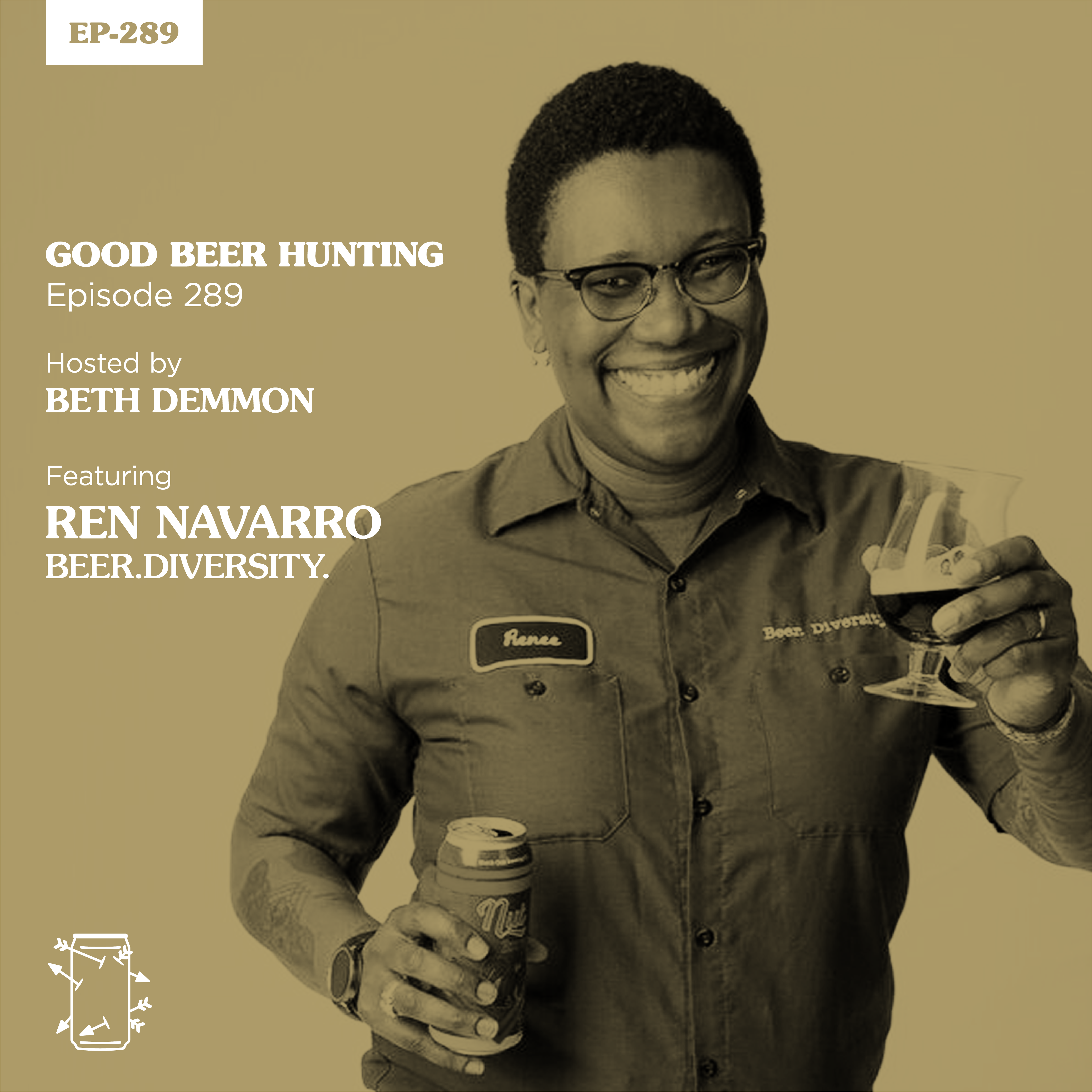
EP-289 Ren Navarro, Founder of Beer.Diversity.
This is Beth Demmon, and you're listening to the Good Beer Hunting podcast. At the end of every year, it's common for publications to put together roundups of notable people who've made their mark: who you should read, who you should listen to, who you should follow on social media, and so on. And every year, while those mentioned absolutely merit recognition for their work, some people also deserving of attention inevitably get missed. Any list covering the craft beer industry that doesn't include Ren Navarro falls short (Good Beer Hunting's end-of-year Signifiers included). The Canadian beer equity advocate is prominent in conversations on Twitter and Canadian outlets, and her tireless efforts to make beer a better place unquestionably deserve the support and attention of people everywhere. As a queer Black woman who seeks to educate, enlighten, and engage, Navarro calls herself a "reluctant advocate" as one of the only people in her immediate area to consistently work towards a more equitable beer community. By calling for actions that incorporate intersectionality in diversity efforts and demanding accountability from peers in the craft beer space, she encourages individuals and breweries to embrace uncomfortable revelations that can drive improvement, despite the challenges and feelings these types of conversations may bring up. She mostly works alone, and while the pandemic has disrupted her ability to educate face-to-face, she's grateful for the transparency and openness that virtual spaces allow for, giving people the opportunity to raise hard questions in a safe, judgment-free way. In our conversation, we'll talk about her role in craft beer, how Canada compares—and contrasts—with the United States when it comes to its beer scene, and how social justice movements took off last year and then stagnated. We'll also discuss the importance of people speaking from within their communities rather than on behalf of a community, how one can earn the title of ally rather than bestow it upon themselves, how concepts like accessibility and inclusion remain closely related, and who she looks to as changemakers of the future. Keep an ear out for numerous new initiatives she has planned for 2021. Navarro knows that we can all do better and be better—now, it's time to find out how. Listen in.
SP-003 Turning Hindsight Into Foresight
Over the past year, Good Beer Hunting has maintained an ongoing, weekly newsletter and expert community under our Sightlines Premium banner. As an extension of our newsy Sightlines coverage—anchored by Kate Bernot and myself, Bryan Roth—the goal of Sightlines Premium is to combine objective data and real-world anecdotes to help industry pros from across beer and beverage alcohol make informed decisions about managing a portfolio, how and where they should focus their access to market, and more. In this episode, you'll hear myself, editor of Sightlines and Sightlines Premium; GBH founder Michael Kiser; and Sightlines lead reporter Kate Bernot. In our roundtable discussion, we're focusing on six key storylines from 2020 that we see as impactful in 2021. This kind of analysis is an example of the work we're doing on Sightlines Premium, but our back-and-forth also hits on the kinds of discussions even casual fans of beer may have heard in the last 12 months. If you're leading a company in the beer or alcohol space, Sightlines Premium is for you. Listen out for the kind of direct advice and consultation we offer in our weekly newsletter and online community. For more information, visit goodbeerhunting.com/sightlines-premium. This is the GBH Sightlines team of myself, Bryan Roth, Kate Bernot, and Michael Kiser. Listen in.

Introducing the AltBrau Podcast
What does it mean to be an outlier? Who are the people in beer taking small steps and hoping to make big changes? We're excited and thrilled to announce the relaunch of the AltBrau Podcast, now part of the Good Beer Hunting network of shows. AltBrau is a show that explores the outliers in the world of beer. Join host and GBH contributor Tim Decker, a homebrewer and wild ale collaborator, as he talks with folks from various backgrounds who look at the food and beverage industry through a unique set of eyes. As an aspiring entrepreneur, Tim is always excited to explore various points of view and hopes you join along as he interviews people whose work and passions might indicate a more interesting future. Here's a sneak peek of the first episode with Mike Cruz of Tioga Sequoia Brewery. The AltBrau podcast will release new episodes every Tuesday starting January 12th! Find episodes of the AltBrau podcast on Apple Podcasts, Spotify, and wherever you get your podcasts.

CL-064 David Neimanis on the Wonders of Super Punch
Some of my favorite stories start small. Usually with a question, perhaps something you ponder passively before it takes you down a rabbit hole full of wild twists and turns, unexpected stories and delights. David Neimanis had just such an inkling. He's a food and beverage writer, and wanted to know more about the surprising comeback of amaro, or bitter Italian liqueur, which, for decades, had fallen out of favor. Most of our parents probably didn't drink amaro, but our grandparents might well have. David decided to pull on the thread, and try to figure out why something like amaro would have skipped a generation. A simple question ended up unfolding into an entire piece. David wrote about such generational drinking habits in his article, "The Rise of 'Grandpa Drinks' — Exploring the Old-Fashioned Roots of Modern Drinking Trends," published on our website on December 1, 2020. As part of the story, David delves into his own history with obscure, bitter, European liqueurs—recently, he found himself ordering Riga Black Balsam, which hails from Latvia, and which was a drink favored by his grandfather. In this conversation, we talk about the nature of curiosity, and how simple questions often unfold in interesting and compelling ways. David didn't necessarily have a grandiose idea or theory about the new popularity of these drinks—he simply asked a question and followed the answers where they took them. His piece is highly inquisitive and honest, and isn't afraid to take a pit stop to explore an interesting tidbit along the way. The resulting story feels like following a winding road full of surprises. Here's David.
CL-063 Courtney Iseman Jumps Between Past, Present, and Future
EYou've probably read some version of this article or headline over the past several months: "Here's a lesson we learned during the 1918 flu that we can apply to the current coronavirus pandemic!" It makes sense that we want to look to history for answers to present-day problems—"history repeats itself" is an old chestnut for a reason. But for some, the inclination to look backwards extends well beyond the 20th century. Courtney Iseman is a self-described history nerd, and noticed not just similarities between this current moment and the 1918 Spanish flu pandemic, but also the 14th-century bubonic plague, which killed over half of the European population. Just like now, medieval responses to the black death were largely dependent on social standing—there were those who couldn't afford to not work, those who never left their homes, and those who got the hell out of Dodge, abandoning their homes for less-populated areas. It helps to look to data and science when dealing with such a unique and scary moment as our current crisis, but it's also helpful to look to stories. Giovanni Boccaccio wrote The Decameron in what is now known as Italy during the height of the plague. The book is a collection of stories that reflected what local life was like at the time, told from the perspective of a group of friends who had fled Florence to escape the disease's devastation. As Courtney points out, you could replace these characters with any number of celebrities or influencers who escaped to their country homes following the spread of COVID-19—just think of today's "private island, all tested negative" memes. In this conversation, we talk about Courtney's investigation into the subject in her recent piece, "The Plague Mirror — Recognizing Ourselves in Black Death-Era Italy Through The Decameron." Courtney uses The Decameron to show that history presents certain inescapable themes—but that past lessons can also provide a helpful blueprint for navigating contemporary crises. We also talk a little about her background as a writer before jumping in, but then we get right into it, tunneling our way through Boccaccio's illuminating book and then asking each other: What happens when this is all over?"

EP-288 Andreas Krennmair, Author of Vienna Lager
ENews flash: 2020 has been a tough one. And yet despite the intense challenges, this year has seen several positive developments, even—and maybe especially—in the world of beer. For example, a couple of truly great books on brewing came out in 2020. The beer world has, slowly but surely, continued to address issues of equity, fairness, and representation. And, on a more personal note, quality Lager has continued its renaissance, despite the crucial issues of the past 11 months. Andreas Krennmair is the author of one of the best beer books of the year, Vienna Lager, a fantastic history of the most famous beer style to originate in his home country of Austria. He also wrote an earlier book, Historic German and Austrian Beers for the Home Brewer, which introduced obscure, often extinct Old World beer styles like Mannheimer Braunbier, Merseburger Bier, and Horner Bier to English-speaking readers, along with recipes for how to brew them. In this episode, I'm talking with Andreas about the history of Vienna Lager, which includes legendary names from European brewing like Gabriel Sedlmayr of the Spaten brewery in Munich, as well as Anton Dreher of the Klein-Schwechat brewery in Vienna, the inventor of Vienna Lager. (A side note: At one point I misidentify Andreas as being from Vienna himself, when he's actually from Linz, Austria, as you'll hear him explain. Apologies to Andreas for the mistake.) For this conversation I'm calling in from my home in Prague, Czech Republic, and Andreas is speaking from where he lives in Berlin, Germany. Here's Andreas Krennmair, author of Vienna Lager. Listen in.
SL-026 Changing The Narrative
ECOVID-19 has changed a lot in our lives, including when and how we choose to consume alcohol. But there continue to be misconceptions about our beer-buying habits this year—and the beer styles that we've been gravitating to. Low-alcohol beer has been a hot topic recently, but does the narrative around those products—one of crescendoing interest and growth—translate to reality? Over the last couple years on Good Beer Hunting, we've explored how sales have changed for higher-ABV beers, too, and in this episode we're going to dig a bit deeper into how the mixed fortunes of these market segments are playing out during the pandemic.
A Thousand Words — Home
EIn this series of the GBH podcast, we ask members of our team to enter the realm of audio storytelling. Most of us are familiar with the phrase, "A picture is worth a thousand words," right? But now, we're challenging our contributors to actually write down those words, and to create pictures of the world around them as told in their own voices. With that in mind, you're about to hear different stories read aloud by members of our editorial team. Think of each brief narrative as a snapshot of a moment, like an audio version of the b-Roll series on our website. In this installment of A Thousand Words, we wanted to talk about home. In some way, everyone's definition of home has changed this year. We asked our writers to share their thoughts on what their new normal looks like—and how their relationship to the spaces they inhabit and the places they love has morphed. From total lockdowns to recent moves, from newfound stillness to a house full of dogs, home has no one definition, no one spot you can pinpoint on a map. Instead, home is a relationship between yourself and the places and people that have made you who you are. Each storyteller will introduce themselves before jumping into their own anecdote. We hope you can visualize every vignette, and immerse yourself in the pictures they're painting for you. This is A Thousand Words, a collection of audio stories. Listen in.
SL-025 No Relief for Small Brewers
Welcome to the Sightlines podcast. I'm Jonny Garrett. On July 21, barely three weeks after the U.K.'s hospitality industry and pubs came out of lockdown, the government announced it would be raising the amount of alcohol tax paid by small breweries. The backlash was immediate and furious, but it wasn't only against the government. The anger was also aimed at a group of larger breweries that had campaigned for the tax rise. Let that sink in for a moment: A group of businesses successfully campaigned for higher taxes within their own industry, specifically for up-and-coming competitors. To work out how it came to this, we need to take a step back. It starts with a bill known as Small Brewers Relief (SBR), which was put into law in 2002. The bill gives all U.K. breweries smaller than 5,000 hectoliters (about 4,300 U.S. barrels) of annual production a 50% reduction in their alcohol tax. Beyond that volume, as the brewery grows, that reduction tapers off to zero. Almost since the bill's inception, some owners of breweries above the 5,000hl threshold have claimed the system gives small brewers an unfair pricing advantage. Meanwhile, those below see SBR as a lifeline without which new breweries would be unable to survive and grow. After around five years of campaigning for reform and a two-year research project by the U.K. Treasury, the larger breweries—under an alliance called the Small Brewers Duty Reform Coalition—have won. The new rules mean small breweries will pay more tax starting at 2,100hl, which would immediately increase alcohol duty payments for around 150 existing businesses—by as much as £50,000 ($67,500) a year. The Coalition believes the move will increase the price they can charge wholesalers for their beer, but they also say that it will encourage more growth among small breweries. They reason that starting the tax taper at a lower threshold—at 2,100hl—will remove what campaigners call the "cliff-edge" at 5,000hl, when duty payments suddenly start to escalate and making profit becomes significantly tougher. Those small breweries, however, believe lowering the threshold will just limit their growth earlier, and see the move as a land grab by powerful brewing companies worried about the growth of craft beer beneath them. In the wake of the news, several industry commentators called for drinkers to boycott the companies leading the charge for reform, including national brands like Timothy Taylor's Brewery, Harvey's Brewery, Wye Valley Brewery, and Hogs Back Brewery. Beer can be political, and Small Brewers Relief has brought divisions within the industry into sharp focus, asking fundamental questions of who needs and deserves financial support in these difficult times: the historical, traditional breweries, or the new startups? How much should the state prop up private businesses? Is growth always the goal? And how sustainable is pricing in the industry, particularly around cask beer? In this episode, we'll talk to brewery owners on both sides of the argument, and will get the views of the economist who cowrote the academic paper that helped Small Brewers Relief come into being in the first place. You'll hear how both sides have valid points to make—and that neither Small Brewers Relief nor any reforms of it have much hope of solving the industry's underlying problems. This is the Sightlines podcast. Listen in.

EP-287 Jamal Robinson, New England Brew Co., & Phil Pappas, CT Brewers Guild
EThis week's guest is a long-time industry friend of mine from back when he and I worked tougher to help launch Stony Creek Brewery in Branford, Connecticut. He had just left his sales gig at Blue Point Brewing, and I was only a couple of years into launching Good Beer Hunting's studio and strategy practice. With his energy and insight, we became fast friends. Jamal Robinson is the sales director for a fast-growing powerhouse called New England Brewing Co., or NEBCO as you'll hear him call it. And despite all his previous his growth and success, this year turned out to be a year of radical transformation. And today's conversation is about that transformation—but also where it's lead in a very short amount of time. Stemming from the social unrest following the murder of George Floyd and many others, Jamal, himself a Black man, started looking both within and without at the community. He looked towards the Connecticut community, the Black community, and the brewing community. And he started to share what he saw. That lead to a series of conversations and conversions. I'll never forget the moment Jamal called me to tell me that he finally found the words he needed to lead a conversation within the brewery—a conversation not about politics or activism, things that terrify many small business owners afraid to jump into the fray, but about community. And he found those words in an article by Kate Bernot, called "Say It Out Loud — Who Do Breweries Talk About When They Talk About 'Community'?" When Jamal told me that story, and the profound reframe it helped him bring to his team, we both got a bit emotional. But that was just the beginning. Now he's kicking off a scholarship program, with the help of his employer and the Connecticut Brewers Guild lead by Phil Pappas, who is also on this episode. They worked with Sacred Heart University in Fairfield, Connecticut, to establish an endowment with the potential to fund a scholarship program that will outlive everyone involved. In a year that saw some incredible new initiatives begin from powerful players like Dr. J Nikol Beckham of CraftxEDU and the Brewers Association, and Garret Oliver, the Brooklyn Brewmaster who started the Michael Jackson Foundation, in my mind, no one is punching above their weight quite as far as Jamal. This is Jamal Robinson of New England Brewing Co. and Phil Pappasof the Connecticut Brewers Guild. Listen in.

CL-062 Holly Regan Will Not Be Erased
EWe hear it all the time: Craft beer is a "community" where folks can come together to socialize, grab a beer, and let loose. But what happens when that "community" isn't as inclusive as it sounds—and when you're stuck watching the industry you love tout its openness while you encounter barrier after barrier to entry? Holly Regan is a longtime writer, and in their first story for Good Beer Hunting—a critical, two-part piece called "All In the (Chosen) Family"—they ask the question: "Why are queer people continuously erased from craft beer—and how can that change?" Holly has a background in anthropology, and prior to writing this article series, they set to work developing a survey to collect data and stories from hundreds of respondents within the beer industry. The results illuminate the myriad struggles that queer folks experience in beer, and which the wider industry has failed to address. The idea of erasure is key. It's easy to say something like, "All are welcome here," and proclaim a space to be inclusive. But Holly rejects that simplistic approach, and uses their survey's results to demonstrate that efforts to make beer a welcoming place must be continuous and proactive. In writing this story, Holly also recounts their own experiences with erasure, and how simply being well-intentioned is not enough. Holly's piece is exhaustive and ambitious, as well as deeply personal. They cite the advice of Elizabeth Gilbert, author of Eat, Pray, Love, as a source of inspiration: "Ideas are a disembodied, energetic life-form. They are completely separate from us, but capable of interacting with us ... Ideas are driven by a single impulse: to be made manifest. And the only way an idea can be made manifest in our world is through collaboration with a human partner." This is Holly Regan. Listen in. Note: At the end of the episode, Holly talks about a group they've started for queer folks in beer, The Rainbow Boots Interest Group, which you can learn more about here.
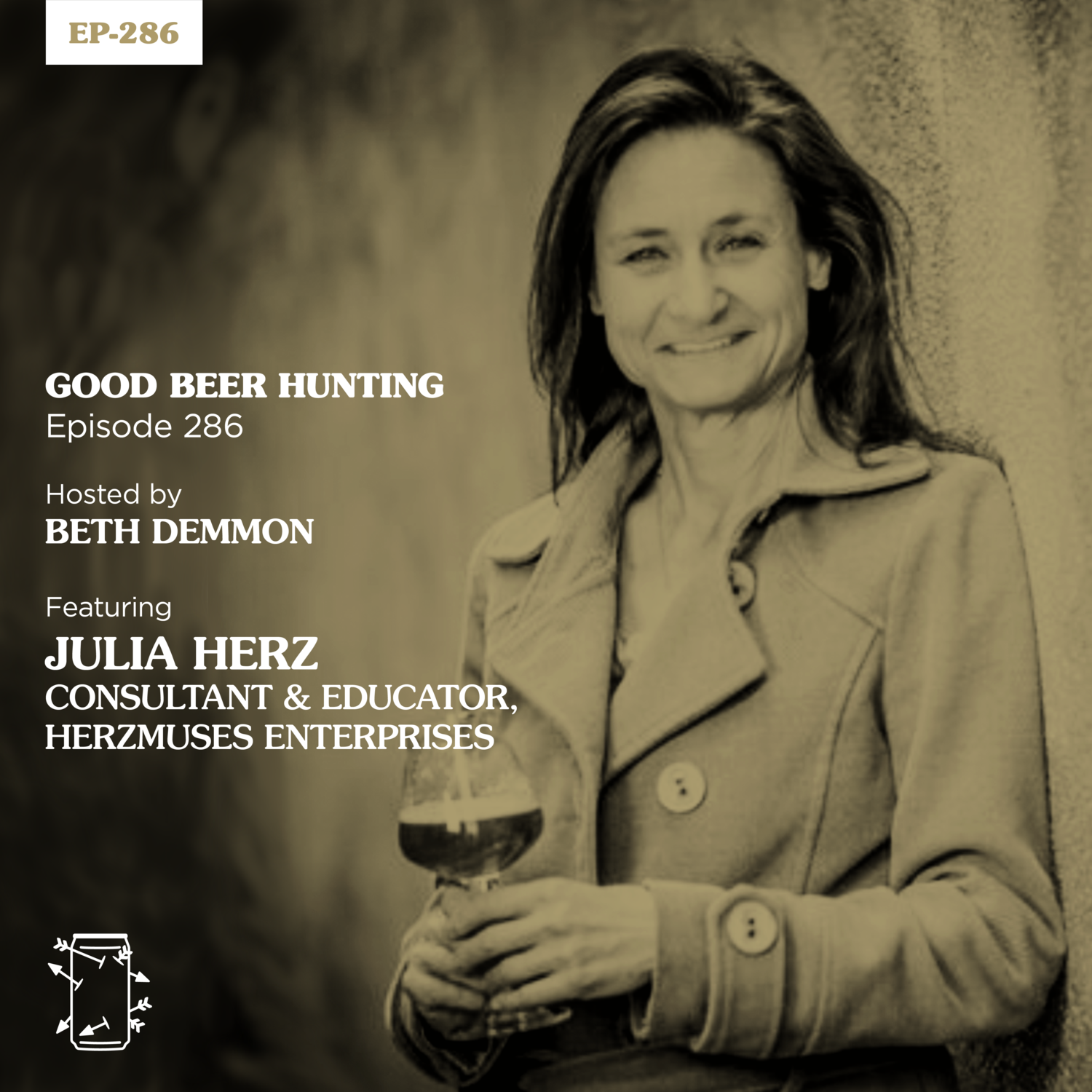
EP-286 Julia Herz, Consultant and Educator, HerzMuses Enterprises
EJulia Herz has been a notable figure in craft beer for nearly two decades. Much of that time was spent as the face of the Craft Beer Program at the Brewers Association. Her diminutive stature contrasts with her comparatively monumental influence in the industry: in that role, she was a familiar face at beer festivals and conferences like the Craft Brewers Conference and BeerNow Conference; she helped helm online publications like CraftBeer.com; and even wrote a 2015 book with Gwen Conley titled Beer Pairing: The Essential Guide from the Pairing Pros. Like the rest of us, Herz was caught off guard by the arrival of COVID-19, and again when she and two dozen other BA employees were laid off in June. But rather than stagnate in what she calls "career, interrupted," she hit the road to both coasts on a series of Vision Quests, visiting breweries across the United States in a safe (and socially distanced) way. By navigating that unexpected hard left turn in her work, Herz embarked on a brand-new journey to consult, mentor, and educate through her new LLC, HerzMuses Enterprises. By leveraging her massive network of brewery owners and employees, she says her goal is to "teach and inspire," as well as provide solutions to brands and causes that move her. From her behind-the-scenes perspective, she's laying the foundation of her new venture with relationships in mind, and for the first time, on her own. I had the chance to sit down with Julia—masked, outside, and over a pint—at Second Chance Beer Company in San Diego to get the inside scoop on her state of mind before recording this podcast episode. We talked about her past and future, her work as part of a national team and now as a solo artist, what it's like to be on the ground during COVID, and how these Vision Quests have shaped her in surprising ways. I got to know what drives her, what changed her, and what she has planned next. This is Julia Herz. Listen in.

CL-061 Beth Demmon (Attempts To) Untangle Work and Worth
EWho are you without work? If you went to a party and introduced yourself to someone new, what would you talk about if you couldn't ask them about their job? Work is a tricky subject. We find so much validation in—and center so much of our identities around—the jobs we hold, but what happens when those jobs go away? Good Beer Hunting staff writer Beth Demmon explored this question and more in her latest piece, "Work, Worth, and Wreckage — When Your Job Is Your Life, What Happens When You Lose It?" which was published on our website on November 18, 2020. In this episode, I chat with Beth about what it meant to write this story. Sure, the problem of deriving our self-worth from our work feels especially timely right now, but Beth's article goes beyond the present. She asks not only how we got here, but also looks at who is getting left behind when we equate professional success with personal value—particularly within the context of the beer industry. What's exceptionally poignant about interviewing Beth is that she's not immune to these feelings, either. Not to be glib, but 2020 was supposed to be her year. And as the pandemic crushed opportunities and erased pathways, Beth herself had to contend with her own changing course—and figure out why it made her feel so goddamn awful. Just a quick note, there are perhaps more curse words in this episode than usual, so you may want to save this for a moment when younger listeners aren't around.
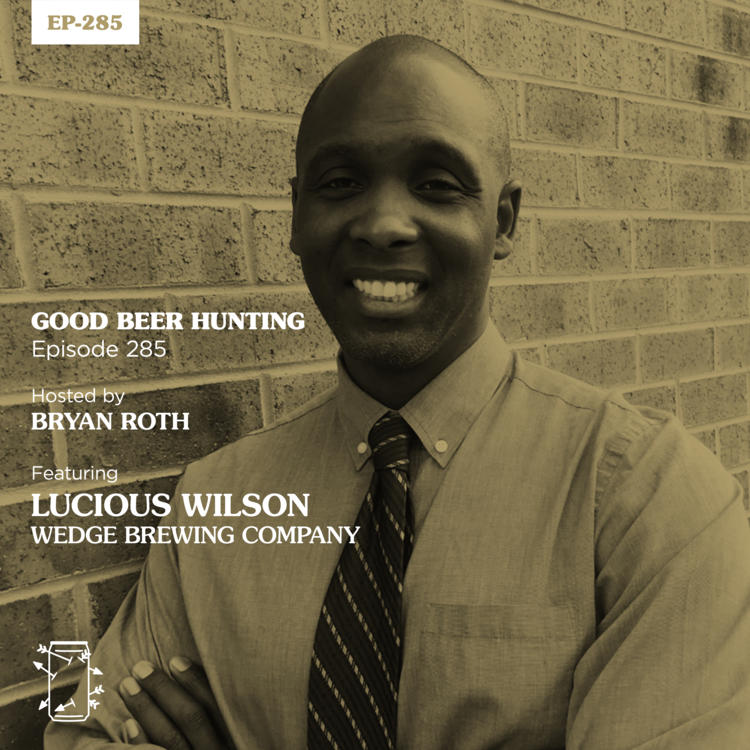
EP-285 Lucious Wilson, Wedge Brewing Company
EI'm not making a radical statement here, as we enter the final weeks of 2020, when I say it's been hard. Both for individuals and as a collective society. January always offers hopeful promises of new experiences and excitement, but by February of this year, things had already gone downhill thanks to COVID-19's ill-fated arrival. That was before Americans had also rightfully turned their attention toward issues of social injustice this summer. Time and time again, these themes and topics are addressed by telling the stories of the impacted people and businesses. That's true in publications like Good Beer Hunting, all the way up to the mainest of mainstream media outlets, like CNN and USA Today. But the reason these stories continue to get told—and why they still carry such meaning—are the humans behind the anecdotes. In this conversation, we're going to hear about these topics and more in an oral history from Lucious Wilson. He first reflects on adjusting business plans during a pandemic, and then trying to process a season of protest after the killing of George Floyd. Wilson is general manager for Wedge Brewing Company in Asheville, North Carolina, and he's also a self-proclaimed "rebel" who likes to disc golf and skateboard. He's spent a career in food and beverage that began well before Asheville was known as "Beer City, USA," and he's also a man inspired by the women in his life, like his wife and sister. Even when his employees and peers didn't know what to do, or how to process all that 2020 changed in regards to doing business and interacting with the world, you'll hear him talk about the importance of being a leader, and what it means to him to be able to inhabit a role like that. As a brewery making about 1,000 barrels of beer a year, and primarily focused on its home market, Wedge Brewing is not a household name across the country. But my hope is that by joining me for this conversation with Lucious, you'll have reason to celebrate one more person and business that's worked hard to be their best in a shitty year. And maybe the stories you're about to hear will offer you another human to root for, too. This is Lucious Wilson of Wedge Brewing. Listen in.
CL-060 Gabrielle Pharms Orders Her Texas Bourbon Neat, Please
EOur Beer and a Shot series, made in partnership with Miller High Life, asks our contributors to get to know a city. Each piece brings together a bartender and a spirit to tell the story of a particular locale—and uses the relationship between the two to characterize residents' unique drinking styles and preferences. As a result, the reader gets to see into the heart of a place through an intimate lens—and discover a perspective that's otherwise the province of locals and longtime residents. Freelance spirits, entertainment, and lifestyle writer Gabrielle Pharms contributed the latest entry to our Beer and a Shot series, and she brought together two things you might not necessarily associate with each other: Texas and whiskey. Though whiskey is most commonly linked with states like Tennessee and Kentucky, the Lone Star State is becoming a key destination for the spirit—bourbon in particular. For Gabrielle, who is a Houston native but now lives in Austin, this change is exciting. She's a longtime whiskey fan, and was the person who, even in her early twenties, felt comfortable drinking bourbon neat. Her perspective reveals just as much about a state's changing alcohol identity as it does the bartender and spirit she profiles—in this case, Kelsey Caudebec of The Tigress Pub and Milam & Greene Distillery. Here's Gabrielle.
EP-284 Susanna and James Forbes, Little Pomona Cider
EI've known one of today's guests for a good few years. Susanna Forbes and I first met as drinks journalists at countless events around London. Back then, she was known as one of the hardest-working journalists out there, with plenty of awards and respect as evidence. So I had no idea that all along she had been planning to give up journalism for good. In this episode you'll hear the full story of how she and husband James upped sticks and moved to Hereford in pursuit of their passion—cider making. Under the name of Little Pomona Cider, they've quickly established themselves as one of the best producers in the country, making beautifully balanced ciders, perries, and other exciting fruit ferments using only wild yeasts and juice. That's led to investment that bought them a huge new site on the same land as hop grower Brook House, where they hope to grow organically but with ambition—as long as nature and opportunity allow. Along the way we look at the challenges of being a journalist-turned-producer, the battle that cider fights to be taken seriously and as independent from the beer scene, and the fact that cider really has a lot more in common with wine, and should be treated as such. We also go into the history of some of the culture, methods, and ingredients that make Hereford such a special cider region—a story that Susanna is very well equipped to tell, thanks to her former profession. This is Susanna and James Forbes of Little Pomona Cider. Listen in.

CL-059 Samer Khudairi Becomes a Character in his own Story
EIt's hard to tell a story about yourself. And yet, I find I'm most moved by personal narratives—articles that provide a sneak peek into the life of the author. That's one of the things I loved about Samer Khudairi's first long-form piece for Good Beer Hunting. It's called, "(Un)Holy Water — The Middle Eastern Voices Shaping the Global Beer Narrative," and was published on November 12, 2020. I saw an early draft of this piece, weeks ago, when Samer had just turned it in. It was distinctly different from the published version. Mostly that's because Samer wasn't in that first draft at all. And that was on purpose.In this episode, I talk to Samer about what it means to tell a story that's so connected to your sense of being, and what it means to put yourself on the line. A lot of the evolution of this piece happened behind the scenes—in conversations between Samer and other GBH writers, and in moments of reflection about the emotional weight this story carried. Samer's narrative starts with a question: He visits his grandfather, who talks about his great uncle's work as a brewer, and asks why he doesn't know more about his family's history in beer. He uses that lens to ask bigger questions, like: Why aren't the stories of Middle Eastern brewers being told as widely as others? It's challenging to be vulnerable, to pull your own stories out of your familial history and display them for others to see—but it was by getting close and putting everything out there that Samer was able to tell a story that connected to such a wide audience. Here's Samer. Listen in.
EP-283 Rob Brennan, Supermoon
EToday's conversation is another one of those times when I feel profoundly grateful that I get to close the loop with someone that takes me back ten years or more—to when a seed got planted, or a relationship got established, and a decade later we're able to look back and connect the dots on a story that would have been impossible to imagine playing out the way it did. It's a reminder for me that I get every so often of the importance of doing good, human, connective things with our work even, and maybe especially if, we don't know how it's going to effect someone. But if we do get a chance to see the end result—or at least a milestone—it can be incredibly edifying and soul-confirming. That's not to say that what Rob Brennan of Supermoon Beer Company is doing is the end of anything—in fact, it's just about to begin. But as you'll hear in this conversation, so much of the way in which he tells the story of Supermoon involves telling the story of others, and how they were a kind of spiritual journey to where he ended up—even if many of the people in his life suspected it the whole time. Rob's journey to Supermoon takes place within a community of people that admired him. My own witness to his journey started at a home-brew party threw with some friends. It was a high concept affair that I've never really encountered the likes of since. And it showed how much Rob cares about the beer, but also the context and experience of that beer. He came to Good Beer Hunting's annual camping trip called Olly Olly, which we host with our friends at Camp Wandawega each fall—although certainly not this fall—in which he met the co-founding team from Penrose Brewing, Tom Korder and Eric Hobbs, and so began his inevitable journey into the professional side of brewing. He was a stop of the Joshua-Bernstein-inspired tour we hosted in Chicago called Homebrew-to-Pro, featuring people who had started breweries, or "gone pro" from their home brewing roots - like Jerry Nelson of Une Anne and Gary Gulley of Alarmist Brewing. But after he cycled out of Penrose and moved north to Milwaukee, it started to seem like the vision for starting a brewery that most of us, his friends had, was maybe also cycling out. Maybe that's just what we wanted for him—but it wasn't what he wanted. Maybe we were gonna have to let it go and let him live his life. But a couple months ago—something popped up on his Instagram that looked suspiciously like something that might become a brewery after all. And I can tell you that my heart skipped a beat. It's about a week away from opening. And the beers are fantastic. This is Rob Brennan of Supermoon, listen in. One quick note before we jump in: this is being recorded during the now worst spike of the pandemic—so me and Rob were being extremely cautious—which means we recorded this outside in the cold, so you will hear some background noise here and there—a breeze, some chirpy birds, a contractor hammering down the street and a car or two driving down the alley we were next to. We did our best dear listener, so thanks for your generosity.

CL-058 Alicia Kennedy Longs for a Martini in a Nick & Nora Glass
EWelcome to the Good Beer Hunting Collective podcast, the show where members of our team interview each other to get a behind-the-scenes look at some of our favorite articles. I'm Claire Bullen, editor-in-chief here at Good Beer Hunting. I spent the early days of this year's lockdown subscribing to a flurry of new and thrilling food-and drink newsletters, from Jonathan Nunn's Vittles and Dave Infante's Fingers to Rachel Hendry's J'adore Le Plonk and Katie Mather's The Gulp. My inbox has been full of exceptional writing ever since—and these days, there are few things I look forward to more than receiving a new missive from Alicia Kennedy. I'm not alone in this sentiment. Kennedy's newsletter, From the Desk of Alicia Kennedy, has amassed over 10,000 subscribers in just half a year. Kennedy is a food and drink writer, as well as a former bakery owner, who's now based in San Juan, Puerto Rico after relocating from New York. She's got a book in the works about veganism and its relationship to capitalism, and has written for publications ranging from the Village Voice and the Guardian to Tenderly and Pellicle Magazine. Whatever her subject—from the sustainability of spirits production and the commodification of chocolate to musings on ethical consumption—Kennedy writes with thrilling velocity and probing intelligence, illuminating unexpected connections between topics and fundamentally reimagining what food and drink writing can be. I was thrilled, then, to commission her recent piece for GBH, "Crisis Cava in a Colony, and Other Ways of Coping in Old San Juan," which captures Kennedy's lockdown experience, chronicles the drinks that she used to demarcate her time under quarantine, and shows how tourism to Puerto Rico has so often been at the expense of residents' well being. In this episode, we talk about the process behind this piece, the evolution of her newsletter, and how she'd like to see drinks writing grow and develop in the future. This is Alicia Kennedy. Listen in.