
Good Beer Hunting
743 episodes — Page 4 of 15
CL-109 Oliver Gray Finds His Place
EThere's an inherent tension in making art. The best art comes from a deeply personal place, but also speaks in a universal register. That's not to say all art is for every person, but when the artist can successfully weave specific, individual moments into the grand themes of life, the results can be sensational. In his column for Good Beer Hunting called "This Must Be The Place," writer Oliver Gray shares glimpses of his life through the lens of beer: sometimes directly, other times more esoterically. His lyrical observations about finding his place as a beer lover, father, partner, and friend remind me of songwriting, in that there may or may not be an obvious answer at the end, but it sure has a beautiful flow. Today, Oliver and I discuss how he evolved from a nonfiction writer to a blogger to a columnist, as well as why he shifted from his own outlet to Good Beer Hunting. You'll hear which writers and artists inspire him, as well as why he thinks certain things simply matter in the way that they do. We'll also dive into what struck me specifically in his latest entry called "Boxed Up," which pinpointed the freeing, but chaotic, experience of moving. Oliver describes his short, poetic entries as comfort food, a descriptor with which I agree wholeheartedly.

Scott and Whitney Selix of Lua Beer
EIn this episode we're taking a trip to Des Moines, Iowa, where Whitney and Scott Selix share with us stories of their hospitality careers and what it means to create an innovative tap list at Lua Brewing. It's that latter piece that caught my eye when I first came across Lua, with a lineup that includes traditional German and English beers alongside various hazy IPAs and slushee Sours. If like me, you may not know a lot about the brewing scene in Iowa, and Whitney and Scott offer context of being part of a growing beer culture where you can introduce a drinker to new styles with something like an English Mild, but you also have to provide access to something fun and different—like a "Blue Razz Electrolyte Sour" that as it turns out, wasn't the first take in Des Moines on that collection of flavors and ideas. As partners at Lua and in life, let's get to know a little more about this brewery and what it means for Whitney and Scott to make something special in a burgeoning market. This is Lua Brewing's Whitney Selix, president and co-founder, and Scott Selix, director of operations and co-founder.

CL-108 Matt Osgood Is Tied To History
ELager might be having a moment, but as a whole, craft beer drinkers don't always reach for the easiest beer on the menu. Instead, the newest, most intense, biggest beers on the block tend to get the most attention. But sometimes—often—the best beer is actually the familiar one, the favorite, the old reliable. Sometimes, it's Narragansett. In his story "Hi, Neighbor — Narragansett Lager's Return to Ubiquity," writer Matt Osgood manages to tie the Red Sox, the movie "Jaws," and the iconic 'Gansett Lager into one historical romp through the brewery's origins, influence, evolution, and impact on today's craft beer culture. As you listen, we'll talk about why he tends to write about singular beers and breweries through a historical lens, what he wished he could have explored more in his piece, and why this story couldn't have happened anywhere but New England. We'll also unpack how Narragansett manages to balance nostalgia with modern-day beer culture, and why this unassuming "hipster" beer is enjoyed by everyone. Beer doesn't have to be a challenge to drink, and today's conversation is as easy as popping open a cold Ganny and crushing it like Quint. Don't get the reference?
EP-347 Jasmine Mason and Ashley Johnson of Cider Jawns
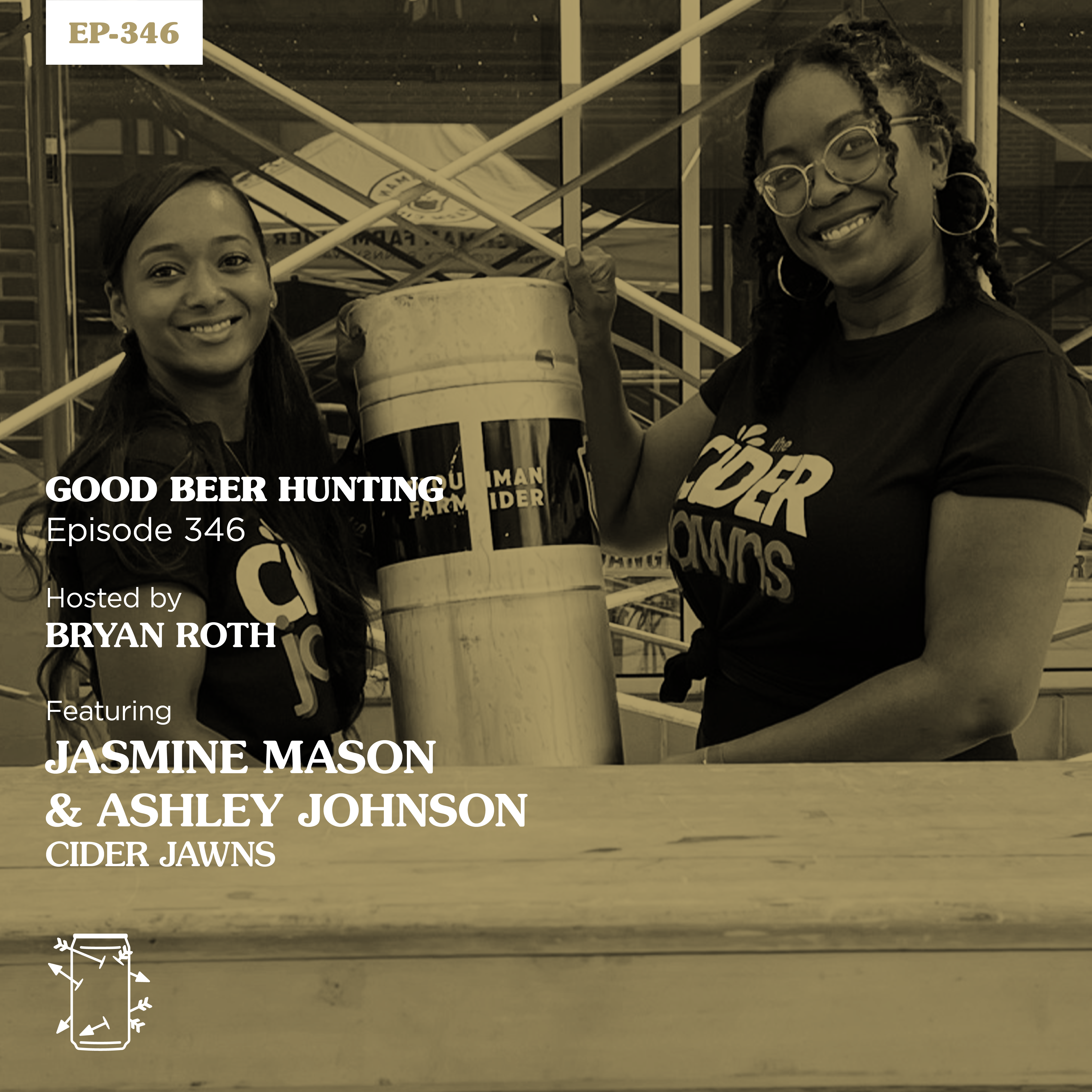
EIt's time to talk apples. Or, at least, how apples fit into all the other flavors you might experience when you pop open a bottle or can of hard cider. To help with this journey, we're chatting with Jasmine Mason and Ashley Johnson, a pair of cider lovers and entrepreneurs behind the Cider Jawns. As to what a "jawn" is exactly we'll get into during the conversation, and along with some Merriam-Webster definitions, Jasmine and Ashley will share with you insights into what feels exciting to today's cider drinkers. For some, it's finding a kind of hard cider that surprises, whether dry or sweet. For others, it's about the flavors that can be added on top of an apple base to create something fun or different. But regardless of your level of experience with cider, Jasmine and Ashley will give us a good barometer of what's working in today's market and for who, and how they like to use that to guide the way they think about and make cider. From the jump, it's easy to hear and understand Ashley and Jasmine's enthusiasm for cider and how they're working to carve out a space for themselves and others. And by the end of this conversation, you'll also know how they hope to take that effort further in the future.

CL-107 Jerard Fagerberg On Letting Go With Intention
ELike many craft beer enthusiasts entering their late 30s and early 40s, I've found the booze real estate in my refrigerator is starting to shrink. First, I started adding cans of LaCroix knockoffs from ALDI. Then I swapped a few beers for some hard kombuchas, followed by regular kombuchas. Right now, I've got cans of fruited sparkling tea, and recently I realized that the only alcohol I have left in the house are samples for work. I am, like thousands of others, beginning to dabble in reducing my alcohol consumption. The motivations for doing so are myriad, whether it be intentionally for health, economically because of inflation, or for any number of other reasons. These shifts, once cast as secrets among craft beer fans, became much more openly discussed when longtime beer writer Norman Miller announced he was giving up alcohol for health reasons in 2018, along with his beer column, "The Beer Nut." It was a revolutionary admission, and one that resonated with fellow beer writer Jerard Fagerberg, among many others. In the first piece for his new column, Let Go Or Get Dragged, Jerard speaks with Norman four years after that announcement of his sobriety. You'll hear clips from Jerard and Norman's conversation today, as well as Jerard's inspiration for the column, his personal drinking history, and his approach to sobriety. We'll also discuss the pros and cons of non-alcoholic beer, and the societal movement that's seeing more Americans embrace being sober-curious. This isn't a critique on the beer industry itself: Rather, it's a holistic look at how alcohol shapes our lives, our culture, our minds, and our bodies.
EP-346 Liz Preston of Prestonrose Farms
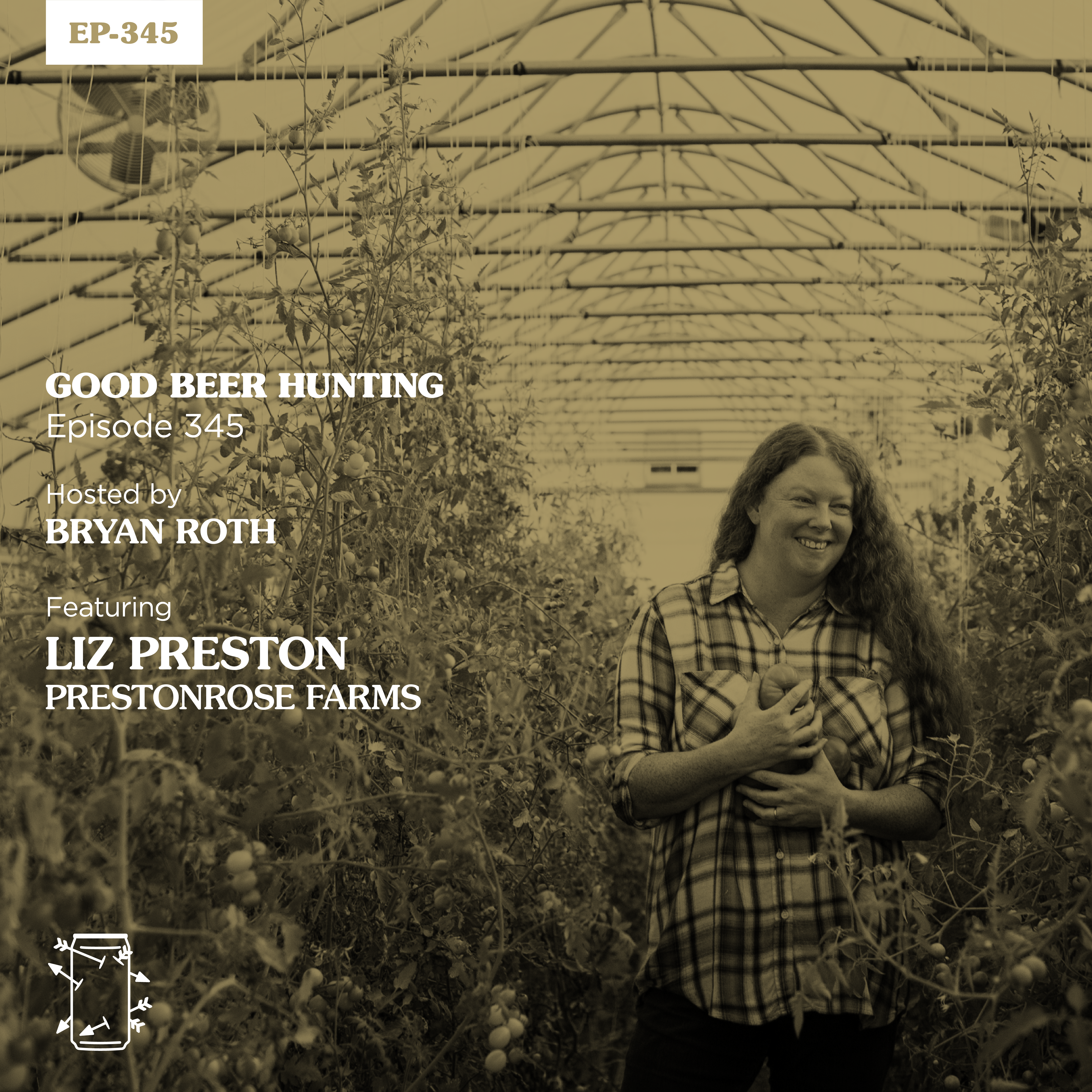
EThis statement shouldn't come as a surprise: Beer is agriculture. With ingredients that come from the ground there are so many ways a region, climate, and growing practices can impact the flavors of our beer. And in this episode, we learn a bit about how something like craft malt can make a difference for a brewer trying to not only offer something that tastes unique, but brings story and connection to the earth and people. Liz Preston is an owner, farmer, brewer, and chef at Prestonrose Farm and Brewing in Paris, Arkansas, so you can imagine her understanding and appreciation for all things agriculture runs through everything she does. Along with hearing a little about her background as a scientist and lab manager, you'll gain an appreciation for the ways Liz considers the nuance and importance of farming and the way that moves from the people who grow something from the ground to an ingredient used to make her beer. You'll also gain a better understanding for what it takes to create beer in the South during a time when temperatures are a little bit hotter, rain can be slightly more sparse, and climate change impacts the way Liz thinks about the cycle of what we grow and how. In this conversation you'll hear about what it takes to grow a brewery in Arkansas and what it's like being part of an in-state industry that's working to change perceptions of what beer can be.
CL-106 Jonny Garrett Wonders "What Is Beer?"
EAround the world, the craft beer community disagrees on a lot of things, but one big schism is over what beer actually is. Is it a rigid adherence to historical methods and styles? Or could it also be over-the-top, avant-garde experiments that are as far from tradition as it's possible to be while still remaining liquid? At Omnipollo Brewing, it turns out beer can be both. In his latest piece titled "Lead Us Not Into Temptation — Omnipollo Brewing in Stockholm, Sweden," writer and filmmaker Jonny Garrett goes headfirst into the wacky world of Omnipollo, a brewery best known for its outrageous Pastry Stouts and iconic aesthetic. But being known for one thing hasn't kept them from branching out—even if they're not quite sure where they're going. Today, Jonny reveals what it was like to have his own preconceptions about what beer is challenged by Omnipollo, and how brewing Pastry Stouts emulates the artistry of baking actual pastries. He describes Omnipollo as "tearing up the rulebook" of beer, with outlandish—and yes, delicious—results. We also talk about how filming, photographing, and even writing about the art of others is an art form in itself, rife with challenges that can often yield something entirely new. Finally, we'll touch on that Yellow Belly controversy: what it was like to hear about it firsthand from Omnipollo's founder and brewer, their intent, the impact, and how context changes over time and in different places. Beer is always more than just beer, so let's talk about it.

CL-105 Matt Osgood Isn't Sure What To Do
ERight now, a lot of things seem really bad. There are microplastics embedded in all of our bodies—including millions of bodies now stripped of autonomy, thanks to the Supreme Court. Wildfire season is heating up (literally), everything costs more than it used to, and it's hard to escape this pervasive feeling of existential dread permeating every corner of our lives which, unfortunately, also includes beer. In his piece titled "Slow-Dancing in a Burning Room — The Cost of Climate Change on Beer's Favorite Crop," published on May 12, 2022, Matt Osgood shares insights from farmers and scientists about the impending changes hops face in light of what he calls the "unbiased chaos of natural disaster." It's dire out there, he explains, but he believes the best chance for beer lies solely in the hands of human ingenuity mixed with technological advances. Today, Matt and I discuss our collective responsibilities as beer drinkers and journalists, but also as citizens of the world—a world that seems like it's changing no matter what we do. But by claiming our power as individuals, we retain the hope that our children and our children's children stand a fighting chance of not just existing, but enjoying Earth's bounty, including craft beer. All of these issues are intertwined, and it can feel like playing whack-a-mole when making decisions. But this push and pull of human restraint against human destruction only continues to gain importance, making conversations such as these crucial for the future of beer, people, and Earth. Let's dive in.

EP-343 Kindsey Bernhard of Austin Beerworks and Boys Are From Marzen
EWhen we think about beer and brewing, it's easy for our minds to wander toward the person making the beer we drink. Brewers create a little bit of magic combining art and science, and because of that, are often considered the backbone to a business that makes and sells beer. Sometimes, they can even be thought of as rock stars with engaging personalities and thoughtful approaches to what it means to make beer. But there are so many more people we may miss when we think about beer as an industry. In this conversation, we're chatting with Kindsey Bernhard, director of hospitality for Austin Beerworks, and also a background of all sorts of skills and expertise. Kindsey has worked as a bartender and before her role with Austin Beerworks, was taproom manager for Hi-Wire Brewing's location in Louisville, Kentucky. She's also a peer in media, having written for Porch Drinking and hosting her own podcast, Boys Are From Marzen, which showcases women and non-binary people who work in beer. When we connected, Kindsey had just recently moved to Austin to begin her latest job, so you'll hear about what it's like to transplant as part of pursuing new career goals and what's caught her eye as a new resident of Austin, Texas. We'll also talk about the variety of skills she's learned and displayed as a person working in beer and how her passion for the industry has driven her to better understand career goals and finding balance in her life. Kindsey is one of many amazing people working for a brewery who doesn't make the beer, and I hope you'll come away from this chat with an appreciation for her and the behind-the-scenes effort she embodies.

Martyn Cornell of Zythophile.co.uk
EOkay, maybe it's not Harry Styles or Bad Bunny, but writing about beer history is, relatively speaking, kind of hot right now. Writers at a number of publications are unearthing cool stories about the origins of beer glassware, influential breweries, and obscure beer styles. There are Twitter and Instagram accounts dedicated to beer in art, vintage beer advertisements, and other visual aspects of brewing history. And here at Good Beer Hunting, we have our own series of history-focused articles and podcasts, Source Material. While a new generation of writers might be just starting to focus on beer history, some of the most influential voices in the field have been doing it for quite a while—and they're still going strong. In this episode, I'm talking to one of the strongest: Martyn Cornell, who has published his beer blog, Zythophile.co.uk, since 2007, though he started writing about beer much earlier. In 1988, Martyn was a founding member of the British Guild of Beer Writers. Over the years, he's won numerous awards from the Guild, including Beer Writer of the Year. In our talk, Martyn and I discuss beer writing and why there are so many errors and mistakes in beer history. We talk about how he does his research, as well as his books, including "Amber, Gold & Black" and "Strange Tales of Ale." We discuss his recent article, 'Tishonest Prewers' and Lager Bier Operas — Uncovering the True Origins of American Lager Brewing, which Martyn wrote for our Source Material series. I also ask Martyn about the changes in beer culture that he's seen over the years, and his take on the current status of Cask Ale in the U.K.

NG-002 Next Germination — A Black Woman Made This Beer
EHBCUs—or Historically Black Colleges and Universities—have long been important institutions in the Black community. The first HBCUs were established before the Civil War to provide higher education opportunities to Black high school graduates, and since then have continued to grow. Today, there are 101 HBCUs in the nation. Over the years, HBCUs have graduated many prominent leaders, including Dr. Martin Luther King Jr; US Supreme Court Justice Thurgood Marshall; Oprah Winfrey; Toni Morrison; and the first female, first Black, and first Asian-American vice president, Kamala Harris. HBCUs have given birth to many leaders across society, including the beer industry. This is the landscape in which Atinuke Akintola Diver's recent piece is set. "'A Black Woman Made This Beer' — How Historically Black Colleges and Universities Shaped a Generation of Black Women Brewers" was published on May 11, 2022 as part of our Next Germination series (made in partnership with Guinness). Tinu's story draws a connection between the many Black women brewers working today and the HBCUs they attended, and explores the role of these institutions as essential incubators of Black brewing talent. She noticed this connection after researching her feature-length documentary "This Belongs to Us." (If you want to learn more about her documentary, I recommend listening to the podcast she recorded with her main subject, Briana Brake, and host Bryan Roth.) In this episode, we talk about the importance of giving Black women their flowers, our love of storytelling, why a complete beer history includes the contributions of Black people, and where Tinu's beer journey has taken her so far.

CL-104 Lana Svitankova is on a mission for Ukraine
EAs a writer, photographer, translator, and the first Certified Cicerone in Ukraine now living in Switzerland, Lana Svitankova wears a lot of hats. One of them is to capture moments through her photography and to share them with the world. Another is to collect memories and enshrine them through her storytelling. But one particular hat is that of an ambassador, on a mission to immortalize a beer from her homeland of Ukraine. Ukrainian Golden Ale isn't an official beer style—yet. But Lana believes that it's unique enough to warrant inclusion in style guides across the world, despite some skeptics. No, it's not the most exciting beer ever brewed, she admits. But with more eyes than ever fixed on Ukraine, people are beginning to take an interest in her quest. That being said, Lana remains adamant that this beer style shouldn't be considered for anything other than its own merits, explaining that the campaign for recognition has been going on for years. Still, it's heartening to know the world supports these efforts. Today, we'll hear about those efforts, as well as Lana's work as a photographer. COVID robbed her of her ability to capture pictures of people—her preferred subject—but slowly and surely, that pendulum from isolation to socialization is swinging back once more. Beer is meant to be temporary, but photographs last forever.
Denise Ford Sawadogo of Montclair Brewery
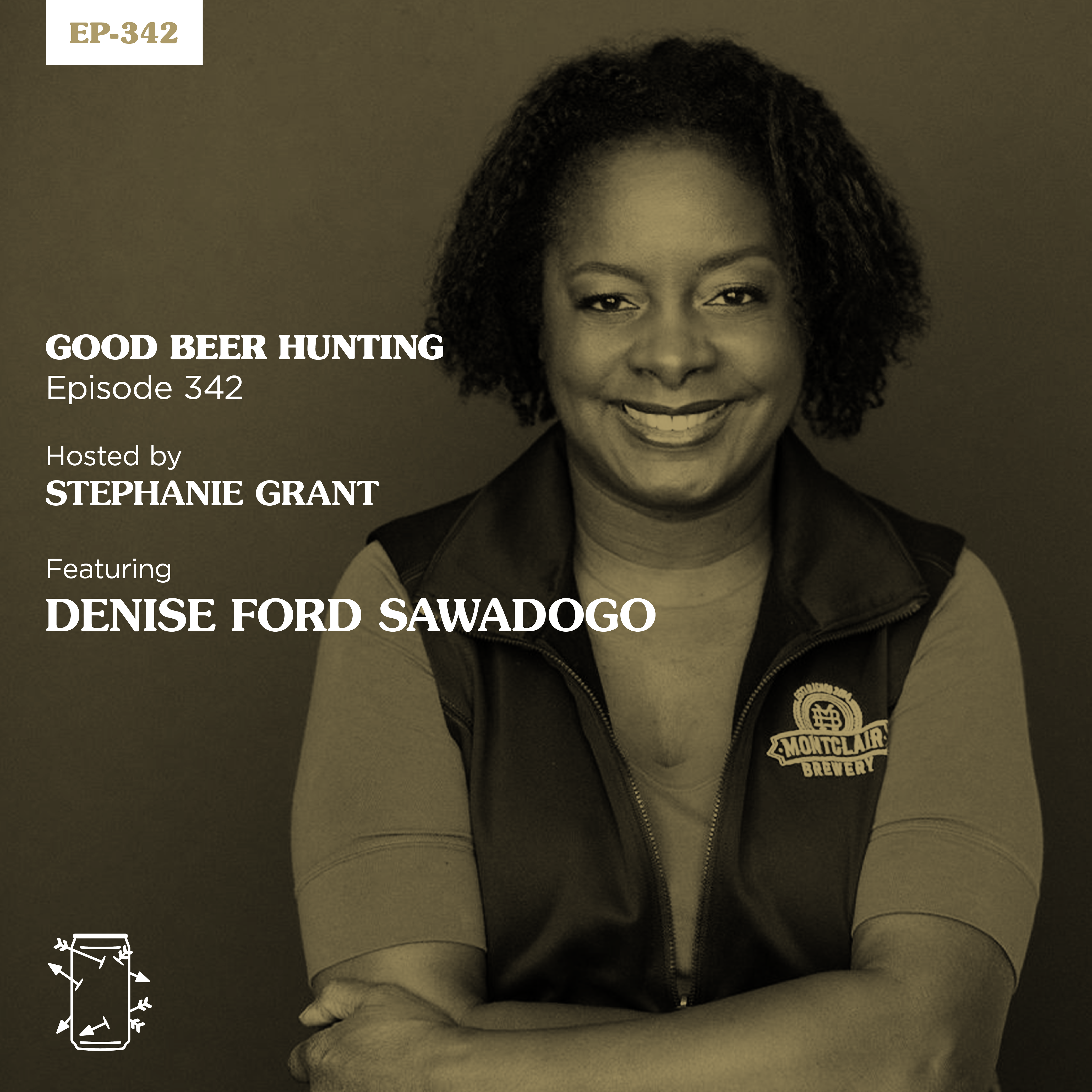
EI first learned about Montclair Brewery during Black History Month. Since opening in 2018, the brewery has honored prominent Black figures—from Harriet Tubman with its Tubman Railroad Strawberry Pale Ale to Chadwick Boseman with its Boseman Wild Ale. I had the chance to talk with Denise Ford Sawadogo, the co-owner and founder of Montclair Brewery, for an article I was working on for the New Brewer. While speaking to her, I was amazed at how much the couple's backgrounds showed up in their work at Montclair Brewery—Denise's family is from Jamaica and her husband, Leo, is from West Africa. Their culture appears in the music, programming, and of course, the beers they brew. It's a great reminder of the importance of diversity, equity, and inclusion (DEI), and how exposure to other cultures can increase our knowledge of the world around us while also teaching us something about ourselves. In our conversation, we talk about how the brewery's story began in Montclair, New Jersey, and the beautiful neighborhood which it's named after. Denise also shares how the couples bring their culture into the brewery, including the inspiration behind their Black History Series. We also talk about our moms, their entrepreneurial spirit, and how we learned never to give up on our dreams.
CL-103 Emma Janzen Bears Witness in Oaxaca
EThe first time I connected with Emma Janzen off social media happened last year when she, very graciously, offered to help guide me in the early stages of my book proposal. Since then, she's continued to mentor me through the harrowing process of actually writing a book. She's also made big career moves; recently published her latest book, "The Bartender's Manifesto" with Toby Maloney and the bartenders at noted Chicago bar The Violet Hour; and even picked up a James Beard Award for her previous book, "The Way of the Cocktail," co-authored with Chicago bartender Julia Momose. Throughout that time, she's also continued her work as a journalist, editor, photographer, and storyteller. Emma published an almost painfully beautiful personal essay for Good Beer Hunting titled "Slow, Reflective, Quiet — Meditations on Mezcal in San Baltazar Guelavila," on May 18, 2022. The story, which was born out of a straightforward press trip, evolved into something that resonated deeply within her soul, which in turn created an opportunity to tap into her voice as more than just a witness to creation. In today's conversation about her piece, Emma shares what it was like to break out of a more journalistic mindset in order to experience what was happening to and around her, the importance of balancing a generational legacy of artistry with increasing global awareness and demand, and what's at stake as mezcal marches towards a fork in the road, where one way leads to commodification and the other honors time and tradition. That story culminates with a feeling of optimism—or at least, I hope it does. Bonus: In the latter part of the conversation, Emma mentions a Spotify playlist that helped center her thoughts at the end of her trip to the heart of Oaxaca. If you're curious about the vibes, here's a link to said playlist.
Pittsburgh Mixed Culture Festival
EToday's episode is a preview of a festival coming up in Pittsburgh on July 30th called Mixed Culture. GBH is intimately involved as partners on the branding and content side of the festival—and that's in large part because the people behind it are both clients and long-time friends of ours at Cinderlands Beer Co. This festival is a sort of "coming of age" moment for their whole crew. On the back of so many big wins—launching their second and third locations, reinventing the Foederhouse to make exquisite wood aged and mixed culture beers, and taking a medal this year for Gregg, their saison, I couldn't be more proud of what these folks have accomplished. And their brewer Paul Schneider is a personal friend of mine and we both fell into beer around the same time in Chicago going to bottle shares and tagging along at breweries until we could get our foot in the door. Of all the brewers who we worked with for our Uppers & Downers festival, no one took the assignment more seriously than Paul did when he was brewing at Solemn Oath in Naperville, Illinois. He's probably made more coffee beers than any other brewer on the planet.
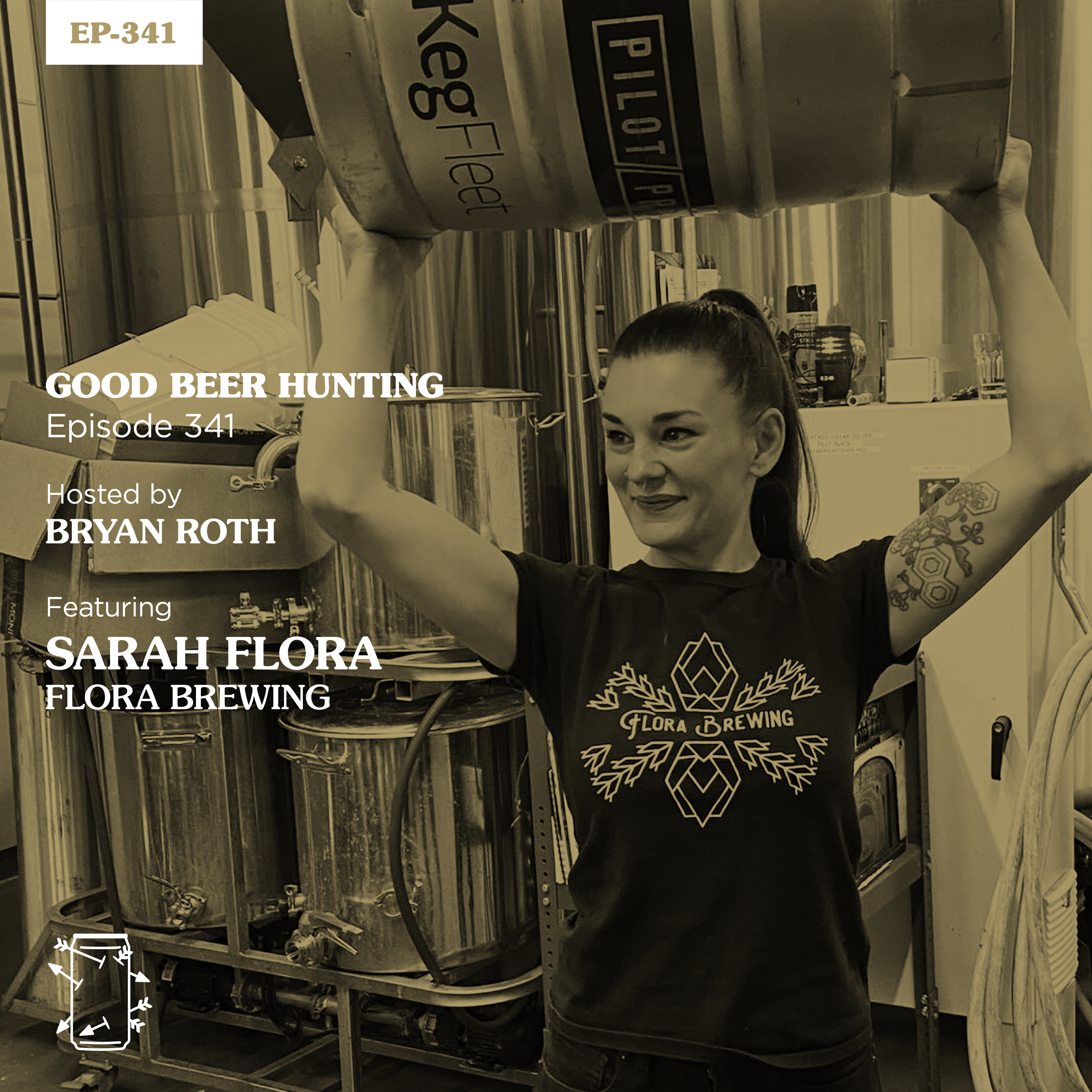
EP-341 Sarah Flora of Flora Brewing
EExpertise is an easy thing to pin down … or is it? There's the oft-cited 10,000 hours that it takes to become an expert. Or there's a dictionary we could pull from a book shelf or mobile device to look up a definition. Or maybe we just know it when we see it in action. There are all sorts of experts who share all sorts of expertise with the world, and whether they know it, like it, or claim it, it's inspiring. We could turn to Google any time we want, but there's something special—and perhaps necessarily human—about not relying on a manual or book and finding expertise from another person. In this conversation, we hear from Sarah Flora, a homebrewer with a large following across social media and YouTube, an award-winning podcast, and by all means, an expert. She connects people across the globe with tips and insights on the homebrewing process, beer reviews, and light-hearted reflections on what it means to exist in the beer and homebrewing worlds. Throughout this chat, we connect these things to how Sarah approaches educating herself and others, the value of taking risks, and why it's valuable to have loved ones giving you a little push when you need it. Sarah was part of Good Beer Hunting's 2021 Signifiers—an annual collection of people GBH celebrates who shape the future of the beer industry. It's Sarah's expertise that puts her in that position, and a drive to learn and improve that will help you understand the "how" and "why" she inspires others. The thousands of interactions Sarah gets on Instagram posts or YouTube videos every week are basic measurements of her impact, but as you learn more about her as a person as we talk, you'll likely find an even greater appreciation for how she uses her skills to make being an expert delightfully human.
CL-102 John Harry Knows This Land Is Not Our Land
ESometimes, we can make the mistake of thinking history only applies to things that happened long ago. But as Wisconsin-based beer historian and writer John Harry reminds us, events that happened in our lifetime can still resonate and help inform our collective understanding of yesterday, today, and tomorrow. In his piece titled "Racism in a Can' — How One Beer Epitomized the Native American Struggle for Treaty Rights," which was published on April 14, 2022, John describes how one beer, which was inspired as a fundraiser for a white supremacist initiative against Native American rights, changed Wisconsin forever. That beer, known as Treaty Beer, ultimately lost money and steam, but the stain of its racist agenda is still felt in the area today. In fact, in our conversation, John reveals how hard it was to get anyone to speak with him for this story, how he came across Treaty Beer, and why he decided to research its place in regional history. We also talk about how in reality, cancel culture is actually just consequences and accountability, and why education is key to understanding fundamental human issues. John explains that despite a history of repeated oathbreaking by the United States government, especially towards its Indigenous population, any treaty made in good faith between two sovereign nations is just as legitimate as any other. Beer history is never just about the beer, and there's plenty of work to be done to continue questioning, fighting, and improving.

NG-001 Next Germination — Keeping Neurodiversity In Mind
EWelcome to the first episode in our Next Germination series, produced in partnership with Guinness. For those of you that have been reading and listening to Good Beer Hunting for years, you know how important the underwriting we receive is. Alongside hundreds of paying subscribers, whom we call the Fervent Few, our underwriters enable us to pursue big, ambitious projects. And no one has been more supportive and continuously so than Guinness. Years of support has helped us build an unprecedented editorial team in beer. This team has claimed dozens of awards over the years, including the North American Guild of Beer Writers awards, which we won roughly half of all those awards last year. The Society of Professional Journalists award. And this past weekend, a James Beard award. All this momentum and continuity would not be possible—not even close—without the support of the folks at Guinness. And today marks yet another step in that collaborative journey with the Next Germination series. When we were scoping out the themes and ambitions for this two-year stretch of underwriting, nothing was more important to Guinness and our team than extending that long table of beer to include more people who have traditionally been marginalized from the industry and its culture, which is often prone to a monoculture. For a brand that's known and loved around the world, in countries like Ireland the UK of course, but also Nigeria, the Caribbean, and the U.S. where they built their latest production facility and taproom in Baltimore, Guinness' future is directly dependent on the growth of beer drinking audiences, and the increasingly diverse and equitable spaces and cultures that surround it. This series—called Next Germination—reflects our editorial team's desire to continue our own mission of helping beer drinking audiences get smarter, more impassioned, and inspired about the world's most popular drink. It's a perfect alignment in both mission and ambition. So what exactly is the Next Germination? Well, we believe the beer world is so much more than its homogenous stereotypes. Today, a new and diverse generation of drinkers, change-makers, and doers is continuing to push for progress in every direction. Their aims are varied, but their shared emphasis on equity, community-building, and access has deep reverberations that go beyond the liquid in your glass. So together with Guinness, The Next Germination is a series of stories and podcasts that celebrates the people making beer brighter and broader—and transforming its future for the better. In this first episode, I'm talking to Beth Demmon, one of our best writers and hosts about her first piece that kicks off the series - called "Keeping Neurodiversity in Mind — How Two Groundbreaking Breweries are Making Beer Spaces More Accessible" We both rely on our limited experience as parents of neurodiverse children as a way in to appreciating and articulating the experience of neurodiverse beer drinkers, and how the industry has an emerging opportunity - especially in its hospitably sector - to broaden its approach to a wide array of audiences with specific needs that could help center them in the future of beer.

EP-340 Daniel Muñoz + Jeremy Grinkey of Everywhere Beer
EDoes the world really need another craft brewery? Honestly, no—but Daniel Muñoz and Jeremy Grinkey think the world just might need their brewery, which is coming very soon to the city of Orange in Orange County, California. It's called Everywhere Beer, but they're not just stopping at beer. The two co-founders, along with their partners Stefan Weber and Keith Pumilia, hope to create a space that's comfortable, welcoming, and approachable for everyone in their community, something that unfortunately still remains a relative rarity across the craft beer industry. In today's conversation, Jeremy, Daniel, and I discuss the future of Everywhere, but also their pasts. Listeners might know of Jeremy as the long-haired and long-bearded director of production at The Bruery, or as @Sour_Jesus on Instagram. Both of them are veterans of the wine industry as well as The Bruery, where their partners also worked before banding together to form Everywhere. What led four guys to leave The Bruery to start their own? As it turns out, lots of things, including a shared need to write their own legacies instead of perpetuating someone else's; the search to find their own voices as artisans; a pandemic-inspired realization that our time on Earth is finite (so get busy living); and finally, a desire to expand representation in a mostly white culture. How do four dudes in Orange County plan to accomplish that? You'll just have to keep listening. You'll also hear about the ups and downs of finding their space, which beer styles and breweries inspire them, what consumers they hope to attract, which types of beers to expect (as well as beverages outside of beer, like wine, hard seltzer, and maybe even craft soda), and why they feel philanthropy is a crucial element to supporting their local community. The sky's the limit: Or at least, their 20-tap system is. Everywhere Beer is tentatively slated to open in August 2022. Let's hear about how they're going to make that happen and where it will go from there.
CL-101 Anthony Gladman Rejects The Hype
ESome people call it boring brown beer, but others think of it as liquid from heaven. In a love letter to what's arguably the most British of beer styles, writer Anthony Gladman covers the history, meaning, and future of Best Bitter in his piece titled "Don't Call It a Comeback — Taking Stock of Best Bitter's Moment in the Spotlight," which was published on April 6, 2022. In today's conversation, Anthony and I talk about the early, uncertain days of the COVID-19 pandemic, which spurred a collective return to familiar flavors, with beer being no exception. He found that comfort in a can of Best Bitter, brewed collaboratively between Boxcar Brewery and Mills Brewing. Unbeknownst to him at the time, that beer ultimately led him down this path of exploration into what the Best Bitter actually is, where it comes from, and how it shapes the identities of brewers over generations, even in the face of inevitable evolution. The style is currently at a crossroads, one where allegiance to history and tradition is butting up against changing demographics and contemporary craft beer culture. But despite those changes, it's still a beer style that means something to many, if not most, British drinkers. Today, you'll hear about that shared experience, what makes a Best Bitter a Best Bitter, what Anthony loves about the easy-drinking style, and his musing on where tradition may be headed. Don't let the name fool you—there's a loving sweetness in the soul of every cask pour of Bitter.

SM-006 Worth Saving: Brewery Records and the Future
EBreweries love to talk about what they bring into the world. In other words, their beer. Breweries tend to talk less about what they leave behind. Their focus is on the next batch of beer, not the last one. In a lot of ways that makes perfect sense...but if you want to keep track of your business, your favorite brands, or the industry as a whole, a forward focus can also leave a blindspot. Breweries imprint upon the world with more than just their beer. They forge facilities with both equipment and character. They create all sorts of physical objects like tap handles, labels, cans and bottles, coasters, merch, and so on.They create terabytes of information: websites, graphics, brew logs, TikTok videos, and recipes to name a few. Even more gets created in their name by other entities, from government to Google. Most romantic of all these are the memories, relationships, ideas, and inspirations that breweries create. They both affect us individually and ripple out into communities. On and on it goes. A brewery's imprint today is expansive, it's redundant...and it's fleeting.Of all the stuff I just mentioned, very little of it is built to last.Beer gets consumed. Virtually all brewing facilities eventually close, even the wildly successful ones. Websites get taken down. Merch wears out or gets thrown out. Computer files get lost or deleted. And unless we record our memories somehow, they'll inevitably fade with us. All this to say: as time passes for a brewery–or anything else in this world–what's known becomes limited to what's left. Imagine what gets lost in a year. Imagine what gets lost in a hundred.

EP-339 Paula de Pano of Rocks + Acid Wine Shop
EWhile beer is in the name of this podcast, we explore all kinds of beverage alcohol with our guests. In recent episodes, we've talked about alcohol-infused coffee, agriculture, filmmaking, and more. If you follow alcohol industry news—or just stroll through your local grocery or liquor store—you know hard seltzer and canned cocktails increasingly take up space on shelves and in conversations. All of which is to say, the entirety of alcohol matters more every day as people explore new options, flavors, and expand their own understanding and expectation of how they enjoy and connect to whatever is in their bottle, can, or glass. These themes are what led me to Paula de Pano, an advanced sommelier, wine educator, and entrepreneur behind Rocks + Acid Wine Shop, a new bar and store in North Carolina. Paula is a longtime industry vet with an education in culinary arts from the Culinary Institute of America—that's the "CIA" you'll hear mentioned in this interview—and she is opening this new venture with a focus on ways to court all kinds of drinkers. Wine can kind of feel stodgy at times given its history and pop culture status as a drink of choice for older, more affluent people, but Paula is making distinct choices about how to stock wines and interact with customers that seem necessary to reach a wider audience. She's taking a unique stance on who she buys wine from and why, and even the physical layout of Rocks + Acid is meant to provide an atmosphere where education feels welcomed, not forced. The past 20 years has offered narratives of beer's decline, spirits' rise, and wine's … consistency. It hasn't really lost volume or sales, but it has faded a bit in terms of attention, especially for younger drinkers. So, while we talk about and see the evolution of alcohol into all sorts of flavored concoctions that line store shelves, Paula is looking to make wine more familiar, welcoming, and exciting for all.

CL-100 Kate Bernot Keeps It Twisted
EWhat were you drinking in the early 2000s? When we look back on trends and data, there's a good chance it was a flavored malt beverage along the lines of Zima, Mike's Hard Lemonade, or the star of today's story: Twisted Tea from Boston Beer Company. In her exuberant and extremely thorough piece titled "Spill It — Twisted Tea's Unpredictable, Unparalleled 21-Year Success Story" journalist Kate Bernot unpacks everything there is to know about the cult favorite: its experimental origins, its shockingly consistent sales numbers, and the brand's plans for future expansion in order to bring the gospel of boozy tea nationwide. Not that it needs to sell itself too hard—Kate describes Twisted Tea's unusually fervent consumers, who've remained loyal for two decades and are showing no signs of straying. In today's conversation, we share stories about our own experiences with the brand and how craft beer's tunnel vision can sometimes make us unaware of successes outside our own spheres. She also shares some of her insight into the when, where, why, and how of Twisted Tea's origin—and wonders why it's so hard to get the full story from its creators. If there's one thing to take away from our discussion, it's to have an open mind when it comes to what you drink. You may be surprised at what you're missing.
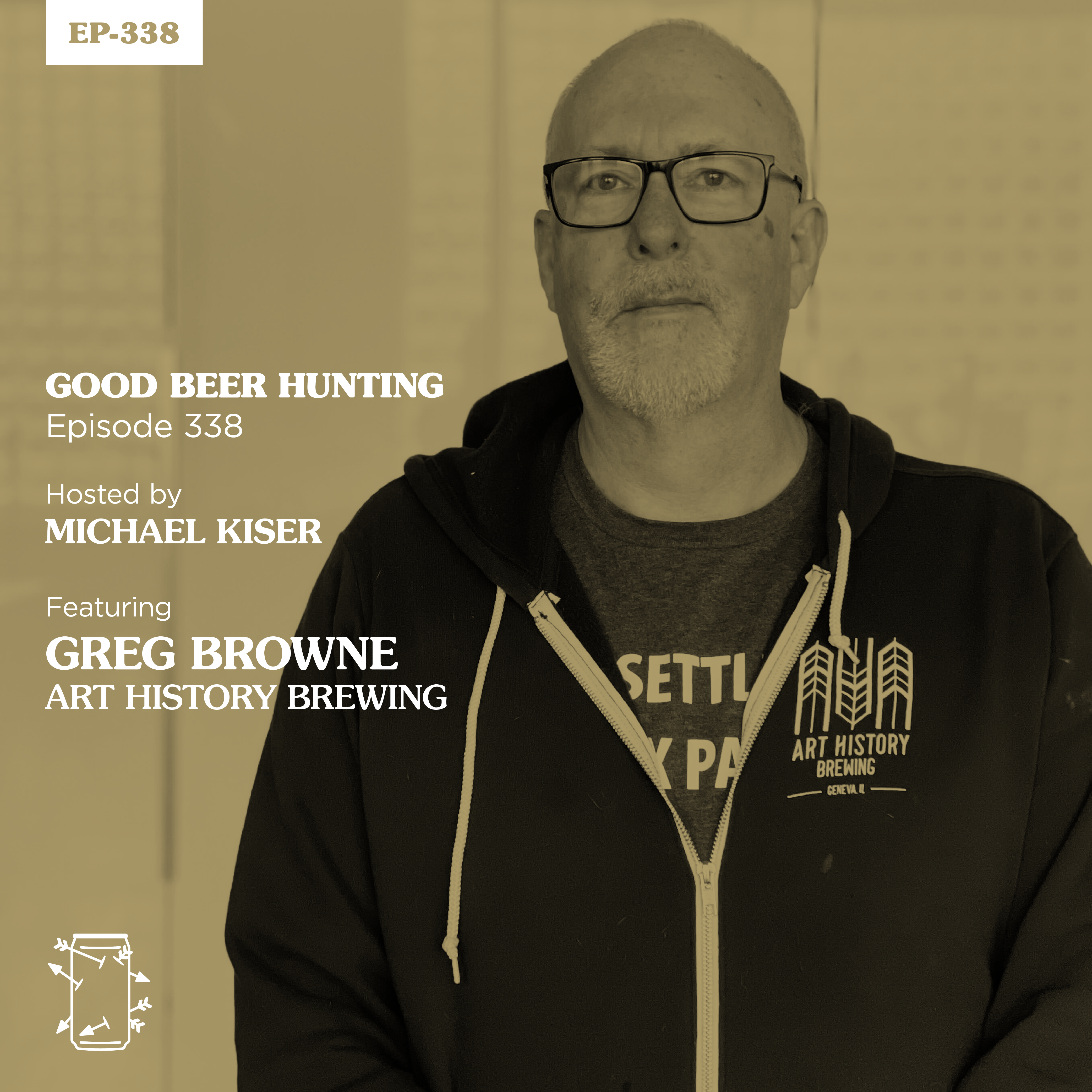
EP-339 Greg Browne of Art History Brewing
EToday's guest has been a bit of a ghost int he GBH machine for more than a decade - since our founding really - and he's someone I think about every time someone asks me how GBH got started - and as you'll discover shortly, he had no idea. Greg Browne was the brewer at a brewpub in Chicago's NW suburbs - a place called Mickey Finn's. He was known for brewing a hefeweizen - a recipe he inherited from his predecessor when he took over as head brewer. More importantly, for me, he was the host of a weekly Beer School at The Map Room in Chicago - a midday gathering on Saturday's where guests would enjoy some bread and cheese and learn about beers in a thematic way - and the themes were whatever happened to be on Greg's mind that week. It's an incredible memory for me - from a time when I'd only had a smattering of craft beer experiences to rely on - and I hardly considered myself a fan of beer in any particular way. It was just causal and sometimes interesting fun. Most of my bar experiencers a the time involved $1 off specials of Blue Moon and some Golden Tee. Not exactly sophisticated stuff - but it was kind of the Chicago way. Map Room - and Greg Browne's beer school painted an entirely different picture however. And I'm forever indebted to that moment when he served me my first Saison Dupont. That's the beer that inspired GBH - and Greg is the one who created that moment, unbeknownst to him. But that's not the real reason we're talking today - that's a story we could have shared at any point in in past decade really. Today I'm talking to Greg because for the first time in a long time, I saw his name pop up as part of a new brewing project called Art History, and it recently started supplying two fantastic beers to Chicago's Hopleaf Bar. As far as I know the sis the first time Hopleaf has ever had a house beer. The venerated tap list there is a target for anyone trying to make a name for themselves in Chicago's beer scene. Brewers host parties just to celebrate getting on tao there for the first time if they're lucky enough to make the list at all. So for Greg to have a new gig - and so quickly become a mainstay on that list as a pair of house beers - is an unprecedented achievement. And for this episode, I reached out to Michael Roper of Hopleaf for his perspective on all that. It was a sign for me that it was finally time to get Greg on the podcast, share this story with him, and hear so much more about his own. It takes us deep into Chicago's craft brewing past - and paints pa picture of the future that I'm very excited about.
CL-099 David Jesudason bellies up to the 'color bar'
EThe color bar may be Britain's most shameful secret—even though it's not so secret after all. In journalist David Jesudason's intensely researched and deeply personal new piece titled "Breaking the Color Bar — How One Man Helped Desegregate Britain's Pubs (and Fought for an Anti-Racist Future)," which was published on March 16, 2022, David shares the story of Avtar Singh Jouhl, a British Indian activist, communist, and beer lover who was instrumental in bringing awareness to and dismantling segregated drinking spaces in Britain. In this conversation, David and I unpack his process for approaching the piece: how his personal experiences and identity help him tackle thorny topics like racism, what he didn't learn from the history books (and what he took upon himself to discover), which current events led him to write this, and how Britain continues to deny its legacy of racism both yesterday, today, and tomorrow through the residual effects of imperialism and nationalism. You'll also hear a clip from Avtar himself, sharing his own experience in his own voice, as a part of living history. This is a good time to remind anyone who still thinks beer isn't political how wrong they are, and how far we still have to go to ensure safe, inclusive spaces for all. Join us, right now, to hear about how one extraordinary man made an enormous impact in the fight against racism in Britain, what didn't make it into the story, and what comes next, both in and out of beer.
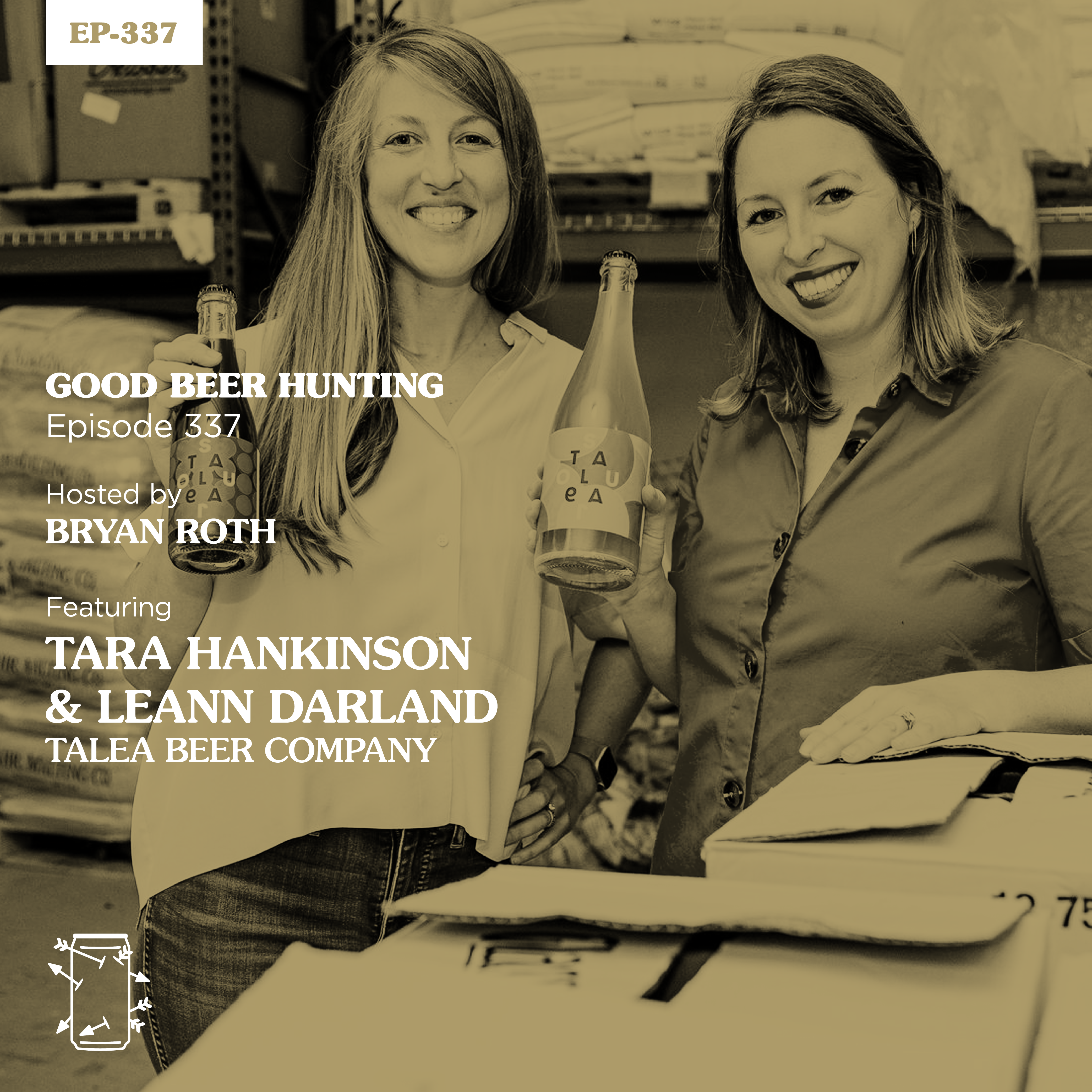
EP-337 Tara Hankinson and LeAnn Darland of Talea Beer Company
EThere is a lot of calculated nuance in today's beer industry. You have to be purposeful in your business plan, consider who you're selling to and where, and what your company stands for. Good beer is the table stakes, and these are differentiators that help create a successful business. It's not easy to carve out a niche, but it is possible, when you see all this nuance. In this conversation we meet Tara Hankinson and LeAnn Darland of Talea Beer Company. The pair are the co-founders and co-CEOs for the Brooklyn-based brewery, which has built its early success on attracting previously underserved consumers and creating a unique atmosphere at their taproom to appeal to all. You'll hear them cite statistics and anecdotes as we chat, and their background in non-beer industries gives them a valuable perspective on new ways to differentiate themselves. I know it's cliché to talk about how an outsider can bring new ideas and perspectives to old industries, but in a market where space is at a premium, both on shelves and in people's minds, Tara and LeAnn recognize what they can do to create something special and expand their reach across New York City. You'll get to hear about what first brought them to this moment and even what they see as important next steps for themselves and the future of the business. All of what happens between is intentional, thoughtful, and works to establish itself within this complicated nuance that allows a company to make connections that can create lifetime customers.
CL-098 Jerard Fagerberg Wants To Talk About Money
EWho wants to talk about money? We're going to. I'm joined today by Jerard Fagerberg to talk about his piece titled "Pour Clean, Like the Source — CA Draft Tech in Oakland, California," which was published on Good Beer Hunting on February 18, 2022. In this piece, he outlines the creation, evolution, and expansion of CA Draft Tech, a sanitation service for taprooms, bars, and restaurants across the Bay Area. With the help of SMBX, an alternative financing company that allows consumers to invest directly in local businesses, CA Draft Tech was able to grow their business outside a bank's traditional loan structure. It was Jerard's first time exploring the niche world of hospitality financing, but it's probably not the last. He describes the research and writing process as a challenge, but a necessary one in order to demystify finances and introduce a level of transparency not often seen when discussing that big elephant in the room—money. You'll hear from Jerard about how the story took shape, how to best discuss the business of beer without ignoring the very real human element, just what bonds are, how SMBX taps into communities in order to elevate businesses, and why this model is well-suited to the high-capital, low-margin world of hospitality. One note for listeners: This story was published as part of Good Beer Hunting's Compound Interest series, underwritten by SMBX, which highlights different ways small businesses can get the funding they need; all of the businesses profiled in this series have worked with SMBX to achieve part or even all of their funding. And on that note, we have our own bond offering on the platform for anyone interested in investing in Good Beer Hunting's future.

FFT-019 Tomme Arthur of The Lost Abbey
EThe long-awaited return and continuation of Foeder for Thought - GBH's collaboration with Green Bench Brewing Company in St Petersburg Florida. GBH's Founder, Michael Kiser, hosts a series of talks with wile ale producers from around the world in front of a live audience. Episodes from 2022: FFT-013 Khris Johnson of Green Bench Brewing Company FFT-014 Tim Adams of Oxbow Brewing Company FFT-015 Jeffery Stuffings of Jester King Brewery FFT-016 Christian Gregory of 3 Fonteinen FFT-017 Pierre Tilquin of Gueuzerie Tilquin FFT-018 Jason Perkins of Allagash Brewing Company FFT-019 Tomme Arthur of The Lost Abbey

FFT-018 Jason Perkins of Allagash Brewing Company
EThe long-awaited return and continuation of Foeder for Thought - GBH's collaboration with Green Bench Brewing Company in St Petersburg Florida. GBH's Founder, Michael Kiser, hosts a series of talks with wile ale producers from around the world in front of a live audience. Episodes from 2022: FFT-013 Khris Johnson of Green Bench Brewing Company FFT-014 Tim Adams of Oxbow Brewing Company FFT-015 Jeffery Stuffings of Jester King Brewery FFT-016 Christian Gregory of 3 Fonteinen FFT-017 Pierre Tilquin of Gueuzerie Tilquin FFT-018 Jason Perkins of Allagash Brewing Company FFT-019 Tomme Arthur of The Lost Abbey

FFT-017 Pierre Tilquin of Gueuzerie Tilquin
EThe long-awaited return and continuation of Foeder for Thought - GBH's collaboration with Green Bench Brewing Company in St Petersburg Florida. GBH's Founder, Michael Kiser, hosts a series of talks with wile ale producers from around the world in front of a live audience. Episodes from 2022: FFT-013 Khris Johnson of Green Bench Brewing Company FFT-014 Tim Adams of Oxbow Brewing Company FFT-015 Jeffery Stuffings of Jester King Brewery FFT-016 Christian Gregory of 3 Fonteinen FFT-017 Pierre Tilquin of Gueuzerie Tilquin FFT-018 Jason Perkins of Allagash Brewing Company FFT-019 Tomme Arthur of The Lost Abbey

FFT-016 Christian Gregory of 3 Fonteinen
EThe long-awaited return and continuation of Foeder for Thought - GBH's collaboration with Green Bench Brewing Company in St Petersburg Florida. GBH's Founder, Michael Kiser, hosts a series of talks with wile ale producers from around the world in front of a live audience. Episodes from 2022: FFT-013 Khris Johnson of Green Bench Brewing Company FFT-014 Tim Adams of Oxbow Brewing Company FFT-015 Jeffery Stuffings of Jester King Brewery FFT-016 Christian Gregory of 3 Fonteinen FFT-017 Pierre Tilquin of Gueuzerie Tilquin FFT-018 Jason Perkins of Allagash Brewing Company FFT-019 Tomme Arthur of The Lost Abbey

FFT-015 Jeffery Stuffings of Jester King Brewery
EThe long-awaited return and continuation of Foeder for Thought - GBH's collaboration with Green Bench Brewing Company in St Petersburg Florida. GBH's Founder, Michael Kiser, hosts a series of talks with wile ale producers from around the world in front of a live audience. Episodes from 2022: FFT-013 Khris Johnson of Green Bench Brewing Company FFT-014 Tim Adams of Oxbow Brewing Company FFT-015 Jeffery Stuffings of Jester King Brewery FFT-016 Christian Gregory of 3 Fonteinen FFT-017 Pierre Tilquin of Gueuzerie Tilquin FFT-018 Jason Perkins of Allagash Brewing Company FFT-019 Tomme Arthur of The Lost Abbey

FFT-014 Tim Adams of Oxbow Brewing Company
EThe long-awaited return and continuation of Foeder for Thought - GBH's collaboration with Green Bench Brewing Company in St Petersburg Florida. GBH's Founder, Michael Kiser, hosts a series of talks with wile ale producers from around the world in front of a live audience. Episodes from 2022: FFT-013 Khris Johnson of Green Bench Brewing Company FFT-014 Tim Adams of Oxbow Brewing Company FFT-015 Jeffery Stuffings of Jester King Brewery FFT-016 Christian Gregory of 3 Fonteinen FFT-017 Pierre Tilquin of Gueuzerie Tilquin FFT-018 Jason Perkins of Allagash Brewing Company FFT-019 Tomme Arthur of The Lost Abbey

FFT-013 Khris Johnson of Green Bench Brewing Company
EThe long-awaited return and continuation of Foeder for Thought - GBH's collaboration with Green Bench Brewing Company in St Petersburg Florida. GBH's Founder, Michael Kiser, hosts a series of talks with wile ale producers from around the world in front of a live audience. Episodes from 2022: FFT-013 Khris Johnson of Green Bench Brewing Company FFT-014 Tim Adams of Oxbow Brewing Company FFT-015 Jeffery Stuffings of Jester King Brewery FFT-016 Christian Gregory of 3 Fonteinen FFT-017 Pierre Tilquin of Gueuzerie Tilquin FFT-018 Jason Perkins of Allagash Brewing Company FFT-019 Tomme Arthur of The Lost Abbey
EP-336 Kate Bailey of Hand & Heart
EIt's been nearly one year since craft beer began to face its biggest reckoning against sexism, racism, and toxic work culture to date. In that time, there has been some progress, but there has also been a growing polarization between those making calls for change and those making accusations about an out-of-control cancel culture. In the midst of this ongoing controversy and debate, Kate Bailey from Hand & Heart has been working to establish a first-of-its-kind foundation for reconciliation and progress within hospitality. As a consultancy that aims to improve business operations by advocating on behalf of workers, Hand & Heart developed the Mikkeller Reconciliation Program and the BrewDog Affected Workers Registration Platform in order to acknowledge, document, and hopefully reconcile issues to the satisfaction of affected workers and leadership at both businesses. These efforts have come with a significant amount of challenges: emotionally, legally, and financially. Some of those witnessing the challenges have raised some questions. How does this work? Who's paying the bill? Are there any guarantees of a safe and satisfying outcome? I spoke with Kate Bailey and ask some of these questions, although it's important to note that since our first conversation recorded here on March 29, 2022, several new developments have come from both Hand & Heart as well as BrewDog in the ever-changing controversy. In a statement made by Hand & Heart on April 2, Kate does clarify that payments were made by Mikkeller to Hand & Heart for mutually agreed upon services rendered as part of the Reconciliation Program. In a similar statement made in response to BrewDog on April 1, Kate explains that although Hand & Heart's preliminary efforts towards reconciliation do not hinge on any promise of financial compensation, if a business were to opt into an individually tailored program, fees associated with carrying out the services would be agreed upon and expected as with any consultancy agreement. As of today, there are no current negotiations between Hand & Heart and BrewDog. Either way, at no point are victims or accusers expected or required to pay Hand & Heart for their services. In this conversation, you'll hear Kate explain her investigative background and when it dovetailed with beer, how she's able to facilitate between victims and breweries as a third-party, the risks this business model assumes, and her take on what real leadership looks like. We also discuss that despite the impossibility of a one-size-fits-all solution, the effort towards healing is a crucial, yet relatively new model for the craft beer industry. Kate says people don't want revenge—they want accountability. And she wants to help build that, despite the numerous challenges and criticisms that she, and many other activists, face when demanding responsibility from anyone upholding toxic systems. It's a high stakes process—and safety is top of mind for Kate every step of the way. Find out exactly what she does to ensure safety and establish credibility, how she aims to facilitate a two-way dialogue that requires trust on both sides to accomplish a mutually beneficial—if not sometimes uncomfortable—path towards positive change, and why she remains hopeful at the possibility of redemption, even when the evidence gives her no reason to believe. This doesn't end wrapped up neatly with a bow. But what ever does?

CL-097 William Costa on the Subculture in the Subtropics
ECraft beer is starting to show up in places where many of us have never been, and maybe never even thought about visiting. The small South American nation of Paraguay could be considered fairly remote by most standards: Paraguay is fully landlocked, roughly in the middle of the continent, bordered by the much larger countries of Brazil, Argentina, and Bolivia. Its capital, Asunción, is fairly off-the-radar compared to popular South American tourist destinations like Rio de Janeiro and Buenos Aires. And yet even in Paraguay, good beer is really starting to make waves, as the writer William Costa reported in his recent story for us, "Mother of Cities — Subtropical Wanderings in Asunción, Paraguay." Paraguay's location makes for some interesting dynamics. As a landlocked country, going to the beach for relaxation or swimming means heading to a river, not the ocean. While Asunción is mostly Spanish-speaking, Paraguay actually has two official languages: Spanish and Guarani, which is the only Indigenous language to be spoken by the majority of a non-Indigenous population in the Americas. And distinctive local ingredients, including yerba mate, cassava flour, and the medicinal herbs known as pohã ñana, are now starting to show up in Paraguayan beers. In this episode, I talk to Costa, a long-term British resident of the country. We discuss beer, his article, snack foods, and even talk about some unique sounds from his daily life in Asunción, Paraguay.
EP-335 Alessandra Agrestini of The Italian Grape Ale Beer Challenge
EAs far as we can tell, many of the earliest beers ever made were actually beer-wine hybrids, brewed out of both grain and fruit. Fast-forward 10,000 years or so, and beers made with grapes are once again in fashion. Sometimes called "Oenobeers," after oenology, the science of winemaking, Grape Beers or Grape Ales are becoming more popular in a lot of beer regions, especially in Italy and other wine-loving countries. In this episode, I'm talking to Alessandra Agrestini, the president of the jury at a new tasting competition, the Italian Grape Ale Beer Challenge, which took place near the end of 2021 in Turin, Italy. (Full disclosure: I served as one of the competition's international judges.) Alessandra has been active in beer judging and beer education in Italy for quite a while — she and I first met at the Birra dell'Anno beer competition some 10 years ago. In our conversation, we discuss beer-wine hybrids, the current Italian beer scene, and beer travel, as well as beer education, food and beer pairings, and Italian Pilsner. We also touch on the notion of styles, and wonder if it's right to call all modern beer-wine hybrids "Italian" Grape Ales, regardless of where they are made. There is some justification for that claim: Italy probably produces more Grape Ales than any other country. The competition's website has a map showing more than 220 Grape Ales from over 130 breweries in Italy. However, Italy wasn't the first country to create modern beer-wine hybrids. Not all Grape Ales in Italy are produced in the same way, and there are wide variations in strength, color, flavor, aroma, acidity, and sweetness, which makes it hard to argue for Italian Grape Ale as a style unto itself. If you're interested in learning more, check out the website ItalianGrapeAle.org. The competition is open to entries from around the world, so if brewers you know make a great Grape Ale, Grape Lager, Oenobeer, or some other beer-wine hybrid, tell 'em to send it in this fall. And after this interview finishes, stick around for an update with the names of the competition winners.
CL-096 Alexander Gates on the Archipelago of His Beer Journey
EThere's a difference between idols and mentors. The allure of idols is their unattainability—their preciousness fueled by the impossibility of a first-hand connection. Mentors, on the other hand, spark curiosity and encourage personal growth by sharing their experience with others. Mentors, often selflessly, help shape the future, and ensure the traditions they hold so dear remain intact for generations to come. That's exactly why writer Alexander Gates decided to profile Cindy Goldstein, a national BJCP judge and fierce advocate for craft beer in Hawaii. In his piece titled "Finding Her Own Route — A Honolulu Brewery Crawl with Cindy Goldstein," which was published on February 2, 2022, he outlines Cindy's extensive background in science, homebrewing, judging, and community-building, and how her efforts have helped shape the small but ever-changing Hawaiian craft beer scene. In today's conversation about that piece, Alexander and I discuss what it's like writing about a mentor (and why people should seek out their own), why he decided to share her story, how Hawaiian beer is better than ever—despite the pandemic's massive disruption to tourism and the supply chain—and his own judging experience through the Beer Judge Certification Program. You'll hear how beer unites the chain of volcanic islands, thanks in no small part to Cindy's tireless and ongoing efforts, and what he's hoping to see as in-person beer classes, events, and competitions begin to awaken once more.
EP-334 Jeff Alworth of Beervana
EIf you're a beer enthusiast, you've likely come across Jeff Alworth at some point. The longtime blogger, journalist, author, and podcaster is one of the most valued in the country, and his research and storytelling is nearly unmatched. This isn't meant to be hyperbole, as the reason Jeff and I are talking on this episode is because we got to catch up as he traveled the country to promote the second edition of his book, The Beer Bible. We sat down outside at Asheville, North Carolina's Zillicoah Beer Company, to talk about his book and his own education and growth as a journalist and human. In the first half of this conversation you'll learn about what went into creating The Beer Bible and then recreating new parts of it for its new edition, and on the back half we chat about what it means to explore ideas of beer today, whether that's the hops that go into a beer, or the way we think about styles. And if you haven't yet read, heard, or met Jeff, I hope this conversation is a worthy introduction to someone who is kind and meaningful in their work and how they move in the world. We can learn a lot about beer by reading and listening to Jeff's work, but I hope this episode helps you appreciate him as a person as well.
CL-095 Adrian Tierney-Jones lets an arrow loose through time
EJW Lees' Harvest Ale is not a beer to drink casually, and it's not one to speak casually about, either. As an icon of British brewing, this Barley Wine is described by journalist Adrian Tierney-Jones as elegant, eloquent, and contemplative in his piece titled "The Arrow of Time — How JW Lees' Harvest Ale Has Defined British Brewing for Decades", which was published on February 16, 2022. As a longtime freelancer who writes about beer, pubs, and travel, Adrian has a unique perspective on Harvest Ale, in that he's had a front-row seat to this beer's evolution over the decades. He's also been witness to how it's stayed the same—a paradox we discuss in today's podcast. We talk a lot about time: How flavors deepen, how appreciation for history changes, and why there may never be another beer like Harvest Ale, thanks to FOMO beer culture and social media. He walks listeners through the JW Lees vertical tasting he attended while researching this story, which featured bottles dating back to the '90s, and reminisces about the styles and beers of bygone days that have influenced today's craft beer culture. There's a time and a place to hold onto beer, but it's always a good day to savor one. I recommend taking a look at your stash right now and selecting something special to pair with this podcast. As Adrian says, "Beer is fascinating."

FU-001 Foeder for Thought is on, and SMBX is in the house
GBH Co-Founder and Creative Director, Michael Kiser returns with of one of our favorite festivals with Greenbench Brewing in St Pete, Florida, and a new kind of fundraising that helps you invest in the future of GBH and our industry.

EP-333 Zahra Tabatabai of Back Home Beer
EFor all the power that memory provides us, its the connection to our senses that's the most visceral. While we can close our eyes and picture loved ones or a perfect summer day, it's the moment we smell a bag of candy or taste the right combination of spices that the past rushes back to life. Our eyes and ears can tell us about the present, but our nose and taste buds can be our time machine. In this episode, we explore what it means to chase flavor memory with Zahra Tabatabai, founder and CEO of Back Home Beer, a fast-growing company based in New York City rooted in her family's past. Zahra started homebrewing in order to recapture past tastes from her grandfather's days of homebrewing in Iran as a way to bring those memories back for her family. A hobby soon became more, and now her Sumac Gose and Persian Lager act as ways to recapture the ingredients and flavors of the past. As you'll hear in this conversation, at the core of Zahra's journey is her grandfather, Gholam-Reza, who was better known by his familial nickname of "baba joon," a term of endearment that translates to "father dear." Join me and Zahra as we talk about what led her to this moment, the speed of which her beer flies of shelves in New York and now Washington, D.C., and what it means to look back in time to bring something special into today.
CL-094 Anthony Gladman Believes The Time Is Ripe
EThere are some artistic endeavors that occur against all odds. Perry, or cider made with pears, is one of those things. Perry pears are hard to grow, hard to ferment, and sometimes hard to explain. But when all the elements of time, energy, climate, effort, and care come together, the end result can be otherworldly. In his piece titled "Madness and Bitter Fruit — Making Perry in the Shadow of May Hill," writer Anthony Gladman dives into the relatively unknown world of perry, and how ancient seeds have helped create a contemporary cult following around this marvelous and mythical drink. He admits that you have to be a bit of a nerd to really get into perry, but once you do, there's no turning back. In today's conversation, we talk about who's making perry (and why many people don't), how perry's PR problems have created confusion about what it actually is, the importance of preservation in the face of climate change, and how this fragile fruit may hold the key to our past and our future. If you can (legally) partake, this conversation and article are best experienced with a bit of cannabis influence, and, of course, with a nice pint of perry as well. We only scratch the surface of what there is to know, but it's a great place to start.

EP-332 Amin Anjedani, Sam Madani, and Kai Drewry of BOMANI Cold Buzz
EWalk down the right aisle at your grocery or convenience store and you might come across an alcoholic version of just about anything. Hard seltzer is an obvious. Hard kombucha is gaining traction. Hard yerba mate? You bet. It should be no surprise that hard coffee is now a category worth tens of millions of dollars. In this episode, we meet the people behind one of the companies carving out a corner of this increasingly successful—and interesting—hard coffee space. We meet Amin Anjedani, Sam Madani, and Kai Drewry of BOMANI Cold Buzz, a 5.7% alcohol-infused cold brew. The trio are friends who have identified this percolating space and have created a premiumized version for a category once monopolized solely by Pabst Blue Ribbon Hard Coffee. How can this space exist? How is this not Four Loko 2.0? These are things we'll learn about as the three co-founders give insight on a continued evolution of beverage alcohol. We're at a point where consumers can find just about anything to fit their mood or occasion—with or without alcohol—so it actually makes perfect sense that in 2022, we should be talking about what's next for alcohol-infused coffee.
EP-331 Dave Infante of Fingers Newsletter
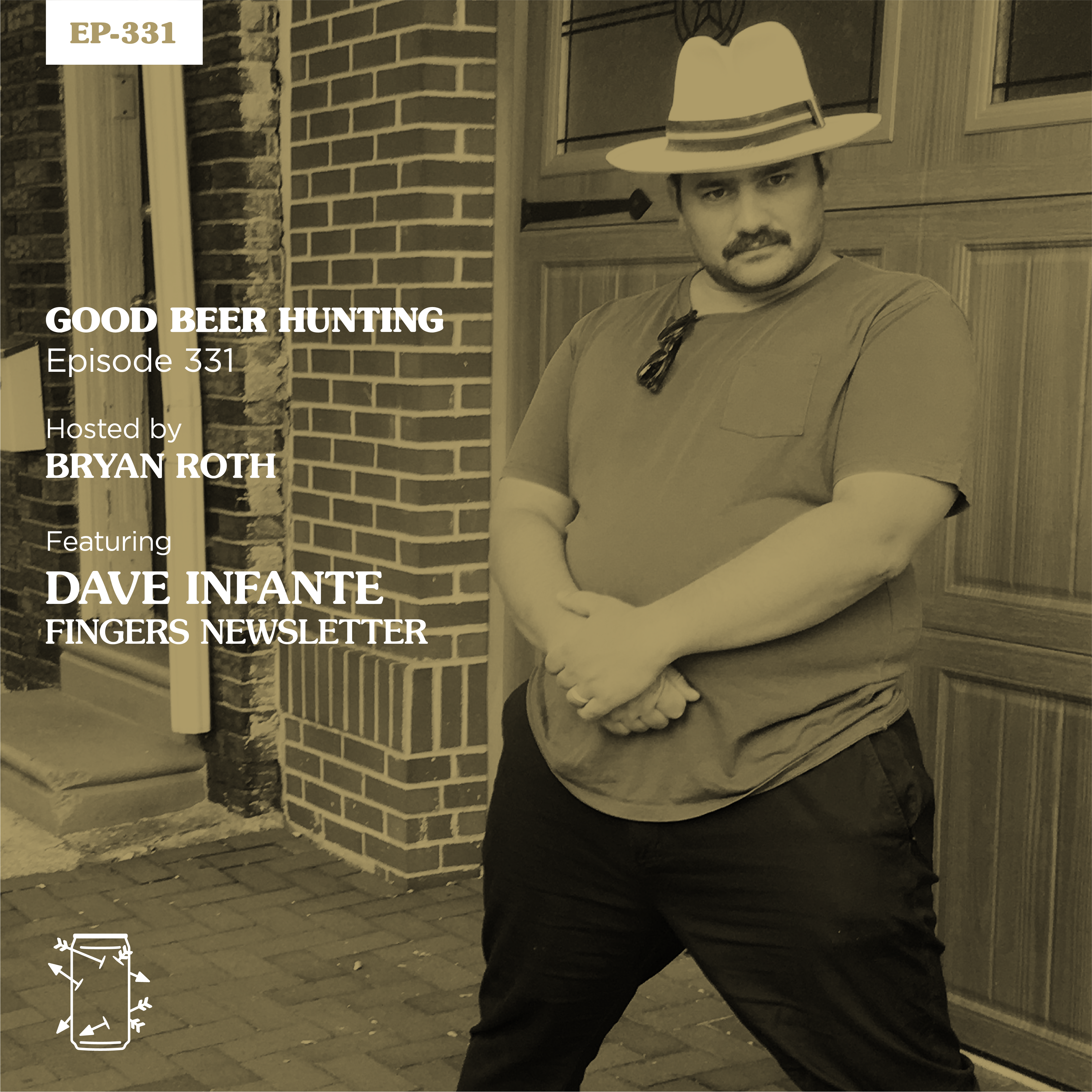
EIn this episode, we're talking about dads. Their influence on us, the things they taught or didn't teach us, and how we do or don't follow in their footsteps. That's actually a small part of this conversation with Dave Infante, but perhaps the most surprising and fun piece of it all. Come for the dad talk, stick around for a reflection on alcoholic milk, labor relations, journalism, and more. It's an eclectic lineup of topics, but if you're familiar with Dave, it may not be surprising. As a two-time James Beard Foundation award winner, he's earned one of the highest recognitions for journalists covering food and beverage. He's currently a writer-at-large for VinePair and the reporter behind Fingers, an alcohol-focused newsletter that covers the space where booze and culture connect. Dave's archive of stories spans clickbait on Thrillist about hating IPAs to investigative pieces uncovering the crowdfunding finances of BrewDog. If there's something culturally-relevant that's taken place in beverage alcohol, Dave has likely been on it, and you'll get the chance to better understand his work and motivations in this conversation. You'll also get to learn about his dad.
EP-330 Shyla Sheppard + Missy Begay of Bow & Arrow Brewing
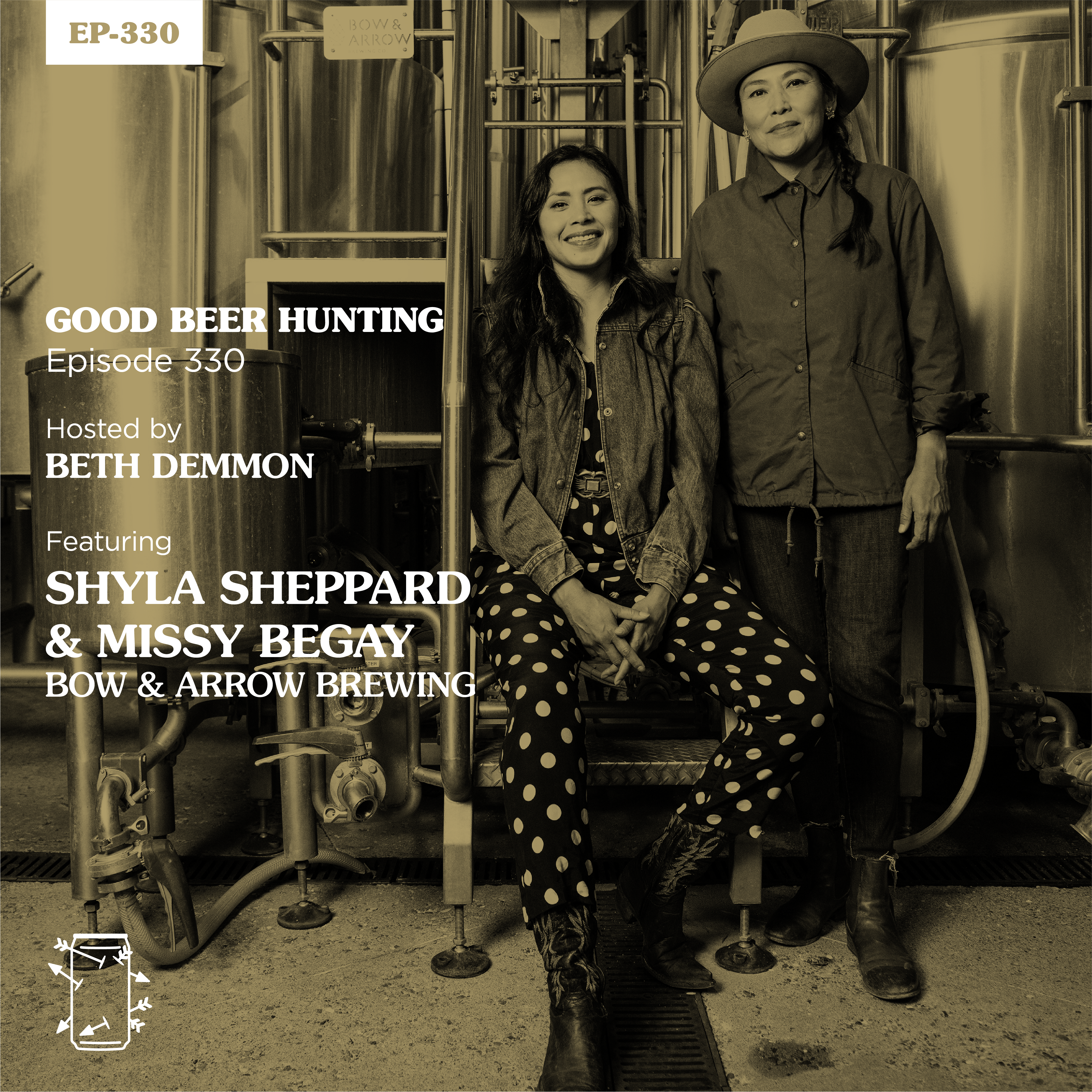
EThe world is full of misconceptions like "Deserts are only barren wastelands," or "women don't brew beer," or even "Native Americans no longer exist on the land that was once wholly theirs." But after six years in business, Missy Begay and Shyla Sheppard of Bow & Arrow Brewing in Albuquerque, New Mexico, are used to defying these kinds of falsehoods and mistaken expectations. As the first and only Native-woman-owned brewery in the United States, Bow & Arrow is a pioneering steward of the land, drawing inspiration from and using ingredients that pay homage to Indigenous traditions, ancestral influence, and the rich cultural abundance of the pair's Native heritage. Partners in both business and life, Shyla and Missy share a commitment to increasing access to craft beer, as well as increasing visibility of Native culture through each brew. That includes the collaborative initiative called "Native Land," which aims to acknowledge the contributions and history of Native American people in the United States. Today, you'll hear from Missy and Shyla about when they decided to open a brewery, how their local community supported them before and during the pandemic, how Albuquerque's unique location allows for a diverse mix of locals and travelers, how New Mexico is shaping the craft beer culture at large, and what success means to them as part of this family-run business that they call a labor of love. Of course, we'll also talk about the beers themselves—how sustainability in water and foraged ingredients shapes their recipes, how seasonality determines which ingredients are used, and how they balance delicate flavors with the wild beauty and bounty the land provides.
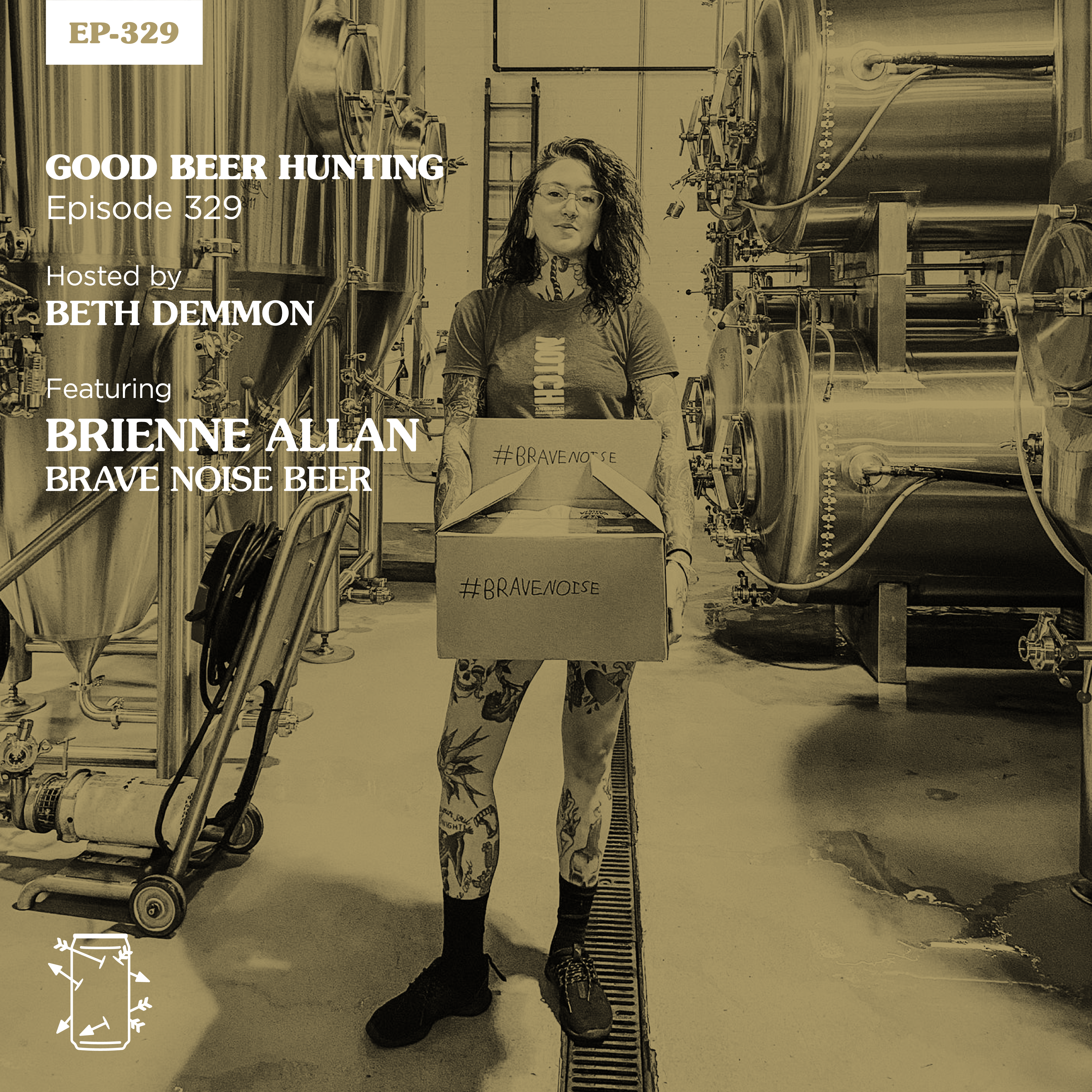
EP-329 Brienne Allan of Brave Noise Beer
EBrienne Allan became a household name in the beer industry last year, when she inadvertently sparked a reckoning against sexism in beer that quickly went global. Her face and words were featured everywhere from Imbibe to the Boston Globe, Eater, right here at Good Beer Hunting, and her Brave Noise initiative with Ash Eliot was named Brewbound's Cause of the Year for 2021. But now that nearly a year has gone by, what's changed? For starters, Brienne left her home at Notch Brewing in Salem, Massachusetts, something she'd never envisioned doing until she became a worldwide phenomenon. Part of that decision was due to the sudden, and often scary, visibility she had to confront as a public face of social justice and change, which forced her to quickly figure out who she could talk to and who to trust. But even in the darkest times, she describes pockets of joy and hope that shifted her perspective about craft beer, but ultimately kept her within its space in order to keep driving positive change. Today, Brienne and I talk about the past year—what she's learned, how she's changed, what she wants people to know, and what she's looking forward to. Later in the conversation, we're joined by her fiancé and partner Michael Fava, who shares his reaction to the reckoning as well as some of their future plans as business owners. You'll hear an exclusive announcement about that business (yes, it involves Lagers), and why we shouldn't expect the name Brienne Allan to go away anytime soon. We finish with a conversation about the current reconciliation plans for Mikkeller, which she calls a "huge breakthrough" as the first-of-its-kind effort to acknowledge, apologize, and atone for past sins. The dust hasn't settled yet, but with the help of people like Kate Bailey, Fanny Wandel, Ash Eliot, and more, Brienne's path forward is becoming slightly more clear.

Changing the Channel — Why Beer TV Ads Are Declining
EFrom talking frogs to Bud Light loving dogs and Will Ferrell unexpectedly shilling Old Milwaukee, there's a long history of beer advertisements that have found cultural relevance. Viewers across the country see these commercials every week during sporting events and reality TV shows. But as fewer people drink beer and more cut the cable cord, what's next for this segment of advertising? That's the question at the core of Kate Bernot's story on Good Beer Hunting that explores what happens when overall minutes of beer ad airtime decline and all kinds of entertainment fills up our days. And in this conversation, Kate and I explore the ins and outs of why beer brands advertise on TV today and the reason big beer companies still see this avenue as an important way to connect with people, whether customers or distributors or retailers. What if beer commercials are no longer just about trying to sell more beer in a literal way? And how can you measure cultural impact if it doesn't show up in sales? Saying "Dilly Dilly" can only take you so far.

SL-032 Speed Bumps — Exploring Beer Distributors' Campaign Against Human Trafficking
E"For the past two years, the National Beer Wholesalers Association (NBWA) has conducted an awareness and advocacy campaign to combat human trafficking, an initiative whose focus and scale are unprecedented in the organization's history." That's from the start of Kate Bernot's story on Good Beer Hunting about a worthwhile cause to fight a global problem of trafficking here in the United States. But as you'll read and as you'll hear in this conversation, there's far more understanding to what it all means. And that's before we get to the many unknowns, which include unanswered questions about why the Association and some of its supporting organizations can't or won't provide details of how this effort came to be, and how they're quantifying success. Human trafficking is not a cause directly related to the beer industry. But industry professionals and elected officials say beer distributors have the ability to be on-the-street "eyes and ears" and are uniquely positioned to help. So what does this all mean, exactly, when one of the largest trade organizations in beverage alcohol makes human trafficking a priority? And what are the questions we still want to learn more about? That's in this conversation.
CL-093 Ruvani de Silva Wants Texas Beer To Be Even Bigger
EWhether you're speaking with her directly or reading her words, Ruvani de Silva seems to emit an effortless effervescence that's both passionate and genuine. Her enthusiasm for her adopted home state of Texas is obvious, and her curiosity about the people moving it forward is heartfelt, which leads her to reveal compelling truths about beer and beyond. In her latest piece for Good Beer Hunting, titled "Capturing the Flavor of Texas — Community Cultures Yeast Lab in San Antonio, Texas," which was published on December 15, 2021, Ruvani describes how an encounter with the duo behind the San Antonio-based yeast lab galvanized her to dive into the world of clean foraged yeast propagation and what it means for the future of Texas terroir. Calling it one of the hardest projects she's ever undertaken, Ruvani's story explores both the science and art of cultivating hyper-local yeast from the Lone Star State, and how Community Cultures is redefining Texas craft beer in real time. Texans are fiercely proud of their land and people, and this story is no exception. If you read Ruvani's feature and are now listening to this conversation about it, you might be surprised to find out that Texas ranks 47th in breweries per capita, according to the Brewers Association. (I know—I was surprised!) But as Ruvani describes it, the state of Texas craft beer is "dynamic, diverse, and inclusive," which are powerful words for a growing industry. And, thanks to the work of Texans like Ruvani and Community Cultures, the craft community at large has front-row seats to what's happening right now.