
Good Beer Hunting
743 episodes — Page 5 of 15

EP-328 Audrey Gehlhausen and Chris DellaBianca of Billy Goat Hop Farm
EIf you've gone on a brewery tour or listened to someone wax poetic about what goes into a beer, you may have heard this phrase: "Beer is an agricultural product." It's a simple statement, but one that's repeated because it can often get lost. We most often exist around beer's final state—an alcoholic liquid dispensed from a tap or poured from a bottle or can. No wonder we aren't actively thinking about what happens before we take that first sip. In this episode, we're taking a chance to step back in that timeline with Audrey Gehlhausen and Chris DellaBianca of Billy Goat Hop Farm, a 32-acre, family-owned farm in Montrose, Colorado, where Audrey and Chris harvest hops like Cascade, Chinook, Comet, and more. They're responsible for one of the core ingredients in beer that provides a host of aromas and flavors. But we're not just talking about all that, as Audrey and Chris' connection to beer through farming raises a range of other important topics that touch climate change, labor, and running a business. While I'm certainly guilty of not overthinking each beer I'm drinking, I love knowing the value of interactions like this. To pause and think about how beer touches so much before it hits the side of your glass. Beer is an agricultural product, and in this conversation, you'll get another opportunity to learn why.
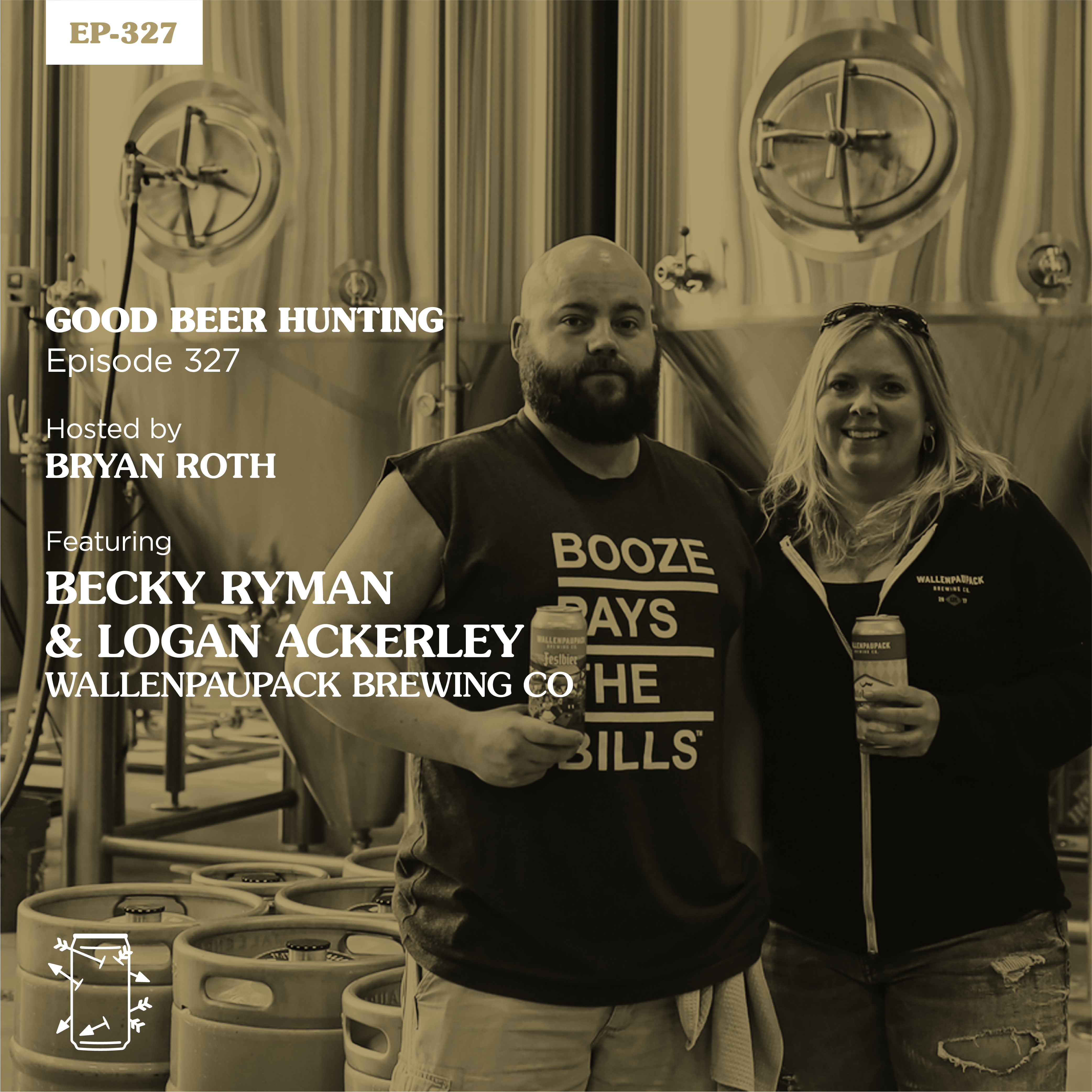
EP-327 Becky Ryman + Logan Ackerley of Wallenpaupack Brewing
EThere's a brewery with a funny name hidden away in Pennsylvania's Pocono mountains that's slowly growing into a local powerhouse. Named after a nearby lake, the beer from Wallenpaupack Brewing Company is good—I can attest to that—but it's the way this business is setting itself up for the future in the middle of Yuengling Country that caught my eye, and brings owner, Becky Ryman, and head brewer, Logan Ackerley, to your ears. In this episode, we're going to hear from Becky and Logan about what it takes to establish a brewery in a place mostly known for transient vacationers, how they build a tap list to smartly incorporate traditional styles and contemporary trends, and what the future holds for a brewery that has rapidly added staff and increased production. This summer, the Wallenpaupack team also celebrated the opening of a second space called "The Wake Zone," a 6,000-square foot space designed to house interactive indoor golf and sports experiences along with a taproom. All together, it's a very modern approach to what it takes to excite drinkers in a taproom, on store shelves, and ensure ongoing success. This conversation is a great timestamp for this business and what it takes to succeed in beer, and I hope it also offers a better understanding of what Wallenpaupack represents outside a funny-sounding name for those not in the know.
CL-092 Emily Monaco Goes Digging in the Land of Terroir
EEmily Monaco's latest story starts off with a very loaded concept, that controversial T word: terroir. This romantic, albeit somewhat undefinable term, has been synonymous with wine—and especially French wine—for generations. But now, as French beer continues to come into its own, the tastes of right here, right now are being emphasized by a number of breweries, but one in particular: Deck & Donohue. Not that Deck & Donohue would use the word "terroir" to describe its mission. In Emily's piece "Liberté, Égalité, Authenticité — Deck & Donohue in Paris, France," which was published on November 24, 2021, she takes a deep and deeply personal look at what makes this opinionated, locally driven brewery tick. Accompanied by a collection of arresting photographs by Eileen Cho, the piece looks at the brewery's beginning, its goals, and its future as a hyper-local producer of artisanal beers that relies on as many organic and France-sourced ingredients as it possibly can. In today's conversation about the piece, Emily reveals her own entry and evolution in beer, and when this particular story began to take shape in her mind. We discuss how French craft beer culture has seen beer evolve from mostly an aperitif to a legitimate beverage to pair with food. We also look at how the history and tradition of winemaking differ from the more forward-looking beer scene, how the United States has influenced French beer (and how it hasn't), and even where to find the best chai in Paris. But most poignantly of all, she reveals what else she learned in her research for this story, and how it has inspired a number of other stories she hopes to share in the future.

EP-326 Chris Leguizamon of Pure Project
EGenuinely nice people seem to be harder than ever to come by. But Chris Leguizamon, otherwise known as "Chris The Beer Educator" on Instagram, is one of them. As the education program manager at Pure Project in San Diego, California, Chris is in charge of teaching both his coworkers and consumers about the joys of craft beer, coffee, and mead—a role he takes very seriously, but always manages to do with his trademark ear-to-ear smile. Chris has been a fixture in San Diego's craft beer scene since 2014, and as one of only two Advanced Cicerones in the county as well as a Certified BJCP judge (with his eye on a National ranking), he's easily one of the most knowledgeable folks in the local industry. But where he stands out goes beyond his positive attitude and almost inescapable enthusiasm for the beverage. It's his absolute willingness to share everything he knows with anyone who wants to hear it. In our conversation today, you'll hear from Chris — his journey into beer, his identity as a first generation Colombian-American, why he does what he does, and the value of formal beer education, as well as where those programs need to evolve to engage with the next generation of aspiring beer experts from all backgrounds. The conversation wraps up with both of our takes on the global collaboration, Brave Noise: how we feel about it, what we hope comes from it, and the urgency of listening to the voices who so desperately need to be heard.
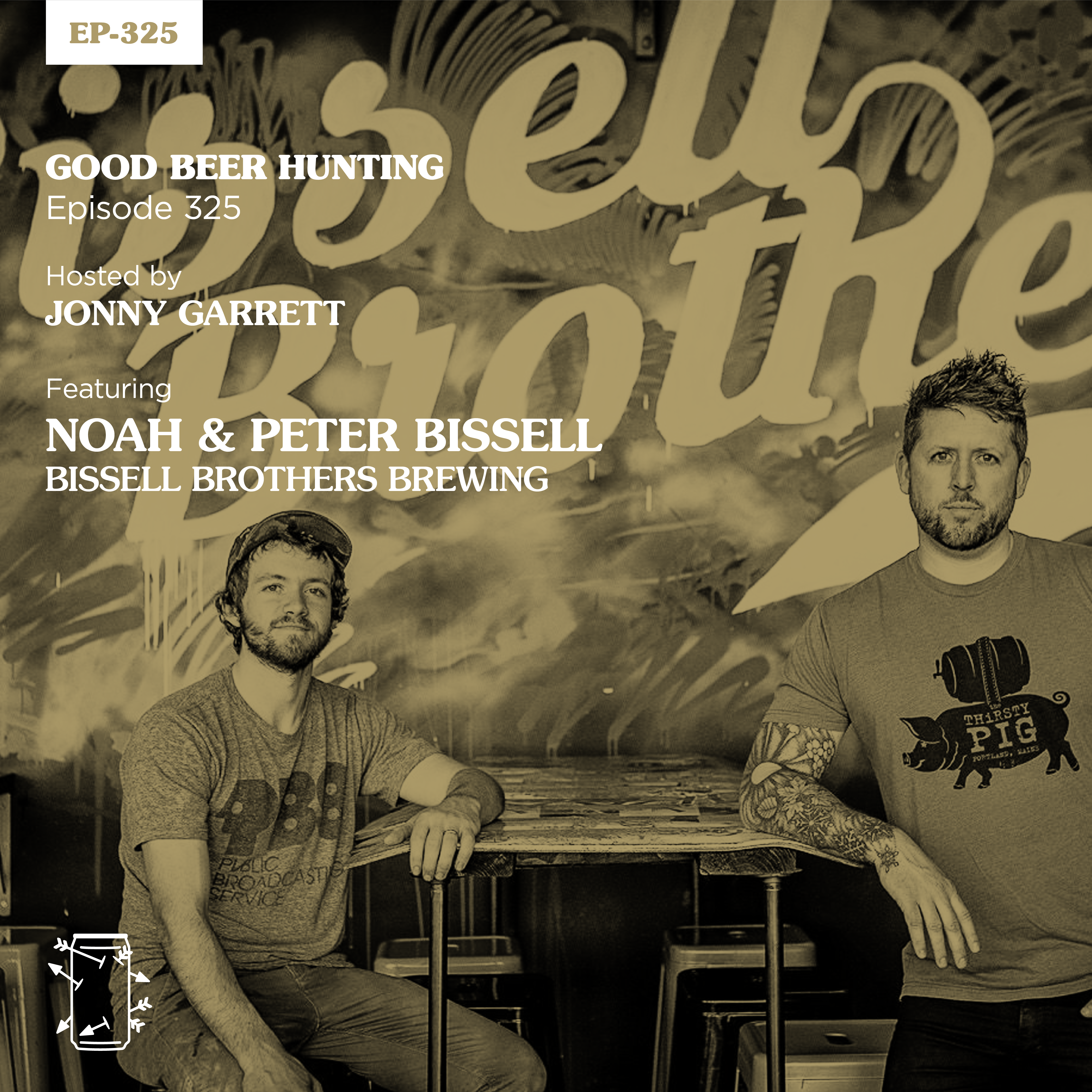
EP-325 Noah and Peter Bissell of Bissell Brothers
EToday's podcast was inspired by a single tweet, or more accurately a reply to tweet, from Bissell Brothers cofounder Pete Bissell. It came in response to a post about a new Good Beer Hunting article entitled Making it to a Million — How Allagash Helped Grow Maine's Grain Economy. It was a story about the remarkable fortunes of a handful of grain farmers and maltsters in Maine, who have benefitted from Allagash's drive to include more local grains in their beer. It's a wonderful example of a brewery doing something not because it's easy, but because it's right – something the myth of craft was built on. But as the article made clear, Allagash were not the only Maine brewery pursuing the strategy. Bissell Brothers were also name checked, and Pete's brother Noah actually quoted. Still, Pete wanted to make it clear that local grain wasn't little aside for the brewery, or some kind of corporate responsibility box ticked. It was a passion of theirs, and their contribution to Maine grain's rise is perhaps as big as Allagash's. That fact, coupled with Pete's little moment of Twitter defiance, gets to the heart of Bissell Brothers. On the surface they seem like another haze-focused brewery – complete with a world-famous double IPA, a killer brand identity and lines around the block every other weekend. While that's all a source of pride to Pete and Noah, it's only the start of the Bissell story – something the brewery struggles get across. In this podcast I sit down with Pete and Noah to talk about the brilliant fact that their flagship beer, Substance, is 97% Maine grain, but more so about everything that surrounds that choice – the positives such as the impact on sustainability and local business, but also the negatives such as higher costs and accepting the fact that many customers simply won't know or care. We reflect on the beer industry as a whole in the light of COVID and widespread condemnation of its working culture, and consider how marketing has become so reductive that doing the wrong thing is getting easier, while explaining how you do the right thing is only getting harder.
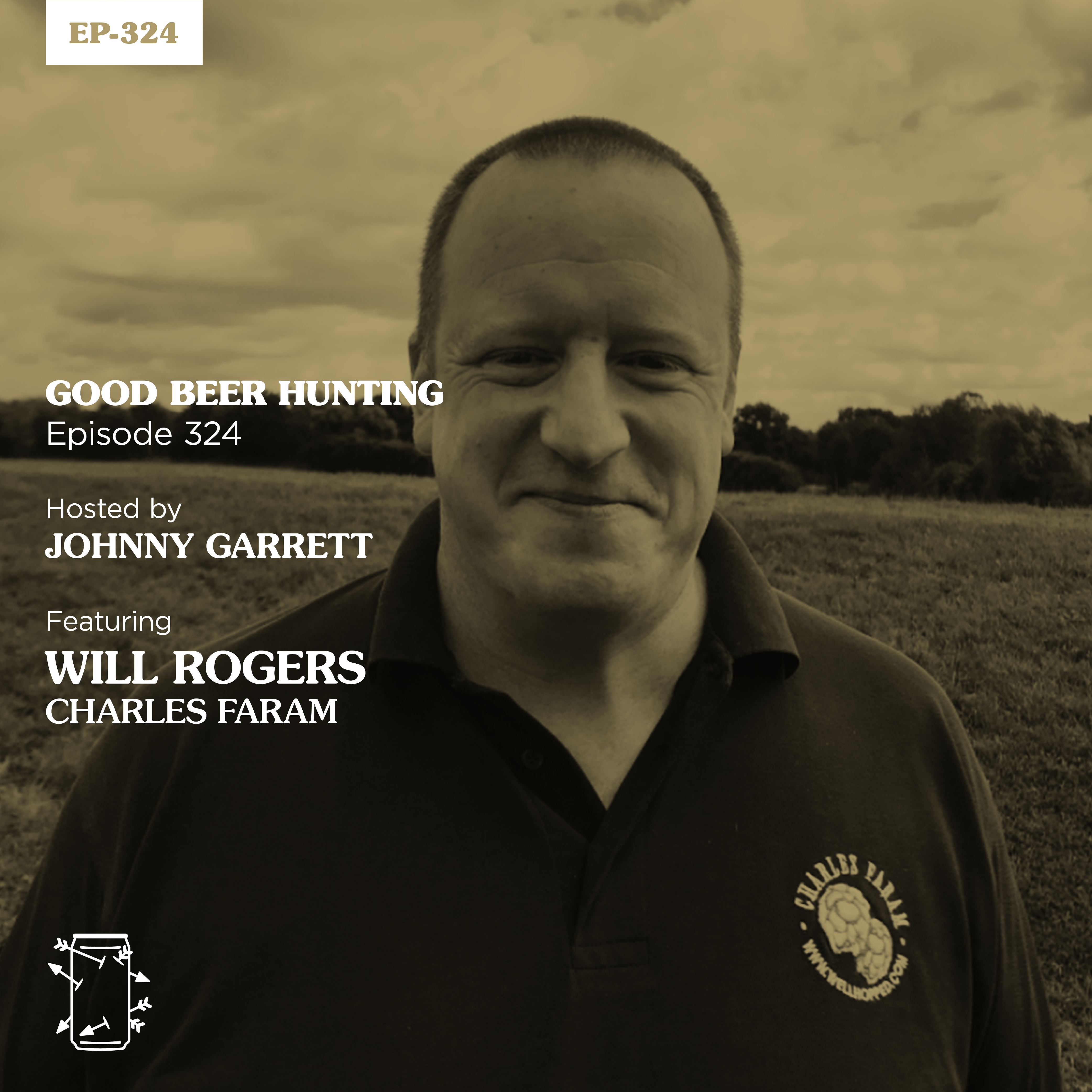
EP-324 Will Rogers of Charles Faram
EHops are in Roger's blood. He grew up on a hop farm and, after a few years in IT, came back to that world to work for Farams. In our conversation you'll get a real sense of the pride he takes the business, as well as his deep knowledge of hops as both an agricultural plant and a beer ingredient. But most of all you'll hear his passion for British hops, which its fair do not inspire the same level of excitement that many new world varieties do. That though, might be about to change. We start by talking about the challenges of this year's harvest, which has been affected by adverse and unpredictable weather, only to be released to a market with much lower demand as many brewers are still working through their stock of 2020 and even 2019 hops after the disruption of COVID. These crises could not have come at a worst time for the UK hop industry, which Rogers says is at its lowest ebb – and even a make or break moment. Some hop growers are considering turning their fields over to more reliable crops, and with just 59 growers left in the UK it would only take a few quitting to reach a critical mass that destroys the industry. Rogers, however, sees a lot of cause for optimism. We talk about the renewed excitement around traditional british beer styles and their ingredients, as well as taking a deep dive into Faram's hop breeding programme that has seen the release of seven new varieties design to offer up the high aroma, high alpha qualities of American hops – but all grown in British soil, British sun and rain, and without the use of irrigation. Throughout our talk it becomes clear that British hops have a lot to offer the world of modern brewing if it can survive this moment to rebrand itself and create its own space.

EP-323 Melissa Hidalgo, Dr. Beer Butch
EMelissa Hidalgo might be the smartest beer person I know. She has a Ph.D in Literature from U.C. San Diego; is currently a professor of women's, gender, and ethnic studies at California State University, Long Beach; and, if she wasn't busy enough with her work in academia, she's also a longtime beer writer who often goes by the pseudonym Dr. Beer Butch. Melissa has been writing about beer for over 10 years, but it was a pint of Guinness that started her beer journey well before that. As a Los Angeles native, she was an early organizer of queer spaces in her local community, helping to form a beer education social club called Queers and Beers, as well as a blog called Butch's Brew, all with the intent of taking up space in what was then, and could still very well be considered, an extremely white, cis, male beer scene. As a freelance writer, Melissa mostly writes about beer for L.A. Taco, but her desire to tell stories about people, history, and culture transcend food and drink. In our conversation today, you'll hear her tell her own experience and journey into beer, the prejudices she's had to overcome in order to explore the industry she loves, what's changed over the years (as well as what hasn't), who inspires her, and the preciousness of human connections through a shared passion.
CL-091 Catie Joyce-Bulay Asks The Million Malt Question
EIf you're a voracious fiction reader like I am, your biggest impression of Maine may come from Stephen King novels. But the United States' northeasternmost state is far more than pet cemeteries and telekinetic prom queens. It's also home to some of the country's highest-quality grain growers and maltsters, many of whom are based in an area that's long been used for another crop: potatoes. In her piece titled "Making It to a Million — How Allagash Helped Grow Maine's Grain Economy," writer Catie Joyce-Bulay dives into this world of farm-to-pint malting and how Allagash Brewing Company's pledge to use 1 million pounds of grains grown and malted in Maine by the end of this year has helped spur new infrastructure and symbiotic relationships throughout the local industry. As a resident Mainer, she explores the importance of that hyper-localism pervasive among her tight-knit brewing community, and how mutual respect and a shared commitment to quality binds those tilling the earth to those brewing our beer. During this conversation, Catie discusses what it's like to live, work, and drink in Maine, a place that fiercely protects its own, but embraces those who share their sense of rugged individuality. We talk about how the slow growth towards using solely Maine-grown grain is a welcome corrective to our current culture of instant gratification, what she wishes she could have expanded on in her piece, how using GPS in rural Maine may lead you to some unexpected places (and snacks), and what to pair a can of Allagash White with. (Hint: it's everything.)

EP-322 Naveen Pawar and Adam Leibowitz of Mighty Squirrel Brewing
EIn today's alcohol marketplace, it's all about the pivot. You better be able to change on a dime when it comes to what you make, where your brands are sold, and how you think about growth. But well before the COVID-19 pandemic brought all these things into focus, Mighty Squirrel Brewing Company created its own reinvention, turning itself from a company making a sport-focused, protein-enriched beer in 2015 to one of the most successful Hazy IPA producers in the country by 2018. The beer that's gotten them to this point is Cloud Candy New England-Style IPA, which this year has made as much in chain retail stores as the iconic Pliny the Elder from Russian River Brewing. The meteoric rise of Cloud Candy is the impetus to talk with co-founder Naveen Pawar and Adam Leibowitz, director of sales and marketing, and you'll hear the story of bringing it to life and what it means to complete with a New England-style IPA in New England, where hop heads reign supreme. Along the way you'll get to hear about what it means to be among the fastest-growing breweries in the country, and how to try and not be seen as a one-hit wonder. Cloud Candy may have put Mighty Squirrel on the radar for many beer lovers—it certainly did for me—but what you'll hear from Naveen and Adam give broader context to what it means to be a company making beer in 2021, and the importance of always evolving for yourself, your staff, and the people who sell and buy your beer. And if you haven't yet heard of Mighty Squirrel, know it won't be long until this rapidly-growing business catches the eye and taste buds of beer drinkers across the Northeast.
SM-005 That Dog Won't Hunt: Charleston Beer's Past, Present, and Future
EIn summer 2021, Jamaal Lemon, Brian Alberts, Mike Stein, and Peter Jones worked together to publish Tek Cyear uh de Root, an article series that explored the way beer history and culture merged with systems of racial oppression in the 19th-century Charleston Schützenfest. In that series we mentioned an even earlier example of the same phenomenon, a brewery owned by Edmund Egan in the 1770s. Egan's brewery ran on the labor of six brewers, two coopers, and seven other Black workers, all enslaved, but most historical representations of Egan minimized this fact so much that bringing it up again started some conversations. One of the biggest breweries in both Charleston and South Carolina is Edmund's Oast Brewing Company which, you guessed it, is named after Edmund Egan.
SL-031 Cutting America Off — The Controversial Researcher reshaping Our Drinking Habits
EBack in the summer of 2018, Good Beer Hunting readers were introduced to a name that stuck with me for years: David Jernigan. He's one of the country's leading researchers in the area of alcohol use and policy and at the time, was acting as an expert for a government task force in Maryland looking at potential alcohol reforms. In reporting for Sightlines, his name was mentioned by sources who also said words like "prohibition" or "temperance." That connection will make better sense to you after this conversation with Sightlines reporter Kate Bernot, who explains how a modern academic is seen by some to have a connection to a generations-old movement to limit Americans' choice in how and when they consume alcohol. From Jernigan's point of view, however, he's simply using his research and platform to lead studies that might encourage greater responsibility toward ourselves and others. In Kate's profile of Jernigan and his work, which you can read on Good Beer Hunting, she shares how Jernigan has worked for decades to impact government decision making while potentially stretching research beyond clear conclusions to earn attention from media and politicians. Who is David Jernigan and why should you care? Let's find out.

CL-090 Helen Anne Smith Wants More For The Hospitality Industry
EBuzzwords like "craft," "ethical," and "sustainable" seem to be everywhere in hospitality. But do those terms actually mean anything, and if so, how do they relate to the most important resource of all: people? Burum Collective founder and writer Helen Anne Smith explores this strange and sometimes intentionally dissonant question in their first piece for Good Beer Hunting, titled "Last Call — The Human Sustainability Crisis at the Heart of the Hospitality Industry," which was published on September 29, 2021. In it, they explain how resource sustainability, while crucial, often disregards the human element, and what consumers and employees alike need to do about it. In this podcast conversation, Helen reveals how they're channeling emotions like cynicism and anger to push for a better industry for everyone, how to harness a sense of powerlessness and turn it into action, the importance of intersectionality when making necessary demands, and how we all need to collectively work together to ensure the safety and survival of the most vulnerable among us. This isn't a conversation for you to listen to, lament, and set aside. I encourage you to sit with the discussion and think about what you can do to make the hospitality industry a better, most just, more liveable, and more equitable place.

EP-321 Cortni McKenzie of Many Faces and Good Road Cider
EIn this episode we're going to chat about the present and look back in time. You're going to get to meet Cortni McKenzie, an aspiring beverage alcohol professional who got a taste of what it'll take to excel in the industry this past summer and continues to put in the work to establish herself this fall and beyond. Earlier this year, Cortni was part of the Many Faces Initiative, a North Carolina-based internship program that provided mentorship and immersive training for people of color interested in pursuing careers in beer and other alcohol categories. The program was started by Town Brewing and included four other businesses, each with their own intern. After a ten-week period at Charlotte's GoodRoad CiderWorks, Cortni continues to work there and has also launched her own business called Cortly Crafted, meant to help people and businesses find unique drinks and drink experiences. In this conversation you'll hear Cortni share stories about her experience entering the beverage alcohol workforce and a capstone project where she created pop-up shops that offered new ways to create more inclusive events for people of all backgrounds and interests. One of the special things about hosting the Good Beer Hunting podcast is an ability to meet new people and hear about how their experiences shape what's happening in real time in alcohol industries. Cortni is part of that change, and when you meet her, you get an important perspective that reminds us of the excitement that comes with creating something new.

EP-320 Aaron Hosé, One Pint at a Time
EEarlier this year, I had the honor of moderating "The Art of Storytelling: Highlighting Important Stories" at Crafted for Action, a four-day, hybrid conference for craft beer lovers. One of the members of the panel was Aaron Hosé, an Aruban-born filmmaker who has been working in the biz for over 20 years. Though the panel was virtual, I had a chance to meet some of the speakers in person at the opening event here in Atlanta. That's where I met Aaron Hosé. He was actually the first person I ran into at Atlantucky Brewing, where the opening was happening. We quickly fell into a conversation about the film that he was premiering at the conference. It was easy to see how passionate he was about the story he was telling about Black people in the beer industry and the difficulties they experienced opening their own breweries. It took me mere minutes to ask him to join me on this podcast, even before I viewed the film. Once I saw the film, I was captivated by the stories and mildly amused at seeing some of my friends and acquaintances in the film. The Black beer community seems small when you know almost everyone on the screen. In our conversation, we talk about the film and the inspiration behind creating it. We discuss the importance of going with the flow, and how people of color should tell their own stories--the topic of our panel at Crafted for Action. Aaron also shares how he gained the trust of his interviewees and what he wishes he could change about the film.
SL-030 Beyond Beer — Will a Global Outcry Have Lasting Impact on Mikkeller?
EOver the past several months, Good Beer Hunting reporter Kate Bernot has been at the forefront of covering allegations of sexual harassment, bullying, and unsafe working conditions at Mikkeller, a Denmark-based brewery with bars and brewpubs all over the world, including a prominent location in San Diego. Kate's coverage has included stories on protests at the brewery's Copenhagen headquarters and stories from former employees who alleged instances of inappropriate workplace behavior and silence from leadership. Most recently, Kate has written about how these previous storylines came together ahead of the company's Mikkeller Beer Celebration Copenhagen, one of the most prestigious beer festivals in the world, from which dozens of breweries withdrew in opposition, and eventually garnered an apology from Mikkeller. In this conversation, Kate will recap all this and more, and give you insight into what it's been like to report on an evolving story. This is an opportunity to better understand what it takes to write about all of what's happened to, with, and toward Mikkeller since this summer, and get a better understanding of the context behind it all.
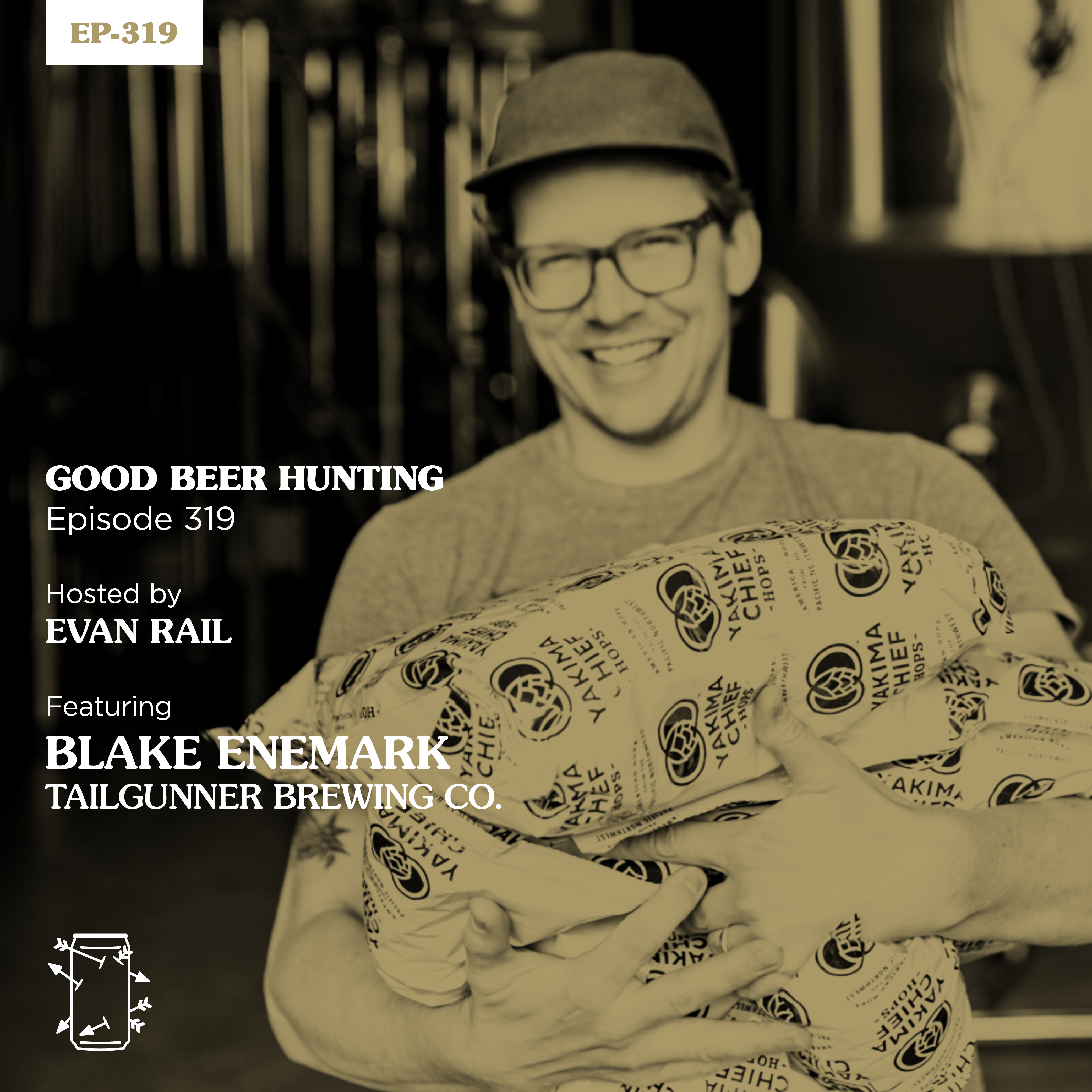
EP-319 Blake Enemark, Tailgunner Brewing Company
EThere are a lot of parallels between good music and good beer, from the similarly creative processes of conceptualizing new beers and writing new songs to the way independent makers are fighting for their place at the table in two industries that are dominated by massive corporations. Beer media and music publications have a lot in common, too. Although I mostly write about food and drink nowadays, I got my start by writing music reviews for the San Francisco Bay Guardian while playing guitar in an indie band in the city. Several beer writers, actually, started out as music writers. And more than a few brewers, publicans, and brewery owners had early careers in the music industry. In this episode, I talk to Blake Enemark, head brewer at Tailgunner Brewing Company in Calgary, Alberta. Before he became a brewer, Blake played guitar in a band called We Are the City, touring in a van from show to show and recording a bunch of cool songs. Since he left the band, he's become an award-winning brewer who spent a couple of years working with Mike Lackey at Great Lakes Brewery in Ontario, followed by gigs at breweries like Last Best and OT Brewing in Calgary. We met at the Central European Brewers Conference in Budapest, Hungary, where Blake was giving a presentation on modern IPA techniques. (Interestingly, he says that one of his most popular beers at Tailgunner is a Czech-style pale lager, a style that is close to my own heart.) We talk about music and brewing, what the two fields have in common and what sets them apart, as well as Blake's influences, from brewers he never brewed with (but was inspired by) to mentors like Luc "Bim" Lafontaine of Godspeed Brewery in Toronto. By chance, we're speaking at the Hungarian Rock Museum, which is filled with vintage guitars, musical equipment, and photographs of people rocking out.

CL-089 Gloria Rakowsky Searches For Truth Behind The Bar
EThere are more than half a million bartenders working in the United States, although it's a pretty safe bet that those numbers have changed in COVID's wake. Still, that's a heck of a lot of people mixing cocktails, pouring beers, and popping bottles for guests, all while also acting as therapists, entertainers, and occasionally bouncers for the mere privilege of serving us. But where do we form our collective expectations about the role of bartenders? In her latest piece for Good Beer Hunting, freelance writer Gloria Rakowsky describes her early introduction to the sometimes-illustrious position from places like The Love Boat and Cheers. Her piece, titled "Do It With Flair — The Changing Role of the Bartender in Pop Culture," unpacks how society views the people between us and the drinks we love through a cultural analysis of movies, television, and other influences that have redefined the role over the years. As a writer who also serves beer at a local brewery in her hometown of Syracuse, New York, Rakowsky's perspective as both observer and participant gives her a unique insight into what it means to serve. During this podcast conversation, she discusses a range of topics from how to differentiate empowerment from exploitation, the disconnect between who we're shown as icons of hospitality versus who's actually behind the bar, and how society has influenced our perception of bartending as either a glamorous end goal or temporary stepping stone.
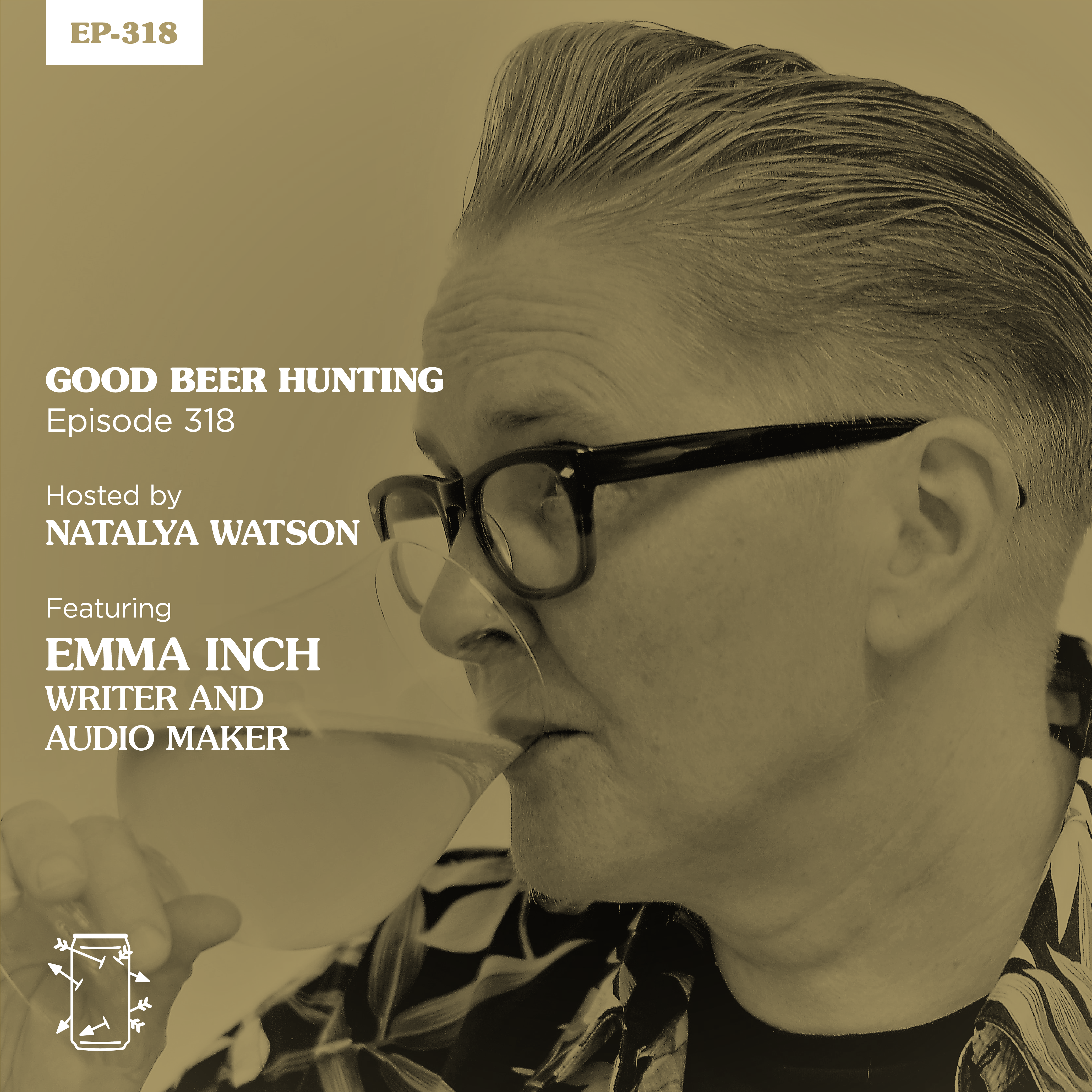
EP-318 Emma Inch of the British Guild of Beer Writers
EProducing and hosting a weekly local radio show likely isn't how most beer writers get their start—but that's exactly where Emma Inch's career in beer began. With a passion for rockabilly music, which she saw as an outlet from the stress of her day job as a mental health crisis worker, Emma went from hosting club nights to approaching her local radio station with a show idea. Then a few years later—as she began noticing a change in her local beer scene in Brighton, England—she pitched an idea for a new show, and in late 2015 Fermentation Beer and Brewing Radio began. Initially a live monthly radio show with a local focus on the beer scene in and around Brighton, Emma later decided to continue producing the show as a podcast instead. As she puts it, with most podcasts sought out rather than stumbled upon, as radio programs often are, this enabled her to not only broaden her geographical scope (from Brighton to the rest of Britain and beyond), but to narrow her focus and take a deeper dive with the stories she was telling. And in 2018, Emma's storytelling skills won her the U.K.'s highest accolade for a beer writer: the Michael Jackson Gold Tankard for Beer Writer of the Year. When I ask her to take us back to that moment, her memories are a bit fuzzy. Not from alcohol, but from the rather tough bout of sinusitis she was battling at the time. But when I ask her to reflect on how the win has impacted her career since, she rapturously reels off a list of the incredible opportunities it brought her way. We also discuss the impact of her win on the industry more broadly, and what it means to be a queer woman taking home the top award in a space still dominated by straight white men. And with Emma's recent election as Chair of the British Guild of Beer Writers, the organization behind the awards that recognized her work, she tells us how she's keen to bring further focus to issues of diversity, representation, and equity within the beer writing community. From looking forward to her newest role, we then take a look back at her longest-standing one. Alongside her current career as a drinks writer, audio maker, and podcast consultant, Emma is a part-time university lecturer in social work. We explore how that role—then and now—has influenced her perspective on the beer world, her approach to her work, and the stories she chooses to tell.

SM-004 'Every Can Counts' — Boycotting Coors in Colorado, the Castro, and Beyond
EConversations around beer often focus on what to drink: I had this great beer the other day. Here's something you might like, or a brewery worth supporting. Fewer conversations focus on what not to drink. But that's exactly what happened on a spring day in 1974, between a Teamsters union leader named Allen Baird and a gay leftist activist named Howard Wallace. Wallace ran into Baird outside a supermarket in the Castro, San Francisco's queer neighborhood, and they started talking about Coors beer, which at the time was one of the most sought-after brands in the Western United States. But they weren't talking about drinking it—on the contrary, Baird was there to protest it. The two were taking part in one of American history's longest conversations about what not to buy. More than that, the unlikely alliance they formed would rejuvenate an iconic consumer movement that joined organized labor with civil rights groups of all stripes. These were the Coors boycotts of the late 20th century, and they were a big deal. Confined neither to Coors' hometown of Golden, Colorado nor San Francisco, the boycotts were a nationwide phenomenon that swept from the brewery's gates through California, Montana, Utah, Kansas, Illinois, Ohio, New York, Connecticut, and many more places in between. Officially, the boycotts lasted over 30 years, from 1957 through 1987. And for some, they never ended. Reverberations and reminders of the boycott's legacy endure even to the present day. That's because the boycott merged the motivations of underrepresented community groups, labor unions, and leftist organizations, transcending single issues to become a shared cause. For everyone involved, it was about much more than just beer. Note: During this episode, we inaccurately refer to LGBTQIA+ rights activist Harvey Milk as the first openly gay person elected to Congress. Instead, Milk was the first openly gay elected official in California's history, when he was elected to the San Francisco Board of Supervisors in early 1978. He was assassinated later that year while serving in that role. We apologize for the error.
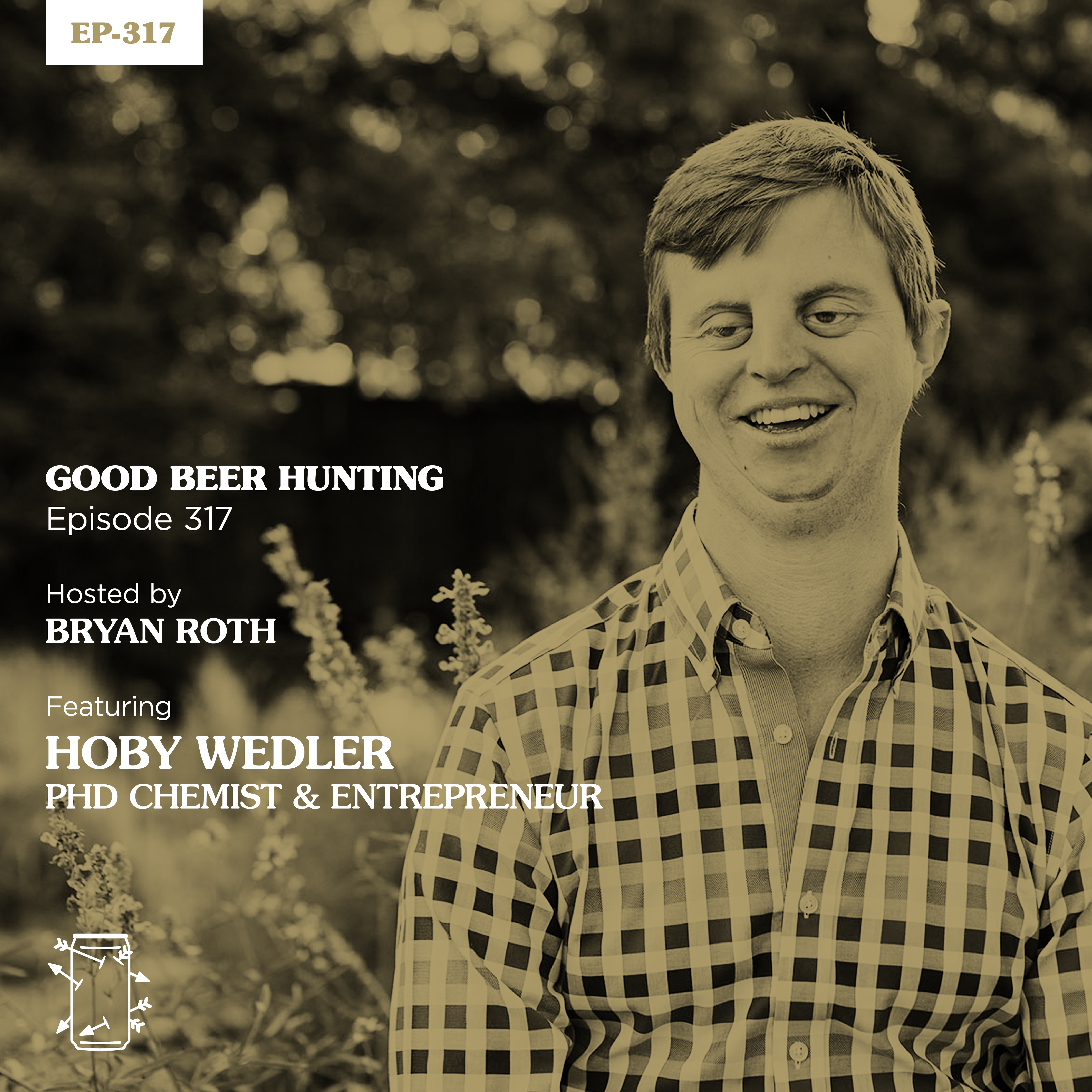
EP-317 Hoby Wedler, Ph.D. Chemist and Entrepreneur
EEvery now and then, I get to host an episode where the conversation has very little to do with beer or other kinds of beverage alcohol. This is another one of those opportunities as we hear from Hoby Wedler, an organic chemist with a Ph.D. from UC-Davis, an entrepreneur, teacher, and genuinely positive guy. If I had my way, I'd likely put that last description first for sake of what Hoby radiates out into the world. He was recently named to Wine Enthusiast's "40 Under 40 Tastemakers" for his work in wine research and education, which is where you may have come across his name, but Hoby has been recognized many times for the contributions he's made to science and beverage. He's been blind since birth and as a sensory expert, regularly takes others on journeys through their own imagination to more fully appreciate what each of their senses can provide and help them discover. You'll hear in our conversation why this matters and the richness it brings Hoby and those he meets. This is not an episode about beverage alcohol, although we do talk a bit about wine. It's more an exploration of happiness and not just existing in the world around us, but finding excuses to be consumed by it in the best ways. So whether or not you've heard of Hoby or heard him talk, I invite you to join us, consider what makes these next moments great for you, and experience today's sounds and tastes a little bit differently, with a little more adventure, and a lot more positivity. This is Hoby Wedler, chemist, sensory expert, and entrepreneur.
CL-088 Doug Hoverson Lives On Native Soil
EEvery inch of the land now known as the United States of America actually belongs to someone else. Some call them Native Americans. Others prefer American Indians, First Nations, Indigenous Americans, or use other monikers to describe the multitude of tribal identities that have been used, abused, and exploited throughout the generations by (mostly) white imperialist settlers. But these invaders didn't simply erase history—they repackaged it with a new narrative, one that leverages ancient connections between the earth and its peoples for advertising purposes. History teacher and beer historian Doug Hoverson unpacks this widespread practice and beer's role in it for his latest piece for Good Beer Hunting, titled "Chiefs, Maidens, and Image-Making — A History of American Indians in Beer Advertising," which was published on September 22, 2021. Here, Hoverson and I discuss how his historical expertise and Midwestern roots led him to explore this phenomenon, as well as how other industries—such as professional sports—have finally begun to address the problematic nature of Native caricatures in advertising and beyond. He describes how Prohibition spawned a new wave of strangely puritanical marketing and how his research ultimately led him to tackle this project. You'll hear what lies we've been told not just through advertising, but through history itself, and how the inescapable snare of white supremacy continues to emphasize tradition over collective improvement. It's a complex conversation around a complex topic. But history buffs, beer drinkers, advertisers, and all Americans can learn something about ourselves, our communities, and our current social situation by looking at the past with fresh eyes. Let's look back together.
EP-316 Amber Rosado of Mason Jar
EIf you've gone job hunting in the past 15 years, you may have sought out new professional challenges, a different geography, or more money, but there's an ever-important part of the process for many that seeks out a harmonious crossover of personal and professional. I know I've looked for some semblance of that, where I don't want my job to define who I am as a person, but I do want who I am as a person to influence how I go about my job, and ultimately, how much I may enjoy it. On a hunt to feel fulfilled, it's perhaps inevitable, and in a healthy way, it's needed, too. In this conversation, we're lucky to hear from Amber Rosado, who has tracked a career path from restaurant server into the beer industry, and now as brewer at North Carolina's Mason Jar Lager Company. At every step, she's sought a deeper connection to what she does through who she is—using her personality, family history, and culture—and also found ways to bring along loved ones for the ride. If you're a beer enthusiast and have friends or family in your life who don't feel the same passion but like to turn to you for ideas, inspiration, or guidance for what to drink, you'll enjoy Amber's stories of using new found skills and experiences to help those closest to her. Or maybe you've reflected recently on your own career path and how you strive to find ways to create excitement and meaning, in which case you can probably relate to how Amber has seemed to find her place in beer instead of other areas of hospitality or beverage alcohol. Most of all, one of the things I appreciated hearing from Amber is the perspective of someone who has come of age as a drinker and a professional at a time when the stodgy rules of categories and what to drink when are blurring and being reshaped. Amber's family may have guided her in what she enjoyed before, but it's her hands-on work, a love for beer, and a pursuit of new ways to create flavor that drive her today. This conversation is going to be meaningful to you like it was for me because of how all of these things come together—Amber's past and present creating a new and exciting future as a part of the beer industry.

EP-315 Laura Garcia, Brewer from Baja
EThroughout my freelance beer-writing career, one person's name has continued to pop up as someone to pay attention to. That person is Laura Garcia, a brewer who has worked across the state of Baja California, but primarily in Baja's capital city of Mexicali, which also happens to be her hometown. But this isn't a story about how I know Laura. It's a story about why you should. Hailed by many as the best brewer in Baja, Laura worked her way from beer lover to beer judge to brewer and beyond. The pandemic interrupted her career trajectory, but she hasn't let that dampen her enthusiasm for the craft. In fact, she's using this time and space to reflect on what she wants for herself, for her beer community, and the Mexican craft beer scene at large. During the course of our conversation, Laura reveals how Mexicali's scorching heat and surprisingly early brewing history helped launch the area's now-thriving craft beer industry. She talks about how the region's sometimes limited access to resources, coupled with her community's willingness to share everything, has led to a tight-knit bond not seen in many other places in beer. We, of course, discuss how the United States—and San Diego specifically—have influenced the Baja beer scene, but also how its ability to accept that influence without compromising authenticity has led to amazing results. Laura also pushes back against misconceptions about Mexico in general, and invites listeners to experience the best of Mexicali without fear, with plenty of recommendations for the city's ridiculously underrated food and drink scene.

CL-087 Theresa McCulla Helps Reconstruct a Life
EAs the curator of the American Brewing History Initiative at the Smithsonian's National Museum of American History, Theresa McCulla has access to some of the United States' most treasured brewing artifacts. It was the uncovering of one such artifact that led her to explore the life of Patsy Young, an enslaved woman, brewer, wife, and mother who fought for her freedom (twice) and who left an indelible legacy on the narrative of American brewing. In her first piece for Good Beer Hunting, titled "Patsy Young — American Brewer, Fugitive From Slavery," which was published on September 15, 2021, McCulla unpacks the realization that there is no single part of American history that the stain of slavery has not touched. We discuss her role as a historian and her responsibility for sharing the stories many have worked hard to erase, as well as how writing for a different sort of audience was a welcome challenge, if not also an academic duty. It's only through analyzing history that we have any chance at informing the present, regardless of how difficult or traumatic the past may be, and she doesn't flinch when faced with that inescapable truth. Is there a happy ending for Patsy Young? It's hard to say. But McCulla likes to think so. Let's find out why.

EP-314 Vik and Viv Nayar of Two Robbers
EI've found myself adding some qualifiers to interview requests lately, ensuring people that while I create stories, analysis, and podcasts for Good Beer Hunting, the interests of myself and the publication extend far beyond what the name may suggest. If you click around goodbeerhunting.com or scroll through our podcast archive, you get the idea—we focus on so much more than just beer. That's the way of the beverage alcohol industry these days, and why we're talking to Vikram and Vivek Nayar in this episode. The pair are behind Two Robbers, a regionally-focused hard seltzer company that represents an ever-increasing portion of the category. There's a good chance you know about White Claw, Truly, or Bud Light hard seltzers, but there are dozens of others who have found success by setting themselves apart from the most mass-produced examples on the market. What you'll hear in this conversation is a reflection on current narratives of hard seltzer and what it means to build a company in a category that has completely changed beverage alcohol. Whether or not you're a hard seltzer fan, the context and insight from Vik and Viv will help you better understand what it's like for businesses in this rather new segment. And whatever headlines you may see, know that hard seltzer is wildly outpacing growth of beer, wine, and spirits in retail, which is why discussions like this can be so helpful to understand realities from within the industry.

CL-086 David Jesudason Sets Sail on the Myth of IPA
What is an IPA? Most drinkers around the world would probably identify IPA as the flagship style of the modern craft beer movement. As its popularity has grown, it has become known for a bunch of different—and often contradictory—characteristics. A modern IPA is either bitter or not bitter; pale, white, or black; very strong, sessionable, or nonalcoholic. But while IPA in all its forms is loved around the world, relatively few drinkers would be likely to name the drink's intimate connection with the history of colonial exploitation. In this episode, I talk to David Jesudason, the author of a recent article, "Empire State of Mind — Interrogating IPA's Colonial Identity," that ran in our Critical Drinking series. In this conversation, we discuss David's article and his take on the history of IPA, or India Pale Ale, to use its full name. We talk about mercantilism, extractive capitalism, and the East India Company, a massive corporation which maintained its own private army to protect its lucrative businesses during the British occupation of India. We talk about beer advertising and beer labels, and we discuss the prevalence of colonial-themed décor in modern British culture, including plantation shutters, and what seems like a widespread nostalgia for colonies and empire there.
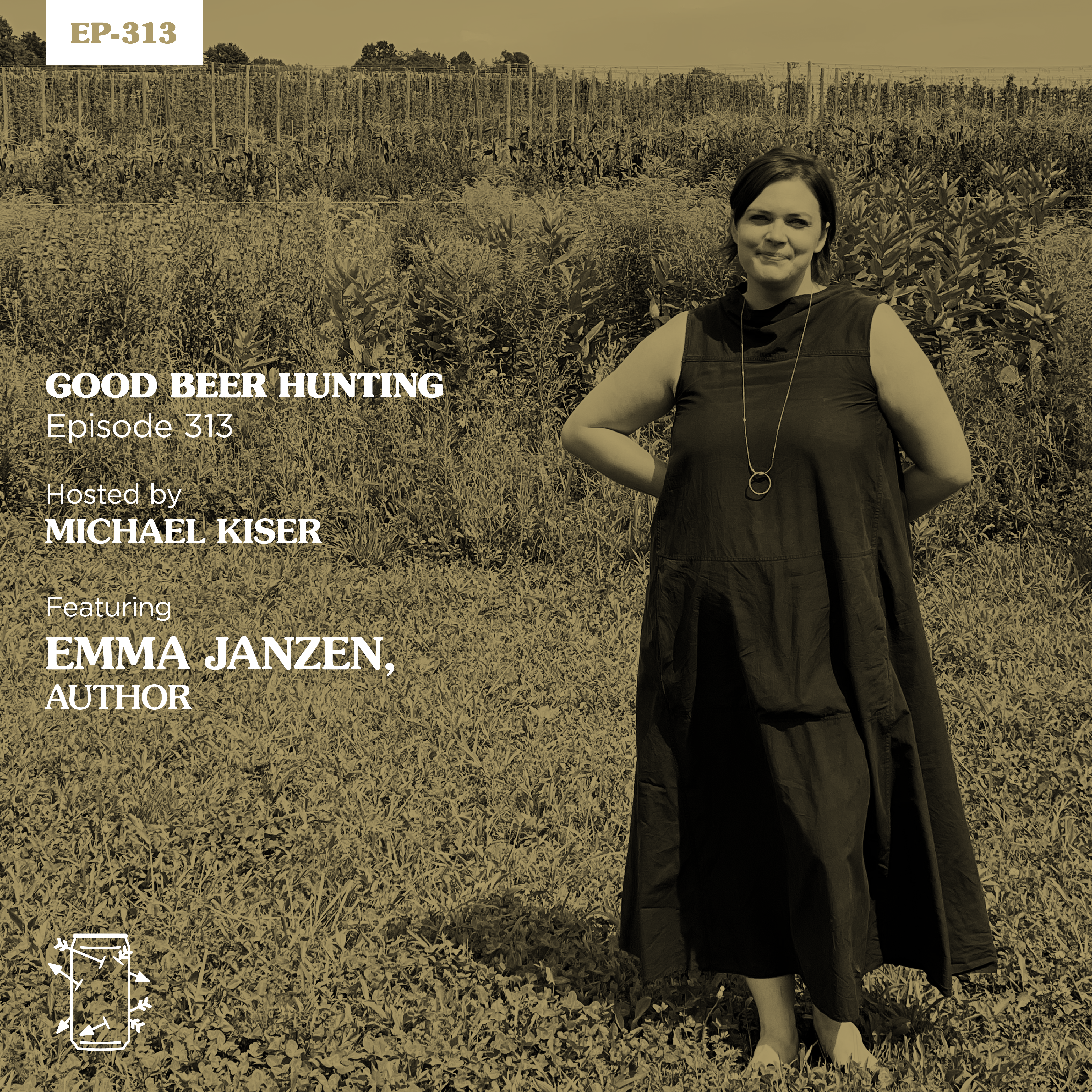
EP-313 Emma Janzen, Author
EThe intersection between digital media and the more slow, meandering works of book authorship is one that, on its surface, might not seem to be well populated. But these days, to be a writer at all means being a lot of different things. You might work across channels, platforms, industries, styles, digital and print, freelance and newsroom, and all that mode switching is a lot. It's just, a lot. The folks I've seen handle it really well tend to think and work in big phases - blogging or freelancing for a year and then diving into book writing for another year - reemerging some time later to ramp up their speedy output again. It's an ebb and flow kind of thing, even if the changes aren't so clearly defined as they might like. And underneath all this is the need to have a personal life that feels more continuous and permanent in some way. Some sort of arc of the author's own story and interests that might never make it to the page or the browser, but certainly serve as a sort of invisible-to-the-reader backdrop for the things they write about most often. These things can be world-shaping, and perspective-creating and often, lost in the rigamarole of just trying to keep up with the work. Today's guest, Emma Janzen, has been through all that - and this past year she's found herself taking a big step back and weighing it all - sifting through the things that bring her joy and those things that maybe just ping her inbox, insufferably, with little value or meaning. She's written full-length books and worked as a digital editor, often at the same time, and most recently found a collaborative process she really enjoys. All while navigating a pandemic and it's many disruptions - some welcome, some not - to the path she was on. I'm sitting down with her on a farm in Michigan near where she's been living, writing, and gardening. You'll hear the airiness and insect-laden sounds of the farm itself as we share a couple pints from River St John brewery on-site - which if you haven't been is a remarkable place full of saisons and freshly harvest vegetables, and on this particular day, a dead-of-summer sun that just wouldn't quit. If sweat made a sound - you'd hear it.

CL-085 David Neimanis Isn't (Just) Bitter
EWhere does inspiration end and innovation begin? When it comes to contemporary takes on established traditions, that line can seem a bit blurry at times. But in David Neimanis' piece "The Architecture of Brooklyn Amaro — What it Means to Make Amari in the New World," which was published on August 19, 2021, he expertly explores that line, its lineage, and what the future holds for American-made amari. In our conversation, Neimanis describes what led him to write about amaro, and Brooklyn-made amaro specifically. He's looked to the past before for Good Beer Hunting, but his passion for his home borough is evident throughout this piece, thanks in part to his ability to meet with subjects in real life once more, after a year where so many in-person events and tastings have been stifled. We talk about who inspires him as a writer, what attracts him to the bitter spirit, how balance coupled with bitterness can create unexpected flavor sensations, and what qualities he looks for in his glass. By exploring the tension between tradition and innovation, local versus global, and the various philosophies swirling together in this modern-day spirits renaissance, Neimanis doesn't just talk about what it means to make amaro in Brooklyn—he shows us.
SL-29 Aww, Ship — Companies Thrive in Distribution's Legally Grey Area
EThere's a lot of change taking place in beer and broader beverage alcohol, but you might not notice it. It's not the form of sales shifting for hard seltzer or Mountain Dew announcing an uncaffeinated, alcoholic version of the soda, but in the quiet space of distribution. Alcohol sales are broken out into three traditional tiers—the producer (tier one) who makes it, distributors (tier two) who move it, and retailers (tier three), who sell it. These are broad brushstrokes, but are a key part of the painting Kate Bernot is going to create for you in this episode. Kate, Good Beer Hunting's Sightlines reporter, has recently had a series of stories focused on what's happening around shipping beer and other products, and we're going to spend a good chunk of time talking about a very grey area that's allowed some shipping companies to do business in a space of uncertain legality. Here's why this podcast matters to you, whether you're a drinker, business owner, or legal pro: there is a jockeying for power you may not see, with ramifications that you may not know until later, about a future that is increasingly blurry as drinks and drinks businesses explore new ways to make a buck. What you hear from Kate will matter to you, whether you're thinking about it now or seeing it later. And with that in mind, I should also note that Kate and I are doing this kind of deep dive regularly for Good Beer Hunting's Sightlines+ newsletter, which is an extension of our newsy Sightlines coverage and has a goal of combining objective data and reporting to help industry pros make informed decisions about managing a portfolio, access to market, and more. You can learn more at goodbeerhunting.com/sightlines-premium.
CL-084 Matt Osgood says They're the Nicest People
EFinding good, honest people making good, honest beer isn't as easy as craft beer has led us to believe. But every once in a while, a truly singular brewery—shielded by geography and rooted firmly to the land—reveals itself, putting forth artistry in liquid form while also providing a safe, beautiful, and intentional space for everyone who stumbles across its path. Fox Farm Brewery is one such place. In his latest piece for Good Beer Hunting, titled "Degrees of Intent — Fox Farm Brewery in Salem, Connecticut," Matt Osgood explores the unique utopian vision that founders Zack and Laura Adams have for their small New England operation, along with the cosmic coincidences that helped pave their way. By harnessing genuine curiosity and a sense of discovery, the family-run brewery remains a rare example of craft beer actually living up to expectations of humanity, where the beer is revered but the people are paramount. As Matt explains in this podcast conversation, everyone's stories matter to somebody, and we all share memories of family, community, and communion through food and drink. He describes what drew him to Salem in the first place, and what will likely keep him coming back. We explore the overlaps between beer and wine, however esoteric, and how spontaneity tinged with intent can yield delectable results. And we also talk about what else he's working on, why he loves profiling people, and where he's going next.
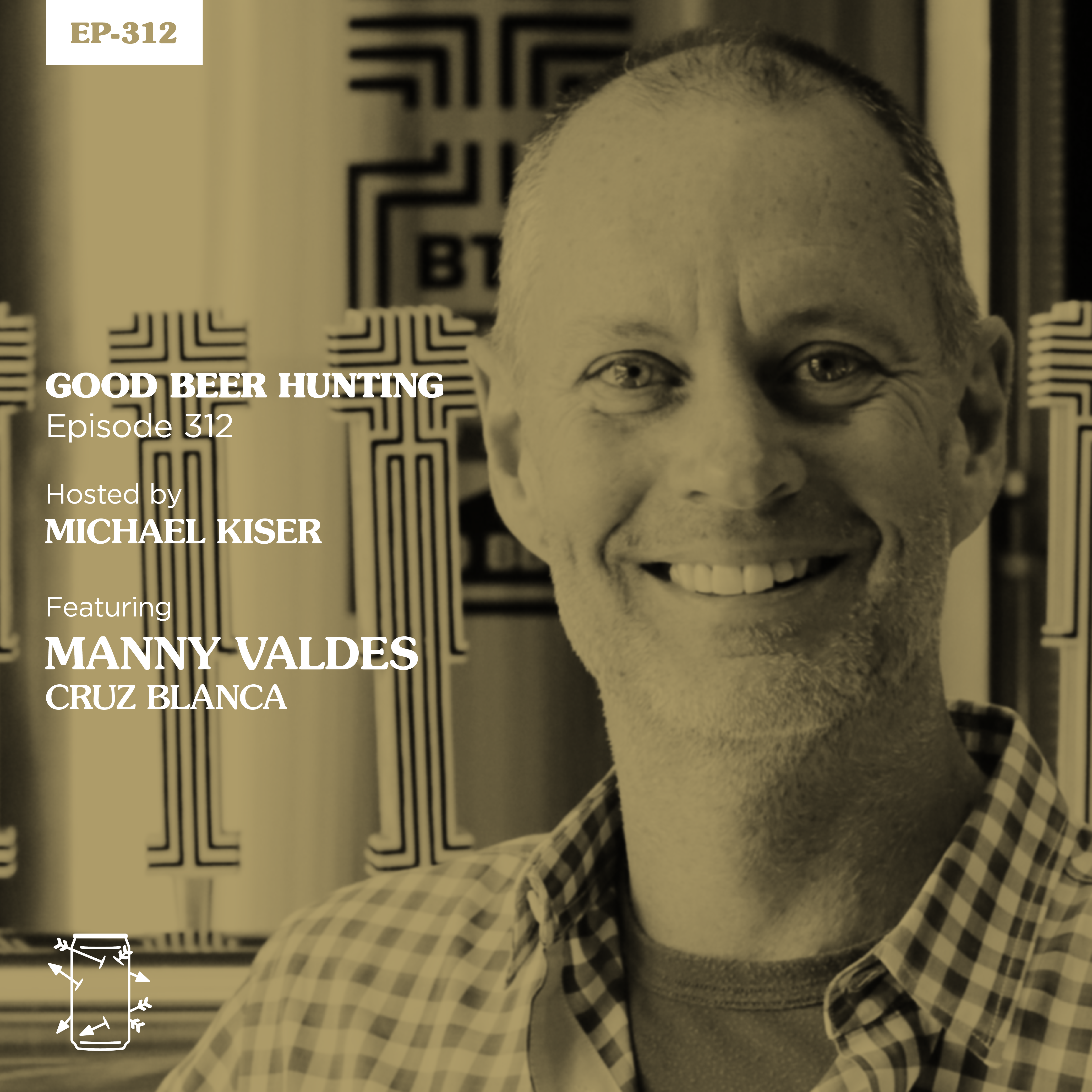
EP-312 Manny Valdes of Cruz Blanca
EEvery once in awhile I like to have someone on the podcast who I've been talking to or working with for awhile. It's not always easy to know when the right time is — I have to keep my eagerness in check. Often for a long time. Whether it's the state of their business, or a major transition, or as market factors shift around it — I try to look for a sweet spot where the guest has learned enough about who they are and what business they're in, but also started to develop their own vision for what the future might hold. It's a moment where I see them sort of settle in to a groove. And the challenge is to get them to reflect on what that settling in moment is all about. Today's guest, Manny Valdes of Cruz Blanca in Chicago is someone I've consulted with over the past couple years off and on and he's sought some perspective on all that. He's a master at soaking up different perspectives and gradually, patiently, synthesizing his own. Indeed, much of the work we've done has often felt like a slow-drip conversation between friends over a late dinner. And I've walked away with more intriguing questions than I had answers. Manny falls outside the lines of how I'd describe most brewery and brewpub owners. While he's a good operator and focused on the details, he clearly spends most of his time observing, imagining, and listening to the stories people tell about his brand. He factors it all in. And while he's spent a lot of time the past couple years trying to articulate who Cruz Blanca is - lately he's seemed less…concerned. Or less…exacting about that. He's been more playful and reclined in a way. And that, for me, was an indication that something was shifting and maybe positively so. And I wanted to talk to him about it. Cruz Blanca has a particular history in Chicago - which we'll get into. It was founded alongside Rick Bayless, a renowned Chicago chef who is largely credited with making Mexican food in the Midwest an accessible cuisine (that's a very complicated thing to say, and those are my words, not Rick's or Manny's). And over the years, Rick brought that culinary mindset to craft beer as well, back when he created Marisol with Goose Island, a sort of citrusy, spiced wheat ale that's a bit of a legend in Chicago. Then he partnered with Constellation Brands to produce Tocayo - a beer that was supposed to fit into that Blue Moon area of the market - and was intertwined in some complicated ways with the Cruz Blanca brewpub in the beginning - but mostly just because of the timing. Tocayo and Cruz Blanca shared a sort of launch story - even if they were separate ventures. So it's important to clarify - I'm not sitting down with Rick Bayless, the chef and restauranteur today. I'm sitting down with Manny Valdez, Rick's longtime partner in Frontera Foods, and the person who imagined and launched and is now independently building Cruz Blanca. A brewery with a story all its own - and mostly still ahead of it.
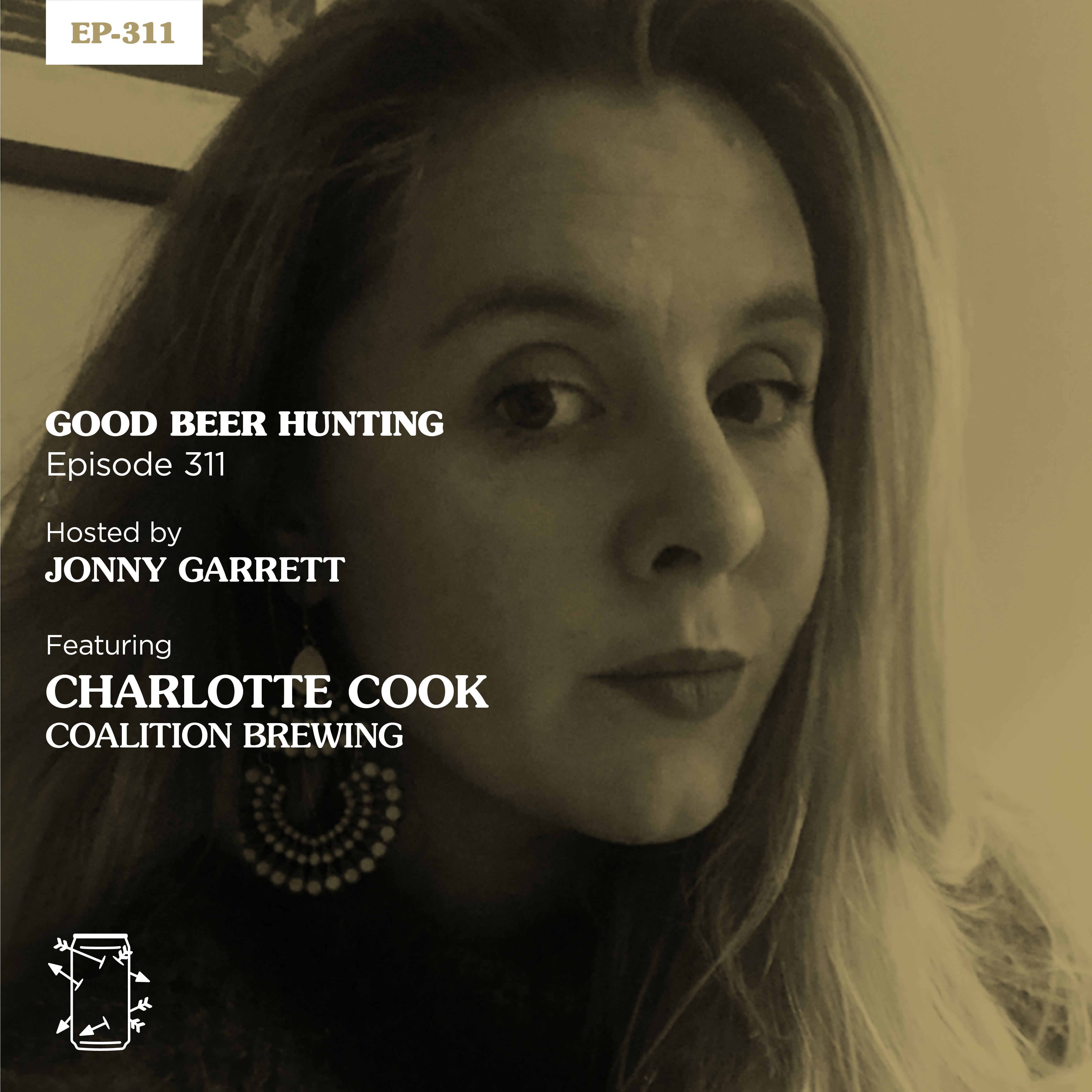
EP-311 Charlotte Cook of Coalition Brewing
EThe last few months in the British beer industry have been tumultuous. Inspired by the brave work of Brienne Allan, Britshbeergirl – real name Siobhan Buchanan – used her instagram platform for British beer people to tell stories of sexism, sexual harassment and exploitation in the industry. Scandals rocked several much loved small breweries as well as some of the UK's biggest – including BrewDog. My guest today, Charlotte Cook, started her career there, and while she left nearly seven years ago she is still affected by the experience – feeling strong enough about the situation at the Scottish brewery to be a signatory for Punks With Purpose, a campaign group focused on holding BrewDog's owners and directors to account and ensuring positive change. Long before that though, Charlotte – now of Coalition Brewing – has been vocal about the exploitation of workers in the beer industry, and a keen advocate of unionisation. Her outspoken nature has resulted in her being interviewed on BBC Radio, and has also inevitably got her embroiled in several online spats. As is so common with grassroots movements, she never intended to become a voice for the industry but has found herself in the role because she refused to stay quiet. We talk about how that responsibility lies with her, how she deals with the abuse she receives, and what solutions there are to the problems that plague the brewing scene. We also talk about the profoundly different breweries she's worked at during her 10 year career that also includes stints at Pohjala, Cloudwater, Hammerton and Trumans, as well as her new role as head brewer at London's Coalition, the first time she's joined a brewery at the very beginning of its journey.
CL-083 Anthony Gladman Deconstructs Decoction
EAs much as craft beer places value on authenticity and artistry, it's not always an industry that likes looking backwards. Instead, the search for innovation—innovation in beer styles, in brewing techniques, and in the raw materials of beer—is what propels it forward. That means many older ways of doing things have been left by the wayside. On the malt side, with technological and agricultural advancements continuously improving crop yield and efficiency, are old-school brewing methods like decoction mashing even necessary anymore? Anthony Gladman thinks so. And he's not alone. In his piece for Good Beer Hunting titled "Pillars of Tradition — How a New Generation of Brewers Returned to Decoction Mashing," which was published on July 20, 2021 as part of our Age of Rediscovery series made in partnership with Menabrea, Gladman dives into the deeply historical Lager brewing tradition, and what it means to the current roster of brewers around the world. He admits there aren't a ton of people devoted to decoction mashing today. But those who are often find themselves with beer that transcends the day-to-day and approaches true greatness. In this podcast conversation, Gladman and I discuss the elusive definition of "drinkability" and what it means to him. We talk about the difference between "craft beer" and "crafted beer"—and there is a difference. We also unpack the perception of preciousness in brewing, and how it's not the same as honoring time-tested traditions honed over generations. He reveals what led him to explore this largely under-discussed (but very appreciated) brewing technique, and the regret that he felt when COVID prevented him from sampling the work of modern-day decoction masters on their own turf. It's a little bit of wanderlust, a dash of technical brewing talk, and a lot of fun.
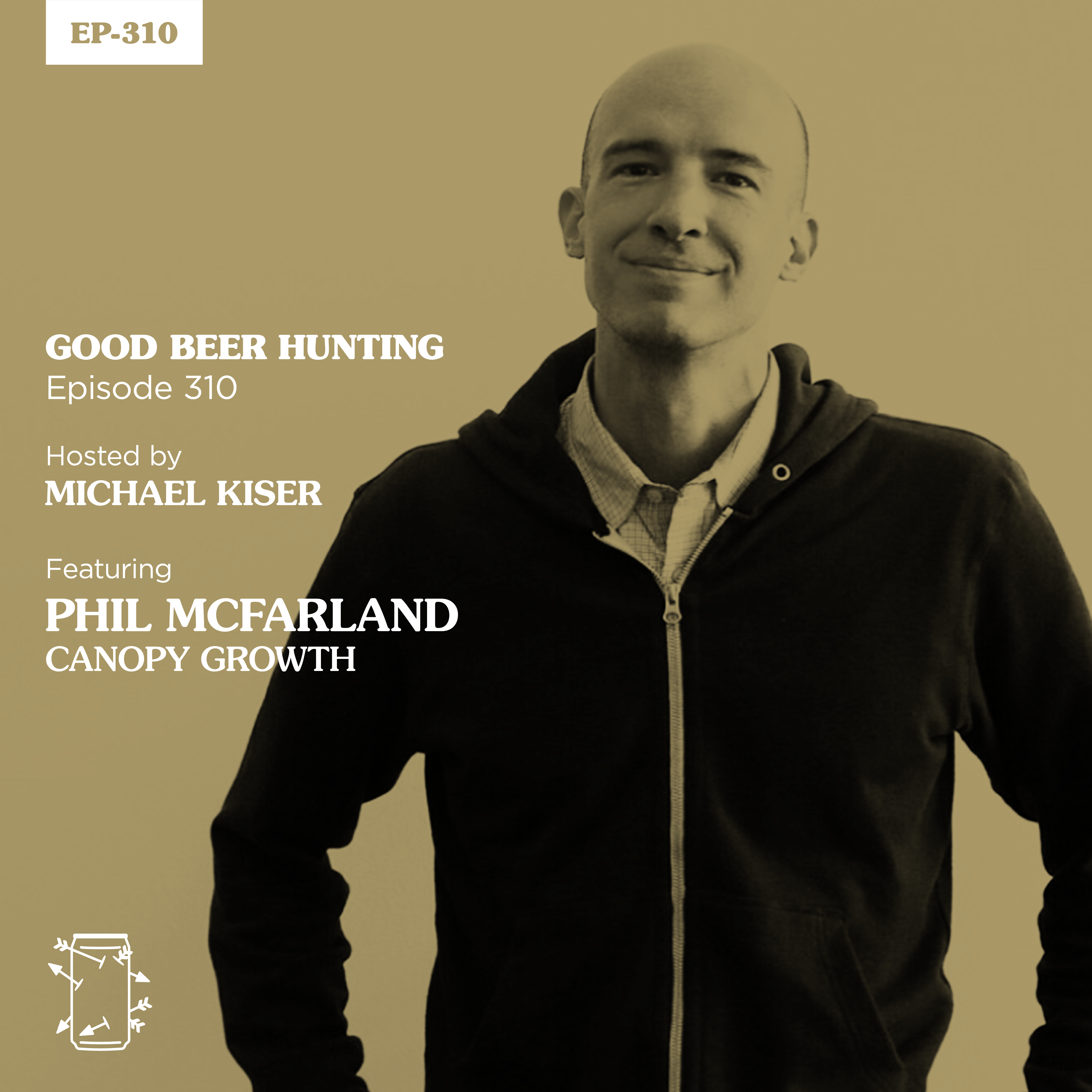
EP-310 Phil McFarland of Canopy Growth
EToday's guest is a rare revisit action with a previous guest - Phil McFarland from episode 25 - when he was on the even of shutting down what had been one of Chicago's premier craft beer bars. The advertising career that gave way to his life as a craft beer bar operator was about to give way to something new - as he took on the sales director role at one of Chicago's premier craft breweries, Half Acre, just as it was making a step change in its growth and ambition. That was then. Now, we're meeting Phil after another big transition as he traded that role for one in Cannabis. And in this new role of Director of Innovation Acceleration, a lifetime of skill and experience is coming to bear on an industry with an unprecedented opportunity in the US - rapidly legalizing, evolving, and expanding, cannabis is a rare new frontier for beverage and packaged goods. How does Phil's background in advertising, retailing, and sales direction parlay into the future of Cannabis? Well, we'll try to connect the dots for you.

SM-003 Lager Beer & Public Health Part 3: Name Your Poison
EWhat's in beer today? Unless you're a brewer, do you know? I mean, do you really know? Usually, Western beer is made up of water, hops, a malted grain like barley, and yeast. That's the standard answer you'll get from books, articles, even podcasts. There's even a famous law in German history, called the Reinheitsgebot, which decreed that proper beer could only contain those four ingredients. But few brewers outside Germany stick to that rule 100% of the time. When we want to get a little technical, we'll talk about extra ingredients that are added for flavor or some other reason—everything from rice and corn; to herbs and spices; to chocolate, coffee, and the occasional jelly doughnut…hmm, maybe some rules are there for a reason. But if something else was in there…some other ingredient whose purpose you didn't immediately recognize, maybe with a name that's hard to pronounce…could you tell? Would you care? Do you have a right to know? Today's episode is all about Americans whose food was changing so fast they struggled to keep up. Then beer changed too, so people wanted answers. And they got them. From brewers both reassuring and duplicitous. From temperance reformers and consumer activists with axes to grind, from newspapers acting as little more than gossip brokers, and from state and federal governments mulling over a Reinheitsgebot of their very own. The name of the game was adulteration, and it went on for more than half a century. This is "Name Your Poison," the third and final episode of our debut series, "Lager Beer, Governing Bodies," which looks at strange ways public health debates waded into a sea of American lager during the 1800s. If you haven't already, check out Parts 1 and 2 of this series, where we explore 1850s arguments about whether lager beer could intoxicate a person, and simultaneous paranoia about whether deadly diseases like cholera could be caused by beer. As we're about to see, debates over adulteration were fueled by the same mix of legitimate fear and paranoia, fact and propaganda, and political jockeying that bore out those other issues. But adulteration dialed everything up to eleven.
CL-082 Courtney Iseman Paints A Picture
EWhat is art? Throughout the course of human existence, critics, academics, and common people have all attempted to unpack the meaning and value of art as part of society, as well as its role as a reflection of the current discourse. Art can be political. It can be reflective. It can be a weapon. And it can be history in itself. In her latest piece for Good Beer Hunting, titled "Gin Lane vs. Beer Street — How One Artist Captured a Pivotal Century in Our Drinking History," published on July 1, 2021, writer Courtney Iseman takes a look at how art has shaped the way we perceive and interact with alcohol from as early as the 17th century up to the present day, specifically focusing on 18th-century Europe. For our podcast conversation, we talk about how beer was positively perceived by the middle and upper classes of the time. Working-class people, meanwhile, faced hand-wringing and public outcry for imbibing what was once considered a cheap and debaucherous beverage: gin. Iseman shares where she found the inspiration to dive into this piece after seeing an exhibit of Dutch masters at the Metropolitan Museum of Art. Calling the writing process a "fever dream," she wonders aloud about the 18th-century artist William Hogarth's motives for creating the groundbreaking and not-so-subtle pair of prints that gave the piece its title. We explore how alcohol plays into class lines and how consumption habits have evolved over the centuries. We also look at how both alcohol and art can divide as much as they can unite. She describes how the story unraveled—and how there's still more to tell.

SM-002 Governing Bodies Part 2: 'The Devil's Chloroform.
What happens when politics and public health intermix? We've spent the last year learning all too well that, unfortunately, just about anything can happen. And that's always been the case. In the mid-1800s, when lager beer was still pretty new to the United States, Americans had to figure it out where it fit into a society that wasn't much newer. The country was growing, it was urbanizing, it was incorporating new ethnicities and communities, and it was redefining morality almost by the day. All of these things came with public health challenges that were just as new. It didn't take long for beer to get tangled up in the maelstrom. We're kicking off the Source Material podcast with a 3-part series looking at some of the ways lager beer paired with questions of public health in 1800s America. In Part 1, we talked about a wave of legal battles that washed over the US during the 1850s as old ideas about drunkenness mixed with new American communities, new politics, and new drinking habits. Now, we'll look at how those same factors led many Americans to associate lager beer with disease. During the cholera outbreaks of 1849 and 1866 in the United States, lager could be either the cause of, or solution to, a deadly epidemic. This is Lager Beer, Governing Bodies Part 2: 'The Devil's Chloroform."
CL-081 Holly Regan is a Trip
EHolly Regan believes that we are all surrounded by opportunities to have transcendent experiences. As humans, we're often prone to looking inward, thanks both to our egos as well as our desire to seek solace from the chaos and noise of the world. But when we're able to tap into the beyond, through whatever means available, we have the potential to commune with each other, ourselves, and all creation beyond our sometimes-limited scope of perception. If this sounds a little woo-woo, that's okay. Holly admits they're a bit of a hippie, but that doesn't make them wrong—far from it. In their piece "Psychedelic Pints — Finding Oneness Through Beer and Other Drugs," which was published on June 23, 2021 on Good Beer Hunting, they manage to tie together the universality of seeking cosmic consciousness with how individual identity can influence the journey, as well as how the human experience can be shaped by mind-altering substances—from beer to hallucinogens—in both intentional and unintentional ways. In this conversation with Holly, they describe why—and how—they were called to write this piece, which they describe as the most challenging one they've ever attempted. In fact, in writing it, Holly found their own future transformed in ways they could have never imagined. The mere ritual of writing in and of itself opened them up to a new path: perhaps bringing the entire concept of oneness full circle. We discuss where (and how) they find God in every living thing; how ceremony and ritual can change people's lives under the right circumstances; how trust, vulnerability, and an open mind can yield incredible results; and even what they consider the meaning of it all. It gets heavy at times. But by talking about what makes life worth living, Holly reveals their own personal truths and invites others to partake in the possibilities.

EP-309 Jess Keller Poole and Shawna Cormier of Seattle Beer School
EWhile I cover the beer and beverage alcohol industries, I started from a simple place as an enthusiast. I was excited to drink different beers, then it was fun to homebrew, and eventually write about all those experiences. But for many people - perhaps most - beer is just beer. I can't tell you how many times I've had discussions with friends and family who ask about "beer flavored beer," and they're in the majority. So, what does it mean if we get the chance to share that passion and educate others? What kind of difference does that make for them, us, and the beer industry as a whole? In this conversation, Shawna Cormier and Jess Keller Poole give us some ideas and answers. The pair are the founders of Seattle Beer School, an events and education company, as well as long-time hospitality professionals, certified experts, and more. Perhaps above all else, they're passionate about beer and what it means to people. That enthusiasm is likely to rub off as you hear them describe why it's important to share that love, how you can talk to people to get them excited about beer, and how all this may be more important than ever as the industry works to become a more welcoming and inclusive space for all. Whether we realize it or not, beer connects to many aspects of our lives outside a bar or taproom, and Shawna and Jess offer all of us an important way to explore what that means through history, appreciation, and enthusiasm.
CL-080 Gabby Pharms Keeps It Neat
EThe overlaps between beer and whiskey are plentiful. Both rely on craftsmanship and quality ingredients, and share certain production methods in common. Modern makers in either category have the luxury of looking at tradition while pushing the boundaries of innovation for the future. But it's the differences between the two that keep things interesting. Single malt whiskey producer Stranahan's in Denver, Colorado is one such modern maker, one that's helping to define the budding American single malt whiskey category against Scotch and other international players. A visit in 2018 led writer Gabby Pharms to dive into their process, history, and position as Colorado's first new legal whiskey distillery since Prohibition for her latest piece in Good Beer Hunting titled "Whiskey and the Mile High City — The Distillery Making Single Malt in the Rocky Mountains," which was published on June 16, 2021. In our conversation about her piece—which was written for our Beer and a Shot series, made in partnership with Miller High Life—Gabby reveals what led her to spotlight a producer who she feels is at the forefront of an American spirits revolution. Not only does their early entry into the category position Stranahan's at the vanguard, but their literal mile high location also serves to shape their products in a unique way. In our conversation, Gabby discusses how she prefers her single malt whiskey (neat, or perhaps with one cube) and which beverages she tends to pair with barbecue (it's not Light Lager, as I incorrectly presupposed). She also muses on what the future holds for American whiskey makers, finds some silver linings in the wake of COVID, and believes there's truly a whiskey for everyone. If American single malt whiskey has a cheerleader, it's Gabby Pharms.

Tek Cyear uh de Root — Part 3
EYou're listening to a special-edition, three-part podcast series about Charleston's Schützenfest, a mid-19th-century German gun and beer festival that initially was a diverse and welcoming environment, but which gradually evolved into a site of white supremacy. In our first two episodes, we delved deeper into both the history of the fest itself and the kinds of beer you might see around Charleston in the 19th century. Now we'll take a more contemporary view by talking to people living in, advocating for, and brewing in Charleston today. First, I speak with a childhood mentor of mine, Mr. Sammy Backman. Mr. Sammy isn't a brewer. He runs Backman's Seafood, and has spent more than 50 years fishing South Carolina's coast. The same fundamental forces that transformed the Schützenfest have followed Mr. Sammy's boats his whole life. But in turn, he's thriving, and he's taught me since my childhood about the indelible mark Gullah Geechee communities continue to make on Charleston life. Next, I catch up with KJ Kearney, host of Black Food Fridays on Instagram, who's worked tirelessly to help Gullah Geechee communities be better recognized and included in the Holy City. On his Instagram series, KJ educates fellow Charlestonians about Black food traditions by preserving Gullah foodways and history. We talk about the power of food and beverage history to erode racial barriers, our love for (and our frustrations with) Charleston, and KJ's work to make things better. Finally, I talk with Jaime Tenny of Charleston's own Coast Brewing Company. She discusses her brewery's need to better include new communities, and how much learning she still needs to do before that's possible. As our conversation shows, many breweries don't know how to foster authentic inclusion within their spaces, even if they do know that it's on them to learn. Join us in finishing our journey through the Schützenfest, Charleston, and the centuries-long work of racial oppression. Here's 60-year Charleston native—and part of my village—Mr. Sammy Backman.

Tek Cyear uh de Root — Part 2
EYou're listening to a special-edition, three-part podcast series about Charleston's Schützenfest, a German gun and beer festival that initially was a diverse and welcoming environment in the mid 19th century, but which gradually evolved into a site of white supremacy. In our first podcast, we spent a lot of time exploring how African-Americans were excluded from the Schützenfest and later the craft beer industry. Now we explore a simple question: "What were they drinking at the Schützenfest, and what were those excluded from the Schützenfest drinking?" We have Mike Stein and Peter Jones, president and CEO of the Lost Lagers beverage research consultancy, respectively, to help answer that question. Mike and Peter were also researchers for the three-part editorial series that went out on Good Beer Hunting this week—if you haven't already, give those stories a read. In this episode, they'll talk about indigenous ingredients, enslaved brewers, and some of the first Guinness beer to reach the United States. After this, tune into Part Three of this podcast series, where I meet up with Mr. Sammy Backman of Backman Seafood, KJ Kearnery of Black Food Fridays, and Jaime Tenny of Coast Brewing Company, to talk about the influence of exclusion in Charleston and in their respective industries.
Tek Cyear uh de Root — Part 1
ECharleston, South Carolina:, a city with a villainous history and a place I call home. From the palmetto-lined streets to the many saltwater creeks and whiffs of pluff mud, The Holy City is a place of geographic charm with a history rooted in exclusion and racism. It's also the subject of this three-part podcast series, which explores a lesser-known chapter in the city's past. The Charleston Schützenfest, a shooting competition and community festival transplanted from Germany, was held every year at the German Rifle Club's grounds on the banks of the Ashley River beginning in the 1850s. The fest was a place where German-Americans used their culture to help negotiate both local and national inclusion, and Black Charlestonians were initially welcome to join in. But white supremacists soon began using it too, and by the 1870s the Schützenfest was the premier expression of militant racism in Reconstruction-era Charleston. This gun and beer festival was held just outside the Wagener Terrace section of the city, where around six breweries operate today. It could very well be the blueprint for how modern-day exclusion operates within Charleston's beer spaces. The event allied the Gullah Geechee people—formerly enslaved West Africans—and German immigrants during a time of social and political upheaval, but eventually it drove them apart. Lost potentials like these still reverberate in taprooms across the country today—calling forth false assumptions like: "Black people don't drink beer" or, "Going to breweries is some white-boy shit." Mus tek cyear uh de root, fa heal de tree is a Gullah Geechee proverb denoting the importance of addressing potential problems and issues in their infancy. In writing about the Schützenfest, we tried to better understand the roots of Black exclusion from 21st-century beer spaces. For the full story, check out our three-part article series, published on Good Beer Hunting this week, where we recount the origins and evolution of the fest; discuss the resurgence of white supremacy in Charleston after the Civil War; and celebrate the parades, food, fishing, and myriad other ways Black Charlestonians have thrived even while enduring racial oppression. Together, both the editorial and podcast series explore the lineage of the city's suppression of African-American advancement socially and economically, and reveal how the Schützenfest's legacy still shapes Charleston's beer spaces today. Reading all three parts will give you the foundation and historical context to break down these constructs yourself. Then join us for three podcast episodes that go even further. In the first episode, Brian Alberts expands on the vast research compiled for this project, explains a little more about the Schützenfest, and shares some ways the story goes even deeper than we could fit into the written series. In the second, historians Mike Stein and Peter Jones walk us through the types of beer we would have seen in 1800s Charleston, and how they fit into our broader story. And in the third episode, we head to Charleston to get a contemporary point of view: Mr. Sammy Backman of Backman Seafood, KJ Kearnery of Black Food Fridays, and Jaime Tenny of Coast Brewing all speak on the influence of exclusion in their respective industries, and how they want to move forward to make Charleston's food and beer scene even better.
EP-308 Amy Todd of Zymology Labs
EThrough her business—Zymology Labs, based in Essex Junction, Vermont—Amy offers analytical testing, training, and consulting for the fermented beverage industry. And she's working to expand the conversation on beer quality in both producer and consumer circles. Although Amy spends much of her time in her own lab space, she's no stranger to brewery environments. She was a keen homebrewer in college, and the "What's Brewing?" and food science courses she took during her chemistry degree led to her lightbulb moment: that she wanted to pursue a career in beer quality. After a course and apprenticeship with the American Brewers Guild, she got her start in the cellar at Burlington, Vermont's Magic Hat Brewing Company before ultimately running their lab. It was there she started wondering what smaller breweries did without the same access to equipment that she had, and the idea for Zymology Labs was born. Despite the name of her business, Amy is quick to remind us that quality isn't just about the lab. She actually prefers the term "quality program," as it indicates that there are many processes breweries can have in place to help monitor their product without requiring their own lab setup. Passionate about demystifying what a quality program entails and how to set one up, Amy talks us through some of the basic steps any brewery can take to get started. We also discuss the difference between a quality program and a sensory program, and how they complement each other. We then turn our attention to some of the quality issues that have hit industry headlines of late, ranging from ABV mislabeling to exploding cans. Amy helps to shed some light on what causes these issues, how they can be prevented, and how prevalent they actually are. You'll hear Amy stress that quality isn't just about preventing things from going wrong. It's about making sure as many elements of the brewing process as possible go right, so brewers can provide a consistent product for their customers. And if quality's not a priority for your brewery? As Amy says, there are thousands of other breweries out there for consumers to choose from.

CL-079 David Nilsen Builds a Bridge Between Beer and Chocolate
EIntangible, hard-to-define terms like "local," "craft," and even "ethical" remain debatable within beer spheres, but they're far from limited to one industry. Longtime beer writer and more recent bean-to-bar chocolate expert David Nilsen touches on these topics and more in his newest piece for Good Beer Hunting, titled "Cacao, Brewing, and the Price of Nostalgia — Toward a Better Future for Chocolate Beer," which was published on June 8, 2021. In this episode, David and I discuss the preconceived notions Western consumers tend to have about chocolate, including where it comes from, how it should taste, and the often unknown—or at least overlooked—human cost behind each exquisite bite. Chocolate is far from just a one-dimensional snack found at supermarket checkout lines and in Halloween buckets. Instead, it can be as varied, complex, and multifaceted as malt or hops to beer drinkers, and the many cultural overlaps between beer and chocolate may surprise you. They certainly surprised me, as did the often-invisible, but pervasive human rights violations that exist in the cacao supply chain. In our conversation, David explains the hard truths behind what it takes to transport goods from the global South to the U.S. and how we can all be more informed, more ethical, and more responsible consumers. He defines what "bean-to-bar" really means, and how his personal interest in beer dovetailed into exploring the world of chocolate. He also discusses how the chocolate industry was literally built on the backs of enslaved people, how those human rights abuses continue today, and how a small group of global producers are shaping the future of the industry in response to that. And in addition to those in-depth topics, we'll hear David talk about what makes him happy, and how the shared flavors of chocolate and beer can spark the imagination.

EP-307 Keyatta Mincey-Parker of A Sip of Paradise Garden
EI first heard about Keyatta Mincey-Parker from Donnie, a wine buyer at my local bottle shop. As Donnie rang up my purchases, she told me how Keyatta had created a community garden for bartenders during the summer of 2020, aptly named A Sip of Paradise Garden. The garden's mission is to provide a healthy and safe space for bartenders to recharge, and during the height of the pandemic, the space quickly became popular. My interest was piqued, and I found myself diving into Keyatta's story. I learned that she fled Liberia with her family when she was 12 years old, and how she adapted to her new home in the U.S. while holding her culture close to her heart. I was impressed by how Keyatta wove her love of family into her work, and how her desire to improve her community shined through all her accomplishments, whether it was giving bartenders a space for a respite during an incredibly tough year or providing young women in Liberia with alternatives to sex work. In this episode, we discuss Keyatta's love for family, and the incredible strength her mother showed as they fled Liberia in the '90s. We also talk about the complicated feelings of receiving recognition and accomplishments as a Black woman. She shares how she came up with the idea for A Sip of Paradise Garden and how everything came together magically in the midst of a pandemic. But if there's one thing you need to know about Keyatta, it's that she's committed to thriving no matter what life throws at her.

CL-078 Michael Stein Goes to the Dark Side
EOver the past couple of decades, brewers and beer historians have recreated a growing number of formerly lost beer styles, like Grodziskie, Merseburger, Horner Bier, and others. Many of those styles come from the traditional brewing regions in Europe. But almost any country with any brewing history at all has its own lost beer styles. Sometimes, those recipes are completely indigenous. Sometimes they were imported from other places and subsequently modified in the new country, becoming their own unique types of beer. Today I'm talking to Michael Stein, the author of a recent piece from our Source Material series, "A Lager Darkly — In Search of Culmbacher, One of America's Great, Extinct Beers," published on March 17, 2021. In his story, Michael explores the largely forgotten Culmbacher beer, originally from what is now the German state of Bavaria, but which grew in popularity in the United States in the 19th century, apparently changing substantially in the New World. As we discuss, Culmbacher was once very common in America, though it disappeared almost completely during Prohibition, and never regained its previous status. But as we hear in this episode, a recipe discovered in the Smithsonian's National Museum of American History has been re-brewed, allowing modern beer lovers to taste something that has been extinct for most of a century.

CL-077 Beth and Kate are Processing
EIf you follow news in the beer world, May 2021 became synonymous with the word "reckoning" as a wave of stories about sexual harassment, assault, and inappropriate behavior toward women were shared from across the country and world. Massachusetts brewer Brienne Allan was the catalyst for this, first sharing her own experiences on Instagram, then asking other women for their own stories, and amplifying their voices. This started on social media, but quickly became national news for industry publications, newspapers like the Boston Globe, NPR affiliates around the country, and beyond. Two of the writers who have extensively covered this story and its fallout are my colleagues at Good Beer Hunting, Beth Demmon and Kate Bernot. In this episode of our collective series, we'll hear from both of them about what it means to report on these kinds of stories, how to tell them fairly and accurately, and the toll it takes as someone who has to synthesize all of these traumas and relay them to readers in a journalistic way. You can read numerous stories by Beth and Kate right now on Good Beer Hunting, and there will be more in the future as reverberations continue to impact the industry and the way people and businesses seek to do better to protect others.
EP-306 Tom Cook + Sam Pecoraro of Von Ebert Brewing
EWhat does it take to succeed in one of the country's most competitive markets for craft beer? That's at the core of this conversation with Sam Pecoraro and Tom Cook of Portland, Oregon's Von Ebert Brewing. As founder of the brewery, Tom has become acutely aware of changes necessary for his business, which has included a rush to get beer into cans, and then get those cans into grocery stores as more drinkers have shifted purchase behavior to chain retail due to the COVID-19 pandemic. Sam, head brewer for the company, has a lot to live up to—and that's from his own doing and the skill of his team. Von Ebert has been recognized numerous times in the last two years for their innovation and specific beers, including a medal at the Great American Beer Festival for their Nothing Noble IPA, a challenging feat in the most-entered category at the annual competition. All of these things come into play for how Sam and Tom see their business now and in the future, and in our conversation you'll learn how they're using the things that they're learning now to make sure they can continue to be a mainstay in Portland. And as you stick around, you'll hear us banter about whether that future includes a comeback for English Mild, a malt-forward, low-ABV beer that is far more at home in the drinking culture of the U.K. than with the hop-mad IPA drinkers of the U.S. How can a business compete in a beer-loving city? What's the next style we could be drinking in bars and taprooms? Answers are coming.
SM-001 Lager Beer, Governing Bodies Part 1: Overruled
EToday, lager beers represent the comfort zone for most American beer drinkers…and a stereotyped monolith for many craft breweries to rebel against. But 170 years ago, lagers were both the outsider and the trendsetter. Their arrival caused ongoing debates over what beer was, what it should be, and the role alcohol ought to play in American social life, to take a sharp turn. This debate was anchored in beliefs about beer and public health that were simultaneously centuries old, and ever-evolving. Beer was at one time or another compared to poison, called to testify in court, and blamed for epidemics…and that's just the beginning. We're kicking off the Source Material podcast with a 3-part series looking at some of the ways lager beer paired with questions of public health in 1800s America. We'll begin with a basic question: can lager beer make a person drunk? The answer may seem obvious today, but in the 1850s it seemed like that question could only be settled in court. Let's explore why in Lager Beer, Governing Bodies Part 1: Overruled.