
Good Beer Hunting
743 episodes — Page 8 of 15
SL-021 On the Frontline — The Shifting State of U.K. Retail
Welcome to this special episode of Sightlines, part of Good Beer Hunting's continued coverage of the COVID-19 pandemic. I'm Jonny Garrett. The U.K. is now several weeks into near-total lockdown, with everyone told to stay indoors barring medical emergencies, food shopping, and one bit of exercise a day. While internet and TV services are thriving, the high street and hospitality industry have been devastated. Over the last month, I have been writing Sightlines pieces that try to describe and analyze that devastation. In this episode, I'll be giving you first-hand insight into the kind of conversations I've been having day in, day out with people in the beer industry. We'll hear from three very different businesses on the frontline, and I'll ask how each one has been affected by shutdowns—and what their futures might look like on the other side of this crisis. I talk to the owner of London bottle shop mini-chain We Brought Beer, who decided he had to close despite seeing record sales. You'll also hear the surreal story of the night all the U.K.'s pubs closed for the first time in history from the perspective of a London publican. We'll start further up the supply chain, though. DEYA Brewing Company in Cheltenham only recently went through a major funding and expansion phase, and is supposed to be paying off its bills through brewing unprecedented volume and serving at its new taproom. Instead, it's barely brewing once a week and has thousands of pounds worth of stock going slowly out of date. Founder Theo Freyne has had to tear up his business plan for the next decade, but despite the uncertainty is upbeat about his brewery's prospects. This is the Sightlines podcast. Listen in.
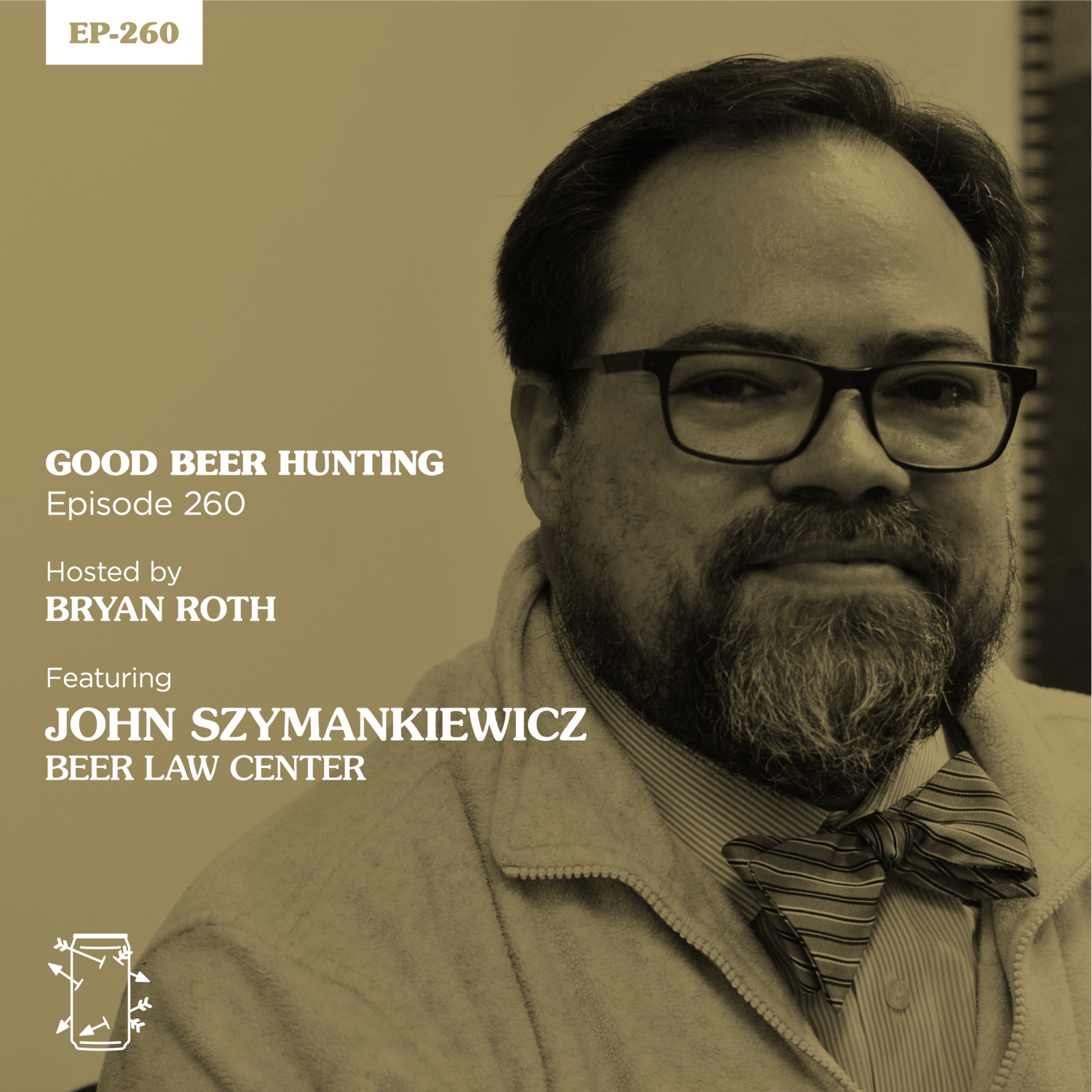
EP-260 John Szymankiewicz of the Beer Law Center
EProducer's note: we're going to continue bringing you timeless stories and important interviews, some of which have newfound relevance because of COVID-19, and some that are explicitly unrelated. This episode you're about to hear was recorded on February 19th, so the context is removed a bit from what's happening in the world right now, but the information is still valuable, and we want to share it with you. Here's a scenario for today's beer-loving entrepreneur: you want to start a brewery? There's a hypothetical situation in which your new business can build its brand by lifting the likeness of celebrities, or imitating famous movies and TV shows, and pretty much take the original ideas of others and slap them on a label or menu board. Of course, this isn't entirely hypothetical. Breweries all over the country do some version of this every day, and there are even social media accounts created to track companies that steal the intellectual property of others. In this episode, we're talking about this and more—and how some companies can legally end up in these odd scenarios, and flirt with basing their entire business models on this kind of intellectual property theft. Or even sell cans full of beer and fruit that could explode. John Szymankiewicz is a beer attorney. Based in Raleigh, North Carolina, he specializes in a host of practical areas, including contracts and dispute resolution, but also has expertise in trademark and licensing, label approval, and more. In this conversation, we'll first learn how someone arrives at this profession in the first place, and why more lawyers could be headed toward similar specialization in beer or elsewhere. But we'll also get a better grasp about what is legally possible in today's industry when breweries are constantly looking to stand out. Decisions to toe the line of copyright or trademark infringement may start to appear a bit more black and white, even if the ethics of those decisions can be rather gray. This is attorney John Szymankiewicz. Listen in.
SL-020 Retail Therapy—New Ways To Sell
Welcome to this special episode of Sightlines, part of Good Beer Hunting's continued coverage of the COVID-19 pandemic. I'm Bryan Roth. A month ago, millions of Americans were sitting at bars and breweries, sharing a pint or cocktail with friends and loved ones. Today, for most of the country, that's not possible, as states have issued stay-at-home or shelter-in-place guidelines, forcing the closure of what's known as "on-premise" for the alcohol industry—the bars and restaurants and places we all went out to for a drink. What's left is the "off-premise," the many kinds of grocery, convenience, liquor, and other stores where we go to get some food—and toilet paper, if we're lucky—and stock up on beer. We can't go out to drink, so it's these locations that are thriving as shoppers bring the bar home. COVID-19 has forced an unprecedented pivot toward off-premise since the start of March, and in Good Beer Hunting's Sightlines stories, you may have kept up with all the changes that have happened as breweries have been forced to adapt to to-go sales or get as much product in off-premise chain stores as possible. In the first three weeks of March compared to last year, Americans spent about 17% more in off-premise chain stores tracked by IRI, a market research firm. In the second and third weeks of the month, seven-day stretches have been roughly the equivalent of what's sold around the Fourth of July, typically the highest-selling beer holiday, amassing about $1 billion for the week of the summer celebration. For some businesses, like grocery or liquor stores, this new reality has meant something as simple as non-stop sales. Nothing's really changed operationally except for the amount of hand sanitizer and cleaning wipes readily available. On the business side, things are booming. For others—namely those on-premise establishments—it's meant trying to create a whole new business model out of thin air.
COVID-003 — From the Newsroom
EWelcome to this special series of the GBH Collective podcast, where we'll be checking in with members of our global team to keep you updated on unfolding events surrounding COVID-19. I'm Ashley Rodriguez. We're consuming news at a rapid rate. The front page of the New York Times is totally dedicated to COVID-19 coverage, and many other outlets have shifted to focus on the current global pandemic. I wanted to understand how folks who work in breaking news cover stories. We've shifted our editorial platform dramatically, so I'm first chatting with Kate Bernot, lead contributor to Sightlines, our news vertical. Kate has years of experience reporting on breaking stories, and we talk about how this moment is different—and the surprises she's uncovered through a week of nonstop reporting. Then we shift to Alyssa Pereira, GBH contributor and staff writer for the San Francisco Chronicle, a news outlet primarily serving the Bay Area and Northern California. From their computers to yours, we talk about how to cover such an unprecedented event, and how you can look at the news through the eyes of a reporter. Here's Kate to kick us off.
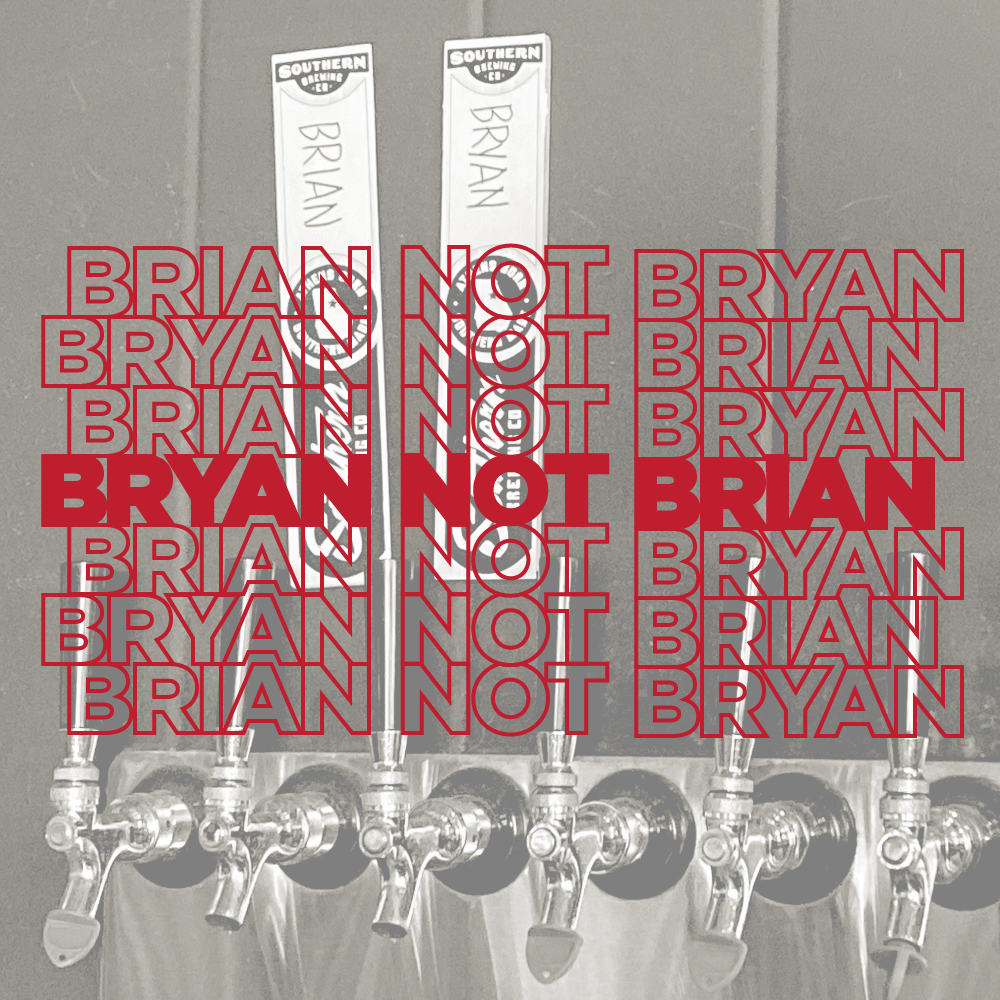
A Bryan by Any Other Name
What happens when a guy with your exact name invites you to brew a beer with him? In this special episode of the GBH podcast, Sightlines editor Bryan Roth drives from Durham, North Carolina, to meet up with Brian Roth of Southern Brewing Co. in Athens, Georgia, to engage in a friendly competition over who can brew the best beer: Bryan or Brian? More than just a story about a beer-brewing challenge, this episode explores the ways we're all connected—either by name or otherwise—and how sometimes, all you have to do is say yes.

SL-019 Econ 101° — Supply and Demand in a Panicked Market
Welcome to this special episode of Sightlines, part of Good Beer Hunting's continued coverage of the COVID-19 pandemic. I'm Bryan Roth. Parts of the country are in some kind of encouraged self-isolation—if not lockdown in some locations—and in many states, bars, restaurants, and breweries have been told by governments to shutter on-site sales and restrict business to takeout or delivery services. Bottom lines are suffering as cash flow dwindles with people sheltering in homes, spending money on extra groceries, and small businesses await help from elected officials to see them through this time. Not all breweries are hurting equally, however, as packaged beer flies off the shelves in stores as drinkers stock up, and kegs sit untapped. All this happened in a matter of days. So when we hear this is not going to be a short blip, the attention of business owners and economists has shifted to what all this means with short-term gains versus long-term solutions. And in this episode, we're going to school to learn more about what this all means, and how and why breweries are eyeing all the scenarios in between. It's not as simple as supply and demand. Our three guests include John Dantzler, CEO and co-founder of New York City's Torch & Crown Brewing Company—his background is in finance having worked for Deutsche Bank, Goldman Sachs, and Barclays Investment Bank before entering the beer world. And also Scott Metzger, general manager of Massachusetts' Wormtown Brewery, and co-founder of San Antonio's Freetail Brewing. Scott's background is in economics, having worked as an economist at Valero Energy Corporation and the University of Texas-San Antonio. But we start with another economist, Michael Uhrich, former chief economist of the Beer Institute, and current founder and chief economist of Seventh point Analytic, a data-driven consulting company. This is Sightlines. Listen in.
COVID-002 — Finding Moments of Brightness
EWelcome to this special series of the GBH Collective podcast, where we'll be checking in with members of our global team to keep you updated on unfolding events surrounding COVID-19. I'm Ashley Rodriguez. If you have an iPhone, it probably tells you how many hours per day you've looked at your screen. According to my phone, my screentime has been up 63%—and I'm sure I'm not alone. I'm doubly sure most of us are looking at articles that make us feel a sense of dread as opposed to providing comfort. In this check-in, I wanted to talk to our team about the bright spots: the ways that folks have come together, the ways that communities have brainstormed creative solutions—anything that makes us feel better in this weird time. I catch up with Jim Plachy first, who is the community manager of the Fervent Few, our subscriber-based beer community. Then we jump to Jonny Garrett, one of our U.K.-based GBH contributors. He has been searching for small optimistic episodes within the pandemic—and offers some hot tips for folks who suddenly find themselves at home for the foreseeable with their partners and spouses. This is the Good Beer Hunting Collective podcast. Listen in.
COVID-001 — An Update on Coronavirus
EI'm writing and recording this from my home office. I imagine at this point, COVID-19, the disease caused by the novel coronavirus, has affected your life in some way. Maybe you're quarantined at home; maybe you're a business owner who's wondering what measures like social distancing will do your business; or maybe you're just trying to navigate what is shaping up to be one of the weirdest times in our collective history. Either way, there's a lot going on. We decided to bring you a special edition of the GBH Collective podcast, checking in with our team of writers and editors across the globe. Our team has always consisted of folks reporting from their corners of the world, and this global crisis is no exception. One thing I've always appreciated about working for Good Beer Hunting is our willingness to be frank and have open conversations … and that includes bringing you folks—our listeners, supporters, and fellow beer professionals—in on how we're handling the current state of affairs. What you're about to hear is a series of five short interviews that I conducted with members of our team. The first is with Bryan Roth, who is our Sightlines editor, reporting from Durham, North Carolina. Next you'll hear from GBH founder and creative director Michael Kiser, who will update you on how we as an organization are handling the pandemic. Next, we're gonna check in with Claire Bullen, our editor-in-chief reporting on what's happening in the U.K., and the influence of social media on community responses. We'll then touch base with Eoghan Walsh, a staff writer reporting from Brussels, and lastly we'll go to the epicenter of the U.S. outbreak and talk to Dave Riddile about working in service and supporting local businesses in Seattle. This is the Good Beer Hunting Collective podcast. Listen in.

EP-259 Ehren Schmidt of Mikkeller Baghaven
EI'm Jonny Garrett, and you're listening to the Good Beer Hunting podcast. Listeners in California may remember a brewery called Toolbox Brewing, which for a brief period around 2015 and 2016 was making waves with some delicious, mixed-fermentation beers. Sadly the brewery closed in 2018, about a year after the departure of its head brewer, Ehren Schmidt, who is my guest today. Schmidt gained plenty of critical acclaim for the beers he was making at Toolbox, but in 2017, he got an offer he couldn't refuse. That job offer came from Mikkel Borg Bjergsø, founder and owner of Mikkeller, who wanted him to move to Copenhagen to help him start a wild brewery arm of his global cuckoo brewing empire. We talk a bit about his decision to move halfway around the world, and it's clear that that risky choice has paid off. Schmidt has complete creative freedom at Mikkeller Baghaven, and has used it to build a brewery that takes a scientific approach to deeply traditional brewing. The medieval lettering and cork-and-cage presentation belie the hands-on way that Schmidt goes about sourcing his yeasts and nurturing the fermentations in barrels and foeders. We recorded in his office between the Saturday sessions of the first-ever Mikkeller Baghaven Wild Ale Celebration, an exclusively wild- and mixed-fermentation festival where the participating breweries were handpicked by Schmidt. Given his history, the roster featured a predictably heavy U.S. focus, but some exciting European and South American breweries were also represented. Most of our conversation is spent musing on the level of understanding in the wild brewing community about the concept of terroir in beer, and how it isn't just the ingredients, or even the place, that dictate it. It's the people—their stories, tastes, and biases. This is Ehren Schmidt of Mikkeller Baghaven. Listen in.
CL-047 Eoghan Walsh really wanted Rich Soriano to talk about Lambic
EToday I'm talking to Eoghan Walsh, who just had his first article for Good Beer Hunting published. Entitled, "The Last Crusade — Rich Soriano Wants to Talk to You About Lambic," it's essentially the story of a day with one of Belgium's most beloved beer characters, Rich Soriano. And by a day with, I really mean a bar crawl with. Eoghan's piece manages to make it feel like the reader is right there with them, and over the course of a few thousands words, we travel to a number of special Lambic producers and pubs, slowly learning how an American has ended up being one of the faces of Brussel's traditional brewing scene. We start, though, by addressing the fact that that's the last way that Soriano would want to be described. This is the Good Beer Hunting Collective podcast. Listen in.
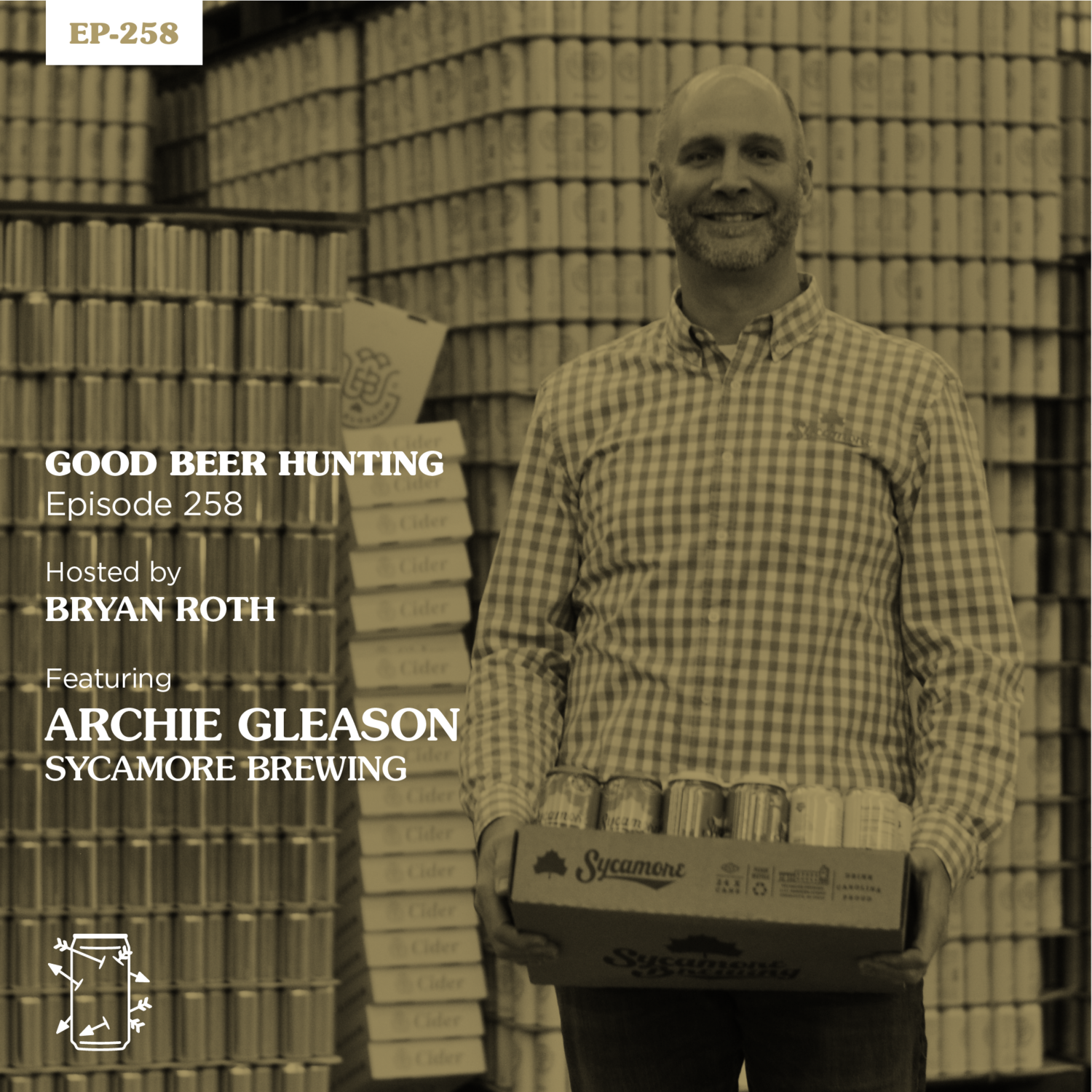
EP-258 Archie Gleason of Sycamore Brewing
EWhen we talk about the evolution of breweries into "beverage companies," that conversation has been dominated by some of the largest corporations in the world. MillerCoors literally changed its name at the start of this year to Molson Coors Beverage Company to reflect its evolving business model and the shifting attitudes and preferences of today's drinkers. Anheuser-Busch InBev sells across beverage categories—both alcoholic and non—and even craft conglomerates like CANarchy or Artisanal Brewing Ventures are diversifying across cider, flavored malt beverages like hard seltzer, and more. But when it comes to a truly modern beverage company, there's plenty happening among the littler businesses, too. And that's what guides the conversation in this episode. We're going to talk hard seltzer, of course, but also cider and beer, and how marketing and sales work with and against the tactic of keeping all those drinks under one umbrella. To learn about all this, we're chatting with Archie Gleason, the vice president of sales for Sycamore Brewing in Charlotte, North Carolina. This company has been growing fast in recent years, and has become a staple in many Tar Heel State grocery stores, while expanding north and south into neighboring states. You may not know Sycamore, but you're likely familiar with the ideas and themes that drive this company's approach: namely, that drinkers are interested in a host of experiences, and it's the responsibility of a forward-thinking company to fulfill that need. That's what's led Sycamore to expand into other categories while never quite taking an eye off what got the company to this point: beer. Sycamore is one of the more successful breweries to have started in North Carolina in the past decade, but a commitment to change has set it up ideally for the near future. Archie and I are going to talk about sales and data, labeling and trends, and about how his decades in the beer industry keep him feeling comfortable—even in an uncertain period for beer. I hope one of this conversation's key takeaways also resonates with you: that Archie and the Sycamore team's experience is going to be repeated a lot in the coming years by all sorts of breweries-turned-beverage-companies, no matter how big or small, or where they may be found around the country. This is Archie Gleason of Sycamore Brewing. Listen in.
OL-008 Mark Spence Reads, "Scarlet & Cream" from Beer is Offal
EThis is GBH Out Loud, and I'm Ashley Rodriguez. Today, you'll hear Mark Spence read the third entry of his blog, Beer is Offal, called "Scarlet & Cream" published on Good Beer Hunting on November 21, 2019. Something happens to you when you leave home. You might not notice it when you're gone, but you definitely notice it when you come back. This is a story about that moment—when you realize you're just a hair off from the folks around you, suddenly sitting in how alien you feel compared to your friends and family. Such situations ask a fundamental question: "Have I changed for the better, or have I lost a part of me I can never get back?" Listen to Mark grapple with that question in this emotive piece. This is Mark Spence reading an entry of his blog, Beer is Offal, called "Scarlet & Cream." Listen in.
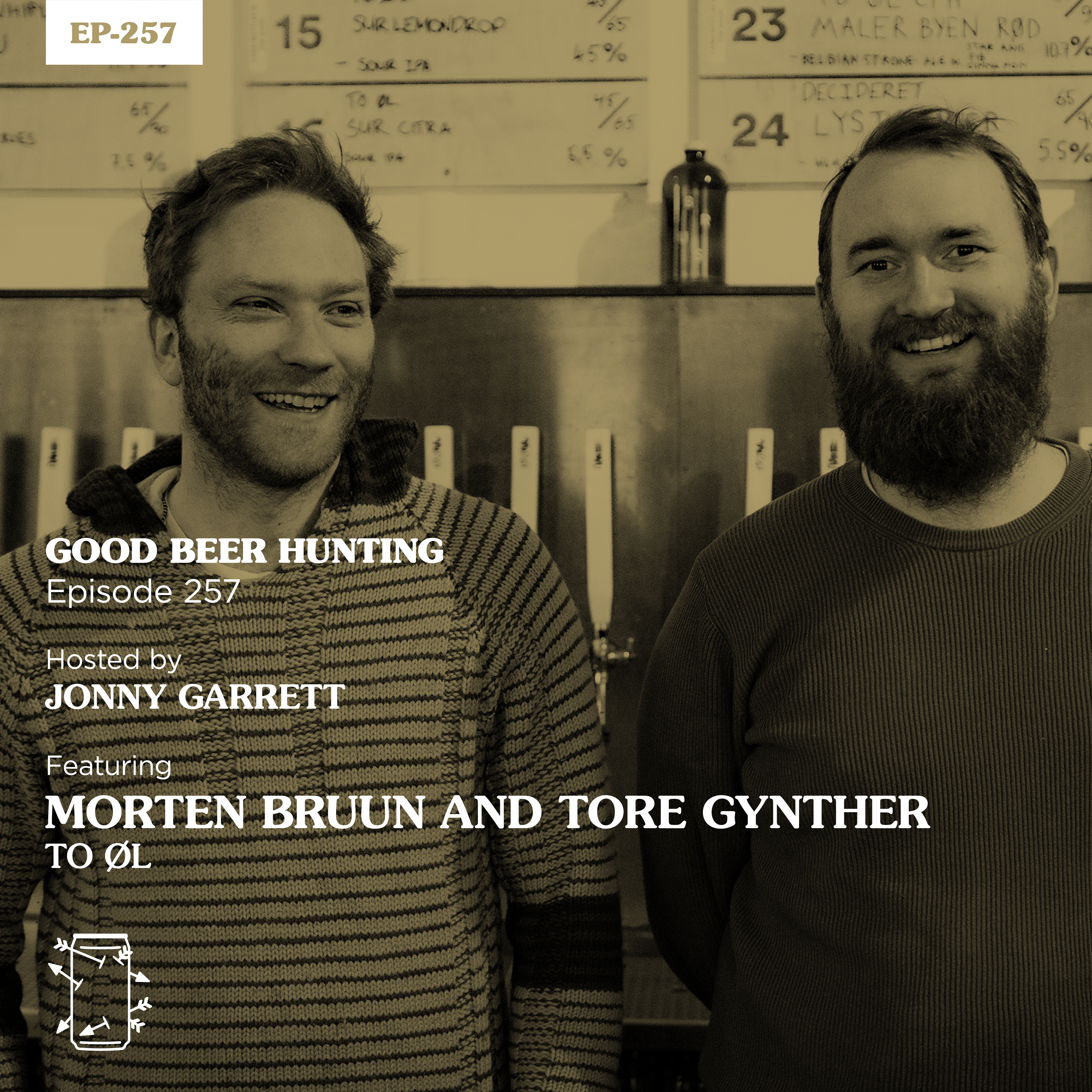
EP-257 Morten Bruun and Tore Gynther of To Øl
EThis episode's interview was conducted at BRUS, a brewpub and restaurant in Copenhagen's trendy Nørrebro district. It's owned by the itinerant brewing company To Øl, which is perhaps best known for its unusual recipes, pun-based beer names, and often-inscrutable labels. That approach has kept the brewery growing for 10 years. The flexibility of nomadic brewing allows them to respond quickly to trends, and has helped To Øl become one of the darlings of the "cuckoo" brewing movement. Which makes the moment they are in right now all the more interesting. Today's chat with owners Morten Bruun and Tore Gynther veers off in all kinds of directions, but the main thrust of it is that To Øl's business model has just taken a complete U-turn. After nearly a decade of contracting out all except their brewpub releases, the owners are bringing all their production in house at a new location, To Øl City. I'll let them fill in the details, but suffice it to say it's an ambitious project that aims to pull together artisans from all kinds of industries on one enormous site. We talk about that decision, and how the older nomadic brewers are now settling down. It seems the reason is exactly what you'd expect—to have a closer connection with the beer they put out into the world. But it also goes a lot deeper than that. This is Morten Bruun and Tore Gynther of To Øl. Listen in.
CL-046 Mark Spence Owns His Feelings
EI probably sit with our blog, Beer is Offal, more than anything I interact with on Good Beer Hunting. Not only is it something we produce totally in house—all the artwork comes through us and it's written by a member of the GBH team, Mark Spence—but it's also the only series we've captured entirely on audio. Mark has read every single one of his blog entries on our Out Loud series, where we record our favorite stories for our audience, and there's a reason for that—Beer is Offal is special. Beer is Offal is a food blog. That's a simple way to put it. But that doesn't capture all of it. It's full of feelings, rants, brutal honesty, sometimes curveballs, and always this feeling of authenticity that I think is really interesting in the context of food writing. As Mark and I discuss in this episode, Beer is Offal is deeply personal—you get to know a lot about him pretty quickly—but it differs from most food writing in that it's not a series of recipes, it's not about someone trying to learn a new cuisine or venturing into traditions and styles of cooking that aren't part of their background. It stays so close to the chest, and in that way, the lessons and ideas Mark talks about become wonderfully universal and relatable. It's sort of remarkable how he makes that happen. I sat down with Mark and talked about what it means to write about things happening to you right now—in real time. Beer is Offal isn't just a collection of lessons learned, but is very much about things going on in Mark's life, and his attempts to slowly acknowledge and work through them. Mark is admittedly not a very "emotional" person—as he says himself, he's much more likely to be the guy in the corner of the room sticking close to his friends. So what does it take for someone like him to put all his stuff out there? How does he transform into, as he calls it, "a food and feelings writer?" Let's find out. Here's Mark Spence. Listen in.
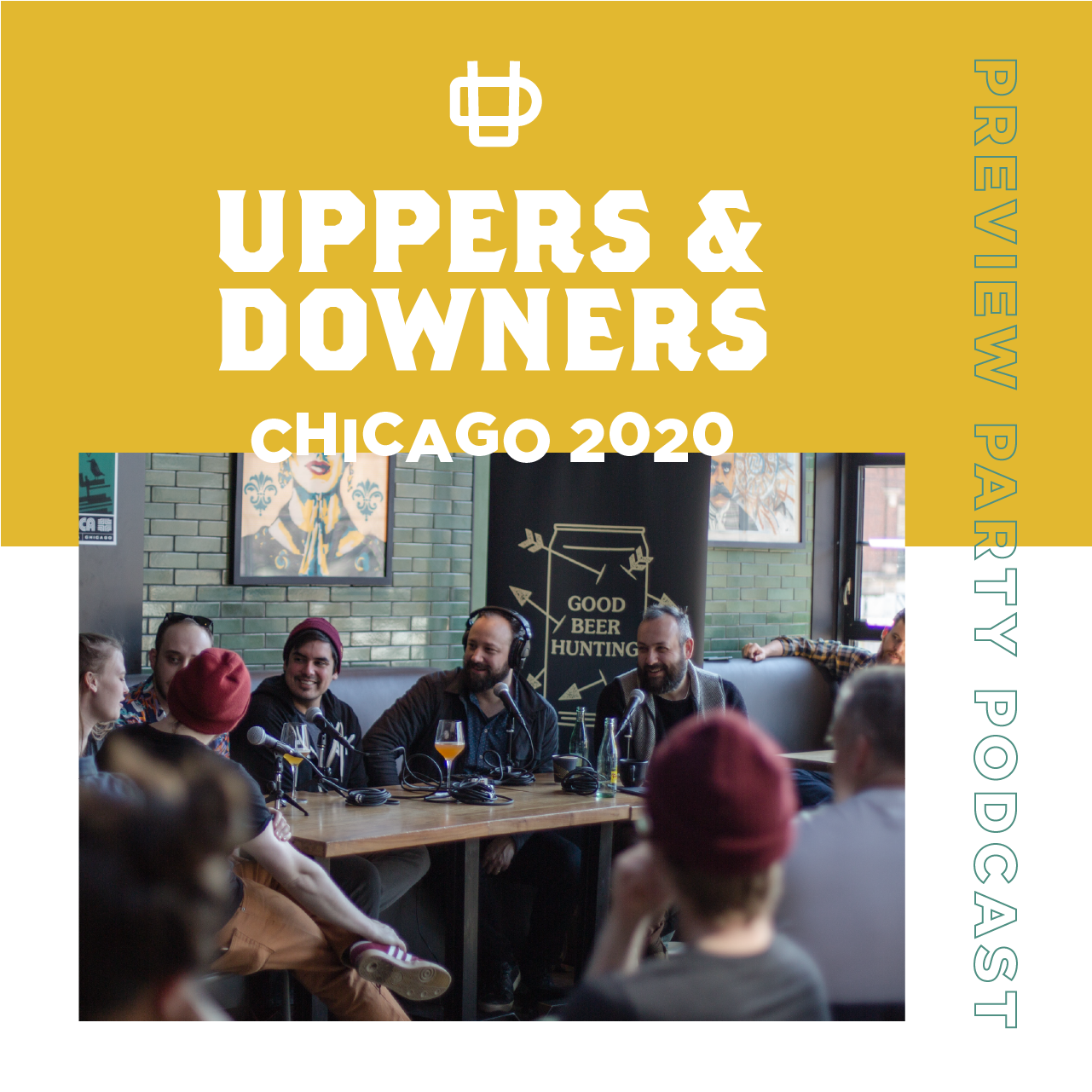
Uppers & Downers Preview Party 2020
EAs many of you know, we're in the midst of Uppers & Downers week here in Chicago, celebrating more than five years of our coffee and beer culture collaboration between myself, Michael Kiser, and world barista champion Stephen Morrissey. This year's festival promises to be our best yet, with about 25 different coffee beer collaborations, a dozen different roasters pulling their best espresso shots from all over the country and showcasing the breadth of their lineup beyond espresso. So yes, you'll have incredible espresso brewed on our professional consumer machines courtesy of La Marzocco Home, but each of our dozen roasters has been invited to prepare any drink they want – brewed coffee, cold brew, nitro, cortado's, romano's, etc. We're also working with the folks at Cruz Blanca, Guinness, Goose Island, and Powers Whiskey to produce Case Studies, a series of tasting experiences where brewers and roasters work together to push the boundaries of what possible. Every year, our Case Study partners come up with wild and exciting ideas, sensory explorations that bring you beyond just beer and coffee. When we think these folks can't do anything more, they continue to raise the bar. To give you an idea of what's in store this weekend, here's a sneak peek episode. You can learn more here.

CL-045 Breandán Kearney Can Sniff Out a Lie
EI first met Breandán Kearney in 2015, when he swept the board at the British Guild of Beer Writers Awards. I, like quite a few people in the room, had no idea who he was at the time, but I only had to read a few of his articles to see what a brilliant writer he is. And you'd have to be brilliant to tackle the article we talk about in today's podcast. Breandán Kearney's latest piece for Good Beer Hunting is titled, "Flying With Clipped Wings — West Kerry Brewery, County Kerry, Ireland." It tells the heartbreaking story of a brewpub on the Irish coast. Few beer articles have two deaths in their opening paragraphs, but even fewer manage to tell such an uplifting story of personal grit, and success against the odds. The piece also serves as a wonderful insight into the small world of Irish brewing and the people who have slowly turned the country into an exciting, modern brewing nation. I start by asking how Breandán came across the brewery, before delving into what it's like to research such a difficult, emotional story. This is Breandán Kearney. Listen in.
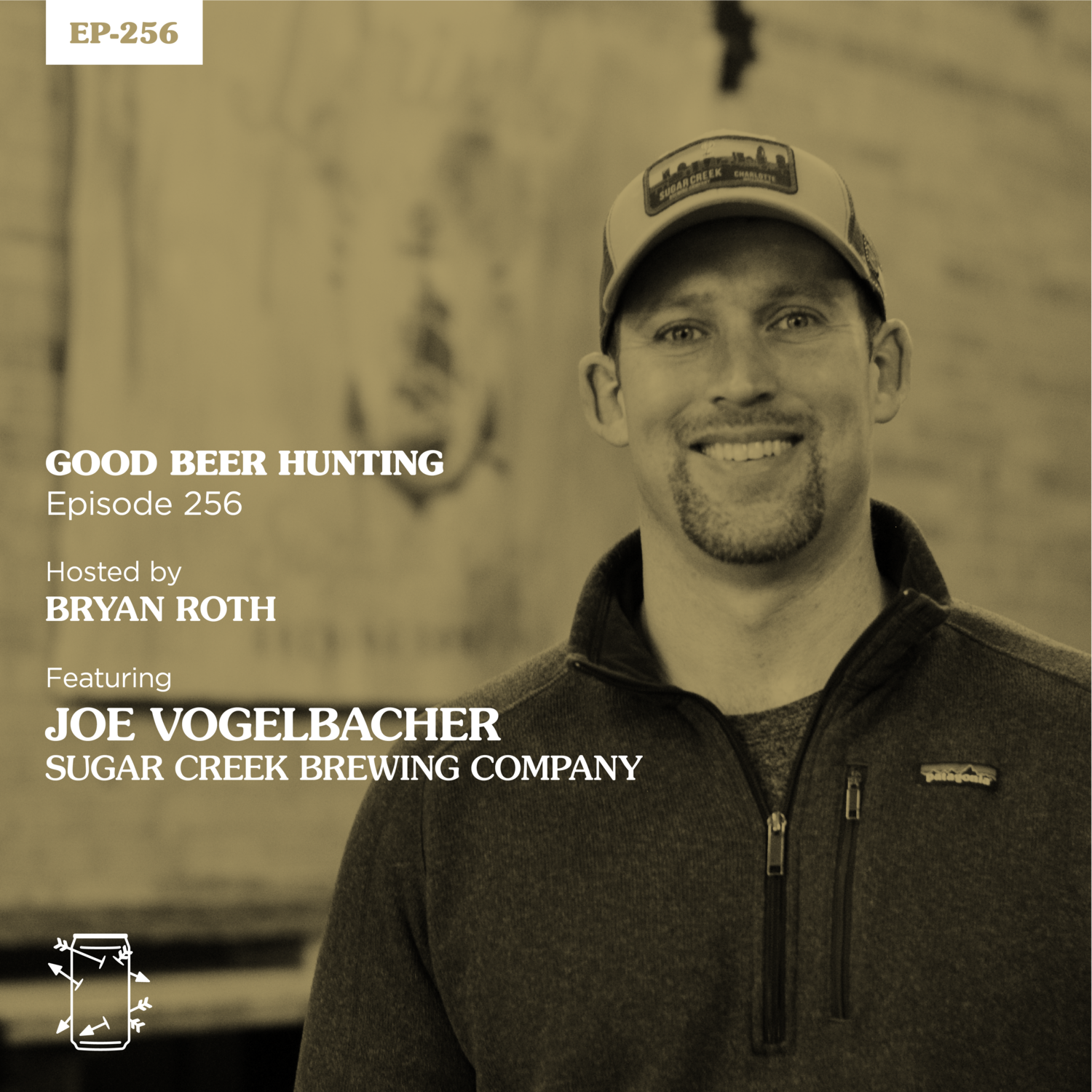
EP-256 Joe Vogelbacher, Sugar Creek Brewing Company
EWhat does it mean to be a "master"? More important: what does it take to actually feel that way? In this episode, we're talking with the 19th Master Cicerone in the world, Joe Vogelbacher. Joe is the CEO and co-founder of Charlotte, North Carolina's Sugar Creek Brewing Company, and in 2019, he was the only person to pass what is arguably the hardest educational test in beer. His rank of Master Cicerone is the equivalent of wine's Master Sommelier—he's studied practically every aspect of beer and beer service, passing a test that has a fail rate of about 90%. If you listened to Good Beer Hunting's conversation with Ray Daniels, founder of Cicerone, you already have a good primer of what the program is. In this chat with Joe, you get greater insight into what it can be on personal, professional, and even magical levels. Working toward—and passing—the Master Cicerone exam has changed Joe and his brewery, and you'll hear him open up about the tangible ways he's noticed these differences. You are also bound to hear some unfamiliar words and science, as Joe casually rattles off aspects of all he's learned. Sticking with this one is fun, too, as Joe walks us through his tasting process, giving a play-by-play of what it means to study a beer. It's a benefit and a burden in some ways, as just sitting back to enjoy a beer takes on a different meaning after years of study. This is Joe Vogelbacher of Sugar Creek Brewing Company. Listen in.
FF-027 Jim Plachy is up and down on hard seltzer, marshmallow hard seltzer, and coffee hard seltzer
EWelcome to another Fervent Few episode of the Good Beer Hunting podcast where myself, Jim Plachy, and GBH's strategic director, Michael Kiser, catch up. We'll talk about the topics and discussions that took place in our membership community in the last couple weeks. Our 500 or so subscribers are scattered all over the world. Sometimes we meet up with them when we're on the road, or they hang out with each other, but it all comes together in our community forum on Slack. If you value the content and experiences that GBH produces, you should join. Your monthly subscription gets you access to the community, special events, and exclusive gear deigned just for members. I joined, and now I manage it all. Plus, it's my favorite place on the Beer Internet. Visit goodbeerhunting.com/ferventfew to strike up a conversation in beer.
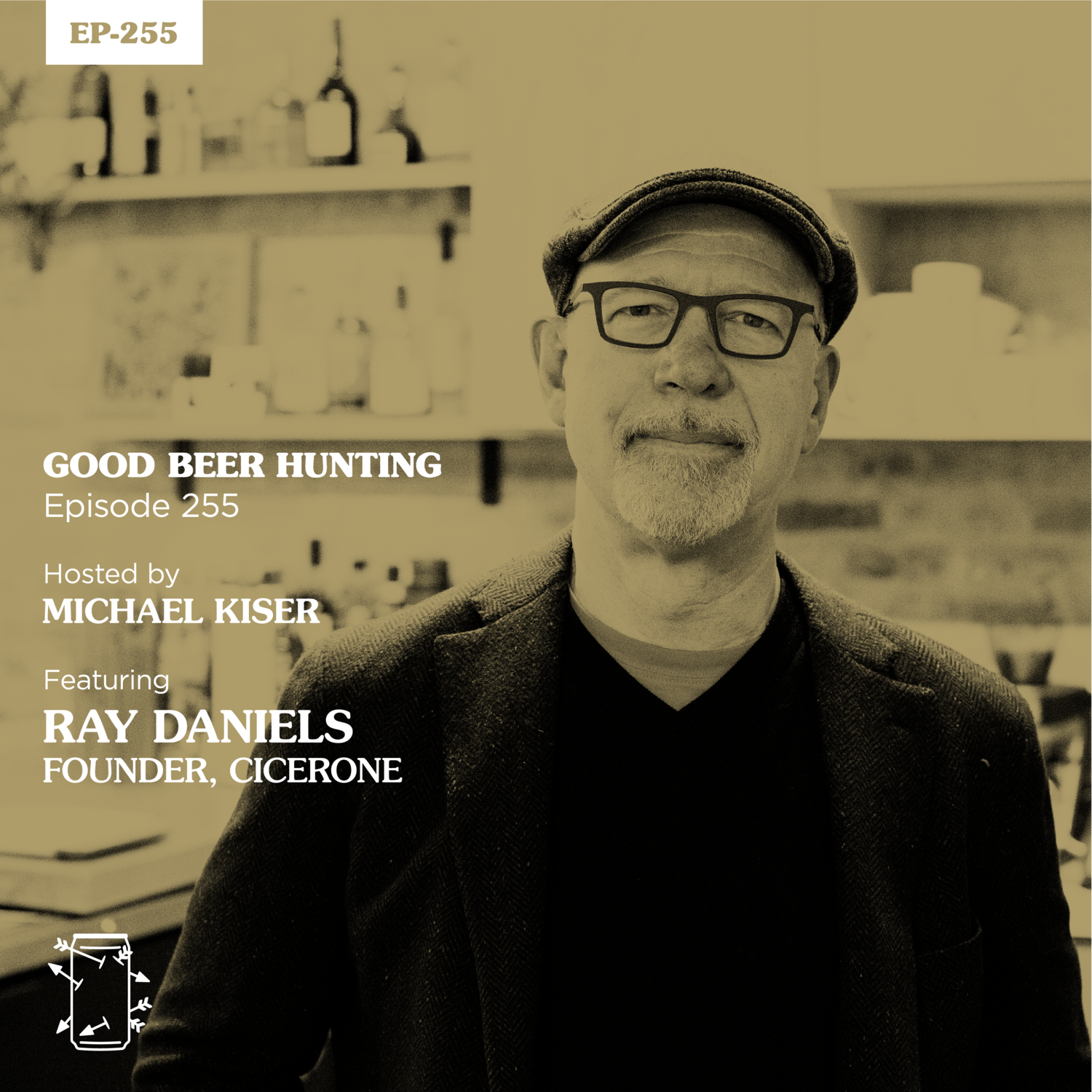
EP-255 Ray Daniels, Founder, Cicerone
EAbout a month ago, an annual tradition took place: the announcement of the new Master Cicerones. It's an exciting and heartbreaking time for many folks who put in months and even years of studying and training to pass one of the most difficult, esoteric, and unpredictable certification exams in all of food and beverage. Another part of that annual tradition, at least in the past couple years, is the ensuing debate on #beertwitter about the value of the certification, and the relevance of the things it tests for. There are some perfectly valid questions asked about the program—we know this because the program itself has evolved over time. But there are also some really wild ideas that get tossed around that seem to be rooted more in our iconoclastic, anti-expertise culture than anything else. Many question the value of a professional development track rooted in knowledge rather than experience, as if the two are somehow separable. In short, some people just want to see the Cicerone world burn. So we did what we tend to do in these situations, and decided to help the world get to know the person and the intent behind the thing. Ray Daniels is the founder of the Cicerone program, and before that he held a number of unique roles at the Brewers Association. And before that he was a marketer and public relations professional, author, and almost, almost, started a brewery in Chicago with one of the city's other luminaries, Randy Mosher. I, for one, love imagining what a brewery started by Ray Daniels and Randy Mosher in the late '90s or early aughts would be like in 2020. It'd probably be just as anachronistic as it was relevant. Which is kind of what we get with Cicerone. We're going to chart Ray's journey, look at how Cicerone has evolved over the years, examine who it's for and who it's not, and discuss how it maintains relevance in an industry with about 10,000 more breweries than when it started.
SL-018 Brewery RTDs: WTF?
EAt a time when hard seltzers are the hottest beverage alcohol around—and spirits are slowly chipping away at servings once strongly held by beer—what's a brewery to do? Businesses across the country have spent the past two years diversifying what used to be beer-only portfolios to best address the changing attitudes and tastes of drinkers. That's recently led to a wave of American breweries entering an emerging space of RTDs—or "ready-to-drink" beverages. If you're a regular at a grocery store like Whole Foods, you've likely seen non-alcoholic versions of these products—something like a skinny can of High Brew Coffee—which are part of one of the fastest-growing segments in food and beverage. When it comes to boozy versions of RTDs, the U.S. market is most commonly seeing new category additions in the form of canned cocktails. These RTDs are exactly what you'd imagine: 12oz, toned-down versions of popular mixed drinks like Dark 'N' Stormys, Gin & Tonics, and other simple cocktails you might order at a bar. The alcohol strength is never as intense as what you'd find during a night out, with these packaged versions typically ranging in ABV from 5% up to 9% or so—not much beyond what drinkers would expect from a favorite Pale Ale or IPA. What we've ended up with is an ideal combination of factors that should be helpful to breweries seeking new customers, or looking to entice current ones to stick within their portfolios. When people are drinking different kinds of alcoholic beverages in more ways than ever, the chance to combine aspects of brewing knowledge and opportunity has opened up additional streams of revenue for companies facing the fiercest competition they've ever had. This is the Sightlines podcast. Listen in.

Mother of Invention Made in Partnership with Guinness — Episode 4
EWelcome to Mother of Invention—a special series of the GBH Podcast made in partnership with Guinness devoted to innovation in the brewing world, both historical and contemporary. In this series, we ask the question: if necessity is the mother of invention, what is the necessity that's driving people to solve a problem, meet a challenge, or explore a new opportunity—and what are they doing about it? This series started in collaboration with Guinness, an underwriter for GBH for three years running. Guinness has a reputation for being a technical innovator—whether it's draft technology, the invention of the nitro widget in the can, training the world how to pour a proper pint, or achieving unprecedented consistency in their breweries around the world. But necessity and innovation come in all sorts of forms for breweries big and small, and are reflected in the cultural influences around them. So this year we decided to go to Denver during the Great American Beer Festival, when we knew we'd have a critical mass of influential and hard-working people from across the industry in one place. We set up shop and conducted two full days of interviews. And while the resulting conversations vary widely in terms of topics and experiences, some patterns began to emerge. In our fourth and final episode, we're going to take everything we've learned and apply it to the experience of the end consumer: the beer drinker. With so much newfound permission in beer—whether we're talking about legal constraints being lifted, new spaces for selling and drinking beer being made available, the uniting of manufacturing and hospitality operations, or the contexts in which beer education is taking place—there are plenty of opportunities to talk about the people doing something new and often unprecedented. We'll begin in an unexpected place: a small-town Connecticut library. This is Mother of Invention. Listen in.

Mother of Invention Made in Partnership with Guinness — Episode 3
EWelcome to Mother of Invention—a special series of the GBH Podcast made in partnership with Guinness devoted to innovation in the brewing world, both historical and contemporary. In this series, we ask the question: if necessity is the mother of invention, what is the necessity that's driving people to solve a problem, meet a challenge, or explore a new opportunity—and what are they doing about it? This series started in collaboration with Guinness, an underwriter for GBH for three years running. Guinness has a reputation for being a technical innovator—whether it's draft technology, the invention of the nitro widget in the can, training the world how to pour a proper pint, or achieving unprecedented consistency in their breweries around the world. But necessity and innovation come in all sorts of forms for breweries big and small, and are reflected in the cultural influences around them. So this year we decided to go to Denver during the Great American Beer Festival, when we knew we'd have a critical mass of influential and hard-working people from across the industry in one place. We set up shop and conducted two full days of interviews. And while the resulting conversations vary widely in terms of topics and experiences, some patterns began to emerge. In our third episode, we look at the ways that people are evangelizing from their own small corners of the beer world to raise awareness of critical issues, processes, ingredients, and education in the industry, all of which make a difference in the way beer is perceived. For these folks, beer is agriculture, politics, economics—even history in the making. And those efforts can sometimes result in lasting change—at the personal level, and even at the state level (in this case, a state as big as Texas). So we're going to start there. This past year, the team at Austin Beerworks in Austin, Texas took on one of the most insurmountable legal battles in beer, facing off against a legislature that's mostly controlled by wholesaler money—and I mean a lot of it—and which only meets once every two years, and then only for 140 days. The chance to shoot your shot, and make change, is extremely narrow. This is how Michael Graham and Will Golden, two of the four partners at the brewery, saw the risk and reward of taking on that challenge, which they ultimately won. This is Mother of Invention. Listen in.

Mother of Invention Made in Partnership with Guinness — Episode 2
EWelcome to Mother of Invention—a special series of the GBH Podcast made in partnership with Guinness devoted to innovation in the brewing world, both historical and contemporary. In this series, we ask the question: if necessity is the mother of invention, what is the necessity that's driving people to solve a problem, meet a challenge, or explore a new opportunity—and what are they doing about it? This series started in collaboration with Guinness, an underwriter for GBH for three years running. Guinness has a reputation for being a technical innovator—whether it's draft technology, the invention of the nitro widget in the can, training the world how to pour a proper pint, or achieving unprecedented consistency in their breweries around the world. But necessity and innovation come in all sorts of forms for breweries big and small, and are reflected in the cultural influences around them. So this year we decided to go to Denver during the Great American Beer Festival, when we knew we'd have a critical mass of influential and hard-working people from across the industry in one place. We set up shop and conducted two full days of interviews. And while the resulting conversations vary widely in terms of topics and experiences, some patterns began to emerge. In this second episode, we're going to look at the ways companies are attempting to connect with new audiences through product innovation. How are breweries like Brooklyn Brewery, Sufferfest Beer Company, Firestone Walker Brewing Company, and others shaking up their portfolios to appeal to the expanding idea of who a beer drinker is? This is a critical question at this point in the evolution of the beer industry and it's become increasingly difficult to define who drinks what. Most people are modal—meaning they partake in cocktails, wine, spirits, macro and craft beer, hard seltzer, and cannabis—and few of us are loyal to any one category, let alone a particular subset or specific brewery. So what connects all these things? And how does a brewery stretch its vision to account for how the world, and the beer drinker, is changing? This is Mother of Invention. Listen in.
Mother of Invention Made in Partnership with Guinness — Episode 1
EWelcome to Mother of Invention—a special series of the GBH Podcast made in partnership with Guinness devoted to innovation in the brewing world, both historical and contemporary. In this series, we ask the question: if necessity is the mother of invention, what is the necessity that's driving people to solve a problem, meet a challenge, or explore a new opportunity—and what are they doing about it? This series started in collaboration with Guinness, an underwriter for GBH for three years running. Guinness has a reputation for being a technical innovator—whether it's draft technology, the invention of the nitro widget in the can, training the world how to pour a proper pint, or achieving unprecedented consistency in their breweries around the world. But necessity and innovation come in all sorts of forms for breweries big and small, and are reflected in the cultural influences around them. So this year we decided to go to Denver during the Great American Beer Festival, when we knew we'd have a critical mass of influential and hard-working people from across the industry in one place. We set up shop and conducted two full days of interviews. And while the resulting conversations vary widely in terms of topics and experiences, some patterns began to emerge. This first episode explores the ways in which people are trying to expand beer's audience. For some, that means inspiring loyalty with traditional experiences, like going to your neighborhood bar in the age of the brewery taproom. For others, it's about sending very big, explicit signals that groups that have historically been excluded by the beer world—black people, trans people, the elderly, and beyond—belong and are welcomed into what is so often described in an over-simplified way as the "beer community." And for others still, it's about getting these formerly niche beers into the mainstream world, so that people who might be delighted by them have better access to them—without having to "join the club" and travel to breweries in industrial parks in the 'burbs, stand in can release lines for hours, or spend a fortune on the latest hyped-up Hazy IPA. Each of these scenarios involves paying attention, being empathetic, and taking risks with your product, brand, or personhood. It's a kind of innovation through vulnerability. Or innovation through humanity. And it's resulting in people doing a lot of new things, in new ways, that benefit others. This is Mother of Invention. Listen in.

EP-254 Matt Darin and Andrew Zens of Grassroots Cannabis
EIf you're a beer fan, the world of cannabis probably intersects with your world in the most casual of ways. You might enjoy both occasionally, or even in a single sitting. You might be attracted to IPAs that exhibit some of your favorite cannabis characteristics—"dank" and "sticky" describe both in equal measure these days. You might float back and forth effortlessly between these two categories of recreational drugs. But if you work in the beer industry, the conversation couldn't be more different. Professional beer marketers and pundits have been scrambling to understand the potential impact cannabis could have on the beer industry, specifically craft beer—and many worry that it threatens to steal more dollars from the same consumers. If you work in recreational cannabis, on the other hand, chances are you've learned a lot from the growth of craft beer as to how to build a customer base and establish a craft-oriented experience around your product—particularly as the cannabis market shifts its focus from medial to recreational. Cannabis is slowly becoming a brand, a lifestyle lead category. And it's moving even faster than the most recent generation of craft brewers did to establish a new niche. These intersections are fascinating from both a cultural and business lens, and the GBH Studio happens to be just down the street from one of the nation's largest cannabis organizations: Grassroots Cannabis. As the legalization of recreational cannabis in Illinois was underway, Grassroots entered into a potential merger with an even larger company to the tune of $875M. That's now pending approval by the feds, which is a funny idea in and of itself—that the federal government is involved in approving the merger of two companies whose products have not even been legalized at the national level yet. But that's exactly how wild these times are for cannabis. This conversation took place right at the end of the year, before recreational cannabis legalization went into effect in the state of Illinois. Some of this is a conversation about what's to be expected, both long-term, but also, in a very real sense, the very next week. This is Matt Darin, founder and chief operating officer, and Andrew Zens, vice president of talent acquisition and development, at Grassroots Cannabis. Listen in.

CL-044 Claire Bullen Has A Lizard Brain
E2019 was a big year for us at GBH. We published more stories than ever before, our writers took home dozens of awards, and we broke our own record for the number of visits to our site. It was truly a banner year. One of the reasons for that is Claire Bullen, our editor-in-chief. Perhaps we didn't give this occasion enough fanfare—I know I certainly would have participated in a ticker-tape parade to celebrate, but this is our time to do so. Claire took over the role of editor in June, but has been on the editorial team since mid-2018. Claire is responsible for two of our 10 most popular stories of the year; she published a book in March; and shone like the beer beacon she is at this year's North American Guild of Beer Writers Awards and British Guild of Beer Writers Awards, winning nods including Best Book, Best Technical Writing, and Best Travel Writing. It's an understatement to say that we're lucky to have her on the team. One of the pleasures of my job is seeing Claire at work. Articles come in from our writers, and I get to watch Claire work with folks to produce some of the best beer writing on the internet. Every editor has a different approach to how they coach and guide writers, making small edits and suggestions as to how to really punch up an article. I saw this at work especially in a recent House Culture article we published by Helena Fitzgerald. Helena is a freelance writer who shared a beautiful story about stepping back from drinking while maintaining her love of bars, and it was lovely to see the touch points in the piece—the moments I knew Claire helped shape. I get to know Helena in this piece, but I also see Claire in there as well. It's funny writing this (and now saying it out loud), because I know Claire has to edit it—and I can imagine her brain working through this introduction that's about her. It's kind of a mind trip, but Claire makes us all better. I benefit so much from having her as editorial teammate, and I hope you see the flashes of her on our website like I do. They're quiet and subtle, but when you find them, they shine brilliantly.

EP-253 Edwin Methu of Cloudwater Soda
My guest today has been in beer sales for the best part of a decade and seen how fickle and complicated the trade can be. Edwin Methu's first job was at the infamous London Fields Brewery, an early innovator in the scene that slowly disintegrated due to the criminal dealings of its owner. Bouncing back from that he was part of a Camden Town Brewery sales team overseeing huge growth, before becoming a sales rep for Sierra Nevada at a time when local craft was forcing U.S. imports into decline. It could be that diverse experience that made Cloudwater founder Paul Jones approach him for a sales role in his new venture, what was then named Good Call Soda. I'll let Methu tell the story of his introduction to the brand and the idea of hopped soft drinks, but it's clear that he loves a challenge and takes great satisfaction in changing people's minds. In the last year or so he's turned those personality traits to a bigger cause. As a person of color in an almost exclusively white industry, Methu has always been self aware in his work and socializing but the experience of taking some friends to a beer festival turned that unease into a feeling that something had to be done. He has become a vocal campaigner for the beer scene to cast its net wider and bring in people of all backgrounds and to challenge prejudice in all its forms with no exceptions. He is no keyboard warrior either—as he tells me, in the wake of the Founders racism scandal he has spoken to many stockists and convinced them to stop stocking the brand at all. At the same time he loves to champion those working towards diversity and the benefits and joy it can bring everyone. This is Edwin Methu of Cloudwater Soda, listen in.

OL-007 Besha Rodell Reads, "The Pub, the Farm, and the Forest — A Return to Narnia"
EToday on GBH Out Loud, you'll hear Besha Rodell read her House Culture story called "The Pub, the Farm, and the Forest — A Return to Narnia," published on November 14, 2019. Our House Culture series goes beyond beer—it's a place where we can share stories of critical engagement, and ask readers to look closely at the parts of life that make it worth drinking. In one of our most recent House Culture pieces, we asked Besha, who is a food and culture writer (she currently works for the New York Times reporting on the dining scene in Australia) to write a piece for us. As she shares, sometimes the stories closest to us—the ones about our very identity and the way we interact with the world—are the most challenging, and rewarding, to write. Before Besha starts reading, you'll hear her share how this beautiful essay came together—follow along as she reads by checking out her article at GoodBeerHunting.com. This is Besha Rodell reading her article, "The Pub, the Farm, and the Forest — A Return to Narnia." Listen in.
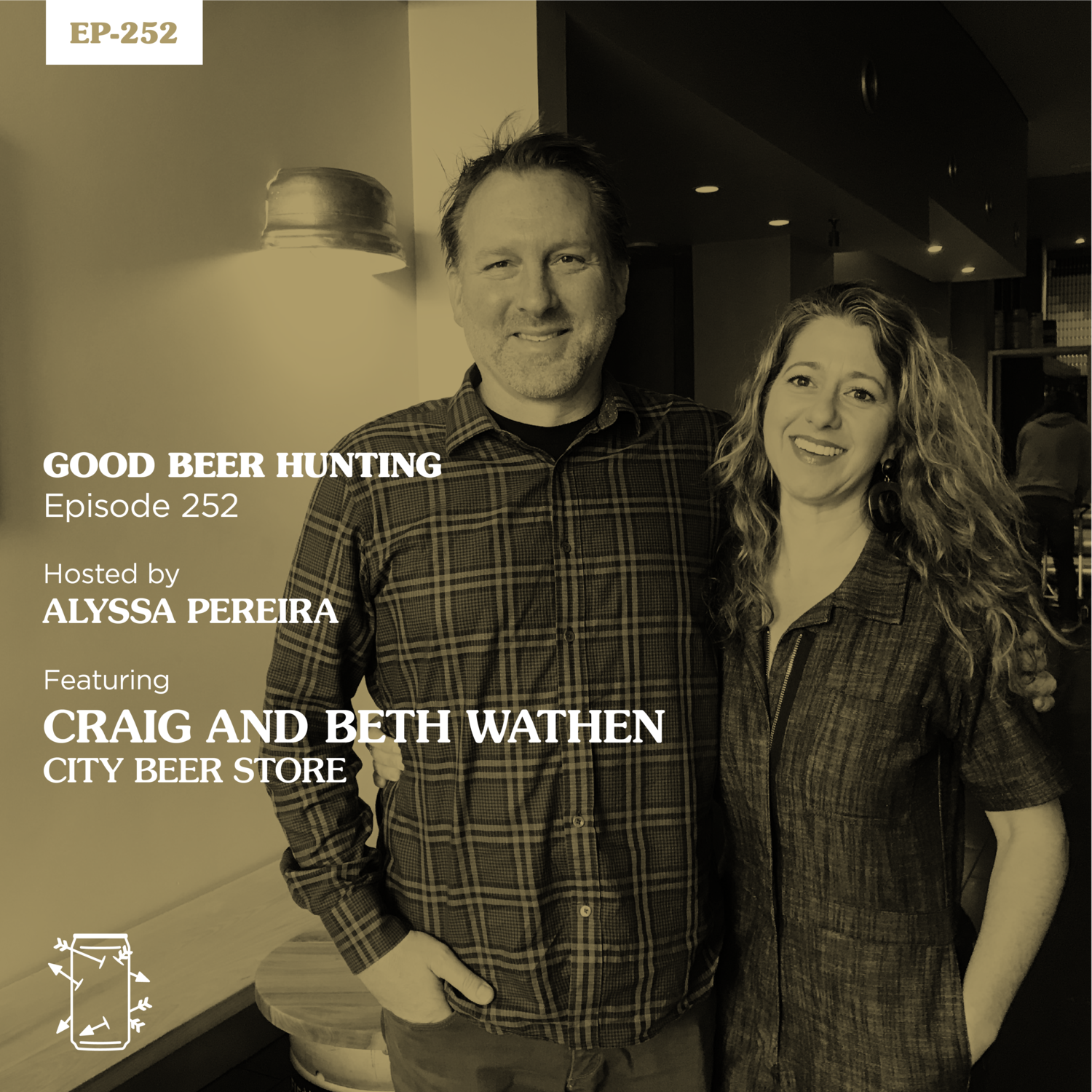
EP-252 Craig and Beth Wathen of City Beer Store
City Beer Store isn't a store. Well, it is, but in 2020 it has evolved far beyond that narrow description. It's a beer and natural wine bar, a restaurant, a gathering space, a patio hangout on nice days, and yeah, sure, a bottle shop too. It's many things all at once, and the store's mascot, a platypus, represents that duality of the business. Over the last decade or so, City Beer has joined the ranks of America's great beer bars. And that wasn't without a lot of hustle on the part of the owners, married couple Craig and Beth Wathen. The two originally opened City Beer Store in 2006 in San Francisco's South of Market, or SoMa, neighborhood, inside a tiny space on Folsom Street. They were way ahead of the curve, creating the type of business that, well, confused people. The pair fielded constant questions: Is it a bar? Or is it a store? Whatever it was, it became very popular. Over the years, they came to outgrow the small room's capacity, which was particularly clear during SF Beer Week or other major events. So when the opportunity arose to move into a bigger space, they took the leap, and in 2018 they reopened in a large restaurant space two blocks away. Turns out, it was a massive undertaking. Its new digs are several times larger than the old City Beer, and in it, the Wathens now also run a food program. They have a bigger staff, a kitchen team, a broader selection in additional fridges, and more customers walking through the door every day. While Beth handles the operations of the bar and restaurant, Craig oversees the beer selection for the taps and store. Despite the uptick in workload, he'll often put in that face time himself with brewers, going on frequent runs to personally pick up kegs. Between the two of them, there's quite a lot to do, which begs the question: how can a small beer bar scale up so drastically? And what does the success of this kind of operation mean for beer retailers everywhere? This is Craig and Beth Wathen of City Beer Store in San Francisco. Listen in.
OL-006 Michael Kiser Reads, "Goodbye to Goose Island's Clybourn Pub for a Season, and Forever."
This is GBH Out Loud, and I'm Ashley Rodriguez. Today you'll hear Michael Kiser read "Goodbye to Goose Island's Clybourn Pub for a Season, and Forever," published on GoodBeerHunting.com on January 9, 2017. Stories about bars and pubs usually focus on the patrons—the folks who rely on their regular spots for connection, a sense of place, or simply as a go-to destination where they can grab a drink with friends. But this article is different. It's a snapshot of the last moments of Goose Island's Clybourn Brew Pub in Chicago, and its biggest mourners—the folks who work there and have called this space their home for years. The closing of Clybourn Pub—not forever but for renovations—was a moment that inspired GBH's founder Michael to write a tribute. The Clybourn Pub was symbolic of many things for Michael. Sure, it would open again, but as a changed entity: looking new, different, perhaps more modern. Beyond that, its closing and renovation meant something more. It's not quite clear what, and, as Michael states, he needed a moment to figure it all out. This is Michael Kiser reading his article, "Goodbye to Goose Island's Clybourn Pub for a Season, and Forever." Listen in.

CL-043 Kate Bernot Reads All The Comments
EHey! Did you hear we hired someone new? We're all excited to welcome Kate Bernot to the Good Beer Hunting team. She's taking over as the lead at Sightlines, our news channel (don't worry, Bryan Roth is still around, working on new projects and definitely making charts). Kate brings years of experience to the team, which she put to good use pretty much from the moment she started. On day one of Kate's new job with GBH, it was announced that Ballast Point Brewing Company would be sold to Kings & Convicts Brewing Company, a brewery in Highwood, Illinois. I live in Chicago and I had to Google where that was—and collectively, so did the rest of Beer Twitter, essentially shutting down the Kings & Convicts website when the news broke. Kate had to write her very first article for us about one of the biggest news stories in beer EVER. As you probably know if you keep up with our site, Kate crushed it, reporting through all the noise that the news stirred up, and finding out some key facts that made clear how this sale was possible. Talk about on-the-job training—within hours of reporting for duty, Kate published one of the most comprehensive breakdowns of the Ballast Point sale out there. And today, we're gonna learn more about how that story unfolded. Likewise, we're gonna learn more about Kate herself—for all the messages and emails flying around during that Ballast Point article, this is the first time I get some time to chat with her. Along with her stellar work for previous beer publications and her penchant for asking simple and straightforward questions, we quickly learned we at the office were making one fundamental mistake.
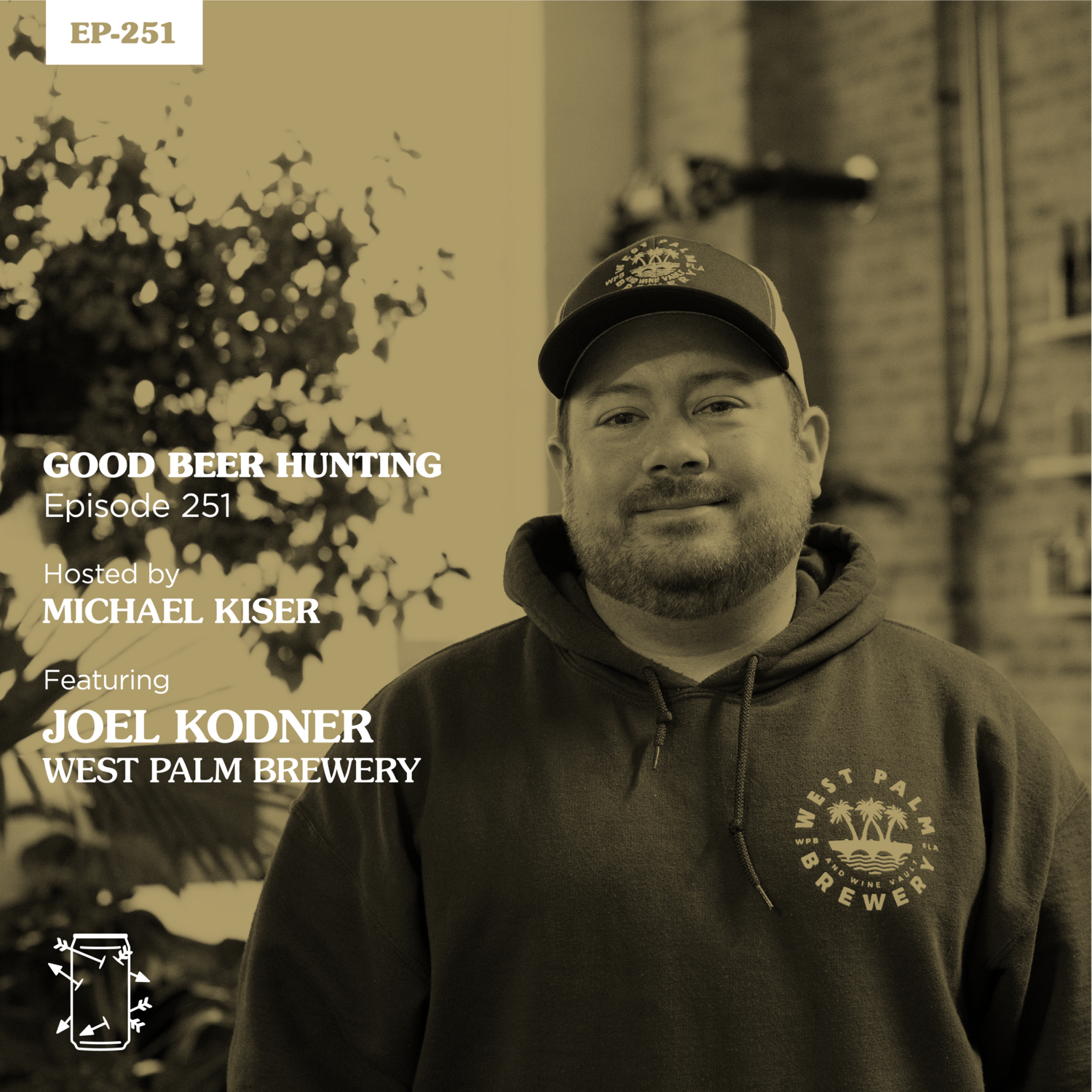
EP-251 Joel Kodner of West Palm Brewery
One of the stories that I think often gets lost in 2019 craft beer is the experience of the brewpub brewer. All the noise—for better and worse—tends to come from packaging breweries, can releases, distribution, growth and expansion into new markets, and massive international invitationals. Most of that is not relevant to a brewpub brewer who's focused on things like their local market, foot traffic, keeping serving tanks turning over, and serving restaurant guests a great beer. Brewpubs are, in many ways, the backbone of the modern craft renaissance both in the '90s as well as the early oughts. So many people cut their teeth on brewpub systems. It's where so many have their first craft beers. It's the gateway for so much of the growth the craft sector has seen over the years. It's also much more resilient to the ups and downs of that sector. Instead, its vulnerability comes from real estate prices and shifting demographics in their immediate radius—and the staff turnover that frequently plagues restaurants. Brewpubs are another world. And for today's guest, that's kind of the point. Joel Kodner is the brewer at West Palm Brewery in West Palm Beach, Florida. It's been a good shift for him away from the package-distribution-production-brewery part of the industry. He likes where it fits into his life, and the life it enables. But it's also a weird seat to have at the craft beer shit show of 2019. It can feel isolating and a bit irrelevant to the larger conversation sometimes. That tension has made Joel a prolific presence on Twitter and Instagram—where he shares a lot of his criticism, frustration, and hope for the industry. Sometimes with a sense of humor, sometimes with a sense of dread. But for me personally, it always feels entirely rational. He brings to light so many of the issues that haunt me and others in craft beer, and the way in which he articulates it all usually sums up those feelings in stark terms.

OL-005 Mark Spence Reads, "Squeeze, Never Pull" from Beer is Offal
EToday, you'll hear Mark Spence read the third entry of his blog, Beer is Offal, called "Squeeze, Never Pull," published on Good Beer Hunting on October 31, 2019. This article is evocative—but not for the reason you might think. The subject matter—hunting and eating animals—is heavy, but the way Mark approaches it intentionally leaves the reader in a kind of gray area. Many of us might feel uncomfortable seeing an animal be killed, but deal with the cognitive dissonance of consuming meat. Mark approaches that uncertain space head on, and though he's upfront about his decision to eat meat, his story shows that there are no simple and straightforward answers. This is Mark Spence reading an entry of his blog, Beer is Offal, called "Squeeze, Never Pull." Listen in.
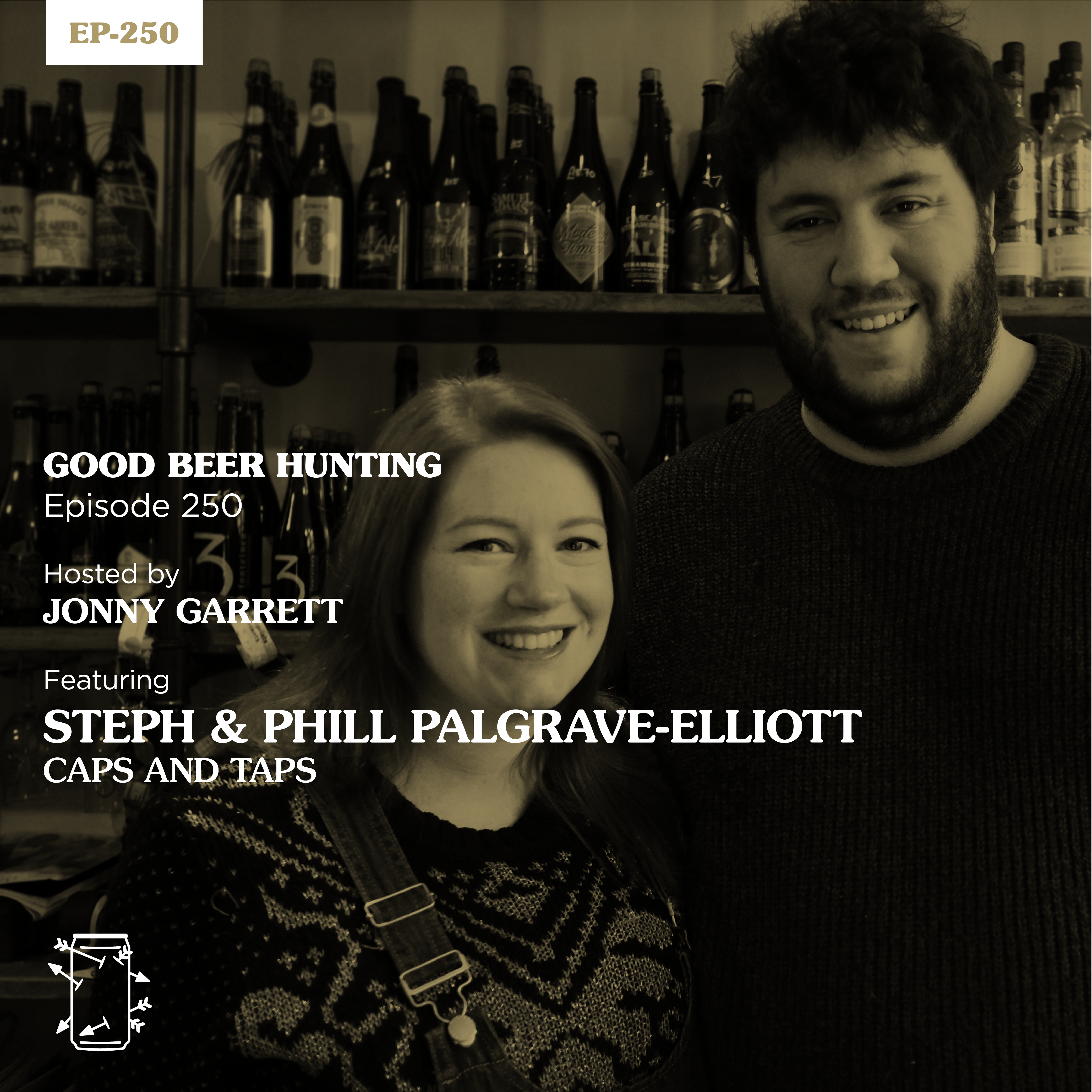
EP-250 Steph and Phill Palgrave-Elliott of Caps and Taps
EOpening a bottle shop is many beer drinkers' ultimate dream. After all, it's hard to argue with a work day spent surrounded by delicious beers and excitable people, where passion and knowledge for a product can carry you through. Stock it and they will come. Of course, if it were really that easy, we'd all be doing it. The beer industry is in a state of constant flux, and it seems that the retailer at the end of the chain is usually the first to suffer the consequences. The downfall of the British pub is well documented—if perhaps exaggerated—but fewer column or website inches are given over to stories from the independent off-trade. Since the British craft boom kicked off around 2010, the scene has changed immeasurably, and the independent bottle shop is where all those forces are made visible. Fights break out over hyped releases, six-packs go to war over pricing, customers scan best-before dates, supermarkets steal customers, and rents skyrocket. The fallout from most industry issues becomes clearest at the point of purchase—and that means bottle-shop owners have a wide view of the industry, and to some extent control the narrative about it, too. After all, they are the ones interacting with drinkers first-hand. With that in mind, I headed to Caps and Taps, a small, independent bottle shop located at the bottom of Kentish Town Road in North London. Owners Phill and Steph Palgrave-Elliott are present at just about every industry event, tirelessly supporting the scene and its breweries whether in the shop or outside it. By committing to refrigerating their beers, stocking a wide range of Belgian releases, and making sure they have the licensing to serve on site, they have marked themselves out as one of the best places to drink and shop in North London. But it hasn't been without its challenges—not least of which is the fact that a close competitor opened minutes away, just weeks after Caps and Taps did. This is Phill and Steph of Caps And Taps. Listen in.

FF-026 Jim Plachy is not ordained and finally met an MLB The Show diehard
Welcome to another Fervent Few episode of the Good Beer Hunting podcast where myself, Jim Plachy, and GBH's strategic director, Michael Kiser, catch up. We'll talk about the topics and discussions that took place in our membership community in the last couple weeks. Our 500 or so subscribers are scattered all over the world. Sometimes we meet up with them when we're on the road, or they hang out with each other, but it all comes together in our community forum on Slack. If you value the content and experiences that GBH produces, you should join. Your monthly subscription gets you access to the community, special events, and exclusive gear deigned just for members. I joined, and now I manage it all. Plus, it's my favorite place on the Beer Internet. Visit goodbeerhunting.com/ferventfew to strike up a conversation in beer.
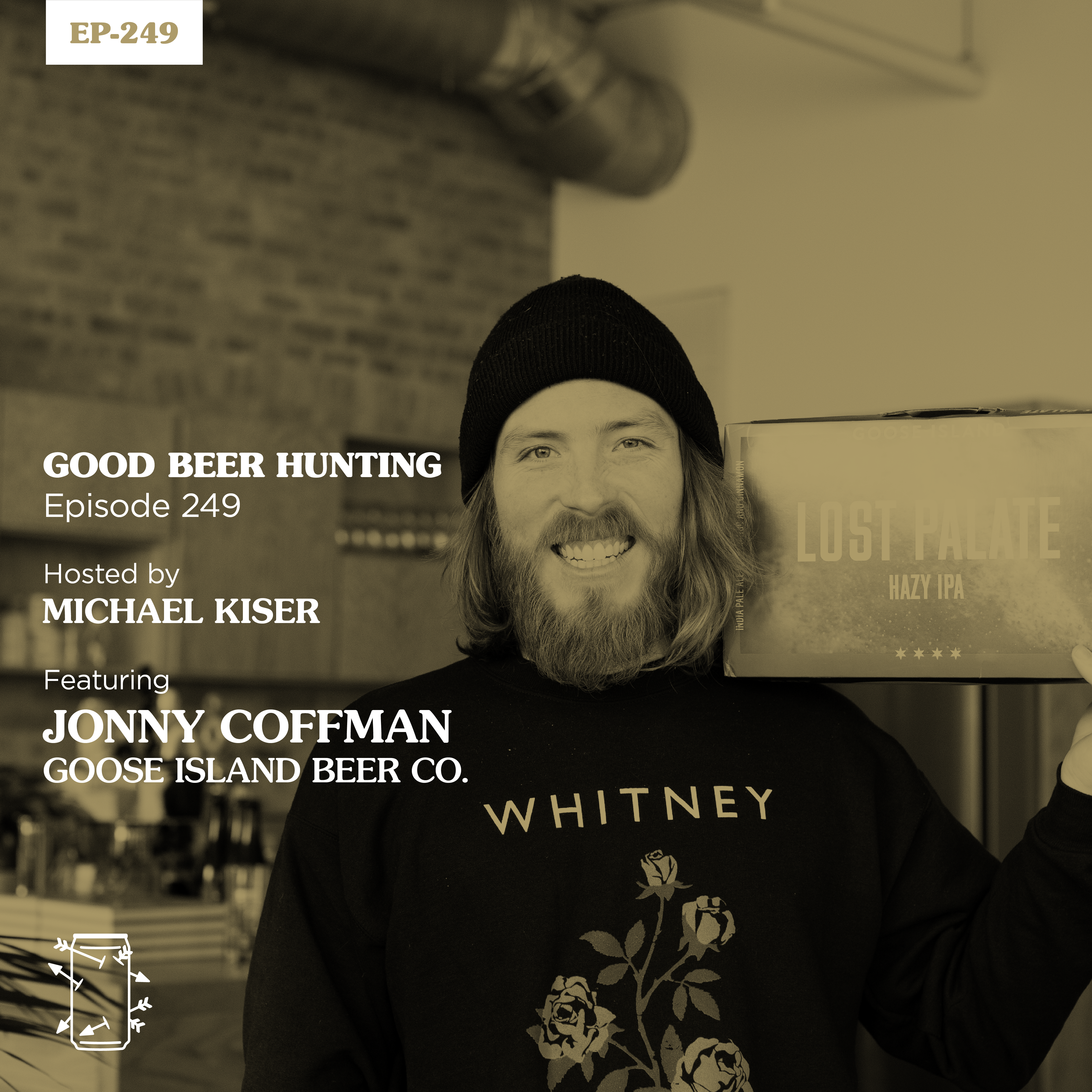
EP-249 Jonny Coffman of Goose Island Beer Co.
EToday's conversation is one of the hardest—and most edifying—that I've been lucky to have. It reaches that level of dialogue and storytelling that I think, on occasion, puts the GBH podcast on the level of oral history. It has nothing to do with me. It has everything to do with the quality of people who we're lucky enough to have share their stories on this platform. And each guest of this caliber serves as a sort of searchlight to others who might find their way here next. Jonny Coffman has been a bartender in Goose Island's taproom, just down the street from our studio, for some time now. He's worked in breweries and bars like Chicago's Local Option, and serves as a warm, inviting face to the world of beer for so many. He's the kind of unassuming and energetic person that makes you feel like you always made a great choice. But the last four years of Jonny's life—including a long, sprawling battle with cancer—challenged that disposition in the most profound ways. And they did so over and over again. I recently ran into Jonny at the Goose Island taproom when he was celebrating the national release of the beer he helped design and that he and his colleagues used as a symbol to celebrate his new lease on life. That beer is called Lost Palate—for reasons you'll hear about in excruciating detail in this interview. It's a Hazy IPA with cinnamon, lactose, mango, and graham crackers. It's a wild beer for Goose to have made. But Jonny is kind of a wild guy. In the end, this interview is not about a beer. It's actually a struggle for me to even talk about the beer itself in the context of this interview, but for Jonny it's critical that we do. Rather, this interview is about all the things that this simple beer has come to represent—for Jonny, his colleagues, family and friends, and the message he hopes it carries to the rest of the world—as it spreads out onto shelves all across the country. This beer, and Jonny's story, are going to pop up everywhere. Fair warning that this is a long one—and the listening will be hard-going at times. It was for me and Jonny, too. But I know I walked away better for having heard it. This is Jonny Coffman of Goose Island Beer Co. Listen in.
SL-017 Monies for Alcohol — How ABV Impacts Sales
EHere's an odd thing that enthusiasts don't always focus on when talking about beer, or wine, or spirits, or whichever hard seltzer brand we happen to be enjoying in the moment: they're vehicles for alcohol. There may be tasting notes scribbled down or spoken aloud, and we may stop to reflect on what we just sipped, but the pure, biological impact isn't always discussed when we're quaffing something intoxicating. The moment you take your first sip, that ethanol-infused liquid is altering your body chemistry. This is no surprise. We see the Alcohol By Volume—ABV—listed on the drinks we consume and feel it in our bodies. In the simplest terms, courtesy of Wikipedia: ABV is a "standard measure of how much alcohol (ethanol) is contained in a given volume of an alcoholic beverage (expressed as a volume percent)." In beer, a serving size is 12oz, and it's easy to find a range of ABVs, from a 4% Gose to a 7% IPA, all the way up to a 12% Imperial Stout or a beer that really pushes the limits, like Dogfish Head Brewery's 120 Minute IPA, which measures in at 18%. The higher the ABV, the more ethanol, and the stronger the impact each drink has on our brain and motor functions. In casual and on-the-record conversations over the past year, I've been chatting with beer industry professionals about ABV and their impressions of its impact on the marketplace, related to sales and to consumer desires. There are all sorts of scenarios to weigh up—maybe you're at a taproom, or strolling through your grocery store beer aisle. What are you thinking about? The occasion you're going to have that beer? Who you're with? What's the time of day? In one way or another, these considerations will likely make you consider the alcohol content of the beer you're going to drink. Interestingly, in many of those chats I had with brewers and brewery owners, I kept hearing about an interest in higher-ABV products. But how can that be? The past year has been full of stories on Good Beer Hunting and elsewhere about the rise of lower-ABV brands, or "better-for-you" products like Michelob Ultra (with an ABV of 4.2%) and Dogfish Head's Slightly Mighty IPA, a 4% "lo-cal" India Pale Ale. On a monthly basis in 2019, local and national media outlets have been pumping out stories about a grand shift toward lower-ABV and lower-calorie beers. Which isn't false. It's also just not entirely true. In a GBH Sightlines story from September, it was shown that almost all growth from in-store beer sales has come from higher-ABV brands, and it's a shift that's been happening for years. And just recently in November, more analysis showed a rising ABV level for some of the best-selling Stouts as weather got colder toward the end of each year. So while all these narratives can take place at the same time, together they create a complex conversation about the aspect of craft beer that we don't often discuss. That alcohol content? It's got consequences.

OL-004 Bryan Roth Reads, "If You're Not First, You're Last — Why Michelob Ultra is the Most Important American Beer Since Bud Light"
EThis is GBH Out Loud, and I'm Ashley Rodriguez. Today, you'll hear Bryan Roth, editor of our news section, Sightlines, read an article from our Unrated series called "If You're Not First, You're Last — Why Michelob Ultra is the Most Important American Beer Since Bud Light," published on Good Beer Hunting on October 17, 2018. This article is is one of the most popular, and still most polarizing, pieces we've ever published on our website. And a lot of that has to do with the subject, Michelob Ultra. But the beer's growth is undeniable, and on closer examination, Bryan discovers that this beer took off in a way that nobody ever expected. This is Bryan Roth reading "If You're Not First, You're Last — Why Michelob Ultra is the Most Important American Beer Since Bud Light." Listen in.
EP-248 Sam Victory of Wise Man Brewing
EOne of my favorite aspects of hosting the chats you hear on the Good Beer Hunting podcast is the real-time accumulation of stories and insight from industry professionals. On a very basic level, many of these conversations become a time capsule: we're capturing the thoughts, ideas, and experiences of those living in and changing the beer industry. It's the personal side of what makes beer special. In this episode, we're traveling to Winston-Salem, North Carolina to visit Sam Victory, brewer and co-founder of Wise Man Brewing. His company has filled a unique space in the Tar Heel State, first making waves with hazy, juicy, New England IPAs while also being recognized on a national stage for barrel-aged beers, traditional German styles, and Wise Man's Irish Red Ale, which won gold in its category at the 2019 Great American Beer Festival. When I sat down with Sam, he was in the midst of R&D for a hard seltzer, and we spoke about what it takes to bring that kind of drink to consumers, as well as what it means to build a market for modern IPA. Like many of his peers, Sam came from outside the industry—a homebrewer gone pro—and we discuss the dramatic shift in moving from a lab job at a pharmaceutical company to the daily grind of a brewery. Our conversation touches on the challenging realities of starting a brewery, let alone keeping it new and interesting to anyone who may be sitting down in the taproom—including, in this case, a roving reporter interested in learning more about how these things come to life. This is Sam Victory of Wise Man Brewing. Listen in.

CL-042 Beth Demmon On The Punk Rock Version of The Secret
EWitches are having a moment in the current cultural zeitgeist. It's impossible to ignore. And, as Beth Demmon mentions, the resurgence of witchcraft and wizardry have a sort of nostalgic feel that appeals to us older millennials. Beth is a freelance writer, and published her first piece for Good Beer Hunting called, "Witch (Craft) Beer — How a New Wave of Brewers are Incorporating Magic into Beer," as part of our Mother of Invention series with Guinness. In the article, Beth talks about modern-day brewers who utilize magic in their brewing. They range in type and tradition, from those that practice "chaos magic," or what Beth calls the Punk Rock version of The Secret, to folks who rely on ideas and practices passed down from generation to generation, and employ specific rituals to brew their beer. It might sound gimmicky, or perhaps a little silly, but we examine why that is. Where does the gimmick come from? Likewise, the stories that Beth tells and the folks she interviews reveal a level of intentionality, respect, and regard to history that transcend whatever preconceived notions you might have about the idea of magic. And they also reveal a lot about the way we view women—past and present—in the context of beer brewing. We also talk about what it means to tell a story, as she says in the beginning, not a witch, and how to handle things like tradition and ancestral knowledge respectfully. We also talk about what a little bit of positive thinking—and perhaps a little magic—might have to do with Beth's recent beer fortune. We start at the very beginning of this piece.
OL-003 Jonny Garrett Reads, "A Homebrewing Festival in the Arctic Circle"
EThis is GBH Outloud, I'm Ashley Rodriguez. Today you'll hear Jonny Garret reading the very first story he ever wrote for Good Beer Hunting. It's called, "A Homebrewing Festival in the Arctic Circle," published on goodbeerhunting.com on February 28, 2018. This article is part of our GBH in Residence series, where we go beyond the brewery tour and the tasting room, and literally join the crew in their daily grind. For the Residence series, GBH spends a day or two working alongside brewers, cidermakers, cellarmen and delivery drivers. It's what the craft industry looks like on its own terms. And in this case, Jonny goes all the way to the Arctic Circle to follow a homebrewing festival and taste perhaps some of the wildest, weirdest, and most interesting beers you can imagine. As you can imagine, getting to the Arctic circle isn't easy. Before Jonny starts reading, you'll hear him share his experiences about what it takes to actually get there—follow along as he reads and shares stories of this adventure by checking out his article at goodbeerhunting.com. This is Jonny Garrett reading his article, "A Homebrewing Festival in the Arctic Circle." Listen in.
EP-247 Phil Sexton of Giant Steps Winery and Matilda Bay Brewing
EThis is Luke Robertson, and you're listening to the Good Beer Hunting podcast. When it was announced in October of this year that Phil Sexton would be opening a Matilda Bay Brewing Company brewpub, the entire Australian beer industry did a double-take. If we were in a cartoon, we would've removed a hip-flask from under our coats and sworn off drinking. To say it was a surprise is underselling it. Sexton cofounded Matilda Bay in the early '80s. He left in the early '90s after the publicly listed company was taken over by Carlton United Breweries (CUB). From there he went to the States to become brewmaster at the now-shuttered BridgePort Brewing Company, where he created BridgePort IPA, one of the early West Coast IPAs. Then, back in West Australia, he teamed up with the old Matilda Bay crew to open a new brewery called Little Creatures. Its flagship Pale Ale played a big part in the next wave of craft beer in Australia, and the Fremantle brewpub is still a pilgrimage for Australian beer lovers 20 years later. Like Matilda Bay, Little Creatures was publicly listed on the Australian Stock Exchange and was eventually taken over—this time by the Kirin-subsidiary, Lion. From there, Sexton focused on his other passion: wine. He launched two brands in the Yarra Valley, just outside of Melbourne, and for a while it looked like he was done with beer. In his absence, Matilda Bay has been increasingly driven by marketers. The popular Fat Yak Pale Ale was spun off into its own brand, called Yak Brewing, and old favorites from the Matilda Bay range such as Redback Wheat Beer and Dogbolter Dark Lager were found in fewer and fewer places. Matilda Bay's only recent launch is a beer called Frothy. Followers of Australian beer immediately pointed out its similarity to Lion Breweries' Furphy, a Kölsch-influenced easy drinker. Frothy has the same-colored packaging, is a similar style, and even the names look and sound the same. While CUB says it was designed independently, the imitation is obvious and disappointing. For longterm Matilda Bay fans, it was a death knell for an old favorite … or so we thought. Much has changed since Sexton left the beer world, especially with his old brands. Only in the past year, it was announced that Matilda Bay owner CUB would be sold by AB InBev to Asahi. Lion is also buying New Belgium Brewing, while BridgePort was a casualty of the competitive market. Now that Sexton in joining forces with his old brand again, however, I wanted to find out why—and hear his thoughts on the chaos that is beer in 2019. This is Phil Sexton of Giant Steps Winery and Matilda Bay Brewing. Listen in.

SL-016 Rebel vs. Regulator Pt. 2
Welcome to the Sightlines podcast from Good Beer Hunting. I'm Jonny Garrett. Yesterday we released a podcast interview with John Timothy, chief executive of the Portman Group, which is an independent regulator for advertising and marketing in the U.K. alcohol industry. If you missed it, we recommend giving that a listen before today's episode, where we're going to see how the regulatory system the Portman Group has put in place works in the real world. According to my first guest, it doesn't work at all. Today you'll hear from two breweries who have gone through the complaints process more than once. Tiny Rebel Brewing Company first went in front of the complaints panel in 2017 with its award-winning Red Ale, Cwtch. One complainant in a supermarket had written to the Portman Group saying the beer's bright colors and bear logo appealed to under-18s. The brewery states its case in writing but the panel agreed with the complainant, and suggested several changes to the packaging to avoid the brand potentially being delisted by major stockists. Tiny Rebel was forced to redesign its best-selling beer at the cost of well over £10,000. Despite this, just a few weeks ago, the owners found themselves writing to the panel again to defend themselves after a similar complaint from a customer in a supermarket. It's the first time in the Portman Group's 30-year history that a product has been up against the panel twice. In theory it shouldn't ever happen if the brewery takes the advice in the judgment. Tiny Rebel made major changes to its design, but was it enough? We spoke to Tiny Rebel cofounder Bradley Cummings about the context of the complaint, and how the ruling went. For added perspective, I also chat to Nick Dwyer, the art director at Beavertown Brewery. Nick has also had several encounters with the Portman Group during his tenure, and shares thoughts about his experiences. This is the Sightlines podcast—listen in.

SL-015 Rebel vs. Regulator Pt. 1
Welcome to the Sightlines podcast from Good Beer Hunting. I'm Jonny Garrett. If you're a beer drinker in the U.K., you've probably heard of the Portman Group: it's the independent regulator for advertising and marketing in the U.K. alcohol industry. But if that sounds a little dry, you could also refer to it as the "pantomime villain" of the industry. Funded by eight multinational drinks companies, including Heineken and Diageo, it produces an annual code of conduct through wide consultation with the industry and consumers. The aim of the code is to encourage producers to advertise their products responsibly: guidelines cover everything from safe levels of consumption to not appealing to children and not implying sexual success as a result of drinking. Any member of the public can make a complaint to the Portman Group, and an independent panel will use the code to determine if the ad or product is in breach. As a self-regulatory body, the Portman Group is supposed to be a better alternative to further legislation from the U.K. government. However, the Portman Group comes in for a lot of criticism, and not just because it has to act as the sensible one at the bottle share. Good Beer Hunting first wrote about it in December 2017, in an article titled "Are the UK's Largest Drinks Corporations Regulating the Brands of Their Smaller Competitors?" in relation to a complaint made against Tiny Rebel Brewing Company. Remember that name. The fact that the regulatory body is funded purely by multinational companies causes a great deal of mistrust and conspiracy among smaller producers and their fans. Despite the fact that the whole industry has a say on the code each year, there are plenty who believe many of its rules are draconian, too. The complaint process also comes under attack—breweries who choose to fight can spend thousands on legal costs, sacrifice staff time and, if they lose, create redesigns off the back of one complaint. What follows is a candid conversation with the Portman Group's chief executive John Timothy. We talk about how the process works, as well as how he keeps the judges independent and limits impact judgments can have on small, inexperienced businesses. Shortly after recording this episode, however, we found out that Tiny Rebel had just gone up against the panel for a second time for the same product, and lost again. To find out more, we spoke to the brewery's cofounder Bradley Cummings, who explained his great frustration at the process and what he believes is hypocrisy within it. We'll be releasing that interview in a second episode, out tomorrow. For now though, let's hear Timothy's approach to regulating a fast-growing and creative industry. Listen in.

Into the Wild: Raleigh
EWelcome to the third episode of Into the Wild: part of our six-city tour across the U.S. with New Belgium this year. I'm Ashley Rodriguez, and together with GBH's creative director Michael Kiser, we headed to the city of Raleigh, North Carolina for three days of great food, fantastic drinks, and unique events celebrating the specialness of sour and wild beers.
EP-246 Pete Holt of Howling Hops Brewery
ELondon is blessed with hundreds of great pubs. But for me one stands tall above the rest: a beacon of everything that is great about this British institution. It also happens to be my local. The Southampton Arms in Kentish Town, North London feels like it's been there forever—it's all worn wood, rickety chairs, stained walls, and sepia photos. It breaks all the perceived rules of running a pub. Up until last year it had 12 cask lines, six cider lines, and just two keg lines. It didn't take cash and only served a few bar snacks. It had a one-page website and an almost untouched Twitter account. On paper it shouldn't work, and yet the perfectly kept casks flowed constantly. Things have changed a little since then, but not by much. On a Monday night, during the live piano performances, you can hardly move; on Tuesday, during the pub quiz, the same drunk man screams questions over the top of people's heads at the bar. Even at the height of winter, Friday and Saturday crowds spill out into the tiny backyard area, blocking the way to the outhouse toilet. It's the most effortlessly welcoming, cozy pub I have ever been to, and it quickly became my favorite pub in the world. Amazingly, it only celebrated its 10-year anniversary in November. Its cofounder, Pete Holt, is a soft-spoken guy who has that enviable skill of seeming to like exactly what everyone else likes. Despite the rise of keg beer and gastropubs he wanted to open a simple real ale boozer, and it seems everyone in North London approved. He did the same with the Cock Tavern in Hackney, when he opened the borough's first brewpub in 2011. Howling Hops started in the basement but just a few years later expanded to its own brewery and taproom site in Hackney Wick, where it now pours a wide range of beers straight from the tanks. Its beers are staunchly modern and usually hop-forward, but you'll still see lots of Howling Hops casks at the Southampton sat next to breweries that have been stocked for the full decade—breweries like Marble, Thornbridge, Moor, and Oakham. In my conversation with Pete, we talk about the inspiration behind his three sites; the unique challenges of running a business that spans production, logistics and serving; and what it's been like to watch London change over a decade through the lens of beer. This is Pete Holt of Howling Hops. Listen in.

CL-041 Claire Bullen Likes Kveik, Puts a Ring on It
EA year ago we launched a series of stories underwritten by Guinness called Mother of Invention. The beer industry is often spurred on by the need to meet new necessity with invention. This leads to all sorts of unique evolutionary paths in the history of beer, from making to selling to drinking. These articles explore the innovations, big and small, old and new, that have transformed the beer in your hand in surprising ways. One of my favorites from this series—"A Fire Being Kindled — The Revolutionary Story of Kveik, Norway's Extraordinary Farmhouse Yeast"—was written by Claire Bullen, our editor-in-chief. She was interested in digging in to the origin of the kveik family of yeast, which first earned international acclaim thanks to articles published by Norwegian writer and beer enthusiast Lars Marius Garshol on his blog, Larsblog. His discoveries and writings have since inspired thousands of homebrewers to reimagine the craft of farmhouse-style brewing, using a category of yeast that had been preserved by traditional brewers in western Norway. But how has this new experimentation and investigation influenced commercial breweries? And what are the benefits and opportunities kveik affords those who are willing to take the risks? Talking to Claire about the content of the story, but also the process of the reporting itself, reveals a lot of the questions and excitement behind kveik's meteoric rise. This is Claire Bullen, GBH's editor-in-chief. Listen in.

EP-245 Dustin Sepkowski of 33 Acres
When you're a brewery that's built on a very specific intent—the way you look, the beers you make, the kind of hospitality you provide—there's a significant amount of behind-the-scenes work that's needed to bring those elements to life. And when you're regarded as one of the best in your domain, that creates an interesting tension: what does improvement mean, when you're already, in some ways, at the top? In this episode, we're posing this philosophical question (and others) to Dustin Sepkowski, operations manager at Vancouver's 33 Acres Brewing Company, which has won a host of British Columbia beer awards—including the nod for 2018 Brewery of the Year, as named by the BC Craft Brewers Guild. Among its many accolades, the brewery is a two-time silver medalist at the World Beer Cup, finishing second overall in 2016 and 2018 for 33 Acres of Euphoria, its Belgian-Style Tripel. Dustin and I talk about this achievement, and how it's impacted the brand, the brewery, and the other beers they make. When you're brewing—objectively speaking, in terms of awards judging—the second-best Tripel in the world, what's to fix? Apparently, quite a bit. And the reverberations are also felt by other beers in the 33 Acres portfolio. If you've ever wondered what breweries do with notes from these competitions, this conversation provides some insight into the resulting work and tweaks that happen behind the scenes—regardless of how high you finish. We'll also talk a bit about functioning within the British Columbia beer scene, and the story behind 33 Acres' distinctive positioning—from its open white spaces to its unique flavor experiences, and even its self-published zine. All are designed to give visitors a better idea of the people behind the company, and what they want to offer those who drink their beer. In a place, and within a scene, that's sometime perceived as being behind the times, this is just one example of a business working to change that perception. This is Dustin Sepkowski of 33 Acres. Listen in.
CL-040 Jonny Garrett is a Crispy Boi
Welcome to the Good Beer Hunting Collective podcast, the show where members of our team interview each other to get the behind-the-scenes look at some of our favorite articles. I'm Claire Bullen, and I'm the Editor-in-Chief at Good Beer Hunting. One of the greatest pleasures of my job is fielding pitches that our writers send in, which range from the bold to the brilliant to the baffling. Recently, GBH staff writer Jonny Garrett sent in an idea that was a mix of all three; as soon as it came into my inbox, I remember thinking—"this is something we have to publish." That pitch evolved into his recent piece, "TL;DR – Tracing the Origins of Beer Language, from Michael Jackson to Emojis," which is part of our Mother of Invention series, underwritten by Guinness. With this article, Jonny set himself an almost impossibly expansive task: examine the history and evolution of modern beer writing, from the groundbreaking author and beer personality Michael Jackson, who helped codify a formal language around beer in the '70s and '80s, all the way up to today's frenzy of Twitter timelines, Instagram captions, and Untappd reviews. As the article's title suggests, Jonny even digs into the role that emojis play in beer writing. In researching his article, Jonny spoke to linguists and delved into the history books. He also examined how wine-tasting notes came to be, talked to one of Beer Twitter's most infamous wordsmiths, and spent more than a little time scrolling through his various social media feeds. The result is an up-to-the-minute piece with a unique, metacritical scope. In the space of just a few thousand words, he manages to touch on everything from the debate around the term "craft beer" and the way that specialized vocabulary functions within niche communities to "crispy bois" and dank memes. It's a remarkable piece of writing, and it may well change the way you think about and describe beer forever. If you haven't yet read his article, you can find that on GoodBeerHunting.com. For now, tune in and listen as Jonny describes how the idea for this article first came about.
EP-244 Mike Willis of West Craft Specialty Imports
When we think of beer from north of the American border, classic names like Molson or Labatt may easily come to mind. But as in the U.S., there has been a long shift taking place in the Canadian beer scene. Even though the entire country has roughly the same number of breweries as the state of California, there's a burgeoning community driving an industry to crank out new flavors and styles inspired by what's taken place in the U.S. In today's episode we're talking with someone who's watched this change with great interest. Mike Willis runs West Craft Specialty Imports, which brings a variety of beverages into British Columbia. His portfolio—focused almost entirely on barrel-aged beers and other releases in the sour or tart wheelhouse—creates a unique situation for West Craft. At a time when those types of beers may seem a bit intimidating or odd for BC beer drinkers, he's leaning in hard, hoping the market is just on the cusp of opening up. It's a novel business strategy in terms of getting ahead of the game, but the intent isn't new. Mike is used to taking risks. He organized Vancouver's Hopwired Festival, based off Good Beer Hunting's own Uppers & Downers, which brings together coffee and beer. There's also his Fruit Beer Fest and Wild Night Out, the latter of which showcases world-renowned producers like Cantillon, Hill Farmstead, and more. The start of this conversation hits on all of these elements, from determining a market in advance of consumers and pushing discovery of funky beers to the exciting combination of beer and coffee. The second half of our chat was particularly telling, in terms of digging into what Willis wants to accomplish in the future. After talking about the challenges of selling beer, we get to the core of what he's trying to do: foster community and forge relationships in a way that brings him happiness. It's a bit of a cliché—talking about how beer brings people together—but as you'll hear, there is a deep personal connection running underneath everything Willis does. This isn't just moving product—it's finding meaning. Let's grab our passports and head to Vancouver. This is Mike Willis of West Craft Specialty Imports. Listen in.