
Good Beer Hunting
743 episodes — Page 7 of 15
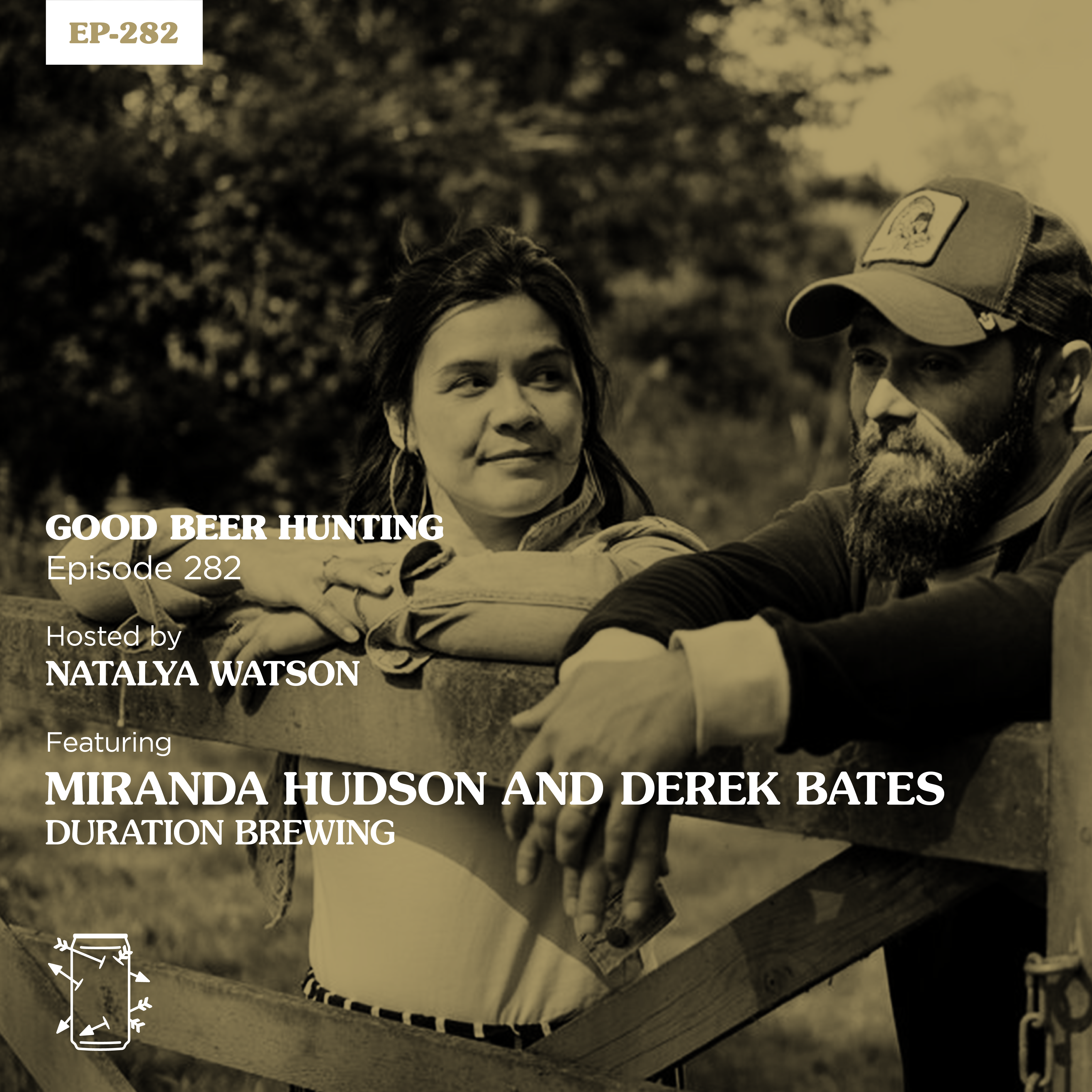
EP-282 Miranda Hudson and Derek Bates, Duration Brewing
EI'm Natalya Watson, and you're listening to the Good Beer Hunting podcast. My guests today are Miranda Hudson and Derek Bates, co-founders of Duration Brewing, a progressive farmhouse brewery in Norfolk, England. Bates—known mononymously to most—left his post as head brewer at London's Brew By Numbers in late 2016 to set out on his own. He'd had an idea kicking around for years, but in 2017, he and his wife, Miranda, put their plan into action. Wanting to be a bit out of the way, they found a site among the ruins of a 12th-century priory in West Acre, Norfolk. But the rather challenging location required a year-and-a-half of planning before the build began in late 2018 and finally completed nearly a year later. During this time, Duration began brewing collaboratively and nomadically with breweries across the U.K. and beyond. Not only did this approach get their beer out there, it got them out there, too. Miranda and Bates became familiar faces to members of the U.K. beer industry, many of whom got enthusiastically involved in following the pair and their progress, which was frequently documented on their website and social media. Now that they're finally brewing in their own facility, as of October 2019, the goal for this first year was, as you'll hear, for Bates to have the chance to experiment. That wouldn't just enable him to showcase his breadth as a brewer, the thinking went, but to discover which styles were a hit for the brewery, and to decide which journeys they wanted to take their drinkers on away from the Pale Ale and IPA monoculture, as Bates calls it. But only five months after they settled into their brand-new brewery, COVID-19 hit. While it certainly hasn't been the first year they were expecting—with a market too unstable to truly fine-tune their core range, and a destination brewery most are unable visit—they talk me through their initial response to the pandemic. They discuss the challenges (and triumphs) they've faced, from their wholesale model becoming essentially unviable overnight to how they were able to get their online shop up and running with the flick of a switch to why they've taken their brewery tours online, essentially welcoming drinkers into their "home," as Miranda puts it. Miranda and Bates aren't just business partners: They're life partners and parents, too. You'll hear, in earnest, some of the challenges they're up against at the moment. But you'll also hear how they're looking ahead. Not just beyond COVID, but five, 10 years down the line. Even during this incredibly difficult time for the industry, they've doubled down—expanding not only their capacity, but their team, too. They tell us about the breweries in the United States they're inspired by, what sets Duration apart, and the legacy they're looking to leave behind. This is Miranda Hudson and Derek Bates of Duration Brewing. Listen in.
CL-057 Omar Foda Bridges the Gap Between Past and Present
Today's guest is historian Omar Foda, author of the book Egypt's Beer: Stella, Identity, and the Modern State. In this book, he traces the country's history through one iconic national beer brand: Stella (not to be confused with Stella Artois). Recently, Omar wrote an article for GBH called, "You Cannot Hate These People — Heineken, Nasser, and the Fight to Decolonize Beer in Egypt," similarly using a specific incident to highlight how decolonization changed everything for one Heineken-owned brewery. What struck me about this article was how urgent the issues felt, which is noteworthy, since Omar wrote a historical account of an incident that happened over half a century ago. I felt like I was reading about something that was happening right now—and that's partially intentional on Omar's part. In this piece, he deftly bridges the gap between what's happened in the past and why we should care now. And in this conversation, we talk about how to make history relevant (Omar has done AMAs on Reddit before), how the lens through which we view history is always marked by our own experiences and interests, and why a disagreement at a brewery in Egypt over 50 years ago can shine a light on what's happening in our society today. Here's Omar Foda. Listen in.
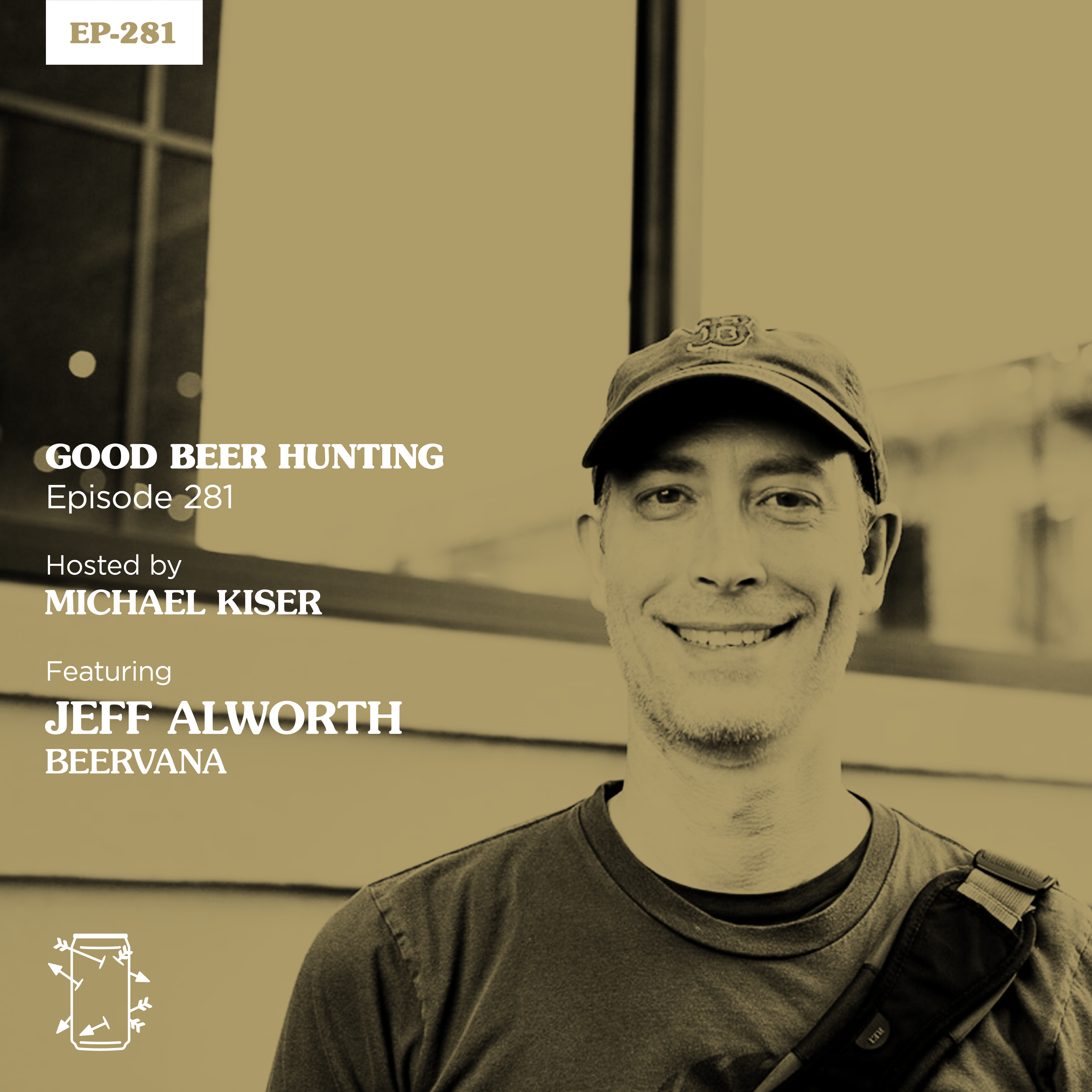
EP-281 Jeff Alworth, Beervana
EToday's episode is the kind of conversation I'd typically have in a bar over a few pints with a friend—one in which we'd talk shop and inevitably start prognosticating about a brewery or a beer in a way that would bend each of our opinions into oblivion before we'd finally run out of stamina and order one last round. Brewery Ommegang—what the hell is up with Brewery Ommegang? Over the past couple months we learned that the brewery's CEO, Doug Campbell, was leaving. Next to depart was Brewmaster Phil Leinhart. Now, the foreseeable future for this history-making, Belgian-inspired brewery—which once brought us iconic beers like Hennepin—will now be devoted to a juicy, Hazy IPA called Neon Rainbows. The Brewery Ommegang story has been one of total whiplash over the last few years, as it has adjusted to tumultuous U.S. market trends; its increasing physical isolation, compared to the taprooms now populating every corner of U.S. towns; and its sale to Duvel, alongside breweries like Firestone Walker Brewing Company and Boulevard Brewing Company. A lot of gravity for that network of breweries is currently coming out of Kansas City. Now the question remains: Will it inevitably suck Ommegang out of its unique, idiosyncratic orbit? And if it does, what will be left of this once-legendary U.S. craft brewer? To get to that, I wanted to talk to beer writer Jeff Alworth. He and I were both at the last—and seemingly final—edition of the annual festival called Belgium Comes to Cooperstown. And we spent most of that time together talking about the odd arc of the Ommegang story, and where it might go next. Organizers put the festival on hiatus after that most recent celebration, seemingly to take a moment and figure out how to evolve it in 2019. Well, it never quite got back on track—and with all the news, I found myself wishing I had a pub, a pint, and Jeff Alworth to talk to about it. This is Jeff Alworth, one of the country's best beer writers. Listen in.
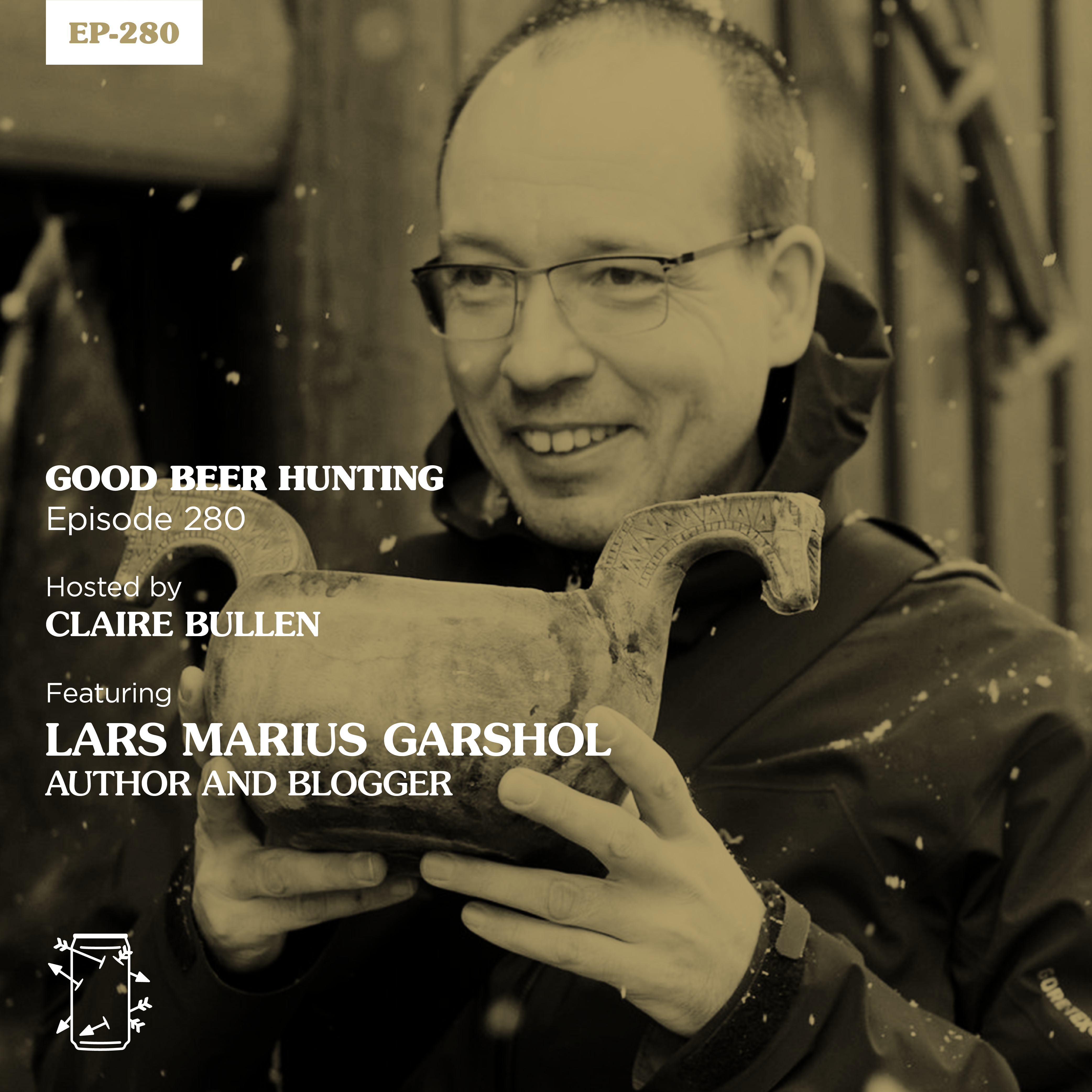
EP-280 Lars Marius Garshol, Author and Blogger
EEarlier this year, I had the pleasure of meeting Lars Marius Garshol for the first time. Before then, like much of the internet, I had followed along with Garshol's adventures via his eponymous website, Larsblog, where he has been documenting his beer travels and curiosities since the early 2000s. Though he works as a software engineer, Garshol is particularly devoted to the subject of farmhouse brewing in Europe—so much so that he has written several books on the topic, including this year's award-winning release, "Historical Brewing Techniques — The Lost Art of Farmhouse Brewing." In his spare time, he also helps organize Norway's primary farmhouse beer festival, the annual Norsk Kornølfestival; collects yeast samples; and even collaborates with researchers on scientific papers. His work is varied, but Garshol is probably best known for spreading the word about kveik, Western Norway's farmhouse yeast family, now celebrated across the world for its extraordinary abilities—and that's how I came to meet him. Lars was a major source for both of my long-form features on kveik and farmhouse brewing for GBH, the first of which came out in the summer of 2019, and the second of which was published last month. That most recent article arose out of a trip I took to Voss, Norway in February, and that's where Lars and I finally crossed paths, when I attended a talk he gave as part of a kveik symposium. Today's conversation kicks off when I ask Garshol about this year's edition of the Kornølfestival, which was held entirely over Zoom. We also discuss his book, chat about why even seasoned beer drinkers might be perplexed by farmhouse beer styles like Vossaøl and Stjørdalsøl, and he sheds light on how vast the world of farmhouse brewing really is. There's a lot to dig into here—and a fair amount of jargon—but this conversation was illuminating to me in at least 10 different ways, and I hope it is for you, too. This is Lars Marius Garshol, author and blogger. Listen in.

OL-013 Claire Bullen Reads, "The Land of Fire and Kveik — Farmhouse Brewing at the Crossroads in Voss, Norway"
Today you'll hear Claire Bullen read her story, "The Land of Fire and Kveik — Farmhouse Brewing at the Crossroads in Voss, Norway," published on Good Beer Hunting's website on September 30, 2020. This is Claire's second deep dive on kveik, the renowned farmhouse yeast family that originated in Western Norway. Claire's first piece, "A Fire Being Kindled — The Revolutionary Story of Kveik, Norway's Extraordinary Farmhouse Yeast," which you can also hear her read out loud, is a technical exploration, uncovering the transformative power and heritage of kveik. In the story you're about to hear, Claire actually travels to Voss, Western Norway to see kveik in action, and to experience first-hand just how important the tradition of farmhouse brewing is to the region. Here's Claire reading, "The Land of Fire and Kveik — Farmhouse Brewing at the Crossroads in Voss, Norway." Listen in.
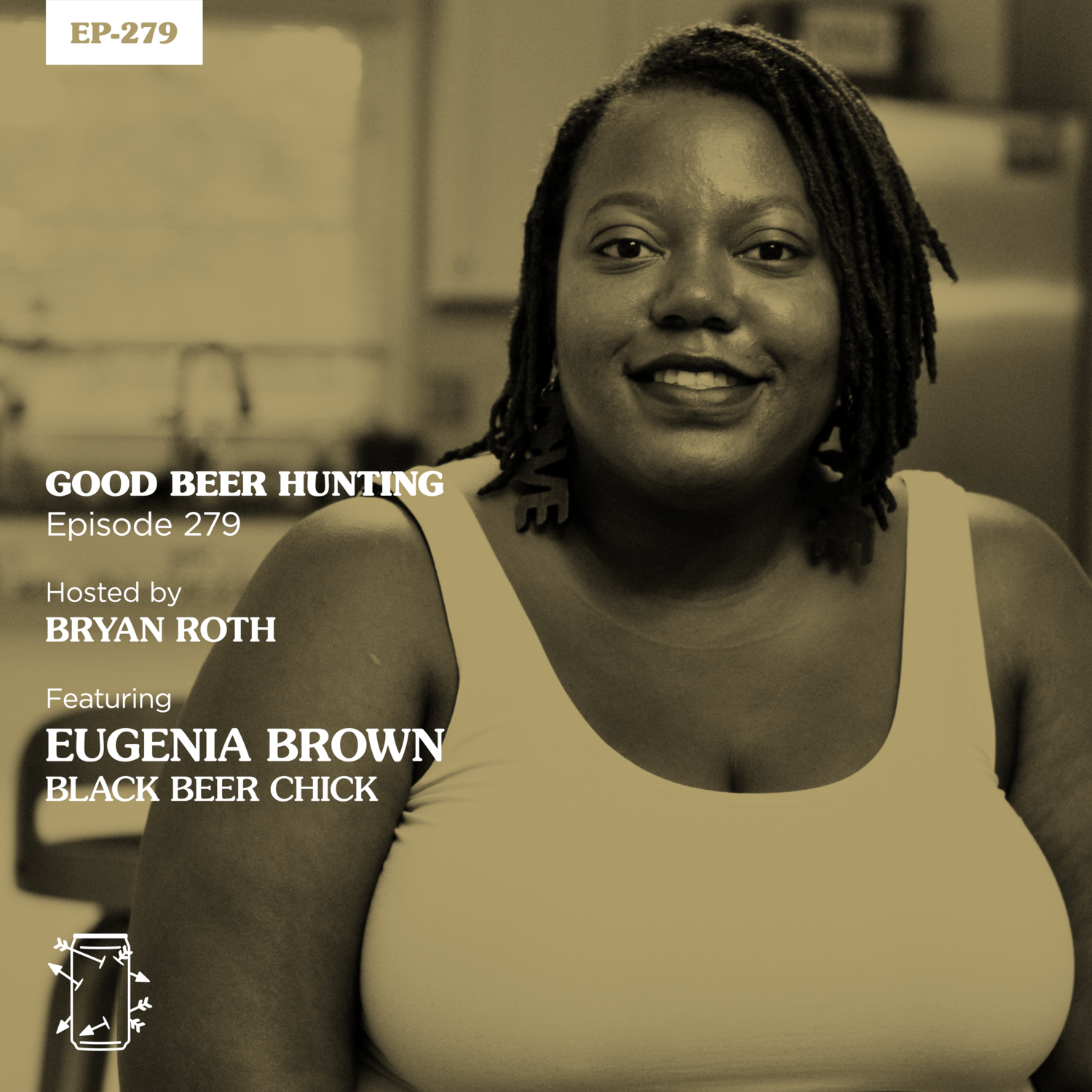
EP-279 Eugenia Brown, Black Beer Chick
EIt's really easy these days to think about the things that we've lost, whether it's time with friends and family or the ability to exist in public spaces, whether we'd want to, or not. We are stuck at home, coexisting in our self-selected pods of people we can continue to see, but literally and figuratively, the world is more closed for us. But that's just one side of this coin. Granted, it's digitally, but there are more opportunities to connect than ever, and even as news, politics, or our climate tries to defy our inner optimism, there is still hope. And it's up to us to share that with others, and inspire them in any way we can. There is an undeniable brightness that Eugenia Brown brings to the world of beer. She is upbeat, energetic, social, and perhaps best of all: hopeful. Through her organization and brand of Black Beer Chick, she's working to celebrate, empower, and connect people who share a love of beer. Especially communities long ignored by a very white, very male U.S. craft beer industry. She is a black woman creating change, making a lot of friends, and embracing her growing role as someone many are looking up to. You may have heard her name or social media handle in recent months as she launched a project known as the "Road to 100," which is helping 100 women of color work toward certification in the Cicerone program, beer's equivalent to wine's sommelier program. In our conversation, you'll hear Eugenia talk about her own road to where she finds herself today. Once fearful of playing imposter in a community of beer professionals and fans, her trajectory has taken her about as far from that as possible. She's empowering others, whether that's from her home in Charlotte, North Carolina, or virtually with friends and fans all over the country. Eugenia carries light and love wherever she goes, and maybe her source of hope will inspire you, too. This is Eugenia Brown of Black Beer Check. Listen in.
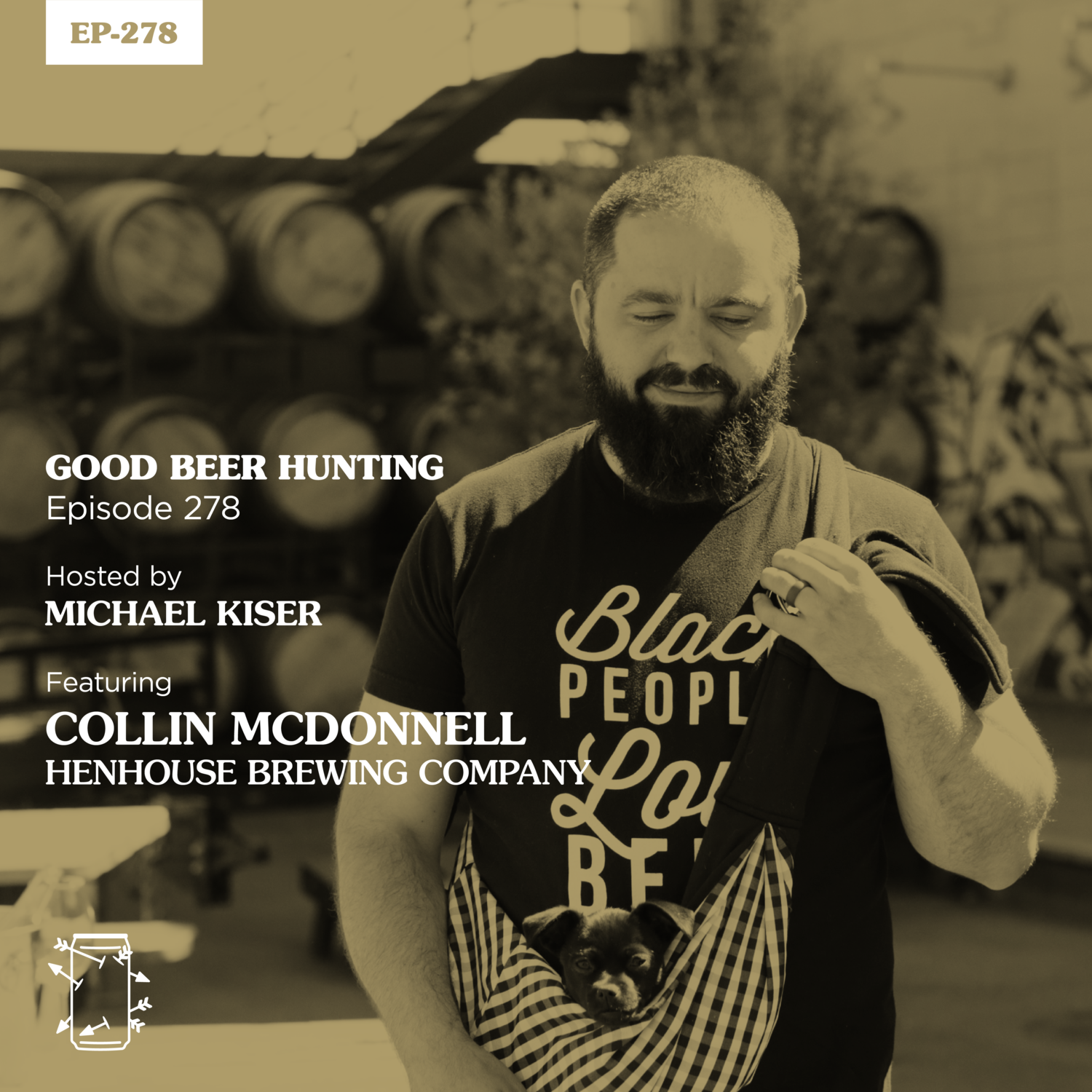
EP-278 Collin McDonnell, Henhouse Brewing
EToday's guest is a revisit with one of my favorite people. Collin McDonnell of Henhouse Brewing in Northern California. It's a bit of a long one, and if you follow GBH closely you probably already understand the nature of my admiration for Collin and the focus of our conversations—so I won't belabor the intro here. In short, we're both business owners who often commiserate, support, and draw out of each other some of the more vulnerable and anxious parts of doing what we do. And our hopes for things being better than they are—whether that's quality and freshness, culture and social justice, and the role that work, beer, and people play in our lives. The context for today's chat, of course, is the particular 2020 Collin and his team are facing—the pandemic, the fires, the weariness of it all—but that's not to say this is bleak. At least, not to me. I find a certain hope against hope anytime I talk to Collin—and this was no different.
CL-056 Christopher DeWolf Plays Tug of War
EWelcome to the Good Beer Hunting Collective podcast, the show where members of our team interview each other to get a behind-the-scenes look at some of our favorite articles. I'm Evan Rail, international editor here at Good Beer Hunting. As a longtime fan of Hong Kong action movies from directors like Tsui Hark and John Woo, I've often wondered about life in the city. With Hong Kong in the news over its ongoing protests and the tightening of Chinese rule, it was fascinating to read "City on Fire," Christopher DeWolf's recent article for Good Beer Hunting on craft beer in Hong Kong and the political situation there. Although the piece focuses on the city's leading craft brewery, Young Master Brewery, it also brings up lots of other questions, including ideas about audience, and what it means to be a local flavor. For example, if people in Hong Kong love a particular taste, spice, or type of food that is actually from mainland China, does that not eventually become a local flavor in Hong Kong itself? What would a Hong Kong beer actually taste like? How are breweries there dealing with the demonstrations in support of democracy? And how have things been affected by what was already a third wave of coronavirus infections? In this episode, I talk to Christopher, a long-term Canadian resident of Hong Kong who is currently in Montreal. We discuss craft beer in Hong Kong, the political situation there, and even the city's legendary street food scene, as well as the article Christopher's working on next. Here's Christopher DeWolf.
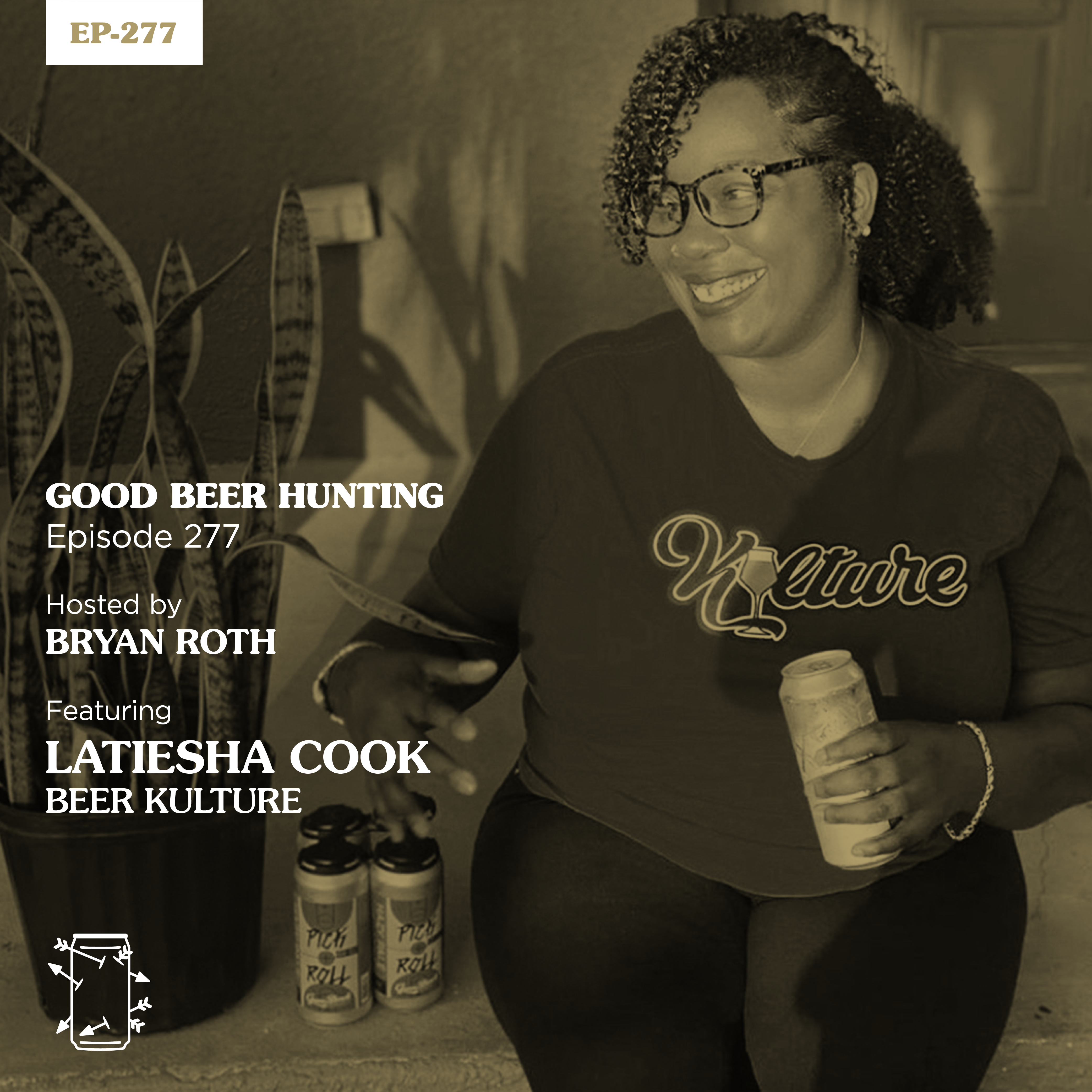
EP-277 Latiesha Cook, Beer Kulture
I've been downloading a lot of interviews lately by Brandi Miller, a writer, equity advocate, and minister, among many other things. On her podcast, Reclaiming My Theology, she begins every interview with a question that sounds simple, but gets complex answers: "How do you describe who you are?" As humans, we can be many things: consistent or conflicting, led by personal or professional goals—there is no wrong answer to the question of how we construct our identity, both for ourselves and the world around us. And the way Brandi Miller leads into her conversations has impacted how I'm thinking about these Good Beer Hunting podcasts, and the people we talk to. That's why, when you hear Latiesha Cook in just a few moments, we're going to start by asking her that same question about describing herself. It's one she's been rightfully asking of the U.S. beer industry for the last few years. As CEO and president of Beer Kulture, a nonprofit focused on equity and "changing the world one beer at a time," Latiesha is an important voice, and offers a valuable point of view as a Black woman encouraging the very white, very male beer community to reassess and think about how it wants to describe itself. There are many social, cultural, and empathetic reasons to do this even before considering economic ones, like the business-focused idea of why it's finally time to expand craft beer's consumer base. And the way Latiesha sees it, this movement and what she wants to accomplish with her team at Beer Kulture boils down to one, easy phrase: "Simply being human." So let's turn it over to her, hear her story, and find out how she describes herself, and what she hopes to hear from the industry around her as it wrestles with the simple, powerful questions of what it is, and who it's for. This is Latiesha Cook of Beer Kulture. Listen in.

OL-012 Beth Demmon Reads, "Witch (Craft) Beer — How a New Wave of Brewers are Incorporating Magic into Beer"
This is GBH Out Loud, and I'm Ashley Rodriguez. Today you'll hear GBH contributor Beth Demmon read "Witch (Craft) Beer — How a New Wave of Brewers are Incorporating Magic into Beer," published on Good Beer Hunting's website on October 31, 2019. Did we plan to release a story about witches on Halloween? Yes, we did, but Beth's story manages to go beyond stereotypes and explores the world of the unseen, and the spiritual forces that some brewers tap into to create their beer. Part of Beth's fascination with witches, as you'll hear her discuss, is primal. It's the search for the unknown, and the belief that there are things around us we cannot always see or immediately understand—but which can have an outsize impact on our lives. Here's Beth reading "Witch (Craft) Beer — How a New Wave of Brewers are Incorporating Magic into Beer." Listen in.
A Thousand Words — On Beer and Love
EWelcome to A Thousand Words, a special project by Good Beer Hunting. I'm Ashley Rodriguez. In this series of the GBH podcast, we ask members of our team to enter the realm of audio storytelling. Most of us are familiar with the phrase, "a picture is worth a thousand words," right? But now, we're challenging our contributors to actually write down those words, and to create pictures of the world around them as told in their own voices.With that in mind, you're about to hear different stories read aloud by members of our editorial team. Think of each brief narrative as a snapshot of a moment, like an audio version of the b-Roll series on our website. In this installment of A Thousand Words, we wanted to talk about beer and love. We asked our writers to recall moments from their lives when romance, heartache, camaraderie, and friendship intersected with beer. Like love, some stories are funny and some are painful. But they're all complex, and they evoke feelings, moments, pangs of joy and sorrow that we've all felt before. And they all place beer at the heart of the narrative. Each storyteller will introduce themselves before jumping into their own anecdote. We hope you can visualize every vignette, and immerse yourself in the pictures they're painting for you. This is A Thousand Words, a collection of audio stories. Listen in.

CL-055 Brian Alberts Gets into the Mash Tun Time Machine
Today I'm chatting with one of the newer voices on Good Beer Hunting—Brian Alberts. He's not technically new—we published a story from him back in 2018 about the importance of preserving the historical record in breweries. That was sort of a one-off piece on a topic that until then we hadn't really invested much in frankly: beer history. And the main reason for that was that so much had already been invested in beer's history that GBH's charter was really about trying to capture the zeitgeist. But over the years, thanks to people like Brian, my perspective on that history had evolved. And seeing its relevance to the seemingly unprecedented movement of American craft helped me realize how little is really unprecedented at all. When we launched the From Barrons to Barrels series this past winter, Brian was the first person I reached out to discuss what was possible in the series. The stories were meant to be rooted in Midwestern beer history, but that doesn't mean that it was meant to explore than history through conventional means. Rather, we wanted to find a way of connecting some of those dots between past and present. And for us, that means through the various lenses of race, ethnicity, nationality, class, gender, and politics. When it comes to those things—alongside and interwoven with our beer—history really does repeat itself. Or at least, offers up the same songs but in a different key. Now Brian has a few feature stories under his belt—including a look at the Munich Beer Riots of 1844, the reactionary alcohol policies and life under the Spanish Flu pandemic of 1918, and the longstanding economic dependency between Milwaukee and Chicago brewers. This is Brian Alberts, listen in.
EP-276 Tom Acitelli, Author of "Pilsner: How the Beer of Kings Changed the World"
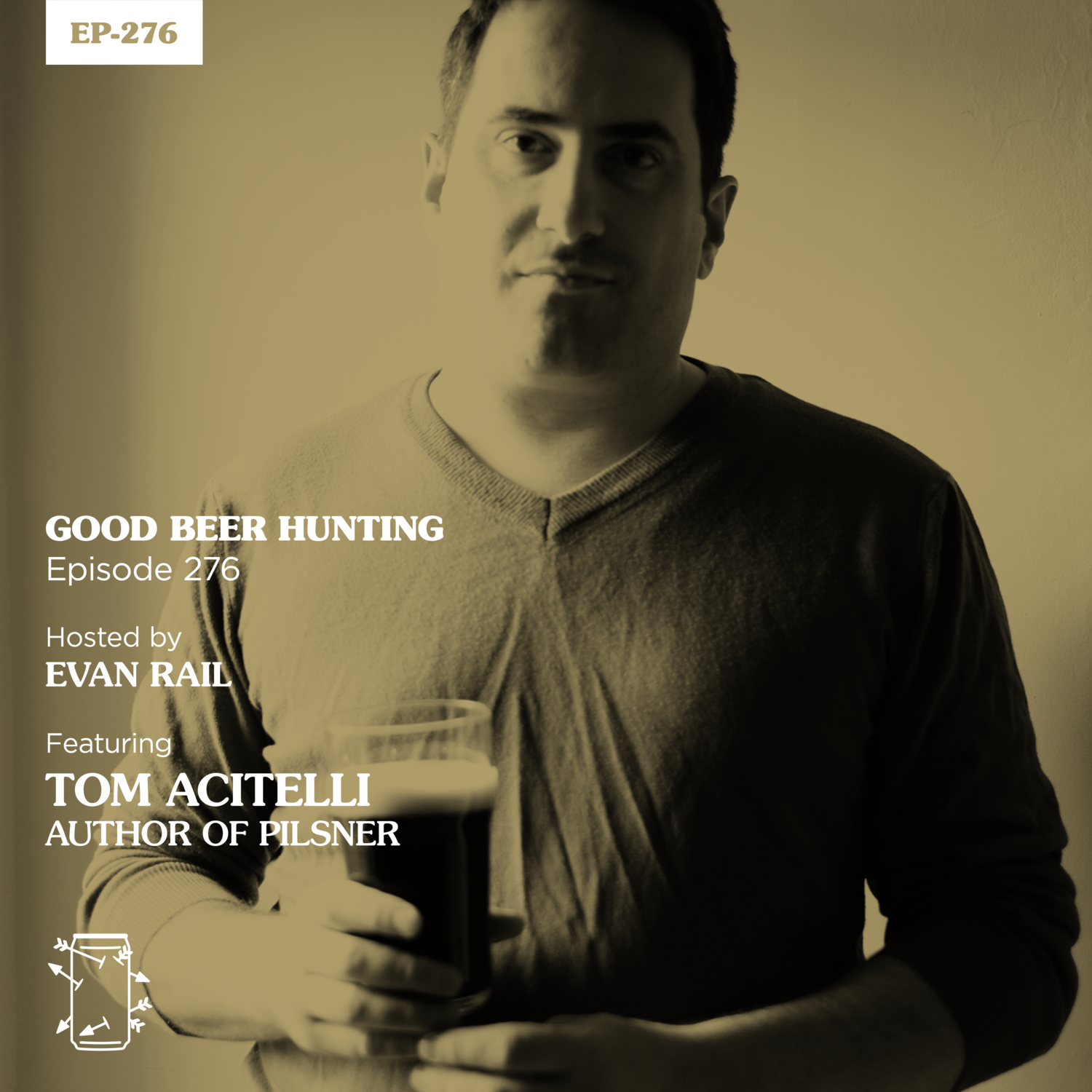
EI'm Evan Rail, and you're listening to the Good Beer Hunting podcast. Pilsner, as a style, is currently "having a moment," with cult breweries everywhere from Travis County, Texas, to County Durham in northeast England producing highly sought-after versions of the beer that was first brewed in the Czech town of Pilsen in 1842—and which was once the epitome, for many craft beer lovers, of the widely derided "fizzy yellow beer." Formerly largely ignored in favor of Ales, especially variations on India Pale Ale, by earlier generations of beer fans, Pilsner, here at the start of the 2020s, is pretty close to the hot new thing. So how did that happen? And why did that happen? And what's Pilsner's backstory? Tom Acitelli is the author of a new book, "Pilsner: How the Beer of Kings Changed the World." A longtime drinks journalist, Acitelli also wrote "The Audacity of Hops: The History of America's Craft Beer Revolution," as well as books on wine and whiskey. You've seen his byline in The Wall Street Journal, Eater.com, The Washington Post, All About Beer (where he was the history columnist for several years), and most recently here at Good Beer Hunting, where his feature story, Grab and Go — How Imperialism Aided the Spread of European Beer, covered the historical connections between colonization and the appearance of European beer styles in Africa and elsewhere. In this episode, I'm talking with Tom Acitelli about Pilsner, its backstory, the history of craft, as well as imperialism, the temperance movement, and the big picture of alcohol in America. It's a wide-ranging conversation with one of the beer world's best writers. This is Tom Acitelli, author of "Pilsner: How the Beer of Kings Changed the World." Listen in.
EP-275 Eurotrip: What We're Missing When We Can't Travel
EI'm Evan Rail, and you're listening to the Good Beer Hunting podcast. It's September 2020, and the coronavirus pandemic is still raging on—and nowhere more obviously than in the United States, which has about 25% of the world's reported cases, even though it is only home to about 4% of the world's population. Because of that infection rate, for the first time in memory, U.S. citizens haven't been able to travel to Europe, with almost all of the European Union countries currently closed to travelers coming from the United States. So when it comes to beer, what are we missing out on? Although I'm originally from California, I've been living in Europe and writing about food and drink here for over 20 years. Normally, I'd spend a good part of my summer showing North American brewers and beer lovers around Prague, Czech Republic—my adopted hometown—or bumping into folks from back home at beer festivals and pubs in places like Brussels, Berlin, and Munich. I started thinking about what beer lovers really get out of a trip to Europe—what they're missing out on, in other words, while the pandemic makes travel impossible, at least for now. For this podcast I reached out to four friends in the U.S. who have spent quality time here in the Old World, including Joe Stange, managing editor of Craft Beer & Brewing magazine and the author of Good Beer Guide Belgium; and Annie Johnson, the 2013 American Homebrewers Association Homebrewer of the Year and a BJCP National Judge. I also talked to Aaron Johns, whose company, Taste Local Beer, used to run beer tours in Prague until he moved back to the West Coast a few years ago; and Good Beer Hunting's own Jamaal Lemon, who toured across a bunch of European beer countries after winning a competition for bloggers from World of Beer in 2016. I wanted to ask these folks what they missed about beer in Europe, and what they thought was valuable about their time here. I wanted to know what they learned and what they thought beer fans might miss out on if they just read an article or watched a video from Europe instead of traveling there themselves. Not to put too fine a point on it, but I wanted to know why this situation sucks.
CL-054 Stephanie Grant Tells a Tale of Two Cities
I love interviewing Good Beer Hunting contributors in these Collective episodes, mainly because I get to learn behind-the-scenes stories that might otherwise have been left on the cutting-room floor. Hearing about our writers, their lives, and their sources of inspiration lends new context to their work—and makes their already-accomplished articles feel even more complete. Today, I'm talking with Stephanie Grant, who wrote "Drinking While Black—The Isolation and Loneliness of Navigating All-White Taprooms," published on our website on June 25, 2020. This piece has lived a lot of lives. It was first commissioned before COVID-19 effectively shut down taprooms around the country, and later had to adapt to the new, post-pandemic world. It morphed again after the murder of George Floyd, and subsequent nationwide Black Lives Matter protests. Ultimately, Stephanie's essay is intentionally dualistic, contrasting her experiences drinking in taprooms in Asheville, North Carolina—an overwhelmingly white city long known as "Beer City USA"—and the much more diverse city of Atlanta, where she's based. That tension—and that pull between two totally different experiences—is no accident. Stephanie studied information design and communication, and thinks a lot about how people take in information. This shows up in her current work as a social media manager for Monday Night Brewing in Atlanta, and is especially important now, given how many breweries and brands are relying on social media to communicate with their customer base. Stephanie's story is also personal—she's used to highlighting others, and working behind the scenes, but this piece was a journey in telling her own story. We talk about finding the moment where you realize the most powerful story you possess is your own. Here's Stephanie.
CL-053 Kate Bernot and Brian Alberts on the Temporality of Temperance
EHey listeners—this week's GBH Collective episode is a timely conversation between two of our writers who bring two very different perspectives to the site. First up is Kate Bernot, our Sightlines lead reporter. Kate recently wrote a great story about the neo-Prohibitionist laws, policies, and sentiments that seem to be experiencing a groundswell of support during the pandemic. In this conversation, she outlines exactly how goofy, yet unshakable, some of these ideas are when they reach the status of conventional wisdom. Have you seen a headline lately about how Americans are drinking insane amounts of beer during lockdown? Yeah, on average, it's bullshit. But that's not stopping the rhetoric. And, as Kate explains, those headlines add up to a kind of critical mass of truthiness—which starts influencing politicians and policymakers. Next up, we have Brian Alberts, a scholar who writes about beer history for GBH. He explains why these repeated moments of Prohibitionist rhetoric appear throughout American history. He also describes why, instead of operating cyclically, these episodes are the result of a force meeting a counterforce—and both sides gaining strength at the same time. Is temperance a war of attrition? Or will previous precedents point to likely future results? This conversation digs into the many factors influencing America's long pattern of Prohibitionist tensions. This is Kate Bernot and Brian Alberts. Listen in.

SP-002 Worth the Squeeze — Fruit Beer Adds Punch to Brand Portfolios
EWelcome to this episode of Sightlines. I'm Bryan Roth. This podcast is part of our content for Sightlines Premium, an insights-driven professional community and subscription newsletter designed to help industry decision-makers grow their business. In this episode, you'll get a snippet of that content, as we explore a style-specific case study of what's working for breweries around the country. Discussions of these timely and relevant topics are what drives our content on Sightlines Premium, and if you're interested in what's changing at breweries—or if you're someone at a brewery making business decisions—our subscriber community is continually getting up-to-date market analysis and sharing expertise in our dedicated forum, and via video chats with fellow subscribers. If you like what you hear, learn more at goodbeerhunting.com/sightlines-premium. Starting in 2019, fruit beers—a non-specific category comprising fruited and flavored brands—showed some of the strongest growth among beer styles in grocery, convenience, liquor, and other chain stores. This has become even more stark in 2020, as COVID-19 has accelerated brewing and sales strategies that are focused on easy-to-understand flavor experiences, like hop-forward beers … or beers featuring fruit. Let's be clear: In terms of raw dollar sales, nothing is even close to what IPAs sell in chain stores. But more and more, the pace of growth for fruit beers is becoming noteworthy. Listen in as we discuss.

EP-274 Felix Nash, Fine Cider Co.
EI'm Jonny Garrett, and you're listening to the Good Beer Hunting podcast. My guest today is Felix Nash, founder of the Fine Cider Co, a distribution company focusing on small-batch, natural ciders. When you first meet Nash, he seems an unlikely fit for the fast, hard sell nature of alcohol distribution. But as you'll likely hear during the podcast, there's a steely grit and relentless positivity about him—both as important in distro as the ability to upsell or talk numbers. His background sounds more like that of a producer—a fine arts degree, a eureka moment, a series of supper clubs that he used to try and convert his friends. But living in London meant only one route was open to him, and the remarkable trust placed in him by Tom Oliver of Oliver's Cider has sent him on a journey he would freely admit is unlikely. We talk about the start of the company, his relationship with some of the best cider makers in the world, his focus on fine dining customers, and of course the impact that COVID-19 has had on all of them. Cider was perhaps on the verge of having a moment in the U.K., of finding its own space after years of being an interesting aside to the worlds of craft beer and natural wine. Hereford, in particular, has gained a reputation for making exception natural ciders and was seeing plenty of growth and innovation in the months leading up to the outbreak. It would be easy to assume that momentum has gone with most of Nash's customers closing for the summer, but he has found a way to make it work, keeping people talking and most importantly going direct to sell through some of his stock in time for this year's vintage. Nash gives some fascinating insights into a small industry with huge potential, and a young company at the start of a long journey—how inspiration is more important than education, how he hopes cider can learn from the mistakes of craft beer, and what the future of cider looks like post-COVID-19. This is Felix Nash of the Fine Cider Co. Listen in.

OL-011 Claire Bullen Reads "A Fire Being Kindled—The Revolutionary Story of Kveik, Norway's Extraordinary Farmhouse Yeast"
EThis is GBH Out Loud, and I'm Ashley Rodriguez. Today you'll hear our editor-in-chief, Claire Bullen, read "A Fire Being Kindled—The Revolutionary Story of Kveik, Norway's Extraordinary Farmhouse Yeast," published on Good Beer Hunting's website on July 31, 2019. It's interesting when an article exceeds its bounds, and when a story touches upon themes that end up being even more relevant months, or even years, after it was initially published. Norway's kveik yeast, employed by farmhouse brewers across the western portion of the country for thousands of years, had nearly disappeared before it was rediscovered by the mainstream beer world. Now it's gained international renown and is being used by some of the most prominent brewers around the world. As you'll hear, Claire's story is about this extraordinary family of farmhouse yeast, but it's also about extinction, history, sustainability, and what it means for something to belong to a place, or a group of people. Here's Claire reading "A Fire Being Kindled—The Revolutionary Story of Kveik, Norway's Extraordinary Farmhouse Yeast." Listen in.

EP-273 Ren LaForme, Poynter Institute
EIn today's episode, I'm interviewing someone who—until this pandemic hit—I didn't realize I would miss on a personal level. We've only interacted a couple of times in person—and always at the Foeder for Thought festival, hosted by GBH and Green Bench Brewing Company in St. Petersburg, Florida. In the months following the cancellation of the festival back in March, I found myself paying more and more attention to Ren LaForme's Twitter—and honestly, I think a big reason was that I was lamenting the loss of that once-a-year hang we'd get after a day hosting talks under the Florida sunshine. Walking off that stage and across the street to the Independent Bar, and having a few beers with Ren, was usually a great nightcap to an already stellar week. Another reason I started paying attention to Ren's Twitter was its level of nuance. I came to realize that he'd taken on a new role at the Poynter Institute for Media Studies, and as a result, the content coming from its site, Poynter.org, had shifted in a direction that was increasingly applicable to me, and what GBH does. Ren has long focused on the technology and tools of journalism as part of the institute's ongoing public education. And more recently, he took over as Managing Editor, and shifted his focus to publishing stories about everything from the tensions among newsrooms and threats to the safety of journalists to equity in the pursuit of the craft. So I don't know. Maybe I was missing him. Maybe he was publishing some great content. Either way, the algorithm provides. And as a publisher myself, I wanted to hear more about some of these issues, and how journalists who are coming up in academia now are thinking about them. This is Ren LaForme of the Poynter Institute. Listen in.

CL-052 Paige Latham Didora Defies Categorization
EWelcome to the Good Beer Hunting Collective podcast, the show where members of our team interview each other to get a behind-the-scenes look at some of our favorite articles. I'm Ashley Rodriguez, and I produce Good Beer Hunting's podcast. In my past life, as a barista and coffee writer, one of the questions I struggled with was an essential one: what does it mean for coffee to be considered "specialty?" What makes the coffee from your local cafe different than what's in the can at your grocery store? Although there is a technical definition for "specialty" coffee, there are also a thousand other questions to ask. What do customers like? Which coffees grow well in an ever-changing global climate? How do ethics play into the definition? Likewise, I imagine "craft beer" is equally muddy—difficult to define explicitly, but something that most beer drinkers can still identify on sight. In this episode, I talk to freelance writer Paige Latham Didora. Paige is based in Minneapolis, and recently wrote a story for Good Beer Hunting about Vine Park Brewing Company, the first Hmong-American brewery in the nation. Along with telling the story of Vine Park's founding—from its past as a contract brewery to its new lease on life after the brand was taken over by four Hmong-American entrepreneurs—we also talk about what it means to be a craft brewery. For example, the Beer Judge Certification Program recognizes 34 styles of beer, and while it's not an exhaustive catalog, roughly half the styles that are recognized are European in origin. Where does that leave beer styles from other parts of the world—like Asian Rice Lager, in this case—not just in terms of representation, but in regard to the identity or value we assign them? Paige's article not only tells the story of an upstart brewery, but pushes the reader to think critically about how definitions are made, and what it means to be a craft brewer. But first, I spend a little time getting to know Paige better, learning what drew her to Vine Park and its founders, and talking about how to make a beer menu that's designed to serve a specific community. Here's Paige.

The Time Is Now
EIt's no exaggeration to say that the arrival of COVID-19 has completely upended the beer industry. Breweries large and small have had to radically change their approach in order to survive the pandemic. But these changes prompted a major question: why have beer businesses been so willing to overhaul the way things have always been when faced with economic issues, but so reluctant to address long-standing social issues within the industry, like its lack of inclusion and equity? These imbalances came into sharper focus once the recent Black Lives Matter protests, sparked by the death of George Floyd, shone an even brighter light on the deep-rooted prejudices that oppressed people, and specifically Black people, have always faced in the United States. Neither the pandemic nor protests illuminated fresh injustices. Instead, they highlighted the inherent racism and cracks in the system, and made them impossible for anyone to claim ignorance of. This led to the three-part series published on Good Beer Hunting: The Time is Now. Part 1 of the series dives into the business of beer, which journalist Mike Jordan unpacks by explaining the long history of racial inequality in small business, and how it has significantly hindered non-white folks' ability to gain footholds in entrepreneurship. Part 2 discusses the culture of beer, which former beer industry analytical chemist and equity advocate Toni Boyce unflinchingly examines before Part 3, which looks to the future of beer and what our responsibilities are in working towards a more equitable future. Dr. J. Nikol Jackson-Beckham, the diversity ambassador for the Brewers Association (or the BA) and the founder and executive director of Craft by EDU, leverages her vast experience of working towards that future in the final article. If you haven't read Parts 1 through 3, I encourage you to dive into those before listening to this podcast conversation. I'm joined by Toni and Mike, as well as Good Beer Hunting Editor-in-Chief Claire Bullen (who chimes in several times during this discussion) to discuss the piece in its entirety—what we learned, what we've experienced, and where we go from here. Dr. J. is currently on a sabbatical, so while she was unable to participate in the podcast, we reference her work and suggestions throughout the conversation. This is Toni Boyce and Mike Jordan, listen in.
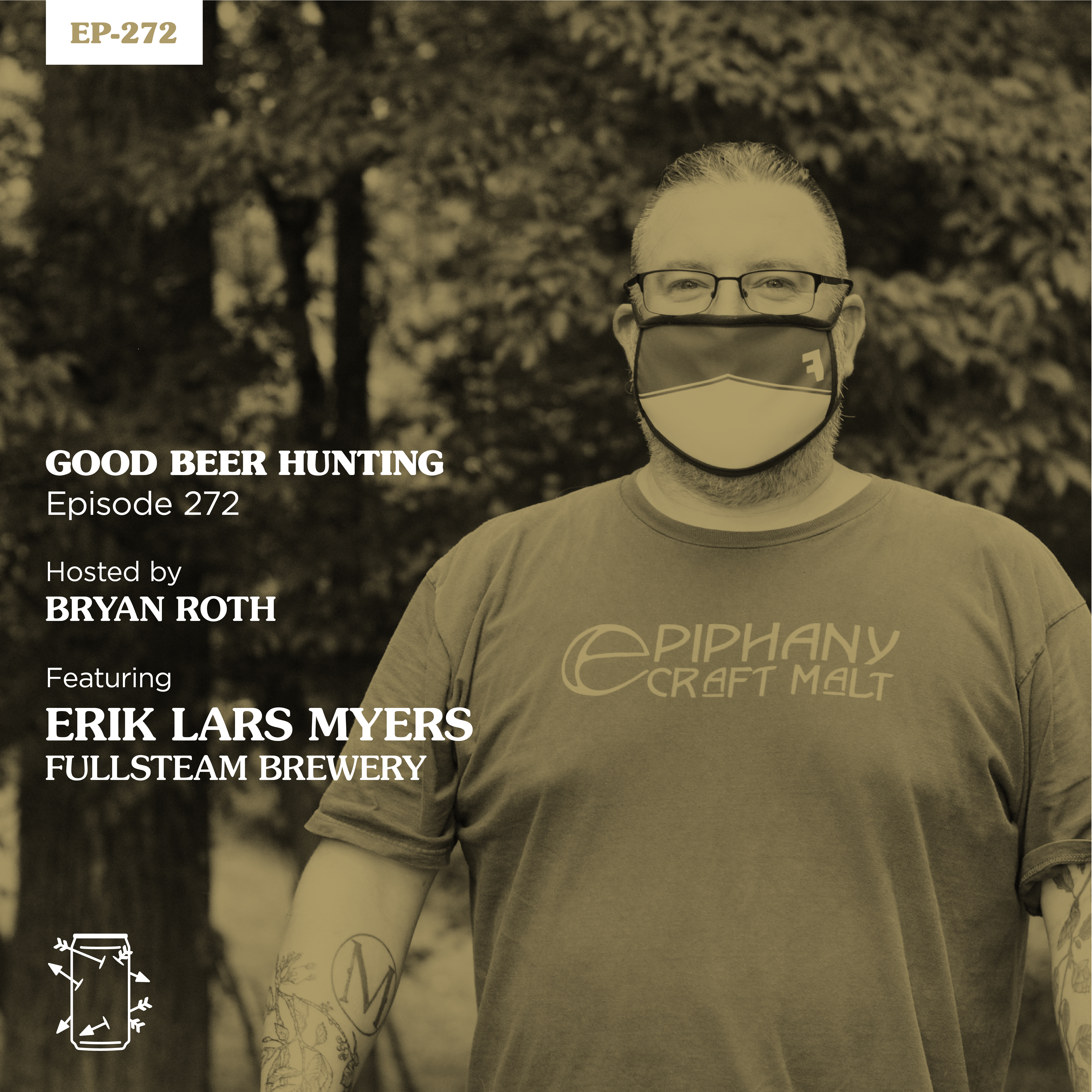
EP-272 Erik Lars Myers of Fullsteam Brewery
EI'm Bryan Roth, and you're listening to the Good Beer Hunting podcast. We talk a lot about successes in these episodes. Challenges overcome, exciting innovations, and new approaches. But it's rare we focus on failures. In this period of worry about health and financial hardship for businesses, it's inevitable the beer industry will be having more conversations than usual about things that go wrong. That idea is at the center of this episode. In November 2017, we published a marathon conversation with Erik Lars Myers, then the founder and CEO of Mystery Brewing in Hillsborough, North Carolina. At the time, his early-2010s model of a rapidly changing portfolio of beers and taproom-focused sales was ever-so-slightly ahead of the time. I called him a futurist, but as life would prove, the future wasn't set to include Mystery. Myers closed the brewery in 2018 amidst a slew of equipment malfunctions, bad luck, and, as you'll hear from him directly, some poor business decisions. His experience of losing a company he'd built—and built with people he came to love—was devastating. But as you'll hear, those events may also have been affirming. In the strange way that life tends to weave together good and bad, the closure sent him on a new path he's since come to appreciate. Myers is back on the podcast this time as director of brewing operations for Durham, North Carolina's Fullsteam Brewery. We won't be talking about beer styles and recipes, but rather reflecting on what happened to him and how his experiences are being echoed today, at a time when the coronavirus pandemic is creating daily hardships for breweries all over. As you listen to Myers and hear how things change for businesses, consider this. Failure is hard, it is unpleasant … and it hurts. But so often, in the end, it's also tied to what we come to see as success. Or, at least, growth. I hope Myers' story offers some context and affirmation that, even when things go wrong, and hard lessons are learned, that isn't necessarily the end. This is Erik Lars Myers of Fullsteam Brewery. Listen in.
CL-051 Jamaal Lemon Connects The Dots
EWelcome to the Good Beer Hunting Collective podcast, the show where members of our team interview each other to get a behind-the-scenes look at some of our favorite articles. I'm Ashley Rodriguez, and I produce Good Beer Hunting's podcast. Jamaal Lemon is a writer, photographer, podcaster, and GBH contributor, and he wrote his piece, "Mutated Anxieties — Living (and Parenting) While Black in the Face of Law Enforcement and COVID-19," in under an hour. It's impressive enough to write a full-length article in such little time, but even more so because the connections Jamaal makes are incredibly deep and nuanced—between United States history, his own lineage, protests for civil rights, and the disproportionate effects of COVID-19 on Black people in America—it's all in this story. In this episode, I talk to Jamaal about what it took to write a piece that's so personal, and we delve into his background as a storyteller and educator, and how teaching others about the world around you forces you to think differently about how to layer a story. Building connections and talking in broad strokes to illuminate a point are strategies that naturally manifested in this story, and that's in no small part because of who Jamaal is. Before we talk about his piece, we'll start at the beginning, tracing his background in craft beer and how he got into writing and media. Here's Jamaal.

EP-271 Pete Ternes and Polly Nevins of Middle Brow Beer
EI'm Ashley Rodriguez, and you're listening to the Good Beer Hunting podcast. A few months ago—right after the pandemic started changing our lives, and businesses across the United States began closing their doors—I wrote an article about some of my favorite local places. I wanted to know how they were adjusting to the unprecedented circumstances. Things felt so serious at the time, just days after shelter-in-place orders were announced, and before the word "quarantine" was an everyday part of our collective vocabulary. But here we are. It's July 2020, and it doesn't look like this situation has an end in the immediate future. One of the places I visited was Middle Brow Beer Co., which is in my neighborhood of Logan Square, Chicago. I talked to one of the co-owners, Pete Ternes. And I remember him mentioning something about the coronavirus, and knowing that this would radically change the way we operate in the world. It seems almost prophetic, looking back at that conversation four months later. And it's been fascinating seeing how Middle Brow, which is a small neighborhood brewery and pizza shop, has also evolved and adapted during that time. Today I'm sitting with two of the partners at Middle Brow, Pete, who I mentioned above, and Polly Nevins. Middle Brow opened its brick-and-mortar retail space in January 2019, but has been brewing wild ales in Chicago for almost a decade. In a way, both its newness and experience are helping the business weather this tumultuous time. Because the space is new, the owners have also been able to change their business, shifting almost seamlessly from a vibrant restaurant and brewpub to a few different iterations of a to-go pizza place and community grocery store. The model evolves in real-time in response to the needs of the neighborhood. The owners' experience has also given them the confidence to brew wild and weird beers during a pandemic—beers that maybe benefit from having a bartender tell you more about them. Part of that is the trust they've instilled in their staff, and part of that comes from the trust they've built with their neighbors. Middle Brow doesn't feel like a destination brewery—you wouldn't see people lining up for the next hype can release. But what you will see is a business that takes its responsibility as a leader in the community seriously. They've recently announced a no-tipping policy to create wage equity among their front- and back-of-house staff, and have been clear on their political beliefs, including supporting the Black Lives Matter movement, donating food, implementing a "buy a loaf, give a loaf" bread program, and supporting local organizations working within their community. This is Polly Nevins and Pete Ternes of Middle Brow Beer Co. Listen in.
SL-024 Can You Hear Me Now? — Trying to Talk Race and Beer
EThe last several months have been tough for businesses and organizations across beer, as COVID-19 has forced locations to close, and as resulting financial hardships have become more serious every month. In recent weeks, U.S. beer—like much of the country—has also placed increasing emphasis on acknowledging issues of systemic racism and social injustice. We've covered a host of these stories in the written version of Sightlines, and in this podcast, we're focusing on one other piece of the puzzle. Lately, calls have resonated across social media and beer publications for greater transparency and action from the Brewers Association, a national trade group that represents "small and independent" breweries. Specifically, the focus has rested on the BA's leadership, and we're following the journey of a few key individuals who've struggled to get answers from Bob Pease, president and CEO of the Brewers Association. We'll hear from three people in this episode. In the first half, we're going to talk to Toni Boyce, a writer who's covered the intersection of beer and race, and Bret Kollmann Baker, head of brewing operations at Cincinnati, Ohio's Urban Artifact brewery. We'll talk about what happened when they got the chance to talk to Bob, will discuss issues of race in beer, and air some grievances. In the second half, we'll hear from April Boyce, a vocal beer enthusiast and Toni's wife, who has spent most of the past month trying to get the Brewers Association and Bob Pease to interact with her on Twitter to no avail. First, some backstory: Good Beer Hunting recently reported on the Brewers Association's decision to lay off key staff, as well as its recent hire of a new general counsel, which included the publication of publicly available salary information for Bob Pease and others. That, along with what Toni and Bret saw as a less-than-enthusiastic response from the BA regarding racism and injustice following the death of George Floyd and nationwide protests, pushed Bret to post an angry response on Twitter that eventually led to Pease reaching out to schedule a phone call to talk about Bret's reaction. Bret, who is a white man, invited Toni, a Black woman, to the call because he didn't think it was right for two white guys to hash out issues of race. That's where we'll pick things up. This is the Sightlines podcast. Listen in.
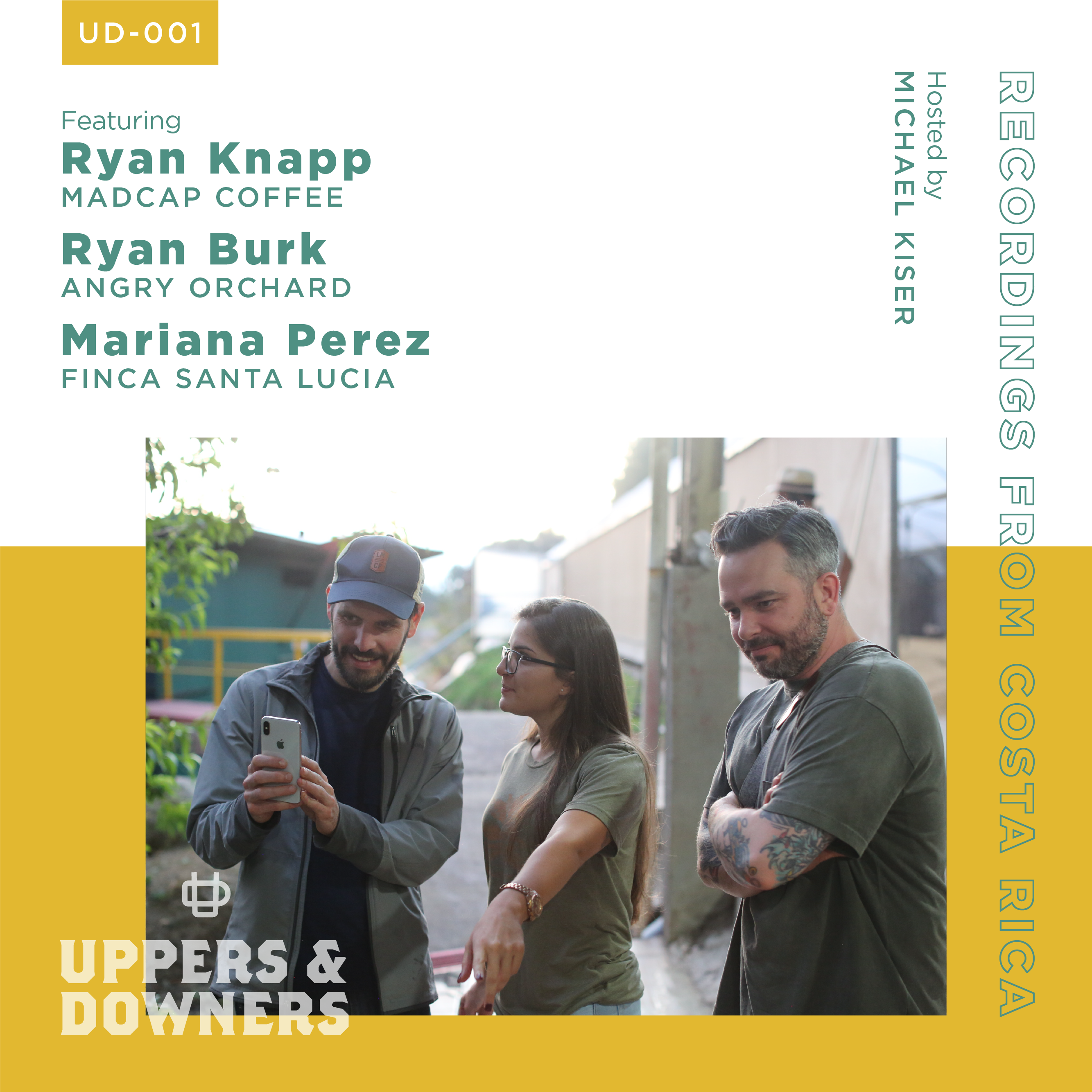
UD-001 Recordings From Costa Rica
EI'm Michael Kiser, and you're listening to the Good Beer Hunting podcast. Ah, to be in the sunny mountains of Costa Rica again: travel seems like part of a future I'm not willing to get my hopes up about just yet. But surely, someday, we'll all be back at it. Like most of us, I haven't been on a plane since this past March. But just prior to the lockdown, I had one of the most intense and educational travel experiences in some time. Just as we wrapped up our annual Uppers & Downers festival celebrating all things beer, spirits, coffee, and cocktails, I found myself on a flight to Costa Rica. Our destination was a tucked-away coffee farm in the mountains just outside San José. With me were two friends: Ryan Knapp of Madcap Coffee in Grand Rapids, Michigan and Ryan Burk of Angry Orchard cider (specifically, their Innovation Cider House in Walden, New York). Years ago, when Uppers & Downers first launched, these two collaborated to make a cider with cascara: the skin and fleshy part of the coffee fruit that's traditionally discarded or used for fertilizer. The result was a delightful blend of fruit-forward cider and the tannic, hibiscus-like funk of the cascara. For years, we've talked about this experiment becoming a real thing: a cider you can drink in a bar or buy off the shelf. A culmination of years of experimentation, relationship-building, and mutual education. And this trip was how it was all coming true. We were going to Costa Rica to source the cascara. There's only one farm in the country producing a food-grade cascara—a special process, all done indoors, where the fruit and skin are separated from the bean and are laid out on screens and stacked to dry into a kind of fruit leather. The organic coffee farm in question, Santa Lucia, is owned and operated by the Perez family. It was founded by the father, Ricardo Perez—who himself is a third-generation farmer—and more recently is run in cooperation with his youngest daughter, Mariana. In this four-way discussion, we'll talk about the history of the collaboration, the farm's unique perspective, labor practices and equity across all three industries, and the ways in which an appreciation of each other's crafts create a deeper meaning in the end product. This is Ryan Burk, Ryan Knapp, and Mariana Perez. Listen in.

SP-001 The Shelf in the Sky—Digital Strategies for the New Retail
EWelcome to this episode of the Sightlines podcast. I'm Bryan Roth. This podcast is set up a little differently than usual. It's part of Good Beer Hunting's content for Sightlines Premium, our insights-driven professional community, and subscription newsletter that helps industry decision-makers grow their businesses. Today, we're going to hear from Andrew Emerton, specialty brand manager for New Belgium Brewing Company. In this chat, Andrew and I are talking e-commerce, which has become a pivotal part of sales during COVID-19, whether it's online shops created by a nanobreweries or nationally known companies selling over delivery platforms like Drizly. Discussions of these timely and relevant topics are what drives our content on Sightlines Premium, and like previous COVID-19 coverage we've published in text form, we wanted to make a shortened, edited version of my talk with Andrew available to all as a way to help anyone who can benefit from the insight. As part of New Belgium, Andrew has done plenty of research on what works, and best practices when it comes to selling beer online. That's going to drive the highlights you'll hear, as we touch on everything from creating a web shop, building a brand that resonates from real life to the digital world, and how price plays a factor in these sales. There's also the matter of where to sell or promote, from app-based delivery services to Instagram. If you're interested in how this change is happening for breweries, or if you're someone at a brewery making these decisions right now, Andrew's insights are what you need to hear. And while this portion of my conversation with him is free in this episode, Sightlines Premium subscribers have access to the full, unedited version. As a member and ambassador expert for Sightlines Premium, Andrew is also a part of our subscriber community, sharing expertise on this topic and others in our dedicated community forum and via video chats with fellow subscribers. If you like what you hear, learn more at goodbeerhunting.com/sightlines-premium. Future Sightlines Premium audio will be subscriber-only. Alright, let's get to the conversation with Andrew. As we kick off, Andrew shares that New Belgium has seen such promise in e-commerce that it has actually shifted a staff member into a full-time, direct-to-consumer role, and that's because the beer industry hasn't really used this route to sales before because of legal restrictions. In the meantime, New Belgium has used trial and error to figure out what works. Lucky for us, those lessons and takeaways are already available to learn from. This is Andrew Emerton of New Belgium Brewing. Listen in.

CL-050 Lucy Corne On The Original Hazy Sour
EWelcome to the Good Beer Hunting Collective podcast, the show where members of our team interview each other to get a behind-the-scenes look at some of our favorite articles. I'm Ashley Rodriguez, and I produce Good Beer Hunting's podcast. One of the most exciting parts of being at Good Beer Hunting is working with new authors. It's thrilling to see a new corner of the beer world, or a new perspective on something I thought I knew well, told through another lens. And it's equally exciting to see others respond to the stories our first-time authors choose to tell. In this episode, I'm chatting with Lucy Corne, a freelance beer writer based in Cape Town, South Africa. Lucy wrote an article as part of our Mother of Invention series, made in partnership with Guinness, about the reemergence of traditional beer styles in South Africa. In this piece, she details how craft brewing enthusiasts are reclaiming traditional brewing styles—like umqombothi, a sorghum-based, wild-fermented beer—and throughout this interview, we talk about how local beer identities are made and how information gets passed along. Because traditional sorghum beer is often brewed inside peoples' homes, it can be difficult to trace its history—but there are lots of folks attempting to highlight its origins. Lucy also runs a blog called The Brewmistress, where she's chronicled the effects of COVID-19 on the South African craft beer scene, including the rise in homebrewing after a nationwide ban on the sale of alcohol and tobacco went into effect in late March. Her writing on the subject should resonate far and wide, given that, in this current moment, there's no part of the beer world that hasn't been touched by the coronavirus. Here's Lucy.

EP-270 Joey Redner of Cigar City Brewing and CANarchy
EToday's guest, Joey Redner, is special to me on a variety of levels. He's a brewery founder I've long admired, having started and grown Cigar City Brewing into one of the strongest brands of the second wave of craft brewing—and having done so with very little experience. Instead, he used his instincts as a writer to navigate the business from a journalist's perspective before he ever invested in concrete and steel. Something about that background always seemed to express itself in a worldview that I found quite rare within the world of craft brewing—and which has proven effective in unique ways. Joey always seems to be an active observer—forever a note-taker and learner—and constantly sizes up people, opportunities, and the direction the narrative is going next. I first met him on a white-water raft going down the Colorado River in the Grand Canyon along with a host of other brewery owners. That trip was part of the Sierra Nevada Beer Camp bus tour, which went cross-country from Chico to Asheville in 2014. From those wild times to more practical endeavors—like working alongside the strategy and marketing teams in Florida as they launched Cigar City Lager, or scaling up toward an eventual acquisition and alignment with the CANarchy group—all have contributed to my respect and admiration for Joey and his leadership. But we've never sat down to record. So why now? Well, in addition to being curious about the implications of his strategic alignment with CANarchy, and its unique resilience during the pandemic, I also recently learned that Joey had once suffered from a life-threatening coronavirus infection himself—years ago before anyone had really heard of it. And that experience, as scary and severe as it was, has given him a very unique vantage point for the social, cultural, and political environment we're all finding our way through right now—because for him, none of those factors existed. There were no anti-maskers or shutdowns or government stimulus and temporary alcohol laws we all associate with the virus now. For him it was radically simple—it was life or death. This is Joey Redner of Cigar City Brewing and CANarchy. Listen in.
A Thousand Words
EWelcome to A Thousand Words, a special project by Good Beer Hunting. I'm Ashley Rodriguez. As a producer at GBH, I work with a lot of photographers and visual storytellers. And while I'm familiar with the phrase "a picture is worth a thousand words," I'm not sure I've ever been challenged to consider what that 1,000 words might be like—or what it means to that visual artist. There's a piece of advice I always come back to when I think about podcasts and audio and storytelling. When I sit down and plan an episode of the GBH podcast, or help another member of our team cut interviews and put together a script, I call upon these words of wisdom: audio is the most visual form of storytelling. Seems a little strange, right? In this special episode of the GBH podcast, we asked members of our team to enter this realm of storytelling. Many of these folks are used to bringing you very visual stories through their wonderful photography, but for the last few months during COVID-19, doing on-site photography has been impossible for many. That hasn't stopped them from visualizing the word of beer, both past and present. With that in mind, you're about to hear seven different stories read aloud by members of our editorial team and some are from our subscriber community, The Fervent Few. Think of each brief narrative as a snapshot of a moment, like an audio version of the b-Roll series on our website. The resulting vignettes offer a range in scope—from present-tense musings to episodes from the past that feel especially prescient now—and multiple perspectives on our shared crisis. We asked folks to talk about their current lives in the face of COVID-19, and we commissioned these audio stories just before the current wave of protests calling for racial justice after the murder of George Floyd in late May. These stories still speak to the uncertainty of this moment, and we hope to expand this series further and include more moments of reflection—both inward and outward. Each storyteller will introduce themselves before jumping into their own narrative. We hope you can visualize every anecdote, and immerse yourself in the pictures they're painting for you. This is A Thousand Words, a collection of audio stories. Listen in.

EP-269 Tania and Nick Mader of Alma Mader Brewing
EI'm Bryan Roth, and you're listening to the Good Beer Hunting podcast. A growing business can be a funny thing in normal times. Early years are marked by the hustle and extra effort needed just to keep up, and if you're lucky enough, knock it out of the park. There are also lots of surprises, and for many of today's entrepreneurs, COVID-19 has been the biggest one of all. In today's episode, we're talking virtually with Nick and Tania Mader, co-owners of Alma Mader Brewing in Kansas City. The company was barely one year old when the pandemic hit, and like so many of its peers, its taproom focus and the local love it had garnered were suddenly up against the unprecedented health and financial challenge that the pandemic presented, as well as the changing behaviors of drinkers. The need to adjust on the fly is not a new challenge for Nick and Tania, but you'll hear insights about what it's like to do so in real-time—and the brewing and logistical jiu jitsu needed to keep a business afloat. You'll also hear anecdotes about the personal side of it all: like when the Maders decided to rent a truck to drive to Nebraska so they could get a better deal on a collection of crowler cans to fill with draft beer. Finally, you'll hear why brewing along easy-to-understand flavor experiences is ideal in today's climate—and what it's like to celebrate a one-year anniversary milestone amidst a health crisis. These are strange times for everyone, and I hope that getting to know this pair and their business offers you a peek behind the curtain of the awkward pressures of growing up fast when the world around you is forced to slow down. This is Tania and Nick Mader of Alma Mader Brewing. Listen in.

SL-023 99 Bottles of Beer in the Store
Welcome to this episode of Sightlines. I'm Bryan Roth. So much has changed in the last few months because of COVID-19, and while many Americans across the country are returning to bars and breweries in limited numbers, sales at chain grocery, convenience, and big-box stores are still flourishing. For a variety of reasons—from efficiency to the ease or necessity of purchasing large quantities of food and drink all at once—chain stores have continued to remain a central location to find all the beer and hard seltzer people need. But while your King Soopers, Kroger, or Wegmans stocked their shelves with some of the biggest names in beer, locally owned bottle shops had to adjust in very different ways. These are the places where you'll typically find beer from small and nearby breweries, and special or seasonal releases you can't buy in a Target or Walmart. Bottle shops are among the many independent businesses impacted by the coronavirus, and in this podcast, we're going to hear from two people who explain two different ways they adjusted to the changed environment. In a time of crisis, sometimes you respond with simplicity, and sometimes you get more complex in what you do, and how you do it. And as things slowly reopen, those survival strategies are what we'll hear about. This is the Sightlines podcast. Listen in.

EP-268 Day Bracey of Fresh Fest
EToday's guest was one of our 2019 Signifiers: an annual list our writers compile, in which we honor people in the industry who have made a lasting impact through their work. Day Bracey is the co-founder of Fresh Fest, the first Black-culture-focused beer festival in the country. It's also one of the best beer festivals in the country—period. Hosted in Pittsburgh for the last two years, Fresh Fest has become a shining light in the city for culture and inclusion. It's also drawn attendees from all over the country, putting Pittsburgh on the craft beer map in a way none of its individual breweries could. This year, Bracey has working with the team to reinvent the festival amidst the COVID-19 pandemic, transitioning to an ambitious online platform of experiences for people that promises to foster a new kind of connectivity and community around the same premise. In the week following this interview, Day shared some news on his personal Facebook account about some challenges the festival is facing going forward, including a legal rift with his co-founder Mike Potter, who started the Black Beer Culture brand. That rift was unknown to me at the time, and it's not part of this conversation. Any potential fallout from that is also unknown to me right now, and our Sightlines team is working on it as I record this intro. Regardless of that outcome, which could threaten to undermine the festival's efforts, or even existence, this year, Day has publicly stated that he's moving forward with the plans. The second part of the interview is about Day's experiences in Pittsburgh as a Black man. We discuss the numerous protests in the city after the murder of George Floyd, the fight against rampant police brutality, and the Black Lives Matter movement. This experience includes some heartbreaking details. I consider this critical listening, regardless of how informed, or uninformed, you are on those issues. This is Day Bracey of Fresh Fest. Listen in.

Recordings from Fest From Home
EI'm Bryan Roth, and you're listening to the Good Beer Hunting podcast. We've all made lots of adjustments to our lives because of COVID-19, from working from home and missing out on concerts and movies to just not seeing our friends in person. The beer industry has also had to make a wild pivot, taking aspects of what is very much an in-person experience and transforming it into one that's interactive and online. If you listened to a recent Sightlines podcast that included interviews with directors of brewers guilds from around the country, you heard about all the ways breweries and organizations are moving beer festivals to virtual spaces. That's how we're doing this for this episode of the podcast. I recently acted as a moderator for the "Fest from Home," a Massachusetts-focused virtual beer festival organized by Kevin York Communications as a fundraiser for Project Bread, a non-profit that addresses food shortages throughout The Bay State. You'll hear two conversations, each about 20 minutes long, where I chat with brewery owners about the state of their businesses, how they've been impacted by the coronavirus, and what it all means for their core plans and how they run things day-to-day. Through a shared Zoom call, these conversations took place over an afternoon, so virtual festival-goers could tune in to hear from a variety of industry pros. Here, we start with Chris Tkach, founder and president of Idle Hands Craft Ales, and Jack Hendler, co-owner of Jack's Abby Craft Lagers. Both breweries are located in the suburbs of Boston, and have a shared affinity for all things Lager. Jack's Abby is a Lager-only brewery, though it actually created its own spinoff business called Springdale Beer Company to make non-Lager beers. Idle Hands, while making a variety of styles, also puts a special emphasis on its Lagers. Because of this, you'll hear Chris and Jack reference the style and their love for Lager, and how that's impacted decision-making in recent months. It also begs the larger question: "Now that people are at home, and the social aspects we love about going out and being with friends are removed, has anything changed in terms of what beer lovers want to drink?" This is the Good Beer Hunting podcast. Listen in.

CL-049 Lily Waite Tells a Story Years in the Making
Welcome to the Good Beer Hunting Collective podcast, the show where members of our team interview each other to get a behind-the-scenes look at some of our favorite articles. I'm Ashley Rodriguez, and I produce Good Beer Hunting's podcast. Lily Waite is unstoppable. She's one of our most prolific writers at Good Beer Hunting, contributing everything from food-driven chronicles of seaside adventures and profiles of classic breweries with storied histories and crooked floors to candid essays about the importance of online community-building during the current global pandemic. Her newest long-form feature on GBH is a Signifier profiling Duration Brewing in Norfolk, England, which Lily gradually compiled over the course of several years. Along with this wonderfully revealing and intimate profile, Lily also recently launched a new blog on our website called The Pull of Joy, chronicling the pushes and pulls of beer culture. In this interview, I wanted to know what inspires Lily to tell stories, and how she thinks both about the storytelling process and the structure of her articles—you can see this really clearly in the Duration piece, which feels like a story in motion. The narrative itself swoops through time and space, and that effect is very intentional on Lily's part. We also jump into Lily's other endeavors. She runs the Queer Brewing Project, which is a non-profit that raises awareness of and support for LGBTQ communities in the brewing industry. She also just released a photo zine capturing the London pubs that have been closed because of COVID-19. You kind of have to throw the script out when talking about projects and getting things done during a global pandemic, and the work that Lily is putting out now is contextually tied to this current moment but also stands on its own. It's funny that her last profile is of a brewery called "Duration," which is a topic we touch upon during our conversation—what remains relevant, how do we decide what's important, and how do we take time to step away from the current global situation and tell stories that still feel true to us? Here's Lily.
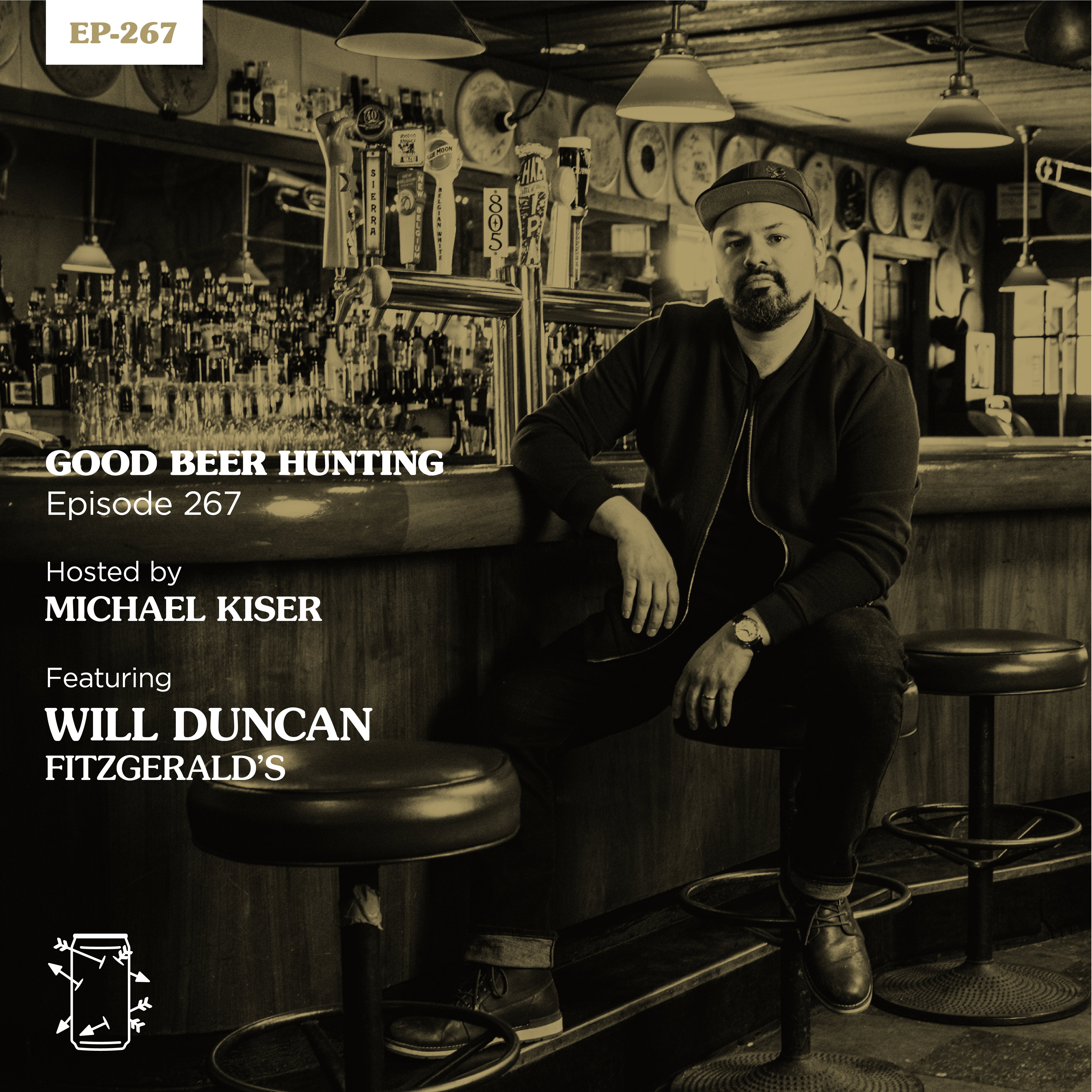
EP-267 Will Duncan, FitzGerald's
EToday's guest has been a partner and friend to GBH for years. He's a former GM for 16 on Center, a restaurant and venue group in Chicago known for its Michelin Star restaurant, Longman & Eagle, as well as music venues like The Empty Bottle and Thalia Hall. If Thalia Hall sounds familiar, that's because it's played host to our Uppers & Downers festival basically since its inception. So much of what the festival has become has been substantially shaped by the physical space of Thalia Hall—it's history, and Will Duncan himself. In this conversation, we're going to talk about some of that, but also how Will has risen through the ranks over the years, from a part-time door guy to GM, to multi-venue manager across the growing empire of bars, restaurants, and venues, and finally launching his own venue as he takes over the historic FitzGerald's venue in Berwyn, Illinois. He happened to sign the papers for that venue—venturing into his life-long dream of being an entrepreneur in his own right—about a week before COVID-19 turn our world upside down, and places like FitzGerald's shut down. A dream interrupted. But still kicking. I've learned a ton from Will over the years. Sometimes explicitly, sometimes just by following his example and experimenting with his kind of team-based leadership. I often describe Will as the most optimistic man in America. But one thing I know is that sometimes optimism comes easy and natural—and sometimes optimism is damn hard work. This conversation is about the work. This is Will Duncan of FitzGerald's and 16 on Center. Listen in.

SL-022 Ask Not What Your Guilds Can Do For You
EWelcome to this episode of Sightlines. I'm Bryan Roth. As cities and states start to reopen and the siren call of warmer weather encourages people to test the boundaries of self-isolation, the ramifications of the coronavirus linger. Much worry has been focused on our local and national economies, and while breweries have been a part of that, the impact of COVID-19 stretches further. In this episode, we're going to find out what the last few months have been like for state and national brewers guilds—the organizations that are formed to support, represent, and promote breweries all around the country. In normal times, these groups help to lobby for updated laws or market brewery members as a way to get customers to come out and visit. Both of these tasks have taken a back seat for guilds, particularly as they find themselves fighting for financial stability like so many others. Along with every state's own guild, the Brewers Association serves as the national body for this collection of organizations, which are meant to act collectively for the good of U.S. craft beer. But 2020 has thrown business as usual to the side. The leadership of these guilds is now focused on what they're meant to do in a crisis, and figuring that out in real-time. What happens when the organizations meant to support you—especially during bad times—can barely support themselves?

EP-266 Paul Jones of Cloudwater Brew Co.
EI'm Jonny Garrett, and you're listening to the Good Beer Hunting podcast. Today's guest is Paul Jones, founder and sole owner of Cloudwater Brew Co. in Manchester, England. Since founding Cloudwater just five years ago Jones has, perhaps knowingly, become a spokesperson for the British beer industry. To be fair, he has plenty of right to that job. Cloudwater was previously voted the fifth-best brewery in the world by the users of RateBeer, and is one of the country's fastest-growing beer businesses. Jones has also had a hand in many of the major developments in the U.K. beer scene—including New England-style brewing, canned beer, direct-to-consumer sales, off-site taprooms, and an emphasis on cold-chain distribution and storage. As we explore all of that, some listeners may perceive Jones' self-championing as arrogance, but he's the first to admit fault and is his own biggest critic, as you'll hear throughout the interview. On the occasions I get a word in and challenge him, it's clear he's already asked himself the same questions a thousand times and played out all the scenarios in his mind—probably while wide awake in the middle of the night. We start the interview reminiscing about happier times, with what was perhaps a celebration of everything Cloudwater has achieved so far—the Friends & Family & Beer Festival, held in February. Bringing together an insane brewery list and a festival with charity and inclusivity at its heart it was supposed to be a signal of where beer was headed. Looking back now, it feels a bit like the last supper. After going through the highs and lows of running a fast-growing, much-hyped beer brand, I knew Paul would have some insight into how the beer scene and the beer industry—because they are very different things—will play out once the threat of COVID-19 fades. Jones has been ahead of the curve on so many occasions, and it's worth taking note of what he says. While he's had to change his expectations and the specifics, his approach remains the same—if you do the same thing as everyone else, you're going to find yourself crowded out. In the face of the biggest challenge craft beer has ever faced, the fact that Jones is still excitable and upholding his admirable beliefs about beer, industry, and society is comforting—even if I don't completely share his optimism. This is Paul Jones of Cloudwater Brew Co. Listen in.
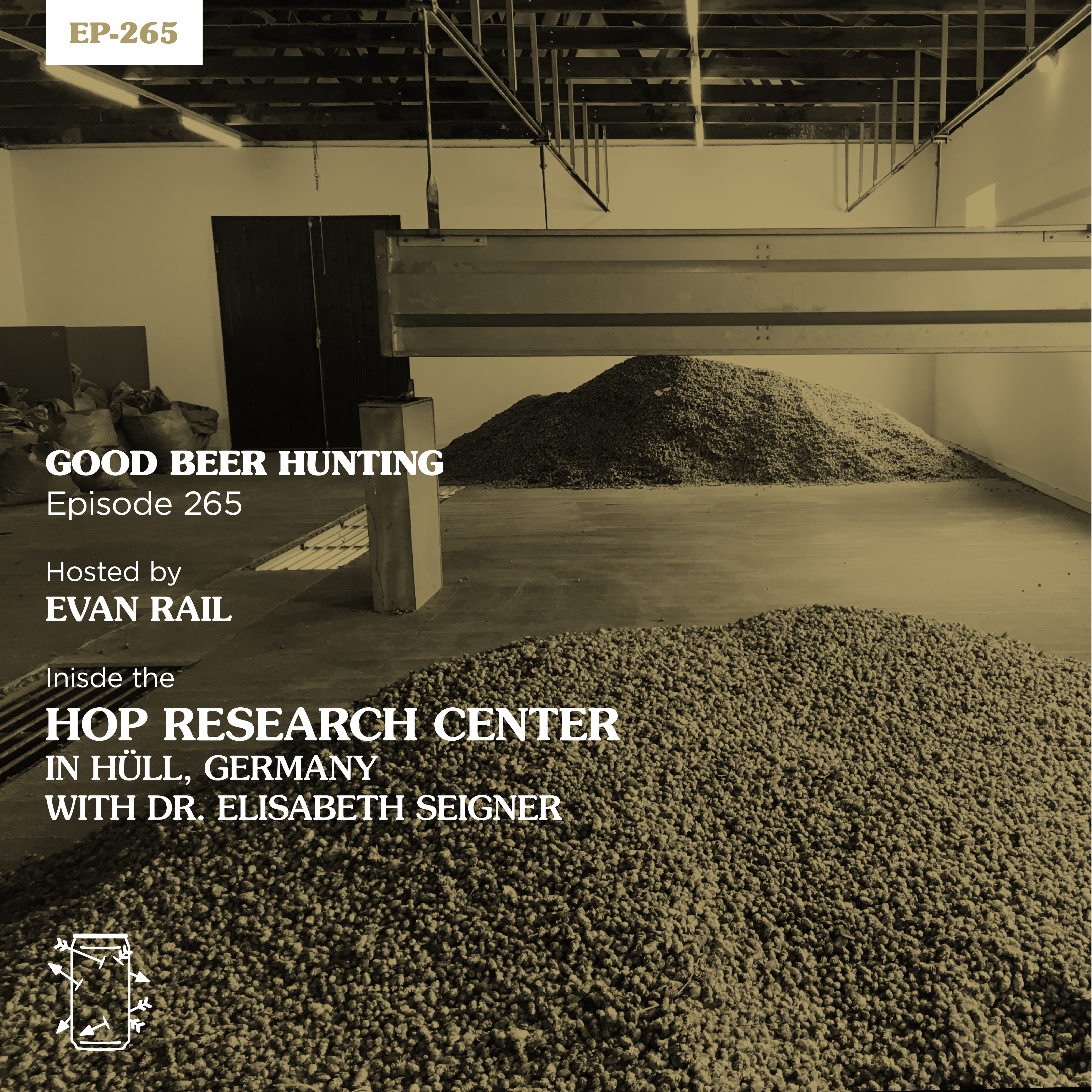
EP-265 Inside the Hop Research Center in Hüll, Germany with Dr. Elisabeth Seigner
EI'm Evan Rail, and you're listening to the Good Beer Hunting podcast. Today we're doing things a little differently: I'm taking you along with me on a reporting trip to Germany's Hop Research Center, where I am trying to find out more about what the institute does—and especially, to find out more about the exciting new hops, like Mandarina Bavaria and Hallertau Blanc, that have recently been developed here. How do scientists develop new hops? How long does that take? Who decides which hop varieties are going to be released? The Hop Research Center is located in Hüll: a small village in Bavaria, in Germany's south. It's right in the middle of one of the Old World's most celebrated hop-growing regions, the Hallertau. All around it are commercial hop farms, with tall trellises of heavy, dark green hop bines climbing up 20 feet off the ground, as far as the eye can see. It was originally founded in 1926 to help combat hop diseases, like downy mildew. Although many industry professionals have heard about the Hop Research Center, it makes sense that the name isn't well-recognized by most of us. It's not exactly open to the public: there's no visitor's center, you can't buy a T-shirt or really do anything here. Its goal is to help German hop farmers, many of whom are located in the surrounding region. No joke: in harvest season, the most popular vehicle on the narrow road here is a tractor. It might be hidden behind the curtain, but the work done at the Hop Research Center is truly important for the future of beer. The best-known reference to the place is probably the new flavor hop Hüll Melon, which was developed here along with other new cultivars. In addition to new flavors, the institute is doing important work on major issues for the hop industry, including climate change, saving traditional "landrace" or "land variety" hops, and developing new high-alpha varieties. In this episode, we tour the center with research director Dr. Elisabeth Seigner. Along the way, Dr. Seigner explains the lengthy, 10- to 20-year process of developing a new hop cultivar, and talks about some of the issues facing the hop industry today. It's an insider's view from a place most of us will probably never get to visit, let alone hear about—even if its work benefits all of us. We're going inside the Hop Research Center in Hüll, Germany with Dr. Elisabeth Seigner. Listen in.
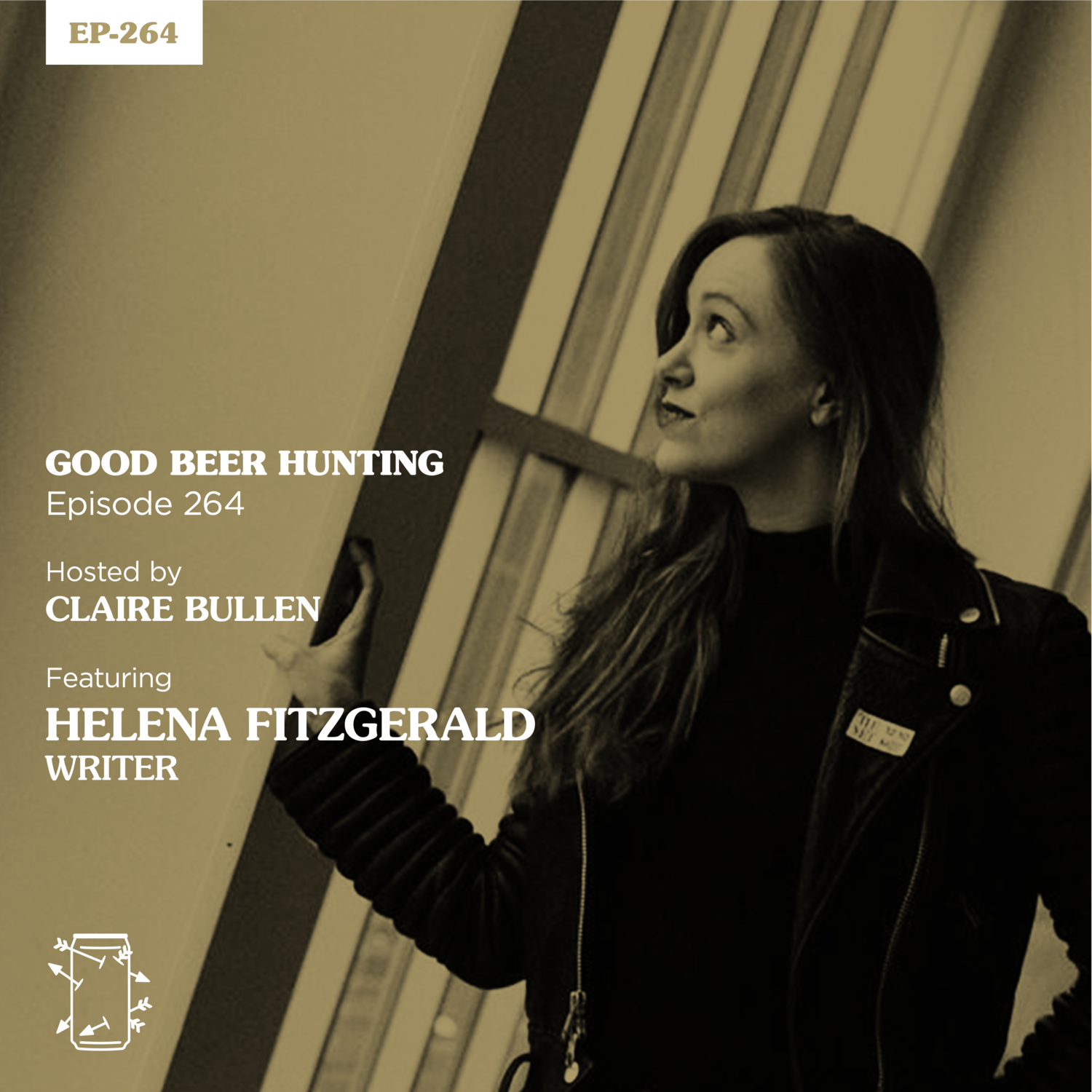
EP-264 Helena Fitzgerald, Writer
EI'm Claire Bullen, and you're listening to the Good Beer Hunting podcast. When I first met up with Helena Fitzgerald to record this podcast episode, the world was a different place. It was the third week of February, and Helena—a freelance writer based in New York, who has contributed to publications like The Atlantic, Hazlitt, Catapult, and Electric Literature—was visiting London on a long-term, self-imposed writing sabbatical. Helena and I met to discuss her first article for Good Beer Hunting, "Lived in Bars," which was published on January 8, 2020. If you haven't read it, it's a luminous personal essay about Helena's decision to step back from drinking. But more than that, it's a love letter to bars: from dive bars to high-end cocktail bars and everything in between. It touches on the whirlwind of the New York social world, the special accord that exists between patrons and bartenders, and the different ways of existing in these essential public spaces. Now, four months later, Helena's essay has taken on a stark new relevance as bars all over the world have been forced to shutter, and as so many of us have been locked down in our homes for weeks at a time. As we struggle to parse the etiquette of Zoom socializing and wonder how early is too early to crack that beer, we're also desperately missing bars and pubs and taprooms. It turns out—as Helena presciently wrote—that those spaces are about more than just the drinking that happens in them. They're our living rooms, our common spaces, the places where so much of our living gets done. And without them, so many of us feel at sea. Back when we recorded this, bars and pubs were still open. Helena and I opted to meet at the Southampton Arms, an atmospheric old pub near my apartment in North London that comes complete with piano, fireplace, and resident cat, and is one of my favorite in the city. We met on a quiet weekday afternoon, though you might hear some clinking and chatter in the background (hopefully the ambient pub sounds won't be too painfully nostalgic). This is Helena Fitzgerald. Listen in.

OL-010 Mark Spence Reads "Stage Three Anger" from Beer is Offal
EThis is GBH Out Loud, and I'm Ashley Rodriguez. Today, you'll hear Mark Spence read the sixth entry of his blog, Beer is Offal, called "Stage Three Anger," published on Good Beer Hunting on February 21, 2020. There's a shift in this entry of Beer is Offal. It's an abrupt reminder that there is a person behind this blog, living this life in real-time. In this piece, Mark reflects on the death of his cousin, and the factors that contributed to his early death. This isn't a collection of lessons learned, or a neat summary of an experience with a nicely-tied bow to punctuate it. It's a journey in motion, a particular moment in Mark's life where grief and fury mix. This is Mark Spence reading an entry of his blog, Beer is Offal, called "Stage Three Anger." Listen in.
Recordings From NYC Beer Week, Session One
EThis is part one of a two-part feature from New York City Beer Week. This was recorded at The Well in Brooklyn, just a week or so before the city announced a state of emergency because of COVID-19. We're now releasing these episodes in an entirely new context—keep that in mind as you listen. But many of the topics are timeless and will continue to be valuable long after this pandemic has passed and New York City comes back to life. This is our second year hosting these talks at The Well—and it's a great opportunity to take stock of things as local NYC brewers, brewers from upstate, and some from far away all come together for an increasingly exciting series of events, special releases, and festivals for the week. This year, NYC Beer Week fell at the exact same time as GBH's annual Uppers & Downers festival in February, so I wasn't personally able to make the trip and host the panels. But I'm glad to say we got a couple of local hosts we greatly admire in my stead. The first session is hosted by the prolific and chatty Joshua Bernstein, an author that's been published on Good Beer Hunting. He's one of my personal favorite voices in beer—Josh is a phenomenal conversationalist and endlessly curious. He hosts a panel with friends from Civil Society in Florida, Interboro in Brooklyn, Dancing Gnomeout of Pittsburgh, Modist from Minneapolis, and Rockwell out of St. Louis. This our first recording from New York City Beer Week, hosted by Joshua Bernstein. Listen in.

Recordings From NYC Beer Week, Session Two
EThis is part two of a two-part feature from New York City Beer Week. This was recorded at The Well in Brooklyn, just a week or so before the city announced a state of emergency because of COVID-19. We're now releasing these episodes in an entirely new context—keep that in mind as you listen. Many of the topics are timeless and will continue to be valuable long after this pandemic has passed and New York City comes back to life. This is our second year hosting these talks at The Well—and it's a great opportunity to take stock of things as local NYC brewers, brewers from upstate, and some from far away all come together for an increasingly exciting series of events, special releases, and festivals for the week. This year, NYC Beer Week fell at the exact same time as GBH's annual Uppers & Downers festival in February, so I wasn't personally able to make the trip and host the panels. But I'm glad to say we got a couple of local hosts we greatly admire in my stead. The first session, which I hope you've already listened to, was hosted by Joshua Bernstein. This second session is hosted by Garrett Oliver of Brooklyn Brewery and author of the Oxford Companion to Beer—among many other accomplishments. Garrett is as iconic as any one figure in the beer world. I was lucky enough to interview him waaaaay back on Episode 53 of our podcast five years ago. He's a great ambassador for the craft, but more than that, he's a great inquisitor. He's as easily enamored with a new trend as he is skeptical. And this makes him a wonderful person to have to host a panel discussion with a variety of opinions and perspectives. We were honored that he was willing to step into my role for the night. In this episode, he hosts a panel with friends from Threes Brewing in Brooklyn, Fox Farm in Connecticut, Hudson Valley from upstate, Transmitter from Brooklyn, and Sand City from Northport, New York. This our second recording from New York City Beer Week, hosted by Garrett Oliver. Listen in.

CL-048 Anthony Gladman is social distancing in an orchard
Welcome to the Good Beer Hunting Collective podcast, the show where members of our team interview each other to get a behind-the-scenes look at some of our favorite articles. I'm Jonny Garrett, and I'm a staff writer for GBH. Today, I'm catching up with Anthony Gladman, a new writer at GBH. With the U.K. on lockdown, I thought this would be a great opportunity to transcend the physical distances and get some much-needed social interaction. The episode starts with a chat about how both are coping with the isolation—particularly now that Anthony is homeschooling his kids—before moving on to Anthony's first full feature for GBH: a dive into the world of British cider called "Rebirth in England's Orchards — Find & Foster Fine Cider in Devon, U.K." Until the COVID-19 pandemic hit, the British cider scene was gathering some momentum and press as both an off-shoot of the craft beer movement and a traditional part of Britain's beverage heritage. Anthony and I discuss the unique conservational approach of Find & Foster, and whether the world of cider is better or worse placed to weather the current storm than beer. This is Anthony Gladman on the Good Beer Hunting Collective podcast. Listen in.
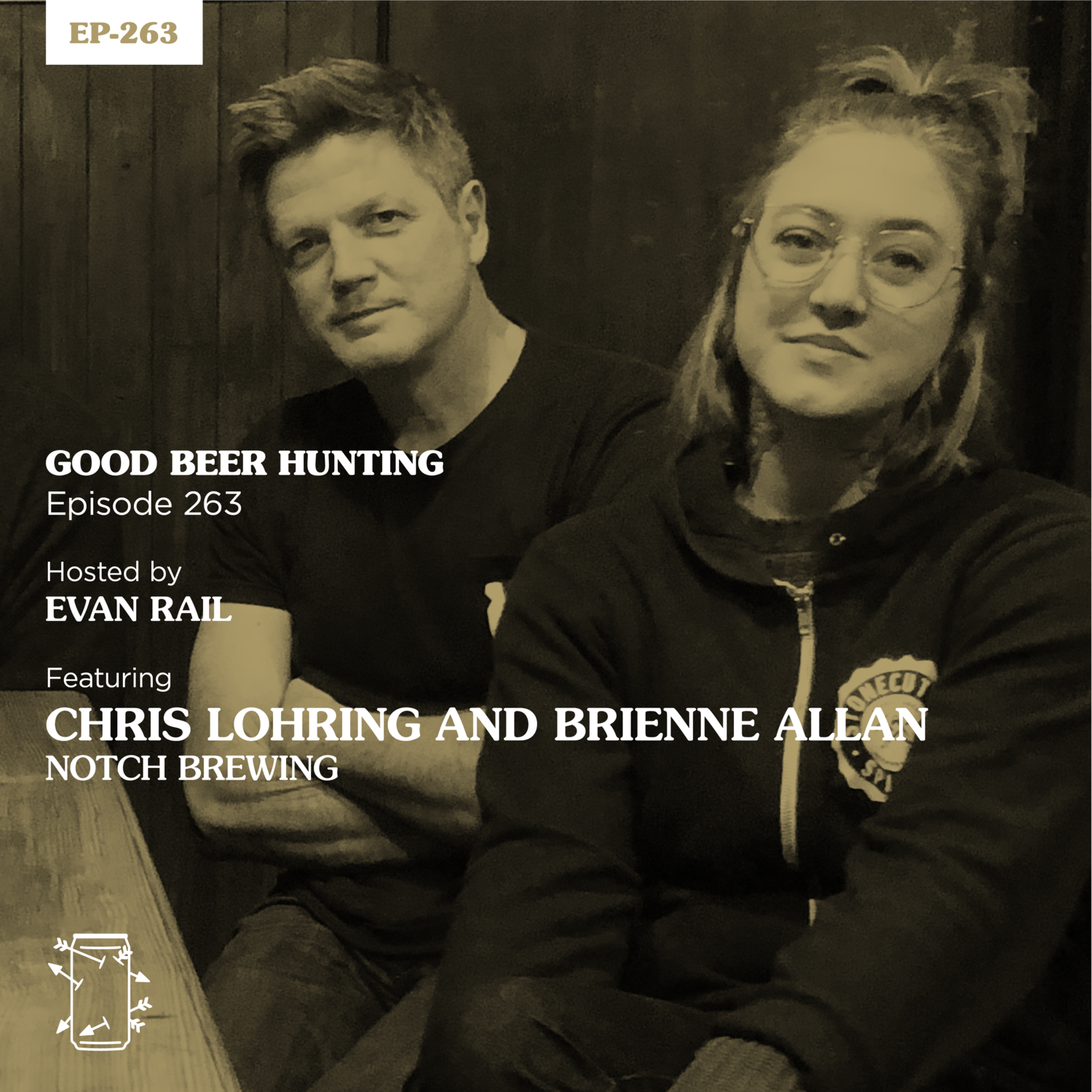
EP-263 Chris Lohring and Brienne Allan of Notch Brewing
ELiving overseas can give you an interesting perspective on American beer culture. Although I'm originally from California, I've lived in the Czech Republic for almost 20 years now. While I miss many of the beers and breweries from back home, I really fell in love with Czech beer, dedicating a lot of my time to researching, writing about, and drinking it. In recent years I've been glad to see North American beer lovers develop much more interest in Czech beer. Since then, many U.S. and Canadian brewers have reached out to me with questions about recipes, equipment, and processes. I can tell that for a lot of people back home, Czech brewing is still rather weird and unknown, whether it's the "black magic" of a triple-decoction mash, or the strange pours like the šnyt and mlíko, or our rarely spotted "yeast beer," Kvasnicové Pivo. One of the standout U.S. brewers who actually gets Czech beer is Chris Lohring of Notch Brewing in Salem, Massachusetts. Chris came through Prague himself, in 2012, doing research on how Czech beers are brewed, served, and drunk. I met up with Chris during that trip, and so did my friend and colleague Max Bahnson, who writes under the name Pivní Filosof. Chris got to visit Czech breweries; drink Czech beers; and observe the Czech process, approach, and culture. Since then, Notch Brewing has emerged as one of the leading proponents of Czech-style beers in North America. Not only does Notch make a Czech-inspired Světlý Ležák, or Pale Lager (aka Pilsner), but it also makes Tmavé Pivo, or Dark Lager, and Polotmavé Pivo, which means "half-dark beer," or Amber Lager. At the Notch taproom in Salem, those beers are served from a Czech side-pour (or side-pull) faucet, into a Czech dimpled, half-liter mug. My Czech friends who have visited the Notch taproom said it's the closest thing to a Czech beer experience you can get in the U.S. In this episode, I catch up with Chris Lohring when on his return to Prague, along with Notch Brewing's production manager, Brienne Allan. They were both on a trip that included several hands-on brew days at different Czech breweries. I wanted to ask Chris and Brienne about the differences between Czech beer culture and American beer culture, as well as the differences in Prague since Chris' last visit seven-plus years ago. I wanted to find out what beer drinkers in the States understood about Czech beer, brewing, and how we drink, and I wanted to know if there were any common misconceptions. Our meeting takes place over a few beers in a busy Prague café around the corner from my apartment, so there's a fair amount of background noise—sorry about that. It was recorded in mid-February, 2020, about three weeks before the coronavirus closed off the Czech Republic and made travel here impossible, at least for now. The observations about Czech brewing and beer drinking made by Chris and Brienne, however, feel pretty timeless. Here's Chris Lohring and Brienne Allan of Notch Brewing in Salem. Listen in.
OL-009 Mark Spence Reads "Winner Winner Chicken Dinner" from Beer is Offal
EThis is GBH Out Loud, and I'm Ashley Rodriguez. Today, you'll hear Mark Spence read an entry of his blog, Beer is Offal, called "Winner Winner Chicken Dinner" published on Good Beer Hunting on January 16, 2020. What do love and chicken have to do with one another? You might not think a lot, but as Mark illustrates, what we love most about food—making new things, tweaking a recipe, making a small change and seeing new results—doesn't always apply to the way we interact with others. The analogies and ties we find to our personal lives and the world around us—the way we cook, or the way we talk about food—are especially prescient in this piece, and at the end, you'll probably be asking the same question Mark poses: "Jesus man, who hurt you?" This is Mark Spence reading an entry of his blog, Beer is Offal, called "Winner Winner Chicken Dinner." Listen in.

EP-262 Eleanor Léger of Eden Specialty Ciders
EToday's guest comes to us from far northern Vermont. Eleanor is a cider maker, first known for her ice ciders, made using a process of distillation that profits from natural swings in seasonal temperatures to produce a concentrated, sweet, and acid-balanced cider. Ice cider is often thought of as a dessert wine in the U.S., but so easily replaces a bourbon or whiskey. In her region, just south of the Canadian border (and Quebec's concentration of ice cider makers), Eleanor's operation is a rare and special thing. But as climate change continues to alter seasonal norms, she's becoming increasingly known for the wide range of specialty ciders she makes, some of which count among the best in the country. She's an active proponent of the specialty cider category, working with others in the industry to help educate makers, drinkers, and people like me. As you'll hear in this conversation, there is no shortage of challenges in the cider industry at the moment. But with people like Eleanor leading the way, it's encouraging to see the progress being made. This is Eleanor Léger of Eden Specialty Ciders. Listen in.

COVID-004 — Pivoting in a Pandemic
EWelcome to this special series of the GBH Collective podcast, where we'll be checking in with members of our global team to keep you updated on unfolding events surrounding COVID-19. I'm Michael Kiser. Today's guests are special to me—both of them are media peers who I've often measured myself against. They're also just delightful humans who are always accessible and open to inquiry. Over the years, they've helped me think about Good Beer Hunting's business model, our audiences, and the ways in which we all develop our voices. As the world started turning upside down this past month, I wanted to check in with them to see how they were handling things—both personally and as part of a larger organization. How did they process the world-changing news? How did they work with their teams to adapt? And how do they expect to evolve going forward? These conversations go far beyond beer and media. First up in Eno Sarris of The Athletic. The Athletic is a phenomenon in the sports-writing world. It has a subscription-based readership, much like our own Fervent Few member community. And it serves as a platform for people who want both exceptional narratives and deep dives into data. In that way, it covers a spread much like GBH does. I first got to know Eno when he put his role at the FanGraphs and BeerGraphs sites on hiatus to join the October project we started with Conde Nast. After that, he went on to join The Athletic, and I've been glued to his progress ever since. Next, we're going to talk to Peter Frost of Molson Coors. I knew Peter back when he was a reporter at Crain's Chicago, one of our city's business magazines. Peter developed a keen interest in the beer industry while he was there, but his investigative reporting made him a key voice in Chicago business before he left to join what was then MillerCoors to launch their blog devoted to beer industry analysis and insights. This conversation immediately gets a reframe as he reminds us that, not only are they dealing with the coronavirus pandemic, but this is coming on the heels of a devastating mass shooting that happened on their campus just a few weeks prior. Honesty, I was stunned when he brought that up because as shocking as that was—this pandemic has made anything that happened before it feel like a lifetime ago. But for Peter and the Molson Coors team, it's been a long, blurry timeline of tragedy. Both of these guys are holed up in their homes and were generous enough to share some time with me while still doing their jobs and taking care of their families. This is Eno Sarris of The Athletic and Peter Frost of Molson Coors. Listen in.
EP-261 Ben Henning of State Bird Provisions and The Progress
EProducer's Note: we're going to continue bringing you timeless stories and important interviews, some of which have newfound relevance because of COVID-19, and some that are explicitly unrelated. This episode you're about to hear was recorded during San Francisco's Beer Week in February 2020, so the context is removed a bit from what's happening in the world right now, but the information is still valuable, and we want to share it with you. Listen for an update at the end of the episode. How many times have you sat down at a nice restaurant and perused the drinks menu, only to find yourself thoroughly disappointed by the beer list? Ben Henning, a beer buyer for two Michelin-starred sister restaurants in San Francisco, makes it his life's work to ensure that that never happens to his patrons. Henning works with State Bird Provisions and The Progress, two widely lauded neighboring restaurants in the city's Fillmore District. You'll often catch him on the floor working alongside waiters, discussing the restaurants' robust beer offerings with guests, and espousing the merits of pairing beer with their many exceptional dishes. But Henning isn't always successful at converting the wine drinkers. In the high-end restaurant game, convincing guests to consider beer over wine or spirits is always an uphill battle, even though Henning, a certified Cicerone with years of buying experience, is bringing in the best of the best. On any given day, State Bird and The Progress carry carefully selected, rare Lambics and farmhouse ales. On the day I arrive to speak with Henning, in the middle of San Francisco Beer Week, the restaurant is bustling ahead of its 4 p.m. opening. A line is forming outside of locals hoping to snag one of the few tables kept open for walk-ins. Management is readying for the opening of two new restaurants elsewhere in the city. Upstairs, staff is setting up for a private event, and just after Henning and I begin our conversation, we're asked to relocate to another room—you'll hear that break in the interview. Even within the chaos, Henning is cool-headed. Staying level in ever-changing circumstances is what his work is all about. This is Ben Henning of State Bird Provisions and The Progress. Listen in.