
Cold War Conversations Podcast
479 episodes — Page 6 of 10

S11 Ep 229The shooting down of KAL007, the Able Archer exercise and the nuclear war scare of 1983 (229)
The year 1983 was one of the most dangerous in human history. While the Cuban crisis was exceptionally dangerous and both the United States and the Soviet Union had significant nuclear arsenals in 1962, a war in 1983 would have likely ended the human race. Brian Morra was Chief of Intelligence Analysis for US Forces Japan at Yakota airbase when on 1st September 1983 an unarmed Korean airliner was shot down by a Soviet fighter causing the deaths of 269 people. He describes the less well known subsequent incidents between Soviet and US military aircraft which almost resulted in a shooting war between the two superpowers. During this period the Soviet leadership believed the US was going to launch a nuclear attack on their country. Their paranoia was heightened by several incidents during 1983 which are dramatized in Brian’s new novel “The Able Archers”, which is based on his experiences during that period. UK listeners buy the Able Archers book here US listeners buy the Able Archers book here Robert M. Gates, former CIA Director and Secretary of Defence describes “The Able Archers” as “a powerful reminder of the value of human judgment—and the continuing peril posed by nuclear-armed powers.” I could really use your support to continue the podcast. A simple monthly donation will get you the sought after CWC coaster as a thank you and you’ll bask in the warm glow of knowing you are helping to preserve Cold War history. Just go to https://coldwarconversations.com/donate/ I am delighted to welcome Brian Morra to our Cold War conversation… Brian's Web site https://brianjmorra.com/ There’s further information on this episode in our show notes which can also be found as a link in your podcast app here. https://coldwarconversations.com/episode229 If you can’t wait for next week’s episode do visit our Facebook discussion group where guests and listeners continue the Cold War Conversation. Just search Cold War Conversations on Facebook or click here https://www.facebook.com/groups/coldwarpod/ 0:00 Introduction and background of Brian Morra 7:12 The 1983 incident involving U.S. Navy aircraft over Soviet territory 17:12 Discussion on the shooting down of the Korean airliner KAL 007 30:03 The hostile incident against the US intelligence collection aircraft 41:44 Discussion on Stanislav Petrov, the man who saved the world 56:14 Leonard Peroot's personality and professional skills and role in defusing the Able Archer 83 crisis 1:04:58 Reflection on the book's portrayal of the 3 major flashpoints of 1983 1:11:39 Recollections of decision-making during the Cold War 1:19:33 Acknowledgement of patrons and how to become a patron 1:21:03 Final goodbye Table of contents powered by PodcastAI✨ Support the project! https://coldwarconversations.com/donate/ Follow us on Twitter https://twitter.com/ColdWarPod Facebook https://www.facebook.com/groups/coldwarpod/ Instagram https://www.instagram.com/coldwarconversations/ Youtube https://youtube.com/@ColdWarConversations Learn more about your ad choices. Visit podcastchoices.com/adchoices
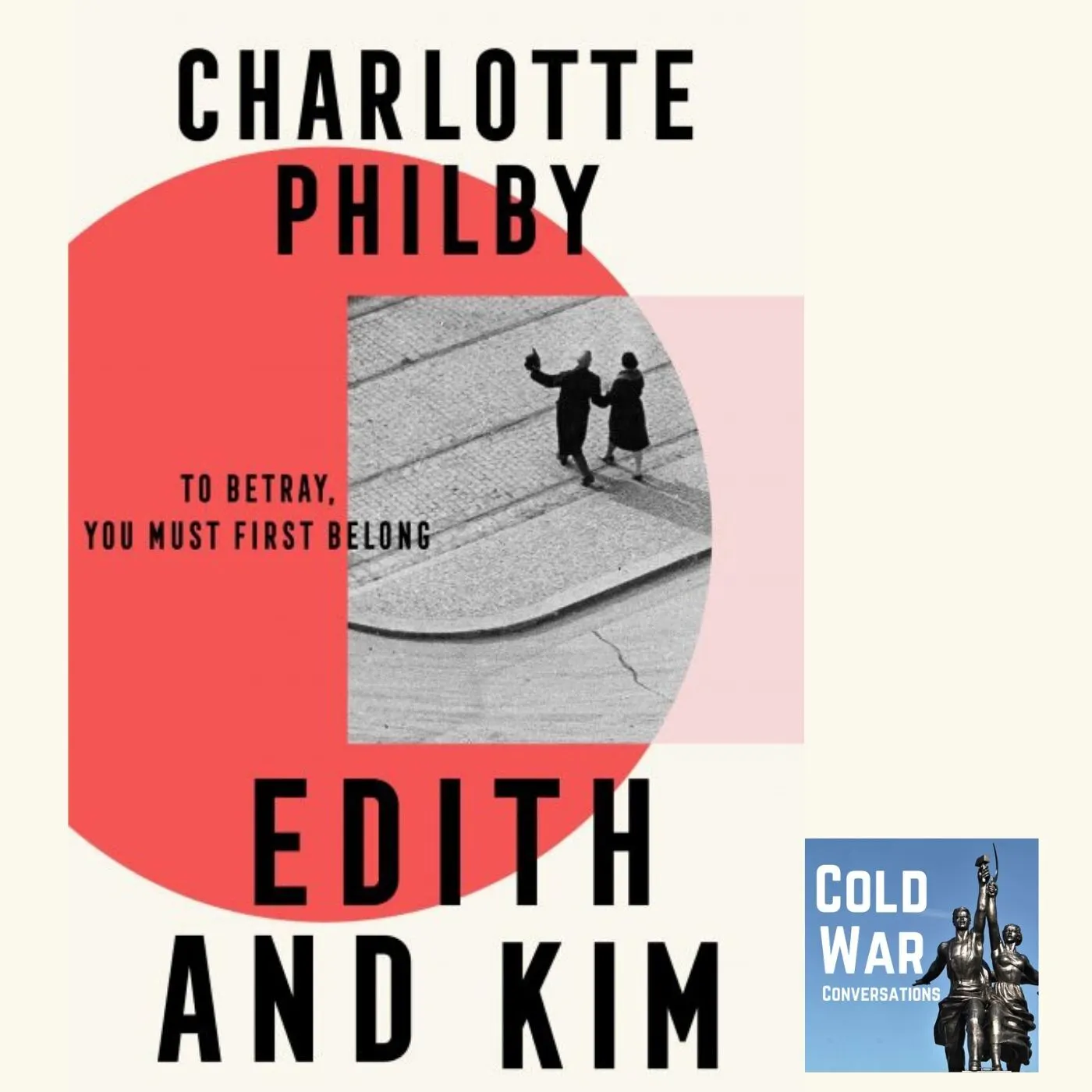
S11 Ep 228Charlotte Philby talks about her grandfather Soviet spy Kim Philby & her book "Edith & Kim" (228)
In June 1934, Kim Philby met his Soviet handler, the spy Arnold Deutsch. Kim Philby was a British intelligence officer and a double agent for the Soviet Union. In 1963 he was revealed to be a member of the Cambridge Five, a spy ring that had divulged British secrets to the Soviets during World War II and in the early stages of the Cold War. The woman who introduced Philby to Deutsch was Edith Tudor-Hart and her story has never been told. Edith Tudor Hart changed the course of 20th-century history. Then she was written out of it. I speak with Charlotte Philby, granddaughter of Kim Philby. Charlotte has written "Edith and Kim" which draws on the Secret Intelligence Files on Edith Tudor Hart, along with the private archive letters of Kim Philby. This finely worked, evocative and beautifully tense novel tells, for the first time, the story of the woman behind the Third Man. We also hear from Charlotte what it was like having Kim Philby as her grandfather, including details of visits to see him in Moscow during the Cold War. It’s a fascinating insight into one of the most notorious spies of the Cold War. Now, this podcast relies on your support to enable me to continue to capture these incredible stories and make them available to you. If you’d like to continue to hear the podcast and help preserve Cold War history, you can support me via one off or monthly donations. Just go to https://coldwarconversations.com/donate/ for more details. If a financial contribution is not your cup of tea, then you can still help us by leaving written reviews wherever you listen to us as well as sharing us on social media. It really helps us get new guests on the show. I am delighted to welcome Charlotte Philby to our Cold War conversation… Book giveaway details further information here. https://coldwarconversations.com/episode228/ If you can’t wait for next week’s episode do visit our Facebook discussion group where guests and listeners continue the Cold War Conversation. Just search Cold War Conversations in Facebook. 0:00 Introduction and reflections on Kim Philby's legacy 1:03 Discussion on Kim Philby and his Soviet handler, Arnold Deutsch 4:21 Exploration of Edith Tudor-Hart's life and her connection to Kim Philby 15:27 Edith Tudor-Hart's involvement in left wing politics and the rise of fascism 18:28 Gender inequalities during the Cold War 22:31 The significance of Edith's portrait in Kim's study 31:43 Charlotte's memories of Kim Philby 35:15 The impact of Kim Philby's legacy on Charlotte's career 57:55 Edith's life as depicted through her photos 1:02:19 Comparing Edith and Kim Philby's experiences in concealing their beliefs Table of contents powered by PodcastAI✨ Support the project! https://coldwarconversations.com/donate/ Follow us on Twitter https://twitter.com/ColdWarPod Facebook https://www.facebook.com/groups/coldwarpod/ Instagram https://www.instagram.com/coldwarconversations/ Youtube https://youtube.com/@ColdWarConversations Learn more about your ad choices. Visit podcastchoices.com/adchoices

S11 Ep 227The first woman to graduate from French Commando school (227)
Maura McCormick was posted to Berlin as a Signals Intelligence voice interceptor (Russian). Her workplace was the Teufelsberg U.S. listening station, aka Field Station Berlin. Maura shares her early impressions of Berlin and working at the Tberg. She talks about her impressions of the infamous James Hall, a United States Army warrant officer and signals intelligence analyst who sold eavesdropping and code secrets to East Germany and the Soviet Union from 1983 to 1988. Maura also recounts a close call with Hüseyin Yıldırım, a Turkish-American auto mechanic who was a Stasi courier for the espionage activities of James Hall. Maura often visited East Berlin where she tells of an unusually close encounter with a chimney sweep that almost resulted in an international incident. In West Berlin, Maura became the first woman to graduate from French Commando school. The commandant had a nightly call to Paris to confirm that she had survived the day's training… Now if you think there is a vast army of research assistants, audio engineers and producers putting together this podcast you’d be wrong. This podcast relies on your support to enable me to continue to capture these incredible stories and make them available to everyone for free. If you’d like to help to preserve Cold War history and enable me to continue to produce this podcast you can via one-off or monthly donations. Just go to https://coldwarconversations.com/donate/ for more details. Do join our Facebook discussion group where the cold war conversation continues between episodes. Just search Cold War Conversations on Facebook. 0:00 Introduction and Maura McCormick's role in the Cold War 2:35 Interview with Maura McCormick begins 5:56 Maura's first posting in Berlin and impressions of West Berlin 16:21 Maura's interaction with Stasi spies James Hall and Hüseyin Yıldırım 24:52 Maura's acclimatization trip to East Germany and encounters 36:04 Maura's experiences in East Berlin and close encounter with East German leader 44:13 Maura's interactions with East Germans 48:40 How Maura ended up in French Commando school and her training experiences 1:00:53 Exploring Berlin through books and films 1:07:25 Accidental crossing of the border and reflections on Berlin 1:13:15 First impressions of the Berlin Wall and questioning the depth of the Cold War victory 1:14:28 Acknowledgement of the podcast's patrons and invitation to join the Facebook group 1:15:19 Closing remarks and promotion of the podcast store Table of contents powered by PodcastAI✨ More info and videos related to this episode here https://coldwarconversations.com/episode227/ Support the project! https://coldwarconversations.com/donate/ Follow us on Twitter https://twitter.com/ColdWarPod Facebook https://www.facebook.com/groups/coldwarpod/ Instagram https://www.instagram.com/coldwarconversations/ Youtube https://youtube.com/@ColdWarConversations Learn more about your ad choices. Visit podcastchoices.com/adchoices

S11 Ep 226Betrayed by comrades (226)
Liz Kohn has been researching Alice Glasnerová, who was imprisoned as part of the early Cold War Czechoslovak show trials known as the Slansky trials. These were among the most notorious show trials of the 20th century, with the prosecution and sentencing to death of Rudolf Slánský, general secretary of the Czechoslovak Communist party, and 10 other defendants, who had been arrested in a brutal purge ordered by Stalin. Alice Glasnerová was Liz’s father’s first wife. When Liz started researching Alice’s life she had never seen a picture of her and had never read a word she had written. All I knew was that she had been married to her father and had been a member of the communist party. Liz has pieced together a tragic story of a couple although deeply in love, who were separated by the difference in their political views which ultimately resulted in pain, disillusion and betrayal. Now if you think there is a vast army of research assistants, audio engineers and producers putting together this podcast you’d be wrong. This podcast relies on your support to enable me to continue to capture these incredible stories and make them available to everyone for free. If you’d like to help to preserve Cold War history and enable me to continue to produce this podcast you can via one-off or monthly donations. Just go to https://coldwarconversations.com/donate/ for more details. If a financial contribution is not your cup of tea, then you can still help us by leaving written reviews wherever you listen to us as well as sharing us on social media. It really helps us get new guests on the show. 0:00 Introduction to Liz Kohn and her research on Alice Glasnerova 6:17 Alice Glasnerova's political journey and experiences in the Soviet Union 14:58 Alice's experiences in Spain and the aftermath 17:13 Alice's journey to America and the impact of Anti-Semitism 20:02 Alice's return to Czechoslovakia and involvement in the war 27:21 The communist takeover in Czechoslovakia and its impact on Alice's life 31:04 Alice's arrest and her involvement with Noel Field 43:38 The notorious Slansky trial and its outcomes 49:21 Helena's trial, imprisonment, and post-release struggles 1:00:52 Future plans for the story of Alice and Helena 1:01:59 Closing remarks, appreciation for patrons, and invitation to join the Facebook group Table of contents powered by PodcastAI✨ You can read more about Liz’s research on her blog https://lookingforalice.com/ There are further videos, photos and information on this episode here. https://coldwarconversations.com/episode226/ Support the project! https://coldwarconversations.com/donate/ Follow us on Twitter https://twitter.com/ColdWarPod Facebook https://www.facebook.com/groups/coldwarpod/ Instagram https://www.instagram.com/coldwarconversations/ Youtube https://youtube.com/@ColdWarConversations Learn more about your ad choices. Visit podcastchoices.com/adchoices
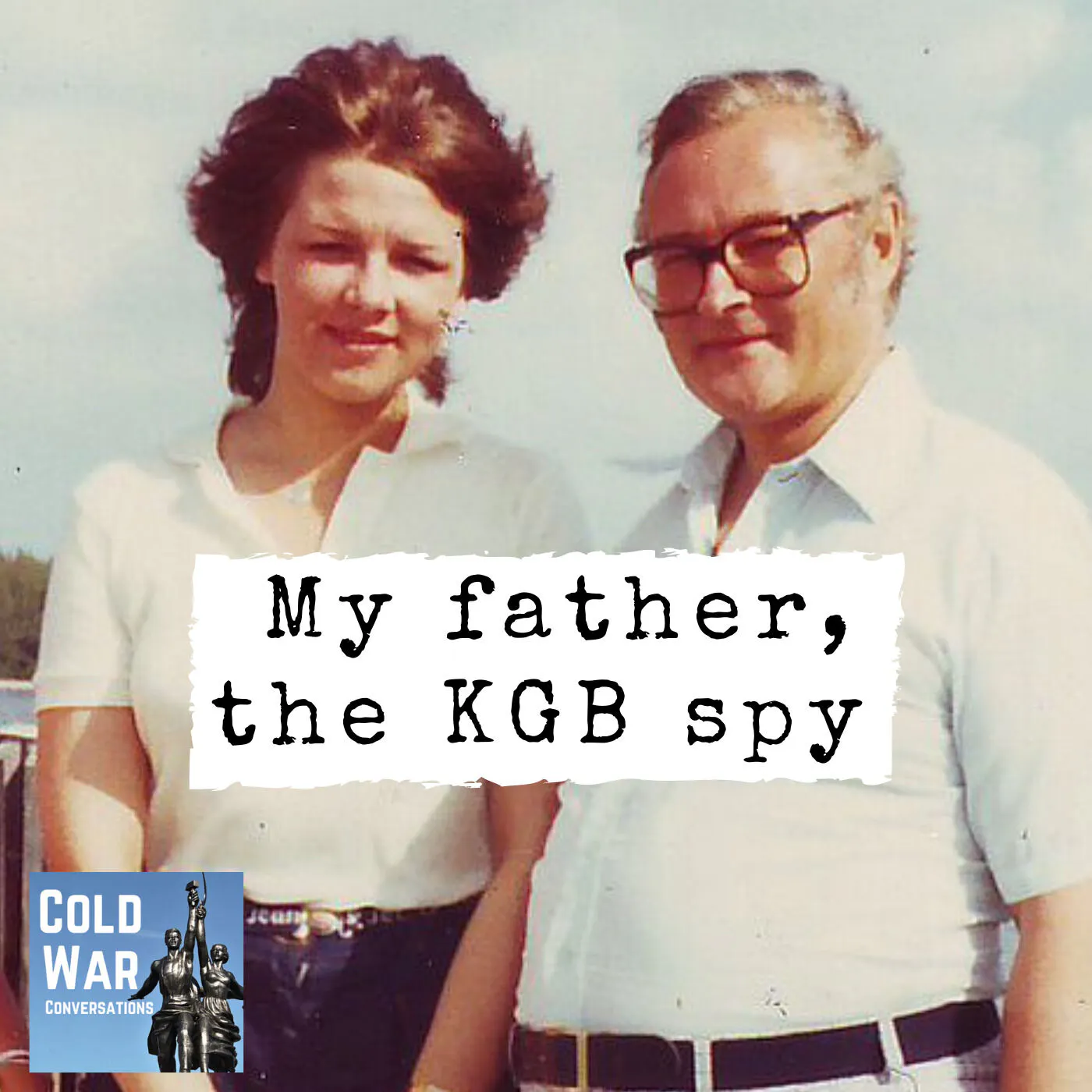
S11 Ep 225My father, the KGB spy (225)
In 1978, Ieva Lesinska was a university student in Soviet Latvia with dreams of becoming a writer. She had just spent a heady month in New York visiting her father, Imants Lesinskis, a Soviet translator working at the United Nations. However, he was an employee of the KGB and a member of the Communist Party. During her trip to the US, Ieva’s father informed her that he and his wife Rasma were about to defect. He offered her a blunt choice: take a taxi to the Soviet Embassy and denounce him as a traitor, or stay with him and never see her mother or her homeland of Latvia again. She chose to stay. The new family officially became East German immigrants with new identities: Peter and Linda Dorn, and their daughter Evelyn. They were citizens of nowhere who possessed re-entry permits but no passports. In 1985, soon after Mr Lesinskis publicly disclosed confidential items on various KGB operations in Latvia, he died under mysterious circumstances. Watch the film about Ieva story here: UK https://amzn.to/3In12Ra US https://amzn.to/3xRZsBX This podcast relies on listener support to enable me to continue to capture these incredible stories and make them available for free. You can support my work and help to preserve Cold War history via one-off or monthly donations Just go to https://coldwarconversations.com/donate/ for more details. Do join our Facebook discussion group where the cold war conversation continues between episodes. Just search Cold War Conversations on Facebook. I am delighted to welcome Ieva Lesinska to our Cold War conversation… There’s further information here. https://coldwarconversations.com/episode225/ 0:00 Introduction and story of Ieva Lesinska's parents as sleeper agents 2:26 Ieva Lesinska on her childhood and family history in Soviet Latvia 17:03 Revelation of Ieva's father's KGB affiliation and defection plans 23:02 Ieva Lesinska's journey to the United States and her decision to stay 39:13 Ieva Lesinska's adjustment to new life and identity in the US 50:13 Ieva's academic journey in the US, from Ohio State University to University of Colorado 57:42 Maintaining contact with her mother and dealing with homesickness 1:00:39 Ieva's father's mysterious death and his double life as a CIA and KGB agent 1:08:17 Reunion with her mother and her life after liberation in Latvia 1:14:04 Her story being adapted into a film and rejection of the victim narrative 1:17:41 Ieva Lesinska's current life as a journalist and translator 1:19:13 Acknowledging and thanking patrons Table of contents powered by PodcastAI✨ Support the project! https://coldwarconversations.com/donate/ Follow us on Twitter https://twitter.com/ColdWarPod Facebook https://www.facebook.com/groups/coldwarpod/ Instagram https://www.instagram.com/coldwarconversations/ Youtube https://youtube.com/@ColdWarConversations Learn more about your ad choices. Visit podcastchoices.com/adchoices
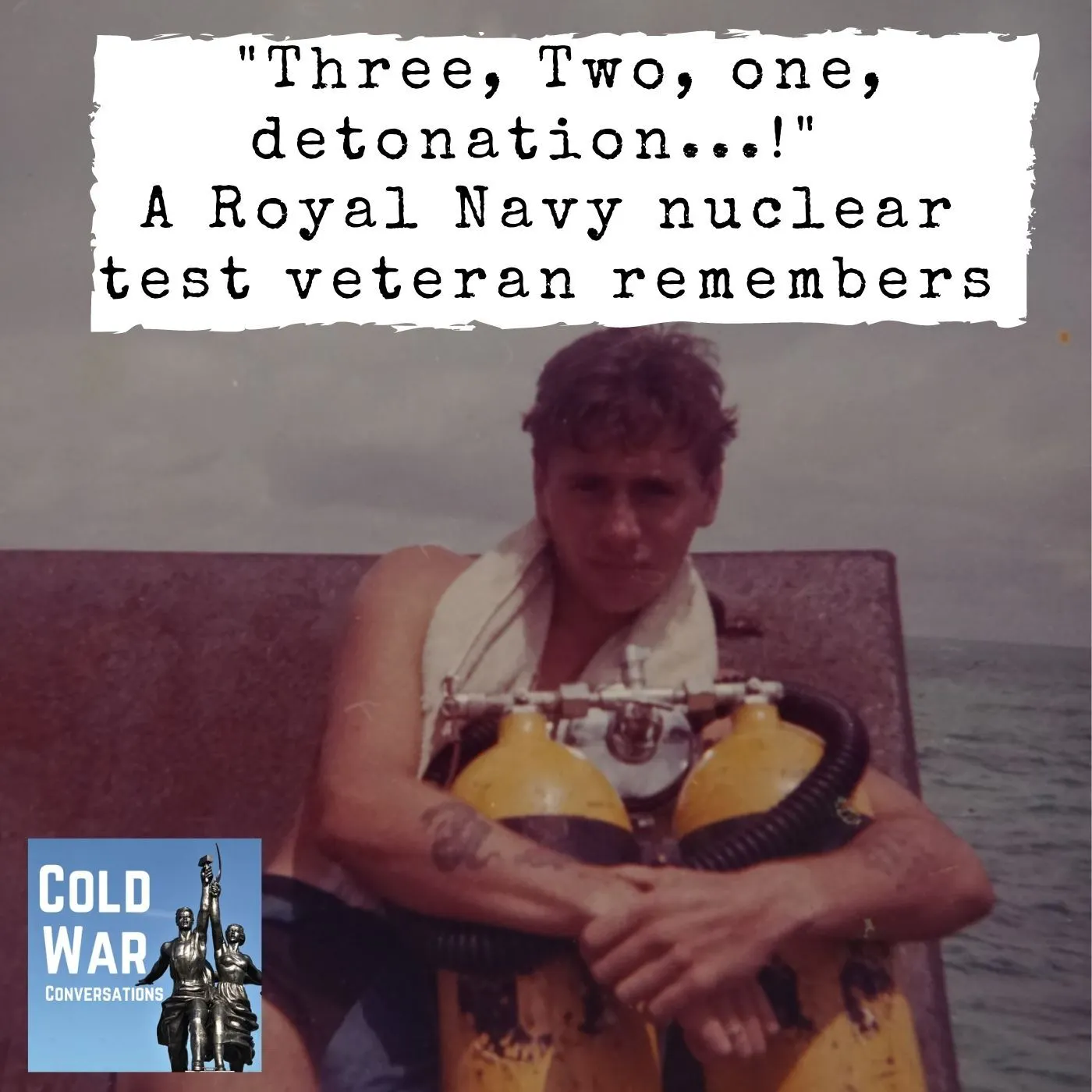
S11 Ep 224"Three, Two, one, detonation..." a Royal Navy nuclear test veteran remembers (224)
The British Nuclear Test Veterans Association (BNTVA) is the Charity for UK Nuclear Veterans and last year they very kindly invited me to the annual conference. I met many veterans including Peter Lambourne and this is his story. Peter joined the Royal Navy aged 15. He describes those early days including serving on HMS Wizard during the Cod War with Iceland in 1961. In 1962 Peter was then posted to HMS Resolution which was the codename for the nuclear bomb testing base on Christmas Island. Peter’s base was less than 20 miles away from where hydrogen bombs were being detonated and he shares his experiences of those detonations. Many servicemen and islanders who were present at Christmas Island from 1957 to 1962 later reported severe health problems, which they attributed to the nuclear bomb tests – from cancers to organ failure. Whilst Peter’s health has appeared unaffected, his children and grandchildren have suffered from cancers. In 2023 the UK finally awarded a medal to the nuclear test veterans. Now if you think there is a vast army of research assistants, audio engineers and producers putting together this podcast you’d be wrong. This podcast relies on your support to enable me to continue to capture these incredible stories and make them available to everyone for free. If you’d like to help to preserve Cold War history and enable me to continue to produce this podcast you can via one off or monthly donations. Just go to https://coldwarconversations.com/donate/ for more details. Do join our Facebook discussion group where the cold war conversation continues between episodes. Just search Cold War Conversations on Facebook. 0:00 Introduction and Peter Lambourne's background 1:06 Peter's posting to HMS Resolution and nuclear bomb testing on Christmas Island 2:29 Call for podcast support and donations 3:33 Peter's experience in the Cod War with Iceland and posting to Christmas Island 12:10 Witnessing hydrogen bomb detonations on Christmas Island 17:06 The terrifying contingency plans and impracticality of their landing crafts 21:01 Lack of protective clothing and radiation tracking 24:33 Recreational activities and dynamics of the Navy group on Christmas Island 29:47 The mystery of the "big black line" in Peter's service record and the classified nature of the mission 34:05 The health effects of radiation exposure and the government's avoidance of liability 38:09 Reflections on Christmas Island as part of Peter's naval career 42:57 Closing remarks and thanks to patrons Table of contents powered by PodcastAI✨ The British Nuclear Test Veterans Association (BNTVA) is the Charity for UK Nuclear Veterans https://www.bntva.com/ There’s further information including videos and photos on this episode here. https://coldwarconversations.com/episode224 Thank you very much for listening. It is really appreciated – goodbye. Support the project! https://coldwarconversations.com/donate/ Follow us on Twitter https://twitter.com/ColdWarPod Facebook https://www.facebook.com/groups/coldwarpod/ Instagram https://www.instagram.com/coldwarconversations/ Youtube https://youtube.com/@ColdWarConversations Learn more about your ad choices. Visit podcastchoices.com/adchoices
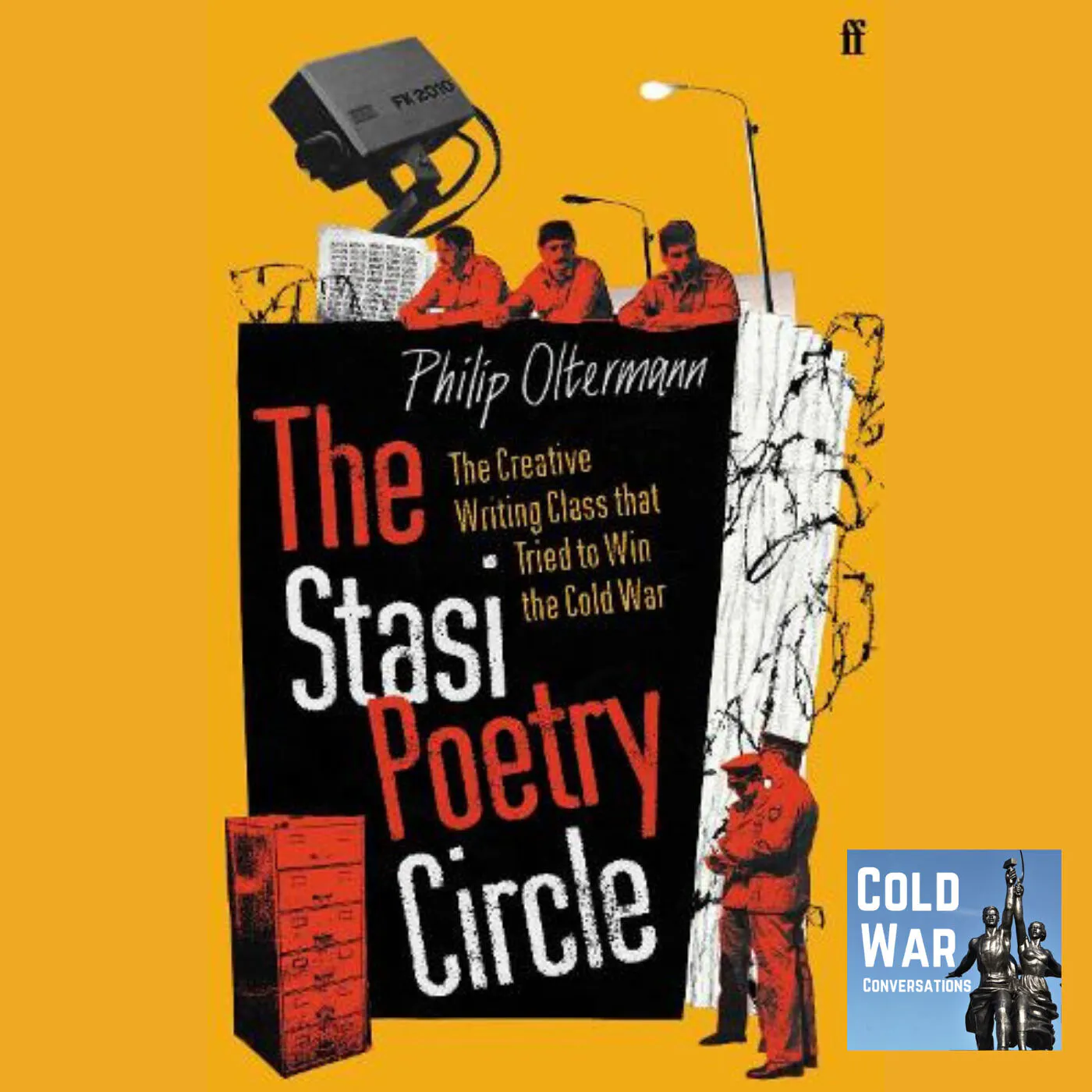
S11 Ep 223The Stasi Poetry Circle (223)
In 1982 the East German Ministry for State Security is hunting for creative new weapons in the war against the class enemy – and their solution is stranger than fiction. Rather than guns, tanks, or bombs, the Stasi develop a programme to fight capitalism through rhyme and verse, winning the culture war through poetry – and the result is the most bizarre book club in history. I speak with Philip Oltermann the author of The Stasi Poetry Circle. Philip has used unseen archival material and exclusive interviews with surviving members to tell the incredible hidden story of a unique experiment: weaponising poetry for politics. Now if you think there is a vast army of research assistants, audio engineers and producers putting together this podcast you’d be wrong. This podcast relies on your support to enable me to continue to capture these incredible stories and make them available to everyone for free. If you’d like to help to preserve Cold War history and enable me to continue to produce this podcast you can via one off or monthly donations. Just go to https://coldwarconversations.com/donate/ for more details. Do join our facebook discussion group where the cold war conversation continues between episodes. Just search Cold War Conversations in Facebook. I am delighted to welcome Philip Oltermann to our Cold War conversation… Book giveaway and further information here. https://coldwarconversations.com/episode223/ 0:00 Introduction with Philip Oltermann 6:09 Discussion on GDR's policies towards arts and culture 13:22 The Stasi's involvement with writing circles and their shift in approach 21:01 Role of poetry and culture as a weapon in the Cold War 28:37 The story of Annegret Gollin and Stasi's fear of subversive literature 34:57 Stasi's recruitment process and the impact on Annegret Gollin. 39:03 Introduction to Alexander Ruika, a talented poet and spy 44:27 Discussion on the fear of nuclear war in the 1980s 49:39 Introduction to Uwe Berger, the teacher of the Stasi poetry circle 57:43 The decline of the GDR and impact on the writing circle 1:02:13 Book giveaway announcement 1:03:12 Acknowledgement of the podcast's patrons and promotion of the Facebook group 1:06:03 Closing remarks and promotion of the podcast's store Table of contents powered by PodcastAI✨ Radio GDR If you are interested in East Germany we can highly recommend our friends over at Radio GDR. Support the project! https://coldwarconversations.com/donate/ Follow us on Twitter https://twitter.com/ColdWarPod Facebook https://www.facebook.com/groups/coldwarpod/ Instagram https://www.instagram.com/coldwarconversations/ Youtube https://youtube.com/@ColdWarConversations Learn more about your ad choices. Visit podcastchoices.com/adchoices

S11 Ep 222The start of the Cuban revolution & the launch of Apollo 8 (222)
bonusThe phrase “history is human” was coined by two-time Pulitzer Prize-winning author and historian David McCullough. He says “History is about life. It isn't just about dates and quotations from obscure treaties and the like; it's about people", which is exactly what Cold War Conversations is about. I discovered this phrase listening to the History Daily podcast presented and narrated by Lindsay Graham. This podcast takes you back in time to explore a momentous moment that happened "on this day" in history using fully immersive, sound design, original music and a compelling narrative style. I really enjoy it and I'm sure you will too. I am sharing two short Cold War episodes on this bonus episode. If think you'd enjoy the History Daily podcast follow or subscribe by searching “History Daily Podcast”. or click on this link https://pod.link/1591095413 Support the project! https://coldwarconversations.com/donate/ Follow us on Twitter https://twitter.com/ColdWarPod Facebook https://www.facebook.com/groups/coldwarpod/ Instagram https://www.instagram.com/coldwarconversations/ Youtube https://youtube.com/@ColdWarConversations Learn more about your ad choices. Visit podcastchoices.com/adchoices

S11 Ep 221Cold War British Army fighting tactics in West Germany (221)
Frank Baldwin was commissioned into the Royal Artillery in 1979 and served for ten years, rising to the rank of Major. The first battlefield study he planned was in 1989 for HQ 4th Armoured Division. Since then, he has been a guide or historian for over 200 realities of war tours, battlefield studies and staff rides. Frank reels off lots of great anecdotes as he takes us through the initial years of the BAOR and the British Army’s plans for the defence of West Germany. He talks about the evolution of doctrines, on both the Soviet and NATO sides including their nuclear war-fighting techniques. Frank also describes working with Warsaw Pact observers of NATO military exercises and the British view of the effectiveness of other NATO armies as well as the armies of the Warsaw Pact. Maps and material to accompany this episode are here https://www.staffrideservices.com/?p=461 Now if you are enjoying these podcasts I’m asking for you to support my work with a small monthly donation. Your donations enable me to continue to capture these incredible stories and make them available for free to others. Just go to https://coldwarconversations.com/donate/ for more details. Do join our Facebook discussion group where the cold war conversation continues between episodes. Just search Cold War Conversations on Facebook. I am delighted to welcome Frank Baldwin to our Cold War conversation… Battlefield tour website Story of a BAOR Cold war tour Maps and material on BAOR and the Cold war. Cold war background material Frank Baldwin's blog The Observation Post 0:00 Introduction and overview of the episode 2:37 Discussion on the planning and strategy during the Cold War 8:50 The concept of flexible response and the shift in NATO's planning 19:39 Tactics and maneuvers in the face of Russian forces 27:14 The Battle Group trainer and war simulation 33:04 Introduction of CSC and Stockholm agreement, and experiences during Iron Hammer exercise 37:07 Interaction with officers from the Warsaw pact and insights into Russian training methods 46:23 Perception of East Germans and experiences in East Germany 53:00 Post-cold war British army engagements and core values 56:31 Civilian evacuation during the Cold War and the role of German transport 1:00:34 Supporter acknowledgement and episode closing Table of contents powered by PodcastAI✨ Support the project! https://coldwarconversations.com/donate/ Follow us on Twitter https://twitter.com/ColdWarPod Facebook https://www.facebook.com/groups/coldwarpod/ Instagram https://www.instagram.com/coldwarconversations/ Youtube https://youtube.com/@ColdWarConversations Learn more about your ad choices. Visit podcastchoices.com/adchoices

S10 Ep 220The West Berlin village surrounded by the Berlin Wall (220)
When the Cold War split Berlin in half, between East and West, one neighbourhood was trapped in the middle and became a symbol of Cold War tensions. For more than twenty years, the hamlet of Steinstücken was caught in a tug-of-war between the Americans, the Soviets and the East Germans. Steinstücken officially belonged to the U.S. Occupation Sector of Berlin. But, it was located outside the city boundaries, completely surrounded by East German territory. No West Berlin-owned roads or trails connected it to the city. It was a de facto Western island in a Communist sea. We speak with Cold War veteran Don Smith the author of Steinstuecken: A Little Pocket of Freedom, a photo and fact-packed book which describes the challenges America faced in occupied Berlin and the personal stories of the citizens of Steinstücken who faced East German soldiers on a daily basis. Buy the book here and support the podcast UK listeners https://amzn.to/3Aux9dW US listeners https://amzn.to/3r47PZi Don’s web site http://steinpocket.com/ Now if you think there is a vast army of research assistants, audio engineers and producers putting together this podcast you’d be wrong. This podcast relies on your support to enable me to continue to capture these incredible stories and make them available to everyone for free. If you’d like to help to preserve Cold War history and enable me to continue to produce this podcast you can via one-off or monthly donations. Just go to https://coldwarconversations.com/donate/ for more details. Do join our Facebook discussion group where the cold war conversation continues between episodes. Just search Cold War Conversations on Facebook. I am delighted to welcome Don Smith to our Cold War conversation… There’s further information including videos here. https://coldwarconversations.com/episode220/ 0:00 Introduction and background of Steinstücken 5:21 History and life in Steinstücken during the Cold War 14:03 The unique nature of German farming and how Steinstücken got its name 16:10 East Germany's attempt to annex Steinstücken and America's response 20:47 The political dynamics in Steinstücken during the Cold War 30:25 Impact of the Berlin Wall on Steinstücken 38:17 The refugee situation and U.S. military operations in Steinstücken 45:37 Economic and societal implications in Steinstücken and the 4 power agreement 1:01:15 Post Cold War integration of Steinstücken into West Berlin 1:07:04 Podcast patrons and invitation to join the Facebook group Table of contents powered by PodcastAI✨ Support the project! https://coldwarconversations.com/donate/ Follow us on Twitter https://twitter.com/ColdWarPod Facebook https://www.facebook.com/groups/coldwarpod/ Instagram https://www.instagram.com/coldwarconversations/ Youtube https://youtube.com/@ColdWarConversations Learn more about your ad choices. Visit podcastchoices.com/adchoices
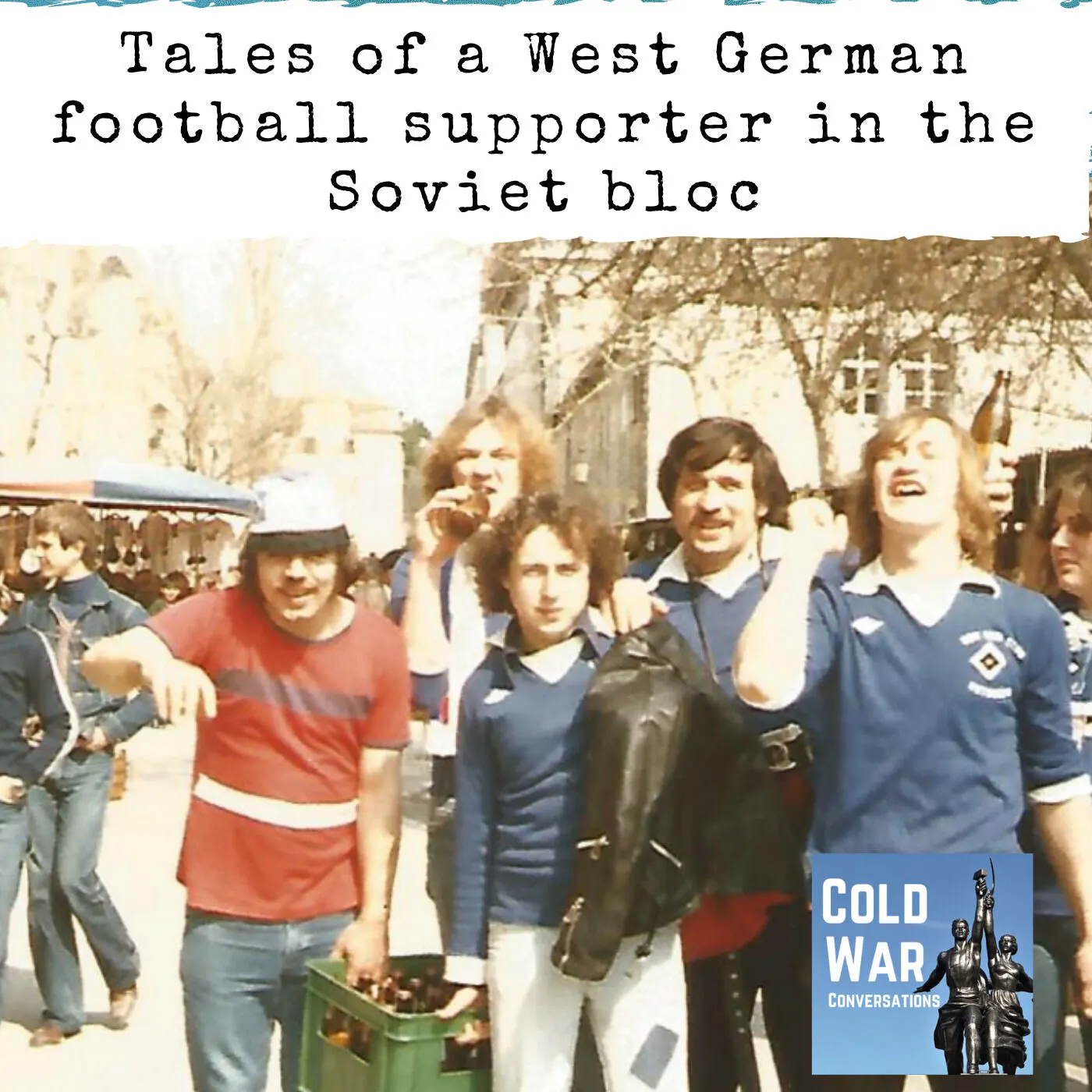
S10 Ep 219Tales of a West German football fan in the Soviet bloc (219)
You will remember Karl-Heinz from our episode 218 where he talked about being a signaller on the West German destroyer "Hamburg" in the late 70s. Today we follow his post navy life as a travelling supporter of football club HSV Hamburg where he followed them all over the Soviet bloc talks about watching them play Dynamo Berlin the Stasi side and drinking with Liverpool, Newcastle and Hamburg legend Kevin Keegan in a hotel bar in Tiblisi. And his Cold War encounters don’t stop there. While working in Chile he met General Pinochet, the military dictator of Chile from 1973 to 1990 and living across the street from Margot Honecker the wife of East German leader Erich Honecker who was also an influential member of that country's Communist regime until 1989. If you have listened this far, I know you are enjoying the podcasts so I’m asking for one-off or monthly donations to support my work and enable me to continue producing the podcast. If you become a monthly supporter via Patreon, you will get the sought after CWC coaster as a thank you, audio and other extras as well as basking in the warm glow of knowing you are helping to preserve Cold War history. Just go to https://coldwarconversations.com/donate/ If a financial contribution is not your cup of tea, then you can still help us by leaving written reviews wherever you listen to us as well as sharing us on social media. It really helps us get new guests on the show. If you can’t wait for next week’s episode do visit our Facebook discussion group where guests and listeners continue the Cold War Conversation. Just search Cold War Conversations in Facebook. I am delighted to welcome Karl-Heinz to our Cold War conversation… There’s further information on this episode here including videos here . https://coldwarconversations.com/episode219/ 0:00 Introduction to the episode and Karl Heinz's experiences with the KGB 2:02 Request for donations and support for the podcast 4:01 Karl Heinz's recollections of visits to East Berlin and encounters with fans 9:44 Karl Heinz's trip to Tbilisi, Georgia for a football match and interactions with locals 17:32 Encounter with potential KGB agents and misunderstandings with locals 20:38 Karl Heinz's football game experiences in East Berlin 24:57 Karl Heinz's experience in Chile during the time of Pinochet and meeting with Pinochet 30:16 Meeting with Margaret Honecker and her continued belief in the communist cause 32:04 Acknowledgement of patrons and their contributions Table of contents powered by PodcastAI✨ Support the project! https://coldwarconversations.com/donate/ Follow us on Twitter https://twitter.com/ColdWarPod Facebook https://www.facebook.com/groups/coldwarpod/ Instagram https://www.instagram.com/coldwarconversations/ Youtube https://youtube.com/@ColdWarConversations Learn more about your ad choices. Visit podcastchoices.com/adchoices
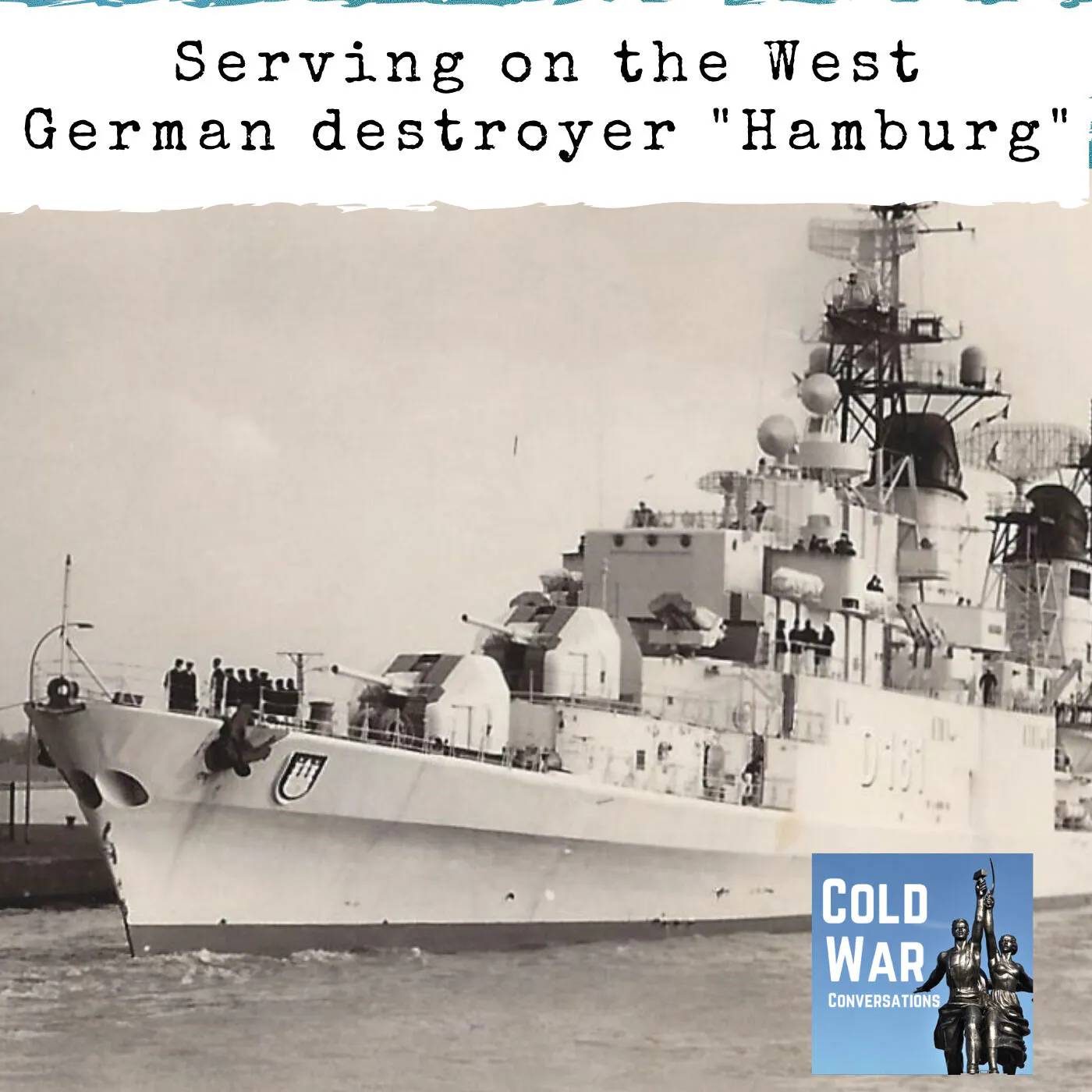
S10 Ep 218Serving on the West German destroyer "Hamburg" (218)
Karl-Heinz served in the Bundesmarine as a Signalman on the West German destroyer "Hamburg" in the late 70s. He talks of his training, his role and shares details of manoeuvres in the North Sea and Baltics involving East German and Soviet ships. He also speaks about a cruise to West Africa where the sailors were briefed to stay away from any East German merchant marine sailors and not to engage with them in any form – he and his mates didn’t keep to the rules… If you have listened this far, I know you are enjoying the podcasts so I’m asking for one-off or monthly donations to support my work and enable me to continue producing the podcast. If you become a monthly supporter via Patreon, you will get the sought after CWC coaster as a thank you, audio and other extras as well as basking in the warm glow of knowing you are helping to preserve Cold War history. Just go to https://coldwarconversations.com/donate/ If a financial contribution is not your cup of tea, then you can still help us by leaving written reviews wherever you listen to us as well as sharing us on social media. It really helps us get new guests on the show. I am delighted to welcome Karl-Heinz to our Cold War conversation… There’s further information on this episode in our show notes here. https://coldwarconversations.com/episode218/ If you can’t wait for next week’s episode do visit our Facebook discussion group where guests and listeners continue the Cold War Conversation. Just search Cold War Conversations in Facebook. 0:00 Introduction and Overview of the Episode 2:29 Sponsor: Request for Donations and Support 3:15 Karl Heinz's Entry and Role in the West German Navy 10:56 Karl Heinz's Posting to the Destroyer Hamburg and West Africa Tour 18:03 Interaction with East German Sailors 22:27 Military Drills and Exercises in the North Sea and the Baltic 28:00 Anti Submarine Warfare Practice and Duration of Service 30:41 Cold War Travel Restrictions 30:49 Acknowledgments to Patreon Supporters 32:01 Engaging with the Podcast and Closing Remarks Table of contents powered by PodcastAI✨ Support the project! https://coldwarconversations.com/donate/ Follow us on Twitter https://twitter.com/ColdWarPod Facebook https://www.facebook.com/groups/coldwarpod/ Instagram https://www.instagram.com/coldwarconversations/ Youtube https://youtube.com/@ColdWarConversations Learn more about your ad choices. Visit podcastchoices.com/adchoices

S10 Ep 217The CIA director responsible for creating spy devices (217)
After service in the US Army during the Vietnam War Bob Wallace was recruited into the CIA. In the CIA his initial assignments were as a field case officer. He rose through the ranks at the agency and was Chief of Station in three locations where he directed the full range of CIA activities. In 1995 Bob became deputy director of the Office of Technical Service and in 1998 was appointed its director responsible for creating spy devices and capabilities necessary to conduct clandestine operations with safety and security. In other words, Bob was the "Q" of the CIA. Buy Bob's book here UK listeners https://amzn.to/3pBDrF4 US listeners https://amzn.to/3qvX0xD This podcast relies on listener support to enable me to continue to capture these incredible stories and make them available for free. You can support my work and help to preserve Cold War history via one-off or monthly donations Just go to https://coldwarconversations.com/donate/for for more details. Do join our Facebook discussion group where the cold war conversation continues between episodes. Just search Cold War Conversations on Facebook. I am delighted to welcome Bob Wallace to our Cold War conversation… There’s further information here. https://coldwarconversations.com/episode217/ 0:00 Introduction and Bob's journey to the CIA 7:00 The professional career training program at the CIA 14:21 Use of technology in clandestine operations in the 1970s 20:07 Development of devices for espionage operations 42:04 Role as Director of The CIA's Office of Technical Service 48:41 The science of disguise and examples of successful disguises 54:31 The role of Hollywood in disguise techniques 58:31 Reflections on the Cold War era and thoughts on the future of espionage 1:00:24 Inspiration from James Bond movies and spy fiction 1:02:31 Closing remarks and appreciation Table of contents powered by PodcastAI✨ Support the project! https://coldwarconversations.com/donate/ Follow us on Twitter https://twitter.com/ColdWarPod Facebook https://www.facebook.com/groups/coldwarpod/ Instagram https://www.instagram.com/coldwarconversations/ Youtube https://youtube.com/@ColdWarConversations Learn more about your ad choices. Visit podcastchoices.com/adchoices

S10 Ep 216Vietnam War draftee to US Army Rangers (216)
Bob Wallace joined the US Army in 1968 as a reluctant conscript. He describes the draft process, and his attempts to avoid conscription. After basic training, Bob is assigned to a long range reconnaissance unit and ambush unit in five or six man teams in the Mekong delta. We hear of the reconnaissance and ambush tactics as well as some poignant memories of those that didn’t make it back. This podcast relies on listener support to enable me to continue to capture these incredible stories and make them available for free. You can support my work and help to preserve Cold War history via one off or monthly donations Just go to https://coldwarconversations.com/donate/ for more details. Do join our Facebook discussion group where the cold war conversation continues between episodes. Just search Cold War Conversations on Facebook. I am delighted to welcome Bob Wallace to our Cold War conversation… There’s further information on this episode here. https://coldwarconversations.com/episode216/ 0:00 Introduction and request for donations 1:03 Introduction to guest, Bob Wallace, Vietnam War Veteran 3:21 Bob Wallace's early life and journey to the US Army 13:25 Bob's arrival in Vietnam and military training experiences 21:21 Bob's leadership experiences and decision to turn down promotions 24:54 Discussion on Bob's deployment to Vietnam and role in a Ranger reconnaissance team 35:43 Bob's experiences in identifying hostile targets and ambush operations 40:51 Bob's first time under fire and personal reflections on combat 42:38 Bob's visit to the Vietnam War Memorial and remembering fallen comrades 46:02 Introduction of Bob's book, "9 from the 9th", and discussion on shared experiences 49:18 Acknowledgment of patrons and call to donate 50:54 Closing remarks and promotion of the Cold War Conversations store Table of contents powered by PodcastAI✨ Support the project! https://coldwarconversations.com/donate/ Follow us on Twitter https://twitter.com/ColdWarPod Facebook https://www.facebook.com/groups/coldwarpod/ Instagram https://www.instagram.com/coldwarconversations/ Youtube https://youtube.com/@ColdWarConversations Learn more about your ad choices. Visit podcastchoices.com/adchoices
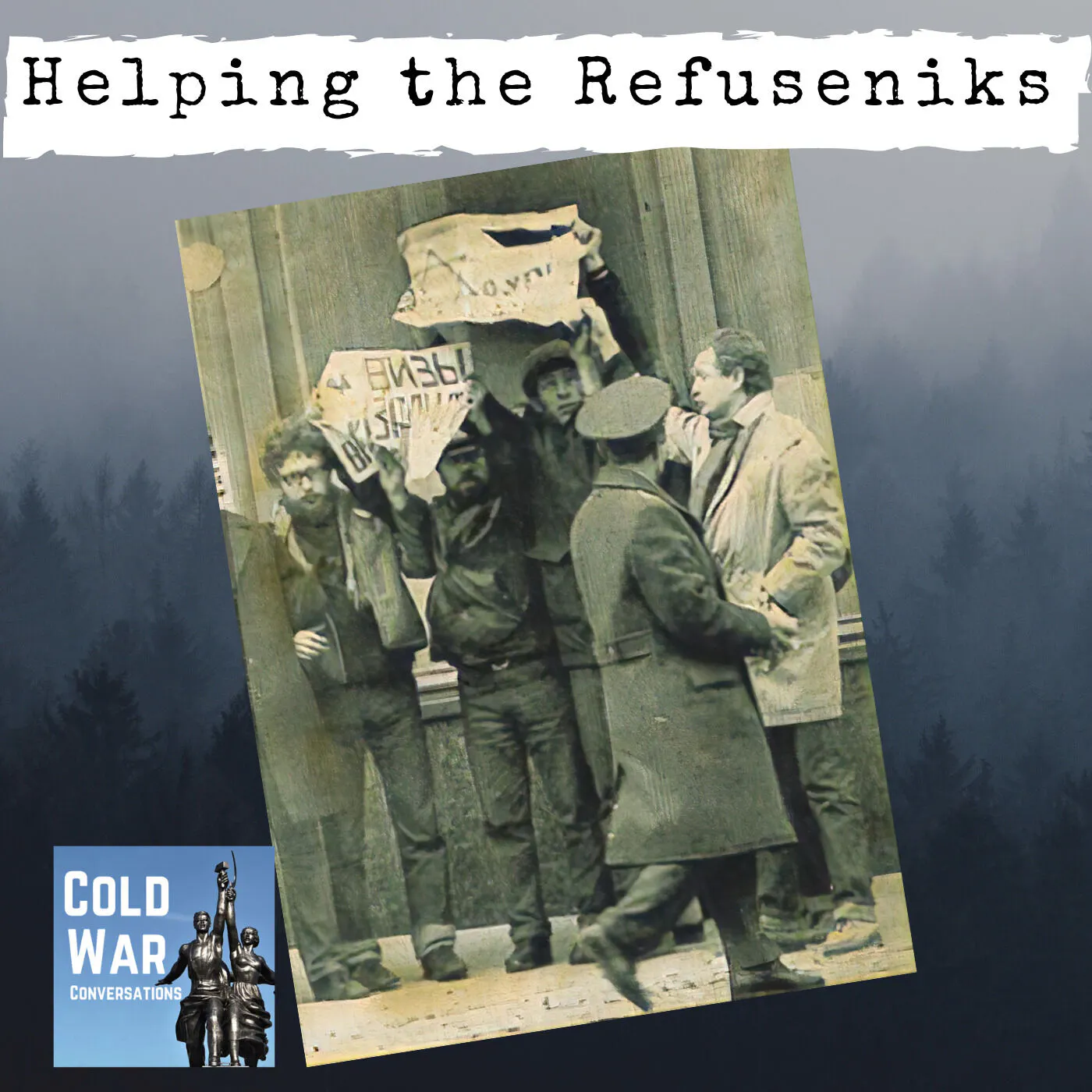
S10 Ep 215Helping the Refuseniks (215)
Refusenik was an unofficial term for individuals—typically, but not exclusively, Soviet Jews—who were denied permission to emigrate, primarily to Israel, by the authorities of the Soviet Union and other countries of the Eastern bloc. The term refusenik is derived from the "refusal" handed down to a prospective emigrant from the Soviet authorities. Eric Hochstein was a staff member for Senator Carl Levin of Michigan working on human rights. Human rights were a big issue for Senator Levin. Eric went as part of a standard commercial tour of the SU for two weeks from Sep 28th,1980, where he visited Moscow, Kharkiv, Kyiv, Odessa, and Leningrad. Eric and his colleagues used this trip to peel off and visit various Refusenik families to bring them news, messages and supplies. Only protected by a US passport and a tourist visa Eric travelled by public transport under surveillance from the KGB carrying supplies for the families included Levi jeans which were better than money in the Soviet Union of the 1980s. 0:00 Introduction 2:50 Guest Introduction: Eric Hochstein 6:51 Lead-up to Eric Hochstein's trip to the USSR 13:41 Arrival and first impressions of the Soviet Union 23:39 Interaction with Refusenik families and their conditions 29:42 Anecdotes about being followed by the KGB 36:04 Soviet people's awareness about the United States and the West 40:12 Impressions of Leningrad and merchandise scarcity in Soviet Union 45:12 Acknowledgement and thanks to patrons 46:41 Cold War Conversations store promotion Table of contents powered by PodcastAI✨ I could really use your support to help me to capture and preserve these amazing stories of the Cold War. If you could make either a one-off or better still sign up to monthly donations to help me to find the time to produce and finance the project. If you’d like to know more just go to cwc.com/donate If you can’t wait for next week’s episode do visit our Facebook discussion group where guests and listeners continue the Cold War Conversation. Just search Cold War Conversations in Facebook. Peter Ryan is your host today and I am delighted to welcome Eric Hochstein to our Cold War conversation… There’s further information here. https://coldwarconversations.com/episode215 Thank you very much for listening. It is really appreciated – goodbye. Support the project! https://coldwarconversations.com/donate/ Follow us on Twitter https://twitter.com/ColdWarPod Facebook https://www.facebook.com/groups/coldwarpod/ Instagram https://www.instagram.com/coldwarconversations/ Youtube https://youtube.com/@ColdWarConversations Learn more about your ad choices. Visit podcastchoices.com/adchoices
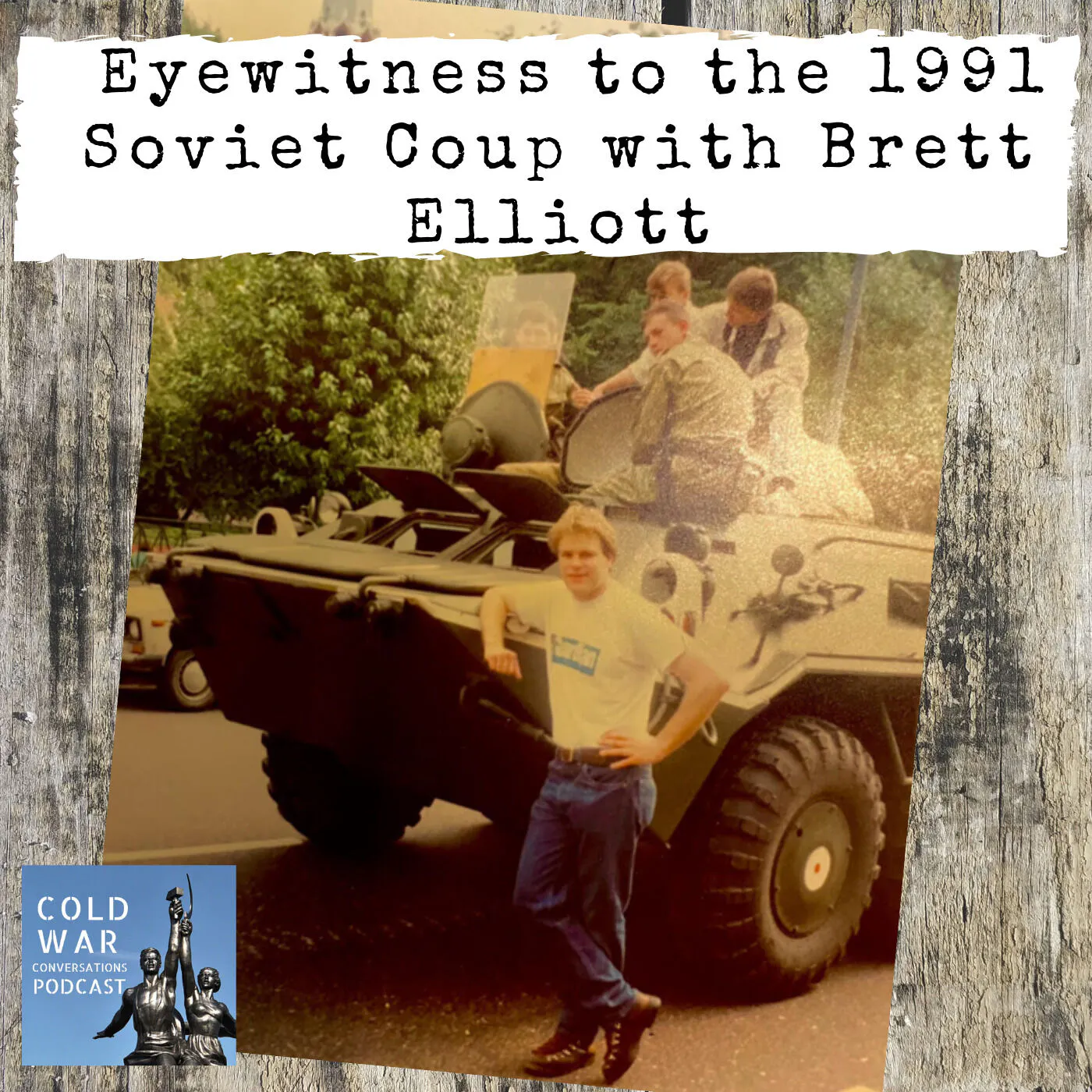
S10 Ep 214Eyewitness to the 1991 Soviet Coup with Brett Elliott (214)
Today’s episode is different. Brett Elliott died earlier this year and I was contacted by his ex-wife Polly who offered me a cassette tape. Polly and Brett had met in college and got to know each other in Russian Club at Oklahoma State. In the summer of 1991, they went to Moscow to pursue Polly’s goal of being a reporter in Russia and Brett’s goal of further studying Russia. They both worked together covering the Bush Gorbachev summit, with Polly as a reporter and Brett as an interpreter. Polly left Russia early, but Brett stayed a few weeks more and witnessed the collapse of the Soviet Union, August 19-21, 1991. During a rare phone call, Polly begged him to be careful, and he famously said she was worse than the coup leaders if she wanted to deny him getting out to witness history… Polly's book is available on the links below US Listeners https://amzn.to/3mEuPMa UK listeners https://amzn.to/3CLuHjy We have photos here https://coldwarconversations.com/episode214/ This podcast relies on listener support to enable me to continue to capture these incredible stories and make them available for free. You can support my work and help to preserve Cold War history via one-off or monthly donations Just go to https://coldwarconversations.com/donate/ for more details. Do join our Facebook discussion group where the cold war conversation continues between episodes. Just search Cold War Conversations on Facebook. This episode is the audio from the cassette of Brett describing his experiences just two weeks after the coup. Being on cassette the sound quality is not great, but I am delighted and honoured to welcome Brett Elliott to our Cold War conversation… 0:00 Introduction and appeal for donations 1:47 Brett and Polly's experience in Russia 5:55 Brett's account before and during the coup 14:09 Brett's analysis of the coup leaders' strategy 16:03 Reaction to the arrival of armored vehicles in Moscow 21:23 Protestors' response to the show of military force 28:45 The march towards the Russian Federation building 31:01 Day 2: Speeches and continued protests 35:07 Brett's journey back home through Yugoslavia 44:22 Brett's reflection on the changes since the uprising 46:00 Ian Sanders: Closing remarks and thanks to patrons 47:13 Ian Sanders: Postscript and store promotion Table of contents powered by PodcastAI✨ Support the project! https://coldwarconversations.com/donate/ Follow us on Twitter https://twitter.com/ColdWarPod Facebook https://www.facebook.com/groups/coldwarpod/ Instagram https://www.instagram.com/coldwarconversations/ Youtube https://youtube.com/@ColdWarConversations Learn more about your ad choices. Visit podcastchoices.com/adchoices

S10 Ep 213Working in the nuclear missile compartment of a Cold War Royal Navy Polaris submarine (213)
John Andrews joined the Royal Navy in 1981 and went on to serve aboard the HMS Repulse, one of the UK’s Polaris nuclear missile submarines from 1982. His role was Missile Compartment Control Patrol which included security of the nuclear missile compartment as well as assisting in the maintenance of the missile tubes and the nuclear missiles themselves. John shares details of life aboard the ship including missile launch tests, alcohol, practical jokes, escape procedures from a submerged submarine and many more. This podcast relies on listener support to enable me to continue to capture these incredible stories and make them available for free. You can support my work and help to preserve Cold War history via one-off or monthly donations Just go to https://coldwarconversations.com/donate/ for more details. Do join our Facebook discussion group where the cold war conversation continues between episodes. Just search Cold War Conversations on Facebook. Now, this episode was recorded at the Hack Green Nuclear Bunker Soviet Threat event so you will hear some background noise, but I am delighted to welcome John Andrews to our Cold War conversation… There’s further information on this episode in our show notes which can also be found as a link in your podcast app here. 0:00 Introduction and guest John Andrews' role in the Royal Navy 3:05 Detailed background of John's service 6:13 Discussion on John's claustrophobia and PTSD diagnosis 9:02 Recollection of a missile launch test 15:32 Understanding of ship-wide activities 20:38 Role of detonators in missile launch 24:28 Monitoring radiation exposure and experiences with PTSD 28:17 Relationships and interactions with officers 31:40 Family communication on the submarine 37:52 Running quiet on the submarine when being followed 42:22 Rivalry between submarines and crews 44:30 Closing remarks by Ian Sanders 43:55 Acknowledging patrons and call for donations 44:45 Cold War Conversations store advertisement Table of contents powered by PodcastAI✨ Support the project! https://coldwarconversations.com/donate/ Follow us on Twitter https://twitter.com/ColdWarPod Facebook https://www.facebook.com/groups/coldwarpod/ Instagram https://www.instagram.com/coldwarconversations/ Youtube https://youtube.com/@ColdWarConversations Learn more about your ad choices. Visit podcastchoices.com/adchoices
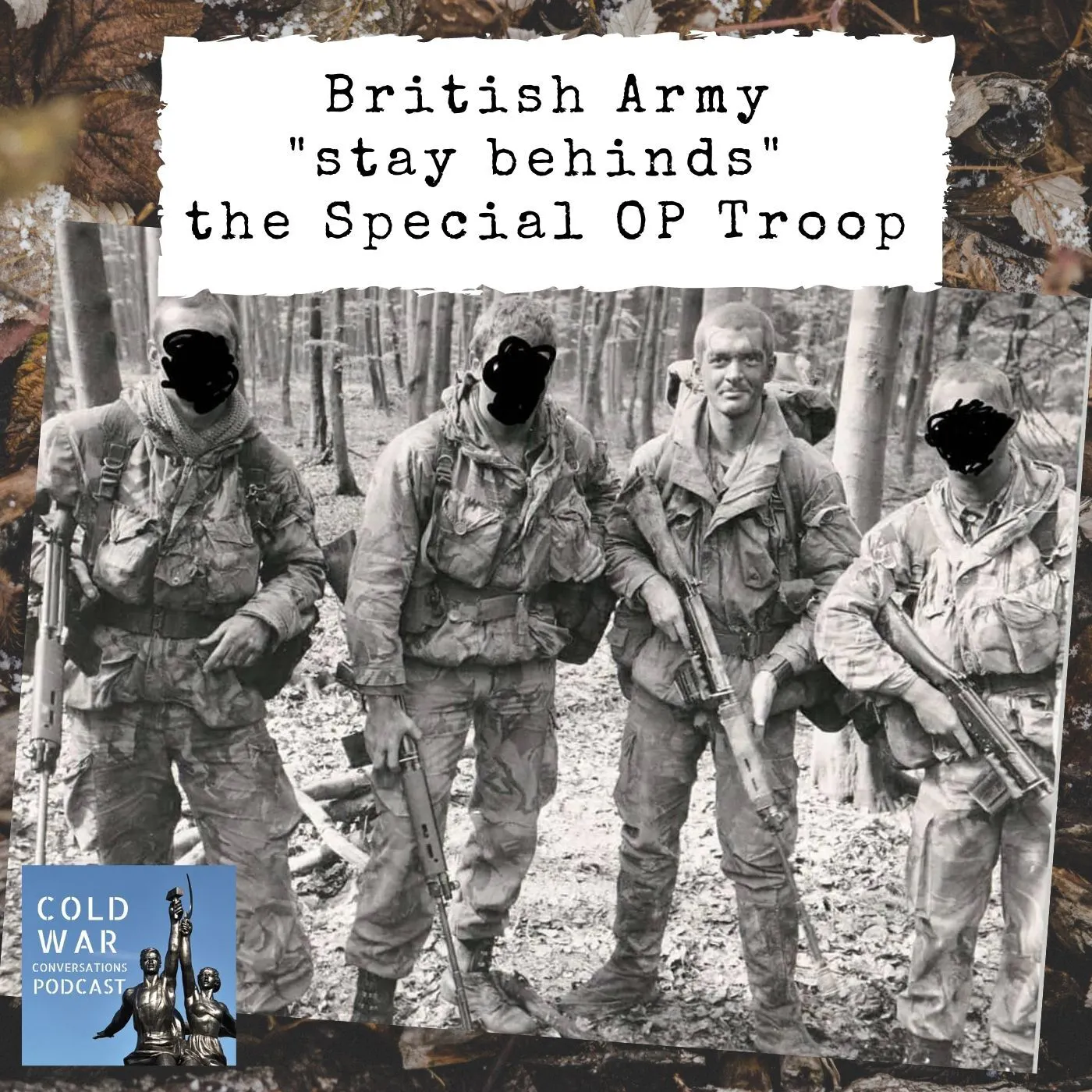
S10 Ep 212British Army "stay behinds" the Special OP Troop (212)
I speak with Colin Ferguson a veteran from the British Army‘s covert Special Observation Post Troop which was founded in 1982. The "stay behind" Special OP Troop consisted of selected soldiers in 6 man patrols whose task was to dig in large underground hides known as "mexe" shelters along the inner German border. They would then allow the main Soviet forces to pass over them before deploying to two smaller observation posts (Ops) where they would engage the enemy with the long-range guns and rockets of the British Army. Colin, covers in detail, selection, training and deployment as well as how the mexes were constructed. Do check out Colin’s podcast, “The Unconventional Soldier” which offers first-hand accounts of past conflicts, military history, book and film reviews, plus guests, dits and digression This podcast relies on listener support to enable me to continue to capture these incredible stories and make them available for free. You can support my work and help to preserve Cold War history via one off or monthly donations Just go to https://coldwarconversations.com/donate/for more details. Do join our Facebook discussion group where the cold war conversation continues between episodes. This episode is dedicated to remembering two members of the Special Op Troop. Lance Bombardier Steve Cummins, who is pictured on the episode cover and Gunner Miles Amos who lost their lives in 1989 when their vehicle struck a mine near Londonderry. We thank them for their service. I am delighted and honoured to welcome Colin Ferguson to our Cold War conversation… There are photos and further info here. https://coldwarconversations.com/episode212/ 0:00 Introduction 0:24 Interview with Colin Ferguson, a veteran from the British Army's covert Special OP troop 7:22 Basic training for the artillery and assignment to the 12th air defense regiment 14:24 Volunteering and initial training for the Special OP troop 20:30 The selection process for the Special OP troop and field experience training 33:08 Survival skills, live field firing and the final exercise of the course 36:48 Historical accuracy of army depictions in movies and use of Soviet vehicles for training 40:31 Deployment of special OP troops, selection of shelter locations and creation of target information packs 50:20 Communication distance with the artillery and encryption of communication 59:45 Participation in Exercise Reforger, end of the Cold War and escape and evasion training 1:02:51 Survival and resistance interrogation course and experiences facing the Soviet army 1:12:13 Reflections on the sacrifices of fellow soldiers and remembering the casualties of the Cold War 1:13:44 Introduction to the "Unconventional Soldier" podcast 1:16:31 Store promotion and closing remarks Table of contents powered by PodcastAI✨ Support the project! https://coldwarconversations.com/donate/ Follow us on Twitter https://twitter.com/ColdWarPod Facebook https://www.facebook.com/groups/coldwarpod/ Instagram https://www.instagram.com/coldwarconversations/ Youtube https://youtube.com/@ColdWarConversations Learn more about your ad choices. Visit podcastchoices.com/adchoices
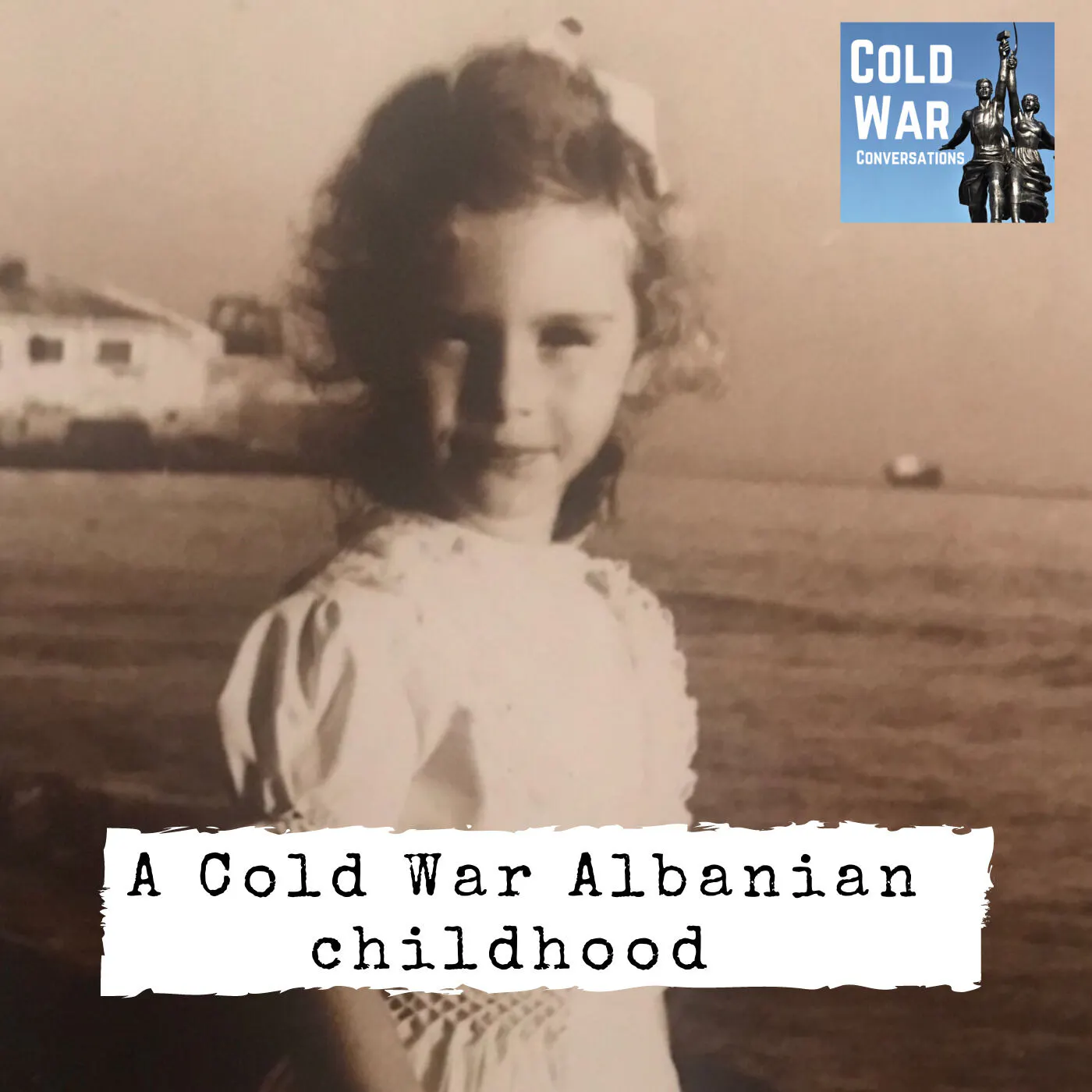
S10 Ep 211A Cold War childhood in Albania (211)
Lea Ypi grew up in one of the most isolated countries on earth, a place where communist ideals had officially replaced religion. Albania, the last Stalinist outpost in Europe, was almost impossible to visit, almost impossible to leave. It was a place of queuing and scarcity, of political executions and secret police. To Lea, it was home. People were equal, neighbours helped each other, and children were expected to build a better world. There was community and hope. Then, in December 1990, a year after the fall of the Berlin Wall, everything changed. The statues of Stalin and Hoxha were toppled. Almost overnight, people could vote freely, wear what they liked and worship as they wished. There was no longer anything to fear from prying ears. But factories shut, jobs disappeared and thousands fled to Italy on crowded ships, only to be sent back. Predatory pyramid schemes eventually bankrupted the country, leading to violent conflict. As one generation's aspirations became another's disillusionment, and as her own family's secrets were revealed, Lea found herself questioning what freedom really meant. Free is an engrossing memoir of coming of age amid political upheaval. With acute insight and wit, Lea Ypi traces the limits of progress and the burden of the past, illuminating the spaces between ideals and reality, and the hopes and fears of people pulled up by the sweep of history. Buy the book and support the podcast UK buyers https://amzn.to/2ZVgRx4 US buyers https://amzn.to/3psOkr8 Now time doesn’t come free and I’m asking listeners to support my work recording these incredible stories via a small (or large)l donation. If you become a monthly supporter via Patreon, you will get the sought after CWC coaster as a thank you and bask in the warm glow of knowing you are helping to preserve Cold War history. Just go to https://coldwarconversations.com/donate/ If you can’t wait for next week’s episode do visit our Facebook discussion group where guests and listeners continue the Cold War Conversation. Just search Cold War Conversations in Facebook. Schattenberg I am delighted to welcome Lea Ypi to our Cold War conversation… There’s further information here. https://coldwarconversations.com/episode210/ Thank you very much for listening. It is really appreciated – goodbye. Support the project! https://coldwarconversations.com/donate/ Follow us on Twitter https://twitter.com/ColdWarPod Facebook https://www.facebook.com/groups/coldwarpod/ Instagram https://www.instagram.com/coldwarconversations/ Youtube https://youtube.com/@ColdWarConversations 0:00 Introduction 1:01 Life in Albania during the Cold War: Lea Ypi's Background 3:08 Lea Ypi's Family History and the Impact of Politics 7:15 Tourism and International Influence in Cold War Albania 15:46 Decoding Family Secrets: The Coded Language of Dissidence 19:25 The Delayed Fall of Communism in Albania and its Aftermath 26:35 Lea Ypi's Exposure to the Outside World and Cultural Shifts 34:39 Childhood Memories: The Tourist Area and Italian Television 42:13 Political Transition in Albania: From Communism to Liberalism 51:48 Rise and Fall of Pyramid Schemes in Transitioning Albania 54:18 Lea Ypi's Journey into Studying and Teaching Marx and Marxism Table of contents powered by PodcastAI✨ Learn more about your ad choices. Visit podcastchoices.com/adchoices

S10 Ep 210The Cold War handshake in the heavens - the Apollo-Soyuz mission (210)
On 17 July 1975 the first manned international space mission, carried out jointly by the United States and the Soviet Union. Millions of people around the world watched on television as a United States Apollo module docked with a Soviet Union Soyuz capsule. The project, and its memorable handshake in the heavens, was a symbol of détente between the two superpowers during the Cold War, and it is generally considered to mark the end of the Space Race. Unthinkable only years earlier the Apollo–Soyuz mission was made possible by the thaw Soviet-US relations. According to Soviet leader Leonid Brezhnev, "The Soviet and American spacemen will go up into outer space for the first major joint scientific experiment in the history of mankind. They know that from outer space our planet looks even more beautiful. It is big enough for us to live peacefully on it, but it is too small to be threatened by nuclear war.” Our guest is Cold War Conversations favourite, author Stephen Walker, the author of Beyond: The Astonishing Story of the First Human to Leave Our Planet and Journey into Space. Buy the book here and support CWC UK https://amzn.to/3wOBZRI US https://amzn.to/30vgsld Do check out our two previous episodes with Stephen. Yuri Gagarin, the first human in space here https://coldwarconversations.com/episode172/ and the Forgotten Cosmonaut here https://coldwarconversations.com/episode192/ I’m asking listeners to support my work and enable me to continue recording these incredible stories. If you become a monthly supporter via Patreon, you will get the sought after CWC coaster as a thank you and bask in the warm glow of knowing you are helping to preserve Cold War history. Just go to https://coldwarconversations.com/donate/ If you can’t wait for next week’s episode do visit our Facebook discussion group where guests and listeners continue the Cold War Conversation. Just search Cold War Conversations in Facebook. I am delighted to welcome Stephen Walker back to our Cold War conversation… There’s further information here. https://coldwarconversations.com/episode210/ Thank you very much for listening. It is really appreciated – goodbye. Support the project! https://coldwarconversations.com/donate/ Follow us on Twitter https://twitter.com/ColdWarPod Facebook https://www.facebook.com/groups/coldwarpod/ Instagram https://www.instagram.com/coldwarconversations/ Youtube https://youtube.com/@ColdWarConversations 0:00 Introduction and historic narration of the Apollo-Soyuz mission 1:24 Significance of the Apollo-Soyuz mission in the Cold War context 5:44 Detailed discussion on the Apollo-Soyuz mission: technological, political, and human aspects 10:17 Beginning of the thawing of Cold War tensions and the role of Apollo-Soyuz mission 20:06 Challenges encountered during the Apollo-Soyuz mission: Language and technology 24:38 Profiles of Apollo-Soyuz mission crew members 32:23 Training, first impressions, and cultural exchange between the American and Soviet teams 44:51 The launch of the mission and the first-ever televised Soviet launch 50:23 First meeting in space, exchange of gifts, shared journey, and near disaster 57:41 Troubled return of the Apollo and the aftermath 1:01:53 Legacy of the Apollo-Soyuz mission and the changing dynamics of space travel 1:08:05 Reflections on the collapse of the Soviet Union and the Berlin Wall 1:08:49 Introduction to Stephen Walker's book "Beyond" 1:11:23 Acknowledgement of the show's patrons and supporters 1:12:29 Closing remarks and promotion of the Cold War Conversations store Table of contents powered by PodcastAI✨ Learn more about your ad choices. Visit podcastchoices.com/adchoices

S10 Ep 209Soviet leader Leonid Brezhnev - aspiring actor and poetry fan (209)
Now, what do you think of when you hear the name Leonid Brezhnev who ruled the Soviet Union for 18 years from the 1960s to the 1980s? An old guy waving weakly from the Lenin mausoleum? Well, think again! We speak with Susanne Schattenberg, the author of a new biography that systematically dismantles the stereotypical and one-dimensional view of Brezhnev as the stagnating Stalinist by drawing on a wealth of archival research and documents not previously studied in English. The Brezhnev that emerges is a complex one, from his early apolitical years, as an aspiring actor and poetry fan, through his swift and surprising rise through the Party ranks. We talk about his hitherto misunderstood role in Khrushchev's ousting and appointment as his successor, to his somewhat pro-Western foreign policy aims, deft consolidation and management of power, and ultimate descent into addiction and untimely death. For Schattenberg, this is the story of a flawed and ineffectual idealist - for the West, this biography makes a convincing case that Brezhnev should be reappraised as one of the most interesting and important political figures of the twentieth century. Buy the book here and support CWC UK https://amzn.to/3kCUaVn US https://amzn.to/3c9fOvZ Now time doesn’t come free and I’m asking listeners to support my work recording these incredible stories via a small (or large)l donation. If you become a monthly supporter via Patreon, you will get the sought after CWC coaster as a thank you and bask in the warm glow of knowing you are helping to preserve Cold War history. Just go to https://coldwarconversations.com/donate/ If you can’t wait for next week’s episode do visit our Facebook discussion group where guests and listeners continue the Cold War Conversation. Just search Cold War Conversations in Facebook. I am delighted to welcome Susanne Schattenberg to our Cold War conversation… Thank you very much for listening. It is really appreciated Support the project! https://coldwarconversations.com/donate/ Follow us on Twitter https://twitter.com/ColdWarPod Facebook https://www.facebook.com/groups/coldwarpod/ Instagram https://www.instagram.com/coldwarconversations/ Youtube https://youtube.com/@ColdWarConversations 0:00 Introduction 2:58 Brezhnev's early life, education, and career 8:07 Start of Brezhnev's political career and navigation of Stalinist purges 23:08 Brezhnev's rise to power and relationship with Khrushchev 34:06 Brezhnev's leadership style, reforms, and international crisis 38:12 Brezhnev's portrayal as a Western statesman and health decline 49:34 Brezhnev's involvement in Afghanistan and Poland's situation 56:41 Closing remarks and promotion of Cold War Conversations store Table of contents powered by PodcastAI✨ Learn more about your ad choices. Visit podcastchoices.com/adchoices

S10 Ep 208Born into a family of Canadian Communists (208)
Fred Weir was a third-generation red diaper baby from Toronto and a long-time member of the Communist Party. His uncle, trained at the Lenin School in Moscow in the 1920s as an agent of the Communist International, the Comintern and spent many years in the USSR. Fred had visited a few times, had studied Russian history up to the graduate level, but never wanted to live there until Gorbachev came to power in 1985. The new general secretary, the party’s first to be born after the revolution, talked, unlike any Communist leader since the original Bolsheviks. Suddenly, there was the electrifying prospect of socialism powered from below, a system focused on creative human potential rather than crop statistics. Now I know some of you skip this bit, but if you want to continue hearing these Cold War stories I’m asking listeners to pledge a monthly donation of at least $4, £3 or €3 per month to help keep the podcast on the air, although larger amounts are welcome too. If you donate monthly via Patreon or Buy Me a Coffee you will get the sought after CWC coaster and bask in the warm glow of knowing you are helping to preserve Cold War history. Just go to https://coldwarconversations.com/donate/ If a financial contribution is not your cup of tea, then you can still help us by leaving written reviews wherever you listen to us as well as sharing us on social media. It really helps us get new guests on the show. I am delighted to welcome Fred Weir to our Cold War conversation… There’s further information here. https://coldwarconversations.com/episode208/ If you can’t wait for next week’s episode do visit our Facebook discussion group where guests and listeners continue the Cold War Conversation. Just search Cold War Conversations in Facebook. Thank you very much for listening. It is really appreciated Support the project! https://coldwarconversations.com/donate/ Follow us on Twitter https://twitter.com/ColdWarPod Facebook https://www.facebook.com/groups/coldwarpod/ Instagram https://www.instagram.com/coldwarconversations/ Youtube https://youtube.com/@ColdWarConversations 0:00 Introduction 3:00 Introduction of guest Fred Weir and discussion on his early life 9:16 Recollection of the Prague Spring and its impact 15:24 Decision to stay in Moscow after the collapse of the Soviet Union 19:03 Socializing with local Communist Party members and life in Soviet Union 25:48 Covering the impact of Glasnost and Perestroika 35:41 The transition from Yeltson's to Putin's leadership 39:15 Fred Weir's experiences during the 1991 coup 52:09 Predicting and understanding the collapse of the Soviet Union 55:13 Life after the collapse of the Soviet Union 1:00:34 Acknowledging the support of patrons 1:01:20 Cold War Conversations discussion group on Facebook 1:02:28 Cold War Conversations store Table of contents powered by PodcastAI✨ Learn more about your ad choices. Visit podcastchoices.com/adchoices

S10 Ep 207Berlin: Capital of Spies (207)
For almost half a century, the hottest front in the Cold War was right across Berlin. From summer 1945 until 1990, spying was part of everyday life in both East and West Berlin. I speak with historian Bernd von Kostka of the Allied Museum in Berlin-Dahlem who has co-authored with Sven Felix Kellerhoff the book Capital of Spies: Intelligence agencies in Berlin during the Cold War recently published by Casemate. The book describes the spectacular successes and failures of the various secret services based in the city and in this episode we will concentrate on one of the chapters detailing the work of the various Allied listening stations. Buy "Capital of Spies" and support the podcast here UK Listeners https://amzn.to/3mFb3jK US Listeners https://amzn.to/3waLwSL This podcast relies on listener support to enable me to continue to capture these incredible stories and make them available for free. You can support my work and help to preserve Cold War history via one off or monthly donations Just go to https://coldwarconversations.com/donate/for more details. Do join our Facebook discussion group where the cold war conversation continues between episodes. Just search Cold War Conversations on Facebook. I am delighted and honoured to welcome back Bernd von Kostka to our Cold War conversation… There’s further information here. https://coldwarconversations.com/episode207/ Thank you very much for listening. It is really appreciated – goodbye. Support the project! https://coldwarconversations.com/donate/ Follow us on Twitter https://twitter.com/ColdWarPod Facebook https://www.facebook.com/groups/coldwarpod/ Instagram https://www.instagram.com/coldwarconversations/ Youtube https://youtube.com/@ColdWarConversations 0:00 Introduction and discussion on Berlin's role in the Cold War 2:42 Historical significance of Teufelsberg in Berlin 9:14 Listening stations in Berlin: Marienfelde and Templehof 16:28 Collaboration between the Western powers in Berlin 20:47 Technology and operations at Teufelsberg 27:47 Infiltration of Field Station Berlin by Soviet and East German agents 38:32 US counterintelligence's awareness of spy activities 43:33 Exposure and fate of the spies post-arrest 47:59 Fate of Teufelsberg after the Wall opened 50:07 Sponsor: Promotion for Bernd's book "Capital of Spies" 51:57 Closing remarks and promotion for the Cold War Conversations store Table of contents powered by PodcastAI✨ Learn more about your ad choices. Visit podcastchoices.com/adchoices
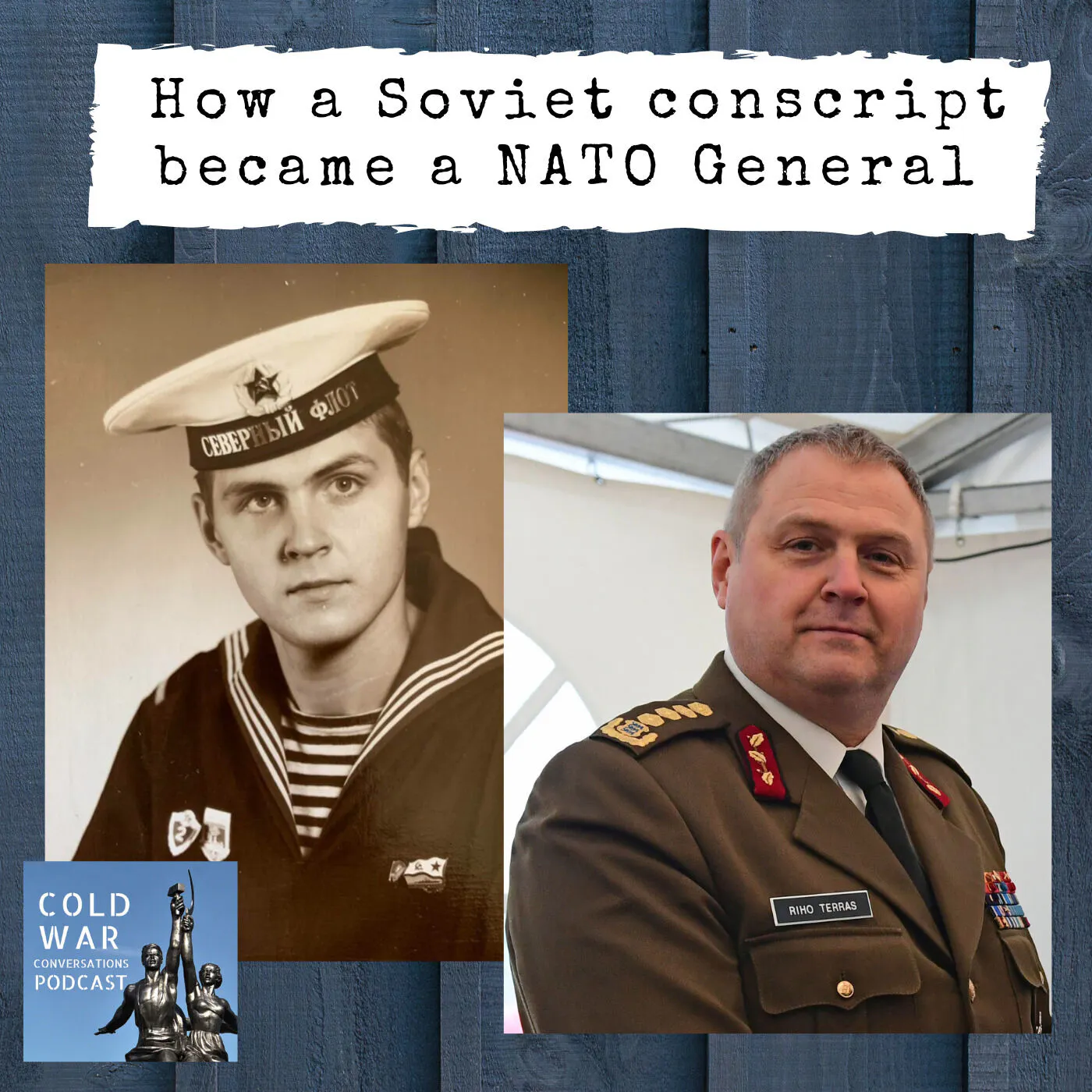
S10 Ep 206How a Soviet conscript became a NATO General (206)
In 1985, an eighteen-year-old named Riho Terras arrived at the Soviet armed forces’ large conscript assessment facility in Tallinn obeying his conscription orders. Little did he know that 26 years later he would be a NATO General. Riho shares his experiences in the Soviet Navy with us in some detail. We hear about his service on the Soviet frigate Zadornyy including trips to the Mediterranean and Cuba as well as monitoring NATO warships. Riho also shares his experiences of Estonian independence and the challenges of converting the country into an independent nation. I’m extremely grateful to Elisabeth Braw, a resident fellow at the American Enterprise Institute who facilitated this interview via her Englebert Ideas essay. Thanks to all of you for listening to the podcast. It is an absolute passion for me to save these stories from being forgotten and sharing them weekly for free for everyone to hear. Whilst this is a passion, I am asking if each listener could make either a one-off or better still sign up for monthly donations to help me to find the time to produce and finance the project. If you’d like to know more just go to https://coldwarconversations.com/donate/ If a financial contribution is not your cup of tea, then you can still help us by leaving written reviews wherever you listen to us as well as sharing us on social media. It really helps us get new guests on the show. I am delighted to welcome Riho Terras to our Cold War conversation… There’s further information about this episode here. https://coldwarconversations.com/episode206/ If you can’t wait for next week’s episode do visit our Facebook discussion group where guests and listeners continue the Cold War Conversation. Just search Cold War Conversations in Facebook. Thank you very much for listening. It is really appreciated – goodbye. Support the project! https://coldwarconversations.com/donate/ Follow us on Twitter https://twitter.com/ColdWarPod Facebook https://www.facebook.com/groups/coldwarpod/ Instagram https://www.instagram.com/coldwarconversations/ Youtube https://youtube.com/@ColdWarConversations 0:00 Introduction and Riho Terras' early life in Estonia 1:41 Sponsor: Call for listener support and donations 9:06 Riho's military draft notice and initial experiences in the Soviet Navy 16:41 Riho's unique experience as an artist in the Navy and decision to join a naval ship 22:37 Riho's role and experiences on the Soviet naval ship in the Mediterranean 27:43 Riho's experiences in Cuba and encounters with NATO warships 36:19 Riho's return to Estonia, observations on its independence movement and joining the national guard 47:39 Transitioning from Soviet Union to independent Estonia and its economic changes post-independence 51:03 Riho joining the Estonian Armed Forces and progression through the ranks 54:51 Influence of Riho's Soviet military experience on his career in the Estonian Armed Forces 56:43 Conclusion and acknowledgements to patrons Table of contents powered by PodcastAI✨ Learn more about your ad choices. Visit podcastchoices.com/adchoices
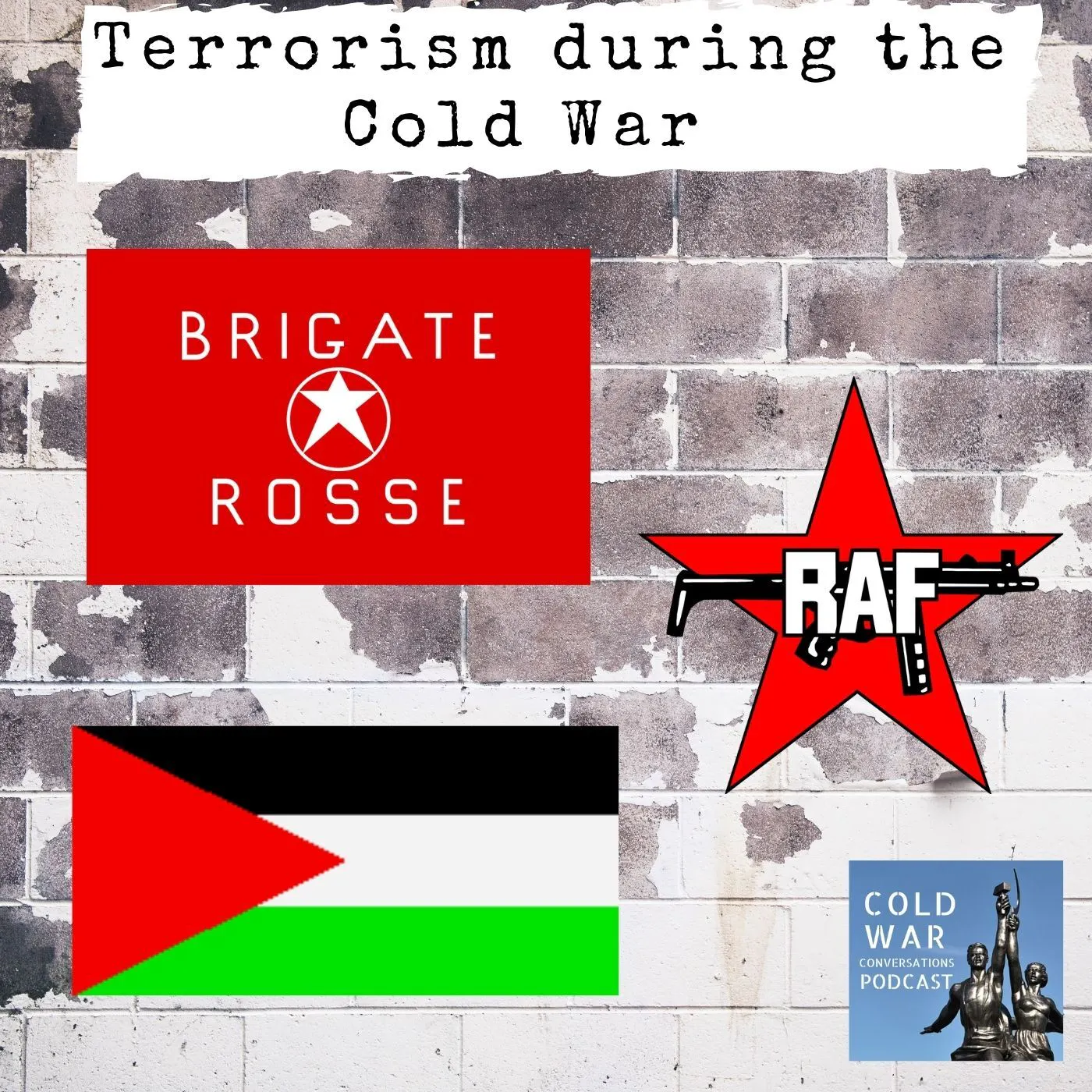
S9 Ep 205Terrorism in the Cold War (205)
I talk with the writers and editors of Terrorism in the Cold War a new two volume book that uses a wide range of case studies including Polish Military Intelligence and Its Secret Relationship with the Abu Nidal Organization and Gladio – Myth and Reality: The Origins and Function of Stay Behind in the Case of Post-war Austria. The book sheds new light on the relations between state and terrorist actors, allowing for a fresh and much more insightful assessment of the contacts, dealings, agreements and collusion with terrorist organizations undertaken by state actors on both sides of the Iron Curtain. You will learn that these state-terrorism relationships were not only much more ambiguous than much of the older literature had suggested but are, in fact, crucial for the understanding of global political history in the Cold War era. If you are enjoying the podcast I could use some support to enable me to continue recording these incredible stories. If you become a monthly supporter via Patreon, you will get the sought after CWC coaster as a thank you and bask in the warm glow of knowing you are helping to preserve Cold War history. Just go to https://coldwarconversations.com/donate/ If you can’t wait for next week’s episode do visit our Facebook discussion group where guests and listeners continue the Cold War Conversation. Just search Cold War Conversations in Facebook. There's more in the episode notes here coldwarconversations.com/episode205/ I am delighted to welcome Thomas Riegler, Przemyslaw Gasztold and Adrian Hänni to our Cold War conversation… Thank you very much for listening. It is really appreciated. Support the project! https://coldwarconversations.com/donate/ Follow us on Twitter https://twitter.com/ColdWarPod Facebook https://www.facebook.com/groups/coldwarpod/ Instagram https://www.instagram.com/coldwarconversations/ Youtube https://youtube.com/@ColdWarConversations 0:00 Introduction 0:10 Examination of state terrorism relationships during the Cold War era 4:15 Debunking myths around Cold War terrorism 10:23 Discussion on Eastern Bloc nations and their dealings with terrorist organizations 17:16 Examination of the Italian Red Brigades' relationship with the Soviet Bloc 23:23 Introduction to the case studies: Abu Nidal Organization and its leader 33:51 Research into Polish military intelligence's relationship with the Abu Nidal Organization 41:07 Introduction to Thomas Riegler's chapter: Gladio Myth and Reality 53:46 The United Kingdom's development of a stay-behind network during the Cold War 55:05 Acknowledgements and closing remarks Table of contents powered by PodcastAI✨ Learn more about your ad choices. Visit podcastchoices.com/adchoices
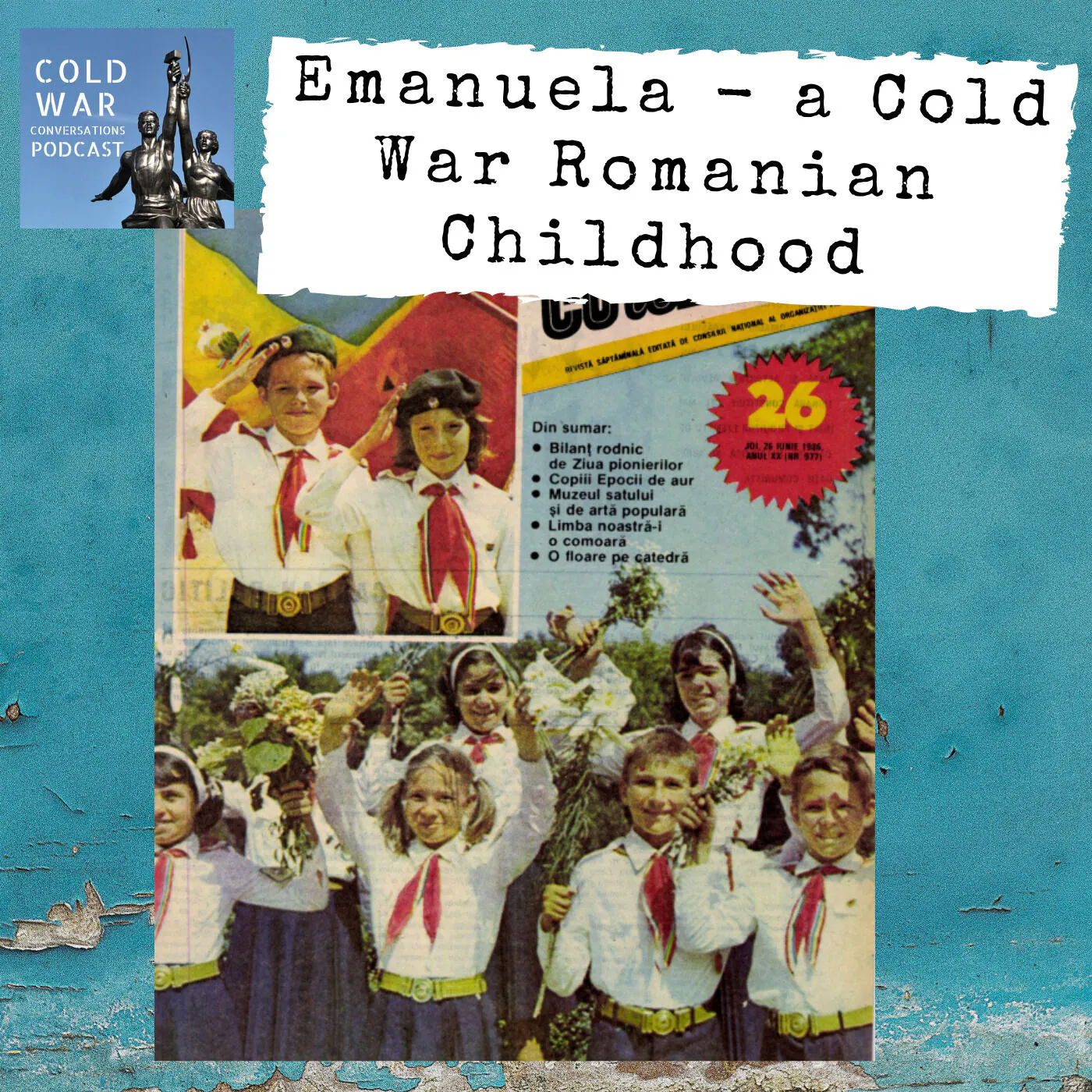
S9 Ep 204Emanuela - a Cold War Romanian Childhood (204)
Emanuela Grama was born in the mid-1970s’ in a small provincial town in Eastern Romania. She provides us with a great insight into life in the Romanian provinces during the 1980s. Emanuela lived in a small two-bedroom flat and tells of her parents working in a factory while her grandparents looked after her. Her father listened secretly to Radio Free Europe and collected stamps so he could legitimately write to people in the West. Her parents told her not to talk at school about what was said at home and to be very careful what she said to friends. Emanuela vividly recalls the day the revolution started in 1989, Emanuela was at home alone and she described the instant atmosphere of change and the weeks and months after. We also hear about Emanuela’s book, Socialist Heritage: The Politics of Past and Place in Romania which traces the transformation of Bucharest’s Old Town district where under socialism, politicians and professionals used the district’s historic buildings to emphasize the city’s Romanian past and erase its ethnically diverse history. I’m asking listeners to support my work and enable me to continue recording these incredible stories. If you become a monthly supporter via Patreon, you will get the sought after CWC coaster as a thank you and bask in the warm glow of knowing you are helping to preserve Cold War history. Just go to https://coldwarconversations.com/donate/ If you can’t wait for next week’s episode, visit our Facebook discussion group where guests and listeners continue the Cold War Conversation. Just search Cold War Conversations on Facebook. Further details , including photos are in our episode notes at https://coldwarconversations.com/episode204/ James Chilcott is our host and I am delighted to welcome James and Emanuela to our Cold War conversation… Thank you very much for listening. It is really appreciated. Support the project! https://coldwarconversations.com/donate/ Follow us on Twitter https://twitter.com/ColdWarPod Facebook https://www.facebook.com/groups/coldwarpod/ Instagram https://www.instagram.com/coldwarconversations/ Youtube https://youtube.com/@ColdWarConversations 0:00 Introduction and background of Emanuela Grama 4:49 Absence of Jewish history in Romanian education and Emanuela's early life 14:40 Emanuela's childhood, influence of Western literature, and school experience under communist regime 26:55 Revelation of the fall of Ceausescu regime and experience during the revolution 34:22 Introduction to Emanuela Grama's book 'Socialist Heritage' and discussion on political changes in Romania 40:49 The state of Romanian high schools post 1990 and reflections on Romania's past and present 46:24 Understanding ethnographic research and the ethnic diversity in Romania 49:30 The rise of the secondhand clothes market and longing for Western media in Romania 55:43 Emanuela's published poem and changes made by editors 59:22 Closing remarks and mention of Cold War Conversations store Table of contents powered by PodcastAI✨ Learn more about your ad choices. Visit podcastchoices.com/adchoices
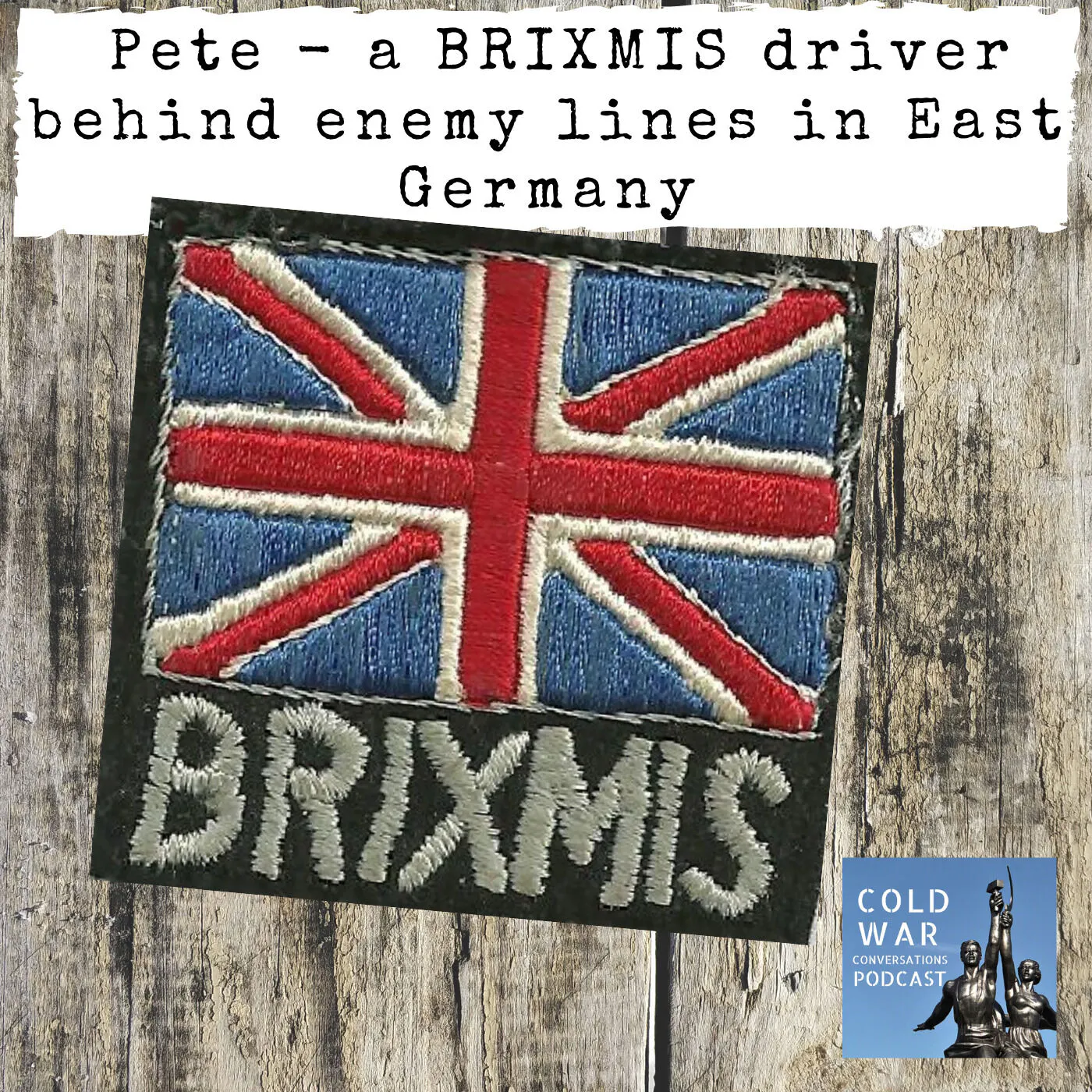
S9 Ep 203Pete - a BRIXMIS driver behind enemy lines in East Germany (203)
Pete Curran served with BRIXMIS, the British Military Liaison Mission in East Germany. Their operation was established by a post-WWII Allied occupation forces' agreement, where British, US and French missions had relative freedom to travel and collect intelligence throughout East Germany from 1947 until 1990. Pete’s story starts with details of his vetting interview, driver training, and his first tour in East Germany. We also hear of the intelligence scoops he was involved in and some of his close scrapes while evading both the Soviets and the Stasi including one with a Soviet helicopter. We also hear of the role of the driver in the three-man teams, the incredible camaraderie of the unit, as well as the pressure on their loved ones. I know from my stats that a lot of you really enjoy the podcast. It is an absolute passion for me to save these stories from being forgotten and sharing them weekly for free for everyone to hear. Whilst this is a passion, I am asking if each listener could make either a one-off or better still sign up for monthly donations to help me to find the time to produce and finance the project. If you’d like to know more just go to https://coldwarconversations.com/donate/ If a financial contribution is not your cup of tea, then you can still help us by leaving written reviews wherever you listen to us as well as sharing us on social media. It really helps us get new guests on the show. I am delighted to welcome Pete Curran to our Cold War conversation… UK BRIXMIS books https://amzn.to/3ljkK6I US BRIXMIS books https://amzn.to/3ae2HZs There’s further information including videos here. https://coldwarconversations.com/episode203 If you can’t wait for next week’s episode do visit our Facebook discussion group where guests and listeners continue the Cold War Conversation. Just search Cold War Conversations in Facebook. Thank you very much for listening. It is really appreciated. Radio GDR If you are interested in East Germany we can highly recommend our friends over at Radio GDR. Support the project! https://coldwarconversations.com/donate/ Follow us on Twitter https://twitter.com/ColdWarPod Facebook https://www.facebook.com/groups/coldwarpod/ Instagram https://www.instagram.com/coldwarconversations/ Youtube https://youtube.com/@ColdWarConversations 0:00 Introduction and guest introduction: Pete Curran 3:00 Pete Curran's journey into BRIXMIS and training experiences 8:40 Pete's first posting to Berlin and impressions 15:21 Role of the Mission House and Pete's first mission to East Germany 20:02 Interactions with other military liaison missions and vehicle maintenance 24:45 Driver's decision-making authority and tour operations 28:07 Memorable incidents during tours: The Halle Incident and evading a helicopter 35:40 Reflections on the Andreotti incident and sharing experiences with other drivers 41:40 Interactions with East German citizens and encounters with UK civilian vehicles 45:29 The day the Berlin Wall came down and aftermath 54:06 The camaraderie amongst the BRIXMIS and souvenirs from the time 56:14 Acknowledgment of patrons and closing remarks 57:21 Store advertisement and final goodbye Table of contents powered by PodcastAI✨ Learn more about your ad choices. Visit podcastchoices.com/adchoices
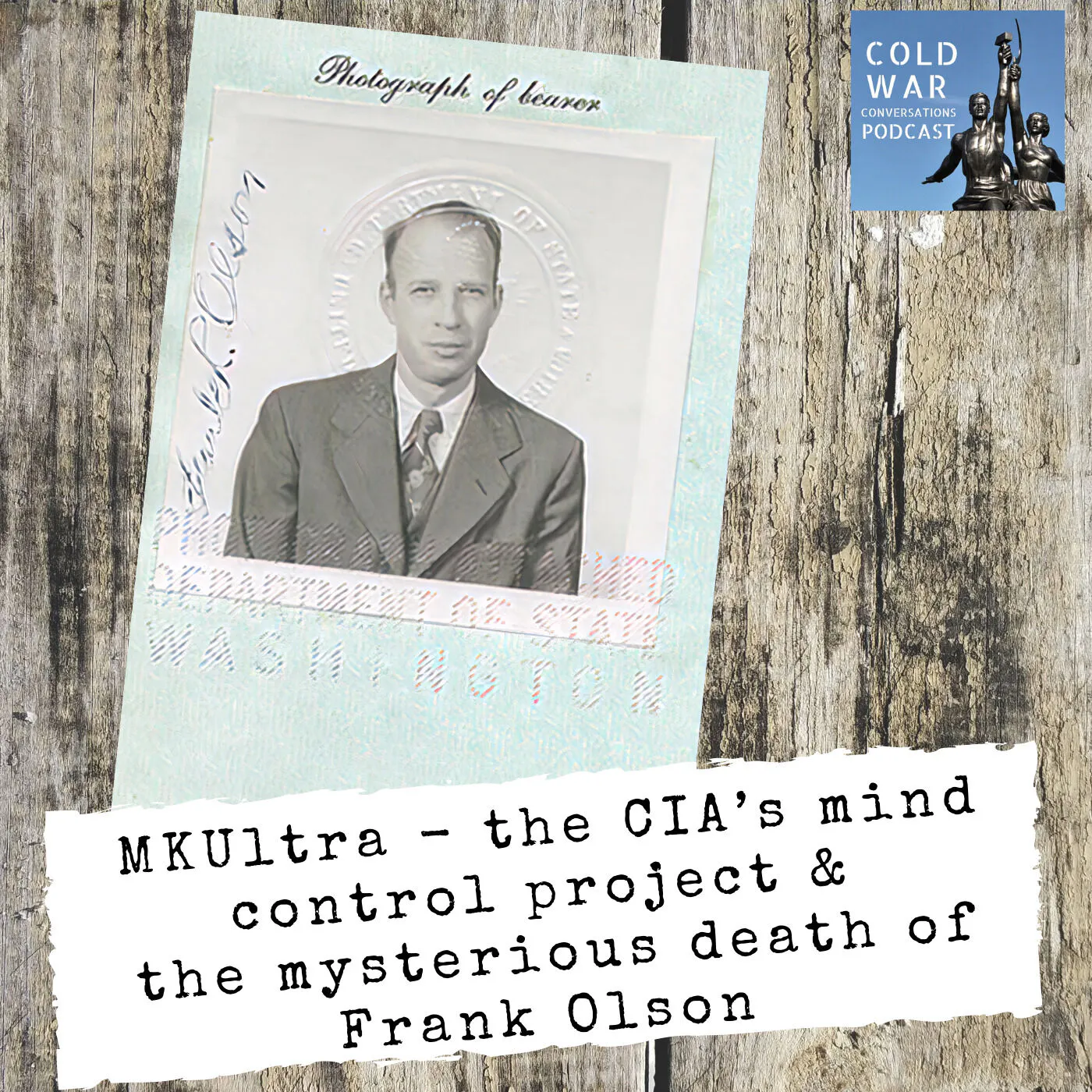
S9 Ep 202MKUltra - the CIA’s mind control project & the mysterious death of Frank Olson (202)
Frank Olson was an American bacteriologist, biological warfare scientist, and employee of the United States Army Biological Warfare Laboratories. In 1953 at a meeting in rural Maryland, he was covertly dosed with LSD by his boss Sidney Gottlieb, who was the head of the CIA's MKUltra mind control program. Nine days later, Olson plunged to his death from the window of the Hotel Statler. The U.S. government first described his death as a suicide, and then as misadventure, while others allege murder. The story was made into the Netflix film "Wormwood". I speak with Paul Vidich, the acclaimed author of The Coldest Warrior, An Honorable Man, The Good Assassin and The Mercenary. He is also the nephew of Frank Olson. UK link to Paul Vidich Books US link to Paul Vidich Books This podcast relies on listener support to enable me to continue to capture these incredible stories and make them available for free. You can support my work and help to preserve Cold War history via one-off or monthly donations Just go to https://coldwarconversations.com/donate/ for more details. If a financial contribution is not your cup of tea, then you can still help us by leaving written reviews wherever you listen to us as well as sharing us on social media. It really helps us get new guests on the show. I am delighted to welcome Paul Vidich to our Cold War conversation… Further information on this episode https://coldwarconversations.com/episode202/ If you can’t wait for next week’s episode do visit our Facebook discussion group where guests and listeners continue the Cold War Conversation. Just search Cold War Conversations in Facebook. Thank you very much for listening. It is really appreciated – goodbye. Support the project! https://coldwarconversations.com/donate/ Follow us on Twitter https://twitter.com/ColdWarPod Facebook https://www.facebook.com/groups/coldwarpod/ Instagram https://www.instagram.com/coldwarconversations/ Youtube https://youtube.com/@ColdWarConversations 0:00 Introduction and background of Frank Olsen 2:22 Introduction to guest, Paul Vidich and his book, "The Coldest Warrior" 5:29 Frank's involvement in the Artichoke Committee and MK Ultra 18:40 Frank's psychological turmoil and the lead up to his mysterious death 24:55 Investigation into Sydney Gottlieb's motives and the aftermath of Frank's death 33:02 The Olsen family's pursuit for truth and meeting with President Ford 38:04 Political implications of the Olsen case for President Ford's administration 42:42 Connection between the Olsen case and harsh interrogation programs 45:48 Meetings with key figures from the MK Ultra project 50:38 Exhumation and examination of Frank Olsen's body 57:01 Thanks to patrons, episode notes, Facebook group, and store Table of contents powered by PodcastAI✨ Learn more about your ad choices. Visit podcastchoices.com/adchoices
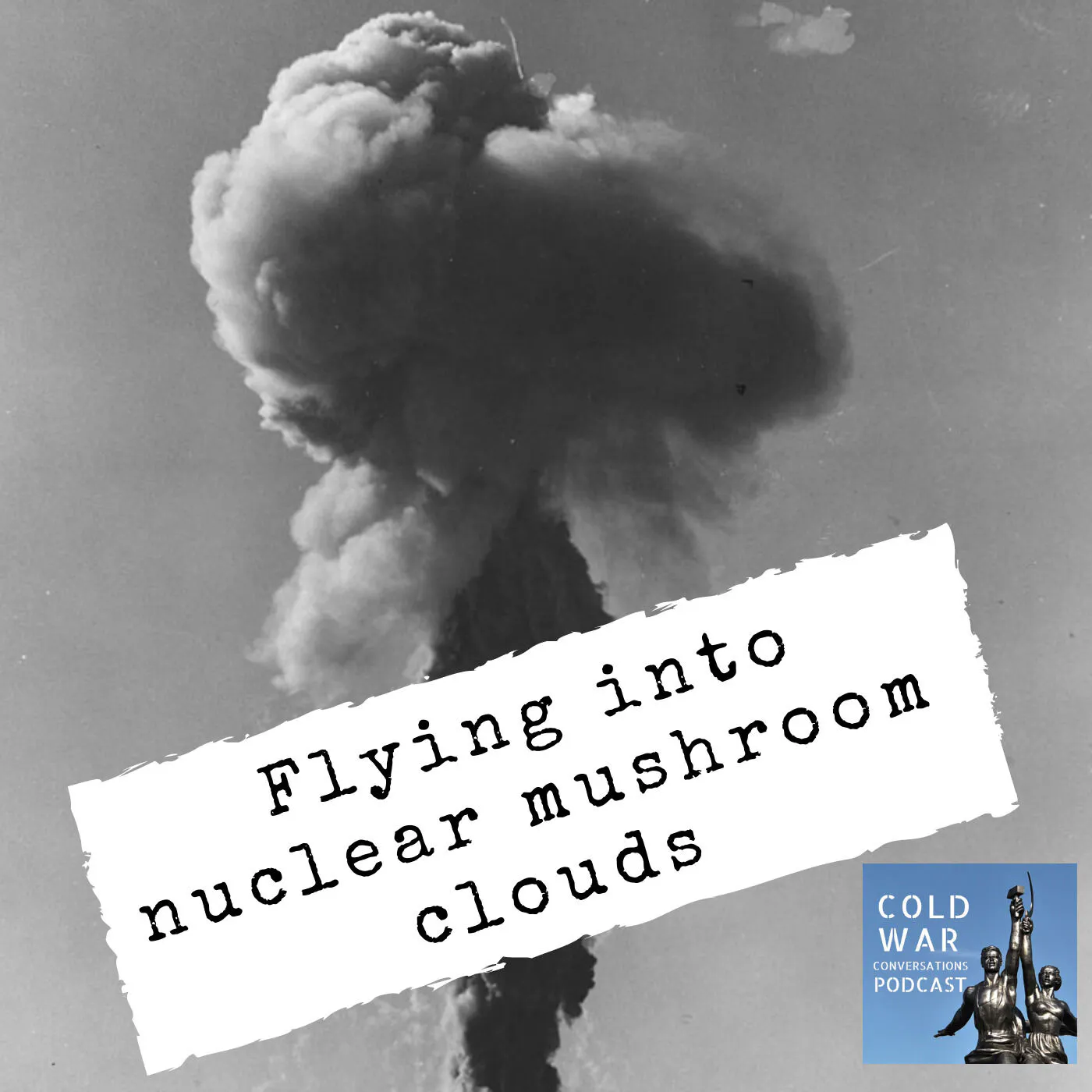
S9 Ep 201Flying into nuclear mushroom clouds (201)
Squadron Leader John Robinson AFC (ret’d) was an RAF pilot who was tasked to fly into the mushroom clouds of nuclear bomb tests to capture samples at Operation Buffalo at Maralinga in 1956, and Operation Grapple, at Christmas Island in 1957. He tells of his recruitment into RAF, initial training and his cloud sampling missions as well his experiences of watching the tests from as little as five miles away. It is reckoned that over 22,000 British servicemen participated in the British and American nuclear tests and clean-ups between 1952-1965, along with scientists from the Atomic Weapons Research Establishment and civilians. The majority of men have passed away, and around a tenth of the men remain. I was honoured that the British Nuclear Test Veterans Association (BNVTA) invited me to their annual reunion and enabled me to capture some of their veterans’ stories. I could really use your help to support my work and enable me to continue producing the podcast. If you become a monthly supporter, you will get the sought after CWC coaster as a thank you and bask in the warm glow of knowing you are helping to preserve Cold War history. Just go to https://coldwarconversations.com/donate/ If a financial contribution is not your cup of tea, then you can still help us by leaving written reviews wherever you listen to us as well as sharing us on social media. It really helps us get new guests on the show. I am delighted to welcome John Robinson to our Cold War conversation… There’s further information including videos on this link https://coldwarconversations.com/episode201/ If you can’t wait for next week’s episode do visit our Facebook discussion group where guests and listeners continue the Cold War Conversation. Just search Cold War Conversations in Facebook. Thank you very much for listening. It is really appreciated – goodbye. Support the project! https://coldwarconversations.com/donate/ Follow us on Twitter https://twitter.com/ColdWarPod Facebook https://www.facebook.com/groups/coldwarpod/ Instagram https://www.instagram.com/coldwarconversations/ Youtube https://youtube.com/@ColdWarConversations 0:00 Introduction and Squadron Leader John Robinson's Cold War journey 2:03 Sponsor: Cold War Conversations' Patron Support 4:13 John Robinson's early career and Cold War aircraft training 15:11 Special duties in Australia and encounter with atom bombs 28:30 The mission into the mushroom cloud and gathering radiation data 34:33 Life in Christmas Island and preparations for larger weapons 45:52 Post atom bomb missions and John's illness 48:19 John Robinson's radiation exposure and journey back home 52:04 High altitude sampling and ditching the aircraft plan 53:42 Closing remarks by Ian Sanders and appreciation for patrons 54:50 Cold War Conversations store reminder Table of contents powered by PodcastAI✨ Learn more about your ad choices. Visit podcastchoices.com/adchoices
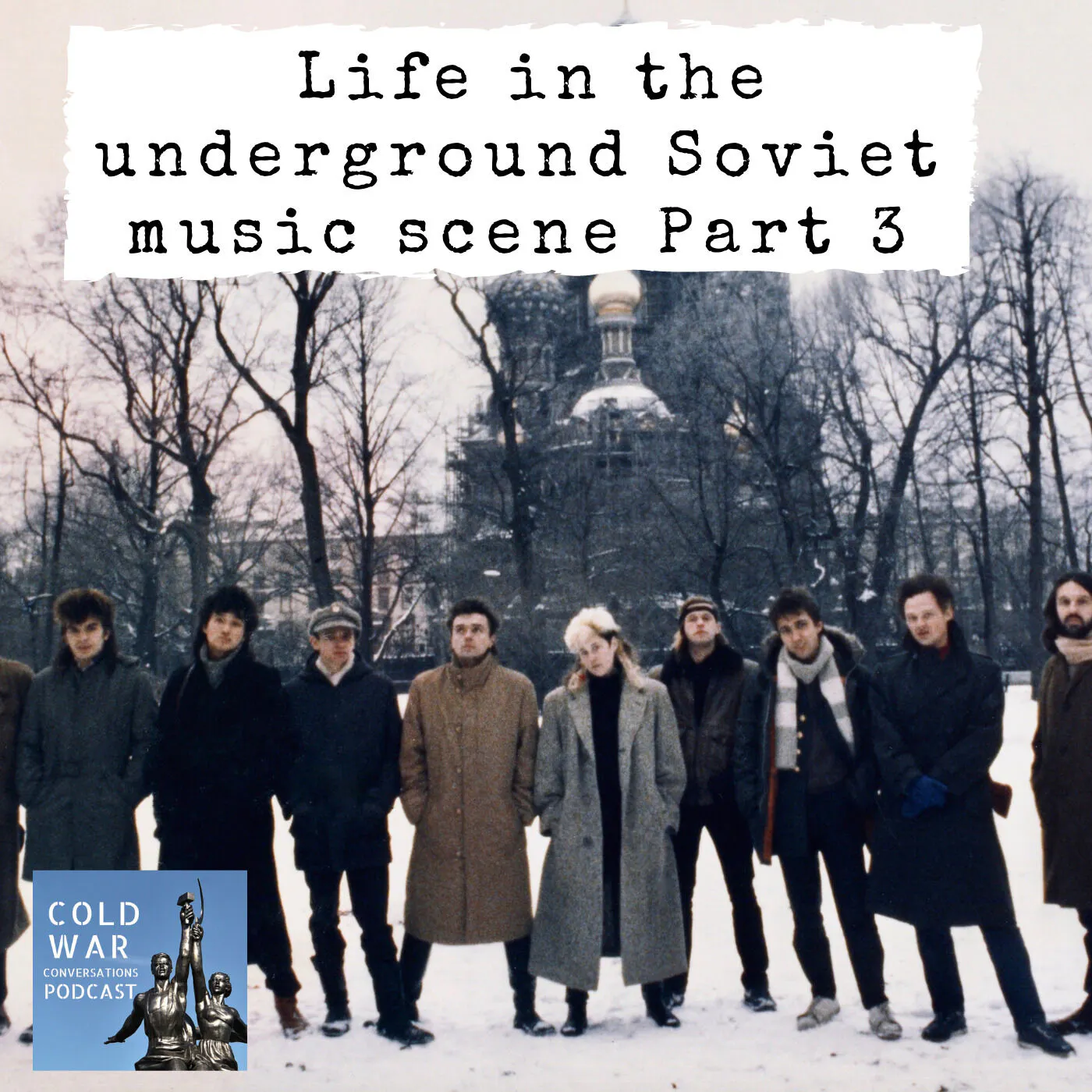
S9 Ep 200Life in the underground Soviet music scene Part 3 (200)
We hear of Joanna's heartbreak when her visa is refused, preventing her from marrying Yuri. However, using an ingenious method she manages an emotional reunion and eventual marriage as the Soviet Union begins to dissolve. Details of the book giveaway are here https://coldwarconversations.com/episode200/ Part one is here and part 2 here Joanna’s book, Red Wave written with her singer/songwriter daughter, Madison, includes Stingray’s extensive collection of photographs, artworks, and interviews with the musicians. Buy the book and support the podcast here UK listeners https://amzn.to/3rwItSz US listeners https://amzn.to/3zyvbHX If you are enjoying the podcasts I’m asking for donations to support my work and enable me to continue producing the podcast. If you become a monthly supporter via Patreon, you will get the sought after CWC coaster as a thank you and bask in the warm glow of knowing you are helping to preserve Cold War history. Just go to https://coldwarconversations.com/donate/ If a financial contribution is not your cup of tea, then you can still help us by leaving written reviews wherever you listen to us as well as sharing us on social media. It really helps us get new guests on the show. I am delighted to welcome Joanna Stingray to our Cold War conversation Support the project! https://coldwarconversations.com/donate/ Follow us on Twitter https://twitter.com/ColdWarPod Facebook https://www.facebook.com/groups/coldwarpod/ Instagram https://www.instagram.com/coldwarconversations/ Youtube https://youtube.com/@ColdWarConversations 0:00 Introduction and book giveaway announcement 2:54 Interview with Joanna Stingray begins 12:08 Joanna's risky journey to Leningrad with her mother 24:34 Joanna's reunion and NBC coverage in Russia 30:19 Joanna's dilemma about leaving Russia and her marriage 34:03 Rise of rock bands amidst political changes in Russia 39:16 Joanna's unconventional Russian wedding 46:07 Impact of Glasnost and fall of communism on Russian bands 51:05 Shift in Russian society and music taste in the 90s 53:53 Closing remarks and patron acknowledgements Table of contents powered by PodcastAI✨ Learn more about your ad choices. Visit podcastchoices.com/adchoices
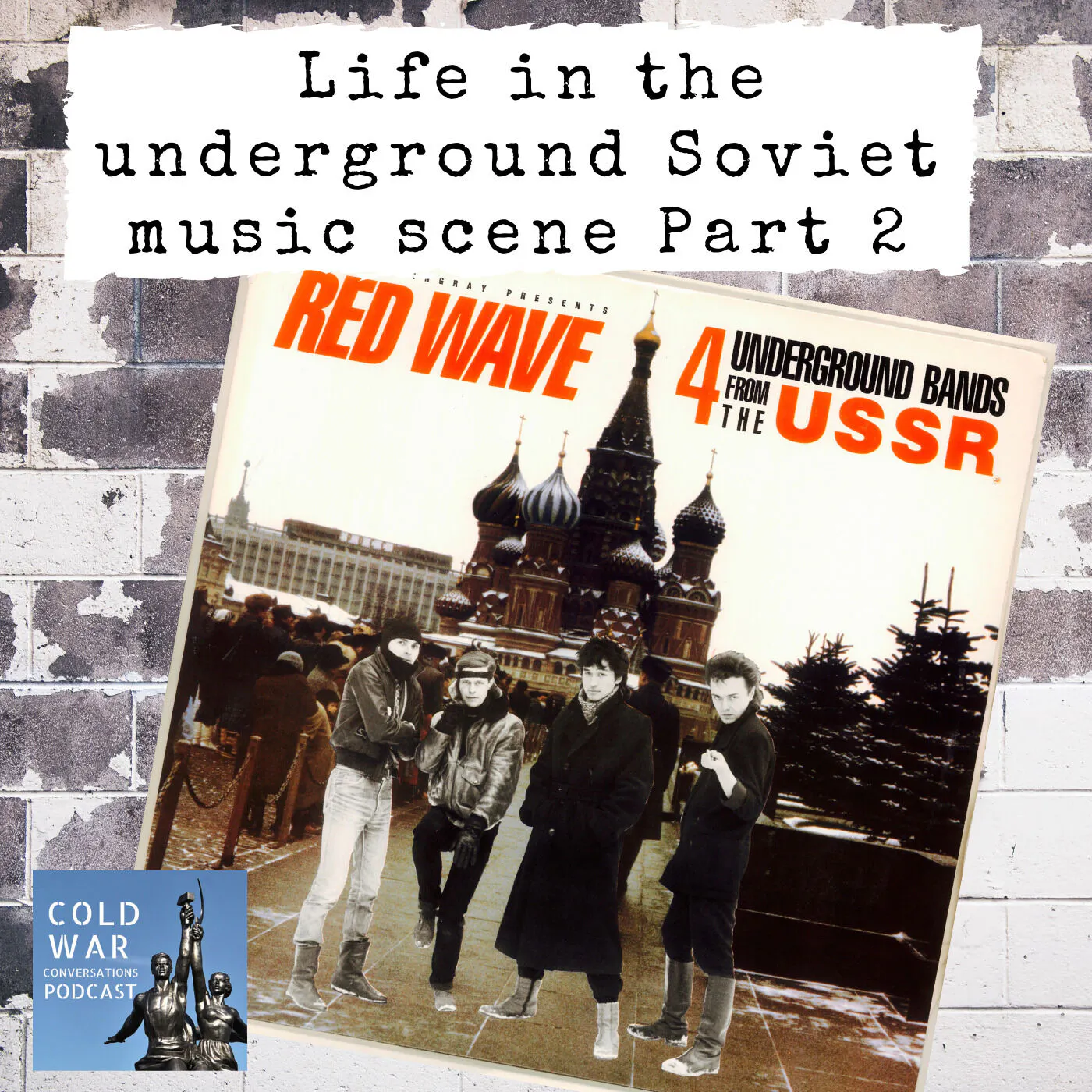
S9 Ep 199Life in the underground Soviet music scene Part 2 (199)
Joanna is questioned by the KGB and the FBI, falls in love with Yuri and starts to smuggle the bands' music out of the Soviet Union to produce the album. Details of the book giveaway are here https://coldwarconversations.com/episode199/ Part one is here and part 3 here Joanna’s book, Red Wave written with her singer/songwriter daughter, Madison, includes Stingray’s extensive collection of photographs, artworks, and interviews with the musicians. Buy the book and support the podcast here UK listeners https://amzn.to/3rwItSz US listeners https://amzn.to/3zyvbHX If you are enjoying the podcasts I’m asking for donations to support my work and enable me to continue producing the podcast. If you become a monthly supporter via Patreon, you will get the sought after CWC coaster as a thank you and bask in the warm glow of knowing you are helping to preserve Cold War history. Just go to https://coldwarconversations.com/donate/ If a financial contribution is not your cup of tea, then you can still help us by leaving written reviews wherever you listen to us as well as sharing us on social media. It really helps us get new guests on the show. I am delighted to welcome Joanna Stingray to our Cold War conversation… Support the project! https://coldwarconversations.com/donate/ Follow us on Twitter https://twitter.com/ColdWarPod Facebook https://www.facebook.com/groups/coldwarpod/ Instagram https://www.instagram.com/coldwarconversations/ Youtube https://youtube.com/@ColdWarConversations 0:00 Introduction and Joanna Stingray's background 3:15 Joanna Stingray's first encounter with the KGB 9:27 Joanna's experiences with the band Kino and living in Soviet Union 15:11 The idea of bringing Soviet music to the US and collaboration with David Bowie 20:12 Struggles with record companies and signing with Big Time Records 22:29 Dealing with the FBI and KGB while collecting content for the album 26:57 Reception of the Red Wave album and its impact 31:20 Smuggling the Red Wave album into the Soviet Union 40:10 Meeting with the KGB and proposal from Yuri 46:38 Joanna Stingray's changing relationship with Russia and the music scene 54:00 Preview of the next episode and closing remarks Table of contents powered by PodcastAI✨ Learn more about your ad choices. Visit podcastchoices.com/adchoices
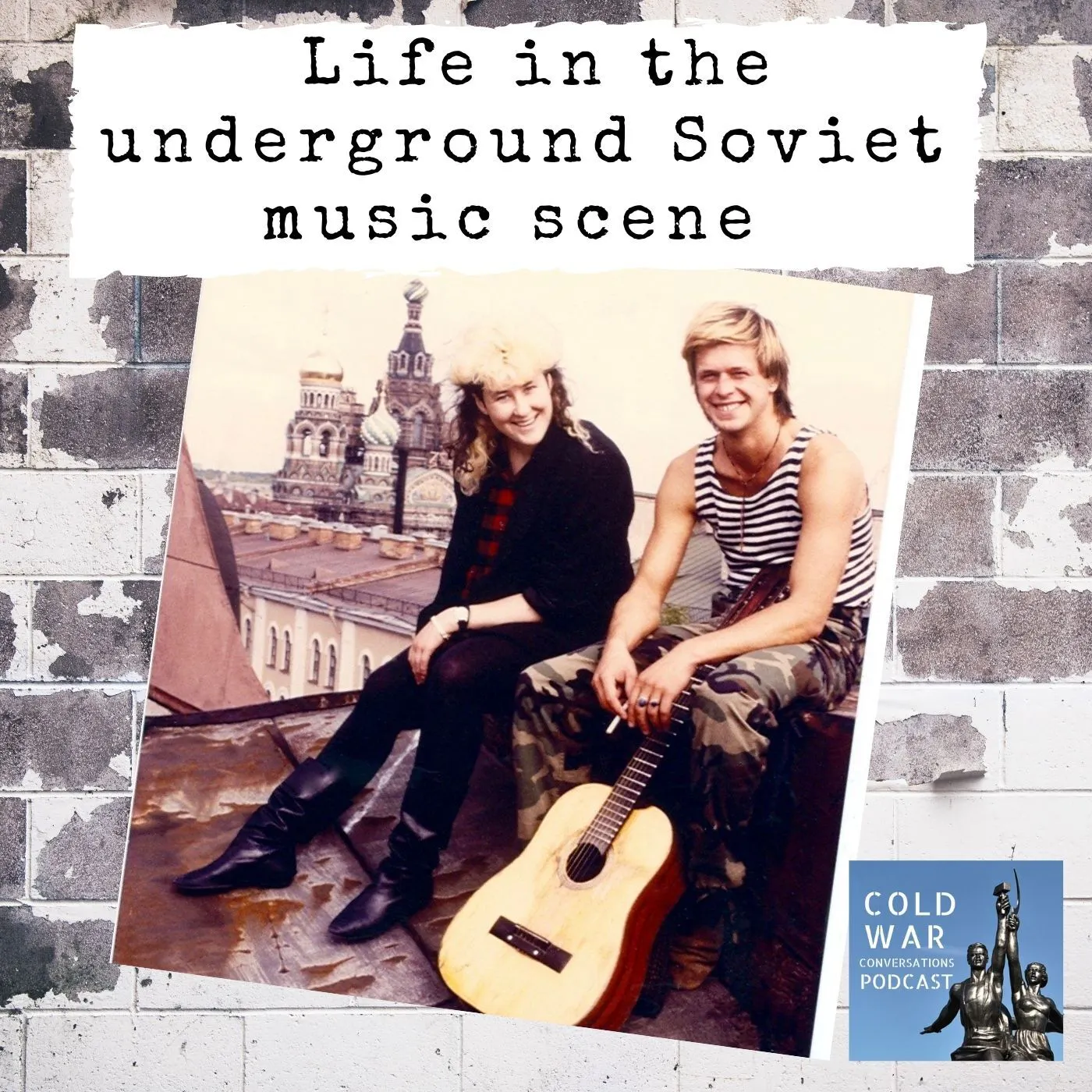
S9 Ep 198Life in the underground Soviet music scene Part 1 (198)
Joanna Stingray was only 23 years old when she first set foot in the USSR and started meeting now-legendary musicians and artists of the Soviet underground. By 1985, she was writing and recording with them, and smuggling their music to the West in order to produce the groundbreaking album Red Wave: 4 Underground Bands from the USSR. This is her testimony of youthful fortitude and rebellion, her love story, and proof of the power of music and youth culture over stagnancy and oppression. Details of the book giveaway are here https://coldwarconversations.com/episode198/ Part 2 is here and part 3 here Joanna’s book, Red Wave written with her singer/songwriter daughter, Madison, includes Stingray’s extensive collection of photographs, artworks, and interviews with the musicians. Buy the book and support the podcast here UK listeners https://amzn.to/3rwItSz US listeners https://amzn.to/3zyvbHX If you are enjoying the podcasts I’m asking for donations to support my work and enable me to continue producing the podcast. If you become a monthly supporter via Patreon, you will get the sought after CWC coaster as a thank you and bask in the warm glow of knowing you are helping to preserve Cold War history. Just go to https://coldwarconversations.com/donate/ If a financial contribution is not your cup of tea, then you can still help us by leaving written reviews wherever you listen to us as well as sharing us on social media. It really helps us get new guests on the show. I am delighted to welcome Joanna Stingray to our Cold War conversation… If you can’t wait for next week’s episode do visit our Facebook discussion group where guests and listeners continue the Cold War Conversation. Just search Cold War Conversations in Facebook. Thank you very much for listening. It is really appreciated – goodbye. Help Support the podcast by shopping at Amazon. https://www.amazon.co.uk/gp/bestsellers/books/12447630031/ref=pd_zg_hrsr_books&tag=cwcp-21 Help support the podcast with a CWC mug or maybe a t-shirt? https://www.redbubble.com/people/Coldwarpod/shop?asc=u Support the project! https://coldwarconversations.com/donate/ Follow us on Twitter https://twitter.com/ColdWarPod Facebook https://www.facebook.com/groups/coldwarpod/ Instagram https://www.instagram.com/coldwarconversations/ Youtube https://youtube.com/@ColdWarConversations 0:00 Introduction and Joanna Stingray's journey into the Soviet Underground 1:23 Sponsor: Patreon introduction and shoutout 2:46 Joanna's initial career plans and first visit to Russia 6:14 Joanna's struggle with communication and parental concerns 11:38 Joanna's first meeting with Boris Grebenschikov 14:17 Joanna's first visit to a Soviet apartment 18:27 Joanna's realization about her own music and the language of music 23:04 Joanna's experience at an underground concert and promise to return to Russia 29:49 Joanna's offer to help the Russian music scene 36:38 Joanna's first experience at a Russian rock concert and impressions of Soviet bands 44:00 Joanna's backstage experiences and encounter with the KGB 46:40 Ian's closing remarks and Sponsor: Patreon acknowledgement 48:21 Cold War Conversations online store promotion Table of contents powered by PodcastAI✨ Learn more about your ad choices. Visit podcastchoices.com/adchoices
S9 Ep 197Popular Cold War culture of the 1980s (197)
bonusOver the past, nearly two decades, the Stuck in the 80s podcast has emerged as the go-to for all aspects of 1980s nostalgia from a North American point of view. And, much like Cold War Conversations, Stuck in the 80s is an award-winning podcast. Recognizing that decade’s popular culture was heavily influenced by the Cold War, co-host Peter Ryan organized a discussion with its curators, Steve Spears and Brad Williams. Key topics that are covered include some of the most important songs, films, television programs of the 80s that were Cold War oriented, some of which may surprise listeners. Also discussed are the key personalities of the 1980s Cold War period, from both sides of the Iron Curtain. This special edition of Cold War Conversations will also features a playlist on Spotify, featuring many of the songs discussed during this lively episode. We thank Brad and Steve for the chance to organize a cross-podcast discussion today and encourage listeners to visit their website sit80s.com to learn more about their dedication to keeping the nostalgia of the 1980s alive. Help me to continue producing the podcast. Single or monthly donations really helps keep the podcast on the air.Just go to https://coldwarconversations.com/donate/ If a financial contribution is not your cup of tea, then you can still help us by leaving written reviews wherever you listen to us as well as sharing us on social media. It really helps us get new guests on the show. I am delighted to welcome Peter Ryan, Steve Spears and Brad Williams to our Cold War conversation… Videos relating to this episode are here https://coldwarconversations.com/episode197/ If you can’t wait for next week’s episode do visit our Facebook discussion group where guests and listeners continue the Cold War Conversation. Thank you very much for listening. It is really appreciated. Support the project! https://coldwarconversations.com/donate/ Follow us on Twitter https://twitter.com/ColdWarPod Facebook https://www.facebook.com/groups/coldwarpod/ Instagram https://www.instagram.com/coldwarconversations/ Youtube https://youtube.com/@ColdWarConversations Learn more about your ad choices. Visit podcastchoices.com/adchoices
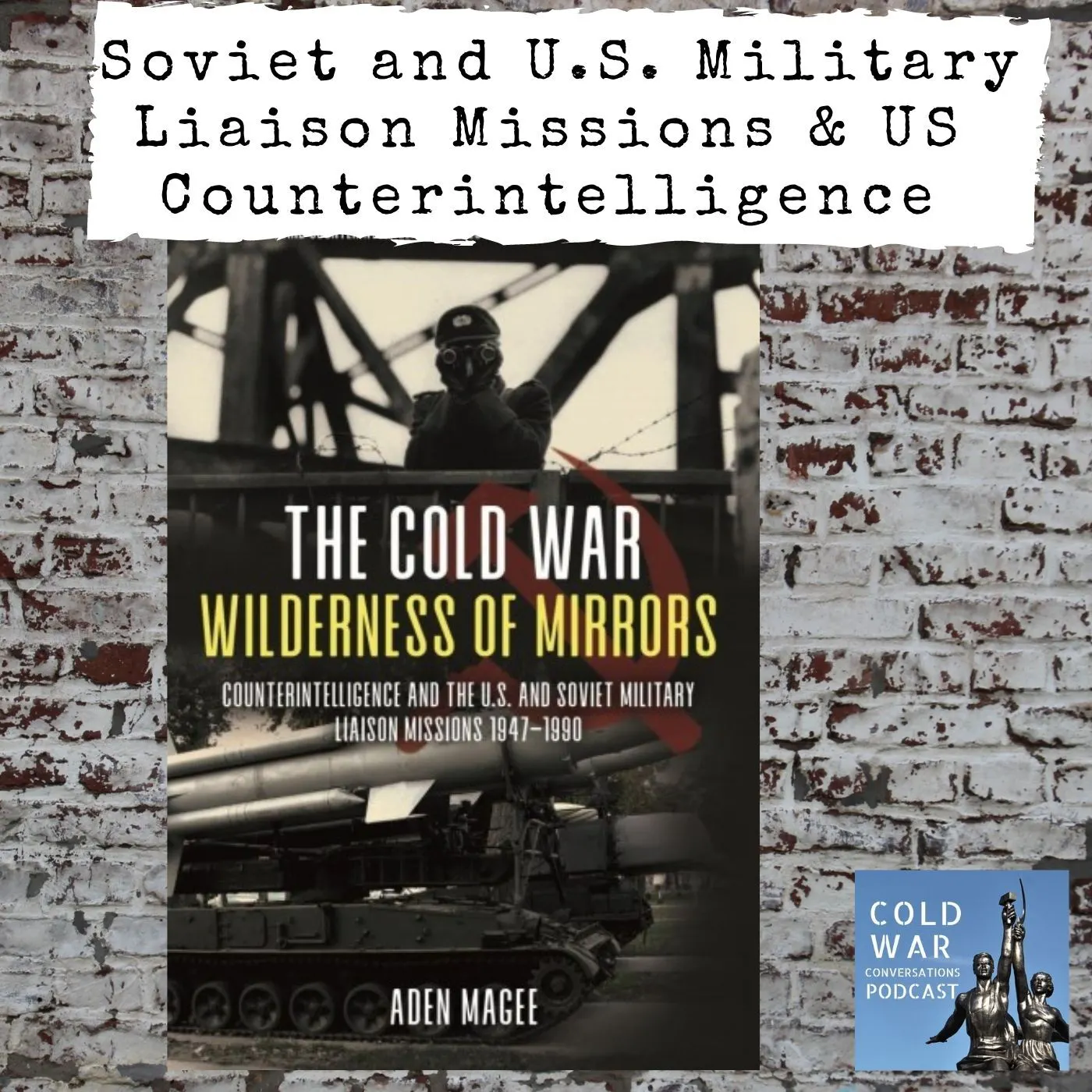
S9 Ep 196Soviet and U.S. Military Liaison Missions & US Counterintelligence SOXMIS & USMLM (196)
I speak with Aden Magee who operated as the commander of a highly specialized Counterintelligence (CI) unit in West Germany during the last decade of the Cold War. We talk about his book The Cold War Wilderness of Mirrors - Counterintelligence and the U.S. and Soviet Military Liaison Missions 1947–1990. This is a rare book that details some never-before documented accounts of the Soviet Military Liaison Mission (SMLM) in West Germany and the U.S. Military Liaison Mission (USMLM) in East Germany and shows how they were microcosms of the Cold War strategic intelligence and counterintelligence landscape. I also discuss with Aden how the book shows the impact of CIA Director James Angleton’s legacy which restricted counterintelligence operations long after his departure. Buy the book and help support the podcast. UK listeners buy here US listeners buy here What do you think the podcast is worth to you? Single or monthly donations really help keep the podcast on the air. Just go to https://coldwarconversations.com/donate/ If you can’t wait for next week’s episode do visit our Facebook discussion group where guests and listeners continue the Cold War Conversation. I am delighted to welcome Aden Magee to our Cold War conversation… Support the project! https://coldwarconversations.com/donate/ Follow us on Twitter https://twitter.com/ColdWarPod Facebook https://www.facebook.com/groups/coldwarpod/ Instagram https://www.instagram.com/coldwarconversations/ Youtube https://youtube.com/@ColdWarConversations 0:00 Introduction and discussion about weapons cache sites and suitcase nukes 0:17 Introduction to guest Aden McGee and his new book about strategic intelligence and counterintelligence during the Cold War 2:05 Sponsor: Podcast donations and mention of the Cold War Conversations Facebook group 3:47 Importance of documenting Cold War stories and in-depth discussion on the Soviet military liaison missions 10:35 Rotation of tours in East Germany and their intelligence collection capabilities 14:47 US's approach to counterintelligence and the importance of the USMLM's collection asset 19:04 Soviet's stance on guarding their SMLM/SOXMIS post and the normalization of ramming and shooting incidents under international law 24:14 Access to the Soviet military liaison mission compound and its implications 28:35 Likelihood of more covert activities by the Soviet military liaison mission 34:32 U.S. intelligence betrayals to the Soviets and the impact on the Cold War 53:42 Soviet penetration agents in the FBI and CIA and case of KGB Colonel Yachenko 1:00:32 Lack of urgency in addressing the mole issue within the CIA and the damaging impact of Aldrich Ames' betrayal 1:06:21 Conclusion and introduction of Aden Magee's book "The Cold War Wilderness of Mirrors" 1:06:57 Sponsor: Acknowledgement of the show's patrons and call to action for listener support 1:07:25 Closing remarks and goodbye from host Ian Sanders Table of contents powered by PodcastAI✨ Learn more about your ad choices. Visit podcastchoices.com/adchoices
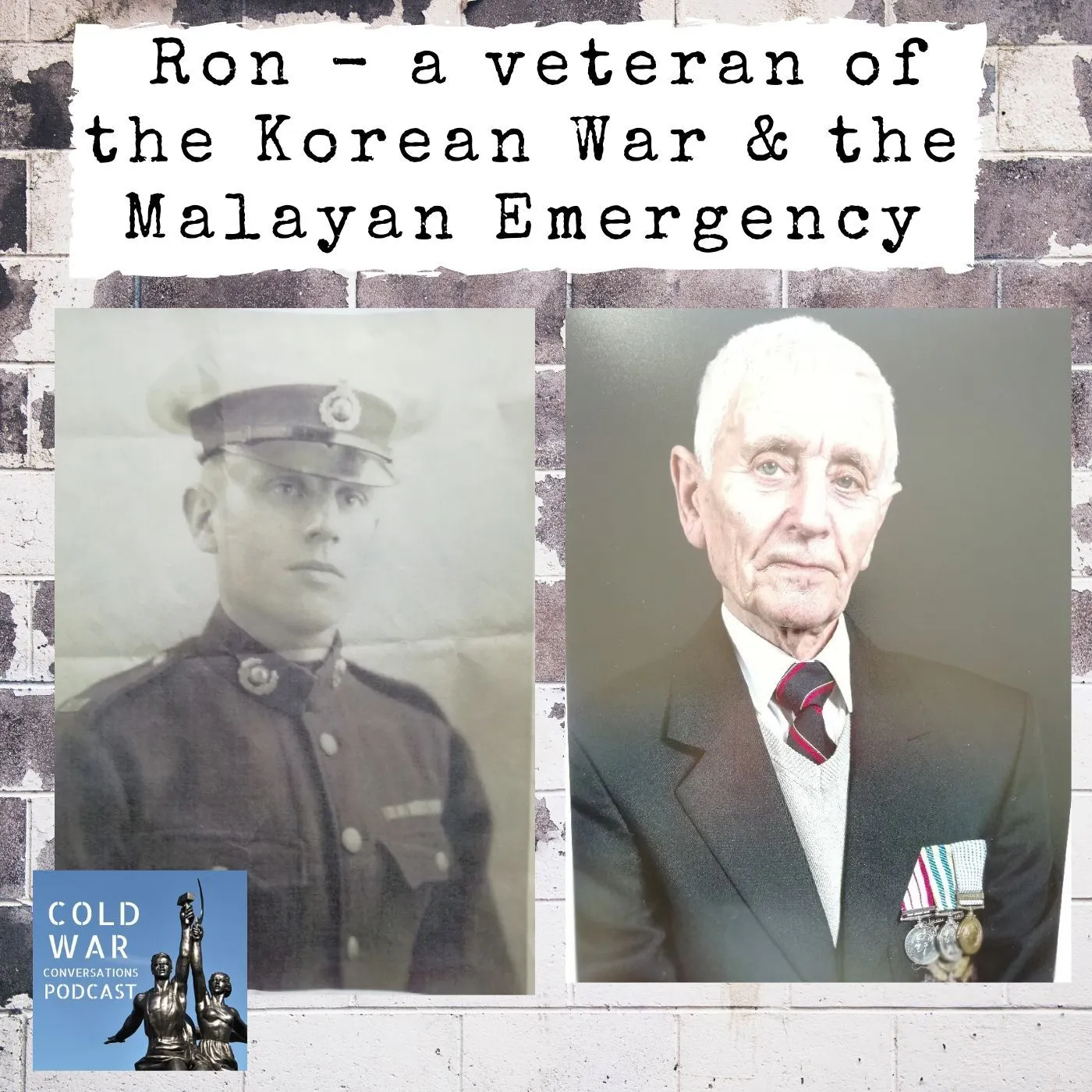
S9 Ep 195Ron - a veteran of the Korean War & the Malayan Emergency (195)
Ron Knight served in the Royal Marines on HMS Belfast during the Korean War of 1950-53. He was a gunner and describes the shore bombardments and how his gun was used in anti-aircraft defence. We also hear Ron describe life aboard the Belfast during this period Ron also served with the Royal Marine Commando during the Malayan Emergency which was a guerrilla war fought in the Federation of Malaya between Communist pro-independence fighters against the armed forces of the British Empire and Commonwealth between 1948 and 1960. He shares details of the dangers of jungle warfare including from their own air force! I’m asking listeners to support my work and enable me to continue producing the podcast. If you become a monthly supporter via Patreon, you will get the sought after CWC coaster as a thank you and bask in the warm glow of knowing you are helping to preserve Cold War history. Just go to https://coldwarconversations.com/donate/ If a financial contribution is not your cup of tea, you can still help us by leaving written reviews wherever you listen to us and sharing us on social media. It really helps us get new guests on the show. I am delighted to welcome Ron Knight to our Cold War conversation… There’s further information on this episode here. https://coldwarconversations.com/episode195/ If you can’t wait for next week’s episode, visit our Facebook discussion group where guests and listeners continue the Cold War Conversation. Just search Cold War Conversations on Facebook. Thank you very much for listening. It is really appreciated. Please leave a review. If you enjoy the podcast, please leave a written review. 0:00 Introduction and Ron Knight's early life and training 2:35 Ron Knight's experiences in the Royal Marines and HMS Belfast 9:01 Discussing air attacks on HMS Belfast and life on board 17:42 Royal Marines' shore raids and interactions with American forces 20:20 Shift in relations with Japan and interactions with Chinese and North Korean POWs 21:45 Encounter with Typhoon Ruth and its impact on HMS Belfast 26:58 Incident of a man overboard and transfer to 45 commando 29:23 Ron Knight's experiences in the Korean and Malayan jungles 38:20 Communication, safety measures and recognizing friendly units in the jungle 43:39 Reflecting on dangerous moments in service and transition to HMS Victory 51:13 Outro and Patron Acknowledgement Table of contents powered by PodcastAI✨ Support the project! https://coldwarconversations.com/donate/ Follow us on Twitter https://twitter.com/ColdWarPod Facebook https://www.facebook.com/groups/coldwarpod/ Instagram https://www.instagram.com/coldwarconversations/ Youtube https://youtube.com/@ColdWarConversations Learn more about your ad choices. Visit podcastchoices.com/adchoices
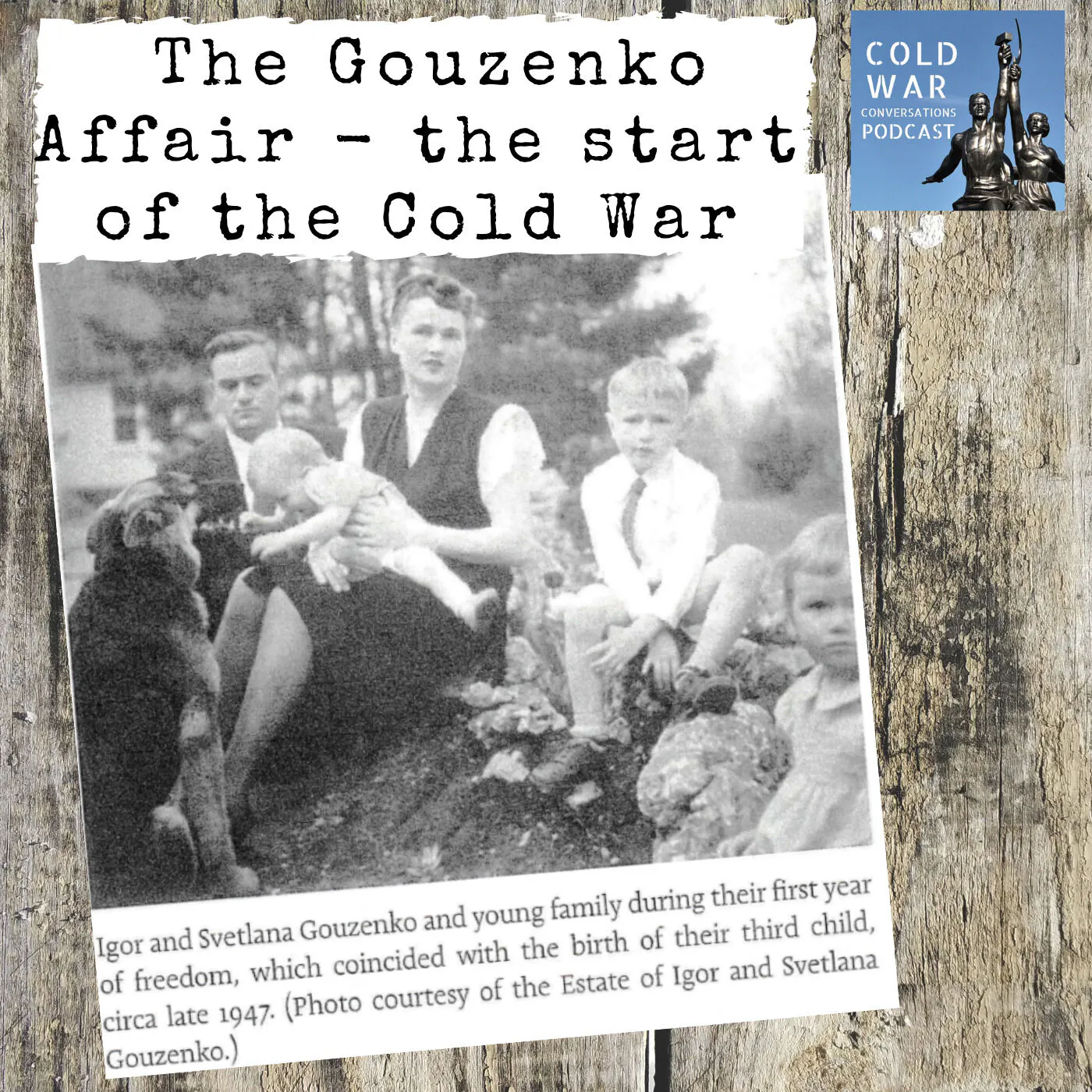
S9 Ep 194The Gouzenko Affair - the start of the Cold War (194)
Igor Gouzenko exposed Soviet intelligence's efforts to steal nuclear secrets as well as the technique of planting sleeper agents. The "Gouzenko Affair" is often credited as a triggering event of the Cold War, with historian Jack Granatstein stating it was "the beginning of the Cold War for public opinion" and journalist Robert Fulford writing he was "absolutely certain the Cold War began in Ottawa". I talk with Andrew Kavchak the author of Remembering Gouzenko: The Struggle to Honour a Cold War Hero and Evy Wilson, the daughter of Igor and Svetlana Gouzenko. If you are enjoying the podcast, you can show your support via a monthly donation of $4, £3 or €3 via Patreon, plus you will get the sought after CWC coaster as a thank you and bask in the warm glow of knowing you are helping to preserve Cold War history. Just go to https://coldwarconversations.com/donate/ If a financial contribution is not your cup of tea, then you can still help us by leaving written reviews wherever you listen to us as well as sharing us on social media. It really helps us get new guests on the show. I am delighted to welcome Andrew and Evy to our Cold War conversation… There’s further information on this episode can be found here. https://coldwarconversations.com/episode194/ If you can’t wait for next week’s episode do visit our Facebook discussion group where guests and listeners continue the Cold War Conversation. Just search Cold War Conversations in Facebook. 0:00 Introduction and Background of Igor Gouzenko 2:41 Interview with Andrew Kavchak and Evie Wilson begins 13:55 Aftermath of Gouzenko's Defection and the Following Trials 23:30 Introduction of Evie Wilson, Daughter of Igor Guzenko 33:55 Wilson Family's Relocation and Life in the Greater Toronto Area 43:33 Evie's Discovery of Her Family's Unique Situation and Origin 52:36 The Incident of the Wilsons' Mailbox Getting Blown Up 1:00:22 Evy Wilson's Life and Relatives in the Soviet Union 1:04:26 Andrew Kavchak's Journey to Commemorate the Gouzenko Story Table of contents powered by PodcastAI✨ Support the project! https://coldwarconversations.com/donate/ Follow us on Twitter https://twitter.com/ColdWarPod Facebook https://www.facebook.com/groups/coldwarpod/ Instagram https://www.instagram.com/coldwarconversations/ Youtube https://youtube.com/@ColdWarConversations Learn more about your ad choices. Visit podcastchoices.com/adchoices
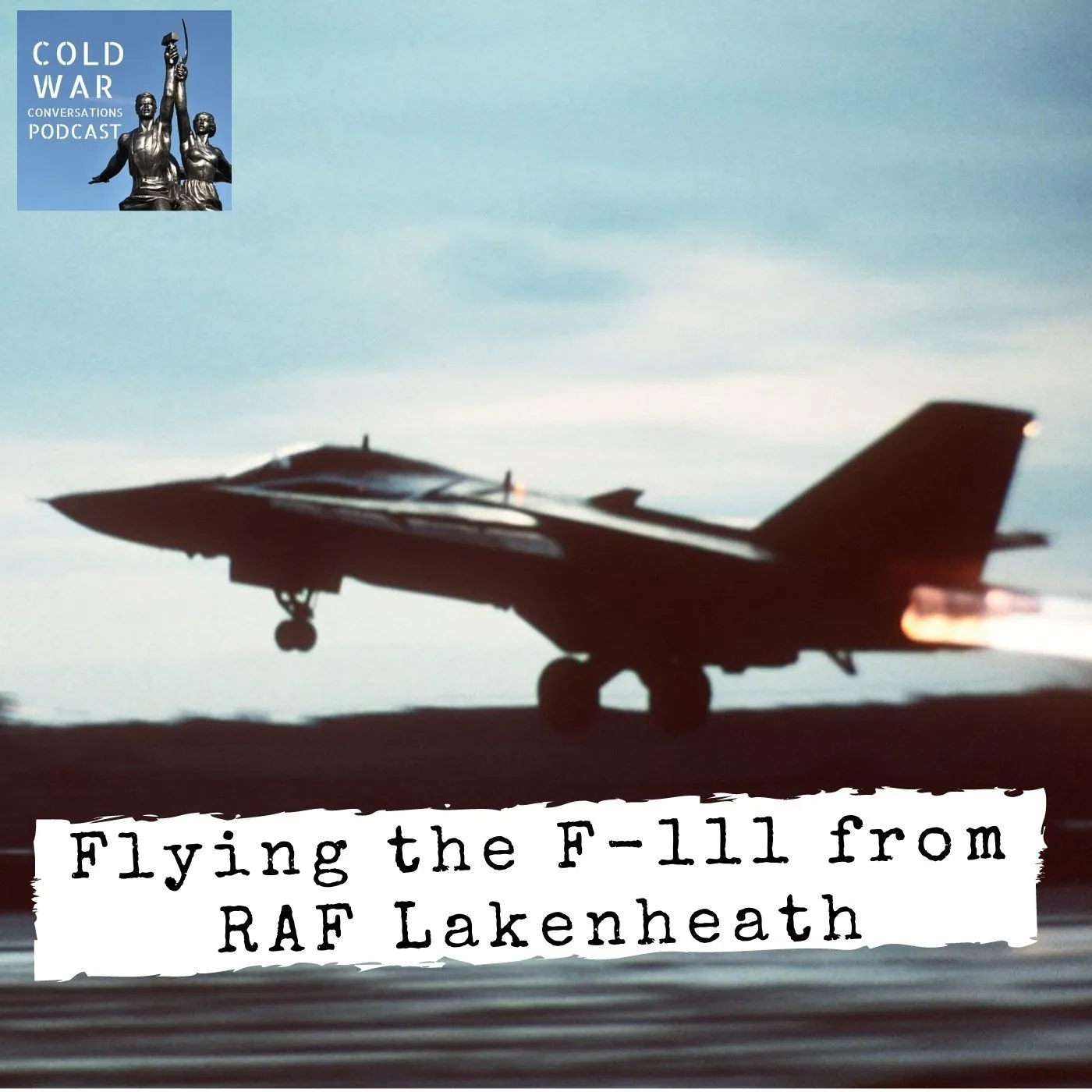
S9 Ep 193Flying the F-111 nuclear bomber (193)
Rick Shreve was a USAF F111 pilot based at RAF Lakenheath in the UK. We hear about his early USAF career as a fighter pilot, then we move onto his transfer to the F111 and how he was trained to carry out nuclear as well as conventional missions against the Warsaw Pact forces in Europe. He describes his low-level training missions to attack targets in the Soviet Union and East Germany and recalls a near-fatal incident amongst the Scottish lochs. Rick was also part of one of the crews that flew on Operation El Dorado Canyon, the operation to bomb Libya in April 1986 in retaliation for the West Berlin discotheque bombing ten days earlier. Rick gives you a frank view of his role in the USAF and his approach to the huge responsibilities he carried. In his later career, he flew civil airliners with Pan-Am and recalls how he was astonished to fly over the Warsaw Pact airfield he had been tasked to attack in the event of war… If you have listened this far, I know you are enjoying the podcasts so I’m asking for donations to support my work and enable me to continue producing the podcast. If you become a monthly supporter, you will get the sought after CWC coaster as a thank you and bask in the warm glow of knowing you are helping to preserve Cold War history. Just go to https://coldwarconversations.com/donate/ If a financial contribution is not your cup of tea, you can still help us by leaving written reviews wherever you listen to us and sharing us on social media. It really helps us get new guests on the show. I am delighted to welcome Rick to our Cold War conversation… There’s further information including photos and videos here. https://coldwarconversations.com/episode193/ If you can’t wait for next week’s episode, visit our Facebook discussion group where guests and listeners continue the Cold War Conversation. Just search Cold War Conversations on Facebook. Thank you very much for listening. It is really appreciated. 0:00 Introduction and Rick Shreve's initial experiences in the Air Force 10:00 Rick's experiences with debriefing, training evaluations, and handling nukes 16:18 Rick's transfer to RAF Lakenheath and differences between flying an F 111 and the F4 Phantom 26:24 Noise complaints, rules for flying in different countries, and Rick's training in escape and evasion 37:27 Details of a nuclear mission and Rick's view on dropping a nuclear weapon 46:04 Operation El Dorado Canyon: The 1986 bombing of Libya 56:11 Role as the Nuclear Alert Force Commander at Lakenheath 1:00:33 Salty Nation: Preparing for operational readiness inspections 1:13:48 Rick Shreve discusses dangerous flying incidents and the mindset of military pilots 1:19:46 Rick Shreve's transition to Pan Am and his involvement in Desert Storm 1:24:13 Reminder for listeners to visit our Facebook discussion group Table of contents powered by PodcastAI✨ Support the project! https://coldwarconversations.com/donate/ Follow us on Twitter https://twitter.com/ColdWarPod Facebook https://www.facebook.com/groups/coldwarpod/ Instagram https://www.instagram.com/coldwarconversations/ Youtube https://youtube.com/@ColdWarConversations Learn more about your ad choices. Visit podcastchoices.com/adchoices
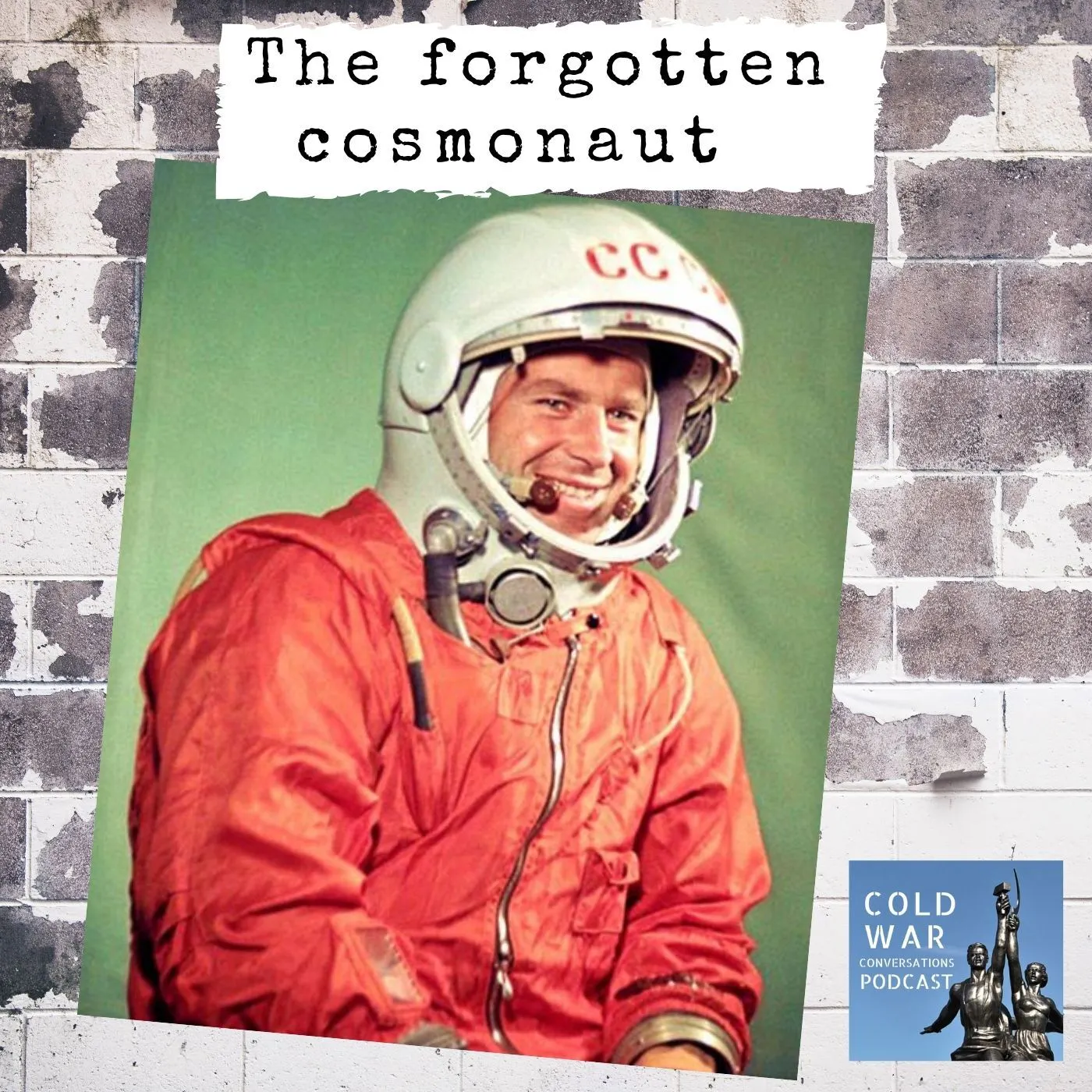
S9 Ep 192The forgotten cosmonaut (192)
bonusThis week it's the 60th anniversary of the flight of Gherman Titov on Vostok 2. The forgotten 2nd cosmonaut overshadowed by the exploits of his friend Yuri Gagarin. Titov’s 25.3 hours and 17 orbits flight was much more ambitious than Gagarin’s and more dangerous. It was also a very political flight, intending to distract the world from the building of the Berlin Wall a number of days later. However, there’s more to Titov than his flight, he was different character to most of the Soviet cosmonauts with a love of pre-Soviet literary classics and enjoying his own company. He was also one of the most colourful characters of the Soviet space program leading a wild life back on Earth with various car crashes and scrapes. I’m sure regular listeners will be pleased to hear we have Stephen Walker back, the author of Beyond: The Astonishing Story of the First Human to Leave Our Planet and Journey into Space. Do check out our previous episode on Yuri Gagarin, the first human in space here https://coldwarconversations.com/episode172/ I’m asking listeners to support my work and enable me to continue recording these incredible stories. If you become a monthly supporter via Patreon, you will get the sought after CWC coaster as a thank you and bask in the warm glow of knowing you are helping to preserve Cold War history. Just go to https://coldwarconversations.com/donate/ If you can’t wait for next week’s episode do visit our Facebook discussion group where guests and listeners continue the Cold War Conversation. Just search Cold War Conversations in Facebook. I am delighted to welcome Stephen Walker back to our Cold War conversation… There’s further information on this episode in our show notes which can also be found as a link in your podcast app here. https://coldwarconversations.com/episode192 Thank you very much for listening. It is really appreciated – goodbye. 0:00 Introduction and overview of German Titov's character 0:45 The political implications of Titov's groundbreaking flight 2:20 Guest introduction: Stephen Walker 3:53 The Cold War context of Titov's flight 7:22 Titov's rebellious nature and the cosmonaut program's rule-breaking 26:37 Training for Titov's mission, Vostok 2 29:24 The significance and firsts of Titov's 25-hour mission 35:14 Titov's life post-mission: fame, scandal, and tragedy 42:13 The technical issues and risks of Titov's mission 47:38 Titov's role in the Soviet Moon mission and the Spiral project 52:23 Reflections on Titov's legacy and closing remarks Table of contents powered by PodcastAI✨ Support the project! https://coldwarconversations.com/donate/ Follow us on Twitter https://twitter.com/ColdWarPod Facebook https://www.facebook.com/groups/coldwarpod/ Instagram https://www.instagram.com/coldwarconversations/ Youtube https://youtube.com/@ColdWarConversations Learn more about your ad choices. Visit podcastchoices.com/adchoices
S9 Ep 191A workers view of Poland from Łódź in 1986 (191)
Evan McGilvray has written a number of books on Poland as well as biographies. He is well versed in Poland and Polish society and away from the usual locations of Krakow and Warsaw. Evan first visited Poland in 1986, 5 years after the declaration of martial law which triggered the suppression of the free trade union Solidarity in December 1981. He visited some friends he had made via correspondence, who lived in the city of Łódź. He provides us with a great insight away from the intelligentsia as his friends were workers. We hear in some detail how the communist party was perceived, life as a worker, as well as views on Lech Walesa and Solidarity. In the 1990s Evan interviewed General Jaruzelski, who as First Secretary of the Polish United Workers' Party (aka the communist party) gave the martial law order in 1981 and remained head of state until 1989. Extra info, and videos are here https://coldwarconversations.com/episode191/ If you are enjoying the podcast please tell your friends you can really help us grow the number of listeners. Now I need help to continue to track down these unknown stories of the Cold war and ensure they are preserved before they are lost. If you can spare it I’m asking listeners to pledge a small monthly amount per month to help keep us on the air (larger amounts are welcome too) plus you can get a sought after CWC coaster as a monthly financial supporter of the podcast and you bask in the warm glow of knowing you helping preserve Cold War history. Just go to https://coldwarconversations.com/donate/ Peter Ryan is our host today and I am delighted to welcome Evan McGilvray to our Cold War conversation… If you can’t wait for next week’s episode do visit our Facebook discussion group where guests and listeners continue the Cold War Conversation. Just search Cold War Conversations in Facebook. 0:00 Introduction 3:00 Interview with Evan McGilvray: His interest in Poland and first impressions 16:45 Life in Poland: The average worker, shopping, self-sufficiency, and popular culture 26:16 Surveillance and influence of the Catholic church in Poland 29:07 Impressions and interactions with the communist regime in Poland 33:05 Impressions of the Soviet Union and Russian forces in Poland 36:21 Impressions of Lech Walesa in Poland and his transition to mainstream 40:19 Contacts with solidarity in Poland and encounters with General Jaruzelski 44:56 General Jaruzelski's efforts to correct the record 49:33 Reminder to check out extra information and videos Table of contents powered by PodcastAI✨ Support the project! https://coldwarconversations.com/donate/ Follow us on Twitter https://twitter.com/ColdWarPod Facebook https://www.facebook.com/groups/coldwarpod/ Instagram https://www.instagram.com/coldwarconversations/ Youtube https://youtube.com/@ColdWarConversations Learn more about your ad choices. Visit podcastchoices.com/adchoices
S9 Ep 190Unforgotten in the Gulf of Tonkin (190)
On November 18, 1965, U.S. Navy pilot Willie Sharp ejected from his F-8 fighter after being hit while positioned over a target in North Vietnam. With a cloud layer beneath him, he did not know if he was over land-where he would most certainly be captured or killed by the North Vietnamese or over the Gulf of Tonkin. As he ejected, both navy and air force aircraft were already heading toward him to help. Thanks to Dennis DeFreitas and his Youtube video of Willie’s shootdown available here https://www.youtube.com/watch?v=Md9oNlLYEr8 Co-host James Chilcott speaks with former military flight test engineer Eileen A. Bjorkman, who has written “Unforgotten in the Gulf of Tonkin A Story of the U.S. Military's Commitment to Leave No One Behind” The book includes nail-biting descriptions of air combat, flight, and rescue as Bjorkman places Willie Sharp's story in the larger context of the U.S. military's bedrock credo-No Man Left Behind-and calls attention to the more than eighty thousand Americans still missing from conflicts since World War I. She also explores the devastating aftershocks of the Vietnam War as Willie Sharp struggled with post-traumatic stress disorder. Buy the book and support the Podcast UK listeners buy the book here https://amzn.to/3rtpJDe US Listeners buy the book here https://amzn.to/3zwLVPA If you have listened this far, I know you are enjoying the podcasts so I’m asking for donations to support my work and enable me to continue producing the podcast. If you become a monthly supporter, you will get the sought after CWC coaster as a thank you and bask in the warm glow of knowing you are helping to preserve Cold War history. Just go to https://coldwarconversations.com/donate/ If a financial contribution is not your cup of tea, then you can still help us by leaving written reviews wherever you listen to us as well as sharing us on social media. It really helps us get new guests on the show. I am delighted to welcome Eileen Bjorkman to our Cold War conversation… There’s further information and details of our book giveaway here. https://coldwarconversations.com/episode190/ If you can’t wait for next week’s episode do visit our Facebook discussion group where guests and listeners continue the Cold War Conversation. T0:00 Introduction and Overview of the episode 2:47 Guest Introduction: Eileen Bjorkman 6:37 Combat Search and Rescue during the Vietnam War 11:53 Willie Sharp's Mission and Rescue Operation 28:56 Willie's Ejection, Descent, and Capture 40:31 Willie's Escape and Confrontation with Fishermen 47:17 Final Rescue Operation and Post-Rescue Plans 52:04 Improvements in Rescue Operations during the War 1:02:08 Reflection on Dramatic Events and Acknowledgment of Patrons 1:03:21 Encouragement to Join Facebook Discussion Group and Closing Remarks Table of contents powered by PodcastAI✨ Support the project! https://coldwarconversations.com/donate/ Follow us on Twitter https://twitter.com/ColdWarPod Facebook https://www.facebook.com/groups/coldwarpod/ Instagram https://www.instagram.com/coldwarconversations/ Youtube https://youtube.com/@ColdWarConversations Learn more about your ad choices. Visit podcastchoices.com/adchoices
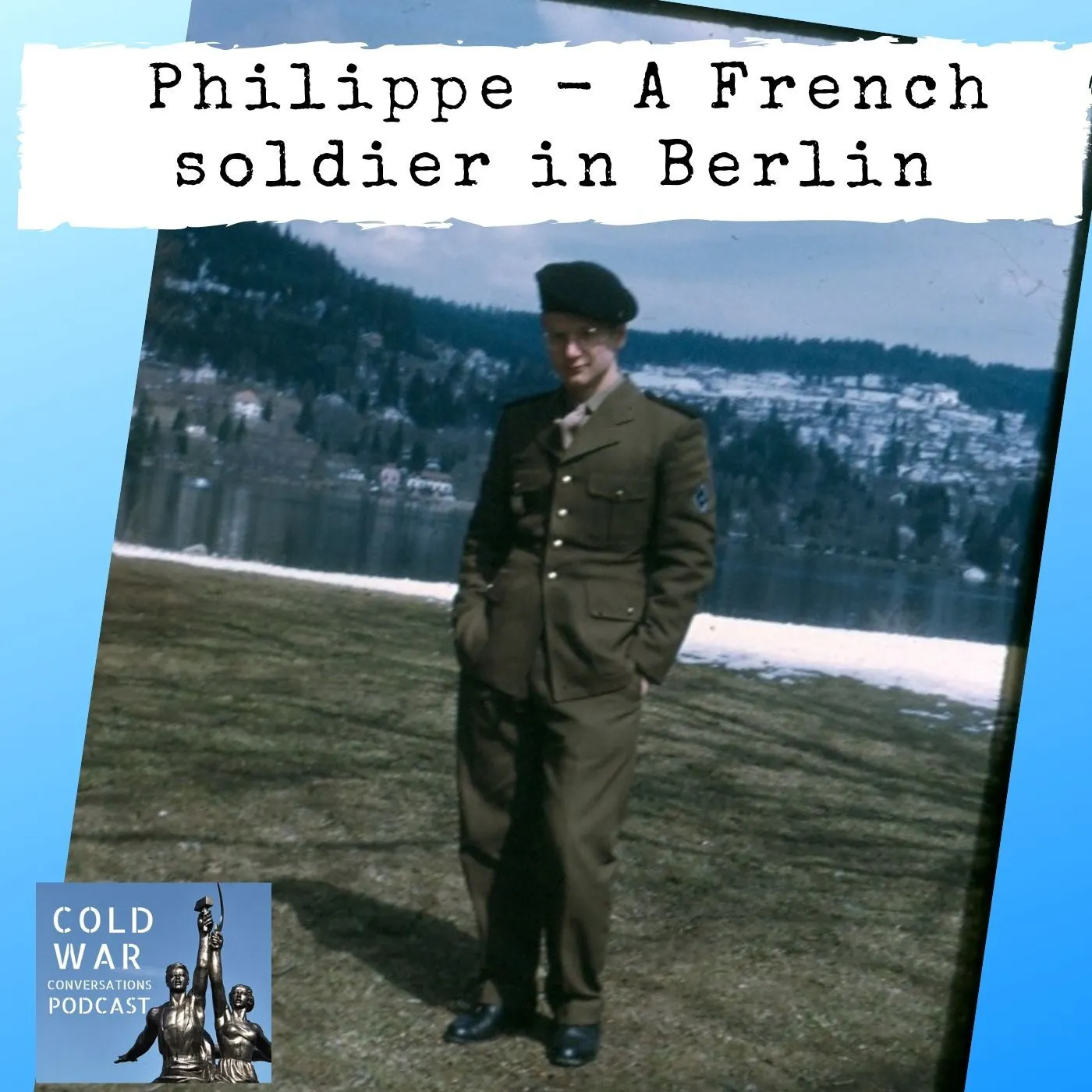
S8 Ep 189Philippe - A French soldier in Cold War Berlin (189)
The French Forces in Berlin were the units of the French Armed Forces stationed from 1945 until the end of the Cold War-era in West Berlin according to the agreements of the Yalta Conference and Potsdam Conference. The troops were the French counterparts to the United States' Berlin Brigade and the United Kingdom's Berlin Infantry Brigade in the city. Philippe was stationed in Berlin from 1972 to 1973 with the French army for his military service. He did not volunteer and was not too happy at first, but started enjoying life outside of the “Quartier Napoleon” as it was called, near the Tegel airport. His role was in Signals intelligence and during the day he listened to FM radio transmissions of the East German Army as well as the Soviets (GFSA). If you are enjoying the podcast, you can help me to keep producing these episodes by a small monthly donation via Patreon, plus you will get the sought after CWC coaster as a thank you and bask in the warm glow of knowing you are helping to preserve Cold War history. Just go to https://coldwarconversations.com/donate/ If a financial contribution is not your cup of tea, you can still help us by leaving written reviews wherever you listen to us and sharing us on social media. It really helps us get new guests on the show. I am delighted to welcome Philippe to our Cold War conversation… There’s further information on this episode here. https://coldwarconversations.com/episode189/ If you can’t wait for next week’s episode, visit our Facebook discussion group where guests and listeners continue the Cold War Conversation. Just search Cold War Conversations in Facebook. 0:00 Introduction and Philippe's experience in Berlin 4:58 Philippe's training and move to Landau 13:43 Philippe's posting to Berlin and initial impressions 18:15 French counterintelligence's investigation into Philippe's relationship 22:35 The French sector in Berlin and tensions with American interests 28:42 French military lifestyle in Berlin 33:53 Attitude of Berlin locals towards foreign soldiers 38:39 Sightseeing and political discussions in East Berlin 46:30 Leaving Berlin and life after service 50:31 Communication and encryption methods during the Cold War Table of contents powered by PodcastAI✨ Support the project! https://coldwarconversations.com/donate/ Follow us on Twitter https://twitter.com/ColdWarPod Facebook https://www.facebook.com/groups/coldwarpod/ Instagram https://www.instagram.com/coldwarconversations/ Youtube https://youtube.com/@ColdWarConversations Learn more about your ad choices. Visit podcastchoices.com/adchoices
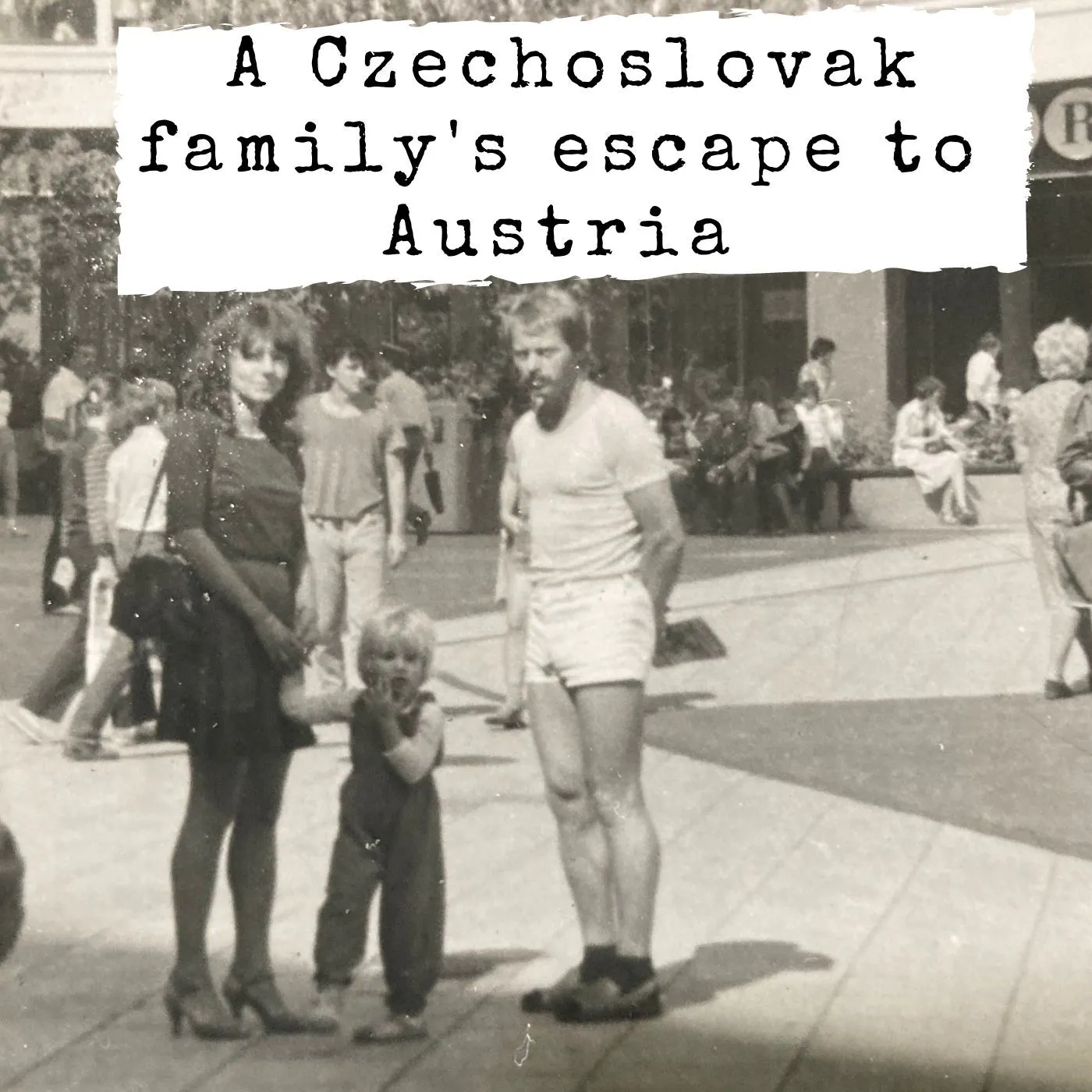
S8 Ep 188A Czechoslovak family's escape to Austria (188)
We continue Drea Hahn’s story with her family’s escape to Austria and the realities of being a refugee. In 1986, under the pretext of a “ski trip” to Yugoslavia Drea’s family escaped to Austria. We hear about the sadness of being unable to tell anyone they were leaving and how her relatives were summoned to the police station to be detained for questioning. They didn’t communicate with anyone at “home” until 1989 or 1990 because it was too dangerous. Once, in Austria, there was no certainty that that Drea’s family wouldn’t be handed back to Czechoslovakia as Austria was neutral and the government was keen to stay on good terms with their neighbours. Drea’s family were in Austria for about 2 years living in a single room with a shared bathroom. We hear from her about the challenges of life as a child refugee in rural Austria. In 1988 permission was granted to emigrate to the US and we hear of their elation when they arrive. Extra info, photos and videos are here https://coldwarconversations.com/episode188 If you are enjoying the podcast please leave a written review in Apple podcasts or share us on social media. By telling your friends you can really help us grow the number of listeners. Now I need help to continue to track down these unknown stories of the Cold war and ensure they are preserved. If you can spare it I’m asking listeners to pledge a small monthly amount per month to help keep us on the air (larger amounts are welcome too) plus you can get a sought after CWC coaster as a monthly financial supporter of the podcast and you bask in the warm glow of knowing you helping preserve Cold War history. Just go to https://coldwarconversations.com/donate/ I am delighted to welcome Drea Hahn back to our Cold War conversation… If you can’t wait for next week’s episode, visit our Facebook discussion group where guests and listeners continue the Cold War Conversation. Just search Cold War Conversations on Facebook. 0:00 Introduction to Drea Hahn's family's escape from Czechoslovakia 1:27 Listener support and testimonials 8:08 Comparison of individual and family escapes from the Eastern Bloc 12:04 Access to STB files and the decision to escape 19:20 Planning and executing the escape to Austria 27:36 The tense border crossing and seeking asylum in Austria 33:07 Adjusting to life as refugees in Austria 41:28 Visit from grandparents and the Czechoslovakian government's persuasion program 45:48 Journey to America and initial days in the new country 51:03 The fall of the Berlin Wall and the Velvet Revolution: Impact and decisions 57:50 The role of Cold War Conversations podcast in uncovering personal histories Table of contents powered by PodcastAI✨ Support the project! https://coldwarconversations.com/donate/ Follow us on Twitter https://twitter.com/ColdWarPod Facebook https://www.facebook.com/groups/coldwarpod/ Instagram https://www.instagram.com/coldwarconversations/ Youtube https://youtube.com/@ColdWarConversations Learn more about your ad choices. Visit podcastchoices.com/adchoices
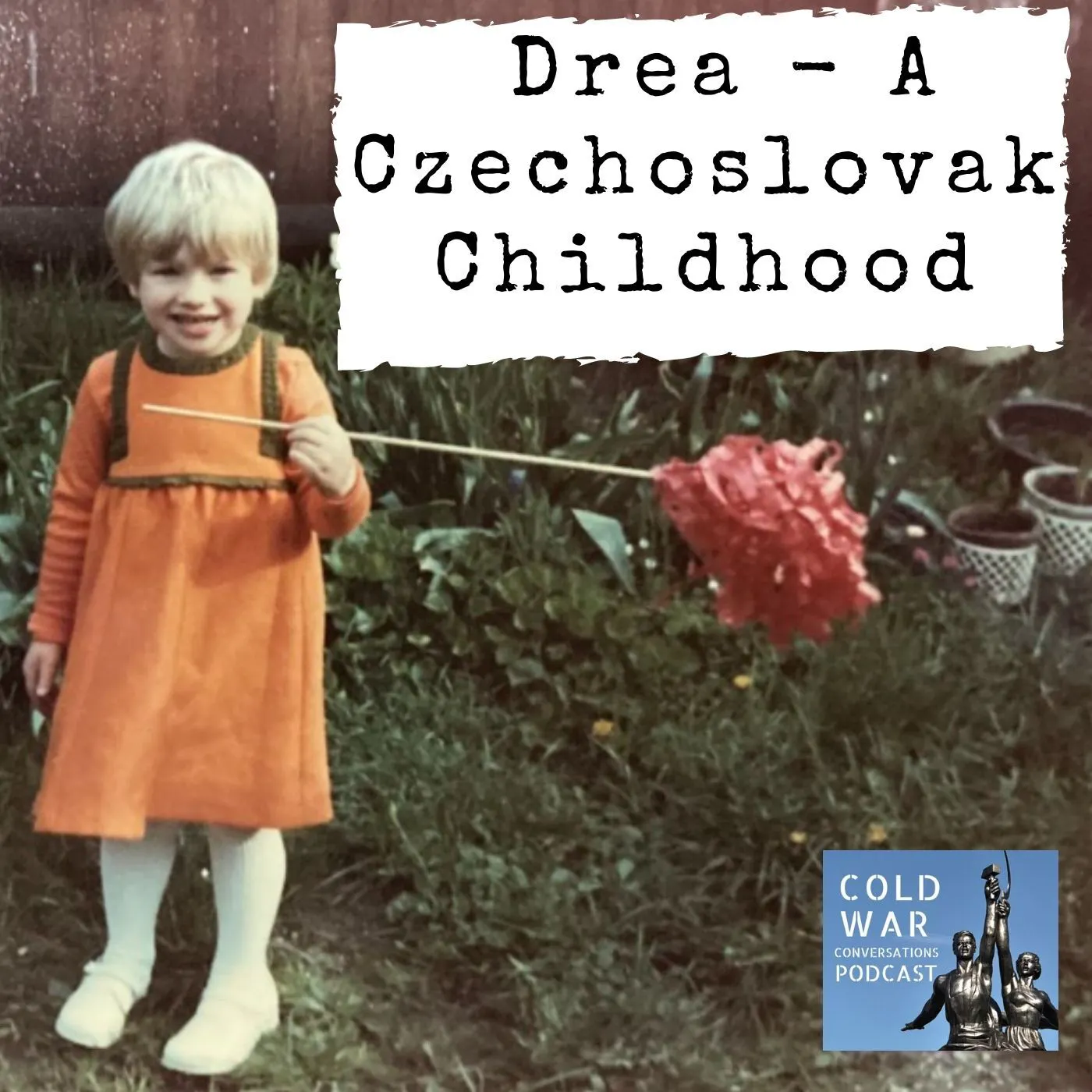
S8 Ep 187Drea - A Cold War Czechoslovak childhood (187)
Drea Hahn was born in Czechoslovakia in 1980 in Teplice. Her mother was a secretary and her father was an engineer but refused to join the communist party and this was a source of tension in Drea’s family. She was partly raised by her grandparents and her grandmother shared stories about growing up in “the Protectorate”, the name given to the area of Czechoslovakia occupied by the Germans in World War 2. Drea tells of a typical Czech childhood – her school friends, fond memories of school trips, and summers at their chata (country house). A more sinister side of life was getting in trouble for being a chatty kid and being cautioned with the phrase “walls have ears”. Extra info, and videos are here https://coldwarconversations.com/episode187/ If you are enjoying the podcast please leave a written review in Apple podcasts or share us on social media. By telling your friends you can really help us grow the number of listeners. Now I need help to continue to track down these unknown stories of the Cold war and ensure they are preserved. If you can spare it I’m asking listeners to pledge a small monthly amount per month to help keep us on the air (larger amounts are welcome too) plus you get a sought after CWC coaster as a monthly financial supporter of the podcast and bask in the warm glow of knowing you helping preserve Cold War history. Just go to https://coldwarconversations.com/donate/ I am delighted to welcome Drea Hahn to our Cold War conversation… If you can’t wait for next week’s episode, visit our Facebook discussion group where guests and listeners continue the Cold War Conversation. Just search Cold War Conversations in Facebook. 0:00 Introduction to the episode and guest Drea Hahn 0:47 Request for listener support 2:29 Drea's fascination with everyday history and her decision to share her experiences 7:54 Drea's family background during World War 2 15:14 The presence and regulation of religion in Czechoslovakia during the Cold War 17:47 The impact of socialism and communism on daily life 21:35 Misconceptions about the isolation of the Eastern Bloc 30:56 Drea's parents' wedding and her birth 33:29 Ideological teachings in school and the fear of non-conformity 38:16 Travel restrictions and permits within Eastern Bloc countries 44:13 Membership in the Communist Party and the associated documentation 47:50 Teaser for the next episode 48:26 Acknowledging the supporters and patrons of the podcast Table of contents powered by PodcastAI✨ Support the project! https://coldwarconversations.com/donate/ Follow us on Twitter https://twitter.com/ColdWarPod Facebook https://www.facebook.com/groups/coldwarpod/ Instagram https://www.instagram.com/coldwarconversations/ Youtube https://youtube.com/@ColdWarConversations Learn more about your ad choices. Visit podcastchoices.com/adchoices
S8 Ep 186An evening with Kim Philby (186)
bonusBen Brown is the writer of A Splinter of Ice, a play that portrays the meeting in Moscow in 1987 of one of the greatest novelists of the 20th century, Graham Greene and his old MI6 boss, Kim Philby, one of Britain's most notorious spies... and a traitor. Graham Greene never divulged any details of the meeting and Ben’s play imagines what might have been. We discuss the play, as well as how Philby and Greene’s lives intertwined. It’s a story of two men catching up on old times, but with a new world order breaking around them how much did the writer of The Third Man know about Philby's secret life as a spy? Did Philby betray his friend as well as his country..? A trailer and other videos are available in our episode notes here www.coldwarconversations.com/episode186/ If you have listened this far, I know you are enjoying the podcasts so I’m asking for one-off or monthly donations to support my work and enable me to continue producing the podcast. If you become a monthly supporter, you will get the sought after CWC coaster as a thank you and bask in the warm glow of knowing you are helping to preserve Cold War history. Just go to https://coldwarconversations.com/donate/ If a financial contribution is not your cup of tea, then you can still help us by leaving written reviews wherever you listen to us as well as sharing us on social media. It really helps us get new guests on the show. I am delighted to welcome Ben Brown to our Cold War conversation… There’s further information on this episode here. https://coldwarconversations.com/episode186/ If you can’t wait for next week’s episode do visit our Facebook discussion group where guests and listeners continue the Cold War Conversation. Just search Cold War Conversations in Facebook. 0:00 Introduction to the episode and discussion on "A Splinter of Ice" 3:07 Deep dive into Kim Philby’s life, his relationship with Graham Green, and their portrayal in the media 17:25 Exploration of Philby's rise in the security services and overlooked communist credentials 25:05 Discussion on why Green left MI6 and the research used for the play 31:05 Examination of John La Carre's opinion of Philby and his influence on La Carre's work 35:04 Discussion on the political climate in the 1930s, the rise of fascism and its impact 44:59 Discussion on actors' preparation for their roles in the play 51:35 Exploration of Philby's life in Russia, his struggles and the role of Ruth in his life Table of contents powered by PodcastAI✨ Support the project! https://coldwarconversations.com/donate/ Follow us on Twitter https://twitter.com/ColdWarPod Facebook https://www.facebook.com/groups/coldwarpod/ Instagram https://www.instagram.com/coldwarconversations/ Youtube https://youtube.com/@ColdWarConversations Learn more about your ad choices. Visit podcastchoices.com/adchoices
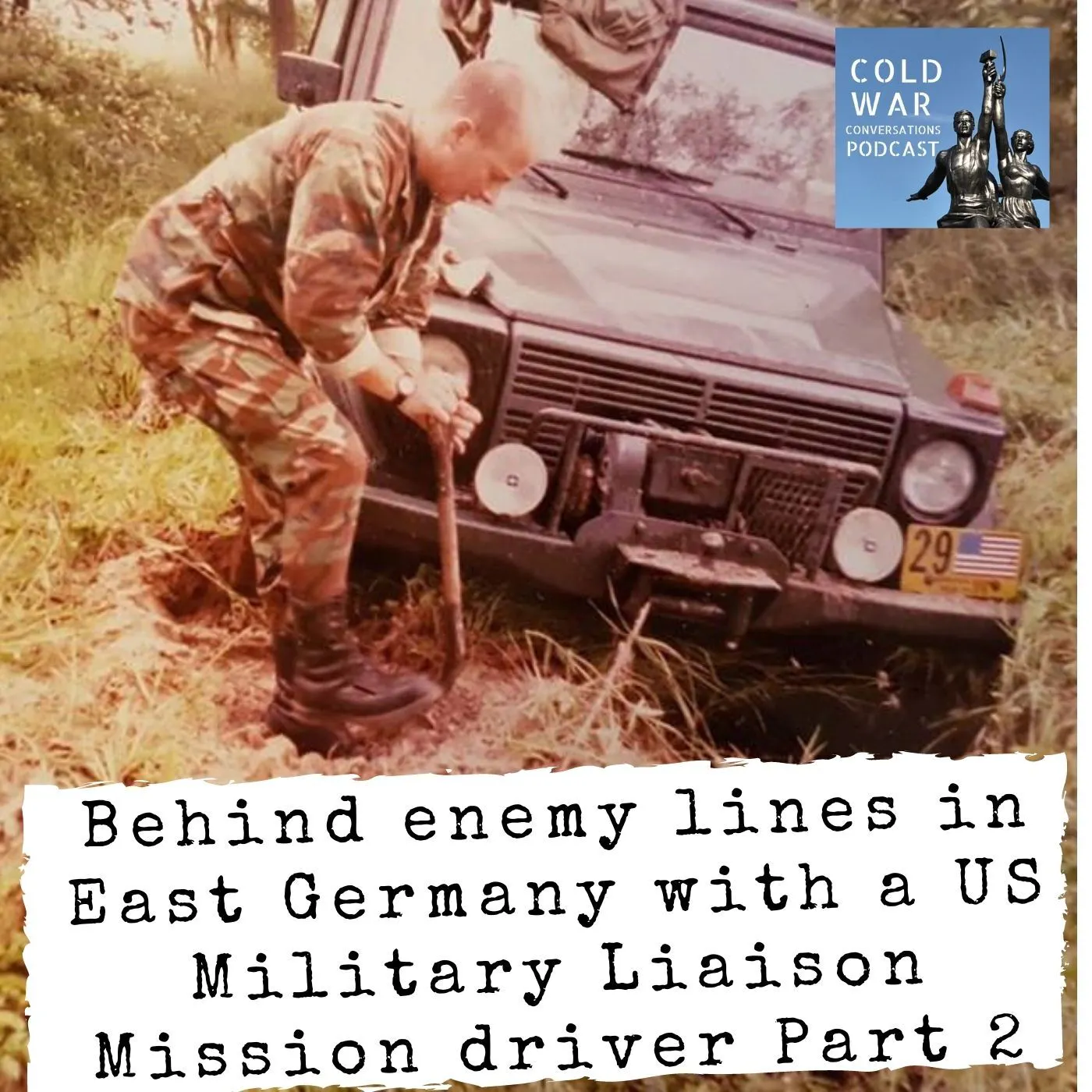
S8 Ep 185Behind enemy lines in East Germany with a US Military Liaison Mission driver Part 2 (185)
We return to the 2nd part of Tom Favia’s story with the US Military Liaison Mission which the Soviet Union permitted to operate in East Germany, ostensibly for monitoring and furthering better relationships between the Soviet and Western occupation forces. The British & French also had missions as did the Soviets in West Germany. Part 1 is here https://coldwarconversations.com/episode183/ As you would expect there are some incredible incidents that Tom shares with us including one with a drunk Soviet Major who tries to defect. Tom was with USMLM when the Wall opened in Nov 1989 and describes the uncertainty of the time with Soviet soldiers selling parts of tanks and munitions. If you have listened this far, I know you are enjoying the podcasts so I’m asking for donations to support my work and enable me to continue producing the podcast. If you become a monthly supporter, you will get the sought after CWC coaster as a thank you and bask in the warm glow of knowing you are helping to preserve Cold War history. Just go to https://coldwarconversations.com/donate/ If a financial contribution is not your cup of tea, you can still help us by leaving written reviews wherever you listen to us and sharing us on social media. It really helps us get new guests on the show. I am delighted to welcome back Tom Favia to our Cold War conversation… There’s further information on this episode can be found here. https://coldwarconversations.com/episode185 If you can’t wait for next week’s episode, visit our Facebook discussion group where guests and listeners continue the Cold War Conversation. Just search Cold War Conversations on Facebook. Thank you very much for listening. It is really appreciated. Radio GDR If you are interested in East Germany we can highly recommend our friends over at Radio GDR. Please leave a review. If you enjoy the podcast, please leave a written review. 0:00 Introduction and Tom Favia's experiences with the US military liaison mission 1:23 Request for donations and benefits for monthly supporters 2:56 Tensions and incidents with the Soviets 7:36 Dealing with Stasi and interactions with East German citizens 13:19 Disclosure of mission details and important findings 21:30 The opening and aftermath of the Berlin Wall 27:11 Challenges post the fall of the Berlin Wall and other intelligence organizations 31:33 Experiences leading up to unification day in East Germany 34:07 Recruitment into the on-site inspection agency and working out of Frankfurt 38:33 Cold War souvenirs and remembering fallen comrades 43:25 Episode wrap up, acknowledgements of patrons, and sign off Table of contents powered by PodcastAI✨ Support the project! https://coldwarconversations.com/donate/ Follow us on Twitter https://twitter.com/ColdWarPod Facebook https://www.facebook.com/groups/coldwarpod/ Instagram https://www.instagram.com/coldwarconversations/ Youtube https://youtube.com/@ColdWarConversations Learn more about your ad choices. Visit podcastchoices.com/adchoices
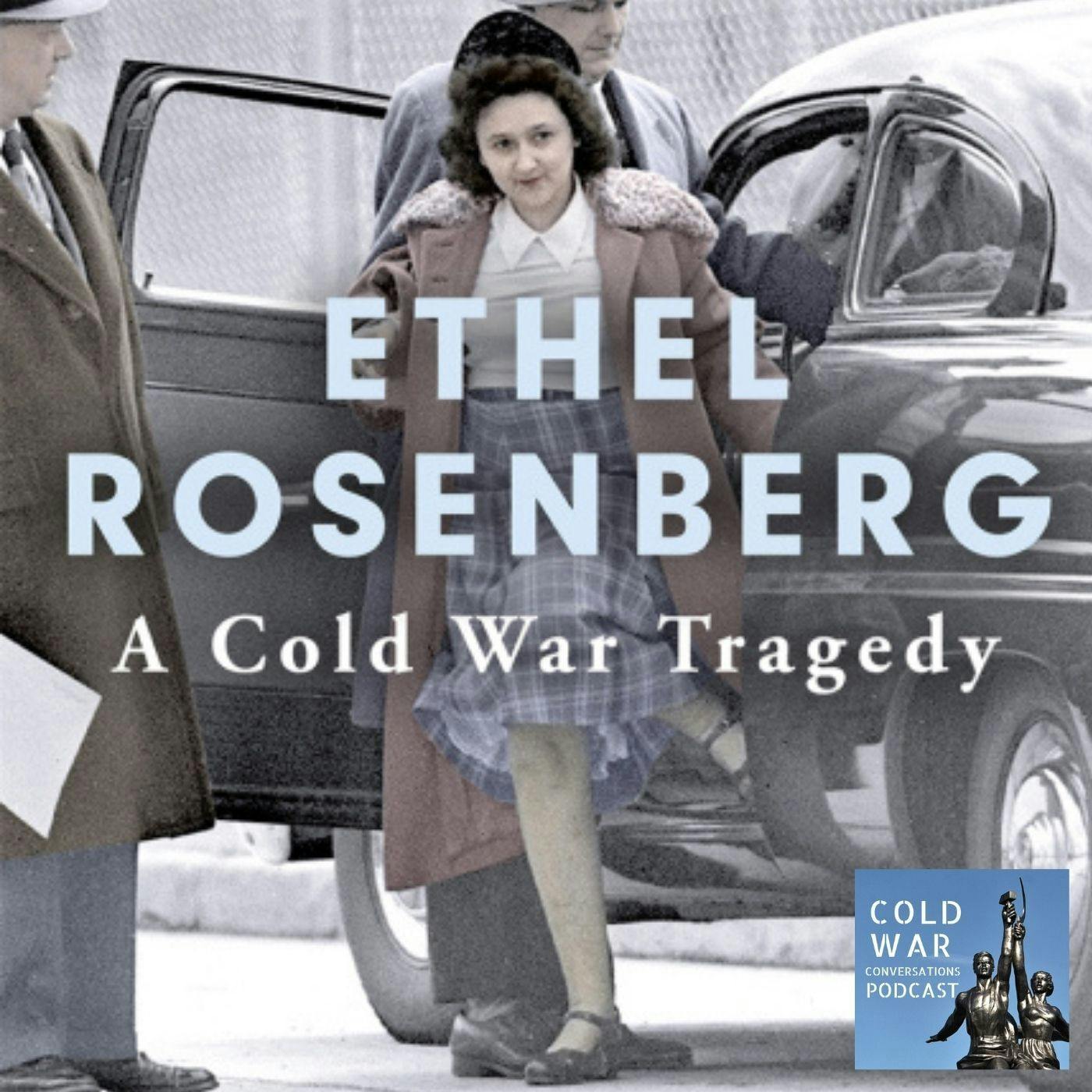
S8 Ep 184Ethel Rosenberg (184)
Ethel Rosenberg is a controversial figure and generates polarising views varying from an innocent mother caught up in Cold War hysteria to a willing and ruthless accomplice to her husband’s Cold War espionage betraying secrets to the Soviets. Anne Sebba’s new book “Ethel Rosenberg – A Cold War tragedy” (“An American tragedy” in the US) provides a more nuanced view of Ethel that is not just about innocence and guilt but of a talented singer and mother of two children, betrayed by her family and the American judicial system. Aged 37, in 1953 she becomes the first woman in American history to be executed for a crime other than murder. Whatever your views about Ethel Rosenberg this episode will detail more of who Ethel was and how the American judicial system was manipulated to ensure her conviction. Anne’s book is available on these links. UK listeners https://amzn.to/3wGZD1z US listeners https://amzn.to/2TObJra If you’ve listened this far, I know you are enjoying the podcasts so I’m asking for a small monthly donation to support my work and allow me to continue producing the podcast. As a monthly supporter, you will get the sought after CWC coaster as a thank you and bask in the warm glow of knowing you are helping to preserve Cold War history. Just go to https://coldwarconversations.com/donate/ If a financial contribution is not your cup of tea, you can still help us by leaving written reviews wherever you listen to us and sharing us on social media. It really helps us get new guests on the show. I am delighted to welcome Anne Sebba to our Cold War conversations... There's more information as well as a book giveaway in the episode notes here https://coldwarconversations.com/episode184/ If you can’t wait for next week’s episode, visit our Facebook discussion group where guests and listeners continue the Cold War Conversation. Just search Cold War Conversations on Facebook. 0:00 Introduction to Ethel Rosenberg's story 1:32 Request for financial support for the podcast 5:10 Ethel Rosenberg's early life and family 12:26 The political climate in 1936 and Ethel's meeting with Julius Rosenberg 16:14 The changing perceptions of the Soviet Union and Ethel and Julius's loyalty 27:31 Book giveaway announcement 33:30 Ethel's knowledge of Julius's espionage activities and the arrest 41:25 Legal proceedings and Ethel's decision to take the 5th Amendment 47:21 Discussion on the Vannona decrypts and Ethel's role 54:08 Importance and relevance of Ethel's story today Table of contents powered by PodcastAI✨ Support the project! https://coldwarconversations.com/donate/ Follow us on Twitter https://twitter.com/ColdWarPod Facebook https://www.facebook.com/groups/coldwarpod/ Instagram https://www.instagram.com/coldwarconversations/ Youtube https://youtube.com/@ColdWarConversations Learn more about your ad choices. Visit podcastchoices.com/adchoices
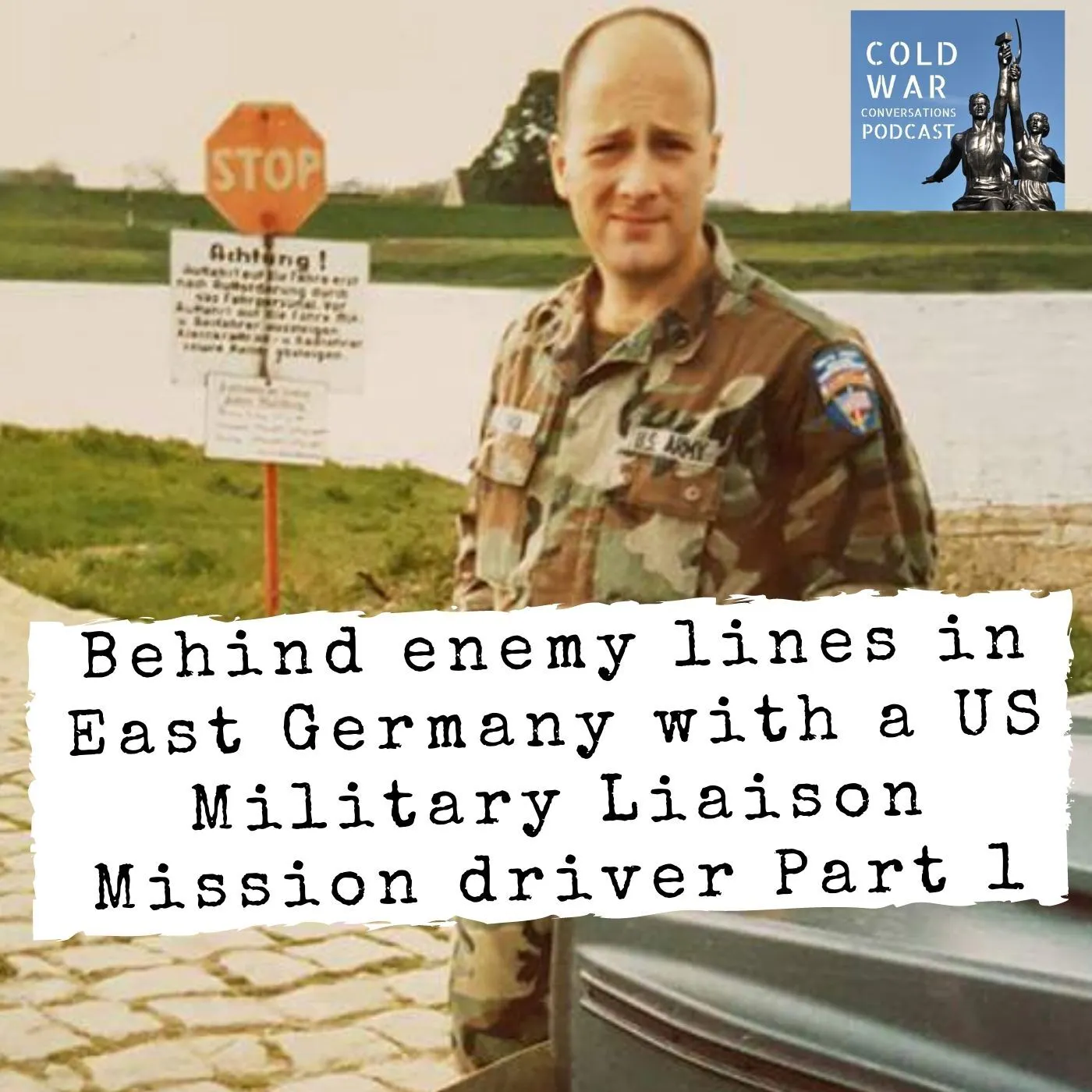
S8 Ep 183Behind enemy lines in East Germany with a US Military Liaison Mission driver Part 1 (183)
Tom Favia served with the USMLM, The US Military Liaison Mission which the Soviet Union permitted to operate in East Germany at the end of World War 2 for monitoring and furthering better relationships between the Soviet and Western occupation forces. The British & French also had missions in East Germany and the Soviets has theirs in West Germany. Tom tells the amazing story of his recruitment from being an art student to being deployed “behind enemy lines” in East Germany. He also describes his earlier career on the Inner German border and then we move to his USMLM career. We hear about his driver training, planning procedures and the process for exiting West Berlin as well as details of the vehicles including the “James Bond switches”. If you’ve listened this far, I know you are enjoying the podcasts so I’m asking for a small monthly donation to support my work and allow me to continue producing the podcast. As a monthly supporter, you will get the sought after CWC coaster as a thank you and bask in the warm glow of knowing you are helping to preserve Cold War history. Just go to https://coldwarconversations.com/donate/ If a financial contribution is not your cup of tea, you can still help us by leaving written reviews wherever you listen to us and sharing us on social media. It really helps us get new guests on the show. I am delighted to welcome Tom Favia to our Cold War conversation… There’s further information on this episode can be found here. https://coldwarconversations.com/episode183/ Part 2 is here https://coldwarconversations.com/episode185 If you can’t wait for next week’s episode, visit our Facebook discussion group where guests and listeners continue the Cold War Conversation. Just search Cold War Conversations on Facebook. Thank you very much for listening. It is really appreciated – goodbye. Radio GDR If you are interested in East Germany we can highly recommend our friends over at Radio GDR. 0:00 Introduction and guest introduction 3:08 Journey of Tom Favia from art school to the US Army 9:56 Tom Favia's role on the inner German border and experiences 17:18 Arrival and first impressions of West Berlin and initial training 25:11 Changes to recruitment and training after the Nicholson incident 33:10 Operational and representational headquarters in East and West Berlin 39:30 Gathering information from the Soviets at parties 44:34 Procedures for a mission and crossing from West Berlin to East Germany 51:08 Navigation and target selection during Cold War 1:00:17 Incidents where the Soviets tried to hinder their mission 1:01:33 Acknowledging the patrons and show wrap-up Table of contents powered by PodcastAI✨ Support the project! https://coldwarconversations.com/donate/ Follow us on Twitter https://twitter.com/ColdWarPod Facebook https://www.facebook.com/groups/coldwarpod/ Instagram https://www.instagram.com/coldwarconversations/ Youtube https://youtube.com/@ColdWarConversations Learn more about your ad choices. Visit podcastchoices.com/adchoices
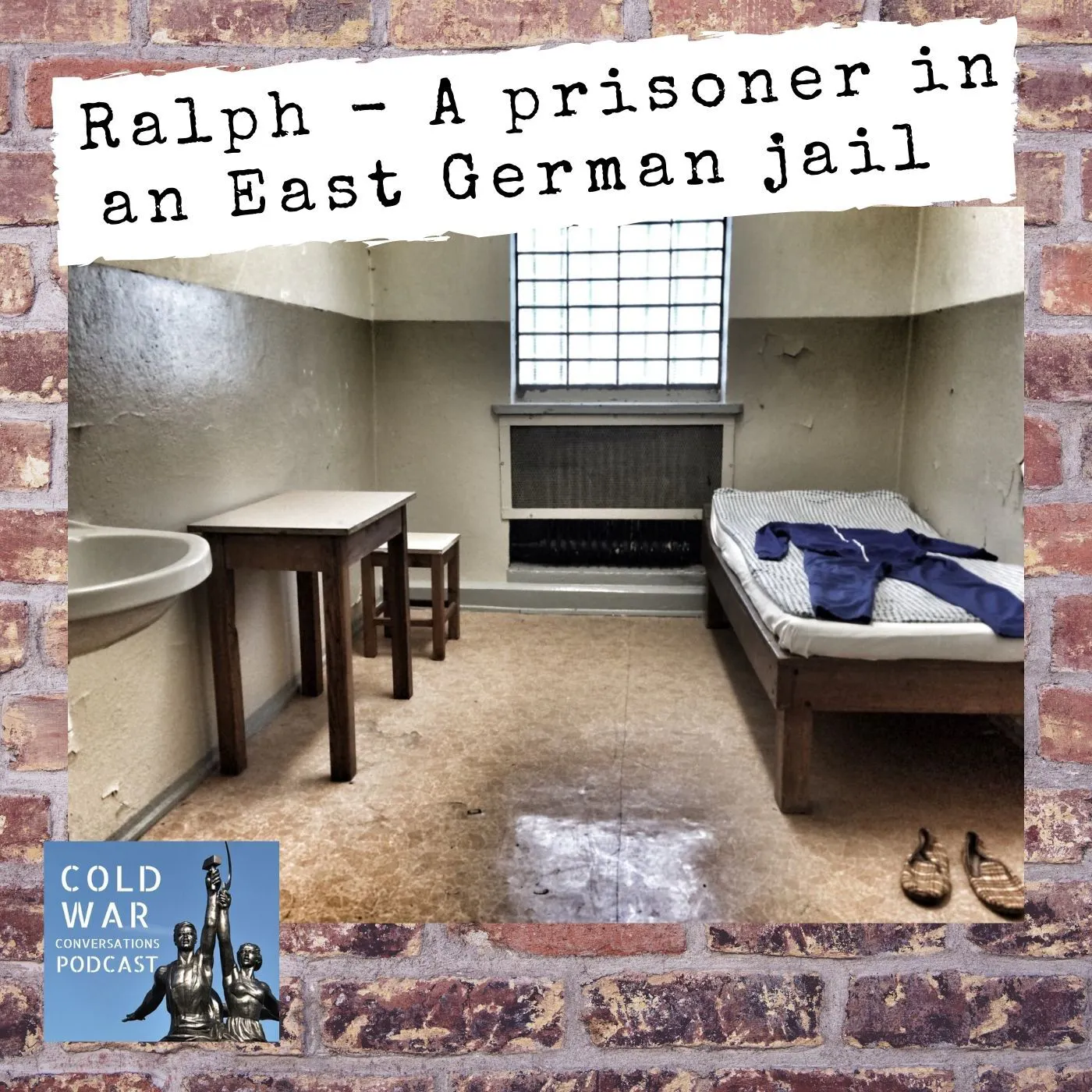
S8 Ep 182Ralph - A prisoner in an East German jail (182)
This is the third and final part of Ralph Hänel’s story of his life in East Germany. In this episode, we hear his time in the Stasi prison in Cottbus which with its dark red brick façade was often referred to as the ‘Red Misery’. It’s a chilling insight into Stasi prison conditions and the brutality that the political prisoners endured from the other inmates and the guards. We also hear about Ralph’s eventual release and of some strange experiences he has in reunited Germany Again I am honoured and humbled that Ralph shared this story with us. I could really use your support to help me to continue the produce the podcast. A small monthly donation entitles you to the sought after CWC coaster as a thank you and you bask in the warm glow of knowing you are helping to preserve Cold War history. Just go to https://coldwarconversations.com/donate/ If a financial contribution is not your cup of tea, you can still help us by leaving written reviews wherever you listen to us and sharing us on social media. It really helps us get new guests on the show. I am delighted to welcome Ralph back to our Cold War conversation… Further information on this episode can also be found here. https://coldwarconversations.com/episode182/ Other episodes with Ralph are here https://coldwarconversations.com/episode177/ and here https://coldwarconversations.com/episode181/ You can buy Ralph's book here If you can’t wait for next week’s episode do visit our Facebook discussion group where guests and listeners continue the Cold War Conversation. Just search Cold War Conversations in Facebook or click here https://www.facebook.com/groups/coldwarpod/ Thank you very much for listening. It is really appreciated – goodbye. Radio GDR If you are interested in East Germany we can highly recommend our friends over at Radio GDR. Support the project! https://coldwarconversations.com/donate/ Follow us on Twitter https://twitter.com/ColdWarPod Facebook https://www.facebook.com/groups/coldwarpod/ Instagram https://www.instagram.com/coldwarconversations/ Youtube https://youtube.com/@ColdWarConversations 0:00 Introduction and podcast award announcement 1:07 Life in the Stasi Prison: Conditions and Dangers 3:08 Transfer to Caughtpus Starzy prison and initial experiences 13:15 Treatment by guards and fear of a massacre 18:38 Experience of the open border and release from prison 27:25 First impressions of the West and arrival in West Berlin 34:13 Relocation to West Germany and reunion with former workmates 38:06 Moving to Switzerland, opening Kung Fu schools, and mysterious bank account 46:21 Mysterious illness and suspicion towards a woman from work 54:01 Decision to leave Germany and move to Canada 59:23 Ralph's theory about the doppelganger and the secret service 1:01:19 Acknowledgement of the podcast patrons Chapters powered by PodcastAI✨ Learn more about your ad choices. Visit podcastchoices.com/adchoices
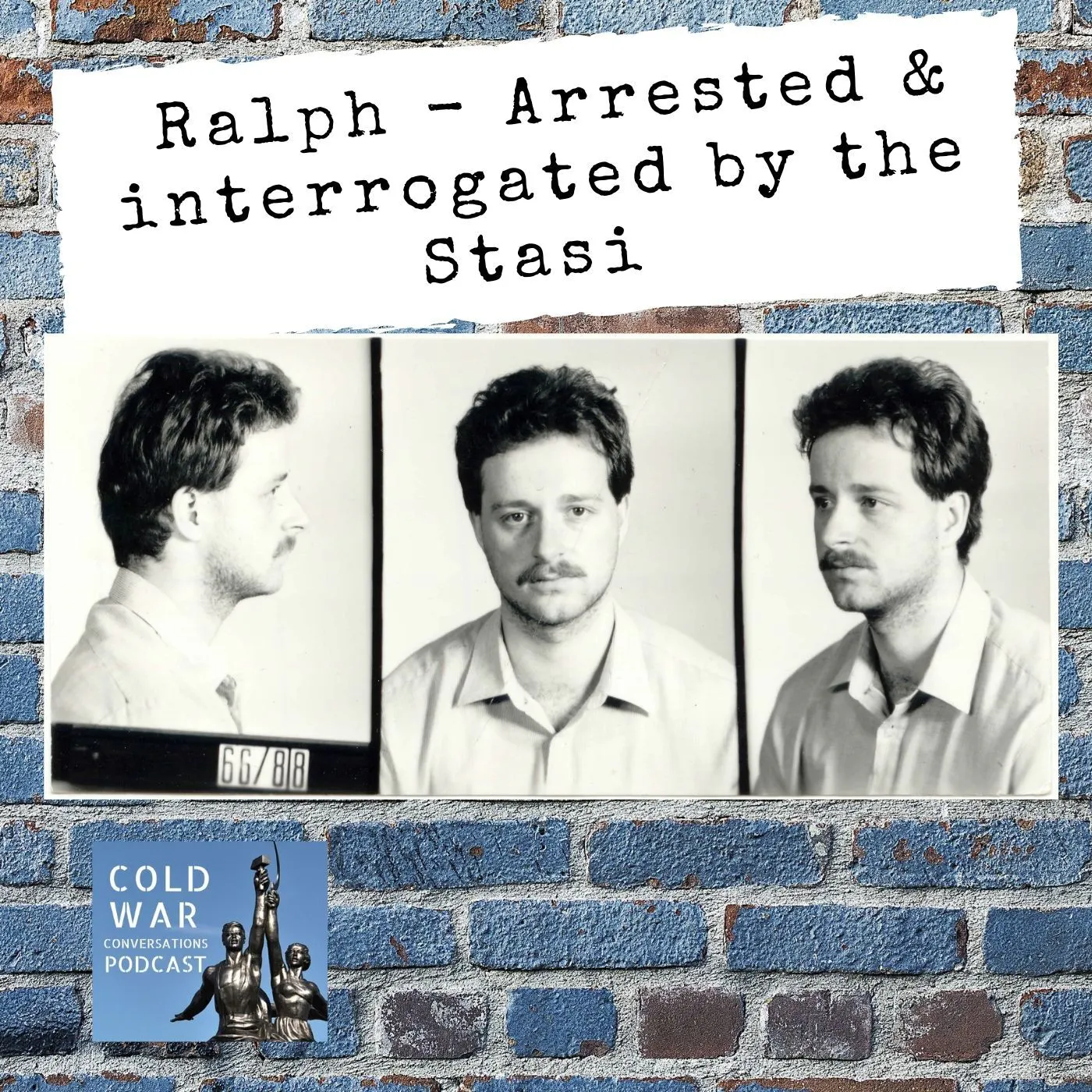
S8 Ep 181Ralph - Arrested and interrogated by the Stasi (181)
In this second part of Ralph Hänel’s story of his life in East Germany. We hear of Ralph’s arrest by the Stasi and subsequent interrogation for 10 months. Ralph describes in some detail the arrest and his early days of imprisonment. He also details the techniques used to try and make him break and the pressure the Stasi also put on his mother. It’s an incredible insight into the workings of the Stasi from someone who was there and I am honoured that Ralph shared this story with us. We also hear about his court case and in the following episode we hear about his time in the Stasi prison in Cottbus which with its dark red brick façade was often referred to as the ‘Red Misery’. I could really use your support to continue the podcast. A simple monthly donation via Patreon, plus as a monthly supporter you will get the sought after CWC coaster as a thank you and bask in the warm glow of knowing you are helping to preserve Cold War history. Just go to https://coldwarconversations.com/donate/ If a financial contribution is not your cup of tea, then you can still help us by leaving written reviews wherever you listen to us as well as sharing us on social media. It really helps us get new guests on the show. I am delighted to welcome Ralph to our Cold War conversation… There’s further information on this episode in our show notes which can also be found as a link in your podcast app here. Other episodes with Ralph are here https://coldwarconversations.com/episode177/ and here https://coldwarconversations.com/episode182/ You can buy Ralph's book here If you can’t wait for next week’s episode do visit our Facebook discussion group where guests and listeners continue the Cold War Conversation. Just search Cold War Conversations in Facebook or click here https://www.facebook.com/groups/coldwarpod/ Support the project! https://coldwarconversations.com/donate/ Follow us on Twitter https://twitter.com/ColdWarPod Facebook https://www.facebook.com/groups/coldwarpod/ Instagram https://www.instagram.com/coldwarconversations/ Youtube https://youtube.com/@ColdWarConversations 0:00 Introduction and Ralph Hänel's encounter with the Stasi (Ministry of State Security) 2:21 Ralph's life in East Germany and his dreams of moving to the West 7:10 Ralph's arrest and interrogation process by the Ministry of State Security 17:45 The roles of the three interrogation officers and their psychological tactics 25:14 The court procedure, sentence, and Ralph's suspicions 28:10 Living conditions in prison and Ralph's relationship with his cellmate 32:11 Ralph's mother's interactions with the Stasi and her constant surveillance 43:32 Ralph's audacious move during his interrogation and the involvement of a Western lawyer 52:18 The sentencing process, the charges, and Ralph's coerced confession 57:17 The 'modern slave trade' of East Germany's political prisoners and Ralph's resilience 59:16 Encouragement to join the Cold War Conversations Facebook group and support the show Chapters powered by PodcastAI✨ Learn more about your ad choices. Visit podcastchoices.com/adchoices
S8 Ep 180Checkmate in Berlin: The Cold War Showdown that Shaped the Modern World (180)
We speak with author Giles Milton about his new book Checkmate in Berlin: The Cold War Showdown that Shaped the Modern World. In 1945 at the end of World War 2 the Soviet Red Army captured Berlin. For the next four years, a handful of charismatic but flawed individuals – British, American and Soviet – fought an intensely personal battle over the future of Germany, Europe and the entire free world. Checkmate in Berlin tells this exhilarating, high-stakes tale of grit, skullduggery, and raw power. From the high politics of Yalta to the desperate scramble to break the Soviet stranglehold of Berlin with the greatest aerial operation in history, this is the epic story of the first battle of the Cold War and how it shaped the modern world. Now, I could really use your support to continue the podcast. A simple monthly donation via Patreon, will get you the sought after CWC coaster as a thank you and you’ll bask in the warm glow of knowing you are helping to preserve Cold War history. Just go to https://coldwarconversations.com/donate/ If a financial contribution is not your cup of tea, then you can still help us by leaving written reviews wherever you listen to us as well as sharing us on social media. It really helps us get new guests on the show. I am delighted to welcome Giles Milton to our Cold War conversation… There’s a book giveaway and further information on this episode in our show notes which can also be found as a link in your podcast app here. https://coldwarconversations.com/episode180/ If you can’t wait for next week’s episode do visit our Facebook discussion group where guests and listeners continue the Cold War Conversation. Just search Cold War Conversations on Facebook. Thank you very much for listening. It is really appreciated – goodbye. Radio GDR If you are interested in East Germany we can highly recommend our friends over at Radio GDR. Support the project! https://coldwarconversations.com/donate/ Follow us on Twitter https://twitter.com/ColdWarPod Facebook https://www.facebook.com/groups/coldwarpod/ Instagram https://www.instagram.com/coldwarconversations/ Youtube https://youtube.com/@ColdWarConversations 0:00 Introduction and Giles Milton's new book "Checkmate in Berlin" discussion 2:34 Interview with Giles Milton and introduction of key players in Berlin (1945-1949) 7:53 Occupation of Berlin and agreement at Yalta for the occupation of Berlin 15:48 Management of Berlin through the "Kommandatura" and key disagreements 23:41 The looming showdown and the Defection of Igor Gouzenko 27:28 Formation of political parties in occupied Berlin and Soviet strategy to control Berlin's administration 33:01 Cultural and propaganda battles in Berlin 35:24 Differing views on managing post-war Germany and the shift from dismantling to rebuilding Germany 43:35 The concept of a siege: The Soviets' strategy to control Berlin and the dangers of the air corridors 51:17 The Berlin airlift, its challenges and involvement of Lucius Clay, Colonel Frank Howley and Bill Turner 1:08:25 Invitation to join the Facebook discussion group Chapters powered by PodcastAI✨ Learn more about your ad choices. Visit podcastchoices.com/adchoices