
Cold War Conversations Podcast
479 episodes — Page 3 of 10
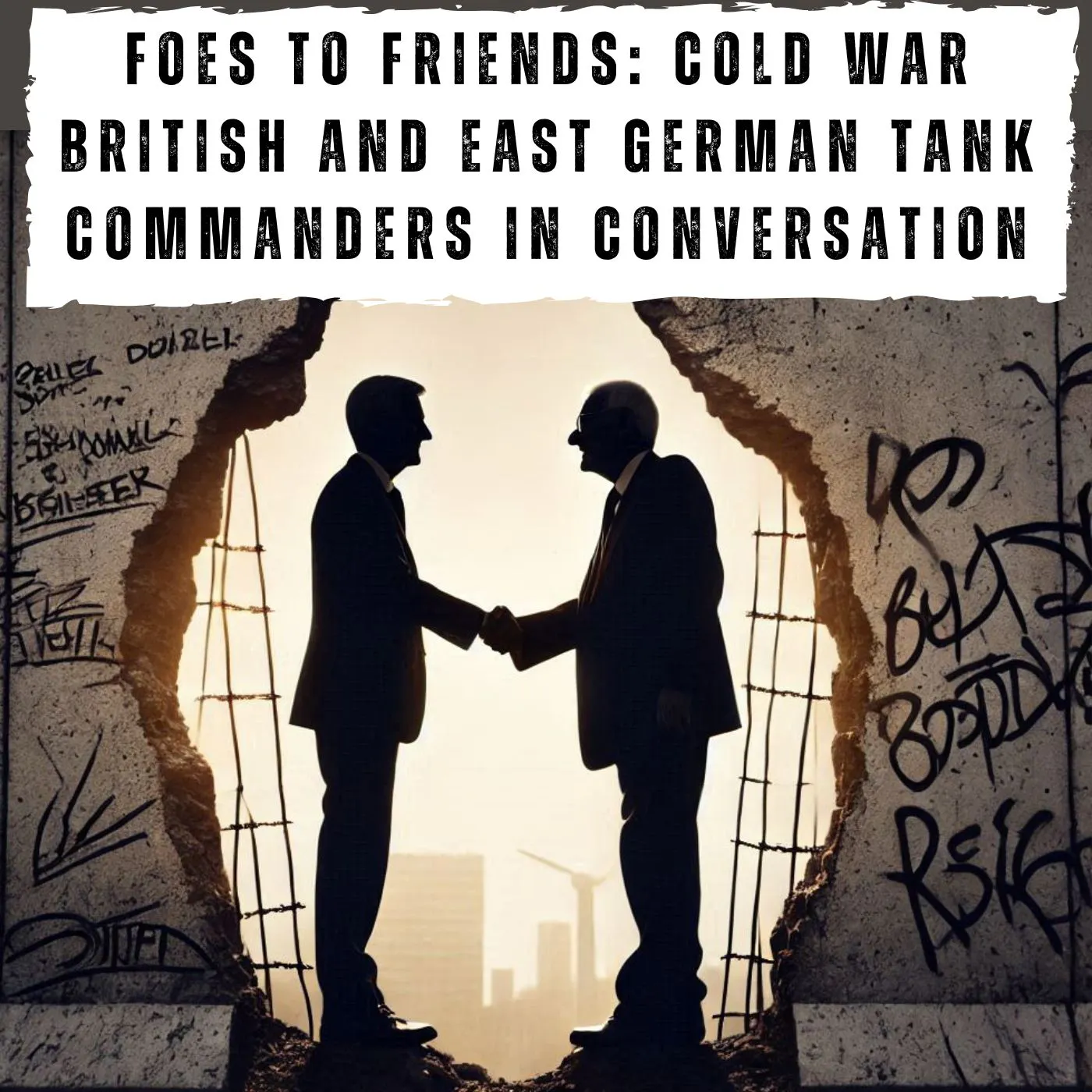
S26 Ep 379Foes to Friends: Cold War British and East German Tank crew together in conversation (379)
Join our East-West tank crew reunion that offers a rare glimpse into the lives of those who served on opposite sides of the Iron Curtain. The episode features Al and Mick, former Chieftain tank crew members from the British Army, alongside Dag, an ex-East German T72 tank commander. Together, they delve into their personal experiences, providing insights into the military strategies, challenges, and camaraderie that defined their service during the Cold War. As the discussion unfolds, the trio explores the intricacies of military life, from the training regimes and unit cohesion to the technical specifications of their respective tanks. Dag provides an intriguing account of the T72's capabilities, highlighting its strengths and limitations. Meanwhile, Al and Mick reflect on their experiences with the Chieftain tank, offering a Western perspective on tank warfare during the Cold War. The episode is punctuated with personal anecdotes and reflections, adding depth and humanity to the historical narrative. Dag's candid admission of his reluctance to serve at the border and his refusal to shoot at defectors offers a poignant reminder of the moral complexities faced by those in uniform. Similarly, Al and Mick's recollections of training exercises and the camaraderie among their fellow soldiers highlight the bonds forged in service. Related episodes: Crewing the Cold War Chieftain tank https://pod.fo/e/155bb4 Cold War Chieftain tank deployment at the East German Border https://pod.fo/e/157641 The East German Tank Commander https://pod.fo/e/210cee Episode extras here including Dag's vehicle recognition manual https://coldwarconversations.com/episode379/ The fight to preserve Cold War history continues and via a simple monthly donation, you will give me the ammunition to continue to preserve Cold War history. You’ll become part of our community, get ad-free episodes, and get a sought-after CWC coaster as a thank you and you’ll bask in the warm glow of knowing you are helping to preserve Cold War history. Just go to https://coldwarconversations.com/donate/ If a monthly contribution is not your cup of tea, we welcome one-off donations via the same link. Find the ideal gift for the Cold War enthusiast in your life! Just go to https://coldwarconversations.com/store/ Follow us on BlueSky https://bsky.app/profile/coldwarpod.bsky.social Follow us on Threads https://www.threads.net/@coldwarconversations Follow us on Twitter https://twitter.com/ColdWarPod Facebook https://www.facebook.com/groups/coldwarpod/ Instagram https://www.instagram.com/coldwarconversations/ Youtube https://youtube.com/@ColdWarConversations Love history? Join Intohistory https://intohistory.com/coldwarpod 00:00 Introduction 02:35 How do you become an East German Tank commander? 07:28 Selection and training for British tank crew 08:51 Were you selected for the East German border guards? 12:39 Differences in training areas and exercises 18:20 Unit cohesion - differences between conscript and professional armies 21:42 Enemy vehicle recognition 24:17 Benefits of a professional army and all arms training in Canada 28:30 Doctrines of each army - defence vs attack 31:00 Change of East German doctrine to a defensive posture 33:55 Plan to Attack Poland in 1981 38:10 If the East German army had crossed the West German border 43:02 Challenges of breaking through the border fortifications 45:03 East German view of the Soviets 51:26 What was the T72 like to operate? 56:44 Benefits of Chieftain's thermal imaging system 59:52 Training of the Chieftain crew if the thermal imaging system failed. 01:04:57 The British Army's secret weapons - the boiling vessel 01:09:51 Refuelling & ammunition replenishment 01:14:34 T72 autoloader 01:19:13 T72 snorkel 01:25:14 Final comments between the crews Learn more about your ad choices. Visit podcastchoices.com/adchoices
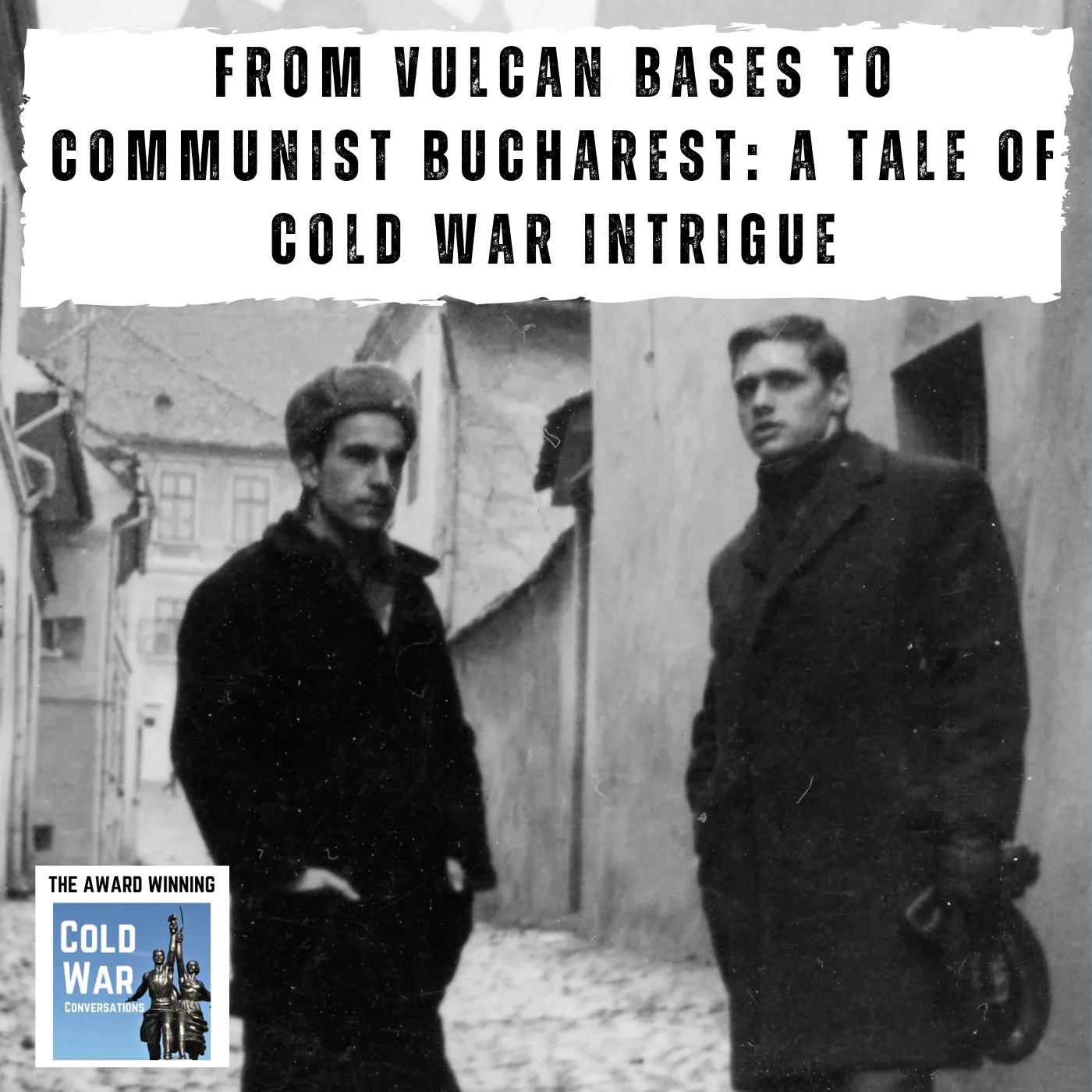
S26 Ep 378From Vulcan Bases to Communist Bucharest: A Tale of Cold War Intrigue (378)
Ron Mackay further recounts his experiences in Romania, a country teetering between Soviet influence and a desire for independence, offering a fascinating glimpse into a time of uncertainty and intrigue. Among many stories, Ron visits an RAF base in the UK where his brother was a crew member of a Vulcan bomber, Britain’s nuclear deterrent at the time. The RAF quizzes Ron in detail about the locations he has visited in Romania. Back in Romania Ron navigates the intricacies of its society and shares stories of friendships forged under the watchful eyes of the Securitate, Romania's feared secret police. Ron describes his interactions with various characters, each with their own motivations and secrets. From a duck shooting party at a Communist Party hunting lodge to a tense encounter with tanks near the Soviet border, Ron's stories are filled with suspense and unexpected twists. Buy Ron's book here and support CWC https://amzn.to/3Om8kZt Episode extras here https://coldwarconversations.com/episode378/ Related episodes: Hitchhiking behind the 1960s Iron Curtain https://pod.fo/e/2098ae A Childhood under the Eye of the Secret Police https://pod.fo/e/a4730 My life laid bare through secret police files https://pod.fo/e/12e45f A Hungarian Childhood in Cold War Romania https://pod.fo/e/1190aa Escaping from Cold War Romania https://pod.fo/e/11ad63 Emanuela - a Cold War Romanian Childhood https://pod.fo/e/f0376 Reporting the 1989 Romanian Revolution https://pod.fo/e/1ea8c The fight to preserve Cold War history continues and via a simple monthly donation, you will give me the ammunition to continue to preserve Cold War history. You’ll become part of our community, get ad-free episodes, and get a sought-after CWC coaster as a thank you and you’ll bask in the warm glow of knowing you are helping to preserve Cold War history. Just go to https://coldwarconversations.com/donate/ If a monthly contribution is not your cup of tea, we welcome one-off donations via the same link. Find the ideal gift for the Cold War enthusiast in your life! Just go to https://coldwarconversations.com/store/ Follow us on BlueSky https://bsky.app/profile/coldwarpod.bsky.social Follow us on Threads https://www.threads.net/@coldwarconversations Follow us on Twitter https://twitter.com/ColdWarPod Facebook https://www.facebook.com/groups/coldwarpod/ Instagram https://www.instagram.com/coldwarconversations/ Youtube https://youtube.com/@ColdWarConversations Love history? Join Intohistory https://intohistory.com/coldwarpod Learn more about your ad choices. Visit podcastchoices.com/adchoices
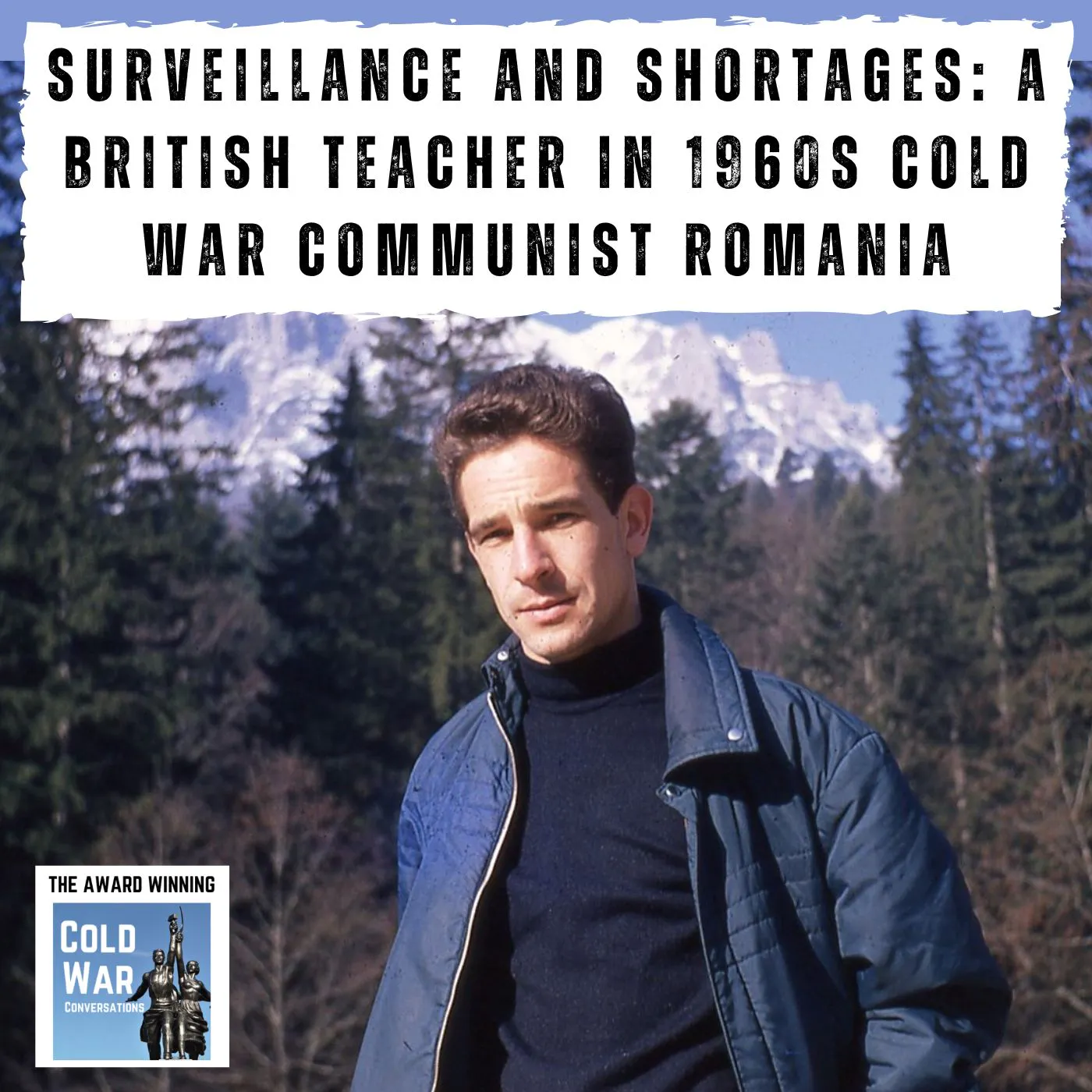
S26 Ep 377Surveillance and shortages: A British teacher in 1960s Cold War Communist Romania (377)
In 1967 a young British professor found himself in Bucharest, Romania, under the most intriguing circumstances. Ron Mackay shares his fascinating experiences as he navigated life and teaching in a communist country. When he set foot on Romanian soil, he was met with challenges and intrigue. The stark realities of life under a communist regime painted a picture of a world vastly different from his own. Yet, amidst the restrictions, he found beauty in the Romanian culture, architecture, and the resilience of its people. Despite the oppressive environment, his students were eager to learn and engage, offering him a glimpse into their lives and aspirations. The lack of resources and the ever-present surveillance added complexity to his teaching experience. The episode also explores his adventures beyond the classroom, from navigating the bustling streets of Bucharest to travelling through the picturesque Romanian countryside, his encounters with locals, fellow expatriates, and even a mysterious British engineer. Buy the book here and support CWC https://amzn.to/3Om8kZt Related episodes: Cold War, Warm Hearts - Hitchhiking behind the 1960s Iron Curtain https://pod.fo/e/2098ae A Childhood under the eye of the Secret Police https://pod.fo/e/a4730 My life laid bare through secret police files https://pod.fo/e/12e45f A Hungarian childhood in Cold War Romania https://pod.fo/e/1190aa Escaping from Cold War Romania https://pod.fo/e/11ad63 Emanuela - a Cold War Romanian Childhood https://pod.fo/e/f0376 Reporting the 1989 Romanian Revolution https://pod.fo/e/1ea8c Episode extras here https://coldwarconversations.com/episode377/ The fight to preserve Cold War history continues and via a simple monthly donation, you will give me the ammunition to continue to preserve Cold War history. You’ll become part of our community, get ad-free episodes, and get a sought-after CWC coaster as a thank you and you’ll bask in the warm glow of knowing you are helping to preserve Cold War history. Just go to https://coldwarconversations.com/donate/ If a monthly contribution is not your cup of tea, we welcome one-off donations via the same link. Find the ideal gift for the Cold War enthusiast in your life! Just go to https://coldwarconversations.com/store/ Follow us on BlueSky https://bsky.app/profile/coldwarpod.bsky.social Follow us on Threads https://www.threads.net/@coldwarconversations Follow us on Twitter https://twitter.com/ColdWarPod Facebook https://www.facebook.com/groups/coldwarpod/ Instagram https://www.instagram.com/coldwarconversations/ Youtube https://youtube.com/@ColdWarConversations Love history? Join Intohistory https://intohistory.com/coldwarpod 0:00:01 Teaching in Cold War Romania 0:04:30 Cultural Exchange Mission in Romania 0:12:07 First Impressions of Bucharest 0:25:43 Living Under Surveillance in Romania 0:42:14 Interactions in Rural Romania Learn more about your ad choices. Visit podcastchoices.com/adchoices
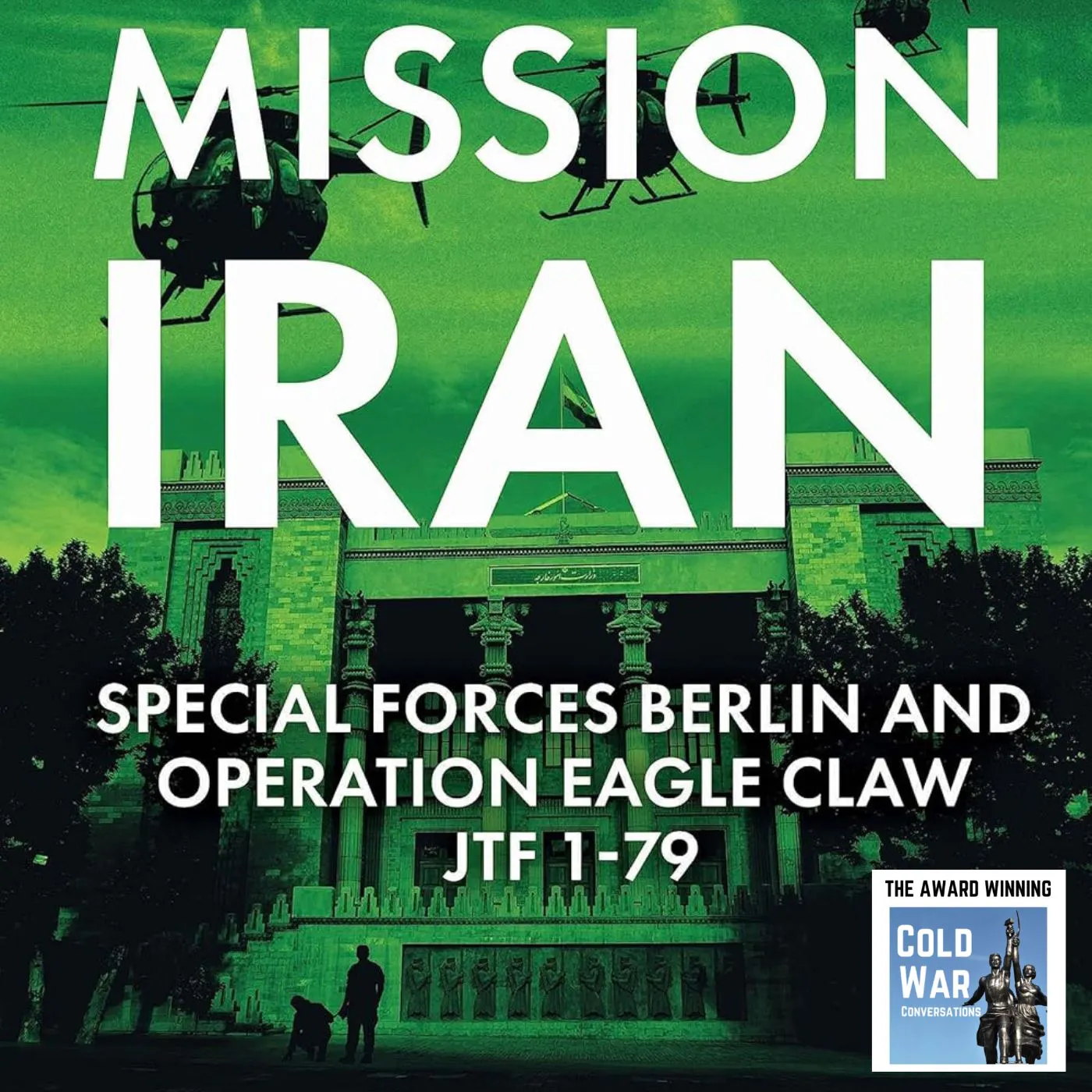
S26 Ep 376Mission Iran: Special Forces Berlin & Operation Eagle Claw, JTF 1-79 (376)
Few operations in Cold War history capture the imagination quite like Operation Eagle Claw. I have the privilege of welcoming back James Stejskal, a Special Forces veteran, to delve into the intricacies of this audacious mission. Operation Eagle Claw, was conceived as a daring rescue mission to free 52 US embassy staff being held hostage held in Iran. James was a member of Detachment A, a clandestine unit tasked with gathering intelligence and preparing for the mission. James reveals the undercover operations in Tehran, where operatives navigated hostile territory with nothing but their wits and false identities. The operation itself was fraught with difficulties from the onset and James walks us through the intricate phases of the mission, from the rendezvous at Desert One to the audacious plan to storm the embassy and foreign ministry in Tehran. He captures the sense of urgency and the meticulous planning that went into every detail, highlighting the commitment of those involved. For those intrigued by the complexities of Cold War operations and the human stories behind them, this episode is a must-listen. James's insights and personal reflections bring a unique perspective to a pivotal moment in history. Buy the book here and support CWC https://bookshop.org/a/92195/9780063330603 Related episodes: Special Forces Berlin - Clandestine Cold War Operations of the US Army's Elite, 1956-1990 https://pod.fo/e/19e5f Den of Spies: The October Surprise - A Covert Cold War Operation https://pod.fo/e/283261 The Siege: The Remarkable Story of the Greatest SAS Hostage Drama with Ben Macintyre https://pod.fo/e/26909e Episode extras here https://coldwarconversations.com/episode375/ The fight to preserve Cold War history continues and via a simple monthly donation, you will give me the ammunition to continue to preserve Cold War history. You’ll become part of our community, get ad-free episodes, and get a sought-after CWC coaster as a thank you and you’ll bask in the warm glow of knowing you are helping to preserve Cold War history. Just go to https://coldwarconversations.com/donate/ If a monthly contribution is not your cup of tea, we welcome one-off donations via the same link. Find the ideal gift for the Cold War enthusiast in your life! Just go to https://coldwarconversations.com/store/ Support the project! https://coldwarconversations.com/donate/ Follow us on Twitter https://twitter.com/ColdWarPod Facebook https://www.facebook.com/groups/coldwarpod/ Instagram https://www.instagram.com/coldwarconversations/ Youtube https://youtube.com/@ColdWarConversations Love history? Join Intohistory https://intohistory.com/coldwarpod 0:00:01 Operation Eagle Claw 0:18:47 Failed Rescue Operation and Escape Efforts 0:33:51 Joint Task Force 179 Iran Rescue 0:41:35 Podcast Updates and Thanks Learn more about your ad choices. Visit podcastchoices.com/adchoices
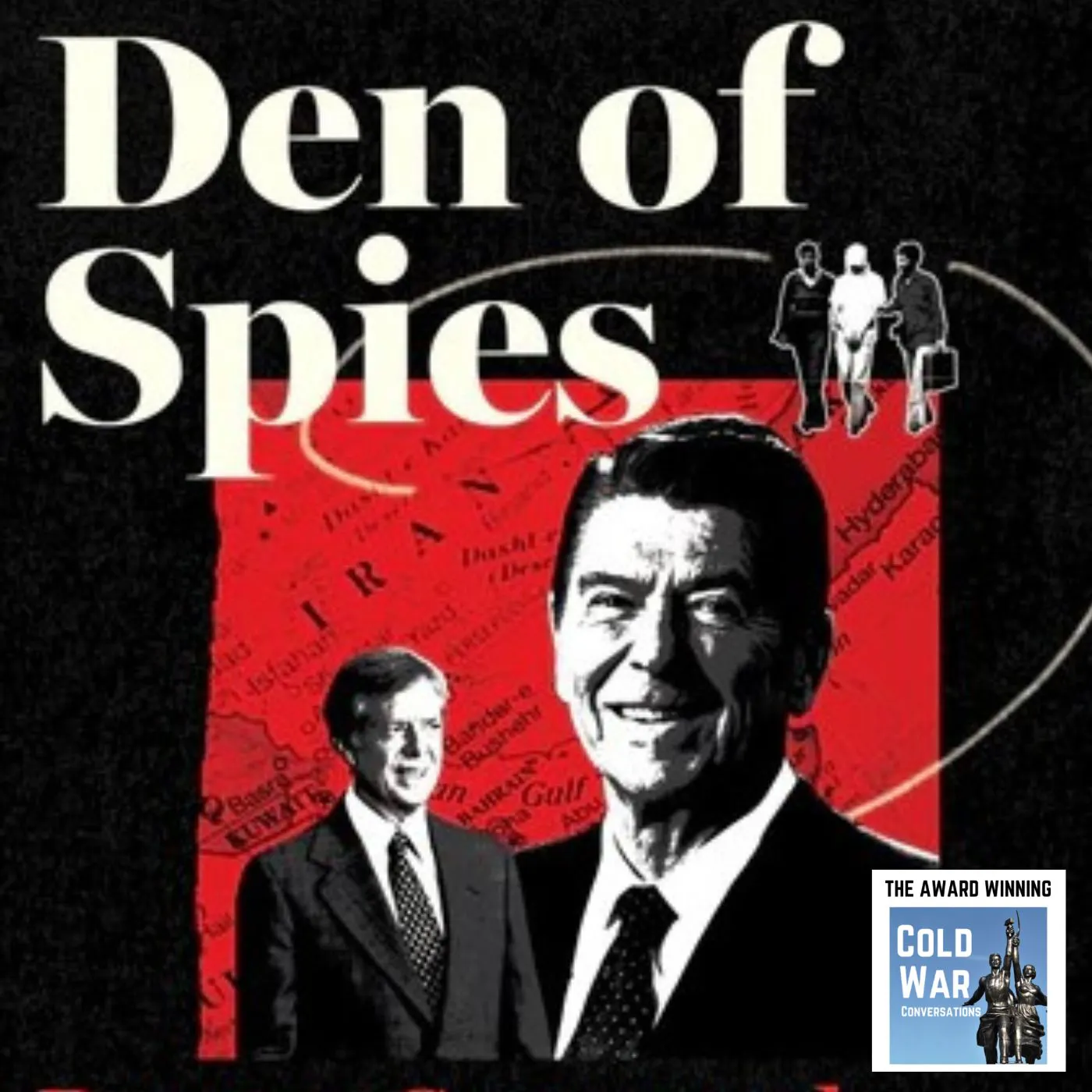
S26 Ep 375Den of Spies: The October Surprise - A Covert Cold War Operation (375)
In the late 1970s, the United States found itself at the centre of a crisis where 52 US Embassy staff were held hostage in Iran. Our latest episode takes you on a journey through the tumultuous events of 1980, exploring the covert operation known as the “October Surprise” that allegedly influenced the outcome of the U.S. presidential election. William Casey is at the heart of this story, a brilliant yet enigmatic figure who played a pivotal role in the Reagan campaign. Described as a master spy, Casey is said to have orchestrated a complex web of secret meetings and illegal arms sales, all aimed at manipulating 52 American hostages held captive in Iran to Ronald Reagan’s advantage. Our guest, Craig Unger an investigative journalist with decades of experience, has written a new book on the subject Den of Spies: Reagan, Carter, and the Secret History of the Treason That Stole the White House. Buy the book here and support CWC https://bookshop.org/a/92195/9780063330603 Episode extras here https://coldwarconversations.com/episode375/ The fight to preserve Cold War history continues and via a simple monthly donation, you will give me the ammunition to continue to preserve Cold War history. You’ll become part of our community, get ad-free episodes, and get a sought-after CWC coaster as a thank you and you’ll bask in the warm glow of knowing you are helping to preserve Cold War history. Just go to https://coldwarconversations.com/donate/ If a monthly contribution is not your cup of tea, we welcome one-off donations via the same link. Find the ideal gift for the Cold War enthusiast in your life! Just go to https://coldwarconversations.com/store/ Support the project! https://coldwarconversations.com/donate/ Follow us on Twitter https://twitter.com/ColdWarPod Facebook https://www.facebook.com/groups/coldwarpod/ Instagram https://www.instagram.com/coldwarconversations/ Youtube https://youtube.com/@ColdWarConversations Love history? Join Intohistory https://intohistory.com/coldwarpod Learn more about your ad choices. Visit podcastchoices.com/adchoices

S26 Ep 374Surrounded and captured in the Korean War (374)
bonusToday is Veterans Day in the US and Armistice Day in the UK and to commemorate I’ve gone back into the archive to remember and share vivid testimony from Korean War veteran Tommy Clough who sadly passed away a couple of weeks ago. The Korean War was among the most destructive conflicts of the modern era, and one of the few times when the Cold War turned hot. There were approximately 3 million war fatalities and a larger proportional civilian death toll than World War II or the Vietnam War. Tommy Clough is one of the last surviving of the battle of the Imjin River and was just 19 when the Gloucestershire Regiment were cut off from their brigade by more than 10,000 Chinese troops in 1951. Outnumbered and surrounded, they dug in on a hilltop for three days, repelling attack after attack until their ammunition ran out. The battle of the Imjin River was one of the most famous of the Korean War We hear in detail Tommy’s experiences in the days up to the battle, as well as the desperate fighting to hold off the Chinese army as food, water and ammunition ran out. Inevitably the Gloucestershire Regiment was forced to surrender and Tommy’s story continues, with the hardship and privation of the 500 miles march to their prisoner of war camp. Following an escape attempt, Tommy is held and handcuffed for 6 weeks in solitary confinement including a lengthy period held in a small cage. It’s an incredible story of fortitude and resilience under the most extreme circumstances and I am so humbled and honoured to be able to share this story with you. I’d like to thank The History of War magazine for putting me in contact with the Soldiers of Gloucestershire Museum and subsequently Tommy. Videos and episode extras here https://coldwarconversations.com/episode374/ Learn more about your ad choices. Visit podcastchoices.com/adchoices
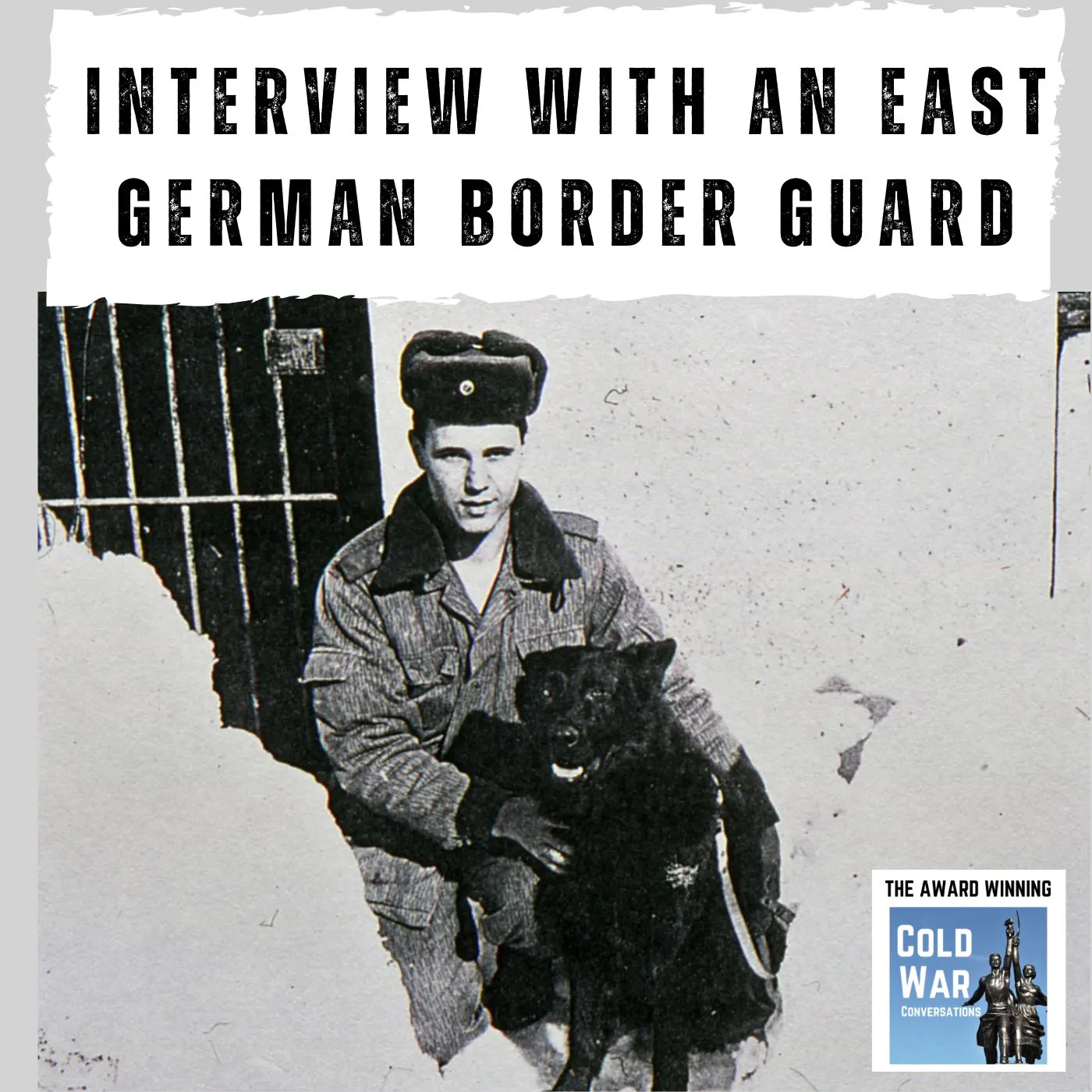
S26 Ep 373Interview with an East German Border Guard (373)
Today is the 35th anniversary of the Berlin Wall and East German border opening in the autumn of 1989. In this riveting episode, I speak with Dietmar Schultke, a member of the Grenztruppen, the East German Border Guards and delve into the life of those responsible for preventing escapes over the Berlin Wall and the East German Border. Dietmar opens up about his life in the GDR, sharing personal stories of his recruitment into the border troops, the rigorous training he endured, and the psychological pressures he faced during his service. Training in Eisenach prepared him for a potential third World War, with exercises in sharpshooting, combat, and gas mask drills. The psychological toll of such training was immense, as soldiers were constantly under surveillance, with one in ten being a Stasi informant. The cultural impact of the time was not lost on Dietmar. He vividly recalls attending a Bruce Springsteen concert in East Berlin, an event that felt like a taste of freedom amidst the oppressive regime. The concert was a beacon of hope, yet, the return to the border was a stark reminder of the barriers that still existed. Episode extras including links and videos here https://coldwarconversations.com/episode373/ Guarding the Wall Podcast https://royalarmouries.org/objects-and-stories/stories/guarding-the-berlin-wall Dietmar's web site https://www.dietmar-schultke.de The fight to preserve Cold War history continues and via a simple monthly donation, you will give me the ammunition to continue to preserve Cold War history. You’ll become part of our community, get ad-free episodes, and get a sought-after CWC coaster as a thank you and you’ll bask in the warm glow of knowing you are helping to preserve Cold War history. Just go to https://coldwarconversations.com/donate/ If a monthly contribution is not your cup of tea, We also welcome one-off donations via the same link. Find the ideal gift for the Cold War enthusiast in your life! Just go to https://coldwarconversations.com/store/ Support the project! https://coldwarconversations.com/donate/ Follow us on Twitter https://twitter.com/ColdWarPod Facebook https://www.facebook.com/groups/coldwarpod/ Instagram https://www.instagram.com/coldwarconversations/ Youtube https://youtube.com/@ColdWarConversations Love history? Join Intohistory https://intohistory.com/coldwarpod Learn more about your ad choices. Visit podcastchoices.com/adchoices
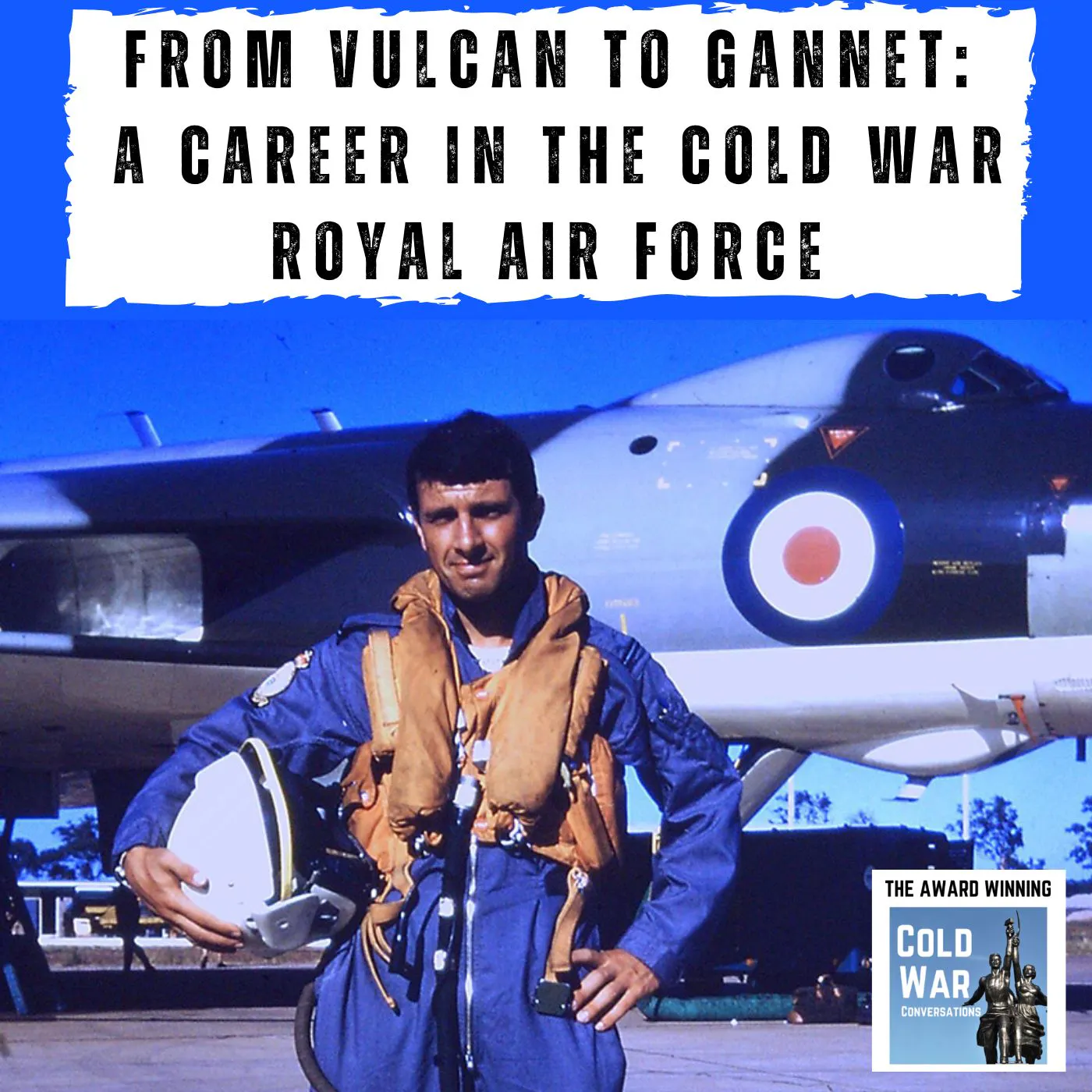
S26 Ep 372From Vulcan to Gannet: A Cold War career in the Royal Air Force
This episode is brought to you by the Avro Heritage Museum at Woodford near Manchester where I am a volunteer. Trevor Jackson is also one of the volunteers, but unlike me he’s a former Vulcan pilot who shares with me his extraordinary career. From his early days with the Royal Air Force Cadet Force to flying iconic aircraft like the BAC Jet Provost, Folland Gnat , Vulcan, Gannett, and Canberra, Trevor provides fascinating insights into the life of a military aviator. Discover the challenges and thrills of flying during the Cold War, the intricacies of Vulcan QRA scrambles, and landing on the pitching, heaving deck of an aircraft carrier. This episode is a must-listen for aviation enthusiasts and history buffs alike! I highly recommend the Avro Heritage Museum. They’re the home of the only white Vulcan in the World as well as many other historical aircraft and cockpits. Visit the web site at https://www.avroheritagemuseum.co.uk/ for more details. Episode extras https://coldwarconversations.com/episode372 The fight to preserve Cold War history continues and viaa simple monthly donation, you will give me the ammunition to continue to preserve Cold War history. You’ll become part of our community, get ad-free episodes, and get a sought-after CWC coaster as a thank you and you’ll bask in the warm glow of knowing you are helping to preserve Cold War history. Just go to https://coldwarconversations.com/donate/ If a monthly contribution is not your cup of tea, we welcome one-off donations via the same link. All our air power episodes in one convenient playlist https://open.spotify.com/playlist/4QVY3bWNLFSd62iBkPzRh9?si=31342ec59eb54762 Find the ideal gift for the Cold War enthusiast in your life! Just go to https://coldwarconversations.com/store/ Support the project! https://coldwarconversations.com/donate/ Follow us on Twitter https://twitter.com/ColdWarPod Facebook https://www.facebook.com/groups/coldwarpod/ Instagram https://www.instagram.com/coldwarconversations/ Youtube https://youtube.com/@ColdWarConversations Love history? Join Intohistory https://intohistory.com/coldwarpod Learn more about your ad choices. Visit podcastchoices.com/adchoices

S26 Ep 371Doorsteps of Hell - a US Marine platoon commander in the Vietnam War (371)
As Tom Williams fought the enemy, every day, without fail, he would record the day’s events in his diary. It is these diaries (which Tom has to this day), that enable him to tell the story of Vietnam in the late sixties/early seventies, like it really was. I talk with Tom about his book “Doorsteps of Hell” where he offers an honest, unembellished account of a new officer in the US Marines - fighting and surviving in the mud-sucking rice paddies and leech-infested jungles of Vietnam. In my conversation Tom brings to life the camaraderie, leadership, and the very essence of military expertise. Tom’s book is available at heartofamarineseries.com . Episode extras https://coldwarconversations.com/episode371 The fight to preserve Cold War history continues and via a simple monthly donation, you will give me the ammunition to continue to preserve Cold War history. You’ll become part of our community, get ad-free episodes, and get a sought-after CWC coaster as a thank you and you’ll bask in the warm glow of knowing you are helping to preserve Cold War history. Just go to https://coldwarconversations.com/donate/ If a monthly contribution is not your cup of tea, we welcome one-off donations via the same link. All our combat episodes in one convenient playlist https://open.spotify.com/playlist/6j6YJmRWzt42kYiPGkcFfa?si=95e5366e4ad945a3 Find the ideal gift for the Cold War enthusiast in your life! Just go to https://coldwarconversations.com/store/ Follow us on Twitter https://twitter.com/ColdWarPod Facebook https://www.facebook.com/groups/coldwarpod/ Instagram https://www.instagram.com/coldwarconversations/ Youtube https://youtube.com/@ColdWarConversations Love history? Join Intohistory https://intohistory.com/coldwarpod Learn more about your ad choices. Visit podcastchoices.com/adchoices

S25 Ep 370How the Cold War almost destroyed European Football (370)
In the late 1960s European club football competitions were thriving However unexpected events in 1968 threatened its survival. I delve into the fascinating world of European football during the Cold War era with Craig McCracken, a self-described peddler and purveyor of quasi obscure retro football nostalgia via the 'Beyond The Last Man' blog. We explore the political tensions that influenced European football in the 1960s, and the dramatic events of 1968 when the Prague Spring was crushed by Soviet and Warsaw Pact forces. Discover how these geopolitical events impacted clubs like Celtic, the Milan clubs, and Real Madrid, and the unprecedented decisions UEFA had to make. This episode is a gripping tale of football, politics, and the power struggles that shaped the beautiful game. Episode extras https://coldwarconversations.com/episode370 Craig's excellent blog https://beyondthelastman.com/ All our Cold War Sport episodes in one convenient playlist https://open.spotify.com/playlist/2OoAtLN7sHYdCgCNhms1Kl?si=da05732a422a41f8 The fight to preserve Cold War history continues and via a simple monthly donation, you will give me the ammunition to continue to preserve Cold War history. You’ll become part of our community, get ad-free episodes, and get a sought-after CWC coaster as a thank you and you’ll bask in the warm glow of knowing you are helping to preserve Cold War history. Just go to https://coldwarconversations.com/donate/ If a monthly contribution is not your cup of tea, We also welcome one-off donations via the same link. Find the ideal gift for the Cold War enthusiast in your life! Just go to https://coldwarconversations.com/store/ Support the project! https://coldwarconversations.com/donate/ Follow us on Twitter https://twitter.com/ColdWarPod Facebook https://www.facebook.com/groups/coldwarpod/ Instagram https://www.instagram.com/coldwarconversations/ Youtube https://youtube.com/@ColdWarConversations Love history? Join Intohistory https://intohistory.com/coldwarpod Learn more about your ad choices. Visit podcastchoices.com/adchoices
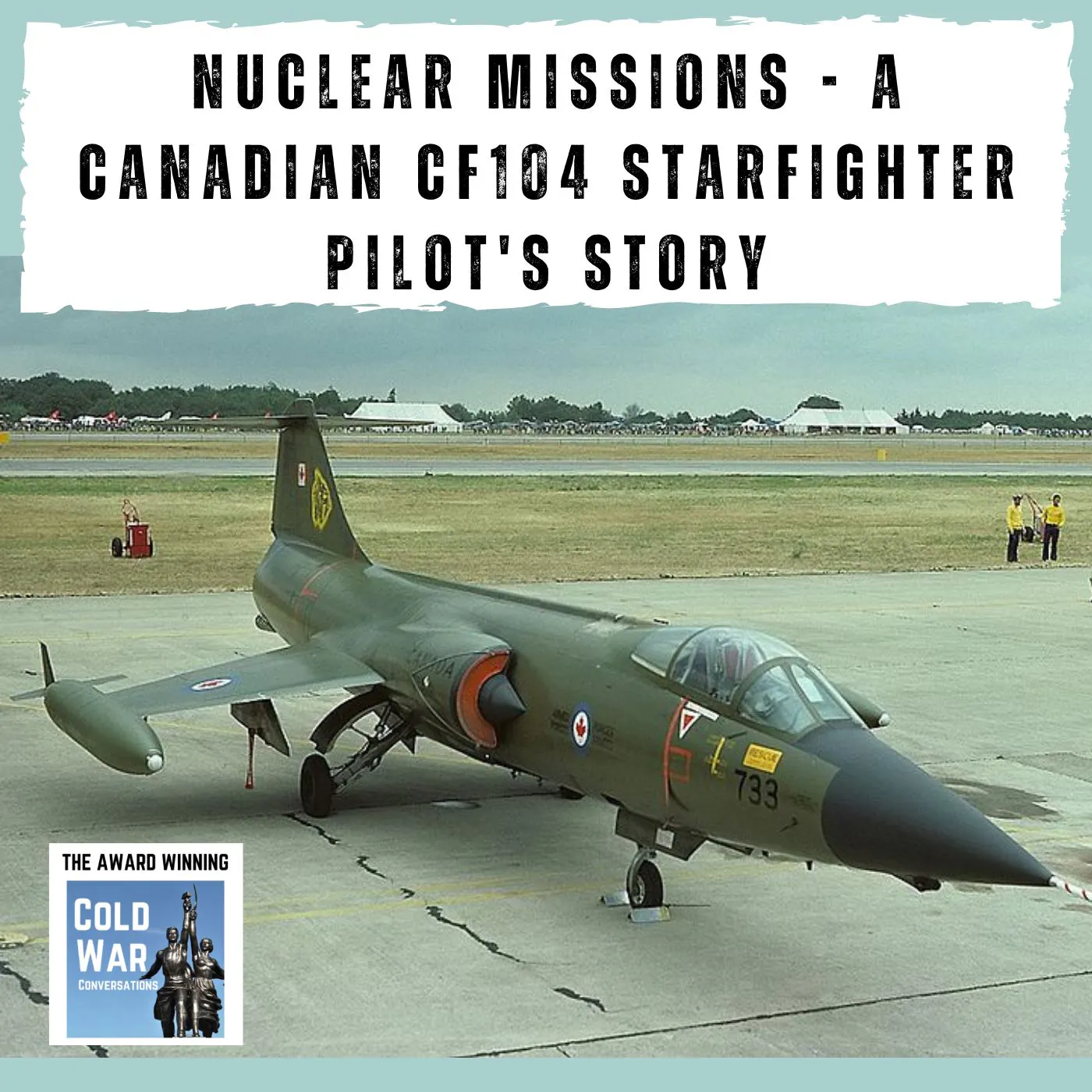
S25 Ep 369Nuclear Missions - a Canadian CF104 Starfighter Pilot's Story (369)
Flying at high speed and low level, RCAF pilot Allen French was at the sharp end of potential nuclear bombing missions during the Cold War. Born at the dawn of the baby boomer era, Allen delves into his early inspirations, his father's service in the Royal Canadian Air Force, and the pivotal moments that led him to join the Air Force. From training on the Canadair CT-114 Tutor to flying the iconic F-86 Sabre and CF-104 Starfighter, Allen shares firsthand accounts of Cold War tensions, nuclear deterrence strategies, and the challenges of high-speed, low-level navigation across Europe. Around 50% of over 200 Canadian Starfighters were lost in accidents. You’ll hear about Allen’s near-death experience at a West German airbase and many other personal anecdotes that bring history to life. Thanks to Bernardo Scheliga who put me in contact with Allen. He and Allen are volunteers at the Canadian Museum of Flight. You can find details here https://canadianflight.org/ Episode extras https://coldwarconversations.com/episode369 All our air power episodes in one convenient playlist https://open.spotify.com/playlist/4QVY3bWNLFSd62iBkPzRh9?si=31342ec59eb54762 The fight to preserve Cold War history continues and via a simple monthly donation, you will give me the ammunition to continue to preserve Cold War history. You’ll become part of our community, get ad-free episodes, and get a sought-after CWC coaster as a thank you and you’ll bask in the warm glow of knowing you are helping to preserve Cold War history. Just go to https://coldwarconversations.com/donate/ If a monthly contribution is not your cup of tea, We also welcome one-off donations via the same link. Find the ideal gift for the Cold War enthusiast in your life! Just go to https://coldwarconversations.com/store/ Support the project! https://coldwarconversations.com/donate/ Follow us on Twitter https://twitter.com/ColdWarPod Facebook https://www.facebook.com/groups/coldwarpod/ Instagram https://www.instagram.com/coldwarconversations/ Youtube https://youtube.com/@ColdWarConversations Love history? Join Intohistory https://intohistory.com/coldwarpod Learn more about your ad choices. Visit podcastchoices.com/adchoices
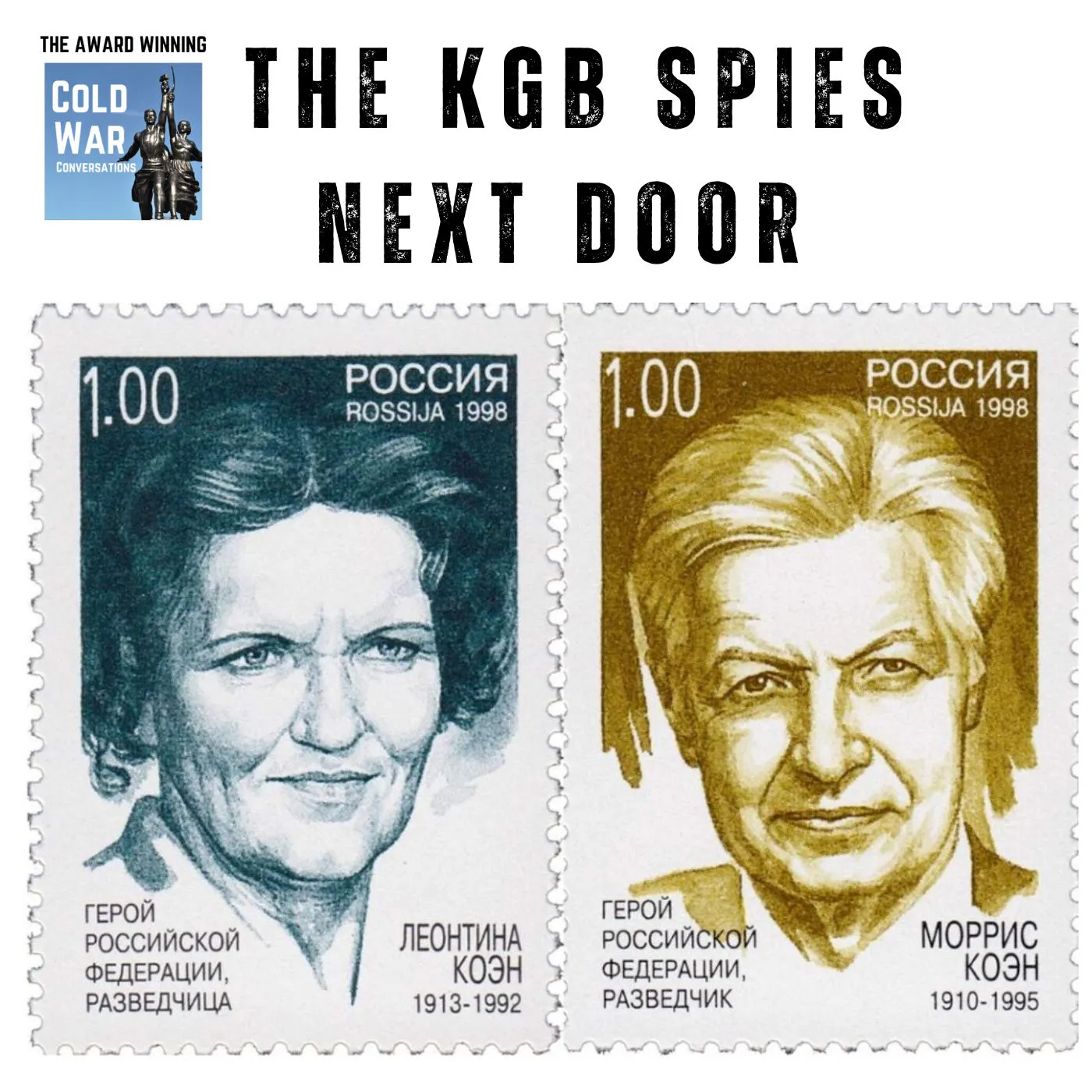
S25 Ep 368The KGB Spies Next Door (368)
In the sleepy suburb of Ruislip in London during the late 1950s, life was anything but exciting for Gay Search, a 15-year-old girl. Little did she know, her mundane existence was about to be shattered by a shocking revelation that would turn her world upside down. This is the gripping tale of suburban espionage, the story begins with the seemingly ordinary Kroger family—Helen and Peter—who live just a stone's throw away from Gay. However, beneath their friendly facade lay a dark secret. The Krogers were, in fact, Soviet spies, part of the infamous Portland Spy Ring. Episode extras https://coldwarconversations.com/episode368 All our spy episodes in one convenient playlist https://open.spotify.com/playlist/40wb3AyJ6oUep10YKXLhtm?si=c72eba540bee4ba4 The fight to preserve Cold War history continues and via a simple monthly donation, you will give me the ammunition to continue to preserve Cold War history. You’ll become part of our community, get ad-free episodes, and get a sought-after CWC coaster as a thank you and you’ll bask in the warm glow of knowing you are helping to preserve Cold War history. Just go to https://coldwarconversations.com/donate/ If a monthly contribution is not your cup of tea, We also welcome one-off donations via the same link. Find the ideal gift for the Cold War enthusiast in your life! Just go to https://coldwarconversations.com/store/ Support the project! https://coldwarconversations.com/donate/ Follow us on Twitter https://twitter.com/ColdWarPod Facebook https://www.facebook.com/groups/coldwarpod/ Instagram https://www.instagram.com/coldwarconversations/ Youtube https://youtube.com/@ColdWarConversations Love history? Join Intohistory https://intohistory.com/coldwarpod Learn more about your ad choices. Visit podcastchoices.com/adchoices

S25 Ep 367From Sydney to the Vietnam War: An Australian Soldier's Cold War Journey (367)
In this gripping episode of Cold War Conversations, we hear the remarkable first-hand account of John Brooker, an Australian veteran who takes us on a journey from the streets of Sydney to the battlefields of Vietnam. John shares his experiences from joining the Citizens Military Force (CMF) to his deployment with the Royal New South Wales Lancers and the regular army. He provides vivid details of the Tet Offensive of 1968, the intense firefights, and the harrowing experience of being mortared for the first time. John also reflects on the challenges of returning to civilian life and the mixed reception from the Australian public and World War II veterans. Don't miss this powerful and insightful episode! Related episodes Vietnam War draftee to US Army Ranger https://pod.fo/e/10388d Just another day in Vietnam https://pod.fo/e/ac3e7 Don – Vietnam War Armoured Cavalry Platoon Leader https://pod.fo/e/a08dc Cold War Tank Tales from the Land Down Under https://pod.fo/e/2078b9 Further Cold War Tank Tales from the Land Down Under https://pod.fo/e/20dda1 Australian Cold War Maritime Air Patrols https://pod.fo/e/21e35d Episode extras https://coldwarconversations.com/episode367/ The fight to preserve Cold War history continues and via a simple monthly donation, you will give me the ammunition to continue to preserve Cold War history. You’ll become part of our community, get ad-free episodes, and get a sought-after CWC coaster as a thank you and you’ll bask in the warm glow of knowing you are helping to preserve Cold War history. Just go to https://coldwarconversations.com/donate/ If a monthly contribution is not your cup of tea, We also welcome one-off donations via the same link. Find the ideal gift for the Cold War enthusiast in your life! Just go to https://coldwarconversations.com/store/ Support the project! https://coldwarconversations.com/donate/ Follow us on Twitter https://twitter.com/ColdWarPod Facebook https://www.facebook.com/groups/coldwarpod/ Instagram https://www.instagram.com/coldwarconversations/ Youtube https://youtube.com/@ColdWarConversations Love history? Join Intohistory https://intohistory.com/coldwarpod Learn more about your ad choices. Visit podcastchoices.com/adchoices
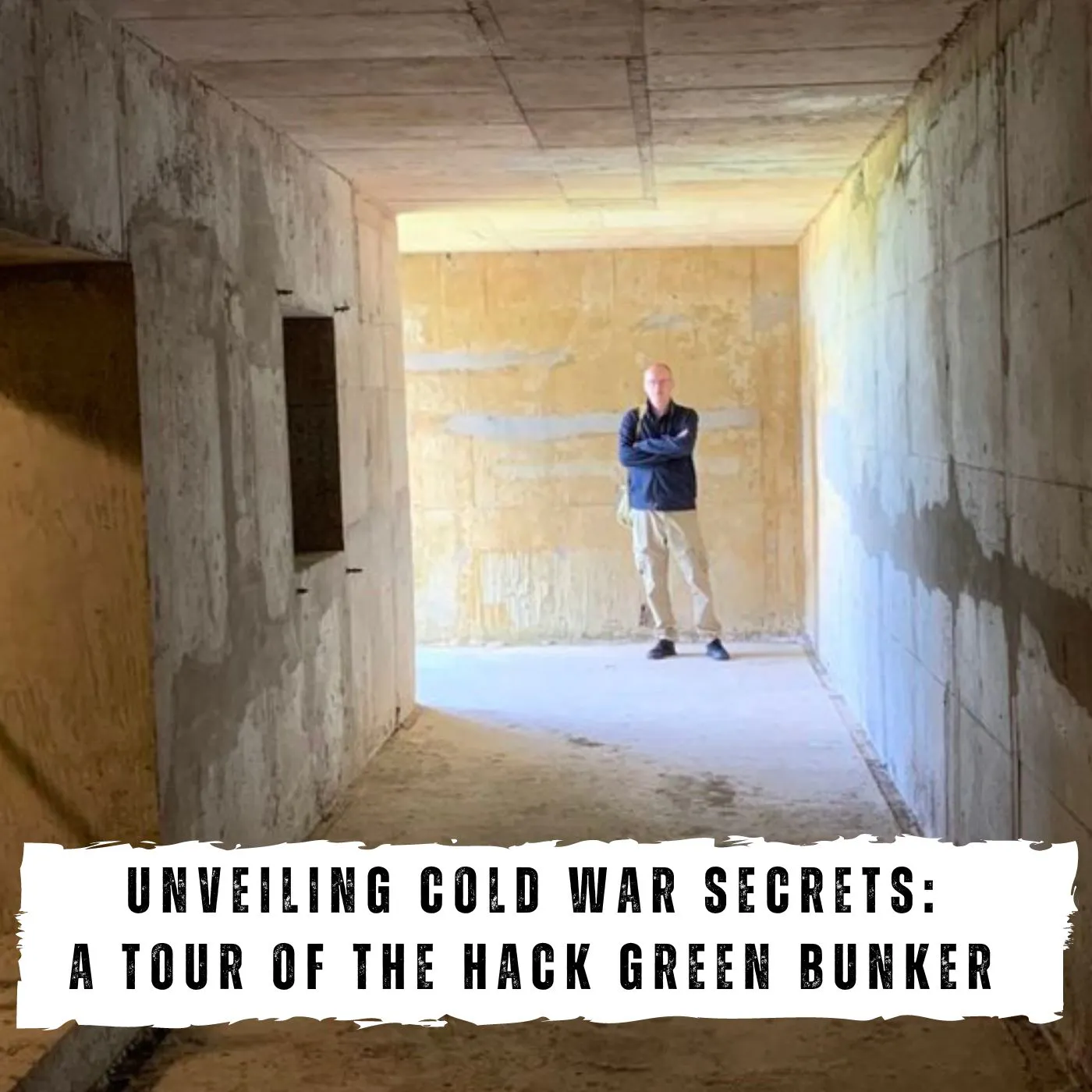
S25 Ep 366Unveiling Cold War Secrets: Hack Green Regional Seat of Government Bunker museum (366)
It's 40 years since the film Threads was shown on British TV. It portrayed the effects of a nuclear attack on the city of Sheffield, England and the eventual long-term effects of nuclear war on civilization. It therefore seems apt to publish a tour I had of the Hack Green Regional Seat of Government Bunker museum. Nestled in the heart of Cheshire, Hack Green Nuclear Bunker is a hidden gem that offers a fascinating glimpse into the Cold War era. I had the pleasure of exploring this historical site with Rod Siebert who originally bought the bunker and volunteer David Smith, who shared their extensive knowledge and passion for this remarkable place. The bunker contains many unique artefacts such as the largest public collection of nuclear weapons casings in Europe, including Polaris, Trident, Chevaline and WE 177, the UK's last airdrop nuclear deterrent. Other rare and unique items include the Queen's transition to war telephone, which would have been used by the UK government to communicate with Buckingham Palace in the event of war. Hack Green is not just a museum; it's a time capsule that offers a unique and sobering insight into the Cold War era. Whether you're a history buff, a fan of military technology, or simply curious about this hidden piece of history, Hack Green is a must-visit. Episode extras https://coldwarconversations.com/episode365/ Related episodes How Cold War Britain prepared for Nuclear War https://pod.fo/e/172825 The man who built his own nuclear bunker https://pod.fo/e/12af02 The last voice you'd hear in a nuclear war https://pod.fo/e/186a6d Cold War leaflets and secret documents https://pod.fo/e/157f2 Assigned to a government bunker https://pod.fo/e/13303 Visiting a Royal Observer Corps monitoring post and interview with the Chief Observer who served in the post https://pod.fo/e/f82a Alistair McCann has preserved a Royal Observer Corps monitoring post as a museum in Northern Ireland. https://pod.fo/e/f83d The fight to preserve Cold War history continues and via a simple monthly donation, you will give me the ammunition to continue to preserve Cold War history. You’ll become part of our community, get ad-free episodes, and get a sought-after CWC coaster as a thank you and you’ll bask in the warm glow of knowing you are helping to preserve Cold War history. Just go to https://coldwarconversations.com/donate/ If a monthly contribution is not your cup of tea, We also welcome one-off donations via the same link. Find the ideal gift for the Cold War enthusiast in your life! Just go to https://coldwarconversations.com/store/ Support the project! https://coldwarconversations.com/donate/ Follow us on Twitter https://twitter.com/ColdWarPod Facebook https://www.facebook.com/groups/coldwarpod/ Instagram https://www.instagram.com/coldwarconversations/ Youtube https://youtube.com/@ColdWarConversations Love history? Join Intohistory https://intohistory.com/coldwarpod Learn more about your ad choices. Visit podcastchoices.com/adchoices

S25 Ep 365The Siege: The Remarkable Story of the Greatest SAS Hostage Drama with Ben Macintyre (365)
On April 30, 1980, six heavily armed gunmen burst into the Iranian embassy on Princes Gate, overlooking Hyde Park in London. There they took 26 hostages, including embassy staff, visitors, and three British citizens. I talk with Britain’s bestselling historian Ben Macintyre who has written a new book called “The Siege: The Remarkable Story of the Greatest SAS Hostage Drama”. The book details the tense six-day siege ensued as millions gathered around screens across the country to witness the longest news flash in British television history, in which police negotiators and psychiatrists sought a bloodless end to the standoff, while the SAS – hitherto an organisation shrouded in secrecy – laid plans for a daring rescue mission: Operation Nimrod. Drawing on unpublished source material, exclusive interviews with the SAS, and testimony from witnesses including hostages, negotiators, intelligence officers and the on-site psychiatrist, bestselling historian Ben Macintyre takes readers on a gripping journey from the years and weeks of build-up on both sides, to the minute-by-minute account of the siege and rescue. Recreating the dramatic conversations between negotiators and hostages, the cutting-edge intelligence work happening behind-the-scenes, and the media frenzy around this moment of international significance, The Siege is the remarkable story of what really happened on those fateful six days, and the first full account of a moment that forever changed the way the nation thought about the SAS – and itself. Buy the book and support the podcast https://uk.bookshop.org/a/1549/9780241675670 Episode extras https://coldwarconversations.com/episode365/ The fight to preserve Cold War history continues and via a simple monthly donation, you will give me the ammunition to continue to preserve Cold War history. You’ll become part of our community, get ad-free episodes, and get a sought-after CWC coaster as a thank you and you’ll bask in the warm glow of knowing you are helping to preserve Cold War history. Just go to https://coldwarconversations.com/donate/ If a monthly contribution is not your cup of tea, We also welcome one-off donations via the same link. Find the ideal gift for the Cold War enthusiast in your life! Just go to https://coldwarconversations.com/store/ Support the project! https://coldwarconversations.com/donate/ Follow us on Twitter https://twitter.com/ColdWarPod Facebook https://www.facebook.com/groups/coldwarpod/ Instagram https://www.instagram.com/coldwarconversations/ Youtube https://youtube.com/@ColdWarConversations Love history? Join Intohistory https://intohistory.com/coldwarpod 00:00 Start 00:51 Introduction 03:53 Why is the book unique? 08:51 What were the political motivations of the gunmen? 16:30 How did the attack start? 23:50 Who is being held hostage? 27:25 The situation in the embassy in the first few days 35:31 Police negotiations 40:55 The SAS go in! 49:06 What happens to the gunmen? 51:12 PC Trevor Locke concealed his gun for six days during hostage crisis 54:16 The ending of the siege 55:26 How the siege raised Britain's military profile 58:33 The book about the siege will be turned into a television drama Learn more about your ad choices. Visit podcastchoices.com/adchoices
S25 Ep 364From Sheffield to Sandhurst: A Cold War Territorial Soldier's Memories (364)
Chris is a former member of the Yorkshire Volunteers, part of Cold War Britain’s Territorial reserve Army. This episode is a treasure trove of personal anecdotes, historical insights, and reflections on military life, making it a must-listen for anyone interested in military history and the Cold War era. Chris’s journey into the military began with his interest in military subjects and history. He joined the Army Cadet Force before university and later, the Officer Training Corps at Sheffield University. As a reserve unit, training included handling World War II vintage weapons including the venerable Bren gun. Chris’s training involved long days and nights of exercises and lectures. He recalls an incident at the School of Infantry in Warminster where he inadvertently came under live fire. Despite his initial lack of physical prowess, Chris’s perseverance and dedication saw him through, eventually leading to his decision to pursue a commission as an officer. After training and assessment at Sandhurst, Chris was commissioned as a second lieutenant. The transition from private soldier to officer was challenging, particularly as he had to command men who previously outranked him. However, Chris’s determination and growing confidence helped him establish himself as a capable leader. Looking back, Chris reflects on the camaraderie, the challenges, and the humorous moments that defined his military service. He also discusses the reality of PTSD, sharing insights from a friend who served in Iraq. Related episodes Britain's 1980s Cold War Dads Army/Home Guard - The Home Service Force https://pod.fo/e/14aea3 Episode extras here https://coldwarconversations.com/episode364 Want to hear more military stories of the Cold War? Here are all our military episodes in one convenient playlist https://open.spotify.com/playlist/22Tf4FcjFWQB1Jh4hpYJDg?si=d1cac1f026fb4783 The fight to preserve Cold War history continues and via a simple monthly donation, you will give me the ammunition to continue to preserve Cold War history. You’ll become part of our community, get ad-free episodes, and get a sought-after CWC coaster as a thank you and you’ll bask in the warm glow of knowing you are helping to preserve Cold War history. Just go to https://coldwarconversations.com/donate/ If a monthly contribution is not your cup of tea, We also welcome one-off donations via the same link. Find the ideal gift for the Cold War enthusiast in your life! Just go to https://coldwarconversations.com/store/ Follow us on Twitter https://twitter.com/ColdWarPod Facebook https://www.facebook.com/groups/coldwarpod/ Instagram https://www.instagram.com/coldwarconversations/ Youtube https://youtube.com/@ColdWarConversations Love history? Join Intohistory https://intohistory.com/coldwarpod Learn more about your ad choices. Visit podcastchoices.com/adchoices
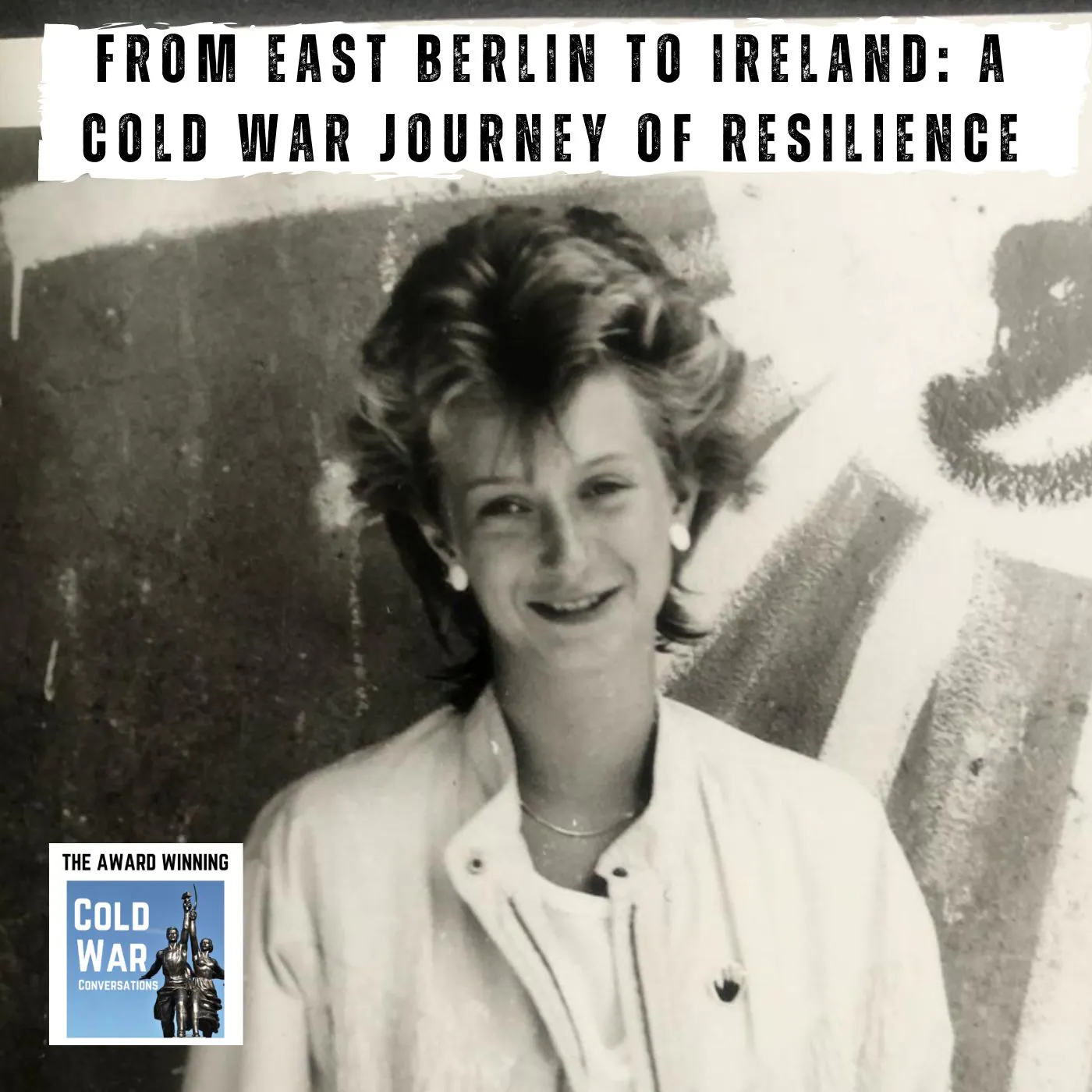
S25 Ep 363From East Berlin to Ireland: A Cold War Journey of Resilience (363)
Juli begins by recounting her early years in East Berlin, a time marked by the tragic loss of her father. Drafted into the army just days before her birth, her father continually deserted to see his family, ultimately leading to his untimely death. This early loss left Juli and her mother to navigate a harsh landscape in East Germany alone. Life in East Berlin was a world of contrasts. Juli describes the indoctrination she experienced in school, where lessons were steeped in socialist propaganda. The Berlin Wall, a symbol of division and oppression, loomed large in her family's life, cutting them off from relatives in the West. Despite the regime's efforts to control information, Juli's family found ways to glimpse the outside world through Western television channels, fuelling her desire for freedom. As Juli grew older, she became increasingly aware of the regime's lies and the oppressive nature of the state. The revolutionary movements of the late 1980s, sparked by events like the Tiananmen Square massacre, galvanized her. Juli joined the Monday demonstrations in Leipzig, risking her safety to demand change. Juli’s story doesn’t end with the fall of the Wall. She moved to Ireland, where she built a new life and family. Her reflections on transitioning from a controlled, oppressive state to a free society are profound. She speaks candidly about the challenges of adapting to a new way of life and the lingering impact of her upbringing. East Germany episode playlist https://open.spotify.com/playlist/1gHCa6R8q5OXkUncJQmyFm?si=9cc56794cf7244bc Episode extras https://coldwarconversations.com/episode363/ The fight to preserve Cold War history continues and via a simple monthly donation, you will give me the ammunition to continue to preserve Cold War history. You’ll become part of our community, get ad-free episodes, and get a sought-after CWC coaster as a thank you and you’ll bask in the warm glow of knowing you are helping to preserve Cold War history. Just go to https://coldwarconversations.com/donate/ If a monthly contribution is not your cup of tea, We also welcome one-off donations via the same link. Find the ideal gift for the Cold War enthusiast in your life! Just go to https://coldwarconversations.com/store/ Follow us on Twitter https://twitter.com/ColdWarPod Facebook https://www.facebook.com/groups/coldwarpod/ Instagram https://www.instagram.com/coldwarconversations/ Youtube https://youtube.com/@ColdWarConversations Love history? Join Intohistory https://intohistory.com/coldwarpod Learn more about your ad choices. Visit podcastchoices.com/adchoices

S25 Ep 362BRIXMIS and the Secret Cold War - Intelligence Collecting Operations Behind Enemy Lines in East Germany (362)
BRIXMIS and its operations behind enemy lines continue to fascinate the listeners of Cold War Conversations. In August 2024 I was honoured to be invited to the National Army Museum in London to interview Andrew Long, the author of BRIXMIS and the Secret Cold War - Intelligence Collecting Operations Behind Enemy Lines in East Germany. The National Army Museum is a leading authority on the British Army and its impact on society past and present. It’s well worth a visit, particularly their Foe to Friend exhibition about the British Army in Germany since 1945 which is on until the end of September 2024. In front of a sellout audience including approximately 50 BRIXMIS veterans and their families, we discuss the role, purpose and achievements of BRIXMIS. The accompanying presentation can be viewed here. The interview starts with an introduction from former BRIXMIS officer Major General Peter Williams and Chairman of the BRIXMIS Association. I’m delighted to welcome Peter Williams, Andrew Long and a sellout audience at the National Army Museum to our Cold War Conversation. Buy the book and support the podcast https://uk.bookshop.org/a/1549/9781399067843 Linked episodes BRIXMIS, the defence of Cold War Berlin & Rudolf Hess https://pod.fo/e/f833 Pete – a BRIXMIS driver behind enemy lines in East Germany https://pod.fo/e/eeb4c Arrested 11 times, plus 3 shooting incidents – a BRIXMIS officer’s diary Pt 1 https://pod.fo/e/13af96 Imprisoned in a Soviet Military gaol - a BRIXMIS officer's diary Pt 2 https://pod.fo/e/13ca90 In conversation with 7 BRIXMIS veterans – Part 1 https://pod.fo/e/1599d9 In conversation with 7 BRIXMIS veterans – Part 2 https://pod.fo/e/15b0ac Royal Military Police versus the Soviets (SOXMIS) in Cold War West Germany https://pod.fo/e/12c9d6 Behind enemy lines in East Germany with a US Military Liaison Mission driver Part 1 https://pod.fo/e/d4229 Behind enemy lines in East Germany with a US Military Liaison Mission driver Part 2 https://pod.fo/e/d757b Soviet and U.S. Military Liaison Missions & US Counterintelligence https://pod.fo/e/e4f55 Cold War US Army Intelligence Analyst https://pod.fo/e/1f383 US Army Intelligence gathering in the unified Germany https://pod.fo/e/b2cb3 Episode extras https://coldwarconversations.com/episode362/ The fight to preserve Cold War history continues and via a simple monthly donation, you will give me the ammunition to continue to preserve Cold War history. You’ll become part of our community, get ad-free episodes, and get a sought-after CWC coaster as a thank you and you’ll bask in the warm glow of knowing you are helping to preserve Cold War history. Just go to https://coldwarconversations.com/donate/ If a monthly contribution is not your cup of tea, We also welcome one-off donations via the same link. Find the ideal gift for the Cold War enthusiast in your life! Just go to https://coldwarconversations.com/store/ Support the project! https://coldwarconversations.com/donate/ Follow us on Twitter https://twitter.com/ColdWarPod Facebook https://www.facebook.com/groups/coldwarpod/ Instagram https://www.instagram.com/coldwarconversations/ Youtube https://youtube.com/@ColdWarConversations Love history? Join Intohistory https://intohistory.com/coldwarpod 00:00 Introduction 12:06 Post war Germany was split into four occupation zones 16:35 BRIXMIS offices in Berlin and East Germany 21:06 Contacts between Soviets and British 23:27 The tour role in East Germany 30:16 Exploiting intelligence from Soviet rubbish tips 32:15 Restricted areas in East Germany 35:55 Missions and intelligence scoops 40:04 Descriptions of special equipment 42:05 BRIXMIS Cars 44:01 James Bond switches 47:59 Photography 50:36 Overnighting in East Germany 53:25 There East German and Soviet opposition 56:58 Close scrapes and fatalities 01:02 Where to buy the book Learn more about your ad choices. Visit podcastchoices.com/adchoices
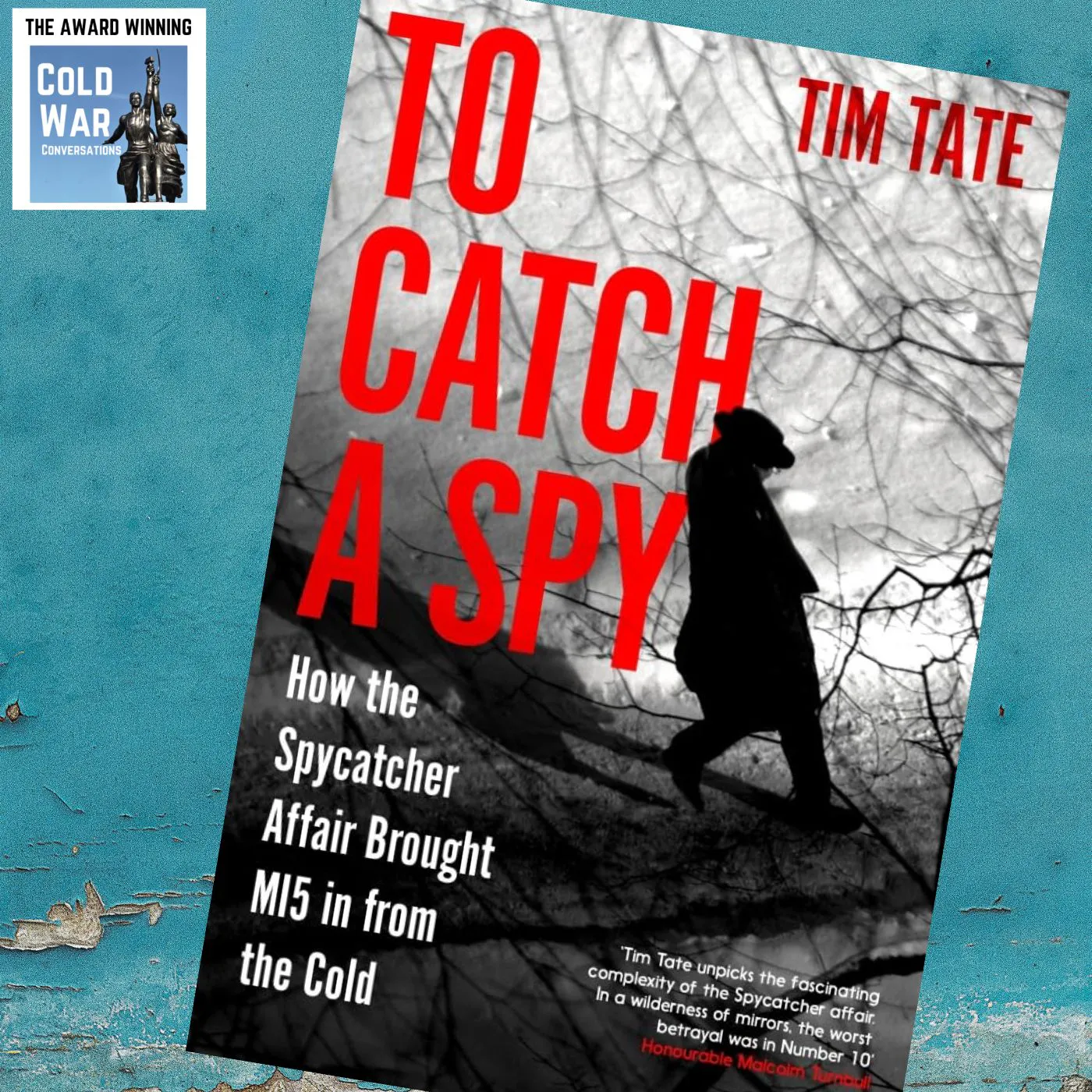
S25 Ep 361To Catch a Spy - How the Spycatcher Affair Brought MI5 in from the Cold (361)
The Spycatcher affair remains one of the most intriguing moments in the history of British intelligence and a pivotal point in the public's relationship with the murky world of espionage and security. It lifted the lid on alleged Soviet infiltration of British services and revealed a culture of law-breaking, bugging and burgling. But how much do we know about the story behind the scandal? Tim Tate is the author of To Catch a Spy - How the Spycatcher Affair Brought MI5 in from the Cold and in this episode he reveals the astonishing true story of the British government's attempts to silence whistleblower and ex MI5 Spycatcher Peter Wright and hide the truth about Britain's intelligence services and political elites. This is a tale of high treason and low farce. Drawing on thousands of pages of previously unpublished court transcripts, the contents of secret British government files, and original interviews with many of the key players in the Spycatcher trials. It draws back the curtain on a hidden world. A world where spies, politicians and Britain's most senior civil servants conspired to ride roughshod over the law, prevented the public from hearing about their actions and mounted a cynical conspiracy to deceive the world. Related episodes Guy Burgess and the Cambridge Spy Ring https://pod.fo/e/a5e38 Charlotte Philby talks about her grandfather Soviet spy Kim Philby https://pod.fo/e/115bd7 Spy Who Was Left Out in the Cold: The Secret History of Agent Goleniewski https://pod.fo/e/cd2e1 Episode extras https://coldwarconversations.com/episode361/ The fight to preserve Cold War history continues and via a simple monthly donation, you will give me the ammunition to continue to preserve Cold War history. You’ll become part of our community, get ad-free episodes, and get a sought-after CWC coaster as a thank you and you’ll bask in the warm glow of knowing you are helping to preserve Cold War history. Just go to https://coldwarconversations.com/donate/ If a monthly contribution is not your cup of tea, we welcome one-off donations via the same link. Find the ideal gift for the Cold War enthusiast in your life! Just go to https://coldwarconversations.com/store/ Support the project! https://coldwarconversations.com/donate/ Follow us on Twitter https://twitter.com/ColdWarPod Facebook https://www.facebook.com/groups/coldwarpod/ Instagram https://www.instagram.com/coldwarconversations/ Youtube https://youtube.com/@ColdWarConversations Love history? Join Intohistory https://intohistory.com/coldwarpod Learn more about your ad choices. Visit podcastchoices.com/adchoices
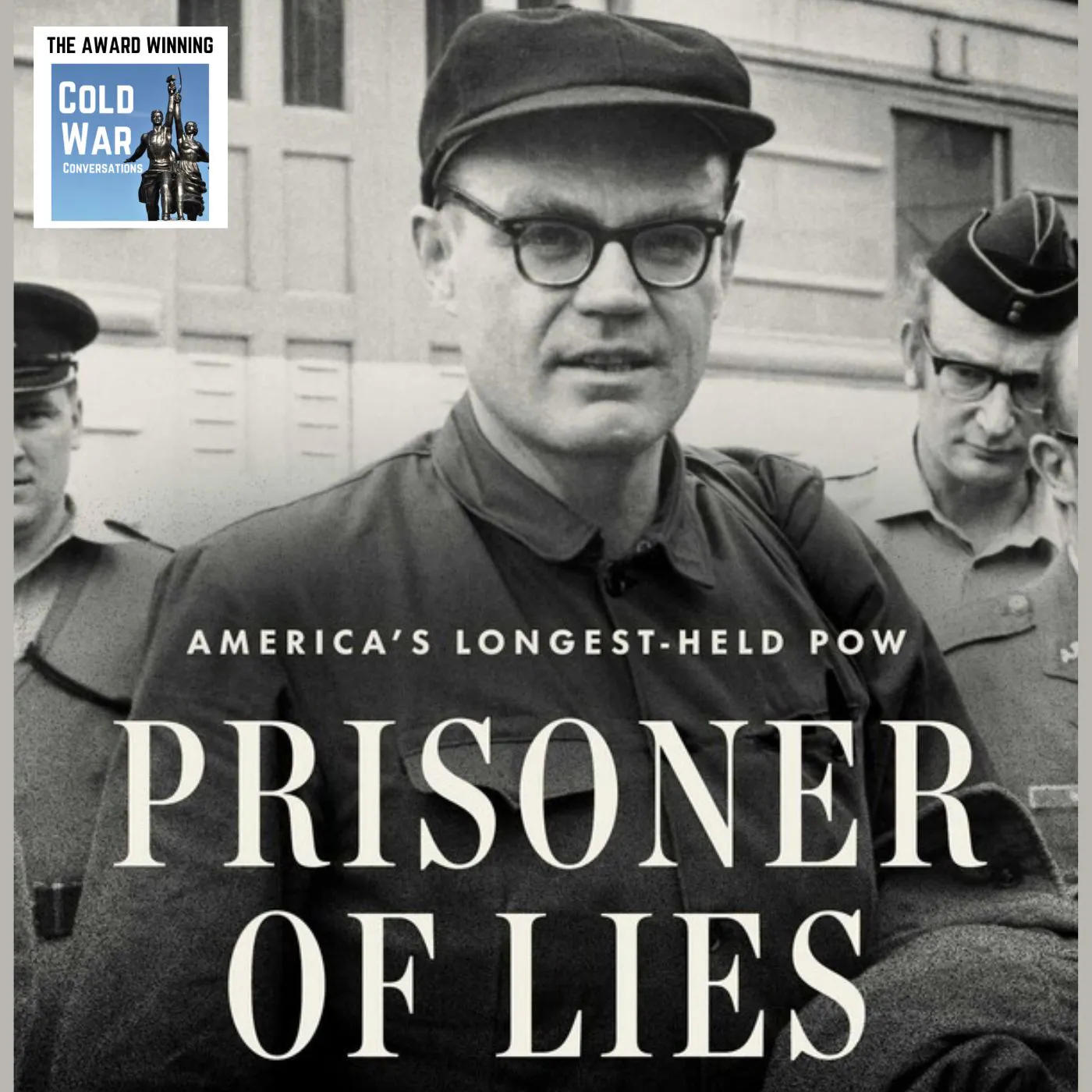
S24 Ep 360The longest-held prisoner of war in American history (360)
Jack Downey was the longest-held prisoner of war in American history. He was a CIA officer captured in China during the Korean War and imprisoned for twenty-one years. I speak with Barry Werth the author of Prisoner of Lies - Jack Downey's Cold War. He details Downey’s story when the CIA recruited him as a new Yale graduate in the post-World War II years. In a violation of protocol, Downey took part in an airdrop that failed and was captured over China. US government policy forbade ever acknowledging the identity of spies, no matter the consequences. Washington invented a fictitious cover story and stood by it through four Administrations. As a result, Downey was imprisoned during the decades that Red China, as it was called, was considered by the US to be a hostile nation. This is a harrowing, chilling story of one man whose life is at the mercy of larger forces outside of his control; in Downey’s case as a pawn of the Cold War, and more specifically the Oval Office and the State Department. However above all, it is an inspiring story of remarkable fortitude and resilience. Buy the book here & support the podcast https://amzn.to/3LRQyvW Linked episodes Gary Powers & the 1960 U2 Incident https://pod.fo/e/f830 The Chinese Civil War and the Independence of Taiwan https://pod.fo/e/b9f5d Episode extras https://coldwarconversations.com/episode360/ The fight to preserve Cold War history continues and via a simple monthly donation, you will give me the ammunition to continue to preserve Cold War history. You’ll become part of our community, get ad-free episodes, and get a sought-after CWC coaster as a thank you and you’ll bask in the warm glow of knowing you are helping to preserve Cold War history. Just go to https://coldwarconversations.com/donate/ If a monthly contribution is not your cup of tea, We also welcome one-off donations via the same link. Find the ideal gift for the Cold War enthusiast in your life! Just go to https://coldwarconversations.com/store/ Support the project! https://coldwarconversations.com/donate/ Follow us on Twitter https://twitter.com/ColdWarPod Facebook https://www.facebook.com/groups/coldwarpod/ Instagram https://www.instagram.com/coldwarconversations/ Youtube https://youtube.com/@ColdWarConversations Love history? Join Intohistory https://intohistory.com/coldwarpod Learn more about your ad choices. Visit podcastchoices.com/adchoices
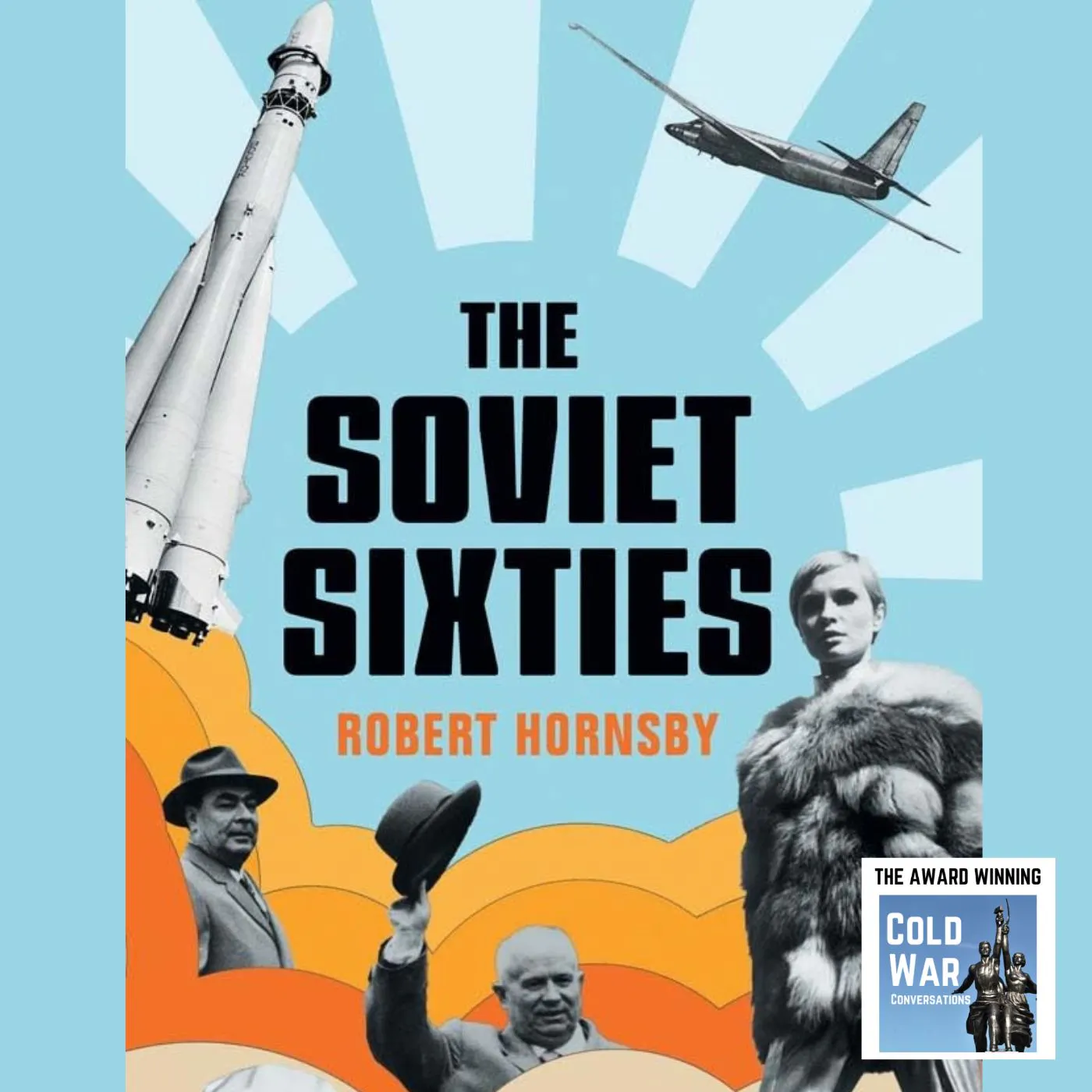
S24 Ep 359The Soviet Sixties (359)
Beginning with the death of Stalin in 1953, the “sixties” era in the Soviet Union was just as vibrant and transformative as in the West. The ideological romanticism of the revolutionary years was revived, with a renewed emphasis on egalitarianism, equality, and the building of a communist utopia. Mass terror was reined in, great victories were won in the space race, Stalinist cultural dogmas were challenged, and young people danced to jazz and rock and roll. I speak with Robert Hornsby who has written "the Soviet Sixties" which examines this remarkable and surprising period, showing that, even as living standards rose, aspects of earlier days endured. Censorship and policing remained tight, and massacres during protests in Tbilisi and Novocherkassk, alongside invasions of Hungary and Czechoslovakia, showed the limits of reform. The rivalry with the United States reached perhaps its most volatile point, friendship with China turned to bitter enmity, and global decolonization opened up new horizons for the USSR in the developing world. These tumultuous years transformed the lives of Soviet citizens and helped reshape the wider world. Buy the book here & support the podcast https://uk.bookshop.org/a/1549/9780300250527 Related episodes My father was Nikita Khrushchev Part 1 https://pod.fo/e/f831 My father was Nikita Khrushchev Part 2 https://pod.fo/e/f82f The Cuban Missile Crisis https://pod.fo/e/143b25 Soviet leader Leonid Brezhnev https://pod.fo/e/f9094 A freedom fighter in the 1956 Hungarian Revolution https://pod.fo/e/b1813 The Prague Spring https://pod.fo/e/f83a Episode extras https://coldwarconversations.com/episode359/ The fight to preserve Cold War history continues and via a simple monthly donation, you will give me the ammunition to continue to preserve Cold War history. You’ll become part of our community, get ad-free episodes, and get a sought-after CWC coaster as a thank you and you’ll bask in the warm glow of knowing you are helping to preserve Cold War history. Just go to https://coldwarconversations.com/donate/ If a monthly contribution is not your cup of tea, We also welcome one-off donations via the same link. Find the ideal gift for the Cold War enthusiast in your life! Just go to https://coldwarconversations.com/store/ Support the project! https://coldwarconversations.com/donate/ Follow us on Twitter https://twitter.com/ColdWarPod Facebook https://www.facebook.com/groups/coldwarpod/ Instagram https://www.instagram.com/coldwarconversations/ Youtube https://youtube.com/@ColdWarConversations Love history? Join Intohistory https://intohistory.com/coldwarpod Learn more about your ad choices. Visit podcastchoices.com/adchoices

S24 Ep 358Low Flying the Cold War USAF F-111 Nuclear Bomber (358)
Due to personal circumstances, I’ve been unable to produce a new episode this week, however, you will be aware of the many gems in the back catalogue and I have chosen one of my favourites today which is a rip-roaring story of service in the USAF with Rick Shreve an F111 pilot which I know you will enjoy. Normal service should be resumed next week. Rick Shreve was a US Air Force F 111 pilot based at RAF Lakenheath in the UK. He was trained to carry out nuclear as well as conventional missions against the Warsaw Pact forces in Europe. Rick describes his low-level training missions to attack targets in the Soviet Union and East Germany, where he recalls a near-fatal incident amongst the Scottish lochs. Rick was also part of one of the crews that flew on Operation El Dorado Canyon, the operation to bomb Libya in April 1986 in retaliation for the West Berlin discotheque bombing ten days earlier. Rick gives you a very frank and honest view of his role in the US Air Force and his approach to the huge responsibilities he carried. Episode extras https://coldwarconversations.com/episode358/ The fight to preserve Cold War history continues and via a simple monthly donation, you will give me the ammunition to continue to preserve Cold War history. You’ll become part of our community, get ad-free episodes, and get a sought-after CWC coaster as a thank you and you’ll bask in the warm glow of knowing you are helping to preserve Cold War history. Just go to https://coldwarconversations.com/donate/ If a monthly contribution is not your cup of tea, We also welcome one-off donations via the same link. Find the ideal gift for the Cold War enthusiast in your life! Just go to https://coldwarconversations.com/store/ Support the project! https://coldwarconversations.com/donate/ Follow us on Twitter https://twitter.com/ColdWarPod Facebook https://www.facebook.com/groups/coldwarpod/ Instagram https://www.instagram.com/coldwarconversations/ Youtube https://youtube.com/@ColdWarConversations Love history? Join Intohistory https://intohistory.com/coldwarpod Learn more about your ad choices. Visit podcastchoices.com/adchoices
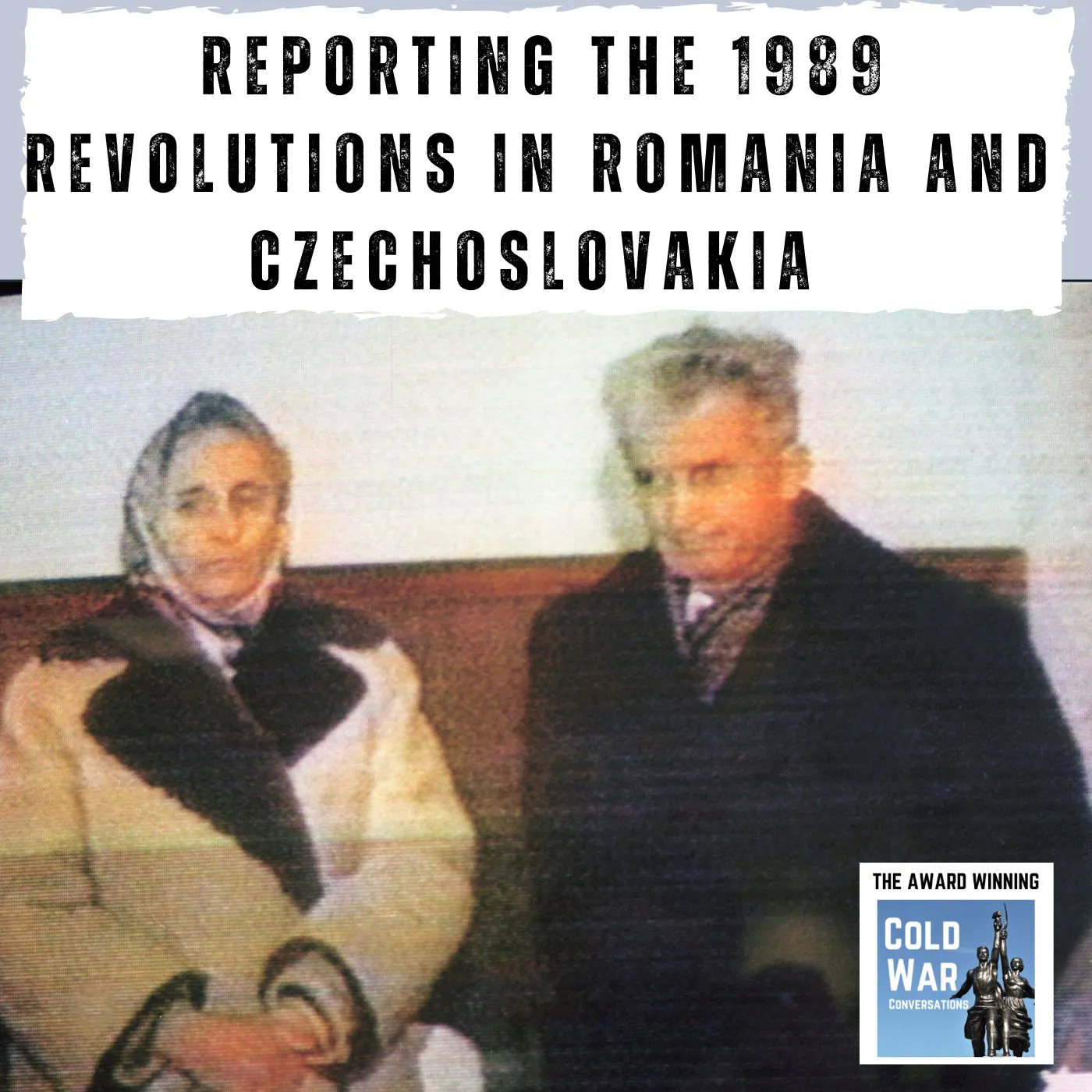
S24 Ep 357Reporting on the 1989 Revolution in Romania and the Czechoslovak Velvet Revolution (357)
Allan Little recounts his journey from his student days in Edinburgh to working as a journalist the front lines of Cold War history in Eastern Europe and beyond. In 1989 he found himself on the night shift at the BBC’s Today programme in London when the Berlin Wall fell. Witnessing the world change in real time Allan’s desire to be part of these monumental events grew stronger. He shares is his experience as a journalist during the Velvet Revolution in Czechoslovakia. Allan describes the electrifying atmosphere of Wenceslas Square and the fear of a violent crackdown. Allan also takes us to Romania during the fall of Nicolae Ceaușescu's brutal regime. He recounts in detail the chaos, the gunfire, and the bloody reality of the revolution’s human cost . The episode also delves into his time covering the 1991 Gulf War in Baghdad. He describes the eerie experience of watching the city being bombed from his hotel room and the resilience of the people around him. As the episode draws to a close, Allan reflects on the lessons he's learned from his career. He reminds us that while we may know what a society is transitioning from, we should be cautious in predicting what it is transitioning to. His insights are a powerful reminder of the complexities of history and the importance of journalism. Episode extras https://coldwarconversations.com/episode357/ The fight to preserve Cold War history continues and via a simple monthly donation, you will give me the ammunition to continue to preserve Cold War history. You’ll become part of our community, get ad-free episodes, and get a sought-after CWC coaster as a thank you and you’ll bask in the warm glow of knowing you are helping to preserve Cold War history. Just go to https://coldwarconversations.com/donate/ If a monthly contribution is not your cup of tea, We also welcome one-off donations via the same link. Find the ideal gift for the Cold War enthusiast in your life! Just go to https://coldwarconversations.com/store/ Support the project! https://coldwarconversations.com/donate/ Follow us on Twitter https://twitter.com/ColdWarPod Facebook https://www.facebook.com/groups/coldwarpod/ Instagram https://www.instagram.com/coldwarconversations/ Youtube https://youtube.com/@ColdWarConversations Love history? Join Intohistory https://intohistory.com/coldwarpod Learn more about your ad choices. Visit podcastchoices.com/adchoices

S24 Ep 356Mafia Spies and the CIA Plot to Kill Fidel Castro (356)
bonusThomas Maier an investigative journalist is our guide to the shadowy world of organized crime and espionage where shares insights from his extensive research and writing, including his latest book and drama documentary "Mafia Spies," which explores the unlikely alliance between the CIA and the Mafia in their attempts to assassinate Fidel Castro. We dive into the lives of two central figures in "Mafia Spies": Sam Giancana and Johnny Roselli. Giancana, the head of the Chicago mob in the early 1960s, and Roselli, the mafia's fixer in Hollywood, had a complex relationship that intertwined with the glamorous world of celebrities and the dark underworld of organized crime. Thomas elaborates on Giancana's personal turmoil following the sudden death of his wife and his increasing involvement with Roselli in Las Vegas. We explore the intriguing character of Judy Campbell, who was introduced to Frank Sinatra and eventually to John F. Kennedy, becoming a key player in this intricate web of relationships. The episode uncovers the CIA's covert operations to eliminate Castro, detailing the various assassination attempts and the involvement of Mafia figures like Giancana and Roselli. Thomas provides a fascinating look at the historical context and the extensive espionage network set up by Castro with the help of the Soviets. We also examine the ethical implications of the CIA's collaboration with the Mafia, the internal conflicts within the U.S. government, and the ultimate fates of Giancana and Roselli. The Paramount Showtime series based on "Mafia Spies," is released on July 16, and promises to bring this captivating story to a wider audience. Episode extras https://coldwarconversations.com/episode356/ The fight to preserve Cold War history continues and via a simple monthly donation, you will give me the ammunition to continue to preserve Cold War history. You’ll become part of our community, get ad-free episodes, and get a sought-after CWC coaster as a thank you and you’ll bask in the warm glow of knowing you are helping to preserve Cold War history. Just go to https://coldwarconversations.com/donate/ If a monthly contribution is not your cup of tea, We also welcome one-off donations via the same link. Find the ideal gift for the Cold War enthusiast in your life! Just go to https://coldwarconversations.com/store/ Support the project! https://coldwarconversations.com/donate/ Follow us on Twitter https://twitter.com/ColdWarPod Facebook https://www.facebook.com/groups/coldwarpod/ Instagram https://www.instagram.com/coldwarconversations/ Youtube https://youtube.com/@ColdWarConversations Love history? Join Intohistory https://intohistory.com/coldwarpod Learn more about your ad choices. Visit podcastchoices.com/adchoices
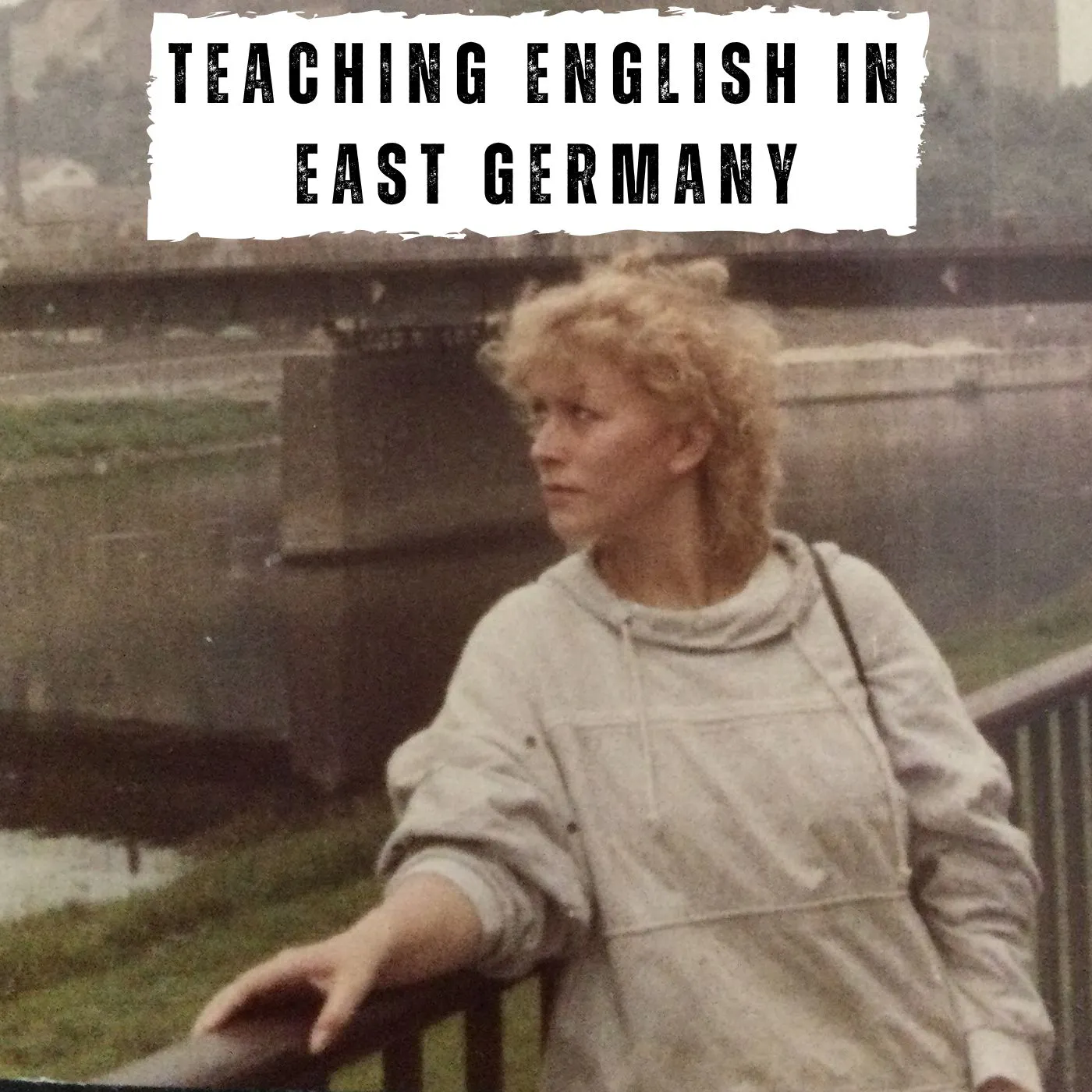
S24 Ep 355Teaching English in East Germany (355)
Bärbel was born in a village near Magdeburg in 1962, She explores her personal and professional life growing up in East Germany. We delve into her family's views on the East German government, her journey to becoming a teacher, and her experiences teaching English. We cover gender roles and the pressures to become a member of the communist party. Also discussed are the ideological and societal differences between East and West Germany, as well as the impact of the Berlin Wall's fall. Bärbel reflects on her career transition post-reunification, her family's life, the significant changes in Magdeburg and details her first trip to the UK. Highlighting the joy and challenges she faced, the episode provides a comprehensive insight into the daily life and career of a teacher in East Germany. Episode extras https://coldwarconversations.com/episode355/ The fight to preserve Cold War history continues and via a simple monthly donation, you will give me the ammunition to continue to preserve Cold War history. You’ll become part of our community, get ad-free episodes, and get a sought-after CWC coaster as a thank you and you’ll bask in the warm glow of knowing you are helping to preserve Cold War history. Just go to https://coldwarconversations.com/donate/ If a monthly contribution is not your cup of tea, We also welcome one-off donations via the same link. Find the ideal gift for the Cold War enthusiast in your life! Just go to https://coldwarconversations.com/store/ Support the project! https://coldwarconversations.com/donate/ Follow us on Twitter https://twitter.com/ColdWarPod Facebook https://www.facebook.com/groups/coldwarpod/ Instagram https://www.instagram.com/coldwarconversations/ Youtube https://youtube.com/@ColdWarConversations Love history? Join Intohistory https://intohistory.com/coldwarpod Learn more about your ad choices. Visit podcastchoices.com/adchoices
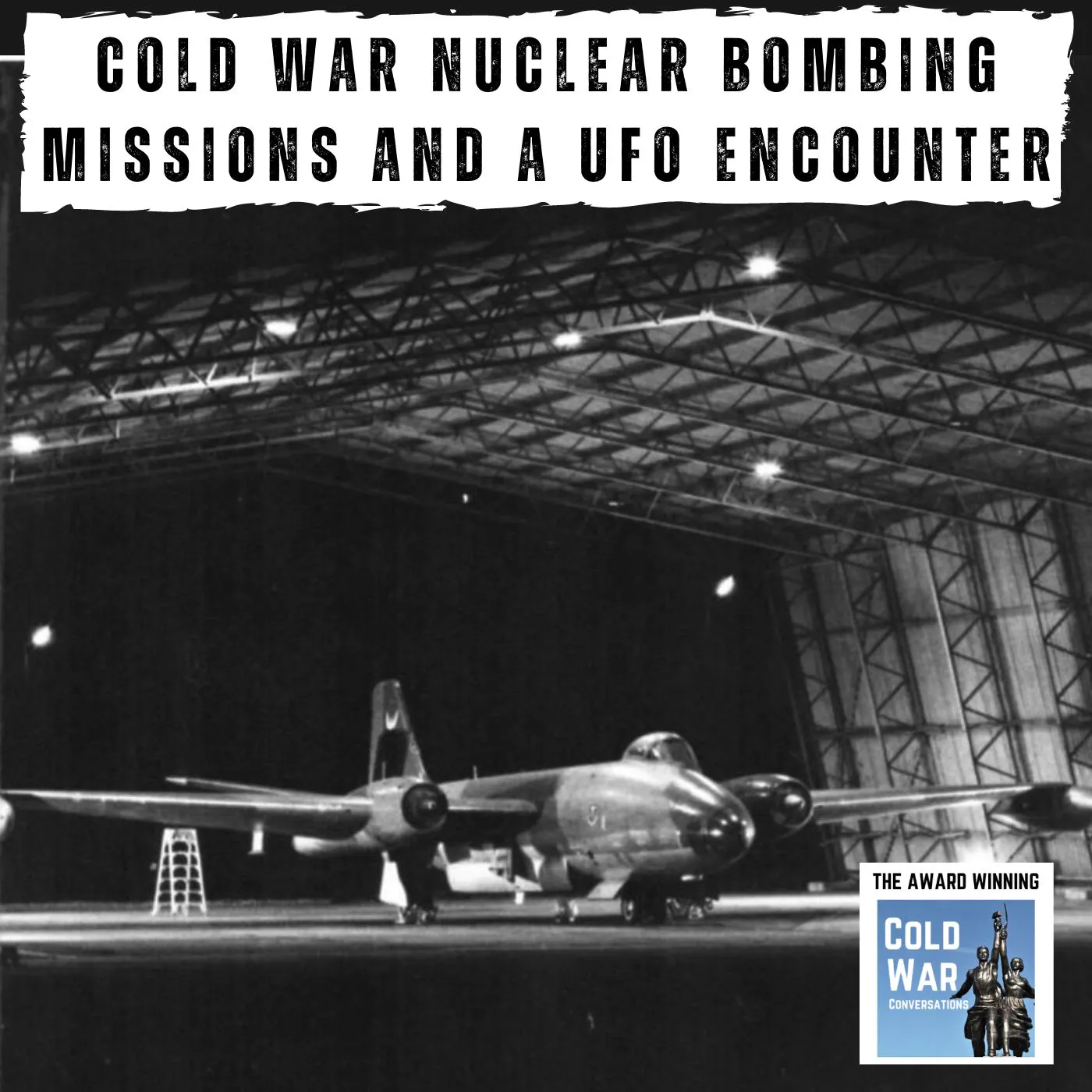
S24 Ep 354Cold War Nuclear Bombing Missions and a UFO Encounter (354)
Cold War RAF pilot Jeremy Lane, shares his gripping experiences, from nuclear bombing missions to a close encounter with a UFO. He was trained to fly the Canberra aircraft on nuclear bombing missions and describes how the American weaponry they would have used required dual control from both the President of the United States and the British Prime Minister. Jeremy also describes the Quick Reaction Alert (QRA) duties where aircraft were always on standby, ready to fly their nuclear missions at a moment's notice. He shares his experiences with escape and evasion training, designed to prepare pilots for the possibility of being shot down over enemy territory. The training was gruelling, involving everything from water survival exercises, evading capture in the wilderness and how to stand up to interrogation. It was a stark reminder of the risks these pilots faced daily. However, it wasn't all tension and drills. Life on the squadron had its moments of camaraderie and even humour. Our guest recounts how young pilots, feeling invincible, would joke about heading west instead of completing their mission if war ever broke out. The episode concludes with a truly extraordinary story—a close encounter with a UFO. During a night flight exercise, our guest, his crew and other aircraft witnessed a mysterious, pulsating object in the sky. Episode extras https://coldwarconversations.com/episode354/ The fight to preserve Cold War history continues and via a simple monthly donation, you will give me the ammunition to continue to preserve Cold War history. You’ll become part of our community, get ad-free episodes, and get a sought-after CWC coaster as a thank you and you’ll bask in the warm glow of knowing you are helping to preserve Cold War history. Just go to https://coldwarconversations.com/donate/ If a monthly contribution is not your cup of tea, We also welcome one-off donations via the same link. Find the ideal gift for the Cold War enthusiast in your life! Just go to https://coldwarconversations.com/store/ Follow us on Twitter https://twitter.com/ColdWarPod Instagram https://www.instagram.com/coldwarconversations/ Facebook https://www.facebook.com/groups/coldwarpod/ Youtube https://youtube.com/@ColdWarConversations Love history? Check out Into History at this link https://intohistory.com/coldwarpod 00:00 Mysterious Shape in the Sky 00:25 Introduction to Cold War Conversations 01:53 American Nuclear Weaponry and Dual Control 04:56 Life on Quick Reaction Alert 12:54 Navigating and Bombing Techniques 21:32 Positive Vetting Process 28:57 Suicide Mission Realities 29:35 A Surreal Briefing at Laarbruch 33:47 Escape and Evasion Training 36:26 Life on a Frontline Squadron 42:23 Disillusionment with the Air Force 55:09 Transition to Civilian Life 56:24 A Close Encounter with a UFO 01:02:12 Podcast Conclusion and Extras Cold War, Raf Pilot, Jeremy Lane, Nuclear Bombing Missions, Canberra Aircraft, Ufo Sighting, Quick Reaction Alert, Escape And Evasion Training, Cold War Aviation, Dual-Control Weaponry, American Weaponry, Cold War Podcast, Military Aviation, Night Flight Exercise, Pulsating Object, Cold War History, British Military, Cold War Stories, Cold War Intelligence, Cold War Missions Learn more about your ad choices. Visit podcastchoices.com/adchoices
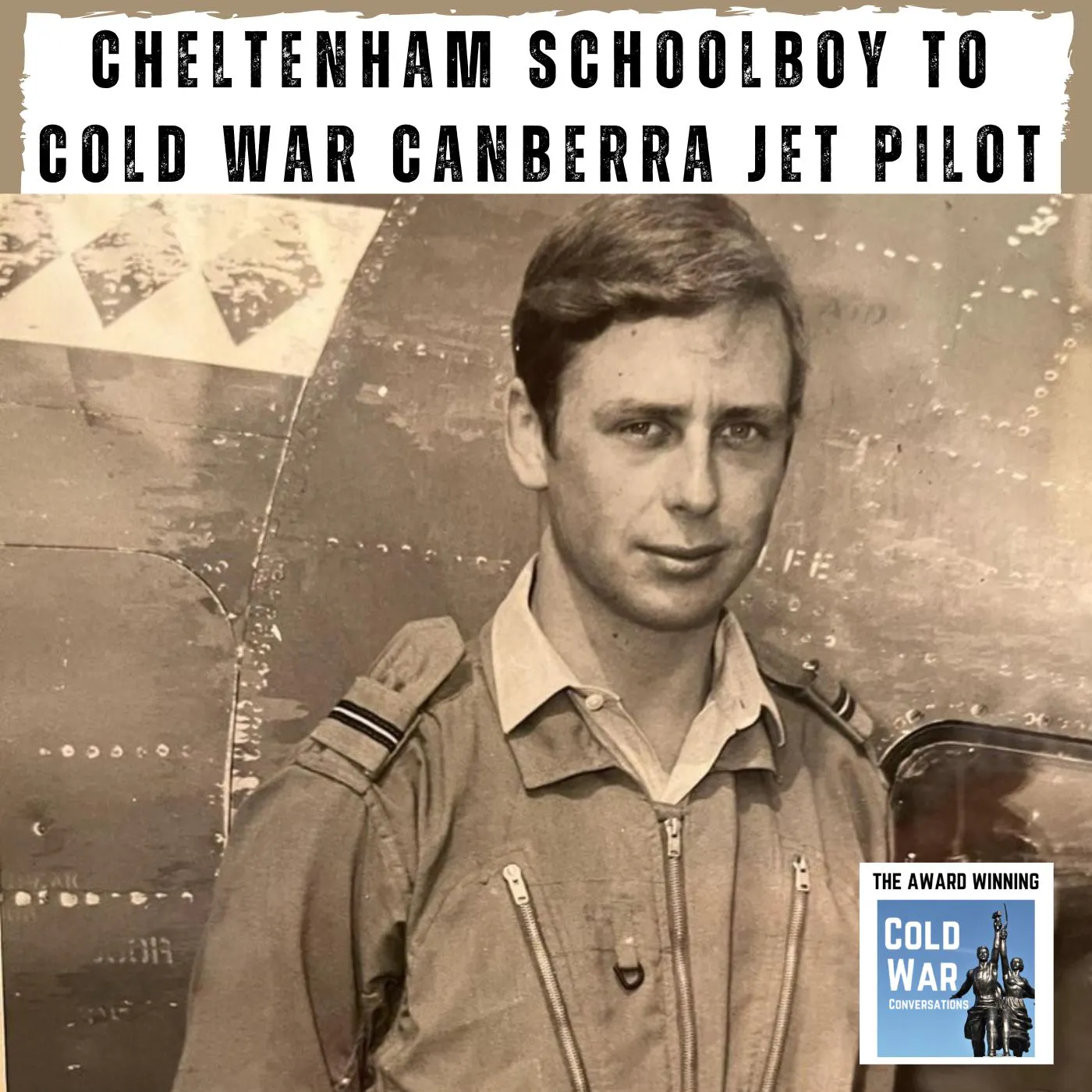
S24 Ep 353Cheltenham Schoolboy to Cold War Canberra Jet Pilot (353)
Jeremy Lane’s fascination for aviation was nurtured by countless childhood hours watching aircraft at Staverton Airport and North Weald. He shares his experiences flying the Jet Provost and later, the Canberra. He describes the capabilities of this versatile and iconic aircraft, from high-speed reconnaissance to its nuclear role. The Canberra's design, with its twin jet engines and rudimentary navigation equipment, required high skill and constant attention. The stories of flying at low levels, navigating with minimal aids, and the ever-present risk of engine failure provide a gripping insight into the life of an RAF pilot. This episode is a treasure trove of aviation history and personal anecdotes. Whether you're an aviation enthusiast or simply curious about the life of an RAF pilot, this episode offers a compelling and immersive experience. Tune in next week part 2 where we go into detail about the challenges of nuclear operations along the edge of the Iron Curtain. Episode extras https://coldwarconversations.com/episode353/ The fight to preserve Cold War history continues and via a simple monthly donation, you will give me the ammunition to continue to preserve Cold War history. You’ll become part of our community, get ad-free episodes, and get a sought-after CWC coaster as a thank you and you’ll bask in the warm glow of knowing you are helping to preserve Cold War history. Just go to https://coldwarconversations.com/donate/ If a monthly contribution is not your cup of tea, We also welcome one-off donations via the same link. Find the ideal gift for the Cold War enthusiast in your life! Just go to https://coldwarconversations.com/store/ Follow us on Twitter https://twitter.com/ColdWarPod Instagram https://www.instagram.com/coldwarconversations/ Facebook https://www.facebook.com/groups/coldwarpod/ Youtube https://youtube.com/@ColdWarConversations Love history? Check out Into History at this link https://intohistory.com/coldwarpod Learn more about your ad choices. Visit podcastchoices.com/adchoices
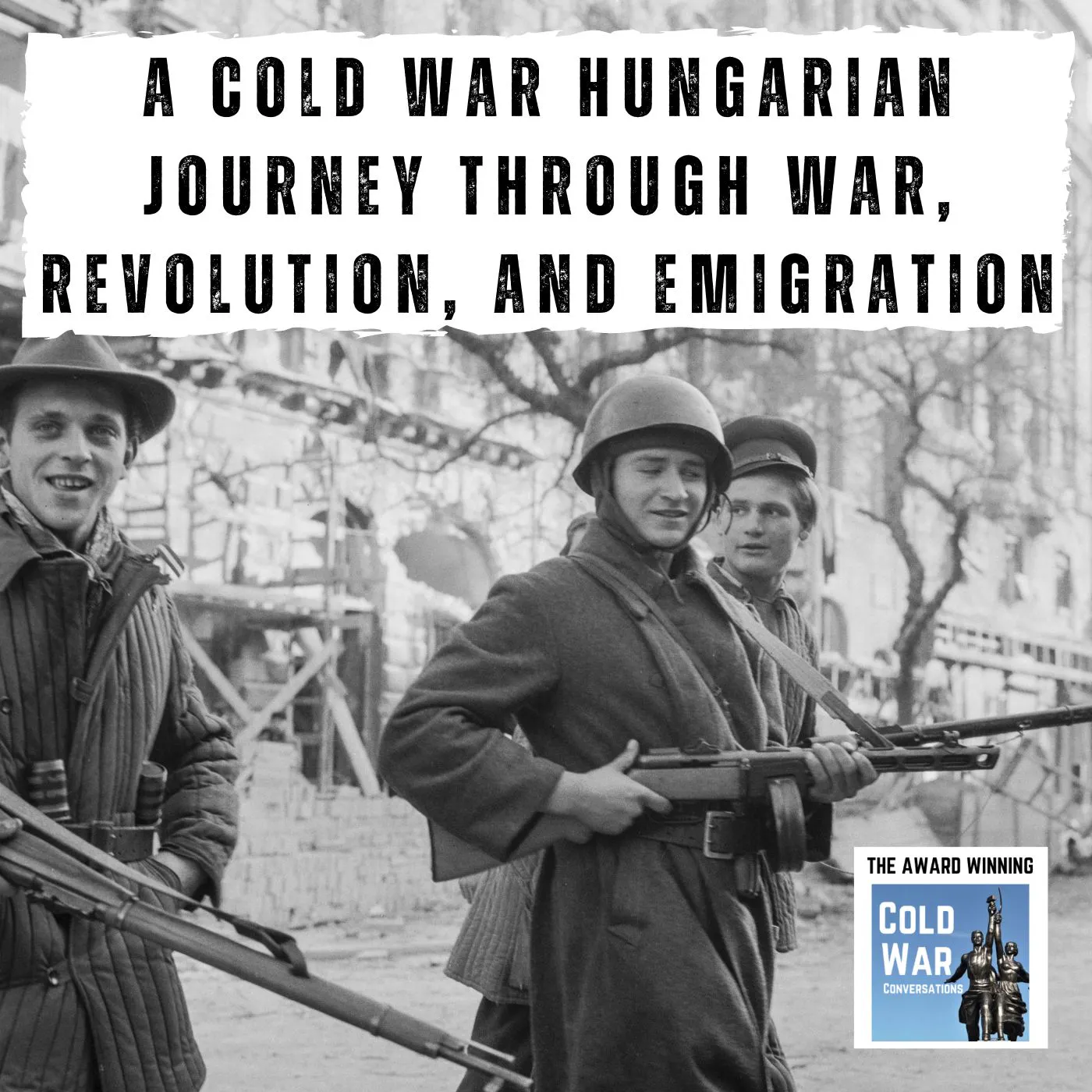
S24 Ep 352A Cold War Hungarian Journey Through War, Revolution, and Emigration (352)
In this comprehensive narrative, Imre recounts his life from his birth in 1936 in Hungary to his emigration to the West after the 1956 Hungarian Revolution. He discusses the influence of his family’s Hungarian and German heritage, his father’s work in the oil industry, and the impact of World War II and communist rule on his upbringing. The account vividly describes his education, military training, and involvement in the 1956 Hungarian Revolution. He also highlights his subsequent escape to Austria and eventual resettlement in England including living with Bridget’s parents who featured in episode 322 Imre elaborates on the hardships faced by his family due to political changes and the repressive regime, as well as his educational and professional journey in the UK, culminating in a successful international career. His narrative provides a poignant look at the personal ramifications of leaving your country and the impact on relatives left behind. Episode extras https://coldwarconversations.com/episode352/ Listen to Bridget’s story here https://coldwarconversations.com/episode322/ The fight to preserve Cold War history continues and via a simple monthly donation, you will give me the ammunition to continue to preserve Cold War history. You’ll become part of our community, get ad-free episodes, and get a sought-after CWC coaster as a thank you and you’ll bask in the warm glow of knowing you are helping to preserve Cold War history. Just go to https://coldwarconversations.com/donate/ If a monthly contribution is not your cup of tea, We also welcome one-off donations via the same link. Find the ideal gift for the Cold War enthusiast in your life! Just go to https://coldwarconversations.com/store/ Follow us on Twitter https://twitter.com/ColdWarPod Instagram https://www.instagram.com/coldwarconversations/ Facebook https://www.facebook.com/groups/coldwarpod/ Youtube https://youtube.com/@ColdWarConversations Love history? Check out Into History at this link https://intohistory.com/coldwarpod Learn more about your ad choices. Visit podcastchoices.com/adchoices

S24 Ep 351Mutiny in the East German Army (351)
In this riveting account, Tilo recounts his experiences as an East German soldier during the final months of East Germany. He details the rising political awareness among soldiers, and his fear that his unit will be asked to shoot on demonstrators also provides a personal perspective on the pivotal moments leading up to and following the fall of the Berlin Wall, including attending massive protests and his first visit to West Berlin. Spurred by a broadcasted precedent of concession to striking soldiers in another barrack, Tilo and his comrades orchestrated what can only be described as a mutiny: a demand for rights, dignity, and acknowledgement of the transformative tide sweeping through East Germany. The fall of the Berlin Wall is often recounted in grand narratives of geopolitical shifts, but regular Cold War Conversations listeners will know that it is stories like Tilo's that remind us that behind monumental changes are individuals and communities. Episode extras here https://coldwarconversations.com/episode351/ The fight to preserve Cold War history continues and via a simple monthly donation, you will give me the ammunition to continue to preserve Cold War history. You’ll become part of our community, get ad-free episodes, and get a sought-after CWC coaster as a thank you and you’ll bask in the warm glow of knowing you are helping to preserve Cold War history. Just go to https://coldwarconversations.com/donate/ If a monthly contribution is not your cup of tea, We also welcome one-off donations via the same link. Find the ideal gift for the Cold War enthusiast in your life! Just go to https://coldwarconversations.com/store/ Support the project! https://coldwarconversations.com/donate/ Follow us on Twitter https://twitter.com/ColdWarPod Facebook https://www.facebook.com/groups/coldwarpod/ Instagram https://www.instagram.com/coldwarconversations/ Youtube https://youtube.com/@ColdWarConversations Love history? Join Intohistory https://intohistory.com/coldwarpod Learn more about your ad choices. Visit podcastchoices.com/adchoices

S24 Ep 350Face to face with the Soviets at the Cold War Reykjavik Summit between President Reagan and Mikhail Gorbachev (350)
This episode is brought to you by the CNN Original Series Secrets & Spies: A Nuclear Game which premieres 2nd June 2024 and is available now on BBC Iplayer). The series tracks the spies operating behind the scenes in the 1980s as the Cold War brings two superpowers to the brink of nuclear war. This razor-sharp series examines the tenuousness of global geopolitics during the Cold War and features my guest Ken Adelman who served as the Director of the U.S. Arms Control and Disarmament Agency for nearly five years during the Reagan administration. In our episode, Ken places you face to face with the Soviets during the tense nuclear arms negotiations at the 1986 Reykjavik Summit between President Reagan and Soviet Leader Mikhail Gorbachev. Planned as a short gathering it quickly developed into major international issues and the possibility of eliminating all nuclear weapons... Buy Ken's book here https://amzn.to/3R7ei2n Extra video content here https://coldwarconversations.com/episode350/ Episodes mentioned: 1983 the Year the Cold War Almost Turned Hot https://coldwarconversations.com/episode316/ CNN Original Series Secrets & Spies: A Nuclear Game https://cnncreativemarketing.com/project/secrets-spies/ The fight to preserve Cold War history continues and via a simple monthly or annual donation, you will give me the ammunition to continue to preserve Cold War history. You’ll become part of our community, get ad-free episodes, and get a sought-after CWC coaster as a thank you and you’ll bask in the warm glow of knowing you are helping to preserve Cold War history. Just go to https://coldwarconversations.com/donate/ If a monthly contribution is not your cup of tea, We also welcome one-off donations via the same link. Find the ideal gift for the Cold War enthusiast in your life! Just go to https://coldwarconversations.com/store/ Support the project! https://coldwarconversations.com/donate/ Follow us on Twitter https://twitter.com/ColdWarPod Facebook https://www.facebook.com/groups/coldwarpod/ Instagram https://www.instagram.com/coldwarconversations/ Youtube https://youtube.com/@ColdWarConversations Love history? Join Intohistory https://intohistory.com/coldwarpod Learn more about your ad choices. Visit podcastchoices.com/adchoices

S23 Ep 349The President’s Kill List - Assassination and US Foreign Policy since 1945 (349)
Luca Trenta is an associate professor at Swansea University and has recently authored The President's Kill List: Assassination and US Foreign Policy Since 1945. We dig in detail into the contents of the book delving into the history of Cold War CIA operations including instances of electoral interference and assassination. Our conversation explores key historical episodes, including U.S. actions in Italy, Cuba, Chile, and assassinations in the context of the Cold War. Case studies feature notable figures such as Fidel Castro, Che Guevara, Salvador Allende and René Schneider. Our discussion includes the impact of investigative journalism, the intricacies of covert planning, and the eventual exposure of these actions. Luca also shares his personal story of a memorable dinner with former President Jimmy Carter. Episode extras here https://coldwarconversations.com/episode349/ The fight to preserve Cold War history continues and via a simple monthly donation, you will give me the ammunition to continue to preserve Cold War history. You’ll become part of our community, get ad-free episodes, and get a sought-after CWC coaster as a thank you and you’ll bask in the warm glow of knowing you are helping to preserve Cold War history. Just go to https://coldwarconversations.com/donate/ If a monthly contribution is not your cup of tea, We also welcome one-off donations via the same link. Find the ideal gift for the Cold War enthusiast in your life! Just go to https://coldwarconversations.com/store/ Support the project! https://coldwarconversations.com/donate/ Follow us on Twitter https://twitter.com/ColdWarPod Facebook https://www.facebook.com/groups/coldwarpod/ Instagram https://www.instagram.com/coldwarconversations/ Youtube https://youtube.com/@ColdWarConversations Love history? Join Intohistory https://intohistory.com/coldwarpod Learn more about your ad choices. Visit podcastchoices.com/adchoices

S24 Ep 348The sinking of the USS Scorpion and the Velvet Revolution (348)
bonusI’m a big fan of the History Daily podcast, where my good friend Lindsay Graham takes you back in time to explore a momentous moment that happened ‘on this day’ in history. Visit Historydaily.com or search History Daily in your podcast app to learn more. As an introduction to History Daily I have selected two Cold War-themed episodes that I know you will enjoy. The first is the story of the nuclear-powered submarine USS Scorpion which disappeared in the middle of the Atlantic Ocean with 99 men on board on May 22, 1968. The second is the story of the Velvet Revolution when on November 17, 1989. Police violently shut down a student demonstration in Prague, sparking a revolution that ended communist rule in Czechoslovakia. The fight to preserve Cold War history continues and via a simple monthly donation, you will give me the ammunition to continue to preserve Cold War history. You’ll become part of our community, get ad-free episodes, and get a sought-after CWC coaster as a thank you and you’ll bask in the warm glow of knowing you are helping to preserve Cold War history. Just go to https://coldwarconversations.com/donate/ If a monthly contribution is not your cup of tea, We also welcome one-off donations via the same link. Find the ideal gift for the Cold War enthusiast in your life! Just go to https://coldwarconversations.com/store/ Support the project! https://coldwarconversations.com/donate/ Follow us on Twitter https://twitter.com/ColdWarPod Facebook https://www.facebook.com/groups/coldwarpod/ Instagram https://www.instagram.com/coldwarconversations/ Youtube https://youtube.com/@ColdWarConversations Love history? Join Intohistory https://intohistory.com/coldwarpod Learn more about your ad choices. Visit podcastchoices.com/adchoices

S23 Ep 347A US Diplomat's Son in Cold War Soviet Union, Nicaragua and Cuba (347)
In this fascinating interview, Patrick D. Joyce recounts his unique experience growing up as the son of a U.S. diplomat during the Cold War. Living in the diplomatic community of the Soviet Union, Nicaragua, and Cuba, Patrick shares vivid memories of his father's career as a Soviet and linguistic expert, who rose to become Deputy Ambassador at both the Moscow and Havana US embassies. The discussion touches on the juxtaposition of ordinary family life in various U.S. embassies around the world alongside the extraordinary circumstances of espionage and international relations, highlighting the complexities and contradictions of living in hostile countries during tense political times. The narrative weaves through personal anecdotes, school experiences, interactions with local populations, and the evolving geopolitical landscape, providing a deeply personal lens on historical events. Episode extras here https://coldwarconversations.com/episode347/ The fight to preserve Cold War history continues and via a simple monthly donation, you will give me the ammunition to continue to preserve Cold War history. You’ll become part of our community, get ad-free episodes, and get a sought-after CWC coaster as a thank you and you’ll bask in the warm glow of knowing you are helping to preserve Cold War history. Just go to https://coldwarconversations.com/donate/ If a monthly contribution is not your cup of tea, We also welcome one-off donations via the same link. Patrick D. Joyce is the author of two Cold War thrillers for young adults: Back in the USSR and Strawberry Fields. Learn more about Patrick and his books at https://patrickdjoyce.com. Obituary in The Foreign Service Journal for Patrick’s father, John M. “Mike” Joyce: https://afsa.org/sites/default/files/flipping_book/070823/90/ “The Old Russian Legacy,” by John M. Joyce, in Foreign Policy (1984): https://www.jstor.org/stable/1148385 “La guerra de la CIA contra Cuba,” the 1987 Cuban TV exposé that aired the night before Patrick’s family departed Havana: https://www.youtube.com/watch?v=WqdlRcs06-Y The Washington Post on the Cuban TV exposé: https://www.washingtonpost.com/archive/politics/1987/07/25/spy-charges-strain-us-cuban-ties/d1a4ecc6-a7f6-4765-9a74-16a2d925b2eb/ James Olson on Foreign Policy’s I Spy podcast, with a recently revealed backstory to the Cuban TV exposé: https://foreignpolicy.com/podcasts/ispy/?episode=the-counterspy Find the ideal gift for the Cold War enthusiast in your life! Just go to https://coldwarconversations.com/store/ Support the project! https://coldwarconversations.com/donate/ Follow us on Twitter https://twitter.com/ColdWarPod Facebook https://www.facebook.com/groups/coldwarpod/ Instagram https://www.instagram.com/coldwarconversations/ Youtube https://youtube.com/@ColdWarConversations Love history? Join Intohistory https://intohistory.com/coldwarpod 0:00 Introduction to Cold War Conversations 00:27 Meet Patrick D Joyce: A Diplomat's Son 01:37 Early Life and Family Background 04:44 Life in the Diplomatic Community 09:06 Experiences in the Soviet Union 19:00 Return to Moscow in the 80s 23:58 Navigating Diplomatic Life 29:06 Reflections and Writing Novels 30:13 Arrival in Managua: A Soviet Satellite 30:52 Life Amidst Conflict: The Contra War 32:41 Navigating Diplomatic Challenges 35:03 Teenage Adventures in a War-Torn City 38:04 Spies Among Us: Embassy Life Revealed 40:46 Transition to Havana: A Diplomatic Shift 42:54 Living in Havana: Between Luxury and Hostility 46:44 A Summer Job in Havana 48:04 Suspicions and Scandals: The Spy Question 54:31 Return to Moscow: A New Era 58:56 Life in Moscow: Socializing and Escaping 01:00:18 Final Departure: A Road Trip to Freedom 01:01:08 Episode Extras and Acknowledgements Learn more about your ad choices. Visit podcastchoices.com/adchoices

S23 Ep 346East German Army Bullying, Serving in a Brigade HQ and Military Exercises (346)
Warning: This episode does cover the subject of suicide. If you need help please use these links: UK https://www.samaritans.org/how-we-can-help/contact-samaritan/ Rest of the World https://findahelpline.com/i/iasp Tilo shares his raw and powerful testimony of a young man conscripted into the East German military at the height of Cold War tensions. He recounts the daunting prospect of being drafted into the border guards, an assignment he was determined to avoid at all costs due to his moral opposition to the Berlin Wall and the potential to be forced into shooting unarmed escapers. Tilo vividly describes the intense medical and psychological scrutiny he faced from military officials and shares the ingenious way he ensured he wouldn't be placed in the border guards, a tactic that involved a bold statement of conscience in front of a military panel. The episode also delves into the harsh realities of East German military life, from the ritual humiliations of new recruits to the tragic story of a comrade's suicide attempt under the pressures of service. We explore the psychological toll of such an environment and the coping mechanisms soldiers use to survive. Tilo also describes working in an artillery brigade headquarters, an unusual tactic to prevent Allied Military Liaison Missions from identifying their vehicles and an attack by East German paratroops during an exercise. Episode extras here https://coldwarconversations.com/episode346/ The fight to preserve Cold War history continues and via a simple monthly donation, you will give me the ammunition to continue to preserve Cold War history. You’ll become part of our community, get ad-free episodes, and get a sought-after CWC coaster as a thank you and you’ll bask in the warm glow of knowing you are helping to preserve Cold War history. Just go to https://coldwarconversations.com/donate/ If a monthly contribution is not your cup of tea, We also welcome one-off donations via the same link. Find the ideal gift for the Cold War enthusiast in your life! Just go to https://coldwarconversations.com/store/ Support the project! https://coldwarconversations.com/donate/ Follow us on Twitter https://twitter.com/ColdWarPod Facebook https://www.facebook.com/groups/coldwarpod/ Instagram https://www.instagram.com/coldwarconversations/ Youtube https://youtube.com/@ColdWarConversations Love history? Join Intohistory https://intohistory.com/coldwarpod 00:00 Trigger Warning and Introduction 00:54 Tilo's Early Life and Draft Experience 02:43 Avoiding the Border Guards 10:27 Life in the Artillery Brigade 14:37 Harsh Realities and Hazing 18:14 Comrade's Suicide Attempt 35:03 Zyklus 89 Exercise and Conclusion Learn more about your ad choices. Visit podcastchoices.com/adchoices

S22 Ep 345America's Cold War Scottish Bastion (345)
David McKay is a former Cold War special forces officer and author of Bubbleheads, SEALs and Wizards: America's Scottish Bastion in the Cold War. His book highlights the Scottish bases' significant role in supporting the US military over three decades. David brings his expertise into play, examining this intriguing story by reaching out to more than one hundred veterans and expert witnesses. Their contributions reveal the personal stories of history, not high-end diplomacy. We also delve into the espionage efforts mounted by the KGB against these bases through trawlers and agents on the ground. Among the many stories that David details are the nuclear missile submarine operations from Holy Loch, the large radio spy stations and reveals for the first time one of America’s most bizarre intelligence gathering activities of the early Cold War. Episode extras here https://coldwarconversations.com/episode345/ Buy the book and support us here https://uk.bookshop.org/a/1549/9781849955546 The fight to preserve Cold War history continues and via a simple monthly donation, you will give me the ammunition to continue to preserve Cold War history. You’ll become part of our community, get ad-free episodes, and get a sought-after CWC coaster as a thank you and you’ll bask in the warm glow of knowing you are helping to preserve Cold War history. Just go to https://coldwarconversations.com/donate/ If a monthly contribution is not your cup of tea, we welcome one-off donations via the same link. Find the ideal gift for the Cold War enthusiast in your life! Just go to https://coldwarconversations.com/store/ Support the project! https://coldwarconversations.com/donate/ Follow us on Twitter https://twitter.com/ColdWarPod Facebook https://www.facebook.com/groups/coldwarpod/ Instagram https://www.instagram.com/coldwarconversations/ Youtube https://youtube.com/@ColdWarConversations Love history? Join Intohistory https://intohistory.com/coldwarpod 00:00 Introducing Cold War Conversations and David Mackay 01:54 David Mackay: From Paratrooper to Cold War Historian 05:30 The Strategic Importance of Scottish Bases in the Cold War 08:32 Project Genetrix: Balloons, Espionage, and Cold War Ingenuity 16:49 The U.S. Submarine Base in Scotland: Strategic Decisions and Local Impact 26:55 Espionage and Security: Spies, Spetsnaz, and Surveillance 33:20 The Soviet Presence in Scotland: Trawlers, Spies, and Local Encounters 41:25 Close Encounters of the Naval Kind 42:09 The Cat and Mouse of Cold War Submarines 42:53 Espionage and a High Seas Emergency 44:13 Gathering Intel 46:21 Signals Intelligence and the Scottish Connection 56:14 The Strategic Importance of Machrihanish 01:04:56 Prestwick Airport: A Cold War Crossroads 01:08:29 Reflecting on the Cuban Missile Crisis 01:11:37 Personal Anecdotes and Cold War Reflections Learn more about your ad choices. Visit podcastchoices.com/adchoices
S23 Ep 344The Challenges of a Christian East German Childhood (344)
Tilo offers an engaging and personal account of growing up in East Berlin before the fall of the Berlin Wall. He begins by describing his early childhood in a rundown building in Prenzlauer Berg before moving to a new prefab neighbourhood in Lichtenberg. Tilo’s grandfather on his mother’s side was a pastor in the Lutheran church and second in command to a Bishop at the end of his career. His grandfather on his father’s side had been a teacher and had joined the Nazi party After the World War Two he was banned from working. Tilo’s family faced educational and career limitations due to their religious and political background compounded by the pervasive influence of the Stasi and party loyalty in determining one’s future. Tilo also recounts experiences of attending school with a strong military and ideological indoctrination, including paramilitary training and pressure to join the National People's Army (NVA). Despite these challenges, he describes a vibrant underground punk scene and moments of resistance against the regime. The story reflects on the significant socio-political changes during Tilo’s adolescence, including the impact of Chernobyl, the introduction of Glasnost, and the unexpected persistence of Nazi elements in East German society. The fight to preserve Cold War history continues and via a simple monthly donation, you will give me the ammunition to continue to preserve Cold War history. You’ll become part of our community, get ad-free episodes, and get a sought-after CWC coaster as a thank you and you’ll bask in the warm glow of knowing you are helping to preserve Cold War history. Just go to https://coldwarconversations.com/donate/ If a monthly contribution is not your cup of tea, we welcome one-off donations via the same link. Find the ideal gift for the Cold War enthusiast in your life! Just go to https://coldwarconversations.com/store/ Support the project! https://coldwarconversations.com/donate/ Follow us on Twitter https://twitter.com/ColdWarPod Facebook https://www.facebook.com/groups/coldwarpod/ Instagram https://www.instagram.com/coldwarconversations/ Youtube https://youtube.com/@ColdWarConversations Love history? Join Intohistory https://intohistory.com/coldwarpod 00:00 Introduction to Cold War Conversations 00:35 Growing Up in East Berlin: A Personal Journey 00:48 Family Background and Political Challenges 01:17 School Life and Ideological Indoctrination 01:44 The Impact of Glasnost and Political Changes 03:30 Navigating the Complexities of East German Society 23:01 Reflections on East German Education and Military Training 25:55 Facing the Draft and the Pressure to Conform 41:37 The Punk Scene and Resistance in East Berlin 46:35 Concluding Thoughts and the Legacy of the Cold War Learn more about your ad choices. Visit podcastchoices.com/adchoices
S23 Ep 343Commanding a Cold War US Navy Nuclear Missile Submarine (343)
Bill Woodman is a former US Navy nuclear missile submarine commander, who shares his rich experiences from joining the US Naval Academy in 1964 to commanding two SSBN submarines, the USS James Monroe and the USS Alabama during the Cold War. Bill opens up about his initial aspirations, rigorous training at the Naval Academy, and his challenging interviews with the legendary Admiral Rickover who directed the original development of US naval nuclear propulsion and controlled its operations for three decades. He gives detailed insights into submarine operations, leadership challenges, operational readiness exercises, and the constant concern of being detected by enemy or friendly forces. We also delve into Bill's personal challenges and the pressures on submarine families, his final patrol commanding the USS Alabama, and reflections on movies and literature that accurately depict submarine life. Throughout, Bill shares anecdotes illustrating the camaraderie, mental fortitude, and technical prowess required to lead in the silent, unseen world of submarine warfare. Extra episode content here https://coldwarconversations.com/episode343/ The fight to preserve Cold War history continues and via a simple monthly donation, you will give me the ammunition to continue to preserve Cold War history. You’ll become part of our community, get ad-free episodes, and get a sought-after CWC coaster as a thank you and you’ll bask in the warm glow of knowing you are helping to preserve Cold War history. Just go to https://coldwarconversations.com/donate/ If a monthly contribution is not your cup of tea, we welcome one-off donations via the same link. Find the ideal gift for the Cold War enthusiast in your life! Just go to https://coldwarconversations.com/store/ Support the project! https://coldwarconversations.com/donate/ Follow us on Twitter https://twitter.com/ColdWarPod Facebook https://www.facebook.com/groups/coldwarpod/ Instagram https://www.instagram.com/coldwarconversations/ Youtube https://youtube.com/@ColdWarConversations Love history? Join Intohistory https://intohistory.com/coldwarpod 00:00 A Harrowing Introduction to Admiral Rickover 00:33 Joining the Cold War Underwater: Bill Woodman's Journey 02:40 The Rigorous Path to Becoming a Submariner 04:33 The interview with Admiral Rickover 11:09 From Nuclear Power School to Submarine Command 15:50 Commanding the Depths: Life as a Submarine Commander 31:37 The Psychological and Family Challenges of Submarine Life 40:27 Life Aboard a Nuclear Submarine: The Stark Realities 41:36 Routine and Readiness: The Cycle of a Submariner 43:12 Rigorous Testing: Ensuring Operational Excellence 47:22 The Unthinkable Scenario: Letters of Last Resort and Defence Conditions 49:45 Cold War Cat and Mouse: Encounters at Sea 51:04 Leadership Under Pressure: A Harrowing Rescue at Sea 01:00:46 Interactions and Exercises: Allied Navies and the Soviet Shadow 01:07:05 Reflections on Command and the Unseen Challenges of Submarine Life 01:13:59 Submarine Cinema: Authentic Portrayals and Personal Recommendations 01:15:27 Closing Thoughts and Acknowledgments Learn more about your ad choices. Visit podcastchoices.com/adchoices
S23 Ep 342My friend the Bridge of Spies spy - Part 2 (342)
Burt recounts the surreal experience of learning about Fisher's true identity from a newspaper headline, the subsequent FBI interrogations, and the emotional courtroom testimony where he struggled to reconcile his friendship with the stark reality of espionage. Burt's journey leads him to Moscow in a failed attempt to reconnect with Fisher, revealing a labyrinthine world of secrets and paranoia. He shares a heartfelt letter he left for Fisher, expressing regret and longing for a simpler time when art, not intrigue, was their common ground. As a testament to the personal connection they shared, Burt unveils a handcrafted wooden box—a wedding gift made by Fisher himself—symbolizing the genuine human connection that endured despite the shadowy world they navigated. This episode is a poignant exploration of identity, memory, and the complex human relationships that defy the black-and-white narrative of the Cold War. Episode extras here https://coldwarconversations.com/episode342 The fight to preserve Cold War history continues and viaa simple monthly donation, you will give me the ammunition to continue to preserve Cold War history. You’ll become part of our community, get ad-free episodes, and get a sought-after CWC coaster as a thank you and you’ll bask in the warm glow of knowing you are helping to preserve Cold War history. Just go to https://coldwarconversations.com/donate/ If a monthly contribution is not your cup of tea, we welcome one-off donations via the same link. Connect with us on social media for more Cold War content: Twitter: https://twitter.com/ColdWarPod Instagram: https://www.instagram.com/coldwarconversations/ Facebook: https://www.facebook.com/groups/coldwarpod/ YouTube: https://youtube.com/@ColdWarConversations For the perfect gift for the Cold War enthusiast in your life, visit our store at https://coldwarconversations.com/store/ If you love history, check out Into History at https://intohistory.com/coldwarpod Learn more about your ad choices. Visit podcastchoices.com/adchoices
S23 Ep 341My friend the Bridge of Spies spy - Part 1 (341)
In a riveting episode that peels back the layers of Cold War espionage, we sit down with Burt, an artist who unwittingly befriended a man better known as Colonel Abel, the infamous Bridge of Spies Spy who was exchanged for shot down US U2 pilot Gary Powers. Burt knew Abel as Emil Goldfuss but his real name was Willie Fisher from Newcastle Upon Tyne in England. Fisher was a Soviet agent deeply embedded in the fabric of New York City's bustling art scene. Burt's tale unfolds in a studio building exclusively for artists, where he first crossed paths with Fisher in an old-fashioned elevator—an encounter that would mark the beginning of an unexpected friendship. Burt reminisces about their shared moments, from the peculiar request for a cup of turpentine to late-night discussions surrounded by the haze of cigarette smoke. He reflects on the nuances of their bond, the fatherly figure he saw in Fisher, and the mutual need for companionship that transcended the spy's professional obligations. Episode extras here https://coldwarconversations.com/episode341/ Don’t miss part two of this amazing conversation next week… The fight to preserve Cold War history continues and viaa simple monthly donation, you will give me the ammunition to continue to preserve Cold War history. You’ll become part of our community, get ad-free episodes, and get a sought-after CWC coaster as a thank you and you’ll bask in the warm glow of knowing you are helping to preserve Cold War history. Just go to https://coldwarconversations.com/donate/ If a monthly contribution is not your cup of tea, we welcome one-off donations via the same link. Connect with us on social media for more Cold War content: Twitter: https://twitter.com/ColdWarPod Instagram: https://www.instagram.com/coldwarconversations/ Facebook: https://www.facebook.com/groups/coldwarpod/ YouTube: https://youtube.com/@ColdWarConversations For the perfect gift for the Cold War enthusiast in your life, visit our store at https://coldwarconversations.com/store/ If you love history, check out Into History at https://intohistory.com/coldwarpod Learn more about your ad choices. Visit podcastchoices.com/adchoices
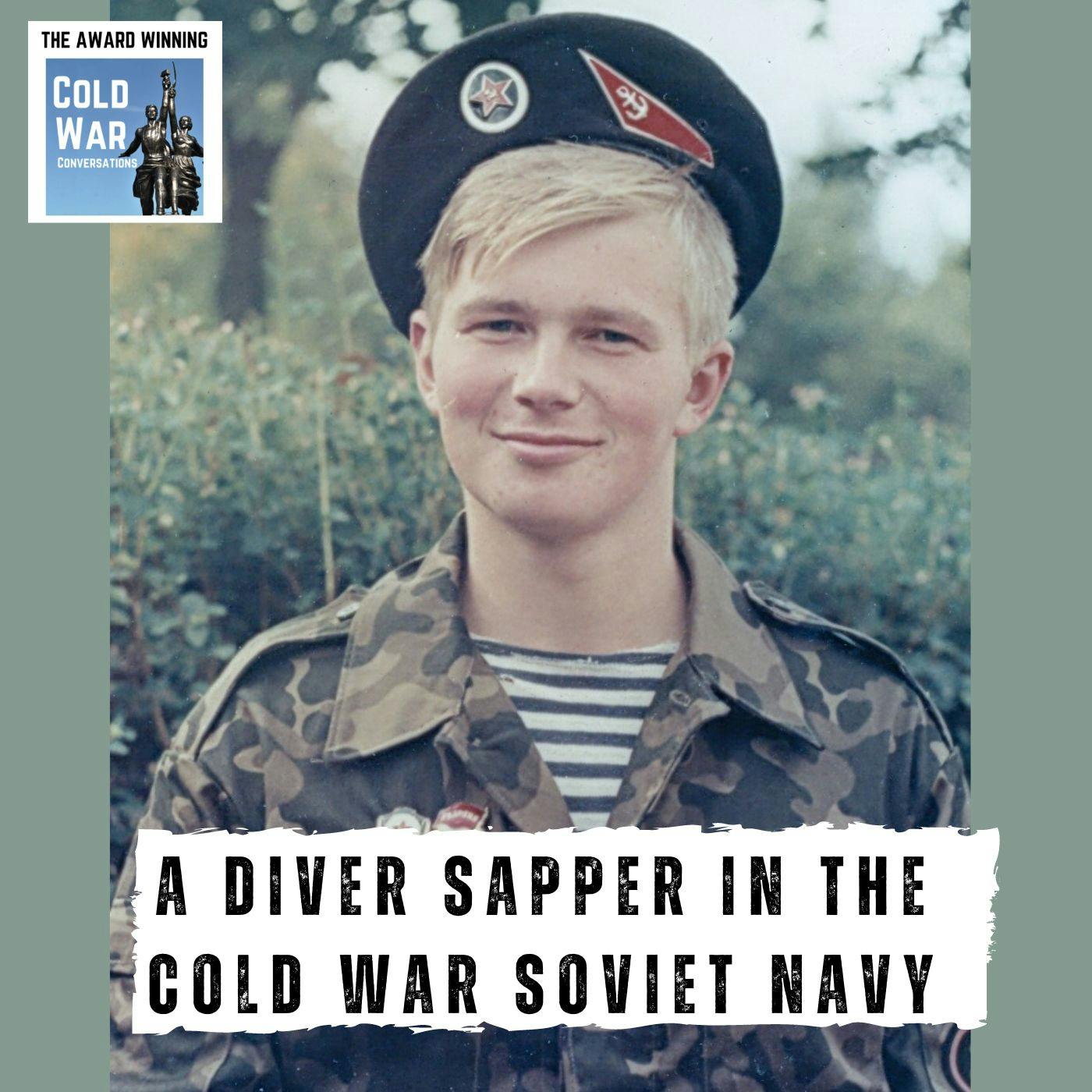
S22 Ep 340A Diver Sapper in the Cold War Soviet Navy (340)
Valeriy was a Soviet Navy diver sapper and was born and raised in Kyiv, Ukraine. I have used a human translator for this episode so the main voice you will hear is my translator Galina Ryabova who was kindly funded by one of my financial supporters Valeriy opens up about his childhood, the impact of the Great Patriotic War on his family, and his mother's resilience in raising him after his father's untimely death. He shares insights into his schooling, where history and geography sparked his curiosity, and his early military training which set the stage for his specialised role in the Soviet Navy. Valeriy offers a rare glimpse into the life of a Soviet Navy diver sapper, trained in both underwater firearms and explosives, tasked with clearing mines to pave the way for naval infantry. He provides revealing insights into underwater warfare during the 1980s. His unit was stationed near Kaliningrad, where he describes his equipment and the day-to-day life that included guarding, surveillance, and rigorous half-yearly military exercises. Reflecting on the broader scope of the Cold War, Valeri discusses his perceptions of the US and NATO, the political climate under Gorbachev, and the aftermath of the USSR's dissolution. The fight to preserve Cold War history continues and via a simple monthly donation, you will give me the ammunition to continue to preserve Cold War history. You’ll become part of our community, get ad-free episodes, and get a sought-after CWC coaster as a thank you and you’ll bask in the warm glow of knowing you are helping to preserve Cold War history. Just go to https://coldwarconversations.com/donate/ If a monthly contribution is not your cup of tea, We also welcome one-off donations via the same link. Find the ideal gift for the Cold War enthusiast in your life! Just go to https://coldwarconversations.com/store/ Twitter https://twitter.com/ColdWarPod Facebook https://www.facebook.com/groups/coldwarpod/ Instagram https://www.instagram.com/coldwarconversations/ Youtube https://youtube.com/@ColdWarConversations Love history? Join Intohistory https://intohistory.com/coldwarpod Learn more about your ad choices. Visit podcastchoices.com/adchoices
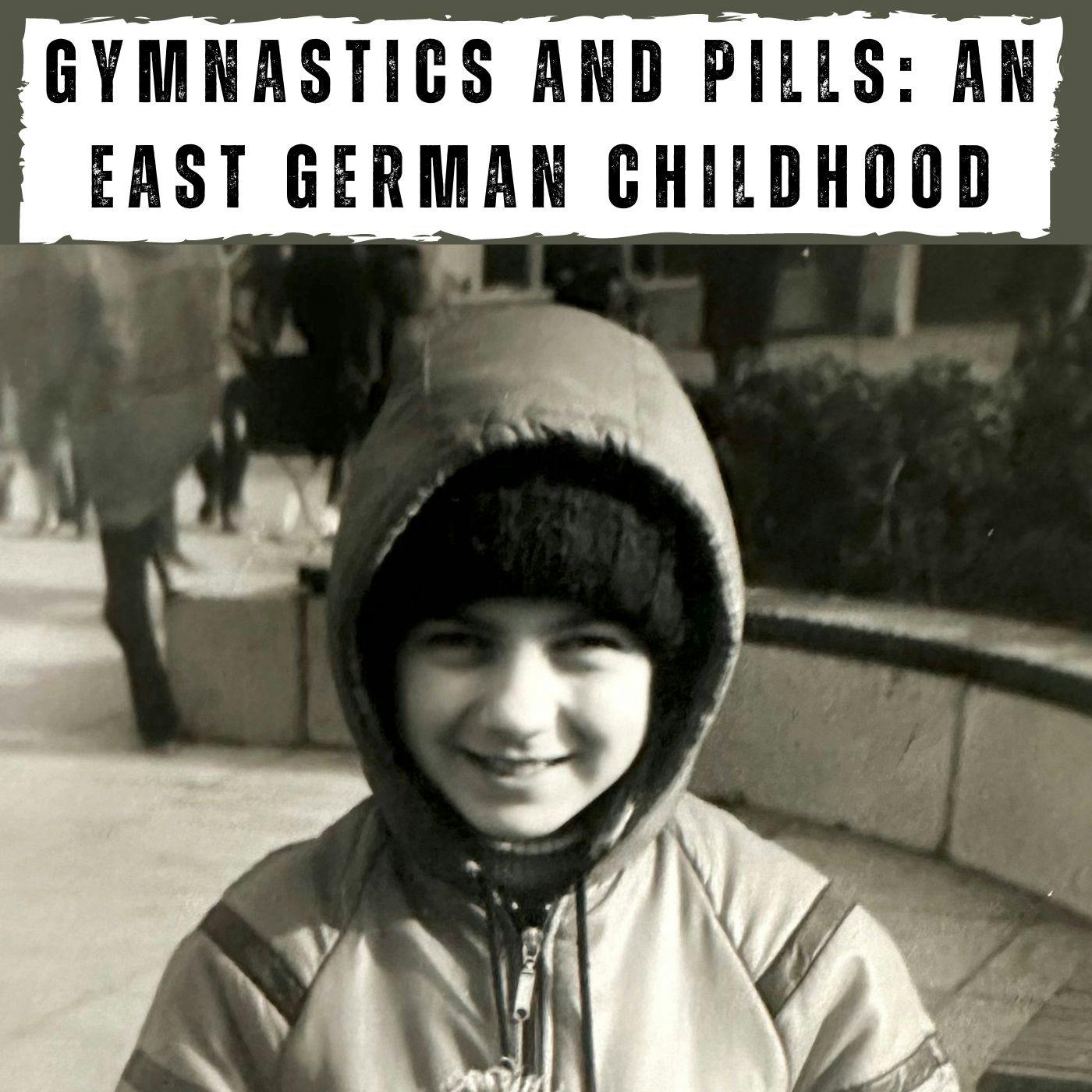
S22 Ep 339Gymnastics and Pills: An East German Childhood (339)
Sirka offers a comprehensive exploration of life in East Germany, detailing the experiences of growing up in Neubrandenburg, the influence of the East German state and the Stasi, and the societal impacts of Mikhail Gorbachev's policies leading up to the fall of the Berlin Wall. She also talks of her intensive gymnastics training and being given pills by her trainer... Sirka also describes the transition to reunification, highlighting the challenges of adapting to a new economic system and the mixed feelings toward sudden exposure to Western consumer culture. Additionally, it includes a reflective conversation on post-reunification life in Germany, discussing Sirka's and her family's adjustment to the changes, including the effects on employment, homeownership, and personal political histories. Video and photo extras here https://coldwarconversations.com/episode339 The fight to preserve Cold War history continues and viaa simple monthly donation, you will give me the ammunition to continue to preserve Cold War history. You’ll become part of our community, get ad-free episodes, and get a sought-after CWC coaster as a thank you and you’ll bask in the warm glow of knowing you are helping to preserve Cold War history. Just go to https://coldwarconversations.com/donate/ If a monthly contribution is not your cup of tea, we welcome one-off donations via the same link. Connect with us on social media for more Cold War content: Twitter: https://twitter.com/ColdWarPod Instagram: https://www.instagram.com/coldwarconversations/ Facebook: https://www.facebook.com/groups/coldwarpod/ YouTube: https://youtube.com/@ColdWarConversations For the perfect gift for the Cold War enthusiast in your life, visit our store at https://coldwarconversations.com/store/ If you love history, check out Into History at https://intohistory.com/coldwarpod 00:00 Preview 00:22 Welcome to Cold War Conversations 00:36 Life in East Germany: An Insider's Perspective 01:50 Circa's Childhood and Family Life in Neubrandenburg 03:33 The Impact of World War II on Family Histories 05:42 Navigating Post-War East Germany 07:53 The East German Regime Through a Family's Eyes 10:31 Cultural and Educational Experiences in East Germany 23:23 The Challenges of Consumer Goods and Entertainment 25:39 School Life and Education in East Germany 34:17 Extracurricular Activities: Singing Club and Gymnastics 44:58 The Intensity of Gymnastics Training in East Germany 46:15 The Secret Gymnastics Pills 48:14 The Grueling Training Regime and Its Impact 49:46 The Power of Music and Discipline in a Regimented Society 50:38 The Harsh Realities of Military-Style Training 51:39 Life Under an Autocratic System: Acceptance and Adaptation 55:26 The Transition to College and the End of Gymnastics 55:56 Exploring Moscow: A Glimpse into the Space Race 01:03:37 Witnessing the Winds of Change: The Fall of the Berlin Wall 01:14:21 Navigating the New World: Post-Wall Challenges and Reflections 01:25:05 A Journey Back in Time: Revisiting Memories and the Stasi Files Learn more about your ad choices. Visit podcastchoices.com/adchoices
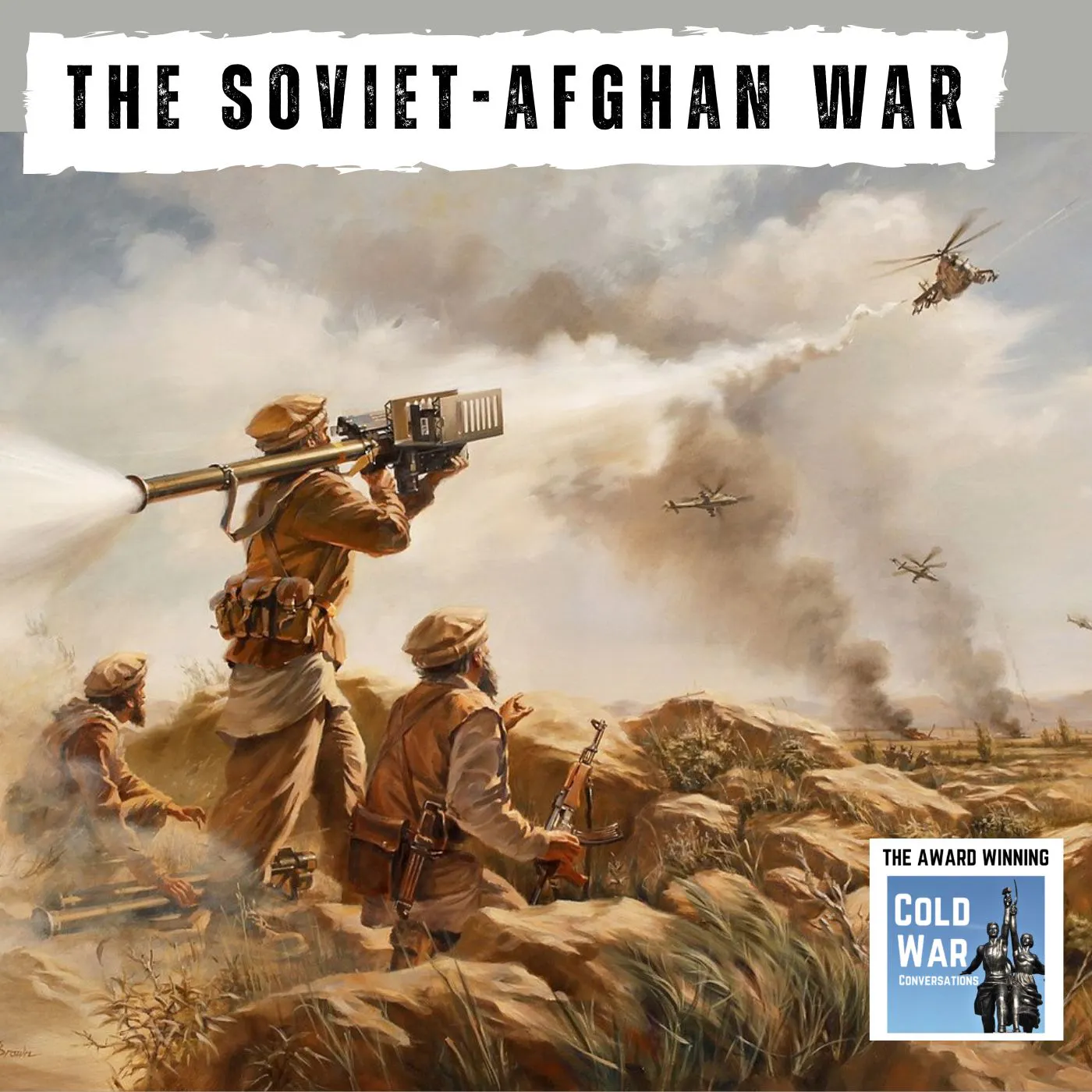
S22 Ep 338The Soviet Afghan War (338)
The Soviet-Afghan War lasted ten years between 1979-1989 and led to the deaths of between 500k and 2m Afghan civilians. I speak with Nick Geering a Russian history and language teacher. From his memories of the haunting sight of uniformed amputees in St Petersburg to the complex origins of the conflict, we explore the intricacies of a war that was both an accident and a tragedy. Our conversation traverses the murky politics that led to the Soviet invasion, the unpreparedness of the conscript-heavy Soviet army, and the brutal reality of life for soldiers caught in the mountainous terrain of Afghanistan. We also discuss the question of international support for the Mujahideen and the controversial impact of Western-supplied weaponry. The episode also shines a light on the deeply entrenched hierarchy within the Soviet military, harrowing drug abuse among troops, and the chilling treatment of prisoners of war on both sides. As we approach the subject of the Soviet withdrawal, we reflect on the war's enduring scars, the fate of the communist Afghan government, and how the conflict is remembered today in Russia. Video and photo extras here https://coldwarconversations.com/episode338 The fight to preserve Cold War history continues and viaa simple monthly donation, you will give me the ammunition to continue to preserve Cold War history. You’ll become part of our community, get ad-free episodes, and get a sought-after CWC coaster as a thank you and you’ll bask in the warm glow of knowing you are helping to preserve Cold War history. Just go to https://coldwarconversations.com/donate/ If a monthly contribution is not your cup of tea, we welcome one-off donations via the same link. Find the ideal gift for the Cold War enthusiast in your life! Just go to https://coldwarconversations.com/store/ Follow us on Twitter https://twitter.com/ColdWarPod Instagram https://www.instagram.com/coldwarconversations/ Facebook https://www.facebook.com/groups/coldwarpod/ Youtube https://youtube.com/@ColdWarConversations Love history? Check out Into History at this link https://intohistory.com/coldwarpod 00:00 Introduction to the Complexity of the Soviet-Afghan War 00:26 Diving Deep into the Soviet-Afghan War with Nick Gearing 01:38 Nick Gearing's Personal Journey and Initial Exposure to War Veterans 03:13 Exploring the Intricacies and Origins of the Soviet-Afghan War 16:17 The Soviet Military's Challenges and Adaptations in Afghanistan 28:52 Evaluating the Soviet Strategy and Its Impact on the War 32:51 Unveiling the Truth: The Soviet Union's Hidden War 33:44 Gorbachev's Legacy and the Path to Peace 34:27 Glasnost and the Afghan War: A Shift in Soviet Media 37:19 The Impact of Western Weapons on the Afghan Battlefield 39:31 The Unseen Side of War: Defections and Captivity 44:24 The Brutal Reality of Conscript Life in the Soviet Army 48:46 Drug Abuse Among Soviet Soldiers in Afghanistan 50:47 The Endgame: Soviet Withdrawal and the Geneva Accords 53:22 Najibullah's Struggle and the Fate of the Communist Government 54:46 Revisiting the Afghan War: Memory and Media in Russia 57:51 Exploring the Soviet-Afghan War Through Books, Films, and Music 01:03:17 Closing Thoughts and Acknowledgments Learn more about your ad choices. Visit podcastchoices.com/adchoices
S22 Ep 337Turning Point: The Bomb and the Cold War on Netflix Podcast (337)
bonusTurning Point: The Bomb and the Cold War, is a nine-part documentary series from director Brian Knappenberger, that provides a comprehensive appraisal of the events that led to the Cold War and traces the conflict around the world and through the decades. While the Cold War ended in 1991, even a casual appraisal of current headlines reveals that relations between the United States and Russia — the one-time centre of the Soviet Union — remain tense, to say the least. The global repercussions of the Cold War continue to ripple through the current geopolitical landscape to this day, but it can be difficult to understand just how a mid-20th century struggle for ideological dominance continues to ensnare countless nations in ongoing unrest. To tell this story, the series draws on more than 100 interviews with subjects ranging from past and present world leaders (Ukrainian President Volodymyr Zelenskyy, Estonian Prime Minister Kaja Kallas) to historians as well as everyday people whose lives were drastically altered by the events of the Cold War. As the history unfolds, each episode considers the current conflict between Russia and Ukraine as an example of how the history being examined is directly tied to the events of today. “Nearly every part of the war in Ukraine is an echo of the Cold War,” Knappenberger explains. Watch the series here https://www.netflix.com/title/81614129 Watch the trailer here https://youtu.be/qHuuLo-CSRo?si=ZaNGZyeP0nZe5Nwp The fight to preserve Cold War history continues and via a simple monthly donation, you will give me the ammunition to continue to preserve Cold War history. You’ll become part of our community, get ad-free episodes, and get a sought-after CWC coaster as a thank you and you’ll bask in the warm glow of knowing you are helping to preserve Cold War history. Just go to https://coldwarconversations.com/donate/ If a monthly contribution is not your cup of tea, we welcome one-off donations via the same link. Find the ideal gift for the Cold War enthusiast in your life! Just go to https://coldwarconversations.com/store/ Follow us on Twitter https://twitter.com/ColdWarPod Instagram https://www.instagram.com/coldwarconversations/ Facebook https://www.facebook.com/groups/coldwarpod/ Youtube https://youtube.com/@ColdWarConversations Love history? Check out Into History at this link https://intohistory.com/coldwarpod 00:00 The Chilling Call: A Cold War Nightmare 00:21 Welcome to Cold War Conversations 00:39 Inside 'Turning Point: The Bomb and the Cold War' Documentary 01:02 The Cold War's Legacy and Today's Nuclear Threats 03:15 The Making of a Cold War Documentary 05:09 Why the Cold War Story Matters Now 06:17 The New Cold War: A Hot and Unstable Conflict 10:24 The Munich Security Conference: A Turning Point 13:32 Crafting the Documentary: Challenges and Insights 15:06 Personal Connections and the Impact of Nuclear Weapons 19:32 The Importance of First-Person Cold War Accounts 19:59 Daniel Ellsberg: A Courageous Insider's Perspective 23:19 Uncovered Stories: The Challenges of Time Constraints 23:46 Exploring Untold Cold War Stories 24:37 The Intriguing Case of the AIDS Misinformation Campaign 28:14 The Ripple Effects of Cold War Decisions 28:45 Project Sapphire: Securing Nuclear Materials Post-Soviet Union 30:47 The Budapest Memorandum and Ukraine's Nuclear Dilemma 34:43 Post-Cold War Transitions and the Rise of Putin 41:18 Reflecting on the Series: Favorite Moments and Missed Opportunities 44:48 Dream Interviews: Cold War Figures Who Left a Mark 49:03 Closing Thoughts and Acknowledgments Learn more about your ad choices. Visit podcastchoices.com/adchoices
S22 Ep 336Sex, spies and scandal : the John Vassall affair (336)
Alex Grant’s new book Sex, Spies and Scandal The John Vassall Affair has everything: a honey trap, industrial-scale espionage, journalists jailed for not revealing their sources and the first modern tabloid witch-hunt, which resulted in a ministerial resignation and almost brought down Harold Macmillan’s government. With access to newly released MI5 files and interviews with people who knew Vassall from the 1950s until he died in 1996, this book sheds new light on a neglected spy scandal. Despite having been drugged and sexually assaulted by the KGB in Moscow, as a gay man John Vassall was shown no mercy by the British press or the courts. Sentenced to eighteen years in jail, he served ten years, despite telling MI5 everything. Once released, he found that many of his old friends and lovers had been persecuted or dismissed from the civil service in Britain, America and Australia. Unlike the Cambridge Five, who courted attention, after leaving prison Vassall changed his name to avoid the media and lived quietly in London. Buy the book and support the podcast here https://uk.bookshop.org/a/1549/9781785907883 Episode extras here https://coldwarconversations.com/episode336/ The fight to preserve Cold War history continues and via a simple monthly donation, you will give me the ammunition to continue to preserve Cold War history. You’ll become part of our community, get ad-free episodes, and get a sought-after CWC coaster as a thank you and you’ll bask in the warm glow of knowing you are helping to preserve Cold War history. Just go to https://coldwarconversations.com/donate/I f a monthly contribution is not your cup of tea, we welcome one-off donations via the same link. Find the ideal gift for the Cold War enthusiast in your life! Just go to https://coldwarconversations.com/store/ Follow us on Twitter https://twitter.com/ColdWarPod Instagram https://www.instagram.com/coldwarconversations/ Facebook https://www.facebook.com/groups/coldwarpod/ Youtube https://youtube.com/@ColdWarConversations Love history? Check out Into History at this link https://intohistory.com/coldwarpod 00:00 Introduction to Cold War Conversations and the John Vassal Affair 00:36 Unveiling the John Vassal Spy Scandal 05:49 The Life and Times of John Vassal 16:15 Vassal's Recruitment by Soviet Intelligence 37:08 Vassal's Espionage Activities in London 41:28 The Cold War Thaw and Social Dynamics in Moscow 42:24 Vassal's Entrapment and the Lax Security 43:56 The Discovery of a Spy Within the Admiralty 46:55 The Fallout of Vassal's Capture and Its Impact 48:33 The Dramatic Arrest of John Vassal 49:35 Vassal's Immediate Confession and Relief 53:05 The Aftermath: Legal Proceedings and Public Reaction 01:05:41 Vassal's Life Post-Imprisonment and Legacy 01:09:48 Revisiting the Impact of Vassal's Espionage 01:11:57 Uncovering New Insights from the National Archives 01:16:55 Reflecting on Vassal's Life and the Broader Historical Context Learn more about your ad choices. Visit podcastchoices.com/adchoices
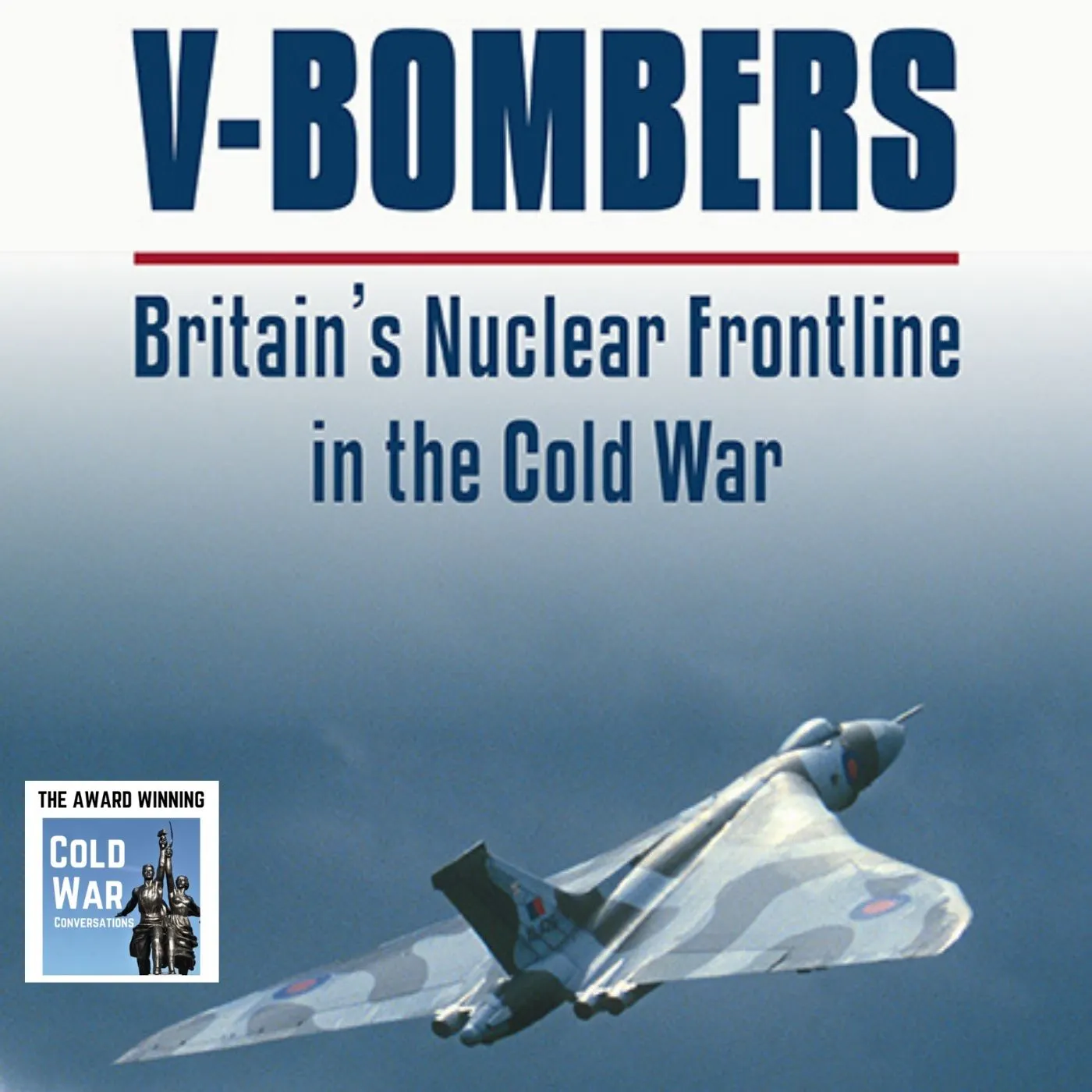
S22 Ep 335V-Bombers: Britain's Nuclear Frontline in the Cold War (335)
V-Bombers: Britain's Nuclear Frontline in the Cold War is a new book by Dr Tony Redding that takes a deep dive into Britain's V-bomber force's operational nuclear war role. Tony reveals the intense preparations and the stark realities faced by the aircrews, who lived in a perpetual state of wartime readiness despite being in a country at peace. The narrative intertwines technical analysis and personal accounts, offering a comprehensive view of the crews' complex systems and psychological burdens. His meticulous research and vivid anecdotes from the veterans themselves paint a fascinating picture of the V force's potential impact in a nuclear war scenario. It's a must-listen for anyone fascinated by the delicate Cold War balance of deterrence and the harrowing responsibilities entrusted to the men of the V bomber force. Buy Tony’s book on this link and support the podcast at the same time! https://uk.bookshop.org/a/1549/9781911667872 Enter the book giveaway draw here https://coldwarconversations.com/giveaway/ Episode extras here https://coldwarconversations.com/episode335/ The fight to preserve Cold War history continues and via a simple monthly donation, you will give me the ammunition to continue to preserve Cold War history. You’ll become part of our community, get ad-free episodes, and get a sought-after CWC coaster as a thank you and you’ll bask in the warm glow of knowing you are helping to preserve Cold War history. Just go to https://coldwarconversations.com/donate/ If a monthly contribution is not your cup of tea, we welcome one-off donations via the same link. Find the ideal gift for the Cold War enthusiast in your life! Just go to https://coldwarconversations.com/store/ Follow us on Twitter https://twitter.com/ColdWarPod Instagram https://www.instagram.com/coldwarconversations/ Facebook https://www.facebook.com/groups/coldwarpod/ Youtube https://youtube.com/@ColdWarConversations Love history? Check out Into History at this link https://intohistory.com/coldwarpod 00:00 Introduction 00:35 Dr. Tony Redding's Deep Dive into V Bombers 05:59 The V Force: Britain's Nuclear Deterrent in the Cold War 11:22 The Evolution of Nuclear Deterrence: From Bombers to Submarines 24:10 The V Force's Combat Readiness and Training Rigors 34:26 Surviving a Nuclear Strike: The V Force's Strategic Planning 38:57 Airborne vs. Ground Alert: The Strategic Dilemma 40:12 The Impracticality of V Bombers in Nuclear Strikes 40:56 The Struggle for Airborne Endurance and Refueling 41:25 Exploring Overseas Basing and Tanker Fleet Limitations 42:46 Soviet Fears 44:19 Security Measures and Vulnerabilities at RAF Bases 47:46 Humorous and Harrowing Tales from the Aircrew 52:13 The Mental and Emotional Toll on Aircrews 57:31 Vetting and Security Concerns within the V Force 01:00:48 Navigating Soviet Defenses: A Hypothetical Mission 01:05:13 The Unique Challenges and Strategies of V Bombers 01:10:11 Secret Agreements and the Route Over Sweden 01:11:45 The Grim Realities of a Nuclear Mission 01:18:52 Decoy Tactics and Morale Issues 01:21:29 Conclusion and Further Resources Learn more about your ad choices. Visit podcastchoices.com/adchoices
S22 Ep 334On the Streets of Cold War Estonia fighting for Independence (334)
Timo takes us on a journey through the tumultuous events of the 1991 Soviet coup attempt, as experienced from the streets of the Baltic States. As the coup unfolds, Timo finds himself in Lithuania, planning to covertly visit the closed city of Kaliningrad. He shares the tension sharing a dining table with a Soviet officer, unknowingly on the eve of the coup. As the coup escalates, Timo's narrative becomes a vivid street-level account of the Estonian people's defiance. He describes the formation of human walls against Soviet tanks, the strategic significance of the TV tower, and the Estonians' ingenious methods of maintaining communication despite Russian interference. Timo's reflections on the morality of his curiosity, the fear of violence, and the spirit of resistance that pervaded Estonia during those critical hours are a testament to the resilience of a nation on the brink of reclaiming its freedom. Timo’s book “Tanks & Roaches” is only currently available in Finnish, Estonian and Slovak and can be purchased on the links here https://coldwarconversations.com/episode334/ Timo can be contacted at [email protected] The fight to preserve Cold War history continues and viaa simple monthly donation, you will give me the ammunition to continue to preserve Cold War history. You’ll become part of our community, get ad-free episodes, and get a sought-after CWC coaster as a thank you and you’ll bask in the warm glow of knowing you are helping to preserve Cold War history.Just go to https://coldwarconversations.com/donate/If a monthly contribution is not your cup of tea, we welcome one-off donations via the same link. Find the ideal gift for the Cold War enthusiast in your life! Just go to https://coldwarconversations.com/store/ Follow us on Twitter https://twitter.com/ColdWarPod Instagram https://www.instagram.com/coldwarconversations/ Facebook https://www.facebook.com/groups/coldwarpod/ Youtube https://youtube.com/@ColdWarConversations Love history? Check out Into History at this link https://intohistory.com/coldwarpod 00:00 Introduction 01:38 Timo’s summer in Estonia during the Cold War 09:52 The 1991 Soviet Coup and its impact on Estonia 20:34 Tom joins a demonstration 29:47 The confrontation between Estonian and Russian troops near the occupied TV tower 40:36 Estonians switched off the TV signal to calm down the Russians 41:57 The bravery of the four Estonian men who were locked inside the tv tower during the Soviet invasion Learn more about your ad choices. Visit podcastchoices.com/adchoices
S22 Ep 333Borderlands and Battles: A Finnish Town's Cold War Story (333)
Timo takes us to the remote Finnish border town of Kuusamo. He paints a vivid picture of a childhood overshadowed by his grandparent’s memories of their home lost during World War II and their proximity to the Soviet Union. As a child, he was fascinated by the invisible line that marked the end of the world— the heavily guarded border with the USSR. Timo recounts a tense encounter with border guards while visiting his grandparents, and his meeting with a Soviet escaper. He travels to Moscow and Eastern Europe as a young man which further fuels his curiosity about life on the other side of the Iron Curtain. Timo recalls the austere streets of Prague to the bureaucratic maze in Budapest and a harrowing night at the Romanian border. Timo’s book “Tanks & Roaches” is only currently available in Finnish, Estonian and Slovak but can be purchased via our episode extras page here https://coldwarconversations.com/episode333/ The fight to preserve Cold War history continues and via a simple monthly donation, you will give me the ammunition to continue to preserve Cold War history. You’ll become part of our community, get ad-free episodes, and get a sought-after CWC coaster as a thank you and you’ll bask in the warm glow of knowing you are helping to preserve Cold War history. Just go to https://coldwarconversations.com/donate/ If a monthly contribution is not your cup of tea, we welcome one-off donations via the same link. Find the ideal gift for the Cold War enthusiast in your life! Just go to https://coldwarconversations.com/store/ Follow us on Twitter https://twitter.com/ColdWarPod Instagram https://www.instagram.com/coldwarconversations/ Facebook https://www.facebook.com/groups/coldwarpod/ Youtube https://youtube.com/@ColdWarConversations Love history? Check out Into History at this link https://intohistory.com/coldwarpod 00:00 Intro 01:26 Timo's early life 04:41 Timo's grandparents' experiences of World War II 08:59 Incidents of people coming over the border 08:56 Estonian man's escape 28:32 Timo's trip to Moscow with his father in 1977 32:03 Finns remaining in areas handed over to the Soviet Union 39:34 Visits to Prague, Hungary and Romania 41:34 First Impressions of Prague 43:18 The challenges of Hungarian visitor registration 45:49 Trouble getting into Romania from Hungary 54:37 Polish smugglers on the train 59:04 Timo's fascination with Estonia. Learn more about your ad choices. Visit podcastchoices.com/adchoices
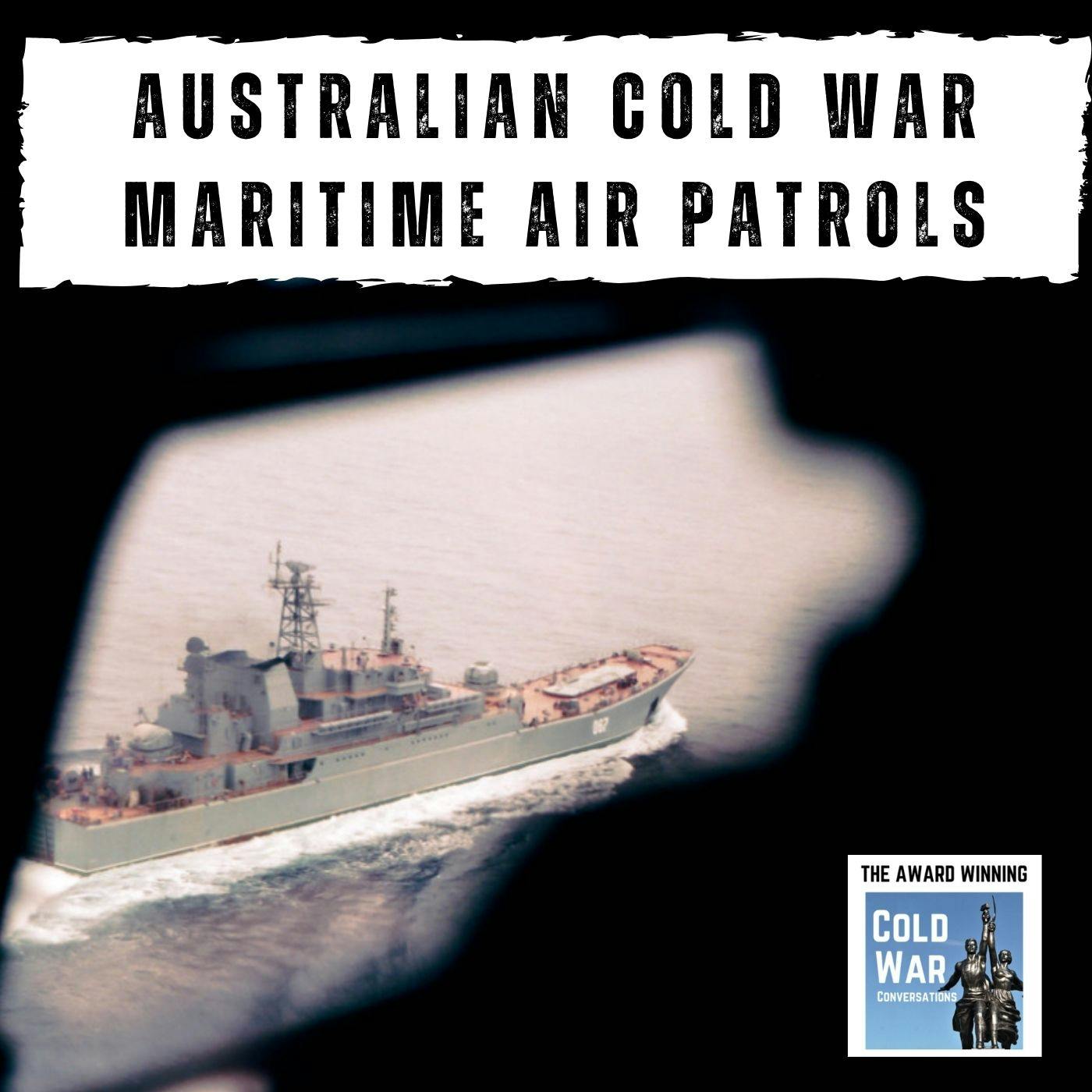
S22 Ep 332Australian Cold War Maritime Air Patrols (332)
Leigh joined the RAAF in 1978 to train as a pilot but was scrubbed after a few months and transitioned to training as an Air Electronics Officer (AEO) at the RAAF School of Air Navigation. He flew on the P-3C Orion and was employed in operations across the Indo-Pacific region on maritime patrol surveillance operations in the region - which included both usual surface surveillance of the region and operations alongside the US against Soviet submarines transiting the area. He also had the opportunity to track Soviet SSBNs in the NE Pacific operating with the US Navy. He details many incidents during his career including an “archaeological” mission, accidentally causing a diplomatic incident, as well as monitoring the splash-down and recovery of re-entry vehicles used to test the heat tiles for the Soviet Buran space shuttle. I’m delighted to welcome Leigh Collins to our Cold War Conversation. Episode extras including book recommendations, videos and photos here https://coldwarconversations.com/episode332/ The fight to preserve Cold War history continues and via a simple monthly donation, you will give me the ammunition to continue to preserve Cold War history. You’ll become part of our community, get ad-free episodes, and get a sought-after CWC coaster as a thank you and you’ll bask in the warm glow of knowing you are helping to preserve Cold War history. Just go to https://coldwarconversations.com/donate/ If a monthly contribution is not your cup of tea, we welcome one-off donations via the same link. Find the ideal gift for the Cold War enthusiast in your life! Just go to https://coldwarconversations.com/store/ Follow us on Twitter https://twitter.com/ColdWarPod Instagram https://www.instagram.com/coldwarconversations/ Facebook https://www.facebook.com/groups/coldwarpod/ Youtube https://youtube.com/@ColdWarConversations Love history? Check out Into History at this link https://intohistory.com/coldwarpod 00:00 Intro 01:49 Early interest in aviation and the military 02:47 Aspirations in the RAAF 04:08 Failure as a pilot 06:43 Length of Orion missions 09:05 Soviet naval activity around Australia in the 1980s 16:52 RAF 617 Squadron held their annual reunion in Australia 20:42 Use of GPS on the Orion 24:23 Use of astral navigation using a Sextant 27:59 Viewing the cockpit of the Vulcan 31:10 Monitoring a Russian diesel submarine 33:13 Soviet trawlers during exercises 34:23 Exercise Silent Pearl 43:49 Soviet Buran Space shuttle test bed recoveries 52:52 Incident just out of Darwin where the crew ditched 56:50 Operation Gateway, Australia's long-standing anti-piracy operation 01:03:39 Threat of China during the cold war 01:07:53 September 1993 deployment as a submarine observer 01:12:23 Leigh worked with Sue Boyd from episode 151 Learn more about your ad choices. Visit podcastchoices.com/adchoices
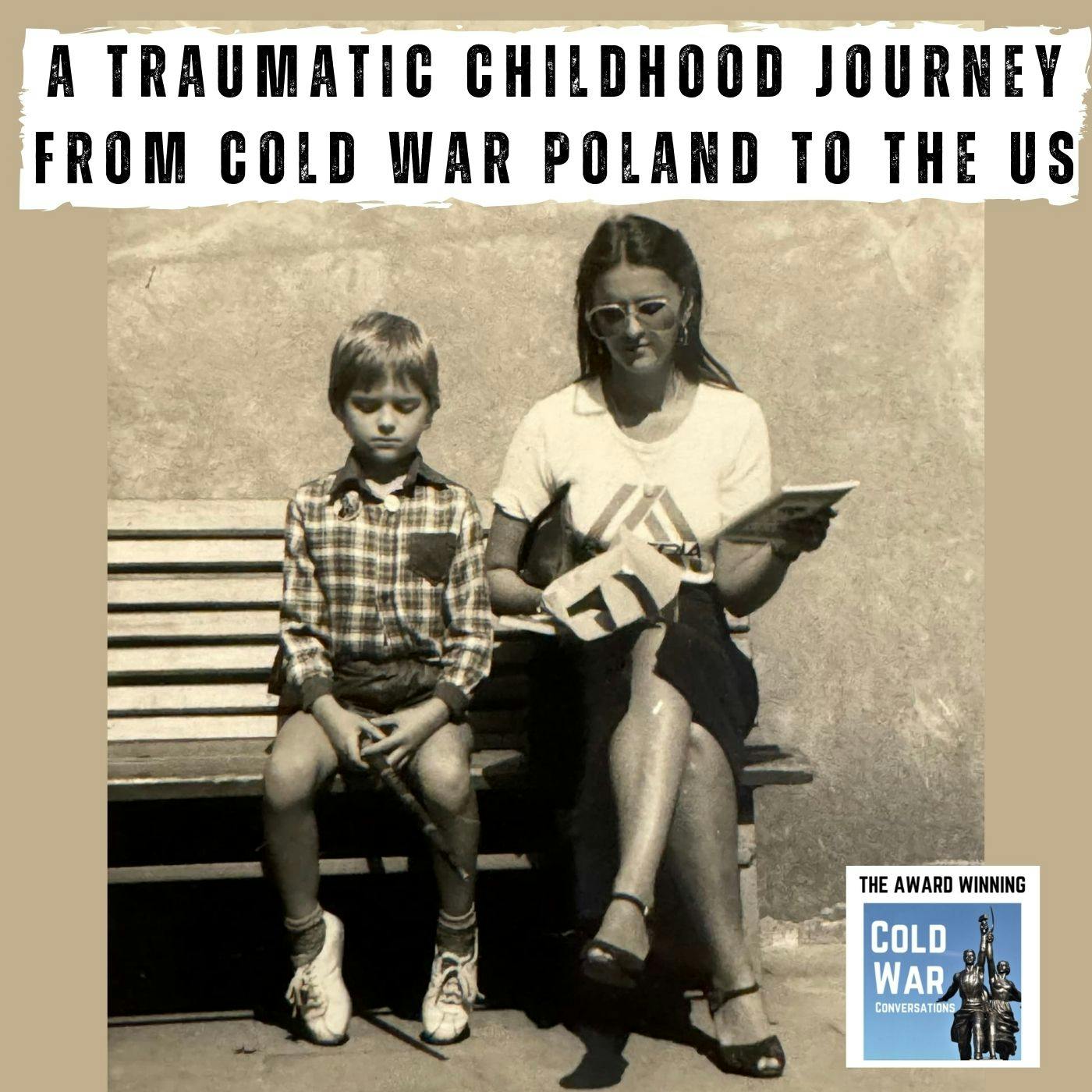
S22 Ep 331A traumatic childhood journey from Cold War Poland to the United States (331)
In this deeply personal episode, our guest, Norbert, vividly recounts his traumatic childhood journey from Cold War Poland to the United States. With vivid recollections, he describes the struggles of his parents amid food shortages and the poignant decision of the family to leave everything behind for an uncertain future in the United States. We also explore the cultural shock and the struggle to find identity in a new world, as Norbert navigates life as a Polish immigrant in 1980s America. From his first bewildering day at an American school to his father's relentless work ethic in pursuit of the American dream, we witness the sacrifices and choices that shape an immigrant's life. Norbert's narrative unfolds against the backdrop of the Cold War, where his family's German heritage in Poland subjected them to suspicion and prejudice. Our episode starts with his Grandfather’s story in World War 2. Photos and video extras here https://coldwarconversations.com/episode331/ The fight to preserve Cold War history continues and via a simple monthly donation, you will give me the ammunition to continue to preserve Cold War history. You’ll become part of our community, get ad-free episodes, and get a sought-after CWC coaster as a thank you and you’ll bask in the warm glow of knowing you are helping to preserve Cold War history. Just go to https://coldwarconversations.com/donate/ If a monthly contribution is not your cup of tea, we welcome one-off donations via the same link. Find the ideal gift for the Cold War enthusiast in your life! Just go to https://coldwarconversations.com/store/ Follow us on Twitter https://twitter.com/ColdWarPod Instagram https://www.instagram.com/coldwarconversations/ Facebook https://www.facebook.com/groups/coldwarpod/ Youtube https://youtube.com/@ColdWarConversations Love history? Check out Into History at this link https://intohistory.com/coldwarpod Learn more about your ad choices. Visit podcastchoices.com/adchoices
S21 Ep 330Planning for a Hot War in the Cold War (330)
Dan served in the War Plans office of the US Army VII Corps working on counterattack plans and reorganization of the US Army’s General Defence Plan. He describes the debriefing of a Polish Special Forces operator who had defected to the West and who revealed surprising knowledge of US plans and order of battle. Dan also details his experiences on the Able Archer 83 exercise and his views about how dangerous that was. In addition to his work in the War Plans office, we discuss terror attacks on the US Army in West Germany including the bombing of the LaBelle disco in West Berlin where 2 US soldiers and one Turkish woman were killed and 79 wounded. The terrorist threat to US Forces was significant and this is highlighted by the attempted assassination of General Kroesen commander of United States Army Europe by the Red Army Faction aka The Baader-Meinhof Group. Dan describes his own experiences in the immediate aftermath of the attack., including the issuing of live ammunition to US Forces in the field. Extra info here https://coldwarconversations.com/episode330/ 0:00 Introduction 1:32 Dan's Insights in the War Plans Office 10:29 The defector's shocking intel on US plans 18:13 Reflections on Able Archer 83 24:33 Terrorism and the attack on the La Belle disco 33:21 Red Army Faction attempted assassination of General Kroesen 42:20 The impact of these events on US forces 58:41 Dan's views on the sudden changes in Eastern Europe 1:13:38 Podcast extras, appreciation for financial supporters, and closing remarks Learn more about your ad choices. Visit podcastchoices.com/adchoices