
Cold War Conversations Podcast
479 episodes — Page 4 of 10
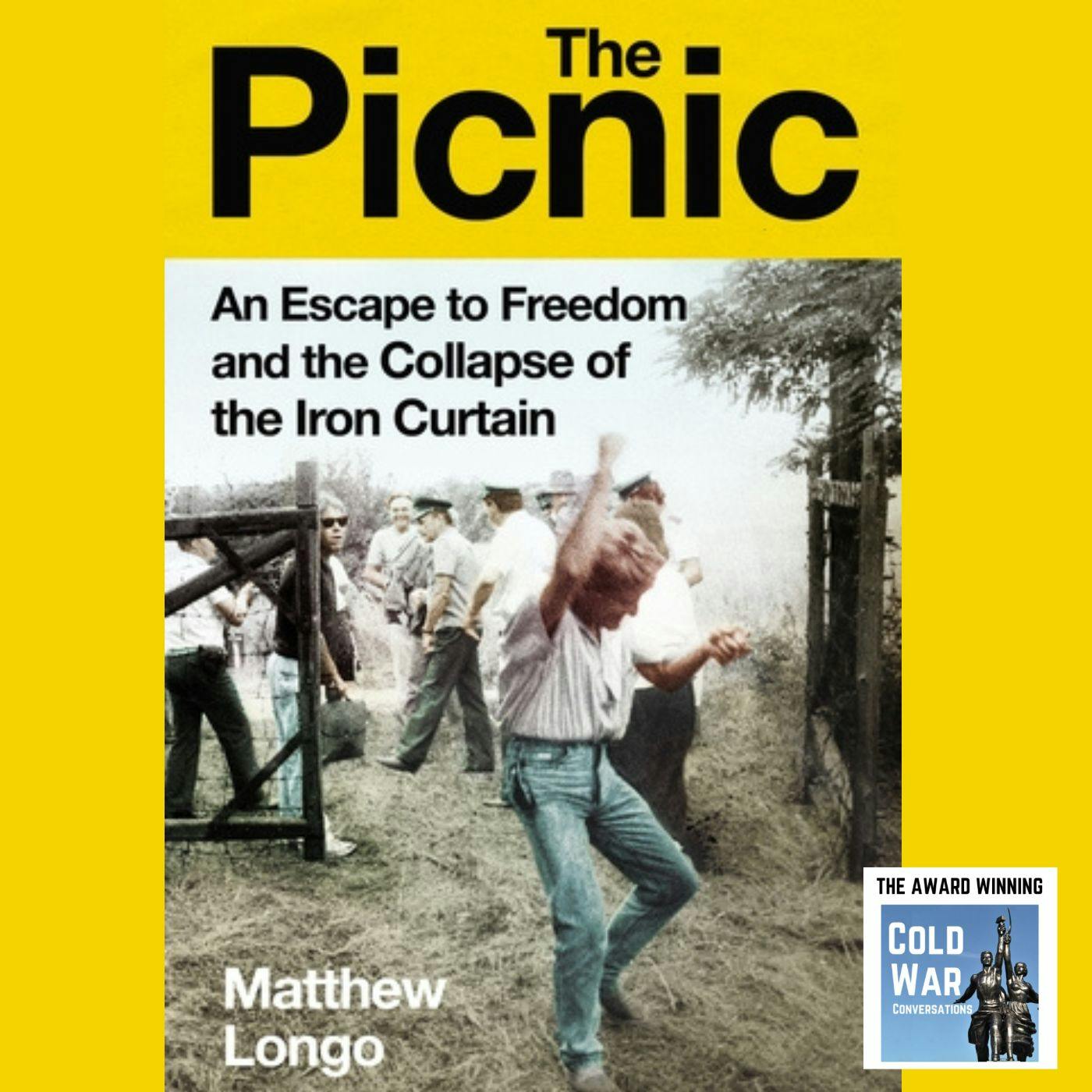
S21 Ep 329The Picnic That Ripped Open The Iron Curtain (329)
In August 1989, a group of Hungarian activists did the unthinkable: they entered the forbidden militarised zone of the Iron Curtain - and held a picnic. Word had spread of what was going to happen. On wisps of rumour, thousands of East German 'holiday-makers' had made their way to the border between Hungary and Austria, awaiting an opportunity, fearing prison, surveilled by lurking Stasi agents. The stage was set for the greatest border breach in Cold War history: that day hundreds would cross from the Communist East to the longed-for freedom of the West. The fall of the Berlin Wall, the end of the Soviet Union - the so-called end of history - all would flow from those dramatic hours. Drawing on dozens of original interviews with those involved - activists and border guards, escapees and secret police, as well as the last Communist prime minister of Hungary Matthew Longo's book "The Picnic - An Escape to Freedom and the Collapse of the Iron Curtain" reconstructs this world-shaping event and its tumultuous aftermath. Freedom had been won but parents had been abandoned and families divided. Love affairs faltered and new lives had to be built from scratch. The Picnic is the story of a moment when the tide of history turned. It shows how freedom can be both a dream and disillusionment and how all we take for granted can vanish instantly... Book giveaway info here https://coldwarconversations.com/giveaway/ Buy the book and support the podcast here https://uk.bookshop.org/a/1549/9781847927798 The fight to preserve Cold War history continues and via a simple monthly donation, you will give me the ammunition to continue to preserve Cold War history. You’ll become part of our community, get ad-free episodes, and get a sought-after CWC coaster as a thank you and you’ll bask in the warm glow of knowing you are helping to preserve Cold War history. Just go to https://coldwarconversations.com/donate/ If a monthly contribution is not your cup of tea, we welcome one-off donations via the same link. Find the ideal gift for the Cold War enthusiast in your life! Just go to https://coldwarconversations.com/store/ Follow us on Twitter https://twitter.com/ColdWarPod Instagram https://www.instagram.com/coldwarconversations/ Facebook https://www.facebook.com/groups/coldwarpod/ Youtube https://youtube.com/@ColdWarConversations Love history? Check out Into History at this link https://intohistory.com/coldwarpod 0:00 Introduction to the episode by Ian Sanders 4:47 Discussion on the political situation in Hungary in the late 80s 13:11 Gorbachev's view on Hungary's reforms and changes 23:26 Reaction of Hungarian hardliners to Imre Nagy's reburial 29:41 The tense atmosphere at the Warsaw pact meeting in Bucharest 37:49 The origin of the idea for a European picnic at the border 48:02 The impact on the Berlin Wall 57:23 The fatal shooting of Werner Schultz 1:00:38 The rapid changes that followed the opening of the border 1:07:42 Victor Orban's reimagining of history 1:11:53 Conclusion and promotion of Matthew Longo's book, The Picnic 1:12:33 Acknowledgements and closing remarks Chapters powered by PodcastAI✨ Learn more about your ad choices. Visit podcastchoices.com/adchoices
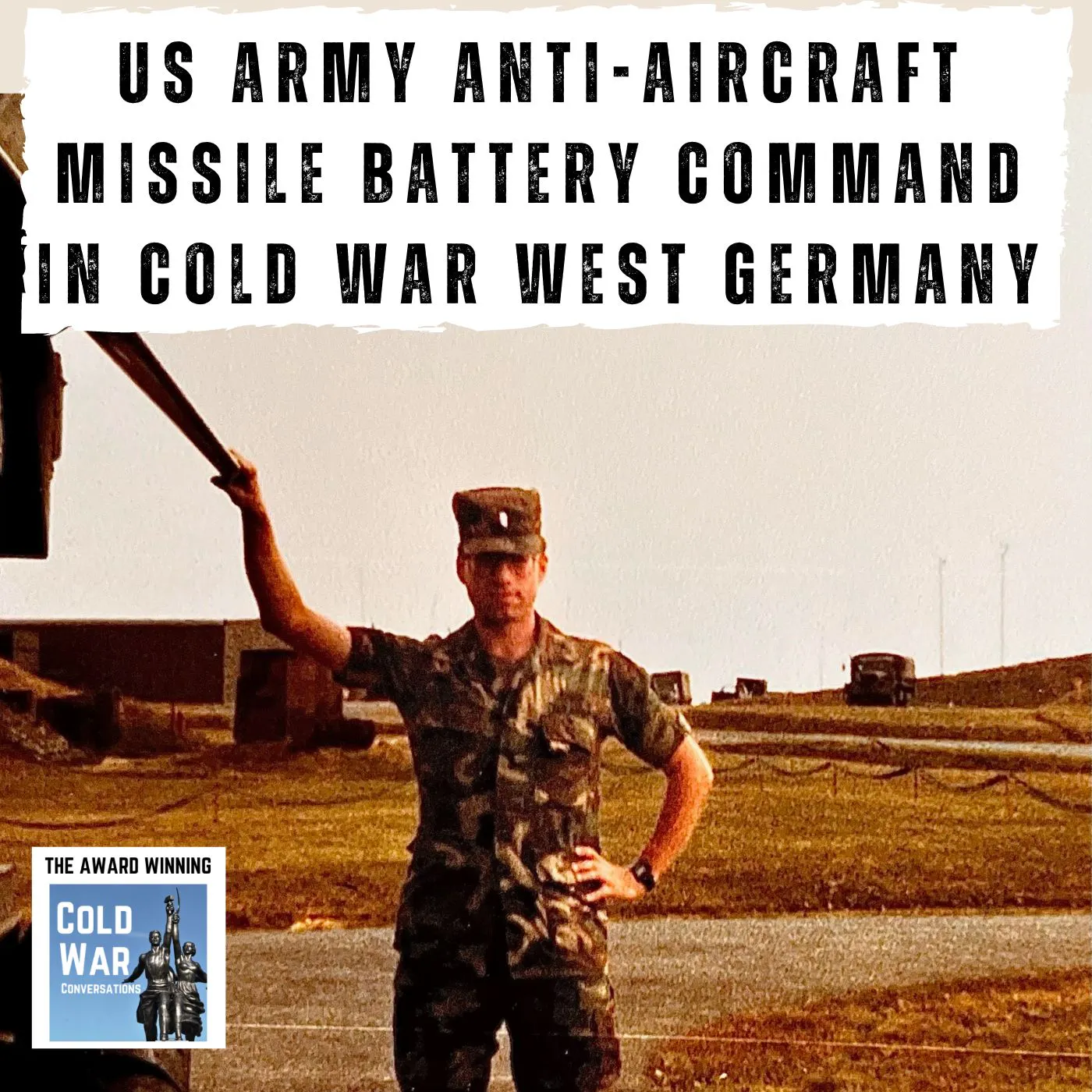
S21 Ep 228US Army Anti-Aircraft Missile Battery Command in Cold War West Germany (228)
Dan served as a lieutenant and captain in a US Army air defence artillery battalion in West Germany from 1980 until 1985. He describes details of Soviet overflights deep into West Germany and we discuss how the Warsaw Pact attempted to track their units. Now who knew that the US Army experimented with geese for perimeter security?! Dan reveals details of this little-known specialist unit. Dan worked with the improved Hawk anti-aircraft missile system. We talk about its capabilities, the challenges of working with 1980s electronics, its deployment and exercises. He describes a live firing exercise where an errant missile almost wiped out a group of VIPS. Don’t miss part 2 in a couple of weeks where Dan describes his experiences in the war plans office of the general staff. Do make sure you check out the episode extras at https://coldwarconversations.com/episode328/ The fight to preserve Cold War history continues and via a simple monthly donation, you will give me the ammunition to continue to preserve Cold War history. You’ll become part of our community, get ad-free episodes, and get a sought-after CWC coaster as a thank you and you’ll bask in the warm glow of knowing you are helping to preserve Cold War history. Just go to https://coldwarconversations.com/donate/ If a monthly contribution is not your cup of tea, We also welcome one-off donations via the same link. Find the ideal gift for the Cold War enthusiast in your life! Just go to https://coldwarconversations.com/store/ Follow us on Twitter https://twitter.com/ColdWarPod Instagram https://www.instagram.com/coldwarconversations/ Facebook https://www.facebook.com/groups/coldwarpod/ Youtube https://youtube.com/@ColdWarConversations Love history? Check out Into History at this link https://intohistory.com/coldwarpod 0:00 Introduction and background of Dan 1:32 The Improved Hawk missile system and its capabilities 10:29 Deployment to field locations and the challenges faced 18:13 Encounters with Soviet aircraft and military liaison missions 24:33 The innovative use of intruder geese for security 33:21 Live firing exercises and the dangers involved 42:20 The deactivation of an air defence unit and its implications 58:41 Reflections on service 1:13:38 Podcast extras, appreciation for financial supporters, and closing remarks Learn more about your ad choices. Visit podcastchoices.com/adchoices
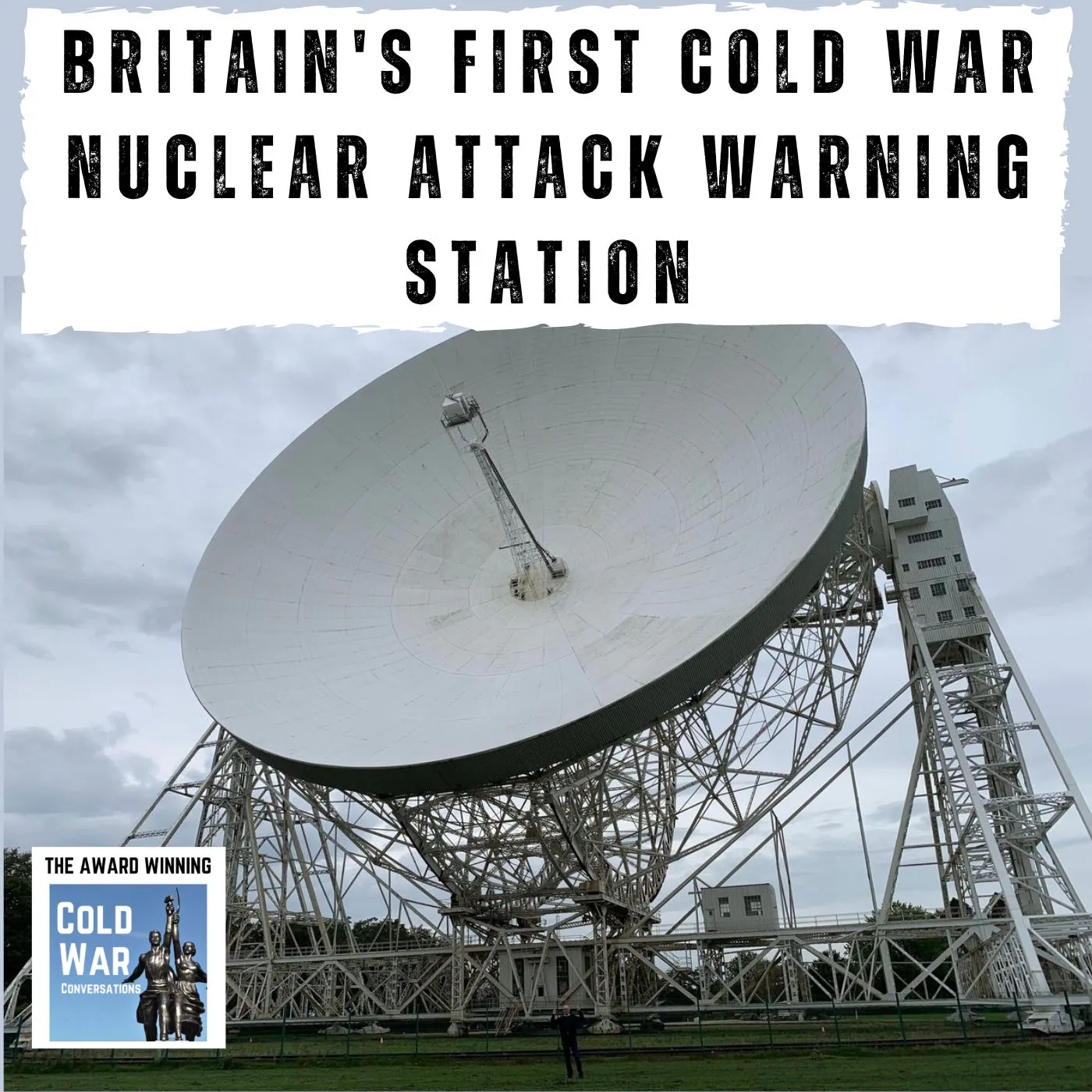
S21 Ep 327Britain's first Cold War Nuclear Attack Warning Station at Jodrell Bank (327)
The Jodrell Bank observatory in Cheshire in the UK played a significant secret role during the Cold War. It was established in 1945 by Bernard Lovell, a radio astronomer at the university, to investigate cosmic rays after his work on radar in the Second World War. We hear some intriguing details of the site’s Cold War roles including being Britain’s first nuclear attack early warning station and its signals intelligence collaboration with GCHQ, the UK’s Government Communications Headquarters. Even more surprisingly it’s also revealed how Soviet Scientists also worked at the site and that the Soviets attempted to get Bernard Lovell to defect during a visit to the Soviet Union. I’m given a tour of the non-public areas by Tim O'Brien who is a Professor of Astrophysics. Do make sure you check out the extensive photos I took at https://coldwarconversations.com/episode327/ The fight to preserve Cold War history continues and via a simple monthly donation, you will give me the ammunition to continue to preserve Cold War history. You’ll become part of our community, get ad-free episodes, and get a sought-after CWC coaster as a thank you and you’ll bask in the warm glow of knowing you are helping to preserve Cold War history. Just go to https://coldwarconversations.com/donate/ If a monthly contribution is not your cup of tea, We also welcome one-off donations via the same link. Find the ideal gift for the Cold War enthusiast in your life! Just go to https://coldwarconversations.com/store/ Follow us on Twitter https://twitter.com/ColdWarPod Instagram https://www.instagram.com/coldwarconversations/ Facebook https://www.facebook.com/groups/coldwarpod/ Youtube https://youtube.com/@ColdWarConversations Love history? Check out Into History at this link https://intohistory.com/coldwarpod 0:00 Introduction to the podcast 1:00 Jodrell Bank Observatory's role in the Cold War and its establishment 10:08 The birth and evolution of radio astronomy 15:50 The construction and purpose of the world's biggest radio telescope 32:46 The telescope's role during the Cuban missile crisis and its implications 51:05 The mission of GCHQ at Jodrell Bank and intercepting signals from the Soviet Union 1:04:21 Touring the secret tunnel and discussing its potential uses 1:14:51 Recounting the Soviet Luna 15 mission during the American moon landing and the role of Jodrell Bank 1:29:18 Episode extras and thanking financial supporters Chapters powered by PodcastAI✨ Learn more about your ad choices. Visit podcastchoices.com/adchoices
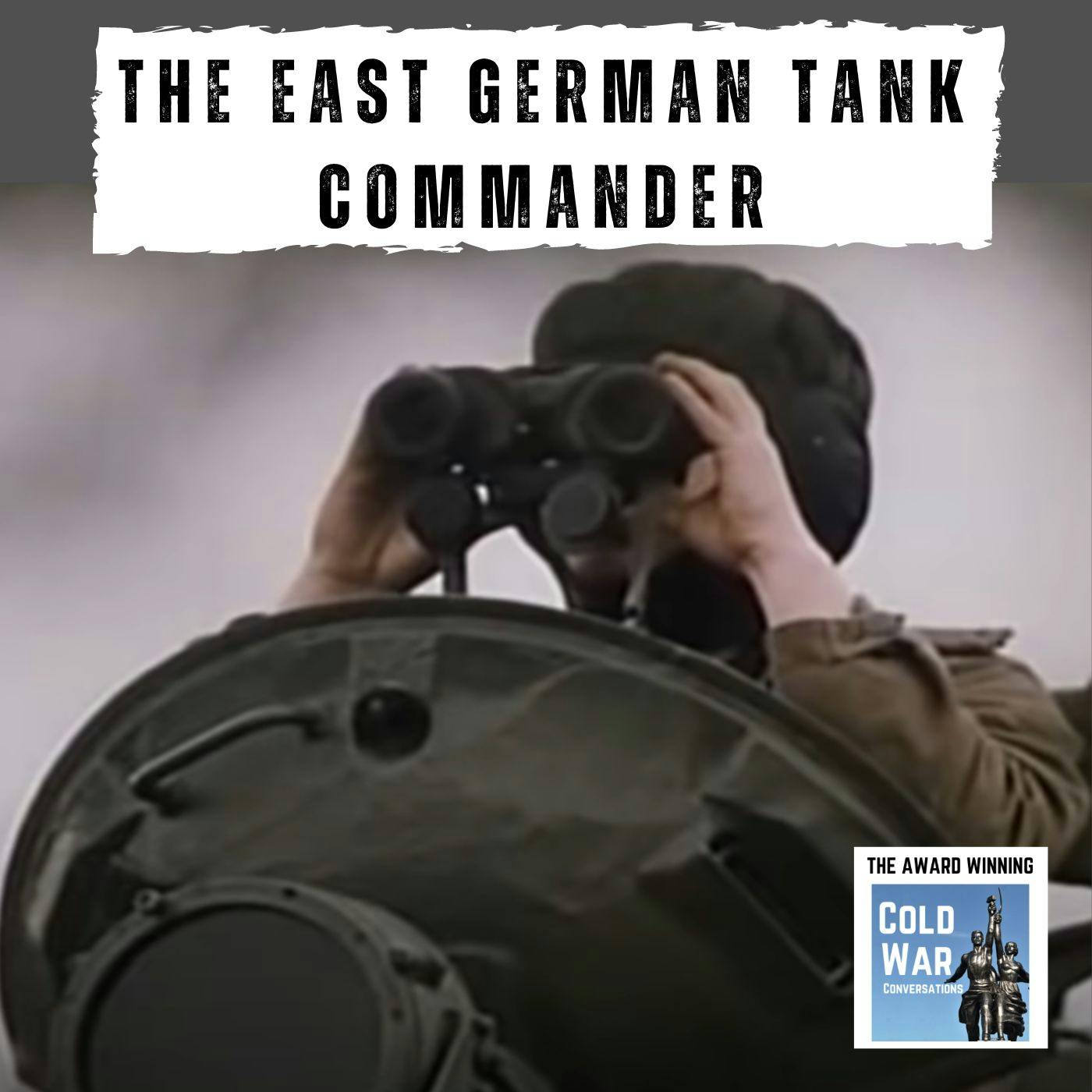
S21 Ep 326The East German Tank Commander (326)
In the mid-1980s Dag was a T72 tank commander in the NVA, the East German Army and is now a volunteer at the Tank Museum at Bovington in the UK. He describes his initial tank commander training, the battle readiness of the NVA, and the challenges of a conscript army as well as a startling revelation about a significant change in doctrine in 1987. We also dig deep into the technical details of the T72, including the autoloader, deep water wading, radio communication and its advantages and disadvantages versus NATO tanks. Dag also talks about how Soviet WW2 learnings were applied into the NVA, and his regiment’s role and deployment area in the event of war. Dag shares a frank view and great insight into life in the NVA as a tank commander and the challenges of life beyond the NVA as the Wall opens and all he has known disappears. Make sure you check out the videos here https://coldwarconversations.com/episode326/ The fight to preserve Cold War history continues and via a simple monthly donation, you will give me the ammunition to continue to preserve Cold War history. You’ll become part of our community, get ad-free episodes, and get a sought-after CWC coaster as a thank you and you’ll bask in the warm glow of knowing you are helping to preserve Cold War history. Just go to https://coldwarconversations.com/donate/ If a monthly contribution is not your cup of tea, We also welcome one-off donations via the same link. Find the ideal gift for the Cold War enthusiast in your life! Just go to https://coldwarconversations.com/store/ Follow us on Twitter https://twitter.com/ColdWarPod Instagram https://www.instagram.com/coldwarconversations/ Facebook https://www.facebook.com/groups/coldwarpod/ Youtube https://youtube.com/@ColdWarConversations Love history? Check out Into History at this link https://intohistory.com/coldwarpod 0:00 Introduction 10:29 Briefing on NATO armour and perception of NATO as the enemy 18:13 Planning for potential conflict and readiness in the NVA 24:33 Understanding the roles and challenges in a conscript army 33:21 Performance and operational details of the T72 tank 42:20 Training, battlefield strategies and preparations 58:41 East German-Soviet relations and Warsaw Pact exercises 1:13:38 Reflections on service in the NVA and potential conflict with NATO 1:23:59 Reaction to the opening of the Berlin Wall and post-service encounters 1:27:34 Life post-unification: Expectations, reality and personal growth 1:31:28 Podcast extras, appreciation for financial supporters and closing remarks Chapters powered by PodcastAI✨ Learn more about your ad choices. Visit podcastchoices.com/adchoices
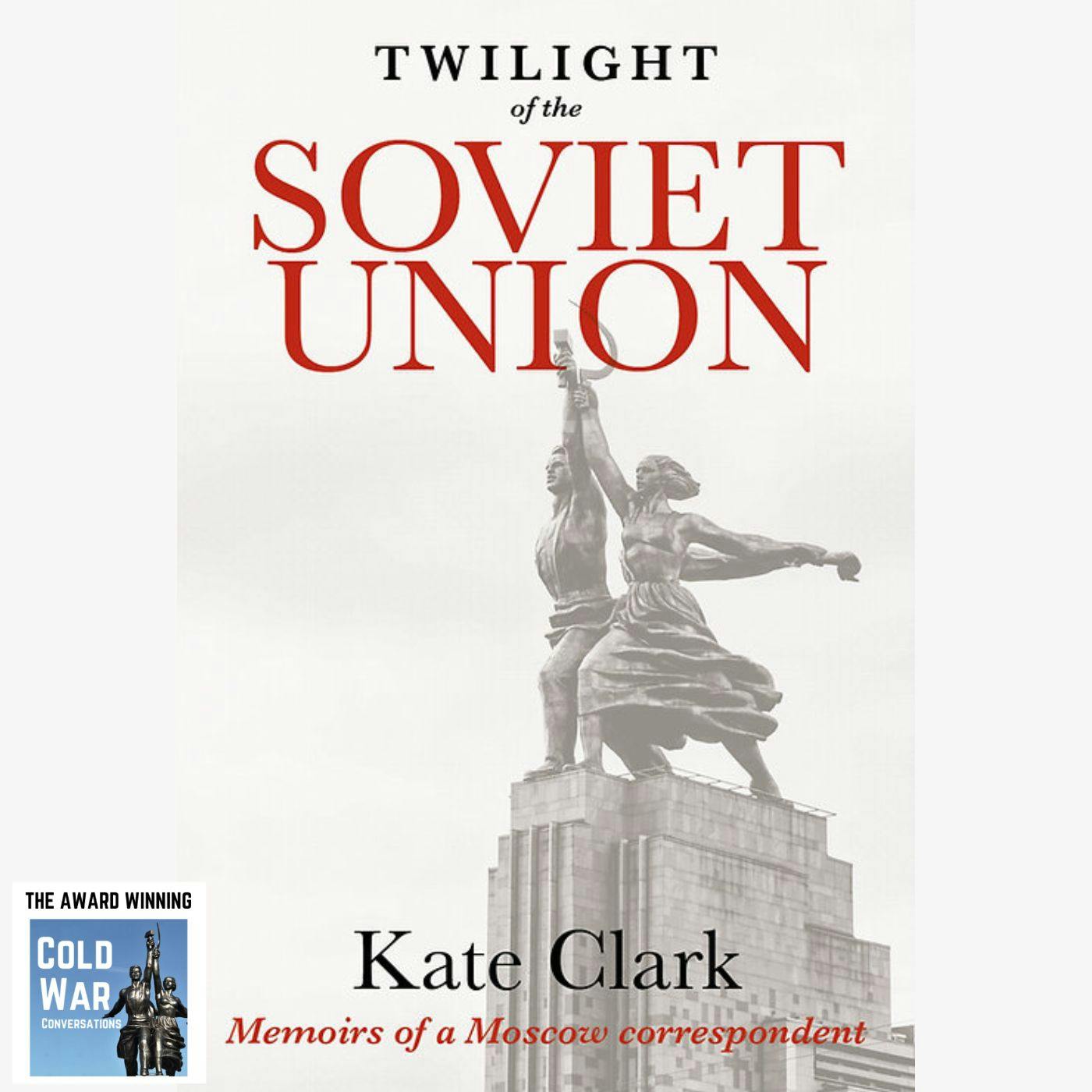
S21 Ep 325Twilight of the Soviet Union – Memoirs of a British Journalist in Moscow (325)
Kate is sent to Moscow in 1985 to write articles for The Morning Star, a left-wing British daily newspaper founded in 1930 as the Daily Worker by the Communist Party of Great Britain. She lives in a block of flats alongside Soviet citizens and enrols her 3 children in Soviet schools. Three weeks after Kate arrives Mikhail Gorbachev comes to power and she finds herself having to cover the disorientating number of rapid reforms and attacks on the Soviet system by its leadership for a newspaper, that had always supported the Soviet Union. Kate is fluent in Russian, speaks with Soviet citizens on the bus or at the shops, and visits every Soviet republic bar one of the then-largest countries on Earth. In 1986 she reported on the Chernobyl disaster and was one of the first journalists to arrive in the area. Buy the book here https://www.bannisterpublications.com/product-page/twilight-of-the-soviet-union The fight to preserve Cold War history continues and via a simple monthly donation, you will give me the ammunition to continue to preserve Cold War history. You’ll become part of our community, get ad-free episodes, and get a sought-after CWC coaster as a thank you and you’ll bask in the warm glow of knowing you are helping to preserve Cold War history. Just go to https://coldwarconversations.com/donate/ If a monthly contribution is not your cup of tea, We also welcome one-off donations via the same link. Find the ideal gift for the Cold War enthusiast in your life! Just go to https://coldwarconversations.com/store/ Follow us on Twitter https://twitter.com/ColdWarPod Instagram https://www.instagram.com/coldwarconversations/ Facebook https://www.facebook.com/groups/coldwarpod/ Youtube https://youtube.com/@ColdWarConversations Love history? Check out Into History at this link https://intohistory.com/coldwarpod 0:00 Introduction and background of Kate Clark 1:32 Journey to becoming a Moscow correspondent and life in Soviet Union 11:09 Placing Ket's children in Soviet schools and their adaptation 15:10 Bureaucratic challenges 18:08 Shopping habits and emergence of supermarkets in Soviet Union 21:00 Impact of Mikhail Gorbachev's leadership and his policies 33:34 Cultural accessibility, promotion and diversity in the Soviet Union 44:36 Covering the Chernobyl disaster and its aftermath 57:17 Relations with the British embassy and dealings with Soviet security services 1:04:47 Visit to Afghanistan and reflections on its political challenges 1:09:31 Reflections on the collapse of the Soviet Union and the role of Yeltsin 1:15:30 Kate's book, "Twilight of the Soviet Union", and closing remarks Chapters powered by PodcastAI✨ Learn more about your ad choices. Visit podcastchoices.com/adchoices
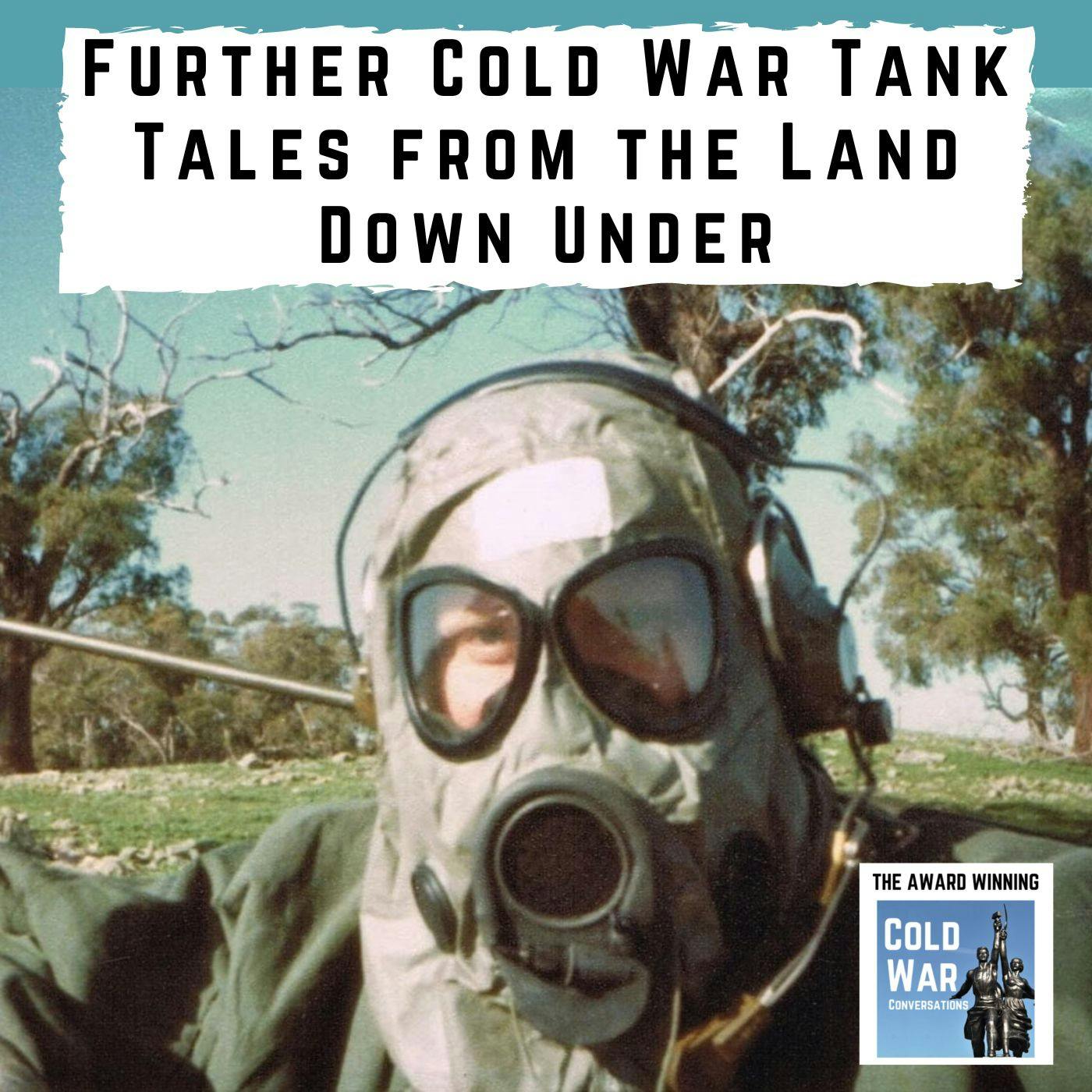
S21 Ep 324Further Cold War Tank Tales from the Land Down Under (324)
Tim participates in Kangaroo 89, a huge military exercise with the entire Australian Army using an area the size of Western Europe and we hear about the Australian equivalent of Wolfgang the Bratty Man who used to turn up on British exercises in Germany. Tim was also part of an exchange program with the British Army and he describes his experiences there and the advantages and disadvantages between Leopard 1 and the British Challenger 1 tank Tim also worked with the Bundeswehr where he had a fascinating encounter with a former East German tank commander. This is part two of my chat with Tim., Part one is episode 321 here https://coldwarconversations.com/episode321/ Photos, videos and extra episode information here https://coldwarconversations.com/episode324/ The fight to preserve Cold War history continues and via a simple monthly donation, you will give me the ammunition to continue to preserve Cold War history. You’ll become part of our community, get ad-free episodes, and get a sought-after CWC coaster as a thank you and you’ll bask in the warm glow of knowing you are helping to preserve Cold War history. Just go to https://coldwarconversations.com/donate/ If a monthly contribution is not your cup of tea, We also welcome one-off donations via the same link. Find the ideal gift for the Cold War enthusiast in your life! Just go to https://coldwarconversations.com/store/ Follow us on Twitter https://twitter.com/ColdWarPod Facebook https://www.facebook.com/groups/coldwarpod/ Instagram https://www.instagram.com/coldwarconversations/ Youtube https://youtube.com/@ColdWarConversations Love history? Check out Into History at this link https://intohistory.com/coldwarpod 0:00 Introduction 1:03 Kangaroo 89: Large-scale military exercise and logistical challenges 9:37 Leopard 1 vs Challenger 1: A comparison and discussion of their advantages 20:26 Evaluation of Russian/Chinese armoured vehicles and Soviet tanks 22:45 Discussion about the arms industry and British involvement in upgrading Iraqi tanks 28:28 Life in the field: Food, rations, and interaction with the local population 34:11 Night fighting capability of Leopard AS1 and limitations of infrared technology 39:24 Cold War tactics and concerns about signals intelligence 45:02 Exchange with the Bundeswehr and bonding with an ex-NVA senior NCO 51:59 Cold War-themed films recommendations and Australian contribution during the Cold War 54:02 Importance of individual Cold War stories and episode extras 55:00 Closing remarks and invitation to join the Facebook discussion group Chapters powered by PodcastAI✨ Learn more about your ad choices. Visit podcastchoices.com/adchoices
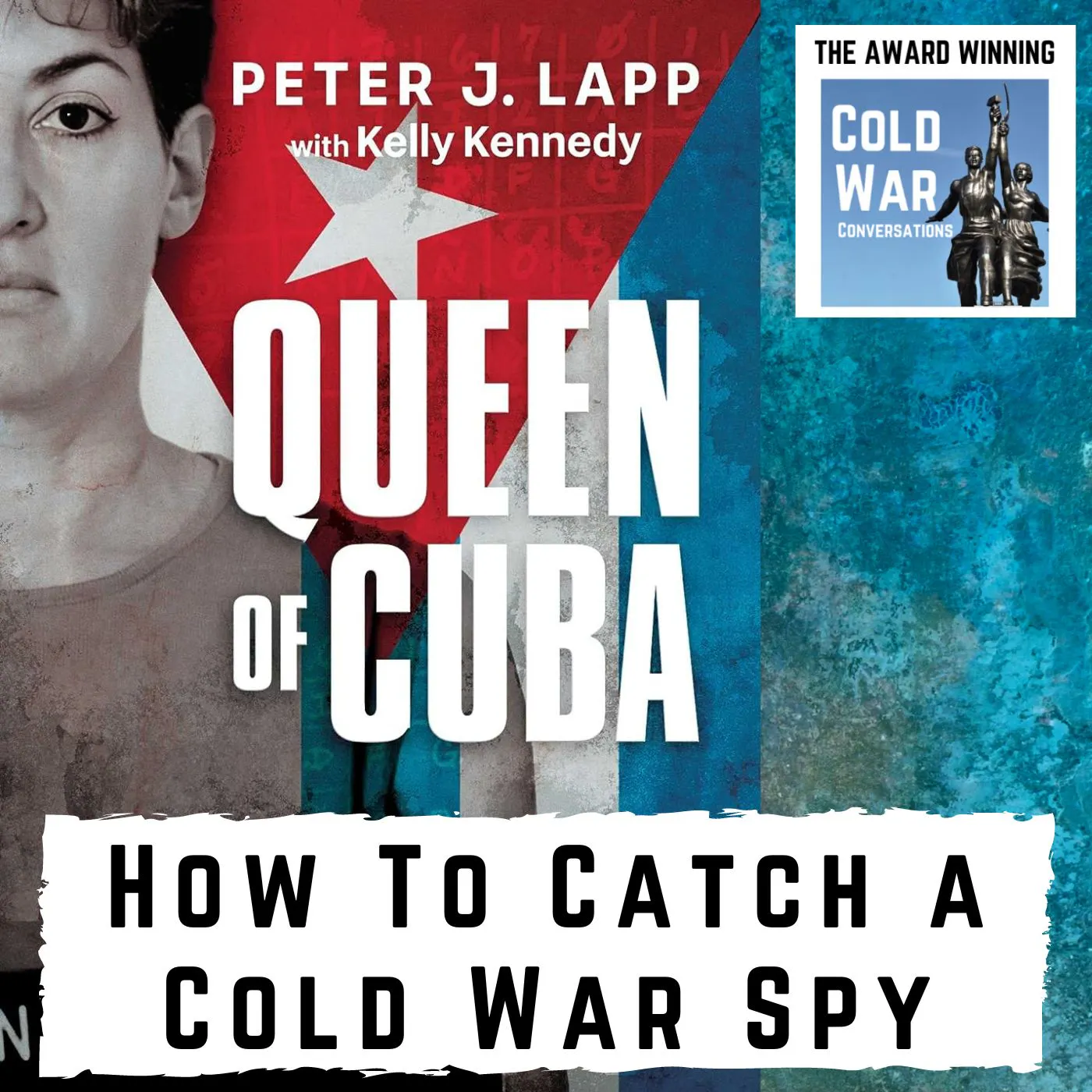
S21 Ep 323How To Catch A Cold War Spy (323)
Since 1985, Ana Montes has been an asset of the Cuban intelligence service. In that time, she’s risen through the ranks to become one of the Pentagon’s most respected voices on Cuban affairs with easy access to classified documents. Peter Lapp reveals Montez's tradecraft and how the FBI found the proverbial "needle in a haystack". To learn more about the woman labelled "one of the most damaging spies in U.S. history" by America's top counter-intelligence official listen to episode 277. Buy the book here https://uk.bookshop.org/a/1549/9781915603326 Extra Photos and videos here https://coldwarconversations.com/episode323 Enter the book giveaway here https://coldwarconversations.com/giveaway/ The fight to preserve Cold War history continues and via a simple monthly donation, you will give me the ammunition to continue to preserve Cold War history. You’ll become part of our community, get ad-free episodes, and get a sought-after CWC coaster as a thank you and you’ll bask in the warm glow of knowing you are helping to preserve Cold War history. Just go to https://coldwarconversations.com/donate/ If a monthly contribution is not your cup of tea, We also welcome one-off donations via the same link. Find the ideal gift for the Cold War enthusiast in your life! Just go to https://coldwarconversations.com/store/ Follow us on Twitter https://twitter.com/ColdWarPod Instagram https://www.instagram.com/coldwarconversations/ Facebook https://www.facebook.com/groups/coldwarpod/ Youtube https://youtube.com/@ColdWarConversations Love history? Check out Into History at this link https://intohistory.com/coldwarpod 0:00 Introduction to Anna Montez and her role in the Cuban Intelligence Service 7:48 The process of identifying a spy within the US intelligence community 16:43 Introduction of Scott Carmichael and his role in the investigation 28:34 The potential involvement of Anna Montez's family in espionage 34:51 A mistake and the realities of surveillance 41:00 The importance of the Toshiba computer in Anna's arrest 52:22 Arrest of Ana Montez 56:18 The process of reaching an agreement with Ana Montez 1:03:16 Public perception and recognition of Ana Montez post-arrest 1:04:11 Introduction of the book giveaway Chapters powered by PodcastAI✨ Learn more about your ad choices. Visit podcastchoices.com/adchoices

S21 Ep 322Cold War, Warm Hearts - Hitchhiking behind the 1960s Iron Curtain (322)
In 1966 most of Bridget’s friends, in their early twenties, were settling down with jobs and/or husbands… She, on the other hand, set off alone to travel across Poland relying on the kindness of strangers. Fascinated by what she experienced she continued to wander the highways and byways of, Hungary Czechoslovakia, Romania, Bulgaria and Yugoslavia for the next couple of years seeking out remote rural communities almost untouched by the passage of time... Bridget travelled with virtually no money, however, this was not a problem but an opportunity: it enabled a rare and deep insight into the lives and experiences of ‘ordinary’ people in these Warsaw Pact countries. We hear how she stumbles across remote German minorities, gets arrested by border guards and finds love in a youth hostel in Munich. Buy the book here https://uk.bookshop.org/a/1549/9781915603326 Extra Photos and videos here https://coldwarconversations.com/episode352/ The fight to preserve Cold War history continues and via a simple monthly donation, you will give me the ammunition to continue to preserve Cold War history. You’ll become part of our community, get ad-free episodes, and get a sought-after CWC coaster as a thank you and you’ll bask in the warm glow of knowing you are helping to preserve Cold War history. Just go to https://coldwarconversations.com/donate/ If a monthly contribution is not your cup of tea, We also welcome one-off donations via the same link. Find the ideal gift for the Cold War enthusiast in your life! Just go to https://coldwarconversations.com/store/ Follow us on Twitter https://twitter.com/ColdWarPod Instagram https://www.instagram.com/coldwarconversations/ Facebook https://www.facebook.com/groups/coldwarpod/ Youtube https://youtube.com/@ColdWarConversations Love history? Check out Into History at this link https://intohistory.com/coldwarpod 0:00 Introduction to the episode 3:06 Bridget's journey and adventures in Poland 12:18 Bridget's job in Germany and exploration of the iron curtain 15:56 Bridget's smuggling adventure in Slovakia and visit to Hungary 26:02 Bridget's journey to Yugoslavia and her experiences there 32:04 Socio-economic situation and life experiences in Slovakia 34:36 Encounter with West German border guards 37:16 Meeting Bill in Munich and travelling to Romania 43:30 Journey to Bulgaria and experiences there 48:34 Using travel diaries to write "Cold War, Warm Hearts" 53:01 Acknowledging financial supporters and engaging with listeners on Facebook Chapters powered by PodcastAI✨ Learn more about your ad choices. Visit podcastchoices.com/adchoices
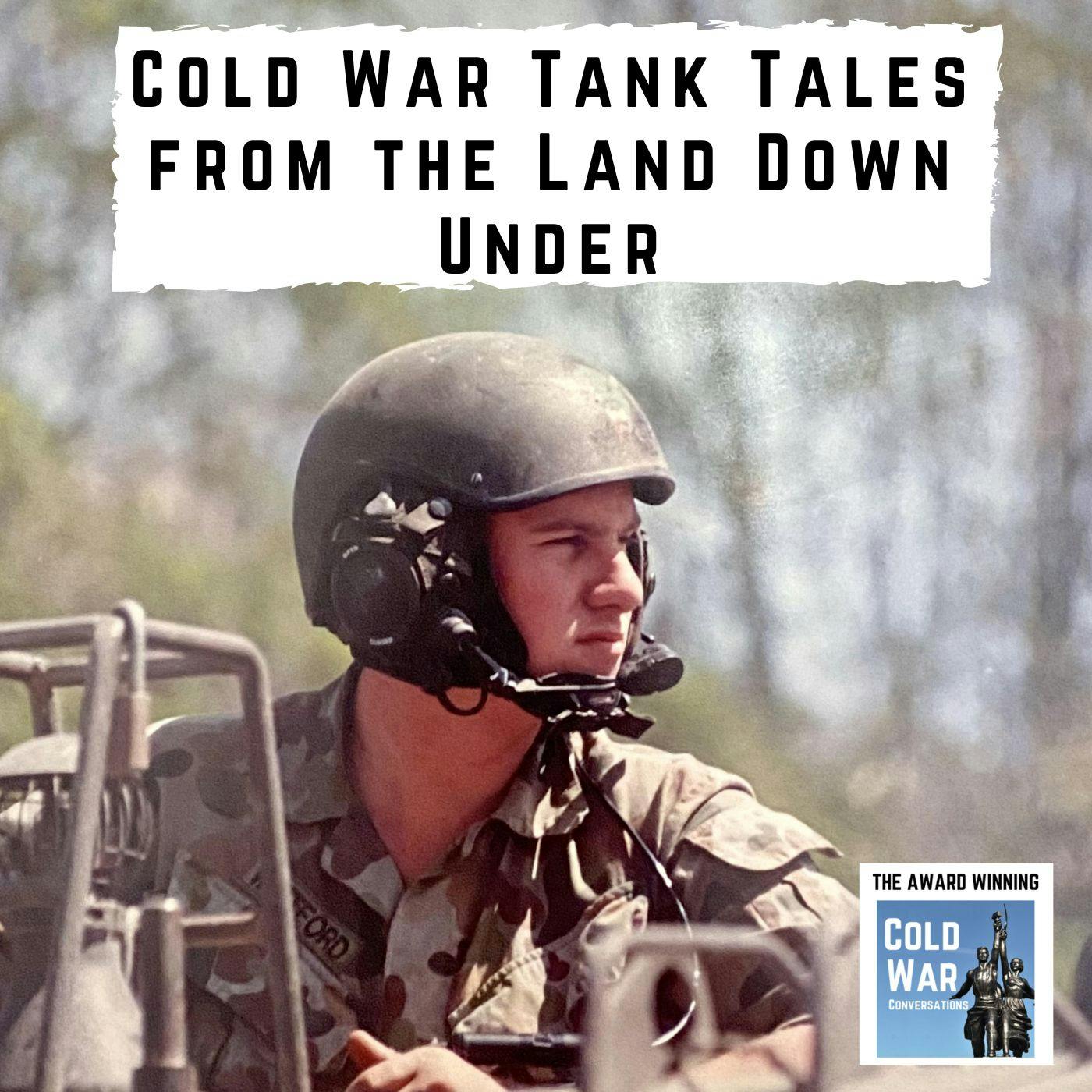
S21 Ep 321Cold War Tank Tales from the Land Down Under (321)
Many of Tim’s family had served in WW1 and WW2 and from a young age, he was determined to follow their path. Overcoming huge competition for places he became a driver of the Leopard AS1 MBT at 1st Armoured Regiment of the Australian Army. Australia is largely ignored in most Cold War histories, however, we hear how the Australian Army prepared to fight the Musorians, a thinly disguised notional enemy which was obviously the Soviets or one of their satellites in everything but name. Photos, videos and extra episode information here https://coldwarconversations.com/episode321/ Part two of our chat is here https://coldwarconversations.com/episode324/ The fight to preserve Cold War history continues and via a simple monthly donation, you will give me the ammunition to continue to preserve Cold War history. You’ll become part of our community, get ad-free episodes, and get a sought-after CWC coaster as a thank you and you’ll bask in the warm glow of knowing you are helping to preserve Cold War history. Just go to https://coldwarconversations.com/donate/ If a monthly contribution is not your cup of tea, We also welcome one-off donations via the same link. Find the ideal gift for the Cold War enthusiast in your life! Just go to https://coldwarconversations.com/store/ Follow us on Twitter https://twitter.com/ColdWarPod Facebook https://www.facebook.com/groups/coldwarpod/ Instagram https://www.instagram.com/coldwarconversations/ Youtube https://youtube.com/@ColdWarConversations Love history? Check out Into History at this link https://intohistory.com/coldwarpod 0:00 Introduction and Tim Whitford's early life and influences 7:48 Tim's involvement in the reserves and training details 12:16 Transition to the regular army and experience with basic training 19:41 First encounter with the Leopard tank and training experience 28:42 Comparison of Leopard and Centurion tanks 33:57 Posting to the 1st Armored Regiment and first deployment 43:41 NBC training and river forwarding capabilities of Leopard tanks 51:30 Reaction to the fall of the Berlin Wall and shift in military roles 55:09 Preview of Part 2 and recognizing financial supporters Chapters powered by PodcastAI✨ Learn more about your ad choices. Visit podcastchoices.com/adchoices

S20 Ep 320Jack's dramatic Cold War escape across the fortified Inner German border (320)
Jack Wesolek was born in East Germany in 1966. His grandfather was a member of the Red Orchestra, a Communist Anti-Nazi resistance organisation in Germany during World War 2. He later became Chief of the Signals Service of the Volksmarine, the East German Navy. In the 1980s an East German Army signals regiment was named after him. Jack’s father was an actor and we discuss how accurate the depiction of East German actors is in the film “The Lives of Others”. At age 6 his parents divorce and Jack stays with his father and grandmother in Rostock where he learns more about his grandfather’s story, however, he is separated from his brother who goes to live with his mother. Jack has an Uncle who was captured escaping from East Germany and was bought out by West Germany in the 1970s. At a clandestine meeting in Hungary they hatch a daring plan for Jack to escape across the Inner German Border, the fortified frontier between East and West Germany. Photos, videos and extra episode information here https://coldwarconversations.com/episode320/ The fight to preserve Cold War history continues and via a simple monthly donation, you will give me the ammunition to continue to preserve Cold War history. You’ll become part of our community, get ad-free episodes, and get a sought-after CWC coaster as a thank you and you’ll bask in the warm glow of knowing you are helping to preserve Cold War history. Just go to https://coldwarconversations.com/donate/ If a monthly contribution is not your cup of tea, We also welcome one-off donations via the same link. Find the ideal gift for the Cold War enthusiast in your life! Just go to https://coldwarconversations.com/store/ Follow us on Twitter https://twitter.com/ColdWarPod Facebook https://www.facebook.com/groups/coldwarpod/ Instagram https://www.instagram.com/coldwarconversations/ Youtube https://youtube.com/@ColdWarConversations Love history? Check out Into History at this link https://intohistory.com/coldwarpod 0:00 Introduction and background of Jack Wesolek 3:19 Recollections of his father's actor friends 5:20 Jack's views on artistic freedom and family's political climate in East Germany 18:12 Life with grandmother and school experiences 32:20 Military training as part of school curriculum 37:48 Relatives in West Germany and uncle's imprisonment for attempted escape 41:12 Planning and preparation for escape to West Germany 1:00:43 The escape and crossing the border 1:04:33 First moments of freedom and reflections on life in East Germany 1:07:10 Registering as a refugee and first contact with family in East Germany post-escape 1:14:04 Stasi's interrogation and impact of Jack's escape on his family 1:20:36 Episode extras and closing remarks Chapters powered by PodcastAI✨ Learn more about your ad choices. Visit podcastchoices.com/adchoices

S20 Ep 319How President Kennedy's assassination almost started World War 3 (319)
bonusOn 23rd Nov 1963 at Kunsan Air Base, South Korea a detachment of US Air Force B-57 Canberra bombers were parked on an alert pad each with a live nuclear weapon in their bomb bay and ready to fly at a moment’s notice. At 0400 klaxon horns aroused the crews from their slumber and they rushed to their waiting aircraft, for what they likely thought was just one more drill But this morning was different. As the crew strapped themselves into their cockpits, they were told to await a signal to fly their war mission… With targets in North Korea, China, and the Soviet Far East, the aircrews instinctively knew they would be flying one-way missions. But they had no idea as to why they were facing potential oblivion. I talk with US Marine Veteran John F. Davies who has researched the little-known story of the military response to the assassination of President John F. Kennedy. Extra episode info including videos here https://coldwarconversations.com/episode319/ Do you have any further information about this episode, contact John via email at JFD3vet "at"protonmail.com The fight to preserve Cold War history continues and via a simple monthly donation, you will give me the ammunition to continue to preserve Cold War history. You’ll become part of our community, get ad-free episodes, and get a sought-after CWC coaster as a thank you and you’ll bask in the warm glow of knowing you are helping to preserve Cold War history. Just go to https://coldwarconversations.com/donate/ If a monthly contribution is not your cup of tea, We also welcome one-off donations via the same link. Find the ideal gift for the Cold War enthusiast in your life! Just go to https://coldwarconversations.com/store/ Follow us on Twitter https://twitter.com/ColdWarPod Facebook https://www.facebook.com/groups/coldwarpod/ Instagram https://www.instagram.com/coldwarconversations/ Youtube https://youtube.com/@ColdWarConversations Love history? Check out Into History at this link https://intohistory.com/coldwarpod 0:00 Introduction and background 1:34 John Davies' military service and reaction to JFK's assassination 6:38 Initial military reaction to JFK's assassination and subsequent actions 11:18 Events unfolding in Washington post JFK's assassination and transition of command authority 16:13 Dean Rusk's and Admiral Harry D. Felt's response to JFK's assassination 20:45 The military response in Europe and Strategic Air Command situation 26:21 Exceptions in the military response - Fort Bliss, Texas and Cuba 31:46 President Johnson's return to Washington and easing of crisis atmosphere 34:09 Changes in command and control post November '63 and handling of information 43:41 Reflections on the importance of telling this story and predictions on Kennedy's continued presidency 46:29 Acknowledgement of financial supporters and Facebook discussion group Chapters powered by PodcastAI✨ Learn more about your ad choices. Visit podcastchoices.com/adchoices

S20 Ep 318The lazy schoolboy who became a Cold War Vulcan nuclear bomber pilot (318)
Kevin was born in Wigan in North West England and joined the RAF as an apprentice in 1956 with only 3 O Levels. He came top of his course but was posted into supplies at RAF St Mawgan. However, he quickly became in charge of their clothing stores and via a fortuitous route became a trainee pilot. By May 1963 he joined the RAF V Force as a Vulcan pilot and served with 44 Squadron where Vulcan crews were being converted to low-level flying. He describes the challenges of low-level flying, Vulcan handling, and the immense power of the Vulcan’s engines and training in Canada. We also hear about the different methods of nuclear bomb release, what it was like to be on Quick Reaction Alert, and his targets in the Soviet Union. Kevin also flew a number of the Queen’s birthday flights up the Mall and describes a near collision on one of these events in cloud. He also remembers some of his colleagues who never came back from missions. Extra episode information including videos here https://coldwarconversations.com/episode318/ The fight to preserve Cold War history continues and via a simple monthly donation, you will give me the ammunition to continue to preserve Cold War history. You’ll become part of our community, get ad-free episodes, and get a sought-after CWC coaster as a thank you and you’ll bask in the warm glow of knowing you are helping to preserve Cold War history. Just go to https://coldwarconversations.com/donate/ If a monthly contribution is not your cup of tea, We also welcome one-off donations via the same link. Find the ideal gift for the Cold War enthusiast in your life! Just go to https://coldwarconversations.com/store/ Follow us on Twitter https://twitter.com/ColdWarPod Facebook https://www.facebook.com/groups/coldwarpod/ Instagram https://www.instagram.com/coldwarconversations/ Youtube https://youtube.com/@ColdWarConversations Love history? Check out Into History at this link https://intohistory.com/coldwarpod 0:00 Introduction and Background of Kevin 3:35 Kevin's Journey from Corporal Supplier to Vulcan Pilot 9:49 Kevin's Experiences and Training as a Vulcan pilot 18:20 Low-Level Flying, and Navigating 23:43 Quick Reaction Alerts and Nuclear Bomb Release 29:57 Post-Bomb Release Plans and Popular Media Depictions 33:22 Incidents, Implications, and Personal Views on nuclear Weapons 37:33 Responsibility of a Vulcan's Crew and recalling past incidents 39:17 Kevin's experience with Other V Bombers and survival training 42:06 Kevin's participation in Bombing Competitions and Closing Remarks Chapters powered by PodcastAI✨ Learn more about your ad choices. Visit podcastchoices.com/adchoices

S20 Ep 317Across the Iron Curtain in a yellow MG Midget sports car (317)
Andrew McNeile decided to travel through Eastern Europe in a yellow MG Midget Sports car, a car that's going to stand out no matter where you are! He recalls his adventures travelling through East Germany, Poland, Czechoslovakia, Bulgaria, Romania, and Yugoslavia He talks about the warmth and friendliness of people, challenges with petrol quality, and an accidental visit to a nudist beach. Peter Ryan is your host today and I’m delighted to welcome Andrew McNeile to our Cold War Conversation… The fight to preserve Cold War history continues and via a simple monthly donation, you will give me the ammunition to continue to preserve Cold War history. You’ll become part of our community, get ad-free episodes, and get a sought-after CWC coaster as a thank you and you’ll bask in the warm glow of knowing you are helping to preserve Cold War history. Just go to https://coldwarconversations.com/donate/ If a monthly contribution is not your cup of tea, We also welcome one-off donations via the same link. Find the ideal gift for the Cold War enthusiast in your life! Just go to https://coldwarconversations.com/store/ Follow us on Twitter https://twitter.com/ColdWarPod Facebook https://www.facebook.com/groups/coldwarpod/ Instagram https://www.instagram.com/coldwarconversations/ Youtube https://youtube.com/@ColdWarConversations Love history? Check out Into History at this link https://intohistory.com/coldwarpod Episode cover photo by kind permission of Oxyman https://commons.wikimedia.org/wiki/File:MG_Midget_Orange_S.jpg 0:00 Introduction and overview of the episode's guest, Andrew Nielle 0:31 Andrew's journey through Eastern Europe in a yellow MG midget sports car 4:21 Reaction of Andrew's family and friends to his travel plans 7:13 Planned itinerary for the journey through Eastern Europe and Turkey 10:01 Describing the border crossing experience into the East Bloc from Germany 16:05 Reflections on the separation between East and West Germany and the construction of the Berlin Wall 24:25 Unexpected nudist beach experience in Romania 28:12 The challenges of travelling by car in Eastern Europe 32:19 Favourite country visited during the road trip: Czechoslovakia 35:57 Relief of returning to the West and impressions on Soviet rule 37:11 Closing remarks Table of contents powered by PodcastAI✨ Learn more about your ad choices. Visit podcastchoices.com/adchoices

S20 Ep 3161983 - the year the Cold War almost turned hot (316)
This week is the 40th anniversary of the Able Archer NATO Exercise where it is reckoned that the Soviet Union and NATO almost started a nuclear war. 1990 an investigation by the US President’s Foreign Intelligence Advisory Board, culminating in its highly secret report “The Soviet ‘War Scare’” The detailed PFIAB report concluded that the U.S. “may have inadvertently placed our relations with the Soviet Union on a hair trigger”. The following is an audio version of the talk I delivered to the Manchester Military History Society in October 2023. Documents, videos, and other extra episode information here https://coldwarconversations.com/episode316 The fight to preserve Cold War history continues and via a simple monthly donation, you will give me the ammunition to continue to preserve Cold War history. You’ll become part of our community, get ad-free episodes, and get a sought-after CWC coaster as a thank you and you’ll bask in the warm glow of knowing you are helping to preserve Cold War history. Just go to https://coldwarconversations.com/donate/ If a monthly contribution is not your cup of tea, We also welcome one-off donations via the same link. Find the ideal gift for the Cold War enthusiast in your life! Just go to https://coldwarconversations.com/store/ Follow us on Twitter https://twitter.com/ColdWarPod Facebook https://www.facebook.com/groups/coldwarpod/ Instagram https://www.instagram.com/coldwarconversations/ Youtube https://youtube.com/@ColdWarConversations Love history? Check out Into History at this link https://intohistory.com/coldwarpod 0:00 Introduction and overview of the episode 1:14 Comparison of the 1983 crisis and the Cuban missile crisis 2:38 Detente and the state of US/Soviet relations in the 1970s & early 80s 4:24 Introduction Ronald Reagan and his policies 5:25 Introduction to Yuri Andropov and his policies 8:56 Soviet intelligence Operation Ryan's purpose and indicators 12:49 Fleetex 83 US naval exercise appears to confirm Soviet suspicions that US is planning an attack 16:33 The downing of Korean Airlines Flight 007 22:30 Incidents soon after the Korean Airlines shootdown 26:08 Soviet early warning system warns of US missile attack 30:06 The US military intervention in Grenada 34:21 Brigadier General Leonard H Perroot's role in averting a nuclear war during Able Archer 83 41:43 Double agent's contributions to Western intelligence 51:26 Controversy about how close we came to nuclear war around Able Archer 54:30 Acknowledgement of financial supporters and continuation of Cold War conversation on Facebook Table of contents powered by PodcastAI✨ Learn more about your ad choices. Visit podcastchoices.com/adchoices

S20 Ep 315Serving in a Cold War Danish Reconnaissance Squadron (315)
Denmark joined NATO as a founding member in 1949. However, it originally laid down limitations to NATO membership, effectively excluding the country from full military integration. The conditions were threefold: no non-Danish bases, no nuclear warheads, and no Allied military activity on Danish territory. Bo Hermansen served in a conscript reconnaissance platoon of the Danish Jutland Dragoon Regiment during the 1980s. His squadron was part of the divisional reconnaissance for the Danish Jutland division which was tasked to move into the north of West Germany and link up with West German units to stop a Warsaw Pact advance into Jutland. Bo describes Denmark’s political stance during this period where the election of President Reagan in the US and his policies regarding defence caused some concern in Denmark and elsewhere in Europe. We hear of his unit’s tactics against the Warsaw Pact, the exercises he participated in, the rivalry between units, and why a Danish tank was painted pink! It’s a fascinating view into the organisation and tactics of one of the lesser-known members of NATO. Extra episode information here https://coldwarconversations.com/episode315 The fight to preserve Cold War history continues and via a simple monthly donation, you will give me the ammunition to continue to preserve Cold War history. You’ll become part of our community, get ad-free episodes, and get a sought-after CWC coaster as a thank you and you’ll bask in the warm glow of knowing you are helping to preserve Cold War history. Just go to https://coldwarconversations.com/donate/ If a monthly contribution is not your cup of tea, We also welcome one-off donations via the same link. Find the ideal gift for the Cold War enthusiast in your life! Just go to https://coldwarconversations.com/store/ Follow us on Twitter https://twitter.com/ColdWarPod Facebook https://www.facebook.com/groups/coldwarpod/ Instagram https://www.instagram.com/coldwarconversations/ Youtube https://youtube.com/@ColdWarConversations Love history? Check out Into History at this link https://intohistory.com/coldwarpod 0:00 Introduction to the episode and guest Bo Hermansen 7:31 Bo's decision to join the military and family reactions 12:33 Training, challenges, and transition to a professional soldier 19:46 Role and composition of the 5th Battalion of the Jutland Dragoon Regiment 28:42 Preparations for war: Major exercises and deployment practice 35:16 Relations with the Germans and other international troops during the Cold War 43:45 Importance of history and ethos in the Jutland Dragoons 51:32 Transition to green and black paint for Danish vehicles: Controversies and anecdotes 1:00:09 Escape and survival training in the Danish Army 1:08:06 Dedication to Bo's platoon and episode extras 1:08:33 Closing remarks Table of contents powered by PodcastAI✨ Learn more about your ad choices. Visit podcastchoices.com/adchoices

S20 Ep 314The Cold War Atomic Spies (314)
On 29 August 1949 at 7:00 a.m. the Soviet Union exploded its first atomic bomb. The test stunned the Western powers. American intelligence had estimated that the Soviets would not produce an atomic weapon until 1953, while the British did not expect it until 1954. The speed at which the Soviet Union developed their bomb was due a network of spies from the United States, the United Kingdom, and Canada who gave the Soviet Union the necessary information to develop an atomic bomb They were motivated by a range of factors. Some, such as ideology or a belief in communism, were committed to advancing the interests of the Soviet Union. Others were motivated by financial gain, while some may have been coerced or blackmailed into spying. I speak with author Andrew Long who has written “Secrets of the Cold War – espionage and intelligence operations from both sides of the Iron Curtain” which covers this story and many others. Buy the book here https://uk.bookshop.org/a/1549/9781526790255 Book Giveaway info here https://coldwarconversations.com/giveaway/ Extra episode information here https://coldwarconversations.com/episode314/ Other episodes Interview with a KGB agent trained by two of the Atomic Spies https://coldwarconversations.com/episode140/ The Portland Spies https://coldwarconversations.com/episode138/ & https://coldwarconversations.com/episode139/ Ottawa Soviet defector Igor Gouzenko https://coldwarconversations.com/episode194/ Ethen Rosenberg https://coldwarconversations.com/episode184/ Guy Burgess & The Cambridge 5 https://coldwarconversations.com/episode148 Kim Philby’s granddaughter recollections https://coldwarconversations.com/episode228/ The fight to preserve Cold War history continues and via a simple monthly donation, you will give me the ammunition to continue to preserve Cold War history. You’ll become part of our community, get ad-free episodes, and get a sought-after CWC coaster as a thank you and you’ll bask in the warm glow of knowing you are helping to preserve Cold War history. Just go to https://coldwarconversations.com/donate/ If a monthly contribution is not your cup of tea, We also welcome one-off donations via the same link. Find the ideal gift for the Cold War enthusiast in your life! Just go to https://coldwarconversations.com/store/ Follow us on Twitter https://twitter.com/ColdWarPod Facebook https://www.facebook.com/groups/coldwarpod/ Instagram https://www.instagram.com/coldwarconversations/ Youtube https://youtube.com/@ColdWarConversations Love history? Check out Into History at this link https://intohistory.com/coldwarpod 0:00 Introduction to the podcast and the topic of the Soviet Union's first atomic bomb 1:13 The history of atomic physics and the conceptualization of the atomic bomb 6:34 Collaboration between the US and the UK on the atomic bomb project and its aftermath 11:24 Espionage and the role of spies in the Soviet Union's acquisition of atomic technology 20:50 The Cambridge Five and how Cairncross broke the story to the Soviets about the atomic bomb project 33:33 The contribution of Ted Hall and George Koval to Soviet Intelligence 38:27 British spy Klaus Fuchs's role at Los Alamos and his ideological motivations 51:49 Fuchs's contribution to the Los Alamos setup and the plutonium bomb 59:12 Post-war movements of the atomic spies and the unraveling of the Soviet Spy network 1:10:02 The arrest and conviction of Klaus Fuchs and the Rosenberg case 1:15:29 The fate of the spies and the impact of atomic espionage on the Cold War and global power dynamics 1:25:14 Introduction to Andrew's book and closing remarks 1:26:20 Podcast outro and acknowledgments Table of contents powered by PodcastAI✨ Learn more about your ad choices. Visit podcastchoices.com/adchoices

S20 Ep 313Spying on NATO from a Cold War East German Army radio monitoring base Part 2 (313)
This is the second part of my chat with Thomas who worked in a secret East German radio monitoring base. He describes how a BRIXMIS or another Allied Military Liason Mission vehicle had once got into the base and what the East German Army was told about MLM capabilities. When the officers aren’t around he and his comrades listen to Western radio and watch Western TV. Gorbachev is now in power and liberalisation has now started in the Soviet Union and the East German government worries about contamination. Thomas describes his participation in the Dresden protests and is totally shocked by police brutality against East German citizens. We talk about the opening of the Wall and the decline in NVA discipline as East Germany starts to implode in the march to reunification. We also hear about the surprising contents of his Stasi file. Extra episode information here https://coldwarconversations.com/episode313/ The fight to preserve Cold War history continues and via a simple monthly donation, you will give me the ammunition to continue to preserve Cold War history. You’ll become part of our community, get ad-free episodes, and get a sought-after CWC coaster as a thank you and you’ll bask in the warm glow of knowing you are helping to preserve Cold War history. Just go to https://coldwarconversations.com/donate/ If a monthly contribution is not your cup of tea, We also welcome one-off donations via the same link. 0:00 Introduction 1:21 Thomas's Stasi file and military liaison mission experiences 11:30 Perception of NATO and potential for invasion 18:06 Exposure to Western media and culture 22:39 Unrest and start of the rebellion in East Germany 34:20 Closure of the Czech border 49:04 Shared experiences with American and Czech soldiers 55:38 Recollection of the day the Berlin Wall came down 1:02:55 First experience visiting the West and adapting to Western lifestyle 1:12:27 Transitioning back to civilian life and the reunification of Germany 1:27:13 Joining the Cold War Conversations Facebook discussion group Table of contents powered by PodcastAI✨ Find the ideal gift for the Cold War enthusiast in your life! Just go to https://coldwarconversations.com/store/ Follow us on Twitter https://twitter.com/ColdWarPod Facebook https://www.facebook.com/groups/coldwarpod/ Instagram https://www.instagram.com/coldwarconversations/ Youtube https://youtube.com/@ColdWarConversations Love history? Check out Into History at this link https://intohistory.com/coldwarpod Learn more about your ad choices. Visit podcastchoices.com/adchoices
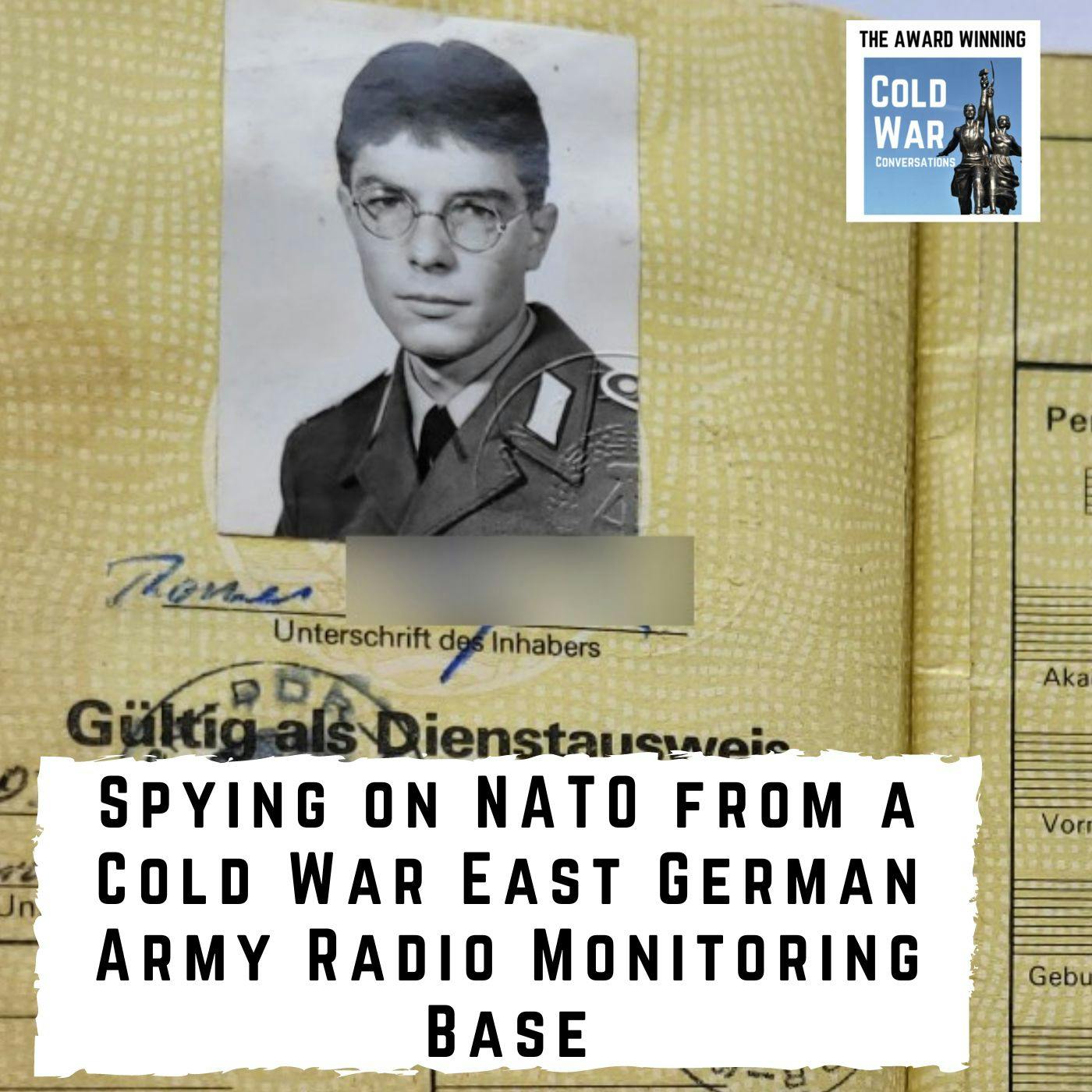
S20 Ep 312Spying on NATO from a Cold War East German Army radio monitoring base Part 1 (312)
Born in 1968 in East Germany Thomas had a "normal socialist" but happy childhood in a small town near Dresden. His family was viewed as exotic at that time as his mother had Hungarian citizenship which allowed her to travel to West Berlin. He was conscripted into the East German Army and signed up for 3 years as an Unteroffizier (NCO) instead of one and a half years of compulsory service. After training he is posted to a radio reconnaissance battalion based on the top of a mountain in the middle of nowhere near the inner German border. The unit was tasked with monitoring NATO surface-to-air missile batteries such as Patriots, and Nike Hercules, tracking NATO air traffic in Western Europe, and listening to air-to-ground transmissions. Thomas describes the isolated life on the mountain and harsh winters with lots of snow. The base was protected with a high-voltage double fence and sentries. With good visibility, Thomas could see the enemy on a similar mountaintop monitoring station on the other side of the border. Extra episode information here https://coldwarconversations.com/episode312/ 0:00 Introduction and background of Thomas 7:21 Thomas' schooling and impact of politics on education 16:23 Thomas's decision to join the army and experiences in Hungary 24:21 Living close to West Berlin and parents' experiences in West Germany 32:35 Experiences at the border and considering escape from East Germany 38:16 Thomas' drafting into the East German army 44:47 The drafting process and training in East Germany 50:42 Life at the outpost and working with the Czech Army 1:01:41 Social life, restrictions, and interactions with locals 1:09:15 The struggle to access Western media and relationship with officers 1:13:15 Acknowledgement of financial supporters 1:13:33 Closing remarks and teaser for next week's episode Table of contents powered by PodcastAI✨ The fight to preserve Cold War history continues and via a simple monthly donation, you will give me the ammunition to continue to preserve Cold War history. You’ll become part of our community, get ad-free episodes, and get a sought-after CWC coaster as a thank you and you’ll bask in the warm glow of knowing you are helping to preserve Cold War history. Just go to https://coldwarconversations.com/donate/ If a monthly contribution is not your cup of tea, We also welcome one-off donations via the same link. Find the ideal gift for the Cold War enthusiast in your life! Just go to https://coldwarconversations.com/store/ Follow us on Twitter https://twitter.com/ColdWarPod Facebook https://www.facebook.com/groups/coldwarpod/ Instagram https://www.instagram.com/coldwarconversations/ Youtube https://youtube.com/@ColdWarConversations Love history? Check out Into History at this link https://intohistory.com/coldwarpod Learn more about your ad choices. Visit podcastchoices.com/adchoices

S20 Ep 311Cold War US Army tank gunner serves with a Bundeswehr Panzer unit (311)
Mark joined the US Army on January 6th, 1981, and went to Ft Knox KY for Basic and Armor training. He graduated in April 1981 and was selected as Instructor Tank commander and trained the next cycle of recruits till August 1981. Mark was posted to West Germany in September 1981 and was assigned to 1st 37th Armor 1st Armored Div based in Katterbach. When he arrived they were just turning in their M60A2s for the M60A3s. Mark was made a gunner on C-22 as an E-2 private which is rare. He was also picked to serve with a 1st 304th Bundeswehr PZ unit in Leopard 1A4s in 1982 and describes some fascinating details of the differences between the Bundeswehr and the US Army. In 1982 his friend Dean McCoy was killed in a military accident and Mark experienced PTSD for the last 30 years as a result. We dedicate this episode to the memory of Sammy Dean McCoy who died on March 18th 1982 aged 21. 0:00 Introduction and Background of Mark 3:11 Mark's experiences in West Germany 9:59 Life expectations and preparations in case of a Soviet Invasion 14:44 Comparison Between Leopard and M60 A3 Tanks, and German and American Tank Training 20:18 Interactions with other national armies and demonstrations of West German firepower 25:36 Escape, Evasion, and Gunnery training 30:42 Naming of tanks and preparation for chemical Warfare 36:24 Differences between Army Life in West Germany and Fort Knox 39:15 Memorable and tragic incidents during service in West Germany 47:34 Discussion on the Book "Red Army" by Ralph Peters and Mark's PTSD 54:12 Podcast Closing Remarks Table of contents powered by PodcastAI✨ The fight to preserve Cold War history continues and via a simple monthly donation, you will give me the ammunition to continue to preserve Cold War history. You’ll become part of our community, get ad-free episodes, and get a sought-after CWC coaster as a thank you and you’ll bask in the warm glow of knowing you are helping to preserve Cold War history. Just go to https://coldwarconversations.com/donate/ If a monthly contribution is not your cup of tea, We also welcome one-off donations via the same link. Find the ideal gift for the Cold War enthusiast in your life! Just go to https://coldwarconversations.com/store/ Follow us on Twitter https://twitter.com/ColdWarPod Facebook https://www.facebook.com/groups/coldwarpod/ Instagram https://www.instagram.com/coldwarconversations/ Youtube https://youtube.com/@ColdWarConversations Love history? Check out Into History at this link https://intohistory.com/coldwarpod Learn more about your ad choices. Visit podcastchoices.com/adchoices
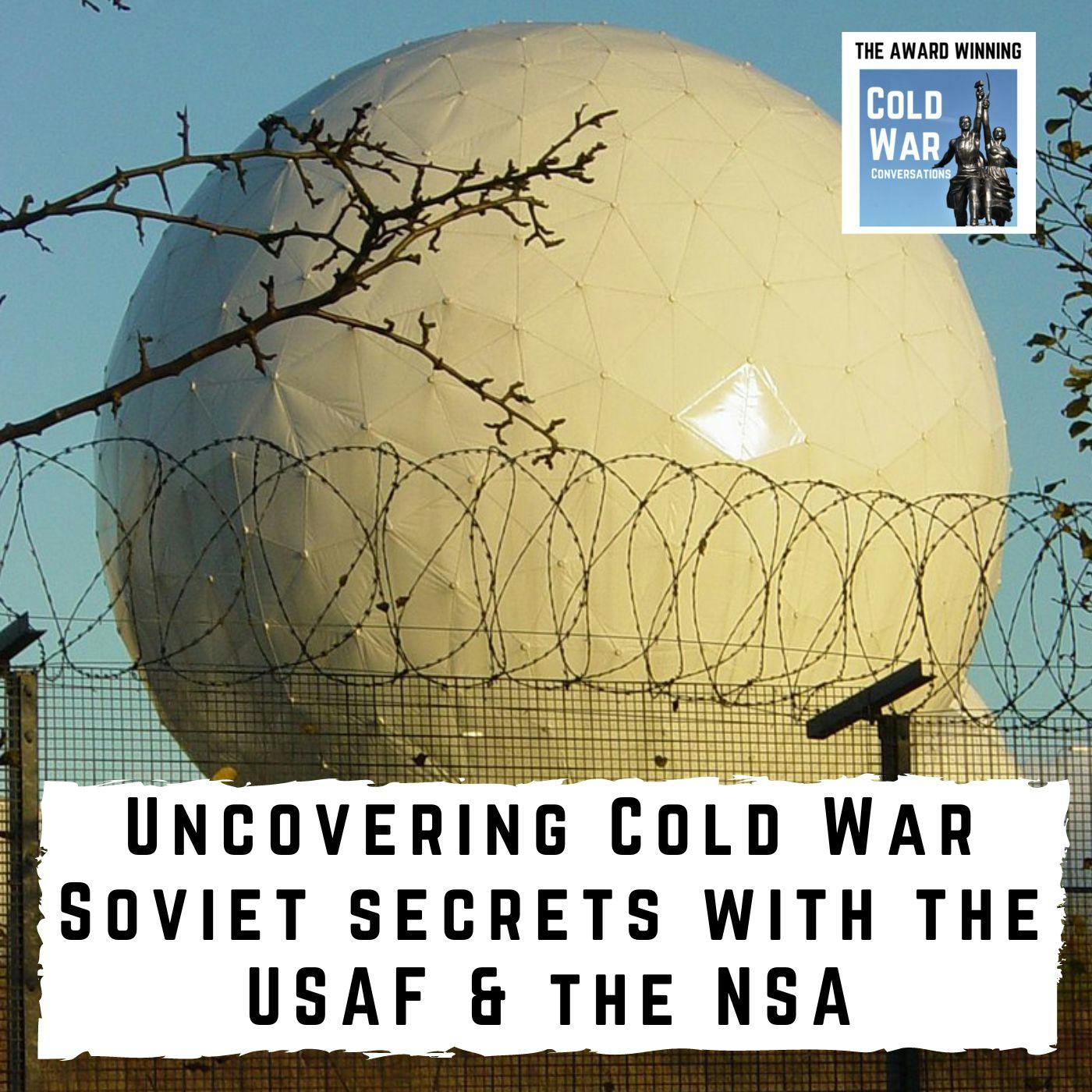
S19 Ep 310Uncovering Cold War Soviet secrets with the USAF and NSA (310)
Tim served in the USAF and the NSA from 1975 to 1988 during some of the most tense periods of the Cold War. This included stints at the US Air Force Electronic Warfare Center at Kelly AFB, Texas, and RAF Chicksands, in the UK working on SIGINT collection of USSR/Warsaw Pact/Other targets. He also served as part of the Cryptologic Support Group, Strategic Air Command HQ, Offutt AFB, Nebraska providing SIGINT briefings to SAC leadership on worldwide events In 1983 he transferred to the NSA and later GCHQ, Cheltenham, Glos 1984-1988. We hear about how the first indications that something was amiss the morning Chernobyl reactor exploded in 1986, the day the cleaners answered the secure phone at SAC HQ, and how at GCHQ the US and British intelligence share information as part of the UKUSA Agreement. 0:00 Introduction and Tim's background in the US Air Force 5:12 Understanding electronic warfare and data gathering at Kelly Air Force Base 16:58 Posting at RAF Chicksands in Bedford, UK, and monitoring for changes in regular patterns 25:52 The Soviet invasion of Afghanistan and the Iranian hostage crisis 36:19 Able Archer alerts and other instances of signals intelligence at Strategic Air Command, Nebraska 44:16 Incident of the KAL007 Korean airliner and US Navy exercise incidents 57:08 Misinterpretation during a briefing on a recon flight of TU-95 bear bombers and gathering intel on the Soviet Union 1:01:18 Constant pressure to provide intel on Soviet leadership and missile alerts during Soviet drills 1:05:34 Transition from Air Force to NSA and role at the NSA 1:14:08 Tracking Chinese air defense and transition to GCHQ 1:22:08 U.S. stance during the Falkland conflict and witnessing the Chernobyl reactor explosion 1:30:59 Anecdote about NSA bureaucracy and language proficiency test 1:34:21 Closing and thanks to supporters Table of contents powered by PodcastAI✨ Extra episode info here https://coldwarconversations.com/episode310/ The fight to preserve Cold War history continues and via a simple monthly donation, you will give me the ammunition to continue to preserve Cold War history. You’ll become part of our community, get ad-free episodes, and get a sought-after CWC coaster as a thank you and you’ll bask in the warm glow of knowing you are helping to preserve Cold War history. Just go to https://coldwarconversations.com/donate/ If a monthly contribution is not your cup of tea, We also welcome one-off donations via the same link. Find the ideal gift for the Cold War enthusiast in your life! Just go to https://coldwarconversations.com/store/ Thanks to listener Phil Curme for introducing me to Tim. You can read his blog here walkingthebattlefields.com Follow us on Twitter https://twitter.com/ColdWarPod Facebook https://www.facebook.com/groups/coldwarpod/ Instagram https://www.instagram.com/coldwarconversations/ Youtube https://youtube.com/@ColdWarConversations Love history? Check out Into History at this link https://intohistory.com/coldwarpod Learn more about your ad choices. Visit podcastchoices.com/adchoices

S19 Ep 309REME Keeping the British Army on the road during the Cold War (309)
Aged 16 Chris joined the British Army apprentice school in Arborfield, at Princess Marina College. He was trained as a vehicle mechanic in the Royal Electrical Mechanical Engineers otherwise known as REME. We talk about life expectancy in war scenarios, experiences with crash-out exercises, and life as a British soldier in West Germany Chris also served Post-Wall Berlin with the Military Police and describes an interesting “secret” job he was involved in. The episode was recorded at one of the Hack Green Nuclear Bunker Living History Weekends where Chris is one of the re-enactors. His advice has proved valuable to the other re-enactors as he is someone who was there… It’s a great down-to-earth account of a sometimes forgotten part of the British Army, without whose support they wouldn’t have been able to operate. 0:00 Introduction and Chris's early life and decision to join the British army 3:05 Life expectancy in war scenarios and crash out exercises 4:40 Casualties on exercises and in training 9:25 Encounters with Soviet military liaison units and inspections by the Warsaw Pact 13:59 Living with the constant threat of conflict and its mental toll 15:53 De-escalation of tensions and the opening of the Berlin Wall 19:45 Life in Berlin post-Wall 20:31 Best aspects of serving in the British Army of the Rhine (BAOR) 23:57 Differences between the RAF and the Army 26:03 Closing remarks Table of contents powered by PodcastAI✨ Extra episode info here https://coldwarconversations.com/episode309/ The fight to preserve Cold War history continues and via a simple monthly donation, you will give me the ammunition to continue to preserve Cold War history. You’ll become part of our community, get ad-free episodes, and get a sought-after CWC coaster as a thank you and you’ll bask in the warm glow of knowing you are helping to preserve Cold War history. Just go to https://coldwarconversations.com/donate/ If a monthly contribution is not your cup of tea, We also welcome one-off donations via the same link. Find the ideal gift for the Cold War enthusiast in your life! Just go to https://coldwarconversations.com/store/ Follow us on Twitter https://twitter.com/ColdWarPod Facebook https://www.facebook.com/groups/coldwarpod/ Instagram https://www.instagram.com/coldwarconversations/ Youtube https://youtube.com/@ColdWarConversations Love history? Check out Into History at this link https://intohistory.com/coldwarpod Learn more about your ad choices. Visit podcastchoices.com/adchoices
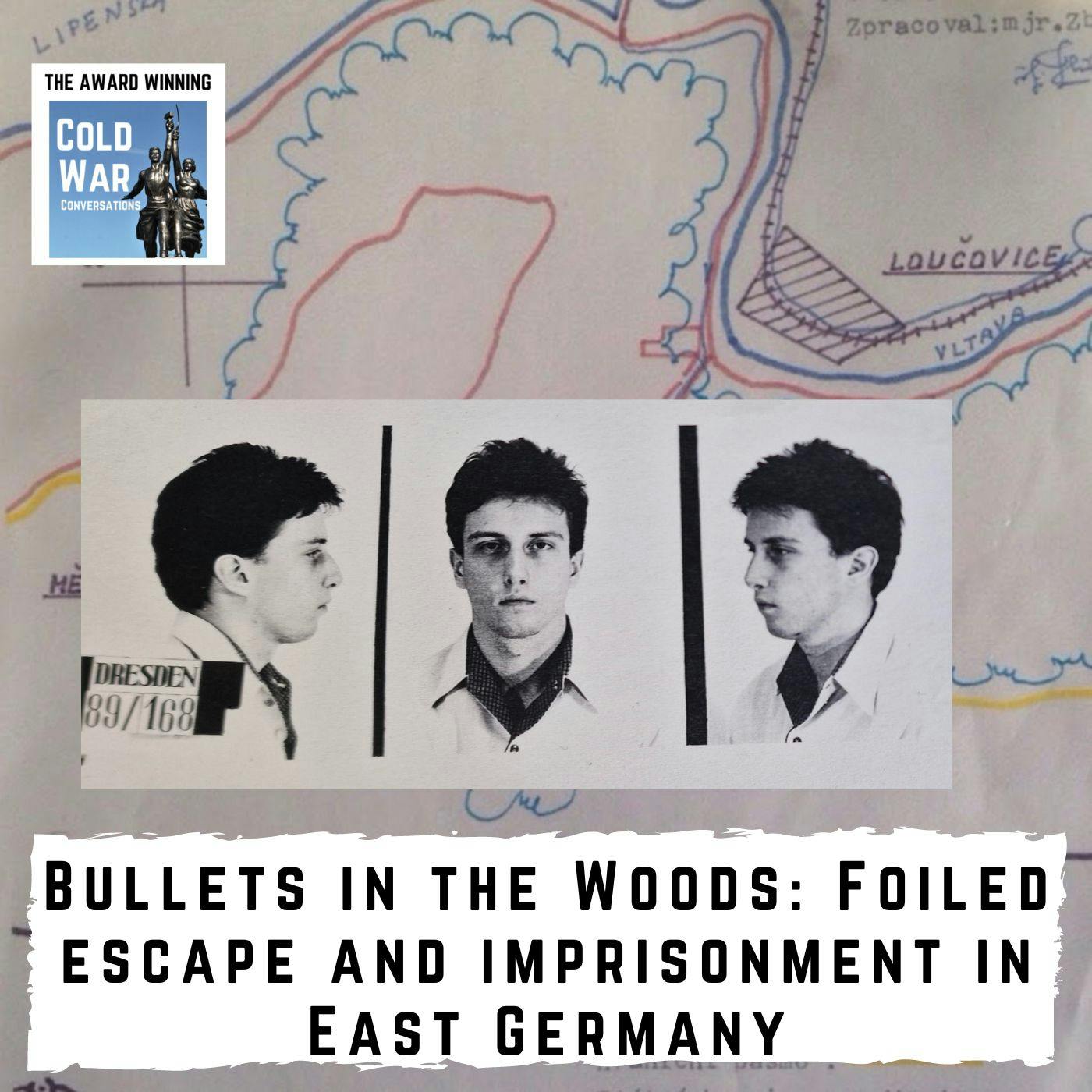
S19 Ep 308Gunfire in the Woods: A foiled escape and imprisonment in Cold War East Germany (308)
This is part two of Henrik’s story. You can hear the first part in episode 307. https://coldwarconversations.com/episode307 It’s the late 1980s and Henrik and his friends plan to escape from East Germany via Czechoslovakia. Henrik provides a very vivid account of their discovery by Czechoslovak border guards in a forest near the Austrian border. He describes the moment the guards open fire to get them to stop. Henrik is separated from his friends and held in various Czechoslovak prisons, before being flown back to East Germany. There he is interrogated for a number of months before being placed on trial. After his conviction for Republikflucht or "desertion from the republic" he is held on in a rough criminal prison in Dresden before being moved to a work camp. The prison and work camp has two types of prisoners, politicals and criminals. There he is exposed to the hardcore criminals of the GDR, violent criminals, murderers and neo-Nazis. 0:00 Introduction and recap of the previous episode 1:31 Interview with Henrik: Early plans and journey to Czechoslovakia 7:40 Arrest on the border and early imprisonment experiences 17:21 Transfer to Prague and encounter with the East German Stasi 28:23 Arrival at the Secret Service prison in Dresden and coping in prison 46:59 Interrogations and dealing with the Stasi 1:00:18 Family visits, communication in prison, and considering a change of mind 1:13:08 Reflections on the Stasi's approach and trial 54:36 Life in remand prison and public humiliation during transport to Rakowitz work camp 1:00:06 Living conditions, daily life, and experiences in Rakowitz work camp 1:10:54 Announcement of amnesty and release from prison 1:14:00 Post-release observations on the social climate in East Germany 1:23:18 Closing remarks and outro Extra episode information https://coldwarconversations.com/episode308 Special thanks to Jonny Whitlam for introducing Henrik to CWC. You can book his excellent Berlin tours here https://www.whitlams-berlin-tours.com/ The fight to preserve Cold War history continues and via a simple monthly donation, you will give me the ammunition to continue to preserve Cold War history. You’ll become part of our community, get ad-free episodes, and get a sought-after CWC coaster as a thank you and you’ll bask in the warm glow of knowing you are helping to preserve Cold War history. Just go to https://coldwarconversations.com/donate/ If a monthly contribution is not your cup of tea, We also welcome one-off donations via the same link. Find the ideal gift for the Cold War enthusiast in your life! Just go to https://coldwarconversations.com/store/ Follow us on Twitter https://twitter.com/ColdWarPod Facebook https://www.facebook.com/groups/coldwarpod/ Instagram https://www.instagram.com/coldwarconversations/ Youtube https://youtube.com/@ColdWarConversations Love history? Check out Into History at this link https://intohistory.com/coldwarpod Learn more about your ad choices. Visit podcastchoices.com/adchoices

S19 Ep 307Growing up in Cold War East Germany's Valley of the Clueless (307)
Henrik was born in the late 1960s near Dresden in East Germany. The area was sarcastically known as the Tal der Ahnungslosen or Valley of the Clueless, as the area generally was not able to receive TV from West Germany from the mid-to-late 1950s. He describes his childhood growing up in a Uranium mining area. His mother was a teacher and his father was required to be a member of the Communist Party as his role at the university involved in map making which was classified as secret work. It’s not until he is 8 or 9 that Henrik realises there is another Germany and as he gets older he gets into Western music as he can still pick up West German radio. In 1983 his favourite grandmother moved to the West and started to bring him Western clothing and vinyl records. At 15 or 16 he seriously starts to think about how he can get to the West. Compulsory service in the National Peoples Army beckons increasing his urgency in finding a way to leave. In 1988 Henrik receives an unexpected postcard from Spain from a friend who had been sentenced for 2 years for trying to escape and this begins to crystallise Henrik’s plans. 0:00 Introduction and background of Henrik 10:47 The role of Western radio and music in shaping Henrik's perception of the West 19:21 Importance of Western contact for East German citizens 29:45 Music censorship in East Germany 35:19 Henrik's first thoughts of leaving East Germany 47:34 Henrik's gap year and work in a data processing factory 52:08 News about friends sentenced for trying to escape 1:02:24 The impact of his escape on his family 1:06:24 Comparison of Stasi and Gestapo tactics 1:07:45 Closing remarks, mention of episode extras and soundtrack If Henrik's life was made into a movie he says this would be the soundtrack… https://open.spotify.com/playlist/3eJFR6QJebyv2S16Dqyhoc?si=072a284d83dc4410 Extra episode information https://coldwarconversations.com/episode307 Special thanks to Jonny Whitlam for introducing Henrik to CWC. You can book his excellent Berlin tours here https://www.whitlams-berlin-tours.com/ The fight to preserve Cold War history continues and via a simple monthly donation, you will give me the ammunition to continue to preserve Cold War history. You’ll become part of our community, get ad-free episodes, and get a sought-after CWC coaster as a thank you and you’ll bask in the warm glow of knowing you are helping to preserve Cold War history. Just go to https://coldwarconversations.com/donate/ If a monthly contribution is not your cup of tea, We also welcome one-off donations via the same link. Find the ideal gift for the Cold War enthusiast in your life! Just go to https://coldwarconversations.com/store/ Support the project! https://coldwarconversations.com/donate/ Follow us on Twitter https://twitter.com/ColdWarPod Facebook https://www.facebook.com/groups/coldwarpod/ Instagram https://www.instagram.com/coldwarconversations/ Youtube https://youtube.com/@ColdWarConversations Love history? Check out Into History at this link https://intohistory.com/coldwarpod Learn more about your ad choices. Visit podcastchoices.com/adchoices

S19 Ep 306Flying the Cold War A10 Tankbuster Part 2 (306)
You are listening to part 2 of my chat with Joe who joined the USAF in 1981 and was trained to fly the A10 Warthog a single-seat, twin-engine jet aircraft designed to provide close air support to ground forces by attacking tanks, armoured vehicles, and other ground targets. Part 1 is here https://coldwarconversations.com/episode305/ In 1985 Joe is sent to 92nd Tactical Fighter Squadron at RAF Bentwaters in the UK, just over 50 miles from where his father served in World War 2. His role was to fly the A10 over West Germany and attack Warsaw Pact ground forces should the Cold War turn hot. We hear about the perils of flying the A10 at only 100 feet in mist and rain, whilst navigating with a map on your knee in the days before GPS was available. Joe also recounts visiting the Inner German border and driving to his wartime target sectors to see what they looked like from the ground. He describes how they trained for landing on West German autobahns as well as their tactics against enemy aircraft. Joe also flew the Royal Air Force’s VTOL fighter, the Harrier, and tells of the challenge of managing the controls and his respect for the Royal Air Force. 0:00 Introduction and Joe Andrew's deployment to UK 1:35 Visiting the inner German border and discussion on potential kill zones 3:29 Practice landing on autobahns and durability of A-10's undercarriage 6:17 Low-level navigation and situational awareness in Europe 10:59 Practice bombing, missile firing, and liaisons with the army 15:00 Air to air defense, maneuvering training, and target acquisition 17:32 Managing information and plotting targets while flying 20:45 Tactics for air-to-air combat and likely survivability rate in conflict 27:44 Training for escape and evasion if shot down, and use of countermeasures 34:45 Joe Andrew's experiences with combat SAR alert and flying the Harrier 44:00 Extras and acknowledgements for the podcast's financial supporters Table of contents powered by PodcastAI✨ Visit the RAF Bentwaters Museum here https://www.bcwm.org.uk/ Extra episode information https://coldwarconversations.com/episode306 The fight to preserve Cold War history continues and via a simple monthly donation, you will give me the ammunition to continue to preserve Cold War history. You’ll become part of our community, get ad-free episodes, and get a sought-after CWC coaster as a thank you and you’ll bask in the warm glow of knowing you are helping to preserve Cold War history. Just go to https://coldwarconversations.com/donate/ If a monthly contribution is not your cup of tea, We also welcome one-off donations via the same link. Find the ideal gift for the Cold War enthusiast in your life! Just go to https://coldwarconversations.com/store/ Support the project! https://coldwarconversations.com/donate/ Follow us on Twitter https://twitter.com/ColdWarPod Facebook https://www.facebook.com/groups/coldwarpod/ Instagram https://www.instagram.com/coldwarconversations/ Youtube https://youtube.com/@ColdWarConversations Love history? Join Intohistory on this link https://intohistory.com/coldwarpod Learn more about your ad choices. Visit podcastchoices.com/adchoices

S19 Ep 305Flying the Cold War A10 Tankbuster Part 1 (305)
Joe’s father served in World War 2 in the USAF. His service inspired Joe to try and join the USAF or the Naval Air Force despite having no flying experience. It’s the aftermath of the Vietnam War so forces are being reduced, however with the arrival of a new President, Ronald Reagan, defence spending grows and provides Joe with an opportunity to start pilot training with the USAF. He eventually ends up flying the A10. The A-10 was first in service in 1976 and was designed to provide close air support to ground troops by attacking armoured vehicles, tanks, and other enemy ground forces. Joe describes what makes the A10 special as well as his training and initial deployment in the A10 in Alaska. You get a real pilot’s eye view of flying the plane including navigation techniques and the challenges of flying low level. 0:00 Introduction and background of Joe Andrew 6:41 Joe's completion of officer training school and becoming a second lieutenant 9:47 The decision of what to fly at the end of training 15:01 Description of the A 10 and its capabilities 28:19 First flight experience in the A-10 32:17 Joe's first operational station and flying experience in Alaska 37:56 Journey to Bentwaters and first impressions of the UK 41:40 Meeting and marrying future wife in the UK 44:13 Undergoing advisory training course for UK weather conditions 48:05 Wrap up and preview of next week's episode Table of contents powered by PodcastAI✨ Part two is here https://coldwarconversations.com/episode306/ where Joe is sent to 92nd Fighter Squadron at RAF Bentwaters in the UK, just over 50 miles from where his father served in World War 2. Visit the RAF Bentwaters Museum here https://www.bcwm.org.uk/ Extra episode information https://coldwarconversations.com/episode305 Rick Shreve's F111 episode https://coldwarconversations.com/episode193/ The fight to preserve Cold War history continues and via a simple monthly donation, you will give me the ammunition to continue to preserve Cold War history. You’ll become part of our community, get ad-free episodes, and get a sought-after CWC coaster as a thank you and you’ll bask in the warm glow of knowing you are helping to preserve Cold War history. Just go to https://coldwarconversations.com/donate/ If a monthly contribution is not your cup of tea, We also welcome one-off donations via the same link. Find the ideal gift for the Cold War enthusiast in your life! Just go to https://coldwarconversations.com/store/ Support the project! https://coldwarconversations.com/donate/ Follow us on Twitter https://twitter.com/ColdWarPod Facebook https://www.facebook.com/groups/coldwarpod/ Instagram https://www.instagram.com/coldwarconversations/ Youtube https://youtube.com/@ColdWarConversations Love history? Join Intohistory on this link Cold War Conversations – Into History Learn more about your ad choices. Visit podcastchoices.com/adchoices
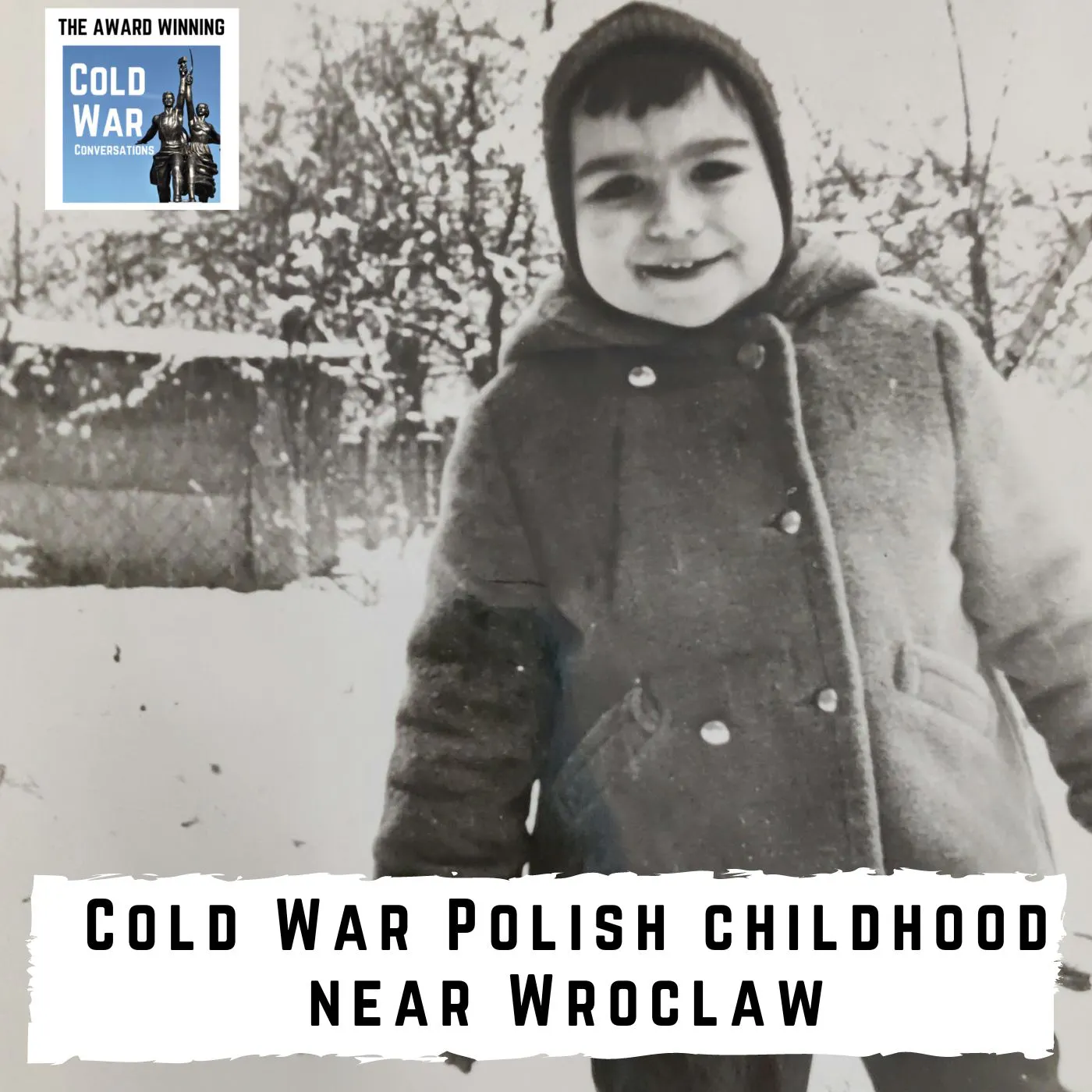
S19 Ep 304A Cold War Polish childhood near Wroclaw (304)
Tom lived in western Poland in an area that had been part of Germany until the end of World War 2. He describes how his grandmother settled in this area and the strangeness of taking over formerly German houses and apartments. Tom’s grandfather on his mother’s side was a Communist activist who worked for the Polish security services which created some tension as Tom’s father dodged the draft into the Polish Army. Tom describes his childhood in some detail, highlighting the contrasts of life in Cold War Poland versus some of the Warsaw Pact countries such as how the Boy Scouts and the Catholic Church managed to co-exist with the Communist government. He is 11 years old when the free trade union Solidarity is made illegal and martial law is declared by the Polish Communist authorities. Tom describes how life changes under martial law and the suppression of Solidarity demonstrations. We end with the poignant story of his Grandmother’s experiences as a forced labourer in Germany during World War 2. 0:00 Introduction and background of Tom's family history in Cold War Poland 9:06 Tom's family members and their roles during the Cold War 20:38 Tom's parents' professions and their impact on his upbringing 26:15 Living conditions in the 70s in Poland and Tom's school life experiences 41:56 The role of the Scouts movement and the state in shaping youth ideology 48:59 Declaration of martial law and its immediate impact 1:02:19 Witnessing solidarity demonstrations and restrictions on travel 1:11:39 Visit to Dresden and grandmother's experience as a forced laborer 1:22:00 Communicating with the locals in Dresden and Grandma's vivid recount 1:24:15 Podcast extras and thanking financial supporters 1:24:43 Closing remarks and teaser for next week's episode Extra episode information https://coldwarconversations.com/episode304 The fight to preserve Cold War history continues and via a simple monthly donation, you will give me the ammunition to continue to preserve Cold War history. You’ll become part of our community, get ad-free episodes, and get a sought-after CWC coaster as a thank you and you’ll bask in the warm glow of knowing you are helping to preserve Cold War history. Just go to https://coldwarconversations.com/donate/ If a monthly contribution is not your cup of tea, We also welcome one-off donations via the same link. Find the ideal gift for the Cold War enthusiast in your life! Just go to https://coldwarconversations.com/store/ Support the project! https://coldwarconversations.com/donate/ Follow us on Twitter https://twitter.com/ColdWarPod Facebook https://www.facebook.com/groups/coldwarpod/ Instagram https://www.instagram.com/coldwarconversations/ Youtube https://youtube.com/@ColdWarConversations Love history? Join Intohistory on this link Cold War Conversations – Into History Learn more about your ad choices. Visit podcastchoices.com/adchoices
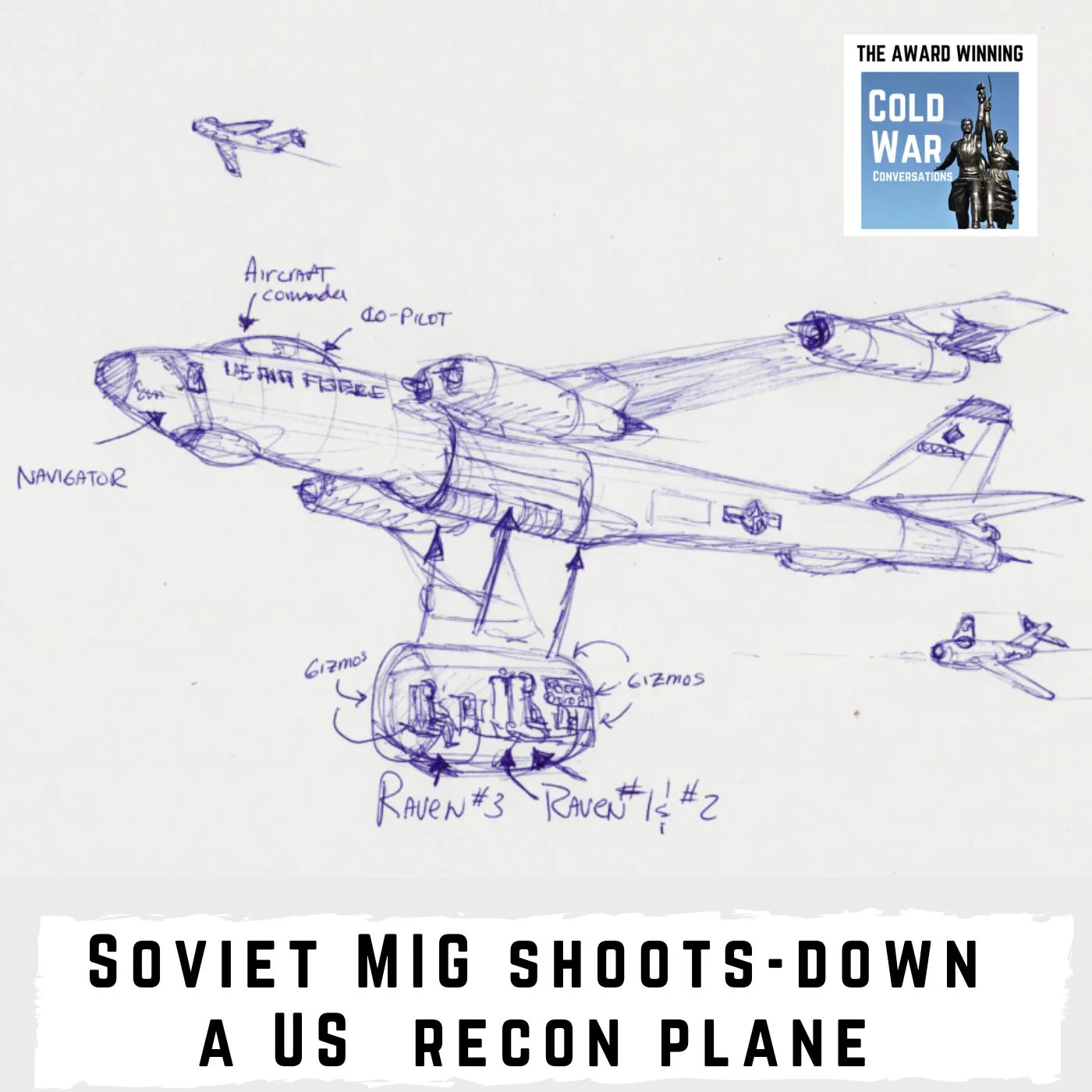
S19 Ep 303Soviet MIG shoots-down a US RB-47H reconnaissance plane (303)
On 1 July 1960, a United States RB-47H reconnaissance plane was shot down by the Soviet Air Defence Forces while performing signals intelligence in the Barents Sea, near the Kola Peninsula, off the Arctic coast of the Soviet Union. Four of the six crew members died. The shootdown occurred exactly two months after the far better-known U-2 shootdown involving Francis Gary Powers and added to the tensions created by that incident. Gary Power and the U2 incident https://coldwarconversations.com/episode23/ I speak with John Mollison, an aviation artist, writer, and award-winning filmmaker. Do check out his website at https://www.johnmollison.com/ John interviewed Captain "Bruce" Olmstead who was co-pilot of the RB47. As a result of his involvement in the incident, Olmstead received the POW medal in 1996 and Silver Star medals in 2004, as well as the Distinguished Flying Cross. His Silver Star Citation reads “For 208 days, Colonel Olmstead was interrogated and harassed at length on a continuous basis by numerous top Soviet Secret Police interrogating teams. Although greatly weakened physically by the lack of food, denial of sleep, and the mental rigors of constant interrogation, Colonel Olmstead steadfastly refused all attempts to give sensitive defense information or be exploited for propaganda purposes. By his gallantry and devotion to duty, Colonel Olmstead has reflected great credit upon himself and the United States Air Force.” Bruce died in October 2016. 0:00 Introduction and background of the RB47 incident 6:30 The shift from RB47 to U2 missions and importance of signals intelligence 12:00 Description of the RB47's engagement and defensive armament 17:00 Context of the times, the Gary Powers shoot down, and implications of SIOP 20:00 The tracking, interception, and attack on the RB 47 26:00 Communication between the Ravens and the cockpit, aftermath of the crash and capture 33:00 The American reaction to the loss of the RB 47 and negotiations with the Soviets 36:00 The duration of captivity, trial, and release of the crew 38:00 Meeting with President Kennedy and the zeitgeist of the times 40:00 Importance of the shoot down in Cold War history and other related incidents 43:00 Podcast extras, acknowledgements, and closing remarks Extra episode information https://coldwarconversations.com/episode303 The fight to preserve Cold War history continues and via a simple monthly donation, you will give me the ammunition to continue to preserve Cold War history. You’ll become part of our community, get ad-free episodes, and get a sought-after CWC coaster as a thank you and you’ll bask in the warm glow of knowing you are helping to preserve Cold War history. Just go to https://coldwarconversations.com/donate/ If a monthly contribution is not your cup of tea, We also welcome one-off donations via the same link. Find the ideal gift for the Cold War enthusiast in your life! Just go to https://coldwarconversations.com/store/ Support the project! https://coldwarconversations.com/donate/ Follow us on Twitter https://twitter.com/ColdWarPod Facebook https://www.facebook.com/groups/coldwarpod/ Instagram https://www.instagram.com/coldwarconversations/ Youtube https://youtube.com/@ColdWarConversations Love history? Join Intohistory https://intohistory.supercast.com/ Learn more about your ad choices. Visit podcastchoices.com/adchoices
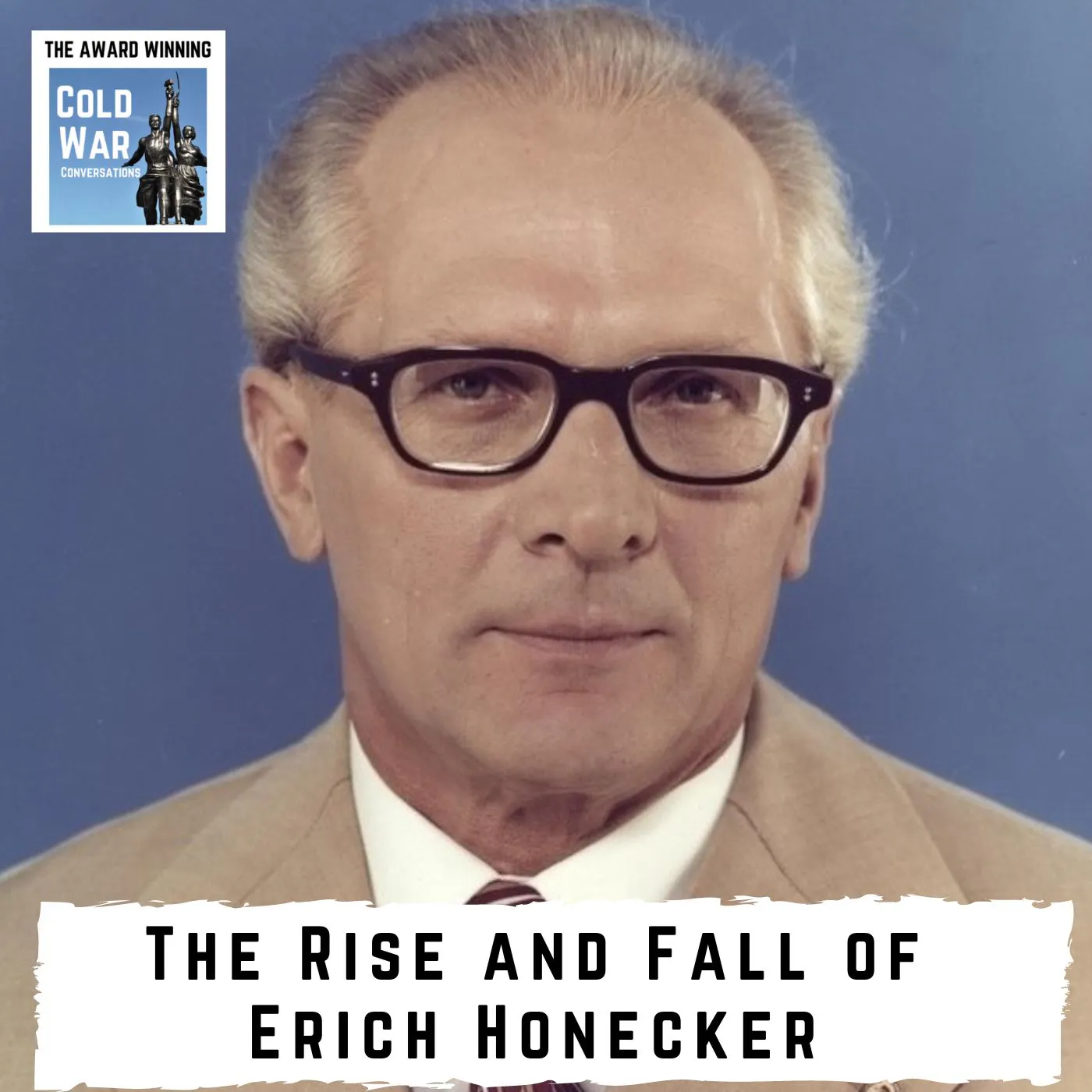
S19 Ep 302The rise and fall of East German leader Erich Honecker (302)
Honecker emerged as an ambitious political player and became the shadowy mastermind behind the construction of the Berlin Wall in 1961, a crucial moment in twentieth-century history. Author Nathan Morley brings to life the story of the longtime leader of the German Democratic Republic. Drawing from a wealth of untapped archival sources – and firsthand interviews with Honecker’s lawyers, journalists, and contemporary witnesses – Morley paints a vivid portrait of how an uneducated miner’s son from the Saarland rose to the highest ranks of the German Communist Party. Having survived a decade of brutality in Nazi prisons, and frequently on the verge of being relegated to obscurity, he managed to overthrow strongman Walter Ulbricht at the height of the Cold War and reigned supreme over the GDR between 1971-1989. However, by 1980, the Honecker honeymoon was on the wane as a decade of economic and social difficulties blighted the GDR. Then, as tumultuous changes swept through the Soviet bloc, everything in and around him collapsed in 1989. His health, his certainties, his ideology, his apparatus of power, and his beloved SED party. 0:00 Introduction and discussion on the life of Eric Honecker 5:42 Overview of Honecker's early life and family background 13:49 Honecker's return to Germany and the state of the country 19:37 Honecker's post-war life and rise in East German politics 28:01 Honecker's struggle with the exodus of East Germany's population 34:53 Operation Rose: The division of Berlin 44:10 Public perception of Honecker in East Germany 46:05 Intensifying economic struggles in East Germany and Poland 55:26 Honecker's refusal to follow Gorbachev's reforms and health decline 1:01:19 Honecker's extradition and trial in Berlin 1:03:17 Honecker's release and final years in Chile 1:05:29 Honecker's funeral and tributes received 1:06:51 Mention of the book "The Man Who built the Berlin Wall" by Nathan Moreley and podcast extras 1:07:22 Acknowledgement of podcast's financial supporters and closing remarks Buy the book here https://uk.bookshop.org/a/1549/9781399088824 The fight to preserve Cold War history continues and via a simple monthly donation, you will give me the ammunition to keep this podcast on the air. You’ll become part of our community and get a sought-after CWC coaster as a thank you and you’ll bask in the warm glow of knowing you are helping to preserve Cold War history. Just go to https://coldwarconversations.com/donate/ If a monthly contribution is not your cup of tea, We also welcome one-off donations via the same link. Book giveaway entry info here https://coldwarconversations.com/giveaway/ Episodes mentioned: History of East Germany https://coldwarconversations.com/episode284/ Doping of East German athletes https://coldwarconversations.com/episode264/ Polish strikes in 1980 https://coldwarconversations.com/episode152/ Extra episode information https://coldwarconversations.com/episode302/ Find the ideal gift for the Cold War enthusiast in your life! Just go to https://coldwarconversations.com/store/ Support the project! https://coldwarconversations.com/donate/ Follow us on Twitter https://twitter.com/ColdWarPod Facebook https://www.facebook.com/groups/coldwarpod/ Instagram https://www.instagram.com/coldwarconversations/ Youtube https://youtube.com/@ColdWarConversations Radio GDR If you are interested in East Germany we can highly recommend our friends over at Radio GDR. Learn more about your ad choices. Visit podcastchoices.com/adchoices

S19 Ep 301US Army tank platoon commander in 1980s Cold War Korea (301)
Tom Sullivan was a tank platoon commander in Korea in the early 1980s responsible for six tanks and their crew We hear why he joined the US Army, his training, and his first impressions of Korea in the Winter of 1982. He is assigned to Second Platoon, C Company, 1-72 Armor under the toughest Company Commander in the Brigade who had very high standards, no humour, and was a rigid disciplinarian with an uncompromising approach. Tom shares details of his fellow soldiers, including Vietnam veterans, the living conditions He explains the challenges of operating armour where the winter weather is brutal, and the majority of the terrain is hills, mountains, rice paddies, and dirt roads We discuss the threat the North Koreans posed and the scarce hope that reinforcements would arrive in sufficient time should the North Koreans decide to attack. 0:00 Introduction and background of Tom Sullivan 4:56 Training to become an armored officer and the role of international instructors 14:12 Arrival in Korea, transfer to Camp Casey and introduction to the unit 20:35 Initial challenges and observations in Korea 27:57 Exercise with Korean army units: Team Spirit and deployment experience 32:00 Living conditions and navigating the difficult Korean terrain 39:00 Proximity to the DMZ and observing cross border fire and incursions 43:38 Using the M48 tank in Korea and facing the North Korean armored threat 51:08 Being within North Korean artillery range and potential infiltration threats 57:22 Acknowledgement of financial supporters and podcast extras Table of contents powered by PodcastAI✨ The fight to preserve Cold War history continues and via a simple monthly donation, you will give me the ammunition to continue to preserve Cold War history. You’ll become part of our community, get ad-free episodes, and get a sought-after CWC coaster as a thank you and you’ll bask in the warm glow of knowing you are helping to preserve Cold War history. Just go to https://coldwarconversations.com/donate/ If a monthly contribution is not your cup of tea, We also welcome one-off donations via the same link. Extra episode information https://coldwarconversations.com/episode301/ Find the ideal gift for the Cold War enthusiast in your life! Just go to https://coldwarconversations.com/store/ Support the project! https://coldwarconversations.com/donate/ Follow us on Twitter https://twitter.com/ColdWarPod Facebook https://www.facebook.com/groups/coldwarpod/ Instagram https://www.instagram.com/coldwarconversations/ Youtube https://youtube.com/@ColdWarConversations Learn more about your ad choices. Visit podcastchoices.com/adchoices

S18 Ep 300Assembling and delivering nuclear artillery rounds to the Cold War West German Army (300)
In February 1983 US soldier Manuel Alzager was sent to a mysterious posting to the British Zone in the north of West Germany a long way from the main US forces in southern Germany. After a lengthy journey, he is picked up by a West German private and eventually arrives at the 81st USAFAD (US Army Field Artillery Detachment), where his mission is to guard, assemble, and deliver low-yield nuclear artillery rounds to the 7th West German Army Artillery Regiment. He describes how the rounds were assembled as well as their orders in the event of unauthorised intruders. Being stationed in the British Zone of West Germany Manuel also tells us about the love/hate relationship with the Brits where they would fight, make up, drink, and fight again. 0:00 Introduction and overview of the episode 0:55 Manuel Altsaga's experience and assignment in West Germany 13:25 Mission and protocol related to nuclear artillery rounds 21:10 Public awareness and potential spy encounters 24:29 Guard duty and response plan for potential attacks 30:06 Social interactions and bonding with British soldiers 32:14 Manuel's departure from Germany and reflection on his service 33:38 Manuel's assignment at Fort Bragg and decision not to re-enlist 37:00 Transition to civilian life: College and California National Guard 39:17 Acknowledgement of financial supporters and promotion of Facebook discussion group Table of contents powered by PodcastAI✨ Manuel's other episodes are here: A 17-year-old in the Cold War US Army https://coldwarconversations.com/episode57/ Experiences of the Cold War Reforger 82 NATO Exercise https://coldwarconversations.com/episode100/ The fight to preserve Cold War history continues and via a simple monthly donation, you will give me the ammunition to continue to preserve Cold War history. You’ll become part of our community, get ad-free episodes, and get a sought-after CWC coaster as a thank you and you’ll bask in the warm glow of knowing you are helping to preserve Cold War history. Just go to https://coldwarconversations.com/donate/ If a monthly contribution is not your cup of tea, We also welcome one-off donations via the same link. Extra episode information https://coldwarconversations.com/episode300/ Find the ideal gift for the Cold War enthusiast in your life! Just go to https://coldwarconversations.com/store/ Support the project! https://coldwarconversations.com/donate/ Follow us on Twitter https://twitter.com/ColdWarPod Facebook https://www.facebook.com/groups/coldwarpod/ Instagram https://www.instagram.com/coldwarconversations/ Youtube https://youtube.com/@ColdWarConversations Learn more about your ad choices. Visit podcastchoices.com/adchoices
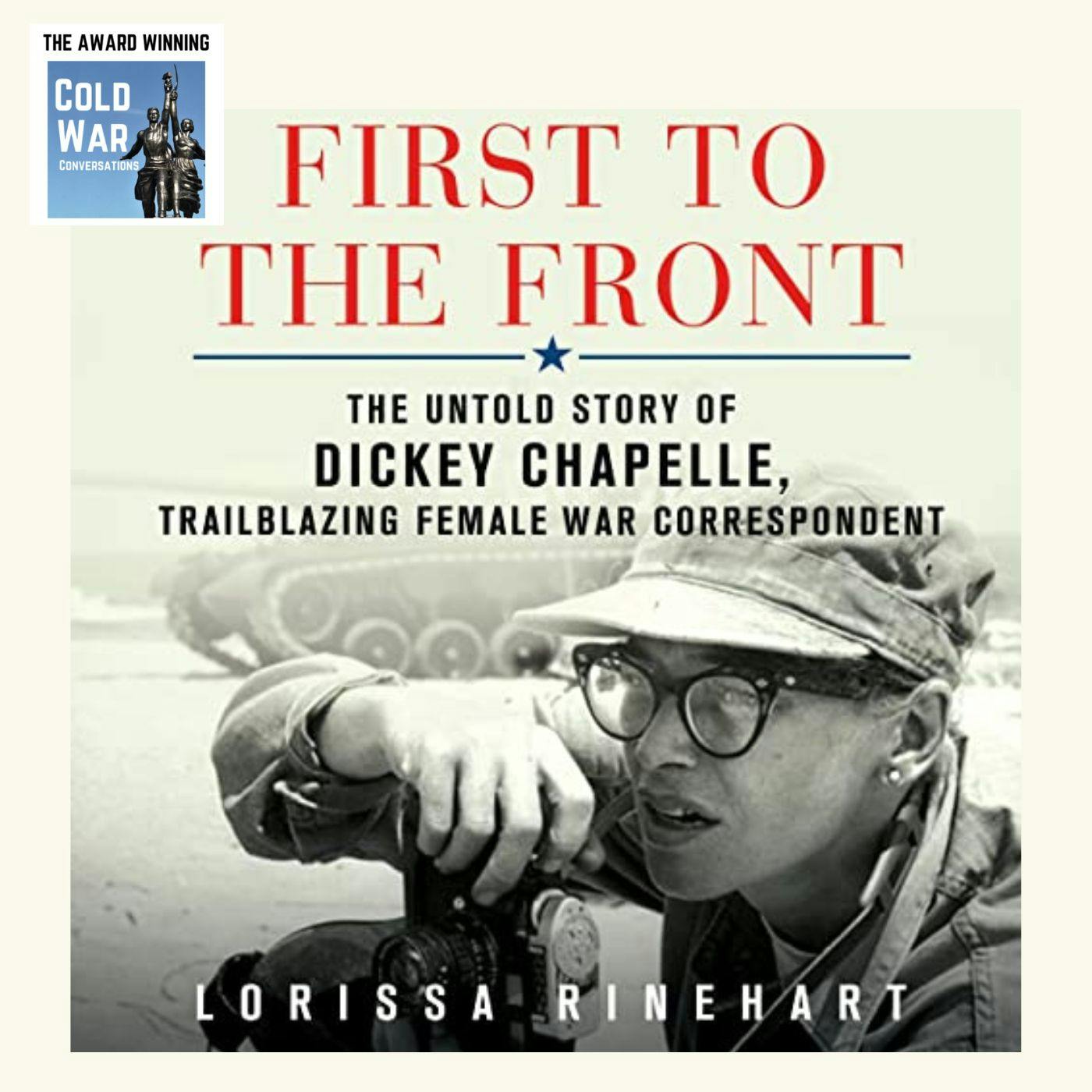
S18 Ep 299Dickey Chapelle - trailblazing female Cold War journalist (299)
Now have you ever heard of Dickey Chapelle? No, I hadn’t either, but I’m delighted to bring you the unknown story of this trailblazing female war correspondent. Dickey’s career started in World War 2 where she reported from some of the Pacific wars’ toughest battlefields of Iwo Jima and Okinawa. During the Cold War, she reported from Hungary during the 1956 Uprising and was held in the infamous Fő Prison and interrogated by the Hungarian security forces. Dickey went on to report from the struggle of the Algerian Liberation Front covering their campaign against French colonial rule as well as becoming the first Western female reporter to march with Castro’s Cuban Revolutionary Army. She was the first woman to be given permission to para drop with the 82nd and 101st Airborne Divisions' first correspondent to live with anti-communist guerrilla forces in the Mekong Delta. Later, she would become the first female reporter to go on patrol with the First and Third Battalions of the Seventh Marines Regiment which were among the initial US combat troops sent to Vietnam. 0:00 Introduction to the episode and the story of Dickie Chapelle 1:22 Interview with author Larissa Reinhardt on Dickie Chapelle's journalism career 12:46 Chapelle's experiences in the Hungarian revolution and subsequent arrest 19:57 Discussion on Chapelle's post-traumatic stress disorder and reporting style 21:13 Chapelle's determination to report on the Algerian war of independence 25:07 Difficulty of getting such stories published in the US 30:02 Chapelle's time in Cuba and her unique reporting strategies 38:54 Discussion on the Bay of Pigs incident and CIA's control of information 47:52 Early assessment of the Vietnam War by Chapelle 52:38 Chapelle's fame in the US and her vocal opposition to the treatment of South Vietnamese 56:11 Chapelle's death and its impact on the journalism world 57:54 Ian Sanders wraps up the conversation and promotes Larissa's book 58:20 Thanks to the financial supporters of the podcast Buy the book here and support the podcast https://uk.bookshop.org/a/1549/9781250276575 Book giveaway entry info here https://coldwarconversations.com/giveaway/ The fight to preserve Cold War history continues and via a simple monthly donation, you will give me the ammunition to continue to preserve Cold War history. You’ll become part of our community and get a sought-after CWC coaster as a thank you and you’ll bask in the warm glow of knowing you are helping to preserve Cold War history. Just go to https://coldwarconversations.com/donate/ If a monthly contribution is not your cup of tea, We also welcome one-off donations via the same link. Extra episode information https://coldwarconversations.com/episode299/ Find the ideal gift for the Cold War enthusiast in your life! Just go to https://coldwarconversations.com/store/ Support the project! https://coldwarconversations.com/donate/ Follow us on Twitter https://twitter.com/ColdWarPod Facebook https://www.facebook.com/groups/coldwarpod/ Instagram https://www.instagram.com/coldwarconversations/ Youtube https://youtube.com/@ColdWarConversations Learn more about your ad choices. Visit podcastchoices.com/adchoices
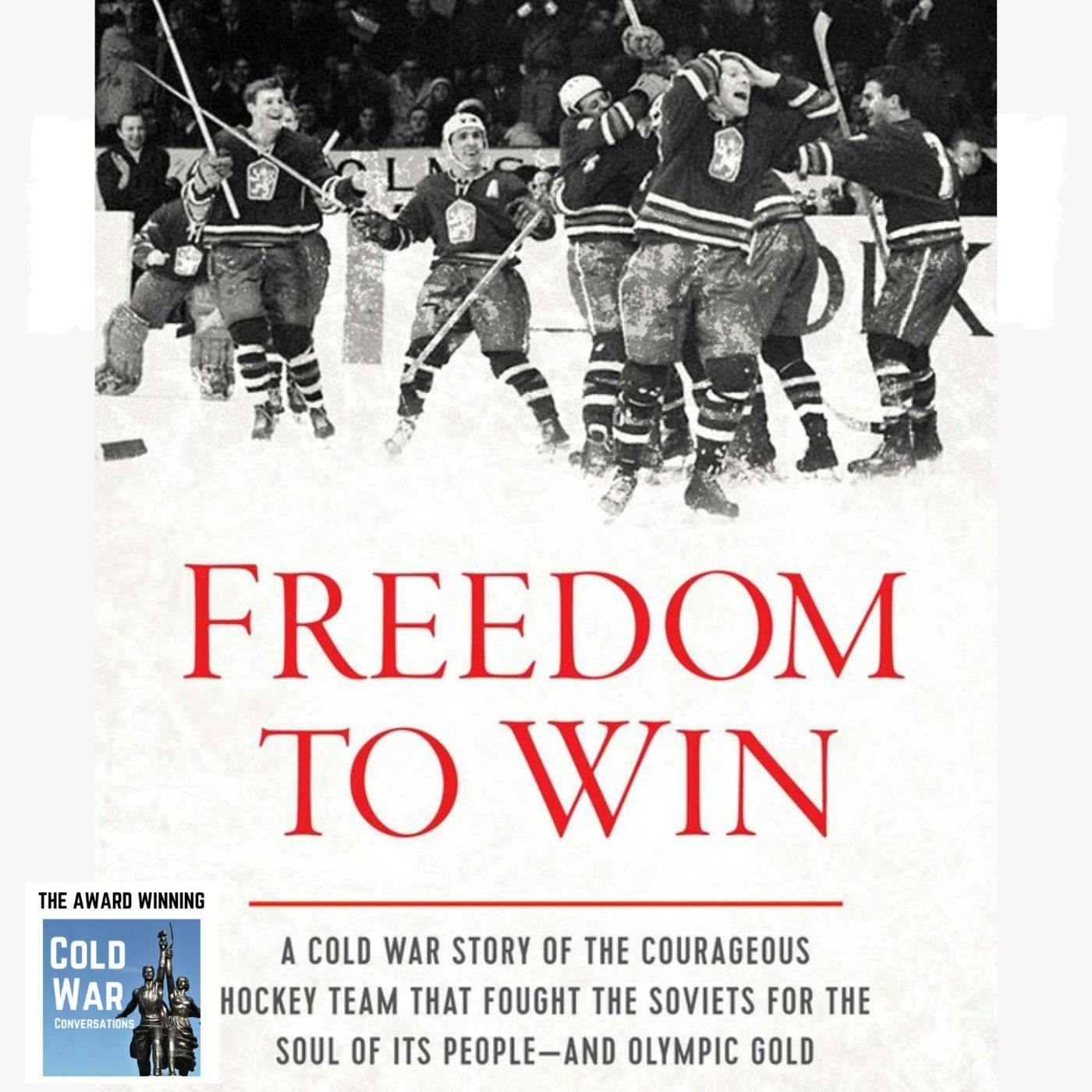
S18 Ep 298The Cold war ice hockey team that fought the Soviets for the soul of its nation (298)
I speak with author Ethan Scheiner whose book “Freedom to Win” describes the gripping story of a group of small-town young men who would lead their underdog hockey team from Czechoslovakia against the Soviet Union, the juggernaut in their sport. In 1968 Czechoslovakia experienced the Prague Spring, an attempt to moderate and soften communism. However, a sudden invasion by 500,000 Warsaw Pact soldiers halts the reforms. We hear the inspiring story of how the young players of the national hockey team battle the Soviets on the ice to keep their people’s quest for freedom alive and forge a way to fight back against the authoritarian forces that sought to crush them. 0:00 Introduction and background on the episode's guest 2:51 Background on the Holik family and their struggle under the Nazi occupation 9:37 The unique situation of army teams in Czechoslovakia and the Holik brothers' involvement 15:50 Yaroslav Holik: A superhero in Czechoslovakia 23:23 The heated 1967 World Championships match between Czechoslovakia and the Soviet Union 28:48 The impact of the Prague Spring on Czechoslovakia's performance in ice hockey 34:21 The Prague Spring and the World Ice Hockey Championships 40:37 The aftermath of Dubcek's negotiations with the Soviets 49:35 The 1969 World Ice Hockey Championships 1:08:08 The consequences for the hockey players Buy the book here and support the podcast https://uk.bookshop.org/a/1549/9781639363513 Book giveaway entry info here https://coldwarconversations.com/giveaway/ The fight to preserve Cold War history continues and via a simple monthly donation, you will give me the ammunition to continue to preserve Cold War history. You’ll become part of our community and get a sought-after CWC coaster as a thank you and you’ll bask in the warm glow of knowing you are helping to preserve Cold War history. Just go to https://coldwarconversations.com/donate/ If a monthly contribution is not your cup of tea, We also welcome one-off donations via the same link. Extra episode information https://coldwarconversations.com/episode298/ Prague Spring and Cold War Czechoslovakia episodes https://coldwarconversations.com/tag/czechoslovakia/ Find the ideal gift for the Cold War enthusiast in your life! Just go to https://coldwarconversations.com/store/ Support the project! https://coldwarconversations.com/donate/ Follow us on Twitter https://twitter.com/ColdWarPod Facebook https://www.facebook.com/groups/coldwarpod/ Instagram https://www.instagram.com/coldwarconversations/ Youtube https://youtube.com/@ColdWarConversations Learn more about your ad choices. Visit podcastchoices.com/adchoices
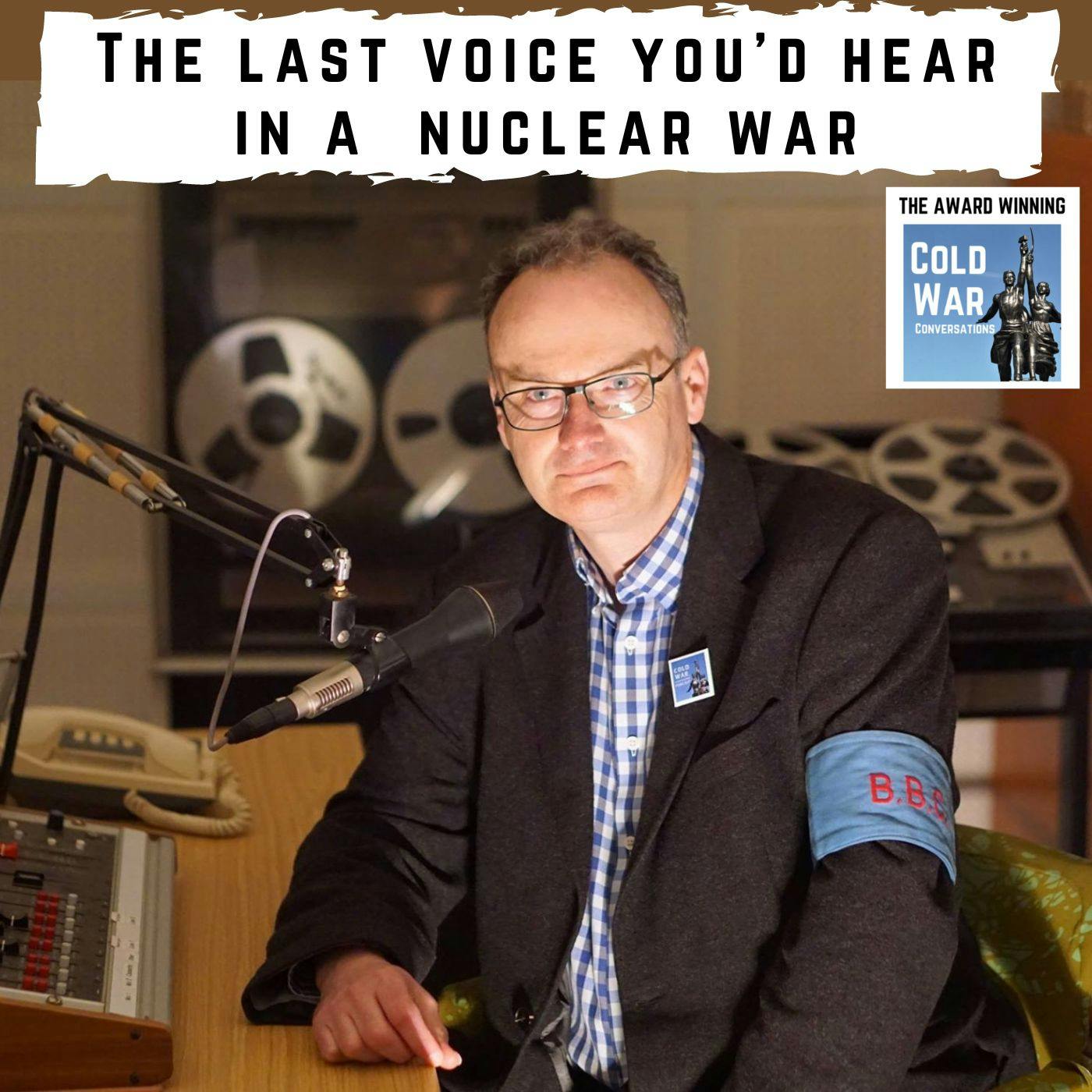
S18 Ep 297The last voice you'd hear in a nuclear war (297)
The BBC Wartime Broadcasting Service (WTBS) is a little-known piece of Cold War history that would have been for many the last human voice they heard after a nuclear attack on the UK. Iain started work for the BBC in 1988 and due to the pressure on training space, was trained in the nuclear bunker at BBC Wood Norton. After training he went to Broadcasting House in London where he first encountered some of the technical infrastructure the WTBS would use. Iain did a spell in the main control room and recalls the red phone which was the link from Whitehall to initiate the BBC War Book. Over time Iain has collected knowledge on all aspects of the WTBS and he shares details of where it would have been broadcast from, what would have been heard, and who, in the event of an attack, would have descended into the bunkers to broadcast it. Iain also delivers a talk on the subject. There are more details on this link. https://speakernet.co.uk/talk/4000/the-bbc-the-bomb-cold-war-broadcasting-from-the-bunkers Hack Green Nuclear bunker that has a preserved BBC studio (as seen in our episode cover) https://www.hackgreen.co.uk/ 0:00 Introduction to the episode and the BBC wartime broadcasting service 2:05 Introduction of the guest, Ian Benson 3:04 Ian's fascination with the WTS and his experiences at the BBC 8:27 The evolution of the WTS with the onset of the Cold War 13:12 The change in broadcasting plans with the advent of transistor radios 15:33 The BBC's emergency broadcasting facility and its myths 20:01 Changes in television and radio broadcasts during emergencies 25:26 Launch and activation of the Wartime Broadcasting Service (WTBS) 30:33 The dilemma of duty versus family for BBC staff during emergencies 35:59 Regular exercises and resistance from BBC staff towards emergency broadcasting 44:36 Conclusion and wrap-up of the episode Table of contents powered by PodcastAI✨ The fight to preserve Cold War history continues and via a simple monthly donation, you will give me the ammunition to continue to preserve Cold War history. You’ll become part of our community and get a sought-after CWC coaster as a thank you and you’ll bask in the warm glow of knowing you are helping to preserve Cold War history. Just go to https://coldwarconversations.com/donate/ If a monthly contribution is not your cup of tea, We also welcome one-off donations via the same link. Extra videos and photos here https://coldwarconversations.com/episode297/ Previous UK Civil Defence episodes How Cold War Britain Prepared for Nuclear War https://coldwarconversations.com/episode285/ Cold War leaflets and documents https://coldwarconversations.com/episode112/ Assigned to a government bunker https://coldwarconversations.com/episode107/ Visit to a Royal Observer Corps monitoring post and interview with the Chief Observer who served in the post https://coldwarconversations.com/episode30/ Alistair McCann has preserved a Royal Observer Corps monitoring post as a museum in Northern Ireland. https://coldwarconversations.com/episode11/ Find the ideal gift for the Cold War enthusiast in your life! Just go to https://coldwarconversations.com/store/ Support the project! https://coldwarconversations.com/donate/ Follow us on Twitter https://twitter.com/ColdWarPod Facebook https://www.facebook.com/groups/coldwarpod/ Instagram https://www.instagram.com/coldwarconversations/ Youtube https://youtube.com/@ColdWarConversations Learn more about your ad choices. Visit podcastchoices.com/adchoices

S18 Ep 296The ultimate guide to Cold War locations in Berlin (296)
Jonny Whitlam has been a Berlin tour guide since 2010, and since then he’s been showing travellers from across the world the fascinating history of Berlin. We met via social media after I noticed his great videos describing well-known and lesser know 20th-century historical locations in Berlin. We discussed doing an episode to help you see Cold War Berlin sites without needing a tour guide and this episode is the result. However, if you would like a personal tour check out Jonny’s tours on this link. Book your Berlin private tour experience now (whitlams-berlin-tours.com) Jonny is keen to share Berlin’s amazing history with everyone and he has put together The Ultimate Guide to Cold War Berlin which includes an amazing Google map of Cold War sites in Berlin. Despite the name, this list is not exhaustive and we’d welcome suggestions for anything you think we have missed! 0:00 Introduction and guest introduction: Johnny Whitlam 2:21 Interview with Johnny Whitlam: His experience as a tour guide and significant Cold War sites in Berlin 15:49 Must-see locations in Central Berlin according to Johnny Whitlam 27:30 Treptower Park: The Soviet Cemetery in Berlin 31:50 Ian Sanders shares a story about two brothers rescuing their sibling from East Berlin 42:35 Touring Potsdam and Berlin: 47:06 Waldsiedlung : GDR Leaders Housing Estate 57:04 Recommended Cold War Museums: Including Allied Museum and DDR Museum 1:02:02 Erich Mielke's office at the Stasi Museum Table of contents powered by PodcastAI✨ The fight to preserve Cold War history continues and via a simple monthly donation, you will give me the ammunition to continue to preserve Cold War history. You’ll become part of our community and get a sought-after CWC coaster as a thank you and you’ll bask in the warm glow of knowing you are helping to preserve Cold War history. Just go to https://coldwarconversations.com/donate/ If a monthly contribution is not your cup of tea, We also welcome one-off donations via the same link. Extra episode information https://coldwarconversations.com/episode296/ Find the ideal gift for the Cold War enthusiast in your life! Just go to https://coldwarconversations.com/store/ Support the project! https://coldwarconversations.com/donate/ Follow us on Twitter https://twitter.com/ColdWarPod Facebook https://www.facebook.com/groups/coldwarpod/ Instagram https://www.instagram.com/coldwarconversations/ Youtube https://youtube.com/@ColdWarConversations Learn more about your ad choices. Visit podcastchoices.com/adchoices
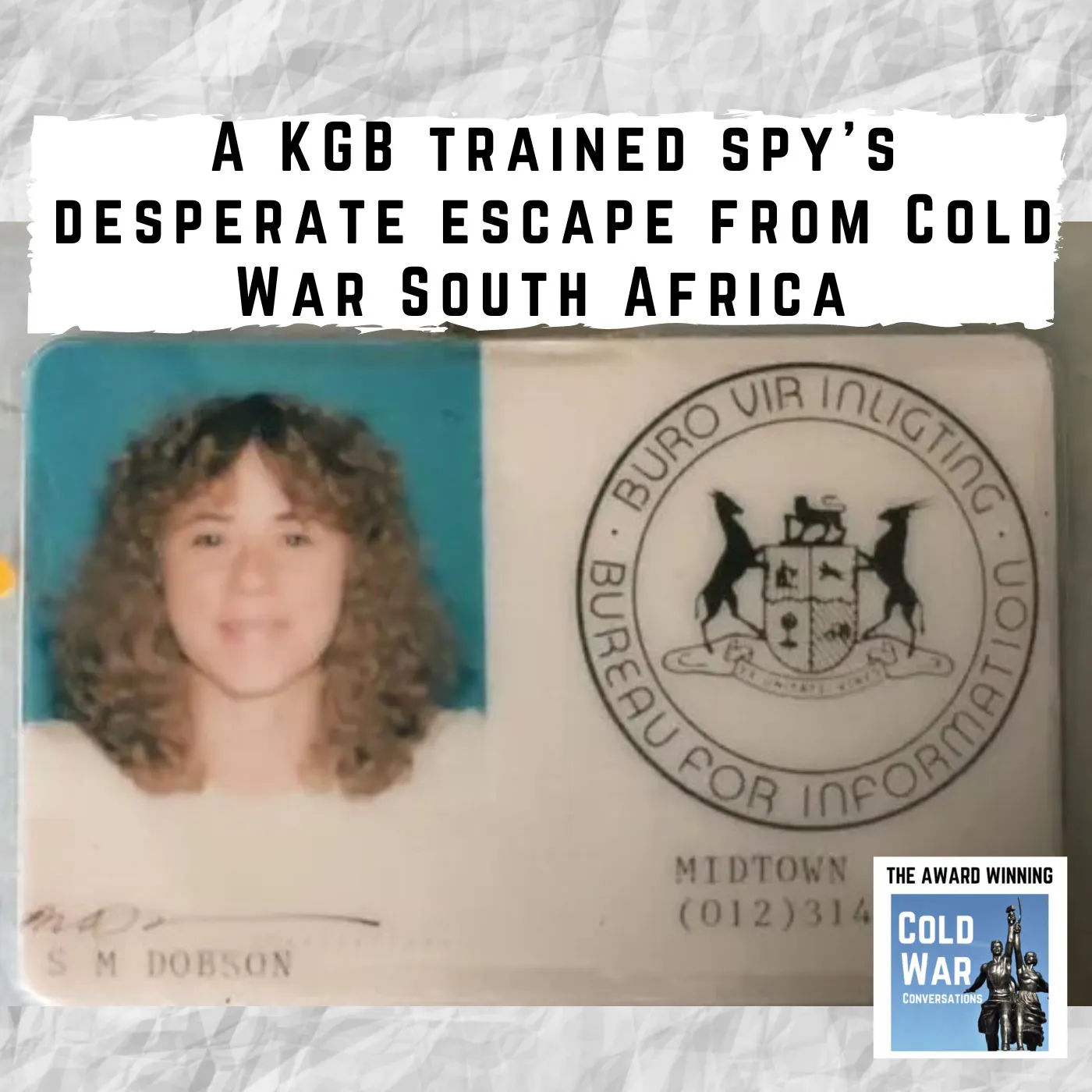
S18 Ep 295A KGB trained spy's desperate escape from Cold War South Africa (295)
South Africa in the 1980s is a brutal, racist Apartheid regime. Those who oppose it risk their lives. Apartheid was a system of institutionalised racial segregation that existed in South Africa from 1948 to the early 1990s Sue Dobson is moving easily through the echelons of the racist government in her work as a journalist, whilst concealing her espionage and military training in the Soviet Union, and her intelligence work for the banned African National Congress. She interviewed Apartheid ministers and had a honey trap affair with a police chief involved with the Namibian independence process. However, Sue's cover is blown leading to her desperate flight across Southern Africa with the Apartheid security police snapping at her heels. We hear in detail about her tense three day car journey to the Soviet Embassy in Botswana and how her KGB training saved her life… 0:00 Introduction and Sue Dobson's Espionage Journey 2:22 Sue's Role in the South African Bureau of Information and Namibia's Independence 8:21 Sue's Encounter with Key Information Source and Communication with ANC 13:55 Sue's Meeting with Apartheid Era Figures and Confrontation with Pik Botha 18:44 Sue's Moral Dilemma and Justification for Her Actions 20:37 Global Attention on South Africa and Tactics Used in Namibia 22:37 Sue's Job Offer and Realization of a Potential Exposure 24:15 Sue's Escape Plan and Journey through Namibia 32:58 Sue's Close Encounter with Surveillance and Journey to Botswana 40:12 Sue's Refuge in the Russian Compound and Escape to Europe 44:27 Sue's New Life in the UK and Fears of Parcel Bombs and Poisonings 47:22 Sue's Decision to Share Her Story Table of contents powered by PodcastAI✨ Cold War history is disappearing; however, a simple monthly donation will keep this podcast on the air. You’ll become part of our community and get a sought-after CWC coaster as a thank you and you’ll bask in the warm glow of knowing you are helping to preserve Cold War history. Just go to https://coldwarconversations.com/donate/ If a monthly contribution is not your cup of tea, We also welcome one-off donations via the same link. Listeners can find details of our book giveaway here https://coldwarconversations.com/giveaway/ Episode extras including videos and photos https://coldwarconversations.com/episode295/ Support the project! https://coldwarconversations.com/donate/ Follow us on Twitter https://twitter.com/ColdWarPod Facebook https://www.facebook.com/groups/coldwarpod/ Instagram https://www.instagram.com/coldwarconversations/ Youtube https://youtube.com/@ColdWarConversations Learn more about your ad choices. Visit podcastchoices.com/adchoices
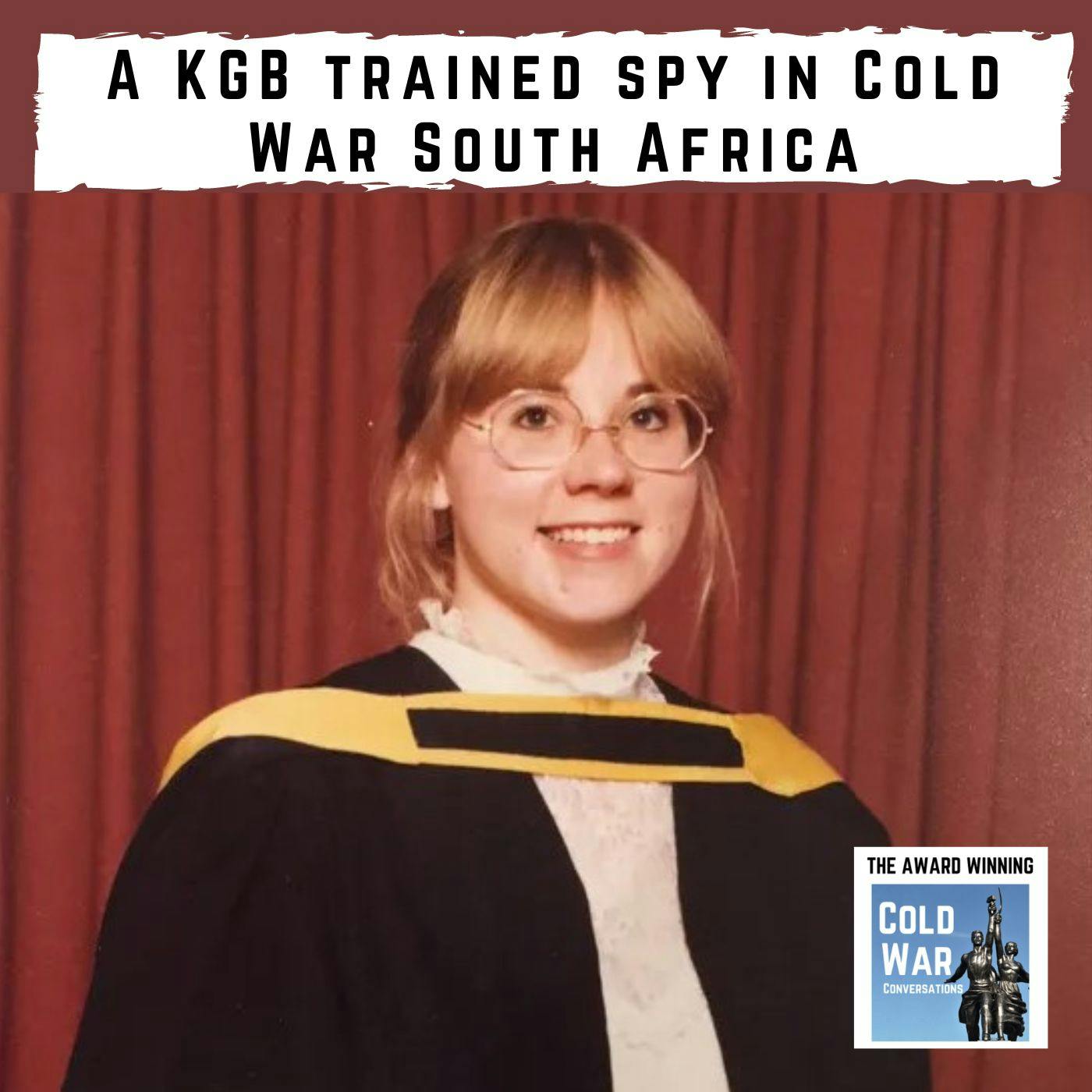
S18 Ep 294A KGB trained spy in Cold War South Africa (294)
South Africa in the 1980s is a brutal, racist regime. Those who oppose it risk their lives. Sue Dobson, was a young white South African woman who was also a spy for the banned African National Congress. The ANC was a liberation movement known for its opposition to apartheid In the 1980s she built a legend, a fake persona where she pretends to conform, moving easily through the echelons of the racist government in her work as a journalist, whilst concealing her espionage and military training in the Soviet Union, and her intelligence work. We begin with her childhood and what life was like under apartheid. Sue then describes her journey to joining the African National Congress, her recruitment into the armed wing, and her training in the Soviet Union. 0:00 Introduction and brief history of apartheid 0:31 Sue Dobson: Life as a spy for the ANC 8:35 Geopolitical outlook of South Africa during the Cold War 15:40 Sue Dobson's initial contact with the ANC and her training 24:38 Living a lie permanently and returning to London 27:43 First impressions of the Soviet Union 32:57 Building strong bonds with the training team 39:55 Shocking news upon return to South Africa and becoming a spy 44:31 End of part one and preview for next week Table of contents powered by PodcastAI✨ Buy the book here and support Cold War Conversations Cold War history is disappearing; however, a simple monthly donation will keep this podcast on the air. You’ll become part of our community and get a sought-after CWC coaster as a thank you and you’ll bask in the warm glow of knowing you are helping to preserve Cold War history. Just go to https://coldwarconversations.com/donate/ If a monthly contribution is not your cup of tea, We also welcome one-off donations via the same link. Enter our book giveaway here https://coldwarconversations.com/giveaway/ Episode extras including videos and photos https://coldwarconversations.com/episode294/ Support the project! https://coldwarconversations.com/donate/ Follow us on Twitter https://twitter.com/ColdWarPod Facebook https://www.facebook.com/groups/coldwarpod/ Instagram https://www.instagram.com/coldwarconversations/ Youtube https://youtube.com/@ColdWarConversations Learn more about your ad choices. Visit podcastchoices.com/adchoices
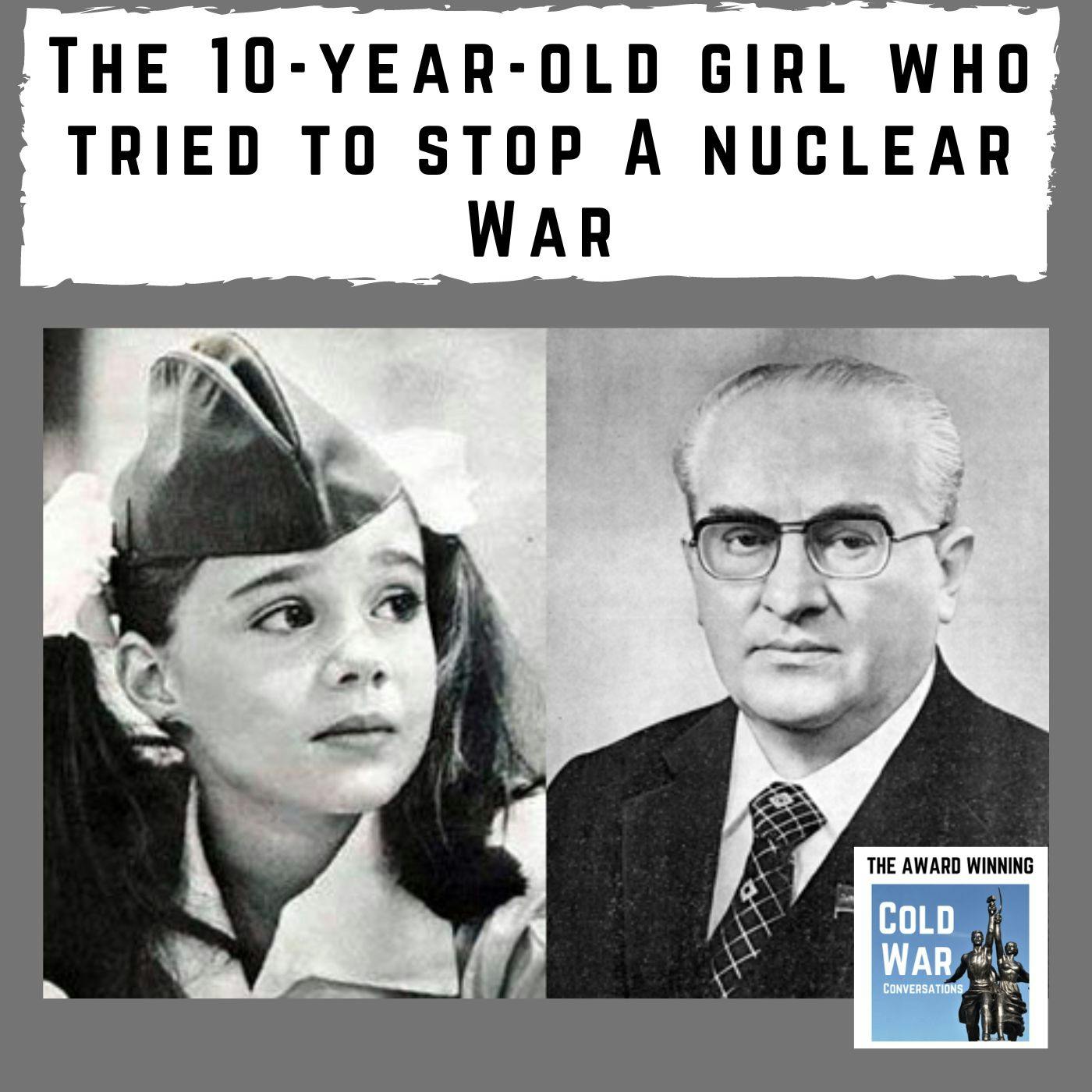
S18 Ep 293The 10 year old girl who tried to stop a nuclear war (293)
In November of 1982, at the height of the Cold War, Samantha Smith, a 10-year-old girl from Manchester, Maine, wrote to the Soviet leader Yuri Andropov and asked him if he was going to wage a nuclear war against the U.S. When an unprecedented response from Andropov arrived, and Samantha received an invitation to visit the USSR, she and her family embarked on a journey that brought the two warring nations closer together. We speak with author Lena Nelson who was born in the Soviet Union and has spent the past 15 years researching and documenting the story of Samantha Smith and creating an archive at https://www.samanthasmith.info/. Lena reveals how Samantha Smith's journey in the summer of 1983 helped melt the hearts of the Soviets and thaw the ice of the Cold War. We talk about the interviews she conducted in both the US and Russia with key players in the events of those days and tell the story of this unprecedented moment in history. 0:00 Introduction and interview with author Lena Nelson about Samantha Smith 1:35 Sponsor: Support for Cold War Conversations 5:24 Samantha Smith's motivation to write to Yuri Andropov and her history of letter writing 14:54 Lena's impressions of American life from Samantha Smith's documentary 20:49 Samantha Smith's preparation for her trip to the Soviet Union 25:41 Samantha Smith's arrival in the Soviet Union and the initial reactions 33:54 Natasha's accidental trip to Artek and meeting Samantha Smith 43:25 The incident over the colour of hot dogs in the Artek cafeteria and Samantha's image as an ideal American representative 48:37 Samantha's post-trip experience and school life 57:04 Circumstances of Samantha's tragic death and Lina Nelson's memory of hearing the news in the Soviet Union 1:05:16 Lina's collaboration with Jane and the evolution of her project 1:07:19 Podcast conclusion, invitation to Facebook discussion group and closing remarks by Ian Sanders Table of contents powered by PodcastAI✨ Lena’s book America's Youngest Ambassador: The Cold War Story of Samantha Smith's Lasting Message of Peace is available via this link https://uk.bookshop.org/a/1549/9781684750207 Cold War history is disappearing; however, a simple monthly donation will keep this podcast on the air. You’ll become part of our community and get a sought-after CWC coaster as a thank you and you’ll bask in the warm glow of knowing you are helping to preserve Cold War history. Just go to https://coldwarconversations.com/donate/ If a monthly contribution is not your cup of tea, We also welcome one-off donations via the same link. Episode extras including videos and photos https://coldwarconversations.com/episode293/ Support the project! https://coldwarconversations.com/donate/ Follow us on Twitter https://twitter.com/ColdWarPod Facebook https://www.facebook.com/groups/coldwarpod/ Instagram https://www.instagram.com/coldwarconversations/ Youtube https://youtube.com/@ColdWarConversations Learn more about your ad choices. Visit podcastchoices.com/adchoices

S18 Ep 292Cold War Polish People Army Radio Operator (292)
Communist Poland had universal conscription and the armed forces were huge by contemporary standards. The Polish People’s Army, Navy, and Airforce had just over 400,000 troops for most of the 1980s in a country of 36 million. Tom was a conscript in Polish People's Army from 1987-89. He served as a radio operator in Legnica for the rocket artillery. His service was at an interesting time when the communist dominance ended as Poland began to embrace democracy in its first free elections before World War 2. Tom shares details of his conscription process, selection, and initial training. We also hear of training exercises, attempts at political indoctrination, and his role if the Cold War had ever turned hot. I’m very keen to expand our library of Warsaw Pact voices, so if you know of any other English speakers who served in the Warsaw Pact Forces during the Cold War do let me know. 0:00 Introduction and background of Polish military conscription 5:18 Issuance of army book and process for students aspiring for higher education 10:59 Political education at the university and military radio training 19:43 Tom's role as a mobile radio operator and experience in an armored truck 27:15 Fear of being ordered to stop demonstrations and participating in Warsaw Pact exercises 35:28 Interactions with the Russian military and instructions if captured by NATO forces 40:31 Living conditions and military structure in Legnica 45:28 Perception of the West as a threat and the Army's transition after the Russian withdrawal 49:37 Reflecting on time in the Polish People's Army and pretending to work 51:27 Episode extras and thanks to financial supporters 51:58 Closing remarks by Ian Sanders Table of contents powered by PodcastAI✨ Cold War history is disappearing; however, a simple monthly donation will keep this podcast on the air. You’ll become part of our community and get a sought-after CWC coaster as a thank you and you’ll bask in the warm glow of knowing you are helping to preserve Cold War history. Just go to https://coldwarconversations.com/donate/ If a monthly contribution is not your cup of tea, We also welcome one-off donations via the same link. Episode extras including videos and photos https://coldwarconversations.com/episode292/ Support the project! https://coldwarconversations.com/donate/ Follow us on Twitter https://twitter.com/ColdWarPod Facebook https://www.facebook.com/groups/coldwarpod/ Instagram https://www.instagram.com/coldwarconversations/ Youtube https://youtube.com/@ColdWarConversations Learn more about your ad choices. Visit podcastchoices.com/adchoices

S18 Ep 291Volker the Berlin Wall Escape Helper (291)
It’s 1966 in Berlin and the city has now been divided for 5 years by an almost impenetrable wall erected by the communist German Democratic Republic. Together with his friends, West German student Volker Heinz joins a group looking for ways to help would-be fugitives escape from East to West. Their search ends at Checkpoint Charlie, the most heavily secured border crossing of the Berlin Wall. By hiding the fugitives in the trunk of a diplomat's car, Volker Heinz helps East German citizens flee to the West. However, the Stasi picks up his trail, and Volker is arrested and interrogated. We hear in detail about his time in prison, including the interrogations and fellow cellmates. Following secret negotiations and a show trial where he is sentenced to 12 years imprisonment, Heinz is eventually swapped for two Soviet spies. In 2001 Heinz initiated the German-British foundation Temple Gift dedicated to the reconciliation of former foes Britain and Germany. In 2012 he was awarded the Federal Order of Merit in recognition of his courage. 0:00 Introduction and Volker Heinz's story 5:19 Volker's involvement in helping East German citizens escape 20:01 Reflections on the experience and diplomatic immunity 30:25 Volker's arrest, interrogation, and time in prison 57:12 Meeting Wolfgang Vogel and trial experiences 1:02:23 Volker's prison experiences and Stasi's recruitment attempts 1:05:54 Volker's release and return to West Germany 1:09:32 Volker's post-prison life and discovery of Stasi's tracking 1:14:21 Volker's book and its contribution to Cold War understanding 1:14:41 Sponsor: Amberley Publishing 1:15:11 Closing remarks and podcast's Facebook discussion group information Buy the book here and support CWC https://amzn.to/42V7FUK Cold War history is disappearing; however, a simple monthly donation will keep this podcast on the air. You’ll become part of our community and get a sought-after CWC coaster as a thank you and you’ll bask in the warm glow of knowing you are helping to preserve Cold War history. Just go to https://coldwarconversations.com/donate/ If a monthly contribution is not your cup of tea, We also welcome one-off donations via the same link. Episode extras including videos and photos https://coldwarconversations.com/episode291/ Support the project! https://coldwarconversations.com/donate/ Follow us on Twitter https://twitter.com/ColdWarPod Facebook https://www.facebook.com/groups/coldwarpod/ Instagram https://www.instagram.com/coldwarconversations/ Youtube https://youtube.com/@ColdWarConversations Learn more about your ad choices. Visit podcastchoices.com/adchoices
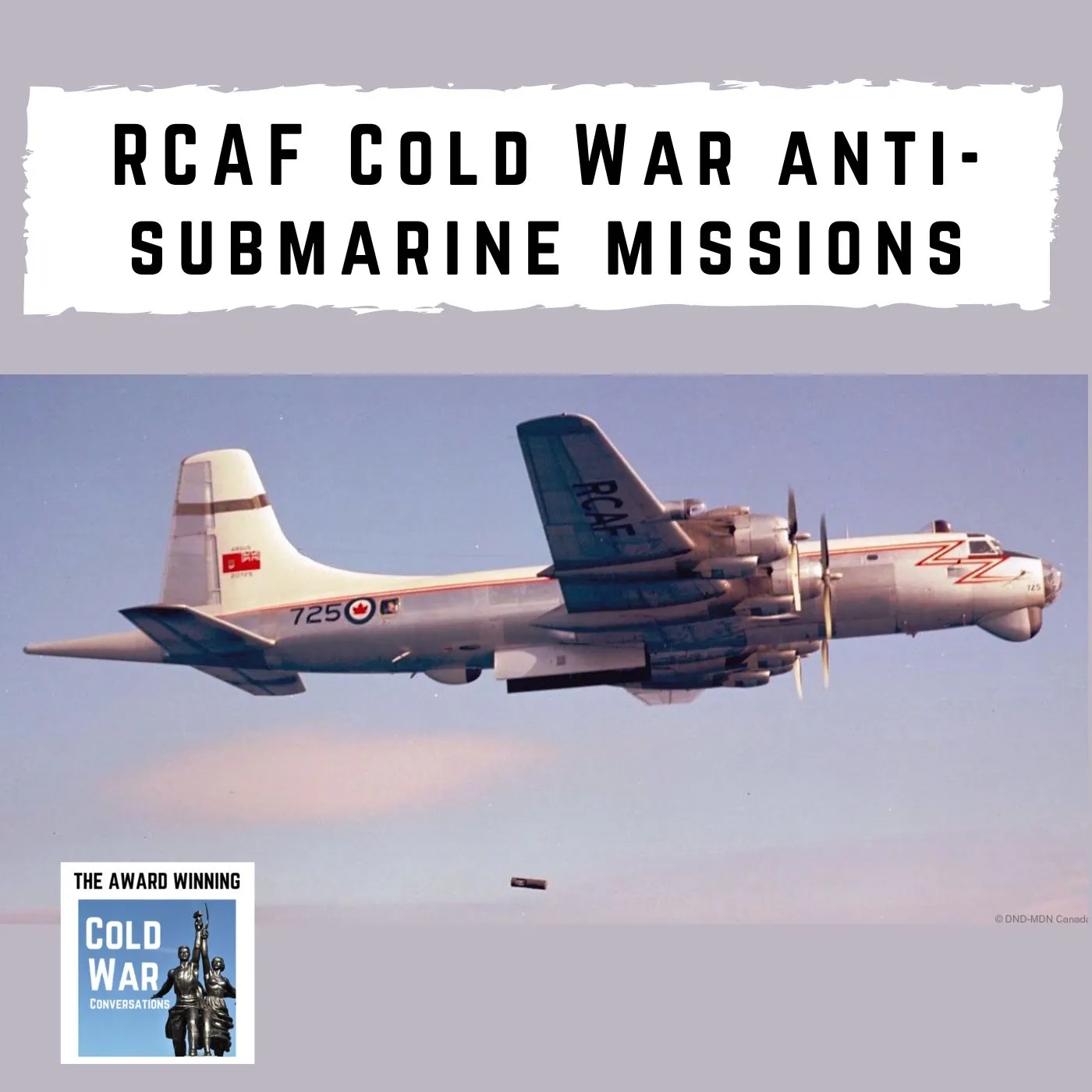
S17 Ep 290Cold War Canadian airborne anti-submarine missions (290)
Colonel Terry Chester’s flying career spanned some 42 years, and 10,000 flying hours. He joined the RCAF in Sept 1964 and in 1968 was awarded Navigator Wings. Terry flew for 3,000 hrs on the Argus Maritime patrol aircraft where he spent a good portion of his RCAF career hunting for Soviet Submarines in both the Pacific and Atlantic areas of operation. He was instrumental in the design criteria for sub-hunting capability when Canada procured the new Aurora, for anti-submarine hunting in the early 1980s. Terry reveals sub-hunting tactics as well as details of Canadian participation in NATO exercises. Among other stories, he describes how he accidentally attacked a US nuclear submarine, the perils of landing in Gibraltar, and Soviet sub-incursions into Canadian waters. He also recalls airborne meetings with Soviet aircraft and a trip in the British nuclear submarine HMS Churchill. 0:00 Introduction to Cold War Conversations with Colonel Terry Chester 2:24 Overview of Chester's experiences in Anti-Submarine Warfare and the Soviet Navy 5:05 Accounts of accidental attacks on US nuclear submarines 13:21 Encounters with Soviet aircraft and monitoring of Soviet submarines 20:34 The Gibraltar Base, Spanish tensions, and life aboard HMS Churchill 26:28 Protocols and preparations for potential nuclear warfare 28:14 Soviet submarine incursions in Canadian waters and international cooperation 32:19 End of the Cold War: experiences and concerns 33:40 Post-Cold War era and the Western Alliance's reduced defense spending 34:21 Reflections on serving in the Cold War and camaraderie during service 35:17 Sponsor: Listener Support and invitation to the Facebook discussion group Table of contents powered by PodcastAI✨ Episode 1 of our interview with Terry is here https://coldwarconversations.com/episode54/ Cold War history is disappearing; however, a simple monthly donation will keep this podcast on the air. You’ll become part of our community and get a sought-after CWC coaster as a thank you and you’ll bask in the warm glow of knowing you are helping to preserve Cold War history. Just go to https://coldwarconversations.com/donate/ If a monthly contribution is not your cup of tea, We also welcome one-off donations via the same link. Episode extras including videos and photos https://coldwarconversations.com/episode290/ Do take a look at Vintage Wings a collection of historically significant aircraft that Terry has worked on as well as the Royal Canadian Airforce Association of which Terry was a National President. Support the project! https://coldwarconversations.com/donate/ Follow us on Twitter https://twitter.com/ColdWarPod Facebook https://www.facebook.com/groups/coldwarpod/ Instagram https://www.instagram.com/coldwarconversations/ Youtube https://youtube.com/@ColdWarConversations Learn more about your ad choices. Visit podcastchoices.com/adchoices

S17 Ep 289Discovering your husband is a KGB spy (289)
The second part of Svetlana’s story starts shortly after her arrival in West Germany with her husband Oleg who is the Chief Editor of the Russian Service of Radio Liberty a CIA-financed station beaming Western propaganda into the Soviet Union. Listen to the previous episode here https://coldwarconversations.com/episode288/ To Svetlana’s horror, Oleg reveals that he has been working for the KGB for 14 years. Svetlana is now trapped. She is in a quandary. Should she betray the man she loves and risk the wrath of the KGB or should she stay loyal to her husband? Loyalty wins out and she is invited by the Americans to teach Russian to intelligence officers and later becomes assistant to the commander at the US Army Intelligence Institute in Munich. However, in 1986 Oleg disappears and leaves Svetlana on her own in West Germany. At a press conference in Moscow, he reveals his espionage and suspicion falls on Svetlana… 0:00 Introduction and background of Svetlana's story 5:34 Discussion about Oleg's recruitment into the KGB and his role as a spy 15:18 Svetlana's job with the Americans and the impact on their relationship 24:06 Lie detector test and its implications for Oleg 31:02 The pressures of leading a double life and Oleg's subsequent disappearance 40:50 Svetlana's actions and the aftermath of Oleg's disappearance 46:58 Oleg's return to Munich, American secret investigations, and the disagreement with Germans 55:23 Oleg's encounters with Vladimir Putin and his subsequent help 58:47 Oleg's arrest, trial, and prison sentence 1:03:29 Oleg's life post-prison and his encounters with the FBI and family in the United States 1:07:34 Transition to life in Moscow and political involvement with "John Wood" 1:08:04 Episode extras and thanking financial supporters Table of contents powered by PodcastAI✨ Cold War history is disappearing; however, a simple monthly donation will keep this podcast on the air. You’ll become part of our community and get a sought-after CWC coaster as a thank you and you’ll bask in the warm glow of knowing you are helping to preserve Cold War history. Just go to https://coldwarconversations.com/donate/ If a monthly contribution is not your cup of tea, We also welcome one-off donations via the same link. Episode extras including videos and photos https://coldwarconversations.com/episode289/ Support the project! https://coldwarconversations.com/donate/ Follow us on Twitter https://twitter.com/ColdWarPod Facebook https://www.facebook.com/groups/coldwarpod/ Instagram https://www.instagram.com/coldwarconversations/ Youtube https://youtube.com/@ColdWarConversations Learn more about your ad choices. Visit podcastchoices.com/adchoices

S17 Ep 288From Soviet Latvia to the BBC Russian Service (288)
Svetlana came from a dissident Jewish family opposed to Soviet rule in Latvia. Her parents survived World War 2, but during the Stalin era two members of her family were held in the Gulags. The family never resigned themselves to Latvia's occupation by the Soviet Union in 1940. It was almost impossible to legally leave the Soviet Union, however, in 1971 the first opportunities for "Jewish" emigration appeared, and Svetlana, then aged 12 and her family left legally. At the age of 16, she is staying with her Uncle in London when she comes across Bush House, the home of the BBC Russian Service. Svetlana manages to get a job there and begins to get promoted. She meets Georgi Markov who is assassinated by Bulgarian Security Services on Waterloo Bridge in London and later she is introduced to Oleg, the Chief Editor of the Russian Service of Radio Liberty, a CIA-financed station beaming Western propaganda into the Soviet Union. This meeting has a profound effect on her life… 0:00 Introduction and Svetlana's Background 7:23 Svetlana's Experiences during the Stalin Era and Attempted Hijack 14:12 Svetlana's Immigration and Figure Skating Career 17:04 Svetlana's Arrival in Vienna and First Impressions of Western Lifestyle 23:51 Svetlana's Experience at BBC and Life in London and Israel 31:42 Encounter with Georgi Markov and Introduction to Oleg 39:43 Oleg's Escape from Soviet Union and Journey to Libya 44:32 Oleg's Role in Radio Liberty 46:57 Svetlana's Move to Germany and Discovery of Oleg's KGB Affiliation 49:21 Preview of Next Episode and Closing Remarks 2:00 Sponsor Message and Testimonial from a Listener Table of contents powered by PodcastAI✨ The fight to preserve Cold War history continues and via a simple monthly donation, you will give me the ammunition to keep this podcast on the air. You’ll become part of our community and get a sought-after CWC coaster as a thank you and you’ll bask in the warm glow of knowing you are helping to preserve Cold War history. Just go to https://coldwarconversations.com/donate/ If a monthly contribution is not your cup of tea, We also welcome one-off donations via the same link. Details and extra video content on this link https://coldwarconversations.com/episode288/ St Petersburg (Leningrad) aircraft hijack episode https://coldwarconversations.com/episode258/ Support the project! https://coldwarconversations.com/donate/ Follow us on Twitter https://twitter.com/ColdWarPod Facebook https://www.facebook.com/groups/coldwarpod/ Instagram https://www.instagram.com/coldwarconversations/ Youtube https://youtube.com/@ColdWarConversations Learn more about your ad choices. Visit podcastchoices.com/adchoices

S17 Ep 287Transferring from the East German Army (NVA) to the unified German Army (Bundeswehr) (287)
We continue Steffen’s story where he tells of serving in three armies – firstly, the NVA, secondly the East German Army between the first free elections and unification, and finally the unified Bundeswehr. We start the episode in the Autumn of 1989 where demonstrations are growing against the government in nearby Leipzig and Steffen’s unit is on high alert and confined to barracks. It is clear East Germany is on the cusp of change however, what will be the impact on Steffen and his comrades? Steffen describes these tense days when rumours abounded of military action against the demonstrators, as well as how he heard about the fall of Honecker and the opening of the border. We also hear about his experiences as the NVA transitions after the first free elections in East Germany and momentum builds for reunification. Steffen accepts a place in the new unified German army and we hear about the day command is handed over to the Bundeswehr and how he has to learn a different way of thinking, such as the new doctrine of personal responsibility. 0:00 Introduction and Steffen's account of tension in East Germany 2:26 Steffen's experiences during high alert and rumors of military action 9:41 Steffen's account of the news about Honecker's departure and post-fall experiences 13:29 Steffen's thoughts on a better GDR and first crossing into the West 18:32 Changes in public sentiment during weekly demonstrations and the decline of grassroots groups 24:15 Reunification possibilities and its effect on the NVA 29:11 Steffen's encounter with Bundeswehr troops and changes post-reunification 34:03 Steffen's transition from the East German uniform to the Bundeswehr uniform 43:57 Transformation in the relationship between soldiers and commanders post-reunification 46:51 Impact of reunification on Steffen's parents' jobs and his own career path 54:31 Steffen's comparison between NVA and Bunderswehr 55:46 Sponsor: Reminder about the Facebook discussion group Table of contents powered by PodcastAI✨ The fight to preserve Cold War history continues and via a simple monthly donation, you will give me the ammunition to keep this podcast on the air. You’ll become part of our community and get a sought-after CWC coaster as a thank you and you’ll bask in the warm glow of knowing you are helping to preserve Cold War history. Just go to https://coldwarconversations.com/donate/ If a monthly contribution is not your cup of tea, We also welcome one-off donations via the same link. Photos and extra video content on this link https://coldwarconversations.com/episode287/ Follow us on Twitter https://twitter.com/ColdWarPod Facebook https://www.facebook.com/groups/coldwarpod/ Instagram https://www.instagram.com/coldwarconversations/ Youtube https://youtube.com/@ColdWarConversations Learn more about your ad choices. Visit podcastchoices.com/adchoices

S17 Ep 286Drafted into the East German Army (286)
Steffen was born in Karl Marx Stadt and was conscripted into the NVA (East German Army) in 1988. When he left school he started an apprenticeship in electronics learning how to build radio receivers at REMA, a then-famous producer of HiFi equipment. Steffen is called up at 18 for his 18 months of service and he talks of the conscription process and incentives offered to him to serve for a longer period. Steffen is posted to a unit in Leipzig that was responsible for telephone lines from the NVA Headquarters for the area south of Berlin. He describes the training he took and the role he carried out including installing phones for NATO Intermediate-Range Nuclear Forces Treaty inspectors. In the summer of 1989 many citizens of East Germany flee the country via the now semi-open Hungarian border and Steffen describes heightened tension within the Army. Don’t miss next week’s episode where Steffen describes his transfer into the Bundeswehr, the West German Army. 0:00 Introduction and guest presentation 2:36 Steffen's childhood and school life in East Germany 15:21 Steffen's conscription into the East German army and training experiences 25:37 Steffen's comrades and checks conducted on him before his role 29:38 Steffen's experience with possible Stasi checks 32:34 Steffen's daily duties in the East German army and infrastructure of the East German phone system 37:14 Steffen's mission involving a secret code word and awareness of the Allied military liaison missions 43:16 Access to Western media while in the East German army 47:49 Lead up to Steffen's job on October 7th, 1989 and preview of next week's episode 48:34 Sponsor: Encouragement for listeners to donate and join the Facebook discussion group Table of contents powered by PodcastAI✨ The fight to preserve Cold War history continues and via a simple monthly donation, you will give me the ammunition to continue to preserve these first hand accounts. You’ll become part of our community and get a sought-after CWC coaster as a thank you and you’ll bask in the warm glow of knowing you are helping to preserve Cold War history. Just go to https://coldwarconversations.com/donate/ If a monthly contribution is not your cup of tea, We also welcome one-off donations via the same link. Episode extra inc videos here https://coldwarconversations.com/episode286/ Support the project! https://coldwarconversations.com/donate/ Follow us on Twitter https://twitter.com/ColdWarPod Facebook https://www.facebook.com/groups/coldwarpod/ Instagram https://www.instagram.com/coldwarconversations/ Youtube https://youtube.com/@ColdWarConversations Learn more about your ad choices. Visit podcastchoices.com/adchoices

S17 Ep 285How Cold War Britain prepared for Nuclear War (285)
During the Cold War, the awesome power of nuclear weapons and its deadly fallout meant that every town, village and home in Britain fell under the nuclear shadow, and the threat of annihilation coloured every aspect of ordinary life. I chat with author and fellow Cold War podcaster Julie McDowall about her new book Attack Warning Red!: How Britain Prepared for Nuclear War. We discuss how families were encouraged to construct makeshift shelters with cardboard, plastic sheets and sandbags, as well as how vicars and pub landlords learnt how to sound hand-wound sirens, offering four minutes to scramble to safety. and the thousands who volunteered to give nuclear first aid, often consisting of breakfast tea, herbal remedies, and advice on how to die without contaminating others. It's a fascinating, haunting and darkly humorous look at the UK government’s attempts to prepare the UK population for nuclear war while bunkers were readied for the officials and experts who, in theory, would ensure life continued after Armageddon. Buy the book & support CWC https://uk.bookshop.org/a/1549/9781847926210 0:00 Introduction and story of a village landlord's plan for nuclear warning 4:08 The 4-minute nuclear warning system in the UK 14:22 Role of the Women's Royal Volunteer Service in the Cold War 20:03 Rise of organizations like the Campaign for Nuclear Disarmament 27:05 The Python plan for government survival in a nuclear attack 33:07 Visiting former Cold War government bunkers in the UK 37:04 The haunting TV version of Protect and Survive 51:15 The selection process for government bunker inhabitants 56:09 The importance of Threads in understanding nuclear war 1:10:54 Introduction to Julie McDowell's book 'Attack Warning Red' Table of contents powered by PodcastAI✨ The fight to preserve Cold War history continues and via a simple monthly donation, you will give me the ammunition to continue to preserve these first hand accounts. You’ll become part of our community and get a sought-after CWC coaster as a thank you and you’ll bask in the warm glow of knowing you are helping to preserve Cold War history. Just go to https://coldwarconversations.com/donate/ If a monthly contribution is not your cup of tea, We also welcome one-off donations via the same link. Previous UK Civil Defence episodes Cold War leaflets and documents https://coldwarconversations.com/episode112/ Assigned to a government bunker https://coldwarconversations.com/episode107/ Visit to a Royal Observer Corps monitoring post and interview with the Chief Observer who served in the post https://coldwarconversations.com/episode30/ Alistair McCann has preserved a Royal Observer Corps monitoring post as a museum in Northern Ireland. https://coldwarconversations.com/episode11/ Book giveaway info and extra videos https://coldwarconversations.com/episode285/ Support the project! https://coldwarconversations.com/donate/ Follow us on Twitter https://twitter.com/ColdWarPod Facebook https://www.facebook.com/groups/coldwarpod/ Instagram https://www.instagram.com/coldwarconversations/ Youtube https://youtube.com/@ColdWarConversations Learn more about your ad choices. Visit podcastchoices.com/adchoices
S17 Ep 284Beyond the Wall: East Germany, 1949-1990 (284)
In 1990, a country disappeared. When the Iron Curtain fell, East Germany simply ceased to be. For over forty years, from the ruin of the Second World War to the cusp of a new millennium, the GDR presented a radically different German identity to anything that had come before, and anything that exists today. Socialist solidarity, secret police, central planning, barbed wire: this was a Germany forged on the fault lines of ideology and geopolitics. I talk with acclaimed historian Katja Hoyer Whose new book Beyond the Wall: East Germany, 1949-1990 offers a kaleidoscopic new vision of this vanished country. Beginning with the bitter experience of German Marxists exiled by Hitler, to the creaking foundations of socialism in the mid-1980s, we discuss that amid oppression and frequent hardship, East Germany was yet home to a rich political, social, and cultural landscape, a place far more dynamic than the Cold War caricature often painted in the West. Powerfully told, and drawing on a vast array of never-before-seen interviews, letters, and records, this is the definitive history of the other Germany, the one beyond the Wall. 0:00 Introduction to the episode and Katya Hoya 2:37 Katya Hoya's approach to researching and writing about East Germany 7:35 Arrival of Gruppe Ulbricht in Soviet occupied zone of Germany 15:19 Public sentiment towards the formation of East Germany 21:24 The 1953 uprising in East Germany 24:19 The economic disparity between East and West Germany 33:10 Evidence of Honecker's collaboration with Nazi authorities 45:17 Car ownership in East Germany: perceptions and realities 1:00:14 The unique relationship between Helmut Kohl and Honecker 1:10:16 The impact of reunification on East Germany's economy and workforce 1:21:43 Ending notes, book promotion, and thanks to supporters UK listeners can support CWC by buying the book here https://uk.bookshop.org/a/1549/9780241553787 US listeners can support CWC by buying the book here https://bookshop.org/a/92195/9781541602571 The fight to preserve Cold War history continues and via a simple monthly donation, you will give me the ammunition to keep this podcast on the air. You’ll become part of our community and get a sought-after CWC coaster as a thank you and you’ll bask in the warm glow of knowing you are helping to preserve Cold War history. Just go to https://coldwarconversations.com/donate/ If a monthly contribution is not your cup of tea, We also welcome one-off donations via the same link. Details and extra video content on this link https://coldwarconversations.com/episode284/ Support the project! https://coldwarconversations.com/donate/ Follow us on Twitter https://twitter.com/ColdWarPod Facebook https://www.facebook.com/groups/coldwarpod/ Instagram https://www.instagram.com/coldwarconversations/ Youtube https://youtube.com/@ColdWarConversations Learn more about your ad choices. Visit podcastchoices.com/adchoices
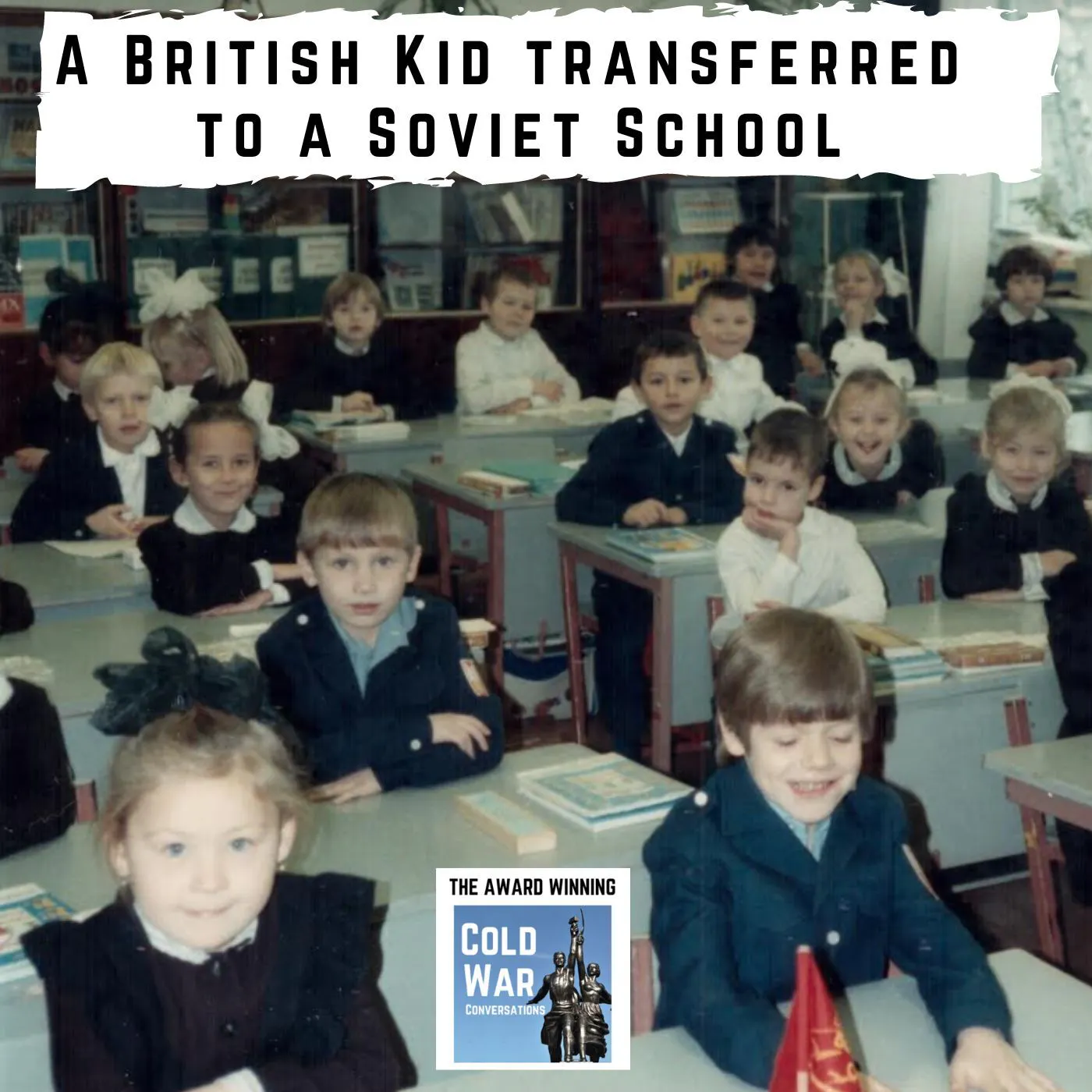
S17 Ep 283A British kid transferred to a Soviet school (283)
Richard was 6 years old when he was uprooted from a school in the United States to a Soviet school 700 miles East of Moscow. In 1988 the Soviet Union was opening up following Michael Gorbachev’s policy of Perestroika and American firms began looking at the possibility of trading with the Soviet Union. It was politically and economically sensitive and his family was chosen to be sent to the USSR to open a factory in the industrial town of Nizhnekamsk in Tartarstan. They lived in a special apartment building designated for foreigners and Richard attended the local school. Being thrown in the deep end of a Soviet school was a shock to him and he had to adapt fast, not least by learning Russian. He describes his school experiences and the stark contrasts with his previous life. Despite the difference, he found being six years old in the Soviet Union in all, rather fun. There was a Lunar Park for us to go on rides, war-themed toys like tanks and soldiers even at school, and all sorts of mischief were had. Life in Nizhnekamsk was hard on his mother who had to stay at home a lot and found the whole experience painfully boring. 0:00 Introduction and Richard's move to the Soviet Union 5:32 Life and impressions of Nizhnekamsk, the Soviet industrial city 11:57 Schooling and social experiences in the Soviet Union 24:22 Sponsor break 24:33 Dealing with school dynamics and ideological content in subjects 31:25 Restrictions and mischief in the Soviet Union 35:00 Family struggles and lifestyle in the Soviet Union 41:10 Fond memories and reasons for leaving the Soviet Union 44:41 Reconnecting with old schoolmates and appreciation of Soviet architecture 48:07 Acknowledgment of financial supporters and invitation to donate 49:03 Closing remarks and promotion of Cold War Conversations store Table of contents powered by PodcastAI✨ The fight to preserve Cold War history continues and via a simple monthly donation, you will give me the ammunition to keep this podcast on the air. You’ll become part of our community and get a sought-after CWC coaster as a thank you and you’ll bask in the warm glow of knowing you are helping to preserve Cold War history. Just go to https://coldwarconversations.com/donate/ If a monthly contribution is not your cup of tea, We also welcome one-off donations via the same link. Photos and extra content here https://coldwarconversations.com/episode283/ Support the project! https://coldwarconversations.com/donate/ Follow us on Twitter https://twitter.com/ColdWarPod Facebook https://www.facebook.com/groups/coldwarpod/ Instagram https://www.instagram.com/coldwarconversations/ Youtube https://youtube.com/@ColdWarConversations Learn more about your ad choices. Visit podcastchoices.com/adchoices

S17 Ep 282Cold War US Army tank driver at the Iron Curtain (282)
Brian Regal entered the US Army in 1977 and served on the M60A1 tank initially as a driver. The M60A1 was America's primary main battle tank during the Cold War, with initial deployment in 1960 and combat service through to 1991. After tank school, Brian was sent to West Germany where he was assigned to the 3/35 Armor in the Bamberg Garrison as part of the 1st Armored Division US Army, where the 3/35 was tasked to fight a Warsaw Pact attack across the Czechoslovak and East German borders. Brian was also his company’s nuclear, biological and chemical warfare specialist. He describes in detail his training, how patrols were conducted along the borders, an incident with a Soviet Military Liaison mission car, the war games amongst the West German civilians, as well as practice alerts. It’s a great chat and Brian is frank about his role and the scant expectations for survival if war did come. He is now Dr. Brian Regal, Professor for the History of Science, Technology, and Medicine at Kean University, New Jersey web page: https://sites.google.com/a/kean.edu/brian-regal-phd/ 0:00 Introduction and Brian Regal's initial days in the US Army 1:53 Request for donations to support the podcast 7:00 Brian's decision to join the Army and training experiences 23:41 Arrival at the first duty station in Bamburg Garrison, Bavaria 28:57 Introduction to M60A1 tank and its features 37:56 NBC training and nuclear chemical defense 52:54 Practice alerts and close calls during the Cold War 1:01:05 Rules of engagement at the border and description of fortifications 1:07:58 Interaction with German civilians and Soviet military during service 1:31:08 Journey to becoming a tank commander 1:35:48 Episode extras and appreciation for financial supporters Table of contents powered by PodcastAI✨ The fight to preserve Cold War history continues and via a simple monthly donation you will give me the ammunition to keep this podcast on the air. You’ll become part of our community and get a sought after CWC coaster as a thank you and you’ll bask in the warm glow of knowing you are helping to preserve Cold War history. Just go to https://coldwarconversations.com/donate/ If a monthly contribution is not your cup of tea, We also welcome one-off donations via the same link. Extra photos and videos here. https://coldwarconversations.com/episode282/ Support the project! https://coldwarconversations.com/donate/ Follow us on Twitter https://twitter.com/ColdWarPod Facebook https://www.facebook.com/groups/coldwarpod/ Instagram https://www.instagram.com/coldwarconversations/ Youtube https://youtube.com/@ColdWarConversations Learn more about your ad choices. Visit podcastchoices.com/adchoices
S17 Ep 281Cold War Dutch conscientious objector (281)
In 1987 Martin received a letter informing him of his conscription into the Dutch Army. A number of European NATO countries had conscription during the Cold War. Holland’s applied to men over the age of 18 and included service for about a year, after which you were placed on the reserve. Martin objected to military service as a conscientious objector on religious grounds. Conscientious objectors could perform alternative civilian service instead of military service. However to get to be an official “conscientious objector” you had to pass multiple military courts and military procedures which was especially challenging for someone aged 17 years old. Martin is very honest about his beliefs and his experiences. During the Cold War he was seen by some as an enemy because he refused to bear arms to protect his country. You may disagree with his views, but it’s a Cold War topic that is little covered elsewhere and I’m sure you will find my conversation with Martin as fascinating and powerful as I did. 0:00 Introduction to Cold War Conversations and Martin's military interaction 0:58 Conscription during the Cold War and Martin's conscientious objection 2:13 Sponsor message and user testimony 4:30 Martin's family's experiences and his draft notice 10:54 Process and challenges of becoming a conscientious objector 22:07 Martin's moral position and Ian's comments 24:10 Attempts to avoid conscription and Dutch law 29:37 Anti-nuclear movement in Holland and soldiers' participation 33:39 Martin's gratitude for the law and public reaction to his conscientious objection 41:19 Perception of conscientious objectors and Martin's replacement service 48:26 Current status of conscription in the Netherlands 53:05 Martin's perspective on defending his country and serving humanity 56:51 Podcast extras, call for support, and closing remarks Table of contents powered by PodcastAI✨ .Cold War history is disappearing; however, a simple monthly donation will keep this podcast on the air. You’ll become part of our community and get a sought-after CWC coaster as a thank you and you’ll bask in the warm glow of knowing you are helping to preserve Cold War history. Just go to https://coldwarconversations.com/donate/ If a monthly contribution is not your cup of tea, We also welcome one-off donations via the same link. Episode notes here https://coldwarconversations.com/281 The foundation Martin works for as a volunteer is: https://www.emmy.foundation/ Support the project! https://coldwarconversations.com/donate/ Follow us on Twitter https://twitter.com/ColdWarPod Facebook https://www.facebook.com/groups/coldwarpod/ Instagram https://www.instagram.com/coldwarconversations/ Youtube https://youtube.com/@ColdWarConversations Learn more about your ad choices. Visit podcastchoices.com/adchoices
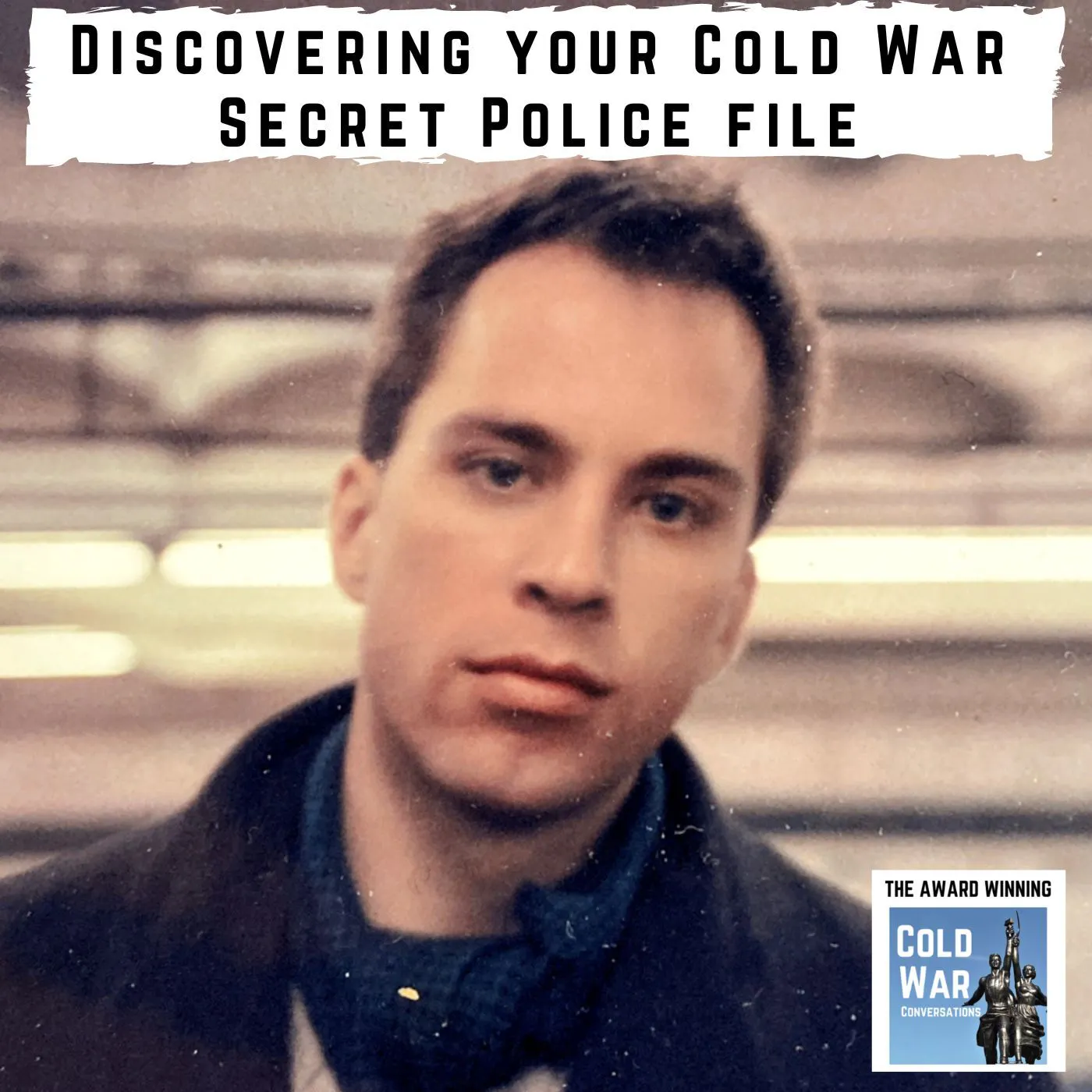
S16 Ep 280Discovering your Cold War Czechoslovak Secret Police file (280)
Mark Baker was featured in episode 9 where he told us about working in Czechoslovakia in the 1980s as a journalist for a small publishing company called Business International (BI). He was the company’s Czechoslovakia expert and with his Czech minder Arnold he travelled to Prague and other cities to report on significant economic and political developments. In 2021, he published “Čas Proměn” (“Time of Changes”), written in Czech, it is a collection of stories about Central and Eastern Europe in the 1980s and early ‘90s. Over the Christmas 2021 holidays, as he was visiting family in Ohio, he received a surprise email from a Czech academic. He was writing to Mark that he had finished reading the book and that he liked it. But then he added, cryptically, that Mark might want to revise part of it for future editions as he had found Mark’s Czechoslovak secret police surveillance file… We hear about the plans the Czechoslovak secret police had for Mark and the secret of Operation Oheň, aka Operation Fire. 0:00 Introduction to Mark Baker's story 2:40 Mark's journey as a journalist in Czechoslovakia 5:59 Discovering Arnold's collaboration with the secret police and Mark's own surveillance file 14:14 Reflection on the photographs from Mark's surveillance file 19:45 Decoding the secret language and understanding the code names in the file 24:01 Unveiling Mark's first appearance on the secret police radar 44:15 Mark Baker: Operation Ohen and the infiltration of US Embassies 45:00 Changes after the fall of the Berlin Wall and end of STB operations 48:59 Ian Sanders: Closing remarks, reminders and invitation to join the discussion group Table of contents powered by PodcastAI✨ Now if you think there is a vast army of research assistants, audio engineers and producers putting together this podcast you’d be wrong. This podcast relies on your support to enable me to continue to capture these incredible stories and make them available to everyone for free. If you’d like to help to preserve Cold War history and enable me to continue to produce this podcast you can via one off or monthly donations. Just go to https://coldwarconversations.com/donate/for more details. Listen to mark's previous episode here https://pod.fo/e/f83f Mark's blog is available here. https://markbakerprague.com/part-1-introducing-our-man-inter Support the project! https://coldwarconversations.com/donate/ Follow us on Twitter https://twitter.com/ColdWarPod Facebook https://www.facebook.com/groups/coldwarpod/ Instagram https://www.instagram.com/coldwarconversations/ Youtube https://youtube.com/@ColdWarConversations Learn more about your ad choices. Visit podcastchoices.com/adchoices