
Cold War Conversations Podcast
479 episodes — Page 7 of 10
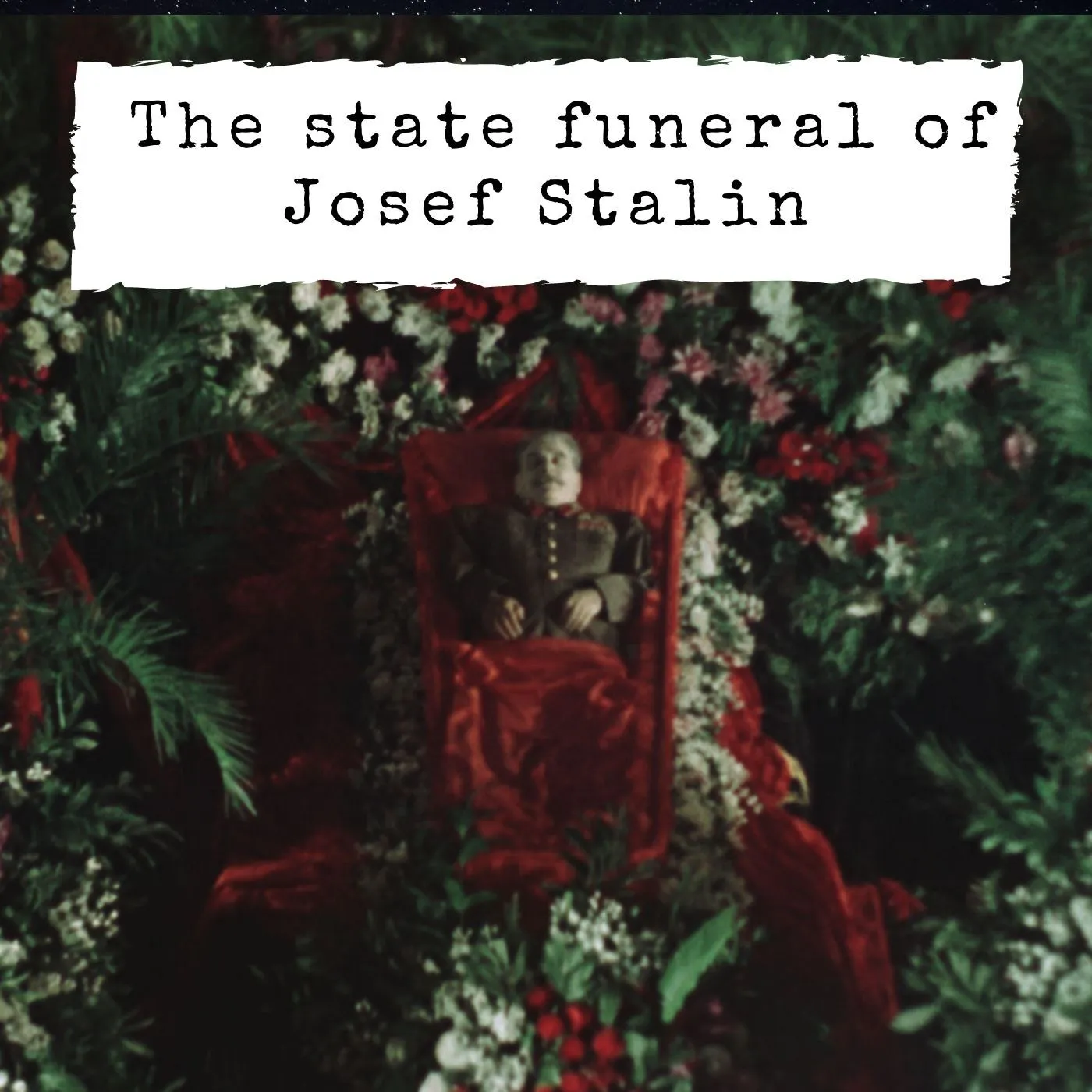
S8 Ep 179Bonus - The state funeral of Josef Stalin (179)
This episode is sponsored by MUBI, a curated streaming service with an ever-changing collection of hand-picked cinema. From new directors to award-winners. From everywhere on earth. Beautiful, interesting, incredible films — with a new one added every single day. Right now on MUBI, you can watch STATE FUNERAL, an astonishing archival vision of the Soviet Union in the days after Joseph Stalin’s death. The film is followed by a Q&A with director Sergei Loznitsa in conversation with Pietro Marcello (Martin Eden). James Chilcott, Peter Ryan and I had exclusive access to a preview version and in today’s episode we discuss our thoughts on the film. Support the project! https://coldwarconversations.com/donate/ Follow us on Twitter https://twitter.com/ColdWarPod Facebook https://www.facebook.com/groups/coldwarpod/ Instagram https://www.instagram.com/coldwarconversations/ Youtube https://youtube.com/@ColdWarConversations 0:00 Introduction and Sponsor: Mubi 0:44 Discussion on the film "State Funeral" and first impressions 6:06 Power dynamics after Stalin's death and potential successors 10:27 Observations on foreign delegations and British Communist Party's delegation 14:26 Analysis of the film's cinematography and reactions to Stalin's death 19:10 Origin and unseen footage of the film 20:24 Influence of the film on younger generations 22:48 Personal anecdotes and the fate of Stalin's family members 28:53 Review of the film and Sponsor: Mubi 31:14 Insights into the life of average Soviet citizens and stereotypes 35:23 Body language in the film and reflections on the speeches 39:31 The film as a representation of Soviet Union in 1953 and recommendation Chapters powered by PodcastAI✨ Learn more about your ad choices. Visit podcastchoices.com/adchoices
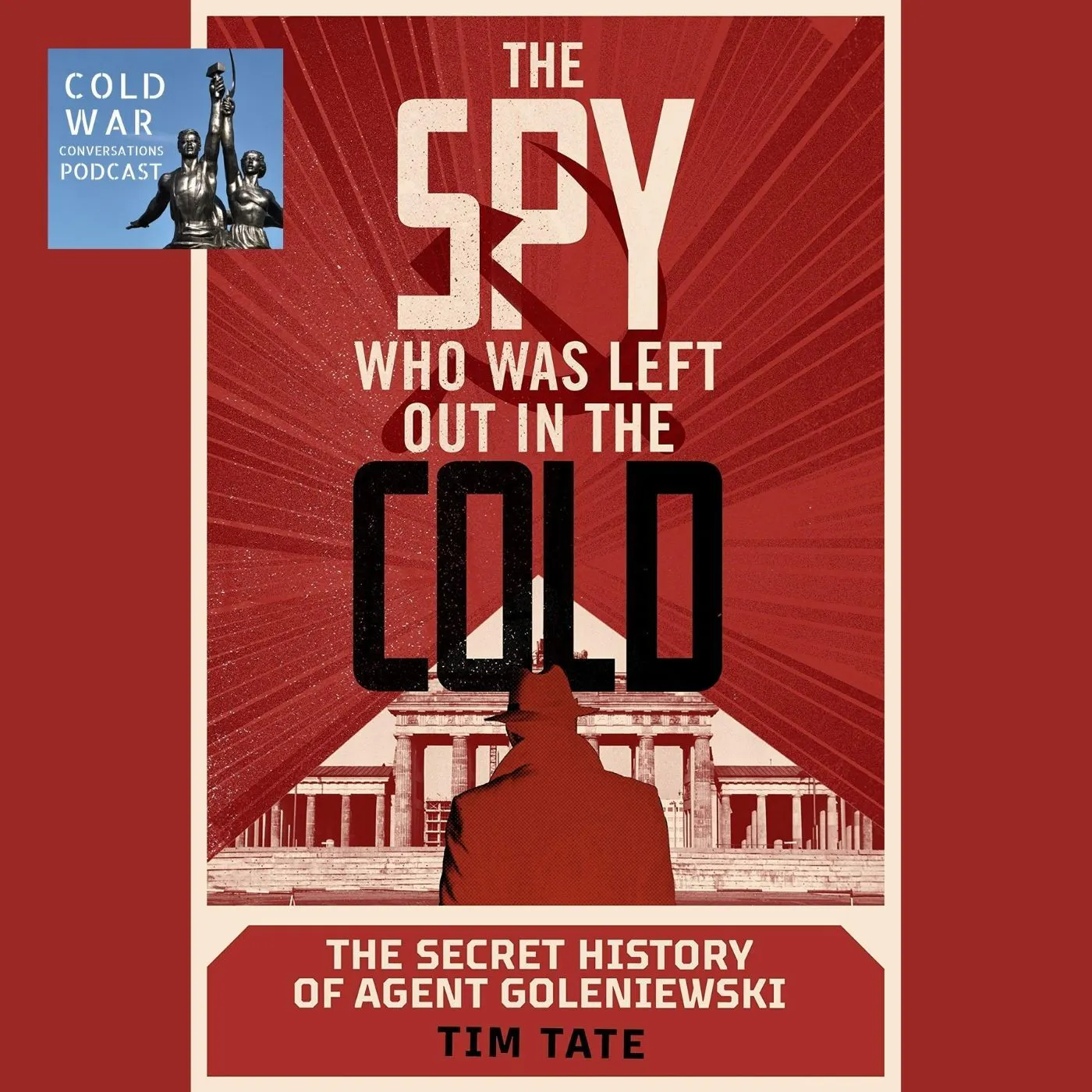
S8 Ep 178Spy who was left out in the Cold: The Secret History of Agent Goleniewski (178)
We speak with author Tim Tate about his new book the Spy who was left out in the Cold: The Secret History of Agent Goleniewski Michal Goleniewski remains one of the most important, yet least known and most misunderstood spies of the Cold War. Even his death is shrouded in mystery and he has been written out of the history of Cold War espionage - until now. Tim Tate draws on a wealth of previously unpublished primary source documents to tell the dramatic true story of the best spy the west ever lost - of how Goleniewski exposed hundreds of KGB agents operating undercover in the West; from George Blake and the 'Portland Spy Ring', to a senior Swedish Air Force and NATO officer and a traitor inside the Israeli government. The information he produced devastated intelligence services on both sides of the Iron Curtain. I could really use your support to continue the podcast. A simple monthly donation via Patreon, will as a monthly supporter get you the sought after CWC coaster as a thank you and bask in the warm glow of knowing you are helping to preserve Cold War history. Just go to https://coldwarconversations.com/donate/ If a financial contribution is not your cup of tea, then you can still help us by leaving written reviews wherever you listen to us as well as sharing us on social media. It really helps us get new guests on the show. I am delighted to welcome Tim Tate to our Cold War conversation… There’s further information on this episode in our episode notes which can also be found here. https://coldwarconversations.com/episode178 If you can’t wait for next week’s episode do visit our Facebook discussion group where guests and listeners continue the Cold War Conversation. Just search Cold War Conversations in Facebook. Support the project! https://coldwarconversations.com/donate/ Follow us on Twitter https://twitter.com/ColdWarPod Facebook https://www.facebook.com/groups/coldwarpod/ Instagram https://www.instagram.com/coldwarconversations/ Youtube https://youtube.com/@ColdWarConversations 0:00 Introduction 1:08 Discussion on the topic: The Spy Who Was Left Out In the Cold 3:51 Interview with Tim Tate and Goleniewski's importance in the Cold War 14:38 Goliansky's defection and personal life complexities 24:27 The arrest of Soviet spies and Goleniewski's debriefing process 33:36 Goleniewski's trial and his rise in Polish intelligence 38:06 Impact of other defections on Goleniewski's CIA status 46:24 Public revelation of Goleniewski's story and his financial struggles 54:57 Goleniewski's claim to be Prince Alexei Romanov and second bigamous marriage 1:00:16 Polish intelligence's failed scheme to infiltrate Goleniewski's circle 1:09:39 Analysis of Golitszin's motivations and his effect on Western Intelligence 1:20:01 Possible movie adaptations of Goleniewski's story and his erasure from Cold War history 1:26:07 Acknowledging patrons and how to support the show 0:00 of contents powered by PodcastAI✨ Chapters powered by PodcastAI✨ Learn more about your ad choices. Visit podcastchoices.com/adchoices
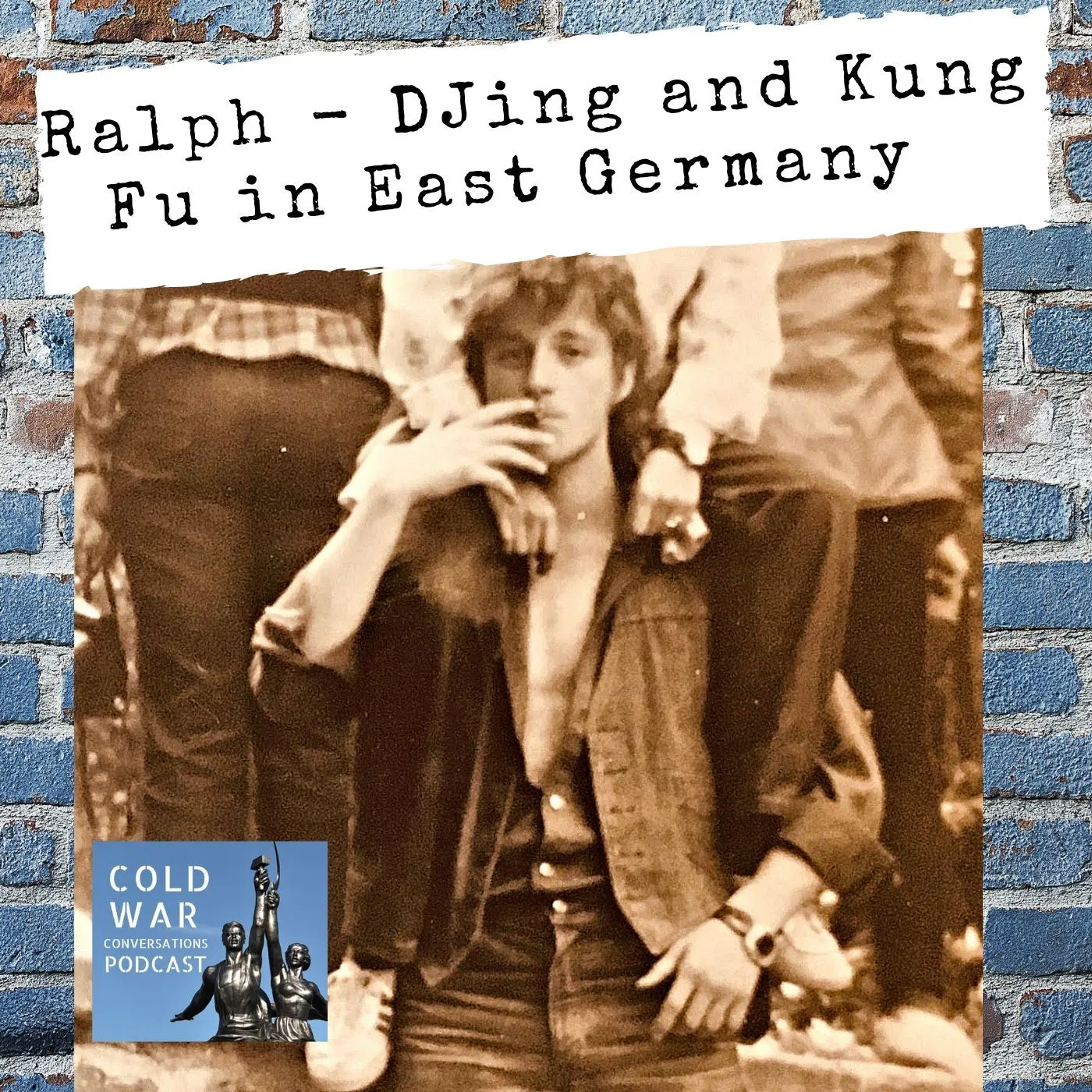
S8 Ep 177Ralph - DJing and Kung Fu in East Germany (177)
Ralph Hänel tells some unique, strange and funny short stories about childhood and youth in East Germany. We talk about the experiences of his parents in the closing stages of World War 2, his schooling, and how he became a DJ, winning a trip to the Soviet Union. Ralph is a great raconteur with virtually endless stories about his life in East Germany. Hear how he saw Fidel Castro, met the first German astronaut in space and had a girlfriend, whose father was in the people’s police or was it the Stasi...? Ralph had a passion for martial arts, but in East Germany that wasn’t easy to pursue. Listen as Ralph tells how he found secret clubs and smuggled books into the country. However, his interest in martial arts brought him under suspicion and don’t miss subsequent episodes where Ralph’s life takes a turn for the worst when he is arrested by the Stasi and sentenced to 3 and half years in prison. I could really use your support to continue the podcast. A small monthly donation via Patreon is ideal, plus you will get the sought after CWC coaster as a thank you and bask in the warm glow of knowing you are helping to preserve Cold War history. Just go to https://coldwarconversations.com/donate/ If a financial contribution is not your cup of tea, then you can still help us by leaving written reviews wherever you listen to us as well as sharing us on social media. It really helps us get new guests on the show. I am delighted to welcome Ralph to our Cold War conversation… There’s further information on this episode in our episode notes which can also be found here. https://coldwarconversations.com/episode177/ If you can’t wait for next week’s episode do visit our Facebook discussion group where guests and listeners continue the Cold War Conversation. Just search Cold War Conversations in Facebook. Thank you very much for listening. Radio GDR If you are interested in East Germany we can highly recommend our friends over at Radio GDR. Support the project! https://coldwarconversations.com/donate/ Follow us on Twitter https://twitter.com/ColdWarPod Facebook https://www.facebook.com/groups/coldwarpod/ Instagram https://www.instagram.com/coldwarconversations/ Youtube https://youtube.com/@ColdWarConversations 0:00 Introduction and Ralph Hänel's childhood in East Germany 7:01 Ralph's experiences as a DJ and trip to the Soviet Union 15:18 Life in East Germany: Dichotomy and the black market for Western records 22:56 Encounters with famous people in East Germany 27:33 Ralph's journey into martial arts and a secret judo club 35:14 Communication with the West: Pen pals and smuggling books 46:53 Living in East Berlin: Observations and encounters 1:00:26 Ralph Hänel's life in East Berlin during the Cold War 1:15:29 Challenges of East-West communication under Secret Service surveillance Chapters powered by PodcastAI✨ Learn more about your ad choices. Visit podcastchoices.com/adchoices
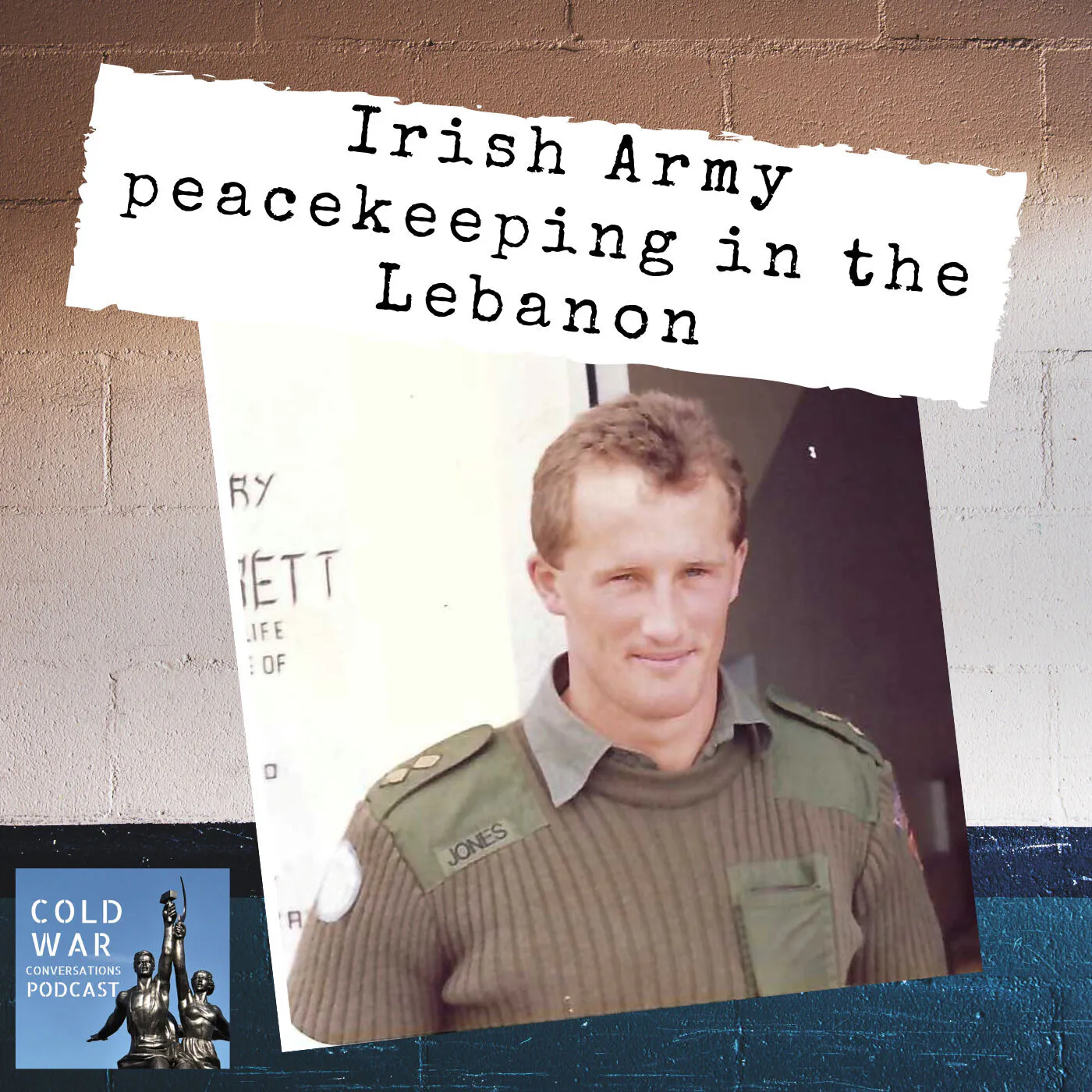
S8 Ep 176Irish Army peacekeeping in the Lebanon (176)
Adrian Jones was commissioned as a lieutenant in the Irish Army in 1983. As a 23 year old officer he served in the United Nations Peacekeeping Force UNIFIL in Southern Lebanon from 1987 to 1988. The Irish battalion consisted of 580 personnel which were rotated every six months, plus almost 100 others in UNIFIL headquarters and the Force Mobile Reserve. In all, 30,000 Irish soldiers served in Lebanon over 23 years. The Irish troops in Lebanon were initially intended to supervise the withdrawal of the Israel Defense Forces from the area after an invasion in 1978 and to prevent fighting between the Palestine Liberation Organization forces and Israel, however beginning in 1985, the Israeli army scaled back its numbers, remaining only in support of the South Lebanon Army in Southern Lebanon which was fighting the newly established Iranian proxy spinoff of the Amal movement – the Arab Shia Hezbollah. We hear about Irish officer training, the position of Irish neutrality during the Cold War. Among many subjects Adrian also talks about the challenges of his peacekeeping mission, rules of engagement and the deaths of Irish peacekeepers. Extra info, book details and videos are here https://coldwarconversations.com/episode176/ Now I need help to continue to track down these unknown stories of the Cold war and ensure they are preserved before they are lost. If you can spare it I’m asking listeners to pledge a small monthly amount per month to help keep us on the air (larger amounts are welcome too) plus you can get a sought after CWC coaster as a monthly financial supporter of the podcast and you bask in the warm glow of knowing you helping preserve Cold War history. Just go to https://coldwarconversations.com/donate/ James Chilcott is your host today and I am delighted to welcome Adrian Jones to our Cold War conversation… Support the project! https://coldwarconversations.com/donate/ Follow us on Twitter https://twitter.com/ColdWarPod Facebook https://www.facebook.com/groups/coldwarpod/ Instagram https://www.instagram.com/coldwarconversations/ Youtube https://youtube.com/@ColdWarConversations 0:00 Introduction and early life of Adrian Jones 2:08 SListener Donations Request 7:34 Discussion on the role of the Irish military in global peacekeeping 16:23 Irish neutrality during the Cold War 24:55 Adrian's deployment to Lebanon: preparations and initial impressions 30:12 The mission in South Lebanon and changing political landscape 50:24 Reflections on the Lebanon tour and challenges of peacekeeping 1:00:00 Navigating communication and politics in a pre-cell phone era 1:04:00 Looking back at the time in Lebanon and closure Chapters powered by PodcastAI✨ Learn more about your ad choices. Visit podcastchoices.com/adchoices
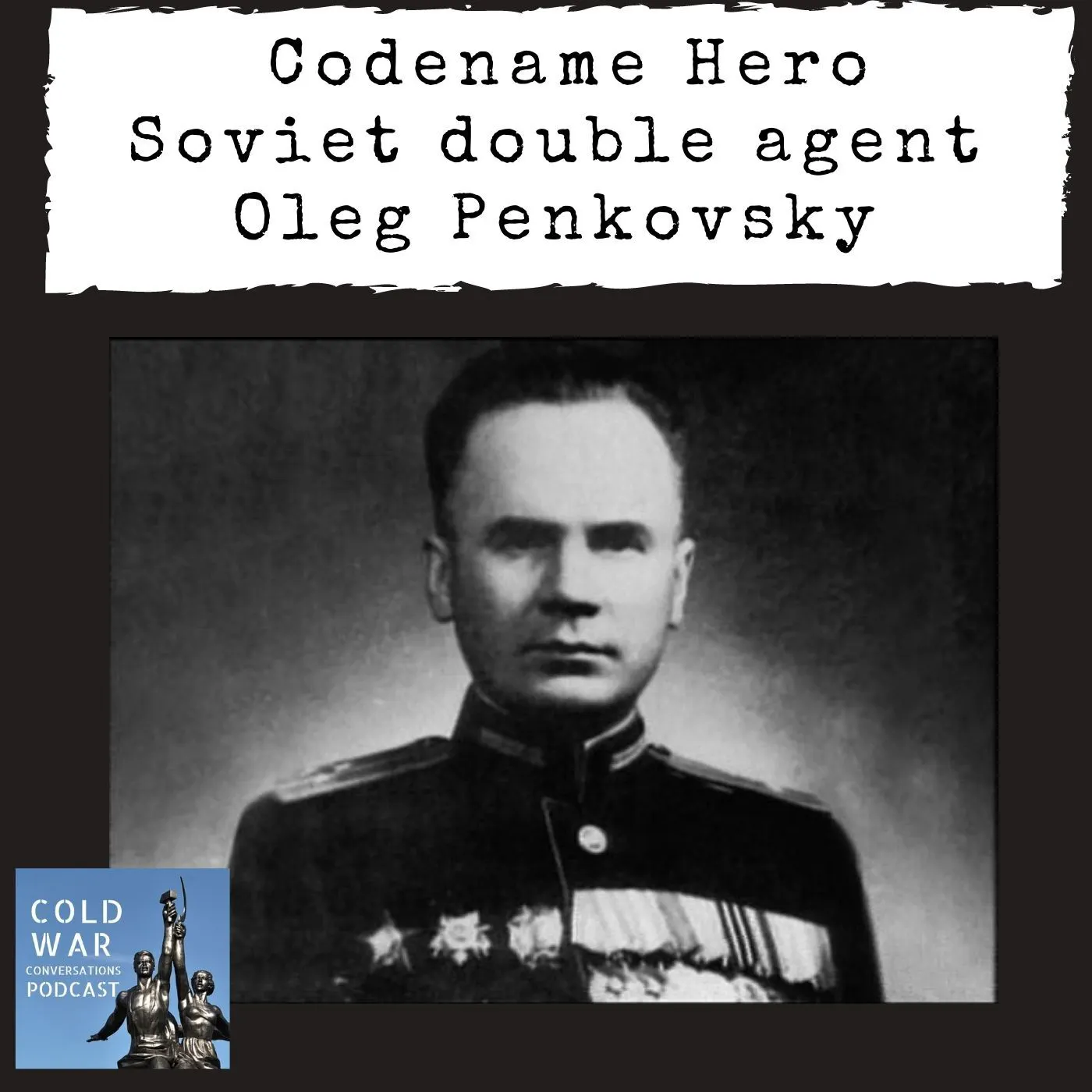
S8 Ep 175Codename Hero - Soviet double agent Oleg Penkovsky (175)
In August 1960, a Soviet colonel called Oleg Penkovsky contacted the West to offer to work as a 'soldier warrior for the free world. MI6 and the CIA ran Penkovsky jointly, in an operation that ran through the showdown over Berlin and the Cuban Missile Crisis. He provided crucial intelligence, including photographs of rocket manuals that helped Kennedy end the Cuba crisis and avert a war. Codenamed HERO, Penkovsky is widely seen as the most important spy of the Cold War, and the CIA-MI6 operation, run as the world stood on the brink of nuclear destruction. We speak with Jeremy Duns, the author of Dead Drop also called Codename Hero in the US which investigates exactly how did the Russians detect Penkovsky, and why did they let him continue his contact with his handlers for months afterwards? Described as thrilling, evocative and hugely controversial, the book blows apart the myths surrounding one of the Cold War's greatest spy operations. Extra info, book details and videos are here https://coldwarconversations.com/episode175/ If you are enjoying the podcast please leave a written review in Apple podcasts or share us on social media. By telling your friends you can really help us grow the number of listeners. Now I need help to continue to track down these unknown stories of the Cold war and ensure they are preserved before they are lost. If you can spare it I’m asking listeners to pledge a small monthly amount per month to help keep us on the air (larger amounts are welcome too) plus you can get a sought after CWC coaster as a monthly financial supporter of the podcast and you bask in the warm glow of knowing you helping preserve Cold War history. Just go to https://coldwarconversations.com/donate/ I am delighted to welcome Jeremy Duns to our Cold War conversation… If you can’t wait for next week’s episode do visit our Facebook discussion group where guests and listeners continue the Cold War Conversation. Just search Cold War Conversations in Facebook. Support the project! https://coldwarconversations.com/donate/ Follow us on Twitter https://twitter.com/ColdWarPod Facebook https://www.facebook.com/groups/coldwarpod/ Instagram https://www.instagram.com/coldwarconversations/ Youtube https://youtube.com/@ColdWarConversations 0:00 Introduction and guest - Jeremy Duns 2:33 The story of Soviet Colonel Oleg Penkovsky and his disillusionment with the Soviet Union 10:17 The intelligence Penkovsky provided to MI6 and CIA and its impact 23:30 The lack of satellite cover over the Soviet Union and Penkovsky's methods of passing information 30:06 The complications and aftermath of Penkovsky's discovery and his influence on the Cuban Missile Crisis 36:00 Arrests of Penkovsky and Greville Wynn, Wynn's trial and sentence 42:31 The fate of Oleg Penkovsky and how he was betrayed 45:32 DCode Name Hero: books on Oleg Pankovsky 46:07 Sponsor: Acknowledging patron support 46:58 End of episode and thanks to listeners Chapters powered by PodcastAI✨ Learn more about your ad choices. Visit podcastchoices.com/adchoices
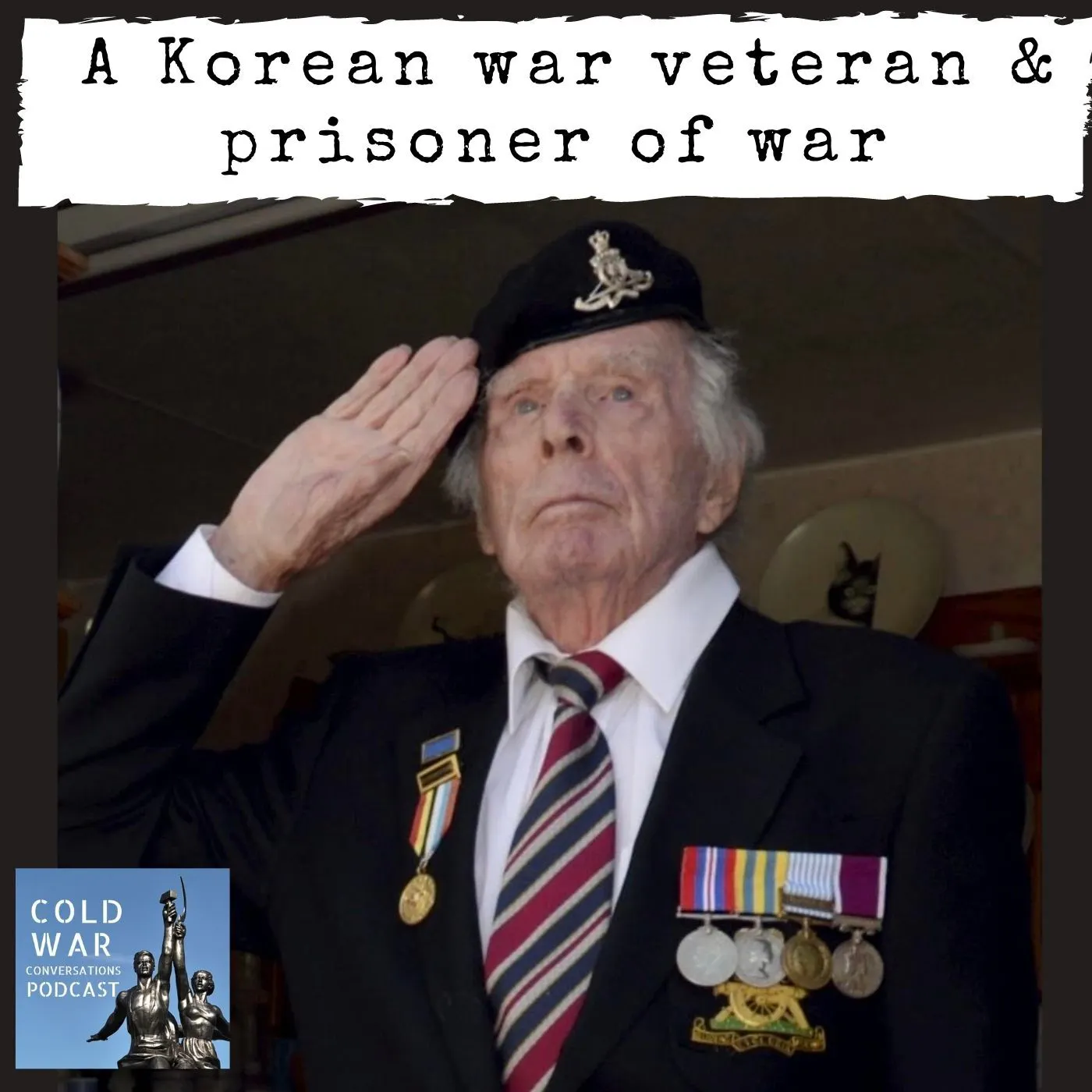
S8 Ep 174Korean war veteran & prisoner of war (174)
70 years ago today would have been the middle of a desperate battle by outnumbered British forces at the battle of the Imjin River in Korea. The Korean War was among the most destructive conflicts of the modern era, and one of the few times when the Cold War turned hot. There were approximately 3 million war fatalities and a larger proportional civilian death toll than World War II or the Vietnam War. Tommy Clough is one of the last survivors of the battle of the Imjin River and was just 19 when the Gloucestershire Regiment were cut off from their brigade by more than 10,000 Chinese troops in 1951. Outnumbered and surrounded, they dug in on a hilltop for three days, repelling attack after attack until their ammunition ran out. The battle of the Imjin River was one of the most famous of the Korean War. We hear in detail Tommy’s experiences in the days up to the battle, as well as the desperate fighting to hold off the Chinese army as food, water and ammunition ran out. Inevitably the Gloucestershire Regiment was forced to surrender and Tommy's story continues, with the hardship and privation of the 500 miles march to their prisoner of war camp. Following an escape attempt, Tommy is held and handcuffed for 6 weeks in solitary confinement including a lengthy period held in a small cage. It’s an incredible story of fortitude and resilience under the most extreme circumstances and I am so humbled and honoured to be able to share this story with you. I’d like to thank The History of War magazine for putting me in contact with the Soldiers of Gloucestershire Museum and subsequently Tommy. Extra info and videos are here https://coldwarconversations.com/episode174/ If you are enjoying the podcast please leave a written review in Apple podcasts or share us on social media. By telling your friends you can really help us grow the number of listeners. Now I need help to continue to track down these unknown stories of the Cold war and ensure they are preserved before they are lost. If you can spare it I’m asking listeners to contribute at least $3 USD per month to help keep us on the air (larger amounts are welcome too) plus you can get a sought after CWC coaster as a monthly financial supporter of the podcast and you bask in the warm glow of knowing you helping preserve Cold War history. Just go to https://coldwarconversations.com/donate/ I am delighted to welcome Tommy Clough to our Cold War conversation… If you can’t wait for next week’s episode do visit our Facebook discussion group where guests and listeners continue the Cold War Conversation. Just search Cold War Conversations in Facebook. Thank you very much for listening. It is really appreciated Support the project! https://coldwarconversations.com/donate/ Follow us on Twitter https://twitter.com/ColdWarPod Facebook https://www.facebook.com/groups/coldwarpod/ Instagram https://www.instagram.com/coldwarconversations/ Youtube https://youtube.com/@ColdWarConversations 0:00 Introduction and Tommy Clough's first encounter with the enemy 2:39 Sponsor: History of War Magazine and request for financial support 2:49 Tommy Clough's enlistment and journey to Korea 13:45 Encounters and incidents during the advance towards the Yellow River 22:30 Observations at the Imjin River and the ensuing Chinese attack 30:18 The desperate measures and the moment of capture 47:41 Arrival at the POW camp and survival strategies 57:12 Escape attempts, interrogation, and hard labor sentence 1:05:38 The end of the war and Tommy's journey back home 1:11:07 Transition to civilian life and post-war experiences 1:18:50 Tommy's silence about the war and eventual return to Korea 1:20:25 Closing remarks and invitation to join the Facebook discussion Chapters powered by PodcastAI✨ Learn more about your ad choices. Visit podcastchoices.com/adchoices
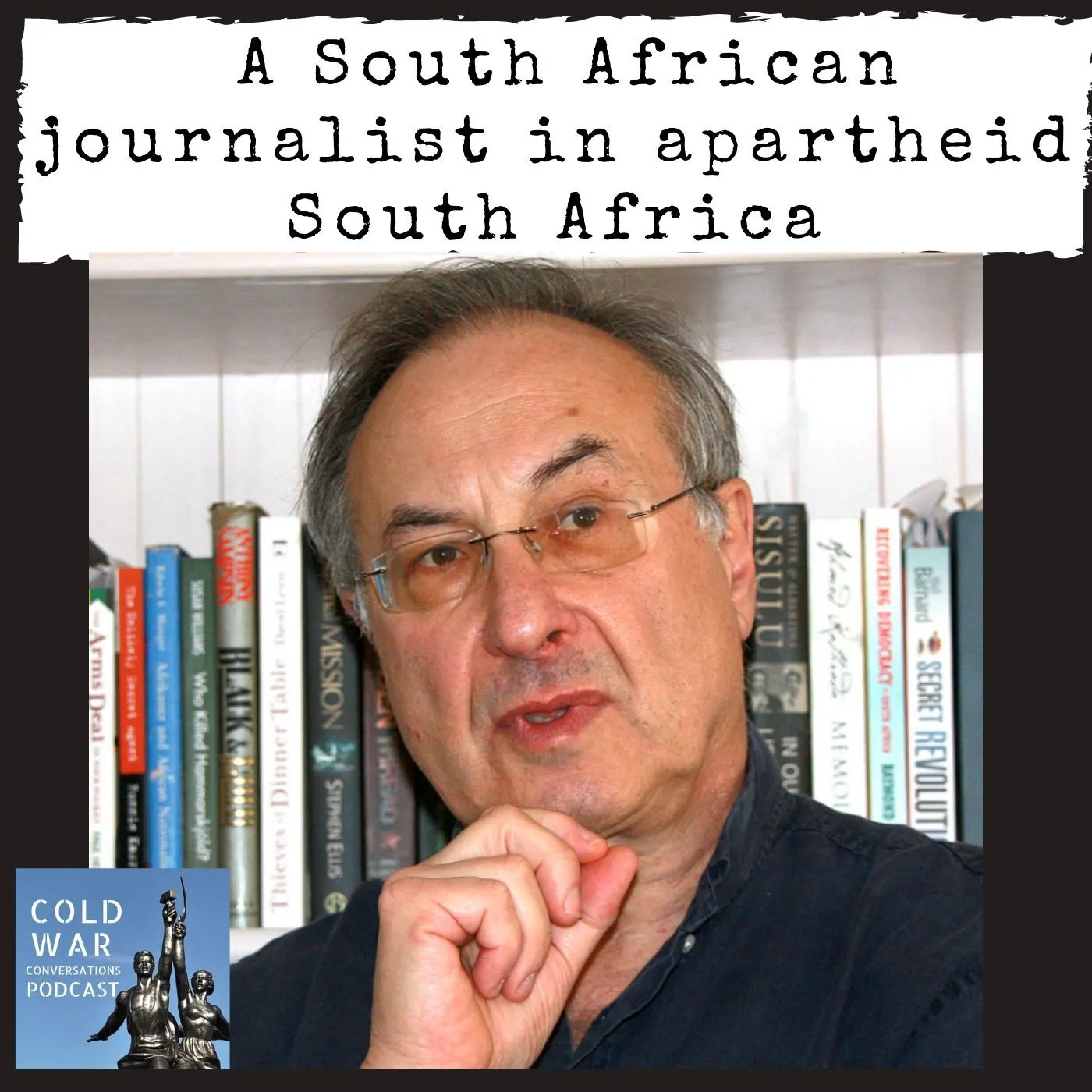
S8 Ep 173A journalist in apartheid South Africa (173)
John Matisonn is a South African journalist who grew up in the suburbs in Johannesburg. In 1979 he was sentenced to jail for refusing to reveal his news sources. Matisonn describes life as a journalist in apartheid South Africa as well as his meetings with some of the key South African personalities of that period. He met with several South African Prime leaders including John Vorster, PW Botha and FW de Klerk who eventually oversaw the end of white majority rule. Also included are details of several meetings Matisonn had with Nelson Mandela the first black President of South Africa. We also hear about Soviet training for African National Congress leaders and the South African nuclear weapons programme. Now I could really use your support to help me to continue to produce these podcasts. A monthly donation of $4, £3 or €3 via Patreon will really and you will get the sought after CWC coaster as a thank you and bask in the warm glow of knowing you are helping to preserve Cold War history. Just go to https://coldwarconversations.com/donate/ If a financial contribution is not your cup of tea, then you can still help us by leaving written reviews wherever you listen to us as well as sharing us on social media. It really helps us get new guests on the show. Special thanks to several listeners who left 5 star reviews including Louth23, monster ceilidh band and Mortificating. Peter Ryan is our interviewer today and I am delighted to welcome John Matisonn to our Cold War conversation… There’s further information on this episode in our episode notes which can be found here. https://coldwarconversations.com/episode173/ If you can’t wait for next week’s episode do visit our Facebook discussion group where guests and listeners continue the Cold War Conversation. Just search Cold War Conversations in Facebook. Thank you very much for listening. It is really appreciated – goodbye. Support the project! https://coldwarconversations.com/donate/ Follow us on Twitter https://twitter.com/ColdWarPod Facebook https://www.facebook.com/groups/coldwarpod/ Instagram https://www.instagram.com/coldwarconversations/ Youtube https://youtube.com/@ColdWarConversations 0:00 Introduction of guest John Matisonn 2:02 Sponsor: Request for listener support and acknowledgments 2:34 Matisonn's experience as a journalist in Apartheid South Africa 7:00 Interplay of Cold War dynamics in South Africa 10:03 Nelson Mandela's relationship with Communism and the Soviet Union 14:27 ANC leaders' training in Soviet Union and GDR 21:02 South African collaboration with Western intelligence services 26:26 The concept of "linkage" in the Cold War and Cuba's involvement 29:38 South Africa's nuclear program 35:27 Reagan administration's approach towards South Africa 42:48 Matisonn's personal interactions with Apartheid era leaders 46:06 Introduction to John Matisonn's book "God, Spies and Lies" 48:25 Sponsor: Acknowledging Patrons and Sponsors 49:11 Invitation to Join Facebook Discussion Group Chapters powered by PodcastAI✨ Learn more about your ad choices. Visit podcastchoices.com/adchoices
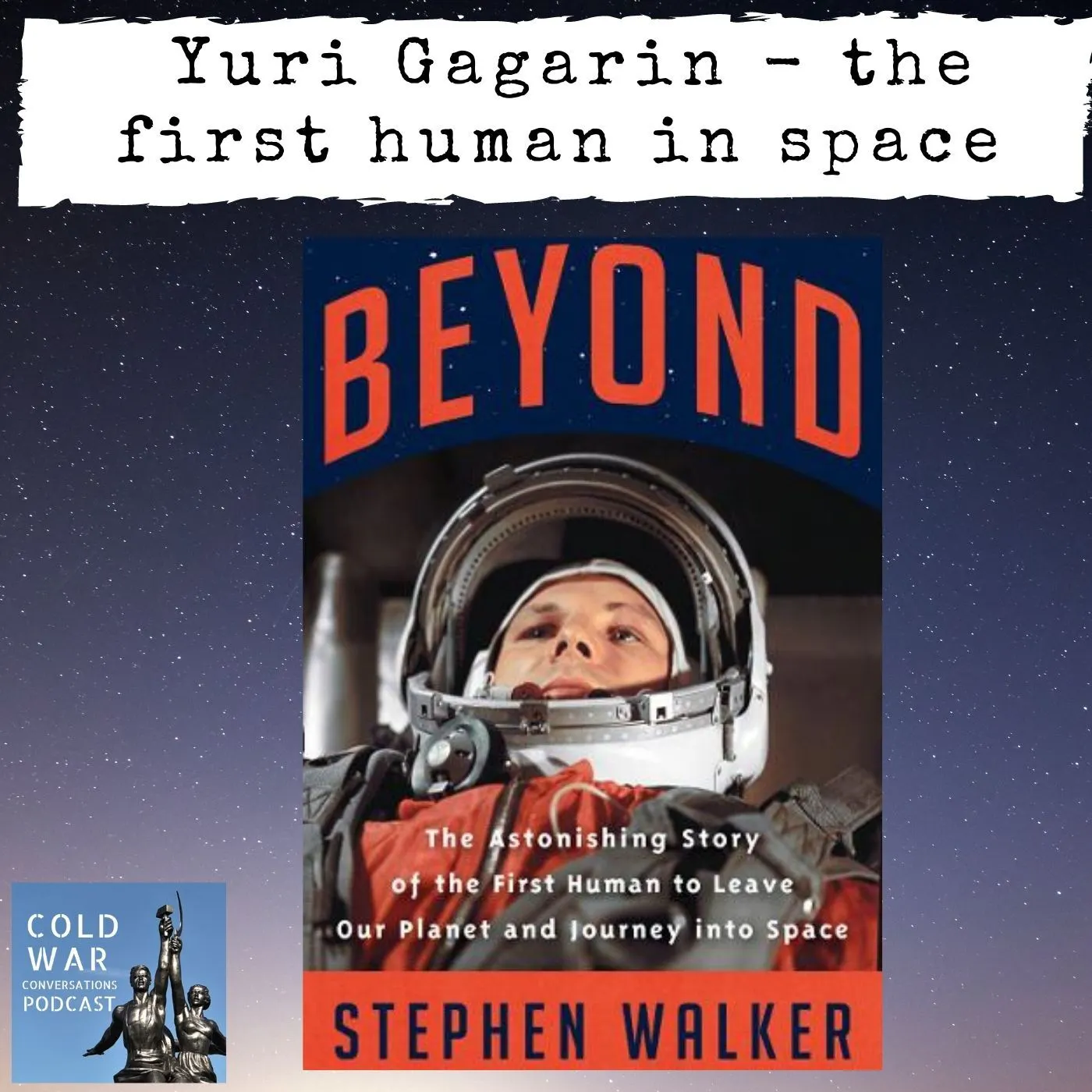
S8 Ep 172Yuri Gagarin - The first human in space (172)
9.07 a.m., April 12, 1961. A top-secret rocket site in the USSR. A young Russian sits inside a tiny capsule on top of the Soviet Union’s most powerful intercontinental ballistic missile and blasts into the skies. His name is Yuri Gagarin. And he is about to make history. We speak with Stephen Walker author of “Beyond” a new book that tells the thrilling story behind that epic flight on its sixtieth anniversary. Drawing on extensive original research and the vivid testimonies of eyewitnesses, many of whom have never spoken before, Stephen unpacks secrets that were hidden for decades and takes you into the drama of one of humanity's greatest adventures. Now I thought I knew Gagarins’s story, but discovered so much more after reading this book. The episode just scratches the surface and there is so much more in the book itself, Stephen and I could have talked for hours. This podcast wouldn’t exist without the generous support of our Patreons If you are enjoying the podcast, and want to continue to hear it please support me via a small (or large) monthly donation. Plus, you will get the sought after CWC coaster as a thank you and bask in the warm glow of knowing you are helping to preserve Cold War history. Just go to https://coldwarconversations.com/donate/ If a financial contribution is not your cup of tea, then you can still help us by leaving written reviews wherever you listen to us as well as sharing us on social media. It really helps us get new guests on the show. I am delighted to welcome Stephen Walker to our Cold War conversation… There are a book giveaway and further information on this episode in our episode notes here. https://coldwarconversations.com/episode172/ If you can’t wait for next week’s episode do visit our Facebook discussion group where guests and listeners continue the Cold War Conversation. Just search Cold War Conversations in Facebook. Thank you very much for listening. It is really appreciated – goodbye. Support the project! https://coldwarconversations.com/donate/ Follow us on Twitter https://twitter.com/ColdWarPod Facebook https://www.facebook.com/groups/coldwarpod/ Instagram https://www.instagram.com/coldwarconversations/ Youtube https://youtube.com/@ColdWarConversations 0:00 Introduction 4:19 The significance of the first man in space and misconceptions 10:14 The Soviet Union’s involvement in the space race 18:37 The KGB's insistence on having a bomb onboard the spacecraft 27:58 The secrecy of the Soviet space program 33:44 The Myth of the Lost cosmonauts 38:22 Gagarin's landing and the unravelling of decades-long lies 52:20 Gagarin's demeanour during the launch and the aftermath of the landing 1:02:01 The decision to leapfrog the Soviets in the space race and Gagarin's life post-space mission 1:10:21 Closing and acknowledgements of patrons Chapters powered by PodcastAI✨ Learn more about your ad choices. Visit podcastchoices.com/adchoices
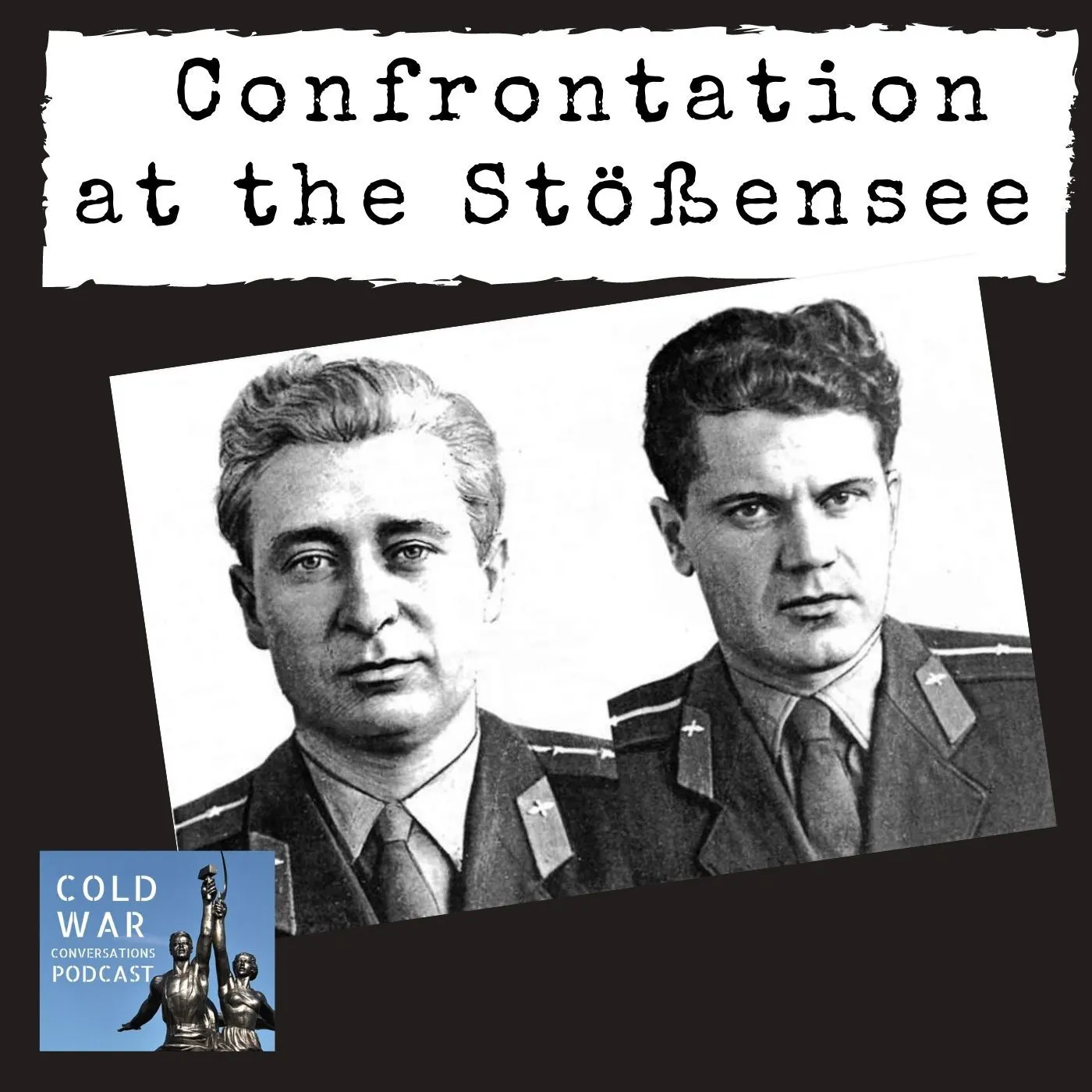
S8 Ep 171Confrontation at the Stößensee (171)
In April 1966, a state-of-the-art Soviet aircraft, the Yak-28P crashed into the British Sector of West Berlin. This intelligence gift to the Allied forces resulted in a tense confrontation with the Soviet forces We speak with historian Bernd von Kostka of the Allied Museum in Berlin-Dahlem who has researched this story for his upcoming book Capital of Spies: Intelligence agencies in Berlin during the Cold War which he co-authors with Sven Felix Kellerhoff. The book will be published in October in the US and in December 2021 in GB. This podcast wouldn’t exist without the generous support of our Patreons so if you are enjoying the podcast, you can show your support via a small (or large) monthly donation. Plus you will get the sought after CWC coaster as a thank you and bask in the warm glow of knowing you are helping to preserve Cold War history. Just go to https://coldwarconversations.com/donate/ If a financial contribution is not your cup of tea, you can still help us by leaving written reviews wherever you listen to us and sharing us on social media. It really helps us get new guests on the show. I’d like to thanks Beam2, Woodhead4780 and Tree Fella. for their 5-star reviews on Apple Podcasts I am delighted to welcome Bernd to our Cold War conversation… There’s further information on this episode in our show notes which can also be found as a link in your podcast app here. https://coldwarconversations.com/episode171 If you can’t wait for next week’s episode, visit our Facebook discussion group where guests and listeners continue the Cold War Conversation. Just search Cold War Conversations in Facebook. Thank you very much for listening. It is really appreciated – goodbye. Support the project! https://coldwarconversations.com/donate/ Follow us on Twitter https://twitter.com/ColdWarPod Facebook https://www.facebook.com/groups/coldwarpod/ Instagram https://www.instagram.com/coldwarconversations/ Youtube https://youtube.com/@ColdWarConversations 0:00 Introduction and crash of Soviet interceptor in British sector of Berlin 0:49 Interview with historian Bernd von Kostka and discussion on his upcoming book 2:34 Overview of Cold War Berlin in 1966 and frequent overflights by Soviet aircraft 7:06 Examination of the Yak 28p crash site and its significance 14:44 Analysis of the Soviet Union's limited control in West Berlin and the tense standoff at the crash site 18:06 Debunking of common rumors surrounding the crash and discussion on the aftermath 20:23 British attempts to extract secrets from the crashed aircraft and discovery of the radar equipment 23:22 Negotiations and handover of the wreckage to the Soviets 30:19 Exploring the impact and memory of the incident in Germany and the Soviet Union 37:20 Posthumous honors for the pilots and introduction to the book "Capital of Spies" 41:06 Acknowledgement of the patrons and invitation to join the Facebook discussion group 41:50 Closing remarks Chapters powered by PodcastAI✨ Learn more about your ad choices. Visit podcastchoices.com/adchoices
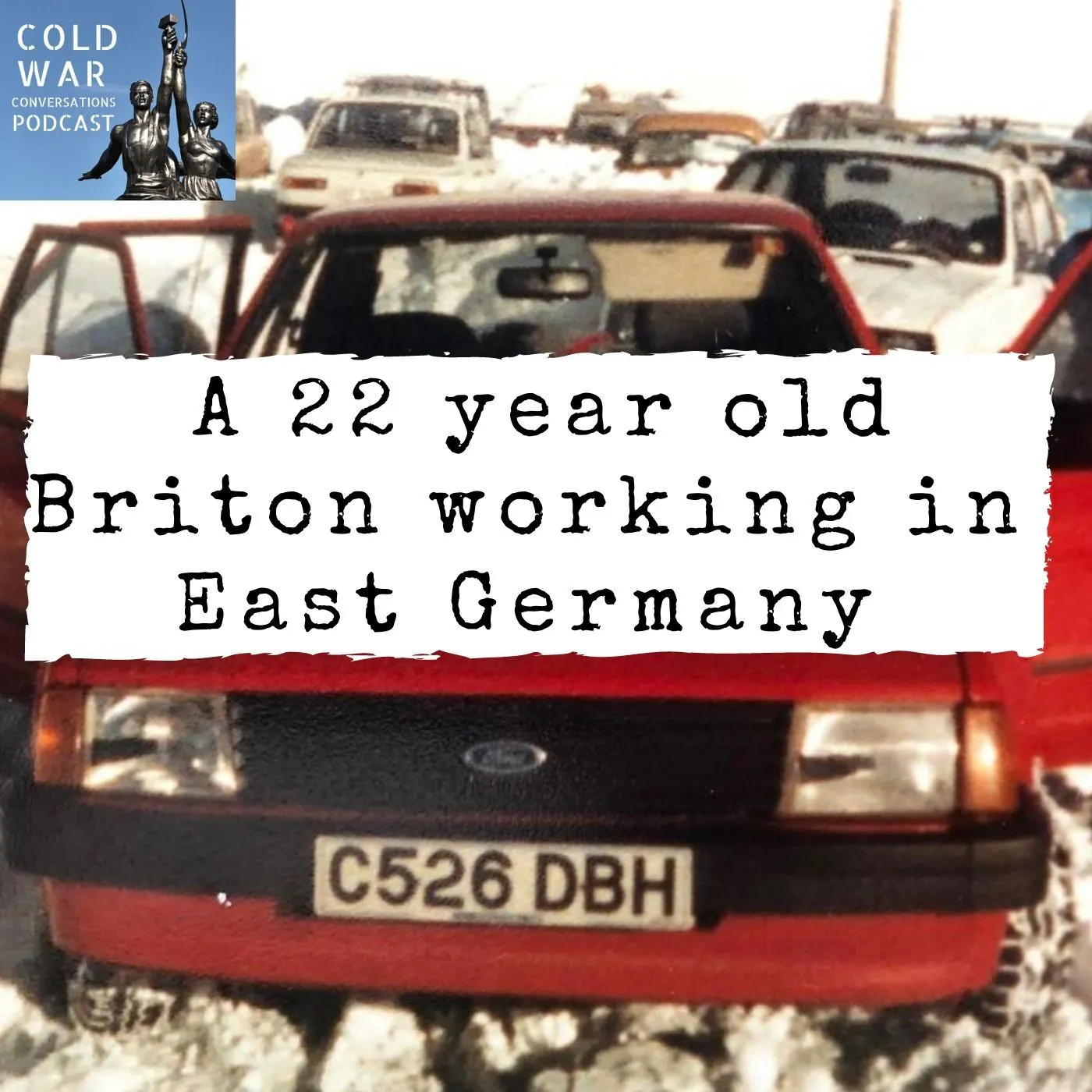
S8 Ep 170A 22 year old Briton working in East Germany (170)
We speak with Chris Summers who as a 22 year old was sent by his employers to East Germany in a Ford Escort to install British factory machinery. He provides us with interesting insights into life in the provinces of the GDR. Long term listeners of the podcast will recognise one of Chris’s colleagues was Tim, husband of Antje who was our guest in episode 82 “A Cold War Romance” available here https://coldwarconversations.com/episode82/ Chris was also sent to Poland, the Soviet Union, Czechoslovakia and Yugoslavia where he tells what he saw and experienced in the latter half of the 1980s. If you can spare it I’m asking listeners to contribute at least $3 USD per month to help keep us on the air (larger amounts are welcome too) plus you can get a sought after CWC coaster as a monthly financial supporter of the podcast and you bask in the warm glow of knowing you helping preserve Cold War history. Just go to https://coldwarconversations.com/donate/ I am delighted to welcome Chris Summers to our Cold War conversation… There’s further information on this episode in our show notes, which can also be found as a link in your podcast app here. https://coldwarconversations.com/episode170/ If you can’t wait for next week’s episode do visit our Facebook discussion group where guests and listeners continue the Cold War Conversation. Just search Cold War Conversations in Facebook. Thank you very much for listening. It is really appreciated Radio GDR If you are interested in East Germany we can highly recommend our friends over at Radio GDR. Support the project! https://coldwarconversations.com/donate/ Follow us on Twitter https://twitter.com/ColdWarPod Facebook https://www.facebook.com/groups/coldwarpod/ Instagram https://www.instagram.com/coldwarconversations/ Youtube https://youtube.com/@ColdWarConversations 0:00 Introduction and toast anecdote 0:50 Interview with Chris Summers about his work with Detexamat in East Germany 15:39 Experiencing nightlife in East Germany 20:26 Independent tourism during the Cold War 26:31 Installing equipment and training locals in East Germany 38:59 Chris Summers' work experiences in Poland and Russia 45:57 Experiences in Soviet factories and Georgian culture 49:09 Unique experiences and restrictions in the Soviet Union 54:45 Chris Summers' work in Czechoslovakia 56:33 Tim's wedding and Ancher's arrival in the UK 59:36 Wrap up and donation information Chapters powered by PodcastAI✨ Learn more about your ad choices. Visit podcastchoices.com/adchoices
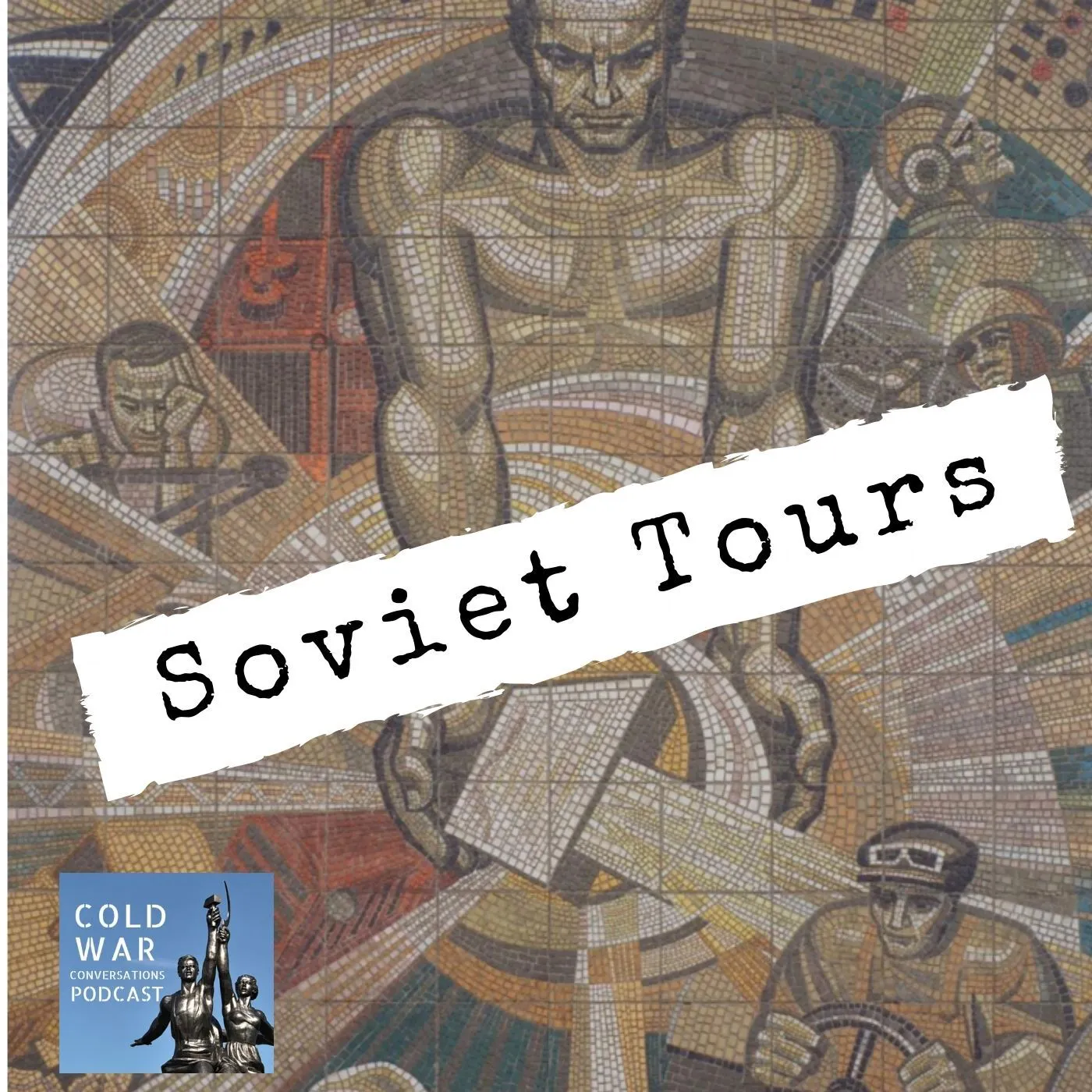
S7 Ep 169Bonus - Soviet Tours (169)
bonusSoviet Tours is a Berlin-based tour operator focussed on off-the-beaten-path destinations across the globe. Their core area, as the name suggests, lies mainly in and around the former USSR. From the mystic forests of Central Siberia to the austere peaks of the High Caucasus, from the scorching deserts of the Soviet Stans to the windswept steppes of Southern Russia. We talk with the founder of Soviet Tours Gianluca Pardelli. He is a Berlin-based photojournalist, adventurer and travel author who is fascinated by that enigmatic country that was once known as the Union of Soviet Socialist Republics. If you are enjoying the podcast, you can show your support via a monthly donation of $4, £3 or €3 via Patreon, plus you will get the sought after CWC coaster as a thank you and bask in the warm glow of knowing you are helping to preserve Cold War history. Just go to https://coldwarconversations.com/donate/ If a financial contribution is not your cup of tea, then you can still help us by leaving written reviews wherever you listen to us as well as sharing us on social media. It really helps us get new guests on the show. Image by Arsenyi Kotov https://www.instagram.com/northern.friend/ Support the project! https://coldwarconversations.com/donate/ Follow us on Twitter https://twitter.com/ColdWarPod Facebook https://www.facebook.com/groups/coldwarpod/ Instagram https://www.instagram.com/coldwarconversations/ Youtube https://youtube.com/@ColdWarConversations 0:00 Introduction and background of Gianluca Pardelli 4:07 The birth of Gianluca's interest in the Soviet Union 8:01 Unique itineraries offered by Soviet Tours 13:41 Ethics of photographing locals during tours 18:45 The remote autonomous republics in the former Soviet Union 24:03 Soviet Tours' expansion into Africa 27:12 Short tours and volunteer programs 33:56 Favorite region of the former Soviet Union 35:46 Contact information for Gianluca Pardelli and Soviet Tours 36:14 Acknowledging patrons and sponsors Chapters powered by PodcastAI✨ Learn more about your ad choices. Visit podcastchoices.com/adchoices
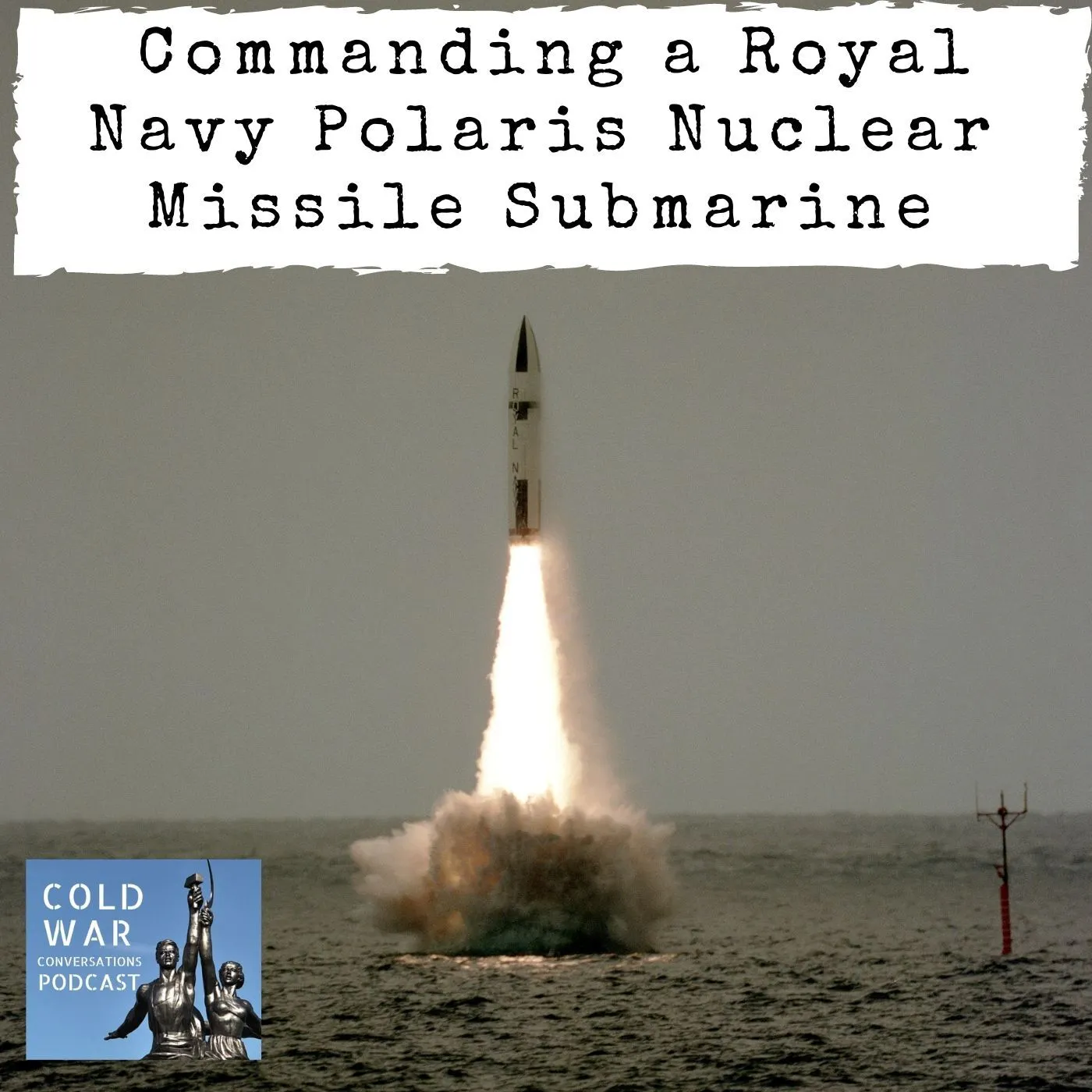
S7 Ep 168Commanding a Cold War Royal Navy Polaris Nuclear Missile Submarine (168)
Our conversation with Rob Forsyth continues when he became Executive Officer - and in command on occasions - of HMS Repulse, a Polaris nuclear missile submarine. We hear in detail the challenges of command on these boats, their launch procedures and the conversations Rob had with his captain about the circumstances when they might refuse to launch the missiles. Rob tells of many fascinating incidents including a very close encounter with the Malin Head AGI, a notorious Soviet Spy trawler. We also hear about his promotion to “Teacher” or instructor for the Submarine Commanding Officers’ Qualifying Course aka “The Perisher” and his command of HMS Sceptre, a nuclear powered "hunter-killer" submarine. In the last section of our conversations, Rob tells us why his views on the British nuclear deterrent have changed. You can read more here http://www.whytrident.uk/ I could really use your support to help me to continue to produce these podcasts. A monthly donation of $4, £3 or €3 via Patreon will really help, plus you will get the sought after CWC coaster as a thank you and bask in the warm glow of knowing you are helping to preserve Cold War history. Just go to https://coldwarconversations.com/donate/ If a financial contribution is not your cup of tea, then you can still help us by leaving written reviews wherever you listen to us as well as sharing us on social media. It really helps us get new guests on the show. I am delighted to welcome Rob Forsyth to our Cold War conversation… There’s further information on this episode in our show notes which can also be found as a link in your podcast app here. https://coldwarconversations.com/episode168/ If you can’t wait for next week’s episode do visit our Facebook discussion group where guests and listeners continue the Cold War Conversation. Just search Cold War Conversations in Facebook. Thank you very much for listening. Support the project! https://coldwarconversations.com/donate/ Follow us on Twitter https://twitter.com/ColdWarPod Facebook https://www.facebook.com/groups/coldwarpod/ Instagram https://www.instagram.com/coldwarconversations/ Youtube https://youtube.com/@ColdWarConversations 0:00 Introduction and overview of the episode 0:59 Rob Forsyth's experiences on HMS Repulse, a Polaris nuclear missile submarine 5:43 Missile tests and weapons system readiness routine 11:19 Life on a submarine: staying active, alert, and coping with challenges 17:06 The psychological aftermath of patrols: crew members' struggles 23:47 Post-launch plans and moral implications of a nuclear attack 31:55 Anecdotes and stories from Rob's time with HMS Repulse 36:04 Rob's transition to a Perisher teacher and his experiences 49:42 Rob's command of HMS Sector and encounters with Soviet submarines 1:00:15 The financial and operational cost of Trident, and the UK's nuclear policy Chapters powered by PodcastAI✨ Learn more about your ad choices. Visit podcastchoices.com/adchoices
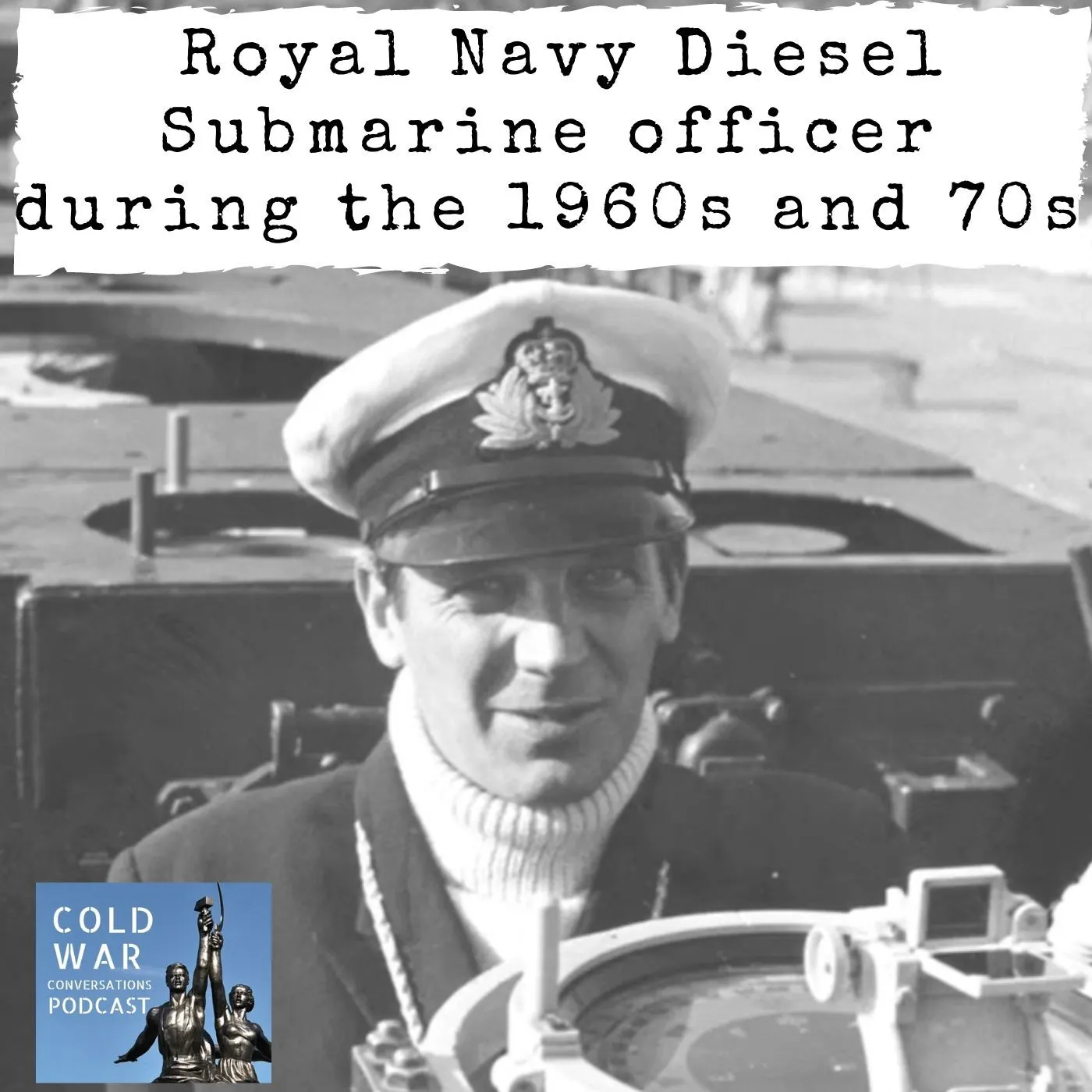
S7 Ep 167Cold War Royal Navy Diesel Submarine officer during the 1960s and 70s (167)
Commander Rob Forsyth joined submarines in1961. By March 1962 as a young officer, he joined HMS Auriga a 1945 vintage diesel submarine. Within 7 months the 22-year-old was loading live torpedoes and preparing for a war mission during the tense days of the Cuban Missile Crisis. Robs tell of many fascinating incidents in his career including under-ice operations and an incident where Rob's captain made an error that almost resulted in the total loss of submarine and crew. He also details what it was like to take the Submarine Commanding Officers’ Qualifying Course aka “The Perisher”. This six-month course is a prerequisite for the command of a submarine. Failure means your submarine career “perishes”. I could really use your support to help me to continue to produce these podcasts. A monthly donation of $4, £3 or €3 via Patreon will really help, plus you will get the sought after CWC coaster as a thank you and bask in the warm glow of knowing you are helping to preserve Cold War history. Just go to https://coldwarconversations.com/donate/ If a financial contribution is not your cup of tea, then you can still help us by leaving written reviews wherever you listen to us as well as sharing us on social media. It really helps us get new guests on the show. I am delighted to welcome Rob Forsyth to our Cold War conversation… There’s further information on this episode in our show notes which can also be found as a link in your podcast app here. https://coldwarconversations.com/episode167/ If you can’t wait for next week’s episode do visit our Facebook discussion group where guests and listeners continue the Cold War Conversation. Just search Cold War Conversations in Facebook. Thank you very much for listening. Support the project! https://coldwarconversations.com/donate/ Follow us on Twitter https://twitter.com/ColdWarPod Facebook https://www.facebook.com/groups/coldwarpod/ Instagram https://www.instagram.com/coldwarconversations/ Youtube https://youtube.com/@ColdWarConversations 0:00 Introduction 1:15 Guest Introduction: Rob Forsyth, Royal Navy Veteran 7:15 Submarine Training and the Cuban Missile Crisis Experience 16:04 Recollection of Near-Miss Submarine Incidents 18:10 Deployment to Canada and Leisure Time in Bermuda 22:17 Lessons from Under Ice Operations and Handling Submarine in Icy Conditions 28:47 Work on Sound Propagation in Water and Anti-Submarine Training 33:47 Trimmed Down Submarine and Operation Differences in War and Peace Mode 37:33 Life in the Far East Fleet and Goodwill Visits 46:23 Experience of Perisher and the Realities of Submarine Command 1:00:41 Maintaining Morale and Teamwork During Crisis 1:05:00 Acknowledgment of the Patrons and Episode Conclusion Chapters powered by PodcastAI✨ Learn more about your ad choices. Visit podcastchoices.com/adchoices
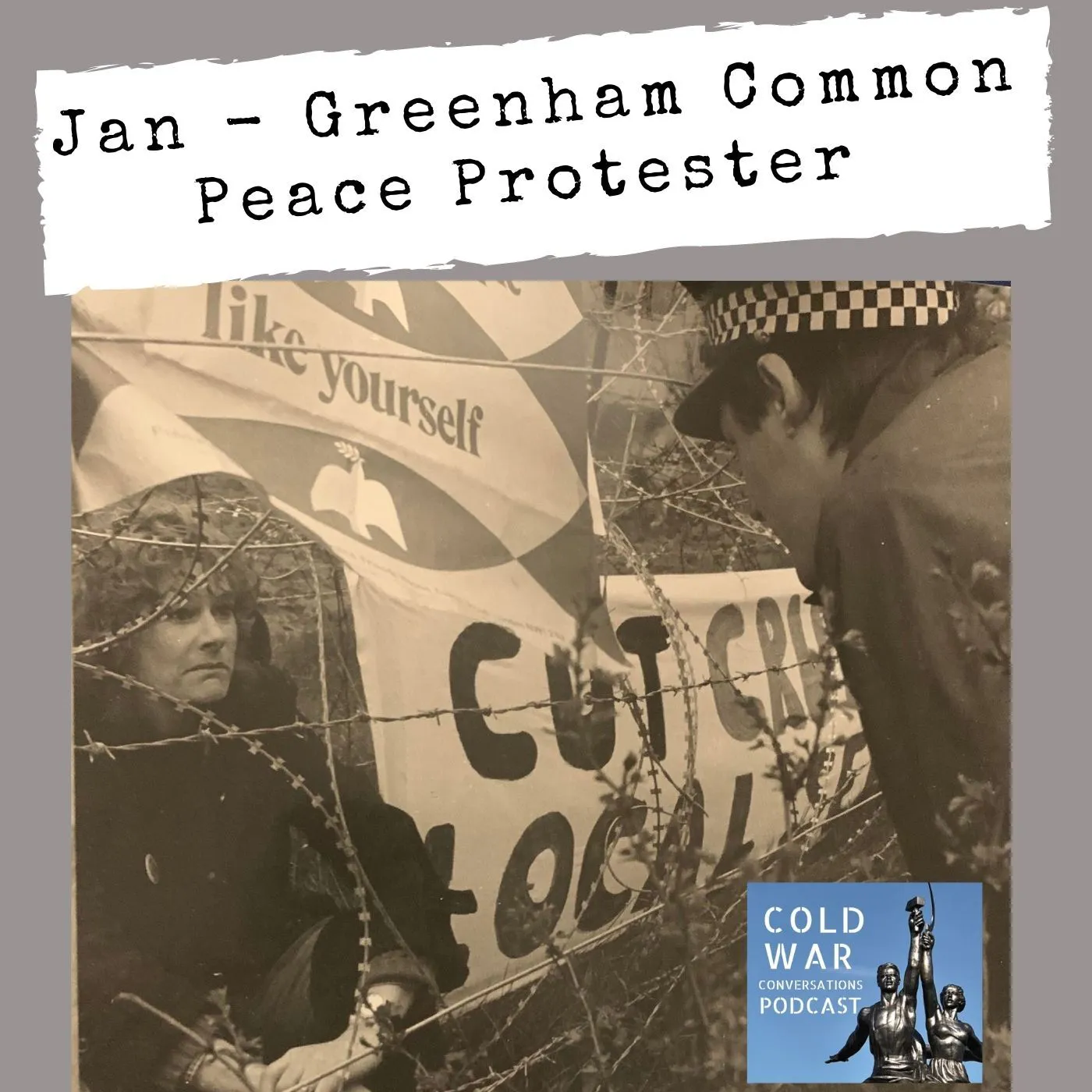
S7 Ep 166Jan - Greenham Common Peace Protester (166)
Greenham Common Women's Peace Camp was a protest camp established in 1981 to protest against the deployment of USAF controlled Ground Launched nuclear armed Cruise Missiles at RAF Greenham Common in Berkshire, England. On the eve of International Women’s’ Day 2021 I talk with Jan Castro-Fraser who chose to challenge the existence of nuclear weapons during the Cold War. We talk about her experiences at Greenham Common Peace Camp and other demonstrations in the 1980s as well as how her experiences in the peace movement changed her, empowered her and made her who she is today. If you are enjoying the podcast, you can show your support via a monthly donation of $4, £3 or €3 via Patreon, plus you will get the sought after CWC coaster as a thank you and bask in the warm glow of knowing you are helping to preserve Cold War history. Just go to https://coldwarconversations.com/donate/ If a financial contribution is not your cup of tea, then you can still help us by leaving written reviews wherever you listen to us as well as sharing us on social media. It really helps us get new guests on the show. I am delighted to welcome Jan to our Cold War conversation… There’s further information on this episode in our show notes which can also be found as a link here. https://coldwarconversations.com/episode166/ If you can’t wait for next week’s episode do visit our Facebook discussion group where guests and listeners continue the Cold War Conversation. Just search Cold War Conversations in Facebook. Thank you very much for listening. Support the project! https://coldwarconversations.com/donate/ Follow us on Twitter https://twitter.com/ColdWarPod Facebook https://www.facebook.com/groups/coldwarpod/ Instagram https://www.instagram.com/coldwarconversations/ Youtube https://youtube.com/@ColdWarConversations 0:00 Introduction and guest Jan Castro Fraser's experiences at Greenham Common Peace Camp 1:36 Appeal for financial support 6:19 Living conditions and political discussions at the peace camp 10:54 Activities, protests, and interactions with soldiers and police at the camp 15:50 Participation in the 14-mile human chain demonstration and the role of singing in protests 19:14 Reaction of locals, experiences with arrests, and court experiences 24:16 Reflections on the achievements of the Peace Movement and its lasting impact 28:56 Awareness and action on environmental issues and sharing history with younger generations 32:42 Memorable moments from Greenham and current stance on nuclear weapons 34:17 Acknowledgement of patrons and supporters Chapters powered by PodcastAI✨ Learn more about your ad choices. Visit podcastchoices.com/adchoices
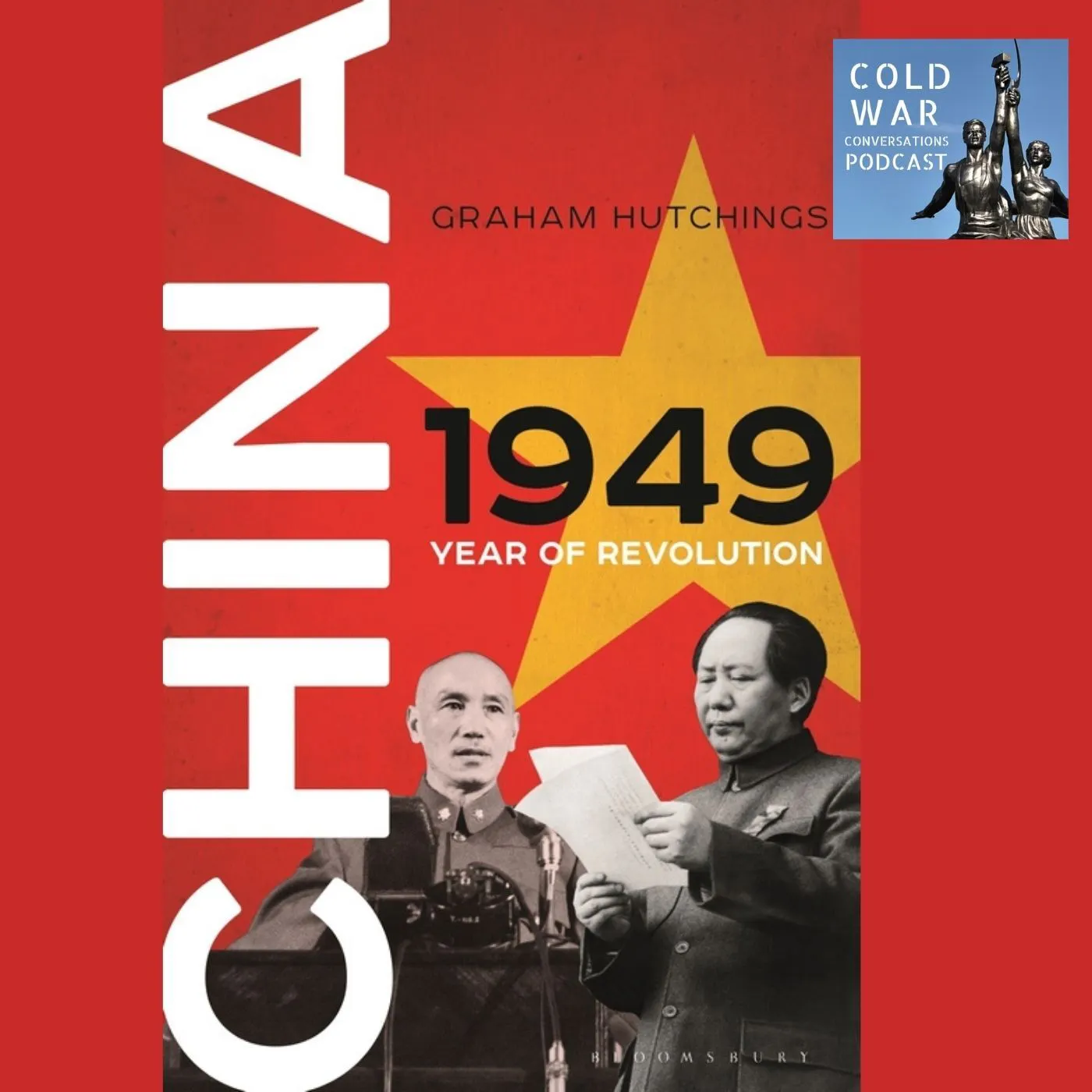
S7 Ep 165The China civil war and the independence of Taiwan (165)
The events of 1949 in China reverberated across the world and throughout the rest of the century. That tumultuous year saw the dramatic collapse of Chiang Kai-shek's 'pro-Western' Nationalist government, overthrown by Mao Zedong and his communist armies, and the foundation of the People's Republic of China. I talk with author Graham Hutchings who has written a vivid, gripping account of China in 1949 and the formation of an independent Taiwan. We discuss, the politics, the military campaigns, and the legendary Amethyst Incident where a British warship became embroiled in the Chinese Civil War. If you are enjoying the podcast, you can show your support via a monthly donation of $4, £3 or €3 via Patreon, plus you will get the sought after CWC coaster as a thank you and bask in the warm glow of knowing you are helping to preserve Cold War history. Just go to https://coldwarconversations.com/donate/ If a financial contribution is not your cup of tea, then you can still help us by leaving written reviews wherever you listen to us as well as sharing us on social media. It really helps us get new guests on the show. I am delighted to welcome Graham Hutchings to our Cold War conversation… There’s further information on this episode and a book giveaway in our episode notes which can also be found on this link. https://coldwarconversations.com/episode165 If you can’t wait for next week’s episode do visit our Facebook discussion group where guests and listeners continue the Cold War Conversation. Just search Cold War Conversations on Facebook. Thank you very much for listening. It is really appreciated Support the project! https://coldwarconversations.com/donate/ Follow us on Twitter https://twitter.com/ColdWarPod Facebook https://www.facebook.com/groups/coldwarpod/ Instagram https://www.instagram.com/coldwarconversations/ Youtube https://youtube.com/@ColdWarConversations 0:00 Introduction 1:02 Interview with author Graham Hutchings about the Chinese Civil War 10:32 Analysis of the Nationalist strategy and situation by 1949 17:58 British authorities' perspective on the civil war in Hong Kong 23:32 Exploration of the scale of the conflict and its impact on the lives of millions of people 26:11 Detailed discussion of the HMS Amethyst incident 30:00 Examination of the fall of the nationalist cause and the fate of the Guangxi leaders 34:37 Shift in the communist approach post-victory: from rural insurrection to urban administration 41:10 A look at a striking photograph in Graham Hutchings' book 44:44 Mao's relationship with the Soviet Union 49:00 America's effort to thwart Chinese invasion of Taiwan 52:11 Discussion on current tensions between China and Taiwan 54:01 Acknowledgement of Patrons and Supporters 2:03 How to help support the podcast Chapters powered by PodcastAI✨ Learn more about your ad choices. Visit podcastchoices.com/adchoices
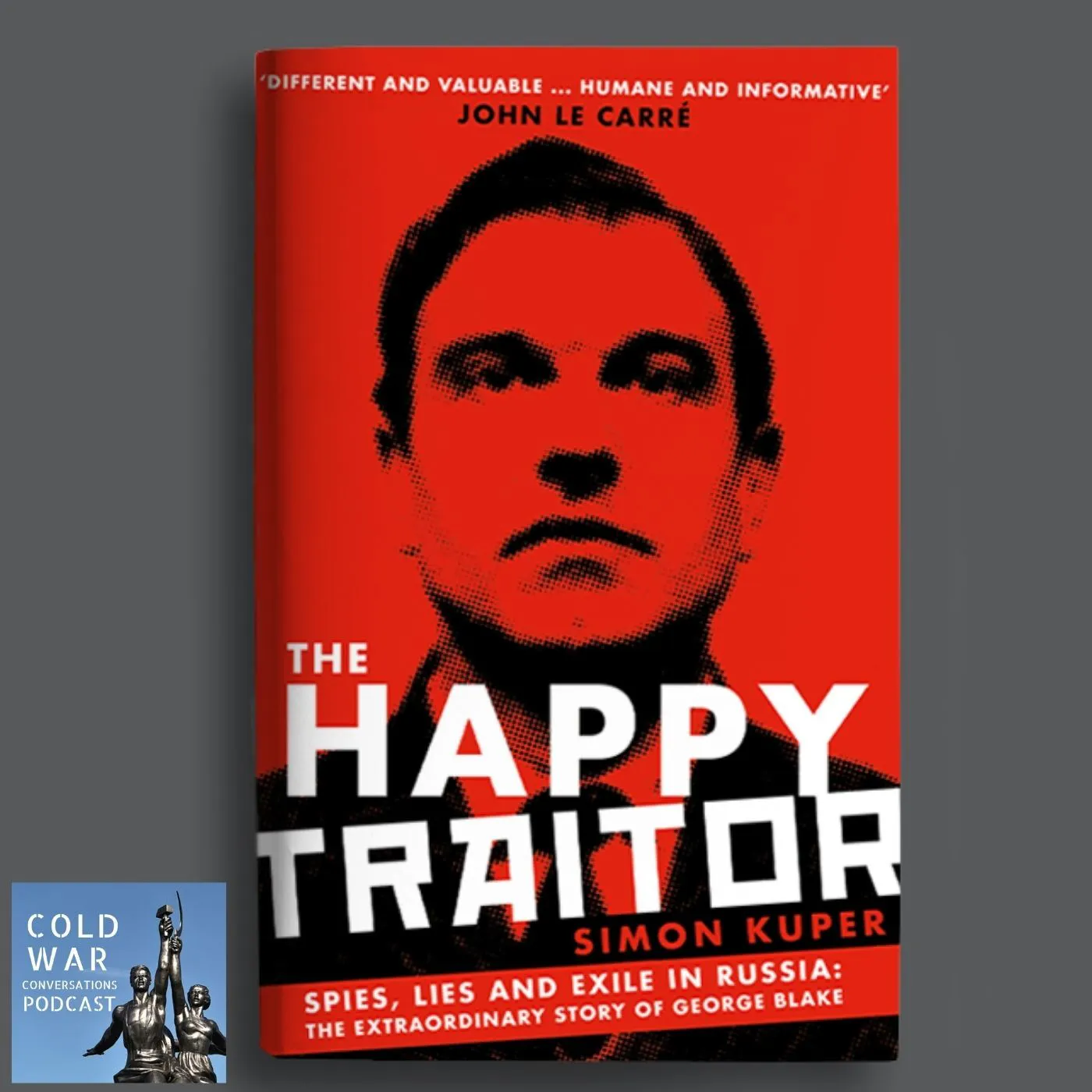
S7 Ep 164The Happy Traitor - The Life of Soviet Spy George Blake (164)
Acclaimed author and journalist Simon Kuper, has written The Happy Traitor, the story of British spy and Soviet Union double agent George Blake, the last major British traitor of the Cold War. In 1961, Blake was sentenced to forty-two years imprisonment – at the time, the longest sentence in modern British history. He had betrayed all the western spying operations that he knew about to the KGB. This included the names of hundreds of British agents working around the world. About forty of them are believed to have been executed. Blake is reckoned to have done as much damage to British interests as did his Moscow companions Kim Philby and Donald Maclean – perhaps more. Today, his story is known only to a few experts, and only insofar as anything can be known for certain in the world of deceit that is spying. MI6 has never made its files on him public. Now that the master spy has died, Simon Kuper finally sets the story straight. He unravels who Blake truly was through a combination of personal interviews, research in many languages, and use of almost unseen Stasi archives. His illuminating biography tracks Blake from his beginnings as a teenage courier for the Dutch underground during the Second World War, to his sensational prison-break from Wormwood Scrubs, to his tranquil old age in a dacha outside Moscow, where Kuper caught up with and interviewed him. There is more information in our episode notes here https://coldwarconversations.com/episode164/ Support the project! https://coldwarconversations.com/donate/ Follow us on Twitter https://twitter.com/ColdWarPod Facebook https://www.facebook.com/groups/coldwarpod/ Instagram https://www.instagram.com/coldwarconversations/ Youtube https://youtube.com/@ColdWarConversations 0:00 Introduction and Sponsor: Profile Books 1:27 George Blake's early life and recruitment into the Secret Intelligence Service 10:23 Blake's role in the early stages of the Cold War and conversion to Communism 20:38 Blake's betrayal, spying activities, and impact on Cold War dynamics 31:33 Discovery of Blake's betrayal and subsequent trial 40:21 Insights from Blake's speeches to the Stasi and his life in prison 46:11 Blake's escape and new life in Russia 54:45 Blake's remorse for his actions and admiration for Britain 56:30 Simon Cooper's personal connection with Blake 58:19 Conclusion and promotion of the book "The Happy Traitor: Spies, Lies, and Exile in Russia" Chapters powered by PodcastAI✨ Learn more about your ad choices. Visit podcastchoices.com/adchoices
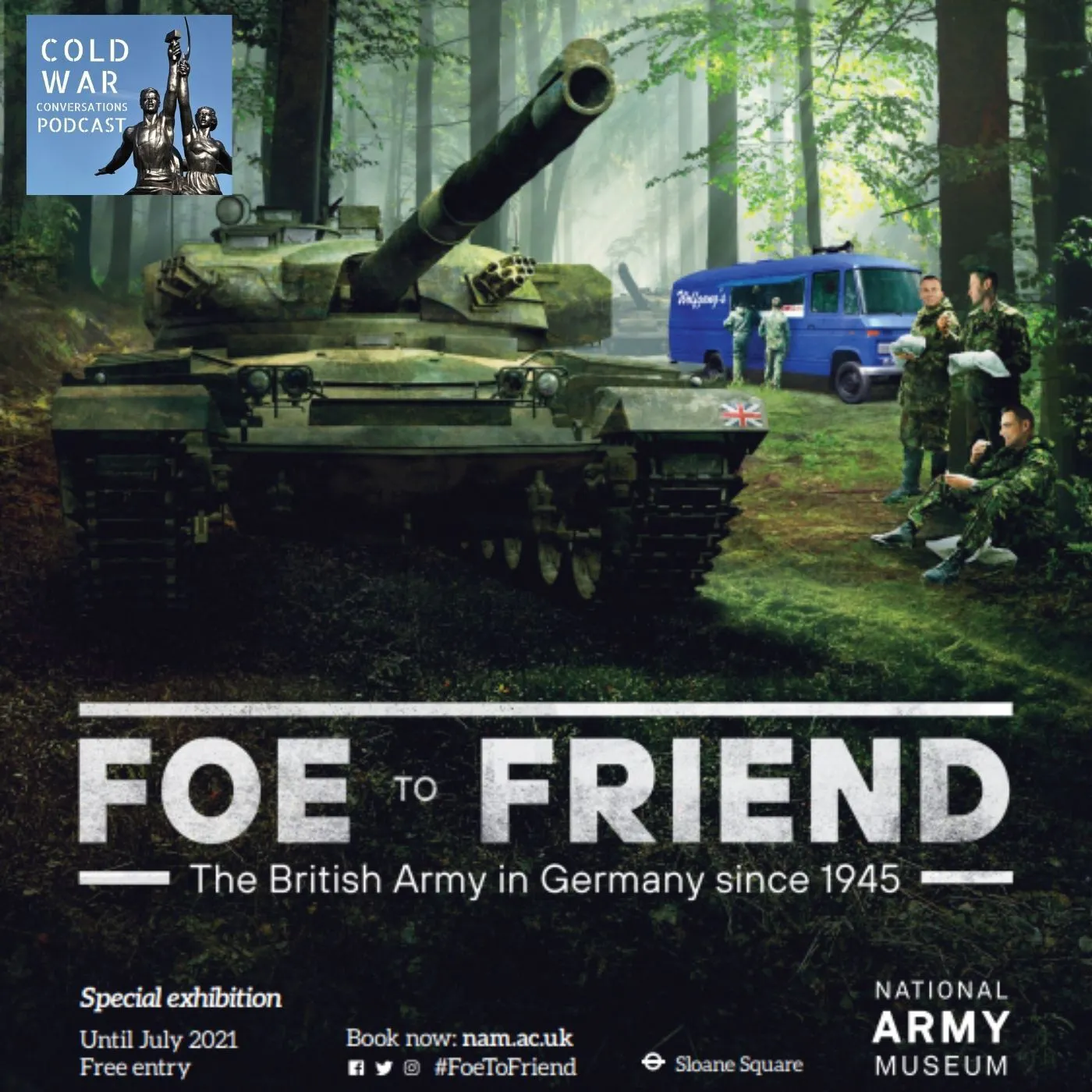
S7 Ep 163From Foe to Friend - the British Army in Cold War Germany (163)
Germany has been at the heart of the British Army's story since 1945. After the Second World War, the Army helped rebuild a devastated and divided nation. It provided protection during the Cold War, and later used Germany as a base from which to deploy troops across the world. Foe to Friend is a major exhibition at The National Army Museum in London that follows the lives of British soldiers in Germany over the past 75 years. Enjoy an expert visit as Cold War Conversations co-host James takes you on a tour with the lead curator, Dr Peter Johnston If you are enjoying the podcast, you can show your support via a monthly donation of $4, £3 or €3 via Patreon, plus you will get the sought after CWC coaster as a thank you and bask in the warm glow of knowing you are helping to preserve Cold War history. Just go to https://coldwarconversations.com/donate/ If a financial contribution is not your cup of tea, then you can still help us by leaving written reviews wherever you listen to us as well as sharing us on social media. It really helps us get new guests on the show. I am delighted to welcome James and Dr Peter Johnston to our Cold War conversation… There’s further information on this episode in our show notes which can also be found as a link in your podcast app here. https://coldwarconversations.com/episode163/ If you can’t wait for next week’s episode do visit our Facebook discussion group where guests and listeners continue the Cold War Conversation. Just search Cold War Conversations in Facebook. 0:00 Introduction 3:17 Introduction of James and Dr. Peter Johnston, and overview of the British Army's history in Germany 10:10 Discussion about the BrixMis car and other artifacts on display at the exhibition 16:05 Tales of bravery: Anthony Hall's exploration of a Soviet gunnery range 20:34 Testimonies from Lieutenant Colonel Dan Wilde and Michael Systems on the tense situation in Cold War Germany 25:10 The reality of life for British soldiers: Training, suits, and pamphlets 31:09 Living in the shadow of the Berlin Wall and the British military train 38:00 The evolution of weaponry and the role of the British Army in Germany 43:23 The impact of the Cold War on soldier and family life in Germany 51:25 Changes in Europe: A look at the maps from 1979 and 1991 Chapters powered by PodcastAI✨ Support the project! https://coldwarconversations.com/donate/ Follow us on Twitter https://twitter.com/ColdWarPod Facebook https://www.facebook.com/groups/coldwarpod/ Instagram https://www.instagram.com/coldwarconversations/ Youtube https://youtube.com/@ColdWarConversations Learn more about your ad choices. Visit podcastchoices.com/adchoices
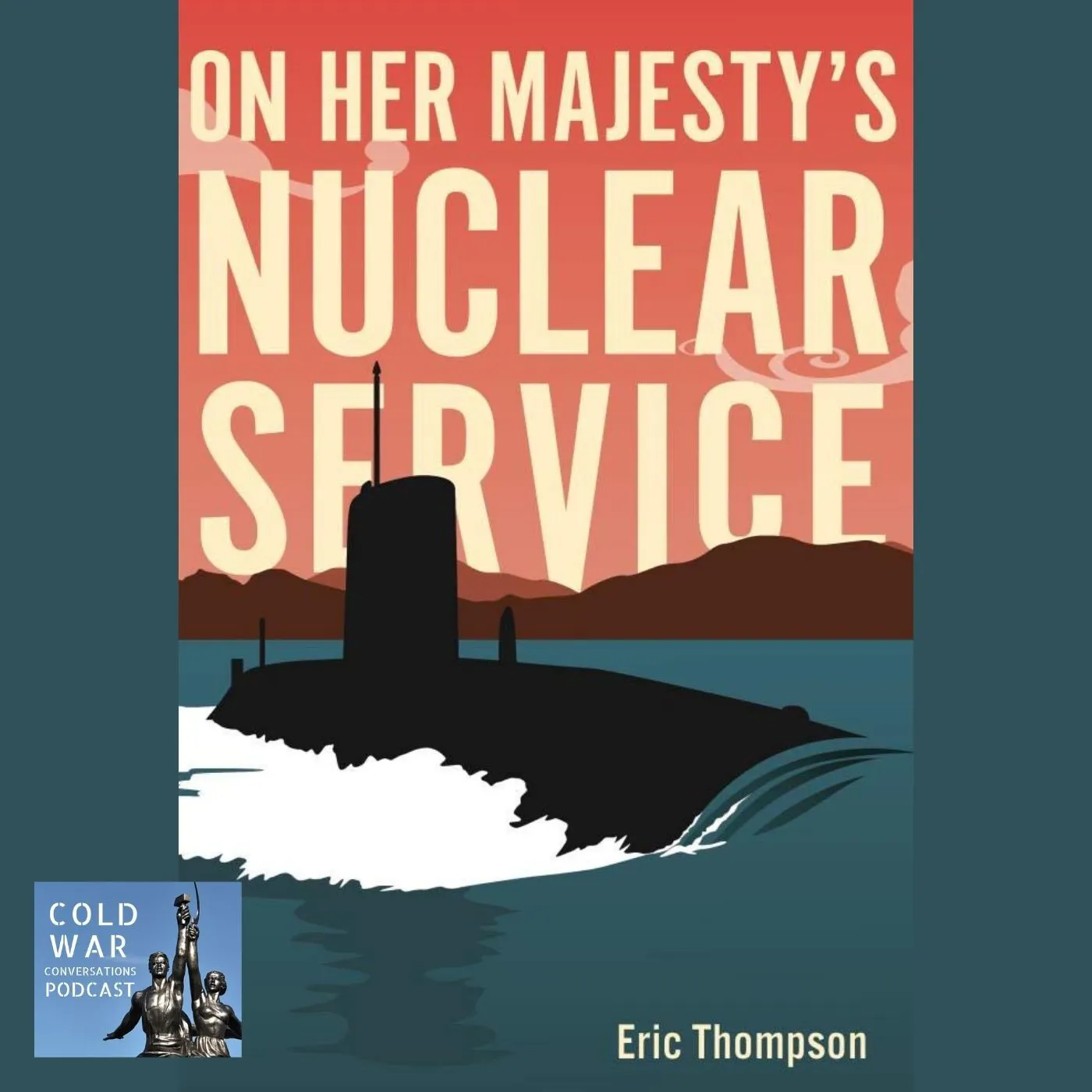
S7 Ep 162On Her Majesty's Cold War Nuclear Submarine Service (162)
Commodore Eric Thompson MBE is the author of the book “On Her Majesty’s Nuclear Service. He is a career nuclear submarine officer who served from the first days of the Polaris missile boats until after the end of the Cold War. He joined the Navy in the last days of Empire, made his first sorties in World War II type submarines, and went on to become the top Engineer in charge of the Royal Navy’s operational nuclear submarine force based at Faslane. In this vivid personal account of his submarine operations, he reveals top-secret submarine patrols, hush-hush scientific trials, and a chat with British Prime Minister Margaret Thatcher. It is essentially a human story, rich in both drama and comedy, like the Russian spy trawler that played dance music at passing submarines. There was never a dull moment. Behind the lighter moments was a deadly serious game. Eric’s chat reveals some the secretive life of submarines and the men who served on them. If you donate monthly via Patreon or Buy Me a Coffee you will get the sought after CWC coaster and bask in the warm glow of knowing you are helping to preserve Cold War history. Just go to https://coldwarconversations.com/donate/ If a financial contribution is not your cup of tea, then you can still help us by leaving written reviews wherever you listen to us as well as sharing us on social media. It really helps us get new guests on the show. I’d like to thank some of our recent reviewers incldung Faye Dingaway, Syb 1, Cold War Gav and Romford Stu. I am delighted to welcome Eric Thompson to our Cold War conversation… There’s further information on this episode in our show notes which can also be found as a link in your podcast app here. https://coldwarconversations.com/episode162/ If you can’t wait for next week’s episode do visit our Facebook discussion group where guests and listeners continue the Cold War Conversation. Just search Cold War Conversations in Facebook. Thank you very much for listening. It is really appreciated – goodbye. Support the project! https://coldwarconversations.com/donate/ Follow us on Twitter https://twitter.com/ColdWarPod Facebook https://www.facebook.com/groups/coldwarpod/ Instagram https://www.instagram.com/coldwarconversations/ Youtube https://youtube.com/@ColdWarConversations Learn more about your ad choices. Visit podcastchoices.com/adchoices
S7 Ep 161Advanced English studies in Moscow during the 1970s and 80s (161)
Vadim was at school in Moscow during the 1970s and 80s. He attended an Advanced English Studies School where all subjects were taught, however the focus was on English. He provides us with insights into the setup of Soviet education as well as the school life, teaching methods and pop culture. We hear how the British newspaper “Morning Star” was a key teaching aid for Soviet English students. Now I know some of you skip this bit, but if you want to continue hearing these Cold War stories I’m asking listeners to pledge a monthly donation of at least $4, £3 or €3 per month to help keep the podcast on the air, although larger amounts are welcome too. If you donate monthly via Patreon you will get the sought after CWC and bask in the warm glow of knowing you are helping to preserve Cold War history. Just go to https://coldwarconversations.com/donate/ If a financial contribution is not your cup of tea, then you can still help us by leaving written reviews wherever you listen to us as well as sharing us on social media. It really helps us get new guests on the show. Peter Ryan conducts the interview for us and I am delighted to welcome Vadim to our Cold War conversation… There’s further information on this episode in our show notes, which can also be found as a link in your podcast app here. https://coldwarconversations.com/episode161/ If you can’t wait for next week’s episode do visit our Facebook discussion group where guests and listeners continue the Cold War Conversation. Just search Cold War Conversations in Facebook. Thank you very much for listening. It is really appreciated – goodbye. Support the project! https://coldwarconversations.com/donate/ Follow us on Twitter https://twitter.com/ColdWarPod Facebook https://www.facebook.com/groups/coldwarpod/ Instagram https://www.instagram.com/coldwarconversations/ Youtube https://youtube.com/@ColdWarConversations 0:00 Introduction and Vadim's education in the Soviet Union 2:08 Interview with Vadim begins 7:26 The impact of usage on language proficiency and importance of language education in the Soviet Union 10:19 Influence and censorship of Western music and pop culture in the Soviet Union 18:21 Exposure to Western broadcasts: BBC, Radio Free Europe, and Voice of America 20:48 Access to English language literature in the Soviet Union 30:10 Censorship and perception of English-language movies 32:10 Interactions with native English speakers and international visitors at school 43:15 Communist ideology in Soviet Education 47:20 Shift in English education after Glasnost and Perestroika 49:02 Special thanks to Patreons 49:51 How to support Cold War Conversations podcast Chapters powered by PodcastAI✨ Learn more about your ad choices. Visit podcastchoices.com/adchoices
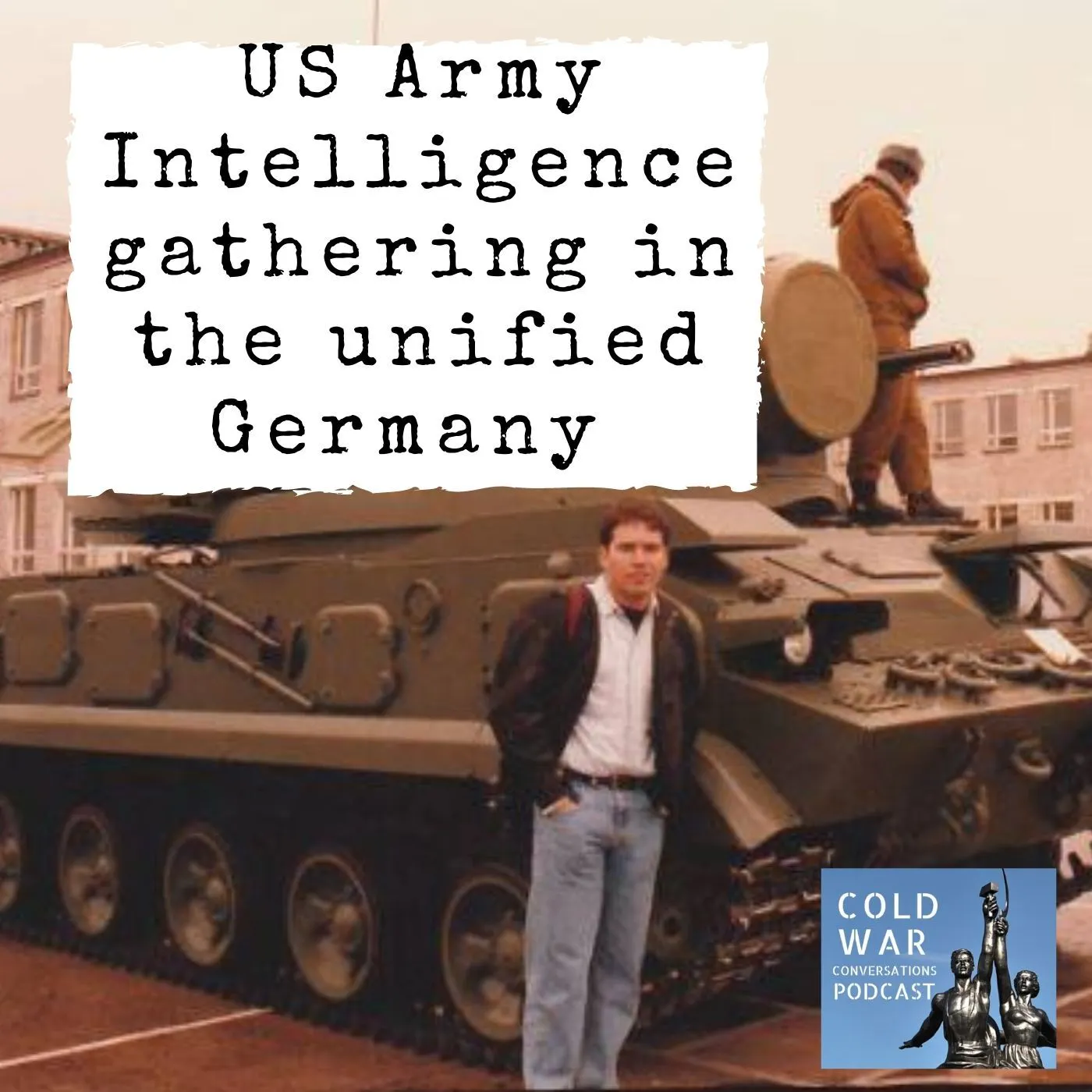
S7 Ep 160US Army Intelligence gathering in the unified Germany (160)
We continue the story of Bill, a US Army Intelligence Analyst with Combined Analysis Detachment-Berlin (CAD-B) from episode 127. Germany has now been re-unified and Russian troops have withdrawn from East Germany. Bill tells us of the little known story of continued US Army involvement in intelligence gathering alongside the German security services, the BND. We hear about "Operation Giraffe", described as the largest intelligence service procurement campaign of the West since the end of World War II, how Russian sources recruited during the Cold War were managed and, how Britain’s MI6 was cut out of receiving the information they had received freely during the Cold War. Bill tells us of a joint BND/CIA mission to monitor the disposal of Russian nuclear weapons. It’s a fascinating look into the murky world of human intelligence gathering, corruption, and rivalry in the immediate post Cold War period. I could really use your support to help me to continue to produce these podcasts. A monthly donation of $4, £3 or €3 via Patreon will really help and you will get the sought after Cold War Conversations coaster as a thank you and bask in the warm glow of knowing you are helping to preserve Cold War history. Just go to https://coldwarconversations.com/donate/ Thanks to all our latest supporters including Tim Simmons, Fredrik Lundberg, Mary J O’Grady, Robert Ritchie, and Katie Brown. If a financial contribution is not your cup of tea, then you can still help us by leaving written reviews wherever you listen to us as well as sharing us on social media. It really helps us get new guests on the show. I am delighted to welcome Bill to our Cold War conversation… There’s further information on this episode in our show notes which can also be found as a link in your podcast app here. If you can’t wait for next week’s episode do visit our Facebook discussion group where guests and listeners continue the Cold War Conversation. Just search Cold War Conversations in Facebook. Thank you very much for listening. It is really appreciated – goodbye. Support the project! https://coldwarconversations.com/donate/ Follow us on Twitter https://twitter.com/ColdWarPod Facebook https://www.facebook.com/groups/coldwarpod/ Instagram https://www.instagram.com/coldwarconversations/ Youtube https://youtube.com/@ColdWarConversations 0:00 Introduction and Overview of the Episode 1:50 Sponsor: Patreon and How to Support the Podcast 3:30 Bill's Story of Intelligence Gathering and Shift in Work Post Cold War 9:00 Fear of Soviet Agents within BND and Discussion on Rosenholz Files 14:11 CIA and BND's Joint Mission and Tracking Movement of nuclear warheads out of East Germany 18:52 Cooperation with the CIA, Role of Aldrich Ames, and Friction over Source Management 24:04 Potential Risks of Espionage and the Downsizing of the Unit 28:46 Arrest of BND Team Members for Espionage and the Subsequent Trial 33:38 Bill's Visit to Zossen-Wünsdorf, Former Soviet Forces Headquarters in Germany 38:33 Bill's Aspiration to Write a Book about CAD B and the Organization Post the Allied Missions 40:02 Sponsor: Acknowledgment of Sponsors and How to Support the Podcast Chapters powered by PodcastAI✨ Learn more about your ad choices. Visit podcastchoices.com/adchoices
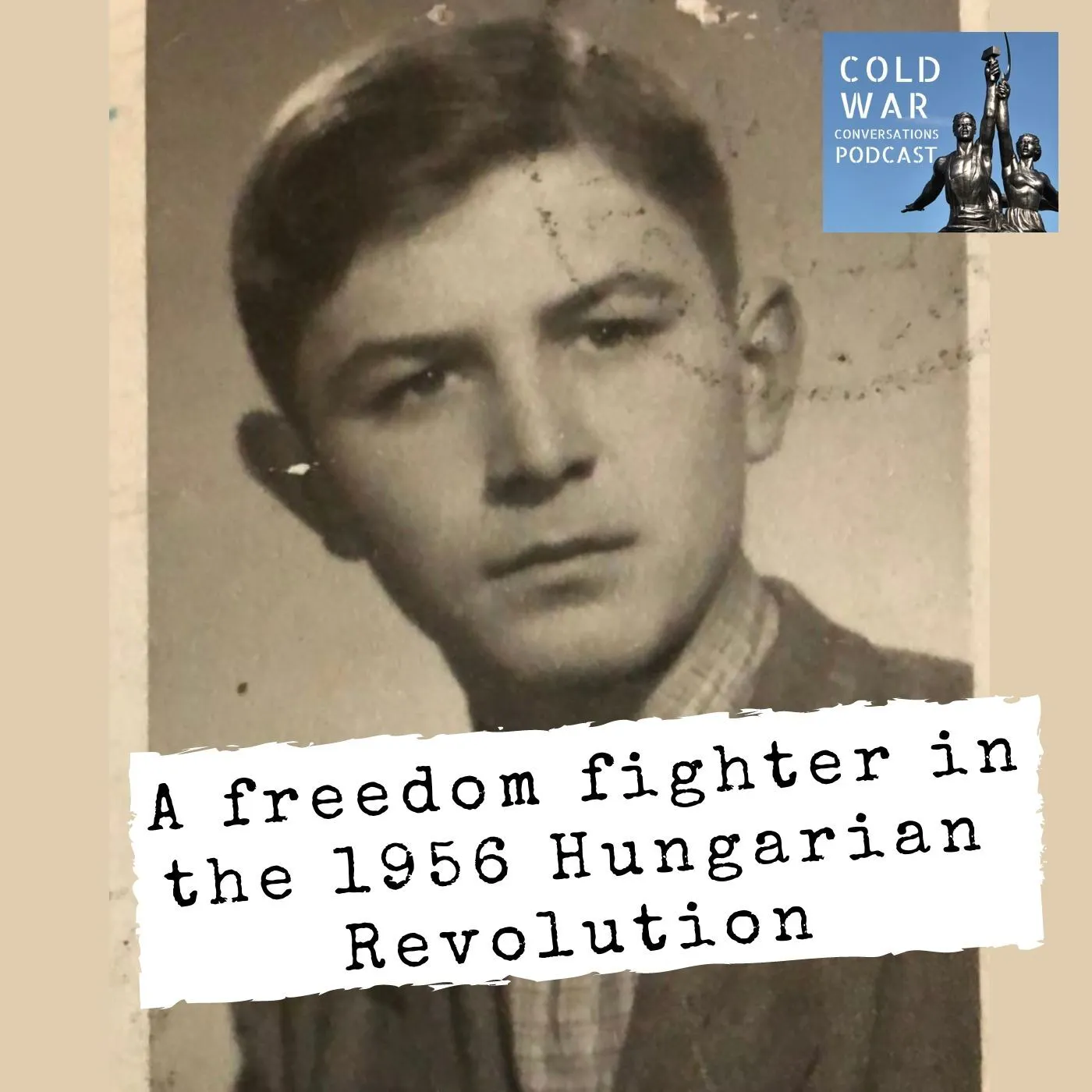
S7 Ep 159A freedom fighter in the 1956 Hungarian Revolution (159)
Charlie was 19 in 1956. A trip home from work by tram ended up with him being thrust into the heart of the Hungarian Revolution of 1956, a nationwide revolution against the Hungarian People's Republic and its Soviet-imposed policies, lasting from 23 October until 10 November 1956. I’m in conversation with Charlie and his daughter Angela as Charlie describes how he and his friends attacked the Communist held Budapest radio station and graphically details his experiences and what he saw during those momentous days. He also recalls his escape from Hungary and his later life in Wales and return visit to the country of his birth while it was still within the orbit of the Soviet Union. I do need your help to allow me to find the time to continue producing and preserving these Cold War stories. I’m asking listeners to pledge a monthly donation of at least $4, £3 or €3 per month to help keep the podcast on the air, although larger amounts are welcome too. As a thank you you will get the sought-after Cold War Conversations drinks coaster and you bask in the warm glow of knowing you are helping to preserve Cold War history. Just go to https://coldwarconversations.com/donate/ If a financial contribution is not your cup of tea, then you can still help us by leaving written reviews wherever you listen to us as well as sharing us on social media. It helps us get new guests on the show. I am delighted to welcome Charlie and Angela to our Cold War conversation… There’s further information on this episode including photos and videos in our show notes, which can also be found as a link in your podcast app here. https://coldwarconversations.com/episode159/ If you can’t wait for next week’s episode do visit our Facebook discussion group where guests and listeners continue the Cold War Conversation. Just search Cold War Conversations in Facebook. Support the project! https://coldwarconversations.com/donate/ Follow us on Twitter https://twitter.com/ColdWarPod Facebook https://www.facebook.com/groups/coldwarpod/ Instagram https://www.instagram.com/coldwarconversations/ Youtube https://youtube.com/@ColdWarConversations Learn more about your ad choices. Visit podcastchoices.com/adchoices
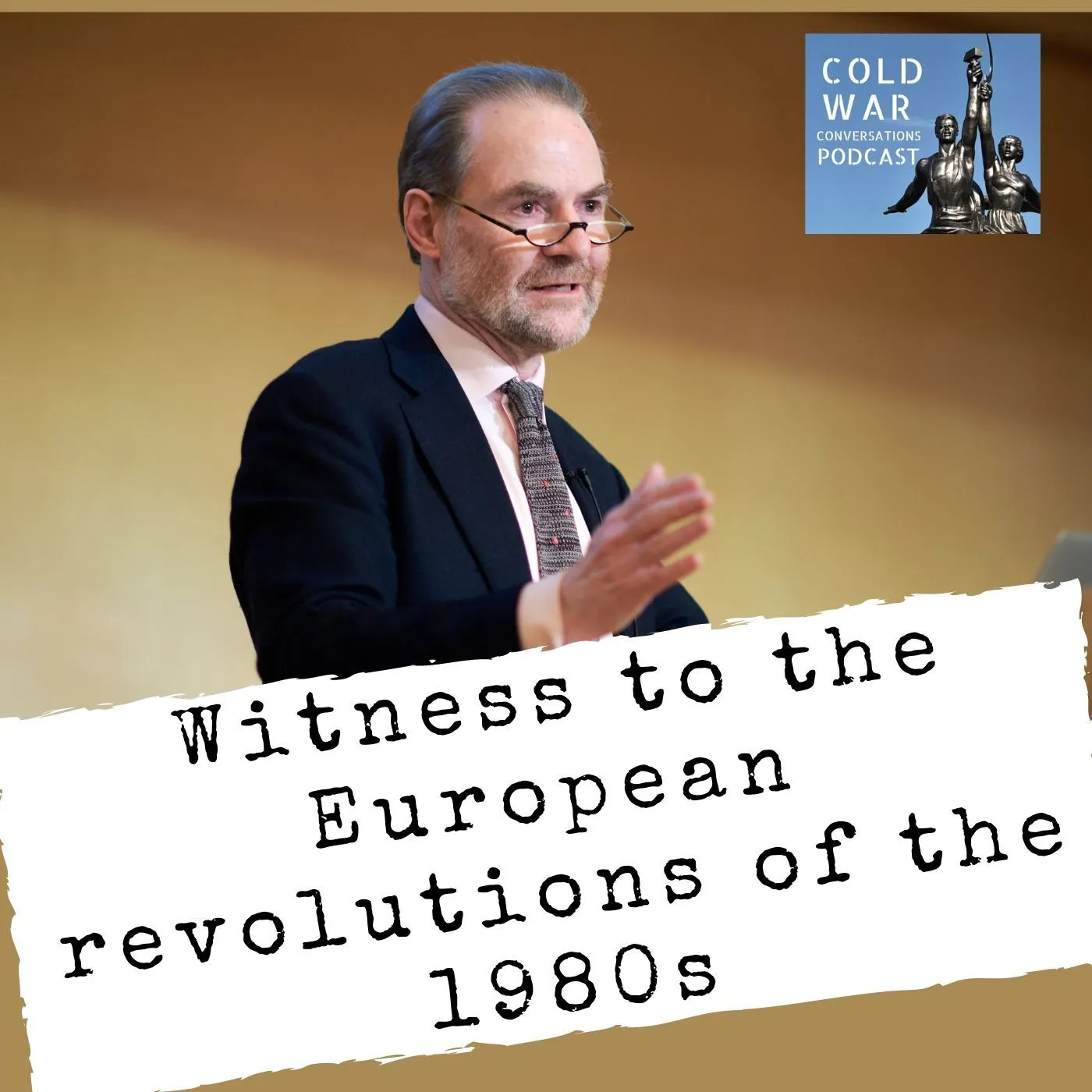
S7 Ep 158Witness to the Eastern Bloc revolutions of the 1980s with Professor Timothy Garton Ash (158)
Professor Timothy Garton Ash is a British historian, author, commentator and Professor of European Studies at Oxford University. Professor Garton Ash witnessed some of the most critical moments in the Eastern Bloc during the 1980s as these populations threw off Communist rule. He provides us with vivid details of his time in East Germany, Gdansk, Poland where in 1980 the first free trade union in the Eastern Bloc was formed, and his time with then dissident Vaclav Havel when the Czechoslovak Communist government resigned in 1989. Professor Garton Ash genuinely had a front row seat to history and provides us with fascinating and profound analysis of those incredible years. I do really need your help to allow me to find the time to continue producing and preserving these Cold War stories. I’m asking is for listeners to pledge a monthly donation of at least $4, £3 or €3 per month to help keep the podcast on the air, although larger amounts are welcome too. If you donate monthly via Patreon you will get the sought after CWC and bask in the warm glow of knowing you are helping to preserve Cold War history. Just go to https://coldwarconversations.com/donate/ If a financial contribution is not your cup of tea, then you can still help us by leaving written reviews wherever you listen to us as well as sharing us on social media. It really helps us get new guests on the show. I am delighted to welcome Professor Garton Ash to our Cold War conversation… UK listeners - Professor Garton Ash's books are available here US listeners - Professor Garton Ash's books are available here There’s further information on this episode in our show notes which can also be found as a link in your podcast app here. https://coldwarconversations.com/episode158/ If you can’t wait for next week’s episode do visit our Facebook discussion group where guests and listeners continue the Cold War Conversation. Just search Cold War Conversations in Facebook. Thank you very much for listening. It is really appreciated. Episode photo by By Daniel Vegel (www.vegeldaniel.com) - This file has been extracted from file: Timothy-Garton-Ash-Daniel-Vegel-CEU-Lecture-2017.jpg, CC BY 4.0, https://commons.wikimedia.org/w/index.php?curid=59301308 Support the project! https://coldwarconversations.com/donate/ Follow us on Twitter https://twitter.com/ColdWarPod Facebook https://www.facebook.com/groups/coldwarpod/ Instagram https://www.instagram.com/coldwarconversations/ Youtube https://youtube.com/@ColdWarConversations 0:00 Introduction and background of Professor Timothy Garton Ash 2:02 Donations and support options 3:23 Professor Timothy Garton Ash's experiences and research in East Berlin 12:37 Discussion on the Stasi file and its contents 20:05 The eruption of the Solidarity movement in Poland and the strikes in Gdansk 33:20 Professor Garton Ash's involvement in the Solidarity movement 39:00 The political climate in Poland during the 1980s and the journey towards freedom 43:59 Hungary's role in the fall of the Soviet block 45:30 The Velvet Revolution in Prague and Vaslav Havel's leadership 54:07 Reflection on pivotal moments of the Cold War era in Eastern Europe 1:02:00 The regional collaboration of anti-communist groups during the Cold War 1:09:02 Acknowledgements and closing remarks from Ian Sanders Chapters powered by PodcastAI✨ Learn more about your ad choices. Visit podcastchoices.com/adchoices
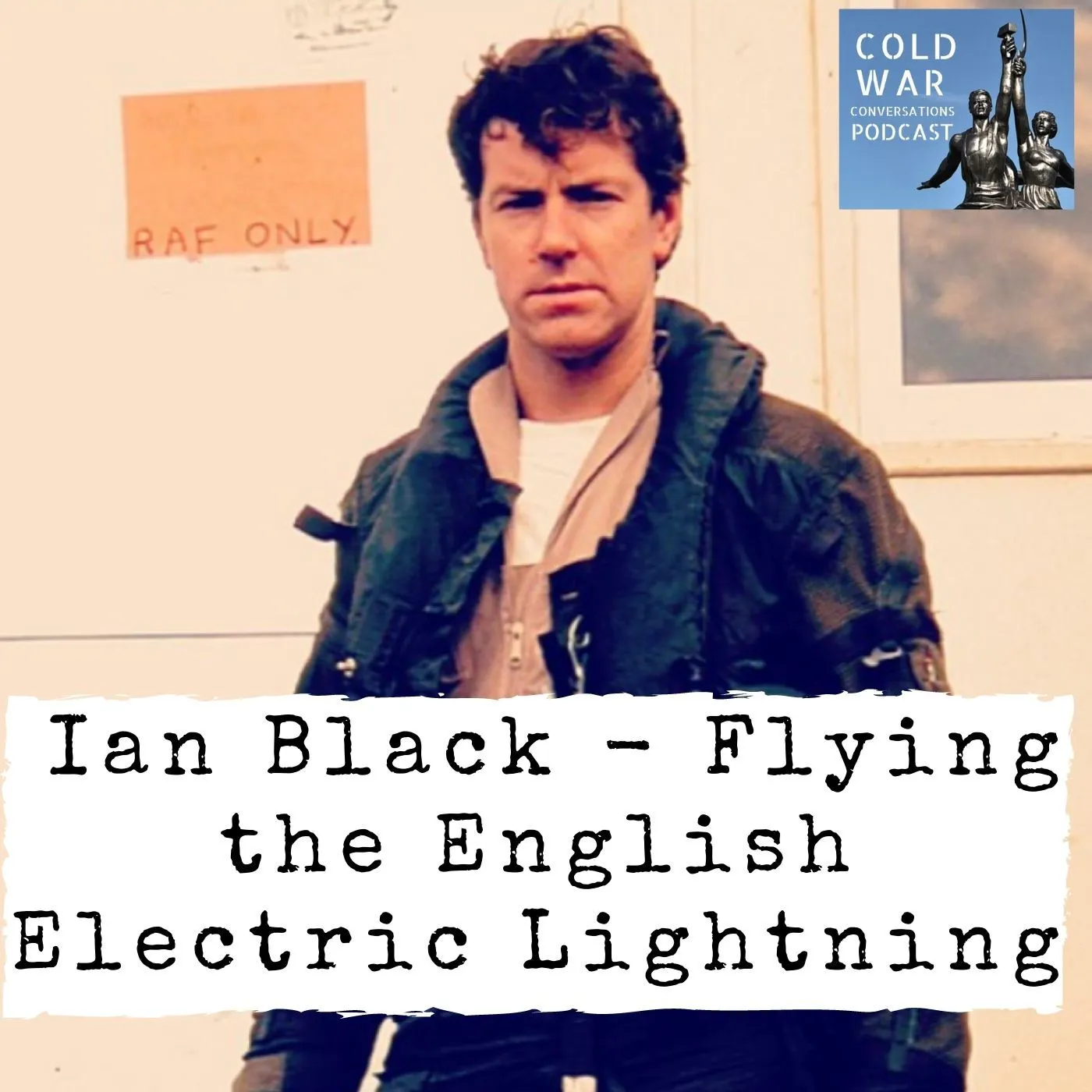
S7 Ep 157Ian Black - Flying the English Electric Lightning (157)
Ian Black is a former RAF Fighter Pilot with a passion for photography and motorcycles. He began his flying career with the legendary McDonnell Douglas F-4 Phantom in RAF Germany at the height of the Cold War. After three years flying as a navigator Ian underwent Pilot Training in 1984-1986 during which time he was awarded prizes for flying ability , aerobatics and unsurprisingly navigation skills. On completion of his flying training Ian was selected to fly the English electric Lightning in the Air Defence Role. Twenty five years earlier, Ian’s father had been one of the RAF’s first Lightning Pilots and his son was set to become the last. Serving on 11(F) Squadron. Now I really need your help to allow me the time to continue producing and preserving these Cold War stories. A monthly donation to help keep us on the air is only about $3, £3 or €3 per month (larger amounts are welcome too) plus you can get a sought after CWC coaster as a monthly financial supporter and you bask in the warm glow of knowing you are helping to preserve Cold War history. Just go to https://coldwarconversations.com/donate/ If a financial contribution is not your cup of tea, then you can still help us by leaving written reviews wherever you listen to us as well as sharing us on social media. It really helps us get new guests on the show. I am delighted to welcome Ian Black to our Cold War conversation… Check our Ian's great photography books here https://www.firestreakbooks.com/ There’s further information on this episode in our show notes,plus a book giveaway which can also be found as a link in your podcast app here. https://coldwarconversations.com/episode157/ If you can’t wait for next week’s episode do visit our Facebook discussion group where guests and listeners continue the Cold War Conversation. Just search Cold War Conversations in Facebook. Thank you very much for listening. It is really appreciated – goodbye. Support the project! https://coldwarconversations.com/donate/ Follow us on Twitter https://twitter.com/ColdWarPod Facebook https://www.facebook.com/groups/coldwarpod/ Instagram https://www.instagram.com/coldwarconversations/ Youtube https://youtube.com/@ColdWarConversations 0:00 Introduction to guest Ian Black and his flying career 15:45 The use of IFF identification and challenges during the Cold War 28:09 RAF's vetting process and the lack of background checks in the 70s and 80s 33:19 Realistic training methods of the RAF and struggles with pilot training 41:32 Recommendation of Cold War TV on YouTube 43:32 Ian Black's experience flying the English Electric Lightning 55:23 Interception of a Russian bomber: a life-defining moment 1:00:20 Air refueling: strategy, coordination, and challenges 1:09:24 The responsibilities and challenges of flying a single-seat Lightning 1:12:28 Ian Black's photography, Firestreak Books, and future projects 1:17:44 acknowledgement of financial supporters 1:18:33 Closing remarks and continuation of the Cold War conversation on Facebook Chapters powered by PodcastAI✨ Learn more about your ad choices. Visit podcastchoices.com/adchoices

S7 Ep 156Sovietisation of Estonia (156)
bonusMichael Zdanowski was born and raised in the UK, but his interest with the Cold War goes back generations. His grandfather having emigrated from Poland to the United Kingdom during the second world war and was a distinguished member of the RAF in the battle against Germany. Michael’s interest in the Cold War prompted him to pursue a doctorate focused around the Sovietisation of Estonia post-WW2, which he researched over a number of years. His findings indicated a wholesale imperialistic strategy that centered around language, culture and moving large numbers of Russians into Estonia. However, his findings also demonstrate a great deal of Estonian resistance to these efforts, with the local population finding ways of celebrating their local culture and heritage through covert means. It is a story of attempted social engineering that underestimated the desire of a people to be conquered. If you can spare it I’m asking listeners to contribute at least $3 USD per month to help keep us on the air (larger amounts are welcome too) plus you can get a sought after CWC coaster as a monthly financial supporter of the podcast and you bask in the warm glow of knowing you are helping to preserve Cold War history. Just go to https://coldwarconversations.com/donate/ Co-host Peter Ryan conducts our chat and I am delighted to welcome Michael Zdanowski to our Cold War conversation… There’s further information on this episode in our show notes, which can also be found as a link in your podcast app here. https://coldwarconversations.com/episode156/ If you can’t wait for next week’s episode do visit our Facebook discussion group where guests and listeners continue the Cold War Conversation. Just search Cold War Conversations in Facebook. Thank you very much for listening. It is really appreciated – goodbye. Help Support the podcast by shopping at Amazon. https://www.amazon.co.uk/gp/bestsellers/books/12447630031/ref=pd_zg_hrsr_books&tag=cwcp-21 Help support the podcast with a CWC mug or maybe a t-shirt? https://www.redbubble.com/people/Coldwarpod/shop?asc=u Support the project! https://coldwarconversations.com/donate/ Follow us on Twitter https://twitter.com/ColdWarPod Facebook https://www.facebook.com/groups/coldwarpod/ Instagram https://www.instagram.com/coldwarconversations/ Youtube https://youtube.com/@ColdWarConversations 0:00 Introduction and Michael Zdanowski's family history 2:41 Interview with Michael Zdanowski about his interest in the Cold War 10:55 Michael's university studies and encounters with Cold War era tutors 16:48 Discussion on Soviet migration and cultural imperialism in Estonia 29:18 Resistance of Estonians against Soviet rule and preservation of culture 34:56 Independence movements in Soviet Socialist Republics 39:11 Influence of Western culture in Estonia during the Cold War 41:42 Enduring impact of the Soviet era on Estonia 45:27 Rapid fire discussion on Cold War themed books and films 52:23 Imaginary dinner party with Cold War personalities 53:51 Additional resources and donations Chapters powered by PodcastAI✨ Learn more about your ad choices. Visit podcastchoices.com/adchoices
S7 Ep 155Deputy Head of UK Mission in East Berlin - Part 2 (155)
This is Part 2 of our conversation with Colin Munro who was the British Deputy Head of Mission in East Berlin from 1987 to 1990. In this episode we move to the monumental events of 1989 as the GDR was wrought by internal protest prior to the opening of the Wall in Berlin. It’s a fascinating account of Colin’s contacts who were giving him insights into the eventual fall of the GDR. 0:00 Introduction and Colin Munro's views on Brezhnev 1:50 Sponsor: Listener Donations Appeal 2:28 Political situation in East Germany in 1989 10:01 Soviet embassy's uncertainty about orders to Soviet forces in East Germany 19:12 Colin Munro's personal experience during the opening of the Berlin Wall 22:30 UK government's position on German unification 30:02 The economic collapse of East Germany and the decision for a currency union 32:37 The 2+4 negotiations for German unification 35:20 The end of the Cold War and Thatcher's political career 40:27 Closing remarks and acknowledgments Table of contents powered by PodcastAI✨ Do you know how much $3 USD is in Pounds? It’s 76 pence which equals about 20p or 75c per episode if you sign up as a monthly financial supporter of the podcast. Higher amounts are welcome too. It’s very straightforward and you can stop whenever you want. Plus monthly supporters get the sought after CWC coaster too! Just go to https://coldwarconversations.com/donate/ Thank you so much to our generous supporters who help keep us on the air. If that’s not your cup of tea then leave a written reviews in Apple podcasts or share us on social media. By telling your friends you can really help the podcast grow. In today’s episode, Colin tells of translating for Margaret Thatcher during a phone call with Helmut Kohl, UK imports from the GDR and of a drunken Harry Tisch, the East German Trade Union leader. We welcome Colin to our Cold War conversation… There’s further information on this episode in our show notes, which can also be found as a link in your podcast app here. https://coldwarconversations.com/episode155/ If you like what you are hearing, please leave reviews in Apple podcasts and share us on social media. If you can’t wait for next week’s episode do visit our Facebook discussion group where guests and listeners continue the Cold War Conversation. Just search Cold War Conversations in Facebook. Thankyou very much for listening. It is really appreciated – goodbye. Radio GDR If you are interested in East Germany we can highly recommend our friends over at Radio GDR. Support the project! https://coldwarconversations.com/donate/ Follow us on Twitter https://twitter.com/ColdWarPod Facebook https://www.facebook.com/groups/coldwarpod/ Instagram https://www.instagram.com/coldwarconversations/ Youtube https://youtube.com/@ColdWarConversations Learn more about your ad choices. Visit podcastchoices.com/adchoices

S7 Ep 154Deputy Head of UK Mission in East Berlin - Part 1 (154)
Colin Munro was the British Deputy Head of Mission in East Berlin from 1987 to 1990. Although the UK did not recognise East Berlin as part of the GDR in 1973 it established an Embassy “to” the GDR (not in the GDR) in East Berlin to provide a diplomatic presence. As Deputy Head of Mission Colin was effectively the Deputy Ambassador and was responsible for improving trade, ensuring correct dealings on status of Berlin and try to promote peaceful change. 0:00 Introduction and Colin Munro's roles in East Berlin 1:03 UK's stance on East Berlin and the GDR 2:24 Sponsor: Financial Supporters 2:42 Divided city of Berlin and its status 7:04 Colin's account of a sit-in at the embassy in East Berlin 15:31 Story of the sit-in at the Danish embassy 17:05 Trade between the UK and East Germany 26:18 Personal encounters with East German politburo members 33:01 Opening of the Hungarian border and its perception 40:56 Discussion on the unification of Germany 44:45 Show notes and appreciation of the podcast's patrons 45:37 Invitation to join the Facebook discussion group and closing remarks Table of contents powered by PodcastAI✨ Do you know how much $3 USD is in Pounds? It’s 76 pence which equals about 20p or 75c per episode if you sign up as a monthly financial supporter of the podcast. Higher amounts are welcome too. It’s very straightforward and you can stop whenever you want. Plus monthly supporters get the sought after CWC coaster too! Just go to https://coldwarconversations.com/donate/ If that’s not your cup of tea then leave a written reviews in Apple podcasts or share us on social media. By telling your friends you can really help the podcast grow. Back to today’s episode, Colin tells of life in the Embassy with some fascinating insights into the unique difficulties of being a diplomat in a capital city that the UK did not recognise.. We welcome Colin to our Cold War conversation… There’s further information on this episode in our show notes, which can also be found as a link in your podcast app here . https://coldwarconversations.com/episode154/ If you like what you are hearing, please leave reviews in Apple podcasts and share us on social media. If you can’t wait for next week’s episode do visit our Facebook discussion group where guests and listeners continue the Cold War Conversation. Just search Cold War Conversations in Facebook. Radio GDR If you are interested in East Germany we can highly recommend our friends over at Radio GDR. Support the project! https://coldwarconversations.com/donate/ Follow us on Twitter https://twitter.com/ColdWarPod Facebook https://www.facebook.com/groups/coldwarpod/ Instagram https://www.instagram.com/coldwarconversations/ Youtube https://youtube.com/@ColdWarConversations Learn more about your ad choices. Visit podcastchoices.com/adchoices

S7 Ep 153Just another day in Vietnam (153)
In this episode we talk with Col. Keith Nightingale who served in the US military from 1965 to 1993. He completed two tours of Vietnam; the first as a Senior Advisor to a Vietnamese Ranger unit and the second as a rifle company commander in the 101st Airborne. Keith used the experience of his first tour to write ‘Just another day in Vietnam’ which gives a vivid first-hand account of a jungle operation with the South Vietnamese Rangers against the Viet Cong. UK listeners can buy Keith's book here https://amzn.to/3lWljkb US listeners can buy Keith's book here https://amzn.to/33VRcTD If you can spare it I’m asking listeners to contribute at least $4 USD per month to help keep us on the air (larger amounts are welcome too) plus you can get a sought after CWC coaster as a monthly financial supporter of the podcast and you bask in the warm glow of knowing you are helping to preserve Cold War history. Just go to https://coldwarconversations.com/donate/ Co-host James conducts our chat and I am delighted to welcome Keith Nightingale to our Cold War conversation… There’s further information on this episode in our show notes, which can also be found as a link in your podcast app here. https://coldwarconversations.com/episode153/ If you can’t wait for next week’s episode do visit our Facebook discussion group where guests and listeners continue the Cold War Conversation. Just search Cold War Conversations in Facebook. Thank you very much for listening. It is really appreciated. Support the project! https://coldwarconversations.com/donate/ Follow us on Twitter https://twitter.com/ColdWarPod Facebook https://www.facebook.com/groups/coldwarpod/ Instagram https://www.instagram.com/coldwarconversations/ Youtube https://youtube.com/@ColdWarConversations 0:00 Introduction and Keith Nightingale's early experiences in Vietnam 1:02 Interview with Colonel Keith Nightingale and discussion about his book "Just another day in Vietnam" 7:13 Keith's assignment to the 52nd Rangers and comparison with US army 14:22 Keith's first experience in combat and discussion on PTSD 20:25 The writing process of Keith's book and the decision to write in third person 27:20 The B52 strike against the POW camp and the aftermath of the battle 40:02 Major Hep's leadership and influence on Keith Nightingale 53:21 Public attitudes towards the Vietnam War and preparing for a second tour 1:00:34 Reflections on the war, its impact and lessons learned 1:09:07 Keith's reflections on Vietnam and his book, closing remarks from Ian Sanders 1:10:04 Acknowledgement of financial supporters and politburo level Patreons: Sam Hardwick, Nicholas Butler, and Jeffrey Jones Chapters powered by PodcastAI✨ Learn more about your ad choices. Visit podcastchoices.com/adchoices

S7 Ep 152With Solidarity in Gdansk in 1980 (152)
During her first visit to Poland in 1980, Dr Jacqueline Hayden met the leading members of the free trade union ‘Solidarność’, including the future president Lech Wałęsa. As a freelance journalist at that time, she reported the events in Gdańsk in August 1980, when the shipyard workers went on strike to demand the creation of Free Trade Unions. Our chat includes some vivid descriptions of what she saw and heard at the time, it explains the problems facing the nascent free trade union as well as details of the interviews she carried out with General Jaruselski and Cardinal Joseph Glemp among others. Now, I really do need your help to support my work preserving Cold War history. I deliver 4 episodes a month and all I’m asking for is about $3, £3 or €3 per month to help keep us on the air (larger amounts are welcome too) plus you can get a sought after CWC coaster as a monthly financial supporter and you bask in the warm glow of knowing you are helping to preserve Cold War history. Just go to https://coldwarconversations.com/donate/ If a financial contribution is not your cup of tea, then you can still help us by leaving written reviews wherever you listen to us as well as sharing us on social media. It really helps us get new guests on the show. I am delighted to welcome Jacqueline Hayden to our Cold War conversation… There’s further information on this episode in our show notes which can also be found as a link in your podcast app here. https://coldwarconversations.com/episode152/ If you can’t wait for next week’s episode do visit our Facebook discussion group where guests and listeners continue the Cold War Conversation. Just search Cold War Conversations in Facebook. Support the project! https://coldwarconversations.com/donate/ Follow us on Twitter https://twitter.com/ColdWarPod Facebook https://www.facebook.com/groups/coldwarpod/ Instagram https://www.instagram.com/coldwarconversations/ Youtube https://youtube.com/@ColdWarConversations 0:00 Jacqueline Hayden's journey and her first interactions with Poland's dissidents 2:25 Cold War Channel on YouTube 11:55 Jacqueline's experiences with the Solidarity movement and Lech Walesa 19:00 Meeting special figures during the Cold War and the prospects of a free trade union 30:25 Interpretation of the round table and the collapse of communism 36:59 Jacqueline's experiences in Poland during the agreement signing and her work with the Irish press 42:51 Jacqueline's encounters with the Polish secret police and other foreign journalists 49:02 Discussions on the potential end of the regime and the beginning of opening up in Russia 55:46 Jacqueline's interviews with General Juruselski and the symbolism of his handshake with Lech Walesa 1:06:07 Analysis of the 1989 election and the impact of the electoral system 1:13:36 Discussion on the role of the Catholic Church in the Cold War and the relationship between Cardinal Glemp and General Jaruzelski 1:22:10 Closing remarks, promotion of Cold War Conversations Coasters, and a call for donations Chapters powered by PodcastAI✨ Learn more about your ad choices. Visit podcastchoices.com/adchoices

S7 Ep 152Sue Boyd - Deputy Head of Mission at the Australian Embassy in East Berlin (151)
Sue Boyd has been the head of Australian diplomatic missions in Fiji, Hong Kong, Vietnam and Bangladesh. She also had postings at the United Nations in New York and in the former East Germany. Sue was posted to East Germany in 1976 and tells of her work, friendships, and life as a single woman in the diplomatic community of 1970s East Berlin. She reveals the fascinating contents of her Stasi file, detailing the intense surveillance she was under as well as confirmation of some of her suspicions, but also there are some surprising revelations too. Buy Sue's book and support the podcast here https://amzn.to/2JfHiEU Now it does take a lot of effort and expense to produce the podcast and I could really do with some help to support my work. So if you want to really help preserve Cold War history then for only about $3, £3 or €3 per month you can help keep us on the air (larger amounts are welcome too) plus you can get a sought after CWC coaster as a monthly financial supporter and bask in the warm glow of knowing you are helping to preserve Cold War history. Just go to https://coldwarconversations.com/donate/ If a financial contribution is not your cup of tea, then you can still help us by leaving written reviews wherever you listen to us as well as sharing us on social media. It really helps us get new guests on the show. I am delighted to welcome Sue Boyd to our Cold War conversation… There’s further information on this episode in our show notes which can also be found as a link in your podcast app here. https://coldwarconversations.com/episode151/ If you can’t wait for next week’s episode do visit our Facebook discussion group where guests and listeners continue the Cold War Conversation. Just search Cold War Conversations in Facebook. Thank you very much for listening. It is really appreciated – goodbye. Radio GDR If you are interested in East Germany we can highly recommend our friends over at Radio GDR. Support the project! https://coldwarconversations.com/donate/ Follow us on Twitter https://twitter.com/ColdWarPod Facebook https://www.facebook.com/groups/coldwarpod/ Instagram https://www.instagram.com/coldwarconversations/ Youtube https://youtube.com/@ColdWarConversations 0:00 Introduction of Sue Boyd and her diplomatic career 1:17 Sue Boyd's postings at the United Nations and East Germany 3:19 Sue Boyd's early career in the Australian foreign service 6:01 Sue Boyd's unexpected posting to East Germany and role as 1st secretary 9:07 Sue Boyd's travel experiences and surveillance by Stasi 15:13 Sue Boyd's observations on East Bloc countries' relationships with the Soviet Union 22:31 Building relationships and friendships in the GDR 34:49 Comments on Sue Boyd's journalist contacts in East Germany 47:12 Sue Boyd's surveillance stories and the impact of Stasi 1:00:02 Gough Whitlam's visit to the GDR in 1976 and Sue Boyd's role 1:03:32 Sue Boyd's book about her life as a diplomat Chapters powered by PodcastAI✨ Learn more about your ad choices. Visit podcastchoices.com/adchoices

S7 Ep 151Cold War Royal Navy submarine missions (150)
Today we speak with Ian Ballantyne, the author of “Hunter Killers”, also known as “Undersea Warriors” in the United States. Hunter Killers’ tells the incredible, true inside story of the Royal Navy’s Cold War beneath the waves. Buy the book and support the podcast here https://amzn.to/3jalire We talk about the forgotten role Royal Navy submarines played in the Cuban Missile Crisis while also learning the truth behind what official statements called collisions with ‘icebergs’. In addition, we cover the processes and procedures of the Polaris submarine nuclear missile launch as well as the “Letters of Last Resort”. Now I really need your help to allow me the time to continue producing and preserving these Cold War stories. A monthly donation to help keep us on the air is only about $3, £3 or €3 per month (larger amounts are welcome too) plus you can get a sought after CWC coaster as a monthly financial supporter and you bask in the warm glow of knowing you are helping to preserve Cold War history. Just go to https://coldwarconversations.com/donate/ If a financial contribution is not your cup of tea, then you can still help us by leaving written reviews wherever you listen to us as well as sharing us on social media. It really helps us get new guests on the show. I am delighted to welcome Iain Ballantyne to our Cold War conversation… There’s further information on this episode in our show notes which can also be found as a link in your podcast app here. https://coldwarconversations.com/episode150 If you can’t wait for next week’s episode do visit our Facebook discussion group where guests and listeners continue the Cold War Conversation. Just search Cold War Conversations on Facebook. Thank you very much for listening. It is really appreciated Photo: FOSNI PHOTS/MOD Support the project! https://coldwarconversations.com/donate/ Follow us on Twitter https://twitter.com/ColdWarPod Facebook https://www.facebook.com/groups/coldwarpod/ Instagram https://www.instagram.com/coldwarconversations/ Youtube https://youtube.com/@ColdWarConversations 0:00 Introduction 0:43 Interview with Ian Ballantine, author of 'Hunter Killers' 1:18 Role of Royal Navy submarines in the Cuban missile crisis 3:02 Post-war use of WWII submarines and sharing of captured submarine technology 9:58 Intelligence gathering missions in the Barents Sea 14:49 Royal Navy's participation in the Cuba quarantine 19:29 Under-ice missions and the Royal Navy going nuclear 30:10 Introduction of nuclear-powered submarines in the Royal Navy 41:00 Identification of NATO submarines by the Soviet Union 52:08 Authentication and launch process of missiles 1:02:05 Collision incident between HMS Splendid and a Typhoon 1:09:37 The burial at sea prank on the Russians by HMS London 1:14:30 The uncertainty during the hardliner's coup in Moscow 1:19:10 The most dangerous area of confrontation: Under the Sea 1:21:00 Proposal for a submariners' memorial 1:23:52 Acknowledging the contributions of patrons and sponsors Chapters powered by PodcastAI✨ Learn more about your ad choices. Visit podcastchoices.com/adchoices

S6 Ep 149Détente – the chance to end the Cold War (149)
Today we speak with Richard Crowder, the author of “Détente – the chance to end the Cold War”. Help support the podcast buy the book here UK listeners https://amzn.to/34yNeB2 US listeners https://amzn.to/3kHU3pO Between 1968 and 1975, there was a subtle thawing of relations between East and West, for which Soviet leader Leonid Brezhnev coined the name Détente. The leaders of the United States and the Soviet Union, Richard Nixon and Leonid Brezhnev, hoped to forge a new relationship between East and West. We talk about some of the key moments such as where Henry Kissinger, Nixon’s Secretary of State agreed the end to the war in Vietnam, the 1973 Arab Israeli war where the world stood on the brink of armed conflict between the Soviet Union and the United States and the Helsinki Accords where the agreement to uphold human rights unleashed dissident movements against the Communist Parties of Eastern Europe. Now I really need your help to allow me the time to continue producing and preserving these Cold War stories. A monthly donation to help keep us on the air is only about $3, £3 or €3 per month (larger amounts are welcome too) plus you can get a sought after CWC coaster as a monthly financial supporter and you bask in the warm glow of knowing you are helping to preserve Cold War history. Just go to https://coldwarconversations.com/donate/ If a financial contribution is not your cup of tea, then you can still help us by leaving written reviews wherever you listen to us as well as sharing us on social media. It really helps us get new guests on the show. I am delighted to welcome Richard Crowder to our Cold War conversation… There’s further information on this episode in our show notes, plus a book giveaway which can also be found as a link in your podcast app here. https://coldwarconversations.com/episode149/ If you can’t wait for next week’s episode do visit our Facebook discussion group where guests and listeners continue the Cold War Conversation. Just search Cold War Conversations in Facebook. Support the project! https://coldwarconversations.com/donate/ Follow us on Twitter https://twitter.com/ColdWarPod Facebook https://www.facebook.com/groups/coldwarpod/ Instagram https://www.instagram.com/coldwarconversations/ Youtube https://youtube.com/@ColdWarConversations 0:00 Introduction and Patreon appeal by Ian Sanders 1:06 Introduction to Richard Crowder and his book "Detente" 5:07 Overview of global social and economic changes and politics in the late 1960s 10:11 Richard Crowder discusses the flow of events from 1968 to 1975 14:05 Breakthrough with China and its impact on the Cold War 20:14 The need for the Berlin 4 power agreement 32:25 Discussion on the Paris Peace Accords and the end of US involvement in Vietnam 40:20 The Yom Kippur War and the risk of a superpower confrontation 44:52 Nixon's resignation and the Watergate scandal 49:34 Ford and Brezhnev's meeting in Vladivostok and the final summit of the détente period 57:42 Closing remarks and patron acknowledgements 58:25 How to support the podcast Chapters powered by PodcastAI✨ Learn more about your ad choices. Visit podcastchoices.com/adchoices

S6 Ep 148Guy Burgess and the Cambridge Spy Ring (148)
Guy Burgess was the most important, complex, and fascinating of The Cambridge Spies, brilliant young men recruited in the 1930s to betray their country to the Soviet Union. An engaging and charming companion to many, an unappealing, utterly ruthless manipulator to others, Burgess rose through academia, the BBC, the Foreign Office, MI5 and MI6, gaining access to thousands of highly sensitive secret documents which he passed to his Russian handlers. In his book “Stalin’s Englishman”, Andrew Lownie tells us how even Burgess's chaotic personal life of drunken philandering did nothing to stop his penetration and betrayal of the British Intelligence Service. Even when he was under suspicion, the fabled charm which had enabled many close personal relationships with influential Establishment figures (including Winston Churchill) prevented his exposure as a spy for many years. UK fans can buy the book and support the podcast here https://amzn.to/3jyvcTH US fans can buy the book and support the podcast here https://amzn.to/35LDAdR Now I really need your help to allow me the time to continue producing and preserving these Cold War stories. A monthly donation to help keep us on the air is only about $3, £3 or €3 per month (larger amounts are welcome too) plus you can get a sought after CWC coaster as a monthly financial supporter and you bask in the warm glow of knowing you are helping to preserve Cold War history. Just go to https://coldwarconversations.com/donate/ If a financial contribution is not your cup of tea, then you can still help us by leaving written reviews wherever you listen to us as well as sharing us on social media. It really helps us get new guests on the show. I am delighted to welcome Andrew Lownie to our Cold War conversation… There’s further information on this episode in our show notes,plus a book giveaway which can also be found as a link in your podcast app here. http://coldwarconversations.com/episode148/ If you can’t wait for next week’s episode do visit our Facebook discussion group where guests and listeners continue the Cold War Conversation. Just search Cold War Conversations in Facebook. Thank you very much for listening. It is really appreciated Support the project! https://coldwarconversations.com/donate/ Follow us on Twitter https://twitter.com/ColdWarPod Facebook https://www.facebook.com/groups/coldwarpod/ Instagram https://www.instagram.com/coldwarconversations/ Youtube https://youtube.com/@ColdWarConversations Learn more about your ad choices. Visit podcastchoices.com/adchoices

S6 Ep 147A Childhood under the eye of the Secret Police (147)
At 2 a.m. on 10 March 1983, 12-year-old Carmen Bugan was home alone after her father had left for Bucharest. That afternoon, Carmen returned from school to find secret police in her living room. Her father’s protest against the regime had changed her life forever. This is her story. This is one of the most powerful stories I have recorded so far. What you will hear in Carmen’s own words is an incredibly emotional story about childhood, family, spirit and humanity – do stay and listen to the end. It's safe to say it's a hell of a story and an emotional one too... Buy the book and support the podcast If you want to support our work preserving Cold War history then only about $3, £3 or €3 per month really helps keep us on the air (larger amounts are welcome too) plus you can get a sought after CWC coaster as a monthly financial supporter and you bask in the warm glow of knowing you are helping to preserve Cold War history. Just go to https://coldwarconversations.com/donate/ If a financial contribution is not your cup of tea, then you can still help us by leaving written reviews wherever you listen to us as well as sharing us on social media. It really helps us get new guests on the show. I am delighted to welcome Carmen Bugan to our Cold War conversation… Carmen has also written Poetry and the Language of Oppression - Essays on Politics and Poetics, available here There’s further information on this episode in our show notes which can also be found as a link in your podcast app here. https://coldwarconversations.com/episode147/ If you can’t wait for next week’s episode, visit our Facebook discussion group where guests and listeners continue the Cold War Conversation. Just search Cold War Conversations on Facebook. Thank you very much for listening. It is really appreciated. Support the project! https://coldwarconversations.com/donate/ Follow us on Twitter https://twitter.com/ColdWarPod Facebook https://www.facebook.com/groups/coldwarpod/ Instagram https://www.instagram.com/coldwarconversations/ Youtube https://youtube.com/@ColdWarConversations 0:00 Introduction to the episode by Ian Sanders 4:31 Carmen Bugan's family background and school life in Romania 15:18 Life during the food shortages in Romania and Carmen's father's decision to protest 26:02 Maintaining a double life under an oppressive regime 34:50 The aftermath of Carmen's father protest and the family's ordeal 49:53 First visit to imprisoned father and the emotional encounter 1:03:35 The family's reunion with their father and living under house arrest 1:11:49 Discovery of secret police files and finding love amidst the chaos 1:19:53 Struggle after obtaining visas, saying goodbye to Romania and moving to America 1:27:41 Ian Sanders concludes the episode and thanks the financial supporters Chapters powered by PodcastAI✨ Learn more about your ad choices. Visit podcastchoices.com/adchoices

S6 Ep 146Don - Cold War 11th Armored Cavalry Regiment at Fulda (146)
In this second episode with Don Snedeker we talk to him about his time after his tour of Vietnam when he served in West Germany. From 1974 to 1986 Don served in a number of roles but most noticeably he was assigned to the 11th Armored Cavalry Regiment in Fulda, one of the locations where it was assumed that Warsaw Pact units would attack through. He also trained as a Foreign Area Officer specialising in Western Europe and studied at the German Armed Forces Staff College in Hamburg. From 1991 to 1992, Don headed the Inspectors and Escorts branch conducting conventional arms control inspections and confidence-building visits in the former Soviet Union and other Warsaw Pact countries. If you can spare it I’m asking listeners to contribute at least $3 USD per month to help keep us on the air (larger amounts are welcome too) plus you can get a sought after CWC coaster as a monthly financial supporter of the podcast and you bask in the warm glow of knowing you are helping to preserve Cold War history. Just go to https://coldwarconversations.com/donate/ Co-host James conducts our chat and I am delighted to welcome Don Snedeker to our Cold War conversation… There’s further information on this episode in our show notes, which can also be found as a link in your podcast app here. https://coldwarconversations.com/episode146/ If you can’t wait for next week’s episode do visit our Facebook discussion group where guests and listeners continue the Cold War Conversation. Just search Cold War Conversations in Facebook. Thank you very much for listening. It is really appreciated – goodbye. Support the project! https://coldwarconversations.com/donate/ Follow us on Twitter https://twitter.com/ColdWarPod Facebook https://www.facebook.com/groups/coldwarpod/ Instagram https://www.instagram.com/coldwarconversations/ Youtube https://youtube.com/@ColdWarConversations 0:00 Introduction 4:26 Explanation of the Fulda Gap and its strategic importance 11:28 Comparison of missions in Vietnam and Germany 15:53 Discussion of the social life and community in Germany 20:41 Don Snedeker's career after Fulda and his work at Fort Monroe, Virginia 24:31 Don Snedeker's role transition post fall of the Berlin Wall 28:38 Don Snedeker's conversation with an East German Air Defense Colonel 35:55 Don Snedeker's interactions with Soviet officers 44:27 Don Snedeker's experience during German unification 47:47 Ian Sanders wraps up the episode and directs listeners to additional resources 48:50 Special thanks to patrons Chapters powered by PodcastAI✨ Learn more about your ad choices. Visit podcastchoices.com/adchoices
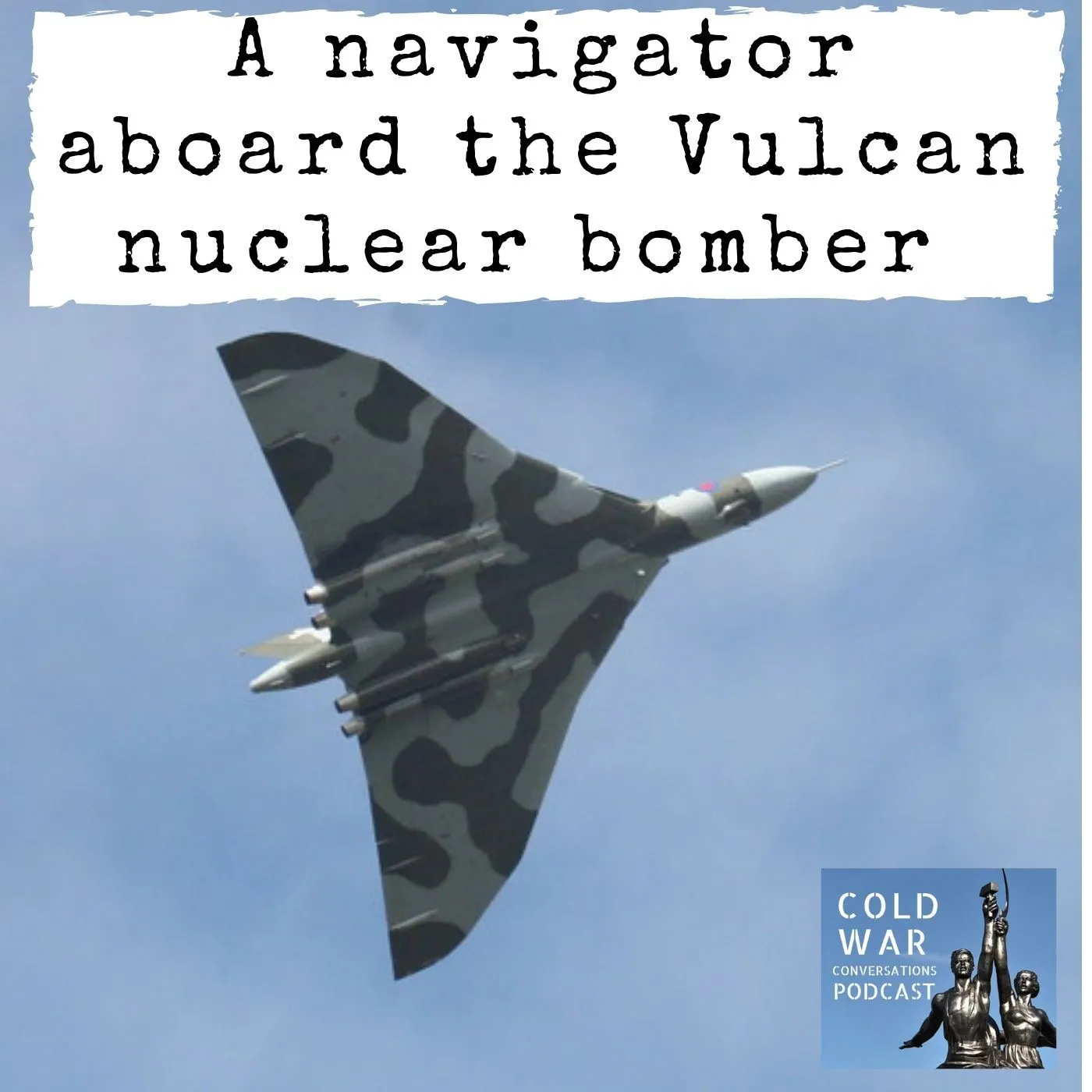
S6 Ep 145Navigator aboard the Cold War Vulcan nuclear bomber (145)
Barry Mullen was a Navigator Radar on the legendary Royal Air Force nuclear bomber, the Vulcan. The Navigator Radar (Nav Radar) had the responsibility for coordinating bombing from the aircraft. This role was performed entirely via instrumentation and was achieved via the ground-facing radar and the Navigation Bombing System a direct successor of the WW2 H2S system used in aircraft such as the Lancaster. This allowed accurate bombing from 57,000 feet down to an incredibly low height of 250 feet. Barry served during the 1970s and candidly shares his experiences. He tells us about his time at RAF Akrotiri in Cyprus during the Turkish invasion as well as the detail of his mission scenarios, both conventional and nuclear. He also shares information about his escape and evasion training as well as much more. If you can spare it I’m asking listeners to contribute about $3, £3 or €3 per month to help keep us on the air (larger amounts are welcome too) plus you can get a sought after CWC coaster as a monthly financial supporter and you bask in the warm glow of knowing you are helping to preserve Cold War history. Just go to https://coldwarconversations.com/donate/ If a financial contribution is not your cup of tea, then you can still help us by leaving written reviews wherever you listen to us as well as sharing us on social media. It really helps us get new guests on the show. Back to today’s episode, we had a little bit of a problem with the audio, but I do think what Barry shares is worth hearing and I hope that doesn’t affect your listening too much. I am delighted to welcome Barry Mullen to our Cold War conversation… There’s further information on this episode in our show notes which can also be found as a link in your podcast app here. https://coldwarconversations.com/episode145/ If you can’t wait for next week’s episode do visit our Facebook discussion group where guests and listeners continue the Cold War Conversation. Just search Cold War Conversations in Facebook. Thank you very much for listening. It is really appreciated – goodbye. Support the project! https://coldwarconversations.com/donate/ Follow us on Twitter https://twitter.com/ColdWarPod Facebook https://www.facebook.com/groups/coldwarpod/ Instagram https://www.instagram.com/coldwarconversations/ Youtube https://youtube.com/@ColdWarConversations 0:00 Introduction and Barry's initial experiences with target study 1:14 Barry Mullen's journey to becoming a navigator and his training experiences 7:55 Difficulties encountered during training and training for high level and low level attacks 11:25 Barry's posting in Akrotiri, Cyprus and Cold War missions in Cento 15:17 The Turkish invasion of Cyprus in 1974 and Barry's experience during the invasion 20:25 Squadron's role post-invasion and Barry's return to England 22:43 Barry's training and experiences in Canada and the United States 29:49 Barry's posting as an instructor at Scampton and selection for the Vulcan display crew 34:19 Nuclear weapon simulator checks and discussions on nuclear deterrence 47:00 Flying other aircraft besides the Vulcan and the most dangerous situation during service 50:06 Closing remarks and promotions Chapters powered by PodcastAI✨ Learn more about your ad choices. Visit podcastchoices.com/adchoices

S6 Ep 1441962 Berlin fiction - author interview (144)
bonusIn this bonus episode, we talk again with Paul Grant, author of "Coercion" the fourth book about the Schultz family who live in Berlin. His books are set at the end of the Second World War and the start of the Cold War. Coercion is set in 1962 against the backdrop of the Berlin Wall while it is still barbed wire and a fragile wall. Escape attempts are frequent and these attempts are the major theme of Paul’s latest book. If you can spare it I’m asking listeners to contribute at least $3 USD per month to help keep us on the air (larger amounts are welcome too) plus you can get a sought after CWC coaster as a monthly financial supporter of the podcast and you bask in the warm glow of knowing you are helping to preserve Cold War history. Just go to https://coldwarconversations.com/donate/ Co-host James conducts our chat and I am delighted to welcome Paul Grant to our Cold War conversation… There’s further information on this episode in our show notes, which can also be found as a link in your podcast app here. https://coldwarconversations.com/episode144/ If you can’t wait for next week’s episode do visit our Facebook discussion group where guests and listeners continue the Cold War Conversation. Just search Cold War Conversations in Facebook. Thank you very much for listening. It is really appreciated – goodbye. Help Support the podcast by shopping at Amazon. https://www.amazon.co.uk/gp/bestsellers/books/12447630031/ref=pd_zg_hrsr_books&tag=cwcp-21 Help support the podcast with a CWC mug or maybe a t-shirt? https://www.redbubble.com/people/Coldwarpod/shop?asc=u Radio GDR If you are interested in East Germany we can highly recommend our friends over at Radio GDR. Support the project! https://coldwarconversations.com/donate/ Follow us on Twitter https://twitter.com/ColdWarPod Facebook https://www.facebook.com/groups/coldwarpod/ Instagram https://www.instagram.com/coldwarconversations/ Youtube https://youtube.com/@ColdWarConversations 0:00 Introduction of guest, Paul Grant, and his book "Coercion" 2:06 Sponsor: Call for financial support and podcast merchandise promotion 6:44 The state of Berlin in 1962 as a book setting and the Berlin Wall 15:02 The role of West Berlin Police and the American Allies 18:50 Real-life stories from the Cold War period 21:23 Introduction to the characters and plot of "Coercion" 28:12 Research methods and the importance of historical accuracy in historical fiction 34:54 Exploration of the legitimacy of the DDR in the early 1960s 40:16 Germany's approach to dealing with its Cold War past 48:22 Upcoming projects from Paul Grant 52:28 Acknowledgement of the podcast's financial supporters Chapters powered by PodcastAI✨ Learn more about your ad choices. Visit podcastchoices.com/adchoices

S6 Ep 143Don - Vietnam war Armoured Cavalry Platoon Leader (143)
This is the first of two episodes we have following Don Snedeker’s experiences through the Cold War. In this episode, we hear about his time in Vietnam and the book he has written entitled "The Blackhorse in Vietnam: The 11th Armored Cavalry Regiment in Vietnam and Cambodia, 1966–1972”. Don was born in Brooklyn New York but followed his Father’s postings around the globe as an ‘Army brat’. Don was commissioned into the Armour branch of the US Army in February 1969 and by December he had been posted to Vietnam initially assigned to the 11th Armored Cavalry Regiment (Blackhorse) but later joining the 1st Armoured Cavalry Regiment (Blackhawks) serving as an armoured cavalry platoon leader and as a Long Range Reconnaissance Patrol platoon leader. He was awarded a Bronze Star with ‘V’ for Valour, a Purple Heart, and the Combat Infantryman’s Badge. Buy Don's book and support the podcast here https://amzn.to/3nAj7Ra If you can spare it I’m asking listeners to contribute at least $3 USD per month to help keep us on the air (larger amounts are welcome too) plus you can get a sought after CWC coaster as a monthly financial supporter of the podcast and you bask in the warm glow of knowing you are helping to preserve Cold War history. Just go to https://coldwarconversations.com/donate/ Co-host James conducts our chat and I am delighted to welcome Don Snedeker to our Cold War conversation… There is further information and a book giveaway in our show notes, which can also be found as a link in your podcast app here. https://coldwarconversations.com/episode143/ If you can’t wait for next week’s episode do visit our Facebook discussion group where guests and listeners continue the Cold War Conversation. Just search Cold War Conversations in Facebook. Thank you very much for listening. It is really appreciated. Support the project! https://coldwarconversations.com/donate/ Follow us on Twitter https://twitter.com/ColdWarPod Facebook https://www.facebook.com/groups/coldwarpod/ Instagram https://www.instagram.com/coldwarconversations/ Youtube https://youtube.com/@ColdWarConversations 0:00 Introduction and historical context 1:29 Don Snedeker's early life, military career, and family history 7:35 Reflection on preparedness for war and the role of armored cavalry in Vietnam 15:48 Long range reconnaissance missions and jungle warfare 25:20 Tactics used in combat and earning military honors 27:19 Writing the book "The Black Horse in Vietnam" and its impact 35:06 Experience returning home from Vietnam and personal memories 39:38 Visiting Vietnam post-war and personal reflections 43:57 Unique characteristics and advantages of the 11th Armored Cavalry Regiment in Vietnam 55:17 End of interview and closing remarks by Ian Sanders Chapters powered by PodcastAI✨ Learn more about your ad choices. Visit podcastchoices.com/adchoices

S6 Ep 142In Cold War Skies – NATO and Soviet airpower 1949-89 (142)
Today’s episode is brought to you by Osprey publishing and we’re speaking with Michael Napier, the author of “In Cold War Skies – NATO and Soviet airpower 1949-89”. Michael also flew the Tornado during the Cold War and served during the 1980s at 14 Sqn and 31 Sqn at RAF Brüggen in West Germany where he talks about nuclear QRA, low-level training in Germany, Canada and Exercise Red Flag in the US plus lots more. His book is packed with first-hand accounts of operational flying during the Cold War as well as stunning photos. You can buy the book and support the podcast on this link https://amzn.to/3bELNDa If you want to support our work in preserving Cold War history then only about $3, £3 or €3 per month helps keep us on the air (larger amounts are welcome too) plus you can get a sought after CWC coaster as a monthly financial supporter and you bask in the warm glow of knowing you are helping to preserve Cold War history. Just go to https://coldwarconversations.com/donate/ If a financial contribution is not your cup of tea, then you can still help us by leaving written reviews wherever you listen to us as well as sharing us on social media. It really helps us get new guests on the show. I am delighted to welcome Michael Napier to our Cold War conversation… There’s further information on this episode in our show notes,plus a book giveaway which can also be found as a link in your podcast app here. https://coldwarconversations.com/episode142/ If you can’t wait for next week’s episode do visit our Facebook discussion group where guests and listeners continue the Cold War Conversation. Just search Cold War Conversations in Facebook. Thank you very much for listening. It is really appreciated – goodbye. Support the project! https://coldwarconversations.com/donate/ Follow us on Twitter https://twitter.com/ColdWarPod Facebook https://www.facebook.com/groups/coldwarpod/ Instagram https://www.instagram.com/coldwarconversations/ Youtube https://youtube.com/@ColdWarConversations 0:00 Introduction and guest Michael Napier's personal experiences during the Cold War 3:12 Discussion about Michael Napier's RAF career and counter air plans 6:07 Insight into the training and exercises during the Cold War 13:08 Reflection on the end of the Cold War and fraternizing with former enemies 16:22 The genesis and structure of Michael Napier's book on the Cold War 21:44 The advancement of aircraft technology and intelligence gathering during the Cold War 27:34 The cyclic nature of history, military organization, and the comparison of aircraft 32:22 The Arab Israeli war's impact on warfare tactics and the evolution of different aircraft 40:06 Researching for the book and neutrality of nations during the Cold War 47:30 The human cost of the Cold War and preserving the stories of the era 53:13 Review of "In Cold War Skies: NATO and Soviet AirPower, 1949" and book giveaway 54:42 Closing remarks and appreciation to listeners and financial supporters Chapters powered by PodcastAI✨ Learn more about your ad choices. Visit podcastchoices.com/adchoices

S6 Ep 141I was a deep cover KGB spy Part 2 (141)
This is part 2 of our chat with Jack Barsky who spent ten years as an undercover KGB agent in the United States. He is the longest surviving known member of the KGB illegals programme that operated during the Cold War. In this episode we talk about his first days in the US, his mission and how he managed build his cover enabling him to live and work as a US citizen. He honestly and candidly talks about the impact his secret life had on those closest to him and the moment of his arrest by the FBI. If you can spare it I’m asking listeners to contribute at least $3 USD per month to help keep us on the air (larger amounts are welcome too) plus you can get a sought after CWC coaster as a monthly financial supporter of the podcast and you bask in the warm glow of knowing you are helping to preserve Cold War history. Just go to https://coldwarconversations.com/donate/ I am delighted to welcome Jack Barsky to our Cold War conversation… There’s further information on this episode in our show notes, which can also be found as a link in your podcast app here. https://coldwarconversations.com/episode141/ If you can’t wait for next week’s episode do visit our Facebook discussion group where guests and listeners continue the Cold War Conversation. Just search Cold War Conversations in Facebook. Thank you very much for listening. It is really appreciated Support the project! https://coldwarconversations.com/donate/ Follow us on Twitter https://twitter.com/ColdWarPod Facebook https://www.facebook.com/groups/coldwarpod/ Instagram https://www.instagram.com/coldwarconversations/ Youtube https://youtube.com/@ColdWarConversations 0:00 Introduction and Jack Barsky's life as a KGB agent 2:18 Support for the Cold War Conversations podcast 8:18 Living undercover in the United States 15:15 Communication methods with the KGB 18:13 Shift in mission and life as a computer programmer 24:27 Impact of family life on his mission 32:11 Discovery of Jack's identity and confrontation with the FBI 40:20 Revealing his past to his family 44:51 Reunion with his abandoned son and friendship with FBI agent 49:22 Reflections on his decisions and the impact of his past 51:15 Closing remarks and acknowledgements to patrons Chapters powered by PodcastAI✨ Learn more about your ad choices. Visit podcastchoices.com/adchoices

S6 Ep 140I was a deep cover KGB spy Part 1 (140)
If you’ve seen the TV drama series, “The Americans” you’ll be fascinated by this episode. Albrecht Dittrich was an East German graduate student and a true believer in the Communist cause when he was recruited by the KGB in 1970. He spent ten years as an undercover KGB agent in the United States. He is the longest surviving known member of the KGB illegals programme that operated during the Cold War. In this episode we talk about his first days his early life in East Germany as well as his recruitment and training in Berlin & Moscow. It’s an amazing insight into the mind and personality of a secret agent and the immense pressures he was under in the 10 years he served his KGB masters. If you can spare it I’m asking listeners to contribute at least $3 USD per month to help keep us on the air (larger amounts are welcome too) plus you can get a sought after CWC coaster as a monthly financial supporter of the podcast and you bask in the warm glow of knowing you are helping to preserve Cold War history. Just go to https://coldwarconversations.com/donate/ I am delighted to welcome Jack Barsky to our Cold War conversation… UK Fans can buy Jack's book here & support the podcast https://amzn.to/2FKAbmj US Fans can buy Jack's book here & support the podcast https://amzn.to/3hLQoVs There’s further information on this episode in our show notes, which can also be found as a link in your podcast app here. https://coldwarconversations.com/episode140/ If you can’t wait for next week’s episode do visit our Facebook discussion group where guests and listeners continue the Cold War Conversation. Just search Cold War Conversations in Facebook or click here https://www.facebook.com/groups/coldwarpod/ Thank you very much for listening. It is really appreciated. Support the project! https://coldwarconversations.com/donate/ Follow us on Twitter https://twitter.com/ColdWarPod Facebook https://www.facebook.com/groups/coldwarpod/ Instagram https://www.instagram.com/coldwarconversations/ Youtube https://youtube.com/@ColdWarConversations 0:00 Introduction of Jack Barsky and his relationship with the KGB 1:25 Jack Barsky's recruitment and training by the KGB 2:06 Fundraising request for the podcast 2:36 Jack Barsky's early life and education in East Germany 11:41 Barsky's journey to becoming a KGB agent 36:15 The romanticization of spies and the reality of spy life in East Germany 51:00 The dangers, risks, and impacts of being a spy 37:05 Jack Barsky's belief in the socialist ideal and the tenets of Marxism 40:02 Jack Barsky's training mission to West Berlin and intensive training in Moscow 59:48 Jack Barsky's transition to a new identity in the US 1:00:38 Closing remarks by Ian Sanders and additional content information. Chapters powered by PodcastAI✨ Learn more about your ad choices. Visit podcastchoices.com/adchoices

S6 Ep 139Portland Spy Ring Part 2 (139)
This is the 2nd episode with Trevor Barnes, the author of “Dead Doubles, a new book on the Portland Spy Ring, one of the most infamous espionage cases of the Cold War. The story continues with the dramatic arrest of three of the KGB spies outside the Old Vic theatre in London and the discovery of the amazing espionage career of the Krogers, the innocent-looking couple in suburbia… We also talk about the revelation that the Portland spy ring was larger than thought and that at least two members escaped capture. UK Fans can buy the book here & support the podcast https://amzn.to/2Gp50gD US Fans can buy the book here & support the podcast https://amzn.to/3jHRpiy If you can spare it I’m asking listeners to contribute at least $3 USD per month to help keep us on the air (larger amounts are welcome too) plus you can get a sought after CWC coaster as a monthly financial supporter and you bask in the warm glow of knowing you are helping to preserve Cold War history. Just go to https://coldwarconversations.com/donate/ I am delighted to welcome Trevor Barnes to our Cold War conversation… There’s further information on this episode in our show notes,plus a book giveaway which can also be found as a link in your podcast app here. https://coldwarconversations.com/episode139/ If you can’t wait for next week’s episode do visit our Facebook discussion group where guests and listeners continue the Cold War Conversation. Just search Cold War Conversations in Facebook or click here https://www.facebook.com/groups/coldwarpod Thank you very much for listening. It is really appreciated Support the project! https://coldwarconversations.com/donate/ Follow us on Twitter https://twitter.com/ColdWarPod Facebook https://www.facebook.com/groups/coldwarpod/ Instagram https://www.instagram.com/coldwarconversations/ Youtube https://youtube.com/@ColdWarConversations 0:00 Introduction and arrest of Gordon Lonsdale 2:26 Interview begins with Trevor Barnes: Background on the arrest of Lonsdale, Houghton, and Gee 15:13 The arrest of Gordon Lonsdale, Houghton, and Gee: Discussion on the Krogers' arrest and espionage equipment 33:29 Discovery of further espionage equipment: The Krogers' false identities and their histories as spies 38:02 Court case: Attempts to turn Lonsdale and identifying his real name 46:43 Negotiations with Lonsdale and the Krogers: The deal offered to Lonsdale 54:50 Establishing Lonsdale's real identity: Unveiling the true identity of Konon Molody 1:02:27 Discussions on Molody becoming a double agent for the British: The futile negotiations with Molody 1:04:31 Spy swap: Molody's journey to freedom and the spy exchange at the Glienicke Bridge 1:12:22 Details on the wider ring of spies controlled by Lonsdale: Successful penetration of the Porton Down research centre 1:23:03 Acknowledgement of financial supporters Chapters powered by PodcastAI✨ Learn more about your ad choices. Visit podcastchoices.com/adchoices

S6 Ep 138Portland Spy Ring Part 1 (138)
In this episode we talk with Trevor Barnes, the author of “Dead Doubles, a new book on the Portland Spy Ring, one of the most infamous espionage cases of the Cold War. In 1960 it was discovered that crucial secrets from the world-leading submarine research base at Portland in Dorset were being stolen by a British man and his mistress. The couple were tailed by MI5 'watchers' to a covert meeting with a Canadian businessman, Gordon Lonsdale. The unsuspecting Lonsdale in turn led MI5's spycatchers to an innocent-looking couple in suburban Ruislip called the Krogers… UK Fans can buy the book here & support the podcast https://amzn.to/2Gp50gD US Fans can buy the book here & support the podcast https://amzn.to/3jHRpiy If you can spare it I’m asking listeners to contribute at least $3 USD per month to help keep us on the air (larger amounts are welcome too) plus you can get a sought after CWC coaster as a monthly financial supporter and you bask in the warm glow of knowing you are helping to preserve Cold War history. Just go to https://coldwarconversations.com/donate/ I am delighted to welcome Trevor Barnes to our Cold War conversation… There’s further information on this episode in our show notes,plus a book giveaway which can also be found as a link in your podcast app here. https://coldwarconversations.com/episode138/ If you can’t wait for next week’s episode do visit our Facebook discussion group where guests and listeners continue the Cold War Conversation. Just search Cold War Conversations in Facebook. Thank you very much for listening. It is really appreciated – goodbye. Support the project! https://coldwarconversations.com/donate/ Follow us on Twitter https://twitter.com/ColdWarPod Facebook https://www.facebook.com/groups/coldwarpod/ Instagram https://www.instagram.com/coldwarconversations/ Youtube https://youtube.com/@ColdWarConversations 0:00 Introduction and Background of Trevor Barnes 1:03 Overview of the Portland Spy Ring and Trevor Barnes' book "Dead Doubles" 9:14 Investigation and Surveillance of the Krogers and Portland Spy Ring 13:32 Missed Opportunities and Gender Bias in the 1950s 25:24 Introduction to Rafter Technology Used for Surveillance 32:54 MI5's Surveillance Strategy and Role of Women 35:30 Moral Dilemmas Faced by MI5 During the Investigation 37:22 Investigation into the Search Family 43:04 Trevor Barnes' Approach to Historical Accuracy in His Book 46:44 Closing Remarks and Acknowledgments Chapters powered by PodcastAI✨ Learn more about your ad choices. Visit podcastchoices.com/adchoices

S6 Ep 137The Last British Commandant in Cold War West Berlin Part 2 (137)
This is the 2nd part of our conversation with Major General Sir Robert Corbett, KCVO, CB who was the last Commandant of the British Sector in Berlin. We join as I ask what were the British Army’s plans in the event of a Warsaw Pact invasion of West Berlin. We also talk about the momentous night of 9th November 1989 and a fascinating tale of a situation, which if handled differently could have sent the history of that night in a very different direction... Sir Robert also recollects his experiences at the Checkpoint Charlie closure ceremony and at the Tag der Deutschen Einheit when on 3 October 1990 the two Germanies were officially reunified. If you are enjoying the podcast please leave a written review in Apple podcasts or share us on social media. By telling your friends you can really help us grow the number of listeners. If you can spare it I’m asking listeners to contribute at least $3 USD per month to help keep us on the air (larger amounts are welcome too) plus you can get a sought after CWC coaster as a monthly financial supporter of the podcast and you bask in the warm glow of knowing you helping preserve Cold War history. Just go to https://coldwarconversations.com/donate/ I am delighted to welcome back Major General Sir Robert Corbett to our Cold War conversation… There’s further information on this episode in our show notes, which can also be found as a link in your podcast app here. https://coldwarconversations.com/episode137/ If you can’t wait for next week’s episode do visit our Facebook discussion group where guests and listeners continue the Cold War Conversation. Just search Cold War Conversations in Facebook. Thank you very much for listening. It is really appreciated Support the project! https://coldwarconversations.com/donate/ Follow us on Twitter https://twitter.com/ColdWarPod Facebook https://www.facebook.com/groups/coldwarpod/ Instagram https://www.instagram.com/coldwarconversations/ Youtube https://youtube.com/@ColdWarConversations 0:00 Introduction and Major General Sir Robert Corbett's experience in West Berlin 7:17 British army's plans and readiness for a potential Warsaw packed invasion 13:15 Major General Sir Robert Corbett's visits and experiences in East Germany 23:01 Recollection of the moment the Berlin Wall opened and the ensuing chaos 28:34 Interactions with Soviet soldiers and the changing relationship with East German border guards 36:37 Soviet reaction to the unfolding events and the bond between enemy soldiers 41:18 Major General Sir Robert Corbett's ongoing connection with Russia and Berlin 44:03 The departure of British troops from Berlin and the change in their status 47:05 The close-call confrontation at Checkpoint Charlie in 1961 and stories about German reunification 51:36 Reflections on the peaceful resolution of the Cold War and the importance of recording Cold War history Chapters powered by PodcastAI✨ Learn more about your ad choices. Visit podcastchoices.com/adchoices

S6 Ep 136The Last British Commandant in Cold War West Berlin Part 1 (136)
Major General Sir Robert Corbett, KCVO, CB was the last Commandant of the British Sector in Berlin. We start his story with the description of his first experience of Berlin as a young Army officer commanding a military train across East Germany into West Berlin just weeks after the Berlin Wall had been built. We also talk about his subsequent Army career including his interview with British Foreign Secretary Geoffrey Howe and his early days as the Commandant of the British Sector in Berlin. If you are enjoying the podcast please leave a written review in Apple podcasts or share us on social media. By telling your friends you can really help us grow the number of listeners. If you can spare it I’m asking listeners to contribute at least $3 USD per month to help keep us on the air (larger amounts are welcome too) plus you can get a sought after CWC coaster as a monthly financial supporter of the podcast and you bask in the warm glow of knowing you helping preserve Cold War history. Just go to https://coldwarconversations.com/donate/ I am delighted to welcome Major General Sir Robert Corbett to our Cold War conversation… There’s further information on this episode in our show notes, which can also be found as a link in your podcast app here. https://coldwarconversations.com/episode136/ If you can’t wait for next week’s episode do visit our Facebook discussion group where guests and listeners continue the Cold War Conversation. Just search Cold War Conversations in Facebook. Thank you very much for listening. It is really appreciated – goodbye. Support the project! https://coldwarconversations.com/donate/ Follow us on Twitter https://twitter.com/ColdWarPod Facebook https://www.facebook.com/groups/coldwarpod/ Instagram https://www.instagram.com/coldwarconversations/ Youtube https://youtube.com/@ColdWarConversations 0:00 Introduction to Cold War Conversations and guest Major General Sir Robert Corbett 2:38 Corbett's firsthand account of the fall of the Berlin Wall and early experiences in Berlin 9:56 Confrontation with East German railway police and Ian Sanders' reflections 16:38 Observations on West Berlin's atmosphere, reconstruction, and damage from World War 2 22:03 Corbett's decision to join the army, career progression, and appointment in Berlin 30:24 Trust and collaboration among commanders during the Cold War and interview with British Foreign Minister Jeffrey Howe 33:43 Interaction with local government and freedom to change things under occupation in West Berlin 39:43 Purpose and importance of the Cold War Conversations podcast 42:06 Demolition of Spandau Prison and construction of British forces supermarket 44:03 Closing remarks and acknowledgments Chapters powered by PodcastAI✨ Learn more about your ad choices. Visit podcastchoices.com/adchoices

S6 Ep 135Eva - A Cold War Czechoslovak Childhood (135)
Born in Communist Czechoslovakia, Eva Caletkova has written an honest and unflinching account of her childhood in Bratislava. Eva’s parents were Catholics, and the communist regime began to persecute the Catholic Church right from the start in 1948. They had to hide their faith from anyone outside of their home. Eva provides us with an insightful and emotional conversation that captures her experiences of life in Communist Czechoslovakia and the resulting trauma. Do check out her book “Forgiveness & Violets” available on this link. https://amzn.to/2CwB0NX If you are enjoying the podcast please leave a written review in Apple podcasts or share us on social media. By telling your friends you can really help us grow the number of listeners. If you can spare it I’m asking listeners to contribute at least $3, £3, €3.50 per month to help keep us on the air (larger amounts are welcome too) plus you can get a sought after CWC coaster as a monthly financial supporter of the podcast and you bask in the warm glow of knowing you are helping preserve Cold War history. Just go to https://coldwarconversations.com/donate/ If you are affected by mental health issues we describe in this episode and want assistance you can visit The Samaritans in the UK https://www.samaritans.org/ or Befrienders Worldwide https://www.befrienders.org/ websites. There’s further information on this episode in our show notes, which can also be found as a link in your podcast app here. https://coldwarconversations.com/episode135/ You can also visit Eva's web site here https://evacaletkova.com/ If you can’t wait for next week’s episode do visit our Facebook discussion group where guests and listeners continue the Cold War Conversation. Just use the link below. Support the project! https://coldwarconversations.com/donate/ Follow us on Twitter https://twitter.com/ColdWarPod Facebook https://www.facebook.com/groups/coldwarpod/ Instagram https://www.instagram.com/coldwarconversations/ Youtube https://youtube.com/@ColdWarConversations Learn more about your ad choices. Visit podcastchoices.com/adchoices

S6 Ep 134My father was Cold War Stasi spy Werner Stiller (134)
Werner Stiller’s spectacular defection to the West in 1979 inflicted one of the Cold War’s most serious blows to the Stasi. At the time he was working as a case officer for the Main Directorate for Reconnaissance, the Stasi’s foreign intelligence division, where he was in charge of scientific espionage in the West. We speak with Stiller’s son Andy, who although he was 11 months old at the time of his father’s defection met his father in later life. Also included is Scott Calonico, who is producing a documentary film with Andy, covering his father’s abandonment of his family and his country, as well as the story of a young man and his journey to discover the man who was his father, the spy… If you are enjoying the podcast please leave a written review in Apple podcasts or share us on social media. By telling your friends you can really help us grow the number of listeners. If you can spare it I’m asking listeners to contribute at least $3 USD per month to help keep us on the air (larger amounts are welcome too) plus you can get a sought after CWC coaster as a monthly financial supporter of the podcast and you bask in the warm glow of knowing you helping preserve Cold War history. Just go to https://coldwarconversations.com/donate/ We welcome filmmaker Scott Calonico and Andy to our Cold War conversation… There’s further information on this episode in our show notes, which can also be found as a link in your podcast app here. https://coldwarconversations.com/episode134/ If you can’t wait for next week’s episode do visit our Facebook discussion group where guests and listeners continue the Cold War Conversation. Just search Cold War Conversations in Facebook. Thank you very much for listening. It is really appreciated – goodbye. Radio GDR If you are interested in East Germany we can highly recommend our friends over at Radio GDR. Support the project! https://coldwarconversations.com/donate/ Follow us on Twitter https://twitter.com/ColdWarPod Facebook https://www.facebook.com/groups/coldwarpod/ Instagram https://www.instagram.com/coldwarconversations/ Youtube https://youtube.com/@ColdWarConversations 0:00 Introduction and backstory of Scott and Andy 0:54 The story of Werner Stiller, Andy's father, and his defection 2:24 Request for listener donations 4:41 Werner's role in East German intelligence services and his motivations 10:35 Examination of Werner's personal life and its impact on his career 14:28 Werner's contact with the BND and his attempts to escape 30:10 Werner's final escape to West Berlin and its aftermath 34:11 Revealing of Marcus Wolf's identity and the aftermath of Werner's defection 41:13 Andy's discovery of his father's past and their relationship post-defection 54:57 Discoveries from the Stasi archives and plans for Scott's documentary 1:00:16 Closing remarks and promotion of Cold War conversations on Facebook Chapters powered by PodcastAI✨ Learn more about your ad choices. Visit podcastchoices.com/adchoices

S6 Ep 133Retracing the Iron Curtain: A 3,000-Mile Journey Through the End and Afterlife of the Cold War (133)
Tim Phillips travelled the route of the former Iron Curtain from deep inside the arctic circle to the meeting point in Azerbaijan, Armenia and Turkey. On his journey, he explored both the surviving traces of the Iron Curtain and the Berlin Wall. The people he meets bear vivid witness to a time of change. There are some who now look on the Cold War with nostalgia and affection, but many more who still despise it unable to forgive the hard and sometimes lost decades that their families, friends, and nations had to endure. Strikingly a large and increasing proportion of these populations no longer has any personal recollection of this defining 20th Century conflict. They were still too young or not even born when the curtain and the wall came down. Buy Tim's book here and support CWC https://amzn.to/3Ud9Mir If you are enjoying the podcast please leave a written review in Apple podcasts or share us on social media. By telling your friends you can really help us grow the number of listeners. If you can spare it I’m asking listeners to contribute at least $3 USD per month to help keep us on the air (larger amounts are welcome too) plus you can get a sought after CWC coaster as a monthly financial supporter of the podcast and you bask in the warm glow of knowing you helping preserve Cold War history. Just go to https://coldwarconversations.com/donate/ Back to today’s episode, we welcome Tim to our Cold War conversation… There’s further information on this episode in our show notes, which can also be found as a link in your podcast app. https://coldwarconversations.com/episode133/ If you can’t wait for next week’s episode do visit our Facebook discussion group where guests and listeners continue the Cold War Conversation. Just search Cold War Conversations in Facebook. Thank you very much for listening. It is really appreciated – goodbye. Support the project! https://coldwarconversations.com/donate/ Follow us on Twitter https://twitter.com/ColdWarPod Facebook https://www.facebook.com/groups/coldwarpod/ Instagram https://www.instagram.com/coldwarconversations/ Youtube https://youtube.com/@ColdWarConversations 0:00 Introduction and anecdotes from Tim Phillips 2:06 Call for listener support and introduction to Tim Phillips' story 4:45 Discussion on NATO countries bordering the Soviet Union 17:24 The concept of Finlandisation and Finnish neutrality during the Cold War 27:10 Soviet occupation of Bornholm 34:51 Journey from the Baltic to Marienborn 38:47 The transformation of the border area into a nature reserve post-Cold War 44:55 The role of the church in the East German dissident movement 51:15 Exploring the border in the Czech Republic and Slovakia 1:00:31 The British naval incident near the island of Corfu 1:05:53 Turning the trip into a book 1:08:10 Cold War Conversations Coasters and donations Chapters powered by PodcastAI✨ Learn more about your ad choices. Visit podcastchoices.com/adchoices

S6 Ep 132Cold War Czechoslovak hockey star defects to Canada (132)
Vashi Nedomanský is the son of Czechoslovak former legendary ice hockey forward Václav Nedomanský aka “Big Ned” who is best known as the first ice hockey player to defect to North America to play. We hear a dramatic true story that combines sports, politics, espionage, corruption, and life-changing events that played out on a global stage. Among the stories we hear are the vivid descriptions of the 1969 Ice Hockey World Championships where the Czechoslovak National Team faced the Soviet national team for the first time since the 1968 Soviet Invasion of Czechoslovakia. Vashi is currently finishing a film that will reveal his father’s incredible story for the first time in his own words. Visit the show notes here to see the trailer and the 1969 Ice Hockey World Championships. https://coldwarconversations.com/episode132/ If you are enjoying the podcast please leave a written review in Apple podcasts or share us on social media. By telling your friends you can really help us get new guests. If you can spare it I’m asking listeners to contribute at least $3 USD per month to help keep us on the air (larger amounts are welcome too) plus you can get a sought after CWC coaster as a monthly financial supporter of the podcast and you bask in the warm glow of knowing you helping preserve Cold War history. Just go to https://coldwarconversations.com/donate/ Back to today’s episode, we welcome Vashi to our Cold War conversation… There’s further information on this episode in our show notes, which can also be found as a link in your podcast app here. https://coldwarconversations.com/episode132/ If you like what you are hearing, please leave reviews in Apple podcasts and share us on social media. If you can’t wait for next week’s episode do visit our Facebook discussion group where guests and listeners continue the Cold War Conversation. Just search Cold War Conversations in Facebook. Thank you very much for listening. It is really appreciated – goodbye. Support the project! https://coldwarconversations.com/donate/ Follow us on Twitter https://twitter.com/ColdWarPod Facebook https://www.facebook.com/groups/coldwarpod/ Instagram https://www.instagram.com/coldwarconversations/ Youtube https://youtube.com/@ColdWarConversations 0:00 Introduction and Vashi Nedomanski's father's defection story 12:02 Vashi's father's professional ice hockey career and political climate in Czechoslovakia 16:44 Prague Spring and the Soviet invasion 19:00 The 1969 World Championships and its political implications 27:06 Vashi's birth, early life, and family's decision to defect 38:16 The methodology and journey of the Nedomanski family's defection 44:25 Arrival in Canada and challenges faced by the Nedomanski family 49:14 Erasure of Vashi's father from Czechoslovak ice hockey history and consequences faced by family 56:02 Vashi's own professional hockey career and experience of discrimination 58:04 Vashi's return to Czechoslovakia and his father's popularity 1:00:52 The making of Vashi's documentary about his father's life and journey Chapters powered by PodcastAI✨ Learn more about your ad choices. Visit podcastchoices.com/adchoices

S6 Ep 131Robert - The anti Cold War activist (131)
Robert Perschmann describes himself as an anti-Cold War activist. His political views started to form while serving in the US Air Force during the Vietnam War period where he saw first hand the toll on the US military and the racism prevalent in the American South. An interview with a Soviet journalist which was broadcast on PBS radio (the US equivalent of the BBC) was the catalyst for an almost one-man campaign to reduce tensions between the two superpowers. At this point, Robert was working as a US Mailman where he financed numerous visits to the Soviet Union to foster a better understanding between the two systems and became friends with many Soviet personalities including Dean Reed and legendary Soviet journalist Vladimir Posner. If you are enjoying the podcast please leave a written review in Apple podcasts or share us on social media. By telling your friends you can really help us grow the number of listeners. If you can spare it I’m asking listeners to contribute at least $3 USD per month to help keep us on the air (larger amounts are welcome too) plus you can get a sought after CWC coaster as a monthly financial supporter of the podcast and you bask in the warm glow of knowing you helping preserve Cold War history. Just go to https://coldwarconversations.com/donate/ Thanks to our latest supporters including Greg Collins, Derek Worthington, Craig Donald, Janet Kelley, David O’Leary, STepwolf, Paul Hatzer, Chris Cock, Jon Forsyth, & James Roberts Back to today's episode, we welcome Robert Perschmann to our Cold War conversation… There’s further information on this episode in our show notes, which can also be found as a link in your podcast app here. https://coldwarconversations.com/episode131/ If you can’t wait for next week’s episode do visit our Facebook discussion group where guests and listeners continue the Cold War Conversation. Just search Cold War Conversations on Facebook. Thank you very much for listening. It is really appreciated – goodbye. Support the project! https://coldwarconversations.com/donate/ Follow us on Twitter https://twitter.com/ColdWarPod Facebook https://www.facebook.com/groups/coldwarpod/ Instagram https://www.instagram.com/coldwarconversations/ Youtube https://youtube.com/@ColdWarConversations 0:00 Introduction and Robert Pershman's unexpected call from FBI 2:26 Sponsor: Fundraising plea for the podcast 3:16 Robert's experience in the US Air Force and his exposure to racism 8:42 Experiences of racism in the American South and impact of Martin Luther King on Robert's life 15:35 Robert's transition from military to civilian life and anti-cold war activism 20:07 First impressions of Aeroflot and the Soviet Union, meeting and connecting with Vitali Chirkin 28:40 Robert's perspective on living conditions and work in the Soviet Union 35:36 Dealing with the FBI due to Soviet connections, encounters with the KGB 43:56 Activism efforts during the Cold War, meeting Dean Reed 51:55 Changing family dynamics due to Soviet connections, meeting Svetlana Starodubtseva 1:00:57 Discussion about the Soviet Union's role in World War II, Robert's views on the Soviet Union's post-war actions 1:06:31 Closing remarks and acknowledgements Chapters powered by PodcastAI✨ Learn more about your ad choices. Visit podcastchoices.com/adchoices
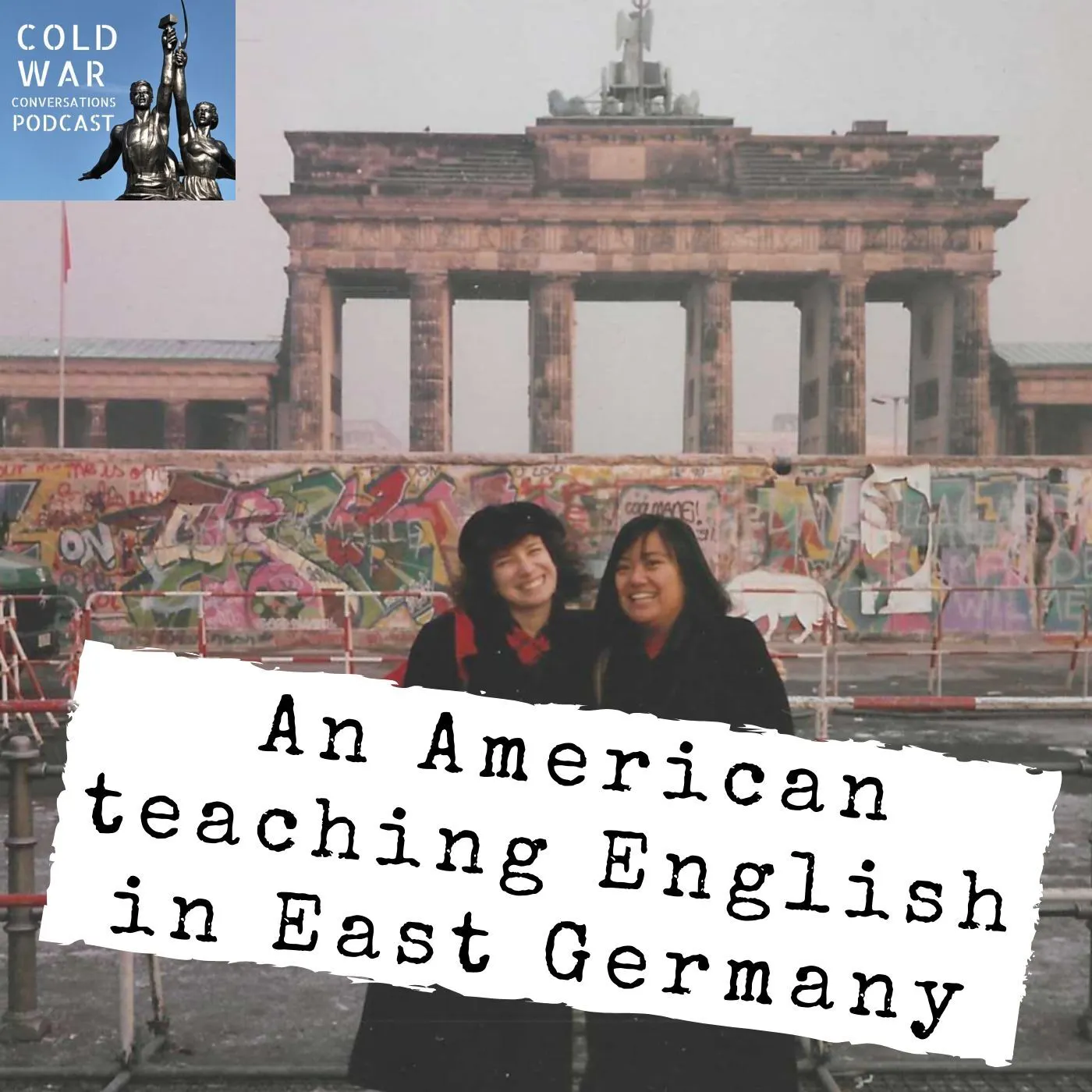
S6 Ep 130Susan - An American teaching English in East Germany (130)
Susan Morrison is Professor of English at Texas State University. In the late 1980’s she taught in Rostock in the former GDR and then lived in West Berlin but frequently crossed back into the East to teach and meet friends. In this episode we talk to her about her experiences and her impression of the two Germanys in 1989. During her time in Rostock, Susan got in trouble with the authorities over bulletin board known as ‘The Wall’; the way she was censured by senior academics in the GDR sheds a valuable light on how people lived within the strict system of control by using humour and compromise. Susan talks about finding the humanity in the GDR and how, as she watched the wall fall in 1989, that she wondered if unification would truly benefit all Germans. Susan also retrieved her personal Stasi File and talks about how they tracked and monitored her during her time in the GDR and the assumptions that they made (not always successfully!). If you are enjoying the podcast please leave a written review in Apple podcasts or share us on social media. By telling your friends you can really help us grow the number of listeners. If you can spare it I’m asking listeners to contribute at least $3 USD per month to help keep us on the air (larger amounts are welcome too) plus you can get a sought after CWC coaster as a monthly financial supporter of the podcast and you bask in the warm glow of knowing you helping preserve Cold War history. Just go to https://coldwarconversations.com/donate/ James our co-host is the interviewer as we welcome Susan to our Cold War conversation… There’s further information on this episode in our show notes, which can also be found as a link in your podcast app here. https://coldwarconversations.com/episode130/ If you can’t wait for next week’s episode do visit our Facebook discussion group where guests and listeners continue the Cold War Conversation. Just search Cold War Conversations in Facebook. Thank you very much for listening. It is really appreciated – goodbye. Radio GDR If you are interested in East Germany we can highly recommend our friends over at Radio GDR. Support the project! https://coldwarconversations.com/donate/ Follow us on Twitter https://twitter.com/ColdWarPod Facebook https://www.facebook.com/groups/coldwarpod/ Instagram https://www.instagram.com/coldwarconversations/ Youtube https://youtube.com/@ColdWarConversations 0:00 Introduction and Susan Morrison's first encounter with the East German 2:43 Susan's journey as a graduate student in East Germany 6:49 Susan's role as the editor of the wall newspaper and potential conflict with GDR authorities 11:09 The repercussions of posting a controversial article and the aftermath 14:31 Susan's complex feelings about her time in East Germany 18:08 Susan's discovery of her Stasi file and its references to the controversy 26:01 Susan's extended stay in Berlin and her travels to East Germany 34:35 Susan's experience living in West Berlin during the fall of the wall 46:21 Being detained at the border and misinterpretations by the East German government 56:53 The night the Berlin Wall came down and meeting with Angela after the fall 1:09:31 Feminist scholars' perspective on the change and the story of the Stasi car 1:20:05 Closing conversation with Susan Morrison and Ian Sanders wraps up the episode. Chapters powered by PodcastAI✨ Learn more about your ad choices. Visit podcastchoices.com/adchoices