
Cold War Conversations Podcast
479 episodes — Page 8 of 10

S5 Ep 129The KGB tried to recruit me (129)
Hans de Vreij is a Dutch journalist who has worked in Berlin , Brussels, Geneva and Prague. Whilst working at the United Nations in Geneva Hans was the subject of attempted recruitment by the KGB to develop an ‘agent of influence’ to disseminate Soviet points of view. In addition, they analysed the ‘targeted journalist’ in terms of possible blackmail: ‘kompromat‘ (compromising material). This especially held true for journalists who later might find themselves in an important position, such as press spokesman at a ministry. We later talk about Hans’ visit to a Soviet chemical weapons facility and testing ground on the Volga, some 750 kms southeast of Moscow as well as his service in the Dutch Army. If you are enjoying the podcast please leave a written review in Apple podcasts or share us on social media. By telling your friends you can really help us grow the number of listeners. If you can spare it I’m asking listeners to contribute at least $3 USD per month to help keep us on the air (larger amounts are welcome too) plus you can get a sought after CWC coaster as a monthly financial supporter of the podcast and you bask in the warm glow of knowing you helping preserve Cold War history. Just go to https://coldwarconversations.com/donate/ Back to today’s episode, we welcome Hans to our Cold War conversation… There’s further information on this episode in our show notes, which can also be found as a link in your podcast app. https://coldwarconversations.com/episode129/ If you can’t wait for next week’s episode do visit our Facebook discussion group where guests and listeners continue the Cold War Conversation. Just search Cold War Conversations in Facebook. Thank you very much for listening. It is really appreciated – goodbye. Support the project! https://coldwarconversations.com/donate/ Follow us on Twitter https://twitter.com/ColdWarPod Facebook https://www.facebook.com/groups/coldwarpod/ Instagram https://www.instagram.com/coldwarconversations/ Youtube https://youtube.com/@ColdWarConversations 0:00 Introduction and meeting with Soviet diplomat Mikhail Petrukhov 1:51 Sponsor message and request for donations 3:57 Hans de Vreij's career journey and focus on human rights and arms control 10:49 The envelope incident and potential for blackmail 16:33 Conclusion and reflections on the old-fashioned tactics of Soviet intelligence 20:14 An unusual request from a KGB agent 29:15 Understanding KGB tradecraft 35:01 Invitation to see a chemical weapons facility in the Soviet Union 53:01 Hans de Vreij's time in the Dutch Army 55:38 Closing remarks and call to action: Show notes, donations, and the Facebook discussion group 56:16 Podcast sign off by Ian Sanders Chapters powered by PodcastAI✨ Learn more about your ad choices. Visit podcastchoices.com/adchoices

S5 Ep 128Experiencing the Cold War via virtual reality (128)
How can we go beyond the films, books, and photos to learn more about the Cold War? Films are certainly evocative and certainly inform but how can we go beyond that and immerse ourselves to see what it felt like to be there. The two technologies of Augmented Reality and Virtual Reality may allow us to do this. Robin Hardenberg is a Berlin-based filmmaker who has developed ’The Berlin Wall App’ which uses Augmented Reality to bring the drama of the division of Berlin to those who are able to walk around the City. Patrick Furlong is Head of Factual at Remarkable TV and has produced VR content for YouTube’s Virtually History series about the Berlin Wall. These programs allow you to immerse yourself in key episodes in Berlin’s Cold War history from your own home. If you are enjoying the podcast please leave a written review in Apple podcasts or share us on social media. By telling your friends you can really help us grow the number of listeners. If you can spare it I’m asking listeners to contribute at least $3 USD per month to help keep us on the air (larger amounts are welcome too) plus you can get a sought after CWC coaster as a monthly financial supporter of the podcast and you bask in the warm glow of knowing you helping preserve Cold War history. Just go to https://coldwarconversations.com/donate/ Back to today’s episode, we welcome James, Robin & Patrick to our Cold War conversation… There’s VR videos and further information on this episode in our show notes, which can also be found as a link in your podcast app.https://coldwarconversations.com/episode128/ If you like what you are hearing, please leave reviews in Apple podcasts and share us on social media. If you can’t wait for next week’s episode do visit our Facebook discussion group where guests and listeners continue the Cold War Conversation. Just search for Cold War Conversations in Facebook. Thank you very much for listening. It is really appreciated – goodbye. Support the project! https://coldwarconversations.com/donate/ Follow us on Twitter https://twitter.com/ColdWarPod Facebook https://www.facebook.com/groups/coldwarpod/ Instagram https://www.instagram.com/coldwarconversations/ Youtube https://youtube.com/@ColdWarConversations 0:00 Introduction and meeting with Soviet diplomat Mikhail Petrukhov 1:51 Sponsor message and request for donations 3:57 Hans de Vreij's career journey and focus on human rights and arms control 10:49 The envelope incident and potential for blackmail 16:33 Conclusion and reflections on the old-fashioned tactics of Soviet intelligence 20:14 An unusual request from a KGB agent 29:15 Understanding KGB tradecraft 35:01 Invitation to see a chemical weapons facility in the Soviet Union 53:01 Hans de Vreij's time in the Dutch Army 55:38 Closing remarks and call to action: Show notes, donations, and the Facebook discussion group 56:16 Podcast sign off by Ian Sanders Chapters powered by PodcastAI✨ Learn more about your ad choices. Visit podcastchoices.com/adchoices

S5 Ep 127Cold War US Army Intelligence Analyst (127)
Bill was a US Army Intelligence Analyst. In 1986 he was assigned to Order of Battle Branch, Soviet Section where for three years he studied the Warsaw Pact armies working closely with the US Military Liaison Mission (USMLM) in Berlin which led to a transfer there in November 1989 Stationed in Potsdam he became an Order of Battle Analyst and participated in a handful of collection tours with the USMLM as the “back seater”. He tells of the little know history of USMLM during this period and the continued monitoring of Soviet Forces in Germany post the opening of the Berlin Wall and even post reunification to the Soviet’s eventual withdrawal in 1994. If you are enjoying the podcast please leave a written review in Apple podcasts or share us on social media. By telling your friends you can really help the podcast grow. If you can spare it I’m asking listeners to contribute at least $3 USD per month to help keep us on the air (larger amounts are welcome too) plus you can get a sought after CWC coaster as a monthly financial supporter of the podcast and you bask in the warm glow of knowing you helping preserve Cold War history. Just go to https://coldwarconversations.com/donate/ Back to today’s episode, we welcome Bill to our Cold War conversation… There’s further information on this episode in our show notes, which can also be found as a link in your podcast app. https://coldwarconversations.com/episode127/ If you like what you are hearing, please leave reviews in Apple podcasts and share us on social media. If you can’t wait for next week’s episode do visit our Facebook discussion group where guests and listeners continue the Cold War Conversation. Just search Cold War Conversations in Facebook. Thank you very much for listening. It is really appreciated – goodbye. Support the project! https://coldwarconversations.com/donate/ Follow us on Twitter https://twitter.com/ColdWarPod Facebook https://www.facebook.com/groups/coldwarpod/ Instagram https://www.instagram.com/coldwarconversations/ Youtube https://youtube.com/@ColdWarConversations 0:00 Introduction and guest background 0:50 Bill's role as a US Army intelligence analyst 2:27 Importance of financial support for the podcast 6:24 Tracking Soviet units and military liaison missions 16:04 The fall of the Berlin Wall and its impact on intelligence operations 22:13 Observing a Soviet installation firsthand and interacting with East German civilians 31:01 The end of three-power control of Berlin and the deactivation of USMLM 35:24 German intelligence services, BND, and their collaboration with USMLM 38:25 Formation of the Combined Analysis Detachment Berlin (CAD B) and surveillance operations 56:36 Handling of Russian nuclear weapons storage facilities and shift to human intelligence 1:06:30 Episode closing remarks Chapters powered by PodcastAI✨ Learn more about your ad choices. Visit podcastchoices.com/adchoices

S5 Ep 126Reporting the 1989 Romanian Revolution (126)
We talk again to Mark Brayne who worked as a Reuters & BBC journalist during the Cold War. This time we are in Romania in December 1989 where riots, street violence and murder in several cities over the course of roughly a week led the Romanian leader Nicolae Ceaușescu to flee the capital city on 22 December with his wife. We hear the challenges of being a journalist in what was effectively a war zone without the risk assessments and protective gear of the present day. If you are enjoying the podcast please leave a written review in Apple podcasts or share us on social media. By telling your friends you can really help the podcast grow. If you can spare it I’m asking listeners to contribute $3 USD per month to help keep us on the air (larger amounts are welcome too) plus you can get a sought after CWC coaster as a monthly financial supporter of the podcast and you bask in the warm glow of knowing you helping preserve Cold War history. Just go to https://coldwarconversations.com/donate/ Thanks to latest Patreons Back to today’s episode, part 3 of three episodes with Mark and it’s been an honour for Mark to share his stories with us in such an honest and revealing fashion… We welcome Mark Brayne back to our Cold War conversation… There’s further information on this episode in our show notes, which can also be found as a link in your podcast app. https://coldwarconversations.com/episode126 If you like what you are hearing, please leave reviews in Apple podcasts and share us on social media. If you can’t wait for next week’s episode do visit our Facebook discussion group where guests and listeners continue the Cold War Conversation. Just search Cold War Conversations in Facebook. Thank you very much for listening. It is really appreciated. Support the project! https://coldwarconversations.com/donate/ Follow us on Twitter https://twitter.com/ColdWarPod Facebook https://www.facebook.com/groups/coldwarpod/ Instagram https://www.instagram.com/coldwarconversations/ Youtube https://youtube.com/@ColdWarConversations 0:00 Introduction and welcome 0:16 Interview with Mark Brayne: Recollections of Romania in 1989 2:15 Sponsor: Call for listener support and donations 9:24 First-hand reporting from Bucharest during the Romanian revolution 14:44 Mark Brayne's diagnosis of Asperger's and fearlessness during the Cold War 19:14 Witnessing the aftermath of protests in Bucharest 23:50 Mark Brayne's personal life post-Cold War and transition into psychotherapy 27:08 Off-the-record conversation with Vasil Biliak about his early years in communism 34:32 Anecdotes from the 4+2 negotiations 39:06 Producing a documentary on the psychology of the Cold War 41:49 Ian Sanders: Wrapping up the episode and promoting content on Cold War Conversations website Chapters powered by PodcastAI✨ Learn more about your ad choices. Visit podcastchoices.com/adchoices

S5 Ep 125A British Journalist under Stasi Surveillance (125)
We talk to Mark Brayne again in a wide ranging chat about his career as a Reuters & BBC journalist including details of his Stasi file, his time in the Soviet Union, Hungary & Poland as well as the perils of editing analogue tape in a non-digital age. Among his interviewees we talk about the Dalai Lama, Lech Walesa as well the ordinary people of the Warsaw Pact countries. If you are enjoying the podcast please leave a written reviews in Apple podcasts or share us on social media. By telling your friends you can really help the podcast grow. If you can spare it I’m asking listeners to contribute $3 USD per month to help keep us on the air (larger amounts are welcome too) plus you can get a sought after CWC coaster as a monthly financial supporter of the podcast and you bask in the warm glow of knowing you helping preserve Cold War history. Just go to https://coldwarconversations.com/donate/ Thanks to latest Patreons Back to today’s episode, part 2 of three episodes with Mark and as you will hear we have a lot of fun recording this... We welcome Mark Brayne to our Cold War conversation… There’s further information on this episode in our show notes, which can also be found as a link in your podcast app. https://coldwarconversations.com/episode125/ If you like what you are hearing, please leave reviews in Apple podcasts and share us on social media. If you can’t wait for next week’s episode do visit our Facebook discussion group where guests and listeners continue the Cold War Conversation. Just search Cold War Conversations in Facebook. Thank you very much for listening. It is really appreciated – goodbye. Radio GDR If you are interested in East Germany we can highly recommend our friends over at Radio GDR. Support the project! https://coldwarconversations.com/donate/ Follow us on Twitter https://twitter.com/ColdWarPod Facebook https://www.facebook.com/groups/coldwarpod/ Instagram https://www.instagram.com/coldwarconversations/ Youtube https://youtube.com/@ColdWarConversations 0:00 Introduction and overview of Mark Brayne's career 2:30 Discussion on Mark Brayne's Stasi files and experiences in East Berlin 10:18 Examination of Mark's Stasi files, including photos and recorded details 20:21 Mark Brayne shares his experiences with Russian dissident Andrei Sakharov and reflections on his time in Russia 27:30 Conversation about Mark Brayne's time in Romania and his role as BBC Central European correspondent 31:38 Mark Brayne's time in China and interview with the Dalai Lama 43:22 Mark Brayne's ban from Romania and transition to China 51:42 Mark Brayne on covering the Gorbachev visit and the Tiananmen Square incident 53:05 Teaser for Mark Brayne's story about Romania in 1989 53:28 Closing remarks by Ian Sanders and information about the podcast's Facebook discussion group Chapters powered by PodcastAI✨ Learn more about your ad choices. Visit podcastchoices.com/adchoices

S5 Ep 124Cold War Britain & The Bomb (124)
In Britain and the Bomb Bill Nuttall considers Britain's national journey from Empire to Europe and the transition of British nuclear weapons from the Royal Air Force to the Royal Navy. If you are enjoying the podcast please leave a written reviews in Apple podcasts or share us on social media. By telling your friends you can really help the podcast grow. It costs money and time to produce this podcast so I’m asking listeners to contribute $3 USD per month to help keep us on the air (larger amounts are welcome too) plus you can get a sought after CWC coaster as a monthly financial supporter of the podcast and you bask in the warm glow of knowing you helping preserve Cold War history. Just go to https://coldwarconversations.com/donate/ Thanks to latest Patreons including Chris Pearson, Dave Parry, John Rafferty, This is Rammy, John Helsinki Scott G, Graham Horlock and Mister Giles. Back to today’s episode, the story pivots around a single day in April 1965. The recently-established Labour government very publicly cancelled the much-vaunted TSR2 nuclear strike bomber, causing dismay among aviation enthusiasts. The passing decades have done little to diminish the controversy and a pervasive sense of nostalgic melancholy about a lost Britain. We welcome Bill Nuttall to our Cold War conversation… There’s further information on this episode in our show notes, which can also be found as a link in your podcast app.https://coldwarconversations.com/episode124/ If you like what you are hearing, please leave reviews in Apple podcasts and share us on social media. If you can’t wait for next week’s episode do visit our Facebook discussion group where guests and listeners continue the Cold War Conversation. Just search Cold War Conversations in Facebook. Thankyou very much for listening. It is really appreciated – goodbye. Support the project! https://coldwarconversations.com/donate/ Follow us on Twitter https://twitter.com/ColdWarPod Facebook https://www.facebook.com/groups/coldwarpod/ Instagram https://www.instagram.com/coldwarconversations/ Youtube https://youtube.com/@ColdWarConversations 0:00 Introduction and overview of the episode 0:37 Bill Nuttall's role in the German Democratic Republic and discussion on "Britain and the Bomb" 2:04 Sponsor: Request for listener support and acknowledgment of patrons 2:31 The cancellation of TSR2 nuclear strike bomber: Insights and Context 7:01 Deep dive into the advanced features and significance of the TSR2 aircraft 12:23 Impact of Duncan Sandy's white paper on the Air Force and industrial policy 15:48 Consequences of Gary Powers incident and the development of standoff missiles 21:28 The Cold War as a technological chess game: Strategic decisions and technological advancements 26:17 Change in UK government and its impact on nuclear decision making 31:53 Understanding nuclear deterrence, Britain's debate, and defense of Moscow 35:17 The impact of technology cancellations on Britain's national image and identity 39:06 Closing remarks and podcast outro Chapters powered by PodcastAI✨ Learn more about your ad choices. Visit podcastchoices.com/adchoices

S5 Ep 123A UK Journalist in the Soviet Union & GDR (123)
Mark Brayne studied in Moscow 71-72, travelling the country with fellow UK students and spending silly amounts of time in the bathhouses with salted fish and very poor quality beer. He returned in 1974-75 as Reuters trainee journalist where he became very close to Andrei Sakharov, the father of the Soviet hydrogen bomb and Soviet-era dissident. East Berlin was his first solo posting for Reuters, where he and his wife Jutta both sang in the East Berlin Cathedral choir for four years, including two as BBC Berlin, with the honorary status of Lieut Col. If you are enjoying the podcast please leave a written review in Apple podcasts or share us on social media. By telling your friends you can really help the podcast grow. If you can spare it I’m asking listeners to contribute $3 USD per month to help keep us on the air (larger amounts are welcome too) plus you can get a sought after CWC coaster as a monthly financial supporter of the podcast and you bask in the warm glow of knowing you helping preserve Cold War history. Just go to https://coldwarconversations.com/donate/ Many thanks to our latest Patreons! Back to today’s episode, part 1 of three episodes with Mark and I’m sure you will find his story as equally interesting as I did... We welcome Mark to our Cold War conversation… There’s further information on this episode in our show notes, which can also be found as a link in your podcast app. https://coldwarconversations.com/episode123/ If you like what you are hearing, please leave reviews in Apple podcasts and share us on social media. If you can’t wait for next week’s episode do visit our Facebook discussion group where guests and listeners continue the Cold War Conversation. Just search Cold War Conversations in Facebook. Thank you very much for listening. It is really appreciated. Support the project! https://coldwarconversations.com/donate/ Follow us on Twitter https://twitter.com/ColdWarPod Facebook https://www.facebook.com/groups/coldwarpod/ Instagram https://www.instagram.com/coldwarconversations/ Youtube https://youtube.com/@ColdWarConversations 0:00 Introduction and guest Mark Brayne's relationship with Andre Sakharov 8:18 Discussion on Mark Brayne's first visit to East Berlin and rowing with the Karl Marx University rowing club 14:33 Mark Brayne's experiences singing in the East Berlin Cathedral choir 22:14 Mark Brayne's sources of information in East Germany and interactions with other expatriates 28:10 Mark Brayne's scoop about East Germany purchasing VW Golfs from West Germany 31:04 Mark Brayne's memorable interview in East Germany and an incident in 1977 33:56 Transition from East Berlin to West Berlin and reflection on radio reporting 40:37 Mark Brayne's honorary status in the British military government in West Berlin 44:57 Mark Brayne's experiences with Western secret services and favourite Cold War story 51:00 Discussion on border dynamics and Mark Brayne's admiration for Germany's post-Cold War recovery 57:08 The lasting psychological impact of East Germany's Cold War experience 59:22 Episode wrap-up and thanks to listeners Chapters powered by PodcastAI✨ Learn more about your ad choices. Visit podcastchoices.com/adchoices

S5 Ep 122A 23 year old Cold War nuclear missile commander (122)
Scott was a Pershing 2 nuclear missile Fire Control Officer which meant he was responsible for the launch of the missile. Aged 23 he was made platoon commander and responsible for 3 of these deadly weapons. The Pershing II was a mobile, intermediate-range ballistic missile deployed by the U.S. Army at American bases in West Germany beginning in 1983. It was aimed at targets in the western Soviet Union. Each Pershing II carried a single, variable-yield thermonuclear warhead with an explosive force equivalent to 5-50 kilotons of TNT. Under the terms of the 1987 Intermediate-Range Nuclear Forces Treaty between the United States and the Soviet Union, all Pershing IIs and their support equipment were removed from the inventory and rendered inoperable If you are enjoying the podcast please leave a written review in Apple podcasts or share us on social media. By telling your friends you can really help the podcast grow. If you can spare it I’m asking listeners to contribute $3 USD per month to help keep us on the air (larger amounts are welcome too) plus you can get a sought after CWC coaster as a monthly financial supporter of the podcast and you bask in the warm glow of knowing you helping preserve Cold War history. Just go to https://coldwarconversations.com/donate/ Back to today’s episode, guest host Peter Ryan chatted with Scott and you will remember from Peter episode 101 where he interviewed me about the podcast. We welcome Scott & Peter to our Cold War conversation… There’s further information on this episode in our show notes, which can also be found as a link in your podcast app. https://coldwarconversations.com/episode122/ If you like what you are hearing, please leave reviews in Apple podcasts and share us on social media. If you can’t wait for next week’s episode do visit our Facebook discussion group where guests and listeners continue the Cold War Conversation. Just search Cold War Conversations in Facebook. Thankyou very much for listening. Support the project! https://coldwarconversations.com/donate/ Follow us on Twitter https://twitter.com/ColdWarPod Facebook https://www.facebook.com/groups/coldwarpod/ Instagram https://www.instagram.com/coldwarconversations/ Youtube https://youtube.com/@ColdWarConversations 0:00 Introduction and Background of Scott, a Pershing 2 nuclear missile fire control officer 1:52 Call for listener support and donations 2:38 Scott's journey in the US Military and his role as a Pershing 2 nuclear missile fire control officer 7:15 Briefings on the East Bloc, precautions and surveillance by East Bloc agents 10:57 Scott's experiences near the GDR border and overview of the Pershing 2 missile 13:23 Scott's promotion and the significance of the missile system in ending the Cold War 16:08 Comparisons of real-life launch procedures with popular culture and communication in the field 20:37 Maintenance procedures and orders after launching missiles 26:42 Off-duty activities and relaxation in Germany, travel opportunities 30:45 Quick-fire portion: Scott's favourite Cold War memories and memorabilia 44:34 Wrapping up the conversation with Scott and closing remarks by Ian Sanders 45:33 End of the episode Chapters powered by PodcastAI✨ Learn more about your ad choices. Visit podcastchoices.com/adchoices

S5 Ep 121The Last Days of Cold War East Germany (121)
Michael Paterson first visited East Germany just after the fall of the Berlin Wall and provides a vivid account of its subsequent decline and fall during the move to reunification with West Germany. Michael is a military historian, author, researcher and illustrator. He began his career with the military magazine 'Battlefields Review' as a writer and illustrator, before working in the printed books department at the Imperial War Museum, London. Michael has lectured frequently on military history and related subjects. Now if you are enjoying the podcast I’m asking for a few quid or dollars a month to help keep us on the air. It’s not much, perhaps a coffee or two a month, plus you become the envy of your friends with that sought after CWC coaster too. Just go to https://coldwarconversations.com/donate/ If you can’t donate financially then you can also help us by leaving a written review on Apple podcasts or wherever you listen to this podcast. Fancy a Cold War Conversations mug? Check out our merchandise store, just go to https://coldwarconversations.com/store/ Don’t miss those in the show notes which can also be found as a link in your podcast app here https://coldwarconversations.com/episode121/ We welcome Michael Paterson to our Cold War conversation… Radio GDR If you are interested in East Germany we can highly recommend our friends over at Radio GDR. Support the project! https://coldwarconversations.com/donate/ Follow us on Twitter https://twitter.com/ColdWarPod Facebook https://www.facebook.com/groups/coldwarpod/ Instagram https://www.instagram.com/coldwarconversations/ Youtube https://youtube.com/@ColdWarConversations Learn more about your ad choices. Visit podcastchoices.com/adchoices

S5 Ep 120Special Forces Berlin - Clandestine Cold War Operations of the US Army's Elite, 1956-1990 (120)
James Stejskal served for 23 years with US Special Forces, including two tours in Berlin. Special Forces Berlin was a small detachment of 100 highly trained soldiers who, should hostilities break out, were to wreak havoc behind Warsaw Pact lines. The US government only acknowledged its existence in 2014 and John has written an incredible story of how these unsung heroes would have fought and died on what was effectively a one way mission. If you are enjoying the podcast please leave a written reviews in Apple podcasts or share us on social media. By telling your friends you can really help the podcast grow. If you can spare it I’m asking listeners to contribute $3 USD per month to help keep us on the air (larger amounts are welcome too) plus you can get a sought after CWC coaster as a monthly financial supporter of the podcast and you bask in the warm glow of knowing you helping preserve Cold War history. Just go to https://coldwarconversations.com/donate/ Thanks to latest Patreons Ian Crangle, Steve Minegar, Ryan King, Claudia Morgenstern, Mike Cser, Graham Randall, Iain Mckay Dall, Mike Chapman, Michael ODonnell, Robert Krom, & Jeffrey Jones. Don’t forget we have a book giveaway of Special Forces Berlin, so make sure you listen through to the end for details of how to enter. Back to today’s episode, the story starts with James’ initial recruitment into the US Army. We welcome James to our Cold War conversation… There’s further information on this episode in our show notes, which can also be found as a link in your podcast app. https://coldwarconversations.com/episode120/ If you like what you are hearing, please leave reviews in Apple podcasts and share us on social media. If you can’t wait for next week’s episode do visit our Facebook discussion group where guests and listeners continue the Cold War Conversation. Just search Cold War Conversations in Facebook. Thankyou very much for listening. It is really appreciated. Support the project! https://coldwarconversations.com/donate/ Follow us on Twitter https://twitter.com/ColdWarPod Facebook https://www.facebook.com/groups/coldwarpod/ Instagram https://www.instagram.com/coldwarconversations/ Youtube https://youtube.com/@ColdWarConversations Learn more about your ad choices. Visit podcastchoices.com/adchoices

S5 Ep 119Alan - Working in the GDR and the Soviet Union (119)
Alan Baker worked and studied in the GDR and the USSR from the 1970s through to the end of the Soviet Union and the emergence of the Russian Federation as we know it today. In Moscow, Alan had the opportunity to live and study in the well-known Moscow State University as well as the opportunity to attend the 54th anniversary of the Russian Revolution Parade in 1971 in Moscow. In addition, Alan was awarded a Peace Scholarship to study in Leipzig at the Karl-Marx-Universität and worked for the Novosti News Agency in London which meant travelling extensively in the USSR visiting Star City and the construction of Trans-Siberian pipeline Our reviews help the podcast grow, so if you are enjoying our content please leave a written review in Apple podcasts or share us on social media. If you can spare it I’m asking listeners to contribute $3 USD per month to help keep us on the air (larger amounts are welcome too) plus you can get a sought after Cold War Conversations coaster as a monthly financial supporter of the podcast and you bask in the warm glow of knowing you are helping preserve Cold War history. Just go to https://coldwarconversations.com/donate/ Thanks to latest Patreons Back to today’s episode, our co-host James interviews Alan as he talks of his experiences in the USSR and the GDR as well as his efforts to promote trade between the UK and the Soviet Union and the Russian Federation. We welcome Alan to our Cold War conversation… There’s further information on this episode in our show notes, which can also be found as a link in your podcast app. https://coldwarconversations.com/episode119/ If you like what you are hearing, please leave reviews in Apple podcasts and share us on social media. If you can’t wait for next week’s episode do visit our Facebook discussion group where guests and listeners continue the Cold War Conversation. Just search Cold War Conversations on Facebook. Thank you very much for listening. It is really appreciated. Radio GDR If you are interested in East Germany we can highly recommend our friends over at Radio GDR. Support the project! https://coldwarconversations.com/donate/ Follow us on Twitter https://twitter.com/ColdWarPod Facebook https://www.facebook.com/groups/coldwarpod/ Instagram https://www.instagram.com/coldwarconversations/ Youtube https://youtube.com/@ColdWarConversations Learn more about your ad choices. Visit podcastchoices.com/adchoices

S5 Ep 118Cold War Warsaw Bureau Chief for Time Magazine 1981-83 (118)
Richard Hornik was the Warsaw Bureau Chief for Time Magazine from 1981-1983. He carried out numerous interviews with Solidarity Free Trade Union leader Lech Wałęsa including his last interview before martial law was declared in December 1981. He shares the stories of 1980s Poland as well as the interviews he carried out with the Solidarity leadership and the leaders of Communist Poland. If you are enjoying the show please leave a written reviews in Apple podcasts or share us on social media. By telling your friends you can really help the podcast grow. Now for $3 USD per month (larger amounts are welcome too) you can get a sought after CWC coaster as a monthly financial supporter of the podcast. Just go to https://coldwarconversations.com/donate/ Thank you so much to our 89 generous supporters who help keep the podcast available for you all to listen to. In today’s episode, Richard and I talk about his interview with General Jaruselski and his meeting with Father Jerzy Popieluszko as well as his challenges with the SB Polish Security Service. We welcome Richard to our Cold War conversation… There’s further information on this episode in our show notes, which can also be found as a link in your podcast app. If you like what you are hearing, please leave reviews in Apple podcasts and share us on social media. If you can’t wait for next week’s episode do visit our Facebook discussion group where guests and listeners continue the Cold War Conversation. Just search Cold War Conversations in Facebook. Thankyou very much for listening. It is really appreciated – goodbye. Support the project! https://coldwarconversations.com/donate/ Follow us on Twitter https://twitter.com/ColdWarPod Facebook https://www.facebook.com/groups/coldwarpod/ Instagram https://www.instagram.com/coldwarconversations/ Youtube https://youtube.com/@ColdWarConversations Learn more about your ad choices. Visit podcastchoices.com/adchoices
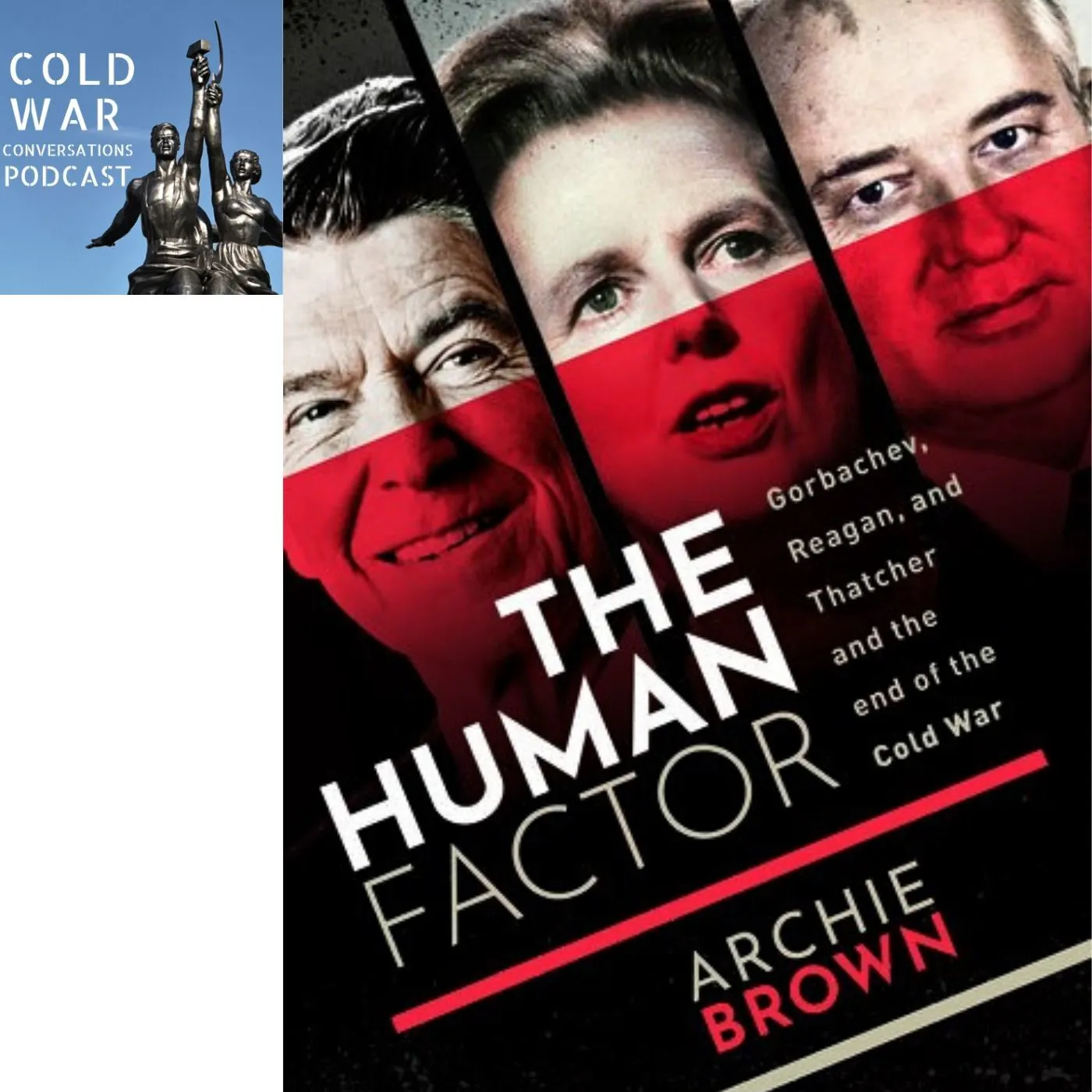
S5 Ep 117The Human Factor: Gorbachev, Reagan, and Thatcher, and the End of the Cold War (117)
The Cold War got colder in the early 1980s and the relationship between the two military superpowers, the USA and the Soviet Union, each of whom had the capacity to annihilate the other, was tense. By the end of the decade, East-West relations had been utterly transformed, with most of the dividing lines -including the division of Europe- removed. We are here with Archie Brown, Emeritus Professor of Politics at the University of Oxford, a Fellow of the British Academy, and an International Honorary Member of the American Academy of Arts and Sciences. He is the author of numerous books including his latest work , The Human Factor, Gorbachev, Reagan, and Thatcher, and the End of the Cold War arguing the engagement between Gorbachev and Reagan was a crucial part of that process of change. More surprising was Margaret Thatcher's role. Our reviews help the podcast grow, so if you are enjoying our content please leave a written review in Apple podcasts or share us on social media. If you can spare it I’m asking listeners to contribute $3 USD per month to help keep us on the air (larger amounts are welcome too) plus you can get a sought after Cold War Conversations coaster as a monthly financial supporter of the podcast and you bask in the warm glow of knowing you are helping preserve Cold War history. Just go to https://coldwarconversations.com/donate/ Back to today’s episode, we start by talking about Archie’s’ time as a British Council exchange scholar at Moscow State University for a year between 1967 and 1968. We welcome Archie Brown to our Cold War conversation… There’s further information on this episode in our show notes, which can also be found as a link in your podcast app. https://coldwarconversations.com/episode117/ If you like what you are hearing, please leave reviews in Apple podcasts and share us on social media. If you can’t wait for next week’s episode do visit our Facebook discussion group where guests and listeners continue the Cold War Conversation. Just search Cold War Conversations in Facebook. Thankyou very much for listening. It is really appreciated Support the project! https://coldwarconversations.com/donate/ Follow us on Twitter https://twitter.com/ColdWarPod Facebook https://www.facebook.com/groups/coldwarpod/ Instagram https://www.instagram.com/coldwarconversations/ Youtube https://youtube.com/@ColdWarConversations Learn more about your ad choices. Visit podcastchoices.com/adchoices
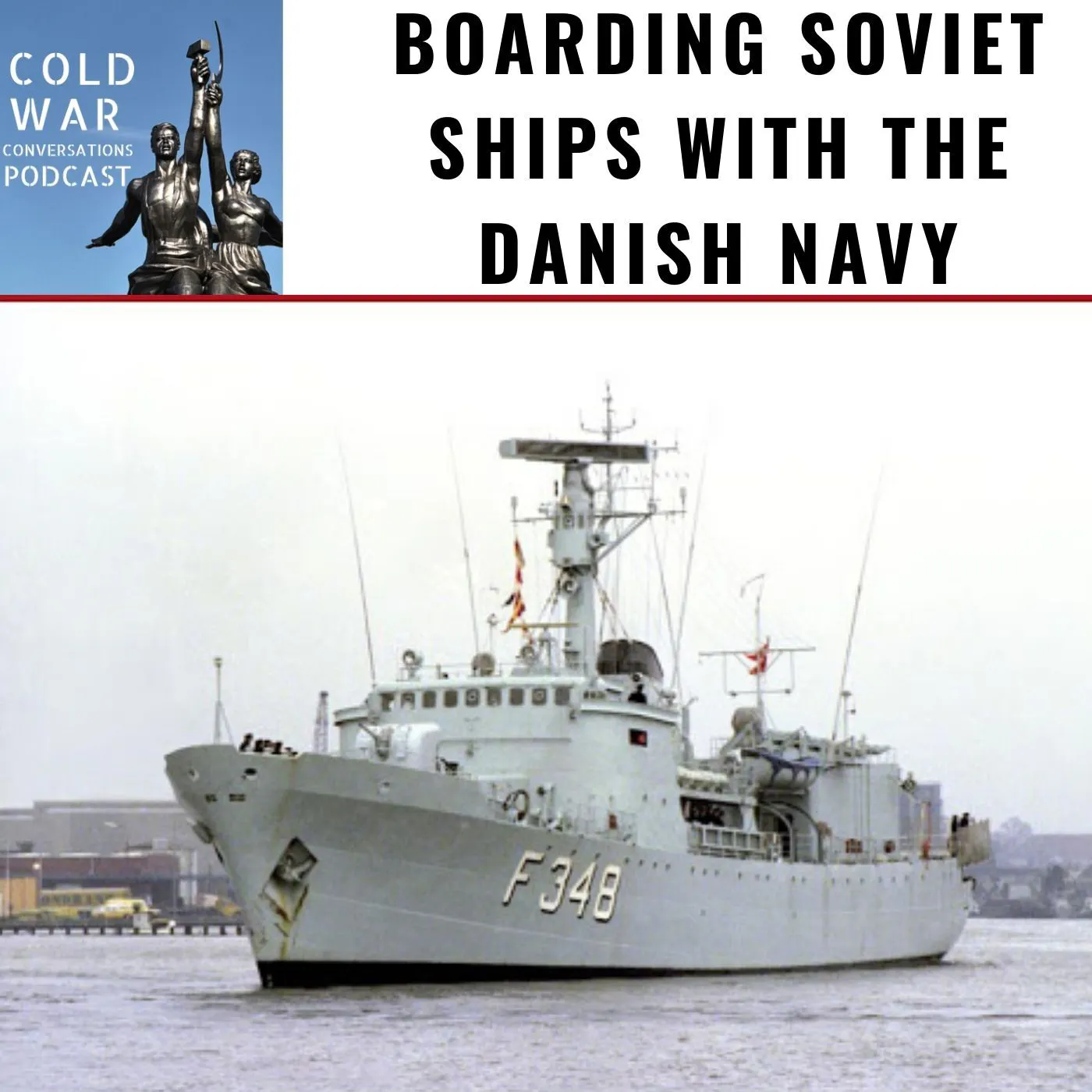
S5 Ep 116Boarding Soviet Ships with the Cold War Danish Navy (116)
Lieutenant Commander Jørgen Brandsborg joined the Danish Navy in the 1980s. He met the Soviets up close and personal while serving in the North Atlantic where the Danish Navy acted as a coast guard when on patrol around the Faroe Islands, which meant boarding Soviet vessels for inspection. He also tells of Danish Navy training, Denmark’s position within NATO, as well as their defence plans, should the Cold War have turned hot. If you’re new here, you’ve come the right place to listen to first hand Cold War history accounts. Do make you subscribe in your podcast app so you don’t miss out on future episodes. Our reviews help the podcast grow, so if you are enjoying our content please leave a written review in Apple podcasts or share us on social media. If you can spare it I’m asking listeners to contribute $3 USD per month to help keep us on the air (larger amounts are welcome too) plus you can get a sought after Cold War Conversations coaster as a monthly financial supporter of the podcast and you bask in the warm glow of knowing you are helping preserve Cold War history. Just go to https://coldwarconversations.com/donate/ Thanks to latest Patreons Back to today’s episode, Jørgen tells of the close encounters with Volksmarine, The East German Navy including attempting rammings of Danish Naval vessels by the Soviet and East German Navy. We welcome Jørgen to our Cold War conversation… There’s further information on this episode in our show notes, which can also be found as a link in your podcast app. https://coldwarconversations.com/episode116/ If you like what you are hearing, please leave reviews in Apple podcasts and share us on social media. If you can’t wait for next week’s episode do visit our Facebook discussion group where guests and listeners continue the Cold War Conversation. Just search Cold War Conversations on Facebook. Thank you very much for listening. It is really appreciated. Support the project! https://coldwarconversations.com/donate/ Follow us on Twitter https://twitter.com/ColdWarPod Facebook https://www.facebook.com/groups/coldwarpod/ Instagram https://www.instagram.com/coldwarconversations/ Youtube https://youtube.com/@ColdWarConversations Learn more about your ad choices. Visit podcastchoices.com/adchoices

S5 Ep 115Taking A Holiday in Cold War Albania (115)
In early 1989 attention being paid to Albania in England by the English media because the England football team had recently travelled to Tirana for a World Cup qualifying game. Looking for somewhere unusual to holiday Mike Innes went on 10 day tour to Albania. Arriving by air he travelled by coach, staying in the hotels which catered to foreigners and favoured party members. If you are enjoying the podcast please leave a written reviews in Apple podcasts or share us on social media. By telling your friends you can really help the podcast grow. It costs money and time to produce this podcast so I’m asking listeners to contribute $3 USD per month to help keep us on the air (larger amounts are welcome too) plus you can get a sought after CWC coaster as a monthly financial supporter of the podcast and you bask in the warm glow of knowing you helping preserve Cold War history. Just go to https://coldwarconversations.com/donate/ Mike provides us with a view of a little known country which although outside the Warsaw Pact adhered to a strict version of Communism and whose Marxist-Leninist government ruled Albania from 1946 to 1992. We welcome Mike to our Cold War conversation… ** Correction Albania was a founder member of the Warsaw Pact and left in 1968. There’s further information on this episode in our show notes, which can also be found as a link in your podcast app. https://coldwarconversations.com/episode115/ If you like what you are hearing, please leave reviews in Apple podcasts and share us on social media. If you can’t wait for next week’s episode do visit our Facebook discussion group where guests and listeners continue the Cold War Conversation. Just search Cold War Conversations in Facebook. Thankyou very much for listening. It is really appreciated – goodbye. Support the project! https://coldwarconversations.com/donate/ Follow us on Twitter https://twitter.com/ColdWarPod Facebook https://www.facebook.com/groups/coldwarpod/ Instagram https://www.instagram.com/coldwarconversations/ Youtube https://youtube.com/@ColdWarConversations Learn more about your ad choices. Visit podcastchoices.com/adchoices
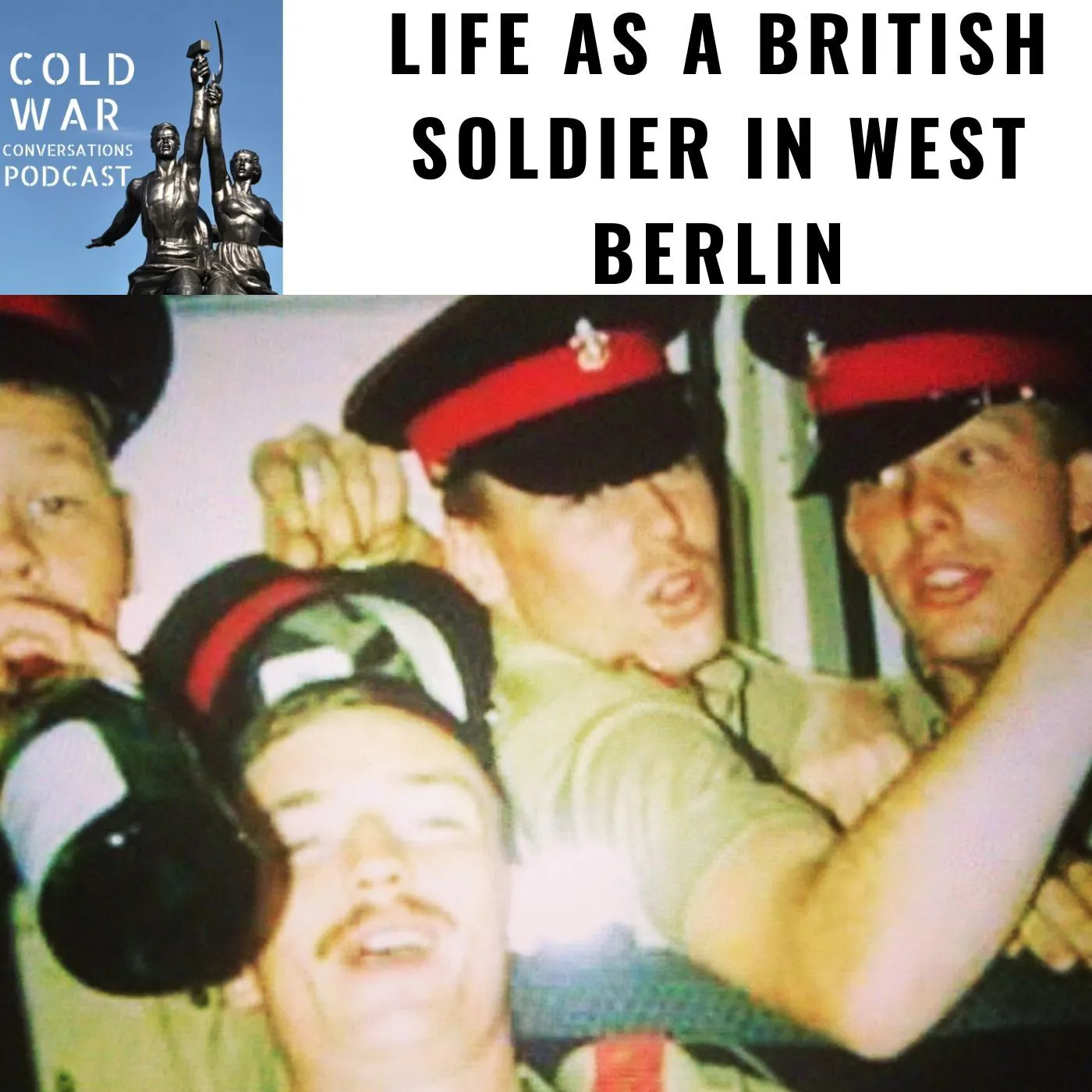
S5 Ep 114Life as a British Soldier in Cold War West Berlin (114)
Anthony enlisted in the British Army in 1987 and after 9 months he was posted to West Berlin. He tells the story of life as a Private in Berlin from the drinking (and the fighting) to the urban warfare training in Ruhleben & Dough Boy City. We also hear of the reality of knowing that should the Cold War have turned hot his life expectancy would have been in hours. It’s also a tale of tragedy and the forgotten casualties of the Cold War where injury and death could come even in peacetime. Two of Anthony’s fellow soldiers died during his two-year tour of Berlin and we’d like to dedicate this episode to remembering Lance-Corporal Ian Fleming and Lance-Corporal Mick Quayle. We thank them for their service. If you are enjoying the podcast please leave a written review in Apple podcasts or share us on social media. By telling your friends you can really help the podcast grow. If you can spare it I’m asking listeners to contribute $3 USD per month to help keep us on the air (larger amounts are welcome too) plus you can get a sought-after CWC coaster as a monthly financial supporter of the podcast and you bask in the warm glow of knowing you helping preserve Cold War history. Just go to https://coldwarconversations.com/donate/ Special thanks to all our Patreons Back to today’s episode, we start with Anthony’s schooldays and end with his experiences in Berlin the night the Wall opened. I found this really entertaining story and I’m sure you will too. We welcome Anthony to our Cold War conversation… There’s further information on this episode in our show notes, which can also be found as a link in your podcast app. https://coldwarconversations.com/episode114/ If you like what you are hearing, please leave reviews in Apple podcasts and share us on social media. If you can’t wait for next week’s episode do visit our Facebook discussion group where guests and listeners continue the Cold War Conversation. Just search Cold War Conversations on Facebook. Thank you very much for listening. It is really appreciated – goodbye. Support the project! https://coldwarconversations.com/donate/ Follow us on Twitter https://twitter.com/ColdWarPod Facebook https://www.facebook.com/groups/coldwarpod/ Instagram https://www.instagram.com/coldwarconversations/ Youtube https://youtube.com/@ColdWarConversations Learn more about your ad choices. Visit podcastchoices.com/adchoices
S4 Ep 113Railway Encounters in Cold War Eastern Europe (113)
Charlie Flowers was 18 in 1988. He travelled by train across a divided Eastern Europe that was starting to show signs of the changes that manifested themselves in 1989. He shares stories of the interesting encounters he had along the way. Now I’d like to thank some of our recent 5 star reviewers in Apple podcasts. Qwertykevboy, Fizzlepop202, simmovic, Dais28, Tim of Townsville and especially Marrdave who said “This is easily the best historical podcast out there…” I’m not sure I agree, but I’m very flattered. If you are enjoying the show please leave a written reviews in Apple podcasts or share us on social media. By telling your friends you can really help the podcast grow. Now for $3 USD per month (larger amounts are welcome too) you will get a sought after CWC coaster as a monthly financial supporter of the podcast. Just go to https://coldwarconversations.com/donate/ Thank you so much to our 89 generous supporters who help keep the podcast available for you all to listen to. In today’s episode, I have a lively conversation with Charlie and don’t miss the show notes where we share many of his photos of Eastern Europe on the cusp of major changes in Europe’s political landscape. We welcome Charlie to our Cold War conversation… There’s further information on this episode in our show notes, which can also be found as a link in your podcast app here .https://coldwarconversations.com/episode113/ If you like what you are hearing, please leave reviews in Apple podcasts and share us on social media. If you can’t wait for next week’s episode do visit our Facebook discussion group where guests and listeners continue the Cold War Conversation. Just search Cold War Conversations in Facebook. Thankyou very much for listening. It is really appreciated – goodbye. Support the project! https://coldwarconversations.com/donate/ Follow us on Twitter https://twitter.com/ColdWarPod Facebook https://www.facebook.com/groups/coldwarpod/ Instagram https://www.instagram.com/coldwarconversations/ Youtube https://youtube.com/@ColdWarConversations Learn more about your ad choices. Visit podcastchoices.com/adchoices

S5 Ep 112Nuclear War in Cold War Britain (112)
For almost five decades, the United Kingdom made plans for a nuclear attack that never came. To help their citizens, civil servants and armed forces prepared those in power a variety of booklets, posters, and how-to guides. Taras Young is a researcher & writer who has produced a book Nuclear War in the UK detailing much of this Cold War ephemera such as the infamous Protect and Survive guide, as well as fascinating lesser-known materials prepared for the United Kingdom Warning and Monitoring Organisation and the Royal Observer Corps. If you are enjoying the podcast please leave a written review in Apple podcasts or share us on social media. By telling your friends you can really help the podcast grow. It costs money and time to produce this podcast so I’m asking listeners to contribute $3 USD per month to help keep us on the air (larger amounts are welcome too) plus you can get a sought after CWC coaster as a monthly financial supporter of the podcast. Just go to https://coldwarconversations.com/donate/ In today’s episode, we delve into Taras Young’s collection in an eye-opening look at the way Britain's authorities reacted to the Soviet nuclear threat... We welcome Taras to our Cold War conversation… There’s further information on this episode in our show notes, which can also be found as a link in your podcast app here . https://coldwarconversations.com/episode112/ If you like what you are hearing, please leave reviews in Apple podcasts and share us on social media. If you can’t wait for next week’s episode do visit our Facebook discussion group where guests and listeners continue the Cold War Conversation. Just search Cold War Conversations in Facebook. Thank you very much for listening. It is really appreciated – goodbye. Support the project! https://coldwarconversations.com/donate/ Follow us on Twitter https://twitter.com/ColdWarPod Facebook https://www.facebook.com/groups/coldwarpod/ Instagram https://www.instagram.com/coldwarconversations/ Youtube https://youtube.com/@ColdWarConversations Learn more about your ad choices. Visit podcastchoices.com/adchoices

S4 Ep 111Serving in the Cold War British Army Intelligence Corps during the 1960s & 70s (111)
Harry served as a soldier in the Intelligence Corps in Germany in the 1960s and 1970s. His role was that of an Intelligence and Security Operator, focused on the identification of foreign and other malign activities which might undermine the effectiveness of the UK's military presence in the country. Accordingly, he had the experience of a range of security investigations and close liaison with the West German civil and military security authorities. Now I’m sure you are enjoying your weekly dose of Cold War history, and you’d like to continue to do so. So I’m asking if you wouldn’t mind supporting us by paying at least $3 USD a month – higher amounts are welcome too. It’s very straightforward and you can stop whenever you want. Plus monthly supporters get the sought after CWC coaster too! Just go to https://coldwarconversations.com/donate/ You can also help the podcast by leaving written reviews in Apple podcasts as well as sharing us on social media. Back to today’s episode, Harry and I talk in detail about his service using the new wireless microphones kindly paid for by our financial supporters.… We welcome Harry to our Cold War conversation… There’s further information on this episode in our show notes, which can also be found as a link in here your podcast app. https://coldwarconversations.com/episode111/ If you like what you are hearing, please leave reviews in Apple podcasts and share us on social media. If you can’t wait for next week’s episode do visit our Facebook discussion group on the following link where guests and listeners continue the Cold War Conversation. https://www.facebook.com/groups/coldwarpod/ Thankyou very much for listening. Support the project! https://coldwarconversations.com/donate/ Follow us on Twitter https://twitter.com/ColdWarPod Facebook https://www.facebook.com/groups/coldwarpod/ Instagram https://www.instagram.com/coldwarconversations/ Youtube https://youtube.com/@ColdWarConversations Learn more about your ad choices. Visit podcastchoices.com/adchoices

S4 Ep 110Bonus - Dr Strangelove Film Screening in a Nuclear Bunker (110)
bonusToday is a short bonus episode I recorded at the weekend while at a film showing of Dr Strangelove in a former UK Regional Seat of Government Bunker in Cheshire... The Hack Green Bunker is my local Cold War museum and a kind financial supporter of the podcast too so if you are ever in the Cheshire area of the UK I highly recommend a visit. If you are enjoying the podcast please leave a written review in Apple podcasts or share us on social media. By telling your friends you can really help the podcast grow. In today’s episode, I interview Lucy Siebert the Museum Director and well as some of the audience for the film showing. We welcome the Hack Green Secret Nuclear Bunker to our Cold War conversation… There’s further information on this episode in our show notes, which can also be found as a link in your podcast app. If you like what you are hearing, please leave reviews in Apple podcasts and share us on social media. If you can’t wait for next week’s episode do visit our Facebook discussion group where guests and listeners continue the Cold War Conversation. Just search Cold War Conversations on Facebook. Thank you very much for listening. It is really appreciated – goodbye. Hack Green Bunker web site https://hackgreen.co.uk/ Hack Green Bunker Facebook page where you can book future film showings https://www.facebook.com/HackGreenSecretNuclearBunker/ Support the project! https://coldwarconversations.com/donate/ Follow us on Twitter https://twitter.com/ColdWarPod Facebook https://www.facebook.com/groups/coldwarpod/ Instagram https://www.instagram.com/coldwarconversations/ Youtube https://youtube.com/@ColdWarConversations Learn more about your ad choices. Visit podcastchoices.com/adchoices

S4 Ep 109Stasi Infiltration of the Cold War East German Church (109)
When the Berlin Wall came down, the files of the East German secret police, the much-dreaded Stasi, were opened and read. And among the shocking stories revealed was that of the Stasi's infiltration of the Church. The Lutheran Church was the only semi-free space in East Germany, where those who rebelled against the regime could find a way of living at least a little out of the government's grip. Do you know how much $3 USD is in Pounds? It’s 76 pence which equals about 20p per episode if you sign up as a monthly financial supporter of the podcast. Higher amounts are welcome too. It’s very straightforward and you can stop whenever you want. Plus monthly supporters get the sought after CWC coaster too! Just go to https://coldwarconversations.com/donate/ Recent supporters include David Banvery, Daisy Birkenhead, Steve Kerins, Tim Marks and Holly Meade. If that’s not your cup of tea then leave a written reviews in Apple podcasts or share us on social media. By telling your friends you can really help the podcast grow. Back to today’s episode, author of the book "God's Spies" Elisabeth Braw tells the real-life cloak-and-dagger story of how the Stasi infiltrated churches in East Germany. We welcome Elizabeth to our Cold War conversation… UK Fans can buy the book here & support the podcast https://amzn.to/2t2EZxk US Fans can buy the book here & support the podcast https://amzn.to/38Ks2HH There’s further information on this episode & the opportunity to win a free copy of the book (ends 23rd Feb 2020) in our show notes, which can also be found as a link in your podcast app here. https://coldwarconversations.com/episode109/ If you like what you are hearing, please leave reviews in Apple podcasts and share us on social media. If you can’t wait for next week’s episode do visit our Facebook discussion group where guests and listeners continue the Cold War Conversation. Just search Cold War Conversations in Facebook. Thankyou very much for listening. Radio GDR If you are interested in East Germany we can highly recommend our friends over at Radio GDR. Support the project! https://coldwarconversations.com/donate/ Follow us on Twitter https://twitter.com/ColdWarPod Facebook https://www.facebook.com/groups/coldwarpod/ Instagram https://www.instagram.com/coldwarconversations/ Youtube https://youtube.com/@ColdWarConversations Learn more about your ad choices. Visit podcastchoices.com/adchoices

S4 Ep 108The Regimes Museum (108)
Our guest today is Marc Voss the Founder and Executive Director of The Regimes Museum which is the culmination of an effort to collect, preserve, and archive material and artifacts from some of the most notorious regimes of the 20th century. It is both a museum and an educational institution that offers resources to scholars and students while applying lessons of the past to the present. Now I’m sure you are enjoying your weekly dose of Cold War history, and you’d like to continue to do so. So I’m asking if you wouldn’t mind supporting us by paying at least $3 USD a month – higher amounts are welcome too. It’s very straightforward and you can stop whenever you want. Plus monthly supporters get the sought after CWC coaster too! Just go to https://coldwarconversations.com/donate/ You can also help the podcast by leaving written reviews in Apple podcasts as well as sharing us on social media. Back to today’s episode, Marc & I have a varied chat about the nature of regimes, East German recycling, Romanian tech, Stasi coercion techniques amongst many others. We welcome Marc Voss to our Cold War conversation… There’s further information on this episode in our show notes, which can also be found as a link in your podcast app. https://coldwarconversations.com/episode108 If you like what you are hearing, please leave reviews in Apple podcasts and share us on social media. If you can’t wait for next week’s episode do visit our Facebook discussion group where guests and listeners continue the Cold War Conversation. Just search Cold War Conversations in Facebook. Thank you very much for listening. Support the project! https://coldwarconversations.com/donate/ Follow us on Twitter https://twitter.com/ColdWarPod Facebook https://www.facebook.com/groups/coldwarpod/ Instagram https://www.instagram.com/coldwarconversations/ Youtube https://youtube.com/@ColdWarConversations Learn more about your ad choices. Visit podcastchoices.com/adchoices
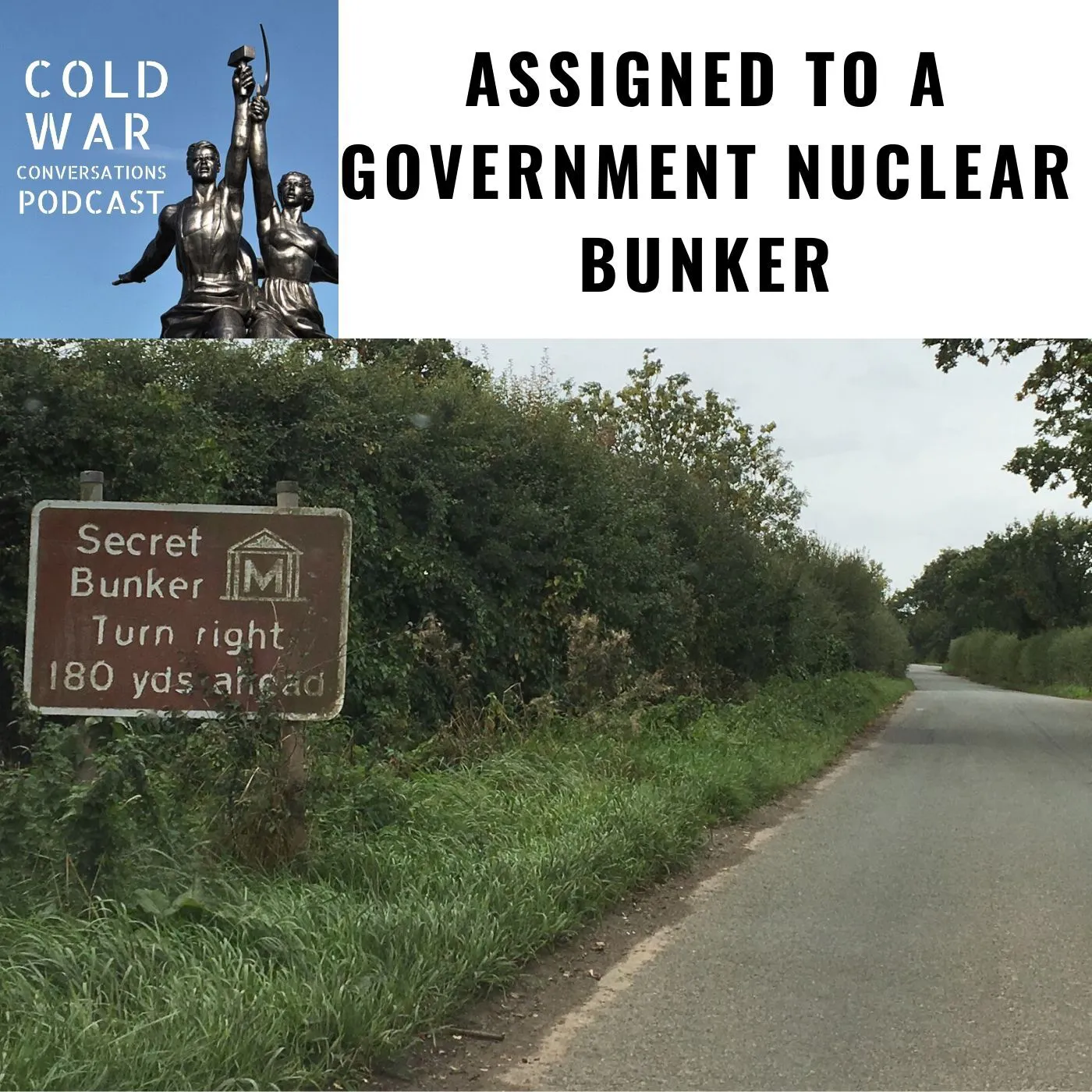
S4 Ep 107Assigned to a Cold War Government Nuclear Bunker (107)
Regional seats of government or RSGs were a UK solution to disperse the machinery of government into the provinces, where there would be a greater chance of survival after a nuclear attack. Today we speak to Andrew who was assigned a role in an RSG and details his experiences on a week long training course at the Civil Defence college at Easingwold in Yorkshire during the 1980s. There’s some chilling details of the scenarios they had to prepare for… Now if you are enjoying your weekly dose of Cold War Conversations I’m asking if you could support us for $3 USD a month to help keep us on the air. That’s about 60 pence or 75 US cents per episode or perhaps a coffee or two a month – now that’s what I call good value. Plus, you become the envy of your friends with that sought after CWC coaster too. Just go to https://coldwarconversations.com/donate/ If you can’t donate financially then you can also help us by leaving a written review on Apple podcasts or wherever you listen to this podcast as well as sharing us on social media So back to today’s episode, Andrew starts with the surprising circumstances of his first notification of his RSG role. We welcome Andrew to our Cold War conversation… There’s further information on this episode in our show notes, which can also be found as a link in your podcast app .https://coldwarconversations.com/episode107 Support the project! https://coldwarconversations.com/donate/ Follow us on Twitter https://twitter.com/ColdWarPod Facebook https://www.facebook.com/groups/coldwarpod/ Instagram https://www.instagram.com/coldwarconversations/ Youtube https://youtube.com/@ColdWarConversations Learn more about your ad choices. Visit podcastchoices.com/adchoices
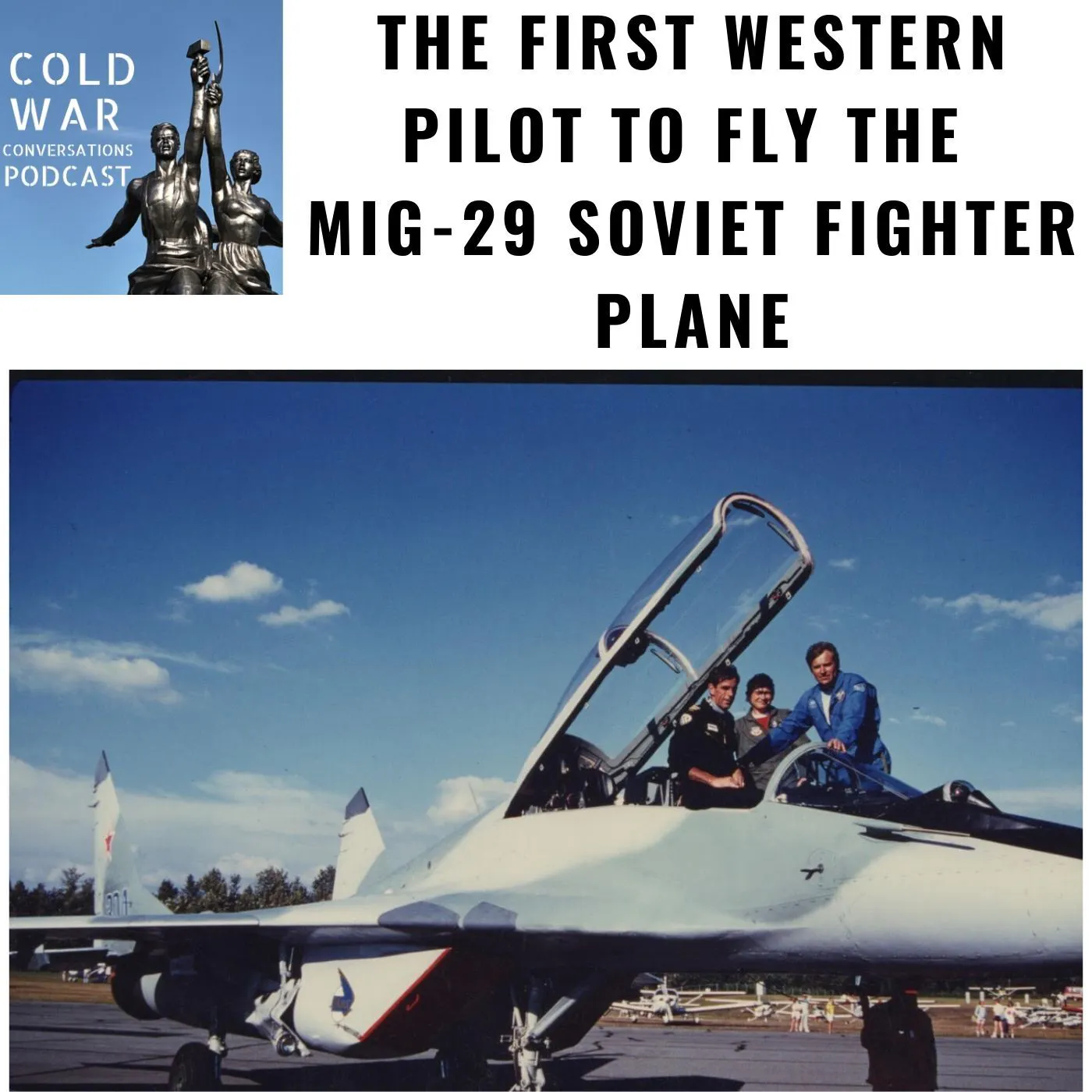
S4 Ep 106The First Western Pilot to Fly the Cold War Soviet MIG 29 Fighter (106)
What was it like to be the first western pilot to fly the most advanced Soviet fighter aircraft? At the 1989 Abbotsford Air Show, during the dying days of the Cold War, Canadian CF-18 pilot Major Bob Wade became the first Western pilot to fly a Soviet MiG-29 Fulcrum fighter aircraft. This episode tells you how he did it. Now I’m sure you are enjoying your weekly dose of Cold War history, and you’d like to continue to do so. So I’m asking if you wouldn’t mind supporting us by paying at least $3 USD a month – higher amounts are welcome too. It’s very straightforward and you can stop whenever you want. Plus monthly supporters get the sought after CWC coaster too! Just go to https://coldwarconversations.com/donate/ You can also help the podcast by leaving written reviews in Apple podcasts as well as sharing us on social media. Back to today’s episode, Bob and I talk in detail on the circumstances of the flight as well as what it was actually like to fly an aircraft you’ve never flown before with instruments in a language you don’t understand and only 10 minutes of briefing… We welcome Major Bob Wade to our Cold War conversation… There’s further information on this episode in our show notes , which can also be found as a link in your podcast app here. https://coldwarconversations.com/episode106/ Bob is RCAF Association Honorary President for the Province of Alberta. He is also on the Board of Directors at the Military Museums RCAF Museum Society of Alberta. Their web site is at: www.rcaf.museum and they have an excellent Cold War Exhibit currently featuring an F86 Sabre, CF104 Starfighter and CF 18 Hornet. Bob is leading an effort to more than double the size of the display area to include NORAD assigned fighters including the CF100 Cannuck, CF101 Voodoo and a T-33 aircraft. They are in the fundraising phase at the moment and the web site has an option where interested viewers can contribute if they feel inclined. https://www.rcaf.museum/visit/coldwar-museum If you like what you are hearing, please leave reviews in Apple podcasts and share us on social media. If you can’t wait for next week’s episode do visit our Facebook discussion group where guests and listeners continue the Cold War Conversation. Just search Cold War Conversations in Facebook. Thank you very much for listening. Support the project! https://coldwarconversations.com/donate/ Follow us on Twitter https://twitter.com/ColdWarPod Facebook https://www.facebook.com/groups/coldwarpod/ Instagram https://www.instagram.com/coldwarconversations/ Youtube https://youtube.com/@ColdWarConversations Learn more about your ad choices. Visit podcastchoices.com/adchoices

S4 Ep 105Children of the Cold War Bulgarian Silent Revolution (105)
What are your dreams at 18 and what happens in the next 20 years? Children of the Silent Revolution is a documentary film following a tight-knit group of classmates from Bulgaria who reveal their stories over a period of 20 years, spanning the transition from communism to democracy in their country. It’s a powerful memoir and love letter to the filmmaker’s classmates, as well as a compelling historical document about Bulgaria’s recent history. Now I’m sure you are enjoying your weekly dose of Cold War history, and you’d like to continue to do so. So I’m asking if you wouldn’t mind supporting us by paying at least $3 USD a month – higher amounts are welcome too. It’s very straightforward and you can stop whenever you want. Plus monthly supporters get the sought after CWC coaster too! Just go to https://coldwarconversations.com/donate/ You can also help the podcast by leaving written reviews in Apple podcasts as well as sharing us on social media. Back to today’s episode, we speak with Viktoria Ershova who was born and raised in Kazanlak, Bulgaria until she went to the United States at age 18. Children of the Silent Revolution is her debut feature film. We welcome Viktoria Ershova to our Cold War conversation… There’s further information on this episode in our show notes, which can also be found as a link in your podcast app. https://coldwarconversations.com/episode105 If you like what you are hearing, please leave reviews in Apple podcasts and share us on social media. If you can’t wait for next week’s episode do visit our Facebook discussion group where guests and listeners continue the Cold War Conversation. Just search Cold War Conversations in Facebook. Thankyou very much for listening. Support the project! https://coldwarconversations.com/donate/ Follow us on Twitter https://twitter.com/ColdWarPod Facebook https://www.facebook.com/groups/coldwarpod/ Instagram https://www.instagram.com/coldwarconversations/ Youtube https://youtube.com/@ColdWarConversations Learn more about your ad choices. Visit podcastchoices.com/adchoices
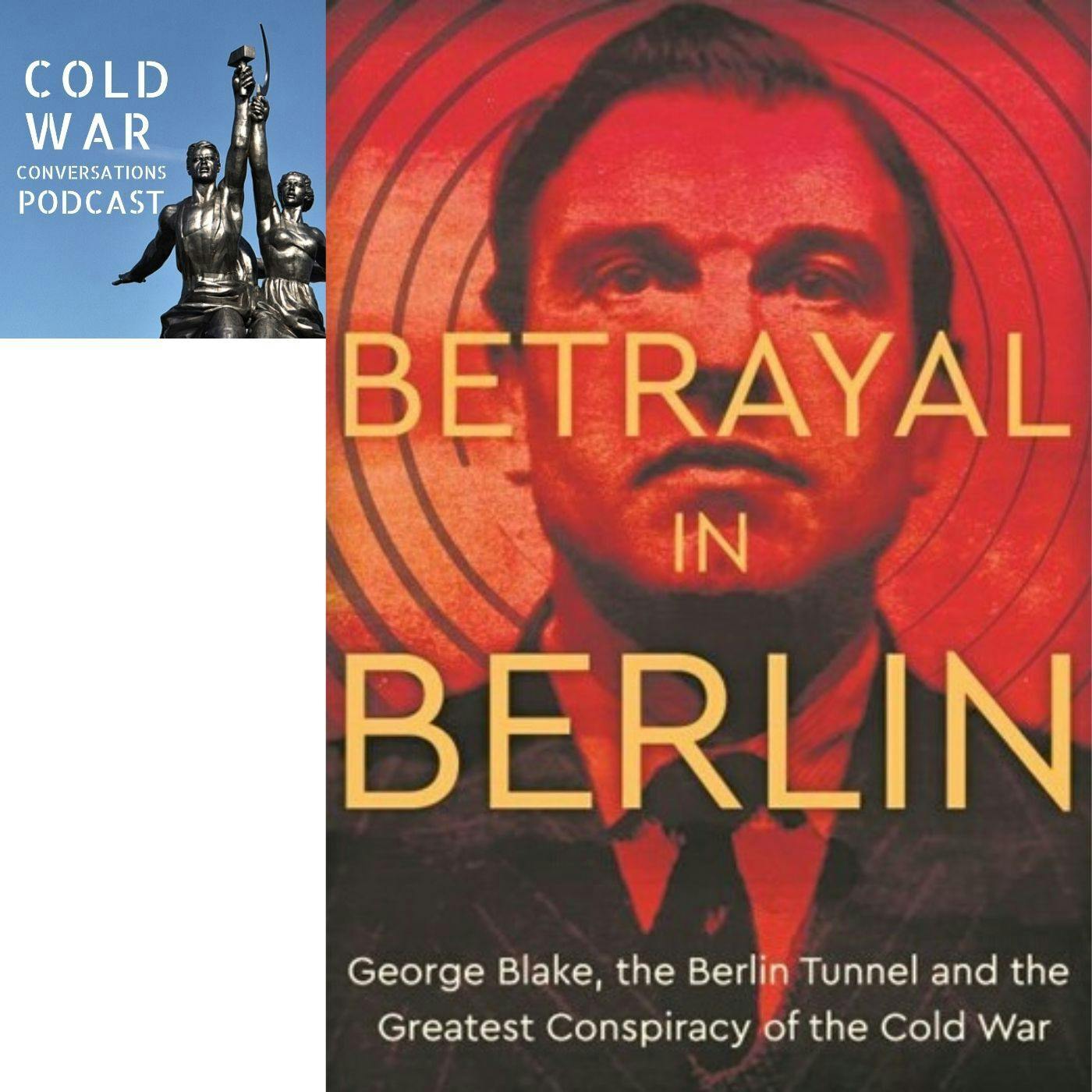
S4 Ep 103The Cold War Berlin spy tunnel - Operation Gold (103)
Operation Gold (also known as Operation Stopwatch by the British) was a joint operation conducted by the American Central Intelligence Agency (CIA) and the British MI6 Secret Intelligence Service (SIS) in the 1950s to tap into landline communication of the Soviet Army headquarters in Berlin using a tunnel into the Soviet-occupied zone. Steve Vogel is a veteran journalist who reported for the Washington Post and the author of Betrayal in Berlin a new book that tells the story of one of the West’s greatest espionage operations of the Cold War. Now I’m sure you are enjoying your weekly dose of Cold War history, and you’d like to continue to do so. So I’m asking if you wouldn’t mind supporting us by paying at least $3 USD a month – higher amounts are welcome too. It’s very straightforward and you can stop whenever you want. Plus monthly supporters get the sought after CWC coaster too! Just go to https://coldwarconversations.com/donate/ Back to today’s episode, Steve’s dogged research unearthed recently declassified documents in U.S., British and German archives, many of them secret for half a century. He interviewed dozens of key participants many of whom had never spoken before about their roles. We welcome Steve Vogel to our Cold War conversation… There’s further information on this episode in our show notes, which can also be found as a link in your podcast app here. https://coldwarconversations.com/episode103/ If you like what you are hearing, please leave reviews in Apple podcasts and share us on social media. If you can’t wait for next week’s episode do visit our Facebook discussion group where guests and listeners continue the Cold War Conversation. Just search Cold War Conversations in Facebook. Thank you very much for listening. Radio GDR If you are interested in East Germany we can highly recommend our friends over at Radio GDR. Support the project! https://coldwarconversations.com/donate/ Follow us on Twitter https://twitter.com/ColdWarPod Facebook https://www.facebook.com/groups/coldwarpod/ Instagram https://www.instagram.com/coldwarconversations/ Youtube https://youtube.com/@ColdWarConversations Learn more about your ad choices. Visit podcastchoices.com/adchoices
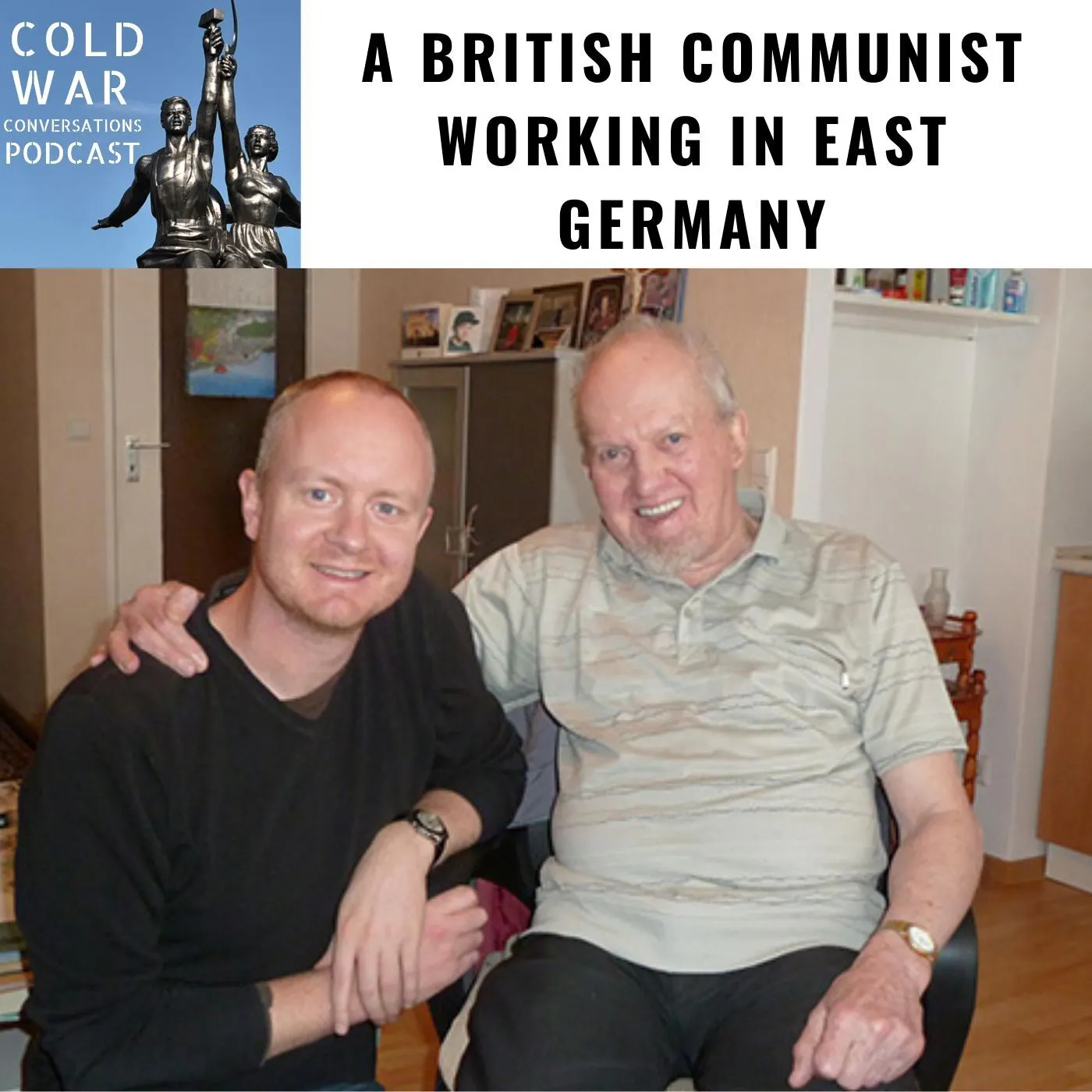
S4 Ep 104A British Communist Working in Cold War East Germany (104)
John Tarver was born into a middle-class family. He joined the British Communist Party on his 18th birthday in 1948 because he felt the Soviet Union had made the most effective resistance to fascism. He worked as a party activist in Britain and made several trips to the GDR where he would get a job at Potsdam as head of the final year of studies in the English language. His 18 years’ work as a Communist party organizer set him apart from other Britons in the GDR and he became an informer for the Stasi. Now if this podcast was a magazine you wouldn’t mind paying a few quid or dollars a week so I’m asking you to support us for the bargain price of $3 a month. In the last few weeks John Newlove and Mike Hart have joined in helping to cover the show’s increasing costs and keep us on the air, plus they’ve got the sought after CWC coaster too. Just go to https://coldwarconversations.com/donate/ Special thanks to Ian Hawkins who allowed me to use these audio files from his excellent documentary “My DDR T-Shirt” which will feature in the show notes. John Tarver talks openly about his personal, political and professional life in Britain and East Germany/GDR. He also talks about his commitment to Communism, the work he did as a Stasi agent, the fall of the Berlin Wall, the collapse of the GDR and his return in recent years to the Catholic faith. We welcome John Tarver to our Cold War conversation… There’s the full version of the "My DDR T-Shirt" documentary, further information and links on this episode in our show notes, which can also be found as a link in your podcast app. https://coldwarconversations.com/episode104/ Radio GDR If you are interested in East Germany we can highly recommend our friends over at Radio GDR. Support the project! https://coldwarconversations.com/donate/ Follow us on Twitter https://twitter.com/ColdWarPod Facebook https://www.facebook.com/groups/coldwarpod/ Instagram https://www.instagram.com/coldwarconversations/ Youtube https://youtube.com/@ColdWarConversations Learn more about your ad choices. Visit podcastchoices.com/adchoices

S4 Ep 102Working with high security clearance in the Cold War US Navy (102)
Jay Lieberman talks about his early childhood memories of the Cold War as well as his long career in the US Navy. He tells a fascinating story of how he obtained high security clearance in the US Navy and served at a number of classified command facilities including the 2nd Pentagon and the Fleet Ocean Surveillance Information Facility, at Rota, Spain. Now if this podcast was a magazine you wouldn’t mind paying a few quid or dollars a week so I’m asking you to support us for the bargain price of $3 a month. In the last few weeks John Newlove and Mike Hart have joined in helping to cover the show’s increasing costs and keep us on the air, plus they’ve got the sought after CWC coaster too. Just go to https://coldwarconversations.com/donate/ This conversation was recorded as part of the Imperial War Museum North, Voices of the Wall event commemorating 30 years since the fall of the Berlin Wall. Make sure you stay subscribed for future conversations. Jay talks about his various postings, his security clearance and what it was like to have such a ringside view of the Cold War. We welcome Jay Lieberman to our Cold War conversation… There’s further information on this episode in our show notes, which can also be found as a link in your podcast app here https://coldwarconversations.com/episode102/ If you like what you are hearing, please leave reviews in Apple podcasts and share us on social media. If you can’t wait for next week’s episode do visit our Facebook discussion group where guests and listeners continue the Cold War Conversation. Just search Cold War Conversations on Facebook. Thank you very much for listening. Support the project! https://coldwarconversations.com/donate/ Follow us on Twitter https://twitter.com/ColdWarPod Facebook https://www.facebook.com/groups/coldwarpod/ Instagram https://www.instagram.com/coldwarconversations/ Youtube https://youtube.com/@ColdWarConversations Learn more about your ad choices. Visit podcastchoices.com/adchoices

S4 Ep 101Interview with Ian Sanders the host and producer of Cold War Conversations (101)
And now for something completely different... today I’m chatting with listener Peter Ryan who will be turning the tables and questioning me about my Cold War story! Now, listeners, I can see you are enjoying the podcast by the increasing listener numbers so if you’d like the podcast to continue all I’m asking for a few quid or dollars a month to help keep us on the air plus you become the envy of your friends with that sought after CWC coaster too. Just go to https://coldwarconversations.com/donate/ If you can’t donate financially then you can also help us by leaving a written review on Apple podcasts or wherever you consume this podcast. By the way, we’ve opened a Cold War Conversations merchandise store to help support us, just go to https://coldwarconversations.com/store/ This conversation was recorded at the Barbican Centre in London, so excuse some random noises in the background. Peter asks me about how the podcast started, what motivates me alongside my recommended Cold War movies. We welcome Peter Ryan to our Cold War conversation… There’s further information on this episode in our show notes, which can also be found as a link in your podcast app here. https://coldwarconversations.com/episode101/ If you like what you are hearing, please leave reviews in Apple podcasts and share us on social media. If you can’t wait for next week’s episode do visit our Facebook discussion group where guests and listeners continue the Cold War Conversation. Just search Cold War Conversations in Facebook. Thankyou very much for listening. Support the project! https://coldwarconversations.com/donate/ Follow us on Twitter https://twitter.com/ColdWarPod Facebook https://www.facebook.com/groups/coldwarpod/ Instagram https://www.instagram.com/coldwarconversations/ Youtube https://youtube.com/@ColdWarConversations Learn more about your ad choices. Visit podcastchoices.com/adchoices

S4 Ep 100Manuel - Experiences of the Reforger 82 NATO Exercise (100)
Manuel Alzaga returns to the podcast after his debut in episode 57 with his experiences as US Army 18-year-old assistant artillery gunner in West Germany. He tells of his first impressions of West Germany, details of the 1982 Reforger exercise (return of forces to Germany) Exercise, as well as the life expectancy of a front line soldier on the East German border, should the Cold War had turned hot. Now if this podcast was a magazine you wouldn’t mind paying a few quid or dollars a week so I’m asking you to support us for the bargain price of $3 a month. You join a select band who help cover the show’s increasing costs, keep us on the air and bask in the warm glow of being official supporters of the podcast – they also receive the sought after CWC coaster too. Just go to https://coldwarconversations.com/donate/ So to today’s episode, Manuel's story starts as he steps off the plane at the Rhein-Main Air Base which was the primary airlift and passenger hub for United States forces in Europe. We welcome Manuel Alzaga back to our Cold War Conversation... Don't miss extra videos on our show notes page at https://coldwarconversations.com/episode100 Support the project! https://coldwarconversations.com/donate/ Follow us on Twitter https://twitter.com/ColdWarPod Facebook https://www.facebook.com/groups/coldwarpod/ Instagram https://www.instagram.com/coldwarconversations/ Youtube https://youtube.com/@ColdWarConversations Learn more about your ad choices. Visit podcastchoices.com/adchoices

S4 Ep 99A Cold War Mystery - Death in Ice Valley (99)
There’s an area near Bergen, Norway known as Isdalen (“Ice Valley”), but also nicknamed "Death Valley", due to the area's history of suicides in the Middle Ages, and more recent hiking accidents. In November 1970 a man and his two young daughters noting an unusual burning smell and to their horror discovered the charred body of a woman, located among some scree. Now if this podcast was a magazine you wouldn’t mind paying a few quid or dollars a week so I’m asking you to support us for the bargain price of $3 a month. In the last few weeks Pete Hobson, Richard Goyette, Hamish Macintyre, Alastair Bassett, David Roberts, James Marks and Richard Harvey have joined in helping to cover the show’s increasing costs and keep us on the air, plus they’ve got the sought after CWC coaster too. Just go to https://coldwarconversations.com/donate/ So back to today’s episode – We speak with Marit Higraff, an investigative reporter for the Norwegian broadcaster NRK, who has investigated this case and is the co-presenter of the Death in Ice Valley podcast. Welcome Marit to our Cold War conversation Well I hope that’s whetted your appetite to explore the Death in Ice Valley podcast. There’s further information and links on this episode in our show notes, which can also be found as a link in your podcast app. https://coldwarconversations.com/episode99/ If you like what you are hearing please leave reviews in Apple podcasts and share us on social media. If you can’t wait for next week’s episode do visit our facebook discussion group where guests and listeners continue the Cold War Conversation. Just search "Cold War Conversations" in facebook. Thank you very much for listening, it is really appreciated – goodbye. Support the project! https://coldwarconversations.com/donate/ Follow us on Twitter https://twitter.com/ColdWarPod Facebook https://www.facebook.com/groups/coldwarpod/ Instagram https://www.instagram.com/coldwarconversations/ Youtube https://youtube.com/@ColdWarConversations Learn more about your ad choices. Visit podcastchoices.com/adchoices

S4 Ep 98Red Elvis, Dean Reed Cold War cowboy and Eastern Bloc Music Star Episode 2 (98)
We return to Ramona Reed’s account of her father, Dean Reed who was an American actor, singer, songwriter, director, and Socialist who became a huge star in Latin America and the Eastern Bloc. Now if you like the podcast you can help to support us for the price of a couple of coffees a month. You’ll be helping to cover the show’s increasing costs and keep us on the air, plus you get the sought after CWC coaster too. Just go to https://coldwarconversations.com/donate/ If that’s not your cup of tea, you can also help us by placing a written review on Itunes. This helps to raise our profile and get new guests on the show. So back to today’s episode – Ramona continues the story with details of the latter years of her father’s life as well her theories about his death. We welcome Ramona back to our Cold War conversation… Episode 1 of this interview is here https://coldwarconversations.com/episode97 If you like what you are hearing sign up to our email list at coldwarconversations.com. We have further photos and information on this episode in our show notes which will show as a link in your podcast app. https://coldwarconversations.com/episode98 Radio GDR If you are interested in East Germany we can highly recommend our friends over at Radio GDR. Support the project! https://coldwarconversations.com/donate/ Follow us on Twitter https://twitter.com/ColdWarPod Facebook https://www.facebook.com/groups/coldwarpod/ Instagram https://www.instagram.com/coldwarconversations/ Youtube https://youtube.com/@ColdWarConversations Learn more about your ad choices. Visit podcastchoices.com/adchoices
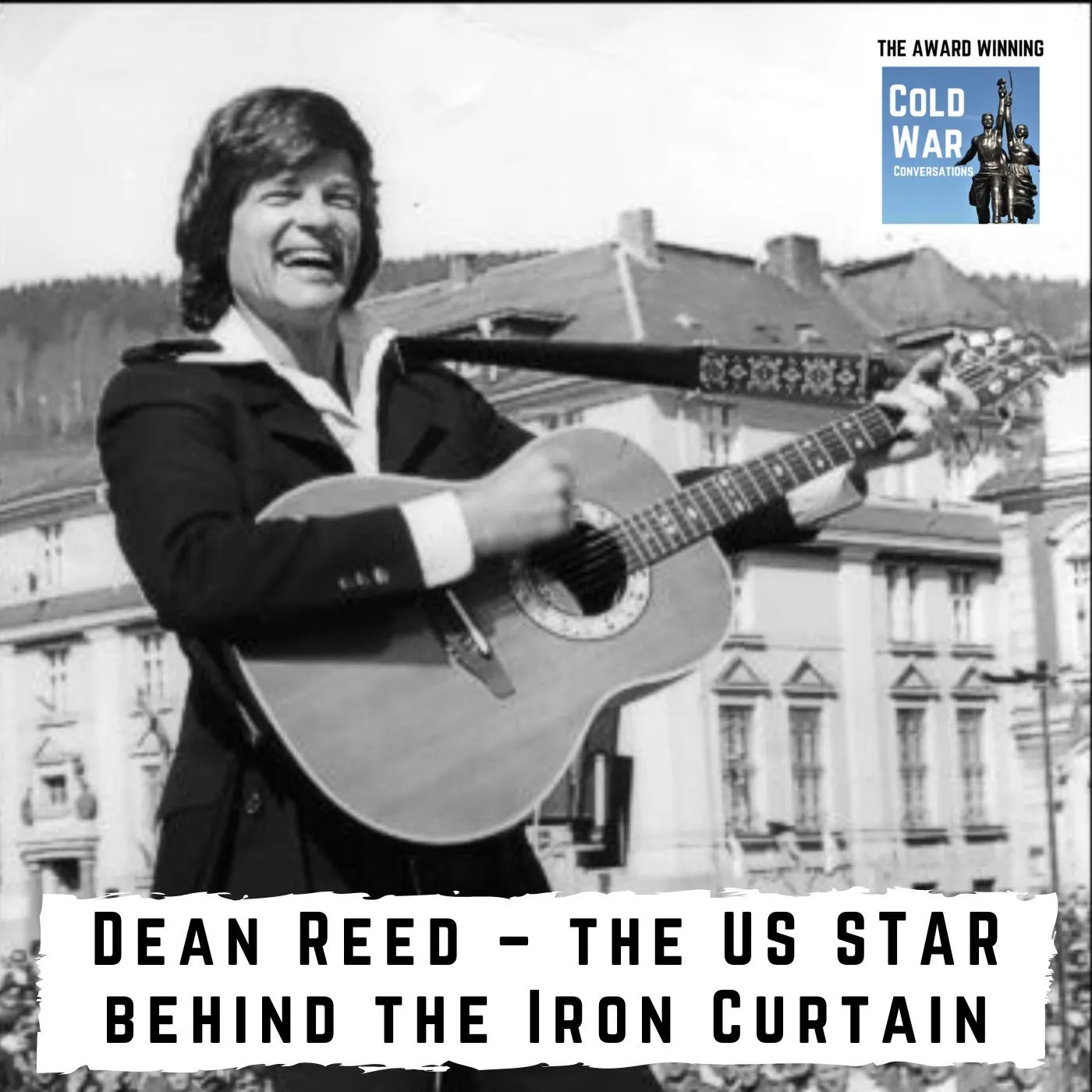
S4 Ep 97Red Elvis, Dean Reed the US music star behind the Iron Curtain - Episode 1 (97)
Ramona Reed’s father was Dean Reed an American actor, singer, songwriter, director, and Socialist who became a huge star in Latin America and the Eastern Bloc. Now if you like the podcast you can help to support us for the price of a couple of coffees a month. You’ll be helping to cover the show’s increasing costs and keep us on the air, plus you get the sought after CWC coaster too. Just go to https://coldwarconversations.com/donate/ If that’s not your cup of tea, you can also help us by placing a written review on Itunes. This helps to raise our profile and get new guests on the show. So back to today’s episode – Ramona was born in 1968 and gives insight into his life via private correspondence, but also what it was like to be the daughter of such a huge Eastern Bloc star. We welcome Ramona to our Cold War conversation… Episode 2 of this interview is here https://coldwarconversations.com/episode98/ We have further photos and information on this episode in our episode notes at https://coldwarconversations.com/episode97/ Radio GDR If you are interested in East Germany we can highly recommend our friends over at Radio GDR. Support the project! https://coldwarconversations.com/donate/ Follow us on Twitter https://twitter.com/ColdWarPod Facebook https://www.facebook.com/groups/coldwarpod/ Instagram https://www.instagram.com/coldwarconversations/ Youtube https://youtube.com/@ColdWarConversations Learn more about your ad choices. Visit podcastchoices.com/adchoices

S4 Ep 96Tales of my Father (96)
Today has been a difficult day. My Dad has just died. It was expected, but these things hit you nonetheless. He was a good father, a good man with many varied interests including art, photography, and history. All of which he passed onto me. In particular, it was history, which has ultimately resulted in this podcast. I hope my listeners will indulge me today as this episode is not about the Cold War but is a recording I made of a chat I had with my Dad way before I had any thought of Cold War Conversations, or maybe this chat was the genesis – who knows? It would be nice if it was and a fitting tribute, but anyway here’s me and my Dad chatting about his experiences during World War 2. We welcome Graham Sanders to our Cold War Conversation… More photos are on this link https://coldwarconversations.com/episode96/ Support the project! https://coldwarconversations.com/donate/ Follow us on Twitter https://twitter.com/ColdWarPod Facebook https://www.facebook.com/groups/coldwarpod/ Instagram https://www.instagram.com/coldwarconversations/ Youtube https://youtube.com/@ColdWarConversations Learn more about your ad choices. Visit podcastchoices.com/adchoices

S4 Ep 95Alexander - A Conscript in the Soviet Navy (95)
Alexander ‘Sasha’ Goncharov was born in Leningrad but early in this life moved to Ukraine. After leaving school he was drafted into the Soviet Military and was based in Sevastopol where he worked in Naval Aviation servicing anti-ship weapons systems. At the end of this period, Sasha decided to stay in the military to make it a full-time career. He was sent to Moscow where he trained as a full-time linguist. He was posted to Syria and Libya facilitating interactions between local forces and their Soviet advisors. Now if this podcast was a magazine you wouldn’t mind paying a few quid or dollars a week so I’m asking you to support us for the bargain price of $3 a month. In the last few weeks John Newlove and Mike Hart have joined in helping to cover the show’s increasing costs and keep us on the air, plus they’ve got the sought after CWC coaster too. Just go to https://coldwarconversations.com/donate/ So back to today’s episode – Alexander left the Russian military as a Lt Colonel and is the Co-Organiser of an Anglo-Russian charity which looks to bring Russians who fought in World War II to the UK to visit. We welcome Lt Colonel Alexander Goncharov to our Cold War conversation... There’s further information on this episode in our show notes, which can also be found as a link in your podcast app. https://coldwarconversations.com/episode95/ If you like what you are hearing please leave reviews in Apple podcasts and share us on social media. Can’t you wait for next week’s episode? Do visit our facebook discussion group where guests and listeners continue the Cold War Conversation. https://www.facebook.com/groups/coldwarpod/ Support the project! https://coldwarconversations.com/donate/ Follow us on Twitter https://twitter.com/ColdWarPod Facebook https://www.facebook.com/groups/coldwarpod/ Instagram https://www.instagram.com/coldwarconversations/ Youtube https://youtube.com/@ColdWarConversations Learn more about your ad choices. Visit podcastchoices.com/adchoices

S4 Ep 94The Strange World of Cold War Romanian Football (94)
In this episode, we hear from Craig McCracken who spoke to us in episode 3. This time he tells us about the strange world of football in Cold War Romania and even if you are not interested in football it’s a fascinating chat about Cold War Romania. Craig runs the website, Beyond the Last Man, described as 20th century football writing and nostalgia in a skilled and cultured groove. He really knows his stuff. Are you liking the podcast and want to help? Well, for the price of a couple of coffees a month you can help cover the show’s increasing costs and keep us on the air, plus you get the sought after CWC coaster too. Just go to https://coldwarconversations.com/donate/ So back to today’s episode, we talk of the early Cold War years where pre-war clubs were dissolved in favour of the big two (Steaua & Dinamo) through to the societal breakdown of the 1980s with defections, corruption, zombie clubs and an unlikely European Cup success. I’m delighted to welcome back Craig McCracken to our Cold War Conversation… As you can hear Craig really knows his stuff and I highly recommend a visit to his web site, Beyond The Last Man for numerous Cold War Football stories. We have a link to his site and various Romanian football videos in our show notes at https://coldwarconversations.com/episode94/ which will show in your podcast app. If you can’t wait for the next episode do visit our facebook discussion group where our guests and listeners like yourselves continue the Cold War Conversation. Just search Cold War Conversations.https://www.facebook.com/groups/coldwarpod/ Thank you very much listening, it is really appreciated – goodbye! Support the project! https://coldwarconversations.com/donate/ Follow us on Twitter https://twitter.com/ColdWarPod Facebook https://www.facebook.com/groups/coldwarpod/ Instagram https://www.instagram.com/coldwarconversations/ Youtube https://youtube.com/@ColdWarConversations Learn more about your ad choices. Visit podcastchoices.com/adchoices

S4 Ep 93The Berlin Wall - Frederick Taylor (93)
Our interview today is with Frederick Taylor, the author of one of my favourite books on the Berlin Wall. Using official history, archive research and personal stories he has produced one of the definitive books on the Berlin Wall. BUY THE BOOK AND SUPPORT THE PODCAST HERE Now if you like the podcast you can help to support us for the price of a couple of coffees a month. You’ll be helping to cover the show’s increasing costs and keep us on the air, plus you get the sought after CWC coaster too. Just go to https://coldwarconversations.com/donate/ So back to today’s episode - James speaks with Fred who provides some great accounts of his personal experiences in Berlin as well as the story of the Berlin Wall and its eventual destruction. We welcome Fred Taylor to our Cold War conversation… There’s further information on this episode in our show notes, which can also be found as a link in here your podcast app. https://coldwarconversations.com/episode93/ If you like what you are hearing sign up to our email list at https://coldwarconversations.com/ Radio GDR If you are interested in East Germany we can highly recommend our friends over at Radio GDR. Support the project! https://coldwarconversations.com/donate/ Follow us on Twitter https://twitter.com/ColdWarPod Facebook https://www.facebook.com/groups/coldwarpod/ Instagram https://www.instagram.com/coldwarconversations/ Youtube https://youtube.com/@ColdWarConversations Learn more about your ad choices. Visit podcastchoices.com/adchoices

S4 Ep 92Gillian - A US Student at the opening of the Berlin Wall (92)
We speak again with Gillian, who was our guest in episodes 42 & 48. Gillian was in Berlin the night of 9th November 1989 and describes what she saw. Now if you like the podcast you can help to support us for the price of a couple of coffees a month. You’ll be helping to cover the show’s increasing costs and keep us on the air, plus you get the sought after CWC coaster too. Just go to https://coldwarconversations.com/donate/ So back to today’s episode – Gillian gives us the viewpoint of a US student in Berlin on that pivotal night on 20th Century history. She tell us of her first discovery that this was going to be a night to remember and the sights and sounds of that night. We welcome Gillian back to our Cold War conversation… We have further photos and information on this episode in our show notes which will show as a link in your podcast app. https://coldwarconversations.com/episode92/ Support the project! https://coldwarconversations.com/donate/ Follow us on Twitter https://twitter.com/ColdWarPod Facebook https://www.facebook.com/groups/coldwarpod/ Instagram https://www.instagram.com/coldwarconversations/ Youtube https://youtube.com/@ColdWarConversations Learn more about your ad choices. Visit podcastchoices.com/adchoices

S4 Ep 91Alastair Witnesses the Wende (91)
Alastair took up a teaching post in Halle, East Germany in August 1989 and continued to work in Halle for the next 9 years, seeing the unraveling of the GDR first hand. Now if you like the podcast you can help to support us for the price of a couple of coffees a month. You’ll be helping to cover the show’s increasing costs and keep us on the air, plus you get the sought after CWC coaster too. Just go to https://coldwarconversations.com/donate/ So back to today’s episode – Alastair arrived just in time to see the early protests and the opening of the border with West Germany. He recounts the Wende with some great stories detailing the impact of the Wende and the effects of reunification. We welcome Alastair to our Cold War conversation… If you like what you are hearing sign up to our email list at coldwarconversations.com. We have further photos and information on this episode in our show notes which will show as a link in your podcast app here. https://coldwarconversations.com/episode91 Radio GDR If you are interested in East Germany we can highly recommend our friends over at Radio GDR. Support the project! https://coldwarconversations.com/donate/ Follow us on Twitter https://twitter.com/ColdWarPod Facebook https://www.facebook.com/groups/coldwarpod/ Instagram https://www.instagram.com/coldwarconversations/ Youtube https://youtube.com/@ColdWarConversations Learn more about your ad choices. Visit podcastchoices.com/adchoices

S3 Ep 90The Opening of the Berlin Wall (90)
Our interview today is in a different format. Cold war Conversations is working with the Imperial War Museum on a project called Voices of the Wall. We will be capturing personal testimonies of people’s experiences of the Cold War which will later become part of the podcast. Therefore, this episode is a composite of previous and unheard interviews of how people heard about the momentous opening of the Berlin Wall 30 year to the date this podcast is published. Now I can see a large increase in listeners of late with some of you binge listening the entire back catalogue. If this podcast was a magazine you wouldn’t mind paying a few quid or dollars a week so I’m asking you to support us for the bargain price of $3 a month. In the last few weeks Anders Ollson, Gregory Morrow, Michael Noble, Bernd Wagegg Mark Wiegers, Brian Carroll, and Scott Gregory have joined in helping to cover the show’s increasing costs and keep us on the air, plus they’ve got the sought after CWC coaster too. Just go to https://coldwarconversations.com/donate/ So back to today’s episode – We have some great some stories from that momentous day in 1989 Welcome to our Cold War conversation There’s further information on this episode and other other Berlin Wall episodes in our show notes, which can also be found as a link in your podcast app. https://coldwarconversations.com/episode90/ Support the project! https://coldwarconversations.com/donate/ Follow us on Twitter https://twitter.com/ColdWarPod Facebook https://www.facebook.com/groups/coldwarpod/ Instagram https://www.instagram.com/coldwarconversations/ Youtube https://youtube.com/@ColdWarConversations Learn more about your ad choices. Visit podcastchoices.com/adchoices

S3 Ep 89Checkpoint Charlie: The Berlin Wall and the most dangerous place on Earth (89)
Our interview today is with Iain MacGregor, the author of a new book on Checkpoint Charlie. Weaving together personal testimonies, this book is described as a gripping narrative with vivid interviews with those on all sides whose lives were directly affected by that grim symbol of the East-West divide that poisoned Europe for almost half a century. BUY THE BOOK AND SUPPORT THE PODCAST HERE Now if you like the podcast you can help to support us from $3 a month. You’ll be helping to cover the show’s increasing costs and keep us on the air, plus you get the sought after CWC coaster too. Just go to https://coldwarconversations.com/donate/ So back to today’s episode – Iain MacGregor tells us about some great stories from the history of Checkpoint Charlie featuring a number of guests from the podcast as well as a number of stories unknown to me. We welcome Iain Macgregor to our Cold War conversation… There’s further information on this episode in our show notes, which can also be found as a link in your podcast app here https://coldwarconversations.com/episode89 Radio GDR If you are interested in East Germany we can highly recommend our friends over at Radio GDR. Support the project! https://coldwarconversations.com/donate/ Follow us on Twitter https://twitter.com/ColdWarPod Facebook https://www.facebook.com/groups/coldwarpod/ Instagram https://www.instagram.com/coldwarconversations/ Youtube https://youtube.com/@ColdWarConversations Learn more about your ad choices. Visit podcastchoices.com/adchoices

S3 Ep 88Life as a Soviet Child Refugee in West Germany (88)
In this episode, we continue Andrej’s story with his sometimes, harrowing memories of how he became a child refugee in West Germany. Now if you like what your hearing then for the price of a couple of coffees a month you’ll be helping to cover the show’s increasing costs and keep us on the air, plus you get the sought after CWC coaster too. Just go to https://coldwarconversations.com/donate/ So back to today’s episode – Andrej starts with the gradual building of unrest in East Germany and his family’s dramatic move to West Germany. It’s a sad story in parts, but ultimately you hear of Andrej’s triumph over adversity working for the US Forces in Germany. We welcome back Andrej to our Cold War conversation… I do hope you found Andrej’s story interesting. We have further photos and information in our show notes which are at https://coldwarconversations.com/episode88/ or will show as a link in some podcast apps. Support the project! https://coldwarconversations.com/donate/ Follow us on Twitter https://twitter.com/ColdWarPod Facebook https://www.facebook.com/groups/coldwarpod/ Instagram https://www.instagram.com/coldwarconversations/ Youtube https://youtube.com/@ColdWarConversations Learn more about your ad choices. Visit podcastchoices.com/adchoices

S3 Ep 87British Forces in Germany: The Lived Experience 1945-2019 (87)
Dr Peter Johnston is the Head of Collections Research and Academic Access at the National Army Museum in London and the author of a lavishly illustrated military and social history of the British forces in Germany during the Cold War. BUY THE BOOK AND SUPPORT THE PODCAST HERE Now if you like the podcast you can help to support us for the price of a couple of coffees a month. You’ll be helping to cover the show’s increasing costs and keep us on the air, plus you get the sought after CWC coaster too. Just go to https://coldwarconversations.com/donate/ So back to today’s episode - James speaks with Peter who provides some great accounts of the experiences of British soldiers Germany. We welcome Peter to our Cold War conversation… We have further photos, videos and information on this episode in our show notes here https://coldwarconversations.com/episode87/ Support the project! https://coldwarconversations.com/donate/ Follow us on Twitter https://twitter.com/ColdWarPod Facebook https://www.facebook.com/groups/coldwarpod/ Instagram https://www.instagram.com/coldwarconversations/ Youtube https://youtube.com/@ColdWarConversations Learn more about your ad choices. Visit podcastchoices.com/adchoices

S3 Ep 86Growing up on a Soviet base in East Germany (86)
Andrej's father served with the Soviet Army in Germany. He grew up on a military base and shares his childhood memories as East Germany began to disintegrate. So would you like one of those Cold War Conversations coasters you keep hearing me talk about? Well it's easy, just sign up to https://www.patreon.com/coldwarpod and for the price of a couple of coffees a month you'll be helping to cover the costs of the show and keep us on the air plus you get that sought after coaster of to you just go to Just go to https://coldwarconversations.com/donate/ So back to you today's episode. Andrej's father was a lieutenant in Signals and Andrej provides a fascinating child's eye view of life on the base and in his East German kindergarten as well as insight into the changing mood of some of the East German population to the Soviets as the GDR began to disintegrate. Next week they'll be a second episode with Andrej where we hear his experiences as a child refugee in West Germany after the Wall fell. Do make you are subscribed via your favorite podcast app so you don't miss that. I'm delighted to welcome Andrej to our Cold War Conversation... I do hope you found Andrej’s story interesting. We have further photos, videos and information in our show notes which are at https://coldwarconversations.com/episode86/ or will show as a link in some podcast apps. Radio GDR If you are interested in East Germany we can highly recommend our friends over at Radio GDR. Support the project! https://coldwarconversations.com/donate/ Follow us on Twitter https://twitter.com/ColdWarPod Facebook https://www.facebook.com/groups/coldwarpod/ Instagram https://www.instagram.com/coldwarconversations/ Youtube https://youtube.com/@ColdWarConversations Learn more about your ad choices. Visit podcastchoices.com/adchoices

S3 Ep 85Childhood at the Hungarian Border with Austria (85)
Balint grew up in Hungary right next to the border with Austria. Part of his family escaped in 1956 and went to Australia. Balint’s grandfather survived 4 years in a Gulag camp. Would you like a CWC Coaster? It’s easy, sign up to Patreon and for the price of a couple of coffees a month you’ll be helping to cover the show’s increasing costs and keep us on the air, plus you get the sought after CWC coaster too. Just go to https://coldwarconversations.com/donate/ Back to today episode, Balint’s home village was a hot spot for escapes being so close to the border. The locals knew the area well and helped many people across for money. He tells that his Dad used to play right next to the fence with his friends often messing with the border guards. They could see tractors in the Austrian side working the fields. One quick note before we start, Balint now lives in Ireland, hence the Irish accent you will hear in the recording. We welcome Balint to our Cold War conversation… We have further photos and information in our show notes which are at https://coldwarconversations.com/episode85 or will show as a link in some podcast apps. Support the project! https://coldwarconversations.com/donate/ Follow us on Twitter https://twitter.com/ColdWarPod Facebook https://www.facebook.com/groups/coldwarpod/ Instagram https://www.instagram.com/coldwarconversations/ Youtube https://youtube.com/@ColdWarConversations Learn more about your ad choices. Visit podcastchoices.com/adchoices
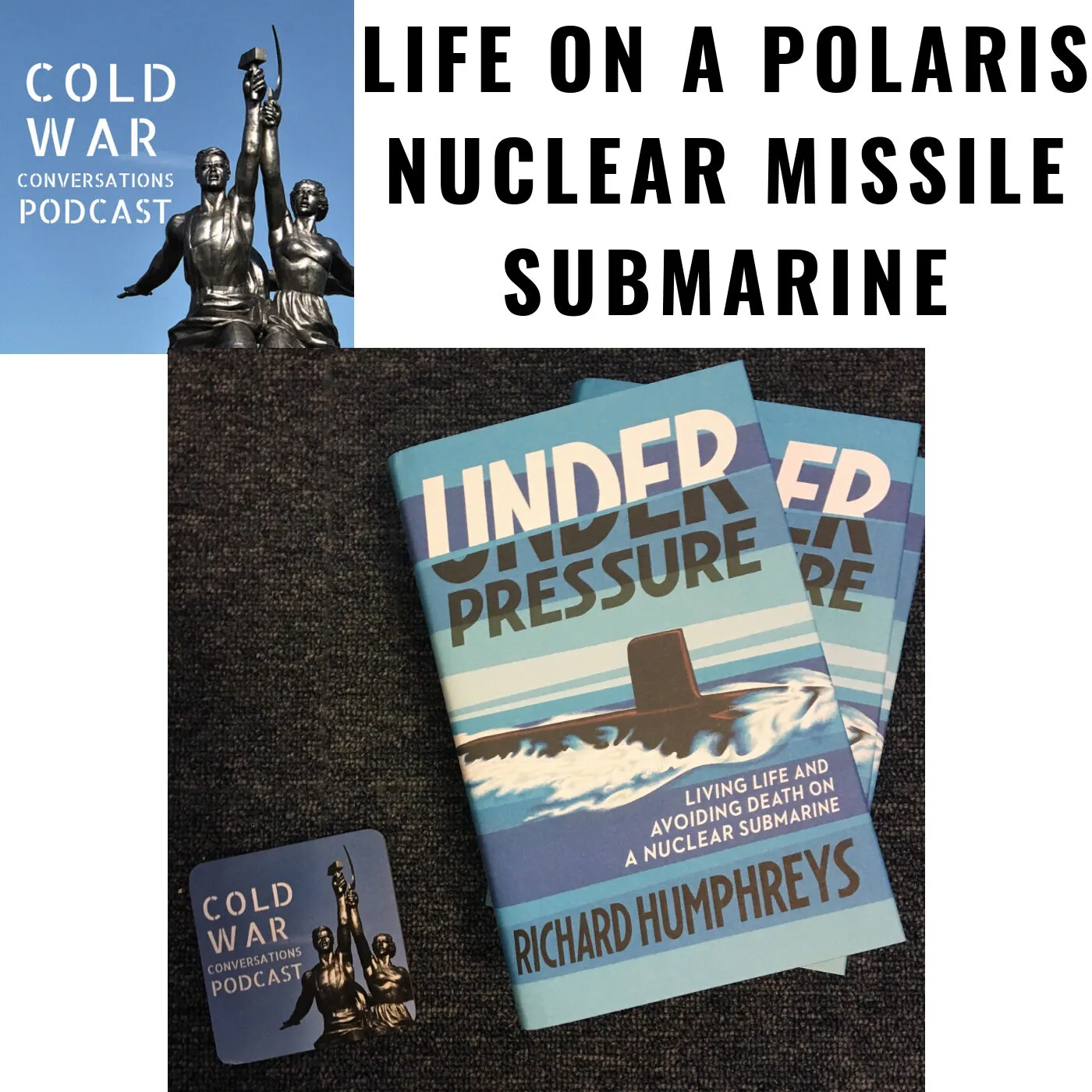
S3 Ep 84Life on a Cold War Polaris Nuclear Missile Submarine (84)
As a restless and adventurous 18-year-old, Richard Humphreys joined the submarine service in 1985 and went on to serve aboard the nuclear deterrent for five years at the end of the Cold War. Now before we start his story as I’d like to tell you about some of our fans who are helping the podcast financially such as Liam Doyle, Sarah Ampolsk, Philippe Branco, Victor Osprey and Richard Orman. So how do you join this select band? Then sign up to Patreon. For the price of a couple of coffees a month you help to cover the show’s increasing costs and keep us on the air, plus you get the sought after CWC coaster too. Just go to https://coldwarconversations.com/donate/ Back to today episode, Richard has just published his book called “Under Pressure” described by historian James Holland as “'An utterly fascinating and wonderfully detailed insight into the hidden - and frequently disorientating and claustrophobic - world of the modern submariner, this richly compelling and hugely entertaining memoir brilliantly conveys the tension, huge responsibility, culture and, of course, humour, of being a crewman on the nuclear deterrent.” You can have the chance to win a free copy via the information in our show notes here. https://coldwarconversations.com/episode84/ The show notes also contains a documentary film of life aboard one of these boats. We welcome Richard Humphreys to our Cold War conversation. Support the project! https://coldwarconversations.com/donate/ Follow us on Twitter https://twitter.com/ColdWarPod Facebook https://www.facebook.com/groups/coldwarpod/ Instagram https://www.instagram.com/coldwarconversations/ Youtube https://youtube.com/@ColdWarConversations Learn more about your ad choices. Visit podcastchoices.com/adchoices

S3 Ep 83Mark - Eyewitness to the events of 1989 (83)
Mark Baker was a journalist in Vienna who covered Czechoslovakia during the 1980s. In a wide ranging conversations we discuss the events of 1989 with Mark providing some vivid accounts of his experiences and how events were viewed at the time. Now as I’m sure you know some of our fans who are helping the podcast financially, so if you’d like to join this select band? Then sign up to Patreon. For the price of a couple of coffees a month you help to cover the show’s increasing costs and keep us on the air, plus you get the sought after CWC coaster too. Just go to https://coldwarconversations.com/donate/ Mark is now an independent journalist and travel writer who’s lived in Central Europe for more than two decades. He loves the history, literature, culture, and mystery of this often-overlooked corner of Europe, and makes his living writing articles and guidebooks about the region. Do visit his excellent Eastern Europe Blog which contains a number of Cold War stories here Visit the show notes here https://coldwarconversations.com/episode83/ Support the project! https://coldwarconversations.com/donate/ Follow us on Twitter https://twitter.com/ColdWarPod Facebook https://www.facebook.com/groups/coldwarpod/ Instagram https://www.instagram.com/coldwarconversations/ Youtube https://youtube.com/@ColdWarConversations Learn more about your ad choices. Visit podcastchoices.com/adchoices

S3 Ep 82A Cold War Romance (82)
In 1986 GDR student Antje met a British guy who was installing sewing machines in the hosiery companies in East Germany. Unusually he was given quite a bit of freedom to socialise locally and he eventually asked Antje to marry him. However, with her prospective husband being a citizen of the capitalist West the process was far from simple… Now talking of the Capitalist West I’m sure you know some of our fans who are helping the podcast monthly via Patreon, so if you’d like to join this select band? Then head over to https://coldwarconversations.com/donate/ plus you get the sought after CWC coaster too. Back to today’s episode, Antje describes her early life in the GDR and how romance blossomed between East & West, despite the best efforts of East German bureaucracy to thwart the union. Now the story does have somewhat of a twist towards the end so make sure you keep listening. If you enjoyed this episode here is the other side of the coin. Genuine laugh out loud moments. "A 22 year old Briton working in East Germany (170)" We recorded our chat at The Barbican Centre in London, so excuse any background noise, I’m delighted to welcome Antje to Cold War Conversations Radio GDR If you are interested in East Germany we can highly recommend our friends over at Radio GDR. Support the project! https://coldwarconversations.com/donate/ Follow us on Twitter https://twitter.com/ColdWarPod Facebook https://www.facebook.com/groups/coldwarpod/ Instagram https://www.instagram.com/coldwarconversations/ Youtube https://youtube.com/@ColdWarConversations Learn more about your ad choices. Visit podcastchoices.com/adchoices

S3 Ep 81Eyewitness to the 1991 Soviet Coup (81)
As a 24-year-old Kieran Williams was in Moscow staying with Soviet friends when the 1991 Moscow Coup occurred. He is a Professor at Drake University in the United States and previously he taught for nine years at University College London's School of Slavonic and East European Studies, where he was an associate professor in politics as well as a frequent consultant to the UK Foreign Office. He is a specialist in the politics of Central and Eastern Europe, he has authored or co-authored four books, including a prize-winning account of the 1968 events in Czechoslovakia and a biography of the writer-statesman Václav Havel. Now as I’m sure you know some of our fans who are helping the podcast financially, so if you’d like to join this select band? Then sign up to Patreon. For the price of a couple of coffees a month you help to cover the show’s increasing costs and keep us on the air, plus you get the sought after CWC coaster too. Just go to Patreon.com/coldwarpod Back to today’s episode, Kieran gives a rich eyewitness account of those edgy days with vivid descriptions of what he saw and felt during those tumultuous days. I’m delighted to welcome Kieran Williams to Cold War Conversations Do visit our show notes at https://coldwarconversations.com/episode81 These include Kieran's photos of the Coup and some amazing audio he recorded in the streets of Moscow at the time - well worth a look! Support the project! https://coldwarconversations.com/donate/ Follow us on Twitter https://twitter.com/ColdWarPod Facebook https://www.facebook.com/groups/coldwarpod/ Instagram https://www.instagram.com/coldwarconversations/ Youtube https://youtube.com/@ColdWarConversations Learn more about your ad choices. Visit podcastchoices.com/adchoices

S3 Ep 80Cuban Missile Crisis U2 Squadron Commander (80)
Col. William "Greg" Gregory served in the U.S. Army Air Corps and saw extensive combat over North Africa and Europe during World War 2. When the Air Force was created he continued his role as a pilot and eventually became part of the clandestine U-2 spy plane program, rising to the position of squadron commander. It was his squadron that flew many of the spy missions over Cuba during the Cuban Missile Crisis. He was later awarded a medal by the CIA for his service, as well as a letter of appreciation by President Kennedy. However…before we start I have to thank our fans who are helping the podcast financially. So how do you join this select band? Well sign up to Patreon for the price of a couple of coffees a month you help to cover the show’s increasing costs and keep us on the air, plus you get the sought after CWC coaster too. Just go to Patreon.com/coldwarpod Today’s episode is brought in conjunction with The Cold War Museum and I’m delighted to welcome Col William Gregory to Cold War Conversations. It was such an honour to speak to Greg and hear first-hand from someone so deeply involved in the Cuban Missile Crisis. Thanks again to the Cold War Museum for arranging the conversation. If you’d like to learn more then head over to our show notes which are at coldwarconversations.com/episode80 or will show as a link in some podcast apps. The show notes also have some videos relating to this Support the project! https://coldwarconversations.com/donate/ Follow us on Twitter https://twitter.com/ColdWarPod Facebook https://www.facebook.com/groups/coldwarpod/ Instagram https://www.instagram.com/coldwarconversations/ Youtube https://youtube.com/@ColdWarConversations Learn more about your ad choices. Visit podcastchoices.com/adchoices