
Bible in a Year with Fr Paul
365 episodes — Page 5 of 8
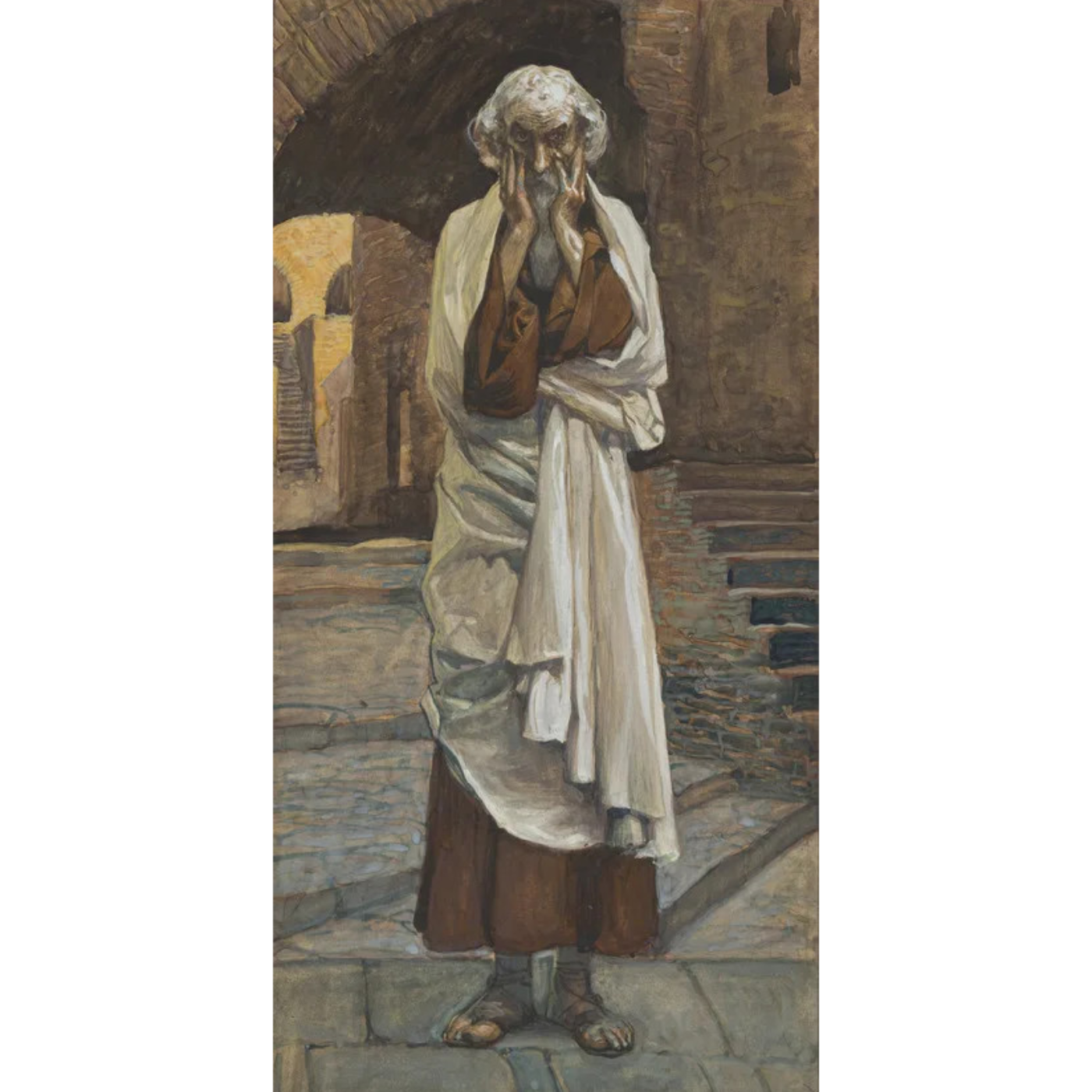
S1 Ep 165Day 165 - Micah 3-7
Who is speaking when the prophet says, “Woe is me, soul, for I have become one as gathering straw in harvest?” For did the prophet literally “gather” or even want to “gather”? Does the prophet have a farm? Anyway, the only one who rightly gathers from what has been planted for harvest is not the prophet but the Lord and Savior Jesus Christ. Since there are many faults among the pagan nations but also among those who are supposed to be from the church, the prophet laments and mourns for our sins when he says, “Woe is me, for I have become as one who gathers straw.” Let each of us scrutinize himself. Is he an ear of corn? Will the Son of God discover something in him to pick or harvest? Do we find that some of us are those swept by the wind? Even as we have still a little in ourselves, two or three kernels, our sins are many against us. Seeing that the churches, or those so-called, are filled with sinners, he says, “Woe is me, for I have come as one who gathers straw in the harvest and as one gathering grape gleanings in the vintage.” [The Lord] comes seeking fruit on the vine, for each of us is planted also as a vine “in a fertile place” [Isa 5:1.] or as a vine “transplanted out of Egypt,” [Psa 80:8 (79:9 LXX).] yet planted to bear fruit. [Jer 2:21.] He comes, he seeks in what way to pick, he discovers some “grape gleanings” and a few “clusters,” neither flourishing nor plentiful. Who among us has “clusters” of virtue?—Origen
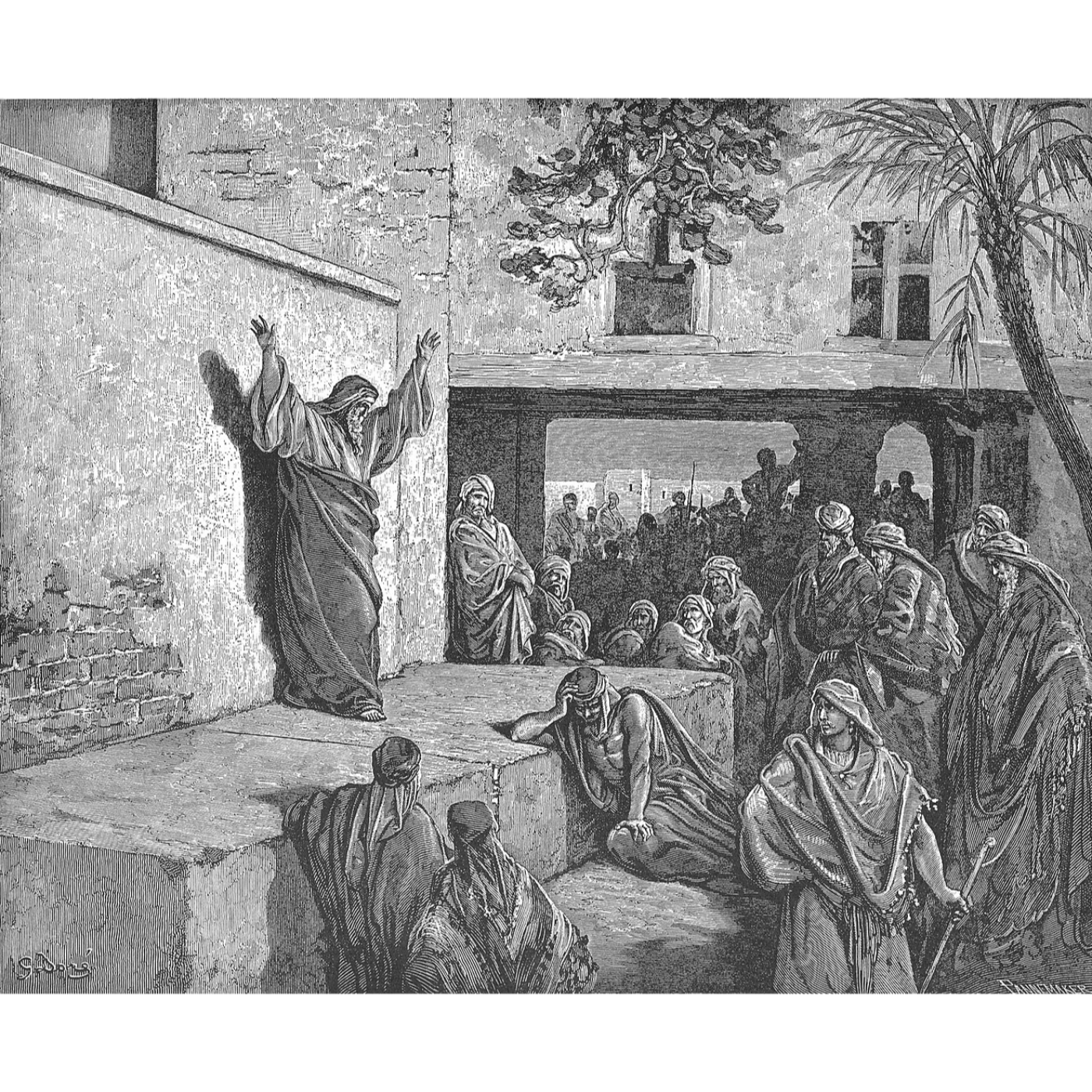
S1 Ep 164Day 164 - Isaiah 14, Micah 1-2
Micah means “one who is from God,” or, as we find elsewhere, “one who is the son of the Morashite,” in other words son of the heir. Who is the heir but the Son of God, who says, “All things have been delivered to me by the Father,” [Mat 11:27.] who, being the heir, wished us to be co-heirs. It is well to ask, “Who is he?” He is not one of the people but one chosen to receive the grace of God, through whom the Holy Spirit speaks. He began to prophesy in the days of Jotham, Ahaz and Hezekiah, kings of Judah. By this order the progress of the vision is signified, for it goes from the times of evil kings to those of the good king—St Ambrose of Milan
S1 Ep 163Day 163 - Isaiah 7-10, 17
Isaiah tells of the mystery of our faith and hope: “Behold, a virgin shall conceive, and bear a son, and shall call his name Emmanuel.” I know that the Jews are accustomed to meet us with the objection that in Hebrew the word almah does not mean a virgin but “a young woman.” And, to speak truth, a virgin is properly called bethulah, but a young woman, or a girl, is not almahbut naarah! What then is the meaning of almah? A hidden virgin, that is, not merely virgin, but a virgin and something more, because not every virgin is hidden, shut off from the occasional sight of men—St Jerome
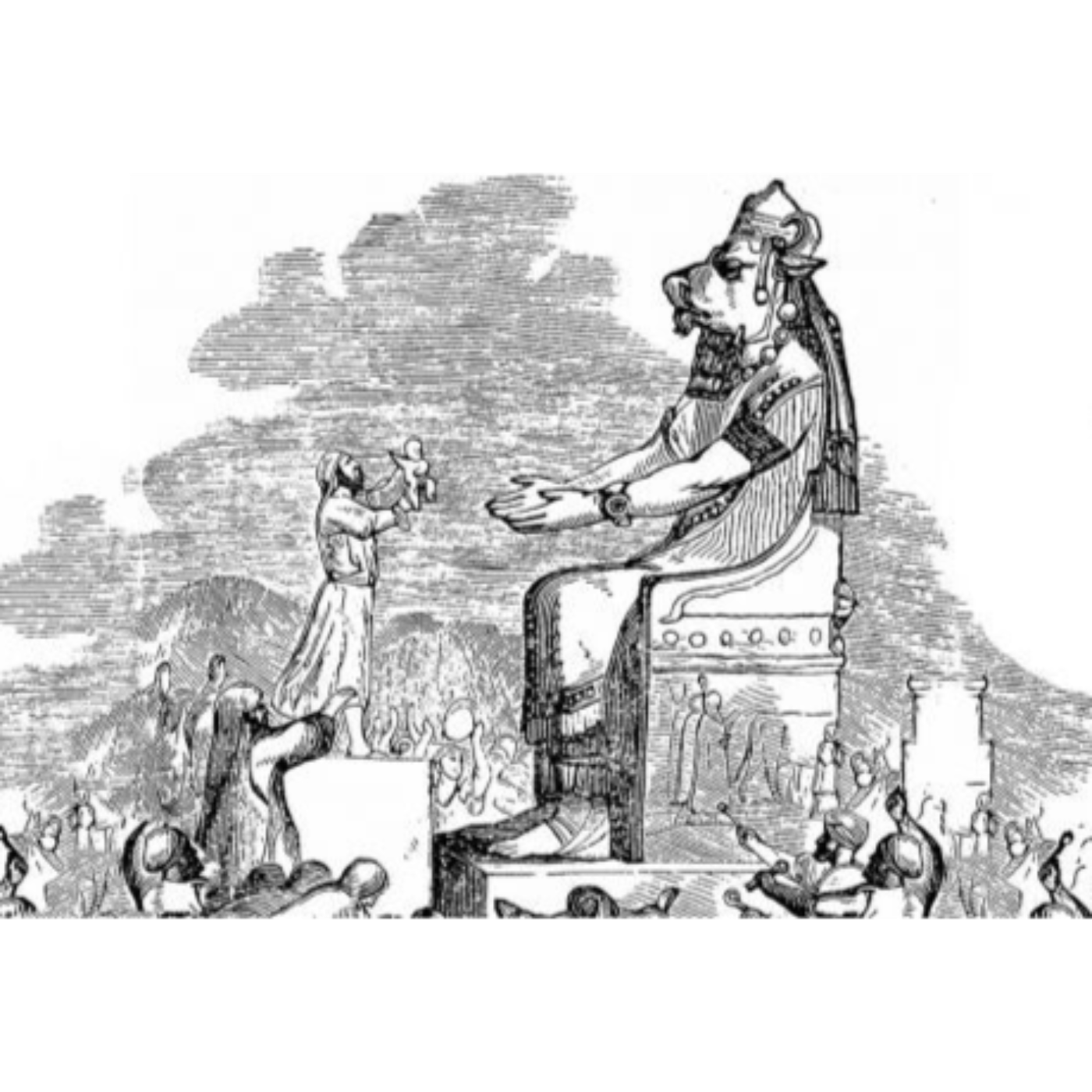
S1 Ep 162Day 162 - 2 Kings 16
“And when you say, ‘Why did the Lord God do all of these bad things to us?’ And you will say to them, ‘As you have forsaken me and served other gods in your land, so you shall serve in a land not your own.’ ” [Jer 5:19.] Let one consider the literal sense, and it will suffice at the present to refresh the memory from the literal sense for those who can understand. Surely then, the people of Israel possessed the holy land, the temple, the house of prayer. They ought to have served God, but when they transgressed the divine commandments they served idols, both the idols acquired from Damascus, as it is written in Kings, and the other idols brought from other pagan nations into the holy land. Due to the fact that they received these pagan idols, they made themselves worthy to be rejected to the land of the idols, to dwell there where they worship the idols—Origen
S1 Ep 161Day 161 - 2 Chronicles 26
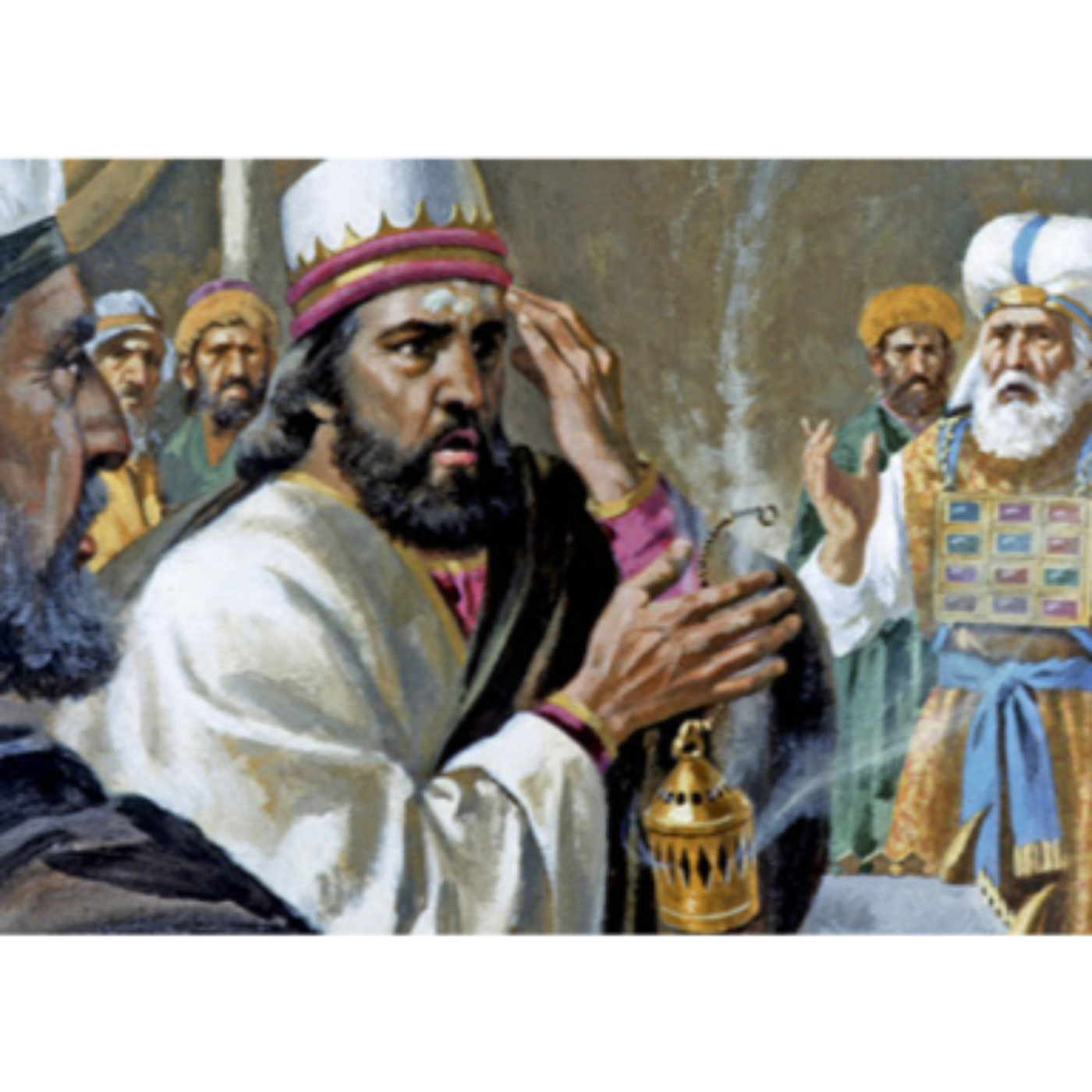
When King Uzziah carried a censer and violently took on himself to sacrifice, against the law of God, and refused to submit or give place, despite the opposition of Azariah the priest, he was confounded by God’s indignation and defiled with the markings of leprosy on his forehead, branded by the Lord’s anger on that part of the body on which those who win the Lord’s favor are sealed—St Cyprian of Carthage
S1 Ep 160Day 160 - Isaiah 1-6
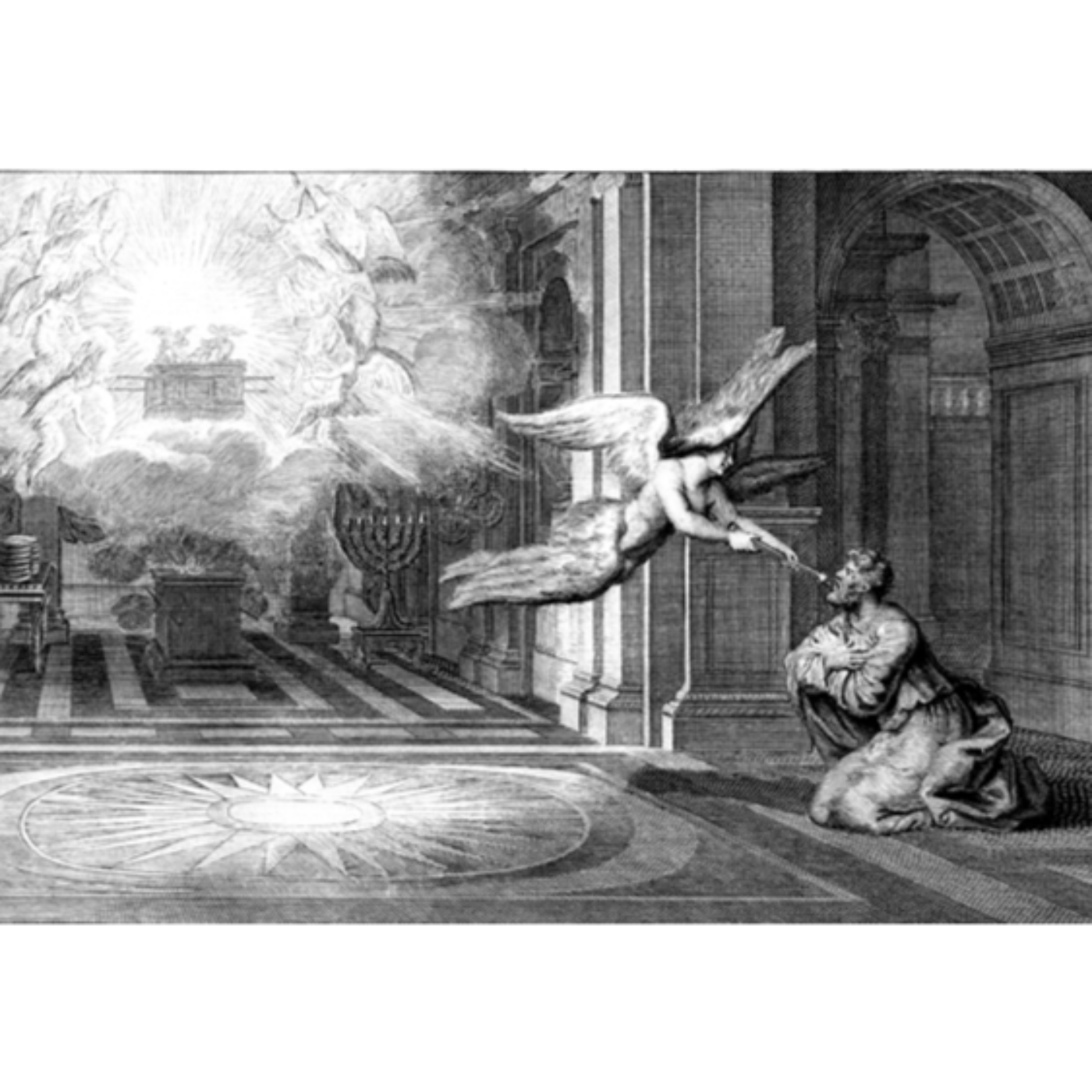
It was not with temerity and arrogance that the prophet promised his own conscience that he would go, but with fidelity, for his lips were cleansed and the iniquity of his sins washed away and purified. When the Lord had said to Moses, therefore, “Come, I will send you to Pharaoh, the king of Egypt,” [Exo 3:10.] he too responded with humility, not contempt, saying, “I beg you, Lord, to send another because I am not worthy,” or as we read in Hebrew, “Send him whom you were about to send,” [Exo 4:10-13.] for he who had been educated with all the wisdom of the Egyptians had heard nothing about the cleansing of his lips. Isaiah also offered himself for ministry by the grace of the Lord with which he was cleansed, not by his own merit. But others think that Isaiah offered himself because he thought that the message to be announced to the people was favorable, because he heard, “Go and say to this people: ‘You will hear with your ears and not understand, you will see and not recognize.’ ” [Isa 6:9.] Subsequently, therefore, when the voice of the Lord had said to him “Cry,” he did not cry immediately but inquired, “What shall I cry?” [Isa 40:6.] Jeremiah also, to whom it had been said, “Take this cup and make all the nations to whom I will send you drink from it,” [Jer 25:15.] willingly accepting the cup of punishments to give to the enemy nations that they would drink and vomit and fall, later heard, “Go and first make Jerusalem drink from it,” [Jer 25:17-18.] to which he replied, “You deceived me, Lord, and I was deceived.” [Jer 20:7.] This observation pertains to the Hebrews, but we acknowledge that others were obedient, not impetuous, in offering themselves to be sent by the Lord—St Jerome

S1 Ep 159Day 159 - 2 Kings 15
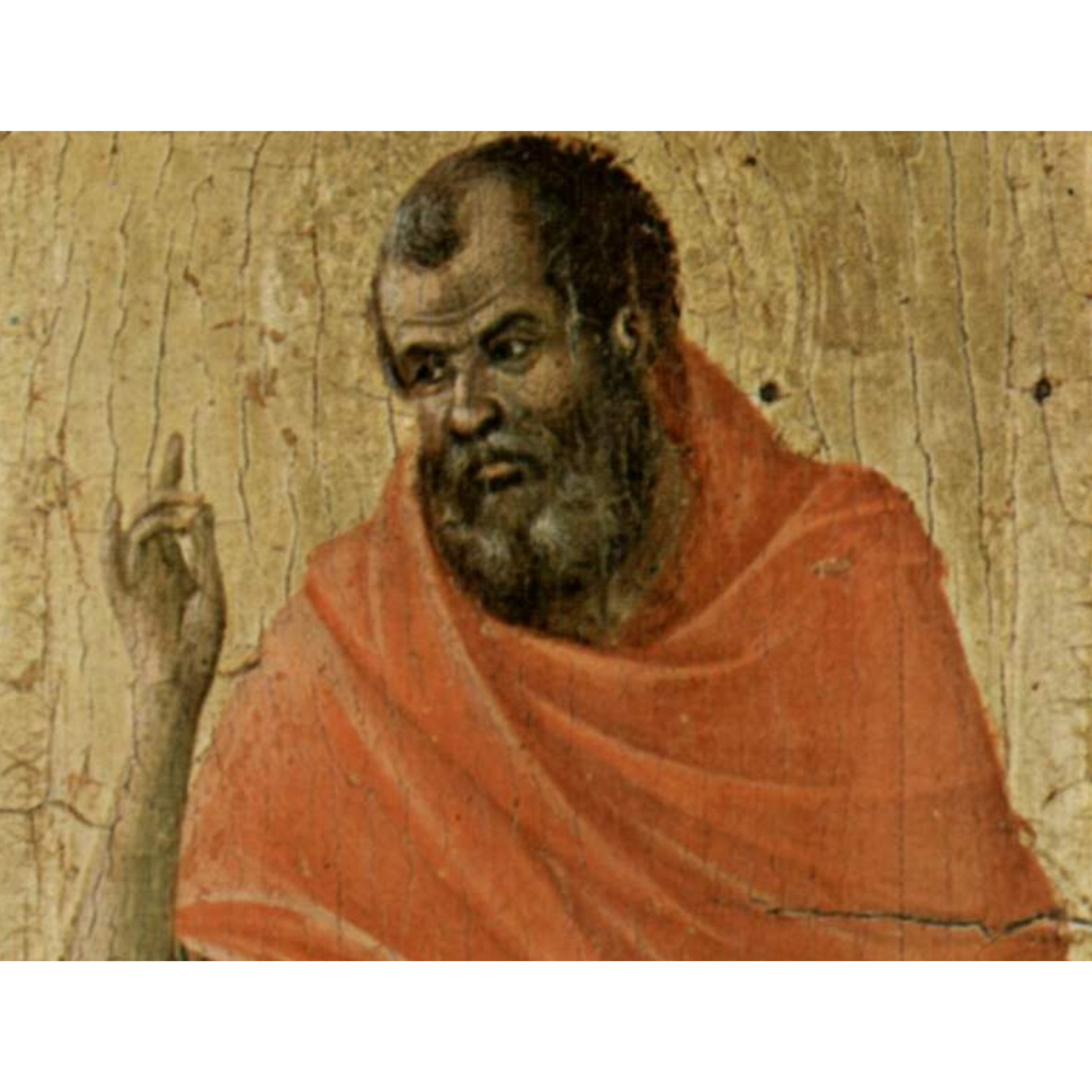
“In the second year of King Pekah son of Remaliah of Israel, King Jotham son of Uzziah of Judah began to reign.” After rising to power in that year, Jotham administered the government [of Judah] for sixteen years, earning great praise. While the second book of the Annals has shown all the feats illustriously accomplished by him, the Scripture never reproaches him in this passage [See 2Ch 27:1-9.] for any error, except for his toleration of the high places, [See 1Ki 12:31-32; 2Ki 12:3; etc.] which was a fault common to all the most praised kings of Judah. In the first place, he strengthened Jerusalem with new fortifications and built towers and castles in desert places. He conquered the Ammonites, who were perpetual enemies of the Jews, and ordered them for the future to pay the kings of Judah an annual tribute—Mari Ephrem the Syrian
S1 Ep 158Day 158 - Hosea 7-14
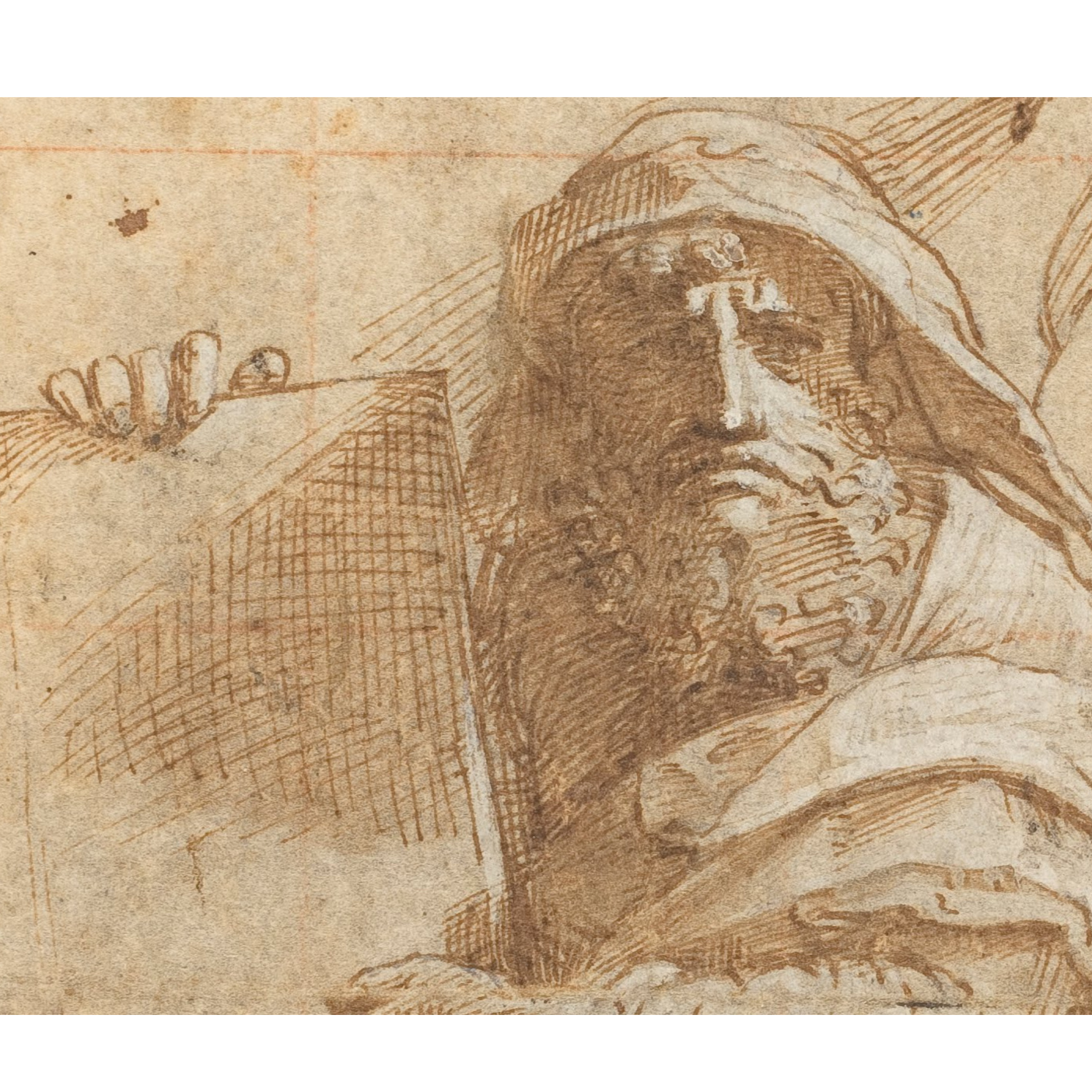
It is only by deeply considering the matters in the divinely inspired Scriptures that we shall find the hidden truth. It would be fitting for us when looking into the dark shadows of the law to say what one of the holy prophets rightly said, “Whoever will be wise will understand these things; and whoever will be prudent will know them.” “For the law is but a shadow of the good things to come, and not the exact image of the objects,” [Heb 10:1.] as it is written. Yet the shadows bring forth the truth, even if they do not contain the whole truth in themselves. Because of this, the divinely inspired Moses placed a veil upon his face and spoke thus to the children of Israel, [Exo 34:33-35; 2Co 3:13-17.] all but shouting by this act that a person might behold the beauty of the utterances made through him, not in outwardly appearing figures but in meditations hidden within us—St Cyril of Alexandria
S1 Ep 157Day 157 - Hosea 1-6
We should not blame the prophet if he converted a prostitute to virtue, but we should rather praise him because he turned a bad woman into a good one.… Hence we understand that it was not the prophet who lost virtue by joining with a prostitute, but rather the latter gained virtue that she never had before—St Jerome
S1 Ep 156Day 156 - Amos 6-9
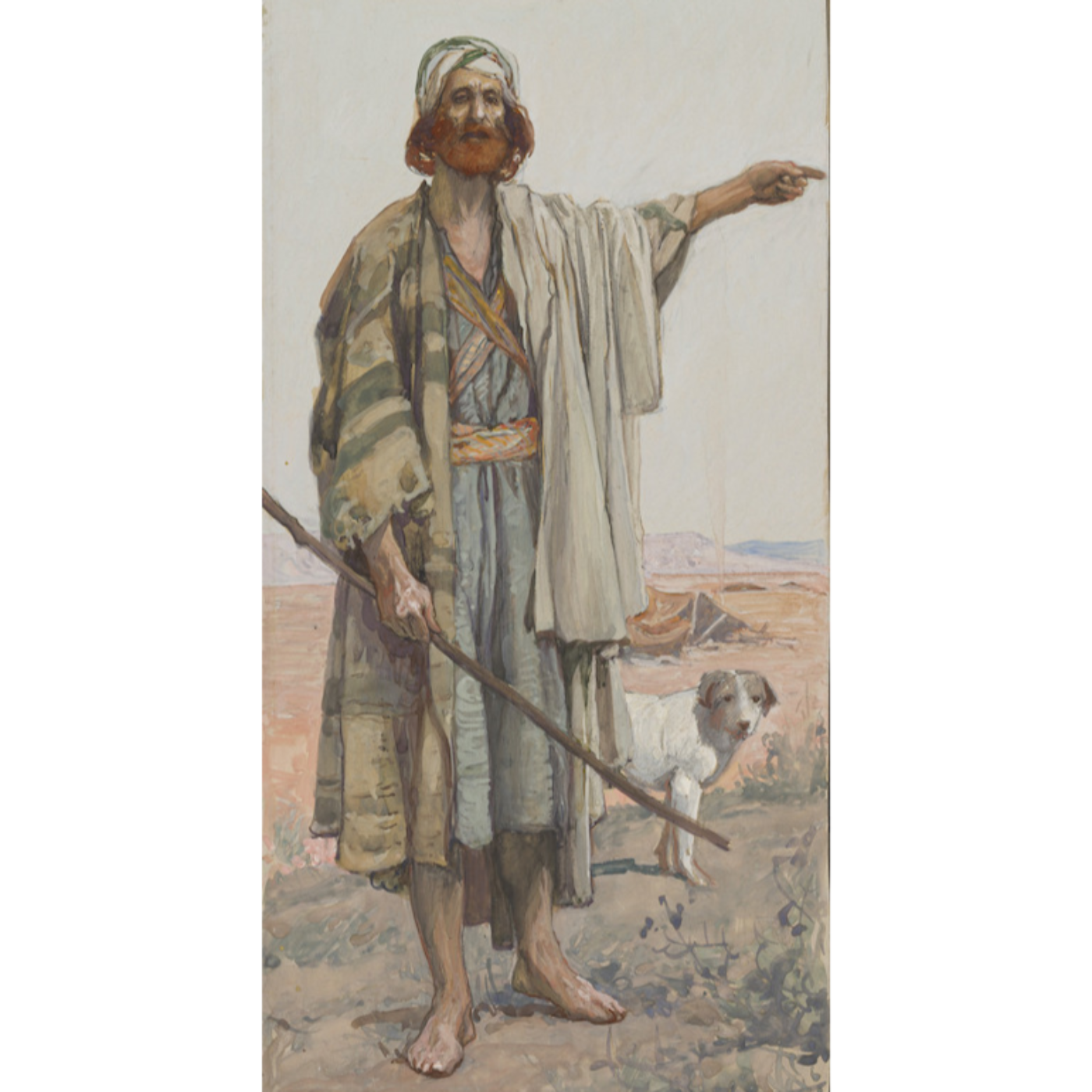
Amos also said, “I was no prophet, nor the son of a prophet, but only a herdsman, a gatherer of sycamore fruit. And God took me.” He did not say this to exalt himself but to stop their mouths that suspected him as no prophet, and to show that he is no deceiver, and what he says does not come from his own mind—St John Chrysostom
S1 Ep 155Day 155 - Amos 1-5
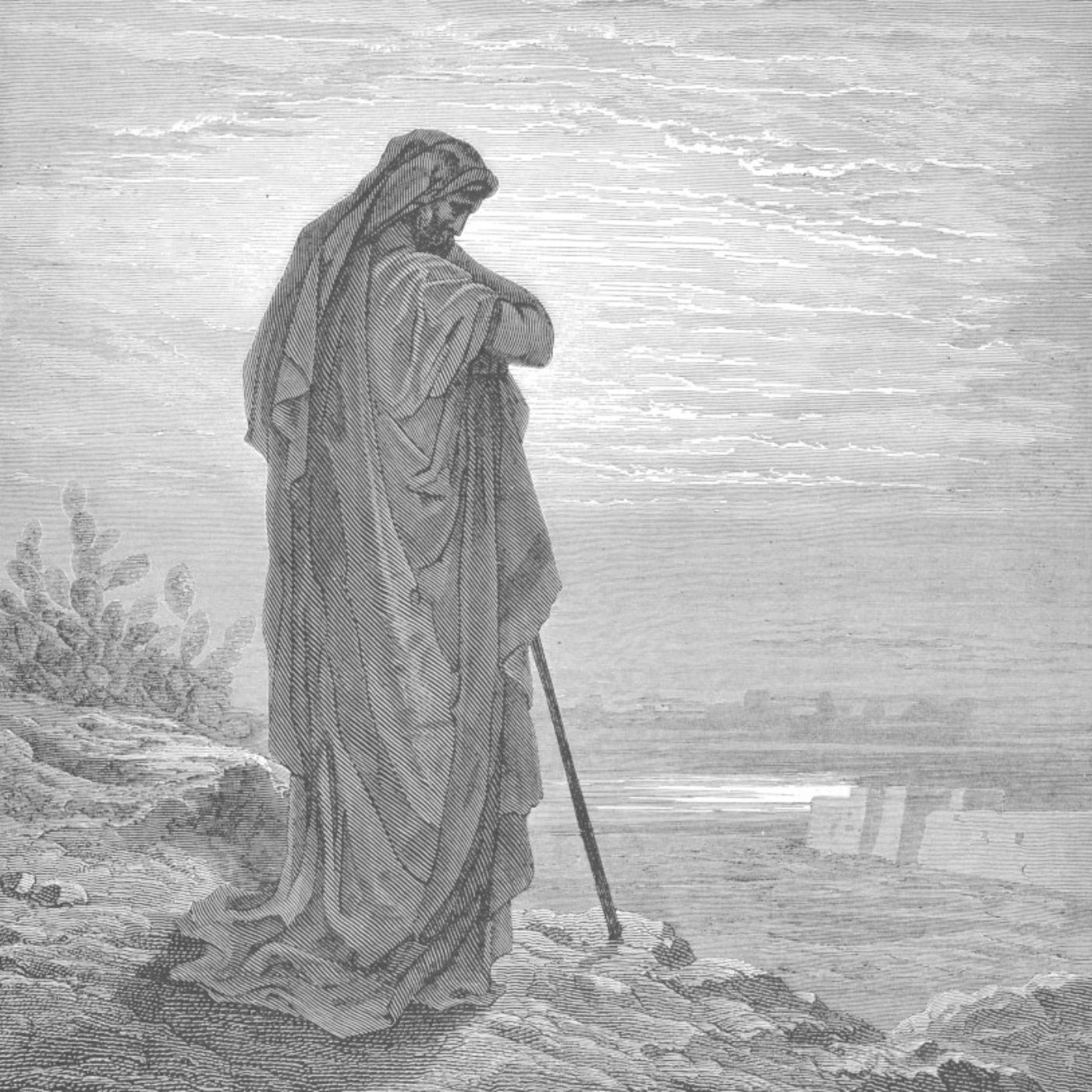
When Christ came, the people of the old covenant denied him, [Jhn 19:5-6.] but the devils confessed him. [Luk 4:41.] His forefather David was not ignorant of him when he said, “I will place a lamp for my anointed.” [Psa 132:17 (131:17 LXX).] Some have interpreted “lamp” as the splendor of prophecy; others have understood by the lamp the flesh he assumed of the Virgin, according to the words of the apostle: “But we carry this treasure in vessels of clay.” [2Co 4:7.] The prophet was not ignorant of him when he said, “And declaring his Christ to men.” Moses also knew him, and Isaiah and Jeremiah as well. None of the prophets was ignorant of him. Even the devils acknowledged him, for he rebuked them, and Scripture adds, “Because they knew that he was the Christ.”—St Cyril of Jerusalem
S1 Ep 154Day 154 - Jonah 1-4
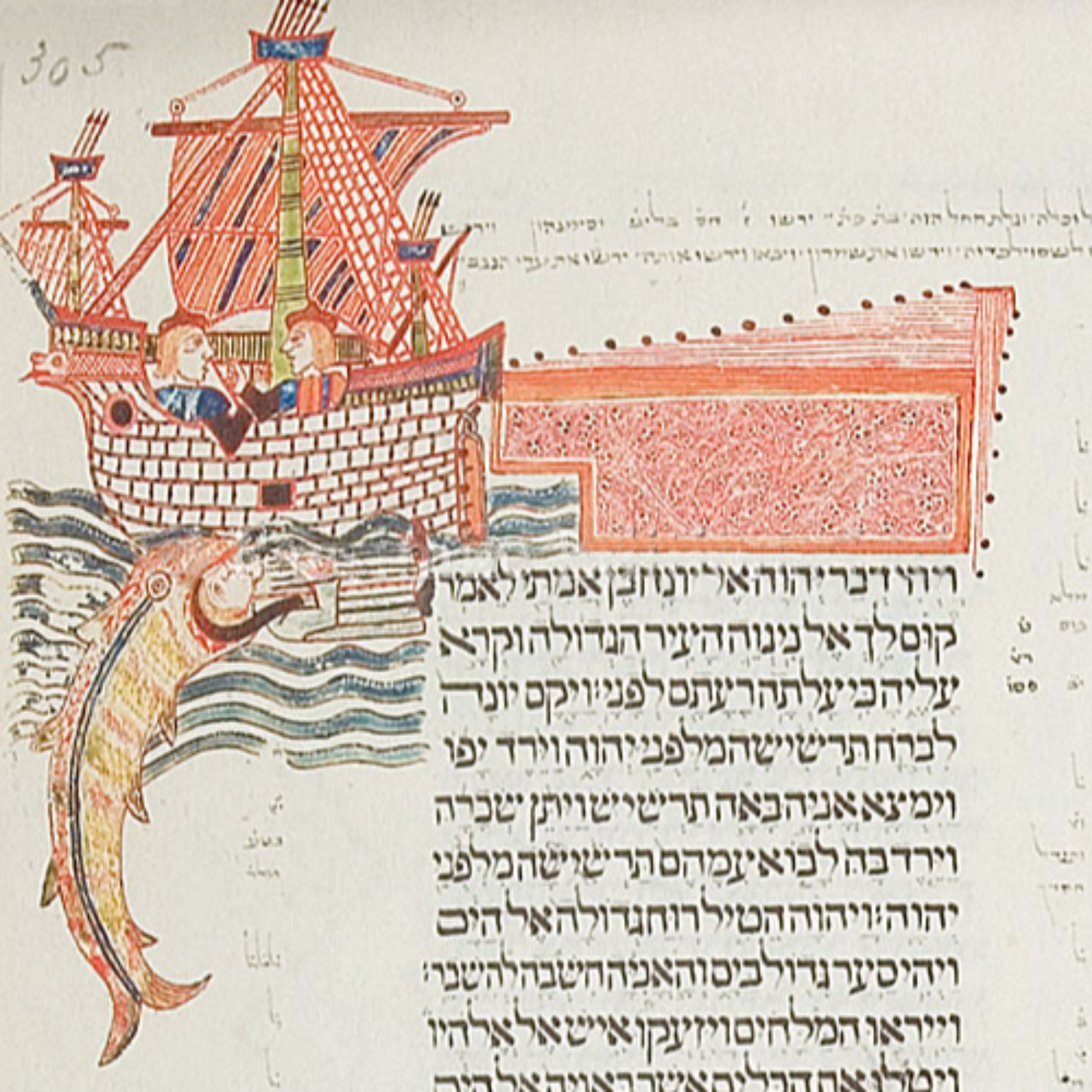
From where, my beloved, came the foresight of the prophet? From the economy of God. God made these things happen so that the prophet might learn from them to be a lover of humanity and be subdued. Only to him did he cry out and say, “Imitate the sailors, the nave men, who neither despise a single soul nor neglect a single body, yours. And you would allow to be destroyed, on your part, an entire city with myriads of inhabitants. These sailors, when they discovered who was responsible for all the evils that confronted them, still were not eager to condemn him; but you, who have no charge brought against you by the Ninevites, would convict and annihilate them. Yet when I commanded you to go and, through preaching, summon them back to salvation, you disobeyed. They who were not accountable to anyone did all things and exerted themselves so that you, who are accountable should be punished.” Although the ocean condemned him and the lot exposed him, when he implicated himself and confessed his flight, they still were not in a hurry to annihilate the prophet; rather, they demonstrated toleration and constraint and did everything possible to keep him from the fury of the ocean after such proof of his guilt. However, the ocean did not permit even this, or better yet, God did not allow this to happen, because he wanted to sober him through the sailors in the same way as through the whale. For this reason when they heard, “Take me up and cast me into the sea, and the seas will be calm to you,” they strained to reach the shore, although the waves did not allow it—St John Chrysostom
S1 Ep 153Day 153 - 2 Chronicles 23-25
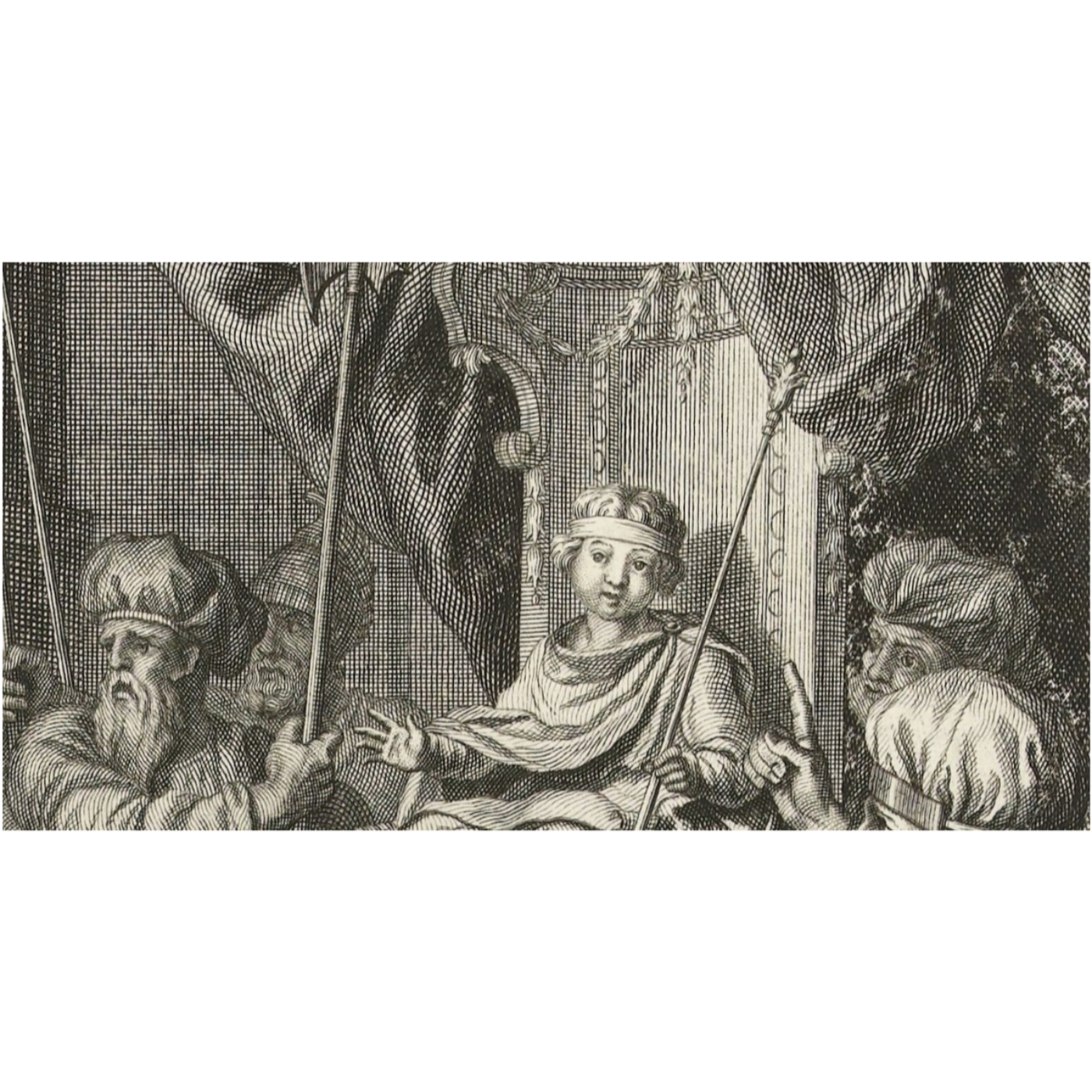
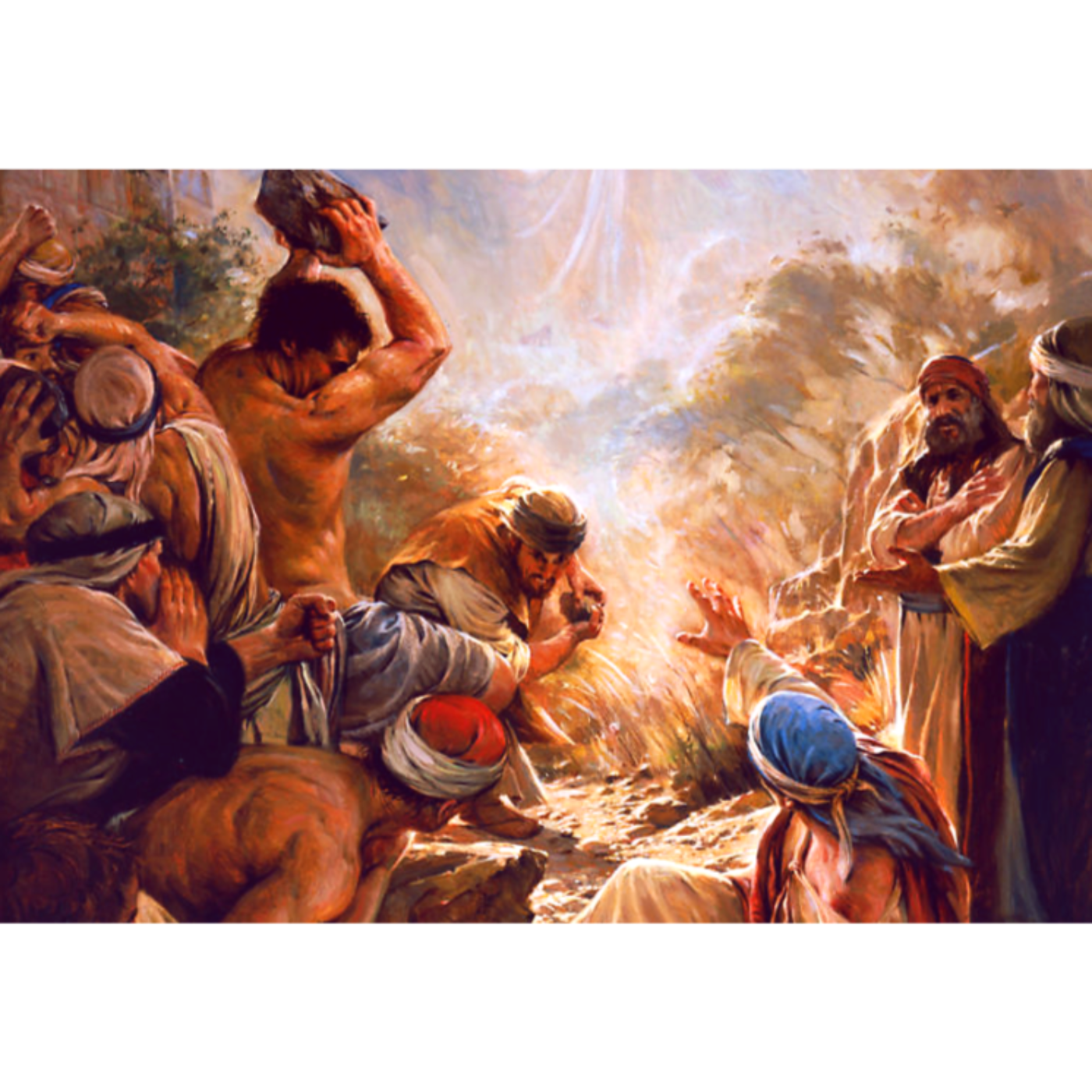
If there are any who think that they can return to the church without prayers but with threats, or think that they can make an entrance for themselves, not by lamentations and reparations but by terrors, let them certainly consider that the church of the Lord remains closed against such and that the camp of Christ, invincible and brave and fortified by the protecting Lord, does not yield to threats. The bishop of God, holding the gospel, can be killed as observing the precepts of Christ; he cannot be conquered. Zachariah, the high priest of God, suggests and gives to us examples of virtue and of faith. When he could not be terrified by threats and stoning, he was killed in the temple of God, crying out and saying the same thing that we shout also against heretics and say, “Thus says the Lord: You have forsaken the ways of the Lord, and the Lord will forsake you.”—St Cyprian of Carthage
S1 Ep 152Day 152 - 2 Kings 13-14, 2 Chronicles 22
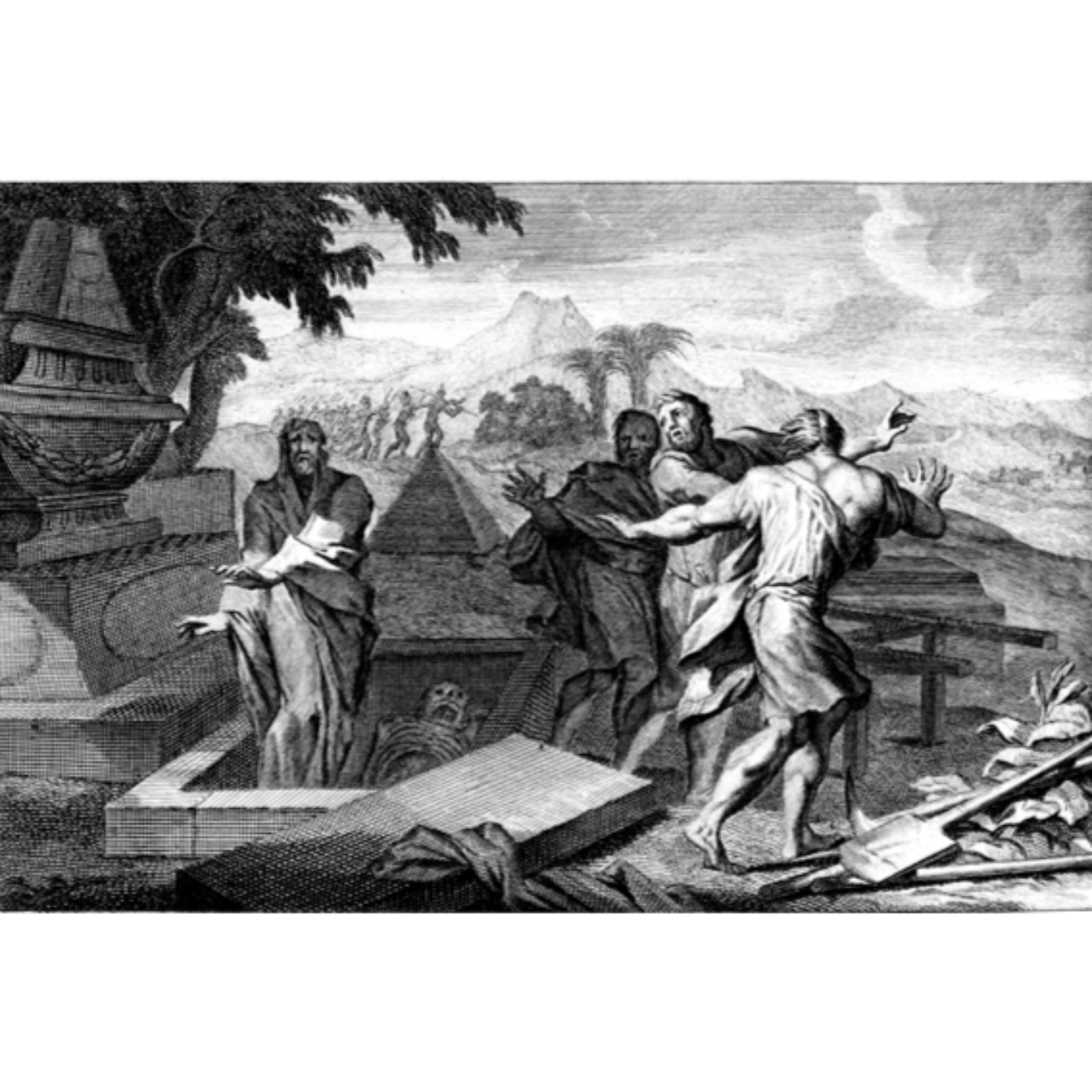
This passage, [See 2 Kings 13:14-25,] suggests two spiritual meanings. The first is that God has bound the victory of the children of Israel to that sign, which is not a new thing: it existed for many centuries, [as was demonstrated] a few centuries before when the Lord made the plagues of Egypt and the liberation of the people depend on the lifting of the rod of Moses, [See Exo 4:17.] and the destruction of Amalek on the lifting of his hands during the prayer [See Exo 17:9-13.] and the destruction of the city of Ai on the lifting of the javelin of Joshua. [See Jos 8:18-19.] It was appropriate that that situation was carried out in that manner, so that the people might clearly recognize with certainty the aid that God had given them and, at the moment of receiving such grace, the memory of grace might penetrate into their hearts. But only Elisha clearly knew the mystery, whereas it was hidden to the king; otherwise, he would have not struck the ground three times but ten. And since he was hesitant and drew back, Elisha blamed him—not because he had committed any fault but because his mistake deprived the children of his people of the victory and the great profit that would have derived from the extermination of the Arameans and the overthrowing of their kingdom that Elisha strongly desired. He is sad for being frustrated in his hope by the king who had stopped and had not multiplied the prescribed strokes. But the real motive which prevented the grace was the apostasy of the king and the people and their rebellious will in the worship of idols. That was again the cause that hindered the gift of the grace that was signified in that sign—Mari Ephrem the Syrian
S1 Ep 151Day 151 - 2 Chronicles 21, 2 Kings 11-12
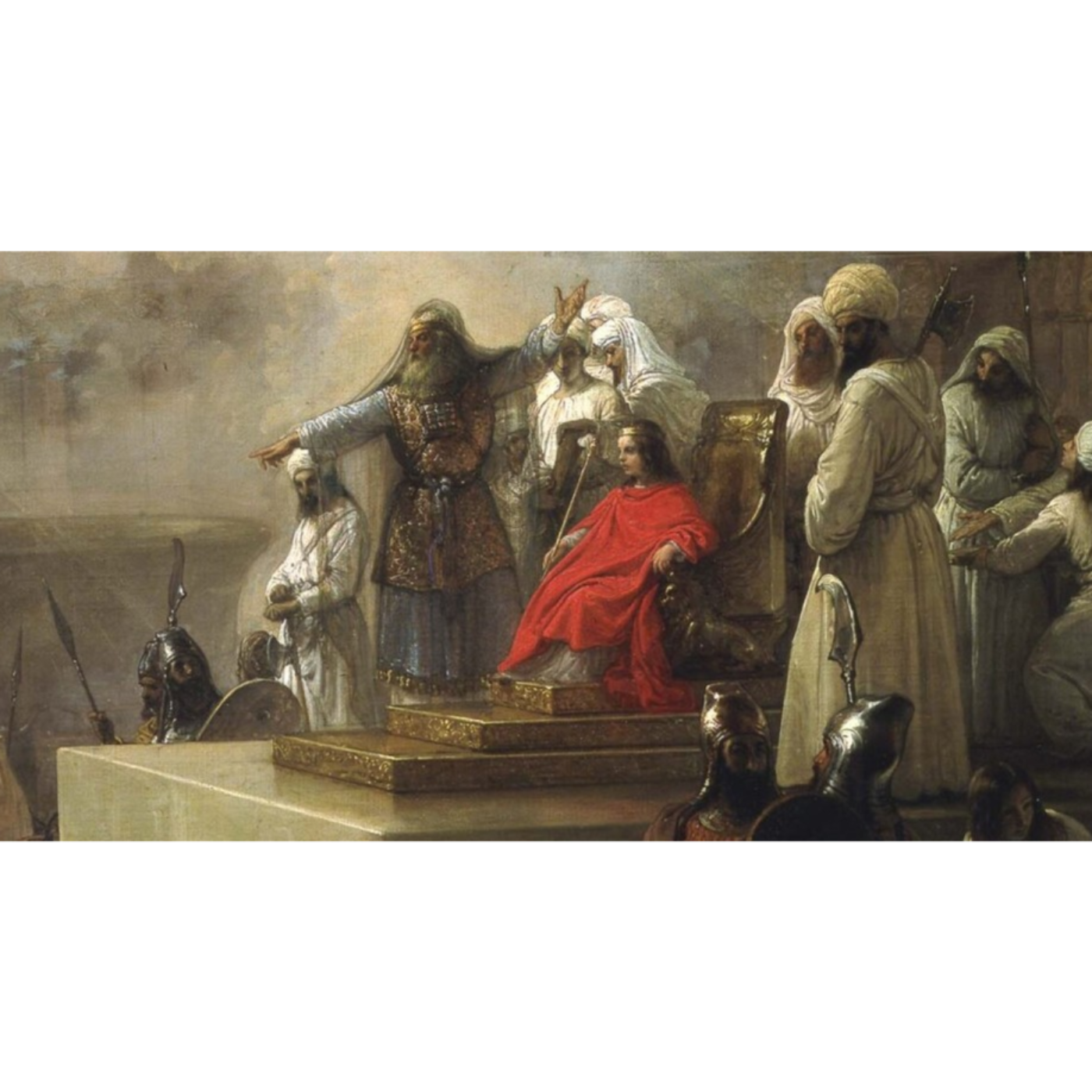
And it is not surprising that Athaliah, a woman endowed with audacity and shrewdness, made that attempt in order to aspire to power and take hold of the kingdom. Therefore, when everything was under her control and the king Ahaziah himself obeyed her blindly, nothing was neglected by her in order to draw the Jews away from the divine worship and to drive them to the ancient religion of the Sidonians. For this reason, while the temple of the true God remained abandoned after the introduction of the foreign cult, it had begun to be in ruin in many spots and was in danger of collapsing because of that. So the king, in order to remedy this serious situation, together with the authority of the high priest, gathered a large sum of money freely offered by the people and entrusted with it some priests elected to accomplish that task. But later on, when he realized that they were not making the progress he had hoped for in the task they had received, he transferred the care of the temple to other men of certain integrity who could work on that assignment with the highest perseverance and dedication—Mari Ephrem the Syrian
S1 Ep 150Day 150 - 2 Kings 9-10
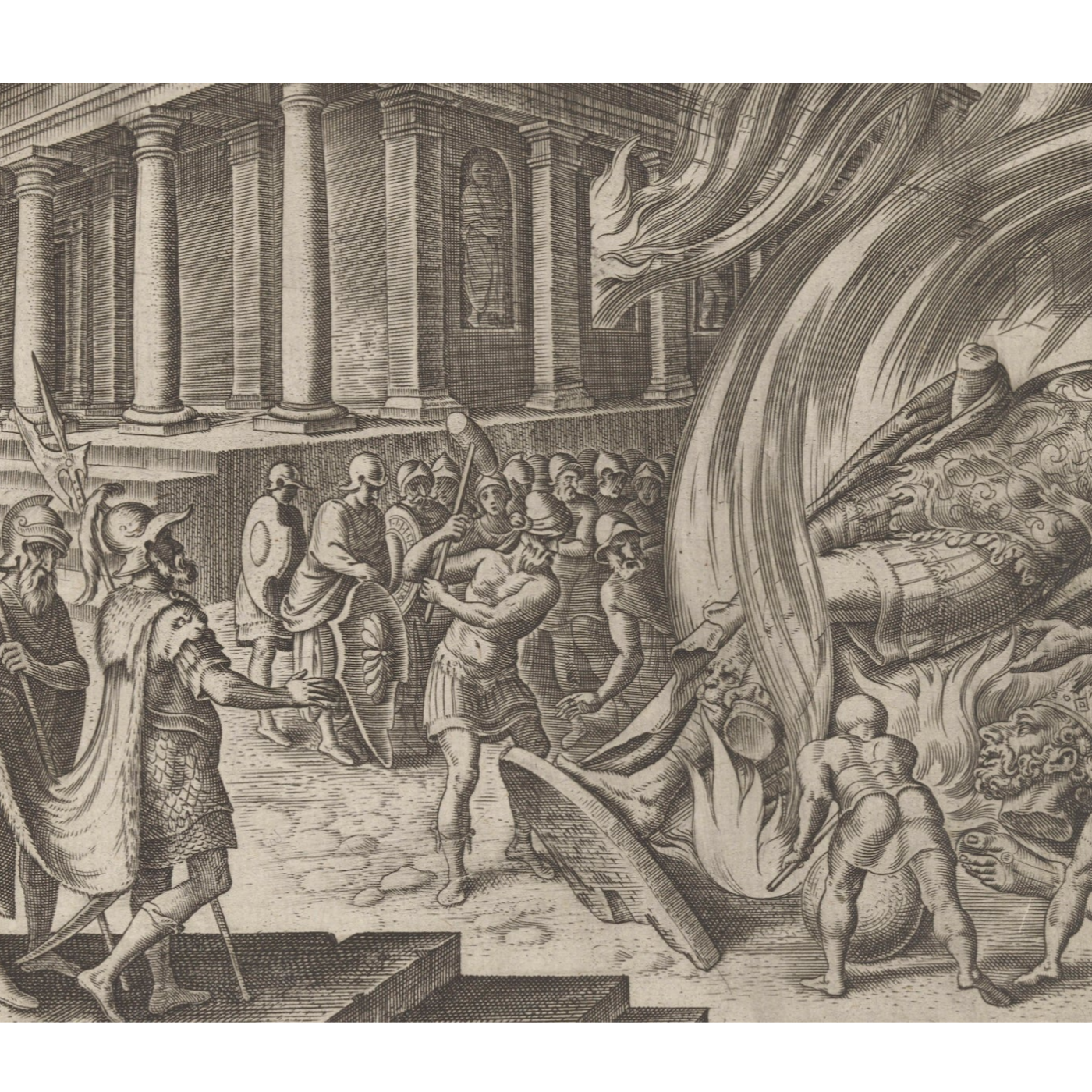
observe and understand how Jezebel, who had terrified prophets and enslaved kings, was thrown by slaves into shame and dishonor and was lacerated by the teeth of dogs. That happened so that the mouth of liars might be stopped, and they might not say, “Why does the way of the guilty prosper? Why do all who are treacherous thrive?” [Jer 12:1.]—Mari Ephrem the Syrian
S1 Ep 149Day 149 - 2 Kings 7-8
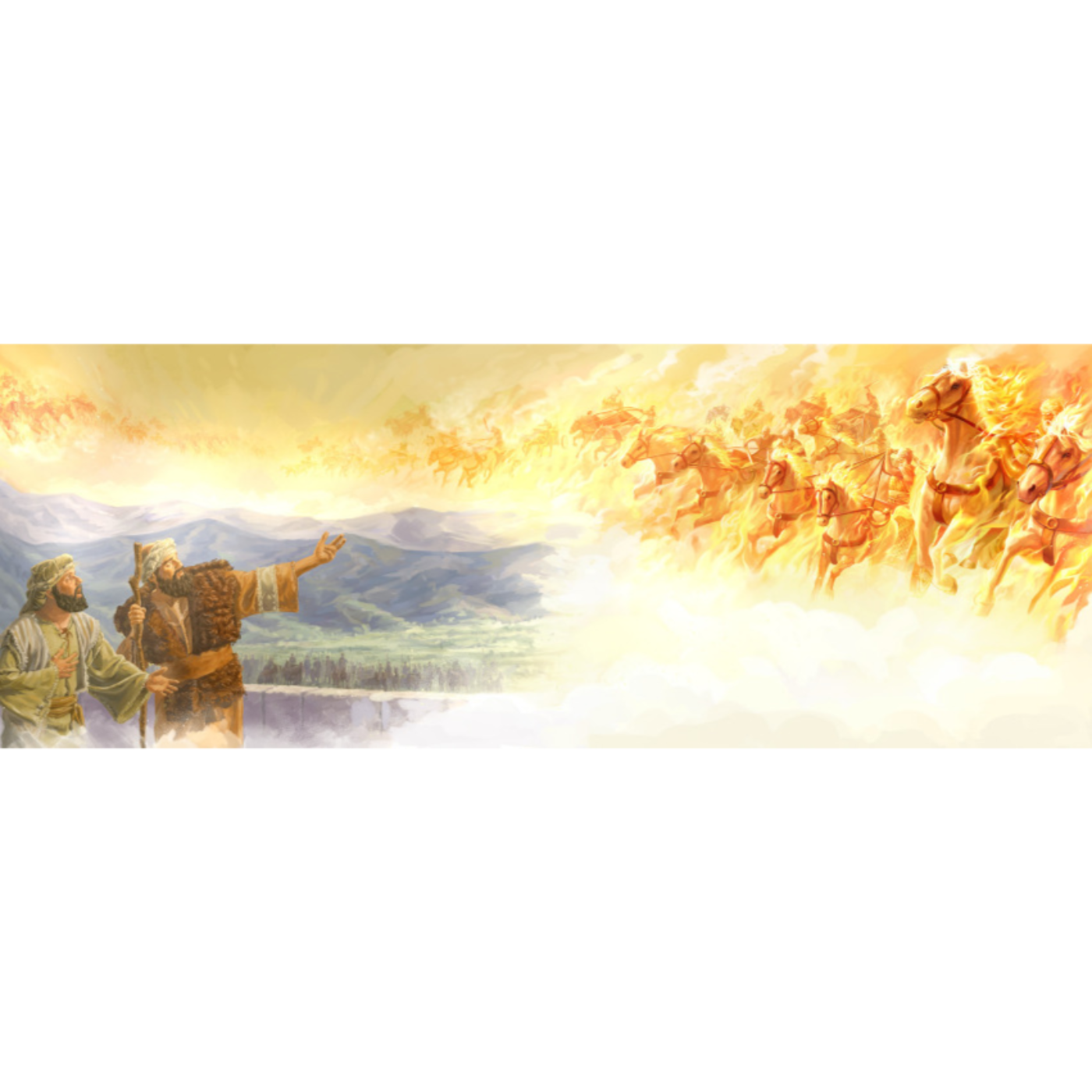
“Famine in Samaria became so great that a donkey’s head was sold for eighty shekels of silver.” The donkey’s head, which the Scripture reports here to be so expensive, signifies the teaching coming from the ravings of the philosophers and the scientists of the world. And it was an abominable and rotting food but was very precious when the famine reigned over the earth, and there was no one to break and give the bread to those children who asked for it, that is, until the advent of Christ—Mari Ephrem the Syrian
S1 Ep 148Day 148 - 2 Kings 4-6
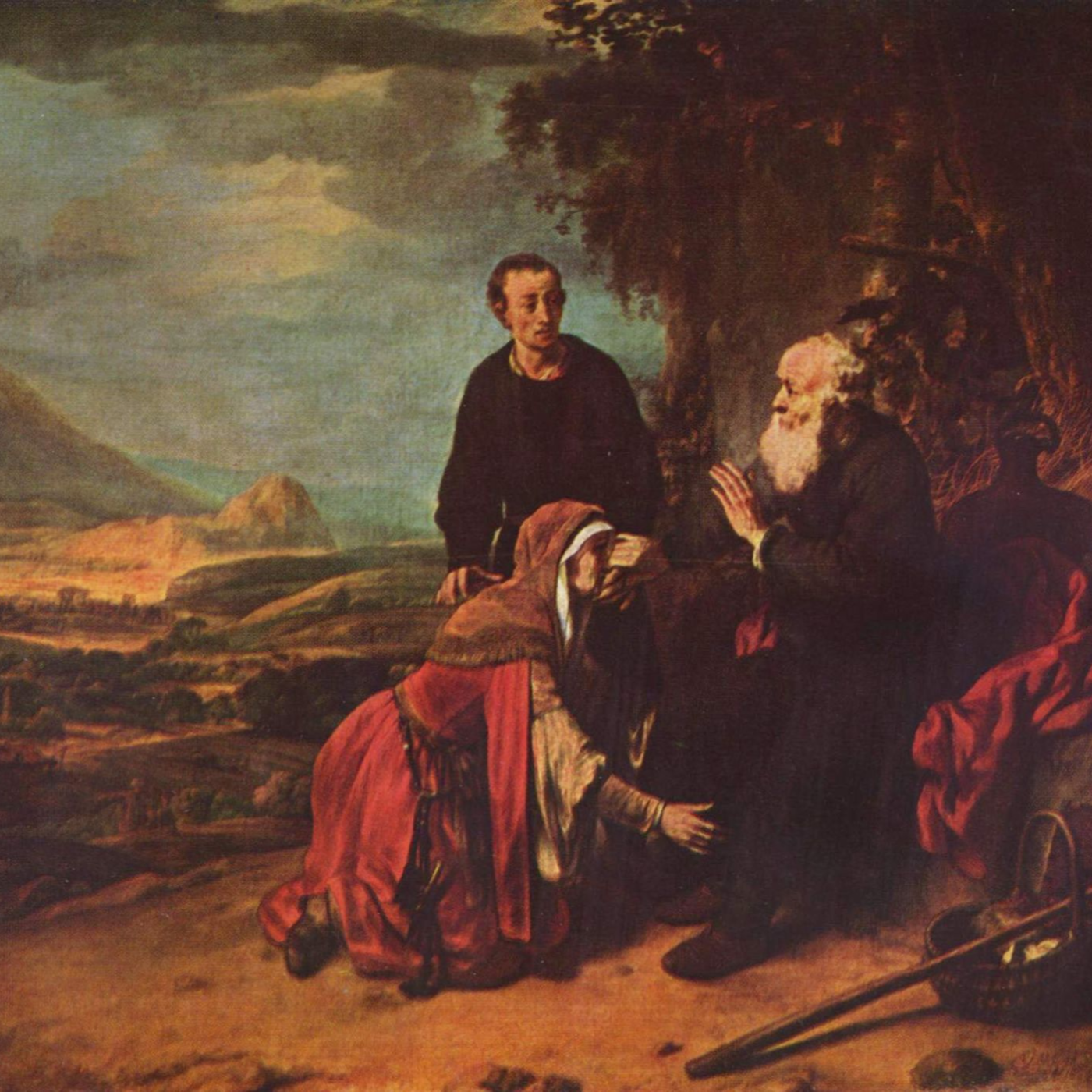
Elisha corrects the nature of the cooked foods with some flour and gives them a new taste. Our Lord did the same according to the [divine] economy, so that he might be imitated, as he said for our exhortation, with the result that we might walk the path of the righteous and the pious, and might rejoice because of the great reward he promised us and might heal the diseases and the anguish and the tribulations that constantly surround us from the beginning of our life. The father of our race, Adam, gathered those [bitter] fruits as a consequence of his sin and proposed and offered them to us in the hour in which he heard [these words] from his Creator: “The ground is cursed because of you; it will bring forth thorns and thistles for you. You are dust, and to dust you shall return.” [Gen 3:17-19.]—Mari Ephrem the Syrian
S1 Ep 147Day 147 - 2 Kings 1-3
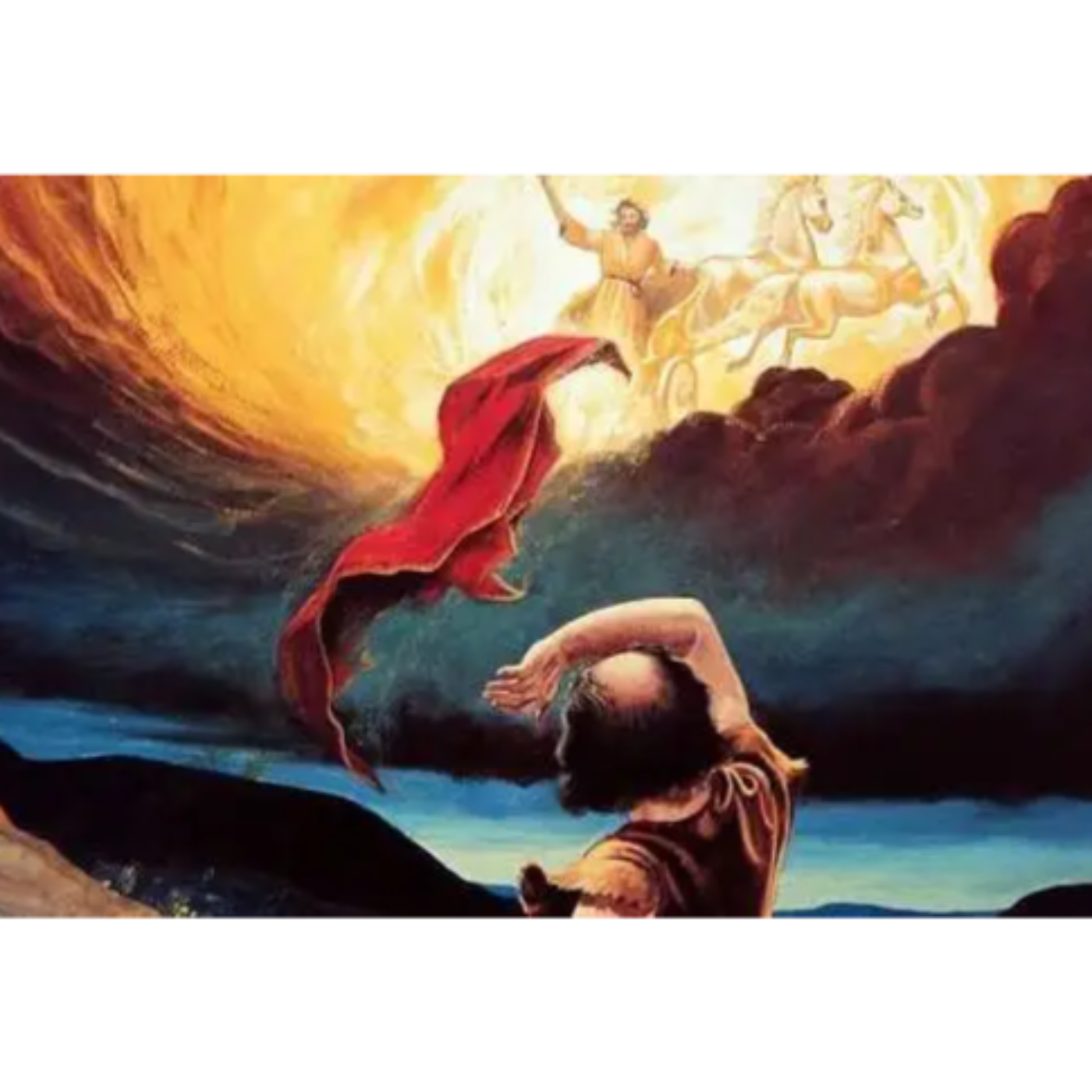
We must note in addition that when Elijah was about to be taken up in a whirlwind as into heaven, he took his sheepskin and rolled it up and struck the water, and it was divided on this side and that, and both crossed, that is to say, himself and Elisha. He was better prepared to be taken up after he was baptized in the Jordan, since Paul, as we explained previously, called the more incredible passage through water a baptism. [1Co 10:2.] It is because of this same Jordan that Elisha is capable of receiving the gift that he has desired through Elijah, for he said, “Let a double portion come on me in your spirit.” Perhaps he received the gift in the spirit of Elijah in a double measure on himself because he crossed the Jordan twice, once with Elijah, and a second time when he took the sheepskin of Elijah and struck the water and said, “Where is the Lord, the God of Elijah? And he struck the waters, and they divided on this side and that.”—Origen
S1 Ep 146Day 146 - 2 Chronicles 17-20
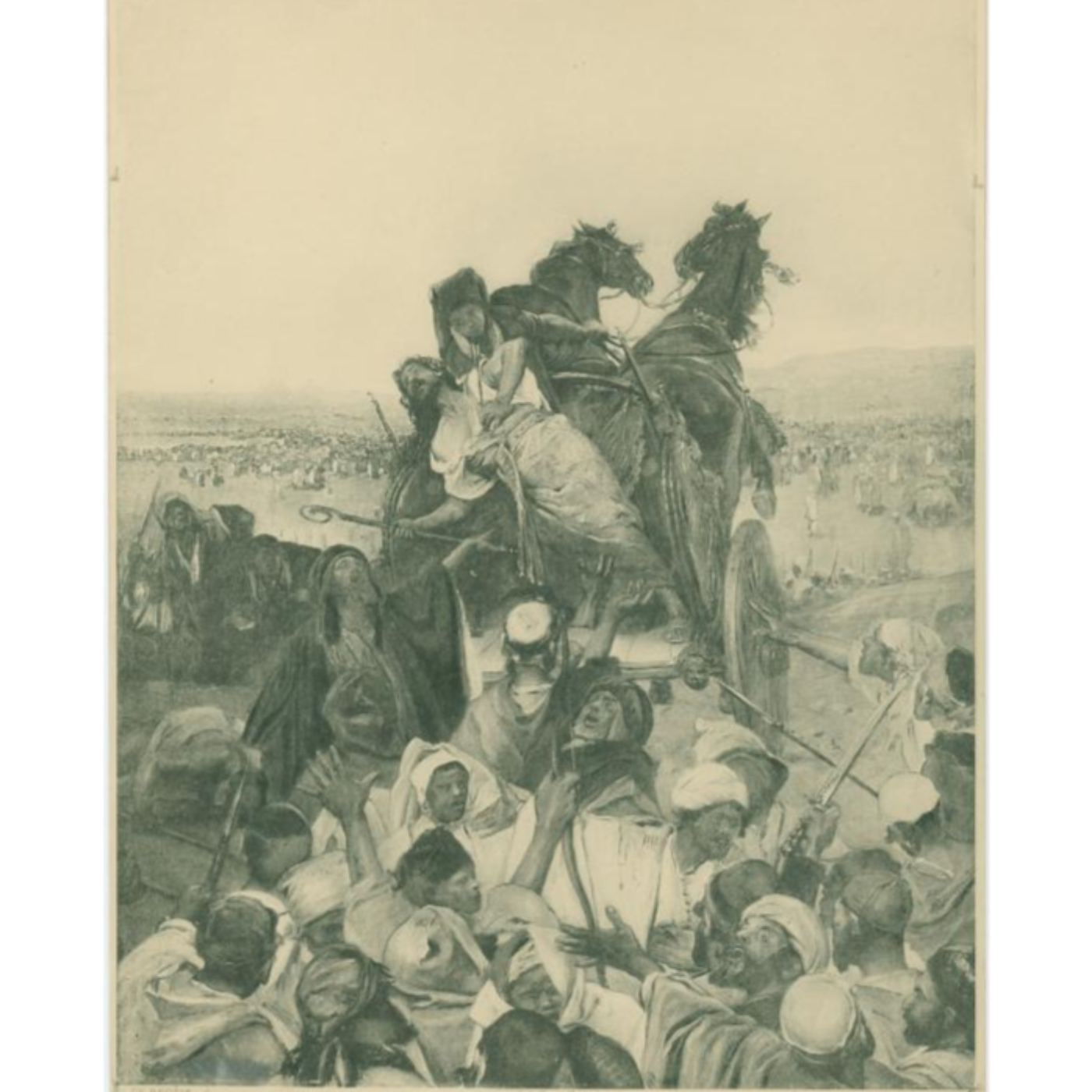
In the case of Ahab, God said, "Who shall deceive Ahab for me?" In addition, there is also the fact that he always made himself available for comparison with the pagan gods, and all this is below the dignity of God. However, viewed in another way, it becomes worthy of him. I say this for he is so merciful that for the sake of our salvation he foregoes being spoken of in terms befitting his dignity—St John Chrysostom
S1 Ep 145Day 145 - 1 Kings 20-22
An ancient story tells of the two neighbors, King Ahab and a poor man, Naboth. Which of these do we consider the poorer, which the richer: the one who had been endowed with a king’s measure of wealth, insatiable and unsatisfied with his wealth, who longed for the little vineyard of the poor man; or the other, heartily despising a “king’s fortune of much gold” and imperial wealth, who was satisfied with his vineyard? Does he not seem richer and more a king, since he had enough for himself and regulated his desires so that he wanted nothing that belonged to others? But was he not very poor whose gold was of no account, while he considered the other’s vines of priceless value? Understand why he was so very poor: because riches amassed unjustly are disgorged, but the root of the righteous remains and flourishes like a palm tree—St Ambrose of Milan
S1 Ep 144Day 144 - 1 Kings 17-19
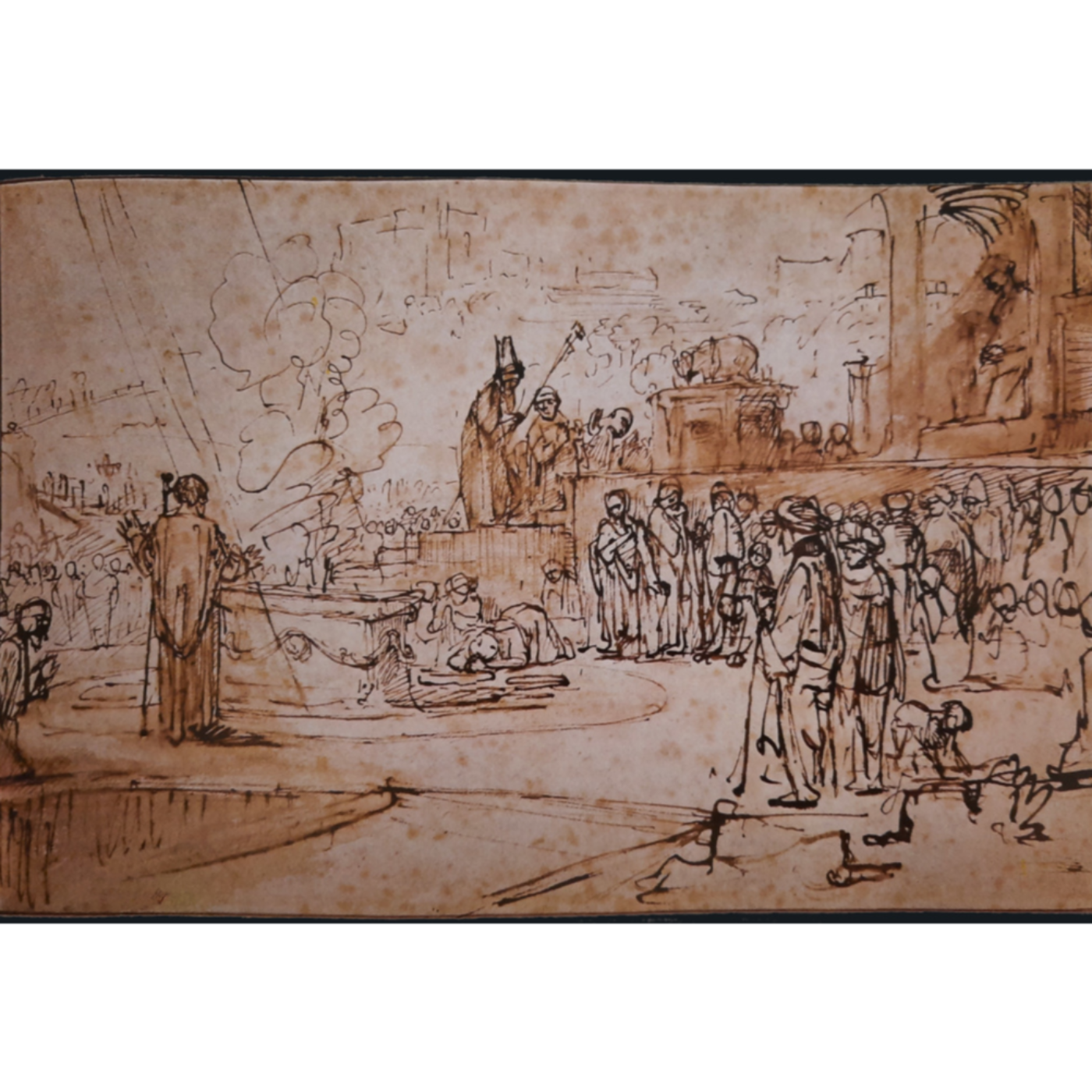
Moreover, if anyone has not been baptized, let him be converted all the more securely by receiving the remission of his sins, [so that baptism] as a kind of fire may consume his sins, because Christ baptizes in fire and spirit. Hence, you read of this type in the books of Kings, where Elijah placed wood upon the altar and told them to pour water on it from urns. “And he said, ‘Do the same the second time.’ And they did it the second time. And he said, ‘Do the same also the third time,’ ” and when the water dripped about, Elijah prayed, and fire descended from heaven. You, O mortal, are on an altar, you who are purified by water and whose sin is burned out that life may be renewed; for fire consumes wood and stubble. Do not fear the fire through which you are enlightened. Therefore it is said to you, “Come to him to be enlightened.” [Psa 34:5 (33:6 LXX, Vg).] Take up the yoke of Christ; do not fear because it is a yoke; hasten because it is light. It does not bruise the neck but adorns it. Why do you hesitate, why do you delay? It does not bind the neck with chains but unites the mind by grace—St Ambrose of Milan
S1 Ep 143Day 143 - 1 Kings 16
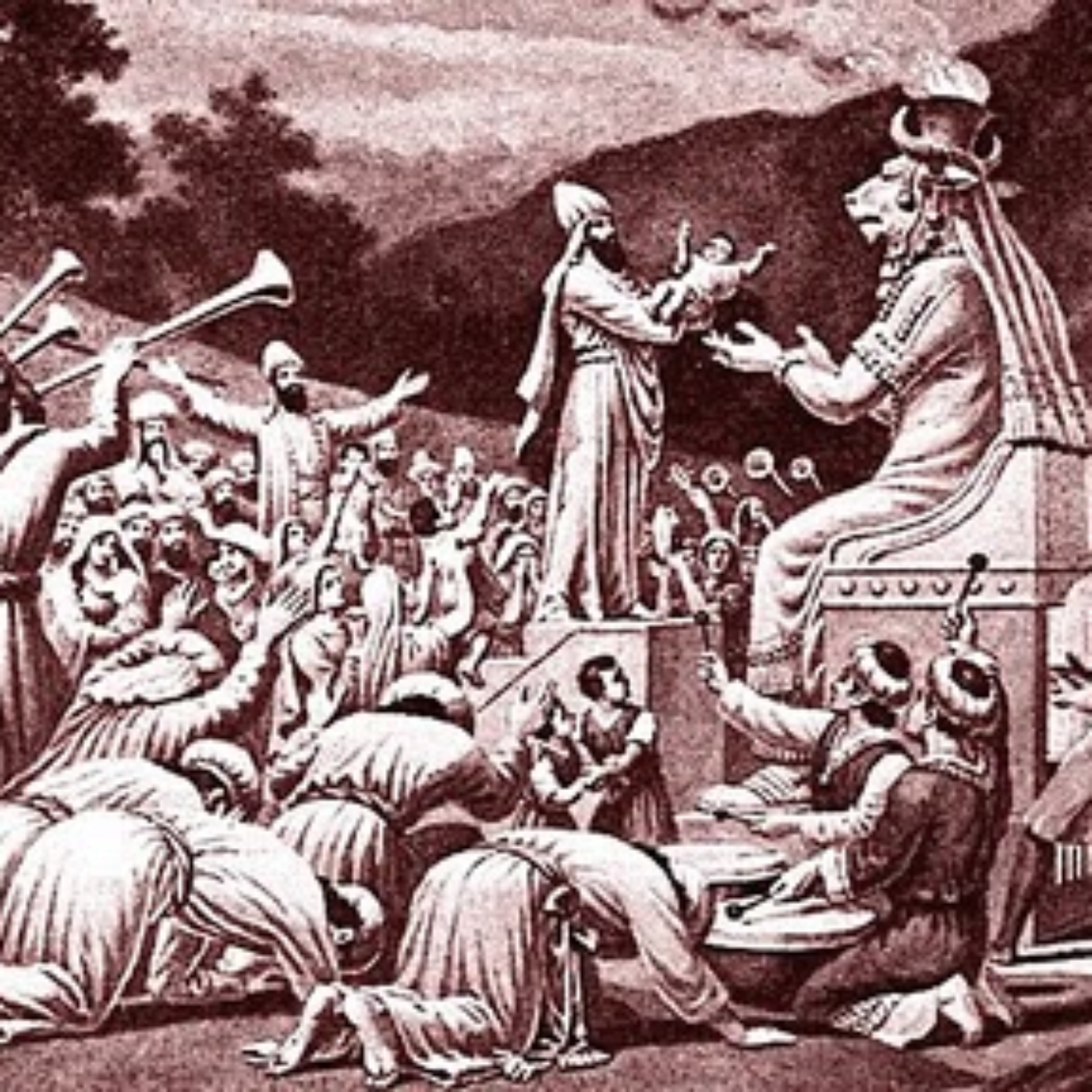
This is that Ahab who thought that he would make little progress in the new religion [i.e., idolatry] if he worshiped only the gods introduced by Jeroboam. Therefore he established rites for Baal, the god of the Sidonians, built his temple in the royal city, erected altars and planted sacred groves. And these actions bitterly enraged the prophets and the other worshipers of the true God—Mari Ephrem the Syrian
S1 Ep 142Day 142 - 2 Chronicles 12-16
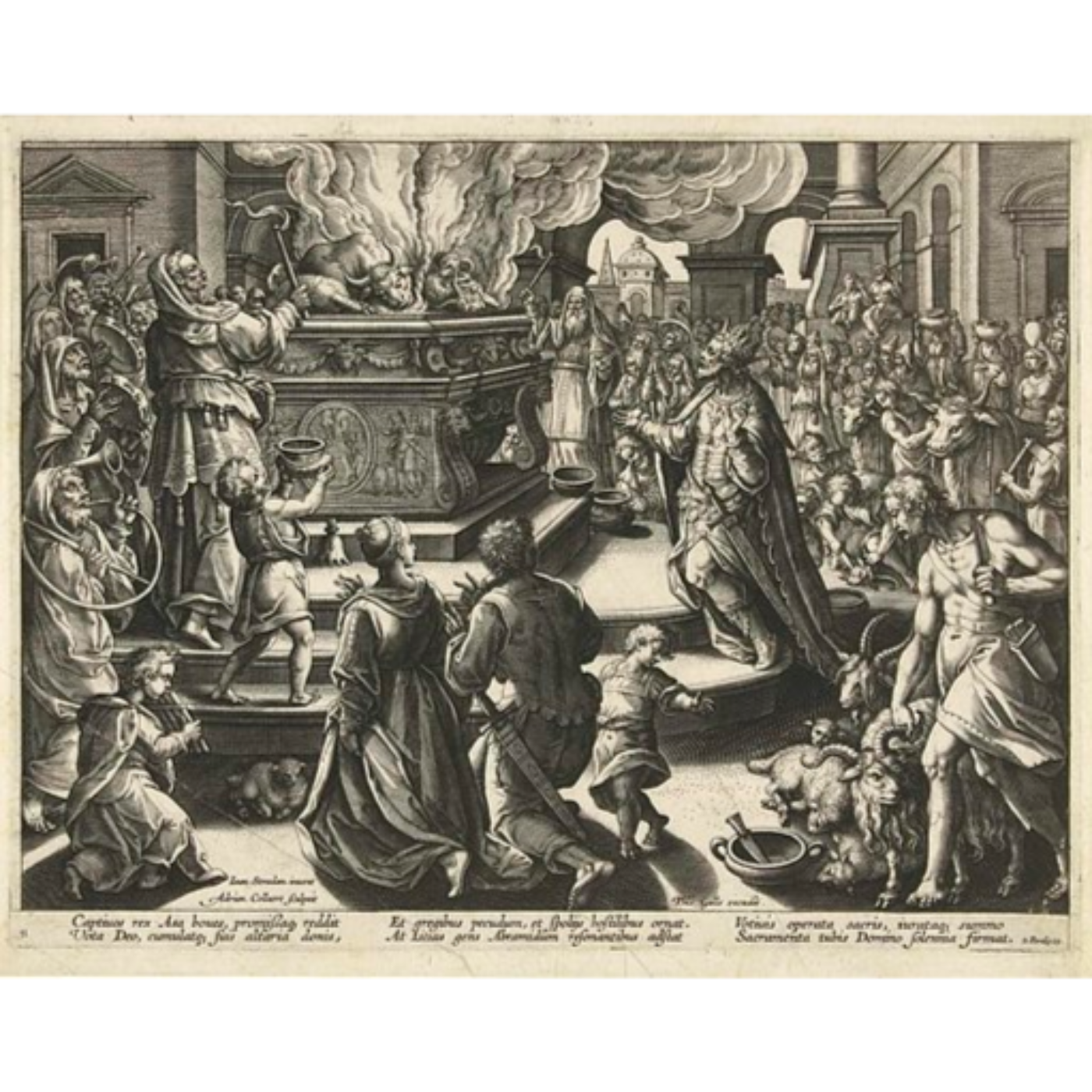
“What, then,” you will say, “do all illnesses come in punishment for sin?” No, not all, but many do; some spring from laxity. I say this because gluttony and drunkenness and sloth give rise to sicknesses of this kind. Accordingly, we must be watchful for one thing only: that we bear every blow with gratitude. At times the blow comes to chastise sin, as in the book of Kings we see a man [i.e., King Asa] seized with a foot disease for this reason. On the other hand, the blow might be inflicted to increase righteousness still further, as God says to Job, “Do you think that I have had dealings with you for any other reason than ‘that you might be justified?’ ”—St John Chrysostom
S1 Ep 141Day 141 - 1 Kings 15, 2 Chronicles 10-11
[Baasha] was appointed king by God and was sent to restore the true religion which had been destroyed by Jeroboam and his successor Nadab, and to take revenge on the evil that was committed as well as impiety. He was certainly able to accomplish in the best possible way his first task, as he completely erased the progeny of both Jeroboam and Nadab. However, with regard to his second task, he promoted their impiety by perversely and foolishly worshiping the idols of both [his predecessors] and did not destroy at all the calves made by Jeroboam but incited his own subjects to adore them—Mari Ephrem the Syrian
S1 Ep 140Day 140 - 1 Kings 12-14
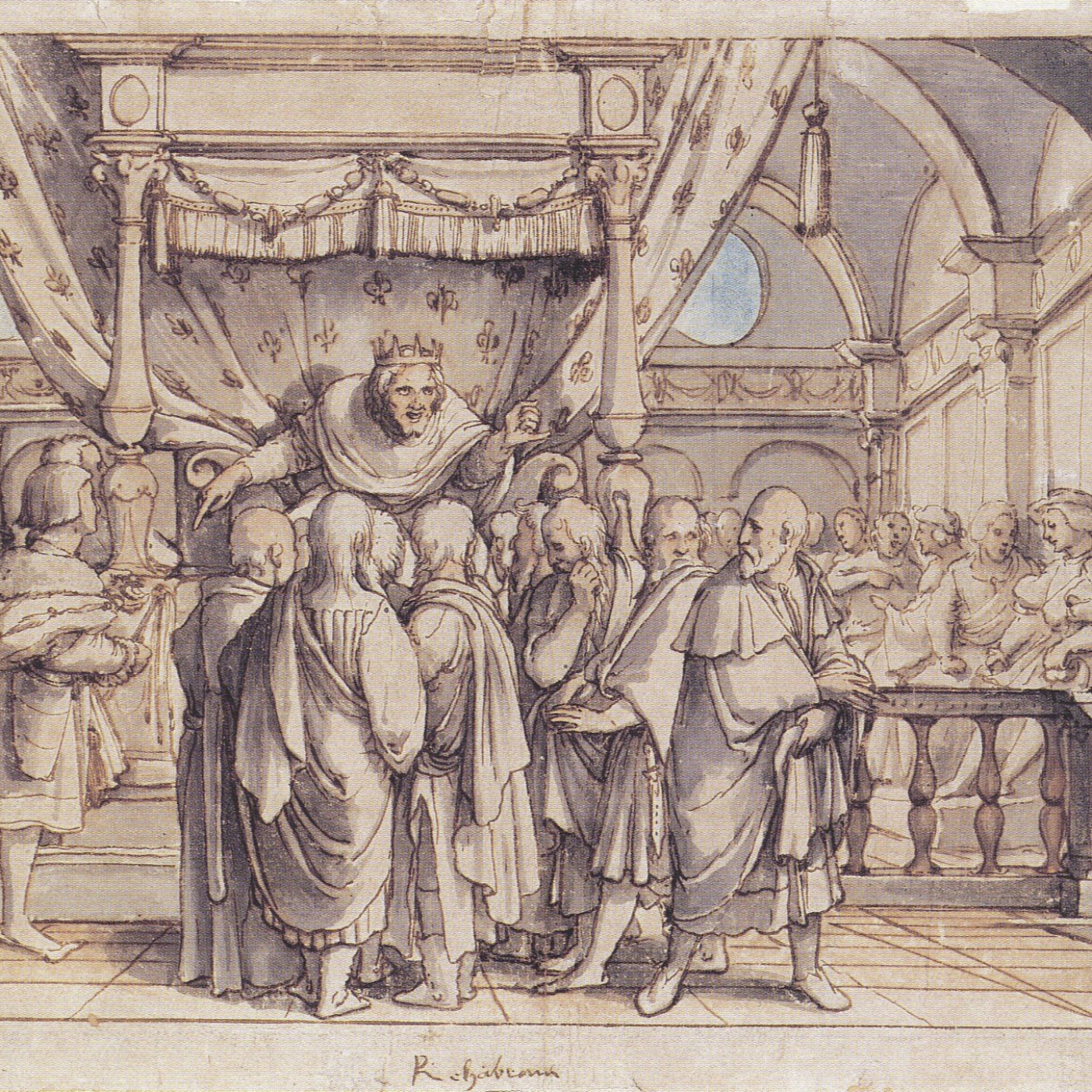
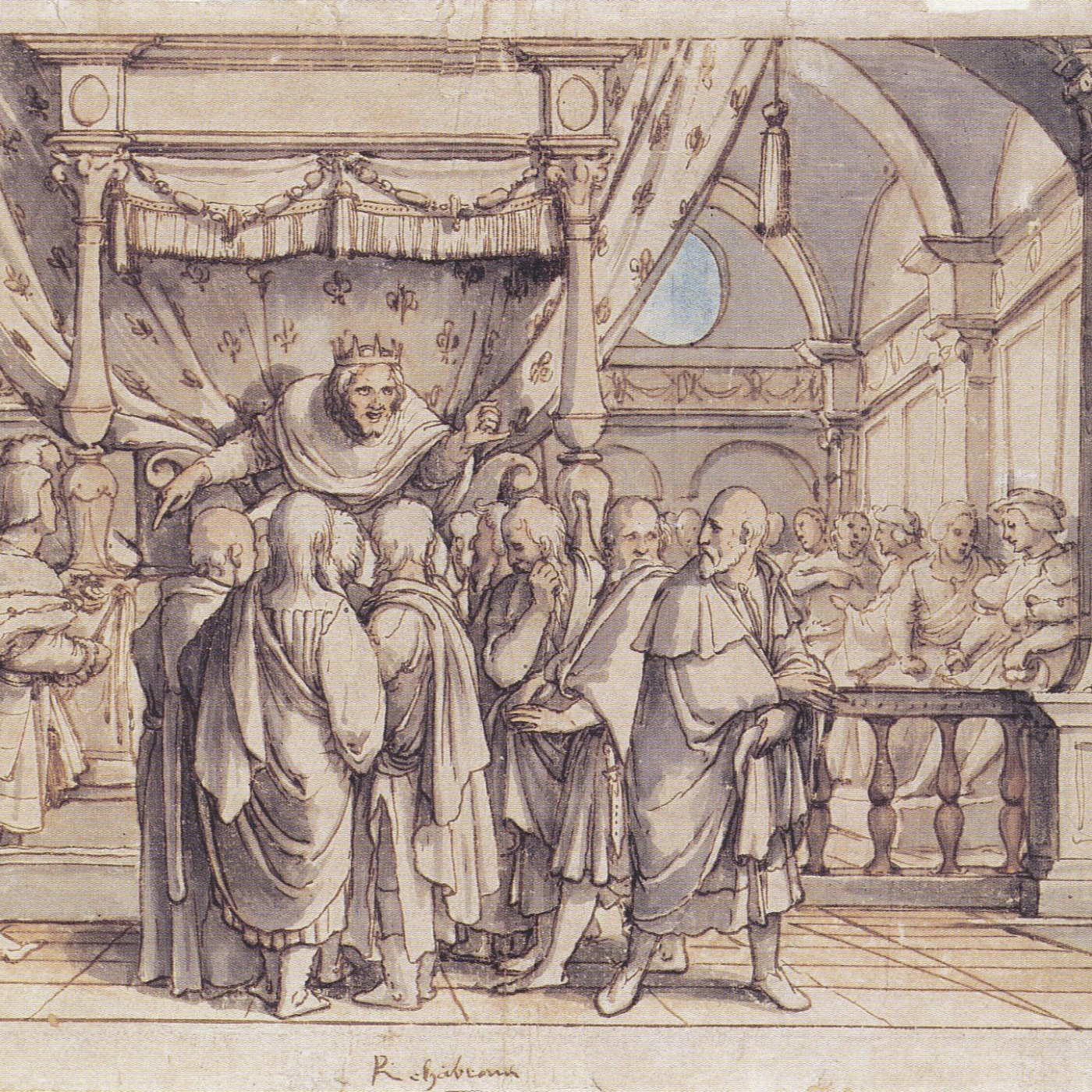
[Not only by reason of wealth] but also because of political honors do people exalt themselves beyond what is due their nature.… The position they occupy is entirely out of keeping with reason, for they possess a glory more unsubstantial than a dream. They are surrounded with a splendor more unreal than the phantoms of the night, since it comes into being or is swept away at the nod of the populace. A fool of this sort was that famous son of Solomon, youthful in years and younger still in wisdom, who threatened his people desiring a milder rule with an even harsher one and thereby destroyed his kingdom. By his threat, the very expedient whereby he hoped to be elevated to a more royal state, he was bereft of the dignity already his. Strength of arm, swiftness of foot and comeliness of body—the spoils of sickness and the plunder of time—also awaken pride in people, unaware as they are that “all flesh is grass and all the glory of humankind as the flower of the field. The grass is withered, and the flower is fallen.” [Isa 40:6-7.]—St Basil the Great
S1 Ep 139Day 139 - 2 Chronicles 5-9
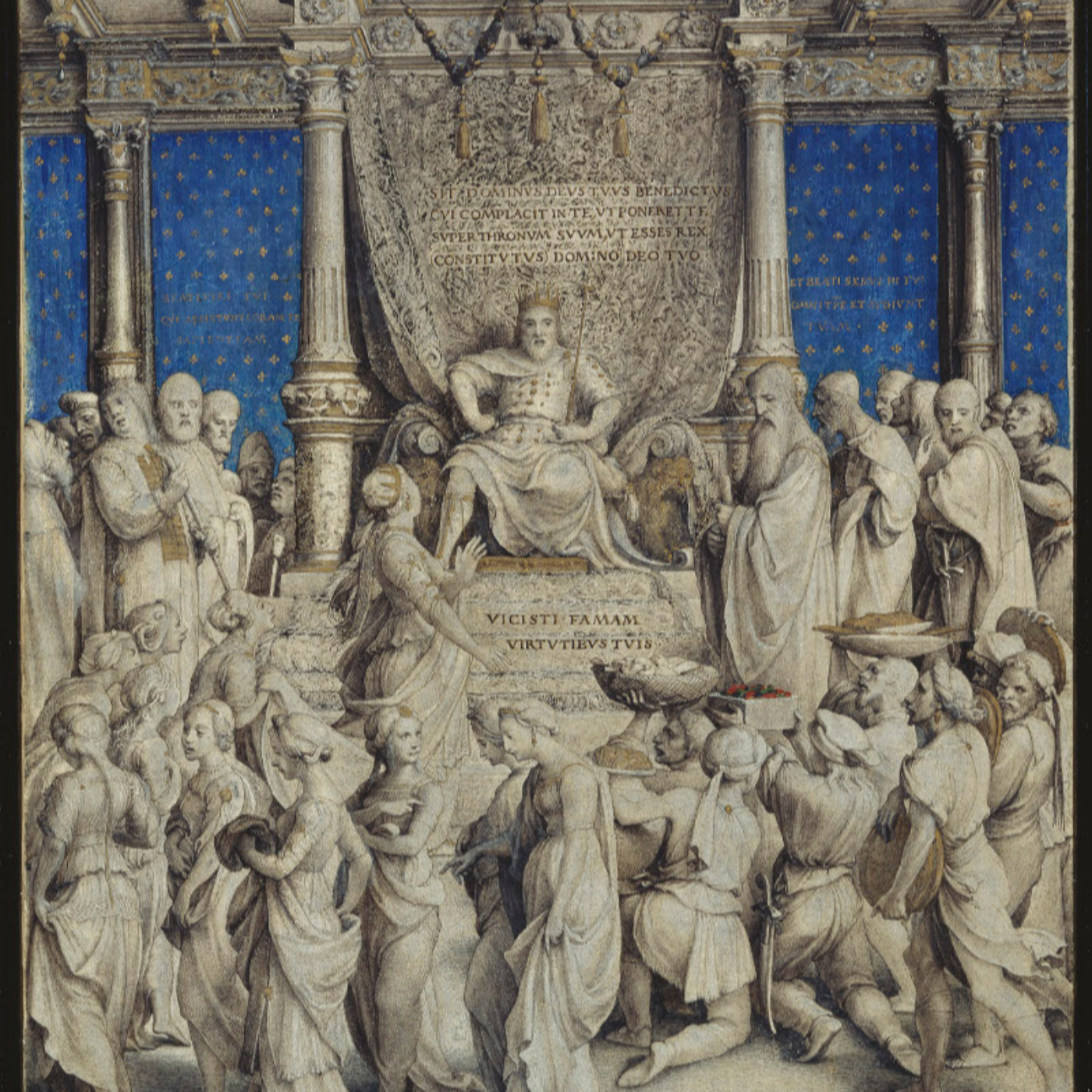
In the previous chapters the Scripture related the marriage of Solomon with the daughter of Pharaoh and did not rebuke him because she was the one wife only who did not secretly practice the religion of her homeland and was no reason of offense for him. But later he took other wives, so that the holy Scripture justly condemned both the previous marriage and these new ones. And there were four reasons for this: the first was his open transgression against religion because he had brought back [Israel’s] ancient idolatry which he had previously rejected; the second was that he took many wives against the clear precept of the Law; the third was that he loved these wives to distraction; the fourth was his apostasy from the worship of the true God which derived, as the Law had predicted, from such marriages. Therefore, with good reason the Scripture emphasizes many times, with very severe words, that the crime of Solomon was a consequence of his familiarity with these women. A further detail, which increases Solomon’s guilt, is that he did not only cause harm with his actions but also with his example. He was harmful not only because he was corrupted but also because he corrupted the kings that followed him, with the exception of one or two. Solomon was certainly the first among the leaders and kings of Israel who established public ceremonies and sacrifices of idolatry through the authority of magistrates—Mari Ephrem the Syrian
S1 Ep 138Day 138 - 2 Chronicles 1-4
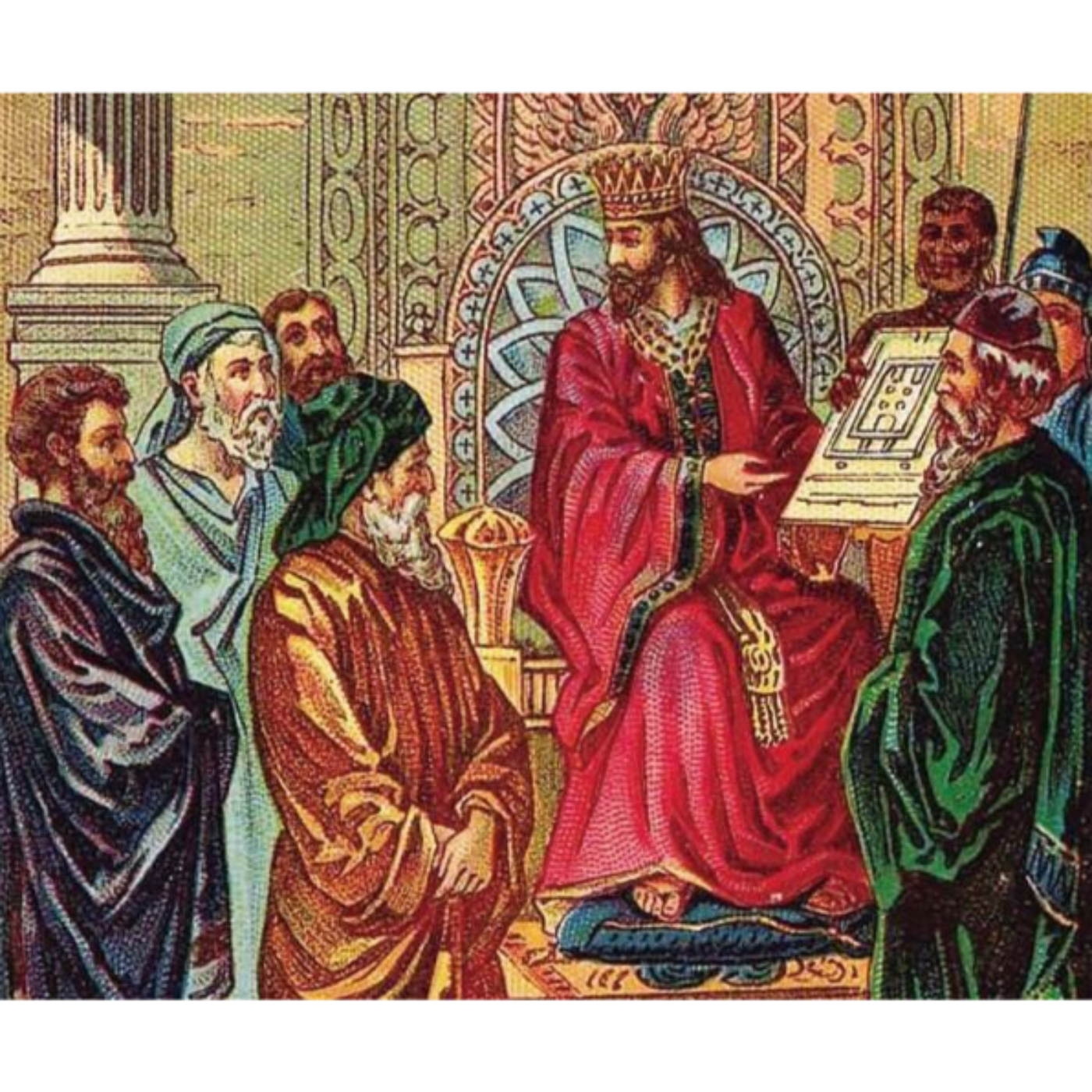
You also therefore should ask nothing worldly, but all things spiritual, and you will surely receive. For so Solomon, because he asked what he ought, behold, how quickly he received. Two things now, you see, should be in one who prays: asking earnestly and asking what he ought, “since you too,” said he, “though you are parents, wait for your children to ask; and if they should ask of you anything inexpedient, you refuse the gifts; just as, if it be expedient, you consent and bestow it.” Do you too, considering these things, not withdraw until you receive; until you have found, do not retire; do not relax your diligence until the door is opened. For if you approach with this mind and say, “Except I receive, I will not depart,” you will surely receive, provided you ask such things as are both suitable for him of whom you asked to give and expedient for you the petitioner. But what are these? To seek the things spiritual, all of them; to forgive them who have trespassed, and so to draw near asking forgiveness; “to lift up holy hands without wrath and doubting.” [1Ti 2:8.]If we thus ask, we shall receive. As it is, surely our asking is a mockery and the act of drunken rather than of sober people.“What then,” said one, “if I ask even spiritual things, and do not receive?” You did not surely knock with earnestness; or you made yourself unworthy to receive; or did quickly stop asking.“And wherefore,” it may be inquired, “did he not say, what things we ought to ask”? No, truly, he has mentioned them all in what precedes and has signified for what things we ought to draw near. Do not say, then, “I drew near and did not receive.” For in no case is it owing to God that we receive not, God who loves us so much as to surpass even parents, to surpass them as far as goodness does this evil nature—St John Chrysostom
S1 Ep 137Day 137 - Song of Songs 1-8
Another Solomon is signified here: one who is also descended from the seed of David according to the flesh, one whose name means peace, the true king of Israel and builder of God’s temple. This other Solomon comprehends the knowledge of all things. His wisdom is infinite and his very essence is wisdom, truth, as well as every exalted, divine name and thought. [Christ] used Solomon as an instrument and speaks to us through his voice first in Proverbs and then in Ecclesiastes. After these two books he speaks in the philosophy set forth in the Song of Songs and shows us the ascent to perfection in an orderly fashion.…It is not accidental, I think, that the book is ascribed to Solomon. This serves as an indication to readers to expect something great and divine.…Proverbs teaches in one way and Ecclesiastes in another; the philosophy of the Song of Songs transcends both by its loftier teaching—St Gregory of Nyssa
S1 Ep 136Day 136 - 1 Kings 11
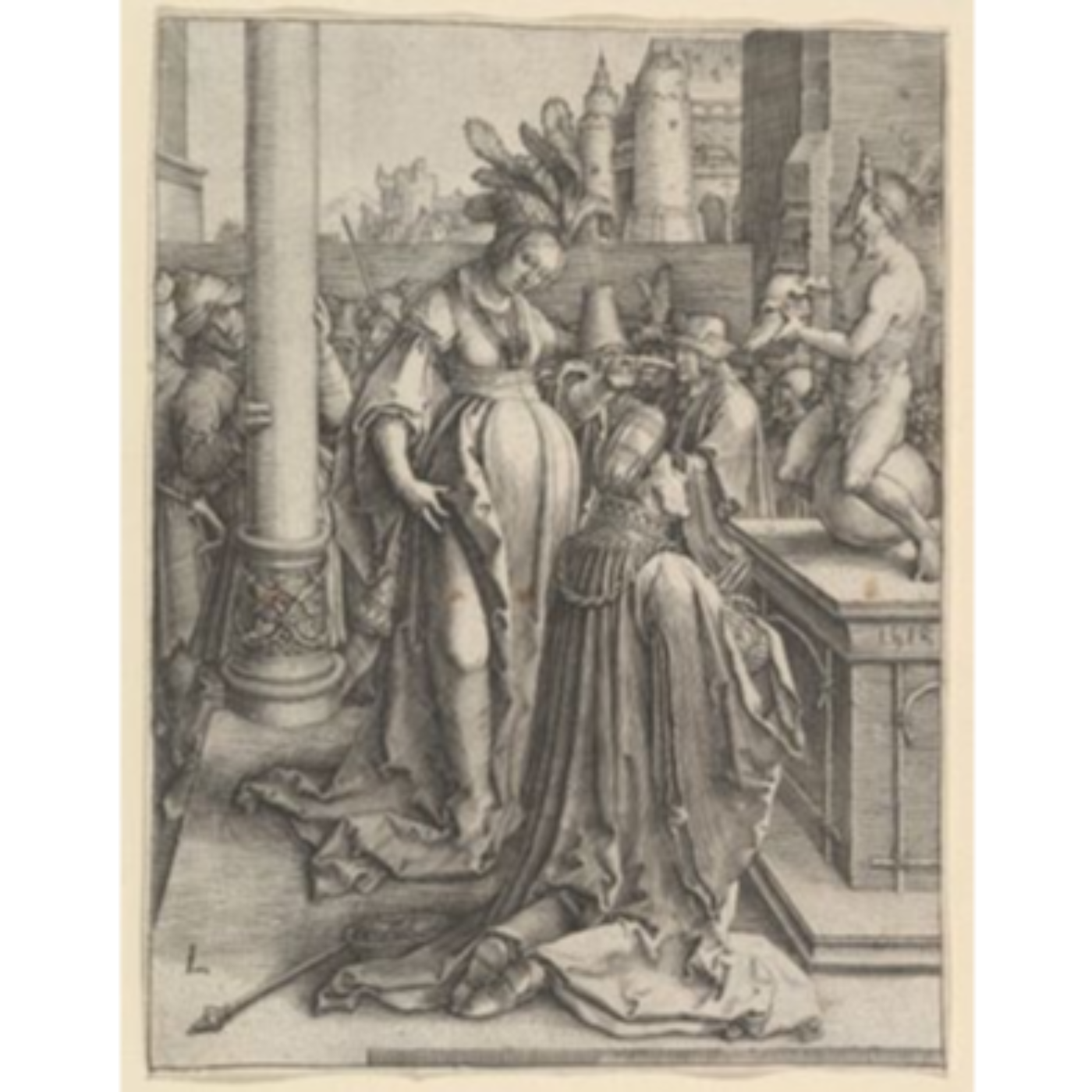
However, in [David’s] son Solomon libido was not a passing guest; it reigned as a king. Scripture does not pass this over in silence but blames him as a lover of women. His beginnings were redolent with the desire for wisdom; when he had obtained it through spiritual love, he lost it through carnal love—St Augustine

S1 Ep 135Day 135 - Ecclesiastes 9-12
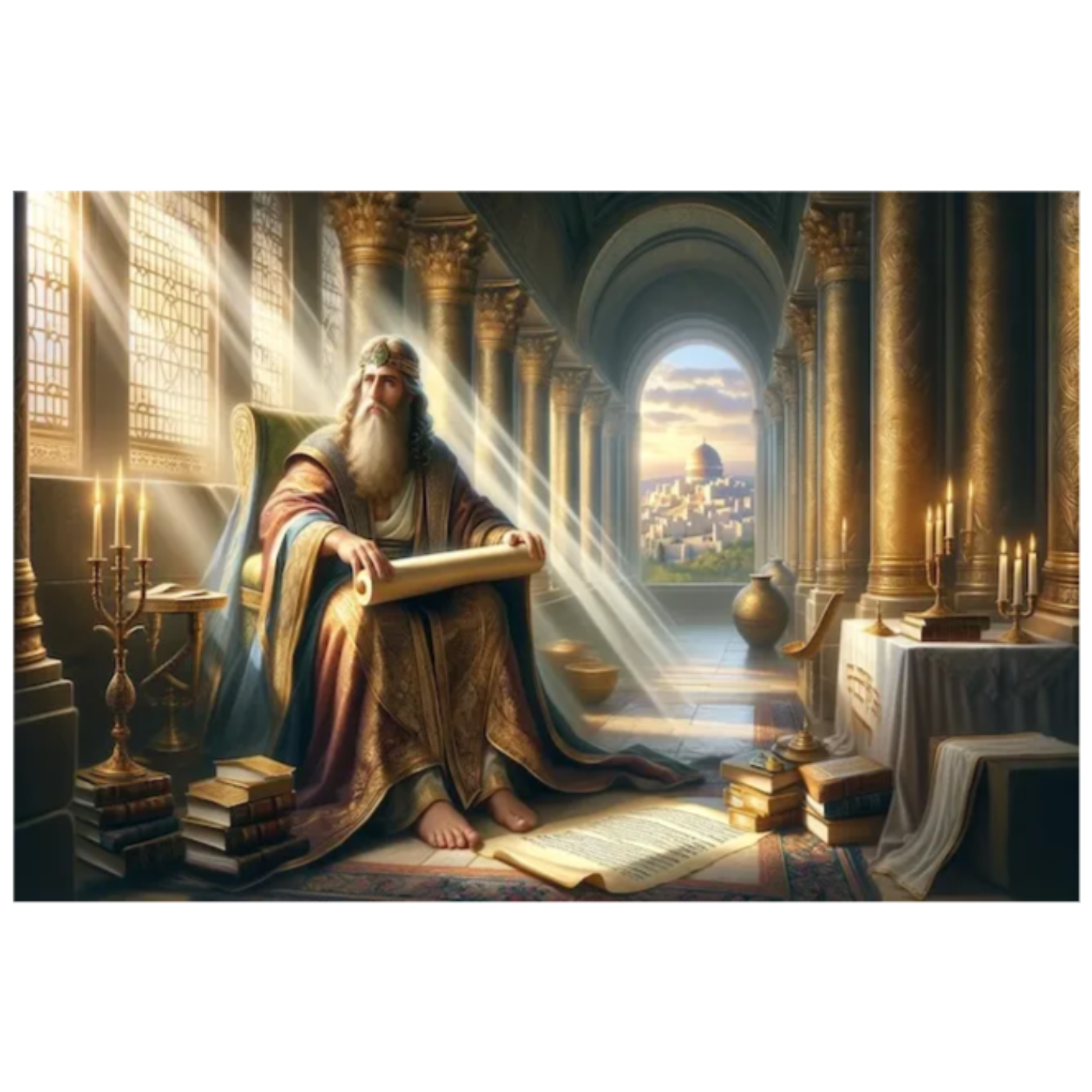
They have been appointed to this, that is, to this made human beings by nature, that they may believe God and obey his will, as Solomon attests when he says, “Fear God and obey his commandments, for this is [the duty of] every human being.” That is, every human being has been naturally made for this purpose, that he may fear God and obey his commandments—The Venerable Bede
S1 Ep 134Day 134 - Ecclesiastes 5-8
“We do not know how to pray as we ought.” [Rom 8:26.] He is not so much talking [about prayer] at this point as issuing a command not to theologize thoughtlessly. Indeed, anyone who belongs to this material world and whose thoughts have their origin in this world cannot speak about God without error—or on other matters that elude the senses. That is why he says, “And let your words be few,” that is, they should be true and well chosen...He also talks about “the voice of a fool,” coming up with false words and beguiling the soul. This is “the voice of the slanderer and reviler.” [Psa 44:16 (43:17 LXX).] He is also able to apply this to the voice of the fool who “by a multitude of words you will not escape sin.”—Evagrius of Pontus

S1 Ep 133Day 133 - Ecclesiastes 1-4
But let us philosophize within our proper bounds and not be carried away into Egypt, nor be swept down into Assyria, nor sing the Lord’s song in a strange land. [Psa 137:4 (136:4 LXX).] By this I mean before any kind of audience, strangers or kindred, hostile or friendly, kindly or the reverse, who watch what we do with great care, and would like the spark of what is wrong in us to become a flame, and secretly kindle and fan it and raise it to heaven with their breath and make it higher than the Babylonian flame which burned up everything around it. For since their strength lies not in their own dogmas, they hunt for it in our weak points. And therefore they apply themselves to our, shall I say “misfortunes” or “failings,” like flies to wounds. But let us at least be no longer ignorant of ourselves or pay too little attention to the due order in these matters. And if it be impossible to put an end to the existing hostility, let us at least agree upon this, that we will utter mysteries under our breath and holy things in a holy manner, and we will not cast to profane ears that which may not be uttered, nor give evidence that we possess less gravity than those who worship demons, and serve shameful fables and deeds; for they would sooner give their blood to the uninitiated than certain words. But let us recognize that as in dress and diet and laughter and demeanor there is a certain decorum, so there is also in speech and silence; since among so many titles and powers of God, we pay the highest honor to the Word. Let even our disputings then be kept within bounds—St Gregory the Theologian
S1 Ep 132Day 132 - 1 Kings 9-10
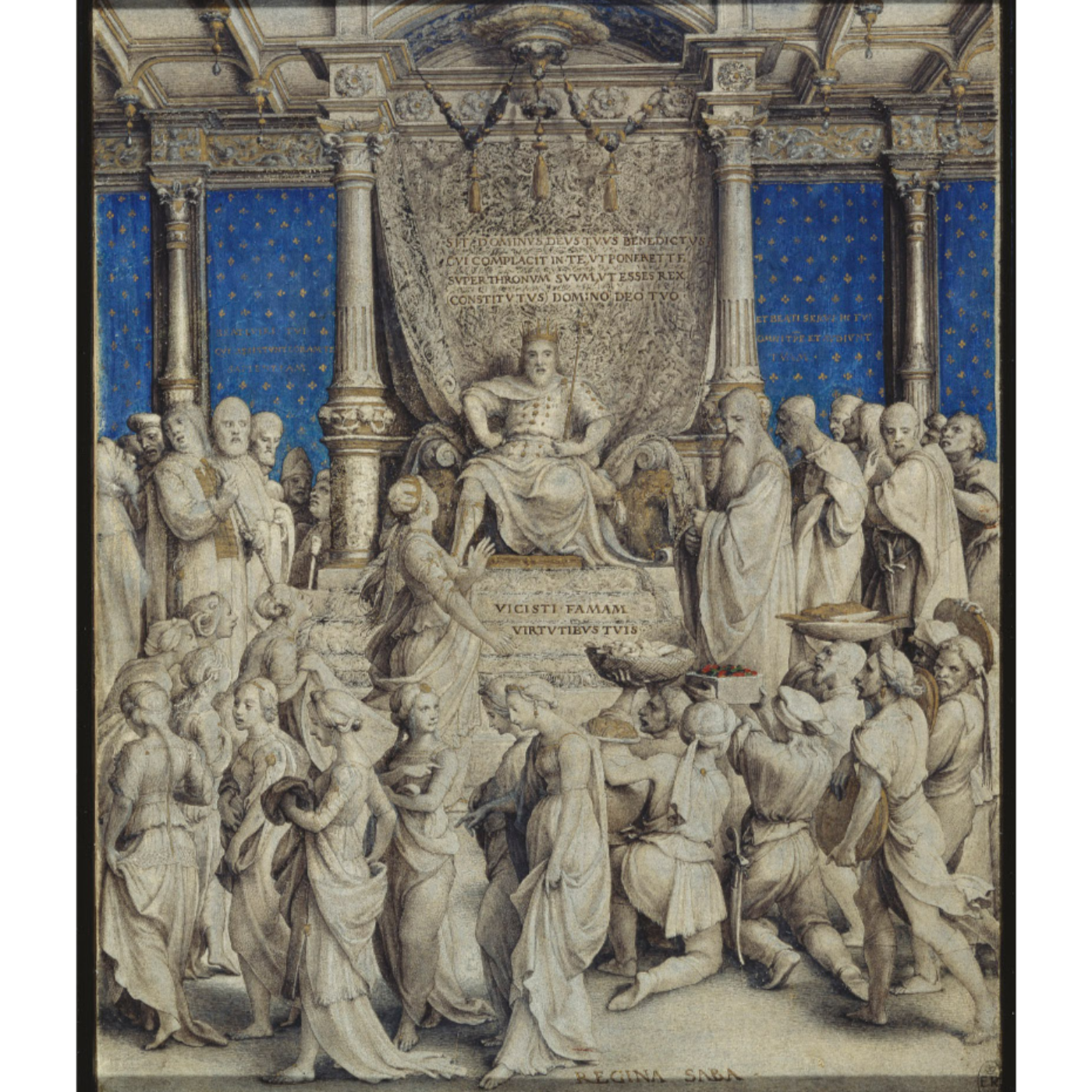
The queen of Sheba was a type of our church. She came from her distant land to king Solomon, the church came together from the four regions of the world to Christ. What [the queen] ignored, she learned from Solomon, and she went back to her land with many gifts. Here the mystery which had remained hidden for centuries and generations was finally revealed: after she had been taught to despise earthly possessions, she was made a participant and dispenser of the heavenly treasure. Why do not we imitate the queen of the South, whom our mother [the church] emulated, by offering gold, precious stones and spices to Christ? The transaction is that we lose worthless things, so that we may get great ones, which we search for and lack in the highest degree—Mari Ephrem the Syrian
S1 Ep 131Day 131 - 1 Kings 7-8
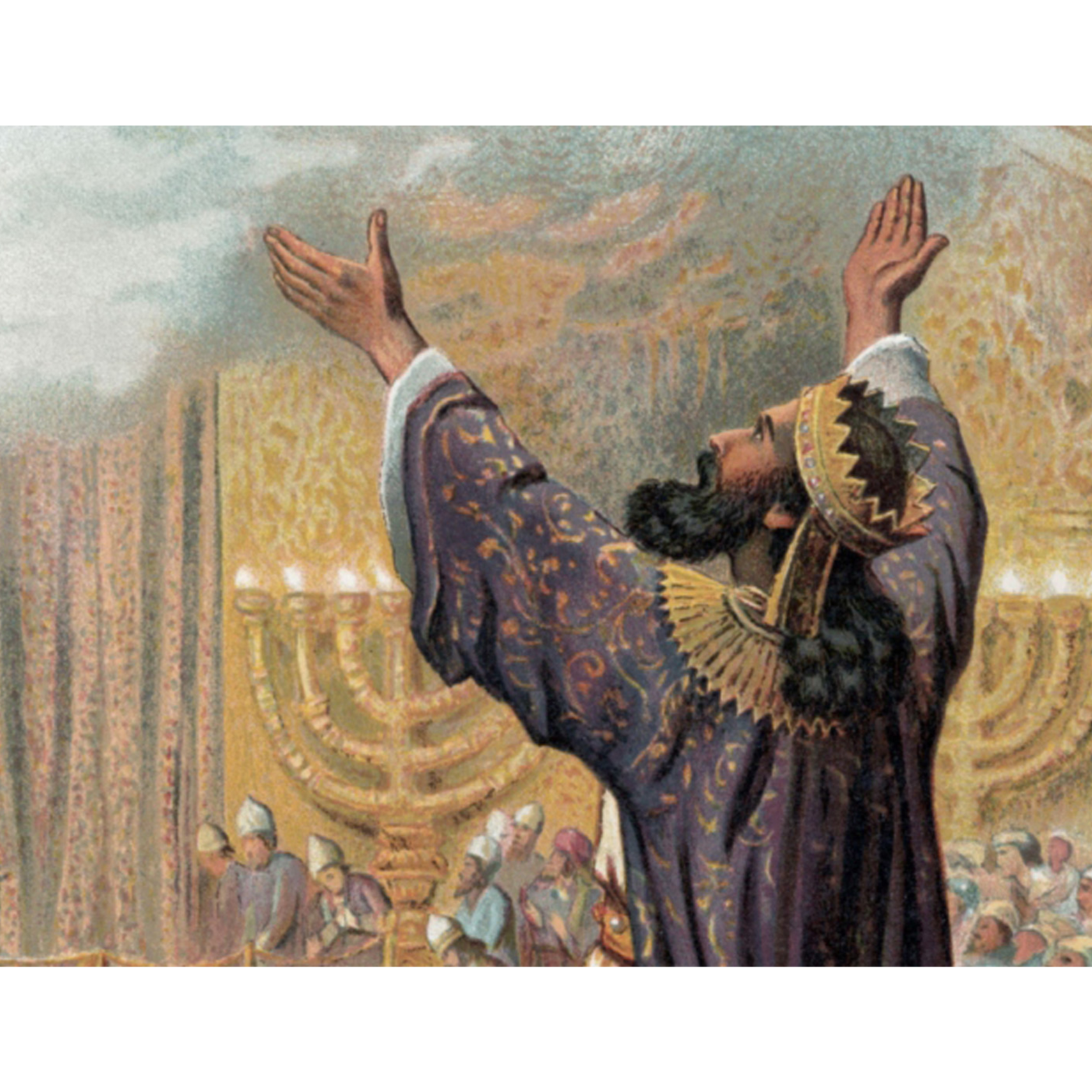
Now notice that Solomon did not only pray for his people but also for the foreigners and the strangers who distrusted the nation of Israel and were often hostile to it, so that the son of David might show the God of David to everyone in general, by praying for his enemies and by speaking ahead of time for us those future words: “But I say to you, Love your enemies and pray for those who persecute you.” [Mat 5:44.]—Mari Ephrem the Syrian
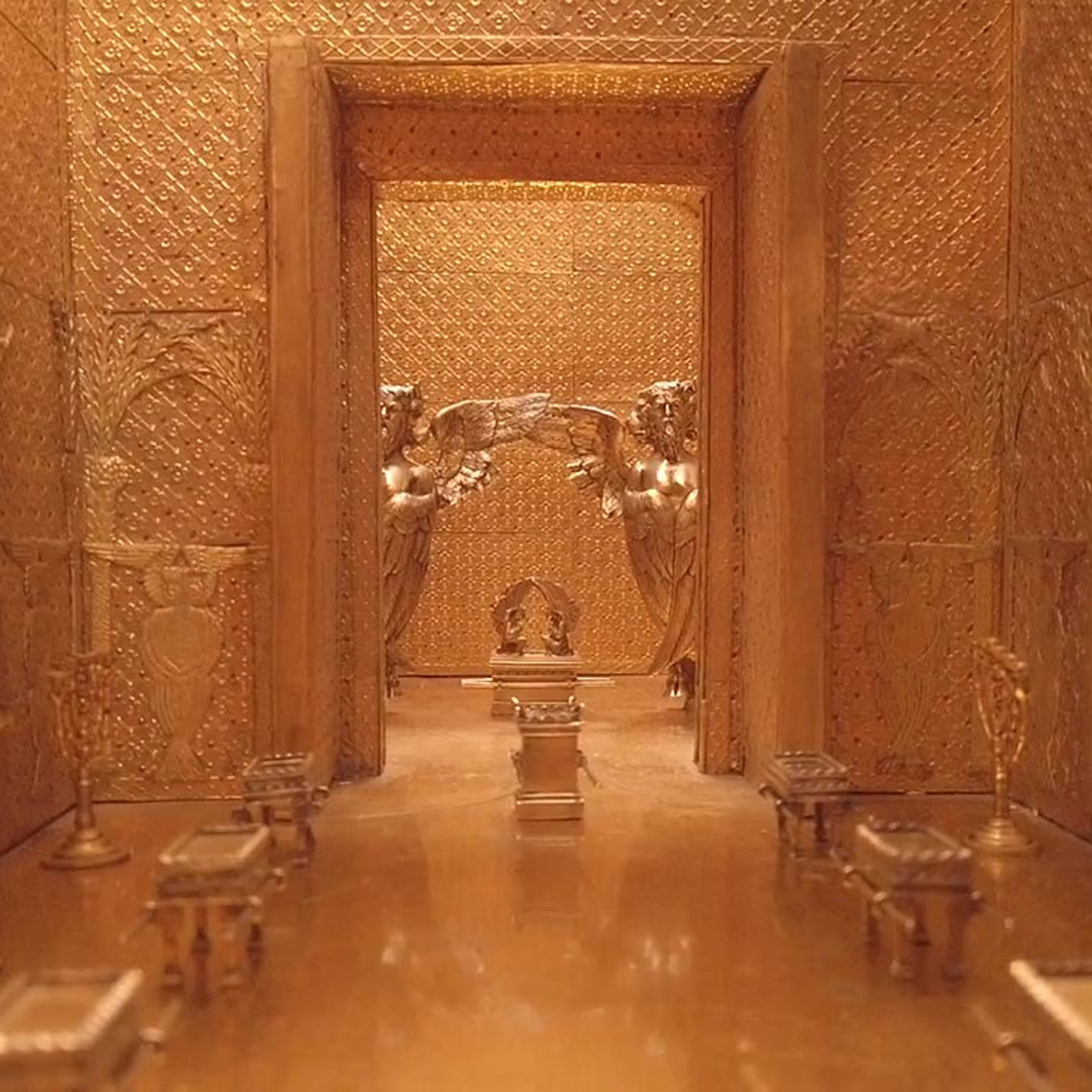
S1 Ep 130Day 130 - 1 Kings 6
Wings when used as a figure of holy people signify their virtues whereby they delight in always flying to heavenly things and passing their lives in preoccupation with these things. But when wings are used to signify angels, what do they more aptly demonstrate than the grace of perpetual and unfailing happiness of those who persevere continually in heavenly things in the service of their Creator? Or at all events because they are endowed with the lightness of spiritual nature so that they can get to wherever they want, as it were, by flying, they are here both figuratively represented with wings and actually shown with wings. Now it has been well said: “One wing of the cherub was five cubits, and the other wing of the cherub five cubits,” since the angelic powers keep with untiring devotion the law of God which is written in five books, that is, by loving the Lord their God with all their strength and by loving their neighbors as themselves. [See Luk 10:27.] “For love is the fulfilling of the law. [Rom 13:10.] Now “their neighbors” includes both the angelic spirits themselves reciprocally and elect human beings who are equally their fellow citizens. So the reason each wing is said to be of the same dimensions is that with the same devotion as they love each other in God they also long for our company as we ascend to them, and so two wings together take up ten cubits when, in a twofold demonstration of love, the angels rejoice in the presence of their Maker—The Venerable Bede
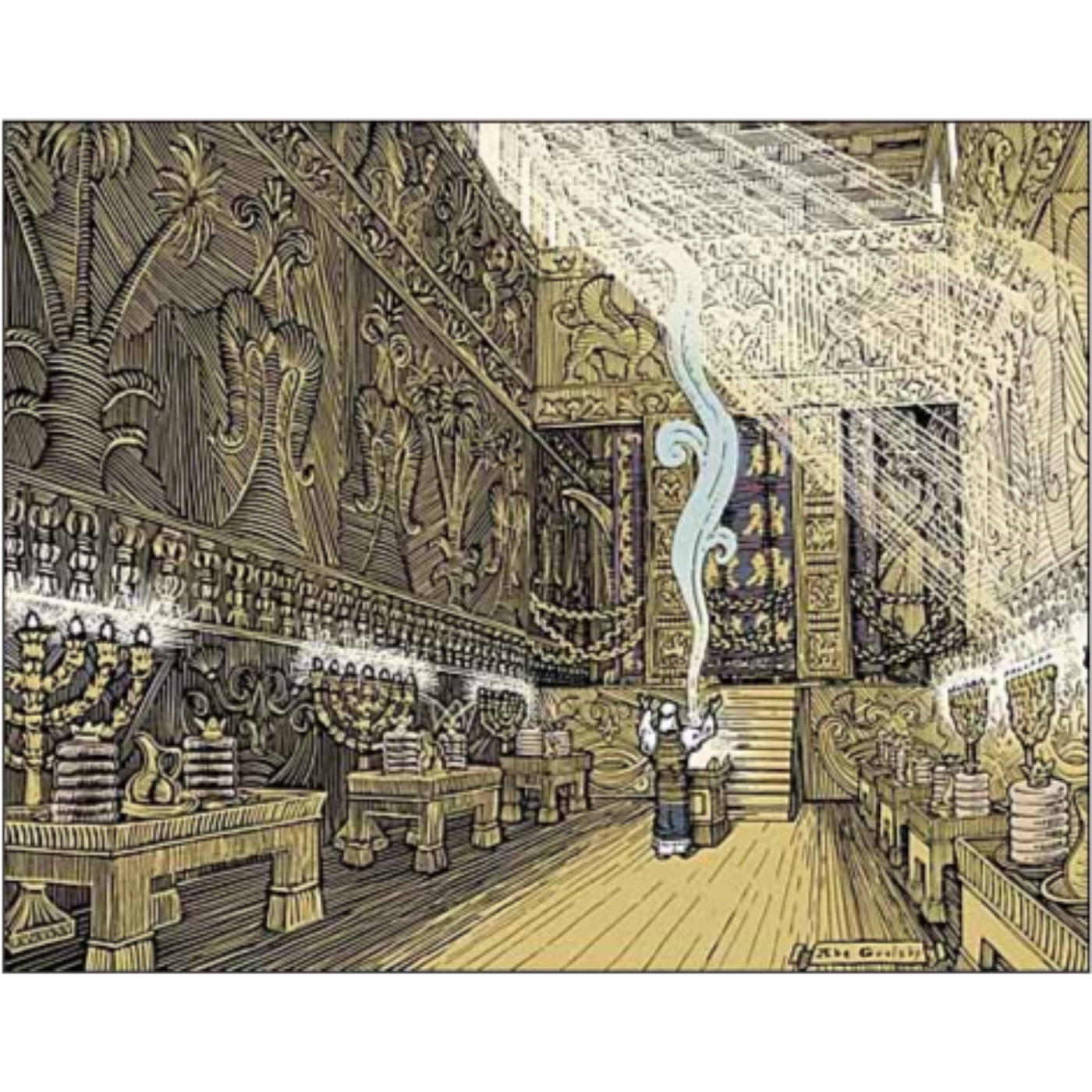
S1 Ep 129Day 129 - 1 Kings 5
These thousands of men employed in the cutting and transportation of the wooden beams and the stones signify the thousands of thousands of assistant spirits sent for our salvation. In the first place, [we see that] God ordered his angels to cut from the rock of the world and to polish and direct accurately the souls of the saints.… Second, in this same symbol, we can observe the toils of the saints for the conversion and salvation of souls, either when they endeavor to drive human beings away from the love of the world or when, after they have accomplished that, they begin to polish the stones cut from the rock until they provide them with luster by a thorough polishing and make them worthy of the heavenly building. Then they are taken and employed by the supreme builder.… Finally we can interpret the workers of Solomon to be the angels sent to accomplish their ministry, as well as the prophets and the apostles chosen from the old people to build the church.… The builders sent by the king of Tyre symbolize those strong in doctrine and holiness, whom the nation of the Gentiles abundantly supplied for the same purpose—Mari Ephrem the Syrian

S1 Ep 128Day 128 - Proverbs 16-22
Thus, here also it calls him a new child who was reborn through the washing of regeneration and educated and made childlike, who is made fit for the kingdom of heaven through this process in the same way. The book of Proverbs, therefore, provides training which imparts perception and understanding to the recently born child who is hungry for rational and genuine milk: a perception of present realities but an understanding of future realities. For the child is educated in human matters and given a perception of reality so that he would neither be enslaved to shameful desires nor long for the empty glory of this world. Beyond this, Proverbs confers an understanding of the coming age and encourages faith in the promises by its words—St Basil the Great
S1 Ep 127Day 127 - Proverbs 13-15
For indeed a person who loses by daily distractions of mind and lack of self control what he appears to gain by the conversion of others puts his profits into a bag with holes. And so it is that while they fancy that they can make larger profits by the instruction of others, they are actually deprived of their own improvement. For “there are who make themselves out as rich though possessing nothing, and there are who humble themselves amid great riches.”—John Cassian
S1 Ep 126Day 126 - Proverbs 10-12
I know why it is written: “Wealth will not profit in the day of wrath.” This was said about the one who does not employ his wealth for mercy. Is not the power of wealth to be brought forth and used at a time of need? At the hour in which you return your spirit to the hands of God, you will understand that the full utility of your riches is to use them for the sake of mercy. For they were given to you by Jesus Christ, God and the Son of God—St Shenoute the Archimandrite
S1 Ep 125Day 125 - Proverbs 5-9
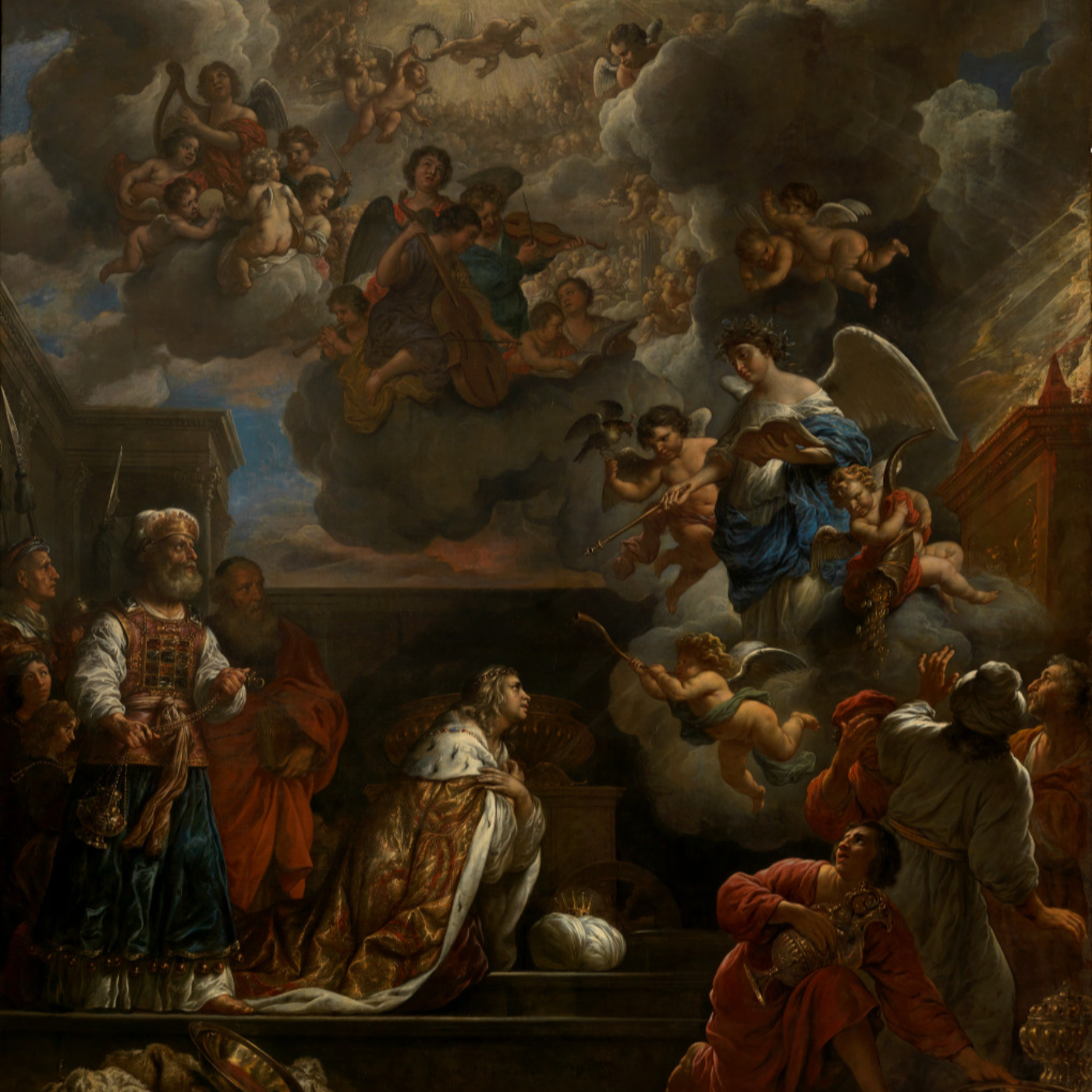
“Wisdom has built her house, and has set seven pillars.” Since wisdom is the Son of God, once he became man he built his house, that is, the flesh from the Virgin—St John Chrysostom
S1 Ep 124Day 124 - Proverbs 1-4
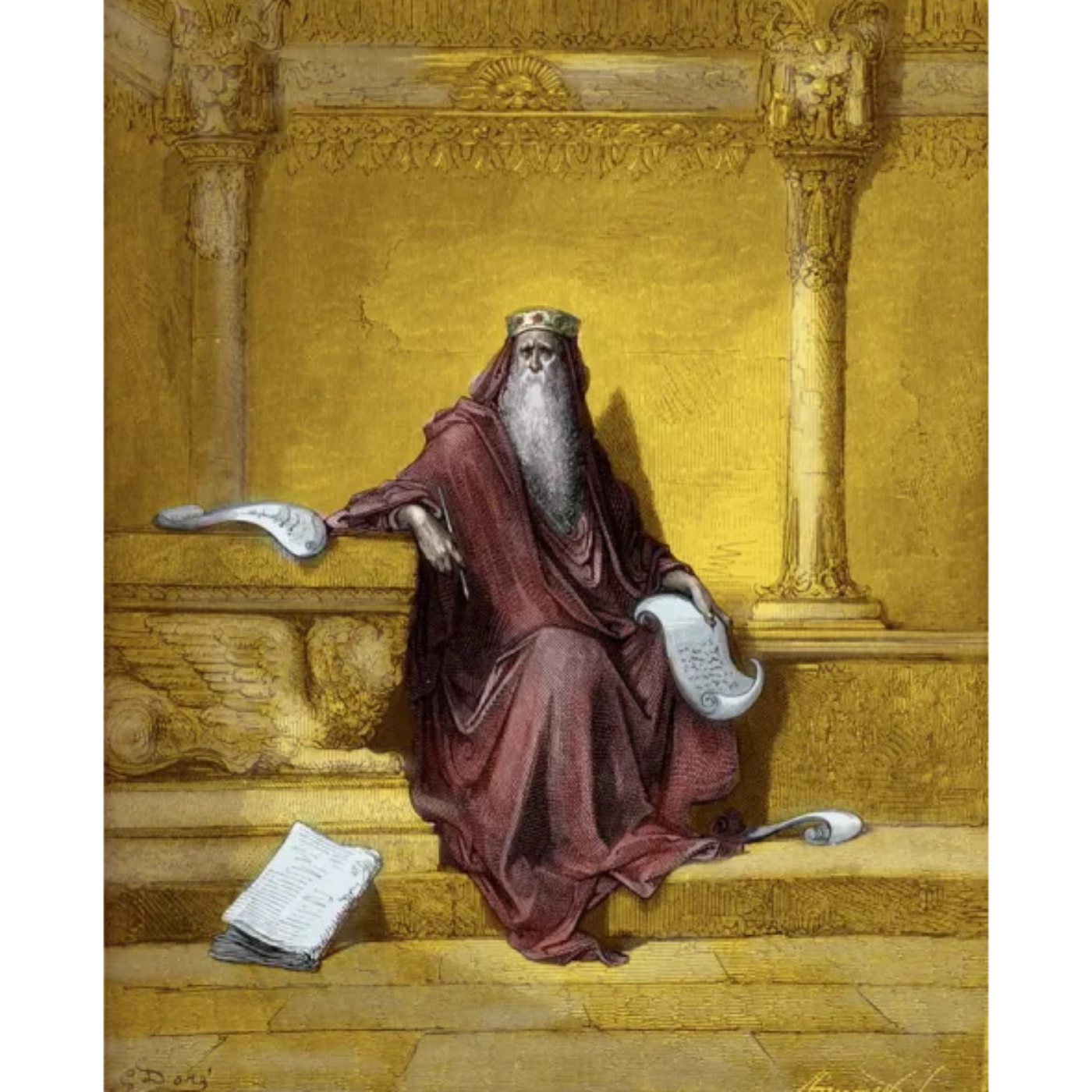
A proverb is a saying that, under the guise of physical things, signifies intelligible things—Evagrius of Pontus
S1 Ep 123Day 123 - 1 Kings 3-4
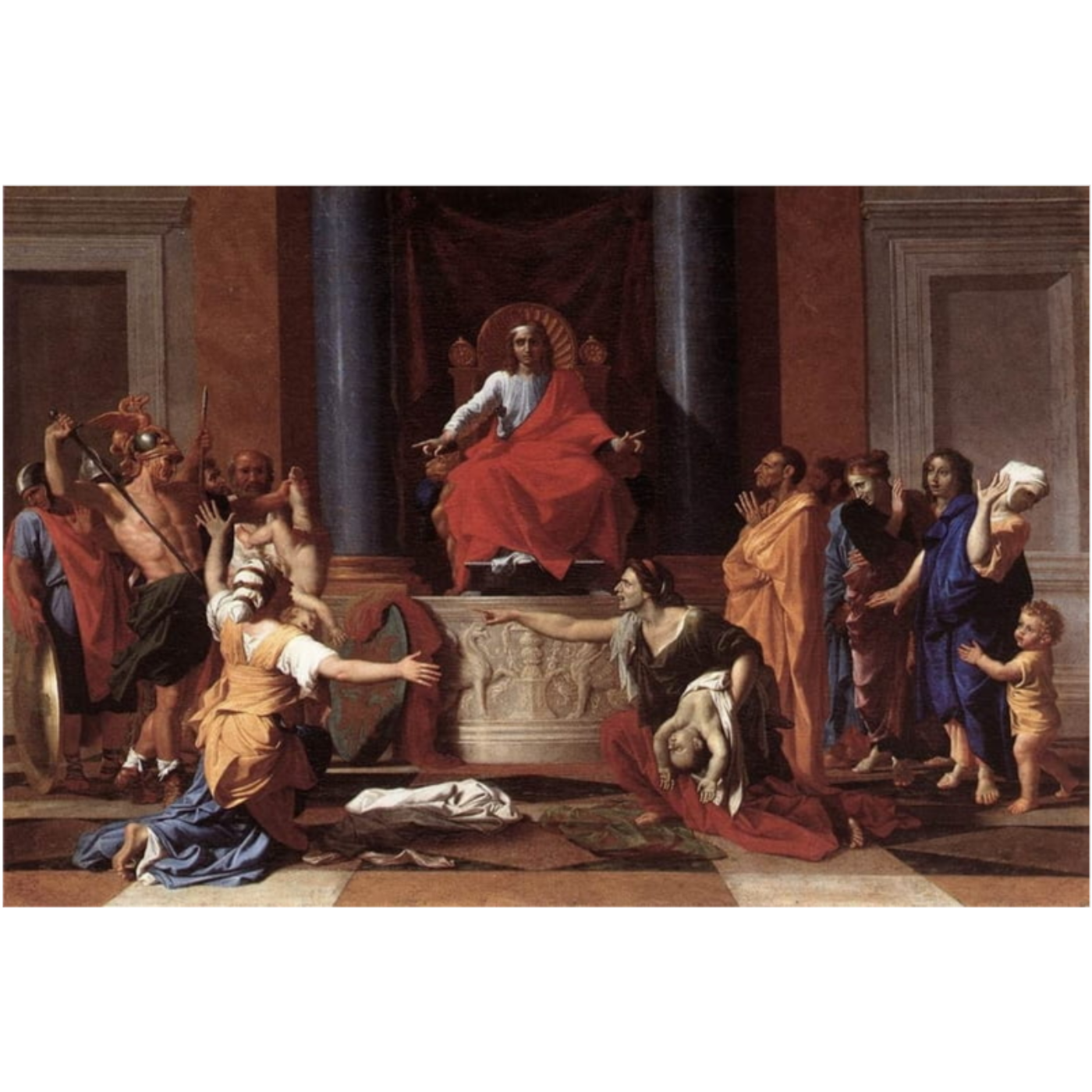
The two women indicate to us the church and the synagogue. The latter, after it tried to suppress the sacrament of human redemption and persecuted and killed the Redeemer through false accusations, claims, nevertheless, that its child should still be alive, that is, that the Jewish people should still be pleasing and acceptable to God and that he should give eternal life to the Mosaic law, which is dead. Since the [synagogue] is soaked in these errors, it perpetually quarrels with the church, which is represented by the other woman. However, the peaceful king settled the argument not by dividing but by gathering the children of both mothers, so that a single body might be created from the Jews and the Gentiles, whose head is Christ. And both mothers assert that they live under the same roof, because the church and the synagogue inhabit this world in dwellings, where they are mixed—Mari Ephrem the Syrian
S1 Ep 122Day 122 - Psalms 94, 95, 97-99, 101, 110, 144
However, with the other class of unbelievers who either believe that there is no divine power or that it has nothing to do with human affairs, I am not sure that an argument should be undertaken on any subject of dutiful devotion, although hardly anyone can be found nowadays who is so foolish as to dare to say even in his own heart, “There is no God.” [Psa 14:1 (13:1 LXX, Vg.).] But other fools are not lacking who have said, “The Lord shall not see,” that is, he does not extend his providence to these earthly affairs—St Augustine
S1 Ep 121Day 121 - Psalms 2, 20, 21, 72, 93
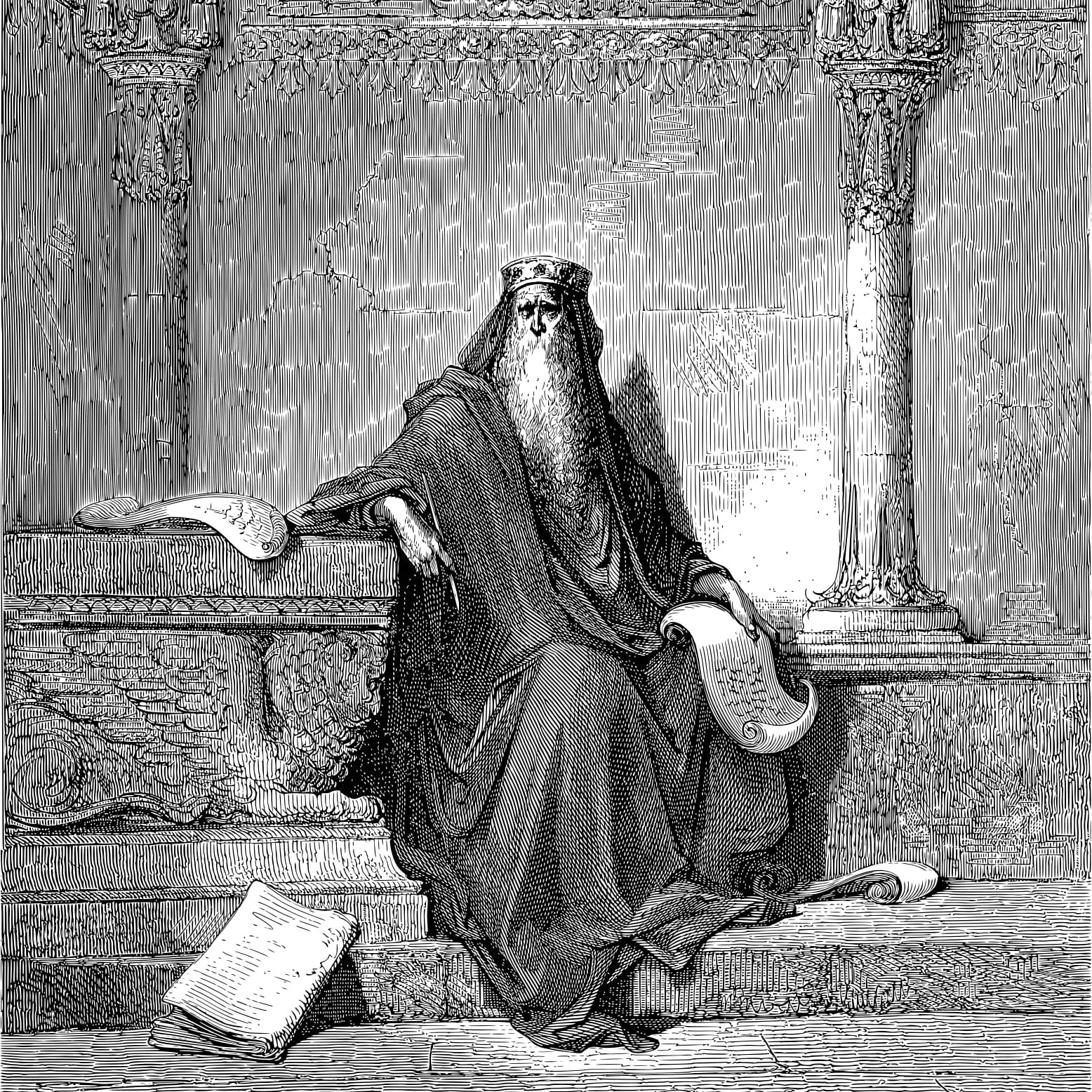
As a further proof of your [Trypho the Jew, whom Justin is trying to convert to Christianity in this dialogue.] ignorance of the Scripture, I am going to quote another psalm, dedicated to David by the Holy Spirit, which you erroneously think refers to your king Solomon but which in reality refers to Christ. One cause of your error is that you are misled by the false interpretation of equivocal terms. For when the law of God is called a “blameless law,” [Psa 19:7 (18:8 LXX).] you do not understand it as applying to the law that was to come after Moses but to the Mosaic law itself, even though God had promised to establish a new law and a new covenant. And when the psalm says, “Give to the king your judgment, O God,” you claim that the words were spoken of Solomon because he was a king, whereas the words clearly proclaim that they were spoken of the eternal King, that is, Christ. I prove from all the Scriptures that Christ is spoken of as a king, and a priest, and God, and Lord, and an angel, and a man, and a leader, and a stone, and a begotten son and as one who at first endured suffering, then ascended into heaven, and as returning to earth with glory and having the eternal kingdom—St Justin Martyr
S1 Ep 120Day 120 - 1 Chronicles 27-29
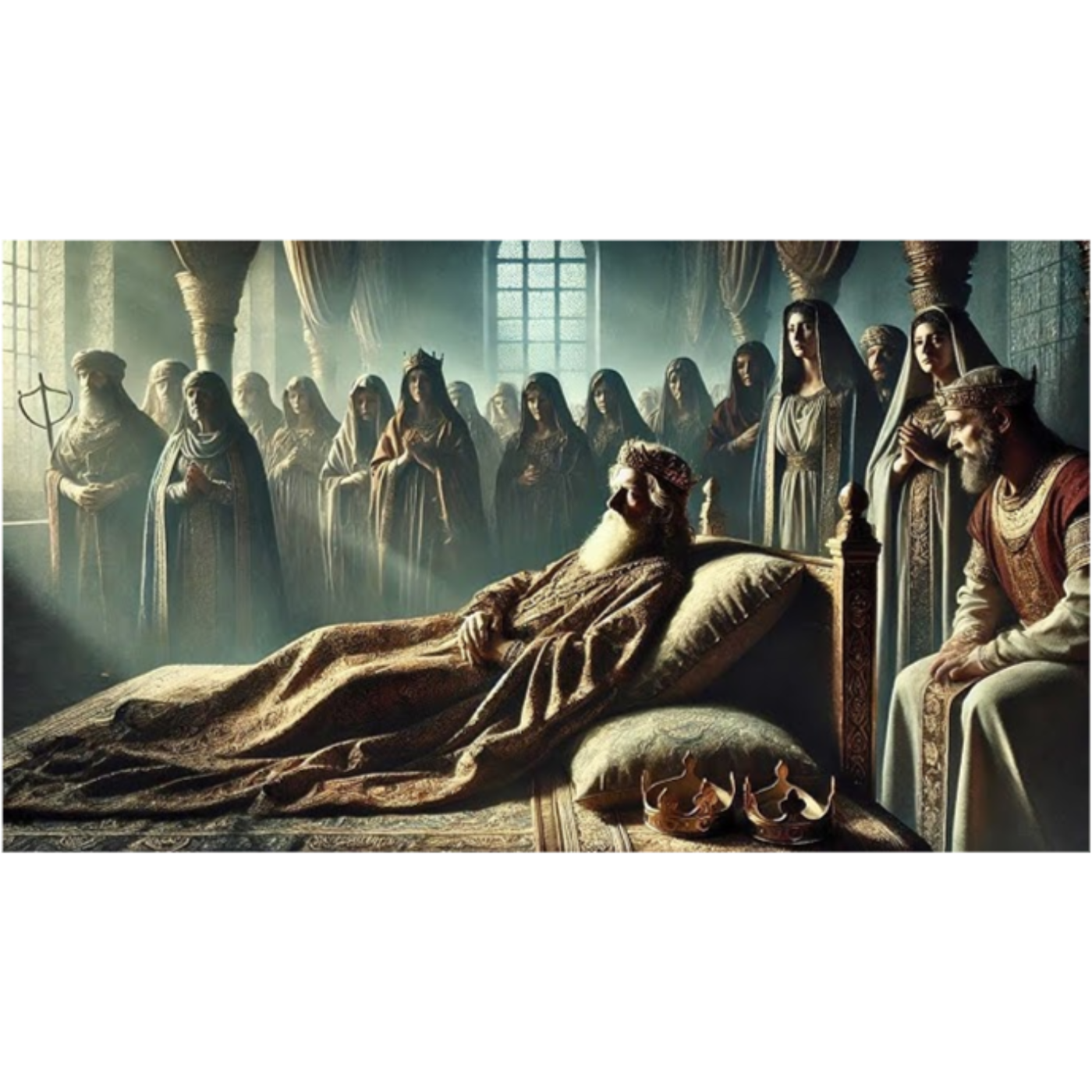
“Remember your leaders, those who spoke to you the Word of God; consider the outcome of their life and imitate their faith.” [Heb 13:7.] Emperors have not preached the word to you, but apostles and prophets, shepherds and teachers. When God gave commands to David concerning the house David intended to build for him, he said to him, “You may not build a house for my name, for you are a warrior and have shed blood.” “Pay all of them their dues,” the apostle Paul says, “taxes to whom taxes are due, revenue to whom revenue is due, respect to whom respect is due, honor to whom honor is due.” [Rom 13:7.] Political prosperity is the business of emperors; the condition of the church is the concern of shepherds and teachers. Any other method is piracy, brothers. Saul tore Samuel’s cloak, and what was the consequence? God tore the kingdom away from him and gave it to David the meek—John of Damascus

S1 Ep 119Day 119 - Psalms 47-49, 84, 85, 87
“Even the sparrow finds a home, and the turtledove a nest in which she puts her young.” For the present, let us be satisfied with a simple interpretation. Notice all that the verse implies: I long, O Lord, for your eternal dwelling places; my soul yearns and pines for the courts of the Lord; I long for some place to dwell, a nest for my soul and my body. The birds that fly about to and fro with no restraint, nevertheless, after their flight, have a place and a nest in which to rest. How much more ought not my body and soul procure for itself a resting place?—St Jerome

S1 Ep 118Day 118 - Psalms 15, 24, 42-46
Do not flee what you do not need to flee, and do not have recourse to him to whom it is unnecessary. But one thing you must flee: sin; and one refuge from evil must be sought: God. Do not trust in princes; do not be exalted in the uncertainty of wealth; do not be proud of bodily strength; do not pursue the splendor of human glory. None of these things saves you; all are transient, all are deceptive. There is one refuge, God.… God is the true aid for the righteous. Just as a certain general, equipped with a noble, heavy-armed force, is always ready to give help to an oppressed district, so God is our helper and an ally to everyone who is waging war against the wiliness of the devil, and he sends out ministering spirits for the safety of those who are in need—St Basil the Great
S1 Ep 117Day 117 - 1 Chronicles 23-26
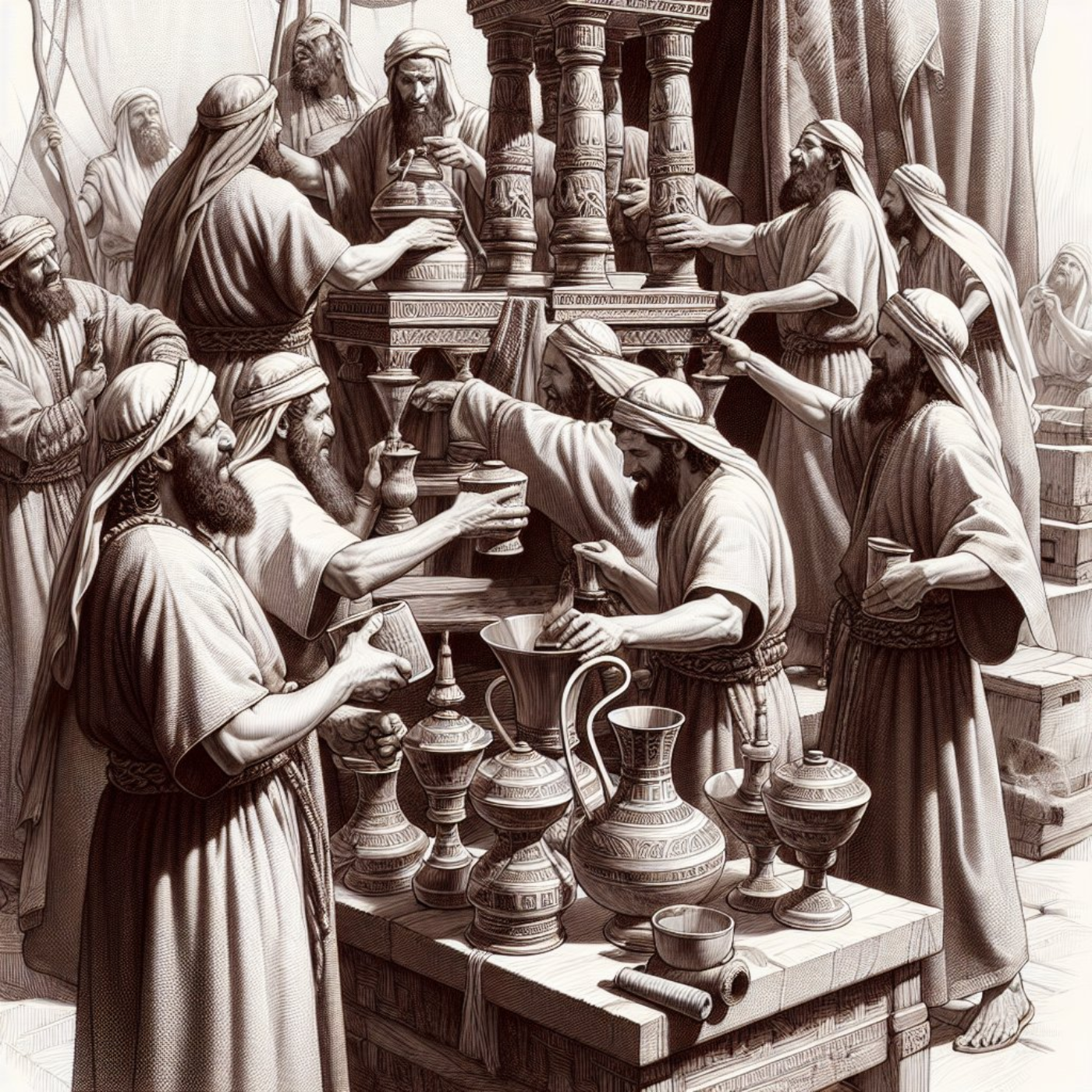
David set up these sections in such a way that the individual high priests, along with the priests who were under them, should minister for eight successive days, that is, from sabbath to sabbath. (2 Chr. 23:8) And although all in the priestly class were equal, yet one of them who seemed to be more worthy of special reverence and more outstanding and in power was to have the name of “high priest.” As to the order that was to be observed among these sections, it was determined by the casting of lots in the presence of King David and the leading persons of the priestly and Levitical families. In this distribution of lots, it is found that Abijah, from whose priestly division and generation Zechariah sprang, occupied the eighth place. It was fitting that the herald of the new covenant, in which the glory of the resurrection was declared to the world, was born in the place of the eighth lot, both because our Lord rose from the dead on the day after the sabbath, which is the eighth day following the seven days of creation, and because we are promised at the end of time an eighth age of everlasting resurrection, following the six ages of this world and a seventh of tranquility for souls, which comes in the next life—The Venerable Bede
S1 Ep 116Day 116 - 1 Chronicles 22, Psalms 30, 37
Because he was a man of blood—the reference is not, as some think, to his wars, but to the murder [of Uriah]—he was not permitted to build a temple of the Lord—St Jerome