
Being there for your kids
329 episodes — Page 4 of 7

Ep 200What You Pay Attention to Grows
That old parenting adage is true. What you pay attention to grows. If you focus only on the bad behavior, it will grow. If you reinforce the good behavior, it will grow. When helping your child get over the rough spots, use their strengths to help them overcome their weaknesses. Use your active listening to understand their feelings. Join with them where you can. Supervise their efforts. Some how make the tough stuff fun. Who knows, you might find a teachable moment in there somewhere.

Ep 199Be Aware of School and Social Influences on Your Child
Wouldn't it be great if we, as parents, could raise our children by ourselves, in a vacuum devoid of school and social influences on their lives? Yeah, well...uh, no. Our children's lives are so much more enhanced by their interactions and learning experiences with others. We are, however, tasked to give them a firm foundation, both in personality and in life. This gives them opportunity to navigate school and life more successfully. We also need to be aware of the school and social influences they encounter in their lives beyond our family. How can we help them make good choices if we don't at least know the broad strokes of their lives. The trick is to be informed without appearing intrusive. This is where active listening and receiving permission to jointly problem solve helps.

Ep 198Developmental Stage Influence on Parenting
Parenting tip #6 for parenting success is this: Be aware of developmental stage influence. Parenting is tough enough without taking in all the extraneous variables. One of those variables is developmental stage influence. Throughout our lives, we are in one developmental stage or another. Sometimes, these stages collide with each other if the family. For healthy, positive parenting, know both what developmental stage influences there are in play both for your child and for yourself.

Ep 197Building Character--Who Will Your Child Become
As parents, our lifelong task is to help our children build character. Through good times and bad, how can we do that? Three functions contribute to this outcome. First use active listening to help convey that you understand what your child is going through. Second, consistently use the Good Kid Chart to give him target behaviors to work on and reward and consequence based on his efforts. Finally, use Restrictions That Work, a process of showing your Judgment, Compassion, and Grace based on how well he gets the impact of his actions on self and other. With your efforts to help him build good character, he will become a responsible, respected, empathetic, and compassionate adult.

Ep 196Choose Process over Outcome
Kids tend to gravitate toward immediate need gratification. If it isn't "now," what's the point? While we all want need gratification, and the sooner the better, there is a place for advanced preparation in tackling life's challenges. As parents, we can help our children choose process over outcome in their decision-making. While at times, focusing on the process feels like swimming upstream and is a hard sell for kids, the result is stronger character, better decision-making, and learning how to develop a means to a desirable end.

Ep 195Parental Respect Is Earned
While many families mistakenly believe that parental respect is a right and deserved regardless, such beliefs put that family at risk. Parental respect is earned by our words and actions. Many parents use fear to command respect from their children. However, we can use active listening, healthy boundaries, and direction to earn the respect of our children. When we fear and power to demand respect, the relationship is lost and kids are just going through the motions to survive a difficult situation. When we focus on relationship, not power, a mutual respect grows and thrives.
Ep 194Helping Your Child Thru Transitions
Normal daily transitions for all of us include asleep/awake, to/from work or school, coming home, day/night activities, and awake/asleep. These and other unusual or specific transitions all can give us pause, if not trouble. In particular, children are susceptible to disruption around transition activities, unless you plan and prepare for the transitions ahead of time. Usually, a 5-10 minute transition time is sufficient to help smoothen it out.

Ep 193Number 1 of Top 10 Parenting Tips
Start where your child is. That's tip number 1 of my top 10. Your child's words and actions will give you a hint as to where he is emotionally at the time. As best you can, let him be and give him time. Make observations and offer to be his sounding board. Active listen when you get his permission, but don't try to change him. Help him figure it out for himself. Help him understand the impact of his words and actions on himself and on others. Help him be mindful. Being present where he is forms the foundation of a healthy parenting relationship.
Ep 192Top Ten Helpful Hints for Successful Parenting
I know you really want to do your best at this parenting thing. With all the distractions, confusion, and mixed messages, successful parenting can be hard. As a quick reference, and to make it a bit easier, consider my top ten helpful hints for successful parenting. These helpful hints will both help you put your concerns in context and also lead you to a strong, relational bond with your children.

Ep 191Be Kind to your Child
None of us has ever been a parent before we had our first child. Parenting is often doing the best you can in sometimes difficult, trying times. While you do have to set limits, give direction, and follow through on consequences, it also helps to "catch them being good." What does that mean? Well, it's a kindness thing. Kindness comes in three forms: focus on being positive, practice praise, and demonstrate acts of kindness, especially when least expected. Not only are you parenting with kindness, you are also modeling for your children how to be kind to others. That teachable moment is quite a gift.

Ep 190Ahh, That New Bundle of Joy
First newborn baby? Can we say equal parts of joy, love, and terror? How do we do this parenting thing. Most new parents determine to parent just like their parents or, (where there were bad experiences), just opposite of their parents. In any case, it's a new experience for you. So, be physically present. Cuddle lots, coo, tickle, play peek-a-boo. Also, be aware of how your new baby talks to you. Babies have different cries, you know. There's the I'm poopy cry, the I'm hungry cry, the I want your attention cry, and, of course, the I'm just messing with you cry. Learn to interpret their cries, and expand their world with new things and with new curiosities. You baby will truly be a bundle of joy.

Ep 189You Cannot Not Communicate
Are you in relationship with your children? Of course you are. Then you are communicating 24/7/365. It is physically impossible to not communicate. Soothing, explaining, directing, stony silent, staring. All forms of communication. Chapter 1 of my book, Teachable Moments: Building Blocks of Christian Parenting, is entitled, "Communication Is Relationship." Whether you are using verbal or nonverbal communication, you are communicating with your children. How you say things is just as important as what you say. And guess what. Your children are always watching you and modelling your behavior. Given that you cannot not communicate with your children, be careful what you say and do. Your relationship with them depends on it.

Ep 188Dare to be Different in Active Listening
When our kids are hurting, you want to active listen their feelings. However, if you start every response with, "You feel..." soon your child will tune out, even if you are helping. So, dare to be different in active listening. Mix it up. Stay current with what you think he is feeling. Keep eye contact and throw in a few encouraging comments like, "Wow", "I think I see," and "Tell me more." Variety will help your child stay connected with you in his pain, letting him know that you really want to understand and to help him address his pain.
Ep 187Kids Will Always Test the Limits
For kids, testing the limits is a developmental imperative. Why? They do so to help define their boundaries. Without limits, kids would be perpetually anxious and fearful. Boundaries and limit-setting by us parents give them the calm and security to function in the world. If your boundaries are fluid, she will try to take advantage of that. Fluid boundaries can lead to a sense of entitlement, where she believes she can do what she wants, whenever, with no consequence. Boundaries set responsible expectations on your child's behavior and helps them navigate the world better. When your child tests your limits, firmly set them with reward and consequence, finding yet another teachable moment

Ep 186What You Say to Your Child Matters!
Our kids are always paying attention to us, even when they seem not to be. When they have issues, you want to pay better attention. Empathy is a passive, "I understand what you are feeling" kind of message that my not get through. Active listening is more precise. "Wow! You sound like you feel awful right now." Active listening is your go-to response whenever you child is upset. Be there for her. Don't problem solve, don't criticize, don't minimize what she is feeling. She is hurting, and your active listening is the balm that soothes the pain she is feeling and helps her work through it.

Ep 185Maintaining Healthy Relationships
You can visually see what a healthy relationship looks like by imagining a transparent, Plexiglas pyramid. The pyramid shows levels of your relationships, starting with your relationship with God, above the apex of your pyramid. Extending downward are levels with your spouse, children, extended family, coworkers and acquaintances, and strangers. The quality of each relationship is related to how well the relationship above it fares. As you are able to best take care of your own needs and feelings, you put yourself in the position to bless others with agape, or unconditional, love. That's the stuff of which teachable moments are made.

Ep 184Kids Do Act Out, or Act In
Sometimes, hopefully not often, our kids behavior is out of control. In these times, they either act out, or they act in. Actor outers are impulsive, angry, feel misunderstood, and believe they are entitled. Actor inners are withdrawn, isolated, and feel bitter and unwanted. Both are in an awful place. As parents, we love our children whatever emotional place they are in, and we help them get to a better place. Active listening, collaborating, and problem-solving help them get there. Confronting and consequences help our acting outers feel less entitled. Encouraging social engagement, fun activities, and outlets help our acting inners feel less isolated. Being there for your kids is always where you want to be.

Ep 183Does your child steal?
Stealing is a universal child behavior. The question is size, damage, and whether he gets caught or not. Developmentally, stealing behavior falls under the category of testing limits. What to do? Stop the behavior. Confront, try to talk to your child to help him understand his needs and feelings through active listening, and give consequences. When stealing goes unaddressed, it leads to impulsivity, acting out, and a sense of entitlement, where he believes he can do anything he wants and without consequences. While any stealing is not okay, it can become a very valuable teachable moment

Ep 182When Trouble Comes Knocking
Nobody likes trouble. It's not like we invite it into our lives. But, guess what? It comes knocking for all of us. So, when trouble come knocking at your door, or when your kids are in trouble, consider a response that includes total honesty and good timing. When people lie, they only double their trouble. When people delay their response, it creates uncertainty and concerns about minimizing or manipulating. Much better to confront trouble at the door, when it comes knocking, rather than waiting for trouble to come in and set up shop in your soul.

Ep 181Is Your Child Having a Problem?
Sometimes our kids come to us and tell us they are having a problem. Most time? Probably not. So, when you sense that something's going on, but your child is not forthcoming, how can you tell? First, notice any differences from the normal that your child is demonstrating in terms of mood, attitude, behavior. Second, make your observations in a non-threatening way and ask about what you see. If she doesn't want to talk about it, give her space and let the next move be hers. Prying it out of her almost never works. When she's ready, use your active listening to help ease her feelings and encourage her problem-solving with your assurances that you've got her back. This is the way to really be there for her.

Ep 180Don't Worry. Be Happy
What do you worry about? Job? School? Family? Health? Sooo much to worry about. Did you know that 80% of your worry is for nothing? This is called destructive worry. It's worrying about things over which you have no control. The weather, your boss's mood, the stock market. All you can do with these things is give up your worry. Go with the flow. On the other hand, 20% of your worry is for something. This is called constructive worry. This is worry about things over which you do have control. How well your presentation goes tomorrow. (prepare) What to give your bride for your anniversary (ask). Worries generally start with the question, "What if...?" How about replacing this worry with curiosity, "I wonder..." Then follow that wonder with a presupposional phrase, "I wonder how well I will do during my presentation tomorrow." So, don't worry. Be happy.

Ep 178Are You a Benevolent Despot?
What's a benevolent despot? The two words seem to not go together. Despots are usually dictators, ruthless bad guys. When you are benevolent, you help others. You are kind and giving. How can a parent be both benevolent and despotic? Think of a king during the feudal Middle Ages. He had a castle with a big wall and moat around it. The villagers lived outside the walls of the castle. However, they were protected by the king. He showed them kindness and compassion, understood their needs and feelings. Because he was benevolent, the villagers shared their bounty with him, worked for him. As in a family, the benevolent despot parent is the final authority and has the final say. However, you take into consideration your children's needs and feelings when exerting your authority. Such families thrive and teachable moments abound.

Ep 177How Do You Lead Your Family?
Whether you are the mom, dad, or other parent figure, you lead your family unit. It comes with the job. How your children follow depends on how you lead. When we think of leadership, most folks are aware of the dominance or submission as leadership styles. The dominant parent declares "my way or the highway," and keeps the family in line with fear and power. The submissive parent says a lot of "yes, dear. what else can I do for you?" A fear of rejection often drives the parent to be submissive to the children. The submissive parent keeps the family in line by giving in, which generates a sense of entitlement in the children, an attitude of "I can do what I want without consequences." Wow!! No thanks. Lesser known is the parental leader of the family who presents as a "benevolent despot." You are in charge. You have earned authority in the family. What you say goes. That's the despot. Your leadership, however, is driven by empathy, compassion, and understanding of needs and feelings. That's the benevolent part. How do you lead your family?

Ep 176Launching Our Teen into Adulthood
The two most significant moments for us parents in our children's lives are that moment of birth and their launch from adolescence into adulthood. We prepare our children for adulthood through their teen years, letting go little by little. As they learn individually to make good choices, exercise responsibility, and be accountable, they are ready to launch. Just as in our space launches, we parents remain in ground control, while our teen/young adult is in his space craft. He occasionally makes mid-course corrections, as he charts his path to his destiny. These booster rockets come from our consultations with him, just as ground control stays in contact with the spacecraft. We move from advice-based parenting (I remember when I was your age and had similar difficulties) to consultative parenting (I have some thoughts on what you are going through. Do you want to hear them?). Always, we are on the lookout the proverbial emotional fever, to which we respond with active listening. We praise his successes and are allowed bragging rights. Mission accoomplished. Our teen/young adult is launched.

Ep 179Problems? How Can You Tell?
Isn't it interesting that you just know when your child is having a problem? It's like your "spidey senses" tingle. It's great that you are that tuned into her, but what are you drawing on to figure it out? You child gives off both verbal and nonverbal signals when something is wrong. There's no pattern here, except that what she is saying and doing is typically not like her. In fact, some parents just come right out and ask, "Sweetheart, this isn't like you. What else is going on?" This podcast tells you about BMIRs, that is, Behavioral Manifestation of Internal Response. BMIRs tell the rest of the story and then you get the whole package. Problems will happen. Sometimes our kids are reluctant to share. It's a good thing when your spidey senses are on alert. When you get permission from your child, use your active listening to calm her down and then encourage her proactive problem-solving to help her tackle what's up.
Ep 175Tips for Family Stress Management
We all have stress, probably all the time. It's either distress or eustress. It's how our body and mind react to bad stuff and good stuff, respectively. As parents, we need to monitor our children's stress levels by being there to help them talk it out through active listening, and also by modelling how we effectively manage our own stress. The first step is to breathe deeply and meaningfully, to give our bodies immediate relief. The next step is to help our child think through ways to avoid such specific stress in the future. Finally, both model and encourage proactive stress management through good eating, sleeping, and physical conditioning habits. In these ways, stress management can lead to teachable moments.
Ep 174Should You Fight Your Child's Battles?
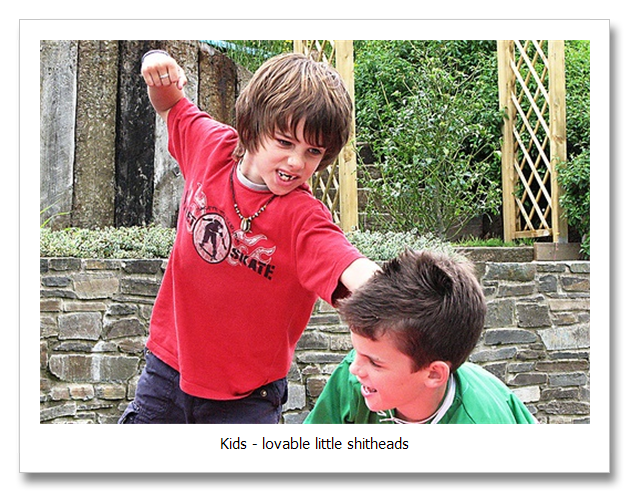
As parents, our natural instinct is to defend our children, to fight their battles for them, to protect them at all costs. But is this natural instinct the most helpful for your child. The answer is, not necessarily so. Your response to your child's problems depends on the kind of battle and the age/stage of your child. However, as with any situation where you see his emotional fever spike, start with active listening, to bring the fever down. Then ask permission to give your thoughts about his conflict. Where some response from him is indicated, collaborate with him about what shape that response will take. Your overall message to him is, I love you. I'm so sorry you are going through a hard time. I have confidence in your being able to make sense of all of this and to work it out. I've got your back. Therein lies a teachable moment

Ep 170Correction with Time-Out
You know, stuff happens. As the parent, you want to handle that stuff in the best, most effective way. Frequently, parents use time-out to handle stuff. However, how you use time-out is more important than that you use it. Some parents simply put their child in time-out "until I say so." This is unhelpful. It makes the parent feel good, feel powerful, but most children simply wait out their parent and don't learn what to do to avoid punishment in the future. Effective use of time-out is simply to give your child time and space to calm down. When they are calm, then they can hear you better. It also gives you time to think through how you want your child to benefit from the time out. If you see your child's time-out as his punishment, he reaps no benefit from it. It simply becomes a power game. When you sit and talk with your child after he has calmed down, using your active listening and defining accountability and responsibility, your relationship is enhanced and you both reap benefit, a magical moment.

Ep 169Parenting is Lifelong
Do you ever stop parenting your child? Nope. You signed on for the long haul. In Proverbs 22:6, Solomon cautioned us parents to "raise your children in the ways of the Lord so that, when they grow old, He will not depart from them." That's pretty daunting. What you say to your children, how you act, how you parent, will be with them for all of their lives, whether you are there in person or not. Just as there are stages of child development, so too are there stages of parenting. When your teen reaches adulthood, you shift your parenting from advice-based to consultative. He's grown and make his own choices, but you are available to impart your wisdom, if he asks. Be available. Beyond time and distance, your parenting is lifelong, and with your availability comes potential teachable moments.

Ep 168Down Time, What A Blessing!
It's true. Indispensability is a curse!! If you have to be the one to do the job and get it done right, then you are failing as a parent :( Doing it yourself may be a short relief and save you time and steps, but it is a longer term problem. How will your kids learn sharing, helping, and personal responsibility if you are doing it all for them? If you are indispensable, then you are doing too much. Also, you can't be your best self if you are always doing for others. Jesus called us to love one another as we love ourselves. That is, take care of your own needs and feelings before tending to others. It's like the direction that airline attendants give passengers before takeoff. In case of a problem and the air masks drop down in front of you, put your air supply on yourself first, so that you can better help others around you. Build self-care into your time management and include it in family planning and calendar events. Don't give up on yourself, caring for your family at your expense. Down time is a blessing to all of you.
Ep 167Emotional Fever? Active Listen
Why is active listening such a big deal? It is the go-to response when you see your child in any kind of stress, difficulty, or emotional pain, what I call an emotional fever. Active listening calms her down and is the balm for her distress. When you are active listening your child, you are conveying your efforts to say back to her what you think she is feeling. You are not judging, not criticizing, and certainly not solving her problems for her. You are conveying to her that you are with her and that you have confidence in her handling her situation well. You get what she's going through and you've got her back. When you see her emotional fever subsiding, only then can you ask permission to share your wisdom with her. This conveys your respect and confidence in her. Active listening is your most valuable communication tool when parenting your children through their inevitable tough times. Active listening is a big deal.

Ep 166Being Alone in Your Family
Being alone is a funny thing. Sometimes it's good, renewing, and delightful. Other times it's alienating, foreboding, and unwanted. As parents, we want to understand and allow for all of the moods that our children may experience. He's been in his room by himself a long time now. Does he just want to be alone? Is he lonely? Is something going on? Rather than guess or hope he is okay, check it out. Seek him out and assess his mood in conversation. If he shows signs of an emotional fever, use your active listening to help him calm down. Encourage his participation in family time. Respect his privacy, while also reminding him that he is a part of family. His mood could be a symptom of other issues, such as anxiety, depression, or stress. Use joint problem-solving to help him find tools to address his concerns/issues. This is great parenting that generates teachable moments.
Ep 165Dealing with Bullying
You know, as parents, we all want the best for our children. We all want to protect them from harm. Unfortunately, despite our best efforts, bad stuff happens to our precious little ones. Unless you have a protective bubble you can keep your child in, they have to learn to deal with bad stuff. Bullying is the worst. Whether it is physical, emotional, or cyber, bullying can leave a lasting mark. What to do? First and foremost, be there for your child. With younger children, be their advocate with the adults who have authority over the bully, With older children, support their coping mechanisms and strategies for taking care of the crisis themselves. Make sure that they know you have their back if need be. Use your active listening, coordinate problem-solving, help them feel empowered in avoiding/handling the situation. Note, physical confrontations of the bully might feel best, especially if you child prevails, but comes with consequences and fears of their becoming the bully to others themselves. As your child's advocate in bullying situations, you are empowering them and providing a very teachable moment.

Ep 164Yes, Ya Hafta!
Who's the boss in your home? Of course, you are, right? It's not who's the boss that is in question. It's how you boss that tells the tale. If you are authoritative, then it's "My way or the highway." It's power-oriented. Things get done, but at what expense to the family and to your child? If you are permissive, then it's "Yes, dear. Whatever you want." It's still power-oriented, but your child has the power. Things may or may not get done to your liking. If it's authoritarian, then you confront, active listen, encourage, give rationale, set boundaries, and monitor progress. This sounds like a lot, but raising your child is your first 24/7/365 job, and you want to get it right. Authoritarian parenting happens when you are still the boss, but you parent according to the needs and feelings of all involved. It's not power-oriented, but rather relationship-oriented. And still, "Yes. Ya hafta."
Ep 163Got Enough Glue?
All of us get out of sorts sometimes, teens in particular. You know, the go away, get out of my life, leave me alone mood? Been there, done that. When you are confronted with that mood in your house, try not to slam him for being disrespectful. Rather, draw on your capacity for emotional intimacy, share something personal, relevant, and meaningful with him, and use your active listening when he is ready to talk about his dark mood. He will be shocked at just how much you do understand what he's going through, how much you get him. This well of emotional intimacy is the glue of all healthy relationships.

Ep 162Life-Enhancing Physical Touch
It's true. Babies in particular, but also children, teens, and grown-ups all cherish soft, gentle, loving physical touch. Touch is our nonverbal way of affirming the relationship we have with our children. I call it snuggle time. Especially in transition with babies up to pre-schoolers, such as around bedtime, snuggle time eases the transition and calms your child so they can gently fall asleep. Snuggle time is a universal bonding experience. Celebrate your child's victories and console him in his losses. It's what family does where others may not. Snuggle time is a teachable moment where your message to your child is a version of, You can do this. You got this. I've got your back. Yaay, snuggle time.

Ep 161Good Parent/Bad Parent, Which Are You?
As parents, we usually don't admit it, but, we all have favorite children. You know, the one you seem to get, to mesh with best, who gives you the least amount of hard time. Nonetheless, in raising siblings, as parents you want to evenly and equally be both good parent and bad parent when it comes to discipline. When the job of discipline falls on one of you, the other has to back up and support your spouse's disciplinary measures. Where this doesn't happen, the family is open to manipulation and dysfunctionality. On the flip side, each of you wants to have positive, fun, engaging time with each of your kids individually. In doing so, you are modelling for your kids that both discipline and fun come with the job of parenting. This helps build character in them.
Ep 160Me Time Helps Teens Grow
Just how much "me time" should your teen have? My learned answer is, "that depends." Teens need me time, to figure out what they like, what they want, who they are. In terms of personality development, we parents are responsible for 80% of the personalities our children develop, and that happens before they are age 5. Between ages 5 and 15, 15% of their personality comes from their peer group, predominantly at school and recreational/sporting events. The remaining 5% of our children's personality is original and develops between ages 15 and 25. They put the finishing touches on who they are becoming as an adult. Constructive me time helps them do that. If your teen is a good student, responsible, accountable, helpful, and engaging, then his me time is well earned and part of his growing process. If these qualities are not in place, and he uses me time to shut out the world, or to enter the mindless activity of gaming, texting, and finding trouble, then confront, active listen, coordinate, and help him out of his hole. Productive me time can help teens find the finishing touches of themselves, and you can be available as a sounding board to advise and consult.

Ep 159Computer Time: Family Friend or Enemy?
We all live in a cybernetic age. Computers, algorythms, gaming, texting, all just a few quick clicks away. Wow! What a temptation for our children...and for us. Woulddn't it be nice to have some research to back up your concerns. And, let's throw in some practical time management rules, so that our computers work for us, not the other way around. Well, here they are.

Ep 158Is Your Child Just Too Worrisome?
Too much worry can consume our kids, rob them of fun and friendship. What to do to help them not worry so much. Just saying "don't worry so much" is unhelpful. How about another strategy? When you notice your child worrying, use your active listening skills to help them calm down and be in the moment. Help him reframe his worry as a "what if" question. Then help him change the "what if" question into an "I wonder" statement, and add a positive outcome to his curiosity. Rather than being locked up in worry, you can help him establish a goal toward which he can take steps to accomplish. For example, "What if I fail my spelling test tomorrow?" becomes, "I wonder how well I will do on my spelling test tomorrow?" The what if locks him up in unproductive worry, while the I wonder motivates him to study harder to do better on the spelling test. Help him practice switching from what if to I wonder with several situations until the change comes second nature to him.
Ep 157Setting boundaries and making good choices
It's true, a developmental imperative, that our kids will always test the limits. Why is that? Well, by testing the limits, they know that the limits are there. Our kids live within the limits we set for them. Those limits help them be less anxious, less afraid, more secure. However such limits are only set when boundaries are secured. It's within these secure boundaries that our kids can practice making good choices for themselves. When your child is on your last nerve, sit him down for some productive problem-solving. Start with "This isn't like you. What else is going on?" If you get a blank stare or a one-word answer, make your essay question a multiple choice question. You know enough about your child's life to come up with several options of what could be stressing him. Use active listening to help lower his emotional fever. When you see him settled, ask permission to help out. That's when productive problem-solving can happen. The result is setting helpful boundaries within which your child can make good choices, and you will no longer have to live so close to your last nerve.

Ep 156Changing Habits from Bad to Good
All kids make bad choices, some worse than others. What they do with those choices is the real key. In Genesis 50:20, Joseph told his brothers that what Satan intended for evil, God can turn to good. When your child messes up, use active listening, comforting, consequences, and available resources to help him turn his bad to good. We are drawn to the familiar, even if it is unhealthy for us. The trick is moving from unhealthy to healthy and staying there long enough for it to become familiar to us. This is a journey that you can take with your child, to help him the person you (and God) want him to be.

Ep 155New Skill? Practice, practice, practice
When our natural tendencies as parents are to yell, lecture, and pull a power play, it can be hard to spot an emotional fever, and harder still to use active listening as your go-to parenting tool in that situation. As awkward and uncomfortable you are when you first try to active listen your child, keep at it. Even better, own up to your efforts to change your approach to parenting and ask for feedback from her. She will get a kick out of helping you out. Shoe on the other foot kind of thing. Practice, practice, practice, and you'll get the hang of this active listening. Trading in power plays for greater emotional intimacy is well worth it. We all have teachable moments, don't we?
Ep 154Teachable Moments of All Kinds
When all is well and your child is curious, you have a natural teachable moment, where you can impart your wisdom. When your child has a problem, after you calm him down with active listening, you can ask permission to help him solve it and morph that exchange into another teachable moment. When you have a problem with your child, you can start to settle him down by asking, "This isn't like you, son. What else is going on?" Kids usually don't answer essay questions very well. When he is puzzled or silent in response, make your essay question a multiple choice question. You know him well enough to hit on some things that may be weighing him down. Now you've gone from conflict to teachable moment. His consequences for the conflict will have more positive effect if they come within the context of a teachable moment.

Ep 153Helping Your Child with Weight Management
Our children are constantly growing, getting bigger, developing their adult bodies. That growth will not stop until age 18-25 years. If your child is a bit pudgy, she will likely grow into her adult weight without extra effort. We all tend to grow out before we grow up. However, if her weight is a concern for her, or if it limits her fun activities or self-image, then you may want to help her address her concerns. First, active listen her feelings. Help her fully understand how she feels about her current weight. Then, with permission, give her the stats on her current weight. If she does not have a medical condition, called obesity, then her being a little pudgy can be addressed with nutrition, weight management, and behavioral strategies. Let her take the lead on if/how she wants to address her concerns, but have her back in terms of cheerleading, food prep, and exercise. If you could stand to lose a pound or two as well, then join her in her adventure. Joint goals are always a shared experience that can lead to greater emotional bonding and teachable moments.

Ep 152What's Behind Your Child's Anger?
Only 2% of the time is anger a primary feeling. That's called righteous indignation, when what you are witnessing is just...not...right. The other 98% of the time there is another feeling that the anger is covering. Since anger is the most socially acceptable negative feeling we all have, we feel better saying "I'm angry," than owning up to, "I'm frustrated, I'm embarrassed, I feel self-conscious" or other primary feelings. When your child expresses or demonstrates, active listen her feelings. When you see her emotional fever going down, then switch from this secondary feeling to her primary feeling by asking, "I understand, sweetheart, that you are angry, but what else is going on?" Now, that's kind of an essay question, and we know that most kids don't do so well with essay questions. If you get a puzzled look, a shrug, or other noncommittal response, make your essay question a multiple choice question. You know your child well enough to come up with several options for what else she is feeling. After active listening to understand all the feelings involved, and her emotional fever has subsided, you can then brainstorm things she can say or do to address her feelings constructively. "What else is going on?" is a great avenue for teachable moments.

Ep 151Can you choose your child's friends?
We all want our children to have friends. They are the source of fun, fellowship, and play. But can we choose our child's friends? The answer is yes, but at cost to your relationship with your child. Do you want to risk that? Rather than simply say no, use your active listening and wise counsel to help you child make good choices. Also, with younger children, their friends are usually the children of our friends. Further, putting them in places where you have confidence of good friendships, and where there is adult supervision, such as play groups, sports, and club activities, gives you influence without making the choice for him. Choosing your child's friends is a slippery slope, and your healthy parenting skills can keep you off that hill.
Ep 150Connecting with Your Child, Try Active Listening
It's great when things are going well with your child and between you and her. These good times are when you can instruct, direct, check-in, and offer teachable moments. When your child is in a funk, however, use active listening to hone in on her feelings and to help her sort them out. Active listening is the way to be there for her, helping her sort through all of her feelings and helping her work on getting through her stuff. It's not about judging, criticizing, or even solving the problems for her. It's about listening, really good, for her feelings and sharing back with her what you think is going on, so she can problem solve. In such a way, you really connect with her, leading to a valued teachable moment.
Ep 149Asking Your Child's Permission
Your kids have lots of things on their minds. You have wisdom for them. However, if you just drop it on them, you are likely to miss your mark. Look for entry points, where your words will have meaning. Where you see a wrinkled brow, a sigh of frustration, other signs of emotional fever, start by active listening. Now you are on the same page. When you believe he is ready to hear your wisdom, ask permission, such as, "I have some thoughts about what's going on with you. Do you want to hear them? Likely, you will get permission to share. If you don't, then follow with "Okay, then. Let me know when you'd like my help." This leaves the door open and your child receptive to your wise counsel. Asking permission always strengthens relationship.
Ep 148Keep Them Safe at all Cost
Of course you want your child to grow up to be healthy and well in mind, body, and spirit. We all want that for our children. Sadly, that won't happen if tragedy strikes. As your children make their way through life's stages, keep vigilance, instruct them, be there for them. When your children know that you have their back always, they can feel confident to tackle life's challenges and reach their goals. Use active listening. Find teachable moments. Challenge them to think through their choices and decisions before making them. Help them find a nurturing network of kindred spirit where they can have healthy fun together. Keep them safe at all cost.