
Adventures in Sustainable Living
275 episodes — Page 3 of 6
175 A Green Foot Forward: Overcoming the Roadblocks to Sustainable Living Part I
Adventures in Sustainable Living Podcast Episode 175 A Green Foot Forward: Overcoming the Roadblocks to Sustainable Living If you happen to have in-depth training or knowledge in a particular area it is easy to forget that many others do not have that same expertise. For example, the knowledge I have about the care of animals is second nature to me. Sometimes I forget there are many people who just do not understand the basics. But the same holds true when it comes to sustainable living. Such a lifestyle is second nature to me. Yet I see so many people who are interested but do not take the first step. Why is that? To answer that question I decided to focus the next few episodes on the barriers and roadblocks to leading a sustainable life and how to overcome them. So join me for E 175 The Barriers and Roadblocks to Sustainable Living Part One. Welcome back everyone to the Adventures in Sustainable Living podcast. This is your host Patrick and this is E175 The Barriers and Roadblocks to Sustainable Living Part One. Sustainability Question of the Week What is the one thing that prevents you from living a more sustainable life? Good News Story of the Week This week’s good news story comes from Chile and involves discoveries made while mapping previously unexplored areas on the ocean floor. The California based non-profit organization, called the Schmidt Ocean Institute, spent time mapping the Salas y Gomez ridge, which is 2900 kilometers long (1800 miles). It extends off the coast of Chile to Easter Island and is comprised of over 200 underwater mountains some of which tower up to 3,500 meters. The team used a remote controlled underwater robot to investigate the marine life on the sea floor at depths of up to 4,500 meters. What they discovered is that each mountain hosted a vast array of distinct ecosystems. They discovered more than 100 new species many of which looked rather alien. These discoveries included many never before seen species including corals, spongers, sea urchins, amphipods and lobsters. The purpose of their expedition was to map 20,000 square miles (52,777 sq. km) in order to identify vulnerable species and collect data to support a designated international high-seas marine protected area. The purpose of this protected area is to save it from mining companies looking for natural minerals. Full species identification is expected to take several years. The institute’s next project is to explore the waters off the coast of Peru. Being a scuba diver, It truly is one of my favorite things to read stories such as this about the ocean. It truly is a whole different world much of which few people ever see. So, this week’s round of applause goes to the Schmidt Ocean Institute for working to save our oceans. Now let’s move on to this weeks episode. You know, I have been fortunate enough to be able to pursue several interests in my life for long enough that I could perhaps be viewed as an expert. Although I do not perceive myself in that way, I do know enough about a couple of different fields that I spend time teaching others. But when it comes down to day-to-day life if you happen to have in-depth training or knowledge in a particular area it is easy to forget that many others do not have that same expertise. If you have ever tried to read a scientific article published by a PhD that is 15 years into the career you will get an appreciation for what I mean. Whenever I read such things I think to myself “English please, English.” But despite my in-depth knowledge of certain topics, there are things in my life that keep my feet on planet Earth. For example, I have spent my entire life working with animals. Then I chose to go to veterinary school and I have now been practicing for over 25 years. Even now it always surprises me when I meet clients who are in their 30s and 40s and have a dog for the first time in their life. And of course they have lots of questions so I have to get back to the basics. I experience the same sort of thing when it comes to scuba diving. After years of practice and training many aspects of diving are second nature to me. But I often work with students who are incredibly fearful of putting on a mask and breathing underwater because it’s just not natural. A small percentage of these students never even make it past their emotional barriers and are thus unable to finish the class. But it is working with these students that keeps me grounded because I have to get back to the basics. I often see the same type of thing when it comes to living sustainably. Starting with the family farm, right up to buying the cabin property, living off-grid, being self sufficient and living sustainably for me have literally been a life-long pursuit. It is such a normal part of my life that I sometimes forget that so many other people are just not in the same frame of mind. Routin

174_Habits for Success: The Little Things Make a Difference
Adventures in Sustainable Living Podcast Episode 174 Habits for Success: The Little Things Make a Difference Have you ever wondered why people spend so much time on social media and then get depressed because they compare and despair? Have you ever wondered why 75% of our population feels that it is important to focus on living a sustainable life but they never take the time or put out the effort to make it happen. Has there ever been a time in our life that you risk everything in order to accomplish any one thing? When is the last time you stepped outside your comfort zone? When is the last time you set a big goal and achieved it? Yet such things are common place in the lives of successful people. So join me for E174 Habits for Success; the Little Things Make the Difference. Welcome back everyone to the Adventures in Sustainable Living podcast. This is your host Patrick and this is E174 which is called Habits for Success: The Little Things Make a Difference. Sustainability question of the week Why is sustainability important? Good news story of the week. And speaking of the little things, did it ever occur to you just how valuable frogs really are to our environment and our agriculture. Frogs eat billions and billions of insects every year, which of course make them economically valuable for agriculture. But they are also a critical source of food for fish, snakes, birds, and other wildlife. Frogs are also important environmental indicators. They are often the first casualties to pollution or other environmental damage. Well, there are hundreds of volunteers dispersed around England that are working to make a difference. This group of volunteers literally walks across the roads to pick up frogs and other amphibians, places them in buckets and safely transports them across the roadway. One group in particular has reduced the road kill from 60% down to 3%. Now you may think it is easy to just swerve around them. But during mating season there are so many of them on the roads it you move over to avoid one you end up hitting another. Not to mention that these small frogs just look like leaves on even small twigs in the dark when it is raining. It is estimated that 203 rescue groups saved nearly 115,000 animals last year. If you multiply that by the number of female toads laying eggs, then the numbers are even higher. And believe it or not, there is even a waiting list to join the volunteer group. One group even crowdfunds the 1,500 pound fee needed to pay for the closure of the main road during breeding season. There is even a charity group called Froglife that coordinates the mass data collection that these efforts generate. Who would have ever thought that such efforts would be undertaken to save the little old frog. So, a round of applause this week for Froglife and the hundreds of volunteers across England that are working to save a valuable resource. E173 Okay, let’s get on to this weeks episode and talk a little more about habits for success and how the small things make a difference. First off I want to ask a question. Is anyone familiar with the concept of orienteering? If not, I am certain we are all familiar with GPS because we use that everyday. We have GPS in our vehicles and GPS in our phones. Such technology greatly helps us especially when we are in an area of town that we are not familiar with. And certainly as much as I work in different hospitals having GPS and Google Maps is a tremendous help. But I distinctly remember a time when such technology was just not available. I carried a road atlas in my truck and was constantly dependent on road signs. And if I was trying to find something in the dark it was almost impossible. I laugh about this now but when Annette and I would be driving somewhere and her son Erik was still very young we used to commonly play a game with him which was “Can you figure out where we are?” The object of the game was to teach him to always be aware of his surroundings. Could he figure out how far away from home we were by just looking at the surroundings such as natural landmarks, road signs, and even the position of the sun. No one does this any more of course but this is more or less the basis of orienteering, which is traveling by map and compass. What it requires is a topographical map of your surrounding terrain and a compass to keep you oriented. The object is to travel from point A to point B as accurately as possible. Now if you have ever done this you can appreciate how accuracy is important. If you are off by one degree while traveling over several miles you will completely miss your destination. Now imagine if you were on a ship traveling from New York City to England, which is a distance of 3462 mi

173 How to Vote with Your Dollars
Adventures in Sustainable Living Podcast Episode 173 How to Vote with Your Dollars You have likely heard me say that our choices make changes. This is because our choices drive the market place. Now you may not think that your individual choices can make a difference. But, it is the cumulative results of the individual choices of the 7.8 billion people on this planet that has gotten us to where we are today. One of the easiest things you can do as a consumer is make better choices with the dollars that you spend. From the consumer goods you buy, to where you shop, to your choice of diet, to where you do your banking, there are numerous ways to vote with your dollars. So join me for E173 How to Vote with Your Dollars Welcome back everyone to the Adventures in Sustainable Living podcast. This is E173 How to Vote With Your Dollars. Sustainability Question of the Week What can we do as an individuals to have an impact on climate change? Good News Story of the Week And you all know that I love stories about doing things in an unconventional manner because that is what I have done for the last 20 plus years. But sometimes if you just simply get away from mainstream you often find there are much more efficient and environmentally friendly ways to do things. And in our modern world, many people are looking at older methods of construction and using sustainable materials to build homes that are much more efficient. And this is exactly what Anthony Hudson, an architect in England, managed to do. This home was part of a European Union project to pioneer the construction of more efficient homes. The walls of this home are made from hemp straw, earth and water to form a substance called cob. And best of all, the building still complies with all local building regulations. Building with mud is of course a centuries old technique and there are some homes in Britain that have lasted more than 500 years. This house was part of an EU funded project with a focus on net-zero carbon construction. Building with mud is of course sustainable, it is inexpensive, and easy to source. Additionally, this house has a green roof in order to support local biodiversity and to replace the green space taken up by the build site. So, there you are folks. For this week a round of applause to the EU for bringing sustainable construction into the 21st century. That said, let’s move on to this weeks episode. Have you ever wondered why people make ethical choices. After all, ethical decisions tend to generate and sustain trust. They demonstrate respect and responsibility. And ethical decisions show a sense of caring. In fact, these types of behaviors provide a foundation for making better decisions in the future by simply setting the ground rules for our behavior. Ethics are the principles that guide us to make a positive impact through our decisions and actions. More and more people these days are wanting ethical and sustainable choices. I think people are truly starting to realize that we need to move beyond a consumer culture. I say this only because there is an ever-expanding selection of fair trade, eco-friendly and locally made products. This seems to indicate that people want to feel as if the products they purchase support their values. Recent surveys show that 78% of consumers feel that sustainability is important and 84% say that poor environmental practices would alienate them from a company or brand. But since we still seem to live in a consumer driven economy, one of the best things you can do is to be informed about the ethical behavior of companies that you tend to patronize. This of course is the beginning of making ethical decisions about how you spend your money. While this is a good place to start, building a green economy is about so much more. It is about supporting businesses that actually adopt green practices such as supporting the local economy and even paying people fairly. There are numerous factors that drive consumer choices. Those factors of course have been studied again and again and advertisers have become quite creative in manipulating our market choices through advertising campaigns. But more often than not, what we look for is price and convenience. That said, like it or not, where you shop and what you buy sends a direct message. It is also a reflection of your values because every time you purchase something you are casting a vote. There are two economic concepts that are somewhat similar but different in some important ways: green economy and circular economy. While these two economic models are different to some degree, the end goal is a sustainable future for everyone. Allow me to explain. A circular economy focuses on the principles of producing durable recyclable products that last much longer. In that r

172 Would We Be Naked Without Synthetic Fabrics?
Adventures in Sustainable Living Podcast Episode 172 Would We Be Naked Without Synthetic Fabrics? What exactly is a Spinning Jennie? Have you even heard of it? Few people these days own a sewing machine but surely we all have a concept of what it is and what it does. And even though not all of us have taken a chemistry class, we have some concept of a chemical concoction? But do you know what all of these things have in common? Certainly there can be no argument that advances in technology have dramatically changed our lives. New technology affects every single aspect of what we do, how we do it, and even right down to the clothes that we wear. But have you ever given any thought to what your clothes are actually made of. Are they natural, artificial, or synthetic? Do you even know the difference? So stay tuned for E Would We Be Naked Without Synthetic Fabrics? Welcome back everyone to the Adventures in Sustainable Living Podcast. This is your host Patrick and this is E172 which is called Would We Be Naked Without Synthetic Fabrics? Good News Story of the Week Conservationists in the United States just won a great victory in the state of Alabama. Most everyone has heard of the Everglades and perhaps the Great Dismal Swamp, but few people have heard of “America’s Amazon.” It is an area of land also known as the Land Between the Rivers because it lies where the Alabama and Tombigbee Rivers meet. It is 8,000 acres of pristine wetlands and was just sold for $15 million USD for the purpose of conservation. The area is filled with lakes, creeks, and swamps and is home to so many species that is ranks as one of the most biodiverse ecosystems on Earth, ranking right up there with the Amazon. The former owners were made an offer from a timber and logging company and decided to sell it for conservation instead. Sustainability Question of the Week What is the difference between a circular economy and a green economy? While most of us may have never heard of a spinning Jennie, I think most of us have heard about the Industrial Revolution. This was a period of time where expanding technology and the invention of new machines forever changed our lives. Just about every aspect of manufacturing and industry was affected by advances in technology. The textile industry was no acceptation. The invention of the flying shuttle, the spinning frame and the cotton gin all began to change how textiles were manufactured. However, it was the invention of the Spinning Jennie by James Hargreaves that is credited for advancing the textile industry to factory production. Prior to this the production of cloth from raw materials was a cottage based industry. All of this work was done within people’s homes and often the entire family was involved. The children would clean the raw materials, the woman would spin the materials into thread and yarn and the men would do the weaving. The challenge at the time was that this whole process was time consuming. There was often a huge gap between supply and demand. Raw materials had to be dropped off at numerous locations where the textiles were then made by hand. The finished goods then had to be picked up and transported to the merchant. The invention of the flying shuttle and the power loom made it possible to weave materials faster. But the spinning of the raw materials into threads and yarn was still done by hand one thread at a time and the spinners were unable to keep up with the increased demand for threads. James Hargreaves was eventually inspired to invent the Spinning Jennie, which used eight different spindles powered by a single wheel. This enabled one spinster to simultaneously produce eight threads in the same amount of time it took to produce one. Thus, the textile industry was moved from the cottage to the factory floor thanks to the Industrial Revolution. Literally for centuries natural and plant-based fibers were used to make textiles. Things such as cotton, flax, jute, hemp, wool, and silk were common. Eventually artificial fibers were made from natural products. In 1891 the first man-made fabric, which was an artificial silk, was made from a natural cellulose derived from wood pulp or cotton rags. By 1910 artificial silk was being produced commercially in the United States. In 1924 and artificial silk called rayon was used for clothing, home furnishings as well as in industry. In the 1930s yarn was actually made from glass fibers. In 1935 Dupont created the first synthetic fiber, which was nylon. Initially nylon was used in hosiery. But during World War II it was used exclusively for parachutes and airplane tires. In 1941 the first polyester fiber was produced and Dupont invents Orlon, with was the first acrylic fiber. By 1948 textiles were the second largest industry in the United States. By 1950 acrylic fibers and Dacron polyester became the first wash and we

171 Simple Rules Are All We Need
Adventures in Sustainable Living Podcast Episode 171 Simple Rules Are All We Need I so often marvel at the complexity of our society. It seems as if things were so much simpler when I was a kid. Even when I first moved to Colorado and was working a construction job, life was pretty simple. Now it seems as if there are rules, rules, rules and so many other things that complicate our lives. And everyone seems to complain about it. But are all these rules really necessary or is it simply the result of our complicated society? As it turns out, simple rules lead to complex behavior both in animals and in people. And that is what I want to explore in this episode. The simple rules that lead to complex behavior and how that relates to sustainability. So join me for E171 Simple Rules Are All We Need. Welcome back everyone to the Adventures in Sustainable Living podcast. This is your host Patrick and this is E171 which is called Simple Rules are All That We Need. Sustainability Question of the Week What is a sustainable economy? Good News Story of the Week And let’s start out with the good news story of the week. This week’s story comes out of Florida right here in the United States. And the story is about manatees. About 50 years ago there were only about 1,000 manatees across the entire state of Florida. Even today, manatees experience significant challenges and an increased mortality rate due to pollution, loss of habitat, and a scarcity of their main food supply which is sea grass. Today there are between 7,000 and 11,000 manatees across the entire state of Florida. And if you have never seen them, often times the best way to do that is during the winter when they seek out warmer water in shallow coves and lagoons. At Blue Spring State Park in Florida the rangers and wildlife biologists were completed surprised by the sheer numbers of manatees that had accumulated inside the park. This area is often a refuge for the manatees during cold weather. A recent count was 932 manatees inside the park, which was 200 higher than the last count. Despite their rotund size, manatees only have about a 1 inch layer of fat. Consequently, they cannot survive indefinitely in water that is colder that 68 Degrees F. When winter temperatures drop, they seek warmer water further inland. Such high numbers in the park is encouraging that the manatees are making a rebound. Truly if you have never experienced swimming with these magnificent creatures it is a treat and something I highly recommend. They are quite docile despite their rather large size. Now on to this weeks episode. You have to know that one of the best things about living where I do is that I have the freedom to do whatever I want. That is, within reason. My three closest neighbors are several hundred yards away, one mile away, and two miles away respectively. All of us respect each other’s privacy, help each other when needed, and for the most part it is typically several weeks between times that we actually see one another. As far as the local authorities are concerned they obviously know we all live there. But as long as we are not causing a problem, starting a forest fire or otherwise doing something stupid to draw attention to ourselves, we are left to our own devices. In fact, this small area of the county, due to the difficultly of access, is considered a no rescue zone in the winter. In 25 plus years of living here there is only one time I have actually seen any sort of an officer up here. There was a concern over a possible forest because a thunder storm had moved through the day before and someone saw smoke. I tried to explain is was likely the smoke plume from my wood stove but no one was satisfied with that explanation. The local authorities have access through the private gate and of course came up to investigate. I ended up with a group of fire fighters hanging out on the hill above the cabin for the entire day because that was the best vantage point to monitor for any smoke. After they felt the danger was over they left and on their way out said, “Well it was likely the smoke from your wood stove.” This incident was over ten years ago. And as I said, that is the one and only time anyone has ever come up to check things out. Anyone who has known me for any amount of time at all, knows very well where and how I live. They also know that I have been self employed for many years, I tend to make up my own schedule, take time off when I want, and travel when I want. Consequently, my personal and professional life just does not fit within the norm. And I am very happy with that. People have often ask me if I ever

170 The Cost of Convenience
Adventures in Sustainable Living Podcast Episode 170 The Cost of Convenience Few people would believe that I lived without running water and electricity for over 15 years. But I can tell you from first hand experience when you live that way it changes how you think. But the same is true with our modern conveniences. It changes how we think, or should I say don’t think. We no longer have to put any thought or energy into many of our daily activities. However, for that convenience we do pay a price. In our pursuit of over consumption we sacrifice our money, our physical health, our mental health, the environment, and simply the ability to problem solve for ourselves. Many would ask me about the true cost of sustainability. But I would ask “What is the true cost of convenience?” So join me for E170 The Cost of Convenience. Welcome back everyone to the Adventures in Sustainable Living podcast. This is your host Patrick and this is E170 which is called The Cost of Convenience. So let’s start out with the sustainability question of the week. Sustainability question of the week. How many disposable coffee cups do we throw away each year and what is the true cost behind this waste? Good news story of the week Five headlines that showcase the world’s fight against climate change. China has led the world in new solar installation. The country has shown a 30% rise in solar installations year after year. Renewable energy may beat out global warming. Last year 200 countries agreed to triple the global renewable energy capacity by the end of 2023. Such an increase is exactly what is needed to prevent any further global warming and keep us all safe. Coal use plummets in the US. The US has continued to phase out coal even in the face of a global demand that has remained steady or even increased. In 2023, global use of coal fell by 20%. Electric vehicle use continues to rise mainly due to the reduction in the cost of battery production. Southeast Asia is cleaning up their energy sector. Although southeast Asian countries are some of the largest investors in new coal projects, their wind and solar capacity increased by 20% in 2023. So there you are folks, big business and big government are truly making progress. So a round of applause to five ways in which we are making progress in the fight against climate change. Alright, let’s now move on to this weeks episode, The Cost of Convenience. But first of all, let me start out by asking you a couple of questions because I want you to really think about something. Do you think of electricity as a necessity or a convenience? Do you think of clean drinking water as a necessity or a convenience? Do you think of an indoor toilet as a necessity or a convenience? Well, 1.3 billion people in the world live without modern electricity. One in three people globally live without an adequate source of drinking water and 4.5 billion people either don’t have a toilet or do not have adequate sanitation services. Yes I did in fact live without electricity for over 15 years. For a long time it was a convenience I could not afford. I was unwilling to pay the hefty price of having utilities run to the cabin. I learned quite quickly the trick to living without electricity was to just be creative. Although it was challenging at times, in retrospect that time living without electricity was actually a good thing because I learned a lot. The good news for me is that over a 10 year period the price of solar declined dramatically. This made it completely affordable for me to install a full solar array. And by the way, I just recently looked into the cost of more than doubling the size of our solar array. The cost has gone down by another 50% over the past 8 years. But back to my point. It is entirely possible to live without electricity and still have refrigeration, cook a hot meal, and have a hot shower. But living like this changes the way you think and how you go about your day. It is much the same when you focus on the practical application of sustainability. It changes what you do and how you go about your day. Modern technology is so fantastics because it helps us in so many ways. But it also changes the way we think, or should I say don’t think. We tend to take it for granted that the lights will come on when we flip the switch, the car will start when we turn the key, hot water will come out of the faucet when we turn the knob, the item we ordered online will be on the doorstep when we come home, and the toast is brown when it pops up. It’s called modern conveniences. But like most conveniences it all comes at a cost. If you have never spent time living in a third world country I highly recommend it. It is at the least eye-opening. At the most you develop a healthy appreciation for what you have at home. But once again, such an experience changes the way

169 To Whom Much is Given
Adventures in Sustainable Living Podcast Episode 169 To Whom Much is Given We live in a culture of over abundance. Unless you travel abroad, most of us have no concept of the level of poverty in the world. Yet 9.2% of the worlds population live on $2.15 a day. On a global basis 1.1 billion people live in poverty and in some countries as much as 80% of the population. But the question is do the people who live in wealthy countries bear some responsibility for those that are less fortunate? After all, part of the sustainability equation includes people. If we are to truly build a sustainable future we have to include everyone, even the most marginalized populations. So join me for episode 169 which is called To Whom Much is Given. Welcome back everyone to the Adventures in Sustainable Living podcast. This is your host Patrick and this is E169 which is called To Whom Much is Given. Now, the first order of business is the sustainability question of the week. What is the best way to teach sustainability? So stick around to the end to find out the answer. Next order of business is the good news story of the week. Critically Endangered Gorilla Was Born in the London Zoo The newborn at the zoo is a western lowland gorilla. This birth was cause for a lot of excitement because this species of gorilla is critically endangered. In the wild theses gorilla have been plagued by an exceptionally high level of disease and hunting. Consequently, their numbers have declined by 60% in the past 20 to 25 years. The birth occurred on January 17th after an 8 1/2 month pregnancy. The newborn was fathered by a western lowland gorilla that arrived at the zoo in November 2022 as part of an international conservation breeding program. The goal of the program is to promote a genetically diverse population of western lowland gorillas. So this week’s round of applause goes to the London Zoo. Now let’s move onto to this weeks episode. Most likely all of us have at some point in time heard the following line of wisdom. “To whom much is given, much will be required.” What this means is that we are held responsible for what we have. On the practical side it simply means that if we are fortunate enough to have wealth, knowledge, talents, or just simply a lot of time, it is expected that we would make attempts to benefit others. Now some may very well disagree. You may say that you have worked very hard for what you have despite coming from a poor background. You may take the attitude that no one has ever given you anything. Therefore, why should you sacrifice for someone else. And I could say exactly the same thing. I came from a very uneducated farming family in Tennessee. There was absolutely no encouragement to get a secondary education. In fact it was never even mentioned as an option. But I voluntarily subjected myself to over 10 years of endless hours of work and study and at several points along the way I was truly living in poverty. Then I went on to build a very successful professional career which has included living and working in several different countries and teaching at several different universities. This afforded me the opportunity to buy the property I did, build the homestead and as well as do many other things in my life. I worked very hard for many years. So I could take the attitude that I don’t owe anyone anything because no one ever gave me anything. Although as you can plainly see it is very easy to take that kind of an attitude but is it really true? What I mean is that is it really true that no one gave me anything? Or for that matter I could direct that question toward most other people in our culture. In April 1986 one of the four nuclear reactors in Chernobyl exploded. This lead to a release of radiation 400 times greater than that of the Hiroshima atomic bomb in 1945. Following that explosion it was discovered that unless something was done the meltdown would continue and result in an explosion that would destroy the remaining reactors. Such a disaster would be felt around the world. Three people voluntarily risk their lives and entered a highly contaminated area to manually performed the needed tacks to prevent that from happening. So maybe, they gave us the world back. NFL quarterback Colin Kaepernick, preferred to kneel during the National Anthem in order to protest racial injustice in the United States. This lead to several other players performing various acts of protest. The result of these protests was a firestorm of criticism. To this day, Kaepernick is still not employed by the NFL. Muhammed Ali refused to do military service because of his religious beliefs. As a result he did jail time and was stripped of
168 Can We Live Without Trees?
Adventures in Sustainable Living Podcast Episode 168 Can We Live Without Trees How many times per day do you walk by a tree and never give it any thought. It is almost as if we take trees for granted. They have always been there and we never think that there may come a time when they are gone. From my previous episode you may remember how many trees we use versus how many we plant. It is obvious from those numbers we are consuming this natural resource faster than it can be replenished. And that of course is a problem because sooner or later we are going to run out. But trees serve numerous purposes other than their obvious practical and commercial value. Beyond that could we actually live without trees? If you want to know the answer then stay tuned for E168 Can We Live Without Trees? Welcome back everyone to the Adventures in Sustainable Living Podcast. This is your host Patrick and this is E168 Can We Live Without Trees? But first up, the sustainability question of the week. Other than water, what is the most valuable natural resource on this planet and why? So, stick with me until the end and I will answer that question. In this episode I am going to talk about several things: -The value of trees. Why are they important? How do we use them? Trees has numerous environmental benefits as well as supporting human activities. -Next up is to discuss the primary drivers as to why so many trees are disappearing. -Then I am going to discuss the affects on our planet of not having any trees and will of course answer the question of whether or not we can actually live without them. -And finally I will give you ten tips on things that each of us can do to help stop deforestation. Good news story of the week: The good news story of the week comes out of Austin, Texas in the United States. I have spoken before about communities or cities in Europe sponsoring a community refrigerator. It is a place where people can donate food or take food as needed. Such an endeavor is supported by charities, community funds, and even tax dollars. The point being is that it benefits a part of a community that is typically underserved and it helps a lot of people in need. There is a couple in Austin, TX that funded a community refrigerator outside of their restaurant. Groceries and fresh produce in that particular area of Austin tended to be scare. During the pandemic, during heat waves, winter storms and other times of need the couple replenished the fridge sometimes 20 times a day. Such things of course become a life line for people in times of need and the couple was happy to do it. A one point the community discovered that they were going to have to shut down their business due to some expensive electrical issues. They decided to start a GoFundMe page and in two days donations surpassed $80K USD. To date, they have raised $118,000 USD. They surpassed their financial goals, stayed in business and continue to support the community. And I guess that is what you could call paying it forward. The first thing I want to do is share a story with you that is directly related to this episode. But it also underscores the typical attitude that many people have toward our natural resources. There was a time early in my career when I worked for a small veterinary clinic that was close to home. At the time there was still very little development in the surrounding community. There was only one shopping center that had a small supermarket, one gas station, one bank, and couple of restaurants. Everyday at lunch time I would hike up on the hill behind the shopping center where the veterinary clinic was located. There was an area of about one hectare, so about 2 1/2 acres that was covered with old growth trees. I would sit in the middle of these trees and eat my lunch. It was a miniature island of sorts right next to modern development. I would always look closely at the deeply corrugated bark to see if I would find anything interesting. What I noticed right away is that there were various types of plants growing on different parts of the tree that created miniature isolated ecosystems. If you looked even closer it was obvious that there were different insects and different types of moss in these miniature ecosystems depending on where they were located on the tree. I presumed this was because of different moisture levels, variations in wind exposure, slight differences in temperature and available sunlight. As I would sit there I would often wonder about the age of these trees. How does a person accurately age a tree without cutting it down? After all you do not cut down a giant Sequoya tree and count 2000 rings just because you wanted to know the age

#167 Fourteen Tips to Help You Go Paperless
Adventures in Sustainable Living Podcast Episode 167 How to Go Paperless Most people never realize that paper usage is directly related to a nation’s wealth. The US and most European countries rank the highest in the world for paper usage. And this of course has a significant impact on the environment. Although it is impossible to calculate just how many trees are cut down each year for paper, estimates range between 4 billion and 8 billion. Some of that paper usage is due to food packaging and other necessities. But there are ways that we can reduce our paper usage and perhaps even go paperless. As is typically the case, it is a matter of changing our habits. And that is the focus of this episode which is tips and tricks to go paperless. So join me for E167 Fourteen Tips to Help You Go Paperless Welcome back everyone to the Adventures in Sustainable Living Podcast. This is your host Patrick and this is E167 How to Go Paperless. First order of business is the sustainability question of the week. And that is: How many pieces of paper does the average home throw away every year? So, stayed tuned to the end to find out that answer because this episode focuses on how to go paperless. Second order of business is the good news story of the week. It is unfortunate that wildlife trafficking is the third-most lucrative illegal trade in the world. And countries that have weak enforcement tend to be hotbeds for poaching with elephants and rhinos at the top of the list. The good news is that two young software engineers are using their talents to modernize anti-poaching efforts in India buy using some rather sophisticated apps and tools. The challenge is that most agencies around the world rely on hand written paper records written from memory in order to prosecute criminals. The high level of digitalization allows rangers to track and analyze patterns of criminal behavior which allows courts to rapidly process wildlife crimes. The suite of tools developed by these engineers allows for court case monitoring, communication management, wildlife death monitoring, real time wildlife tracking, seasonal movements of animals, past records of violence against animals, and much more. Data is also used to predict future incidents of human-wildlife conflict. Never has there been such a high level of technology applied to wildlife conservation. So for this week, a hats off and a round of applause to the Leopard Tech Labs in India. And now let’s move on to this weeks episode. You know there are so many things that we do as a matter of habit. And despite all of my efforts to live off the grid, be sustainable, and utilize as few resources as possible, I still find things in my life where I can make improvements. It is almost as if I have an “ah ha” moment and then ask myself “Why do I continue to do it that way?” Ones of the things that I love do is cook. In fact, as much as I love cooking, and traveling, if I plan to go live in another country for a few months, one of the first things I figure out is how I am going to be able to cook for myself. I even take a certain amount of my personal cookware. I am always trying new recipes or new combinations of spices for the same old dish. Because of this my personal recipe book now contains over 300 recipes. It is the accumulation of years of cooking, searching the internet for new things to try, and keeping notes on things such as bread making experiments. And of course wherever I go I always take my recipe book with me. About 6 or 7 years ago I was visiting one of my sisters in Tennessee. I had been there for a couple of days and on one afternoon we were sitting in her house not doing a lot. She was reading and I pulled out my recipes and was writing down a new one I had come across and placing it in my index card box. At the time, my recipe book consisted of a couple of hundred 3 inch by 5 inch index cards and I had them nicely organized in a small box. My sister looked over and asked me what I was working on. I proudly said it is my recipe book. She ask to see it so I handed her this small, well organized box with a couple of hundred index cards. She laughed hysterically. Just at that moment I was slightly offended because I had put so much work into this recipe book over the years. When I asked her what was so funny, she simply asked, “Why on earth are you doing this? You could go digital you know!” That was a ah-ha moment for me. I promptly found a nice notebook app to go on my iPad and began the slow process of typing in all of my recipes. Knowing it was going to take me a couple of months to make that transition, from that point on anything new went into the iPad notebook app and I was no longer using a card made of

#166 The Disconnect Between Justice and Sustainability
Adventures in Sustainable Living Podcast Episode 166 The Disconnect Between Justice and Sustainability The three pillars of sustainability are environment, economic and social. Less formally these pillars are known as people, planet and profits. Knowing this, I do think that we fail at supporting a vital part of these three pillars. It is so easy to speak of fair pay and equal opportunity regardless of race, gender, marital status, religious beliefs, disability or political opinions. And yet this is a vital part of sustainability that often gets overlooked and consequently social injustice is deeply threaded in our culture. I would contend that not only does social injustice undermine our efforts toward a sustainable future but also the two are completely disconnected in our present society. Stay tuned for E166, The Disconnect Between Justice and Sustainability. Welcome back everyone to the Adventures in Sustainable Living Podcast. This is your host Patrick and this is E166, The Disconnect Between Justice and Sustainability. But before we get started, we have two things to do. The first of the sustainability question of the week. This week’s question is somewhat task oriented. So here we go. List five ways in your life that you are making efforts to be more sustainable. Second: good news story of the week Last week’s good news story was about Dracula frogs. This week’s story is about sea horses. White’s seahorses, which is an Australian icon, is the only such creature on Australia’s endangered species list. Consequently, Australia continues to make efforts to restore the seahorse populations. Just this past May hundreds to these seahorses were released north of Newcastle. The next release site is going to be in a tide pool north of Sydney Harbor. This is part of the largest release of captive-bred seahorse in history. The seahorses were bred at Sea Life Aquarium in Sydney and is part of an on-going population rehabilitation program. Several more releases are planned for 2024. These seahorses are also known as the New Holland seahorse. Populations have been in decline for years. The most recent release is the 6th such event for 2023 with a total of 400 seahorses being released. And as you have likely heard me say, every little thing we do makes a difference. In this case it is very literal. This seahorse is 13 cm long which is about 5.1 inches. And I can say from personal experience that when you are diving and you find a seahorse it is really exciting because you don’t see them that often. So, time to move on to this week’s topic concerning the disconnect we have between social justice and sustainability. As I said above, the three pillars of sustainability are people, planet and profits. The challenge that we have is taking care of the people, meaning all of the people. One of my favorite authors is Simon Anholt. He has been an advisor of various international leaders for much of his career. He wrote a book called The Good Country Equation, How We Can Repair the World in One Generation. It truly is a good read and something I highly recommend. At any rate, in part of his book he was discussing his childhood and shared something his father used to always say to him. And that was “Mind your privilege.” But most of us in developed countries have no concept of minding our privilege because it is something we have always had. Even I will admit that despite growing up in a farming family and never really having any extra I had no concept of how privileged I was until I started traveling and working in third world countries. I spent a considerable amount of time working with families that lived in a 150 square foot hand made thatched hut with a dirt floor and a fire pit in the corner for cooking. Not only does this make you appreciate what you have but it also makes you realize just how privileged you are to have what you have despite how little it may be. This is because we have choices and many of the people I worked with do not. They do not make a living. They are literally just trying to live. While most of us sit comfortably in our day-to-day lives, 1.1 billion people around the world live in poverty subsisting on $2.15 per day. Now, social injustice is an enormous problem that permeates every aspect of our society. Volumes could be written about this topic and indeed already have been. What I want to do is simply to focus on the disconnect we have between justice and sustainability in our food system. In the US, 60% of fresh fruit and 40% of our vegetables are imported, with Mexico being the biggest supplier. In the UK, approximately 65% of fresh fruits and vegetables are imported, with Spain being
#165 Fourteen Things You Never Knew About Grocery Store Produce
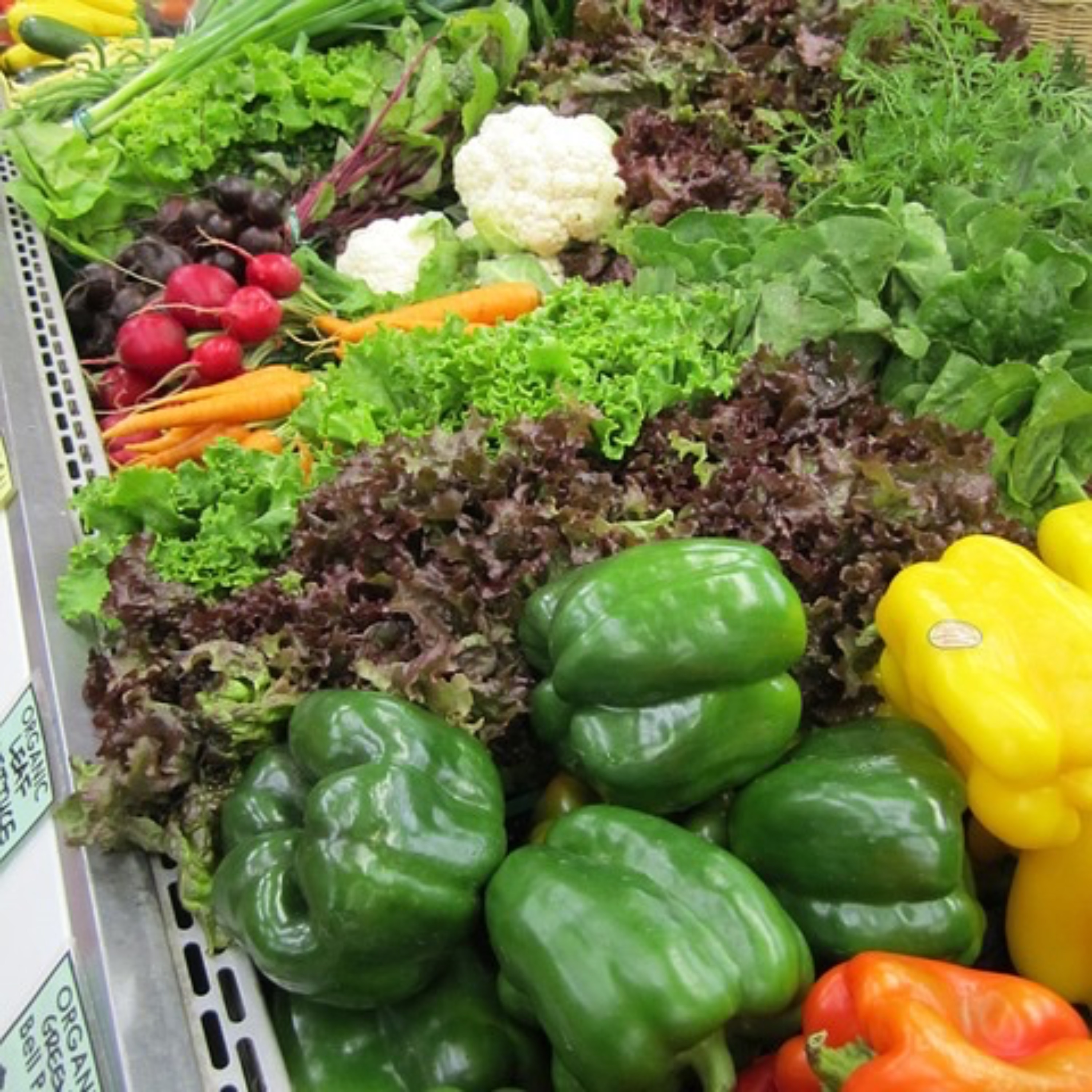
Adventures in Sustainable Living Podcast Episode 165 14 Things You Never Knew About Grocery Store Produce As you likely know by now I am a big fan of having a garden and producing as much of my own food as possible. It is the best way to be certain I am consuming fresh organic produce. Not to mention it saves me a considerable amount of money. Despite the many advantages of having a garden only 1/3 of people on a global basis engage in any sort of gardening activity. Whatever the reason may be, that portion of our global population finds it more convenient to simply purchase what they need. But as it turns out, there are some rather disturbing things about our fresh produce that most people just don’t know. If they did, they would likely have a garden. So stay tuned to E165 14 Things You Never Knew About Grocery Story Produce. Welcome back everyone to the Adventures in Sustainability podcast. This is your host Patrick and this is E165 Things You Never Knew About Your Produce. But, let’s get a couple of things out of the way before we get started. The sustainability question of the week: What are the top five foods that we waste the most? So, stay tuned until the end of the episode and I will give out the answer as well as some tips to reduce your waste of these top five things. Now, the good news story of the week. Or at least the interesting story of the week How many of you know about Dracula Frogs? Yes that is right, there are frogs that have fangs. There are actually over 70 species of Dracula frogs. But just recently a new species was discovered quite by accident. It is smaller than the size of a quarter. This little guy is a stream-dwelling frog in Southeast Asia. It uses its fangs to battle with other frogs over territory and potential mates. But it also uses its fangs to hunt prey such as giant centipedes and even crabs. These frogs were discovered on a steep, rugged island in Indonesia. It is a place of amazing diversity that tends to keep researchers guessing. So, there you have it. There are still undiscovered wonders even in today’s world. And being a very outdoorsy person, discovering new things and new places always gets me excited. Even when I am scuba diving and see a fish I have never seen before I get really excited about it. I would truly encourage everyone to just get outside and see if you can find something you have never seen before. It tends to get you excited and make you care about the natural world. After all, we tend to only take care of the things we care about. That said, let’s get started with this week’s episode. One of the first things I do when I go to the supermarket and head straight to the produce section. I am not sure if this is what everyone does but I think I do this because of the way my supermarket is set up. But it is also because quite often fresh produce is the only thing we need. But despite the rainbow of colors we notice when the produce section is well stocked, there are actually a lot of things most people do not know about supermarket produce. And that is the focus of this episode. And by the end, I am sure you will never look at produce the same. Supermarket Produce is Older Than You Think Since we eat a lot of fruits and vegetables, I often start craving them for snacks. Maybe this is why I go to the produce section first. But, what most people do not know is that the produce may not be as fresh as you think. Let’s take for example apples. How is it that we see all these fresh apples in the supermarket in the Summer when apples are typically harvested in the Fall? It is because as soon as apples are harvested, they are coated with chemicals and placed in long-term controlled storage. And that is where they sit until the next season. By regulating oxygen, carbon dioxide, temperature and humidity apples can stay in storage for up to a year. Farmers sometimes refer to this process as “putting them to sleep.” But what this means is that those so-called fresh apples you purchase could actually be 10 to 12 months old. As it turns out, this is not at all unusual. Lettuce is often washed in a solution of chlorine and preservatives and put in cold storage for a month. Bananas are also placed in storage where the ripening process is chemically controlled. I actually visited a supermarket warehouse once and saw the enormous vaults where bananas are stored and ripened. These vaults are several stories high and hundreds of feet long. Tomatoes can also be stored for up to six weeks in a low oxygen, high nitrogen environment. So much for those fresh off the vine tomatoes advertised at the supermarket which of course is nothing but a market gimmick.

#164 How to Detox Your Home
Adventures in Sustainable Living Podcast Episode 164 How to Detox Your Home Did you know that there are now approximately 150 chemicals in our homes that are connected to allergies, birth defects, psychological disorders as well as cancer. And this is actually old news. I have now met three different people who had numerous health problems, were on multiple medications, and were even given a poor long term prognosis for survival. But instead of accepting what their doctors said they took matters into their own hands. Each of them moved into a rural area, gave up all processed foods, ate only organic, and eliminated all toxic materials from their households. Within a year each one of these people said they were taken off all medications and their physical ailments completely disappeared. And if you want to learn more, then join me for E164 How to Detox Your Home. Welcome back everyone to the Adventures in Sustainable Living podcast. This is your host Patrick and this is E164 which is called How to Detox Your Home. But before we get to that as you know by now in each episode I start with the good news story of the week. But I have also decided to add in one other thing and that is the sustainability question of the week. I will ask this question in the beginning and give the answer at the end of each episode. That said, the sustainability question of the week is this: What unsustainable ingredient is in 50% in all packaged products consumed in the US. Egg fiber, palm oil, sap extract. So stay tuned for the answer at the end of the episode. Now this weeks good news story is about coral. But if you want more information about just how important coral is to our planet, I devoted an entire episode to that topic. So go back and listen to E25 which was called the Keystone Life of Coral. But to quickly sum things up, coral reefs are found in less than one percent of our oceans yet these reefs are home to nearly 25% of all know marine species. They are also important in the regulation of the ocean’s carbon dioxide levels. Our planet is losing coral reefs at an alarming rate mostly due to marine heat waves. But as it turns out, there is good news. Certain species of coral are much more resistant to the affects of climate change than what we previously thought. This is attributed to what is being termed as “ecological memory response.” It has become obvious that some coral have experienced previous heat waves and adapted to that temperature change. And Global Change Biology stated in their article on this subject that the coral microbiomes, meaning the community of bacteria and other organisms living in the reef, could be key to this survival response. This means that some coral species are more resilient to climate change that what was previously thought. A 5 year study that was partly funded by the National Science Foundation, focused on over 200 reefs in French Polynesia. In 2010 starfish and a cyclone destroyed 99% of the reefs. The reefs began to reestablish but then 5 separate severe heat waves between 2016 and 2020 continued to damage the reefs. Despite this, large reef populations continue to regrow due to microbiome resilience, host and microbiome acclimatization and resistance to repeated heat stress. All of this is consistent with the concept of ecological memory. Learning how reef systems adapt is certainly a vital step in conserving this valuable resource in our ever changing world. So, there is your bit of good news for this week folks. And being an active scuba diver that is good news for me because coral reefs are truly a beautiful site to see. Now let’s move on to this weeks episode which focuses on how to detox your home. I would like to start this episode by giving you a few statistics that should be alarming to everyone of us. But this is simply an effort to help everyone realize the importance of what I am focusing on this week. Additionally, what I hope to accomplish in this episode is to give you a deeper realization of how you always need to do your due diligence. You always have to be mindful of the choices you make. This is because so many things in our world are driven by economics and industry profits and NOT a concern over our health and well being as a consumer. This is because the global market for some of the things I am going to discuss here is over $300 billion USD annually. So, let’s get started. As I said above, there are about 150 chemicals found in our homes that are connected to allergies, birth defects, psychological disorders, reproductive disorders and cancer. The average person uses a
#163 How Self Reliance Builds Self Confidence
Adventures in Sustainable Living Podcast Episode 163 How Self Reliance Builds Self Confidence If so often hear the question “What is the world coming to these days?” And while I would contend that the world is not coming to anything other than what the world has always been coming to, I do think that people are more fearful today than ever before. And there are several reasons for this. Part of the challenge in our modern society is that most of us are not taught to think and live independently. Everything we need is easily available and we are completely unsure of what to do if something goes wrong. Consequently, we are loosing our self confidence and that makes us insecure. A big part of being sustainable is being self reliant. A secondary benefit to self reliance is self confidence. So join me for E 163 How Self Reliance Builds Self Confidence. Welcome back everyone to the Adventures in Sustainable Living Podcast. This is your host Patrick and this is E163 How Self Reliance Builds Self Confidence Good News Story of the Week But before we get started on this week’s episode, let’s first talk about the good news story of the week which has to do with sustainable travel. You know I started traveling extensively for work about 15 years ago. That travel landed me in multiple states and countries as I was willing to take on any new adventure that presently itself. At the height of all of that, during one particularly busy year, I was on a plane 57 times. Eventually I grew tired of always traveling for work and simply started traveling for fun. Even with that I started to slow down over time because I became weary of not being at home. At the time of this production, which is December 2023, it has been at least 3 1/2 years since I have been on a plane. Much of that has to do with the pandemic and post pandemic travel difficulties. However, I am finally getting to the point where I really want to travel again. And I am happy to say that I am now armed with a lot of information on how to do that sustainably. The good news is that sustainable air travel is now a part of history. Just recently Atlantic Virgin airlines made aviation history when a Boeing 787 flew from London to JFK international in the US using sustainable aviation fuel manufactured from cooking oil, waste crops and waste food. This type of fuel produces 50 to 70% fewer emissions that standard jet fuel. Air travel accounts for 2.8% of global emission and a 50% to 70% reduction in those emission would virtually eliminate air travel as a priority in the fight against climate change. Other up and coming possibilities is the use of hydrogen cells to power air travel. Presently its use is limited to short flights across Europe. According to industry experts this is just a first step but you have to start somewhere. So there you are folks, just one more way that our world is becoming more sustainable. So now let’s move on to this weeks episode about how self reliance builds self confidence and why that is so important even in our modern world. I truly think that part of the challenge in our modern world is that everything is so convenient, so easily and readily available that we rarely think about cultivating the skills of self sufficiency. The average person never never even thinks about it any more. Most people would ask “Why do I need to know that when I can just look it up on the internet?” But truly it is no one’s fault. It has been a slow progression over time. Our advances in agriculture, science and technology has resulted in almost eliminating the need for physical labor in order for us to survive. We can easily purchase anything and everything we need for our day-to-day living. Why do we need to know how to build a shelter, how to make a camp fire, how to cook without electricity? While this may be true to some degree, little do most people know that the lack of such skills is robbing us of our independence and self confidence. There is no doubt that technology has improved our lives. Most of us find it hard to remember a time when phones, computers, tablets, and other devices were not a part of our everyday lives. Things are easy, fast, convenient, and we truly have to do very little in order to take care of ourselves. If you want, you can even do your grocery shopping without even leaving your couch and even have these items delivered to your door. Most younger generations truly have no concept of how things used to be. For fear of aging myself I am going to admit that I am old enough to remember a time when things were much different. Early in my childhood in northern Georgia there were still houses and farms that did not have electricity. Practically no one had a phone. If you needed to speak with them you had to drive to their farm.&nbs
#162 Tips and Tricks for Container Gardening
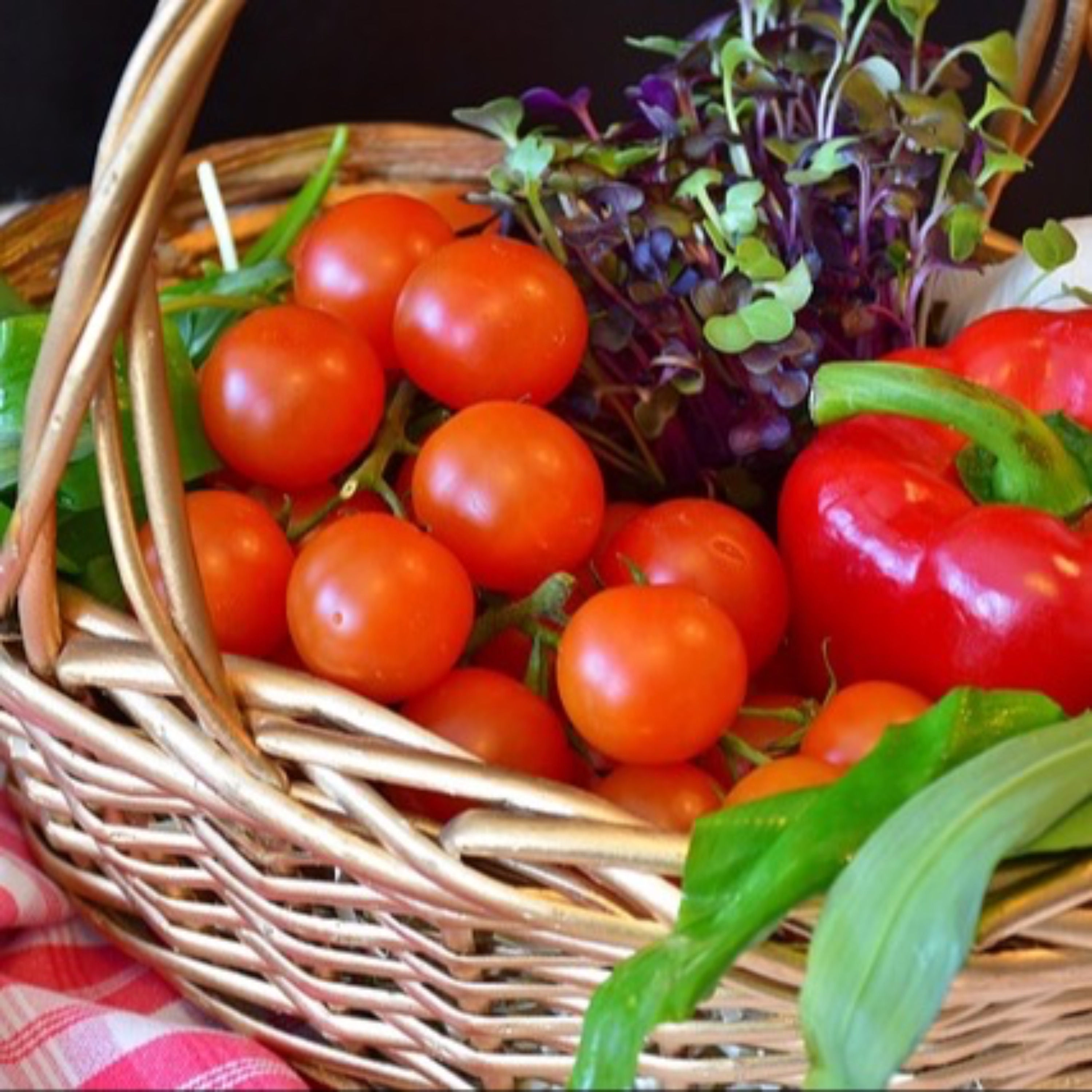
Adventures in Sustainable Living Podcast Episode 162 Tips and Tricks for Container Gardening Being sustainable often means providing a certain amount of things for yourself. Providing for yourself also has the added benefit of increasing your personal independence. A certain amount of independence also means more personal security. And few things provide more security than growing you own food. With the majority of our population now living in urban areas, most people have the impression that they cannot have a garden because they do not have a lot of space. If you are one of those people then think again. It is possible to produce a significant amount of you own food in as little as 6 x 8 foot space by having what is called a container garden. So stay with me for E162 which is called Tips and Tricks for Container Gardening. Welcome back everyone to the Adventures in Sustainable Living Podcast. This is your host Patrick and this is E162 which is called Tips and Tricks for Container Gardening. But before we get along with this week’s episode, let’s first talk about the good news story of the week. We all know how devastating forest fires can be. There have been multiple places around the globe that have been completely destroyed due to forest fires burning out of control, some of which have been related to climate change. Sometimes it is homes and businesses that get destroyed. Sometimes it is natural resources that will take hundreds of years to rejuvenate. It was the same sort of scenario when a lightning strike started a forest fire in the Big Basin’s Redwood State Park. Some of these trees are over 2,000 years old and when a forest fire burned the entire area many scientist feared that the trees would never recover. Unknown to us, these ancient giants had a trick or two hidden up their trunks. Despite their thick barks, which acts like a fireman’s coat, fire quickly spread up the trees and burned all the needles making it impossible for the trees to produce energy with photosynthesis. But within weeks of being charred, these trees utilized deep energy stores in their roots to sprout new growth. It was also discovered that new buds lying dormant under the bark for many years utilized sugars produced from photosynthesis decades ago in order to sprout. Radiocarbon dating on the sugars revealed an average age of 21 years with many carbon molecules being three times older. So the great redwoods are using energy stored decades ago in order to power new growth. This proves that many older trees have evolved to survive fires and many other hazards. These trees will not regrow in our lifetimes but at least we know they will be a joy to future generations. And speaking of growing, let’s move onto to this weeks episode about tips and tricks for container gardening. On a global basis approximately 55% of people live in urban areas. In the United States that is now 80%. Now these statistics have multiple implications but the one the gets my attention the most is that more and more people are now dependent on food that comes from a place they have never seen. We are not only disconnected from nature we are also disconnected from our food supply. Fewer and fewer people make attempts to grow any of their own food. Consequently, fewer and fewer people are familiar with the fact that home grown food is not only more nutritious it also tastes better. I know from personal experience that there is absolutely no comparison between the taste of chicken eggs from our barn versus those purchased in the supermarket. The taste of store bought herbs in no way compares to the remarkable taste of home grown. One of my best travel experiences ever was enjoying a meal in the restaurant in a small town in Bolivia. They had a garden behind the restaurant that supplied them with produce for their meals. When someone ordered something they would simply go out back and pick fresh produce and herbs that were then used to prepare the meal. The taste experience is one that I will never forget. There is truly nothing better than being able to walk outside and pick your own produce fresh from the garden. You know one of my favorite things to do is to simply get creative and find different ways for us to take care of our own needs and be just a little bit more independent. That was one of the reasons for us building the sunroom. We needed more room to start seedlings early in the Spring because our growing season is so short. Now this room is only 200 square feet and is used for multiple things so we have to be efficient with our use of space. So we decided to put in a shelving unit on one wall and experiment with growing vegetables over the winter. I purchased a shelf from a local big box hardware store it is 18

# 161 Don't Pitch It Out! Plant It!
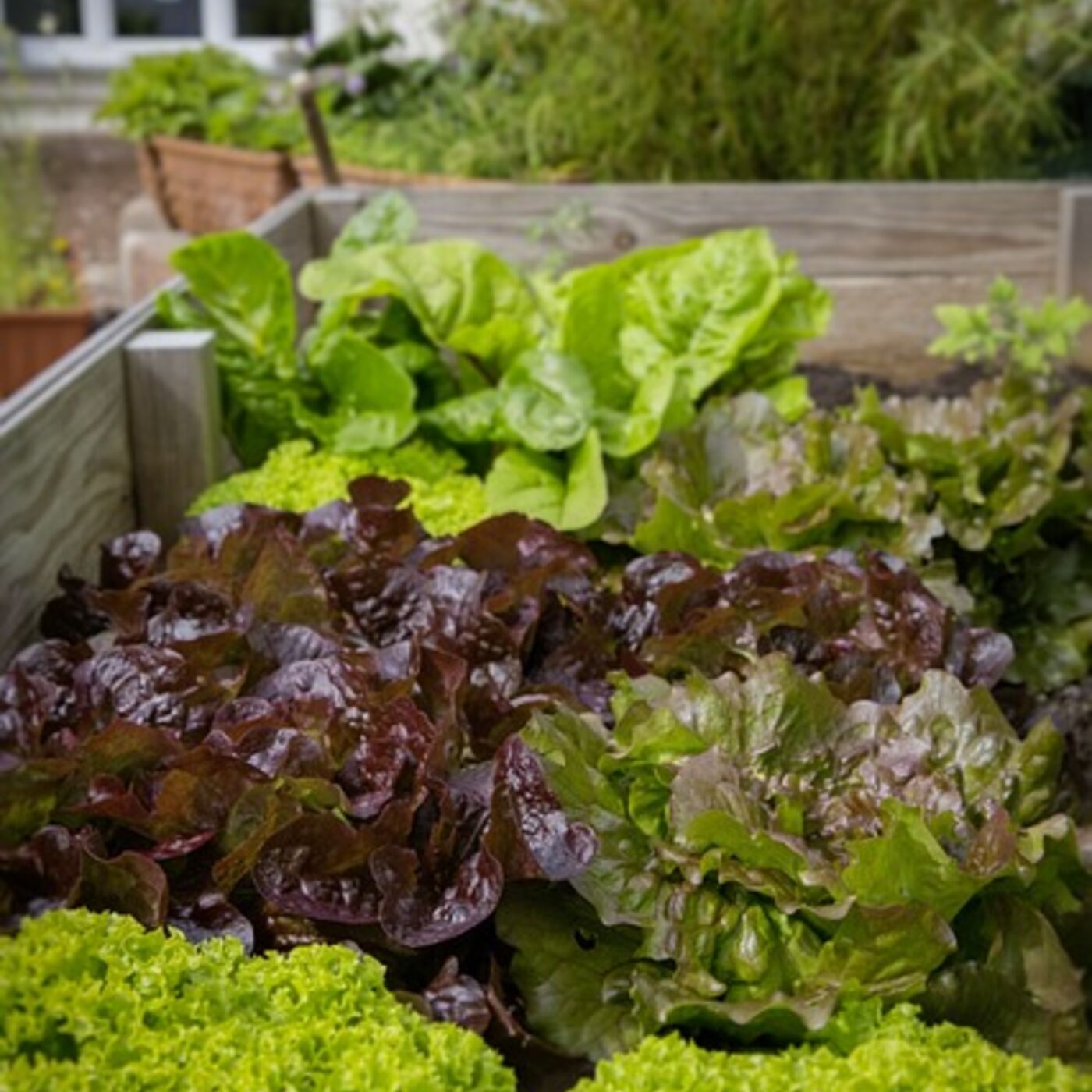
There was a time when I went to the supermarket three to four times per week. Now I go maybe twice a month. It is astounding how much I used to spend on groceries compared to what I spend now. So how exactly did I drastically reduce my supermarket trips and how do I now save so much money. My success is a matter of growing a lot of things at home, having access to organic game meat, and being very careful not to waste anything at all. You may think this success is because we live on a homestead. But, many of the things we do can be accomplished no matter where you live. There are numerous ways to be creative including growing vegetables from scraps that you commonly throw out. So join me for E161 Don’t Pitch It Out! Plant It!
Ep 160How We Are Losing Our Self Reliance and How We Can Get It Back
With working farms in my family self-reliance was not something we talked about because it was just how we lived. Presently because the homestead is somewhat isolated, a certain degree of self reliance is mandatory simply because help is not instantly accessible. But in our modern culture the average person is no longer self reliant nor do they see the need to live that way. But I would contend that despite our modern culture there is even more insecurity than ever because our world changes so rapidly, almost week to week. Consequently, self reliance is needed more than ever. But how did we get away from it? And if it is so necessary, how can we get it back? And that is the subject of this episode. How are we losing our self reliance and how can we get it back. Always remember to live sustainably because this is how we build a better future. Patrick

Ep 159The Rising Demand in Sustainable Food
Adventures in Sustainable Living Podcast Episode 159 The Rising Demand for Sustainable Food As you have likely heard me say before, I do not tend to pay a lot of attention to the trends of society and public opinion. This is because such things swing like a pendulum right along with our values. Additionally most of the time I tend to focus my attention on entirely different things than the typical concerns of the average person. That said, there is one societal trend that certainly has my attention. More and more people are making sustainable choices especially when it comes to their food. This is great news of course. But is this a short term cultural change or a foundational shift in perspective. And that is what I want to explore in this episode. So join me for E159 The Rising Demand for Sustainable Food. Welcome back everyone to the Adventures in Sustainable Living Podcast. This is your host Patrick and this is E159 The Rising Demand for Sustainable Food. But before we get to that, let’s first talk about the good news story of the week. Kenya Has a New National Holiday Kenya, an African nation of 50 million people now has a new holiday. It is called the National Tree Planting Holiday and it is part of the nation’s commitment to slow down global warming. This is part of Kenya’s Landscape and Ecosystem Restoration Program, which aims to plant and grow 15 billion trees by 2032 in order to restore 10.6 million hectares, about 26.2 million acres of degraded landscapes and ecosystems. Citizens are encouraged to plant two tree seedlings and they are even provided trees for free from sponsored nurseries. With a population of 50 million, if everyone planted two trees then that is 100 million trees per year. That said, one of the primary drivers of deforestation is because the country depends on timber and charcoal as fuel for infrastructure and population growth. But the Kenyan governments wants forest cover to reach 30% in order to better conserve biodiversity, sustain livelihoods, protect the environment and improve climate resilience. And yes we can celebrate one more thing that fights global warming and deforestation. Additionally, such a holiday goes a long way to support local businesses. So, this weeks applause goes to Kenya. That said, let’s now move on to this weeks episode where we will discuss the rising demand for sustainable food. As I stated above, I often see cultural values and public opinion swing like a pendulum from one thing to the next. This is why I rarely pay attention to such things. However, there is one trend I see that is worth watching. More and more people are looking for sustainable products especially food. But when I hear that I do question whether this is just another swing of the pendulum or is this a true foundational shift in our values. After all, it is such a foundational shift that is going to be necessary if we are going to move forward into a sustainable future. As you likely know by now, our choices do make changes. This is because our consumer choices drive the market place. For example, I remember a time not too long ago when it was impossible to find any sort of plant based meat substitute in the supermarket. Now those products are common place. That is evidence enough that or choices do make a difference. Almost everyday now we hear something about climate change, natural disasters, greenhouse gas emissions, and how our planet is doomed unless we change our ways. While I do understand when you are bombarded by bad news everyday it is difficult to not become discouraged. It is difficult to not be complacent because we all start to feel as if there is nothing we can do. That is the main reason I now feature a good news story of the week. But, to give you even further good news, there is actually a lot of things that we as individuals can do to make a significant difference. But in order to truly convince you of that I first have to give you the bad news. What we already know is that our food production is inefficient and resource intensive. Approximately 40% of the land on the planet is used for food production. Our food production is responsible for about 37% of our green house gas emissions. But there is another important impact that our food production has that is seldom mentioned but is equally important. What is often neglected in all the daily climate headlines is that water is the single most integral part of the health of our planet. In fact the availability of water makes it the single biggest barrier standing between our planet and the ability to sustain the lives of a population of nine billion people that is expected by 2050. So why is it just as important to talk about water when it comes to our food production? As it turns out, not all foods are created equal. Eve
Ep 158One Nature One Future: The Five Biggest Threats to Our Natural World
Adventures in Sustainable Living Podcast Episode 158 One Nature, One Future The Five Biggest Threats to Our Natural World Most likely you do not know that it was the discovery and manipulation of fire that was the first step in humanity’s separation from nature. Among many other things fire enabled humans to use biomass as a source of fuel. Eventually our comfort level increased to the point that nature was viewed as a resource instead of a place to live. We are now more separated from nature than ever before. The vast majority of us never stop to think about, much less appreciate how every single thing we do is connected to the natural world either directly or indirectly. And yet everyday we go about our business destroying the very thing we depend on. But there is something we can do about it. So join me for One Nature, One Future: the Five Biggest Threats to Our Natural World Welcome back everyone to the Adventures in Sustainable Living Podcast. This is your host Patrick and this is E158 which is called One Nature, One Future: The Five Biggest Threats to Our Natural World. But before we get started, let’s first talk about the good news story of the week. The Indonesian government says that a half million acres of palm plantations will be turned back into forests. What most people do not know is that the oil palm tree can only be grown in the tropic. It produces a high quality oil that is primarily used for cooking in developed countries. However, it is also used in a wide variety of food products, detergents, cosmetics, lipstick and ice cream. In fact, palm oil is found in more than 50% of package products used by American consumers. Oil palm plantations are spreading across Asia, Africa, and Latin America. The problem is that this expansion result in the destruction of tropical forest which serves as vital habitat for many endangered species. But the Indonesian government decided to do something about that problem. The government estimates that a half million acres, or about 200,000 hectares of plantations are there illegally. Their first step is to place a deadline on the submission of legal paperwork proving that the each plantation has been issued proper cultivation rights. Those operating plantations in protected forests or conservation forests will be fined, legally charged, and forced to shut down their operations. The government will then start the reforestation process. Because Indonesia is so vast and parts of it are so isolated, it is one of the most biodiverse countries on Earth. So there you have it folks. One more place is being returned to its natural state and there are truly folks out there working to protect our planet. Now let’s move on to this weeks episode: One Nature, One Future; The Five Biggest Threat to Our Natural World Now I am going to say upfront that what I am going to present in this episode is not going to be a big surprise. But in some respects I feel it is important to emphasize these five things. Talk of climate change, deforestation, and water scarcity is becoming increasingly urgent. And personally I think in the not too distant future the plight of humanity is going to reach a tipping point. As I continue to live on the homestead and continue to make improvements in how we live and what we do to have a sustainable life, I often wonder if anyone that I know has paid attention to what I have been saying for years. And that is you had better learn to take advantage of renewable energy. You had better learn to produce at least some of your own food. You have better learn to live sustainably on as few resources as possible while it is still a choice. Often when I hear the statistic that globally 55% of people live in urban areas and in the United States it is as much as 83%, I am both glad and sad at the same time. I know this is going to sound selfish, but I am glad there are so many people living in urban areas because that means there is so much more of nature for me to enjoy completely on my own. On the other hand I am sad because it is our disconnection from nature that promotes and reinforces the attitude that nature is simply a resource and not just a place to live much less something that we depend on for our survival. And if you happen to be one of the people that simply views nature as a resource, allow me to quote some statistics. As you will see, nature is in fact a fabulous resource. In 2022 the value of the global commercial fishing market reached $257 billion USD. It is expected to reach $350 billion by 2027. Fish provides vital nutrients to over 3 billion people around the globe. Approximately 80% of Americans reported eating fish
Ep 157A Cultural Transition: What the Fossil Fuel Industry Doesn't Want You to Know
Adventures in Sustainable Living Podcast Episode 157 A Cultural Transition: What the Fossil Fuel Industry Doesn’t Want You to Know Throughout human existence there have been several significant transitions which have truly defined our history. Although these transitions have often improved our standard of living such things have always been met with resistance. This is because typically someone has something to lose. Whether it be an individual, a big business or the government, losing your position of advantage is typically troubling. We are now once again on the verge of a significant cultural transition. It is possible for us to have a green circular economy that is sustainable and we have the technology to back it up. But the fossil fuel industry has something to lose and there are a lot of things they simply don’t want you to know. So join me for E157 A Cultural Transition and What the Fossil Fuel Industry Doesn’t Want You to Know. Welcome back everyone to the Adventures in Sustainable Living Podcast. This is your host Patrick and this is E157 A Cultural Transition and What the Fossil Fuel Industry Doesn’t Want You to Know. But before we get into to that, let’s first talk about the good news story of the week. It seems that almost everyday we hear nothing but bad news about how the world is falling apart around us. That is why for me it is so much fun to search the web every week and find good news about our world. And this weeks good news is that we are one step closer to a sustainable circular economy. Scientists at the University of Edinburgh engineered a bacteria to eat plastic and transform it into something useful. These scientists engineered a simple E. Coli bacterial to eat plastic and turn it into something useful. This is fantastic because 80% of the disposable plastics are produced for single use products and we produced mountains of plastic waste every single day. The E. Coli is able to up-cycle PET into adipic acid which is widely used in the cosmetic and pharmaceutical industries. The creation of adipic acid is typically energy intensive and dependent on the use of fossil fuels. Scientists working on a different project engineered a strain of E. Coli that could transform the main ingredient of PET into a vanilla flavoring. The scientist in Edinburgh built on that research to engineer a different strain of the bacteria. As a result, we have a biological process that can up-cycle our mountains of plastic waste from current industrial processes into something useful. We are one step closer to creating a circular economy and avoiding the environmental consequences of landfills and incinerators. So, a round of applause to the University of Edinburgh and their ingenious team of scientists. And now let’s move on to this weeks episode. For decades now, for one reason or another, every five years my life predictably makes some sort of transition. I don’t know what it is. I am not sure if I get bored. I am not sure if I simply start looking for another challenge. Essentially I start questioning if what I am doing at the time still works for me and is giving me the lifestyle I want. Is it going to continue to make me happy? Can I continue to justify what I am doing? And the answers to those questions typically forms the foundation of whatever I transition into. This is why I think I am so well suited for living off the grid. Twenty-seven years into it there still seems to be challenges to overcome. Whether you notice it or not, humanity and our culture goes through periodic transitions. Most of us never realize this because but it just takes a lot longer. These cultural transitions have not only improved our lives but has also changed our relationship with the environment. So, let’s take a look. First Transition: The Use of Fire Perhaps the first major transition that change the course of humanity was the use of fire. The first undisputed archeological evidence of the use of fire by humans dates back 250,000 years. But there is also clear evidence of human habitation in northern Eurasian that dates back 500,000 years. What we do know is that inhabiting this part of the world would have been difficult without fire. The domestication of fire was a very important prerequisite for the use of biomass for energy, and of course much later the use of fossil fuels. This was truly the beginning of humanity changing the world into much of what we see today. The use of fire transformed many things: Fire made it possible to clear vegetation and also improved hunting capabilities. It also served as a protection mechanism from large predators. Fire made it easier for humans to live in colder climates. Cooking food increased the palatability and digestibility of m
Ep 156Ten Steps to Net Zero: Can We Do It?
Adventures in Sustainable Living Podcast Episode 156 Ten Steps to Net Zero: Can We Do It? In the last two episodes I talked a lot about how as a global community we are over stepping the planetary boundaries that are responsible for our very survival. Hopefully by now we all realize the need to change a lot of the basic things in our lives that we take for granted. In other words, how we run our lives on a day to day basis. Part of the discussion about those changes needs to include the concept of net zero. Think of this in terms of putting back as much as you take out, replacing the resources that you use, minimizing the impact of every aspect of your lives. That is what we have to do to reach net zero. So stay tuned for E156 Ten Steps to Net Zero: Can We Do It? Welcome back everyone to the Adventures in Sustainable Living Podcast. This is your host Patrick and this is E156 which is called Ten Steps to Net Zero: Can We Do It? Good News Story of the Week But before we get started lets once again talk about the good news story of the week. When we were living and working in Saint Kitts, it was relatively common to see mongoose on the island. When I inquired as to how that came to be I was told that the island used to be overrun by snakes and rats which had been introduced as an invasive species. Since a lot of the island is covered with jungle, the pests were impossible to control. Thus the introduction of the mongoose. But this is a similar story from all over the world. The United Nations estimates that global financial losses due to invasive species is approximately $423 billion USD annually. Furthermore these damages and losses quadruple every decade. In the US alone, estimates of annual damage is more than $21 billion. But the bottom line is that the introduction of invasive species increasing year to year and is mostly the result of global trade. I guess this is one of the costs of our global economy. The good news is that some places around the world are working on a solution. There is a tiny uninhabited British island in the eastern Caribbean that used to be completely overrun by mice. But just recently it has been almost completely restored to a pre-colonial state of diversity. The island is called Sombrero, and has become a fantastic case study on how to completely eradicate an invasive species. These isolated ecosystems make them particularly vulnerable to invasive species. The mice on Sombrero were preying on native reptiles and nesting seabird eggs. Additionally, some of the endemic species found no where else were almost extinct. It is interesting to note that although the Caribbean islands only make up a small percentage of the land mass on Earth, they rank in the top three for biodiversity. But a conservation foundation launched a re-wilding project, eradicated the mice, and populations started to rebound in only 2 years. After the mice were gone the Anguillan National Trust began a replanting campaign in order to restore native vegetation. And as a note of even better news this project is just one of more than 30 off shore restoration projects by Fauna and Flora and Re:wild. And yes this is just another way in which small groups are working to restore our planet and humanity is taking one more step toward sustainability. Now let’s move on to this weeks episode. In my opinion, it is interesting to sit back and observe how the concerns of society swing back and forth like a pendulum. For example, our concerns over environmental issues seem to change from time to time. In the 1950s and 1960 people were mostly concerned about protecting land and allowing nature to remain untouched. In the 1970’s we were more focused on pollution and decreased air quality. In the 1980s we heard a lot of industrial pollution producing acid rain. And in the 1990s we finally started to see significant environmentally favorable policy changes. The bottom line is that such changes in what we are concerned about as a culture makes it difficult to know what to focus on and what is truly important. Further more it doesn’t help that we are constantly bombarded with so much information we can hardly tell what is true and what is false or misleading information. For example, I remember a time when there was a campaign against eating eggs because they were considered unhealthy. When margarine was first introduced to the market as an inexpensive substitute for butter there was an enormous advertising and even a political campaign stating how toxic it was simply because those that had the hedge on butter production did not want any competition. But as far as the environment and the state of our planet is concerned now-a-days we are constantly bombarded with talk about climate change and how important it is to reach net zero. And that is t

Ep 155Nine Planetary Boundaries Part Two: Living Beyond the Brink
Adventures in Sustainable Living Podcast Episode 155 The Nine Planetary Boundaries Part Two Living on the Brink Welcome back everyone to the Nine Planetary Boundaries Part Two. In last week’s episode we discussed the nine boundaries that we as humans need to operate within in order to live sustainably and thrive. It is becoming painfully obvious that due to our rapid population growth and our insatiable appetite for resources, that we are pushing the limits of what our planet can cope with. We have actually crossed the theoretical barrier for 6 of our nine boundaries. That being said, what can we do to avoid a disaster. As it turns out, there are actually a lot of things that we can do. But the question is whether humanity as a global community will respond appropriately. So join me for part two of the nine planetary boundaries which is called Living Beyond the Brink. Welcome back everyone to the Adventures in Sustainable Living podcast. This is E155, which is part two of a discussion about the nine planetary boundaries and this episode is called Living Beyond the Brink Good News Story of the Week But first let’s start out with the good news story of the week. Did you ever think that wild mushrooms would help to preserve trees? Well that is what is happening in Zambezie province of Mozambique. In this province the locals harvest wild mushrooms as part of normal diet. Conservationist are working with hundreds of local women to commercialize the mushroom harvest with the bigger strategy to protect the forests surrounding Gile National Park. The mushrooms are harvested in a 55,600 hectare, or about 137,000 acre buffer zone around the park. After harvesting the mushrooms are cleaned, dried, and transported about 2,000 kilometers, or about 1,200 miles to the capital city and sold in the market. This economic incentive adds an additional reason to protect the trees. The locals have learned that allowing the trees to stand means a bigger mushroom harvest. The project is in it’s third year and there is a clear trend for reduction in tree cutting. Protecting the buffer zone around the park is important for rebuilding wildlife populations that were wiped out in the civil war that lasted form 1977 to 1992. So there you have it. Yet another sustainable step in rebuilding and protecting our world. Living Beyond the Brink Now the focus of last week’s episode was to first introduce this concept of the nine planetary boundaries. Johan Rockstrom and his team of scientists managed to identify nine essential processes needed to maintain our atmosphere, oceans, and ecosystems in the delicate balance that has allowed humanity to thrive for thousands of years. Not only that but this team managed to quantify those boundaries. Now you have to understand that the estimates on these limits to our planetary boundaries that outline specific tipping points are theoretical. The original 2009 report concluded that humanity is already living outside the safe operating zone of at least four planetary boundaries: climate change, biodiversity, P and N cycles and land use. Since that time it has become obvious that we have actually exceeded 6 of the nine planetary boundaries with no sign that humanity is willing to change our course. It is at the same time interesting, and unfortunate, that the very hallmarks of our extraordinary success, things such as agriculture and industrialization, are now fundamentally altering many of the very Earth systems responsible for keeping us alive. Furthermore, of the six boundaries that we have already passed, climate change and biosphere integrity are consider core planetary boundaries. What this means is that either one of these boundaries on its own could change Earth’s trajectory and endanger humanity. There is enough science today to show that climate change alone could result in our ultimate demise. Similarly, if we continue on our path of mass species extinction, we will reach a tipping point where our entire ecosystems will collapse. What is even more disturbing is that just like any other local ecosystem, our entire planet’s operating systems interact with one another to form feed back loops. All of our nine planetary boundaries reinforce one another to create stability. Likewise, if any one boundary passes a tipping point it can negatively impact another boundary which in turn influences yet another. In other words, once the stability of Earth’s safe operating systems is disturbed it can tend to promote even further detrimental changes. For example, climate change affects ocean acidification which in turn affects biosphere diversity. Fresh water usage affects climate change as well as biodiversity. Land use changes promotes climate change which in turn affects biodiversity, ocean acidification, etc. The disruption o
Ep 154The Nine Planetary Boundaries: A Safe Operating Space for Humans
Adventures in Sustainable Living Podcast Episode 153 The Road to Seven Billion: Should We Limit Human Population? I bet you never really thought of an animal as being a consumer? And yet they are. They graze or hunt on a place, eat and consume what they need or what is available and then they move on. But the key word here is available resources because that is an important factor that keeps a given population in balance. It is no secret that humanity is consuming resources at a far greater rate than what can be naturally regenerated. It is also no secret that we are truly at a tipping point. Our population continues to grow at an unprecedented rate. But to keep things in balance there has to be an end point. So join me for E153 where I am going to discuss a very controversial topic about limiting the human population. Welcome back everyone to the Adventures in Sustainable Living podcast. This is your host Patrick and this is E153 which is called The Road to 7 Billion/Should We Limit Human Population? Now you must know that in this episode I am going to touch on a very sensitive subject. This is a controversial and highly opinionated topic that pushes the limit of impinging on people’s basic rights. But, I also think this is some thing we truly need to consider. But before we get to that let’s first start out with the good news story of the week, which come out of Norway. Good new story of the week Norway Re-wilds Arctic Coal Mining Town in the Largest Operation of It’s Kind, Give New Hunting Ground for Polar Bears Hunting Ground for Polar Bears In the largest project in its history, the Norwegian government just completed an enormous re-wilding project on the island of Svalbard. This island was the site of coal mining operations for over 100 years. At its peak, this industrial community had a power station, wharf, water supply and everything that was needed to house the 300 workers needed to run mining operations. The Norwegian parliament decided in 2017 to wind down operations in order to clear the area and return it to its natural state. The project was designated to remove all traces of human activity since mining began in 1910. The only thing to remain intact were cultural monuments and buildings from before 1946. The project had a budget of 2.5 billion Norwegian krone, which is approximately $230 million USD. However, it was completed for $83 million USD. Polar bears, deer, seabirds, as well as other wildlife are now moving back into the area. The completion of this project is a perfect example of a long-term and consistent Norwegian policy to preserve wilderness areas on Svalbard. The island now has 7 national parks and 23 nature reserves making it one of the most well preserved island ecosystems in the Arctic. The restoration of this ecosystem is a great example to the rest of the world of what is possible. If you want to read the original article I do have a link in the transcript of this episode. Go to the original article here. Okay, now let’s move on to this weeks episode which is called The Road to 7 Billion/Should We Limit Human Population? Now I know this is going to be a very controversial, highly debated subject. But I think it is worth discussing because many experts believe that the human race, and our global community, is quickly approaching a tipping point. With all I have learned over the past couple of years of researching topics for this podcast I tend to agree. But I also truly believe that we are not past the point of no return. However, we are past the point of easy. That means if we are going to build a sustainable future we have some difficult decisions to make. At this point I want to do a very quick review of something I covered in E99 Earth Overshoot Day, which is a direct reference to our over consumption of resources. Now to reduce this concept to a personal level, you have to compare our consumption of resources to your monthly budget. The concept of living within a budget means that your monthly expenses stay with the confines of your monthly income. That is called living within your means. If you cannot live within your means, you are living with a financial deficit every month. If you do this long enough you will go bankrupt. Very similar to that the Global Footprint Network compares a population’s demand for resources against what their ecosystem can supply. According to the Global Footprint Network, if a population’s demand for ecological assets exceeds their supply, they have to import goods and services because they have an ecological deficit. They also have to liquidate their assets, which means over fishing, harvesting timber at a rate that exceeds the forest’s ability to regenerate. We also have to increase carbon emi
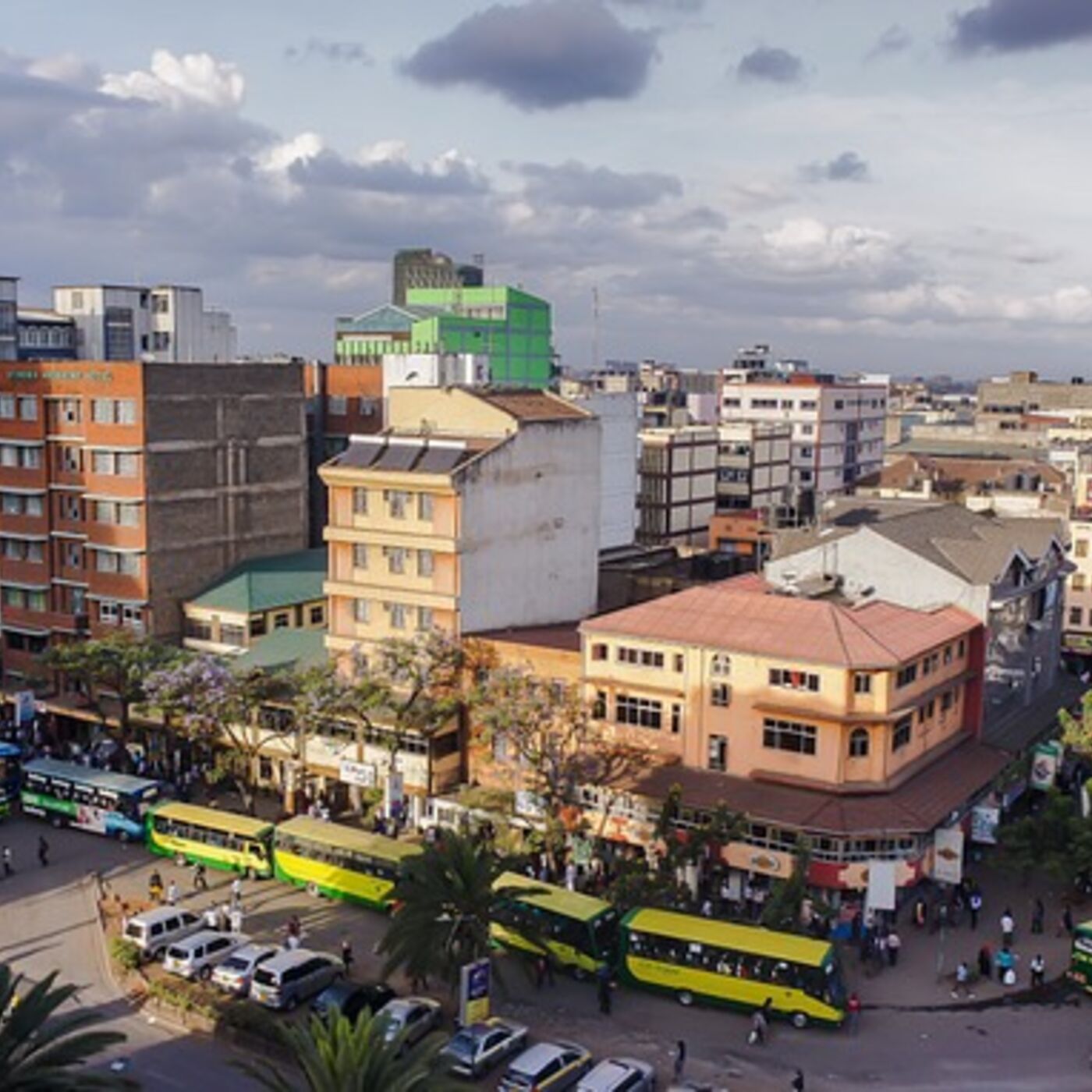
Ep 153The Road to 7 Billion: Should We Limit Human Population?
Adventures in Sustainable Living Podcast Episode 153 The Road to Seven Billion: Should We Limit Human Population? I bet you never really thought of an animal as being a consumer? And yet they are. They graze or hunt on a place, eat and consume what they need or what is available and then they move on. But the key word here is available resources because that is an important factor that keeps a given population in balance. It is no secret that humanity is consuming resources at a far greater rate than what can be naturally regenerated. It is also no secret that we are truly at a tipping point. Our population continues to grow at an unprecedented rate. But to keep things in balance there has to be an end point. So join me for E153 where I am going to discuss a very controversial topic about limiting the human population. Welcome back everyone to the Adventures in Sustainable Living podcast. This is your host Patrick and this is E153 which is called The Road to 7 Billion/Should We Limit Human Population? Now you must know that in this episode I am going to touch on a very sensitive subject. This is a controversial and highly opinionated topic that pushes the limit of impinging on people’s basic rights. But, I also think this is some thing we truly need to consider. But before we get to that let’s first start out with the good news story of the week, which come out of Norway. Good new story of the week Norway Re-wilds Arctic Coal Mining Town in the Largest Operation of It’s Kind, Give New Hunting Ground for Polar Bears Hunting Ground for Polar Bears In the largest project in its history, the Norwegian government just completed an enormous re-wilding project on the island of Svalbard. This island was the site of coal mining operations for over 100 years. At its peak, this industrial community had a power station, wharf, water supply and everything that was needed to house the 300 workers needed to run mining operations. The Norwegian parliament decided in 2017 to wind down operations in order to clear the area and return it to its natural state. The project was designated to remove all traces of human activity since mining began in 1910. The only thing to remain intact were cultural monuments and buildings from before 1946. The project had a budget of 2.5 billion Norwegian krone, which is approximately $230 million USD. However, it was completed for $83 million USD. Polar bears, deer, seabirds, as well as other wildlife are now moving back into the area. The completion of this project is a perfect example of a long-term and consistent Norwegian policy to preserve wilderness areas on Svalbard. The island now has 7 national parks and 23 nature reserves making it one of the most well preserved island ecosystems in the Arctic. The restoration of this ecosystem is a great example to the rest of the world of what is possible. If you want to read the original article I do have a link in the transcript of this episode. Go to the original article here. Okay, now let’s move on to this weeks episode which is called The Road to 7 Billion/Should We Limit Human Population? Now I know this is going to be a very controversial, highly debated subject. But I think it is worth discussing because many experts believe that the human race, and our global community, is quickly approaching a tipping point. With all I have learned over the past couple of years of researching topics for this podcast I tend to agree. But I also truly believe that we are not past the point of no return. However, we are past the point of easy. That means if we are going to build a sustainable future we have some difficult decisions to make. At this point I want to do a very quick review of something I covered in E99 Earth Overshoot Day, which is a direct reference to our over consumption of resources. Now to reduce this concept to a personal level, you have to compare our consumption of resources to your monthly budget. The concept of living within a budget means that your monthly expenses stay with the confines of your monthly income. That is called living within your means. If you cannot live within your means, you are living with a financial deficit every month. If you do this long enough you will go bankrupt. Very similar to that the Global Footprint Network compares a population’s demand for resources against what their ecosystem can supply. According to the Global Footprint Network, if a population’s demand for ecological assets exceeds their supply, they have to import goods and services because they have an ecological deficit. They also have to liquidate their assets, which means over fishing, harvesting timber at a rate that exceeds the forest’s ability to regenerate. We also have to increase carbon emi
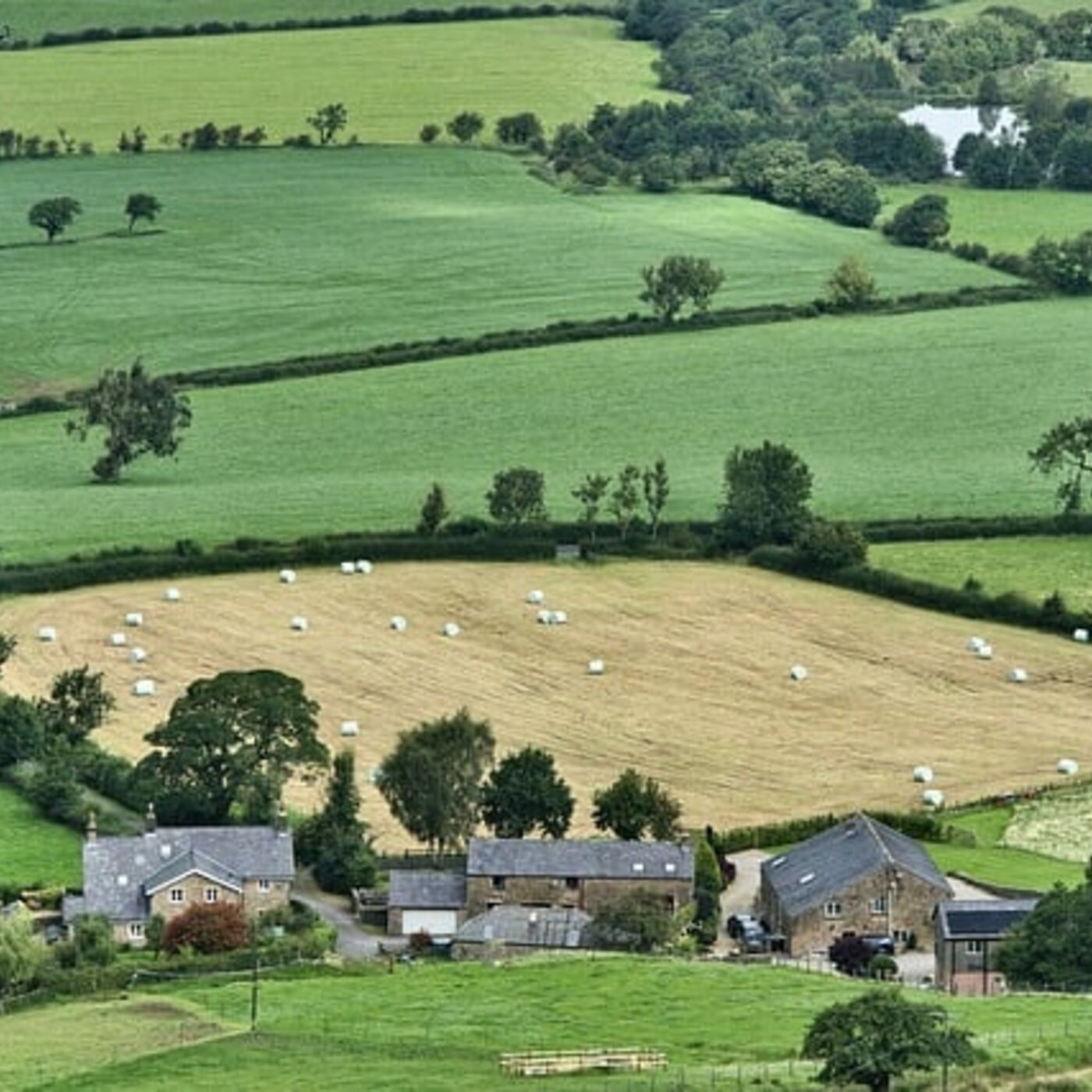
Ep 152Regenerative Farming Explained
Adventures in Sustainable Living Podcast Episode 152 Regenerative Agriculture Explained Did you ever think that maybe we should have left things alone? Surely you have heard the phrase, “If it’s not broken, don’t fix it.” These are the sorts of things I think about and the sorts of questions I ask when I look at many things going on in our modern world. Granted our advances in technology have proven to be to our advantage in many ways. But there is a price to pay for that convenience. And such is the case with farming. In last weeks episode I discussed the reason we have factory farming. But at the same time we are destroying the natural foundation of the things we need to survive. This week I am going to take a look at something entirely different, an alternative to factory farming. So join me for E152 Welcome back everyone to the Adventures in Sustainable Living Podcast. This is your host Patrick and this is E152 which is called Regenerative Agriculture Explained But before we get to that let’s first talk about the good news story of the week. Good news story of the week You may not know this but cotton is by far the most popular fabric in the world. The advantage is that it is also all natural, biodegradable, and renewable. The challenge with cultivating cotton is the high use of pesticides. Run off from these pesticides, as well as fertilizers, and minerals from cotton fields contaminates river, lakes, wetlands and underground aquifers. But, there is good news. Over the last 10 years, the cultivation of cotton has become far more sustainable. The Better Cotton Initiative, which is a non-profit governance group, promotes better standards in cotton farming practices in 21 countries. Just recently they published their annual impact report which highlights significant progress in their pilot projects in India. Better Cotton tracked the performance of Indian farmers from 2014 to 2022 and found the overall pesticide use had decreased by 53% and water use had dropped by one-third. Additionally, almost one million farmers saw their cost of production decrease by almost 16%, which means their lives have improved at least from a financial prospect. And so the world takes another small step toward sustainability. And I thought that story was appropriate considering I have focused the last couple of episodes on agriculture and food production. Now let’s move on to this weeks episode which focuses on regenerative agriculture. From what we do know about the evolution of civilization at one point in time people existed in small nomadic bands and survived by hunting and gathering. It is generally agreed that humans began farming about ten to twelve thousand years ago. Although there does not appear to be a specific time line, the domestication of animals was approximately in the same era. The domestication of animals and the development of agriculture is what helped to ensure a stable food supply. That said, it is worth noting that at this point in history it is estimated that our global population ranged somewhere between 2 million and 15 million people. Even though global population began to increase rapidly, for hundreds of years agriculture was essentially on a small, local scale. However, the Industrial Revolution brought about great change in many ways including the production of food. New advances such as the seed drill and the Dutch plow increased productivity. It was the rising population and the availability of abundant cheap labor that drove the Industrial Revolution. More people began seeking jobs in factories. Fewer men focused on agriculture. At the same time the mechanization of farming, the production of chemicals, pesticides and the invention of large tractors made it possible to farm larger tracts of land with a much smaller work force. Modern industrial agriculture is simply the consequence of both social and technological changes that began in the 1800s much of which was the result of the Industrial Revolution. The end game was simply to increase crop yields for a growing human population. And that was accomplished by applying fossil fuel energy, mechanization, advanced crop breeding methods, and the use of artificial compounds such as fertilizers and pesticides. And simply for the sake of reference, the population of the world right in the middle of the Industrial Revolution was approximately one billion people. But what I have a tendency to do is look at our modern world and think back at how things were when I was growing up. Our lifestyle certainly involved a lot of physical labor due to the work that was needed to keep the farm operating properly. But thinking back it always seemed very simple and basic although not always easy. Maybe my perception is the result of be
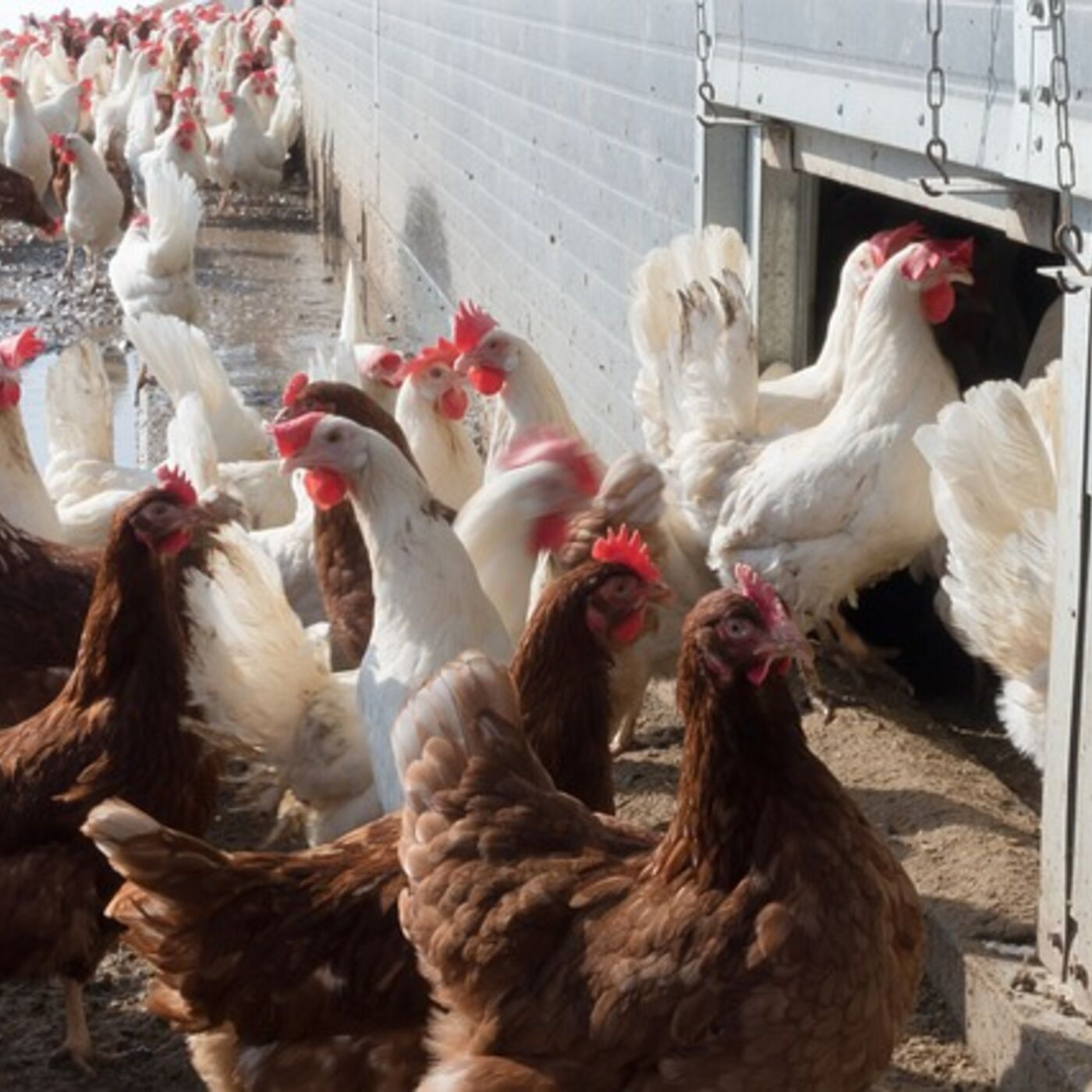
Ep 151Meat Money: Why Do We Still Have Factory Farming?
Adventures in Sustainable Living Podcast Episode 151 Meat Money: Why Do We Still Have Factory Farming? In last weeks episode I discussed how important it is for us to know the origin of our food. Such knowledge empowers us to not only make healthier choices about what we eat but also to make choices that supports a sustainable food supply. That said, far too many of us are still completely disconnected from how our food is produced and what happens in order for us to have food on the shelves at the supermarket. This week I am going to continue that trend from a completely different angle. What I want to do is take a look at factory meat production, how it came into existence, the pros and cons and, like it or not, why we still need it. So, please join me for an informative discussion which is called Meat Money: Why Do We Still Have Factory Farming? Welcome back everyone to the Adventures in Sustainable Living Podcast. This is your host Patrick and this is E 151 which is called Meat Money: Why Do We Still Have Factory Farming? But before we get to that I want to talk about the good news story of the week. And this time it is something health related. And this good news story is about Alzheimer’s Disease. Now this story touches me perhaps more than most because my mother died from Alzheimer’s Now there are a number of things we can do to reduce your risk of Alzheimer’s. Things such as prevent and manage high blood pressure, maintain a healthy body weight, be physically active, quit smoking, and avoid excessive drinking, among other things. But, researchers recently found that regular exercise is directly related to a reduction in amyloid deposits in the brain that are responsible for Alzheimer’s. Exercise causes the release of a specific hormone that reduce amyloid deposits. This discover may very well help to prevent the disease and help some of the 10.7% of people that already have Alzheimer’s. So I think it is interesting that yet again it is found that there is something we can incorporate into our lives that costs nothing, has little if any impact on the environment, is sustainable, healthy, and prevents disease. And that is regular exercise. So, let’s move along to this week’s episode that focuses on factory farming. Many people around the world celebrate the holidays with food. At least in the US, we spend $14.2 billion per year. Nearly 46 million turkeys are consumed at Thanksgiving. On average we consume 7,000 calories per person on holidays and 6,000 calories in snack foods per person on super bowl Sunday. But have you ever bothered to ask yourself where all this food comes from and how do we get it? It would be a sign of significant progress if most of us knew the answer to that question. While 70% of us say purchase decisions are affected by how food is grown and raised, 72% of us know nothing or very little about farming and ranching. Furthermore most people in the U.S. have never visited a farm, 54% of us have never seen a cow face to face, petted a pig, or held a chicken. This distance from the production of our food helps to promote the belief among the public that animals on farms are cage-free, peacefully graze in meadows, and are farmed in a sustainable manner. But the reality for the vast majority of animals on farms is much, much different. How We Get Fed? Have you ever ask yourself where all your food comes from. Have you ever ask yourself how our nation gets fed? Well, let’s first get a perspective on this by looking at a few numbers. Globally humanity consume 74 billion chickens per year. In the US we consume 8 billion per year. The Brits consume around 900 million. And the Australians consume 600 million annually. Globally we consume 130 billion pounds of beef annually. In the US we account for 30 billion pounds of that. The Brits consume 2.2 billion pounds or about 1 billion kg. The Australian consumes about 1.2 billion pounds or about 5.5 million kg. Global 114.8 million tons of pork is produced. In the US we consume 29.5 kg per capita. In the UK it is 21.1 kg per capita. And the Aussies consume 24.2 kg per capita. In other words, that is a whole heck of a lot of meat. And this does not even account for other sources of meat such as lamb, goat, turkey, buffalo, and maybe even rabbits. Additionally we consume 143.8 million tons of sea food annually. So, where does all this food come from and how do we get it? The answer to that is factory farming. What Is Factory Farming? Factory farming is one form of intensive industrialized agriculture that is widely used as a means of maximizing efficiency in animal production. This typically means thousands of animals
Ep 150Have You Ever Heard a Cow Moo?
Adventures in Sustainable Living Podcast Episode 150 Have You Ever Heard a Cow Moo? Self sufficiency and sustainability are hot topics these days. But when I was growing up in Tennessee and Georgia there were two working farms in my family. We never really spoke about self sufficiency or sustainability because it was simply how we lived day to day. In fact, I have no memory of eating store bought meat until I moved away from home at the age of eighteen. Yet in our modern culture, a surprising number of people have no idea where their food actually comes from and how it is produced. Yet this basic knowledge is vital if you want to live a healthy sustainable lifestyle. So in this episode, I am going to explore the reasons why it is important to know the origin of your food. So stayed tuned for E150 which is called Have You Ever Heard a Cow Moo? Welcome back everyone to the Adventures in Sustainable Living podcast. This is your host Patrick and this is E150 which is called Have You Ever Heard a Cow Moo? As promised folks, I am going to adhere to my idea of bringing you a bit of goods news at the beginning of each podcast episode. This bit of good news, which is called Join the Goodness, is brought to you by the Good News Network, which can be found at goodnewsnetwork.org. And it focuses on the top 20 things that make people happy. As you can likely guess with all that is going on in the world these days more and more people are finding it difficult to be happy. In response to that the cheese company in London called Babybel sponsored a survey that focused on the top 20 things that make people happy. In the survey they found that nearly half of Londoners said they could use a pick me up. In fact, 83% of their respondents said they actively avoided negative news because it made them feel emotionally drained. The survey polled 2,000 adults. That survey found that 45% said a nice compliment is guaranteed to boost their mood. Additionally, laughing so hard that you cry also rated high. So, some of the top rated things that make people happy are: a good night’s sleep, a sunny blue sky, receiving a compliment, getting a moment to yourself, eating your favorite snack, helping an elderly person with something, and pets being happy to see you. In response to the survey, this company created the Goodness Bench inside King’s Cross train station in London as part of their “Join the Goodness Campaign.” It is designed to spread positive news stories and every time someone sits on the bench they donate to their longstanding charity partner, Comic Relief. If want to see the whole list I have included a link in the transcript to the original article published on The Good News Network. And the best part is that all the 20 things on this list do not cost any money. So, keep in mind that if you want to spread a little good cheer this week, giving someone a compliment is high on the list. The Top 20 Things That Make People Feel Good Well that is your good news story for this week. Now, let’s dive into this weeks episode. If you have been following me for sometime it is no secret that I grew up with two working farms in the family. I was learning the basics of animal husbandry before the age of seven and I was driving the farm truck by the age of twelve. We always kept a large garden. What we could not grow ourselves we purchased from the local farmer’s market. And it seemed as if home canning was a never ending project. Needless to say, we were closely connected with where our food came from and how it was processed. We essentially live off of natural basic ingredients that were either produced on the family farm or another local farm. I have no memory of eating meat from the supermarket until I move away from home at the age of eighteen. I am happy to say that I retain many of those same habits in my life even today. We have a 400 square foot greenhouse. We raise turkeys and chickens. Home canning is a regular thing. We get 90% of our meat from a local ranch, which is elk meat. We get a whole animal at a time and do all of the processing at home. The other 10% of our meat is from the supermarket. So once again, I am closely connected with the source of a great deal of our food. But this is simply not the case for the majority of people in modern society. Presently in the United States only 2% of our population lives on a farm or ranch. What that means is 98% of our population depends on food that comes from a place that most people have never seen. In a survey conducted by an organization called Parked in Paradise, 54% of people surveyed have never seen a cow in person. Furthermore many American adults have the wrong idea about

Ep 149A Time of Gratitude
Adventures in Sustainable Living Podcast Episode 149 A Time of Gratitude After the last two episodes where I gave you nothing but good news about our world, I have decided to continue on that trend. I have often said that if everyone in the world could come home to a place of peace and quiet and have the ability to just mentally shut down, the world would be a much happier place and people would be a lot less angry. There are a number of things that have been proven to increase our happiness and well being and one of those things is gratitude. Taking a little time everyday to make a short list of the things that you are grateful for tends to focus your mind on the positive and away from all the negative things going on in our world. And to be true to that, this episode is called A Time of Gratitude. Welcome back everyone to the Adventures in Sustainable Living podcast. This is your host Patrick and this is E149 which is called A Time of Gratitude. Now before we get started on this weeks content, I am going to keep true to my promise to bring you one bit of good news every single week. And this week’s good news story is about how the Brits crowd sourced a national Ancient Tree Inventory. Similar to many other places in the world, much of the woodlands that covered lower Britain had been cleared even from Neolithic times. But waves of immigration, warfare and industrialization speeded this process. But despite this, there are hundreds of thousands of trees on the British isles that are hundreds of years old. The Ancient Tree Inventory was organized by a non-profit called the Woodland Trust in order to coordinate conservation, environmental activism and scientific research. Anyone familiar with an ancient tree could record and share its existence with the country. Each tree was measured for its size and it was also noted for the number of species living on or inside it. Now what is interesting to note is that ancient trees as fundamental to the health of our worldwide forested ecosystems. Studies have shown that when a forested ecosystem loses too many of the older trees the overall health of that ecosystem rapidly declines. So, hats off to the Brits for their love of trees and helping to maintain the health of an ancient ecosystem. Now let’s get started on this weeks episode. Now as most of you know I have been living off the grid for over 25 years. It all started with finding the kind of land I had always wanted and the fact that it was isolated enough that modern amenities were simply not available. Consequently, I had to get very creative with how I was living. I will be the first to admit that initially my lifestyle was extremely challenging. SO challenging at times that I would leave the property and venture off to work in southern Arizona for the winter and just take a break. Obviously I did not get discouraged because 25 plus years later I am still there. We are now at the point where we are in control of a tremendous amount of our own resources. Granted we go about things a bit differently than most people but it is there things we do that creates a certain amount of personal security. Despite the fact that it took a tremendous amount of physical labor and financial investment to make the homestead what it is I do forget at times just how fortunate we are to live where and how we do. Occasionally I am reminded of how I should be grateful for the things we have and that is just what happened yesterday. And it is that reminder that was the inspiration for this episode. So what I am going to focus on in this episode is a list of the various things in our lifestyle that I am completely grateful for. In other words, I am offering my gratitude for the life we have in the hopes it will inspire others to develop such a lifestyle. The Peace and Quiet By far one of the best things about where we live is the peace and quiet. For the most part when we are home we almost never hear a man-made sound unless a plane flies over. This provides an incredible get-away from the total madness of the Denver area. It provides a way for me to get grounded again and emotionally recharge after an insanely busy work week. Because it is so quiet it is similar to being in a state of meditation. Such conditions are a great way to relieve stress, get focused, and spend time doing the things that I love. During the time that I have lived at the cabin, the population in Colorado has increased by more than 2 million people. Most of that growth has been in the area that is referred to as the Front Range. This is simply the geographic area along the eastern margin of the Rocky Mountains, running from the northern state line wit

Ep 148Ten More Stores of Good News About Our World
Adventures in Sustainable Living Podcast Episode 147 Ten Stories of Good News About Our World More than likely most of you know that I do not watch network television, I do not spend a lot of time on social media platforms, nor do I pay a lot of attention to the news. Constantly hearing about tragic events, inflation, the next weather related disaster, violence, and racial injustice, is not likely to put me in a good frame of mind. Consequently, filtering what I hear about everyday is my way of increasing my quality of life. That being said, I do not completely ignore the world around me. But when I do pay attention to it seems as if it is always bad news. So, for the next couple of episodes I am going to focus on giving you some good news about what is happing in the world. So stay tuned for E147 which is call Ten Stories of Good News About Our World. Welcome back everyone to the Adventures in Sustainable Living Podcast. This is your host Patrick and this is E147 which is called Ten Stories of Good News About Our World. Last weeks episode was about 10 tips to help you focus on the good things in life. So I thought it was appropriate to follow up with an episode or two that focused solely on the good things about our world. I want to do this just to provide evidence that there are good things going on despite all the bad news that we hear every day There have been times in my life when I have been guilty of truly ignoring the entire world. At one point I did not watch television, I ignored the news media, I did not have a cell phone or even an email account. In fact, the only way I heard about the tragic events of 9/11 in the United States is that I happened to walk into a convenience store that had a big screen TV. It was a combination of my love of travel and my changing business environment that made me realize I needed to manage my life differently. I needed to pay a bit more attention to the world at large and I needed to communicate with people more frequently. That being said, I still heavily filter what goes on in my life and what I hear about everyday. For example, I am surrounded by a group of really good friends that I have known for years. For the most part I am able to avoid the frustration of dealing with heavy traffic because of how I manage my work schedule. I refuse to work in hospitals that have a stressful, negative and unpleasant work environment. I even go into the supermarket during off hours to avoid the crowds. But I also do some other things that people may find a little extreme. When I stop to put gas in my truck I put in ear plugs because I don’t want to listen to the television screen that is mounted on the gas pump. If I go into the supermarket during the busy time I either put in ear plugs or I wear head phones so I can listen to some pleasant music. I do this because the majority of conversations I overhear in the supermarket are people complaining about something instead of having a pleasant conversation. But as I said before, this is my way of improving my quality of life because I strongly filter what I am exposed to everyday. But as you could like imagine I cannot filter out everything. I do pay attention to the news just enough to give me a broad perspective of what is going on in the world. But if the last several weeks is representative of what the news is typically like, then all we hear about is bad news and how the world is falling apart. If you do a little research you will find that literally 95% of the news that is reported is bad and 90% of that is based on sensationalism. Unfortunately, this only gives most of us a poor outlook on life and robs us of any sense of personal security. And while we actually do have a lot to worry about as far as our climate is concerned, if we focus on nothing but bad news we tend to loose hope. Furthermore, hopelessness tends to breed apathy and with apathy we tend to sit and do nothing. I truly believe that our future has not yet been decided and it is possible to build a sustainable future. In an effort to convince you of that as well, for the next couple of episodes I am going to focus on nothing but good news about the world and our environment. So, get ready for some good news. And my first topic is about our food security. So I want to start out by giving you six reasons to be hopeful about the future of our food. Six reasons to be hopeful about the future of our food. With all that is going on in the world, we hear a lot about food insecurity. Food prices are going through the roof for one reason or another. Climate change, climate disasters, and global politics are making it more difficult to raise crops and get them to market. Food production uses 70% of the worlds fresh wa

Ep 147Ten Stories of Good News About Our World
Adventures in Sustainable Living Podcast Episode 147 Ten Stories of Good News About Our World More than likely most of you know that I do not watch network television, I do not spend a lot of time on social media platforms, nor do I pay a lot of attention to the news. Constantly hearing about tragic events, inflation, the next weather related disaster, violence, and racial injustice, is not likely to put me in a good frame of mind. Consequently, filtering what I hear about everyday is my way of increasing my quality of life. That being said, I do not completely ignore the world around me. But when I do pay attention to it seems as if it is always bad news. So, for the next couple of episodes I am going to focus on giving you some good news about what is happing in the world. So stay tuned for E147 which is call Ten Stories of Good News About Our World. Welcome back everyone to the Adventures in Sustainable Living Podcast. This is your host Patrick and this is E147 which is called Ten Stories of Good News About Our World. Last weeks episode was about 10 tips to help you focus on the good things in life. So I thought it was appropriate to follow up with an episode or two that focused solely on the good things about our world. I want to do this just to provide evidence that there are good things going on despite all the bad news that we hear every day There have been times in my life when I have been guilty of truly ignoring the entire world. At one point I did not watch television, I ignored the news media, I did not have a cell phone or even an email account. In fact, the only way I heard about the tragic events of 9/11 in the United States is that I happened to walk into a convenience store that had a big screen TV. It was a combination of my love of travel and my changing business environment that made me realize I needed to manage my life differently. I needed to pay a bit more attention to the world at large and I needed to communicate with people more frequently. That being said, I still heavily filter what goes on in my life and what I hear about everyday. For example, I am surrounded by a group of really good friends that I have known for years. For the most part I am able to avoid the frustration of dealing with heavy traffic because of how I manage my work schedule. I refuse to work in hospitals that have a stressful, negative and unpleasant work environment. I even go into the supermarket during off hours to avoid the crowds. But I also do some other things that people may find a little extreme. When I stop to put gas in my truck I put in ear plugs because I don’t want to listen to the television screen that is mounted on the gas pump. If I go into the supermarket during the busy time I either put in ear plugs or I wear head phones so I can listen to some pleasant music. I do this because the majority of conversations I overhear in the supermarket are people complaining about something instead of having a pleasant conversation. But as I said before, this is my way of improving my quality of life because I strongly filter what I am exposed to everyday. But as you could like imagine I cannot filter out everything. I do pay attention to the news just enough to give me a broad perspective of what is going on in the world. But if the last several weeks is representative of what the news is typically like, then all we hear about is bad news and how the world is falling apart. If you do a little research you will find that literally 95% of the news that is reported is bad and 90% of that is based on sensationalism. Unfortunately, this only gives most of us a poor outlook on life and robs us of any sense of personal security. And while we actually do have a lot to worry about as far as our climate is concerned, if we focus on nothing but bad news we tend to loose hope. Furthermore, hopelessness tends to breed apathy and with apathy we tend to sit and do nothing. I truly believe that our future has not yet been decided and it is possible to build a sustainable future. In an effort to convince you of that as well, for the next couple of episodes I am going to focus on nothing but good news about the world and our environment. So, get ready for some good news. And my first topic is about our food security. So I want to start out by giving you six reasons to be hopeful about the future of our food. Six reasons to be hopeful about the future of our food. With all that is going on in the world, we hear a lot about food insecurity. Food prices are going through the roof for one reason or another. Climate change, climate disasters, and global politics are making it more difficult to raise crops and get them to market. Food production uses 70% of the worlds fresh wa

Ep 146Ten Tips to Help You Focus on the Positive Things in Life
Adventures in Sustainable Living Podcast Episode 146 Ten Tips to Help You Focus on the Good and Positive Things in Life All we ever hear about these days is bad news. Approximately 95% of news media is negative and 90% of all news is centered around sensationalism. On top of that, almost daily we hear about some new climate related disaster, how our world food supply is in jeopardy, and how our entire planet is now contaminated. Unfortunately, all of this bad news has an affect on our mental health. Rates of anxiety and depression are increasing and so are the feelings of hopelessness. And because of that I am going to devote some time to giving you ways to stay positive. So, stayed tuned for E146, which is called Ten Tips to Help You Focus on the Good and Positive Things in Life. Welcome back everyone to the Adventures in Sustainable Living Podcast. This is your host Patrick and this is E146 which is called Ten Tips to Help You Focus on the Good and Positive Things in Life As I said before, so much of the news we hear today is negative. In fact, 95% of all news media is centered on something negative. And unfortunately, that has a direct affect on our mental health and our general outlook on life. And that is why I am going to devote some time to giving you 10 tips on how to stay positive. Numerous studies have linked the consumption of bad news to increased distress, anxiety, and depression. But this is not surprising when all we hear about day after day are things that make us worry about our future. These things include economic turmoil, racial injustice, the pandemic, the global effects of climate change, and one crisis after another. And our mental health problems are further exacerbated by our surge in technology, social media, and a 24 hours news cycle that constantly exposes us to traumatic events. The world has always been a stressful place. But now because we can experience traumatic events that have occurred thousands of miles away, we start to get the feeling that there is no safe place to go and the world is going to fall apart at any given moment. And some experts even say that many of us suffer from disaster fatigue. This happens when we hear so much about disasters that we become less concerned, more apathetic, and develop a diminished sense of urgency to do anything about a crisis. And according to the World Health Organization the global prevalence of anxiety and depression has increased by a massive 25%. And a lot of that has do with the world we live in and how we respond to it. After all, we live in a world where violence, injustice and despair seem to be everywhere. And because of that it becomes easier to expect bad outcomes rather than good ones. While none of us are exempt from life’s difficulties, we can choose to focus on the good rather than the bad. I have often said that living a sustainable life has more to do with your attitude than where and how you live. But this is also true with so many other things in life. Your attitude has a profound impact on how you communicate and collaborate with others, how you contribute to the culture of your work place, and even how you perform your daily tasks and take care of your responsibilities. Ultimately, your attitude directly influences your success and your happiness. In other words, all things being equal, the person with the best attitude wins. But because attitude is so important for many of the things we do, even living sustainably, in this episode I want to give you several ways to focus on the good and positive things in life and stop automatically expecting a bad outcome. It does take a tremendous amount of effort to remain positive in today’s world. But it is possible to focus on the good and remain hopeful not matter what is happening around you. Why is this important? It is interesting to note that having a positive outlook goes much further than the smile on your face. Recent research suggests that people who focus on the good tend to adapt better to stressful situations and cope better with life’s challenges. Additionally, focusing on the positive aspects of life also boosts your immune system. And those same studies show just the opposite happens with those that focus on the bad, to the extent that pessimistic people actually have a shorter lifespan. So, let’s get right down to how to focus on the good things in life. 1) Practice gratitude Regularly practicing gratitude is a great way to condition your mind to focus on the good things in life regardless of external circumstances. When you intentionally find things to be grateful for you are automatically taking a personal inventory of all the good things around you. But if you ar
Ep 145The Pillage of the Pollinators
Adventures in Sustainable Living Podcast Episode 145 The Pillage of the Pollinators Raise your hand if you love dandelions and chickweed. Well, I think many of us who have tried to maintained a well manicured lawn can at least share a story about the battle of the dandelions. I am almost ashamed to admit the lengths I have gone to in order to eliminate them from by yard when I owned property in South Carolina. Unknown to most people, these plants serve a vital function for the early Spring pollinators, especially bees. And in our over exuberance to maintain a pretty lawn, we are actually damaging our environment in more than one way. In this episode, I am going to discuss how pollinators are a valuable part of our ecosystem, what would happen if they disappear, and what all of us can do to help. So, stayed tuned for E145, The Pillage of the Pollinators. Welcome back everyone to the Adventures in Sustainable Living Podcast. This is your host Patrick and this is E145, which is called the Pillage of the Pollinators. What I want to focus on in this episode is the value provided by all of the active pollinators and how the services provided by these critters has a direct impact on our quality of life. Then I want to discuss the decline of the native pollinators, what would happed if we continue to lose them, and what all of us can do to help pollinators to live and thrive. And the underlying reason I want to focus on these things in this episode is that the health of our pollinators is vital to building a sustainable future. One of the things that continues to concern me is that there are so many subtle things and changes that are occurring in our global ecosystem that are completely unnoticed by the majority of the world’s population. In fact, the primary reason we know about many of these critical changes is because there are scientists around the world that make it their business to study, document, speculate, and even warn us of impending collapse of certain parts of our ecosystem and the ripple affects of such changes. As you likely know, the climate of our planet is changing. And we are truly in the early stages of understanding the numerous, far reaching effects of those changes. But I so often think that this is what you get when a global ecosystem is thrown out of balance. In fact just recently I attended a continuing education convention in Denver. I was sort of surprised to notice there were several lectures on the agenda that addressed either emerging diseases or further spread of certain diseases due to our warming climate. It is so easy to focus on the dramatic news stories of 500 year floods, devastating droughts and heat waves, raging forest fires, intense tornadoes and yet another hurricane. But, there are also more subtle things going on in the back drop that also affects our future especially our food security. We already know that due to our growing population our agriculture production is going to have to produce 70% more food by the middle of this century. But that is going to be a significant challenge and climate change adds to that challenge. Climate change is making it more difficult to grow crops, raise animals, and harvest sea food in the traditional manner that we are accustomed too. But climate change is also affecting another vital link in our food production. And that link is the natural pollinators. Without these pollinators our agricultural systems, food supply, and ecosystems are in danger of collapsing. How Pollination Happens Even though pollination is really a very simple process there is one vital step that must happen. Flowering plants naturally have their own version both male and female reproductive organs. Pollen has to be transferred from the male parts to the female parts in order for the plant to reproduce. The natural pollinators visit these flowers in search of food such as nector and pollen. During their travels they manually transfer pollen from plant to plant. During their visit to the flower, pollen is physically transferred from the male to the female reproductive parts. In addition to this, pollen can also be transferred due to wind. However it happens, the plant then uses that pollen to produce a fruit or a seed. This transfer of genetic material is critical to the reproductive system of most flowering plants. If this does not happen, plants cannot reproduce. Who are the pollinators? When most people think of pollination the first creature that comes to mind is bees. However, there is quite a variety of natural pollinators. Birds, bats, butterflies, moths, bees, beetles, wasps, flies, lizards, and even small mammals serve as pollinators. In fact there are approximately 350,000 pollinators species worldwide. While the best kn
Ep 144How to Turn Your Home into a Wildlife Habitat
Adventures in Sustainable Living Podcast Episode 144 How to Turn Your Home into a Wildlife Habitat Even after living on the homestead property for 27 years, 95% of that property remains in its natural state. That was intentional because one of the best things about being there is the wildlife that we see. We not only want the wildlife to come around we encourage them to do so by leaving their habitat unaltered. But not everyone feels that way about their own place. In addition to climate change there is one other thing that will dramatically affect our future on this planet. And that is the loss of species diversity. But, there is something that we can all do to help curb that problem. That is the focus of this episode, how to turn your home into a wildlife habitat. Welcome back everyone to the Adventures in Sustainable Living podcast. This is your host Patrick and this is E144 which is called How to Turn Your Home into a Wildlife Habitat. From day one of purchasing the homestead property I was amazed at how clean and pristine the land was even with all the development occurring in the Denver area, which is a short 40 miles away. It truly felt as if I was in the middle of the wilderness. All I had to do to see deer, elk, moose, big horn sheep, bear, mountain, bobcats, coyotes, as well as numerous other critters was to sit quietly on the porch of the cabin. Even at that time, I decided that all I wanted was a small cabin in the middle of the forest and to leave the land unaltered. I still find it somewhat amazing that the property is still 95% intact even with us living there full time. We have now been here long enough to see the same animals come back every year. There is a marmot that has been denning on the side of our access road for at least 10 years. Every Spring we are so happy when we finally see him again. We even recognize certain deer and moose because of characteristic markings. We are so happy when we see that cow moose return with a baby. Some of the deer have become so accustomed to us that that continue grazing even as we walk within 20 feet. It is because we keep quiet, walk slowly and just allow them to go about their business. We get really excited when we hear nesting woodpeckers in the aspen groove. Once we find where they are, we sometimes sit for a few hours just to watch the adults return time and time again to feed the babies. We even had a fox that visited regularly for at least 10 years. Then they come around with new babies. So many times I think of how privileged we are to see the cycle of life right out the front door. But, that is obviously not the case in many other parts of the world because things are changing so rapidly. Almost everyday we hear about the affects of climate change. Heat waves, rivers and reservoirs drying up, extreme weather, significant property damage, and people leaving their home country due to devastation. In the midst of all that bad news, we so often ignore one other thing that will also have a dramatic affect on our future, and that is the loss of species diversity or what is also called biodiversity. Very simply put, species diversity is the number of different species present in an ecosystem and the relative abundance of each of those species. Biodiversity is the basic foundation of the essential processes that support all life on Earth including humans. In the absence of a wide range of plants, animals, and even microorganisms we would not have the healthy ecosystems that provide us with the air we breath and the food we eat. According to the Living Planet Index there has been a decline of 52% in biodiversity between 1970 and 2010. And this is almost exclusively related to our population growth, our enormous rate of consumption, and habitat destruction. According to the World Wildlife Fund “We have picked, logged, plucked and hunted the animals, trees, flowers and fish for medicine, souvenirs, status symbols, building materials and food. And this over exploitation is currently totally unsustainable.” Furthermore, the principle causes of our tremendous loss of biodiversity are habitat destruction, pollution, introduction of invasive species, over exploitation, and climate change. And it is interesting to note that the full effects and impacts of this loss of biodiversity and how, or if our planet will adapt, is still very much unknown. And according to the latest study published by Global Change Biology, 95% of Earth’s land surface has some indication of human modification while 84% has multiple human impacts. That means that presently only 5% of the Earth’s surface is in its natural state. Now to put that into perspective, there is approximately 36 billion acres of land on the planet. If 5% is unaltered that is about 1.8 billion acres. Considering we are loos
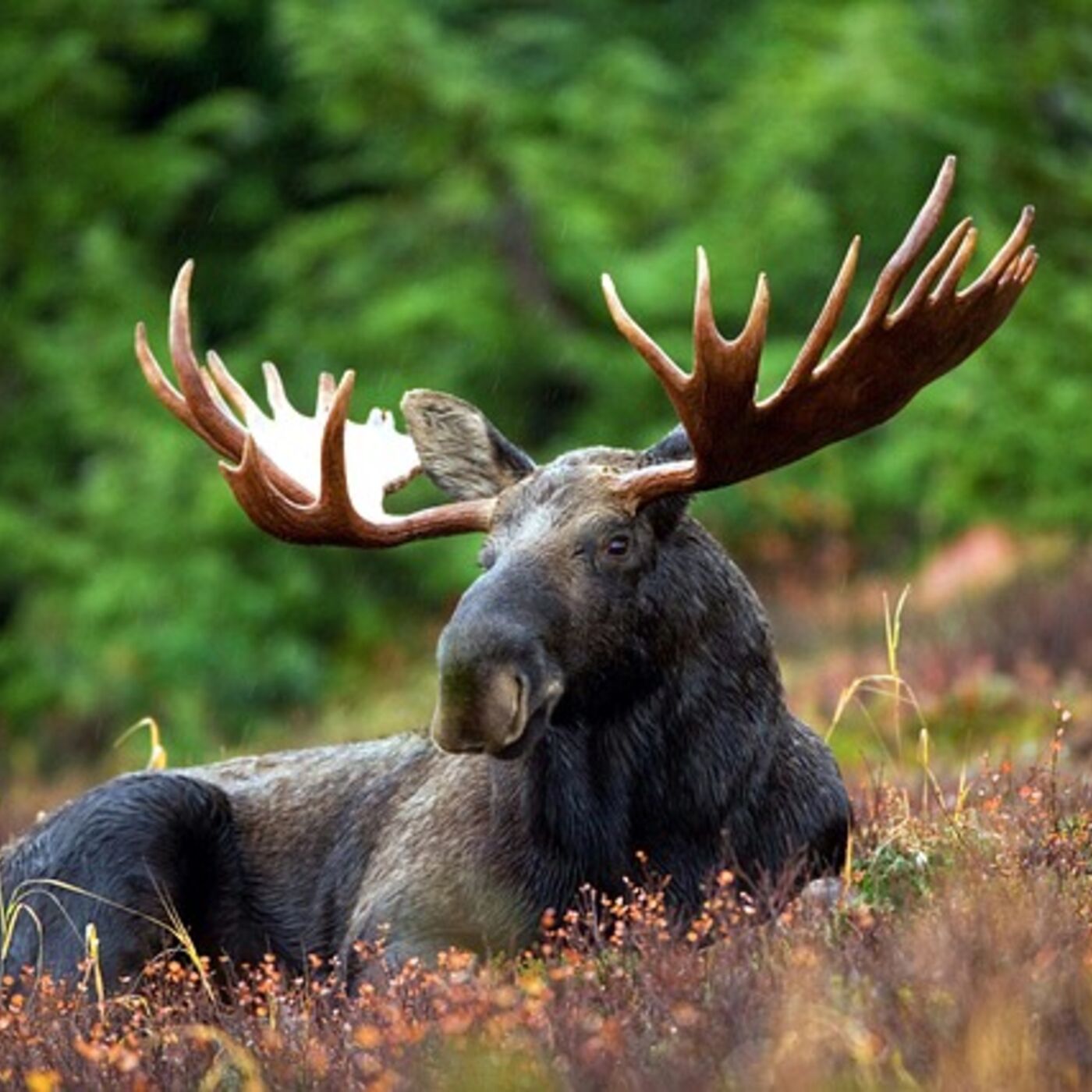
Ep 143The Need for Wildlife Coexistence
Adventures in Sustainable Living Podcast Episode 143 The Need for Wildlife Coexistence One of the best things about where we live is the amount of wildlife we encounter. In fact, if we stayed at home most of the time we would see far more wildlife than people. The majority of the time those encounters are benign. But one thought is always in the forefront of our minds. We live in the middle of the forest which means we actually live in the middle of what many creatures call home. Consequently, we have to be respectful of the neighbors so to speak. As our population continues to grow, encounters with wildlife are going to increase. Every time one of those encounters goes bad, it is always the animals that lose. In this episode, I want to focus on responsible wildlife interaction and the need for wildlife coexistence. Welcome back everyone to the Adventures in Sustainable Living Podcast. This is your host Patrick and this is E 143 which is called The Need for Wildlife Coexistence. You know I am always amazed when I meet clients that are in their 40s or 50s and they come into the office with a new puppy and openly declare “This is my first dog.” It always catches me off guard because I’ve been around animals and have worked with them since I was “knee high to a grasshopper” as my grandfather used to say. As I result of how I grew up, I have been dealing with animals from a very young age. From farm animals to wild animals, it is no surprise that I grew up to become a veterinarian. Even from a young age my father and grandfather started teaching me about wildlife. But it was not until I moved onto the homestead that my encounters with wildlife increased exponentially. It felt as if I was living on the edge of the wilderness. Initially at least, about 25% of the time, those encounters were due to aggressive behavior, especially when it came to the bears and mountain lions. There have been two different occasions when bobcats have gotten into the chicken and turkey barn and cause significant damage. There have been numerous up close and personal encounters with mountain lions that were down right scary and I’ve actually had physical contact with a bear two different times and walked away without injury. Despite all of this I have always felt that we just needed to learn to coexist. After all we are the ones that moved into the middle of their territory. Over time I learned a lot about the behavior patterns of mountain lions and bears and learned what not to do. I could not really do much about the bobcats due to their aggressive predatory behavior. At the end of the day, that problem was simply due to my lack of taking proper precautions. The bobcat was just being a bobcat and looking for a meal. In both cases, I managed to catch the bobcat in a live trap, drove him nearly 75 miles away and let him go. Now most people would likely think that was a bit extreme. But I strongly believe that because of where and how we live we just needed to learn to coexist because all of these animals were living there long before we called it home. But there are a lot of people who do not think this way. I see people getting impatient when there is a herd of bighorn sheep standing in the middle of the road unwilling to move. People start yelling, waving their arms out the widow and blasting their car horn. I also see the same happen with deer, elk, and moose. But I truly think one of my biggest pet peeves is when people move into the area, buy a house with some land and decide they are going to raise some sort of farm animal. Sheep and goats seem to be a common choice but they are also easy pickings for mountain lions and bears unless you have a livestock guardian animal. What typically happens is shortly thereafter the establishment of their mini farm several animals are killed due to predatory behavior. Then these folks get absolutely indignant and exclaim, “How could this possibly happen? Someone needs to do something about this!” It never seems to occur to them that the animals responsible for the raid were there long before they came along. This is truly yet another example of when human populations continue to grow and expand encounters with wildlife are going to become more frequent. The same will happen as more and more people begin to venture out into the natural world. And in Colorado there is still a whole lot of back country. But this underscores the very reason that conflict between humans and wildlife is on the rise. As human populations continue to grow and expand, our demand for space also grows. Consequently, interaction between humans and wildlife are becoming increasingly frequent and so is the potential for conflict. This is because we are competing for common space and resources. This conflict has dri
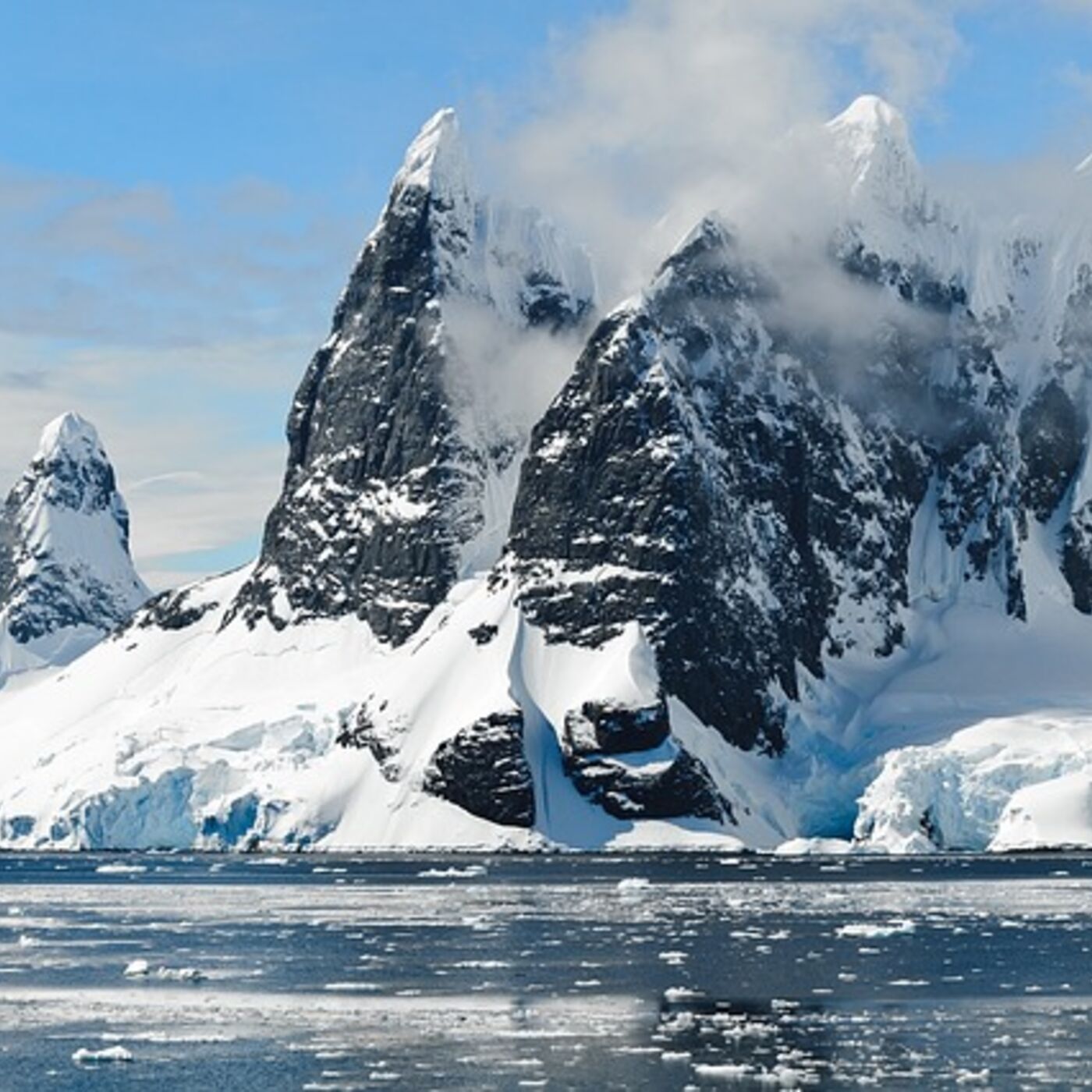
Ep 142The Race for Resources in the Arctic
Adventures in Sustainable Living Episode 142 The Race for Arctic Resources Almost daily we hear something new about the affects of climate change. One of the more interesting things from a scientific perspective is that global warming is not uniform. Europe is warming faster than the US. Canada is warming twice as fast as other parts of the globe. And the Arctic is warming four times faster than the rest of the planet. Global warming is producing some widespread affects many of which we are just starting to understand. The affects in the Arctic have been particularly concerning. Despite that, many people still treat this fact as an opportunity to exploit new resources. But why the sudden interest in what was formerly considered a no mans land? How will these changes affect our planet? And how could it affect all of us? Stay tuned for E142, The Race for Arctic resources. Welcome back everyone to the Adventures in Sustainable Living podcast. This is your host Patrick and this is E142 which is called The Race for Arctic Resources. Sometimes one of the most interesting, and unfortunate part of our human nature, is that despite dire circumstances, someone is always trying to turn a profit. On one hand scientist and environmentalist issue dire statements about how the world is falling apart around us while on the other hand someone is always looking to exploit a new opportunity. I have always questioned if constant economic growth is sustainable and what the outcome will be if we continue in that direction. This sort of economic model produces constant environmental pressure, habitat loss, and species extinction and yet that is the direction that we humans insist on pursuing. Instead of figuring out a way to reduce our need for resources and easing the pressure on the planet we find new ways to come up with more. And such is the case with the Arctic. So what exactly is going on in the Arctic that will have an affect on all of us? Well, from a scientific perspective I do find it interesting that global warming is not uniform. It has become increasing obvious that some regions of the Earth are warming faster, especially the Arctic. The Earth is now about 1.1 degrees Celsius warmer compared to pre-industrial temperatures. But a recent study concluded that the Arctic is warming four time faster than the rest of the planet over the last 43 years. But why is that? Well, it mostly has to do with the sea ice. When the sea ice is covered with a layer of snow it reflects about 85% of solar radiation back into space. But the opposite happens with the oceans, which actually absorbs about 90% of solar radiation. When the Arctic is covered with ice it reflects most of the solar radiation. But as sea ice melts it creates a feed back loop which results in even more warming. With less sea ice, solar absorption rates increase. This causes even more ocean warming which in turn cause more sea ice to melt which causes even more ocean warming. This feedback loop is known as Arctic amplification and explains why the Arctic is warming at a much faster rate. But there are other important climate components in the Arctic that we need to be concerned about. One of those is permafrost, which is a permanently frozen layer of the Earth’s surface. Each summer the upper most portion of the permafrost thaws. This is referred to as the active layer. As temperatures in the Arctic increase the amount of the active layer that thaws each summer deepens. This is turn increases the biological activity in this layer which releases more carbon into the atmosphere. It is estimated that the Arctic permafrost contains enough carbon to raise global temperatures by more than 3 degrees Celsius. If permafrost thawing accelerates, there is the potential for a runaway positive feedback loop called the permafrost carbon time bomb. The release of previously stored carbon dioxide and methane would contribute to further warming in the Arctic and accelerate future permafrost thawing. But while climate scientist are carefully watching and modeling the potential devastating affects of these changes the world’s greatest powers are very busy exerting the age-old rules of sovereignty: the first person to plant the flag controlls the resources as long as they could defend them. As the polar ice in the Arctic melts at unprecedented rates, the worlds largest economic powers are eyeing the region as a no man’s land up for grabs that contains enormous amounts of buried treasure. It is estimated that the Arctic contains 13% of the worlds undiscovered oil, 30% of its undiscovered gas, as well as an over abundance of uranium, rare earth minerals, gold, diamonds and fisheries of course. A US Geological Survey report published in 2008 estimated that the Arctic could hold 90 billion
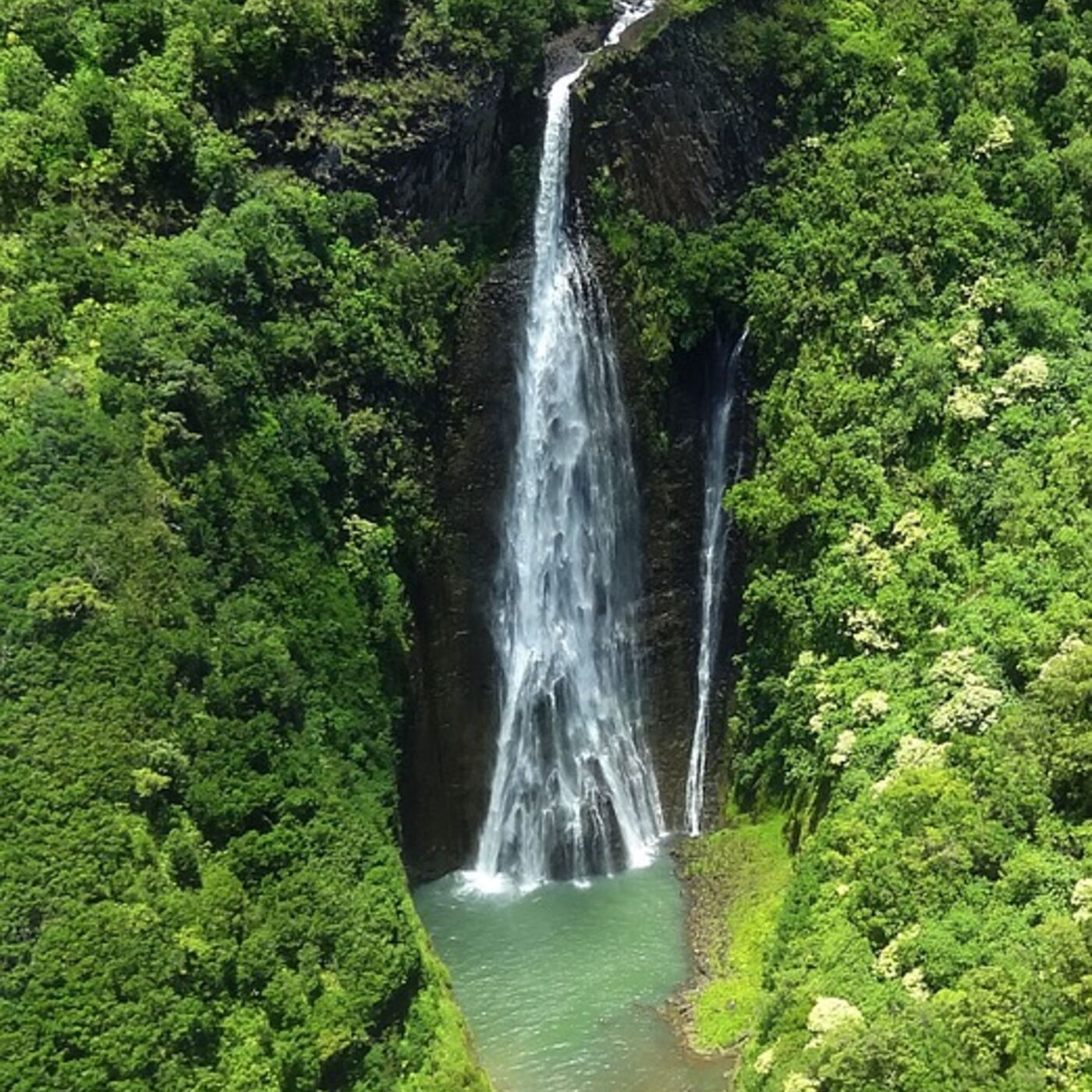
Ep 141Green Country of the Month
Adventures in Sustainable Living Podcast Episode 141 Green Country of the Month Have you ever been around someone that was so overtly negative that it made you cringe just to be in the same room with them? It’s that person you see in the break area at work and you turn around and go back to your desk. You see them walking down the hall and you try not to make eye contact. If they start a conversation you are quick to come up with excuses to get back to what you were doing. We have all been there. So why is it we are so glued to the news media when 90% of all news reports are negative? Why are we so enamored with social media when so much of it is negative? Well, today I am here to bring you good news and it is in the form of the Green Country of the Month. Welcome back everyone to the Adventures in Sustainable Living podcast. This is your host Patrick and this is episode 141 which is called Green Country of the Month. At some point in time we have all experienced co-workers, family members, employers or maybe even strangers that are so overtly negative that it is difficult to be around them. Sooner or later you start to avoid them because it puts you in a bad mood. But then we go home, turn on the television or surf the web and 90% of the news we see is bad. Yet we continue to watch it. Why is that? Well the problem isn’t that there are so many bad things happening around the world but that our brains are actually wired to pay more attention to unpleasant news. Psychologists call this the “negativity bias.” It is in fact one of the first things we develop as children. And while this bias may have actually helped our ancestors pay more attention to potentially life-threatening events, in our modern culture it is getting in the way of our happiness and well-being. We are constantly bombarded with bad news from around the world that we all start to think the entire world is just one big, bad, dangerous place. And on top of that we constantly hear about the effects of climate change, adverse weather events, and one disaster after another. Sooner or later we start to feel as if the world really is falling apart around us and that there is no safe place. Years ago one of my co-workers came up with a really funny nickname for me because I just seemed to be in a good mood all the time. I am happy to say that 20 years after working with that person, I am still in a good mood most of the time. It just seems to be a part of my personality. So I started wondering if I bring that out in the podcast. I did a quick scan over my podcast episodes and decided that 20 episodes out of 140 were completely focused on how bad we are as humans. So if the podcast is a reflection of my personality then I guess I am negative 14% of the time and positive 86% of the time. That’s not too bad. But today I am going to focus on some good news. This is because regularly consuming good news increased trust and hope in mankind, it makes us happier and optimistic and it actually has positive health benefits. So today, at least according to my most resent research, I am here to tell you that the world is not falling apart. It is actually getting better. It truly pleases me when I start doing some research and I find people and governments that are making headway on our environmental issues. And that is the focus of this episode. I want to give a good report and that report is focused on the green country of the month. I am always amazed when my home country, which is the United States, touts itself as being one of the most progressive countries in the world. But the reality is that we truly lag behind the rest of the world in so many ways, especially when it comes to green initiatives, renewable energy, and reduction of our CO2 emissions. Frequently I take the time to research what other countries are doing in that respect. And frequently I find that European countries in general are far more progressive than many other folks around the world. That is why I was so fascinated with this concept of the green country of the month. This is simply a recognition for Europeans countries that are making a substantial contribution for the climate, nature, and the environment. Green country of the month is published by Euronews Green and they can be found at euronews.com It is interesting to note that many countries across Europe are making fantastic focused efforts at averting the worst effects of climate change. But the friendly race has also developed into a healthy rivalry. But a victory won by one country is still a victory for all of us. And taking a hard look at what other countries are accomplishing also puts pressure on politicians in other nations to do even more.&n

Ep 140Sustainable Stress
Adventures in Sustainable Living Podcast Episode 140 Sustainable Stress Many times I stand on the back deck of the cabin enjoying the unobstructed long range view of the mountains and listening to the quiet. The only thing that interrupts the quiet is the sound of the creek that is at the height of Spring run off. It is the middle of June and there is still plenty of snow above timber line which means it was a productive snow filled winter. As I sit here I think about how Colorado has changed since moving here many years ago. But despite those changes I can still come home to peace and quiet. But if I venture past the locked gate that guards our privacy I am quickly reminded of how the world has moved away from sustainability to sustainable stress. Stayed tuned for E140. Welcome back everyone to the Adventures in Sustainable Living podcast. This is your host Patrick and this is E 140 which is called Sustainable Stress. In my last episode The Happy Stranger, I talked a little bit about how much Colorado has changed during the time I have lived on the cabin property. I also talked about how the improvements, or so called progress, has come at a price. I have developed certain avoidance tactics by running errands or going to the supermarket at 6 in the morning to avoid the crowds. I have developed avoidance tactics because of the flood of traffic especially on the weekends. Fortunately we have reduced our commuting by more than 50% and we both now spend a lot more time at home. For me that has been the result of changing a lot of things about how I work and who I work for. I now have 7 to 10 day blocks of time off on a regular basis. I feel fortunate that despite all the growth in Colorado many things at the cabin have remained relatively unchanged. Off all the time that I’ve owed this property only 4 acres have been altered in any way. The remaining 42 acres are still in their natural state. For the first 6 or 7 years that I lived at the cabin I was the only full time resident. There are now four properties that are occupied full time. But we are spread out over 160 acres and because of the local geography and our personal schedules we only see each other every few weeks. The only true impact on me is that I now hear vehicle and equipment noise a couple of times a week because the new property owners across the valley are making improvements. But when you live in such a quiet place even the sound of a human voice carries for almost half a mile depending on the wind direction. But I can rest assured that the noise will cease once their improvements are finished. I am certain they felt the same way about me when I was building the sunroom last year. If you have ever worked with metal roofing you know there is no quiet way to make cuts for a custom fit. Hearing protection is a must. I am certain that once I fire up the metal cutting saw all the local wildlife run for their lives. But there are times when we are all making noise. From road improvements to stocking up on wood for the winter, we each have times when we have to interrupt the quiet. But once the work is complete, the quiet returns. Sometimes when I have a lot of work to do I will apologize to the neighbors in advance for all the noise. In the end all of us are very respectful of each other because we all live here for the same reason. It is simply a reprieve from the chaos that ensues once you venture past the gate. But, when I do take blocks of time off to work on projects at home eventually I have to go out into the world, run errands, or go to the supermarket. When that time comes I am almost immediately reintroduced to the very reasons people in our culture are so stressed all the time. Although many things at the cabin has remained relatively unchanged over the last 25 years, the entire world around me has changed significantly. All it takes to bring that to my full attention is for me to drive the 8 miles down the county road in order to reach the main highway. I was thinking the other day that every single time I have to run errands on a day off I am confronted with some unpleasant aspect of our culture. People drive like maniacs because they are always in such a hurry. Prime time at the supermarket is never entertaining. People are typically rude and I often hear unpleasant, angry conversations about some minor infraction from a neighbor and they are just generally unhappy with life. Such things tend to make me cringe because after spending several days at the cabin enjoying peace and tranquility I am reminded of how frequently the world is just not a peaceful place. Most people are constantly in a hurry. Perhaps it is because the average person has an endless list of obl

Ep 139The Happy Stranger
Adventures in Sustainable Living Podcast Episode 139 The Happy Stranger Just the other day I was up on the hillside above the cabin working on the greenhouse. I would take intermittent breaks, sit at a home made table, enjoy the view of the peaks and soak in the peace and tranquility. The only interruption to my silence was the sound of the distant creek that is at the height of Spring run off. I distinctly remember when I first moved onto the property how all my friends and family thought I was crazy. Twenty seven years later I am often curious why so many people are a stranger to what I do. And at the same time I feel as if I am a stranger to what they do. But at least I am a happy stranger. Welcome back everyone to the Adventures in Sustainable Living podcast. This is your host Patrick and this is E 139 which is called The Happy Stranger. During the time that I have owned the homestead property the whole front range area in Colorado, from Fort Collins in the north to Colorado Springs in the south has grown by more than 2 million people. What used to be a narrow two lane highway going to the property is now two lanes in each direction. Our closest community, about 20 miles away, has quadrupled in size and now has two big shopping centers. My monthly trips to a big grocery warehouse in Denver are no longer necessary. Everything I need is now on the mountain. If I worked from home full time I would never have to drive to Denver. Yet this small bit of convenience comes at a price. Traffic on the county road and the highway into town has more than doubled. Road rage, drunk drivers, speeding, roll-over accidents and fatalities occur on a regular basis. It is fairly common for the highway to be closed due to such accidents. If I drive into town after a long holiday weekend, I count the car parts on the side of the road as well as new places in the guard rail where someone hit it at a high rate of speed. All such things happen only because people drive way too fast, they drive distracted, drunk, high, or all of the above. Some of it is the result of road rage. People become unreasonable angry because another driver pulled in front of them. This meant they actually had to slow down to something less than 20 mph over the speed limit which angers them as if a 5 second delay in their trip that day was a life changer. I now consistently go to the supermarket at 6 am. Any errands are commonly taken care of on my way to work in the mornings. I avoid running any errands, and especially going to the supermarket, in late afternoon and on any holiday weekend. Businesses are packed with people, everyone is in a hurry, and most people have grumpy looks on their faces. At the height of the summer season when everyone heads to the mountains for the weekend, it often takes me three hours to get home because there is so much traffic. Furthermore, I never get out onto the highway on the weekends any more because I may as well be driving in rush hour traffic in Denver. I often wonder why people want everything right now if not yesterday. Everyone is always in a hurry and pressed for time. Patience is no longer a virtue and I am not sure it even exists any more. People often have an entitled air about their personalities which is something I deal with on a regular basis. Even in the face of unprecedented and devastating forest fires in Canada this year, instead of feeling sympathy and offering assistance, some are complaining about all the smoke and how the Canadian government should be paying reparations due to all the health problems related to that smoke. And all of this is the result of so called “progress.” I catch myself thinking that it is nothing less than remarkable that despite all the growth in Colorado the homestead property, as well as all the surrounding properties, have remained relatively unchanged. Perhaps this is because everything is behind a locked gate. Access is limited to property owners, friends and family. This small area is a 160 acre island in the middle of the national forest that is seemingly cut off from civilization. If you came here and never left you would get the distinct feeling that time does in fact stand still. But just as there is a reason for all the so-called “progress” there is also a reason for why time stands still and few things here have changed after living here for over 2 1/2 decades. To say the least, there are very specific challenges for us to live where we do. Access is sometimes limited and is always a challenge 6 months out of the year due to heavy snow. About three months of the year there are windy conditions and below zero temperatures. Winter clothing, shovels, tire chains, head lamps, and survival gear stay in my truck most of the year. I never know if I am going to have to hike the last

Ep 138Fourteen Tips for a Green Sustainable Kitchen
Adventures in Sustainable Living Podcast Episode 138 14 Tips for a Green Sustainable Kitchen Too many times I hear people complain about the cost of a sustainable lifestyle. But what most people frequently overlook is that making the right choices for your well being is quite often easier on your bank account, better for your health and better for the planet. The same holds true for your kitchen. The vast majority of our household waste is related to what we do in the kitchen. But changing that is yet another way that can easily be apart of our green transition. Eating green, energy efficient food preparation, kitchen equipment made from sustainable materials, proper cleaning habits, and eliminating toxic chemicals all play a part in becoming the green gourmet. So stay tuned for episode 138 which focuses on simple, straight forward ways to have a sustainable kitchen. Welcome back everyone to the Adventures in Sustainable Living podcast. This is your host Patrick and this is E138 which is called 14 Tips for Having a Green Sustainable Kitchen. You know, a big part of having an eco-friendly lifestyle is truly a matter of perspective. Our perspective on the world and how we think affects what we value. And we tend to protect what we value. We go through our everyday lives never giving much thought to the thousands of mundane things we do and the underlying reality of how that has an impact on the environment. The same is true for what we do in the kitchen. The average person spends 67 minutes a day in the kitchen. Yet what we do in the kitchen produces the vast majority of our household waste. As you will soon see, it is the little things that make a difference. Being green and being sustainable in the kitchen is far easier and less expensive than what most people realize. Sadly it is very common for people to spend thousands of dollars on a nice new updated kitchen before they even learn how to cook properly. But this is just another example of how we get sucked into the same silly consumerism that is so pervasive in our culture. You do not need an expensive gym membership to get into better shape. You do not need a brand new computer to be a better writer. And you do not need an expensive kitchen to be the best green gourmet on the planet. All you truly need is some passion, devotion, common sense, some basic tools, and a little experience and you can be eco-friendly in the kitchen under pretty much any circumstances. The simple and straight forward suggestions in this episode will help you to accomplish just that. Invest in proper cookware As with most things in life, any job or task is made easier by having the right tools. The same is true for cooking. The first thing you should do is invest is cookware that will stand the test of time. The good news is that you can do this without breaking the bank. Just follow a few simple guidelines. First off, ditch the Teflon cookware. The normal wear and tear of everyday cooking is going to eventually ruin the non-stick surface and it will have to be replaced. This means just another thing that is going to the landfill. Instead choose something that is going to last. Cast iron cookware and stainless steel are by far the best. Cast iron is truly my favorite and it is the first thing I reach for when cooking. Cast iron is versatile and can be use stove top, in the oven, on top of the wood stove and even over the camp fire. If properly cared for it will last for generations. I have had the same cast iron cookware for over 20 years. Cast iron is affordable, it holds heat well, it is easy to clean, and comes in a variety of sizes and shapes. The same principles hold true to cooking utensils. Choose the thicker wooden utensils and stainless steel. Both are going to last vitally a lifetime. You may pay more for these up front. But that is better than sending yet another thing to the landfill. 2) Purchase an energy efficient stove From a sustainability perspective, choosing the right stove can be difficult. You have the choice between gas and electric. Gas of course is a fossil fuel. But 60% of the electricity in the United States is generated form the use of fossil fuels so I am not sure if it makes much of a difference at this point. Additionally, if you live off the grid like I do, it is difficult to produce enough electricity to run an electric stove. So you may not have a choice but to use propane. That is to say that the stove you choose will most likely depend on the price and your particular lifestyle. So the greenest thing you can do is choose an appliance that you are going be happy with for at least 10 to 15 years. If you do so, time, money and materia

Ep 137Toxic Textiles: Beware of Your Wardrobe
Adventures in Sustainable Living Podcast Episode 137 Toxic Textiles: Beware of Your Wardrobe In our litigious society people commonly file lawsuits after an injury obtained while using a product. Much of the time the lawsuit is based on some version of “Well you did not warn me that could have happened therefore you are responsible and you owe me.” And yet the one thing about our so called modern lifestyle that never ceases to amaze me is how many toxic substances we are exposed to everyday without our knowledge and without any warning. Many of the chemicals we are routinely exposed to have never been tested for safe use in humans. And believe it or not, there are actually many toxic substances even in the clothes you wear. And that is the focus of E137 which is called Toxic Textiles: Beware of Your Wardrobe. Welcome back everyone to the Adventures in Sustainable Living podcast. This is your host Patrick and this is E137 which is called Toxic Textiles: Beware of Your Wardrobe. In several of my past episodes I have pointed out some of the ridiculous things that we do that are not only unsustainable and wasteful but are also potentially harmful. But even if you pay attention to your daily life, eat organic and use natural products, it is concerning how many toxic chemicals we are exposed to right down to the very clothes you put on everyday. In this episode I am first going to discuss some of the more common toxic chemicals used in the textile industry. Then I am going to give you nine tips to help limit or even avoid your personal exposure. So let’s just start with a quick over view of the things we are exposed to everyday. Whether you know it nor not, the average person is exposed to more than 700,000 toxic chemicals on a regular basis. On average each and everyone one of us uses about nine personal care products per day. This includes shampoo, conditioner, deodorant, creams, perfume, cosmetics, and lotions. That means we are exposed to approximately 129 unique chemicals daily. In a recent study scientist found 109 chemicals in the human body, 55 of which had never been found in the human body before. Forty two of those chemicals were mystery chemicals that came from some unknown environmental source. Our exposure to chemicals has become so common place that scientists now talk in terms of “chemical body burden.” Furthermore, you may be shocked to know that there is little oversight into the chemicals that go into personal care products and federal law regulating such chemical additives has changed very little over the last 85 years. Yet in our litigious culture where people are quick to file a law suit due to lack of a warning label on a product we willing use toxic products every single day. While we can do little about many of the toxins we are routinely exposed to, we do have a choice about the products that we use and the clothes that we wear. Every week it seems as if the media labels yet another consumable product as “bad for you.” This often involves food, water, medicine, and many other products. There is typically some reference to these products being riddled with carcinogens, hormone disrupters, forever chemicals, and a whole long list of other bad things. Yet no one ever mentions the fact that these same chemicals can be found in our wardrobes and are ubiquitous throughout the textile industry. In fact the textile industry is responsible for 25% of global chemical output. Furthermore, due to the fact that certain textiles comprise a significant part of the industry we come in contact with numerous chemicals all day every day. And of course the heath implications of this is quite vast and unpredictable. What is a chemical? But what exactly is considered to be a chemical? Well, the basic definition is that a chemical is any substance with a defined composition, meaning it contains properties and characteristics that we can identify. What this means is that we come into contact with many naturally occurring chemicals every single day. In fact, all matter is made of chemicals and even water is considered a chemical. Good versus bad chemicals Obviously not all chemicals are bad. There are about 60 naturally occurring chemicals in the human body. Yet 96% of our body mass is comprised of oxygen, carbon, hydrogen, and nitrogen. The remaining 4% is sort of a sparse sampling of the periodic table of elements. Function matters but at what cost But as far as the textile industry is concerned, and part of the blame also needs to be placed on the average consumer, function seems to matter most regardless of the cost to the environment and even ourselves. T

Ep 136The Simple Truth About Bugging Out
Adventures in Sustainable Living Podcast Episode 136 The Simple Truth About Bugging Out In the last couple of months I have produced several episodes geared toward helping you be prepared for the unexpected. Even though survival and prepping are not the subject of this podcast, self sufficiency is related directly to sustainability and part of sustainability is being responsible for yourself and being prepared. In my search for articles related to all things sustainable I repeatedly come across is this term bugging out. This term is usually related to some survival or disaster scenario but if you really think about it, it is also closely related to being self sufficient. There is a lot of hype around this topic that is simply not true. So in this episode I am going to give you the simple truth about bugging out. Welcome back everyone to the Adventures in Sustainable Living podcast. This is your host Patrick and this is E136 which is called the simple truth about bugging out. You have heard me say before that a big part of being sustainable and being self sufficient is realizing and accepting the fact that you are truly responsible for everything you choose to do and everything you choose not to do. This is also true when it comes to being prepared for the unexpected. There is so much hype surrounding disaster and end-of-the-world scenarios that it is difficult to know what is actually true. So that is why I am going to give you the simple truth about bugging out. But you must know that I am not that guy that focuses on the end of the world. I am not going to put the fear of god into you and make you feel insecure. In my opinion, the end of the world is only going to happen once. But, there are things that happen far more commonly that you should be prepared for and that is what I am going to focus on today. If in the unlikely event that bugging out should actually become necessary then it is in your best interest to be prepared and know how to take care of yourself and your family. What is bugging out? So what exactly is “bugging out” and where did this term come from? The term “bugging out” comes from military jargon and may have originated as far back as the Korean War. Sometimes military personnel found themselves in a position that was no longer defensible or was likely to be overrun by enemy forces. In this case they were instructed to “bug-out”. They would then rapidly deploy to a predesignated defensive position. In non-military terms, bugging out typically refers to grabbing a bag of essentials, known as a bug-out bag, and rapidly leaving the area. Typically this is something that would happen as the result of a disaster situation. Presumably the destination would be a pre-designated safe haven. Keep in mind that the key concept here is “heading out to a pre-designated safe haven”. Obviously this means there is some forethought and planning involved. This is where being responsible for yourself comes into to play. In many respects bugging out means something different to everyone. This is because your plan or strategy will be unique to your personal circumstances. Furthermore your plan will be different depending on whether you live in a downtown area, a suburban neighborhood, or you are in a rural area. Far too many websites like to portray bugging out as nothing more than a glamorous camping trip. However, the circumstances under which you would leave your home means you are in survival mode. Consequently, you have to ask yourself some of the following questions: Under what circumstances would you actually leave your home? What disasters are more likely to occur in your area? Depending on whether you are in a downtown area, suburban or rural, will your community be an asset or a danger? Hopefully you can begin to see that preparation for such an event requires some forethought and planning. Otherwise your life will turn into instant chaos. But imagine for a moment if a disaster struck your area, let’s say for example a hurricane. The grid is completely shut down and there is no electricity, fresh water, and even getting to the supermarket is impossible. In such a situation rescue personnel are going to be completely overwhelmed. Imagine the relief when they come across your home and you actually do not need their assistance because you were completely prepared. Even though a lot of other things come into play, just think about how you would feel in such a situation when you at least have basic shelter, a way to cook a meal, and fresh water. What is common with all disaster victims? What has been proven over and over again is that all disaster victims crave the same basic things. They crave routine, familiarity, and some resemblance of normalcy. Additionally, research reveals that the adverse psychological affects experienced b
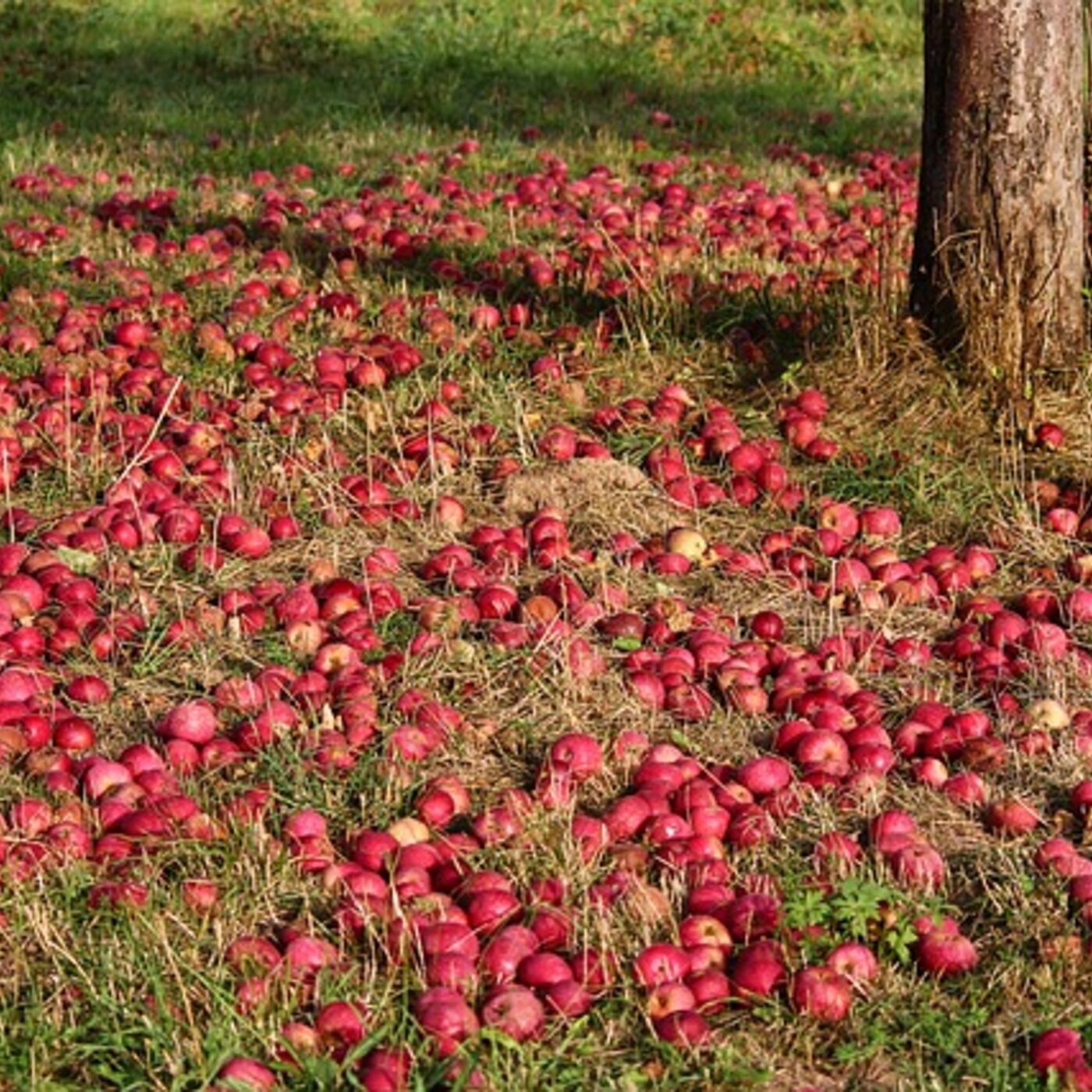
Ep 135Stop the Rot: How to Avoid Food Waste
Adventures in Sustainable Living Podcast Episode 135 Stop the Rot How to Avoid Food Waste For most of us that live in a developed country and have an adequate income, we never think much about having enough to eat. However, there are millions of people in the world that go hungry and millions more that experience food insecurity. We don’t think about it because we don’t see it. It is out of sight, out of mind. In the face of such widespread hunger and food insecurity there is also a tremendous amount of food that is wasted. In fact, if we were able to recover all the food that is wasted, we could solve hunger on a global scale. But once again, it is out of sight, out of mind. In an effort to address this issue, I wanted to focus an episode on how to avoid food waste. Welcome back everyone to the Adventures in Sustainable Living podcast. This is your host Patrick and this is E135 which is called Stop the Rot: How to Avoid Food Waste. First off I want my listeners to think about this episode in the context of sustainability simply because truly living a sustainable life means you take responsibility for every thing you choose to do and everything you choose not to do. In my opinion, if every person in the world lived their lives in that manner many of our global problems simply would not exist. In this episode I first want to discuss a few numbers in an effort to give you an appreciation of how hunger and food insecurity is a wide spread and global problem. That will be the back drop in my continued discussion of how much food we actually waste. Hopefully, having knowledge of these two things will motivate my listeners to eliminate their own food waste. As far as food waste is concerned I am going to discuss some of the most commonly wasted foods and how to avoid this sort of waste. Then I am going to give you 12 additional tips on reducing your own food waste. And in the end I will share with you exactly what I did to reduce my own food waste. So, let’s get too it. First out of the gate, I want to take two developed countries as a good example. Then I want to talk briefly about some global statistics. Food insecurity is defined as lack of adequate access to enough safe and nutritious food for normal growth and development as well as having an active and healthy life. Food insecurity is typically affected by income level, employment status, race/ethnicity, and the presence of any sort of disability. Based on Canadian survey data that focused on income levels in that country, 5.8 million Canadians, including 1.4 million children, lived in food-insecure households in 2021. This is roughly 15% of the population. The organization responsible for the survey is called Statistics Canada which monitors the prevalence and severity of household food insecurity through population surveys. In the United States 34 million people are food insecure and this includes 9 million children. That is approximately 10% of our population. In 2021 53 million people had the assistance of some sort of food program. There are over 3,000 counties in the United States. There are people experiencing food insecurity in 100% of those counties. While hunger and food insecurity for most of us may be out of sight out of mind, hunger is so much closer than you think. On a global scale, one in nine people experience food insecurity. Approximately 828 million people are experiencing acute hunger while 2.3 billion people face less extreme but still dangerous levels of food insecurity. That is approximately 29% of our global population. It is estimated that 9 million people die from hunger every year. Now I want to share with you a quick story that I have discussed before but at this point I think it is relevant. A few years ago I was working in a small community in Arizona. The practice owners were good friends of mine and I had known them for many years. Once a week I would get together with Andy, who was one of the owners, and we would go out to dinner and just enjoy each other company. On one evening Andy related an incredible story to me that I will never forget. Andy had lunch at a local restaurant that was one of his favorites because he had known the owner for many years. While he was there the police had to be called to remove a belligerent customer. This person was irate over the fact that the cook had served him French fries with his meal instead of whatever side it was that he had ordered. This man wanted to get into a fist fight over a simple mistake that could have been corrected with a please and thank you. A couple of hours after Andy left the restaurant he got a call from some friends that were in from out of town. These folks were doing missionary work in South Africa and they were in town for a few weeks to visit
Ep 134Thirty-Five Tips and Tricks to Save Electricity
Adventures in Sustainable Living Podcast Episode 134 35 Tips and Tricks to Save Electricity Electricity or not? That is the question. I lived without it for about 16 years at my off-grid cabin. Consequently I know from personal experience that it is very possible to do so and at the same time be very comfortable. But I remember all too well just how happy I was when my solar electric system went online. Although I cannot complain about how I lived before that, having electricity certainly was a game-changer for me. But once I had electricity, I suddenly found myself becoming very conscious of ways to conserve what I was using. After all, the greenest energy is the energy you never use. So stayed tuned to E134 which is called 35 Tips and Tricks to Save Electricity. Welcome back everyone to the Adventures in Sustainable Living Podcast. This is your host Patrick and this is E134 which is called 35 Tips and Tricks to Save Electricity. Now at first you might think that this is a boring topic. But as you will soon see, being more conservative about how much electricity you use has beneficial effects that go far beyond your wallet. Obviously in this episode I am going to go over numerous tips on how to save electricity. This of course will save you money and it is those savings that are most likely the motivation for most people. However, the first thing I want to cover is why you really should do this. We waste electricity The average person consumes far more energy than what is actually necessary to live a comfortable life. In my opinion we take that ease of availability for granted. We walk into our home and flip on the lights, turn on the TV, get on the internet, and cook a meal without any thought of where the energy actually comes from. The average American home consumes 886 kWh of electricity per month. That consumption rate goes up of course as the size of the home increases. A 2,000 square foot home uses 1, 325 kWh per month. A 3,000 square foot home sits at 1,840 kWh. A 4,000 square foot home uses 2,200 kWh per month. In fact in the United States we use 6 times more electricity per capita than any other country in the world. Yet I know from personal experience that it is more than possible to live on a lot less electricity. Since the entire homestead of run off of solar, we a very conscious of what we use. This is because it is quite possible for us to run out of electricity. This happens a couple of time every winter especially when it is cloudy for several days in a row and there is limited sun exposure on the solar panels. On average we use 35 kWh per month and we live well. That is about 95% less usage than what the average American home consumes. So, as I said, it is possible to live on far less. The reality is that electricity is a clean and relatively safe form of energy when it is in use. However it is the generation and transmission of electricity that affects the environment. Electric power systems consists of generation plants, transmission networks and distribution lines. Every one of these components have some sort of environmental impact at multiple stages. This includes development, construction, the actual generation of electricity, and finally decommission and disposal. In fact, all forms of electricity generation has some sort of environmental impact including solar and wind. However, coal fired plants are by far the worst. On the other hand, saving electricity not only saves your wallet but it saves the environment because it cuts down on pollution. Energy efficiency is about truly about getting the same job done but using less energy. Truly the greenest energy is the energy you never use. What most people never realize is that seemingly minor changes produce dramatic results. The amount of reduced pollution due to something as simple as changing one incandescent light bulb for an efficient LED bulb is the equivalent of taking 670,000 vehicles off the road. According to the Environmental Protection Agency, residential and commercial electricity usage accounts for almost half of all of the energy consumption in the United States. Clearly energy efficiency is a critical part of slowing down climate change and protecting the environment. Being more efficient in your usage of electricity not only reduces the use of fossils fuels but also protects the environment. Remember, it is far easier to save electricity that it is to produce it. However, this easy concept is all too often completely overlooked. All that being said, let’s take a few minutes and discuss 35 ways to save electricity. 35 Ways to Save Electricity Adjust your behavior Changing your behavior in several ways has the greatest potential to save electricity. For example, heating and cooling expenses account fo
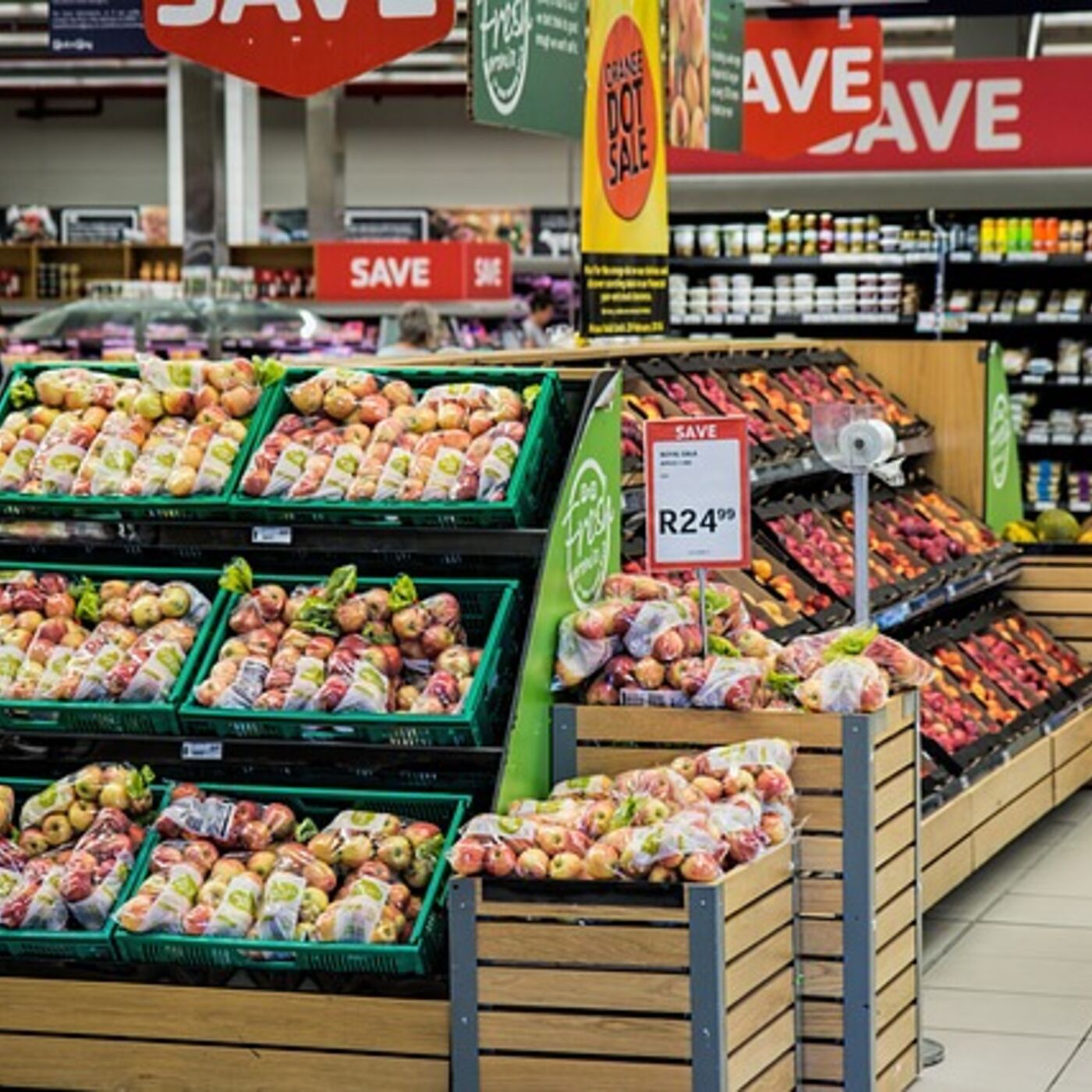
Ep 133Twenty-One Ways to Save Money at the Supermarket
Adventures in Sustainable Living Podcast Episode 133 21 Ways to Save Money at the Supermarket Since I have been self employed for many years, I always have a certain amount of year-end accounting work to do in order to prepare for my tax return. Whenever I do this it is a perfect time for me to look over the past year and review where my money came from as well as where it went. Then I modify my budget accordingly in order to save money. This year I decided to take a much close look at just how much money I was spending on food. I reviewed my grocery budget over a period of 6 months. I was completely surprised at what I found and those findings were the motivation for this episode. So the focus of episode 133 is 21 ways to save money at the supermarket. Welcome back everyone to the Adventures in Sustainable Living podcast. This is your host Patrick and this is E133 which is called 21 Ways to Save Money at the Supermarket. Living at the cabin and being off grid has certainly taught me a lot. And the time spent working on the podcast and my blog has been a learning experience even for me. As clever and creative as I try to be I still find things that I am doing completely wrong. Because we have the ability to produce much of our own food I never really paid that much attention to how much money I spent at the supermarket. In some respects, we are shielded from the fluctuating costs of commodities. This is because we purchase in bulk, we depend on the chickens and turkeys, we get a significant amount of meat from a local ranch, we have the green house, we home can, and tend to keep a nice stock pile of food in storage. But once I really looked at what I was spending at the supermarket, I realized maybe I wasn’t so shielded after all. Maybe that is what I get for thinking I was such a clever guy and not paying attention to what I was doing. The result is that on a monthly basis I was spending hundreds of dollars more than I thought. Obviously I was not so clever after all and I needed to make some changes. So I decided to do just that. A big part of being off grid and sustainable is taking responsibility for every thing you choose to do and everything you choose not to do. And that includes how you spend your money. Due to this, at times convenience goes completely out the window. Obviously the local supermarket is a huge convenience. But when we get accustomed to convenience we also tend to pay less attention to how much we are spending. I first started with a little research. What I found is that Americans and Europeans spend an average of $438 USD every month on groceries. But of course what you spend on a monthly basis is going to depend on the number of people in the household, what you buy and where you shop. But regardless of what you spend there are numerous simple things you can do to save money and off set the increased cost of food. If you are like most people and live on a budget, then spending less at the supermarket frees up some dollars that you can devote to other things such as debt repayment, emergency savings, and even your retirement fund. But, you can also reward yourself in other ways such as a nice trip to your favorite restaurant or gourmet coffee shop. Enough savings over time may also be enough to take a nice vacation. You will find that these tips are truly nothing amazing. It is just a matter of paying attention to what you are doing. So, let’s take a look at 21 ways to save money at the supermarket. Look in your refrigerator or pantry first The best place to start before you even go to the supermarket is look in your refrigerator and cupboard to see what you already have. This will help you to avoid unnecessary purchases. Secondly, you can plan new meals around the leftovers already in the refrigerator. Both of which will save you money. This is something that I do all the time. I often look at the veggies in the refrigerator that are starting to age and I then plan meals around that. This is a great way to avoid food waste and I have come up with some my best soups by simply using left overs. Limit Your Trips to the Supermarket When you get ready to go to the supermarket plan on buying enough food to last a week or two at a time. If you are shopping several times per week then you are more likely to purchase unnecessary items. Limiting the number of trips to the supermarket will save gas, time, and taxes. When I started focusing more on saving money at the supermarket I realize I was typically making 3 or 4 trips per week and buying only a few items. This was partly because I always stop on my way to work so I don’t have to make a special trip. But once I changed this I immediately reduced what I was spending. Go in with a list and stick to it. And I think it goes without saying that if yo

Ep 132The Psychology of Sustainability
Adventures in Sustainable Living Podcast Episode 132 The Psychology of Sustainability With all the hype in the news media these days about nuclear war, economic recession, another banking crisis, food shortages, prolonged drought conditions, and yet another storm wreaking havoc, it is easy to overlook the biggest threat of all. Most scientific experts would agree that the biggest threat to our social structure and way of life is climate change. And we hear about this also everyday. But despite all the policy changes and improved technology, the underlying cause as well as the route to successful change rests in the domain of human perceptions, decisions and behavior. Changing these perceptions and behavior to something that favors sustainability is psychology comes into play. So stay tuned for episode 132. Welcome back everyone to the Adventures in Sustainable Living Podcast. This is your host Patrick and this is E132 which is called The Psychology of Sustainability. What I want to focus on in this episode is how psychology plays an important role in sustainability and the behavior that favors such actions. I am going to first discuss how psychology is often used against us because certain tactics are used to appeal to the irrational and emotional side of our nature. But then I want to turn that around and show how psychology can also be used to do just the opposite. I mentioned above about climate change actually being the biggest threat to our way of life. Even though things such as nuclear war, a meteor, an enormous volcanic eruption, or some other natural catastrophic event is always a possibility, I truly think it is the slow insidious changes in climate produced by human activity that will change our way of life and will result in our demise if it goes unchecked. It should be obvious that a significant part of what needs to be accomplished is reducing emissions, minimizing carbon and energy intensive activities, improved efficiency, and advanced decarbonization. Significant progress can be made toward this goal through targeted government policy changes, improved technology, and the implementation of carbon taxes. But the challenge is that this is not the whole picture nor is it the panacea. At the very root of the problem is the pattern of behavior and consumption that got us in the predicament in the first place. While the world is falling apart around us we still persist in the behavior patterns that are the very foundation of the problem. The challenge is that most people are resistant to change and do not like being told what to do. I used to joke around with my friends that what the world needed was a good pandemic to make people truly appreciate what they had. However, with the COVID 19 pandemic the very opposite is actually what happened. Well I should say that is what I observed living in the United States. During and after the pandemic, instead of an atmosphere of appreciation that our society was not in ruins, people became even more angry and impatient. I would not only see this in the clients that I dealt with but also in public places such as restaurants and the supermarket. Obviously if we are going to change our behavior patterns and attitudes to something that promotes and sustains positive change it is going to have to done in a much different way other than just forcing people to do something. The field of psychology serves as a means of understanding human behavior and decision making. Human perceptions, decision making, and behavior also play an important part in sustainability. That is where psychology comes into play because it can be used as a practical tool to influence and enhance our behavior and decision making. This of course can be used against us but it can also be used to enhance negative behavior. Case in point: Whether you realize it or not, we are constantly surrounded by attempts to influence our decisions and persuade us to take certain actions. It is called advertising. The average American is faced with over 10,000 ads everyday. This advertising overload makes it difficult for a company to stand out in the crowd. Consequently, they have to use more subtle tactics and this is where psychology comes into play again. The psychology of advertising, as it is called, uses certain tactics in ads which encourage you to buy a product by eliciting a certain emotion. The psychology of advertising focuses on building empathy towards a product or service to encourage you to purchase. Techniques that are commonly used are things such as cute animals, humor, creating excitement, preying on your fears, or even eliciting a heart-felt emotional response. Furthermore, with the advent of the internet companies and social media platforms now save a lot of time and money on research by collecting dat
Ep 131The Path to More Personal Freedom
Adventures in Sustainable Living Podcast Episode 131 The Path the Personal Freedom In my previous episode I discussed 12 reasons why we make our lives so complicated. Then I gave you solutions to each one of those challenges. If you put a little further thought into that episode, it should have occurred to you that it is all the complications in our lives that limit our personal freedom. I think a good definition for freedom is the ability to live your life the way you want. In other words, the ability to design a lifestyle that nurtures who you are and what you value. But how is that even possible when life is so complicated? In this thought provoking episode, I am going to give you the simple, but not necessarily easy, path to personal freedom. Welcome back everyone to the Adventures in Sustainable Living Podcast. This is your host Patrick and this is E131 which is called The Path to Personal Freedom. You must know that much of what I have been doing over the last 20 plus years of my life has been for the sole purpose of living my life the way I want. In other words, having more personal freedom. Freedom to pick and choose what I do, freedom to choose who I work for and for how long, and the freedom to take time off when I want instead of having to ask permission. The sole focus of this episode is to make you question how you are presently living and make you also realize there is a different way to be. A number of years ago I came across one of the most enlightening books that I’ve ever read. It just so happens that the principles in this book go right along with what I’d been thinking all along. However, the author outlines numerous principles in a fine literary style that I’ve never been able to achieve. And since it makes no sense to reinvent the wheel, I am going to present some of the concepts in that book. Consequently, what I present in the episode is a combination of my own thoughts, experiences, and principles presented in that book. Whenever necessary, I will refer directly to that text in order to give appropriate credit. If you have never read this book I would strongly recommend it. It is called “How I Found Freedom in an Unfree World” by Harry Browne. It can be easily be found in digital format because I looked it up just the other day. However, I am not sure if the book is still available in print. If you have been following me then you already know that I am a practicing veterinarian and I do contract work for different hospitals in several different states. This is what I have been doing for the last 23 years of my career. Whenever I explain my career path to any other veterinarian their response is fairly typical, “Well, it sounds as if you have been busy living your best life.” This is because over the last 23 years, I’ve lived and worked in Mexico, Ecuador, Bolivia, Saint Kitts, Guatemala, Costa Rica, as well as all other Colorado, Arizona, Georgia, and South Carolina. During that time I’ve taught in three different universities, worked in multiple different specialty hospitals, emergency centers, shelters, private practices and for various non-profit organizations. I have the ability to work with who I want, travel when I want, and take time off at my leisure. And believe it or not, I’ve not held a full time job in the past 23 years. I have been debt free for almost 8 years. And I am still busy living my life, within reason that is, just how I want too. I say that because I do have to pay taxes, health insurance, buy food, pay commuting expenses, etc. So, no I am not independently wealthy and I do have to work. But my underlying plan has always been to have a simple, sustainable, inexpensive life where I within reason do what I want. So, how did I go about achieving that? Well, the bottom line is that I decided to live life by my own rules. Now that does not mean that I ignore the basic principles of the civilized world. It just means that I avoid so many of the common trappings of our modern culture that limit the way we think and tend to keep us imprisoned by making us think we have to follow a set of rules based on what someone else thinks is best for us. At the outset, you must know that the rules that govern society are completely arbitrary and up for negotiation. This may sound like heresy as first but perhaps not so much when you consider the fact that the people who makes the rules often do not follow them and consider themselves above the law. So, you may be wondering how a podcast about sustainability is related to having more personal freedom. It is my opinion, and please try and prove me wrong, that marketing campaigns in our culture have been by far the most successful, long-standing, behavioral modification experiment in human histo

Ep 130Why Do We Make Things So Complicated?
Adventures in Sustainable Living Podcast Episode 130 Why Do We Make Things So Complicated? Very few people that I know have simple, slow-paced, uncomplicated lives. Even after most people retire, they go through a period of simply staying busy. It is not until several years into retirement that they give themselves permission to slow down and relax. Even in the complex world of today, it is possible to live a simple life. So why is it that humanity defaults to making things complicated. A simpler life is often easier, less expensive, and less stressful. Yet time and time again we reach for complexity. The focus of this episode is not only to examine why we make things so complicated but also to give you ways to keep things simple. And I want to do this because simplicity is actually at the heart of sustainability. Welcome back everyone to the Adventures in Sustainable Living podcast. This is your host Patrick and this is episode 130 which is called Why Do We Make Things So Complicated? Because I truly believe that simplicity is at the heart of sustainability I am going to have a series of several episodes that focus on simplicity. This is the first episode where I am going to examine why we make things so complicated. In the next episode I am going to discuss how to find more personal freedom. Then finally I am going to discuss the psychology of sustainability. To start out this series in this episode I want to present 12 reason why our lives are so complicated and a solution to each one of those challenges. Some of my best memories of when I was teaching at the veterinary school in Bolivia are the result of the side trips I would take on my time off. On one such trip I visited a small village that had a very strong European influence which was the result of a concentrated German population. I was traveling with a veterinary technician that was from the United States and we decided to have lunch at a small cafe. When we walked in we were immediately taken to an outdoor patio. Just beyond the patio was a fenced in lot that simply looked as if it were overgrown with weeds. After a restaurant staff person took our order she returned to the kitchen area. Shortly thereafter she reappeared, walked past us and out into the field of weeds. After a brief search she picked a small had full of greens and returned to the kitchen. When she served us our meal I ask her about the field. She stated that was their source of fresh herbs and vegetables for the restaurant. And I have to tell you that meal was one of the best I had the whole time I was in Bolivia. I truly believe that simplicity is at the heart of sustainability. For example, it does not get any simpler than walking to your backyard garden to pick fresh vegetables and herbs. This is sustainable and has minimal environmental impact. It does not get any simpler than me walking down to the chicken barn to collect eggs. This is sustainable and has minimal environmental impact. In my opinion such things should be a no brainer. But the same could be said for many other things in our lives. But why is it that we have to make things so complicated? Life is really pretty simple but whenever humans get involved everything gets complicated. Why is that? 1) Objectification The first reason I believe that things are now so complicated is that long ago we started objectifying ourselves, meaning we started to view ourselves as separate from everything else, the trees, the animals, even the very universe. Then we started to question the meaning of our very existence. To compensate for that we resorted to creating “meaning” from the external world. To help drown out the anxieties of our questionable existence we started creating more and more things to consume, throw away, consume more, and just pretend this was a normal part of existence. Then we needed systems and methods to maintain our existence and lifestyle which means we had to structure everything. But I would argue that at the end of the day, the majority of what we talk about, worry about, create, consume, and focus on is completely unnecessary. And, ironically, I would further argue that the majority of employment that exists these days is simply the result of how we have complicated our lives. We have to do something to maintain all of our systems. In the end our objectification and our search for meaning in our lives put an end to a simple, uncomplicated sustainable lifestyle. 2) The Complexity Bias The second reason that our lives are so complex is that humans have what is called a complexity bias. What this means is that when we are overwhelmed with information or we are confused about something, we tend to focus on the complexity of the issue rather than look for a simple solution. When faced with overwhelming information, we give into our complexity bias by focusing on the difficult 10% and ignoring the ea
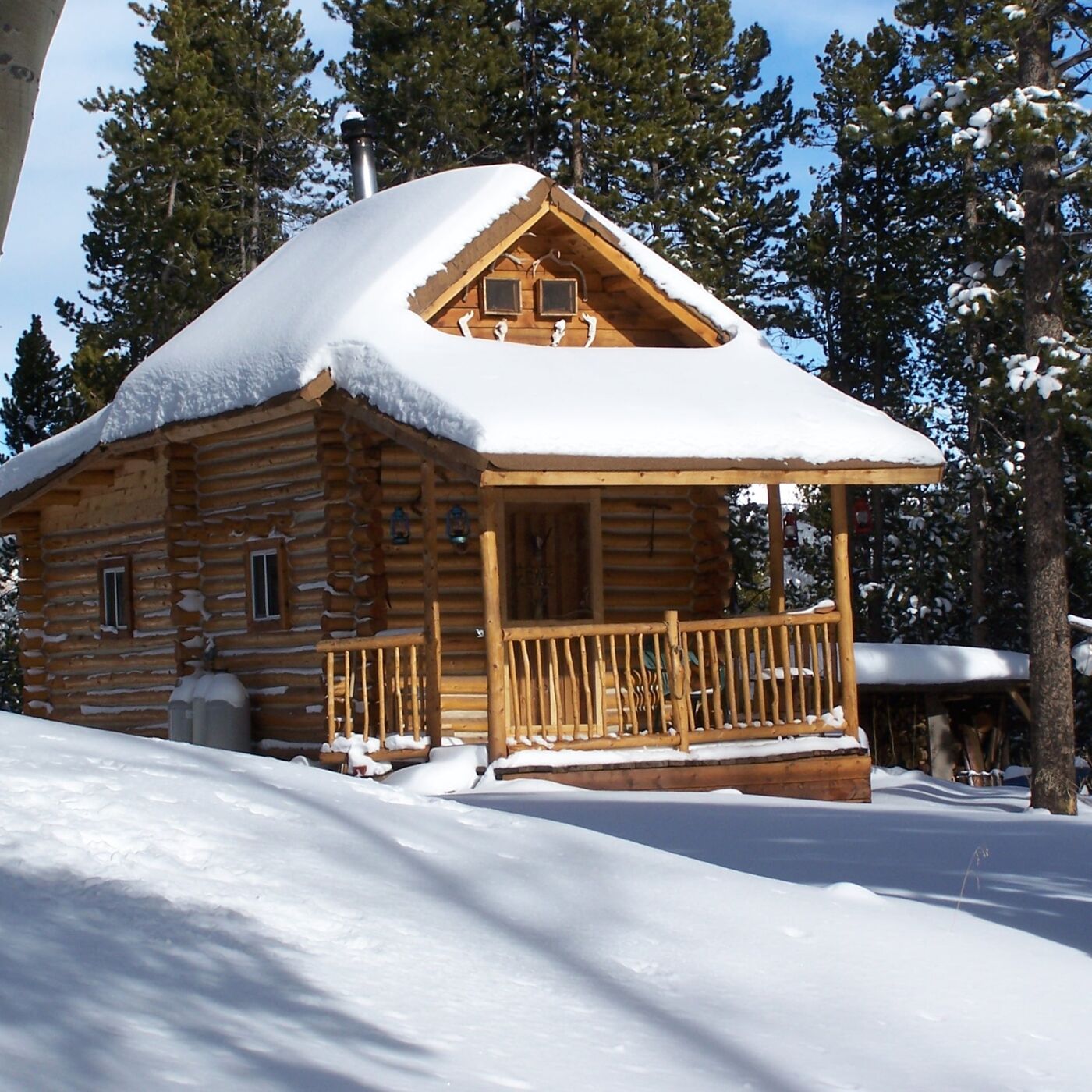
Ep 129Ten Tips for Building a Cabin on a Budget
If you have never lived outside of your home country most likely you have no appreciation for just how expensive it can be to live in the United States. While most people view the US as the land of opportunity, there are plenty of places in the world where life is much more simple. We get so caught up in just living day to day, that we never stop to realize that life could be so much different. In this episode, I am going to give more practical advice on just how you can cut your cost of living, improve your standard of living, be debt free, and have more personal freedom than you ever thought possible. So stay tuned for E129 where I talk about ten tips for building a cabin on a budget. Always remember to live sustainably because this is how we build a better future. Patrick
Ep 128128 Ten Ways to Test Drive the Off Grid Life Before You Commit
If you have been following me at all, you already know that I have lived off the grid for many years. In fact, as of August 2023, I will have owned my homestead property for 27 years. I greatly enjoy the lifestyle that I have and would not have it any other way. It is one of the few things that has been a major driving force in shaping my adult life. Often times I wonder why more people do not choose to live the way I do. Perhaps it is fear of the unknown because it is such a different lifestyle. But if you are at all curious, in this episode I am going to give you 10 ways to test drive the off grid life before you commit. So stay tuned for episode 128. Welcome back everyone to the Adventures in Sustainable Living podcast. This is you host Patrick and this is E128 which is called Ten Ways to Test Drive the Off Grid Life Before You Commit. Always remember to live sustainably because this is how we build a better future. Patrick
Ep 127How to Get Started With Chickens
Adventures in Sustainable Living Episode 127 How to Get Started With Chickens Having grown up with two working farms in my family, raising and processing our own food was a way of life. In fact, I never really gave it much thought. I figured this was what everyone did. It was not until I was in my teenage years that I realized it was actually more common for people to purchase their meat and other staple items from a supermarket. As you well know, I am a big fan of being as independent and sustainable as possible. A big part of that is managing my own food supply. But most people would consider that to be well beyond their personal abilities. However, it is actually much easier than you think and I am going to give you one easy way to do just that. So stay tuned for how to get started with chickens. Welcome back everyone to the Adventures in Sustainable Living Podcast. This is your host Patrick and this is E127 which is called How to Get Started With Chickens. With how I grew up in Tennessee and Georgia, I am always surprised just how disconnected people are these days with where their food comes from and that is especially true with their meat. In fact I would venture to say that some people even believe that their meat comes from the supermarket. They cannot even fathom that someone has to raise the animals, provide them with proper care, and in the end process them to where they can end up in front of you at home or on your plate in a restaurant. For most people that tasty chunk of meat with steaming vegetables, a nice garnish, and a side salad are as far removed from the farm as Mars is to the planet Earth. The only thing that most people see is meat in a clean plastic wrapper on the shelf. Consequently, we are completely disconnected from the source of our food and what it takes to actually get it on our dinner plate. Could this be why we have little appreciation for what we eat? Furthermore, on a global basis approximately 60% of us live in urban areas. But in the US that is as much as 80%. This even further disconnects us from the natural world. I often wonder if this is why we are so cavalier about wasting a significant portion of our food. We don’t see all the work and effort that goes behind what we purchase. The only thing we see is the price tag. Now you might think what I am about to say is a bit gross, but I often think about these sorts of things when I am cleaning out our composting toilet. If more people were forced to actually deal with their own waste the world just might be a better place. But the same is true for many other aspects of our lives. If more people had to supply their own water, they would use it more conservatively. If more people actually had to produce their own electricity, they would be much more conscientious about what they consume. The same is true with meat production. If people had to raise their own animals, provide them with proper care throughout their life span, slaughter them, butcher them, and put them in the freezer until dinner time, people would not only appreciate the effect it takes to do such a thing but also they just might eat a lot less meat. Additionally, I think people would have much more of a tendency to waste a lot less food. That said, at the very heart of self sufficiency and sustainability is being responsible for everything you choose to do and everything you choose not to do. That includes having some means of control over your food source. But if this is not what you are accustomed to, I have fantastic news. Even if you live in suburbia, doing something simple such as raising your own chickens is one of the easiest steps to take toward self sufficiency. But if you are inexperienced, have no fear. I will show you how easy it is to get started with chickens. But just in case you did not know, there are several choices for getting started with backyard farms animals. For example, chickens, turkeys, ducks, rabbits, pigs, and goats. However, chickens are commonly the first choice for most people. This is because they are easily available and start up cost is generally low. Not only are chickens truly fun and amazing animals to raise they also provide a host of benefits to the family. Additionally, raising and producing a certain amount of your own food will help to restore a close connection to where your food actually comes from, the realization of which is too often lost in our modern culture. But if you are not yet satisfied with that explanation, then stay with me and let’s see if I can convince you to give chickens a chance. Now before we dive into this, I want to just say that in the podcast episode I am simply going to cover some of the major highlights. I will provide a transcript of this episode as always. However, the first part of the transcript will be what I am covering in this episode. If you simply scroll to the bottom of that transcript you will

Ep 126How to Maintain a Safe Water Supply
Adventures in Sustainable Living Podcast Episode 126 How to Maintain a Safe Water Supply As I have said previously, part of having a sustainable lifestyle is being prepared for the unexpected. I think at this point all of us have seen media reports of natural disasters, hurricanes, tornadoes, etc that have destroyed communities and hundreds of people have gone days and even weeks without any sort of basic services, shelter, electricity, food or fresh water. Every time I witness such events the first thing I think is that such hardship is mostly preventable if you take some simple steps to be prepared. That is why I have had a series of episodes on just that topic. I want to show you just how easy it is to avoid such hardship. So stick around for E126 which is called How to Maintain a Safe Water Supply. Welcome back everyone to the Adventures in Sustainable Living podcast. This is your host Patrick and this is E126 which is called How to Maintain a Safe Water Supply. In this episode I am going to cover several topics related to maintaining a safe water supply. First I am going to start by giving you three steps to maintaining a safe water supply. Then I am going to talk about water filtration, best practices for using water filters and the most common types of filters. Then I will discuss water purification, both chemical and non-chemical purification methods. In the end I want to make a few comments about drinking raw water. And I will finish up with a nice take home message. According to the Center for Disease Control and Prevention 2 billion people in the world lack access to safely managed drinking water at home. Furthermore, 3.6 billion people, which is nearly half the world’s population, lack basic hygiene services at home, such as soap and water. If you live in a developed country, you tend to forget that water is a basic need you simply cannot live without. Consequently, maintaining a safe water supply is absolutely essential. It is by far one of the most important elements for being self sufficient. And if you live in a developed country there is absolutely no excuse for not taking steps to make sure you have access to a safe water supply even in the event of a natural disaster. Certainly with climate change causing more frequent and more intense storms, we are seeing an increased frequency of severe weather events that completely disrupt basic services, including access to clean water. Truly is order to be properly prepared for an emergency situation you must always have access to a safe water supply. While most healthy adults can survive about three to four weeks without food, you can only last 3 to 4 days without water. The purpose here is to teach you the basics so that you are not someone who will find themselves in dire straights when an emergency happens. So, why is this so important? Even if you are connected to public infrastructure during a significant weather event or a natural disaster, there is no guarantee that you will have access to a safe water supply. The reason is that during such events it is common for the public infrastructure to be disrupted. Furthermore during a major flood event, it is common for well water, rivers, streams, lakes and ponds to become contaminated. That contamination can be in the form of chemicals, human sewage, livestock waste, as well as many other potential toxins. best practice dictates having the ability to be completely independent of any sort of infrastructure for your water supply. Consequently, the ideal situation is to take matters into your own hands for the sake of your own safety and well being. In my opinion best practice dictates that in the event that you need to, you should have the ability to be completely independent of public infrastructure for you water supply. The best way to do this is to have the ability to disinfect and purify water completely on your own. This can be accomplished by following a few simple but important principles. Follow these principles and you will always have fresh water in an emergency or survival situation. Three Steps to Maintaining a Safe Water Supply There are three basic principles to follow to ensure constant access to a safe water supply. It only requires a little forethought and planning and a little financial investment. Then you will be confident and secure with safe water to drink. You should be prepared to do the following three things: Water storage Filtration Purification and disinfection Water Storage Typically the first concern that most people have is how much water to store. The correct answer to that is each individual situation is unique and how much water you should store depends on several factors. The following factors will dictate the size of your safe water supply :