VoxTalks Economics
484 episodes — Page 7 of 10

S4 Ep 43S4 Ep43: Pension reform and the incentive to work
As life expectancy increases, so does the importance of a fair pension system that reflects our contribution but won't leave anyone in poverty. Can we create a progressive pension system that doesn't discourage work? Fabian Kindermann tells Tim Phillips how it could be designed.
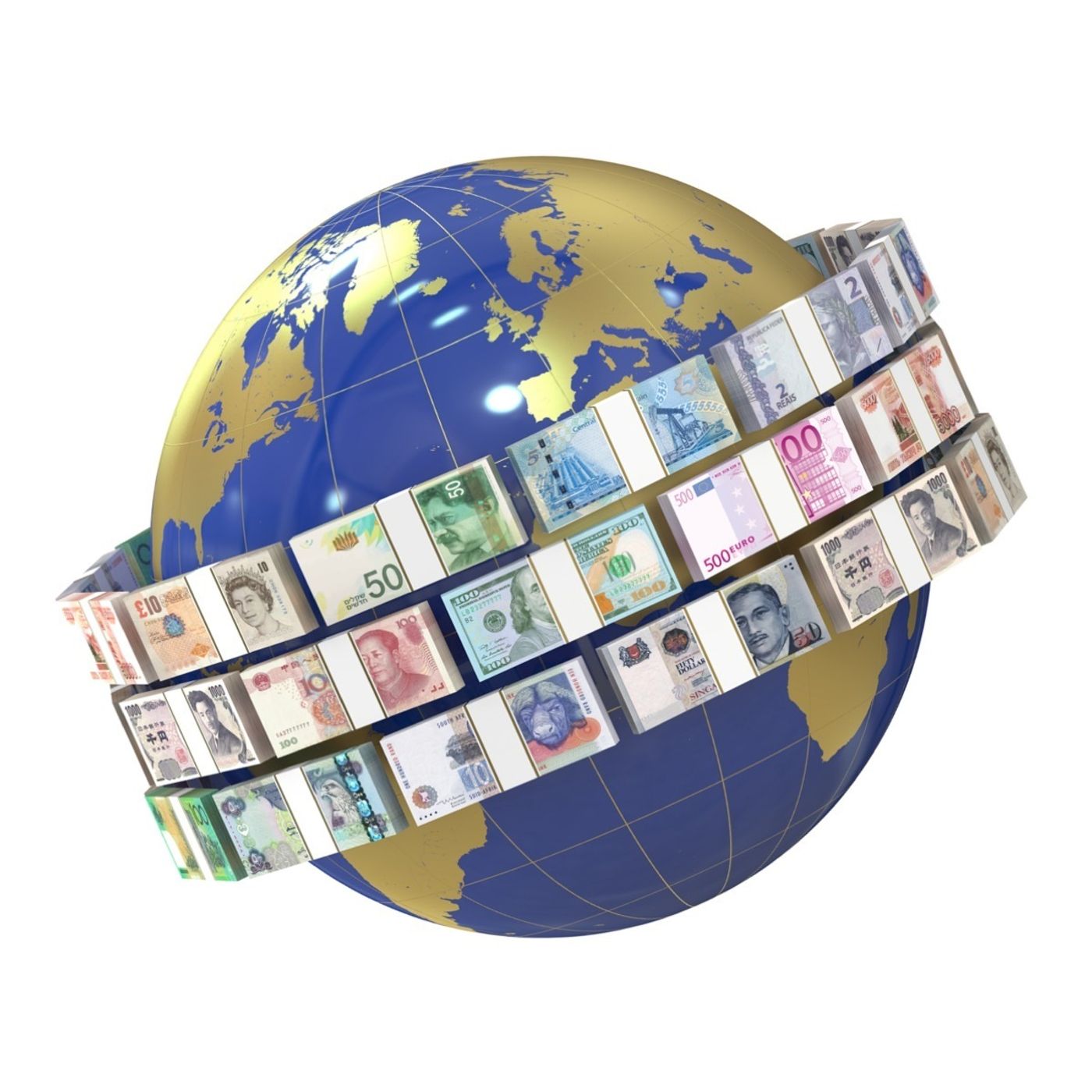
S4 Ep 42S4 Ep42: Rethinking financial globalisation
Even after their role in the global financial crisis, globalised, minimally regulated financial markets are still regarded as inevitable and, on balance, good for us. Maurice Obstfeld of Berkeley tells Tim Phillips about the short but action-packed history of financial globalisation and asks whether we should be rethinking this aspect of capitalism too.

S4 Ep 41S4 Ep41: The robots are reshoring!
Robots and offshoring are blamed for destroying manufacturing jobs in advanced economies. But could automation also be a way to make domestic manufacturing more competitive? If so, those outsourced jobs may return. Alessandra Bonfiglioli tells Tim Phillips why there may be reasons to welcome our new robot overlords.

S4 Ep 40S4 Ep40: Using AI to target aid in Togo
There is often an urgent need for humanitarian assistance in low-income countries. But how can it be targeted efficiently and quickly? Joshua Blumenstock tells Tim Phillips how, in Togo, a combination of machine learning and mobile phone data dramatically increased the effectiveness of Covid assistance.
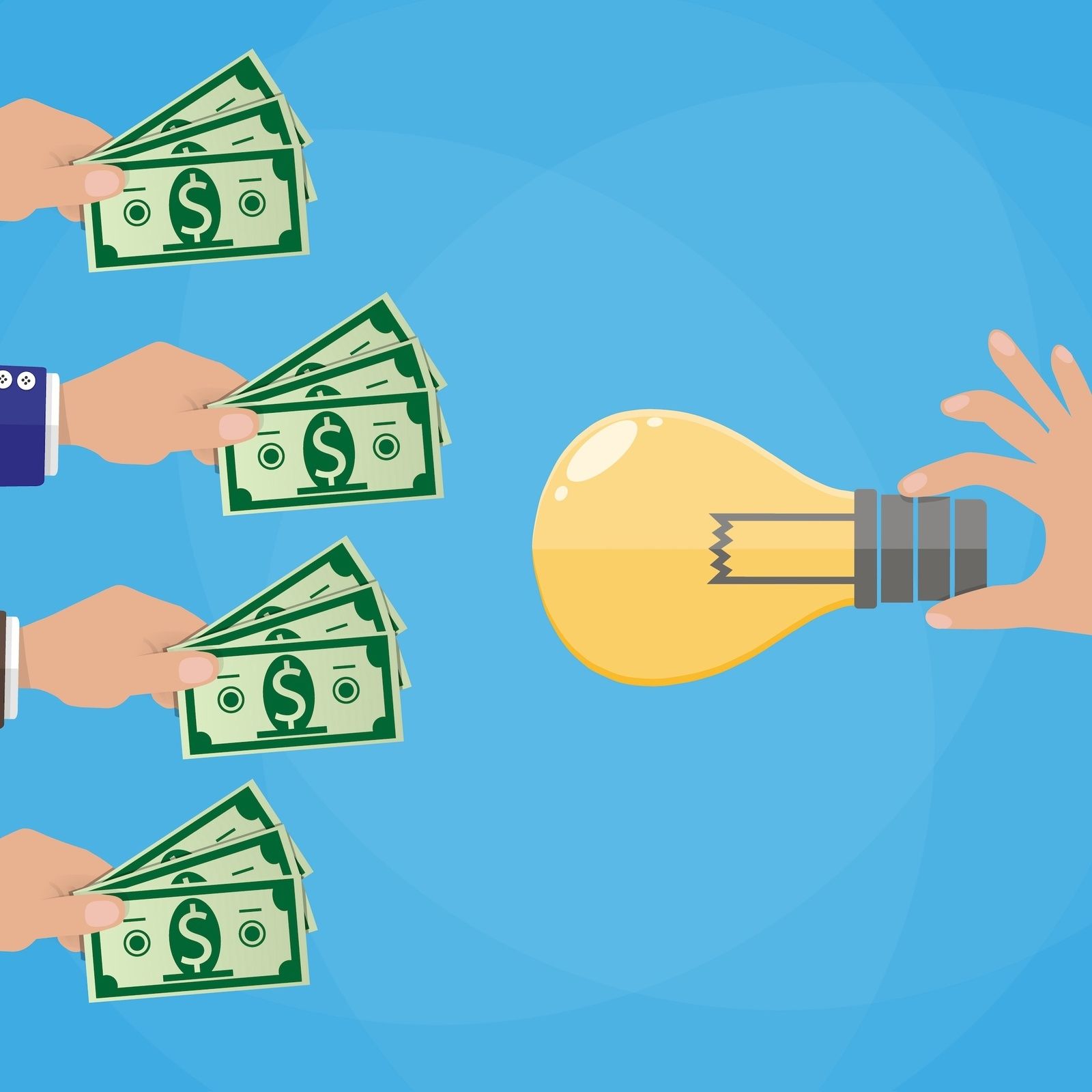
S4 Ep 39S4 Ep39: Pitching with passion
If you want your startup to be funded, everybody knows you have to dial up the energy and enthusiasm when you meet investors to the maximum. But is this really good advice for startups, and is a passionate pitch really a reliable signal for an investor? Song Ma of Yale School of Management used machine learning to evaluate thousands of pitches. He tells Tim Phillips whether passionate entrepreneurs make better startups.

S4 Ep 38S4 Ep38: The flight from quality
In March 2020 we all assumed there would be some reaction to Covid-19 on Wall Street but, when markets did the opposite of what most people expected, the Fed had to step in to stabilise the economy. Anil Kashyap and Kathryn Judge tell Tim Phillips what happened, why, and how to stop it happening again.

S4 Ep 37S4 Ep37: Remembering Peter Neary
Earlier in 2021 Peter Neary passed away. This special episode pays tribute to his work and examines why Peter was held in such affection by his colleagues. With contributions from Patrick Honohan, Richard Portes, Monika Mrázová, Beata Javorcik, and Abi Adams-Prassl.

S4 Ep 36S4 Ep36: Share vaccines, save lives
How many lives could be saved if rich countries shared their vaccines? Less than 2% of people in low-income countries have received even one dose. Mehdi Benatiya Andaloussi tells Tim Phillips about his calculation of how many lives would be saved by the end of 2021 if vaccines were shared more fairly - and how many have been lost because this hasn't happened so far.

S4 Ep 35S4 Ep35: Does malnutrition cause disease?
The records of London's Foundling Hospital provide centuries of information on children's health. Eric Schneider tells Tim Phillips how he used this data to discover surprising information about the link between nutrition and common childhood illnesses.
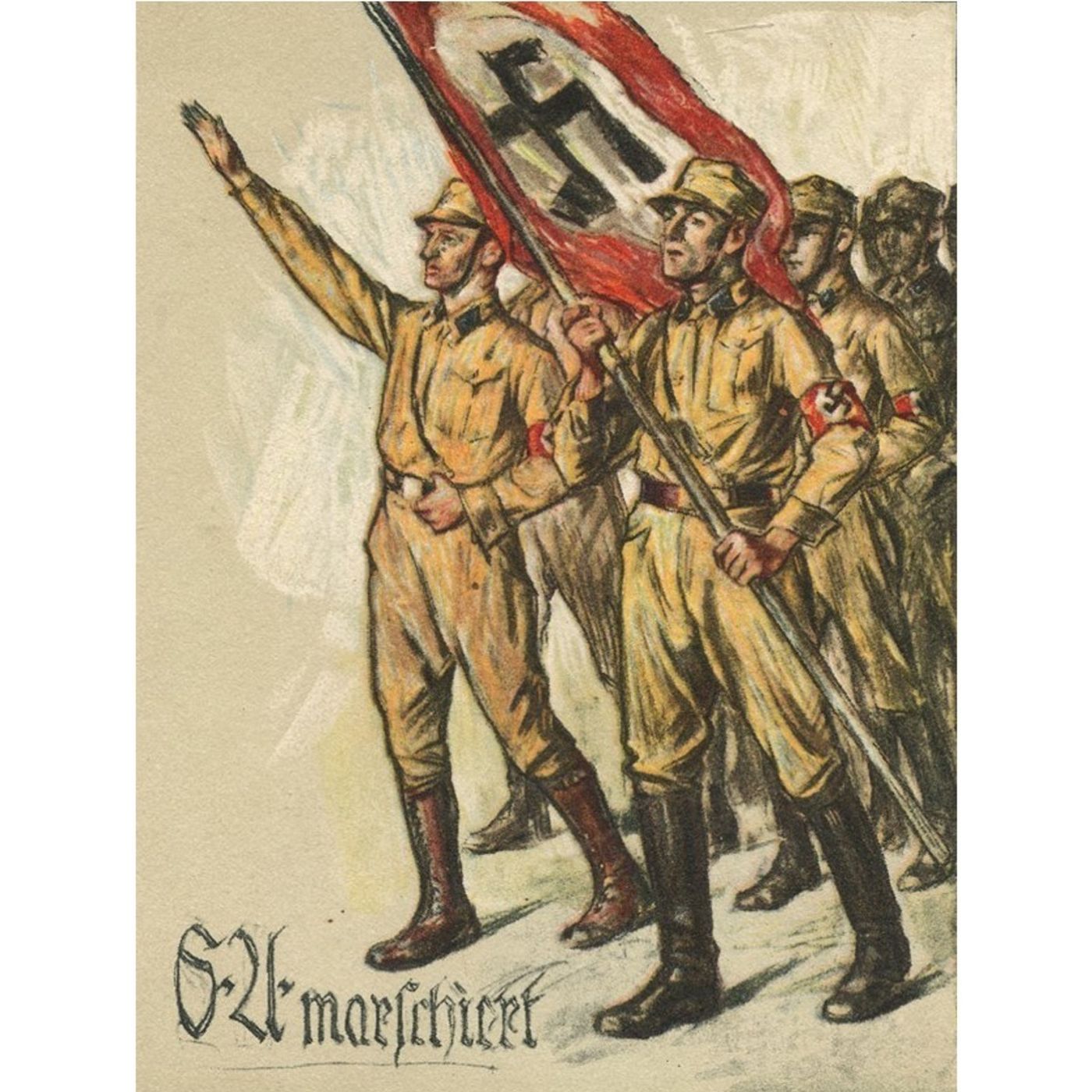
S4 Ep 34S4 Ep34: Propaganda, persuasion, and the Nazis
In 1932, Hitler and his followers believed that marching through the streets of Hamburg in uniform would convince its citizens to vote him into power. But did the flags, songs and stomping boots actually persuade people? Hans-Joachim Voth tells Tim Phillips how polling data (and the spread of a pandemic) reveal whether this type of propaganda actually worked.

S4 Ep 33S4 Ep33: The PPE panic of 2020
In the scramble for PPE in early 2020, prices spiked, supplies dried up, and doctors were forced to use garbage bags for protection. A year on, Chad Bown has examined what happened, and he tells Tim Phillips how we can avoid a repeat.

S4 Ep 32S4 Ep32: How Craigslist killed local news
Remember when your local newspaper was filled with classified advertising? Once, three-line ads for lonely hearts and used cars for sale were a guaranteed source of revenue. Then Craigslist replaced classifieds in the US, and the result, Ruben Durante tells Tim Phillips, has been less political reporting and more partisan polarisation.

S4 Ep 31S4 Ep31: Covid's effect on inequality
Jonathan Ostry of the IMF has investigated a century of pandemics and discovered that not only do they make our societies less equal, but they lead to a K-shaped recovery. He tells Tim Phillips that, unlike other crises, pandemics open a permanent gap between winners and losers.Ungated paper at https://cepr.online/DP16122

S4 Ep 30S4 Ep30: Does economics do enough race-related research?
Imran Rasul tells Tim Phillips about new research that shows the fraction of published economics research devoted to the causes and consequences of racial inequality is much smaller than in political science or sociology - and that this inequality has been getting worse.

S4 Ep 29S4 Ep29: A cure for Friday morning fever
People everywhere sometimes pretend to be sick on a Friday because a day off work means a three-day weekend. In Italy, sick workers may now get a surprise home visit from the doctor. Tito Boeri tells Tim Phillips how effective this has been as a cure for "Friday morning fever".

S4 Ep 28S4 Ep28: What makes children lie?
If some kids lie a little, and some lie a lot, is that just the way they are, or can we increase a child’s honesty in day-to-day life? Johannes Abeler tells Tim Phillips about how mentors can create lasting behaviour change.The paper discussed is:Abeler, J, Falk, A and Kosse, F. 2021. 'Malleability of preferences for honesty'. London, Centre for Economic Policy Research. https://cepr.org/active/publications/discussion_papers/dp.php?dpno=16164

S4 Ep 27S4 Ep27: Why mums return to work
Do cultural norms determine whether women go back to work after having a child? And if culture changes, does their behaviour change too? Anna Raute and Uta Schӧnberg tell Tim Phillips how the reunification of Germany provided unique data.The paper discussed is:Boelmann, B, Raute, A and Schӧnberg, U. 2021. 'Wind of Change? Cultural Determinants of Maternal Labor Supply'. London, Centre for Economic Policy Research. https://cepr.org/active/publications/discussion_papers/dp.php?dpno=16149
S4 Ep 26S4 Ep26: Whatever happened to the 15-hour work week?
John Maynard Keynes famously predicted that no one would need to work for more than three hours a day by 2030. How did he get it so wrong? Nick Crafts tells Tim Phillips that, in one way, Keynes has underestimated the change in our work-life balance.
S4 Ep 25S4 Ep25: Capitalism after Covid
What's the future of capitalism? Luis Garicano asked this question to 21 of his fellow economists, and this week the interviews are published as a CEPR ebook. He tells Tim Phillips that Covid-19 may inspire us "to rethink everything we are doing".You can download the new CEPR Press eBook 'Capitalism after Covid: Conversations with 21 economists' here

S4 Ep 24S4 Ep24: Populism in Latin America
Latin America has a long history of populist government. New research by Antonio Spilimbergo quantifies the consequences of populism for the region's institutions and economies.

S4 Ep 23S4 Ep23: Turning competition research into competition policy
The CEPR's Research Policy Network on competition policy (cepr.online/competition) launches this week. In the first of two special podcasts on the topic, Greg Crawford and Cristina Caffarra tell Tim Phillips why it is so important to have this debate now, and how academics can use the RPN to connect their research to real-world policy.You can find out more about and register for the event on June 17th 2021 here: Privacy & Antitrust: "Integration", not just "Intersection"
S4 Ep 22S4 Ep22: How central banks saved us from Covid-19
How well has monetary policy coped with the challenge of Covid-19?Central banks get good grades in a new VoxEU ebook. But Bill English and Angel Ubide warn Tim Phillips that success today may lead to problems in future.

S4 Ep 21S4 Ep21: Twitter changes how the media reports conflict
Every day we can see harrowing mobile phone footage from conflict zones, shot by civilians, on the TV news. Ekaterina Zhuravskaya tells Tim Phillips that data from the Israel-Palestine conflict suggests social media has changed the tone of what traditional media reports.

S4 Ep 20S4 Ep20: The financial system and climate risk
The latest Barcelona Report from the CEPR discusses how central banks and asset managers should manage climate and natural disaster risks. Xavier Vives tells Tim Phillips what the report has to say about mandates, hedging and resilience.

S4 Ep 19S4 Ep19: Are socially responsible banks more resilient?
ESG – Environmental, Social and Governance – measures of bank performance are getting a lot of attention from shareholders and policymakers. But might more investment in ESG make banks less resilient? Thomas Gehrig tells Tim Phillips what the first research on this topic reveals.

S4 Ep 18S4 Ep18: Parental age and child health
As more of us wait to have children, more of us also worry if that's best for the health of our babies. Empirical evidence has been inconclusive so far but, based on new evidence, Hans Hvide tells Tim Phillips that this might be a problem with the way the research has been done.

S4 Ep 17S4 Ep17: Making sense of the US-China trade war
If you had trouble in the last four years keeping up with what was happening in the trade war, you're not alone. Chad Bown tell Tim Phillips about his new paper that explains what happened, when, what it meant - and what happens next.
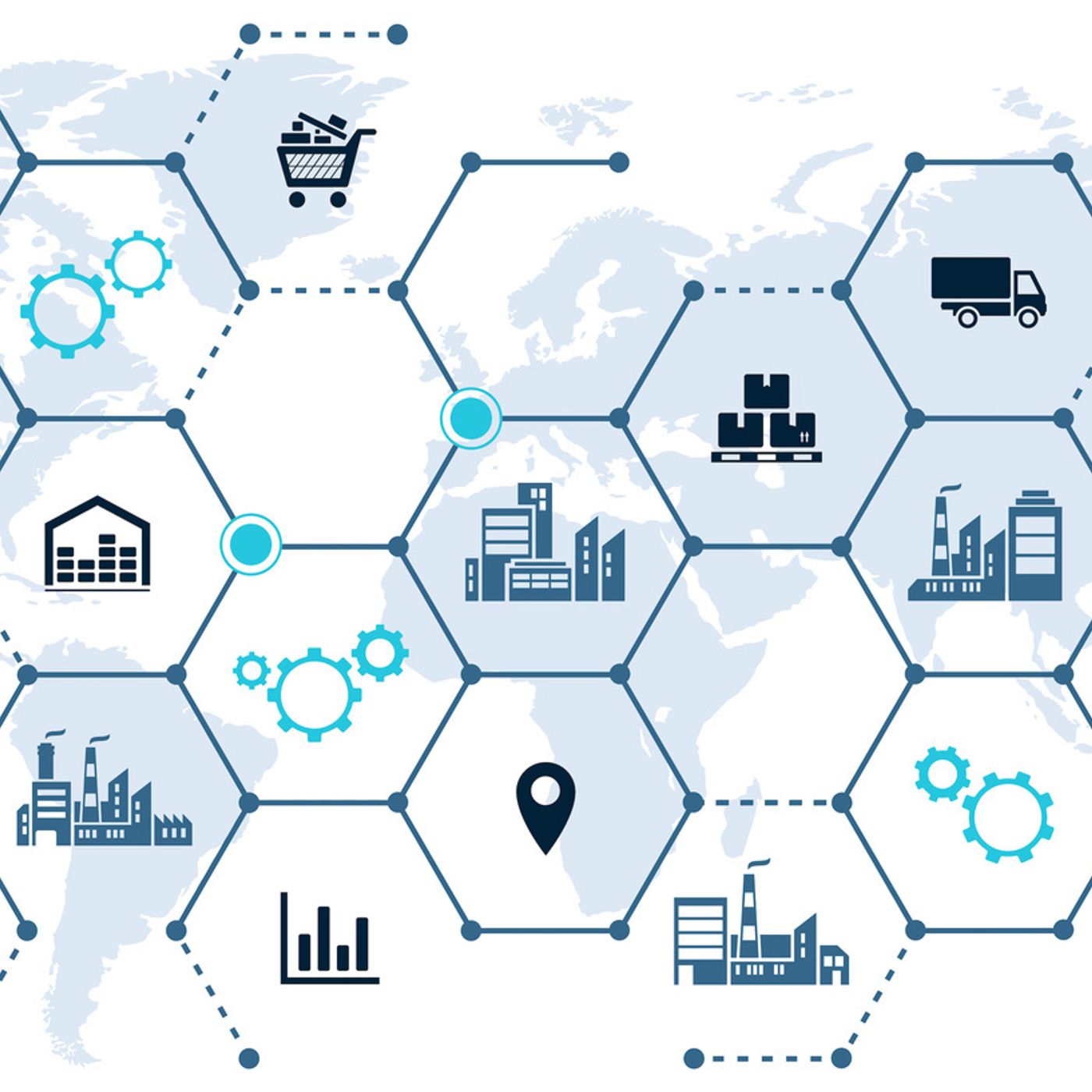
S4 Ep 16S4 Ep16: The problems of digital trade
An increasing amount of trade is digital, but trade negotiations are bogged down by arguments over how to regulate it. A new VoxEU ebook investigates what gets in the way of digital trade, and editors Ingo Borchert and Alan Winters tell Tim Phillips what we can do to make it work better.

S4 Ep 15S4 Ep15: Covid-19 is reshaping European economic policy
Europe has struggled through two crises in the last decade, but this time its response has been much more decisive and ambitious. George Papaconstantinou tells Tim Phillips why Covid-19 may be the catalyst for deeper EU integration.You can download CEPR Policy Insight 109: Reshaping economic policy in the EU in the post-Covid world, by Marco Buti and George Papaconstantinou, here

S4 Ep 14S4 Ep14: Discovering history's notable people
Can we create a database of everyone in history? What would it tell us about who we consider to be important? Etienne Wasmer, Morgane Laouenan, and Arash Nekoei tell Tim Phillips about what their projects tell us.

S4 Ep 13S4 Ep13: Inequality beyond GDP
We measure inequality using income as a proxy for welfare. But are we mixing up "doing well" with "being well"? Leandro Prados de la Escosura thinks so, and his research contradicts much of what we think we know about the long-run trends in inequality.

S4 Ep 12S4 Ep12: What if bitcoin succeeds?
What would our economies be like if Bitcoin completely displaced fiat currency? Jon Danielsson tells Tim Phillips that it wouldn't be a world that he wants to live in.

S4 Ep 11S4 Ep11: Do looks matter in economics?
Good-looking economists get better academic posts. Galina Hale tells Tim Phillips about surprising new research that challenges our assumptions about how departments rate and recruit candidates.

S4 Ep 10S4 Ep10: Regulation after Wirecard
It has been two years since Wirecard suddenly collapsed. Giorgio Barba Navaretti and Alberto Pozzolo explain to Tim Phillips why it is so hard to supervise global fintechs, and how regulators can do a better job next time.

S4 Ep 9S4 Ep9: Exporting pollution
Anti-pollution laws penalise firms whose activities emit CO2. Itzhak Ben-David tells Tim Phillips that well-intentioned regulation may be causing multinationals to shunt polluting activities to poorer countries where regulation isn’t so strict.

S4 Ep 8S4 Ep8: How Africa can recover from Covid-19
Africa’s citizens have so far mostly been spared the direct health consequences of the pandemic, but many of its economies are on life support. Ugo Panizza and Simeon Djankov, two of the editors of a new CEPR ebook about Africa's recovery, talk to Tim Phillips about post-Covid debt, FDI, food security, and how it's in all our interests to step up and help.Download Shaping Africa’s Post-Covid Recovery at VoxEU.

S4 Ep 7S4 Ep7: Patent pools for generic drugs
Diffusion of new drugs is painfully slow in low-income countries. Mark Schankerman tells Tim Phillips about how patent pools accelerate the process, and how we could still do a better job of licensing life-saving medicines.

S4 Ep 6S4 Ep6: Is Europe's trade strategy fit for purpose?
Today the CEPR launches a new ebook on Europe's trade strategy. Author Christian Bluth tells Tim Phillips that nations are increasingly using global trade as a means of political arm-twisting. Should the EU do the same?Download Europe’s trade strategy for the age of geoeconomic globalisation from VoxEU.

S4 Ep 5S4 Ep5: Do we give more to charity after we've been sick?
Serious illness can be life-changing. Does it inspire us to be more charitable? Sarah Smith tells Tim Phillips whether we give more to charity after we suffer, to which charities - and what this means for their funding after Covid-19.

S4 Ep 4S4 Ep4: Capitalist systems and inequality
In classical capitalism, the rich earn their money from capital while the poor sell the value of their labour. In which countries is that still true, and how does it affect the gap between rich and poor? Branko Milanovic tells Tim Phillips about a new way in which we can think about inequality.Read about the research at VoxEU.

S4 Ep 3S4 Ep3: Boiling point in Africa
As the climate heats up, what does it mean for the number, and the scale, of conflicts in Africa? Dominic Rohner warns Tim Phillips about the impact that climate change has had in the continent already and the danger signs for the future.

S4 Ep 2S4 Ep2: The microeconomics of cryptocurrencies
What is behind the pinballing price movements of Bitcoin? Neil Gandal tells Tim Phillips how supply and demand works for cryptocurrencies.

S4 Ep 1S4 Ep1: The refugee's dilemma
A new study uses detailed data on the persecution of Jews in Nazi Germany to investigate why individuals become refugees. Mathias Thoenig tells Tim Phillips about a simple policy that would have saved hundreds of thousands of lives in the 1930s, but is still ignored today.

S3 Ep 59S3 Ep59: How authoritarians stay in power
Among other things, it has not been a great year for global democracy. So in the final VoxTalk of 2020, Konstantin Sonin tells Tim Phillips how authoritarian leaders grab and hold on to power.

S3 Ep 58S3 Ep58: Covid baby boom or bust?
Will the pandemic create more or fewer babies? Joshua Wilde tells Tim Phillips how Google search data can provide the answer.

S3 Ep 57S3 Ep57: The Spanish Empire's shipwreck problem
When the galleon San José sank in a typhoon in 1694, it was carrying a cargo worth 2% of the GDP of the entire Spanish empire. Fernando Arteaga, Desiree Desierto and Mark Koyama tell Tim Phillips about how bribes sank Spanish treasure ships.Read the Vox column about Spanish shipwrecks.

S3 Ep 57S3 Ep57: Africa's roads make the rich richer
Africa's roads were originally built so that colonial powers could extract its natural wealth. What has happened since then? Steven Poelhekke of the University of Auckland examines the maps with Tim Phillips.

S3 Ep 56S3 Ep56: The secret war in Laos
Laotians are still suffering collateral damage from a covert war that the US waged in the country half a century ago. Felipe Valencia Caicedo tells Tim Phillips about the devastating impact of the bombing of Laos, and how we can help victims of conflict in future.

S3 Ep 55S3 Ep55: A history of public debt
When we compare ratios of debt to GDP, do we look closely enough at the political and financial context in which the debts were calculated? Eric Monnet of the Paris School of Economics tells Tim Phillips about how our statistical methods and assumptions have evolved.

S3 Ep 54S3 Ep54: Europe should throw out its fiscal rulebook
The EU's increasingly complex system of fiscal rules should be replaced by a system of fiscal standards instead, Olivier Blanchard tells Tim Phillips.You can watch the recording of Olivier presenting his paper on Fiscal Standards for Europe at the 72nd Economic Policy Journal Panel Meeting hereThe full paper, Redesigning the EU Fiscal Rules: From Rules to Standards by Olivier Blanchard, Alvaro Leandro and Jeromin Zettelmeyer, can be downloaded here