VoxTalks Economics
476 episodes — Page 8 of 10

S3 Ep 45S3 Ep45: Post-pandemic transport policy
In the UK, public transport use has remained low after lockdown - but car use is almost back to pre-pandemic levels. What does this mean for a sustainable transport policy? David Newbery tell Tim Phillips how we could tax and incentivise ways to get around after the pandemic.

S3 Ep 44S3 Ep44: Trustworthiness in the financial sector
Do scandals happen in banks because they recruit people who can't be trusted? Matthias Heinz tells Tim Phillips about new research with a sobering message for bank HR departments.

S3 Ep 43S3 Ep43: What next for the UK's furloughed workers?
Nine million workers were furloughed in the UK this summer. What was the experience like for them, and what will happen to them now? Abi Adams-Prassl tells Tim Phillips about how the Job Retention Scheme worked in practice, and what we can learn about short-time work.

S3 Ep 42S3 Ep42: Kindergartens in America
At the beginning of the 20th century more than 7,000 kindergartens were set up in the US. Philipp Ager and Francesco Cinnirella tell Tim Phillips about the profound effect of preschool on the life chances of a generation of immigrants.

S3 Ep 41S3 Ep41: Racism and the "China virus"
Many Americans blame China for Covid-19. Runjing Lu tells Tim Phillips that the way politicians have exploited the pandemic has led to an increase in prejudice against the US Asian community.
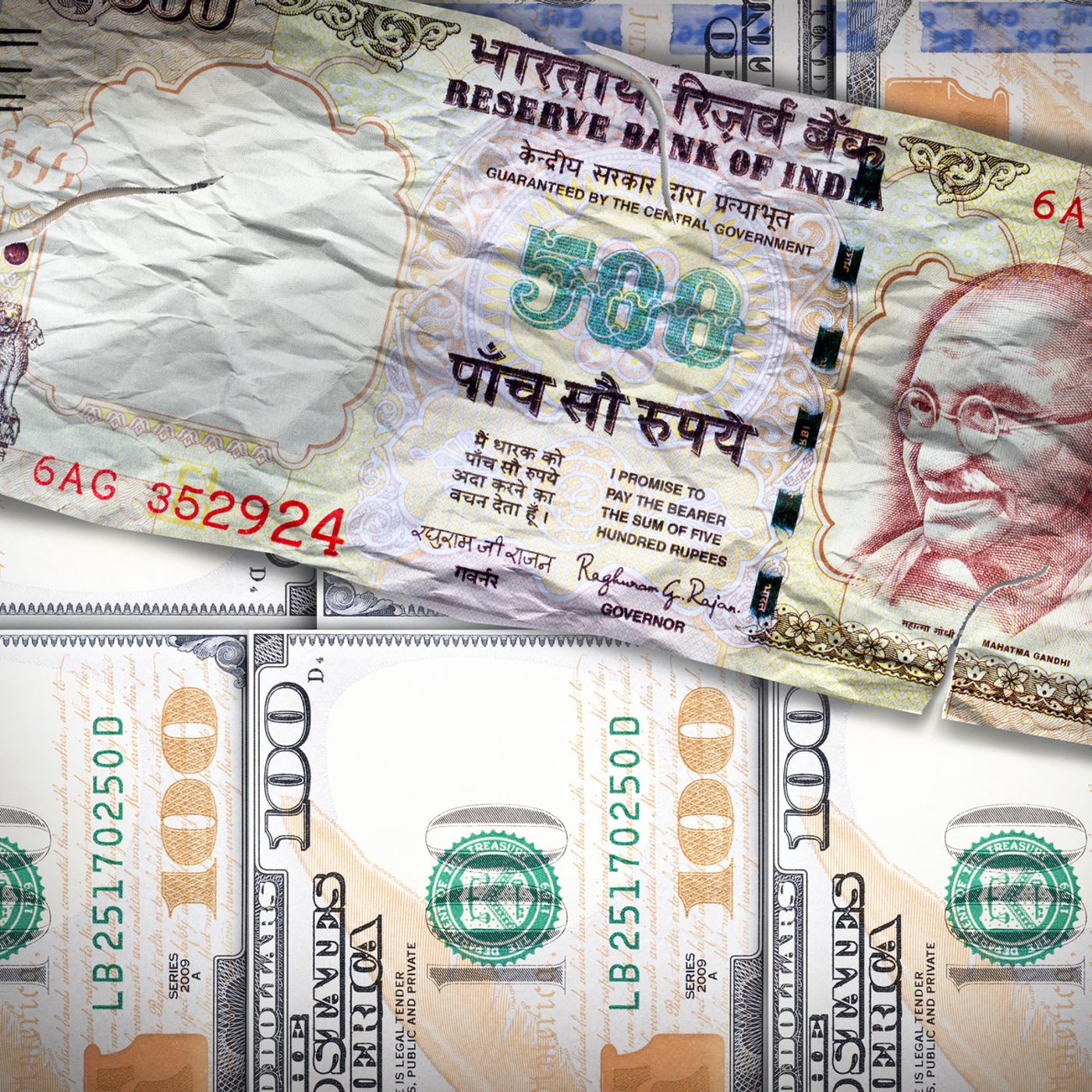
S3 Ep 40S3 Ep40: Restoring financial stability to India
In a new book based on his time as deputy governor of India's central bank, Viral Acharya warns that India's bloated public sector is strangling growth. The economy urgently needs institutional reform, he tells Tim Phillips - and now is the perfect time to do it.Viral's book is called Quest for Restoring Financial Stability in India, and is published by Sage India.

S3 Ep 39S3 Ep39: A new explanation for wage stagnation
Low-skilled workers are concentrated in sectors with fast productivity growth, so why isn't their pay rising? Rachel Ngai tell Tim Phillips that one explanation is in how low-skilled workers are reallocated between different sectors.

S3 Ep 38S3 Ep38: Bailing out the kids
How much do we bail out our family in a crisis? By matching financial transactions and administrative data in Denmark, Niels Johannesen comes up with an answer for Tim Phillips.

S3 Ep 37S3 Ep37: Does social media make us xenophobic?
Xenophobic attacks are on the rise around the world. Does social media help cause them? Maria Petrova tells tim Phillips about shocking new research from Russia.

S3 Ep 36S3 Ep36: Europe's zombie lending
Viral Acharya tell Tim Phillips that the action to save Europe's financial sector after 2008 has delayed reform in the banking sector - creating a decade of lending to zombie firms that has stifled economic growth. Acharya on Zombies and disinflation at VoxEU.
S3 Ep 35S3 Ep35: Recessions increase inequality
Most high earners bounce back from recessions. But Gianluca Violante tells Tim Phillips that, for the last 50 years, it has been a different story for low earners.

S3 Ep 34S3 Ep34: Valuing digital services
The Covid-19 lockdown has provided the opportunity to measure the financial value we give to 'free' digital services like social media and Google search. Diane Coyle and David Nguyen tell Tim Phillips what they discovered, and whether this value should be counted in GDP.Read the paper in Covid Economics 33, or this article on VoxEU.

S3 Ep 33S3 Ep33: The mechanics of the industrial revolution
Skilled artisans were needed to build, improve and mend the machines that powered the industrial revolution. Joel Mokyr tells Tim Phillips how this can help explain why the revolution happened when - and where - it did.
S3 Ep 32S3 Ep32: Solving Europe's productivity puzzle
In the recovery from Covid-19 we urgently need to boost productivity. But which policies move the needle? Filippo di Mauro tells Tim Phillips about what CompNet's firm-level productivity data tells us about both the problem and the solution.Find out more about what the data is telling us.

S3 Ep 31S3 Ep31: Banks under pressure
Low profitability, non-performing loans, and competition from Big Tech. A new report from the CEPR concludes that the banking sector faces "deep restructuring". Xavier Vives tell Tim Phillips why.Read about the report and download it.

S3 Ep 30S3 Ep30: To each according to their needs
Kaushik Basu's time as World Bank chief economist inspired him to think radically about how to change the way the global economy works. He tells Tim Phillips about why public ownership and profit-sharing may be essential, and what we can still learn from Karl Marx.

S3 Ep 29S3 Ep29: Coping with Covid in developing economies
A new ebook from the CEPR and the International Development Policy Journal discusses the threat to developing and emerging economies from the pandemic, and what we can do about it. Ugo Panizza is one of the editors, and he joins Tim Phillips to discuss capital flight, conflict, and what advanced economies and can do to help.Download Covid in Developing Economies - it's free.

S3 Ep 28S3 Ep28: Who gets exposed to Covid-19?
Different countries and cities have different rates of Covid exposure, but what can explain the difference in incidence between neighbourhoods? New York residents Milena Almagro and Angelo Orane-Hutchinson tell Tim Phillips what made the difference in their city.Read their research in Covid Economics 13.

S3 Ep 27S3 Ep27: The Great Reversal
Thomas Philippon's new book argues that in the last 20 years the US has “given up” on free markets. As a result, he tells Tim Phillips, American families are each $5,000 a year poorer.

S3 Ep 26S3 Ep26: Structural transformation and economic growth
This week the CEPR launches a new research programme called STEG - Structural Transformation and Economic Growth. Ahead of the kick-off workshop on June 4 and 5, Joe Kaboski and Doug Gollin tell Tim Phillips what STEG hopes to achieve, and Rachel Glennerster explains why DFID is funding it.Register for the workshop or discover STEG here.
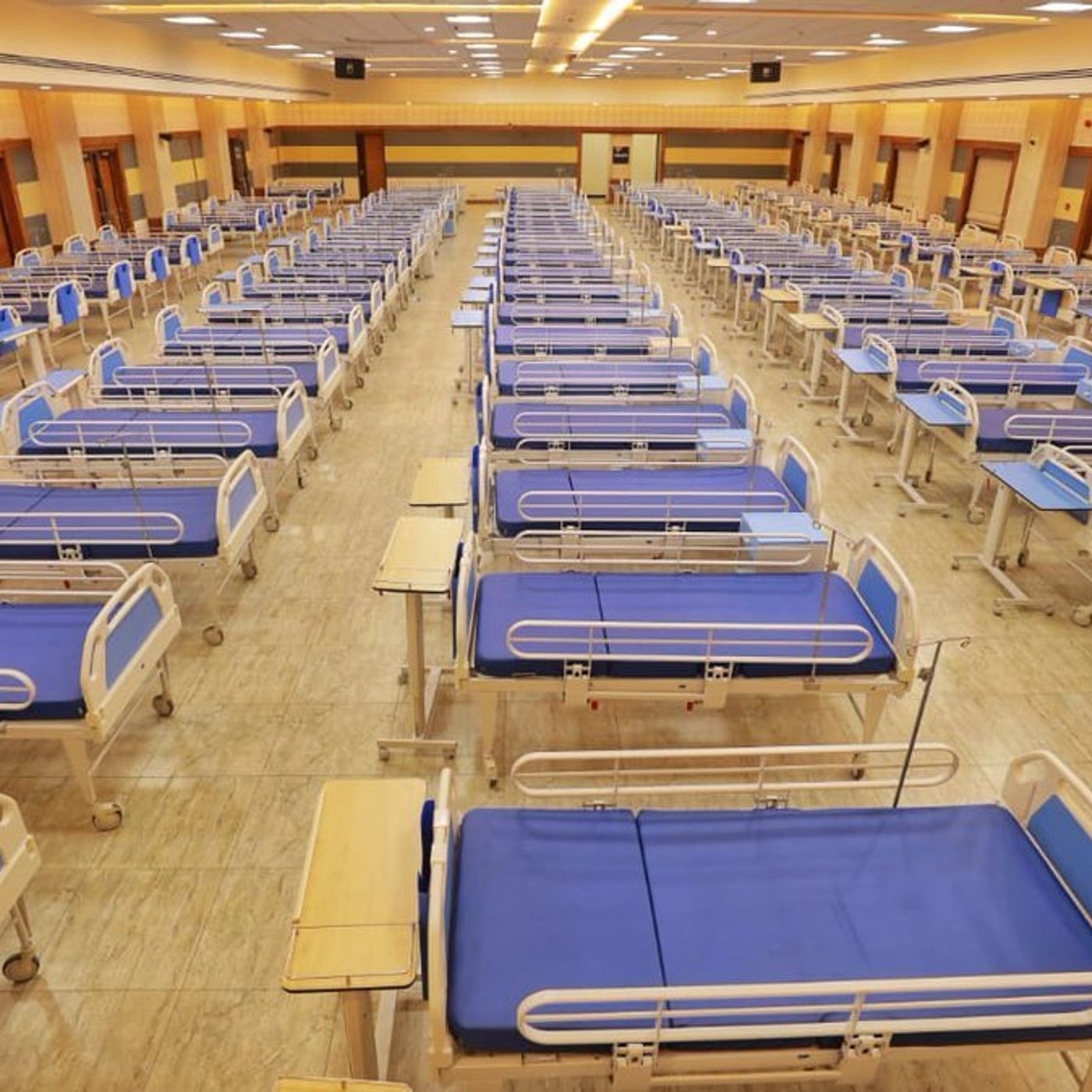
S3 Ep 25S3 Ep25: Time for beds
The mortality statistics of the Covid-19 outbreak suggest that your country's medical infrastructure has a big influence on how likely you are to survive. Nathan Sussman has examined the data and tells Tim Phillips why all countries should be urgently investing in their health services.Read "Time for Beds" in issue 11 of Covid Economics.

S3 Ep 24S3 Ep24: Tech industry mergers
Should competition authorities intervene more often in tech mergers? Be careful, Luis Cabral tells Tim Phillips: they risk stifling innovation if they do.

S3 Ep 23S3 Ep23: Helicopter money
In every crisis, economists will tell us that it is time for helicopter money, and Covid-19 is no different. But the helicopters never seem to take off. Donato Maschiandaro tells Tim Phillips why not.Read about helicopter money in Issue 7 of Covid Economics.

S3 Ep 22S3 Ep22: The Swedish solution to Covid-19
Do we close our public spaces to protect our communities from Covid-19, or keep them open, as in Sweden? Dirk Krueger tells Tim Phillips that informing the public and then trusting individuals to make good choices might deliver a decline in infections, while minimising the Covid recession.Download Covid Economics 5, including Dirk's paper.Picture: Creative Commons/Vogler
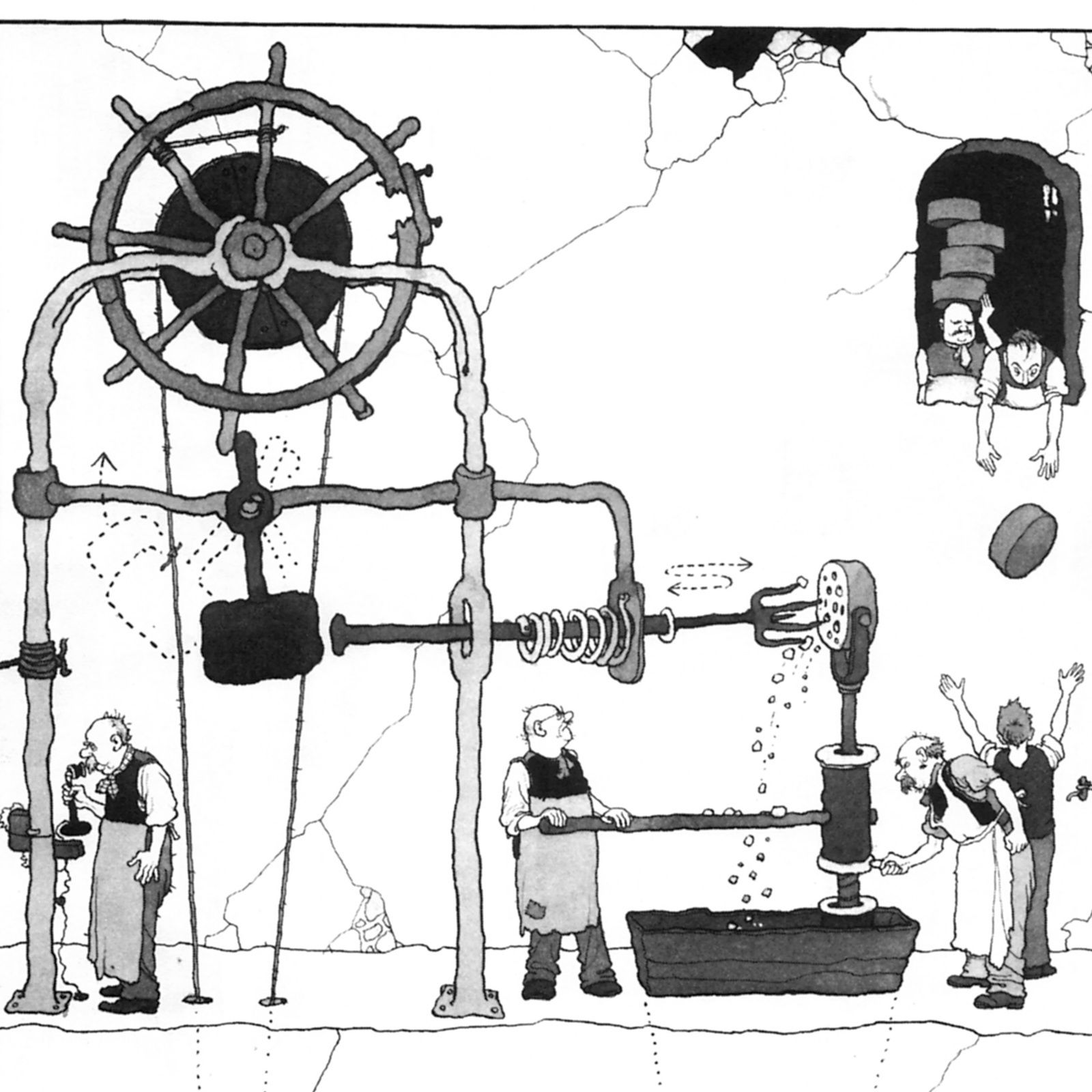
S3 Ep 21S3 Ep21: The myth of British inventive genius
On the 75 anniversary of the VE Day, David Edgerton tells Tim Phillips that Britain's belief in its go-it-alone scientific and inventive genius is “deluded”, and has stunted the nation's postwar growth.Download The Economics of the Second World War Seventy-Five Years On, featuring David's chapter.

S3 Ep 20S3 Ep20: Do the rich get more coronavirus tests?
Last month the media accused New York's wealthy residents of jumping the queue for Covid-19 testing. Stephanie Schmitt-Grohé, a New York resident herself, ran the numbers. She tells Tim Phillips what she discovered.

S3 Ep 19S3 Ep19: We need a Covid-19 debt standstill
In a new paper called Born out of necessity, a group of economists and lawyers propose a way for developing and emerging countries to temporarily redirect debt repayments to fund Covid-19 relief. Ugo Panizza and Mitu Gulati tell Tim Phillips how it would work. Read about this controversial idea at VoxEU.

S3 Ep 18S3 Ep18: John Maynard Keynes's art portfolio
Keynes amassed an extensive collection of fine art during his lifetime. David Chambers tells Tim Phillips what the financial returns on his investment have been, and the insight this gives us into how to value an art portfolio as an asset.

S3 Ep 17S3 Ep17: Lessons from the Ebola crisis on dealing with Covid-19
The 2014 Ebola outbreak in Sierra Leone affected an area which included a pioneering experiment in community healthcare. Oeindrila Dube tells Tim Phillips about the lifesaving impact of this experiment - and two important lessons we can learn that may help to contain the spread of Covid-19 in Africa.

S3 Ep 16S3 Ep16: Modelling the economic consequences of Covid-19
When Covid-19 wasn't even on the radar of most policymakers, Warwick McKibbin of ANU used his experience from previous pandemics to create seven scenarios for its impact. All implied a major shock to the global economy. Tim Phillips asks him how his model was able to capture the nature of Covid-19, and which policymakers listened to the warning.Read about McKibbin's scenarios in Chapter 3 of Economics in the Time of Covid-19.

S3 Ep 15S3 Ep15: How much do governments lend to each other in a crisis?
In international crises, disasters and wars, private lenders disappear. But governments have stepped in and lent far more to each other than we previously thought. Christoph Trebesch tells Tim Phillips that new data on 200 years of official lending may contain unexpected good news for countries crippled by Covid-19.Read 'Coping with disasters: Lessons from two centuries of international response' at VoxEU

S3 Ep 14S3 Ep14: The coronavirus shock to financial stability
Enrico Perotti tells Tim Phillips that while regulatory reform means that banks are unlikely to be at risk, the same is not true for the shadow banking sector. Does this threaten financial stability, and what should policymakers do about it?

S3 Ep 13S3 Ep13: A Covid credit line for Europe
How can euro area countries work together to protect their economies? A diverse group of economists has suggested the creation of an emergency Covid credit line. Beatrice Weder di Mauro tells Tim Phillips how it would work.Read about the Covid credit line on VoxEU

S3 Ep 12S3 Ep12: Singapore's response to Covid-19
In a VoxTalks special, Danny Quah tells Tim Phillips how Singapore defended itself against the health and economic impact of Covid-19, and what other countries can learn from its actions.Download the VoxEU book Mitigating the Covid Economic Crisis.

S3 Ep 11S3 Ep11: The polarization of reality
We think about political polarization as a disagreement about policies. But what if the voters can't even agree on the facts? Stefanie Stantcheva tells Tim Phillips about new research that has profound implications for democracy.

S3 Ep 10S3 Ep10: Economics in the time of Covid-19
How big are Covid-19's economic consequences? That's the theme of a new VoxEU book with contributions from many of the world's most experienced policymakers with expertise in this area. Beatrice Weder di Mauro and Richard Baldwin, the book's editors, give Tim Phillips the (mostly) bad news.Download the book: it's free.

S3 Ep 9S3 Ep9: Women in Economics
Women are under-represented in economics, and the situation is not improving. Economists Shelly Lundberg, Donna Ginther, Jenna Stearns and Erin Hengel talk to Tim Phillips about VoxEU's new book on the subject that examines the barriers that women face in the profession, and also suggests ways to support the next generation of female economists.Download the book here, it's free.

S3 Ep 8S3 Ep8: Digital market merger policy
In the last decade, global digital giants have snapped up hundreds of smaller, innovative companies. Should competition authorities have intervened more often? Tomaso Duso tells Tim Phillips about new research that suggests they should.

S3 Ep 7S3 Ep7: The history of immigration quotas
A century ago, American nativists succeeded in establishing immigration quotas to drive up the wages of US workers. What happened next? Not what you might think, Leah Boustan tells Tim Phillips.

S3 Ep 6S3 Ep6: Education creates peace
New research shows how a school-building programme in Indonesia successfully reduced conflict. Dominic Rohner tells Tim Phillips about this unanticipated peace dividend, and how the CEPR's research and policy network on conflict reduction will help policymakers.

S3 Ep 5S3 Ep5: Central banks and regional inequality
Is regional inequality a problem that central banks should worry about? Andy Haldane of the Bank of England tells Tim Phillips why he thanks the answer is yes: but why we also need to think about what, and how, we measure.

S3 Ep 4S3 Ep4: The origins of tech clusters
Why are cities so keen to create their own technology clusters, and why is it so difficult? Bill Kerr of Harvard Business School tells Tim Phillips what economists know (and don't know) about where tech clusters come from.

S3 Ep 3S3 Ep3: Betting on the Lord
An experiment in Haiti shows that people take more risks in the presence of religious images, even if there is less chance they will win. Emmanuelle Auriol tells Tim Phillips about the challenges that belief in a higher power presents for economic development.

S3 Ep 2S3 Ep2: Regenerating the cities that were left behind
When the industries that have sustained our cities decline, how can we regenerate urban areas? At the SUERF conference in Amsterdam, Tony Venables and Charles Goodhart tell Tim Phillips that redevelopment policies may have made regional inequality and social conflict worse.

S3 Ep 1S3 Ep1: Will there be a post-Brexit financial services deal?
In 2020, the UK and the EU will try to strike a post-Brexit deal in financial services. At the SUERF conference in Amsterdam, David Miles and Iain Begg explain to Tim Phillips what's at stake in the negotiations, and who would suffer most if there's no deal.

S2 Ep 52S2 Ep52: Has the randomista revolution gone too far?
This year's Nobel prize celebrated the work of the economists who popularised randomised controlled trials, “for their experimental approach to alleviating global poverty”. But is it possible to have too much of a good thing? Tim Phillips investigates.Picture © Nobel Media 2019. Illustration: Niklas Elmehed.

S2 Ep 51S2 Ep51: Burying bad news
New research demonstrates what we all suspected: for decades, politicians have routinely used busy news days to bury unpopular announcements. Ruben Durante educates Tim Phillips in the politics of distraction.

S2 Ep 50S2 Ep50: Helping parents to read with their children
Language skills for preschoolers help them achieve more when they get to school, but some parents are better than others at helping their kids to develop these skills. Denis Fougère and Carlo Barone tell Tim Phillips about a successful experiment in Paris to help less-educated parents spend time reading with their children.
S2 Ep 49S2 Ep49: Wealth taxes
Few countries tax their citizens' wealth annually, but Switzerland is one of them. Marius Brülhart tells Tim Phillips about a natural experiment in Switzerland's cantons that teaches us about how people would respond if more countries decided to tax wealth instead of income.
S2 Ep 48S2 Ep48: How the mobile internet changed politics
The mobile internet, promises to give us access to information anywhere, 24 hours a day. So how has it influenced trust in governments, politics, and politicians? Sergei Guriev tells Tim Phillips about how, all over the world, 3G has reduced trust in government and aided the rise of populism.