VoxTalks Economics
476 episodes — Page 10 of 10
S1 Ep 26S1 Ep26: Short-time work
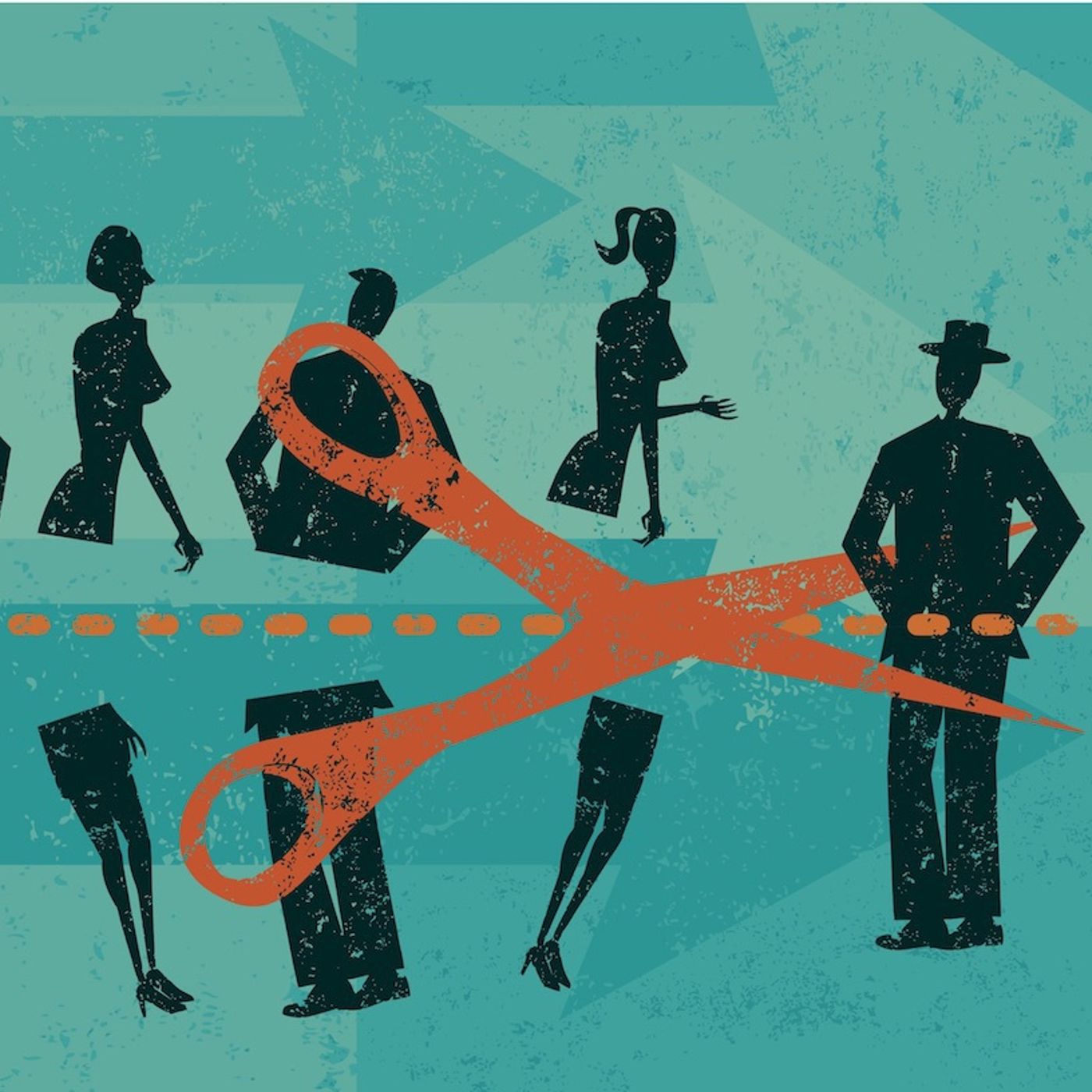
Even though countries all over the developed world implemented short-time work policies during the great recession, we didn't know whether they worked. Now we do: Camille Landais and Giulia Giupponi of the London School of Economics tell Tim Phillips whether short-time work protects workers, firms or economies.

S1 Ep 25S1 Ep25: Does prison work?
We are sending more people to prison than ever. But we know surprisingly little about whether, and how, prison sentences cut crime. Gordon Dahl of USC San Diego tells Tim Phillips about new research that shows how prison sentences can work for both inmates and society.

S1 Ep 24S1 Ep24: Connecting to power
Firms like to be politically connected, because it makes it easier for them to do business. But is it good for the rest of us? Ufuk Akcigit of the University of Chicago tells Tim Phillips about the consequences of connecting to power.Read about Ufuk's other work on business taxation, innovation and protectionism on VoxEU.org.

S1 Ep 23S1 Ep23: The world needs more migrants
In the developed world borders are being closed and popular resistance to immigration is rising. Yet Lant Pritchett of Harvard University tells Tim Phillips that the rate of migration from poor to rich countries is actually five times too low. Planned mass migration of unskilled labour, he argues, would make everyone better off.Read more about Lant's views on labour mobility on VoxEU.

S1 Ep 22S1 Ep22: The economics of the Great War
This weekend marks 100 years since the end of World War 1. But is the history of the war that we learn at school the whole story? The 20 essays in a new VoxEU ebook on the economic history of the war challenge the conventional wisdom about how the war started, why it was won and lost, and its consequences. Tim Phillips talks to Mark Harrison of the University of Warwick, one of the book’s editors. Download The Economics of the Great War for free from VoxEU.org.

S1 Ep 21S1 Ep21: The rise of superstar firms
Firms are becoming more unequal in every country and sector. Is the rise of a few superstar firms good or bad the economy, and should we do anything about it? Tim Phillips asks John Van Reenen of MIT to be policymaker for a day.More coverage of superstar firms from voxeu.org here, here and here.

S1 Ep 20S1 Ep20: Why education reduces crime
We know that increasing the school leaving age cuts crime, but why? Is it because kids who are most likely to commit crimes are learning things that make them more employable, or is just because they're off the streets? Tim Phillips talks to Steve Machin of the LSE about new research into the importance of these effects.Read about the research at VoxEU.org.

S1 Ep 19S1 Ep19: The making of modern London
What accounts for London's explosive growth in the 19th and early 20th centuries? Tim Phillips talks to Stephen Redding of Princeton University about new research that shows how important the railways have been, and continue to be, in creating the modern metropolis.Read about the research on VoxEU.org

S1 Ep 18S1 Ep18: The next recession will be a bad one
In the US, unemployment is at its lowest point for two decades. Wage growth is rising, the economy is growing. Tim Phillips asks Jeffrey Frankel of Harvard University why he worries about the depth of the next recession.Read Jeffrey's blog on VoxEU.org.

S1 Ep 17S1 Ep17: Women and monetary policy
It's no secret that women have been under-represented in the boardroom in general, and central bank boards are no different. We also know that firms in which women are decision-makers tend to behave differently. Tim Phillips talks to Paola Profeta, one of the authors of a new paper that finds that female central bankers have a measurable effect on monetary policy.Find out more about her research at VoxEU.org.

S1 Ep 16S1 Ep16: The impact of innovation
The FRAME Project was set up to find out the impact of innovation on macroeconomic outcomes such as productivity, job creation, and unemployment. Diego Comin of Dartmouth College is one of the leaders of the project, and he talks to Tim Phillips about what he and his colleagues have learned.CEPR is a partner of the FRAME Project, which is co-ordinated by ZEW. The CEPR team is led by Diego Comin, a Research Fellow in its Macroeconomics and Growth Programme. The FRAME project has received funding from the European Union's Horizon 2020 Research and Innovation Programme under the grant agreement No #727073.Find out more about FRAME's work on VoxEU.

S1 Ep 15S1 Ep15: The missing profits of nations
Every year multinational companies reduce their tax bills by about $200 billion simply by shifting profits, legally, to tax havens. Governments criticise tax loopholes and promise to close them. But at the same time they also use them to attract these paper profits to their jurisdiction. Thomas Tørsløv and Ludvig Weir talk to Tim Phillips about where the missing profits of nations go, the effect of the missing billions on government policies, and how to create a fairer system of taxation for multinationals.Read more about missing profits on VoxEU.

S1 Ep 14S1 Ep14: English in Europe
English is the most widely-spoken language in Europe, but after Brexit it will cease to be an official language of the EU. Tim Phillips speaks to Shlomo Weber about which languages will become more important as a result, and the long-term implications for the English language — and the people who speak it. Read more about the fate of English in Europe in the column on VoxEU.

S1 Ep 13S1 Ep13: IMF reform: An unfinished agenda
Two decades ago the four authors of the CEPR's first Geneva Report on the World Economy examined the future of the IMF. This year, for the 20th report, they returned to see what progress has been made. Tim Phillips talks to Barry Eichengreen, Charles Wyplosz, José De Gregorio, and Takatoshi Ito about how the IMF has evolved, and the threats both to the IMF and the entire multilateral financial system.

S1 Ep 12S1 Ep12: Populism in France
In the French presidential election the parties of right and left collapsed, beaten by political newcomer Emmanuel Macron and the far-right candidate Marine Le Pen. Daniel Cohen of the Paris School of Economics tells Tim Phillips about research that explains why millions of French voters are no longer responding to traditional political messages.Read more about populism on VoxEU.

S1 Ep 11S1 Ep11: The decline of northern England
The north of England and Wales lag the south in output per person, educational attainment, and even life expectancy. Neil Cummins of the London School of Economics tells Tim Phillips that this can be explained entirely by a 200-year "Big Sort": the migration south of talented people, replaced by less-able southerners who move north.Read about his research on VoxEU.

S1 Ep 10S1 Ep10: Financing the war on cancer
New drugs mean that many types of cancer are no longer a death sentence. But new medical treatments may have a catastrophic financial cost for patients. Tim Phillips talks to Ralph Koijen about how life insurance, not medical insurance, might finance the war on cancer.Read more about this, and other groundbreaking research, at VoxEU.org.

S1 Ep 9S1 Ep9: Explaining Germany's recovery
In 1997 Germany was called "the sick man of Europe". So what is behind its exceptional recovery? Tim Phillips talks to Dalia Marin, the editor of a new VoxEU ebook that explains what Germany did, and what other countries can learn from it.Read about the ebook, and download it for free from VoxEU.

S1 Ep 8S1 Ep8: Tax evasion and inequality
It's routine for the rich to dodge tax by hiding it offshore. But how much of their wealth are they hiding illegally? Tim Phillips talks to Annette Alstadsæter of the Norwegian University of Life Sciences about how she and her colleagues used whistleblower data to discover the extent of tax evasion by the ultra-rich.Read about their research on VoxEU.

S1 Ep 7S1 Ep7: Robots and jobs
If the robots are coming for our jobs, how many of us will they actually replace? Tim Phillips talks to MIT's Daron Acemoglu who argues that the robot apocalypse isn't going to happen just yet.If you want to know more detail about the research, read this VoxEU column.

S1 Ep 6S1 Ep6: Will central banks issue digital currencies?
Economists have long been sceptical of the potential of cryptocurrencies and other electronic forms of money. But are central banks coming round to the idea? Tim Phillips asks Beatrice Weder di Mauro whether central banks might start issuing their own cryptocurrencies.Read more on VoxEU about crypto's challenge to central banks.
S1 Ep 5S1 Ep5: The UK’s post-Brexit US trade deal
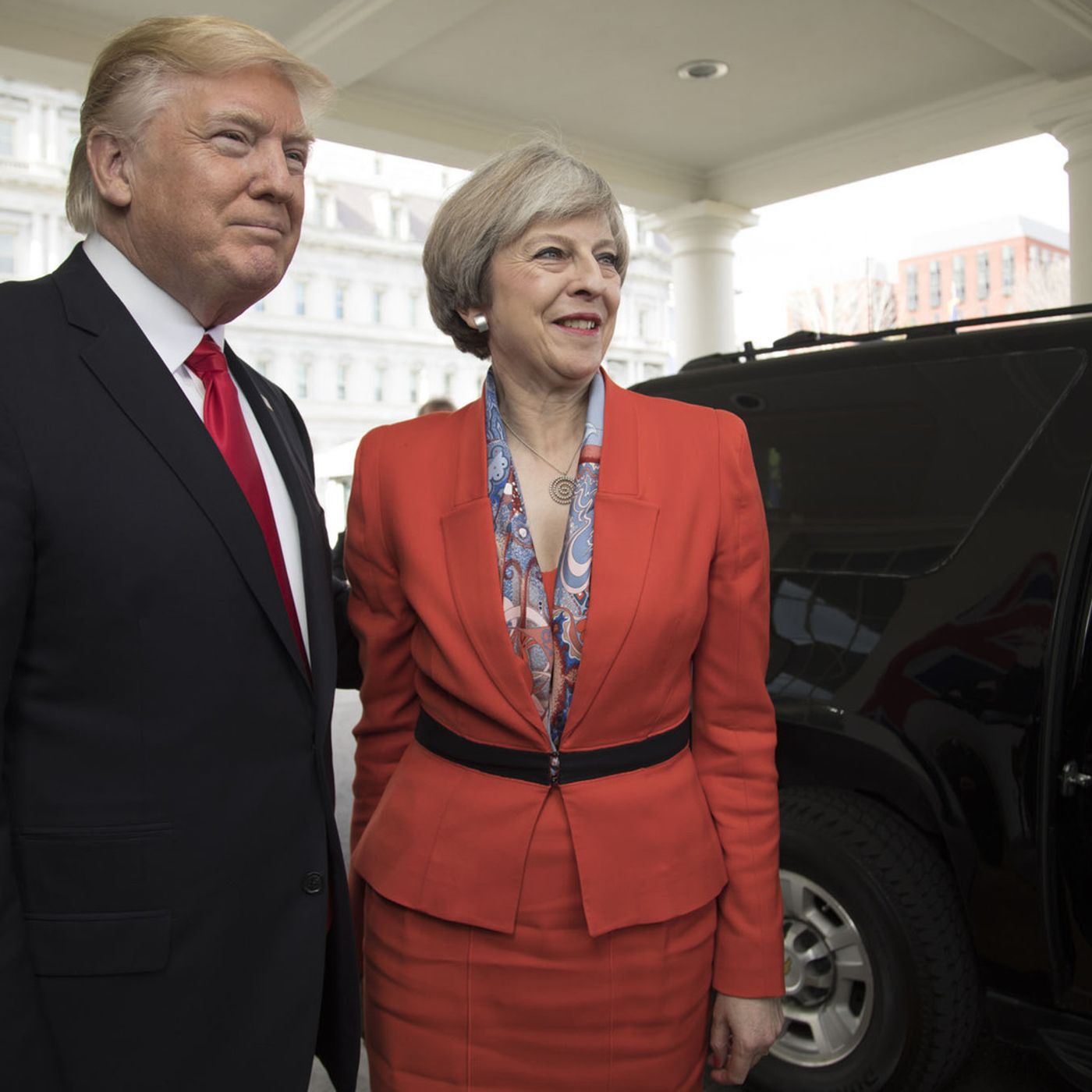
When President Trump recently spoke of his hope for "a great bilateral trade agreement” with the UK after Brexit, what did he really mean? Tim Phillips interviews Dennis Novy of the University of Warwick. Dennis describes what these political good intentions may look like in reality, the problems that both sides will have to solve to agree a UK-US deal, and the factors that might derail any agreement.Read about Dennis's research on what caused the Brexit vote, and its effect on living standards, on VoxEU.

S1 Ep 4S1 Ep4: What caused the growth of the Sicilian Mafia?
We all know how films and television tell the story of the Mafia, but what can economics tell us about its origins? Tim Phillips talks to Giuseppe De Feo about a new paper that tells the story of how the drought of 1893 has had social and economic effects that are still being felt today.Read about this research on VoxEU.

S1 Ep 3S1 Ep3: The stubbornly high cost of remittances
For the families of millions of migrant workers around the world, remittances can literally be a life-saver. But the cost of sending money home remains puzzlingly high. So why aren't remittances getting cheaper? Tim Phillips talks to Stephen Cecchetti of Brandeis University and Kim Schoenholtz of the Stern School at NYU.Read Steve and Kim's column on the subject at VoxEU.

S1 Ep 2S1 Ep2: The return of regional inequality
For most of the 20th century, inequality between Europe's regions declined. But what has happened in the last 40 years? New historical data gives us the answer. Tim Phillips talks to Joan Rosés of the London School of Economics and Nikolaus Wolf of Humboldt University, Berlin.Find out more by reading the authors' VoxEU column.

S1 Ep 1S1 Ep1: How blockchain technology is changing finance
Blockchain technology has the potential to be a catalyst for change in the financial sector. But can it overcome its technical limitations and governance problems? Tim Phillips talks to Simon Johnson, Professor of Entrepreneurship at the Sloan School of Management, MIT, and one of the authors of the latest Geneva Report on the World Economy, which looks at blockchain's applications and challenges.Read about the report, and download it for free from VoxEU.