
The Remarkable Leadership Podcast
1,042 episodes — Page 10 of 21
The Art of Fairness with David Bodanis
Do you think you can rise to the top without being a jerk, or do nice guys/gals finish last? David Bodanis believes that although it isn't easy, you can be successful without being a jerk. He shares case studies throughout history to show how you can be firm and fair. Key Points In this episode, David shares how to: Listen without ego and fixation. Give by letting others give (but audit). Defend without over-defending. Meet David Name: David Bodanis His Story: David Bodanis is the author of The Art of Fairness: The Power of Decency in a World Turned Mean. He was born in Chicago, lived in France for a decade, and now makes his home in London. He studied math, physics, and history at the University of Chicago and for many years taught the "Intellectual Toolkit" course at Oxford. Worth Mentioning: David is also the author of the New York Times bestseller, The Secret House, the bestselling E=mc², which was adapted into the PBS documentary Einstein's Big Idea, and the Royal Society Science Book of the Year Prize winner Electric Universe. When not on the road or hunched over a computer, he spends his time at Britain's premier kick-boxing gym – 'Paragon' in east London. Connect with David Website Email This episode is brought to you by... Libsyn. Get up to 2 months of free podcasting service with Libsyn when you sign up for a new account! Get your show on Apple and Spotify, get critical stats and all the support you need to sound your best and grow your show! Book Recommendations Art of Fairness: The Power of Decency in a World Turned Mean by David Bodanis Related Episodes Building Workplaces Fit for Humans with David Brendel and Ryan Stelzer Being Impact Player with Liz Wiseman
Asking for Help - Thoughts from Kevin
Today I'm talking about asking for help.

Grow Your People to Grow Your Company with Whitney Johnson
Our lives are a portfolio of S-curves. We have periods of starting, learning, and mastery. Whitney Johnson joins Kevin to talk about the S-curve of Learning to measure growth; personally, professionally, and organizationally. It is hard to start something new because growth is hard. By keeping rituals (or known things), we can create calm and stability in our brains to allow for more growth. Key Points In this episode, Whitney Johnson defines the S-curve of Learning and shares the stages of growth and learning. She discusses using the S-curve of Learning for assessment. She shares examples of how we can build a culture around the S-curve of Learning. Meet Whitney Name: Whitney Johnson Her Story: Whitney Johnson is the author of several top-selling books including, Disrupt Yourself and Build an A Team. Her latest book is Smart Growth: How to Grow Your People to Grow Your Company. She is CEO of the tech-enabled talent development company Disruption Advisors, an Inc. 5000 fastest-growing private company in America. Worth Mentioning: In 2021, Whitney was named #8 on the Thinkers50 list, made up of the 50 leading business thinkers in the world. She is an award-winning author, a regular keynote speaker, and a frequent lecturer for Harvard Business School's Corporate Learning. She is also the host of the popular Disrupt Yourself podcast, with guests including Brené Brown, Simon Sinek, Susan Cain, and General Stanley McChrystal. This episode is brought to you by... Remarkable Masterclasses. Each masterclass is designed to help you become the remarkable leader and human you were born to be. Details on how to get on board for a specific skill or get discounts each month can be found on our website. Book Recommendations Smart Growth: How to Grow Your People to Grow Your Company by Whitney Johnson A Court of Thorns and Roses by Sarah J Maas High Conflict: Why We Get Trapped and How We Get Out by Amanda Ripley Atlas of the Heart: Mapping Meaningful Connection and the Language of Human Experience by Brené Brown Related Episodes Growing People and Companies Through Change with Stacy Henry Being Impact Player with Liz Wiseman
Conflict isn't Bad, Until it is - Thoughts from Kevin
If I asked you what your first thought is when I say the word "conflict", chances are it wouldn't be positive. And while there is certainly a downside to conflict, the truth is conflict isn't always bad. In fact, there are many times when conflict can be a good thing. And in this episode, I'll explain exactly this. Tweet it out: Conflict isn't bad until it is. Conflict that allows us to explore perspectives and learn is useful. Conflict that becomes personal isn't. @KevinEikenberry In this episode: Subscribe to the Remarkable Leadership Podcast.

How to Break Free from Daily Burnout, Struggle Less, and Thrive More with Nataly Kogan
The Five L's of Empathy - Thoughts from Kevin
Empathy is something we all look for in other people. We would love for people to have more empathy for us. And when we're willing to and take the time to be empathetic with others, we gain almost as much as they do. I'm speaking about empathy in general, but I'm also speaking about it specifically as a leader. Because now more than ever, as a leader, being more empathetic is one of the great ways for us to be more effective as a leader. And so while there is lots written and stated (much by me even!), today I'm not going to talk about skill as much as the practice of being empathetic. And specifically the five L's that you can use to help you create a practice of empathy.
Unleashing Transformation with Rick Simmons
We are living in a world that is uncertain, ambiguous, and volatile. Rick Simmons suggests that we use this as an opportunity to not just live through the change but harness the energy for productive change and forward progress. Rick sits down with Kevin to talk about liminal space and what we can do to use that momentum to think more clearly and deeply and make change happen. Key Points In this episode, Ricks talks about how to define liminal space. He shares the formula for liminal moments (preparation, catalyst, integration, and sustainability.) He discusses whether we can trigger liminal space. Meet Rick Name: Rick Simmons His Story: Rick Simmons is the ForbesBooks co-author of Unleashed: Harnessing the Power of Liminal Space. He also is co-founder and chief executive officer of the telos institute, which helps leaders in business and industry hone their leadership skills, optimize their business strategy, and embrace change as a strategic advantage. Worth Mentioning: Before founding telos, Simmons spent 10 years in various senior strategy and sales leadership positions within the financial services industry. More recently, he was named a Founding Fellow at The Harvard Institute of Coaching at the MacLean Medical School where he contributes insights and best practices to the growing field of executive coaching. His co-founder and co-author is also his partner in life, Amy Simmons. They live in Ohio with their four children. Connect with Rick https://thetelosinstitute.com/ https://www.linkedin.com/in/rick-simmons-msoda-b4bb034a/ https://twitter.com/telosinstitute https://www.facebook.com/thetelosinstitute This episode is brought to you by... Remarkable Masterclasses. Each masterclass is designed to help you become the remarkable leader and human you were born to be. Details on how to get on board for a specific skill or get discounts each month can be found on our website. Learn more at RemarkableMasterclass.com Book Recommendations Unleashed: Harnessing the Power of Liminal Space by Rick Simmons and Amy Simmons The Hidden Life of Trees: What They Feel, How They Communicate―Discoveries from A Secret World by Peter Wohlleben Related Episodes The Transformation Challenge with Steve Shallenberger Leading Large-Scale Change with Bill Schaninger Transformational Influence with Walt Rakowich
Three Questions to Improve Your Focus - Thoughts from Kevin
Today I'm sharing three questions to improve your focus. **** Get short, inspiring messages to your inbox with my Daily Email. Sign up: https://kevineikenberry.com/daily 📺 On the Art of Asking: https://www.youtube.com/watch?v=-hh9N... 🎧 Subscribe and Listen to the Remarkable Leadership Podcast YT: @Kevin Eikenberry Apple Podcasts: https://remarkablepodcast.com/applepo... Spotify: https://open.spotify.com/show/4G4KyDG... Google Podcasts: https://podcasts.google.com/feed/aHR0... Amazon Music: https://music.amazon.com/podcasts/1ad... iHeartRadio: https://www.iheart.com/podcast/256-th... RSS: http://remarkablepodcast.libsyn.com/rss Your Favorite Podcast App: https://remarkablepodcast.com/follow My name is Kevin Eikenberry and I'm here to help you reach your goal as a leader and a human being with Remarkable TV and the Remarkable Leadership Podcast. Learn more about our offerings: ➡️ FREE NEWSLETTER: Sign up for my weekly newsletter, Unleashing Your Remarkable Potential: https://kevineikenberry.com/UYRP ➡️ BOOK: Check out my latest book, The Long-Distance Teammate: https://longdistanceteammate.com/ ➡️ LEADERSHIP WORKSHOPS: Sign up for any of our online workshops to help you become a better leader: https://www.kevineikenberry.com/store... ➡️ SPEAKING: Learn more about our Speaking opportunities for your next event: https://www.kevineikenberry.com/speak... Connect with Kevin Eikenberry on Social Media: https://blog.kevineikenberry.com https://kevineikenberry.com https://www.linkedin.com/in/kevineike... https://twitter.com/KevinEikenberry https://instagram.com/kevineikenberry https://www.facebook.com/KevinEikenbe... About Kevin Eikenberry: Kevin Eikenberry is the Chief Potential Officer of the Kevin Eikenberry Group, a world expert on leadership development, best-selling author, sought-after speaker, popular blogger, husband and dad, a fan of Purdue athletics and antique tractors (especially John Deere's). About The Remarkable Leadership Podcast: The Remarkable Leadership Podcast with Kevin Eikenberry is dedicated to all things leadership. Twice a week Kevin shares his thoughts about leadership development and ideas to help you lead more confidently and make a bigger difference for those you lead. He also has weekly conversations with leadership experts discussing a wide range of topics including teamwork, organizational culture, facilitating change, personal and organizational development, human potential and more.
Making Room for Conversation - Thoughts from Kevin
In this episode, we're talking about making room for conversation and I'm using a cup metaphor to illustrate some important points. As humans, we all have a mental and emotional cup. And like a cup of tea or a cup of coffee, if it's completely full, there is no room for anything else. Literally. This cup metaphor applies to communication and conversation as well. If you are attempting to converse with someone and their cup is full, there's not room for a new conversation with you. You've probably been in conversations where this is the case. And if you have, you find that you're talking to someone who isn't very engaged. So when this happens, the only way to engage and create real dialogue is by helping the other person make room for the conversation. In this episode: Learn more about and sign up to receive Kevin's Daily Email here.
A Practical Guide for Building Engagement with Brian Hartzer
Employee engagement: we know that when engagement goes up, performance often follows. So, why is this so important, and how do you grow and sustain it? Brian Hartzer shares that when we get the best people who are emotionally committed to the goals and purpose of the organization, they will positively impact the bottom line. As a leader, you need to provide clarity, get rid of barriers, and create a culture of appreciation. Key Points In this episode, Brian Hartzer shares his thoughts about engagement being about the leaders and individuals He talks about the 5 points of the leadership star (care, context, clarity, clearing the way, celebrate). He talks about the importance of self-awareness and authenticity. Meet Brian Name: Brian Hartzer His Story: Brian Hartzer is the author of THE LEADERSHIP STAR: A Practical Guide To Building Engagement. He is an experienced executive and leadership mentor who served as CEO of the Westpac Banking Group from 2015 to 2019. Worth Mentioning: Brian spent 15 years in senior executive roles at the Royal Bank of Scotland Group and ANZ Banking Group. He is currently an advisor and investor to several Sydney-based startups, including Quantium, a data-science company. Hartzer, who graduated from Princeton University and is a Chartered Financial Analyst, holds dual U.S. and Australian citizenship. He resides in Sydney, Australia. Connect with Brian https://www.theleadershipstar.com/ https://therestishistory.supportingcast.fm/ https://www.linkedin.com/in/brianhartzer/ https://www.amazon.com/Brian-Hartzer/e/B08YK8BVXN%3Fref=dbs_a_mng_rwt_scns_share This episode is brought to you by... Remarkable Masterclasses. Each masterclass is designed to help you become the remarkable leader and human you were born to be. Details on how to get on board for a specific skill or get discounts each month can be found on our website. Learn more: https://remarkablemasterclass.com/ Book Recommendations The Leadership Star: A Practical guide for Building Engagement by Brian Hartzer The Code Breaker: Jennifer Doudna, Gene Editing, and the Future of the Human Race by Walter Isaacson Related Episodes The Leader's Role in Employee Engagement with Michael Lee Stallard Understanding Employee Engagement with Jacqueline Throop-Robinson
Create Milestones - Thoughts from Kevin
In this episode, I'm talking about creating milestones.
The Source of Wisdom - Thoughts from Kevin
For centuries, people have wanted to find the fountain of youth. People traveled for months on ships to try to find this mythical fountain of youth, because we'd all like to be younger, right? What about wisdom? I think we'd all like to be wise, and the good news is we can find the source of wisdom without a long trip and it's not mythical. The idea for this episode came from my pastor, Aaron Brockett, at the Trader's Point Christian Church. But this isn't really a religious idea at all. You see, we all want (more) wisdom regardless of our beliefs. But the question is, where does it come from? In this episode, we'll explore some possible sources of wisdom to determine what the true source is. In this episode: Learn more about and sign up to receive Kevin's Daily Email here. Learn more about Traders Point Christian Church here or connect with Aaron here.

Creating Deep Purpose with Ranjay Gulati
Having a purpose is not the same as a purpose statement. Purpose is an ideal. It is the reason you choose to exist. Professionally, it is why you go to work. Is it a job(money)? Is it a career (get ahead)? Is it a calling (gives you meaning)? Ranjay Gulati joins Kevin to discuss deep purpose at work. He believes it is the foundation for the organization and defines the work experience, including culture. When your organization believes in something, you move your team from not just satisfied or engaged to inspired. An inspired team does the work because they want to. Key Points In this episode, Ranjay shares how purpose differs from mission, vision, and values. He discusses practical realism. He talks about the organizational benefit of deep purpose. Meet Ranjay Name: Ranjay Gulati His Story: Ranjay Gulati is the author of several books, including his newest Deep Purpose, the Heart and Soul of High-Performance Companies. He is the Paul R. Lawrence MBA Class of 1942 Professor and the former Unit Head of the Organizational Behavior Unit at Harvard Business School. Worth Mentioning: Professor Gulati studies how "resilient" organizations—those that prosper both in good times and bad—drive growth and profitability. His work bridges strategy (establishing clear strategic pillars for growth), organizational design (reimagining purposeful and collaborative organizational systems), and leadership (fostering inspired, courageous, and caring execution). Connect with Ranjay Gulati https://ranjaygulati.com/ https://www.linkedin.com/in/ranjay-gulati/ https://deeppurpose.net/ https://twitter.com/RanjayGulati https://www.amazon.com/Books-Ranjay-Gulati/s?rh=n%3A283155%2Cp_27%3ARanjay+Gulati This episode is brought to you by... Remarkable Masterclasses. Each masterclass is designed to help you become the remarkable leader and human you were born to be. Details on how to get on board for a specific skill or get discounts each month can be found on our website. Learn more at https://remarkablemasterclass.com/ Book Recommendations Deep Purpose: The Heart and Soul of High-Performance Companies by Ranjay Gulati Demographics Unravelled: How Demographics Affect and Influence Every Aspect of Economics, Finance and Policy by Amlan Roy Why Startups Fail: A New Roadmap for Entrepreneurial Success by Tom Eisenmann Related Podcast Episodes Mission-Driven Leadership with Mark Bertolini
Your Viewpoint Determines Your Outlook - Thoughts from Kevin
In this episode Kevin Eikenberry discusses how your viewpoint determines your outlook and how we usually operate from a worm's eye view or a bird's eye view. He also mentions how you can incorporate viewpoint language into your organization or team. Sign up for the Daily Email! Monday-Friday I'll send a short message meant to inspire: https://kevineikenberry.com/daily My name is Kevin Eikenberry and I'm here to help you reach your goal as a leader and a human being with Remarkable TV and the Remarkable Leadership Podcast. Learn more about our offerings: ➡️ FREE NEWSLETTER: Sign up for my weekly newsletter, Unleashing Your Remarkable Potential: https://kevineikenberry.com/UYRP ➡️ BOOK: Check out my latest book, The Long-Distance Teammate: https://longdistanceteammate.com/ ➡️ LEADERSHIP WORKSHOPS: Sign up for any of our online workshops to help you become a better leader: https://www.kevineikenberry.com/store... ➡️ SPEAKING: Learn more about our Speaking opportunities for your next event: https://www.kevineikenberry.com/speak... Connect with Kevin Eikenberry on Social Media: https://blog.kevineikenberry.com https://kevineikenberry.com https://www.linkedin.com/in/kevineike... https://twitter.com/KevinEikenberry https://instagram.com/kevineikenberry https://www.facebook.com/KevinEikenbe... About Kevin Eikenberry: Kevin Eikenberry is the Chief Potential Officer of the Kevin Eikenberry Group, a world expert on leadership development, best-selling author, sought-after speaker, popular blogger, husband and dad, a fan of Purdue athletics and antique tractors (especially John Deere's). About The Remarkable Leadership Podcast: The Remarkable Leadership Podcast with Kevin Eikenberry is dedicated to all things leadership. Twice a week Kevin shares his thoughts about leadership development and ideas to help you lead more confidently and make a bigger difference for those you lead. He also has weekly conversations with leadership experts discussing a wide range of topics including teamwork, organizational culture, facilitating change, personal and organizational development, human potential and more.
Think Goal First - Thoughts from Kevin
Think goal first. That seems like pretty solid advice. And it seems like something that is easy to do. And yet…we don't always do that. In today's episode, I'm sharing a short story from my own personal work that highlights the importance of remembering to think goal first and keep adjusting routines to stay in alignment with the goal. In this episode: Learn more about and sign up to receive Kevin's Daily Email here.
Competing in the New World of Work with Keith Ferrazzi
Fewer than 15% of larger organizations reinvented their work because of the pandemic. They learned they could get by and did the same "work" remotely. Keith Ferrazzi joins Kevin to discuss his research looking at the innovations that emerged during the pandemic. Leaders need to understand the risks and opportunities that need attention today to stay competitive. Key Points In this episode, Keith Ferrazzi shares how he thinks the pandemic changed the way we work. He discusses the importance of active foresight. He highlights the Lego block workforce. He talks about mental health and resilience from both an individual and team standpoint. Meet Keith Name: Keith Ferrazzi His Story: Keith Ferrazzi is the author of COMPETING IN THE NEW WORLD OF WORK: How Radical Adaptability Separates the Best from the Rest with Kian Gohar and Noel Weyrich. He is Chairman of Ferrazzi Greenlight and The Greenlight Research Institute, where he works to identify behaviors that block global organizations from reaching their goals and transform them by coaching new behaviors that increase growth and shareholder value. Worth Mentioning: Ferrazzi is a frequent contributor to Harvard Business Review, Forbes, Fast Company, and Inc Magazine and the #1 New York Times bestselling author of Leading Without Authority, Who's Got Your Back, and Never Eat Alone. Book Recommendations Competing in the New World of Work: How Radical Adaptability Separates the Best from the Rest Bu Keith Ferrazzi, Kian Gohar and Noel Weyrich Life Force: How New Breakthroughs in Precision Medicine Can Transform the Quality of Your Life & Those You Love by Tony Robbins, Peter H. Diamandis, and Robert Hariri Related Podcast Episodes Leading at a Distance with Jim Citrin and Darleen DeRosa What it Means to Be a Long-Distance Teammate with Wayne Turmel
How to Stop Managing Conflict in the Workplace - Thoughts from Kevin
Today I'm talking about conflict and how I want you to stop managing conflict. This is part of a short series I'm doing on conflict which you can see here: https://www.youtube.com/playlist?list=PLMpSHm2AV2OUg1qbyCZcBBlhoKElEBxKz Sign up for my free LinkedIn newsletter, Remarkable Results: https://www.kevineikenberry.com/remarkableresults
What is Your Calendar Telling You? - Thoughts from Kevin
bonusI doubt there's anyone reading this who doesn't use at least one calendar. In fact, if you're at all like me or members of my team, you likely have multiple calendars – calendars for work, calendars for personal, calendars for kids activities… Calendars are important and we all likely use them. So what's the purpose of our calendar? Maybe it keeps you on track and on time. Maybe it keeps you from forgetting important events. Maybe it keeps you focused. Your calendar likely does all of this and more. And in this episode, I'm asking seven powerful questions that you need to answer to see if your calendar is serving you as well as it should. In this episode: Learn more about and sign up to receive Kevin's Daily Email here.
Building Your Brand with Mike Kim
Apple, Amazon, Nike, and Coca-Cola are just a few brands we recognize. However, have you thought of yourself as a brand? Perhaps, if you are a coach or business owner. Mike Kim suggests that your brand is simply what people say about you when you aren't in the room. He joins Kevin to discuss how you become the brand, regardless of your role. Be intentional with who you are and dare to put yourself out there. Key Points Mike Kim discusses what makes a personal brand (ideas, expertise, reputation, and personality.) He shares why leaders should think about not only themselves, but also their team as a brand. He talks about platforms as you build your brand. Meet Mike Name: Mike Kim His Story: Mike is the author of the Wall St. Journal and USA Today bestseller, You Are the Brand. He has been featured in and written for Inc., Entrepreneur, and The Huffington Post. He has spoken at industry-leading events, including Social Media Marketing World, Tribe Conference, and Podcast Movement. Worth Mentioning: Mike's core philosophy of marketing is this: Marketing isn't about closing a sale; it's about opening a relationship. Before running his own consulting business, he worked for several years as the CMO of a successful multi-million dollar company near New York City. Connect with Mike mikekim.com LinkedIn: linkedin.com/in/mikekimtv YouTube: youtube.com/c/MikeKim TikTok: tiktok.com/@mikekimtv Clubhouse: joinclubhouse.com/@mikekimtv Twitter: twitter.com/mikekimtv Pinterest: pinterest.com/mikekimtv Facebook: facebook.com/mikekimtv This episode is brought to you by… Libsyn. Get up to 2 months of free podcasting service with Libsyn when you sign up for a new account! Get your show on Apple and Spotify, get critical stats and all the support you need to sound your best and grow your show! Use code RLP. Book Recommendations You Are the Brand by Mike Kim The Gap and The Gain: The High Achievers' Guide to Happiness, Confidence, and Success by Dan Sullivan and Dr. Benjamin Hardy The Five Minute Journal: A Happier You in 5 Minutes a Day | Original Creator of The Five Minute Journal – Simple Daily Guided Format – Increase Gratitude & Happiness, Life Planner, Gratitude List Related Podcast Episodes Connecting Your Company Culture with Your Brand with Denise Lee Yohn. Is it Marketing or Leadership? with Seth Godin.
The Leader's Role in Conflict - Thoughts from Kevin
Today I'm talking about the leader's role in conflict. Here are some questions to ask yourself when there's conflict in your organization: - Start with questions, not actions - Is it workplace conflict? - Set an expectation - Do some coaching - Check in on progress - Stay out longer What are you teaching your team? Join our new video series, What You Should Do in Your First 45 Days, for FREE: https://www.kevineikenberry.com/video-series-what-you-should-do-in-the-first-45-days-of-your-new-role/
What We Can Learn About Giving Better Instructions from Monopoly - Thoughts from Kevin
In this episode of Remarkable TV, I'm sharing tips for giving better instructions. And to do that, we're using the game of Monopoly to help us. So Monopoly. Chances are, if you've played Monopoly, you either love it or you hate it. And if you've played it, you know that there are a lot of rules in the game. About seven pages of rules to be exact. Have you ever taught someone how to play? Now if we go through all of these rules before we start playing, it will not likely go so well. They will zone out, miss half of them or forget most of them by the time they get to a scenario that uses each rule. However, when you start with the end in mind, you will be more successful…

Write to Influence with Carla Bass
Communication is important and persuasive writing is a skill anyone can possess. Colonel Carla Bass joins Kevin to discuss what good writing does. Good writing helps influence. This includes budget approvals, appropriation of funds, and promotions, to name a few. Carla suggests finding the fun in writing. Everyone is a storyteller; you know the journey for your audience. Key Points Carla Bass discusses influence as the goal of our writing. She shares advice on the "right" length of the message and the importance of outlines. She provides word sculpting tools, like verbs are your friends and don't use the words that hog space. Meet Carla Name: Colonel Carla Bass, USAF (Ret) Her Story: Colonel Carla D. Bass, USAF (Ret), is the author of the multiple award-winning book Write to Influence! now in its second edition. Throughout her 45-year career (30 in the Air Force and 15 with a federal agency), she composed items sent to Congress, the White House, generals, and ambassadors; hundreds of performance reviews; awards nominations; and budget justifications. Carla's assignments included Germany, Bulgaria (as the defense and air attaché), Turkey, Korea, and Washington, D.C. Worth Mentioning: As a squadron commander, Carla transformed her 480-person unit from the most losing in state-wide, professional awards into the one to beat. She developed her writing methodology and taught her troops to write. So successful was her program, she taught thousands of Air Force members for the next 15 years. Her battle cries are twofold: 1) "Powerful writing changes lives" and 2) "Powerful writing is the lifeblood of successful organizations". Book Recommendations Write to Influence!: Personnel Appraisals, Resumes, Awards, Grants, Scholarships, Internships, Reports, Bid Proposals, Web Pages, Marketing, and More by Carla Bass The Heist by Daniel Silva Related Podcast Episodes Influence Redefined with Stacey Hanke. You Have More Influence Than You Think with Vanessa Bohns.
Reframing Change - Thoughts from Kevin
Change is hard. It doesn't usually come naturally. And at the end of the day, when we change we have made a choice. And as leaders, when we are trying to lead change at work, we are asking our team to be "all in" – to make a choice to change. Unfortunately, most change leadership communication is about the change itself. This is important of course, but we're missing three key components when we're communicating about change. Check out the video below to see what you might be missing in your change leadership. In this episode: Subscribe to the Future of Work Newsletter.
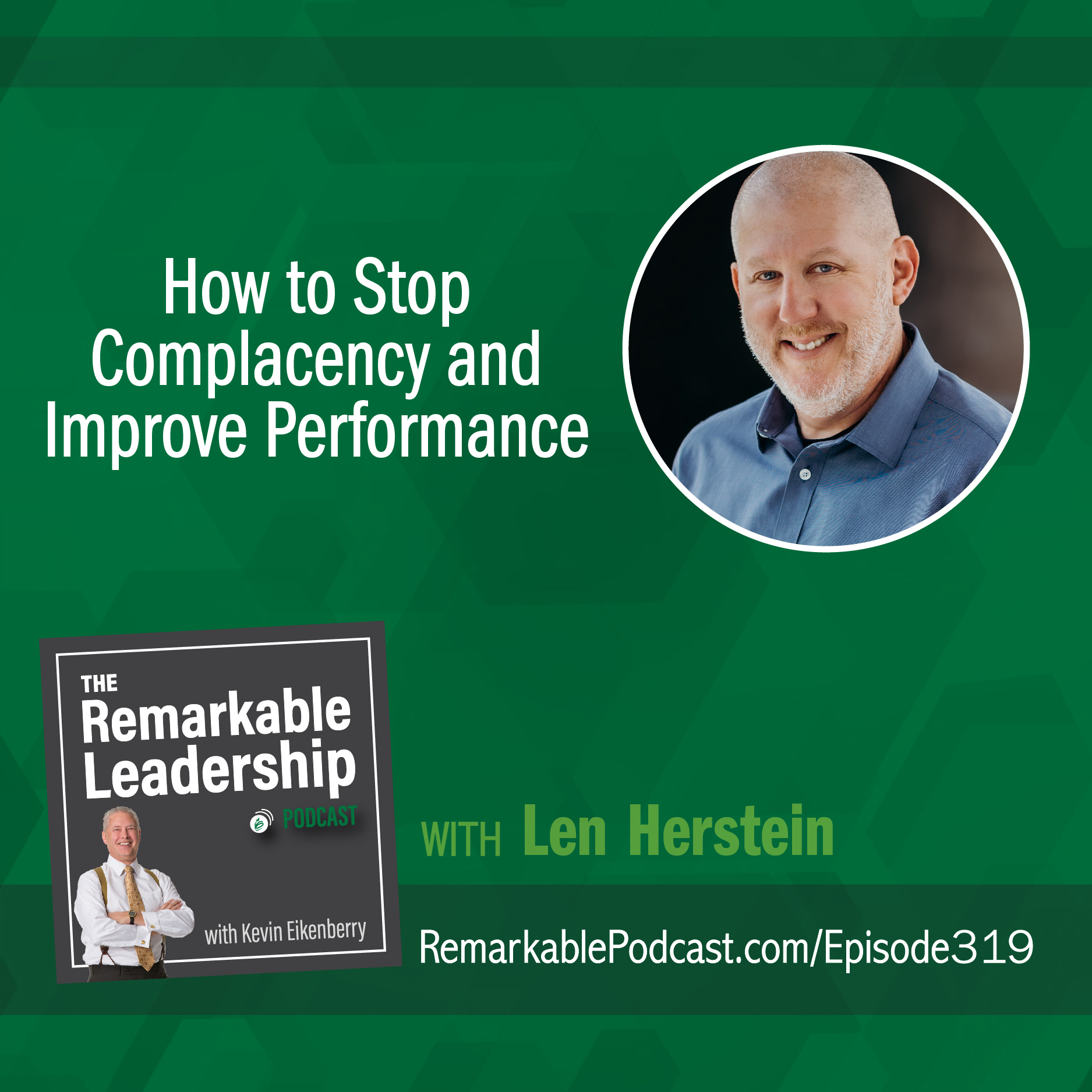
How to Stop Complacency and Improve Performance with Len Herstein
Are you successful? Do you know that success can lead to complacency? Complacency can decrease productivity, create mistakes, and impact the bottom line – it costs money. Len Herstein sits down with Kevin to discuss the dangers of complacency and why vigilance enables us to remain successful. Self-awareness is a start. When we become predictable, either personally or in our organizations, it becomes easier for a competitor to take over. We need to be strategically unpredictable and develop habits that minimize overconfidence. Key Points Len Herstein discusses complacency vs. vigilance and how we notice if we are becoming overconfident. He shares the OODA loop (Observe, Orient, Decide, Act). He talks about metrics and unintended consequences. Meet Len Name: Len Herstein His Story: Len is the author of Be Vigilant! Strategies to Stop Complacency, Improve Performance, and Safeguard Success. He is on a mission to empower organizations and individuals to protect the success they've worked so hard to achieve. Len has a 30+ year history in business, marketing, and entrepreneurism–working in brand marketing for Coca-Cola, The Campbell Soup Company, and Nabisco before founding Manage Camp (a business conference producer). Worth Mentioning: In 2015, Len answered a higher calling to public service when he became a Reserve Sheriff's Deputy in Douglas County, Colorado, where he works up to 850 hours a year as a state-certified peace officer on the patrol team – for free. Len quickly realized he was learning valuable lessons through his law enforcement training that applied directly back to his business. The most important lesson, and one of the very first he learned, was the concept that complacency kills, and vigilance saves This episode is brought to you by… The Daily Email, daily inspiration for leaders sent Monday-Friday every week. Kevin writes a short message to inform, inspire, engage, and focus you on becoming the best you and the best leader you can be. Book Recommendations Be Vigilant!: Strategies to Stop Complacency, Improve Performance, and Safeguard Success. Your Business and Relationships Depend on It by Len Herstein I'll Be Back by Shep Hyken Fanocracy: Turning Fans into Customers and Customers into Fans by David Meerman Scott and Reiko Scott Related Podcast Episodes Building a Peak Performance Organization with Chris McGoff. From Suck to Success with Todd Palmer. What it Means to be a 100x Leader with Jeremie Kubicek .
Four Keys to Successful Morning Routines - Thoughts from Kevin
Routines are wonderful things. When we have a routine, we no longer have to think about it. We are able to operate automatically, freeing up our brains for other things. Morning routines are especially important as they allow us the opportunity to start the day off successfully and productively. In this video, I am giving you four key idea to think about as you create, re-create or re-adjust your morning routines. 1. Prepare your body 2. Prepare your mind. 3. Prepare your attitude. 4. Prepare your focus. Tweet it out: How you start the day has a huge impact on the success of the day. Are you consistently preparing your body, mind, attitude and focus for success? @KevinEikenberry In this episode: Subscribe to the Future of Work Newsletter.

Building Corporate Soul with Ralf Specht
We've heard of company culture. What about corporate soul? We know most employees quit their jobs not because of compensation, but because they don't feel valued. Ralf Specht joins Kevin to discuss the Soul System™. This is a framework Ralf developed that aligns purpose with strategy and behavior. He shares an example of a company with a soul. Further, companies that operate in this framework are more successful and see higher ROI. Key Points Ralf Specht describes company soul and how this differs from culture. He shares his thoughts on purpose vs. mission. He advises how you can impact culture when you are not a senior leader. Meet Ralf Name: Ralf Specht His Story: Ralf is the author of Building Corporate Soul: Powering Culture & Success with the Soul System™. He was a founding partner of the startup Spark44, a global marketing communications powerhouse. He was the architect of an innovative, industry-first joint-venture with Jaguar Land Rover, which he grew to a global revenue of $100+m and 1,200 employees. Worth Mentioning: He consulted for more than 20 years with global companies and brands such as Deutsche Bank, Credit Suisse, General Motors, Nestlé, Coca-Cola, Puma, and PWC with McCann Erickson. The title of his forthcoming book is Beyond the Startup: Sparking Operational Innovations for Global Growth. This episode is brought to you by… Unleashing Your Remarkable Potential, Kevin's free weekly e-newsletter. It's full of articles and resources to help you become a more confident and successful leader. Book Recommendations Building Corporate Soul: Powering Culture & Success with the Soul System™ by Ralf Specht Leading From The Jumpseat: How to Create Extraordinary Opportunities by Handing Over Control by Peter Docker Related Podcast Episodes Building a Powerful Culture with Patty McCord. Connecting Your Company Culture with Your Brand with Denise Lee Yohn. The Power of Corporate Culture with Chris Dyer.
Don't Put All Your Eggs in One Basket - Thoughts from Kevin
Now, you might already know that I grew up on a farm, and so I have plenty of farm phrases in my vernacular. Some of these phrases wouldn't make any sense to you. But some of those farm phrases are things you've either heard before or maybe even heard here on this blog last week. You can watch that episode right here. So last week we talked about making hay, and today we're talking about gathering eggs, and specifically about not putting all your eggs in one basket. Now, I don't have nearly as much personal experience with eggs as I do with making hay. But think about it for a second. If you've got a basket that you're using to collect eggs and as you're putting them in one cracks. Well then, you have a problem. Even worse, if you drop the bucket, you lose all the eggs. So what's the point for us as leaders? Well, there are several things for us to think about here. And I'm starting the video with one of my favorite thoughts in business: One is a dangerous number. Tweet it out: One can be a dangerous number. Look for multiple options, multiple solutions, and multiple paths to your success. @KevinEikenberry In this episode: Learn more about, listen and subscribe to the Remarkable Leadership podcast here. Learn more about Kevin's daily email newsletter and sign up here.

No Bullsh!t Leadership with Martin Moore
Leadership isn't rainbows and unicorns; it's about results. Martin Moore believes there is a disconnect between the process and function of leadership today. He joins Kevin to share his No Bullsh!t framework and why leaders need to move past being liked and commit to developing the habits and disciplines that improve their leadership capability. Key Points Martin Moore shares his 7 imperatives from the No Bullsh!t Leadership framework (Value, Conflict, Resilience, Working at level, Ambiguity, Accountability, and Decision-making). He discusses what it means to work at level and how to get accountability. He gives advice for building resilience. Meet Martin Name: Martin G. Moore His Story: Martin is the author of No Bullsh!t Leadership and co-founder with his daughter, Emma Green, of Your CEO Mentor, a company whose purpose is to improve the quality of leaders, globally. He is also the host of the No Bullsh!t Leadership podcast. Worth Mentioning: Martin is the former CEO of CS Energy. He also developed Leadership Beyond the Theory, a global training program geared toward sharing his insights and wisdom with the world's top executives. This episode is brought to you by… Future of Work Newsletter, a free weekly e-newsletter. It's full of articles and resources to help you, your team and your organization be more successful in the ever-changing remote work environment. Book Recommendations No Bullsh!t Leadership by Martin G. Moore Valuation: Measuring and Managing the Value of Companies by McKinsey & Company Inc., Tim Koller, Marc Goedhart, David Wessels The Halo Effect: . . . and the Eight Other Business Delusions That Deceive Managers by Phil Rosenzweig What Money Can't Buy: The Moral Limits of Markets by Michael J. Sandel Related Podcast Episodes Leading By Learning From the Tech Titans with Alex Kantrowitz. From Suck to Success with Todd Palmer. Insights into the Science of Leadership at Amazon with Bill Carr.
Making Hay and Making Progress - Thoughts from Kevin
I grew up on a farm, and so I have plenty of agricultural phrases in my vernacular, but actually all of us have some of those phrases. For example: Don't put all your eggs in one basket. Yep, that's a farm phrase. And hint, I'm going to talk about it next week. But for now we're talking about this phrase: Make hay when the sun is shining. Now, you may have never made hay. You may not know what that means but you've probably heard the phrase. Here's the backstory. Hay is made from growing crop (grass, alfalfa and clover most frequently), and it is cut when it's very green and very moist, a growing plant. However it must be dry before it can be bailed up to be used and stored. So you can cut hay when it's raining, but you can't make hay and bale it when it's raining. The sun's got to be shining. The crops need to be dry. There's a limited time window. Make hay when the sun is shining. So here's the point for us as leaders. Tweet it out: To make hay when the sun shines means to do the work you need to do, when you need to do it. And you don't have to be a farmer to understand that. @KevinEikenberry In this episode: Learn more about, listen and subscribe to the Remarkable Leadership podcast here. Learn more about Kevin's daily email newsletter and sign up here.

How Leaders Can Create a Company Culture That Doesn't Suck with S. Chris Edmonds and Mark Babbitt
Culture seems to be the latest buzzword, yet the employee experience is important. Let's face it, employees have a choice of where they want to work. Chris Edmonds and Mark Babbitt sit down with Kevin to talk about culture and that it doesn't have to suck. You have a role to play and when you equally value respect and results, profits go up. Key Points Chris and Mark define good and why it is more important now than ever before. They share their thoughts around "servant purpose". They discuss how you can create or adjust the culture if you aren't senior leadership. They talk about how remote work impacts culture. Meet Chris and Mark Names: S. Chris Edmonds and Mark Babbitt Their Story: Chris and Mark are the authors of Good Comes First: How Today's Leaders Create an Uncompromising Company Culture That Doesn't Suck. Chris is also a speaker, executive consultant, and founder of The Purposeful Culture Group. Mark is also a speaker, executive coach, and President of WorqIQ. Worth Mentioning: Chris is one of Inc. Magazine's 100 Top Leadership Speakers and was a featured presenter at South by Southwest. Mark is also CEO and Founder of YouTern. This career-focused community enables college students, recent graduates, and young professionals to find their first or next internship or job with the right organizational culture for them. This episode is brought to you by… Future of Work Newsletter, a free weekly e-newsletter. It's full of articles and resources to help you, your team and your organization be more successful in the ever-changing remote work environment. Book Recommendations Good Comes First: How Today's Leaders Create an Uncompromising Company Culture That Doesn't Suck by S. Chris Edmonds and Mark S. Babbitt The Long Game: How to Be a Long-Term Thinker in a Short-Term World by Dorie Clark Impact Players: How to Take the Lead, Play Bigger, and Multiply Your Impact by Liz Wiseman Related Podcast Episodes Turning Culture into Competitive Advantage with Jeff Grimshaw. Creating Courageous Cultures with Karin Hurt and David Dye. Solving the Culture Puzzle with Mario Moussa and Derek Newberry.
Leadership Lessons from the Great Resignation - Thoughts from Kevin
The great resignation has been all over the press and all in the media. Everyone's talking about it and many people are participating in it. I recently recorded a video with personal lessons from the great resignation. You can watch that here. But today we are talking specifically about what the great resignation means for leaders. There are major challenges for every leader and there are also some great lessons. We'll explore those in the video below. Tweet it out: The Great Resignation holds lessons for leaders if we look for them. The biggest one is that people are thinking about work differently than ever before. @KevinEikenberry In this episode: Learn more about and subscribe to our weekly email, the Future of Work Newsletter.
Learning from the Best with Scott Miller
No two leadership journeys are the same. And, regardless of where we are, there is always an opportunity to learn. Scott Jeffrey Miller joins Kevin to discuss insights and lessons learned from hosting On Leadership with Scott Miller. The common thread he found from each of the 30 mentors he highlights in his book, Master Mentors, is they are clear in what they want to accomplish. They approach life with an abundance mindset and listen more than they talk. Key Points Scott Jeffrey Miller highlights lessons and stories he learned from hosting his podcast. He discusses the power of gratitude and living your life through the lens of "I get to." He shares advice on how to find a mentor. Meet Scott Name: Scott Jeffrey Miller His Story: Scott Jeffrey Miller is the author of numerous books, including his latest book, Master Mentors: 30 Transformative Insights from Our Greatest Minds. Miller hosts the FranklinCovey-sponsored On Leadership with Scott Miller, the world's largest and fastest-growing weekly leadership podcast. Worth Mentioning: In addition to supporting FranklinCovey's global thought leadership efforts, Miller has developed the ignite your genius™ coaching series to help leaders take their careers from accidental to deliberate. He also hosts FranklinCovey's Bookclub.com series with world-renowned authors. Miller began his professional career in 1992 with the Disney Development Company (the real estate development division of Walt Disney Company) as a founding member of the development team that designed the town of Celebration, Florida. Miller and his wife live in Salt Lake City, Utah, with their three sons. This episode is brought to you by… Unleashing Your Remarkable Potential, Kevin's free weekly e-newsletter. It's full of articles and resources to help you become a more confident and successful leader. Book Recommendations Master Mentors: 30 Transformative Insights from Our Greatest Minds by Scott Jeffrey Miller Be Exceptional: Master the Five Traits That Set Extraordinary People Apart by Joe Navarro The Body Keeps the Score: Brain, Mind, and Body in the Healing of Trauma by Bessel van der Kolk M.D. Going There by Katie Couric Related Podcast Episodes Management Mess to Leadership Success with Scott Jeffrey Miller. Read to Lead with Jeff Brown. Being Impact Player with Liz Wiseman.
three cultures you must consider
Organizational culture has been an important topic for a number of years, but right now, as I'm recording this video at the beginning of 2022, culture has never been a bigger focus. Organizations around the globe are trying to figure out what the future of their workplace will look like. And rightfully so, they're concerned about their culture. And many leaders are trying to figure out how they can get the culture they used to have back. Now let me just say, trying to get back to the culture you used to have pre-pandemic will not be possible. The world has changed significantly as have we and our people. Whether we like it or not, culture is always changing. It's never static. So as you think about your organizational culture and what that will look like for you, I'd like to share three cultures that you should consider in this process. Tweet it out: To create the culture you want, you must consider the culture of your past and present as the starting point. @KevinEikenberry In this episode: Learn more about, listen and subscribe to the Remarkable Leadership podcast here.
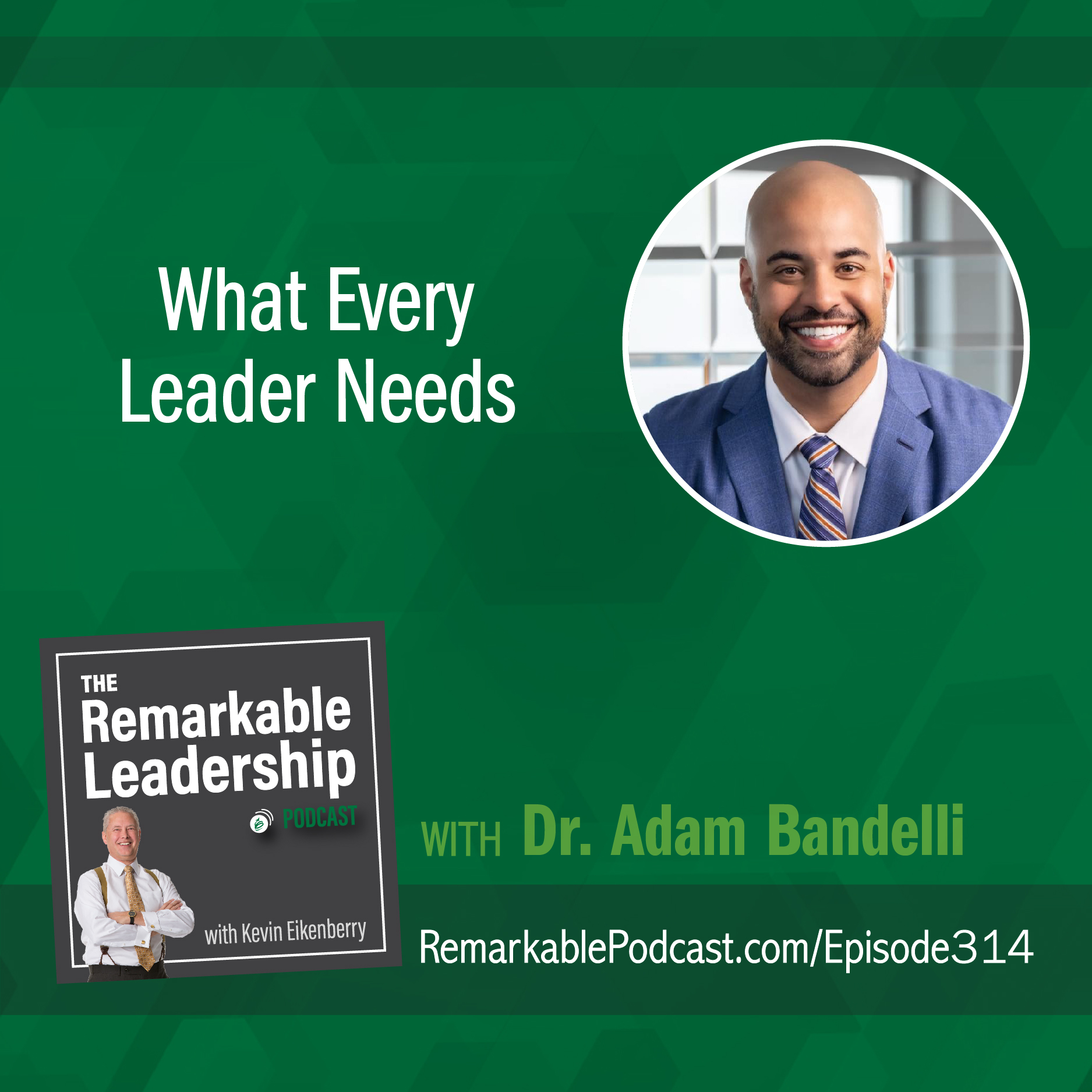
What Every Leader Needs with Dr. Adam Bandelli
As a leader, you want to get the most out of your team. You want to have a positive impact on your team. You don't want to be just an OK leader; you want to be a great leader. Dr. Adam Bandelli joins Kevin to discuss the leadership competencies he believes will enhance your influence and effectiveness as a leader. For example, compassion is your ability to communicate and build relationships. Regardless of where you are in your journey, these skills will change the way you lead, for the better. Key Points Dr. Bandelli shares with Kevin how he developed the 10 competencies as well as advice on how to use the model. He shares the competencies. He discusses how you can build endurance. He explains how you can create a vision, even if you are not the CEO. Meet Adam Name: Dr. Adam Bandelli His Story: Adam C. Bandelli, Ph.D. is the author of What Every Leader Needs: The Ten Universal and Indisputable Competencies of Leadership Effectiveness. He is the Managing Director of Bandelli & Associates, a boutique consulting firm focusing on leadership advisory services and organizational effectiveness. Worth Mentioning: Before founding Bandelli & Associates, Adam was a Partner at Korn Ferry, where he led the Private Equity assessment practice for North America. Earlier in his career, he was a Partner at RHR International, where he served as one of the firm's leaders on Board and CEO Succession, High Potential Development, Senior Team Effectiveness, and Executive Assessments. This episode is brought to you by… The Daily Email, daily inspiration for leaders sent Monday-Friday every week. Kevin writes a short message to inform, inspire, engage, and focus you on becoming the best you and the best leader you can be. Book Recommendations What Every Leader Needs: The Ten Universal and Indisputable Competencies of Leadership Effectiveness by Dr. Adam C. Bandelli Never Eat Alone, Expanded and Updated: And Other Secrets to Success, One Relationship at a Time by Keith Ferrazzi and Tahl Raz Related Podcast Episodes The Leader Habit with Martin Lanik. Scaling Leadership with Robert J. Anderson. Cracking the Leadership Code with Alain Hunkins.
How to Look at Milestones - Thoughts from Kevin
If you've ever been driving in the United States on an interstate, every so often, you'll see a sign that has a number on it, a mile marker. You're probably familiar with those. They didn't originate in the U.S. and in modern times, but rather during Roman times. Marking progress on the journey with milestones makes sense, right? Well, today we use milestones much more often in things like project management to help us plan out our projects and see how we're doing against plan. That's how we typically think about milestones, but I think that there are really five ways that we can look at milestones and five ways that milestones can help us. Milestones are a planning tool. Milestones are goals. Milestones drive momentum. Milestones create perspective. Milestones are a chance to celebrate. In this episode, we'll dive deeper into these five ways that milestones can help you be a better leader and a better human. Tweet it out: Milestones are more than a planning tool. Use the crossing of milestones as a way to create perspective, drive momentum and provide a chance to celebrate. @KevinEikenberry In this episode: Learn more about Kevin's Daily Email and subscribe here.

Helping Your Colleagues and Employees Up Their Game with Howie Jacobson
Have you thought about changing people? Maybe, the way they hand in reports. Maybe, it's the way they show up for a meeting. Now the question becomes, can you change people? That isn't so easy to answer and definitely isn't easy to do. Howie Jacobson joins Kevin to discuss resistance to change. He says change is just a discontinuity of the past. The hard part is the change we can't control. He talks about the powers we need to activate and to remember it's not about us. Key Points Howie discusses why people resist change. He shares 4 powers to help change, which include: Ownership Independent capability Emotional courage Future proofing He talks about the 4 steps to help others get to change. Meet Howie Name: Howie Jacobson His Story: Howie Jacobson is the co-author, with Peter Bregman, of You Can Change Other People: The Four Steps to Help Your Colleagues, Employees—Even Family—Up Their Game. He is an executive coach to clients ranging from startup founders to established and rising Fortune 100 leaders. He is Director of Coaching at Bregman Partners, and Head Coach at the Healthy Minds Initiative. Worth Mentioning: Howie hosts the Plant Yourself Podcast, where he interviews remarkable people engaged in healing at the individual, institutional, and planetary level. Howie earned his M.P.H. and Ph.D. in Health Studies from Temple University and his B.A. from Princeton University. He lives in rural North Carolina with his wife, where he writes, gardens, plays Ultimate Frisbee, runs, fiddles, and loads the dishwasher correctly. This episode is brought to you by… The Daily Email, daily inspiration for leaders sent Monday-Friday every week. Kevin writes a short message to inform, inspire, engage, and focus you on becoming the best you and the best leader you can be. Book Recommendations You Can Change Other People: The Four Steps to Help Your Colleagues, Employees—Even Family—Up Their Game by Howie Jacobson and Peter Bregman Sand Talk: How Indigenous Thinking Can Save the World by Tyson Yunkaporta Related Podcast Episodes Flourishing as a Leader and Coach with Lisa Zigarmi. The Coaching Effect with Bill Eckstrom.
Helping Your Colleagues and Employees Up Their Game with Howie Jacobson
Have you thought about changing people? Maybe, the way they hand in reports. Maybe, it's the way they show up for a meeting. Now the question becomes, can you change people? That isn't so easy to answer and definitely isn't easy to do. Howie Jacobson joins Kevin to discuss resistance to change. He says change is just a discontinuity of the past. The hard part is the change we can't control. He talks about the powers we need to activate and to remember it's not about us. Key Points Howie discusses why people resist change. He shares 4 powers to help change, which include: Ownership Independent capability Emotional courage Future proofing He talks about the 4 steps to help others get to change. Meet Howie Name: Howie Jacobson His Story: Howie Jacobson is the co-author, with Peter Bregman, of You Can Change Other People: The Four Steps to Help Your Colleagues, Employees—Even Family—Up Their Game. He is an executive coach to clients ranging from startup founders to established and rising Fortune 100 leaders. He is Director of Coaching at Bregman Partners, and Head Coach at the Healthy Minds Initiative. Worth Mentioning: Howie hosts the Plant Yourself Podcast, where he interviews remarkable people engaged in healing at the individual, institutional, and planetary level. Howie earned his M.P.H. and Ph.D. in Health Studies from Temple University and his B.A. from Princeton University. He lives in rural North Carolina with his wife, where he writes, gardens, plays Ultimate Frisbee, runs, fiddles, and loads the dishwasher correctly. This episode is brought to you by… The Daily Email, daily inspiration for leaders sent Monday-Friday every week. Kevin writes a short message to inform, inspire, engage, and focus you on becoming the best you and the best leader you can be. Book Recommendations You Can Change Other People: The Four Steps to Help Your Colleagues, Employees—Even Family—Up Their Game by Howie Jacobson and Peter Bregman Sand Talk: How Indigenous Thinking Can Save the World by Tyson Yunkaporta Related Podcast Episodes Flourishing as a Leader and Coach with Lisa Zigarmi. The Coaching Effect with Bill Eckstrom.
Why You Should Set Goals Collaboratively - Thoughts from Kevin
Most of us have plenty of goals that we set in our lives – health, financial, personal. And today we're talking about team goals or organizational goals. But before we get to that, I want you to think about it as a team member, as an individual contributor. Have you ever had someone hand you a goal? And if that's ever happened to you, how did that feel? Did you feel much ownership of it? Did you feel like you really wanted to achieve it? How successful were you in achieving it? When I worked in corporate America, I can remember goals being handed to me and I had more questions than answers. You see, for us as leaders, it's often easier to simply hand a goal to our team. But when we set goals collaboratively, we can get a lot of other great benefits. In this episode, I'm sharing why you should set goals collaboratively with your team. Tweet it out: Accountability isn't a dirty word – though some act like it is. Being accountable is simply taking ownership and responsibility. When we talk about it all the time – and not just when things go badly – people won't think accountable is a dirty word after all. @KevinEikenberry In this episode: Subscribe to the Remarkable Leadership Podcast.

Being an Impact Player with Liz Wiseman
You know who they are. The teammates we turn to in critical minutes. They are clutch and they make an impact. You also know that being impactful doesn't come with a title. Kevin is joined Liz Wiseman to discuss her research and findings of impact players. She shares the characteristics of top contributors and what they are doing differently than the rest. Key Points Liz distinguishes impact players and why it is more than just talent and drive. She shares the 5 practices of impact players, which include: Do the job that's needed. Step up and lead. Move things across the finish line. Learn and adapt to change. Make heavy loads lighter. She shares the practice with the most leverage. Meet Liz Name: Liz Wiseman Her Story: Liz Wiseman is a New York Times and Wall Street Journal bestselling author. Her latest book is Impact Players: How to Take the Lead, Play Bigger, and Multiply Your Impact. She is the CEO of the Wiseman Group, a leadership research and development firm. Worth Mentioning: Liz has been listed on the Thinkers50 ranking and named one of the top 10 leadership thinkers in the world. She has conducted significant research in the field of leadership and collective intelligence and writes for Harvard Business Review, Fortune, and a variety of other business and leadership journals. This episode is brought to you by… The Daily Email, daily inspiration for leaders sent Monday-Friday every week. Kevin writes a short message to inform, inspire, engage, and focus you on becoming the best you and the best leader you can be. Book Recommendations Impact Players: How to Take the Lead, Play Bigger, and Multiply Your Impact by Liz Wiseman See No Stranger: A Memoir and Manifesto of Revolutionary Love by Valarie Kaur Related Podcast Episodes Skills Leaders Need with Dave Kerpen. The Power of Deliberate Practice with Robert Pool. Understanding Power with Deborah Gruenfeld.
A Personal Look at the Great Resignation - Thoughts from Kevin
"The great resignation." It's a hot topic right now and it's mostly been discussed as as a macroeconomic concept. What is it doing to organizations? What's causing it? What can organizations do about it? In this episode of Remarkable TV, I want to talk about "the great resignation" as a microeconomic concept, really more as a personal concept. And I'm starting with the question: why did people resign? I'm going to give you a simple and nonpolitical answer. People resigned and the great resignation started simply because people weren't finding what they wanted from their work or career. And while I don't know your situation, it's highly likely that if you haven't joined "the great resignation", there's a chance you're either thinking of it or will be in the future – either for yourself personally or as to how it will affect your organization and your team. And I'm starting with three important questions for you to think about: 1. What do I love about my work? 2. Where can I find more of that? 3. what are my priorities related to life and work? As I said above, these questions are important whether you're thinking of "the great resignation" personally or organizationally. Check out this episode. Tweet it out: The Great Resignation matters to everyone — even if you love your job and don't plan to resign. Time spent thinking about what you want from your work will always be valuable and never go out of style. @KevinEikenberry In this episode: Subscribe to the Future of Work Newsletter.

The Frontline CEO with Eric Strafel
The frontline is where the work happens. When you get the work done correctly and on time (if not faster), your organization is successful. If there are too many layers of leadership and you are waiting for directions from the top, you may miss opportunities. Eric Strafel joins Kevin to discuss the importance of empowering your frontline team to make decisions. If they understand the why, and if they know where the organization is going, they will make the best decisions for your organization. Key Points Eric defines his meaning of a frontline CEO. He shares his thoughts around empowerment and why it seems like few organizations or leaders do it. He discusses the role of radical transparency. He also discusses the importance of creating a learning organization. Meet Eric Name: Eric Strafel His Story: Eric Strafel is the author of The Frontline CEO: Turn Employees into Decision Makers Who Innovate Solutions, Win Customers, and Boost Profits. He is also the founder of the consulting firm SUMMi7, which helps businesses grow profits and scale innovation with mission-driven purposes. Worth Mentioning: Eric holds an MBA from Carnegie Mellon University and a B.S in Mechanical Engineering from Binghamton University. In addition to his writings on leadership and experience leading diverse teams, Eric is an advisor to The Study USA, where he works to empower women-led businesses and next-generation entrepreneurs through collaboration with academic partners, companies, and the local community. This episode is brought to you by… Unleashing Your Remarkable Potential, Kevin's free weekly e-newsletter. It's full of articles and resources to help you become a more confident and successful leader. Book Recommendations The Frontline CEO: Turn Employees into Decision Makers Who Innovate Solutions, Win Customers, and Boost Profits by Eric Strafel Measure What Matters: How Google, Bono, and the Gates Foundation Rock the World with OKRs by John Doerr Atomic Habits: An Easy & Proven Way to Build Good Habits & Break Bad Ones by James Clear Related Podcast Episodes Leading Through Core Values with Dina Dwyer-Owens . Unleashing Empowerment Leadership with Frances Frei.
The Case for Mental Fitness - Thoughts from Kevin
How we think about mental health and mental illness has changed a lot in my lifetime societally. More and more awareness of mental illness is emerging, and while this is really good, unfortunately, there's actually more mental illness than ever. People are willing to talk about it, but there's all sorts of factors like anxiety and loneliness and other factors that are causing the amount of mental illness to grow or the level of mental illness across society to grow. In this episode of Remarkable TV, I'm talking about a related topic: mental fitness. Just like we think about physical fitness as a way to help us be more physically healthy and avoid physical illness, we can do the same with mental fitness. In the episode I'm sharing four ways to help you do this. Tweet it out: What will you do today to become more mentally fit? @KevinEikenberry In this episode: Subscribe to the Future of Work Newsletter.

How to Thrive in Uncertain Times with Larry Robertson
We are living in uncertain times. This is true and we could probably say this of any time we have lived in. The difference is we are more connected now and we see more information. So, the risk and uncertainty that seemed to be episodic were always there and we need to accept this reality. Larry Robertson joins Kevin to talk about risk, uncertainty, leadership, and mindsets. We need to recognize the status quo is harder to come by and we should use uncertainty as the secret ingredient to shake things up. Key Points Larry shares his thoughts as to why things seem more uncertain than before. He describes the new normal. He discusses a rebel leadership mindset and how it helps us thrive. He talks about the stability of organizational culture. Meet Larry Name: Larry Robertson His Story: Larry Robertson is the author of Rebel Leadership: How to Thrive in Uncertain Times in addition to The Language of Man and A Deliberate Pause. He is a Fulbright Scholar, and a popular columnist with Inc. Magazine, The Creativity Post, CEOWorld Magazine, and SmartBrief Worth Mentioning: From a leadership standpoint, Larry offers a distinct 360-degree perspective on the topic. He has been a leader or part of leader teams; invested in and/or advised leaders; done deep research into not just leadership, but the closely related areas of creativity and entrepreneurship. This episode is brought to you by… The Daily Email, daily inspiration for leaders sent Monday-Friday every week. Kevin writes a short message to inform, inspire, engage, and focus you on becoming the best you and the best leader you can be. Book Recommendations Rebel Leadership: How to Thrive in Uncertain Times by Larry Robertson Beyond the Trees: A Journey Alone Across Canada's Arctic by Adam Shoalts Life Lived Wild: Adventures at the Edge of the Map by Rick Ridgeway Related Podcast Episodes Leading Change Intelligently with Barbara Trautlein. Helping People Change with Melvin Smith. Growing People and Companies Through Change with Stacy Henry.
A Lesson from Atticus Finch - Thoughts from Kevin
Atticus Finch, Atticus Finch, you might immediately know who I mean and you might be thinking, I should know that name, shouldn't I? Well, Atticus Finch is the protagonist in the novel To Kill a Mockingbird. If you haven't read it, you've probably seen the movie. If you haven't done either, you should go watch it or go read it now. But there's a line in the book, and I believe in the movie as well, where Atticus Finch says you never really understand a person until you consider things from his point of view. You never really understand a person until you consider things from their point of view. How often do you do that? I mean, how often do you step back from your own perspective and look at it from someone else's perspective? This is a very powerful lesson for us to consider. And in this episode here, I'm sharing two different ways to help broaden your perspective. Tweet it out: Remember and apply the lesson of Atticus Finch – 'You never really understand a person until you consider their point of view.' @KevinEikenberry In this episode: Subscribe to the Remarkable Leadership Podcast.
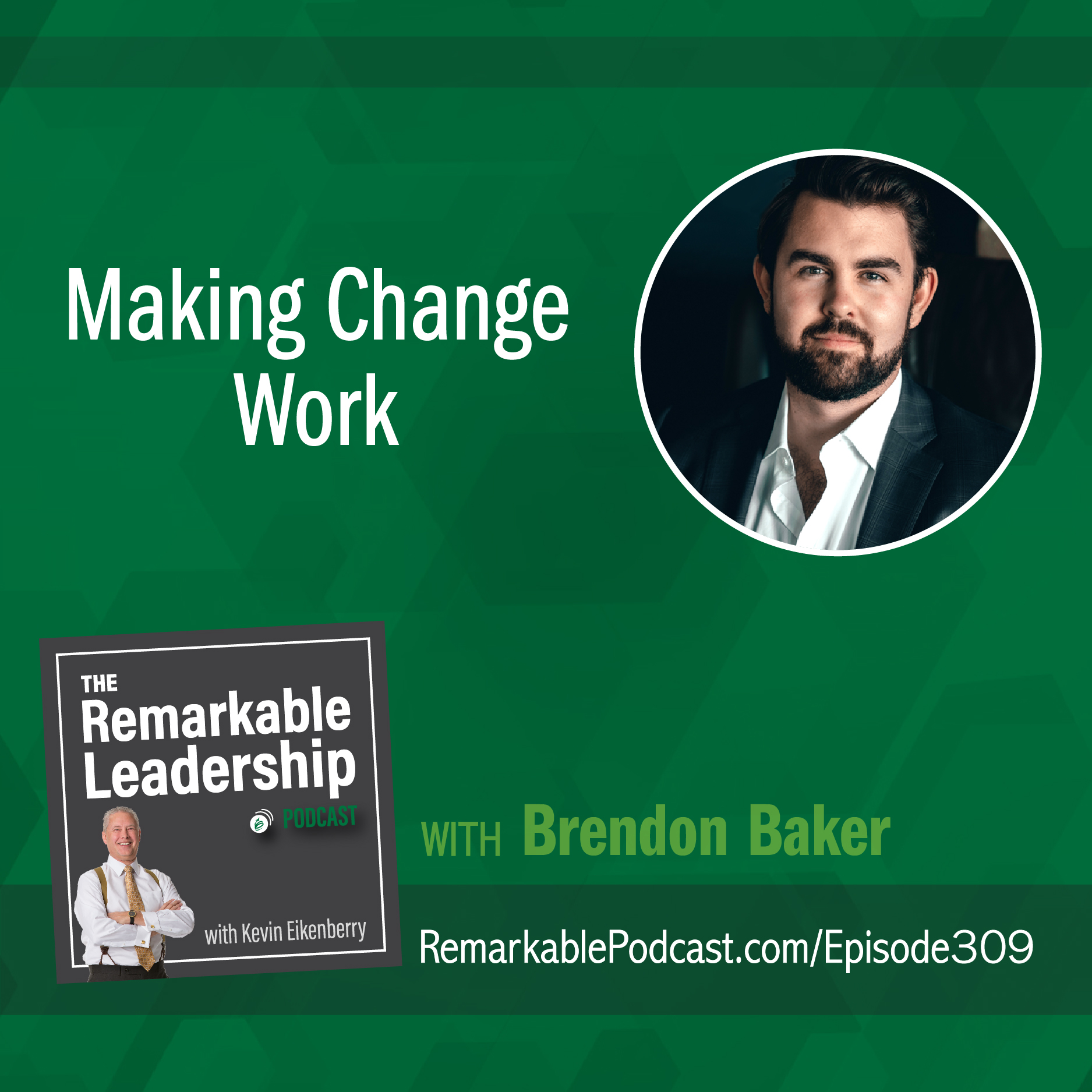
Making Change Work with Brendon Baker
When we talk about organizational change, we think about long meetings, lots of slides, and confusion on the goals. Further, we often default to how long will it take and how much will it cost me? Not to mention the change leaders are left to find for themselves. Brendon Baker shares with Kevin that to be successful, we need to ask different questions and continue to monitor and nurture the change. Key Points Brendon discusses why many change efforts fail. He shares the 3 valuable questions we should be asking. Why are we doing this? What does success look like? What are we exactly doing? Discusses scope creep and why. He share the 5 stages of momentum. Meet Brendon Name: Brendon Baker His Story: Brendon is the author of the best-seller Valuable Change: What You Need to Know to Ensure Your Change Pays Off, and has consulted on over $10 Billion in key transformation projects and programs across a range of industries and organizational sizes Worth Mentioning: Brendon established the Valuable Change Co. with one central mission in mind: to Help Change Leaders Drive Real Value, but on his way found his secondary mission: Fight Unnecessary Complexity. Brendon is based on the rural outskirts of Canberra, Australia and has a degree in Business Management. This episode is brought to you by… Future of Work Newsletter, a free weekly e-newsletter. It's full of articles and resources to help you, your team and your organization be more successful in the ever-changing remote work environment. Book Recommendations Valuable Change: What You Need to Know to Ensure Your Change Pays Off by Brendon Baker Related Podcast Episodes Leading Change Intelligently with Barbara Trautlein. Leading Large-Scale Change with Bill Schaninger. Leading in a World of Explosive Change with Henry De Sio, Jr.
Making Change Work with Brendon Baker
When we talk about organizational change, we think about long meetings, lots of slides, and confusion on the goals. Further, we often default to how long will it take and how much will it cost me? Not to mention the change leaders are left to find for themselves. Brendon Baker shares with Kevin that to be successful, we need to ask different questions and continue to monitor and nurture the change. Key Points Brendon discusses why many change efforts fail. He shares the 3 valuable questions we should be asking. Why are we doing this? What does success look like? What are we exactly doing? Discusses scope creep and why. He share the 5 stages of momentum. Meet Brendon Name: Brendon Baker His Story: Brendon is the author of the best-seller Valuable Change: What You Need to Know to Ensure Your Change Pays Off, and has consulted on over $10 Billion in key transformation projects and programs across a range of industries and organizational sizes Worth Mentioning: Brendon established the Valuable Change Co. with one central mission in mind: to Help Change Leaders Drive Real Value, but on his way found his secondary mission: Fight Unnecessary Complexity. Brendon is based on the rural outskirts of Canberra, Australia and has a degree in Business Management. This episode is brought to you by… Future of Work Newsletter, a free weekly e-newsletter. It's full of articles and resources to help you, your team and your organization be more successful in the ever-changing remote work environment. Book Recommendations Valuable Change: What You Need to Know to Ensure Your Change Pays Off by Brendon Baker Related Podcast Episodes Leading Change Intelligently with Barbara Trautlein. Leading Large-Scale Change with Bill Schaninger. Leading in a World of Explosive Change with Henry De Sio, Jr.
The Longest Four-Letter Word - Thoughts from Kevin
This is the last and fourth in a series of episodes about four-letter words. But don't worry – this and all the other episodes carry a G rating. You can watch the other episodes here. As the title of this post says, I am talking about the longest four-letter word. So technically, it's not a four-letter word. But since this series is about "dirty" words, and we often think of dirty words as four-letter words, we are including it in this series. The longest four-letter word is accountable. And I'm considering it a four-letter word here because most of the time when we hear it, it's associated with things going wrong. And as a leader, it's up to us to change this bad association/assumption and help empower our team instead. But this won't happen overnight. We've heard this word used negatively for a long time and if we're going to change its connotation, we must change the way we use it. You must not only use it when things are going badly, you must not only use it with the word "hold" in front of it. Not I'm going to hold you accountable, but rather I'm going to help you be accountable. I'm going to help you take ownership. I'm going to help you be empowered. Changing it and using it carefully. Changing it and using it differently. Tweet it out: Accountability isn't a dirty word – though some act like it is. Being accountable is simply taking ownership and responsibility. When we talk about it all the time – and not just when things go badly – people won't think accountable is a dirty word after all. @KevinEikenberry In this episode: Subscribe to the Remarkable Leadership Podcast.
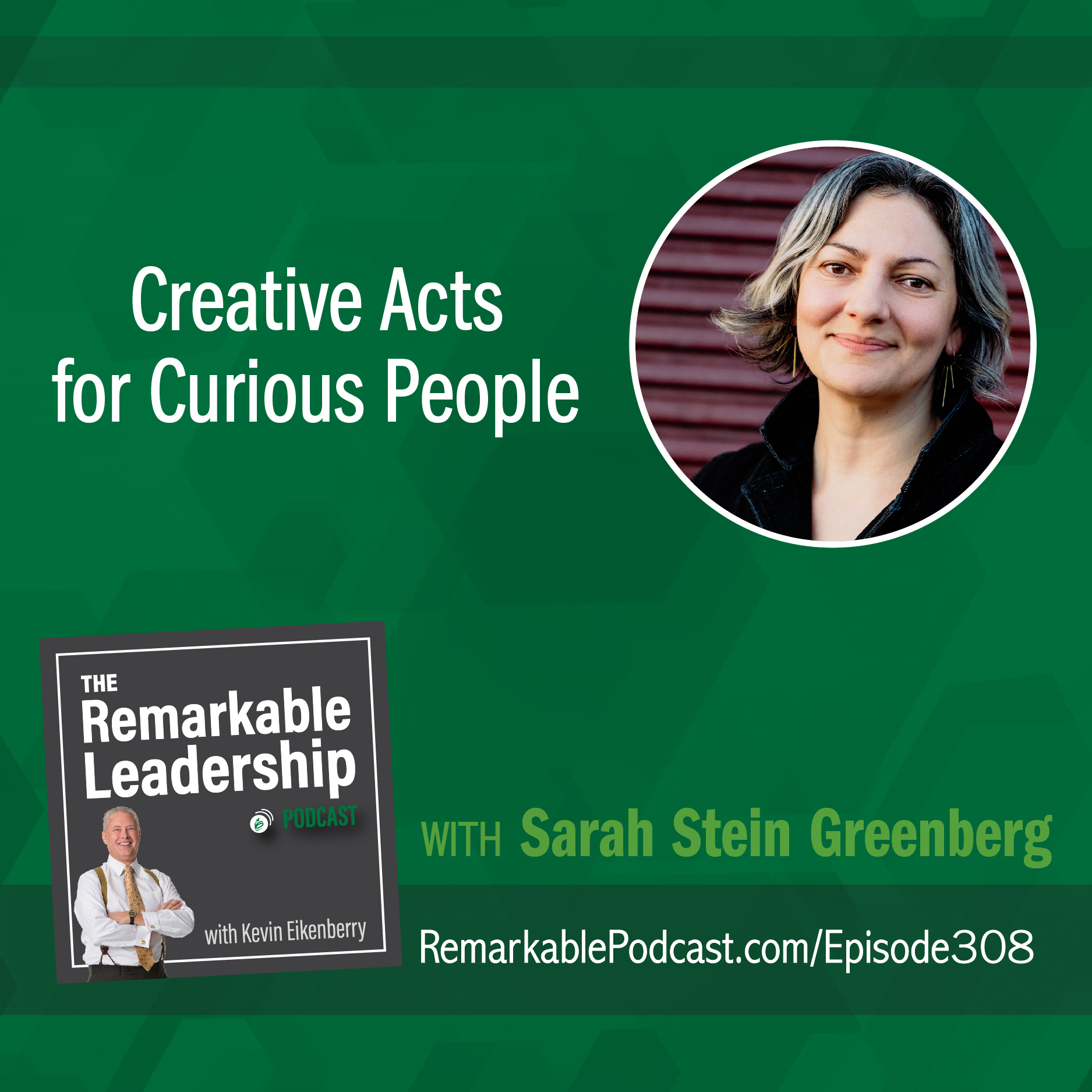
Creative Acts for Curious People with Sarah Stein Greenberg
Most of the problems we face today are messy, complex, and have no correct answer. Further, we have no precedence of how to solve them. Kevin chats with Sarah Stein Greenberg, who shares practical and maybe unusual ways to help you tackle the challenges you face. It is critical to have a curious mind and be intentional with your actions. Key Points Sarah shares her thoughts about design and risk. She discusses how to extend our curiosity. She shares examples of paths to creativity including: Come up with ideas. Locate your own voice. Tell a compelling story. Slow down and focus. Meet Sarah Name: Sarah Stein Greenberg Her Story: Sarah is the author of Creative Acts for Curious People: How to Think, Create, and Lead in Unconventional Ways. She is also the Executive Director of the Stanford d.school. She leads a community of designers, faculty, and other innovative thinkers who help people unlock their creative abilities and apply them to the world. Worth Mentioning: Sarah holds an MBA from Stanford's Graduate School of Business and a BA in history from Oberlin College. She also serves as a trustee for the global conservation organization Rare. This episode is brought to you by… Unleashing Your Remarkable Potential, Kevin's free weekly e-newsletter. It's full of articles and resources to help you become a more confident and successful leader. Book Recommendations Creative Acts for Curious People: : How to Think, Create, and Lead in Unconventional Ways by Sarah Stein Greenberg System Error: Where Big Tech Went Wrong and How We Can Reboot by Rob Reich, Mehran Sahami, Jeremy M. Weinstein Related Podcast Episodes Innovation is Everybody's Business with Tamara Ghandour. Making Creativity an Everyday Habit with Scott Anthony.
Creative Acts for Curious People with Sarah Stein Greenberg
Most of the problems we face today are messy, complex, and have no correct answer. Further, we have no precedence of how to solve them. Kevin chats with Sarah Stein Greenberg, who suggests who shares practical and maybe unusual ways to help you tackle the challenges you face. It is critical to have a curious mind and be intentional with your actions. Key Points Sarah shares her thoughts about design and risk. She discusses how to extend our curiosity. She shares examples of paths to creativity including: Come up with ideas. Locate your own voice. Tell a compelling story. Slow down and focus. Meet Sarah Name: Sarah Stein Greenberg Her Story: Sarah is the author of Creative Acts for Curious People: How to Think, Create, and Lead in Unconventional Ways. She is also the Executive Director of the Stanford d.school. She leads a community of designers, faculty, and other innovative thinkers who help people unlock their creative abilities and apply them to the world. Worth Mentioning: Sarah holds an MBA from Stanford's Graduate School of Business and a BA in history from Oberlin College. She also serves as a trustee for the global conservation organization Rare. This episode is brought to you by… Unleashing Your Remarkable Potential, Kevin's free weekly e-newsletter. It's full of articles and resources to help you become a more confident and successful leader. Book Recommendations Creative Acts for Curious People: : How to Think, Create, and Lead in Unconventional Ways by Sarah Stein Greenberg System Error: Where Big Tech Went Wrong and How We Can Reboot by Rob Reich, Mehran Sahami, Jeremy M. Weinstein Related Podcast Episodes Innovation is Everybody's Business with Tamara Ghandour. Making Creativity an Everyday Habit with Scott Anthony.
A Four-Letter Word to Be Careful With - Thoughts from Kevin
In this episode, we're talking about a four letter word, a four letter word to be careful with. And that word is lazy. Lazy is a word of judgment. It's something that we see inside of their behavior. It's something that we infer about their intentions. Like just because someone's laying on their couch right now, does that necessarily mean they're lazy? I don't know. All I know is there's a difference between judging and observing, and the word lazy is typically used as a word of judgment. So we use it on others. And then once we've labeled them as lazy, it changes our perspective about them and we use it on ourselves. Now, I used to say to myself, if I didn't get up, when I'd plan to that I'm lazy. Now I try to remember to say not that I'm lazy but that I didn't get up when I planned to. Those are two different things. They have two different inferences about myself. And so here's my point. The word lazy is a label that rarely serves us, whether we're thinking about ourselves or whether we're thinking about someone else. Because the fact is, we've all been lazy. But no one is always lazy. Lazy is a choice or maybe a habit, but it's not a character trait. Tweet it out: Be careful with using the word 'lazy' – because it places judgment that could be incorrect and is seldom helpful for anyone. @KevinEikenberry In this episode: Subscribe to the Future of Work Newsletter.