The Reading Instruction Show
339 episodes — Page 5 of 7
S15 Ep 1Early and Emergent Literacy Instruction: Ages 3, 4, 5, and 6.
This is an excerpt from my book: Johnson, A. (2016). 10 essential instructional elements for students with reading difficulties: A brain-friendly approach. Corwin The first podcast provides a sense of what effective literacy instruction might look like at the preschool and kindergarten (emergent) levels. The following podcast describes strategies for developing phonemic awareness.
S14 Ep 18BEING AND BECOMING A MASTER TEACHER: TEACHING AS TRANSFORMATION
A teacher’s prime directive is to help students learn or more accurately, to create the conditions whereby students are able to learn. So, what is learning? Learning is the process of acquiring new knowledge and skills. But simply having new knowledge and skills are of little value if they cannot be used. Thus, learning also involves the ability to use new knowledge and skills to solve problems or create products. However, learning also involves new insight. Thus, learning might also be said to include making new connections between pieces of knowledge or different experiences in order to bring about new understanding, new insight, or change. All well and good, but what is the highest form of teaching?The highest form of teaching is Teaching as transformation. This view perceives teaching as creating conditions that have the potential to transform the learner on many different levels (cognitive, emotional, social, intuitive, creative, spiritual, and other). Transformational teaching invites both students and teachers to discover their full potential as learners, as members of society, and as human beings. The ultimate transformational goal is to become more nurturing human beings who are better able to perceive the interconnectedness of all human, plant, and animal life (Narve, 2001). Holistic education is an educational philosophy consistent with the transformative view (Miller, 1996). Learning is said to have occurred when these experiences elicit a transformation of consciousness that leads to a greater understanding of and care for self, others, and the environment. Academic achievement from this perspective is seen as discovering and developing your unique talents and capabilities to the fullest extent possible. Academic achievement also involves becoming aware of the multiple dimensions of self and expanding one’s consciousness.
S14 Ep 17EDUCATION AS SELF-ACTUALIZATION
It has been my experience that education is most effective when the prime directive is to do what Maria Montessori proposed in 1946, and that is to help each child discover and then release his or her full potential. The Indian philosopher, Krishnamurti proposed that education’s goal should be to free individuals from the illusion of one’s cultural conditioning so that they can think and value for themselves (Miller, 2001). Thomas Moore (1992), in The Seat of the Soul, recommends that schools strive to develop depth of feeling and imagination, instead of only focusing on knowledge and skills. I agree with each of these, and I would add that our schools should be vehicles for self-actualization. Self-actualization here is the state where one is able to accept and express one’s inner core and begin to actualize those capacities and potentialities found there
S14 Ep 16CRITICAL RACE THEORY, WOKENESS, AND WHITE FRAGILITY: PART 2
When we talk about critical race theory, our goal is not to win the argument. We’ve already done that. Our goal is change. And if change is not occurring, we must consider the causal factors. Now those who would use force to leverage change, simply think about where, how, and how much force to use. But that’s not really change. That’s compliance. We want change. Real change. Ideas cause change. Ideas ultimately cause real change. Ideas. Hence, we must consider the idea delivery system being used.
S14 Ep 15CRITICAL RACE THEORY, CHANGE, AND THE IDEA-DELIVERY SYSTEM: PART 1
This podcast explores this question: Do you want to win the argument or do you want change? We've already won the argument, so let's focus on change. In doing so, we need to consider our idea-delivery system.
S14 Ep 14TEACHING THE 5-STEP WRITING PROCESS
if you want to help students become better writers, you must teach them the process. The five-step writing process as described by Donald Graves (1983) has been around for a while. This podcast will expand on the brief outline of the five-step writing process, it will describe tips for teaching the 5-step writing process, and it will identify six types of writing that should be included in a writing curriculum.
S14 Ep 13TEACHING STUDENTS HOW TO WRITE
Throughout my series of podcasts related to writing instruction you’ll encounter six reoccurring themes:1. Everyone can write. Writing is creating meaning with print and sharing that meaning with others. Everyone can record or express an idea on paper (or computer). Young children may use more pictures and squiggly shapes than letters and words, but they are creating meaning with print and sharing their ideas.2. Students need to be taught the writing process. The five-step writing process will be described in Chapter 1 and referenced through this book. Everyone can become better writers if they are taught the steps and follow the process. The process may look a bit different in first grade than it does in 12th grade, but there is a process, and it does produce better writers.3. Students need opportunities to practice writing. You become a better tennis player by practicing. You become a better piano player by practicing. You become a writer by practicing. Like any skill, you need to do it a lot to get better at it. This means that teachers must provide ample opportunities to practice writing. Students should expect to write every day.4. Students need to have authentic writing experiences. An inauthentic writing experience is when the teacher asks students to respond to an artificial writing prompt and the only response given is a grade, some edits, and a comment from the teacher. In contrast, an authentic writing experience is when students are recording, explaining, or describing their ideas for a real-life audience (often their peers). This makes their writing comes alive. It moves it from an abstract exercise to a real-life event. And when students are engaged in authentic writing experiences, you seldom have problems ‘motivating’ them to write. Again, humans have a natural inclination to communicate; to share their thoughts, experiences, perspectives, and emotions with others. When you tap into this natural inclination, writing instruction becomes effortless.5. Students need responses. A response if much different from correction. A response is a reaction. Students need to see how their writing is playing in the heads of the reader. They need to know which parts work and which parts are a little fuzzy or could use some revising. They need responses from the teacher and their peers.6. Every teacher can be an effective teacher of writing. There’s nothing magical or complicated about being and becoming a good teacher of writing. You simply need to understand the five-step writing process and have a few good strategies that you can adopt and adapt to fit your needs and teaching style. And that’s where I come in. Hence, this book.
S14 Ep 12WRITING INSTRUCTION: KEEP THE ART IN LANGUAGE ARTS
• Students need their own writing topics. Students should be encouraged to express their thoughts and describe their experiences to the greatest extent possible. This is called authentic writing or authentic writing experiences. Not all the time, but much of the time. When I sit down to write a book or a journal article, nobody assigns me a topic. I get to write about what interests me. I get to research things about which I am curious. Research and writing seem effortless here. However, I’ve had experiences in which I’ve had to write a chapter, article, or report that I wasn’t really interested in writing. Writering is incredible difficult here. It seems as if I stare at my computer for hours and nothing comes out of my head.• Students first need to write in order to learn how to write. Celebrate the idea in whatever form that idea takes. There are times and places to learn and become proficient in various writing forms and genre, including what Gloria Ladson-Billings (2017) refers to as the dominant academic language (DAL) or the culture of commerce and social advancement. However, learning and becoming proficient in one form will make it easier to learn and become proficient in another form.• Students need to get real responses from real people. Sharing writing with others is what makes it come alive. She how people respond to your words gives you a sense of what is effective and what is not.• Finally, keep the art in language arts. Again, art is not something beautiful; art is something beautifully expressed. Celebrate, in your writing instruction, the beauty of words.
S14 Ep 11LEARNING TO WRITE AND MAKING RASPBERRY JELLY: THE PROCESS IS IMPORTANT
Learning to write is a lot like learning to make raspberry jelly. You need to be shown the process, not just given a list of ingredients. Too often students are never taught the process used to create a finished written product. They are not shown the steps. This lack of instruction related to process is just as detrimental to jelly-making as it is to writing.
S14 Ep 10THE STORY OF SALLY, STANDARDIZED TESTS, AND READING
The test data didn't tell me the full story. Sally was a 1st grade girl with whom I was working last year during covid. I was doing online tutoring with kids. Before working with her, her parents sent me her test data. I read through them. There were fancy charts and colorful graphs that showed Sally’s scores on a whole array of meaningless reading subskill – They measured her distance from average. All this data really showed me was that Sally had trouble reading --- but we already knew this. Her parents knew this. Her teacher knew this. And Sally knew this. The numbers simply quantified what everybody already knew. And the testing made Sally feel more insecure about herself as a literate human being.
S14 Ep 9FIVE CAUSES OF INEFFECTIVE READING INSTRUCTION
Five things cause ineffective reading instruction:1. The myth of standardization. 2. Lack of understanding related to the reading process. 3. Teacher disempowerment. 4. Over-crowded classrooms.5. Testing madness.

S14 Ep 8The Neurological Basis for Data-Resistant Belief Systems: The 2020 Presidential Election and the COVID Vaccine
How is it possible that so many people believe that Donald Trump won the 2020 presidential election? How is it humanly possible? How is it possible that some still believe that getting vaccinated for COVID-19 is a bad thing? After all the information published, all the data available, how is it possible that there are people walking about who fervently believe such things? And I am not talking about just a few. Sadly, I am talking about a whole bunch of people.This podcast examines the neurological basis of how it is that people can believe things that are so unbelievable.
Data Resistant Discourse
test
S14 Ep 7LANGUAGE LEARNING AND READING INSTRUCTION
This short podcast looks at language learning and the implications for reading instruction.
S14 Ep 6LANGUAGE ACQUISITION AND DEVELOPMENT: LEARNING WORDS
Language learning is a universal human function. People around the world, in different environments and with different abilities seem to acquire their primary language in essentially the same sequence and the same way. This tells us that humans are hard-wired to learn language in some form (Chomsky, 1968)Four elementsThere are four elements connected with language learning (Ormrod, Anderman, & Anderman, 2020):• Semantics refers to the meaning. Children learn that certain sounds, symbols, or movements of a hand and facial gestures means something.• Syntax refers to the rules for how the words, symbols, and movements are put together. For example, in human communication there is usually a thing word (noun) coupled with an action word (verb). Children learn that the types of words, the form of the word, and the order that they are used make a difference.• Medium refers to the form the language takes. Children learn to produce certain sounds, symbols, or movements to communicate.• Pragmatics is the context in which the communication takes place and the social rules around that communication. Children learn to communicate in different ways, in different contexts, with different people, and for different purposes.
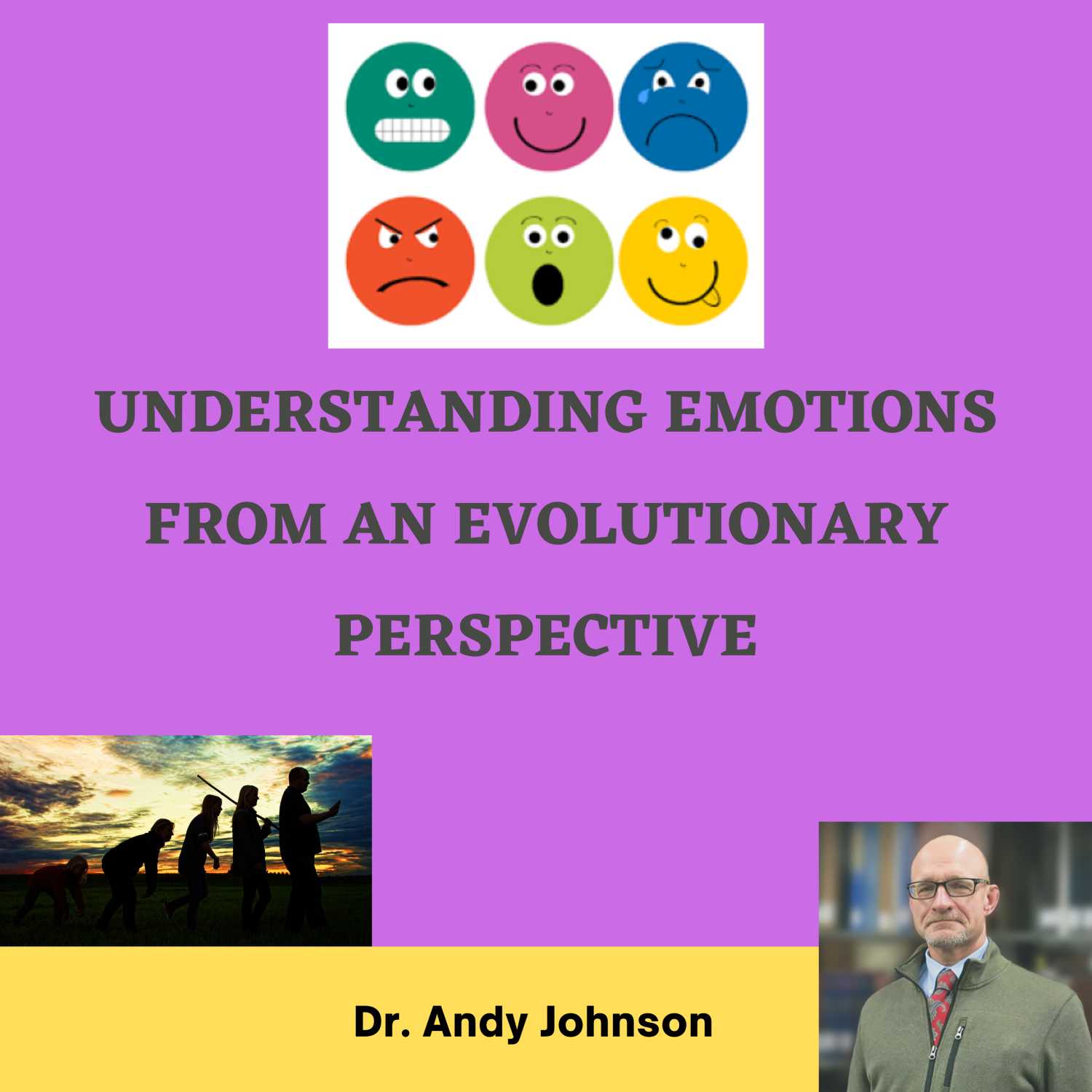
S14 Ep 5UNDERSTANDING EMOTIONS FROM AN EVOLUTIONARY PERSPECTIVE
Emotions can be better understood if viewed from an evolutionary perspective. Our current human emotions are a result of thousands of years of human evolution. They are part of our ever-evolving human brain. As stated above, they are a physiological response to some external stimuli that facilitated actions beneficial for the survival of the group or the individual. We have six basic emotions hardwired into our human brains: anger, fear, surprise, sadness (distress), happiness (joy), and disgust. Each of these served to enable the propagation of our species and the continued spreading of our genes in some fashion.
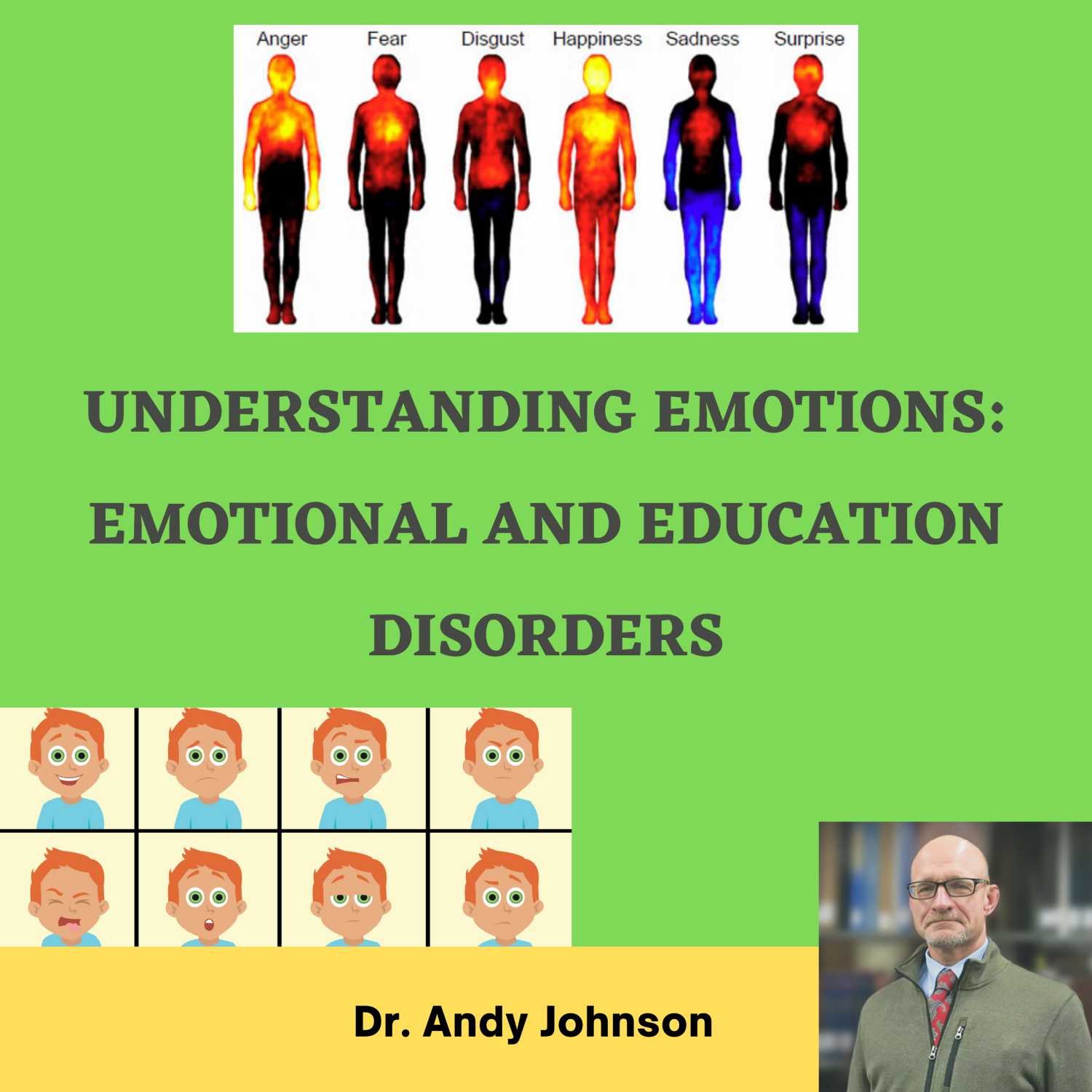
S14 Ep 4UNDERSTANDING EMOTIONS: EMOTIONAL DISORDERS AND EDUCATIONAL DISORDERS
At their core, emotions are a physiological response to stimuli that enable humans to react to events of biological or individual significance. From an evolutionary perspective, these physiological responses promoted survival behavior of the individual or the group

S14 Ep 3HELPING WHITE PEOPLE UNDERSTAND WHITE GUILT, SHAME, AND THE HISTORY OF AMERICA
This podcast is designed to help white people understand systemic racism, white guilt, shame, and the history of the United States of America. That's quite a lot for an 11-minute podcast -- but I think I pretty much cover it all.
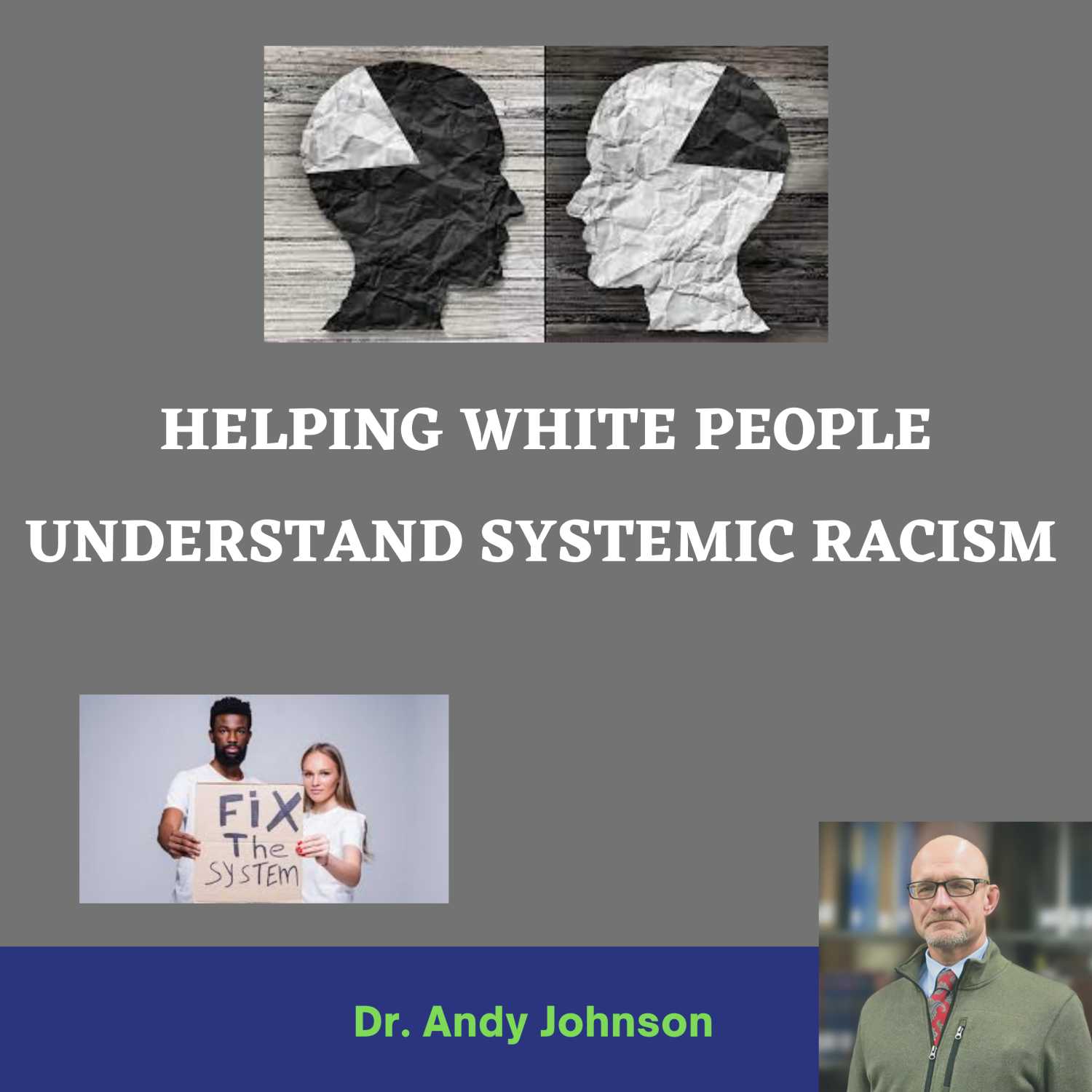
S14 Ep 2HELPING WHITE PEOPLE UNDERSTAND SYSTEMIC RACISM
This podcast is designed for white people. Full disclosure: I am a white man. It also describes just some of the basic elements of systemic racism. It also differentiates between the word "equality" and "equity".
S14 Ep 1CRITICAL RACE THEORY: A BRIEF OVERVIEW
Critical Race Theory has been much maligned, discounted, and discredited without fully understanding exactly what it is. It has been presented as a bad thing, a dangerous thing, a nefarious thing by conservative groups such as The American Experiment. Disinformation, misinformation, and distortion are used under the guise of patriotism and Christianity. What is presented as Critical Race Theory is not critical race theory at all. Groups like The American Experiment offer a distorted, cartoonish, and perverted view of Critical Race Theory. This short podcast describes what it is and what it is not.
S13 Ep 18WHAT IS A BALANCED READING PROGRAM?
Reading programs need to be balanced (Cunningham & Allington, 2007te). This means that it’s is not all just one thing (like all phonics instruction, or all reading, or all writing, or all anything). Instead, there’s a little bit of this and a little bit of that. You may not have noticed, but children are not standardized products. Children learn differently, in different ways, and at different rates. Thus, in learning to read, some children need a little more of one thing while others need bit more of another thing. Trying to push all children through the same reading program will result in the slowed growth of some and the frustration of others. This practice is called teaching the program and not children. Effective teachers teach children. Factory workers teach the program. Whenever possible, strive to be a teacher, not a factory worker.
S13 Ep 17FAST-TRACK TEACHER PREPARATION PROGRAMS: THE SPAGHETTI MODEL
One of the ideas for getting more teachers of color into the classroom has been to look at fast-track alternative teacher preparation programs such as Teach for America. These kinds of programs are usually based on the spaghetti model: Throw enough spaghetti on the wall and some of it will stick. In other words - throw a bunch of low-paid, poorly prepared teachers into the classroom and some will eventually stick around, making it to a second year.Let me ask you this: Would you go to a fast-track dentist? What about a dentist who was part of a Dentists for America program? Most would say no. We expect a certain level of training and expertise from those in whom we entrust with the care of our teeth. Why would we think it appropriate to expect anything less of those who we entrust with the care and education of our children?
S13 Ep 16HOW CAN WE GET MORE TEACHERS OF COLOR INTO OUR CLASSROOM?
Problem: Only 16% of the US teacher force are teachers of color. This is a problem.On Saturday, May 1st, 2021 a group of teachers, teacher educators, administrators, and others from around the state of Minnesota and three other states met for conversation. The purpose was to address the problem related to the lack of teachers of color in our classrooms in Minnesota and around the country. Three questions were used to initiate this conversation:1. What are the filters that keep students of color from entering teacher preparation programs?2. What are the filters that keep students of color from completing teacher preparation programs?3. What can we do?
S13 Ep 14ACTIVITIES FOR WORD CLASS: A SELF-SELECTED APPROACH TO SPELLING INSTRUCTION
The old, weekly spelling tests just don’t work. I have found no research to indicate that they do anything to improve students' ability to spell under real-life writing conditions. Word Class is a self-selected approach to spelling instruction that meets the needs of spellers at all ability levels. Here students select the words they wish to study each week. This podcast describes a variety of activities that can be used with word class.
S13 Ep 15A BALANCED READING PROGRAM: 12 ELEMENTS
Reading programs need to be balanced. This means that it’s is not all just one thing (like all phonics instruction, or all reading, or all writing, or all anything). Instead, there’s a little bit of this and a little bit of that. You may not have noticed, but children are not standardized products. Children learn differently, in different ways, and at different rates. Thus, in learning to read, some children need a little more of one thing while others need bit more of another thing. Trying to push all children through the same reading program will result in the slowed growth of some and the frustration of others. This practice is called teaching the program and not children. Effective teachers teach children. Factory workers teach the program. Whenever possible, strive to be a teacher, not a factory worker.
S13 Ep 13WORD CLASS: A SELF-SECTED APPROACH TO SPELLING "INSTRUCTION" - PART 1
Weekly spelling tests have been the staple of elementary education for the last 100 years. Here students memorize a list of words each week and then take a test on Friday. Tests are corrected, scores are taken, and one is deemed either a good spelling or not good speller. This would be a great way to teach spelling except for one thing: it’s not very effective. Studying a list of words out of any meaningful context has minimal effect in helping to develop students’ spelling proficiency; and worse, they keep students away from real writing experiences. This podcast describes a better way to help students learn how to spell correctly in authentic writing conditions.
S13 Ep 12TEACHING WRITING: SELF EDITNG AND PEER-EDITING
Editing checklists and peer editing tables are great ways to reinforce grammar skills - and they also provide the structure necessary for students to successfully edit their papers.
S13 Ep 11TEACHING GRAMMAR: 7 TIPS AND 2 TEACHING STRATEGIES
Listed below are seven simple tips for helping students to develop an awareness of grammar in their speaking and writing.1. Use lots of real writing. Authentic writing with feedback and response from classmates and teachers is most effective in developing grammar awareness. Feedback, versus just correct mistakes, makes the writing come alive.2. Use worksheets judiciously. There’s nothing wrong with worksheets. They’re tools; however, like any tool, their effectiveness is determined by how they’re used. Whenever possible, have students work in pairs to complete these. That way they hear the thought process of others. Remember, the goal is learning and writing, not completing a worksheet and getting a score to record.3. Keep skills instruction brief and quickly paced. Students need some explicit instruction related to grammar. That is, they need to be told exactly what a noun, or incomplete sentence is (see Appendix A for the basic grammar rules). But more of something doesn’t mean more learning. Grammar learning is most effective when it is brief and in the context of students'wrwr real writing.4. Use posters and bulletin boards as reminders.5. Find ways to get students talking about their writing (peer group editing is one way to do this).6. Promote voluntary reading. Wide reading is the cure for almost everything literary.7. Become aware of your own grammar as you are speaking and writing
S13 Ep 10TEACHING GRAMMAR
learning about grammar doesn’t have to be boring and meaningless. This chapter starts by dispelling some myths, otherwise known as silly grammar ideas. It then describes three approaches to grammar instruction

S13 Ep 9TEMPORARY SPELLING
This question often arises: Should you insist on correct spelling when children are getting their initial ideas on paper? Short answer: no. • Real writers edit last. There’s a time and a place to look at spelling, grammar, and punctuation errors: in the editing stage (the 5-step writing process is be described below). We want students to view their writing as a way to capture and express their ideas. Overemphasizing conventional spelling in the beginning stages can inhibit writing. This reflects what happens in the real world where initial drafts are messy things with lots of spelling and grammar errors. In the writing my books, my initial drafts have lots of errors (less so because I have grammar and spell check). The point is that we should treat our students just as real writers are treated. Real writers have messy first drafts and revisions. They edit during the final phases of their writing
S13 Ep 8TEACHING USING AUTHENTIC WRITING
How much talking do you think young children would do if we corrected them after every utterance? What if we insisted that they pronounce every word perfectly and used only correct grammar as they were learning to speak? What if we assigned children their speaking topics and then corrected and evaluated their speaking instead of responding to their ideas? What do you think would happen? Well I can tell you: We’d create a generation of insecure, semi-psychotic mutes. And yet, this is what often happens when children are first learning to use the medium of writing as a vehicle for expressing their ideas. Well-meaning but ill-informed teachers or parents often insist that children’s writing always be grammatically correct and error free as soon as it hits the paper. This is a good way to create reluctant non-writers. Just like learning to speak, students’ ability to write develops best by sharing real ideas and getting real responses (vs. constant correction) from adults and other students. Don’t get me wrong here: Grammar, spelling, and punctuation are important, but these things are not writing. Writing is having ideas, organizing ideas, and communicating ideas. In this sense, grammar, spelling, and punctuation are a means to an end, but they are not ends by themselves.
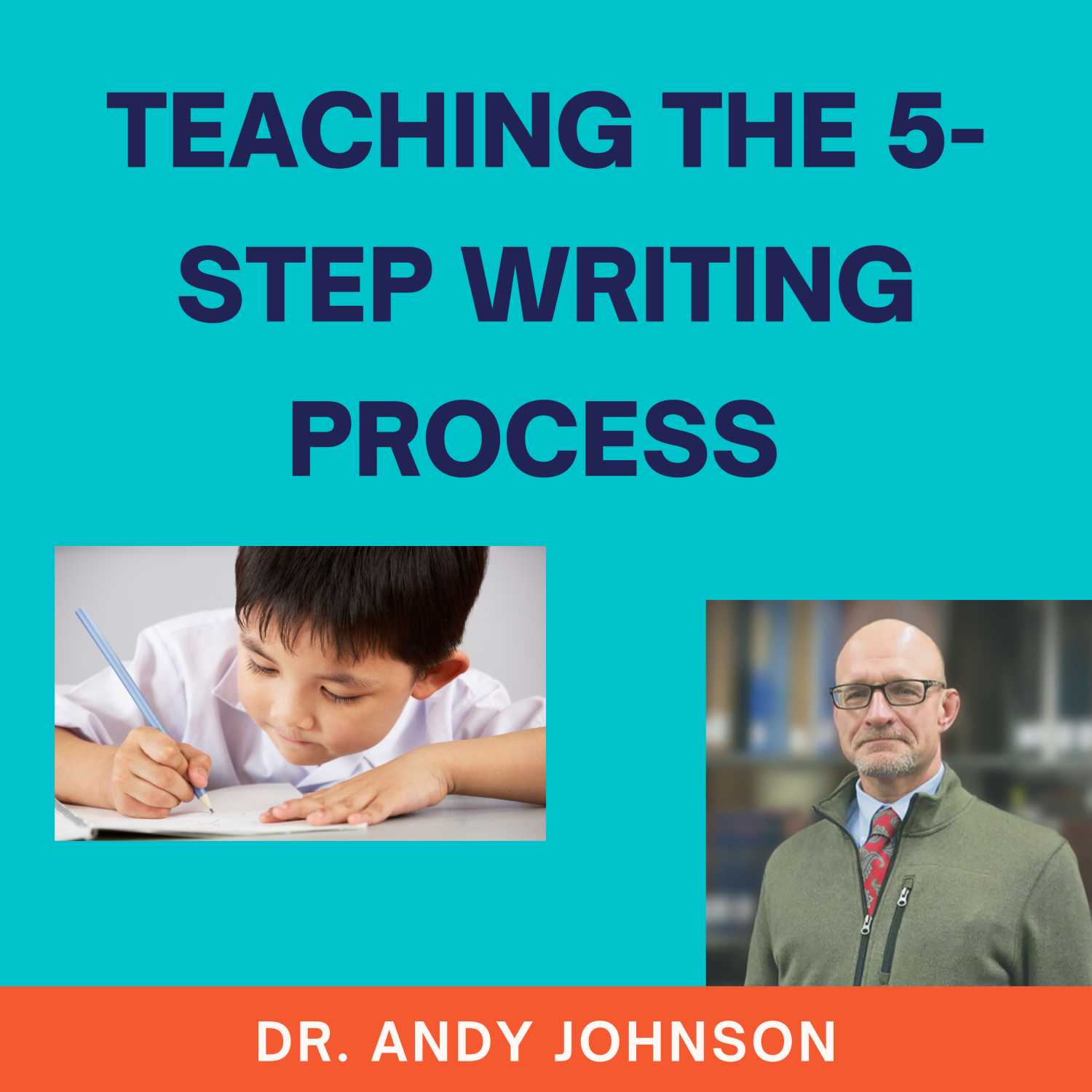
S13 Ep 7TEACHING THE 5-STEP WRITING PROCES
all language processes are connected (reading, writing, speaking, listening, and thinking). Each language enhances students’ ability to use the others. Thus, one of way to help children to become more fluent in their reading is to help them become more fluent writers. This podcast describes the 5-step writing process and strategies for generating ideas for writing topics
S13 Ep 6IDEAS FOR HELPING CHILDREN DEVELOP A LOVE OF READING
A teacher’s or tutors number one job is to help children fall in love with books. Once this is done 98 % of reading instruction is complete. However, to do this, you must have good books for them to read. What’s a good book? A good book is any book that a student enjoys and wants to read. This podcast describes 8 simpley ideas for helping children fall in love with books.
S13 Ep 5HOW TO TEACH READING
So how do we go about the business of teaching children to read? We don’t. Instead, we create the conditions whereby children can learn to read and develop their reading skills. As I said in the last chapter, children learn to read and write in the same way that they learned to listen and speak, and that is, by being immersed in the language and by having adults around who responded to them in appropriate ways. In this sense then, we would be more accurate if we called ourselves reading-condition-creators instead of reading teachers. This podcast presents 8 tips to keep in mind as we create conditions.1. Help children fall in love with books.2. Create a space every day for sustained, silent reading.3. Allow children to make choices about their reading material.4. Connect reading pleasure to reading practice5. Keep your reading program simple.6. Keep instruction simple.7. Make reading like real life.8. Include talk and other forms of social interaction.
S13 Ep 5LEARNING TO READ AND WRITE: FOUR LANGUAGE PROCESSES WORKING TOGETHER
Learning to read is not an isolated process. Four language processes work together to enhance the development of each individual element: speaking, listening, reading, and writing. Listening and reading are the receptive processes (taking in information), and speaking and writing are the productive processes (giving out information). We might also include a fifth language process: thinking (language that takes place in your head).
S13 Ep 4CULTURALLY RESPONSIVE TEACHING PART 4: STRATEGIES AND CONDITIONS
In this podcast I describe some strategies and conditions that might facilitate culturally responsive teaching. Again, I will stress that these strategies and conditions by themselves do not constitute culturally responsive teaching. Instead, these can be used to address parts of the three interconnecting elements.
S13 Ep 3MY QUEST TO UNDERSTAND CULTURALLY RESPONSIVE TEACHING - PART 3
Zaretta Hammond defined culturally responsive teaching as . .“An educator’s ability to recognize students’ cultural displays of learning and meaning making and respond positively and constructively with teaching moves that use cultural knowledge as a scaffold to connect what the student knows to new concepts and content in order to promote effective information processing. All the while, the educator understands the importance of being in a relationship and having a social-emotional connections to the student in order to create a safe space for learning” (Hammond, 2015, p. 15)
S13 Ep 2MY QUESTION TO UNDERSTAND CULTURALLY RESPONSIVE TEACHING - PART 2
Gloria Ladson-Billings (2014) describes culturally responsive teaching as consisting of three interacting and interconnected elements (a) learning that focuses on students’ intellectual growth, (b) cultural competence and inclusion, and (c) critical or sociopolitical consciousness. Neither of these by themselves can be said to be culturally response teaching. It is the interaction of these three that that creates culturally responsive teaching. This provides a framework for moving us forward in our understanding of CRT. Each of these elements is described in this podcast.
S13 Ep 1MY QUEST TO UNDERSTAND CULTURALLY RESPONSIVE TEACHING - PART 1
I used to think that CRT was a bunch of teaching strategies. Similar to cooperative learning, these strategies would have specific directions for their implementation. And if I just learned these strategies and attached them to my educating machine, then I would be a culturally responsive teacher. And I could teach my teacher candidate students to attach these strategies to their future educating machines so they would all be culturally responsive teachers. And over time, the grand educating machine would spew forth well-educated students who all scored above average on standardized tests, and systemic racism would be cured. Well … I was just a little right, but mostly wrong.
VALUES CLARIFICATION ACTIVITIES
Values clarification is a strategy designed to help students identify, examine, and clarify their own values (Johnson, 2006). In the past, there has some have mischaracterized of values clarification activities as trying to tell students that there is no such thing as right or wrong (see the definition of morality in the last chapter). This is not the case. Instead, these types of activities provide the platform for students to define and develop their own set of values and identify behaviors that support their values. This is always more powerful and long lasting than simply telling them what they should value or how they should behave.
S12 Ep 6DISAPPEARING MAN
To be fully teacher, one must be fully present. Being fully teacher means being fully human. It is about being in relationship. It is about caring. It is about feeling. It is about keeping children from disappearing.
S12 Ep 5DEFINING READING
Defining and understanding exactly what reading is, is an important part of teaching reading. This podcast defines reading by describing four essential elements:1. Reading is the practice of using text to create meaning.2. Reading is a constantly developing skill.3. Reading integrates visual and non-visual information.4. Reading is the act of linking one idea to another.
S12 Ep 4DEVELOPING MORAL REASONING - PART 4: MORAL DILEMMAS
There are three types of activities that can be used to advance students’ moral reasoning: moral dilemmas, values clarification activities, analyzing levels and stages. This podcast addresses moral dilemmas.
S12 Ep 3CAROL GILLIGAN'S STAGES OF ETHICAL CARE
Carol Gilligan (1998) contended that Kohlberg’s research excluded and devalued women’s ways of moral reasoning. His theories on moral development were put forth by a male, in a male dominant society, using only male subjects and thus, were biased in favor of men. She had a point. Using extensive interviews with girls ages 6 to 18, she postulated that women have differing moral reasoning tendencies than men. According to Gilligan, women tend to think of right and wrong (morality) in terms of caring relationships and connections whereas men tend to think in terms of rules and justice. She argued that these differences were largely a result, not of biological influences, but of social influences and gender conditioning that occurred in a context in which women’s ways of thinking were often undervalued compared to men. As society continues to evolve (hopefully), these differences will continue to diminish.
S11 Ep 14PART 4 - WE ARE FAILING OUR STRUGGLING READERS: THE STORY OF ROBERT
We are failing our struggling readers because we are force-feeding them all the standardized reading slop, administered in the same way, and in the same sequence as every other human being subjected to the same for-profit, one-size-fits-all, standardized reading instruction program. Struggling readers are not standardized entities. Neither should their reading interventions. Depending on students’ needs, intervention sessions for reading should include some or all of the following seven elements:1. Word work2. Word identification3. Maze and cloze work4. Writing5. Fluency work6. Comprehension7. Reading practice
S12 Ep 2PART 2: ADDRESSING MORALITY IN OUR SCHOOLS - KOHLBERGS 6 LEVELS OF MORAL REASONING
Lawrence Kohlberg (1984) research was not focused on behaviors, but in the subjects’ reasoning behind their behaviors. From this he developed his theory of moral development. This theory describes six stages of moral reasoning at three different levels. I. Pre-Conventional Level Stage 1 - Punishment. Stage 2 - Rewards. II. Conventional Level Stage 3 - Social Approval.Stage 4 - The Law. III. Post-Conventional LevelStage 5 - Social Contract. Stage 6 - Universal Principle.
S12 Ep 1PART 1 - ADDRESSING MORALITY IN OUR SCHOOLS: WHAT IS MORALITY
We can and we must include moral development as part of our curriculums. But how?
S11 Ep 16TEACHER PROFESSIONALISM: THE DANIELSON FILTER - PART 2
The Danielson Framework is an example of a filter that is commonly used to evaluate preservice and practicing teachers. The Danielson Group describes this as a framework for professional practice. Here “good teaching” is comprised of four domains: (a) planning and preparation, (b) the classroom environment, (c) instruction, and (d) professional responsibilities. The four domains are broken into 22 components. And the 22 components are further broken into 76 teeny tine separate elements.The Danielson Group claims that “empirical studies” have shown the Framework to lead to improved student learning. This claim is false and misleading (Johnson, 2019). While there is some research to support some of the 76 teeny tiny elements, if you examine the research cited in the Danielson material you will find that much of it is questionable at best. Often it is misused or misinterpreted. As well, there is no research (none) to support the use of the Danielson Framework as being more effective than any other framework, or more effective than no framework at all for enhancing teacher effectiveness or improving student learning. It is just a bunch of stuff that somebody thought up once upon a time, and now the Danielson Group is using it to sell stuff. Imagine that. Making a profit off our students. teac
S11 Ep 15TEACHER PROFESSIONALISM, PROFESSIONAL DISPOSITIONS, AND FILTERS: PART 1
The terms “teacher professionalism” and “professional dispositions” are often used when assessing preservice and practicing teachers. But what is “teacher professionalism”? What dispositions are the “correct” ones for teachers? And who gets to decide these things?Dispositions or Mind ControlMost teacher preparation programs address and assess three elements: knowledge, skills, and dispositions (Creasy, 2015). The dispositional element is commonly viewed as “teacher professionalism”. A disposition is a state of mind that creates an inclination to think or act in certain ways. There are both positive and negative dispositions. Examples of positive dispositions include compassion, curiosity, fortitude, and honesty. Examples of negative dispositions include pessimism, laziness, dishonesty, and indifference. These dispositions are all examples of internal states of mind. Some might also consider them character traits or even values. However, some teacher preparation programs try to mandate that all preservice teachers have specific internal states of mind. Rubrics and checklists are even created to try to document and quantify these internal states of mind. But trying to control the internal state of mind of another is a form of mind control. It is not healthy for the field of education to be in the business of mind control.
S11 Ep 13READING INTERVENTIONS: THE STORY OF JOSEY
Josey was a 3rd grade student. Before our first session, I listened to her read passages at Lexile level 330 (approximately 1.9 grade level). She read 50 WPM with 97% accuracy. Seven weeks later, after 14 sessions, she read passages at Lexile level 440 (approximately 2.5 grade level). Here she read 74 WPM with 98% accuracy. Our work focused specifically on two deficit areas: reading fluency and word identification.