The Reading Instruction Show
339 episodes — Page 6 of 7
S11 Ep 12WE ARE FAILING OUR STRUGGLING READERS: WHY?
Currently, 2.4 million students are classified as having a learning disability and are receiving special education services. Up to 80% of these students (approximately 1,920,000) have some sort of reading disability. Approximately 3% to 5% of all students have a severe reading disability. In segregated special education settings, the general learning outcomes are lower than inclusive classrooms and reading achievement is not accelerated. The US Department of Education reported that in 2015, 70% of all students in grade 4 achieved below basic levels in reading. In 2017 it was 71%, and in 2019 it was 74%. The US Department of Education also reported that from 2002 to 2009 there were no statistically significant changes in the reading scores of students with disabilities in grades 4, 8, and 12. There are real people behind these numbers, just like Erik. Clearly, what we’re doing isn’t working. Yet the special education industry continues down the same path, insisting on costly testing and programming. Why? We are failing our struggling readers.
S11 Ep 11WE ARE FAILING OUR STRUGGLING READERS: THE STORY OF ERIK
Erik. As teachers we tend to remember our failures. One of mine occurred in 1983, my first year of teaching. I was a 2nd grade teacher at Greenwood Elementary School and Erik was my student. I failed him miserably. I still remember him. He was a happy little guy in the fall. But as the year went along, he became less happy. He began to slump in his desk. He seemed to draw into himself. 36 years later he still lingers in my mind. Erik struggled with his reading and I failed to help him. This is his story.

S11 Ep 10SOFT BULLYING AND MICROAGGRESSION WITHIN ORGANIZATIONS AND ACADEMIC INSTITUTIONS
There is an insidious way of silencing those who are not in lockstep with the majority in organizations and academic institutions. It is called soft bullying and microaggression. These are sometimes used to mute and muzzle minority views and dissenting voices. The results is that the divergent ideas, conflicting views, and disagreements that are essential for the health and evolution of any organization, especially academic institutions, are lost. To mute and muzzle is to engage in practices that devolve and decay the foundations of the academic institution in which they occur, and it conflicts with the standards for respectful academic discourse held by the academy.
S11 Ep 9DATA-RESISTANT THEORETICAL CONSTRUCTS AND PARADIGMATIC PAROCHIALISM IN SPECIAL ED WORLD
In our current educational system, standardized tests are used to assess the quality of the student-products as they move along the 13-year conveyor belt within the education factories commonly referred to as schools. Students who have test scores that fall below a certain percentile ranking are thought to have a disability. Additional standardized tests are then given by standardized testing experts to confirm and diagnose the cause of the disability. Very much like a disease, a “special” standardized treatment is then prescribed for this disability.These students are then sent off to Special Ed World. This is a purgatorial “special” place apart from the general education classroom where students are given the prescribed special treatment by special treatment experts. In the segregated setting of Special Ed World, the special treatment experts implement the special treatment with fidelity. However, one of the many problems with Special Ed World as currently configured is that once students become entangled in the special education machinery, they are lost forever. They rarely return.This podcast examines four interconnecting elements within Special Ed World: (a) reading instruction, (b) data-resistant theoretical constructs, (c) paradigmatic parochialism regarding what is considered “scientifically-based” research, and (d) manipulative approaches to teaching.
S11 Ep 5MEETINGS, MUTING, AND MUZZLING (defining democratic process and describing meeting protocol)
It cannot be assumed at any level that people understand democratic process or know the particulars of proper meeting protocol. In this podcast we examine and describe these two elements based on Roberts Rules of Order (RRO).
S11 Ep 8MOTIVATION AND LEARNING
Motivation is an internal state that causes us to direct attention or maintain behavior. Motivation can direct our attention and sustain our behavior toward a particular goal. All students enter kindergarten excited and motivated to learn. They see themselves as able learners, whole and complete. But something happens in the next two years as some of our students travel down the educational conveyer belt. They begin to view themselves as defective. The system begins to view them as broken toys that need to be sent back to Santa’s workshop. In order to get the education they need, the educational bureaucracy has forced us to stamp a big label on the foreheads of these children: learning disabled. As described above, this term does not exist. All humans learn. Learning is a state of being human and being alive. With their label now in place, we send these little humans off to the rooms down the hall to get them all fixed up so they can return to the “normal” classroom with “normal” kids. Just as all students learn, all students are motivated to do something. The problem is that some of these things are not always school-related things. But again, put yourself in the place of a student with a reading disability. How motivated you would be to come to school and fail?
S11 Ep 7ATTENDING TO THE EMOTIONAL PART OF READING DISABILITIES
Affect in education usually refer to emotions and motivation. Since these do not show up on test scores, to the educational bureaucracy, they do not exist; however, they are, arguably, the most important components in teaching and learning, especially if you are a student with a special learning need.Motivation and emotion are perhaps the most important components when working with students with moderate to severe reading disabilities, yet it is the area that seems to be given the least amount of attention.EMOTIONSWe think, learn, and emote with the same brain. Thus, it would be silly to think that students’ emotions would not be a factor in their ability to learn. Positive emotional experiences can enhance and promote learning; negative emotions can disrupt and prevent learning. And, since there is plenty of research to support this notion, we can say that attending to students’ emotions can be considered a research-based strategy and not simply some namby-pamby, feel-good activity designed to make liberals out of your kids.
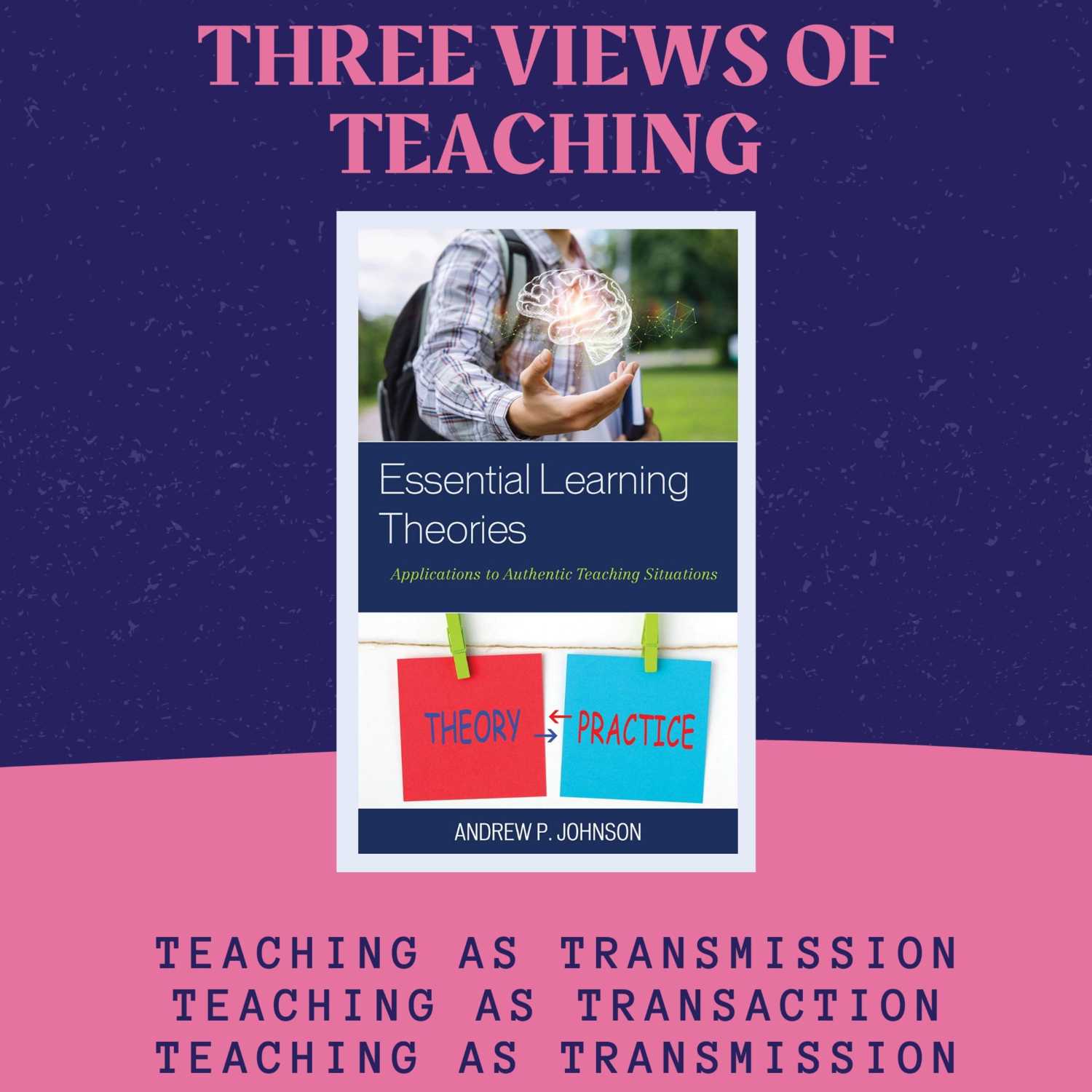
S11 Ep 6THREE VIEWS OF TEACHING: WHICH IS CORRECT?
Teaching as transmission views teaching as merely transmitting knowledge from Point A (teacher’s head) to Point B (students’ heads). Teaching as transaction views teaching as a process of creating situations whereby students are able to interact with the material to be learned in order to construct knowledge. And teaching as transformation views teach as creating conditions that have the potential to transform the learner on many different levels (cognitive, emotional, social, intuitive, creative, transpersonal, and other). Which is the correct view?
S11 Ep 4RESPECTFUL ACADEMIC DISCOURSE
Within the academic, respectful academic discourse is expected when discussing and debating issues. Here people exchange ideas, they define and defend their positions, and they delineate points of agreement and disagreement with others. Sometimes there are very heated exchanges while discussing and debating issues. This is as it should be. Debate is an important part of the scholarly process within the academy; however, it is done using respectful academic discourse. In the academic of scholars, this is one of the standards.
S11 Ep 3HOW DO WE HANDLE OUR DISAGREEMENTS?
Disagreements are good. Differing points of view are healthy for any organization or group. Conflicting ideas provide a broader view of the situation and more potential possibilities. You see more sides of the problem and generate more potential solutions. Questioning new ideas or proposals allows them to be fully vetted. This is how programs, policies, schools, institutions, and teacher preparation programs grow and evolve.Embracing a variety of ideas, philosophies, and viewpoints has always been healthy. Repressing conflicting ideas, allowing only a single viewpoint has always led to extremely unhealthy situations. Sadly, idea repression occurs too often in societies, religious organizations, churches, political groups, schools, and yes, even in universities. Imagine that. And nothing good ever comes from this. Uniformity creates a stagnant unhealthy petri dish.Uniformity is Not PossibleAs well, it is not humanly possible to have complete uniformity of thought. Even in the most regimented group, military organization, religious order, sect, or church - people have slightly differing views on things. And even people in groups who try to follow a literal interpretation of a religious doctrine or holy book, or originalists who strive to understand the constitution based on the original understanding, have slightly different interpretations. The only case in which you would find uniformity of thought would be if you project all moral and intellectual authority onto a leader or group and pledged blind allegiance. But here, you would be giving up part of your humanity.
S11 Ep 2IEPS: A SYSTEMS-CENTERED APPROACH AND A PERSON-CENTERED APPROACH
This podcast describes two starkly contrasting approaches to individualized educational programs (IEPS): A systems-centered approach and a person-centered approach.
S11 Ep 1CRITICAL RACE THEORY AND TEACHER PREPARATION.
This is the first in a serious of podcast using critical race theory to examine teacher preparation. In this podcast, seven basic ideas or common understands of critical race theory are examined.
S8 Ep 8HELPING MIDDLE AGE WHITE PEOPLE UNDERSTAND SYSTEMIC RACISM: WHITE GUILT, SHAME, AND THE HISTORY OF THE UNITED STATES OF AMERICA
Systemic racism has never been fully addressed in our society, our culture, and our curriculums. Simply including George Washing Carver in a social studies lesson just will not do it this time around. We need more than that. Systemic racism calls for a systemic response. This p0dcast addresses white guilt, white shame, and the history of the United States of America
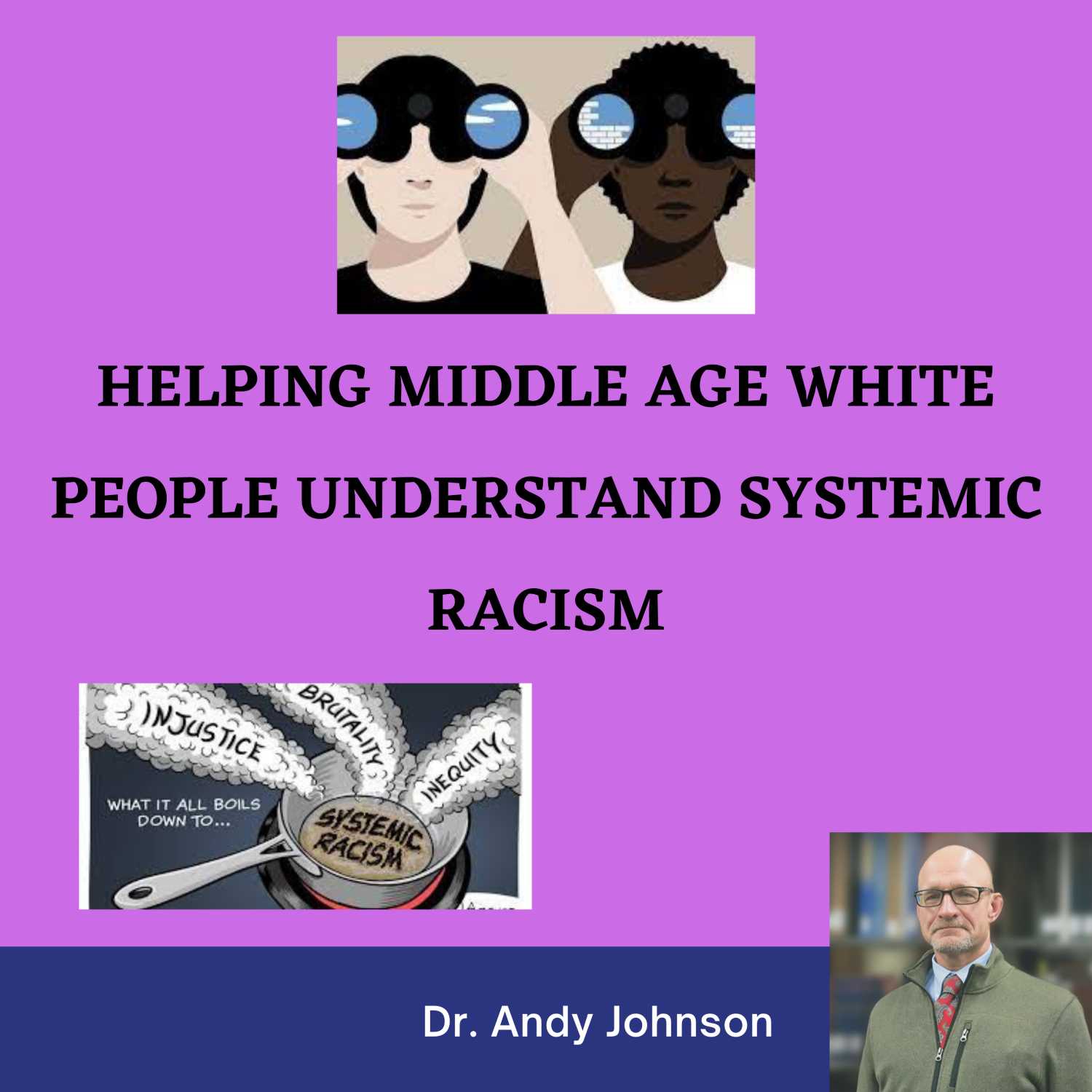
S8 Ep 7HELPING MIDDLE AGE WHITE PEOPLE UNDERSTAND SYSTEMIC RACISIM
I am not an expert in critical race theory or systemic racism. I am a middle age white guy trying to come to grips with systemic racism and contribute where I can. I am just an old literacy professor trying to do my part. I may not get it just right, but I am trying. In this podcast, I will try to explain some things in ways that help some people to better understand. I don’t have complete enlightenment – and again - I may not get it just right -- but I’m trying. I refuse to abdicate my responsibility to do what I can on the issue of racial equity.John Lewis said, when you see something wrong, say something and do something.There is something wrong. No let me say something.
S10 Ep 3HUMANISTIC LEARNING THEORY, PART 2: SUPPORTING PRINCIPLES
Humanistic learning theory is based upon five supporting principles. 1. Students’ learning should be as self-directed as possible. In other words, students should be given choices about what they learn, how they learn, and how they demonstrate their learning, to the greatest degree possible. Choice here does not mean total choice all the time. Instead, it means as much choice as is appropriate for the situation. Choice exists on a continuum. For example, you can offer:(a) no choice. “We’re studying the Civil War this month. This is the book we’re going to read. This is the topic you’ll be doing reports on.”(b) a choice within a set. “I’ve put out five books for you, you can choose the one you wish to read.” (c) a choice within a category. “We’re studying the Civil War this month, you can read any book or investigate any topic related to the Civil War.” (d) total choice. “Find a topic that interests and inspires you for your research project. These are the criteria. This is the due date. Find a book that you love for our reading class.” Some situations require more choice, some less choice. The goal would be to provide the minimum amount of control necessary to create a positive learning experience.2. The subject matter to be learned should be relevant to the lives or personal interests of the students. It should be connected to the students’ lives or interests whenever possible and to the greatest extent possible. For example, when learning number facts in the primary grades, students would be asked to use them to figure out problems in real life situations. Humanistic educators find creative ways for mandated subject matter to reflect or connect with students’ lives. At the same time, space is provided within a curriculum for students to explore topics of interest to them. For example, knowing what is of interest to adolescents, humanistic educators would seek to incorporate themes related to social experiences, relationships, and defining roles and values into traditional subject areas. 3. The full spectrum of the human experience should be included in the educational experience. Emotions, relationships, creativity, imagination, intuition, and real-life problems are all part of the human experience. Including them in the educational experience enhances learning as well as the development of humans. Humanistic educators create the conditions where human beings can learn to use all these human dimensions to solve problems, make decisions, and come to know the world. As well, traditional curriculums are studied in a multidimensional context. Art, drama, music, poetry, creative writing, and other arts are used as tools along with traditional methods to explore or respond to information and ideas. 4. Schools should produce students who want to learn and know how to learn. Humanistic educators build on students’ natural desire to learn by asking them to learn about things that are relevant to their lives and by helping them to make the connections. Curriculum is designed around students' natural ways of learning and includes things about which students want to learn. As well, students are taught how to learn. That is, how to get the necessary information they need, how to critically analyze and evaluate that information, and how to use and apply this information. 5. Students learn best in a non-threatening environment. Threats come in the form of physical threats, but also social threats, emotional threats, or things that endanger one’s self esteem or phenomenological self (Combs, 1999). This occurs when schools focus more on measuring learning than they do on enhancing learning.
S10 Ep 2HUMANISTIC LEARNING THEORY, PART 1: EDUCATING HUMAN BEINGS
Psychologists Carl Rogers and Abraham Maslow are generally thought to be the founders of modern humanistic learning theory (DeCarvalho, 1991). Humanistic learning theory is not easily defined. There are many views; however, all views seem to share two overriding tenets: First, humans are by their very nature evolving, self-developing creatures. As such, we have a natural inclination to learn and develop fully. Learning is enhanced when educational experiences align with these natural desires. Second, the goal of education should be to enable each person to develop his or her full potential. HUMANISTIC EDUCATION Humanistic learning theory is the theory upon which humanistic education is based. These terms are used interchangeably in this chapter. Dehumanizing EducationHumanistic education is a reaction to an educational system that is seen as de-humanizing. These dehumanizing elements include the following: 1. Students are often asked to be passive learners and to learn in ways that are not natural for them. As well, the things given to them to learn are often meaningless or have no connection to their lives and experiences. 2. Manipulation is used to get students to learn and to behave in acceptable ways. Instead of building on their natural inclinations, students are manipulated by external rewards and punishment to "learn" school-related things and to be compliant. What is rarely considered are the reasons why students may not want to learn or why their behaviors may be disruptive or non-compliant.3. One-dimensionality is perpetuated. Only the cognitive dimension of students' humanity is recognized. Ignored in classrooms and curriculum are the many aspects that make us human: our creativity, imagination, transcendence, curiosity, social natures, and our emotional dimensions. 4. Humans and human learning are too often described in terms of numbers. Experiences, traits, endeavors, and achievement that cannot be quantified and compared, are thought not to exist or to be of little value. This quantification of the educational experience is often used to compare students to a mythical norm. Such quantification creates winners and losers as students find themselves above or below a mythical "average".5. Only traditional ways of knowing and being in the world are seen to be of worth. Views that do not align with traditional perspectives are seen to be of lesser importance. Norms and values that do not reflect the dominant culture are diminished or ignored. Only the history that tells the story of advantaged groups is seen as being worth repeating.Humanistic EducationHumanistic education views learning in terms of personal growth and the development of each person’s full potential. Growth and development occur here, not just on an intellectual level, but also on an emotional, psychological, creative, social, and physical level (DeCarvalho, 1991; Maslow, 1971; Morris, 1978; Rogers & Freiberg, 1994; Patterson, 1973). Within this context, five goals are identified: 1. Facilitate the development of fully functioning, self-actualized human beings who have the capacity to nurture themselves, others, and their environment. 2. Instill a joy of learning and a desire to be life-long learners. 3. Promote the discovery of each student’s passions, special talents, and abilities. 4. Teach the knowledge and skills necessary for students to be good decision makers and effective problem solvers. 5. Enable students to be responsible world citizens who are able to contribute to democratic societies.
S10 Ep 1THREE VIEWS OF TEACHING: TRANSMISSION, TRANSACTION, AND TRANSFORMATION
Good teaching starts with an operational definition of teaching. There are three common views of what constitutes teaching: teaching as transmission, teaching as transaction, and teaching as transformation (Miller, 1996).Teaching as TransmissionFrom this perspective, teaching is the act of transmitting knowledge from Point A (teacher’s head) to Point B (students’ heads). This is a teacher-centered approach in which the teacher is the dispenser of knowledge, the arbitrator of truth, and the final evaluator of learning. A teacher’s job from this perspective is to supply students with a designated body of knowledge or set of skills in a predetermined order. Academic achievement is seen as students’ ability to demonstrate, replicate, or retransmit this designated body of knowledge or set of skills back to the teacher or to some other measuring agency or entity. From this perspective standardized tests are considered to be an apt measure of students’ learning.Teaching as TransactionFrom this perspective, teaching is the process of creating situations whereby students are able to interact with the material to be learned in order to construct knowledge. Constructivism is an educational philosophy consistent with this view. Here, knowledge is not passively received; rather, it is actively built up or constructed by students as they connect their past knowledge and experiences with new information (Santrock, 2004). And just as each student’s past knowledge and experiences are different, so too is the interpretation, understanding, and meaning of the new information that each ultimately constructs.Teachers are not expected to pour knowledge into the heads of learners; rather, they assist learners in their construction of knowledge and development of skills by creating experiences where students’ can use their current understand of knowledge and skills to learn new knowledge and skills. Academic achievement from a constructivist perspective is seen as students’ ability to use this knowledge and skills to solve real-world problems or to create products or performances that are valued in one or more cultural settings.Teaching as TransformationFrom this perspective, teaching is creating conditions that have the potential to transform the learner on many different levels (cognitive, emotional, social, intuitive, creative, transpersonal, and other). Transformational teaching invites both students and teachers to discover their full potential as learners, as members of society, and as human beings. The ultimate transformational goal is to help develop more nurturing human beings who are better able to perceive the interconnectedness of all human, plant, and animal life (Narve, 2001).Learning is said to have occurred when educational experiences elicit a transformation of consciousness that leads to a greater understanding of and care for self, others, and the environment. Academic achievement from this perspective is similar to self-actualization. That is, it is perceived as discovering and developing each individual’s unique talents and capabilities to the fullest extent possible. Academic achievement also involves becoming aware of the multiple dimensions of self and expanding one’s consciousness.
S8 Ep 6MORAL OUTRAGE IS NOT ENOUGH TO ADDRESS SYSTEMIC RACISM
Yes, moral outrage over systemic racism is a wonderful thing. It is good that people are outraged (again) at the abuse and the murders at the hands of a police system that was originally designed to protect us. It is good as well that there is moral outrage over the continued disparities, the implicit bias, and the educational, political, social, and economic restrictions that advantage those in power (white privilege) while restricting and disadvantaging people of color. There should be outrage. We would lack humanity if we were not outraged. But how many times have we been outraged over the last 20, 30, 50, 400 years? Hell, how many times have we been morally outraged in the last year?
S9 Ep 3ACADEMIC WRITING STEP 1: RESEARCH TO GATHER DATA
Academic writing involves saying something about something. You need information to convey, analyze, or use in some fashion. finding new information and taking careful notes is Step 1 of the academic writing process. You can’t get to Step 2 without doing Step 1.• Step 1. Research to gather data. Usually this means reading and taking careful notes. However, data can also be collected other ways.
S8 Ep 5DISPROPORTIONALITY IN SPECIAL EDUCATION - RACISM part 5
Students of color are disproportionately represented in special education. This is most true of the three high incidence categories: learning disabilities, emotional behavioral disorders, and intellectual disorders. The short podcast describes some of the issues here.
S9 Ep 2THE SUPER-SECRET ACADEMIC WRITING PROCESS REVEALED
The super-secret academic writing process involves six steps:1. Research to gather data. Usually this means finding sources, reading and taking careful notes. However, data can also be collected other ways.2. Pre-drafting. As the name implies, this is what is done before writing the first draft. This involves things such as planning, creating outlines, talking with others, generating ideas, or finding structure.3. First-draft. This is the first attempt to get ideas on the page.4. Revise. This is the heart of the writing process. Here the writer rereads, reshapes, gets feedback, and revises many times.5. Editing. Editing should occur only after a piece has been revised several times. Here the writer looks for spelling, punctuation, and grammatical errors.6. Share. This is the very last step. This is where the paper is sent out into the world.

S9 Ep 1ACADEMIC WRITING: THE ART, SCIENCE, AND CRAFT
This is the first in series of podcasts that will provide a foundation and framework to enhance your understanding of the various processes involved in academic writing. The purpose of these podcasts is to enable you to be an effective writer and thinker in all contexts including your personal and professional lives (outside a college environment). Thus, while I will use the term ’academic writing’, it may be helpful to perceive academic writing in a larger sense as academic and professional writing and thinking.
S6 Ep 11BASIC ELEMENTS OF DIRECT INSTRUCTION FOR TEACHING READING SKILLS
The basic elements of direction instruction are: (a) a purpose statement; (b) input with modeling, examples, and demonstrations, (c) guided practice with a gradual release of responsibility, (d) independent practice, and (e) review
S6 Ep 10WHOLE LANGUAGE TEACHERS BELIEVE IN VERY DIRECT AND EXPLICIT INSTRUCTION
It is not the 'what' of phonics instruction in which there are varying ideas; it is the 'how' and the 'how much' of phonics instruction. Also, all teachers, especially whole language teachers, believe in very direct and explicit instruction.
S8 Ep 4SEGREGATED AND INCLUSIVE INSTRUCTION - Racism - PART 4
Segregated instruction for students with special learning needs is that which occurs outside a general education setting. Inclusive instruction is that which occurs within a general education setting with teachers who have the knowledge and skills to differentiate the curriculum. Research has found that inclusive classrooms result in learning outcomes as good or better than segregated classrooms.
S4 Ep 4RACISM IN THE SPECIAL EDUCATION SILO: SEGREGATION AND INCLUSIVE CLASSROOMS
Segregated instruction is that which occurs outside a general education classroom classroom. Inclusive instruction is that which occurs within a general education classroom. Effective inclusive classrooms have educational, social, and emotional outcomes that are as good or better than segregated classrooms.
S8 Ep 3RACISM IN THE SPECIAL EDUCATION SILO: DISABILITY-RACISM INTERSECTION - Part 3
Disability and race are both social construction designed to put human beings into categories. This podcast examines two models of disability: the medical model and the social model. The medical model views disability as something that is ‘wrong’ with a person’s body or mind. There is something wrong with the person that needs to be fixed. Sadly, this is the model that predominates special education.
S6 Ep 9VOCABULARY: AN OVERVIEW OF WORD LEARNNG
Children learn between 3,000 and 4,000 words a year. By the end of elementary school they know approximately 25,000 and by the end of high school approximately 50,000 to 80,000 words. The question is: How do they learn all these words? Do they learn them from vocabulary worksheets? Do they learn them by looking them up and writing down the definition? Do they learn them as a result of direct instruction? how do children learn new words? Why is word learning important? What can teachers do to enhance word learning?
S8 Ep 2THE SPECIAL EDUCATION SILO - Part 2
There is a bit of racism in the special education silo. I used to describe special education as a field – as in “the field of special education.” And indeed, it did used to be a field. You can see this field when reading articles from the major special education academic journals in the 1990s and early 2000s. It was a field. Not a farmer’s field but a field in the wild. This kind of field is a beautiful place. It is an ecosystem, with birds, other animals, and a wide variety of plant life. And a field in the wild is not contained. It changes over time as new seeds, plant life, and animals interact with it. The edges of the field evolve and change over time.Education is a field. Literacy education is a field. But special education is not a field anymore; rather, it has become a silo.
S8 Ep 1RACISM IN THE SPECIAL EDUCATION SILO - PART 1
This is the first in a series of podcasts that will address racism as it pertains to special education and literacy instruction. In these podcasts I am addressing the special education system, which I refer to a silo. In this podcast, I define racism.A disclaimer: In these podcasts I am not referring to any particular school, school district, university, or teacher preparation program. I am addressing systemic racism in the larger special education silo.
S7 Ep 3ACTION RESEARCH: THE STEPS
The steps of the action research process are described below. Note that it is a recursive process that does not always proceed in a linear fashion (Johnson, 2012; Patterson & Shannon, 1993). Thus, some of these steps may need to be repeated several times, or they may have to be done in a different order. 1. Ask a question, identify a problem, or select a research topic. 2. Set the problem or research topic in a theoretical context. 3. Make a plan for data collection4. Begin to collect and analyze data. 5. If necessary, allow the question or problem to change as data are collected. 6. Analyze and organize the data. 7. Make conclusions and recommendations. 8. Create a plan of action. 9. Report your findings.
S7 Ep 2ACTION RESEARCH: 7 DESCRIPTORS
The following seven descriptors provide insight as to the nature of action research.1. Action research is systematic2. You do not start with an answer. 3. Action research projects vary in length. 4. The study must be adequately planned before beginning to collect data5. Observations should be regular, but they do not necessarily have to be long. 6. Action research is grounded in theory. 7. Action research is not an experimental study.
S7 Ep 1BEING AND BECOMING AN EXPERT TEACHER
Teachers are the most significant variable in determining the quality of education students receive and the amount of learning that occurs. Yet, when it comes to discussions about how to enhance learning or improve the quality of education, this most significant variable is often ignored. To make this variable even more significant, there must be continued investment in teacher professional development.It is naïve to think that a finished teaching product can be created in four semesters of any teacher preparation program. These programs instead provide the knowledge and skills for pre-service teachers to begin their journey toward being and becoming skillful professionals and eventually, expert teachers. Toward this end, there are two necessary elements: developing knowledge and engaging in reflective analyses. This podcast will examine both of these.
S6 Ep 8METHODS, STRATEGIES, AND DIRECT INSTRUCTION IN READING
A method in education usually refers to a defined process or specific set of techniques that are used exclusively in a prescribed fashion for instruction in a particular subject area. In contrast, a pedagogical strategy is a specific teaching technique that is used selectively in a variety of subject areas for a specific purpose. Direct instruction is one such pedagogical strategy. It should not be considered a method. There are instances when direct instruction is the most effective strategy to use. There are other instances when it is the least efficient strategy to use. Like any pedagogical strategy, its effectiveness is dependent on how it is used and for what purpose.
S6 Ep 7SIGHT WORDS AND SCOPE AND SEQUENCE CHARTS
This podcast describes strategies for attending to sight words in a meaning-based approach to reading. It ends with an examination of scope and sequence charts.
S6 Ep 6UNDERSTANDING COMMONLY MISUNDERSTOOD TERMS AND CONCEPTS RELATED TO READING INSTRUCTION AND INTERVENTIONS
There are eight terms related to reading instruction that are commonly misunderstood: (1) reading, (2) word recognition, (3) word identification, (4) decoding, (5) a strategy, (6) a skill, (7) systematic phonics instruction, and (8) a balanced approach. This podcast is to bring clarity to these commonly misunderstood terms.
S6 Ep 5TOO MUCH STINK'N PHONICS
Phonics is the ability to associate sounds with letters or letter patterns. Phonics is one of four ways used to identify individual words as we read. The other three are: (a) analogy [word families], (b) morphemic awareness [prefix, suffix, affix, root], and (c) context clues [semantics]. Phonics instruction is very important, but it should never be taught as the sole component in a reading program. If reading instruction consists only of phonics, the other word identification skills will not develop. Reading instruction that is effective simultaneously develops all four word identification skills.
S6 Ep 4ARE WE STILL TALKING ABOUT WHOLE LANGUAGE? YUP.
In viewing online discussion groups and reading various articles related to reading instruction and struggling readers, it is clear that many believe that ‘whole language’ is a bad thing. All well and good, but one should understand exactly what whole language is before rejecting it.
S6 Ep 3WRITING SHOULD BE PART OF READING INSTRUCTION
After wide reading, writing is probably the next best thing you can use to help struggling readers. You can often hear beginning and emergent readers sounding out words as they listen to find the correct letter-sounds. This helps in the development of the phonetic cuing system. Writing also invites students to focus on word order, grammar, and the logical structure of the language. In this way it also develops the syntactical cuing system.
S5 Ep 8THE LIMITATIONS OF STANDARDIZED TESTS FOR DIAGNOSING READING DIFFICULTIES
Standardized tests are effective for describing how far students are from a mythical average. They are very ineffective in diagnosing the cause of reading difficulties. This podcast explains.
S6 Ep 2THE SCIENCE, ART, AND CRAFT OF TEACHING - AND EXPERT TEACHERS HAVE FOUR TYPES OF KNOWLEDGE.
The teacher is the most significant variable in determining how much learning takes place in any classroom. We must attend to this most significant variable. This occurs through professional develop that focuses on four kinds of knowledge: content knowledge, pedagogical knowledge, pedagogical content knowledge, and knowledge of learners and learning.
S6 Ep 1SOCIAL COGNITIVE LEARNING THEORY - APPLICATIONS
This podcast explains and describes social cognitive learning theory and its applications. Social cognitive learning theory involves observing the behaviors of others and the resulting rewards and punishments. Future behaviors were then based on these observations. From the perspective of social cognitive learning theory, learning is a change in mental processes that creates the capacity to demonstrate different behaviors that occurs as a result of observing others.
S5 Ep 7RESPONDING TO TEXT AND WHY THE COMMON CORE STATE STANDARDS ARE RIDICULOUS
This podcast describes efferent and aesthetic responses to text. It explains how we should approach and respond to expository (informational) and narrative text. It also explains why some of the Common Core State Standards related to literature are absurd, silly, and ridiculous,
S5 Ep 6UNDERSTANDING READING FROM A COGNITIVE PERSPECTIVE
This podcast describes how our brain creates meaning with text from a cognitive perspective. The information processing model, sometimes called the standard memory model, is used here. It depicts the process our brain uses to take in information as well as how we analyze, organize, store, and retrieve information. It also accounts for the two-way flow of information that occurs during the reading process.
S5 Ep 5HUMANISTIC LEARNING THEORY
Psychologists Carl Rogers and Abraham Maslow are generally thought to be the founders of modern humanistic learning theory (DeCarvalho, 1991). Humanistic learning theory is not as easily defined as some learning theories. Indeed, there are differing views on what humanistic learning theory is or might be. And like other learning theories described in this book, they share common elements. However, all views on humanistic learning seem to share three overriding tenets: First, humans are by their very nature evolving, self-developing creatures. As such, we have a natural inclination to learn and develop fully. Second, learning is enhanced when educational experiences align with these natural desires. And third, the goal of education should be to enable each person to develop his or her full potential.
S5 Ep 5TEACHER PROFESSIONALISM
In this podcast I describe 11 attributes of what I believe to be teacher professionalism. They are based on the perspective I hold as a holistic educator. You will need to identify and define your own set of attributes
S5 Ep 4EMOTIONS, MOTIVATION, AND READING DISABILITIES
Affect in education usually refer to emotions and motivation. Since these do not show up on test scores, to the educational bureaucracy, they do not exist; however, they are, arguably, the most important components in teaching and learning, especially if you are a student with a special learning need. In this podcast we examine emotion, motivation, and learning to read, with a special focus on adolescents.
S5 Ep 3STANDARDIZED TESTS: YOU CAN'T TEACH A SNEETCH!
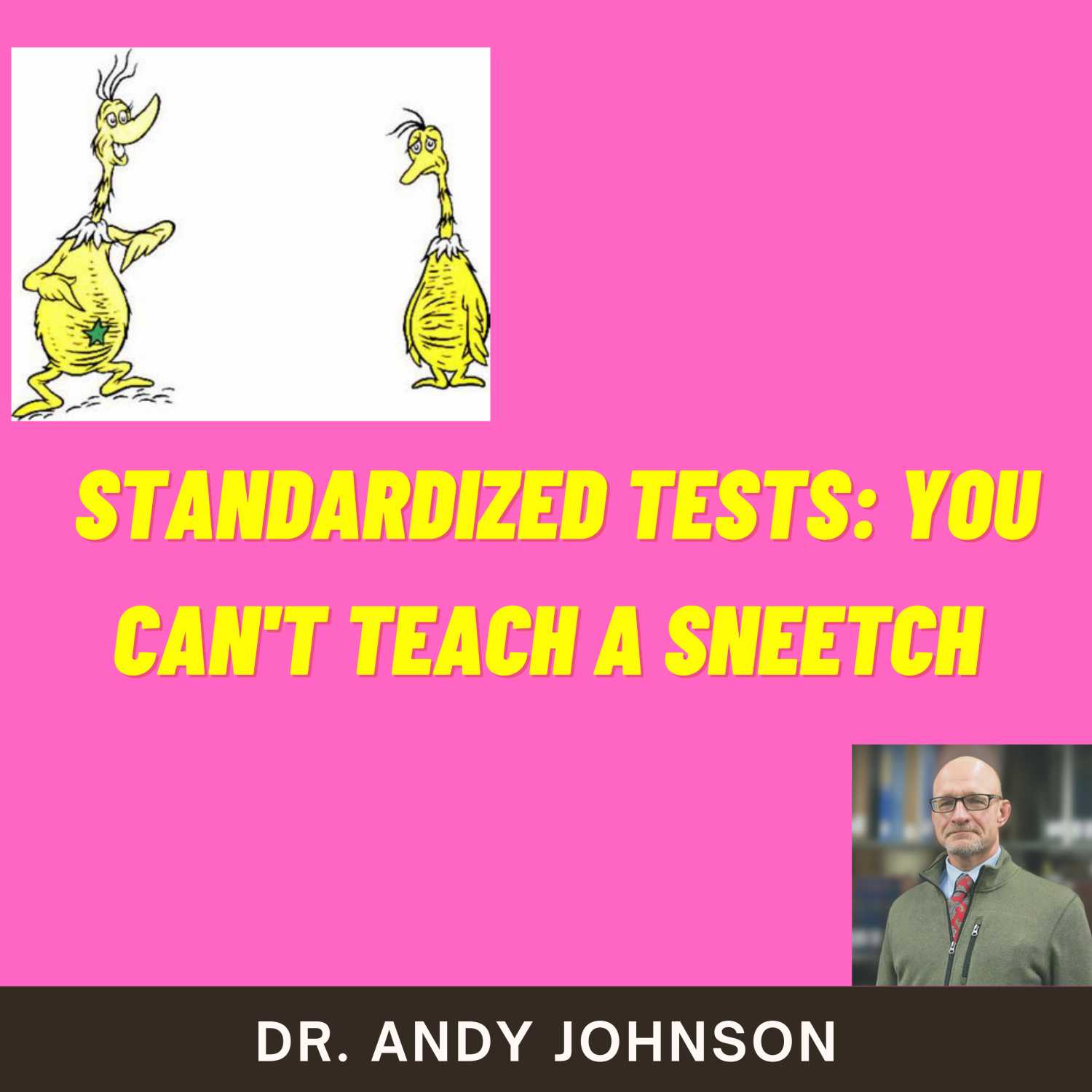
Psychometricians, educational psychologists, and the companies that publish standardized have convinced people that learning can be quantified and that the numbers generated on these standardized tests mean much more than they do. They promote the false idea that larger numbers mean more learning and more effective teaching, and lower numbers mean less learning and less effective teaching. Students are then sorted into high-numbered groups and low-numbered groups.
S5 Ep 2EDUCATIONAL RESEARCH AND THEORETICAL MODELS OF READING
Educational research is used to create the theories upon we design educational policies and practices are designed. Theories help to organize relevant empirical facts (empirical means they can be observed or measured), in order to create a context for understanding phenomena. Put another way, a theory is a way to explain a set of facts. If reality were a dot-to-dot picture, a theory would be a way to connect a set of data dotsTheories are built, not on a single research study, but on a collection of data gleaned from a variety of different research studies. Good theories are well substantiated, connecting a wide variety of data dots, all of which have been confirmed through experiment and observation. Theoretical models of reading are used to understand the reading process as well as to design and evaluate instructional practices. As such, the theoretical model of reading one adheres to has tremendous impact on the type of reading instruction and interventions that are used. Described in this podcast are two common theoretical models of reading, each providing vastly different views of the reading process and struggling readers.
S5 Ep 1HOW DO WE HANDLE DIFFERENCES IN THE FIELD OF LITERACY INSTRUCTION
Some of the ideas about reading instruction that I have presented in various formats may be at odds with your previous ways of thinking about things. In fact, some of these ideas may directly conflict with what you believe to be true regarding how children learn to read and how you should teach them to read. This is good. Dissonance or disequilibrium is an important part of learning. I would invite you to neither accept nor reject these new ideas. Touch them. Carry them with you for a bit. Let them settle. See what sticks. Sort it out. This is how we grow, how we change, how we continue to evolve.