The Reading Instruction Show
339 episodes — Page 4 of 7
S19 Ep 3Making Sense out of Nonsensical Statements: Reading and Whole Language
The Four Nonsensical Statements Related to Whole Language: (1) Whole language has been debunked. Nope. Hasn't happened. If so, send me a research study. Not data. Not something somebody else has said, but a research study published in a peer-reviewed academic journal debunking whole language. (2) Phonics is more effective than whole language. That's like saying long division is more effective than mathematics. Phonics is something that’s taught. It’s not a method or an approach. Whole language is an understanding of the reading process and how the brain creates meaning with print. (3) Whole language teachers don’t teach phonics. They do. It’s not the ‘what’ but the ‘how’ and the ‘how much” of phonics in which we differ from our skills-first brothers and sisters. (4) Whole language teachers teach children to guess at words. Wrong. They do not. Developing students’ ability to use semantics, grammar and word order, background information, along with letter clues to recognize words does not mean that we teach children to guess at words.
S19 Ep 2The Importance of Temporary Spelling
During the process of writing, students are taught if they don’t know how to spell a word, they should give it their best shot, or use enough letters to temporarily hold the idea until they come back and edit the piece. This is called temporary spelling. This is done so as not to ruin the flow of the writing. This enables students to focus on the higher-order thinking involved in the composing process. Also, young children are able to write before they have mastered conventional forms of spelling. And as described many placed in this book, editing for spelling as well as grammar and punctuation is step four of the five-step writing process.
S19 Ep 1Grammar Instruction, Paul Neuman, Strother Martin and a Failure to Communicate
Traditional grammar instruction takes an isolated approach. It describes the rules for conjugating verbs, un-dangling participles, and coordinating conjunctions. This is done in isolation, apart from real writing and speaking. This approach may be effective for completing grammar worksheets, but it does not address the process of communicating effectively. In other words, teaching grammar instruction apart from real writing does little to enhance the quality of students’ writing. Also, there is very little transfer into authentic writing and speaking.Instead, the rules of grammar should be taught in the context of students’ own writing. This is called an embedded approach. This is more impactful on students’ ability to use grammar correctly than teaching them in isolation, and it doesn’t get in the way of their real writing.
S18 Ep 1Mental Health Memoire - Chapter 1: A Nanny Goat Sings
Chapter 1 - In which a nanny goat sings. Andy experiences an emotional trifecta: fear, shame, and disgust. He also discovers the time travel wires in his brain.
S17 Ep 18Ken Goodman, Emily Hanford, American Public Media, Penquins, and Reading Instruction
In this podcast, I examine (a) Ken Goodman, (b) penguins, (c) the psycholinguistic guessing game, (d) Emily Hanford, (e) American Public Media, (f) some flawed ideas about reading instruction, and (d) some flawed ideas about flawed ideas.
S17 Ep 16Whole Language has NOT Been Debunked or Disproven
This current podcast looks at another un-understanding that has been fabricated out of tiny bits of ignorance, misconceptions, and intellectual sloth. This is the fallacy that whole language has somehow been debunked … that whole language is a failure … that research has proven whole language to be ineffective … I would again respond: nonsense, twaddle, and poppycock. So much nonsense, twaddle, and poppycock to address – Where does one begin? That perhaps would have been a good name for this series. In this podcast, I will first do a bit de-debunking of the great un-understanding related to whole language. Then I will provide a bit of information that might help to understand what whole language actually is.
S17 Ep 15WHOLE LANGUAGE HAS NOT BEEN DEBUNKED OR DISPROVEN
This current podcast looks at another un-understanding that has been fabricated out of tiny bits of ignorance, misconceptions, and intellectual sloth. This is the fallacy that whole language has somehow been debunked … that whole language is a failure … that research has proven whole language to be ineffective … I would respond: nonsense, twaddle, and poppycock. So much nonsense, twaddle, and poppycock.In this podcast, I will first do a bit of de-debunking of the great un-understanding related to whole language. Then I will provide a bit of information that might help to understand what whole language actually is.
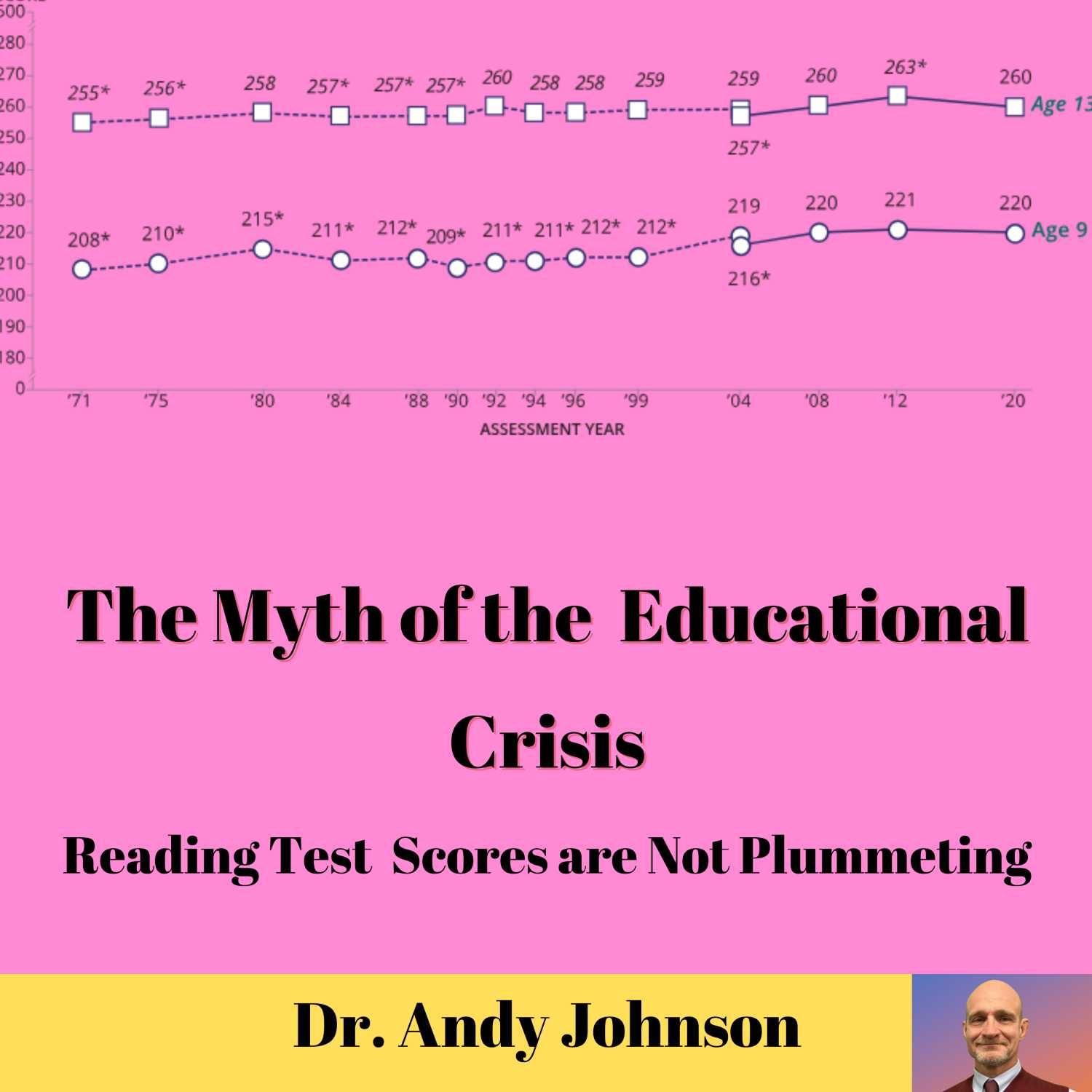
S17 Ep 14THE EDUCATIONAL CRISIS IS A MYTH: READING TEST SCORES ARE NOT PLUMMETING
The premise that schools are failing, teachers are doing a horrible job, and professors like me are ruining America and sending our economy into decline, is a myth perpetuated by those with political and for-profit agendas. If you think I'm wrong, show me some research-based data showing said decline and some isolated variables. Show me some valid, reliable, comparable data, collected over time, that shows our schools are failing and that teachers are doing a horrible job. Give me some solid data that indicates that our schools are worse than they were 5, 10, 20, or 30 years ago. That data should not be based on your selected memory of what you think schools were like once upon a time, but some solid data with appropriate sample sizes, that represent the population to which you are seeking to generalize. As well, that data should not be cherry-picked to support your predetermined belief. Causality should not be assigned to whatever issue you seem to take exception with.
S17 Ep 13CREATING THE CONDITIONS FOR EARLY LITERACY LEARNING (WRITING)
This podcast describes the type of literacy learning environments and instruction that enable young children to develop their full writing potential. In a good literacy learning environment there is (a) lots of talk, (b) lots of writing, and (c) lots of reading. There is also direct and systematic instruction done in the context of authentic writing.
S17 Ep 12The "Science" of Reading Clown Club
In the usual practice of academia, research is used to create theories. Theories are then used to explain a set of facts and to understand phenomena. And as new data is encountered and as old theories become obsolete, these theories either evolve or are they’re replaced by new theories. This is the natural way of things. All along the way, there is plenty of rigorous academic debate and respectful discourse over the research conducted and the application of theories.However, as I write this, the Science of Reading Clown Club is doing what any clown club would do when they can’t win an argument based on merits; they are lobbying state legislatures to force teacher preparation programs at all colleges and universities in the state of Minnesota to include Clown Club principles in their curriculum.The Science of Reading clown Club is an interesting bit of paradox that appears to be based on a misunderstanding of both science and reading.
S17 Ep 11EMERGENT AND BEGINNING WRITING
Writing emerges naturally as children are exposed to real-life writing, as they use writing for real-life experiences, and as other humans listen and respond to their ideas. The podcast explains.
S17 Ep 10RTI, Standardized Tests, Screening Devices, and Dysgraphia
In reviewing some schools’ RTI plans, a standardized reading achievement test is used as a screening device. Students are put in Tiers I, II, or III reading intervention groups based on their percentile ranking on standardized tests. For example, if you’re in the 10th percentile or below, you go to Tier III, the 40th percentile or below you go to Tier II, and the 60th percentile or below you go to Tier I.When you live in the world of standardized tests and percentile rankings, there is a normal distribution of scores that is beautifully displayed in the bell-shaped curve. Here, half the population is reading below average. That’s called a normal population or a normal distribution of scores. But if everybody was reading above average, eventually average would become below average and above average would become average, and below average would become really below average. In a normal distribution of scores, half the students in a school should score below average. That’s called normal. That doesn’t mean that we don’t give each and every student the help they need so that they’re reading, writing, and doing math at their very best. We want all students to achieve grade-level standards. It is an excellent goal, but at the same time, it’s an unrealistic goal.
S17 Ep 9RTI and Learning Disabilities
A learning disability only exists within a school environment. Outside the narrow confines of school, I’ve seen many with identified learning disabilities being highly successful in their professional and personal lives. This was only after shaking off the stigma of the label that had been given to them by the educational system. How dare we define anybody’s potential. What is defined as a learning disability is really an educational disability. How about if we significantly down-size the special education system, create smaller class sizes, provide better working conditions, and give teachers the professional development opportunities they need to be able to include inclusive learning environments with differentiated instruction
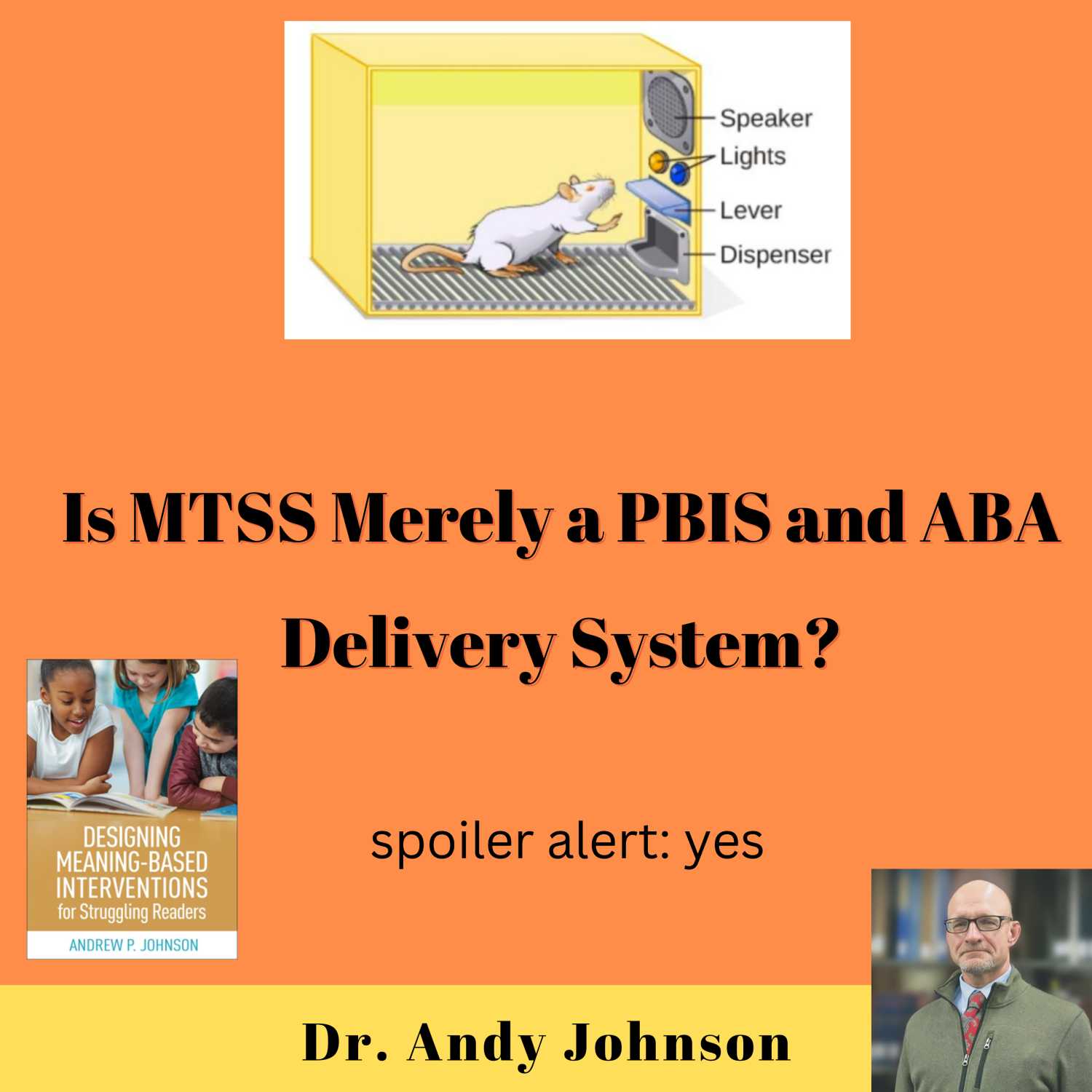
S17 Ep 8Is MTSS Merely a PBIS and ABA Delivery System?
MTSS or Multi-tiered systems of support claims to be based on scientific research and use only evidence-based practices. MTSS originated in the swamps of Special Ed World. PBIS (positive behavioral interventions and supports) and ABA (applied behavioral analysis) are used with MTSS to make some behaviors disappear and others appeart. Magic. Claims are made that these are “evidence-based”.
S17 Ep 7Evidence and Science in Special Ed World and Science of Reading Comedy Club
Can a practice really be said to be evidence-based if it only looks at a certain type of evidence? Can it really be scientifically-based reading research if only certain methods are allowed to ask certain types of questions? And that’s the whole problem with the liturgical chants of “evidence” and “evidence-based” and “scientifically-based research” made by the Science of Reading Comedy Club to support a litany of practice taken from their direct-instruction Holy Book.That’s the whole problem in Special Ed World with their declaration of faith stating that only practices used to manipulate and control behavior are “evidence-based”. These represent a simplistic understanding of research in the social sciences. Within Special Ed World and the Science of Reading Comedy Club, and even the US Department of Education, controlled experimental studies (CES) are thought to be the only way of establishing causal relationships, that one thing causes the other thing to happen.
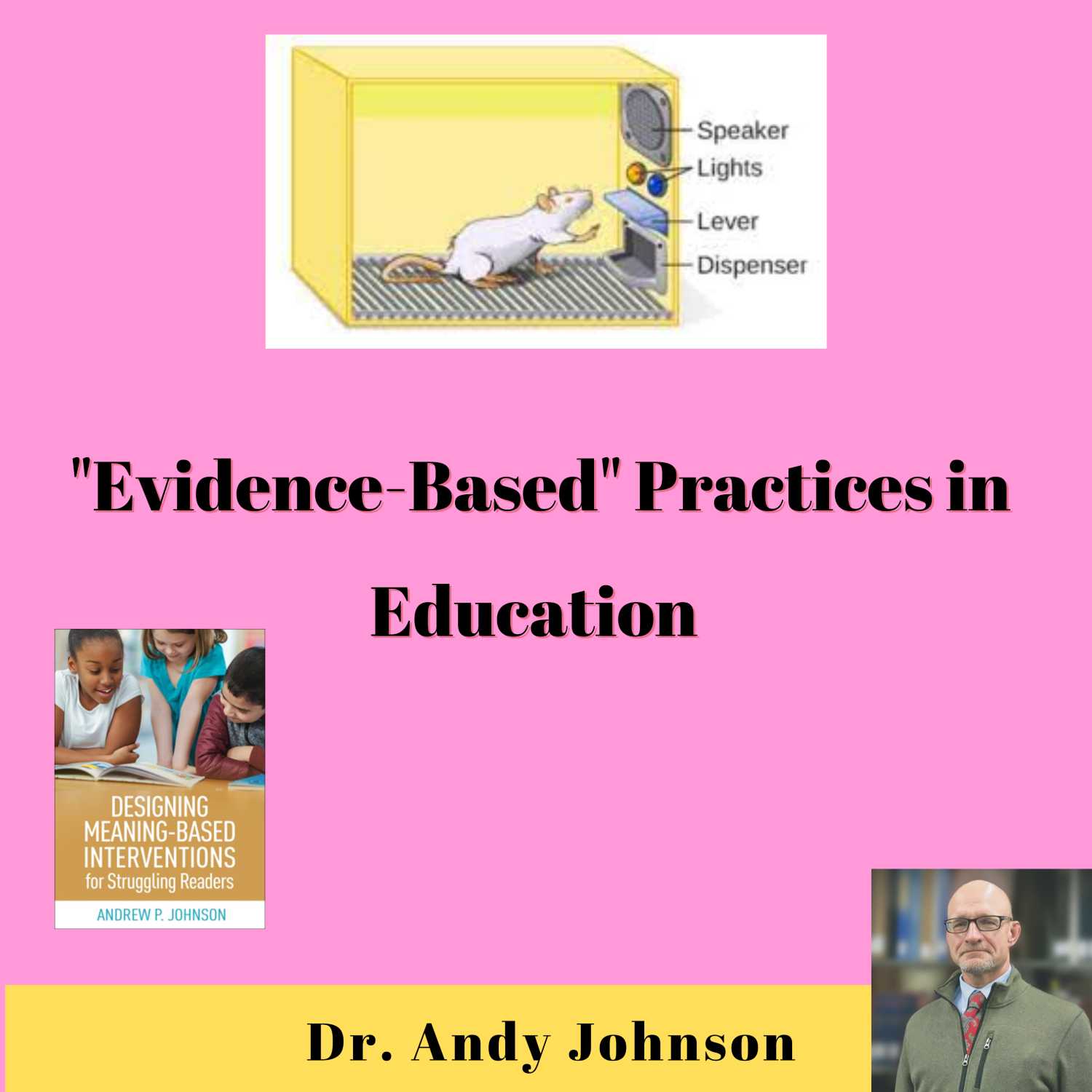
S17 Ep 6"Evidence-Based" Practices in Education: Facts or Falderal
In the education world, the term “evidence-based” is often thrown around carelessly and used to end the discussion. But the question I would posit (and pardon me for being so inquisitive) is this: When you say a practice or strategy is “evidence-based” have you actually looked at the evidence of the evidence-base? Or are you just using the term because you heard somebody else use it?
S17 Ep 5Collecting Data is NOT the same as Research
There’s a difference between collecting data and research. While the research process includes data collection, collecting data is not research. The research process includes data. But collecting data is not research. In the world of science and academia, research is not research unless and until it has been subjected to blind peer review. Collecting data is not research. Confusing data with research is a common practice in the for-profit realm. Confusing data with research is a common practice with those who have a political or ideological agenda. Confusing data with research is a common practice those outside of education.
S17 Ep 4Don't Pray for Me
When people discover I have a religious view that is not in alignment with their own, there are three things that often happen. First, they try to convince you of the wrongness of their view and the rightness of their own. Second, they call you names. And third, they pray for you. This podcast focuses on the third. And yes, I realize I am sometimes guilty of one and two above.
S17 Ep 3Don't Pray for Me: Politics, Reading Instruction, and Religion
When people realize I have a different perspective on reading instruction, politics, or religion, two things sometimes happen. First, they try to convince you of your wrongness and get you to be more aligned with their own views. And second, they sometimes use labels and call you names. The third thing only happens with religion - they pray for you.
S17 Ep 2The 10 Pillars of Good Reading Instruction (not 5)
The National Reading Panel identified 5 pillars of good reading instruction. They were a bit misguided in their methodology. As a result, their 5 pillars are 5 pillars short. This podcast describes the 10 pillars of good reading instruction
S17 Ep 1Coming Out of a Different Sort of Closet Living With Mental Health Issues - INTRODUCTION
This is the introduction to my book, 'Coming Out of a Different Sort of Closet Living With Mental Health Issues'. Here I introduce myself along with an unconscious projection named, Gerry. This is a different sort of podcast for me. If you would my to continue along this line, please send me an email: [email protected]
S16 Ep 10EFFERENT AND AESTHETIC RESPONSES TO TEXT AND WHY THE COMMON CORE STATE STANDARDS RELATED TO READING ARE OFTEN ARE RIDICULOUS
1. Literacy standards (like the CCSS) should not be designed by literacy amateurs (as literacy standards most often are). There are some things that should be left to educational professionals (like classroom teachers).2. Expository text calls for an efferent response. Narrative text calls for an aesthetic response. 3. In our approaches to literacy instruction, we must always focus on real-world macro goals for reading vs. artificial micro-goals. When reading narrative text, the macro goal is for students to be able to read and enjoy the story. When reading expository text, the macro goal is for students to read and understand (construct knowledge with) the text.
S16 Ep 9Secrets of the Draft: Part 2
In being and becoming teachers of writing we must allow spaces for bad teaching to occur. This doesn’t mean I’m advocating bad teaching. But if you take risks and try new things, you are bound to have lessons that don’t go just the way you would have liked. Risks and experimentation are essential components of growth and evolution. Hence, if you’ve never had a bad lesson, you haven’t tried enough new things. If you’ve never failed, it means you’ve been clinging too tightly to the outline. Occasional teaching failure is an important part of being and becoming a master teacher. As teachers and as human beings living on the good planet earth, we are not defined by our success, rather, by how we address our failures. A successful teacher and human is not failure-free. A successful teacher and human is failure-overcoming.
S16 Ep 8Secrets of the Draft: Step 2 of the 5-Step Writing Process
When writing the draft, the goal is to spew. Open the spigot. Let the ideas flow. This is something you will continually need to remind your students to do. Get the ideas out before you lose them. There will be plenty of time to go back and rearrange, shape, and even throw them out later. For now, get them out. The specific steps for drafting are listed here:Steps for drafting1. Don’t think2. Get it out3. Don’t think some more4. Get it out some more5. Repeat as necessary Garbage is good when drafting. Rubbish is to be celebrated. Nonsense is to be commemorated. Mishmash, drivel, trash, twaddle, hodgepodge, and poppycock are all joys to behold when writing the draft. In fact, you cannot write well if you’re not willing to first write poorly. When drafting, bad writing is good, and good writing is bad.

S16 Ep 7Parents "Bill of Rights": Picking Lice off of the Educational Monkey
Across the country, states are considering a Republican-based education bill promoted as the “Parents Bill of Rights”. This bill would promote “curriculum transparency”, allowing parents to review school curriculum “without cost and immediately upon request, and add a notice requirement that requires schools to make “reasonable arrangements” for alternative instruction when families object to what is being taught.This transparency bill is a relic from the 50s that belongs there. Joe McCarthy is dead. The Berlin wall has been taken down. Elvis Pressley left the building. We must educate our children today to live in the world of the future not in a world of the past. To enable them to succeed and thrive in the increasingly diverse and interconnected global community of tomorrow we must ensure that they have the knowledge, skills, and dispositions to do so. However, the “Parents Bill of Rights” impedes our ability to do so. It would allow a small army of the angry to pick what they consider to be the lice off the educational monkey. This will result in a shallow, disjointed curriculum for the rest of us that creates a distorted view of the world.
S16 Ep 6I am a Holistic Educator, NOT a Dancing Monkey
To teach authentically is to teach from one’s philosophy. You align your actions with your values and your beliefs. However, as holistic educators, we’re sometimes asked to adopt philosophies to which we do not ascribe or to use methods that are not consistent with our philosophic framework. To teach from another’s philosophy is to become a dancing monkey. I am not a dancing monkey. Dancing monkeys are not good for education In this podcast, I hope to provide a sense of what holistic education is or might be and to examine how it could be used to bring education to a higher place. It’s a concept that doesn’t easily fit onto a bumper sticker. This podcast may also enable you to describe where you are at in your journey as a teacher and to help others understand holistic education. And maybe, perhaps maybe, the ideas presented here will keep you from becoming a dancing monkey.
S16 Ep 5Beware of the Number Monkeys: They are Ruining Education
The number monkeys want to use standardized tests and a business paradigm to "fix" education. However, if we want fundamental change in the quality of education, then we must focus on the quality of education. We need to take a qualitative look at the teaching methodologies and curriculum that are used in schools and classrooms and make changes in the way we do education. All the number-monkeying in the world does nothing to address the quality of education. It does not change how we go about the business of educating our children. Instead, it promotes a test-and-measure mentality that serves only to create winners and losers.
S16 Ep 4Teacher Writing Prompts
This podcast examines teacher writing prompts. Writing prompts should not be relied upon; however, they can be an effective tool to use occasionally. However, keep in mind that the ultimate goal of a good writing teacher is to be prompt-free. As well, there are good writing prompts and not-good writing prompts. This podcast looks at each..
S16 Ep 3When Schools Use a Person-Centered, Open System
Teachers exist in a school context which exists within a systems context. A system is an interacting and interdependent set of elements working together to form a unified whole. To fully understand the obstacles teachers face and why some are leaving education, one must first understand the system in which they exist. Arthur Combs (1999) described two common types of systems used in organizations: top-down closed systems and person-centered open systems. This podcast describes a person-centered open system.
S16 Ep 2Problems When Schools Use the Top-Down, Closed Systems Model
Teachers exist in a school context which exists within a systems context. A system is an interacting and interdependent set of elements working together to form a unified whole. To fully understand the obstacles teachers face and why some are leaving education, one must first understand the system in which they exist. Arthur Combs (1999) described two common types of systems used in organizations: top-down closed systems and person-centered open systems. This podcast describes the top-down closed system.
S16 Ep 1Pre-Pre-Writing Strategies
I am writing a book about teaching writing. This book is based on the premise that human beings have an innate desire to communicate with other human beings. They naturally want the ideas to leak out of their head. Humans have an inherent inclination to express themselves and to share their ideas and experiences with other humans. Good writing instruction is built upon this natural inclination. Ineffective (bad) writing instruction stymies this natural impulse. And if students have been stymied for years, it may take a bit of work to un-stymie them. This podcast addresses the “un-stymie-i-zation” process.
S15 Ep 20Using Educational Research to Make Sound Educational Decisions
So why should educators be concerned about educational research? What relevance does it have to our everyday practice? Educational research is used to create the theories upon which we design educational policies and practices. Theories help to organize relevant empirical facts (empirical means they can be observed or measured) in order to create a context for understanding phenomena. Sometimes people try to dismiss an idea or practice with which they do not agree by saying it is just a bunch of theory, meaning I guess that the theoretical realm is somehow far removed from the practical realm, perhaps even having a different set of laws that govern it. But this would be a misunderstanding of what a theory is. A theory is a way to explain a set of facts. Put another way, if reality were a dot-to-dot picture, a theory would be a way to connect a set of data dots (see Figure 1.2.) However, varying theories connect different data dots in different ways resulting in a wide variety of pictures and practices. Thus, varying theoretical perspectives, while based on a set of empirical data, can often advocate different practices or practical notions. An example would be behavioral learning theory and cognitive learning theory, both of which are based on solid empirical evidence. • Educational research is used to create the theories that are used to design educational policies and practices. • A theory is a way of explaining a set of facts.• A hypothesis is an untested conjecture.• Research-based theory can be used to justify practices or policies.• Educational research helps teachers and school administrators to make good decisions.
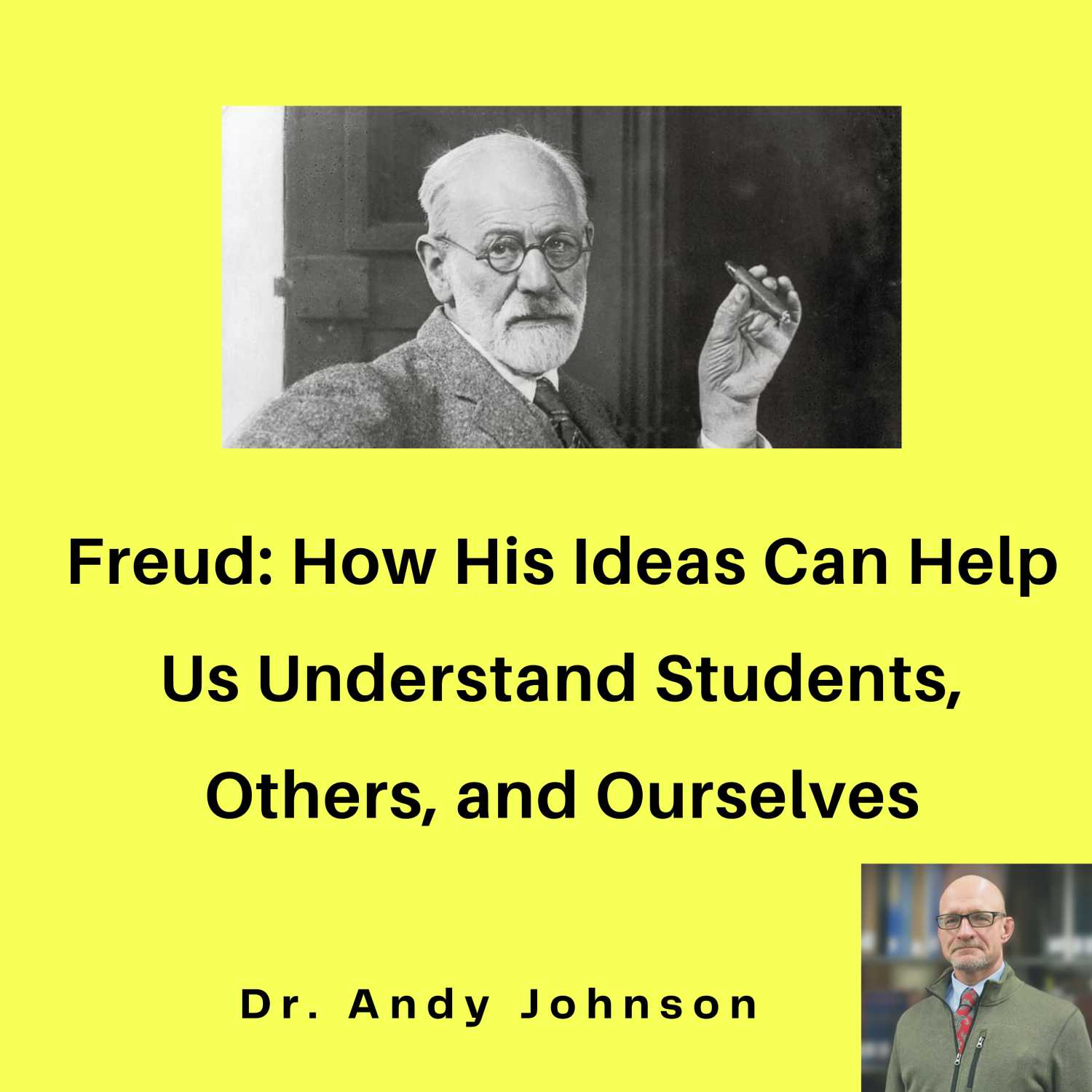
S15 Ep 19FRUED: HOW HIS IDEAS HELP US UNDERSTAND STUDENTS, OTHERS, AND OURSELVES
Sigmund Freud (1856 to 1939) is considered to be one of the pioneers of modern psychology. His theory of personality states that (a) the human psyche (personality) has more than one aspect (see below) and (b) the unconscious mind can be highly influential in directing human behavior. His contribution to the field of psychology was in describing how impulses and ideas contained in the unconscious were sometimes blocked from becoming conscious (Tuckett, 2019). These blocks contributed to the suffering of his patients.It is recognized that his ideas related to the impact of childhood sexuality on human development and personality are uncomfortable for many. These are not widely adopted today. But many of his other ideas still contribute to our understanding of the human entity. Thus, any book about understanding human beings should include some of Freud’s ideas.There are three things to keep in mind when evaluating Freud’s theory of personality. First, theories are not meant to be permanent. Theories, by their very nature, are temporary structures used to explain a set of facts and to understand phenomena. As the facts change, the theories continue to evolve until they eventually become obsolete and are replaced by new theories. Second, Freud’s thinking kept evolving throughout his lifetime. If he were still alive today it is most likely that his thinking would be much different than it was in the early 1900s. And third, theories (like Freud’s) do not predict human behavior; they help us understand human behavior.
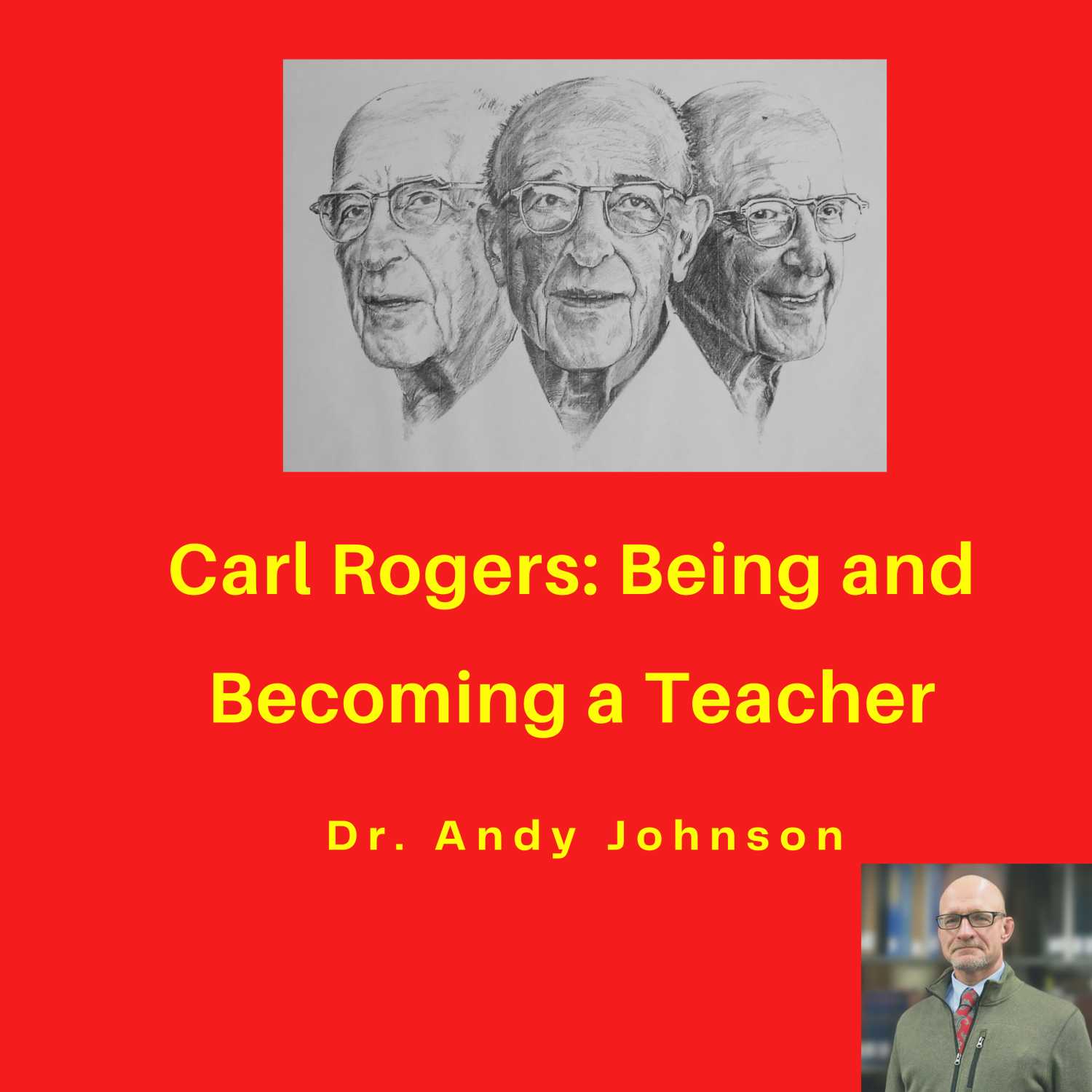
S15 Ep 18CARL ROGERS: BEING AND BECOMING A PERSON AND A TEACHER
Like Abraham Maslow, Carl Rogers was a humanistic psychologist who also described humans as naturally good and evolving entities. He pioneered a client-centered approach to psychotherapy that translated directly into a student-centered approach to teaching. This chapter describes some of his seminal ideas as they relate to human growth, teaching, and being a human being. As you listen to this podcoast you will notice that these ideas are interconnected such that the borders between teaching and psychology are often indistinguishable. This is as it should be. Rogers believed that teaching, psychotherapy, and being a fully functioning person all came from the same place
S15 Ep 17Enabling Self-Actualization in the Classroom
Self-actualization is the term used to describe the natural unfolding and realization of one’s full potential. Put another way, within every acorn there is a mighty oak tree. To actualize is to enable the taproot to sprout from the acorn and the seedling to come forth and begin to grow to be the oak tree. Self-actualization is when the acorn recognizes the oak tree within, embraces oak-tree-ness, and begins the journey toward being and becoming an oak tree. This podcast describes some of the conditions necessary to enable students to self-actualize.
S15 Ep 16Expert Reading Instruction Rarely Occurs in Special Education Settings
At one time it was thought that smaller class sizes and additional adult resources found in a segregated special education classroom would enable teachers here to provide individualized instruction that would meet the special needs of each student. It was thought as well that this would lead to improved learning outcomes for these students. This is not the case. It turns out that educational outcomes are more often diminished rather than enhanced in segregated settings. This is because students in segregated special education settings frequently do not receive the same quality of education as students in a general education classroom. Also, the instruction here often is neither individualized nor appropriate.
S15 Ep 15Problems in Special Ed World: The Medical Model, Segregated Instruction, and Systemic Racism
This podcast further explores problems in Special Ed World. Addressed here: (a) the medical model used to understand "disabilities", (b) standardized instruction, (c) segregated instructional settings, and (d) systemic racism.
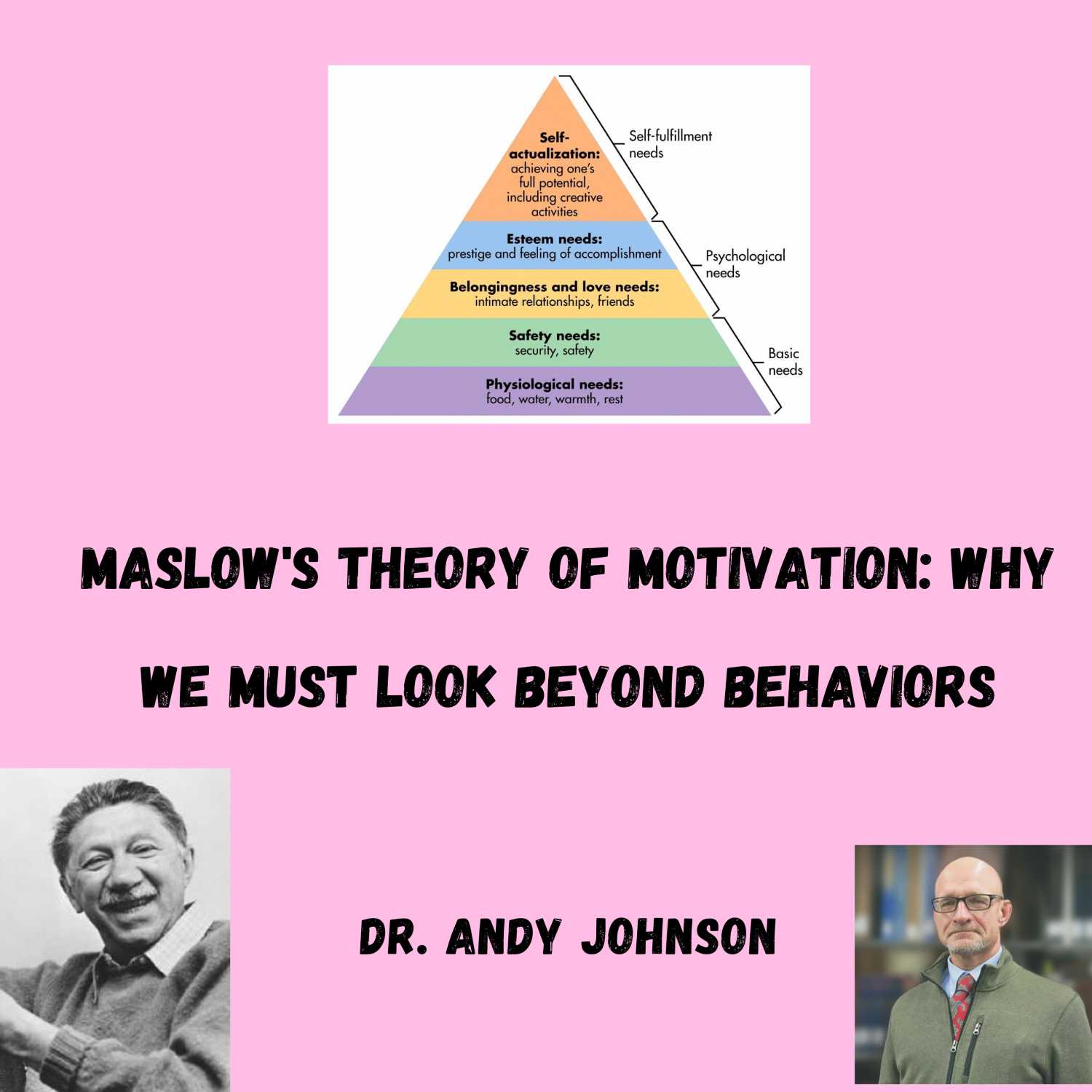
S15 Ep 14Maslow's Theory of Motivation: Why We Must Look Beyond Behaviors
Abraham Maslow (1908-1970) was among the earliest pioneers in humanistic psychology (sometimes referred to as growth psychology or third wave psychology). This movement begin to emerge in the 1950’s in response to the idea that humans were merely creatures driven by their subconscious (Sigmund Freud and the psychoanalytic model), or were organisms conditioned to respond to internal and external stimuli (B.F. Skinner and the behaviorist model). Instead, Maslow (as well as Carl Rogers Erik Erikson and Maria Montessori) saw humans as having a natural impulse toward fullness, health, healing, and growth (Maslow, 1968). The three psychological concepts for which Maslow is most highly identified are: (a) hierarchical structure of motivation, (b) self-actualization, and (c) peak experiences. This podcast address his theory of motivation

S15 Ep 13The Special Education Silo
I used to describe special education as a field – as in “the field of special education.” And indeed, it used to be a field. You can see this field when reading articles from the major special education academic journals in the 1990s and early 2000s. It was a field. Not a farmer’s field but a field in the wild. This kind of field is a beautiful place. It is an ecosystem, with birds, other animals, and a wide variety of plant life. And a field in the wild is not contained. It changes over time as new seeds, plant life, and animals interact with it. The edges of the field evolve and change over time.. But special education is not a field anymore; rather, it has become a silo. A silo is a container. It contains silage. Silage is a type of fodder given to cattle and sheep during the winter when grazing is not possible. It is made from grass, corn (maize) oats, hay, and other types of foliage that has been cut up into little parts. This vegetative matter is put in the large, vertical tube known as a silo, compressed to get all the oxygen out then allowed to ferment. The result is a form of pickled pasture matter that is all jumbled up and all looks the same when it comes out. Cows and sheep eat it without question
S15 Ep 12Problems in Special Ed World: Reading Instruction and Other Things
:n our current educational system, standardized tests are used to assess the quality of the student-products as they move along the 13-year conveyor belt within the education factories commonly referred to as schools. Students whose test scores fall below a certain percentile ranking are thought to have a disability. Additional standardized tests are then given by standardized testing experts to confirm and diagnose the cause of the disability. Very much like a disease, a “special” standardized treatment is then prescribed for this disability.These students are then sent off to Special Ed World. This is a purgatorial “special” place apart from the general education classroom where students are given the prescribed special treatment by special treatment experts. In the segregated setting of Special Ed World, the special treatment experts implement the special treatment with fidelity. However, one of the many problems with Special Ed World as currently configured is that once students become entangled in the special education machinery, they are lost forever. They rarely return. This podcast examines three interconnecting elements related to reading instruction in Special Ed World: (a) data-resistant theoretical constructs, (b) paradigmatic parochialism regarding what is considered “scientifically-based” research, and (dd manipulative approaches to teaching.
S15 Ep 11FAST READING FREDDY
Fast-Reading Freddy was a second-grade student. His father contacted me because, according to him, his son had reading problems. The scores on reading achievement tests were below grade level. His father indicated that he was going to get him tested for dyslexia. Knowing the devasting impact that such tests and labels can have, and the great amount of nothingness that such tests produce, I told his father I wanted to listen to Freddy read before any testing was done. This is the story of what I found.
S15 Ep 10THE BIG, BIG PICTURE FOR READING INSTRUCTION
The podcast examines the big, big picture related to reading instruction. Four big ideas are presented here:1. A reading teacher’s number one job should be to help children fall in love with books.2. Students need reading practice3. Have good books available.4. Stop the search for magical elixirs.
S15 Ep 9Testing Madness: A Cause of Ineffective Reading Instruction
One cause of ineffective reading instruction is an un-understanding of how the brain creates meaning with print. The other is testing madness. The number monkeys have taken over education! If we can’t put a number to a thing, it is thought not to exist.I have yet to come across a standardized test that taught a child to read. Despite all the colorful graphs and charts, I have yet to encounter a test that tells me exactly what I should do on Monday morning. They simply tell me how far away from average a kid is.
S15 Ep 8Eye Movement and Miscue Analysis
Eye movement research tells us much about reading and the reading process. This type of research looks at eye movement as people are engaged in authentic reading activities (reading passages vs. individual words). Eye movement research shows that our eyeballs do not move in a nice, straight, orderly line from left to right. Also, our eyeballs skip over 40% of the words while reading.
S15 Ep 7STOP CORRECTING MISTAKES AND TELLING STUDENTS TO SOUND OUT WORDS!
When students make a mistake or miscue during oral reading, our first impulse is to jump in and correct the mistake. We need to stop doing this. This podcast explains why. The first thing we do when students stop because they don't recognize a word is to tell them to "sound it out". We also need to stop doing this. This podcast explains why.
S15 Ep 6A Cause of Ineffective Reading Instruction: An Un-Understanding of the Reading Process
One cause of ineffective reading instruction is the lack of understanding related to the reading process. More specifically, inaccurate information about how the brain creates meaning with print. Old ideas get in the way of new understandings. Un-understandings also get in the way of new understandings.
S15 Ep 5The Fallacy of Scientifically-Based Reading Research
The traditional view of the scientific process. The traditional view of the scientific process goes something like this. You get two groups. You measure them before the study begins. You do something to one group and you don’t do something to the other. You control everything else so that the two groups are as similar as possible. Then after a bit, you measure them to see if there are differences between the two groups. [slide]. If there are, you can say that the thing you did to the one group was the cause of the difference.Many think of this as THEE scientific method. This is often called controlled experimental research (CER) or controlled experimental studies (CES). You control all the variables except for one (the treatment or independent variable) in order to find out if something was the cause of something else. However, one big idea I would hope you would take with you is this:1. There is no such thing as THEE scientific method. Rather, there are methods of science. CER is only one of many methods of science. To insist that this is the only method of science that can be used to understand reading and reading instruction is to insist that we look at reading reality through a tube. Our view and thus our understanding are greatly impeded. Yet this is exactly what the US Department of Education and other groups have done. They have insisted that the only knowledge that counts is that which is derived through controlled experiment research (CER). In reading, they call this scientifically based reading research (SBRR). But this insular view demonstrates a limited understanding of educational research. It insists that we look at reading reality through a very narrow peephole. There’s a lot of data being missed. And how could anything be truly scientific if it chooses to ignore a wealth of very important data.
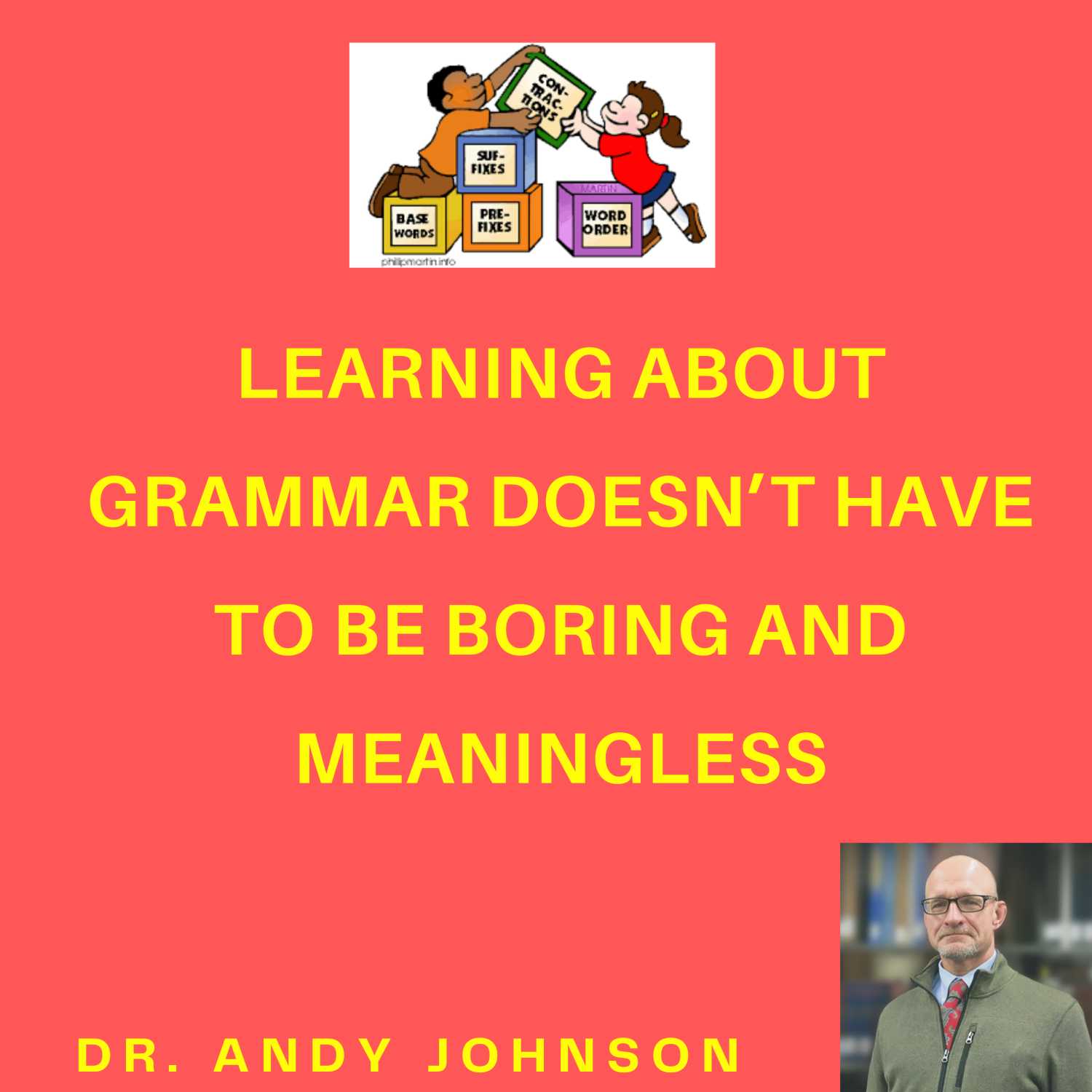
S15 Ep 4LEARNING ABOUT GRAMMAR DOESN’T HAVE TO BE BORING AND MEANINGLESS
This is the first in a two-part series looking at grammar instruction. Learning about grammar doesn’t have to be boring and meaningless. This podcast starts by dispelling some myths, otherwise known as silly grammar ideas. It ends by describing the four elements of effective skills instruction: (a) input and modeling, (b) guided practice, (c) independent practice, and (d) review
S15 Ep 3Using Research in Education: Research, Paradigms, and Making Good Decisions
So why should educators be concerned about educational research? What relevance does it have to our everyday practice? We have all heard the common litany: “It’s just a bunch of theory. You can make research say anything you want. Ivory tower researchers don’t know what it’s like in the trenches. It doesn’t work that way in the real world.” This podcast explains what a theory is, how research-based theories can be used to make good educational decisions, and six common approaches to decision-making in schools.
S15 Ep 2Phonemic Awareness Activity
This is an excerpt from my book: Johnson, A. (2016). 10 essential instructional elements for students with reading difficulties: A brain-friendly approach. Phonemes are the smallest units of sound within spoken words. English has 41-44 phonemes. Phonemic awareness is the ability to notice, think about, and work with the individual sounds in spoken words. Phonemic awareness is one part of the whole literacy learning system. But not all children benefit from phonemic awareness activities. The rule of thumb is that phonemic awareness activities should generally be discontinued once children are reading comfortably at the 1st-grade level. Some students with severe reading difficulties in later grades benefit from having phonemic awareness activities that are part of their total reading program.