
The Niall Boylan Podcast (They Told Me To Shut Up)
1,000 episodes — Page 10 of 20
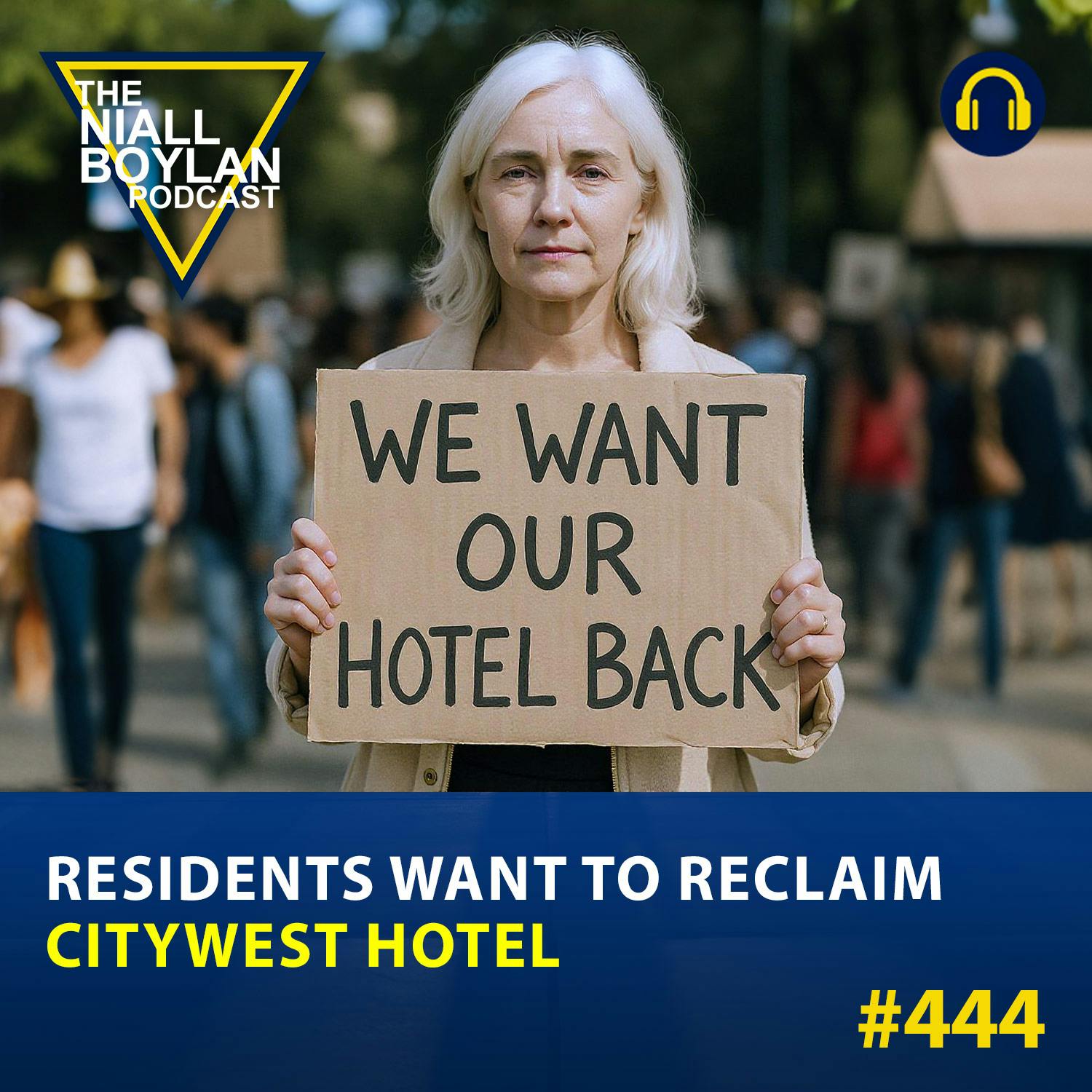
Ep 444#444 Residents Want To Reclaim Citywest Hotel
In this episode, host Niall takes calls from concerned residents of Saggart and Citywest as they react to the government’s controversial €140 million purchase of the local hotel, which has been used for several years to house asylum seekers.While many callers express that they initially had no objection to the hotel being used as temporary accommodation, they now fear it will never return to its original purpose as a community and leisure space. With few local amenities already, the move has sparked frustration and concern.“We were told this was temporary. Now they’ve bought the place outright – how is that temporary?” – Patricia from Citywest“I’ve lived here all my life. That hotel was for weddings, family events, even job fairs. Now it’s gone – just like that.” – Mark in Saggart“I’m not against helping people in need. But the area can’t cope. Services are stretched, and some of the behaviour we’re seeing is worrying.” – Louise, mother of two“It’s not racist to want to feel safe. Some of the lads hanging around the park at night are intimidating. That’s just the truth.” – Anonymous callerThe episode dives into the tension between compassion and community strain, with Niall giving space for residents to voice their lived experiences. A raw and revealing conversation about policy, planning, and the future of a fast-growing Dublin suburb.
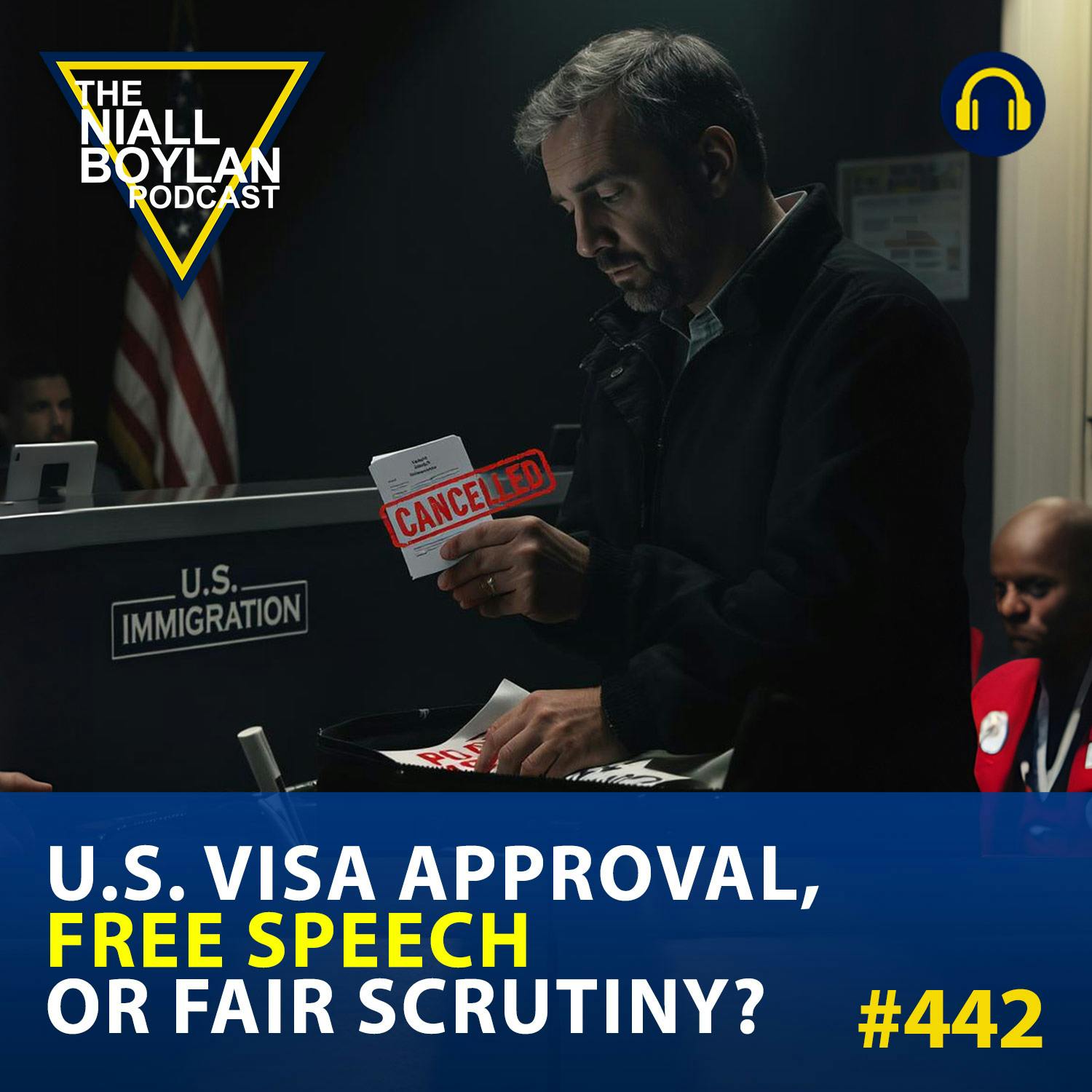
Ep 442#442 U.S. Visa Approval, Free Speech or Fair Scrutiny?
Should your social media determine whether you can enter a country, get a job, or earn a promotion?In this episode, Niall tackles the controversy surrounding the US Embassy’s new "enhanced social media vetting" for J1 visa applicants, which requires students to make their social media accounts public and open to scrutiny. The policy has sparked outrage and confusion, especially among Irish students, some of whom feel they’re being silenced for speaking out on global issues.📢 Tánaiste Simon Harris weighed in, saying students “should not be deprived of a J1 visa for expressing their views on horrific issues happening around the world.”But is this really new? As Niall points out:“From what I remember, even applying for an ESTA years ago involved questions about your online presence.”Callers to the show are split. “It makes sense in a post-9/11 world—countries need to protect themselves,” one listener argues.“This is about chilling free speech. If we’re afraid to post opinions online, we’ve already lost something important,” says another.The conversation broadens to civil liberties, including policies in the UK where civil servants are discouraged from using social media or criticising the sitting government.Is it reasonable to screen social media for security—or are we entering a dangerous space where dissent is punished?Listen in as Niall and callers unpack the balance between national security and personal expression

Ep 443#443 Ready or Not? EVs vs Petrol and Diesel Cars
Ireland plans to ban the sale of new petrol and diesel cars by 2030—five years earlier than the EU’s 2035 deadline—as part of its sweeping Climate Action Plan. But is this ambitious move realistic? In this episode, Niall dives deep into the heated debate with guest Nadia Forde from Ashford Motors.Niall explores both sides of the conversation:"We can’t ignore climate change any longer. EVs are the future, whether we like it or not," says one caller, supporting the shift."I live in rural Clare—there’s barely a charging point within 20 miles!" argues another, questioning the practicality of going electric for everyone.Meanwhile, Naill highlights the financial strain on smaller manufacturers and how big brands like Mercedes-Benz, Jaguar, and VW are already transitioning ahead of schedule due to tightening emissions standards—not just regulation deadlines.From concerns over affordability and charging infrastructure to hopes for a cleaner, greener future, Niall asks:Are you ready to give up petrol and diesel? Or is this just policy running ahead of reality?Tune in now, and decide for yourself.
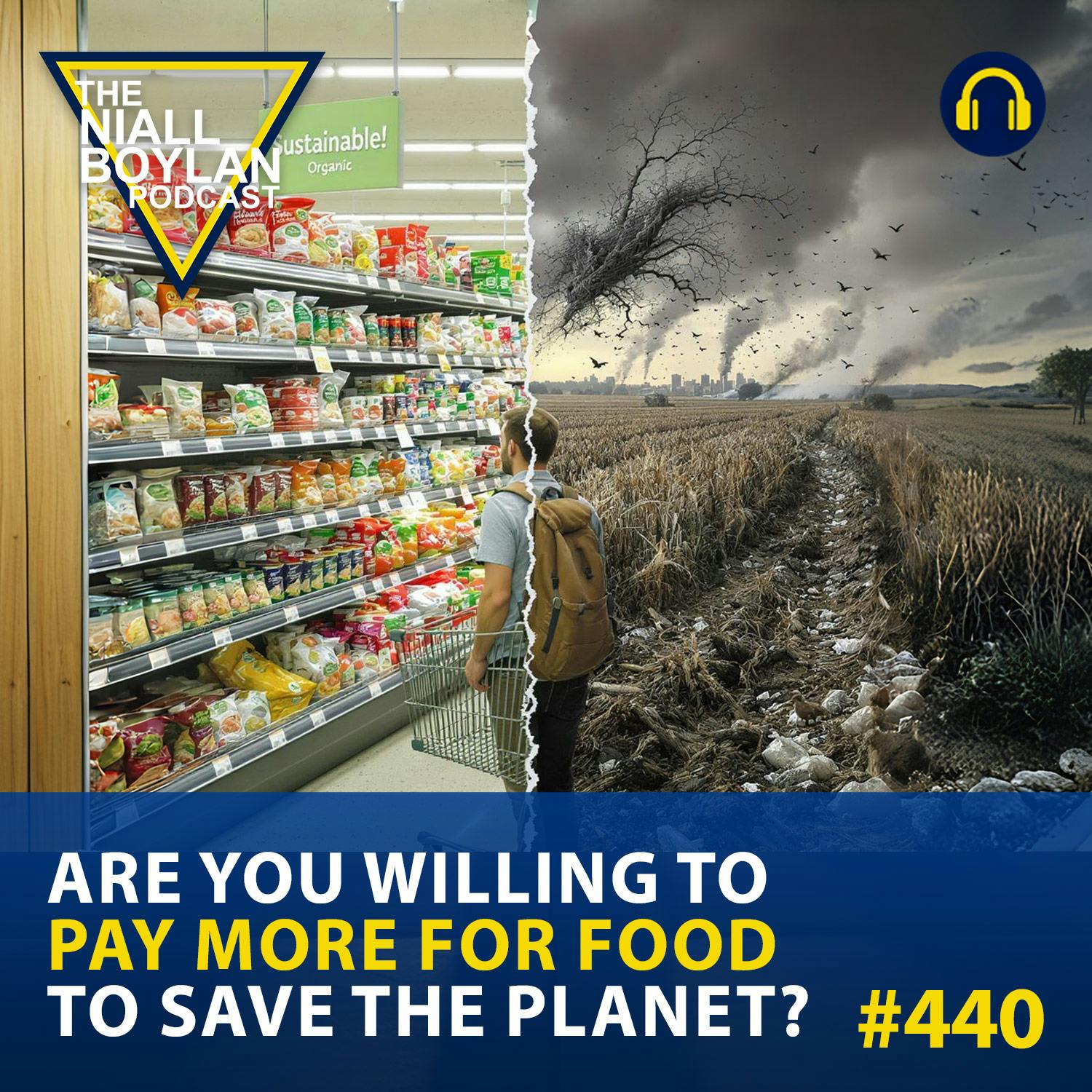
Ep 440#440 Are You Willing to Pay More for Food to Save the Planet?
In this thought-provoking episode, Niall asks a tough question: Should we be paying more for our food if it means protecting the environment? As the cost of groceries continues to rise, listeners from across the country call in to share their views—some passionately in favour, others strongly opposed.📞 One caller argues, "If paying an extra euro means supporting local farmers and reducing emissions, I'm all for it. We can’t keep destroying the planet just to save a few cents."But not everyone agrees. Another listener insists, "People are already struggling to afford the basics. It’s not fair to ask working families to carry the cost of climate policy."Niall also speaks to several farmers who say the real issue lies with government regulation. They point to rising compliance costs, EU policies, and increasing red tape as key drivers of food price inflation.Tune in for a lively and honest debate that gets to the heart of one of the biggest questions facing Irish consumers today: Can we afford to eat sustainably—or can we afford not to?
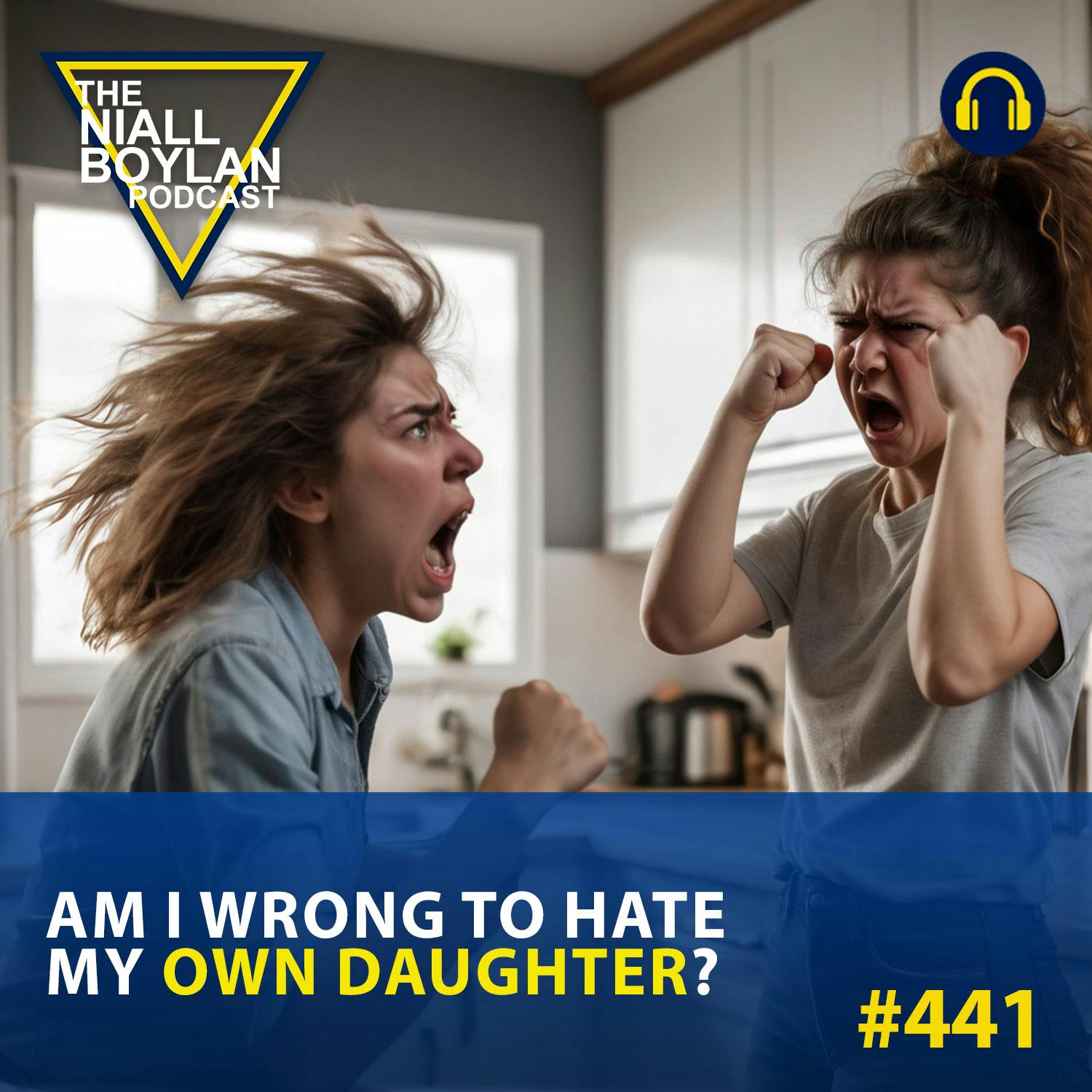
Ep 441#441 Am I Wrong to Hate My Own Daughter?
In this deeply emotional and raw episode, Niall reads a heartbreaking email from a mother pushed to her limits. She’s 38, raising a 16-year-old daughter with special needs on her own, and confesses a truth that many parents may feel but are too afraid to say aloud: "Although I love her, I also hate her so much for ruining my life."The mother describes the breakdown of her marriage, the loss of her job, constant verbal and physical abuse from her daughter, and a deep sense of isolation. She's tried support groups, family help, and even dating, but nothing seems to offer lasting relief. Now, she’s considering putting her daughter into care—just to survive.Listeners call in with powerful stories and opinions, some standing in empathy and support, others expressing shock and concern.One caller shares: “I’ve been there, Niall. My son is 12 and has severe behavioural issues. I’ve screamed into my pillow more nights than I can count. This mother is brave for admitting what many of us are afraid to say.”Another says: “I was raised by a single mum with a disability and if she’d spoken about me like this, I’d be devastated. That girl needs love, not resentment.”Others offer practical thoughts:“I don’t think she hates her child, Niall. I think she hates the life she’s been forced into without proper support.”“Putting her daughter in care isn’t giving up—it might be the only safe choice for both of them.”Niall navigates the emotional weight of the conversation with compassion, asking the big question: Is this mother truly wrong to feel the way she does—or is society failing families like hers by not giving them real, long-term support?

Ep 439#439 A Holy Debate. Does God Really Exist?
In this open and honest episode, host Niall asks a timeless question: Do you believe in God? And if so, why? The phone lines light up as callers from all walks of life share their personal beliefs, doubts, and experiences.Some callers passionately defend their faith:"I've felt God's presence in my life during my darkest moments. I can't explain it scientifically, but I know it's real.""Look at the beauty and complexity of the world—there has to be a creator behind it."Others are more skeptical, challenging the idea of a higher power:"If there was a God, why would there be so much suffering in the world?""I used to believe, but the more I learned about science and history, the less sense religion made to me."And some callers are still searching:"I'm not sure what I believe anymore, but I’d like to think there’s something bigger than us."It’s a lively, thought-provoking discussion filled with honesty, debate, and moments of reflection—inviting listeners to question their own beliefs, wherever they stand.
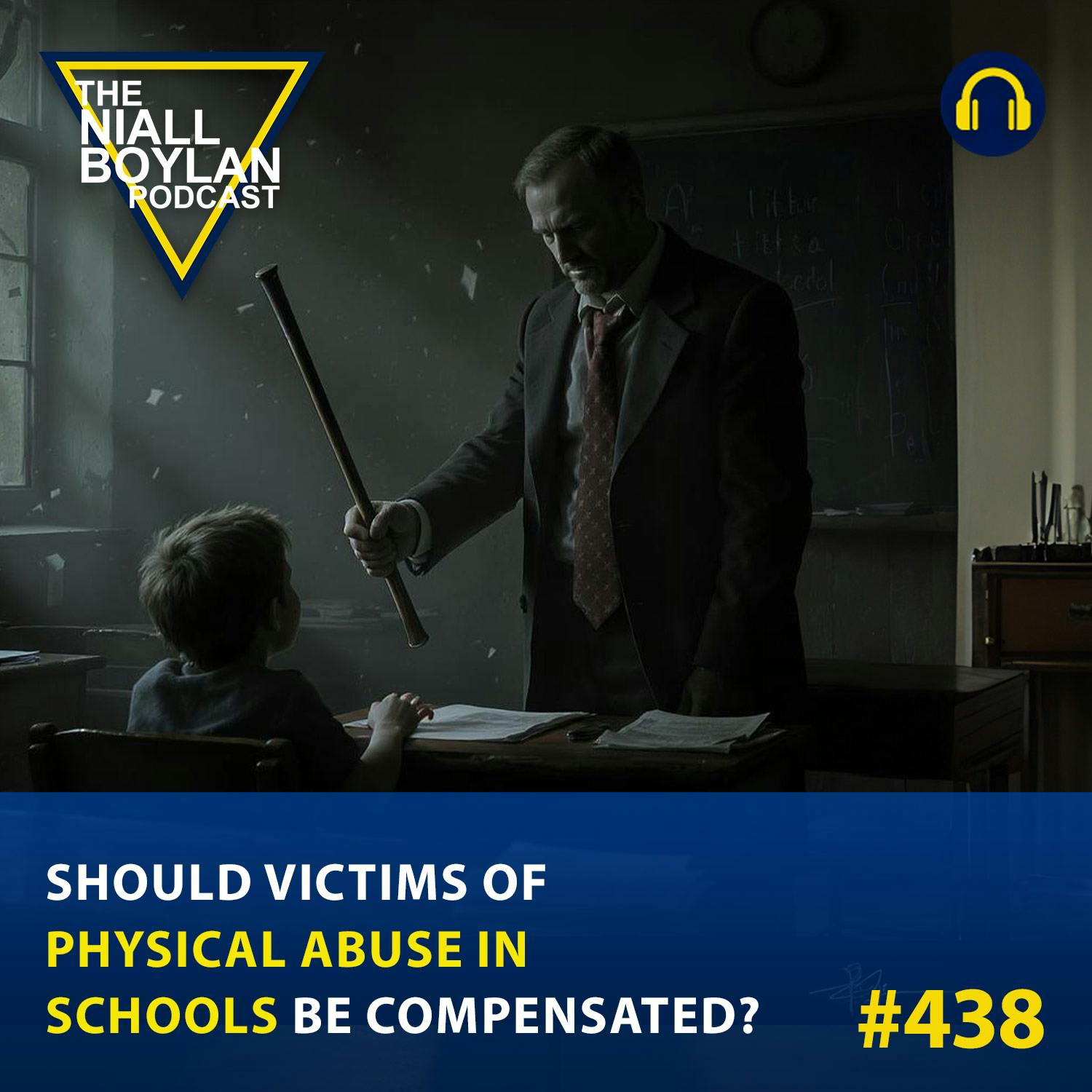
Ep 438#438 Should Victims Of Physical Abuse In Schools Be Compensated?
In this powerful and thought-provoking episode, host Niall opens the phone lines to the public on a highly emotional and divisive issue: Should people who suffered physical abuse at the hands of teachers before corporal punishment was outlawed in 1982 be entitled to compensation?As the calls come in, listeners hear a wide range of passionate opinions. Some callers argue that society cannot keep paying for the wrongs of the past, especially when they were legal at the time. Others insist that the damage done to victims is lifelong and that justice demands recognition—and reparation—no matter how much time has passed.This is a raw, honest, and often uncomfortable conversation about accountability, trauma, and how we reckon with the darker chapters of our shared history.
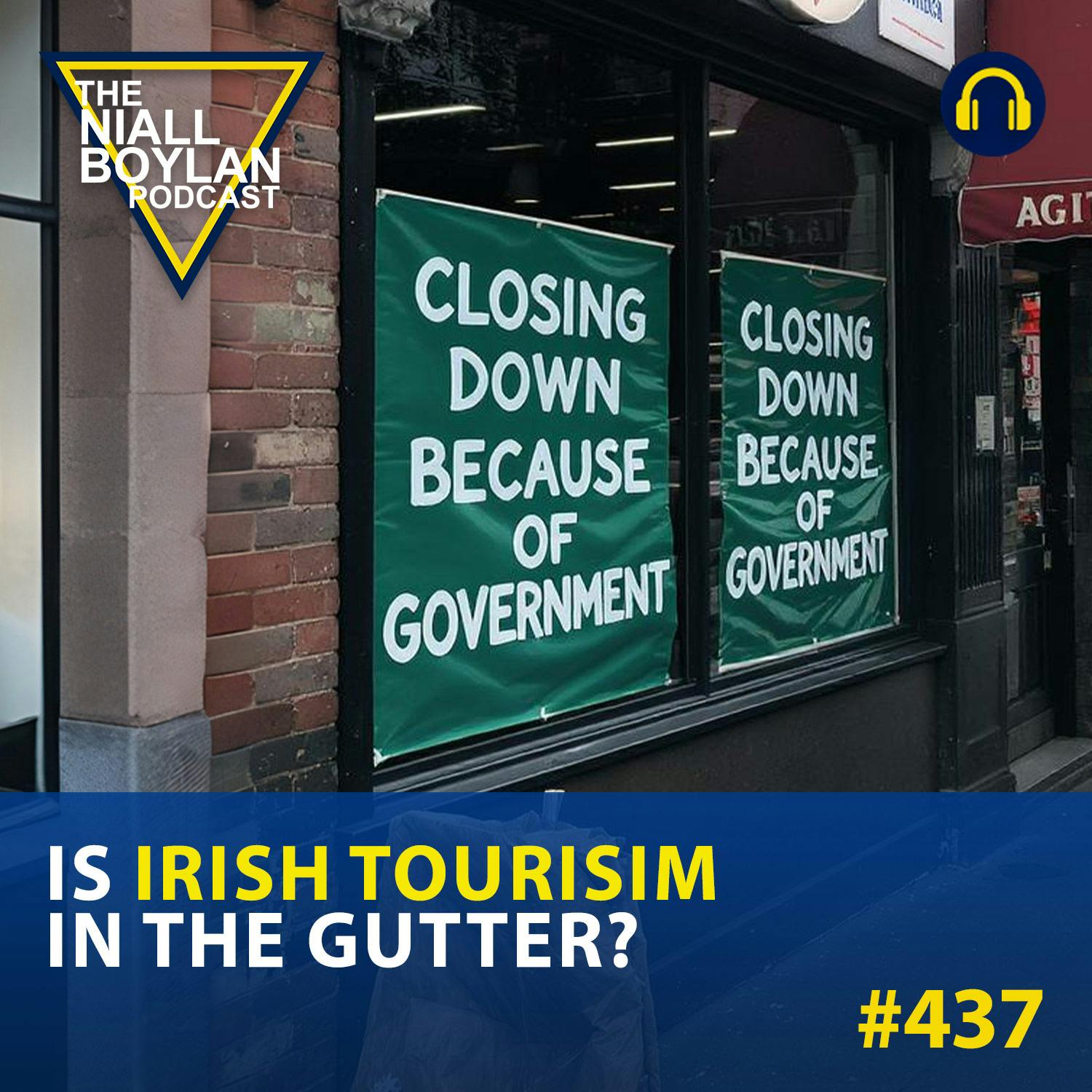
Ep 437#437 Is Irish Tourisim In The Gutter?
In this episode, host Niall sits down with outspoken restaurateur and media personality Paul Treyvaud to take a hard look at the state of Irish tourism. Paul pulls no punches as he shares his views on why Ireland's tourism industry is struggling, pointing the finger at government policies, rising costs, and what he sees as a lack of vision for the future. Expect frank opinions, insider perspectives from the hospitality frontline, and a passionate call for change. Whether you agree with Paul or not, this is a conversation you won’t want to miss.

Ep 436#436 But It's Another Man's Child And Not Mine.
On today’s show, Niall hears from a heartbroken wife struggling with a heartbreaking dilemma. After years of trying for a baby, her husband was diagnosed as infertile. She wants to pursue sperm donation and experience pregnancy, but he insists on adoption — saying he couldn’t love a child that wasn’t biologically his.Callers join the conversation to share their own experiences, opinions, and advice. Should she follow her dream of pregnancy or respect her husband’s wishes to adopt? Can their marriage survive this divide, or is this a choice that could break them apart?A powerful and emotional discussion on love, parenthood, and what really makes a family.

Ep 435#435 Would you forgive your cheating husband?
Today on the show, we read a heart-wrenching email from a woman whose world has been turned upside down. After 10 years of what she thought was a happy marriage, her husband returned from a golf trip and confessed to a drunken one-night stand with a hotel employee. Now she's torn between her love for him, his tearful remorse, and her own heartbreak.Listeners weighed in — and wow, did opinions differ. Some callers said forgiveness is possible when someone is truly sorry, especially for the sake of their family. Others insisted that betrayal is betrayal, and once that trust is broken, there's no going back.Would you forgive a cheating partner who confessed out of guilt? Or is that a line that can’t be uncrossed?Tune in for an emotional, raw, and thought-provoking discussion on love, trust, and second chances.

Ep 434#434 Is property tax value for money?
In this episode, we tackle a question that affects almost every homeowner in Ireland: Is property tax giving us value for money?Dublin City Councillors are preparing to scrap a long-standing 15% discount on Local Property Tax for 2026—the first time this has happened in over a decade. Combined with government-led revaluations reflecting Ireland's soaring house prices, some homeowners could see their annual bills rise by hundreds of euros.For example, owners of a €450,000 home will now pay around €428 a year, while those with properties worth €1.2 million face an annual charge of €1,094. Yet, by European standards, Labour's Darragh Moriarty argues that Ireland’s property taxes are still relatively modest—and crucially, they help fund local services like waste collection, libraries, street maintenance, and parks.But is this extra cost justified? That’s what we asked our listeners—and the responses were mixed:🔊 One caller praised property tax as a fair way to fund essential local services, saying they'd rather pay a little extra than see services cut or rely on income taxes alone.🔊 Another listener was far less convinced, saying their bins are still overflowing, potholes go unrepaired, and they see little evidence that their tax money is improving their neighbourhood.🔊 A third viewpoint raised a broader question: Should we even tax homes at all, given that many people are already stretched by mortgages, energy bills, and other rising living costs?So what do you think—are we paying a fair share to maintain our communities, or is property tax another financial burden without enough return?

Ep 433#433 Should Couples Who Live Together Have the Same Rights?
In this episode, Niall asks: Should couples who live together have the same legal rights as married couples?More couples than ever are choosing to live together without getting married. But when it comes to things like inheritance, pensions and property rights, cohabiting partners often have far fewer protections under the law. Should that change, or does marriage deserve to stay different?Some callers argued that marriage is about serious commitment — legally and financially. They felt if you want the rights and security that come with marriage, you should be willing to make that commitment. For them, it is about protecting what marriage means.Others said times have changed. They pointed out that many couples build full lives together, raise children and buy homes but still have no legal safety net if things go wrong. They argued that love and loyalty matter more than paperwork, and the law should reflect that.A few callers said living together is often stronger than some marriages, and that modern families should not be penalised for avoiding a ceremony.As Niall points out, this is not just about weddings and rings. It is about how the law treats families, fairness in modern relationships, and whether tradition should still decide who is protected.

Ep 432#432 Should We Limit Political Terms in Ireland?
In this episode, Niall asks: Should Ireland limit how many terms a politician can serve?Twelve states in the United States are calling for limits on how long members of Congress can stay in office. Some believe Ireland should do the same to stop politics becoming a lifelong career for the same faces decade after decade. Would term limits shake up Irish politics or just swap out one set of problems for another?Some callers said term limits are badly needed. They argued that too many politicians get comfortable, lose touch, and do little to earn their place once elected. They felt limits would clear out the old guard and bring in new people with fresh ideas and real-life experience.Others disagreed, saying it is up to voters to decide who stays or goes. They argued that if someone does a good job and people want them back, that is democracy in action. Some pointed out that experience matters and that not all long-serving politicians are out of touch.A few callers felt term limits would change little if deeper issues in the system were not fixed. They said Ireland needs more accountability and genuine change, not just new faces following the same old party line.As Niall points out, this debate is about more than years in office. It is about trust in politics, the quality of leadership, and whether new rules would really bring new ideas.

Ep 431#431 Should You Put a Dog Down for Biting?
In this episode, Niall asks: Should you put a dog down for biting?A distressed listener wrote in about a painful family dilemma. Her five-year-old dog bit their three-year-old son on the leg badly enough to need stitches. Her husband now insists the dog must be put to sleep to protect their child. She believes it was a one-off incident that could be managed with training or rehoming. Who is right?Some callers sided with the husband, saying once a dog bites a child so seriously, you can never fully trust it again. They argued the safety of a child must always come first, even if it means making a heartbreaking decision.Others said putting the dog down is too extreme. They pointed out that dogs often bite when provoked or scared and that proper training or rehoming could prevent it from happening again. Some argued families have to take responsibility too, and killing the dog is not the only answer.As Niall points out, this is not just about a dog. It is about balancing love for a family pet with the responsibility to protect a child, and deciding whether one bite should mean the end.

Ep 430#430 Should There Be Limits on Free Speech?
In this episode, Niall asks: Should there be limits on free speech?The EU is pressuring the Irish Government to bring in stricter hate speech laws that would make it illegal to say or share certain things that are seen as inciting hatred or violence. Some say this is badly needed to protect vulnerable groups. Others believe it is a dangerous step towards censorship and losing the right to speak freely.Some callers supported tighter rules, saying free speech should not mean giving people a free pass to spread hate, threats, or messages that fuel real-world violence. They argued that with so much online abuse and polarisation, clear limits help keep communities safe.Others argued the opposite. They said once you start restricting speech, it becomes easy for governments to control what people can say about anything, including politics. They warned that fear of saying the wrong thing could silence ordinary people and damage honest debate.As Niall points out, this debate is about finding a balance — how to protect people from harm without losing the freedom to speak your mind.

Ep 428#428 Should We Scrap Student Loans If They Stay?
In this episode, Niall asks: Should Ireland scrap student loans for graduates who stay and work here for ten years?The government recently confirmed there will be no cut to college fees, leaving many students and families struggling with the high cost of third-level education. One idea suggested before is to let students borrow the full amount for fees — but if they stay and work in Ireland for a decade, the loan is wiped.Some callers supported the idea, saying it would keep skilled graduates like nurses, engineers, and teachers in the country. They argued it rewards young people who commit to giving back and helps families who can barely cover rising fees.Others disagreed, saying the plan is unfair on taxpayers who would foot the bill. They felt a free degree for staying puts students ahead of other workers who also pay their way but get no such benefit. Some said the real problem is not fees, but the high cost of living that drives people abroad anyway.As Niall points out, this is not just about student debt — it is about how to keep Irish talent at home and whether the State should give graduates a reason to stay.

Ep 429#429 Would You Stand By a Guilty Loved One?
In this episode, Niall asks: Would you stand by a loved one if they committed a serious crime?It is one of the hardest questions any family could face. If your son, daughter or close relative was found guilty of something terrible like rape or murder, would you stand by them or cut all ties? Some say family loyalty comes first no matter what. Others believe there are crimes so serious that the bond is broken forever.Some callers said they could never turn their back on their child, no matter the crime. They argued you can hate the act but still love the person who did it, because family means standing beside them in the darkest times, not just when things are good.Others could not accept that idea. They said some crimes cross a line that cannot be forgiven, and that standing by a guilty loved one only adds to the pain of the victim and their family. For them, loyalty has limits.As Niall points out, this is not a question most people ever want to face — but it reveals where we draw the line between unconditional love and what we cannot excuse.
Ep 427#427 Should You Contest an Unfair Will?
In this episode, Niall asks: Should you contest an unfair will, even if it risks tearing the family apart?A listener got in touch after learning she was left a much smaller share than her siblings in her father’s will. Now she wants to know if she should fight for what she feels is fair or stay silent to keep the peace.Some callers said she should absolutely contest it if there is no good reason for the unequal share. They argued that standing up for yourself is not about greed but about protecting your rights and not letting resentment fester for years.Others warned that challenging a will can ruin relationships forever. They said money is not worth losing family over and that fighting it could create bitterness that never heals.Some callers felt that right or wrong, a will should be respected as the person’s final decision. They said family is more important than any inheritance and sometimes it is better to let it go.As Niall points out, this is not just about money. It is about family ties, respect for a loved one’s last wishes, and deciding when to let things lie or when to stand your ground.
Ep 426#426 Do You Feel Safe Walking Ireland’s Streets?
In this episode, Niall asks: Do you feel safe walking Ireland’s streets?Official figures suggest that overall crime rates in Ireland have gone down in recent years. Yet many people say they feel less safe than ever, especially with videos of random assaults and antisocial behaviour spreading quickly on social media. Are we really more at risk — or are we just seeing more of it online?Some callers said they no longer feel safe, blaming groups of teenagers hanging around, filming attacks for views, and knowing there are few real consequences. Others pointed to immigration and claimed certain areas feel more intimidating than they did before.Some still believe Ireland is safe compared to other places, arguing that fear is often amplified by viral clips that do not reflect most people’s daily reality. They said using common sense still keeps you safe.Others said the real problem is trust in the system. They argued that soft sentences and a lack of Garda presence make people feel abandoned and fearful, no matter what the statistics say.As Niall points out, this is not just about numbers. It is about whether ordinary people trust that they and their families are safe in the streets where they live.
Ep 424#424 Should Ireland Lower the Age of Consent to 16?
In this episode, Niall asks: Should Ireland lower the age of consent to 16?There have already been suggestions about reducing the voting age, with arguments that young people today are mature enough to decide at 16. On the same basis, some believe the age of consent should match the EU average and be lowered from 17 to 16. Would this protect teenagers better or put them at greater risk?Some callers supported lowering it, saying teenagers are already sexually active and that the current law just ignores reality. They argued that aligning with the rest of Europe would remove unnecessary stigma and better protect young people in normal relationships.Others were firmly against it. They said sixteen-year-olds are still too young and vulnerable and lowering the age makes it easier for adults to take advantage of them. Some warned that instead of protecting teenagers, it would lower safeguards and open the door to exploitation.As Niall points out, this debate is not just about numbers on paper. It is about trust, maturity, and what it really means to protect young people in today’s world.

Ep 424#425 Does Ireland Really Need a President?
In this episode, Niall asks: Does Ireland really need a president?With new presidential hopefuls putting their names forward, some are questioning whether the office still serves any real purpose. Is the president an important neutral figure for the country, or just an expensive tradition Ireland can no longer justify?Some callers said the role is a waste of taxpayer money. They argued the Taoiseach runs the country and the president is mostly there for ceremonies and photo opportunities. In their view, the funds could be better spent on services like housing or healthcare.Others said the presidency is more than just symbolic. They pointed out that the president plays a vital role as guardian of the Constitution, with powers to refer laws and act as a final check on government overreach. Some callers said having a unifying figure above party politics helps keep the country together, especially in difficult times.As Niall points out, this debate goes beyond cost. It is about identity, trust, and whether Ireland still values a head of state who stands above the political fray.
Ep 423#423 Does Living Abroad Mean Losing the Right to Vote?
In this episode, Niall asks: Should Irish citizens living abroad or in Northern Ireland have the right to vote in Irish elections?Sinn Féin has put forward a motion to extend voting rights in presidential elections to Irish citizens overseas and in the North. Supporters say it would honour the global Irish community and reflect modern realities. Opponents argue that voting should be reserved for those who live, work, and pay tax in Ireland.Some callers said voting must be tied to residency. They felt people living abroad are too disconnected from daily life in Ireland to influence decisions that don’t affect them directly. Others raised concerns about security, fraud, and voters basing choices on outdated views.But others passionately supported the motion, saying Irishness doesn't end at the border. They pointed to the importance of the diaspora in shaping Ireland’s story and said presidential elections are largely symbolic. One caller argued that excluding Irish citizens in Northern Ireland is especially unjust.As Niall points out, the debate raises deep questions about identity, participation, and what it really means to belong to a nation — even from afar.

Ep 422#422 Your Pet or Your Lease: What Would You Choose?
In this episode, Niall asks: If your landlord gave you 30 days to get rid of your dog or face eviction, what would you do?We received an emotional email from a woman whose landlord found out she had a dog in breach of her lease. Now she’s been given a choice — rehome the dog or lose her home. Her husband says the dog has to go, but she refuses. The story has sparked debate about responsibility, rules, and the bond people have with their pets.Some callers said the answer is clear. As much as they love animals, no one should risk losing their home over a pet. Others argued that when you sign a lease, you agree to the terms, and breaking those terms has consequences.But many callers took the woman’s side. They said pets are more than animals — they are family. Some argued that landlords should show compassion, especially when renters have limited options. Others called for legal changes to protect tenants with pets.As Niall points out, this is about more than just a lease or a dog. It’s about housing, dignity, and the limits of what people are expected to give up just to keep a roof over their head.

Ep 421#421 Do You Oppose All Immigration, or Just Illegal Entry?
In this episode, Niall asks: Do you oppose all immigration, or just illegal entry?The media often labels protestors as anti-immigrant, but many say they are only against illegal immigration. So where do you draw the line? Is it fair to oppose immigration entirely, or is the real issue how it is managed?Some callers said they have no problem with legal immigration. They support people who come to Ireland through the proper channels, contribute to society, and follow the rules. What they oppose is abuse of the system, such as fake claims, destroyed documents, or overstayed visas.Others said even legal immigration has gone too far. They pointed to overcrowded hospitals, a housing crisis, and overwhelmed schools. For them, the issue is not about how people arrive but how many are arriving. They believe Ireland simply cannot absorb more people, regardless of their status.As Niall points out, this conversation is no longer just about border control. It is about public trust, national capacity, and the fear that raising these concerns comes with a label.
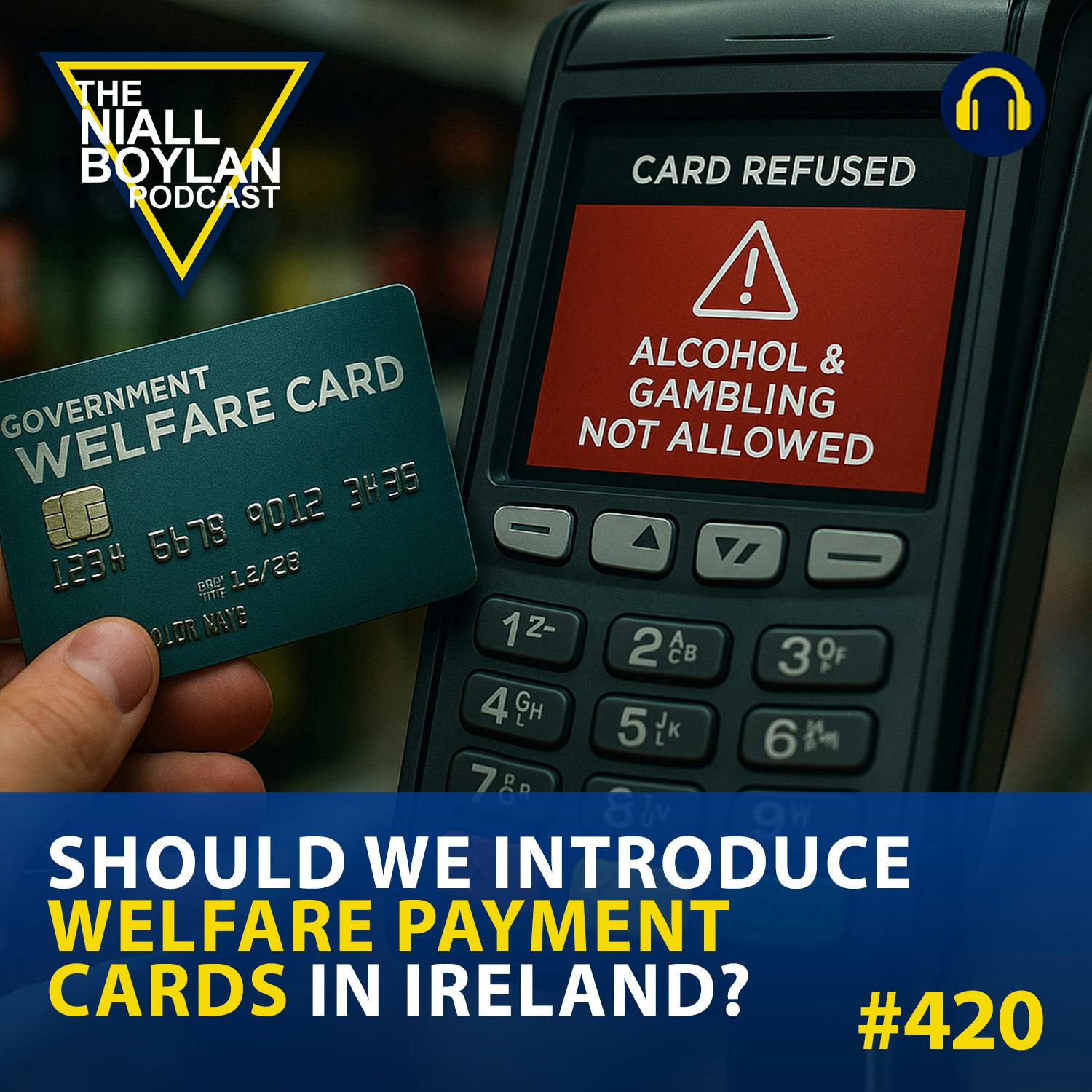
Ep 420#420 Should We Introduce Welfare Payment Cards in Ireland?
In this episode, Niall asks: Should Ireland bring in welfare payment cards?We received an email from a listener who suggested that welfare payments should be issued on a card that can only be used for essentials like food and clothing. The card would block spending on alcohol, cigarettes, or gambling. Supporters say it ensures taxpayer money is spent responsibly. Critics say it is insulting and strips people of basic dignity.Some callers agreed with the idea. They said State support should be used for essentials and argued that a card system would help protect families, especially where addiction is involved. They felt the measure was about accountability, not punishment.Others disagreed, saying the proposal treats welfare recipients like children and unfairly assumes the worst of them. Some warned that it could lead to even tighter restrictions and punish people who already use their payments responsibly.As Niall points out, this debate is not just about how people spend money. It is about how much control the State should have over private lives and whether help should come with conditions.
What Lessons Can Be Learned from the Management of the Covid-19 Pandemic?
bonusIn this hard-hitting episode, Niall sits down with Dr. Gerry Quinn and Dr. Ronan Connolly to unpack one of the most controversial scientific papers published since the pandemic began. Titled What Lessons Can Be Learned from the Management of the COVID-19 Pandemic, their work challenges the mainstream response to Covid-19 from multiple angles—lockdowns, vaccines, data manipulation, and the silencing of dissent.Niall reflects on his own experience during the pandemic, revealing he was nearly fired not for voicing an opinion, but for letting guests question the official narrative. "I was threatened, not by my employers, but by outside forces who didn’t want these conversations aired," he says. The episode sets out to revisit the core claims made during the pandemic and interrogate which of them have stood up to scrutiny.Dr. Gerry Quinn admits he initially believed the official warnings. But when early policy proposals made no immunological sense, alarm bells rang. "They were proposing things that just didn’t add up," he recalls. "Infection control standards I had used in HIV labs were being completely ignored in public health measures."Dr. Ronan Connolly breaks down how pandemic modelling became detached from reality. He explains that many of the early models were based on outdated mathematical frameworks with almost no grounding in biology or human behavior. “The same models could be run with any new virus and they’d spit out the same terrifying results,” he says. He also points out that excess mortality was lower than predicted in many regions, suggesting the scale of the threat had been overstated.The episode pulls no punches on vaccine policy either. Both doctors raise serious concerns about how traditional treatments like Ivermectin and Hydroxychloroquine were shut down, while experimental mRNA technology was fast-tracked without the usual safety thresholds. “I personally don’t think it should have been released,” says Dr. Quinn. “Too many unknowns. Any other drug with that level of uncertainty would never have been approved.”They also expose the uniformity of lockdown measures across countries as evidence of top-down coordination. “These policies were almost identical worldwide. That doesn’t happen by accident,” says Dr. Quinn. He suggests international bodies may have shaped national strategies more than people realize.The paper at the heart of the conversation is backed by 37 scientists and academics, including Dr. Robert Malone, one of the inventors of mRNA technology. The group argues that fear was prioritized over facts, debate was suppressed, and honest scientists were punished for speaking out.“Science only works when people disagree,” says Dr. Connolly. “The biggest failure wasn’t the lockdowns or the masks or the modeling. It was the refusal to let anyone question the answers we were being given.”This episode is a must-listen for anyone who wants to understand what went wrong, why so many were silenced, and how to ensure the same mistakes are not repeated.The full scientific paper is linked in the episode notes.
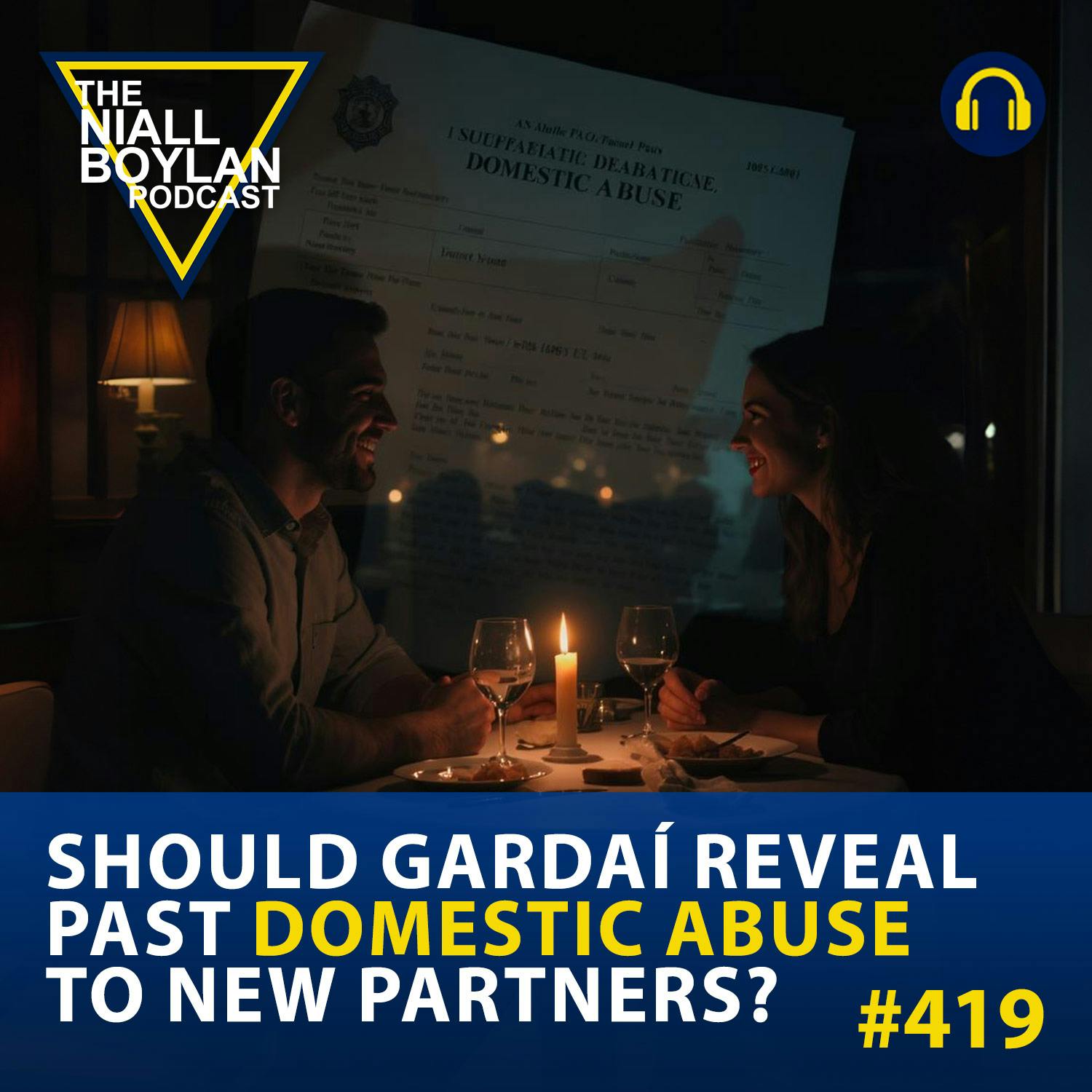
Ep 419#419 Should Gardaí Reveal Past Domestic Abuse to New Partners?
In this episode, Niall asks: Should Gardaí be allowed to tell potential partners if someone has a history of domestic violence?There have been calls for a new law that would let Gardaí share information about individuals who’ve been accused — or convicted — of domestic abuse. Supporters say it could save lives. Critics argue it’s an invasion of privacy and undermines the principle of “innocent until proven guilty.”Some callers said it’s a no-brainer: If someone has a pattern of abuse, especially if convicted, new partners deserve to know. Others were more cautious, warning that unfounded accusations could ruin reputations and be misused during bitter breakups. One caller insisted even allegations should be taken seriously, pointing to the difficulty of securing convictions in such cases.As Niall points out, it’s a complex issue that pits personal safety against personal rights — and asks how far the state should go to protect people from potential harm.
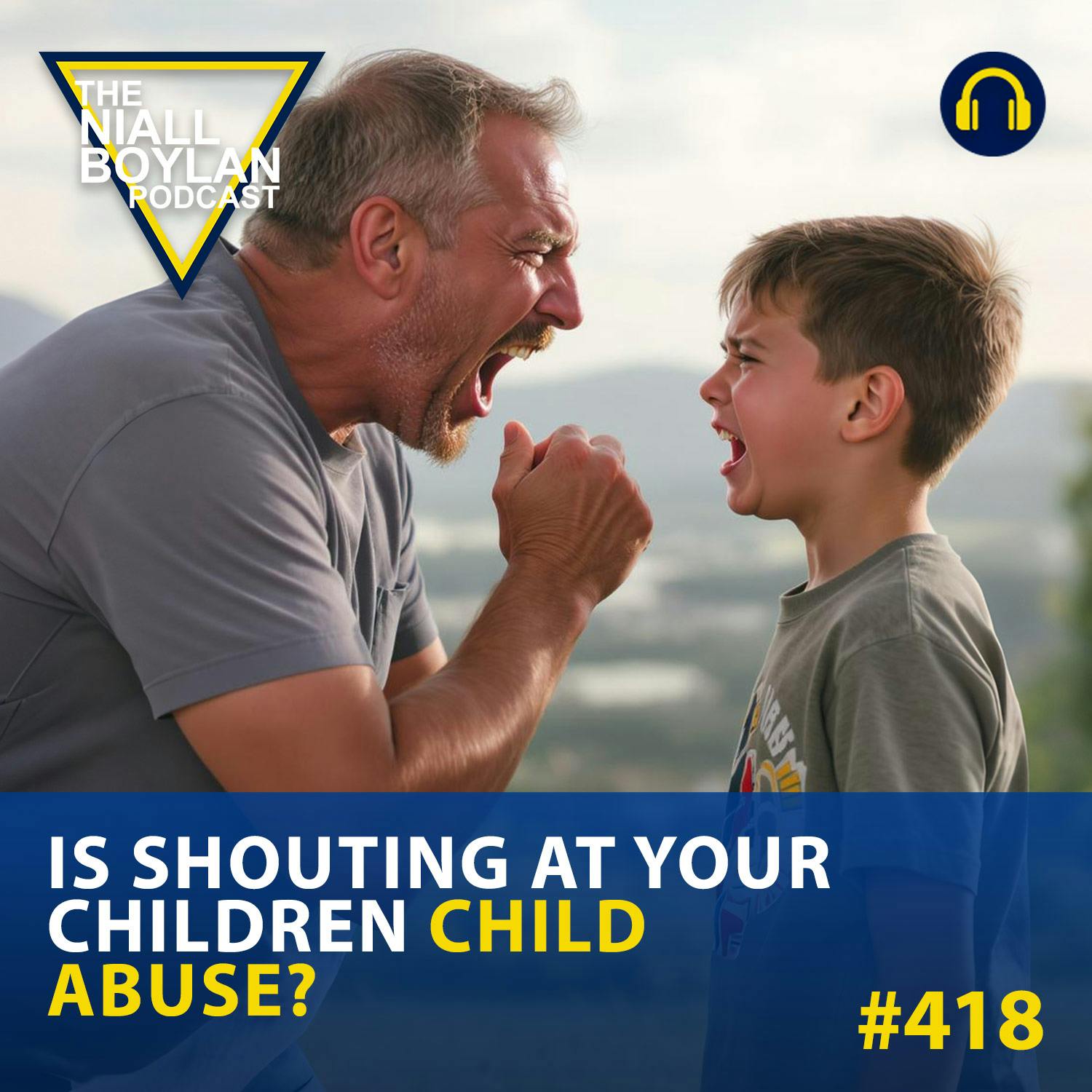
Ep 418#418 Is Shouting At Your Children Child Abuse?
In this episode, Niall asks a provocative question: Is shouting at your children a form of child abuse?The debate was sparked by a top psychologist who claimed that shouting at children — or even arguing loudly in front of them — can be just as damaging as physically slapping them. The expert warned that such behaviour can have long-lasting emotional and psychological effects, and even suggested it should be legally recognised as harmful.Is this an overreaction? Or are we only beginning to understand the impact of verbal and emotional discipline?Some callers strongly agreed, arguing that constant shouting creates fear, anxiety, and insecurity in children. They believe emotional abuse is often overlooked simply because it doesn’t leave bruises, and that parenting should focus on calm, respectful communication.Others said the idea goes too far. Parenting is chaotic, stressful, and imperfect — and sometimes raising your voice is the only way to get a message across. One caller asked: “If we ban shouting, are we also banning being human?”Others took a middle ground, saying occasional shouting doesn’t equal abuse, but that consistent yelling, insults, or aggressive behaviour can cross the line into real harm.As Niall points out, this is about more than parenting styles — it’s about defining where discipline ends and damage begins.
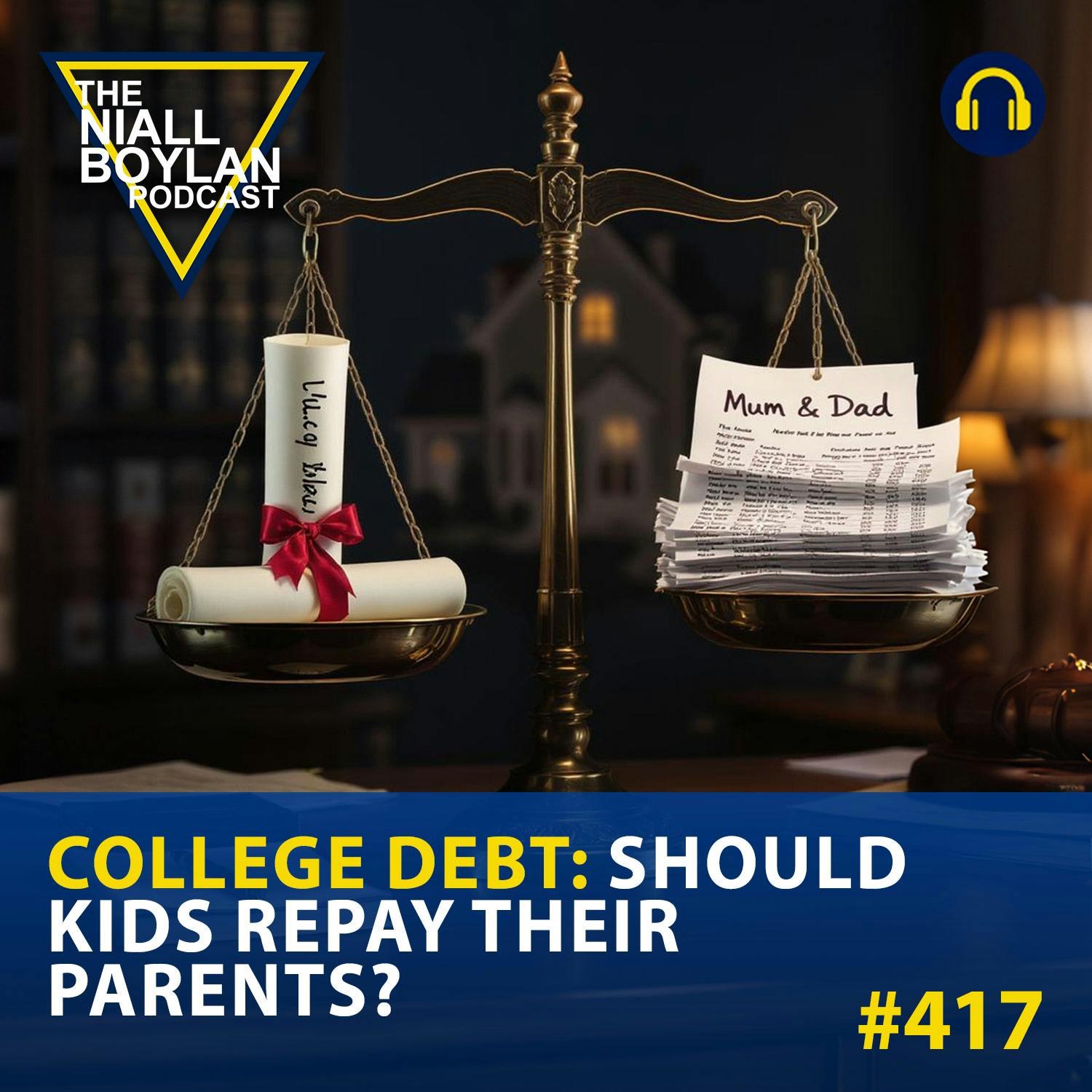
Ep 417#417 College Debt: Should Kids Repay Their Parents?
In this episode, Niall asks: Should children repay their parents for college fees?A mother wrote to the show after a heated disagreement with her husband. Their 26-year-old daughter, now working in a well-paid legal job, had her college fees fully covered by her parents. The mother believes it’s only fair that she repays them now, but the father insists that supporting your child through education is part of parenting — not a loan with strings attached.The conversation opened the lines to passionate callers. Some argued that repayment shows respect and gratitude, especially if parents made financial sacrifices. Others said it’s wrong to treat family support like a business transaction, and that the cost of education is something parents take on willingly.Some took a middle-ground view — suggesting repayment depends on family circumstances. If the parents are struggling, a payback plan might be reasonable. But if the family is financially stable, perhaps the support should be seen as a gift.As Niall points out, this debate isn’t just about money — it touches on values, responsibility, and the evolving expectations between parents and adult children.

Ep 416#416 Sun’s Out, Fun's Out: Portugal Telling Tourists To Cover Up
In this episode, Niall asks: Are Portugal’s new dress rules for tourists over the top?As Portugal and other tourist hotspots crack down on visitors walking around in bikinis or bare-chested away from the beach, hefty fines are being introduced to curb what locals see as disrespectful behaviour.Some callers argued the rules are too strict, saying tourists just want to relax and enjoy their holidays. If it’s near the beach and not offensive, they said locals should be more understanding, especially in areas that rely on tourism.Others supported the new measures, saying tourists often forget they are guests in someone else's community. They believe beachwear belongs on the beach, and showing respect while abroad is basic decency.As Niall points out, this isn’t just a debate about clothing. It’s about whether tourism should adapt to local cultures or expect them to adapt in return.
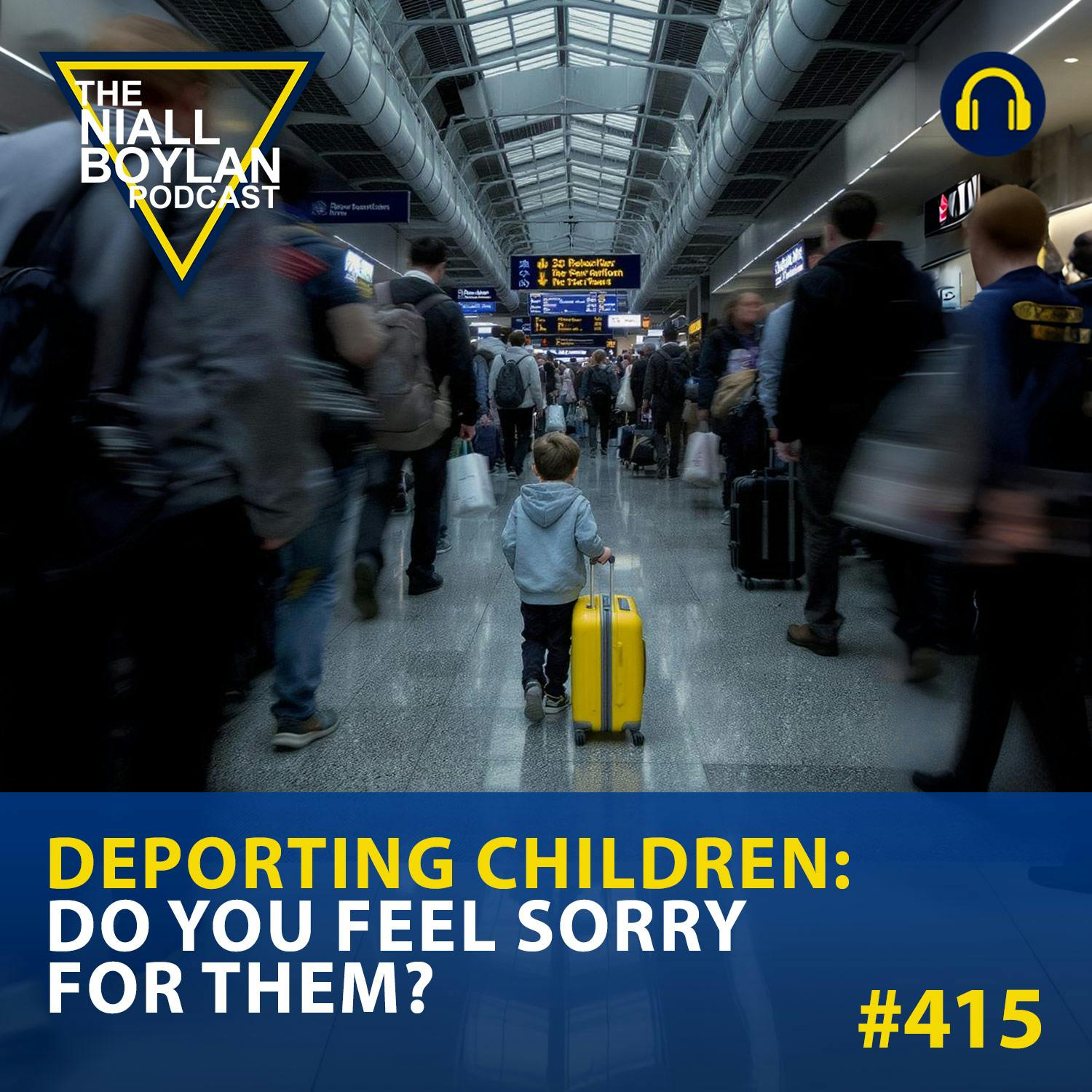
Ep 415#415 Deporting Children: Do You Feel Sorry for Them?
In this episode, Niall asks: Deporting Children — Do You Feel Sorry for Them?Last week, 35 people were deported from Ireland, including five children. The opposition is now calling for an amnesty on child deportations, urging the government to show empathy. But does sympathy for children override the rules of immigration?Some callers argued that children should never be punished for the decisions of adults. Many of these kids have grown up in Ireland, attend local schools, and know no other home. Deporting them, they say, is cruel and unnecessary — and the government should show compassion.Others felt the law must be applied equally, regardless of age. They pointed out that deportations are carried out when legal avenues are exhausted, and making exceptions undermines the system. If parents knowingly stay illegally, the responsibility lies with them — not the State.As Niall points out, the question isn’t just about legality — it’s about what kind of country we want to be when it comes to vulnerable children caught in adult decisions.
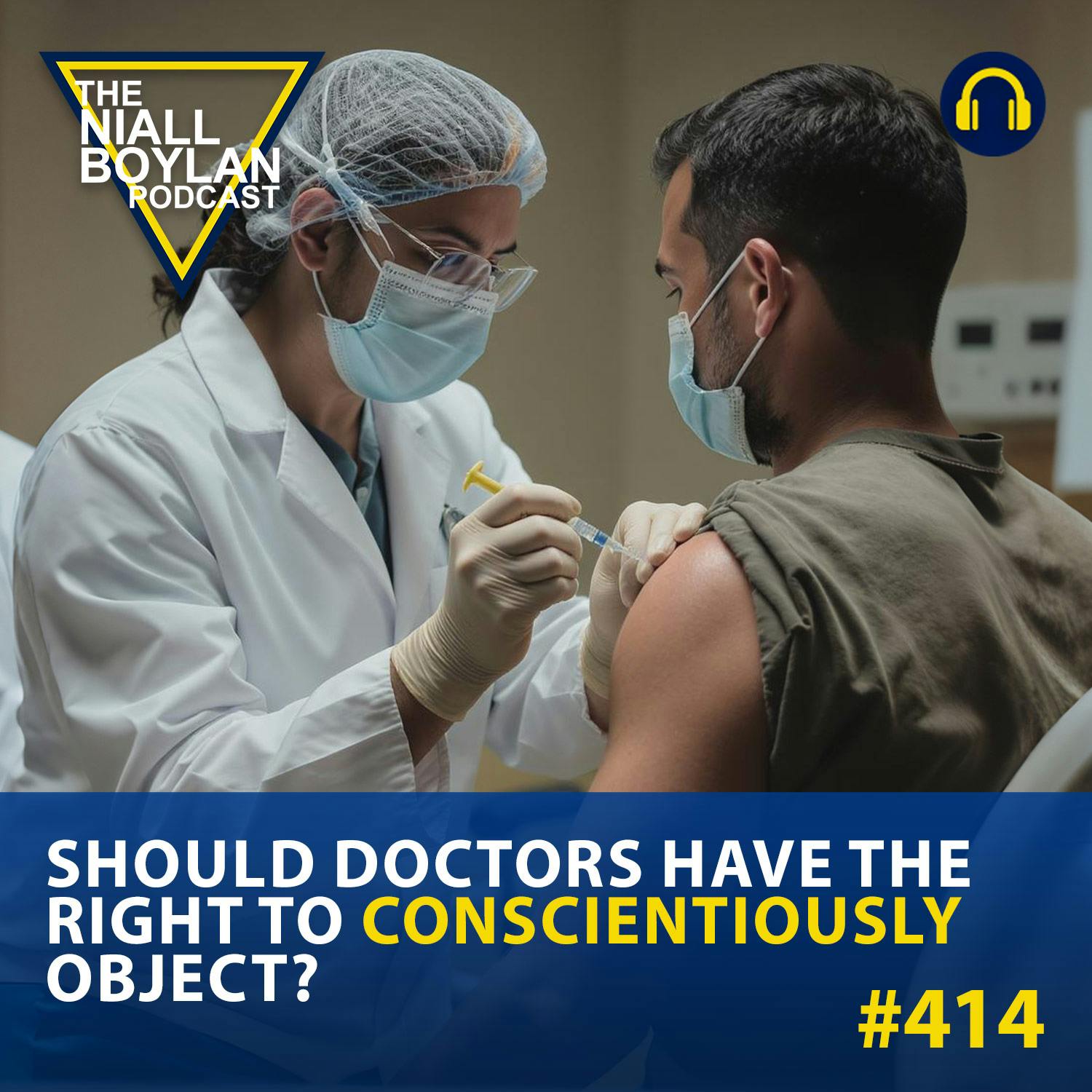
Ep 414#414 Should Doctors Have the Right to Conscientiously Object?
In this episode, Niall asks: Should doctors have the right to conscientiously object to any procedure approved by the medical council — including abortion, assisted dying, or vaccines? The question raises serious debate about the balance between medical ethics, personal morality, and patient rights.Some callers argued in favour of conscientious objection. They said doctors are not machines, and if a procedure clashes with their deeply held moral or ethical beliefs, they should not be forced to perform it. For them, protecting a doctor's conscience is essential to preserving integrity in healthcare.Others disagreed, saying personal beliefs have no place in patient care. They argued that doctors are trained and licensed to provide services deemed safe and legal. If they can’t do that, they should reconsider their role in the profession. Patients, they said, should never face delays or judgement because of someone else's views.Niall reflected that while the right to conscience is important, so too is the trust patients place in the system. Striking a balance between personal belief and professional responsibility remains one of the most difficult questions in modern medicine.
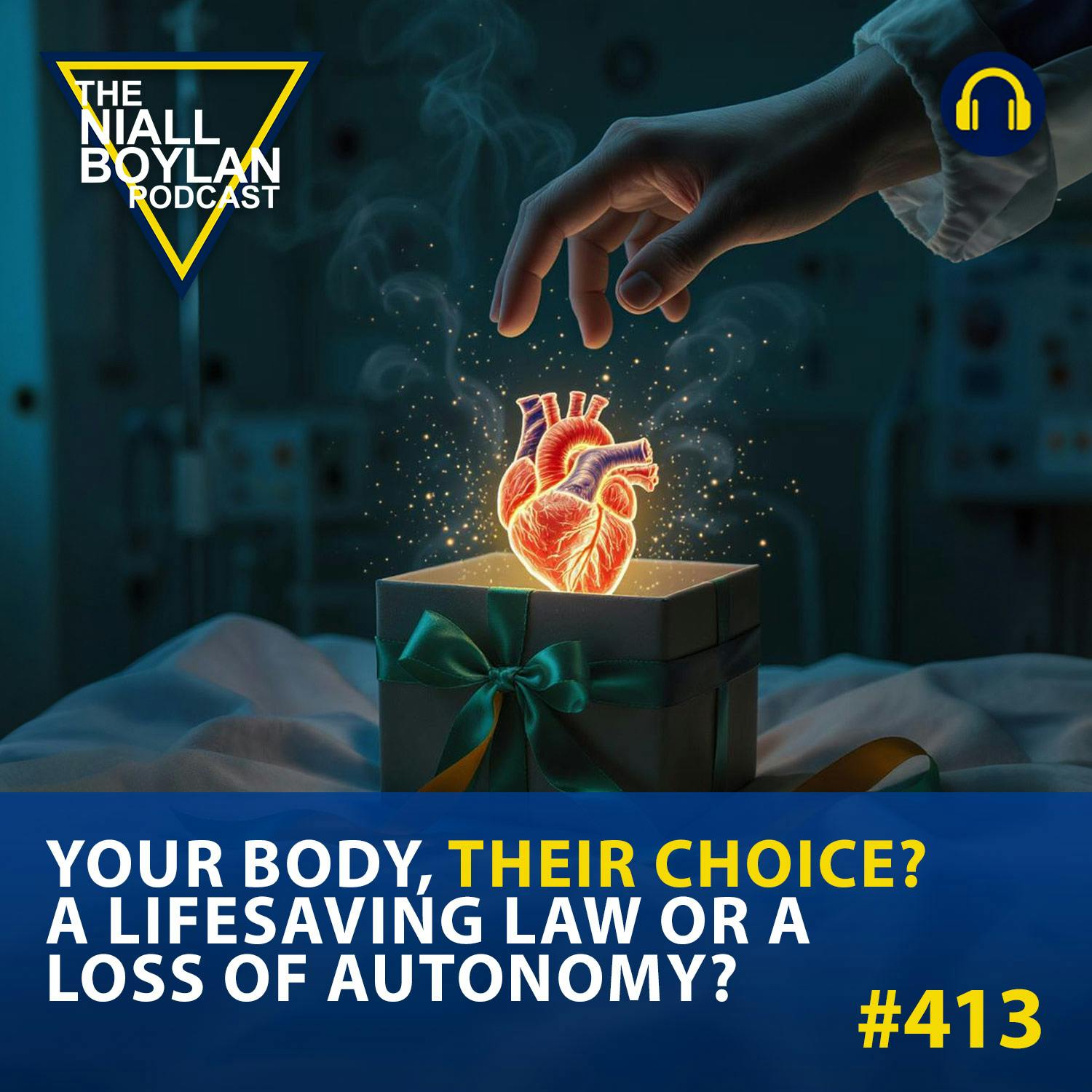
Ep 413#413 Your Body, Their Choice? A Lifesaving Law or a Loss of Autonomy?
In this episode, Niall asks: Has Ireland just made you state property after death? From June 17th, all Irish citizens will automatically be considered organ donors unless they formally opt out. The move is being hailed by some as a lifesaving, compassionate reform that will help those in desperate need of transplants. But others say it crosses a line — claiming it turns the human body into government property unless otherwise stated.Some callers supported the change, calling it a straightforward way to save lives. They argued that most people support donation anyway, and that this new system removes unnecessary delays that can cost lives. If someone strongly objects, they said, they’re still free to opt out.Others opposed the law on principle. They said it sets a dangerous precedent where the state assumes rights over your body after death without explicit consent. For them, the issue isn’t about organs — it’s about personal autonomy and government overreach.Niall reflected that while the intention behind the law may be noble, it also opens a deep debate about ownership, consent, and where the limits of state power should lie — even after we’re gone.
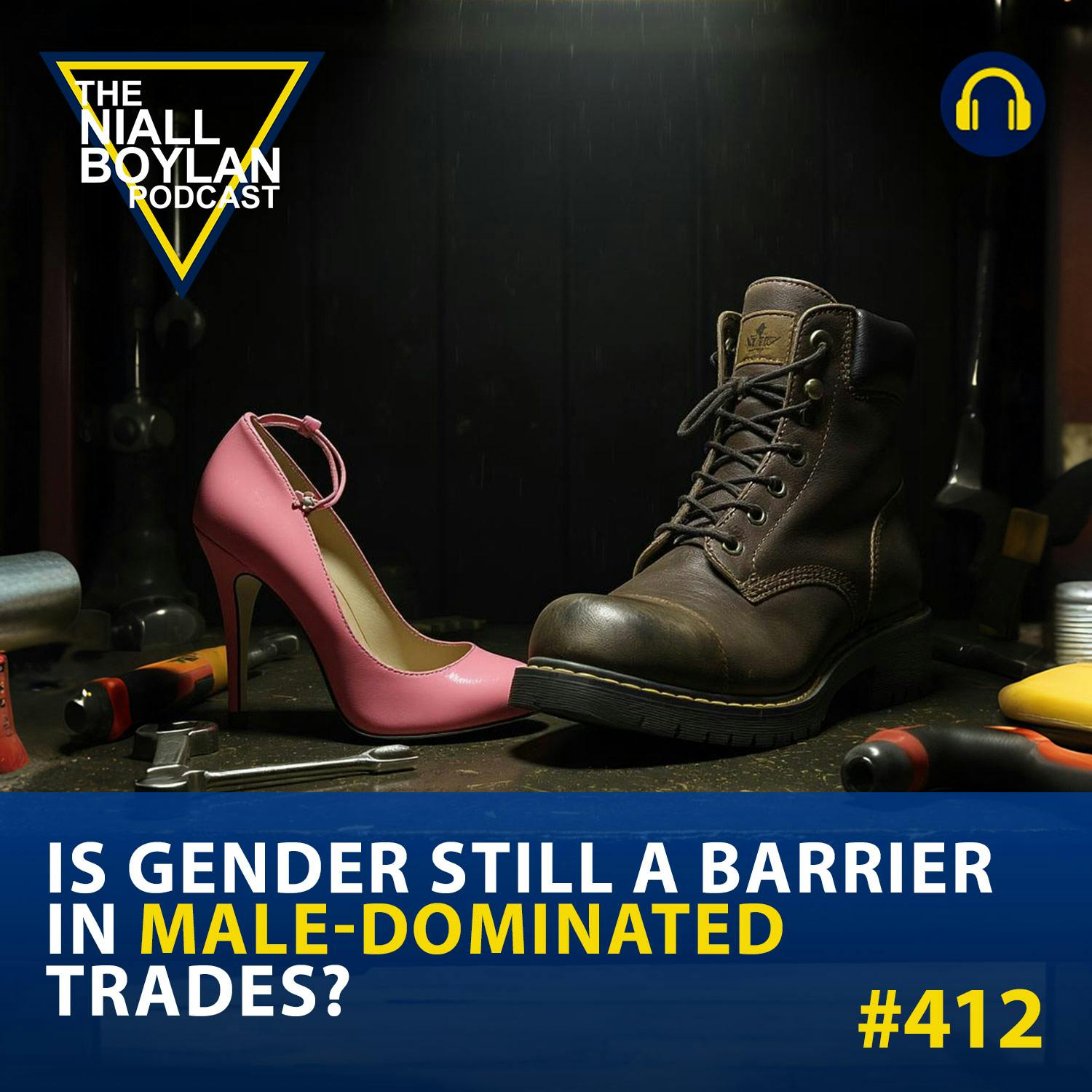
Ep 412#412 Is Gender Still a Barrier in Male-Dominated Trades?
In this episode, Niall asks: Is gender still a barrier for women entering male-dominated trades? The discussion follows the story of Katelyn Cummins, an apprentice electrician and the current Laois Rose, who hopes to inspire more young women to consider careers in trades. Despite being the only woman in her class, she says she’s been treated fairly and sees no reason why more women shouldn’t pursue similar paths.Some callers said gender is still an issue in trades. They spoke of subtle but persistent sexism, from being second-guessed by customers to workplace banter that questions a woman’s capability. Even if it's not openly hostile, they said there is still a pressure to prove yourself in ways male colleagues don’t face.Others disagreed. They argued that the industry has moved on and that if you're competent and hardworking, respect follows regardless of gender. Some pointed to growing numbers of women in apprenticeships as proof that the old barriers are falling away.Niall reflected that while progress has been made, the lived experience still varies. For many women, entering a trade isn’t about making a statement. It is about following a passion, and whether they are welcomed or questioned often depends on who is already holding the tools.
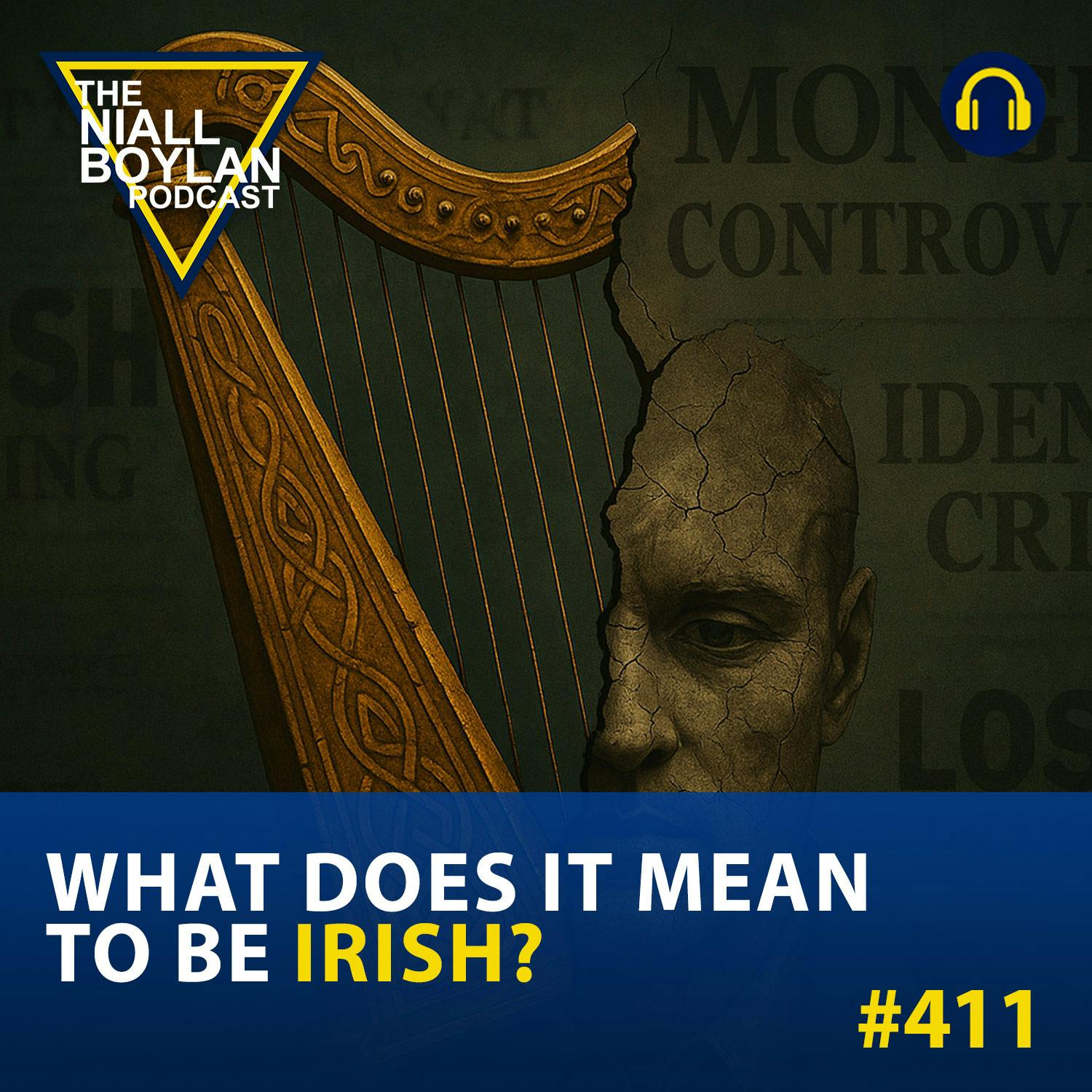
Ep 411#411 What Does It Mean To Be Irish?
In this episode, Niall asks: What does it mean to be Irish today — and are we losing that identity? The conversation was sparked by a controversial Irish Times article that described the Irish as “mongrels,” challenging long-held ideas about Irish heritage and belonging. The article, inspired by a new RTÉ TV series, argues that Ireland has always been a place of diversity and contradictions — a melting pot rather than a single, pure race.Some callers felt the term “mongrel” was insulting and dismissed as a way to erase what makes Irish culture unique. They argued that Irish identity is rooted in a rich history of music, community, and shared struggle, and that dismissing that as a hybrid mix waters down a legacy that should be defended.Others felt that embracing the idea of Ireland as a nation of many backgrounds is not an insult but a truth that should be celebrated. They said Irish identity has always been evolving — from the earliest settlers to today — and that resilience and adaptability are the real heart of being Irish.Niall reflected that while Irish identity can’t be captured in one label, the debate itself shows how much pride people still have in where they come from — and that maybe the real strength of Ireland is in how it weaves so many stories together.
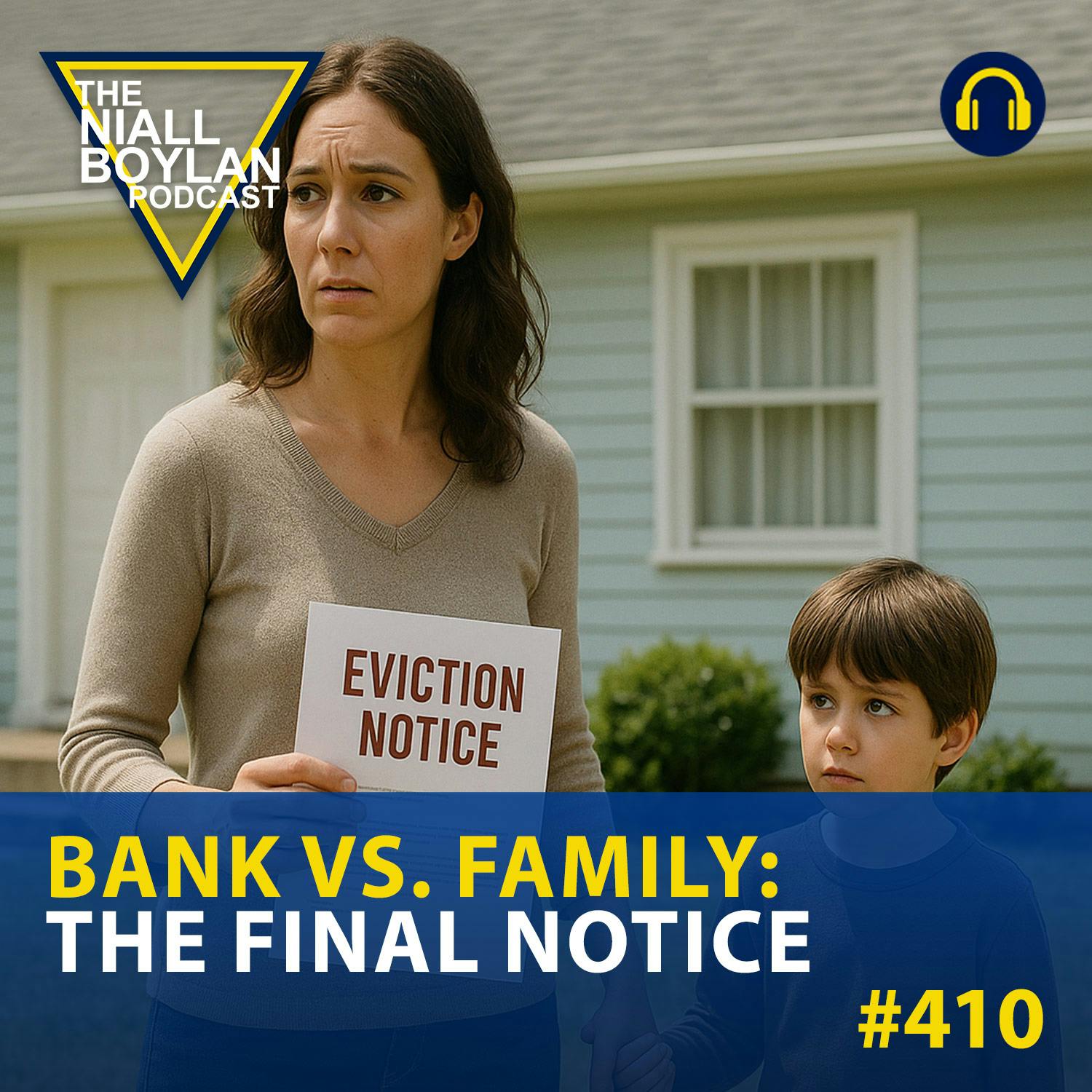
Ep 410#410 Bank vs. Family: The Final Notice
In this episode, Niall takes on a deeply personal and divisive question: Should families lose their homes if they can’t keep up with payments? Dolores, a listener, wrote in with a story that resonates with many. She and her husband bought their house twelve years ago, determined to give their children a secure place to grow up. But after the pandemic cost her husband his job, they fell behind. Despite his return to work and her efforts to make ends meet, they can’t catch up on the mortgage. Now, a letter from the bank threatens to take away the only home their kids have ever known.Dolores wonders if it’s fair that a family like hers could lose everything because of a crisis they didn’t cause. She sees how the bank has its own financial obligations, but she also believes there has to be a better way to help people in real need.Some callers argue that the bank’s job is to protect its investments. They say it’s not about cruelty; it’s about economic survival. Repossessions, they argue, keep the system from collapsing and ensure that those who can’t pay don’t put everyone else at risk.Others say that’s exactly the problem: the system cares more about numbers than people. They argue that banks and governments should find ways to keep families like Dolores’ in their homes—because losing a home doesn’t just hurt one family, it scars a whole community.As the episode unfolds, Niall weighs these opposing views and leaves listeners with a question: What kind of society do we want to be—one that sees homes as assets to protect, or as havens for families to keep?
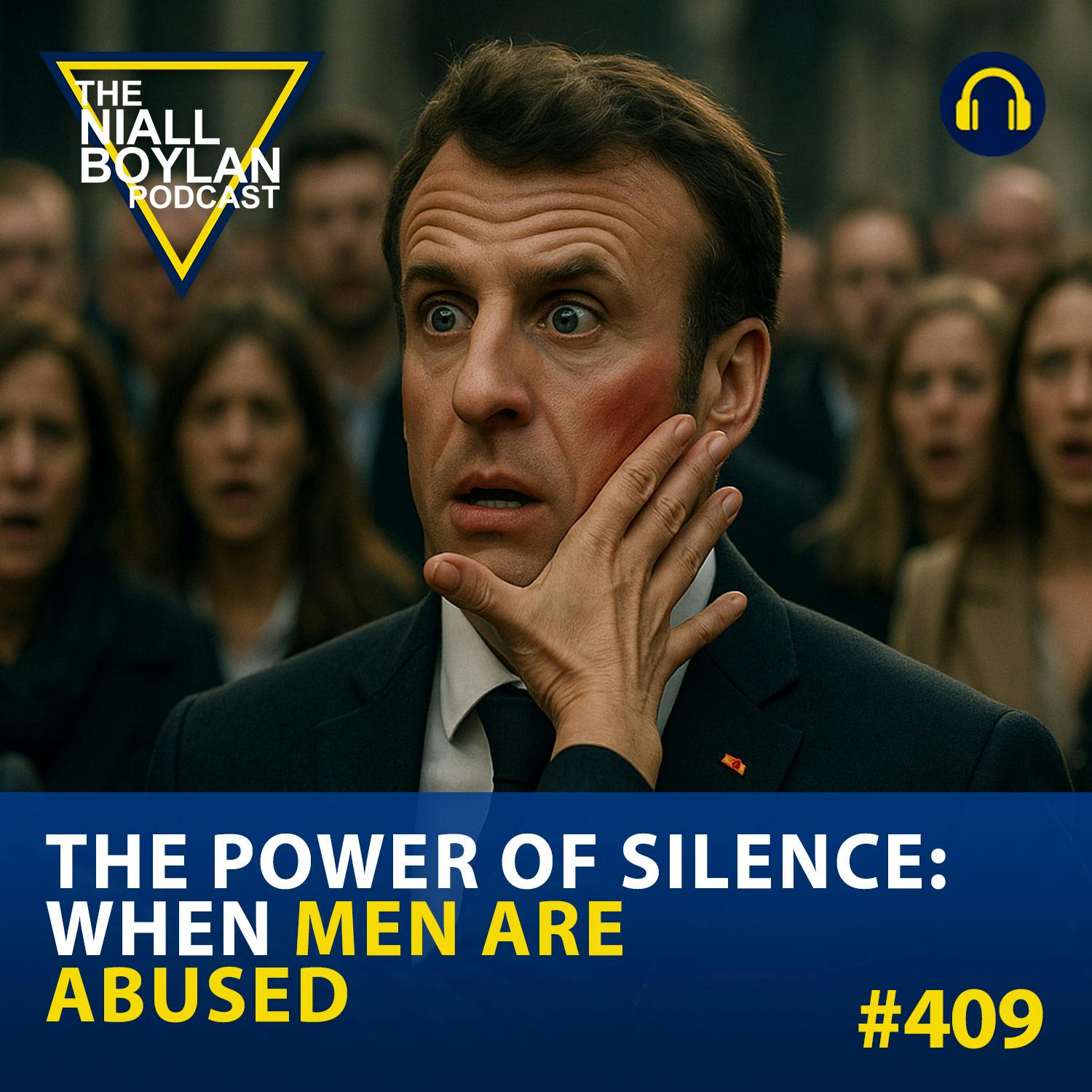
Ep 409#409 The Power of Silence: When Men Are Abused
In this episode, Niall asks: Are men equally the victims of domestic violence? The conversation challenges the long-held belief that domestic abuse is solely a women’s issue and looks at the stigma that stops men from speaking out.Some callers said men absolutely can be victims — and too often their pain is laughed off or ignored. They argued that if a man hits a woman, it’s instantly condemned, but when it’s the other way around, there’s a double standard. One caller shared how men are told to ‘man up’ instead of being allowed to ask for help.Others felt that while men might experience some violence, it’s not the same as what women face. They argued that domestic violence against women is still a far more serious and pervasive issue, and focusing on men’s experiences could distract from the broader crisis.Niall reflected that while domestic violence is complex and often hidden, no victim’s voice should be dismissed — and understanding the full picture is the only way to find real solutions.
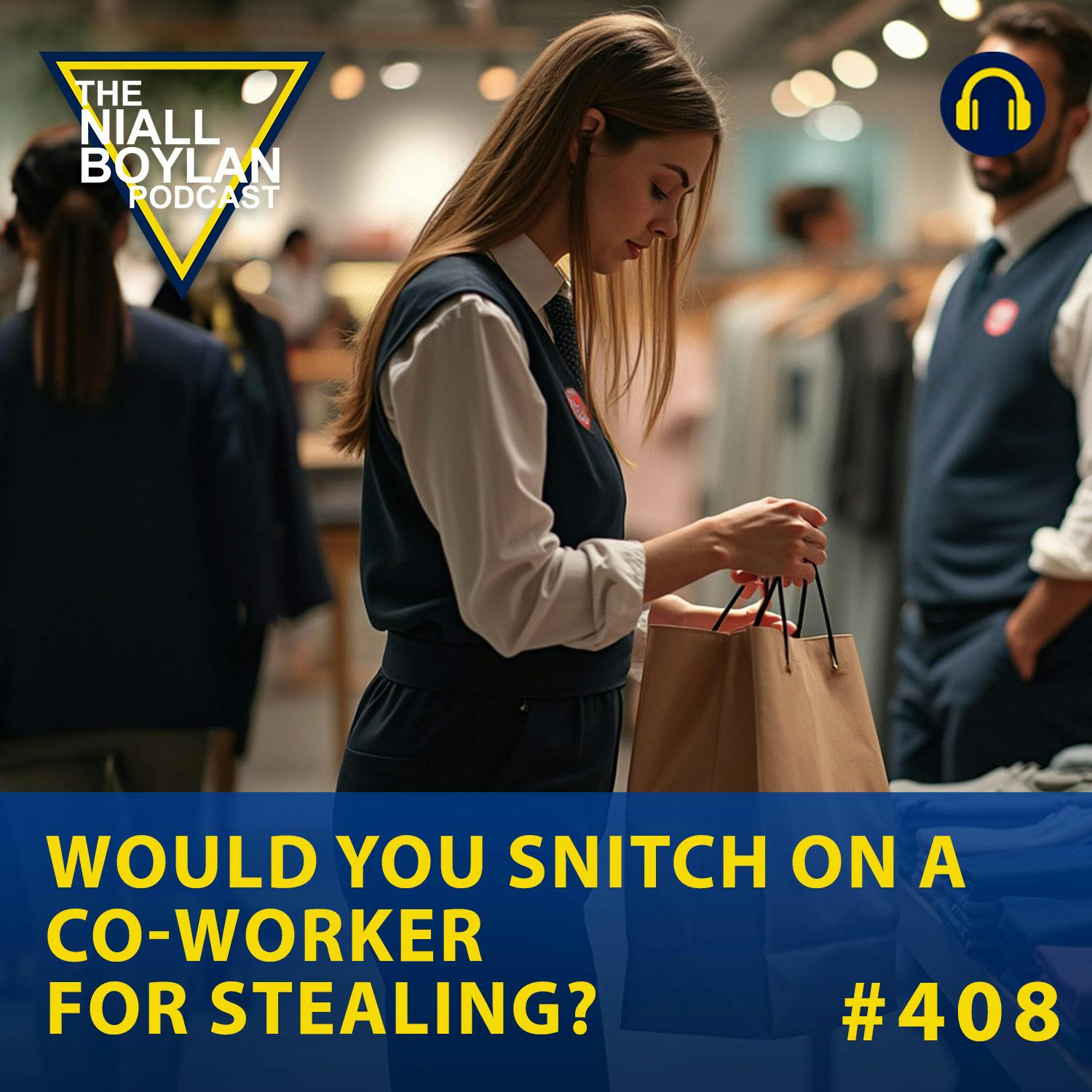
Ep 408#408 Would you snitch on a co-worker if you caught them stealing?
In this episode, Niall asks: What should you do if a co-worker you caught stealing promises to stop — but then you catch them again? The topic comes from an email by a man who saw a colleague slipping store clothes into her bag. She told him she was struggling to pay bills and needed to make ends meet. Out of compassion, he agreed not to tell management if she promised to stop. But now, he’s caught her again — and he doesn’t know if he should keep quiet a second time.Some callers said he had to report her. They felt that once you give someone a chance and they break that trust, you have no choice. Others argued that turning a blind eye only enables more theft and puts everyone else’s jobs at risk.Others understood why he hesitated. They said it’s not black and white — maybe she really is desperate, and reporting her could cost her everything. But even then, they admitted it’s tough to keep covering for someone who isn’t stopping.Niall reflected that these situations test not just your loyalty to a colleague, but your own boundaries and conscience — and sometimes, the line between helping and enabling isn’t as clear as you’d hope.Date:27/05/2025
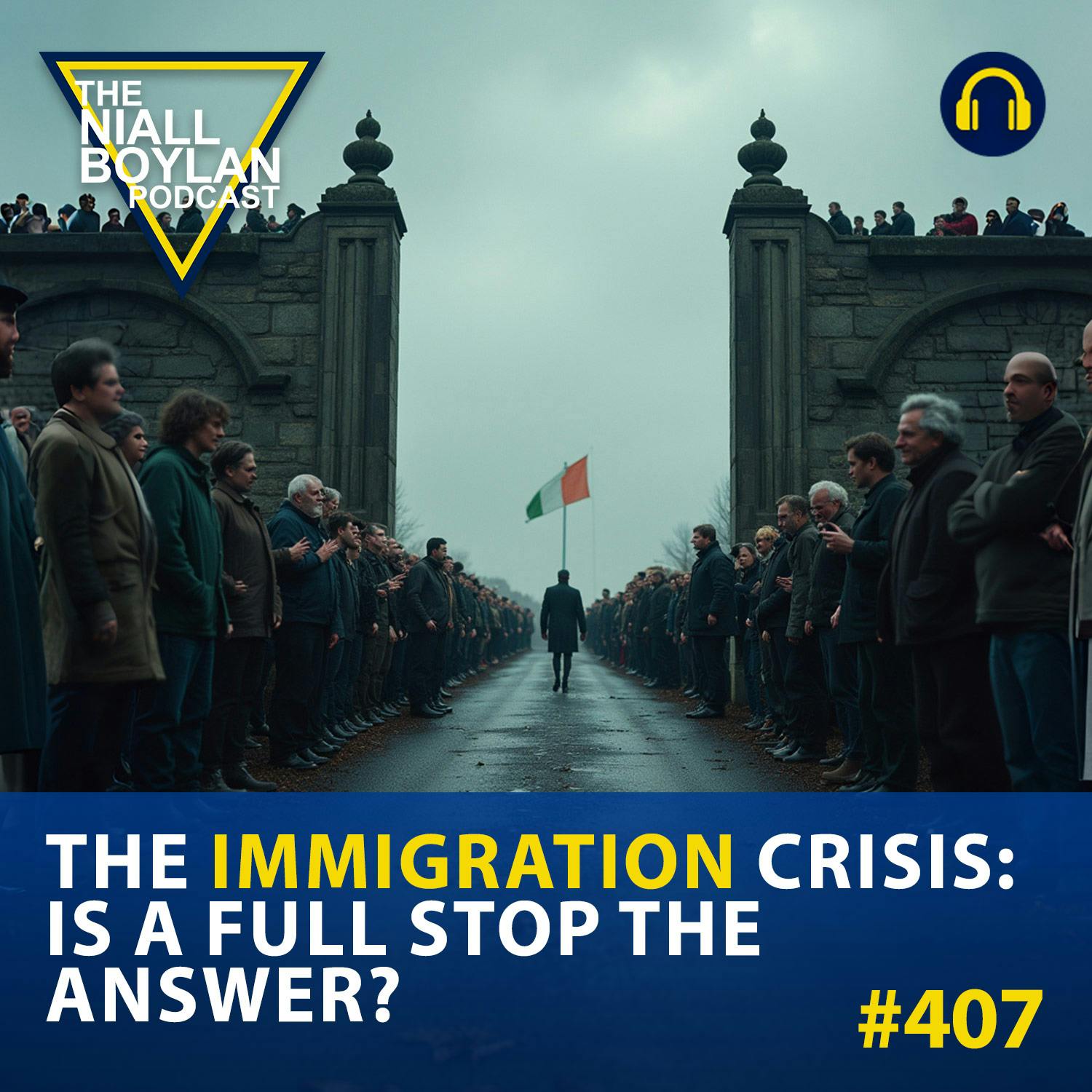
Ep 407#407 The Immigration Crisis: Is a Full Stop the Answer?
In this episode, Niall asks: Should Ireland place a total pause on immigration until we fix the issues at home? While many agree that illegal immigration needs stronger enforcement, a growing number of voices are now calling for a complete halt to all immigration — legal or not — until the country gets its housing, healthcare, and infrastructure crises under control.Some callers supported a full stop. They argued that Ireland is already stretched to breaking point, with hospitals under pressure, families unable to find housing, and social services overwhelmed. In their view, the country needs to prioritise its own citizens before bringing in more people.Others pushed back, saying an outright pause would be un-Irish and ultimately self-defeating. They acknowledged the strain on the system but insisted that shutting the door completely would damage the economy and contradict Ireland’s values. Some stressed that immigration isn’t the core problem — poor planning and mismanagement are.Niall reflected that while frustration is real and growing, the solution may not lie in absolutes — but in whether we can fix what’s broken without turning away from what defines us.

Ep 406#406 Dad’s Dirty Secret: Would You Tell?
In this episode, Niall asks: If you found out your father was cheating on your mother, would you tell her? The question comes from a young woman who emailed the show after catching her dad having an affair — and now she’s torn between protecting her mother and protecting her relationship with her father.Some callers said she absolutely needs to tell her mother. They argued that staying silent makes her complicit, and that honesty is the only way to prevent deeper betrayal. One shared their own experience of exposing a cheating father, saying it was painful but necessary.Others felt it wasn’t her place to get involved. They said the daughter shouldn’t be put in the middle of her parents’ marriage and warned that revealing the affair could cause more damage than it fixes. One caller pointed out that people make mistakes, and rushing to expose it might destroy what’s left of the family.Niall reflected that trust, loyalty, and truth don’t always point in the same direction — and sometimes, the hardest choices are the ones with no clear right answer.

Ep 405#405 Too Young to Drink, Old Enough to Vote?
In this episode, Niall asks whether 16-year-olds should be allowed to vote. The Social Democrats are set to table a bill to lower Ireland’s voting age from 18 to 16 — but is that too young to make informed political decisions? Are today’s teenagers engaged enough to help shape the future of the country, or are they being used as political pawns?Some callers argue that if 16-year-olds can work, pay taxes, and drive mopeds, they deserve a say in shaping policies that will affect them for decades — especially when it comes to climate, housing, and education.Others disagree, saying teenagers are still developing emotionally and intellectually, and shouldn't be handed responsibility over national decision-making. Some feel the proposal is less about civic empowerment and more about political strategy.As the lines light up, the debate gets heated, with strong views on both sides about maturity, responsibility, and what it really means to be ready to vote.

Ep 404#404 Are Men and Women Truly Treated Equally in Society?
In this episode, Niall asks a hard question that many are afraid to voice: Are men and women truly treated equally in modern society? The discussion is sparked by an email from a male listener who says he was passed over for a management promotion in favour of a woman, despite having more experience and being told he was next in line. According to a friend in HR, the decision came down to gender — his company already had two male managers, and they "needed a woman" to balance the optics.The email raises deep questions about gender quotas, meritocracy, and whether attempts to correct historical imbalances are now causing new forms of discrimination.Some callers believe we are finally seeing long-overdue progress. They argue that women have spent decades fighting for space in male-dominated fields and that occasionally favouring a female candidate is part of addressing past injustice. For them, it’s not about ignoring merit, but correcting systemic imbalance.Other callers strongly disagree, saying equality should never come at the expense of fairness. They feel gender quotas are increasingly being used to justify hiring decisions that overlook the most qualified person — and that this silent shift is leaving many men feeling sidelined and voiceless.

Ep 403Unsupervised Learners: A Shortcut to Danger? Episode 403
In this episode, Niall asks: Should learner drivers be allowed to drive unaccompanied? The debate heats up after Fianna Fáil TD Cathal Crowe suggested that current rules — which require learners to be accompanied by a fully licensed driver — are too restrictive, especially for students and young people living in rural areas.Supporters of relaxing the law say it’s a practical move. In rural Ireland, public transport is limited, and many young people are left stranded or dependent on others for the simplest tasks — from getting to work, to attending college, or even visiting the GP. They argue that responsible learner drivers, especially those with some experience or awaiting a delayed test, should be trusted to drive alone under certain conditions.On the other hand, critics warn that relaxing the law could be dangerous. They argue that L-plate drivers lack the experience and judgment to drive solo, and the current system exists for a reason — to protect everyone on the road. Some callers highlight the increase in road deaths and say safety should come before convenience. If learners want independence, they say, they should wait until they pass the test.This episode weighs freedom against responsibility and rural need against national safety. Where do you stand?
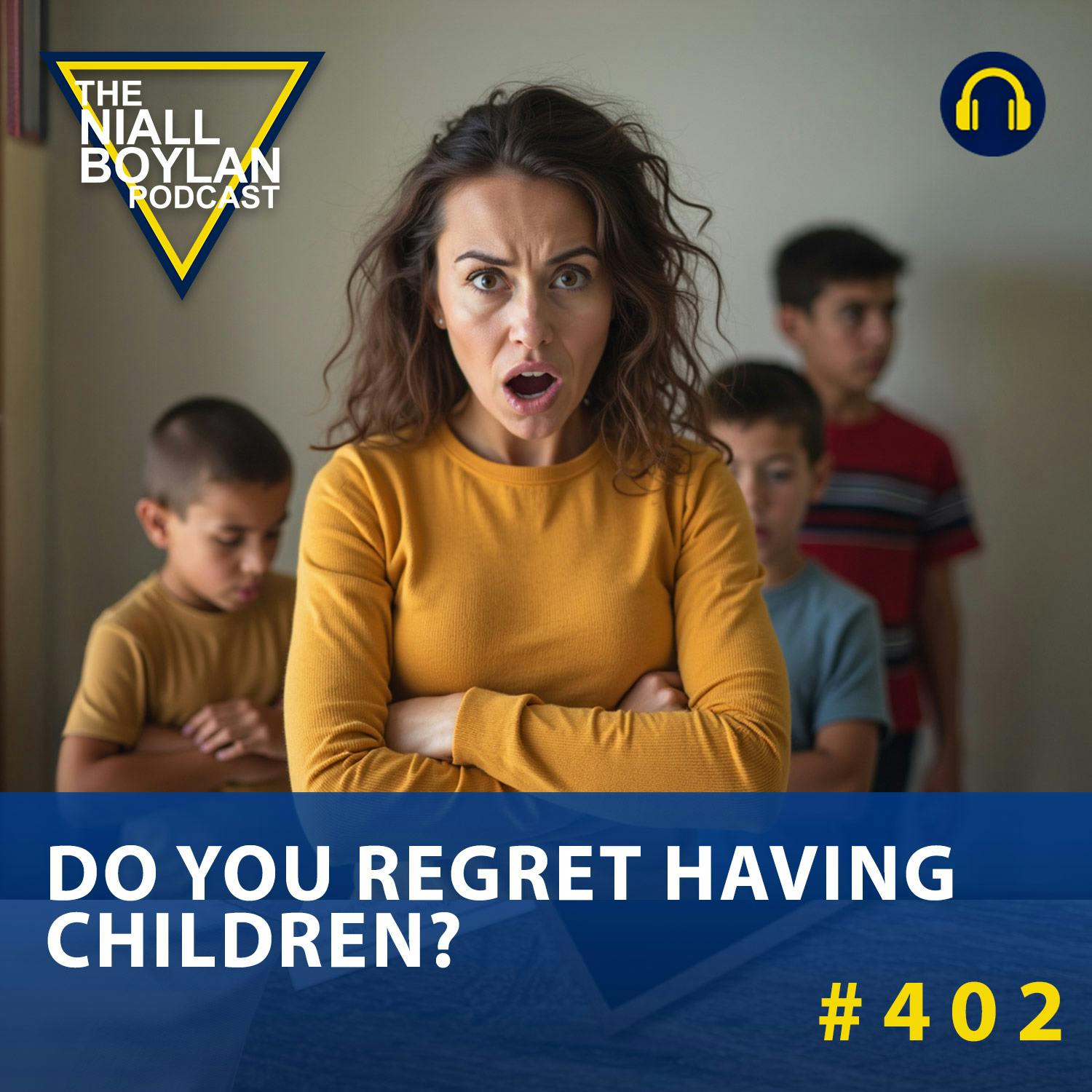
Ep 402Do you regret having children? Episode 402
In this episode, Niall explores a deeply taboo question: Do people ever regret having children? It's a topic most parents are too ashamed or afraid to speak about publicly—but for some, the feeling is real.The conversation begins with an email from a listener who admits they love their children but quietly wonder what life might’ve looked like without them. The exhaustion, financial strain, loss of freedom, and relationship breakdowns have left them questioning whether parenthood was the right path.Callers respond with brutal honesty.Some say it's a thought they've had late at night when the pressure becomes too much. They talk about how parenthood isn’t always the joyful, fulfilling journey it’s made out to be—especially when support is lacking or when it comes at the cost of identity and dreams.Others are outraged by the very idea, calling it selfish or ungrateful. To them, children are a blessing, not a burden, and regret is a luxury some can't afford to entertain. They believe that even in hard times, the love and purpose parenting brings outweighs any fleeting doubts.This episode pulls no punches. It's raw, emotional, and brutally honest—shining a light on one of the last parenting taboos.Date:14/05/2025

Ep 401Would You Pay Illegal Migrants to Leave? Episode 401
In this episode, Niall asks: Should Ireland pay illegal migrants to leave the country? The discussion comes after Donald Trump announced plans to offer flights to help undocumented migrants “self-deport,” warning that those who refuse would face the full force of the law. Should Ireland consider a similar approach—offering cash incentives for voluntary departure—or stick to straightforward deportation?Callers were split. Some argued that offering a one-time payment could save taxpayers money in the long run by avoiding lengthy legal battles, appeals, and costly accommodation. They said it allows people to leave with dignity while relieving pressure on housing and public services.Others were furious at the idea of rewarding illegal behaviour, insisting it would send the wrong message and attract more people hoping for a payout. “Break the law and get paid for it? That’s madness,” one caller said.The debate touches on national priorities, border control, and the ethics of migration enforcement. Should compassion guide policy—or common sense?Date:13/05/25

Ep 400The Breast Is Yet to Come: Embracing Public Feeding Episode 400
In this episode of The Niall Boylan Podcast, we’re asking: Should mothers be free to breastfeed anywhere they choose—or should there be limits?The conversation stems from a viral post showing a mother breastfeeding her baby in public with the caption challenging people to stop demanding mothers be “respectful” while feeding their child. While breastfeeding is legal in public across many countries, including Ireland, mothers still face social stigma, judgmental stares, and even harassment for doing something as natural and necessary as feeding a baby.Niall invites listeners to weigh in on whether society should normalize public breastfeeding or if discretion is still necessary in certain settings.Some callers felt mothers should be able to breastfeed absolutely anywhere, without shame or pressure to hide. They argued that feeding a baby is a human right, not a display of indecency—and that people who are uncomfortable need to grow up and mind their own business.Others felt there should be some boundaries. While supportive of breastfeeding, they said it should be done with “consideration,” like using a nursing cover or opting for private spaces when possible. For them, it’s about respect for others in shared public areas, not denying a baby its needs.

Ep 400Dr. Marcus de Brun: The Level of Incompetence Could Only Be Described as Manslaughter
Dr. Marcus de Brun joins Niall Boylan to expose what he calls a dark chapter in Ireland’s COVID-19 response—one marked by censorship, coercion, and what he describes as “manslaughter in slow motion.”A former GP and former member of the Irish Medical Council, de Brun now faces the possible loss of his medical licence. “I’ve been accused of misconduct—not for hurting patients, not for negligence—but for saying things the government didn’t like,” he says. His so-called misconduct? Speaking out—on radio, in articles, and at protests—against what he saw as reckless and unethical pandemic policies.He paints a damning picture: hospital patients, untested, were transferred into nursing homes; diagnostic testing was pulled; GPs were told not just to follow guidelines, but to promote them. “You want to know how to conduct a mass killing of vulnerable people?” he asks. “Start by cutting off diagnostics and dump untested patients where they’re weakest.”De Brun says he initially complied with the vaccination programme for the most vulnerable, but he drew a firm line when it came to children. “Over 70,000 cases in children, and not one single fatality. And yet they told me if I didn’t inject children, I’d be suspended. That’s not science—that’s tyranny.”He explains the mechanism of the mRNA vaccine in sobering terms: “This isn’t a vaccine. It’s a piece of genetic code wrapped in fat that hijacks your cells. There’s no dosage control. No off switch. Any cell in your body can take it up—and start producing spike protein.”What’s more alarming, he says, is that this technology isn’t just new—it’s a game changer for Big Pharma. “If a drug company like Pfizer can get your body to produce the drug inside you, they don’t need factories. They don’t need staff. You become the factory. And there’s no product control, because the process is happening in you—not in a lab.”He warns that this opens a dangerous frontier in medicine. “What they’re playing with—human genetics—is highly dangerous and should be stopped. These vaccines should be completely withdrawn.”And why were doctors barred from trying alternative treatments? His answer is blunt: “The vaccine needed emergency use approval. And under that system, there can’t be any alternative treatments. That’s why we were gagged. And the Medical Council became the enforcer.”He adds: “The only explanation I can come up with is the influence of large conglomerates or corporations. That’s why the general public were denied access to potential treatments. And the level of incompetence in the nursing homes… could only be described as manslaughter.”De Brun says he’s not alone. At least a dozen other GPs are under investigation for similar “offences,” including one struck off for refusing to administer the vaccine and another disciplined for simply putting up a poster in his waiting room advising caution. “None of us harmed a patient,” he says. “Our mistake was speaking.”He believes the Irish media helped suppress dissent. “RTE never called again. They took the state’s money and became mouthpieces. People weren’t informed—they were manipulated.”And the contradiction? “92% of healthcare workers didn’t even take the booster last year,” he says. “But they’re still giving it to nursing home residents—many of whom can’t consent. What kind of ethics is that?”As Niall recalls being labelled “anti-lockdown” in a government-funded report, Dr. de Brun reflects on what this was really about. “It was never about public health. It was about control. About power. And now they want us to forget.”When asked whether it was worth it—after losing his practice, facing investigation, and enduring years of silence and depression—he answers plainly: “Ask me after June. If they take my license, they’ll take my livelihood. But they won’t take what I know to be true.”This is a conversation the system hoped you’d never hear—and one that still demands answers.

Ep 399#399 How Much Do You Make? Soon Everyone Will Know
In this episode, Niall asks: Would knowing your co-worker’s salary make the workplace fairer – or just more toxic? The discussion is sparked by the EU’s new directive on pay transparency, which will soon require companies to publish salary ranges for advertised roles and allow employees to request the salary range for their own positions.This move, aimed at reducing the gender pay gap and promoting fairness, is set to challenge one of Ireland’s last taboos: openly discussing pay. Under the directive, employers will also be banned from asking candidates about their pay history—an effort to prevent lowball offers and empower jobseekers. While many praise the transparency as a step toward equality and negotiating power, critics argue it could lead to resentment, tension, and unnecessary workplace drama.Callers were split on the issue.Some welcomed the change, saying salary secrecy allows inequality to flourish unchecked. They argued that transparency would empower employees—especially women and younger workers—and ensure people are being paid fairly for the same work.Others warned that revealing salaries would sow division, resentment, and jealousy in the workplace. They felt that pay often reflects experience, skills, or negotiation—not just job title—and feared salary comparisons could fuel bitterness instead of cooperation.Niall concluded by acknowledging the deeply personal nature of salary discussions in Ireland, but noted that greater transparency is now inevitable. Whether it leads to a fairer workplace—or a more fractured one—remains to be seen.

Ep 398#398 Pointless Protests: Is the Government Listening?
In this episode, Niall asks: Do protests still have the power to make a difference—or are they being ignored? The discussion follows last weekend’s enormous demonstration in Dublin, where tens of thousands flooded O’Connell Street in a grassroots protest against Ireland’s immigration policy.Despite the protest's size, it received minimal media attention and no formal response from the government, leading many to question whether public demonstrations can still force change. Unlike the usual state-funded rallies or trade union-backed marches, this protest had no political party or media machine behind it—just ordinary people voicing their frustration.The demonstration was framed as a tribute to the 1916 Easter Rising, with protesters marching in memory of those who gave their lives for Irish freedom. But for many, it also served as a sharp critique of modern Ireland’s direction—highlighting issues like mass immigration, housing shortages, rising cost of living, and what many see as a government out of touch with its people.Some callers felt the protest marked a turning point, showing that public anger is growing and that change could be coming, even if not immediately. They believe such mass mobilisation is essential to send a message to the government and inspire more people to speak out.Others weren’t so sure. They argued that without political organisation or action at the ballot box, protests alone won’t make a difference. While powerful in spirit, they fear these events are easily dismissed by those in power unless voters follow through with change at the polls.
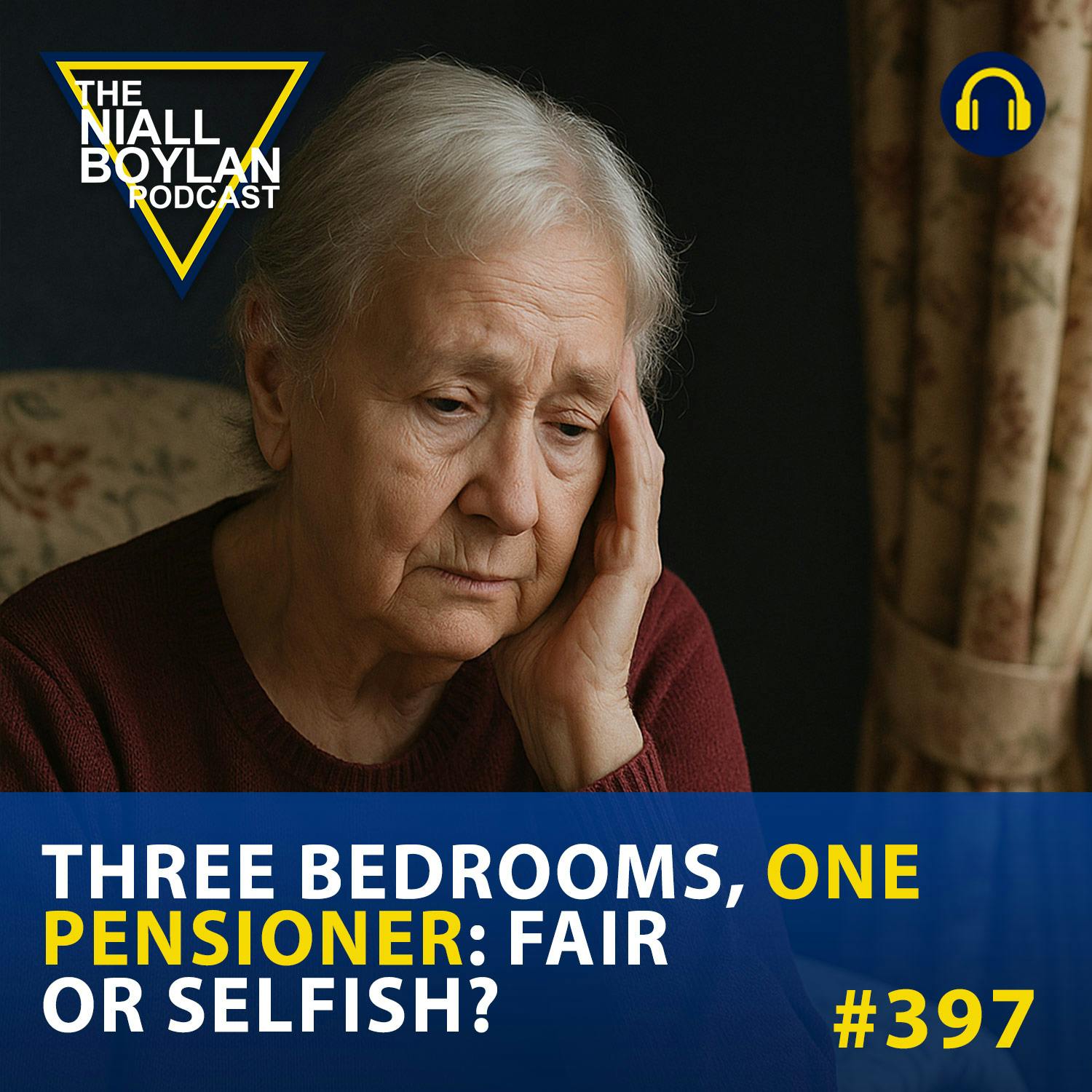
Ep 397#397 Three Bedrooms, One Pensioner: Fair or Selfish?
In this episode, Niall asks: Should older people living alone in three-bedroom council houses be required to downsize to make way for younger families?As Ireland’s housing crisis deepens, the question of how social housing is allocated has sparked a new debate. With growing numbers of families stuck in emergency accommodation and a severe shortage of larger homes, is it reasonable to ask elderly tenants to move into smaller properties when their housing needs have changed? Or is it unfair to expect someone to leave the home they’ve lived in for decades?Some callers think it’s a necessary step in managing scarce resources. Council housing should be based on need, not comfort. If someone is occupying a home that no longer fits their situation, it’s only fair to make room for families who desperately need space. The state should provide incentives or suitable alternatives like one-bedroom bungalows or retirement communities to support the move.While other callers feel it’s cruel and disrespectful to push older people out of the homes they’ve built their lives in. Many have lived there for decades, raised families, and maintained their communities. Forcing them out now feels like a punishment. Moreover, the lack of appropriate downsized housing makes this idea unrealistic and unjust.