
The Niall Boylan Podcast (They Told Me To Shut Up)
1,000 episodes — Page 7 of 20

Ep 592#592 Marriage Before the Mattress, No Shame?
Niall is joined by Ben Scallan from Gript Media for a wide-ranging conversation about the quiet but noticeable rise in Christianity among young people across the world — and how changing attitudes to faith are colliding with modern ideas about sex, identity, and self-worth.The discussion was sparked by comments made on Piers Morgan Uncensored, where American right-wing political commentator Nicholas Joseph Fuentes revealed he is still a virgin at 27, saying he is waiting until marriage. While Fuentes himself is a deeply controversial figure and not someone many would see as a role model, his admission ignited a fierce online reaction, with some branding him a “loser” for abstaining from sex.Putting personalities and politics to one side, Niall and Ben ask the bigger question: is there anything sad, strange, or shameful about choosing to wait until marriage to have sex? Or has a culture that once promoted sexual freedom become oddly intolerant of those who opt out?The conversation explores why more young people are turning back towards Christianity, tradition, and structure in an era of dating apps, hookup culture, and rising loneliness. Is abstinence a meaningful personal or spiritual choice — or is it seen as outdated and regressive in modern society? And why does someone else’s private decision about sex provoke such strong public judgement?A thoughtful discussion about faith, freedom, judgment, and whether true progress means allowing people to live by values that don’t always align with the mainstream.

Ep 591#591 Bah Humbug Bosses. No Christmas Bonus
Niall opens the phone lines to callers today after an email from a frustrated father of two who says a recent change in management at his workplace has led to the scrapping of the annual Christmas bonus. For him, it’s more than just money — it’s about recognition. “It’s stingy and shows a lack of respect for staff not to give at least a week’s extra wages at Christmas,” he writes.So is he right?On the programme, Niall explores whether a Christmas bonus should be seen as a goodwill gesture — or a basic expectation, especially at the most expensive time of the year for families. In many countries including Greece, Portugal, Spain, Italy, Austria, Slovenia and others, Christmas bonuses are either legally required or firmly embedded through collective agreements. Supporters argue these payments acknowledge rising living costs, reward loyalty, boost morale, and show that employers value the people who keep their businesses running.But there’s another side to the debate. Opponents say bonuses should reflect performance, not the calendar. Small and medium-sized businesses in particular argue that mandatory bonuses could put jobs at risk, reduce flexibility, or force employers to cut back elsewhere. Others point out that if a bonus becomes a legal obligation, it stops being a “bonus” at all — just another wage cost.So where do you stand?Is removing a Christmas bonus a sign of corporate stinginess and disconnect from staff — or a necessary business decision in uncertain economic times?And should employers be legally obliged to pay a Christmas bonus, or should it remain discretionary?📩 WhatsApp your thoughts to 085 100 22 55

Ep 590#590 American Tourists: The Social Media Visa Test
Is screening tourists’ social media legitimate security — or blatant authoritarianism?In this timely episode, host Niall sits down with American-born social commentator Karl Deeter to unpack the Trump administration’s controversial new proposal to make foreign tourists hand over up to five years of social media history before they can enter the United States. The idea, part of expanded immigration screening, would apply even to visitors from countries that currently travel visa-free — including those using the Electronic System for Travel Authorization (ESTA). ABCSupporters argue this sweeping vetting is a sovereign right — that the U.S. must do whatever it takes to protect national security and public safety. Critics, though, warn it smacks of authoritarian surveillance, chilling free speech by judging travellers on their online views or political expressions. South China Morning PostNiall and Karl dig into the implications for travellers, privacy, free expression, and global perceptions of American openness. Expect sharp analysis on questions like:What exactly would tourists be required to disclose? ABCCould this chill legitimate criticism of U.S. policy or culture abroad? mintIs this really about security, or is it a political tool?With Niall’s cynical edge leading the conversation, the episode asks listeners to confront the heart of the issue:👉 “To visit the U.S., are you willing to bare your social media history — even if some posts might offend American sensibilities?”A provocative, globally relevant discussion on freedom, travel, and how far governments should go in policing online life before you even board a plane

Ep 589#589 Digital ID: Protecting Kids or Tracking Adults?
In this episode, host Niall dives into the government’s newly announced Digital Wallet and Age Verification Pilot, a scheme framed as a major step in protecting children online. But Niall isn’t buying the whole narrative. While he agrees that under-18s need better safeguards, he questions whether this “robust age-verification tool” is really just a backdoor for an EU-style digital ID.Joining him are two key guests:Patrick O’Donovan, Minister for Communications, who lays out the government’s plans for a nationwide pilot, the technology behind the digital wallet, and the legislation set to follow. He insists it’s all about child safety, limited data-sharing, and empowering families online.Paul Treyvaud, social commentator and privacy hawk, who interrogates the unintended consequences—mission creep, data centralisation, and whether citizens should trust any system that links identity, login access, and government notifications in a single app.With Niall playing the sceptic, the conversation asks the uncomfortable questions politicians tend to avoid:Who controls your digital identity?How much personal data is too much?And once a national digital wallet exists, what stops it from expanding?As always, listeners take centre stage. Niall opens the phone lines with the question at the heart of the debate:👉 “Are you willing to sign up for a digital wallet or ID in the name of protecting children?”

Ep 587#587 The Burqa Ban: Should Ireland Copy Portugal?
On today’s episode host Niall opens the lines to listeners for a lively and thought-provoking discussion on a headline story that’s dividing opinion across Europe.Portugal has just joined Switzerland and eight other European nations in banning the burqa, niqab, and other cultural or religious face coverings in public spaces. The move has sparked intense debate: is it a necessary step toward social cohesion and security, or an unnecessary intrusion into personal freedom?Niall dives into the background of Portugal’s decision, exploring how the Portuguese government justified the ban amid concerns about integration, public safety, and the visibility of women in public life. Supporters say the measure promotes open communication and ensures that everyone is identifiable in shared spaces. Critics, however, argue that Portugal—traditionally seen as socially liberal—may be drifting toward policies that marginalise minority groups and misunderstand the cultural importance of these garments.#Throughout the show, Niall invites callers to share their stories, fears, frustrations, and hopes. Should Ireland follow Portugal’s lead and implement its own ban on cultural face coverings? Or should a modern, pluralist Ireland always prioritise freedom of expression, religious belief, and cultural diversity?Expect passionate voices on both sides, including:Arguments For a BanPublic safety & identification: Some callers argue that full face coverings make identification impossible in public buildings, banks, courthouses, and airports.Social cohesion: Others say open-face interaction is vital for building trust in communities.Women’s rights concerns: A few believe these coverings may be symbols of oppression in certain contexts and that banning them supports gender equality.Arguments Against a BanReligious and cultural freedom: Many callers insist that people must be free to express their identity and faith.Slippery slope: Some worry a ban sets a precedent for restricting other forms of cultural expression.Marginalisation: Critics fear such laws target already vulnerable minorities and could deepen social divides rather than heal them.Join Niall for honest, unpredictable conversation—and have your say.Should Ireland ban cultural face coverings?

Ep 587#588 Facial Recognition on Every Corner?
On this episode Niall talks about : The British government is preparing to introduce next-generation surveillance cameras—systems engineered not only to capture images but to analyse movements, behaviour, and even emotional states in public spaces. Supporters say this leap in technology could revolutionise public safety: detecting suspicious activity before it escalates, identifying individuals who may be at risk of self-harm, and helping police respond faster and more effectively. But critics argue that this crosses a fundamental line—replacing human judgment with algorithms and turning every citizen into a potential subject of monitoring.Across the UK, facial recognition cameras are already widely deployed, sparking repeated legal battles and public outcry. Meanwhile in Ireland, the debate has been far more heated. New legislation is moving forward that would permit An Garda Síochána to use facial recognition only in specific, retrospective investigations—for example, to identify suspects after a serious crime has already occurred. Crucially, this does not include permission for real-time surveillance on the streets. But many privacy advocates warn that this “limited introduction” could be the first step toward normalising broader use of the technology over time.Tonight, Niall digs into the heart of the argument—here are some of the pros and cons raised:Pros of Advanced Surveillance TechnologyCrime Deterrence: The presence of intelligent cameras could discourage criminal behaviour in high-risk areas.Faster Investigations: Facial recognition can help solve crimes that would otherwise take weeks or months.Locating Missing Persons: Advocates say such systems could help find vulnerable people quickly, including children or those with dementia.Suicide Prevention: Emotion-detecting algorithms might alert authorities to individuals showing signs of distress in public spaces.Resource Efficiency: With stretched police resources, automated systems could monitor large areas more efficiently than humans.Cons and ConcernsMass Surveillance: Critics argue this creates a society where everyone is constantly monitored, regardless of whether they’ve done anything wrong.Privacy Erosion: Once cameras can read emotions and behaviour, many feel the line between security and intrusion disappears entirely.Algorithmic Bias: Facial recognition has a documented history of misidentifying women and people of colour, raising concerns about wrongful suspicion.Data Security Risks: Storing sensitive behavioural and biometric data could make the public vulnerable if breaches occur.Mission Creep: Even if Ireland starts with retrospective-only use, many fear it could slowly expand into real-time monitoring—just as it did elsewhere.Lack of Accountability: There are concerns about who controls the data, how it’s used, and what oversight exists to prevent misuse.Would you accept facial recognition cameras on public streets if it meant more crimes were solved?Or is this a line Ireland should never cross, no matter the benefits?Expect big reactions, strong opinions and callers who won’t hold back—from those demanding safer streets to those warning about the rise of a surveillance state. And as always, Niall is right in the thick of it, pushing back, asking questions, and challenging every assumption along the way.

Ep 585#585 Ireland & the EU: Blessing or Burden?
On today’s episode, Niall sits down with Cormac Lucey, Economics Columnist with The Sunday Times (Ireland), for a frank and provocative conversation about the future of the European Union — and what it means for Ireland.Recent comments from Elon Musk and Donald Trump have reignited debate about whether the EU is heading for economic decline and social fragmentation. Are these warnings grounded in reality, or are they exaggerated doom-scrolling? And more importantly: how vulnerable is Ireland if the EU weakens — or how much do we stand to gain if it strengthens?Niall and Cormac explore:💶 The economic pros and cons of EU membership for Ireland — from trade access and corporate tax challenges to regulation, migration, and energy.🏛️ How Ireland’s social policies reflect wider European trends, including the government’s new campaign encouraging adult children to move back in with their parents.🏠 Inspired by a recent listener message and Niall’s own tweet, the discussion also looks at what multigenerational living says about the cost of living, housing shortages, and whether the Irish social contract is starting to fray.🇪🇺 Could the EU really “collapse” economically or socially? What would that look like? And is anyone — including Ireland — prepared for that possibility?Listeners join the conversation with messages on WhatsApp as Niall asks:If your 30- or 40-year-old child wanted to move home, would you see it as an inconvenience — or would you welcome it?Is resistance to this shift selfish, or simply honest?A wide-ranging chat on economics, society, politics, and the future of Ireland in a changing Europe.

Ep 586#586 Mam, I’m Moving In… Again
On today’s show, Niall dives into one of the most talked-about government ads in years — a new TV campaign encouraging adult children to move back in with their parents.Is this a compassionate message about family support, or a not-so-subtle admission that housing has become completely unaffordable?This episode takes on the debate from both angles:Housing Crisis Reality:Is the government using family homes as a pressure valve instead of fixing supply, affordability, and planning?Family Dynamics:If your 30- or 40-year-old wanted to move home, would it warm your heart — or turn your life upside down?Niall opens the phone lines and hears powerful, funny, and honest stories from callers who have lived through it — some who welcomed their kids back, and others who couldn’t imagine it.He’s also joined by election candidate Elaine Mullally, who gives her take on the ad, the housing policy behind it, and whether this is a realistic solution or political window dressing.A lively, relatable, and sometimes emotional debate about homes, families, and the pressures shaping modern Ireland.
Ep 583#583 Does the 3-Day Wait Still Make Sense?
In this episode, Niall sits down with Eilís Mulroy for an in-depth conversation about one of the most contentious aspects of Ireland’s abortion legislation: the mandatory three-day waiting period. Drawing on new data from the Irish Family Planning Association (IFPA), Niall and Eilís unpack the organisation’s findings that there is “no scientific support” for imposing a delay on anyone seeking abortion care.They explore the IFPA’s 2024 report, which shows that 98% of clients proceeded with an abortion after the waiting period, undermining claims from anti-choice groups that the delay changes minds in significant numbers. Eilís discusses how these findings align with international medical guidance—including recommendations from the World Health Organisation and the UN Committee on the Elimination of Discrimination against Women, both of which have criticised mandatory delays.Together, they examine how the waiting period contributes to stress, stigma, and practical hardship for pregnant people—impacting confidentiality, work, childcare, transport, and those suffering severe pregnancy sickness. They also look at how the measure frames women as incapable of making autonomous healthcare decisions, despite established medical ethics around informed consent.This thoughtful and timely conversation explores what the data really shows, why experts want the waiting period made optional, and what the future of reproductive healthcare in Ireland could look like.

Ep 584#584 Impartiality at Risk: RTÉ’s Stand
Today on the show, Niall dives into one of the most heated cultural and political debates of the week: RTÉ’s decision to boycott the Eurovision Song Contest while Israel remains a participant. The national broadcaster has confirmed it will neither take part in nor air the contest—a move that has sparked strong reactions across Ireland.Niall breaks down the arguments for and against the boycott. Supporters say RTÉ has taken a principled stand against human rights abuses and that taxpayer-funded institutions shouldn’t legitimise countries involved in serious international controversies. Others counter that RTÉ, as a public service broadcaster, should remain impartial, avoid political entanglements, and continue to participate in cultural events like Eurovision regardless of global tensions.Listeners join the conversation, with callers sharing their views on whether this decision reflects Ireland’s values—or whether it crosses a line and undermines RTÉ’s obligation to neutrality. Niall also explores why some believe the broadcaster has struggled with perceptions of bias, and what responsibility RTÉ has to maintain public trust.Should RTÉ stick to its stance—or reverse course and return to Eurovision?Have your say.

Ep 579#581 Is Security Worth Your Sanity?
Today, Niall opens the phone lines to tackle a dilemma many people quietly live with but rarely talk about openly.We received an email from a man who has spent twenty years in the same job. He feels undervalued, underpaid, and stuck—but with a wife and two children depending on his steady income, he’s terrified to take the leap and start his own business. His wife says go for it. Some of his friends agree. Others tell him it would be reckless.So Niall asks the listeners: What would you do?And more importantly—how many of us are actually happy in our jobs?Callers share their own stories of staying, leaving, risking, regretting, and rebuilding. From people who walked away after decades to those who held steady for security, we hear real-life experiences, hard-learned lessons, and heartfelt advice for someone standing at a crossroads after twenty long years.If you’ve ever felt trapped, undervalued, or afraid to take the next step, this is the episode you’ll want to hear.
Ep 582#582 Goverment Are Brainwashed By Trans Activists
On today’s show, Niall speaks with Aontú leader Peadar Tóibín following his fiery contribution in the Dáil yesterday — a speech that has already stirred intense debate nationwide.Tóibín claimed that members of the Government have become “brainwashed by trans activists” and that not one of them is willing to answer what he calls a “simple question”: “What is a woman?”In this candid conversation, Niall presses Tóibín on:Why he believes the Government is unwilling to discuss gender definitions openlyWhether phrases like “brainwashed by activists” help or harm public debateThe reaction from Government benches — and why no minister engaged with his questionWhat Aontú wants to see change in schools, healthcare, and legislation surrounding gender identityHow families, women’s groups, and trans advocates have responded to his remarksThis episode dives into one of the most polarising cultural debates of our time. Whether you agree with Tóibín or strongly oppose him, his comments have sparked a conversation the country is now grappling with — and Niall asks the questions listeners want answered.

Ep 579#580 No Energy Credits, No Care, No Shame
This week, Niall sits down with Cllr. Albert Deasy for a frank and timely discussion on a question many Irish households are quietly asking this winter: Why can the Government find another €125 million for Zelenskyy and Ukraine, yet refuse to fund energy credits for its own citizens—citizens who are facing some of the highest energy bills in the world?While €125 million is being sent abroad, 1.8 million Irish households have been left without the €250 energy credit they received last year—just months before an election. The Government argued it wasn’t feasible this time, yet Sinn Féin estimates it would cost roughly €400 million to support every home. They managed it when they needed votes; this year, they didn’t.Niall and Cllr. Deasy unpack newly released FOI documents obtained by Sinn Féin MEP Lynn Boylan, revealing that Government officials actually advised that the case for energy credits was stronger this year than last. Despite this:Average energy bills rose from €1,556 to €1,877—an increase of €321.Costs remain €205 higher than the peak of the 2022 energy crisis once adjusted for inflation.A targeted energy scheme was drafted but withheld from release because it “would not be in the public interest”.Sinn Féin argues the Government has “put politics before people”, ditching credits now that the election threat has passed—leaving families to absorb the €321 shortfall in the middle of a cold winter. Meanwhile, Government leaders claim they are simply “targeting resources” and that universal credits are “not fiscally sustainable”.We ask the real question: Are you avoiding turning on the heating and lights on these cold, dark winter nights? And what does it say about priorities when households are told to tighten their belts while tens of millions more flow out of the country?Tune in for an honest, grounded conversation about bills, politics, and the people caught in the middle.
Ep 578#578 Fortress Ireland or Free-for-All? UNCENSORED
In today’s episode, Niall sits down with journalist and bestselling author Eoin — writer of Vandalising Ireland — to discuss one of the most contentious issues currently shaping Irish politics: the surge in asylum claims entering the Republic of Ireland via Northern Ireland.Justice Minister Jim O’Callaghan recently stated that almost 90% of asylum seekers arriving in the Republic are crossing the border from Northern Ireland. The government has also acknowledged that the majority of these applicants do not meet the criteria of fleeing war or persecution — yet the system is costing taxpayers billions each year.Niall and Eoin explore the uncomfortable reality that only two potential solutions have been put on the table:A border in the Irish Sea, which the UK has ruled out, orThe reintroduction of physical borders and checkpoints between Ireland and Northern Ireland.This raises a difficult national question:Should Ireland sacrifice the long-cherished freedom of movement on the island to curb asylum claims?Niall also opens the phone lines to callers, showcasing the wide spectrum of public opinion — from those who believe a hard border is a necessary step to regain control, to others who fear the political, social, and historical ramifications of reinstating checkpoints in Ireland.A thought-provoking, heated, and honest discussion about sovereignty, immigration, national identity, and the real-world trade-offs facing Ireland today.

Ep 578#579 Drink Driving: Lock ’Em Up?
This week Niall takes calls from listeners — some angry, some sorrowful, some torn — about the holiday-time crackdown An Garda Síochána begins every December: Operation Live-saver. With drink-driving arrests spiking around the festive season, the stakes couldn’t be higher.One caller shared a tragic story: his daughter was killed by a drunk driver, and he demands far tougher consequences — at least three months in jail and a lifetime driving ban. “You know what you are doing and you are intentionally risking other people’s lives,” he says.Are those demands too harsh — or not harsh enough? Should Ireland move from fines and licence suspensions to mandatory jail time and permanent bans for drink-driving?We’ll explore how drink-driving is punished in Ireland today: the legal blood-alcohol limits, typical fines, licence bans and the courts’ standard punishments — but also whether the current system is enough when lives are lost. Then we open the lines to callers and invite personal stories, arguments for fairness, deterrence, and justice.

Ep 577#577 Kids Alone Till 6pm — Is It OK?
Niall opens the lines for a deeply divisive and emotional discussion sparked by an email from a worried listener.She says her next-door neighbour — a single mother of two young children, aged around 11 and 7 — leaves them home alone every weekday while she goes to work, sometimes not returning until after 6pm.The children come home from school, let themselves in, and stay unsupervised for hours. The listener says she tries to keep an eye on them when she can, but she works too. When she approached the mother, hoping for a friendly conversation, she was met with anger and told to “mind your own business.”Now she’s torn.Is this neglect, or just a mother doing her best in impossible circumstances?Should she call the Gardaí — or would that only make things worse?Niall speaks to callers on every side of the debate:Some say children that young should never be left alone, and the Gardaí or social services must be told before something goes wrong.Others argue that childcare is unaffordable, single parents are under huge pressure, and reporting her might destroy a family already struggling.Some callers share their own childhood stories of being left alone and insist it made them independent.Others share chilling experiences where it didn’t end well.And many question the neighbour’s role: Is she being responsible — or interfering?It’s a topic that hits close to home for many families, and today’s callers don’t hold back.📱 Have your say: WhatsApp 085 100 22 55

Ep 576#576 Protecting Children or Policing Everyone?
Australia is set to become the first country in the world to ban under-16s from all social media. At first glance many people will say, “Great — it’s about time!” But how exactly do they plan to enforce it?Under the new system, anyone who wants to create an account on Facebook, Instagram, Snapchat, TikTok, X, YouTube, or any major platform will need to provide government-issued ID.What begins as a well-intentioned effort to protect children could lead to a future where every user must show ID just to go online.So today, Niall asks:Is giving up our online anonymity a reasonable sacrifice to keep children safe — or a step too far?Listeners join the conversation to share their views on privacy, parenting, safety, and where the line should be drawn.📱 Have your say: Text or WhatsApp 085 100 22 55

Ep 574#575 Is It Irresponsible to Post Your Kids Online?
In this episode, Niall is joined by social commentator Elaine Mullaly to unpack a striking new story that has sparked fear, debate, and soul-searching among parents across Ireland.The conversation centres on the Data Protection Commission’s dramatic new advert, part of its “Pause Before You Post” campaign, which warns about the dangers of “sharenting” — the habit many parents have of regularly sharing photos, videos, and personal details of their children online.The ad, which plays out like the start of a horror film, follows a mother and father walking through a shopping centre with their young daughter. As they move, strangers begin addressing the child by name, referencing her birthday, her friends, her football club, and even her training schedule — all information her parents posted publicly on social media.The climax comes when a man casually says:“Ah, back playing football Thursdays, Éabha. Hope your dad picks you up on time for once.”He is then shown scrolling through and saving images of the girl that her father had posted online.The ad has been described as “terrifying,” “eye-opening,” and “the best warning parents will ever see.” Many parents admitted they had never realised just how much personal detail they reveal about their children every day.Elaine and Niall dive into the implications:Are parents unintentionally exposing their children to real-world risks?What rights do children have over their digital footprint?Is sharenting harmless… or is this ad a wake-up call?And Niall opens the lines, asking listeners to weigh in with their views:📞 Is it irresponsible to post pictures of your kids online?Are parents overreacting — or are we not reacting enough?A lively and important discussion about privacy, safety, and the modern pressures of social media.

Ep 574#574 Antisemitism: The Herzog Park Backlash
Niall is Joined by John McGuirk (Gript Media)In this episode, Niall sits down with John McGuirk, Editor-in-Chief of Gript Media, to dive into one of Dublin’s most heated current controversies: the proposal by several Dublin councillors to rename Herzog Park — a small southside park named after Chaim Herzog, the Belfast-born Jewish man who grew up in Ireland and went on to become the 6th President of Israel.The discussion begins with the origins of the debate:A motion raised at Dublin City Council suggests removing Herzog’s name due to objections raised by some councillors about his association with Zionism and his role in Israeli history. CLLR Conor Reddy (People Before Profit) has argued that:“You can’t decouple genocide in Gaza and ethnic cleansing today from Zionism or the colonisation of Palestine over the 20th century. Genocide is an extension of the logic of Zionism. Denaming Herzog Park is about recognising historic crimes and placing ourselves on the right side of history.”But others — including local residents, Jewish groups, historians, and elected representatives — strongly object, arguing that such a move is misguided, historically inaccurate, and risks crossing into antisemitism by targeting Irish-Jewish heritage rather than government policy.Niall and John unpack the story of Chaim Herzog himself:Born in Belfast in 1918 and raised in DublinSon of Ireland’s Chief RabbiJoined the British Army and served in WWIILater became an Israeli military leader, UN ambassador, and eventually Israel’s PresidentRemembered by many as a significant figure in Jewish and Irish historyCriticised by others for his role in Israeli state actions and rhetoric during times of conflictThey explore why Herzog remains a complex and sometimes controversial figure, and whether modern political disputes should reshape how Ireland remembers one of its most notable Jewish-born statesmen.The conversation also broadens to a second debate now emerging:Should Dublin Airport be renamed after a cultural or historical figure — and if so, who? Or is the entire trend of renaming public places creating more division than unity?Throughout the episode, callers join with a range of perspectives:Some support the motion, some see it as performative politics, and others worry about erasing Irish-Jewish heritage in a climate of heightened global tension.This is a lively, thoughtful, and at times passionate discussion about history, identity, memory, and the politics of naming in modern Ireland.

Ep 573#573 Crash or Crime? Should Drivers Go to Jail?
On today’s show, Niall opens the lines to listeners after a heated debate broke out yesterday. One caller argued that any driver involved in a fatal road traffic accident caused by careless driving should automatically face manslaughter charges and go to jail.The comment split the audience. Some listeners agreed, saying Ireland’s penalties for dangerous or careless driving causing death are far too lenient. Others insisted that accidents—while tragic—aren’t always crimes, and that long prison sentences won’t bring loved ones back.Niall asks the tough question:Should a driver responsible for the death of another person in a road traffic accident spend more than 10 years in prison?Is this justice—or is it too extreme?Join the discussion, share your views, and tell us where you stand.WhatsApp: 085 100 22 55

Ep 572#572 No Rush to Reproduce: The New Normal?
On today’s episode, host Niall sits down with Laura Perrin of Gript Media to unpack a tweet that has ignited a storm online.An American influencer sparked outrage among feminists by claiming:“There is a limited window of time for easy, healthy pregnancies. You can start a new career at 50.”Her message—suggesting that having children should take priority over a woman’s career—has reopened a passionate debate about fertility, choice, and modern life.Niall and Laura explore why so many women are waiting longer than ever to start a family. In Ireland, the average age for a first-time mother is now almost 32, up from just 25 in the 1980s—a jump of seven years in four decades. They look at what’s driving this shift: careers, education, economics, lifestyle changes, and societal expectations. Meanwhile, in the U.S., the age is lower at 27.5, raising questions about cultural differences and whether Ireland is heading toward even later motherhood.As the average age rises, birth rates fall—so what does this mean for women, families, and the future of society?Is pursuing a career first empowering, or does it come with hidden costs?And is it fair—or accurate—to say motherhood can be postponed but careers can’t?Join the conversation and share your thoughts.WhatsApp: 085 100 22 55Live at 12pm—don’t miss it.
Ep 569#570 Inside Dublin’s Rent Rise Decision
Coming up live after 12pm today, Niall sits down with Councillor Gavin Pepper to unpack one of the week’s most heated local issues: Dublin City Council’s decision to increase rent for social housing and HAP tenants, along with a planned rise in property tax in 2026.In this episode, Niall explores why the Council voted for the increase, what it means for tenants, and whether the move is truly about fairness—or simply another financial burden on already stretched households. Councillor Pepper offers insight into the vote, the reasoning behind it, and what councillors considered when weighing the decision.Niall also breaks down the background to the story:The Council’s Position: Rising costs of maintaining social housing, ageing public infrastructure, and the need for additional revenue to keep the housing system functional and equitable.The Pros: More funding for essential repairs, upgrades, and long-term housing sustainability; a system that the Council argues will be “fairer” in the long run.The Cons: Tenants facing higher rents during a cost-of-living crisis; concerns that low-income families will feel the strain; and criticism from councillors and community groups who say the increase hits the wrong people at the wrong time.Is the rent rise a necessary step toward stabilising public housing—or a misjudged move that leaves vulnerable residents footing the bill?Have your say during the show.WhatsApp your comments to: 085 100 22 55

Ep 569#571 How Offenders Dodge Full Justice
Today on the show, Niall speaks with journalist and barrister Sarah Ryan about one of the most controversial issues in criminal justice today: mitigating circumstances — and whether it is fair on victims when perpetrators cite drug use, alcohol, mental illness or trauma to reduce a sentence.Together they explore why such defences exist, what legal and moral arguments support them — and whether they can ever be justified when serious crimes are at stake. They’ll examine both sides of the debate:🔹 Why mitigating circumstances are sometimes accepted — arguments around mental illness, diminished responsibility, trauma, addiction or external factors that may impair judgment.🔹 Why many feel these defences undermine justice for victims — concerns that reduced sentences or verdicts of “not guilty by reason of insanity” can trivialise suffering, deny closure, or fail to reflect the harm done.They’ll reference high-profile cases from the last decade where courts accepted such defences or reduced charges — as well as cases where such pleas were rejected, to ask: Do these defences protect the vulnerable — or let dangerous people off too lightly?We want to hear from you. Do you believe mitigating circumstances should ever reduce a sentence for a serious crime — or should accountability always come first?WhatsApp your thoughts to: 085 100 22 55⚖️ Some Recent ExamplesHere are a few recent and well-documented cases that highlight how courts have handled mitigating circumstances — and why they remain controversial:In 2020, a Welsh man named Anthony Williams strangled his wife to death. The court accepted a plea of diminished responsibility, reducing the charge from murder to manslaughter on the grounds of his impaired mental state. He was sentenced to five years in prison — a decision that sparked substantial criticism from domestic-abuse activists who argued the sentence was far too lenient given the severity of the crime. WikipediaIn another illustrative case, Alexander Lewis‑Ranwell was found not guilty of murder by reason of insanity after killing three men during a psychotic episode. The court determined that his mental illness meant he did not know the nature or wrongfulness of his acts. Under legal precedent for “insane automatism,” he was detained under mental-health provisions rather than given a typical prison sentence. doughtystreet.co.uk+1That said — mitigation is not automatic. In the recent sentencing guidelines case The King v Noel David Quigley (2025), the court upheld a three-year sentence for attempted wounding despite arguments about the defendant’s mental-health difficulties. The court emphasised that mental illness does not always justify a reduced sentence: each case must be judged on its specific facts. Judiciary NI+1🎙 What We’ll Be Debating on AirWith Sarah Ryan, Niall will raise tough questions like:Should there be a “hard line” for serious crimes — murder, violent assault — where mitigating circumstances carry little or no weight?Is the legal definition of “insanity” (or “diminished responsibility”) still fit for purpose in 2025 — or does it need reform?What does justice look like for victims and survivors versus for perpetrators with genuine mental-health issues?How do we balance society’s responsibility to treat mental illness — while also protecting public safety and honouring victims’ suffering?

Ep 568#569 The €5k Kids’ Christmas Debate
Niall opens the phone lines today after receiving a striking email from a listener:Her sister is planning to spend €5,000 on her three children this Christmas — money she’s actually borrowing to make it happen. When she challenged her sister, saying it sends the wrong message and teaches the kids they can have anything they want, the pair fell out.The sister fired back:“It’s my money, my children, and none of your business.”So who’s right?Is it irresponsible to go into debt for Christmas, or is everyone entitled to raise their kids as they see fit? And have we all lost the run of ourselves when it comes to Christmas spending?Niall talks to callers who share their own stories, opinions, and family rows on the topic.Text or WhatsApp your thoughts: 085 100 22 55

Ep 567#568 Five Years, No Home: A builders Betrayal
On today’s episode, Niall dives into one of the most shocking and heartbreaking housing stories in Ireland right now — the collapse of the Ringfort Estate development in Rathmoylon, Co Meath, and the desperate families caught in the middle of it.Niall is joined by Áontú leader Peadar Tóibín along with John Ennis and Elma Beirne, one of the couples who paid a deposit for a home in the estate five years ago. Elma, now pregnant, is among the fifteen buyers who signed contracts and paid deposits of €27,500–€30,000 in good faith. Today, only five still hold any hope of seeing those contracts honoured.Despite the houses reportedly being completed and fully connected to utilities, none have been handed over. In 2023, buyers were suddenly asked for an extra €60,000 after the developer, Meathamatic Ltd, blamed rising costs. And now, in a dramatic turn, the company has been put into liquidation following a Revenue audit that uncovered major issues with unregistered construction contracts and a large VAT liability.This week, tensions boiled over when affected buyers — including Elma — were initially blocked from entering the creditors’ meeting in Dún Laoghaire. Peadar Tóibín stood with them as they pushed for answers, demanding to know why the Government refuses to intervene and finish an estate that families have already paid for.Why are completed homes sitting empty? How can a company collapse with buyers’ money tied up inside it? And what responsibility does the Government have when ordinary people are left homeless by failures in oversight?Niall, Peadar, John, and Elma break down the human cost, the political failures, and what needs to happen next so these families finally have somewhere to live.

Ep 567#567 2025: The Year Politics Fell Apart
2025 has been a whirlwind year in Irish politics—depending on where you stand, it’s either been a welcome shake-up or a slow-motion disaster. A new government found its feet only to stumble through a botched presidential election. Immigration and housing remain unsolved crises, the National Children’s Hospital is still unfinished, prisons are overcrowded, and more people than ever say they no longer feel safe.Today, Niall sits down with John McGuirk of Gript Media to dig into the state of the nation:Is there any real hope for change in 2026, or are we staring down another year of political stalemate and frustration?Join the conversation live at 12pm and share your thoughts.

Ep 565#565 Letting Prisoners Home For christmas
On today’s show, Niall is joined by social commentator and restaurateur Paul Trayvaud for a lively and thought-provoking discussion on a topic that returns every December: temporary and early release for prisoners over Christmas.Last year, 138 prisoners in Ireland were granted temporary release during the holiday season, and projections suggest this year’s number may be even higher. With Irish prisons facing chronic overcrowding, there’s growing pressure to release lower-risk offenders early or on short-term licence. But is this the right approach?Niall and Paul explore the complex balance between compassion, public safety, rehabilitation, and the integrity of the justice system.What they dive into:Pros of Temporary or Early ReleaseFamily Reconnection: Allowing mothers and fathers to spend time with their children can strengthen family bonds—an important factor in reducing reoffending.Rehabilitation: Rewarding good behaviour with temporary release can incentivise positive conduct and support reintegration.Prison Overcrowding Relief: Ireland’s prisons are among the most overcrowded in Europe—early release can ease pressure on staff, resources, and facilities.Humanitarian Grounds: For low-risk offenders, especially those nearing the end of their sentence, time at home can be seen as a compassionate and proportionate gesture during the holidays.Cons of Temporary or Early ReleasePublic Safety Concerns: Even low-risk prisoners may reoffend, and any incident undermines trust in the system.Perception of Soft Justice: Some argue it sends the wrong message to victims and the wider public, especially if sentences seem reduced in practice.Inconsistent Monitoring: Temporary release relies on compliance—breaches can occur, and tracking all individuals effectively is challenging.Potential for Inequality: Questions arise over which prisoners qualify and whether the process is applied fairly.Should parenthood be considered a valid reason for release at Christmas? Does freeing up cell space justify releasing people early? And what message does this send about justice, rehabilitation, and community safety?We want your thoughts.📱 Comment on WhatsApp: 085 100 22 55Tune in at 12pm for a robust and engaging conversation.

Ep 566#566 Still Love Him… But Not In Love: What Now?
On today’s episode, Niall dives into one of the most emotionally charged dilemmas we’ve ever received. A 42-year-old mother of three has written in with a heartbreaking confession: she loves her 58-year-old husband as a partner and father, but she’s no longer in love with him. As he has aged and become less fit, she’s found herself feeling less and less attracted to him — something she admits with guilt and confusion.She’s torn between two worlds:#566 Still Love Hi But Not In Love: What Now?Her own happiness, with friends telling her she’s still young enough to start over and find passion again.Her children, all under 15, whose stability and wellbeing she wants to protect.Is fading attraction enough to justify leaving a long-term marriage? Is “still loving him” but not being “in love” a reason to stay? And how much should children’s needs weigh against a parent’s emotional life?Niall opens the lines to callers who bring a wide range of perspectives:🔹 The romantics, who argue that chemistry and attraction matter — and life is too short to deny yourself love.🔹 The traditionalists, who say marriage is about commitment, phases, and riding out the storms — not chasing youthful excitement.🔹 The realists, who believe attraction naturally changes and that relationships can be rebuilt with effort and honesty.🔹 The parents, who say the kids’ stability must come first — and breaking up the family could do long-term harm.🔹 Those who’ve been there, sharing stories of staying… and others of leaving.🔹 And the brutally honest, who say that attraction is a non-negotiable foundation of a relationship.It’s raw, emotional, and thought-provoking — a conversation about aging, desire, family, and the hard choices people face behind closed doors.Join Niall as he unpacks this dilemma with listeners from every walk of life, offering compassion, debate, and a few surprises along the way.
Immigration, Transgenderism, and Economic Realities With Neil Munro
bonusJoin us for a thought-provoking journey into the heart of some of today's most contentious issues as host Niall Boylan engages in a candid conversation with Neil Munro, editor and reporter at Breitbart News. In this episode, they delve deep into the complexities surrounding immigration, transgenderism, and their profound economic implications.From discussing the societal impact of government policies on transgenderism to unraveling the economic motivations behind immigration, Boylan and Munro fearlessly navigate through the nuances of these divisive topics. Munro sheds light on the intricate interplay between government agendas, corporate interests, and societal well-being, offering unique insights into the hidden dynamics shaping our world.Whether examining the economic ramifications of mass immigration or questioning the ethical dimensions of transgender ideology, this episode challenges conventional wisdom and encourages listeners to question the status quo. Tune in to gain a deeper understanding of the forces driving contemporary debates and the underlying truths that often remain obscured.

Ep 564#564 Can Money Really Buy Happiness?
On today’s episode, The Nost Niall dives into one of the oldest questions in the world: does money buy you happiness? Inspired by a listener’s email — and a headline-grabbing story about Elon Musk — Niall opens the lines and invites callers to weigh in.We explore the extraordinary news that Elon Musk could become the world’s first trillionaire. His potential one-trillion–dollar pay packet hinges on monumental targets: delivering one million AI-powered robots and 20 million Tesla cars. If he succeeds, he won’t just be rich — he’ll be the richest person in human history.But what would life even look like at that level of wealth?Is it freedom and fulfilment… or pressure, detachment, and isolation?A listener writes in claiming that people like Musk “don’t even know what happiness is anymore,” arguing that money brings misery, insecurity and boredom, not joy. Today we put that claim under the microscope.Niall and callers explore:The Pros of Extreme WealthTotal financial freedom and the ability to take risksWorld-changing influence — funding science, innovation, charitiesAccess to the best healthcare, education, and securityThe ability to create jobs, shape industries, and push technology forwardNever having to worry about bills, retirement, or sudden expensesThe Cons of Extreme WealthEnormous pressure and public scrutiny — every move analysedDifficulty forming trusting relationshipsA life increasingly removed from ordinary routines and normal joysSecurity concerns, isolation, and the fear of being exploitedThe risk of losing purpose, perspective, or a sense of what “enough” meansSo, does becoming a billionaire — or even a trillionaire — bring you happiness, or does wealth steal more than it gives?Join The Nost Niall after 12pm as he talks to callers, debates the Musk question, and asks:Is happiness something you can buy… or something you might lose on the way to the top?Want to jump in?Send your voice notes and comments via WhatsApp: 085 100 22 55

Ep 564#563 Your Choice? Born Then or Born Now Today
On today’s episode, Niall sits down with journalist David Quinn to unpack a striking new global poll that reveals something surprising: nearly twice as many people say they’d rather have been born in 1975 than today. And in Ireland, the numbers are even more dramatic — 48% versus just 25%.Why are so many of us nostalgic for the past? Are we viewing 1970s Ireland through rose-tinted glasses, or was there genuinely something better about life back then?Niall and David take a deep dive into:Why people might prefer being born 50 years ago:No social media pressures or online comparison cultureA slower, less stressful pace of lifeStronger sense of community and more time spent outdoorsLower crime rates and fewer worries about housingA health service many recall as more personal and efficientAnd why others feel today is the better time to be alive:Instant communication and global connectivityA more robust economy with wider career opportunitiesAdvances in education, science, and technologyLonger life expectancy and huge improvements in healthcareLess material poverty and greater social protectionsIs nostalgia skewing our memory, or have we genuinely lost something along the way? Join us at 12pm as we explore which era truly had it better — the Ireland of ’75 or Ireland today.Want to join the conversation?Send us your thoughts or voice notes on WhatsApp: 085 100 22 55.
Ep 563Lines of Enquiry: The Hidden Stories Behind Ireland’s Most Compelling Cases
Check out GoLoud's brand new Irish true crime series Lines of Enquiry.The podcast is presented by retired Garda detective John Sweetman, who spent decades working on some of Ireland’s most complex and shocking investigations. Each episode revisits a real case from high-profile murders to disappearances that baffled detectives for years.In this short trailer, John shares what listeners can expect from the series and why he’s decided to tell these stories now.Listen to Lines of Enquiry — available now wherever you get your podcasts.Listen here: https://open.spotify.com/episode/3EzGXohKAgAo9iu9ADiHgU?si=5cFEye46T--tg2XYODt4mA&nd=1&dlsi=6056134236a24ed1

Ep 562#562 Is Cash Still King?
Today on the Show: “Cash Is King? Gavin Pepper on Blackouts, Cyber Threats & the Cashless Future”On today’s episode, Niall sits down with Dublin City Councillor Gavin Pepper to unpack a surprising new recommendation from the Government: keep some cash at home in case of future blackouts or cyberattacks.The suggestion has sparked debate across the country — and Gavin isn’t mincing his words. For him, “Cash Is King,” and the idea of relying entirely on digital payments leaves Ireland dangerously exposed.Niall and Gavin dive into the bigger question: Can we really trust a cashless society?They explore the competing arguments shaping the national conversation:💶 The Case FOR Cash:Cash works when the power doesn’t.It protects privacy and personal autonomy.It prevents vulnerable groups from being excluded.It limits dependence on tech companies, banks and infrastructure.💳 The Case FOR Going Cashless:Digital payments are faster and more convenient.They reduce crime related to physical cash.They improve financial tracking and tax compliance.They streamline business operations and public services.But what happens when the systems go down — or are taken down? And does the government’s own warning undermine confidence in the push for a fully digital payment model?Niall challenges Gavin on whether fears around a cashless society are justified or exaggerated, while Gavin explains why he believes Ireland should be protecting access to cash, not phasing it out.A lively, timely conversation about resilience, risk, and who really controls your money.Tune in — and maybe keep a tenner in your pocket.

Ep 561#561 Immigration, Can They Fix It? Doubt It.
On today’s episode, Niall sits down with Laura Perrins of Gript Media to unpack her recent commentary on Ireland’s rapidly intensifying immigration debate. With Simon Harris and Jim O’Callaghan now talking tough on migration policy in the wake of the UK Home Secretary’s latest proposals, Niall asks the big question: is this genuine political will or just reactive posturing?Laura walks listeners through the core points of her piece — including why Irish politicians seem to wait for a signal from Westminster before announcing their own crackdowns, despite Ireland not being part of the UK or its legal framework. She highlights the stark contrast between asylum numbers in Denmark (the model the UK claims to be following) and the surging international protection claims in Ireland.Niall presses Laura on two key issues:Does clamping down on asylum applications and lengthening the path to citizenship reflect a lack of compassion, or is it a necessary correction to a system under pressure?Do Irish politicians sincerely intend to control illegal entry — and if so, by what practical means, given the open border through Northern Ireland?The discussion features differing viewpoints:Some argue that Ireland must tighten procedures to preserve system integrity and avoid becoming an outlier in Europe. Others fear the rhetoric masks a political attempt to appease public frustration without offering workable solutions — especially while the Common Travel Area and EU migration pact remain in place.From constitutional constraints to EU obligations to border realities, Niall and Laura explore what fixing the “immigration chaos” would actually require — and whether any government has the courage (or consensus) to do it.Tune in for a sharp, informed, and provocative conversation.

Ep 560#560 RTÉ: Keep the Fee or Set It Free
This week on the show, Niall opens the lines for what quickly becomes one of the most heated conversations of the year: Is RTÉ biased—and should Ireland scrap the TV licence fee altogether?The debate kicks off after a major international media storm. The BBC has been thrust into the spotlight following accusations that it edited a video of Donald Trump in a misleading way—an allegation so serious that Trump is now suing the broadcaster for manipulating the news. The fallout has reignited global conversations about trust in public broadcasters. And here at home, many callers say the controversy mirrors long-standing complaints about RTÉ’s perceived left-leaning bias and a failure to represent the full spectrum of Irish public opinion.Some argue that, just like the BBC, RTÉ is protected by guaranteed funding and faces little accountability. Callers across the country tell Niall that the compulsory licence fee is outdated, unfair, and out of touch with a modern media landscape where almost everything—from newspapers to Netflix—is paid for by choice. Their solution? Scrap the licence fee entirely and move RTÉ to a pay-per-view or subscription model so that only those who want it, pay for it.But is that really the fix?Niall digs deeper with listeners into the pros and cons:Pros callers highlight:Freedom of choice: no one forced to pay for content they don’t watch.Market pressure could push RTÉ to improve quality, impartiality, and trust.A system closer to how people actually consume media in 2025.And the potential downsides:Without licence-fee funding, RTÉ would struggle to provide the live broadcasting it currently delivers—news, sport, cultural events, emergencies, and national moments.Rural, minority, and niche programming could disappear entirely under a commercial-only model.Public-service journalism—already fragile—could shrink or be replaced by whatever content is most profitable.A subscription RTÉ might become just another streaming service, losing its national role.Throughout the episode, callers passionately debate what a public broadcaster should be in a modern democracy. Is RTÉ biased—or just unpopular with whichever side disagrees with its coverage on a given day? Is guaranteed funding essential for independent journalism, or does it shield the organisation from accountability?Niall lets the country speak, challenge, argue, and question:Should we scrap the licence fee? And what would Ireland look like without a publicly funded RTÉ?
Ep 560#559 Too Young to Vote or Old Enough to Care?
In this episode, Niall is joined by commentator Karl Deeter and a lively panel of callers as they unpack one of the most talked-about political proposals of the week: the Social Democrats’ new Bill aiming to lower Ireland’s voting age from 18 to 16.With the Dáil set to debate the Forty-first Amendment of the Constitution (Reduction of Voting Age to Sixteen Years) Bill 2025, Niall dives into the arguments driving the push for change. Deputy Aidan Farrelly, the party’s spokesperson on children, argues that 16- and 17-year-olds can work, pay taxes, care for loved ones, and even consent to medical treatment—yet still have no say at the ballot box. Supporters say it’s a matter of fairness and equality, especially at a time when voter turnout in Ireland is slipping. They point to international research suggesting that when young people are enfranchised at 16, they’re more likely to become lifelong voters than those who start at 18. The proposal also echoes a 2013 recommendation from the Constitutional Convention and mirrors similar reforms underway in the UK.But is Ireland ready to follow suit?Niall and Karl challenge the arguments, test the evidence, and open the lines to callers across the country. Are 16-year-olds civically informed enough? Is this about strengthening democracy—or political opportunism? And fundamentally, should we lower the voting age to 16?Tune in for a balanced, energetic debate as listeners weigh in on whether it’s time to hand the ballot paper to Ireland’s youngest citizens.

Ep 558#558 Councils vs. Kids: The Bonfire Bust-Up
On today’s show, Niall Boylan talks Halloween — and asks the big question: should bonfires be allowed, just for one night of the year?We read an email from a mother furious that her 12-year-old son and his friends had their Halloween bonfire wood confiscated by the council after a neighbour complained. She says the Gardaí and local authorities are ruining Halloween for kids — but are they just keeping people safe?Niall throws it open to listeners:🔥 The pros: It’s tradition, community fun, and harmless once a year.🚒 The cons: Fire hazards, pollution, injuries,

Ep 557#557 Follow the Bottles, Follow the Money
Host Niall Boylan sits down with John McGuirk (Gript) to untangle Ireland’s chaotic bottle return scheme. They dig into why the rollout has been such a mess, who’s actually making money, and what it means for ordinary people — from full recycling machines to piles of unclaimed deposits. Expect sharp takes, hard questions, and plenty of pushback.In this episode Niall and John cover:A quick explainer of how the Deposit Return Scheme (DRS) is supposed to work and why it hit trouble on launch day.The numbers: how many containers have been returned so far, the system’s capture and overall recycling rates, and milestones reached since launch. The money question: what happened to unredeemed deposits (tens of millions left unclaimed), what Re-turn reported in its 2024 accounts, and how those sums were handled. Who’s benefitting — and who isn’t: clarifying the difference between the scheme operator (Deposit Return Scheme Ireland / Re-turn, a not-for-profit company limited by guarantee) and allegations that a private firm “made over €60m.” We unpack the facts and the accounting. What needs to change: fixes for logistics, better public communication, and the political fallout.Short teaser line to use on socials: “The bottle scheme is working — but who’s getting the cash? Niall Boylan asks John McGuirk to follow the money.”Quick facts for the episodeOver 1.6 billion containers have been returned since the scheme launched. The DRS directly captures about 76% of containers with an overall recycling rate around 91%. Reports show €66.7m in deposits went unclaimed in the first year; Re-turn’s accounts note related VAT and financial flows linked to unredeemed deposits and operating costs. Re-turn (Deposit Return Scheme Ireland) is incorporated as a not-for-profit company limited by guarantee and published a detailed 2024 annual report.
Ep 554#554 Covid: The Regrets That Still Haunt Us
Niall sits down with social commentator Karl Deeter to unpack one of the most striking moments from the recent presidential debate — when both candidates revealed their biggest regret was how Covid restrictions were handled.Catherine Connolly admitted she lost trust in the government’s approach and regretted not challenging the extension of restrictions, while Heather Humphreys reflected on the tragedy of allowing the elderly to die alone due to hospital and nursing home rules.Together, Niall and Karl explore what lessons Ireland has — or hasn’t — learned from that time. They also open the phone lines to listeners sharing their own stories and regrets, from missed final goodbyes to small businesses that never reopened.👉 What do you think were the biggest mistakes made during Covid
Ep 555Would You Lose Your Job for What You Believe?
There’s been plenty of talk about Catherine Connolly representing financial institutions in eviction cases — with some saying she was just doing her job, and others calling it a betrayal of principle. But where’s the line between professional duty and personal conscience?Niall opens the phone lines to ask: Would you do something at work that goes against your moral beliefs — or would you risk your job instead?From radio presenters forced to argue a side they don’t believe in, to Gardaí ordered to stand against residents they quietly support, or doctors treating patients whose actions led to their illness — today’s conversation digs into the grey areas of ethics, loyalty, and responsibility.Callers share the real-life dilemmas they’ve faced — moments when saying “no” came with a cost.
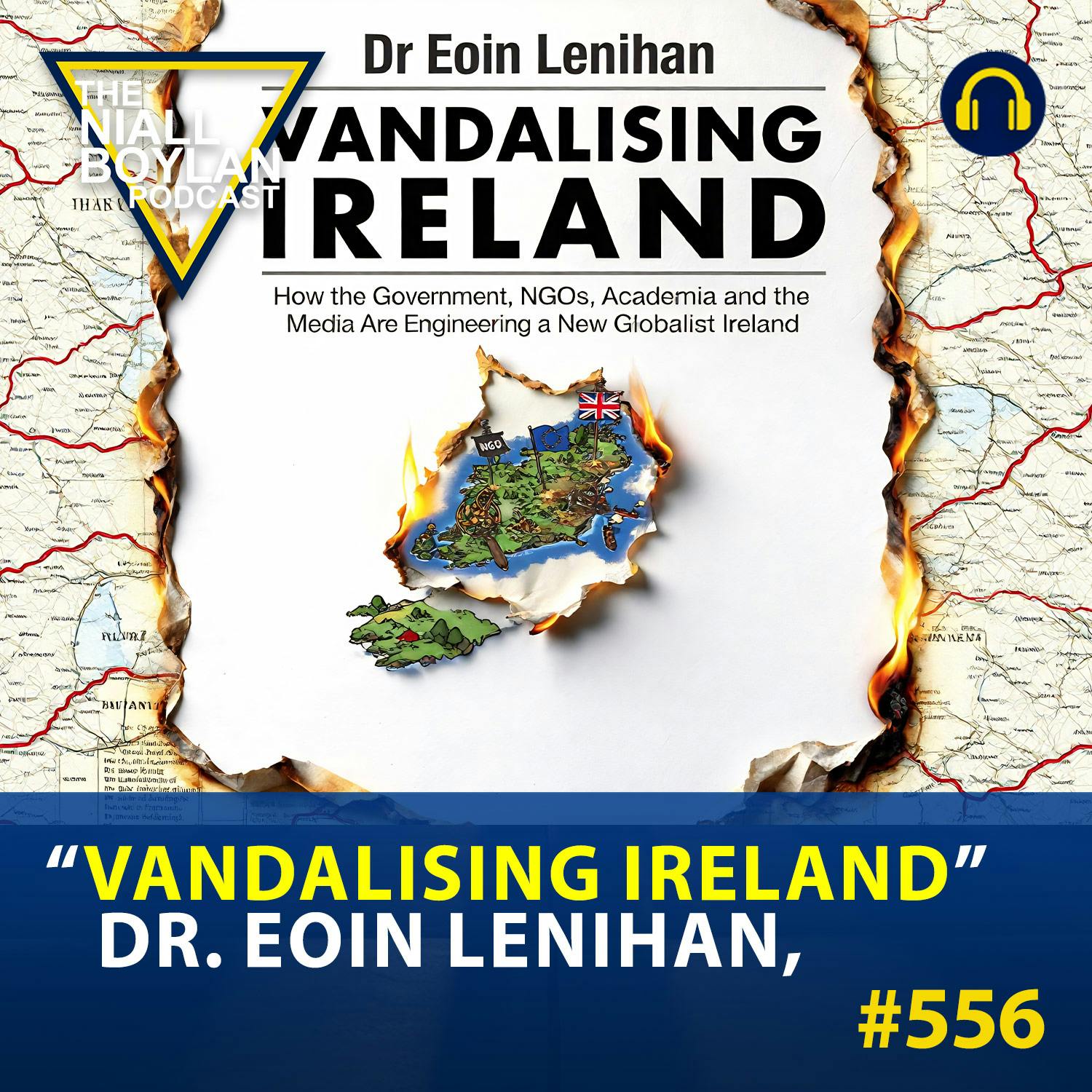
Ep 556#556 Vandalising Ireland, Dr. Eoin Lenihan,
Niall is joined by journalist and author Dr. Eoin Lenihan to discuss his provocative new book, Vandalising Ireland, which explores how Ireland has changed dramatically over the past 25 years — from the Celtic Tiger years to the political landscape of today.In the book, Lenihan argues that a mix of mass immigration, foreign dependence, and weakened democracy has reshaped the country in ways few could have imagined. He claims that government-funded NGOs, academics, and media institutions have played a major role in driving this transformation, often against the wishes of local communities.Niall and Eoin unpack these controversial ideas, the evidence behind them, and what Lenihan believes is Ireland’s “make-or-break” moment — as well as his vision for reconnecting Irish people with their cultural and economic roots.📚 Vandalising Ireland is out now.

Ep 552#552 Tuam: Truth, Lies, and the Nuns on Trial
Today on The Niall Boylan Show , Niall sits down with Laura Perrins from Gript Media to tackle one of Ireland’s most divisive and painful historical debates — the legacy of the Mother and Baby Homes, and in particular, the controversy surrounding Tuam.Laura joins the show to defend the reputation of the Bon Secours nuns, arguing that much of what has been reported about Tuam — including claims of a “mass grave” and “atrocities” — has been distorted or exaggerated by the media. Drawing on the Final Report of the Commission of Investigation into Mother and Baby Homes (2021), Laura makes the case that the scandal at Tuam was the result of poverty, disease, and State neglect, not deliberate cruelty.Niall presses Laura on these claims — asking whether the nuns and the Church can truly be absolved, and where moral responsibility lies for the suffering of unmarried mothers and their children in mid-20th-century Ireland.Then, Niall opens the phone lines and asks listeners:📞 “Who is to blame for what happened in the Irish Mother and Baby Homes?”Was it the nuns, the Church, the State — or Irish society itself?Expect a heated, emotional, and deeply human conversation about history, truth, and the power of media narratives.

Ep 553#553 Does Jennie's Law Go Far Enough?
On today’s show, Niall looks at the Government’s latest move to combat domestic violence — “Jennie’s Law.”Minister for Justice Jim O’Callaghan is set to bring the proposal before Cabinet, which would create a Domestic Violence Register — publicly naming those convicted of domestic abuse against a partner or former partner.The law is named after Jennifer Poole, who was brutally murdered by her ex-partner Gavin Murphy in 2021. Her brother Jason Poole has campaigned tirelessly for greater transparency and protection for victims, and today, that fight has reached the Cabinet table.But is the law strong enough?Some campaigners say it doesn’t go far enough — arguing the register should also include people who have had protection orders taken out against them, or those accused but not convicted, since so many abusers never face trial.Niall wants to hear from you:📞 Should Jennie’s Law go further?📞 Or does public naming risk punishing the innocent?Join the debate — your call could shape the conversation on one of Ireland’s most emotional and urgent justice issues.

Ep 550#550 Is Gen Z Missing Something Without Religion?
In this episode, host Niall takes a closer look at a recent tweet by David Quinn of the Iona Institute, who argued that Gen Z would be better off if they followed religion and God. As Catholicism continues to decline in Ireland, Niall asks: are young people really missing out on something deeper — a sense of meaning, morality, or community — that religion once provided?Join the discussion as Niall explores the cultural shift away from faith, the rise of secular values, and what this means for Ireland’s future identity. Is the slow fading of Catholicism a liberation, a loss, or a bit of both?Tune in for thoughtful commentary, social insight, and a conversation that gets to the heart of Ireland’s changing soul.

Ep 551#551 No Car Insurance, No Choice?
In this episode, Niall reads an email from a listener — a father of four — who says his car insurance has skyrocketed to over €2,000 after a small accident last year. He explains that, on his modest income, he simply can’t afford it, but still needs to drive to work to support his family. Feeling trapped, he admits he’s considering driving without insurance — something he says he “hates doing,” but feels he has no choice.Niall asks the hard questions:🚗 Should driving without insurance mean an automatic jail sentence?💔 Do you have sympathy for this listener’s situation — or does the risk to others outweigh his struggles?💶 And why are insurance costs in Ireland still pushing ordinary people to the brink?Join the conversation as Niall explores the human side of tough laws, the fairness of insurance pricing, and the moral dilemma faced by thousands in similar situations.

Ep 549#549 Time to Legalise The Weed?
In this episode, Niall opens up the phone lines for one of the country’s most divisive debates — should cannabis be legalised in Ireland?As public opinion shifts and other countries move toward regulation, Ireland still wrestles with the question: is it time to change the law, or would legalisation do more harm than good?Callers join Niall with mixed and passionate views — some arguing for personal freedom, medical use, and tax benefits, while others warn about mental health risks, addiction, and the message it sends to young people.Expect strong opinions, honest stories, and a lively national conversation on a topic that’s lighting up debate across Ireland.
Ep 547547 Should We Ban Online Gambling?
In this episode, Niall opens the phone lines to discuss the news that Paddy Power is closing many of its high street betting shops, as the rise of online gambling apps continues to dominate.With Ireland now spending a staggering €9 billion a year on gambling, Niall dives into the deeper issue — are we facing a national addiction crisis? He asks listeners:👉 Has online betting gone too far?👉 Should the government ban or restrict online gambling that’s tearing families and communities apart?👉 And what happens to the workers and punters left behind as the bookies disappear from our towns?Expect passionate callers, strong opinions, and an honest conversation about one of Ireland’s most pressing social issues — the quiet but devastating scourge of gambling in the digital age.
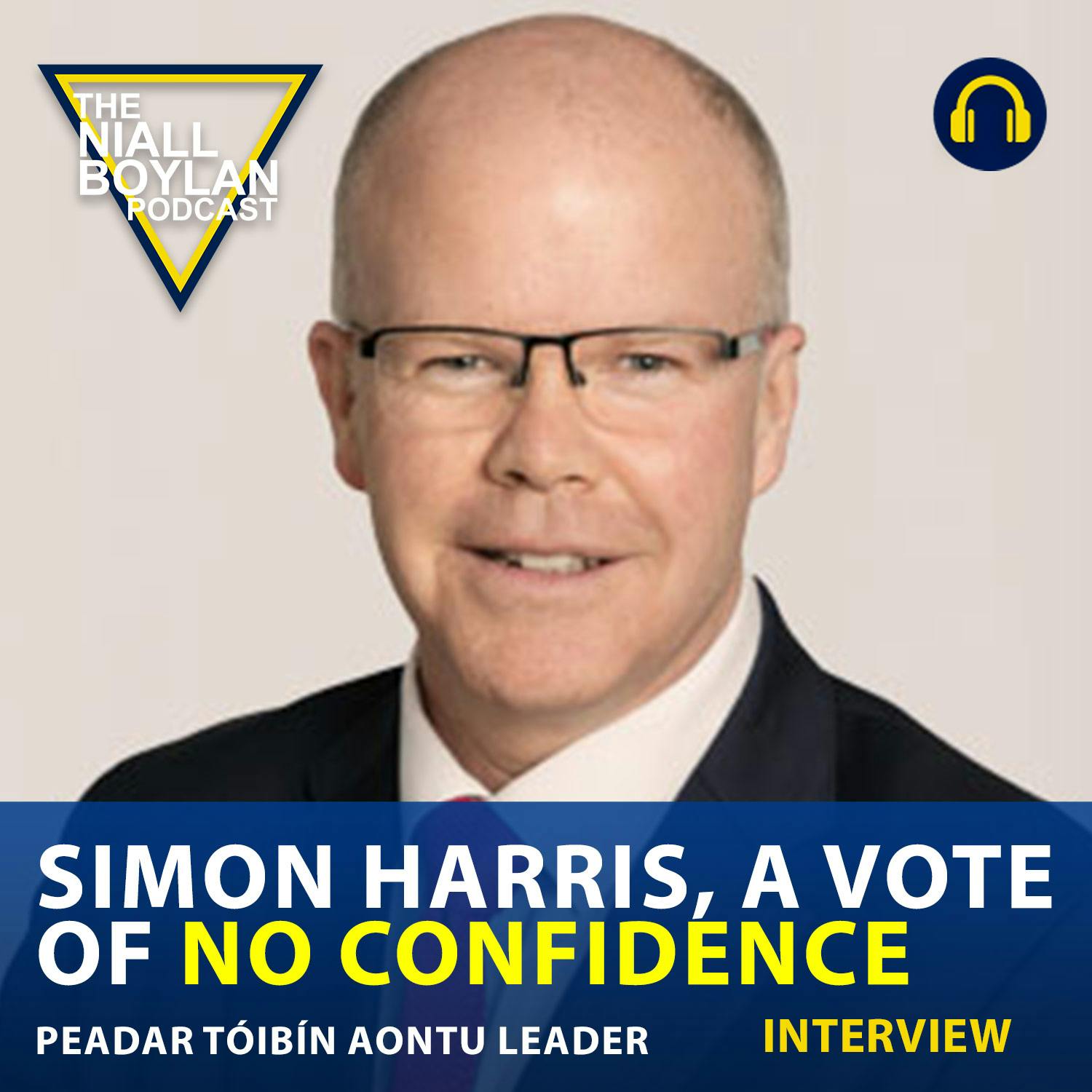
Ep 547#549 Simon Harris, A Vote of Confidence
Peadar Tóibín on Simon Harris and the State of Irish PoliticsIn this episode, Niall sits down with Peadar Tóibín, leader of Aontú, to discuss the recent vote of confidence in Tánaiste Simon Harris. Together, they unpack the political drama surrounding the motion — what it reveals about the current government, the opposition’s strategy, and the public’s mood across Ireland.Peadar shares his candid views on government accountability, media bias, and why Aontú believes Ireland needs a new kind of politics rooted in community, integrity, and sovereignty.Expect a lively, honest, and insightful conversation about the state of Irish democracy, the challenges facing ordinary citizens, and what comes next for Ireland’s political landscape.
Ep 544#545 Ireland’s Great Energy Rip-Off
Niall is joined by financial analyst Karl Deeter to dig into a shocking new report from the International Energy Agency (IEA) that exposes what many Irish households already feel in their pockets: we’re being ripped off on electricity.The IEA found that residential electricity prices in Ireland are now three times higher than the wholesale cost. In plain English, that means energy companies are charging households multiples of what they pay for power — and the government is not only allowing it, but adding to the pain with higher VAT, excise duty, and carbon taxes.As the nights get colder and bills climb higher, Niall asks:💡 Why are Irish households paying some of the highest electricity prices in Europe?💰 How much of your bill actually goes to government taxes and levies?🏛️ And why has there been no intervention to protect ordinary consumers from what looks like blatant price gouging?Karl Deeter breaks down the data — explaining what’s really driving the costs, where the money goes, and what the government could do to bring relief.Then Niall opens the lines for your calls:Will you struggle to pay your heating and electricity bills this winter?Should the government cut taxes and take on the energy companies?Or is this just the price of a “green transition” we all have to bear?
Ep 544#546 Taxpayers Hidden Bill for Ireland’s Cruel Racing Industry
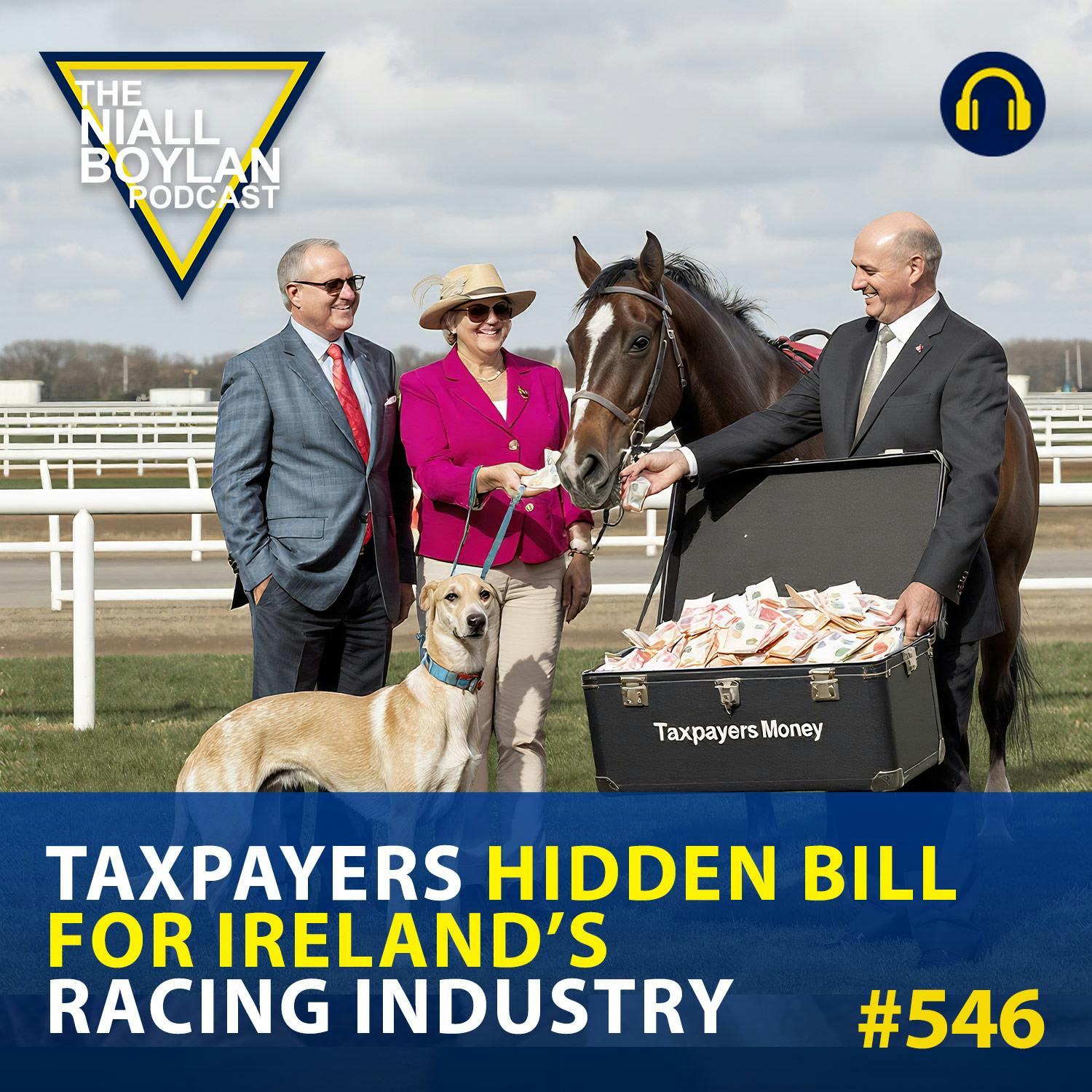
Today on The Niall Boylan Show, Niall sits down with veteran Irish Examiner journalist Fergus Finlay, whose recent explosive column has reignited a 25-year-old debate about Ireland’s most protected — and most controversial — public fund.Every year, without question, tens of millions of euro are quietly ring-fenced for one purpose: horse and greyhound racing. No scrutiny. No debate. No accountability. Fergus Finlay calls it “a 25-year-old gravy train” — more than €2.5 billion in taxpayers’ money poured into an industry that some say should be able to stand on its own two feet.Niall and Fergus unpack:🐎 Why this one industry is the only one in Ireland guaranteed money by law — year after year.💰 How wealthy racehorse owners pocket millions in tax-free prize money, while struggling public services fight for funding.🐕 Why Ireland is now the only country in the world still pumping public money into greyhound racing, a sport Finlay calls “barbaric and dying.”😡 And the big question: Should taxpayers be forced to fund something many see as cruelty?Niall also opens the phone lines — inviting listeners to weigh in.Should the government cut the funding and let these industries stand on their own? Or is the horse and greyhound world part of our heritage worth protecting?