The Niall Boylan Podcast (They Told Me To Shut Up)
1,000 episodes — Page 5 of 20
#693 Fuel Protests: Democracy Or Economic Sabotage?

Ep 692#692 Digital ID Is Coming, Convenience Or Control
On today’s episode of The Niall Boylan Podcast, Niall is joined by Senator Sharon Keogan to discuss the rollout of the EU Digital ID, now being trialled in Ireland and expected by many to be introduced more widely during Ireland’s upcoming EU presidency.The idea is simple on the surface, one secure digital wallet holding everything from your birth certificate and passport to banking details and healthcare records, all accessible from your phone. Supporters say it’s the future, a convenient, streamlined way to manage your identity in an increasingly digital world.But not everyone is convinced.Critics warn that what starts as voluntary could quickly become essential, raising serious concerns about privacy, surveillance, and control. Some fear it could eventually be used to monitor spending or behaviour, drawing comparisons to social credit systems seen elsewhere.So where do you stand?Niall and Senator Keogan break down the pros and cons, asking whether this is a step forward in convenience or a step too far in control.Would you trust a Digital ID with your most personal information? And even if it starts as voluntary, do you believe it will stay that way?Have your say. Will you be using the EU Digital ID?

Ep 691#691 Farmers Warn Talk To Us Or Road And Port Blockades Continue
On today’s episode of The Niall Boylan Podcast, Niall is joined by TD Richard O'Donoghue to discuss the escalating farmers’ fuel protest, now entering its third day and threatening to intensify if the government refuses to come to the table.Farmers across the country say they are being pushed to the brink, with soaring diesel and energy costs making it increasingly impossible to stay in business. While many acknowledge that global price increases are outside the government’s control, they argue that Ireland’s fuel taxes, among the highest in the EU, are not. According to protest organisers, the government has the power to ease the pressure immediately by cutting those taxes, but has chosen not to act.As blockades continue at ports and along major roads, the disruption is being felt nationwide. Commuters, businesses, and even emergency services are being impacted, raising serious questions about how long public support for the protests will last.Niall puts it directly to Richard O’Donoghue: are these demonstrations justified, or are they risking alienating the very public the farmers need on their side? And should the government step in now to negotiate, or stand firm against what some are calling economic sabotage?With strong opinions on all sides, this is a conversation that goes to the heart of livelihoods, leadership, and how far people should go to be heard.Have your say. Are the farmers right to take this action, or have they gone too far?

Ep 689#689 Is Immigration Behind the Healthcare And Housing Crisis?
On today’s episode of The Niall Boylan Podcast, Niall is joined by restaurateur and podcaster Paul Treyvaud to break down a new Irish Independent poll that claims to reveal what’s really on people’s minds.According to the poll, the cost of living, housing, and immigration top the list of concerns for people in Ireland today, followed by a long list of issues including healthcare, crime, government spending, climate change, and global conflicts such as Israel/Gaza and Russia/Ukraine.But how much faith should we put in these so called “independent polls”?Niall and Paul dig into whether these surveys actually reflect public opinion, or whether the way questions are asked and framed can influence the outcome. Are these polls a genuine snapshot of what people care about, or are they shaping the narrative rather than simply reporting it?The conversation also looks at the gap between headlines and reality. While issues like international conflicts and climate change dominate media coverage, many people say their day to day concerns are far more immediate, like paying bills, finding housing, and feeling safe in their communities.📞 Niall opens the phone lines to hear from listeners:Do you trust these polls?If you had to pick just two issues, what actually affects you most right now?Are the media focusing on the right priorities, or missing what matters to ordinary people?Join the debate and have your say.

Ep 689#690 Parenthood: Best Decision… or Best Lie?
On today’s episode of The Niall Boylan Podcast, Niall is joined by social commentator Karl Deeter to tackle a topic that most people think… but very few will ever admit out loud.New research is challenging one of life’s biggest assumptions, that having children makes you happier. In fact, a growing body of studies suggests the opposite. While children can bring love and meaning, they also bring stress, financial pressure, lack of sleep, and strain on relationships. Some research even shows that parents report lower day to day happiness and reduced relationship satisfaction compared to those without children.There’s even what experts call the “parenting paradox”, where parents may feel their lives are more meaningful, but at the same time experience more stress and lower mood in everyday life.So why do so many people still say it’s “the best thing ever”?Niall and Karl dig into the reality behind the research, the emotional truth versus the social expectation, and whether people are being honest with themselves or simply saying what they feel they’re supposed to say.Because let’s be honest…Very few parents would ever openly say they regret having children, even if part of them feels overwhelmed, exhausted, or stretched to breaking point.📞 Niall opens the phone lines and asks listeners:If you could go back and talk to your younger self, would you still choose to have children?Did having kids actually make you happier, or just busier and more stressed?Are children worth the sacrifice, or are we all just afraid to admit the truth?A brutally honest conversation about love, sacrifice, and whether parenthood really delivers the happiness people expect.

Ep 686#686 Is It Time to Kick Religion Out of the Classroom?
On today’s episode of The Niall Boylan Podcast, Niall is joined by journalist Laura Perrins to tackle a debate that goes right to the heart of Irish education: is it time to remove religion from public schools altogether?The discussion follows comments from Social Democrats TD Jen Cummins, who criticised what she described as a “fundamentally flawed” system, where some children are left sitting at the back of the classroom while others prepare for sacraments like Communion and Confirmation. Her remarks have reignited calls for a clearer separation between church and state in Irish education.Ireland’s school system has long had strong religious roots, with many primary schools still under Catholic patronage. While some parents value this tradition, others argue it no longer reflects a modern, diverse society. Surveys in recent years have shown growing support among parents for more inclusive, multi-denominational or non-religious education options, particularly in urban areas.So where should the line be drawn?Should religion be removed entirely from public schools to ensure equality for all children?Or does religion still have an important role in education and Irish identity?Niall opens the phone lines to hear from listeners:Do you agree with separating education and religion?Should schools be fully secular?Or are we at risk of losing something important?📞 Join the conversation and have your say.
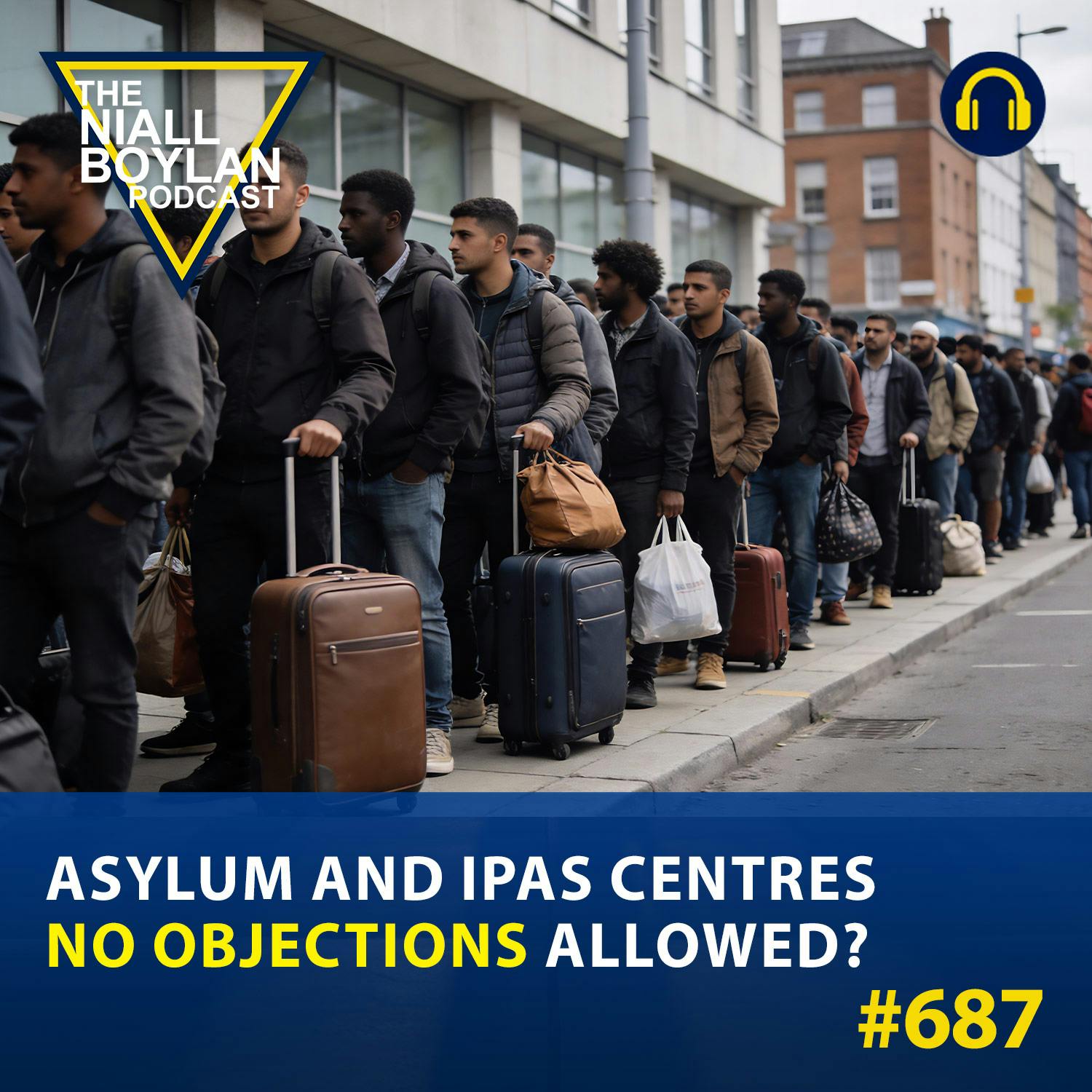
Ep 687687 Asylum and IPAS Centres: No Objections Allowed? (Part One)
On today’s episode of The Niall Boylan Podcast, Niall is joined by Paul Lawless to discuss a controversial move by the Government that has sparked fierce debate across the country.Plans are underway to introduce legislation that would remove the public’s right to object to planning when it comes to housing asylum seekers and refugees. At the same time, it has emerged that the Government intends to fast-track the construction of six large scale IPAS centres, potentially without going through the usual planning permission process.Supporters of the move argue the Government has no choice. With accommodation shortages already stretched to the limit, they say without urgent action, thousands could end up back in tents on the streets, particularly along areas like the Grand Canal. From this perspective, fast tracking projects and removing delays is about providing basic shelter and dealing with a humanitarian crisis.But critics see it very differently.They argue this is a serious erosion of democratic rights, removing the ability of local communities to have a say in developments in their own areas. Some are asking whether this sets a dangerous precedent — if the Government can bypass planning laws in one area, what’s to stop it happening elsewhere?So Niall is asking listeners:Are the Government right to act quickly, even if it means removing the right to object?Or is this a step too far, undermining democracy and local accountability?Is this about compassion and urgency… or control and overreach?📞 Join the conversation and have your say.
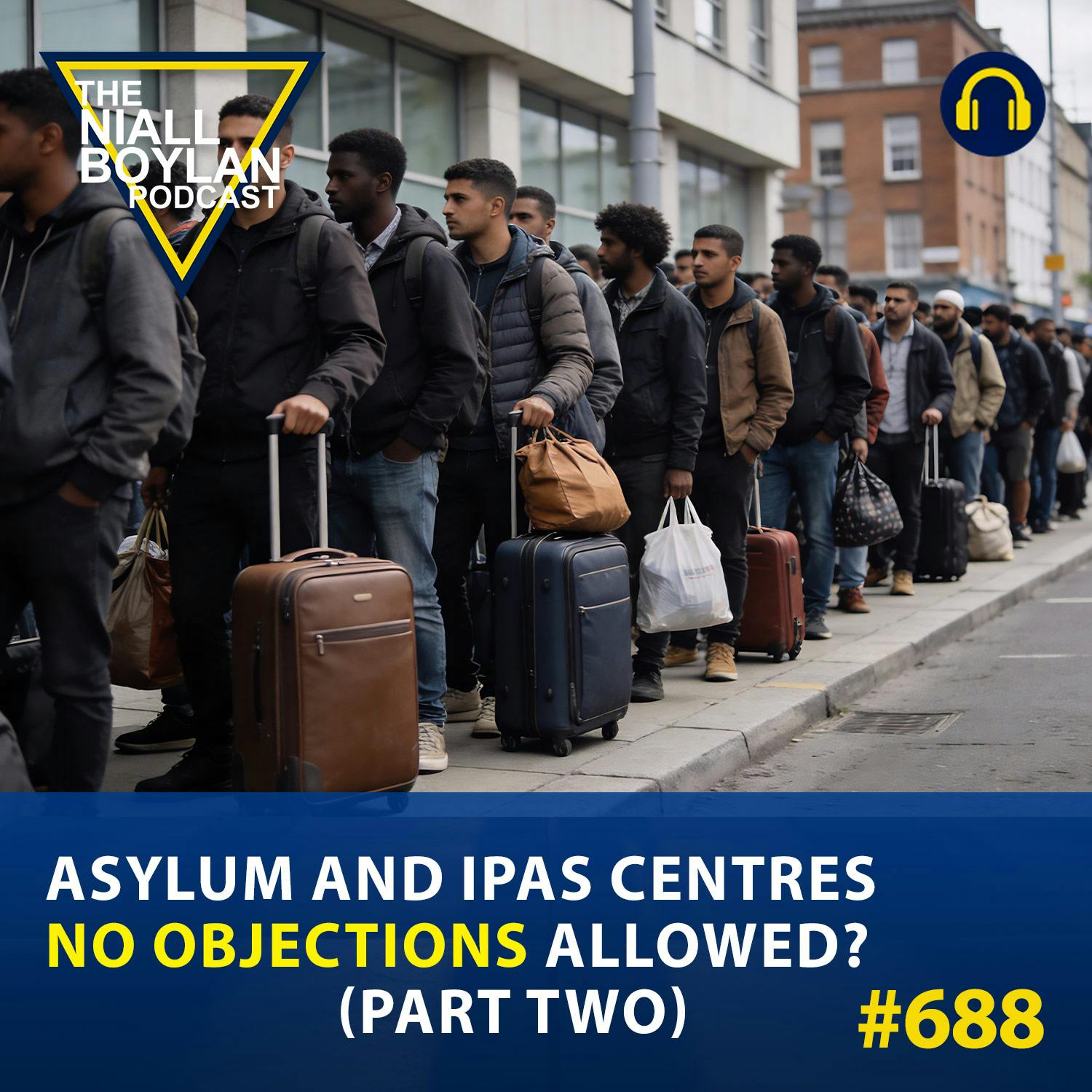
Ep 688688 Asylum and IPAS Centres: No Objections Allowed? (Part Two)
A continuation of todayys topic in Part Two of the podcast On today’s episode of The Niall Boylan Podcast, Niall is joined by Paul Lawless to discuss a controversial move by the Government that has sparked fierce debate across the country.Plans are underway to introduce legislation that would remove the public’s right to object to planning when it comes to housing asylum seekers and refugees. At the same time, it has emerged that the Government intends to fast-track the construction of six large scale IPAS centres, potentially without going through the usual planning permission process.Supporters of the move argue the Government has no choice. With accommodation shortages already stretched to the limit, they say without urgent action, thousands could end up back in tents on the streets, particularly along areas like the Grand Canal. From this perspective, fast tracking projects and removing delays is about providing basic shelter and dealing with a humanitarian crisis.But critics see it very differently.They argue this is a serious erosion of democratic rights, removing the ability of local communities to have a say in developments in their own areas. Some are asking whether this sets a dangerous precedent — if the Government can bypass planning laws in one area, what’s to stop it happening elsewhere?So Niall is asking listeners:Are the Government right to act quickly, even if it means removing the right to object?Or is this a step too far, undermining democracy and local accountability?
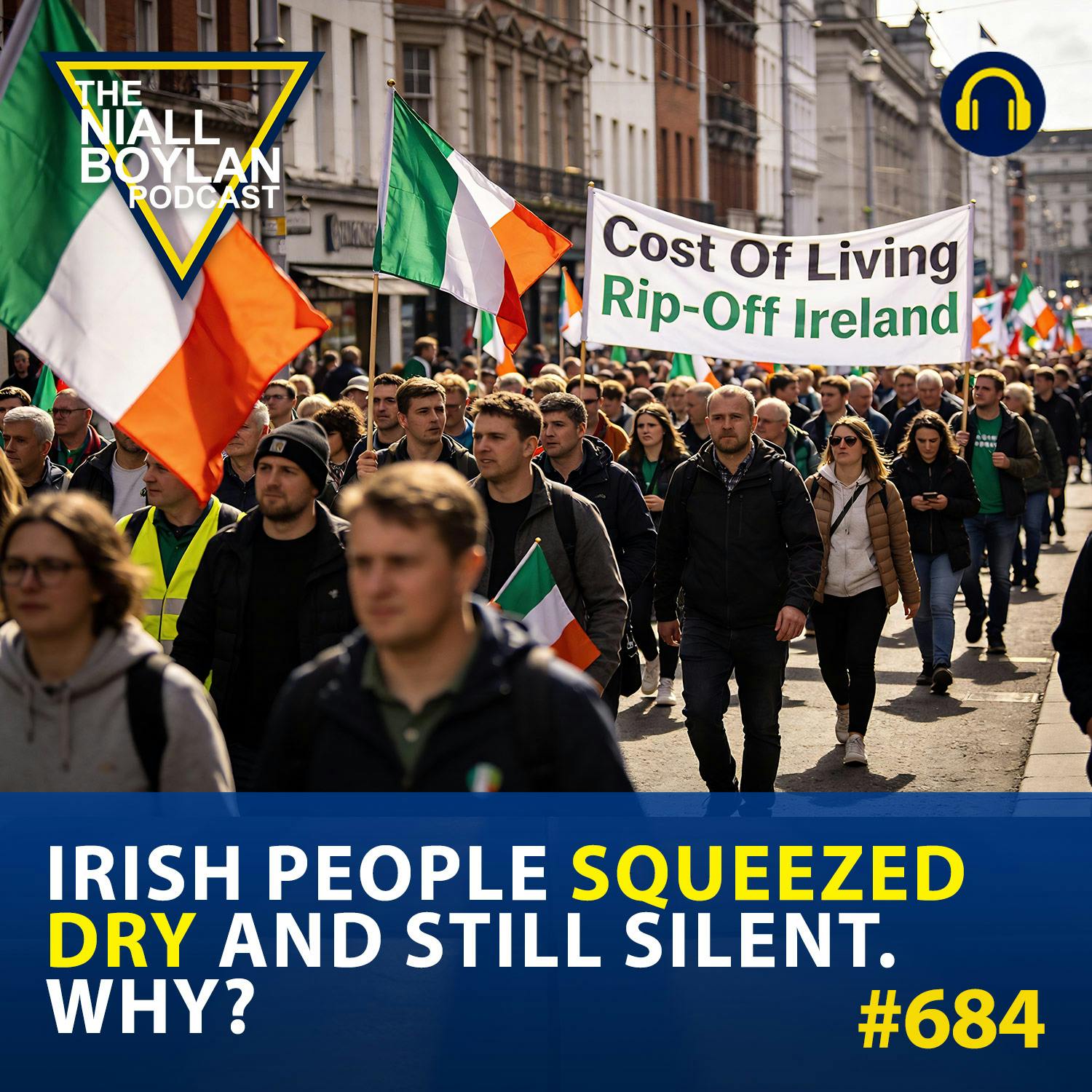
Ep 684#684 Irish People Squeezed Dry and Still Silent. Why?
On today’s episode, Niall is joined by John McGuirk, editor of Gript Media, for a hard-hitting discussion on the rising cost of living and the public’s reaction, or lack of it.With property taxes increasing, health insurance premiums climbing, and fuel prices surging dramatically in recent weeks, many households are feeling the squeeze like never before. Energy costs are expected to rise even further, while carbon tax is set to increase again in May. At the same time, everyday essentials such as food, broadband, and basic services continue to climb well beyond wage growth.Housing remains completely out of reach for many, with rents soaring and home ownership becoming an impossible dream for younger generations and those not already on the property ladder.So why are people putting up with it?Niall asks the question many are thinking but few are saying out loud: why are we allowing ourselves to be pushed to the brink financially without protest? Have we become too comfortable, too distracted, or simply too worn down to fight back?As governments continue to commit billions abroad, is there a growing sense that ordinary people are being left behind at home?This is a passionate and provocative conversation that challenges listeners to reflect on where they stand and whether silence is part of the problem.Do you think people have become too passive, or is there more going on beneath the surface?
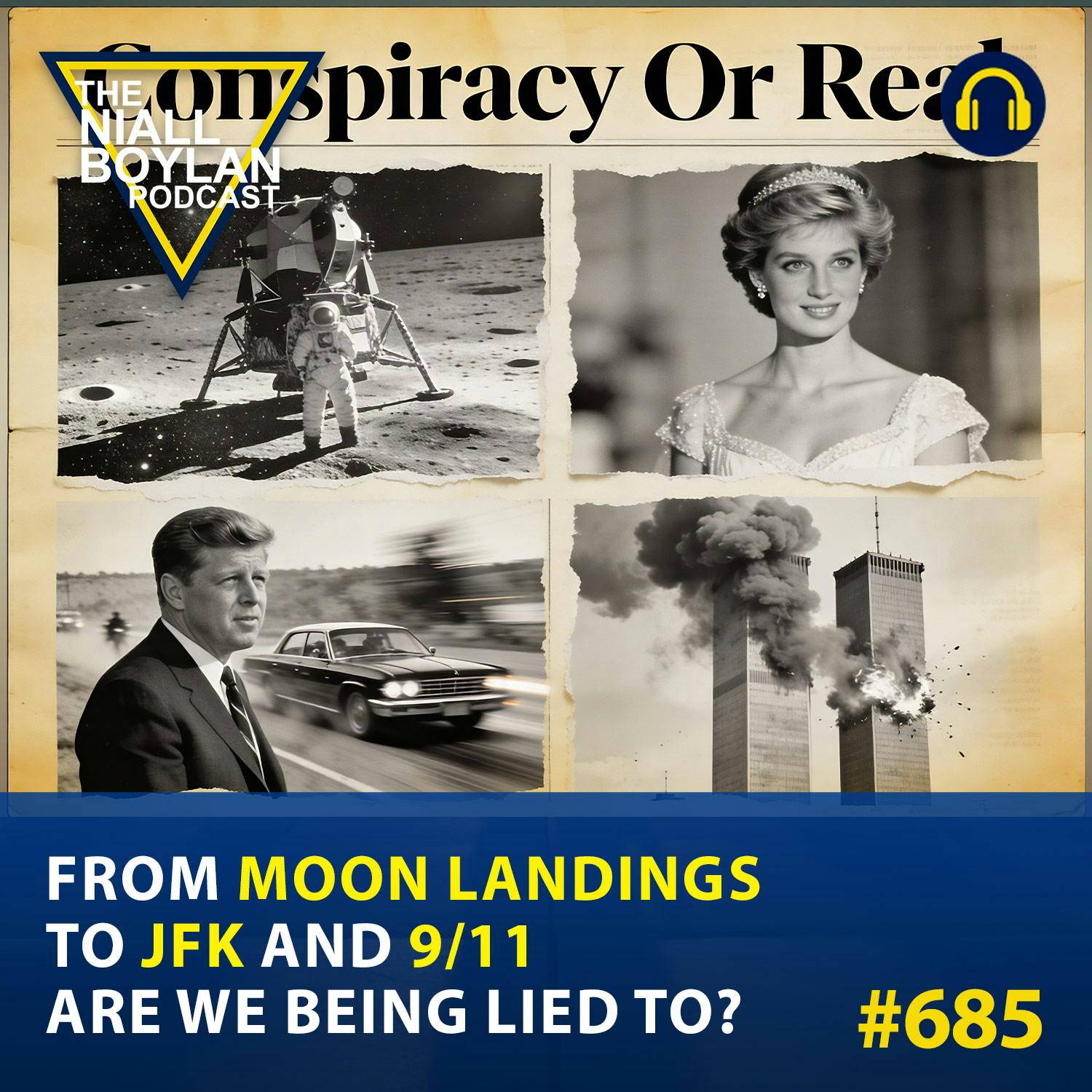
Ep 685#685 From Moon landings to JFK And 9/11 Are We Being Lied To?
On today’s episode, Niall opens the lines to callers after a flood of messages sparked by yesterday’s discussion on the upcoming Artemis II mission. What should have been a celebration of human achievement quickly turned into something else, with many listeners insisting we never went to the Moon in the first place.So why do conspiracy theories hold such a grip on people?Niall dives into the world of conspiracies, hearing from callers who firmly believe, strongly doubt, or simply enjoy questioning the official version of events. From the long-debated Apollo 11 Moon landing “hoax” theory, to the enduring mystery surrounding the Assassination of John F. Kennedy, people continue to challenge what they’re told.The show also explores theories around the September 11 attacks, with some claiming hidden truths behind the official narrative, and the persistent belief that Elvis Presley faked his own death and is still alive. Then there’s the idea that governments, particularly in the U.S., have secretly recovered and studied alien life, something often linked to places like Area 51.Niall also touches on the tragic death of Princess Diana, where theories range from a simple accident to something far more sinister involving powerful institutions.But beyond the theories themselves, the real question is this: why are so many people drawn to them? Is it a lack of trust in authority, unanswered questions, or just human curiosity?This episode is packed with fascinating, controversial, and sometimes unbelievable perspectives from listeners on what they believe, and why.Do you believe everything you’re told, or do you think there’s more going on behind the scenes?
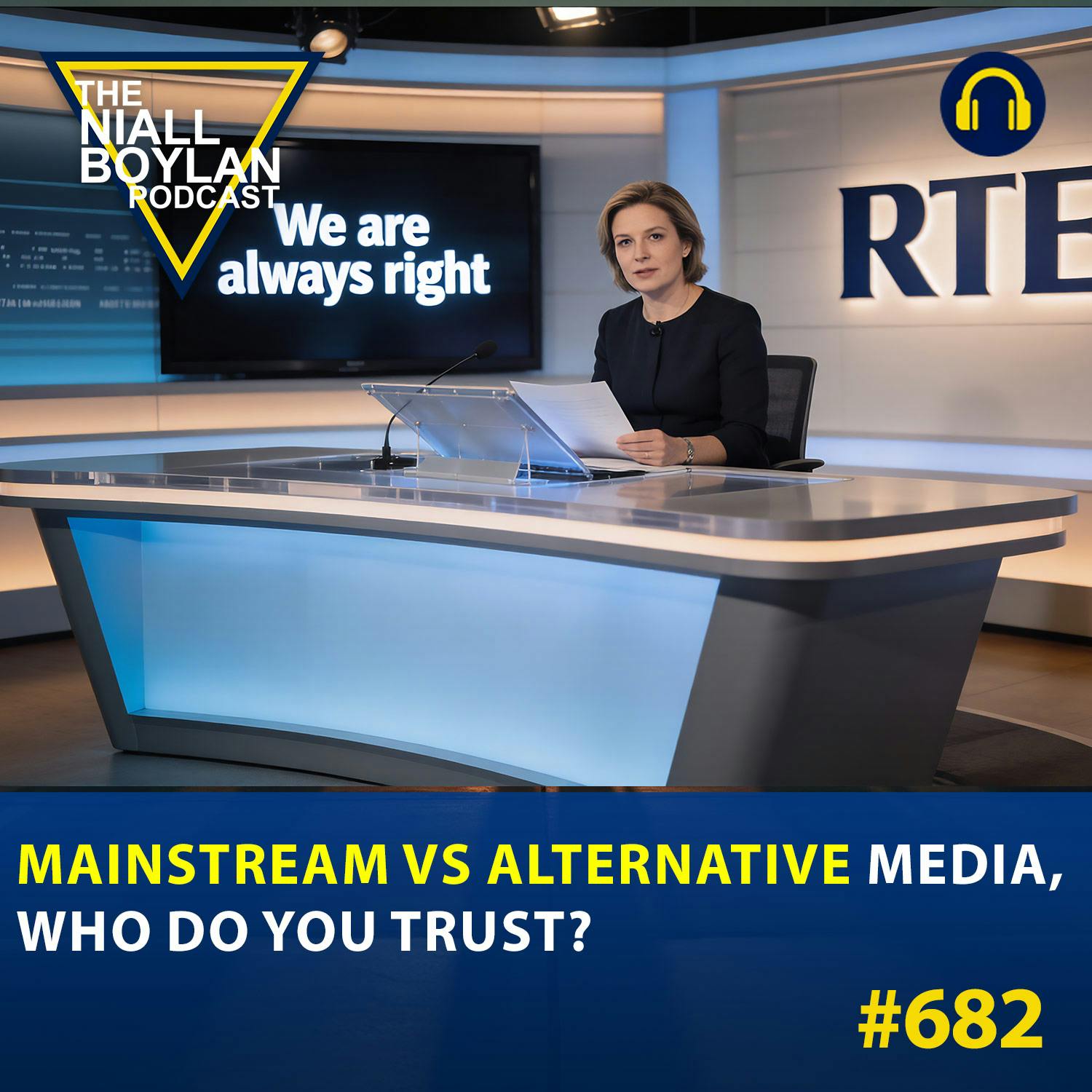
Ep 682#682 Mainstream vs Alternative Media, Who Do You Trust?
On today’s episode of The Niall Boylan Podcast, Niall is joined by journalist and founder of the The Iona Institute, David Quinn, to debate a growing and controversial question: is mainstream media really impartial, or has it lost the public’s trust?The discussion follows a recent piece in the The Irish Times which argues that in an age of misinformation, fake news and AI-generated content, society must rely more than ever on trusted, professional journalism. The article highlights concerns about the spread of false information online, particularly through social media platforms, and suggests that established media organisations play a crucial role in protecting the “public good” by verifying facts, maintaining editorial standards and holding power to account.But David Quinn strongly disagrees.He argues that many mainstream publishers are far from objective or impartial, and that trust in traditional media has been eroded because of perceived bias and one-sided reporting. He questions whether telling people to rely only on “trusted media” ignores the reality that many now turn to alternative platforms precisely because they no longer trust mainstream outlets.So Niall asks:Where do you get your news?Do you trust newspapers and broadcasters to tell you the truth?Or do you believe social media platforms like X and TikTok are offering a necessary alternative voice?Are these platforms dangerously misinforming the public…or are they simply giving space for critical thinking and different viewpoints?And what about funding?The Irish State provides financial support to mainstream media, but not to independent or alternative outlets.Is that protecting quality journalism… or controlling the narrative?📞 Niall opens the phone lines to hear from listeners:Do you believe Irish mainstream media is fair and balanced?Or has it become a mouthpiece for the Government?Join the debate and have your say.
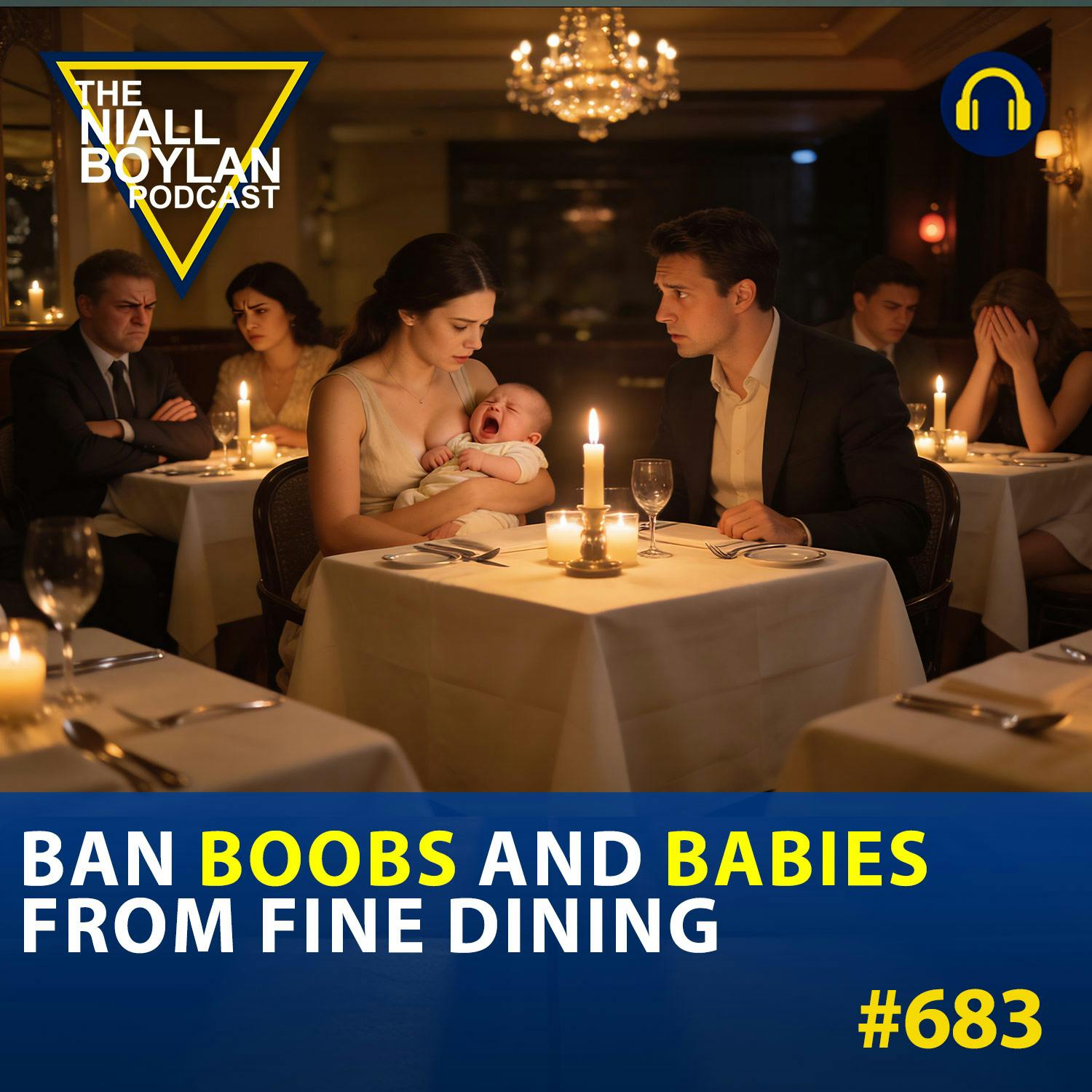
Ep 683#683 Ban Boobs And Babies From Fine Dining
On today’s episode of The Niall Boylan Podcast, Niall reads out a fiery email from a listener whose wedding anniversary dinner didn’t quite go to plan.What was meant to be a quiet, romantic evening turned into a frustrating experience when a nearby table had a crying baby that, according to the listener, never settled. She says the situation escalated further when the mother began breastfeeding at the table, leaving her feeling that the entire atmosphere of the restaurant had been ruined.The listener believes there should be more consideration in fine dining settings, arguing that very young children don’t belong in those environments, especially when other diners have paid for a special night out.But is she being unreasonable?Niall opens the phone lines to hear from listeners on both sides of the debate.Should parents take crying babies outside out of respect for others?Is breastfeeding in a restaurant something people simply need to accept?Or are we expecting too much control in public spaces where families have every right to be?And the bigger question:Should babies and fine dining ever mix, or is it time for clear boundaries?📞 Join the conversation and have your say.

Ep 680#680 Hacked, Wiped, Finished — Is Anyone Safe Online?
On today’s episode of The Niall Boylan Podcast, Niall is joined by journalist Laura Perrins to discuss how one simple mistake can have devastating consequences online.Laura shares her own shocking experience after her X account was hacked and completely wiped out, losing her profile, her content and all of her followers in an instant, all after clicking on what seemed like a harmless link. It’s a stark warning that this can happen to anyone, no matter how careful you think you are.With online scams becoming more sophisticated, from phishing emails to fake shopping websites and cloned social media pages, more and more people are finding themselves caught out. What starts as a simple click can quickly spiral into lost accounts, stolen money or even identity theft.Niall opens the phone lines to hear from listeners who have been hacked, conned or completely duped online.Have you ever lost access to your social media account?Have you been tricked into handing over personal details?Have you ordered something online that turned out to be nothing like what was advertised?Or worse, have you been the victim of bank fraud?And the big question, in a world where scams are everywhere:Do you actually trust online shopping and social media anymore?

Ep 681#681 Should Only Irish Citizens Vote?
On today’s episode of The Niall Boylan Podcast, Niall opens the lines on a debate that goes right to the heart of democracy: who should be allowed to vote, and how should they prove it?The discussion comes as Donald Trump continues to push the proposed SAVE America Act in the United States. The legislation aims to tighten voter registration rules by requiring individuals to provide documentary proof of U.S. citizenship, such as a passport or birth certificate, before they can vote. Supporters say it protects election integrity and prevents fraud. Critics argue it could disenfranchise legitimate voters who may not have easy access to those documents.At the same time, Ireland takes a very different approach.In Ireland, non Irish citizens can vote in local elections, and British citizens and residents can vote in general elections. Voters are not required to show a passport or birth certificate, and a wide range of identification is accepted at polling stations. To some, this reflects a fair and open democratic system. To others, it raises serious questions about security and national sovereignty.So Niall is asking listeners:Should only Irish born citizens be allowed to vote in Irish elections?Should you have to prove your identity with a passport or birth certificate before casting a vote?Or is Ireland right to keep the system as it is?Is stricter voting law about protecting democracy, or restricting it?📞 Call in and have your say.
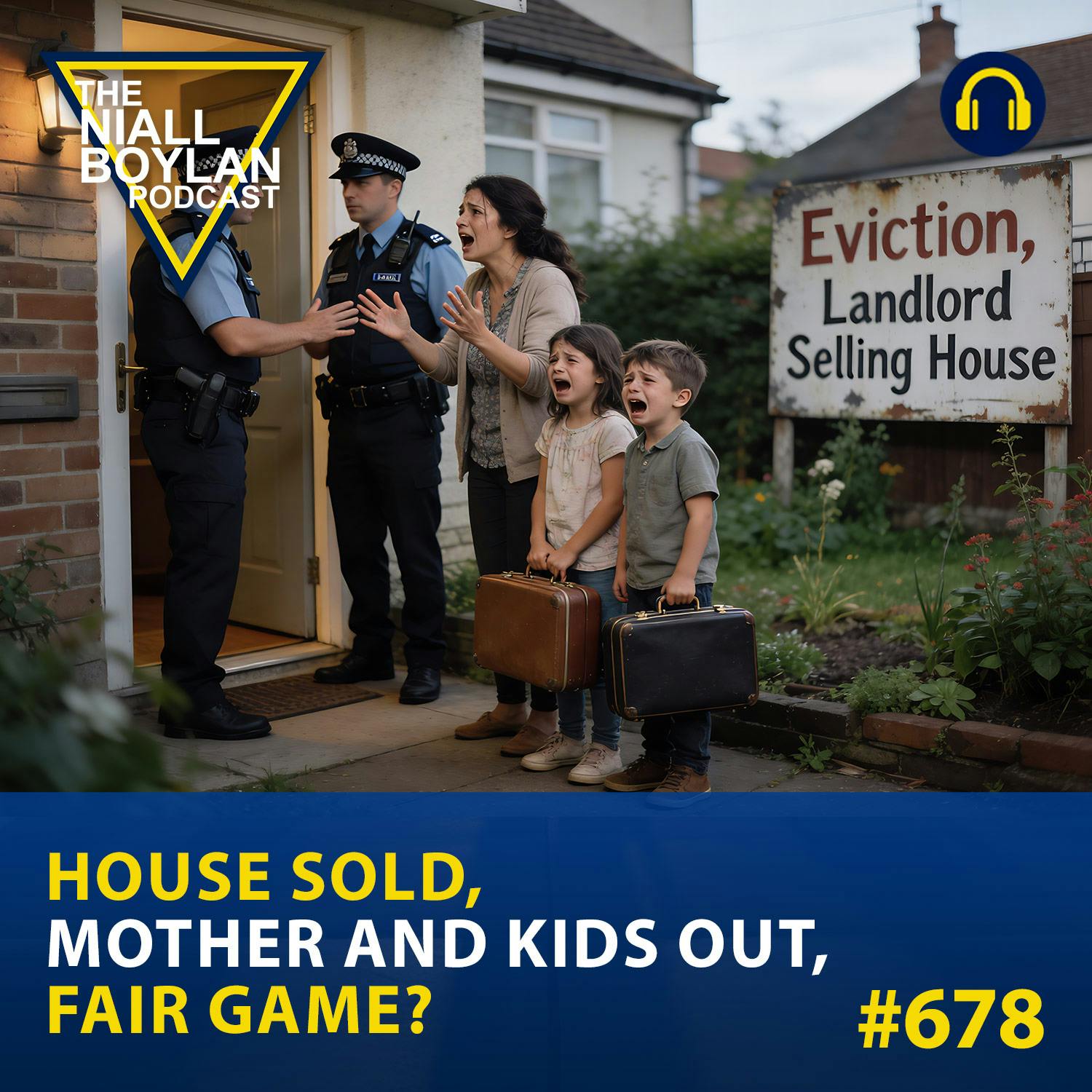
Ep 678#678 House Sold, Mother And Kids Out, Fair Game?
On today’s show, Niall speaks to Councillor Gavin Pepper and property expert Karl Deeter about a case that has sparked real debate around tenants’ rights and landlords’ powers.Councillor Pepper highlights the situation of a woman and her children being evicted from their home after the landlord decided to sell the property. While this case predates the new legislation introduced on March 1st, which requires a minimum six-year tenancy for new rental contracts, it raises an important question — should landlords still have the right to evict tenants in order to sell?Karl Deeter argues that, in some cases, evictions are a necessary part of the housing market. But is that fair on tenants who may have nowhere else to go?Niall opens the lines to listeners to get their views.Do you think landlords should be allowed to evict tenants so they can sell a property, or should tenants be given stronger protections?Get involved in the conversation.

Ep 679#679 The Sky Dodgy Box Crackdown Begins
On today’s show, Niall speaks to callers about a major High Court ruling that could have serious consequences for thousands of Irish households using so-called “dodgy boxes”.This week, the High Court ordered Revolut to hand over the names and details of 304 Irish customers and 10 resellers to Sky, as part of an ongoing crackdown on illegal streaming. These devices, which have surged in popularity, give users access to movies, TV shows and live sports for a one-off fee, but are illegal under the Copyright and Related Rights Act 2000.Up until now, Gardaí have mainly targeted sellers, but have repeatedly warned that users could also face action. With this latest ruling, many are now asking if they could be next. Those identified could face fines of up to €127,000, possible jail time, and even civil action from Sky.Niall opens the lines to hear directly from listeners.Are you one of the hundreds of thousands using these services, and will you continue now that there’s a real threat of prosecution? Do you agree with the courts allowing Sky access to personal banking information, or does this cross a line when it comes to privacy?Join the conversation and have your say.
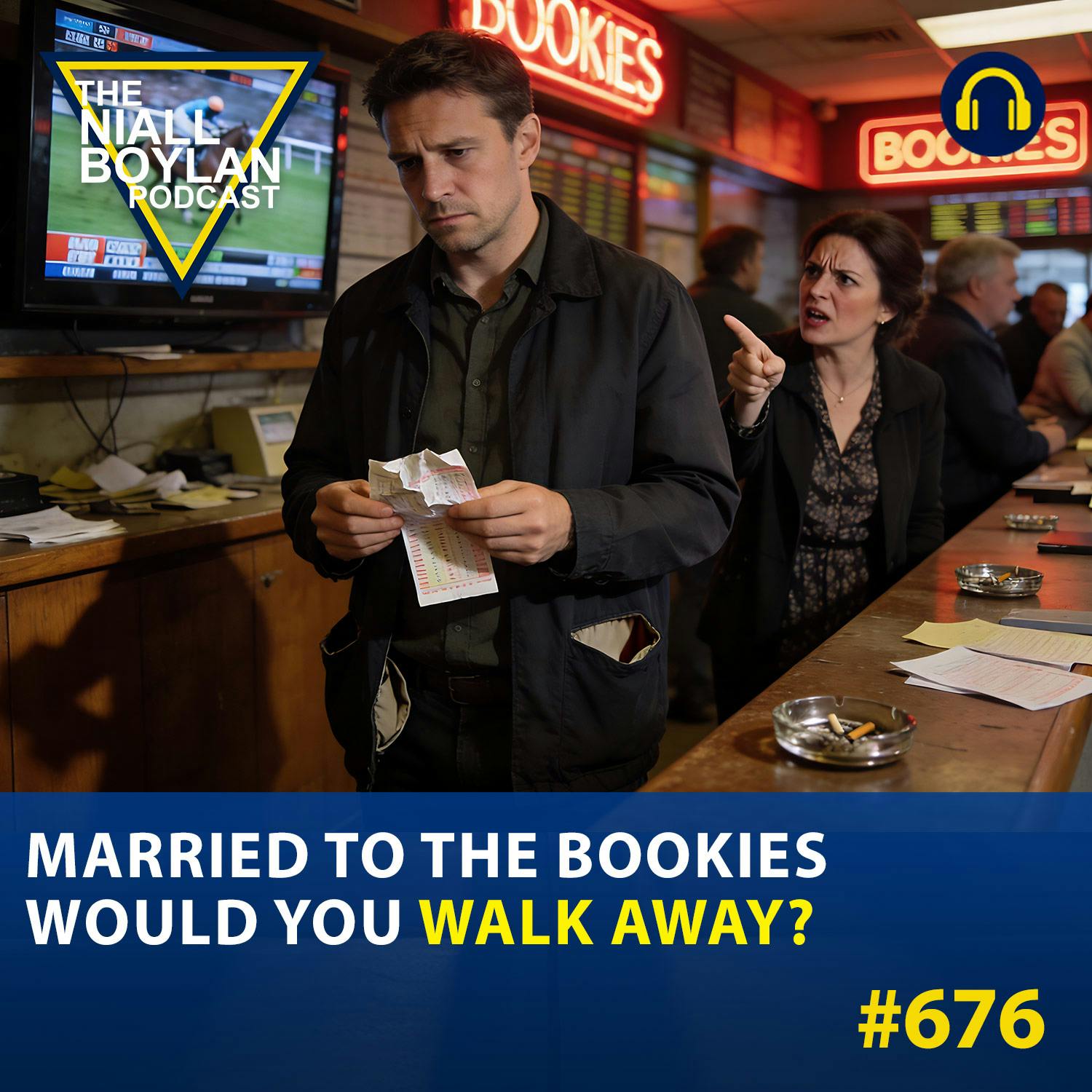
Ep 676#676 Married to the Bookies: Would You Walk Away?
On this episode, Niall reads a powerful email from a listener who says she feels completely torn about the future of her marriage.The woman explains that before they got married her husband admitted he once had a gambling problem but promised he had stopped. Ten years later, while planning a family holiday, he told her he was short of money despite earning a good salary. Curious, she checked his phone while he was asleep and discovered that he had spent more than €600 on online gambling in just one month.When confronted, he said it was only small bets and insisted he could stop anytime. But her friends say he has already had his second chance and blew it. They believe gambling is an addiction that rarely goes away and are urging her to leave while she is still young.What makes the situation even more painful is her past. She grew up with a father who drank and gambled, often losing the mortgage money and causing constant stress at home. She fears history could repeat itself.The couple have a four year old child together and she says she still loves her husband, but she is terrified that if the gambling continues it could eventually destroy their family financially and emotionally.Should she walk away now before things get worse, or should she stay and try to help him get support? Can gamblers truly change, or is it only a matter of time before the problem returns?Niall opens the phone lines and asks listeners what they would do in her situation.
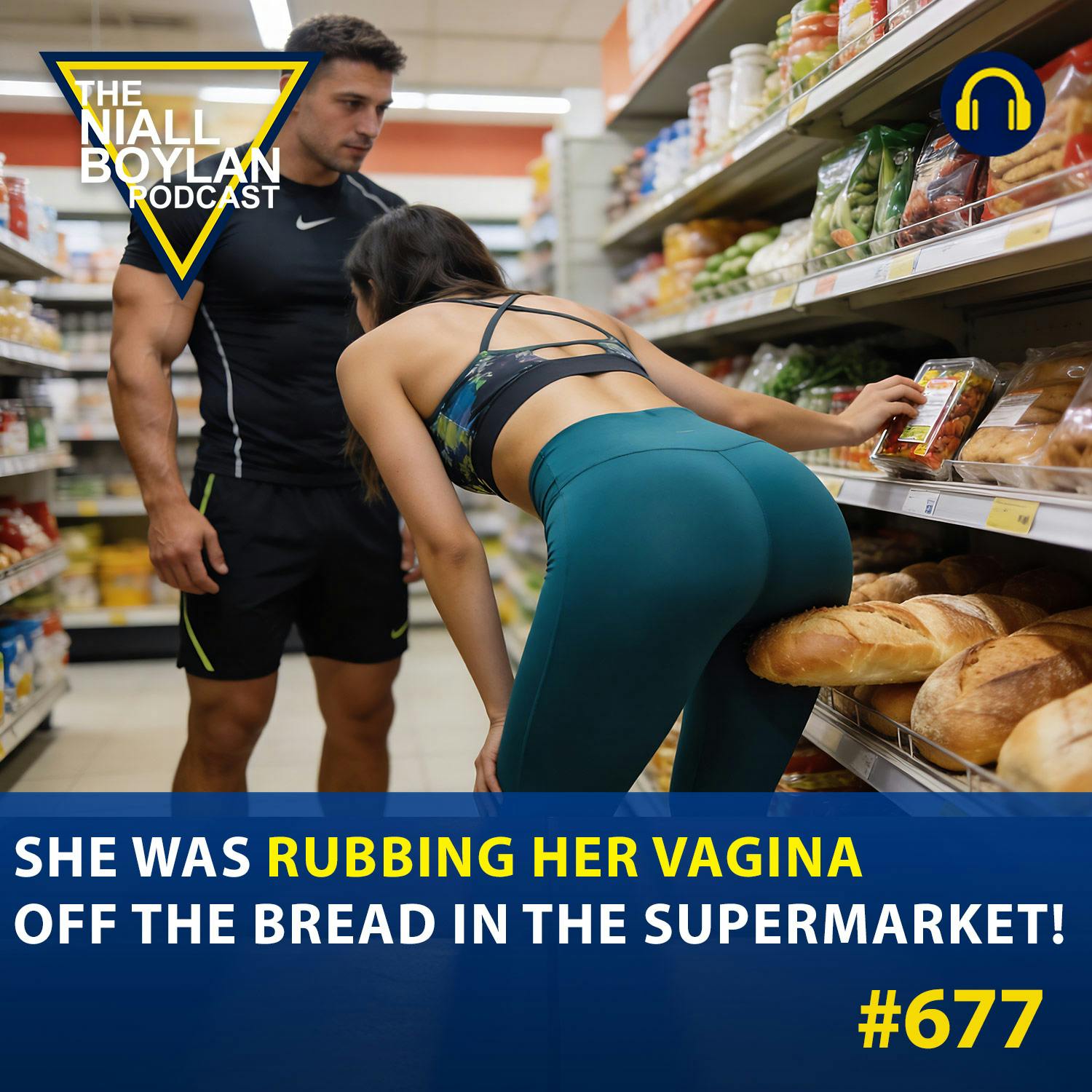
Ep 677#677 She Was Rubbing Her Vagina off the Bread In The Supermarket!
Ten years ago, Niall had one of the most outrageous and hilarious episodes in the show’s history. A caller rang in with a story that had everyone in stitches — and maybe slightly horrified. She was fed up with what she called the “supermarket runway”: women in lycra wandering the aisles, bending over and allegedly rubbing parts of themselves on the bread, and young men and women strutting around like the grocery store was their personal catwalk, showing off every toned muscle and tight outfit.Niall and the team couldn’t believe some of the visuals painted by the caller, sparking laughs, disbelief, and a flood of listener reactions. The episode turned into a chaotic, cheeky conversation about fashion, public decency, and why supermarkets suddenly felt more like a gym and less like a place to shop.Relive the madness, the laughs, and the stories that had listeners calling back with their own supermarket horror tales. It’s a classic mix of comedy, social commentary, and pure chaos — a reminder of why Niall’s show has kept people talking for over a decade.
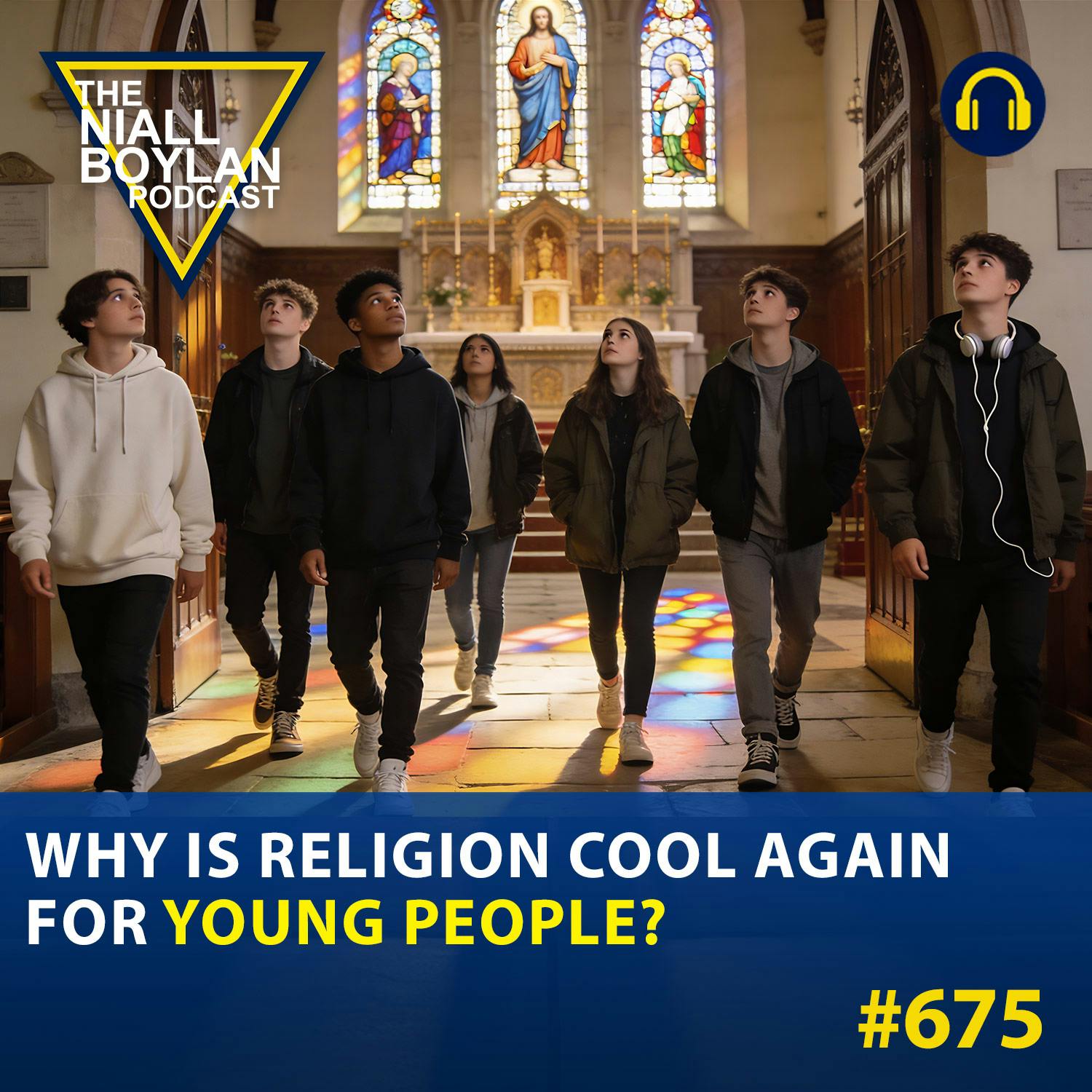
Ep 675#675 Why Is Religion Cool Again for Young People?
On this episode of The Niall Boylan Podcast, Niall speaks with journalist and founder of the The Iona Institute, David Quinn, about a surprising new report commissioned by the Irish Catholic Bishops' Conference which suggests Ireland is still more religious than many people might think.The report, Turning the Tide? Recent Religious Trends on the Island of Ireland, examined a wide range of data sources including the European Social Survey, research from Amárach Research, the Central Statistics Office and international studies.One of the key findings is that Irish Catholics rank toward the higher end of religious practice in Europe. Around 31 percent of Catholics in Ireland say they attend Mass at least once a week, placing Ireland fourth overall in Europe alongside Italy and behind countries such as Poland and Slovakia.Prayer is also relatively common. About one third of Irish Catholic adults say they pray daily, putting Ireland near the top among Western European countries.However, the report highlights a major generational gap. Mass attendance among young people fell dramatically between 2002 and 2022, dropping from 41 percent of young Catholics attending weekly to just 7 percent. But interestingly, recent data shows a small rebound. Between 2022 and 2024, weekly Mass attendance among young Catholics rose from 7 percent to 17 percent, suggesting what some observers are calling a possible “quiet revival.”That’s exactly what David Quinn believes may be happening. He argues that religious belief among young people may be stronger than many assume, even in a modern Ireland that is often seen as increasingly secular and independent minded.The report also notes that immigration has changed the religious landscape, with the proportion of Catholics in Ireland who were born abroad rising from 6 percent in the early 2000s to 18 percent today. Meanwhile, Northern Ireland remains the most religious part of the island, with around 35 percent of adults attending religious services weekly, far higher than the UK average.But the picture is complex. Many younger believers still disagree strongly with church teachings, particularly around issues such as sexuality and relationships. Surveys suggest large majorities of young people believe the Church’s views on sexuality and homosexuality are outdated.So what does this all mean?Is religion quietly making a comeback in Ireland?Are young people rediscovering faith in a world that often feels uncertain?Or is Ireland continuing its long move toward a more secular society?Niall and David Quinn explore the data, the cultural shifts and what belief looks like in Ireland today.And Niall wants to hear from you.Do you consider yourself religious?Do you believe there is a higher power?Or has modern Ireland moved beyond religion entirely?.

Ep 674#674 Would You Pay More to Save the Planet?
Niall tackles a major and increasingly heated global debate: our role as consumers and whether we should stop buying ultra-cheap products to help protect the environment and human rights.From the massive environmental damage caused by single-use plastics to the explosion of ultra-fast fashion and rock-bottom goods from online marketplaces, this episode digs into whether cheap really is too costly. Governments around Europe are already proposing taxes and new laws to curb fast fashion and make companies account for their environmental harm. France’s parliament has moved to regulate and even ban certain ultra-fast fashion marketing and impose eco-scores and fees on low-sustainability products.At the centre of this debate are brands like Shein and Temu, Chinese-linked online retailers that have reshaped the global market by offering unbelievably low-priced clothes and products. Independent assessments have shown these platforms score extremely low on sustainability and worker protections — in one case, Temu scored zero points on environmental and human-rights performance in an industry ranking.Critics argue these business models fuel massive waste and environmental harm, with tiny percentages of clothing recycled and huge amounts of polyester and synthetic garments ending up in landfills, shedding microplastic pollution into oceans and ecosystems. Beyond environmental concerns, workforce conditions in supply chains are deeply troubling, with reports pointing to long hours, very low pay, unsafe workplaces and opaque labour practices — issues that make human-rights groups question whether such products should be sold at all.So here’s the question Niall wants to put to listeners:👉 Do you care enough about the environment and workers’ rights to stop buying cheap fast fashion and cut out ultra-low-cost Chinese goods like those from Shein and Temu?Are you willing to pay more and choose ethical brands to support human rights and reduce pollution?Or will you admit you’re a self-confessed hypocrite — saying it’s awful that we are polluting the world and supporting cheap labour, but still buying cheap products because of the price?

Ep 673#673 Would Snubbing Trump Damage Ireland?
Niall sits down with social commentator Paul Treyvaud to unpack one of the most talked-about political debates in Ireland right now: Should President Donald Trump be given a full Irish welcome — including official engagements with the Oireachtas — when he visits later this year?The talk began when former Ceann Comhairle Seán Ó Fearghaíl warned the Taoiseach that inviting Trump to address a joint sitting of the Dáil and Seanad would disrespect both Houses of the Oireachtas — a deeply symbolic institution in Irish democracy. That warning has sparked furious debate across the political spectrum.Meanwhile, the U.S. Ambassador to Ireland has confirmed that President Trump may visit Ireland in September 2026 during the Amgen Irish Open, which will for the first time be hosted at Trump International Golf Links & Hotel in Doonbeg, Co. Clare — a resort owned by Trump’s family trust.The potential visit is already controversial. Some argue that every American president deserves a traditional Irish welcome, pointing to the long history of close Ireland-U.S. ties and diplomatic goodwill. Others see Trump as a uniquely divisive figure whose record on issues such as immigration, international diplomacy and human rights makes him undeserving of official honours — especially when those honours would involve the Houses of the Oireachtas or state endorsement.Adding fuel to the fire, sections of the opposition have criticised the Government’s broader stance toward the U.S., accusing the Taoiseach of being too cautious — even “soft-pedalling” criticism of American policy on global conflicts — out of fear of jeopardising relations ahead of high-level meetings.So we’ll be asking:Should President Trump receive the same full Irish welcome that previous U.S. presidents have enjoyed?Or should Ireland draw a line and refuse official honours due to his politics and policies?Is canceling or downgrading any invitation a legitimate protest, or bad for diplomatic ties?Hear contrasting viewpoints, historical context, and what this debate says about Irish values, sovereignty and our place on the world stage. Niall and Paul Treyvaud will weigh up the arguments — and then we want you to call in and voice your opinion.
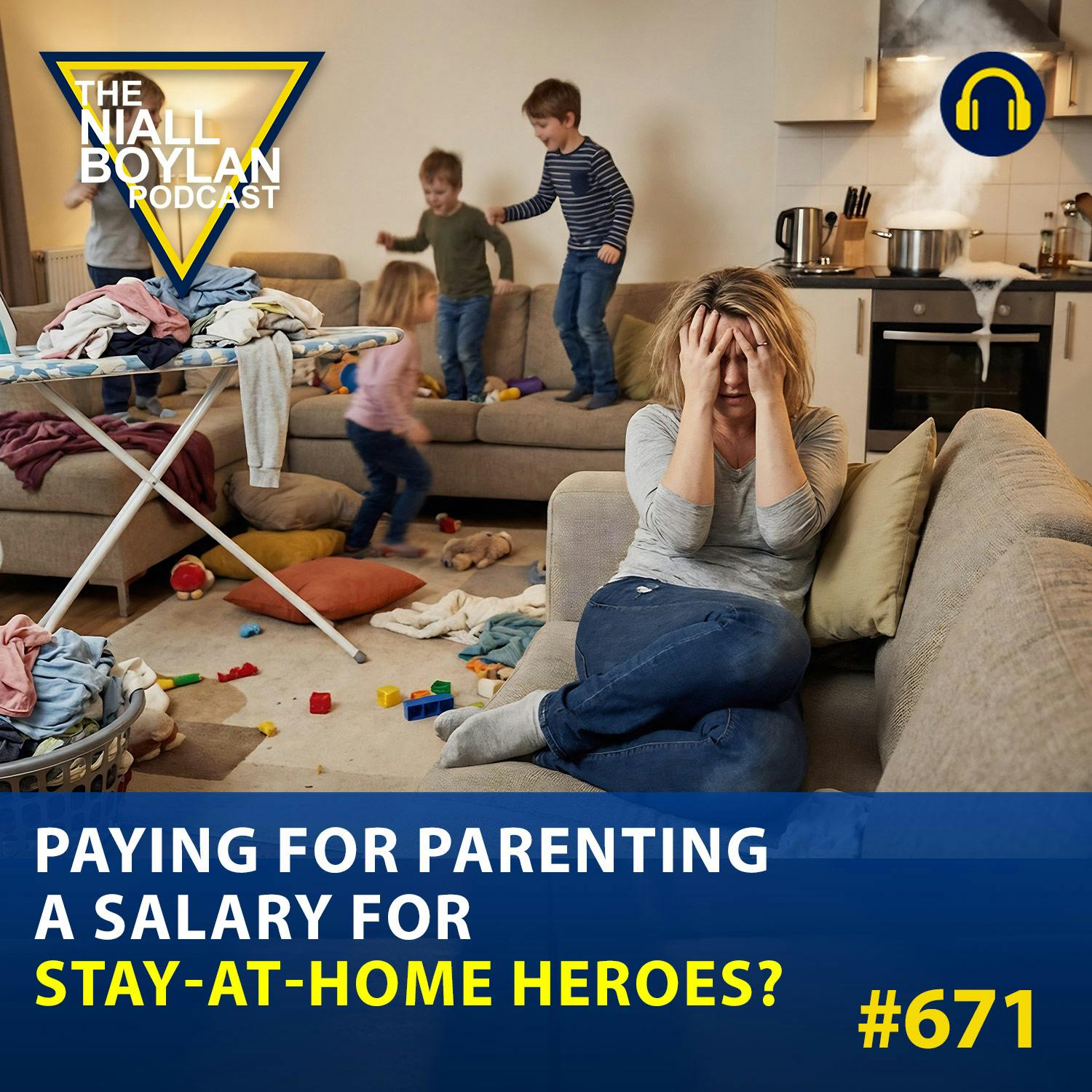
Ep 669#671 Paying for Parenting: A Salary for Stay-at-Home Heroes?
Join Niall as he delves into a thought-provoking conversation with social commentator Karl Deeter in this week’s episode of "The Open Mic." They tackle a pressing issue: the recent research revealing that it would cost approximately €60,112 annually to hire someone to perform the myriad tasks of a stay-at-home parent.Years ago, Bertie Ahern proposed a salary for stay-at-home parents—primarily mothers—but the idea faded into obscurity. While many argue that children benefit from having a parent at home, the rising cost of living makes this increasingly difficult for families.Niall invites listeners to weigh in on this contentious topic. Would you support using tax revenue to compensate stay-at-home parents, or do you believe it’s unfair for taxpayers to fund another person's child-rearing? Call in and share your views—let’s hear your thoughts on this mixed bag of opinions!
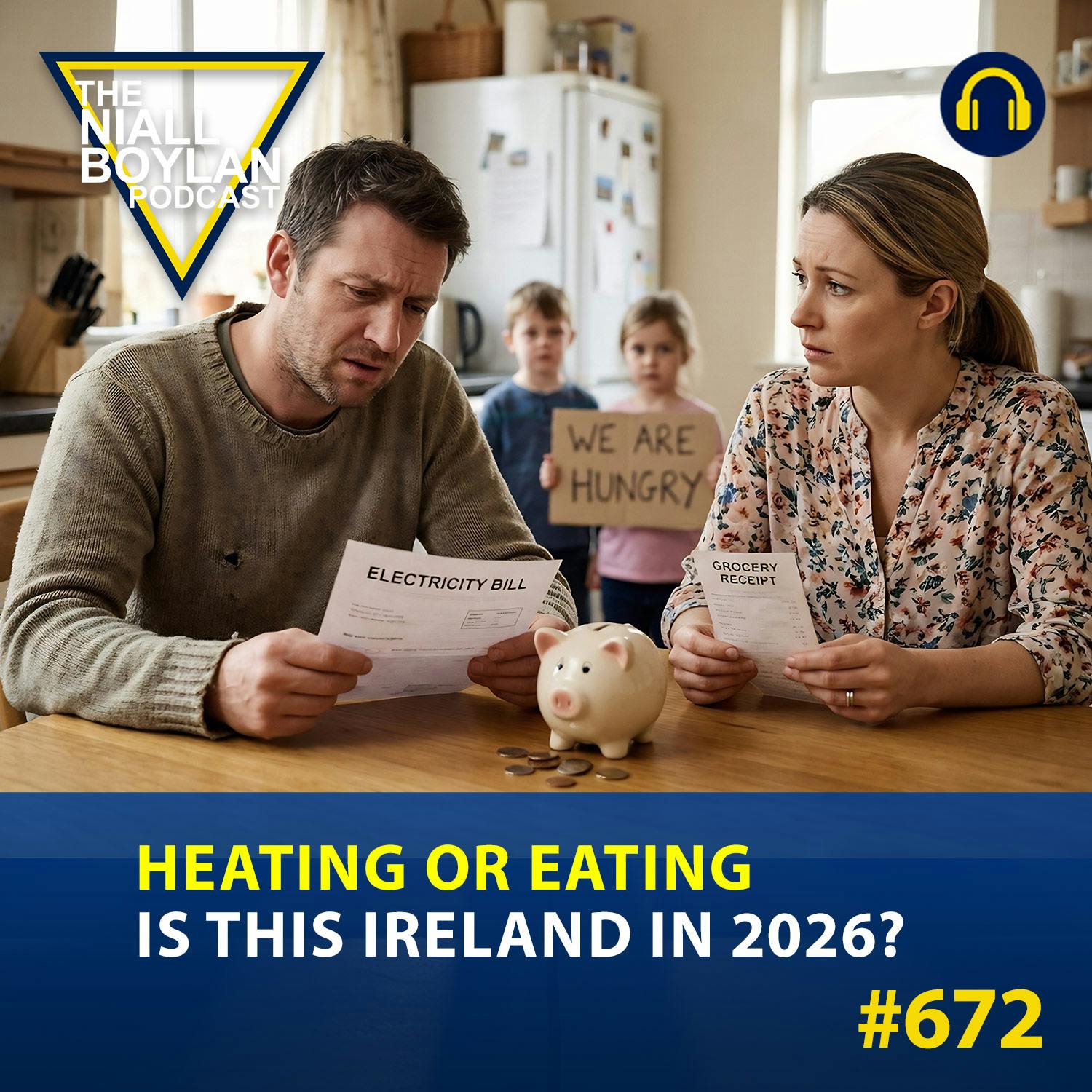
Ep 672#672 Heating or Eating — Is This Ireland in 2026?
With energy bills on the rise again and households feeling the squeeze, Niall opens the phone lines to hear from listeners on a burning issue: who should get help?Recent statistics show energy costs continue to climb — thousands of households are now in arrears on electricity and gas bills, with people struggling to keep up as prices stay high after years of global volatility in oil and gas markets. Almost 320,000 people in Ireland were behind on energy bills last winter, and calls are growing for stronger action from Government.On the petrol and diesel front, prices at the pump remain elevated across Europe, and Ireland is no exception. The average retail price in Ireland is around €1.82 per litre for petrol and about €1.72 per litre for diesel — among the higher levels in the EU.So how much of that is tax?The Irish Government levies substantial excise duty — about €0.71 per litre on petrol and €0.62 per litre on diesel.There’s also 23% VAT added on top of the pump price.Working backwards roughly, that means the pre-tax wholesale cost of a litre of petrol before excise and VAT is closer to ~€0.77–€0.78 before Government charges.Against that backdrop, Minister Simon Harris says an increase in the weekly Fuel Allowance will help the roughly 300,000 struggling families currently in arrears on energy bills — but critics argue that this targeted support doesn’t go far enough.Some callers believe that energy credits should be paid out universally — not just to low-income households — because middle-income families are also facing crippling bills and getting no Government help at all. Others counter that support should be carefully targeted to those most in need to make best use of limited public funds.📞 Call in and share:Should the Government expand universal energy credits for everyone?Or is targeted help — like fuel allowance increases for unemployed and low-income families — the smarter solution?What would you do if you were in charge of Budget policy?Tune in for a lively discussion as we cut through the numbers and hear what real people think about energy prices, taxes, and fairness in tough economic times.

Ep 668#670 Strike on Iran: Defending Freedom or Fueling Chaos?
In this explosive episode, Niall speaks with UK security expert Will Geddes about the dramatic escalation in the Middle East.Following direct US action targeting military installations linked to Iran — and reports that tensions now involve threats around Ali Khamenei — the region stands on a knife edge. Retaliatory strikes have reportedly hit civilian areas, and fears are growing of a much wider conflict drawing in global powers, including the United States and Iran.So Niall asks the blunt question:Is America acting as the world’s policeman —or pouring fuel on an already raging fire?Should the West stay out of sovereign nations’ affairs, no matter how brutal those regimes may be?Or do democratic nations have a moral duty to intervene, remove tyrants, and defend human rights — even if it risks triggering a broader war?Have past Western interventions made the world safer —or dangerously more unstable?At what point does “humanitarian intervention” become reckless escalation?Will Geddes brings his expertise in global security, geopolitical risk, and counter-terror strategy to break down what could happen next — and what it means for Europe, for global stability, and for ordinary civilians caught in the middle.But Niall wants to hear from you.Where do you stand?Global responsibility — or dangerous overreach?
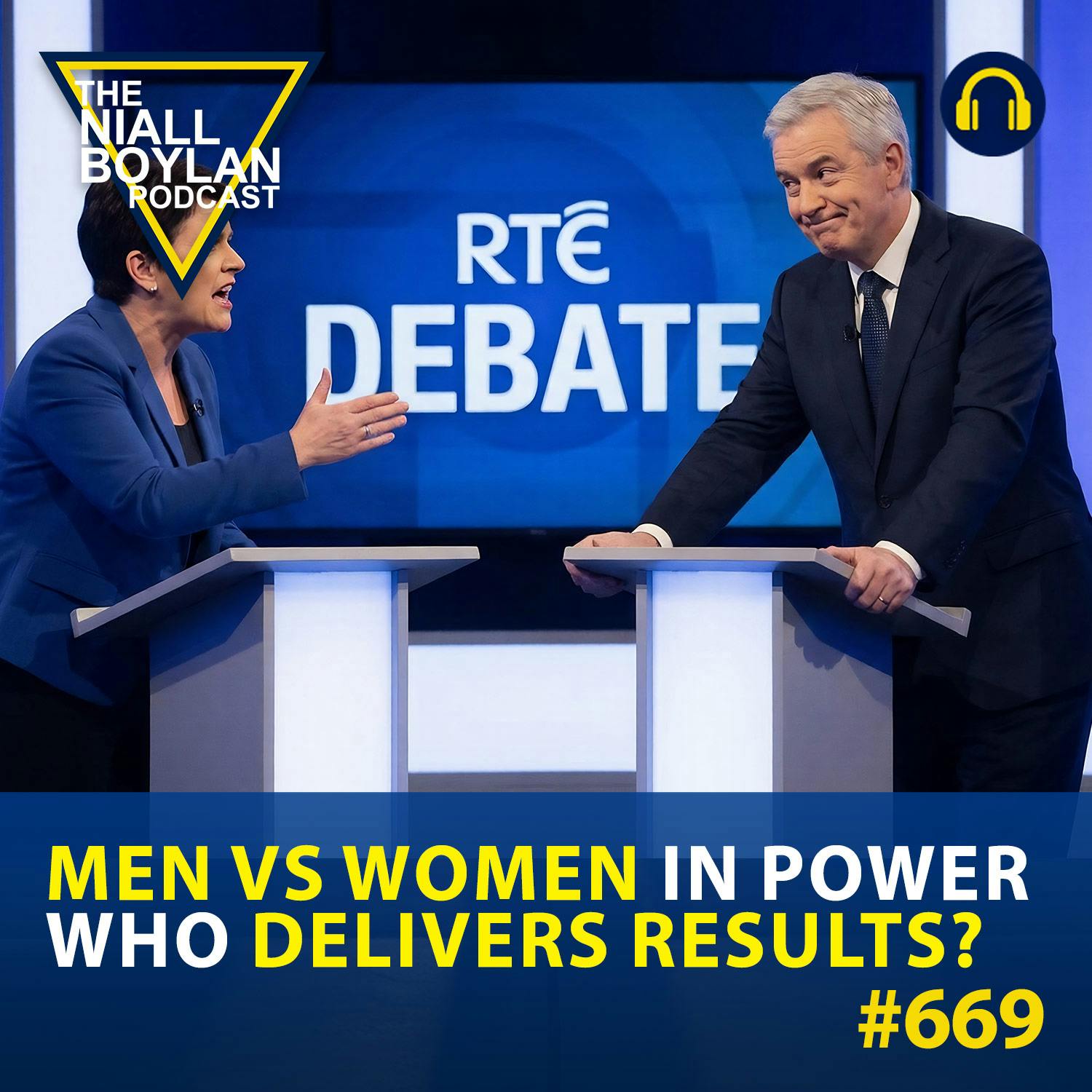
Ep 668#669 Men vs Women in Power: Who Delivers Results?
In this episode, Niall sits down with John McGuirk, editor of Gript Media, to unpack a comment that has stirred debate in Irish politics.A candidate for the Green Party in Dublin Central, Janet Horner, recently suggested that the Dáil Éireann needs fewer “confrontational hard men” and more women “working collaboratively.”But is that a fair assessment — or just gender politics dressed up as reform?Niall and John dive into the bigger questions:Are women inherently better at governing, or does that stereotype insult the men currently running the country?Has male-dominated leadership failed Ireland — or are we mistaking indecision for compassion and weakness for collaboration?Do we even have “hard men” in the Dáil anymore, or are today’s politicians largely cautious careerists reluctant to make difficult calls?Arguments in Favour of Horner’s ViewResearch often suggests women in leadership tend to adopt more collaborative and consensus-driven approaches.Greater female representation could broaden perspectives in policymaking.Irish politics has historically been male-dominated; change may naturally bring different styles and outcomes.Some argue combative politics has led to gridlock rather than solutions.Arguments AgainstLeadership ability is individual, not gendered — strength and collaboration aren’t exclusive to men or women.Framing politics as “hard men vs. collaborative women” risks simplistic stereotypes.Ireland’s political challenges may stem more from systemic issues than gender imbalance.Voters may want decisive leadership — regardless of whether it comes from a man or a woman.This episode goes beyond slogans to examine what Ireland actually needs right now: more women in power — or simply stronger leaders, regardless of gender?
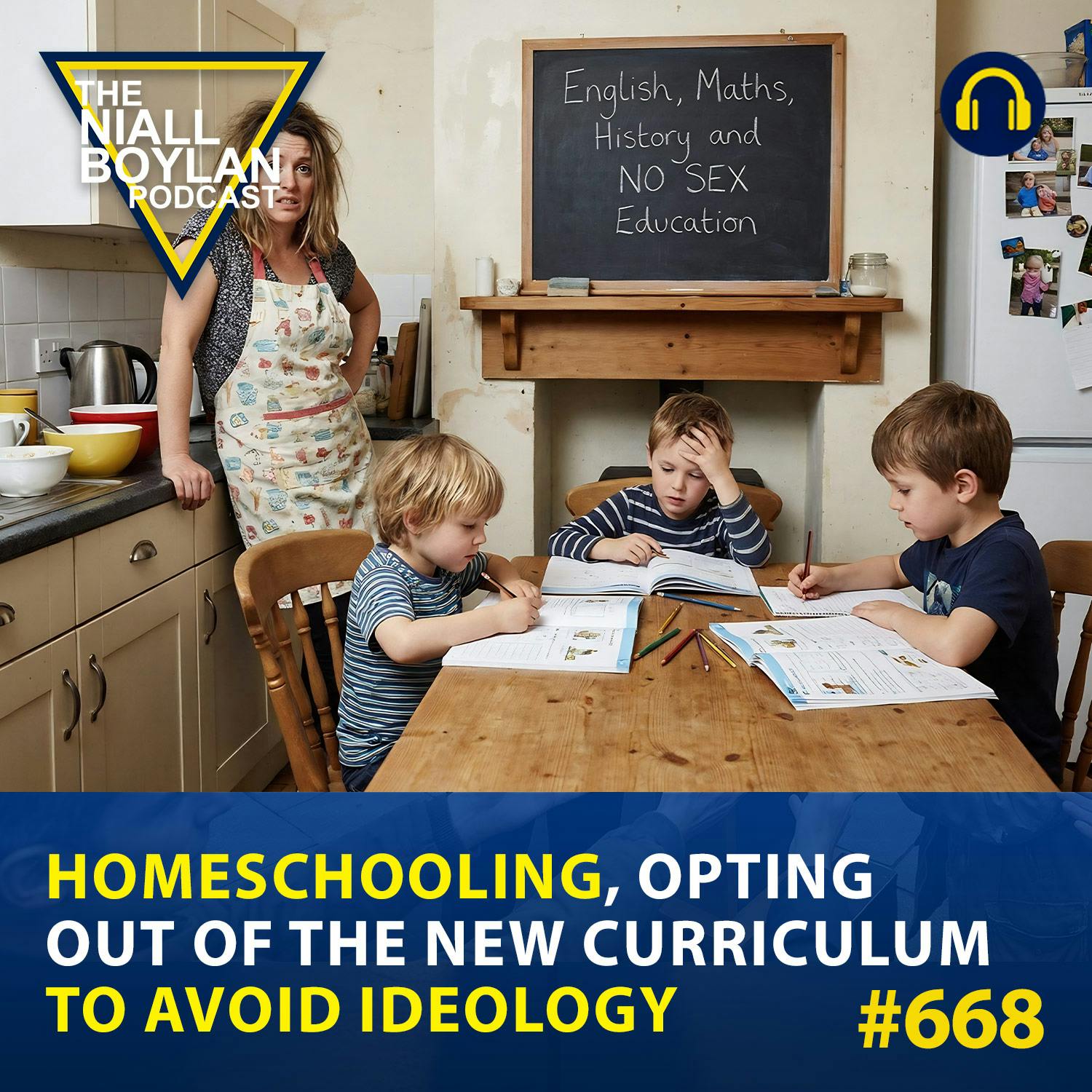
Ep 667#668 Homeschooling, Opting Out of the New Curriculum To Avoid Ideology
In this episode, Niall speaks to education commentator Jana Lundan about the upcoming Convention on Education and the National Conversation on Education, a major initiative that will help shape the future of Ireland’s school system.Chaired by Anne Looney, the Convention will meet over four weekends in 2026 — March 21–22, May 9–10, September 26–27, and November 14–15 — bringing together 150 participants from four groups: 30 children and young people, 30 parents and guardians, 30 school employees and early years educators, and 60 education stakeholders.The focus will centre on primary and post-primary education, key transitions within the system, what is working well, what challenges need urgent attention, and what changes may be needed in the years ahead. The recommendations from the Convention will feed directly into a new long-term strategy from the Department of Education and Youth.But Jana argues there’s a problem.She believes many parents are largely unaware that this Convention is even happening — and questions whether that lack of visibility is accidental. With the expression of interest process now closed and selected members due to be notified by 28 February 2026, she says parents are being “hoodwinked” out of meaningful involvement in decisions that will affect their children’s future.The conversation also explores another trend raising eyebrows: the steady increase in homeschooling across Ireland. Niall shares that he recently spoke to a mother who chose to homeschool because she disagrees with aspects of the moral and relationship education curriculum. With no formal qualifications required to homeschool, and some parents having limited educational backgrounds themselves, it raises a challenging question:Are homeschooled children at an advantage — benefiting from tailored, values-based learning — or are they potentially missing out on broader academic and social development?It’s a lively and thought-provoking discussion about transparency, parental voice, educational standards, and who ultimately gets to shape the future of Irish education.
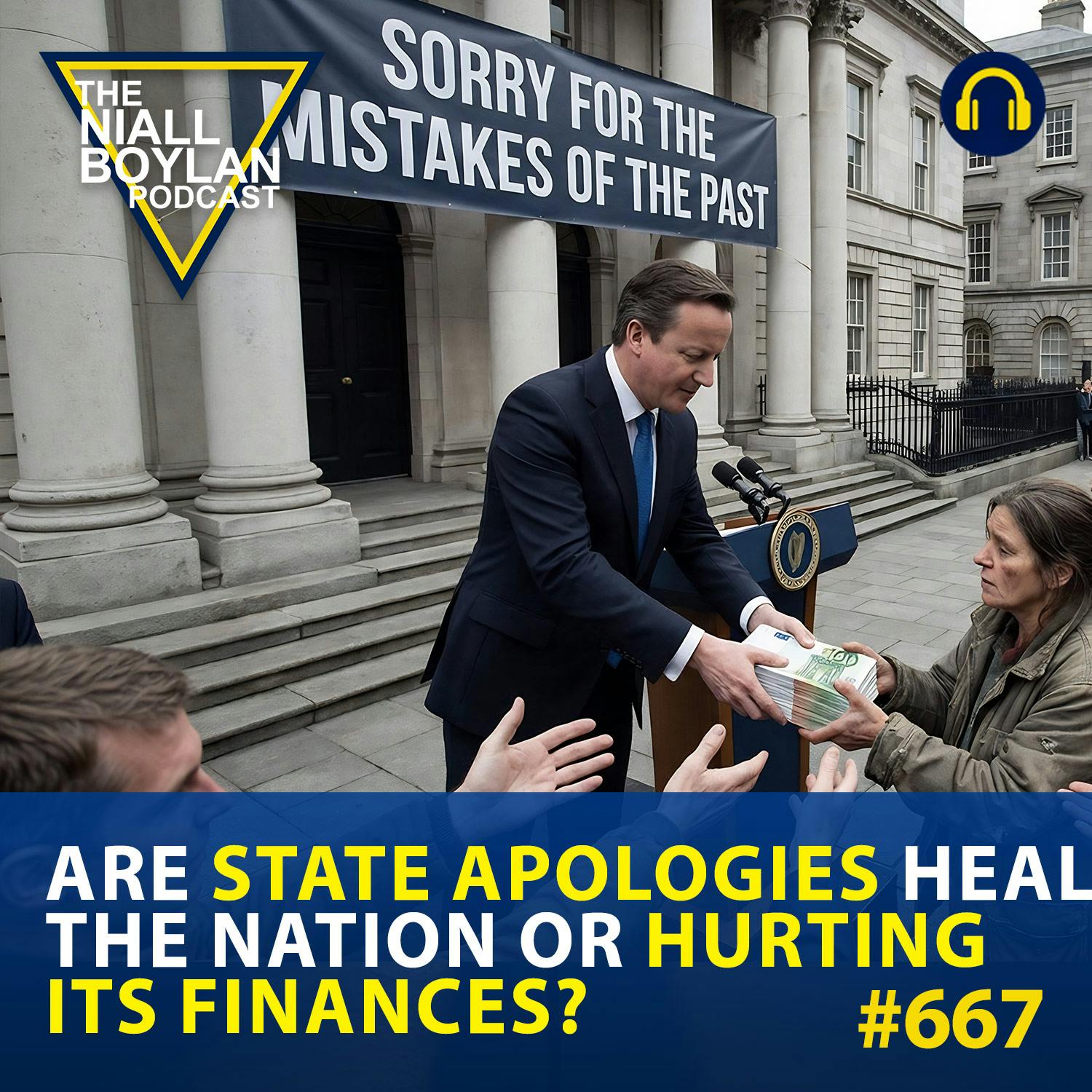
Ep 666#667 Are State Apologies Healing the Nation or Hurting Its Finances?
In this episode, Niall sits down with social commentator Karl Deeter to examine the Government’s latest commitment to issue a State apology to Ireland’s thalidomide survivors.After the Taoiseach initially declined to confirm whether an apology would be forthcoming, a subsequent “constructive” meeting with representatives signalled that a formal apology is now on the way — potentially opening the door to further redress.Over the past two decades, the Irish State has issued a series of landmark apologies: to survivors of industrial schools, the Magdalene Laundries, victims of clerical abuse, and those affected by Mother and Baby Homes, among others. In many cases, apologies have been accompanied by substantial financial compensation schemes, costing the State billions.There is little disagreement that grave wrongs were done — and that victims deserve recognition. But this conversation goes deeper:As a society, we inevitably make mistakes — and we will make more. In twenty years’ time, will another generation be apologising for today’s policies?Should the modern taxpayer continue to shoulder the financial burden of historic failures? Is compensation a moral necessity, or has the State created a model where apology and redress are now inseparable?And crucially — does the process of apology help us learn from the past, or has it become a political and financial reflex?It’s a thoughtful, challenging discussion about accountability, justice, public money, and whether saying sorry is enough — or too costly to sustain.
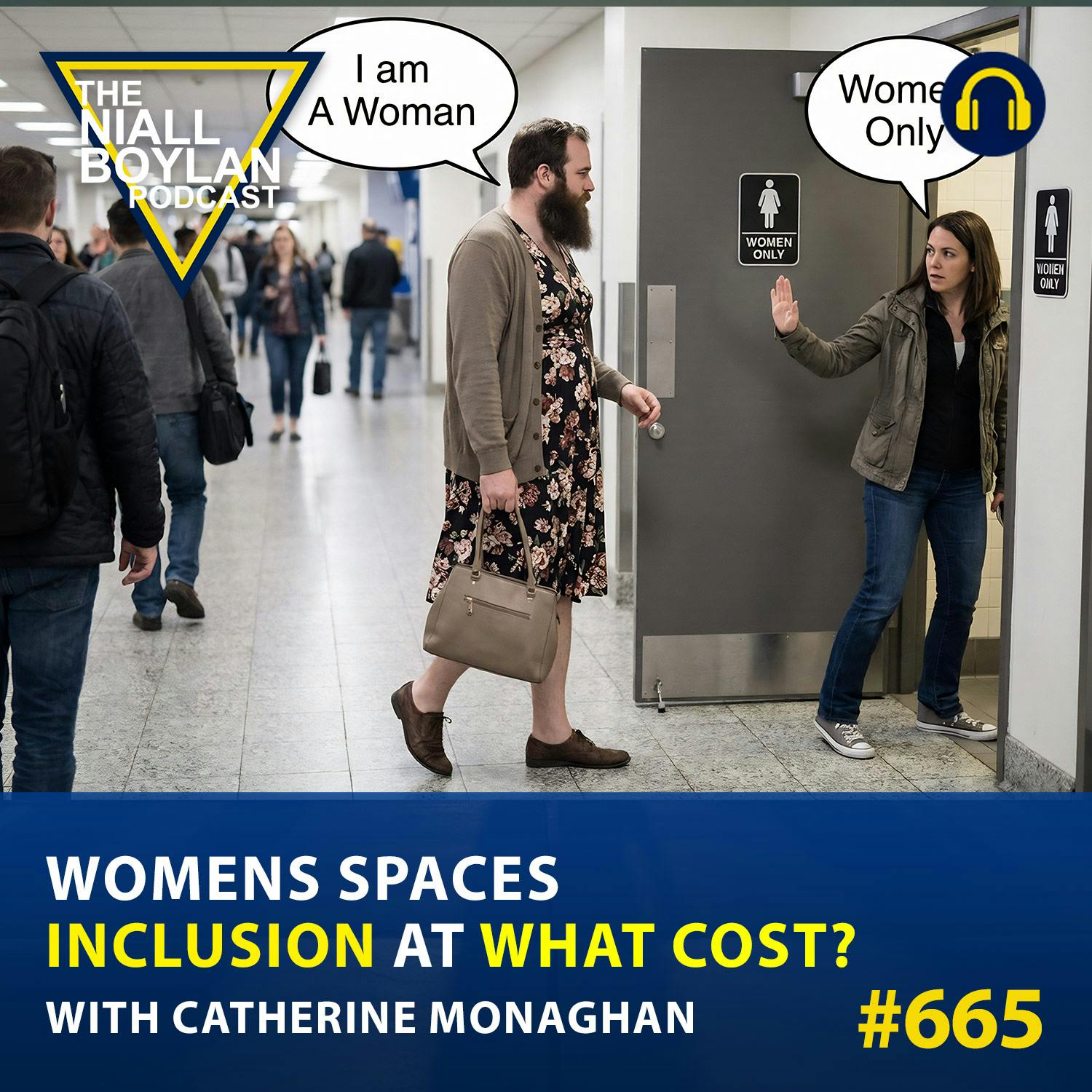
Ep 665#665 Womens Spaces: Inclusion at What Cost? With Cathrine Monaghan
In this episode, Niall sits down with Irish women’s rights activist,Catherine Monaghan a founding member of Wicklow Women 4 Women, for a wide-ranging and thought-provoking conversation on some of the most debated issues in Ireland today.Together, they explore the future of women’s single-sex spaces, the impact and implications of the Gender Recognition Act 2015, and the broader cultural and legal questions surrounding gender identity. Catherine shares her perspective on advocacy, public debate, and what supporters and critics alike can expect from their upcoming speaking event in Dublin on March 7th.This episode also turns the conversation outward. Niall asks you, the listeners:Do you believe gender pronouns should always be respected?Should educators and public services be obliged to use a person’s chosen pronouns rather than those associated with their biological sex at birth?Expect a candid, respectful discussion that doesn’t shy away from difficult questions. Whether you feel strongly one way or are still making up your mind, this is a conversation that invites you to think critically and engage openly.
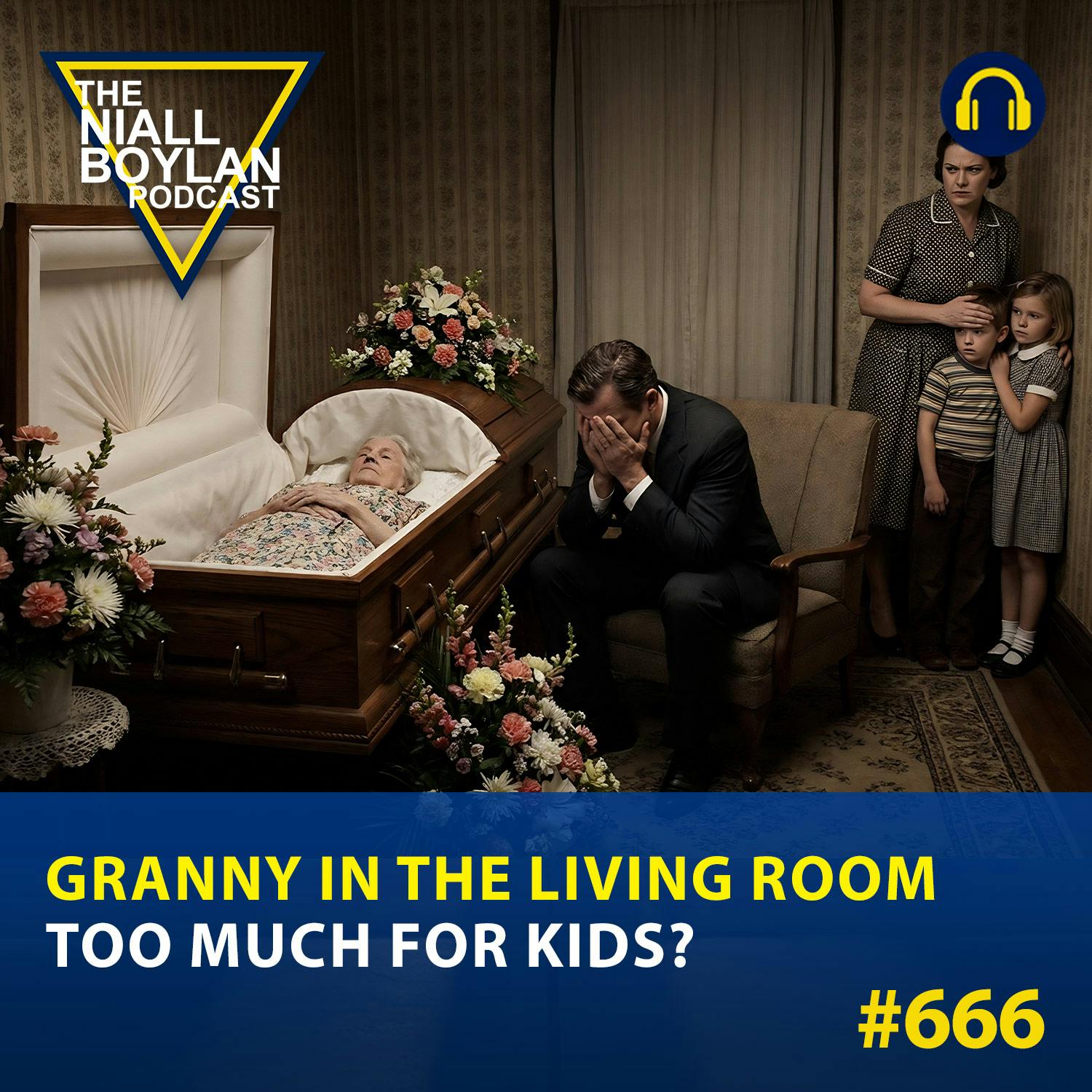
Ep 665#666 Granny in the Living Room — Too Much For Kids?
In this emotionally charged episode, Niall opens the lines after receiving a heartfelt email from a mother facing an incredibly difficult family decision.Her mother-in-law, who had been living with the family, passed away just two days ago following a long illness in hospital. Now, her husband wants to bring his mother home and hold a traditional open-coffin wake in the house, allowing neighbours and friends to call and pay their respects.But the emailer is deeply worried about their two young children, both under the age of ten. She feels that having an open coffin in the family home could be overwhelming and potentially traumatic for them — especially given how close they were to their grandmother. In her words, “No child should have to see someone they lived with in that way.”Her husband sees it very differently. He believes that bringing his mother home is an important part of saying goodbye — not just for him, but for the whole family, including the children. He feels it could help them understand death, grieve properly, and be part of a significant family moment.So tonight, Niall asks:Who is being unreasonable — the husband or the wife?Should young children be shielded from death, or gently included in the rituals of goodbye?Is an open coffin at home a healthy way to process grief — or too much for little minds?It’s a sensitive subject that touches on parenting, culture, grief, and what it really means to protect our children.Join the conversation as callers share their experiences, opinions, and advice.
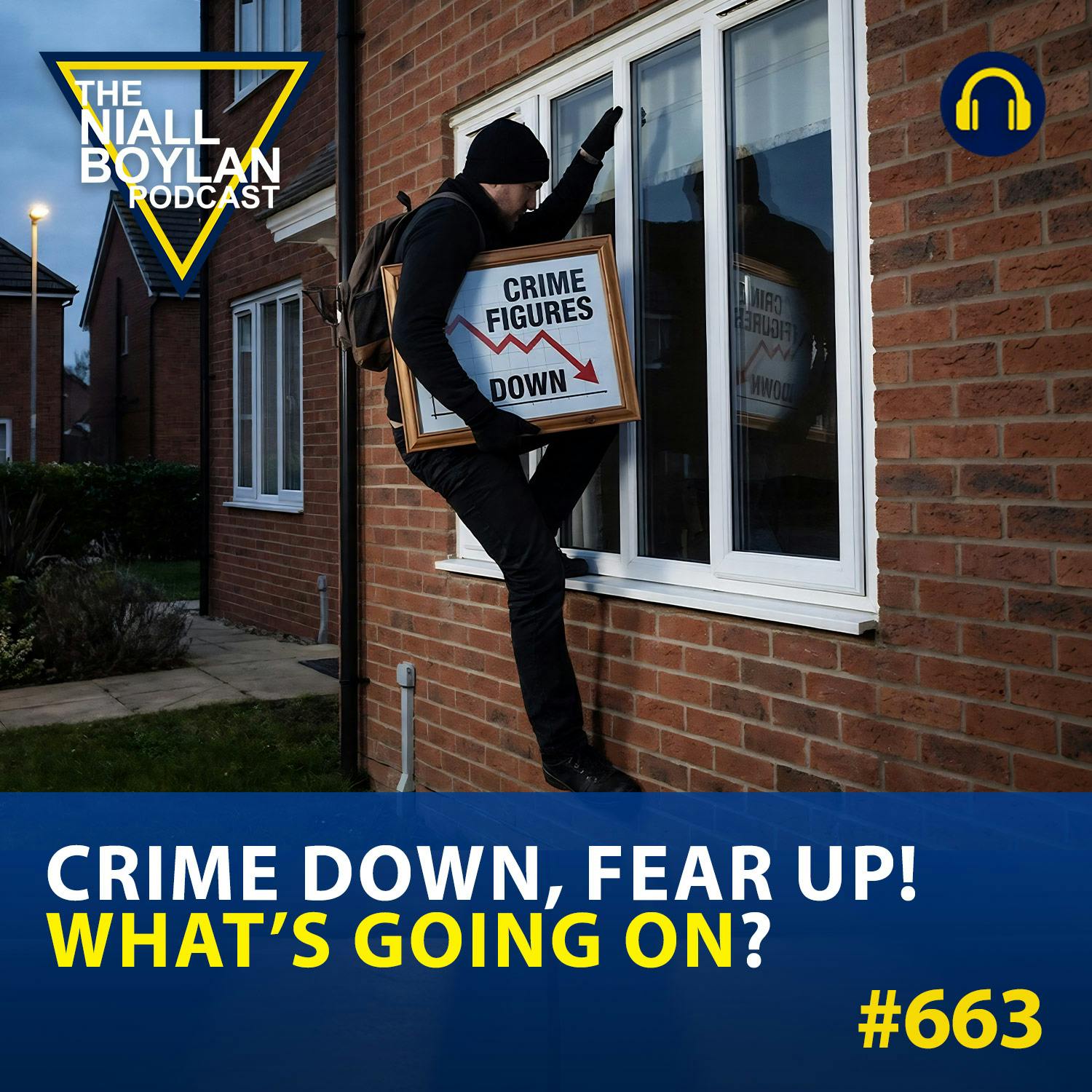
Ep 662#663 Crime Down, Fear Up — What’s Going On
On this week’s episode, Niall is joined by Eric Nelligan from Aontú to unpack the latest provisional crime figures from the An Garda Síochána — and to ask whether they tell the full story.The Gardaí say crime is down across most serious categories, including robberies, thefts and sexual offences. But at the same time, fraud — particularly online fraud — has surged by a staggering 130%.So what’s really going on?Many people say they simply don’t believe the figures. Some argue that crimes are going unreported because victims feel nothing will be done. Others suggest burglaries may be down not because crime has fallen, but because more homes now have alarms, cameras and stronger security.And then there’s the bigger question: if crime rates are down, why do so many people say they feel less safe walking the streets of our towns and cities? Can both things be true at the same time?Niall and Eric debate whether the statistics match the lived reality — and what needs to change if public confidence in policing is to be restored.We want to hear from you.📞 Do you believe the crime figures?📞 Do you feel safe on the streets of our cities?📞 Have you noticed a reduction — or an increase — in crime in your area?

Ep 664#664 America vs Europe: The Free Speech Fight
On this week’s episode, Niall is joined by social commentator Karl Deeter for a provocative discussion about free speech, censorship, and who really gets to decide the limits of public debate.The conversation centres on reports that the US has developed a new portal — freedom.gov — designed to allow users, including Europeans, to access content blocked under national or EU laws, including material deemed hate speech or linked to extremism. The move comes amid growing tension between the Trump administration and the European Commission over Europe’s tightening regulation of big tech platforms.With investigations into companies like X and Meta, and increasing enforcement of hate speech and disinformation rules across the EU, the debate over who controls online speech is intensifying. At the same time, critics argue that speech laws in Europe are becoming more restrictive — while supporters say they are necessary to protect democracy and public safety.So where is the line?Are our speech limits changing?Do you feel more cautious about what you say publicly — or post online?Are people self-censoring for fear of being cancelled, fined, or even arrested?And should America be interfering in Europe’s laws at all?Niall and Karl explore whether this is a battle for freedom of expression — or a geopolitical power struggle dressed up as one.We want to hear from you.Has the space for open debate shrunk?Do you think free speech is under threat — or properly regulated?And should the US have any role in challenging European speech laws?
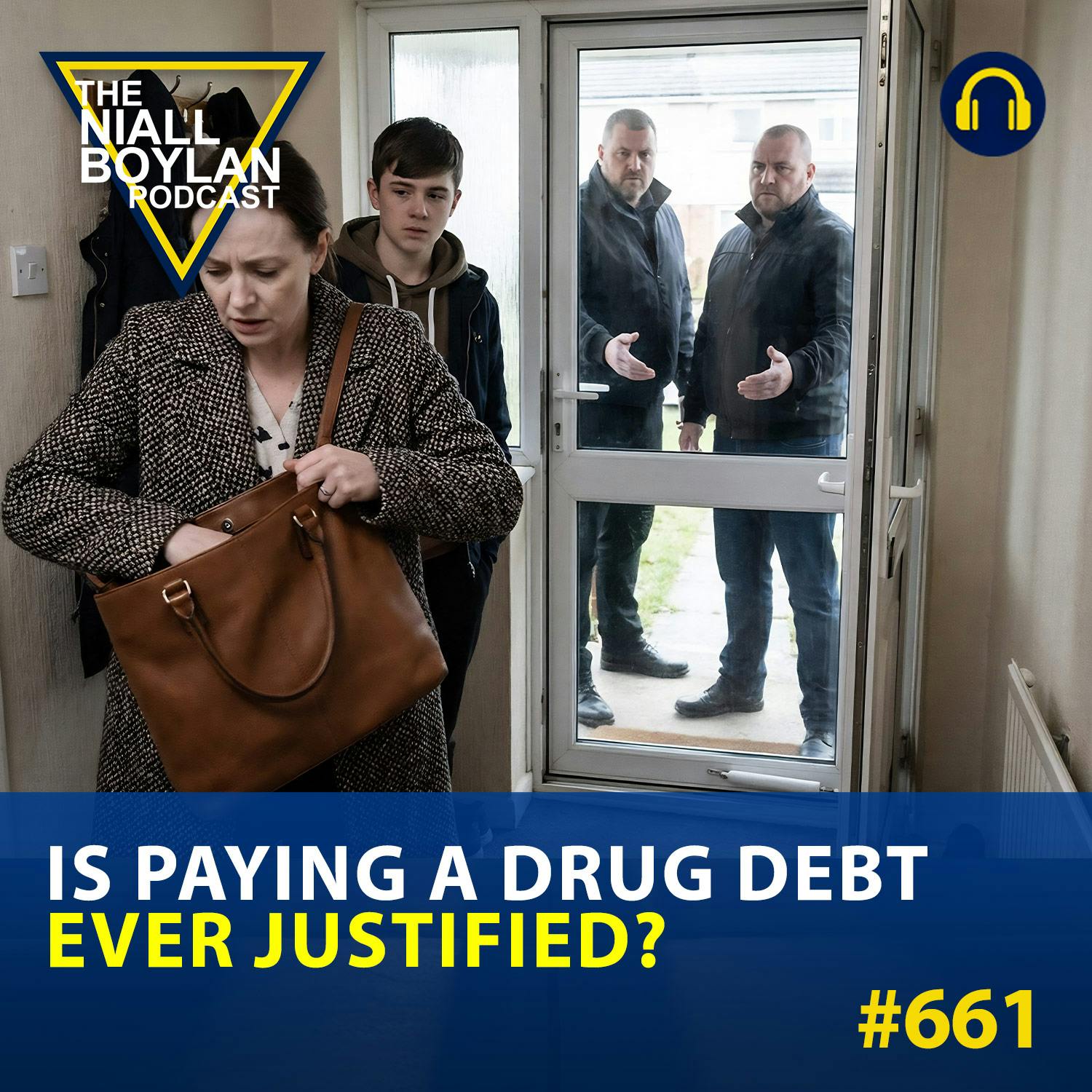
Ep 661#661 Is Paying a Drug Debt Ever Justified?
In this powerful and unsettling episode, Niall sits down withjournalist and author and writer Dr Eoin Lenihan to unpack his reflections after spending a week in County Clare.Drawing from conversations with locals — including a farm supply merchant — Eoin recounts a stark and troubling story: cocaine has reached deep into rural Ireland, and the fallout is devastating families. He tells of a well-known farming family whose teenage son accumulated €60,000 in cocaine debt. Dealers arrived at the family home demanding payment from the father. Desperate to protect his son, he paid. When the son later ran up another €40,000 the father couldn’t cover, the intimidation escalated — the family’s tractor was set on fire, with a chilling warning that the house would be next.Niall focuses on what he believes is the most confronting part of this story: the shift in tactics. Drug dealers now routinely target parents to settle their children’s debts. Rural communities are living in fear, and what was once seen as an urban problem has firmly embedded itself across the countryside. Even young people from nearby Gort are avoiding nights out, saying the social scene is saturated with drugs and no longer enjoyable.At the heart of the conversation, Niall asks listeners a deeply difficult question:If your 16-year-old son owed tens of thousands to drug dealers, would you pay the debt to protect him — or would you go to the police?This episode doesn’t offer easy answers. Instead, it opens an honest discussion about fear, responsibility, community, and the growing grip of cocaine on Irish family life.A sobering conversation that asks: how did we get here — and what do we do next?
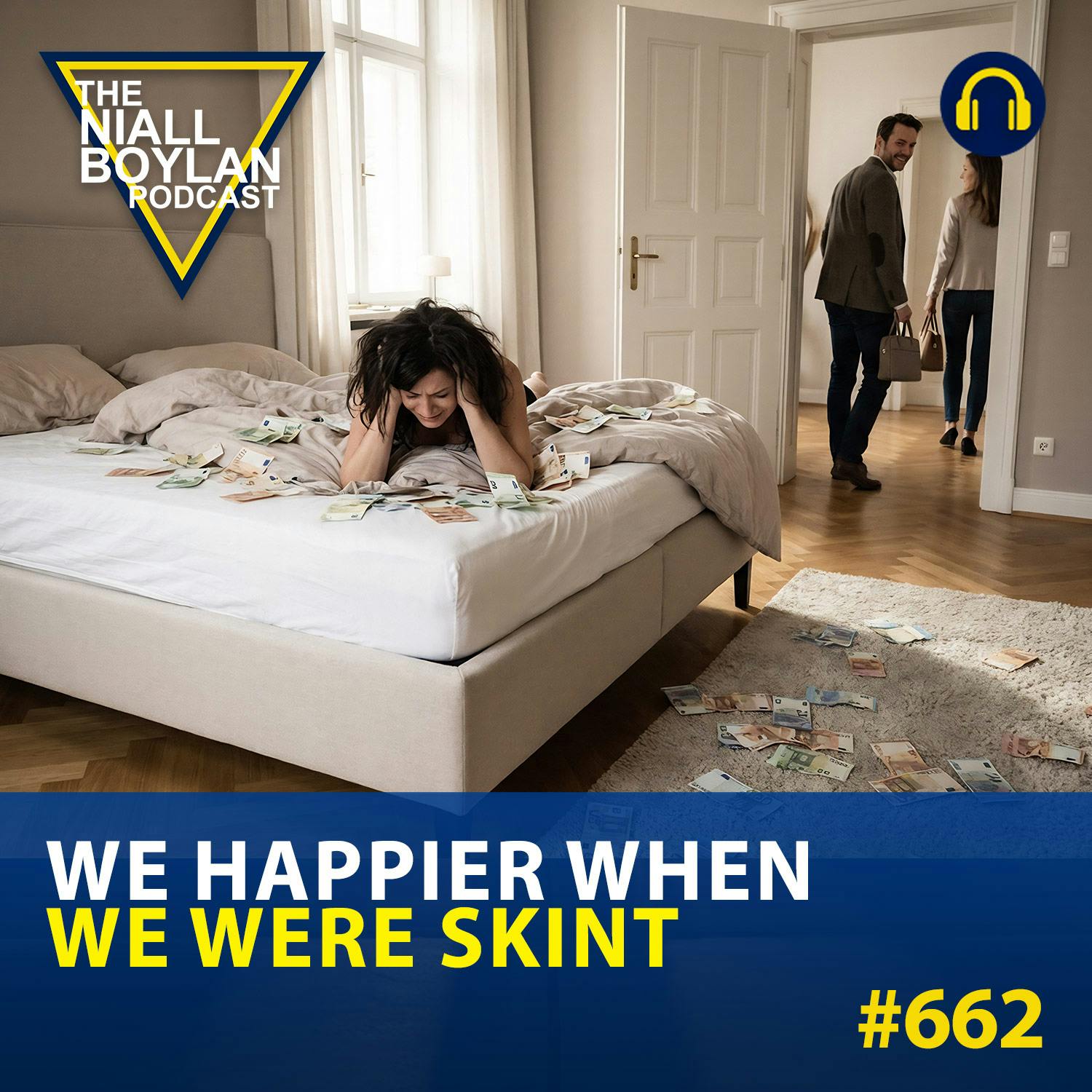
Ep 661#662 We Happier When We Were Skint
In today’s episode, Niall talks about a powerful and thought-provoking email the show received from a listener.She and her husband were married for twenty years. By her account, it was a deeply happy marriage. They lived month to month, counted every bill, and didn’t have much left over — but they were content. Life was simple. Life was solid.Then, three years ago, everything changed.Her husband inherited more than €2 million from his father. Financial pressure disappeared overnight. The mortgage was cleared. The stress was gone. But slowly, so was something else. They began to drift. The shared struggle that once bonded them faded. Eventually, he had an affair. Now, their marriage is hanging by a thread.She told us something that stopped us in our tracks:“We were happier when we had nothing.”Today, Niall and AJ explore the emotional and psychological impact of sudden wealth. Does money amplify who we already are? Does it remove the glue that holds relationships together? Or does it simply expose cracks that were always there?Her question is simple — but the answer isn’t:Does money really bring happiness?We want to hear what you think.
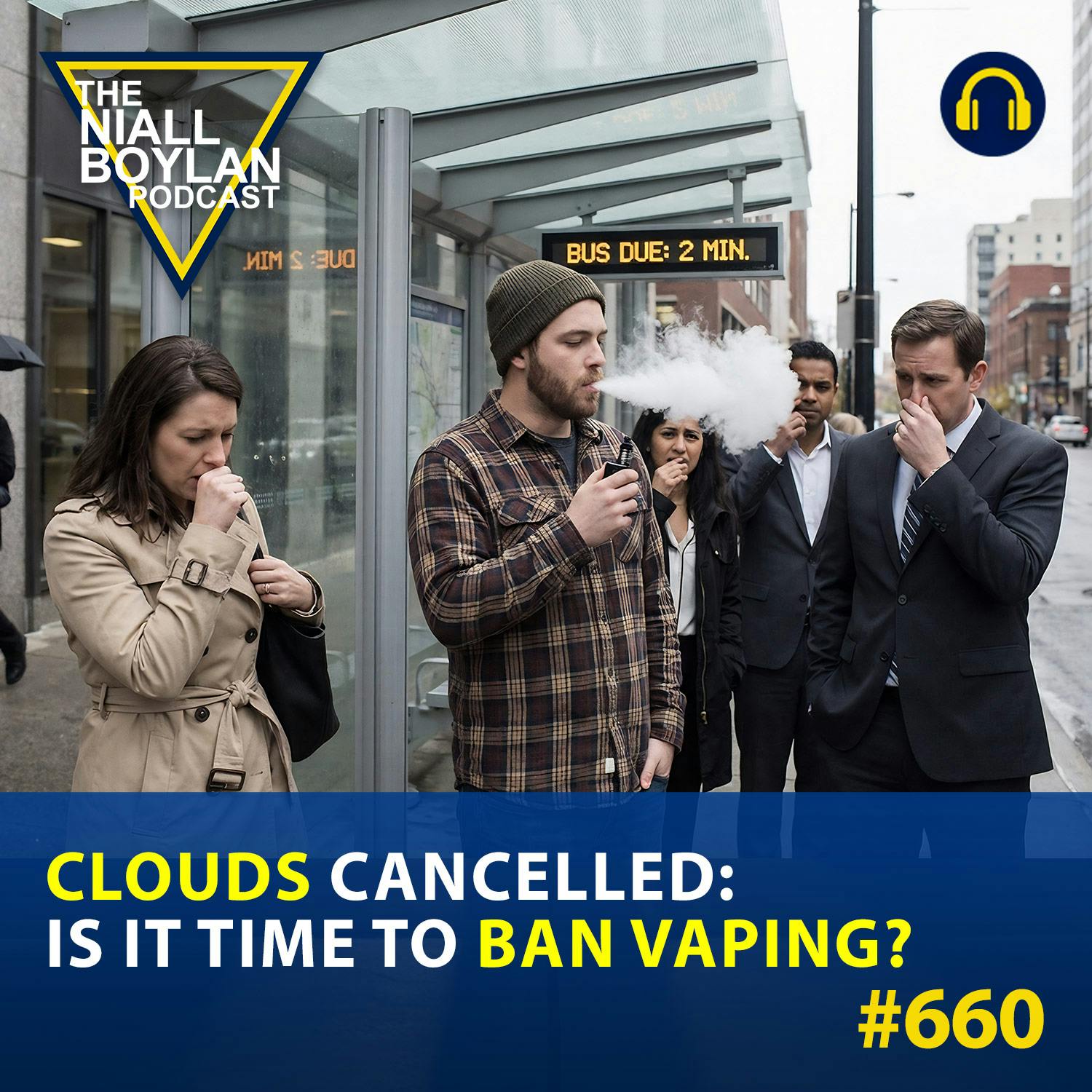
Ep 660#660 Clouds Cancelled: Is It Time to Ban Vaping?
Niall is joined by journalist Derek Byrne to discuss new restrictions in England that will ban vaping in cars carrying children, playgrounds, areas outside schools and hospitals, and anywhere smoking is already prohibited. Under the rules, vaping is effectively being treated like cigarettes — with fines for those caught vaping in cars with under-18s.The move has reignited debate about whether vaping has gone too far, with some arguing it’s addictive, heavily marketed to young people, and should never have been allowed in the first place.Should Ireland introduce similar bans in public places, cars, and outdoor areas where children are present? Call in and have your say — Niall wants to hear what you think.
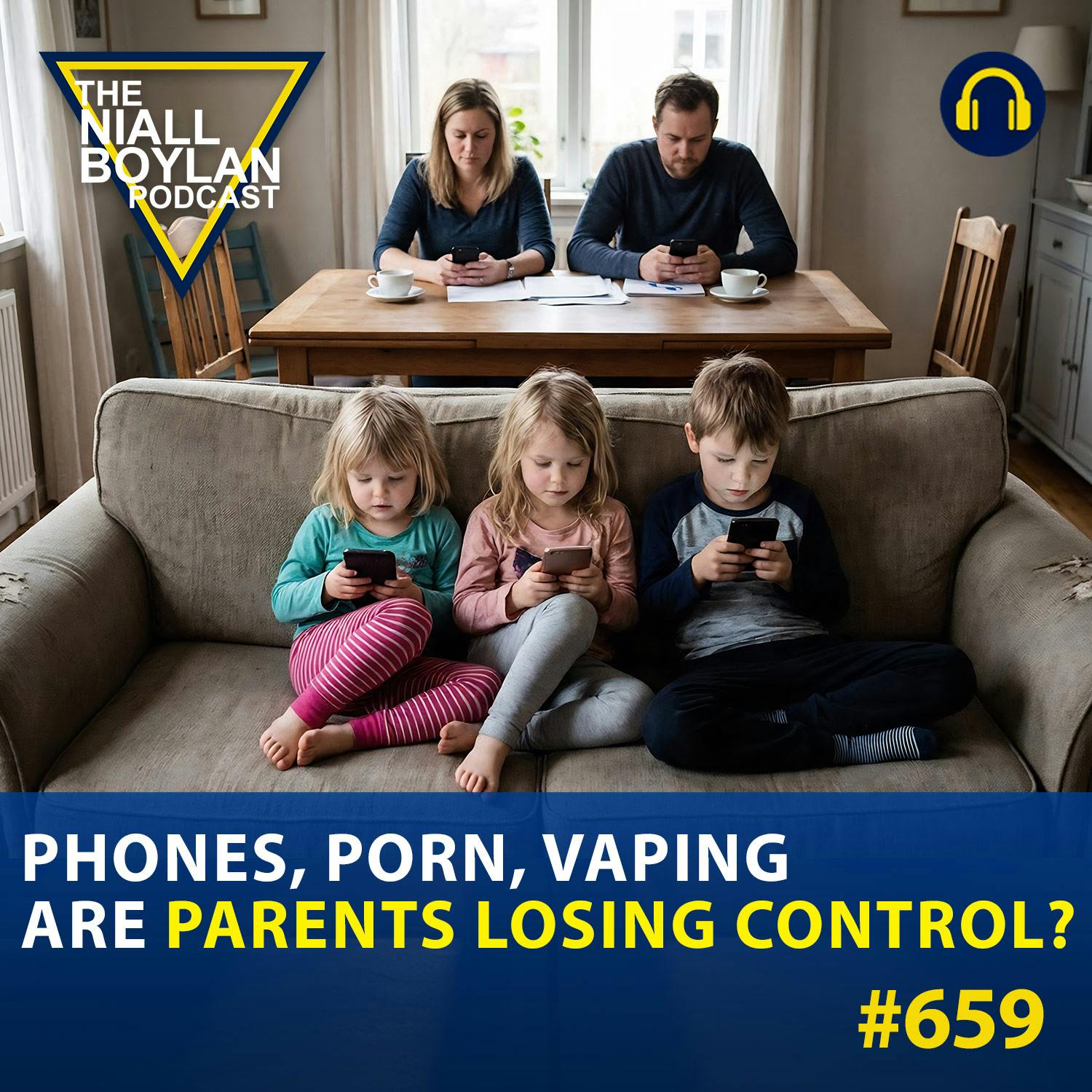
Ep 659#659 Phones, Porn, Vaping — Are Parents Losing Control?
In this episode, Niall sits down with Jason Osborne from Gript Media to discuss his controversial view that abstaining from pornography should form part of the Catholic Confirmation pledge for young people.The conversation explores growing concerns about children’s exposure to explicit material at increasingly younger ages, the impact of smartphones and internet access, rising phone dependency, vaping trends, and wider pressures facing families today.Listeners also weigh in — some arguing modern parents have dropped the ball, while others say soaring living costs and busy dual-income households are the real challenge.Have parents failed this generation, or are they simply navigating a much tougher world? Tune in for a thoughtful and sometimes provocative discussion.
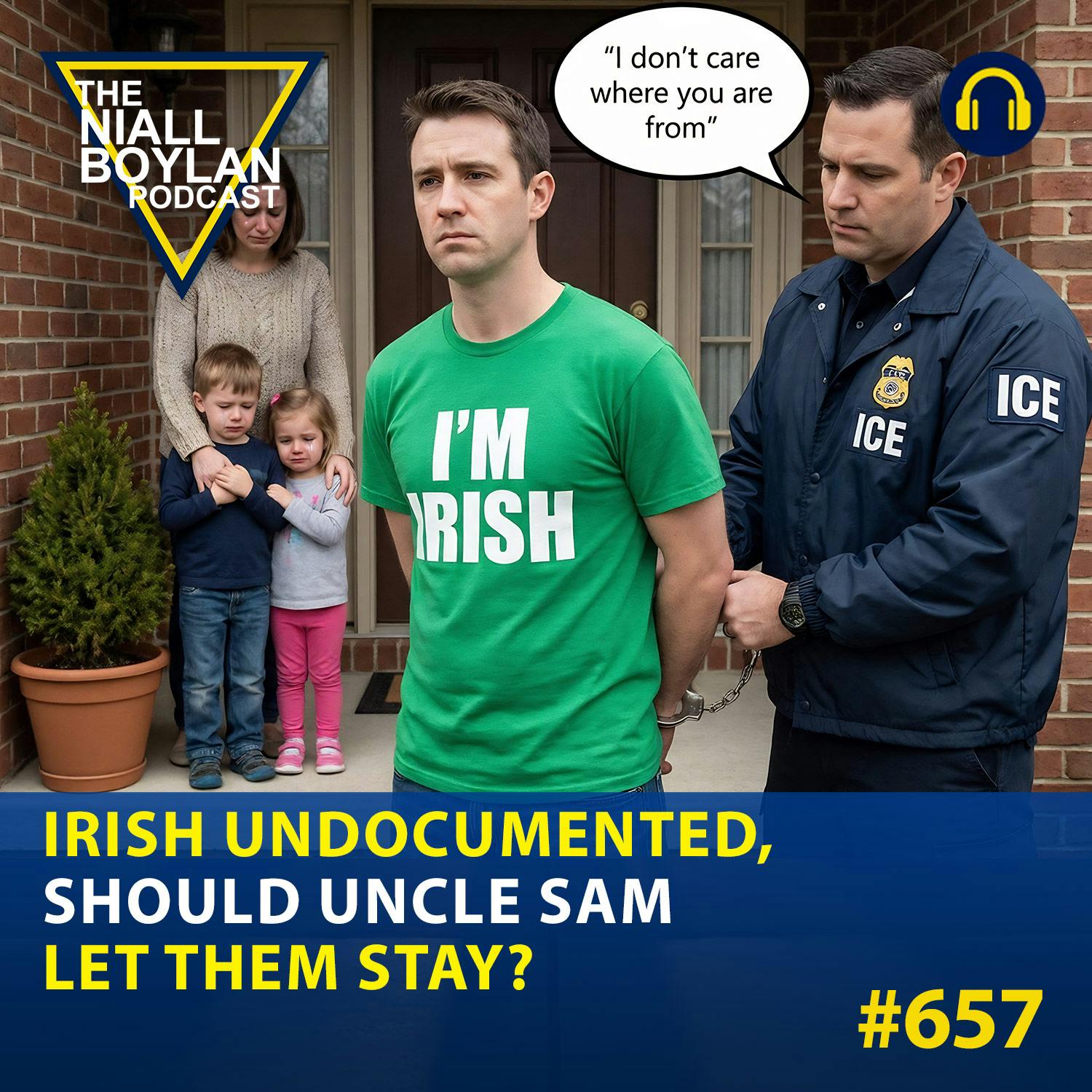
Ep 657#657 Irish Undocumented, Should Uncle Sam Let them Stay?
Today on the podcast, Niall is joined by John McGuirk, editor of Gript Media, and social commentator Karl Deeter to discuss the controversial case of Irish citizen Seamus Culleton, who has been held by US Immigration and Customs Enforcement (ICE) since last September after allegedly overstaying a visitor visa for many years.Originally from Co Kilkenny, Culleton had been living in the United States since 2009 and was arrested near his Massachusetts home before being transferred to a detention facility in Texas. His deportation has recently been temporarily postponed by a US court while legal efforts continue. Supporters say he has built a life in America and is married to a US citizen, while critics argue immigration laws must be enforced consistently.The case has sparked wider debate about undocumented Irish people in the United States. Estimates vary widely — from roughly 10,000 to as many as 50,000 undocumented Irish residents — many of whom have lived there for decades, often working, paying taxes, and raising families with American-born children.Karl and John bring differing perspectives on how cases like Culleton’s should be handled: whether compassion, practicality, and long-standing ties should carry weight, or whether immigration law must apply equally regardless of nationality or length of stay.We’re asking listeners: should undocumented Irish in the US be offered an amnesty, allowing them to remain legally, or should enforcement take its course even when families and livelihoods are at stake?Join the conversation and share your views.

Ep 658#658 Goals vs Principles: Should Ireland Face Israel?
Today on the podcast, Niall speaks with Independent TD Michael Collins following a political row over Ireland’s planned international football fixture against Israel. Collins has accused Sinn Féin of “political grandstanding” after party leader Mary Lou McDonald said it would be “unthinkable” for Ireland to play Israel, home or away, while the war in Gaza continues.The match is part of a scheduled UEFA international competition fixture involving the Republic of Ireland men’s national team. Under normal UEFA regulations, if a team refuses to play a sanctioned competitive match for political reasons, it would likely have to forfeit the game — usually recorded as a 3-0 loss — and could face additional fines or disciplinary sanctions.Politically, the issue has divided opinion. Some politicians and campaigners argue sport should reflect ethical and humanitarian concerns, while others say international sport should remain separate from politics and that refusing to play could harm Irish football, players, and supporters without changing events abroad.Niall and Michael Collins discuss whether calls for a boycott are justified, whether politics is increasingly influencing sport, and what the consequences could be if Ireland took such a stand.We’re also asking you:Do you support Ireland playing the match?Will you be watching if it goes ahead?And should politics and sport always be kept separate?Join the conversation and let us know your view.
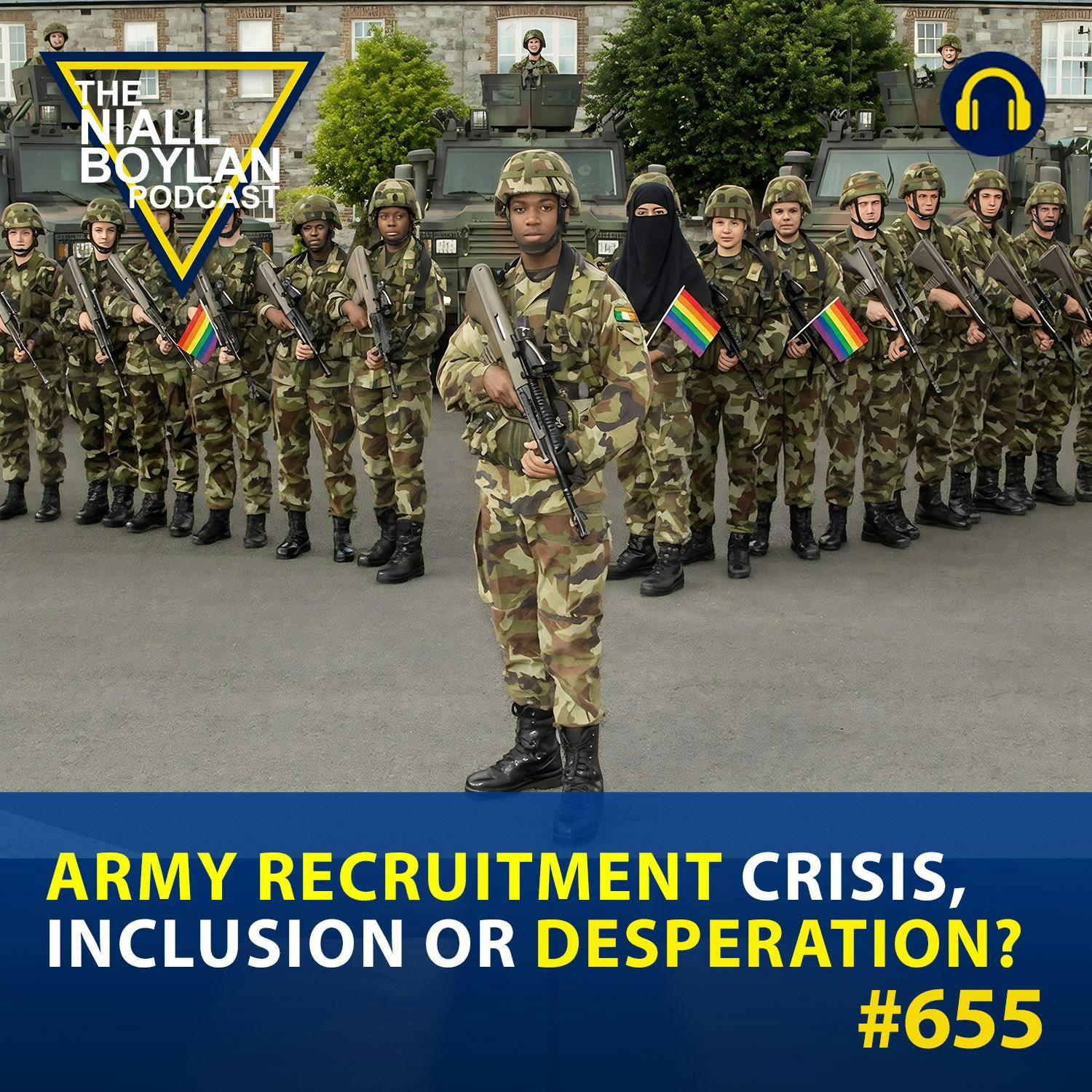
Ep 655#655 Army Recruitment Crisis: Inclusion or Desperation?
This week, host Niall sits down with Senator Sharon Keoghan to unpack the controversy surrounding recent comments about diversity recruitment in the Irish Defence Forces.After the Defence Minister spoke about making recruitment more diverse — including the possibility of international protection applicants joining — Senator Keoghan described the idea as “madness,” questioning loyalty, national security, and whether fast-tracking citizenship through military service could pose risks to Irish society.But is it really such a radical idea? Or, as some commentators argue, could broadening recruitment be one of the few realistic ways to address falling enlistment numbers — especially when public debate continues about the purpose, cost, and role of Ireland’s Defence Forces?Niall and Senator Keoghan explore:• The reasoning behind her remarks• The Defence Forces’ role in modern Ireland• Whether diversity in recruitment strengthens or weakens national security• And the bigger question: do we actually need a standing defence force at all?A thoughtful, challenging conversation about defence, identity, and the future of Ireland’s military.

Ep 655#656 Aliens: Fact, Fiction, or Fantastic Imagination?
This week, Niall dives into an intriguing story involving former US president Barack Obama and the question that never seems to go away — aliens.Speaking recently on a podcast with Brian Tyler Cohen, Obama said that while the universe is vast and statistically life could exist elsewhere, the chances Earth has actually been visited by extraterrestrials are “low.” He joked that aliens aren’t being hidden in Area 51 and said he saw no evidence of alien contact during his presidency.He later clarified that his comments came during a quick-fire question round — but reiterated that although life elsewhere is possible, there’s no proof they’ve ever reached us. Obama has even joked before, including in an interview with James Corden, that he checked whether secret alien labs existed when he entered office — and was told they didn’t.So tonight, Niall asks the big question for listeners:Are we alone out there… or do you think aliens exist — and maybe have already visited Earth?
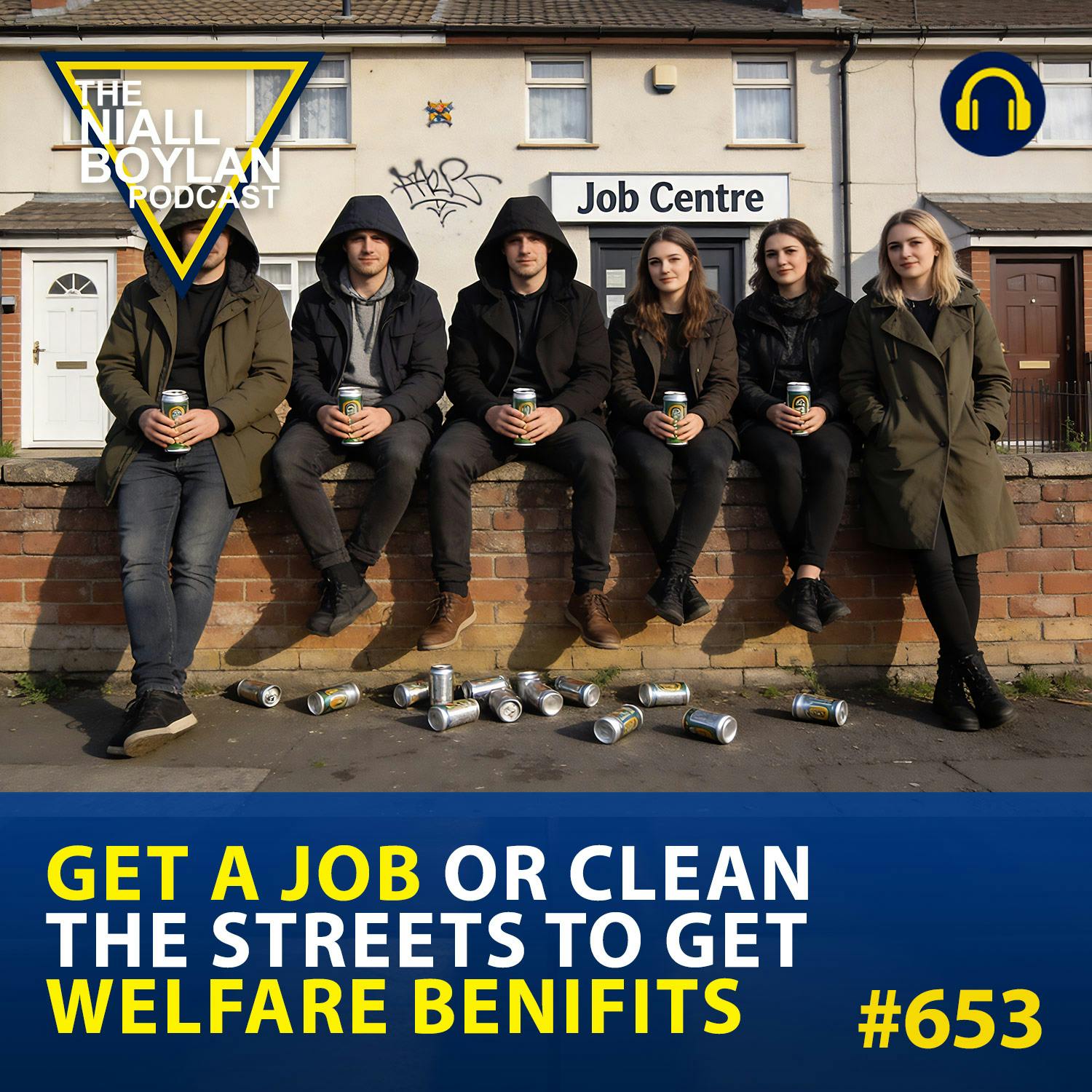
Ep 653#653 Get A Job Or Clean The Streets To Get Welfare Benifits
In this episode, Niall is joined by podcaster and social commentator Elaine Mullally for a lively and thought-provoking discussion on welfare, responsibility, and fairness in today’s society.They unpack controversial comments from UK MP Rupert Lowe, who suggested that healthy people on benefits who refuse work should be required to clean streets and public spaces — or risk losing their payments. Is this a reasonable expectation tied to taxpayer support, or does it cross the line into forced labour?Together, Niall and Elaine explore the wider questions:Should long-term unemployed people be required to contribute community work to receive benefits?Where is the balance between social support and personal responsibility?And what impact could such policies have on dignity, opportunity, and society as a whole?It’s a nuanced conversation with strong views on both sides — and, as always, listeners are invited to make up their own minds.

Ep 654#654 Zoos, From Victorian Curiosity to Modern Controversy
In this episode, Niall sits down with Cathal Leevy from PAWs — the animal welfare party — to tackle a debate that’s stirring strong opinions: are zoos an outdated concept?The discussion follows recent comments by Ruth Coppinger, who called zoos a “Victorian concept” and suggested they should be phased out, arguing conservation funding would be better spent protecting animals in the wild rather than in captivity — particularly at places like Dublin Zoo.But not everyone agrees. Minister of State Kevin ‘Boxer’ Moran has defended the zoo’s role in conservation, education, and tourism, highlighting inspections by the National Parks and Wildlife Service and its long-standing place in Phoenix Park.Niall and Cathal explore the ethics of captivity, conservation realities, animal welfare concerns, and the cultural place zoos still hold today — before asking listeners directly:Are zoos an outdated concept, or do they still serve an important purpose?
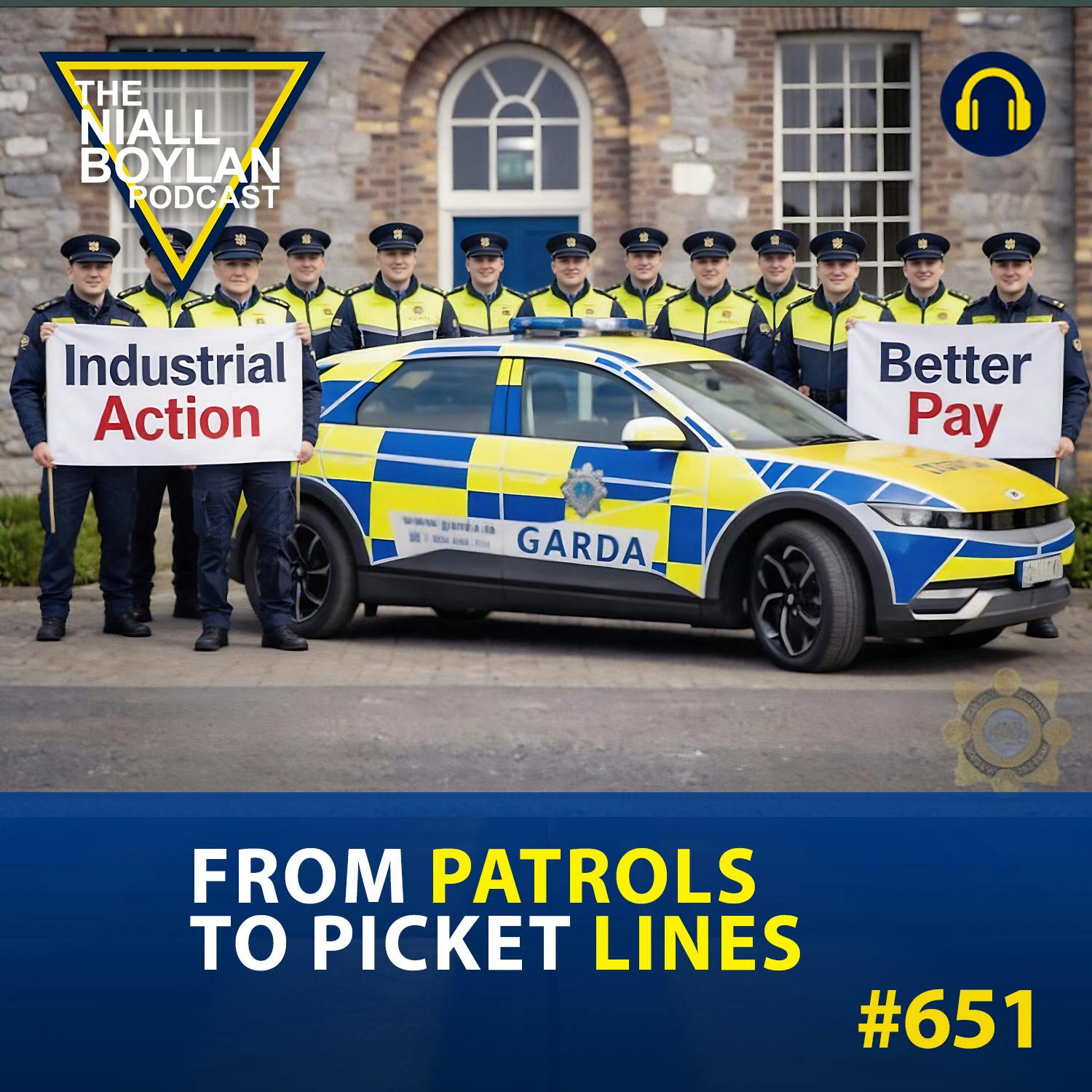
Ep 651#651 From Patrols to Picket Lines
In this episode, Niall opens the lines to discuss the growing controversy around possible industrial action by rank-and-file gardaí. Their representative body has voted to withdraw voluntary overtime during the St Patrick’s festival amid an ongoing dispute over pay, allowances and what they say are long-promised agreements that haven’t been honoured. Garda representatives argue frustration has built up after repeated delays, lack of engagement from government departments and concerns about working conditions — while the move could create policing shortages at major public events and even raise questions ahead of Ireland’s upcoming EU Presidency commitments.Niall asks callers the big question: Should essential public services like gardaí, nurses, teachers, transport workers and government staff have the same right to strike as other workers — or should limits apply because of the critical role they play? Listeners weigh up workers’ rights, public safety, fair pay, and how governments should handle disputes before they escalate.

Ep 652#652 Roses Are Red, Wallets Are Closed
Niall talks to TD Paul Lawless from Aontu about the latest on Board Bia. Also: This Valentine’s Day episode dives into the romance, the history — and the debate — around one of the most loved (and sometimes eye-rolled) dates on the calendar.Niall explores the origins of Valentine’s Day, from the story of St Valentine — the Roman priest said to have secretly married couples — to the medieval poets who linked mid-February with romance. He also looks at how the celebration evolved into today’s highly commercial event, fuelled by mass-produced cards in the 19th century and later by florists, confectionery companies and big retail marketing.And that leads to tonight’s talking point. A listener has been in touch to say his friend never buys his wife anything for Valentine’s Day and feels a hug and the words “I love you” are enough for her. She doesn’t feel quite as satisfied by his actions as he does. He believes the whole thing is ridiculous and overly commercialised, and that you don’t need flowers, cards or chocolates to show someone you love them.So — is he right, or is he just being mean and a bit tight?Niall asks whether Valentine’s Day gestures really matter, if romance has become too commercial, and what actually makes people feel loved — grand gestures, small tokens, or simply sincere words.
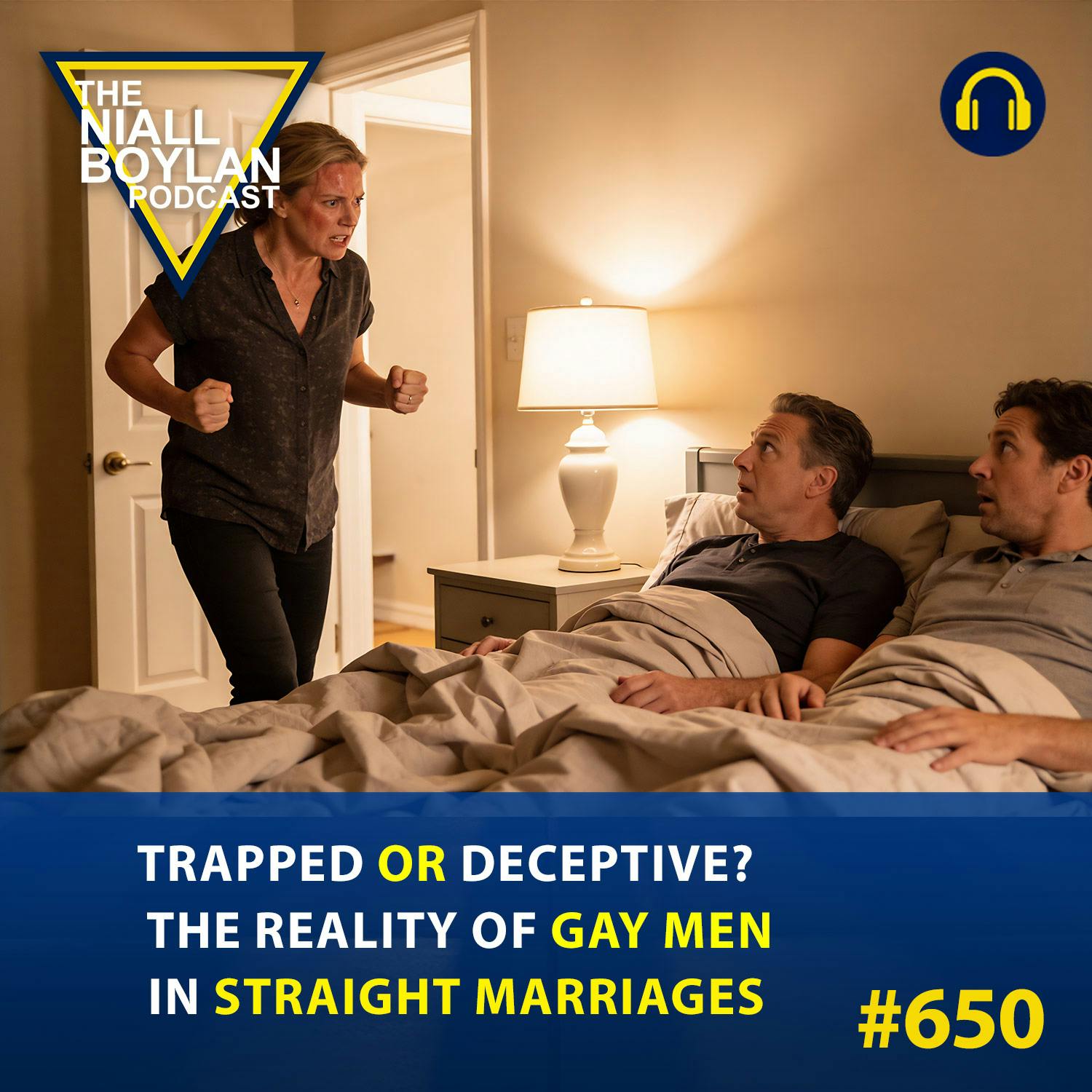
Ep 650#650 Trapped or Deceptive? The Reality of Gay Men in Straight Marriages
This week, host Niall is joined by social commentator AJ Walshe for a thoughtful — and at times uncomfortable — conversation sparked by a powerful listener email. The discussion centres on a recent anonymous love-story featured on RTÉ’s Brendan O’Connor Show, where a married man in his 50s reflected on a secret same-sex relationship from decades ago and the complicated emotions that still linger.But not everyone sees these stories as uplifting. A female listener wrote in angrily, saying her own husband left her for a man three years ago and she’s frustrated by what she feels is a one-sided narrative celebrating men who come out later in life, while the wives and families affected are often overlooked. Her question is stark: is it fair to applaud these men without acknowledging the hurt caused to partners who feel their lives were built on a secret?Niall and AJ explore both sides — the social pressures and stigma that kept many older gay men silent for decades, alongside the very real pain experienced by spouses caught up in those hidden struggles. They ask the difficult question: should we feel sympathy for older gay men who felt trapped in long-term marriages, or are we sometimes minimising the impact on the partners they leave behind?Expect a nuanced conversation about changing social attitudes, honesty in relationships, empathy, and how society navigates stories where there isn’t always a clear villain or victim.
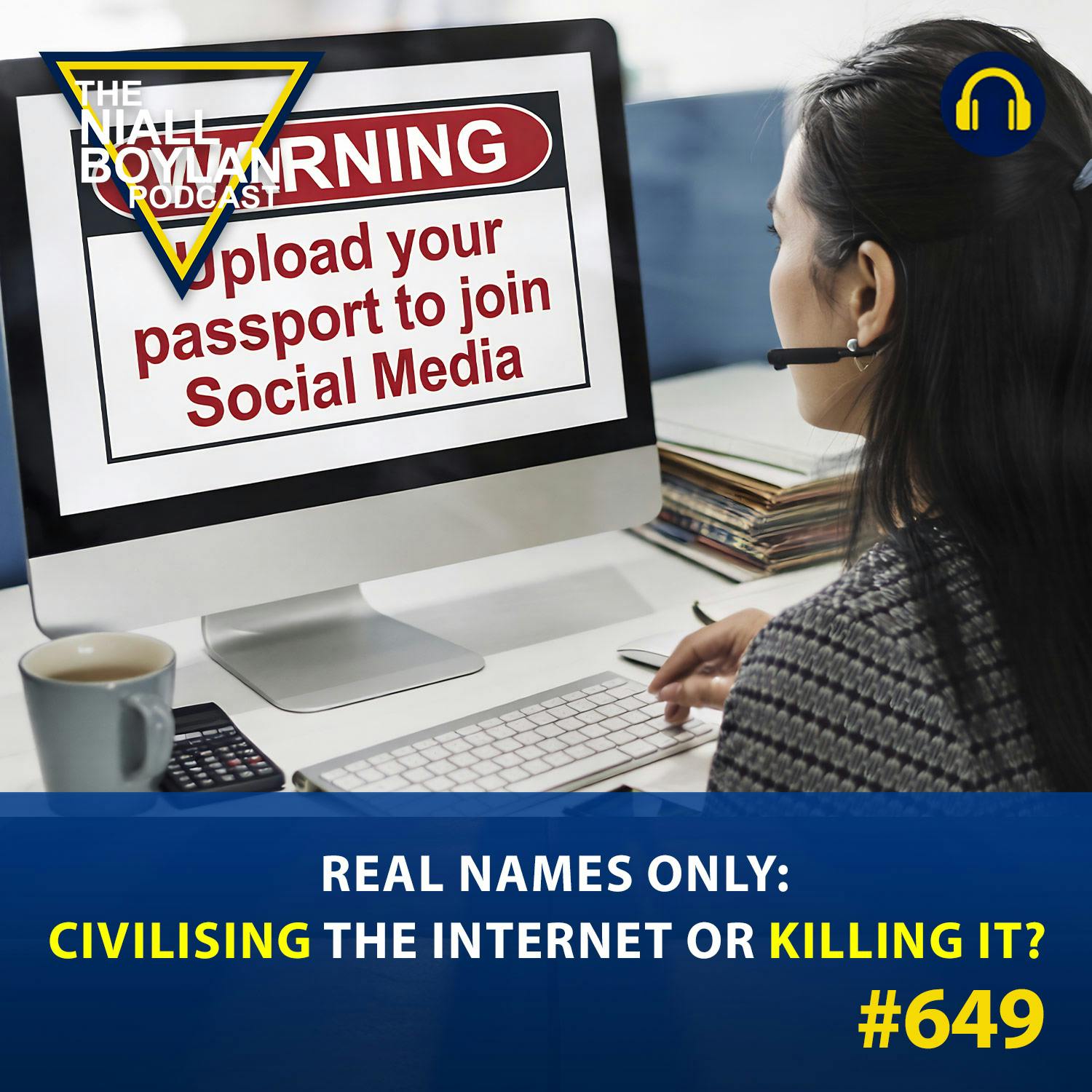
Ep 649#649 Real Names Only: Civilising the Internet or Killing It?
This week, host Niall is joined by social commentator AJ Walshe for a thoughtful — and at times uncomfortable — conversation sparked by a powerful listener email. The discussion centres on a recent anonymous love-story featured on RTÉ’s Brendan O’Connor Show, where a married man in his 50s reflected on a secret same-sex relationship from decades ago and the complicated emotions that still linger.But not everyone sees these stories as uplifting. A female listener wrote in angrily, saying her own husband left her for a man three years ago and she’s frustrated by what she feels is a one-sided narrative celebrating men who come out later in life, while the wives and families affected are often overlooked. Her question is stark: is it fair to applaud these men without acknowledging the hurt caused to partners who feel their lives were built on a secret?Niall and AJ explore both sides — the social pressures and stigma that kept many older gay men silent for decades, alongside the very real pain experienced by spouses caught up in those hidden struggles. They ask the difficult question: should we feel sympathy for older gay men who felt trapped in long-term marriages, or are we sometimes minimising the impact on the partners they leave behind?Expect a nuanced conversation about changing social attitudes, honesty in relationships, empathy, and how society navigates stories where there isn’t always a clear villain or victim.
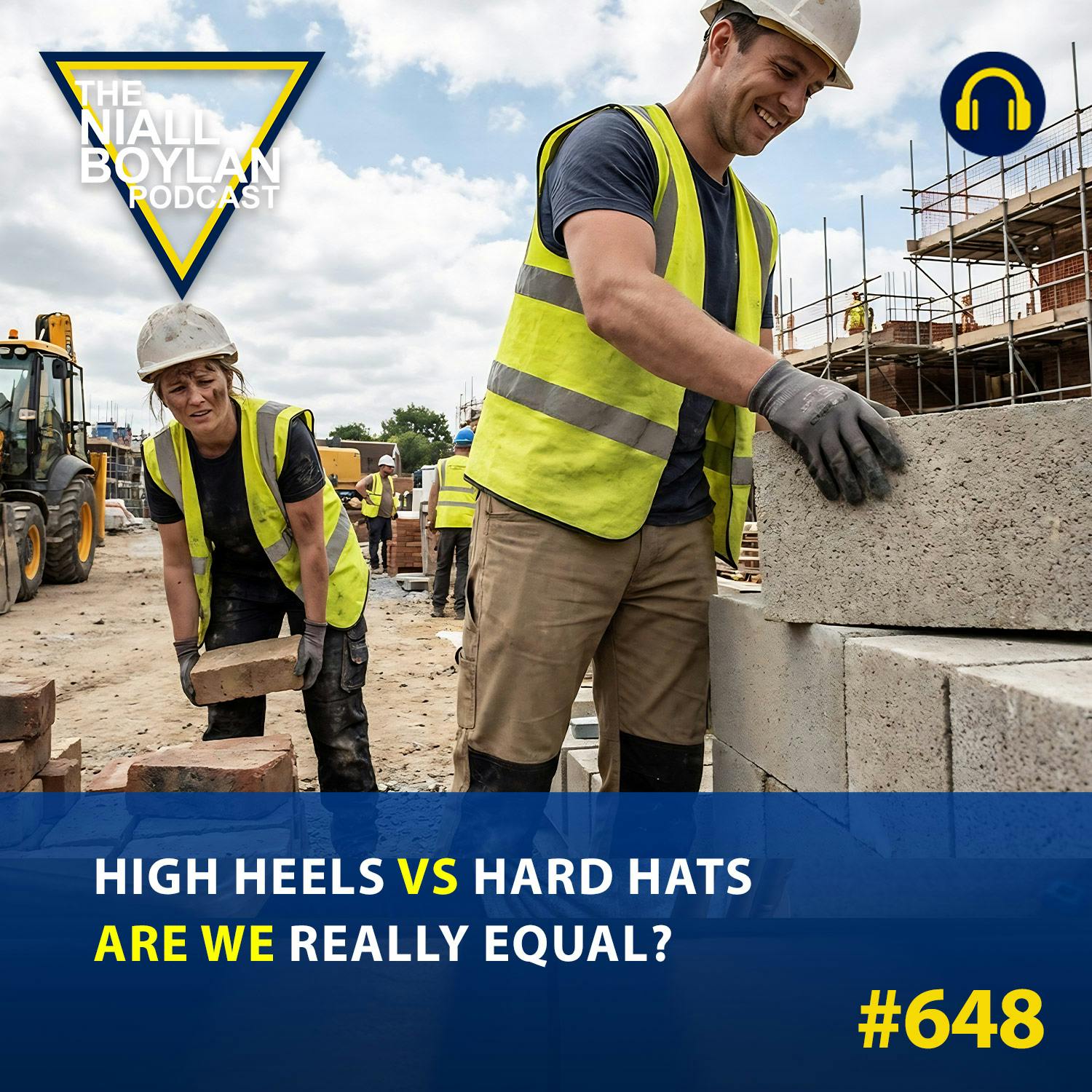
Ep 648#648 High Heels vs Hard Hats: Are We Really Equal?
Today, Niall opens the phones to discuss a debate sparked by a recent discrimination case involving a firefighter fitness test and the wider question of gender equality in demanding jobs. After an email from a listener raised concerns that telling girls they can do anything men can do might sometimes set unrealistic expectations, the conversation turns to whether standards should always be identical — or whether some roles naturally favour physical differences.Listeners share their views on equality, fairness, workplace standards, and whether adjusting entry requirements helps opportunity or risks lowering expectations. Are we encouraging ambition, or creating pressures that don’t reflect real-world demands?Niall asks: are we empowering women — or are we setting some up to struggle by insisting there are no meaningful differences? Join the conversation.
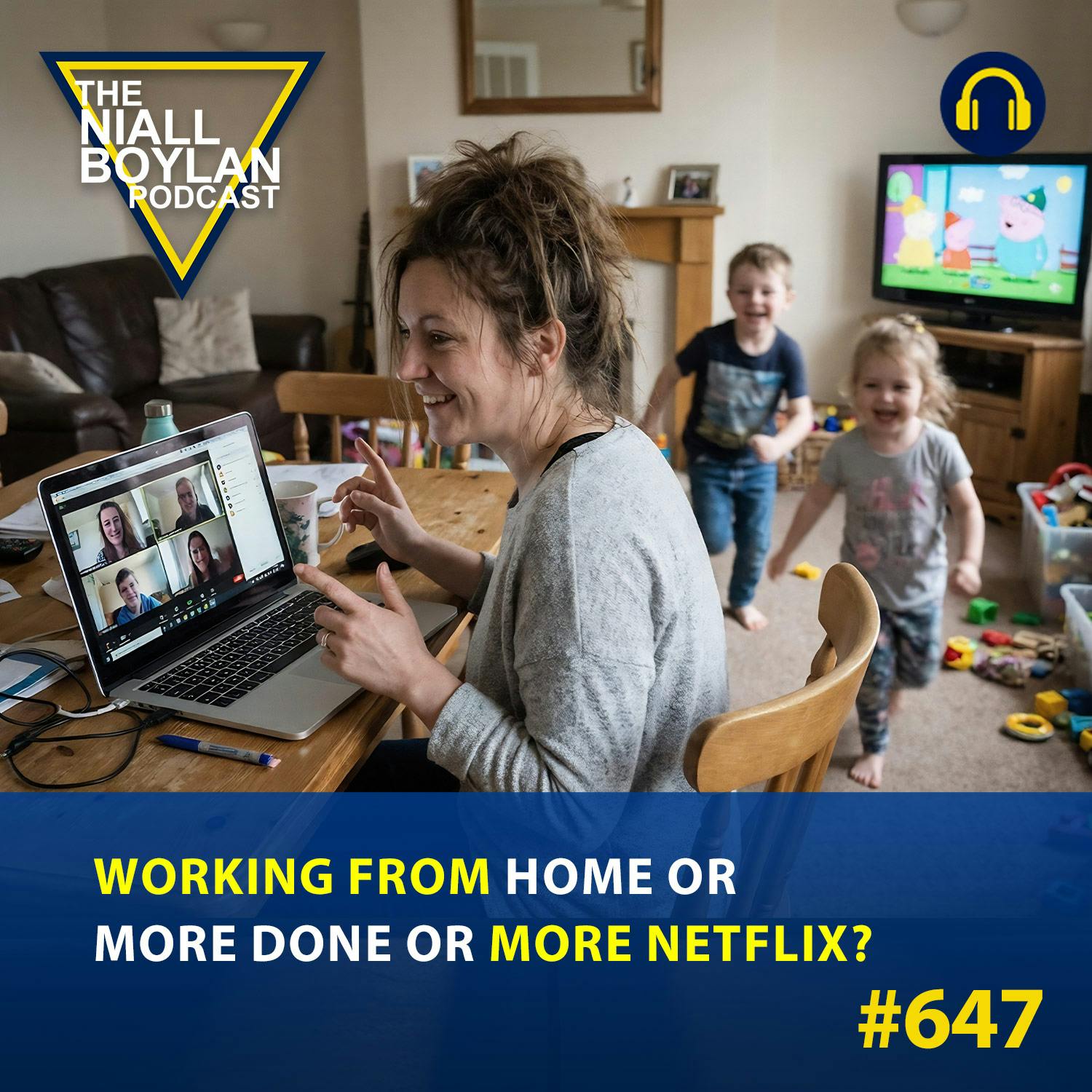
Ep 647#647 Working From Home — More Done or More Netflix?
Today, Niall opens the lines to callers to debate the future of remote work following Nigel Farage’s claim that working from home hurts productivity and is “a load of nonsense.” Is he right — or has remote work improved both business performance and quality of life?Listeners share their experiences, from the benefits of flexible schedules, no commuting, and better work-life balance, to concerns about isolation, blurred work boundaries, teamwork challenges, and whether productivity really suffers outside the office.Should employers be required to allow remote working where possible, or is the return to the office better for businesses and employees alike? Join the conversation.
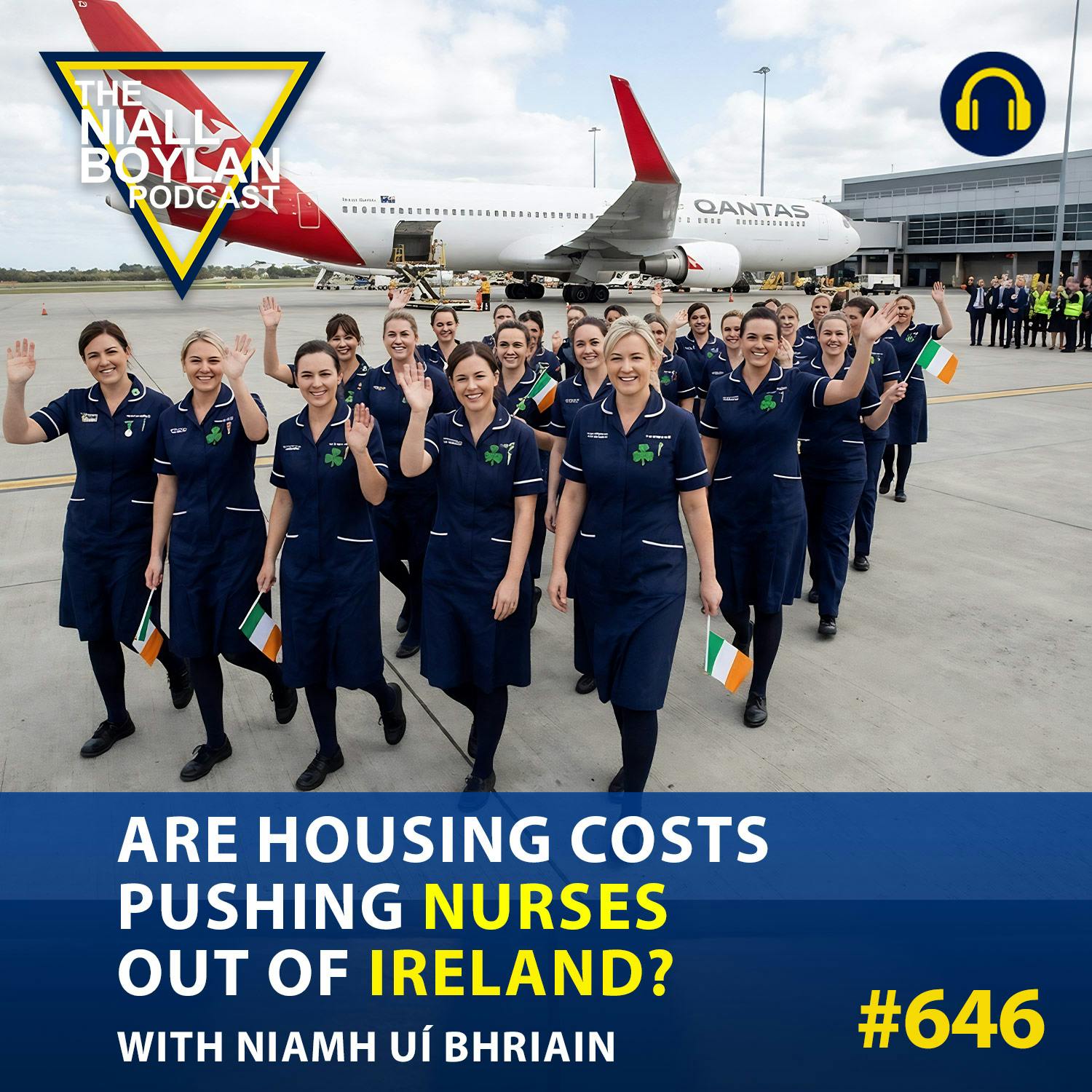
Ep 646Are Housing Costs Pushing Nurses Out of Ireland?
Podcast Description – Today’s EpisodeToday, Niall speaks with Gript Media journalist Niamh Uí Bhriain about her recent piece examining Ireland’s healthcare staffing crisis and the wider debate around immigration policy.They discuss claims that Ireland’s health service depends on continued immigration, while thousands of Irish healthcare professionals — nearly 7,000 now registered in Australia — continue to emigrate in search of better pay, working conditions, housing affordability, and quality of life. The conversation explores whether government policies, recruitment freezes for Irish staff, and the cost-of-living crisis are contributing to this “brain drain,” and what it could mean for the future of Ireland’s healthcare system.

Ep 644#644 EU Digital ID — Trust Us, It’s for Children
Today Niall sits down with social commentator and restaurateur Paul Treyvaud to tackle one of the most contentious digital debates right now — protecting children online versus protecting personal privacy. While polls suggest most people support banning under-16s from social media, there’s far less agreement about how that would actually work.With the EU Digital Wallet framework expected to roll out to support age verification, MEP Barry Andrews argues privacy will be safeguarded. But critics remain wary, pointing to the COVID passport experience, which was initially described as voluntary yet became central to everyday life for many.So where should the balance lie? Would you be willing to use a digital wallet in the name of protecting children — or does that cross a line? Niall and Paul unpack the trade-offs, the politics, and what it could mean for the future of online freedom.

Ep 645#645 Wills, Whiskers & Family Inheritance Wars
Niall is joined by social commentator and podcaster Elaine Mullally to discuss the controversy surrounding the will of legendary Chanel designer Karl Lagerfeld. His relatives are reportedly challenging his decision to leave a French home, garden and a multimillion bank account to his housekeeper — partly to ensure care for his beloved Birman cat.But beyond the headlines, it raises a bigger question: should a person’s will always be respected, no matter how unusual it seems? Should people be free to leave their estate to a pet, a charity, or anyone they choose — even if a spouse or children are involved?With around 35% of wills ending up contested, inheritance disputes are increasingly common. So are we too quick to challenge final wishes, or is it right that families can question them? Niall and Elaine unpack the legal, emotional and ethical sides of who really gets the last word.