
The Niall Boylan Podcast (They Told Me To Shut Up)
1,000 episodes — Page 11 of 20

Ep 396#396 Is Animal Testing a Necessary Evil?
In this episode, Niall asks: Is animal testing a necessary evil?The Irish Anti-Vivisection Society (IAVS) has condemned the grim reality that over 106,000 animals — including cats and dogs — were used in painful experiments in Ireland last year. With growing public outrage, Niall discusses whether all animal use in medical research should now be banned.Some callers argue that although it’s uncomfortable, animal testing is still necessary. They point out that without it, many life-saving medicines and vaccines would not exist. Until reliable alternatives are available, they believe limited, ethical testing remains essential to save human lives. They also stress that efforts should continue to reduce animal use, but abandoning it now would be dangerous for medical progress.Other callers believe animal testing is outdated and cruel. They argue that in an age of AI, computer modelling, and advanced lab technologies, we no longer need to exploit animals for scientific gains. To them, it's a moral failure to continue using animals when more humane methods are increasingly accessible. Some even suggest that if society truly cared about animals, we would rethink our entire relationship with them, far beyond just the lab.Niall reflects on the passionate views shared and acknowledges the complexity of balancing human progress with compassion for all living beings.

Ep 395#395 Bundle of Cash for a Bundle of Joy?
In this episode, Niall asks: Should the Irish government pay people to have babies—and is motherhood properly valued in Irish society? The discussion was sparked by a U.S. proposal under the Trump administration to offer a $5,000 baby bonus to new mothers, aimed at reversing declining birth rates and promoting traditional family structures. As America explores pronatalist policies, the question is now being asked closer to home: Should Ireland do the same?Ireland’s birth rate has dropped well below the replacement level of 2.1, with the fertility rate now hovering around 1.6. First-time mothers are older than ever before, and the pressures of career-building, the high cost of childcare and housing, and shifting cultural values are all contributing to smaller families—or no families at all.Some callers believe a baby bonus is exactly what’s needed. They argue it would offer much-needed financial support at a critical time and show that the State values parenting. Others cite examples like Hungary, where such measures have led to measurable (though modest) increases in birth rates. If Ireland doesn’t act, they warn, the country could face a demographic crisis—with fewer workers, heavier pension burdens, and an aging population.Other callers push back, saying children should never be a financial transaction. They argue that €5,000 is a band-aid solution that won’t address the deeper issues—like unaffordable housing, lack of childcare, and job insecurity. For them, the government should focus on broader structural reforms instead of financial incentives that may not even influence someone’s decision to become a parent.The conversation sparks wider questions too: Has society lost sight of the value of parenting? Are Irish families supported enough? Or is this just another distraction from fixing the real issues?
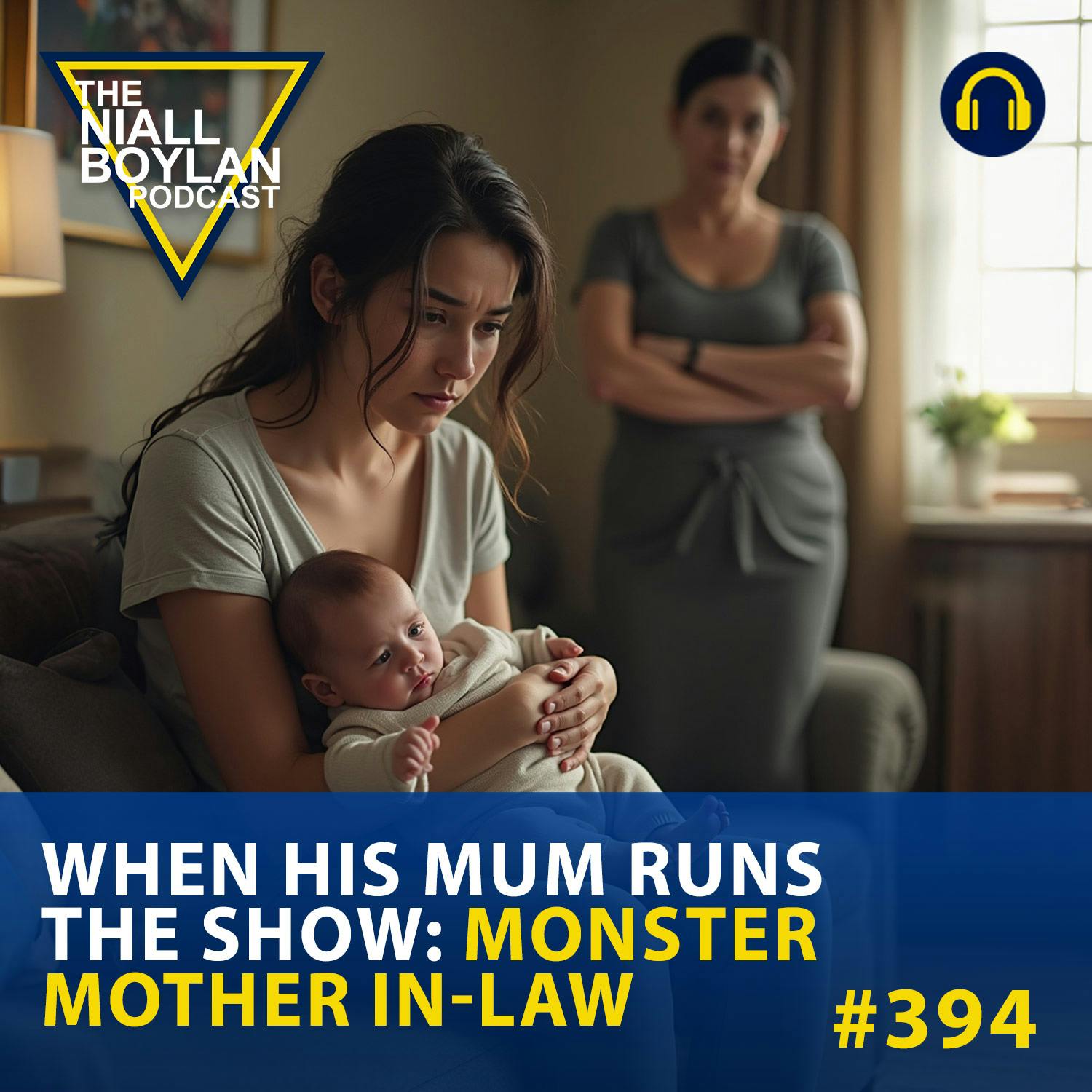
Ep 394#394 When His Mum Runs the Show: Monster Mother In-Law
In this episode, Niall is asking: Are some grandparents too involved—or are new parents just being ungrateful?The topic stems from a heartfelt email sent in by a first-time mum who says her mother-in-law is turning her life upside down. From daily unannounced visits to constant criticism of her parenting, she feels like she’s being pushed aside in her own home. To make matters worse, her husband refuses to intervene, insisting his mother is "just trying to help."The debate quickly ignites as listeners weigh in.Some callers believe new parents are too sensitive these days. They argue that grandparents should be seen as a blessing, especially when they’re willing to help out. For them, the mother-in-law’s input is simply old-fashioned wisdom, not interference.But others strongly disagree. They say boundaries are essential—especially when unsolicited advice turns into full-blown control. These callers argue that the mother-in-law is clearly overstepping and the husband needs to prioritise his wife and child over keeping mammy happy.The episode reveals just how divisive family dynamics can be when parenting meets tradition, and why setting limits—especially with in-laws—isn't always so straightforward.
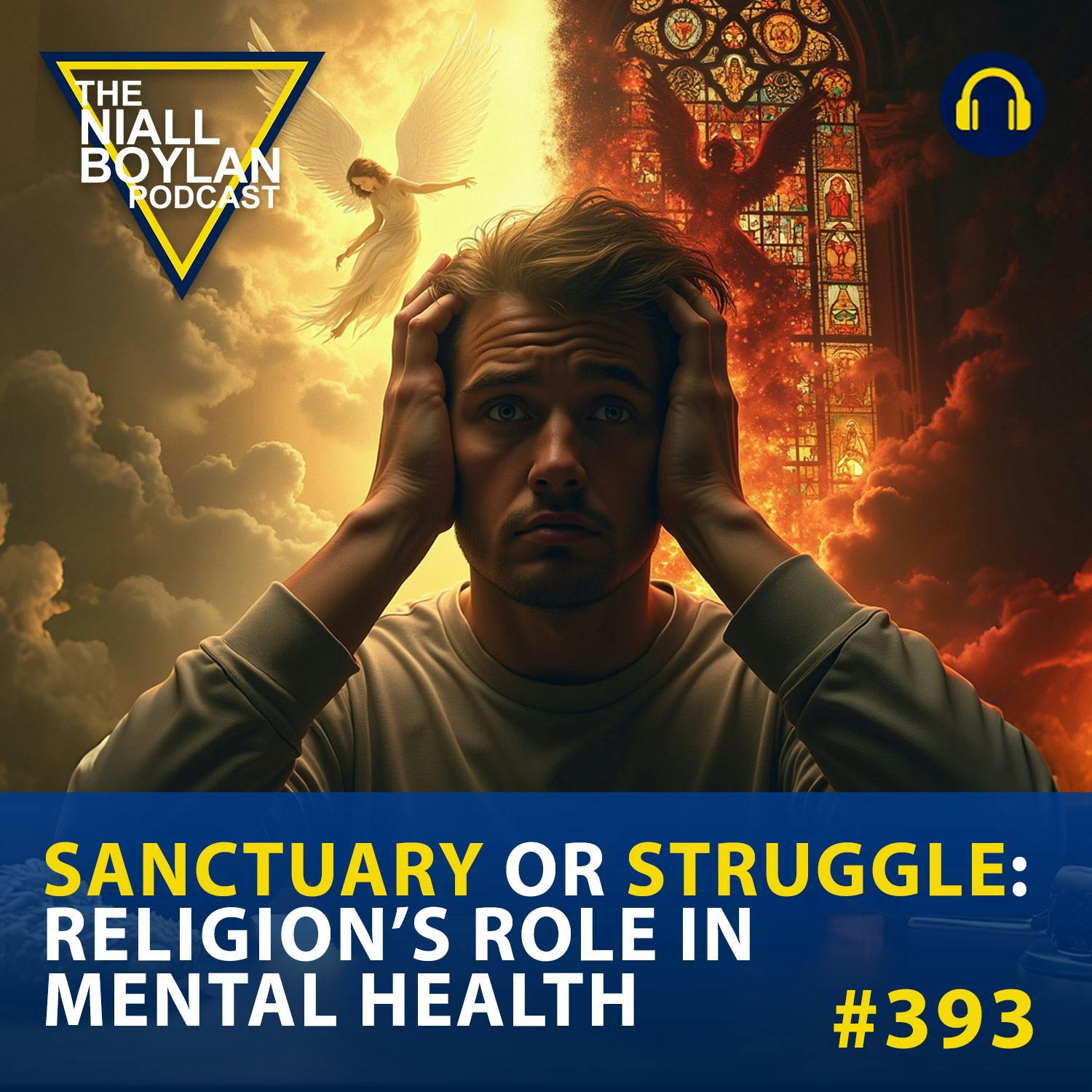
Ep 393#393 Sanctuary or Struggle: Religion’s Role in Mental Health
In this episode, Niall is asking: Is religion helping or harming mental health? Can faith be a lifeline—or a source of guilt and repression?Religion has, for centuries, been a source of comfort, purpose, and moral grounding for billions of people around the world. For many, it offers a sense of belonging, a guide through life’s darkest moments, and a way to make sense of suffering. It can provide structure, community, and hope—especially when someone is struggling mentally or emotionally.But for others, religion can be the very thing that causes or worsens their suffering. Strict doctrines, teachings about sin and punishment, or the fear of eternal damnation can weigh heavily on a person’s mind. Some say that religious guilt, pressure to conform, and fear of judgment have led to anxiety, depression, and shame. For them, the institution that’s meant to heal can feel like a source of harm.Some callers believe religion provides people with a sense of hope and stability. In times of mental struggle, it can offer meaning and comfort that therapy or medication alone can’t always provide. Faith gives people strength. For many, religion builds community and gives people something to believe in beyond themselves. That sense of purpose can be vital for mental health, especially during hard times.While other callers feel religion can be incredibly damaging to mental health if it’s rooted in fear or shame. Constant guilt, judgment, and pressure to be ‘perfect’ can break a person mentally, not help them. When religion is used to control rather than support, it becomes toxic. People can end up suppressing who they really are, living with fear instead of freedom. That’s not healing—that’s harm.

Ep 392#392 Only Male and Female – Is Ireland Ready to Decide?
In this episode, Niall is asking: Should Ireland officially recognise only two genders—male and female? The conversation is sparked by recent international developments: The U.S. has moved away from recognising genders beyond male and female, and the UK Supreme Court recently ruled that a woman is someone born biologically female. Should Ireland now follow suit and take a stand on what some are calling “gender ideology gone too far”?Some callers believe Ireland should stand firm and legally recognise only two genders—male and female. They argue this is based on biology and science, not opinion. One caller said, “This isn’t about hate—it’s about facts. There are two biological sexes, and we’ve allowed ideology to override reality for too long.” Others added that confusing young people with multiple gender identities only leads to more psychological harm than good.While other callers argue that gender identity is more nuanced than biological sex. “Some people don’t fit neatly into male or female,” one caller said. “They exist, and they deserve legal and social recognition.” Others felt that acknowledging people’s identities doesn’t harm anyone and that inclusion should be a basic value in a modern Ireland.Niall closes the show by saying he personally agrees that there are only two genders—male and female. While he respects everyone’s right to live how they choose, he believes the State should base legal recognition on biological sex, not subjective identity. “This isn’t about denying anyone their dignity,” he says, “but at some point, we have to draw a line between inclusion and confusion.”

Ep 391#391 Lights, Camera, Censorship? Should Filming Gardai Be Banned?
In this episode, Niall asks a timely and controversial question: Should it be illegal to film Gardaí while they’re on duty? The debate stems from growing calls within the Gardaí for restrictions on the public streaming or recording officers in the line of duty, especially during arrests or public disturbances.Supporters of the proposed restrictions argue that filming Gardaí without context can endanger officers, escalate already tense situations, and expose them to online abuse. They believe that if someone has a legitimate concern about police conduct, it should be handled through official channels—not social media.However, others say the right to film Gardaí is vital for public accountability. With the rise in high-profile incidents involving law enforcement, being able to record interactions serves as a crucial check and balance. For these callers, transparency and the ability to document what happens in public spaces should not be curtailed.Some callers argue that it’s about time filming Gardaí was restricted. Officers deserve to do their jobs without being harassed or put on display online. They believe the constant presence of phones creates fear, makes Gardaí hesitant to act, and opens the door to online mobs targeting individuals for simply doing their job.While other callers insist the public must retain the right to film Gardaí, especially when it involves use of force or questionable actions. They see mobile footage as a form of protection—for both citizens and officers—and a vital tool for transparency and justice.Niall wraps up by noting how the conversation reflected a deep divide between public accountability and Garda privacy. He acknowledges both the concerns of officers on the ground and the need for transparency in modern policing. As trust in institutions evolves, he asks: is filming a necessary watchdog—or a dangerous distraction?

Jordan Dargan: From Last-Minute Call-Up to Lord Sugar’s Final Five
bonusIn this engaging and refreshingly honest interview, Niall is joined by The Apprentice UK breakout star Jordan Dargan, the only Irish contestant in this year’s series, who made it all the way to the final five—despite not even being part of the original lineup. Jordan shares the behind-the-scenes reality of life on one of Britain’s biggest business shows, what really went down in the boardroom, and how one text from Lord Sugar might just change everything.Jordan’s story is one of bold risks and self-made success. He opens up about the last-minute twist that got him onto the show:“I was a reserve… I could have done everything and not even got on.”But when the call came, he was on the first flight to London—and determined to make an impact. Despite early challenges navigating the louder personalities, Jordan admits he held back at first, believing that if he didn’t say anything controversial, he couldn’t be edited poorly. But he quickly learned the show doesn’t reward quiet strategy:“At the beginning, I was only saying things that I felt were necessary… and that's just not how the process works.”As the tasks intensified, Jordan found his stride. But one controversial final challenge—a gender-fluid fashion project—tested his instincts. He reveals he wanted to go a different direction but struggled under pressure:“I said I just don't think men wearing skirts is gonna sell… in hindsight, I should have stuck to my guns.”His honesty in discussing the clash between business sense and performative values is something listeners will find refreshingly grounded.Yet his most powerful moment came during a product pitch when he vulnerably shared details of a difficult childhood, connecting with buyers on a personal level. What viewers didn’t fully see was the impact that had off-camera:“I opened up about that… and one of the buyers said he was sober for ten years and really resonated with it… there were real moments in it.”From being grilled over using brand logos without permission on his business website to being praised for his self-taught skills in 3D design, Jordan offers an unfiltered look at the highs and lows of the process. And while he didn’t win, Lord Sugar saw enough in him to hand over something rarely offered—a personal phone number.“It’s funny how quickly your life can change… just a year ago, I was delivering fruit and veg around Castleknock—now I’m delivering one-liners in the boardroom.”Jordan reflects on how the exposure has transformed his business, brought in clients, and even made him a role model to younger viewers:“What makes it all worth it is when kids come up to you saying they want to be a businessman because they saw you on The Apprentice.”He also talks about what viewers didn’t see—the daily 20-minute wake-up calls, repeated takes for every scene, and how editing can shape public perception of each candidate. He even reveals who he thought should’ve made the final, and why he believes more Irish people should step up and apply:“We need representation over there. We need to get an Irish man to get his first win.”This episode offers a rare glimpse into the real Apprentice experience through the eyes of one of its most grounded and driven contestants. Whether you followed the series or not, Jordan’s journey is one of resilience, reflection, and rising to the occasion when the odds are stacked against you.

Ep 390#390 My Husband's Secret Past: More Than Just Friends?
In this episode of The Niall Boylan Podcast, Niall is asking: Is a hidden same-sex relationship in the past a dealbreaker in marriage?The topic arises from an emotional email sent by a listener who discovered her husband had a romantic relationship with a male college friend 17 years ago—something he initially denied when they met the friend together recently. The truth only came to light after she spoke with an old mutual friend who confirmed the relationship. Eventually, her husband admitted it, calling it a “confusing time in his life.” Now, she’s left wondering whether she ever really knew the man she married.Some callers believe this kind of secret is a massive breach of trust. It’s not about the husband's past sexuality—it’s the dishonesty that bothers them. They argue that a marriage should be built on full transparency, and hiding a significant past relationship, regardless of gender, calls everything into question. If he kept that part of himself hidden, what else might he be hiding?While other callers take a more empathetic view, saying people change and grow, especially when they're young. They argue that what matters most is who he is now and the life he’s built with his wife. To them, it’s not a dealbreaker if there’s genuine love and trust in the present. His confusion in the past shouldn’t define the marriage today.Niall closes the show by reflecting on the difference between secrets and shame, and how honesty—even when uncomfortable—can be the foundation for stronger relationships. Whether it’s a dealbreaker or a difficult conversation, today’s show proved that the truth always finds a way out—and how we handle it can shape the future of a relationship.
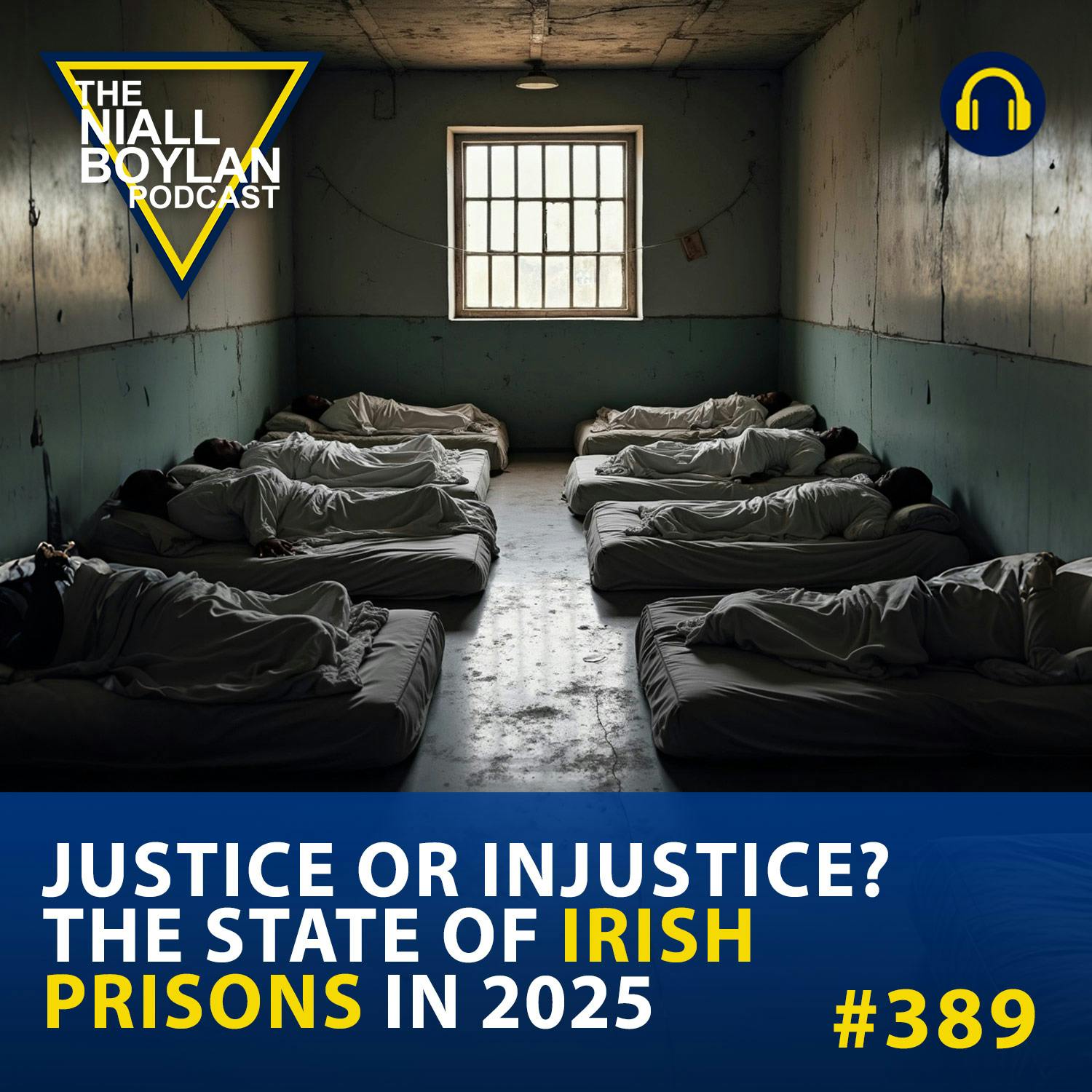
Ep 389#389 Justice or Injustice? The State of Irish Prisons in 2025
In this episode, Niall is asking: Do prisoners deserve better living conditions? Live on The Niall Boylan Podcast, we take a hard look at the state of Irish prisons in 2025. The latest figures from February show that the prison population has reached a record high of 5,181 inmates—with 346 prisoners sleeping on mattresses on cell floors due to overcrowding. It’s sparked outrage in some quarters, and indifference in others. But should we care?Some callers think just because someone has committed a crime doesn’t mean they should be treated like animals. They argue that Ireland is supposed to be a modern and civilized society, and basic decency—even behind bars—should be a given. They say that harsh conditions do nothing for rehabilitation, and that how we treat our prisoners reflects who we are as a nation.While other callers feel no sympathy at all. For them, prison isn’t supposed to be comfortable. If someone doesn’t want to sleep on a mattress, they shouldn’t break the law. With homelessness and housing crises impacting law-abiding citizens, they argue it’s wrong to focus on improving jail conditions. Some even say the tough conditions might act as a deterrent.Niall closes the show by reflecting on how divided opinions were—between compassion and punishment. He questions what kind of justice system Ireland really wants: one that rehabilitates or simply punishes. As always, he leaves listeners with plenty to think about.

Ep 388#388 Ireland Is a Kip I’m Leaving!
In this episode, Niall is asking: Is Ireland a kip? We received a message from an angry listener who said he’s had enough—he’s packing up his family and leaving Ireland for good, calling the country a “kip” that’s beyond saving. Live on The Niall Boylan Podcast, we ask: is he right?With the cost of living spiralling out of control, a housing crisis that’s left many without hope of ever owning a home, a health system stretched to the brink, and crumbling infrastructure across the country—some callers said they’re ready to follow him out the door. Add in mass immigration and a government that many feel has lost touch, and it’s no wonder people are considering emigration.Some callers think Ireland has truly become a kip. They say you can’t get a GP appointment, the roads are falling apart, and families are being crushed under the weight of rising rent, childcare, and taxes. There’s a growing feeling that the government cares more about optics than real change. They argue that if you want a better life, the only choice left is to leave.While other callers feel calling Ireland a kip is unfair and ungrateful. Yes, things are tough, but they believe in fixing the problems instead of running from them. They say Ireland still has heart—its people, its culture, and its potential. If everyone who’s frustrated gives up, what’s left? Reform, not retreat, is the way forward.Niall reflects on the passionate views shared throughout the show, noting that while frustration is widespread, so too is hope. Whether you’re staying or going, the debate proves one thing—we all care deeply about the country we call home.
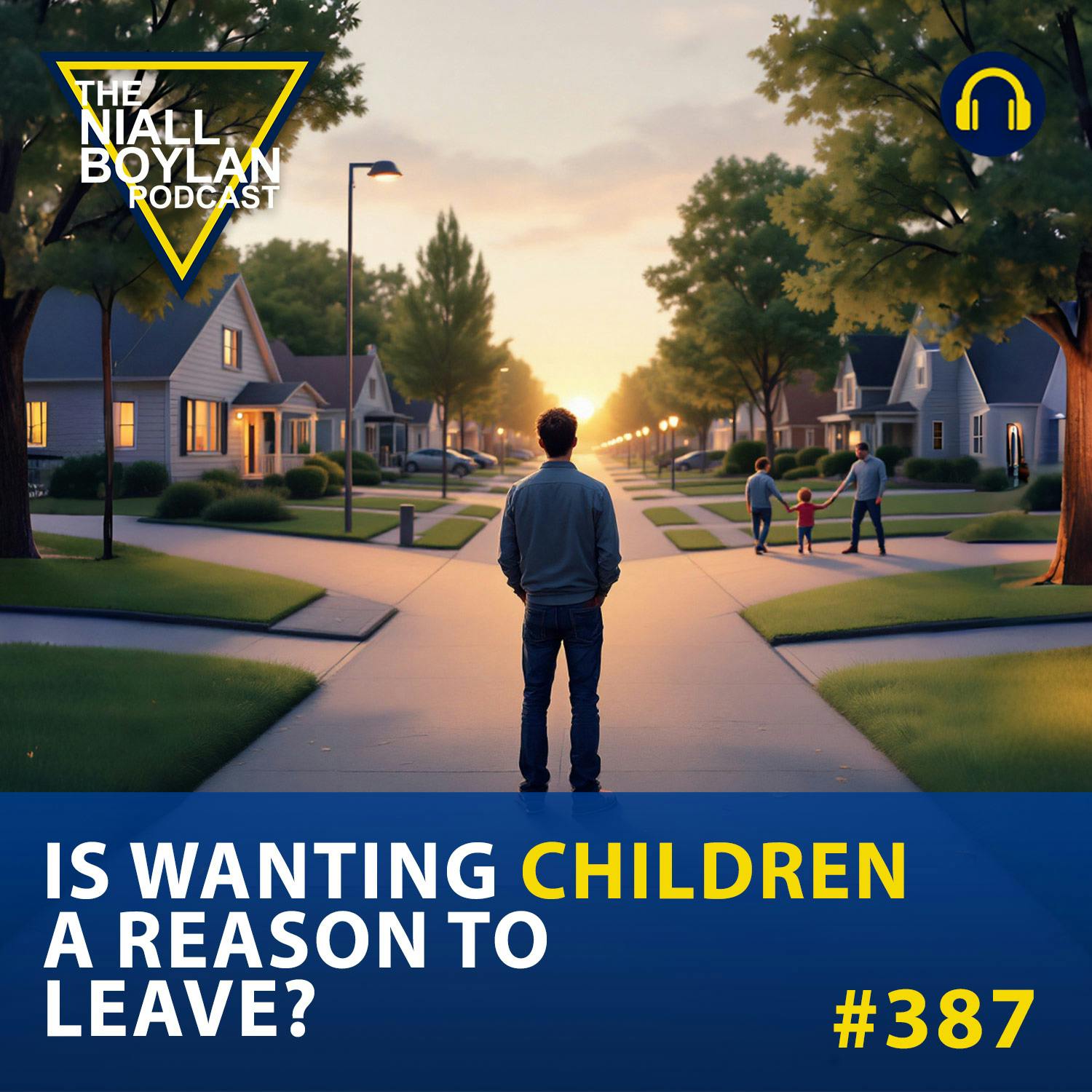
Ep 387#387 Is Wanting Children a Reason to Leave?
In this episode of The Niall Boylan Podcast, Niall is asking: Is wanting children a reason to leave your partner? A listener emailed in to share his heartbreaking dilemma—he loves his wife of four years but wants to leave her because she has made it clear she doesn’t want children. He’s torn between staying in a loving marriage or pursuing his lifelong dream of becoming a father.Some callers think absolutely he’s right to leave. Wanting children isn’t a small issue—it’s a core life value. If his wife doesn’t want the same future, staying together will only cause pain and regret. They believe that love alone isn’t enough when your hopes for family life are fundamentally incompatible.While other callers feel leaving over this is too extreme. They argue that relationships are built on compromise and that people can change. Some say he should be patient and focus on the love they share—perhaps there are other ways to build a fulfilling life together, such as fostering, adoption, or focusing on other shared dreams.Niall reflects on the emotional weight of the discussion, acknowledging how difficult it is when love and life goals are at odds. He reminds listeners that no relationship is perfect and decisions like this require deep thought, open communication, and honesty—not just with your partner, but with yourself.

Ep 386#386 The Price of Welcome: Is the EU Migration Pact Worth It?
In this episode, Niall is asking: Is the EU Migration Pact worth it, or are we sacrificing too much to uphold it? With mounting pressure across Europe and at home, Niall and guest Nick Delehanty explore whether Ireland is doing enough—or too much—to respond to the growing immigration crisis.The conversation centres around the financial and social cost of the EU’s proposed migration reforms. Are Irish people being pushed to the back of the queue? Has the government lost touch with the real pressures facing local communities?Some callers feel they are sick to the stomach listening to government ministers talk about how we "must do our part" while Irish families are stuck living in hotels or on waiting lists for years. To them, everything now seems focused on migrants—housing, welfare, public services—while ordinary Irish people are left behind.Others pointed out how schools are overcrowded, hospitals are under pressure, and housing is in crisis—yet the government seems to find endless resources when it comes to supporting new arrivals. Callers questioned the transparency behind the EU pact, and many said if you raise concerns, you’re immediately labelled a racist.They say local communities are being upended without consultation, and there's a growing feeling that the state is more invested in maintaining good standing with Brussels than looking after its own people.Niall acknowledges how passionate and frustrated many of the callers were, reflecting the growing divide in public opinion. While some see the EU Migration Pact as a moral obligation, others see it as an unsustainable burden. Niall highlights the need for open dialogue, government transparency, and putting Irish citizens’ concerns front and centre.
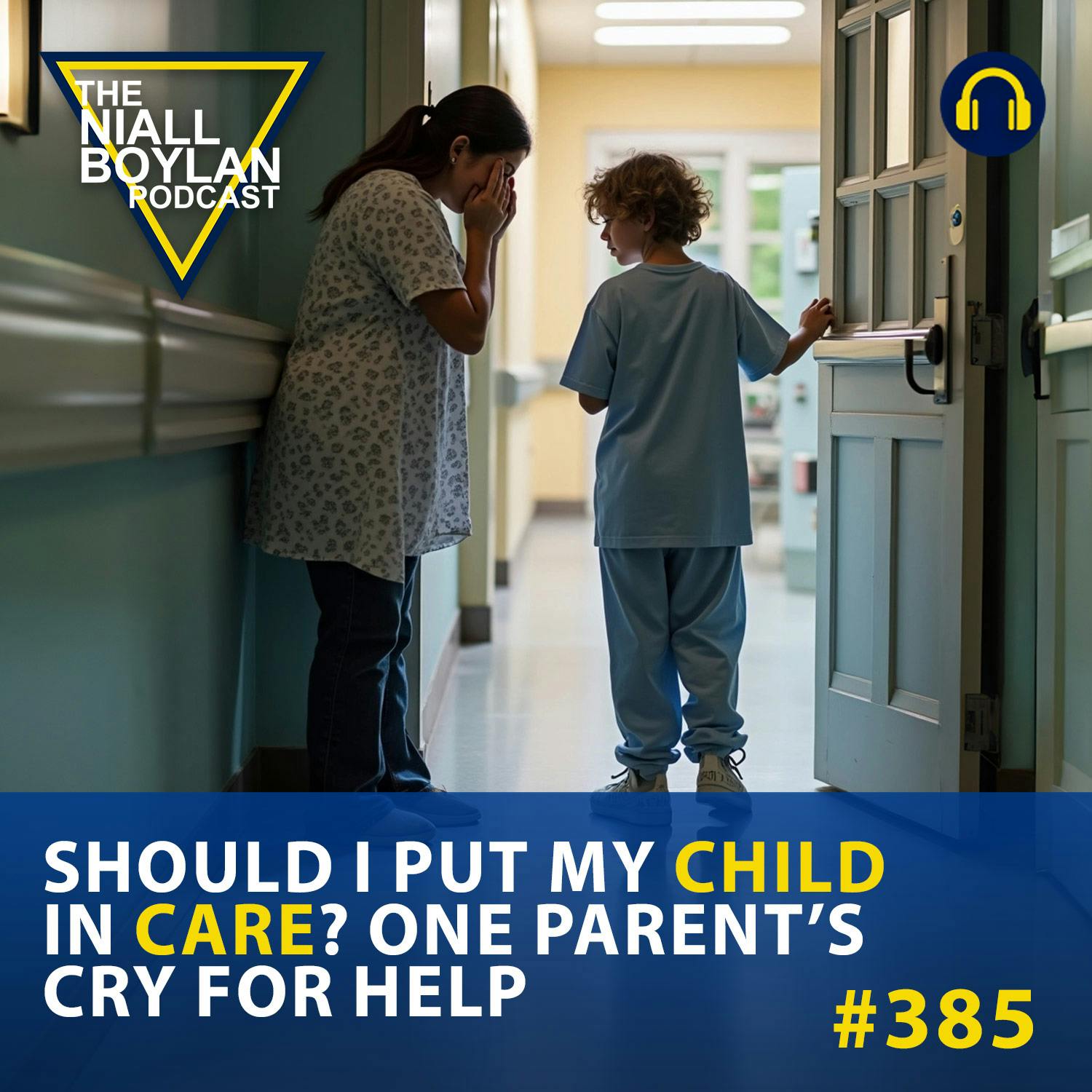
Ep 385#385 Should I Put My Child in Care? One Parent’s Cry for Help
In this episode, Niall tackles a heart-wrenching and emotionally charged question: Should a parent ever consider putting their child in care—especially when they feel completely overwhelmed?The discussion was sparked by an emotional email from a listener, a mother who says she is at breaking point trying to care for her autistic child. She explains that despite her best efforts, she can no longer cope and is seriously considering placing her child into care for the child’s own safety and wellbeing—as well as her own mental health.Some callers believe that if a parent is truly at breaking point, then seeking help—even if that means placing the child into care—is the responsible thing to do. They argue it’s not about giving up, but about ensuring the child receives the care and support they need, especially when the system has failed to adequately support families with special needs. These callers say the real problem lies in the lack of proper services, respite, and funding for parents who are stretched to their limits.While other callers feel strongly that no matter how hard it gets, a parent should never consider putting their child into care. They argue there are always other options—respite services, therapy, family support—and that giving up sends the wrong message. For them, parental responsibility means sticking it out through the toughest times and continuing to fight for support rather than resorting to what they see as abandonment.Niall reflects on the emotional weight of the conversation, acknowledging how complex and painful this situation is for any parent. He emphasizes that rather than judgment, what’s needed most is compassion—and a national conversation about how we support families dealing with special needs.

Ep 384#384 Perky Problem or Public Nuisance? Molly Malone Gets Supervised
In this episode, Niall asks: Is it really inappropriate to touch the statue of Molly Malone, or are Dublin City Council overreacting by hiring supervisors to stop tourists from doing it?The discussion follows a new move by the Council to station staff near the iconic statue after concerns were raised about tourists fondling the statue’s bronze breasts for selfies. The so-called “Tart with the Cart” has long been a popular photo op on Grafton Street, but officials now argue the statue is being treated in a disrespectful and overly sexualised manner. Critics, however, say it's political correctness gone mad—and a waste of money.Some callers think absolutely, it’s inappropriate. That statue represents a part of Irish history and culture, and constantly grabbing her chest is just plain disrespectful. Tourists wouldn’t do that to a statue of a male figure, so why is it okay here? Hiring someone to protect it might seem silly, but maybe it’s what’s needed. One caller said it’s embarrassing—we’re known for our craic, but this crosses a line. It’s not funny anymore when every tourist feels the need to grope a statue for a photo. It’s degrading, and the council is right to step in.While other callers feel it’s a bit of harmless fun. Tourists have been doing this for years and nobody was offended until recently. It’s not done with any malice. Spending public money on supervisors for a statue is ridiculous. Others said we’ve far bigger problems in Dublin than people touching Molly Malone. Save the money and focus on housing or cleaning the streets instead of policing a bronze chest.Niall concludes by acknowledging how something seemingly light-hearted like a tourist attraction can spark a deeper conversation about respect, cultural preservation, and whether we’ve lost the run of ourselves with public money. Is this about dignity, or are we just being killjoys?

Ep 383#383 Should the Irish and British Flags Ever Fly Side by Side? Part 1
In this episode, Niall is asking: Should the Irish and British flags ever fly side by side? The question arises following a controversial proposal from the Ulster Unionist Party, which suggested that both flags should be flown together in a symbolic gesture of shared identity and reconciliation. This proposal has sparked strong reactions, with some seeing it as a positive step toward unity and others viewing it as an insult to Irish identity.Niall discusses the historical context behind this debate, examining how the relationship between Ireland and Britain continues to shape opinions on national symbols. He also delves into the significance of flags as markers of cultural pride and political allegiance.Some callers think it's time to move forward and show a united front. Flying both flags side by side is a symbol of reconciliation and progress. We can’t keep living in the past, stuck in old grievances. If both communities are willing to respect each other’s traditions, it could help ease tensions and promote a sense of shared identity. It’s a way to acknowledge both cultures and foster a peaceful coexistence.While other callers feel it’s a betrayal of Irish heritage and identity. The Irish flag represents our independence and the sacrifices made to achieve it. Placing it beside the British flag would undermine everything our ancestors fought for. It’s disrespectful and dilutes the meaning of the tricolor. We shouldn’t be forced to display symbols of colonialism next to our national emblem.Niall concludes by reflecting on the passionate and deeply personal perspectives shared during the show. He acknowledges that symbols like flags carry different meanings for different people and that this debate reflects the ongoing challenge of balancing respect for tradition with the desire for progress and reconciliation.

Ep 383#383 Should the Irish and British Flags Ever Fly Side by Side? Part 2
In this episode, Niall is asking: Should the Irish and British flags ever fly side by side? The question arises following a controversial proposal from the Ulster Unionist Party, which suggested that both flags should be flown together in a symbolic gesture of shared identity and reconciliation. This proposal has sparked strong reactions, with some seeing it as a positive step toward unity and others viewing it as an insult to Irish identity.Niall discusses the historical context behind this debate, examining how the relationship between Ireland and Britain continues to shape opinions on national symbols. He also delves into the significance of flags as markers of cultural pride and political allegiance.Some callers think it's time to move forward and show a united front. Flying both flags side by side is a symbol of reconciliation and progress. We can’t keep living in the past, stuck in old grievances. If both communities are willing to respect each other’s traditions, it could help ease tensions and promote a sense of shared identity. It’s a way to acknowledge both cultures and foster a peaceful coexistence.While other callers feel it’s a betrayal of Irish heritage and identity. The Irish flag represents our independence and the sacrifices made to achieve it. Placing it beside the British flag would undermine everything our ancestors fought for. It’s disrespectful and dilutes the meaning of the tricolor. We shouldn’t be forced to display symbols of colonialism next to our national emblem.Niall concludes by reflecting on the passionate and deeply personal perspectives shared during the show. He acknowledges that symbols like flags carry different meanings for different people and that this debate reflects the ongoing challenge of balancing respect for tradition with the desire for progress and reconciliation.
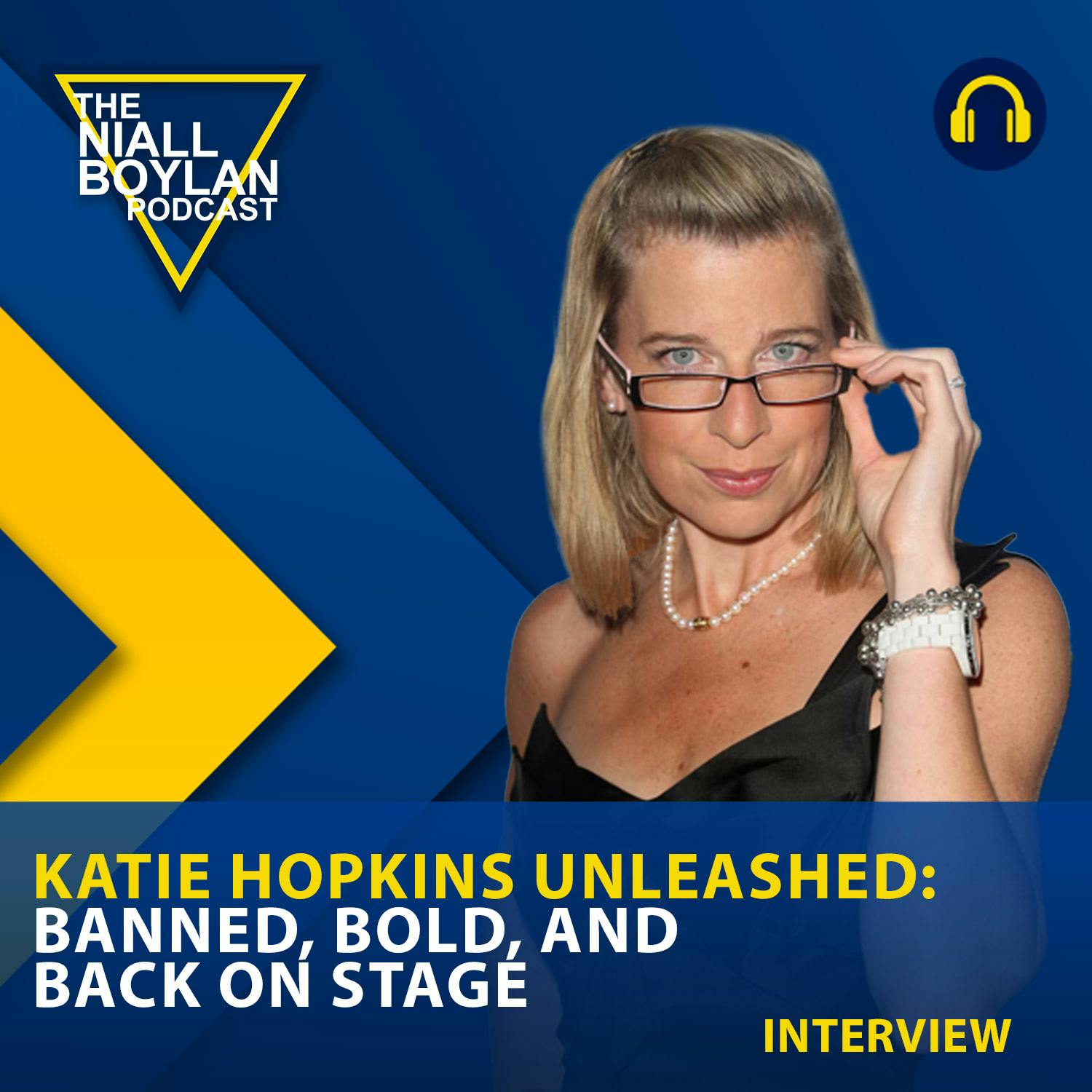
Ep 383Katie Hopkins Unleashed: Banned, Bold, and Back on Stage
In this lively and provocative episode, Niall Boylan sits down with the infamous Katie Hopkins, known for her fearless opinions and unfiltered commentary. Katie, often dubbed the most banned woman on the planet, opens up about life on the road, social media censorship, and how she has become one of the most controversial public figures of our time.Katie’s journey has been anything but smooth—she recounts how her current comedy tour took three years to put together after enduring multiple cancellations and public protests. Undeterred, she persevered through 48 venues canceling on her first tour and 27 more on her second. Now, she’s finally seeing success with almost every show sold out, except for a few remaining dates in Cork and Derry. She proudly shares:"We are now fully sold out on every single date apart from these two Irish ones."Katie discusses her tumultuous relationship with social media, reflecting on how she was banned from Twitter under the old regime, only to be reinstated by Elon Musk. Despite being banned from entire countries—including Australia and South Africa—she remains resilient, using every setback as fuel for her public persona."I'm still the most banned woman on the planet. I am banned from countries, banned from schools in Wales—though I promise, I'm not a danger to kids!"The conversation turns to Katie’s no-holds-barred take on modern politics and social issues. She criticizes politicians for wasting time squabbling over speaking rights while the public deals with crises like healthcare and housing shortages. Katie also doesn’t shy away from mocking herself, laughing at the irony of being labeled a hypocrite for criticizing people who name their kids after places, despite having a daughter named India.Niall and Katie also explore the online outrage culture that has plagued both of their careers, discussing how relentless online criticism can feel suffocating. Katie candidly reveals that during particularly dark times, she needed her husband to take her devices away just to get some peace of mind. She acknowledges the toll it can take, saying:"Sometimes it's not water off a duck's back—it's vile and horrible. But you have to remember who you really are."As the conversation lightens up, Katie shares her peculiar fondness for Conor McGregor, admitting:"I've always said I have like a height requirement, and I know that Conor must be under it, but he might make up for it widthwise."The episode wraps up with Katie reflecting on how attitudes toward her have changed over the years. While she was once reviled, she feels that the public is now more willing to hear her out, tired of being told what to think by the loudest voices. Katie's advice to others facing similar backlash? Know who you are, and never let the hate define you.Whether you love her or loathe her, Katie Hopkins remains a force to be reckoned with—bold, brash, and utterly unapologetic. Tune in for an episode filled with laughter, outrage, and a dose of brutal honesty.
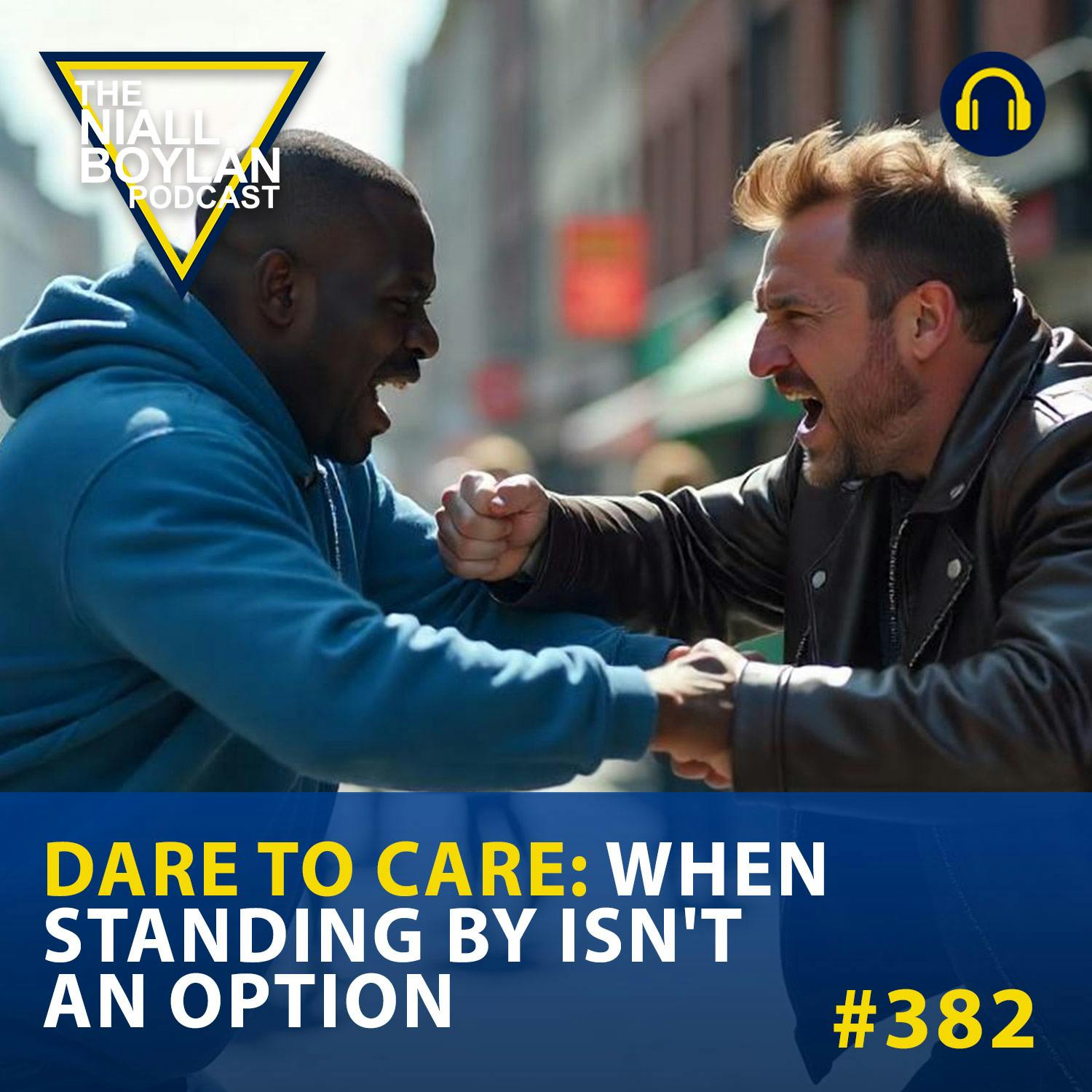
Ep 382#382 Dare to Care: When Standing By Isn't an Option
In this episode, Niall asks the crucial question: Would you intervene if you saw someone being attacked? With violence on the rise and more people finding themselves as witnesses to troubling situations, it's a dilemma that challenges our sense of responsibility and personal safety.Some callers think that stepping in is the right thing to do. If someone is being attacked, it’s our duty as decent human beings to help out. We can’t just stand by and let violence happen in front of us. Whether it’s calling for help or physically intervening, doing nothing is simply not an option. Standing up for someone in need shows courage and compassion.While other callers feel it’s too risky to intervene directly. You never know if the attacker is armed or if you’ll end up getting hurt or even killed. It’s not cowardice—it’s self-preservation. The best thing to do is call the Gardaí and let professionals handle the situation. Intervening without training could escalate the situation and make things worse for everyone involved.Niall wraps up by acknowledging the complexity of the decision to intervene, emphasizing that while bravery is admirable, personal safety should never be compromised. He reflects on the importance of community awareness and encourages listeners to consider their own boundaries when faced with difficult choices.
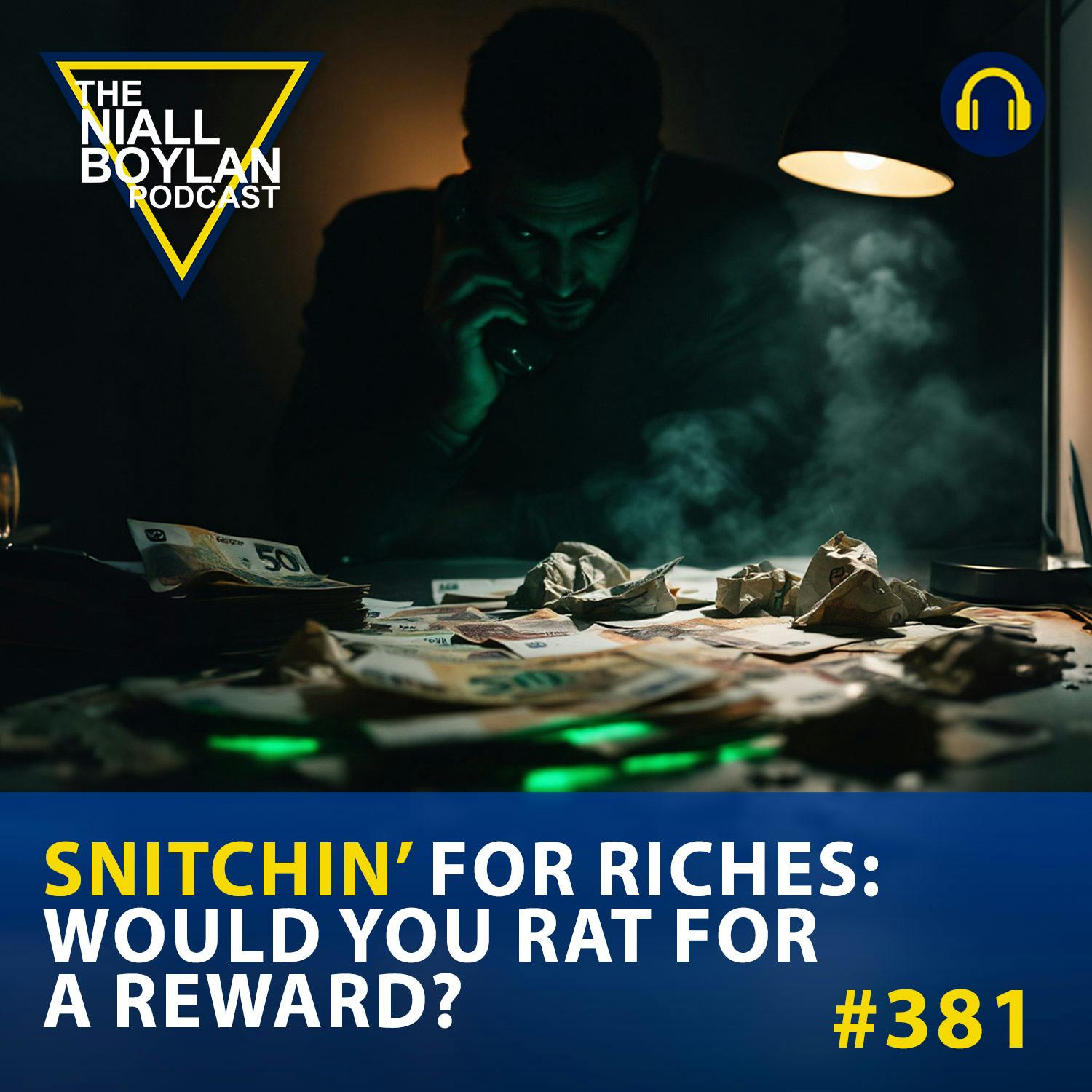
Ep 381#381 Snitchin’ for Riches: Would You Rat for a Reward?
In this episode, Niall is asking: Would you report someone to the UK Revenue for not paying taxes if there was a financial reward? The UK government has announced a new plan to incentivize citizens to report tax evaders, aiming to recoup millions of pounds lost to tax dodging and evasion. While some see it as a necessary step to hold tax cheats accountable, others feel uncomfortable with the idea of neighbors snitching on each other for cash.Some callers think why should some people get away with not paying their fair share while the rest of us are working hard and paying taxes? If there’s a financial reward, that’s even better. It’s not being a snitch—it’s just holding people accountable. Of course I’d report them. Tax dodging affects all of us—less money for healthcare, education, and public services. If someone’s cheating the system, they deserve to be caught. A reward just makes it fair, considering how much damage they’re doing to the economy.While other callers feel they don’t believe in snitching on people just to get some cash. Everyone’s struggling these days, and sometimes people make mistakes or take shortcuts just to survive. It’s not my place to ruin someone’s life over a few quid. Encouraging people to spy on each other for money just feels wrong. It turns neighbours against each other and creates a toxic environment. The government should be finding these people themselves, not turning citizens into bounty hunters.Niall wraps up the show by reflecting on the moral complexities of incentivizing citizens to report tax evasion. He acknowledges the frustration of those who see tax dodgers as undermining public services but also understands the discomfort others feel about turning neighbors against one another. Niall leaves the listeners with the question of whether financial incentives justify crossing moral lines when it comes to reporting people to the authorities.
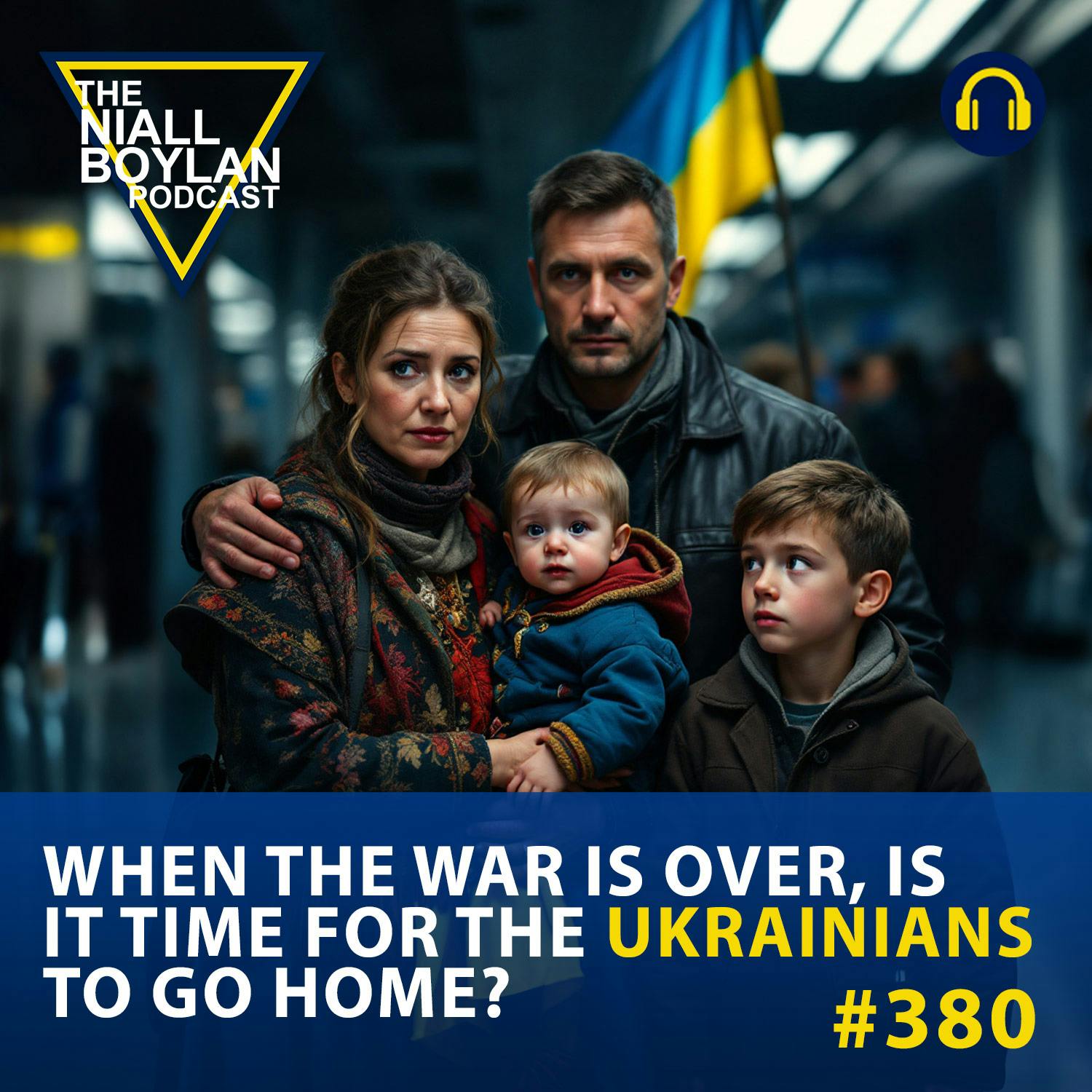
Ep 380#380 When the War Is Over, Is It Time for the Ukrainians to Go Home?
In this episode, Niall is asking: When the war in Ukraine is over, should Ukrainian refugees be required to return home, or should they be allowed to stay in Ireland? As predictions suggest the conflict may soon come to an end, the debate over the future of refugees intensifies. Should they go home and apply for visas like any other non-EU citizen, or should they be granted amnesty to stay?Callers said of course, they should go home once the war is over. Ireland has done more than its fair share, opening our doors and providing support. But we’re struggling with our own housing crisis and healthcare issues. When peace returns, it’s only right that they rebuild their own country instead of staying here indefinitely. We welcomed them with open arms during the crisis, but it can’t be a permanent arrangement. Once Ukraine is safe again, it’s time for them to return and rebuild. Our resources are stretched to the limit already, and we need to prioritize our own citizens.Niall reflects on the passionate responses from both sides, acknowledging the complexity of balancing compassion with practicality. He emphasizes that while Ireland has shown great solidarity, the road ahead will be challenging no matter the outcome.

Ep 379#379 The Notorious President: Is Ireland Ready for McGregor?
In this episode, Niall is asking: With all the controversy around Conor McGregor, would you vote for him to be president of Ireland?Conor McGregor has undoubtedly made his mark as a world-class fighter, becoming the biggest name in mixed martial arts and putting Ireland in the global spotlight. However, his rise to fame has been marred by a series of controversies, including multiple criminal charges, accusations of assault, and ongoing legal battles. From his infamous bus attack in New York to being fined for speeding and facing allegations of sexual misconduct, McGregor’s public image is anything but spotless. Despite this, some see him as a true Irish hero—someone who never backs down and always fights for his dreams.Some callers think Conor McGregor as president would be a disaster. They believe his criminal past and hot-headed nature make him unfit to hold such a position of responsibility. They argue that Ireland needs a dignified and respectable leader, not someone constantly embroiled in controversy. His actions reflect poorly on the nation, and having him represent Ireland on the world stage would be a major embarrassment.While other callers feel that McGregor’s passion and fighting spirit are exactly what the country needs. They admire his fearlessness, his dedication to his sport, and his ability to rally Irish pride. They argue that despite his flaws, he’s an undeniable icon who has done more for Ireland’s image abroad than most politicians. Some callers even suggest that his no-nonsense attitude would shake up the political scene and bring a fresh, bold approach to leadership.Niall reflects on the passion and intensity of the debate, acknowledging that Conor McGregor’s potential run for president has clearly divided public opinion. While some admire his fighting spirit and charisma, others feel his controversial past makes him unfit to represent Ireland. Niall thanks the callers for sharing their perspectives and leaves the audience with one final question: Would you trust McGregor to lead the nation, or is it too big a risk?
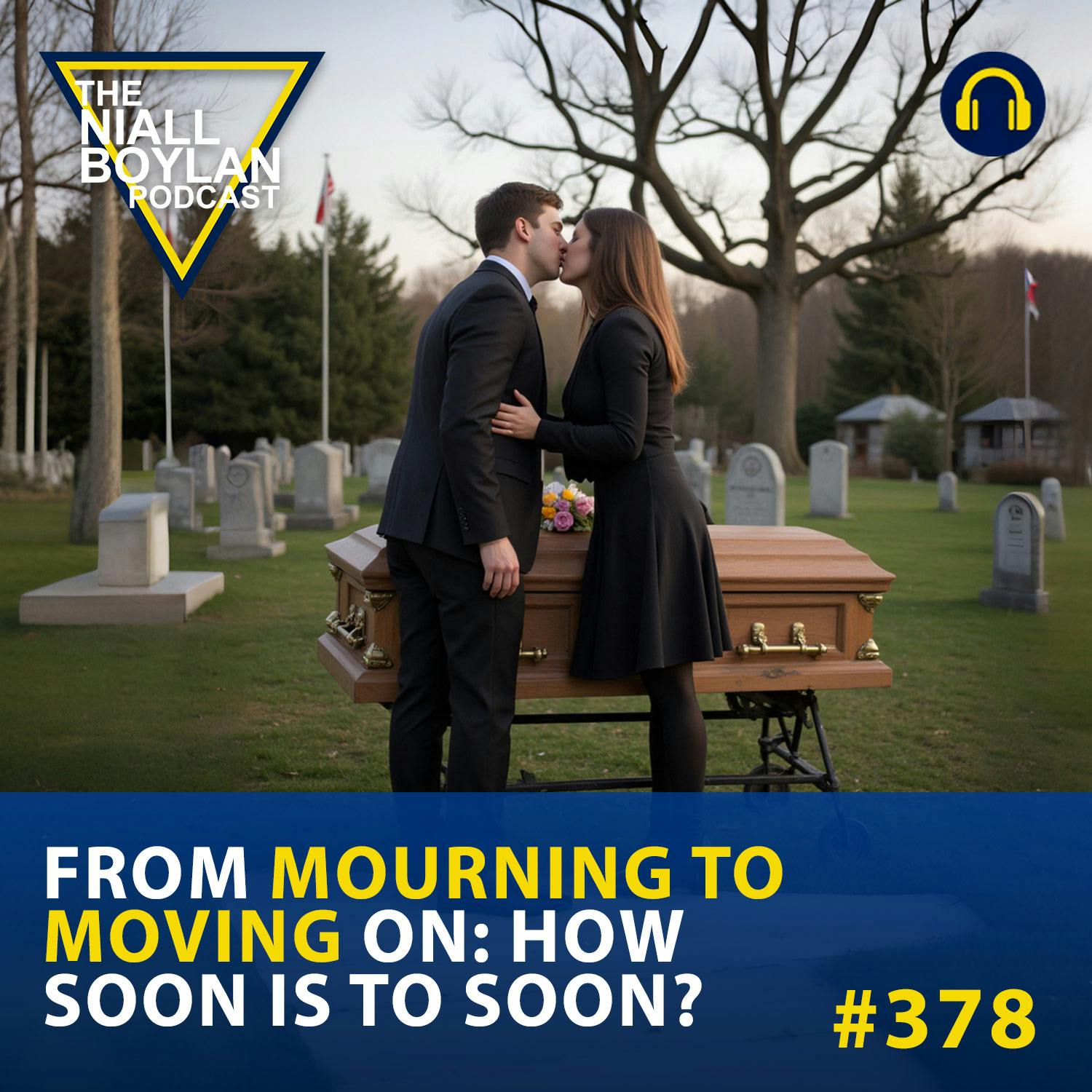
Ep 378#378 From Mourning to Moving On: How Soon Is Acceptable?
In this episode, Niall explores a sensitive question: When is the right time to start a new relationship after the death of a partner? A listener reached out, sharing that she’s fallen in love with a friend of her late husband only three months after his passing. Fearing judgment, she’s hesitant to tell anyone about her new relationship and wonders if it’s too soon to move on.Some callers feel that three months is indeed too soon, suggesting that grief can cloud judgment, especially in forming new romantic connections. They believe that the woman might be drawn to someone close to her late husband as a source of comfort, rather than true love. For them, waiting longer could allow her to process her grief fully before entering a new relationship, especially with someone so close to her past.While other callers argue that there’s no fixed timeline for grief or love. If she’s found someone who brings her happiness and understands her pain, then she should follow her heart without worrying about outside opinions. For them, moving forward with her life is a personal choice, and if she’s ready for a new relationship, that decision deserves respect
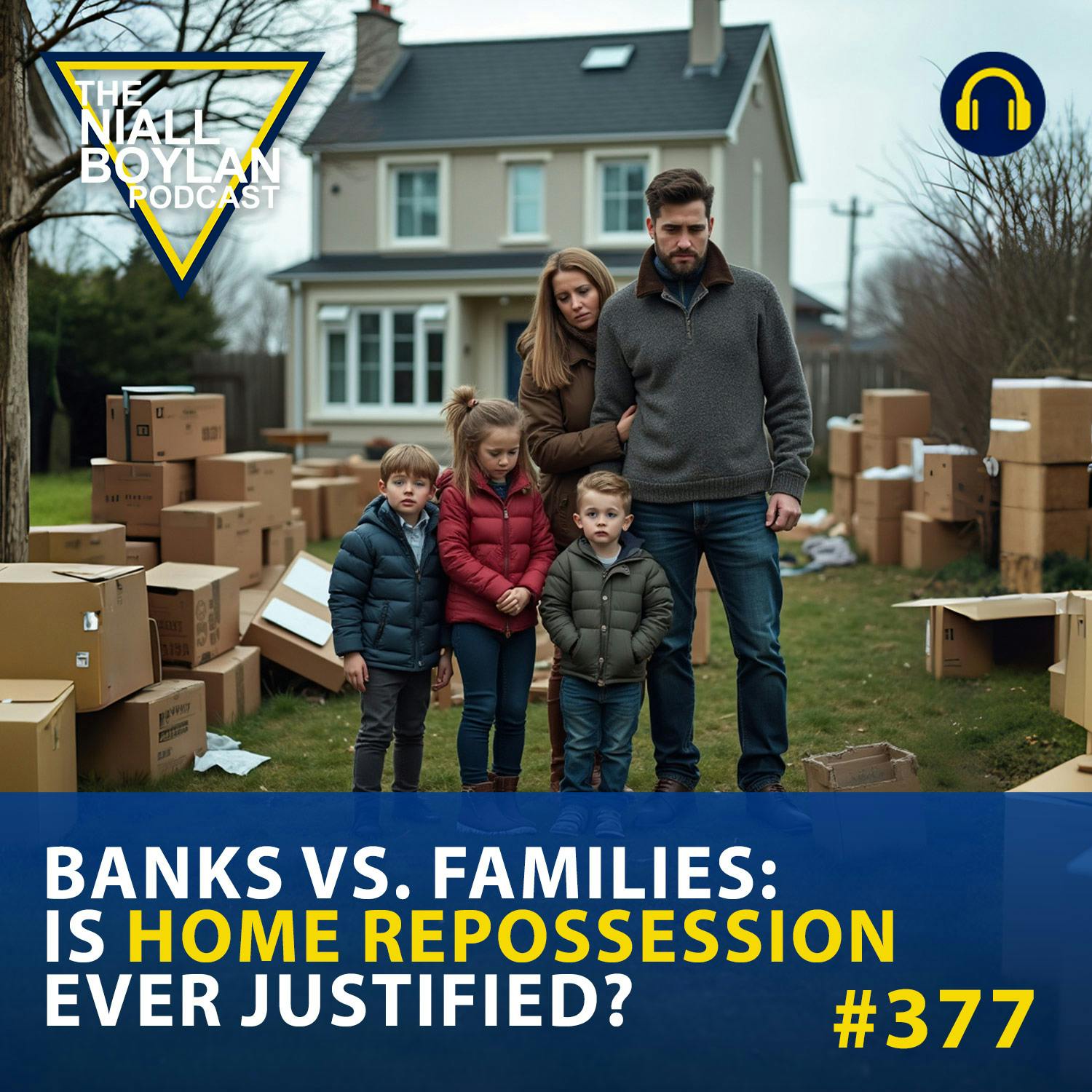
Ep 377#377 Banks vs. Families: Is Home Repossession Ever Justified?
In this episode, Niall is asking, is repossessing homes a necessary evil? The discussion comes from an emotional email sent in by a listener, Dolores, whose family is facing the devastating reality of losing their home after falling behind on mortgage payments.Dolores and her husband bought their home 12 years ago, stretching their finances to provide stability for their children. But when her husband lost his job during the pandemic, they struggled to keep up with repayments. Even though he is now working again and they are doing everything they can to catch up, the debt remains. Now, they have received a letter from the bank initiating repossession proceedings.Dolores is asking, is it fair that families in temporary financial distress can lose everything? Should banks be doing more to help those who fall on hard times, or is repossession simply a harsh but necessary reality?Some callers believe repossessions are sometimes necessary. Banks are not charities, and they have their own financial obligations. While repossession is harsh, it is usually a last resort and essential for the system to function. If homeowners cannot pay their mortgages, the banks have no choice but to take action to avoid financial instability.Other callers strongly disagree, arguing that banks should show more flexibility, especially in cases like Dolores’, where a family is trying to recover from circumstances beyond their control. They say repossession destroys lives and that banks and the government should do more to protect homeowners from losing everything when they are willing to make an effort to repay.

Ep 376#376 Trade Over Textbooks Should Your Child Ditch School for a Career?
In this episode, Niall explores a dilemma many parents face: Would you allow your child to leave school to pursue a trade?Pauline, a listener, shares her struggle. Her 16-year-old son has little interest in academics but thrives in hands-on work. He dreams of joining his father in the family garage, but Pauline fears that without a Leaving Cert, he’ll limit his future opportunities. Her husband, on the other hand, sees an apprenticeship as a fast track to success.Some callers think school isn’t for everyone. Trades offer solid careers, good wages, and no student debt. If this young man already has a job lined up, why force him to stay in school when he could be getting a head start in a well-paid, in-demand profession?While other callers feel dropping out at 16 is too risky. A Leaving Cert keeps options open, and what if he changes his mind in a few years? Many argue that even those in trades benefit from having basic qualifications if they ever want to switch careers or start their own business.As the discussion comes to a close, Niall reflects on the balance between education and practical skills. While some see school as essential, others argue that real-world experience and trade skills are just as valuable. The conversation leaves listeners questioning whether the traditional school path is the only route to success.
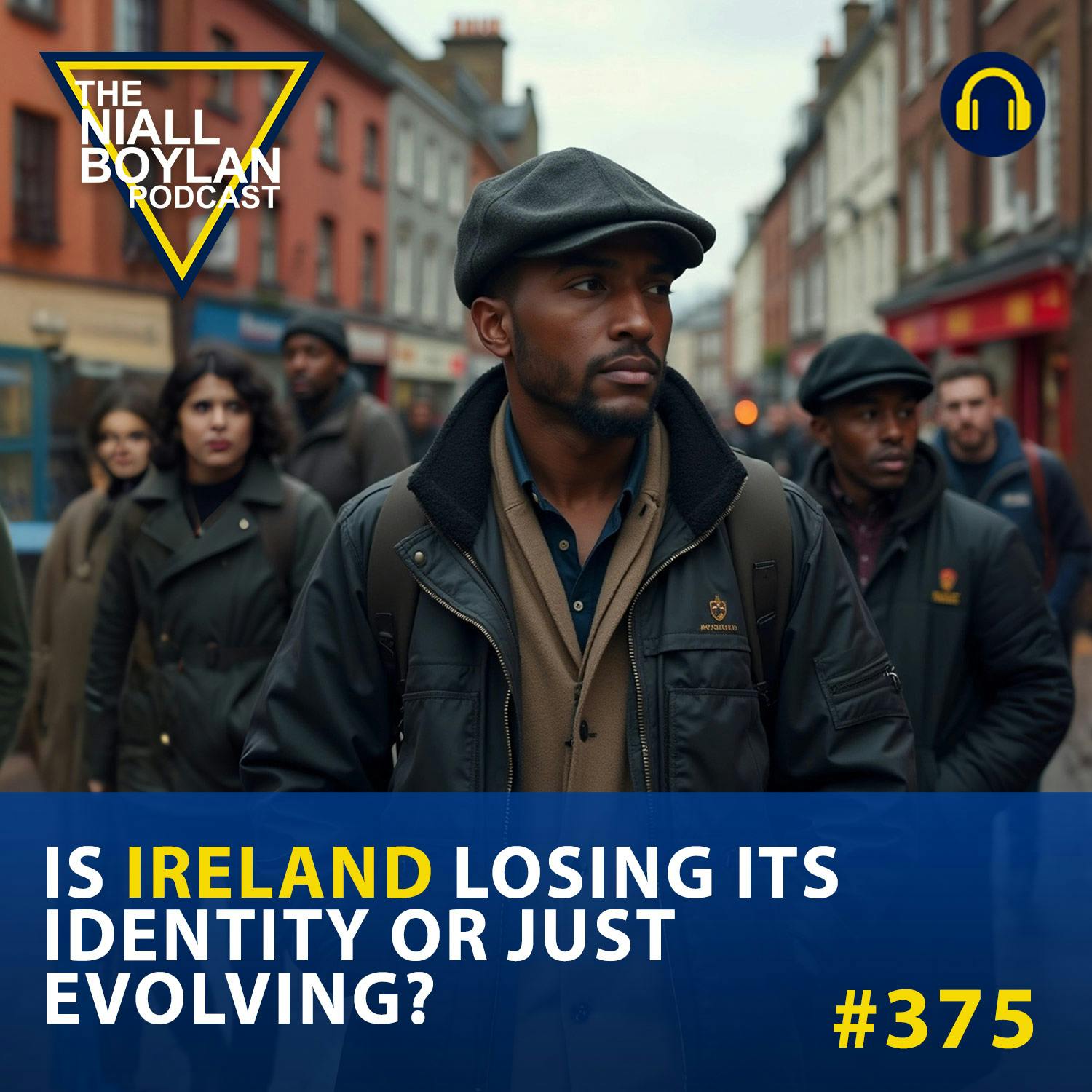
Ep 375#357 Is Ireland Losing Its Identity or Just Evolving?
In this episode, Niall asks: Is Ireland losing its national identity, or is it simply evolving with the times? Some argue that Irish traditions are being erased in the name of inclusivity, while others say that culture naturally changes and adapts. Has modern Ireland moved too far from its roots, or is this just the next chapter in our nation’s history?Some callers think Ireland is losing its identity. Schools are no longer prioritizing Irish history and language, and there’s a sense that cultural traditions are being diluted. National pride isn’t what it used to be, and if we don’t protect our heritage, future generations won’t understand what it means to be Irish.While other callers feel Irish culture is still strong—it’s just evolving. We’re more global now, but that doesn’t mean we’ve abandoned our roots. Irish music, GAA, and festivals are still thriving, and more people are learning the language than ever before. Change isn’t the same as loss, and being Irish can take many forms.
Ep 374#374 Clean Slate or Public Record? Should Juvenile Offenses Be Erased at 18?
In this episode, Niall asks: Should juvenile criminal records be wiped clean once someone turns 18, or should past offenses follow them into adulthood? The discussion is sparked by a growing debate over whether young offenders deserve a fresh start or if their past mistakes should remain on record.Some callers think everyone deserves a second chance. They argue that teenagers make mistakes, and those shouldn’t define them for the rest of their lives. A minor offense at 15—like shoplifting or a fight—shouldn’t ruin job prospects or future opportunities. They believe wiping juvenile records at 18 allows young people to move on, contribute to society, and avoid being trapped in a cycle of crime. However, some acknowledge that serious crimes should still be treated differently, with records sealed but not erased immediately.While other callers feel actions have consequences. They argue that turning 18 doesn’t magically erase what someone did at 16, especially if the crime was serious. Employers, colleges, and even the justice system should have access to juvenile records to assess character and risk. Some believe that instead of automatic record-clearing, cases should be reviewed individually—while minor offenses may be erased, more serious ones should stay on record.Niall reflects on the passionate debate, weighing both perspectives on fairness versus accountability. Should we allow young offenders to turn over a new leaf at 18, or does wiping their records risk ignoring patterns of criminal behavior? The conversation leaves listeners with an important question: Where should we draw the line between rehabilitation and responsibility?

Ep 373#373 Not Good Enough for Me: Can Class Bias Break a Relationship?
In this episode, Niall discusses a dilemma sent in by a listener who is facing a serious issue in his marriage. The listener and his wife are house hunting, and he wants to move back to Finglas, where he grew up. However, his wife refuses to even consider the idea, saying she would rather die than live in a council estate. Her reaction has caused a major rift between them, and he’s questioning whether their different backgrounds will ultimately break their marriage.His email details how he has fond memories of Finglas and still has family and friends there, but his wife insists that they should aim for a so-called “better” area. She believes council estates have too many problems—crime, anti-social behavior, and a bad reputation—and won’t even entertain the idea of moving there. He’s torn between his own attachment to his homeplace and his wife’s strong opposition, and he wants to know: is she just being practical, or is she being a snob?Some callers think: “It’s not snobbery; it’s just common sense. Council estates do have higher crime rates and more anti-social behavior. If she’s worried about safety or raising their kids in a good environment, she has every right to have concerns. Just because he grew up there doesn’t mean it’s the right place for their future. People move out of areas all the time for a better quality of life.”While other callers feel: “She’s being completely unreasonable. There are plenty of lovely areas in Finglas, and not all council estates are bad. Just because a place has a reputation doesn’t mean you write it off entirely. If he has family and friends there, why should he have to leave his roots behind just to please her? A home is about the people in it, not just the postcode.”As the debate rages on, Niall reflects on the deeper issues at play—class perceptions, personal identity, and whether love should be enough to overcome these differences. Should practicality take priority when choosing where to live, or does rejecting certain areas show an unfair bias? It’s a conversation that raises difficult questions about relationships, compromise, and social class.
Ep 372#372 Has the West Gone Soft The Decline of Traditional Masculinity
In this episode, Niall explores a controversial question: Has the West become too soft? A listener, a former Irish army soldier, has written in expressing his frustration over new military regulations allowing makeup, false tan, and various hairstyles for both men and women. He argues that these changes erode discipline and reflect a broader decline in traditional masculinity.The discussion expands beyond the army, touching on gender quotas, the influence of women in key institutions like education, justice, and media, and whether society is moving away from values that once defined masculinity. Are we witnessing a natural evolution of gender roles, or is the push for inclusivity undermining male identity?Some callers think the army should be about discipline and strength, not self-expression. They argue that masculinity is being systematically erased, with men being discouraged from being assertive and strong. They believe that gender quotas and societal shifts are weakening leadership and making Western societies "soft." The idea that the army should focus on personal expression rather than resilience and discipline is seen as a dangerous shift that reflects a broader societal issue.While other callers feel the world has moved on from rigid gender roles, and allowing makeup or different hairstyles doesn’t weaken the army—it modernizes it. They argue that masculinity is evolving and that true strength is about resilience, not outdated notions of toughness. To them, inclusivity doesn’t mean making men weaker; it means allowing everyone to be themselves without judgment.Niall reflects on the passionate debate and the shifting perspectives on masculinity in modern society. As gender roles continue to evolve, is the push for inclusivity strengthening or weakening our institutions? He leaves listeners with the question: Is the West truly going soft, or are we simply redefining what strength means?
Ep 371#371 Parent or Protector? When a Father Strikes Back at a Bully
In this emotionally charged episode, Niall explores a listener’s intense dilemma: Did he go too far when he hit his son’s bully?A heartbroken parent emailed in, sharing how their 14-year-old son—who has special needs—suffered relentless bullying for six months. Despite repeated complaints to the school and the bully’s parents, nothing changed. The situation took a dramatic turn when the bully publicly taunted the family, pushing the father past his breaking point. In a moment of rage, he confronted the bully and hit him. Now, the parents are divided—was it justified, or did he cross the line?Some callers think the father did the right thing. After months of inaction from the school and the bully’s parents, what else was he supposed to do? Sometimes, a bully only understands force. Maybe now the kid will think twice before tormenting another child.While other callers feel no matter how awful the bully was, hitting a child was the wrong move. Now the father is the one in trouble, and it sets a bad example for his son. Confronting the bully is one thing, but resorting to violence could lead to legal trouble, school consequences, or even make things worse for his son.As emotions run high, Niall reflects on whether the father’s reaction was an act of protection or a step too far.

Ep 370#370 Would You Cross the Line to Keep Your Family Afloat?
In this episode, Niall tackles a tough moral dilemma: Would you steal to provide for your family? A listener working a low-paying warehouse job emailed in, revealing that he's tempted to take part in package theft to make ends meet. Facing rising costs and financial strain, he wonders if breaking the law is justifiable when survival is on the line. With no guests, Niall opens the lines to hear what listeners think—is theft ever acceptable if it means keeping your family fed?Some callers think if you're struggling to survive, you do what you have to do. Morality becomes a luxury when your kids are hungry. Big companies rake in billions while underpaying workers, so if someone takes a little to make ends meet, it’s not exactly a crime against humanity. It’s not stealing—it’s leveling the playing field.While other callers feel theft is theft, no matter the situation. Businesses lose money, prices go up, and honest people suffer the consequences. There are other ways to get help without resorting to crime. Getting caught could cost him his job and land him with a criminal record, putting his family in an even worse position. No matter how desperate things get, stealing is never the answer.As the debate rages on, Niall reflects on the arguments from both sides. While desperation can push people to extremes, is stealing ever truly justifiable? He leaves listeners with the question: Would you cross the line to keep your family afloat, or is there always another way?

Ep 369#369 Battle of the Sexes: Who Has It Easier Men or Women?
In this episode, Niall tackles the age-old debate: Who has it easier—men or women? With gender equality constantly evolving, the conversation explores different aspects of life, from the workplace to relationships, mental health, and societal expectations.The episode begins with a discussion on recent research, including the BIGI scores, which assess gender disadvantages across 134 countries. Surprisingly, the findings suggest that men face more disadvantages in 91 countries, while women experience greater challenges in 43. But what does this really mean in the context of modern-day life?Niall examines workplace dynamics, challenging common narratives around the gender pay gap and career opportunities. Do men still hold the upper hand, or has the playing field shifted? The discussion then moves into relationships and domestic roles—are women still expected to take on the majority of household and childcare responsibilities, or has society adjusted to a more equal standard?With perspectives from all sides, this episode doesn’t shy away from the tough questions, including the societal pressures men face to be stoic providers and the safety concerns that many women experience in their daily lives.Some callers think women now have more advantages—workplace quotas, stronger social support systems, and automatic preference in family courts. They argue that when men struggle, nobody seems to care. Society expects men to be strong, unemotional, and independent, yet men face higher suicide rates and less focus on mental health. If we’re talking about who has it "easier," men are often left to fend for themselves without support.While other callers feel men still dominate in high-paying jobs and leadership positions, and they don’t experience the same level of societal scrutiny. Women are expected to juggle careers and family responsibilities while being judged no matter what choice they make. They also highlight issues of safety, harassment, and the double standards women face in both their personal and professional lives. The idea that men have it harder doesn’t hold up when women still face so many deeply ingrained disadvantages.As the debate comes to a close, Niall reflects on the passionate perspectives from both sides. While some argue that men face silent struggles that are often ignored, others point out the systemic inequalities that still hold women back. One thing is clear—this conversation is far from over.
Ep 368#368 Brotherly Betrayal: Should I Expose the Truth?
In this episode, Niall tackles a heartbreaking dilemma sent in by a listener who has discovered that his brother’s wife is having an affair. Now, he’s torn—should he tell his brother the truth or stay silent to avoid tearing the family apart? The weight of this secret has left him struggling with guilt, fear, and uncertainty about the consequences of revealing the affair.As Niall explores the complexity of the situation, he asks: Does his brother have a right to know, or is it better to let sleeping dogs lie? Would revealing the truth help or only cause irreversible damage?Some callers think he should keep his mouth shut. Telling his brother could destroy the marriage and tear the family apart, all for something that might already be over. Unless the affair is still ongoing or a serious threat, interfering in someone else’s relationship is dangerous. They argue that relationships are complicated—maybe the brother already suspects, or maybe there’s more going on behind closed doors than the listener realizes. Getting involved could make things worse, not better.While other callers feel he absolutely needs to tell his brother. No one wants to be the last to know about their partner’s betrayal. If the truth comes out later and his brother finds out that family members knew and said nothing, the betrayal will be even deeper. They argue that honesty, no matter how painful, is always better than living in the dark. The brother deserves the chance to decide what to do with the truth rather than being kept in the dark.As the discussion comes to a close, Niall reflects on the emotional weight of this dilemma. Family loyalty, personal integrity, and the potential for devastation all play a role in this impossible decision. Whether the listener decides to speak up or stay silent, one thing is clear—there are no easy answers when it comes to betrayal and family.

Ep 367#367 From Love to Likes: What If Your Partner Profits from OnlyFans?
In this episode, Niall delves into a sensitive and modern relationship dilemma: What would you do if your partner sold explicit pictures of themselves on OnlyFans?A listener emailed in with a real-life predicament. She’s engaged to a wonderful man, but recently noticed an unexplained increase in their finances. When she asked about it, her partner admitted he had been secretly making money on OnlyFans, selling explicit content. He claimed he didn’t tell her earlier because he feared how she would react.Now, she’s torn—on one hand, they’re benefiting financially, but on the other, she feels betrayed. To her, it feels like a form of infidelity, especially since many of his subscribers are men. Should she accept this as a harmless way to make money, or is this a dealbreaker?Some callers think it’s not a big deal. As long as it’s just pictures or videos and there’s no physical cheating, what’s the harm? People make money in all sorts of ways, and OnlyFans is just another platform to earn a living. The real issue isn’t the content—it’s that he kept it a secret. If he had been upfront from the start, maybe it wouldn’t be such a shock. If both partners are okay with it, then it shouldn’t be an issue.While other callers feel this is a complete betrayal. Selling intimate pictures to strangers crosses a serious boundary in a committed relationship. It’s not just about making money—it’s about exposing yourself to the world in a way that many would consider infidelity. The fact that he hid it from her makes it even worse. If he knew she wouldn’t approve, then why do it in the first place? Trust is broken, and for many, that’s unforgivable.As the discussion winds down, Niall reflects on the emotional weight of the situation. Trust, honesty, and boundaries are key in any relationship, and whether this is a dealbreaker or just a difficult conversation depends on the couple involved. For some, this is a harmless way to make extra income, while for others, it’s a betrayal that shatters trust.Is OnlyFans just another job, or does it cross a moral line? That’s a question only each couple can answer.
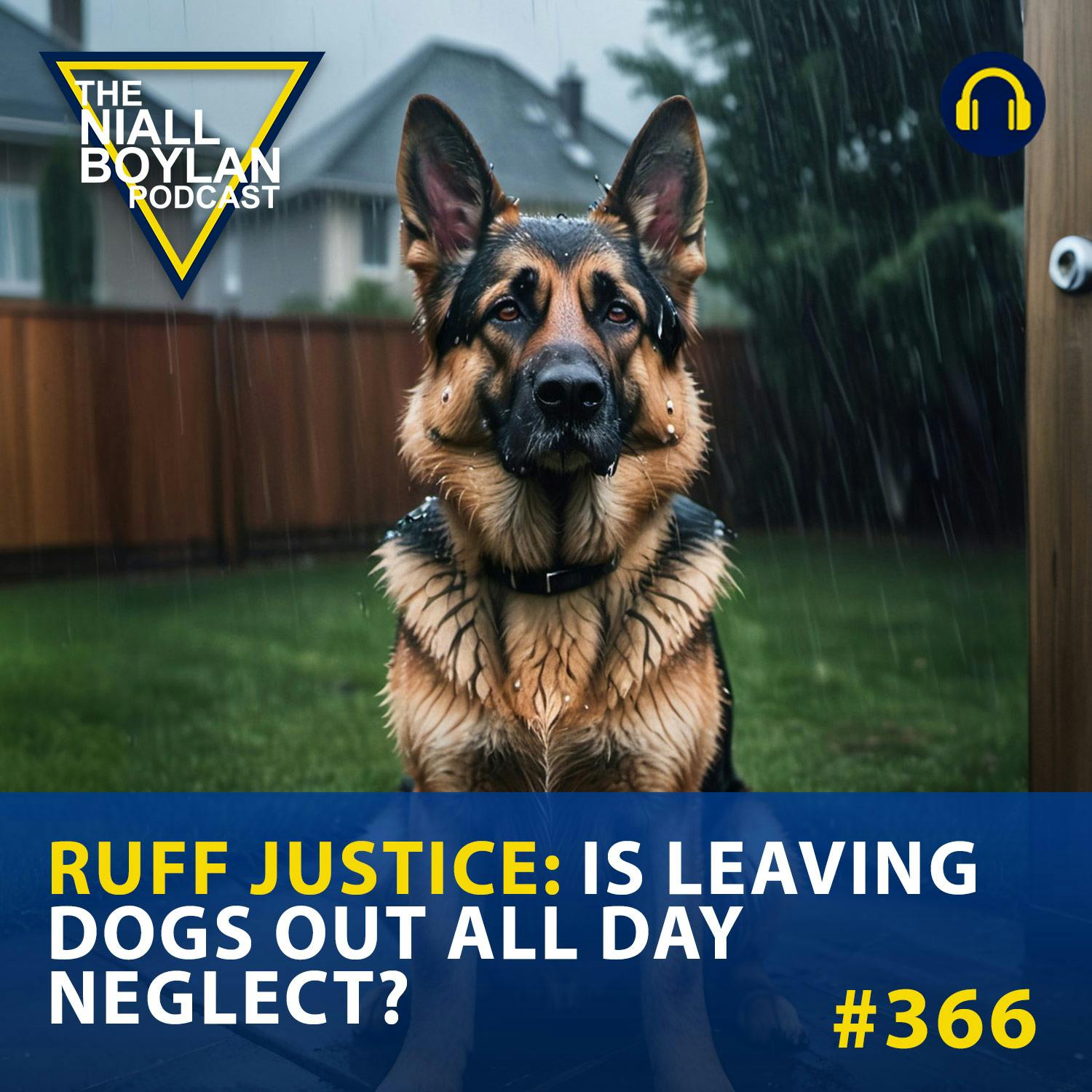
Ep 366#366 Ruff Justice: Is Leaving Dogs Out All Day Neglect?
In this episode, Niall is asking: Is it neglectful to leave dogs outside all day and night, or is it just a different way of raising them?With growing awareness of animal welfare, the debate over whether dogs should be kept indoors or left outside has become a heated topic. Some believe it’s cruel and irresponsible to leave a dog outdoors for long periods, while others argue that certain breeds are well-suited for outdoor living and have thrived that way for generations.Some callers think leaving a dog outside all day and night is absolutely neglectful. They argue that dogs are social animals that need companionship and protection from extreme weather conditions. If someone isn’t willing to provide a warm, safe environment inside the home, they shouldn’t have a pet at all. One caller passionately said, "Dogs aren’t livestock! They need interaction and love, not to be left alone in the cold."While other callers feel not all dogs need to be indoors all the time. Certain breeds, like Huskies and working farm dogs, are naturally built for outdoor living and are more comfortable in colder temperatures. As long as they have proper shelter, food, and water, there’s nothing cruel about it. "People are overreacting. Years ago, dogs lived in kennels outside and no one had an issue. Now suddenly, it’s ‘abuse’ to not have them on the couch?" one caller argued.As the conversation comes to a close, Niall reflects on the deeply divided opinions on this issue. While some believe leaving a dog outside is unacceptable, others argue that it depends on the breed, environment, and level of care provided. The discussion raises important questions about changing attitudes toward pet ownership and how society defines responsible care.
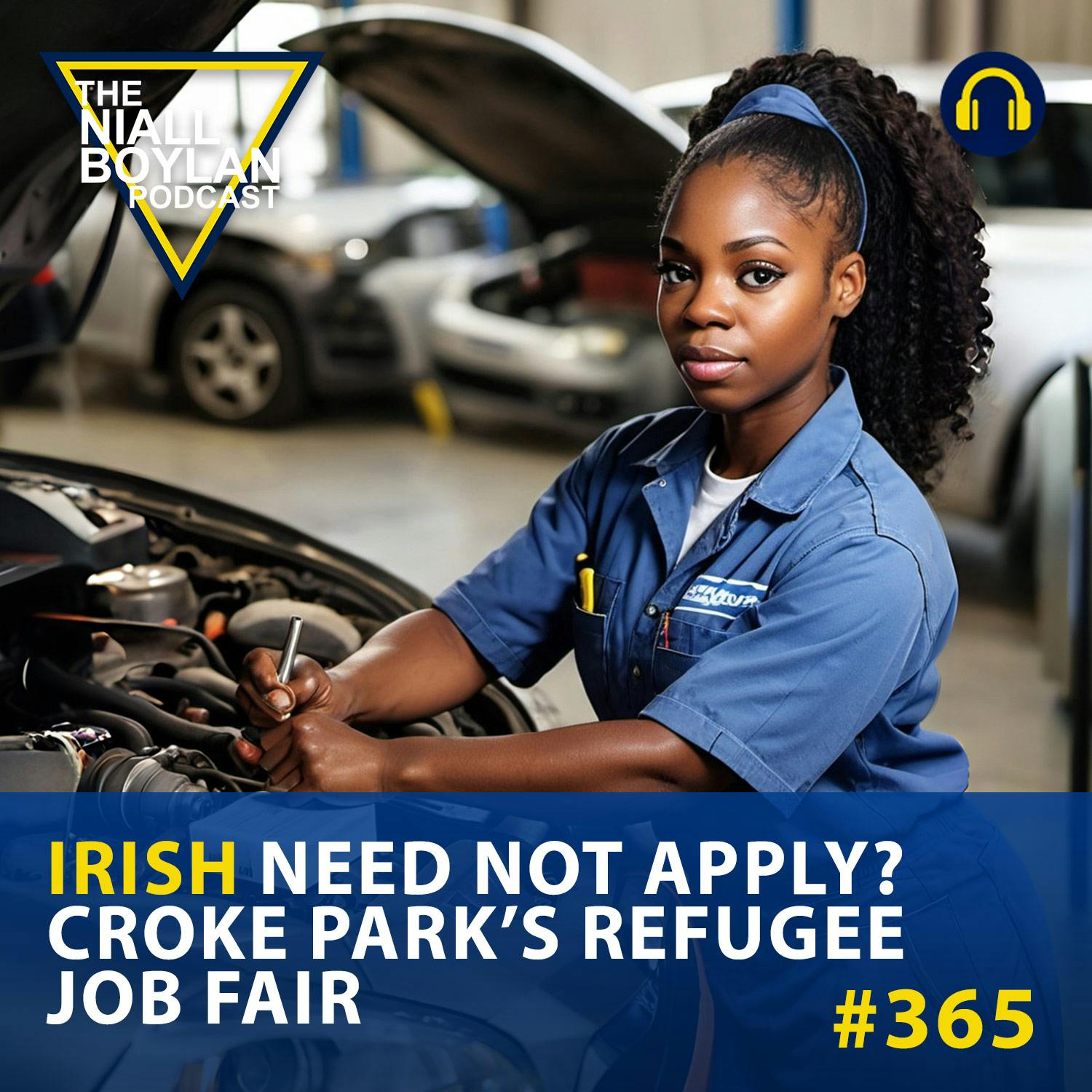
Ep 365#365 Irish Need Not Apply? Croke Park’s Refugee Job Fair
In this episode, Niall is asking: Was the UN and Indeed-funded job fair for refugees held at Croke Park a bold move to help those in need—or was it an act of discrimination against Irish citizens struggling for work? The event, which took place just yesterday, has ignited fierce online debate. Critics argue that the job fair shows preferential treatment for refugees, fueling accusations that while right-wing voices claim “refugees don’t work,” policies like these unfairly favor non-citizens over locals. Others counter that the fair represents a necessary commitment to helping highly skilled refugees integrate into society and contribute to the economy, benefiting everyone in Ireland.Some callers think the job fair was a great idea. They emphasize that refugees, many of whom are skilled and eager to work, need support to rebuild their lives. To these listeners, the event is not about discriminating against Irish people—it’s about offering opportunities where they are most needed, ultimately strengthening the community as a whole. Meanwhile, other callers believe the fair is unfair, arguing that in a country where many locals are unemployed, such initiatives send the wrong message. They contend that the focus should be on helping Irish citizens first, rather than giving special treatment to refugees.Niall concludes by reflecting on the complex balance between humanitarian aid and domestic employment concerns. He challenges listeners to consider whether extending support to refugees is an act of solidarity that benefits the whole nation, or if it inadvertently sidelines the needs of local job

Ep 364#364 Shamrocks and Statesmanship: Who Should Represent Ireland at the White House?
In this episode, Niall is asking: Who should bring the traditional bowl of shamrocks to the White House this year? This annual ritual—a symbol of Irish heritage and goodwill—has long served as a tangible reminder of the enduring ties between Ireland and the United States. Traditionally, an esteemed Irish representative is chosen to present a bowl filled with freshly picked shamrocks, signifying not only the beauty of Irish culture but also a spirit of unity and statesmanship. Niall reflects on the significance of this gesture, questioning which candidate or public figure best embodies the authentic Irish spirit and would make a proud representative on this prestigious stage.Niall concludes the episode by challenging listeners to consider the qualities that truly define Irish identity in the modern world, and what it means to represent a nation on the global stage.
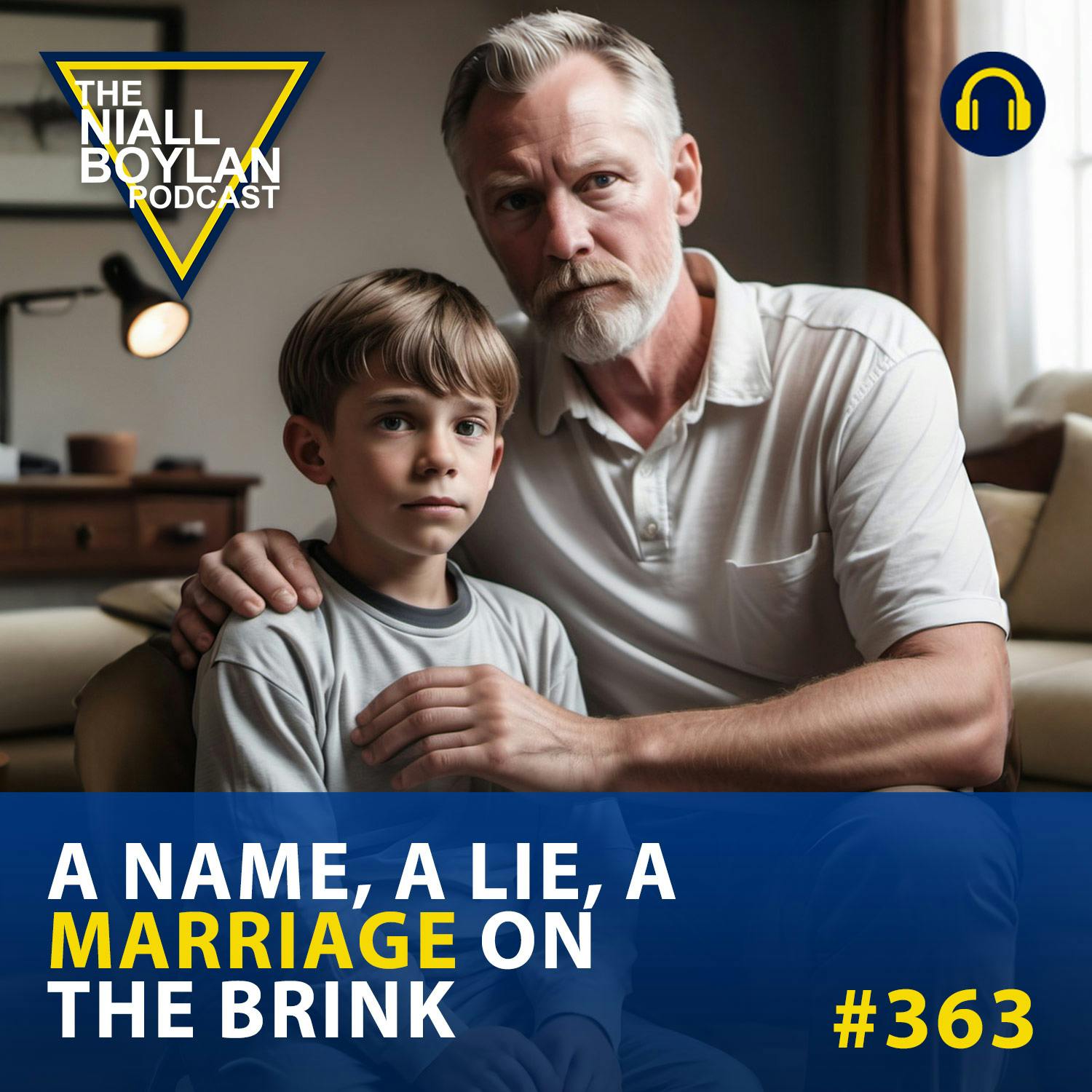
Ep 363#363 A Name, A Lie, A Marriage on the Brink
In this episode, Niall addresses a challenging question at the intersection of hiring practices and redemption. Inspired by a compelling tweet that highlighted the struggle of an individual unable to secure a job due to a past petty conviction, Niall asks: Should a minor mistake from years ago forever block someone’s future?Some callers argue that everyone deserves a second chance. They contend that if a person has learned from their past errors and demonstrated growth, employers should focus on skills and potential rather than a single, long-ago mistake. They believe that holding a minor offense against someone only prevents them from contributing positively to society.Meanwhile, other callers maintain that employers must exercise due diligence. They argue that even a petty conviction can serve as a warning sign about an individual’s judgment, and that businesses have a responsibility to protect themselves by scrutinizing a candidate's background. For these listeners, a criminal record—even a minor one—can’t simply be overlooked without considering potential risks.Niall concludes by reflecting on the fine balance between offering second chances and ensuring accountability in the job market, leaving listeners to ponder whether our society should lean towards forgiveness and redemption or uphold stricter standards based on past mistakes.
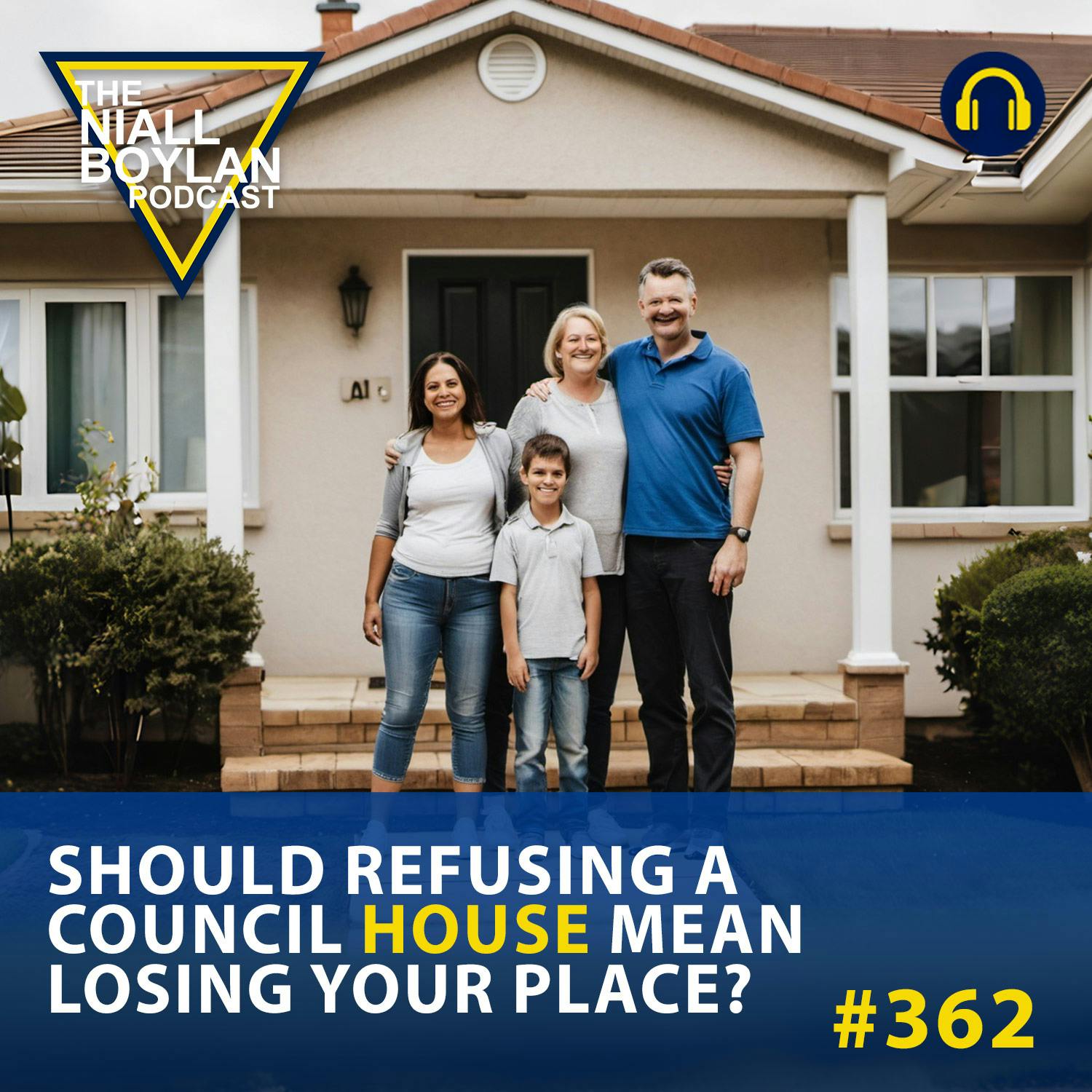
Ep 362#362 One Offer Only: Should Refusing a Council House Mean Losing Your Place?
In this episode, Niall takes on a topic at the heart of Ireland's housing crisis: should individuals be removed from the housing list if they decline an offer of a council house? The issue was sparked by a provocative post in the Facebook group "Mas On A Rant"—a post that some dismissed as a joke, yet it raises serious questions about entitlement and expectations in social housing.Some callers argue that if you're on the housing list and you turn down a council house, you should be removed. With a massive shortage of affordable homes, rejecting an offer—regardless of personal preferences—takes a vital resource away from someone in genuine need. They insist that accepting a council house is part of the agreement when you sign up, and high standards should not come at the expense of fairness and social responsibility.Other callers contend that the issue isn’t so black and white. They argue that there can be valid reasons for declining an offer—a location in a dangerous area, substandard facilities, or other concerns that impact family safety and well-being. Automatically removing someone from the housing list may punish those with legitimate grievances rather than addressing the systemic issues behind the housing shortage. Instead of strict penalties, they suggest the focus should be on improving the quality and variety of available homes.Niall concludes by reflecting on the complex balance between fairness and practical needs in social housing. He leaves listeners with a challenging question: Should the system enforce a strict “take it or leave it” policy, or should there be more flexibility to account for genuine concerns about housing quality?
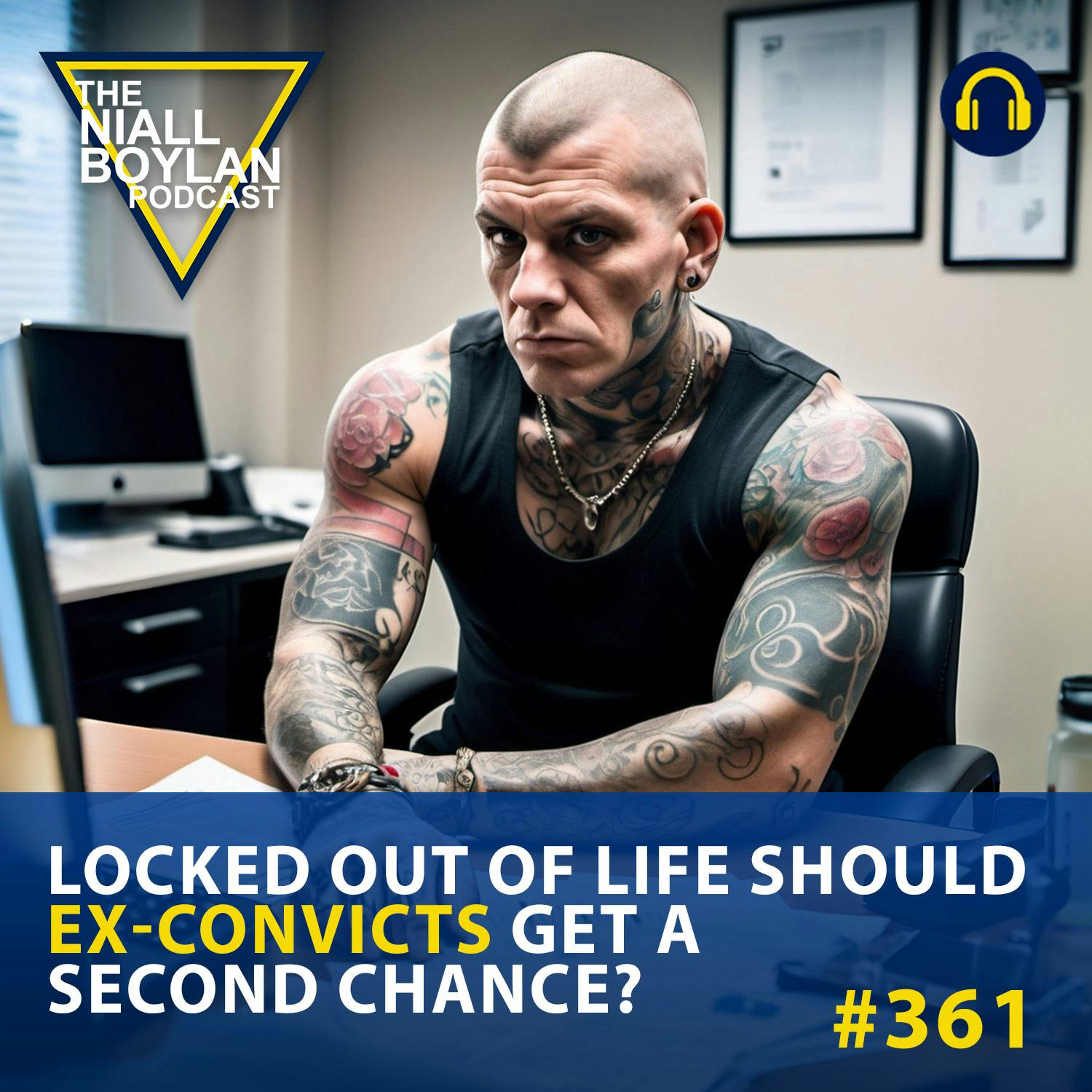
Ep 361#361 Past Mistakes, Future Blocked: Should Ex-Convicts Get a Second Chance?
In this episode, we dive into a challenging question at the intersection of hiring practices and redemption. Inspired by a compelling tweet highlighting how a past petty conviction can derail a person's chances of securing employment, Niall sparks a candid discussion about whether ex-convicts deserve a second chance.Some callers argued that everyone deserves a second chance. They believe that a minor conviction from years ago shouldn’t define someone's future. If an individual has learned from their mistake and moved on, employers should focus on their skills and potential rather than dwelling on a past error. After all, we've all made mistakes, and holding a minor offense over someone's head only keeps them from contributing positively to society.Other callers maintained that employers must consider risk and reputation when making hiring decisions. They argued that even a petty conviction can be a red flag regarding a person’s judgment. Businesses have a responsibility to protect themselves by scrutinizing a candidate’s background. For these callers, due diligence is essential, and any criminal record—even a minor one—could indicate potential issues that shouldn't be ignored.Niall concludes the discussion by reflecting on the delicate balance between offering second chances and ensuring safe, reliable hiring practices. He leaves listeners with the question: Should a past mistake forever block someone’s future, or is it time to embrace the possibility of redemption?
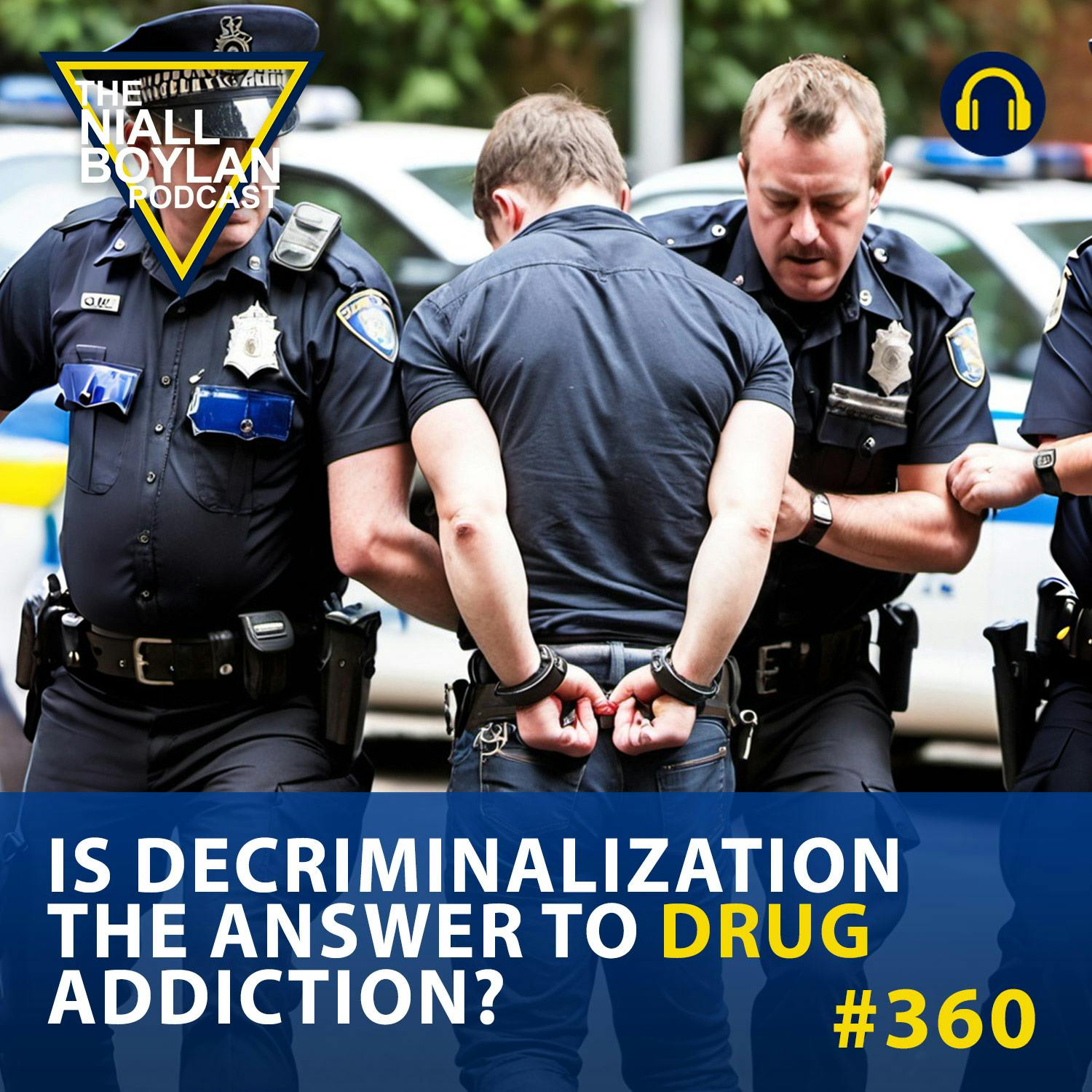
Ep 360#360 Breaking the Chains: Is Decriminalization the Answer to Drug Addiction?
In this episode, Niall is asking whether decriminalizing drugs could finally break the chains of addiction and reduce the grip of criminal enterprises. Karl Deeter brings his well-researched, nuanced perspective to the table, advocating for a shift from punitive measures to a framework that emphasizes harm reduction, education, and responsible regulation. Drawing on the historical failure of alcohol prohibition as a cautionary tale, Karl argues that decriminalization could not only wrest control away from the black market but also foster a safer, more health-focused society.Some callers believe we should legalize—or at least decriminalize—all drugs. Citing successful examples like Portugal, they argue that the current approach only fuels the underground market and escalates violence. They assert that regulation could lead to safer use, reduce overdose risks, and allow law enforcement to focus on more serious crimes. To these listeners, transforming drug policy is a necessary step toward protecting public health.Other callers remain cautious. They worry that legalizing drugs might inadvertently normalize dangerous behaviors and increase overall usage, potentially burdening our healthcare and social systems. They advocate for maintaining strict drug laws paired with robust rehabilitation programs, emphasizing that a controlled, cautious approach is vital to prevent further social harm.Niall concludes by reflecting on the passionate and diverse viewpoints shared throughout the discussion. He leaves listeners pondering whether decriminalization could truly serve as the breakthrough we need to address drug addiction—or if it might open the door to unforeseen consequences.
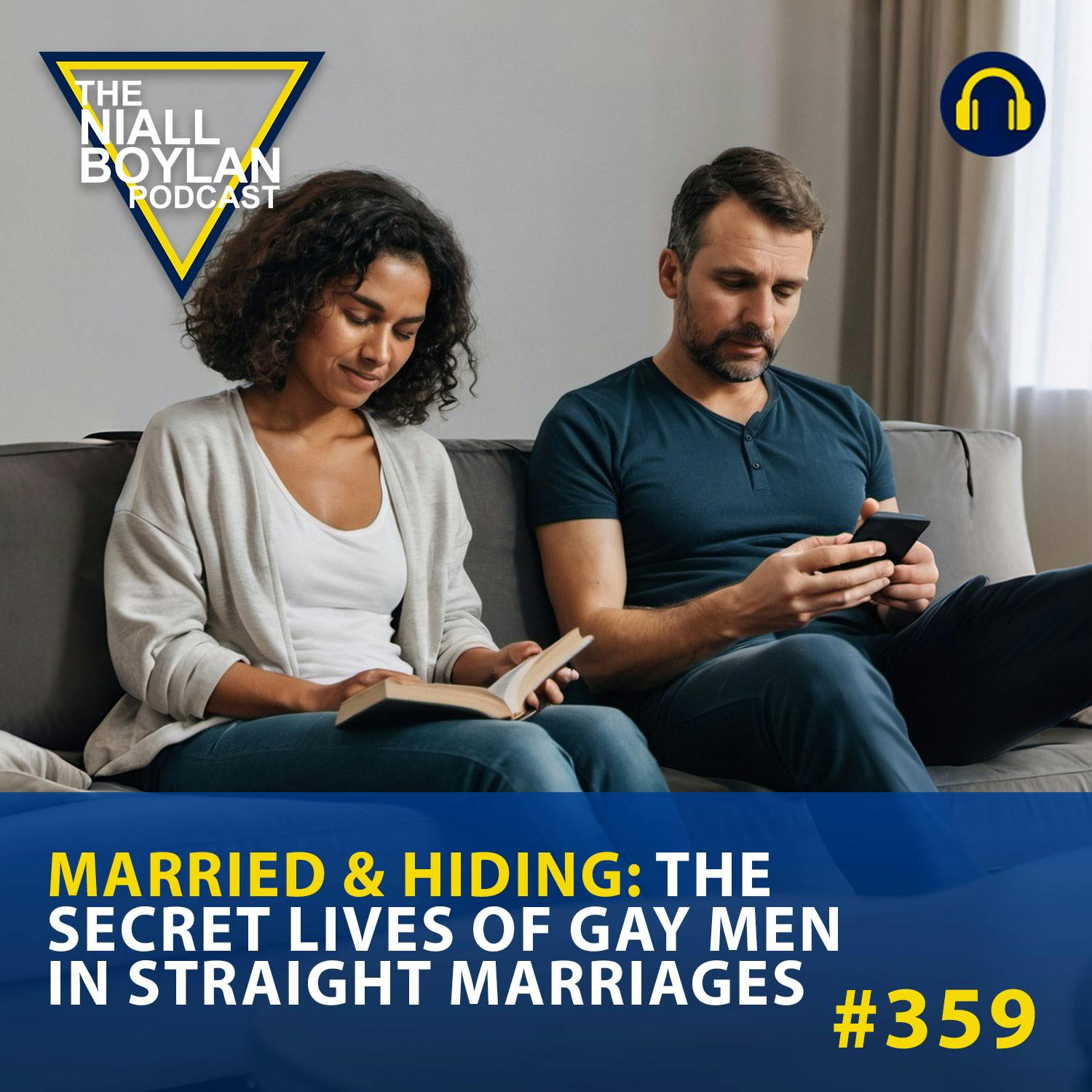
Ep 359#359 Married & Hiding: The Secret Lives of Gay Men in Straight Marriages
In this episode, Niall challenges us to confront two hard-hitting questions: Do secretly gay men in straight marriages deserve sympathy, and are most men hiding their true sexuality? The conversation is sparked by a series of explosive revelations, starting with Tucker Carlson’s upcoming interview with Larry Sinclair—a convicted con artist who has made sensational claims about a former U.S. President. Sinclair alleges drug-fueled encounters that have reignited controversy and debate, setting the stage for a deeper exploration of hidden lives and forbidden desires.Adding fuel to the fire, Niall shares a fascinating experiment conducted by a producer who created a Grindr account. Within 24 hours, the account was inundated with messages from married men discreetly seeking same-sex encounters—a stark reminder of the secret double lives many may be leading. The discussion intensifies further when Niall reads a deeply personal email from a listener who spent 30 years suppressing his true identity due to family and religious pressures. As the phone lines open, callers clash: many express outrage over the deception in marriage, while one lone voice defends these hidden identities as a byproduct of unbearable societal pressure. In the end, Niall leaves us with a challenging question: in a world where so much remains concealed, do these secret lives reveal a deep, systemic need for understanding, or are they simply a betrayal of trust?Niall concludes by reflecting on the painful costs of living a double life and urges listeners to consider the complexities of identity, societal expectations, and the personal toll of secrecy.
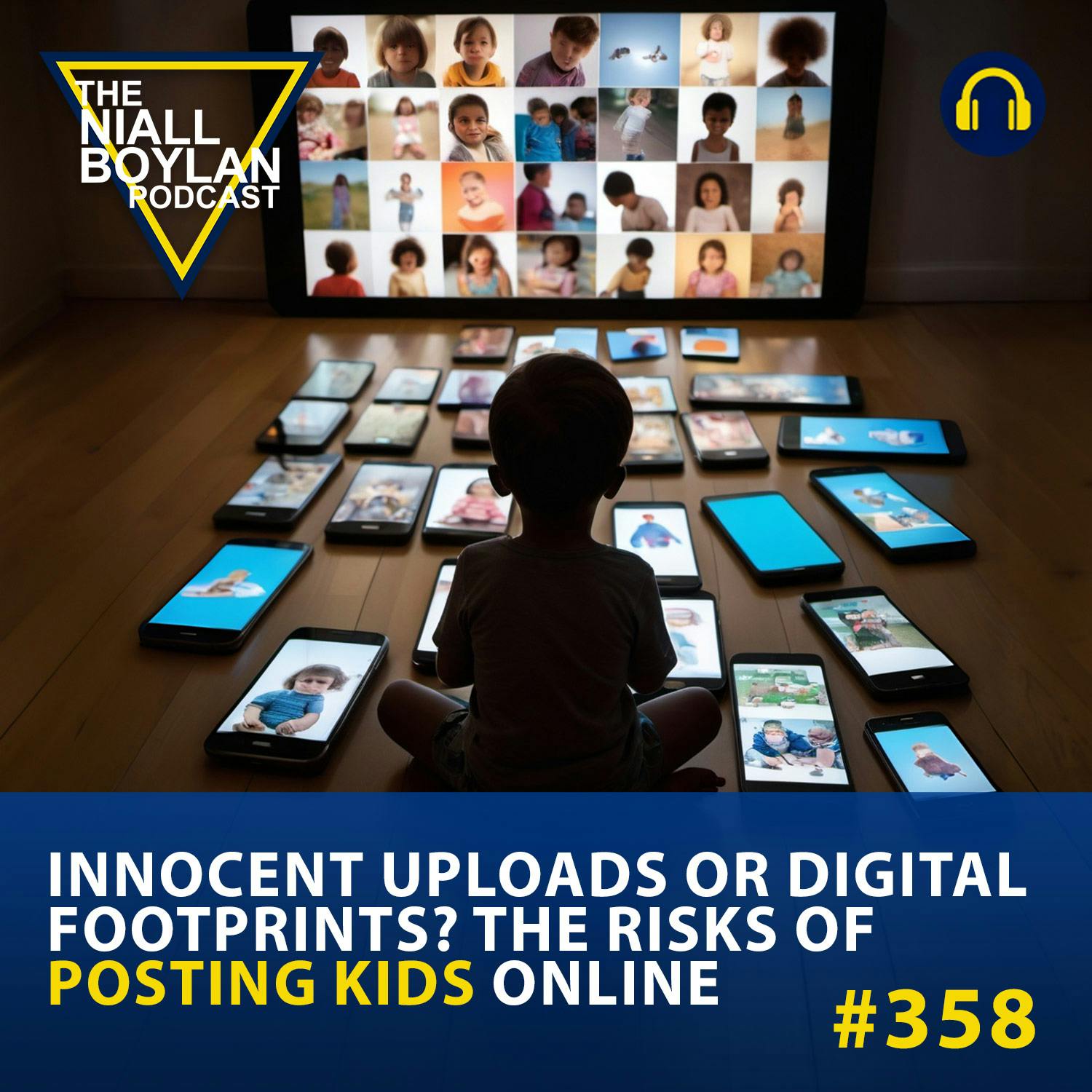
Ep 358#358 Innocent Uploads or Digital Footprints? The Risks of Posting Kids Online
In this episode, Niall asks: Is it irresponsible to post pictures of your children on social media? With the digital age in full swing, sharing snapshots of our kids has become second nature—but at what cost? The discussion is sparked by a startling case from Austria, where an 18-year-old is suing her parents for posting over 500 images of her on Facebook without her consent. This real-world example serves as a catalyst for a deep dive into the ethical and legal implications of sharing intimate moments of children’s lives online.Niall and his callers explore a range of issues, from the rise of online predators and government surveillance to the paradox of modern connectivity versus the risk it poses to our children’s privacy. The conversation delves into whether parental responsibility should include safeguarding digital footprints, and how shifting social norms are challenging traditional ideas of privacy.Amid the lively debate, callers share diverse perspectives—from those who see these practices as harmless expressions of love and pride, to others who warn that oversharing can leave lasting digital marks that may one day come back to haunt our children. A regular caller even challenges the prevailing concerns, suggesting that some fears might be more about societal paranoia than actual danger.Listeners weigh in with passionate viewpoints. Some argue that the potential risks—from unwanted attention by online predators to future privacy breaches—make it imperative for parents to think twice before posting. Others counter that, with proper caution and limited sharing, the digital world can be navigated safely without sacrificing those cherished moments.Niall concludes by reflecting on the delicate balance between sharing the joys of parenthood and protecting our children’s future. In an era where every upload can leave a permanent digital footprint, he leaves us with a question: How do we honor the beauty of our children’s lives while ensuring their privacy isn’t compromised?

Ep 357#357 Men in Childcare: Breaking Barriers or Crossing Boundaries?
In this episode, Niall tackles a thought-provoking question that challenges traditional gender roles: "Would you be comfortable with a man working in a creche?" As the discussion unfolds, listeners share a range of perspectives, revealing deep-seated beliefs about masculinity and caregiving.Pauline expresses unease about shifting gender norms, arguing that masculinity is being eroded in modern society. She wonders what has happened to traditional male roles and firmly states that she wouldn’t feel comfortable leaving her infant in the care of a male professional.On the other side of the debate, James embraces a gender-neutral approach to childcare, arguing that men should have just as much opportunity to work in creches as women. His willingness to trust a male caregiver reflects the evolving landscape of parenting and childcare.The conversation takes a dramatic turn when Steve, a frequent caller, sparks controversy by suggesting that all men have the potential to be threats. He points to crime statistics, arguing that men are statistically more likely to commit sexual offenses and that women are more often victims of violence. Based on this, he strongly opposes the idea of a man looking after his child.Throughout the heated discussion, Niall keeps the conversation balanced, allowing a space for open debate while challenging assumptions and stereotypes. As the episode progresses, deeper questions emerge about gender biases, trust, and societal expectations in caregiving.Tune in as Niall and his callers explore the evolving role of men in childcare and debate whether resistance to male caregivers is rooted in genuine concern or outdated prejudice.

Ep 356#365 Two Kids, One Love: Would You Take the Leap?
In today’s episode, Niall reads an emotional email from a mother struggling with her son’s relationship choices. She’s worried about his new girlfriend—a young woman working in retail with no clear career path, who hesitated to open up about her past. During a tense family dinner, she finally revealed she has two children from previous relationships. Concerned about her son’s future, the mother questions whether he’s taking on more than he’s ready for.This sparks a heated discussion as Niall asks: "Would you date a single parent with two kids?"Opinions flood in from both sides. Some listeners argue that love isn’t about circumstances—it’s about connection. They see blending families as an opportunity to create something meaningful, where love isn’t limited by biology. Others, however, say dating someone with children adds pressure and potential complications. They highlight the challenges of stepping into a parental role, possible tensions with ex-partners, and the impact on personal aspirations.As perspectives clash, deeper questions emerge: Can a new relationship thrive when children are already in the picture? Should personal goals take priority over love?Join Niall and his callers as they unpack the realities of dating a single parent. Whether you see it as a rewarding journey or an unfair responsibility, one thing is certain—love, family, and the choices we make are never simple.
Ep 355#355 When a Kiss Costs Freedom: Luis Rubiales vs. Jenni Hermoso
In this episode, Niall is asking: Does the punishment fit the crime? Former Spanish football president Luis Rubiales could face up to two and a half years in jail for his controversial kiss on team member Jenni Hermoso following Spain’s World Cup win. Was this act merely a misguided celebratory gesture, or did it cross a clear line into non-consensual behavior that warrants severe legal consequences? Niall challenges us to examine whether the proposed punishment is a necessary deterrent or an overreach in criminalizing a single incident.Some callers believe that while Rubiales’ actions were undeniably wrong, a jail sentence might be an overreaction for a non-violent incident. They suggest that alternative sanctions—such as fines or professional censure—could be more appropriate without criminalizing behavior that, although unacceptable, might be better addressed through less punitive measures. Others argue that his behavior was a serious violation of personal boundaries. For these callers, the harsh sentence is justified as a deterrent, sending a clear message that any abuse of power, even under the guise of celebration, must have consequences.Niall wraps up the episode by weighing the contrasting viewpoints. He leaves listeners with the critical question: How should society balance accountability and proportionality when determining the punishment for actions that blur the lines between a celebratory mishap and criminal misconduct?
Ep 354#354 Father’s Fury: Is It Wrong for a Child to Share a Bed with Mum’s Partner?
In this episode, Niall is asking: Is it acceptable for a four-year-old child to share a bed with her mother's partner? The discussion was sparked by an email from a concerned father who is livid about his ex-wife allowing her new boyfriend to sleep in the same bed as his daughter. In the email, he details how, after a trip to Portugal, his daughter revealed that she had been sharing a bed with this man—a 30-something builder, whom he barely knows—and how his ex dismissed his concerns as overreacting, claiming that the child enjoys the arrangement with her so-called stepfather. Frustrated and worried for his child’s safety, he wonders if this behavior is truly acceptable.Some callers believe the father is overreacting. They argue that in some families, sharing a bed isn’t unusual if the child feels secure and cared for. To these callers, cultural differences in family routines mean that this arrangement might not be as dangerous as it appears, provided the child is happy and protected.Other callers, however, are unequivocal in their stance that a four-year-old should never sleep in the same bed as a non-parent. They stress that such an arrangement poses serious risks—both physically and emotionally—and that a clear boundary must be maintained to ensure a child’s safety. To them, the father’s concerns are entirely justified, and the situation reflects an alarming disregard for proper caregiving in blended family dynamics.Niall concludes by acknowledging the complexity of modern family arrangements and custody issues. He challenges listeners to consider where the line should be drawn between accommodating diverse family structures and ensuring that children remain in a safe, controlled environment. The debate leaves us with a critical question: when it comes to a child’s safety, are some boundaries simply non-negotiable?

Ep 353#353 Secrets, Lies, and Cover-Ups: Exploring the world of Conspiracy Theories
In this episode, Niall sits down with Gordon Rochford from Those Conspiracy Guys to delve into the murky world of conspiracy theories. Together, they examine some of the most provocative claims—from the controlled demolition theory surrounding 9/11 to the lingering mysteries of the JFK assassination and the ever-persistent moon landing debate. But the intrigue doesn’t stop there.Listeners are invited to share their own favorite conspiracy theories. Some callers reveal a deep-seated fascination with 9/11 theories, pointing to discrepancies in the official narrative that suggest a hidden agenda. Others confess their enduring curiosity about the moon landing, questioning the authenticity of the footage and the government’s version of events. A few even champion the New World Order theory, arguing that global events seem too interconnected to be mere coincidence. Each perspective adds another layer to the debate, challenging us to reconsider what we think we know about power, history, and secrecy.Niall concludes by reflecting on the magnetic pull of conspiracy theories. Whether these narratives are born out of genuine skepticism or serve as a mirror to our collective uncertainties, they continue to captivate and provoke. In the end, he leaves listeners with a thought-provoking question: Do these theories reveal hidden truths, or do they simply expose our deepest doubts about the world around us?
Ep 352#352 Under the Weather: Why Is Everyone Feeling Sick?
In this episode, Niall asks why so many people have been feeling unwell over the past year, with both bacterial and viral infections on the rise. Recent studies and public health reports point to a myriad of factors—from poor diets heavy in processed, nutrient-poor foods to increased environmental pollutants—that may be weakening our immune systems. Some experts also note that chronic stress and even debates over over-vaccination might contribute to a perfect storm of vulnerability. Niall questions whether these modern lifestyle challenges are to blame for our collective ill health.Some callers think that our poor diet is a major factor. They argue that a steady diet of junk food and processed meals, combined with industrial farming practices laden with chemicals, deprives us of essential nutrients and leaves our bodies less equipped to fight infections. In their view, the everyday consumption of subpar food is eroding our natural defenses.While other callers contend that it’s not just about diet. They point to the overwhelming impact of stress, lack of sleep, and environmental pollution as additional factors that compound our susceptibility to illness. They also raise concerns about over-vaccination, suggesting that an overload of vaccine components might, in some cases, strain the immune system. For them, it’s a multifaceted issue—a perfect storm of modern lifestyle choices and environmental pressures—that’s making us more prone to sickness.Niall concludes by reflecting on the complexities behind our rising levels of illness. He emphasizes that addressing these health challenges likely requires a holistic approach, combining better dietary practices, stress management, and environmental reforms, as we all seek to reclaim our well-being in an increasingly challenging world.
Ep 351#351 The Mother-In-Law Standoff: Open Arms or Closed Doors?
Imagine opening your home to your mother-in-law—a woman who’s been a force in your spouse’s life but, let’s be honest, isn’t exactly your cup of tea. Would you do it? Could you do it? That’s the dilemma a listener is facing after their “monster” mother-in-law announced she needs a place to stay.In this episode, Niall explores what happens when family duty collides with personal space. Is welcoming an aging in-law an act of love or a recipe for disaster? Some argue that taking care of family—no matter how challenging—should be a given, while others believe marriage thrives best when in-laws maintain a healthy distance.Callers share their experiences, some championing the idea of making room for the mother-in-law, emphasizing loyalty, gratitude, and even financial benefits. Others, however, paint a different picture—of meddling, constant conflict, and strained marriages. Nursing homes, granny flats, and firm boundaries all enter the debate as possible solutions.Is this kind of sacrifice necessary, or does it lead to resentment? How do you balance care with self-preservation? And most importantly—how do you survive if your mother-in-law moves in and never wants to leave?Join Niall for an honest, unfiltered conversation about family obligations, personal space, and whether bringing a mother-in-law into your home is an act of kindness… or self-sabotage.

Counting Chaos: Is Ireland’s Voting System Broken? With Seth Barrett Tillman
bonusIn this episode of the podcast, Niall is joined by Professor Seth Barrett Tillman from Maynooth University’s Law and Criminology department to discuss Ireland’s proportional representation system and its impact on elections. With voters feeling increasingly disillusioned, Seth breaks down the mechanics of the system, its strengths, and its glaring flaws.Seth challenges the idea that proportional representation always results in a fair outcome, explaining: “Proportional representation makes sure that minorities have at least a voice, even if they don’t really have an element of control.” He also highlights the stark voting disparities across the country, pointing out that in Kerry, a candidate needs over 13,000 votes to reach the quota, while in Dublin Central, it takes just 6,500. “That is, in my view, very unfair,” he states.As the conversation unfolds, Seth and Niall debate whether low-quality votes deep in the count are undermining democracy, how the lack of transparency in Ireland’s system obscures accountability, and why the electoral structure favors urban constituencies over rural voters. They also touch on international comparisons, from the U.S. Electoral College to mandatory voting in Australia.Niall shares his own frustrations from running in the European elections, comparing the convoluted counting system to the ‘pub debate logic’ of a World Cup qualifier—where one team's fate depends on a complex mix of other results. Meanwhile, Seth explores whether shifting from population-based representation to voter-based constituencies could bring a fairer balance to Ireland’s political landscape.Is the system broken, or is it simply misunderstood? Would Ireland benefit from a two-party system, or is coalition politics the best we can hope for? And more importantly—should you really be allowed to win a seat because someone thought you "looked nice"? Tune in for a fascinating deep dive into the heart of Ireland’s electoral process.