
The Institute of World Politics
507 episodes — Page 8 of 11
Turkey and America: East & West - Where the Twain Meet
About the Book: Turkey and America: East & West - Where the Twain Meet is a synthesis of the author’s now lifetime of deep and abiding personal and professional experiences that have led to his deep understanding of the American Experience, the Mediterranean World, and U.S.-Turkish relations. The narrative guides the audience to bridges, where others may see only chasms. The reader is transported, back and forth, from East to West, across the centuries, juxtaposing geography and discovery, politics and war, religion and the arts, terrorism, key figures and human triumphs. The goal of the journey is a better appreciation for the nature of both historic and current controversies and under-recognized extraordinary contributions that lie at the heart of the East-West dynamic. This book seeks to decode some of the presumptions and misconceptions that tend to become the prisms through which both individual and state perceptions are filtered and pose as “the truth”. These truths, like beauty, tend to vary in the eyes of the beholder. About the Author: Dr. Henry “Phil” Williams III is currently an Adjunct Professor at the Institute of World Politics. He has received Degrees and Diplomas from Culver Military Academy, the Universities of Virginia, Edinburgh, and Florence, and a PhD in International Law and Diplomacy from the Fletcher School, Tufts University. He has worked in four foreign languages and studied and worked more than ten years of his life on the Mediterranean, including stints in Turkey doing Doctoral Research, Investment Banking, Consulting, and university-level teaching.
Subordinating Intelligence: The DoD/CIA Post-Cold War Relationship
About the Book: Since September 11, 2001, the CIA and DoD have operated together in Afghanistan, Iraq, and during counterterrorism operations. Although the global war on terrorism gave the CIA and DoD a common purpose, it was actions taken in the late eighties and early nineties that set the foundation for their current relationship. Driven by the post--Cold War environment and lessons learned during military operations, policy makers made intelligence support to the military the Intelligence Community's top priority. In response to this demand, the CIA/DoD instituted policy and organizational changes that altered the CIA/DoD relationship. While debates over the future of the Intelligence Community were occurring on Capitol Hill, the CIA and DoD were expanding their relationship in peacekeeping and nation-building operations in Somalia and the Balkans. By the late 1990s, some policy makers and national security professionals became concerned that intelligence support to military operations had gone too far, weakening the long-term analysis required for strategy and policy development. In Subordinating Intelligence: The DoD/CIA Post--Cold War Relationship, David P. Oakley reveals that, despite these concerns, no major changes to either national intelligence organization or its priorities were implemented. These concerns were forgotten after 9/11, as the United States fought two wars and policy makers increasingly focused on tactical and operational actions. As policy makers became fixated with terrorism and the United States fought in Iraq and Afghanistan, the CIA directed a significant amount of its resources toward global counterterrorism efforts and in support of military operations. About the Author: LTC David Oakley is a FA59 (Strategist) with over twenty years as a national security professional within the US Army and the Intelligence Community. He currently serves as an assistant professor at National Defense University’s College of International Security Affairs (CISA) in Washington, D.C. Dave was commissioned a Field Artillery officer in December 1998 through Pittsburg State University’s Reserve Officer Training Corp. After completing the Field Artillery Officer Basic Course, he served in South Korea as a platoon leader with 6-37 Field Artillery, 2nd Infantry Division. Dave was stationed at Fort Sill, Oklahoma from 1999-2005 where he served in the Field Artillery Training Center as a battery executive officer, detachment commander, assistant brigade S-3, battery commander, and company commander. Dave temporarily left active duty for the Army Reserve after completing company command. While off active duty, Dave was selected for the Central Intelligence Agency’s (CIA) Clandestine Service Trainee (CST) Program as a Staff Operations Officer (SOO). After graduating from the CIA’s SOO Certification Course, Dave served within the CIA’s Near East Division. Following his CIA service, Dave served as a contractor with the National Counterterrorism Center’s Directorate of Strategic Operational Planning. Dave returned to active duty as a FA59 in late 2007. Following completion of the Basic Strategic Arts Program (BSAP), he served as a planner with the 1st Infantry Division (1ID) at Fort Riley, Kansas. In 2010, he deployed with 1ID to Iraq where he served as a liaison officer to the U.S. Embassy in Baghdad. In 2011, Dave moved to Fort Leavenworth, Kansas where he attended the Command and General Staff School followed by the School of Advanced Military Studies (SAMS). In 2013, Dave departed Fort Leavenworth for Fort Sam Houston, Texas where he served as a planner with 5th Army/Army North until 2015.
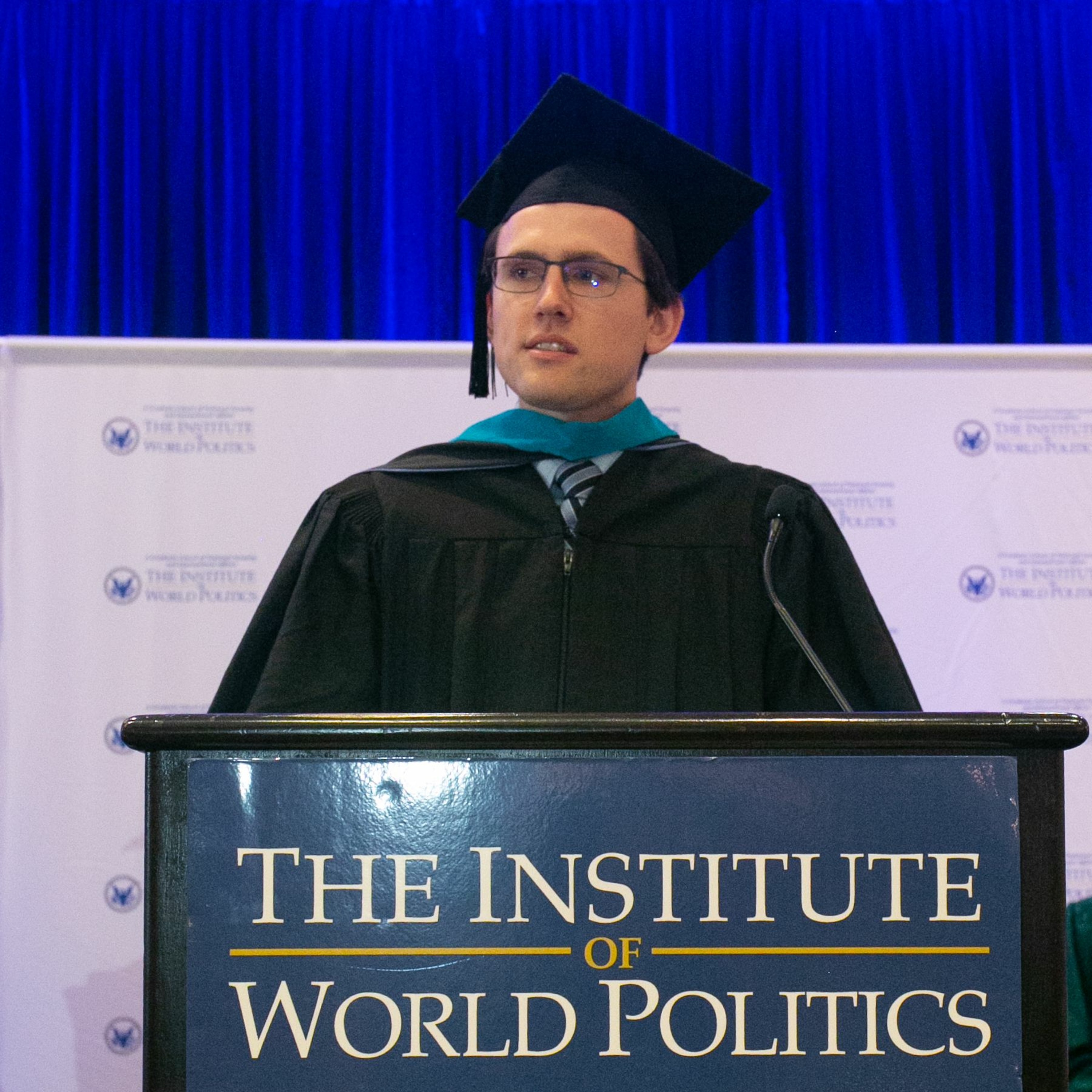
Valedictory Remarks By Jack Doyle, IWP Class Of 2019
Jack Doyle, Valedictorian of the IWP Class of 2019, gave remarks during IWP's Commencement ceremony, which took place at the Fairmont Hotel in Washington, D.C. on May 18. Video by Adam Savit, Center for Security Policy
Gender Systems and National Security
Title: Gender Systems and National Security This lecture is a part of the The Institute of World Politics' 2019 Student Symposium that was held on May 16th. About the Lecture: The lecture will examine how various cultures’ practices relating to courtship, marriage, and reproduction play out in the extended order as national security issues. About the Speaker: Helen Lamm is an M.A. candidate in Statecraft and International Affairs at the Institute of World Politics with a concentration in American Foreign Policy, and she is graduating this May. Helen is a Mt. Vernon Fellow at the Center for American Greatness and a Publius Fellow at the Claremont Institute. She publishes a weekly column at American Greatness on topics related to culture and politics.
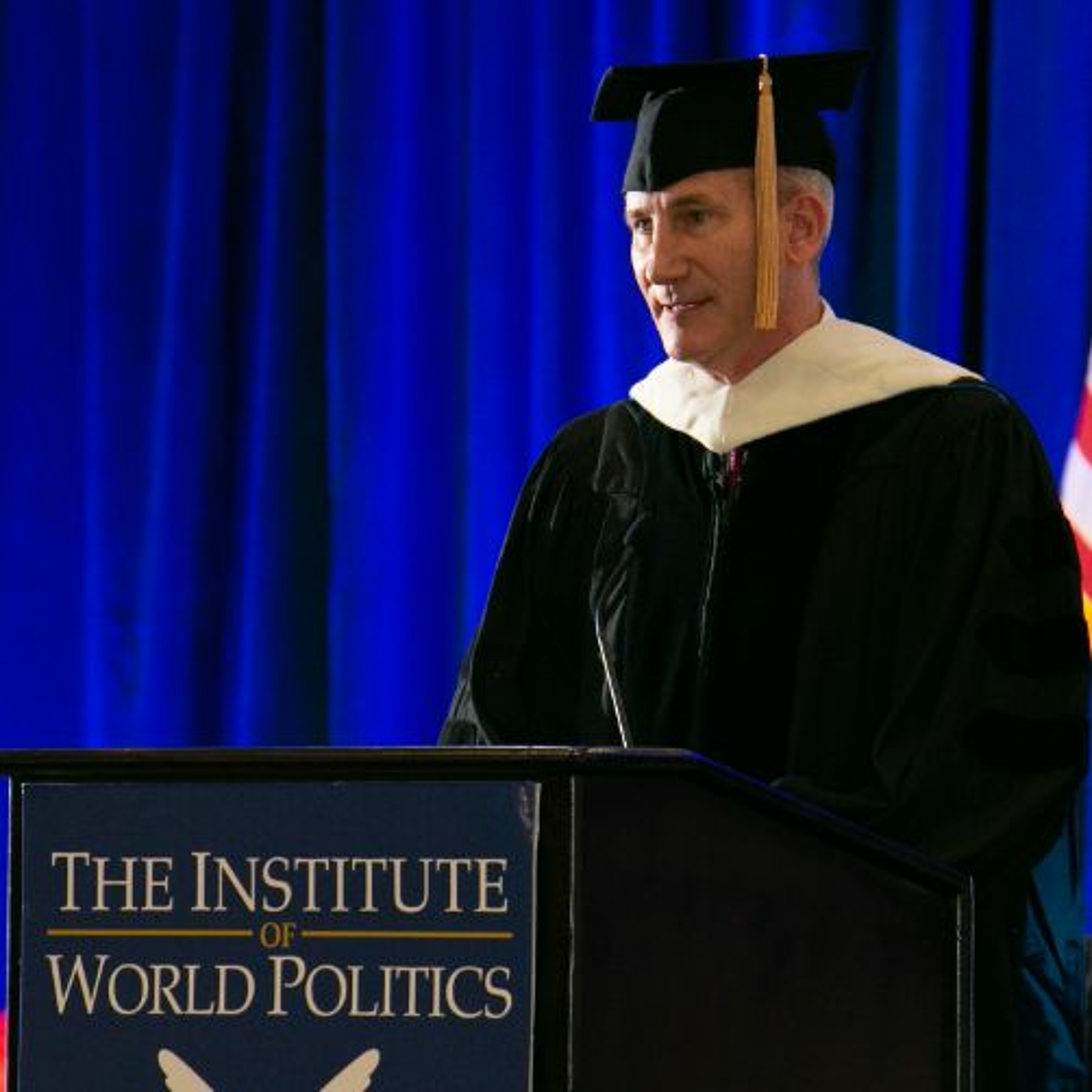
Remarks by General John W. Nicholson, Jr., USA (Ret.) at IWP Commencement
General John W. Nicholson, Jr., USA (Ret.), "Mick," former Commander of U.S. Forces - Afghanistan and NATO Resolute Support Mission, gave the keynote address at IWP Commencement on May 18. 2019 at the Fairmont Hotel. The Institute of World Politics awarded him with a Doctorate of Laws, Honoris Causa.
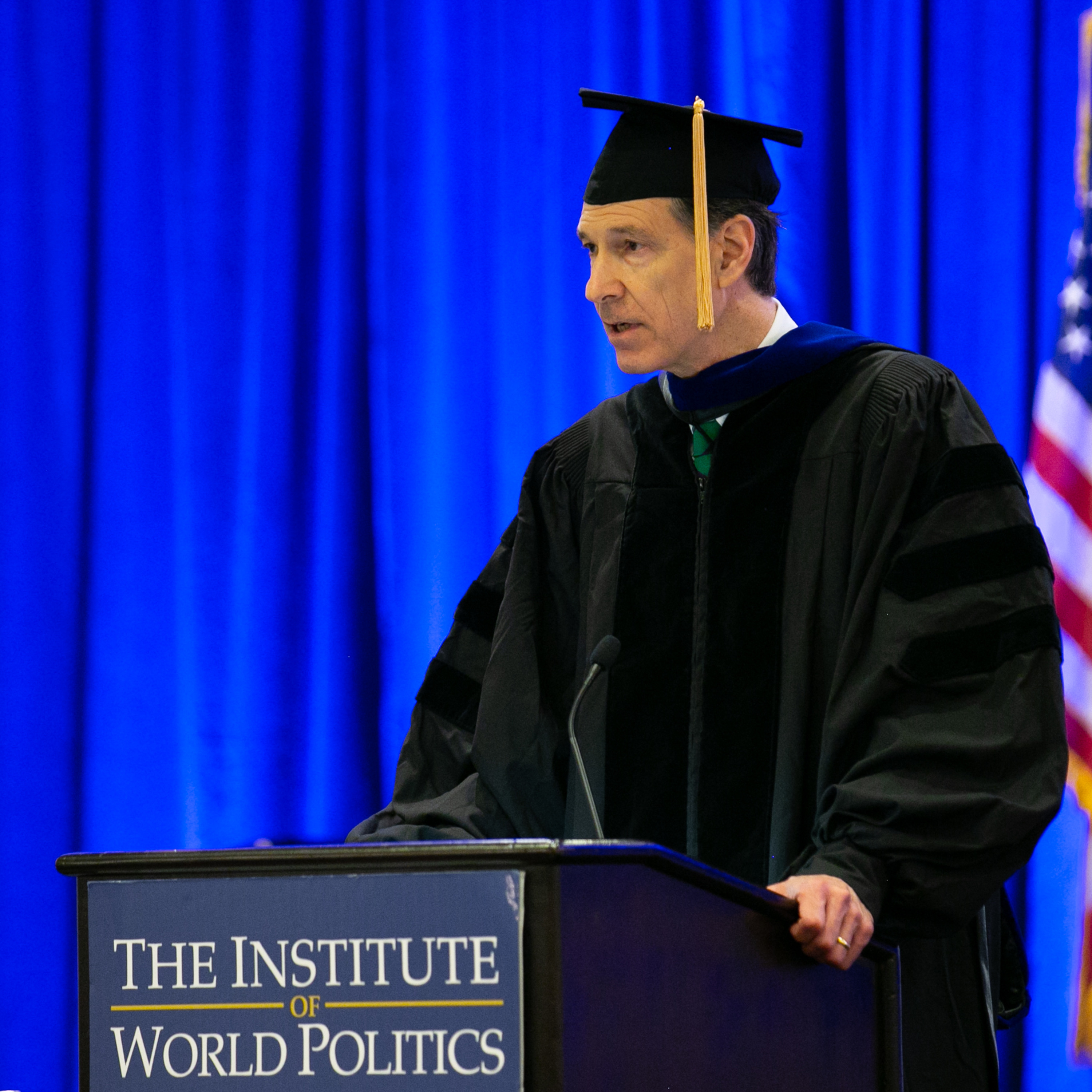
Remarks By John Lenczowski At IWP Commencement 2019
Founder and President of The Institute of World Politics, John Lenczowski, delivered remarks at IWP's Commencement ceremony on May 18, 2019, at the Fairmont Hotel in Washington, D.C. Video by Adam Savit, Center for Security Policy
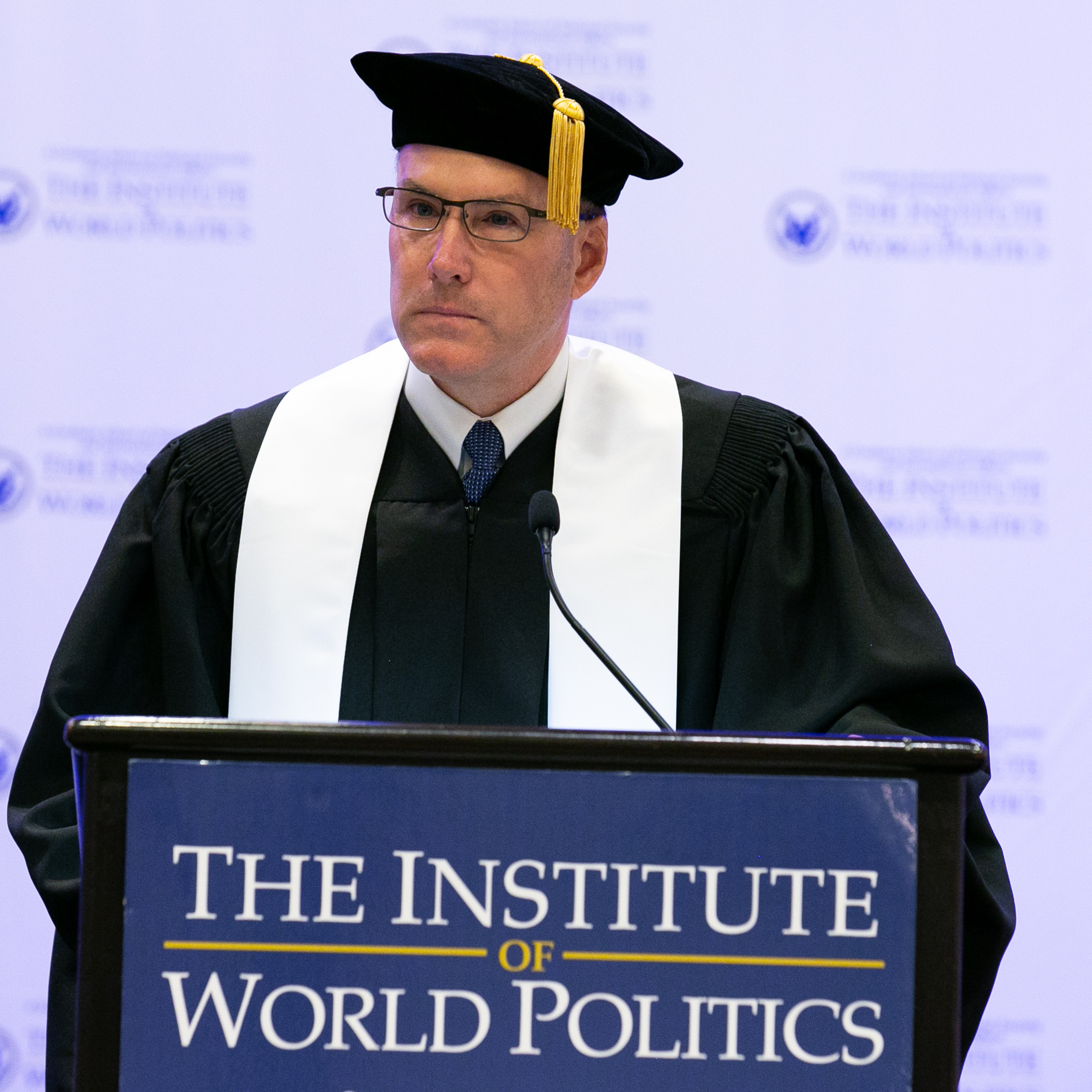
Invocation By Captain Christopher D. Glass, Sr., USN (Ret.) At IWP Commencement 2019
The invocation at The Institute of World Politics Commencement on May 18, 2019, was given by Captain Christopher D. Glass, Sr., USN (Ret.), Senior Vice President for Professional Affiliations at IWP and also an IWP parent. Video by Adam Savit, Center for Security Policy
Returning Foreign Terrorist Fighters in Germany: An Assessment of the Threat and Policy Options
Title: Returning Foreign Terrorist Fighters in Germany: An Assessment of the Threat and Policy Options This lecture is a part of the The Institute of World Politics' 2019 Student Symposium that was held on May 16th. About the Lecture: In the wake of the Arab Spring, nearly one thousand German citizens traveled to Syria and Iraq to join Islamist terrorist groups. About a third of these are now back in the Federal Republic. Returning Foreign Terrorist Fighters (FTFs) present a tremendous challenge for the German authorities as many of them are combat experienced, can radicalize others, and recruit them to conduct attacks. Officials have mainly aimed at speedy incarceration proceedings in order to avoid public pressure and contain the immediate security risk. This only postpones the threat because prison sentences are typically short and, therefore, do not represent a long-term solution. To prevent returning FTFs from conducting attacks in Germany and undermining the social fabric, the country should tailor its approach for each case and reassert the legitimacy and relevance of the state using the legal system. Germany must further strengthen its intelligence and surveillance capabilities, improve border controls, and enhance its deradicalization and reintegration programs. Finally, to avoid falling into a “counterterrorism fatigue,” Germany must develop a National Strategy for Counterterrorism to address all dimensions of the challenge of Islamist terrorism. About the Speaker: Tobias Brandt is originally from Hamburg, Germany, and he is an M.A. candidate in Statecraft and International Affairs at the Institute of World Politics graduating in May. His key research interests are U.S. foreign policy in the Middle East, terrorism, and the transatlantic relationship. In his final semester at IWP, Tobias wrote an honors thesis on “Pushing Back Terrorist Propaganda and Countering Ideological Support for Militant Islamism.” He has been published in The National Interest, and the paper on which his lecture is based will be featured in the spring issue of the Institute’s Journal Active Measures.
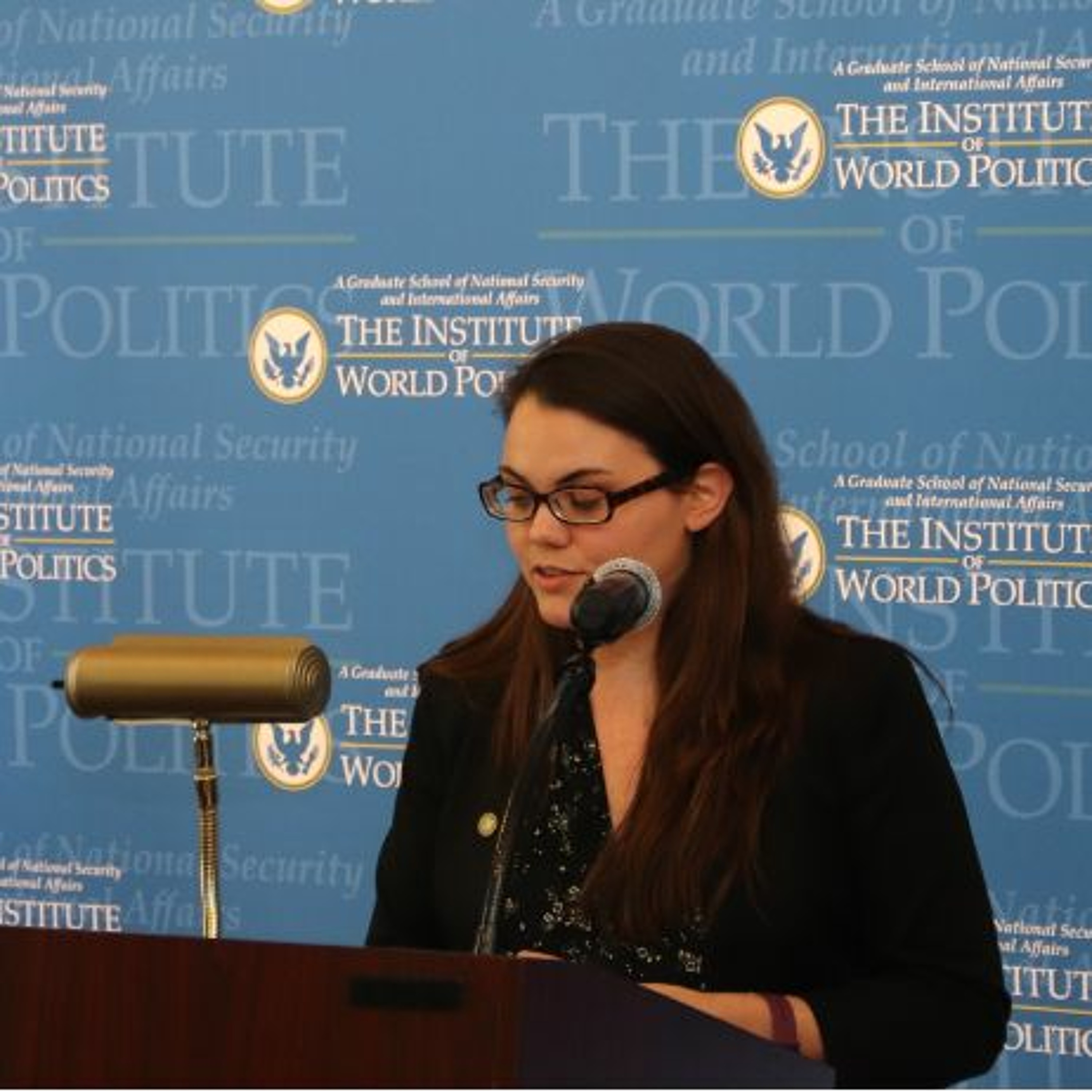
Challenges of the Millennial Generation Towards the Future of U.S. National Security
Title: Challenges of the Millennial Generation Towards the Future of U.S. National Security This lecture is a part of the The Institute of World Politics' 2019 Student Symposium that was held on May 16th. About the Lecture: The lecture will examine behaviors and attitudes of the Millennial Generation and how these may present challenges to the U.S. national security apparatus. Ms. Zug will assess four major themes of this generational cohort: their changing relationship with information, the pervasiveness of echo chambers, the rise of the global citizen, and wavering trust in U.S. government institutions. The talk will analyze how aspects of these four areas may undermine U.S. efforts to protect its national security in the future. About the Speaker: Kelly Zug is an M.A. candidate in Statecraft and National Security Affairs at The Institute of World Politics graduating this May. Before studying at IWP, Kelly worked in international development in Eastern Europe and taught English with the Fulbright Program in Bulgaria. Her studies at IWP have focused on Russian influence operations in the information space and the reemergence of Russian active measures in Europe.
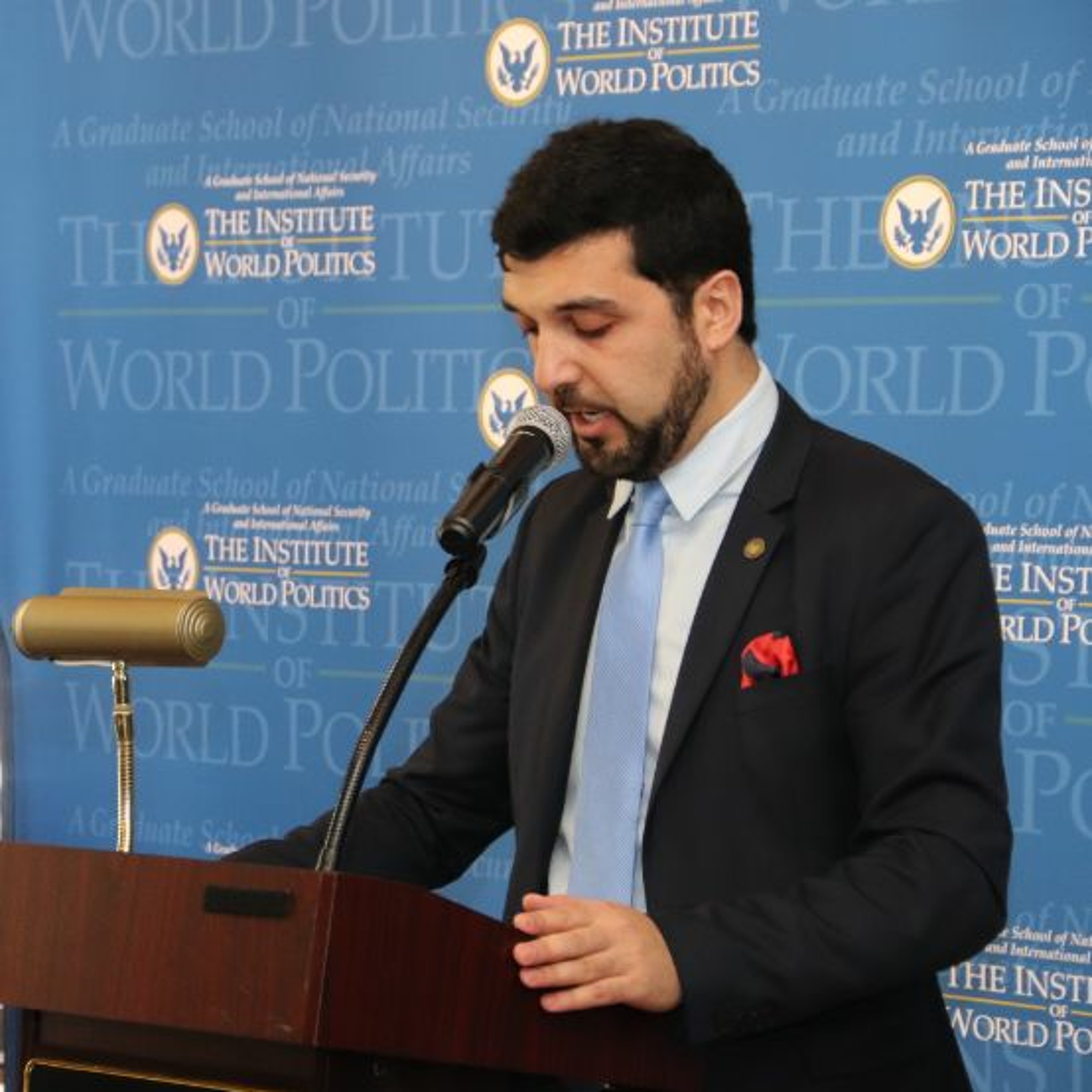
The Geopolitics of Quadrilateral Security Dialogue: Maritime Theory or Practice?
Title: The Geopolitics of Quadrilateral Security Dialogue: Maritime Theory or Practice? This lecture is a part of the The Institute of World Politics' 2019 Student Symposium that was held on May 16th. About the Lecture: The lecture will examine the history of this informal partnership and assess the geopolitical motivations of the member states as well as the conflicting policies that have hindered the full-fledged integration. Though the presentation will briefly survey Washington’s and Tokyo’s roles in upholding and advancing this security dialogue, the emphasis will be put on India and Australia as the two weakest links of the partnership. Finally, the talk will examine the future challenges and opportunities of Quad and provide policy recommendations for the United States. About the Speaker: Erik Khzmalyan is an M.A. candidate in Statecraft and National Security Affairs at the Institute of World Politics graduating this May. Erik is a Senior Fellow at the Eurasian Research and Analysis Institute, and his research primarily focuses on U.S. national security and foreign policy.
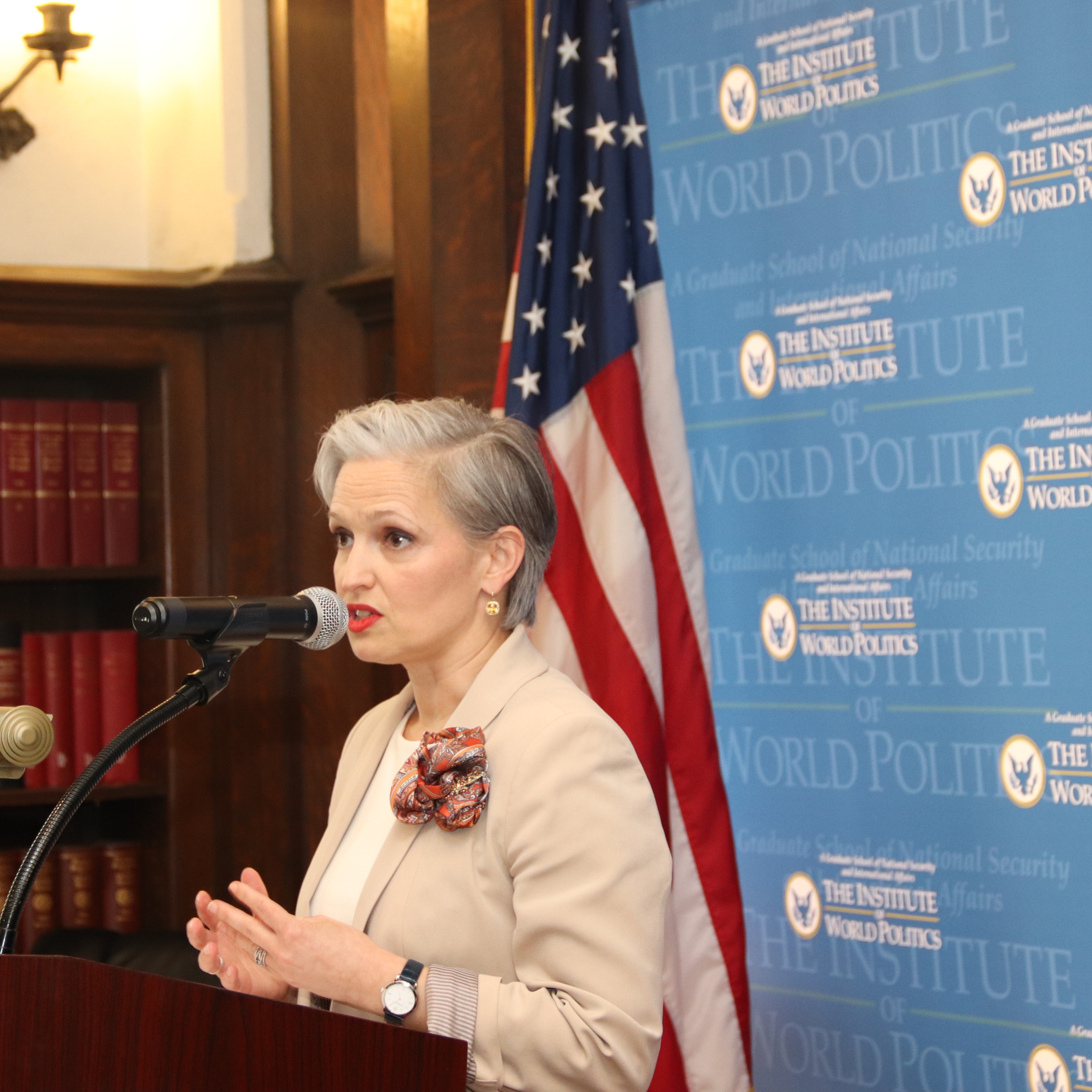
China's Belt and Road Initiative: A Story of Assessment and Strategic Adaptation
Title: China's Belt and Road Initiative: A Story of Assessment and Strategic Adaptation This lecture is a part of The Institute of World Politics' China in the World: 21st Century Challenges series. This event is co-sponsored by The Institute of World Politics, the National Bureau of Asian Research, and the Movement for the Renaissance of Vietnam. About the Lecture: About the Lecture: Almost six years after its launch, the Belt and Road Initiative, labelled by Xi Jinping as the "Project of the Century," seems to have reached its culminating point of success. A mounting wave of resistance against the BRI can be felt both within and outside of China. Are these signs that the BRI is grinding to a halt? How is the Chinese leadership reacting to the gathering headwinds facing BRI? What does BRI tell us about the Chinese leadership's capacity to assess, adjust, and adapt? About the Speaker: About the Speaker: Nadège Rolland is Senior Fellow for Political and Security Affairs, at the National Bureau of Asian Research (NBR), based in Seattle and Washington, D.C. Her research focuses mainly on China's foreign and defense policy and the changes in regional dynamics across Eurasia resulting from the rise of China. Drawing on her 20 years of experience as a French government official, she also examines the prospects for Transatlantic cooperation in research and policy related to Asia. She is the author of China's Eurasian Century? Political and Strategic Implications of the Belt and Road Initiative, published in 2017.
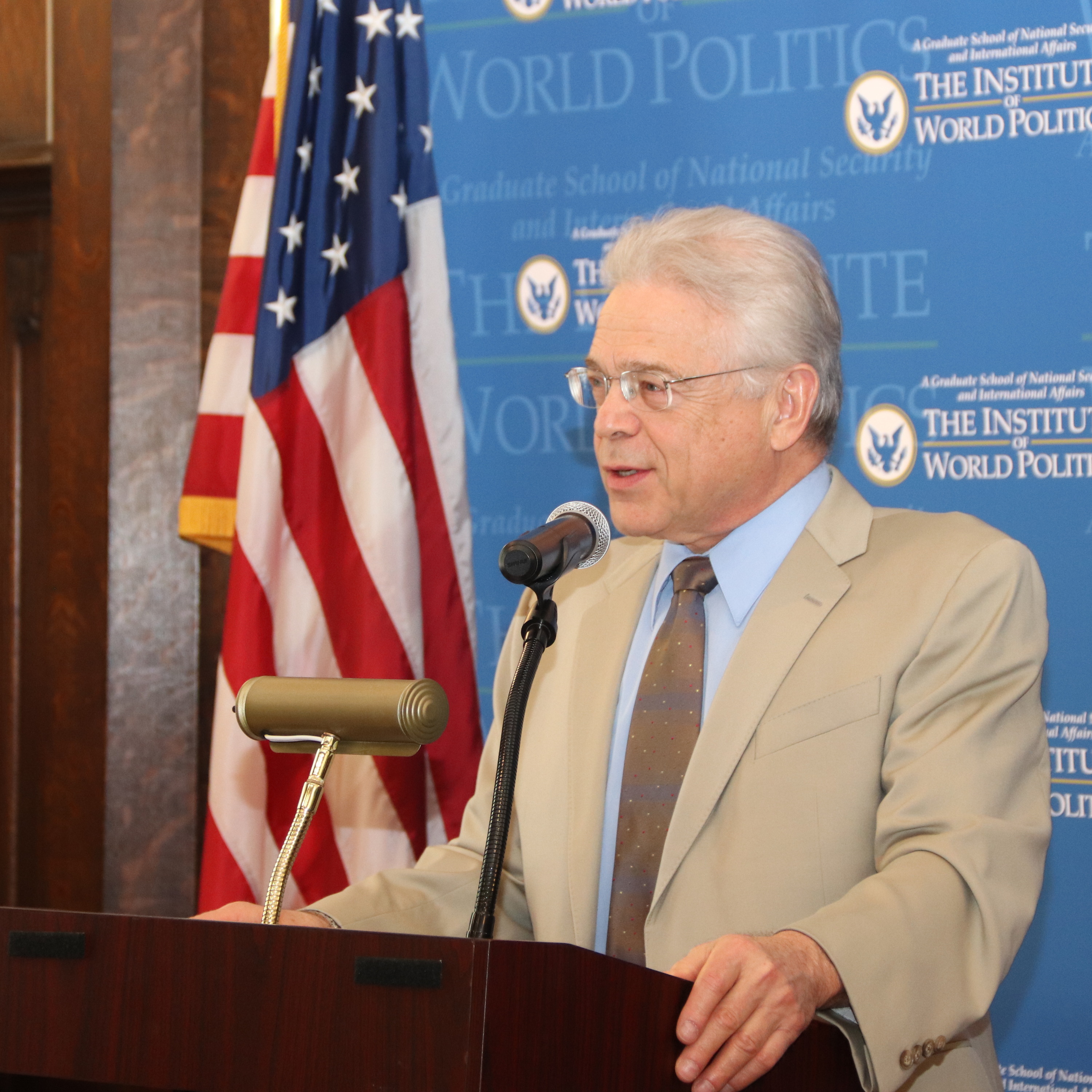
Heaven on Earth: The Rise, Fall, and Afterlife of Socialism
Title: Heaven on Earth: The Rise, Fall, and Afterlife of Socialism About the Book: Socialism was man's most ambitious attempt to supplant religion with a doctrine claiming to ground itself in “science.” Each failure to create societies of abundance or give birth to “the New Man” inspired more searching for the path to the promised land: revolution, communes, social democracy, communism, fascism, Arab socialism, African socialism. None worked, and some exacted a staggering human toll. Then, after two centuries of wishful thinking and bitter disappointment, socialism imploded in a fin de siècle drama of falling walls and collapsing regimes. It was an astonishing denouement but what followed was no less astonishing. After the hiatus of a couple of decades, new voices were raised, as if innocent of all that had come before, proposing to try it all over again. About the Author: Dr. Joshua Muravchik is a Distinguished Fellow at the World Affairs Institute. His most recent book is Heaven on Earth: The Rise, Fall, and Afterlife of Socialism (2019). He is the author of ten previous books and more than 400 articles on politics and international affairs, contributing to, among others, the New York Times, the Washington Post, the Wall Street Journal, Foreign Affairs,Foreign Policy, the New York Times Magazine, and Commentary. Muravchik, who received his Ph.D. in International Relations from Georgetown University, is an Adjunct Professor at the Institute for World Politics. He serves on the editorial boards of World Affairs, Journal of Democracy, and the Journal of International Security Affairs. He formerly served as a member of the State Department’s Advisory Committee on Democracy Promotion; the Commission on Broadcasting to the People’s Republic of China; and the Maryland Advisory Committee to the U.S. Commission on Civil Rights.
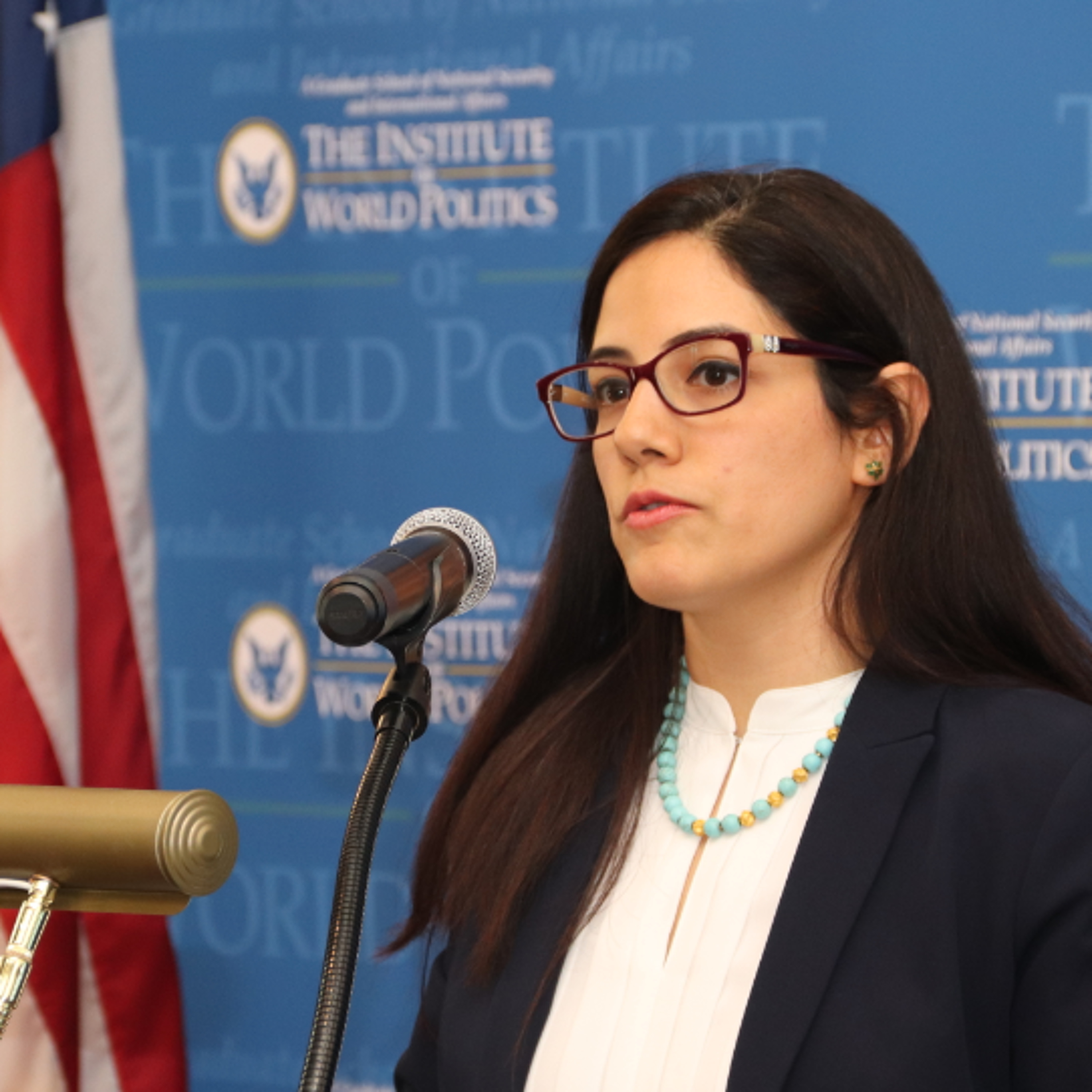
New Dynamics of Energy Security; US sanctions on Iran & Venezuela, Shale boom & OPEC
Title: New Dynamics of Energy Security; US sanctions on Iran & Venezuela, Shale boom & OPEC About the Lecture: In this lecture Dr. Vakhshouri will discuss the new trends and development in the energy industry and their impacts on global energy security. The key issues that will be discussed are: - US Sanctions on Iran and Venezuela - Shale oil and gas productions and changes in the energy trade flow - OPEC, Saudi Arabia and Russia About the Speaker: Dr. Sara Vakhshouri is Founder and President of SVB Energy International, a strategic energy consulting firm with offices in Washington DC and Dubai. Dr. Vakhshouri has two decades of experience of working in the energy industry with an extensive experience in global energy market studies, energy security and geopolitical risk, and has consulted numerous public and private sector energy and policy leaders. Dr. Vakhshouri has been based in Washington DC since 2009 where she has advised US and European governments, investment banks, financial institutions, law firms and international corporations on energy markets, trading and pricing, the geopolitics of energy, and investment patterns. She has published articles in numerous journals including The Economist, Middle East Economic Survey, and Oil and Gas Journal. Dr. Vakhshouri has been keynote speakers at many energy conferences including Chatham House, Platts Oil and Middle East conferences, LNG Global Congress and other international oil, gas and energy conferences. She is frequently quoted and has appeared on Bloomberg, the BBC, The Financial Times, Reuters, Platts, The Financial Post, The Wall Street Journal, Energy Intelligence, and Voice of America. She is the author of The Marketing and Sale of Iranian Export Crude Oil since the Islamic Revolution and has contributed chapters in different books and energy reports including World Energy Outlook 2018, published by the International Energy Agency. She also regularly does briefings for various energy think tanks and agencies including the International Energy Administration (IEA). Dr. Vakhshouri has a PhD in energy security and Middle Eastern studies. She has an MA in business management (international marketing), and another MA in international relations. Dr. Vakhshouri was also Senior Energy Fellow at the Atlantic Council, and at the Oxford Institute for Energy Studies. Dr. Vakhshouri has also experience of working in both public and private sectors of the Iranian energy industry.
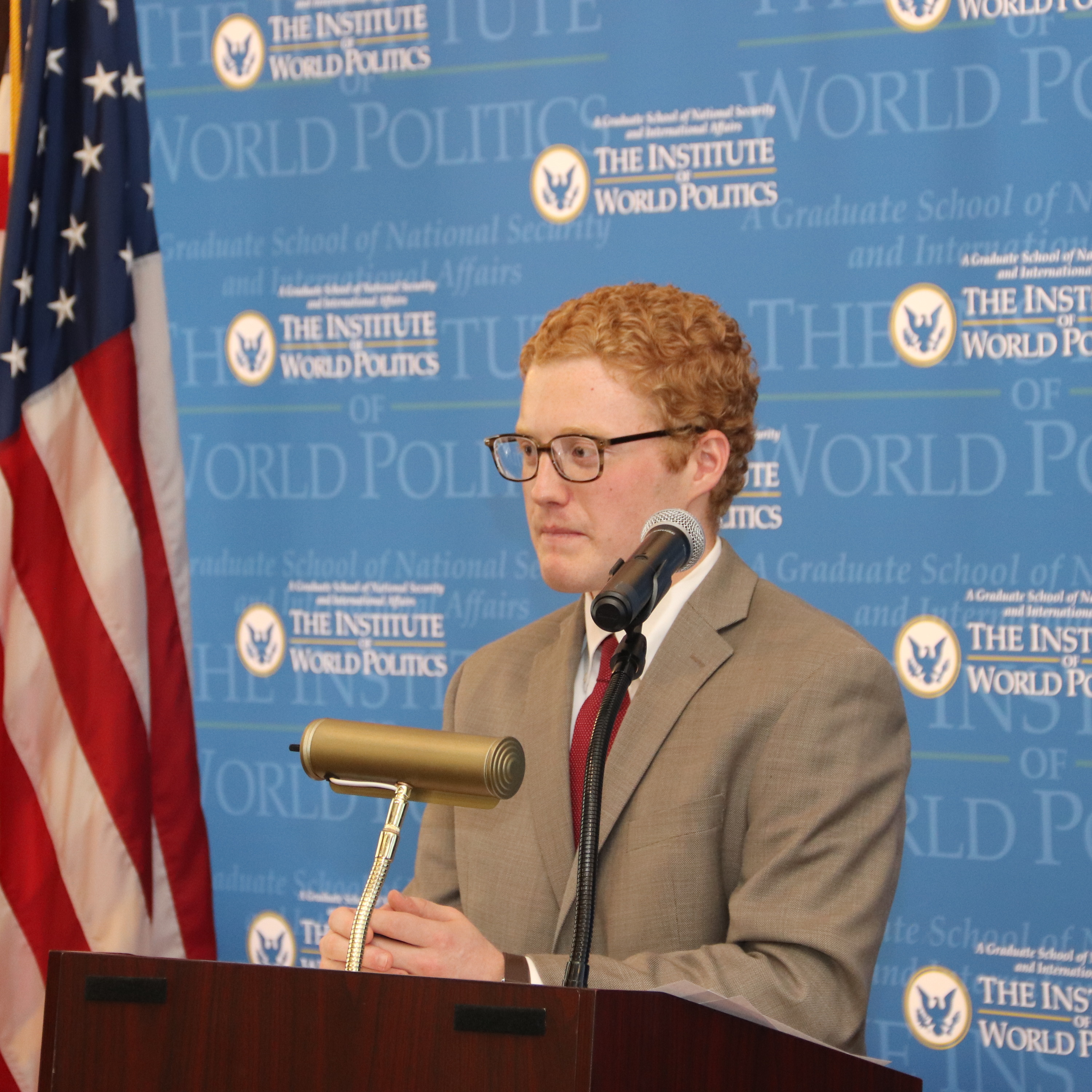
America and Canada: The Statecraft of Two Nations
Title: America and Canada: The Statecraft of Two Nations This lecture is a part of The Institute of World Politics' Student Speaker Series. About the Lecture: This event will discuss the ideological differences between America and Canada and how those differences have morphed into the relationship seen today. The speaker will detail what those differences could mean for the future. About the Speaker:Originally from New Jersey, Cory Ott attended Stevenson University in Maryland to earn his Bachelors of Science in Psychology May of 2018. His undergraduate thesis focused morality, views on authority, and guilt experienced with whistleblowing. Mr. Ott is currently studying Statecraft and National Security Affairs at the Institute of World Politics with a focus on intelligence. His lecture is based on a paper he submitted for IWP’s course on International Relations and Statecraft.
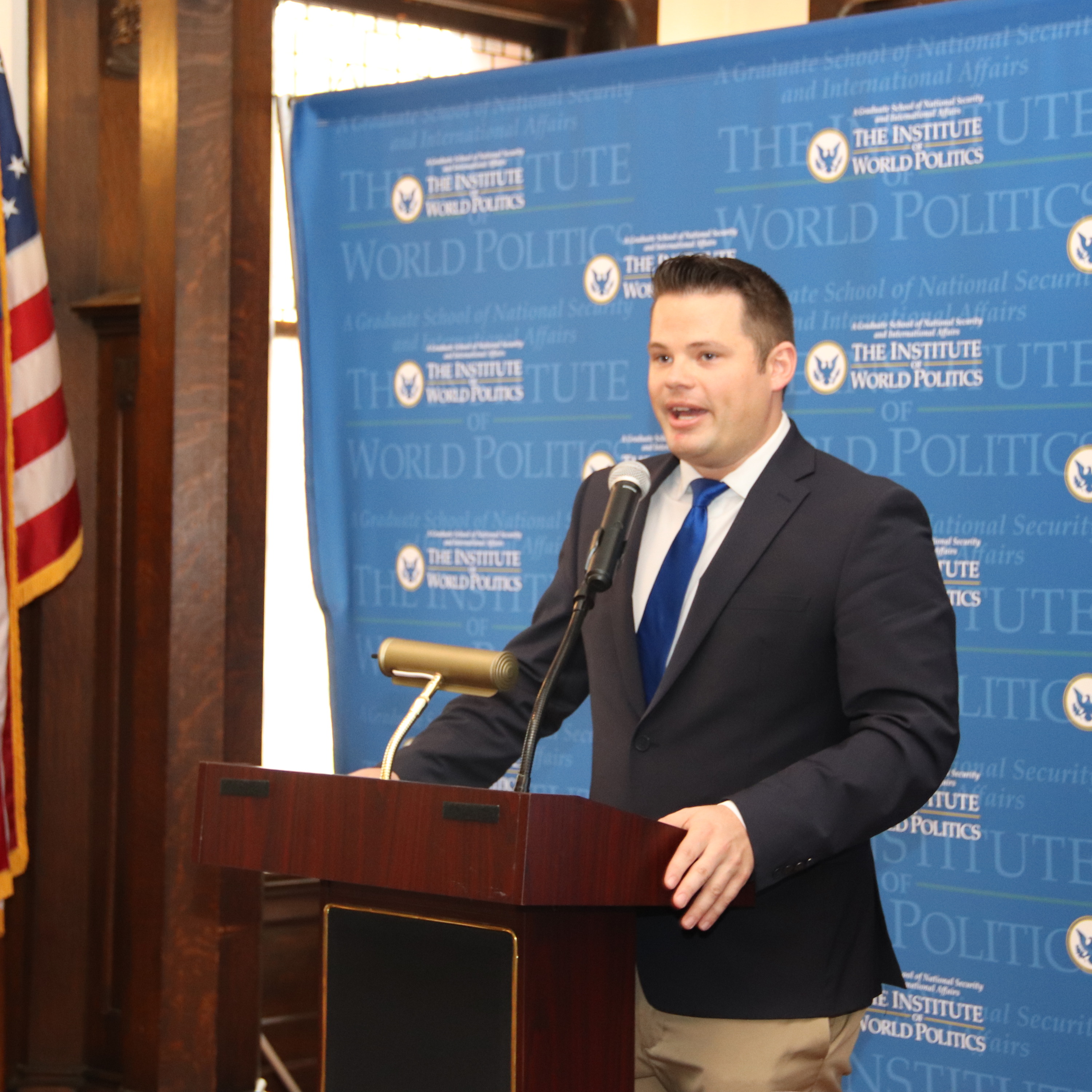
Blockchain 2035: The Digital DNA of Internet 3.0
About the Book: Blockchain 2035: The Digital DNA of Internet 3.0 is the first book ever written by a Blockchain founder and encapsulates nearly a decade of experience at the bleeding edge of the technology. It includes an introduction to the core components of the technology, and concludes with a predictive assessment of how Blockchain technology will likely be adopted as the world advances into a 21st century dominated by Artificial Intelligence, an Internet of Things, geopolitical competition, increasing income inequality, and sovereign debt crises. About the Authors: Jared C. Tate is the founder of DigiByte, the fastest, most decentralized, and most secure UTXO blockchain in existence today. Beyond cryptocurrency DigiByte is focused on the blockchain's many applications in furthering cybersecurity. DigiByte has pioneered several technical innovations including real-time difficulty adjustments, multi-algorithm mining, and Digi-ID, a decentralized cryptographic form of identity that serves as a more secure replacement for usernames and passwords. Today, code created by Jared and the DigiByte community has been adopted by dozens of other blockchains. Prior to DigiByte, Jared studied at the U.S. Military Academy, the University of Idaho, and Utah Valley University. Andrew D. Knapp is the CEO and founder of VESTi Inc. as well as the co-author of Blockchain 2035. In 2018, Andrew left federal service to lead VESTi, having built the core concepts involved over several years living in the DC metro area. He is a 2013 graduate of IWP (SIS).
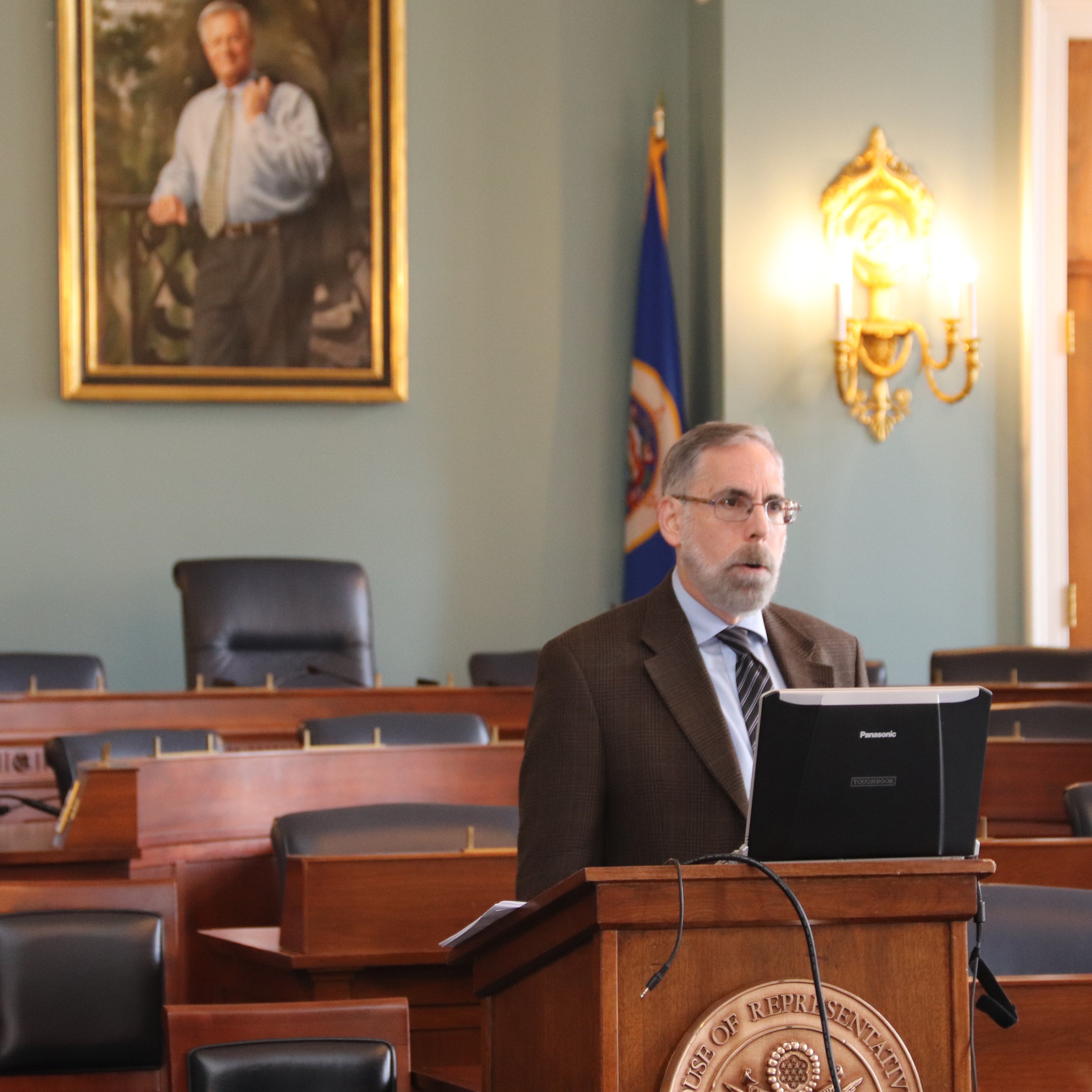
The Weaponization of Social Media
Title: The Weaponization of Social Media This lecture is a part of The Institute of World Politics Capitol Hill Speaker Series. About the Lecture: Ethan Burger will examine the relevance of the Russian concepts ‘Hybrid War’ and ‘Cyberwarfare’ as applied to Russian intervention in the 2016 Brexit Referendum and U.S. Presidential Election. This lecture will focus on the similarity of Russia’s social media campaigns which used false information, fake news, and other content aimed at exploiting the fears and passions of the UK and U.S. electorates. The Kremlin did not rely on the use of social media alone to obtain favorable electoral outcomes. In both cases, Russian ties to supporters of Brexit and the Trump campaign remained largely unnoticed until after voting. Finally, Mr. Burger will explore some steps that might be taken to reduce the vulnerability of countries’ citizens to foreign manipulation. About the Speaker: Ethan S. Burger, Esq., is a Washington-based international legal consultant and educator, and he is an adjunct professor at the Institute of World Politics. His areas of interest include corporate governance, transnational crime (corruption, cybercrime, and money laundering), and Russian affairs. After working as an attorney on Russian commercial, investment, and risk issues, he segued into academic, research, and advisory roles. Mr. Burger has been a full-time faculty member at American University (School of International Law) and the University of Wollongong (Faculty of Law), and he has also been an adjunct faculty member at Georgetown University Law Center, University of Baltimore, and Washington College of Law. Mr. Burger has lectured in Colombia, India, and Singapore, and he has taught on cyber issues at Vilnius University on a Fulbright Foundation grant. He holds an A.B. from Harvard University and a J.D. from the Georgetown University Law Center.
Between Politics and Social Work
Written by: Dr. Jolanta Mysiakowska-Muszyńska, Scholar of the Institute of National Remembrance in Warsaw Presented by: Maria Juczewska, Associate Director, Kosciuszko Chair of Polish Studies Full Title: Between Politics and Social Work: A Study of Women's Activities within the Ranks of the Polish National Movement (1919–1939) About the Lecture: This lecture is a part of The Ninth Annual Lady Blanka Rosential Kosciuszko Chair Spring Symposium that was held on Saturday, April 6, 2019, at The Institute of World Politics. About the Author: Dr. Jolanta Mysiakowska-Muszyńska is a graduate of Warsaw University and The Institute of Polish History of the Polish Academy of Sciences in Warsaw. She works as a scholar for the Institute of National Remembrance in Warsaw and as a deputy editor-in-chief of the semi-annual Glaukopis dealing in history and social issues. She is an author of several books and has published numerous articles in the field of history in scholarly publications. Mrs. Muszyńska is an expert on Polish history, particularly the period between 1919–1939, with a special interest in women’s organizations, as well as the social and political thought of the Polish National Movement. She also conducts research on Polish-British relations in the interwar period.
Boris Smyslovski: WWII, White Russian, Counterinsurgency and Counterintelligence
Title: Boris Smyslovski: WWII, White Russian, Counterinsurgency and Counterintelligence About the Lecture: This lecture is a part of The Ninth Annual Lady Blanka Rosential Kosciuszko Chair Spring Symposium that was held on Saturday, April 6, 2019, at The Institute of World Politics. About the Speaker: Dr. Sebastian Bojemski graduated from the Institute of History of Warsaw University and gained his doctoral degree at The Cardinal Wyszyński University in Warsaw. His main research interest is the history of underground organizations active during WWII within the area of the occupied Polish lands - mostly the Polish anti-Nazi, anti-Soviet underground. He authored Narodowe Siły Zbrojne w Powstaniu Warszawskim and Nim Hitler runie śmierć komunie (just published). Dr. Bojemski also has extensive experience in strategic communication and marketing. For over 15 years he had owned a Warsaw-based communication firm and in 2018-2019 was an executive director for marketing at PKN Orlen – the largest oil company in Central Europe.
For the Entente's Cause in Tsarist Uniforms: Polish Military Formations in Tsarist Russia During WWI
Full Title: For the Entente's Cause in Tsarist Uniforms: Polish Military Formations in Tsarist Russia During WWI (1914–1918) About the Lecture: This lecture was a part of The Ninth Annual Lady Blanka Rosential Kosciuszko Chair Spring Symposium held on Saturday, April 6, 2019, at The Institute of World Politics. About the Speaker: Dr. Wojciech Jerzy Muszyński is a graduate of The Institute of History of Warsaw University and The Cardinal Stefan Wyszyński University of Warsaw. He works as a scholar for the Institute of National Remembrance in Warsaw and as the editor-in-chief of the semi-annual Glaukopis dealing in history and social issues. He authored books and published numerous articles in the field of history in the scholarly publications. Mr. Muszyńki specializes in the political history of Poland in the period 1900-1990. His topics of interest include Polish-Jewish relations, military history the social and political thought of the Polish National Movement.
The United States' Practice of Wartime Detention
About the Lecture: Over the past twenty years, the United States’ practice of wartime detention has received a great deal of criticism and controversy. Yet, detention is a lawful, humane, and important part of armed conflict. Having long ago moved beyond early errors in its detention policies and practices in its current conflicts, the United States should re-embrace the detention mission in operation and doctrine as a strategic part of its conflicts with al-Qa’ida and ISIS. About the Speaker: Ryan Vogel is an assistant professor of law and national security and the founding Director of the Center for National Security Studies at Utah Valley University. Before coming to UVU, Vogel served at the Pentagon as a senior policy advisor in the Office of the Secretary of Defense. He began his career at the Pentagon through the presidential management fellowship program and was awarded the Medal for Exceptional Civilian Service in 2014. Vogel was the principal drafter of several key DoD doctrinal directives related to detention and detainee review processes. Vogel has taught international and national security law courses at American University, Brigham Young University Law School, and the Chicago-Kent College of Law. He completed an LLM in public international law, with a certificate in national security law, from the Georgetown University Law Center. He earned a J.D. and an M.A. in international affairs from American University and graduated from Utah Valley University with a B.S. in Integrated Studies.
The New Rules of War: Victory in the Age of Durable Disorder
About the Book: Though our military remains undefeated, the United States has lost every war since World War II. But within a generation, our military’s fate will undoubtedly change if we continue to cling to the past. Today, more than eighty years after WWII and thirty years since the fall of the Berlin Wall, the number of armed conflicts being waged around the world has doubled. If the United States refuses to accept that we are, once again, living in dangerous, unpredictable times, it is inevitable that our military—until now undefeated—will fail. Hailed by Publishers Weekly as “an authoritative and skillful analysis of the state of war today” and with a foreword by General Stanley McChrystal (Ret.), The New Rules of War: Victory in the Age of Durable Disorder is an urgent exploration of warfare—past, present, and future—that asks why we no longer win wars, and then explains the ten rules we must follow so we can. About the Author: Dr. Sean McFate is a Professor of Strategy at the National Defense University and Georgetown University’s School of Foreign Service. He served as a paratrooper in the US Army’s 82nd Airborne Division and, then, worked for a major private military corporation, where he ran operations similar to those in his novels Shadow War and Deep Black. He is the author of The Modern Mercenary: Private Armies and What They Mean for World Order, and he holds a BA from Brown University, an MA from Harvard’s Kennedy School of Government, and a PhD in international relations from the London School of Economics and Political Science. He lives with his family in Washington, DC. You can learn more at www.seanmcfate.com
Chinese Espionage and U.S. Security
About the Lecture: Mr. Eftimiades will discuss China's espionage scope, operational methods, targets, and the impact on U.S. national security. The discussion presents analysis of over 280 cases of Chinese espionage. About the Speaker: Nicholas Eftimiades is retired from the US Department of Defense. He is currently a professor at Penn State University. His 34 year government career included employment in CIA as a Technical Operations Officer, Special Agent in the US Department of State, Bureau of Diplomatic Security, and a Senior Intelligence Officer in Defense Intelligence Agency. Mr. Eftimiades held positions in analysis, human and technical intelligence collection, and program management. He distinguished himself numerous times in the senior ranks of the intelligence and defense communities. As a subject matter expert on Chinese espionage, Mr. Eftimiades was called upon to provide Congressional testimony and briefings to the Cox Commission, the Joint Economic Committee, and individual meetings with Congressional Members and staff. He is also one of only seven people appointed as an Intelligence Community Associate to the Office of the Director of National Intelligence, National Intelligence Council. Mr. Eftimiades has an M.S. Strategic Intelligence, National Defense Intelligence College; and a B.A. East Asian Studies, George Washington University. He has authored books and many scholarly articles on Chinese espionage, technology, and space issues. His book Chinese Intelligence Operations, is an examination of the structure, operations, and methodology of the intelligence services of the People's Republic of China. To date, it remains the only scholarly analysis of China’s intelligence services and operational methodology. Mr. Eftimiades is a frequent lecturer and public speaker on future technology, space, and national security issues. He has appeared as an expert on CBS Evening News, Dateline NBC, ABC's Day One, BBC, BBC America, National Public Radio, and dozens of other television and radio broadcasts. He has been quoted in hundreds of newspapers and magazines across the world.
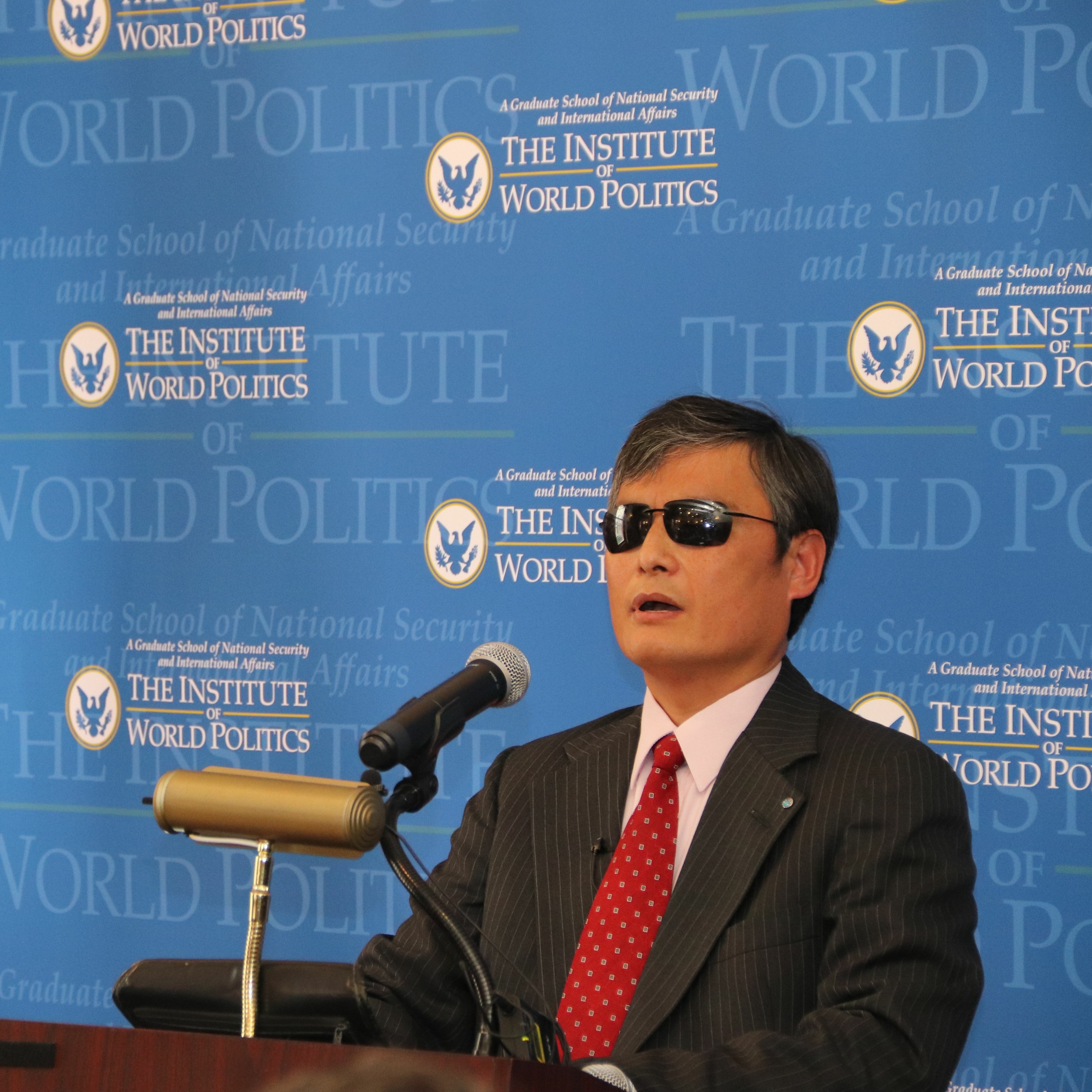
China: Kidnapped by the Communist Party
This discussion is a part of IWP's China series. About the Lecture: The Chinese Communist Party has ruled China for decades, bringing untold disaster upon the Chinese people. Why is it so tenacious, and why do democratic nations continue to engage with it? With decades of experience facing off against communist authorities, human rights activist Chen Guangcheng illuminates the structure of the party-state system in China and its disastrous impact on both Chinese citizens domestically and democratic nations abroad. About the Speaker: Chen Guangcheng, known to many as "the barefoot lawyer," was born and raised in a poor, remote village in Shandong, China. Blind since infancy and barred from school until his late teens, he nonetheless taught himself law as a young adult and became a committed advocate for the poor, disabled, and persecuted. His work drew the ire of the authorities, leading to over seven years of harassment including repeated house arrests, detention in black jails, and over four years in prison. After twenty months of brutal isolation in his own home, on April 20, 2012, he made a dramatic escape that caught the attention of international media. The American embassy in Beijing secured his temporary safety before high-level diplomatic negotiations enabled his exodus to the US. Since beginning his advocacy work, Mr. Chen has been the recipient of numerous awards including Time Magazine 100 Most Influential List (2006), The Ramon Magsaysay Award (2007), The Lantos Human Rights Prize (2012), the UK Parliament’s Westminster Award (2013), and the Geneva Summit for Human Rights and Democracy Courage Award (2014). Chen is a frequent media commentator as well as guest speaker at conferences and events around the world. He has established a not-for-profit foundation to further human rights in China, and serves as Visiting Fellow at the Catholic University of America, Distinguished Senior Fellow in Human Rights at the Witherspoon Institute, and Senior Distinguished Advisor to the Lantos Foundation for Human Rights and Justice. Mr. Chen’s memoir, The Barefoot Lawyer: A Blind Man’s Fight for Justice and Freedom in China, was released by Henry Holt Publishers in 2015 and has since been translated into eight languages worldwide.
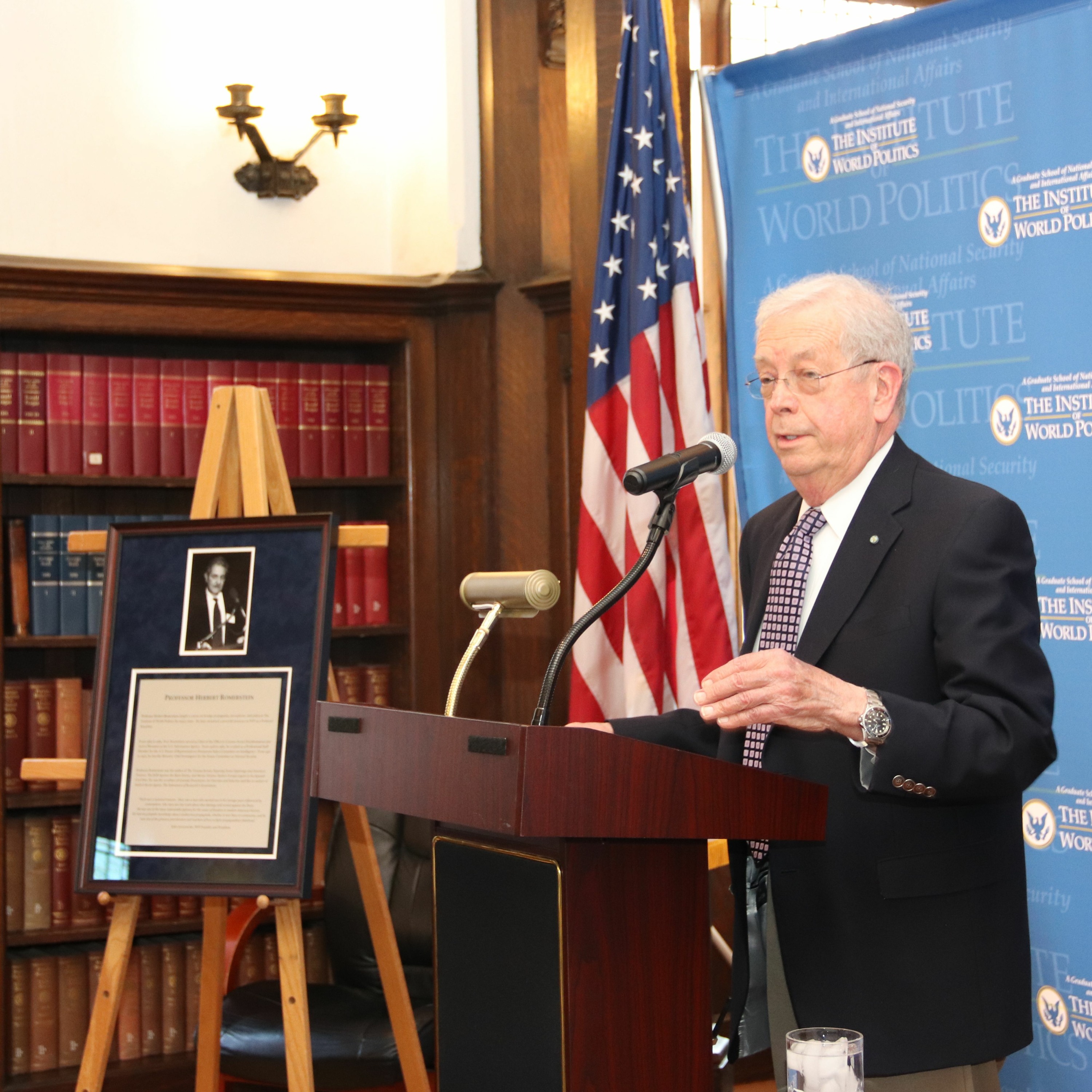
The Challenge of Counterintelligence Cultures
The Third Annual Herb Romerstein Memorial Propaganda and Deception Lecture: The Challenge of Counterintelligence Cultures: The Counterintelligence State from Tsarist Russia and the USSR, to Putin’s Russia, the PRC, Cuba & Venezuela, and Resurgent Militant Islam ------------ About the Lecture: This presentation will begin with the counterintelligence cum provocational style of the Tsarist Okhrana’s near classic penetration operations against its indigenous Marxist revolutionary terrorists; proceed through the long, ugly Soviet secret police period (originally annealed in struggling with Okhrana provocations); and explore the counterintelligence continuities and refinements of former KGB Lt. Col. and now Russian President Putin. Yesteryear’s Okhrana/KGB are today’s siloviki. We will then briefly probe the PRC counterintelligence state, whose pedigree long antedates that of Russia; then highlight client counterintelligence state systems such as Cuba and Venezuela; and close with a look at the unsurprising similarities between resurgent militant Islam and the Soviet/Russian counterintelligence state paradigm. ------------ About the Speaker: Dr. Jack Dziak is co-founder and President of Dziak Group, Inc., a consulting firm in the fields of intelligence, counterintelligence, counter-deception, national security affairs, and technology transfer. Dr. Dziak is an Adjunct Professor at the Institute of World Politics in Washington, DC. He has served over five decades as a company President and as a senior intelligence officer and senior executive in the Office of the Secretary of Defense and in the Defense Intelligence Agency, with long experience in counterintelligence, hostile deception, counter-deception, strategic intelligence, weapons proliferation intelligence, and intelligence education. Dr. Dziak received his honors Ph.D. in Russian history from Georgetown University, is a graduate of the National War College, and is a recipient of numerous defense and intelligence awards and citations. He was the co-developer and co-director of the Masters Degree Program in Strategic Intelligence at the Defense Intelligence School, the original predecessor to the current National Intelligence University. He has taught graduate courses at the Institute of World Politics, the National War College, Georgetown University, and The George Washington University; and lectures on intelligence, military affairs, and security issues throughout the US and abroad. Dr. Dziak is the author of the award-winning Chekisty: A History of the KGB, numerous other books, articles, and monographs, including The Military Relationship Between China and Russia, and Soviet Perceptions of Military Power. He currently is preparing a book on foreign counterintelligence systems, as well as other works on intelligence and national security issues.
Belarus Under Putin's Radar
About the Lecture: Russian Prime Minister Dmitry Medvedev made it clear to Belarusian President Alexander Lukashenka: Minsk must take steps towards deeper integration between the two countries. Polls have shown that, following the rise of Russian media presence in Belarus, pro-Russian sentiment increased within the society. What, exactly, is the situation in Belarus? What role could Belarusian civil society, the EU, and the U.S. play in the new paradigm? About the Speaker: Franak Viačorka is the Vice President of the Digital Communication Network. He concurrently works as the consultant for U.S. Agency for Global Media, and he is the Creative Director of RFE/RL Belarus Service. Mr. Viačorka is a frequent speaker and advocate for democracy and personal freedom in post-Soviet countries. An expert in Russian disinformation, he recently published research on the Kremlin-backed media, Russian Orthodox church, and think-tanks as the Kremlin's “soft-power.” Mr. Viačorka is the founder and vice president of the Belarusian cultural initiative Art Siadziba. In 2014, after the Ukrainian Revolution of Dignity, he launched a nationwide campaign promoting the national identity of Belarus." Before that, he served as a leader of the youth wing of the Belarusian Popular Front (BNF). After suffering through torture while serving under forced conscription in the Belarusian army, Mr. Viačorka’s personal story became the plot for the award-winning, Polish-French film Viva Belarus. His work in Belarus has been chronicled by documentary filmmakers and recognized by many international organizations, including the National Endowment for Democracy, Freedom House, and Open Society Foundations. Mr. Viačorka was the first Vaclav Havel fellow for RFE/RL under Havel’s personal recommendation. Mr. Viačorka has earned degrees from American University in Washington D.C. and Warsaw University in Poland, and he has also studied at Georgetown University and European Humanities University.
The Economics of Targeted Sanctions
About the Lecture: While broad economic sanctions have long been used as instruments of foreign policy, targeted sanctions focusing on specific individuals, entities, and transactions are relatively new and less understood. Dr. Ahn will present some of his recent assessing the economic impact of targeted sanctions, using big data/machine-learning techniques on a unique database of firm and individual-level data. He shall focus on sanctions deployed by the United States and the European Union against primarily Russian targets after the crisis in Ukraine in 2014 as a natural experiment. Dr. Ahn has been able to identify specific impacts on targeted companies by category and by industry and to ascertain the extent to which ‘strategic’ companies received special support (“shielding”) from the Russian state. His work is particularly relevant for anyone who wishes to understand the policy effects of sanctions at both the micro and macro levels, and the extent to which a target state is able or unable to avoid the intended impacts of sanctions. About the Speaker: Dr. Daniel P. Ahn is currently a Professorial Lecturer at Johns Hopkins School of Advanced International Studies, where he teaches graduate courses on energy economics and conflict, a Senior Advisor at the Rapidan Energy Group, and an advisor for the U.S. government. He was previously the Chief Economist at the U.S. Department of State, where he advised the Secretary and senior principals on a wide range of international economic and security topics relevant to U.S. foreign policy, including global macroeconomic growth, financial stability, economic sanctions, counter-terrorist financing, international trade, and energy security. Prior to public service, Dr. Ahn was the chief economist for commodities at Citigroup in New York and also held senior positions at Citadel, Barclays Capital, and Lehman Brothers. He has also held research and teaching positions at Harvard University, the National Bureau of Economic Research, Columbia University, the Council on Foreign Relations, and the International Monetary Fund. He is the author of multiple research articles, Congressional testimony, and a forthcoming economics textbook. He was featured in Forbes Magazine as one of 30 under 30 in Finance. He completed his A.B. in economics and finance with honors from Princeton University, and his Ph.D. in economics from Harvard University.
No God, No Civilization: The New Atheism and the Fantasy of Perpetual Progress
About the Book: For centuries an aggressive secularism has fought to occupy the place once held by religion in Western society. Its intellectual leaders are ambitious. Their goal is to remove God from public discourse and then from memory. While they claimed that godlessness would bring about an era of peace, it brought history’s bloodiest century instead. Civic institutions founded on Judeo-Christian principles began to crumble apart from them. Firm and commonly held ideas — about rights, duties, and dignity — have vanished when their divine origin was denied. Alberto Martinez Piedra, a respected scholar and former U.S. ambassador, tells the intellectual story of our time in a sweeping overview that places the New Atheism in its proper context and valiantly upholds the greatness and incomparable richness of the Judeo-Christian tradition. Sir Winston Churchill said in 1948: “Those who fail to learn from history are condemned to repeat it.” No God, No Civilization:The New Atheism and the Fantasy of Perpetual Progress aims to help opinion leaders and policymakers of today avoid the tragic mistakes of the past. About the Author: Amb. Alberto Martinez Piedra, Ph.D. is a Professor Emeritus at the Institute of World Politics. In 1959, Amb. Piedra was the Director General of Exports and Imports of the Cuban Ministry of Commerce. He was the Technical Assistant of the Department of Economic Development of the Cuban National Council. Amb. Piedra was the Director of the Latin American Institute and Chairman for the Department of Economics and Business at The Catholic University of America. He was the U.S. Representative to the Economic and Economic and Social Council of the Organization of American States. He served as the United States Ambassador to Guatemala from 1984-1987. From 1987-1988, he was the Senior Area Advisor for Latin America during the U.S. Mission to the United Nations. Amb. Piedra has authored two books, Natural Law: The Foundation of an Orderly Economic System and No God, No Civilization:The New Atheism and the Fantasy of Perpetual Progress.
Diplomacy Through Aid: The 2014 - 2015 West African Ebola Epidemic
About the Lecture: This lecture will focus on the background of the build up to the 2014 - 2015 Ebola epidemic in West Africa and what the United States Government did to respond to this epidemic. Steven VanRoekel will discuss how the US tackled the challenges from the epidemic and what the government learned from it. About the Speaker: Steven VanRoekel is the Chief Operating Officer of the Rockefeller Foundation in New York City. Prior to this role, Steve was a technology and innovation consultant for the Foundation, seeking to further its mission through the use of data, technology and innovation. Steven began his engagement with Rockefeller in the Fall of 2017. Steve is a maker, investor and philanthropist. Prior to Rockefeller, Steve was in the Obama Administration where he last served as Chief Innovation Officer at the U.S. Agency for International Development (USAID). At USAID, Steve helped coordinate the Administration’s response to the Ebola outbreak in West Africa, including coordinating efforts to clarify and systemize the collection of data from the field and led the maker efforts to redesign the Ebola protective suit. Prior to his role at USAID, Steven was the second Chief Information Officer of the United States, appointed by President Obama in 2011. At the White House as U.S. CIO, Steve led the creation of the PortfolioStat agency review process, launched the “FedRAMP” cloud computing program, co-founded the United States Digital Service and the Presidential Innovation Fellows program, and led the U.S. Government’s Open Data and Mobile policies. Wired Magazine named Steve one of the world’s top 10 influencers of cloud computing. Concurrently, Steve spent a year as the acting Deputy Director for Management/Chief Operating Officer for the U.S. Before joining the White House, Steve held two prior positions in the Obama Administration at USAID and the Federal Communications Commission. Prior to the Administration, Steve’s entire professional career was at Microsoft Corporation where he held many roles, including the longest-serving Business and Strategy Assistant to Microsoft founder, Bill Gates. His final role at Microsoft was as Senior Director of the Windows Server and Tools Division of Microsoft – a division, that at his departure, had risen to the be the second largest revenue generator for Microsoft. Steve is on the board of the Smithsonian’s National Air and Space Museum, the board of the Maret School of Washington D.C., and is on the board of VetSports, a nonprofit that helps veterans with opportunities to reintegrate into their communities through sports, community Service, events, and partnership. Steve, his wife Carrie, and three daughters (age 12, 10 and 8) live in Washington, DC.
Insider Spies: New Ideas to Counter the Threat
This is the Sixth Annual Brian Kelley Memorial Lecture at The Institute of World Politics. About Brian Kelley Memorial Lectures: The passing of Professor Brian Kelley was a grave loss to the Institute and to our country. His knowledge, experiences and dedication were at a level that is hard to match. In his time at IWP, he brought his own knowledge, as well as the knowledge of experts in the intelligence community, to help the students gain as much as they possibly could during their time at IWP. This lecture is meant to honor his memory and continue his tradition of providing students with the opportunity to hear comments from experts in their given careers within the intelligence community. About the Speaker: Dr. David L. Charney, MD is the Founder and Medical Director of Roundhouse Square Counseling Center, in Alexandria, Virginia. He specializes in Anxiety and Mood Disorders, Couples and Family Therapy, as well as Attention Deficit Disorder in adults. In addition to his usual practice, he has also treated personnel from within the Intelligence Community. As a result of unusual circumstances, he had the opportunity to join the defense team of his first spy case, Earl Pitts. Subsequently, Plato Cacheris, the attorney of Robert Hanssen, invited Dr. Charney to join his defense team, which added a further dimension to his experience. With the addition of his third spy case, Brian Regan, Dr. Charney further deepened his knowledge of the psychological nuances of captured spies. As a member of their defense teams, Dr. Charney was perceived by these insider spies as an understanding and supportive figure, which lowered their defensive mindsets, and provided a truer picture of their inner lives. Many common assumptions of spy motivation were brought into question by Dr. Charney’s work. Dr. Charney elaborated his findings in Part One of his White Paper, entitled True Psychology of the Insider Spy. Part Two of his White Paper, entitled NOIR: A White Paper – Proposing a New Policy for Improving National Security by Fixing the Problem of Insider Spies, lays out Dr. Charney’s innovative and perhaps controversial recommendations for making use of what he learned to better manage the problem of insider spies. To educate and promote these concepts and ideas, he founded NOIR for USA, a non-profit organization.
The Future of the European Union
This event is sponsored by the Center for Intermarium Studies and the Kosciuszko Chair of Polish Studies at IWP. About the Lecture: The European Union is facing immense internal pressures as well as complex external dilemmas. The migration crisis, Brexit, and the rise of new political ideas have put the debate regarding the future of the EU integration in focus. The upcoming European Parliamentary elections in May 2019 will be a milestone in this debate. Hungarian Ambassador László Szabó will discuss the political and cultural vision of Central and Eastern Europe, and its implications to the region's relations with the United States. About the Speaker: Mr. László Szabó, M.D. physician, businessman, politician and diplomat who is the current Hungarian Ambassador to the United States since 2017. In 1990, Ambassador Szabó graduated from Debrecen Medical University, Hungary with a degree in medicine and practiced as a transplant surgeon for couple of years. In the early 1990’s he shifted to the pharmaceutical industry. He spent more than 20 successful years in the pharma field, held several local and international leadership positions, such as country manager for New Zealand and the South Pacific, vice president of China Human Resources at Eli Lilly; later he became CEO of the Hungarian operations of TEVA. In 2014, when the Government of Hungary decided to put foreign trade and investment to the forefront, and looked for a seasoned business leader, Ambassador Szabó was approached to join public service. He served as Deputy Minister of Foreign Affairs and Trade, building up the trade pillar of the Ministry until his appointment as Ambassador to the U.S. in July 2017.
Insights from an Exiled Venezuelan Opposition Figure
About the Lecture: In 1927, Mr. David Smolansky’s Jewish grandparents fled Soviet Ukraine for Cuba, from which they fled to Venezuela in 1970 after Fidel Castro's socialism caused their family business to crumble. This family history contributed to Mr. Smolanksy’s desire to become involved in politics and to oppose Hugo Chavez and Nicolas Maduro. Eventually, he earned the position of mayor of El Hatillo, in which he concentrated on decreasing kidnappings and crime and increasing security and transparency, causing the Maduro regime's decision to remove him from office and put out a warrant for his arrest. This decision forced him to make more than a month long escape to the United States. Now, Mr. Smolansky, as a visiting scholar at Georgetown University, has conducted research focusing on the explosion of violent crime and criminal gangs in Venezuela and the security implications of the Maduro regime's ties with such groups as Hezbollah, and he provides insight on shifting regional politics and what that may mean for Venezuela, including various futures that could unfold in the country. About the Speaker: David Smolansky is the former mayor of El Hatillo municipality in Caracas, Venezuela. He is currently living in exile and is a visiting scholar at Georgetown University. Mr. Smolansky was removed from office by the Maduro administration, disqualified from any public administration role, and has a warrant out for his arrest. He was forced to flee from Venezuela after 35 days in hiding, in which he faced more than 35 checkpoints until he finally reached Brazil. Mr. Smolansky is one of the best-known young Venezuelan politicians, and he was a vital member of the student movement that defeated Hugo Chávez’s constitutional reform proposal in 2007. Elected as the youngest mayor in Venezuela, his administration decreased kidnapping rates in El Hatillo, making the municipality one of the most secure and transparent in the country. Mr. Smolansky is also a founding member and deputy secretary general of Voluntad Popular, one of the main opposition political parties led by Leopoldo López. In 2015, he was recognized by Junior Chamber International as one of the Ten Outstanding Young Persons of the World. Mr. Smolansky also received the Global Impact Award from Georgetown University in 2018. A journalism graduate from the Universidad Católica Andrés Bello, he holds a master’s degree in political science from the Universidad Simón Bolívar and participated in the Global Competitiveness Leadership Program at Georgetown University.
Grand Strategy and American Power in the Asia Pacific Since 1783
About the Book: Soon after the American Revolution, certain of the founders began to recognize the strategic significance of Asia and the Pacific and the vast material and cultural resources at stake there. Over the coming generations, the United States continued to ask how best to expand trade with the region and whether to partner with China, at the center of the continent, or Japan, looking toward the Pacific. Where should the United States draw its defensive line, and how should it export democratic principles? In a history that spans the eighteenth century to the present, By More Than Providence: Grand Strategy and American Power in the Asia Pacific Since 1783 follows the development of U.S. strategic thinking toward East Asia, identifying recurring themes in American statecraft that reflect the nation's political philosophy and material realities. Drawing on archives, interviews, and his own experience in the Pentagon and White House, Green finds one overarching concern driving U.S. policy toward East Asia: a fear that a rival power might use the Pacific to isolate and threaten the United States and prevent the ocean from becoming a conduit for the westward free flow of trade, values, and forward defense. By More Than Providence works through these problems from the perspective of history's major strategists and statesmen, from Thomas Jefferson to Alfred Thayer Mahan and Henry Kissinger. It records the fate of their ideas as they collided with the realities of the Far East and adds clarity to America's stakes in the region, especially when compared with those of Europe and the Middle East. About the Author: Michael Jonathan Green is senior vice president for Asia and Japan Chair at the Center for Strategic and International Studies (CSIS) and director of Asian Studies at the Edmund A. Walsh School of Foreign Service at Georgetown University. He served on the staff of the National Security Council (NSC) from 2001 through 2005, first as director for Asian affairs with responsibility for Japan, Korea, Australia, and New Zealand, and then as special assistant to the president for national security affairs and senior director for Asia, with responsibility for East Asia and South Asia. Before joining the NSC staff, he was a senior fellow for East Asian security at the Council on Foreign Relations, director of the Edwin O. Reischauer Center and the Foreign Policy Institute and assistant professor at the School of Advanced International Studies (SAIS) at Johns Hopkins University, research staff member at the Institute for Defense Analyses, and senior adviser on Asia in the Office of the Secretary of Defense. He also worked in Japan on the staff of a member of the National Diet. Dr. Green is also a nonresident fellow at the Lowy Institute in Sydney, Australia, a distinguished scholar at the Asia Pacific Institute in Tokyo, and professor by special appointment at Sophia University in Tokyo. He is a member of the Council on Foreign Relations, the Aspen Strategy Group, the America Australia Leadership Dialogue, the advisory boards of Radio Free Asia and the Center for a New American Security, and the editorial boards of the Washington Quarterly and the Journal of Unification Studies in Korea. He also serves as a trustee at the Asia Foundation, senior adviser at the Asia Group, and associate of the U.S. Intelligence Community. Dr. Green has authored numerous books and articles on East Asian security, including most recently, By More Than Providence: Grand Strategy and American Power in the Asia Pacific Since 1783 (Columbia University Press, 2017). He received his master’s and doctoral degrees from SAIS and did additional graduate and postgraduate research at Tokyo University and the Massachusetts Institute of Technology. He received his bachelor’s degree in history from Kenyon College with highest honors. He holds a black belt in Iaido (sword) and has won international prizes on the great highland bagpipe.
Iraqi Governance and the Challenge of Iranian Interference
About the Lecture: This discussion will examine the influential role played by Iran within Iraq and the challenge of building a functioning Iraqi state in the context of Iranian penetration of Iraqi politics, economics, security, and religion. In security, the rise of the Islamic State provided an opportunity for Iran to assist Iraq by standing up Shi'a militias, which are now being used to further Iran's security presence in key areas of Iraq and are helping Iran to realize its strategic vision of building a "Shi'a arc" from Tehran to the Mediterranean. This has complicated Baghdad's ability to grasp the security situation within Iraq. Iran, also, has benefited from a one-sided economic and trade relationship with Iraq. At the same time that its influence has been rising within its neighbor, Iran has been becoming increasingly unpopular among the Iraqi people for its interference in Iraq, and Iraqi nationalists such as Muqtada al-Sadr are pushing back against that influence. This talk will examine all of these aspects of Iranian interference with a particular focus on how to build healthy Iraqi governance functions in the midst of these major challenges. About the Speaker: Mike Pregent is a senior fellow at Hudson Institute. He is a senior Middle East analyst, a former adjunct lecturer for the College of International Security Affairs, and a visiting fellow at the Institute for National Strategic Studies at the National Defense University. Pregent is a former intelligence officer with over 28 years of experience working in security, terrorism, counter-insurgency, and policy issues in the Middle East, North Africa, and Southwest Asia. He is an expert in Middle Eastern and North African political and security issues, counter-terrorism analysis, stakeholder communications, and strategic planning. He spent considerable time working malign Iranian influence in Iraq as an advisor to Iraq’s Security and Intelligence apparatus. Pregent served in Desert Shield and Desert Storm, and he served as a liaison officer in Egypt during the 2000 Intifada, as a counter-insurgency intelligence officer at CENTCOM in 2001, and as a company commander in Afghanistan in 2002. Additionally, Pregent served as an embedded advisor with the Peshmerga in Mosul from 2005-2006. Also, as a civilian SME working for DIA, Pregent served as a political and military advisor to USF-I focusing on reconciliation, the insurgency, and Iranian influence in Iraq from 2007-2011. He was a violent extremism and foreign fighter analyst at CENTCOM from 2011-2013.
Suki w Zakone: A Criminal Key to Putin's Russia
About the lecture Dr. Marek Chodakiewicz will discuss how the criminal underworld was coopted by the Bolshevik revolution, how it was tamed and broken by the Soviet state, how it coexisted with it and infiltrated it; how it became transformed in the post-Soviet realm; and how it became second nature of Putin's system in Russia. Dr. Chodakiewicz will stress historical continuities of Russia's criminal underworld which have now infiltrated into the mainstream of its national life. About the speaker Dr. Marek Jan Chodakiewicz holds the The Kosciuszko Chair in Polish Studies at The Institute of World Politics, where he also serves as a Professor of History and teaches courses on Geography and Strategy, Contemporary Politics and Diplomacy, Russian Politics and Foreign Policy, and Mass Murder Prevention. He is the author of Intermarium: The Land Between the Black and Baltic Seas and numerous other books and articles. He holds a Ph.D. from Columbia University and has previously taught at the University of Virginia and Loyola Marymount University.
China's Military and Geopolitical Rise and its Challenge to the US
About the Lecture: Xi Jinping, China's Communist Party Chairman and President, has ambitious plans to make China a global power. This lecture will discuss the plans to rebuild ancient trading routes with new infrastructure that can become military bases or ports. The lecture also will cover China's plans for a modern, powerful military that can project expeditionary forces to defend China's new, far-flung interests. About the Speaker: Dr. Larry M. Wortzel served for 32 years in the United States Armed Forces, three years in the Marine Corps followed by 29 years in the Army. A graduate of the U.S. Army War College, Dr. Wortzel earned his Doctor of Philosophy degree from the University of Hawaii-Manoa. Dr. Wortzel’s military experience includes seven years in the infantry as well as assignment in signals intelligence collection, human source intelligence collection, counterintelligence, and as a strategist. He served two tours of duty in Beijing, China, as a military attaché and spent twelve years in the Asia-Pacific Region. Dr. Wortzel is the former Director of the Strategic Studies Institute at the U.S. Army War College. Concurrently he was professor of Asian studies. He retired from the U.S. Army as a colonel at the end of 1999. After his military retirement, he was director of the Asian Studies Center and vice president for foreign policy and defense studies at The Heritage Foundation. Dr. Wortzel has written or edited ten books and numerous scholarly articles on China and East Asia. His books include Class in China: Stratification in a Classless Society; China’s Military Modernization: International Implications; Dictionary of Contemporary Chinese Military History; and The Dragon Extends its Reach: Chinese Military Power Goes Global. Dr. Wortzel was reappointed Commissioner for The U.S.-China Economic and Security Review by House Speaker Paul Ryan for a term expiring on December 31, 2018.
Sovereignty in the 21st Century
About the Book: Sovereignty in the 21st Century and the Crisis for Identity, Cultures, Nation-States, and Civilizations describes a world already at war with itself. It is a world in which urban globalists fear and despise regional nationalists, and vice-versa. It is a time when the concept of the nation-state sovereignty incarnate has slipped from the minds of many. The populations of the mega-cities have as they have in different ways in the past assumed that they alone represented the state . The response to this has been a voter revolt in many areas of the world and the sudden re-appearance of the schisms between cities and regions. Nationalism has become, for many in the cities, a pejorative term, but an expression of hope for revival of many in the regions. But what do we know of the issues which are really at stake in this changing century? Can we adequately describe the meaning of sovereignty of individuals as well as states or the fundamental differences between republics and constitutional monarchies; between empires and suzerainties? Yet all these issues will determine whether we will live in calm and prosperity, or chaos and fear. This may be the most remarkable book yet by Gregory Copley. About the Author: Gregory Copley, an Australian, is the President of the International Strategic Studies Association (ISSA), based in Washington, DC. He has served as an adviser on strategic issues to a number of governments and leaders. He has authored or co-authored 35 books on strategic and geopolitical issues, history, energy, aviation, and defense. Some of these works include: Sovereignty in the 21st Century, and the Crisis for Cultures, Nation-States, and Civilizations, UnCivilization: Urban Geopolitics in a Time of Chaos, and The Art of Victory. He co-authored Rise of the RedMed: How the Mediterranean-Red Sea Nexus is Resuming its Strategic Centrality, and Pakistan’s Metamorphosis: The Defense & Foreign Affairs Handbook on Pakistan. He is Editor-in-Chief of Defense & Foreign Affairs publications, and the Director of Intelligence at the Global Information System (GIS), an on-line, encrypted-access, global intelligence service which provides strategic current intelligence solely to governments. In 2007, he drafted the grand strategy framework document for Australia, called Australia 2050. He authored and edited the encyclopedia, The Defense & Foreign Affairs Handbook, from 1976 until the present time, taking it from a 2,500 page print book to an even bigger online publication in recent years. He has received a significant number of orders and decorations from governments, including, in 2007, being made a Member of the Order of Australia for his contributions to the international community in the field of strategic analysis. He was made a Fellow of the Royal Canadian Geographic Society in 2011, and was awarded the Society’s Erebus Medal in 2015. He is a member of the Advisory Board of the Canadian Forces College Foundation. He received the Asian Council Award in 1990. Mr Copley also has had an extensive career as an industrialist, owning several shipyards and engineering companies in the United Kingdom, a naval architectural firm, and a chemical company in France. Among his other activities, he founded Argonaut LLC, a company exploring — and delivering — remote area, mobile energy and water purification solutions. He also served as Vice-Chairman of the Scottish national airline, Highland Express.
Economic Democracy: The Unexplored Foundation for a Free Economy
About the Lecture: This examination of American governance makes a rather unique comparison of economic democracy with political democracy. It will be shown that this is the mechanism that governs and regulates much of our lives, not government, and does so in a much more efficient, responsive manner than political democracy. In the process, it draws a variety of conclusions about the consequences of liberty, the consequences for equality, and the physical impossibility of democratic socialism. About the Speaker: Professor Alan Messer served in the CIA for 32 years, first as an analyst on Soviet defense industries and economics for 17 years, in the Directorate for Science and Technology for two years, and then as an operations officer in the Clandestine Service for 13 years, specializing in the KGB and GRU. Prof. Messer has a Master's degree in international affairs from the Johns Hopkins School for Advanced International Studies and a Master's degree in economics from UCLA. Prof. Messer teaches A Counterintelligence Challenge: The Enigmas and Benefits of Defectors at IWP.
The Hunt for and Identification of CIA Traitor Aldrich Ames
About the Lecture: In 1985 and 1986, the CIA experienced the unparalleled loss of its stable of Soviet assets, which all but wiped out human source reporting on the Soviet Union. In this lecture, Ms. Grimes will discuss her and her co-spy catcher's personal involvement in the CIA's effort to identify the reason for those losses and to protect future Soviet assets from a similar fate of execution. In 1991, the quest led them to search for a Soviet spy in the CIA. They came to identify that individual as CIA Case Officer, Aldrich Ames, a long-time friend and co-worker. In February of 1994, Ames was arrested by the FBI and sentenced to life in prison. About the Speaker: Sandy Grimes is a twenty-six year veteran of the CIA's Clandestine Service. She spent most of her career working against the former Soviet Union supporting many of the CIA's most valuable cases, including penetrations of the KGB and GRU. She is co-author of the book "Circle of Treason," which details the search for a Soviet traitor in CIA. It is also the basis for an ABC News mini-series "The Asset", which aired in 2014. The daughter of parents who worked on the Manhattan Project, Sandy spent her formative years in Denver, Colorado, where she substituted a course in Russian for the dreaded junior year of physics that set the direction of her personal and professional life. She holds a BA in Russian from the University of Washington, Seattle. She is a mother of two daughters and grandmother of four. She lives in Great Falls, Virginia with her husband of 49 years.
Saved from Overseas: Contribution of the General Haller’s Army to the Independence of Poland
Maria Juczewska, IWP, Kosciuszko Chair of Polish Studies. This year, we are celebrating the 100th Anniversary of Poland's regaining independence. One of the factors that greatly contributed to the rebirth of Poland was the support of General Haller's Army, created on the American soil. The lecture discusses the Army's diplomatic and military contribution to Polish independence.
Radical Islam and Resettlement Jihad: Are Poland and Its Neighbors the Next Potential Victims?
Matthew J. O’Brien, Federation for American Immigration Reform, Director of Research. The nations of Europe are rapidly becoming the victims of their unnecessarily generous immigration policies, their overly broad concepts of religious freedom and their unwillingness to defend Judeo-Christian culture from Islamic encroachment. Will Poland and its neighbors be the next casualties of this disturbing trend?”
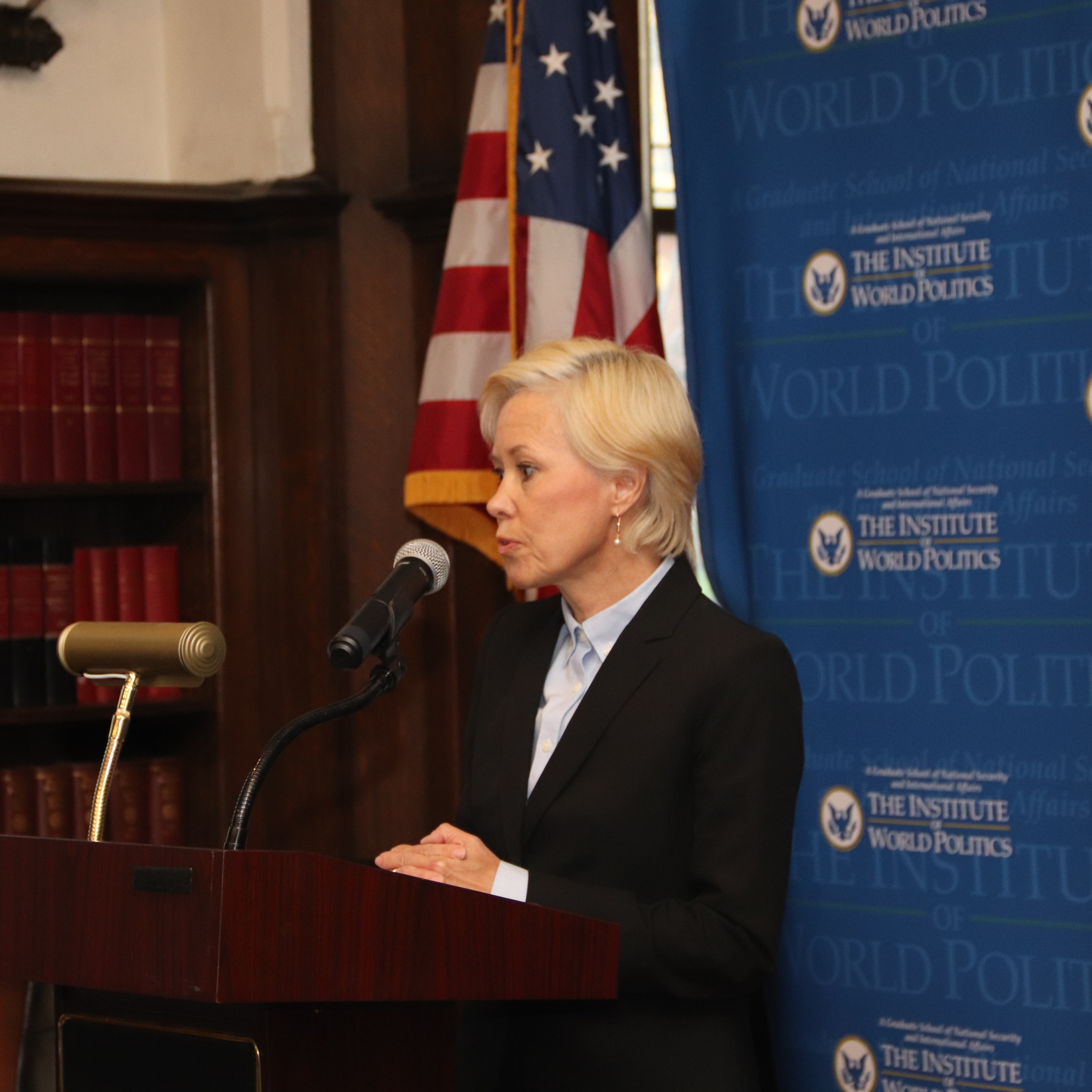
Russian Cyber Doctrine and the Targeting of U.S. Critical Infrastructure
About the Lecture: On March 15, 2018, the DHS and FBI announced that the Russian government cyber actors had conducted, since at least March 2016, a multi-stage cyber intrusion campaign in various U.S. critical infrastructure sectors, including the energy, nuclear, commercial, water, aviation, and manufacturing sectors. In her upcoming lecture, “Russian Cyber Doctrine and the Targeting of U.S. Critical Infrastructure,” Russia expert and private intelligence consultant Rebekah Koffler will examine this highly significant event within the context the Russian cyber doctrine. Ms. Koffler also will provide an open source intelligence assessment of Russia’s intentions for this specific cyber campaign and how cyber fits in Moscow’s overall doctrine/strategy targeting the United States. About the Speaker: Rebekah Koffler is an intelligence expert on Russian Doctrine/Strategy and Cyber Operations and a former U.S. intelligence officer who specializes in open source intelligence analysis of the Russian threat to U.S. and Western security. As a recognized IC expert on Russia, Ms. Koffler delivered classified briefings to top U.S. military commanders and policymakers, the White House National Security Council, the Directors of the CIA and DIA, NATO, senior Congressional Staff, and the Vice Chairman-select of the Joint Chiefs of Staff. As a Russian-English bilingual analyst with a Russian native background, Rebekah has a deep understanding of the Russian strategic culture, mindset and behavior. Ms. Koffler holds an M.A. in International Transactions from the George Mason University in Virginia, a B.A./M.A. in Foreign Languages from Moscow State Pedagogical University, and a Graduate Certificate in Intelligence from the Institute of World Politics in Washington D.C. She is the founder of the private intelligence consultancy Doctrine & Strategy Consulting LLC.
The Secret World: A History of Intelligence
About the Book: The history of espionage is far older than any of today’s intelligence agencies, yet the long history of intelligence operations has been largely forgotten. The codebreakers at Bletchley Park, the most successful World War II intelligence agency, were completely unaware that their predecessors in earlier moments of national crisis had broken the codes of Napoleon during the Napoleonic wars and those of Spain before the Spanish Armada. Those who do not understand past mistakes are likely to repeat them. Intelligence is a prime example. At the outbreak of World War I, the grasp of intelligence shown by U.S. President Woodrow Wilson and British Prime Minister Herbert Asquith was not in the same class as that of George Washington during the Revolutionary War and leading eighteenth-century British statesmen. In this book, the first global history of espionage ever written, distinguished historian Christopher Andrew recovers much of the lost intelligence history of the past three millennia—and shows us its relevance. About the Author: Christopher Andrew is emeritus professor of modern and contemporary history and former chair of the faculty of history at Cambridge University. He is also chair of the British Intelligence Study Group, founding co-editor of Intelligence and National Security, former visiting professor at Harvard, Toronto, and the Australian National universities, and a regular presenter of BBC Radio and TV documentaries. His most recent book, Defend the Realm: The Authorized History of MI5, was an international hit. His fifteen previous books include The Sword and the Shield, The World Was Going Our Way, and other path-breaking studies on the use and abuse of secret intelligence in modern history.
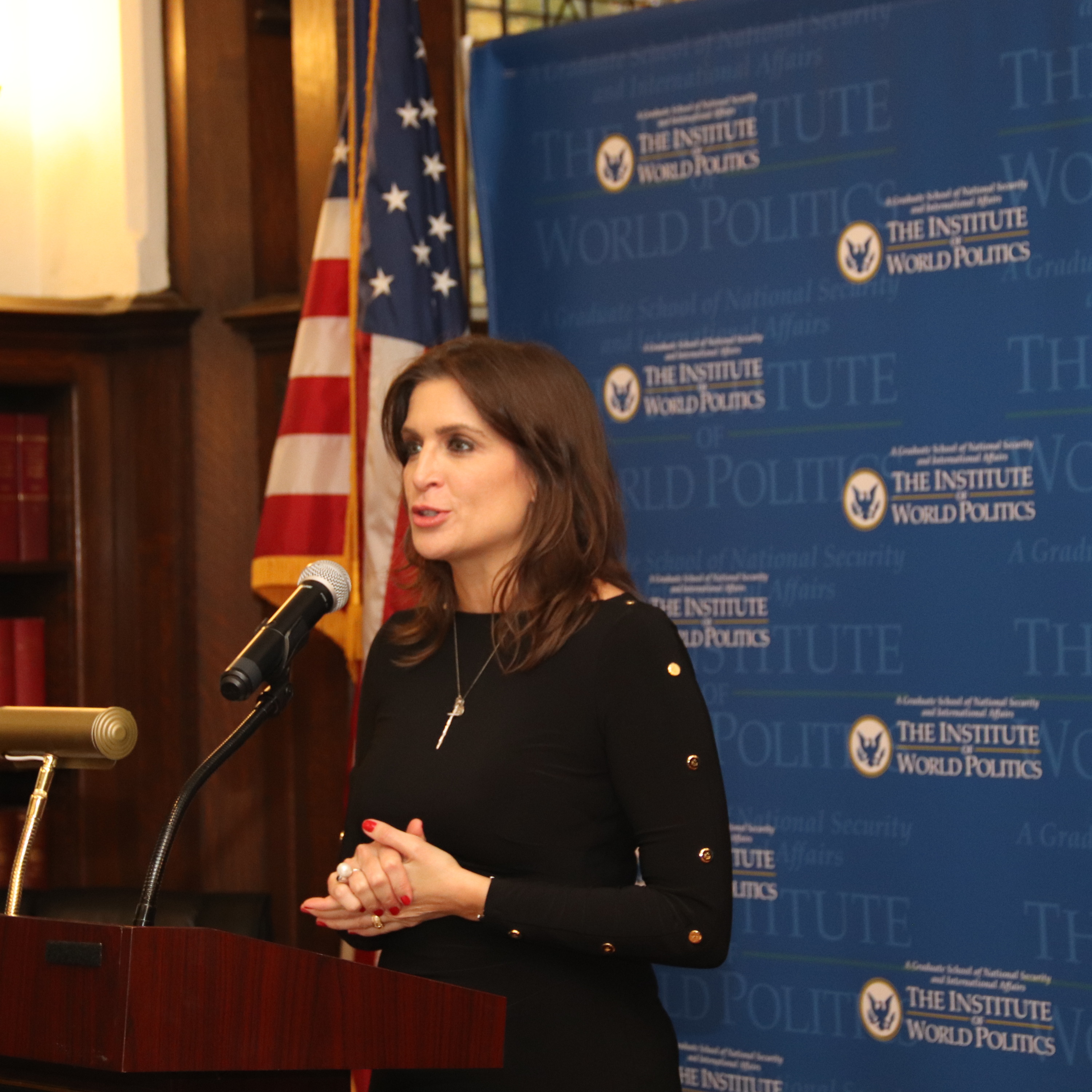
Venezuela's Future: Where do we go from here?
About the Lecture: The collapse of Venezuela is no longer an internal or domestic problem; its migrant exodus has made it a hemispheric crisis. Most impacted is key US ally Colombia, where they are swelling the ranks of the ELN terrorist group. Maduro will reach the end of his presidential term in January 2019, but, with deepening repression and escalating brutality, shows no signs of leaving office democratically or indeed peaceably. The traditional opposition is fractured, conflicted and increasingly racked by corruption scandals. Yet the region's leaders are increasingly agreed that the only way to end the crisis is for the Maduro regime to end. With this complex Rubik's cube, what could the future hold for Venezuela? About the Speaker: Dr. Vanessa Neumann is an authority on Latin American politics and security, as well as on crime-terror pipelines, particularly on stemming illicit trade as a counter-terrorist and counter-insurgency strategy that supports businesses. She is the author of a book on crime-terror pipelines, Blood Profits: How American Consumers Unwittingly Fund Terrorists (St. Martin’s Press, Macmillan). The Brazilian Portuguese edition Lucros de Sangue will be published in late November 2018; the Spanish language edition is currently being negotiated. Dr. Neumann is also the co-author of The Many Criminal Heads of the Golden Hydra (Asymmetrica and Counter-Extremism Project, May 2018), an extensive analysis of illicit trade and corruption in the Tri-Border Area, that has been covered by more than 75 media outlets and forced Paraguayan troop movements. Dr. Neumann has served four years on the OECD’s Task Force on Countering Illicit Trade (since its inception) and on their Advisory Group. She holds a Ph.D. in political philosophy from Columbia University, and fellowships at Yale University, Columbia University and the Foreign Policy Research Institute. Her company Asymmetrica is a member of the Global Counter Terrorism Research Network (GCTRN) for the United Nations Security Council’s Counter-Terrorism Committee Executive Directorate (CTED). Notably, Dr. Neumann was the academic reviewer for USSOCOM’s ARIS Series teaching manual on counterinsurgency (COIN) in Colombia. She is a widely sought speaker to media, academia and governments.
Competitive Strategy and America's Future
Dr. Frank Marlo is Dean of Academics at The Institute of World Politics. He formerly served as a Professor of Strategic Studies at the Marine Corps Command and Staff College. He received his Ph.D. from the Fletcher School of Law and Diplomacy in May 2006. From January 2002 until January 2005, he served as Assistant for Counterproliferation Policy in the Office of the Assistant Secretary of Defense for International Security Policy. He is the author of Planning Reagan's War: Conservative Strategists and America's Cold War Victory (Potomac Books, 2012) and a contributing editor to the book The Grand Strategy That Won the Cold War: Architecture of Triumph (Lexington Books, 2016).
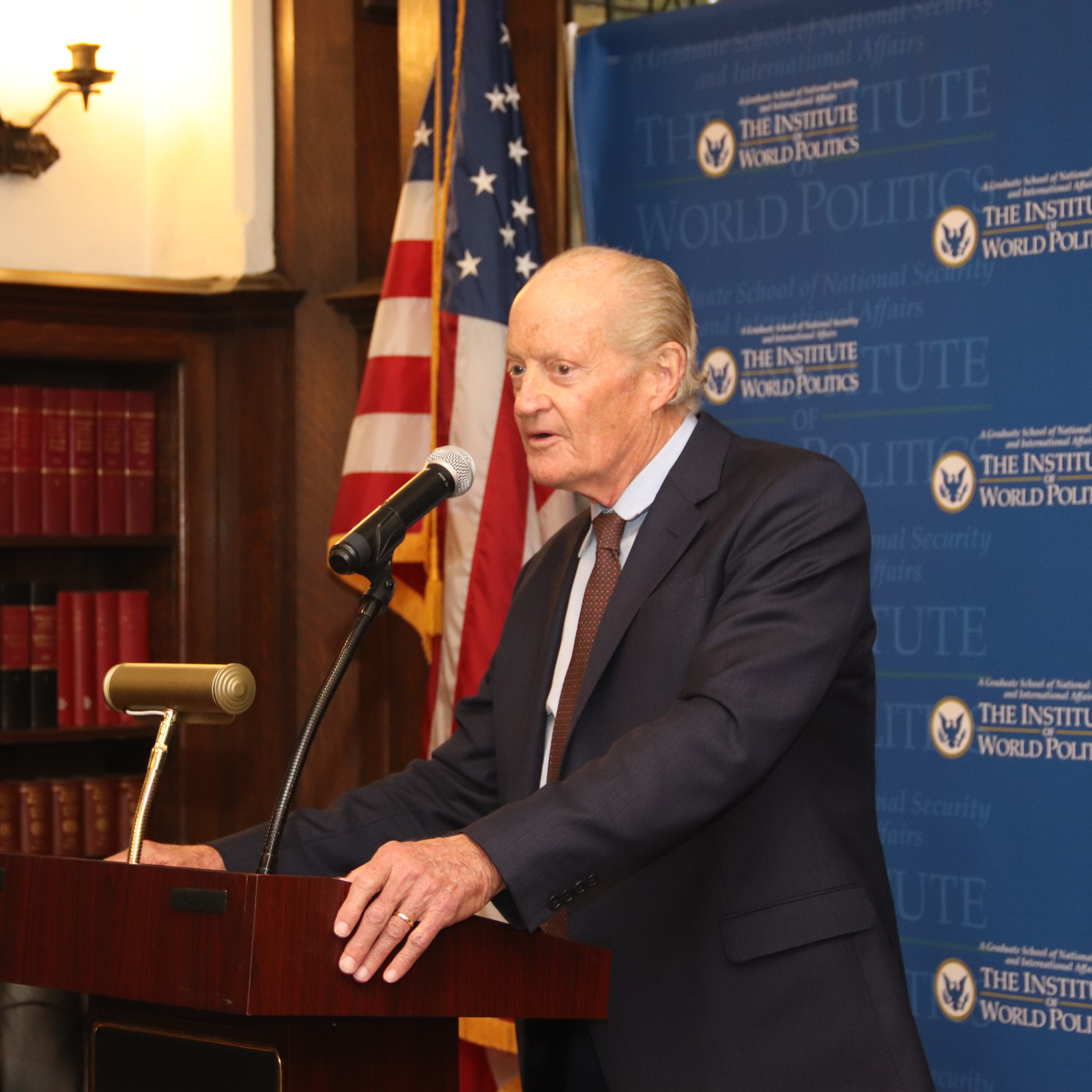
Invisible Slaves: The Victims and Perpetrators of Modern-Day Slavery
About the Book: In Invisible Slaves, W. Kurt Hauser discusses slavery around the world, with research and firsthand stories that reframe slavery as a modern-day crisis, not a historical phenomenon or third-world issue. Identifying four types of slavery—chattel slavery, debt bondage, forced labor, and sex slavery—he examines the efforts and failures of governments to address them. He explores the political, economic, geographic, and cultural factors that shape slavery today, illustrating the tragic human toll with individual stories. Country by country, the author illuminates the harsh realities of modern-day slavery. He explores slavery's effects on victims, including violence, isolation, humiliation, and the master-slave relationship, and discusses the methods traffickers use to lure the vulnerable, especially children, into slavery. He assesses nations based on their levels of slavery and efforts to combat the problem, citing the rankings of the United States' Trafficking Victims Protection Act. He concludes with an appeal to governments and ordinary citizens alike to meet this humanitarian crisis with awareness and action. About the Author: W. Kurt Hauser received BA and MBA degrees from Stanford University. While at Stanford he was a member of the varsity track and rugby teams. He was the head of an investment management firm for most of his career. He is the author of Taxation and Economic Performance and his work has been published in many news media including the Wall Street Journal, The Financial Times and Investor's Business Daily among others. He has appeared on KRON, CNN, FOX, CNBC, and PJTV. His research on the relationship between marginal tax rates, federal government revenues as a percent of Gross Domestic Product and economic growth has become known as Hauser's Law. Kurt is the past Chairman of the Board of the Hoover Institution at Stanford and continues to be a board member. He has served on the board of many organizations including AON Risk Services, the Bay Area Red Cross, the Stanford Business School Trust, the Hill School, and the Economic Round Table of San Francisco. For the past decade Kurt has devoted his time to researching the origin, evolution, development, and ubiquity of global slavery.
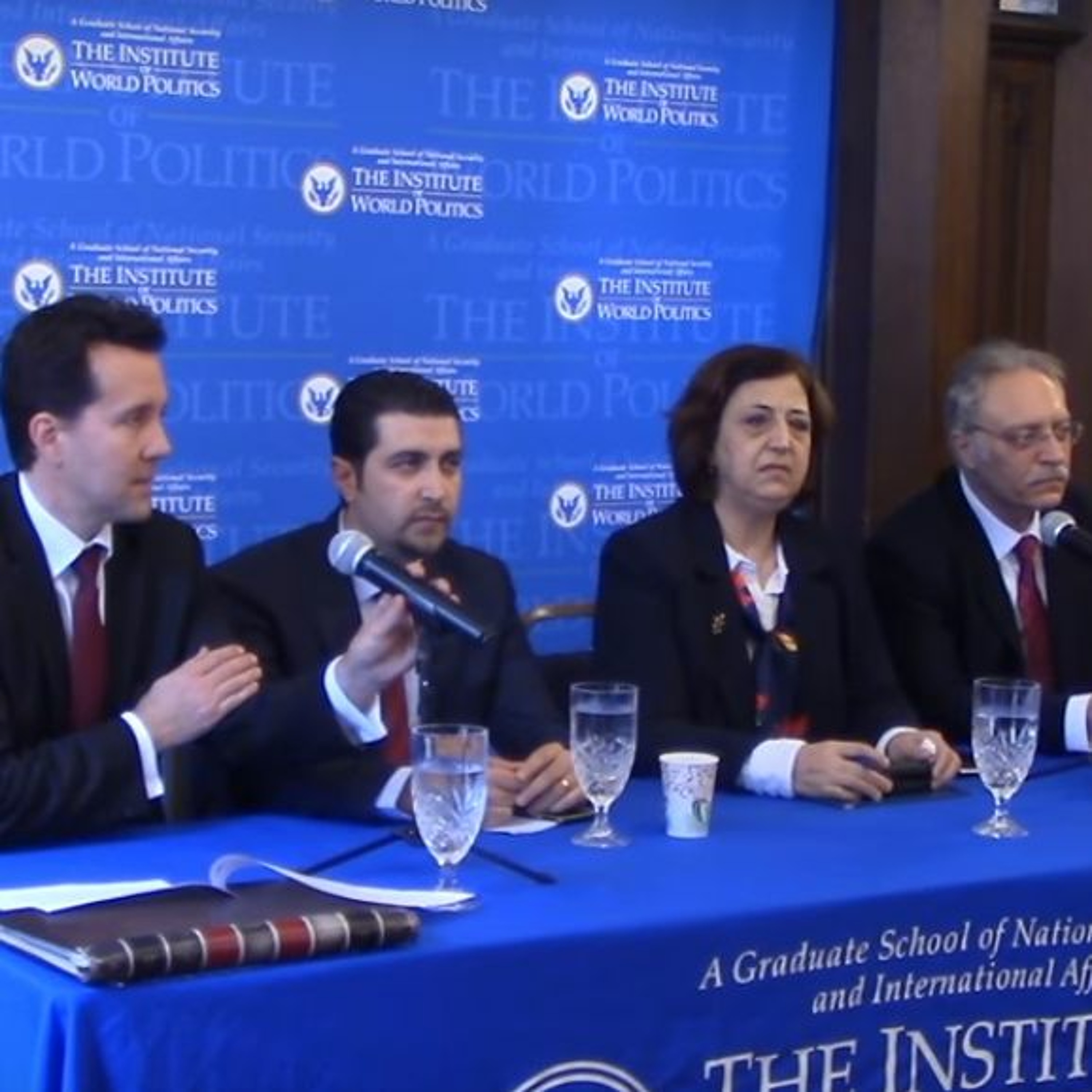
Ethnic and Religious Minorities in Iraq and Syria Panel
About the Panel: Iraq and Syria have become major sources of instability in the Middle East, drawing in Islamic extremists from around the world, sending floods of refugees outside of their borders, and seeing genocide at the hands of the Islamic State. The societies of both Iraq and Syria have suffered much from Baathist politics and ideology, which has in many ways set the stage for much of the dysfunction and problems that we are seeing in those countries today – a factor not usually recognized in analyses of events there. Events within Iraq and Syria have also been influenced by external actors jockeying for influence and in pursuit of their own geopolitical goals. In each country, however, there are hopeful signs, despite all of the tragedy. The dynamics in Syria and Iraq are related, yet distinct and different. This panel will explore the distinct dynamics in each country as well as some common dynamics, the changing role of the United States in the region, the role of other external factors such as Russia, Iran, Turkey, and the Gulf States, and will examine what the economic and political future may look like for ethnic and religious minorities in both countries. In Iraq, where the Christian population has dropped by approximately 90% since 2003 and where Yazidis have suffered genocide along with their Christian neighbors, the future role and status of ethnic and religious minorities is critical to that country's stability and future. The Iraqi panelist, Loay Mikhael, is an Iraqi Christian, now living in the Washington, D.C. area. In Syria, approximately 30% of Syrian territory, located in the northeast of the country, is governed by the Self-Administration of North and East Syria, which was announced on 6 September 2018, is heavily populated by Syrian Kurds, along with Arab, Christian and other minorities. The legislature for this body is the Syrian Democratic Council. Two of our panelists, Bassam Ishak, a Syrian Christian, and Sinam Sherkany, a Kurdish Muslim, are part of the SDC, and represent the SDC here in Washington, D.C. They will discuss how they are attempting to build a pluralistic society with protections for freedom of religion, speech, and dissent, in the midst of the chaos of the Syrian civil war. This panel was moderated by IWP Research Professor Paul Coyer, who specializes in the role of religion in foreign affairs and who spent time this past summer with the Yazidi and Christian communities of northern Iraq.
Confessions of a Corporate Lobbyist
About the Lecture: Mr. Maibach will share 10 lively stories of ethics, strategy and decision-making drawn from his 18 years as Vice President of Global Government Affairs at the Intel Corporation. These stories sometimes involve the first four CEOs of Intel – Dr. Robert Noyce, Dr. Gordon Moore, Dr. Andrew Grove, and Dr. Craig Barrett. These are three of the four founders of the company. Dr. Noyce is the co-inventor of the integrated circuit (computer chip). Dr. Moore is famous for “Moore’s Law.” Dr. Grove was Time Man of the Year in 1997. Dr. Barrett is a former professor at Stanford University. All four are men of exceptional intelligence and high integrity. Inside each story is a “lesson” or a “moral to the story.” At the end of the talk, Mr. Maibach will explore with our audience what some of those lessons were and remain today. About the Speaker: Michael Maibach is a seasoned professional in global business diplomacy, advisor to several non-profits, and a Fellow of the International Academy of Management. While in college he was elected to the DeKalb County Board (Illinois), the first person elected to public office under 21 years of age in US history. He is currently a Senior Fellow in American Federalism at the American Opportunity Foundation, and a Trustee and Managing Director at the James Wilson Institute. From 2003-12, he served as the President and CEO of the European-American Business Council. He was Vice President, Global Government Affairs at Intel Corporation from 1983-2001. He has served as an advisor to two White House Commissions under Presidents Reagan and Bush Sr. and served on two US State Department advisory councils. He has testified before the US Congress on 17 occasions. He is a graduate of The Institute of World Politics, and also holds M.A. degrees from Georgetown University and Northern Illinois University.
China Builds for Global Power Projection
About the Lecture: In a gathering trend previously discounted by some analysts, China is building the means to achieve global military power projection. By the 2030s China's People's Liberation Army will have robust and growing capabilities in the areas of maritime and airmobile global power projection, and will be contesting control of the Earth-Moon system. The United States can continue to deter China into the 2030s by achieving early astro-strategic advantages, staying ahead in emerging 6th generation warfare paradigms and doubling down with allies to build robust deterrent networks. About the Speaker: Rick Fisher is a Senior Fellow on Asian Military Affairs at the International Assessment and Strategy Center. Fisher is a recognized authority on the PRC military and the Asian military balance and their implications for Asia and the United States. His most recent book is China’s Military Modernization: Building for Regional and Global Reach. Fisher has worked on Asian security matters for over 20 years in a range of critical positions — as Asian Studies Director at the Heritage Foundation, Senior Analyst for Chairman Chris Cox’s Policy Committee in support of the report of the Select Committee for US National Security and Military/Commercial Concerns with the People’s Republic of China, and a consultant on PLA issues for the Congressionally chartered US China Security & Economic Review Commission. The author of nearly 200 studies on challenges to American security, economic and foreign policy in Asia, Fisher is a frequent commentator on Asian issues for radio and television and has testified before the Senate Foreign Relations Committee, the House International Relations Committee, the House Armed Services Committee, and the U.S. China Security Commission, on the modernization of China’s military. Fisher has been Editor of the Jamestown Foundation’s China Brief, and a regular contributor to publications such as the Wall Street Journal, Far Eastern Economic Review, Jane’s Intelligence Review, National Interest, Air Forces Monthly, and World Airpower Journal. He has served as an election observer in Cambodia, the Philippines, South Korea and Taiwan, and performed field research in China, Taiwan, Russia, India and Pakistan. Fisher studied at Georgetown University and at Eisenhower College where he received his BA with honors. He is currently President of Pacific Strategies, Inc.
The Foundation of the CIA: Harry Truman, The Missouri Gang, and the Origins of the Cold War
This event is a part of the Global Impact Discussion Series by founder and moderator Patricia Schouker, IWP alumna. About the Book: This highly accessible book provides new material and a fresh perspective on American National Intelligence practice, focusing on the first fifty years of the twentieth century, when the United States took on the responsibilities of a global superpower during the first years of the Cold War. Late to the art of intelligence, the United States during World War II created a new model of combining intelligence collection and analytic functions into a single organization—the OSS. At the end of the war, President Harry Truman and a small group of advisors developed a new, centralized agency directly subordinate to and responsible to the President, despite entrenched institutional resistance. Instrumental to the creation of the CIA was a group known colloquially as the “Missouri Gang,” which included not only President Truman but equally determined fellow Missourians Clark Clifford, Sidney Souers, and Roscoe Hillenkoetter. About the Author: Richard E. Schroeder specializes in Cold War and intelligence issues. His Ph.D dissertation at the University of Chicago was on the Hitler Youth as a paramilitary organization. Trained as an infantry platoon leader, he served as a US Army intelligence officer on the Army Staff in Washington, DC, and the US Military Command in Vietnam. He is the author of classified US Army political studies. Following his tour in Vietnam, he was research director on the Louisiana gubernatorial campaign of the late Congressman Gillis W. Long. During his thirty-one year career as an officer of the Central Intelligence Agency’s Clandestine Service, he held senior management positions both in Washington and Europe in the CIA Directorates of Operations and Science and Technology, and spent three years in CIA’s Office of Congressional Affairs responsible for Directorate of Operations liaison with Congressional Intelligence Oversight Committees. He also served as Deputy Director of the CIA Center for the Study of Intelligence. His final assignment before retirement in 2003 was as CIA Chair and Professor of Political Science at National Defense University’s Industrial College of the Armed Forces. He is a founding member of the Board of Advisors of the International Spy Museum in Washington, DC. He currently consults on national security issues and since 1999 has been an adjunct professor in the graduate Security Studies Program and the undergraduate Science, Technology, and International Affairs Concentration of the Edmund A. Walsh School of Foreign Service at Georgetown University in Washington, D.C. He has lectured on intelligence at the Bush School at Texas A&M, the University of Missouri, the Air Force and Naval Academies, Marquette, the Ohio State University, the Patterson School at the University of Kentucky, Westminster College, New Mexico State University, Kent State University, the Allied Museum, Berlin, and the National Security Agency. He and his wife Leah have one son, and live in Washington, DC.
Democratic Governance as a Strategic Concept for Latin America
About the Lecture: Amidst the collapse of the “socialist paradise” of Venezuela, expanding bloodshed in Nicaragua, refugees fleeing Central American gang extortion, the election of a leftist populist president in violence-torn Mexico, and Chinese and Russian advances across the region, Dr. Ellis draws the conclusion: The U.S. needs a strategic concept for what it is trying to achieve in Latin America and the Caribbean. Dr. Ellis will argue that advancing “democratic governance” is a useful strategic concept for U.S. national security and other policymakers and without clarity regarding what the U.S. is seeking to achieve, the regional security environment devolves into responses to the invariable crises and advances of foreign actors. About the Speaker: Dr. Evan Ellis is a research professor of Latin American Studies at the U.S. Army War College (USAWC) Strategic Studies Institute (SSI), with a focus on the region’s relationships with China and other non-Western Hemisphere actors, as well as transnational organized crime and populism in the region. Dr. Ellis has published more than 170 works, including: China in Latin America: The Whats and Wherefores (Lynne Rienner Publishers, 2009); The Strategic Dimension of Chinese Engagement with Latin America (William J. Perry Center for Hemispheric Defense Studies, 2013); and, China on the Ground in Latin America (Palgrave-Macmillan, 2014). Dr. Ellis has presented his work in a broad range of business and government forums in 26 countries throughout four continents, and has given testimony on Chinese activities in Latin America to the U.S. Congress. Dr. Ellis has discussed his work regarding China and other external actors in Latin America on a broad range of radio and television programs; he is cited regularly in print media in both the United States and Latin America for his work in this area. Dr. Ellis holds a Ph.D. in political science with a specialization in comparative politics.