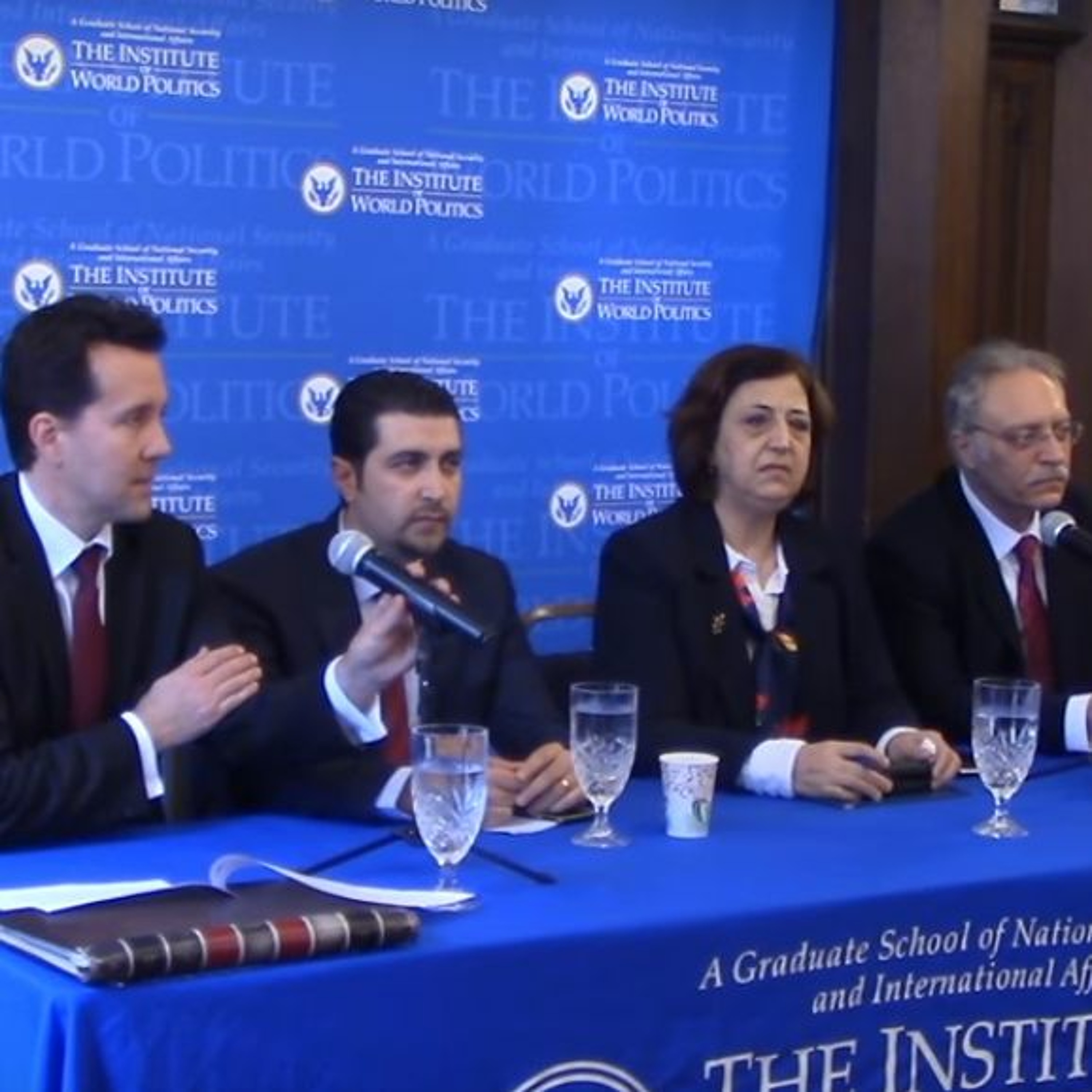
Ethnic and Religious Minorities in Iraq and Syria Panel
About the Panel: Iraq and Syria have become major…
The Institute of World Politics
November 6, 20181h 7m
Audio is streamed directly from the publisher (feeds.soundcloud.com) as published in their RSS feed. Play Podcasts does not host this file. Rights-holders can request removal through the copyright & takedown page.
Show Notes
About the Panel: Iraq and Syria have become major sources of instability in the Middle East, drawing in Islamic extremists from around the world, sending floods of refugees outside of their borders, and seeing genocide at the hands of the Islamic State. The societies of both Iraq and Syria have suffered much from Baathist politics and ideology, which has in many ways set the stage for much of the dysfunction and problems that we are seeing in those countries today – a factor not usually recognized in analyses of events there. Events within Iraq and Syria have also been influenced by external actors jockeying for influence and in pursuit of their own geopolitical goals. In each country, however, there are hopeful signs, despite all of the tragedy. The dynamics in Syria and Iraq are related, yet distinct and different.
This panel will explore the distinct dynamics in each country as well as some common dynamics, the changing role of the United States in the region, the role of other external factors such as Russia, Iran, Turkey, and the Gulf States, and will examine what the economic and political future may look like for ethnic and religious minorities in both countries. In Iraq, where the Christian population has dropped by approximately 90% since 2003 and where Yazidis have suffered genocide along with their Christian neighbors, the future role and status of ethnic and religious minorities is critical to that country's stability and future. The Iraqi panelist, Loay Mikhael, is an Iraqi Christian, now living in the Washington, D.C. area.
In Syria, approximately 30% of Syrian territory, located in the northeast of the country, is governed by the Self-Administration of North and East Syria, which was announced on 6 September 2018, is heavily populated by Syrian Kurds, along with Arab, Christian and other minorities. The legislature for this body is the Syrian Democratic Council. Two of our panelists, Bassam Ishak, a Syrian Christian, and Sinam Sherkany, a Kurdish Muslim, are part of the SDC, and represent the SDC here in Washington, D.C. They will discuss how they are attempting to build a pluralistic society with protections for freedom of religion, speech, and dissent, in the midst of the chaos of the Syrian civil war.
This panel was moderated by IWP Research Professor Paul Coyer, who specializes in the role of religion in foreign affairs and who spent time this past summer with the Yazidi and Christian communities of northern Iraq.