
The Institute of World Politics
507 episodes — Page 7 of 11
Ancient and Modern Democracy: Ideology, Morphology, and Pathology
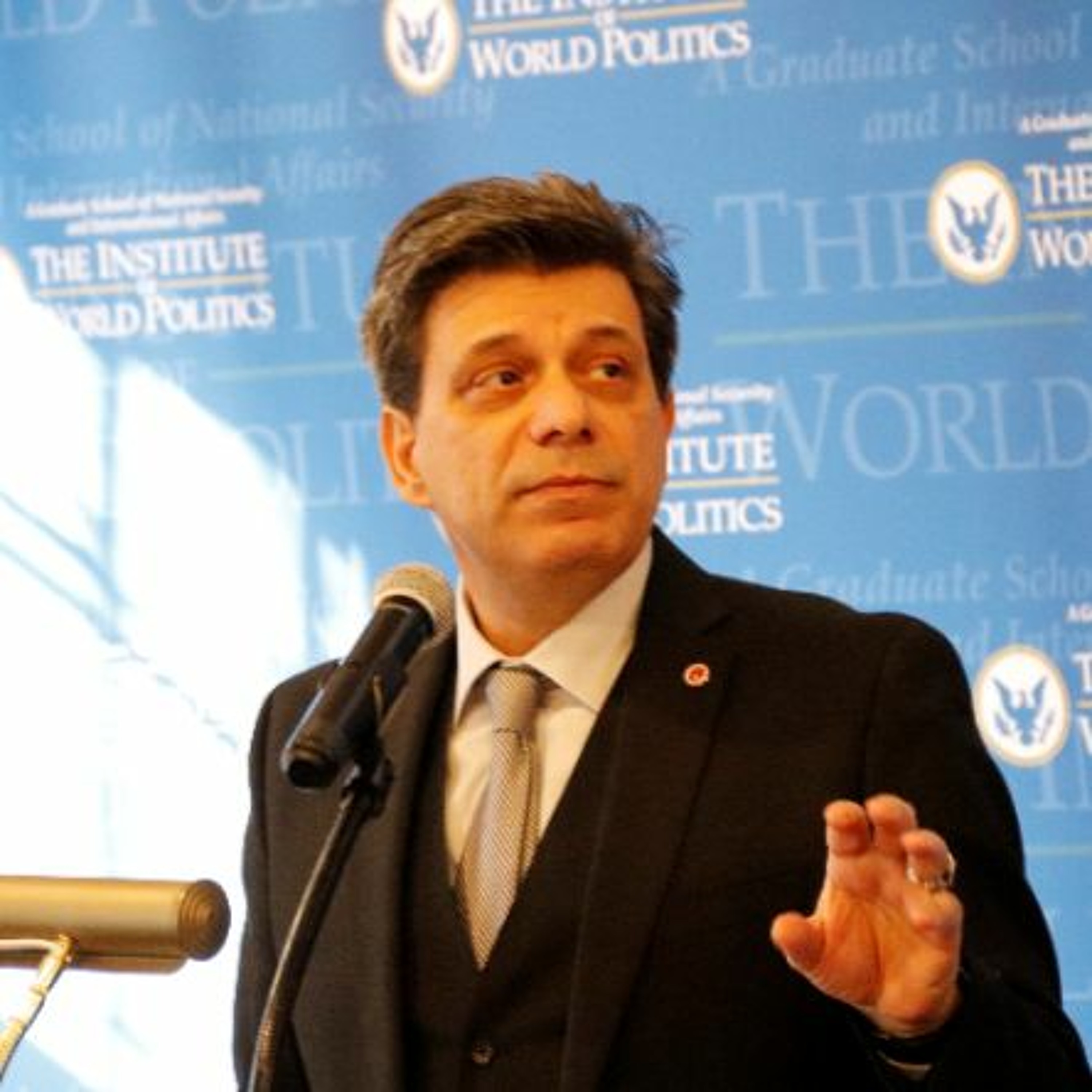
About the Lecture: “Our democracy is getting self-destroyed, for it abused the rights of freedom and of equality; for it taught the citizens to regard insolence as a right, illegality as freedom, impertinence as equality, and anarchy as happiness.” (Isocrates, 436-338 BC). Democracy first emerged in ancient Athens in 507 BC following a long turbulent period of aristocracy and tyranny, when a nexus of intertwined geopolitical, sociopolitical, economic, and cultural developments led to the morphogenesis of this new political constitution. Athenian Democracy formulated the political ideology and fundamental principles that were later canonized by modern democracies, formalized defensive mechanisms against undue concentration of power and employed innovative integrative mechanisms to propagate its ideology and educate the citizens. Pathogenic traits-catalysts, however, such as the extreme polarization between mass and elite, demagogy, populism, failure of justice, apathy, and poor education caused extensive political ankylosis. Internal corrosion and changing historical conditions caused the decline and fall of Democracy three centuries later. Isocrates’ aphorism, therefore, rings alarmingly all too pragmatic and relevant today, 250 years since the resurgence of Democracy in the modern world (USA, France, Greece). Are we running a similar cycle, repeating old mistakes, standing at the same juncture, heading towards the same dead end? To navigate forward, find solutions, and shape our future, we need first to study our past. About the Speaker: Born in Greece, Christofilis Maggidis received a thorough education in the Classical Lyceum at the Anavryta Model School and went on to receive a B.A. in History and Archaeology (1988) from the University of Athens, where he was awarded several honorary distinctions and scholarships for excellence. He further pursued his graduate studies while on prestigious fellowships (Fulbright, William Penn, and Charles Williams Fellowships) and received his Ph.D. in Classical Archaeology (1994) from the University of Pennsylvania. He completed postdoctoral studies as a Fellow at Brown University (1997-1999) and a White-Levy Research Fellow at Harvard University (1999-2001). Christofilis has taught archaeology, ancient history, classics, and philosophy at Campus College and the University of Indianapolis, Athens. In 2001, Christofilis joined Dickinson College as the Christopher Roberts Professor of Archaeology in the Department of Archaeology, where he has been teaching courses in the art, architecture, and archaeology of the prehistoric Aegean, classical Greece, republican/imperial Rome, Egypt, the Near East (Mesopotamia and Anatolia), in ancient Greek religion and athletics, Athenian democracy, ancient burial customs, and ancient technology. Christofilis Maggidis is an active field archaeologist with long field experience since 1985 as a trench master and sector supervisor at major archaeological; he has served as Field Director of the Lower Town Excavation at Mycenae, Co-Director of the Mycenaean Spercheios-valley Archaeological Project, and Director of the Archaeogeophysical Survey of the Citadel of Glas. He was elected member of the Athens Archaeological Society in 1999 and President of the Mycenaean Foundation in 2013. His main research interests focus on Aegean Prehistory, but also include Classical Sculpture and Architecture, Archaeological Methodology and Interpretation. Christofilis has given 38 invited lectures and presented another 40 international conference papers worldwide. His publications comprise 23 articles, numerous excavation reports, and four forthcoming books: The Lower Town of Mycenae I: Archaeogeophysical Survey 2003-2013; The Lower Town of Mycenae II: Archaeological Excavations 2007-2013; The Palatial Workshops of Mycenae: The Artisans’ Workshops and the House of; Mycenae Excavations: Building K.
Corruption and the Democratic Process in Angola
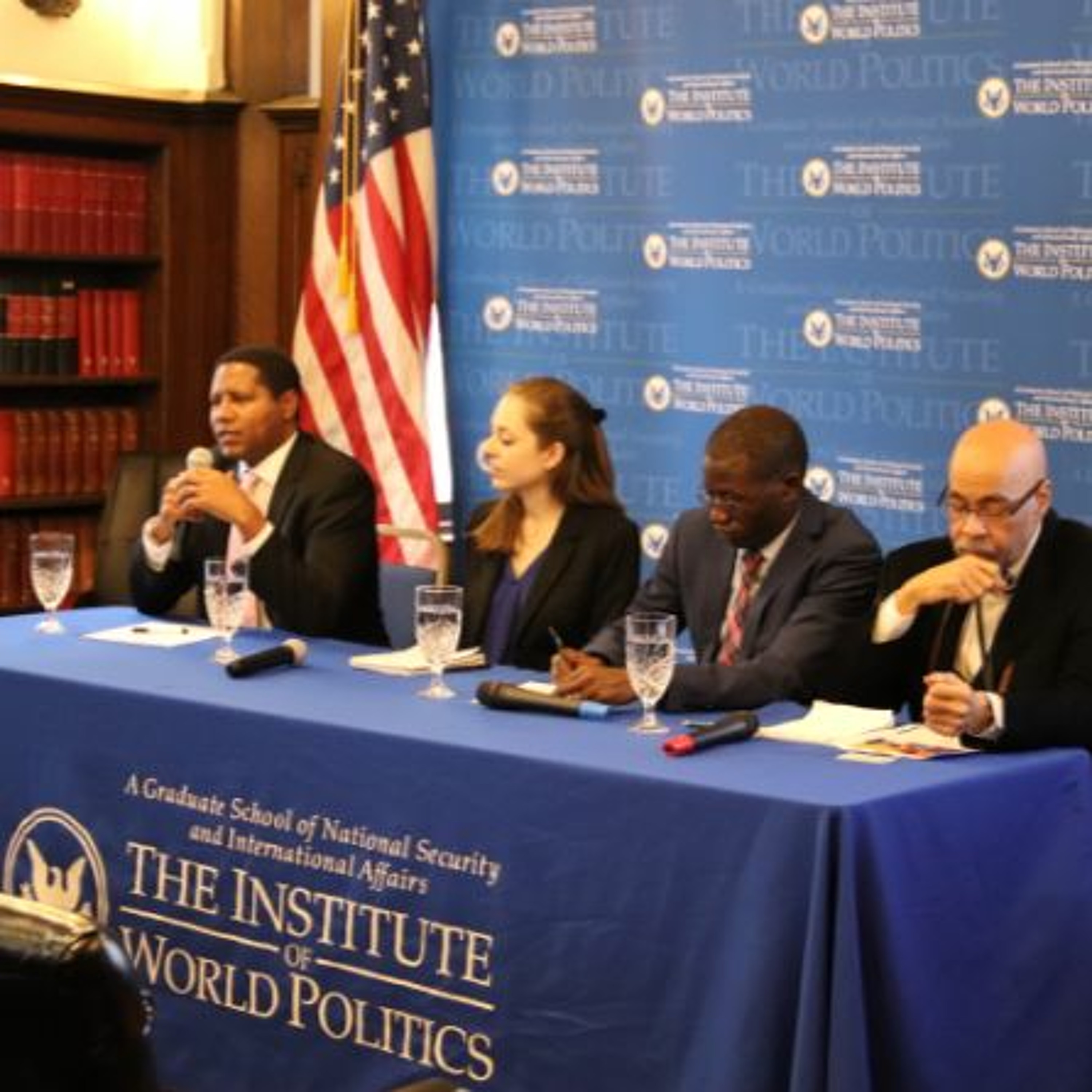
About the Lecture: The aim of this lecture is to discuss present and future of Angolan political process and how corruption is undermining the new democratic process in this country. About the Panelists: Florindo Chivucute is the founder and Executive Director of Friends of Angola (FoA), and Radio Angola (an online radio station), activist, blogger and digital media specialist. Florindo earned his Master’s degree in Conflict Analysis and Resolution from George Mason University and has over 5 years of experience working in non-profit organizations, international development, international relations, peace building, and education while being active in the Community of Portuguese-Speaking Countries (CPLP) in the United States. Hashem Mekki, MA, has taught Arabic Language, Culture & Middle East Media at IWP since 2012. He is the owner of Bridge Language Solutions, providing an array of language translation, interpretation and teaching services to the Washington DC metropolitan area, and the founder of Kele Global, a nonprofit organization that promotes education, health, and economic empowerment in the Sudan and the Republic of South Sudan. He also teaches Arabic language to federal employees & professionals at the National Nuclear Security Administration at the Department of Energy. Mr. Mekki volunteers with the IWP Center for Human Rights and International Affairs by providing Arabic translations & strategic cultural perspectives on North Africa and Middle East. Mr. Mekki previously worked with the Center for Strategic and International Studies and served on the board of Voices of Sudan, a nonprofit based in Washington, D.C. He holds Bachelors degrees in both Political Science and International Studies from the City College of New York, and a Master of Arts in Strategic Studies and International Politics from IWP. Malik M. Chaka is a retired U.S. Government official who served as Director, Threshold Programs, for the Millennium Challenge Corporation, and as a Professional Staff Member with House Africa Subcommittee. He first visited the Angola marquis as a journalist in 1973 prior to independence on November 11, 1975 and travelled widely in the country over a four decade period. Mr. Chaka has written on Angola topics for the Times of Zambia, Zambia Daily Mail, and London-based Africa Analysis. He testified before Congress on the Angolan Government of National Unity. Mr. Chaka served as the Director of Communications for the Free Angolan Information Service for seven years, and produced and edited Angola Update and Angola Economic Notes, two internationally distributed newsletters. He was a member of a Council on Foreign Relations independent commission that issued Toward An Angola Strategy: Prioritizing U.S.-Angola Relations in 2007. Kyra Gurney is a reporter for ICIJ. She previously worked at the Miami Herald and at InSight Crime, a nonprofit journalism organization based in Colombia that covers organized crime in Latin America and the Caribbean. At the Miami Herald, Kyra was part of a team investigating the illegal gold trade for a series called “Dirty Gold Clean Cash,” which was a finalist for the 2018 Pulitzer Prize for explanatory reporting. She also covered education and local government. Kyra has a master’s degree in journalism from Columbia University and a bachelor’s degree in comparative literature from Colorado College. She grew up in Albuquerque, New Mexico.
Socialism Then and Now: Cultural Marxism Debate
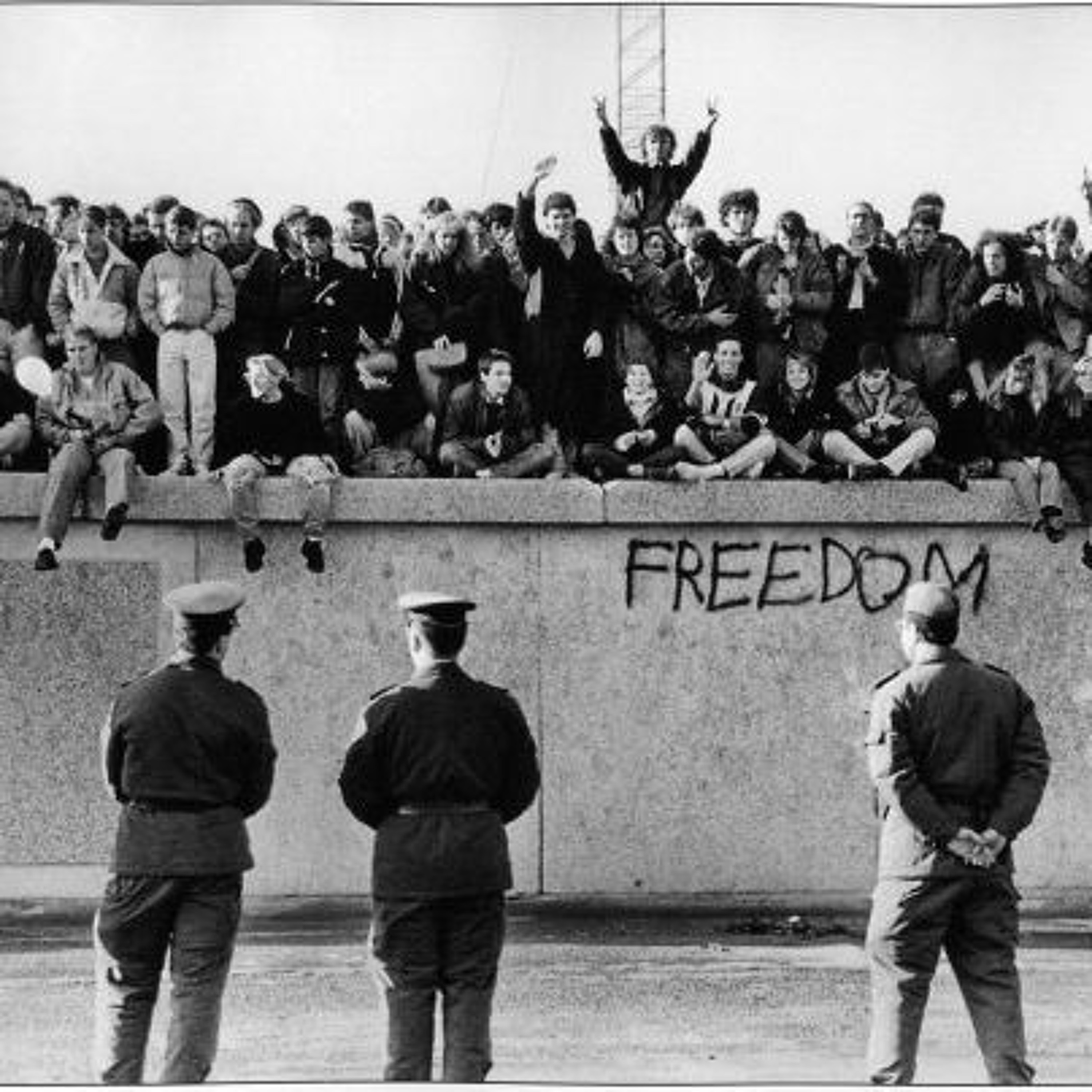
About the Event: On November 15, 2019, the Institute of World Politics hosted a special day-long debate event examining the past, present, and future of Socialism/Communism. Sponsored by the Claremont Institute together with the Victims of Communism Memorial Foundation and produced by the Imprimatur Group to mark the 30th anniversary of the fall of the Berlin Wall, the program featured a morning debate on the economic viability of a socialist or communist system while the afternoon session explored the nature of cultural Marxism, which has been argued to have supplanted the tenets and goals of economic Marxism with a new emphasis on “social justice.” Our participants include Michael Anton, former member of the National Security Council, Marek Chodakiewiz, Professor of History at the Institute of World Politics, historian Ronald Radosh, a former Marxist and author of The Rosenberg File, and Michael Gonzalez, a senior fellow at the Douglas and Sarah Allison Center for Foreign Policy at the Heritage Foundation. On the left, the debaters are Bhaskar Sunkara, the founding editor and publisher of Jacobin Magazine, author and managing editor of Jacobin Micah Uetricht, Eric Blanc, an author and contributor to Jacobin and The Nation, and sociologist Nicole Aschoff, author of The New Prophets of Capital. The debate will be moderated by cultural historian Michael Walsh, author of The Devil’s Pleasure Palace and The Fiery Angel, who will discuss his personal experiences in Berlin when the Wall fell during a special lunchtime presentation.
Socialism Then and Now: The Fall of the Berlin Wall
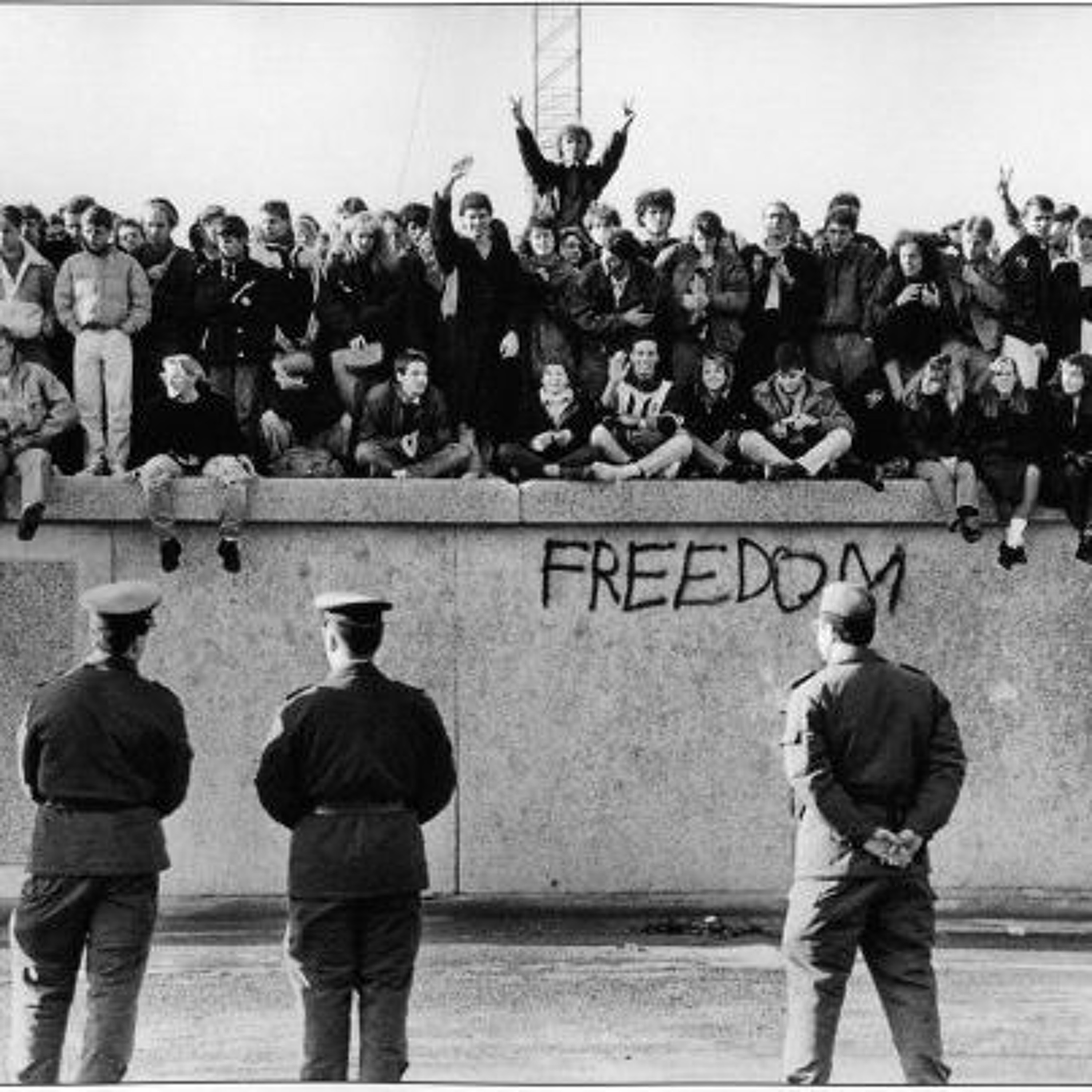
About the Event: On November 15, 2019, the Institute of World Politics hosted a special day-long debate event examining the past, present, and future of Socialism/Communism. Sponsored by the Claremont Institute together with the Victims of Communism Memorial Foundation and produced by the Imprimatur Group to mark the 30th anniversary of the fall of the Berlin Wall, the program featured a morning debate on the economic viability of a socialist or communist system while the afternoon session explored the nature of cultural Marxism, which has been argued to have supplanted the tenets and goals of economic Marxism with a new emphasis on “social justice.” Our participants include Michael Anton, former member of the National Security Council, Marek Chodakiewiz, Professor of History at the Institute of World Politics, historian Ronald Radosh, a former Marxist and author of The Rosenberg File, and Michael Gonzalez, a senior fellow at the Douglas and Sarah Allison Center for Foreign Policy at the Heritage Foundation. On the left, the debaters are Bhaskar Sunkara, the founding editor and publisher of Jacobin Magazine, author and managing editor of Jacobin Micah Uetricht, Eric Blanc, an author and contributor to Jacobin and The Nation, and sociologist Nicole Aschoff, author of The New Prophets of Capital. The debate will be moderated by cultural historian Michael Walsh, author of The Devil’s Pleasure Palace and The Fiery Angel, who will discuss his personal experiences in Berlin when the Wall fell during a special lunchtime presentation.
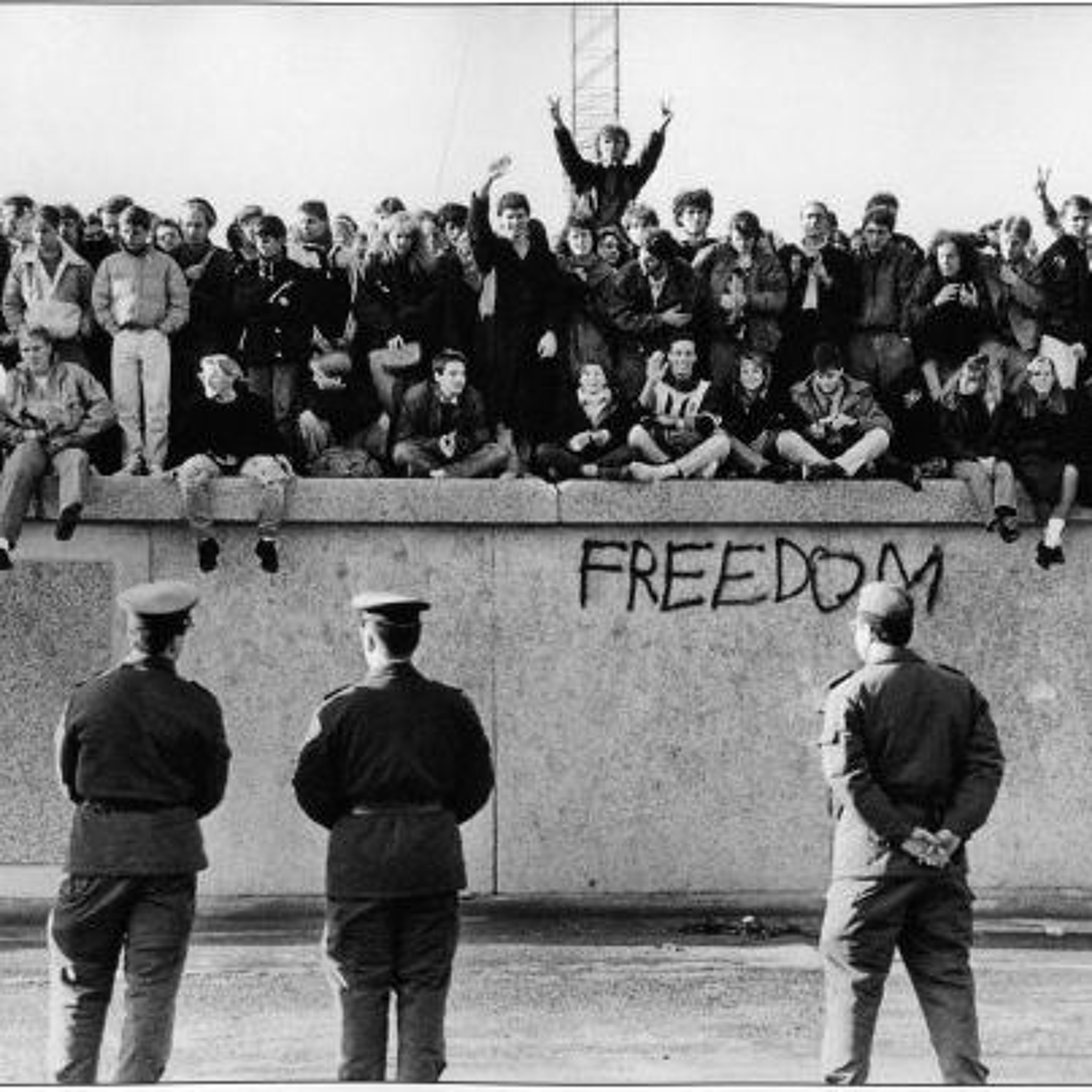
Socialism Then and Now: Are Socialism & Communism still viable?
About the Event: On November 15, 2019, the Institute of World Politics hosted a special day-long debate event examining the past, present, and future of Socialism/Communism. Sponsored by the Claremont Institute together with the Victims of Communism Memorial Foundation and produced by the Imprimatur Group to mark the 30th anniversary of the fall of the Berlin Wall, the program featured a morning debate on the economic viability of a socialist or communist system while the afternoon session explored the nature of cultural Marxism, which has been argued to have supplanted the tenets and goals of economic Marxism with a new emphasis on “social justice.” Our participants include Michael Anton, former member of the National Security Council, Marek Chodakiewiz, Professor of History at the Institute of World Politics, historian Ronald Radosh, a former Marxist and author of The Rosenberg File, and Michael Gonzalez, a senior fellow at the Douglas and Sarah Allison Center for Foreign Policy at the Heritage Foundation. On the left, the debaters are Bhaskar Sunkara, the founding editor and publisher of Jacobin Magazine, author and managing editor of Jacobin Micah Uetricht, Eric Blanc, an author and contributor to Jacobin and The Nation, and sociologist Nicole Aschoff, author of The New Prophets of Capital. The debate will be moderated by cultural historian Michael Walsh, author of The Devil’s Pleasure Palace and The Fiery Angel, who will discuss his personal experiences in Berlin when the Wall fell during a special lunchtime presentation. This debate argues whether or not socialism and communism remains a viable economic, social and political system, but it possibly just has not been implemented correctly yet.
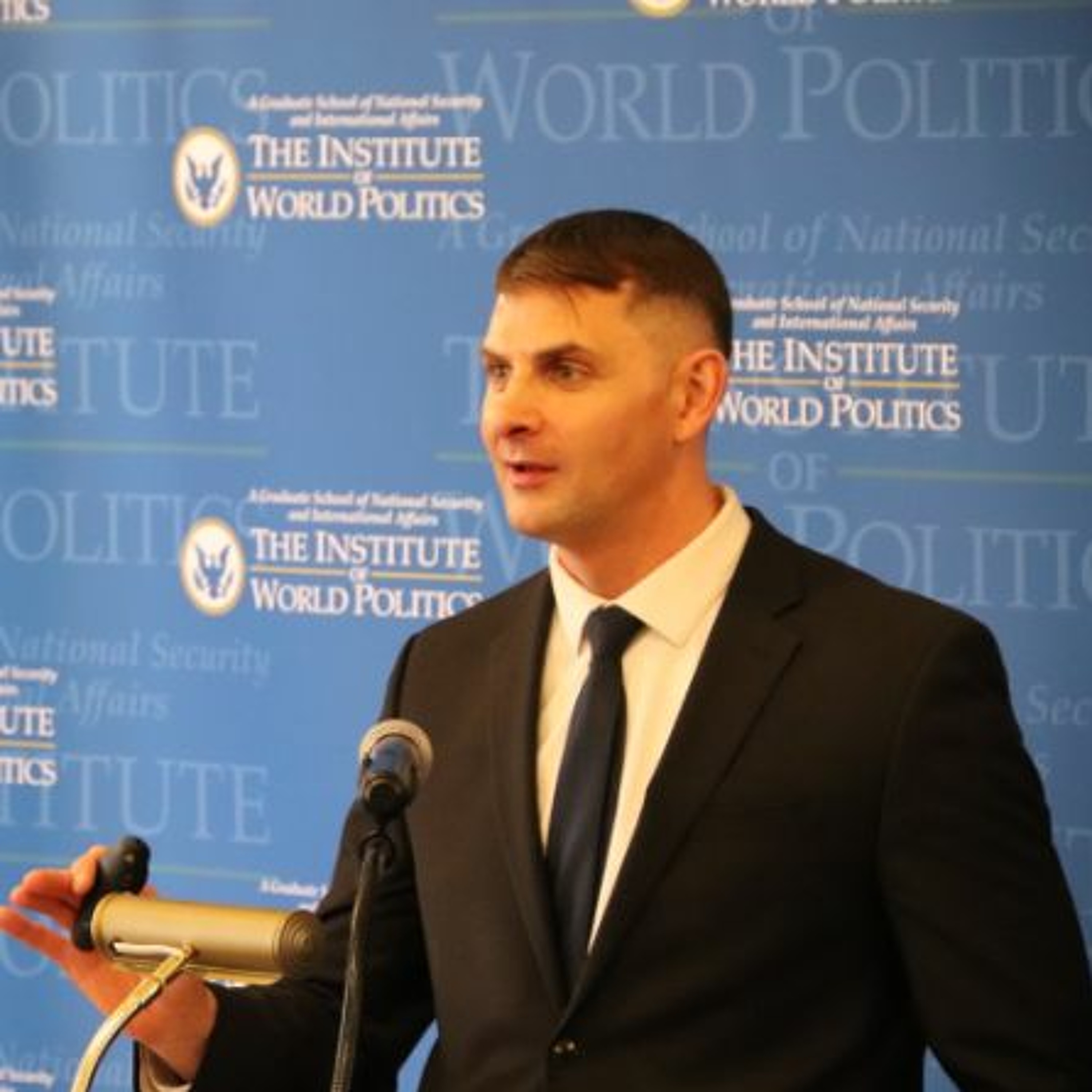
Russian Worldview, Grand Strategy and Cyberspace
About the lecture: What is the origin of Russian behavior in international politics? What is their worldview and grand strategy? How do they apply it in Cyberspace and what are the implications for the US and the West? This presentation will delve into how Russian strategic thinking originated in the Soviet era and how it transitioned to contemporary Russia, and how they have a unique competitive advantage in Cyber Space. This presentation will also address the principles and theories of Hybrid Warfare from the Russian perspective and contrast it with Western thinking, which has broad security implications. About the speaker: Mr. Peter Debbins has 20 years of experience and knowledge in intelligence, national security, strategic planning, CBRNE (Chemical, Biological, Radiological, Nuclear, enhanced Explosives), cyber and cyber space, hybrid warfare, business, economics, finance, world geopolitical environment, and science and technology (S&T). He possesses native fluency in Russian. Mr. Debbins served as an officer in the US Army and has also worked in commercial businesses in Ukraine and Russia. He was a Russian Cyber Analyst for the US Government, and later a Cyber Operations instructor. Currently he works as an Area Studies and Hybrid Warfare instructor for the US European Command (EUCOM) and NATO.
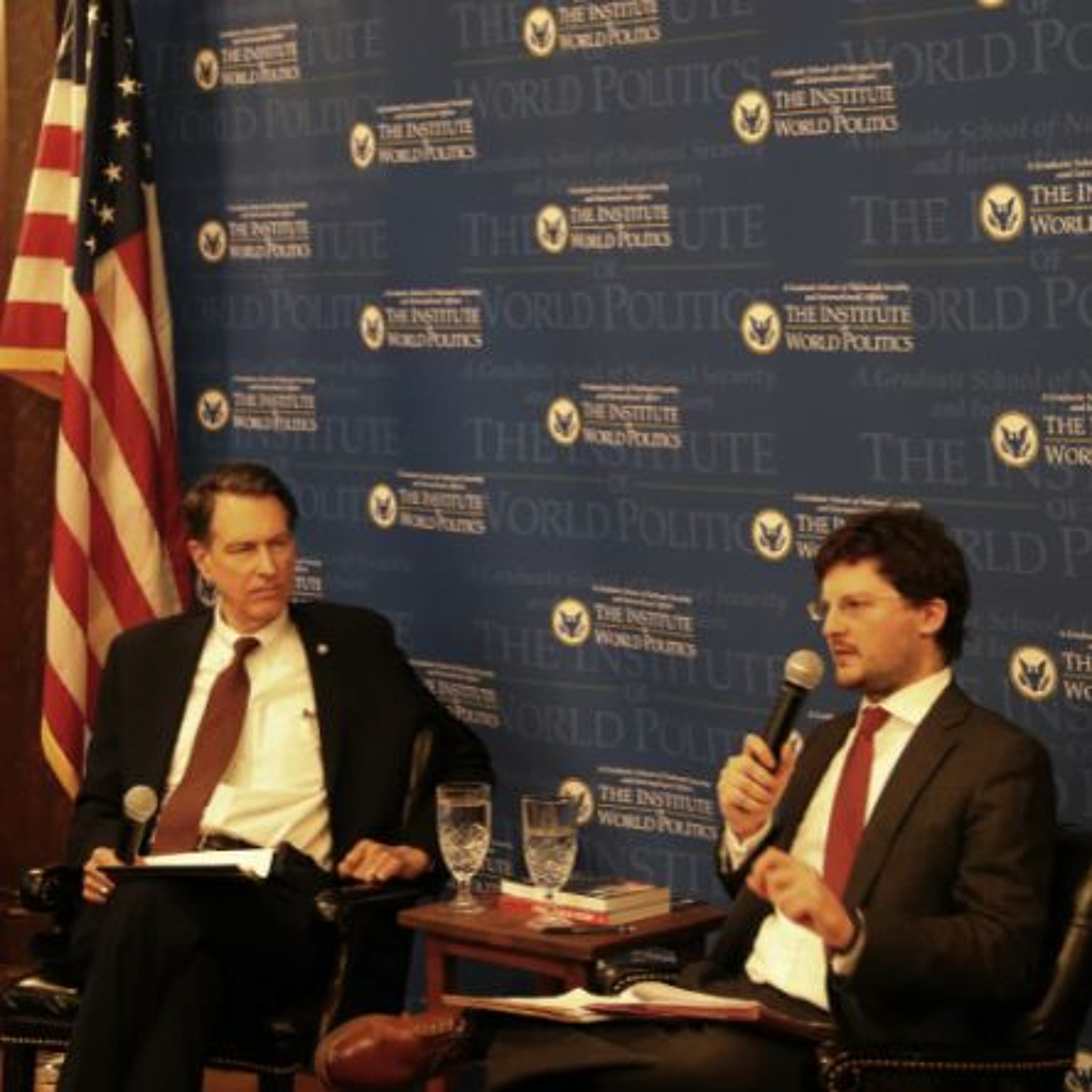
China's Vision of Victory
About the Book: A path-breaking work on Chinese global strategy, China’s Vision of Victory brings the reader to a new understanding of China’s grand-scale planning and ambitions. From seabed to space, from Africa to the Antarctic, from subsurface warfare to the rise of China’s global corporations, this book illuminates the greatest challenge of our lifetimes – the Chinese Communist Party’s ambition to end the American-led world and to bring about a century defined by Chinese power. China’s Vision of Victory a is landmark book on Chinese global strategy. It brings together numerous primary sources, both contemporary and historical, unveiling the grand strategic vision of China’s leaders, laying out the ambitions of the Chinese Communist Party and their project for the creation of a new world order, built on the ‘resurrection’ of China’s supremacy among nations. China’s leaders envision a turning point in history, the breaking up of the American-led global order, and the vanquishing of American power in the Pacific and beyond. Only when China has returned to its seat at the head of all nations, both in Asia and around the world, as the supreme power of the 21st Century, can the ‘great rejuvenation of the Chinese nation’ as China’s leaders call it, then be complete. About the Speaker: Dr. Jonathan D. T. Ward is the Founder of Atlas Organization, a consultancy focused on the rise of China and India, the new geopolitics of the Indo-Pacific, and US-China global competition. He completed his D.Phil. at Oxford in China-India relations and has traveled widely throughout China, India, and the Indo-Pacific Region. Dr. Ward has consulted for the Pentagon on Chinese long-term strategy and began studying Chinese global strategy, the Indian Ocean Region, and Maritime Asia for Oxford Analytica, the UK’s leading political risk consultancy. Dr. Ward’s travels in the Indo-Pacific include traversing the South China Sea on an Indonesian cargo ship, hitch-hiking with truck drivers in the China-India Himalayan border regions, and getting stuck on a mountaintop in the Strait of Hormuz during travels with Omani fishermen in the Persian Gulf. As an undergraduate, Jonathan studied Philosophy, Russian, and Chinese language at Columbia University. He speaks Russian, Chinese, Spanish, and Arabic and has lived in Russia, China, India, Latin America, Europe, and the Middle East. Dr. Ward is a member of the 2018 Next Generation National Security Leaders Fellowship program at the Center for a New American Security. He is a frequently invited speaker for public and private audiences in the United States, Europe, and Asia, on China, India, and the Indo-Pacific. He is also a Research Associate at the University of Oxford’s Changing Character of War Programme.
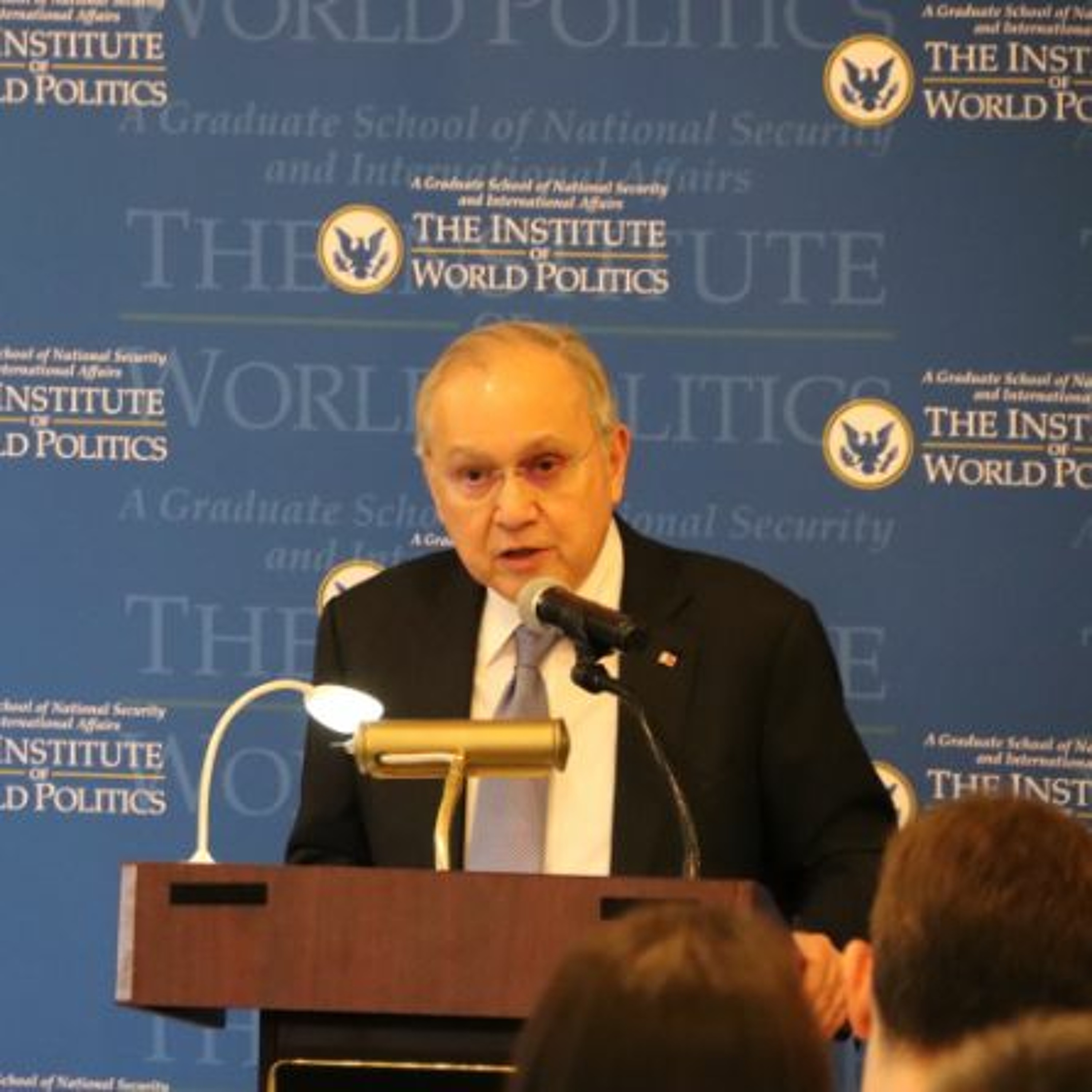
Philippines-US Relations in a Changing Indo-Pacific
About the Lecture: Ambassador Romualdez will speak on Philippines-US relations in the context of a quickly changing Indo-Pacific, including the emerging economic, political, and strategic realities of the region. He will also touch on the strong history of Philippine-US ties that include not only the trade and security relationship but perhaps most importantly the people to people ties that undergird the relationship. About the Speaker: Jose Manuel “Babe” del Gallego Romualdez was appointed Ambassador of the Republic of the Philippines to the United States of America in July 2017 by President Rodrigo Roa Duterte. On 29 November 2017, he presented his credentials to US President Donald J. Trump and formally assumed office as Ambassador Extraordinary and Plenipotentiary. Additionally, as the head of the Philippine Embassy in Washington, D.C., Ambassador Romualdez is concurrently the Philippines’ emissary to the Commonwealth of Jamaica, Republic of Haiti; Republic of Trinidad and Tobago; Antigua and Barbuda; Bahamas; Barbados; Dominica; Saint Kitts and Nevis; Saint Vincent and the Grenadines; and Saint Lucia. Prior to his appointment, Ambassador Romualdez was designated as a special envoy of the Philippine President to the United States. He also served as a member of several Philippine business delegations visiting the United States, China, Japan and New Zealand from 1989 to 2012. Ambassador Romualdez has extensive experience as a media practitioner and business executive. He used to be the Chief Executive Officer of Stargate Media Corporation and Publisher of People Asia Magazine (The Philippine Star affiliate). He was president of the Manila Overseas Press Club and vice-president of Rotary Club of Manila. Ambassador Romualdez writes columns for The Philippine Star. All his columns have a wide following of readers both in the Philippines and abroad. Born and raised in Manila, Ambassador Romualdez received a Bachelor of Science degree in Business Administration from De La Salle College in 1970.
Brothers at Arms: American Independence and the Men of France and Spain
About the book: Pulitzer Prize Finalist in History and Winner of the Journal of the American Revolution 2016 Book of the Year Award The remarkable untold story of how the American Revolution’s success depended on substantial military assistance provided by France and Spain and places the Revolution in the context of the global strategic interests of those nations in their fight against England. In this groundbreaking, revisionist history, Larrie Ferreiro shows that at the time the first shots were fired at Lexington and Concord the colonists had little chance, if any, of militarily defeating the British. The nascent American nation had no navy, little in the way of artillery, and a militia bereft even of gunpowder. In his detailed accounts Ferreiro shows that without the extensive military and financial support of the French and Spanish, the American cause would never have succeeded. France and Spain provided close to the equivalent of $30 billion and 90 percent of all guns used by the Americans, and they sent soldiers and sailors by the thousands to fight and die alongside the Americans, as well as around the world. Ferreiro adds to the historical records the names of French and Spanish diplomats, merchants, soldiers, and sailors whose contribution is at last given recognition. Instead of viewing the American Revolution in isolation, Brothers at Arms reveals the birth of the American nation as the centerpiece of an international coalition fighting against a common enemy. About the author: Dr. Larrie D. Ferreiro is the 2017 Pulitzer finalist for History, for his book “Brothers at Arms: American Independence and the Men of France and Spain Who Saved It”. He received his PhD in the History of Science and Technology from Imperial College London. He teaches history and engineering at George Mason University in Virginia and the Stevens Institute of Technology in New Jersey. He has served for over thirty-five years in the US Navy, US Coast Guard and Department of Defense, and was an exchange engineer in the French Navy. He lives with his wife and their sons in Virginia.
The Global Counterterrorism Fight Since 2017
About the Lecture: The Trump administration quietly undertook a range of counterterrorism efforts during its first year, allowing President Trump to rightfully claim at the State of the Union address in January 2018 that, under his administration, ISIS suffered substantial territorial loss to its physical caliphate. But, that alone is not enough. This presentation aims to update the terrorism challenge going forward in light of policy choices, a new National Counterterrorism Strategy, and international pressure on terrorist actors. Going forward, the United States must also consider adapting its approach to counter a broader (and sometimes underground) jihadist movement by working with the right foreign partners to institutionalize better governance and support stabilization efforts. Failure to do so will risk yet another jihadist terrorist group rising to threaten the United States and its broader interests. In addition, senior leaders and policymakers must attain a better understanding of the complex “Grey Zone” dynamics ongoing in the Middle East, where the United States and its partners must be willing to invest in a long-term counter-strategy to contest the competing forces — both state and non-state in that vacuous space. This dynamic is now complicated by United States military forces essentially pulling out of Syria, as well as the continuance of a strained relationship with Iran. Lastly, we can’t ignore domestic terrorism or homegrown violent extremism (HVE) – those would-be terrorists that are at risk of radicalizing and mobilizing for violence. Effective measures to counter these threats require a range of capabilities — not solely those related to law enforcement, but also with the capabilities of the private sector and civil society. About the Speaker: Mr. Costa served as the Special Assistant to the President and Senior Director for Counterterrorism on the National Security Council (NSC). At the NSC, he was responsible for coordinating counterterrorism policy and strategy as well as U.S. hostage recovery activities. Mr. Costa had 34 years of progressive national security experience and well‐documented success in strategy, policy, special operations, counterintelligence, and human intelligence, deploying on multiple contingencies and to combat operations in the Republic of Panama, Afghanistan, and Iraq. Mr. Costa’s last assignment with the United States Special Operations Command (USSOCOM) was as Program Director in the Operations Directorate. Preceding USSOCOM, Mr. Costa served as a Department of the Navy civilian at the Naval Special Warfare Development Group – with US Navy SEALs, and as a Senior Adjunct Instructor with Norwich University’s Bachelor of Science in Strategic Studies and Defense Analysis Program; with Norwich University, he taught on topics related to national security, strategy, and counterterrorism. He holds an M.A. in Strategic Intelligence from American Military University; an M.A. in National Security and Strategic Studies from the U.S. Naval War College; and a B.A. from Norwich University. His military awards and decorations include the Defense Superior Service Medal, Legion of Merit, and two Bronze Stars. In May 2013, Mr. Costa was inducted into USSOCOM’s Commando Hall of Honor for extraordinary and enduring service to Special Operations Forces. Most recently, Mr. Costa joined the International Spy Museum as the Executive Director where he will play a leading role in building on its extraordinary success as a Washington attraction and speaking responsibly on current counterterrorism and intelligence issues.
Three cases of Polish captivity in the years 1918 – 1924
This event is a part of IWP's Intermarium Lecture Series. Three cases of Polish captivity in years 1918 – 1924: Galician Ukrainians, “Petlura’s” Ukrainians and Bolsheviks – a comparative study About the lecture: Just after Poland had regained its independence, 3 wars with her neighbors ensued. The Ukrainian war in the Eastern Galicia. Then a conflict with other Ukrainians – this time from Dnipro Ukraine – in the territory of Volhynia. And finally, the conflict between Poland and Soviet Russia when the Red Army entered present-day Western Belarussian lands. One of the outcomes of those conflicts was the presence of thousands of prisoners-of-wars and internees in Poland; either captured on the frontline or interned by Polish military authorities on the charge of being a threat to newly created Polish state. During this lecture, a new approach to the problem of their captivity will be presented. Mr. Weglewicz will try to compare the three groups of POWs mentioned above. First, the approach of the Polish military authorities to all three groups will be presented. Then, he will analyze other topics, such as material conditions in the camps, alimentation/hunger, sanitary conditions and the death rates. Finally, the fate of the POWs after release from the camps also will be moved. The lecture has been based on archival resources from various archives, including Central Military Archive in Warsaw, Central State Historical Archive in Lviv and Central Archive of Supreme Bodies of Power and Administration in Kyiv, as well as newspapers from that era and the literature on the subject. About the speaker: Wiktor Weglewicz is a PhD candidate at the Jagiellonian University in Cracow, Poland. In 2018 he received a grant “Etiuda 6” for research for his PhD thesis from Polish National Science Center. Part of it is presently carrying out at the Harvard Ukrainian Research Institute. He also received a Visegrad Fund scholarship (at the National Academy of Sciences of Ukraine in Kyiv, 2017), and twice – European Union Erasmus scholarships (University of Florence, 2012-2013, and Charles University in Prague, 2015-2016). His scientific interests are centered around the cases of prisoners-of-wars and internees in Poland, 1918 – 1924 as well as Ukrainian prisoners-of-wars and internees in the countries of East – Central Europe, 1914 – 1924. He authored several articles, published in Poland, Ukraine and Russia; also, he has presented the results of his researches at various conferences in Cracow, Warsaw, Kyiv, Lviv, Kharkiv, Moscow and Sankt – Petersburg.
Russia’s Use of Private Military Companies to Advance Foreign Policy Goals
About the Lecture: International law prohibits the recruitment, use, financing and training of mercenaries. Mercenaries do not enjoy the rights of armed combatants such as to be treated as prisoners of war pursuant to Geneva Convention Norms. Notably, the Russian Criminal Code provides that the recruitment, training, financing, or supplying of mercenaries, and also the use of them in armed conflicts or hostilities is a crime. Nonetheless, the Russian Government has deployed private organizations such as the Wagner Group to advance its foreign policy goals in Ukraine, Central African Republic, Mozambique, Syria, Sudan, Venezuela, and elsewhere. Sometimes these forces play a decisive role in shifting the battlefield or political balance in limited conflicts. The Wagner Group and similar organizations are now engaged in supporting friendly regimes, securing rights to raw materials, and undermining certain governments. It is important that US National Security Managers not exaggerate the effectiveness of these forces when determining appropriate policies to pursue. In this lecture, IWP Adjunct Professor Ethan S. Burger will discuss the practical domestic Russian and international consequences of its outsourcing and/or privatizing these traditional state functions. About the Speaker: Ethan S. Burger is a Washington-D.C.-based international attorney and educator with a background in cybersecurity, transnational financial crime, and Russian legal matters. He has been a full-time faculty member at the American University (School of International Service — Transnational Crime Prevention Center) and the University of Wollongong (Australia) (Faculty of Law — Centre for Transnational Crime Prevention), and as well as an Adjunct Professor at the Georgetown University Law Center and Washington College of Law. He has taught about cybersecurity as a Visiting Professor at Vilnius University on a grant from the Fulbright Foundation and will be teaching a course during the Fall Semester at IWP on the International Law Governing Cyber Operations. Mr. Burger earned his J.D. at the Georgetown University Law Center, A.B. from Harvard University, and obtained a Certificate in Cybersecurity Strategy from Georgetown University. He will be teaching a course about the international law governing cyber-operations at the IWP during the Spring 2020 Semester.
What does moral courage have to do with the return of Americans taken hostage?
This event is sponsored by the IWP’s Student Veterans Association. About the Lecture: Ms. Diane Foley will discuss her personal account of her son, James W. Foley, an American freelance journalist who was taken hostage in Syria in 2012, tortured and executed by ISIS in 2014. Ms. Foley will explore how Jim aspired to moral courage and how it could inform the United States’ hostage policy. In light of Pearl Harbor Day as a reminder of the need for constant vigilance, she will discuss how having a well-thought-out hostage policy will minimize risk to American citizens. About the Speaker: Diane M. Foley is the mother of five children, including American freelance conflict journalist James W. Foley. She founded the James W. Foley Legacy Foundation in September 2014, less than a month after his public execution. Diane is currently serving as the President and Executive Director of JWFLF. Since 2014, she has led JWFLF efforts to fund the start of Hostage U.S. and the international Alliance for a Culture of Safety, ACOS. In 2015, she actively participated in the National Counterterrorism Center hostage review which culminated in the Presidential Policy Directive-30. This directive re-organized U.S. efforts on behalf of Americans taken hostage abroad into an interagency Hostage Recovery Fusion Cell, Special Presidential Envoy for Hostage Affairs and a White Hostage Response Group. Previously, Diane worked first as a community health nurse and then as a family nurse practitioner for 18 years. She received both her undergraduate and master’s degrees from the University of New Hampshire in Durham, NH.
Sneak Peek into forthcoming book ‘The Bonfire of the Verities’
Sneak Peek into forthcoming book “The Bonfire of the Verities” Pathologies of Public Policy Decision-Making and How to Fix Them. About the Book: Recent times in America are scarred by rampant public policy failures, leading to catastrophic involvements in Iraq and Afghanistan, and the 2008 financial crash. More are coming. Why do highly intelligent leaders, with degrees from the world’s greatest universities, with equally intelligent and skilled staffs and with limitless research and intelligence budgets, continue to make catastrophic decisions–even while warned in advance of catastrophes to come? And what can actually be done to stop this sickness? This presentation, summarizing the forthcoming book’s analysis, draws lessons from America’s Vietnam experience and its involvement in the Middle East, from an innovative form of economic analysis, and from case studies of what has failed–and worked–in the areas of anti-corruption and anti-spam programs. The steps it proposes–the verities–offer a decision-making alternative which overcomes the current squishiness of political and economic discussions in which “there are no wrong answers and nothing is ever concluded.” About the Speaker: Jeffrey Race has an AB, AM, and PhD in Government from Harvard and began this project while an Ash Fellow of the Kennedy School. He has taught political science and economics, and is the author of the War Comes to Long An, a highly original case study of human motivation in the Vietnam War which Amazon lists as one of the top ten military theory studies of all time. In a parallel engineering career Race is a Life Senior Member of the Institute of Electrical and Electronics Engineers and in this talk brings to bear on the pathologies of public policy making the insights of hard science.
National Security, Whistle-Blowers and the Nature of Secrecy
Title: National Security, Whistle-Blowers and the Nature of Secrecy This event is a part of the Global Impact Discussion Series by Founder and Moderator Patricia Schouker, IWP Alumna. About the Lecture: The significance of Edward Snowden’s revelations has been viewed primarily through the prism of threats to citizen privacy. Instead, Dr. Christopher Moran argues that the most dramatic change has been a decline of government secrecy, especially around national security. While the ethical aspects of state secrets and ‘whistle-blowing’ have received recent attention, few have attempted to explain the dynamics of this growing climate of exposure. The argument is largely technological and is grounded by the changing nature of intelligence work, which is increasingly merging with ‘big data’. Dr. Moran also identifies a related cultural change: many intelligence contractors are at best agnostic about the national security state. Meanwhile, the Internet itself provides the perfect medium for the anonymous degradation of secrets. Because the main driver is technology, Dr. Moran suggests this trend is likely to accelerate, presenting national security chiefs with one of their biggest future challenges. About the Speaker: Dr. Christopher R. Moran is a Reader in US National Security in the Department of Politics and International Studies (PAIS) at the University of Warwick (UK). He is the author of several books including Classified: Secrecy and the State in Modern Britain (Cambridge University Press, 2013) and Company Confessions: Secrets, Memoirs, and the CIA (St. Martin’s Press, 2016). Funded by the British Academy, he is currently writing a history of the turbulent relationship between President Richard Nixon, Henry Kissinger, and the CIA, featuring new revelations about White House ‘dirty tricks’ as well as critical reflections on the role played by the Agency in facilitating SALT, American withdrawal from Vietnam, and triangular politics between the United States, the Soviet Union, and China. Together with colleagues from John Hopkins and Leicester University, he is the co-editor of the new ‘Georgetown Studies in the History of Intelligence’ book series.
Witold Pilecki: an ordinary man turned volunteer for Auschwitz?
About the Lecture: This lecture is a part of the 12th Annual Kościuszko Chair Conference that was held on November 23, 2019, at The Institute of World Politics. Rotamaster Witold Pilecki, a Polish intelligence operator who volunteered for Auschwitz, is presented by non-Polish authors as an ordinary man who was capable of a heroic deed in times of war. Mrs. Maria Juczewska examines the validity of that narration in view of evidence provided by scholarly research, archival material, and accounts of his close and kin. About the Speaker: Ms. Maria Juczewska is the Associate Director of the Kościuszko Chair of Polish Studies at The Institute of World Politics in Washington, DC.
Polish lands 1939-1956: Civilians’ Survival Strategies During the War, Occupation, and Liberation
About the Lecture: This lecture is a part of the 12th Annual Kościuszko Chair Conference that was held on November 23, 2019, at The Institute of World Politics. The Polish population suffered huge losses during WWII. Millions of soldiers and civilians were wounded and killed. Those who survived developed various ways to cope with the extreme situation they had to face during the war. These methods proved to be very useful in the first years after Soviet liberation in 1945, in the era of mass migrations and resettlements, but also in the times of Stalinist lawlessness and repression. These times will be presented on the basis of information contained in the diaries sent to three competitions for settlers in western Poland. The vast majority of these materials have not been published so far. About the Speaker: Dr. Jakub Isański is a Professor of Sociology at Adam Mickiewicz University in Poznań, Poland.
The town of Pinsk, the gubernya of Minsk: On the Eve of the Great War
Title: The town of Pinsk, the gubernya of Minsk: On the Eve of the Great War About the Lecture: This lecture is a part of the 12th Annual Kościuszko Chair Conference that was held on November 23, 2019, at The Institute of World Politics. Dr. Chodakiewicz discussed the political, economic, social, and cultural situation in Pinsk and its environs. About the Speaker: Dr. Marek Chodakiewicz is a Professor of History at The Institute of World Politics and the Kościuszko Chair of Polish Studies.
The Miracle Man on the Vistula
About the Lecture: This lecture is a part of the 12th Annual Kościuszko Chair Conference that was held on November 23, 2019, at The Institute of World Politics. This year is the 100th anniversary of Herbert Hoover’s visit to Poland as head of the American Relief Administration: he went in Woodrow Wilson’s stead. The significance of the relief is still little-known in the Polish public consciousness, even among historians. It may have been one of the finest episodes in U.S.-Polish relations and is worthy of more recognition. About the Speaker: Mr. Nicholas Siekierski is a Ph.D. candidate at the Polish Academy of Sciences in Warsaw, Poland.
The Way Forward in the Post Revolution Sudan
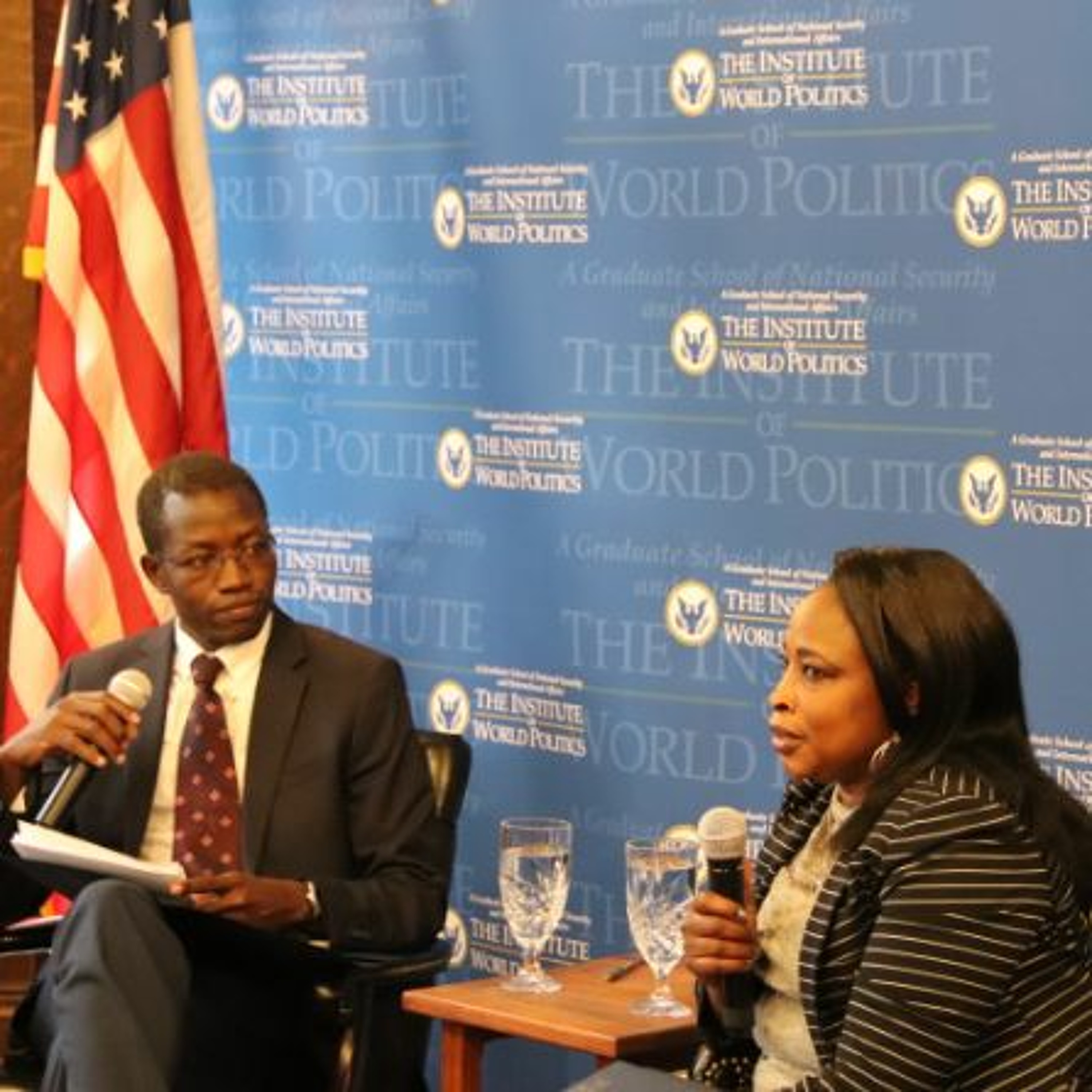
About the Event: Our distinguished panelists will discuss the political stability and peace prospects, economic, social cohesion, and the way forward in Sudan in the post-revolution era now under a civilian government and the ongoing peace negotiations between the transitional government and the oppositions groups. About the Speakers: Niemat Ahmadi: A native of Kebkabiya, North Darfur region of Sudan, Ms. Ahmadi is the Founder and President of the DC-based Darfur Women Action Group DWAG, the organization that focuses on the empowerment of the Darfur genocide affected communities and the historically marginalized Sudanese to bring them to the center to participate in decisions making and to effectively contribute to shaping the future of Sudan. Previously, Ms. Ahmadi worked with NGO’s in various fields of emergency and development in Sudan, including Oxfam Great Britain, Intermediate Technology Development Group ( Practical Action) and the United Nation’s World Food Program. Ms. Ahmadi was recognized by President George W. Bush as one of 8 global human rights fighter of the year 2008. Ms. Ahmadi is a veteran human rights advocate and seasonal strategic planning and management professionals. Ms. Ahmadi previously worked as the Director of Global Partnerships for United to End Genocide and the Save Darfur Coalition. She served as an advisor at the 7th round of Inter-Sudanese Darfur peace talks in Abuja, Nigeria, in 2006. Hashem Mekki: Hashem Mekki, MA, has taught Arabic Language, Culture & Middle East Media at IWP since 2012. He is the owner of Bridge Language Solutions, providing an array of language translation, interpretation and teaching services to the Washington DC metropolitan area, and the founder of Kele Global, a nonprofit organization that promotes education, health, and economic empowerment in Sudan and the Republic of South Sudan. He also teaches Arabic language to federal employees & professionals at the National Nuclear Security Administration at the Department of Energy. Mr. Mekki volunteers with the IWP Center for Human Rights and International Affairs by providing Arabic translations & strategic cultural perspectives on North Africa and the Middle East. Mr. Mekki previously worked with the Center for Strategic and International Studies and served on the board of Voices of Sudan, a nonprofit based in Washington, D.C. He holds bachelor degrees in both Political Science and International Studies from the City College of New York, and a Master of Arts in Strategic Studies and International Politics from IWP.
How Nation States Attack High Value Assets
About the Lecture: Technologist Eric Fulton will discuss “How Nation States Attack High Value Assets,” with an emphasis on Chinese action. He will draw from his extensive experience in technology, hacking, and internet related issues, including his work in China. About the Speaker: Mr. Eric Fulton is a business owner and technologist. His first job was hacking international corporations, helping them identify and secure their information systems. During that time, Eric presented independent research at universities, the prestigious Black Hat Conference, and the world’s largest hacker conference, DEFCON. Eric went on to start a local Internet Service Provider in Montana with the goal of helping solve the problem of rural broadband. Taking the skills, he learned in Montana, Eric then built a successful global banking network with a strong presence in Asia. With over 10 years of experience advocating for privacy and Internet freedom, Eric continues his mission of contributing to a secure, free, open Internet, working as the Identity Evangelist for Keybase, a company dedicated to solving identity and encrypted communication.
Ideology: A Word in Search of Meaning
About the Lecture: In current political conversations and reporting, the word “ideology” seems to have a plethora of meanings, often not clearly related to one another and sometimes clearly inconsistent with each other. The word is commonly used to mean a kind of voting behavior (an “ideological vote” versus a “party vote”), a kind of political thought characterized by a call to revolutionary action, or a political (or non-political) “belief system” held by a group of people or perhaps by just one individual. And this shortlist does not include its common usage as a synonym for “philosophy,” “theory,” “doctrine,” “policy,” and other forms of thought. Several of these usages of the word “ideology” are so well established that they can no longer be criticized as mistaken; but using the term in light of this jumble of definitions leads to misunderstanding and confusion. This lecture attempts to pick apart the threads in this tangle and to identify the main strands of meaning that the term has acquired in its relatively short history. Two main lines of contemporary meaning stand out: ideology as a type of social consciousness, a notion particularly favored by Western Marxists and Marxist-influenced theorists, and ideology as a form of radical political doctrine often characterized as apocalyptic, millenarian, and nihilistic. We will briefly trace the former tradition from its French Enlightenment roots to its contemporary political usage and then will outline some of the conceptual approaches to radical ideology that exemplify the latter tradition. About the Speaker: Bill Miller is a Professor of Politics at Marymount University in Arlington, Virginia. He received his J.D. and Ph.D. from the University of Notre Dame. As an attorney, he has been in private practice in Pennsylvania, has taught law at Widener University’s School of Law, served on the legal staff of the Judiciary Committee of the United States Senate, and most recently has worked on litigation teams at several Washington, D.C. law firms. He is the author of A Primer on American Courts. Since 1986, Professor Miller has been on the faculty of Marymount University after teaching political theory and other politics courses at several colleges and universities. Though teaching a wide variety of politics and law-related courses at Marymount, his primary focus has been on political theory and political ideology, which he approaches from a classical perspective influenced by Gerhart Niemeyer, Eric Voegelin, and Leo Strauss.
Remarks: Encounter with Katyn
About the Book: Generally, there are two major approaches in research on Katyn: the perspective of the victims and, to a somewhat lesser extent, the perpetrators‘ perspective. In his Encounter with Katyn Wolsza has touched upon another dimension of this atrocity, which has not been addressed in the work done so far. He describes the stories of over 60 representatives of various social groups who visited the Katyn site in 1943. The postwar Communist regime in Poland consistently plugged the Katyn Lie and conducted a campaign of repression and reprisals against witnesses of the Soviet crime. They were accused of collaboration with the Germans, forced to cancel testimonies about the real perpetrators, put under surveillance, and imprisoned. Some of them had to leave the country. Wolsza’s book portrays the Katyn Massacre not only as the extermination of Polish elites by a totalitarian regime, but also as a symbol of the struggle for universal values such as memory, truth, and justice. This corresponds to the wider perspective of the struggle of an enslaved society fighting for its freedom and independence. About the Speaker: Dr. Marek Jan Chodakiewicz holds The Kosciuszko Chair in Polish Studies at The Institute of World Politics, where he also serves as a Professor of History and teaches courses on Geography and Strategy, Contemporary Politics and Diplomacy, Russian Politics and Foreign Policy, and Mass Murder Prevention in Failed and Failing States. He is the author of Intermarium: The Land Between the Black and Baltic Seas and numerous other books and articles. Professor Chodakiewicz is the head of the Center for Intermarium Studies at The Institute of World Politics. He holds a Ph.D. from Columbia University and has previously taught at the University of Virginia and Loyola Marymount University.
Encounter With Katyn
About the Book: Generally, there are two major approaches in research on Katyn: the perspective of the victims and, to a somewhat lesser extent, the perpetrators‘ perspective. In his Encounter with Katyn Wolsza has touched upon another dimension of this atrocity, which has not been addressed in the work done so far. He describes the stories of over 60 representatives of various social groups who visited the Katyn site in 1943. The postwar Communist regime in Poland consistently plugged the Katyn Lie and conducted a campaign of repression and reprisals against witnesses of the Soviet crime. They were accused of collaboration with the Germans, forced to cancel testimonies about the real perpetrators, put under surveillance, and imprisoned. Some of them had to leave the country. Wolsza’s book portrays the Katyn Massacre not only as the extermination of Polish elites by a totalitarian regime, but also as a symbol of the struggle for universal values such as memory, truth, and justice. This corresponds to the wider perspective of the struggle of an enslaved society fighting for its freedom and independence. About the Author: Professor Tadeusz Wolsza is a recognized Polish historian and political scientist (academic affiliations: Institute of History at the Polish Academy of Sciences in Warsaw, the Casimir the Great University at Bydgoszcz, Institute of National Remembrance). He was born in 1956 in Poland. He specializes in the contemporary history of Poland, especially in the wartime and postwar Polish political émigré community, the Katyn Massacre, the anti-Communist resistance movement in Poland, and Stalinist crimes in postwar Poland. Professor Wolsza has published over 280 academic papers and books, and some of them have been translated into Russian, German, English, Italian, Serbian, and Slovak.
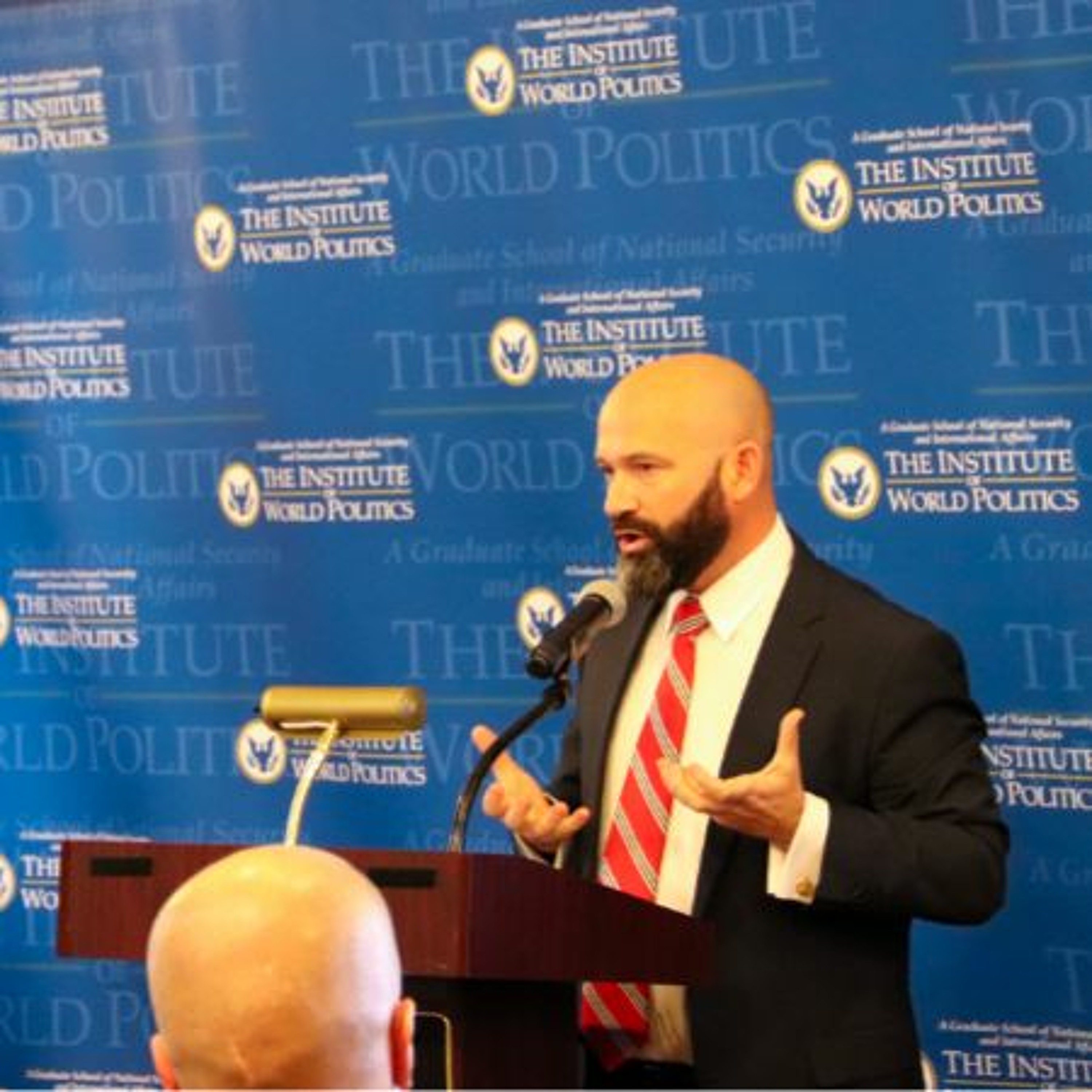
What Thucydides can Teach Us About Hong Kong and China: a Critical Response
About the Lecture: In 2017, Graham Allison, founding dean of the Harvard Kennedy School and former assistant secretary of defense, published “Destined For War: Can America and China Escape Thucydides’s Trap?” Allison’s Thucydides’s Trap rapidly became an influential statement on the challenge that a rising China poses to the international order created and lead by the United States. To help understand the dangers that China’s rapid economic, technological, and military growth poses to both countries, Allison draws on the classic statement on great power war — Thucydides’ History of the Peloponnesian War — to argue that the “structural stress caused when a rising power threatens to upend a ruling one” makes even “ordinary flashpoints” likely to trigger large-scale conflict.” Allison is certainly right about the growth of China. And he is right to look to Thucydides for help. But Allison reduces Thucydides’ magisterial work to an instrument of realpolitik. Using Thucydides’ account of the siege of Plataea as a guide to China’s contemporary treatment of Hong Kong, we can see another, deeper and richer, lesson in Thucydides’ History, one that must not be forgotten by those who wish, in the face of Chinese authoritarianism, to preserve the fragile but precious gift of freedom at the heart of Western civilization. About the Speaker: Bernard J. Dobski is an Associate Professor of Political Science at Assumption College and is currently a Visiting Scholar for 2019-2020 at the Heritage Foundation. He is the co-editor of two volumes on Shakespeare’s political thought. His articles and essays on the political wisdom of Thucydides, Xenophon, Shakespeare, and Mark Twain appear in the Review of Politics, Interpretation, Society, and Philosophy & Literature. He has also published on foreign policy, military strategy, sovereignty, and nationalism.
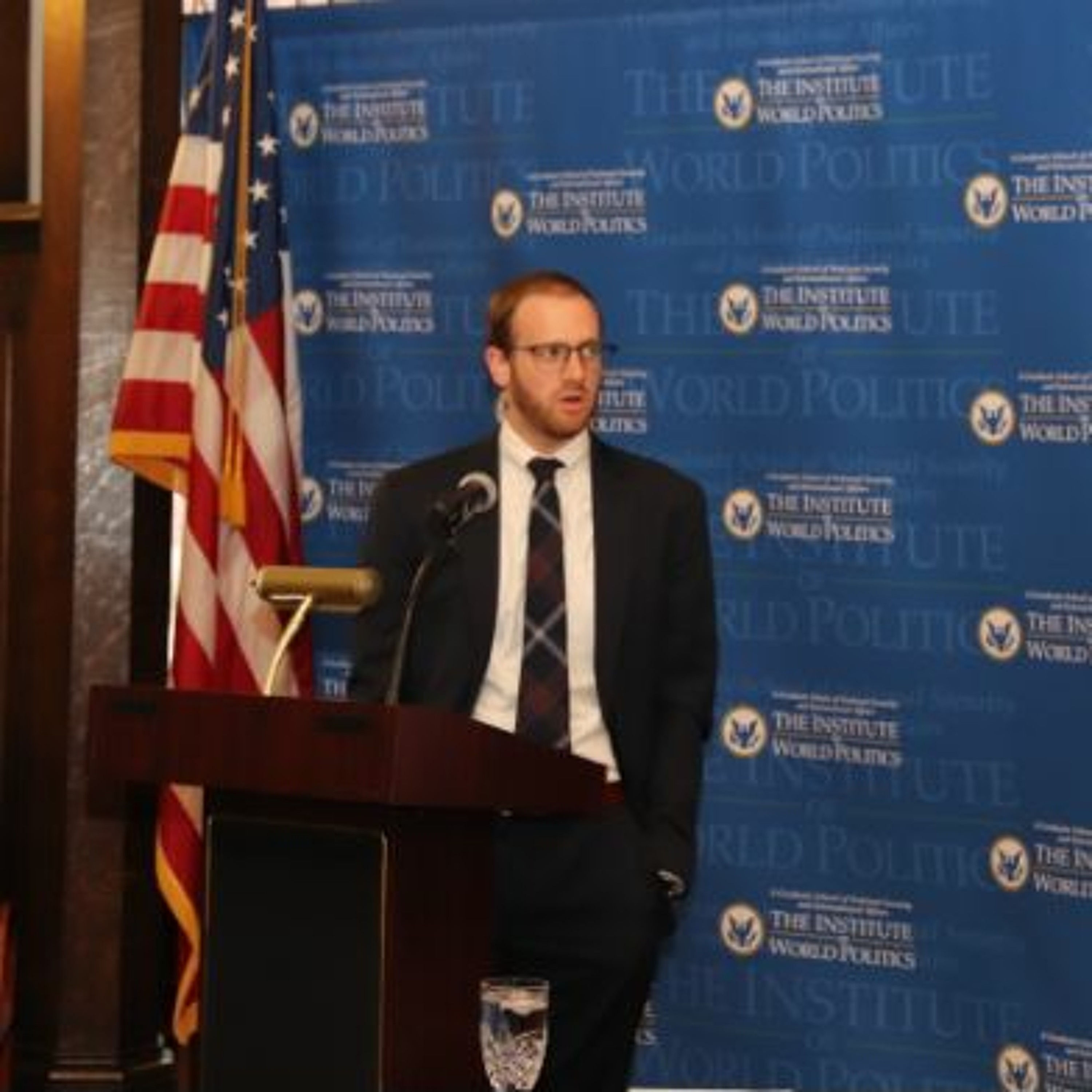
The War for Muddy Waters: Pirates, Terrorists, Traffickers, and Maritime Insecurity
About the Book: Historically, operations and studies regarding maritime security focus on individual threats (e.g., piracy, terrorism, narcotics, etc.) and individual measures to target them (e.g., counter-piracy, counter-terrorism, counter-narcotics). This book explores, for the first time, an overall strategy for maritime security, integrating these issues into a single framework. Tallis argues that as maritime security threats rise in sophistication, it will be increasingly appealing to apply military resources to counter them. Military tactics, however, may not be the ideal mechanisms for addressing challenges that are often closer to crime than they are to war. Leveraging the sea services’ capabilities, without overly militarizing maritime security, is a complicated problem set that requires a more strategic and partner-oriented approach to the challenge. At stake, in Tallis’ estimation, is the war for tomorrow’s most important communities, their human security, and the muddy waters on which they and the global system rely. About the Author: Dr. Tallis is a research scientist at the Center for Naval Analyses, a Federally Funded Research and Development Center where he specializes in maritime security, naval strategy, and foreign policy. His project management experience includes directing cross-disciplinary teams building novel research designs to address unstructured strategic and operational questions. He has also conducted independent field research, including embarking USS Harry S. Truman during the U.S. Navy’s first Arctic carrier deployment in nearly 30 years as civilian analyst and adviser to the strike group commander. Tallis holds a Ph.D. in international relations from the University of St Andrews, where he researched theories of littoral security that resulted in the book, The War for Muddy Waters: Pirates, Terrorists, Traffickers, and Maritime Insecurity (Naval Institute Press, 2019).
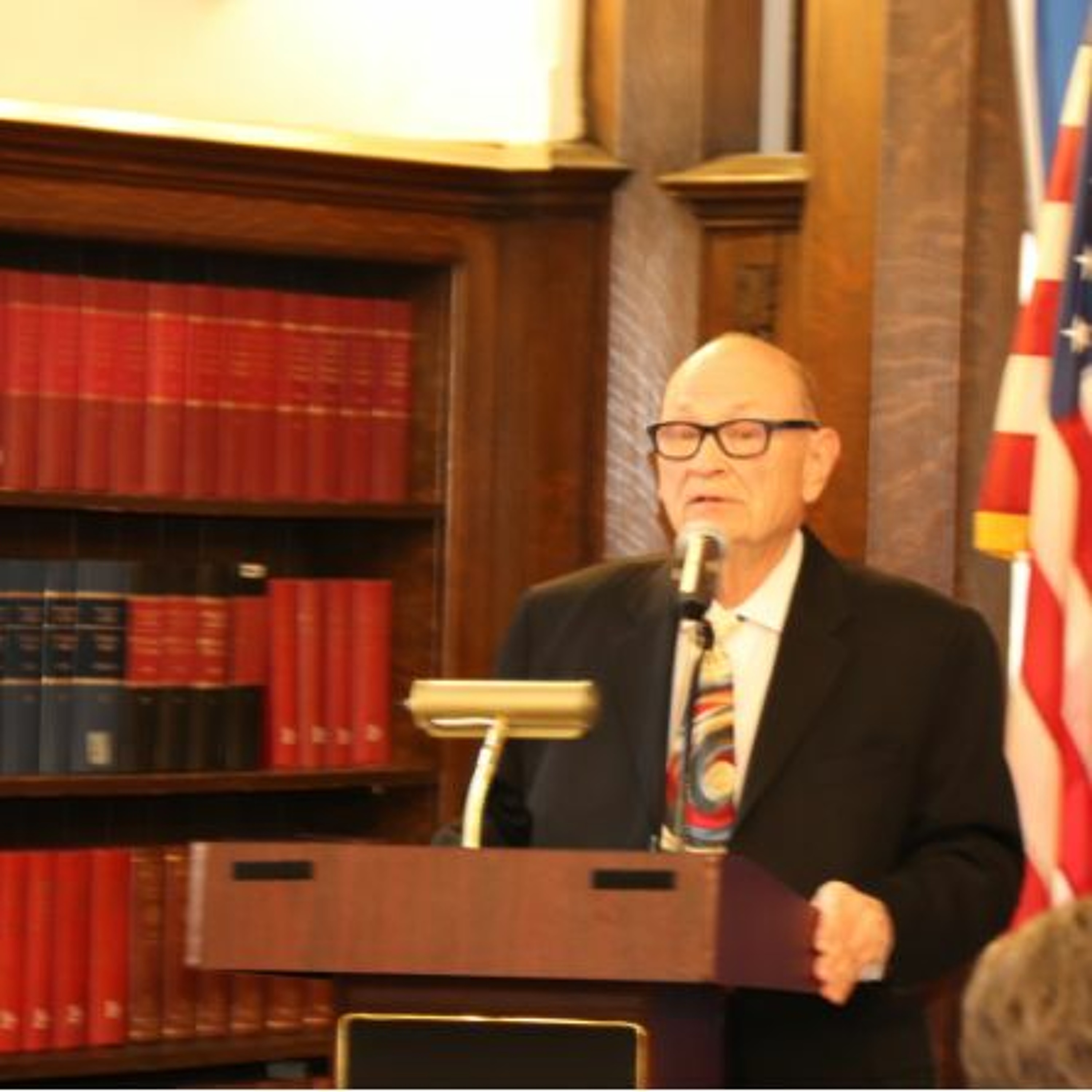
Federal Pianist: The Rueful Tales of the Only One
About the book: In the halcyon days of the Reagan administration, a young artist was brought in to give the president’s closest friend piano lessons with White House clearance as a political appointee. What the young pianist saw is what few Americans knew. In this true but little known story, John Robilette has changed the names in a novelized account of being the only Reagan appointee that was fired and rehired before creating a public diplomacy program that helped to win the Cold War. And not with the firing of a gun, but with classical music in 63 countries around the world. This sad, comical and explosive story of an innocent in the vortex of power is a must for Americans who are interested in their government, humor, and the arts. “John Robilette is a brilliant pianist and famous international performer — but, as he shows in this fascinating little book, he was keeping his eyes wide open in that world he so crowned. ‘Federal Pianist,’ based on his own rich experience with the arts in the federal government is alternatively engrossing, sad, and comical. Bravely, he opens a heretofore closed door into the little-known world of arts and foreign policy; you’d be wise to walk right in.” ~Georgie Anne Geyer, Syndicated Columnist, and Foreign Correspondent. About the author: John Robilette is an international concert pianist who has performed in 26 countries around the world including some of its major classical music venues. He has also recorded commercial CDs’ of solo pieces as well as piano concerti with leading orchestras in Europe. Also now a SAG actor, he has had the lead or supporting roles in nine independent films, many of which were officially selected in film festivals around the United States and in Tokyo, Japan. He further wrote, directed, and produced a 30-minute short comedy film entitled, “My Piano Lesson.” This year he has been named to the 26th Annual SAG awards nominating committee to determine the best male and female actors in drama and comedy for television. He holds a Master of Fine Arts degree from UCLA, a Doctor of Musical Arts from the Catholic University of America with earlier studies at the École Normale de Musique in Paris, France. Dr. Robilette has further served on the piano faculties of two universities and given master classes around the world. As a young man in 1981, he was asked to play a recital at the inauguration of President Ronald Reagan. Subsequently, he was brought into the administration as a political appointee where he created and directed the Artistic Ambassador Program for the United States Information Agency from 1983-1989. This was an intercultural exchange program revolving around classical music which became popular in 63 countries around the world and was honored at the White House.
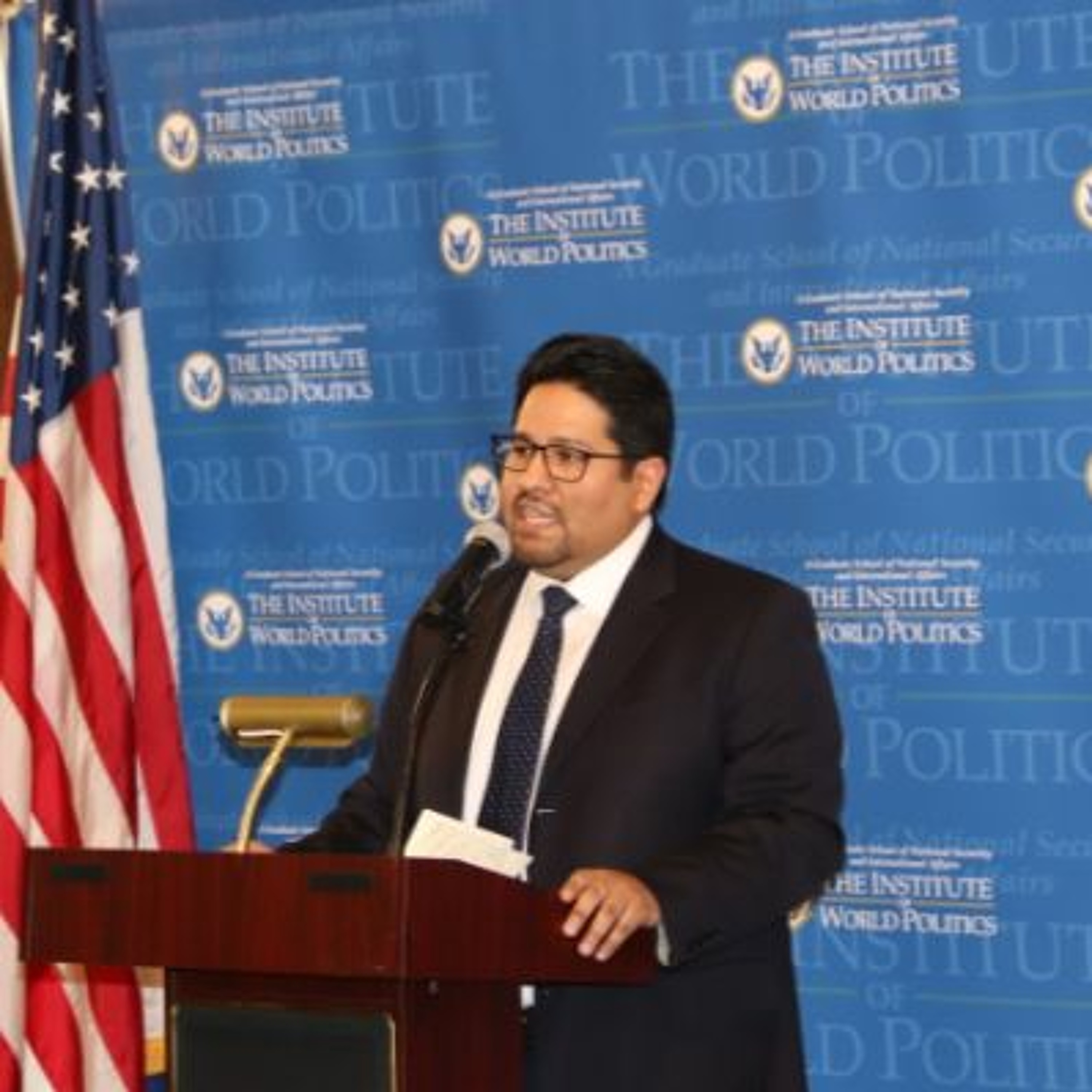
The Middle Eastern Origin of the Venezuela Crisis
About the Lecture: The Maduro regime in Venezuela is sustained through a multi-dimensional, multi-faceted, sophisticated matrix of foreign and domestic actors that includes armed groups in Venezuela and transnational criminal and foreign terrorist organizations. While most attention is paid to Cuba, China, and Russia’s role in Venezuela, the regime has increasingly relied on an array of Middle Eastern actors, namely Hezbollah and Iran, to project their revolutionary goals regionwide. Joseph Humire, a former Marine and Iraq war veteran, will present the findings of more than three years of ongoing research that includes many trips to South America to collect firsthand information from those with intimate knowledge of the threat. He has repeatedly briefed these findings on the historic and immigration ties between Venezuela and the Middle East to the Defense Ministries of Brazil, Colombia, as well as various entities within the US Department of Defense, namely Special Operations Command. About the Speaker: Joseph M. Humire is a global security expert, specializing in trans-regional threats in the Western Hemisphere. Mr. Humire provides regular briefings and lectures on international terrorism, transnational organized crime, Islamism and Iran and Hezbollah’s influence in the Americas to various entities within the U.S. national security community, as well as prominent think tanks and universities worldwide. He has testified numerous times before the U.S. Congress as well as the European and Canadian Parliament. Mr. Humire has also served as an expert witness to several important terrorism trials in South America, including an ongoing trial of an accused Hezbollah operative in Peru. Mr. Humire is a regular national security commentator for a variety of major English and Spanish language media, including Univision, Telemundo, CNN en Español, and NTN24 regional news network, as well as Fox News and CNN International. He has published in both languages for various newspapers and academic journals across the Americas and released his first book in 2014 titled Iran’s Strategic Penetration of Latin America, published by Lexington Books. More recently, he wrote the foreword for a new book by Dr. Max G. Manwaring, titled Confronting the Evolving Global Security Landscape published by Praeger Security International. Mr. Humire currently serves as the executive director of the next generation, national security think tank—Center for a Secure Free Society (SFS)—based in Washington D.C. and is a distinguished senior fellow at the Gatestone Institute and the Middle East Forum. Prior to SFS, he served in the U.S. Marine Corps with a combat tour in Iraq and a multinational training exercise UNITAS in Latin America and the Caribbean. After leaving the military, he graduated from George Mason University with a degree in Economics and Global Affairs. Mr. Humire began building SFS’s global network of more than 100 security scholars in almost 30 countries worldwide as the Director of Institute Relations at the Atlas Economic Research Foundation. Mr. Humire’s unique blend of military experience, economics education, and expertise in asymmetric warfare, offers a new perspective to U.S. foreign policy and national security.
Examining the Construct of Great-Power Competition
About the Lecture: The Trump Administration’s national defense strategy contains the following judgment: “The central challenge to U.S. prosperity and security is the reemergence of long-term, strategic competition by…revisionist powers.” Why has “great-power competition” become a—if not the—dominant construct guiding the U.S. foreign policy establishment’s understanding of contemporary geopolitics? What are its analytical underpinnings and prescriptive implications? About the Speaker: Ali Wyne is a Washington, DC-based policy analyst in the RAND Corporation’s Defense and Political Sciences Department. He serves as a nonresident senior fellow with the Atlantic Council’s Scowcroft Center for Strategy and Security and a nonresident fellow with the Modern War Institute. Since January 2015 he has been the rapporteur for a U.S. National Intelligence Council working group that convenes government officials and international relations scholars to analyze trends in the world order. Ali served as a junior fellow in the Carnegie Endowment for International Peace’s China Program from 2008 to 2009 and as a research assistant to Graham Allison at the Belfer Center for Science and International Affairs from 2009 to 2012. He has also conducted research for Robert Blackwill, Derek Chollet, Henry Kissinger, Wendy Sherman, and Richard Stengel. From January to July 2013 he worked on a team that prepared Samantha Power for her confirmation hearing to be ambassador to the United Nations. From 2014 to 2015 he was a member of the RAND Corporation’s adjunct staff, working for the late Richard Solomon on its “Strategic Rethink” series. Ali graduated from the Massachusetts Institute of Technology with dual degrees in Management Science and Political Science (2008) and received his Master in Public Policy from the Harvard Kennedy School (2017), where he was a course assistant to Joseph Nye. While at the Kennedy School, he served on a Hillary for America working group on U.S. policy towards Asia. Ali is a coauthor of Lee Kuan Yew: The Grand Master’s Insights on China, the United States, and the World (2013) and a contributing author to Our American Story: The Search for a Shared National Narrative (2019), Power Relations in the Twenty-First Century: Mapping a Multipolar World? (2017), and the Routledge Handbook of Public Diplomacy (2008). He has published extensively in outlets including the New York Times, the Washington Post, the Wall Street Journal, the Boston Globe, and the Christian Science Monitor. Ali delivered the welcome address at the 2011 St. Gallen Symposium, participated in the 2015 Manfred Wörner Seminar, was selected to attend the 2016 Young Strategists Forum and the 2018 Brussels Forum Young Professionals Summit, and participated in the 2018 China-U.S. Young Scholars Dialogue, the 2019 Taiwan-U.S. Policy Program, and the 2019 Atlantik-Brücke Young Leaders Program. In 2012, Young Professionals in Foreign Policy and the Diplomatic Courier selected him as one of the 99 most influential professionals in foreign policy under 33. Ali is a term member of the Council on Foreign Relations, a David Rockefeller fellow with the Trilateral Commission, and a security fellow with the Truman National Security Project.
Leadership . . . With Chinese Characteristics
About the Lecture: What sorts of people rise to leadership in the Chinese Communist Party? How do they get to the top? What qualities define them? How should we deal with them? A retired American diplomat speaks from his experience in China. About the Speaker: William McCahill joined NBR as a Senior Resident Fellow in July 2016. His work focuses on Chinese politics and policy. Before joining NBR, Mr. McCahill had worked in Hong Kong and China as the Senior Advisor for China at Mirabaud & Cie., a Swiss private bank headquartered in Geneva, and earlier in a similar capacity for Religare Capital Markets. He had previously co-founded and managed a China-focused equities and macro research firm, opened the Beijing office of a major American law firm, and operated a business consultancy in China. A 25-year Foreign Service career preceded McCahill’s business activities. He began his diplomatic service in Hong Kong, Taiwan, and Beijing; subsequently held senior posts at US missions in Western Europe, Scandinavia, and Canada; and in 2000 retired from his last posting as Chargé d’affaires at the U.S. Embassy in Beijing. His academic background includes degrees from Boston College and Harvard University in Theology, English, the History of Religion, and Sanskrit & Indian Studies.
Stealth War: How China Took Over While America’s Elite Slept
About the Book: The media often suggest that Russia poses the greatest threat to America’s national security, but the real danger lies farther east. While those in power have been distracted and disorderly, China has waged a six-front war on America’s economy, military, diplomacy, technology, education, and infrastructure–and they’re winning. It’s almost too late to undo the shocking, though nearly invisible, victories of the Chinese. In Stealth War, retired Air Force Brigadier General Robert Spalding reveals China’s motives and secret attacks on the West. Chronicling how our leaders have failed to protect us over recent decades, he provides shocking evidence of some of China’s most brilliant ploys, including: • Placing Confucius Institutes in universities across the United States that serve to monitor and control Chinese students on campus and spread communist narratives to unsuspecting American students. • Offering enormous sums to American experts who create investment funds that funnel technology to China. • Signing a thirty-year agreement with the U.S. that allows China to share peaceful nuclear technology, ensuring that they have access to American nuclear know-how. Spalding’s concern isn’t merely that America could lose its position on the world stage. More urgently, the Chinese Communist Party has a fundamental loathing of the legal protections America grants its people and seeks to create a world without those rights. Despite all the damage done so far, Spalding shows how it’s still possible for the U.S. and the rest of the free world to combat–and win–China’s stealth war. About the Author: Robert Spalding retired from the U.S. Air Force as a brigadier general after more than twenty-six years of service. He completed his career as the senior director for strategic planning to the president at the National Security Council, and was the chief architect for the National Security Strategy. He is a former China strategist for the chairman of the Joint Chiefs of Staff and the Joint Staff at the Pentagon, as well as a senior defense official and defense attaché to China. He earned his doctorate in economics and mathematics from the University of Missouri and is fluent in Mandarin.
Measuring Energy Security Risk: Assessing Risk in a Global Energy Market
About the Lecture: Energy security has been a perennial concern since the early 1970s. But what exactly do we mean by energy security, and how do we know if it’s getting better or worse? This presentation discusses different dimensions of U.S. energy security and how they can be measured in an index. The presentation also will look at how the U.S. performs compared to other large energy-using countries. About the Speaker: Stephen D. Eule is vice president for climate and technology at the U.S. Chamber of Commerce’s Global Energy Institute. With more than two decades of experience, Eule is a recognized and respected expert on the nexus between energy and climate change. He engages with business groups across the world, is asked frequently to testify before Congress, and is quoted often in major media outlets. Eule represents the Chamber in the UN Framework Convention on Climate Change and helped found the Major Economies Business Forum on Energy Security and Climate Change, a coalition of more than 20 national cross-sector business organizations from major economies. Eule also is responsible for GEI’s two authoritative energy security reports—the Index of U.S. Energy Security Risk and the International Index of Energy Security Risk. These risks indices represent the first and most comprehensive efforts to quantify energy security risks over time and across a wide range of measures. They have been cited by the International Energy Agency and are used by universities and think tanks across the world. Previously, Eule was director of the Office of Climate Change Policy & Technology at the Department of Energy. There he oversaw the development of the U.S. Climate Change Technology Program Strategic Plan in 2006 and ran President Bush’s Climate VISION program. Internationally, Eule represented DOE as part of the U.S. government delegations to the UNFCCC, Intergovernmental Panel on Climate Change, the G20, and other multilateral forums. He was lead chapter author on the U.S. Climate Action Report—2006 and contributed to other U.S. government publications. His prior experience includes a decade working in various public policy positions. He was a subcommittee staff director on the House Science Committee and served as legislative director for Rep. Nick Smith (R-MI). In addition, Eule was an environmental analyst in the Washington, D.C., office of New Jersey Gov. Christine Todd Whitman (R-NJ). Earlier, he worked for eight years as an Orkand Corporation consultant to the Energy Information Administration and worked at the Heritage Foundation. Eule earned a Master of Arts degree in geography from The George Washington University and a Bachelor of Science degree in biology from Southern Connecticut State College.
Assad or We Burn the Country: How One Family’s Lust for Power Destroyed Syria
About the Book: In spring 2011, Syrian President Bashar al-Assad turned to his friend and army commander, Manaf Tlass, for advice about how to respond to Arab Spring-inspired protests. Tlass pushed for conciliation but Assad decided to crush the uprising — an act which would catapult the country into an eight-year long war, killing almost half a million and fueling terrorism and a global refugee crisis. Assad or We Burn the Country examines Syria’s tragedy through the generational saga of the Assad and Tlass families, once deeply intertwined and now estranged in Bashar’s bloody quest to preserve his father’s inheritance. By drawing on his own reporting experience in Damascus and exclusive interviews with Tlass, Dagher takes readers within palace walls to reveal the family behind the destruction of a country and the chaos of an entire region. Dagher shows how one of the world’s most vicious police states came to be and explains how a regional conflict extended globally, engulfing the Middle East and pitting the United States and Russia against one another. Timely, propulsive, and expertly reported, Assad or We Burn the Country is the definitive account of this global crisis, going far beyond the news story that has dominated headlines for years. About the Speaker: Sam Dagher is a senior correspondent for The Wall Street Journal focused on Syria, Iraq and Iran. He has worked in the Middle East for more than 12 years. He covered Syria starting in spring 2012. He reported from inside Syria for more than two years and was the only Western correspondent working and living in the Syrian capital Damascus fulltime between June 2013 and August 2014. While in Syria, Dagher reported mainly on the steps taken by the regime of Bashar al-Assad to stay in power and the impact of this on the country and its people. Dagher’s first story from inside Syria in October 2012 was about the counterinsurgency strategy adopted by Assad and his allies Iran and Hezbollah in Damascus which involved demolishing entire neighborhoods sympathetic to rebels and standing up loyalist militias. Dagher also reported on how the regime fueled sectarianism, mobilized loyalist businessmen to evade international sanctions, rallied minorities to fight on its side, besieged and starved opposition areas and contributed to the rise of Islamic militancy in the country. Dagher reported extensively from the strategic central city of Homs, which was subdued by the regime and its allies only after destroying large parts of it and changing its demographics by driving out most of its Sunni inhabitants. Syria’s Sunni Muslim majority is leading the rebellion against Assad. He also spent time in Syria’s largest city Aleppo, a place partitioned by war. In August 2014 the regime banned Dagher from entering Syria. In October 2014 he was able to enter the Kurdish-controlled part of the country in the northeast, where he reported on how Kurds were battling Islamic State in order to establish their own self-rule area. He also reported on the battle between Kurds and Islamic State for oil resources and the impact of this on people.
The Red Sea Region between War and Reconciliation
About the Book: The Red Sea is one of the world’s most important trade routes, a theater of power struggle among local, regional, and global powers. Military and political developments continue to impact on the geostrategic landscape of the region in the context of its trade thoroughfare for Europe, China, Japan and India; freedom of navigation is a strategic interest for Egypt, and essential for Israel’s economic ties with Asia. Superpower confrontation is inevitable. China, the US, France, Japan and Saudi Arabia have military bases in Djibouti. US strategy seeks to curb Chinese economic influence and Russian political interference in the region through diplomacy and investment. And at the centre of US alliances is the “war on terror” still prevalent in the Middle East and East Africa: Islamic terror groups Al Shabaab in Somalia and Kenya; Al Qaeda of the Arab Peninsula in Yemen; and the Islamic State in Egypt. The civil war in Yemen has become the arena for Iran and Saudi Arabia’s struggle for regional hegemony. Saudi Arabia’s Sunni Arab coalition have been fighting Iranian-backed Shiite Houthi rebels to a stalemate (December 2018). In 2016 Egypt ceded Saudi Arabia the Tiran and Sanafir Islands, the narrow sea passages between the Sinai and Arabian peninsulas, giving control of the entire length of the Red Sea. This, and other perceived positive geostrategic developments, have to be offset by the “nuclearization” of the Red Sea basin (directed in part by Russian foreign policy) and the dangers of multiple country military deployments in the hubs of radical Islam and terrorism potential. A stable future for the region cannot be taken for granted. And as alliances shift and change, so will Israel’s foreign policy and strategic partnerships have to adjust. About the Speaker: Dr. Col. (Res.) Shaul Shay is a senior research fellow of the International Policy Institute for Counter Terrorism (ICT) and former Director of Research at the Institute for Strategy and Policy (IPS) at the Interdisciplinary Center in Herzliya, Israel.
Continuous Cyber Security Management: An industry standards based approach
About the Lecture: This lecture will discuss an industry standards based approach to manage cyber security threats. The focus will be to understand holistically where weaknesses exist and the overall cyber security posture. Also discussed will be a prioritized approach for mitigating the most serious threats and associated remediation. This will focus on complete end to end cyber security management, starting from all end points to all network connected devices as well as the cloud infrastructure. Additionally, all operating systems and application vulnerabilities and ports associated with these devices will be reviewed and a holistic approach for continuous cyber security management. About the Speaker: Ari Bose is the CEO & President at Torii Technologies where he provides the leadership that is driving innovation and growth for Torii Technologies, which is a cyber security and compliance company. Prior to Torii, Ari was the Chief Information Officer for major, global companies such as Brocade, Polycom, UTStarcom and 3COM. Ari is a Global Information Technology, Operations, and Business Transformation executive with demonstrated success in leading teams and line management to design, implement, and communicate transformational changes that improve business performance and drive profitability. His track record is one of successfully leading critical corporate initiatives in rapidly changing, diverse global environments. Ari is a strategic leader and advisor, able to mentor and motivate business and technical teams across a variety of verticals to achieve superior results.
President Trump and Iran: Cutting Through the Misinformation
About the Lecture: This lecture will focus on the Trump Administration’s withdrawal from the JCPOA (Joint Comprehensive Plan of Action) and the Administration’s strategy towards Iran. Michael Pregent will discuss the reasons for the Administration’s withdrawal from the JCPOA, the rationale behind the Administration’s “maximum pressure” campaign, the Administration’s naming of the IRGC as a terrorist organization and the impact that action may have on Iran’s ability to exercise influence in Iraq, Syria, and elsewhere. This will be considered in the context of the Trump Administration’s broader plans for the Middle East that seek to simultaneously turn the tables on our enemies there while attempting to cut back on the U.S. military footprint on the ground. About the Speaker: Michael Pregent is a senior fellow at Hudson Institute. He is a senior Middle East analyst, a former adjunct lecturer for the College of International Security Affairs, and a visiting fellow at the Institute for National Strategic Studies at the National Defense University. Pregent is a former intelligence officer with over 28 years of experience working in security, terrorism, counter-insurgency, and policy issues in the Middle East, North Africa, and Southwest Asia. He is an expert in Middle Eastern and North African political and security issues, counter-terrorism analysis, stakeholder communications, and strategic planning. He spent considerable time working malign Iranian influence in Iraq as an advisor to Iraq’s Security and Intelligence apparatus. Pregent served in Desert Shield and Desert Storm, and he served as a liaison officer in Egypt during the 2000 Intifada, as a counter-insurgency intelligence officer at CENTCOM in 2001, and as a company commander in Afghanistan in 2002. Additionally, Pregent served as an embedded advisor with the Peshmerga in Mosul from 2005-2006. Also, as a civilian SME working for DIA, Pregent served as a political and military advisor to USF-I focusing on reconciliation, the insurgency, and Iranian influence in Iraq from 2007-2011. He was a violent extremism and foreign fighter analyst at CENTCOM from 2011-2013.
War and Humanitarianism: The Case of Maurice Pate (1894-1965)
This lecture is our ninth annual Kosciuszko Chair Military Lecture held in honor of Gen. Walter Jajko. It is sponsored by the Center for Intermarium Studies and the Kosciuszko Chair of Polish Studies at The Institute of World Politics. About the Lecture: About the Lecture: Maurice Pate (1894-1965) was an American gentleman of the old WASP school who already early in his youth felt an urge to help civilian victims, children in particular, of war, revolution, and other calamities. He will serve as a paradigm for our inquiry about humanitarian aspects of conflict. The focus will be on the American Relief Administration whose charity work saved millions of Europeans from death and disease. Specifically, this lecture will refer to Pate’s role in ARA’s stupendous effort in Poland between 1919 and 1921, while also covering briefly his career afterwards, which culminated in the assumption of the post of the executive director of UNICEF. The lecture will be based on the research conducted for the Intermarium/Pinsk project at the Seely G. Mudd Manuscript Library, Princeton University, and Hoover Institution, Stanford, California, among other places. About the Speaker: About the speaker: Dr. Marek Jan Chodakiewicz holds The Kosciuszko Chair in Polish Studies at The Institute of World Politics, where he also serves as a Professor of History and teaches courses on Geography and Strategy, Contemporary Politics and Diplomacy, Russian Politics and Foreign Policy, and Mass Murder Prevention in Failed and Failing States. He is the author of Intermarium: The Land Between the Black and Baltic Seas and numerous other books and articles. Professor Chodakiewicz is the head of the Center for Intermarium Studies at The Institute of World Politics. He holds a Ph.D. from Columbia University and has previously taught at the University of Virginia and Loyola Marymount University
Russification vs Westernization: battle for hearts and minds of Belarusians
About the Lecture: Belarus can’t find a way out of geopolitical turbulence. In contrast to neighboring Ukraine, Russian meddling here is mostly done through soft power. But the Belarusian society is growing more resilient in the face of the Kremlin’s narratives. Confronting Russian revanchism, Belarusians embrace their pre-soviet history, like a heritage of Grand Duchy of Lithuania and Rzeczpospolita. Before Presidential elections next year, and Population census this fall, a discussion about identity and national ideology is intensifying. What can the West do about it? About the Speaker: Franak Viačorka is the Vice President of the Digital Communication Network. He concurrently works as the consultant for U.S. Agency for Global Media, and he is the Creative Director of RFE/RL Belarus Service. Mr. Viačorka is a frequent speaker and advocate for democracy and personal freedom in post-Soviet countries. An expert in Russian disinformation, he recently published research on the Kremlin-backed media, Russian Orthodox church, and think-tanks as the Kremlin’s “soft-power." Mr. Viačorka has earned degrees from American University in Washington D.C. and Warsaw University in Poland, and he has also studied at Georgetown University and European Humanities University.
Israel’s Energy Security and Strategy: Changing Dynamics in the Age of Gas
About the Lecture: Until about two decades ago, Israel imported 98 percent of its energy requirements from far off places on the globe. Although located in a region rich in oil and gas, relation of political enmity with the producers effectively rendered the Jewish state an energy island, isolated from intra-regional energy trade and electricity grids. Securing energy supply from abroad has always been a major concern of Israeli policymakers. However, with the discovery of natural gas in its Mediterranean waters, Israel’s energy-dependent status is changing rapidly. Today, close to 70 percent of Israel’s electricity is generated from natural gas; the rest comes from imported coal. Israel’s transportation still relies exclusively on imported oil, a small amount of which is also used in industrial, residential and commercial sectors. To meet its growing energy requirement and vulnerability vis-à-vis the imports of fossil fuels, Israel – similar to other large energy consumers, such as, India, China and Turkey – has evolved a multi-faceted energy security strategy, which has six essential components. These include, broadening of import; pursuit of proximate supply sources; constant search for indigenous energy; development of renewables and alternatives; ensuring physical security of energy installations; and promotion of energy efficiency. This lecture will talk about each of these components and assess the on-going transformation of Israel’s energy status from import-dependency to energy self-sufficiency that is underpinned by the gas discoveries. About the Speaker: Dr. Sujata Ashwarya is Associate Professor in the Centre for West Asian Studies [Middle Eastern], Jamia Millia Islamia, New Delhi, India. She received her MPhil and PhD degrees in West Asian Studies from Jawaharlal Nehru University, New Delhi. She was awarded research fellowships at the Rothberg International School, Hebrew University of Jerusalem, Israel; Maison des Sciences de l’Homme (MSH) and Centre d’Etudes et des Recherches Internationales (CERI), Paris; and the Schusterman Centre for Israel Studies, Brandeis University, USA. She was also affiliated as a researcher at the Faculty of World Studies, University of Tehran, Iran. Her research interests cover a wide range of areas related to politics, economics and international relations of West Asia. Of primary focus are the domestic development, foreign policy and strategic-security issues (especially those related to Iran, Iraq and Israel), politics of energy, conflict and peace-making, and themes related to civil society and democratization in the region. She also has a strong interest in exploring India’s West Asia policy. A frequent traveler, Dr Ashwarya has presented more than 50 research papers in national and international conferences and seminars. She has more than 30 published research articles and has written, edited and co-edited 5 books. Her books include, Israel’s Mediterranean Gas: Domestic Governance, Economic Impact, and Strategic Implications (Routledge, 2019), Contemporary West Asia: Perspectives on Change and Continuity (co-edited; Routledge, 2019); India-Iran Relations: Progress, Problems and Prospects (Routledge, 2017); Essays on Iran and Israel: An Indian Perspective(Knowledge World, 2014); and Civil Society, Democracy and State in West Asia (edited; New Century, 2010).
The war begins: Poland, September 1939
About the lecture: Dr. Chodakiewicz will discuss the details of the Nazi and the Soviet attack on Poland in 1939. He will explain pre-war diplomatic arrangements and the impossible predicament of Poland stuck between Germany and the Soviet Union. About the Speaker: Dr. Marek Jan Chodakiewicz holds The Kosciuszko Chair in Polish Studies at The Institute of World Politics, where he also serves as a Professor of History and teaches courses on Geography and Strategy, Contemporary Politics and Diplomacy, Russian Politics and Foreign Policy, and Mass Murder Prevention in Failed and Failing States. He is the author of Intermarium: The Land Between the Black and Baltic Seas and numerous other books and articles. Professor Chodakiewicz is the head of the Center for Intermarium Studies at The Institute of World Politics. He holds a Ph.D. from Columbia University and has previously taught at the University of Virginia and Loyola Marymount University.
The Fight So Far
Title: The Fight So Far About the Lecture: Lieutenant General Michael Nagata, USA, Ret. will discuss a strategic review of the US Government’s efforts against terrorism, both past and present. About the Speaker: Michael K. Nagata retired from the US Army in 2019 after 38 years of Active Duty, 34 of which were spent in US Special Operations. His final position was Director of Strategy for the National Counterterrorism Center from 2016 to 2019. As an Officer, he initially served as a Platoon Leader in the 2nd Infantry Division before volunteering for Army Special Forces in 1984. In Special Forces, he served in various positions including Detachment Commander, Company Executive Officer, Battalion Operations Officer and Executive Officer, and Group Operations Officer. He then served within the US Intelligence Community in Washington D.C. as a Military Deputy for Counterterrorism until 2009. Afterward, he deployed again until late 2011 to Pakistan as the Deputy Chief, Office of the Defense Representative at the US Embassy there. Upon returning to the US, he served on the Joint Staff as the Deputy Director for Special Operations and Counterterrorism until 2013. LTG (R) Nagata assumed command of Special Operations Command-Central, and was responsible for Special Operations across the Central Command region from 2013 to 2015, and was heavily involved in the first two years of combat operations against the Islamic State in Iraq, Syria, and elsewhere.
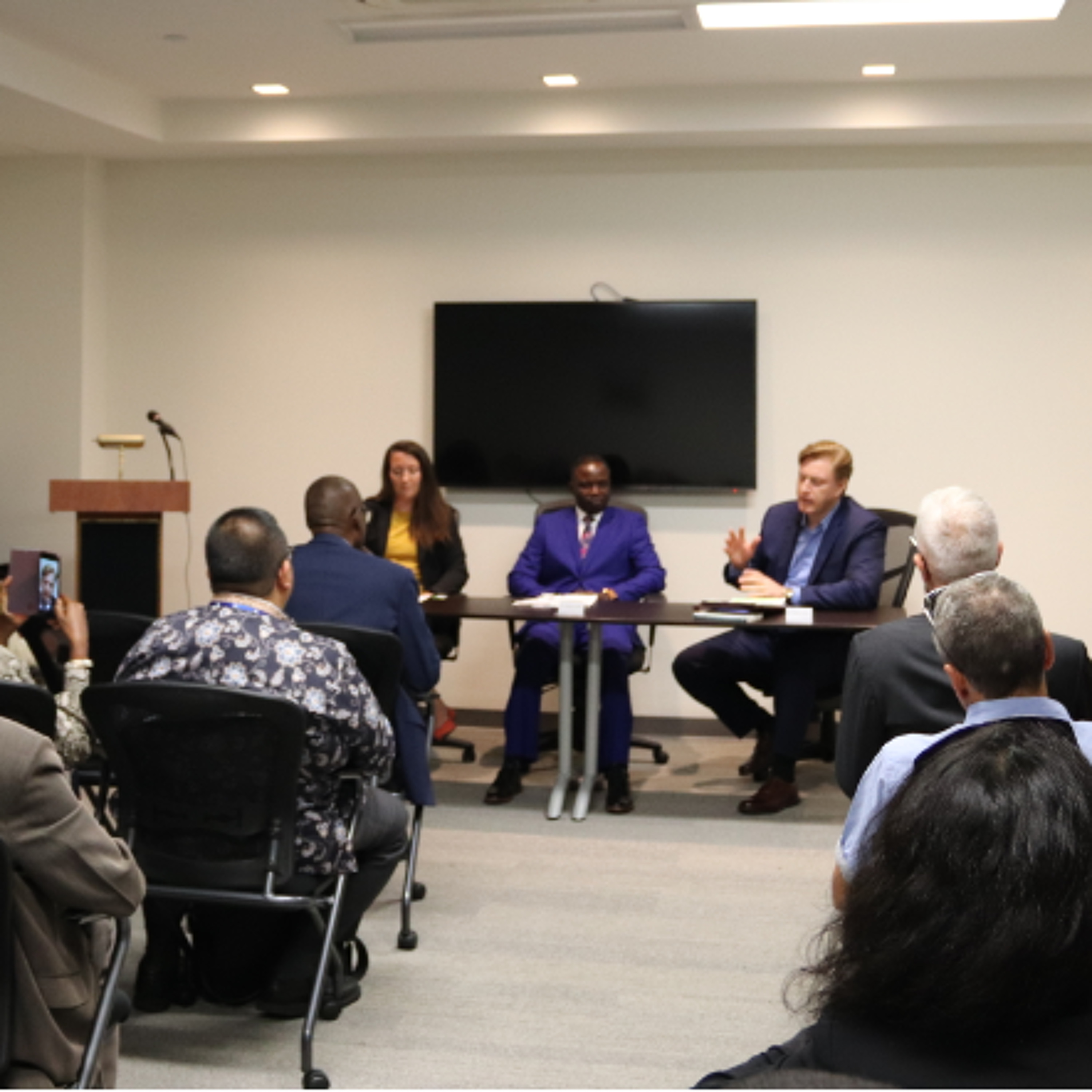
How NGOs are Using Digital Media to Advance Human Rights
The Mission of the Republic of Senegal to the UN hosted a United Nations roundtable for 14+ member nations on July 30, 2019. Dr. Matthew Daniels of IWP, Stephen Enada of the Int Committee on Nigeria, and Katy Money of Ushahidi led the discussion on how NGOs are using digital media.
Losing One’s Country Twice, Finding it Once
Title: Losing One’s Country Twice, Finding it Once About the Lecture: This lecture is a part of The Loss of Country Panel, which was held at The Institute of World Politics on June 13th. About the Panelist: Dr. Marek Jan Chodakiewicz holds The Kosciuszko Chair in Polish Studies at The Institute of World Politics, where he also serves as a Professor of History and teaches courses on Geography and Strategy, Contemporary Politics and Diplomacy, Russian Politics and Foreign Policy, and Mass Murder Prevention in Failed and Failing States. He is the author of Intermarium: The Land Between the Black and Baltic Seas and numerous other books and articles. He holds a Ph.D. from Columbia University and has previously taught at the University of Virginia and Loyola Marymount University.
To Lose a Country: France 1940
Title: To Lose a Country: France 1940 About the Lecture: This lecture is a part of The Loss of Country Panel, which was held at The Institute of World Politics on June 13th. About the Panelist: Dr. John J. Tierney, Jr. is a Professor Emeritus at The Institute of World Politics and teaches History of American Foreign Policy, History of International Relations, Peace, Strategy and Conflict Resolution, and U.S. Foreign Policy: Current and Future Challenges. He served for many years as the Walter Kohler Professor of International Relations at IWP. Dr. Tierney is a Former Special Assistant and Foreign Affairs Officer for the U.S. Arms Control and Disarmament Agency (1981-1993); He formerly participated in various national security negotiations for U.S. Government. He was Executive Director of the Congressional Caucus on National Defense and the National Security Research Group, U.S. House of Representatives. He is former Chairman of the Politics Department at Catholic University and former Professor of International Relations at Univserity of Virginia and The Johns Hopkins University. He is the author of Chasing Ghosts and The Politics of Peace.
The Artful Recluse: 17th Century China
Title: The Artful Recluse: 17th Century China About the Lecture: This lecture is a part of The Loss of Country Panel, which was held at The Institute of World Politics on June 13th. About the Panelist: Dr. Richard J. Bishirjian, was Founding President and Professor of Government at Yorktown University from 2000 to 2016. He earned a B.A. from the University of Pittsburgh and a Ph.D. in Government and International Studies from the University of Notre Dame under the direction of Gerhart Niemeyer. While a graduate student at Notre Dame he studied under Eric Voegelin. After completing graduate work at Notre Dame, he did advanced study with Michael Oakeshott at the London School of Economics. Dr. Bishirjian taught at colleges and universities in Indiana, Texas and New York and is the author of a history of political theory, editor of A Public Philosophy Reader and The Conservative Rebellion (2015) and The Coming Death and Future Resurrection of American Higher Education(2017), published by St. Augustine’s Press. Dr. Bishirjian is the author of professional essays in The Political Science Reviewer, Modern Age, Review of Politics, Anamnesis and The Imaginative Conservative. He has published topical essays in Chronicles and the American Spectator.
Citizens as Instruments of National Power
Title: Citizens as Instruments of National Power About the Lecture: To achieve national security and foreign policy objectives, the United States must embrace new approaches and use all instruments of national power, including our citizens and private sector. This talk will discuss how private resources and new models of private-public collaboration are complementing U.S. government capabilities in Ukraine, Syria, Serbia, Laos, West Africa, and elsewhere. About the Speaker: Mr. Jim Hake founded Spirit of America (SoA) in response to the attacks of 9/11. SoA is a citizen-funded 501(c)(3) nonprofit organization that provides humanitarian and economic assistance in response to needs identified by U.S. troops and diplomats serving abroad. Prior to SoA, Mr. Hake was an Internet entrepreneur. He founded Access Media, one of the first Internet media companies, and sold it to SOFTBANK Forums. It was later incorporated into Ziff Davis. In 2000 and 2001, Mr. Hake was named a “Technology Pioneer” by the World Economic Forum. He has been honored at the Marines Evening Parade, and he is a member of the Council on Foreign Relations, an Honorary Member of the US Army Civil Affairs Regiment, and a member of State Department’s Stabilization Advisory Council. Additionally, Mr. Hake is a contributing author to Warriors and Citizens, and he has lectured on entrepreneurship at Dartmouth’s Tuck School of Business, the SMU Cox School of Business, and USC’s Annenberg School for Communication. He has given talks at the TED Conference, the Aspen Institute, the Bush School at Texas A&M, and the Fletcher School at Tufts University.
Chinese Influence Operations Against Taiwan and Beyond
Title: Chinese Influence Operations Against Taiwan and Beyond This event is sponsored by IWP’s China lecture series. About the Lecture: J. Michael Cole will explore ongoing influence operations by China against one of the principal targets of its political warfare activities. He will then make the case for greater cooperation between Taiwan and other democracies worldwide. About the Speaker: About the Speaker: J. Michael Cole is a Taipei-based Senior Fellow with the Global Taiwan Institute in Washington, D.C., Senior Fellow with the Macdonald-Laurier Institute in Ottawa, Senior Fellow with the Taiwan Studies Program at the University of Nottingham, U.K., Associate Researcher with the French Center for Research on Contemporary China (CEFC), Assistant Coordinator for the International Coalition for Democratic Renewal-Forum 2000 China Working Group, and Chief Editor of Taiwan Sentinel. Mr. Cole was Chief Editor at Thinking Taiwan, a publication of the Thinking Taiwan Foundation (a foundation created by Tsai Ing-wen in 2012) between 2014 and 2016, and Deputy News Chief and Columnist at the Taipei Times between 2006 and 2013. He is the author of five books. His latest, Convergence or Conflict in the Taiwan Strait, was published by Routledge in fall 2016. He is currently writing a new book on cross-Strait relations since 2016, to be published in July 2019. Before moving to Taiwan in 2005, he was an analyst with the Canadian Security Intelligence Service in Ottawa. He has a master’s degree in War Studies from the Royal Military College of Canada, a bachelor’s degree in English Literature from Concordia University in Montreal, Canada, the International Diploma in Humanitarian Assistance from the Center for International Health and Cooperation/Fordham University, and CX-77 (Peacekeeping) from the Lester B. Pearson International Peacekeeping Center.
A Journey to the Gulag: Experiencing History Through Virtual Reality
Title: A Journey to the Gulag: Experiencing History Through Virtual Reality This event is sponsored by IWP’s Intermarium Lecture Series. To learn more about A Journey to the Gulag please visit Gulag.cz. About the Lecture: Around 20 million people went through the horrors of Soviet labor camps. At least 1.6 million of them died. Among the victims of Soviet repression were also people from European countries and the U.S. Currently, with the exception of the former Perm-36 project, there aren’t any museums in Russia of former Gulag camps from Stalin’s era. However, hundreds of abandoned camps are still hidden away in the Siberian taiga. A small group of enthusiasts visit and document these sites to virtually preserve them to make them accessible to the public through virtual and augmented reality. Štěpán Černoušek will speak about the project documenting the Gulag camps and creating VR (virtual reality) and AR (augmented reality) experiences for the unique online Gulag museum. About the Speaker: Štěpán Černoušek is the head of the Virtual Museum Gulag.Online and Chairman of the Gulag.cz Association. Mr. Černoušek regularly visited Chechnya from 2007 to 2010 and created a section of recorded testimonies with Chechen witnesses. In 2013 and 2014, he extended this activity to witnesses from Georgia, Armenia, and North Ossetia. In 2009, 2011, 2013, and 2016, he organized four expeditions to abandoned Gulag camps in Siberia. The result is a virtual museum, Gulag Online, and projects in virtual and augmented reality. In 2016, he established the Russian Memorial Society’s branch office in the Czech Republic. Mr. Černoušek was elected to the Board of the central International Memorial organization in 2018. He is currently on Fulbright scholarship in the U.S., invited by The International Coalition of Sites of Conscience.
Human Liberty 2.0 Advancing Universal Rights in the Digital Age
About the Book: In the era of rising authoritarianism around the world, ordinary people are harnessing the power of digital and social media to advance the universal rights of all human beings in ways never before possible. A blogging revolution in Iran led to new demands for fair elections and human rights. USB drives and SD cards loaded with hours of 'outside' music, news and television, has helped to introduce basic human rights concepts to North Koreans living under authoritarian rule. Law enforcement can now identify hotels used by sex-traffickers when ordinary people upload pictures of their hotel rooms into a database. These are just a few of the stories in Human Liberty 2.0, a new collection of stories about people and organizations around the world using digital and social media to advance the cause of human dignity. Like Chicken Soup for the Soul but with a modern, digital twist, this book includes over two dozen true stories guaranteed to uplift and inspire. Readers will discover how they can participate in the Human Liberty 2.0 revolution and follow in the footsteps of these inspiring adults, teens, and children who are truly the best of humanity…both online and off. Dr. Daniels, IWP's Chair of Law and Human Rights, also teaches a course on Human Rights and Counter-Radicalization which deals with some of these same themes. About the Speaker: Matthew Daniels, JD, Ph.D. teaches human rights and law on three continents and is the creator and Executive Producer of the Human Rights Network, an educational video network promoting universal rights through digital media. Professor Daniels is Chair of Law & Human Rights at the Institute of World Politics in Washington, DC, and founder of the Center for Law and Digital Culture at Brunel School of Law in London. Daniels is also an Adjunct Professor of Law at Handong International Law School in Pohang, South Korea. Professor Daniels is the creator of the non-profit organization Good of All and UniversalRights.com.
Red Crew: Fighting the War on Drugs with Reagan’s Coast Guard
About the Book: Red Crew: Fighting the War on Drugs with Reagan’s Coast Guard is a first-hand account of U.S. Coast Guard anti-smuggling operations during the early years of the nation's maritime war on drugs. Jim Howe describes his experience as the executive officer of a specialized drug-hunting crew that sailed in then-state-of-the-art "surface effect ships," a small flotilla of high-speed vessels pressed into the drug war on short notice. In the early 1980s, South Florida and the Caribbean were awash in illicit drugs, with hundreds of smuggling organizations bringing huge loads of marijuana, and later cocaine, into the United States. To fight this epidemic, the Reagan administration led a massive effort to disrupt shore-side gangs while bolstering interdiction activity at sea. To increase the number of days at sea for each surface effect ship, a "multi-crewing" concept was employed, with four teams of sixteen sailors—the Red, Blue, Green, and Gold Crews—rotating among three hulls. Through its first-person narrative, Red Crew offers a rare glimpse into the day-to-day pressures, challenges, failures, and successes of Coast Guard cuttermen as they carried out complex and dangerous missions. Red Crew provides a unique historical view of the early days in the Coast Guard's war on drugs, and is the only book-length history of the diminutive, one-of-a-kind surface effect ship fleet. About the Author: Jim Howe served as a commissioned officer in the U.S. Coast Guard for 27 years, rising to the rank of Captain (O-6). He was stationed aboard cutters for a total of 11 years, with five years in command. During his time at sea he gained extensive experience in maritime law enforcement, search and rescue, and national security missions. His recent book, Red Crew: Fighting the War on Drugs with Reagan’s Coast Guard (Naval Institute Press) describes his first-hand experiences chasing smugglers and saving lives in the waters off South Florida aboard a one-of-a-kind flotilla of high-speed patrol boats. After retiring from active duty, Howe served for two years as the senior career civil servant in the Department of Homeland Security’s Office of Legislative Affairs. He now works in the nuclear fuel industry. From 2003 to 2005, Howe served in the Office of the Vice President of the United States as Special Advisor for Homeland Security, focusing on border and transportation security issues. During that time he interacted daily with the law enforcement professionals at a number of federal agencies, including the Federal Bureau of Investigation, Border Patrol, Customs and Border Protection, Immigration and Customs Enforcement, and Secret Service, and he made several fact-finding visits to America’s northern and southern borders. He is a graduate of the U.S. Coast Guard Academy, where he earned a Bachelor of Science degree in Government. Howe earned a Master of Liberal Arts degree in Government from Harvard University (Extension School); there, his master’s thesis examined maritime drug interdiction operations in the Caribbean. He is a graduate of the Marine Corps War College, earning a Master of Strategic Studies degree, and in 2014 he earned a Master of Science degree in Space Studies from American Military University. He also is a graduate of the MIT Seminar XXI program and currently is conducting post-graduate research at the University of Leicester. Howe has written on national and border security topics and is an award-winning author.