
The Institute of World Politics
507 episodes — Page 5 of 11
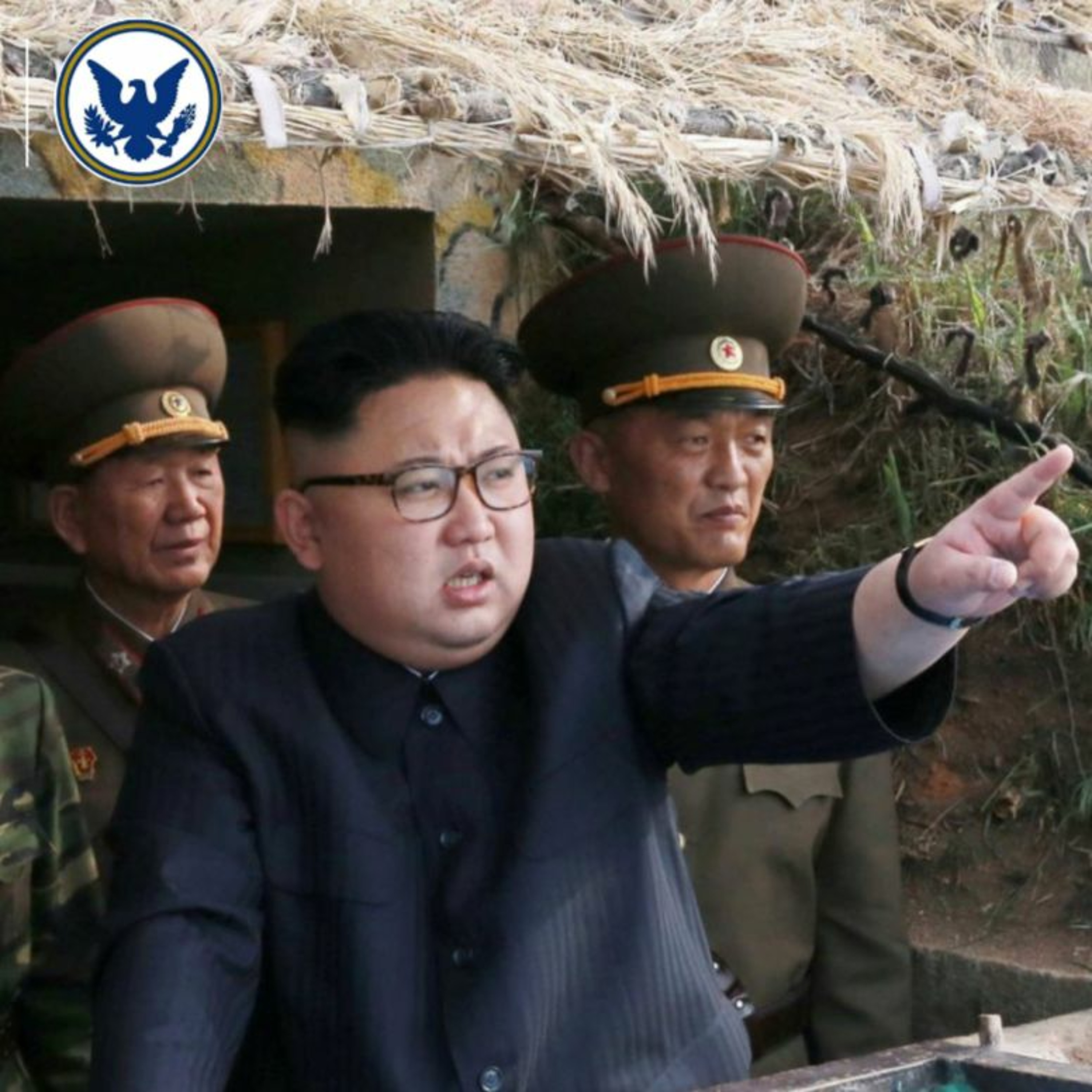
Fear and Insecurity: Addressing North Korean Threat Perceptions
This event is sponsored by the Asia Initiative Lecture Series at The Institute of World Politics. About the lecture: Diplomacy with North Korea must factor in an understanding of the Kim regime’s fears and insecurity. Pyongyang’s military actions and negotiating gambits jeopardize the United States, South Korea, and other nations’ vital interests and policy goals. Accordingly, the study of North Korean threat perceptions—how Kim Jong-un thinks about the utility of force and about threats to his regime—is essential for averting strategic surprise and buttressing diplomacy. Dr. Cronin will address North Korean threat perceptions by examining the ruling elite’s basic instincts of fear and insecurity. Drawing on the more than seven-decade of war and cold war on the Korean peninsula, he will offer constructive ideas for diplomacy, crisis management, and security policy. About the speaker: Patrick M. Cronin is the Asia-Pacific Security Chair at Hudson Institute. Dr. Cronin’s research program analyzes the challenges and opportunities confronting the United States in the Indo-Pacific region, including China’s total competition campaign, the future of the Korean peninsula, and strengthening U.S. alliances and partnerships. Dr. Cronin was previously senior advisor and senior director of the Asia-Pacific Security Program at the Center for a New American Security (CNAS), and before that, senior director of the Institute for National Strategic Studies (INSS) at the National Defense University, where he simultaneously oversaw the Center for the Study of Chinese Military Affairs. Dr. Cronin has a rich and diverse background in both Asian-Pacific security and U.S. defense, and foreign and development policy. Prior to leading INSS, Dr. Cronin served as the director of studies at the London-based International Institute for Strategic Studies (IISS). At IISS, he also served as editor of the Adelphi Papers and as the executive director of the Armed Conflict Database. Before joining IISS, Dr. Cronin was senior vice president and director of research at the Center for Strategic and International Studies (CSIS). In 2001, Dr. Cronin was confirmed by the United States Senate to the third-ranking position at the U.S. Agency for International Development (USAID). While serving as Assistant Administrator for Policy and Program Coordination, Dr. Cronin also led the interagency task force that helped design the Millennium Challenge Corporation (MCC). From 1998 until 2001, Dr. Cronin served as director of research at the U.S. Institute of Peace. Prior to that, he spent seven years at the National Defense University, first arriving at INSS in 1990 as a senior research professor covering Asian and long-range security issues. He was the founding executive editor of Joint Force Quarterly, and subsequently became both deputy director and director of research at the Institute. He received the Army’s Meritorious Civilian Service Award upon his departure from NDU in 1997. He has also been a senior analyst at the Center for Naval Analyses, a U.S. Naval Reserve intelligence officer, and an analyst with the Congressional Research Service and SRI International. He was associate editor of Strategic Review and worked as an undergraduate at the Miami Herald and the Fort Lauderdale News. Dr. Cronin has taught at Georgetown University’s Security Studies Program, Johns Hopkins University’s Paul H. Nitze School of Advanced International Studies (SAIS), and the University of Virginia’s Woodrow Wilson Department of Government. He read international relations at St. Antony’s College, University of Oxford, where he received both his M.Phil. and D.Phil. degrees, and graduated with high honors from the University of Florida. He regularly publishes essays in leading publications and frequently conducts television and radio interviews.
How to Best Leverage U.S. Alliances and Partnerships against the PRC
This event is part of the China Series sponsored by The Institute of World Politics. About the lecture: The United States is party to several security alliances and partnerships in the Indo-Pacific Theater. These relationships vary in scope and commitment, but they are all rooted in shared concerns about the PRC’s hegemonic ambitions. Collectively, they have the potential to provide the United States with clear, long-term advantages over the PRC, diplomatically, economically, and militarily. Leveraging these advantages will require sustained U.S. leadership and innovative statecraft. About the speaker: The Honorable James H. Anderson is a former Acting Under Secretary of Defense for Policy and a twice confirmed presidential appointee. In August 2018, the U.S. Senate confirmed Dr. Anderson as Assistant Secretary of Defense for Strategy, Plans, and Capabilities. In June 2020, the U.S. Senate confirmed him as Deputy Under Secretary of Defense for Policy. Prior to his most recent Pentagon service, he served as the Vice President for Academic Affairs at the Marine Corps University and Dean of Academics at the Marine Corps War College. He has also worked as Professor at the George C. Marshall Center for European Security Studies, Director of Middle East Policy at the Pentagon, Project Manager at DFI International, Research Fellow at the Heritage Foundation, and Associate Professor at Command and Staff College, Marine Corps University. Dr. Anderson is the co-author of Leading Dynamic Seminars: A Practical Handbook for University Educators (Palgrave Macmillian, 2013), and the author of America at Risk: The Citizen’s Guide to Missile Defense (Heritage Foundation, 1999). He has written more than eighty articles and op-eds on a wide range of national security topics. Earlier in his career, Dr. Anderson served three years on active duty as an intelligence officer in the United States Marine Corps. Dr. Anderson earned his Doctorate in International Relations and Masters of Arts in Law and Diplomacy from the Fletcher School, Tufts University. He is a recipient of numerous professional awards, including the Defense Medal for Distinguished Public Service, the Department’s Highest Award for non-career Federal employees.
“The Pygmy Among the Giants”? – Polish Eastern Policy
Full title: “The Pygmy Among the Giants”? – Polish Eastern Policy in the Eyes of the British Political Elite (1919–1923) This lecture event is part of the 11th Kościuszko Chair Spring Symposium in honor of Lady Blanka Rosenstiel sponsored by the Kościuszko Chair in Polish Studies and the Center for Intermarium studies. Lady Blanka Rosenstiel and the American Institute of Polish Culture (AIPC) established the Kościuszko Chair of Polish Studies at IWP in 2008. The Kościuszko Chair serves as a center for Polish Studies in the broadest sense, including learning, teaching, researching, and writing about Poland's culture, history, heritage, religion, government, economy, and successes in the arts, sciences, and letters, with special emphasis on the achievements of Polish civilization and its relation to other nations, particularly the United States. We remain grateful for Lady Blanka’s leadership in founding this Chair at IWP. About the lecture: The Treaty of Versailles established the new order in Western Europe, but its clauses did not bring peace to independent Poland. The young state was struggling with external threats. First of all, from Soviet Russia, the Ukrainian national self-determination was endangering the Polish state’s security; in 1919, the Polish-Lithuanian antagonism sprang to life. In reality, its political, social, and military situation was anything but “stable.” Those conditions made the Polish-British inter-state diplomatic relation the essential factor in Polish foreign policy. This discussion attempts to explain the evolution of the British political elite’s perception of Polish Eastern policy. The speaker will introduce the British attitude towards Poland since the Peace Conference in Paris, which commenced its proceedings from 18th January 1919 until 15th March 1923, when Britain recognized Polish Eastern borders. The talk seeks to answer the following questions: what kind of factors—a geopolitical theory or a strategic necessity—determined British policy towards Polish Eastern policy? Moreover, what factors influenced the British approach towards Poland? Finally, according to the British officials, what role did the Eastern border’s recognition play in the Anglo-Polish reciprocal relationship? What was the importance of this fact in the perception of Poland’s role as one of the factors of stability in East-Central Europe? About the speaker: Dr. Jolanta Mysiakowska carried out her graduate work at the University of Warsaw (2005). She has a doctorate in modern history from the Polish Academy of Sciences (2010). In 2015, she won a research grant from the Polonia Aid Foundation Trust. In 2020, she won a research grant from Lanckorońskis’ Foundation. Currently, she works with the Institute of National Remembrance, Warsaw, Poland. She is also editor-in-chief of Glaukopis—a scholarly periodical produced in cooperation with The Institute of World Politics (Washington, D.C., USA). She is a historian of 20th century Poland, with a particular interest in developing independent Poland after the First World War, its political and domestic situation, and its inter-state diplomatic relationship with Great Britain. She also has research interests in political ideology from the late 19th to the first half of the 20th century—Member of British International Study Association and Britain and the World association. Much of her recent research is focused on the perception of independent Poland among the British political and intellectual elite (1919–1926).
The Art of Provocation
This lecture event is part of the 11th Annual Kościuszko Chair Spring Symposium in honor of Lady Blanka Rosenstiel sponsored by the Kościuszko Chair in Polish Studies and the Center for Intermarium studies. Lady Blanka Rosenstiel and the American Institute of Polish Culture (AIPC) established the Kościuszko Chair of Polish Studies at IWP in 2008. The Kościuszko Chair serves as a center for Polish Studies in the broadest sense, including learning, teaching, researching, and writing about Poland's culture, history, heritage, religion, government, economy, and successes in the arts, sciences, and letters, with special emphasis on the achievements of Polish civilization and its relation to other nations, particularly the United States. We remain grateful for Lady Blanka’s leadership in founding this Chair at IWP. About the lecture: Revolutionary history abounds with ruse, deception, disinformation, manipulation, diversion, and a variety of devious mechanisms in the struggle by political visionaries, from gnostics to secret societies to anarchists to Marxists and others, to impose their utopian schemas on the unsuspecting. A technique encompassing that genre of mayhem that stands out and has been raised to the level of art is provocation (provokatsiya in the Russian). Provocation was a mainstay of the Tsarist counterintelligence service, the Okhrana, and then perfected up to the strategic level by the Soviet security services from the Cheka, through the KGB, and now to the FSB, SVR, the GRU of the Russian Federation. And, of course, it prospers in other counterintelligence-state cultures as well, such as Islam and China. Simply put, provocation is a key element of political warfare and is a characteristic of the counterintelligence-state. Provocation connotes operational counterintelligence techniques that create conditions to instigate real or imagined opponents — especially notional ones — into some action that will further the state’s objectives at the expense of the opponent(s). The idea here is to instigate something that otherwise would not occur, control the opponent, and ultimately put him out of action – or, better yet, keep controlling him long-term for some other political or operational purpose. This may be at the tactical level (a double agent operation aimed at discrediting an enemy intelligence service) or at the strategic level (the Trust and WiN operations focused on both domestic enemies and foreign intelligence services simultaneously). This presentation will focus on foundational examples of provocation up through recent instances where the art of provocation produced grand scale political, military and strategic outcomes beneficial to Marxist movements and regimes, and state-related terrorist structures. It will also briefly examine how the art of provocation has entered into the ethos of western security/intelligence services as well. About the speaker: Dr. Jack Dziak is a consultant in the fields of intelligence, counterintelligence, counter-deception, and national security affairs. He has served over five decades as a company president and as a senior intelligence officer and senior executive in the Office of the Secretary of Defense and in the Defense Intelligence Agency, with long experience in counterintelligence, hostile deception, counter deception, strategic intelligence, weapons proliferation intelligence, and intelligence education. He is an Adjunct Professor at the Institute of World Politics, and has taught at the National War College, National Intelligence University, Georgetown University, and The George Washington University; and lectures on intelligence, military affairs, and security issues throughout the US and abroad.
Iron Felix: The Early Days of Feliks Dzierżyński (1877-1926)
This lecture event is part of the 11th Kościuszko Chair Spring Symposium in honor of Lady Blanka Rosenstiel sponsored by the Kościuszko Chair in Polish Studies and the Center for Intermarium studies. Lady Blanka Rosenstiel and the American Institute of Polish Culture (AIPC) established the Kościuszko Chair of Polish Studies at IWP in 2008. The Kościuszko Chair serves as a center for Polish Studies in the broadest sense, including learning, teaching, researching, and writing about Poland's culture, history, heritage, religion, government, economy, and successes in the arts, sciences, and letters, with special emphasis on the achievements of Polish civilization and its relation to other nations, particularly the United States. We remain grateful for Lady Blanka’s leadership in founding this Chair at IWP. About the lecture: Feliks Dzierzynski was a Polish Catholic nobleman, a social democrat, and a monster. He committed national apostasy to advance his international utopian ideas. Having embraced a socialist revolution, he followed the logical path to death and mayhem. His destiny led him to establish and lead Soviet Russia’s secret police, the dreaded Cheka and its avatars. However, the roots of his murderous pathologies reach his teen years when he abandoned the Catholic faith and the cause of Poland’s independence in favor of extreme leftism. He increasingly alienated himself from his background, rejected his inheritance, and transformed himself, first, into an internationalist and, then, into a Soviet Russian chauvinist. Our story focuses on the first stage of the monster’s transformation. Rejecting all that was decent, Dzierzynski embarked on a journey of no return to Communist utopia. About the speaker: Dr. Marek Jan Chodakiewicz holds The Kosciuszko Chair in Polish Studies at The Institute of World Politics and leads IWP’s Center for Intermarium Studies. At IWP, he also serves as a Professor of History and teaches courses on Geography and Strategy, Contemporary Politics and Diplomacy, Russian Politics and Foreign Policy, and Mass Murder Prevention in Failed and Failing States. He is the author of Intermarium: The Land Between the Black and Baltic Seas and numerous other books and articles. He holds a Ph.D. from Columbia University and has previously taught at the University of Virginia and Loyola Marymount University.
Boleslaw Piasecki's Game for Life
This lecture event is part of the 11th Annual Kościuszko Chair Spring Symposium in honor of Lady Blanka Rosenstiel sponsored by the Kościuszko Chair in Polish Studies and the Center for Intermarium studies. Lady Blanka Rosenstiel and the American Institute of Polish Culture (AIPC) established the Kościuszko Chair of Polish Studies at IWP in 2008. The Kościuszko Chair serves as a center for Polish Studies in the broadest sense, including learning, teaching, researching, and writing about Poland's culture, history, heritage, religion, government, economy, and successes in the arts, sciences, and letters, with special emphasis on the achievements of Polish civilization and its relation to other nations, particularly the United States. We remain grateful for Lady Blanka’s leadership in founding this Chair at IWP. About the lecture: Bolesław Piasecki is considered one of the most controversial Polish politicians of the 20th century. A few years ago, I had the honour of presenting a critical review of one of Piasecki's newer biographies at the Kościuszko Chair symposium at the IWP. As I write a biography of this politician, I wish to share my findings with you. I want to focus on one of the least known episodes in Piasecki's biography – his eight-month stay in a communist prison at the turn of 1944-1945 and the meeting with Stalin's governor in Poland's occupied territories NKVD General Iwan Sierow. This event, both mysterious and sensational, is considered the beginning of Piasecki's agent involvement in cooperation with the Soviets and the foundation of his later position in communist Poland. I will try to verify this view and how these talks could have looked like, and whether Piasecki's last activities' agent-based nature is possible. About the speaker: Wojciech J. Muszyński, PhD, is a historian and a researcher at the Institute of National Remembrance (Warsaw, Poland). His research focuses on the history of political and ideological movements in the Second Polish Republic, Polish-Jewish relations, and military history. He is a Member of the Team to Assess Requests to Recognize Opposition Activity during the People's Republic of Poland at the Chancellery of the President of the Republic of Poland. He is the author or co-author of many monographs, including Białe Legiony 1914–1918. Od Legionu Puławskiego do I Korpusu Polskiego (2018); Białe Legiony przeciwko bolszewikom. Polskie formacje wojskowe w Rosji 1918–1920 (2019), Toreadorzy Hitlera. Hiszpańscy ochotnicy w Wehrmachcie i Waffen-SS 1941–1945 (2019). He is also the co-author of the 2018 Award-Winning History Book on the history of the National Military Union, Przeciwko PAX Sovietica (2018).
485 Days at Majdanek, Surviving a German Concentration Camp
This lecture event is part of the 11th Annual Kościuszko Chair Spring Symposium in honor of Lady Blanka Rosenstiel sponsored by the Kościuszko Chair in Polish Studies and the Center for Intermarium studies. Lady Blanka Rosenstiel and the American Institute of Polish Culture (AIPC) established the Kościuszko Chair of Polish Studies at IWP in 2008. The Kościuszko Chair serves as a center for Polish Studies in the broadest sense, including learning, teaching, researching, and writing about Poland's culture, history, heritage, religion, government, economy, and successes in the arts, sciences, and letters, with special emphasis on the achievements of Polish civilization and its relation to other nations, particularly the United States. We remain grateful for Lady Blanka’s leadership in founding this Chair at IWP. About the lecture: Jerzy Kwiatkowski survived 485 days in the Majdanek concentration camp. Months after World War II ended, Jerzy began writing his reminiscence of the horrors he had witnessed. Over 50 years since the first Polish edition was released, an English translation of the gripping memoir has been published by the Hoover Institution Press. This new edition serves as the basis for a discussion of Jerzy Kwiatkowski's early life, his camp experience and his efforts to leave a written testament for his fellow prisoners who never left the gates of Majdanek. About the speaker: Nicholas Siekierski is a PhD candidate at the Tadeusz Manteuffel Institute of History at the Polish Academy of Sciences in Warsaw. He is writing his dissertation on Herbert Hoover and the American Relief Administration in Poland after the First World War. He is also a translator.
Religious Freedom as the Cornerstone of the Western World
This lecture event is part of the 11th Annual Kościuszko Chair Spring Symposium in honor of Lady Blanka Rosenstiel sponsored by the Kościuszko Chair in Polish Studies and the Center for Intermarium studies. Lady Blanka Rosenstiel and the American Institute of Polish Culture (AIPC) established the Kościuszko Chair of Polish Studies at IWP in 2008. The Kościuszko Chair serves as a center for Polish Studies in the broadest sense, including learning, teaching, researching, and writing about Poland's culture, history, heritage, religion, government, economy, and successes in the arts, sciences, and letters, with special emphasis on the achievements of Polish civilization and its relation to other nations, particularly the United States. We remain grateful for Lady Blanka’s leadership in founding this Chair at IWP. About the lecture: Today's crisis in Europe and the Western world is, above all, a religious crisis. We live nowadays in times of unusually fierce religious intensification. It holds not only to Islam; instead to various contemporary ideologies and social movements, which religious or quasi-religious characters can be seen easily in their missionary zeal. In Europe and also America, a religious war takes place - a war of life and death. It is not a conflict between religious and non-religious people, but a clash of Christianity – or rather, what remains of it – and Neopaganism. Rivalry with Islam is here of secondary significance. A question arises concerning the proper shape of the political order: is it at all possible for individuals and communities, differing in religion – and if so, then how – to live together in peace and harmony within the framework of one political organism? The proper answer was brought to the world by Christianity: the common life of different communities will be possible if we reject the program of forceful conversion, guaranteeing everybody the right to religious freedom instead. Here religious freedom is understood as freedom to practice one's religion, openly express one's most profound religious beliefs and take action in the public space, motivated by these beliefs. Still, an opposite interpretation of the idea has been widespread – the idea of freedom from religion behind which hides a program for the expulsion of all religious signs and symbols referring to the transcendent dimension of human existence from public space. Which of the two visions of organizing public life wins? The future shape of the Western world depends on the response to this question. About the speaker: Zbigniew Stawrowski (born 1958 in Szczecin, Poland) is a political philosopher, professor at the Cardinal Stefan Wyszyński University in Warsaw and the director of the Tischner Institute in Cracow. He is the author of Państwo i prawo w filozofii Hegla [The State and its Rights in the Philosophy of Hegel] (1994), Prawo naturalne a ład polityczny [Natural Law and Political Order] (2006), Niemoralna demokracja [Immoral Democracy] (2008), Solidarność znaczy więź [Solidarity means a Bond] (2010), Wokół idei wspólnoty, [Concerning the Idea of Community] (2012).
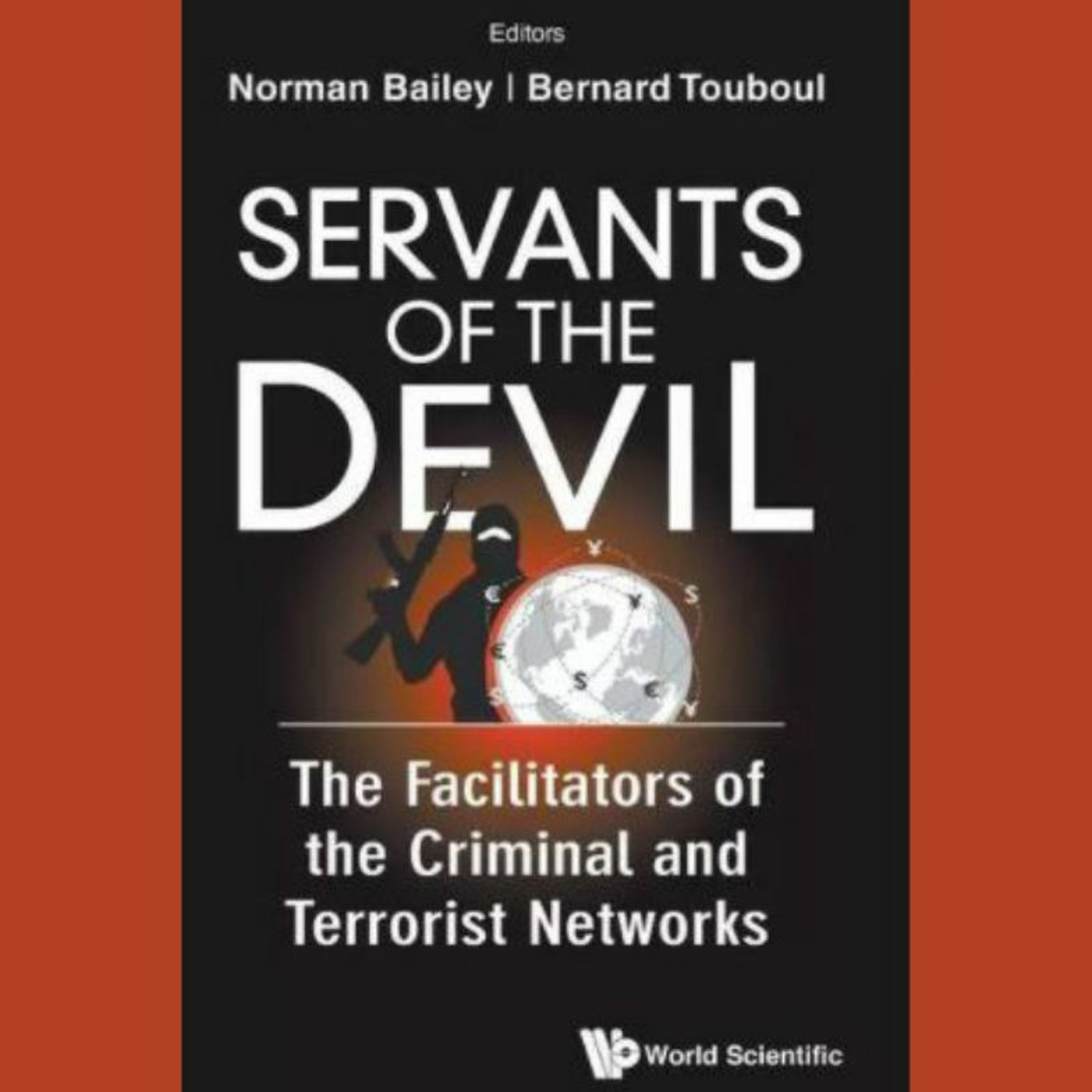
Servants of the Devil: Facilitators of the Criminal and Terrorist Networks
About the lecture: Servants of the Devil: the Facilitators of the Criminal and Terrorist Networks, was published in February of this year. It details the ways in which respectable professionals, businesses, financial institutions, non-profits, and hi-tech companies work with and for criminal syndicates and terrorist organizations, greatly enhancing their ability to pursue their objectives. Recommendations include urging that the facilitators be pursued and prosecuted as well as the criminals and terrorists. About the speakers: Prof. Norman A. Bailey is Professor of Economic Statecraft at the IWP. He currently resides in Israel, where he has taught at three different institutions of higher learning. Prof. Bailey has a background in the armed forces, business, finance, consulting, and academia. He is Professor Emeritus of Political Science at the City University of New York. He is a graduate of Oberlin College and Columbia University. He is the author, co-author, or editor of seven books and hundreds of articles, both academic and journalistic. He is the recipient of various honorary degrees, medals, awards, and orders of knighthood. Mr. Bernard Touboul, is for the last 30 years an International Expert in Customs Administration and Enforcement, Border Management, and International Trade Facilitation. He was involved in institutional and governmental development in many countries including in Africa, Asia, Central Asia, western Balkans specially in policy making and strategy crafting for combating illicit trafficking and Trade Based Money Laundering related frauds. He was an official of the French Customs Service. He also holds several graduate degrees in International Trade, Business Administration, and Political Sciences specialized in national security. He is author and co author of several articles related to money laundering and terrorism financing topics.
The Biden Administration Faces Growing North Korean Threat
This event is sponsored by the Asia Initiative Lecture Series at The Institute of World Politics. About the lecture: For decades, every incoming U.S. President has inherited a more dangerous North Korea than his predecessor. President Biden is no exception. During the past four years, North Korea’s nuclear, missile, conventional, and cyber threats increased in scope and sophistication. Pyongyang has historically ramped up tensions early in a new U.S. or South Korean administration to force concessions, which could pose an early foreign policy challenge for the new U.S. administration. North Korea will remain an intractable problem, but President Biden will need to develop a policy of deterrence, containment, pressure, and diplomacy. About the speaker: Bruce Klingner specializes in Korean and Japanese affairs as the senior research fellow for Northeast Asia at The Heritage Foundation’s Asian Studies Center. Klingner has testified before the House Foreign Affairs Committee, the Senate Select Committee on Intelligence, and the House Permanent Select Committee on Intelligence. He is a frequent commentator in U.S. and foreign media. His articles and commentary have appeared in major American and foreign publications and he is a regular guest on broadcast and cable news outlets. He is a regular contributor to the international and security sections of The Daily Signal. From 1996 to 2001, Klingner was CIA’s deputy division chief for Korea, responsible for the analysis of political, military, economic and leadership issues for the president of the United States and other senior U.S. policymakers. In 1993-1994, he was the chief of CIA’s Korea branch, which analyzed military developments during a nuclear crisis with North Korea. Klingner is a distinguished graduate of the National War College, where he received a master’s degree in national security strategy in 2002. He also holds a master’s degree in strategic intelligence from the Defense Intelligence College and a bachelor’s degree in political science from Middlebury College in Vermont.
The Process of Forced Mental Transformation and its Role in World Events
About the lecture: This talk focuses on Martin’s “ATOP” theory of mental manipulation, the four-step process historically used to transform and control human behavior on every level of civilization, from obscure cults to entire nations. About the speaker: Professor Sean Elliot Martin is an Assistant Professor and the Coordinator of Undergraduate and Graduate Intelligence Studies at Point Park University, Pittsburgh, Pennsylvania. He has a diverse academic background, as well as a range of collaborations with military and law enforcement entities. He applies creative, interactive methods to teach courses in Intelligence Analysis, Psychological Operations, survival combat, and related subjects.
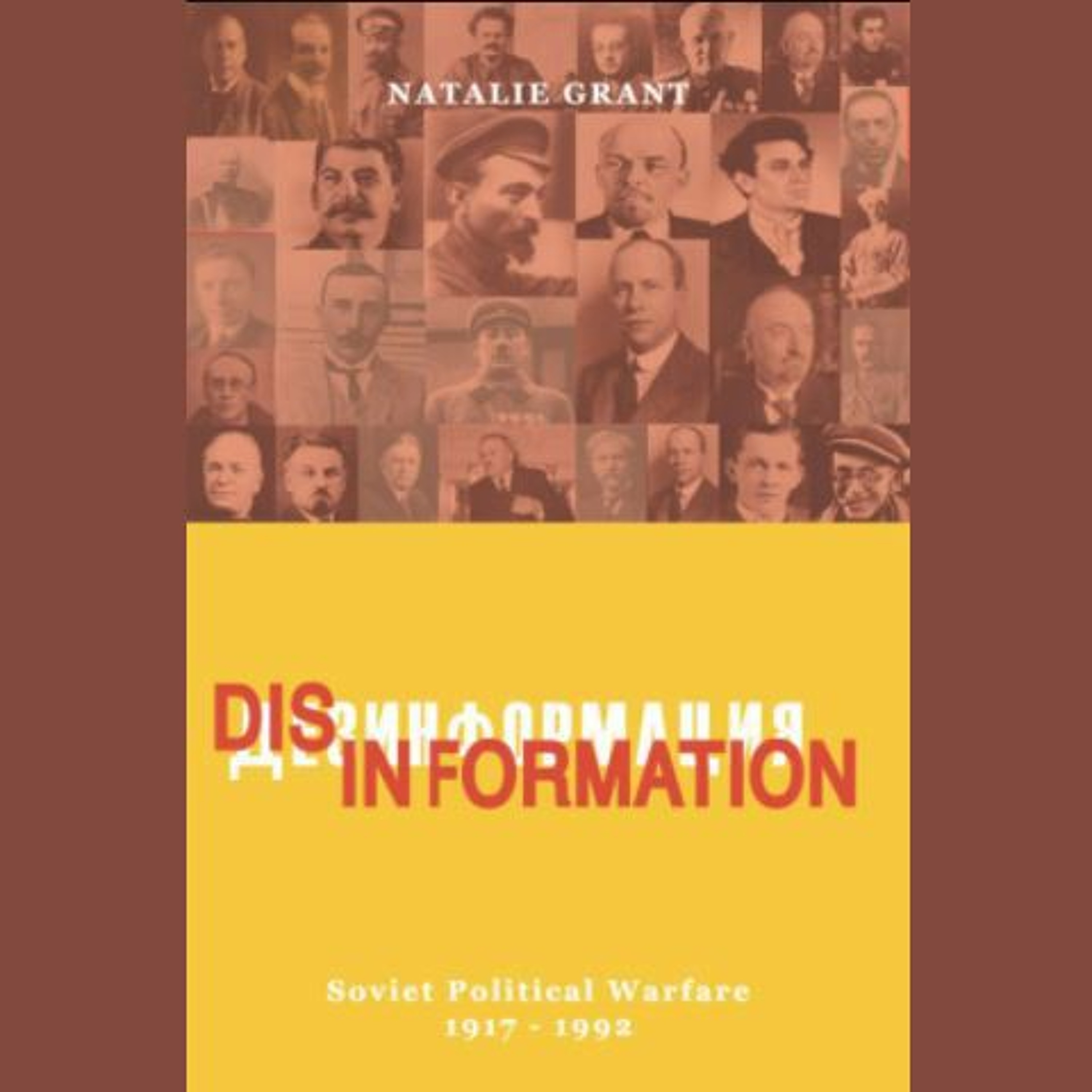
Crafting of Natalie Grant’s Book, Disinformation: Soviet Political Warfare
This lecture is in Memoriam of Herb Romerstein. About the lecture: When Natalie Grant (Wraga) died in November 2002 at the age of 101, few people other than family, friends, and some intelligence professionals were aware that one of the keenest minds on the horrid Soviet experience was lost to the western world. Mrs. Grant (Wraga was the surname of her husband Richard) was born in Tsarist Russia. She witnessed and survived the Russian Civil War, one of the bloodiest of modern history; trained some of the early State Department cadres of Soviet specialists; served as a Foreign Service Officer; and wed a storied former Polish counterintelligence officer with whom she partnered in producing some of the most penetrating and original studies on Soviet political warfare — specifically; deception, disinformation, and the whole panoply of active measures. One of the products of that partnership is the book Disinformation, just published by Leopolis Press. Natalie’s husband Richard died in 1967 before she started drafting Disinformation. But she and Richard had been diving deep into the myriad cases of Soviet deception operations for decades, calling attention to what is now termed information warfare, fake news, etc., all of which have a pedigree dating to the earliest years of the USSR and well before. This presentation will focus on Natalie Grant’s story and how she came to write such a seminal work on Soviet political warfare and the difficulties she faced in getting the right people in government, media, and academia to accept the realities of deception and disinformation. Her book couldn’t get traction with publishers, notwithstanding the help of numerous intelligence friends, scholars, family members, and others, Herb Romerstein and this writer included. Given its long gestation period due to lack of publisher interest, Natalie kept on writing and revising until legal blindness made that just too difficult. Fortunately, Leopolis Press brought her efforts to fruition, almost twenty years after her passing. Disinformation is presented to the reader by Leopolis Press as she wrote it, other than the necessary copy-editing process and the need to handle the vagaries of transliteration of the myriad Russian personalities and place names. About the speaker: Dr. Dziak is a consultant in the fields of intelligence, counterintelligence, counter-deception, and national security affairs. He has served over five decades as a company president and as a senior intelligence officer and senior executive in the Office of the Secretary of Defense and in the Defense Intelligence Agency, with long experience in counterintelligence, hostile deception, counter deception, strategic intelligence, weapons proliferation intelligence, and intelligence education. He received his Ph.D. in Russian history from Georgetown University, is a graduate of the National War College, and is a recipient of numerous defense and intelligence awards and citations. He was the co-developer and co-director of the master’s degree program in Strategic Intelligence at the Defense Intelligence School, the original predecessor to the current National Intelligence University. He is an Adjunct Professor at the Institute of World Politics, and has taught at the National War College, National Intelligence University, Georgetown University, and The George Washington University; and lectures on intelligence, military affairs, and security issues throughout the US and abroad. Dr. Dziak is the author of the award-winning Chekisty: A History of the KGB, numerous other books, articles, and monographs, including The Military Relationship Between China and Russia, and Soviet Perceptions of Military Power. He currently is preparing a book on foreign counterintelligence systems.
Robotic Process Automation
This event is part of The Cyber Intelligence Initiative Series sponsored by The Institute of World Politics. About the lecture: RPA is currently the fastest-growing enterprise technology, according to Gartner. RPA is also the core of hyper-automation, the number 1 strategic technology trend for 2020. Robotic Process Automation (RPA) is the technology allowing every level of government to deploy software robots to perform specific tasks in an automated way. RPA software uses a combination of integrations, advanced technologies, and cognitive processes. RPA can be used to mimic or emulate selected tasks allowing agencies to liberate their workforce from mundane, tedious, and boring tasks and move to what the Office of Personnel Management calls higher-valued work. These may include manipulating data, passing data to and from various applications, triggering responses, or executing transactions. The power of RPA is it securely acts as the workflow for other digital technologies. The UiPath fully automated enterprise is broadly deployed across 79 agencies and 11 states. Agencies are using RPA and other digital labor to bridge the gap between new technologies and legacy systems, to digitally transform government, supplement a shrinking workforce while increasing compliance, reducing errors, saving tax-dollars, and serving citizens better. This discussion will cover the history of RPA in the federal government, provide demonstrations, and look to the future of the fully automated enterprise as hyper-automation takes hold in the government’s automation era. If you have questions, please feel welcome to contact JOLT Advantage Group: Contact page: https://www.joltag.com/contact. RPA Page: https://www.joltag.com/robotic-proces.... Knowledge Hub: https://www.joltag.com/knowledge-hub. About the speakers: Mr. James Walker, a former Army Artillery Officer and federal employee, is currently UiPath’s Evangelist and Public Sector CTO. He served as the Deputy CIO and Services Portfolio Manager at NASA’s Shared Services Center (NSSC) and had key IT positions at DISA, the US Missile Defense Agency, and counter-drug task force in Key West. Jim is a Federal Computer Weekly “Federal 100” alumni and runner-up in Government Computer News “DigIT 2017” award for Robotics, Automation, and Unmanned Systems. He holds a Chief Information Officer certification from the National Defense University and a Graduate degree in Telecommunications. Mr. Brett Fraser has over 20 years of experience working with RPA, cognitive, and AI technologies. Brett brings a wealth of knowledge on automation best practices, lessons learned, and use cases across the public and private sectors.
Seventy Years of Chinese Strategic Intelligence Threats
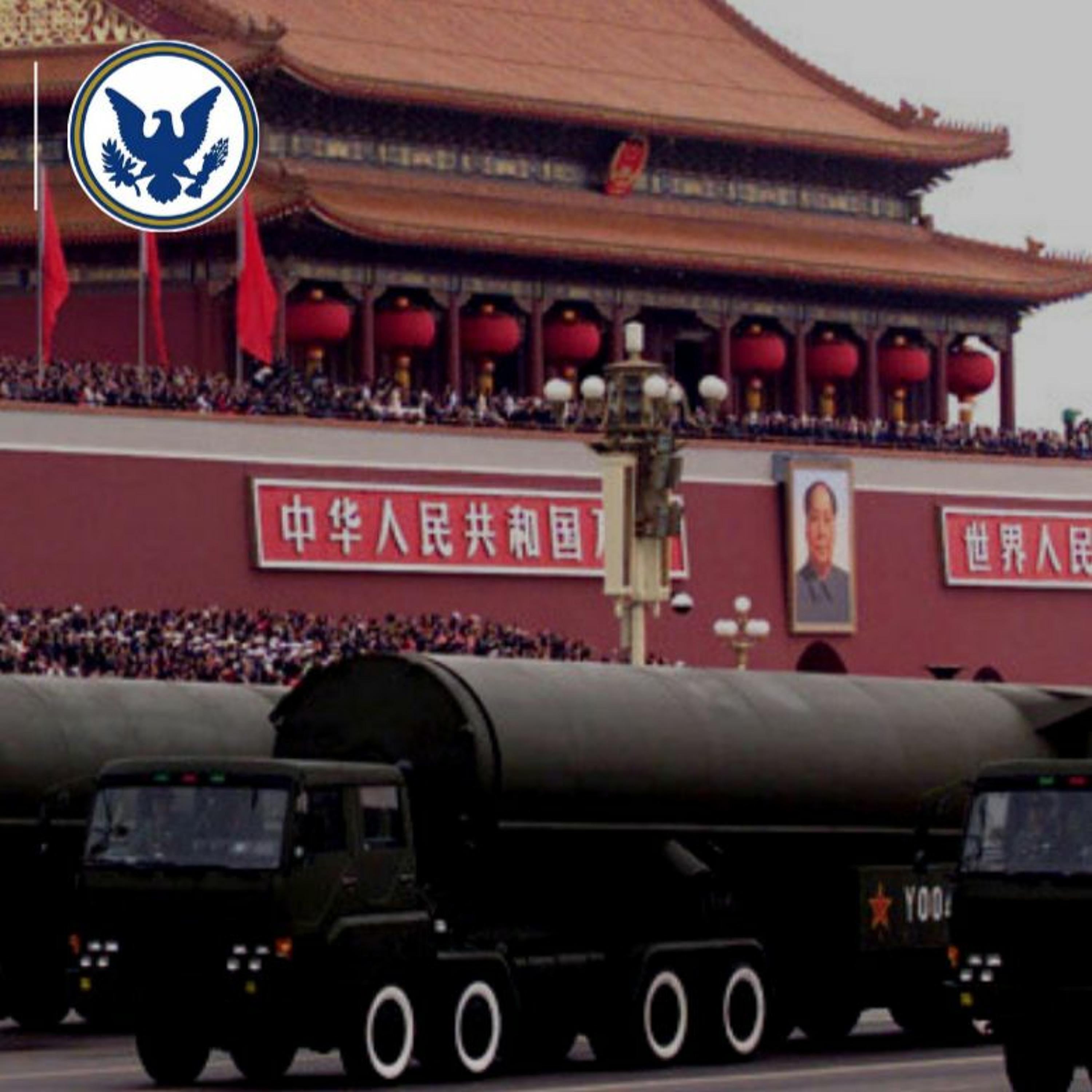
This event is sponsored by the Asia Initiative Lecture Series at The Institute of World Politics. About the lecture: In 1949, to the surprise of Americans who had hoped that WWII had marked the end of world conflicts, the Soviet Union exploded a nuclear weapon Identical to the bomb the US had dropped on Nagasaki. It was identical because the bomb’s nuclear technology had been stolen through massive espionage by America’s Russian communist wartime ally. Thus the calculus of power that overshadowed the new conflict—nuclear weapons and strategic intelligence operations– set the strategic framework of the fifty-year Cold War conflict. Also in 1949, the People’s Republic of China began pursuing a similar hegemonic course, also relying on stolen nuclear weapons designs and strategic intelligence activities. Just as an aggressive Soviet Union was unwilling to accept either the American position as the world power or even peaceful standards of international behavior, so too does the PRC appear intent on replacing America as the sole remaining superpower in the twenty-first century. The presentation will review key developments in these Chinese efforts and where US policy stands today at the current crossroads in US policy towards the PRC. About the speaker: Kenneth E. deGraffenreid has over 40 years of leadership responsibility as a senior national level expert, practitioner, writer, and teacher in the areas of strategic defense and intelligence policy, and operations; counterintelligence and protective security; continuity of operations; and infrastructure, cyber, telecommunications and information protection. He has served as Deputy Undersecretary of Defense for Policy; Deputy National Counterintelligence Executive and Special Assistant to the President for National Security Affairs as White House Senior Director of Intelligence and Security Programs on the Ronald Reagan National Security Council. A retired Navy Captain, he also served on the Professional Staff of the Senate Select Committee on Intelligence. He has been a Senior Group VP of an R&D and systems engineering firm and VP of a high level policy analysis firm supporting sensitive USG programs in counterintelligence, telecommunications, and security. He is Professor Emeritus at IWP, a graduate school in Washington, D.C. where he developed and directed the first MA degree in Intelligence and security studies to be offered in the United States. Currently, he is a Distinguished Fellow in Intelligence Studies at the American Foreign Policy Council.
The Return of Great Power Rivalry
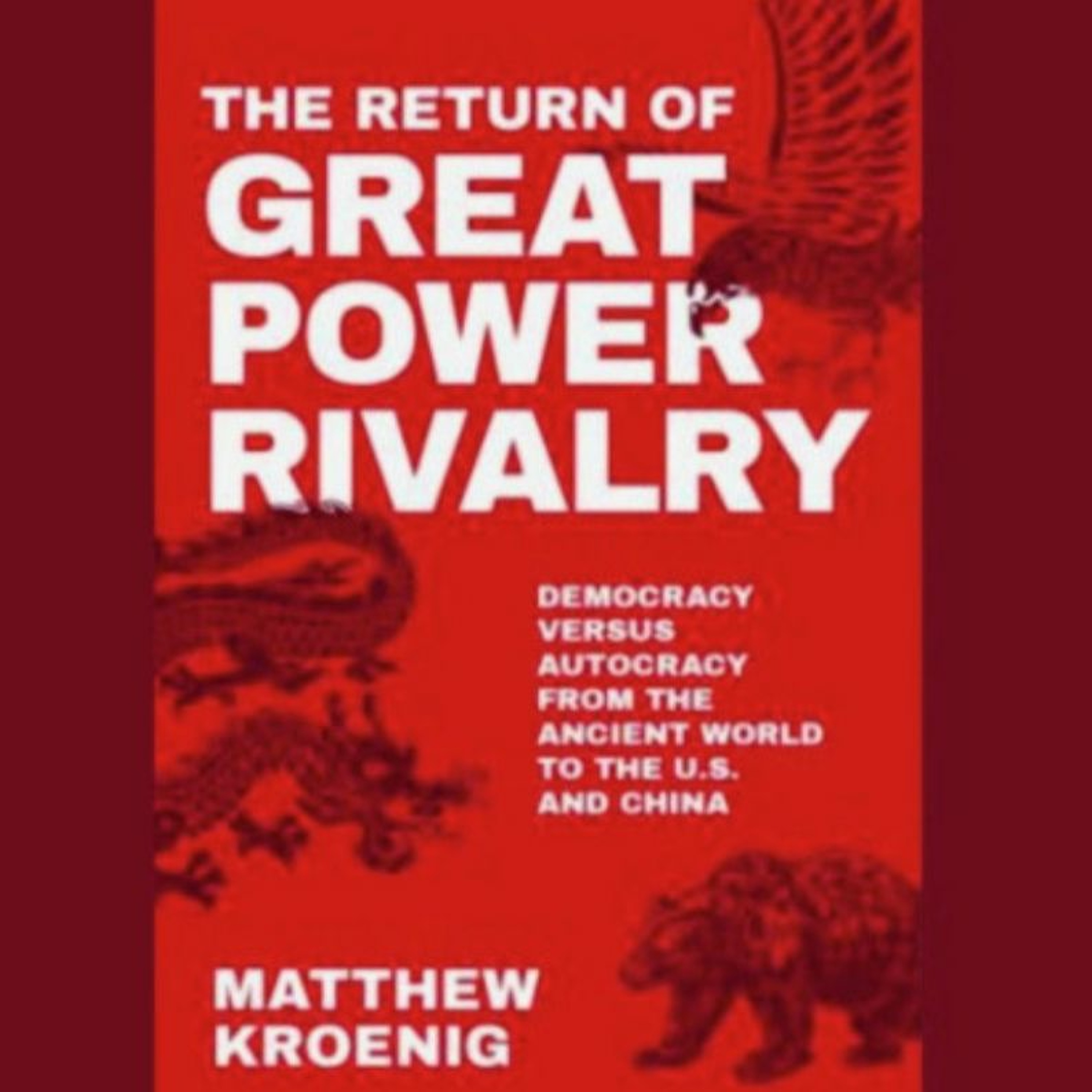
This event is sponsored by the Asia Initiative Lecture Series at The Institute of World Politics. About the lecture: The United States of America has been the most powerful country in the world for over seventy years, but recently the U.S. National Security Strategy declared that the return of great power competition with Russia and China is the greatest threat to U.S. national security. Further, many analysts predict that America’s autocratic rivals will have at least some success in disrupting-and, in the longer term, possibly even displacing-U.S. global leadership. Brilliant and engagingly written, The Return of Great Power Rivalry argues that this conventional wisdom is wrong. Drawing on an extraordinary range of historical evidence and the works of figures like Herodotus, Machiavelli, and Montesquieu and combining it with cutting-edge social science research, Matthew Kroenig advances the riveting argument that democracies tend to excel in great power rivalries. He contends that democracies actually have unique economic, diplomatic, and military advantages in long-run geopolitical competitions. He considers autocratic advantages as well, but shows that these are more than outweighed by their vulnerabilities. Kroenig then shows these arguments through the seven most important cases of democratic-versus-autocratic rivalries throughout history, from the ancient world to the Cold War. Finally, he analyzes the new era of great power rivalry among the United States, Russia, and China through the lens of the democratic advantage argument. By advancing a “hard-power” argument for democracy, Kroenig demonstrates that despite its many problems, the U.S. is better positioned to maintain a global leadership role than either Russia or China. A vitally important book for anyone concerned about the future of global geopolitics, The Return of Great Power Rivalry provides both an innovative way of thinking about power in international politics and an optimistic assessment of the future of American global leadership. About the speaker: Dr. Matthew Kroenig is the deputy director of the Scowcroft Center for Strategy and Security at the Atlantic Council and the director of the Center’s Global Strategy Initiative. He is also a tenured professor of government and foreign service at Georgetown University. A 2019 study in Perspectives on Politics ranked him one of the top 25 most cited political scientists of his generation. He is the author or editor of seven books, including The Return of Great Power Rivalry: Democracy versus Autocracy from the Ancient World to the US and China (Oxford University Press, 2020) and The Logic of American Nuclear Strategy (Oxford University Press, 2018). His articles and commentary have appeared in Foreign Affairs, Foreign Policy, Politico, the New York Times, the Wall Street Journal, the Washington Post, and many other outlets. He co-authors the bi-monthly “Its Debatable” column at Foreign Policy. Dr. Kroenig provides regular commentary for major media outlets, including PBS, NPR, BBC, CNN, and C-SPAN. He previously served in several positions in the US government, including in the Strategy office in the Office of the Secretary of Defense and the Strategic Assessments Group at the Central Intelligence Agency. He regularly consults with a range of US government entities. He has previously worked as a Stanton Nuclear Security Fellow at the Council on Foreign Relations and a research fellow at Harvard University and Stanford University. His work has been supported by the National Science Foundation, the Carnegie Corporation of New York, the Smith Richardson Foundation, the Hertog Foundation, and the Stanton Foundation. He is a life member of the Council on Foreign Relations and holds an MA and Ph.D. in political science from the University of California at Berkeley.

Estonia’s “Total Defense” Principle: Learning from History
This event is part of The Intermarium Lecture Series sponsored by The Institute of World Politics. About the lecture: The defensibility of the Baltic states has been a subject of much discussion since the Russian invasion and occupation of parts of Ukraine. A 2016 report by the RAND Corporation caused a stir when it determined that NATO was unprepared to defend the Baltics against a Russian attack, with Russian forces able to reach the outskirts of Tallinn in 60 hours. However, while American strategic thinking is focused on conventional military defense, due to its size, geography, and history, Estonia’s National Security Concept embraces a “total defense” principle. This is important for U.S. strategic thinkers and policymakers to understand and integrate into allied defense strategy and assistance. About the speaker: James A. Rice is the Legislative Director for U.S. Senator Chuck Grassley of Iowa, for whom he has worked since June 2000. In this role, James serves as the chief advisor to Senator Grassley on foreign policy matters, including in Senator Grassley’s capacity as co-chair of the Senate Baltic Freedom Caucus. James’s previous professional experience includes positions in the Iowa Senate, an internship with the British Conservative Party, and work on various political campaigns. James has been recognized by the Estonian Ministry of Foreign Affairs for his contributions to public diplomacy. James received a B.A. from Drake University with majors in political science and history and a M.A. in Statecraft and International Affairs at the Institute of World Politics. He is a native of Davenport, Iowa.
Communist China’s Modern Intelligence Reforms
This event is sponsored by the Asia Initiative Lecture Series at The Institute of World Politics. About the lecture: Since their 1949 victory, the Chinese Communist Party has been highly successful in making mainland China a very hard target for foreign espionage. But hitherto, China’s security and intelligence agencies have often endured a lack of interagency coordination, turf battles, and internal corruption. Under Mao Zedong, they were attacked and dismantled during the Cultural Revolution, taking decades to recover. During China’s corruption crisis of the 1990s and 2000s, intelligence and counterintelligence operations were hobbled by internal graft, leading to high-level penetrations by the CIA’s China Program. However, Xi Jinping has systematically attacked these problems since his ascent in 2012. His famous anti-corruption drive was partly intended to blunt alleged American efforts to provide cash for their agents within the Chinese state to secure corrupt promotions. Beijing’s drive to regain “information dominance” (制信息权, zhi xinxi quan) over an increasingly fluid, networked, and technologically sophisticated society appears to be broadly successful. Interagency coordination looks more robust under strengthened party oversight by the new Central State Security Commission. Meanwhile, an intelligence and military reorganization that was launched in 2015 has resulted in a sharper mission focus by the Ministry of State Security and the intelligence units of the People’s Liberation Army. This presentation will review these efforts, and what problems still exist. It will evaluate the possibility that the 2020s will be a decade of better coordinated and more aggressive espionage operations by Beijing, and the extent to which the increasingly successful surveillance state might expand and grow ever stronger inside China. About the speaker: Dr. Matthew Brazil is the researcher and writer. He pursued Chinese studies as an undergraduate at U.C. Berkeley, as an Army officer with tours in Korea and NSA, and as a graduate student at Harvard in their Regional Studies East Asia program. After a stint as the China specialist for the Commerce Department’s Office of Export Enforcement, he was assigned as a Commercial Officer with the U.S. Embassy, Beijing, where he both promoted and controlled U.S. high technology exports to China. Afterward, Matt spent 20 years as a security professional, performing investigations in China for a chip manufacturer, and leading the development of a security organization in China for an American specialty chemicals firm. His PhD dissertation at the University of Sydney (2013) described the place in the Chinese Communist Party of their intelligence organs. That and further research led to his contribution as the coauthor of Chinese Communist Espionage, An Intelligence Primer (2019). Matt has begun research on a second book intended to be an integrated narrative history of intelligence operations in the Chinese Communist movement.
Ethiopia in 2021: Tackling Challenges and Looking Toward the Future
About the lecture: Ethiopia today is at a crossroad, the government of Ethiopia recently launched a campaign to uphold the rule of law in order to keep the peace and security of its citizens. The government is also gearing up to conduct its first election in the Post-TPLF era in June 2021. All eyes will be on the reformist leader Abiy Ahmed, a 2019 Nobel peace prize laureate who promised to bring his nation of over a hundred million people back to its historical prominence by unlocking the country’s untapped natural resources. Our panelist will analyze the challenges facing the Prime Minister as he embarks on his goal to achieve making Ethiopia a middle-income nation by 2025. One of these challenges currently is the conflict between the federal government of Ethiopia and TPLF leadership in Tigray. About the panelist: Dr. Gedion Timothewos Hessebon, is the current attorney general of Ethiopia. Bronwyn Bruton, a democracy and governance specialist with extensive experience in Africa was a 2008-2009 international affairs fellow in residence at the Council on Foreign Relations (CFR). Ms. Bruton has also served as a program manager on the Africa team of the U.S. Agency for International Development’s Office of Transition Initiatives, as a policy analyst on the international affairs and trade team of the Government Accountability Office, and as a program officer at the Center for International Private Enterprise. Yoseph Mulugeta Badwaza is the Senior Regional Advisor at Freedom House, having formerly served as the Senior Program Officer for Ethiopia. Besu Feleke has been a human rights and democracy advocate for 18 years. He is on the board of Friends of Angola, PRO Leadership Inc, Global Innovation Network, Senior Policy Advisor at Solidarity Movement for New Ethiopia, and Community Advisor to the Chief of Police in Alexandria, Virginia. Besu works in various Peacebuilding initiatives and programs in the US and Africa. Professor Jon Abbink is an anthropologist-historian and carries out research on the history and cultures of the Horn of Africa (Northeast Africa), particularly Ethiopia. Learn more about the panelists: https://www.iwp.edu/events/38022/.
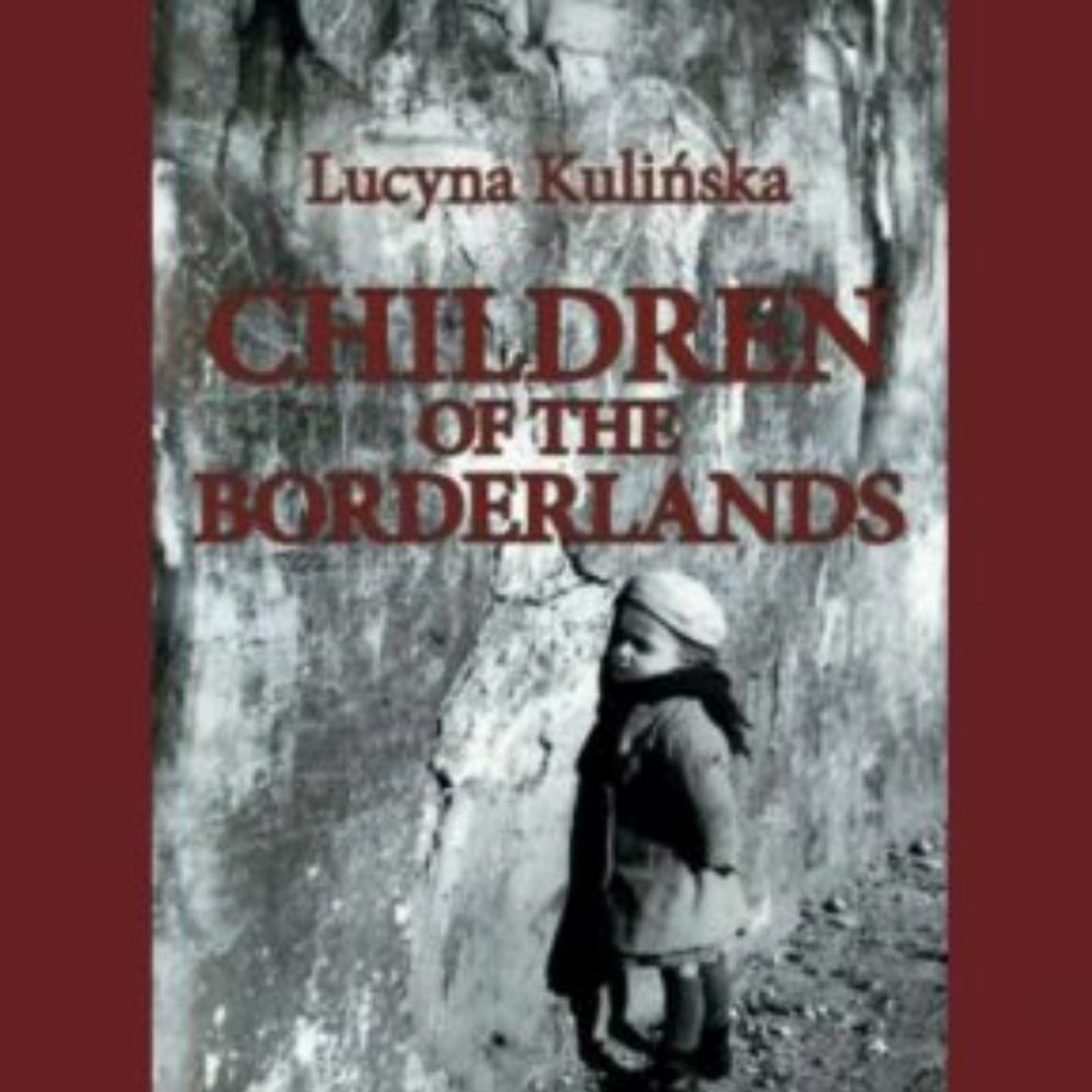
Children of the Borderlands by Doctor Lucyna Kulinska
This event is part of the Intermarium Lecture Series sponsored by The Institute of World Politics. About the lecture: The book Children of the Borderlands, by Lucyna Kulinska Ph.D., is not just a collection of eyewitness accounts of people who survived the savage genocide of the Polish population committed by Ukrainians, but is also a case study relevant to the multi-ethnic United States that faces numerous ethnic tensions, pressures, and challenges. It illustrates the involvement of numerous intelligence services in this genocide and the creation of the present Ukrainian state and its identity. About the speaker: Paul Szymanski is a naturalized citizen of the United States. He was born in Gdansk and immigrated from Poland in 1989. He graduated from the Loyola University of Chicago in 1995 and obtained a Bachelor of Business Administration. He works as a Cybersecurity Engineer and is certified as a Project Management Professional. Mr. Szymanski translated short stories by renowned American climber, John Long, into Polish and published them in the book titled Opowiesci z Krainy Largo (The stories from Laro’s world). This translation was a part of a project to obtain a new helicopter for the Tarta’s Mountain Rescue Squad. (The previous helicopter crashed during a rescue of high school students who unfortunately perished in an avalanche.) The book Children of the Borderlands was his first translation from Polish to English. He translated it with Jakub Zarazka and the poems were translated by Sister Jadwiga Szczechowicz from the Albertine Sisters convent. Sister Jadwiga is a former sergeant of the US Marine Corps. Mr. Szymanski enjoys rock climbing, mountaineering, skiing, scuba diving, and has completed four half-ironman triathlons.
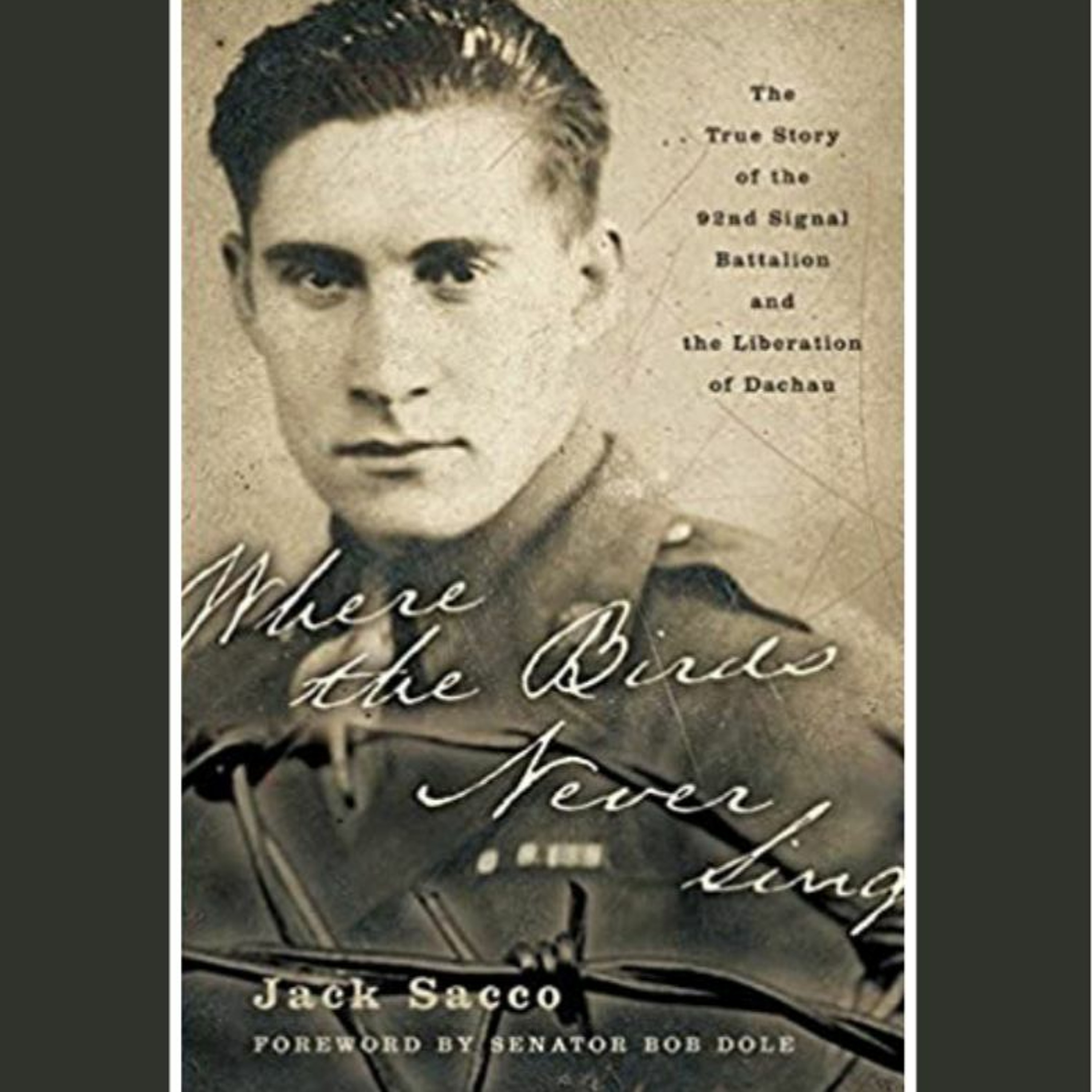
Where the Birds Never Sing, The True Story of the Liberation of Dachau
About the lecture: Jack Sacco’s presentation (based on his award-winning book, Where the Birds Never Sing), details his father’s heroic journey through the greatest battles of World War II with a special focus on the liberation of Dachau. His testimony bears witness to the truth of the Holocaust while honoring both the victims and liberators. About the speaker: Jack Sacco is the award-winning and Amazon #1 bestselling author of Where the Birds Never Sing and Above the Treetops. Originally from Birmingham, Alabama, he earned a degree in Mechanical Engineering from the University of Notre Dame. He is the winner of the Alabama Library Association’s 2005 Author Award for Where the Birds Never Sing. Past winners of this prestigious award include Harper Lee for To Kill a Mockingbird and Walker Percy for The Second Coming. Where the Birds Never Sing, published by HarperCollins, is a nonfiction account of his father Joe Sacco’s experiences during the Second World War, including his part in the liberation of the notorious Nazi concentration camp at Dachau. The book has been praised by critics and readers alike, including Senator Bob Dole, who contributed the Foreword. In addition, scholars of the Holocaust have been enthusiastic in their praise. Where the Birds Never Sing has been endorsed by Rabbi Abraham Cooper on behalf of the Simon Wiesenthal Center and the Museum of Tolerance in Los Angeles. Where the Birds Never Sing was nominated for the 2004 Pulitzer Prize and rose to become an Amazon #1 Bestseller. Jack Sacco is in demand as an accomplished public speaker who lectures widely throughout the United States and abroad. He has lectured at Yale University, the University of Notre Dame, the University of Southern California, UCLA, Loyola Marymount University, the University of Texas, and George Mason University, as well as other colleges and conferences throughout the nation. He has been chosen to deliver the keynote presentation at the National World War II Museum in New Orleans to commemorate the 75th anniversary of the liberation of Dachau. He was also chosen to give a special presentation before the Royal Families of Europe, including the Habsburg, Luxembourg, and Liechtenstein families.
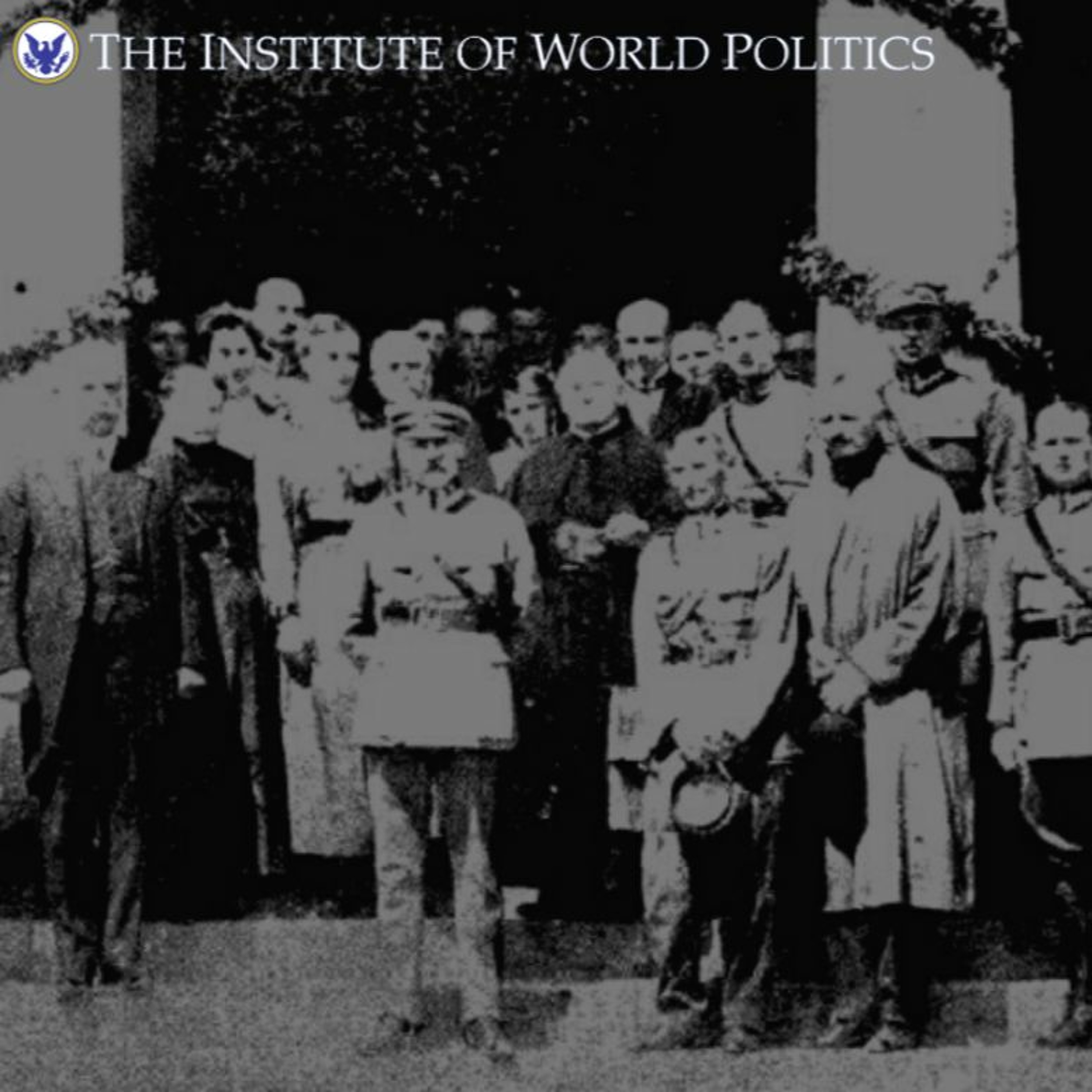
Poland at War (1914-1921)
About the lecture: Most politically active Poles welcomed the outbreak of the Great War as a chance to regain independence for their nation. Polish politicians and their followers were deeply divided among themselves. There were several orientations among them vying for influence. "Russian" Poles were pro-Western and counted on the victory of the Entente and sovereignty at best, or autonomy at worst. "Austrian" Poles pursued an "Austro-Polish solution," hoping that Vienna would unite all Polish lands under the scepter of the Habsburgs. Yet, the Austro-Hungarians increasingly yielded to Prussian prerogatives. Berlin at most entertained an idea of a dwarf Polish puppet state in the central provinces of Poland. Notwithstanding, the Poles raised several armed forces by the sides of the Russian, Austrian, and, lastly, Prussian armies. Meanwhile, emigre Poles, in particular in the United States supported the pro-Entente orientation. They also fielded the largest Polish force in the field which fought first in France and then, from 1919, in Poland itself. As the empires collapsed, it was both the diplomatic effort of the Poles in the West and the valor of Polish arms at home that facilitated the resurrection and defense of the Commonwealth. Ultimately, although they enjoyed some material assistance from the United States, France, and Hungary, it was the valor of Polish arms alone that secured the reborn nation's freedom. About the speaker: Dr. Marek Chodakiewicz currently serves as a Professor of History at The Institute of World Politics, where he holds the Kosciuszko Chair of Polish Studies. He also leads IWP’s Center for Intermarium Studies. At IWP, Dr. Chodakiewicz teaches courses on Contemporary Politics and Diplomacy, Geography and Strategy, Mass Murder Prevention in Failed and Failing States, and Russian Politics and Foreign Policy. He was formerly an assistant professor of history of the Kosciuszko Chair in Polish Studies at the Miller Center of Public Affairs at the University of Virginia. He also served as a visiting professor of history at Loyola Marymount University in Los Angeles.
Poland's Power and Others vs. the Revolution
About the lecture: It took Poland 123 years to regain its independence in 1918. Since 1772 each generation witnessed lost wars, uprisings, conspiracies, and defeats. Each new generation would continue the struggle afresh. And so it was again in 1905 and between 1914 and 1921. The Poles fought to restore the Old Commonwealth of Poland-Lithuania-Ruthenia. They benefitted from the collapse of the three empires: Russia, Germany, and Austria-Hungary; however, they also had to contend with folk nationalism of the non-historic nationalities, peasant nations of the Intermarium, who asserted their rights to self-determination. Warsaw was thus forced to fight several border wars, including against Germany. But it was the war against the Soviet Union that proved to be the most existential challenge not just to Poland, but to everyone else in the Intermarium. Unfortunately, the Bolshevik menace failed to unite the successor states and the Poles faced Lenin's legions virtually alone. About the speaker: Dr. Marek Chodakiewicz currently serves as a Professor of History at The Institute of World Politics, where he holds the Kosciuszko Chair of Polish Studies. He also leads IWP’s Center for Intermarium Studies. At IWP, Dr. Chodakiewicz teaches courses on Contemporary Politics and Diplomacy, Geography and Strategy, Mass Murder Prevention in Failed and Failing States, and Russian Politics and Foreign Policy. He was formerly an assistant professor of history of the Kosciuszko Chair in Polish Studies at the Miller Center of Public Affairs at the University of Virginia. He also served as a visiting professor of history at Loyola Marymount University in Los Angeles.
Revolutionary Slaughter and Pogroms
About the lecture: The autocratic system's inefficiencies, Russia's economic backwardness, the opposition's maximalist dissatisfaction, ghoulish slaughter at the front, and food supply failures combined to trigger a revolution in the empire in February 1917. The tsar abdicated and his regime yielded to a dual power system: the center-left provisional government and the leftist revolutionary Soviet. The new arrangement led to the paralysis of the country and the collapse of law and order. Deserters and bandits, along with the peasants, wreaked havoc from below; revolutionary parties fostered anarchy from above. Eventually, after October 1917, when the Bolsheviks seized power, deposing the liberals, chaos was further exacerbated by Lenin's government fostering Red Terror as state policy. In the ensuing Civil War, all possible political orientations raged against one another and against innocent bystanders. Everyone was caught in mayhem and violence, in particular helpless civilians, including traditional elites and Jews. About the speaker: Dr. Marek Chodakiewicz currently serves as a Professor of History at The Institute of World Politics, where he holds the Kosciuszko Chair of Polish Studies. He also leads IWP’s Center for Intermarium Studies. At IWP, Dr. Chodakiewicz teaches courses on Contemporary Politics and Diplomacy, Geography and Strategy, Mass Murder Prevention in Failed and Failing States, and Russian Politics and Foreign Policy. He was formerly an assistant professor of history of the Kosciuszko Chair in Polish Studies at the Miller Center of Public Affairs at the University of Virginia. He also served as a visiting professor of history at Loyola Marymount University in Los Angeles.
1918: Germany wins and collapses
About the lecture: Germany's final thrust to the east, coupled with revolutionary turmoil in Russia, which Berlin exacerbated greatly by its support of the Bolsheviks, brought victory to the Second Reich. The treaty of Brest Litovsk of March 1918 was an unmitigated triumph for the Germans. It not only allowed them to dominate most of the European part of the collapsing empire of the Tsars but also to establish a springboard to the future domination of the Caucasus and the Middle East. All that collapsed, however, because the United States entered the war and came to the rescue of the beleaguered and wavering Entente Powers. By August 1918 it became obvious that Germany had lost the war. Alas, instead of taking Berlin, the Powers agreed unwisely to an armistice in November 1918. Accordingly, hostilities terminated in the west, but they continued unabated in the east. About the speaker: Dr. Marek Chodakiewicz currently serves as a Professor of History at The Institute of World Politics, where he holds the Kosciuszko Chair of Polish Studies. He also leads IWP’s Center for Intermarium Studies. At IWP, Dr. Chodakiewicz teaches courses on Contemporary Politics and Diplomacy, Geography and Strategy, Mass Murder Prevention in Failed and Failing States, and Russian Politics and Foreign Policy. He was formerly an assistant professor of history of the Kosciuszko Chair in Polish Studies at the Miller Center of Public Affairs at the University of Virginia. He also served as a visiting professor of history at Loyola Marymount University in Los Angeles.
The Devil and Karl Marx: Communism’s Long March of Death, Deception, and Infiltration
This event is part of the Intermarium Lecture Series sponsored by The Institute of World Politics. About the lecture: “Thus Heaven I’ve forfeited, I know it full well. My soul, once true to God, is chosen for Hell.” So wrote Karl Marx in an 1837 poem. Those lines were, for Marx, at least partly biographical. Likewise disturbing were his openings lines in his Communist Manifesto: “A specter is haunting Europe, the specter of communism. All of the powers of old Europe have entered into a holy alliance to exorcise this specter.” Karl Marx unleashed more than a mere economic program. The man was less an economist than a revolutionary. Marx had a favorite line from Mephistopheles, the devil character in Goethe’s Faust: “Everything that exists deserves to perish.” What Marx wanted was not a mere economic revolution; he wanted a revolution against human nature, to annihilate the entire order, to burn down the house, to undermine “all religion, all morality.” He called for the “forcible overthrow of all existing social conditions.” What Marx advocated had a destructive dimension, a spiritual dimension, even a diabolical dimension. In his latest book, The Devil and Karl Marx: Communism’s Long March of Death, Deception, and Infiltration, Dr. Paul Kengor explores this chilling side of Marx and the Marxist revolution that still rages today. Join us to hear Professor Kengor on this fascinating and disturbing subject. About the speaker: Paul Kengor, Ph.D., is a professor of political science at Grove City College in Grove City, Pennsylvania, and a New York Times bestselling author of over a dozen books. He is senior director and chief academic fellow at the Institute for Faith & Freedom and former visiting fellow at the Hoover Institution at Stanford University. His articles have appeared in publications from the Washington Post and USA Today to the Wall Street Journal and New York Times. He is a longtime columnist and senior editor for The American Spectator. Kengor is an internationally recognized authority on (among other topics) Ronald Reagan, the Cold War, communism, socialism, and conservatism.

Taiwan: China’s Most Important Target On The Way To Global Hegemony
This event is part of the China Lecture Series sponsored by The Institute of World Politics. About the lecture: In 2019 China began to apply noticeable military pressure on Taiwan, which has increased considerably in 2020. China now proclaims in its media almost weekly that it will invade and conquer democratic Taiwan. This mounting threat to Taiwan will be examined, in addition to why the Chinese Communist Party (CCP) must destroy this democracy in order to achieve hegemony first in Asia, and then the world. Yet, all is not lost, there is still time for the United States to help Taiwan deter a Chinese invasion and by doing so, prevent a dark age of CCP hegemony. About the speaker: Mr. Richard D. Fisher, Jr. is a Senior Fellow with the International Assessment and Strategy Center. In 2016 he joined the Advisory Board of the Global Taiwan Institute. He has previously worked with the Center for Security Policy, Jamestown Foundation China Brief, U.S. House of Representatives Republican Policy Committee, and The Heritage Foundation. He is the author of China’s Military Modernization, Building for Regional and Global Reach (Praeger, 2008, Stanford University Press, 2010, Taiwan Ministry of National Defense translation 2012) Since 1996 he has covered scores of international arms exhibits and his articles have been published in the Jane’s Intelligence Review, Jane’s Defence Weekly, Aviation Week and Space Technology, Armed Forces Journal, Far Eastern Economic Review, Asian Wall Street Journal, Defense News, The Epoch Times and the The Washington Times. He has studied at Georgetown University and received a B.A. (Honors) in 1981 from Eisenhower College.
How Not to Underestimate the Evolving Threat
About the lecture: This lecture will examine the misapplication of new systems in the run-up to conflict–eg French and Russian pre-WWII misunderstanding of best employment of tanks and implications for US force planning. About the speaker: Dr. Dov S. Zakheim is Senior Advisor at the Center for Strategic and International Studies and Senior Fellow at the CNA Corporation, a federally funded think tank. Previously he was Senior Vice President of Booz Allen Hamilton where he led the Firm’s support of U.S. Combatant Commanders worldwide. From 2001 to April 2004 he was Under Secretary of Defense (Comptroller) and Chief Financial Officer for the Department of Defense, and from 2002-2004 he was also DOD’s coordinator of civilian programs in Afghanistan. From 1985 until 1987, Dr. Zakheim was Deputy Under Secretary of Defense for Planning and Resources, playing an active role in the Department’s system acquisition, strategic planning, programming and budget processes. He held other senior DOD posts from 1981-1985. Dr. Zakheim has served on numerous government, corporate, non-profit and charitable boards. He is Vice Chairman of the Foreign Policy Research Institute’s Board of Trustees, and Vice Chairman of the Board of Directors of the Center for The National Interest.
Disinformation and the National Security Implications of Technology
About the lecture: Mr. Glenn Gerstell will discuss the national security burdens that our private sector must bear due to the advent of new technology and widespread disinformation online. Please click here for Mr. Gerstell’s New Yorker article on this topic: https://www.newyorker.com/tech/annals-of-technology/the-national-security-case-for-fixing-social-media About the speaker: Glenn S. Gerstell served as the general counsel of the National Security Agency (NSA) and Central Security Service (CSS) from 2015 to 2020. He has written and spoken widely about the intersections of technology and national security and privacy. Prior to joining the NSA, Mr. Gerstell practiced law for almost 40 years at the international law firm of Milbank, LLP, where he focused on the global telecommunications industry and served as the managing partner of the firm’s Washington, D.C., Singapore, and Hong Kong offices. Mr. Gerstell served on the President’s National Infrastructure Advisory Council, which reports to the president and the secretary of homeland security on security threats to the nation’s infrastructure, as well as on the District of Columbia Homeland Security Commission. A graduate of New York University and Columbia University School of Law, Mr. Gerstell is an elected member of the American Academy of Diplomacy and a member of the Council on Foreign Relations. Earlier in his career, he was an adjunct law professor at the Georgetown University Law Center and New York Law School. He is a recipient of the National Intelligence Distinguished Service Medal, the Secretary of Defense Medal for Exceptional Civilian Service and the NSA Distinguished Civilian Service Medal.
Asia’s New Geopolitics: Essays on Reshaping the Indo-Pacific
This event is part of the China Lecture Series sponsored by The Institute of World Politics. About the book: The Indo-Pacific is fast becoming the world’s dominant region. As it grows in power and wealth, geopolitical competition has reemerged, threatening future stability not merely in Asia but around the globe. China is aggressive and uncooperative, and increasingly expects the world to bend to its wishes. The focus on Sino-US competition for global power has obscured “Asia’s other great game”: the rivalry between Japan and China. A modernizing India risks missing out on the energies and talents of millions of its women, potentially hampering the broader role it can play in the world. And in North Korea, the most frightening question raised by Kim Jong-un’s pursuit of the ultimate weapon is also the simplest: can he control his nukes? In Asia’s New Geopolitics: Essays on Reshaping the Indo-Pacific, Michael R. Auslin examines these and other key issues transforming the Indo-Pacific and the broader world. He also explores the history of American strategy in Asia from the 18th century through today. Taken together, Auslin’s essays convey the richness and diversity of the region: with more than three billion people, the Indo-Pacific contains over half of the global population, including the world’s two most populous nations: India and China. In a riveting final chapter, Auslin imagines a war between America and China in a bid for regional hegemony and what this conflict might look like. About the speaker: Michael Auslin, PhD, a historian and geopolitical analyst, is the inaugural Payson J. Treat Distinguished Research Fellow in Contemporary Asia at the Hoover Institution, Stanford University, and is also a senior fellow at the Foreign Policy Research Institute. The best-selling author of four non-fiction books, he is a longtime contributor to the Wall Street Journal, and his writing appears in The Atlantic, Foreign Affairs, Politico, and National Review, among other leading publications. Formerly an associate professor of history at Yale, he was a World Economic Forum Young Global Leader and Fulbright Scholar, among other awards. He appears frequently in U.S. and foreign media, and is the Vice Chairman of the Wilton Park USA Foundation.

The Dangers of False National Security Narratives
About the lecture: When we accept certain narratives on which national security policy rests, and those narratives are incorrect, we get ourselves into serious trouble. One is reminded about a debate in the British parliament between Winston Churchill and Mr. Chamberlain, with the latter arguing that rearming Britain to take on Germany would probably result in a diminution of free trade with Nazi Germany. To which Winston Churchill said, “shouldn’t that be the idea?” The United States in 1969-70 adopted detente and peaceful coexistence as descriptors of American security policy. At the end of World War II, we adopted the idea of containment of the USSR. We also adopted “Vietnam” to conjure up a quagmire to describe the feared end result of the use of American military force. Today, we have adopted “peaceful rise“ as the way to describe the growing military and economic strength of China; we have long held out the idea that a successful foreign policy in the Middle East had to go through the “peace process”; and successful response to 9-11 required the USA to win the “global war on terror or GWOT”. This lecture will examine how such narratives were developed and what political forces such narratives served. This lecture will also explore each of these narratives and what dead ends they led us to reach, or are still leading us, and compare them to President Reagan’s “peace through strength” strategy. We will also discuss the current administration’s policy with respect to China, the Middle East, and Russia/NATO. Reagan’s peace through strength is often described —wrongly—as no more than simple bullying—a narrative we will also address. Part of this discussion will include my own part in these foreign policy fights over the 1975-2020 period. About the speaker: Mr. Peter Huessy is President of his own defense consulting firm, GeoStrategic Analysis, founded in 1981, and since 2016, Director of Strategic Deterrent Studies at the Mitchell Institute on Aerospace Studies. He was the senior defense consultant at the National Defense University Foundation for 22 years. He was the National Security Fellow at the AFPC, and Senior Defense Consultant at the Air Force Association from 2011 Mr. Huessy has served as an expert defense and national security analyst for over 45 years, helping his clients cover congressional activities while monitoring budget and policy developments on terrorism, counter-terrorism, immigration, state-sponsored terrorism, missile defense, weapons of mass destruction, especially US-Israeli joint defense efforts, nuclear deterrence, arms control, proliferation, as well as tactical and strategic air, airlift, space, and nuclear matters and such state and non-state actors as North Korea, China, Iran, Syria, Venezuela and Hezbollah, Hamas and Al Qaeda. This also includes monitoring activities of think tanks, non-governmental organizations, and other US government departments, as well as projecting future actions of Congress in this area. His specialty is developing and implementing public policy campaigns to secure support for important national security objectives.
Russia: Revolution and Civil War
About the lecture: A revolution broke out in Russia in February 1917, which overthrew the Tsar. Instead of ushering in a liberal democracy, it quickly degenerated into anarchy, which paved the way for a Bolshevik takeover in October 1917. Non-Bolshevik leftists for the most part refused to save democracy and freedom by refusing to fight for it. The right-wing counterrevolutionaries fought bravely but their slim ranks were overwhelmed by the might of the Reds and the sea of indifference and hostility of the Russian people, who cherished no government. The lands of the former Russian Empire descended into a civil war and, concomitantly, wars of national liberation as borderland nationalities attempted to assert their freedom. Most failed and found themselves back firmly under the boot of Moscow, which was now ruled by the Reds. Only the Entente could have thwarted the Bolshevik victory but the West lacked the will and imagination to invest much to destroy Communism in its cradle. About the speaker: Dr. Marek Jan Chodakiewicz holds The Kosciuszko Chair in Polish Studies at The Institute of World Politics, where he also serves as a Professor of History and teaches courses on Geography and Strategy, Contemporary Politics and Diplomacy, Russian Politics and Foreign Policy, and Mass Murder Prevention in Failed and Failing States. He is the author of Intermarium: The Land Between the Black and Baltic Seas and numerous other books and articles. He holds a Ph.D. from Columbia University and has previously taught at the University of Virginia and Loyola Marymount University.
Policies in a Strange Land: Conventional Authorities, Cyber Operations
This event is part of the Cyber Intelligence Initiative Series sponsored by The Institute of World Politics. About the lecture: The establishment of US Cyber Command and expansion of Computer Network Exploitation and Computer Network Attack operations under a number of authorities has blurred the lines of traditional national security roles. This lecture explores the policy implications of cyber operations conducted under various authorities and their broader implications for international norms in the cyber domain. About the speaker: Adam Maruyama is a national security professional with deep experience in cyber operations, cybersecurity, and counterterrorism. For more than 15 years, he served in a variety of operational and leadership roles in the national security community. He served in numerous warzones and co-led the drafting of the 2018 National Strategy to Counterterrorism. Adam currently manages cybersecurity software deployments for a number of federal customers.
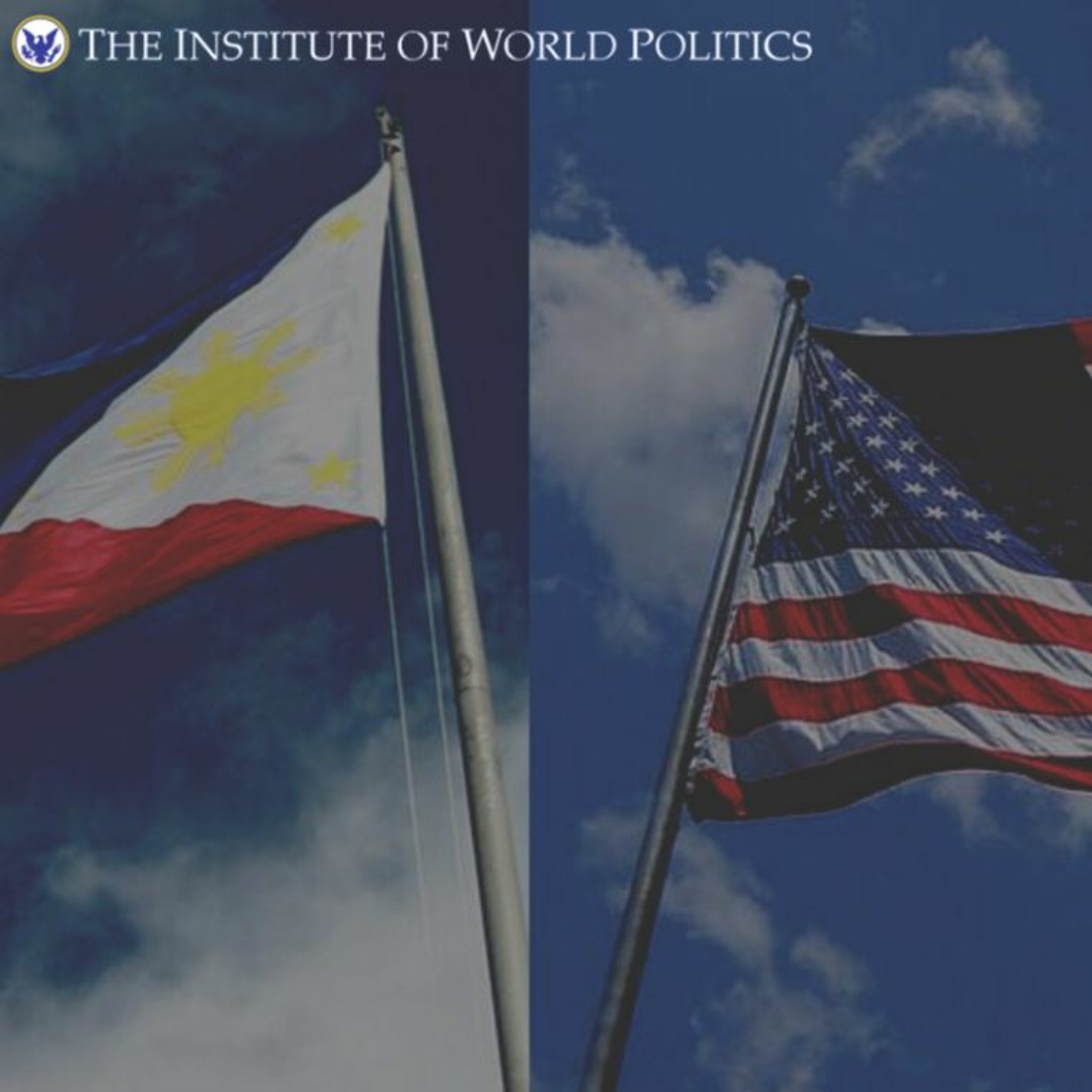
Philippines-U.S. Alliance in a Post-Pandemic World
This event is a part of the Asia Initiative Lecture Series at The Institute of World Politics. About the lecture: As the world adapts to a new normal, the Philippines and the United States are presented with fresh opportunities to expand their longstanding alliance and partnership. In this lecture, Philippine Ambassador Jose Manuel Romualdez will discuss how the two countries are working together to address the challenges brought about by the COVID-19 pandemic, and how this collaboration is re-defining Philippines-U.S. bilateral relations. He will also present the Philippines’ long-term vision and priorities for the alliance and partnership. About the speaker: Jose Manuel “Babe” del Gallego Romualdez was appointed Ambassador of the Republic of the Philippines to the United States of America in July 2017 by President Rodrigo Roa Duterte. On 29 November 2017, he presented his credentials to US President Donald J. Trump and formally assumed office as Ambassador Extraordinary and Plenipotentiary. Additionally, as the head of the Philippine Embassy in Washington, D.C., Ambassador Romualdez is concurrently the Philippines’ emissary to the Commonwealth of Jamaica, Republic of Haiti; Republic of Trinidad and Tobago; Antigua and Barbuda; Bahamas; Barbados; Dominica; Saint Kitts and Nevis; Saint Vincent and the Grenadines; and Saint Lucia. Prior to his appointment, Ambassador Romualdez was designated as a special envoy of the Philippine President to the United States. He also served as a member of several Philippine business delegations visiting the United States, China, Japan and New Zealand from 1989 to 2012. Ambassador Romualdez has extensive experience as a media practitioner and business executive. He used to be the Chief Executive Officer of Stargate Media Corporation and Publisher of People Asia Magazine (The Philippine Star affiliate). He was president of the Manila Overseas Press Club and vice-president of Rotary Club of Manila. Ambassador Romualdez writes columns for The Philippine Star. All his columns have a wide following of readers both in the Philippines and abroad. Born and raised in Manila, Ambassador Romualdez received a Bachelor of Science degree in Business Administration from De La Salle College in 1970. He plays golf as a pastime and is affiliated with Manila Golf and Country Club and the Manila Polo Club.

The Katyn Forest Massacre: An Annotated Bibliography of Books in English
This event is part of the Intermarium Lecture Series sponsored by The Institute of World Politics. About the book: “The Katyn Forest Massacre: An Annotated Bibliography of Books in English” begins with a history of the Katyn Massacre and an overview of the literature on Katyn. The subsequent chapters discuss the authors and contents of some 38 books that have been published over the decades in English about Katyn. Each book contributed something to the evolving literature and general knowledge about the history of the Massacre. Books were written by some prisoners who survived (Czapski and Młynarski), witnesses who were brought to the exhumations (Stroobant and Werth), diplomats and generals who tried to find out what happened to the missing officers (Kot and Anders), family members who were deported to Kazakhstan and Siberia (Adamczyk), researchers and historians (Zawodny, Ciencala, Sanford and Maresch), and authors who believed that raising awareness about Katyn was worthwhile because it might help rectify an injustice (FitzGibbon and Allen). Books written before the Soviet admission of guilt pointed an accusatory finger at the Kremlin. Those written afterwards had the benefit of archival revelations that helped shed light on previously unknown details of the NKVD Katyn operation. The Foreword is by Dr. Alexander M. Jablonski, President of the Oskar Halecki Institute in Canada. About the speaker: Mr. Andrew Kavchak was born in Montreal. He studied political science (BA – Concordia University, MA – Carleton University) and law (LL.B. – Osgoode Hall Law School). He spent his career in the Canadian federal civil service mostly working in policy units with the departments of revenue, industry and international trade. Since retiring he has pursued his hobbies of reading and writing about history. He has written and published several books that are available on Amazon, including Remembering Gouzenko: The Struggle to Honour a Cold War Hero and The Katyn Forest Massacre: An Annotated Bibliography of Books in English. He lives in Ottawa, Canada.
Experiences of a Polish Officer in the Austrian Army in WWI
Full title: Experiences of a Polish Officer in the Austrian Army in WWI Dying Echoes: Memoirs of the War 1914-1920 by Stanisław Kawczak This lecture is a part of the 13th Annual Kościuszko Chair Conference by the Kościuszko Chair of Polish Studies and the Center for Intermarium Studies. About the lecture: Andrew Kavchak will discuss his grandfather’s, Stanisław Kawczak, memoirs of WWI, and the subsequent conflicts following Poland’s independence. Dying Echoes: Memoirs of the War 1914-1920 by Stanisław Kawczak was first published in Poland in 1936. The book tells the story and experiences of a young Polish conscript in the Austrian army who fought during WWI wearing the Austrian uniform against the Russian army on the Eastern Front and the Italian army on the Southern Front. From the beginning of the war, his heart was in the struggle for Polish independence and the defeat of the three occupying powers (Germany, Austria, and Russia) which had partitioned Poland since the 1790s. The narrative is vivid and gives the reader an image of the life of a soldier on the march and in the trenches, as well as an account of the political debates about national interests during the “Great War”. About the speaker: Mr. Andrew Kavchak was born in Montreal, Canada. He studied political science earning a BA from Concordia University and MA from Carleton University) and law (LL.B. – Osgoode Hall Law School). He spent his career in the Canadian federal civil service working in policy units with the departments of revenue, industry, and international trade. Since retiring he has pursued his hobbies of reading and writing about history. He has written and published several books that are available on Amazon, including Remembering Gouzenko: The Struggle to Honour a Cold War Hero and The Katyn Forest Massacre: An Annotated Bibliography of Books in English. He lives in Ottawa, Canada.
Stanislawa Leszczynska: The Miracle of Life in a Death Camp
This lecture is a part of the 13th Annual Kościuszko Chair Conference by the Kościuszko Chair of Polish Studies and the Center for Intermarium Studies. About the lecture: The lecture will present the life and work of a devoted midwife, Stanislawa Leszczynska, who tirelessly assisted pregnant women prisoners of Auschwitz and helped them safely deliver their babies against all odds. About the speaker: Mrs. Maria Juczewska is a communication specialist with a versatile international experience. Her education in linguistics, culture studies, and international affairs, combined with years of living abroad, makes her point of view unique and comprehensive. Mrs. Juczewska worked for the Kościuszko Chair of Polish Studies from 2014-2020, and she is a graduate of IWP’s M.A. program. At present, she is working on her Ph.D. in political philosophy.
Saint John Paul II and President Ronald Reagan – an alliance for good
This lecture is a part of the 13th Annual Kościuszko Chair Conference by the Kościuszko Chair of Polish Studies and the Center for Intermarium Studies. About the lecture: 2020 marks what would have been the 100th birthday of St. Pope John Paul II as well as the 42nd anniversary of his election as Pope. This is a great moment to reflect on Saint John Paul II and President Ronald Reagan, two of the most influential figures of the 20th century. With their will, belief in God, and the power of the spoken word, the Polish Pope and American President together liberated Europe and changed world history. There are no coincidences, but Providence is at work. John Paul II stepped onto the world stage just as the most powerful country on earth was about to elect a president unwaveringly committed to the cause of freedom. One became the spiritual leader of the world, the other the political leader of the free world. The two great men are no longer with us, but our need for moral clarity and moral leadership remains. About the speaker: Mrs. Monika Jablonska is a consultant with expertise in international business transactions and NGOs, lawyer and philanthropist. Ms. Jablonska is working on her Ph.D. thesis in political science. She is the author of “Wind from Heaven: John Paul II, The Poet Who Became Pope.” Her second book about St. John Paul II will be released in 2021. She is a contributor to the National Catholic Register, Crisis Magazine, Newsmax and other publications in the United States and Europe.
Ronald Reagan and John Paul II: Two Partners Who Won the Cold War and Changed History
About the book: Even as historians credit Ronald Reagan and Pope John Paul II with hastening the end of the Cold War, they have failed to recognize the depth or significance of the bond that developed between the two leaders. Acclaimed scholar and bestselling author Paul Kengor changes that. In this fascinating book, he reveals a singular bond—which included a spiritual connection between the Catholic pope and the Protestant president—that drove the two men to confront what they knew to be the great evil of the twentieth century: Soviet communism. A Pope and a President is the product of years of research. Based on Kengor’s tireless archival digging and his unique access to Reagan insiders, the book reveals the inside story of the friendship between Reagan and Pope John Paul II. About the speaker: Dr. Paul Kengor is professor of political science at Grove City College in Pennsylvania, and a New York Times bestselling author of over a dozen books. He is senior director and chief academic fellow at the Institute for Faith & Freedom and former visiting fellow at the Hoover Institution at Stanford University. His articles have appeared in publications from the Washington Post and USA Today to the Wall Street Journal and New York Times. He is a longtime columnist and senior editor for The American Spectator. Kengor is an internationally recognized authority on Ronald Reagan, the Cold War, communism, socialism, and conservatism.
The Count to be Saint: János Esterházy (1901-1957)
This lecture is a part of the 13th Annual Kościuszko Chair Conference by the Kościuszko Chair of Polish Studies and the Center for Intermarium Studies. About the Lecture: Count Janos Esterhazy opposed the Nazis and Communists; he escaped the former only to be imprisoned and killed by the latter. Now he is hailed as a hero by the Hungarians, Poles, and Jews; the Catholic Church has recognized him as a Servant of God and launched Esterhazy’s beatification process. Meanwhile, Czechia and Slovakia cannot forgive the Count’s Hungarian patriotism and irredentism, thus stalling and derailing his rehabilitation. About the speaker: Dr. Marek Jan Chodakiewicz holds The Kosciuszko Chair in Polish Studies at The Institute of World Politics, where he also serves as a Professor of History and teaches courses on Geography and Strategy, Contemporary Politics and Diplomacy, Russian Politics and Foreign Policy, and Mass Murder Prevention in Failed and Failing States. He is the author of Intermarium: The Land Between the Black and Baltic Seas and numerous other books and articles. He holds a Ph.D. from Columbia University and has previously taught at the University of Virginia and Loyola Marymount University.
The Conservative Revolution: The Movement That Remade America
This lecture is part of the 13th Annual Kościuszko Chair Conference hosted by the Kościuszko Chair of Polish Studies and the Center for Intermarium Studies. About the book: The triumph of the conservative movement in reshaping American politics is one of the great untold stories of the past fifty years. At the end of World War II, hardly anyone in public life would admit to being a conservative, but as Lee Edwards shows in this magisterial work, in the 1950s, 1960s, and 1970s, a small group of committed men and women chipped away at the liberal colossus, and their descendants would scale the ramparts of power in the 1980s and 1990s. Lee Edwards shows that the modern conservative era grew out of the words and deeds of many heroes, particularly the men he calls the Four Misters — Robert Taft (Mister Republican), Barry Goldwater (Mister Conservative), Ronald Reagan (Mister President), and Newt Gingrich (Mister Speaker). Join us as we interview Mr. Edwards about the careers of these four larger-than-life leaders who transformed the conservative movement into a political majority. About the speaker: Dr. Lee Edwards is a Distinguished Fellow in Conservative Thought at the B. Kenneth Simon Center for American Studies at The Heritage Foundation, and an Adjunct Professor of politics at the Catholic University of America. Edwards is a leading historian of American conservatism and author or editor of over 25 books. He was the Founding Director of the Institute of Political Journalism at Georgetown University and a Fellow at the Institute of Politics at the John F. Kennedy School of Government at Harvard University. His awards and honors include the Order of Merit of the Republic of Hungary, the Millennium Star of Lithuania, the Cross of Terra Mariana of Estonia, the Friendship Medal of Diplomacy from the Republic of China (Taiwan), the John Ashbrook Award, the Reed Irvine Accuracy in Media Award, Legend of YAF from Young America’s Foundation, and the Walter Judd Freedom Award. Edwards holds a Ph.D. in world politics from Catholic University and a Doctor of Humane Letters from Grove City College. He lives in Arlington, Va., with his wife Anne, who assists him in all his writing.
Post-Revolution Sudanese Security Sector Reform and Social Transformation
This event is part of The African Strategic Forum sponsored by The Institute of World Politics. About the lecture: As Sudan transitions to a more transparent, civilian rule, and democratic governance, its Sudan Sovereignty Council civilian and military leadership in Khartoum will be tested on its willingness to dismantle and reform its security sector. The process of building a strong civil society and preparing the country for elections in the next two years will be scrutinized by the global community and other regional stakeholders. This panel will discuss what steps will increase the likelihood of a successful transition and reformed security sector. About the panelist: Dr. Linda Bishai is an adjunct professor at the Elliott School of International Affairs and a Research Staff Member on the Africa Team at the Institute for Defense Analyses (IDA). She works on a wide range of international security issues including African regional economic communities, security cooperation in Africa, and monitoring instability in central and southern Africa. She has twenty years of experience in teaching, training and writing on international law, peacebuilding and security sector reform, and preventing/countering violent extremism. In her previous positions at the American Bar Association and at the U.S. Institute of Peace, Bishai designed and delivered programs on preventing election violence in Sudan and South Sudan, civic education and higher education reform in Sudan, and women’s role in preventing violent extremism in Nigeria and Kenya. As Director of North Africa programs at USIP, Bishai facilitated dialogues on just and sustainable security sector responses to violent extremism and border security in the Sahel and the Maghreb. As Director of Research, Evaluation and Learning at the ABA Rule of Law Initiative, Bishai oversaw the activities of a team of legal researchers and monitoring & evaluation professionals.Bishai has maintained an active academic profile and has taught courses in international relations, international law and human rights. Bishai holds a B.A. in history and literature from Harvard University, a J.D. from Georgetown University Law Center, and LLM in international law from the University of Stockholm, and a Ph.D. in international relations from the London School of Economics. Dr. Sarah Detzner is a consultant based in Washington, D.C. Her research and consulting work, on behalf of various governments, multilateral institutions, and think tanks and foundations, is focused on security sector reform, particularly monitoring and evaluation as well as the role of civil society and other forms of participation in post-conflict security sector reconstruction efforts. Previously, she served in the Obama administration as a speechwriter for former Secretary of Defense Robert M. Gates, campaigned as an Obama 2008 staffer, and worked with the National Democratic Institute in Washington, D.C., Lebanon, and Jordan. She received her doctorate from the Fletcher School of Law and Diplomacy and is a fellow of the World Peace Foundation. About the coordinator and moderator: Prof. Hashem Mekki, MA, has taught Arabic Language, Culture & Middle East Media at IWP since 2012. He is the owner of Bridge Language Solutions, providing an array of language translation, interpretation and teaching services to the Washington DC metropolitan area, and the founder of Kele Global, a nonprofit organization that promotes education, health, and economic empowerment in the Sudan and the Republic of South Sudan. He also teaches Arabic language to federal employees & professionals at the National Nuclear Security Administration at the Department of Energy.
Winning Without War: Building Alliances and Partnerships
About the lecture: The rise of great power politics has resulted in a new, global competition for political influence. Alliances and partnerships are critical to expanding US influence, yet building these partnerships is challenging. This webinar will discuss the importance of these partnerships and suggest ways for the US to expand and strengthen them. About the panelists: Dr. Frank Marlo is Dean of Academics at The Institute of World Politics. He formerly served as a Professor of Strategic Studies at the Marine Corps Command and Staff College. He received his Ph.D. from the Fletcher School of Law and Diplomacy in May 2006. From January 2002 until January 2005, he served as Assistant for Counterproliferation Policy in the Office of the Assistant Secretary of Defense for International Security Policy. He is the author of Planning Reagan’s War: Conservative Strategists and America’s Cold War Victory. Ambassador Philip Hughes served as the United States Ambassador to Barbados and the Eastern Caribbean from November 1990 until July 1993. Prior to this ambassadorial appointment, he served as Executive Secretary of the National Security Council during 1989 and 1990. Ambassador Hughes is currently Senior Director of the White House Writers Group in Washington, DC. Dr. Cailtin Schindler is a Research Professor at The Institute of World Politics and Adjunct Professor at Patrick Henry College. In addition to teaching, Dr. Schindler works for a U.S. Defense contractor providing subject matter expertise research and analysis to various government customers’ operations and programs. Dr. Schindler obtained a Master of Arts in Strategic Intelligence from the Institute of World Politics in 2010 and completed her Ph.D. on the historical origins of U.S. public diplomacy at the University of Leeds. Dr. Schindler authored The Origins of Public Diplomacy in US Statecraft: Uncovering a Forgotten Tradition.

An Assessment of the Free and Open Indo-Pacific Strategy
This event is sponsored by the Asia Initiative Lecture Series at The Institute of World Politics. About the lecture: After 20 years of White House National Security Strategies premised on the hope that great power competition might be mitigated by cooperation with China on counter-terrorism, financial governance or climate change, the Trump administration announced unapologetically in its 2017 National Security Strategy that the United States is in strategic competition with China. The same year the State Department introduced the Free and Open Indo-Pacific strategy and brought back the US-Japan-Australia-India “Quad” to check Chinese expansion in the Indian and Pacific Oceans. No matter who wins the Presidency in November, these key pillars of U.S. strategy should continue. But serious changes are necessary or the strategy will fail. Over the next four years, the United States must re-invest in alliances, multilateral institutions, trade negotiations, and military deterrence or the framing of strategic competition with China will become hollow. About the speaker: Michael Jonathan Green is senior vice president for Asia and Japan Chair at the Center for Strategic and International Studies (CSIS) and director of Asian Studies at the Edmund A. Walsh School of Foreign Service at Georgetown University. He served on the staff of the National Security Council (NSC) from 2001 through 2005, first as director for Asian affairs with responsibility for Japan, Korea, Australia, and New Zealand, and then as special assistant to the president for national security affairs and senior director for Asia, with responsibility for East Asia and South Asia. Before joining the NSC staff, he was a senior fellow for East Asian security at the Council on Foreign Relations, director of the Edwin O. Reischauer Center and the Foreign Policy Institute and assistant professor at the School of Advanced International Studies (SAIS) at Johns Hopkins University, research staff member at the Institute for Defense Analyses, and senior adviser on Asia in the Office of the Secretary of Defense. He also worked in Japan on the staff of a member of the National Diet. Dr. Green is also a nonresident fellow at the Lowy Institute in Sydney, Australia, a distinguished scholar at the Asia Pacific Institute in Tokyo, and professor by special appointment at Sophia University in Tokyo. He is a member of the Council on Foreign Relations, the Aspen Strategy Group, the America Australia Leadership Dialogue, the advisory boards of Radio Free Asia and the Center for a New American Security, and the editorial boards of the Washington Quarterly and the Journal of Unification Studies in Korea. He also serves as a trustee at the Asia Foundation, senior adviser at the Asia Group, and associate of the U.S. Intelligence Community. Dr. Green has authored numerous books and articles on East Asian security, including most recently, By More Than Providence: Grand Strategy and American Power in the Asia Pacific Since 1783 (Columbia University Press, 2017). He received his master’s and doctoral degrees from SAIS and did additional graduate and postgraduate research at Tokyo University and the Massachusetts Institute of Technology. He received his bachelor’s degree in history from Kenyon College with highest honors. He holds a black belt in Iaido (sword) and has won international prizes on the great highland bagpipe.
Regime Change through Women’s Liberation: The Soviets to the Bush Doctrine
This event is part of the Intermarium Lecture Series sponsored by The Institute of World Politics. About the lecture: This lecture investigates the similarities among three different revolutionary women’s liberation campaigns: the Soviet policy of hujum in Uzbekistan in the 1920s and 1930s, the Chinese Communist Party’s policies on marriage reform from 1921 until 1953, and U. S. policies and rhetoric toward Afghan and Iraqi women during the interventions in the early 2000s. It is widely recognized that women’s liberation, when subordinated to another ideological mission, almost invariably falls short of its objectives. Placing these episodes in comparison helps to demonstrate key aspects of the fateful logic of women’s liberation when pursued as a strategy for revolutionary state-building. This comparison also sheds new light on U.S. operations in the Middle East and suggests that the U.S. effort to build democracy shares with revolutionary communism the normative assumption that the disruption of traditional gender norms is one of the first and most important steps toward building a new regime. About the speaker: Dr. Emily Finley holds a PhD in Political Theory from The Catholic University of America and is currently a postdoctoral scholar in Political Science at Stanford University. Her research interests include political ideology, international relations, epistemology, religion and politics, and intellectual history.
Grand Ethiopian Renaissance Dam (GERD): Power Needs vs. Water Security
This event is part of The African Strategic Forum sponsored by The Institute of World Politics. About the lecture: The tension over GERD has created an impasse for the African Union on how to resolve the conflict between these three countries. Our panelists will analyze the politics in Egypt, Sudan, and Ethiopia around the timeline for filling the dam. The panelists will also provide insights into the prospects of a peaceful resolution and the economic benefits of this grand project may bring throughout the African continent. What role do the African Union (AU), UN, and other international mediators like the U.S. play in this case? About the panelist: Dr. Hani Sewilam is a Professor of Hydrology and Water Resources Management at the RWTH Aachen University in Germany. He is currently the Managing Director of the UNESCO Chair in Hydrological Changes and Water Resources Management at the RWTH Aachen. He is also a professor at the American University in Cairo. Hydrology, water management, desalination and sustainable development are his main areas of specializations. In Germany, his research team focuses on flood risk management and the development of innovative capacity building programme for water professionals. Dealing with water scarcity through desalination, aquaponics, hydroponics, and effective water management is the focus of his other team in Egypt. Another focus of his research is implementing the concept of Water-Energy-Food nexus at local, national and regional levels. Over the last 5 years, Sewilam co-founded an MSc program in “Sustainable Management – Water and Energy” at the RWTH Aachen in Germany and founded another M.Sc. program in “Sustainable Development” at the American University in Cairo. He has contributed significantly to the establishment of the UNESCO Chair in Hydrological Changes and Water Resources Management at the RWTH Aachen. Sewilam is the founder of the first Center for Sustainable Development in Egypt. Sewilam has been raising funds and implementing research and development projects since 2002 with universities and institutions from at least 15 Euro-Mediterranean countries. Sewilam was awarded his PhD with honor from the RWTH Aachen University in the area of water resources management and his MSc from Southampton University in the UK in the area of irrigation management. Dr. Semu Moges has a B.sc in Hydraulic Engineering, M.sc, and Ph.D. in Water Resources Engineering and over 20 years of extensive experience in teaching, research, and consultancy in the area of hydrological modeling, water resources planning and management, climate change. Dr. Moges has taught in many Universities in Ethiopia and abroad. He has coordinated and been involved in many regional and national projects and programs related to the Nile basin. He was the national coordinator for the Applied Training Project of the Nile Basin Initiative. He has also been involved in many regional Nile research. He published in broad areas of river basin hydrology and water resources management. He was among the first researchers published on modeling and evaluation of the impact of GERD along with his Ph.D. students. Currently, Dr. Moges works as a consultant Professional Engineer (P.E.) in the USA. He is also affiliated in teaching and research with the University of Connecticut. He is currently pursuing research to understand the long-term interaction between the Water-Energy-Food nexus.
Chinese Communist Espionage
This event is sponsored by the Asia Initiative Lecture Series at The Institute of World Politics. About the lecture: Hitherto, almost all writings about Beijing’s espionage and influence operations have focused on individual cases that shed little light on the actual nature of China’s organs of state security. Dr. Matthew Brazil will speak about how he and his co-author researched original sources in Chinese and unearthed new insights into Beijing’s most secret operations at home and abroad. About the Speaker: Matt Brazil is a non-resident Fellow at The Jamestown Foundation. He worked in Asia for over 20 years as a U.S. Army officer, American diplomat, and corporate security manager. He is the co-author of Chinese Communist Espionage: An Intelligence Primer (Annapolis: Naval Institute Press, Nov 2019). More information on the book and this topic may be viewed at https://www.mattbrazil.net/. The author’s compendium of espionage terms in Chinese and photos from the world of Chinese Communist espionage may be seen at https://www.ccpintelterms.com/.
What will Foreign Policy Look Like in the next Administration?
About the lecture: Since the collapse of the Soviet Union, U.S. foreign policy has been built on an assumption of hegemony and a sense of exceptionalism that allows–perhaps demands–that the U.S. can control many , if not most, of the events in the post-Cold War world. This has been the view of both major political parties, albeit from quite different perspectives. What they have either not realized or accepted is that the world is changing so rapidly and thoroughly that this American assumption is no longer valid and assuming it is so is counterproductive and even dangerous. How will the next administration approach foreign policy? Will it be able to come to grips with the new realities of the 21st century? About the speaker: Dr. Steven E. Meyer received his undergraduate degrees at the University of Wisconsin in political science and mathematics. He received his M.S. degree in Political Science from Fordham University and a PhD in comparative politics at Georgetown University. After a long career at the Central Intelligence Agency as an analyst and manager, specializing in European and Russian affairs, Dr. Meyer taught security studies, American foreign policy, Russian and European politics and environmental security. He has published many articles and contributed to several books. Currently, he is writing a book on Opportunities Lost After the Cold War. He lectures extensively in the U.S. and Europe.

Lessons for Strengthening America at Home and in the World
About the book: The Decline of Nations takes an in-depth look at the condition of the contemporary United States and shows why Americans should be deeply concerned. It tackles controversial subjects such as immigration, political correctness, morality, religion and the rise of a new elite class. Author Joseph Johnston provides many historical examples of empires declining, including the Roman and British empires, detailing their trajectory from dominance to failure, and, in the case of Britain, subsequent re-emergence as modern day nation. Johnston delivers riveting lessons on the U.S. government viewed through the lens of excessive centralization and deterioration of the rule of law. He demonstrates the results of weak policies including the surging Progressive movement and the expanding Welfare state. In The Decline of Nations, Johnston asks important questions about diminished military capacity, a broken educational system, and the decline of American arts and culture. He questions the sustainability of the nation’s vast global commitments and shows how those commitments are threatening America’s strength and prosperity. There is no historical guarantee that the United States can sustain its economic and political dominance in the world scene. By knowing the historic patterns of the great nations and empires, there is much to be learned about America’s own destiny. About the speaker: Joseph F. Johnston, Jr., is a graduate of Princeton University and received a master’s degree in history and a law degree from Harvard University. He practiced law in New York City and Washington, D.C., was a visiting lecturer at the University of Virginia law school and is a member of the American Law Institute. He is the author of The Limits of Government, published by Regnery Gateway. He lives in Alexandria, Virginia.
How the Civil War Completed the Constitution: A 2020 Perpetuation Address
This event is a part of IWP’s Annual Constitution Day Lecture series. About the lecture: As we celebrate the Constitution, let us reflect that it took the Civil War to make the Constitution conform to our ultimate founding document, the Declaration of Independence. Beginning with the abolition of slavery, the 13th Amendment required other radical changes as well. The triumph and the tragedy of the 13th Amendment become more vivid, as we Americans today assume the duty of perpetuating the Founders’ and Abraham Lincoln’s achievements and intentions. About the Speaker: Dr. Ken Masugi is a Senior Fellow of the Claremont Institute and a Senior Contributor to the online journal of American Greatness. He is also a lecturer in Government at the Johns Hopkins University Center for American Government in Washington, DC.
Transforming US Intelligence for Irregular War: Task Force 714 in Iraq
This event is sponsored by The Institute of World Politics’ IAFIE Student Chapter. About the book: When Joint Special Operations Command deployed Task Force 714 to Iraq in 2003, it faced an adversary unlike any it had previously encountered: al-Qaeda in Iraq (AQI). AQI’s organization into multiple, independent networks and its application of Information Age technologies allowed it to wage war across a vast landscape. To meet this unique threat, TF 714 developed the intelligence capacity to operate inside those networks, and in the words of commander Gen. Stanley McChrystal, USA (Ret.) “claw the guts out of AQI.” In Transforming US Intelligence for Irregular War, Richard H. Shultz Jr. provides a broad discussion of the role of intelligence in combatting nonstate militants and revisits this moment of innovation during the Iraq War, showing how the defense and intelligence communities can adapt to new and evolving foes. Shultz tells the story of how TF 714 partnered with US intelligence agencies to dismantle AQI’s secret networks by eliminating many of its key leaders. He also reveals how TF 714 altered its methods and practices of intelligence collection, intelligence analysis, and covert paramilitary operations to suppress AQI’s growing insurgency and, ultimately, destroy its networked infrastructure.TF 714 remains an exemplar of successful organizational learning and adaptation in the midst of modern warfare. By examining its innovations, Shultz makes a compelling case for intelligence leading the way in future campaigns against nonstate armed groups. About the speaker: Richard H. Shultz, Jr. is the Lee E. Dirks Professor of International Politics at the Fletcher School, Tufts University. He teaches graduate-level courses on various aspects of international security affairs to include: the role of force in international politics; internal conflict and irregular war; special operations strategies for responding to irregular warfare challenges; origins, conduct, and termination of war; intelligence and national security; and crisis management. At the Fletcher School he also is Director of the International Security Studies Program. The ISSP prepares U.S. and international graduate students for public and private sector careers in national and international security policy. Director responsibilities include management of courses and curriculum; conferences and workshops; senior-level speaker series; the military fellows program; crisis simulation exercises; fundraising. Currently, he is Senior Fellow at the U.S. Special Operations Command’s Joint Special Operations University. Previously, in Washington, he served as director of research for the National Strategy Information Center from 2004-2012. In 2010 he completed with Roy Godson a major study focused on Adapting America’s Security Paradigm and Security Agenda to meet the challenges posed by 21st Century armed groups and the states that support them. He also completed a study on Armed Groups and Irregular Warfare: Adapting Professional Military Education, a curricular guide for military educational institutions, among other publications and reports. He has served as a security consultant to various U.S. government departments and agencies concerned with national security affairs. For the last ten years that has included as a senior fellow to the Special Operations Command’s Joint Special Operations University. As a senior fellow, he deploys abroad as a member of military education teams to teach courses on terrorism/counterterrorism, special operations integration, and asymmetric challenges to NATO to foreign military officers. This has included programs taught in Saudi Arabia, Jordan, the UAE, Tunisia, Morocco, Mali, Kenya, Cameroon, each of the Baltic nations, and the NATO School in Germany.