
The Institute of World Politics
507 episodes — Page 6 of 11
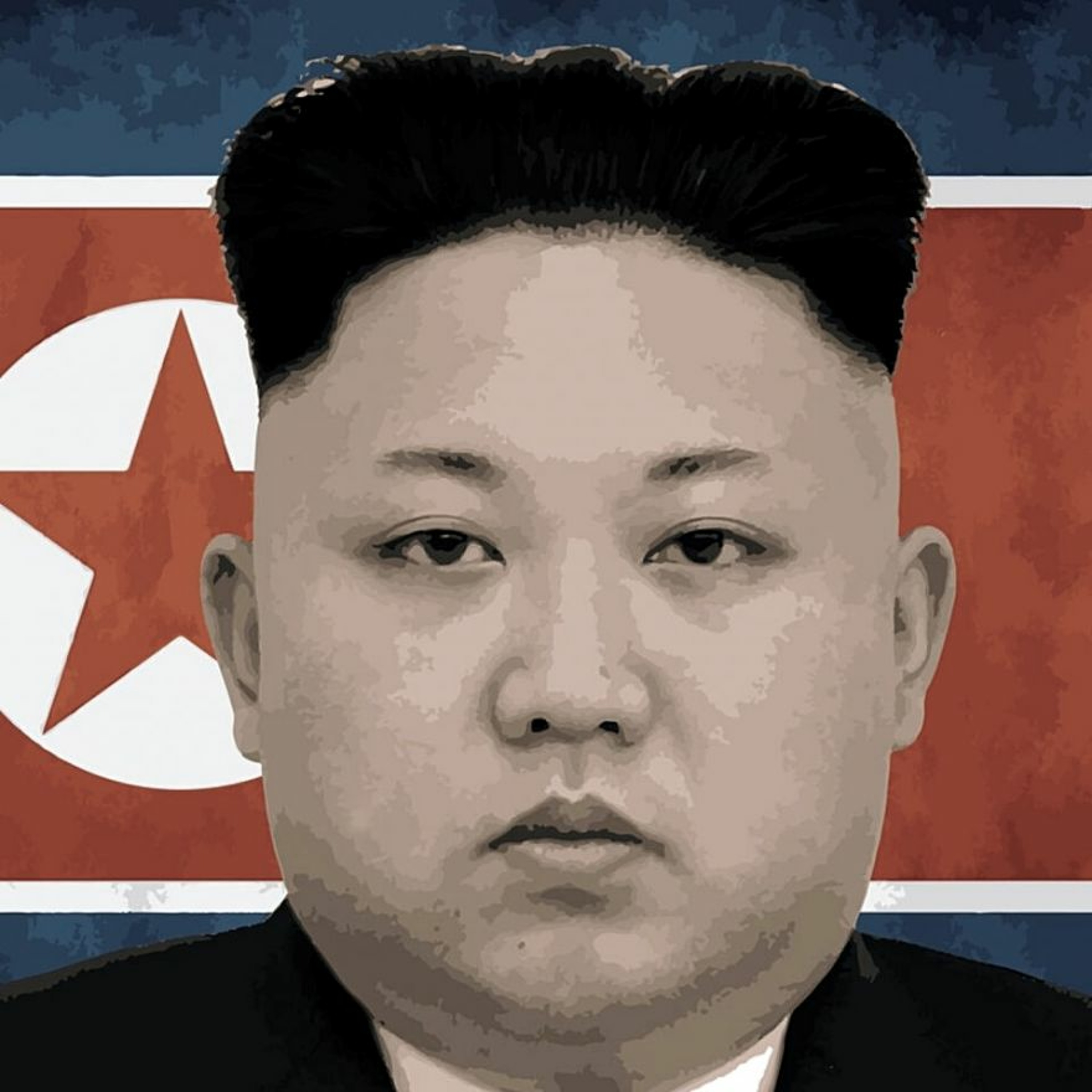
Becoming Kim Jong Un
This event is sponsored by The Global Impact Discussion: US-East Asia Lecture Series. About the book: When Kim Jong Un became the leader of North Korea following his father’s death in 2011, predictions about his imminent fall were rife. North Korea was isolated, poor, unable to feed its people, and clinging to its nuclear program for legitimacy. Surely this twentysomething with a bizarre haircut and no leadership experience would soon be usurped by his elders. Instead, the opposite happened. Now in his midthirties, Kim Jong Un has solidified his grip on his country and brought the United States and the region to the brink of war. Still, we know so little about him—or how he rules. Enter former CIA analyst Jung Pak, whose brilliant Brookings Institution essay “The Education of Kim Jong Un” cemented her status as the go-to authority on the calculating young leader. From the beginning of Kim’s reign, Pak has been at the forefront of shaping U.S. policy on North Korea and providing strategic assessments for leadership at the highest levels in the government. Now, in this masterly book, she traces and explains Kim’s ascent on the world stage, from his brutal power-consolidating purges to his abrupt pivot toward diplomatic engagement that led to his historic—and still poorly understood—summits with President Trump. She also sheds light on how a top intelligence analyst assesses thorny national security problems: avoiding biases, questioning assumptions, and identifying risks as well as opportunities. In piecing together Kim’s wholly unique life, Pak argues that his personality, perceptions, and preferences are underestimated by Washington policy wonks, who assume he sees the world as they do. As the North Korean nuclear threat grows, Becoming Kim Jong Un gives readers the first authoritative, behind-the-scenes look at Kim’s character and motivations, creating an insightful biography of the enigmatic man who could rule the hermit kingdom for decades—and has already left an indelible imprint on world history. About the speaker: Dr. Jung H. Pak is a senior fellow and the SK-Korea Foundation Chair in Korea Studies at the Brookings Institution. Prior to Brookings, she held senior positions at the Central Intelligence Agency and the Office of the Director of National Intelligence, where she led the U.S. Intelligence Community’s strategic analysis of North Korea as the Deputy National Intelligence Officer. Dr. Pak is the author of Becoming Kim Jong Un (April 2020), which traces and explains Kim’s ascent to the world stage and draws from her deep knowledge and experience as an intelligence officer. Dr. Pak is a Phi Beta Kappa graduate of Colgate University, where she served as a trustee from 2009-2015. She received her PhD in United States history from Columbia University and studied in South Korea as a Fulbright scholar.
Human Rights Atrocities in North Korea
About the lecture: The lecture focuses on the human atrocities prevalent in North Korea. It begins with a review of how the world has dealt with post-WWII human rights violations through institutional mechanisms such as International Covenant on Civil and Political Rights, International Covenant on Economic, Social and Cultural Rights, and the Universal Declaration of Human Rights (together known as the International Bill of Human Rights). It will then shift to discuss how the Kim regimes have successfully flew under the radar despite perpetrating some of the worst cases of human rights violations. The 2014 UN Commission of Inquiry (COI) Report identified the situation as amounting to ‘crimes against humanity’. The COI report concluded that the violations unparalleled in breadth, atrocity, and seriousness provided a lawful foundation to prosecute violators, including the Kim leadership. To date, unfortunately, the recommendations have not yet been followed up. The lecture will examine the breadth of the problems at hand and why the peninsular and regional political dynamics have prevented progress. About the speaker: Jung-Hoon Lee is Dean and Professor of International Relations at the Graduate School of International Studies, Yonsei University. He is formerly ROK government’s Ambassador for Human Rights as well as its inaugural Ambassador-at-Large for North Korean Human Rights.
2020 Student Symposium: Deal of the Decade: How the United States Should Handle Afghanistan
Full Title: Deal of the Decade: How the United States Should Handle Afghanistan in the Era of the Taliban Peace Talks About the Lecture: This presentation will start on a brief history of the Taliban, focusing on a post 9/11 world. It will highlight the current Afghanistan environment and the actors involved in the peace talks: the US, the Taliban, and the Afghani Government. The presentation will also cover future possibilities of US-Afghan relations, the different scenarios that may pan out depending on how the Afghani Government and Taliban peace talks go, and the potential ways the US could counter the Taliban now that US troops are leaving Afghanistan, and in so doing strengthening Afghanistan infrastructure. About the Speaker: Caroline Hickey is from Massachusetts and graduated in 2018 from Knox College in Illinois, where she self-designed her major in Middle Eastern & North African Studies. Caroline is continuing her education at IWP where she is pursuing a Master’s degree in Statecraft and International Affairs and continuing her interest in the Middle East by focusing on Iraq and Afghanistan as well as learning Arabic.
2020 Student Symposium: New Age Public Diplomacy
About the Lecture: This seminar aims to expound on the impact of globalization on US public diplomacy, emphasizing Sports, Entertainment, and Culture. These three mediums, combined with the popularity of social media, continue to spread all American ideals across the globe, opening needed conversations and policies on how best the US can maximize its perception and influence as it continues to safeguard its national interests. About the Speaker: Ms. Gor is a student at The Institute of World Politics, pursuing her M.A in Statecraft and International Affairs; formerly part of the directing team that led the inaugural Global Wellness Day- Kenya 2019 celebrations.
2020 Student Symposium: The Implications of China’s Belt & Road Initiative for US National Security
About the Lecture: The strategic initiative of China’s leadership to harness an unprecedented influx of wealth from the West to re-establish historical land and sea trade routes is a bold and ambitious effort to cement China’s burgeoning position as the center of global trade in its increasingly unveiled quest for global hegemony which, if successful, will invariably lead it on a collision course with US National Security priorities. About the Speaker: Jared K. Martin is an IWP graduate with an M.A. in Statecraft and National Security Affairs with a research background in the impact of China’s rapidly expanding role in global affairs on US national security priorities.
Electoral Reform in Angola and Mozambique
About the lecture: There are opportunities and challenges in Angola and Mozambique to reform the electoral processes. What role can the local stakeholders and USG play to pave the way for a more transparent electoral process? About the coordinator and moderator: Prof. Hashem Mekki, MA, has taught Arabic Language, Culture & Middle East Media at IWP since 2012. He is the owner of Bridge Language Solutions, providing an array of language translation, interpretation and teaching services to the Washington DC metropolitan area, and the founder of Kele Global, a nonprofit organization that promotes education, health, and economic empowerment in the Sudan and the Republic of South Sudan. He also teaches Arabic language to federal employees & professionals at the National Nuclear Security Administration at the Department of Energy. Mr. Mekki volunteers with the IWP Center for Human Rights and International Affairs by providing Arabic translations & strategic cultural perspectives on North Africa and Middle East. He holds Bachelors degrees in both Political Science and International Studies from the City College of New York, and a Master of Arts in Strategic Studies and International Politics from IWP. About the panelist: Martina Perino is the Program Manager for the Great Lakes and Southern Africa at the International Republican Institute. Originally from Mozambique and Italy, she has 10 years of democracy and governance experience in Mozambique, DR Congo, Zambia, and Kosovo. In Zambia, she was the Governance and Social sectors Program Manager at the European Union Delegation. There Ms. Perino designed and managed the electoral support project, an Access to Justice project and worked closely with local CSOs and other donors for human rights issues and local governance. In 2017 she joined USAID/Kosovo as the Democracy and Governance Strategic Planning Specialist where, among other tasks, she designed several projects including a local governance and conflict mitigation project, PVE project, media strengthening project, political party and legislative strengthening. Ms. Perino has been an election observer in Mozambique, DR Congo, Zambia, Kosovo, and Albania. Ms. Perino holds a degree in Politics, Philosophy, and Economics and a Master’s in International Development. Florindo Chivucute is the founder and Executive Director of Friends of Angola (FoA), and Radio Angola (an online radio station), activist, blogger and digital media specialist. Florindo earned his Master’s degree in Conflict Analysis and Resolution from George Mason University and has over 5 years of experience working in non-profit organizations, international development, international relations, peacebuilding, and education while being active in the Community of Portuguese-Speaking Countries (CPLP) in the United States. Since founding Friends of Angola in April 2014, he has led the design and implementation of four projects in Angola: Radio Angola (an online radio station hosted by Florindo); Strengthening Nonviolent Civic Engagement Among the Youth; Strengthening Democracy in Angola Through Community Journalism; Zuela Application – a pro-democracy and social networking smartphone app focused on fostering good governance, eradicating corruption, monitoring elections and human right violations and more. All projects were envisioned as part of a larger theory of change (ToC) to strengthen the capacity of civil society, empower women and youth while promoting nonviolent civic engagement by using new and existing technologies in Angola and the South-Western African Region. These projects were funded by The National Endowment for Democracy (NED).
The U.S. and World Order
About the interview: Dr. John Tierney, IWP professor, spoke with IWP about world order. He discussed the the history of polarity, U.S. interest in world order, and what the future could hold in this regard. About the speaker: Dr. John Tierney is a Professor Emeritus at The Institute of World Politics and teaches History of American Foreign Policy, History of International Relations, Peace, Strategy and Conflict Resolution, and U.S. Foreign Policy: Current and Future Challenges. Dr. Tierney is a Former Special Assistant and Foreign Affairs Officer for the U.S. Arms Control and Disarmament Agency (1981-1993); He formerly participated in various national security negotiations for the U.S. Government. He was Executive Director of the Congressional Caucus on National Defense and the National Security Research Group, U.S. House of Representatives. He is former Chairman of the Politics Department at Catholic University and former Professor of International Relations at University of Virginia and The Johns Hopkins University. He is the author of Chasing Ghosts and The Politics of Peace.
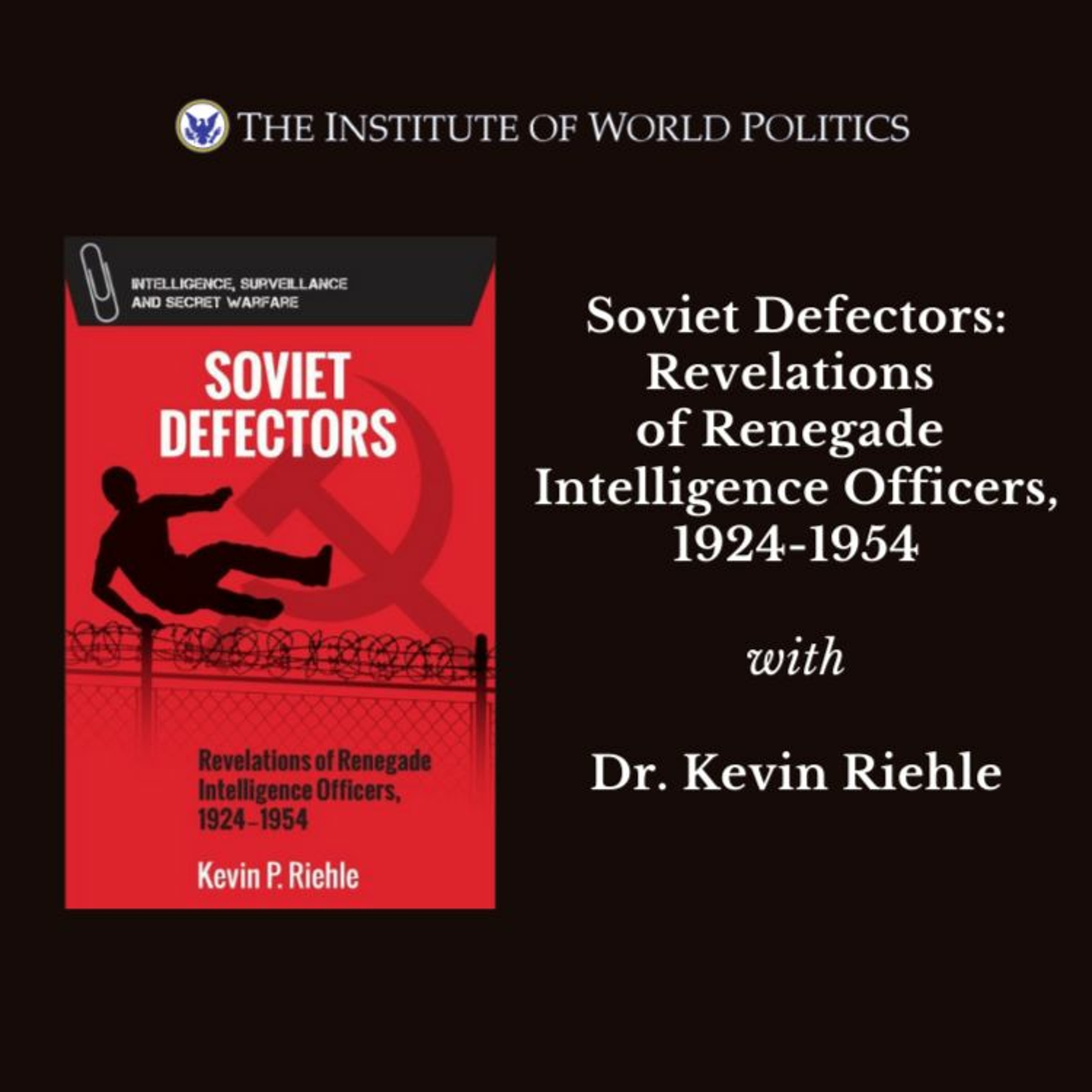
Soviet Defectors: Revelations of Renegade Intelligence Officers, 1924-1954
About the book: The book compiles for the first time corroborative primary sources in English, Russian, French, German, Finnish, Italian, Japanese, Latvian, Norwegian, Portuguese, Spanish, and Swedish. The result is the most comprehensive list of Soviet intelligence officer defectors to date. Through the eyes of those officers, it shows the fluctuations in the Soviet recruitment and vetting of personnel for sensitive national security positions, corresponding with fluctuations in the stability of the Soviet government. It also shows the evolution of Soviet threat perceptions and the development of the “main enemy” concept in the Soviet national security system. About the Speaker: Dr. Kevin P. Riehle is an associate professor at the National Intelligence University. He has spent over 28 years in the U.S. government as a counterintelligence analyst studying foreign intelligence services. He received a Ph.D. in War Studies from King’s College London, an MS in Strategic Intelligence from the Joint Military Intelligence College, and a BA in Russian and Political Science from Brigham Young University. He has written on a variety of intelligence and counterintelligence topics, focusing on the history of Soviet and Eastern Bloc intelligence services.
ACTING – in the interest of National Security
This event is part of the Student Speaker Series sponsored by The Institute of World Politics. About the lecture: The classical definition of acting is ‘living truthfully under imaginary circumstances.’ Contrary to the common perception that acting is ‘pretending,’ the working process of actors (as well as of directors and writers) is an exploratory journey to revealing the truth of every moment, the sum of which must build a narrative that connects to and transforms the audience. This webinar lecture will highlight several functional aspects of an actor’s craft that are also pertinent to the national security practitioner and policymaker: training to truly listen, attaching action to words, using the ‘what if’ to create and to foresee possible scenarios, choreographing the sequence of actions and meanings to achieve a scenario objective with maximum impact, and more. It is the hope of the presenter that some of these elements of an actor’s craft can add value to the existing toolbox of the national security professionals who aim to ‘live and operate truthfully under real circumstances’ in which they deal with real domestic and international ‘actors.’ More importantly, the lecture will discuss the critical element achieved through the study of acting without which all pursuits are bound to be less than fully effective: knowing oneself. About the speaker: Sebastian is currently Creative & Executive Director of Dacian Wolf Productions, a stage and film development, and production company, where he actively writes, directs, and produces. A former Lecturing Professor of Acting and Movement at Pace University, NYC, he holds a BFA in Dance & Theater, an MBA in Accounting, a Certificate of Completion of the Two-Year Professional Acting Program at the William Esper Studio, NYC, and a candidate for the MA in Statecraft and National Security Affairs at IWP. Since arriving in the United States from his native Bucharest, Romania in 1982, Sebastian has toured with the internationally acclaimed Pilobolus Dance Theatre and has taught movement, acting, and choreography workshops in Romania, Russia, Korea, Japan, Italy, Chile, Argentina, as well as at many US universities. His current interests revolve around projects dealing with disinformation and narrative warfare. For more information, please visit www.sebastiantudores.com
Countering Islamist Political Extremism by Orchestrating the Instruments of National Power
This event is part of the Winning without War series sponsored by The Institute of World Politics. About the lecture: Despite suffering repeated setbacks in recent years, Islamic extremism or more specifically, totalitarian Islamism, and the terrorism it spawns, remains a major threat to the United States and its allies. While there will always be a need for the selective use of military power to counter this threat, effectively addressing it requires non-military tools of statecraft. This webinar will discuss how the United States and its international partners can better use these tools to win the fight against terrorism without over-reliance on combat operations About the speakers: Dr. Christopher C. Harmon has been publishing terrorism studies for over 35 years. His works include two editions of the graduate-level text Terrorism Today (2000; 2007) essays on counterterrorism in the geopolitics journal Orbis, and a volume on terrorist propaganda for The Brookings Institution (2018). Dr. Harmon has lectured in some 15 countries and has taught at The Institute of World Politics and other graduate schools, civilian and military. He holds a Bren Chair at Marine Corps University and the Marine Corps University Foundation. Dr. Douglas E. Streusand is a Professor of International Relations at the US Marine Corps Command and Staff College and Adjunct Professor at The Institute of World Politics. Educated as an Islamic historian, he has pursued a broad range of teaching and research interests, historical and contemporary He has written two books, The Formation of the Mughal Empire and Islamic Gunpowder Empires: Ottomans, Safavids, and Mughals and edited a third, The Grand Strategy that Won the Cold War: Architecture of Triumph and numerous articles and book chapters.
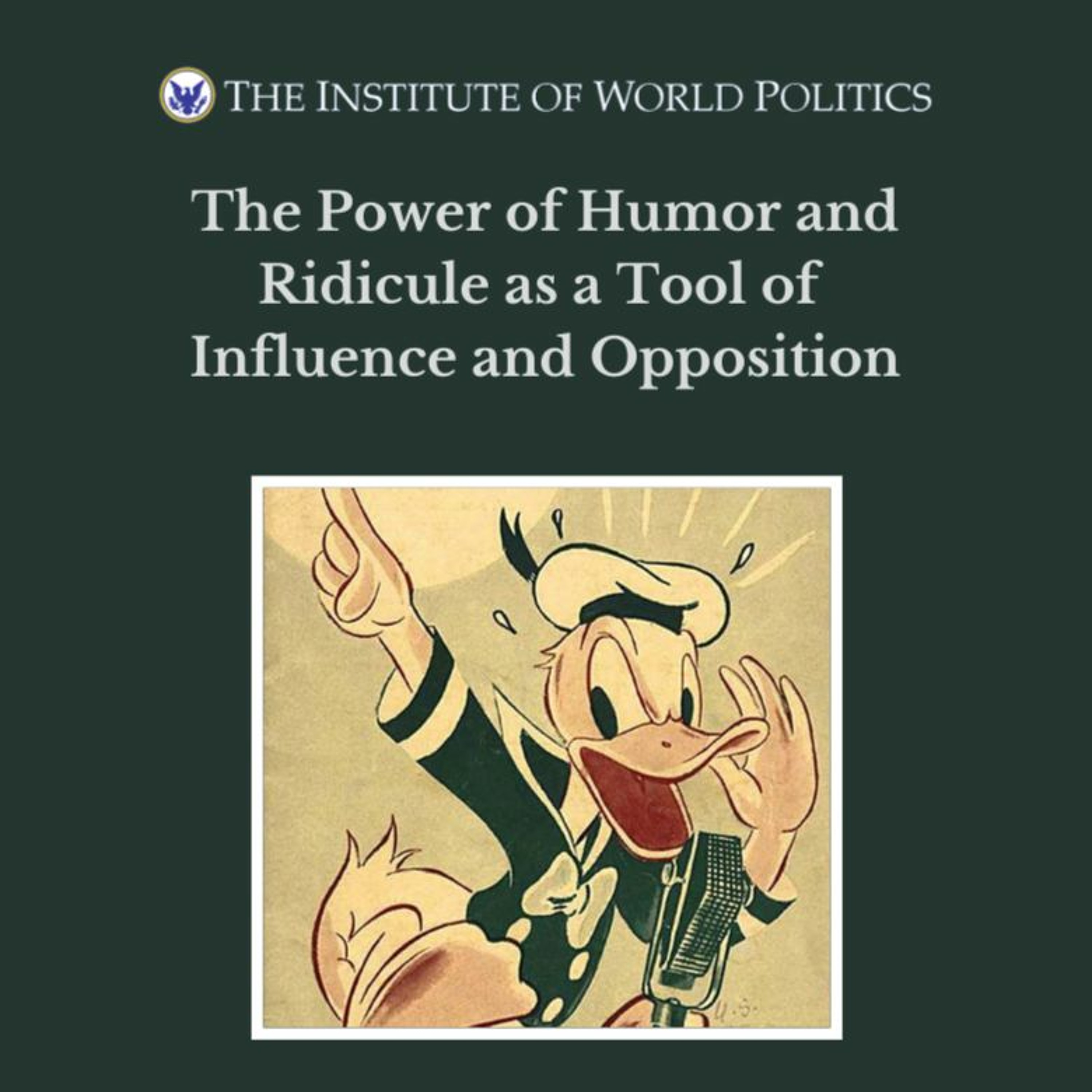
The Power of Humor and Ridicule as a Tool of Influence and Opposition
About the lecture: Charlie Chaplin, Daffy Duck, Dr. Seuss, Team America, and Winnie-the-Pooh have entertained audiences using humor. What is perhaps less known about these entertainers is how their humor and images have been used to denigrate and ridicule dictators and authoritarian regimes. When thinking about propaganda and mass influence, humor and ridicule do not often come to mind. However, humor and ridicule are powerful tools of influence and can be used to encourage opposition to authoritarian rule. This talk will explore what makes humor and ridicule such effective tools of influence and why authoritarian regimes fear ridicule so much. About the speaker: Dr. Schindler is a Research Professor at The Institute of World Politics and Adjunct Professor at Patrick Henry College. In addition to teaching, Dr. Schindler works for a U.S. Defense contractor providing subject matter expertise research and analysis to various government customers’ operations and programs. Dr. Schindler obtained a Master of Arts in Strategic Intelligence from the Institute of World Politics in 2010 and completed her Ph.D. on the historical origins of U.S. public diplomacy at the University of Leeds. Dr. Schindler authored The Origins of Public Diplomacy in US Statecraft: Uncovering a Forgotten Tradition, published by Palgrave Macmillan. Dr. Schindler’s current research is focused on the origins and evolution of Russian political warfare.
German and Austrian Occupation of the Intermarium, 1915-1919
About the lecture: In 1915 Germany's successful offensive in the east resulted in the occupation of the Western chunk of the Russian Empire, a swath of land between the Baltic and Black Seas. We refer to it as the Intermarium, and it is essentially coterminous with the old Polish-Lithuanian Commonwealth. The Germans shared their conquest with their junior partners, the Austrians. Both made sure not to include the captured lands into their own partitions of Poland. Instead, they kept them apart as the so-called Polish Kingdom and, further east, the Ober Ost. In the former, the Germans favored the Poles; in the latter, they advantaged the Lithuanians, Belarusians, and Jews. In neither place did the occupiers agree to serious political concessions; they permitted local autonomy at best. It was a classical divide et impera situation. The main objective of Berlin (which by 1918 totally dominated its Viennese partner) was to gain a permanent geopolitical advantage and to exploit the area's economy and labor. The Second Reich pursued a similar policy toward Ukraine when it expanded there in the wake of Brest Litovsk in February 1918. Ultimately, however, Germany's plans collapsed as a result of its defeat on the Western Front. About the speaker: About the speaker: Dr. Marek Jan Chodakiewicz holds The Kosciuszko Chair in Polish Studies at The Institute of World Politics and leads IWP’s Center for Intermarium Studies. At IWP, he also serves as a Professor of History and teaches courses on Geography and Strategy, Contemporary Politics and Diplomacy, Russian Politics and Foreign Policy, and Mass Murder Prevention in Failed and Failing States. He is the author of Intermarium: The Land Between the Black and Baltic Seas and numerous other books and articles. He holds a Ph.D. from Columbia University and has previously taught at the University of Virginia and Loyola Marymount University.
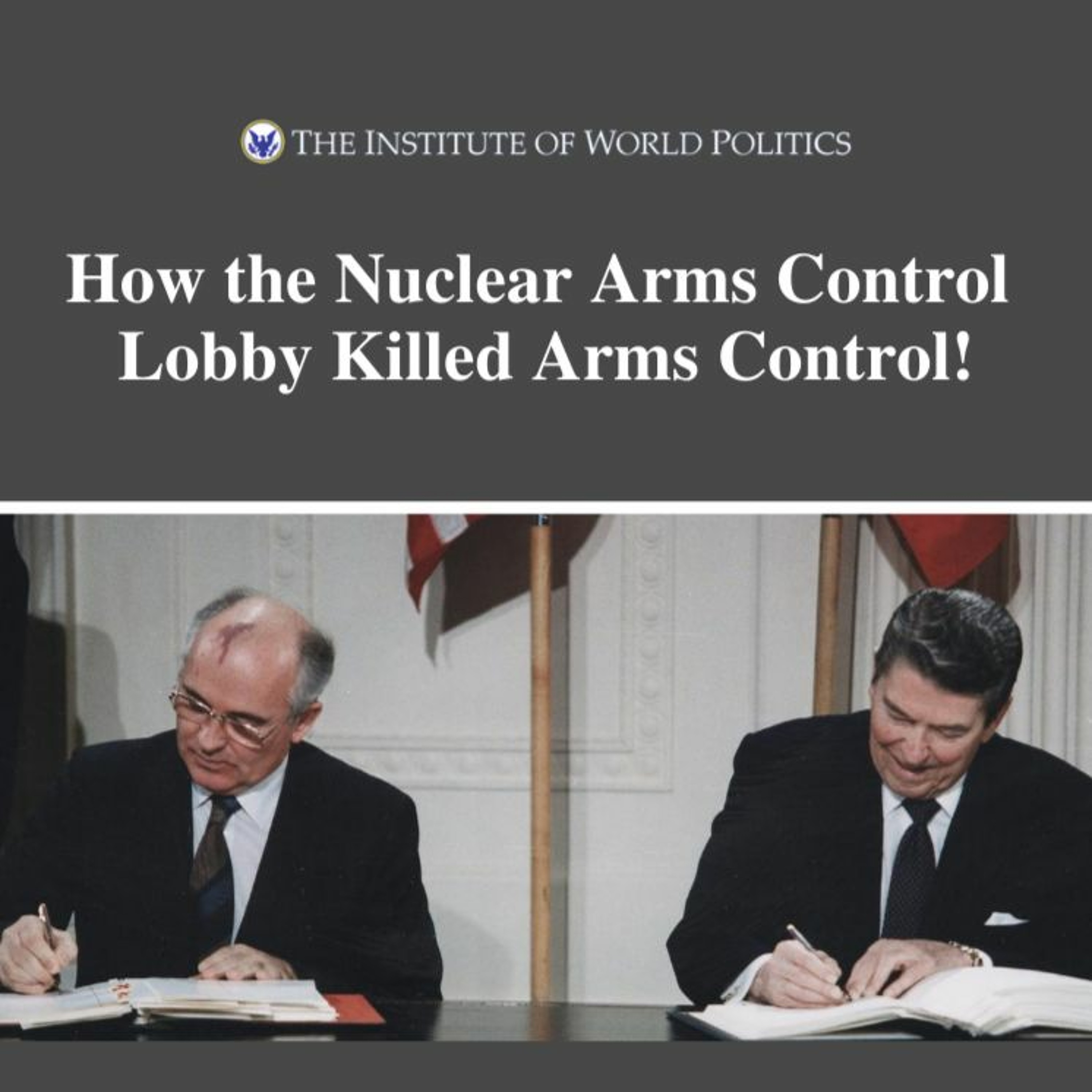
How the Nuclear Arms Control Lobby Killed Arms Control!
About the lecture: Since 1972, the nuclear disarmament community —led by major self-described arms control organizations— hasn’t supported any serious nuclear arms control ideas. They’ve supported dangerous ideas such as the nuclear freeze, opposed American strategic nuclear and missile defense modernization efforts, and denounced the most revolutionary and beneficial agreements such as INF, Start 1, and 2. Nearly 50 years after the SALT 1 nuclear agreement, it has become increasingly difficult to secure genuine and verifiable nuclear agreements such as Start 1 and INF. The United States has entered into nuclear deals with Iran, North Korea, and Russia that do little to improve America’s security. In many respects, the global zero campaign has significantly distorted the debate on nuclear security issues. America’s enemies are increasingly expanding their nuclear arsenals and adopting strategies of using nuclear weapons for coercive and hegemonic objectives. A growing narrative among the media, academia, and some politicians is that nuclear arms control is on the ropes. That’s true, but the reason is not the Trump administration, it is the fault of the US disarmament community and global zero advocates that have effectively killed arms control and repeatedly pushed the USA into bad nuclear deals. About the speaker: Mr. Peter Huessy is President of his own defense consulting firm, GeoStrategic Analysis, founded in 1981, and since 2016, Director of Strategic Deterrent Studies at the Mitchell Institute on Aerospace Studies. He was the senior defense consultant at the National Defense University Foundation for 22 years. He was the National Security Fellow at the AFPC, and Senior Defense Consultant at the Air Force Association from 2011 Mr. Huessy has served as an expert defense and national security analyst for over 45 years, helping his clients cover congressional activities while monitoring budget and policy developments on terrorism, counter-terrorism, immigration, state-sponsored terrorism, missile defense, weapons of mass destruction, especially US-Israeli joint defense efforts, nuclear deterrence, arms control, proliferation, as well as tactical and strategic air, airlift, space and nuclear matters and such state and non-state actors as North Korea, China, Iran, Syria, Venezuela and Hezbollah, Hamas and Al Qaeda. This also includes monitoring activities of think tanks, non-governmental organizations, and other US government departments, as well as projecting future actions of Congress in this area. His specialty is developing and implementing public policy campaigns to secure support for important national security objectives. He is on the Board of the InSeries Theater in Washington; EMPACT, the organization devoted to protecting the US from EMP threats; and MTA, the Maryland Taxpayers Association. He authored legislation calling for the divestment of US pensions from any company doing business with Iran and testified before a number of state legislatures on this subject and on counter-terror policy, including whether or not drivers licenses should be made available to those illegally in the US. He is also a member of Secure American Energy, an organization devoted to breaking the back of OPEC and providing the US with American sources of energy. He has lectured around the world and across the USA on nuclear terrorism, nuclear deterrence, missile defense, homeland security, counter-terrorism policy, and strategic threats to the US and its allies.
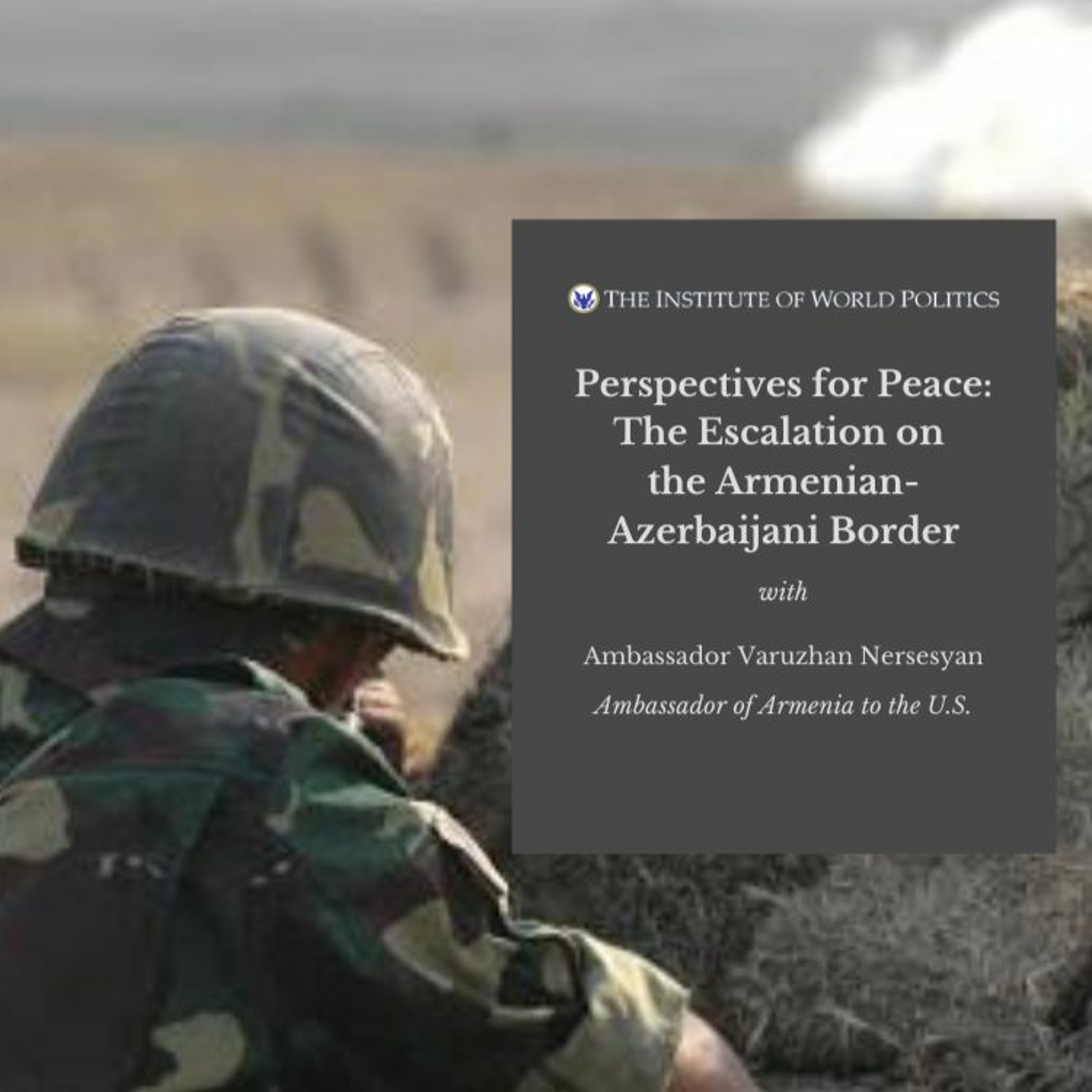
Perspectives for Peace: The Escalation on the Armenian-Azerbaijani Border
This event is part of the Intermarium Lecture Series sponsored by The Institute of World Politics. About the lecture: Ambassador Nersesyan will present the developments following the Azerbaijani attacks on the Tavush Region of Armenia on July 12th, and the political and military response of Armenia. The Ambassador will also reflect on the role of Turkey in the recent escalation and its ramifications on the Karabakh Peace Process, and overall regional developments. The reaction of the OSCE Minsk Group Co-Chairs and in particular, the USA will be discussed as well. About the Speaker: His Excellency Varuzhan Nersesyan is a career diplomat. He was appointed to the post of Ambassador of Armenia to the USA in 2018. Prior to that, his most recent professional experience included serving as Assistant to the Prime Minister of Armenia, and from 2012 to 2018 – Assistant to the President of the Republic of Armenia. His Excellency holds two Master’s Degrees in International Affairs from Yerevan State University, and The Fletcher School of Law and Diplomacy, Tufts University. In addition to his native Armenian, Ambassador Nersesyan is fluent in English, German, and Russian. Please note that that the information for this lecture, including the description, reflects the views of the speaker and not necessarily the views of The Institute of World Politics. In addition, the views expressed by our faculty, research fellows, students, alumni, and guest lecturers do not necessarily reflect the views of The Institute of World Politics.
Exiled Children - Damned or Delivered?
This lecture is part of the 10th Annual Kościuszko Chair Spring Symposium in honor of Lady Blanka Rosenstiel sponsored by the Kościuszko Chair of Polish Studies and the Center for Intermarium Studies. About the lecture: Reinstatement of political relations between the Polish government-in-exile and the Soviet government in July 1941 resulted in so-called amnesty for the Polish citizens deported to USSR between 1940 and 1941. The lecture will discuss the circumstances accompanying the evacuation of Polish children-deportees from the USSR as a part of the so-called General Anders' Army. About the speaker: Mrs. Maria Juczewska is a communication specialist with versatile international experience. Her education in linguistics, culture studies, and international affairs, combined with years of living abroad, makes her point of view unique and comprehensive. Mrs. Juczewska has worked for the Kościuszko Chair of Polish Studies since 2014. In her scholarly work, she is especially interested in propaganda.
Bolshevism, non-Bolshevism, and anti-Bolshevism in White Ruthenia, 1917-1920
This lecture is a part of our 10th Annual Kościuszko Chair Spring Symposium in honor of Lady Blanka Rosenstiel. This event is sponsored by the Kościuszko Chair of Polish Studies and the Center for Intermarium Studies. About the lecture: Dr. Chodakiewicz is going to discuss the nature of the political movements and ideological developments in White Ruthenia in the aftermath of World War I. About the speaker: Dr. Marek Jan Chodakiewicz holds The Kosciuszko Chair in Polish Studies at The Institute of World Politics and leads IWP’s Center for Intermarium Studies. At IWP, he also serves as a Professor of History and teaches courses on Geography and Strategy, Contemporary Politics and Diplomacy, Russian Politics and Foreign Policy, and Mass Murder Prevention in Failed and Failing States. He is the author of Intermarium: The Land Between the Black and Baltic Seas and numerous other books and articles. He holds a Ph.D. from Columbia University and has previously taught at the University of Virginia and Loyola Marymount University.
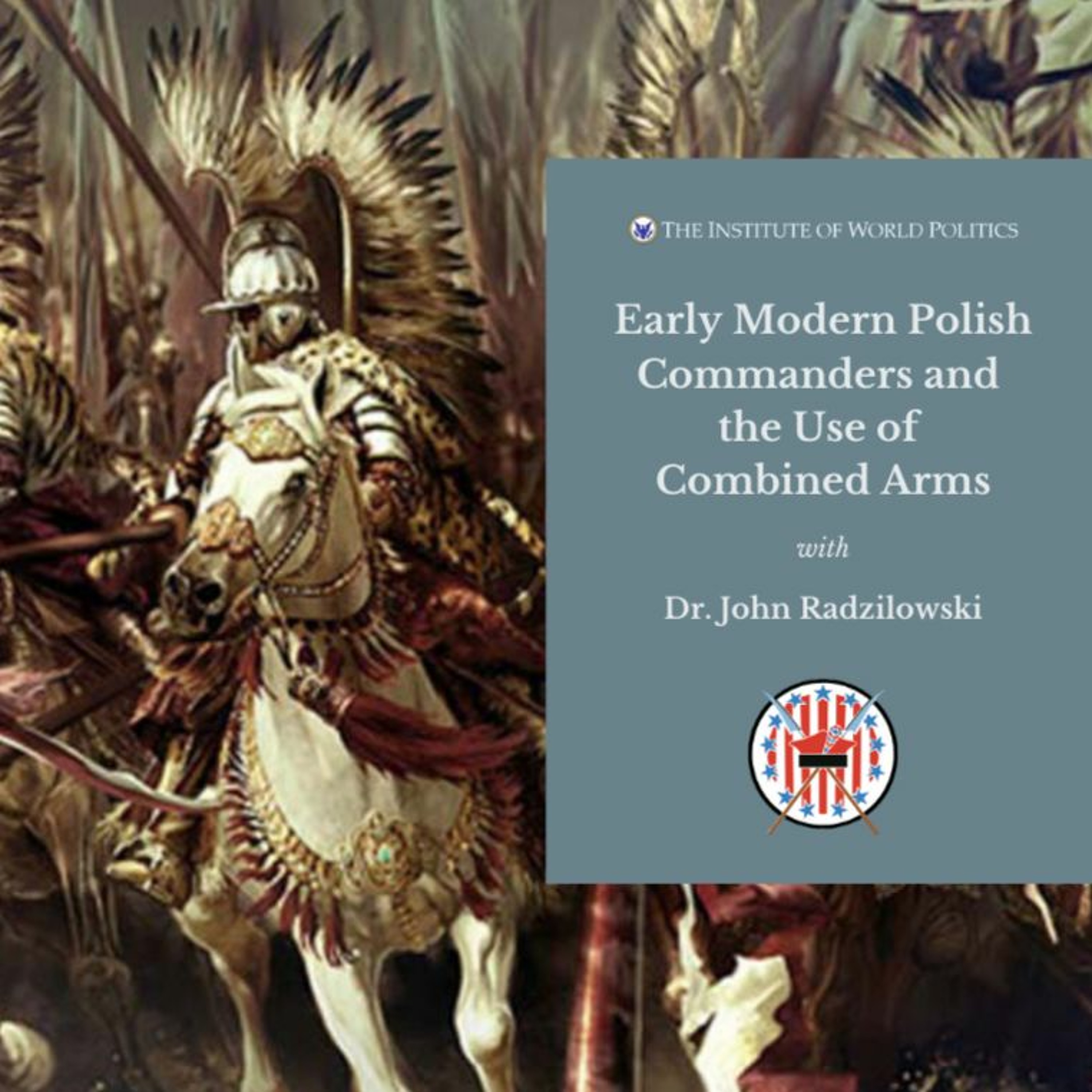
Early Modern Polish Commanders and the Use of Combined Arms
This event is part of the 10th Annual Kościuszko Chair Spring Symposium in honor of Lady Blanka Rosenstiel sponsored by the Kościuszko Chair of Polish Studies and the Center for Intermarium Studies. About the lecture: The Polish-Lithuanian Commonwealth’s small armies, based around a seemingly outmoded form of heavy cavalry, Winged Hussars, were able to hold their own against numerically superior foes, including those using tactics and weapons designed specifically to defeat such cavalry for more than two hundred years. This lecture discusses how armies of the Commonwealth and their commanders successfully used a combination of troops and tactics to “shape the battlefield” and overcome superior enemy forces time and again. About the speaker: Dr. John Radzilowski has taught history, art history, and geography at University of Alaska Southeast on the Ketchikan campus since 2007. Prior to moving to Alaska, he taught history courses at the University of St. Thomas, Hamline University, and Anoka-Ramsey College in Minnesota. Dr. Radzilowski also served as assistant project director at Center for Nations in Transition, at the Hubert H. Humphrey Institute of Public Affairs at the University of Minnesota where he helped design and administer USAID and State Department-sponsored training programs for business, economics, and political science faculty and NGO leaders in Ukraine and east central Europe. Dr. Radzilowski’s research and teaching interests are wide-ranging and diverse: immigration and ethnicity, military history, war and genocide, the impact of technology on the history and geography of the Great Plains and Midwest, local and regional studies, and the history of Poland, Russia, Ukraine, and central and eastern Europe.
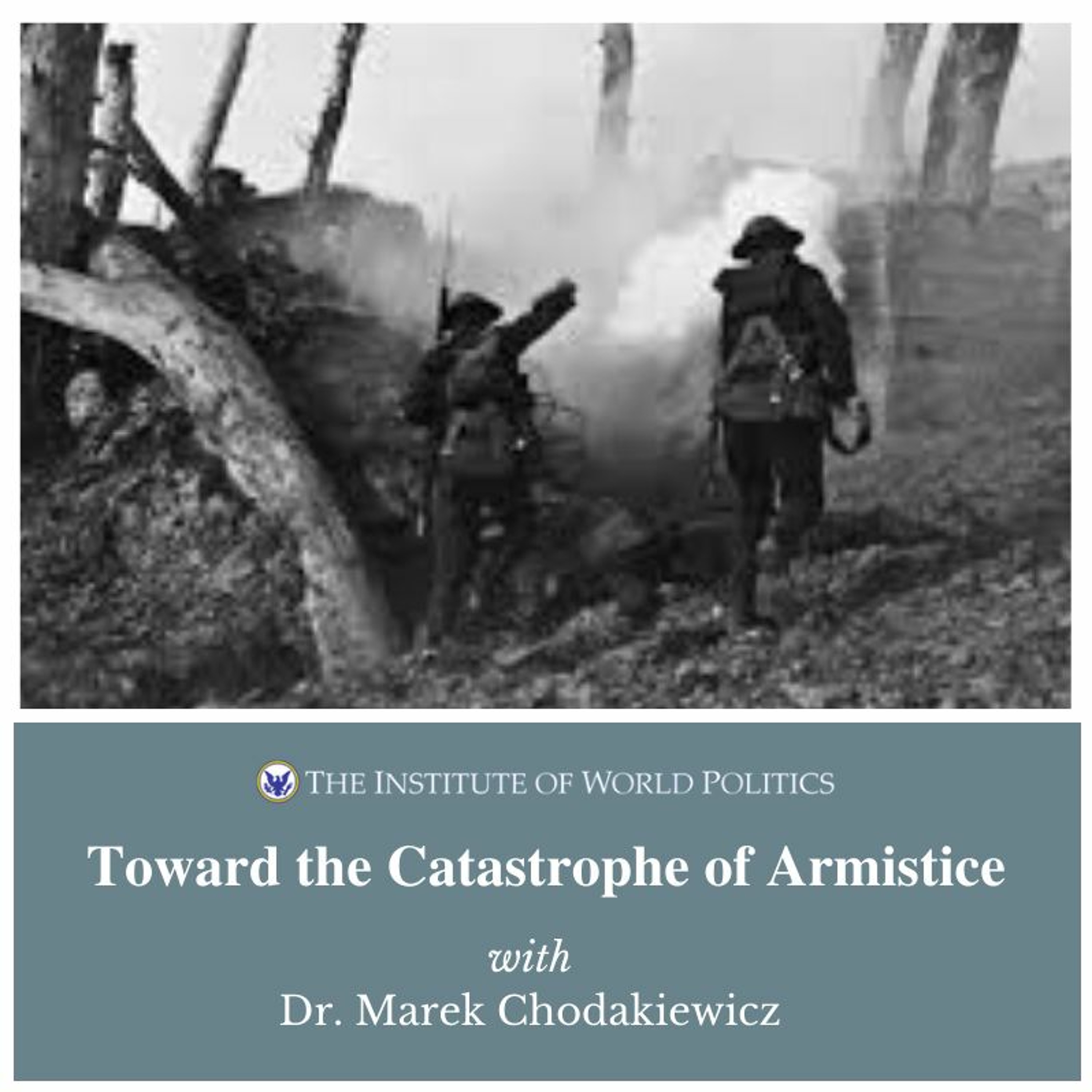
Toward the Catastrophe of Armistice
About the lecture: Buoyed by the victory in the east sealed by the Treaty of Brest Litovsk in March 1918, Germany and her allies scrambled to transfer their forces to deliver a decisive blow on the Western front. Unfortunately for them the United States came to the rescue. America's intervention reversed the fortunes of war. By August 1918, the Second Reich suffered its first serious reversal. In September, Germany was retreating in the west and collapsing at home, where mutiny and revolution pushed Berlin to its knees. The Germans thus sought an armistice. Against the advice of the American military leaders, who called for an unconditional surrender, the rest of the Allied, in particular liberal prime minister David Lloyd George, agreed. This was a lethal mistake. By failing to defeat Germany decisively, the Armistice paved the way to the Second World War. About the speaker: Dr. Chodakiewicz currently serves as a Professor of History at The Institute of World Politics, where he holds the Kosciuszko Chair of Polish Studies. He also leads IWP’s Center for Intermarium Studies. At IWP, Dr. Chodakiewicz teaches courses on Contemporary Politics and Diplomacy, Geography and Strategy, Mass Murder Prevention in Failed and Failing States, and Russian Politics and Foreign Policy.He was formerly an assistant professor of history of the Kosciuszko Chair in Polish Studies at the Miller Center of Public Affairs at University of Virginia. He also served as a visiting professor of history at Loyola Marymount University in Los Angeles.
COVID-19 and Global Energy Security
About the lecture: In this lecture, Dr. Sara Vakhshouri will discuss the fundamentals and changes in the energy market, and Mr. C. Derek Campbell will talk about physical security of energy infrastructure and cyber security. This lecture will cover themes from Dr. Vakhshouri’s IWP course on “Energy Security and the New Geopolitics of Energy.” The course focuses on the transformation of energy use over the past century and on expanding our understanding of today’s concepts of energy and how they fit within the rubric of national security. About the Speakers: C. Derek Campbell is the Chief Executive Officer of Energy & Natural Resource Security, Inc., an international security company providing “best-inclass” physical and cyber risk mitigation solutions for Critical Energy Infrastructure and Natural Resource assets. In this role, he leads the strategic engagements of the company and directs the development of all market entry strategies. In the public sector, during 2016, Derek served as a Special Security Advisor for the U.S. Special Envoy’s Office on South Sudan, where he lead the South Sudanese Ministry of Interior in the development and implementation of the Joint Operations Center(JOC) which is charged with de-militarizing and establishing police primacy for security in the capital city of Juba, South Sudan. As a United States Marine Officer, Derek served as the Marine Liaison Officer to the Defense Threat Reduction Agency (DTRA) where he oversaw all Marine Corps Counter-Threat initiatives: CounterDrone/Counter-UAS, Counter-IED, Counter-Tunnel and the like from 2016 to 2019. From 2014 to 2015, Derek served as the Chief of Military Plans for the United Nations Mission in South Sudan (UNMISS) – a Chapter VII Peace Enforcement Mission. Derek is a regular on the international Oil & Gas/Energy speaking circuit speaking as an authority on topics such as Energy Security and the Extractive Industry geo-political and market dynamics in Africa. Dr. Sara Vakhshouri is founder and president of SVB Energy International, a strategic energy consulting firm with offices in Washington DC and Dubai. Dr. Vakhshouri has about two decades of experience of working in the energy industry with an extensive experience in global energy market studies, energy strategy, energy security and geopolitical risk. She has consulted numerous governments, public and private entities, and international organizations like IMF & World Bank. She is also member of the Energy Task Force of the Cyprus Climate Initiative which was launched and initiated by the President of the Republic of Cyprus. She is also Professor of Energy Security at the Institute of World Politics. Dr. Vakhshouri has been a keynote speaker at prestigious energy conferences including the World Energy Congress, Chatham House Middle East & Energy Conference, Platts Oil and Middle East conferences and the Global LNG Congress. She has also been a keynote speaker at Duke University, Sciences Po university in Paris and Johns Hopkins University. Dr. Vakhshouri is frequently quoted and has appeared on Bloomberg, the BBC, The Financial Times, Reuters, Platts, The Wall Street Journal, Energy Intelligence, Foreign Policy, The Washington Post and Voice of America. She is the author of The Marketing and Sale of Iranian Export Crude Oil since the Islamic Revolution. Dr. Vakhshouri has a PhD in Energy Security and Middle Eastern Studies. She has an MA in Business Management (International Marketing) and another MA in International Relations. She has been a Senior Energy Fellow at the Atlantic Council and at the Oxford Institute for Energy Studies. Dr. Vakhshouri has also experience of working in both public and private sectors of the Iranian energy industry.

Assessing the Geopolitical and Geoeconomic Impact of the Covid-19 Crisis
About the lecture: With the pandemic receding in much of the world, government and business leaders are starting to think about the geopolitical and geoeconomic impact of the crisis. In this webinar, Dr. Glancy will discuss his assessment of how the international environment and great power relations will likely change over the next 2 to 5 years in the wake of the COVID-19 crisis. Participants in the session will also take away a framework for putting unfolding events into a better context going forward. About the Speaker: Dr. David Glancy, currently a Professor of Strategy and Statecraft at IWP, formerly served as an Associate with Booz Allen Hamilton, where he worked on education technology issues with National Intelligence University. Prior to joining NIU, Dr. Glancy served as an Assistant Professor (contractor) with the College of International Security Affairs (CISA) at National Defense University. Before being assigned to CISA, Dr. Glancy provided advice on strategic communications issues to a variety of government clients for Booz Allen Hamilton. Dr. David Glancy has also held positions at both the State Department and Defense Department. At the State Department, he served as a Senior Advisor for Political-Military Affairs and was responsible for handling a number of high-profile issues (coalition political-military efforts in Iraq, issues related to our global military posture, piracy off the coast of Somalia). At the Defense Department, Dr. Glancy was a policy analyst and advisor with the Office of the Secretary of Defense. During his time at the Pentagon, Dr. Glancy served as the Director of the Global War on Terrorism Communications Group and worked as a special assistant with the Eurasia policy office.

Overlaps between Cyber, Information, and Intelligence Operations
This event is part of The Cyber Intelligence Initiative Series sponsored by The Institute of World Politics. About the lecture: A discussion of the challenges presented by the increasingly complex environment created when cyber, information, and intelligence operations overlap and collide. This presentation will explore case studies where the lines between various concepts become blurred, complicating the response and implications. Specifically, we will explore recent items of interest from the increasingly contentious relationship between the US, Russia, and China. How will leaders and managers operative effectively in this environment? What are the important aspects of decision-making in these situations? Why is it even important to get a handle on these dynamics? About the speaker: Jason Atwell is a Specialist Master and Manager with Deloitte’s Government and Public Sector Cyber Risk Advisory practice and an intelligence officer in the US Army Reserve. Over the last few years, he has served as a senior advisor to the CIOs of the US House of Representatives, the Department of Health and Human Services, and the National Institutes of Health helping to navigate the increasingly complex cyber threat environment. During his career he has been a key member of military and civilian staffs conducting civil-military operations in Baghdad, solving complex geospatial problems for the DIA, and working to counter foreign intelligence and influence operations at the US Department of State. He has lectured on Russian information operations at the National Defense University, Iranian use of social media as an enabler at the Office of the Director of National Intelligence, and cyber threats to supply chains at the Joint Counterintelligence Training Center. His education includes a Master’s degree in English Literature from American University and a fellowship in cyber leadership from Yale. He is also a graduate of both the US Army Intelligence School and John F. Kennedy Special Warfare Center and completed coursework at the National Intelligence University.
China’s Influence in South Korea: Belt and Road and More
This event is part of the China Series sponsored by The Institute of World Politics. About the lecture: Dr. Tara O will discuss China’s influence in South Korea, including its extensive Belt and Road Initiative and nearly 30 Chinatowns throughout the country. She will also discuss the implications for South Korean national security. About the speaker: Dr. Tara O is the founder of the East Asia Research Center. She has worked at the Pentagon and the Republic of Korea-U.S. Combined Forces Command as a U.S. Air Force officer focusing on East Asia issues. Her research areas include national security, alliance, human rights in North Korea, defectors, unification, and political and economic systems.
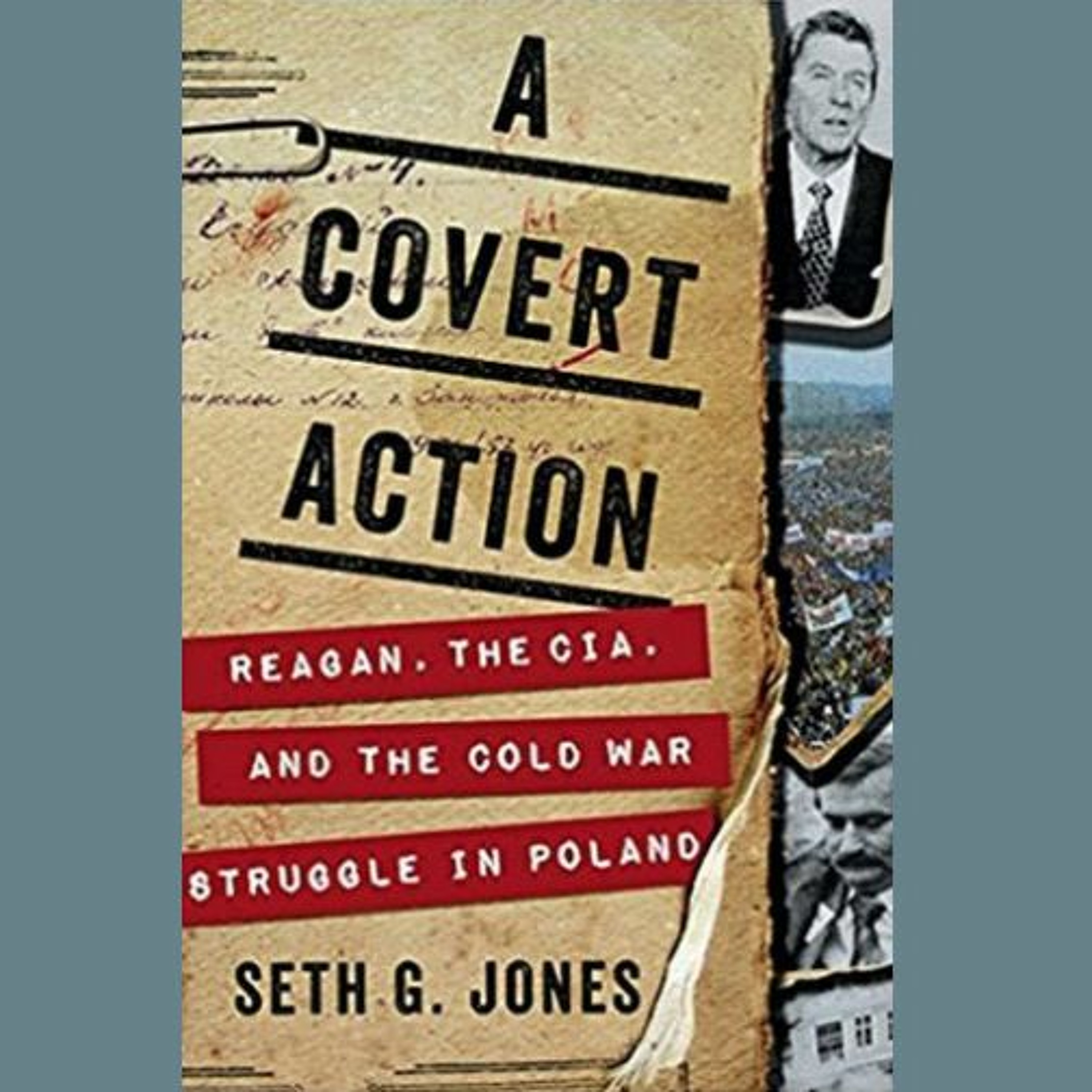
A Covert Action: Reagan, the CIA, and the Cold War Struggle in Poland
About the book: The dramatic, untold story of one of the CIA’s most successful Cold War intelligence operations. December, 1981—the CIA receives word that the Polish government has cut telephone communications with the West and closed the Polish border. The agency’s leaders quickly inform President Ronald Reagan, who is enjoying a serene weekend at Camp David. Within hours, Prime Minister Wojciech Jaruzelski has appeared on Polish national television to announce the establishment of martial law. A new era in Cold War politics has begun: Washington and Moscow are on a collision course. In this gripping narrative history, Seth G. Jones reveals the little-known story of the CIA’s subsequent operations in Poland, which produced a landmark victory for democracy during the Cold War. While the Soviet-backed Polish government worked to crush a budding liberal opposition movement, the CIA began a sophisticated intelligence campaign, code-named QRHELPFUL, that supported dissident groups. The most powerful of these groups was Solidarity, a trade union that swelled to a membership of ten million and became one of the first legitimate anti-Communist opposition movements in Eastern Europe. With President Reagan’s support, the CIA provided money that helped Solidarity print newspapers, broadcast radio programs, and conduct a wide-ranging information warfare campaign against the Soviet-backed government. QRHELPFUL proved vital in establishing a free and democratic Poland. Long overlooked by CIA historians and Reagan biographers, the story of QRHELPFUL features an extraordinary cast of characters—including spymaster Bill Casey, CIA officer Richard Malzahn, Polish-speaking CIA case officer Celia Larkin, Solidarity leader Lech Walesa, and Pope John Paul II. Based on in-depth interviews and recently declassified evidence, A Covert Action celebrates a decisive victory over tyranny for U.S. intelligence behind the Iron Curtain, one that prefigured the Soviet collapse. About the speaker: Seth G. Jones holds the Harold Brown Chair, is director of the Transnational Threats Project, and is a senior adviser to the International Security Program at the Center for Strategic and International Studies (CSIS). He teaches at Johns Hopkins University’s School of Advanced International Studies (SAIS) and the Center for Homeland Defense and Security (CHDS) at the U.S. Naval Postgraduate School. Prior to joining CSIS, Dr. Jones was the director of the International Security and Defense Policy Center at the RAND Corporation. He also served as representative for the commander, U.S. Special Operations Command, to the assistant secretary of defense for special operations. Before that, he was a plans officer and adviser to the commanding general, U.S. Special Operations Forces, in Afghanistan (Combined Forces Special Operations Component Command–Afghanistan). In 2014, Dr. Jones served on a congressionally mandated panel that reviewed the FBI’s implementation of counterterrorism recommendations contained in the 9/11 Commission Report. Dr. Jones specializes in counterterrorism, counterinsurgency, unconventional warfare, and covert action, including a focus on al Qaeda and ISIS. He is the author of A Covert Action: Reagan, the CIA, and the Cold War Struggle in Poland (W.W. Norton, 2018), Waging Insurgent Warfare (Oxford University Press, 2016), Hunting in the Shadows: The Pursuit of al Qa’ida after 9/11 (W.W. Norton, 2012), and In the Graveyard of Empires: America’s War in Afghanistan (W.W. Norton, 2009). Dr. Jones has published articles in a range of journals, such as Foreign Affairs, Foreign Policy, and International Security, as well as newspapers and magazines like the New York Times, Washington Post, and Wall Street Journal. Dr. Jones is a graduate of Bowdoin College and received his M.A. and Ph.D. from the University of Chicago.
U.S. China Relations Post-Coronavirus
This event is part of The China Series sponsored by The Institute of World Politics. About the lecture: Dr. Spalding will discuss the origins of the pandemic, implications for US-China economic and other relations, and the state of play in 5G. About the speaker: Dr. Rob Spalding is a national security policy strategist, and globally recognized for his knowledge of Chinese economic competition and influence, as well as for his ability to forecast global trends and develop innovative solutions. He has served in senior positions of strategy and diplomacy within the Defense and State Departments for more than 26 years, retiring as brigadier general. He was the chief architect for the Trump Administration’s widely praised National Security Strategy (NSS), and the Senior Director for Strategy to the President at the National Security Council. Dr. Spalding has written extensively on national security matters. His book, STEALTH WAR: HOW CHINA TOOK OVER WHILE AMERICA’S ELITE SLEPT (Portfolio; 2019) is an executive summary of his almost decade-long work countering Chinese Communist Party influence. It has been translated into additional languages. His academic papers and editorial work are frequently published and cited, both nationally and internationally. His Air Power Journal article on America’s Two Air Forces is frequently used in the West Point curriculum. He has been interviewed about the economy and national security on FOX News, BBC, OAN and CNBC, as well as numerous radio and YouTube channels, both nationally and internationally. Dr. Spalding is a skilled combat leader and a seasoned diplomat. Under Dr. Spalding’s leadership, the 509th Operations Group—the nation’s only B-2 Stealth Bomber unit—experienced unprecedented technological and operational advances. Dr. Spalding’s demonstrated acumen for solving complex technological issues to achieve operational success was demonstrated when he led a low-cost rapid-integration project for a secure global communications capability in the B-2, achieving tremendous results at almost no cost to the government. As commander, he led forces in the air and on the ground in Libya and Iraq. He is a former China strategist for the chairman of the Joint Chiefs of Staff and the Joint Staff at the Pentagon, as well as having served as the senior defense official and defense attaché in Beijing. During the UUV Incident of 2016, Dr. Spalding averted a diplomatic crisis by negotiating with the Chinese PLA for the return of the UUV, without the aid of a translator. Dr. Spalding’s relationship with business leaders, fostered during his time as a Military Fellow at the Council on Foreign Relations, allowed him to recommend pragmatic solutions to complex foreign policy and national security issues, now driving positive economic outcomes for the nation. Dr. Spalding’s groundbreaking work on competition in Secure 5G has reset the global environment for the next phase of the information age. Dr. Spalding is an Olmsted Scholar, a Life Member of the Council on Foreign Relations, a Senior Fellow at the Hudson Institute, Washington, D.C., as well as a Senior Associate Fellow at the Henry Jackson Society of London. He has lectured globally, including engagements at European Cybersec 2019, KAS-ASPI, the Naval War College, National Defense University, Air War College, Columbia University, S. Rajaratnam School of International Studies in Singapore, Johns Hopkins Applied Physics Laboratory and other Professional Military Educational institutions. Dr. Spalding holds a doctorate in economics and mathematics from the University of Missouri, Kansas City. He was a distinguished graduate of the Defense Language Institute in Monterey and speaks both Chinese Mandarin and Spanish
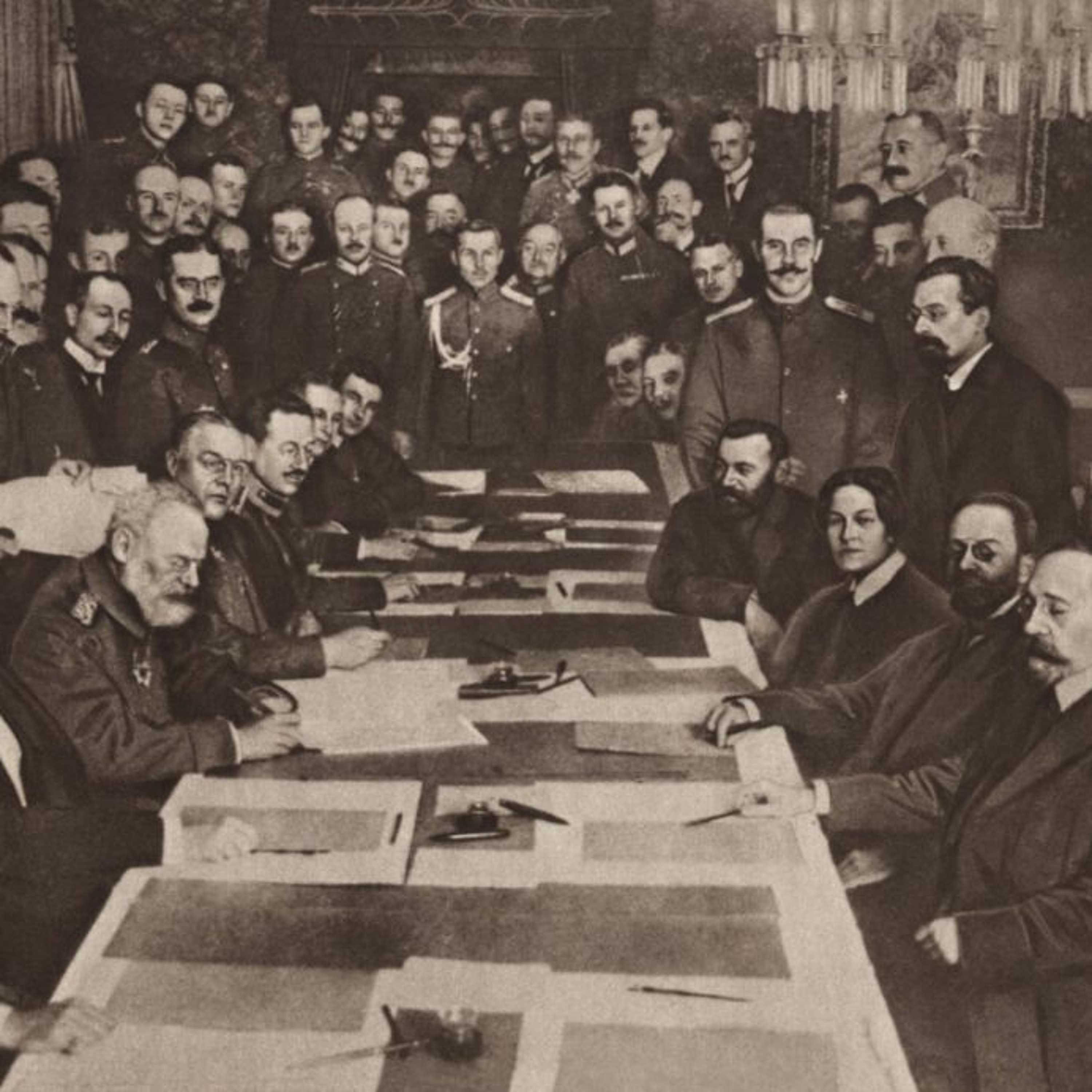
Brest Litovsk: Roots, Impact, and Implications, December 1917-March 1918
About the lecture: An ephemeral victory for Germany, the Treaty of Brest Litovsk was the first international conference ostensibly appealing to the ideal of national self-determination. It reduced Bolshevik-controlled Russia to the size of its medieval Muscovite predecessor; it also theoretically recognized Ukraine as an independent state, while vassalizing it in practice. The Treaty laid the ground for Germany's domination in the Intermarium. However, its promise soon dissipated as Berlin lost the war to Western Allies, the United States in particular. About the speaker: Dr. Chodakiewicz currently serves as a Professor of History at The Institute of World Politics, where he holds the Kosciuszko Chair of Polish Studies. He also leads IWP’s Center for Intermarium Studies. At IWP, Dr. Chodakiewicz teaches courses on Contemporary Politics and Diplomacy, Geography and Strategy, Mass Murder Prevention in Failed and Failing States, and Russian Politics and Foreign Policy. He was formerly an assistant professor of history of the Kosciuszko Chair in Polish Studies at the Miller Center of Public Affairs at University of Virginia. He also served as a visiting professor of history at Loyola Marymount University in Los Angeles.
Pushing Back Ideological Support for Militant Islamism
About the interview: Mr. Tobias Brandt, a Brent Scowcroft Award Fellow at the Aspen Strategy Group and IWP alumnus, spoke with IWP about the importance of countering ideological support for terrorism; the narratives used by militant Islamists in their propaganda efforts; the best arguments we can make against terrorist propaganda; and why this topic is important today. About the speaker: Tobias Brandt is a Brent Scowcroft Award Fellow at the Aspen Strategy Group, a policy program of the Aspen Institute in Washington, D.C. He recently completed his Master’s Degree in Statecraft and International Affairs at the Institute of World Politics, graduating as Salutatorian of the class of 2019. Throughout his studies, Mr. Brandt specialized in U.S. foreign policy towards the Middle East, terrorism, and the transatlantic relationship. In his final semester at IWP, he wrote an Honors Thesis on “Pushing Back Terrorist Propaganda and Countering Ideological Support for Militant Islamism.” Originally from Germany, Mr. Brandt received a Bachelor’s Degree in Middle Eastern Studies from the University of Hamburg, where his studies focused on al-Qaida’s propaganda strategy. Our conversation today deals with the topic of his Honors Thesis – counter-terrorist messaging strategy.

Taiwan’s Cybersecurity Environment versus China’s Cyber Strategy
This event is part of The Cyber Intelligence Initiative Series sponsored by The Institute of World Politics. About the lecture: Dr. Hwang will introduce China’s cyber strategy and discuss how China views cyberspace as a battleground. He’ll then discuss Taiwan’s cybersecurity environment against attacks. About the speaker: Dr. Ji-Jen (Joseph) Hwang is a Research Scholar at the Institute for East Asian Studies at UC Berkeley. Prior to that, he was a Professor & Program Director of the International Master Program in Strategic Studies at the National Defense University in R.O.C. Taiwan. Dr. Hwang has been a visiting fellow with the Freeman Chair in China Studies at the Center for Strategic & International Studies. He also conducted an internship in the Library of Congress while doing his Master course. A native of Taiwan, he holds a Ph.D. in politics from the University of Newcastle upon Tyne in the U.K., as well as a Masters in Library Science & Information Studies from the University of North Carolina. He has been working as a volunteer for a think tank based non-profit in the Washington D.C. area as a Deputy Managing Director since April 2018. Lately, his research is focused on the relations between the U.S., China, and Taiwan, in which he particularly focuses on social media and how its features in cyberspace have political impacts on the relations between the countries. He is an expert in the area and been invited as a special lecturer by CSIS, ASPI, NATO, GlobalSec, and INSS.
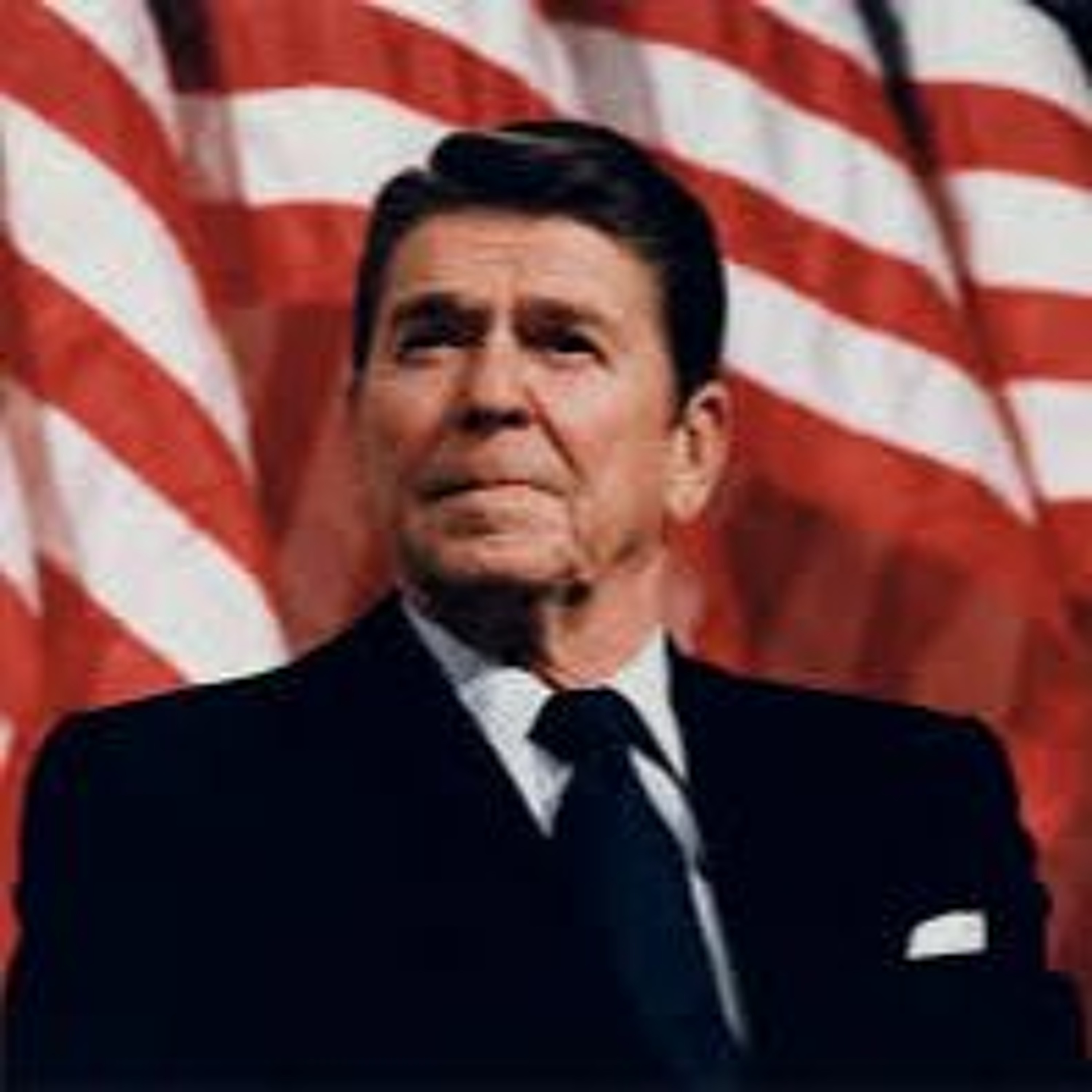
Reagan’s Cold War: Indications & Warning Intelligence
The Ninth Annual Ronald Reagan Intelligence Lecture About the lecture: Reagan’s efforts against the Cold War resulted in tremendous global change and the collapse of the Cold War Super Powers bi-polar power structure; including an intense paradigm shift and challenge for Indications & Warning (I&W) intelligence. Traditional Indications and Warning Intelligence – an exact and highly effective analytic method for the Cold War era and before – suddenly entered ‘identity crisis,’ as both the Intelligence Community and its policy-maker customer sought to identify the way forward for forecasting National Security threats in the changing world. Professor Almont will speak on the history, academic theory(ies), and methodological approach to managing the analysis and forecasting challenge of Non-Nation State, National Security Threat Violence in the changed world AFTER Reagan’s Cold War success. About the speaker: IWP Adjunct Professor, Darlene Almont, is a former U.S. Air Force Major with over 30 years of experience in the intelligence community. She is an Assistant Professor at the Director of National Intelligence (DNI)/Defense Intelligence Agency’s (DIA) National Intelligence University (NIU), the U.S. government’s accredited master’s degree-granting institution; teaching Strategic Intelligence courses at the Top Secret level.
Winning without War: Educating Diplomats, Warriors and Spies!
Focus: China, Russia, Iran, North Korea, radical Islamism, and a global pandemic. Never has the United States faced so many external threats, each of which requires a full-range strategy – both hard and soft power- in order to preserve our freedom and prosperity while avoiding unnecessary armed conflict. At the same time, it is critical to build internal consensus based on our values and history. How can we ensure our military, State Department, Intelligence professionals, executive branch, and congressional leaders are prepared to deal with these complex challenges in the most prudent and effective manner? About the Panelists: Dr. John Lenczowski served in the State Department in the Bureau of European Affairs and as Special Advisor to the Under Secretary for Political Affairs Lawrence Eagleburger from 1981 to 1983. From 1983 to 1987, he was the Director of European and Soviet Affairs at the National Security Council. In that capacity, he was principal Soviet affairs adviser to President Reagan and one of the architects of the national strategy to bring down the Soviet empire. After teaching at Georgetown University, Dr. Lenczowski founded The Institute of World Politics, a non-profit graduate school of national security, intelligence, and international affairs in 1990 and currently serves as its President. He is the author of Full Spectrum Diplomacy and Grand Strategy. He has been consulting with the National Security Council, the State Department and the Defense Department on the China threat, U.S. strategy towards China, human rights, public diplomacy, and a general national security strategy of “winning without war.” Dr. Frank Marlo is Dean of Academics at The Institute of World Politics. He formerly served as a Professor of Strategic Studies at the Marine Corps Command and Staff College. He received his Ph.D. from the Fletcher School of Law and Diplomacy in May 2006. From January 2002 until January 2005, he served as Assistant for Counterproliferation Policy in the Office of the Assistant Secretary of Defense for International Security Policy. He is the author of Planning Reagan’s War: Conservative Strategists and America’s Cold War Victory Dr. David Glancy, currently a Professor of Strategy and Statecraft at IWP, formerly served as an Associate with Booz Allen Hamilton, where he worked on education technology issues with National Intelligence University. Prior to joining NIU, Dr. Glancy served as an Assistant Professor (contractor) with the College of International Security Affairs (CISA) at National Defense University. Before being assigned to CISA, Dr. Glancy provided advice on strategic communications issues to a variety of government clients for Booz Allen Hamilton. Dr. David Glancy has also held positions at both the State Department and Defense Department. At the State Department, he served as a Senior Advisor for Political-Military Affairs and was responsible for handling a number of high-profile issues (coalition political-military efforts in Iraq, issues related to our global military posture, piracy off the coast of Somalia). At the Defense Department, Dr. Glancy was a policy analyst and advisor with the Office of the Secretary of Defense. During his time at the Pentagon, Dr. Glancy served as the Director of the Global War on Terrorism Communications Group and worked as a special assistant with the Eurasia policy office. About the Moderator: Mr. Michael C. Maibach is a seasoned professional in global business diplomacy, advisor to non-profits, supporter of civic causes. From 2003-2012 he was President & CEO of the European-American Business Council, a group of 75 multinational companies. From 1983 to 2001 Mr. Maibach was Vice President of Global Government Affairs for the Intel Corporation. Today he is a Distinguished Fellow at Save Our States, focused on defending the Founders’ Electoral College.
Are we Becoming more Radical? The Rise of Democratic Socialism in America
About the lecture: Thirty years ago last fall we celebrated the fall of the Berlin wall. Many thought this represented the end of history–capitalism had won and socialism had been swept into the dustbin. Today, we see that a growing segment of the American population favors “democratic socialism” and we see American members of Congress who proudly claim this ideology. We will discuss how we have gotten here and why Democratic Socialism can’t work both on economic grounds and moral grounds. About the speaker: Dr. Anne Rathbone Bradley is the George and Sally Mayer Fellow for Economic Education and the academic director at The Fund for American Studies. Through this position, Dr. Bradley works to enhance the impact and reach of TFAS and FTE economic education programs through courses, seminars, videos and social media. She also delivers lectures around the country and oversees curriculum development and evaluation for economics courses. Previously, Dr. Bradley served as the vice president of economic initiatives at the Institute for Faith, Work & Economics, where she continues research toward a systematic biblical theology of economic freedom. In addition to her work with TFAS, she is a professor of economics at The Institute for World Politics and Grove City College. She is a visiting professor at George Mason University and has previously taught at Georgetown University and Charles University in Prague. She is currently an Acton Affiliate scholar and a visiting scholar at the Bernard Center for Women, Politics & Public Policy. She is a lecturer for the Institute for Humane Studies and the Foundation for Economic Education. Dr. Bradley serves on the James Madison University Executive Advisory Board and is the President-Elect for the Society of the Development of Austrian Economics. She served as the associate director for the Program in Economics, Politics and the Law at the James M. Buchanan Center at George Mason University. Dr. Bradley’s academic work ranges on the question of income inequality and economic freedom as well as the political economy of terrorism, with specific emphasis on the industrial organization of al-Qaeda. Her academic research has been published in scholarly journals and edited volumes. She is currently working on a book that analyzes the Political Economy of Terrorism. Based on her academic research, she also worked as an economic analyst for the Central Intelligence Agency’s Office of Terrorism Analysis.
National Self-Determination: Proletarian or Liberal?
About the lecture: During World War I the idea of national self-determination came into its own. There were two principal proponents of this concept. First, Lenin advanced a theory of "proletarian" national self-determination to serve Communism; then, Wilson championed the liberal internationalist idea of national self-determination to support the cause of parliamentary democracy. Both ideas mattered in theory and practice because their advocates were winners; Wilson won World War I; and Lenin staged a successful Putzsch and prevailed in Russia's Civil War. The idea of national self-determination was a great gift to non-historical folk nationalist groups whose activists all clamored for their own states; and it became a bane of historic nations, and not only Great Powers. About the speaker: About the speaker: Dr. Chodakiewicz currently serves as a Professor of History at The Institute of World Politics, where he holds the Kosciuszko Chair of Polish Studies. He also leads IWP’s Center for Intermarium Studies. At IWP, Dr. Chodakiewicz teaches courses on Contemporary Politics and Diplomacy, Geography and Strategy, Mass Murder Prevention in Failed and Failing States, and Russian Politics and Foreign Policy. He was formerly an assistant professor of history of the Kosciuszko Chair in Polish Studies at the Miller Center of Public Affairs at University of Virginia. He also served as a visiting professor of history at Loyola Marymount University in Los Angeles.
Islamic Insurgency in Northern Mozambique and its Regional Implications
About the lecture: Mozambique is facing Islamic insurgency partly due to social, political, and economic factors. Instead of addressing these underlying issues of the conflict, the Mozambique government has exacerbated it by the heavy-handed security response. Has the government mishandled or miscalculated the threats posed by these Islamic insurgents groups in northern Mozambique? What role can the US policy play in aiding Mozambique so that this doesn’t spill over to other regions? About the moderator: Professor Hashem Mekki, MA, has taught Arabic Language, Culture & Middle East Media at IWP since 2012. He is the owner of Bridge Language Solutions, providing an array of language translation, interpretation and teaching services to the Washington DC metropolitan area, and the founder of Kele Global, a nonprofit organization that promotes education, health, and economic empowerment in Sudan and the Republic of South Sudan. Mr. Mekki volunteers with the IWP Center for Human Rights and International Affairs by providing Arabic translations & strategic cultural perspectives on North Africa and the Middle East. Mr. Mekki previously worked with the Center for Strategic and International Studies and served on the board of Voices of Sudan, a nonprofit based in Washington, D.C. About the panelist: Martina Perino is the Program Manager for the Great Lakes and Southern Africa at the International Republican Institute. Originally from Mozambique and Italy, she has 10 years of democracy and governance experience in Mozambique, DR Congo, Zambia, and Kosovo. In Zambia, she was the Governance and Social sectors Program Manager at the European Union Delegation. There Ms. Perino designed and managed the electoral support project, an Access to Justice project and worked closely with local CSOs and other donors or human rights issues and local governance. In 2017 she joined USAID/Kosovo as the Democracy and Governance Strategic Planning Specialist where, among other tasks, she designed several projects including a local governance and conflict mitigation project, PVE project, media strengthening project, political party and legislative strengthening. Ms. Perino has been an election observer in Mozambique, DR Congo, Zambia, Kosovo, and Albania. Ms. Perino holds a degree in Politics, Philosophy, and Economics and a Master’s in International Development. Dr. Gregory Alonso Pirio possesses extensive experience in conducting research on political, social and religious issues. He earned an M.A. in African Studies and a Ph.D. in African History from the University of California-Los Angeles and has published a number of academic articles dealing with Pan-Africanism and the Communist International. His dissertation focused on the political economy of Angola and Mozambique. As a consultant to The Strategic Trade Advisory Corporation, Dr. Pirio produced studies of the civil wars in West Africa and its impact on the politics and economy of the region. He recently completed a major study of radical Islamic groups in East Africa and the Horn of Africa for the U.S. military and is held in high regard as a Subject Matter Expert on African affairs. Dr. Pirio has occupied senior positions at the International Broadcasting Bureau/Voice of America. He was Chief of both the English-to-Africa and Portuguese-to-Africa Services for the VOA. In this capacity, he managed the coverage of international news and current affairs with a special emphasis on Africa, the Middle East, and South-Central Asia, and has traveled extensively to cover events and plan programming priorities. This experience afforded him the opportunity to develop an in-depth knowledge of events in diverse geographic regions and enabled him to know personally many political actors especially on the African continent. Dr. Pirio has also spearheaded innovative media projects in diverse countries such as Afghanistan, Angola, Nigeria, Rwanda, and Zimbabwe.
The Role of Nuclear Weapons in China’s Strategy
This event is part of the China Series sponsored by The Institute of World Politics. About the lecture: The Chinese seek to supplant the US as the world’s top military and economic power. As Tom Reed noted in his book The Nuclear Express, China is a major proliferator of nuclear weapons technology—to Pakistan, North Korea, Iran, Libya and Iraq. Its own nuclear arsenal is projected to double this decade according to DIA intelligence reports. China rejects even discussing arms control nor does it provide any information about its nuclear arsenal, although it does assert it has adopted a no first use nuclear policy. DIA also believes the PRC has recently tested nuclear weapons, contrary to China’s pledges under the NNPT and CBT. The presentation will explore these issues as well as the use of nuclear weapons—particularly the threat of their use—to contest the US and its allies in the Pacific. Especially ROK, ROC, and Japan. About the speaker: Mr. Peter Huessy is President of his own defense consulting firm, GeoStrategic Analysis, founded in 1981, and since 2016, Director of Strategic Deterrent Studies at the Mitchell Institute on Aerospace Studies. He was the senior defense consultant at the National Defense University Foundation for 22 years. He was the National Security Fellow at the AFPC, and Senior Defense Consultant at the Air Force Association from 2011 Mr. Huessy has served as an expert defense and national security analyst for over 45 years, helping his clients cover congressional activities while monitoring budget and policy developments on terrorism, counter-terrorism, immigration, state-sponsored terrorism, missile defense, weapons of mass destruction, especially US-Israeli joint defense efforts, nuclear deterrence, arms control, proliferation, as well as tactical and strategic air, airlift, space and nuclear matters and such state and non-state actors as North Korea, China, Iran, Syria, Venezuela and Hezbollah, Hamas and Al Qaeda. This also includes monitoring activities of think tanks, non-governmental organizations, and other US government departments, as well as projecting future actions of Congress in this area. His specialty is developing and implementing public policy campaigns to secure support for important national security objectives. He is on the Board of the InSeries Theater in Washington; EMPACT, the organization devoted to protecting the US from EMP threats; and MTA, the Maryland Taxpayers Association. He authored legislation calling for the divestment of US pensions from any company doing business with Iran and testified before a number of state legislatures on this subject and on counter-terror policy, including whether or not drivers licenses should be made available to those illegally in the US. He is also a member of Secure American Energy, an organization devoted to breaking the back of OPEC and providing the US with American sources of energy. He has lectured around the world and across the USA on nuclear terrorism, nuclear deterrence, missile defense, homeland security, counter-terrorism policy, and strategic threats to the US and its allies including (1) leading a great power competition and nuclear workshop at the Louisiana Tech Research Institute in cooperation with USAF Global Strike Command, (2) speaking on China’s security threats to the US at the annual strategic conference in Omaha, Nebraska hosted by Strategic Command, (3) speaking annually at the Exchange Monitor Nuclear Summit, (4) lecturing at the Prague Security Institute in the Czech Republic, (5) teaching at Yonsei University in Seoul, ROK, (6) speaking to the Israeli MOD missile defense experts, (7) reviewing terrorist threats to the US for the California Public Policy Foundation, and (8) annually being a guest lecturer at the Naval Academy on the subject of the history of American nuclear deterrent policy.
How Might the Coronavirus Pandemic Influence U.S.-China Relations?
This event is part of The Global Impact Discussion Series sponsored by The Institute of World Politics. About the lecture: How might the coronavirus pandemic influence U.S.-China relations? Some observers contend that it will accelerate the decoupling of the two countries’ economies; others, that it will compel them to restore a baseline of cooperation to address current and potential transnational threats; and yet others, that it will likely have a number of effects, not all of which will point in the same direction. And how might the pandemic affect global perceptions of each country’s ability to manage domestic crises and its willingness to provide global public goods? Some observers contend that China has “won” on those counts, at least relative to the United States; others, that it has “lost”; and yet others, that it is too early to render such judgments. About the speaker: Mr. Ali Wyne is a nonresident senior fellow at the Atlantic Council and a nonresident fellow at the Modern War Institute. He is a term member of the Council on Foreign Relations, a David Rockefeller fellow with the Trilateral Commission, and a security fellow with the Truman National Security Project. He is currently writing a book on great-power competition.
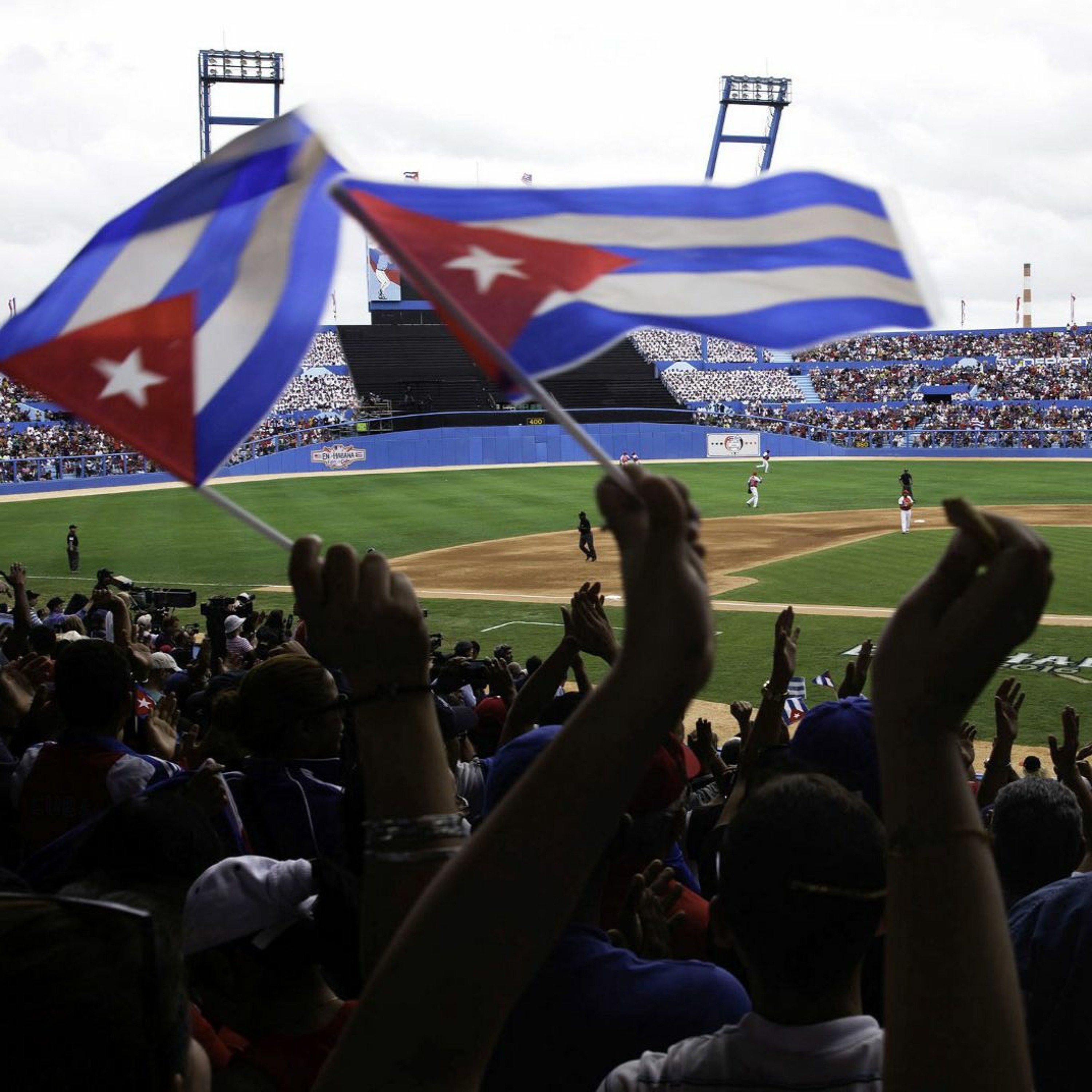
Don’t Take Your Base: America’s Baseball Diplomacy with Cuba
About the lecture: The presentation will explore the history of baseball diplomacy between the United States and Cuba, specifically focusing on the Trump administration’s nullification of the 2018 Major League Baseball-Cuban Baseball Federation player agreement. About the speaker: Nathaniel Bader is an IWP student pursuing a master’s degree in Statecraft and National Security Affairs with a concentration in Public Diplomacy and Strategic Influence. Nathaniel graduated summa cum laude from Dakota Wesleyan University in Mitchell, South Dakota, with degrees in history and nonprofit administration. While at Dakota Wesleyan, Nathaniel was named the Senator George McGovern Scholar, served as parliamentarian for the Student Senate, led the McGovern Engagement Group for Political Activism, and spent time in Uganda working on long-term economic development projects in two rural villages. Nathaniel has interned with Court Appointed Special Advocates and the Africa Center for Strategic Studies. Nathaniel currently works at the American Political Science Association. Nathaniel grew up in South Dakota, and, in his free time, he enjoys watching sports, traveling, playing bar trivia, and watching science fiction films.
The Intermarium's Nationalisms: Old and New
About the lecture: The Intermarium's Nationalisms: Old and New discusses historic nationalism, which was predicated on civic and local identity, and non-historic nationalisms, which stressed their ethnic and folk character. The former concerned mostly the legacy of the old Polish-Lithuanian Commonwealth; the latter reflected newly emergent nations, including the Lithuanians, Ukrainians, and Belarusians. About the speaker: Dr. Chodakiewicz currently serves as a Professor of History at The Institute of World Politics, where he holds the Kosciuszko Chair of Polish Studies. He also leads IWP’s Center for Intermarium Studies. At IWP, Dr. Chodakiewicz teaches courses on Contemporary Politics and Diplomacy, Geography and Strategy, Mass Murder Prevention in Failed and Failing States, and Russian Politics and Foreign Policy. He was formerly an assistant professor of history of the Kosciuszko Chair in Polish Studies at the Miller Center of Public Affairs at University of Virginia. He also served as a visiting professor of history at Loyola Marymount University in Los Angeles.
The Great War in the Intermarium
About the lecture: This is Dr. Chodakiewicz's first lecture in his series on the First World War and its Aftermath in the Intermarium, the lands between the Baltic and Black Seas, 1914-1921. About the speaker: Dr. Chodakiewicz currently serves as a Professor of History at The Institute of World Politics, where he holds the Kosciuszko Chair of Polish Studies. He also leads IWP’s Center for Intermarium Studies. At IWP, Dr. Chodakiewicz teaches courses on Contemporary Politics and Diplomacy, Geography and Strategy, Mass Murder Prevention in Failed and Failing States, and Russian Politics and Foreign Policy. He was formerly an assistant professor of history of the Kosciuszko Chair in Polish Studies at the Miller Center of Public Affairs at University of Virginia. He also served as a visiting professor of history at Loyola Marymount University in Los Angeles.
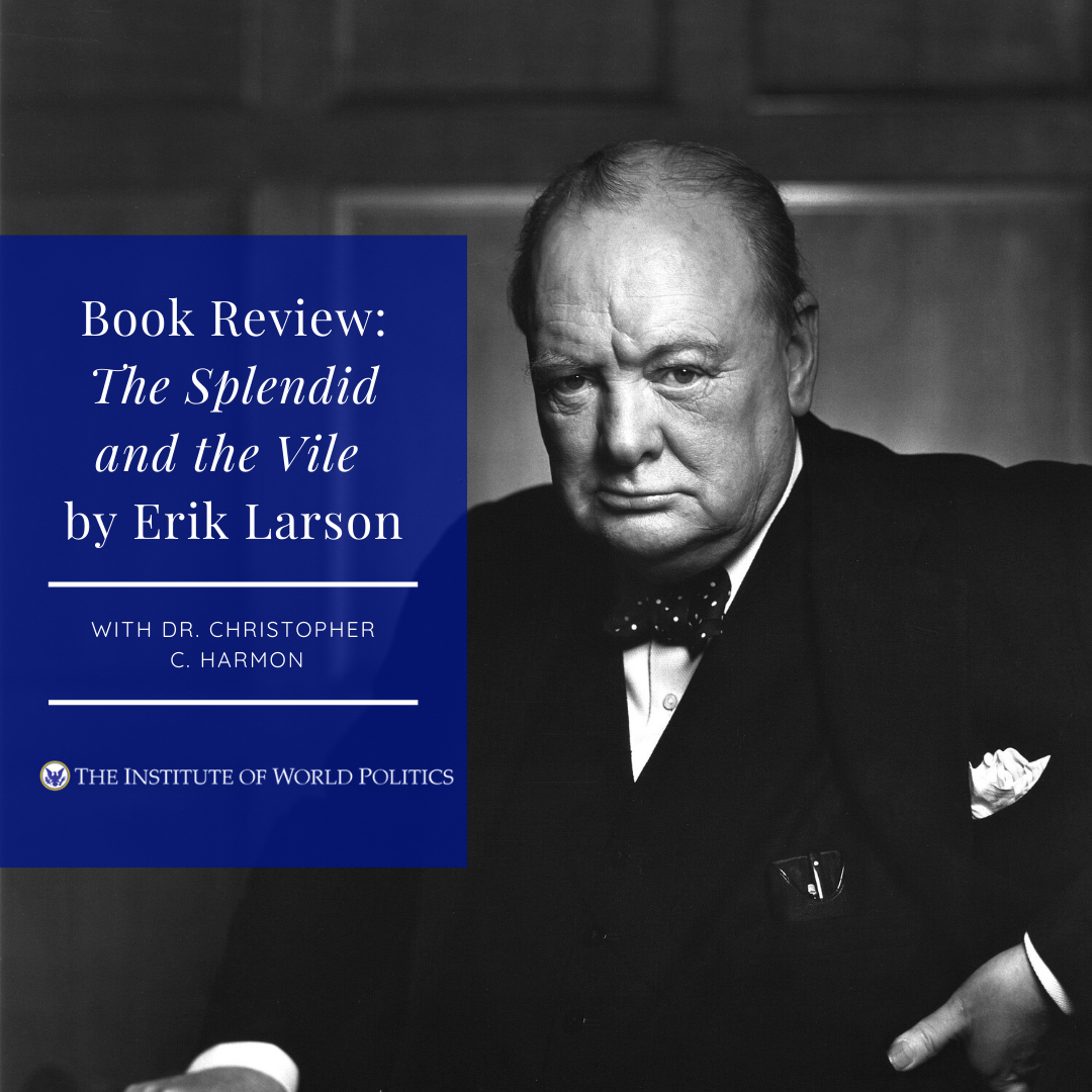
Book Review: The Splendid and the Vile by Erik Larson
About the book review: Dr. Christopher C. Harmon, the Bren Chair of Great Power Competition at Marine Corps University and IWP professor, reviewed Erik Larson's new book The Splendid and the Vile, which accounts the leadership of Winston Churchill during his first days as prime minister. Dr. Christopher Harmon gives an in-depth review of the book. He discusses its strengths and weaknesses, his own IWP course (IWP 628), which examines military strategy, and the best reasons to continue to study Winston Churchill, half a century after his death. About the speaker: Dr. Christopher C. Harmon wrote his political science dissertation on terrorism in the early 1980s and continued that work as Legislative Aide for Foreign Policy to a member of Congress and, much later, director of counterterrorism studies programs in Asia and Europe for the U.S. government. A professor at civilian and military graduate schools including the Naval War College, Dr. Harmon began teaching courses at The Institute of World Politics after 9/11 — on terrorism, and later on counterterrorism. Lead author or editor of six books, he holds the Bren Chair of Great Power Competition at Marine Corps University, Quantico VA.
The Rise of Socialism in American Politics
About the interview: Dr. Joshua Muravchik, Distinguished Fellow at the World Affairs Institute, spoke with IWP about the rise of socialism in American politics. He discussed the history of the socialist movement in America, what the term "democratic socialism" really means, why socialism is popular with millennials, and what we can do to fight the rise of socialism in America. About the speaker: Dr. Joshua Muravchik is a distinguished fellow at the World Affairs Institute. He is a former resident scholar at American Enterprise Institute and a former fellow at the Foreign Policy Institute. Additionally, he is a professor at IWP where he teaches a course on Ideas and Values in American Politics. Dr. Muravchik is the author of eleven books, including Heaven on Earth: The Rise and Fall of Socialism, The Imperative of American Leadership, and Exporting Democracy: Fulfilling America’s Destiny; and also more than 400 articles in newspapers, magazines, and scholarly journals.
The Virus and the China Threat
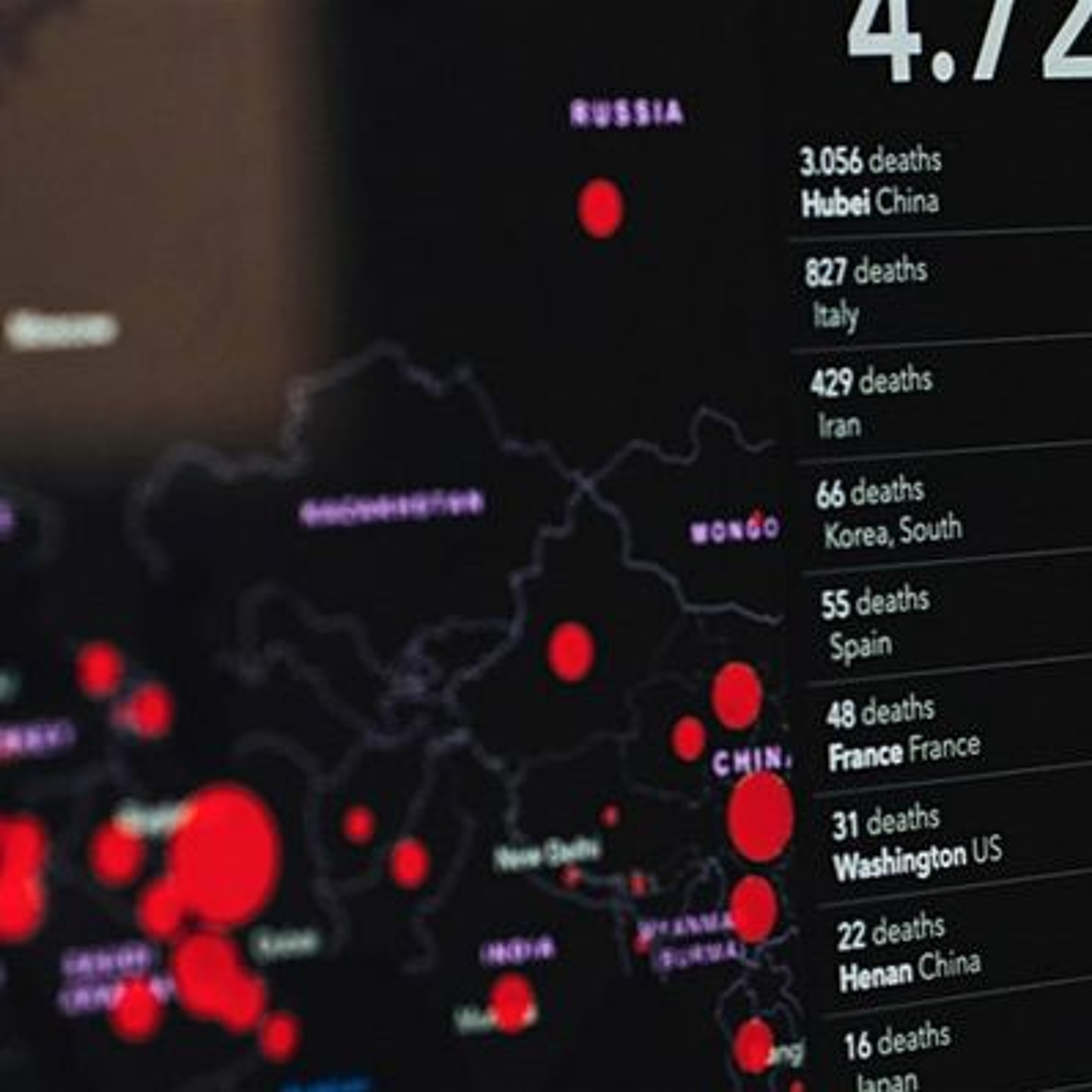
About the discussion: Dr. John Lenczowski will discuss how the coronavirus pandemic has raised America’s consciousness of the reality of communist rule in China and its implications for the security and prosperity of our country. “For years, our leaders have hoped and dreamed of a benevolent, democratic China. We gave away the store on this fantasy, and now we are paying the price. Ironically, this plague is a wake-up call to the gravity of the threat from communist China.” This event will be moderated by IWP Chairman John Lovewell. About the speaker: Dr. John Lenczowski served in the State Department in the Bureau of European Affairs and as Special Advisor to the Under Secretary for Political Affairs Lawrence Eagleburger from 1981 to 1983. From 1983 to 1987, he was Director of European and Soviet Affairs at the National Security Council. In that capacity, he was principal Soviet affairs adviser to President Reagan and one of the architects of the national strategy to bring down the Soviet empire. After teaching at Georgetown University, Dr. Lenczowski founded The Institute of World Politics, a non-profit graduate school of national security, intelligence, and international affairs in 1990 and currently serves as its President. He is the author of Full Spectrum Diplomacy and Grand Strategy. He has been consulting with the National Security Council, the State Department and the Defense Department on the China threat, U.S. strategy towards China, human rights, public diplomacy, and a general national security strategy of “winning without war.”
What is the Economic Impact of the Coronavirus?
About the interview: Dr. Anne Bradley, Vice President of Economic Initiatives at the Institute for Faith, Work, and Economics and IWP professor, spoke with IWP about the economic impact of the coronavirus. She discussed the future of the economy, the stock market, the new stimulus package, the long term effects of coronavirus, and the role of government in protecting the U.S. economy. About the speaker: Dr. Anne Bradley is the George and Sally Mayer Fellow for Economic Education and the Academic Director at the Fund for American Studies. She served as the Vice President of Economic Initiatives at The Institute for Faith, Work, and Economics, where she developed and commissioned research toward a systematic biblical theology of economic freedom. She is a visiting professor at Georgetown University and has previously taught at George Mason University and at Charles University, Prague. She is currently a visiting scholar at the Bernard Center for Women, Politics, and Public Policy. She served as the Associate Director for the Program in Economics, Politics, and the Law at the James M. Buchanan Center at George Mason University. She worked as an Economic Analyst for the Central Intelligence Agency. She is also a professor at IWP, where she teaches a course entitled Economics for Foreign Policy Makers
What is the Impact of the Coronavirus Outbreak on the Energy Market?
About the Interview: Dr. Sara Vakhshouri, Professor of Energy Security at IWP and President of SVB Energy International, spoke with members of the IWP events staff about the impact of the coronavirus outbreak on the energy market. She discussed energy supply and demand, the Russia-Saudi oil war, U.S. shale production, and what the future holds in regard to market stabilization. About the Speaker: Dr. Sara Vakhshouri is founder and president of SVB Energy International, a strategic energy consulting firm with offices in Washington DC and Dubai. She is also an Adjunct Professor of Energy Security at The Institute of World Politics. Dr. Vakhshouri has about two decades of experience of working in the energy industry with extensive experience in global energy market studies, energy security, and geopolitical risk, and she has consulted numerous public and private sector energy and policy leaders. Dr. Vakhshouri has been based in Washington, D.C. since 2009, where she has advised U.S. and European governments, investment banks, financial institutions, law firms, and international corporations on energy markets, trading and pricing, the geopolitics of energy, and investment patterns. She has published articles in numerous journals, including The Economist, Middle East Economic Survey, and Oil and Gas Journal. Dr. Vakhshouri has been the keynote speaker at many energy conferences, including Chatham House, Platts Oil and Middle East conferences, LNG Global Congress, and other international oil, gas, and energy conferences. Dr. Vakhshouri has a Ph.D. in energy security and Middle Eastern studies. She has an M.A. in business management (international marketing) and another M.A. in international relations. Dr. Vakhshouri was also senior energy fellow at the Atlantic Council, and at the Oxford Institute for Energy Studies. Dr. Vakhshouri also has the experience of working in both public and private sectors of the Iranian energy industry.
D-I-M-E Reshuffled, “I” Card High
This event was co-sponsored by the Marine Corps University Foundation and the Krulak Center at Marine Corps University. About the lecture: The initial effects of the internet and social media seemed happy, but the second and third order effects — disinformation, lies, propaganda, deep fakes, troll swarms, personal attacks, and conspiracy theories among them — now present threats to privacy, national security, and democratic governance. They are a factor in America’s political polarization. The malign effects are outrunning the capacity of public affairs, public diplomacy, and USG international broadcasting to respond. What can be the pathways ahead? About the speaker: Donald M. Bishop joined Marine Corps University as the Bren Chair of Strategic Communications in 2016. The Chair is sponsored by the Marine Corps University Foundation. Mr. Bishop was a Foreign Service Officer – first in the U.S. Information Agency and then in the Department of State – for 31 years. Specializing in Public Diplomacy, political-military affairs, and East Asia, he attained the rank of Minister-Counselor in the career service. His first round of Foreign Service assignments were to Hong Kong; Taegu and Seoul, Korea; and Taipei, Taiwan. In Washington, he was a Congressional Fellow, and he directed the training of the Foreign Service’s incoming Public Diplomacy officers. Returning overseas, he directed U.S. Public Diplomacy programs in Bangladesh, Nigeria, and twice in China. In 2006, Mr. Bishop was detailed to the Pentagon as the Foreign Policy Advisor (POLAD) to the Commandant of the Marine Corps, General James T. Conway, and then to the Chief of Staff of the United States Air Force, General Norton Schwartz. Traveling with these two members of the JCS, he visited five continents and joined service planning to develop strong relationships with the armed forces of other nations. At the request of Ambassador Richard Holbrooke, Mr. Bishop led communication and Public Diplomacy at the American Embassy in Afghanistan as the “civilian surge” began. In Kabul he helped develop the Afghan government’s relations with the media, and to cooperate with the U.S. and NATO commands. Other portfolios included media relations, education and exchanges, English teaching, the preservation of cultural heritage sites, and the network of Lincoln Learning Centers throughout Afghanistan. Before joining the MCU faculty, he was director of communications at the Congressional-Executive Commission on China; served a term as President of the Public Diplomacy Council; and participated in four U.S. Army brigade exercises at Fort Polk, Louisiana, as a role player. Before entering the Foreign Service, Mr. Bishop was an Air Force officer. He served in Vietnam and Korea. From 1975 to 1979, he taught history on the faculty of the U.S. Air Force Academy. He was a member of the summer training cadre for the first Academy class that included women.
Complicit Campuses? Biased Terror Data, Gulf State Cash, and U.S. National Security
About the Lecture: Dr. Hull will discuss concerns about American universities’ activities in the security space, including apparent bias in the federally funded Terrorism and Extremist Violence in the United States (TEVUS) Database, the influence of Gulf State funding on American education, and the potential impact of both on U.S. national security. About the Speaker: Christopher C. Hull, Ph.D., a Senior Fellow at Americans for Intelligence Reform, is also the President of Issue Management Inc., a boutique public affairs firm whose work centers on national security. He is currently a Contributor to The Epoch Times and appears regularly on The Tipping Point with Liz Wheeler on One America News Network. Dr. Hull has more than 25 years of experience in politics, public policy, and government relations. He is the immediate past Executive Vice President of a three-decade-old national security think tank based in Washington, D.C. Before that, Dr. Hull served as Chief of Staff for a nationally prominent Member of Congress. He has also served as Press Secretary in the U.S. House of Representatives, Assistant to the Director of Communications of a national party committee, a foreign affairs and trade legislative aide in the U.S. Senate, and a researcher in a major think tank. He began his career as an intern in the White House and then as a full-time volunteer in the Issues Group of a presidential campaign.
False WWII Narratives Circulated by Russian Propaganda
About the Lecture: Russian President Vladimir Putin periodically regurgitates Soviet propaganda about the Second World War. Lately, Poland has triggered his ire again. Warsaw failed to fall in line with standard Soviet fantasy. According to this narrative, the global conflict started on June 22, 1941, when Germany attacked innocent and neutral “Mother Russia.” Thus wronged and victimized, having suffered staggering losses, the armies of Moscow nonetheless rebounded and they alone defeated “fascism,” saving the world from its menace. Anything that threatens this narrative endangers the grip of the Kremlin over the denizens of the post-Soviet Empire. Its legitimacy rests on the legacy of the Soviet victory in the Second World War and Moscow has been running on fumes of that triumph since the implosion of the Soviet Union in 1992. About the Speaker: Dr. Marek Jan Chodakiewicz holds The Kosciuszko Chair in Polish Studies at The Institute of World Politics, where he also serves as a Professor of History and teaches courses on Geography and Strategy, Contemporary Politics and Diplomacy, Russian Politics and Foreign Policy, and Mass Murder Prevention in Failed and Failing States. He is the author of Intermarium: The Land Between the Black and Baltic Seas and numerous other books and articles. He holds a Ph.D. from Columbia University and has previously taught at the University of Virginia and Loyola Marymount University.
How the Kremlin Weaponized Yandex and Telegram in Tensions with Belarus
About the Lecture: Historical Pompeo’s visit to Minsk amid Russia-Belarus tensions was met with thousands of posts, comments, memes, manipulative publications online. The extensive network of pro-Russian organizations, digital influencers, Russia-friendly media, and particularly web-services, including Yandex and Mail.ru news, Odnoklassniki and VK, Telegram messenger, was mobilized to fill out the information space with the specific narrative and mislead the population. This lecture is about the role of media in Russia-Belarus conflict, mechanics of the Russian propaganda machine in Belarus, and how technology helps regimes to manipulate public opinion and perception of the events. About the Speaker: Franak Viačorka is a digital media strategist and journalist from Belarus. He works as a research media analyst for the U.S. Agency for Global Media (contractor) focusing on digital markets of Russia and Eurasia. His research focus is on Russian and Chinese efforts to control smaller actors, spread disinformation, and build the sovereign internet infrastructure. He has served as a creative director for the Belarus service of Radio Free Europe Radio Liberty, Vice President for Digital Communication Network, and consultant for the Freedom House, and Broadcasting Board of Governors. Franak is a frequent speaker and an advocate for democracy and personal freedom. For his activism and journalist work in Belarus, he was multiple times jailed by the Belarus authorities. Franak’s activism in Belarus has been chronicled by documentary filmmakers and recognized by many international organizations, including the National Endowment for Democracy, Freedom House, Open Society Foundations. He was the first Vaclav Havel Fellow at Radio Free Europe / Radio Liberty under Havel’s personal recommendation. He graduated from American University in Washington D.C. (M.A.) and Warsaw University in Poland (B.A.), and he also studied at Belarus State University, Georgetown University, and European Humanities University.
Why the Founders Created the Electoral College
About the Lecture: Michael C. Maibach will discuss reasons why the Founders agreed on the Electoral College and give a response to its main criticisms. About the Speaker: Michael C. Maibach is a seasoned professional in global business diplomacy, advisor to non-profit organizations, and a supporter of civic causes. From 2003 to 2012 he was President & CEO of the European-American Business Council, a group of 75 multinational companies.From 1983 to 2001 Mr. Maibach was Vice President of Global Government Affairs for the Intel Corporation. At Intel he worked closely with its founders, Dr. Robert Noyce – inventor of the integrated circuit, Dr. Gordon Moore – known for Moore’s Law – and Dr. Andy Grove – Time Man of the Year in 1997. At Intel he built a team of 150 professionals around the world to advance public policy to enhance trade, job and wealth creation. Today he is the Founder & Director of The Center For the Electoral College. Mr. Maibach has earned seven university degrees, one of which was granted by The Institute of World Politics. While earning his first degree he was elected to the DeKalb County Board in his native state of Illinois, becoming the first person elected to public office under 21 years of age in American history.
Postcards From Hell: Siberia 1940 in Deported Children’s Accounts
About the lecture: In winter 1940, Soviet authorities organized mass deportations to Siberia of Polish citizens from the Polish territories annexed in September 1939. Over one million people were dispatched in overcrowded cattle cars in the dead of winter to unknown destinations in the Soviet interior where they were forced to slave labor in order to survive. Thousands of those Poles, adults and children alike, died from starvation, rampant disease, and overwork. That harrowing experience was later described by those fortunate ones who managed to leave the Soviet Union after the so-called amnesty in July 1941, including numerous children. This lecture is a survey of the selection of original accounts of those experiences. About the speaker: Mrs. Maria Juczewska is a communication specialist with versatile international experience. Her education in linguistics, culture studies, and international affairs, combined with years of living abroad, makes her point of view unique and comprehensive. Mrs. Juczewska has worked for the Kościuszko Chair of Polish Studies since 2014. In her scholarly work, she is especially interested in propaganda.
American Values in a Time of Global trade and Modern Monetary Policy
About the lecture: Ms. Stacy will discuss America’s current situation in terms of market levels, economic data, and the China trade deal. She will also discuss the following subtopics: • Populism and Economics: Ms. Stacy will cover the historical connection between populism and economics, the quintessential trajectory of populism, what could interrupt the pattern of populism, and the best possible outcome. • Globalism vs. Protectionism: Ms. Stacy will cover the high-level mechanical differences and potential unintended consequences of these approaches. She will discuss how each trade strategy relates to the business cycle and what it means going forward for capital markets. She will also give a high-level explanation of how the business cycle works and what precipitates the changes in the cycle. • Monetary Policy in the Post Global Financial Crisis Era: Ms. Stacy will discuss the historical purpose of monetary policy and how the Central Banks will likely deal with the record amounts of debt in the system. She will delve into what this means for the U.S. economy and global economies in terms of how investors think about this. She hopes to provide insight into how future policy makers can use an understanding of global capital flows in tandem with their endeavors. • China: Ms. Stacy will discuss the topics above regarding the economic relationship between China and the United States. About the speaker: Frances Newton Stacy started her broadcasting career appearing weekly on the Gerry V show on the Rush Radio Network from 2008-2010. There she gained wide appeal and honed her skills for being able to explain a very complex subject matter in simple terms. She then began appearing on the local Fox 5 in Las Vegas. From there in 2010 Frances branched out to appearing regularly on national television. Frances perfectly predicted the stock market crash, which began in October 2007 and is amongst the very few who successfully traded the downturn. She got out of stocks a month before the all-time high and simultaneously got into the historic gold trade. Frances also called the market bottom on the Gerry V show in March of 2009 when she warned his audience that the market would go up for a while. Wanting to be able to predict the next credit crisis became Frances’ passion of study. On this journey, she studied the banking and credit systems in depth. Frances discovered what must be present in order to have a credit crisis. She also enjoyed studying the underlying algorithm of our banking system, which has an undeniable mathematical structure that regardless of the market swings is always present and has predictable implications. She is a frequent guest on Fox Business News as a commentator on Central Bank Policy and its effects on the economy. Frances has also appeared on CNBC, CBS, Yahoo Finance and Fox News as well as several local and national television and radio programs. She has blogged for the trading community, helping them recognize key cycles and significant support and resistance levels. She has taught several classes for trading students and spoken extensively on the subject. Frances lives in the Bay Area advising clients across the West Coast as well as nationally. She incorporates her unique research and experience into portfolio construction and management as Director of Portfolio Strategy with Optimal Capital. As an allocator, Frances regularly speaks nationally and internationally at events focusing on quantitative finance as well as those for blockchain enthusiasts. Frances has spoken at the annual DMS Governance event on interest rates and market cycles. Frances has also informally consulted for and spoken at the British Consulate-General New York.
Influencing a Wired World with Cyber Intelligence
About the Lecture: How do you influence your target audience in a wired world? How are we vulnerable to unseen influence operations that are targeting us? This presentation will look at the various aspects of influence operations in cyberspace. We will look at how the basic human neural processes are impacted in a wired world and how they impact our interactions, moods, and thinking. Not only do nation-states utilize this intelligence, but advertisers, and our closest associates do as well. With the information provided in this lecture, not only will you be able to recognize the influence operations targeting you, but you will also be able to understand how you can use it yourself. About the Speaker: Mr. Debbins has 20 years of experience and knowledge in intelligence, national security, strategic planning, CBRNE (Chemical, Biological, Radiological, Nuclear, enhanced Explosives), cyber and cyberspace, hybrid warfare, business, economics, finance, world geopolitical environment, and science and technology (S&T). He possesses native fluency in Russian. Mr. Debbins served as an officer in the U.S. Army and has also worked in commercial businesses in Ukraine and Russia. He was a Russian Cyber Analyst for the U.S. Government and later a Cyber Operations instructor. Currently, he works as an Area Studies and Hybrid Warfare instructor for the U.S. European Command (EUCOM) and NATO.