
The Institute of World Politics
507 episodes — Page 9 of 11
The Virtue of Nationalism
About the Book: Nationalism is the issue of our age. From Donald Trump's "America First" politics to Brexit to the rise of the right in Europe, events have forced a crucial debate: Should we fight for international government, or should the world's nations keep their independence and self-determination? In The Virtue of Nationalism, Yoram Hazony contends that a world of sovereign nations is the only option for those who care about personal and collective freedom. He recounts how, beginning in the sixteenth century, English, Dutch, and American Protestants revived the Old Testament's love of national independence and showed how their vision eventually brought freedom to peoples from Poland to India, Israel to Ethiopia. It is this tradition we must restore, he argues, if we want to limit conflict and hate--and allow human difference and innovation to flourish. About the Author: Yoram Hazony is President of the Herzl Institute in Jerusalem. His book The Virtue of Nationalism will be published by Basic Books in September 2018. Hazony’s other books include The Philosophy of Hebrew Scripture and The Jewish State: The Struggle for Israel’s Soul. His essays appear frequently in the Wall Street Journal, New York Times, and other media, including, recently: “What Is Conservatism?”; “The Dark Side of the Enlightenment”; and “Jordan Peterson and Conservatism’s Rebirth.”
Superpower China: The "Great Game Changer"
A geopolitical game of “Gō” now unfolds between the rising Chinese superpower and the status quo powers of the Indo-Pacific led by the United States while Russia holds Eurasia's pivot point. This great “Gō” Game is on the cusp of power transitions comparable to the rise of Japan at the end of the nineteenth century and America’s Pacific preeminence in the mid-twentieth. Across the Indo-Pacific, geopolitical change surges Tsunami-like throughout the region. Politicians, statesmen, soldiers, businessmen, and economists reassess their region’s future vis-à-vis an emerging bipolar U.S.-China superpower rivalry. If America’s prospects appear good, Indo-Pacific states will continue to side with the United States and “balance” against China. If China appears able and determined to overwhelm the Indo-Pacific's America-anchored alliance network, however, Asia will bandwagon with China. Mr. John Tkacik is a retired U.S. foreign service officer, businessman and policy commentator with over 40 years of continuous experience in East Asian affairs. He spent 24 years in the Department of State including four tours in Chinese-language posts. Dr. Tkacik was Chief of China Analysis in the Bureau of Intelligence and Research (INR) before retiring in 1994. He was vice president for government relations for R.J. Reynolds Tobacco International and was a consultant to RJR-Nabisco China from 1996 to 1999. He joined The Heritage Foundation in 2001 where he was senior research fellow in Asian studies. At Heritage, Dr. Tkacik penned commentaries and research on Chinese, Taiwanese, and Mongolian issues, and he edited two books: Rethinking One China and Reshaping the Taiwan Strait. He has degrees from Georgetown and Harvard.
The Impact of Religion on the American Character
This event is a part of the Student Lecture Series at IWP. About the Lecture: The United States, like most Western liberal countries, is a secular nation, as the American Founders established a political system that effectively separates Church and State. Nevertheless, religion has played an important role in developing the “American Character.” The speaker will discuss how religion was indispensable for the success of the young American Republic and argue that it is nearly impossible to imagine the United States without it. This lecture is an installment of IWP's Student Speaker Series. About the Speaker: Tobias Brandt is originally from Germany and graduated from the University of Hamburg with a degree in Middle Eastern and Religious Studies in 2015. For his Bachelor’s Thesis, he analyzed al-Qaeda’s propaganda strategy on the basis of original Arabic documents. He is currently studying Statecraft and International Affairs with a specialization in International Politics at the Institute of World Politics. His key research areas are U.S. foreign policy in the Middle East, the role of religion in politics, as well as the transatlantic relationship. Mr. Brandt’s lecture is based on a paper he submitted for IWP's course on American Founding Principles.
The League of the Militant Godless
About the Lecture: The speaker will discuss Soviet antireligious activism and propaganda, taking a look at "volunteer" activism and analyzing the artistic renderings of religion in Bezbozhnik - the propaganda apparatus of the League of the Militant Godless. This event is sponsored by the Center for Intermarium Studies and the Kosciuszko Chair of Polish Studies at IWP. About the Speaker: Helen Lamm is from the great state of South Carolina. In 2017, she graduated magna cum laude from Wofford College with a degree in Chinese and History. She is currently studying Statecraft and International Affairs with a concentration in American Foreign Policy at The Institute of World Politics. She is interested in the politics of post-communism, and focuses much of her writing on the interplay of religion and politics. This paper was submitted for completion of Dr. Marek Chodakiewicz's 2018 spring course on Russian Politics.
North Korean Military Proliferation in the Middle East and Africa
About the Book: In North Korean Military Proliferation in the Middle East and Africa: Enabling Violence and Instability, Bruce E. Bechtol Jr. analyzes relevant North Korean military capabilities, what arms the nation provides, and to whom, how it skirts its sanctions, and how North Korea's activities can best be contained. He traces illicit networks that lead to state and nonstate actors in the Middle East, including Syria, Iran, Hezbollah, and Hamas, and throughout Africa, including at least a dozen nations. The potential proliferation of nuclear and chemical weapons technology and the vehicles that carry it, including ballistic missiles and artillery, represent a broader threat than the leadership in Pyongyang. Including training and infrastructure support, North Korea's profits may range into the billions of dollars, all concealed in illicit networks and front companies so complex that the nation struggles to track and control them. Bechtol not only presents an accurate picture of the current North Korean threat―he also outlines methodologies that Washington and the international community must embrace in order to contain it. About the Author: Bruce E. Bechtol, Jr., is an award winning professor of political science at Angelo State University and a retired Marine. He was formerly on the faculty at the Marine Corps Command and Staff College and the Air Command and Staff College. Dr. Bechtol served as an adjunct visiting professor at the Korea University Graduate School of International Studies. He was an intelligence officer at the Defense Intelligence Agency from 1997 until 2003, eventually serving as the senior analyst for Northeast Asia in the Intelligence Directorate on the Joint Staff in the Pentagon. He formerly sat on the editorial review board of the East Asian Review and served as editor of the Defense Intelligence Journal. He is currently on the editorial advisory board of the Korea Observer, and is on the scientific board of Global Humanities. He is the current president of the International Council on Korean Studies, and serves on the board of directors of the Council on U.S.-Korean Security Studies. He has also authored North Korea and Regional Security in the Kim Jong-un Era: A New International Security Dilemma, The Last Days of Kim Jong-Il: The North Korean Threat in a Changing Era, Defiant Failed State: The North Korean Threat to International Security, and Red Rogue: The Persistent Challenge of North Korea. A widely sought after expert on North Korean international security issues, Dr. Bechtol has been called on to present commentary to the BBC, CNN, CBC, FOX News, Radio New Zealand, syndicated nationwide radio shows such as POTUS politics on SIRIUS/XM, the John Batchelor show, the Frank Gaffney show, and several interviews on National Public Radio.
Russian Military History
This event is the eighth annual Kosciuszko Chair Military Lecture in honor of Gen. Walter Jajko. It is sponsored by the Center for Intermarium Studies and the Kosciuszko Chair of Polish Studies at The Institute of World Politics. About the Lecture: This lecture will explore the military history of Russia, going back to pre-imperial times, in order to analyze the Russian Federation's recent actions toward the United States, NATO, and Europe. Russia has historically viewed war in a different light than the West, and this historical context is vital to determining how to respond to recent belligerent actions. About the Speaker: Geoffrey Seroka is a graduate student at The Institute of World Politics, studying International Affairs. He has focused his graduate research on Russian/Eurasian affairs and has delivered two previous lectures as a part of the Kosciusko Chair's Intermarium Lecture Series. He obtained his Bachelor of Arts in Government from Patrick Henry College in 2015.
Anatomy of Failure: Why America Loses Every War It Starts
About the Book: Since the end of World War II, why has the United States either lost every war it started or failed in every military intervention it prosecuted? Harlan Ullman's new book answers this most disturbing question, a question many Americans would not ask because this record of failure has been largely hidden in plain sight or forgotten with the passage of time. The most straightforward answer is that presidents and administrations have consistently failed to use sound strategic thinking and lacked sufficient knowledge or understanding of the circumstances prior to deciding whether or not to employ force. Making this case is an in-depth analysis of the records of presidents from John F. Kennedy to Barack Obama and Donald Trump in using force or starting wars. His recommended solutions begin with a "brains-based" approach to sound strategic thinking to address one of the major causes of failure--the inexperience of too many of the nation's commanders-in-chief. Ullman reinforces his argument through the use of autobiographical vignettes that provide a human dimension and insight into the reasons for failure, in some cases making public previously unknown history. The clarion call of Anatomy of Failure is that both a sound strategic framework and sufficient knowledge and understanding of the circumstance that may lead to using force are vital. Without them, failure is virtually guaranteed. About the Author: Harlan K. Ullman is a strategic thinker and innovator whose career spans the worlds of business and government. Chairman of several companies and an advisor to the heads of major corporations and governments, he was the principal author of "shock and awe"and inventor of a brains-based approach to strategic thinking. A graduate of the U.S. Naval Academy, he served in combat assignments in Vietnam. He holds an MA, MALD, and PhD from The Fletcher School of Law and Diplomacy at Tufts University and lives in Washington, D.C.
The Politically Incorrect Guide to Communism
Dr. Paul Kengor gave a lecture on his book "The Politically Incorrect Guide to Communism" on July 31, 2018, at The Institute of World Politics. About the Lecture: Communism has wrecked national economies, enslaved whole peoples, and killed more than a hundred million men and women. What's not to like? Too many young Americans are supporting communism. Millennials prefer socialism to capitalism, and 25 percent have a positive view of Lenin. One in four Americans believe that George W. Bush killed more people than Josef Stalin. And 69 percent of Millennials would vote for a socialist for president. They ought to know better. Communism is the most dangerous idea in world history, producing dire poverty, repression, and carnage wherever it has been tried. And no wonder—because communism flatly denies morality, human nature, and basic facts. But it's always going to be different this time. In this lecture, renowned scholar and bestselling author Paul Kengor will highlight points from his recent book, The Politically Incorrect Guide to Communism, exposing the blood-drenched history—and dangerously pervasive influence—of the world's worst ideology. About the Speaker: Dr. Paul Kengor is professor of political science at Grove City College, a four-year, private Christian liberal arts college located in Grove City, Pennsylvania. He is executive director of the Center for Vision & Values, a Grove City College think-tank and policy center. He is also a visiting fellow at the Hoover Institution on War, Revolution, and Peace at Stanford University. He has been quoted or published in most major publications from across the ideological spectrum: New York Times, USA Today, Los Angeles Times, Los Angeles Daily News, Washington Post, New York Post, National Review, Chronicle of Higher Education, San Francisco Chronicle, American Spectator, New York Newsday, Political Science Quarterly, Presidential Studies Quarterly, Washington Times, St. Louis Post-Dispatch, Boston Herald, Roll Call, Wall Street Journal, Associated Press, Philadelphia Inquirer, Christianity Today, World magazine, National Catholic Reporter, National Catholic Register, Our Sunday Visitor, the Jewish Press, Jewish World Review, International Herald Tribune, Manchester Union Leader, and others. Kengor has authored several bestsellers. More recently, his 2012 profile of Frank Marshall Davis, mentor to Barack Obama, titled, The Communist: Frank Marshall Davis, the Untold Story of Barack Obama’s Mentor (Simon & Schuster, Threshold/Mercury Ink), debuted at #9 on the New York Times bestseller list and hit #1 in non-fiction at both Amazon and Barnes & Noble.com. Based on declassified FBI files and Soviet and Communist Party USA archives, the book garnered a significant amount of public attention. In 2010, Kengor published Dupes: How America’s Adversaries Have Manipulated Progressives for a Century (ISI Books). Based on extensive Soviet archival research, particularly the Soviet Comintern Archives on Communist Party USA, the book examines the exploitation of American liberals by communists beginning in the early 20th century. Kengor’s best-known work is God and Ronald Reagan(HarperCollins, 2004), which made bestseller lists for The New York Times (extended list), Amazon.com, BarnesandNoble.com, and Christian Retailing, among others; the book reached #2 on Amazon’s non-fiction list. He is author of God and George W. Bush (HarperCollins, 2004), which reached #5 on Amazon’s non-fiction list and made The New York Times’ extended bestseller list. He is co-editor with Peter Schweizer of Assessing the Reagan Presidency (Rowman-Littlefield, 2005). He has also written chapters or essays in books published by Oxford University Press, Columbia University Press, Palgrave-Macmillan, Lexington, and many others.
America’s Generational Challenge: China
Mr. Roy Kamphausen gave a lecture called "America’s Generational Challenge: China" at The Institute of World Politics on July 18, 2018. About the Lecture: Roy Kamphausen will address the multi-faceted series of structural challenges that China presents to the U.S. About the Speaker: Roy D. Kamphausen is Senior Vice President for Research at The National Bureau of Asian Research (NBR). He provides executive leadership to NBR’s policy research agenda on security, politics, energy, economics, and trade. Mr. Kamphausen directs NBR’s engagement with the administration, U.S. Congress, and foreign embassies in Washington, D.C. and integrates the work of Admiral Jon Greenert, NBR’s Shali Chair in National Security Studies, with ongoing programs and new initiatives. As a specialist on a range of U.S.-Asia issues, Mr. Kamphausen leads and contributes substantively to NBR’s research initiatives. He is the author, contributing author, or co-editor of numerous publications, including chapters in NBR’s Strategic Asia series; the Carlisle People’s Liberation Army Conference series and its most recent volume, The Chinese People’s Liberation Army in 2025 (co-edited with David Lai, 2015); an NBR Special Report on innovation in India (2015); and the IP Commission’s Report on the Theft of American Intellectual Property (2013). His areas of expertise include China’s People’s Liberation Army, U.S.-China defense relations, East Asian security issues, innovation, and intellectual property protection. He has presented on these topics throughout the United States, Asia, and Europe to government and corporate decision-makers. Mr. Kamphausen is frequently cited in U.S. and international media, including CNN, the Financial Times, Foreign Policy,National Public Radio, Newsweek, and the New York Times. Mr. Kamphausen is an adjunct associate professor at Columbia University’s School of International and Public Affairs and a senior adviser on East Asia for the University of Connecticut’s Office of Global Affairs. He lectures regularly at leading U.S. military institutions, including the United States Military Academy (West Point) and the U.S. Army War College. Mr. Kamphausen regularly briefs members of Congress and consults for the U.S. Department of Defense. Prior to joining NBR, Mr. Kamphausen served as a career U.S. Army officer. As a China foreign area officer, his career included assignments as China policy director in the Office of the Secretary of Defense, China strategist for the chairman of the Joint Chiefs of Staff, and a military attaché at the U.S. Embassy in Beijing. Mr. Kamphausen holds a BA in Political Science from Wheaton College and an MA in International Affairs from Columbia University. He studied Chinese at both the Defense Language Institute and Beijing’s Capital Normal University. He is a member of the National Committee on U.S.-China Relations, the Asia Society, and the Council for Security and Cooperation in the Asia-Pacific. He is married to Arminda and they have three children—Abigail, Hudson, and Delaney.
Energy Trends: Nuclear and Non-nuclear
Professor Henry D. Sokolski gave a lecture on "Energy Trends: Nuclear and Non-nuclear" at The Institute of World Politics on July 16, 2018. About the Lecture: With the Trump administration's proposed financial relief of the coal and nuclear industries in the name of national security, energy economics has re-emerged as a topic for national debate. So far, much of this discussion has been cast as a contest between market economics and national security. What might the vulnerabilities of America's electrical system be? What are driving energy economic trends both nuclear and non-nuclear? These questions and more will be addressed at this lecture. About the Speaker: Henry D. Sokolski is the Executive Director of the Nonproliferation Policy Education Center, a Washington-based nonprofit organization founded in 1994 to promote a better understanding of strategic weapons proliferation issues among policymakers, scholars and the media. He teaches as an adjunct professor at The Institute of World Politics in Washington, D.C. From 1989 to 1993, Sokolski served as the Deputy for Nonproliferation Policy in the Office of the Secretary of Defense, for which he received the Secretary of Defense's Medal for Outstanding Public Service. Sokolski has authored and edited a number of books on nuclear proliferation, including Underestimated: Our Not So Peaceful Nuclear Future, (Carlisle, PA: Strategic Studies Institute, 2016) and Best of Intentions: America's Campaign Against Strategic Weapons Proliferation (Westport, CT: Praeger, 2001).
Seoul Leadership, Seoul Power: Riding the Korean Wave
Dr. Michael Lammbrau gave a lecture called "Seoul Leadership, Seoul Power: Riding the Korean Wave" at The Institute of World Politics on July 12, 2018. About the Lecture: Many around the world are likely to forget the impact of the Korean War and its aftermath, but the Korean people cannot forget. Rather, they continue forward, leading East Asia and the world toward a peaceful resolution to the Korean War and the division of the Korean peninsula. From the peaceful transformative power of the Candlelight Revolution, Korea has stepped forward to change the course of history and to emerge as a political, economic, and cultural leader of East Asia. About the Speaker: Dr. Michael Lammbrau or (마이클 람브라우) in Korean, is an Assistant Professor for the Intelligence Studies Department at Mercyhurst University and the current U.S. Representative at Arirang Institute. Dr. Lammbrau currently works with the recently founded U.S. 501(c)3 non-profit organization, Arirang Institute, which focuses on strengthening ties in East Asia through “People to People” Diplomacy. His work in Korea, as the Seoul Bureau Chief of Arirang Institute, has resulted in grabbing the attention of the national Korean media, where they were the subject of two documentaries. He currently writes and appears for Korean news outlets as an expert on culture and Inter-Korean relations. His current academic work focuses on the application of machine learning methods in text analysis, both supervised and unsupervised, to analyze patterns in North Korean news outlets and provide predictive modeling of North Korean provocations. It was recently recognized in 2018 by local, national, and international media outlets.
Monte Rosa: Memoir of an Accidental Spy
Jaroslaw Martyniuk gave a lecture on his book "Monte Rosa: Memoir of an Accidental Spy" on July 11, 2018, at The Institute of World Politics. This event was sponsored by the Center for Intermarium Studies and the Kosciuszko Chair of Polish Studies. About the Book: A sweeping panorama of the author's life from the outbreak of WWII to the fall of the Soviet Union in 1991. The narrative begins in Ukraine and ends in Paris where he coordinated the work of fifty undercover interviewers engaged in unorthodox research with Soviet visitors in Western Europe, a chapter of Cold War history never revealed in such remarkable detail. The story includes the author's narrow escape from Communism, an account of his extended family's ordeal in the Soviet Gulag, life in post-war Bavaria, thirty years in Chicago and culminates with twelve years in France where he worked for the International Energy Agency and Radio Liberty. About the Author: Jaroslaw Martyniuk is a former energy economist with the IEA/OECD and a retired sociologist living in Washington, D.C. As a research analyst for Radio Liberty’s Soviet Area Audience and Opinion Research office in Paris during the eighties, he was responsible for coordinating work of fifty Russian-speaking interviewers conducting “unorthodox” public opinion polling with visitors from the Soviet Union, intelligence work carried out on behalf international broadcasters and other interested parties. A Ukrainian-born American, his life story encompasses a narrow escape from Communism at the end of World War II, life in postwar Germany, emigration to the United States and a career with Amoco Oil in Chicago. In 1979, he returned to Europe where he lived for fifteen years until his work took him to Washington D.C.. Martyniuk speaks five languages and during his multiple careers travelled to every country in continental Europe and visited all of the republics of the former Soviet Union save one.
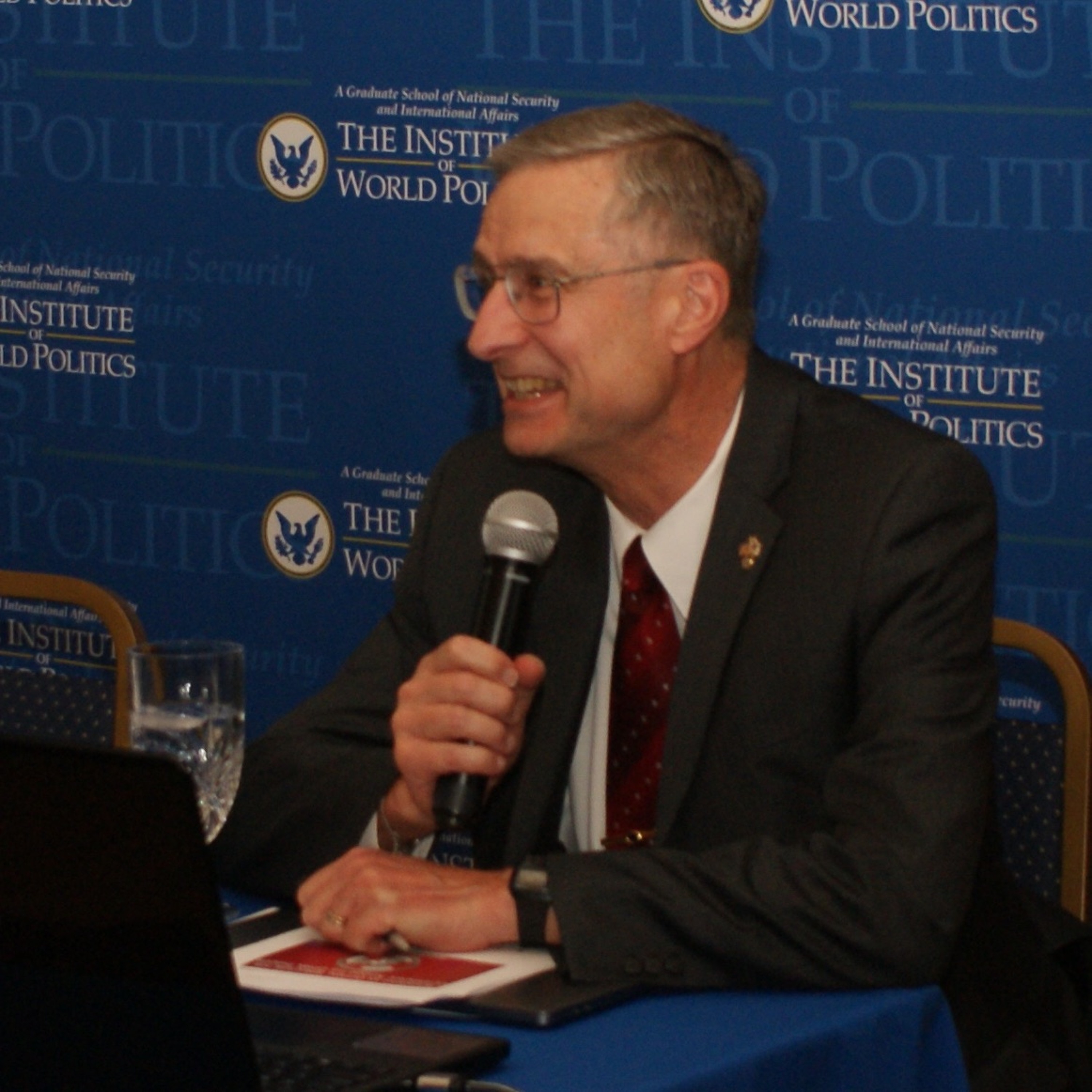
Panel 3: Deterring and Defending against the North Korean Threat
The Institute of World Politics hosted the COKUSS/CUSKOS 33rd International Security Conference beginning June 28 through June 29, 2018. This event was co-sponsored by the Council on Korea-U.S. Security Studies, the Korean Defense Veterans Association, and The Institute of World Politics. The first panel focused on deterring and defending against the North Korean threat and was moderated by Gen. (Ret.) Kim Jae Chang. Taewoo Kim discussed his paper "Toward New Alliance Strategies: Preparing against Threat from DPRK and China" and Bruce Bennett discussed his paper "Optimal structure for deterrence against the DPRK threat". The panel also heard from three discussants: William Newcomb, Jaekap Ryoo, and Nam-Sung Huh.
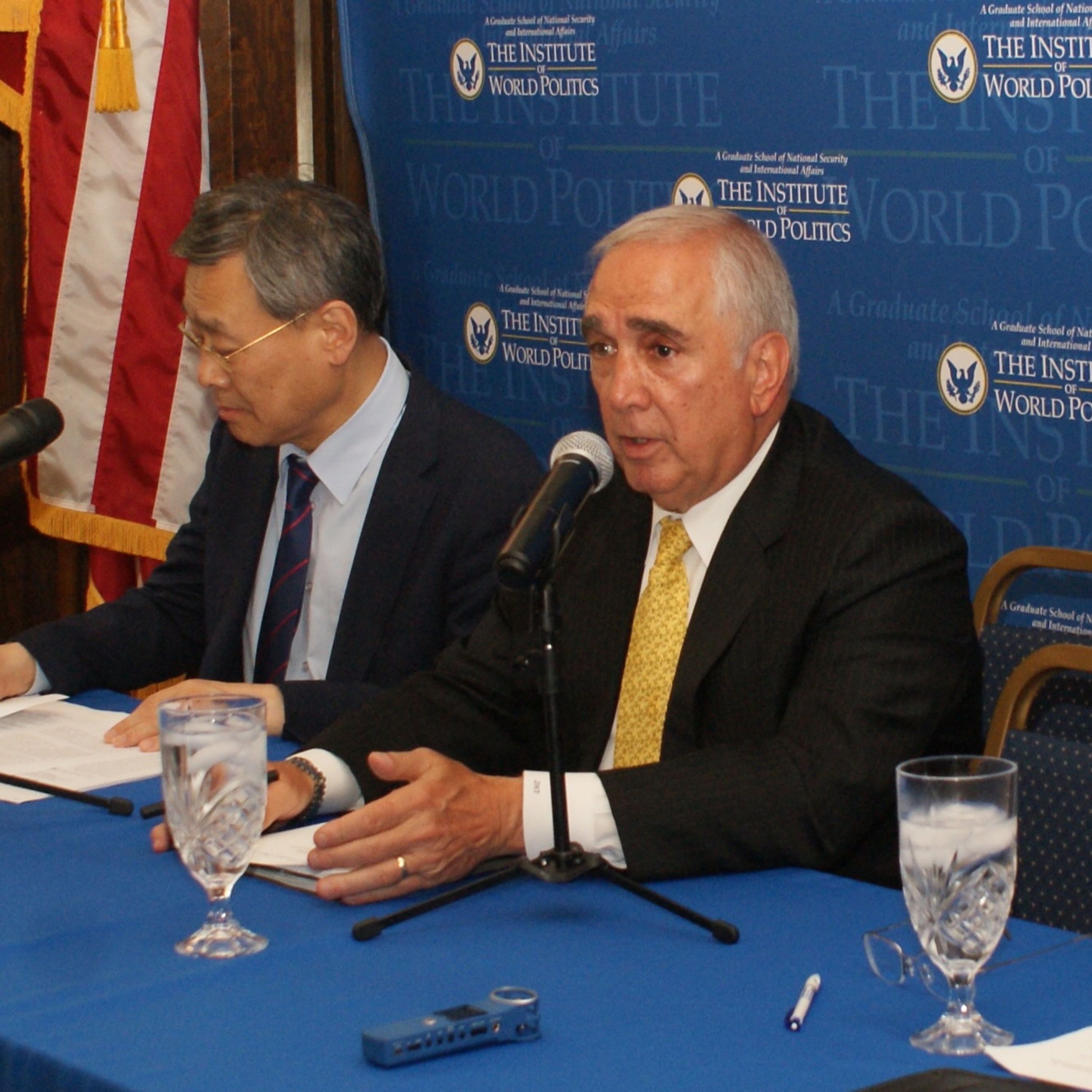
Panel 2: ROK-US Alliance Issues under Moon & Trump
The Institute of World Politics hosted the COKUSS/CUSKOS 33rd International Security Conference beginning June 28 through June 29, 2018. This event was co-sponsored by the Council on Korea-U.S. Security Studies, the Korean Defense Veterans Association, and The Institute of World Politics. The second panel focused on ROK-US alliance issues under presidents Moon & Trump and was moderated by Gen. (Ret.) John Tilelli. Bruce Bechtol discussed his paper "North Korea's military developments and actions since Moon/Trump elections" and Changsoo Kim discussed his paper "Denuclearization, Peace Regime, and ROK-US Alliance Issues Post-Summit Talks". The panel also heard from three discussants: David Maxwell, Vice Admiral (Ret.) Tae-Ho Won, and MG (Ret.) Seo Young Lee.
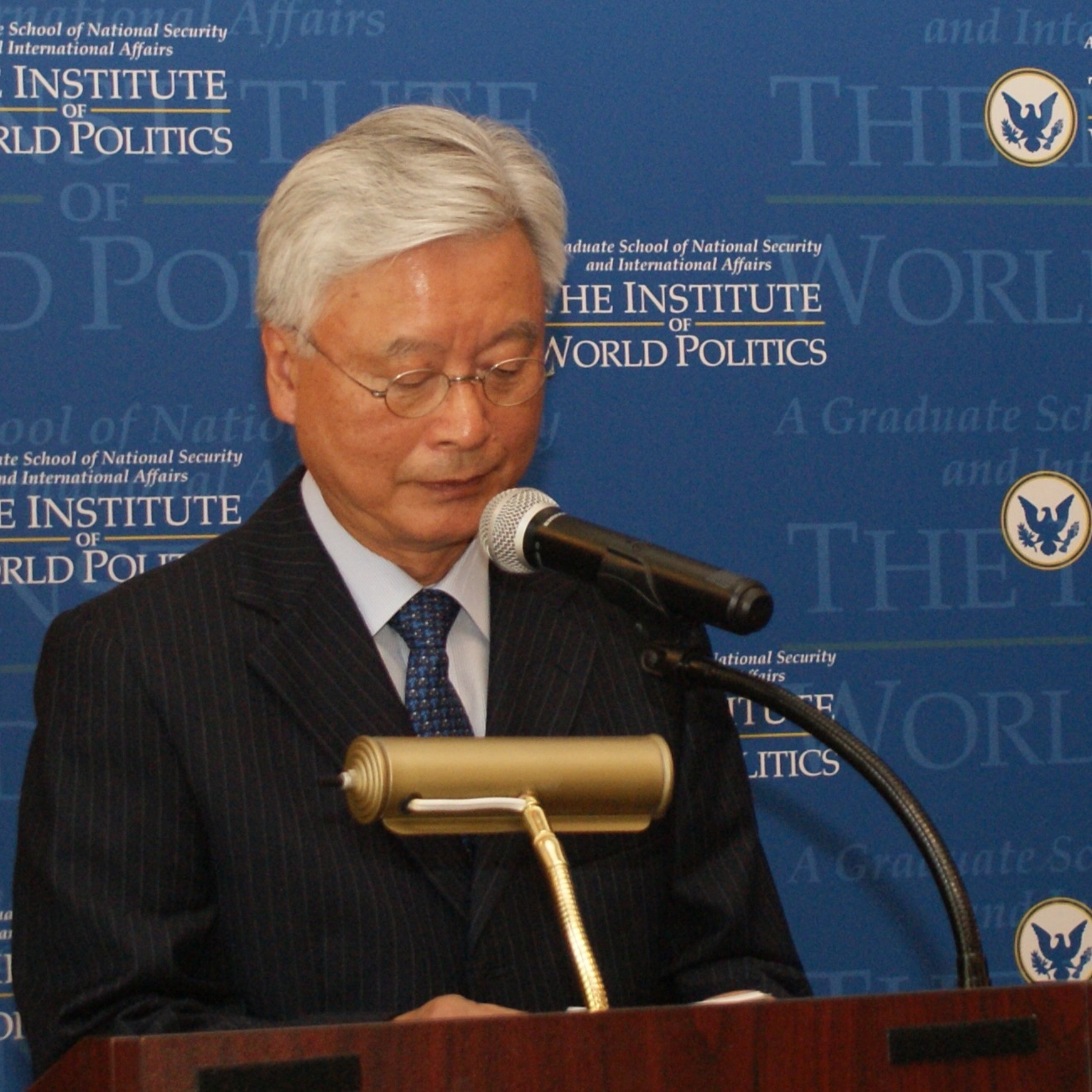
Luncheon Speech with ROK Ambassador to USA
The Institute of World Politics hosted the COKUSS/CUSKOS 33rd International Security Conference beginning June 28 through June 29, 2018. This event was co-sponsored by the Council on Korea-U.S. Security Studies, the Korean Defense Veterans Association, and The Institute of World Politics. The ROK ambassador to the United States, Cho Yoon-je, gave luncheon speech on the first day of the conference.
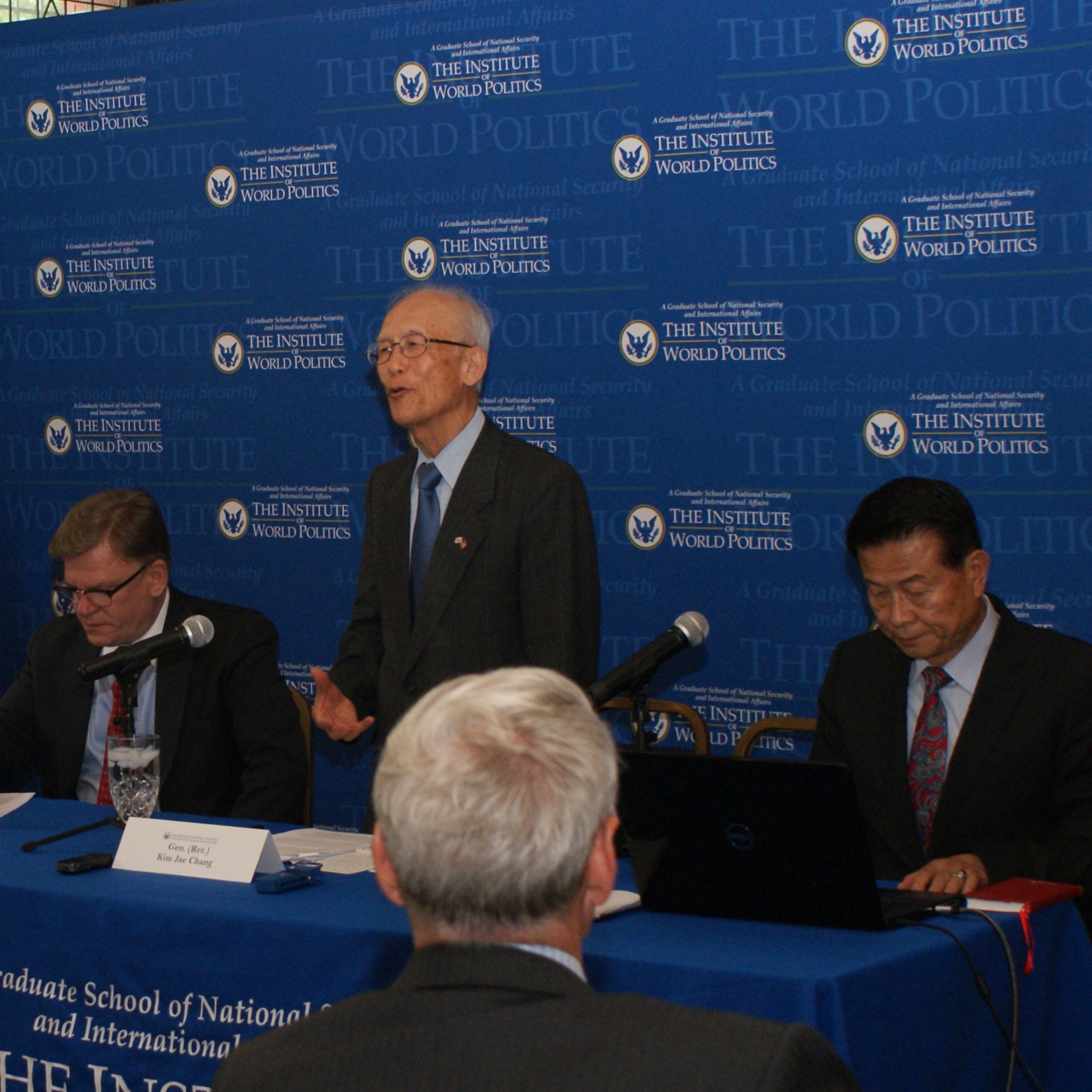
Panel 1: Denuclearization of the Korean Peninsula
The Institute of World Politics hosted the COKUSS/CUSKOS 33rd International Security Conference beginning June 28 through June 29, 2018. This event was co-sponsored by the Council on Korea-U.S. Security Studies, the Korean Defense Veterans Association, and The Institute of World Politics. The first panel focused on denuclearization of the Korean Peninsula and was moderated by Gen. (Ret.) Kim Jae Chang. Dae-Sung Song discussed his paper "The role of the ROK-US alliance for denuclearization of North Korea" and George Hutchinson discussed his paper "International collaboration efforts for denuclearization of the Korean Peninsula". The panel also heard from two discussants: Andrew Scobell and Dong Sun Lee.
COKUSS/CUSKOS 33rd International Security Conference: Opening Ceremony and Remarks
The Institute of World Politics hosted the COKUSS/CUSKOS 33rd International Security Conference beginning June 28 through June 29, 2018. This event was co-sponsored by the Council on Korea-U.S. Security Studies, the Korean Defense Veterans Association, and The Institute of World Politics. The conference began with remarks by Dr. John Lenczowski, IWP's founder and president, and chairmen Gen. (Ret.) John Tilelli and Gen. (Ret.) Byungkwan Kim.
OCEANS VENTURED: Winning The Cold War at Sea
Author John Lehman talked about his book "OCEANS VENTURED: Winning The Cold War at Sea" during a lecture on June 25, 2018, at The Institute of World Politics. About the Book: A thrilling story of the Cold War, told by a former navy secretary on the basis of recently declassified documents. When Ronald Reagan took office in January 1981, the United States and NATO were losing the Cold War. The USSR had superiority in conventional weapons and manpower in Europe, and had embarked on a construction program to gain naval preeminence. But Reagan already had a plan. Reagan pushed Congress to build the navy back to its 1945 strength of 600 major ships. He gathered a circle of experienced naval planners, including the author, to devise an aggressive strategy that would move our fleets within spitting distance of Soviet waters. New radars, sensors, and emissions technology would make ghosts of our submarines and surface fleets. We would operate aircraft carriers in Arctic waters, which no navy had attempted. The Soviets, surrounded by our forward naval strategy, bankrupted their economy trying to keep pace. It wasn’t long before the Berlin Wall fell and the USSR was disbanded. About the Author: John Lehman, a former U.S. Navy pilot, served as United States Secretary of the Navy from 1981 to 1987. From 2003 to 2004 he was a member of the 9/11 Commission. He lives in New York.
E Pluribus Unum in Ukraine? Reconciling Conflicting National Identity in the Borderland
James A. Rice presented his paper "E Pluribus Unum in Ukraine? Reconciling Conflicting National Identity in the Borderland" during a lecture on June 22, 2018, at The Institute of World Politics. **The views in this lecture do not necessarily reflect the views of the Office of Senator Chuck Grassley or The Institute of World Politics.**
How to do Global Privatizations from Margaret Thatcher's Investment Banker
Robert J. Barrett III, the Honorary Chairman of Cross Keys Capital Investment Bank, gave a lecture on "How to do Global Privatizations from Margaret Thatcher's Investment Banker" at The Institute of World Politics on June 21, 2018.
Russian Strategy and Cyber Influence Operations Against the United States
Rebekah Koffler, a threat intelligence expert on Russian Doctrine/Strategy, the founder of Doctrine & Strategy Consulting, and an IWP alumna, gave a lecture on "Russian Strategy and Cyber Influence Operations Against the United States" on June 14, 2018 at The Institute of World Politics.
Who's Afraid of China's Belt and Road Initiative?
On June 5, 2018, Dr. Christopher D. Yung explores China's Belt and Road Initiative (BRI), China’s version of the Marshall Plan, during a lecture "Who's Afraid of China's Belt and Road Initiative? Getting to the Heart of China's Controversial Marshall Plan" at The Institute of World Politics.
Corruption inside the UN: the Strategic Implications
Peter Gallo presented a lecture on corruption in the United Nations on May 23, 2018 at The Institute of World Politics. His talk included insight from his experiences as a former investigator in the UN's Office of Internal Oversight Services, Investigations Division in New York; the office that is supposed to investigate corruption, fraud and other criminality in the Organization.
Commencement Address by Vice Chairman John Lovewell
The Institute of World Politics Vice Chairman John Lovewell gave this address at Commencement on May 19, 2018 at the Fairmont Hotel.
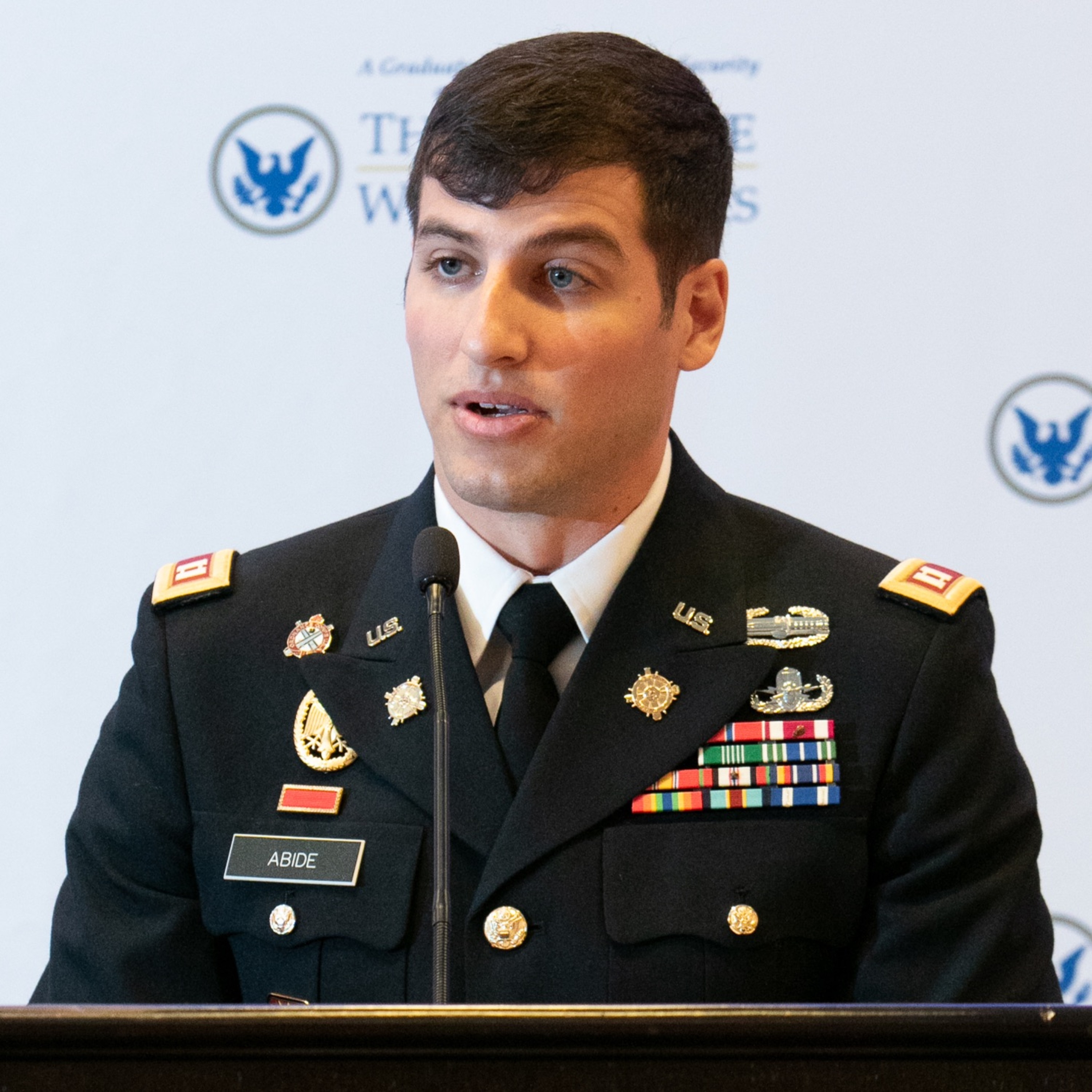
Valedictory Remarks by CPT (P) Gregory Abide
CPT (P) Gregory Abide was Valedictorian of The Institute of World Politics Class of 2018. His Valedictory remarks were given at Commencement on May 19 at the Fairmont Hotel.
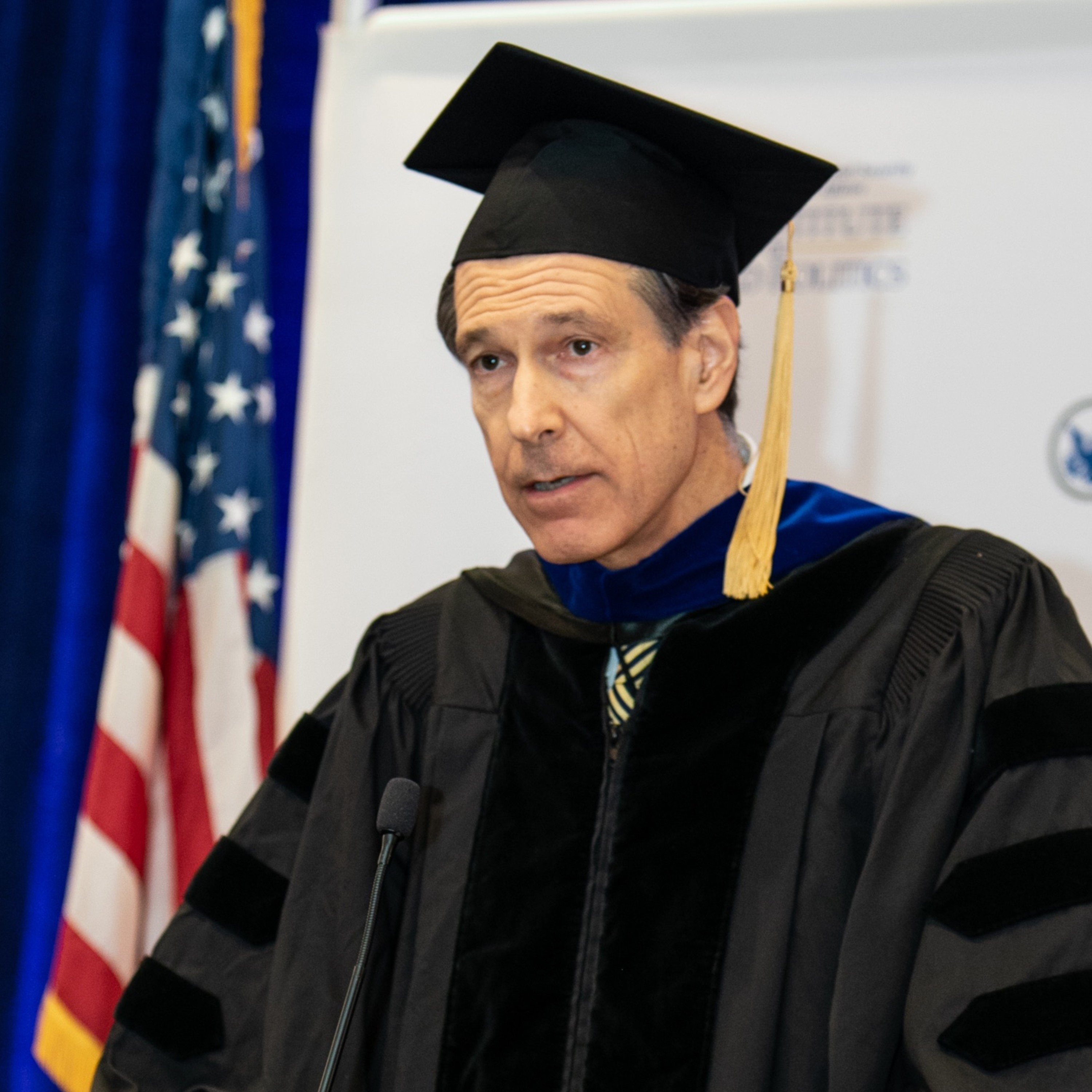
Commencement Address by Dr. John Lenczowski
The Institute of World Politics Founder and President John Lenczowski gave this address at Commencement on May 19, 2018 at the Fairmont Hotel.
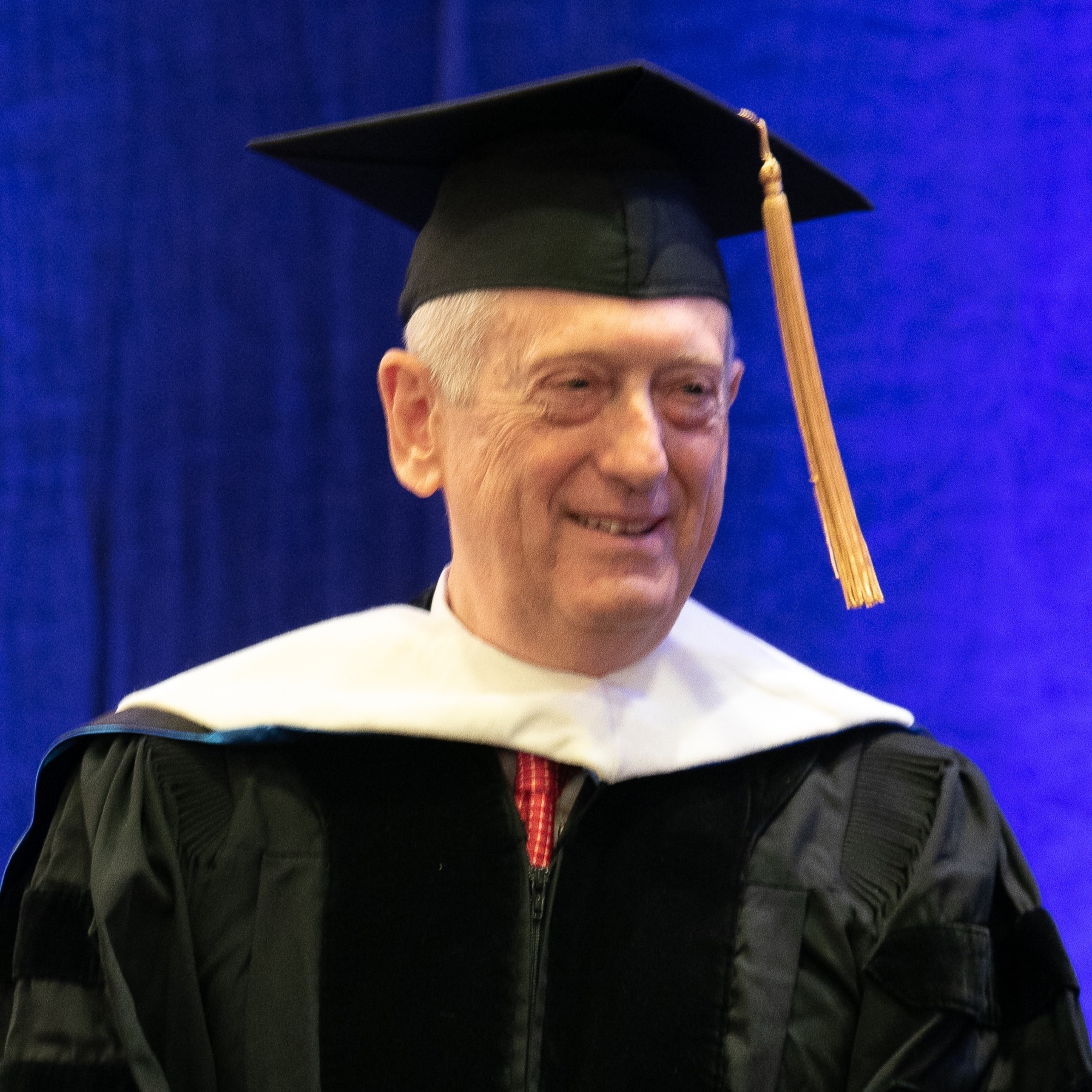
Address by Secretary of Defense James Mattis at IWP Commencement
U.S. Secretary of Defense James N. Mattis addressed the Class of 2018 at The Institute of World Politics Commencement Ceremony at the Fairmont Hotel on Saturday, May 19.
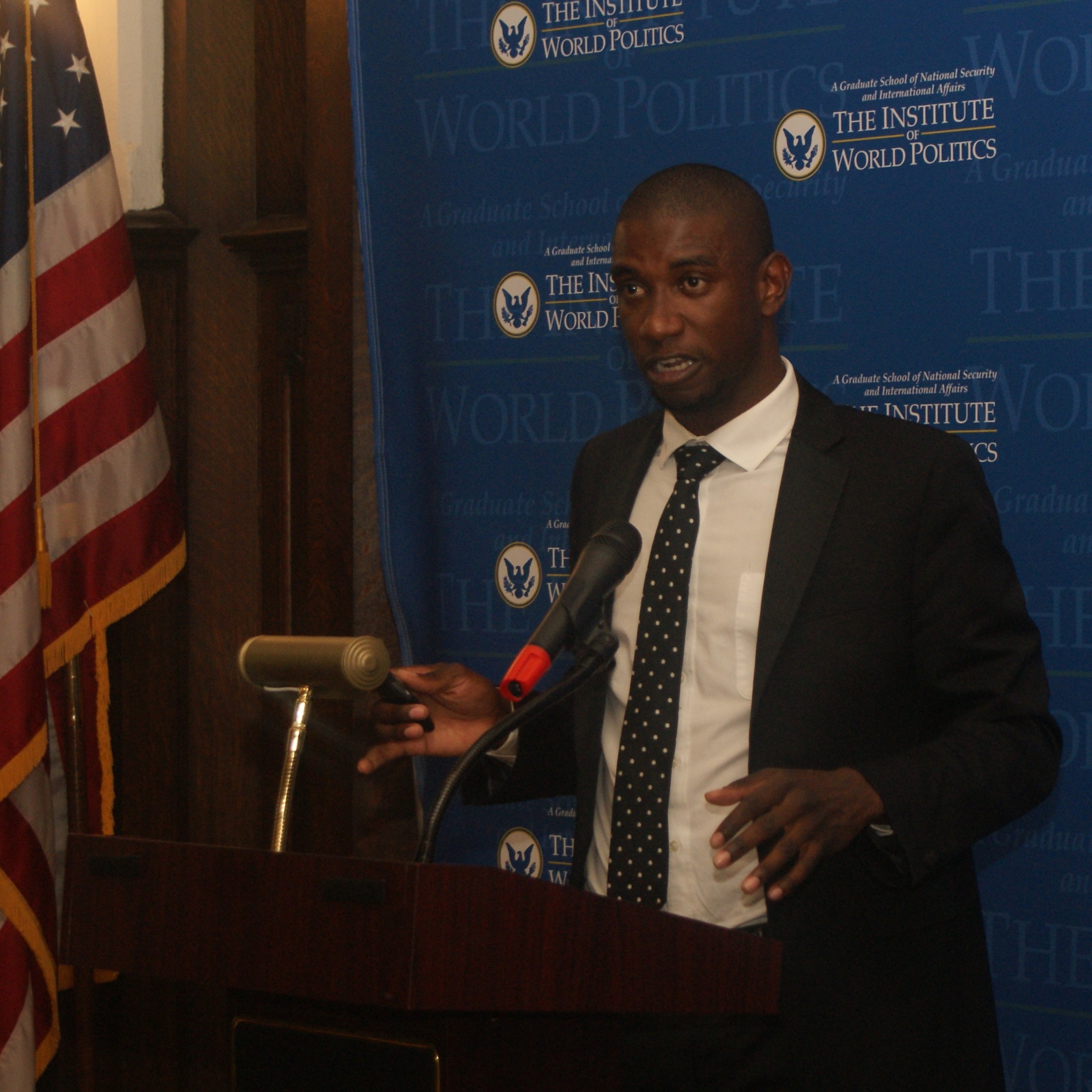
Student Symposium: Terrorist Threat in the Mali and Sahel Region
Mamadou Niang presented a lecture on "Terrorist Threat in the Mali and Sahel Region" during the student symposium at The Institute of World Politics on May 17, 2018.
Student Symposium: Chinese Economic and Security Statecraft in Central Asia
David Stoffey presented his paper "Chinese Economic and Security Statecraft in Central Asia" during the student symposium at The Institute of World Politics on May 17, 2018.
Student Symposium: Russia's Pacific Fleet: History, Strategy, and Attempts for Revival
Erik Khzmalyan presented a lecture on "Russia's Pacific Fleet: History, Strategy, and Attempts for Revival" during the student symposium May 17, 2018 at the Institute of World Politics.
Persistent Challenges in South Asia
About the Panel: In August 2017, the White House unveiled a new South Asia Strategy presenting a narrow definition of victory through increased military firepower against ISIS, al-Qaida, and Taliban. While the President called for an expansion of rules of engagement for US military in Afghanistan, he also promised a harsher stance on Pakistan and a closer reliance on India in Afghanistan’s future. Nine months later, how much closer is the US and its allies towards stabilizing the complex security environment in Afghanistan? Our panelists will cover persistent challenges facing the country and its neighbors as the US endeavors upon a broader South Asia Strategy.
The Lost Kingdom: Memoir of an Afghan Prince - His Royal Highness Prince Ali Seraj
The Lost Kingdom: Memoir of an Afghan Prince A lecture at The Institute of World Politics, May 8, 2018. About the Book: His Royal Highness Prince Ali Seraj, a member of the royal family of Afghanistan, brings four decades of history to life—from the Cold War era when his famed nightclub in Kabul was a hotspot for global celebrities, jetsetters, and spies, to the communist Soviet takeover that killed members of his family, put a price on Prince Ali’s head, and forced him to make a harrowing escape from his homeland in disguise with his American wife and family. Prince Seraj’s intimate and historic portrait of modern Afghanistan tells the inside story of a proud, ancient culture grappling with a turbulent history of invasion and transformation. His passionate and adventure-filled story opens a new door to understand a nation irrevocably linked to the stability and prosperity of Southeast Asia, the Middle East, and to the United States. About the Author: Prince Ali Seraj is a direct descendant of nine generations of Kings of Afghanistan. He is the nephew of His Majesty King Amanullah (1919-1929), known as the Victor of Afghanistan, the grandson of His Majesty Amir Habibullah (1901-1919), the great-grandson of His Majesty Amir Abdurrahman (1880-1901), known as the Iron King. His ancestry continues on to His Majesty Amir Dost Mohammad who assumed the throne in 1827. After the communist coup d'états in 1978, Prince Ali escaped to the United States and made a successful career in business development, sales, and marketing. He also helped establish several multi-million dollar businesses in Brazil, Saudi Arabia, and Germany. Prince Ali worked very closely with the Reagan and Bush administrations during the Soviet invasion of Afghanistan and the U.S. attack on the Taliban/Al Qaeda, respectively. He returned to Afghanistan after decades of exile to continue his charitable work. Since then, Prince Ali has developed a very important relationship with all the different tribes in Afghanistan as a result of his involvement with his country's people. Due to this relationship, Prince Ali has embarked on a mission to unite the Tribes as one, and established a movement under the name, "National Coalition for Dialogue with Tribes of Afghanistan." Today, Prince Ali assists NATO commanders with setting up meetings among tribal and religious elders to establish a dialogue of common understanding between Coalition Forces and locals. He is also assisting ISAF commanders in establishing a security network in the district of Kabul through his contacts with different tribal elders. Prince Ali will discuss his recently released memoir, The Lost Kingdom: Memoir of an Afghan Prince.
Russian Lobby in Belarus: Could Belarus be the Next after Ukraine?
Russian Lobby in Belarus: Could Belarus be the Next after Ukraine? A lecture at The Institute of World Politics, May 8, 2018 About the lecture: After the occupation of Crimea, Russia began to expand its presence in Belarus. Hundreds of Russia-backed initiatives, formally cultural, media, or educational, emerged. Besides that, Sputnik opened its office in Minsk and had almost 1400% audience growth during two years. We observe increasing polarization between pro-Western and pro-Russian Belarusians, which apparently could lead to open conflict. About the speaker: Franak Viačorka is an M.A. candidate at American University in New Media, Democracy, and International Affairs. Previously, he studied at the College of Europe (2017), Warsaw University (2010-2014), and Belarus State University (2005-2008). Currently, he works for the Broadcasting Board of Governors and the Radio Free Europe / Radio Liberty Belarus service. Franak is a Vaclav Havel Fellow, nominated by Vaclav Havel himself, and also the laureate of the Civil Society Leadership Award. Franak is the founder and vice president of Belarusian cultural initiative Art Siadziba. In 2014, after the Ukrainian Revolution of Dignity, he launched a nation-wide campaign promoting the national identity of Belarus, which followed up in so-called "soft Belarussization." Before that, Viacorka served as a leader of the youth wing of the Belarusian Popular Front (BNF). He has been arrested four times and was tortured while serving under forced conscription in the Belarusian army. In Belarusian army, he was fighting for the right to speak Belarusian. His personal story became the plot for the award-winning Polish-French movie Viva Belarus.
Edward Snowden: The Man Who Conned the World
About the Lecture: Edward Snowden is a polarizing figure in the world today, known by millions and the press as a champion of freedom and a whistle blower exposing extensive activities on the part of the US intelligence community to violate the civil rights of millions of Americans. This one of the many myths that surround this case. In fact, almost all the information in the public domain about Snowden is false. The vast majority of the "Snowden narrative" has been provided by Snowden himself and never verified by the media. Snowden has repeatedly lied about himself, his expertise, the NSA, and his motivations. This discussion exposes truth about the man, his background, and the duplicity of his claims. It is essential for professionals to know the truth to counter the false claims made by Snowden and his supporters and to set the record straight. About the Speaker: David Major is a retired FBI Supervisory Special Agent and President of the Center of Counterintelligence and Security Studies.
Perspectives on Character Assassination
About the Panel: The 2016 U.S. presidential election provides an extensive database for scholars. Not only was the election characterized by a dramatic increase in “nasty politics,” but also by the rise of populism and political showmanship that strategically employed character attacks to shock the audience. Other ongoing political developments urge researchers to address many questions. Among them are: Does character assassination work? What are the underlying psychological and rhetorical bases of character assassination? How does the media contribute to the viral effect of smear campaigns? How can one prevent and defend against character assassination? This panel will address these and many other questions related to the nature of character attacks and reputation management.
Finland: The Most Capable Defence Force in Northern Europe - Brigadier General Pekka Toveri
About the Lecture: Brigadier General Pekka Toveri discussed Finland's history and concentrated on the current structure, tasks, and development programs.
Spy Schools: How Foreign Intelligence Secretly Exploit U.S. Universities - Daniel Golden
About the Lecture: Pulitzer Prize-winning journalist Daniel Golden will expose how academia has become the center of foreign and domestic espionage—and why that is troubling news for our nation's security through his book Spy Schools: How The CIA, FBI, and Foreign Intelligence Secretly Exploit America's Universities. Grounded in extensive research and reporting, Spy Schools reveals how academia has emerged as a frontline in the global spy game. In a knowledge-based economy, universities are repositories of valuable information and research, where brilliant minds of all nationalities mingle freely with few questions asked. Intelligence agencies have always recruited bright undergraduates, but now, in an era when espionage increasingly requires specialized scientific or technological expertise, they’re wooing higher-level academics—not just as analysts, but also for clandestine operations. Golden uncovers unbelievable campus activity such as a Chinese graduate student at Duke University stealing research for an invisibility cloak, and a tiny liberal arts college in Marietta, Ohio, exchanging faculty with China’s most notorious spy school. He shows how relentlessly and ruthlessly this practice has permeated our culture, not just inside the US, but internationally as well. Golden, acclaimed author of The Price of Admission, blows the lid off this secret culture of espionage and its consequences at home and abroad.
Trump and Cyber Conflict: An Evidence-Based Discussion
This event was sponsored by Walter Thinfen, President and CEO at Visioneer Inc. About the Lecture: The purpose of this discussion is to better understand the perspective of the President of the United States regarding cyber conflict. Primary sources will be reviewed including speeches, tweets, and actions. About the Speaker: Joe Billingsley is the founder of the Military Cyber Professionals Association, Adjunct Faculty at the George Washington University, Advisor of the Cyber Security Forum Initiative, Fellow at the Center for Network Innovation and Experimentation, Special Advisor of the peer-reviewed journal "Military Cyber Affairs," and collaborates with organizations including the Atlantic Council and Smithsonian Institution. He is an instructor for The Cyber Intelligence Initiative (Ci2) at the Institute of World Politics. This May he will be teaching a course on Cyber Strategy Development. He is an Iraq War veteran and former US Army Strategist and Cyber Operations Officer, having graduated programs at the Army War College, Naval War College, Military Intelligence School, and Army School of Information Technology. He hold a BA in History from the University of Connecticut, a MS in Cyber Systems and Operations from the Naval Postgraduate School, and is pursuing a PhD in Information Sciences.
Improving Energy Security - Dr. Anna Ebers Broughel
About the lecture: Based on a large-scale survey and a choice experiment, this presentation will discuss energy-related preferences and climate change beliefs in Western Estonia and Southern Ukraine. Special attention will be given to the issues of social acceptance of large wind energy projects, since the surveyed regions have a high potential for wind power development. About the speaker: Dr. Anna Ebers Broughel is a visiting research fellow at the School of Public Policy at the University of Maryland, College Park, where she works at the Center for Global Sustainability. She has been a postdoctoral fellow at the Chair for Management of Renewable Energies at the University of St. Gallen, Switzerland since 2014. At the University of St. Gallen, she was responsible for the Consumer Barometer of Renewable Energy, one of the largest annual surveys of Swiss energy consumers. Her other engagements included an international cooperation project with the universities from Switzerland, Estonia and Ukraine to improve energy security in Eastern Europe. Previously, she worked at a large commercial bank in Estonia, a solar research institute in Germany, and at SUNY-ESF and Syracuse University, where she defended her PhD in economics as a Fulbright Fellow.
Reagan’s 1968 Dress Rehearsal: Ike, RFK, and Reagan’s Emergence as a World Statesman - Gene Kopelson
About the Book: Reagan’s 1968 Dress Rehearsal: Ike, RFK, and Reagan’s Emergence as a World Statesman is an inspiring never-before-told history of how Ronald Reagan first began to restore pride in America when he first ran for president in the late 1960s. Against the back-drop history of Reagan’s first campaign for the presidency, it can now be revealed that behind the scenes, none other than former President Dwight Eisenhower was Ronald Reagan’s hidden political mentor. In fact throughout the 1960s, Ronald Reagan was tutored by former President Dwight D. Eisenhower: how to enter politics, and then how to run his 1966 gubernatorial primary, and then general election campaigns. Eisenhower even counseled Reagan on how to fight charges of antiSemitism and critiqued Reagan’s speaking style. Reagan followed Eisenhower’s political advice virtually to the letter, and indeed Reagan based his 1966 campaign theme (common sense) and campaign persona (the citizen politician) on Ike. Ike certified him as presidential timbre, said he would endorse Reagan for president if he were the 1968 nominee, urged him to run for president as California’s favorite son, and may actually have favored political winner Reagan over loser Nixon as the 1968 Republican nominee. Ronald Reagan’s 1968 campaign was a crucial dress rehearsal for his ultimate triumph in 1980. During 1968, Reagan became a world statesman and shaped his crusade to restore pride in America. For Reagan, Ike’s tutelage was critical. Indeed Ronald Reagan now may be seen as one of Dwight Eisenhower’s proteges and his major political heir. This political mentorship changed America’s national priorities through the end of Reagan’s presidency, whose effects still are very much with us today. About the Speaker: Gene Kopelson is president of the New England chapter, on the Board of Trustees and Book Prize committee, of the Theodore Roosevelt Association, an active Churchillian, and a holocaust educator. As a historian, he has published works on Theodore Roosevelt’s Great White Fleet, Ronald Reagan’s 1966 campaign and Mexican American voters, the 1968 Nebraska and Oregon Republican primaries, and Washington State Republican politics in the 1960s. The Robert F. Kennedy Memorial featured his research on Robert F. Kennedy as an inspiration to Nazi hunter Simon Wiesenthal. His research on Reagan and Eisenhower was featured in 2015 at the 125thCommemoration of the Birth of Dwight Eisenhower at the Dwight D. Eisenhower Presidential Library. When not researching and writing history, Dr. Gene Kopelson is a cancer physician. He has published over forty medical articles, contributed chapters in medical textbooks, and lectured in the U.S. and abroad on radiation oncology.
Dr. Russell Kirk Commemoration Panel
About Dr. Russell Kirk: For more than forty years, Russell Kirk was in the thick of the intellectual controversies of his time. He is the author of some thirty-two books, hundreds of periodical essays, and many short stories. Both Time and Newsweek have described him as one of America’s leading thinkers, and The New York Times acknowledged the scale of his influence when in 1998 it wrote that Kirk’s 1953 book The Conservative Mind “gave American conservatives an identity and a genealogy and catalyzed the postwar movement.” Dr. Kirk wrote and spoke on modern culture, political thought and practice, educational theory, literary criticism, ethical questions, and social themes. He addressed audiences on hundreds of American campuses and appeared often on television and radio.
Putinomics: Power and Money in Resurgent Russia - Chris Miller
About the Book: "Putin Watches Russian Economy Collapse along with His Economic Stature,” blared a headline in Time in late 2014. Yet three years have passed since the price of oil crashed in 2014, halving earnings on the product which once funded half of Russia’s government budget. That same year, the West imposed harsh economic sanctions on Russia’s banks, energy firms, and defense sector, cutting off many of Russia’s largest firms from international capital markets and high-tech oil drilling gear. Many analysts—in Russia as well as abroad—thought that economic crisis might threaten Vladimir Putin’s hold on power. It doesn’t look that way now. Today, Russia’s economy has stabilized, inflation is at historic lows, the budget is nearly balanced, and Putin is coasting toward reelection on March 18, giving him a fourth term as president. Putin has recently overtaken Soviet leader Leonid Brezhnev as the longest-serving Russian leader since Stalin. How did he do it? This talk will examine Putin's economic policies and how they have supported his domestic and foreign policies. About the Author: Chris Miller is Assistant Professor of International History at the Fletcher School of Law and Diplomacy. He is also Eurasia Research Director at the Foreign Policy Research Institute. He is the author of Putinomics: Power and Money in Resurgent Russia (2018) and The Struggle to Save the Soviet Economy (2016). He received his PhD from Yale University and his AB from Harvard University.
The Many Myths of Marxism - Dr. Lee Edwards
About the Lecture: Rarely in history has a political movement and its leaders promised more and produced less than Communism and its dictators from Lenin, Stalin and Mao to Castro, Pol Pot and Kim Jong Un. As chairman of the Victims of Communism Memorial Foundation, Dr. Lee Edwards has long studied communism and is considered one of the nation’s leading authorities on the victims and crimes of communism, past and present. About the Speaker: Lee Edwards, distinguished fellow in conservative thought at The Heritage Foundation, is a leading historian of American conservatism and the author or editor of 25 books. Edwards also is adjunct professor of politics at the Catholic University of America and chairman of a foundation that dedicated the Victims of Communism Memorial in Washington, D.C., in 2007. His books include biographies of Ronald Reagan, Barry Goldwater, William F. Buckley, Jr. and Edwin Meese III as well as histories of The Heritage Foundation and the American conservative movement. His works have been translated into Chinese, Japanese, French, Hungarian and Swedish. Edwards’ next book, written with Elizabeth Edwards Spalding, is A Brief History of the Cold War, to be published by Regnery in the spring of 2016. Edwards was the founding director of the Institute of Political Journalism at Georgetown University and a fellow at the Institute of Politics at the John F. Kennedy School of Government at Harvard University. He is a past president of the Philadelphia Society and a media fellow at the Hoover Institution. He has appeared frequently on broadcast and cable outlets such as Fox News Channel, CNN, Bloomberg, NBC, PBS, C-SPAN and NPR. His work has been published in The Wall Street Journal, The Boston Globe, Los Angeles Times, National Review, Human Events, Claremont Review of Books and The American Spectator, among other places. His awards and honors include the Order of Merit of the Republic of Hungary, the Millennium Star of Lithuania, the Cross of Terra Mariana of Estonia, the Friendship Medal of Diplomacy from the Republic of China (Taiwan), the John Ashbrook Award, the Reed Irvine Media in Accuracy Award, Legend of YAF from Young America’s Foundation, and the Walter Judd Freedom Award. Edwards received a doctorate in world politics from Catholic University as well as a doctor of humane letters degree from Grove City College. He did graduate work at the Sorbonne in Paris. He also holds a bachelor of arts degree in English from Duke University.
Reaping the Rewards - Dr. Wayne E. Lee
About the Lecture: Francis Bacon once opined: "Augustus Caesar would say, that he wondered that Alexander feared he should want work, having no more worlds to conquer: as if it were not as hard a matter to keep as to conquer." Many societies have found that the process of converting military success into a consolidated conquest was harder than they expected. Oddly, historians have not spent that much time on the problem either, preferring to focus more on the battles than the ensuing garrisons. In this sweeping romp through world military history, strategy, and logistics, Dr. Lee explores the "four pillars" of conquest (the titular governor, priest, tax man and garrison) and he then compares how those same pillars worked in non-state societies on the Eurasian steppe and in the Native American woodlands. About the Speaker: Wayne E. Lee is the Dowd Distinguished Professor of History at the University of North Carolina, where he also chairs the Curriculum in Peace, War, and Defense. He is the author of Waging War: Conflict, Culture, and Innovation in World History (2016), Barbarians and Brothers: Anglo-American Warfare, 1500-1865 (2011), and Crowds and Soldiers in Revolutionary North Carolina (2001). He has two edited volumes on world military history (both 2011) and many articles and book chapters. He has an additional career as an archaeologist, having done field work in Greece, Albania, Hungary, Croatia, and Virginia, including co-directing two field projects. He was a principal author and a co-editor of Light and Shadow: Isolation and Interaction in the Shala Valley of Northern Albania, winner of the 2014 Society for American Archaeology's book award. In 2015/16 he was the Harold K. Johnson Visiting Professor of Military History at the U.S. Army War College.
Teamwork, Tone, Tenacity: Military Leadership Lessons That Work Anywhere - Paul Becker
About the Lecture: Whether in the military, government or private sector we all admire great leaders and leadership. But what’s the difference between good and great leadership? Based on observation of some of the greatest military leaders of our generation, it's “Teamwork, Tone, Tenacity,” a simple, memorable, actionable framework that can be applied anywhere to improve individual performance and organizational productivity. About the Speaker: RADM Paul Becker, USN (Ret) is known for success leading large, diverse, high-performing organizations in peace, crisis and combat. He is a dynamic public speaker an author who’s articles and interviews have been widely published. Upon his retirement in 2016 the Naval Intelligence Community established the “RADM Paul Becker ‘Teamwork, Tone, Tenacity’ Leadership Award” in his honor.
Current Affairs and Security Issues in Southeastern Europe - Predrag Boškovic, MSc
About the Speaker: Predrag Bošković, MSc, Minister of Defence of Montenegro was born in Pljevlja (Montenegro) on March 12, 1972. He finished primary and secondary school in Podgorica. He graduated from the Faculty of Economics, the University of Montenegro, in 1996. He received his MA in Econometrics and Politics from the Faculty of Economics in Belgrade in 1999. He published numerous research papers and publications and participated in the implementation of major development projects in Montenegro. Boskvic He started his professional career as a Teaching Assistant at the Faculty of Economics in 1996. Throughout his career, he held senior positions, including being a member of the Parliament of Montenegro and serving as the Deputy Minister of Foreign Affairs of Serbia and Montenegro, Minister of Economy, Minister of Labour and Social Welfare, Minister of Education in the Government of Montenegro and the President of the Board of Directors of the Coal Mine in Pljevlja. He was part of IVP (international visitor program) in USA in 2003. He has been leading the Women’s Handball Club since 2006. From 2011 to 2016, he was the President of the Board of the Montenegrin Handball Association. During this period, the club and national team he led achieved the best results in the history of Montenegrin handball, including the Olympic silver medal. His commitment and success in this sport have been recognized internationally. He became the Vice President of the European Handball Federation in November 2016.
The Statesmanship of Abraham Lincoln - Dr. Allen C. Guelzo
About the Lecture: In a modern democracy, state and society occupy separate spheres, so that neither the state oppresses society, nor society dispenses with the state and descends into anarchy. The boundary zone between the two is provided by the rule of law. Among the many attributes of Abraham Lincoln as a democratic leader, his respect for the rule of law is the paramount characteristic of his statesmanship. It was a respect which has been seriously questioned, and it was a respect which the pressure of our Civil War’s circumstances gravely challenged. But viewed in proper perspective, no aspect of the Civil war era, or Lincoln’s statecraft, is more remarkable than his maintenance of the rule of law in what would otherwise have been a situation fatal to the American democracy. About the Speaker: Dr. Allen C. Guelzo is the Henry R. Luce Professor of the Civil War Era, and Director of Civil War Era Studies at Gettysburg College. He is the author of Abraham Lincoln: Redeemer President (1999), Lincoln’s Emancipation Proclamation: The End of Slavery in America (2004) and Lincoln and Douglas: The Debates That Defined America (2008). His book on the battle of Gettysburg, Gettysburg: The Last Invasionwas a New York Times best seller in 2013. He is currently serving as the William L. Garwood Visiting Professor in the James Madison Program in American Ideals and Institutions at Princeton University. His website is www.allenguelzo.com.
The Reporter Who Spilled the Secret behind the U.S. Navy's Victory at Midway
The Reporter Who Spilled the Secret behind the U.S. Navy's Victory at Midway by The Institute of World Politics
For Me, the Truth Is: What Relativism Is and Is Not - Joseph R. Wood
About the Lecture: This lecture will discuss what moral relativism is and is not, touch briefly on how it became so predominant in the West, and consider its effects. Is there a way out? About the Speaker: Joseph R. Wood is a retired Air Force colonel. He served in the White House as a senior appointee from 2005 until 2008 as Deputy National Security Advisor to Vice President Dick Cheney, with responsibility for all policy involving Europe, Eurasia, Africa, and defense issues. His military career included operational and command fighter assignments (A-10 and F-15E) in Asia and Europe; faculty duty in the Department of Political Science at the Air Force Academy where he taught U.S. foreign and defense policy; service at the Pentagon as speech writer for the Chief of Staff and Vice Chief of Staff of the Air Force; and temporary assignments in the Joint Staff, the U.S. Mission to the Conventional Forces in Europe Talks in Vienna, the Central Intelligence Agency, the Office of the Secretary of Defense, and NATO SHAPE Headquarters in Mons, Belgium. After retiring from the Air Force, he was appointed a member of the career Senior Executive Service at NASA Headquarters. He later worked in the RAND Corporation's Washington office. He was a Senior Fellow at the German Marshall Fund of the U.S. from 2008 until 2012 and worked at BAE Systems, Inc. from 2011 until 2012. He has taught in a variety of graduate seminars in Europe.
George Washington: The Indispensable President - Stephen F. Knott
About the Lecture: George Washington was inaugurated as the nation's first president on April 30, 1789, taking the helm of an executive branch with a mandate to execute, and more importantly, define, the nebulous powers of article two of the United States Constitution. What was true of the founding of America as a nation was especially true of the American presidency – George Washington was the “indispensable man.” Washington was the only national figure who was known to his fellow citizens and trusted by them to safely wield the powers the president was granted. Suffice it to say that these powers were unlikely to have been granted without the assumption by the delegates at the Constitutional Convention, and by those who attended the state ratifying conventions, that George Washington would be the first president. Washington understood that the precedents he set would shape the presidency and the nation for as long as the American experiment survived. About the Speaker: Stephen F. Knott is a Professor of National Security Affairs at the United States Naval War College. He served as co-chair of the University of Virginia's Presidential Oral History Program, directed the Ronald Reagan Oral History Project, and also served on the staff of the John F Kennedy Presidential Library. Professor Knott received his PhD in Political Science from Boston College, and has taught at the United States Air Force Academy and the University of Virginia. He is the author of numerous books including Rush to Judgment: George W. Bush, the War on Terror, and His Critics; Secret and Sanctioned: Covert Operations and the American Presidency, an examination of the use of covert operations by early American presidents; and Alexander Hamilton and the Persistence of Myth, a book on Alexander Hamilton's controversial image in the American mind. He is a co-author of The Reagan Years and At Reagan’s Side: Insiders’ Recollections from Sacramento to the White House. His most recent co-authored volume is Washington & Hamilton: The Alliance That Forged America.