
The Institute of World Politics
507 episodes — Page 4 of 11
Turkey’s President Erdogan’s Balancing Leading to the 2023 Elections
IWP professor Dr. Henry P. Williams discusses "Turkey’s President Erdogan’s Balancing Leading to the 2023 Elections." About the lecture Dr. Henry P. Williams will discuss how Turkey’s President Recep Tayyip Erdoğan is walking a tightrope leading up to the 2023 national elections, as well as the implications for the Western alliance and NATO. About the speaker Dr. Henry P. (Phil) Williams III is originally from Michigan. He received degrees and diplomas from Culver Military Academy, the University of Virginia, the University of Edinburgh, Scotland, the University of Florence, Italy, and two Masters and a Doctorate in International Law and Diplomacy from the Fletcher School of Law & Diplomacy, a joint Tufts and Harvard Program. He has lived in four foreign countries and has studied and worked professionally in four foreign languages: French, Greek, Italian, and Turkish. Formerly a Wall Street and International Investment Banker, he currently operates a small consulting business and lectures on a variety of topics, including American History, Turkey, and the Middle East. He has been featured on National Public Radio related to several of his interests, has written news commentary pieces on Turkey and the Middle East, and has published scholarly articles on Ottoman and Turkish Law. He has recently spent two semesters (2016-17) in Istanbul teaching a course at Koç University titled “Turkey and America, East and West – Where the Twain Meet.” Dr. Williams is a past National Board member of the English-Speaking Union, a Past Virginia State President of the Sons of the American Revolution, and has served on the board of the American Friends of Turkey for over twenty-three years. He is the author of Turkey and America: East & West – Where the Twain Meet. At IWP, Dr. Williams teaches The Turks: Relations with the MENA, Europe and America, Then and Now, which IWP plans to offer in summer 2022. IWP Admissions: https://www.iwp.edu/admissions/ Support IWP: https://interland3.donorperfect.net/weblink/WebLink.aspx?name=E231090&id=3
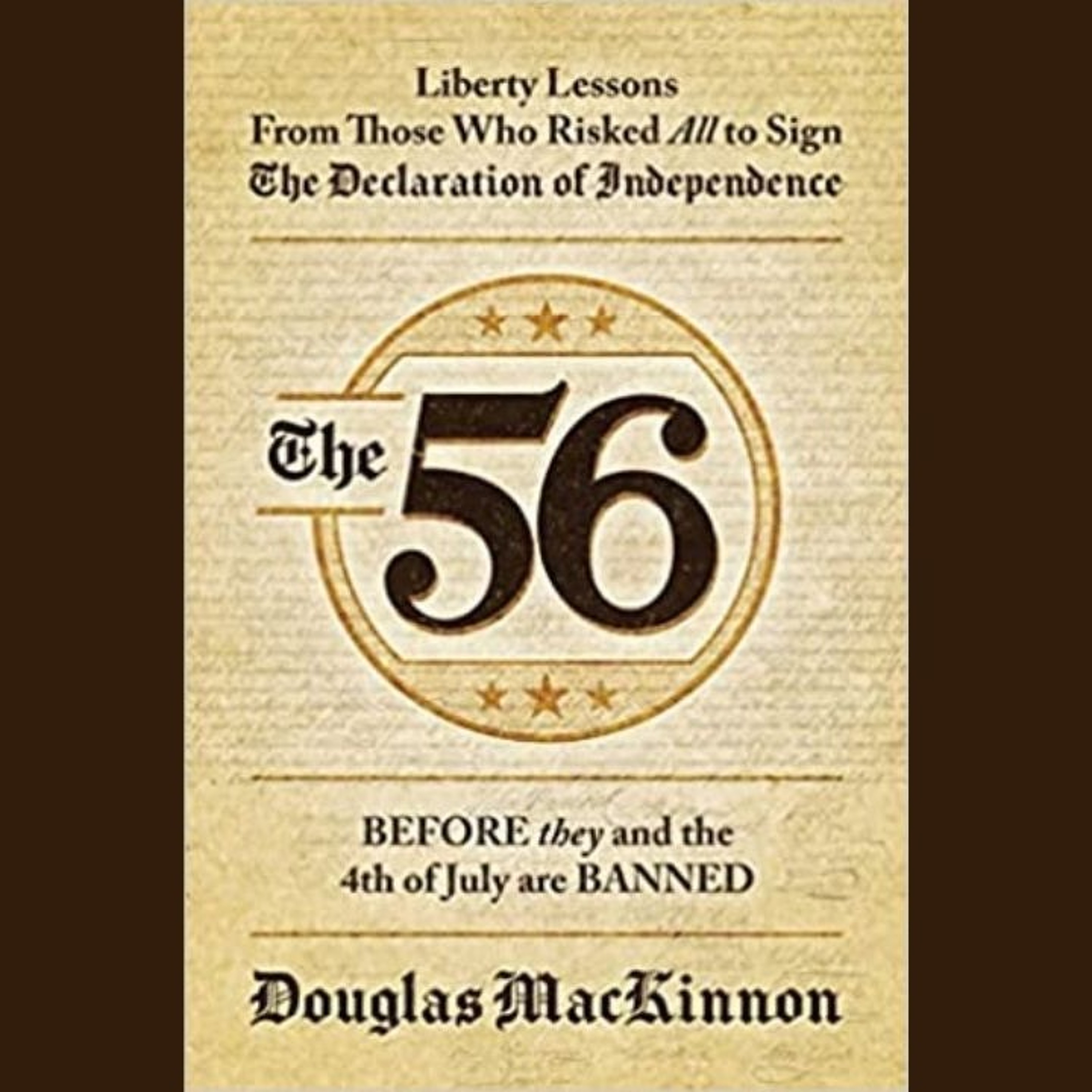
THE 56: Liberty Lessons From Those Who Risked All to Sign The Declaration of Independence
Author Douglas MacKinnon discusses his book "THE 56: Liberty Lessons From Those Who Risked All to Sign The Declaration of Independence." This event took place on May 23, 2022 at The Institute of World Politics. About the book: "THE 56: Liberty Lessons From Those Who Risked All to Sign The Declaration of Independence" by Douglas MacKinnon honors the 56 signers of The Declaration of Independence and details why the genius and vision of these admittedly imperfect men are just as relevant today. This is a book that also serves as a plea not to cancel our shared American history. As the author stresses: “If our history is bad, let us condemn it and learn from it. If it is good, let us praise it and build upon it. But let us never twist, censor, or cancel our shared American history.” Purchase the book here: https://www.amazon.com/56-Liberty-Lessons-Declaration-Independence/dp/1637584245 About the author: Douglas MacKinnon is a former White House and Pentagon official and bestselling author working with other former government officials to establish a Foundation to preserve the history and protect the reputations of our Founding Fathers. Make a gift to IWP: https://www.iwp.edu/donate/ IWP admissions: https://www.iwp.edu/admissions/

The MENA Region in May 2022: The Good, the Bad and the Ugly
Dr. Norman Bailey, IWP Adjunct Professor of Economics and National Security, discusses The MENA Region in May 2022: The Good, the Bad and the Ugly. About the Speaker: Dr. Norman Bailey is an Adjunct Professor of Economics and National Security at The Institute of World Politics and a Professor of Economic Statecraft at the Galilee International Management Institute. Dr. Bailey was a senior staff member of the National Security Council during the Reagan administration and of the Office of the Director of National Intelligence during the George W. Bush administration. Make a gift to IWP: https://www.iwp.edu/donate/ IWP admissions: https://www.iwp.edu/admissions/
Ukrainian National Identity and Russian Intelligence Failure
Ethan S. Burger, IWP Cyber Intelligence Instructor and International Attorney, discusses "Ukrainian National Identity and Russian Intelligence Failure." About the Lecture: Upon independence in 1991, Ukraine was divided by linguistic and geographic fault lines. This situation existed throughout Ukrainian society and presumably its institutions. Over the subsequent 30 years, the extent of social cohesion changed. The schools began to teach about Ukrainian history and emphasize the Ukrainian language and literature. Throughout Ukrainian society, a civic culture evolved where the concept of “citizenship” supplanted ethnic or linguistic identity in importance. Whereas Russian President Putin maintained his post-Soviet persona, a majority of Ukrainians were educated in an independent Ukraine that was more influenced by Western than Russian values. President Putin believed that his armed forces could exploit fault lines that remained in Ukraine to achieve a decisive military victory in a short amount of time and with light casualties. Most specialists believed that the Russians intended to decapitate the leadership of the Ukrainian government and put a “friendly” government into power. Both Russia and the NATO countries undervalued Ukraine’s social cohesion political culture and hence its willingness and ability to resist Russian aggression militarily. Clearly, Russia’s military setbacks can be attributed to intelligence failures when assessing Ukrainian societal unity. Similarly, the NATO countries might have been more forthcoming with military assistance to Ukraine if it had confidence that Ukraine, if properly armed, could resist Russian aggression. About the Speaker: Ethan S. Burger, Esq. is an Instructor and Advisory Board Member for IWP’s Cyber Intelligence Initiative. He is a Washington D.C.- based international attorney and educator with a background in cybersecurity, transnational financial crime, and Russian legal matters. He has been a full-time faculty member at the American University (School of International Service — Transnational Crime Prevention Center) and the University of Wollongong (Australia) (Faculty of Law — Centre for Transnational Crime Prevention), as well as an Adjunct Professor at the Georgetown University Law Center, Washington College of Law, and the University of Baltimore. He oversaw a program on transnational crime and corruption for US Department of Justice at Yaroslav Mudryi National Law University and gave lectures in Kyiv, Lviv, and Odessa. Mr. Burger earned his J.D. at the Georgetown University Law Center, A.B. from Harvard University, and obtained a Certificate in Cybersecurity Strategy from Georgetown University. Make a gift to IWP: https://www.iwp.edu/donate/ IWP admissions: https://www.iwp.edu/admissions/
War in Ukraine: Geopolitical Implications for Europe and the United States
Dr. Lucja Cannon discusses "War in Ukraine: Geopolitical Implications for Europe and the United States." This lecture is part of the 12th Annual Kościuszko Chair Spring Symposium in honor of Lady Blanka Rosenstiel sponsored by the Kościuszko Chair in Polish Studies and the Center for Intermarium studies. About the lecture: Analysis of far reaching effects that the war in Ukraine is having on foreign policies of Western Europe, mainly Germany, and Eastern Europe, mainly Poland, and the increasing distance between the two. Repercussions for European integration and the position of the United States are also explored. About the speaker: Dr. Lucja Swiatkowski Cannon is a strategist, expert and author on Eastern Europe, Russia and US-East European relations. She has a BA, M.Phil. and Ph.D. in international relations and Russian/East European studies from Columbia University. Make a gift to IWP: https://www.iwp.edu/donate/ IWP admissions: https://www.iwp.edu/admissions/
Hitler’s Eastern Dream: Its Origins and Consequences
This lecture event is part of the 12th Annual Kościuszko Chair Spring Symposium in honor of Lady Blanka Rosenstiel sponsored by the Kościuszko Chair in Polish Studies and the Center for Intermarium studies. About the lecture: This talk will provide a broad overview of Germanic expansion into Eastern Europe which provides the historic background to Hitler’s Eastern Dream. About the speaker: Joseph Poprzeczny holds a Master of Arts degree in history from the University of Western Australia, where he also majored in Economics. He has been a part-time tutor (American and Soviet Politics), 1971-1972, at the University of Western Australia; full-time Teaching Fellow (British and Chinese Economic History), 1973-1975, Monash University, Melbourne; and part-time tutor (South-East Asian history course), 1982, Murdoch University, Perth. He has worked for various federal politicians as an electoral officer and researcher. This eventually led him to become a journalist with various State and national publications before he retired in 2015. In 2004 his book, Hitler’s Man in the East, Odilo Globocnik, was published in America. He is currently working on two other unconnected research projects.
Channeling Stalin: Unscrambling Russian Propaganda in Ukraine
This lecture is part of the 12th Annual Kościuszko Chair Spring Symposium in honor of Lady Blanka Rosenstiel sponsored by the Kościuszko Chair in Polish Studies and the Center for Intermarium studies. About the lecture: In Ukraine, Russia has presently redeployed a trusty Soviet propaganda trope: “liberation from Nazism.” This narrative is, of course, mendacious. Yet, every lie contains a kernel of truth. Our objective here is to extract it and put it in its proper context. We shall consider “liberation” and “Nazism” separately. “Liberation from Nazism” is standard Soviet cliche originating in the Second World War. However, Moscow also lustily employed it during the crushing of the Polish Poznan uprising in June 1956, the Hungarian insurrection in November 1956, and the Czechoslovak upheaval in August 1968. In fact, throughout its history, the USSR justified its imperialist aggression invariably in terms of bringing “liberty” and annihilating evil. Usually, the target was “fascism/Nazism/Hitlerism” but there were derivatives such as “imperialism,” “oppression,” and so forth. Often the Soviets would refer to their actions as “rendering fraternal assistance.” All those propaganda threads are present today in the war in Ukraine. A more sophisticated iteration of “liberation from Nazism” focuses on the Western public, while its cruder form targets domestic, Russian audiences. About the speaker: Dr. Chodakiewicz holds the Kosciuszko Chair of Polish Studies at The Institute of World Politics and leads IWP’s Center for Intermarium Studies. At IWP, he also serves as a Professor of History and teaches courses on Contemporary Politics and Diplomacy, Geography and Strategy, Mass Murder Prevention in Failed and Failing States, and Russian Politics and Foreign Policy. He is the author of Intermarium: The Land Between the Black and Baltic Seas and numerous other books and articles. He holds a Ph.D. from Columbia University and has previously taught at the University of Virginia and Loyola Marymount University.
The American Rescue of Poland Through Danzig in 1919
This lecture is part of the 12th Annual Kościuszko Chair Spring Symposium in honor of Lady Blanka Rosenstiel sponsored by the Kościuszko Chair in Polish Studies and the Center for Intermarium studies. About the lecture: In early 1919, newly reborn Poland was virtually a landlocked country. Border conflicts caused by the geopolitical earthquake of World War I had brought international trade to a standstill. The only hope for economic relief and humanitarian aid to the war-ravaged nation was access to the Baltic sea through German-controlled Danzig. In the late winter of 1919, the small Mission to Danzig, led by the first chief of the American Relief Administration in Poland, Colonel William R. Grove, and the versatile Chief Delegate of the Polish Government, Mieczysław Jałowiecki, would play an indispensable role in opening Poland's economy to the world, before the decisive showdown with Bolshevik Russia in 1920. About the speaker: Nicholas Siekierski earned his PhD at the Tadeusz Manteuffel Institute of History at the Polish Academy of Sciences in Warsaw. His dissertation, "Operations of the American Relief Administration in Poland, 1919-1922", tells the story America's critical role in the early history of the Second Polish Republic. Dr. Siekierski is also a translator, most recently of 485 Days at Majdanek, the memoir of concentration camp survivor Jerzy Kwiatkowski, published last year by the Hoover Institution. It was the subject of a presentation at last year's Kościuszko Chair Spring Symposium at IWP.
Polish-Ukrainian Relations, Past and Present: Some Thoughts
This lecture is part of the 12th Annual Kościuszko Chair Spring Symposium in honor of Lady Blanka Rosenstiel sponsored by the Kościuszko Chair in Polish Studies and the Center for Intermarium studies. About the lecture: The current crisis in Ukraine has understandably evoked not only worldwide sympathy for the appalling plight of the Ukrainian people but also admiration for the magnanimous Polish response to the consequent mass exodus of refugees. These developments, however, serve to obscure the complex historical reality of Polish-Ukrainian relations in the modern era. This presentation offers an objective and impartial assessment of a generally tense and often violent symbiosis. About the speaker: Peter Stachura held a Personal Chair in Modern European History at the University of Stirling (UK), where he was also Director of The Centre for Research in Polish History. He is now Director of the independent Research Centre for Modern Polish History and a Fellow of the Royal Historical Society, London. Professor Stachura has published extensively in his primary research specialisms of Weimar Germany and the Second Polish Republic.
Current Discussions on the Rule of Law in Poland
In this video, Dr. Marcin Romanowski discusses "Current Discussions on the Rule of Law in Poland – In Light of Changes in the Judiciary after 1989." This lecture is part of the 12th Annual Kościuszko Chair Spring Symposium in honor of Lady Blanka Rosenstiel sponsored by the Kościuszko Chair in Polish Studies and the Center for Intermarium studies. About the lecture: Since 2015, the United Right (Zjednoczona Prawica) has won the presidential and parliamentary elections twice, gaining a majority that allows for self-rule. The reforms, in particular in the area of the judiciary, met with fierce resistance from liberal and post-communist opposition parties and judges from higher courts. The central institutions of the European Union (the Commission, the EU Parliament, and the CJEU) are also involved in the dispute, interfering – in the opinion of the Polish Constitutional Tribunal – with the constitutional competencies of the EU Member States in a way that goes beyond scope of the competences conferred upon the EU by its Members in the Treaties. However, the real source of the aggressive opposition to judicial reforms is the fact that the Polish judiciary has not been transformed since 1989 when communism has officially fallen in Poland. As a result of the so-called “Round Table,” agreements were made in 1989 between a part of the opposition and the communist party, leaving the judiciary unchanged, becoming a de facto guarantee of the status quo for post-communist interest groups. Since 2015, Poland has been struggling with many unresolved problems from the communist era. Settlements with the past were implemented after 1989 to a very small extent, which influenced and still affects the quality of political, social, and academic life, and media, making Poland a country of “late post-communism.” The judiciary, the reform of which is under dispute, is one of the most important areas of this “late post-communism.” The lecture will present the causes of contemporary disputes over the Polish rule of law. About the speaker: Dr. Romanowski is an assistant professor at the Department of Theory and Philosophy of Law of the Faculty of Law and Administration within the Cardinal Stefan Wyszyński University in Warsaw. He has a doctoral degree in law from the Faculty of Law and Administration at the Nicolaus Copernicus University in Torun. The main areas of his research interest are the law of settlement with the past lawlessness in countries, the natural law and the non-positivist concepts of law, the theory of European and global law, and legal anthropology and its applications in the creation and application of the law. During his professional career, Dr. Romanowski was the Director of the Institute of Justice (2016-2019), an expert of the parliamentary investigative commission to investigate allegations of corruption cases disclosed in the media during work on the amendment of the Broadcasting Act (2003-2004) and a co-author of the report prepared by this commission and, in the years 2005-2007 and 2015-2019, advisor to the Minister of Justice. Since 2019, he has served as Poland’s Deputy Minister of Justice. Make a gift to IWP: https://www.iwp.edu/donate/ IWP admissions: https://www.iwp.edu/admissions/
Strategic Deception and Active Measures
Dr. John Lenczowski gives a lecture on "Strategic Deception and Active Measures." This is the 10th Annual Ronald Reagan Intelligence Lecture sponsored by The Institute of World Politics. About the speaker: Dr. John Lenczowski is Founder, President Emeritus, and Chancellor of The Institute of World Politics, an independent graduate school of national security, intelligence, and international affairs in Washington, D.C. From 1981 to 1983, Dr. Lenczowski served in the State Department in the Bureau of European Affairs and as Special Advisor to Under Secretary for Political Affairs Lawrence Eagleburger. From 1983 to 1987, he was Director of European and Soviet Affairs at the National Security Council. In that capacity, he was principal Soviet affairs adviser to President Reagan. He has been associated with several academic and research institutions in the Washington area, including Georgetown University, the University of Maryland, the American Enterprise Institute, the Ethics and Public Policy Center, the Council for Inter-American Security, and the International Freedom Foundation. He has also served on the staff of Congressman James Courter. Dr. Lenczowski attended the Thacher School, earned his B.A. at the University of California, Berkeley, and received his M.A. and Ph.D. from the Johns Hopkins University School of Advanced International Studies. He is the author of Soviet Perceptions of U.S. Foreign Policy (1982); The Sources of Soviet Perestroika (1990), Cultural Diplomacy: A Multi-faceted Strategic Asset of Soviet Power (1991); Full-Spectrum Diplomacy and Grand Strategy (2011) and numerous other writings and addresses on U.S. foreign policy, public diplomacy, cultural diplomacy, counter-propaganda, political warfare, Soviet/Russian affairs, comparative ideologies, intelligence, strategic deception, counterintelligence, and integrated strategy. Make a gift to IWP: https://www.iwp.edu/donate/ IWP admissions: https://www.iwp.edu/admissions/
THE CORPORATE WARRIOR? Strategies for Executives from Top Generals
About the lecture: Author, James Farwell will review the precepts of strategy and leadership that the military uses, and applies them to the business world. This presentation will show commercials that companies use, and that the book describes, in terms of effective communication and loyalty-building strategy. About the speaker: James P. Farwell is an author, attorney, and national security expert who has advised the U.S. Government on global initiatives and actions, communication strategy, cyber policy development and authorities, and cyber security. He holds a B.A. from Tulane University, a J.D. in Law from Tulane University, and a D.C.L.S. in Comparative Law from the University of Cambridge (Trinity College). He is an Associate Fellow at King’s College, London, and a non-resident Senior Fellow at the Middle East Institute in Washington, D.C. He is a Visiting Scholar at A.B. Freeman Tulane School of Business.
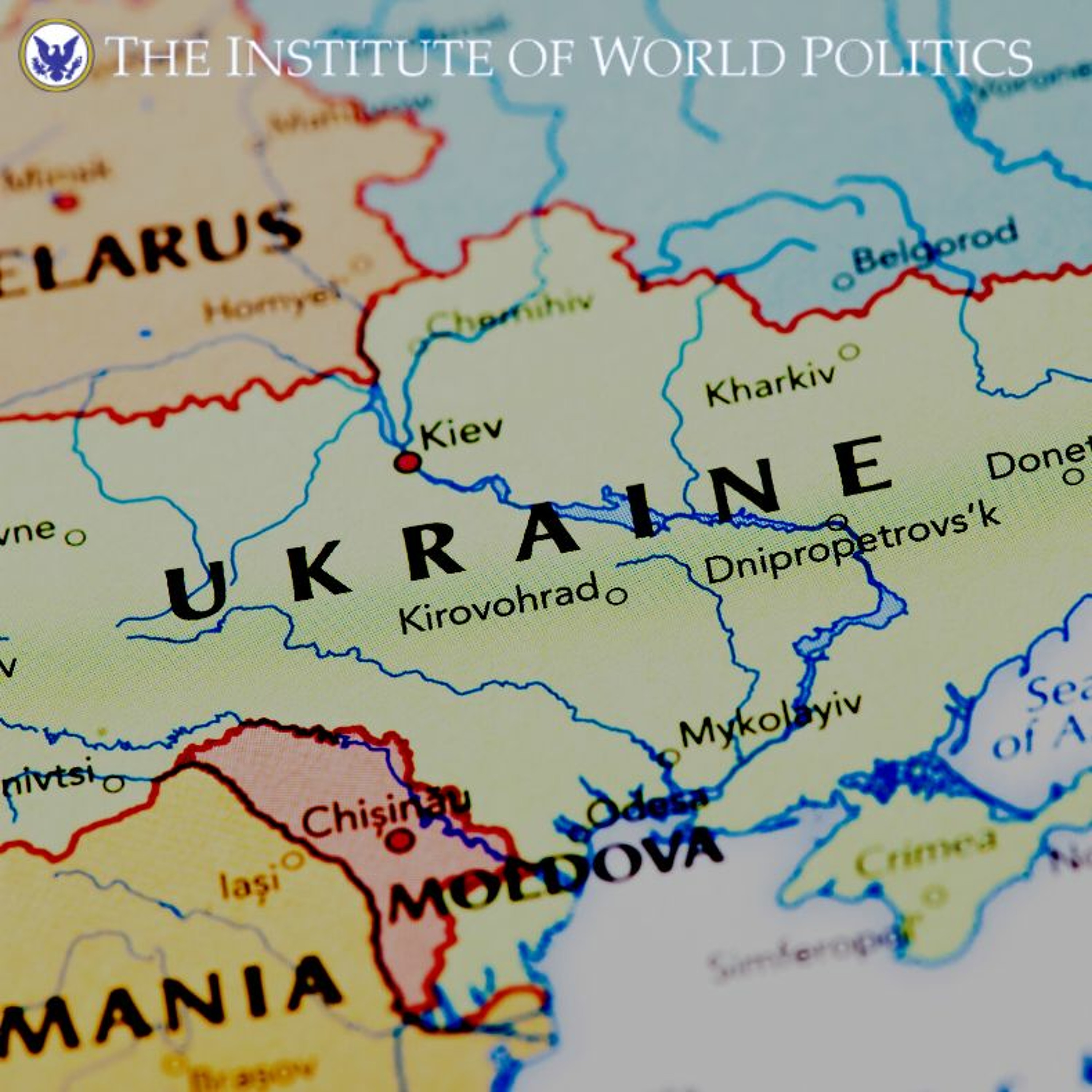
Russia’s War on Ukraine
About the lecture: David Satter discusses the origins of Russia’s war on Ukraine, its likely evolution, and what the U.S. can do to help Ukrainians prevail. About the speaker: David Satter is a former Russia scholar, Moscow correspondent (Financial Times of London), and author of five books on Russia and the Soviet Union. More about IWP: Learn more about our graduate programs: www.iwp.edu/academic-programs/. Learn more about supporting the work of IWP: www.iwp.edu/donate/.
Ukraine and Russia: What’s going on?
This event is a part of the Intermarium Lecture Series at The Institute of World Politics. About the lecture: On February 24, 2022, the Russian Federation launched a war on Ukraine. Building upon its aggressive strategy, which began in 2014, Russia continues its attack, encroaching upon Ukraine’s sovereignty and leaving disaster in its wake. Dr. Marek Chodakiewicz will discuss the situation and give insight into what is going on in Ukraine. About the speaker: Dr. Marek Jan Chodakiewicz holds the Kosciuszko Chair of Polish Studies at The Institute of World Politics and leads IWP’s Center for Intermarium Studies. At IWP, he also serves as a Professor of History and teaches courses on Contemporary Politics and Diplomacy, Geography and Strategy, Mass Murder Prevention in Failed and Failing States, and Russian Politics and Foreign Policy. He is the author of Intermarium: The Land Between the Black and Baltic Seas and numerous other books and articles. He holds a Ph.D. from Columbia University and has previously taught at the University of Virginia and Loyola Marymount University. More about IWP: Learn more about our graduate programs: https://www.iwp.edu/academic-programs/. Learn more about supporting the work of IWP: https://www.iwp.edu/donate/.
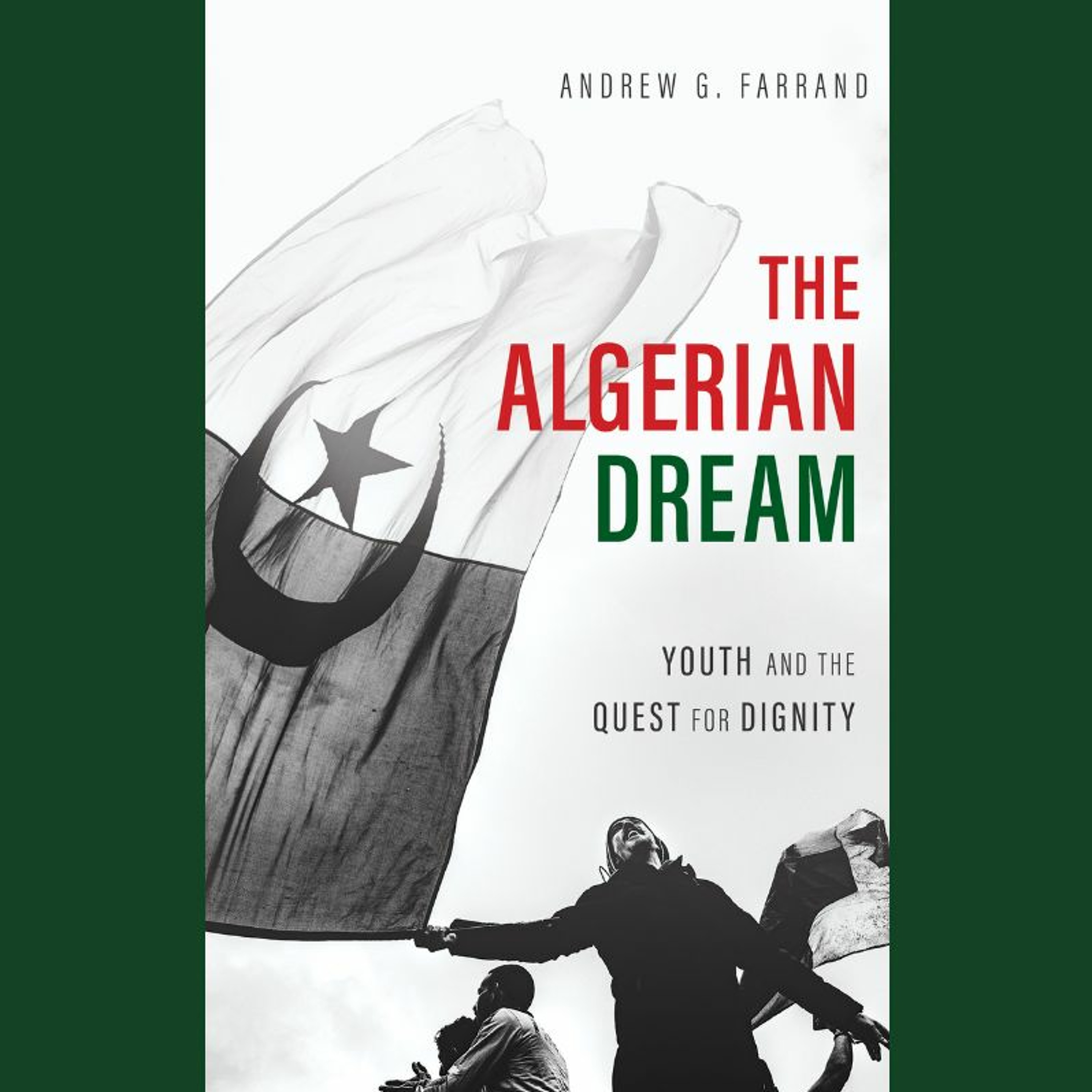
The Algerian Dream: Youth and the Quest for Dignity
About the lecture: Nearly two-thirds of Algeria’s population is under the age of 35. Growing up during or soon after the violent conflict that wracked Algeria in the 1990s, and amid the powerful influences of global online culture, this generation views the world much differently than their parents or grandparents do. An exploration of this generation, their hopes for the future, and the frustrations that brought them into the streets en masse since 2019 reveals much about the politics, economy, and society of North Africa’s sleeping giant—and its future. The event is moderated by Dr. Zak Allal (’18), non-resident scholar at IWP. About the speaker: Andrew G. Farrand is a non-resident senior fellow covering North Africa at the Atlantic Council and author of The Algerian Dream (2021). He lived and worked in Algeria from 2013 to 2020, implementing youth development programs across the country alongside a range of creative projects. “An expert on North Africa” (The New Yorker), he is the translator of Inside the Battle of Algiers (2017) by Zohra Drif, a contributor to Uncommon Alger (2016), and author of numerous articles on Algeria. He is well known in Algeria as a travel writer, photographer, and media personality. A graduate of Georgetown University’s School of Foreign Service, he is a proficient Algerian Arabic and French speaker. In 2020 he served as host of Andi Hulm (“I Have a Dream”), Algeria’s first entrepreneurship reality television show.
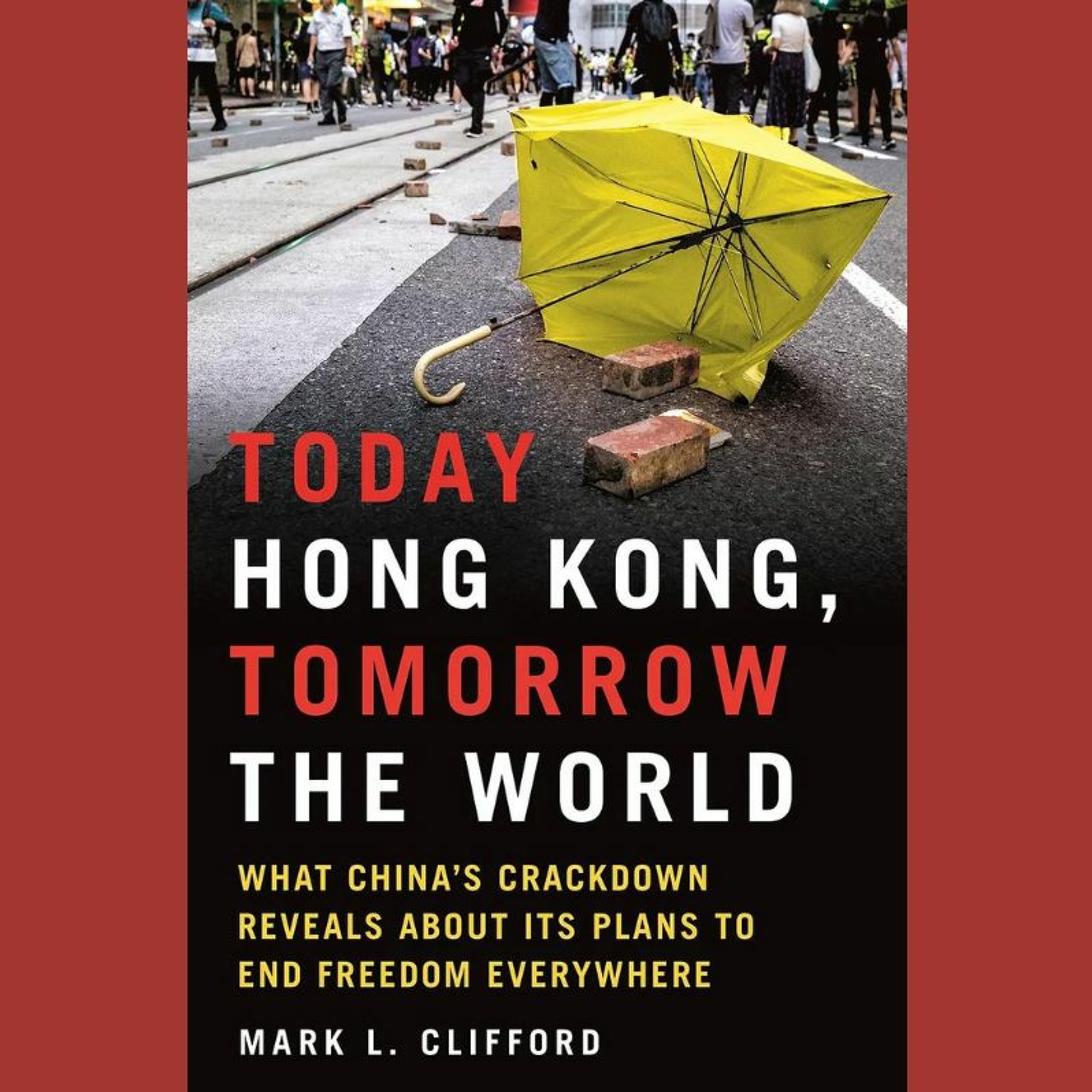
Today Hong Kong, Tomorrow the World
This event is sponsored by the Asia Initiative Lecture Series at The Institute of World Politics. About the lecture: Today Hong Kong, Tomorrow The World is a gripping history of China’s deteriorating relationship with Hong Kong, and its implications for the rest of the world. For 150 years as a British colony, Hong Kong was a beacon of prosperity where people, money, and technology flowed freely, and residents enjoyed many civil liberties. In preparation for handing the territory over to China in 1997, Deng Xiaoping promised that it would remain highly autonomous for fifty years. An international treaty established a Special Administrative Region (SAR) with a far freer political system than that of Communist China―one with its own currency and government administration, a common-law legal system, and freedoms of press, speech, and religion. But as the halfway mark of the SAR’s lifespan approaches in 2022, it is clear that China has not kept its word. Universal suffrage and free elections have not been instituted, harassment and brutality have become normalized, and activists are being jailed en masse. To make matters worse, a national security law that further crimps Hong Kong’s freedoms has recently been decreed in Beijing. This tragic backslide has dire worldwide implications―as China continues to expand its global influence, Hong Kong serves as a chilling preview of how dissenters could be treated in regions that fall under the emerging superpower’s control. About the speaker: Mark L. Clifford is the author of Today Hong Kong, Tomorrow the World: What China’s Crackdown Reveals About Its Plans to End Freedom Everywhere and the president of the Committee for Freedom in Hong Kong. He holds a PhD in history from the University of Hong Kong and a BA from the University of California Berkeley. A Walter Bagehot Fellow at Columbia University, he lived in Asia from 1987 until 2021. Previously, Clifford was executive director of the Hong Kong-based Asia Business Council, the editor-in-chief of the South China Morning Post (Hong Kong), and publisher and editor-in-chief of The Standard (Hong Kong). He held senior editorial positions at BusinessWeek and the Far Eastern Economic Review in Hong Kong and Seoul. He has won numerous academic, book, and journalism awards. Follow him @MarkLClifford or see more information at www.markclifford.org.
Does America have the Industrial Base it needs to be a Great Power?
About the lecture: The U.S. has been through three waves of de-industrialization since the 1970s. Manufacturing sectors — ranging from cars to machine tools, semiconductors to electronics, and pharmaceuticals and personal protective equipment — have weakened in comparison to our economic competitors. The deficits in U.S. capacity manifested itself during the first year of COVID on the medical front. Other U.S. shortfalls should be the subject of deep national concern with respect to our aerospace and defense sectors, which provide much of the country’s military systems and critical infrastructure. Dr. Jeb Nadaner will discuss the U.S. industrial base, its relative decline, and where it’s going. About the speaker: Dr. Jeffrey (Jeb) Nadaner is the Executive Director of SAFE’s Commanding Heights initiative, which is focused on advancing and defending U.S. and allied critical supply chains. He also served as the Deputy Assistant Secretary of Defense for Industrial Policy, the Director of the USMC Krulak Center of Innovation, and Vice President of Engineering and Technology at Lockheed Martin.
The Trend Toward a Concentration of Power and China’s Hegemonic Goal
This event is part of the China Series sponsored by The Institute of World Politics. About the lecture: With the rise of totalitarian China, it is more important than ever to understand a historical tendency towards the concentration of not only political, but economic and informational forms of power. Dr. Anders Corr’s latest book, The Concentration of Power: Institutionalization, Hierarchy & Hegemony, is a theoretical analysis of trends in world history that he has developed over the past thirty years of international research and scholarship. He argues that from the beginning of the archeological and textual evidence in history, power is organized around twelve theories of hierarchy that affect every segment of society. From international politics, to unions, associations, corporations, and the military, Dr. Corr breaks them down and provides readers with a sense of what the world could face if we allow hierarchy to continue its historical development toward a global and illiberal hegemony. Be it in China, the United States, or the European Union, all are vying for global influence and the utilization of the structure of the United Nations, or other newer international institutions, to promote either the principles of human rights and democracy, or in the case of Beijing, the exact opposite. This clash between democracy and autocracy on a global level is part of a “ratchet process” of history that Dr. Corr describes, and that could turn to a war of massive proportions, or a continued trend towards a global and illiberal hegemony. As the world slips towards what could be an “end of history” in a Beijing-led international system, no greater stakes have ever imposed themselves on an unsuspecting global public. About the speaker: Anders Corr (B.A. Yale 2001 Summa, Ph.D. Harvard 2008) founded Corr Analytics Inc to provide clients with business intelligence and strategic analysis of international politics. He is Publisher of the Journal of Political Risk, which works with a wide variety of authors, from Ivy League professors to Filipino peasants. His areas of expertise include Asia, historical analysis, grand strategy, social movements, quantitative analysis, public opinion, and international security. Dr. Corr has studied and researched in Kenya, Britain, and Italy, and analyzed China, Russia, Romania, Japan, South Korea, Taiwan, Vietnam, Brunei, Pakistan and Israel for private clients. He led the U.S. Army Social Science Research and Analysis group in Afghanistan, which oversaw 600 Afghan contract employees on 44 survey projects and conducted quantitative predictive analysis of insurgent attacks. Dr. Corr conducted analysis for US Pacific Command (USPACOM), US Special Operations Command Pacific (SOCPAC), and US European Command (EUCOM) on risks to U.S. national security in Asia and Europe, including in the Philippines, Nepal, Bangladesh, and Ukraine. Dr. Corr conducted red team modeling and simulation for the Defense Department of terrorist attacks against extremely sensitive military facilities and worked on social networking for early warning of pandemics and biological weapons of mass destruction. His current research focuses on great power grand strategies, alliance politics, military strategy, authoritarian political influence, international organizations, and the effects of military technology on the likelihood and outcome of war. He authored No Trespassing: Squatting, Rent Strikes, and Land Struggles Worldwide (South End Press, 1999), and edited Great Powers, Grand Strategies: The New Game in the South China Sea (U.S. Naval Institute Press, 2018). He has peer reviewed for the Journal of Conflict Resolution, the Journal of Urban History, and Routledge Press. He frequently appears in the media, including the Financial Times, New York Times, CNBC, UPI, AFP, Bloomberg, Fox, Forbes, Epoch Times, Al Jazeera, Japan Times, South China Morning Post, Straits Times, and Institutional Investor.
Poland, Martial Law’s 40th Anniversary (13 December 1981-13 December 2021)
This event is part of the Intermarium Lecture Series sponsored by The Institute of World Politics. About the lecture: On December 13, 1981, the Communist regime imposed martial law in Poland. The objective was to crush “Solidarity,” a Polish national liberation movement which was masking as the Soviet Bloc’s first independent, self-governed trade union. Thousands were imprisoned, and hundreds died when the red riot police and military assaulted industrial plants, mines, offices, and universities. Inspired by John Paul II and assisted by the Catholic Church, the Poles resisted underground. Afterwards the Communists claimed that they saved Poland from a Soviet invasion. They had no choice but destroy “Solidarity” because the Soviets were going to attack otherwise. However, Moscow preferred for Warsaw to restore order itself. In fact, Poland’s Communist dictator General Wojciech Jaruzelski himself begged the Kremlin to intervene. Ultimately, Jaruzelski himself carried out the Soviet Union’s orders and destroyed overt “Solidarity.” He did not do it for “Poland” or “the Poles.” He lashed out at “Solidarity” because he feared punishment by the Kremlin. Woven into our analysis, we supply also some personal recollections, naming names of our confederates and sharing the events that we participated in. About the speaker: Dr. Marek Jan Chodakiewicz holds The Kosciuszko Chair in Polish Studies at The Institute of World Politics and leads IWP’s Center for Intermarium Studies. At IWP, he also serves as a Professor of History and teaches courses on Geography and Strategy, Contemporary Politics and Diplomacy, Russian Politics and Foreign Policy, and Mass Murder Prevention in Failed and Failing States. He is the author of Intermarium: The Land Between the Black and Baltic Seas and numerous other books and articles. He holds a Ph.D. from Columbia University and has previously taught at the University of Virginia and Loyola Marymount University.
Conquest Without War: The Threat of Communist Chinese Political Influence Operations
This event is co-sponsored by the Movement for the Renaissance of Vietnam, the National Bureau of Asian Research and The Institute of World Politics About the Lecture: “Conquest Without War: The Threat of Communist Chinese Political Influence Operations” is focused on the multifaceted threat of Communist Chinese influence operations: propaganda, disinformation, psychological disarmament operations, commercial cooptation of business leaders, and influence over politicians, the media, Hollywood, and academia. About the Speaker: Dr. John Lenczowski is the Founder, President Emeritus, and Chancellor of The Institute of World Politics, a Graduate School of National Security, Intelligence, and International Affairs based in Washington, D.C. with a satellite campus in Reston, VA.
Europe is Essential and NATO is the Key
About the lecture: In today’s competitive world our prosperity and our way of life depend on unity among the world’s democracies. Given the strength of the transatlantic economy and the success of NATO, the dynamic relationship between Europe and America is the engine of the global economy and the force supporting the rules-based world order. How we grow together or if we grow apart will determine our individual and collective fate. About the speaker: Michael Ryan served as the Deputy Assistant Secretary of Defense for European and NATO Policy in the Pentagon following a distinguished career in the United States Air Force and the Senior Executive Service. A graduate of the Air Force Academy, Colonel Ryan began his career as a fighter pilot flying the A-10 in Europe during the Cold War. His extensive background in World Affairs includes service at NATO headquarters, the U.S. Mission to the European Union, U.S. European Command headquarters, and in the Office of the Secretary of Defense. He is a graduate of the French War College in Paris, was a National Defense Fellow at the U.S. Congress, and is a Distinguished Graduate of the Joint Military Intelligence College. He holds a Master’s Degree in International Relations and has lectured extensively in Europe and the United States. His latest articles on transatlantic relations appeared recently in The National Interest.
National Readiness for Great Power Competition
The 24th Annual Pearl Harbor Day Lecture. About the lecture: The discussion will examine the current security environment, the growth of Chinese military capabilities, and efforts by the United States and its allies and partners to strengthen deterrence and compete more effectively below the threshold of armed conflict. About the speaker: General Joseph L. Votel is a retired U.S. Army Four Star officer and most recently the Commander of the U.S. Central Command – responsible for U.S. and coalition military operations in the Middle East, Levant and Central and South Asia. During his 39 years in the military, he commanded special operations and conventional military forces at every level. His career included combat in Panama,Afghanistan and Iraq. Notably, he led a 79-member coalition that successfully liberated Iraq and Syria from the Islamic State Caliphate. He preceded his assignment at CENTCOM with service as the Commander of U.S. Special Operations Command and the Joint Special Operations Command. Votel was recognized with the Distinguished Military Leadership Award from the Atlantic Council, the U.S. – Arab Defense Leadership Award from the National Council on U.S. – Arab Relations, the Patriot Award from the Congressional Medal of Honor Society, the SGT James T. Regan Lifetime Achievement Award from the “Lead the Way” Foundation and the Freedom Award from the Intrepid Sea, Air and Space Museum. In January of 2020, General Votel became President & CEO of Business Executives for National Security (BENS). He is a Strategic Advisor for Sierra Nevada Corporation as well as a member of the Board of Trustees for Noblis Corporation. Votel is a nonresident Distinguished Fellow at the Middle East Institute and the Belfer Center at the John F. Kennedy School of Government and advises the Combating Terrorism Center at West Point. He sits on the Executive Board of Freedom House and the Center for Ethics and the Rule of Law (CERL). He serves on the Board of Directors for Service to School, Minnesota Wire, Digital Force Technologies and Owl Cyber Defense. He is a member of the Council on Foreign Relations. Votel is a 1980 graduate of the United States Military Academy and earned master’s degrees from the U.S. Army Command and Staff College and the Army War College. He is married to Michele; and they have two grown sons, a daughter-in-law and two grandchildren. The Votels reside in Lake Elmo, Minnesota.
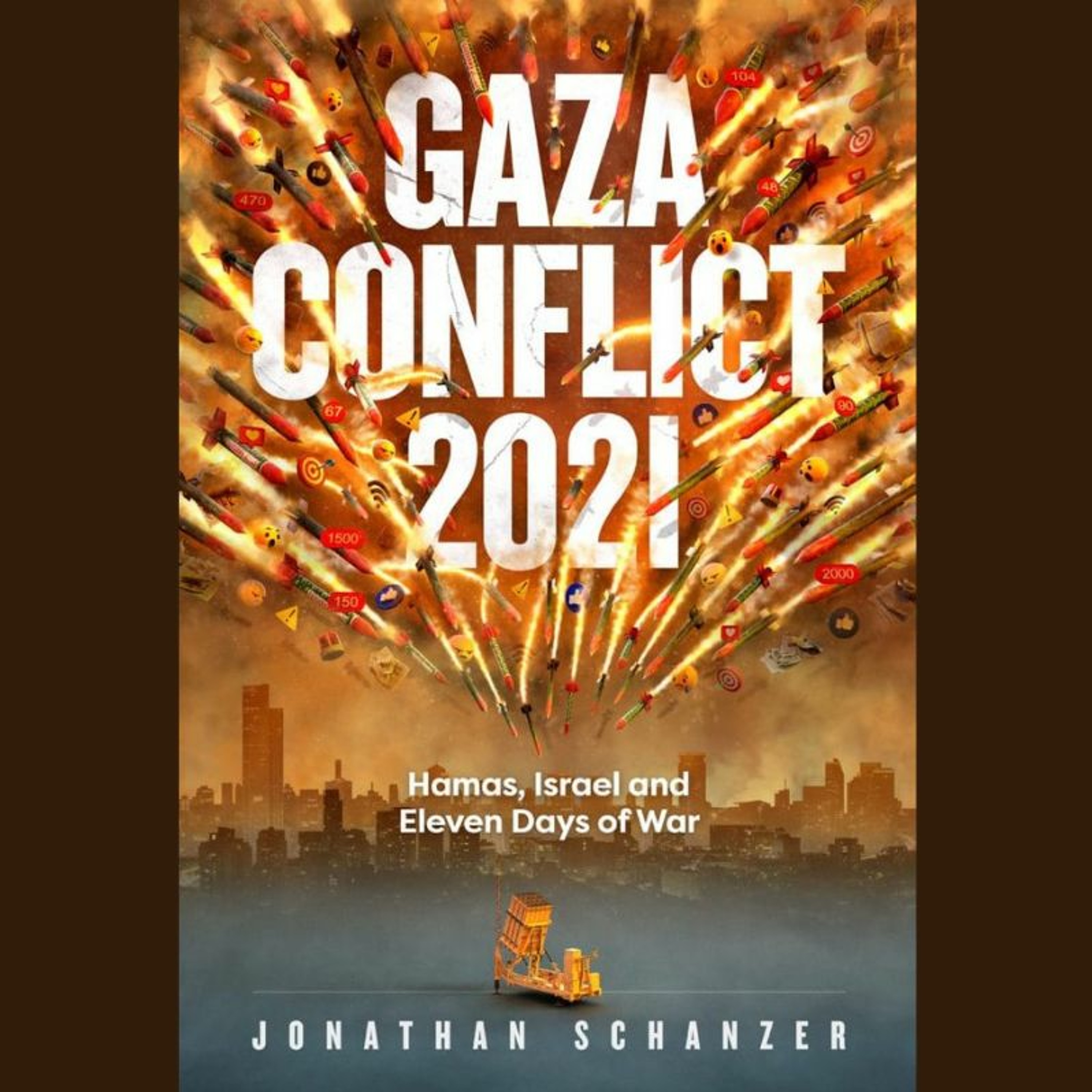
Gaza Conflict 2021: A Book Talk by Jonathan Schanzer
About the lecture: The May 2021 conflict between Israel and the terrorist group Hamas generated headlines around the world. However, much of the reporting ignored the history, funding, political dynamics, and other key components of the story. Jonathan Schanzer explores the hidden headlines of the recent conflict, while drawing lines between the history of decades past and current events in one of the most volatile territories in the Middle East. About the speaker: Jonathan Schanzer, former terrorism finance analyst at the United States Department of the Treasury, is senior vice president for research at Foundation for Defense of Democracies. He is the author of the new book Gaza Conflict 2021: Hamas, Israel and Eleven Days of War. Purchase book here: https://www.amazon.com/dp/1956450017/.
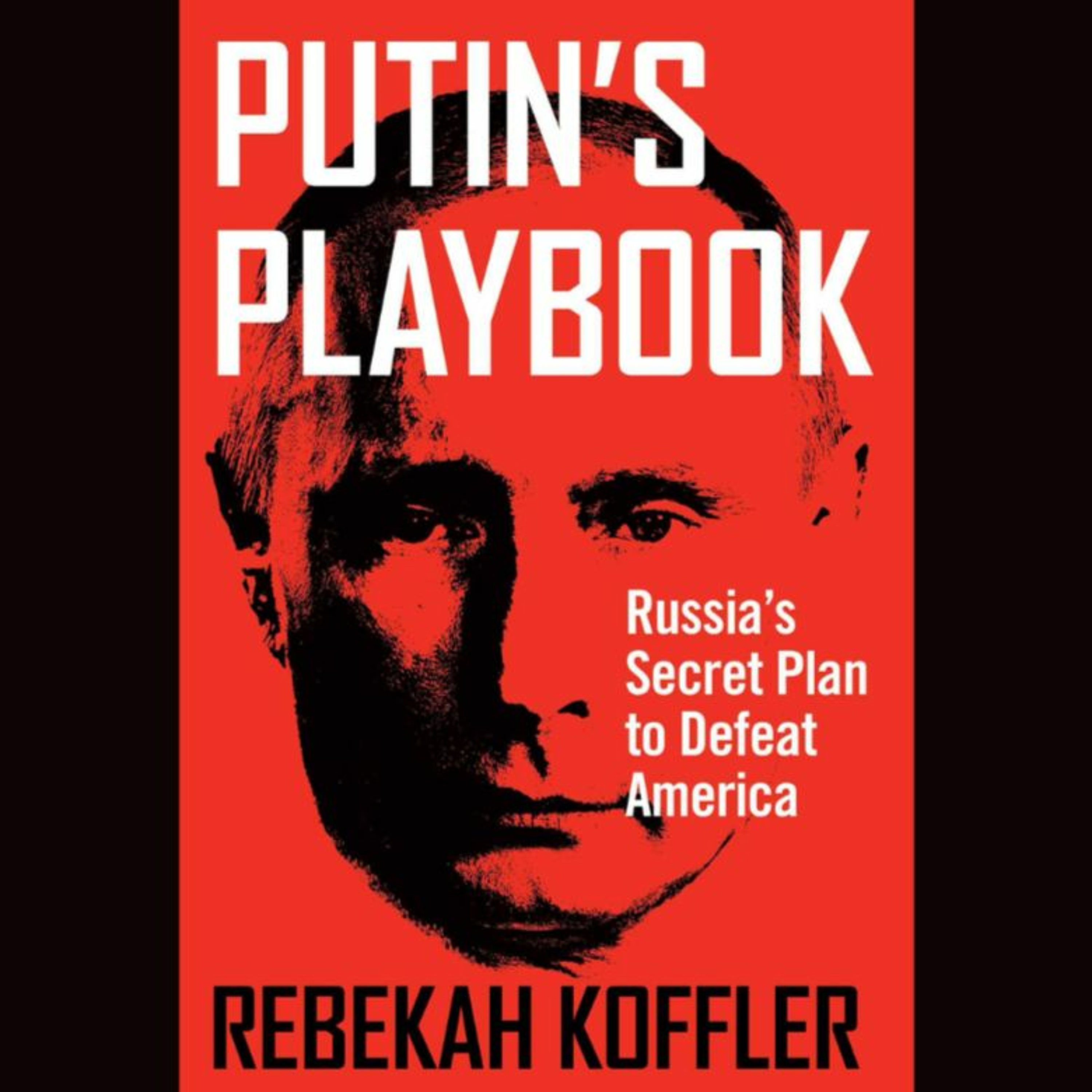
Putin’s Playbook: Russia’s Secret Plan to Defeat America
About the lecture: Just because the “Russian collusion” between Russian President Vladimir Putin and former US President Donald Trump turned out to be a hoax, it doesn’t mean that Russia did not intervene in 2016 election, and in two subsequent elections. Not only Moscow’s covert influence operations poisoned American politics, the Kremlin also sowed confusion about the real Russian threat to the United States. In today’s presentation, Ms. Koffler will speak about Putin’s long-range plan— his “playbook”—to destabilize, weaken and subdue the United States, preparing for the war that he believes is inevitable. She will also reveal how unprepared the U.S. lumbering bureaucracy is to defend America from Putin’s threat. About the speaker: Rebekah Koffler, the author of Putin’s Playbook: Russia’s Secret Plan to Defeat America, is a former intelligence officer who served as a Russian Doctrine & Strategy specialist in the Defense Intelligence Agency from 2008 until late 2016. She has delivered classified briefings to top U.S. military commanders, NATO ministers, the directors of the CIA and DIA, the White House National Security Council, and senior congressional staff. In her post-public service career, Rebekah is a writer, commentator, and national security consultant whose work has been published on the Fox News website, The Hill, the New York Post, the Daily Caller, and the Washington Times. She has appeared on Fox News, Newsmax, One America News, and the Sean Hannity nationally syndicated radio show. Purchase book here: https://www.amazon.com/dp/B07ZZJ8HF4/ref=dp-kindle-redirect?_encoding=UTF8&btkr=1.
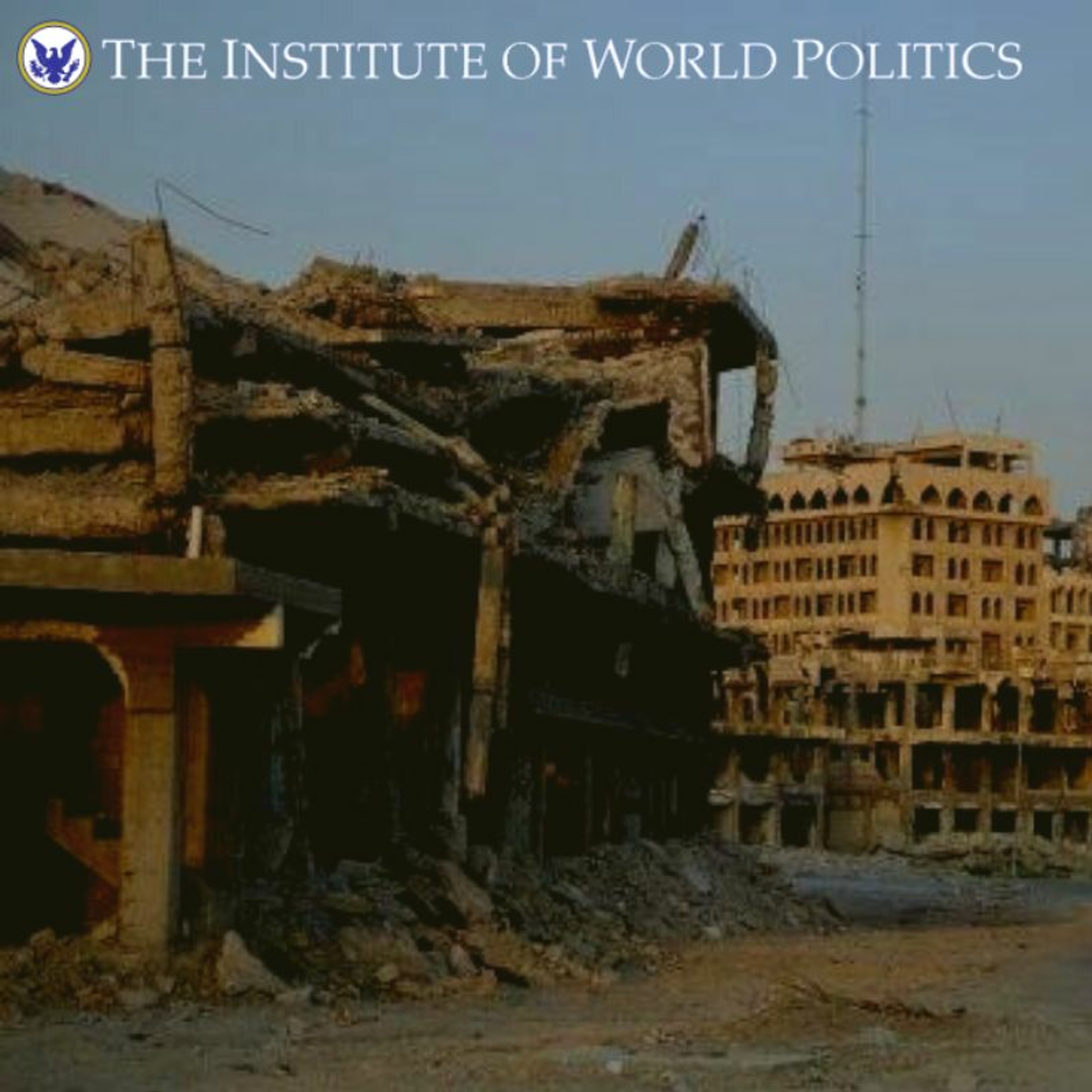
Syria, The Tragedy of A Pivotal State
About the lecture: Syria has seen an internecine civil war for the last decade. It has involved 4 out of the 5 Permanent Security Council members on either side of the conflict making it international, throwing to the wind the cardinal principles of the UN Charter particularly, sovereignty, non-interference, and self-defense. It sets an extremely retrograde principle for the conduct of international relations. About the speaker: Ambassador Rajendra Abhyankar is Visiting Professor at the College of Liberal Arts, Purdue University, Lafayette. From 2012 to 2019, he was Professor of Practice of Diplomacy and Public Affairs at the O’Neill School of Public and Environmental Affairs, Indiana University. Amb. Abhyankar was in the Indian Foreign Service from June 1968 and retired in August 2005. He was Secretary in the Ministry of External Affairs from 2001 to 2004, retiring as Ambassador to the EU, Belgium and Luxembourg. He has been Indian Ambassador to Cyprus, Syria, Turkey, Azerbaijan and Consul General in San Francisco. From 2005 to 2009 he was Professor/ Director of Centre for West Asian Studies, Jamia Millia Islamia University, Delhi. He has written seven books on Indian diplomacy and related issues. His latest book is Syria, The Tragedy of a Pivotal State (Palgrave, 2020).
The UN’s Human Security Challenge: The Plight of North Korean Refugees in China
This event is sponsored by the Asia Initiative Lecture Series at The Institute of World Politics. About the lecture: The problems arising from the presence of North Korean refugees in China warrant a human security approach, meriting protection from the UN and the international community. There are three scenarios dreaded by the refugees: first is being caught by North Korean border patrol while trying to escape; second is being subjected to human trafficking ring; and third is being repatriated after being caught by either the Chinese police or North Korea’s own secret police operating in China. Despite the 1995 agreement between the UNHCR (United Nations High Commissioner for Refugees) and China, which provides the UNHCR unimpeded access to all refugees within China, the UNHCR has been passive in exerting its mandate to protect the North Korean refugees. One possible solution is the construction of a refugee camp in China or Mongolia. If China allowed for this, it would catapult itself as a genuine “soft power” deserving of the much-coveted G2 status. Otherwise, China’s leadership ambition, UNHCR’s reputation, and most importantly, human rights of the refugees will remain in jeopardy so long as the discriminatory sŏngbun system in North Korea continues. About the speaker: Ambassador Jung-Hoon Lee is Dean and Professor of International Relations at the Graduate School of International Studies, Yonsei University. He is formerly the ROK government’s Ambassador for Human Rights as well as its inaugural Ambassador-at-Large for North Korean Human Rights. On campus, he served as Dean of the Underwood International College and the Office of International Affairs. He has also served as Director of the Institute of Modern Korean Studies, the Yonsei Human Liberty Center, the Center for American Studies (IEWS), and the Center for European Studies (IEWS). His other academic affiliations include a visiting professorship at the Dept. of Politics, Faculty of Law, Keio University, and a senior fellowship at Harvard Kennedy School’s Carr Center for Human Rights Policy. Ambassador Lee has advised South Korea’s National Unification Advisory Council, Ministry of Unification, Ministry of Foreign Affairs, National Security Council, and the National Assembly. In the case of the Ministry of Unification, he chaired the Advisory Committee for Humanitarian Affairs. His current domestic commitments include his role as Chairman of SaveNK, an NGO that helps the defector community, Senior Advisor to the Future Korea Weekly, a current affairs magazine, and Chairman of the Board of Tongwon Educational Foundation. Internationally, he is a Board Member of the Committee for Human Rights in North Korea (HRNK) based in Washington, D.C., an International Patron of the Hong Kong Watch, a UK-based organization that promotes Hong Kong’s democracy, and an Advisory Council Member of the International Bar Association’s Human Rights Institute, also based in London. He received his BA from Tufts University, MALD from the Fletcher School of Law & Diplomacy, and D.Phil. from the University of Oxford (St. Antony’s College). In 2017, he published Tongbukah Kyŏkrang ui Hanbokp’anesŏ [In the Midst of a Northeast Asian Current]. His most recent journal contributions include “Déjà Vu in South Korea? Lessons from the 1992 Philippines Withdrawal” in The Washington Quarterly (2020), “The UN’s Human Security Challenge: The Plight of North Korean Refugees in China” in the Journal of International Politics (2020), and “North Korea’s Nuclear and Human Rights Conundrum: Implications for South Korea’s Unification Goal” in Pacific Focus (2020).
The Massacre in Jedwabne Revisited
This lecture event is part of the 14th Annual Kościuszko Chair Conference presented by the Kościuszko Chair of Polish Studies and the Center for Intermarium Studies. About the lecture: On July 10, 1941, the Germans burned alive most of the Jewish population of Jedwabne in north-eastern Poland. Some of the local Christians assisted in the crime but the nature of their exact involvement and deeds remains obscure. In fact, recently declassified documents suggest it was more negligible than some scholars argued before. However, we shall not know the precise details of the crime and the exact perpetrators without an exhumation and further forensic study of the victims. Dr. Chodakiewicz will discuss new evidence and present a documentary collection he co-edited: over 2,000 pages of newly accessible evidence of the crime. About the speaker: Dr. Marek Jan Chodakiewicz holds The Kosciuszko Chair in Polish Studies at The Institute of World Politics and leads IWP’s Center for Intermarium Studies. At IWP, he also serves as a Professor of History and teaches courses on Geography and Strategy, Contemporary Politics and Diplomacy, Russian Politics and Foreign Policy, and Mass Murder Prevention in Failed and Failing States. He is the author of Intermarium: The Land Between the Black and Baltic Seas and numerous other books and articles. He holds a Ph.D. from Columbia University and has previously taught at the University of Virginia and Loyola Marymount University.
The Forgotten Battlefield? September 1939 and the History of World War II
This lecture event is part of the 14th Annual Kościuszko Chair Conference presented by the Kościuszko Chair of Polish Studies and the Center for Intermarium Studies. About the lecture: Dr. Radzilowski will discuss the Invasion of Poland in 1939 by Nazi Germany and the Soviet Union and the seemingly deliberate amnesia about the campaign that persisted for almost 80 years. He will examine Poland’s defensive strategy and its successes and failures and why historians have failed so often to understand the campaign’s importance. He will draw on recent scholarship on the topic as well as comparisons with another campaign that is similarly misremembered, the Sino-Japanese War that began in 1937. Lastly, Dr. Radzikowski will examine the role of Cold War politics and efforts of Western countries to save face after their inadequate response to the threats of totalitarianism in the 1930s and 1940s in shaping popular perceptions of these campaigns. About the speaker: Dr. John Radzilowski has taught history, art history, and geography at University of Alaska Southeast on the Ketchikan campus since 2007. Prior to moving to Alaska, he taught history courses at the University of St. Thomas, Hamline University, and Anoka-Ramsey College in Minnesota. Dr. Radzilowski also served as assistant project director at Center for Nations in Transition, at the Hubert H. Humphrey Institute of Public Affairs at the University of Minnesota where he helped design and administer USAID and State Department-sponsored training programs for business, economics, and political science faculty and NGO leaders in Ukraine and east central Europe. Dr. Radzilowski’s research and teaching interests are wide-ranging and diverse: immigration and ethnicity, military history, war and genocide, the impact of technology on the history and geography of the Great Plains and Midwest, local and regional studies, and the history of Poland, Russia, Ukraine, and central and eastern Europe.
Uncle Władek – One Katyn Family Story: Major Władysław Julian Siemek, Geographer (1897 – 1940)
This lecture event is part of the 14th Annual Kościuszko Chair Conference presented by the Kościuszko Chair of Polish Studies and the Center for Intermarium Studies. About the lecture: This lecture will focus on the forgotten human aspect of the 1940 Katyń massacre of Polish officers by the NKVD. Dr. Alexander Jabłoński will discuss the life of one Polish officer – Major Władysław Julian Siemek, a staff member of the highly regarded pre-war military institution, the Military Geographical Institute (Wojskowy Instytut Geograficzny) in Warsaw, Poland. More than 30% of its staff perished during WWII, with the majority killed in Katyń forest. About the speaker: Alexander M. Jabłoński received his BSc & MS in civil engineering at the Technical University of Cracow, Poland (1970), MS in mechanics and materials engineering at the University of Illinois at Chicago (1982) and PhD in structural dynamics at Carleton University in Ottawa, Canada (1989). He has more than 50 years of experience in various fields of engineering, and reconnaissance projects, project management and strategy planning. He worked as an engineer in Poland, Finland, Norway, Germany, and in the USA. Since 1992, he has been working as Research Scientist, Research Engineer and Manager in Canadian Public Service. He was one of Managers of the Space Plan Task Force (SPTF) for the development of the Long-Term Space Plan III for Canada (1999-2009). Currently, he is working at the David Florida Laboratory, Canadian Space Agency in Ottawa. He is also an Adjunct Research Professor at the Department of Mechanical and Aerospace Engineering, Carleton University in Ottawa. He is Fellow of CASI, Associate Fellow of AIAA, Member of Aerospace Division of ASCE, and recipient of various engineering and scientific awards. Since his early life in Poland, he has studied the Polish and world history for decades. He writes historical essays and presentations, especially on the modern history of Poland including the World War II and the postwar era of the Soviet occupation. Currently he serves as President of the Oskar Halecki Institute in Canada and as a member of the Program Council of the newly established Institute of the Heritage of the National Thought in Warsaw, Poland.
Strategic Defense Against Communism: The case of Cardinal Wyszynski (1901 – 1981)
This lecture event is part of the 14th Annual Kościuszko Chair Conference presented by the Kościuszko Chair of Polish Studies and the Center for Intermarium Studies. About the lecture: Prof. Grzegorz Kucharczyk will summarize the analysis of communism provided by the Cardinal Wyszyński, Primate of Poland. Shortly before WWII, Rev. Stefan Wyszynski pointed to the destructive role played by Western intellectuals infatuated with communism, calling them “strange people.” In 1934, Stefan Wyszynski first drew attention to a new strategy of the international communist movement, which aimed its efforts at intelligentsia as a class very much prone to fall into this trap. More than thirty years later, in 1967, Cardinal Wyszyński warned against “a new type of communism reflected in the youth revolution.” As the Primate of Poland, Cardinal Wyszynski not only correctly analyzed communism but also knew what means were to be employed to achieve victory against this ungodly ideology. This victory was to be achieved over long distances, and therefore, strategic perspective was very much needed. In 1981, the Cardinal said, “When you go to war, and we are in a war, you have to use binoculars.” The latter, in the form of the Great Novena and the Millennial celebration of 1966, was efficiently used by the blessed Cardinal Wyszyński. About the speaker: Grzegorz Kucharczyk is a professor at the Institute of History, Polish Academy of Sciences, at the Gorzow Academy of Jacob of Paradyz and in the Center for Totalitarian Studies at the Pilecki Institute. His main research fields include: history of Germany (particularly Prussia) in the 19th and the 20th century, history of anti-Catholicism, and the history of Polish political thought.
The Evolution of Active Measures and Disinformation
This lecture event is part of the 14th Annual Kościuszko Chair Conference presented by the Kościuszko Chair of Polish Studies and the Center for Intermarium Studies. About the lecture: It was initially believed that active measures would disintegrate and disappear with the collapse of the Soviet Union. However, it has become evident that active measures have not disappeared, but rather have only largely transferred to the digital domain. The term active measures was coined in the 1920’s; however, Russia has practiced these political warfare tactics for centuries. Through all this time the message has stayed the same, Russia hopes to sow divisions between societies and allies, but ultimately wants citizens to lose hope in liberal democracies. The end goal is to make the world a safer place for Putin’s authoritarian regime. Through analyzing active measures that have taken place in both the near abroad nations and the United States from the Cold War years until today, it becomes evident that active measures have not disappeared, but rather have only evolved in their technique and form. About the speaker: Ms. Agnes Tycner recently graduated from The Institute of World Politics with a master’s degree in Statecraft and International Affairs with a specialization in Russia and Central/Eastern Europe. She will be working for the Victims of Communism Memorial Foundation starting January as a Research Fellow in Polish Studies. Agnes also plans to continue her education by attending law school.
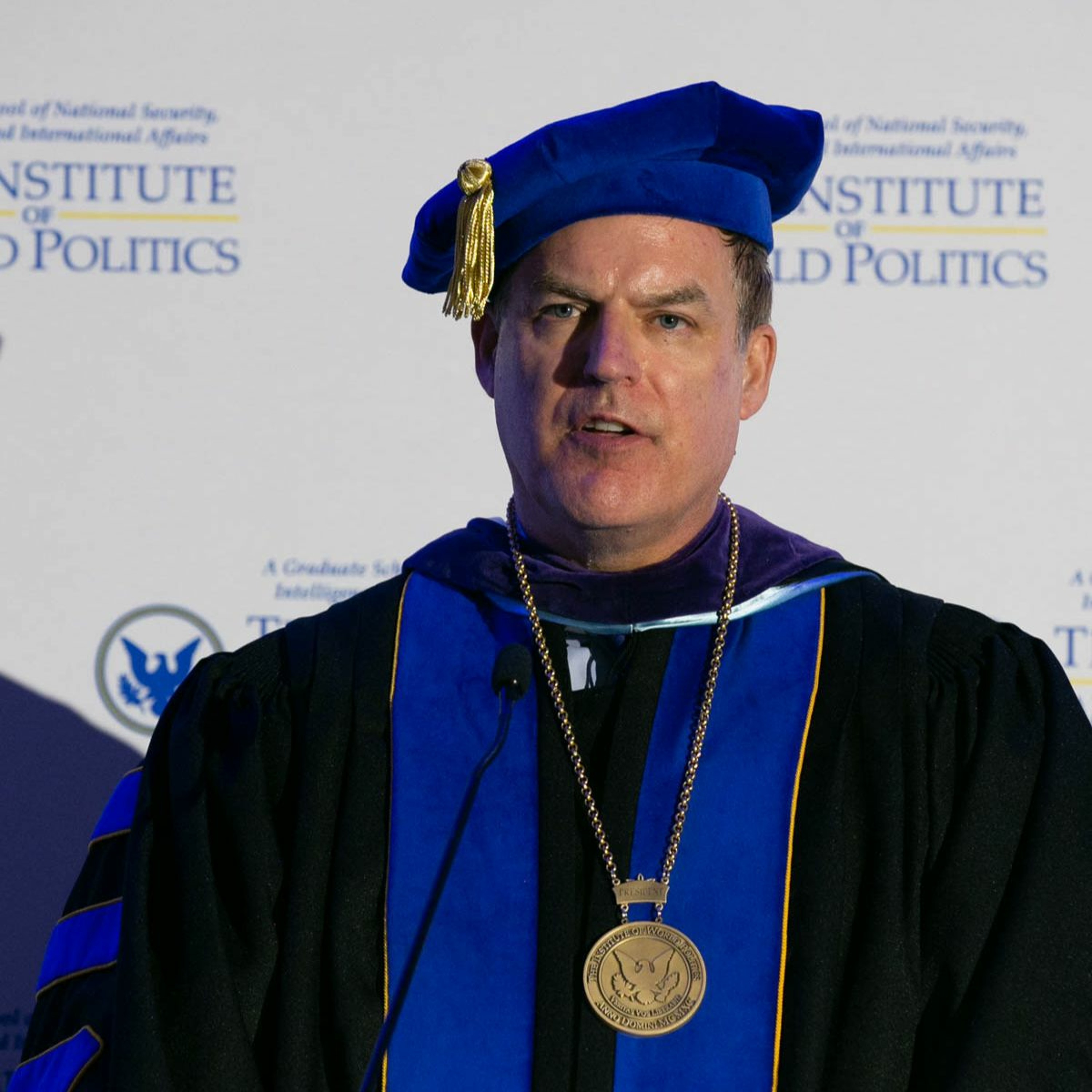
Inaugural Address By Hon. James H. Anderson, Ph.D., President Of The Institute Of World Politics
Hon. James H. Anderson gave an inaugural address after a formal inauguration ceremony installing him as the second President of The Institute of World Politics. The event took place on October 27, 2021 at the Mayflower Hotel in Washington, D.C.
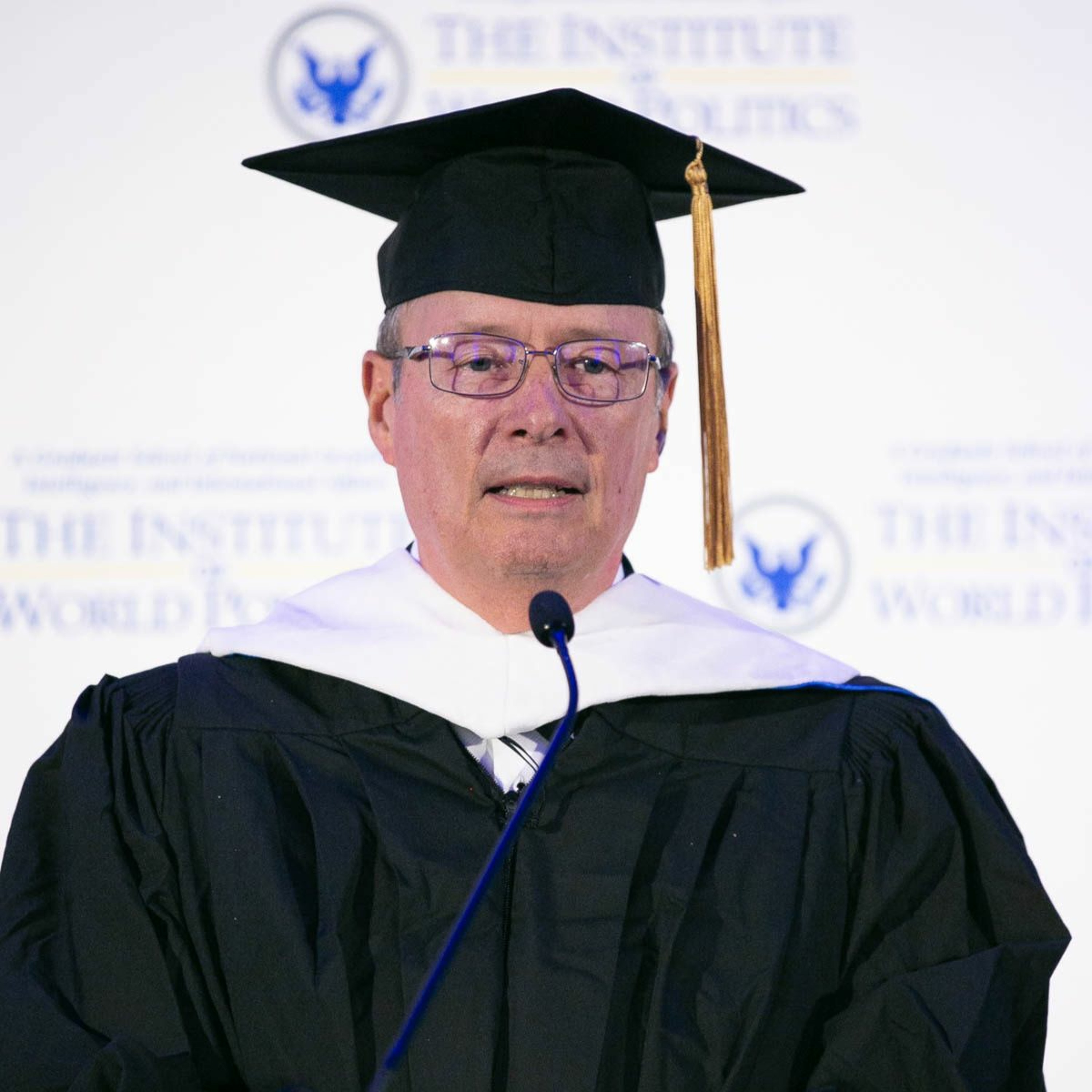
Keynote Address by GEN (Ret.) Keith Alexander at IWP's 30th (+1!) Anniversary Gala
GEN (Ret.) Keith Alexander, Founder & Co-CEO of IronNet Cybersecurity, former commander of USCYBERCOM, and former director of the National Security Agency, gave the keynote address at The Institute of World Politics' 30th (+1!) Anniversary Gala on October 27th at the Mayflower Hotel.
Cyber Terrorism: Current Threats and Responses
Prof. Paul Davis gave a talk on "Cyber Terrorism: Current Threats and Responses" at IWP's annual Chancellor's Council Meeting, which was held on October 27, 2021 at the Mayflower Hotel. Prof. Davis is an Adjunct Professor at IWP, Vice President of Government Business Development for SecureDAM, and Founder and President of JANUS Think. At IWP, he teaches Cyber Terrorism and Intelligence (IWP 692). Learn more about joining the Chancellor's Council: https://www.iwp.edu/donate/chancellors-council/
Defectors and Intelligence
Prof. Alan Messer gave a talk on "Defectors and Intelligence" at IWP's annual Chancellor's Council Meeting, which was held on October 27, 2021 at the Mayflower Hotel. A former CIA Analyst and Operations Officer with with 32 years of combined experience, Prof. Messer teaches a course at IWP entitled "A Counterintelligence Challenge: The Enigmas and Benefits of Defectors" (IWP 676). Learn more about joining the Chancellor's Council: https://www.iwp.edu/donate/chancellors-council/
Economic Freedom: The Forgotten Weapon in the War on Terror
Dr. Anne Rathbone Bradley discussed "Economic Freedom: The Forgotten Weapon in the War on Terror" at IWP's annual Chancellor's Council Meeting, which took place on October 27, 2021 at the Mayflower Hotel. Dr. Bradley is an Adjunct Professor at IWP, and serves as the George and Sally Mayer Fellow for Economic Education and Academic Director at the Fund for American Studies. She formerly served as an Economic Analyst for the CIA’s Office of Terrorism Analysis. At IWP, she teaches a course on Economics for Foreign Policy Makers (IWP 642/IWPO 642). Learn more about joining the Chancellor's Council: https://www.iwp.edu/donate/chancellors-council/.
Afghanistan in Perspective
About the interview: Dr. John Tierney, IWP professor, gives a historical perspective on the U.S. withdrawal from Afghanistan. He discusses potential consequences, strategic culture, and how the U.S. should respond to August 16th. About the speaker: Dr. John Tierney is a Professor Emeritus at The Institute of World Politics and teaches History of American Foreign Policy, History of International Relations, Peace, Strategy and Conflict Resolution, and U.S. Foreign Policy: Current and Future Challenges. Dr. Tierney is a Former Special Assistant and Foreign Affairs Officer for the U.S. Arms Control and Disarmament Agency (1981-1993); He formerly participated in various national security negotiations for the U.S. Government. He was Executive Director of the Congressional Caucus on National Defense and the National Security Research Group, U.S. House of Representatives. He is former Chairman of the Politics Department at Catholic University and former Professor of International Relations at University of Virginia and The Johns Hopkins University. He is the author of Chasing Ghosts and The Politics of Peace.
The Evolution of U.S. Nuclear Policy: Continuity and Change
About the lecture: This lecture will review the nuclear weapons policies established by various administrations of both parties, focusing on the areas of bipartisan continuity and possible upcoming changes being considered by the current administration. About the speaker: The Honorable David J. Trachtenberg is Vice President of the National Institute for Public Policy, a nonprofit research center located in Fairfax, Virginia. He was confirmed by the U.S. Senate on October 17, 2017 as Deputy Under Secretary of Defense for Policy and served in this capacity until his retirement from government service in July 2019. From October 2017 until January 2018, he also served as the Acting Under Secretary of Defense for Policy, the principal civilian advisor to the Secretary of Defense on defense policy matters. His duties spanned a range of regional and functional portfolios, including homeland defense, space, cyber, nuclear, and missile defense policy, technology security policy, and strengthening security cooperation activities with allies, friends, and partners abroad. He was also the senior Department of Defense civilian official responsible for developing, coordinating, and overseeing compliance with DoD policy regarding civilian casualties resulting from military operations.
Security Situation on The Korean Peninsula
This event is sponsored by the Asia Initiative Lecture Series at The Institute of World Politics. About the lecture: Colonel David S. Maxwell will discuss the nature, objectives, and strategy of the Kim family regime, why the regime poses a threat to the Republic of Korea, and why it is in the US national interest to ensure there is a strong ROK/US alliance to deter war. He will outline the “Big Five” — war, regime collapse, human rights, asymmetric threats, and unification. He will underline that the only way the world will see an end to the North’s nuclear program, threats, human rights abuses, and crimes against humanity is through unification and the establishment of a United Republic of Korea. About the speaker: David S. Maxwell is a Senior Fellow at the Foundation for Defense of Democracies (FDD).* He is a 30-year veteran of the US Army, retiring as a Special Forces Colonel with his final assignment teaching national security at the National War College. He served over 20 years in Asia, primarily in Korea, Japan, and the Philippines. Colonel Maxwell served on the ROK/US Combined Forces Command staff and the Special Operations Command Korea. He is the co-author of the first CONPLAN 5029, the plan for North Korean Instability and Regime Collapse. He commanded the Joint Special Operations Task Force Philippines and was the G3 at the US Army Special Operations Command. Following retirement, he served as the Associate Director of the Security Studies Program at Georgetown University’s School of Foreign Service. He is on the Board of Directors of the Committee for Human Rights in North Korea, the International Council of Korean Studies, the Council on Korean-US Security Studies, the Special Operations Research Association, the OSS Society, and the Small Wars Journal. He earned a B.A. in political science from Miami University, and an M.A. in Military Arts and Science from the U.S. Army Command and General Staff College and from the School of Advanced Military Studies, and an M.S. in National Security Studies from the National War College. Colonel Maxwell has taught Unconventional Warfare and Special Operations for Policy Makers and Strategists at graduate schools in the DC area. * FDD is a Washington-based nonpartisan research institute focusing on national security and foreign policy.
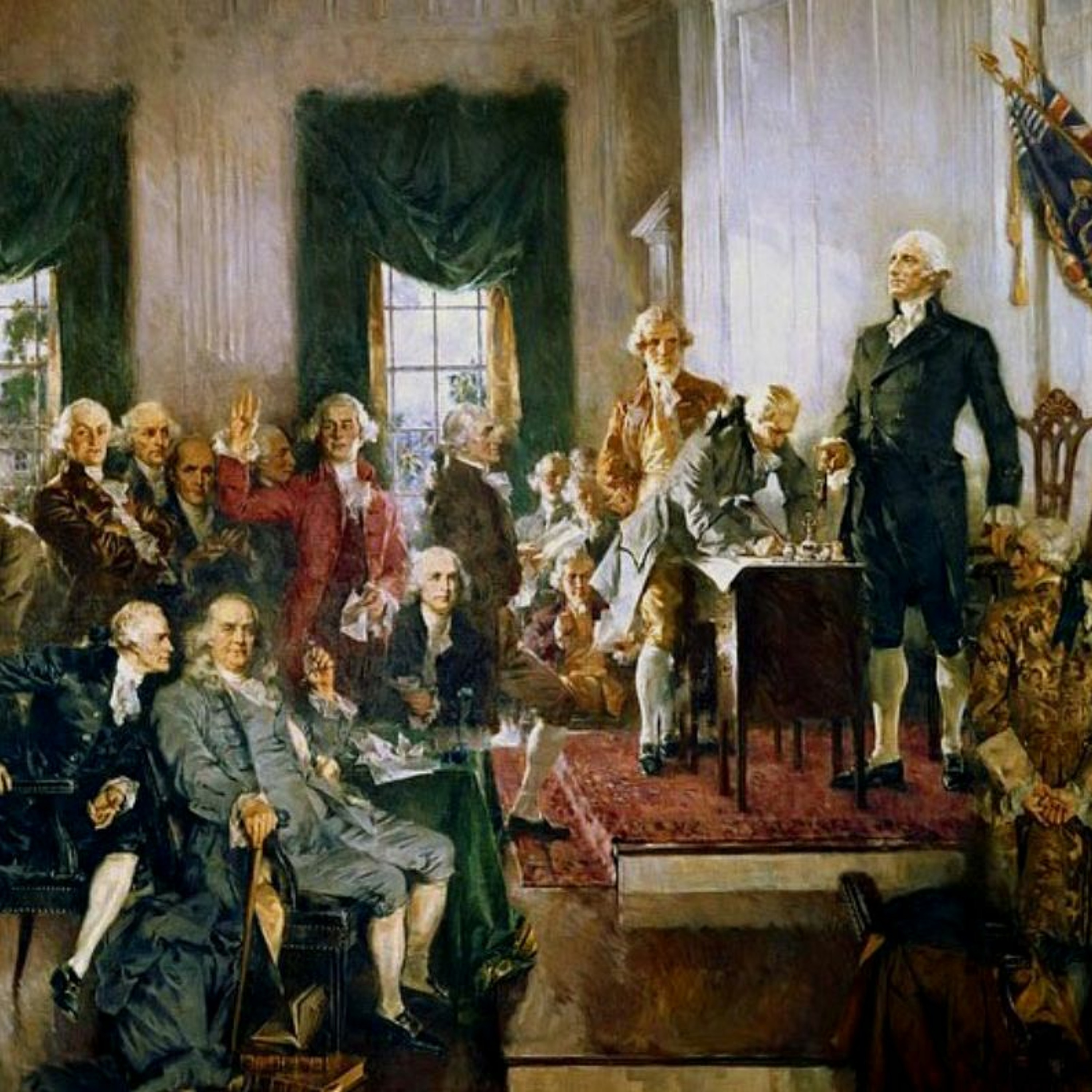
The Founders’ Philosophy of Foreign Policy
This event is in honor of Constitution Day and co-sponsored by the Jack Miller Center About the lecture: The American Founders had a coherent philosophy of foreign policy, which was informed by the principles expressed in the Declaration of Independence. Those principles provided guides for statesmen to achieve the overarching goals of American foreign policy: securing the rights and interests of the United States and its citizens, and satisfying the demands of justice. About the speaker: Christopher Burkett is Associate Professor of Political Science and Director of the Ashbrook Scholar Program for undergraduate students at Ashland University. He is editor of Ashbrook’s 50 Core American Documents and has written on the American Founding, Progressivism, and American Foreign Policy.
A Space Vision To Guide America’s Strategic Competition with China
This event is part of the China Series sponsored by The Institute of World Politics. About the lecture: Today’s space race is different than the Cold War-era race between the United States and the Soviet Union to achieve symbolic space milestones to prove the superiority of our market-based economic system for the benefit of unaligned nations. Space 2.0 or the new space race, primarily between the United States and China, is about the economics of space-derived capabilities, access to space resources, and the technologies for acquiring and controlling them. Strategic competition with China is occurring 24/7 on across all domains of which space is increasingly becoming America’s Achilles heel. China aims to be the dominant space power by 2050 – just 30 years from today. The United States can either prepare and position itself to shape a future with American strategic leadership in space or resign itself to second-class. Thus, the new space race is a high-stakes economic competition that will influence our modern way of life and the prospect of democratizing American society for millions will be threatened by authoritarianism. About the speaker: Dr. Mir Sadat has more than 25 years of experience in private industry and government. Mir is a former policy director at the U.S. National Security Council, where he led interagency coordination on defense and space policy issues. In this role, Mir supported the establishment of both the US Space Force and US Space Command, and reviewed national security decisions involving civil space (NASA) and the US commercial space sector. Mir is also a naval officer with intelligence and space qualifications and in his preceding two naval assignments; he served as a space policy strategist with Chief of Naval Operations and as a space operations officer with U.S. Tenth Fleet. Mir has a Ph.D. from Claremont Graduate University and has taught at various universities in California and Washington, DC.
Strategy, Statecraft, and Character in Ulysses S. Grant’s Civil War Memoir
About the lecture: As a general, Ulysses S. Grant was often dismissed as a butcher of men and no strategist. This reputation is undeserved, however. Ulysses S. Grant’s memoir of the Civil War is a treasure trove of insights for the strategist. In its pages, Grant invites his reader to contemplate with him the constant struggle to reconcile military means with political ends, the way military maxims crumble under the weight of the reality of war, and, most importantly, the vital role that character and personality play in the design and execution of military operations and strategy. About the speaker: Peter Campbell is Associate Professor of Political Science at Baylor University. He holds an MA in War Studies from King’s College London and a Ph.D. in political science from the University of Notre Dame. He is the author of Military Realism: The Logic and Limits of Force and Innovation in the U.S. Army (University of Missouri Press, 2019). His areas of research include national security decision making, civil-military relations, strategy, international relations scholarship and policy relevance, insurgency and counterinsurgency, the just war tradition, and cyber warfare.
Japanese Foreign Intelligence and Grand Strategy
This event is sponsored by the Asia Initiative Lecture Series at The Institute of World Politics. About the lecture: Based on an excerpt from his recently published book, Japanese Foreign Intelligence and Grand Strategy (Georgetown University Press), Dr. Williams will discuss Japan’s intelligence cooperation with the United States during the Cold War. Drawing from and modifying a generic framework presented by H. Bradford Westerfield, the presentation assesses the impact of bilateralism – defined as “behaving [primarily] in the international system within the remit of the bilateral [US-Japan] alliance” (Hook et al. 2005, 72) – on Japan’s foreign intelligence-related institutions and activities across four core mechanisms of liaison: institution building and collaborative operations, facilities access, information sharing, and support via training and equipment provisions. It highlights how the United States initially assisted in establishing intelligence organizations in Japan that would serve as liaison partners and engage in various forms of collaborative operations in pursuit of regional geostrategic objectives during the Cold War. Other liaison mechanisms served a similar function and were also employed as a means of keeping a junior ally under Washington’s intelligence umbrella. While Japanese foreign intelligence largely adhered to bilateralist norms, the relationship did occasionally cause tensions between the respective intelligence communities and their political overseers. About the speaker: Dr. Brad Williams is an associate professor in the Department of Asian and International Studies at the City University of Hong Kong. He has studied, taught, and conducted research in Australia, Japan, Singapore, Hong Kong, Myanmar, Taiwan, and the US. Brad has published on a diverse range of issues in Japanese politics and foreign policy and is also the author of Resolving the Russo-Japanese Territorial Dispute: Hokkaido-Sakhalin Relations (Routledge 2007, 2011).canva
The Moral Imperative for Intervention Post-Natural Hazard
About the book, "Ethics, Law, and Natural Hazards: The Moral Imperative for Intervention Post-Natural Hazard": This book argues that the international community has a moral duty to intervene on behalf of a population affected by a natural hazard when their government is either unable or unwilling to provide basic, life-saving assistance. The work draws on law, international relations theory, and political philosophy to articulate that non-response to a natural hazard is unethical. In providing policy suggestions the author articulates what should happen based on an ethical analysis. Readers will thus gain an ethical lens with which to view intervention in the aftermath of a natural hazard. The book encourages readers to consider the nuances of arguments from various disciplines about whether or not intervention is appropriate. Whilst arguing throughout that an intervention policy in response to natural hazards should be developed by the international community, the study also accounts for why intervention should only be used in very limited situations. This interdisciplinary approach makes the book essential reading for researchers, academics, and policy-makers working in the areas of international law, humanitarian studies, human rights, international relations, and political science. About the speaker: Dr. Lauren Traczykowski is an American living in Birmingham, England. She started her education at Boston University studying International Relations. Whilst completing her undergraduate degree, she studied American Foreign Policy at IWP for one summer. After completing her degree and with three internships under her belt – the U.S. Department of State, Fine Gael HQ (Dublin), and Demos (London) – Dr. Traczykowski moved to Washington, D.C. to work for the U.S. Federal Emergency Management Agency (FEMA) to contribute to the Hurricane Katrina response and recovery from within the Office of International Affairs. Dr. Traczykowski then moved to the U.K. to do an MA in International Studies: Globalisation & Governance. Later, she completed a Ph.D. in Global Ethics focusing on the research she will present. Whilst still working on her Ph.D., Dr. Traczykowski taught modules on Bioethics, Contemporary Ethics, Politics and the State, Professional Ethics, and Medical Ethics at institutions around the West Midlands of the United Kingdom. Dr. Traczykowski now teaches at Aston University (Birmingham, U.K.) as a Senior Lecturer (Associate Professor). Her main teaching is in Business Ethics and Ethics in a Crisis. Dr. Traczykowski is also editing a collected work on Interdisciplinary Learning and Teaching to be submitted to Edward Elgar Publishing later this year.
Operating inside Asia: The Secrets to Success
About the lecture: As head of three Asian countries’ flagship firms, Mr. McCarthy learned the secrets to being successful in other cultures. Often, he was the only American working with 3,000 local employees, giving him a peek into the Zeitgeist of the local business and government leaders that most Americans never see. He learned how to succeed in turnarounds where many others had failed and how to first think like a local then gain their trust. He developed a set of skills and tactics that allowed him to build strong high-performing local teams. In this lecture, he will explain his use of “Sunau or Ting Hua” and other recommendations for how to succeed overseas that will surprise many Americans. About the speaker: Mr. Timothy F. McCarthy’s career has been evenly divided between the U.S. and overseas. During the ’90s, he was President of Fidelity Investment Advisor Group prior to becoming President of Charles Schwab and Co. In 2000, Mr. McCarthy became Chairman of Good Morning Securities Group in South Korea then Chairman and CEO of Nikko Asset Management in Japan. These were the first times each country’s government approved a foreigner to lead one of their flagship financial services companies. Also, notably, during this tenure at Nikko, he co-founded the Rongtong JV in China. His firms attracted over 8 million Asians to invest $300 billion in fund assets. He is now active in venture capital high-tech investing. Mr. McCarthy is fluent in 6 languages. He has published two books – one a best seller in Japanese. Mr. McCarthy’s academic history includes an MBA from the Harvard University Graduate School of Business as a Baker Scholar in 1978 and a BA in Economics and International Relations from the University of California, Davis, with honors in 1973.
2021 Student Symposium: Incels as a Domestic Terrorist Group
Full title: Incels as a Domestic Terrorist Group Within the Violent Non-State Actor Framework About the lecture: This presentation will define and analyze the threat of incels as an emerging domestic terrorist threat within the Violent Non-State Actor framework. In an era of online recruitment and social media radicalization, incels have created a community that centers around getting revenge as a result of being rejected by women in the past. This online network of disgruntled individuals has served as the breeding ground for lone actor violence that has claimed more than 50 lives in the United States and Canada. About the speaker: Hannah Wilk works as an Investigative Analyst and is pursuing her master’s degree at The Institute of World Politics. She is studying Statecraft and National Security Affairs with a concentration in Public Diplomacy and Strategic Influence. In 2019 she received her bachelor’s degree in Criminology from George Mason University with a concentration in Homeland Security and a double minor in Intelligence Analysis and Forensic Psychology. In her free time Hannah enjoys spending time with friends and family, baking, and trying out new brunch spots in the Washington, D.C. area.
2021 Student Symposium: Muqtada al-Sadr and the Mahdi Army: Friend or Foe
About the Lecture: Muqtada al-Sadr is the leader of the Sadrist Movement, a Shia political group with a militia called the Mahdi Army. Al-Sadr has a complicated history with the United States but is now in a position to create a stable democracy and protect Iraq from Iranian influence. While the U.S. looks to thwart Iranian efforts in the region, it needs to consider how to work with political actors like al-Sadr. About the Speaker: Caroline Hickey is a graduate student at IWP where she is pursuing a Master’s degree in Statecraft and International Affairs. Her regional interest is in the Middle East and has focused her studies on Iraq and Afghanistan.
2021 Student Symposium: Avenging Angels: Russia’s Legacy of Female Terrorism
Full title: Avenging Angels: Russia’s Legacy of Female Terrorism in Revolution and the Chechen Conflict About the Lecture: Female-perpetrated terrorism is a compelling subject largely for the shocking dichotomy between traditional perceptions of femininity and brutal, premeditated violence. From the fiery revolutionaries of the 1800s to modern-day Chechen suicide bombers, Russia’s legacy of women’s involvement in terrorist activity is remarkable for its violence, fervor, and popular mythologization. This presentation will discuss what in Russia’s political history and society has encouraged such distinctive, violent female political actors by assessing the revolution’s “avenging angels” and modern “black widows” as part of the same legacy. It will also explore the personal, ideological, and cultural disparities between female terrorists in Russia’s revolutionary era and those in modern-day Chechnya. About the Speaker: Emily Miller is an international development professional with five years of experience in business development, communications, and program design/implementation. She graduates this semester with an M.A. in Statecraft and National Security Affairs from IWP, with a specialization in Public Diplomacy and Strategic Influence. Her graduate research has focused on pre-Soviet and Soviet Russia, the influence of non-state actors on international security, and the intersection of policymaking and ideology.
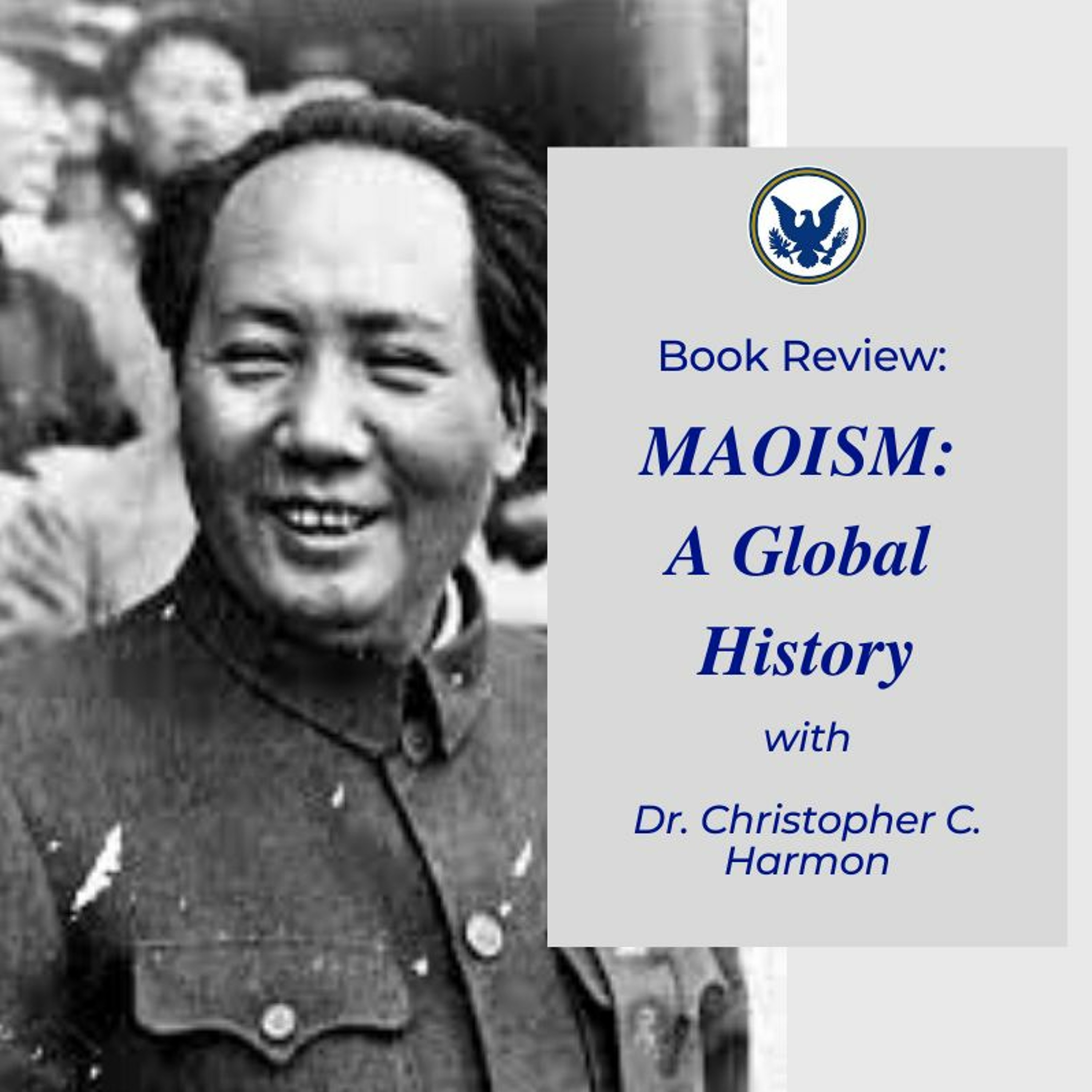
Book Review: MAOISM -- A Global History by Julia Lovell
About the book review: In certain ways China has moved off its Maoist model. But Maoism has had strong and unexpected roles in the violent underground in many places outside China. The best known cases may be the revolutionary wars of the latter 20th c. in Malaya, Vietnam, and Cambodia. But other contests by ideological Maoists opened up in India, Nepal, Sri Lanka, and even the western hemisphere's Peru. What is Maoism's appeal to foreigners? To what degree has it been exportable? In this new podcast, Professor Christopher C. Harmon will offer his insights into "Maoism Overseas" and discuss the admirable new book on the topic by Julia Lovell. About the Speaker: Dr. Harmon holds the Bren Chair of Great Power Competition at Marine Corps University and is also a professor at IWP, where he teaches courses on Military Strategy and Terrorist Advocacy and Propaganda.
Foreign Threats to the US Federal Elections
About the lecture: Ethan S. Burger will share his views of the most surprising feature of the long-awaited unclassified version of the National Intelligence Council’s Intelligence Community Assessment “Foreign Threats to the 2020 US Federal Election,” March 10, 2021, principally that is it contained few if any surprises. Perhaps its discussion of China and Iran influence campaigns are noteworthy — the former country did not “take sides” in the presidential contest and the latter engaged in an effort targeting individual voters. To date, no one has systematically examined what if any impact foreign influence campaigns have there been on the 2020 Congressional elections. Compared with its efforts in 2016, Russia’s actions seemed not to affect the election outcome in the form of influencing opinions or suppressing turnout. In a sense, this reflects that its objective of sowing further discord within American society has achieved a level of success previously not anticipated. Nonetheless, at least throughout the summer, the Russian leadership seems to believe that Mr. Trump would be re-elected. Shortly before being fired by President Donald Trump after the election, Christopher Krebs, the Department of Homeland Security Director saw that his agency, the Cybersecurity and Infrastructure Security Agency, had achieved its goal of ensuring “the most secure [presidential election] in American history.” Indeed “t]here is no evidence that any voting system deleted or lost votes, changed votes, or was in any way compromised.” Mr. Burger will seek to put China’s, Iran’s, and Russia’s efforts into a historical context, where their objectives are similar to those of many countries’ attempts to sway voters in foreign countries to place into power a “friendly government,” albeit with less sophisticated tools. In the future, the principal cybersecurity threats are likely to be attacks on infrastructure, governmental institutions, and financial crimes. About the Speaker: Ethan S. Burger, Esq., is a Washington-based international legal consultant and an cyber instructor with IWP's Cyber Intelligence Initiative, where he teaches a seminar about the international law governing cyber operations. His lectures at the IWP have included: The Application of International Law to Cyber Operations, Better Understanding Russian Use of Mercenaries to Advance Foreign Policy Goals, and Contextualizing Russian Interference in the 2016 UK Brexit Referendum and the U.S. Presidential Election. His areas of interests include corporate governance, transnational crime (corruption, cybercrime, and money laundering), and Russian affairs. After working as an attorney on Russian commercial, investment, and risk issues, he segued into academic, and advisory roles. He has taught at Vilnius University about cybersecurity issues while on a Fulbright Foundation grant during which time he participated in the NATO Cooperative Cyber Defence Centre of Excellence’s, a seminar on the international law governing cyber operations. He was a full-time faculty member at the Transnational Crime and Corruption Center (American University — School of International Service) and the Centre for Transnational Crime Prevention (Wollongong University — Faculty of Law).He received his undergraduate degree from Harvard University and J.D. from the Georgetown University Law Center.