The Creative Process · Arts, Culture & Society: Books, Film, Music, TV, Art, Writing, Creativity, Education, Environment, Theatre, Dance, LGBTQ, Climate Change, Social Justice, Spirituality, Feminism, Tech, Sustainability
1,274 episodes — Page 5 of 26
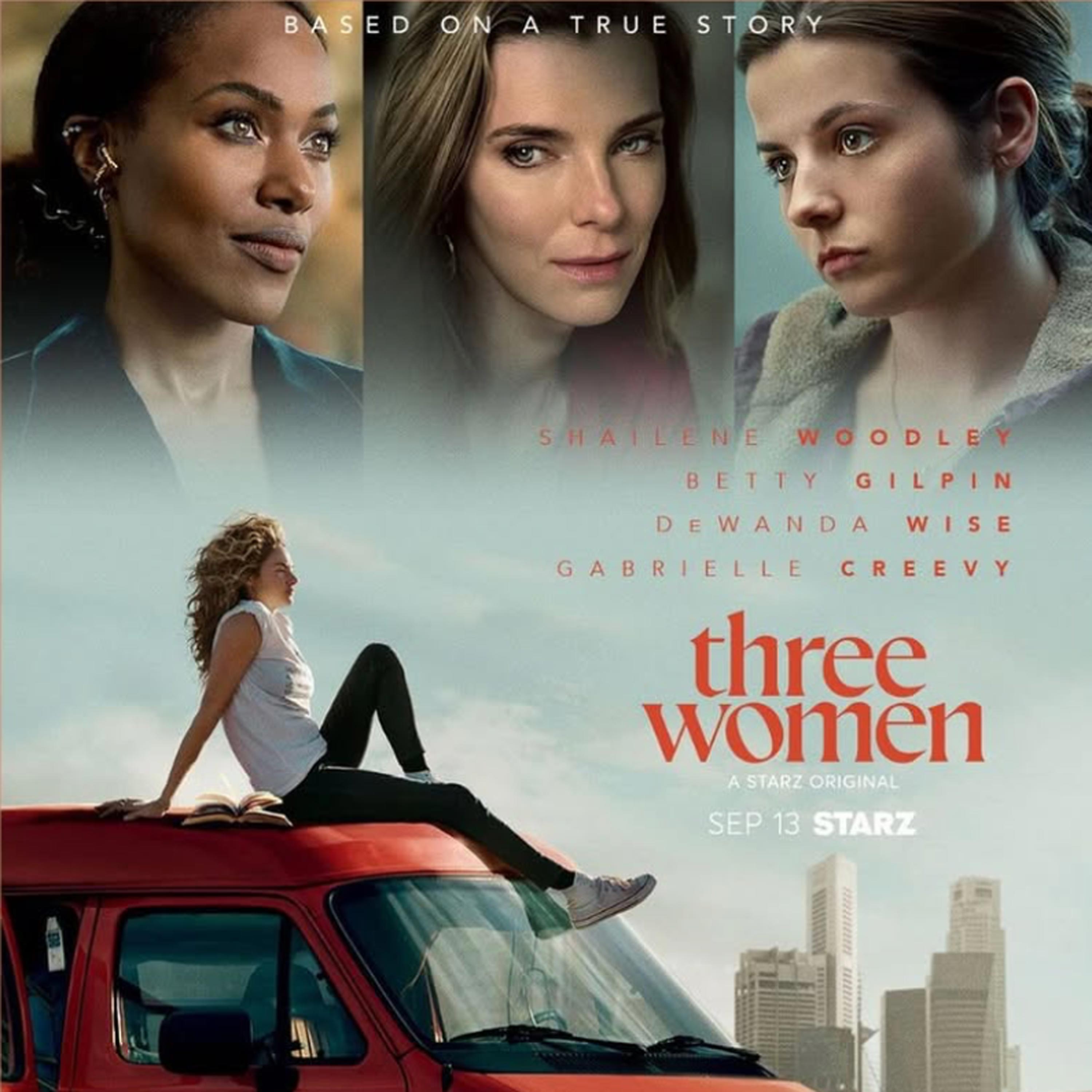
S14 Ep 1074THREE WOMEN starring Shailene Woodley, DeWanda Wise, Betty Gilpin: LAURA EASON - Highlights
“I think the show conveys to the women watching that their lives matter. They don't have to be some gorgeous aspirational person, although Sloane absolutely fits that mold. But for others living in the Midwest, struggling and feeling unseen, hopefully, the mirrors of Lina and Maggie will help them not feel so alone and remind them that their stories are important and matter.”Laura Eason is an Emmy-nominated producer, screenwriter, and playwright. Currently, she is the executive producer and showrunner of the Starz drama series Three Women. Based on a book by Lisa Taddeo, the series stars Shailene Woodley, DeWanda Wise, Betty Gilpin and Gabrielle Creevy. Laura’s writing and producing credits for television include The Loudest Voice and four seasons of House of Cards. Laura's many plays include the critically acclaimed Sex with Strangers. She has also adapted many classic novels for the stage, including a highly successful version of Around the World in 80 Days. She has served as Artistic Director of Lookingglass Theatre Company in Chicago, where she also acted, directed, and produced in upwards of 20 shows.Episode Websitewww.creativeprocess.info/podInstagram:@creativeprocesspodcast
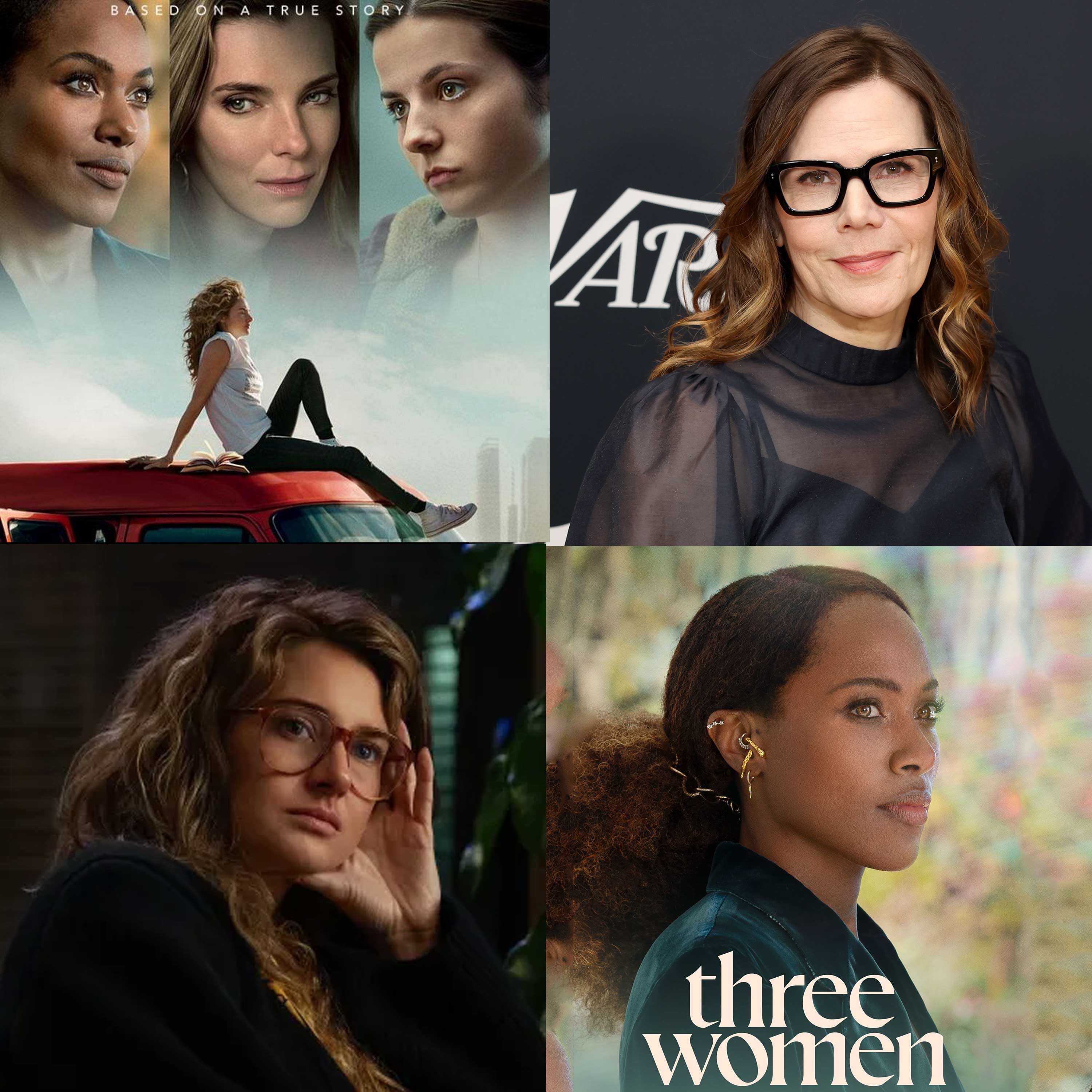
S14 Ep 1073Female Desire, Sex & Intimacy: Emmy-nominated Producer, Writer, Playwright LAURA EASON on THREE WOMEN
What is love? How do the narratives we internalize shape our understanding of relationships, intimacy, and family?Laura Eason is an Emmy-nominated producer, screenwriter, and playwright. Currently, she is the executive producer and showrunner of the Starz drama series Three Women. Based on a book by Lisa Taddeo, the series stars Shailene Woodley, DeWanda Wise, Betty Gilpin and Gabrielle Creevy. Laura’s writing and producing credits for television include The Loudest Voice and four seasons of House of Cards. Laura's many plays include the critically acclaimed Sex with Strangers. She has also adapted many classic novels for the stage, including a highly successful version of Around the World in 80 Days. She has served as Artistic Director of Lookingglass Theatre Company in Chicago, where she also acted, directed, and produced in upwards of 20 shows.“I think the show conveys to the women watching that their lives matter. They don't have to be some gorgeous aspirational person, although Sloane absolutely fits that mold. But for others living in the Midwest, struggling and feeling unseen, hopefully, the mirrors of Lina and Maggie will help them not feel so alone and remind them that their stories are important and matter.”Episode Websitewww.creativeprocess.info/podInstagram:@creativeprocesspodcast
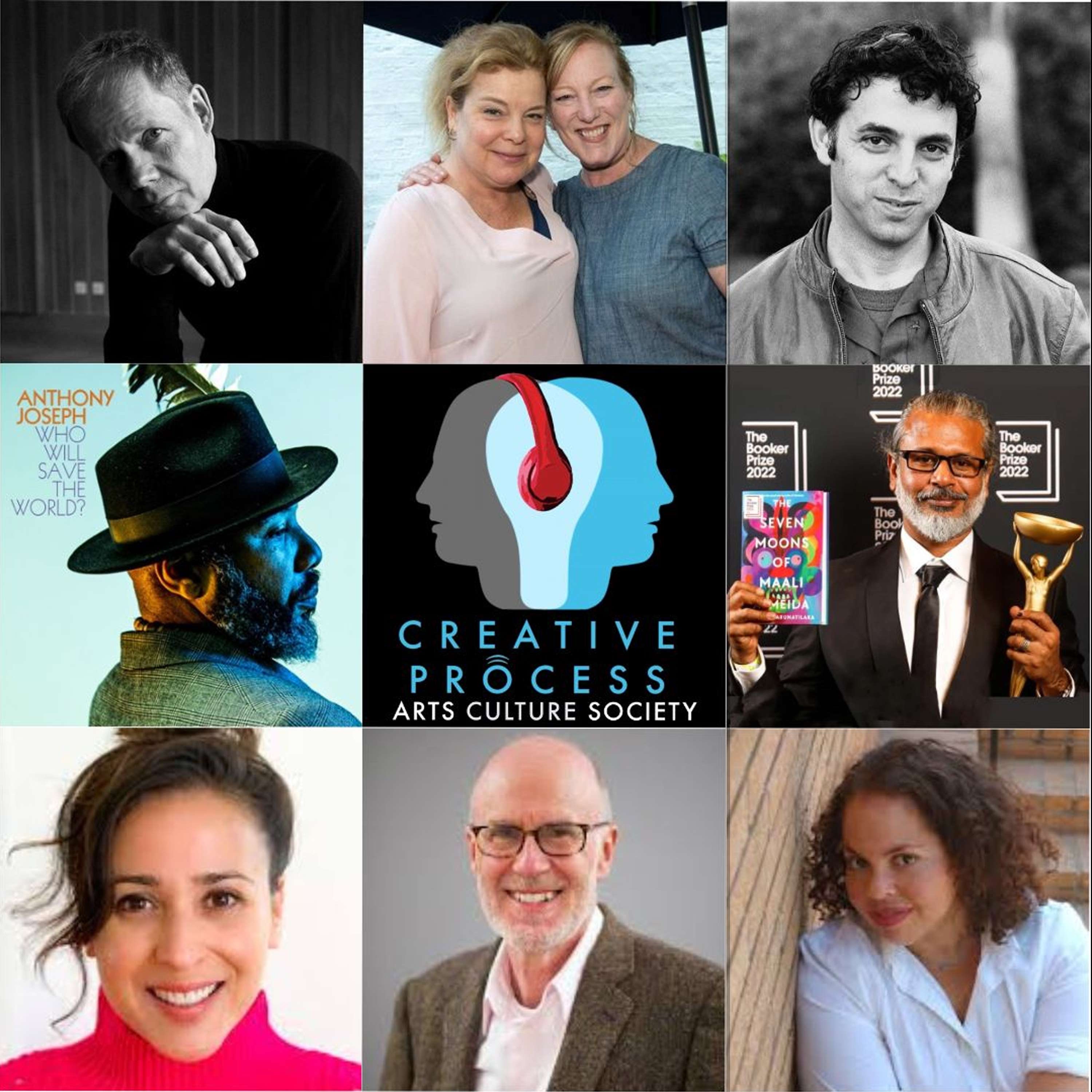
S14 Ep 1072How Does Art Shape Our Lives? Musicians, Writers, Filmmakers & Actors Share Their Stories
How do the arts help us find purpose and meaning? What role do stories play in helping us preserve memories, connect us to each other, and answer life’s big questions?MAX RICHTER (Award-winning Composer & Pianist) reflects on the importance of creativity and how art offers windows into other people’s experiences, fostering connection.ETGAR KERET (Cannes Film Festival Award-winning Director & Author) remembers how his mother told him stories to show her love.ANTHONY JOSEPH (T.S. Eliot Prize-winning Poet, Novelist, Singer-songwriter) on piecing together the fragmented documentation of Caribbean life through poetry.CLAUDIA FORESTIERI (Emmy Award-winning Writer/Creator of HBOMax’s Gordita Chronicles) talks about the crucial role of immigrants in building and revitalizing America.BRIGITTE MUNOZ-LIEBOWITZ (Showrunner Gordita Chronicles · One Day at a Time) on how adversity fosters growth and the importance of a positive outlook.JOHNJOE McFADDEN (Author of Life is Simple: How Occam’s Razor Set Science Free and Shapes the Universe · Molecular Genetics Professor) explores how art communicates complex ideas holistically.SHEHAN KARUNATILAKA (Booker Prize-winning Author, The Seven Moons of Maali Almeida) on writing in the 2nd person to explore spiritual dimensions.CATHERINE CURTIN (Actress · Stranger Things · Orange Is the New Black) reflects on creative freedom and in theater, film, and television.KATE MUETH (Founder/Artistic Director, The Neo-Political Cowgirls) emphasizes the importance of authenticity and personal fulfillment in the creative process.To hear more from each guest, listen to their full interviews.Episode Websitewww.creativeprocess.info/podIG:@creativeprocesspodcast
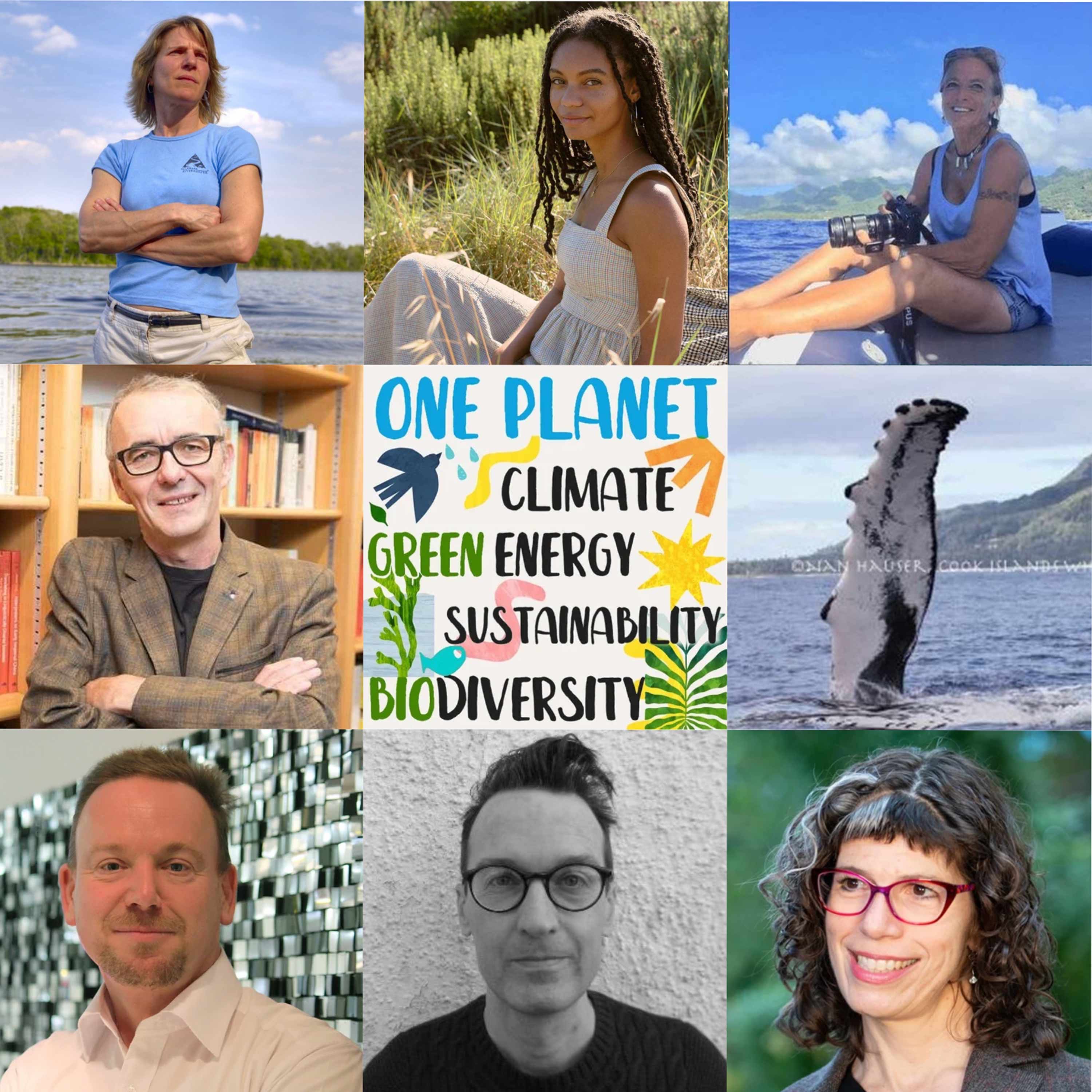
S13 Ep 1071Can We Redefine Our Relationship with Nature? Scientists, Writers & Activists Share Solutions
What can we learn from whales, the ways they communicate, and how their life cycle affects whole ecosystems, absorbing carbon and helping cool the planet? How have we contributed to the ecological degradation of the environment? How does language influence perception and our relationship to the more than human world?NAN HAUSER (Whale Researcher; President, Center for Cetacean Research & Conservation) describes how a whale protected her from a tiger shark during an underwater filming session and reflects on their emotional connection.DAVID FARRIER (Author of Footprints: In Search of Future Fossils) explores the long-term impacts humans have on the environment and the material legacies we leave behind for future generations.DANA FISHER (Director, Center for Environment, Community, & Equity; Author of Saving Ourselves: From Climate Shocks to Climate Action) discusses her "apocalyptic optimism," Significant change is likely to occur in response to extreme risk events that drive mass mobilization.SIR GEOFF MULGAN Author of Another World is Possible: How to Reignite Social & Political Imagination; Professor of Collective Intelligence, Public Policy & Social Innovation, University College London) on the circular economy and how reusing and recycling can drastically reduce waste and consumption.LEAH THOMAS (Author of The Intersectional Environmentalist: How to Dismantle Systems of Oppression to Protect People + Planet;) on addressing the environmental injustices faced by marginalized communities.MAYA VAN ROSSUM (Founder of Green Amendments For The Generations; Author of The Green Amendment: The People's Fight for a Clean, Safe, and Healthy Environment) on the impact of pollution and environmental degradation on human lives.MICHAEL CRONIN (Author of Eco-Travel: Journeying in the Age of the Anthropocene) argues for horizontal relationships with the environment and the need to recognize the non-human world.To hear more from each guest, listen to their full interviews.Episode Websitewww.creativeprocess.info/podInstagram:@creativeprocesspodcast
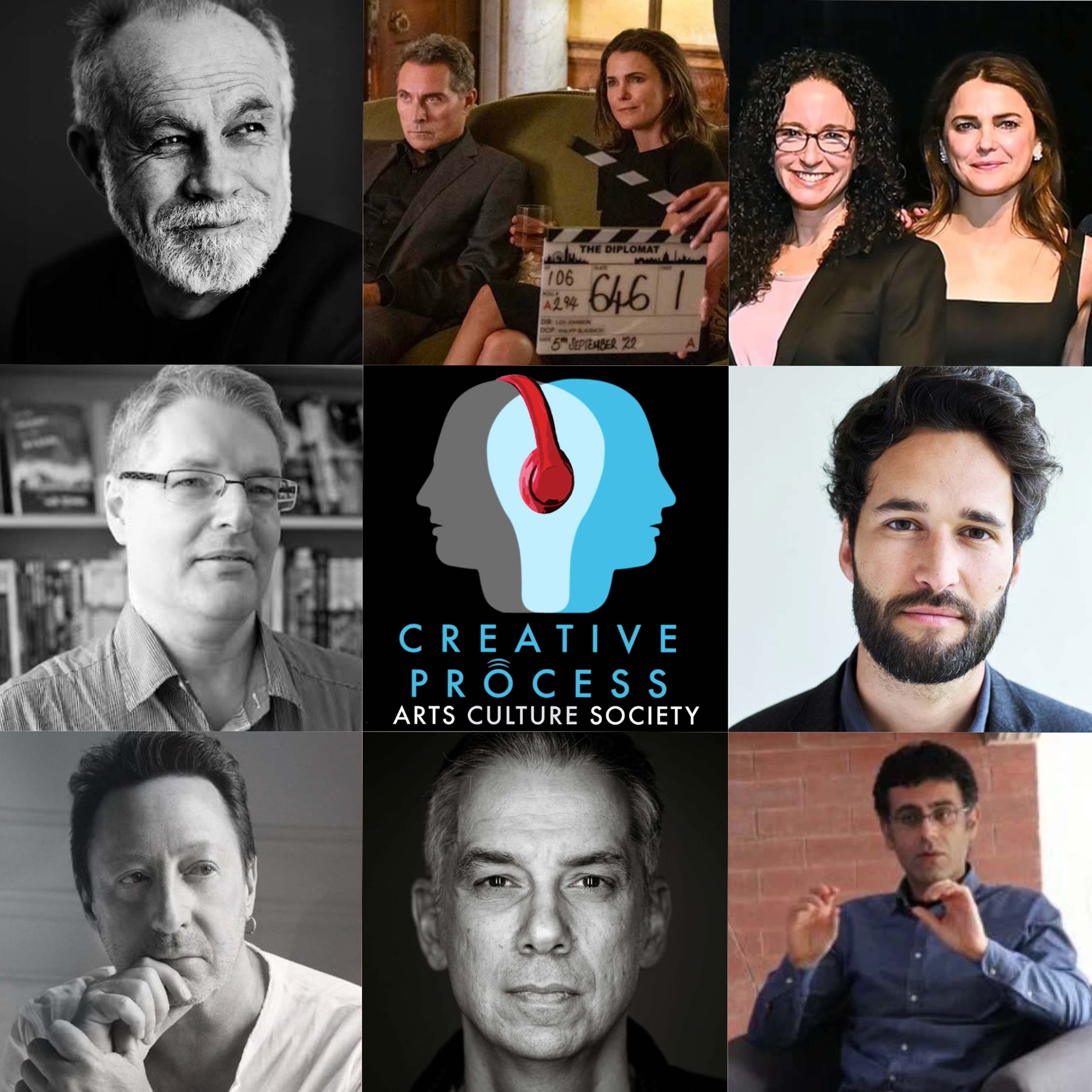
S13 Ep 1070How Do We Protect Democracy? Writers, Philosophers & Thought Leaders Speak Out
How can we be more engaged global citizens? How do we fight for truth and protect democracy in a post-truth world? What influence do billionaires have on politics, journalism, and the technology that shapes our lives?Lee McIntyre (Philosopher · Author of On Disinformation: How To Fight For Truth and Protect Democracy) examines democracy and how continuous disinformation campaigns not only promote falsehoods but ultimately aim to demoralize the public by making them doubtful about the existence of truth.Darryl Cunningham (Cartoonist · Author of Elon Musk: Investigation into a New Master of the World) on the problematic nature of extreme wealth concentration among billionaires and the political power they wield.Debora Cahn (Emmy-nominated Showrunner & Creator of Netflix’s The Diplomat) on how being a child of Holocaust survivors sparked her interest in moral questions and complex characters.Julian Lennon (Singer-songwriter, doc filmmaker, founder of The White Feather Foundation) on the need for supporting education and safety for girls in Kenya.Arash Abizadeh (Philosopher · Assoc. Editor of Free & Equal) on wealth inequality and how economic disparities create social unrest and political manipulation, suggesting that tackling inequality is essential for the healthy functioning of democratic societies.Daniel Susskind (Economist · Author of Growth: A Reckoning) explores how involving ordinary citizens in deliberation processes in mini-publics and citizen assemblies can help resolve complex political issues like nuclear policy and climate change.Carlos Moreno (Originator of the 15-Minute City concept) emphasizes the importance of proximity and social interaction in urban design, highlighting how it counteracts social isolation, reduces radicalization, and helps foster more inclusive, tolerant communities.To hear more from each guest, listen to their full interviews.Episode Websitewww.creativeprocess.info/podIG:@creativeprocesspodcast
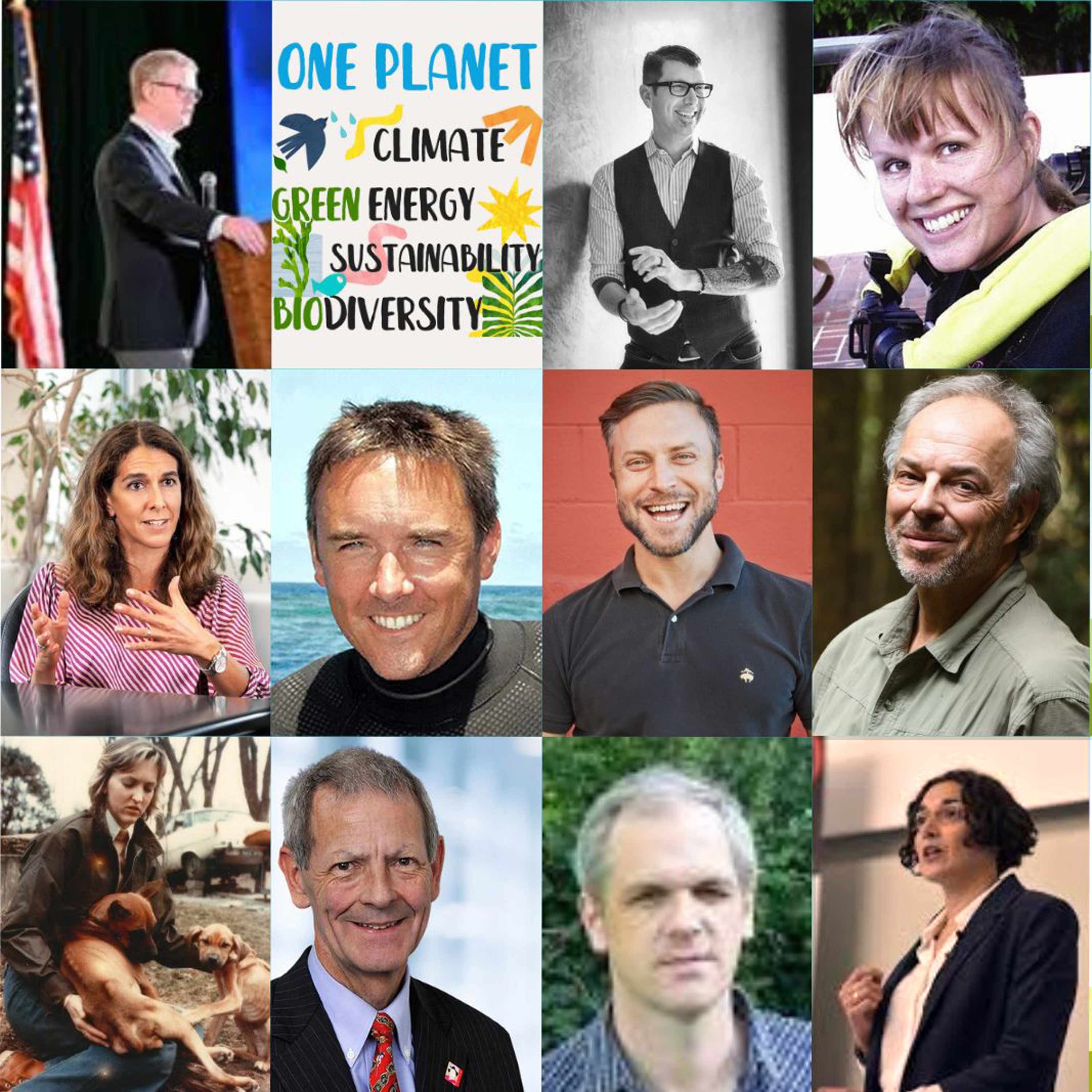
S13 Ep 1069Voices for the Planet: Scientists, Activists, Farmers & Filmmakers Speak Out
How can we learn to speak the language of the Earth and cultivate our intuitive intelligence? What lessons can we learn from non-human animals about living in greater harmony with nature?COLIN STEEN (CEO, Legacy Agripartners) on how growing up on a Saskatchewan farm shaped his sense of responsibility and success.JILL HEINERTH (cave diver, writer, filmmaker): Shares lessons from exploring underwater caves and our interconnected planet.NOAH WILSON-RICH (Co-Founder/CEO, The Best Bees Company) on bees' significance to society and the lessons they offer.INGRID NEWKIRK (Founder/President, PETA) explores animal communication and the complexity of their languages.NEIL GRIMMER (Brand President, SOURCE Hydropanel) on global water insecurity and the need for innovation.CARL SAFINA (Ecologist, Author) examines human recklessness and its severe impact on the planet.RICHARD VEVERS (Founder, The Ocean Agency) stresses coral reefs' vital role in marine ecosystems.WALTER STAHEL (Founding Father of the Circular Economy) advocates for a low-waste, circular economy.JOELLE GERGIS (IPCC Lead Author, Author of Humanity’s Moment: A Climate Scientist’s Case for Hope) on coping with the emotional burden of climate change.JAMES BROWNING (Founder, F Minus) explains fossil fuel lobbyists' conflicting roles.PAULA PINHO (European Commission, DG for Energy) on nurturing values of peace, democracy and sustainability.To hear more from each guest, listen to their full interviews.Episode Websitewww.creativeprocess.info/pod
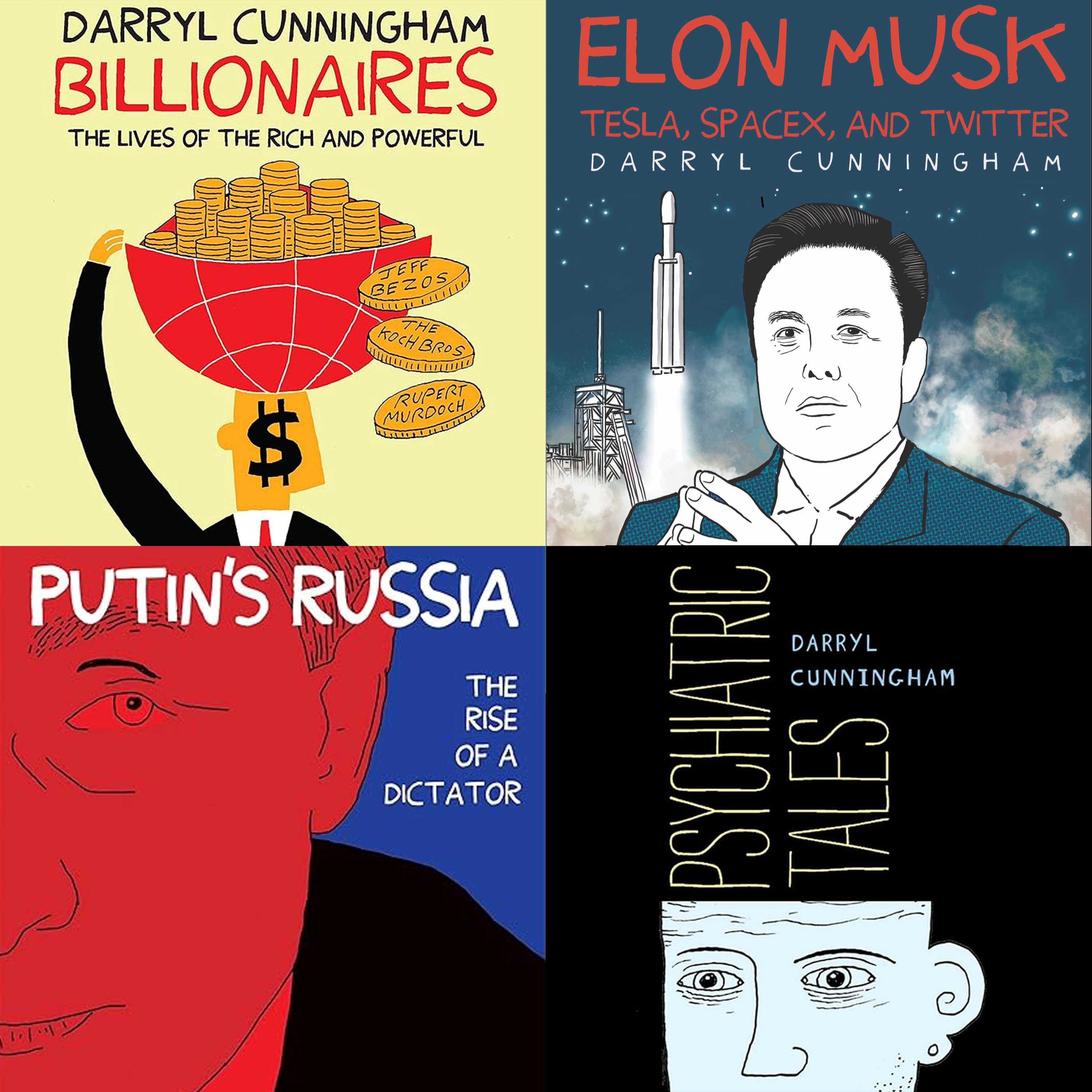
S13 Ep 1068Elon Musk, Putin's Russia, Murdoch's Fox News: How Billionaires Shape Our World with DARRYL CUNNINGHAM
What influence do billionaires have on politics, journalism, and the technology that shapes our lives? What drives people to seek absolute power, and how can we hold them accountable?Darryl Cunningham is a cartoonist and author of Science Tales, Psychiatric Tales, The Age of Selfishness, and Billionaires: The Lives of the Rich and Powerful. Cunningham is also well-known for his comic strips, which have been featured on the websites Forbidden Planet and Act-i-vate collective, among others. others. His more recent work includes a graphic novel on Elon Musk, titled Elon Musk: Investigation into a New Master of the World.“No one should be a billionaire because it's damaging. There's a certain level of wealth that's damaging to a country. Billionaires have so much wealth that they have enormous political power, which is undemocratic. There should be a ceiling on wealth. I have nothing against people becoming millionaires or even multi-millionaires. But multi-billionaires are incredibly bad for all of us. If you have so much money that you can buy an entire political party, that's a thing that shouldn't exist.”Episode Website with Feature Articlewww.creativeprocess.info/podInstagram:@creativeprocesspodcast
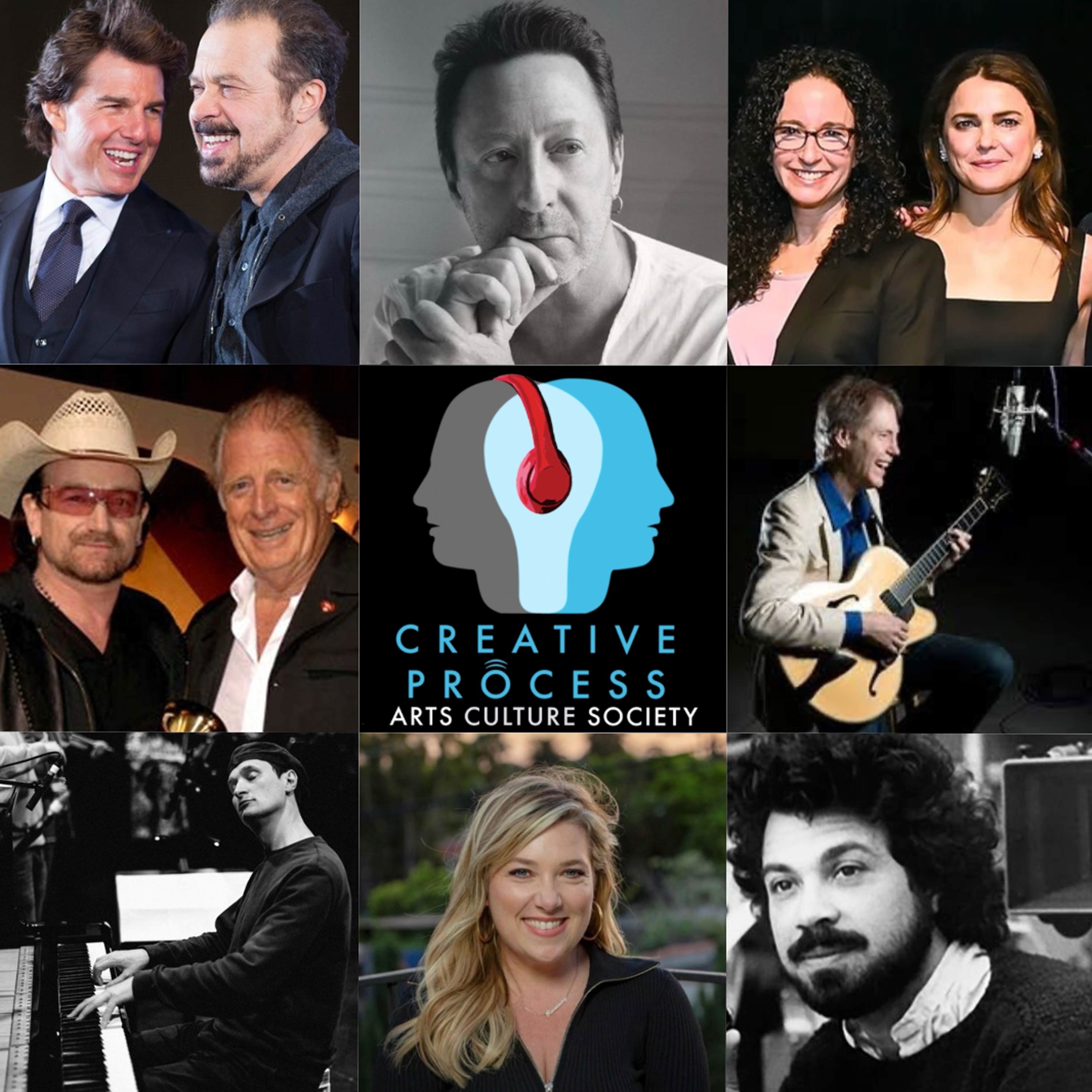
S13 Ep 1067Art, Creativity & Intuition - Filmmakers, Musicians & Artists discuss their Creative Process
Where does our intuition come from? How are lifelong creative partnerships formed and what role do friendship and personal connection play? How do our personal lives influence the art we make?Erland Cooper (Scottish composer, producer & multi-instrumentalist) explores the emotional and transformative effects of music and visual arts. He underscores how music can transport individuals to different places.Debora Cahn (television creator, writer, Emmy-nominated showrunner & exec. producer of Netflix’s The Diplomat) discusses the craft of long-form storytelling in television. She highlights the process of building immersive worlds and the challenge of integrating ideas into narratives that resonate with audiences on a universal level.Julian Lennon (singer-songwriter, doc filmmaker, photographer/author of Life’s Fragile Moments) reflects on the influence of his heroes and teachers and remembers what mother taught him about the importance of empathy and respect.Ed Zwick (Oscar-winning writer, director, producer & author of Hits, Flops & Other Illusions) analyzes the elusive nature of talent, the art of directing and the magical moments in casting.Chris Blackwell (Founder of Island Records, Rock & Roll Hall of Fame Inductee) highlights the importance of instinct in recognizing and nurturing talent. He recounts signing Cat Stevens and shares how artistic partnerships grow out of friendship.Joy Gorman Wettels (Exec. producer of UnPrisoned & founder of Joy Coalition) on how humanizing stigmatized social issues by creating relatable, empathetic characters can lead to real-world change and understanding.Rick Carnes (Songwriter & President, Songwriters Guild of America) discusses the fundamental elements of songwriting and how music marks significant moments in people’s lives. He elaborates on his creative process and the importance of mindfulness and emotional awareness in writing meaningful songs.To hear more, listen to their full interviews.Episode Websitewww.creativeprocess.info/podIG :@creativeprocesspodcast
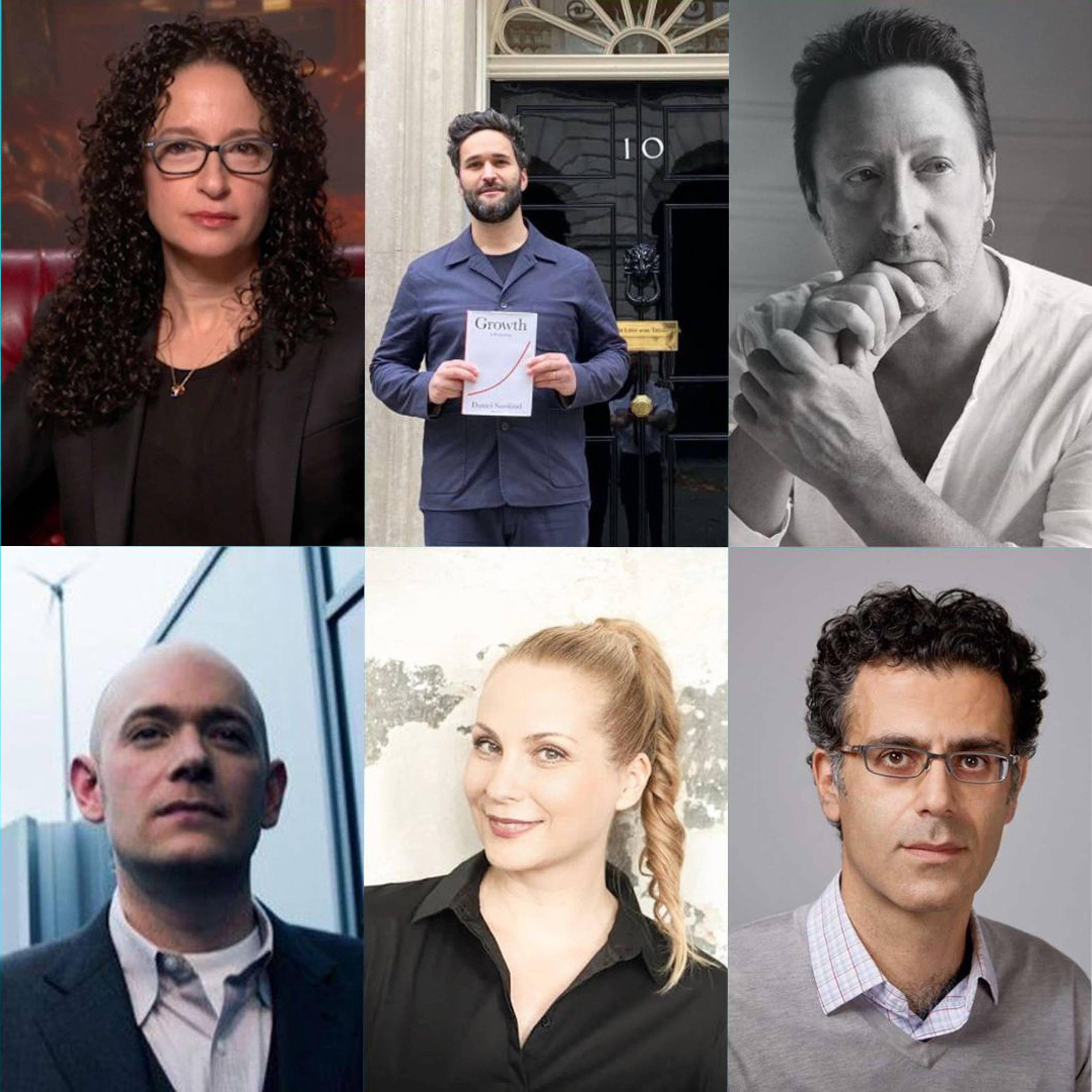
S13 Ep 1066Technology, AI, Art & Culture - Artists, Philosophers, Economists & Scientists discuss the Future
How can we shape technology’s impact on society? How do social media algorithms influence our democratic processes and personal well-being? Can AI truly emulate human creativity? And how will its pursuit of perfection change the art we create?Daniel Susskind (Economist · Oxford & King’s College London · Author of Growth: A Reckoning · A World Without Work) shares insights on the nature of growth driven by technological progress. He contends that while technology can accelerate growth, its impacts can be consciously directed to reduce environmental damage and social inequalities. The current trajectory of technological progress needs reevaluation to mitigate potential adverse effects on future working lives.Arash Abizadeh (Professor of Political Science · McGill University) explores the ethical tensions between democratic needs and commercial imperatives of social media platforms. He highlights how algorithms designed to maximize engagement often foster outrage and fear, contrasting these commercial objectives with the requirements for a healthy democratic public sphere.Debora Cahn (Creator & Executive Producer of Netflix’s The Diplomat starring Keri Russell & Rufus Sewell · Exec. Producer Homeland · Grey’s Anatomy · Vinyl · Co-Producer The West Wing) toggles between apprehension and optimism about emerging technologies like AI. She reflects on her father's experience with nuclear technology and ponders the unpredictable impacts of AI.Julia F. Christensen (Neuroscientist - Author of The Pathway To Flow) examines the rise of AI and its influence on aesthetics in the arts. She argues that technology drives creators towards superficial beauty conforming to popular standards, thereby cluttering the mind and fostering an obsession with perfection fueled by dopamine signals.Julian Lennon (Singer-songwriter · Photographer · Doc Filmmaker · Founder of The White Feather Foundation) discusses AI's potential in the medical field, highlighting recent advancements that are paving the way for novel treatments and cures.Brian David Johnson (Futurist · Author of The Future You: How to Create the Life You Always Wanted) emphasizes the importance of maintaining a human-centric approach to technology. He questions the purpose behind technological advancements, urging developers to always consider the human impact and clarify their objectives.To hear more from each guest, listen to their full interviews.Episode Websitewww.creativeprocess.info/podInstagram:@creativeprocesspodcast
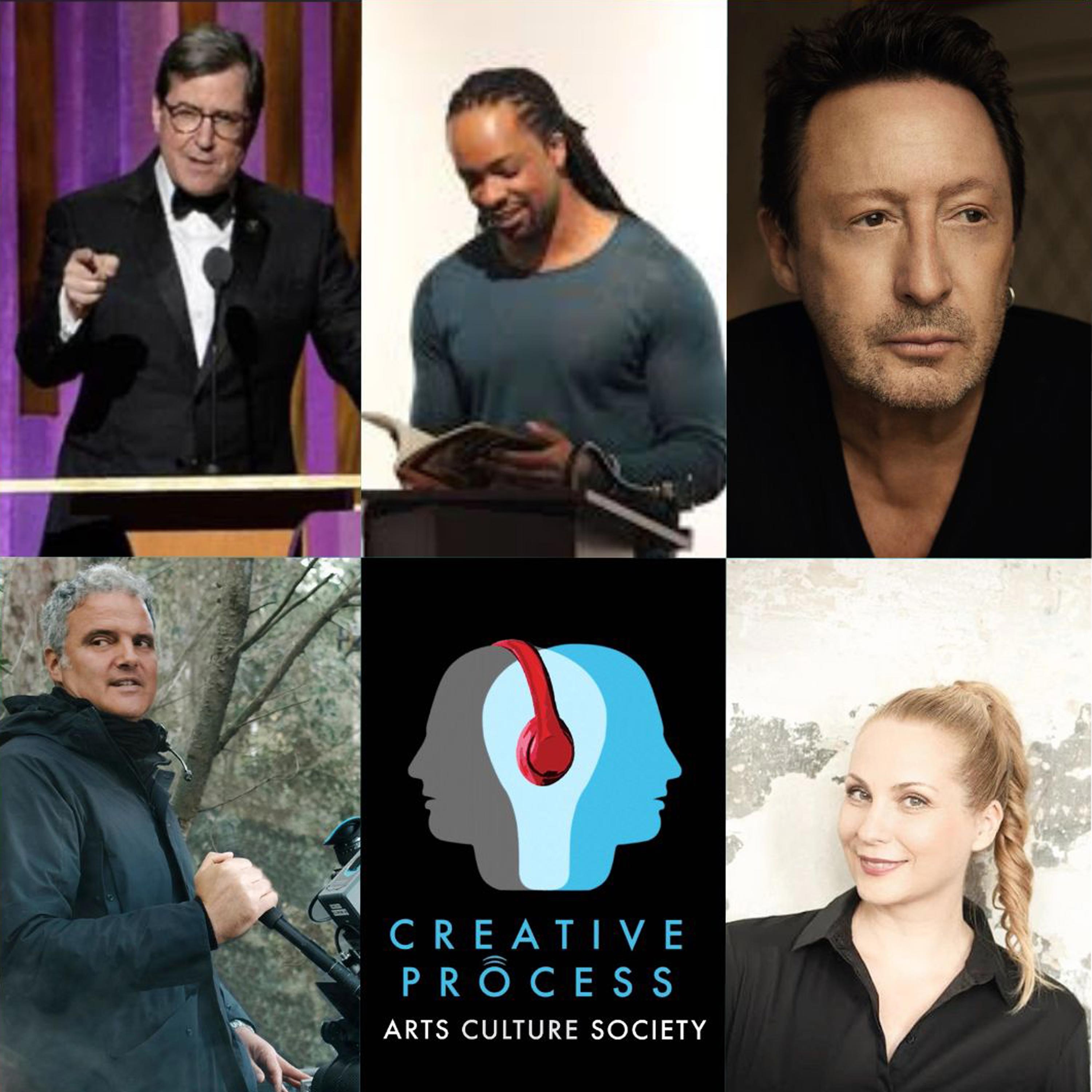
S13 Ep 1065Art & Empathy: Filmmakers, Writers & Artists on Connecting through Creativity
How does art change the way we see and experience the world? Art has the power to offer transformative experiences, but what about the lives of artists who give so much of themselves? How can we balance creativity and personal well-being while still making work that is true and meaningful?David Rubin (President of the Academy of Motion Picture Arts & Sciences 2019-2022 · Casting Director) discusses the importance of fostering an international presence for the Motion Picture Academy. He highlights how inviting filmmakers from around the world has enriched the community and emphasizes the power of collaboration in the filmmaking industry.Later, he reflects on his journey in casting, the challenges younger people face in finding their niche, and the importance of patience and open-mindedness in discovering one's career path. Rubin highlights how negative experiences can also be valuable learning points.Jericho Brown (Pulitzer Prize-winning Poet: The Tradition · Editor of How We Do It: Black Writers on Craft, Practice, and Skill) shares his process of writing poetry, emphasizing the element of discovery and the unexpected directions a poem can take. He shares his advice to young poets, how they should aim to create original works that could become lasting cultural touchstones.Julian Lennon (Singer-songwriter · Documentary Filmmaker · Founder of The White Feather Foundation · Photographer/Author of Life’s Fragile Moments) reflects on the emotional highs and lows experienced by creatives. He discusses the significance of finding balance and happiness through artistic and charitable expression.Sam Levy (Award-winning Cinematographer of Lady Bird · Frances Ha · While We’re Young) explores the art of cinematography. Levy underscores the importance of intention in every scene, whether it’s to highlight a character’s emotions or to convey the unspoken elements of the story.Julia F. Christensen (Neuroscientist - Author of The Pathway To Flow: The New Science of Harnessing Creativity to Heal and Unwind the Body & Mind) discusses transformative experiences through art and literature. She explains how aesthetic emotions can lead to profound changes in perception and understanding, drawing from both personal and scientific insights.To hear more from each guest, listen to their full interviews.Episode Websitewww.creativeprocess.info/podInstagram:@creativeprocesspodcast

S13 Ep 1064The Art of Writing with Neil Gaiman, Ada Limón, Jericho Brown, E.J. Koh, Marge Piercy & Max Stossel
This episode explores the enduring power of storytelling to shape our world and illuminate the human experience. Writers Neil Gaiman, Ada Limón, Jericho Brown, E.J. Koh, Marge Piercy, and Max Stossel discuss creativity, resilience, and the power of words to heal and bring people together.Neil Gaiman (Writer, Producer, Showrunner · The Sandman, American Gods, Good Omens, Coraline) explores the secret lives of writers, reflecting on the masks they wear in the pursuit of truth and beauty.Jericho Brown (Pulitzer Prize-winning Poet: The Tradition · Editor of How We Do It: Black Writers on Craft, Practice, and Skill) shares “Foreday in the Morning”, highlighting the hard work and resilience in Black America. He examines the vernacular of his poetry and how it intertwines themes of race, nationality, and familial love.Ada Limón (U.S. Poet Laureate · The Hurting Kind, The Carrying) presents an "apocalyptic love poem" that questions the intersection of despair and hope in today's changing world. She reflects deeply on the personal and universal struggles of finding beauty amidst environmental and existential crises.Marge Piercy (Award-winning Novelist, Poet & Activist) delves into the emotional weight of words and memories, the terror of child separation, and the impending doom facing our world due to environmental destruction and political negligence.E.J. Koh (Award-Winning Memoirist & Poet · The Magical Language of Others · A Lesser Love) recounts a haunting family history from Jeju Island in Korea, emphasizing the lasting impacts of trauma and the collective memory of ancestral sufferings.Max Stossel (Award-winning Poet, Filmmaker, Speaker, Creator of Words That Move) uses the metaphor of a boxing ring to discuss the complexities of human conflict and connection, encouraging a shift from adversarial relationships to collaborative problem-solving.To hear more from each guest, listen to their full interviews.Episode Websitewww.creativeprocess.info/podInstagram:@creativeprocesspodcast
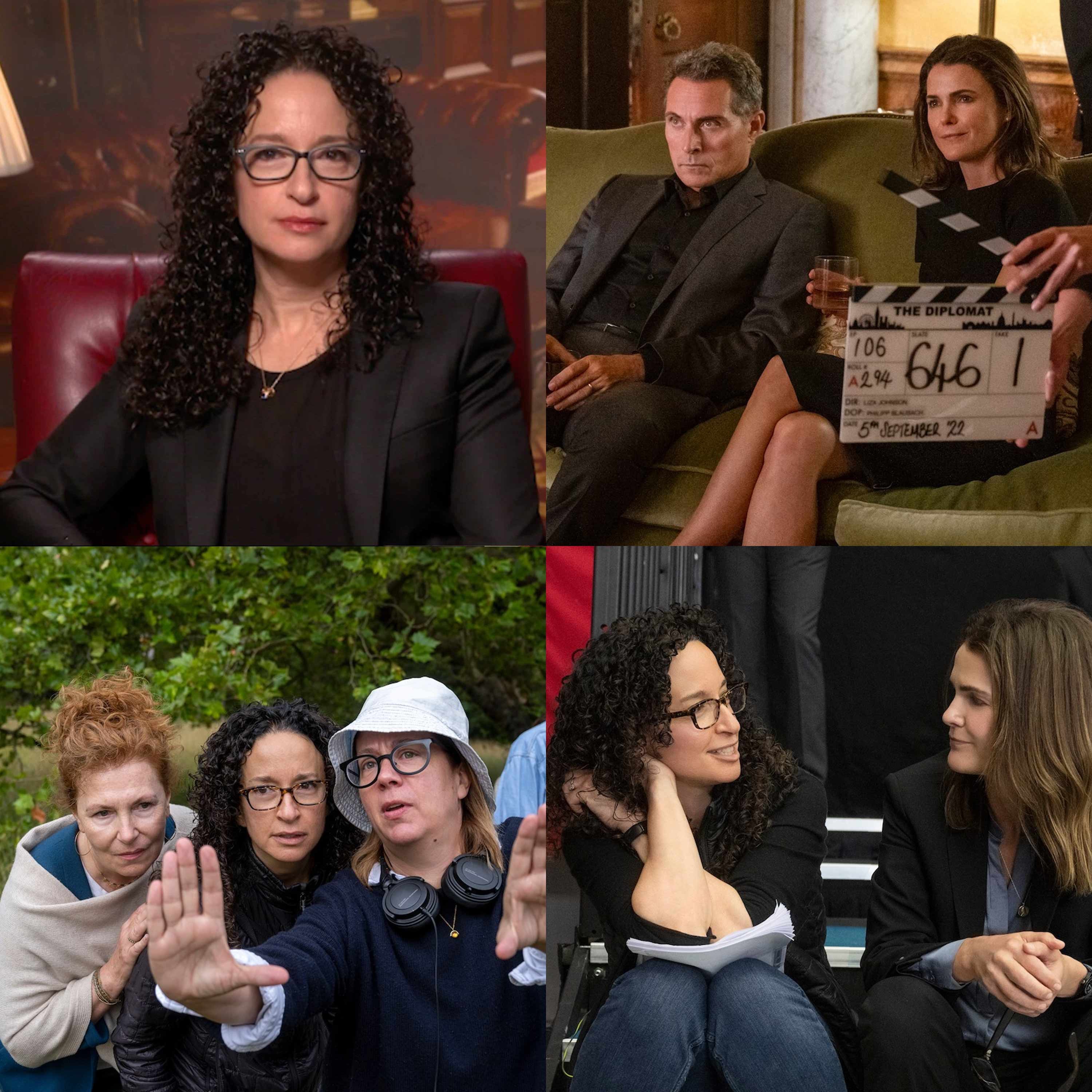
S13 Ep 1063Women, Politics & The Art of Diplomacy w/ DEBORA CAHN - Creator of Netflix’s THE DIPLOMAT starring Keri Russell
“The question of who's good and who's bad is always front of mind for me because my basic goal is to get to the place where no one is good or bad; everybody is in an unspeakably complicated situation. From the very beginning of the series, this event happens. We believe that it was perpetrated by Iran. Fairly quickly, we learn through the relationships that have been built over time between our heroes, Kate and Hal, and people in other countries that they’ve negotiated with that the assumptions we're making are completely incorrect. In fact, the people we assume have some sort of malintent toward us are being falsely accused. Someone else is playing on the stereotypes we have of those people in order to send us off in the wrong direction.I feel very fortunate that the medium I’m in is television, which is a very long form of storytelling. You're not telling a single story; you're telling a world. You're inviting people into a world and asking them to live there with you and these characters for a period of time. The best I can do is build a world where people grapple with these important questions and try their best. All I can expect from people and from myself is that we're trying to do something larger than ourselves.”Debora Cahn is the Emmy-nominated showrunner and executive producer of Netflix’s The Diplomat, a political thriller series starring Keri Russell and Rufus Sewell. She’s worked with television’s leading showrunners, including Shonda Rhymes, Terence Winter, Steven Levinson, and Howard Gordon. Her career began working on Aaron Sorkin’s The West Wing which has led to projects such as the hit Showtime series Homeland, ABC’s long-running medical drama Grey’s Anatomy, and HBO’s Vinyl, which was co-created by Martin Scorsese. She’s the winner of two Writers Guild of America Awards for The West Wing and FX’s limited series Fosse/Verdon and the 2023 Quincy Award for Responsible Statecraft.Dive Deeper with Feature Article & Story Highlightswww.creativeprocess.info/podInstagram:@creativeprocesspodcastimage credit: Alex Bailey / Netflix
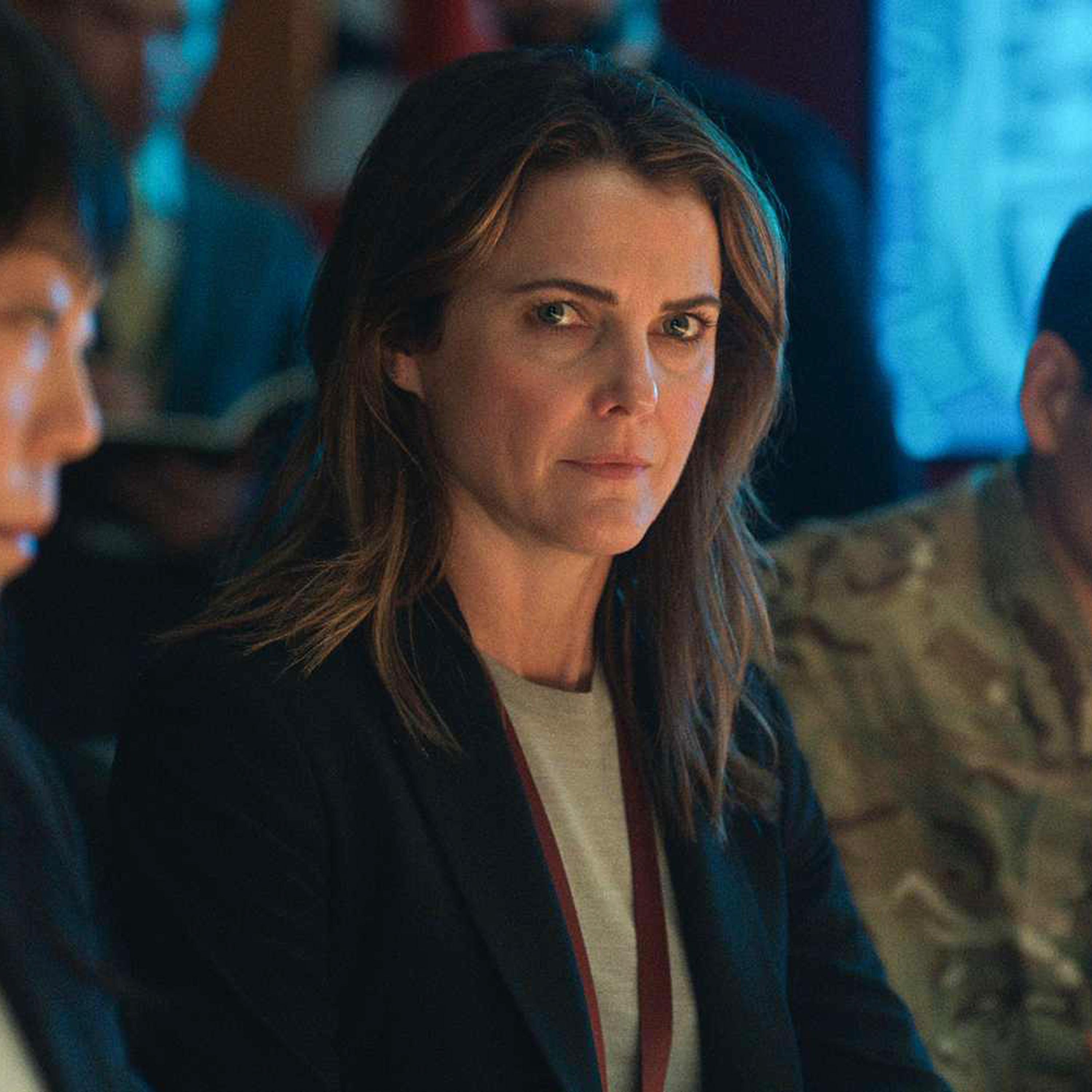
S13 Ep 1062THE DIPLOMAT with DEBORA CAHN - Emmy-winning Showrunner, Exec. Producer - The West Wing, Homeland
What are the unseen challenges faced by diplomats, and what role do they play in maintaining global order? How do TV shows influence our understanding of real-world politics? How do women navigate power, and what does it take for them to lead in politics?Debora Cahn is the Emmy-nominated showrunner and executive producer ofNetflix’s The Diplomat, a political thriller series starring Keri Russell and Rufus Sewell. She’s worked with television’s leading showrunners, including Shonda Rhymes, Terence Winter, Steven Levinson, and Howard Gordon. Her career began working on Aaron Sorkin’s The West Wing which has led to projects such as the hit Showtime series Homeland, ABC’s long-running medical drama Grey’s Anatomy, and HBO’s Vinyl, which was co-created by Martin Scorsese. She’s the winner of two Writers Guild of America Awards for The West Wing and FX’s limited series Fosse/Verdon and the 2023 Quincy Award for Responsible Statecraft.“The question of who's good and who's bad is always front of mind for me because my basic goal is to get to the place where no one is good or bad; everybody is in an unspeakably complicated situation. From the very beginning of the series, this event happens. We believe that it was perpetrated by Iran. Fairly quickly, we learn through the relationships that have been built over time between our heroes, Kate and Hal, and people in other countries that they’ve negotiated with that the assumptions we're making are completely incorrect. In fact, the people we assume have some sort of malintent toward us are being falsely accused. Someone else is playing on the stereotypes we have of those people in order to send us off in the wrong direction.I feel very fortunate that the medium I’m in is television, which is a very long form of storytelling. You're not telling a single story; you're telling a world. You're inviting people into a world and asking them to live there with you and these characters for a period of time. The best I can do is build a world where people grapple with these important questions and try their best. All I can expect from people and from myself is that we're trying to do something larger than ourselves.”Dive Deeper with Feature Article & Story Highlightswww.creativeprocess.info/podInstagram:@creativeprocesspodcastimage credit: Netflix
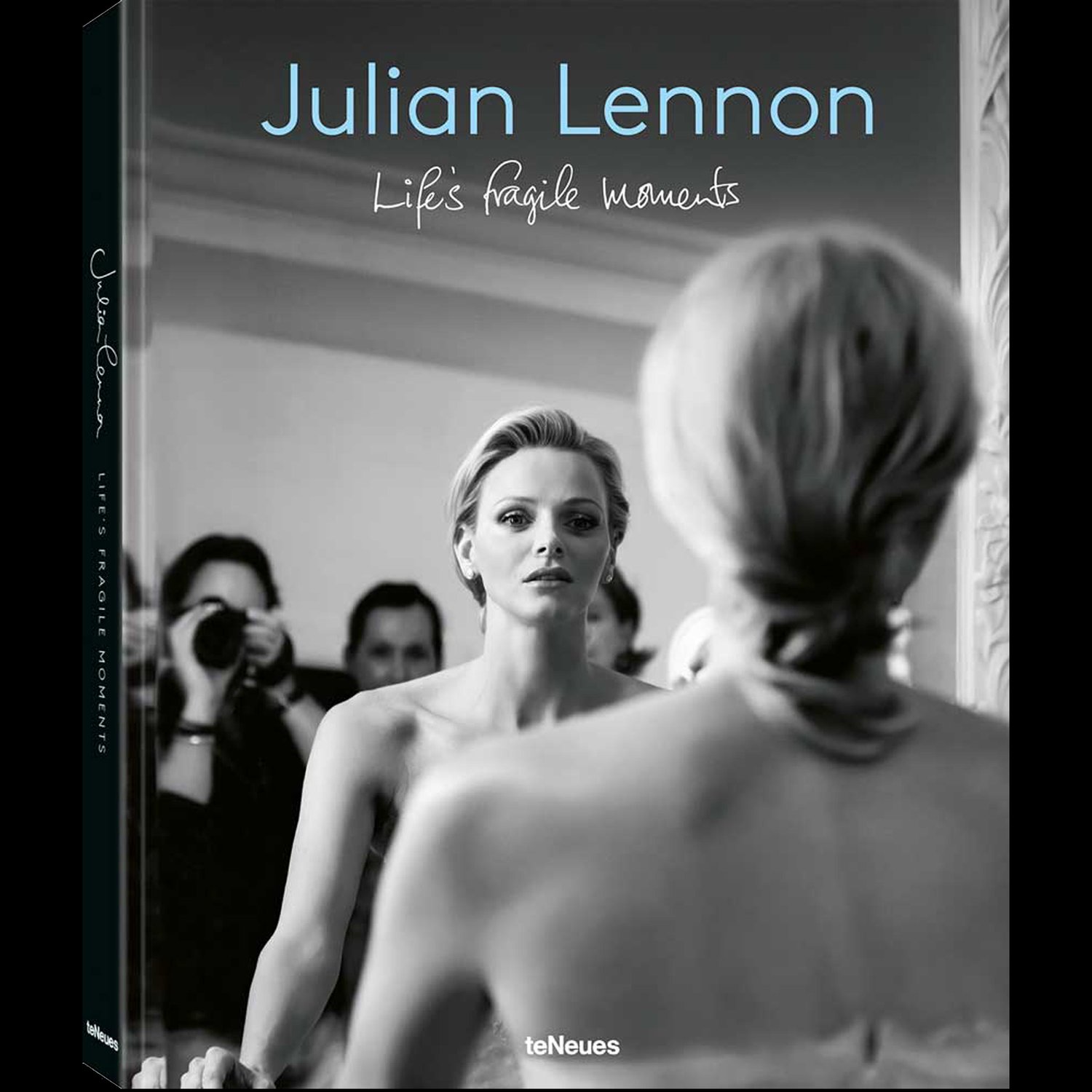
JULIAN LENNON on Art, Empathy & Creativity - Highlights
“I think a lot of joy comes from helping others. One of the things that I've been really focusing on is finding that balance in life, what’s real and what’s true and what makes you happy. How can you help other people feel the same and have a happier life? I think whatever that takes. So if that's charity, if that's photography, if that's documentary, if that's music, and I can do it, then I'm going to do it.From traveling, especially in Ethiopia, Kenya, and even South America, we just see these scenarios and situations where they don't have enough support or finances. Anything I’m involved in, a good percentage goes to The White Feather Foundation. From what I witnessed, I just wanted to be able to help. My best teacher ever was Mum because I watched her live through life with dignity, grace, respect, and empathy. To me, those are some of the key things that are most important in living life. I think you have to love everybody and yourself. Respect is a real key issue, not only for people but for this world that we live in, Mother Earth. It's of key importance that we honor and respect this beautiful little blue ball that we live on.”Julian Lennon is a Grammy-nominated singer-songwriter, photographer, documentary filmmaker, and NYTimes bestselling author of the Touch the Earth children’s book trilogy. This autumn, Whispers – A Julian Lennon Retrospective is being presented at Le Stanze della Fotografia, culminating in the publication of Life’s Fragile Moments, his first photography book. It features a compilation of images that span over two decades of Lennon's unique life, career, adventures, and philanthropy. He founded The White Feather Foundation in 2007, whose key initiatives are education, health, conservation, and the protection of indigenous cultures. He was the executive producer of Kiss the Ground and other environmental documentaries and was named a Peace Laureate by UNESCO in 2020.www.creativeprocess.infowww.oneplanetpodcast.orgIG www.instagram.com/creativeprocesspodcastPhoto credit: © 2024, Julian Lennon. All rights reserved.Life’s Fragile Moments, published by teNeues, www.teneues.com, August 2024. 27,5 x 34 cm |10 5/6 x 13 3/8 in., 240 pages, Hardcover, approx. 200 color photographs, texts English & German ISBN: 978-3-96171-614-2
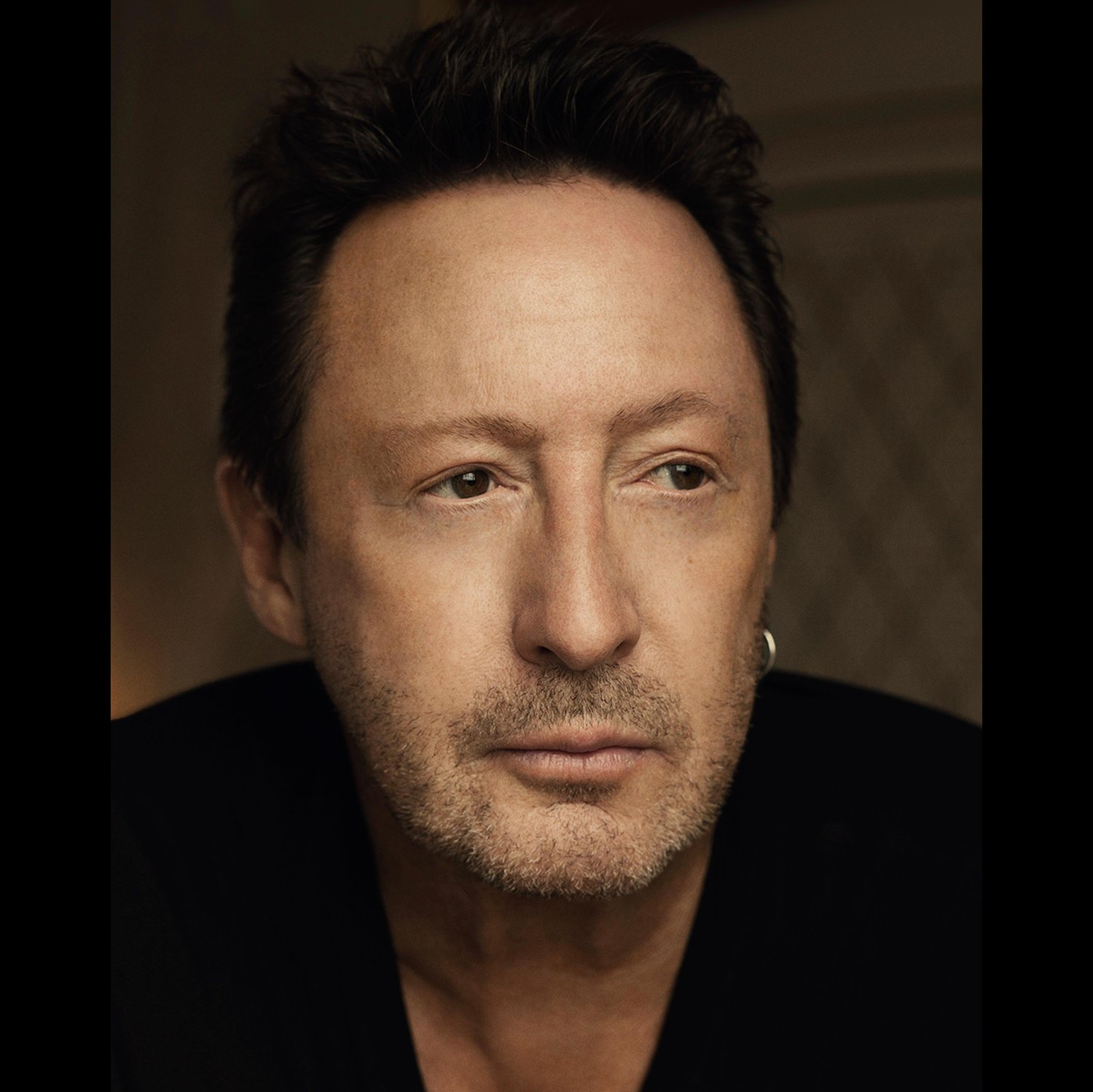
Life’s Fragile Moments with JULIAN LENNON - Photographer, Musician, Documentary Filmmaker
What is the power of photography? How do images and songs bookmark our lives, reminding us of what we care about, who we love, and what it means to be alive?Julian Lennon is a Grammy-nominated singer-songwriter, photographer, documentary filmmaker, and NYTimes bestselling author of the Touch the Earth children’s book trilogy. This autumn, Whispers – A Julian Lennon Retrospective is being presented at Le Stanze della Fotografia, culminating in the publication of Life’s Fragile Moments, his first photography book. It features a compilation of images that span over two decades of Lennon's unique life, career, adventures, and philanthropy. He founded The White Feather Foundation in 2007, whose key initiatives are education, health, conservation, and the protection of indigenous cultures. He was the executive producer of Kiss the Ground and other environmental documentaries and was named a Peace Laureate by UNESCO in 2020.“I think a lot of joy comes from helping others. One of the things that I've been really focusing on is finding that balance in life, what’s real and what’s true and what makes you happy. How can you help other people feel the same and have a happier life? I think whatever that takes. So if that's charity, if that's photography, if that's documentary, if that's music, and I can do it, then I'm going to do it.From traveling, especially in Ethiopia, Kenya, and even South America, we just see these scenarios and situations where they don't have enough support or finances. Anything I’m involved in, a good percentage goes to The White Feather Foundation. From what I witnessed, I just wanted to be able to help. My best teacher ever was Mum because I watched her live through life with dignity, grace, respect, and empathy. To me, those are some of the key things that are most important in living life. I think you have to love everybody and yourself. Respect is a real key issue, not only for people but for this world that we live in, Mother Earth. It's of key importance that we honor and respect this beautiful little blue ball that we live on.”www.creativeprocess.infowww.oneplanetpodcast.orgIG www.instagram.com/creativeprocesspodcastPhoto credit: © 2021 Marilyn Clark
The Creative Process Podcast is Celebrating 1,000+ Episodes with an Exciting Move!
Hey listeners, quick announcement! The Creative Process podcast is moving to a new home on Spotify. With over 1,000 episodes, we’ve outgrown our current host’s 300-episode limit. Don’t worry—nothing changes for you! You’ll still get all our episodes in your favorite podcast app without interruption. This move lets us keep sharing all our content and bring you even more great episodes. Thanks for listening and staying with us on this journey. Stay tuned for more!
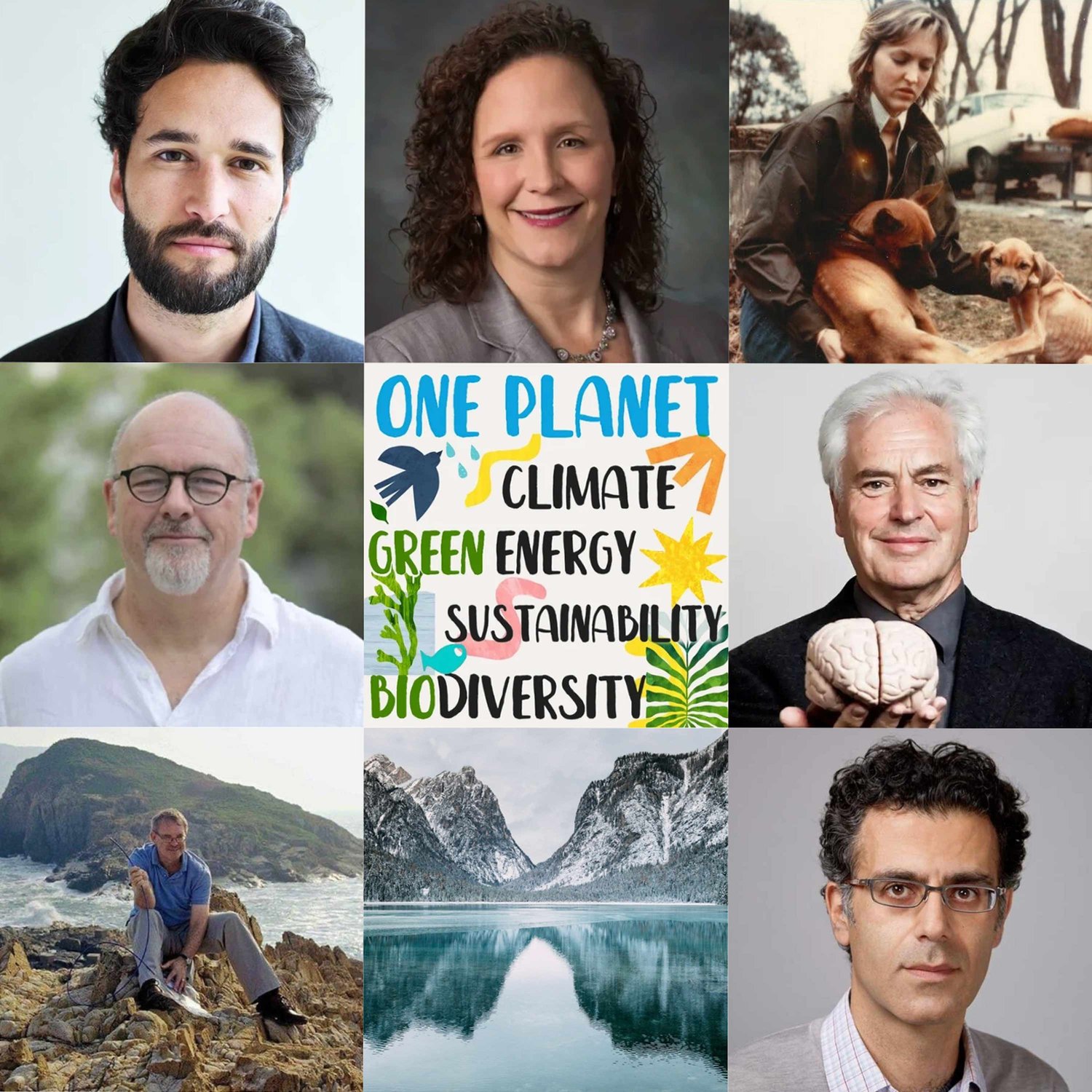
Connecting with the Earth: Changemakers, Scientists, Writers & Educators on Regenerating Earth’s Ecosystems
How and when will we transition to a clean energy future? How have wetlands become both crucial carbon sinks and colossal methane emitters in a warming world? What lessons can we learn from non-human animals about living in greater harmony with nature?Richard Black (Author of The Future of Energy · Fmr. BBC Environment Correspondent · Director of Policy & Strategy · Global Clean Energy Thinktank · Ember) addresses the substantial economic impact of fossil fuel subsidies, noting that the actual costs, when including climate change damages, reach up to six or seven trillion dollars annually, overshadowing the relatively small climate finance provided by Western governments.Euan Nisbet (Earth Systems Scientist · Royal Holloway University of London) explores the role of methane in the atmosphere, its historical importance in maintaining the planet’s temperature, and its current contribution to global warming. He explains the sources of methane, including natural processes and human activities, and discusses recent trends and challenges tied to rising methane levels.Julie Pierce (Vice President of Strategy & Planning · Minnesota Power) highlights her company's significant strides in sustainability. She outlines Minnesota Power's decade-long journey towards decarbonization, noting that they have transitioned from a 95% fossil-based portfolio to sourcing 50-60% of their energy from clean sources, including wind, solar, and hydropower.Arash Abizadeh (Professor of Political Science · McGill University Author ofHobbes and the Two Faces of Ethics · Associate Editor · Free & Equal) reflects on the future we are leaving for the next generations. He underscores the social and political challenges of ensuring that the technologies and resources needed to adapt to climate change are distributed equitably across all societies.Daniel Susskind(Economist · Oxford & King’s College London · Author of Growth: A Reckoning · A World Without Work) discusses the critical role of technological progress in driving economic growth. He advocates for a shift toward technologies that not only enhance prosperity but also protect the environment and promote social equity.Ian Robertson(Author of How Confidence Works: The New Science of Self-belief · Co-Director of the Global Brain Health Institute · Co-Leader of The BrainHealth Project) calls for young people to connect with nature and develop mastery over their minds. He envisions a future where individuals can access the joy of being conscious, embodied beings in a healthy, natural world.Ingrid Newkirk(Founder & President of PETA · People for the Ethical Treatment of Animals) emphasizes the shared traits between humans and other animals, advocating for a compassionate approach to all living beings. She urges listeners to recognize the personhood in animals and to treat them with respect and empathy.This episode brings together diverse voices discussing critical environmental and ethical issues. From the economic burden of fossil fuel subsidies to the equitable distribution of climate adaptation resources, the importance of technological progress, and the need for the ethical treatment of animals.To hear more from each guest, listen to their full
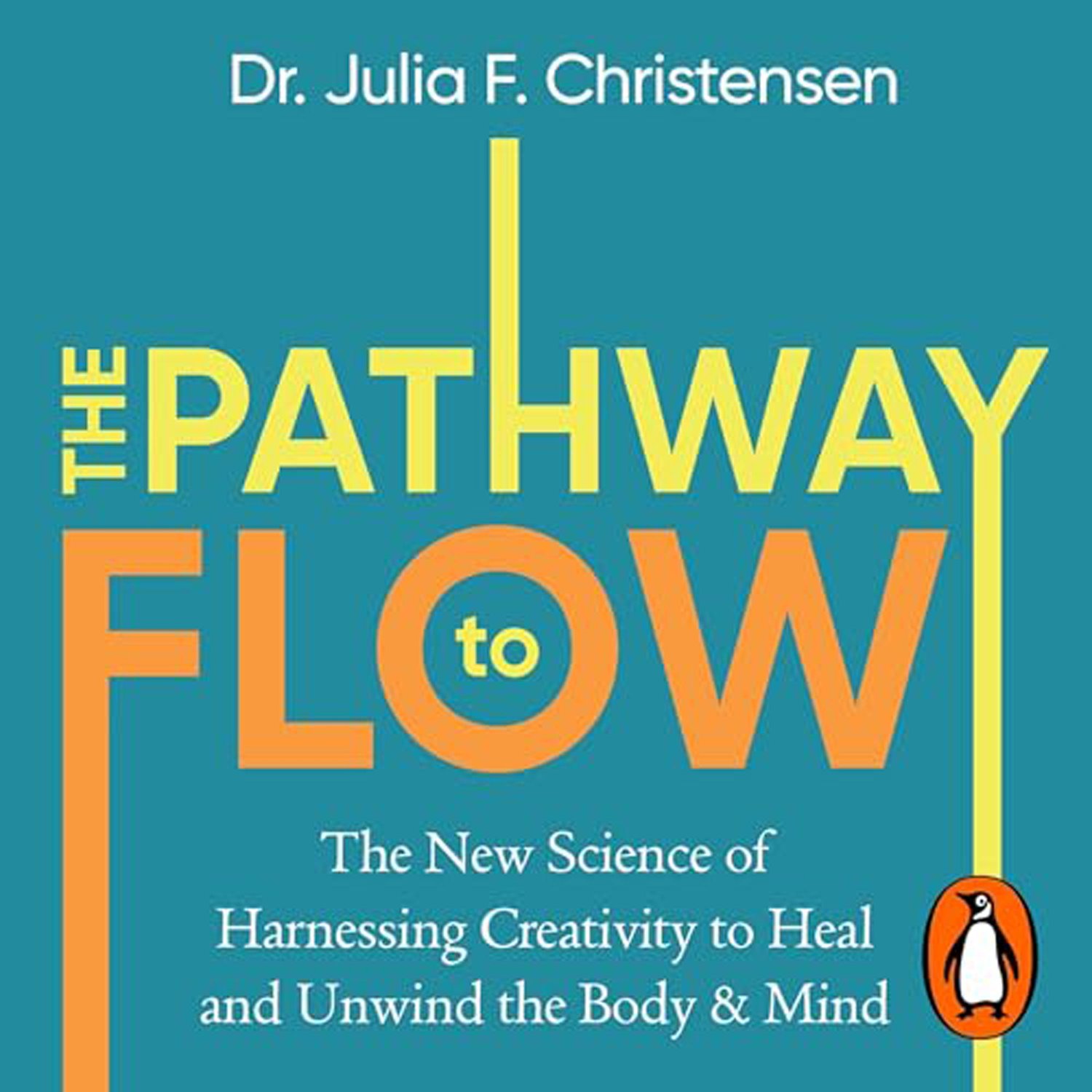
Harnessing Creativity to Heal & Unwind the Body & Mind w/ DR. JULIA CHRISTENSEN - Highlights
"The state of being in flow and seeking out that state, sort of disappearing from the here and now... it must have been something that has been part of human cultures for many millennia. We know that, for example, dancing can bring you into these states. And we know from many anthropological works that people dance themselves into trance, a type of flow. So, there is that flow in this scientific sense of a state of well-being. And we will speak about what that does to our brain and our broader wellbeing, but also the flow in what cues enter into our senses. So that would be a scientific field that looks at brain synchrony, physiology synchrony, these waves that we see that sort of connect with us.”Dr. Julia F. Christensen is a Danish neuroscientist and former dancer currently working as a senior scientist at the Max Planck Institute for Empirical Aesthetics in Germany. She studied psychology, human evolution, and neuroscience in France, Spain and the UK. For her postdoctoral training, she worked in international, interdisciplinary research labs at University College London, City, University London and the Warburg Institute, London and was awarded a postdoctoral Newton International Fellowship by the British Academy. Her new book The Pathway to Flow is about the science of flow, why our brain needs it and how to create the right habits in our brain to get it.https://www.linkedin.com/in/dr-julia-f-christensen-36539a144https://www.instagram.com/dr.julia.f.christensen?igsh=cHZkODgxczJqZmxlwww.creativeprocess.infowww.oneplanetpodcast.orgIG www.instagram.com/creativeprocesspodcast

The Pathway to Flow with Neuroscientist, Fmr. Dancer DR. JULIA CHRISTENSEN
How can we unlock a state of flow in our daily lives? How does connecting with nature influence our mental and physical well-being? How do movement, dance and play help us feel more creative, connected, and content?Dr. Julia F. Christensen is a Danish neuroscientist and former dancer currently working as a senior scientist at the Max Planck Institute for Empirical Aesthetics in Germany. She studied psychology, human evolution, and neuroscience in France, Spain and the UK. For her postdoctoral training, she worked in international, interdisciplinary research labs at University College London, City, University London and the Warburg Institute, London and was awarded a postdoctoral Newton International Fellowship by the British Academy. Her new book The Pathway to Flow is about the science of flow, why our brain needs it and how to create the right habits in our brain to get it."The state of being in flow and seeking out that state, sort of disappearing from the here and now... it must have been something that has been part of human cultures for many millennia. We know that, for example, dancing can bring you into these states. And we know from many anthropological works that people dance themselves into trance, a type of flow. So, there is that flow in this scientific sense of a state of well-being. And we will speak about what that does to our brain and our broader wellbeing, but also the flow in what cues enter into our senses. So that would be a scientific field that looks at brain synchrony, physiology synchrony, these waves that we see that sort of connect with us.”https://www.linkedin.com/in/dr-julia-f-christensen-36539a144https://www.instagram.com/dr.julia.f.christensen?igsh=cHZkODgxczJqZmxlwww.creativeprocess.infowww.oneplanetpodcast.orgIG www.instagram.com/creativeprocesspodcastPhoto credit: Hans Scherhaufer
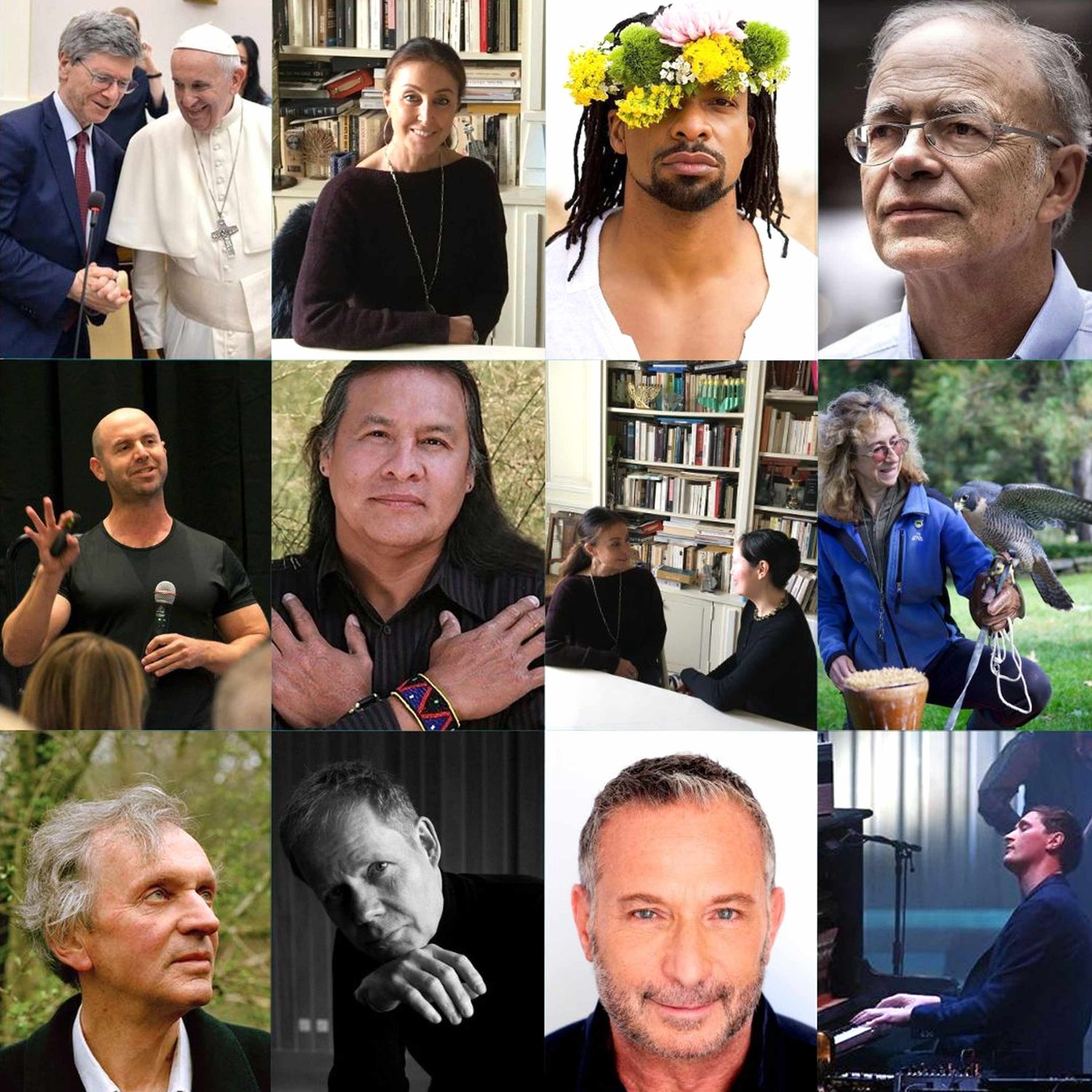
What Does It Mean to Live a Good Life? Artists, Writers, Visionaries & Educators Share their Stories
trailerWhat does it mean to live a good life? How can the arts help us learn to speak the language of the Earth and cultivate our intuitive intelligence? What is the power of mentorship for forging character and creative vision? How can we hold onto our cultural heritage and traditions, while preparing students for the needs of the 21st century?Alan Poul (Emmy & Golden Globe-winning Executive Producer · Director · Six Feet Under · Tales of the City · Tokyo Vice · My So-Called Life) shares his personal journey and the importance of mentorship in shaping one's creative path. He discusses his experiences with influential figures such as Stephen Sondheim, Paul Schrader, and Robert Wilson, emphasizing the value of learning from those you admire.Rupert Sheldrake (Biologist · Author of The Science Delusion · The Presence of the Past · Ways to Go Beyond and Why They Work) explores the significance of cultural and religious traditions in education. He argues that knowing the open questions in science, integrating arts, and learning by heart are crucial for a well-rounded education.Jericho Brown (Pulitzer Prize-winning Poet · Director of Creative Writing Program at Emory University · Author of The Tradition · The New Testament) emphasizes the power and agency that young writers have to create change. He encourages persistence and the importance of trying, despite the fear of failure.Sy Montgomery (Naturalist · Author of The Soul of an Octopus · The Hawk’s Way · Of Time and Turtles: Mending the World, Shell by Shattered Shell) reflects on how animals have been her mentors and teachers. From her Scottish Terrier, Molly, to wild emus in Australia, she shares how her interactions with animals have guided her career and life choices.Manuela Lucá-Dazio (Exec. Director of the Pritzker Architecture Prize · Fmr. Exec. Director of Venice Biennale · Dept. of Visual Arts & Architecture) discusses the necessity of reconnecting with cultural heritage and expanding educational tools. She advocates for a more imaginative approach to integrating different fields of knowledge and teaching methods.Jeffrey D. Sachs (Economist · President of UN Sustainable Development Solutions Network · Director of Center for Sustainable Development · Columbia University) highlights the global consensus on Sustainable Development Goals (SDGs) and the critical importance of education. He specifically advocates for SDG 4, which focuses on inclusive and equitable quality education for all.Todd B. Kashdan (Psychologist · APA Award-winning Author of The Art of Insubordination: How to Dissent and Defy Effectively · Curious? · The Upside of Your Dark Side · Leading Authority on Well-being, Curiosity, Courage & Resilience) analyzes the shortcomings of the current education system. He stresses the need to teach critical thinking and develop superior information-gathering strategies.Tiokasin Ghosthorse (Founder · Host · Exec. Director of First Voices Radio · Founder of Akantu Intelligence · Master Musician of the Ancient Lakota Flute) offers a unique perspective on our connection to the Earth. He delves into Indigenous wisdom about living in harmony with nature, our ancestors, and recognizing the timeless energy around us.Erland Cooper (Songwriter · Producer · Multi-instrumentalist · Composer of Folded Lands
Navigating Our Environmental Future From Climate Crisis to Urban Revolution
Have we entered what Earth scientists call a “termination event,” and what can we do to avoid the worst outcomes? How can we look beyond GDP and develop new metrics that balance growth with human flourishing and environmental well-being? How can the 15-minute city model revolutionize urban living, enhance health, and reduce our carbon footprint?Euan Nisbet (Earth Systems Scientist - Royal Holloway University of London) analyzes historical patterns that point to a potential termination event and emphasizes the urgency of addressing abrupt climate changes.Daniel Susskind (Economist - Oxford & King’s College London - Author of Growth: A Reckoning - A World Without Work) discusses the economic trade-offs involved in pursuing net-zero emissions and the growing public discontent with the costs.Carlos Moreno (Originator of the 15-Minute City concept - Author of The 15-Minute City: A Solution to Saving Our Time & Our Planet) explores how the 15-minute city model can enhance urban living, promote local commerce, and reduce our carbon footprint.Richard Black (Author of The Future of Energy - Former BBC Environment Correspondent - Director of Policy & Strategy - Global Clean Energy Thinktank - Ember) explains the future energy landscape, critiques the contributions of oil and gas companies to the clean energy transition, and emphasizes the need for a realistic clean energy transition.Carissa Carter (Academic Director at Stanford's d.school - Co-author of Assembling Tomorrow: A Guide to Designing a Thriving Future) highlights the importance of people critically interpreting climate data and understanding its emotional impact.Gordon Lambert (World Economic Forum Global Council - Energy and Sustainability - Former Member of Alberta’s Climate Change Advisory Panel) shares his personal reflections on the harmony of nature and the necessity of aligning business strategies with renewable energy goals.Dr. Ben Shofty (Functional Neurosurgeon - Professor - University of Utah) discusses the health benefits of exposure to nature and its positive impact on well-being and creativity.Julia F. Christensen (Neuroscientist - Author of The Pathway To Flow: The New Science of Harnessing Creativity to Heal and Unwind the Body & Mind) explores the neuroscience behind human interaction with nature and its restorative effects on the brain.The episode examines critical issues surrounding climate change, economic growth, and urban development. Euan Nisbet highlighted the urgency of addressing abrupt climate changes, while Daniel Susskind shed light on the economic complexities of achieving net-zero emissions. Carlos Moreno presented the revolutionary concept of the 15-minute city, and Richard Black emphasized the need for a realistic clean energy transition. Carissa Carter underscored the importance of understanding and visualizing climate data, while Gordon Lambert, Dr. Julia F. Christensen, and Dr. Ben Shofty provided personal and scientific insights into the benefits of integrating nature into our lives. These conversations give us a deeper look into the challenges and potential solutions for creating a sustainable future.To hear more from each gu

Democracy & Economic Inequality w/ Philosopher ARASH ABIZADEH - Highlights
“There is a tremendous tension between healthy democracy and deep economic inequalities. I don't think that, in the long run, democracies can survive in a healthy way unless we address the problem of economic inequalities. If we have individuals who are living day to day, on the one hand, and we have other individuals who are billionaires in our societies, on the other hand, it will be very difficult for us to have a genuine democracy.”Arash Abizadeh is the R.B. Angus Professor of Political Science at McGill University. His research has focused on democratic theory, including topics such as immigration and border control. Abizadeh also specializes in 17th and 18th century philosophy and has recently published the book Hobbes and the Two Faces of Ethics. He is currently working on a book about social and political power and is the Associate Editor of Free & Equal: a Journal of Ethics and Public Affairs.https://abizadeh.wixsite.com/arashwww.cambridge.org/core/books/hobbes-and-the-two-faces-of-ethics/B565348CE9B53945F4F962784A5842C2https://freeandequaljournal.orgwww.creativeprocess.infowww.oneplanetpodcast.orgIG www.instagram.com/creativeprocesspodcast
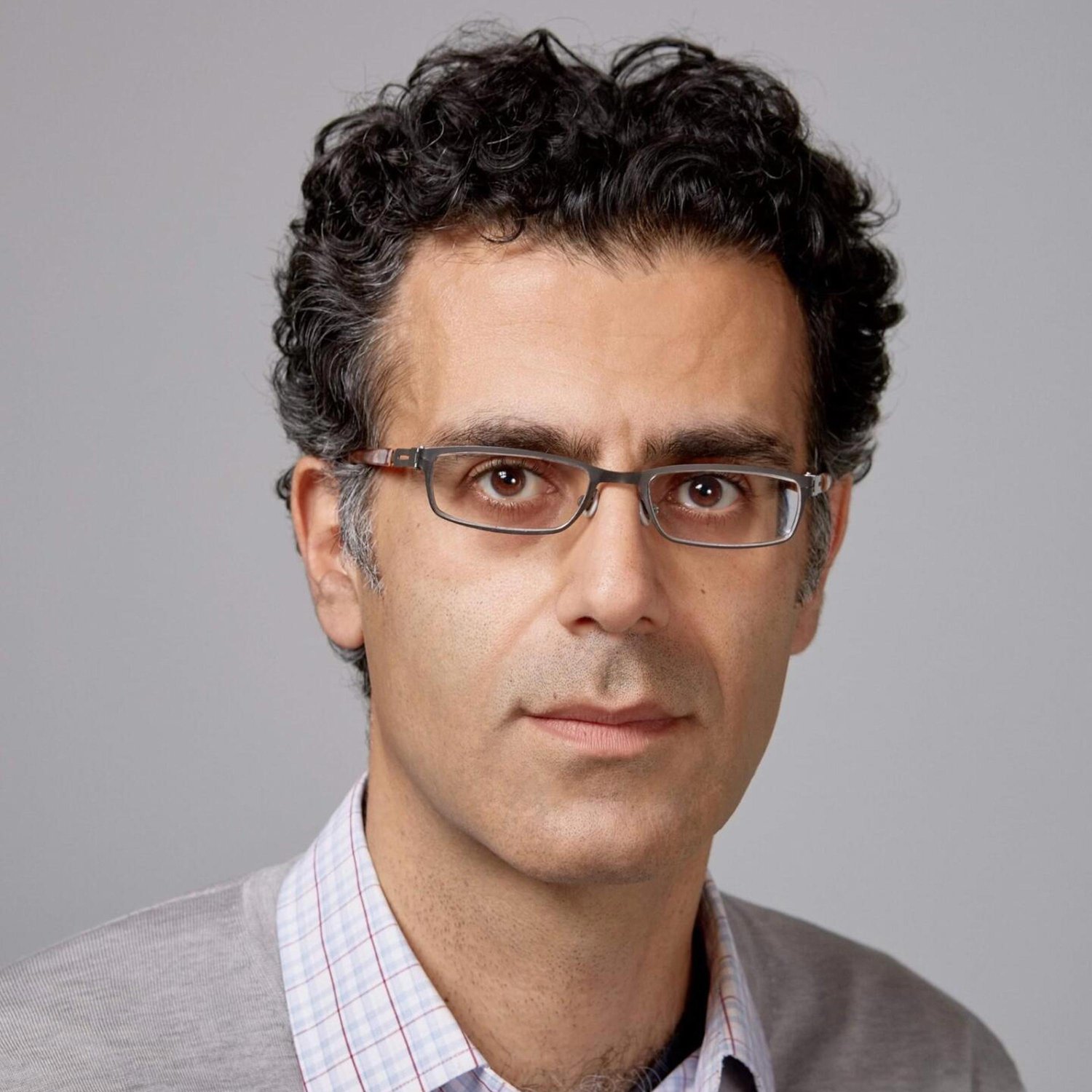
Democracy at a Crossroads: Exploring Modern Political Challenges w/ Philosopher ARASH ABIZADEH
How is economic inequality undermining our democratic systems? In what ways is social media reshaping political landscapes and democracy? Can we design political institutions that adapt to rapid social and technological changes while remaining stable? How is journalism critical for the health of our democracies?Arash Abizadeh is the R.B. Angus Professor of Political Science at McGill University. His research has focused on democratic theory, including topics such as immigration and border control. Abizadeh also specializes in 17th and 18th century philosophy and has recently published the book Hobbes and the Two Faces of Ethics. He is currently working on a book about social and political power and is the Associate Editor of Free & Equal: a Journal of Ethics and Public Affairs.“There is a tremendous tension between healthy democracy and deep economic inequalities. I don't think that, in the long run, democracies can survive in a healthy way unless we address the problem of economic inequalities. If we have individuals who are living day to day, on the one hand, and we have other individuals who are billionaires in our societies, on the other hand, it will be very difficult for us to have a genuine democracy.”https://abizadeh.wixsite.com/arashwww.cambridge.org/core/books/hobbes-and-the-two-faces-of-ethics/B565348CE9B53945F4F962784A5842C2https://freeandequaljournal.orgwww.creativeprocess.infowww.oneplanetpodcast.orgIG www.instagram.com/creativeprocesspodcast
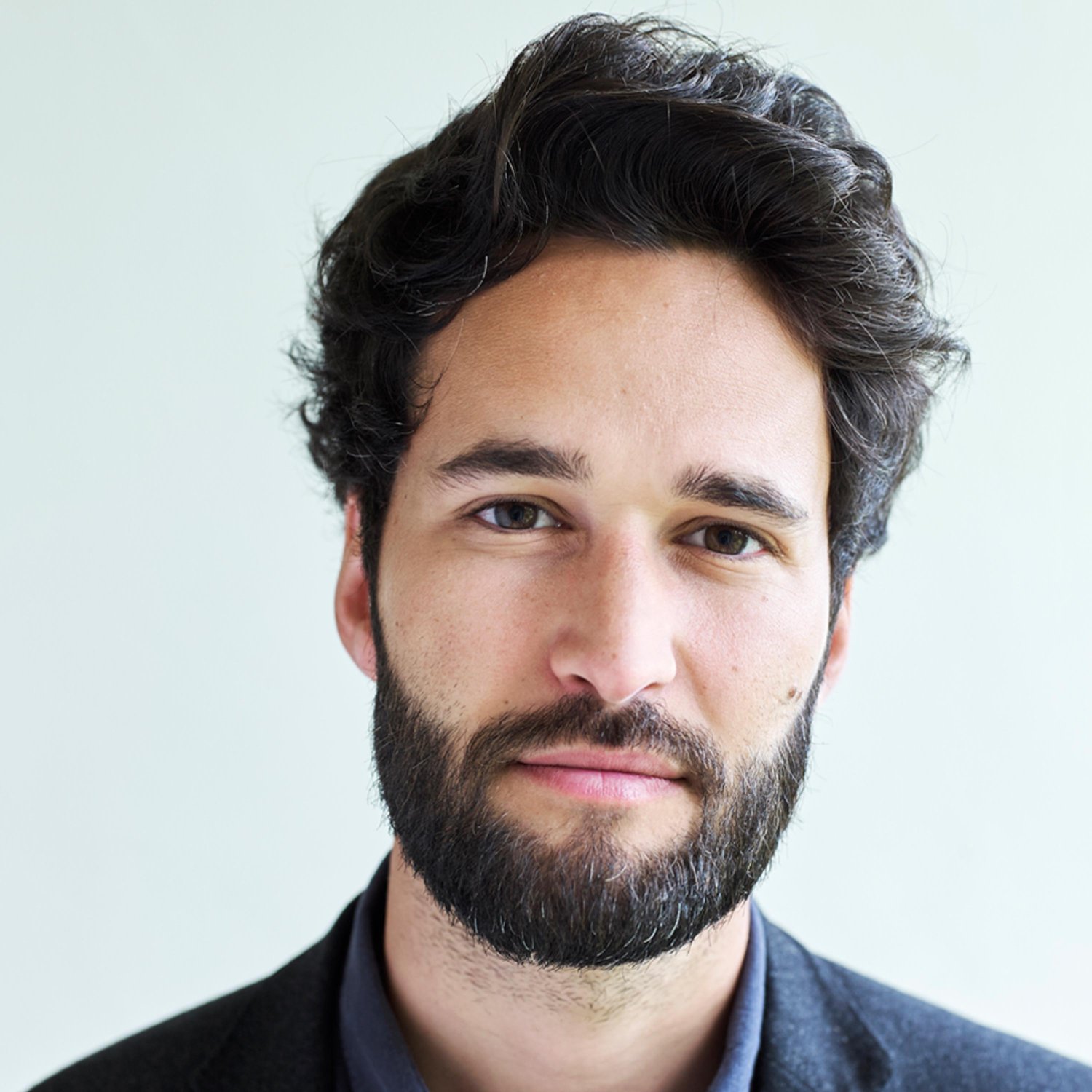
The Growth Dilemma: Balancing Progress & Sustainability w/ Economist DANIEL SUSSKIND - Highlights
“We have a choice to change the nature of growth. How we can have growth that is more respectful of place, doesn’t cause as much damage to the environment, doesn't lead to as large inequalities in society, doesn’t disrupt politics, doesn't undermine the availability of good work? We ought to pursue this morally enriched GDP measure which better reflects what we really value and care about as a society.”Daniel Susskind is a Research Professor in Economics at King's College London and a Senior Research Associate at the Institute for Ethics in AI at Oxford University. He is the author of A World without Work and co-author of the bestselling The Future of the Professions. Previously, he worked in various roles in the British Government - in the Prime Minister’s Strategy Unit, in the Policy Unit in 10 Downing Street, and in the Cabinet Office. His latest book is Growth: A Reckoning.www.danielsusskind.comwww.penguin.co.uk/books/446381/growth-by-susskind-daniel/9780241542309www.creativeprocess.infowww.oneplanetpodcast.orgIG www.instagram.com/creativeprocesspodcast
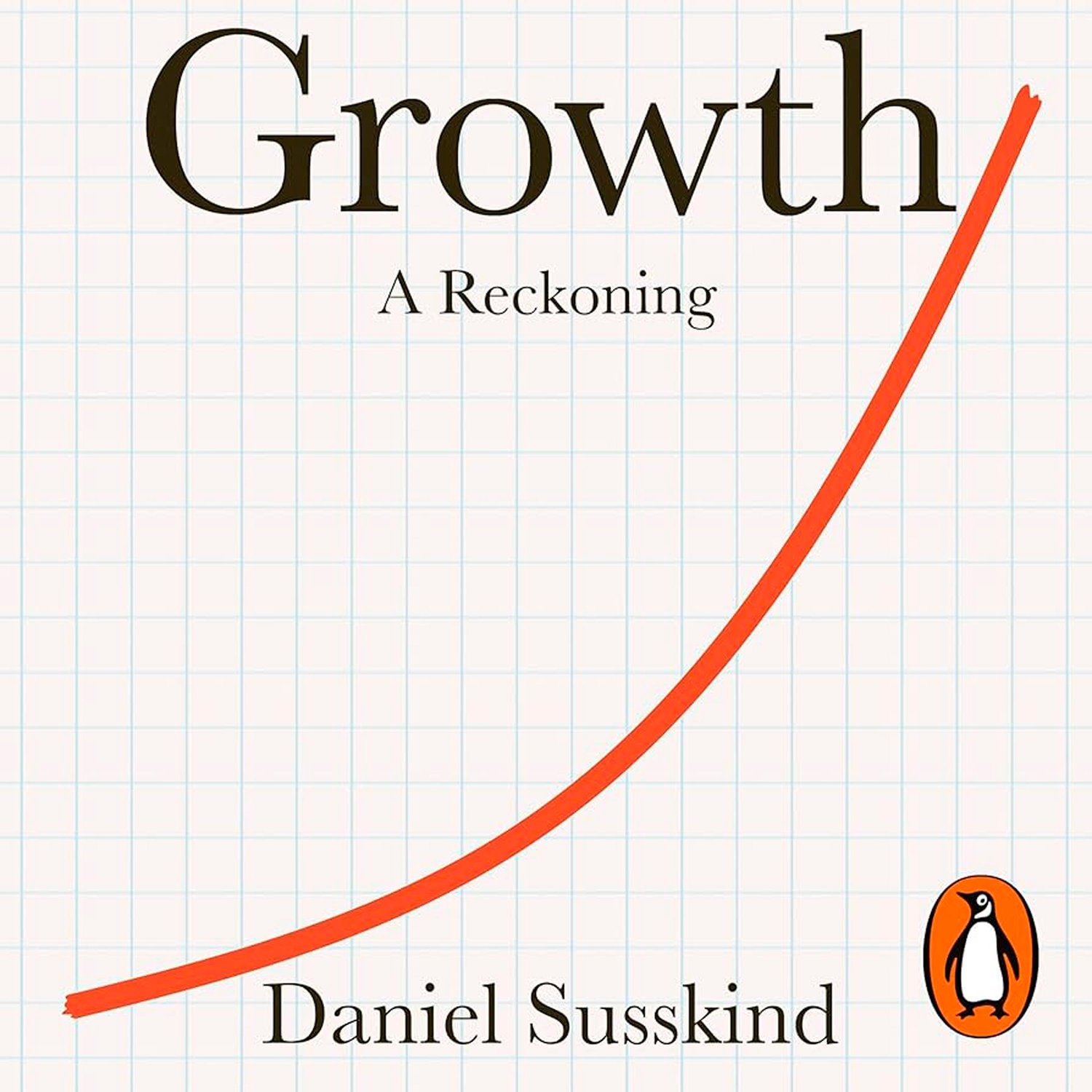
Growth: A Reckoning with Economist DANIEL SUSSKIND
How can we look beyond GDP and develop new metrics that balance growth with human flourishing and environmental well-being? How can we be more engaged global citizens? In this age of AI, what does it really mean to be human? And how are our technologies transforming us?Daniel Susskind is a Research Professor in Economics at King's College London and a Senior Research Associate at the Institute for Ethics in AI at Oxford University. He is the author of A World without Work and co-author of the bestselling The Future of the Professions. Previously, he worked in various roles in the British Government - in the Prime Minister’s Strategy Unit, in the Policy Unit in 10 Downing Street, and in the Cabinet Office. His latest book is Growth: A Reckoning.“We have a choice to change the nature of growth. How we can have growth that is more respectful of place, doesn’t cause as much damage to the environment, doesn't lead to as large inequalities in society, doesn’t disrupt politics, doesn't undermine the availability of good work? We ought to pursue this morally enriched GDP measure which better reflects what we really value and care about as a society.”www.danielsusskind.comwww.penguin.co.uk/books/446381/growth-by-susskind-daniel/9780241542309www.creativeprocess.infowww.oneplanetpodcast.orgIG www.instagram.com/creativeprocesspodcast
The Human Smart City: Balancing Ecology & Economy with CARLOS MORENO - Highlights
“It all starts at home. As a university professor, I have observed the process of transformation of different generations. We need to find a sense of life. We need to find a sense of belonging to our humanity, but to have this sense of life, we need to find a sense in our local communities.”Carlos Moreno was born in Colombia in 1959 and moved to France at the age of 20. He is known for his influential "15-Minute City" concept, embraced by Paris Mayor Anne Hidalgo and leading cities around the world. Scientific Director of the "Entrepreneurship - Territory - Innovation" Chair at the Paris Sorbonne Business School, he is an international expert of the Human Smart City, and a Knight of the French Legion of Honour. He is recipient of the Obel Award and the UN-Habitat Scroll of Honour. His latest book is The 15-Minute City: A Solution to Saving Our Time and Our Planet.https://www.moreno-web.net/https://www.wiley.com/en-us/The+15-Minute+City%3A+A+Solution+to+Saving+Our+Time+and+Our+Planet-p-9781394228140www.creativeprocess.infowww.oneplanetpodcast.orgIG www.instagram.com/creativeprocesspodcast
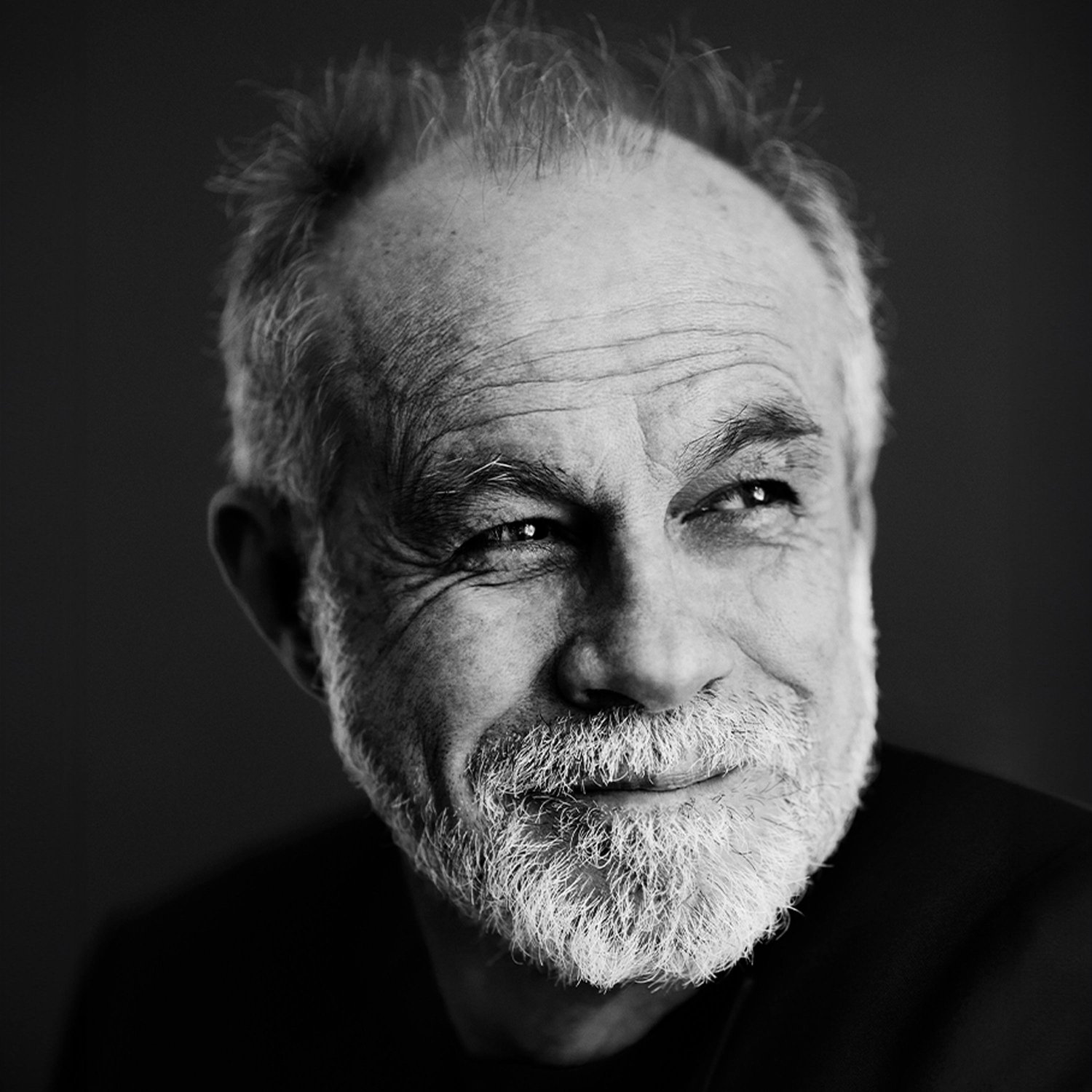
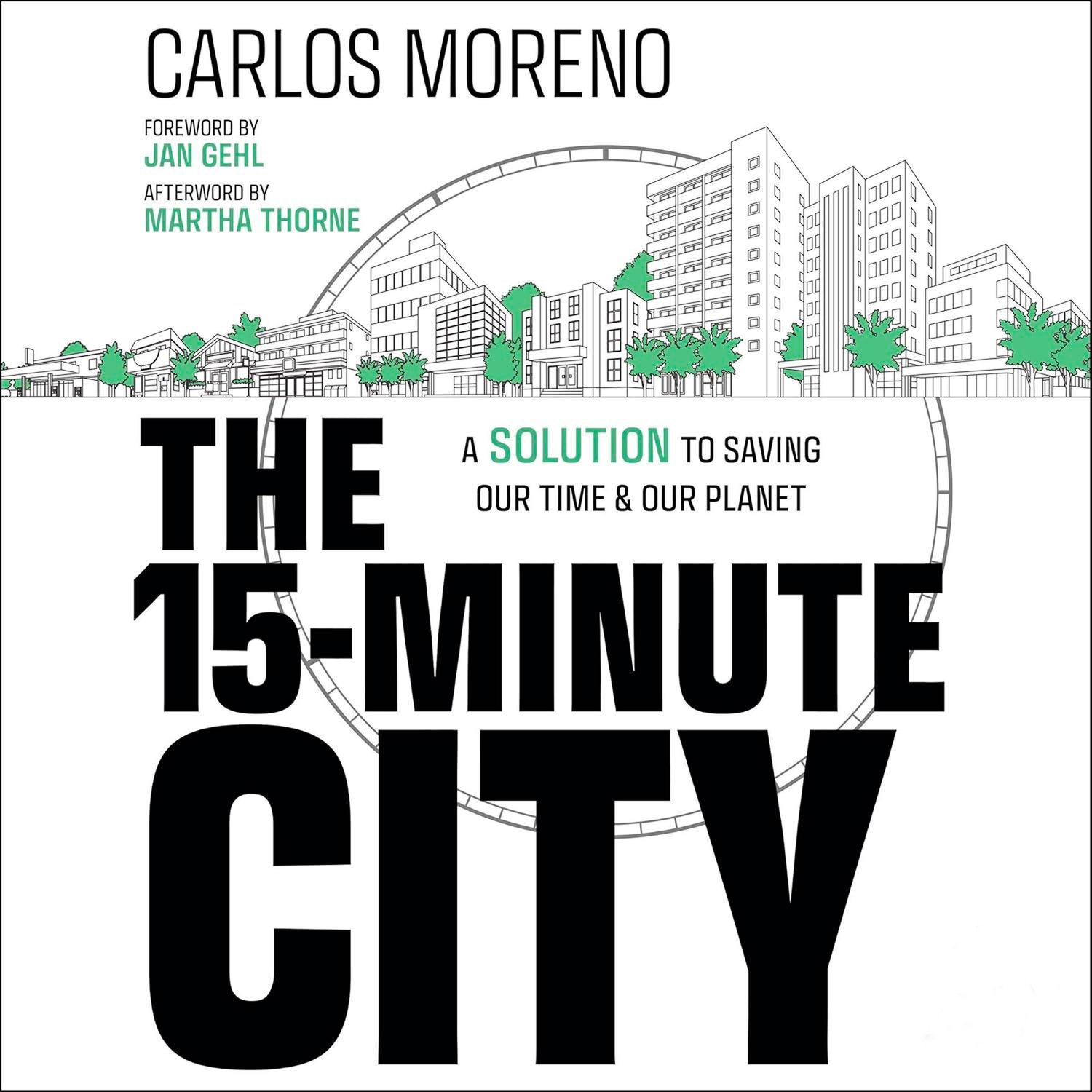
The 15-Minute City: A Solution to Saving Our Time & Our Planet with CARLOS MORENO
How can the 15-minute city model revolutionize urban living, enhance wellbeing, and reduce our carbon footprint? Online shopping is turning cities into ghost towns. We can now buy anything anywhere anytime. How can we learn to stop scrolling and start strolling and create more livable, sustainable communities we are happy to call home.Carlos Moreno was born in Colombia in 1959 and moved to France at the age of 20. He is known for his influential "15-Minute City" concept, embraced by Paris Mayor Anne Hidalgo and leading cities around the world. Scientific Director of the "Entrepreneurship - Territory - Innovation" Chair at the Paris Sorbonne Business School, he is an international expert of the Human Smart City, and a Knight of the French Legion of Honour. He is recipient of the Obel Award and the UN-Habitat Scroll of Honour. His latest book is The 15-Minute City: A Solution to Saving Our Time and Our Planet.“It all starts at home. As a university professor, I have observed the process of transformation of different generations. We need to find a sense of life. We need to find a sense of belonging to our humanity, but to have this sense of life, we need to find a sense in our local communities.”https://www.moreno-web.net/https://www.wiley.com/en-us/The+15-Minute+City%3A+A+Solution+to+Saving+Our+Time+and+Our+Planet-p-9781394228140www.creativeprocess.infowww.oneplanetpodcast.orgIG www.instagram.com/creativeprocesspodcast
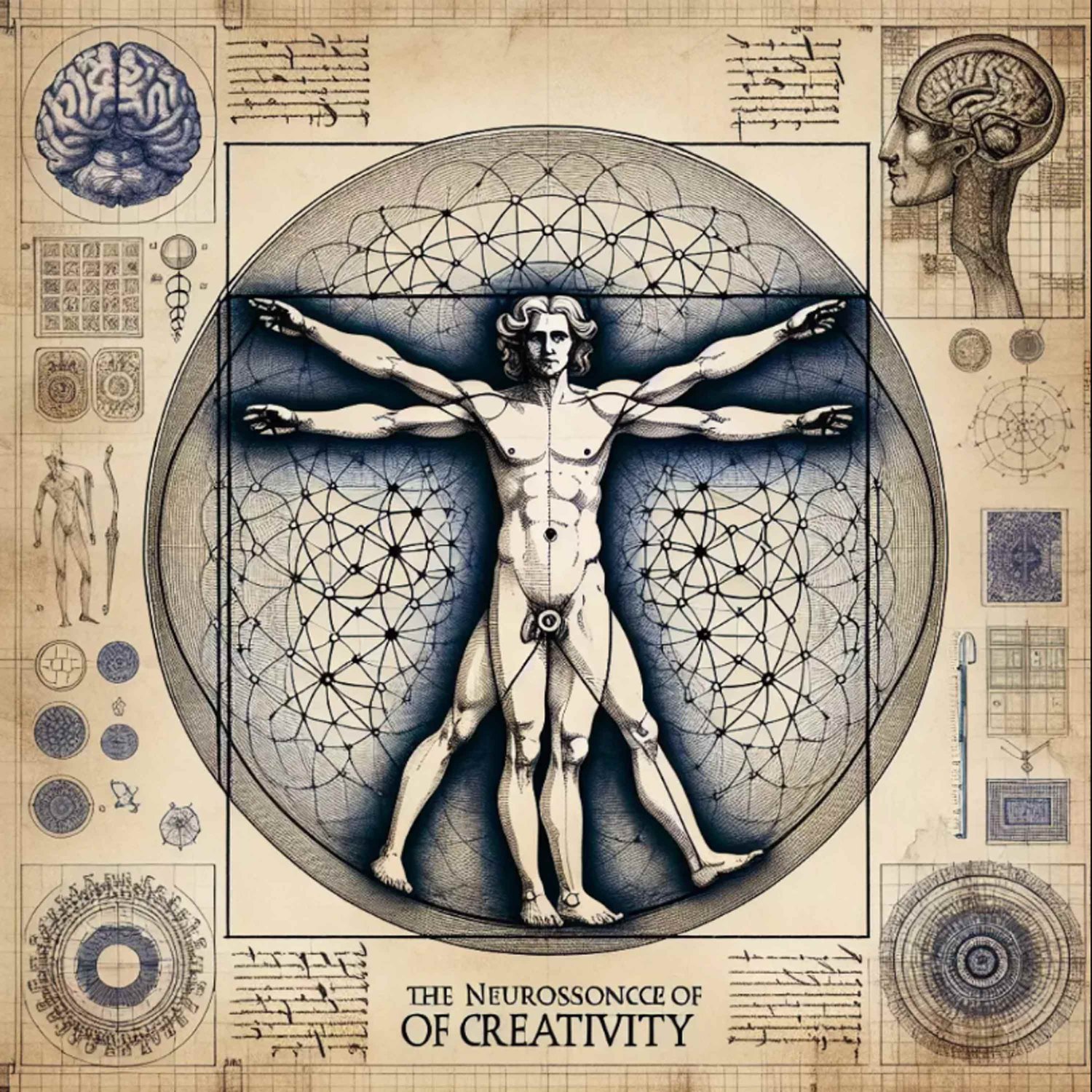
Where do creative thoughts come from? - DR. BEN SHOFTY - Highlights
“When you think about the evolution of the human brain–just like other animals that have specialized in speed or keeping warm or gathering food–I feel our brain sort of specialized being creative and flexible and being able to generate different solutions to a given problem. To me, this is probably the most fascinating thought process that happens in the human brain. And what I do in neurosurgery–and my subspecialty is called functional neurosurgery–we don't deal with disorders in which there's an anatomical abnormality inside the brain. We deal with disorders in which there is an abnormal connection or abnormal circuitry inside the brain when there's an issue with the way the brain functions. There's no tumor. There are no abnormal blood vessels or anything like that. And that gives us an amazing opportunity to really investigate how different circuits and different areas inside the brain work.In terms of the more elusive processes like creativity or high-order cognitive functions, we don't really know or understand where they are inside the brain. As you said, there's no creativity cortex, like we have a motor cortex, sensory cortex, or visual cortex.When we started with this series of projects, we tried to think, if this function just like other higher cognitive functions, cannot be explained by a specific area inside the brain, then what happens? Where does the magic happen? And the answer was that it's a network-dependent function. It doesn't originate from a specific area inside the brain, but it originates from multiple brain networks sort of all of a sudden synchronizing to generate that unexpected function.”Dr. Ben Shofty is a functional neurosurgeon affiliated with the University of Utah. He graduated from the Tel-Aviv University Faculty of Medicine, received his PhD in neurosurgical training from the Israeli Institute of Technology, and completed his training at the Tel Aviv Medical Center and Baylor University. He was also an Israeli national rugby player. His practice specializes in neuromodulation and exploring treatments for disorders such as OCD, depression, and epilepsy, among others, while also seeking to understand the science behind creativity, mind-wandering, and the many complexities of the brain.www.creativeprocess.infowww.oneplanetpodcast.orgIG www.instagram.com/creativeprocesspodcast
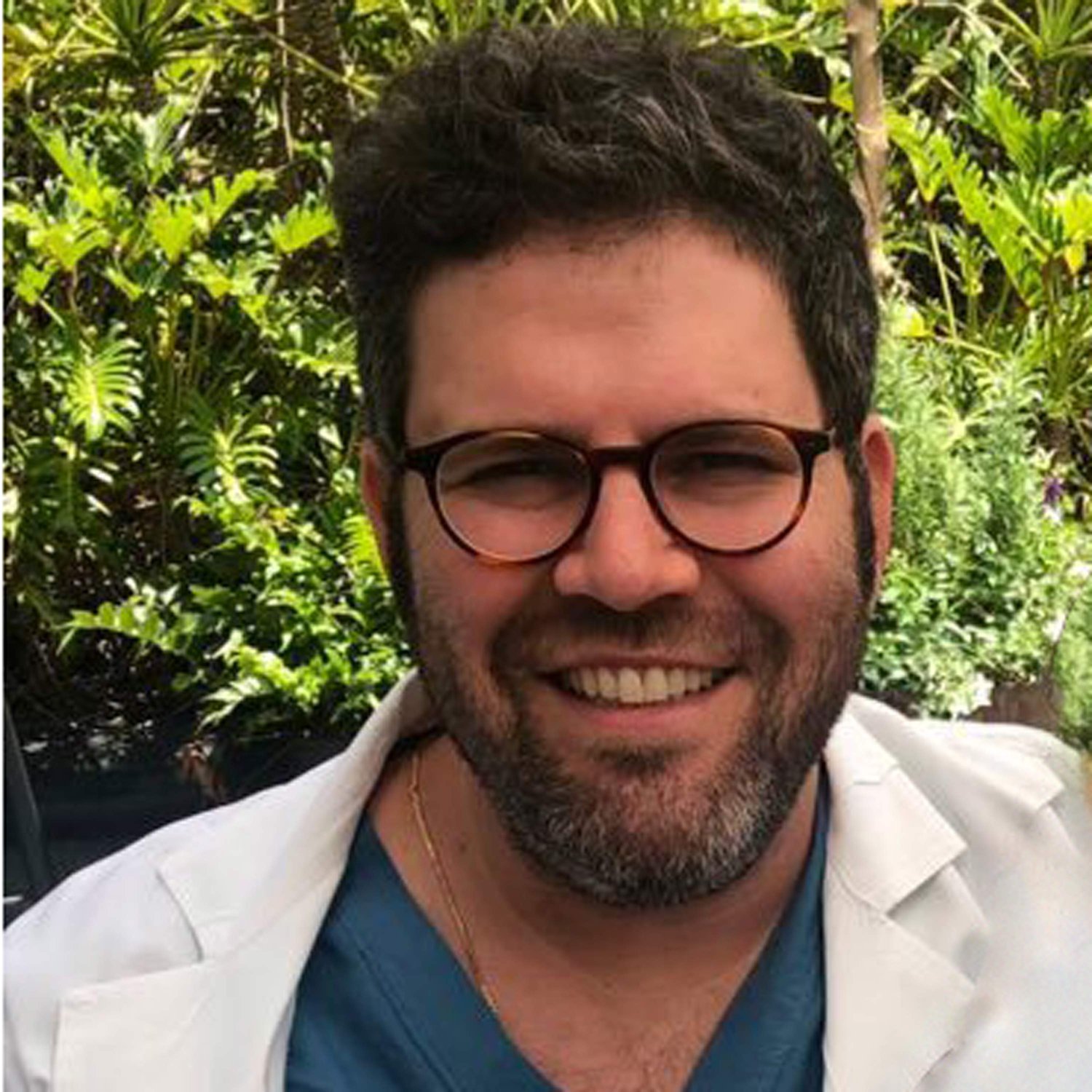
The Neuroscience of Creativity with DR. BEN SHOFTY
Where do creative thoughts come from? How can we harness our stream of consciousness and spontaneity to express ourselves? How are mind-wandering, meditation, and the arts good for our creativity and physical and mental well-being?Dr. Ben Shofty is a functional neurosurgeon affiliated with the University of Utah. He graduated from the Tel-Aviv University Faculty of Medicine, received his PhD in neurosurgical training from the Israeli Institute of Technology, and completed his training at the Tel Aviv Medical Center and Baylor University. He was also an Israeli national rugby player. His practice specializes in neuromodulation and exploring treatments for disorders such as OCD, depression, and epilepsy, among others, while also seeking to understand the science behind creativity, mind-wandering, and the many complexities of the brain.“When you think about the evolution of the human brain–just like other animals that have specialized in speed or keeping warm or gathering food–I feel our brain sort of specialized being creative and flexible and being able to generate different solutions to a given problem. To me, this is probably the most fascinating thought process that happens in the human brain. And what I do in neurosurgery–and my subspecialty is called functional neurosurgery–we don't deal with disorders in which there's an anatomical abnormality inside the brain. We deal with disorders in which there is an abnormal connection or abnormal circuitry inside the brain when there's an issue with the way the brain functions. There's no tumor. There are no abnormal blood vessels or anything like that. And that gives us an amazing opportunity to really investigate how different circuits and different areas inside the brain work.In terms of the more elusive processes like creativity or high-order cognitive functions, we don't really know or understand where they are inside the brain. As you said, there's no creativity cortex, like we have a motor cortex, sensory cortex, or visual cortex.When we started with this series of projects, we tried to think, if this function just like other higher cognitive functions, cannot be explained by a specific area inside the brain, then what happens? Where does the magic happen? And the answer was that it's a network-dependent function. It doesn't originate from a specific area inside the brain, but it originates from multiple brain networks sort of all of a sudden synchronizing to generate that unexpected function.”https://healthcare.utah.edu/find-a-doctor/ben-shoftyhttps://academic.oup.com/brain/advance-article/doi/10.1093/brain/awae199/7695856www.creativeprocess.infowww.oneplanetpodcast.orgIG www.instagram.com/creativeprocesspodcast
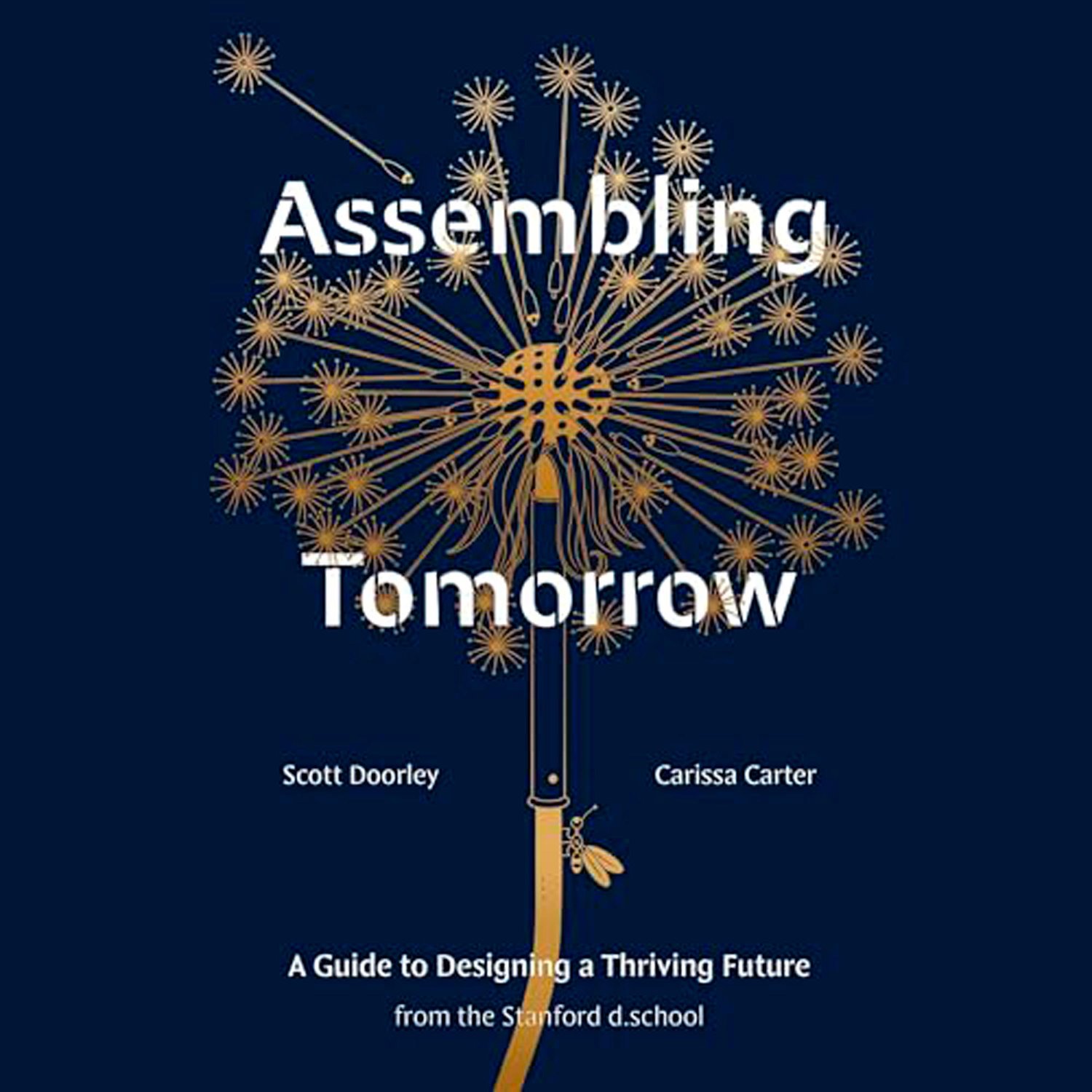
Assembling Tomorrow: A Guide to Designing a Thriving Future - SCOTT DOORLEY & CARISSA CARTER - Highlights
“Today, someone is putting the finishing touches on a machine- learning algorithm that will change the way you relate to your family. Someone is trying to design a way to communicate with animals in their own language. Someone is designing a gene that alters bacteria to turn your poop bright blue when it’s time to see the doctor. Someone is cleaning up the mess someone else left behind seventy years ago yesterday. Today, someone just had an idea that will end up saving one thing while it harms another…To be a maker in this moment— to be a human today— is to collaborate with the world. It is to create and be created, to work and be worked on, to make and be made. To be human is to tinker, create, fix, care, and bring new things into the world. It is to design. You— yes, you!— might design products or policy, services or sermons, production lines or preschool programs. You might run a business, make art, or participate in passing out meals to the poor. You may write code or pour concrete, lobby for endangered species legislation or craft cocktails. Wherever you fit in, you are part of shaping the world. This is design work.”– Assembling TomorrowA Guide to Designing a Thriving FutureScott Doorley is the Creative Director at Stanford's d. school and co author of Make Space. He teaches design communication and his work has been featured in museums and architecture and urbanism and the New York Times. Carissa Carteris the Academic Director at Stanford's d. schooland author of The Secret Language of Maps. She teaches courses on emerging technologies and data visualization and received Fast Company and Core 77 awards for her work on designing with machine learning and blockchain. Together, they co authored Assembling Tomorrow: A Guide to Designing a Thriving Future.www.scottdoorley.comwww.snowflyzone.comhttps://dschool.stanford.edu/www.penguinrandomhouse.com/books/623529/assembling-tomorrow-by-scott-doorley-carissa-carter-and-stanford-dschool-illustrations-by-armando-veve/www.creativeprocess.infowww.oneplanetpodcast.orgIG www.instagram.com/creativeprocesspodcast
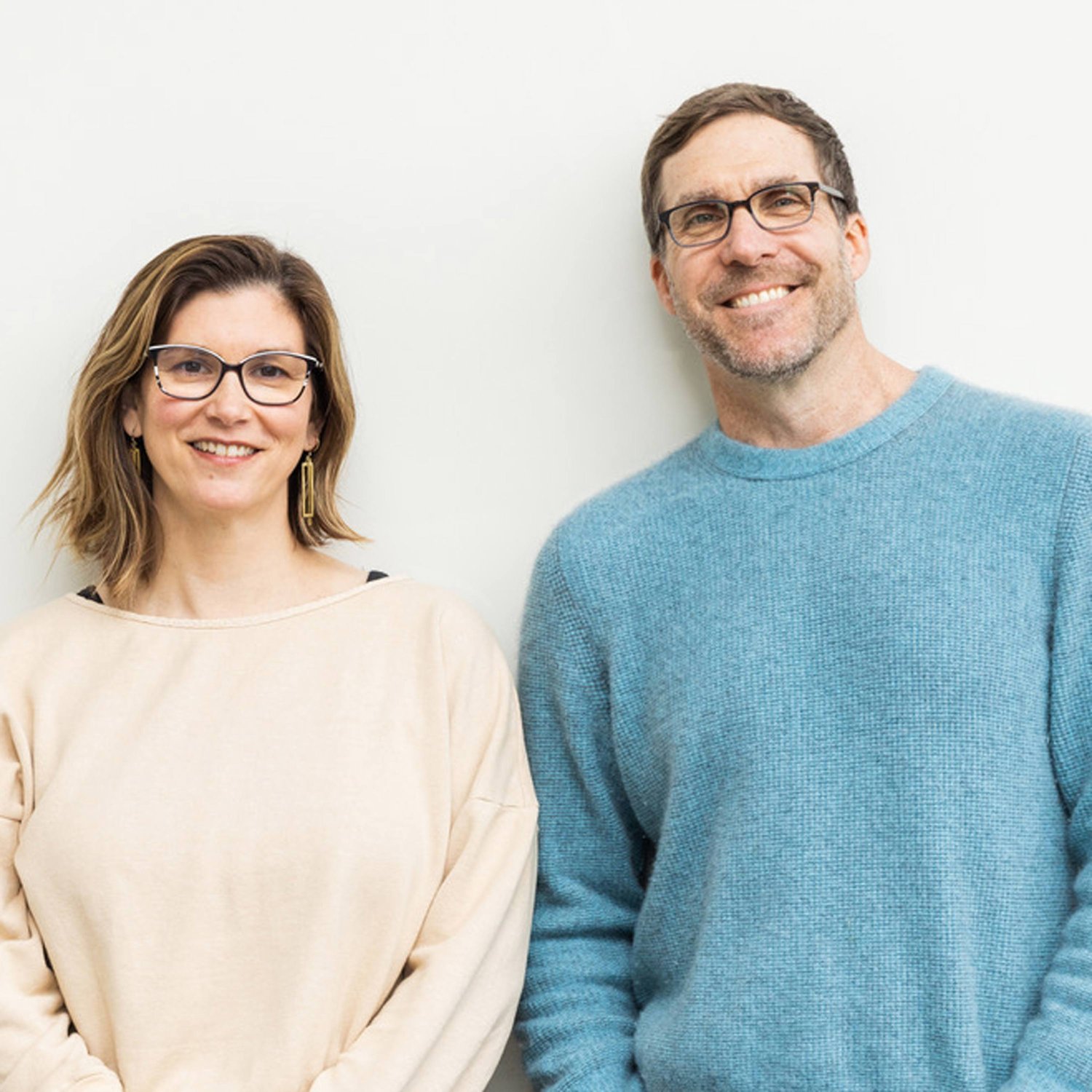
Can Design Save the World? - SCOTT DOORLEY & CARISSA CARTER - Co-authors of Assembling Tomorrow - Directors of Stanford’s d.School
How can we design and adapt for the uncertainties of the 21st century? How do emotions shape our decisions and the way we design the world around us?Scott Doorley is the Creative Director at Stanford's d. school and co author of Make Space. He teaches design communication and his work has been featured in museums and architecture and urbanism and the New York Times. Carissa Carter is the Academic Director at Stanford's d. school and author of The Secret Language of Maps. She teaches courses on emerging technologies and data visualization and received Fast Company and Core 77 awards for her work on designing with machine learning and blockchain. Together, they co authored Assembling Tomorrow: A Guide to Designing a Thriving Future.“Today, someone is putting the finishing touches on a machine- learning algorithm that will change the way you relate to your family. Someone is trying to design a way to communicate with animals in their own language. Someone is designing a gene that alters bacteria to turn your poop bright blue when it’s time to see the doctor. Someone is cleaning up the mess someone else left behind seventy years ago yesterday. Today, someone just had an idea that will end up saving one thing while it harms another…To be a maker in this moment— to be a human today— is to collaborate with the world. It is to create and be created, to work and be worked on, to make and be made. To be human is to tinker, create, fix, care, and bring new things into the world. It is to design. You— yes, you!— might design products or policy, services or sermons, production lines or preschool programs. You might run a business, make art, or participate in passing out meals to the poor. You may write code or pour concrete, lobby for endangered species legislation or craft cocktails. Wherever you fit in, you are part of shaping the world. This is design work.”– Assembling TomorrowA Guide to Designing a Thriving Futurewww.scottdoorley.comwww.snowflyzone.comhttps://dschool.stanford.edu/www.penguinrandomhouse.com/books/623529/assembling-tomorrow-by-scott-doorley-carissa-carter-and-stanford-dschool-illustrations-by-armando-veve/www.creativeprocess.infowww.oneplanetpodcast.orgIG www.instagram.com/creativeprocesspodcastImage credit: Patrick Beaudouin
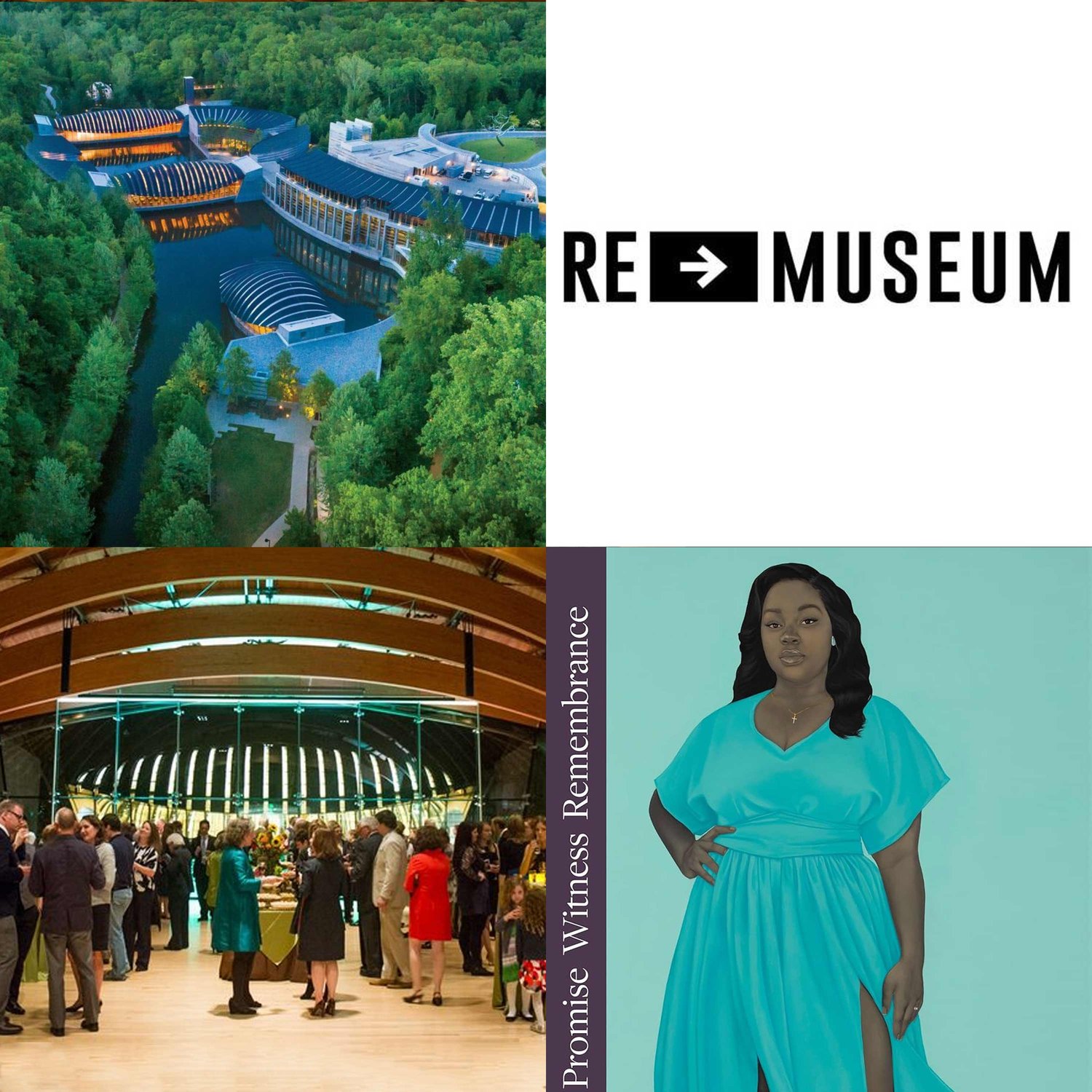
How Can Museums Stay Relevant & Engage with Communities? - Highlights - STEPHEN REILY
“The opportunity is that we have never had a public that is more passionate and obsessed with visual imagery. If the owners of the best original imagery in the world can't figure out how to take advantage of the fact that the world has now become obsessed with these treasures that we have to offer as museums, then shame on us. This is the opportunity to say, if you're spending all day scrolling on Instagram looking for amazing imagery, come and see the original source. Come and see the real work. Let us figure out how to make that connection.”Stephen Reily is the Founding Director of Remuseum, an independent research project housed at Crystal Bridges Museum of American Art in Bentonville, Arkansas. Funded by arts patron David Booth with additional support by the Ford Foundation, Remuseum focuses on advancing relevance and governance in museums across the U.S. He works with museums to create a financially sustainable strategy that is human-focused, centering on inclusion, diversity, and important causes like climate change. During his time as director of the Speed Art Museum in Louisville, KY, Reily presented Promise, Witness, Remembrance, an exhibition in response to the killing of Breonna Taylor and a year of protests in Louisville. In 2022, he co-wrote a book documenting the exhibition. As an active civic leader, Reily has been a part of numerous community organizations and boards, like the Reily Reentry Project, supporting expungement programs for Kentucky citizens, Creative Capital, offering grants for the arts, and founded Seed Capital Kentucky, a non-profit that aims to improve the food economy in the area.A Yale and Stanford Law graduate, Reily clerked for U.S. Supreme Court Justice John Paul Stevens before launching a successful entrepreneurial career, experiences he draws upon for public engagement initiatives.https://remuseum.orghttps://crystalbridges.orgwww.stephenreily.comwww.kentuckypress.com/9781734248517/promise-witness-remembrancewww.creativeprocess.infowww.oneplanetpodcast.orgIG www.instagram.com/creativeprocesspodcast
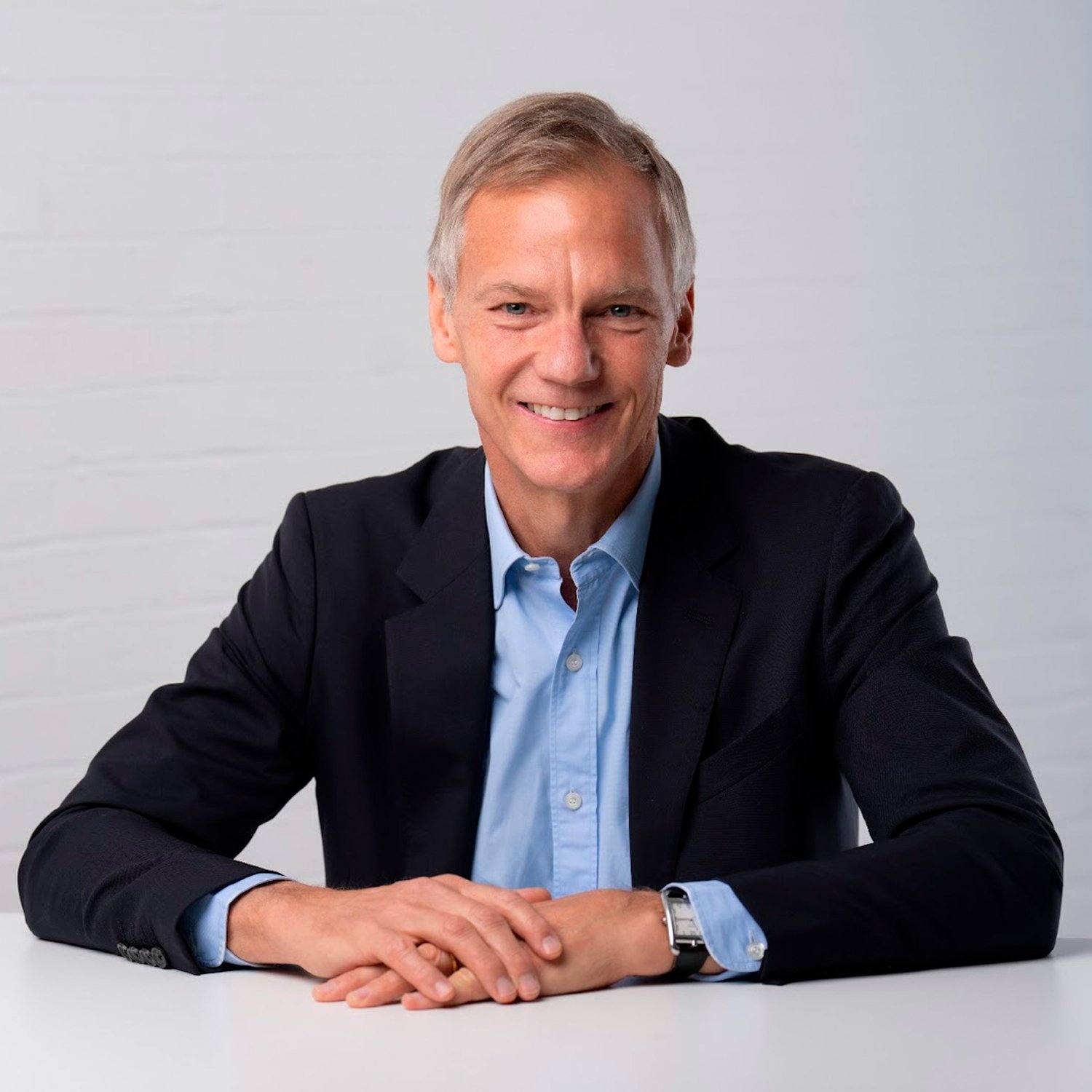
The Future of Museums - STEPHEN REILY, Founding Director of Remuseum on Transforming Cultural Spaces
How can museums remain relevant in the digital age, where visual imagery is more accessible than ever? What role do museums play in fostering creativity and innovation in their communities?Stephen Reily is the Founding Director of Remuseum, an independent research project housed at Crystal Bridges Museum of American Art in Bentonville, Arkansas. Funded by arts patron David Booth with additional support by the Ford Foundation, Remuseum focuses on advancing relevance and governance in museums across the U.S. He works with museums to create a financially sustainable strategy that is human-focused, centering on inclusion, diversity, and important causes like climate change. During his time as director of the Speed Art Museum in Louisville, KY, Reily presented Promise, Witness, Remembrance, an exhibition in response to the killing of Breonna Taylor and a year of protests in Louisville. In 2022, he co-wrote a book documenting the exhibition. As an active civic leader, Reily has been a part of numerous community organizations and boards, like the Reily Reentry Project, supporting expungement programs for Kentucky citizens, Creative Capital, offering grants for the arts, and founded Seed Capital Kentucky, a non-profit that aims to improve the food economy in the area.A Yale and Stanford Law graduate, Reily clerked for U.S. Supreme Court Justice John Paul Stevens before launching a successful entrepreneurial career, experiences he draws upon for public engagement initiatives.“The opportunity is that we have never had a public that is more passionate and obsessed with visual imagery. If the owners of the best original imagery in the world can't figure out how to take advantage of the fact that the world has now become obsessed with these treasures that we have to offer as museums, then shame on us. This is the opportunity to say, if you're spending all day scrolling on Instagram looking for amazing imagery, come and see the original source. Come and see the real work. Let us figure out how to make that connection.”https://remuseum.orghttps://crystalbridges.orgwww.stephenreily.comwww.kentuckypress.com/9781734248517/promise-witness-remembrancewww.creativeprocess.infowww.oneplanetpodcast.orgIG www.instagram.com/creativeprocesspodcast
How Our Brains Choose What to Learn & Navigate Uncertainty - Highlights - JACQUELINE GOTTLIEB
“I came to neuroscience from a humanistic perspective. I was very interested to find out who we are. What do we know? What do we think we know? Why do we think we know certain things? How do we see things? How do we perceive them? Ultimately, the question behind curiosity is what things we find interesting in our environment. The way I think about eye movements is that they really are trained in some largely subconscious process.”Dr. Jacqueline Gottlieb is a Professor of Neuroscience and Principal Investigator at Columbia University’s Zuckerman Mind Brain Behavior Institute. Dr. Gottlieb studies the mechanisms that underlie the brain's higher cognitive functions, including decision making, memory, and attention. Her interest is in how the brain gathers the evidence it needs—and ignores what it doesn’t—during everyday tasks and during special states such as curiosity.www.creativeprocess.infowww.oneplanetpodcast.orgIG www.instagram.com/creativeprocesspodcast
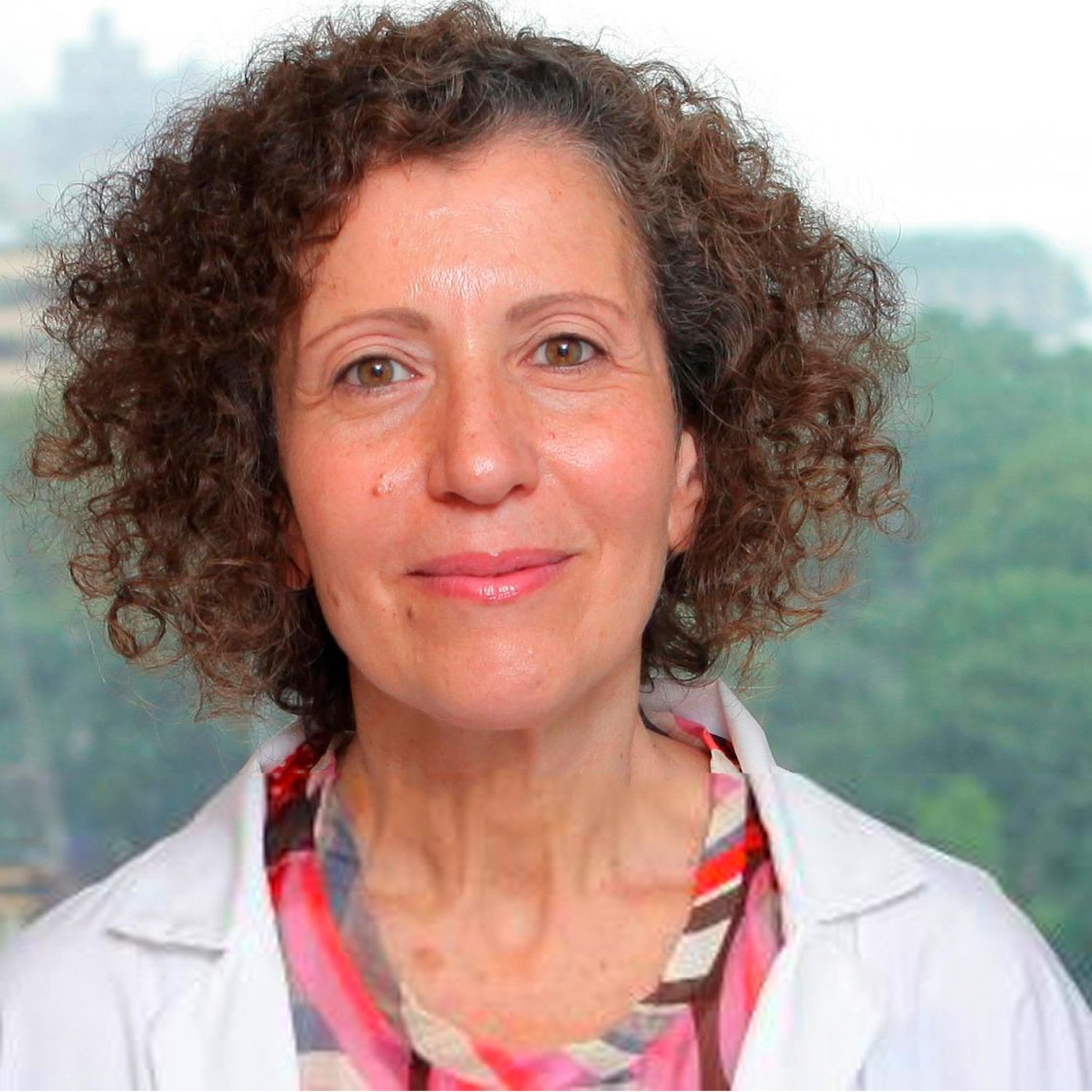
Curiosity, Cognition & Creativity with Neuroscientist DR. JACQUELINE GOTTLIEB
What ignites curiosity in humans? How does our brain select things we need to know and ignore what isn’t essential? How does our perception shape what we know about the world?Dr. Jacqueline Gottlieb is a Professor of Neuroscience and Principal Investigator at Columbia University’s Zuckerman Mind Brain Behavior Institute. Dr. Gottlieb studies the mechanisms that underlie the brain's higher cognitive functions, including decision making, memory, and attention. Her interest is in how the brain gathers the evidence it needs—and ignores what it doesn’t—during everyday tasks and during special states such as curiosity.“I came to neuroscience from a humanistic perspective. I was very interested to find out who we are. What do we know? What do we think we know? Why do we think we know certain things? How do we see things? How do we perceive them? Ultimately, the question behind curiosity is what things we find interesting in our environment. The way I think about eye movements is that they really are trained in some largely subconscious process.”www.creativeprocess.info www.oneplanetpodcast.org IG www.instagram.com/creativeprocesspodcast8RHdmn17nFATQwn9PXpn
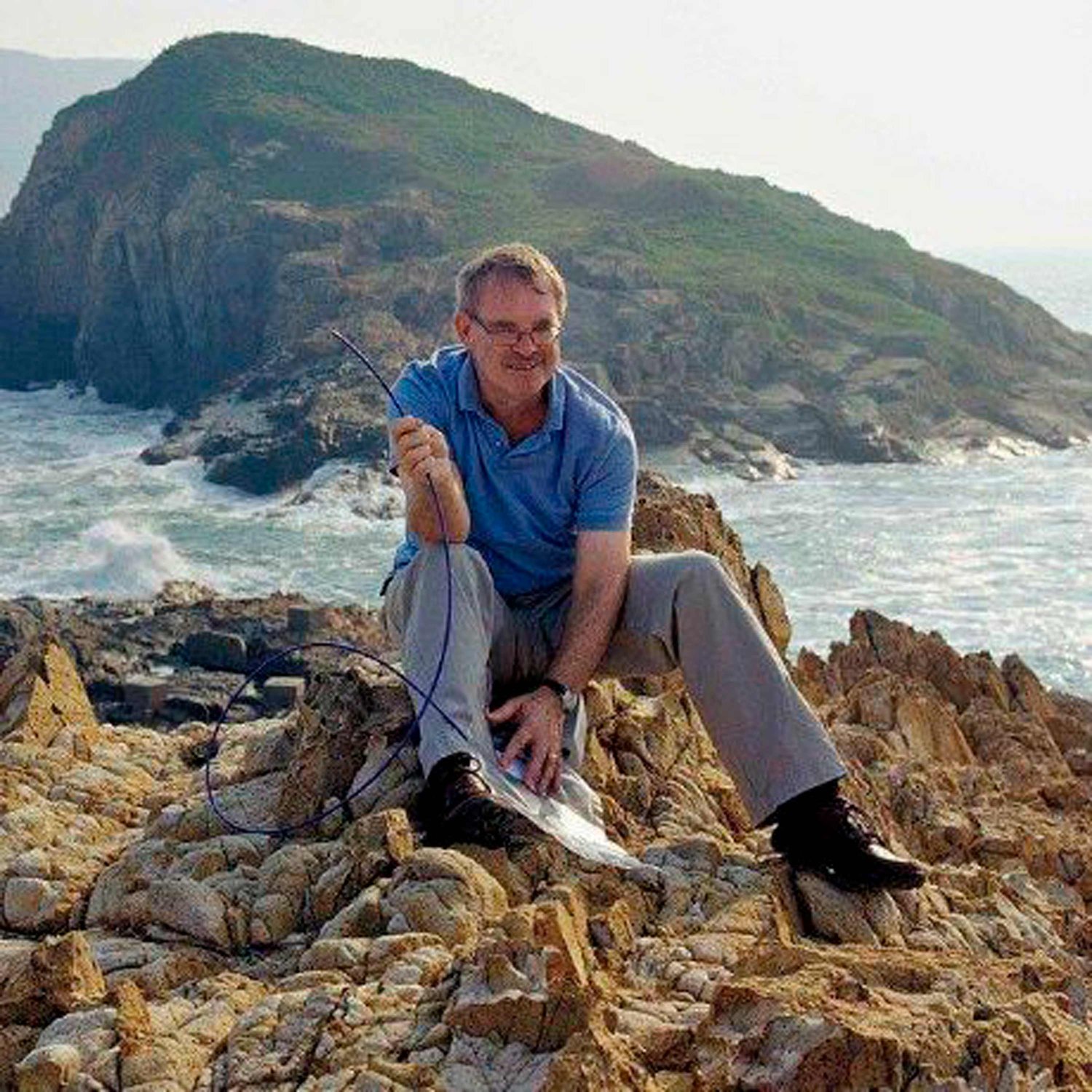
Wetlands, Methane & Restoring Earth’s Garden of Eden with EUAN NISBET
Have we entered what Earth scientists call a “termination event,” and what can we do to avoid the worst outcomes? How can a spiritual connection to nature guide us toward better environmental stewardship? What can ancient wisdom teach us about living harmoniously with the Earth? How have wetlands become both crucial carbon sinks and colossal methane emitters in a warming world?Euan Nisbet is an Emeritus Professor of Earth Sciences at the Royal Holloway University of London. Specializing in methane and its impact on climate change, his research spans Arctic and Tropical Atmospheric Methane budgets. Nisbet led the MOYA project, focusing on global methane emissions using aircraft and ground-based field campaigns in Africa and South America. Born in Germany and raised in Africa, his field work has taken him around the world. He is the author of The Young Earth and Leaving Eden: To Protect and Manage the Earth.“I am a Christian and I have strong Muslim and Jewish friends as well as great respect for Hindu beliefs. I grew up in Southern Africa and I am well aware of the depth of some Indigenous beliefs. I think that having belief systems does give you a very different perspective sometimes. Now, in Christianity, the concept of the shepherd, human beings are here and this is our garden, our garden of Eden, but we have a responsibility. And if we choose to kick ourselves out of the garden, there are consequences. And that's precisely what we are doing. The garden is there, it's lovely, and we can manage it, and it's our job to manage it. We can manage it properly. We can respect it. It's for all creation, and it's very explicit that it involves all Creation. And that's a very fundamental biblical law that you have to respect all Creation. And if you don't do that, then the consequences—you’re basically throwing yourself out of the garden of Eden."https://pure.royalholloway.ac.uk/en/persons/euan-nisbetwww.creativeprocess.infowww.oneplanetpodcast.orgIG www.instagram.com/creativeprocesspodcast

How Toxic Relationships Shape Us - MEAGHAN OPPENHEIMER - Highlights
“Often when people write or make movies about romances with young adults, I think they are very flippant about it and don't take it seriously. But I think that those friendships and romantic relationships are some of the most important ones because they really set the stage for the rest of our lives. If your first relationship is incredibly toxic and damaging, it can take you years to figure out that that's not normal, and that that's not actually how relationships are meant to be.”Meaghan Oppenheimer is a screenwriter, executive producer, and showrunner who tells stories driven by flawed, deeply human characters and the relationships between them. She’s behind Hulu’s drama series Tell Me Lies, starring Grace Van Patten and Jackson White and adapted from Carola Lovering’s novel of the same name. Her earlier projects include the 2015 film We Are Your Friends, starring Zac Efron as a passionate young DJ, and the 2018 drama series Queen America, set in Oppenheimer’s hometown of Tulsa, Oklahoma and starring Catherine Zeta-Jones. Season 2 of Tell Me Lies will premiere September 4th on Hulu. Oppenheimer is also currently developing the upcoming Hulu show Second Wife, to star Tom Ellis and Emma Roberts.www.creativeprocess.infowww.oneplanetpodcast.orgIG www.instagram.com/creativeprocesspodcast

Tell Me Lies w/ Creator, Writer, Exec. Producer MEAGHAN OPPENHEIMER
What is love? How do the friendships and relationships we have early in our lives affect us for years to come?Meaghan Oppenheimer is a screenwriter, executive producer, and showrunner who tells stories driven by flawed, deeply human characters and the relationships between them. She’s behind Hulu’s drama series Tell Me Lies, starring Grace Van Patten and Jackson White and adapted from Carola Lovering’s novel of the same name. Her earlier projects include the 2015 film We Are Your Friends, starring Zac Efron as a passionate young DJ, and the 2018 drama series Queen America, set in Oppenheimer’s hometown of Tulsa, Oklahoma and starring Catherine Zeta-Jones. Season 2 of Tell Me Lies will premiere September 4th on Hulu. Oppenheimer is also currently developing the upcoming Hulu show Second Wife, to star Tom Ellis and Emma Roberts.“Often when people write or make movies about romances with young adults, I think they are very flippant about it and don't take it seriously. But I think that those friendships and romantic relationships are some of the most important ones because they really set the stage for the rest of our lives. If your first relationship is incredibly toxic and damaging, it can take you years to figure out that that's not normal, and that that's not actually how relationships are meant to be.”www.creativeprocess.infowww.oneplanetpodcast.orgIG www.instagram.com/creativeprocesspodcast
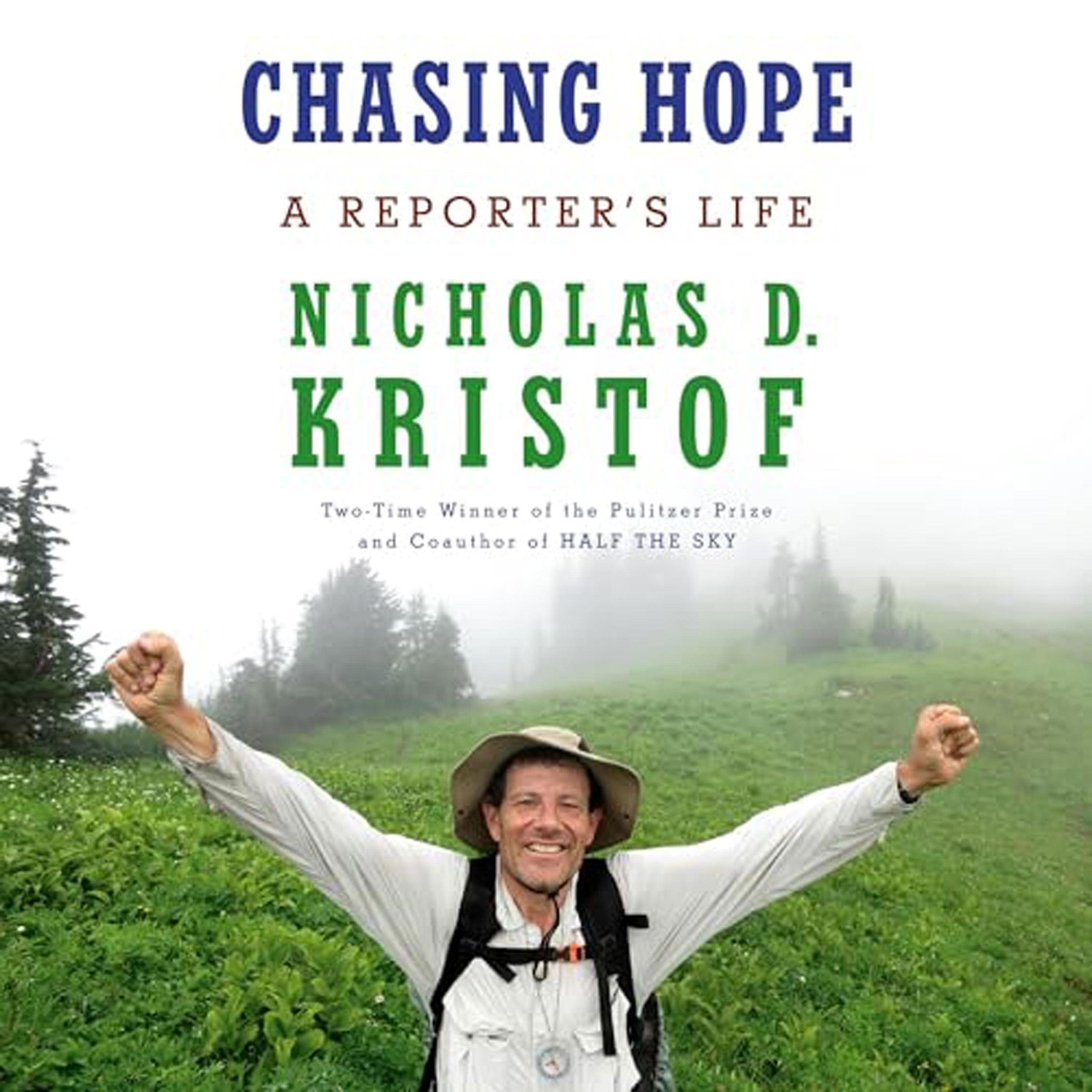
How can journalism make people care about crises & create solutions? - Highlights - NICHOLAS KRISTOF
"I'm trying to get people to care about a crisis in ways that may bring solutions to it. And that's also how I deal with the terror and the fear to find a sense of purpose in what I do. It's incredibly heartbreaking to see some of the things and hear some of the stories, but at the end of the day, it feels like–inconsistently here and there–you can shine a light on problems, and by shining that light, you actually make a difference."Nicholas D. Kristof is a two-time Pulitzer-winning journalist and Op-ed columnist for The New York Times, where he was previously bureau chief in Hong Kong, Beijing, and Tokyo. Kristof is a regular CNN contributor and has covered, among many other events and crises, the Tiananmen Square protests, the Darfur genocide, the Yemeni civil war, and the U.S. opioid crisis. He is the author of the memoir Chasing Hope, A Reporter's Life, and coauthor, with his wife, Sheryl WuDunn, of five previous books: Tightrope, A Path Appears, Half the Sky, Thunder from the East, and China Wakes.www.nytimes.com/column/nicholas-kristofwww.penguinrandomhouse.com/books/720814/chasing-hope-by-nicholas-d-kristofFamily vineyard & apple orchard in Yamhill, Oregon: www.kristoffarms.comwww.creativeprocess.infowww.oneplanetpodcast.orgIG www.instagram.com/creativeprocesspodcast
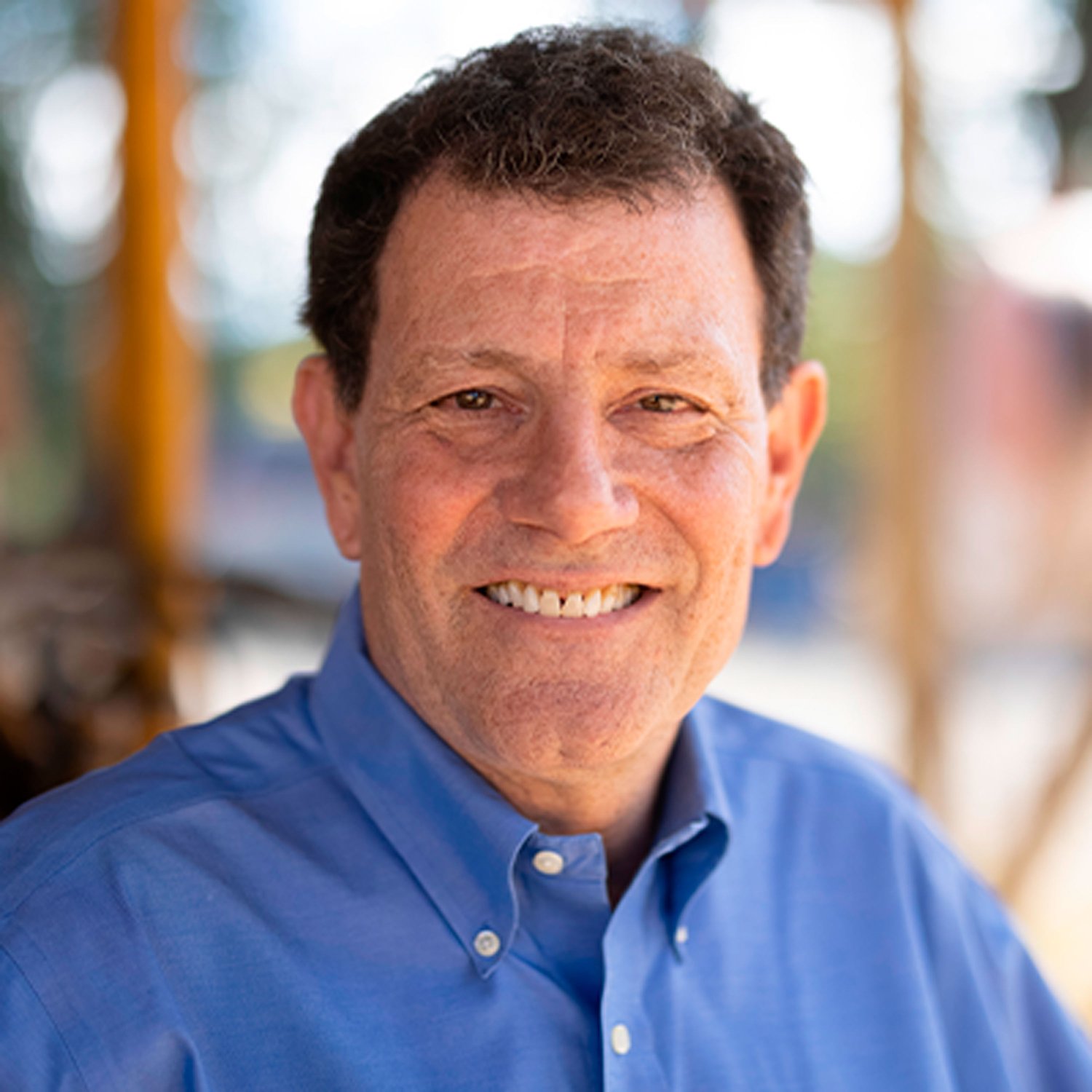
Chasing Hope: A Reporter's Life w/ Pulitzer Prize-winning Journalist NICHOLAS KRISTOF
How can journalism make people care and bring about solutions? What role does storytelling play in shining a light on injustice and crises and creating a catalyst for change?Nicholas D. Kristof is a two-time Pulitzer-winning journalist and Op-ed columnist for The New York Times, where he was previously bureau chief in Hong Kong, Beijing, and Tokyo. Kristof is a regular CNN contributor and has covered, among many other events and crises, the Tiananmen Square protests, the Darfur genocide, the Yemeni civil war, and the U.S. opioid crisis. He is the author of the memoir Chasing Hope, A Reporter's Life, and coauthor, with his wife, Sheryl WuDunn, of five previous books: Tightrope, A Path Appears, Half the Sky, Thunder from the East, and China Wakes."I'm trying to get people to care about a crisis in ways that may bring solutions to it. And that's also how I deal with the terror and the fear to find a sense of purpose in what I do. It's incredibly heartbreaking to see some of the things and hear some of the stories, but at the end of the day, it feels like–inconsistently here and there–you can shine a light on problems, and by shining that light, you actually make a difference."www.nytimes.com/column/nicholas-kristofwww.penguinrandomhouse.com/books/720814/chasing-hope-by-nicholas-d-kristofFamily vineyard & apple orchard in Yamhill, Oregon: www.kristoffarms.comwww.creativeprocess.infowww.oneplanetpodcast.orgIG www.instagram.com/creativeprocesspodcastPhoto credit: David Hume Kennerly
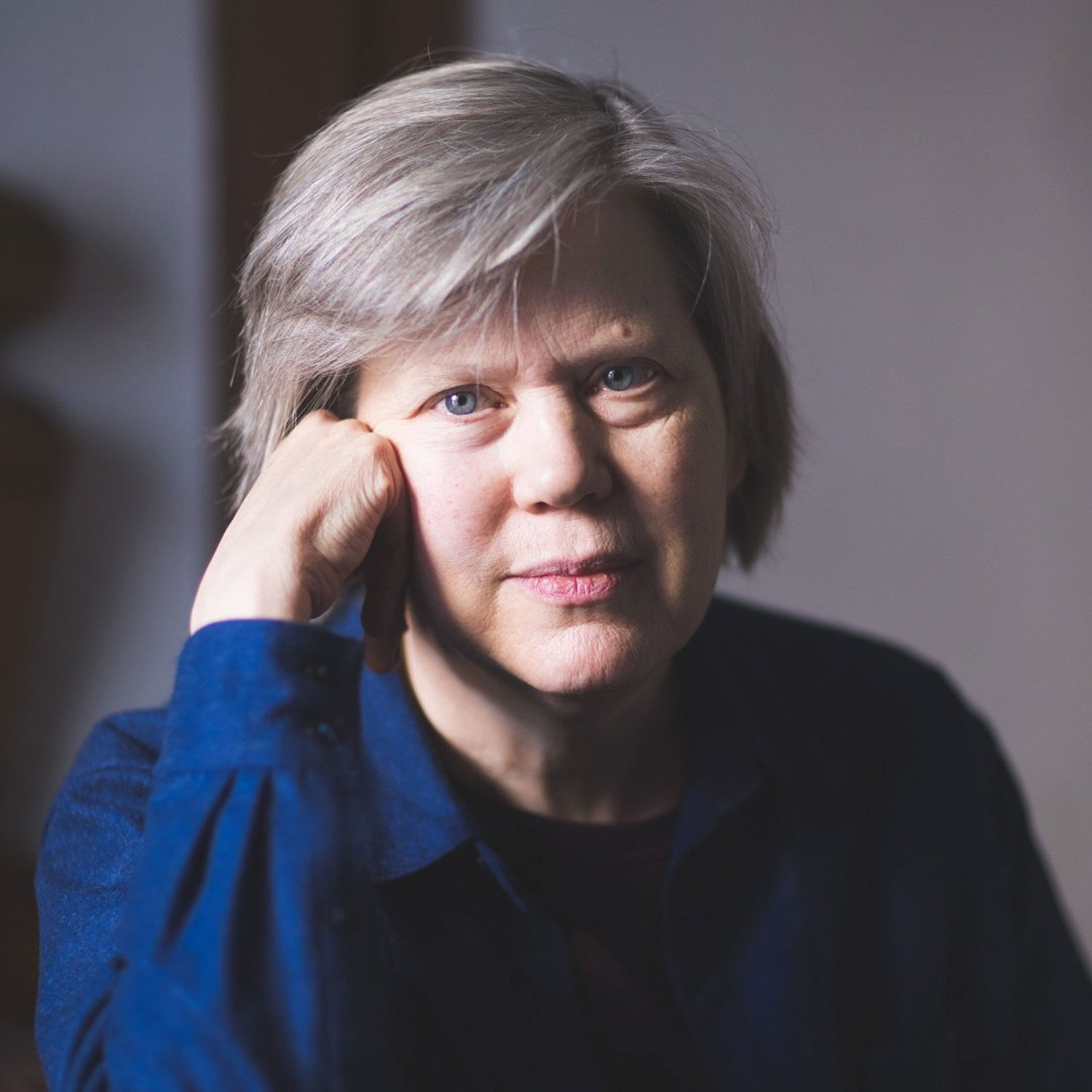
Natural Magic: Emily Dickinson, Charles Darwin, and the Dawn of Modern Science with RENÉE BERGLAND
How do the works of Emily Dickinson and Charles Darwin continue to influence our understanding of nature, ecological interdependence, and the human experience? How does understanding history help us address current social and environmental issues. How can dialogues between the arts and sciences foster holistic, sustainable solutions to global crises?Renée Bergland is a literary critic, historian of science, and educator. As a storyteller, Bergland connects the lives of historical figures to the problems of the present day. As an educator, she emphasizes the interdisciplinary connections between the sciences and humanities. A longtime professor at Simmons University, where she is the Program director of Literature and writing, Bergland has also researched and taught at institutions such as Dartmouth College, Harvard University, and MIT. Bergland’s past published titles include Maria Mitchell and the Sexing of Science: An Astronomer Among the American Romantics and The National Uncanny: Indian Ghosts and American Subjects. Her most recent book, Natural Magic: Emily Dickinson, Charles Darwin, and the Dawn of Modern Science, was published in April of 2024. It explores Dickinson and Darwin’s shared enchanted view of the natural world in a time when poetry and natural philosophy, once freely intertwined, began to grow apart.“There is a stronger connection between Dickinson and Darwin than the proximity of history. Or the universality of literature. They both understood natural science and the natural world in ways that seem strange and somewhat surprising in the 21st century. Their 19th century attitudes to nature and the study of it are so different from ours that when we trace their stories, a vanished world begins to emerge. The more I consider these figures together, the more I feel their world and my world. come alive. Darwin and Dickinson illuminate each other. By reading them together, we can start to understand the interconnected relationships that animated 19th century poetry and science.”– Natural Magic: Emily Dickinson, Charles Darwin, and the Dawn of Modern Science, Preface, pp. xiv–xvi.www.reneebergland.comhttps://press.princeton.edu/books/hardcover/9780691235288/natural-magicwww.creativeprocess.infowww.oneplanetpodcast.orgIG www.instagram.com/creativeprocesspodcast
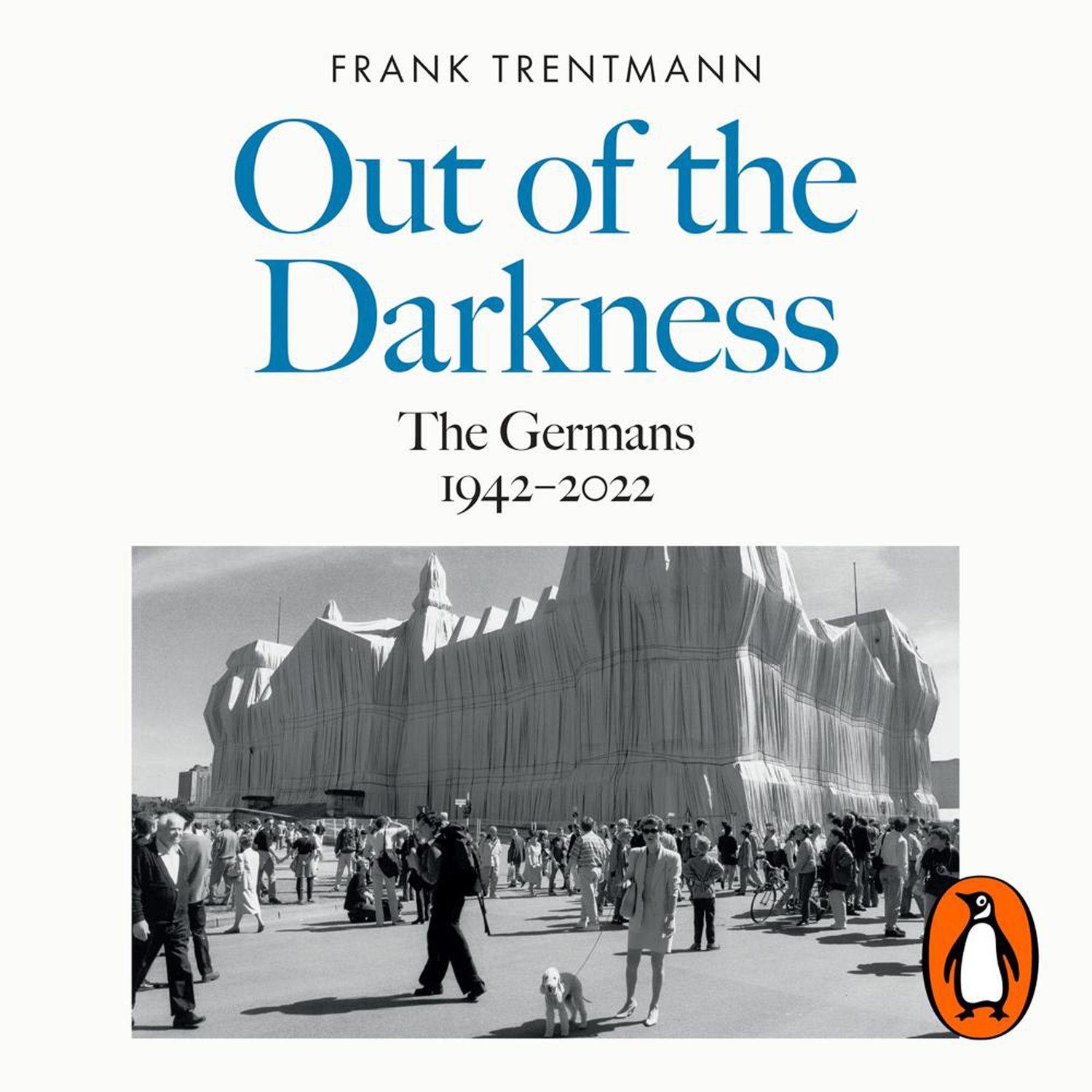
Germany's Postwar Legacy: Lessons for Today's Crises - Highlights - FRANK TRENTMANN
“The bridge between Out of the Darkness and my previous work, which looked at the transformation of consumer culture in the world, is morality. One thing that became clear in writing Empire of Things was that there's virtually no time or place in history where consumption isn't heavily moralized. Our lifestyle is treated as a mirror of our virtue and sins. And in the course of modern history, there's been a remarkable moral shift in the way that consumption used to be seen as something that led you astray or undermined authority, status, gender roles, and wasted money, to a source of growth, a source of self, fashioning the way we create our own identity. In the last few years, the environmental crisis has led to new questions about whether consumption is good or bad. And in 2015, during the refugee crisis when Germany took in almost a million refugees, morality became a very powerful way in which Germans talked about themselves as humanitarian world champions, as one politician called it. I realized that there's many other topics from family, work, to saving the environment, and of course, with regard to the German responsibility for the Holocaust and the war of extermination where German public discourse is heavily moralistic, so I became interested in charting that historical process."What can we learn from Germany's postwar transformation to help us address today's environmental and humanitarian crises? With the rise of populism, authoritarianism, and digital propaganda, how can history provide insights into the challenges of modern democracy?Frank Trentmann is a Professor of History at Birkbeck, University of London, and at the University of Helsinki. He is a prize-winning historian, having received awards such as the Whitfield Prize, Austrian Wissenschaftsbuch/Science Book Prize, Humboldt Prize for Research, and the 2023 Bochum Historians' Award. He has also been named a Moore Scholar at Caltech. He is the author of Empire of Things and Free Trade Nation. His latest book is Out of the Darkness: The Germans 1942 to 2022, which explores Germany's transformation after the Second World War.www.bbk.ac.uk/our-staff/profile/8009279/frank-trentmannwww.penguin.co.uk/authors/32274/frank-trentmann?tab=penguin-bookswww.creativeprocess.infowww.oneplanetpodcast.orgIG www.instagram.com/creativeprocesspodcast
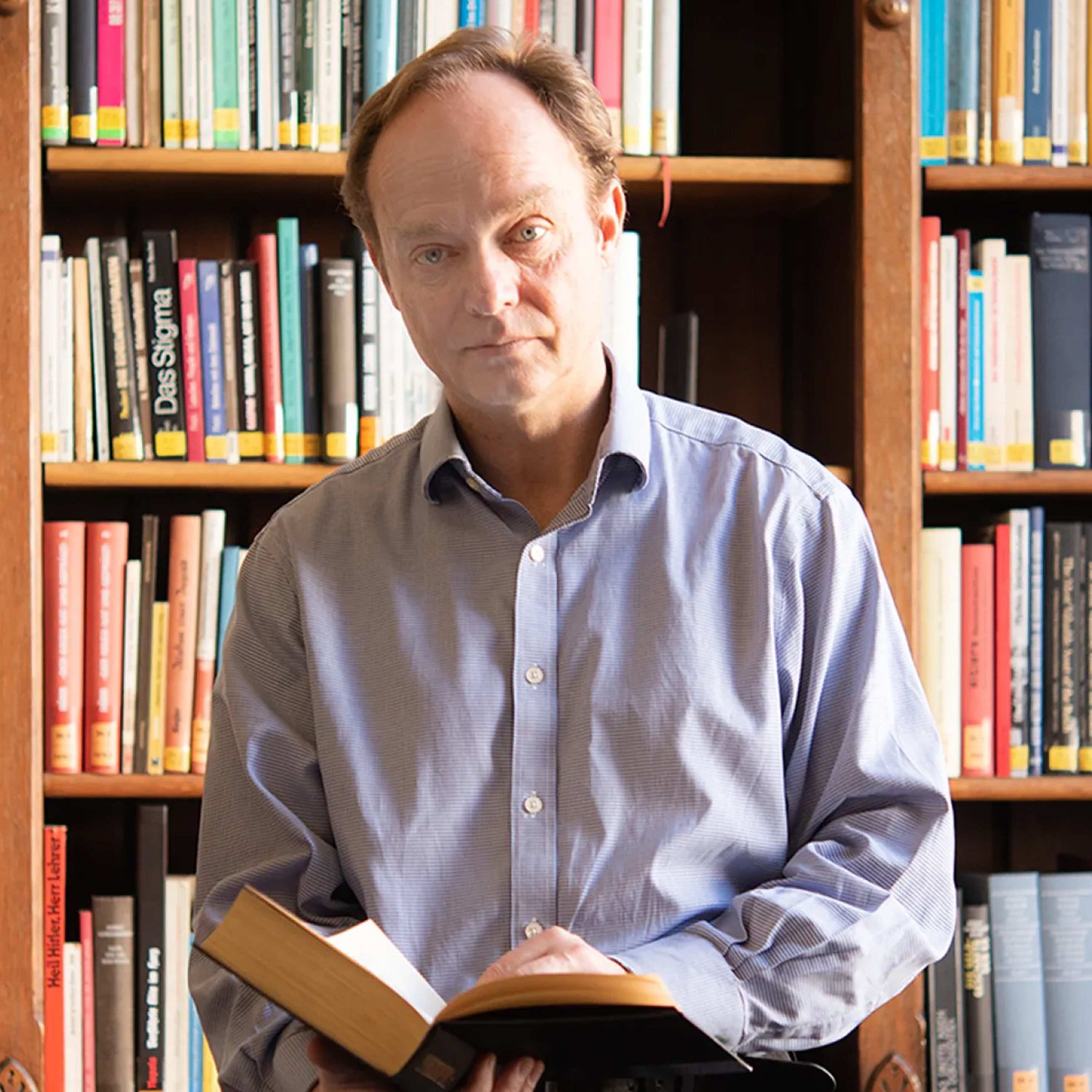
Out of the Darkness: The Germans 1942 to 2022 with FRANK TRENTMANN
What can we learn from Germany's postwar transformation to help us address today's environmental and humanitarian crises? With the rise of populism, authoritarianism, and digital propaganda, how can history provide insights into the challenges of modern democracy?Frank Trentmann is a Professor of History at Birkbeck, University of London, and at the University of Helsinki. He is a prize-winning historian, having received awards such as the Whitfield Prize, Austrian Wissenschaftsbuch/Science Book Prize, Humboldt Prize for Research, and the 2023 Bochum Historians' Award. He has also been named a Moore Scholar at Caltech. He is the author of Empire of Things and Free Trade Nation. His latest book is Out of the Darkness: The Germans 1942 to 2022, which explores Germany's transformation after the Second World War.“The bridge between Out of the Darkness and my previous work, which looked at the transformation of consumer culture in the world, is morality. One thing that became clear in writing Empire of Things was that there's virtually no time or place in history where consumption isn't heavily moralized. Our lifestyle is treated as a mirror of our virtue and sins. And in the course of modern history, there's been a remarkable moral shift in the way that consumption used to be seen as something that led you astray or undermined authority, status, gender roles, and wasted money, to a source of growth, a source of self, fashioning the way we create our own identity. In the last few years, the environmental crisis has led to new questions about whether consumption is good or bad. And in 2015, during the refugee crisis when Germany took in almost a million refugees, morality became a very powerful way in which Germans talked about themselves as humanitarian world champions, as one politician called it. I realized that there's many other topics from family, work, to saving the environment, and of course, with regard to the German responsibility for the Holocaust and the war of extermination where German public discourse is heavily moralistic, so I became interested in charting that historical process."www.bbk.ac.uk/our-staff/profile/8009279/frank-trentmannwww.penguin.co.uk/authors/32274/frank-trentmann?tab=penguin-bookswww.creativeprocess.infowww.oneplanetpodcast.orgIG www.instagram.com/creativeprocesspodcastPhoto credit: Jon Wilson
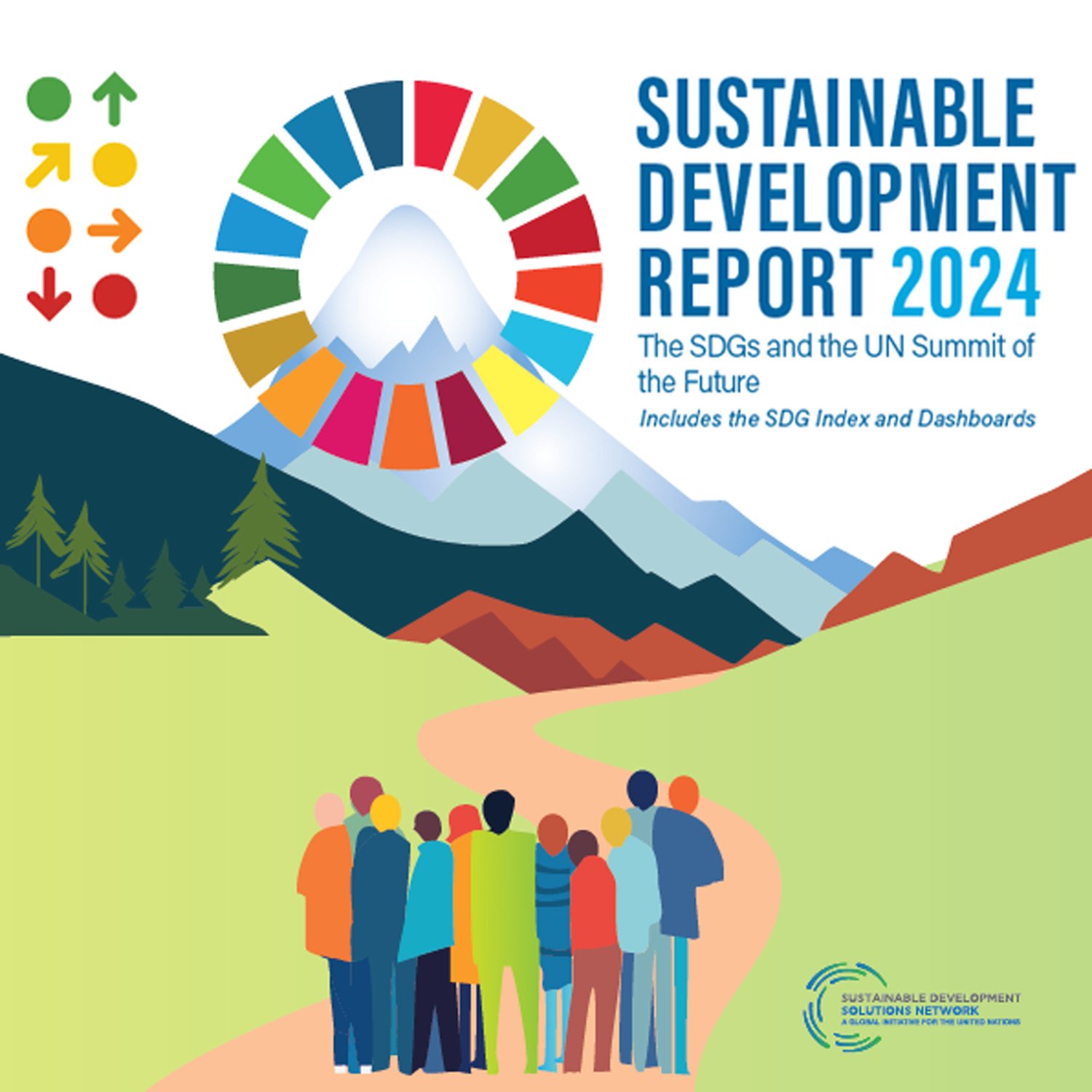
The SDGs & UN Summit of the Future - Highlights - GUILLAUME LAFORTUNE
“The SDSN has been set up to mobilize research and science for the Sustainable Development Goals. Each year, we aim to provide a fair and accurate assessment of countries' progress on the 17 Sustainable Development Goals. The development goals were adopted back in 2015 by all UN member states, marking the first time in human history that we have a common goal for the entire world. Our goal each year with the SDG index is to have sound methodologies and translate these into actionable insights that can generate impactful results at the end of the day. Out of all the targets that we track, only 16 percent are estimated to be on track. This agenda not only combines environmental development but also social development, economic development, and good governance. Currently, none of the SDGs are on track to be achieved at the global level.”In today's podcast, we talk with Guillaume Lafortune, Vice President and Head of the Paris Office of the UN Sustainable Development Solutions Network (SDSN), the largest global network of scientists and practitioners dedicated to implementing the Sustainable Development Goals (SDGs). We discuss the intersections of sustainability, global progress, the UN Summit of the Future, and the daunting challenges we face. From the impact of war on climate initiatives to transforming data into narratives that drive change, we explore how global cooperation, education, and technology pave the way for a sustainable future and look at the lessons of history and the power of diplomacy in shaping our path forward.Guillaume Lafortune joined SDSN in 2017 to lead work on SDG data, policies, and financing including the preparation of the annual Sustainable Development Report (which includes the SDG Index and Dashboards). Between 2020 and 2022 Guillaume was a member of The Lancet Commission on COVID-19, where he coordinated the taskforces on “Fiscal Policy and Financial Markets” and “Green Recovery”, and co-authored the final report of the Commission. Guillaume is also a member of the Grenoble Center for Economic Research (CREG) at the Grenoble Alpes University. Previously, he served as an economist at the OECD in Paris and at the Ministry of Economic Development in the Government of Quebec (Canada). Guillaume is the author of 50+ scientific publications, book chapters, policy briefs and international reports on sustainable development, economic policy and good governance.SDSN's Summit of the Future RecommendationsSDG Transformation CenterSDSN Global Commission for Urban SDG Financewww.creativeprocess.infowww.oneplanetpodcast.orgIG www.instagram.com/creativeprocesspodcast
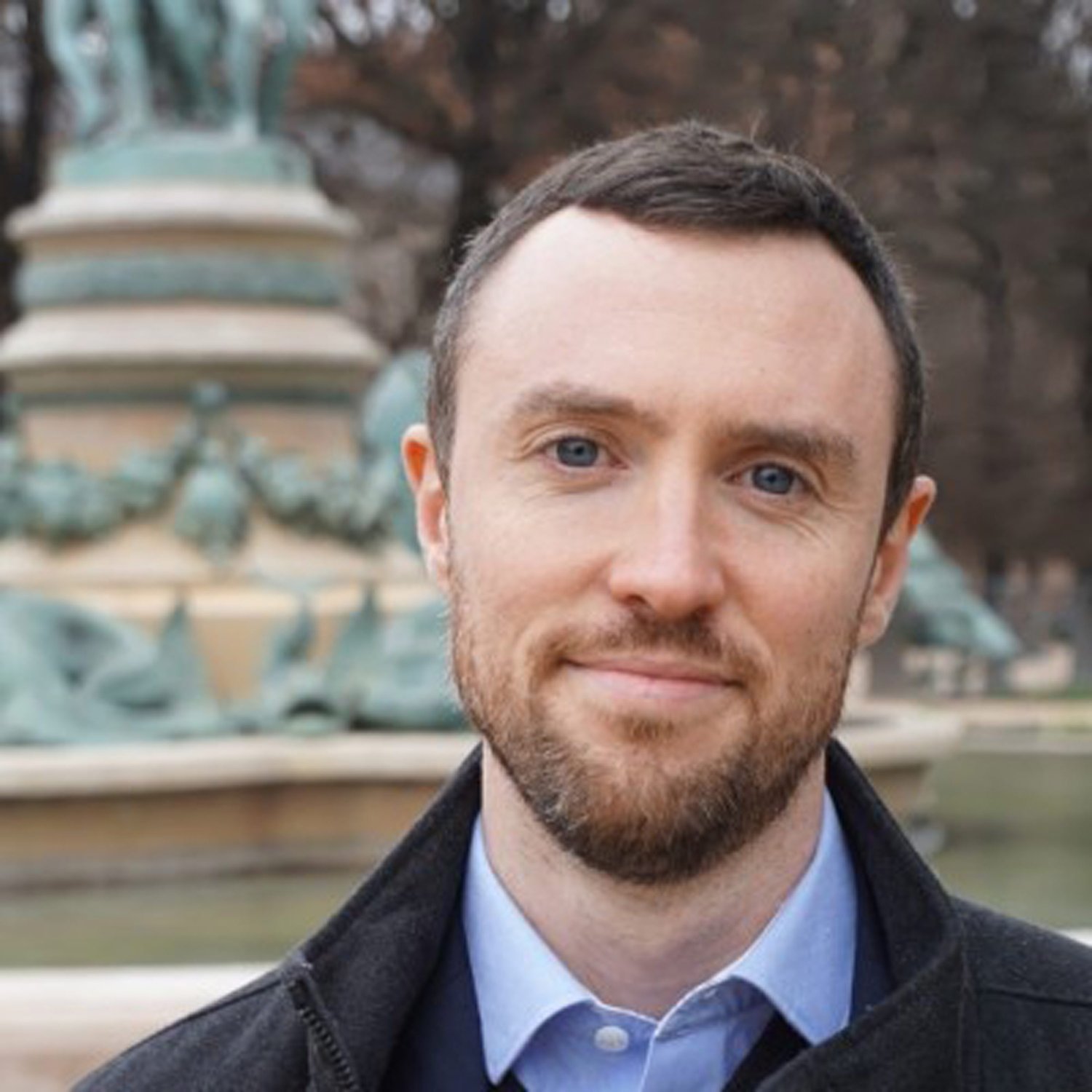
How Can We Unite 193 Countries for a Sustainable Future? - GUILLAUME LAFORTUNE - VP, UN-SDSN, Paris
How can we get 193 countries to move in the same direction for a better tomorrow?In today's podcast, we talk with Guillaume Lafortune, Vice President and Head of the Paris Office of the UN Sustainable Development Solutions Network (SDSN), the largest global network of scientists and practitioners dedicated to implementing the Sustainable Development Goals (SDGs). We discuss the intersections of sustainability, global progress, the UN Summit of the Future, and the daunting challenges we face. From the impact of war on climate initiatives to transforming data into narratives that drive change, we explore how global cooperation, education, and technology pave the way for a sustainable future and look at the lessons of history and the power of diplomacy in shaping our path forward.Guillaume Lafortune joined SDSN in 2017 to lead work on SDG data, policies, and financing including the preparation of the annual Sustainable Development Report (which includes the SDG Index and Dashboards). Between 2020 and 2022 Guillaume was a member of The Lancet Commission on COVID-19, where he coordinated the taskforces on “Fiscal Policy and Financial Markets” and “Green Recovery”, and co-authored the final report of the Commission. Guillaume is also a member of the Grenoble Center for Economic Research (CREG) at the Grenoble Alpes University. Previously, he served as an economist at the OECD in Paris and at the Ministry of Economic Development in the Government of Quebec (Canada). Guillaume is the author of 50+ scientific publications, book chapters, policy briefs and international reports on sustainable development, economic policy and good governance.“The SDSN has been set up to mobilize research and science for the Sustainable Development Goals. Each year, we aim to provide a fair and accurate assessment of countries' progress on the 17 Sustainable Development Goals. The development goals were adopted back in 2015 by all UN member states, marking the first time in human history that we have a common goal for the entire world. Our goal each year with the SDG index is to have sound methodologies and translate these into actionable insights that can generate impactful results at the end of the day. Out of all the targets that we track, only 16 percent are estimated to be on track. This agenda not only combines environmental development but also social development, economic development, and good governance. Currently, none of the SDGs are on track to be achieved at the global level.”SDSN's Summit of the Future RecommendationsSDG Transformation CenterSDSN Global Commission for Urban SDG Financewww.creativeprocess.infowww.oneplanetpodcast.orgIG www.instagram.com/creativeprocesspodcast
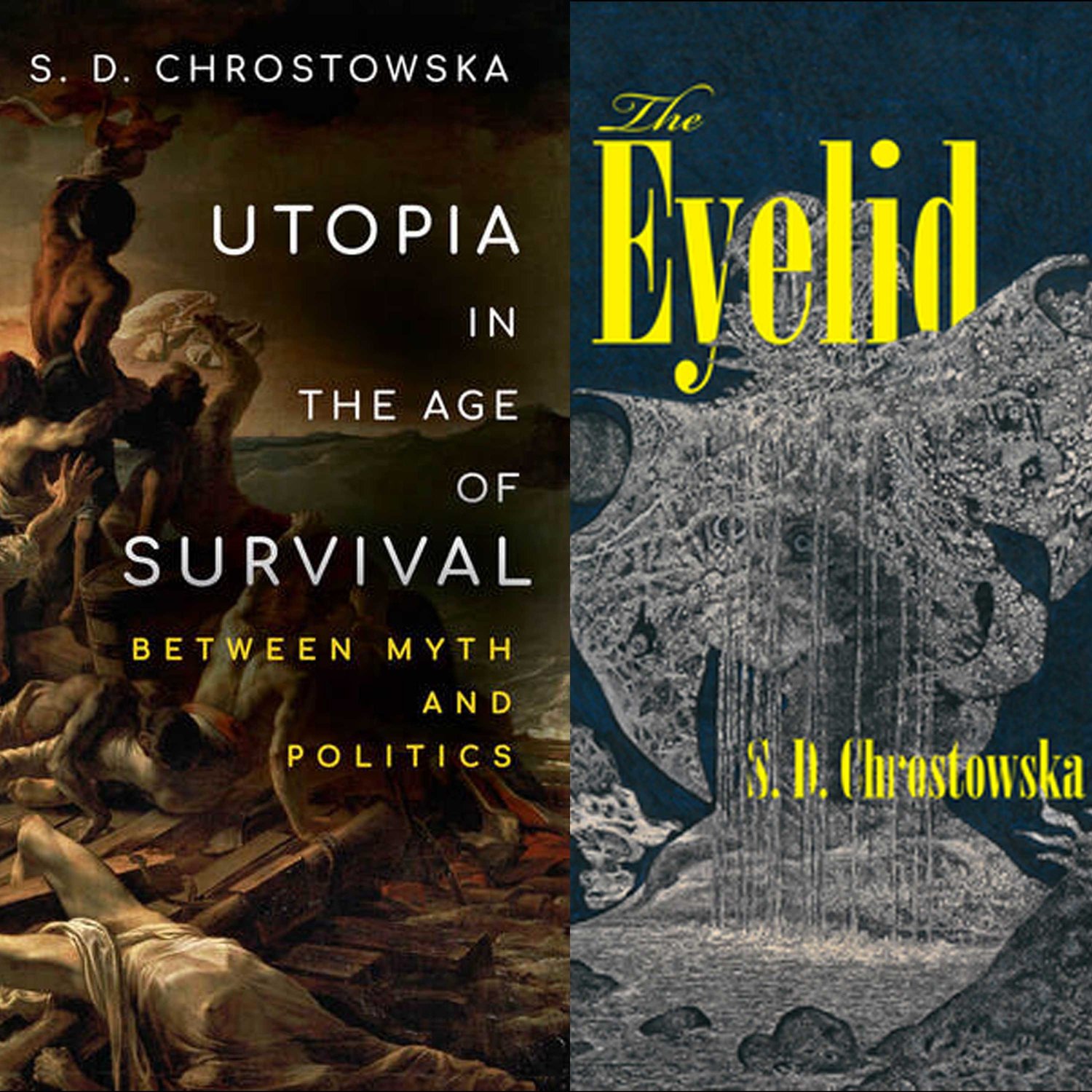
How Do Utopian Visions Shape Our Reality & Future? - Highlights - S. D. CHROSTOWSKA
“I like to think of utopianism as “effective social daydreaming” because utopia is associated with consciously imagining societies. Our imagination is always involved in creating reality. The opposition between the two, reality and the imaginary, is not a stark one; they're porous.”S. D. Chrostowska is professor of humanities at York University, Canada. She is the author of several books, among them Permission, The Eyelid, A Cage for Every Child, and, most recently, Utopia in the Age of Survival: Between Myth and Politics. Her essays have appeared in such venues as Public Culture, Telos, Boundary 2, and The Hedgehog Review. She also coedits the French surrealist review Alcheringa and is curator of the 19th International Exhibition of Surrealism, Marvellous Utopia, which runs from July to September 2024 in Saint-Cirq-Lapopie, France.https://profiles.laps.yorku.ca/profiles/sylwiac/www.sup.org/books/title/?id=33445https://chbooks.com/Books/T/The-Eyelidhttps://ciscm.fr/en/merveilleuse-utopiewww.creativeprocess.infowww.oneplanetpodcast.orgIG www.instagram.com/creativeprocesspodcast
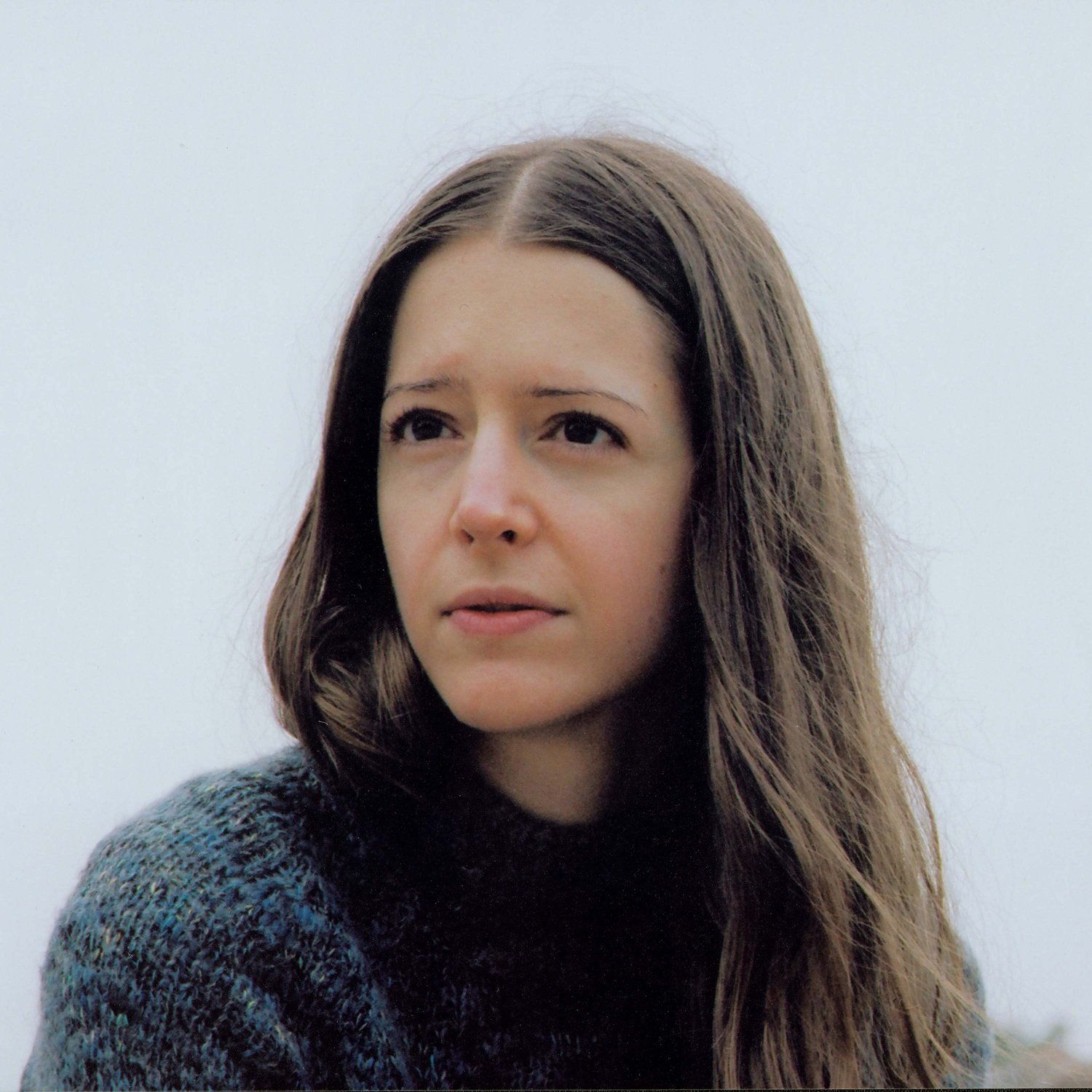
Utopia in the Age of Survival with S. D. CHROSTOWSKA
As Surrealism turns 100, what can it teach us about the importance of dreaming and creating a better society? Will we wake up from the consumerist dream sold to us by capitalism and how would that change our ideas of utopia?S. D. Chrostowska is professor of humanities at York University, Canada. She is the author of several books, among them Permission, The Eyelid, A Cage for Every Child, and, most recently, Utopia in the Age of Survival: Between Myth and Politics. Her essays have appeared in such venues as Public Culture, Telos, Boundary 2, and The Hedgehog Review. She also coedits the French surrealist review Alcheringa and is curator of the 19th International Exhibition of Surrealism, Marvellous Utopia, which runs from July to September 2024 in Saint-Cirq-Lapopie, France.“I like to think of utopianism as “effective social daydreaming” because utopia is associated with consciously imagining societies. Our imagination is always involved in creating reality. The opposition between the two, reality and the imaginary, is not a stark one; they're porous.”https://profiles.laps.yorku.ca/profiles/sylwiac/www.sup.org/books/title/?id=33445https://chbooks.com/Books/T/The-Eyelidhttps://ciscm.fr/en/merveilleuse-utopiewww.creativeprocess.infowww.oneplanetpodcast.orgIG www.instagram.com/creativeprocesspodcast
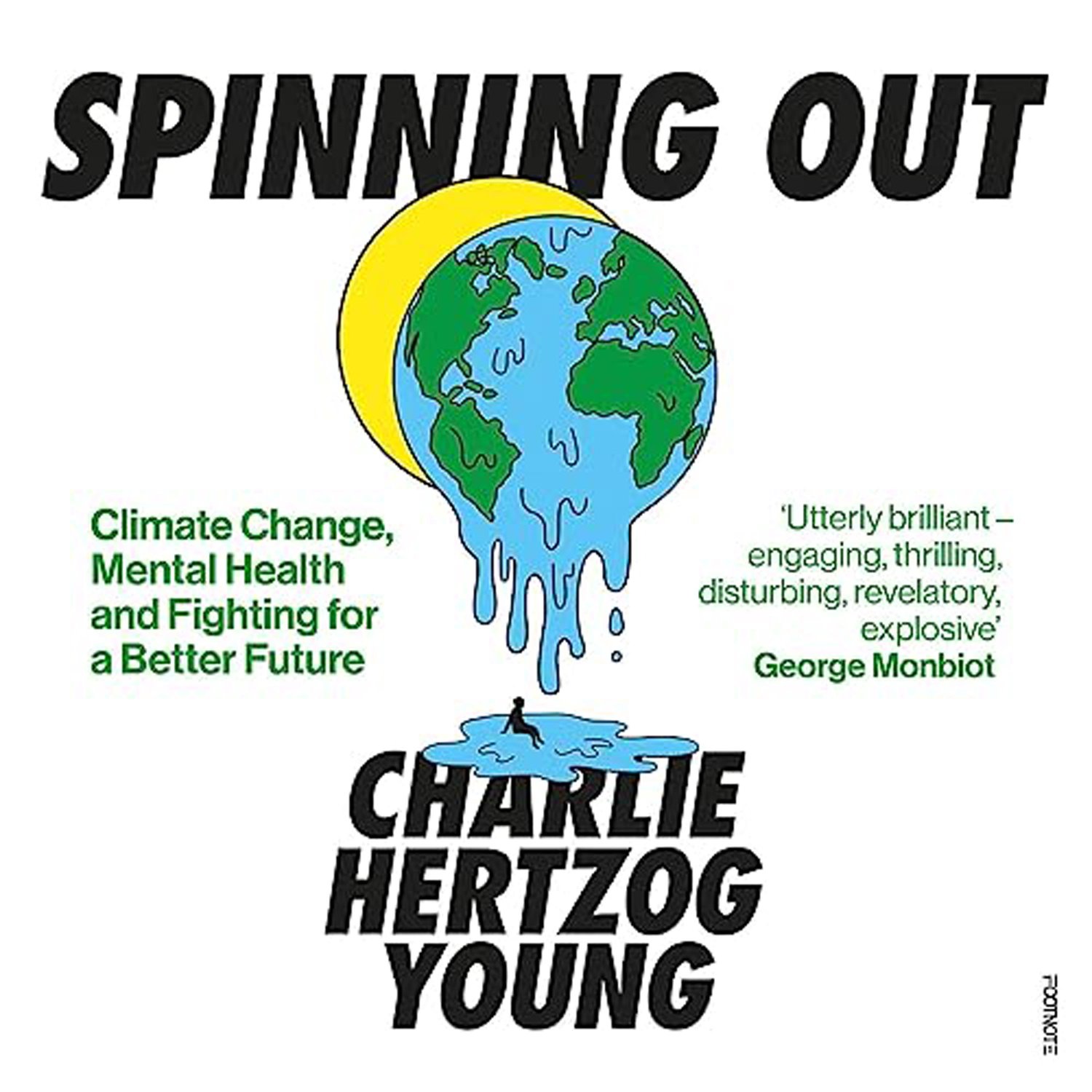
Climate Change, Mental Health & Fighting for a Better Future - Highlights - CHARLIE HERTZOG YOUNG
“I've been a climate activist since I was about 12 years old. It began with a deep passion for wildlife. I started taking up litter and telling off my schoolmates, eventually I set up a green council when I was about 13 or 14. As I learned more and more about the climate crisis and how sprawling and interconnected it was, not just with nature, but with the oppression that exists within human society, I started getting more involved and impassioned, getting involved in protests, marches. When I was about 15 years old, I helped shut down an airport for a night. I eventually started going to the UN climate talks. I went to Davos and it started to become my everything. I felt like I was doing something meaningful about the crisis, but also felt a sense of deep despair and loss, both from the perspective of the impending collapse of the biosphere and also a deep dislocation from the dominant culture and the consensus reality. I felt like no one else was feeling the sense of urgency and emergency that I felt. I started to get incredibly anxious. In 2019, when I was 27, I jumped off a six storey building. My memory has blacked it out, but I spent a month in a coma and woke up having lost both of my legs. The five years since have been one of not just physical and mental recovery, but also trying to untangle the messy web of causality as to how and why it was that I lost my mind in the way I did. I try to find some of the gifts in that madness, what it was pointing towards in terms of the unbalance of the ecosphere and how human civilization has begun to operate completely out of step with the ecosphere.”Charlie Hertzog Young is a researcher, writer and award-winning activist. He identifies as a “proudly mad bipolar double amputee” and has worked for the New Economics Foundation, the Royal Society of Arts, the Good Law Project, the Four Day Week Campaign and the Centre for Progressive Change, as well as the UK Labour Party under three consecutive leaders. Charlie has spoken at the LSE, the UN and the World Economic Forum. He studied at Harvard, SOAS and Schumacher College and has written for The Ecologist, The Independent, Novara Media, Open Democracy and The Guardian. He is the author of Spinning Out: Climate Change, Mental Health and Fighting for a Better Future.https://charliehertzogyoung.mehttps://footnotepress.com/books/spinning-out/www.creativeprocess.infowww.oneplanetpodcast.orgIG www.instagram.com/creativeprocesspodcast
The Mind, Climate Change & Community Resilience with CHARLIE HERTZOG YOUNG
The planet’s well-being unites us all, from ecosystems to societies, global systems to individual health. How is planetary health linked to mental health?Charlie Hertzog Young is a researcher, writer and award-winning activist. He identifies as a “proudly mad bipolar double amputee” and has worked for the New Economics Foundation, the Royal Society of Arts, the Good Law Project, the Four Day Week Campaign and the Centre for Progressive Change, as well as the UK Labour Party under three consecutive leaders. Charlie has spoken at the LSE, the UN and the World Economic Forum. He studied at Harvard, SOAS and Schumacher College and has written for The Ecologist, The Independent, Novara Media, Open Democracy and The Guardian. He is the author of Spinning Out: Climate Change, Mental Health and Fighting for a Better Future.“I've been a climate activist since I was about 12 years old. It began with a deep passion for wildlife. I started taking up litter and telling off my schoolmates, eventually I set up a green council when I was about 13 or 14. As I learned more and more about the climate crisis and how sprawling and interconnected it was, not just with nature, but with the oppression that exists within human society, I started getting more involved and impassioned, getting involved in protests, marches. When I was about 15 years old, I helped shut down an airport for a night. I eventually started going to the UN climate talks. I went to Davos and it started to become my everything. I felt like I was doing something meaningful about the crisis, but also felt a sense of deep despair and loss, both from the perspective of the impending collapse of the biosphere and also a deep dislocation from the dominant culture and the consensus reality. I felt like no one else was feeling the sense of urgency and emergency that I felt. I started to get incredibly anxious. In 2019, when I was 27, I jumped off a six storey building. My memory has blacked it out, but I spent a month in a coma and woke up having lost both of my legs. The five years since have been one of not just physical and mental recovery, but also trying to untangle the messy web of causality as to how and why it was that I lost my mind in the way I did. I try to find some of the gifts in that madness, what it was pointing towards in terms of the unbalance of the ecosphere and how human civilization has begun to operate completely out of step with the ecosphere.”https://charliehertzogyoung.mehttps://footnotepress.com/books/spinning-out/www.creativeprocess.infowww.oneplanetpodcast.orgIG www.instagram.com/creativeprocesspodcast
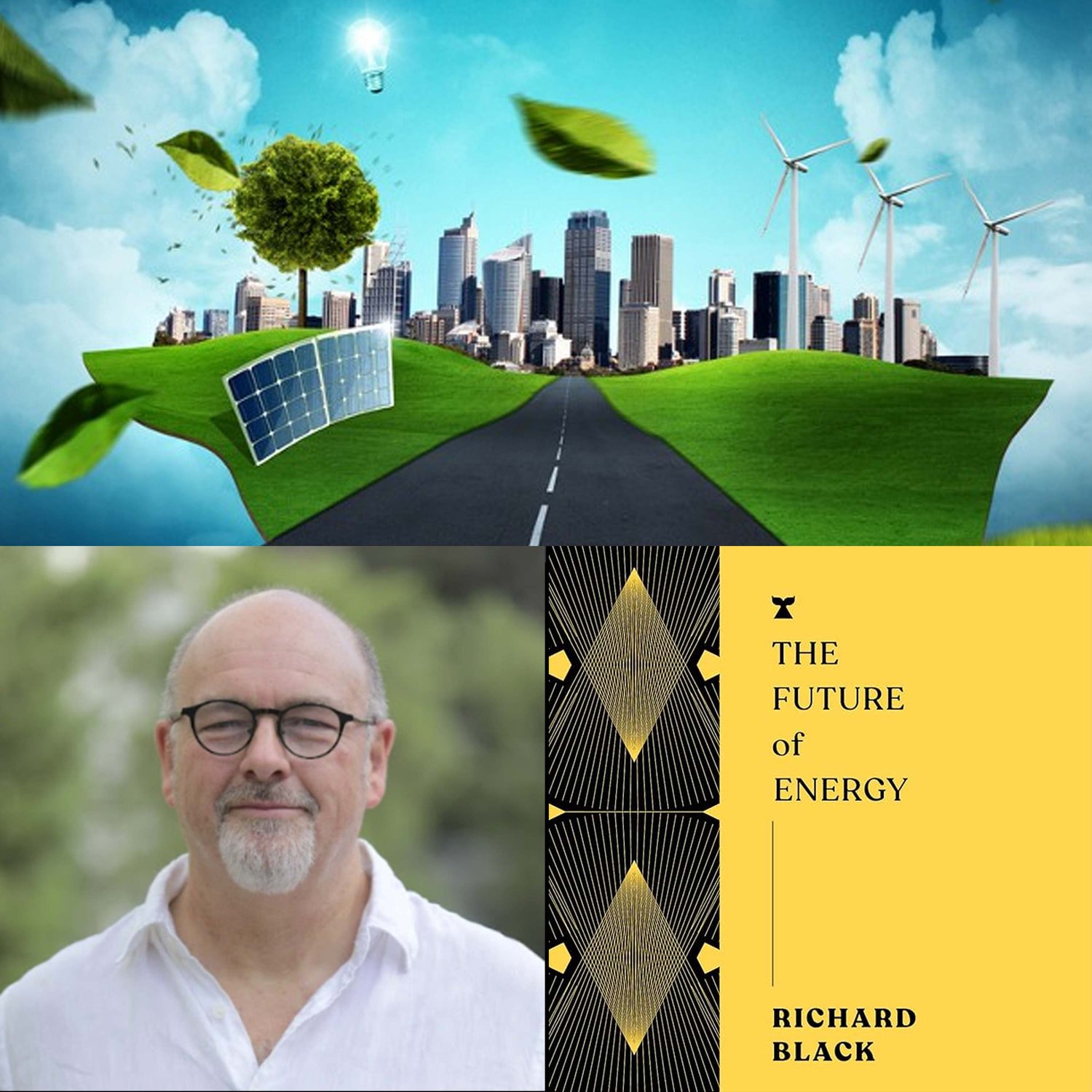
How and when will we transition to a clean energy future? - Highlights - RICHARD BLACK
“The fact is you've got a lot of industrial and political muscle now coming behind clean energy, especially from China, which is the leading country deploying wind energy, the leading country deploying solar, and the leading manufacturer and user of electric vehicles by miles. As one recent report put it, ‘We have petrostates in the world. China is the first electrostate.’ And China is on its way to becoming the world's most powerful country. So, where China leads, the rest of the world is almost certain to follow. Yes, there are massive air pollution problems in China, of course, but I think it's more than that. It's also about seeing that this is the future that the world is going to have. And if these goods are going to be made anywhere, well, the Chinese government clearly would like them to be made in China. And they've set out, you know, industrial policies and all kinds of other policies for, well, at least a decade now, in pursuit of that aim. It's interesting now to see other countries, India, for example, and the United States now sort of deploying muscle to try and carve out a slice of the pie themselves as well.”The Five-pronged Clean Energy Future“I thought about it, and I was wondering, what do we actually need in the world? Because we don't need petrol and we don't need coal. We need energy to power various things. So, we need these energy services. So, what's the simplest way of providing all of the energy services? And it really seems to me that we can basically do it all with about five different types of goods. So the system of the future I put out in the book is first of all, you have the generation of electricity, which is mainly going to be with renewables, mainly with wind and solar because they are the cheapest and they're getting cheaper thanks to Wright's Law. Then you need energy storage and other means of sharing matching demand to supply. So, storage is the one that people will be most familiar with, which can be batteries, for example. And again, the price of batteries has also plummeted about 85 percent price reduction in a decade. And it continues because, again, we have mounting volumes. In a competitive market, there's lots of innovation going on in terms of battery design, in terms of construction, and all of this stuff, new materials coming into batteries. So, that's your first two, that's your renewable generation and your battery storage. Electric vehicles will be the main method of transportation. Already, they dominate sales in the two-wheeler market in China and India. They're already eating into global oil demand. They're taking about 1.5 percent of global oil demand already, and the sales are increasing exponentially in China and other countries as well. They are cost-competitive. It's just on the purchase price in some markets with some models now. And it's going to get cheaper again because battery costs will fall. Heating and cooling, which is a big demand for energy. We can use heat pumps, which are super efficient running on electricity…Hydrogen, that will probably be the fifth prong, but a smaller prong, rather like the little finger on your hand."Richard Black spent 15 years as a science and environment correspondent for the BBC World Service and BBC News, before setting up the Energy & Climate Intelligence Unit. He now lives in Berlin and is the Director of Policy and Strategy at the global clean energy think tank Ember, which aims to accelerate the clean energy transition with data and policy. He is the author of The Future of Energy; Denied:The Rise and Fall of Climate Contrarian