
The Bullvine
656 episodes — Page 7 of 14

S1 Ep 357E357 The $6 Billion Shock: How Nine Days in April Changed Everything for American Dairy
The 2025 global dairy trade is in turmoil — tariffs skyrocket, markets shutter, and decades-old supply chains fracture overnight. If you think this is just another trade blip, think again. This episode unmasks the harsh realities behind the numbers, delivers deep dives on who's winning, losing, and why profitability now demands radical innovation and strategic agility. From record-breaking cheese exports to staggering collapses in whey and lactose, we dissect the data that's reshaping dairy farming at its core. Farmers, geneticists, and industry pros: Get ready for a perspective that challenges convention and empowers your bottom line.Key Takeaways:How 125% tariffs forced a swift exit from China for major dairy ingredients, crushing traditional marketsWhy milk protein optimization and hybrid genetic strategies matter more than ever in this new landscapeThe impact of global currency swings and how a strong U.S. dollar compounds export challengesInsights on the unmatched resilience of cheese and butterfat exports despite geopolitical upheavalWhat regional producers are facing the biggest pain — and where new opportunity pockets are emergingHow major industry players like Lactalis and Fonterra are repositioning amid disruptionPolicy shifts, safety net programs, and how savvy farmers can leverage these changesWhy the future of dairy may be fragmented — and why that's not necessarily badDeeper Dive - Why Listen: In this eye-opening episode, we break down the astonishing speed and severity of the 2025 trade disruptions — from the 34% to 125% tariffs enacted in under two weeks, to the near collapse of U.S. whey and lactose exports, displacement of markets, and pivot to new buyers in Southeast Asia and Latin America. We unpack the latest data from USDA forecasts, Cornell economic models, and international trade bodies to reveal hard truths about farm-level impacts and pricing volatility. Expect fresh insights into component optimization strategies that could add tens of thousands to your farm's bottom line, and hear how industry giants like Lactalis's billion-dollar acquisitions and Fonterra's shift to ingredients foreshadow the massive consolidation and innovation race underway. This episode features industry-leading insights that challenge complacency — no jargon, just actionable analysis for producers and professionals serious about profitability and sustainability.Resources & Engagement: Subscribe to The Bullvine Podcast for more cutting-edge discussions shaping the dairy industry's future. Show notes, data charts, and expert articles at https://www.thebullvine.com/dairy-markets/the-6-billion-shock-how-nine-days-in-april-changed-everything-for-american-dairy/. Join the conversation on social @bullvine, share your thoughts, and connect with a community committed to pushing dairy forward. Don't just listen — engage and innovate!

S1 Ep 356E356 More Than Policy: For Jim Mulhern, Legacy is Measured One More Season at a Time
Is dairy policy just paperwork, or can it mean the difference between going under and getting through one more season? In this episode of The Bullvine Podcast, we challenge the notion that Washington is too far removed from the parlor floor. We bring you a candid, inside look at the industry-changing leadership of Jim Mulhern, retiring President & CEO of the National Milk Producers Federation and World Dairy Expo’s 2025 Industry Person of the Year. Strap in as we dissect the critical moves that stabilized milk checks, cut through policy gridlock, and set a new benchmark for what real advocacy delivers. If you’re watching margins shrink and demands rise, this episode reveals why leaders like Mulhern are redefining how U.S. dairy survives—and thrives.Key Takeaways:Uncover how Mulhern’s “season by season” legacy approach secured real-world results for producers nationwide.Explore the true impact of FMMO modernization and what it means for predictable, sustainable milk pricing in 2025 and beyond.Learn actionable risk management strategies—why DMC isn’t just another acronym and how smart policy delivered over $2 billion in direct relief.Dive into the unfinished business: immigration reform, international trade, and labeling wars—what’s at stake for tomorrow’s dairy entrepreneurs.Understand the leadership playbook behind building consensus across fiercely divided co-ops and why compromise is the new competitive advantage in dairy.Deeper Dive – Why Listen: This episode goes beyond the headlines and the handshakes to examine the actual mechanics of dairy profitability and resilience. Jim Mulhern, with over four decades shaping U.S. dairy policy as NMPF President & CEO, offers a rare, unfiltered interview that breaks down what worked, what failed, and what every progressive farm, co-op board, or processor needs to know. Are you still managing risk the way you did in 2012? You’ll hear unvarnished truths on why DMC outperformed previous programs (triggering $2B+ in critical payouts), how FMMO reform wasn’t just political theater but a fight that hits your wallet, and what happens when labor shortages or false labeling hit operational reality.Expect a data-driven discussion of how stewardship, profitability, and innovation get built from policy to parlor. Mulhern’s blend of ground-level credibility and policy mastery is a masterclass for anyone who believes industry transformation starts with tough, sometimes unpopular decisions. You’ll finish with a sharpened sense of where the industry must go next, who’s poised to lead, and what practical changes you can implement tomorrow to protect your bottom line.Resources & Engagement: Like what you hear? Subscribe to The Bullvine Podcast on Apple, Spotify, or your favorite platform and never miss an episode focused on the intersection of profitability and innovation in dairy. For related articles, referenced studies, or additional insights from this interview, head over to https://www.thebullvine.com/dairy-industry-professionals/more-than-policy-for-jim-mulhern-legacy-is-measured-one-more-season-at-a-time/. Join the conversation on social media—share your thoughts, questions, or experiences, and let’s drive change together in the dairy industry.
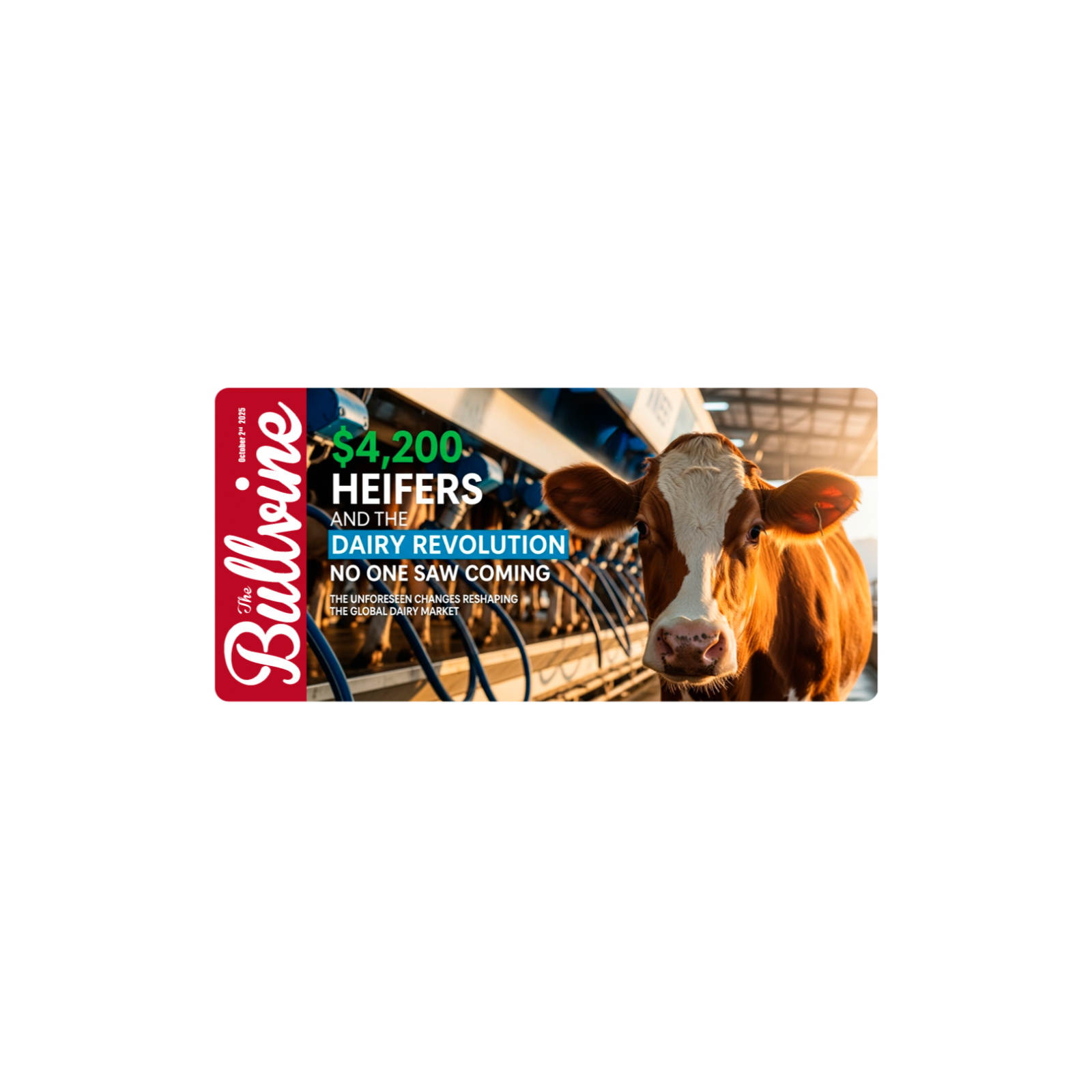
S1 Ep 355E355 $4,200 Heifers and the Dairy Revolution No One Saw Coming
The dairy industry faces an unprecedented crossroads as replacement heifer inventories hit historic lows, and prices soar beyond $4,000 per head. This episode unpacks how cutting-edge genetic technologies combined with booming beef markets are reshaping breeding strategies globally. With profitability under pressure and traditional methods challenged, we dive deep into three revolutionary plans creating new avenues and risks for dairy farms worldwide. Tune in for hard-hitting insights that challenge conventions and arm you with actionable strategies to turn breeding decisions into profit.Key Takeaways:How modern genomic tools and sexed semen technologies can be leveraged to maximize herd profitabilityHidden risks and opportunities arising from the explosive rise of beef-on-dairy breedingWhich of the three innovative breeding paradigms—Rotational, Heifer-Centric, or Genetic Upgrade—best fits your farm's economic and operational realitiesHow the national shortage of replacement heifers affects future genetic diversity and long-term herd healthStrategic considerations that should shape your breeding decisions amid volatile market dynamics and biosecurity risksDeeper Dive - Why Listen: This episode delivers a comprehensive analysis of the modern dairy breeding revolution, featuring insights from leading geneticists and farm managers. We explore data revealing how sexed semen adoption and beef-on-dairy crossbreeding have dramatically impacted the national supply of replacement heifers and market prices. The discussion critically evaluates three strategic plans: a rotational breeding system promoting health but challenging cash flow; a heifer-focused approach betting on high market prices but exposed to volatility; and a genetic upgrade plan aiming for rapid herd improvement yet fraught with biosecurity concerns and high upfront costs. Listeners will gain a nuanced understanding of how these strategies may play out in diverse regions, the operational trade-offs involved, and the importance of flexible, data-driven decision-making to secure sustainability and profitability in today's dairy landscape. For producers eager to outpace change, this episode offers grounded innovation insights vital to redefining breeding success.Resources & Engagement: Subscribe to The Bullvine Podcast on Apple Podcasts and your favorite platform to stay ahead with cutting-edge dairy industry insights. Explore detailed articles, data charts, and resource links mentioned in this episode at https://www.thebullvine.com/genetics/4200-heifers-and-the-dairy-revolution-no-one-saw-coming/. Join the conversation with fellow producers and experts by following us on social media @TheBullvine. Your feedback shapes future episodes—connect, comment, and share your breeding challenges and wins!

S1 Ep 354E354 How Dairy Farmers Are Finally Breaking Free From the 365-Day Grind – and Finding More Time and Profit
The dairy industry faces a harsh reality: nearly 85% of family dairies don't make it past the third generation. In this ground-breaking episode, we challenge the status quo with compelling data that shows working harder isn't the answer. Discover how cutting-edge automation and smarter labor strategies are transforming farms, slashing labor costs by over $150,000 annually and boosting milk production by 5 pounds per cow. Tune in to hear how international innovations like flexible milking schedules from New Zealand are driving profit increases as high as 60%, and why these insights could be the key to your farm's survival and growth.Key Takeaways:How can automation halve labor hours and save up to $95,000 annually on mid-sized farms?What production gains can proven robotic milking systems deliver, and how does this impact your bottom line?Why is flexible milking gaining traction globally, and how can it boost profits by 60% while reducing stress?What role does health monitoring play in cutting veterinary costs by a third and preventing costly disease outbreaks?How are current labor shortages and soaring wage pressures in 2025 making automation essential for dairy sustainability?Deeper Dive - Why Listen:This episode unpacks decades of traditional dairy practice and offers a bold, data-driven challenge to the '365-day grind' mindset. Groundbreaking research from the USDA, University of Wisconsin extensions, and DairyNZ provide an evidence-based roadmap to a more profitable, sustainable future. Listeners will learn from real farm case studies, including a Wisconsin operation that boosted production and halved labor using robotic milking, as well as global innovations transforming cow comfort and profitability. Explore actionable strategies for progressive producers looking to reduce burnout, lower operational costs, and secure the next generation's commitment to the farm. The episode also tackles the critical intersection of technology, labor economics, and environmental sustainability, equipping listeners with fresh perspectives to rethink their operations in 2025 and beyond.Resources & Engagement:Subscribe to The Bullvine Podcast now for fearless, forward-thinking dairy insights that you won't find anywhere else. Visit The Bullvine website https://www.thebullvine.com/management/robotic-milking/how-dairy-farmers-are-finally-breaking-free-from-the-365-day-grind-and-finding-more-time-and-profit/ for direct links to all studies and articles mentioned in this episode. Engage with us on social media, share your thoughts, and help spark the conversations that will transform our industry.

S1 Ep 353E353 When Financial Disaster Breeds Genetic Gold: The Blackrose Story That Changed Everything
Explore the untold story of how the 1980s dairy financial crash, driven by tax loopholes and speculative investment, spawned the legendary Blackrose lineage — a genetic powerhouse still shaping global profitability today. This episode challenges conventional breeding thought, revealing how crisis bred innovation, and how you can apply data-driven genetics to boost your herd's profitability and sustainability.Key Takeaways:What lessons from the 1980s 'Investor Era' help us navigate today's dairy market volatility?How did Jack Stookey's rise and fall disrupt dairy genetics forever?Why was the Nandette TT Speckle-Red and To-Mar Blackstar pairing a game-changing corrective cross?How does Blackrose's legacy continue to impact modern dairies globally?What role do advanced genomic tools and precision mating play in replicating such success?What are the practical risks and rewards of using powerful but challenging sires in your breeding program?Deeper Dive - Why Listen: Join us to unravel the Blackrose saga—a masterclass in resilience and genetic innovation. We offer a data-rich historical analysis of Jack Stookey's empire's meteoric rise and spectacular collapse, plus Louis Prange's visionary rescue of elite genetics during the dairy industry's financial upheaval. Learn how corrective breeding principles and genomic science transformed Holstein mating strategies, empowering you to refine your own breeding program with scientifically sound, profit-focused decisions. This episode reveals why 15% of today's top-producing herds still carry Blackrose genetics and how her descendants like Ladyrose Caught Your Eye continue setting records with three consecutive World Dairy Expo championships.Resources & Engagement: Subscribe for industry-leading insights via The Bullvine Podcast. Visit https://www.thebullvine.com/donor-profile/when-financial-disaster-breeds-genetic-gold-the-blackrose-story-that-changed-everything/ for comprehensive episode notes, genetic charts, and expert resources referenced in this episode. Join the conversation on social media using #BullvinePodcast, sharing your experiences and perspectives on dairy breeding innovation that drives real profitability.

S1 Ep 352E352 The Hot Iron’s Last Stand: Why Canada’s #1 Proven Bull Just Changed Everything
In a dairy industry steeped in tradition, the rise of polled genetics is rewriting the playbook. It's no longer just animal welfare rhetoric—it's a profitability game-changer with real herd impacts. This episode exposes how the latest data proves the myth of compromised production wrong, showing top sires leading genetic rankings, the hidden cost of dehorning, and why industry leaders are scrambling to embrace polled cattle. For producers, scientists, and innovators alike, this is essential listening on aligning genetics with farm economics and market realities.Key Takeaways:Track the explosive growth of the polled gene in Canadian Holsteins from 1.5% in 2015 to 12.5% in 2025Understand how homozygous polled sires topped the charts, obliterating production compromise concernsDeconstruct the true cost of dehorning—direct, indirect, and compliance expenses quietly draining profitabilityDiscover practical three-year herd transition timelines tailored by operation sizeExamine how tightening regulations and market demands are accelerating the global switchDeeper Dive - Why Listen: This episode features insights from leading genetics experts and dairy economists who bring fresh perspectives rooted in data and real-world farming experience. They share proven strategies that dispel long-held myths about polled cattle productivity and explain how genomic selection is catapulting these genetics forward.Listeners gain clarity on the true, often underestimated costs of dehorning—not just the procedure but cascading impacts on growth, health, labor, and market penalties. Through detailed economic modeling, the episode quantifies savings that make transitioning to polled genetics both a welfare upgrade and operational imperative.The discussion highlights how regulatory mandates from NFACC and the U.S. National Dairy FARM Program are changing compliance requirements, making documented pain control unavoidable—while polled genetics offer an audit-proof alternative.Whether you're planning your next breeding cycle, tracking cutting-edge trends, or focused on sustainability and market access, this episode delivers actionable strategies that challenge industry orthodoxies with hard evidence.Resources & Engagement: Subscribe to The Bullvine Podcast for ongoing insights linking dairy science with profitability. Visit for https://www.thebullvine.com/polled-dairy-cattle/the-hot-irons-last-stand-why-canadas-1-proven-bull-just-changed-everything/ supplementary articles, data visuals, and resources discussed. Join the conversation on social media—share your experiences and stay ahead of market shifts. Innovation waits for no one; be part of the dairy future today.
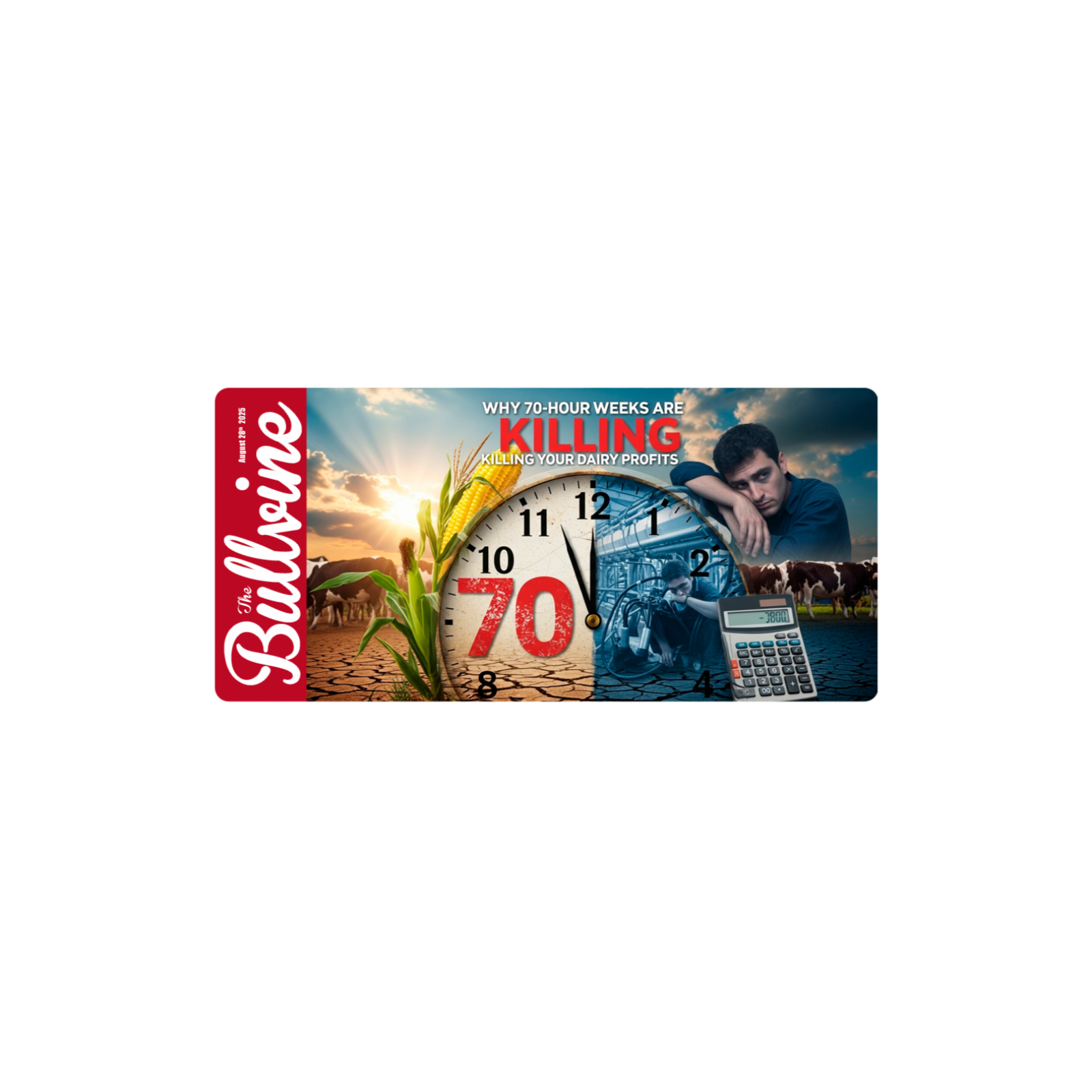
S1 Ep 351E351 Why 70‑Hour Weeks Are Killing Your Dairy Profits
This episode challenges one of dairy farming's most stubborn myths: that grinding 70-hour weeks makes you more profitable. Instead, newly released research from Ireland puts the spotlight on smarter work, not just harder work. We reveal how the top 25% of dairy farms working just 51 hours weekly outperform the lowest 25% grinding away at 70 hours — delivering a massive 20% boost in ROI. Dive in for groundbreaking insights that could reshape your entire operation and future-proof your farm in this hyper-competitive, razor-thin margin industry.Key Takeaways:How are some farmers turning off the "always on" mentality and seeing 20% bigger profits?What's the real impact of working excessive hours on decision making and farm sustainability?How are flexible milking and smart automation driving efficiency without sacrificing production?What role does mental health play in profitability and what risks are farmers facing?What's the practical 90-day roadmap to begin shifting your farm to the profitable 51-hour workweek?Why isn't "more hours" the answer, but "better brain function" will save your bottom line?Deeper Dive - Why Listen: This episode deep-dives into the latest data-backed revelations shaking up the dairy world. We explore a landmark Irish study highlighting how relentless hustle is a false prophet in farming profitability. We discuss the costs of burnout and impaired cognition on your herd and wallet, the growing mental health crisis on farms, and why the industry must stop glorifying exhaustion.You'll hear from analysis of global innovators—from New Zealand's flexible milking models boosting income 60%, to Dutch systems emphasizing craftsmanship and balance—and how technology like Automated Milking Systems (AMS) free up critical cognitive capacity for decisive management.Listeners ready for change will get a clear 4-phase, 90-day transformation playbook covering time audits, delegations, tech investments, and operator wellness strategies. This episode is essential for anyone serious about disruptively improving dairy ROI and building sustainable operations.For those in genetics, farm management, or industry leadership, the insights here challenge status quo thinking and call for a mental shift: your brain is not your margin's enemy, but your greatest asset.Resources & Engagement: Subscribe to The Bullvine Podcast now to stay ahead with more research-driven insights disrupting dairy norms. Visit https://www.thebullvine.com/management/why-70%e2%80%91hour-weeks-are-killing-your-dairy-profits/ to access full articles, data tables, and reference studies mentioned in this episode.Engage with us on social media @TheBullvine—join the conversation, share your experiences, and connect with a community redefining profitable dairy farming.

S1 Ep 350E350 The Hidden Costs of Turnover: Why Your Dairy’s Biggest Crisis Isn’t What You Think
Labor shortages and high turnover in dairy barns are more than just staffing issues. They’re quietly bleeding millions from operations across the country. This episode exposes why turnover rates hovering near 40%, with seasonal spikes reaching 20%, aren’t just statistics—they’re profit killers. We unpack emerging data linking churn to reduced milk production and costly replacements, offering actionable strategies that prioritize workforce retention alongside technology investments. If you’re serious about future-proofing your dairy amid tightening labor markets, this discussion will equip you with the insights you need.Key Takeaways:Understand how turnover impacts milk production and herd health, trimming profit margins silently.Explore why seasonal workforce fluctuations create complex operational challenges—and how to anticipate them.Learn realistic economic timelines and impacts of robotic milking system implementation.Discover cutting-edge retention strategies that have actually reduced dairy turnover in rigorous state programs.Get a practical framework to balance investments in labor and automation for maximum ROI.Deeper Dive - Why Listen: Unpack groundbreaking data from recent industry surveys and extension research that expose the true financial consequences of dairy labor turnover. Hear how turnover isn’t just a human resources challenge but a direct hit to milk yield and animal health. We explore the staggering replacement costs, the slow ramp-up in new hire productivity, and the operational chaos from seasonal spikes. This episode critically examines the promise and pitfalls of robotic milking systems, drawing on university studies and real-world experiences. We also spotlight Vermont’s Milk with Dignity program—a pioneering, worker-driven initiative showing how fair labor investments drastically reduce turnover and boost stability. Listeners will gain a pragmatic roadmap to future-proof farm labor management, combining workforce retention, thoughtful technology adoption, and data-driven decision making for sustained profitability.Resources & Engagement: Subscribe to The Bullvine Podcast to stay ahead with unflinching industry insights. Visit https://www.thebullvine.com/management/the-hidden-costs-of-turnover-why-your-dairys-biggest-crisis-isnt-what-you-think/ for full articles, data references, and expert interviews to deepen your understanding. Join the conversation on social media—share your experiences, challenge ideas, and connect with industry leaders driving dairy’s evolution.

S1 Ep 349E349 Fortnite, Instacart, and $600K in Sales: How Dairy MAX is Winning the Next Generation of Milk Drinkers
Is dairy marketing stuck in the past, or is the industry on the verge of a seismic shift? This episode of The Bullvine Podcast tackles the question every progressive producer and industry leader is asking: How can you truly reach the next generation—and does going digital actually move real milk? Today’s episode challenges that common wisdom with real numbers, bold experiments, and a strategy that’s already paying off to the tune of over $600,000 in new product sales.Key Takeaways:Discover how Dairy MAX used gaming, esports, and online retail platforms to move over 400,000 pounds of milk—while most marketing budgets are still spent on radio and print.Gain an inside look at leveraging mainstream partnerships (think the Dallas Cowboys and Instacart) to put dairy in the spotlight far beyond the farm gate.Learn why the boardroom’s willingness to embrace innovation—not just tradition—is delivering higher ROI for more than 700 real dairy farms.Hear the science-backed reason consumer trust is built on cow comfort and care, not just talk about climate or sustainability.Find out how the U.S. dairy industry is capturing global opportunity, with cheese exports up 34%—and what it takes to capitalize on market changes in 2025.Get practical strategies for adopting cutting-edge outreach, collecting digital wins, and building a more profitable, future-ready brand—no matter your herd size.Deeper Dive – Why Listen: This episode is a must-hear for any producer, geneticist, or agribusiness strategist determined to outperform in a changing market. Featuring Jennie McDowell, CEO of Dairy MAX and a recognized leader in dairy innovation, the interview reveals how one organization transformed consumer outreach—from farm visits and school programs to multimillion-dollar digital campaigns in Fortnite and Instacart. You’ll hear powerful stories of boardroom risk-taking and real-world execution, data-backed success in moving product, and the candid realities of connecting with Gen Z where they live—online.Crucially, Jennie brings a data-driven, practical perspective: her team’s initiatives are grounded in measurable outcomes, not just marketing hype. This episode explores what’s working now, separately from industry myths, and details exactly how collaboration with Dairy Management Inc. (DMI) and other state and regional partners is scaling positive results.If you care about farm profitability, market reputation, and future proofing your business, you can’t afford to ignore these strategies—or this episode.Resources & Engagement: Subscribe now to The Bullvine Podcast for authoritative insights, bold challenges to conventional wisdom, and proven ways to drive profit in your dairy business. For show notes, resource links, and further reading, visit The Bullvine website at https://www.thebullvine.com/dairy-industry/fortnite-instacart-and-600k-in-sales-how-dairy-max-is-winning-the-next-generation-of-milk-drinkers/. Join the conversation on social media and share how you’re innovating on your own operation—because the future of dairy rewards those who aren’t afraid to try something new.
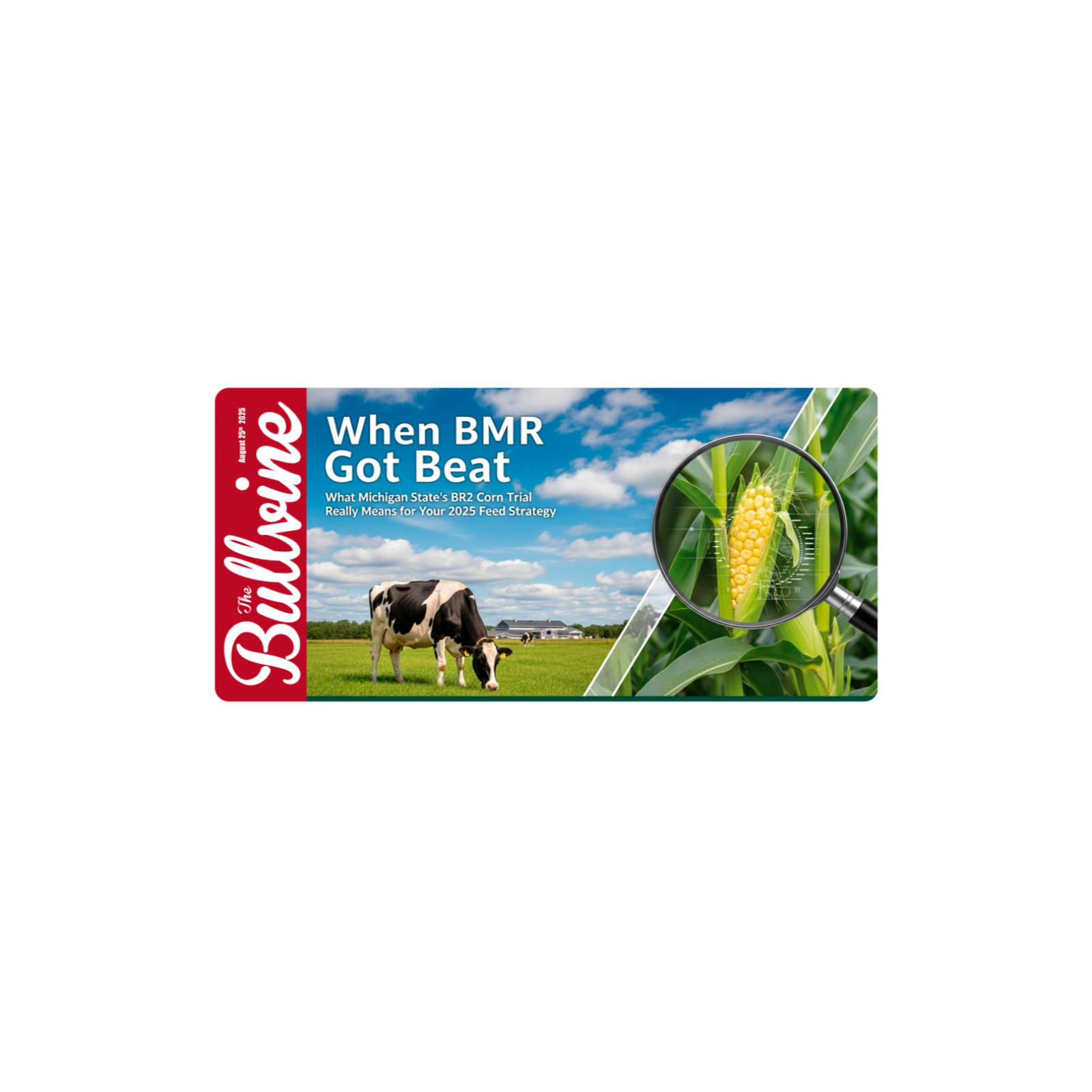
S1 Ep 348E348 When BMR Got Beat: What Michigan State’s br2 Corn Trial Really Means for Your 2025 Feed Strategy
The dairy industry has long championed brown midrib corn as the gold standard for forage quality—until now. This episode shatters that assumption with groundbreaking research revealing how short-stature corn hybrids, carrying the brachytic2 mutation, deliver superior standability, feed intake, and milk production without sacrificing digestibility. Join us to explore data that challenges decades of convention and unlocks new paths to profitability and sustainability.Key Takeaways:Why the brown midrib (bm3) corn legend may not hold across all dairy production systemsHow the brachytic2 (br2) gene confers structural advantages boosting feed intake and milk yieldsLatest findings on nutrient digestibility differences among traditional, bm3, and short-stature corn silagesStrategies to tailor ration formulation and feeding across lactation stagesAgronomic and economic impacts of adopting short-stature hybrids, including standability and yield resilienceCritical roles of environment, feeding behaviors, and efficiency challenging simple nutritional modelsDeeper Dive - Why Listen: Dr. Mike VandeHaar, Professor at Michigan State University and lead researcher, breaks down an extensive study comparing tall, bm3, and novel short-stature corn silages with the br2 mutation. Discover how these hybrids enhance standability, reduce lodging, and increase feed intake and production in mid-lactation Holsteins. This research redefines forage selection, presenting a balanced, sustainable alternative to bm3. Gain actionable insights on breeding, rationing, and forage decisions that could transform your operation's profitability.Resources & Engagement: Subscribe to The Bullvine Podcast for revolutionary insights. Visit https://www.thebullvine.com/management/nutrition/when-bmr-got-beat-what-michigan-states-br2-corn-trial-really-means-for-your-2025-feed-strategy/ for detailed resources and full study links. Join us on social media to engage with the cutting edge of dairy innovation.

S1 Ep 347E347 The “No-Holes Sire” Approach Makes Perfect Sense: A Scientific Validation
What if the secret to healthier, longer-living, and more profitable cows isn’t about chasing the highest single genetic index, but plugging the gaps left by old-school selection? In this episode, we challenge dairy’s “one-number” mindset and dive headfirst into the “No-Holes Sire” approach—a bold, research-backed strategy that’s redefining how progressive farmers, AI studs, and herd advisors breed for tomorrow’s bottom line. Expect tough questions, revealing data, and practical steps you won’t find in the average breed publication.Key Takeaways:Discover why single-trait and traditional total merit selection may be ruining long-term herd viability and farm profitability.Learn about Lactanet’s new six subindex framework and why it’s a game-changer for balanced genetic progress.Find out how using sires with at least 5 of 6 subindexes above the 50th percentile can increase herd life by up to 15% and net profit per cow by hundreds of dollars.Uncover irrefutable global research showing each €1 gained in balanced genetic index yields nearly €2 in actual net profit per cow.Get step-by-step advice on implementing the “No-Holes Sire” strategy on your farm, including what metrics to track and which pitfalls to avoid.Hear a critical discussion on breedings' future: Will no-holes genetics become the new industry norm, or are you risking herd health by sticking with familiar names?This episode pulls no punches, exposing the shortcomings of legacy genetic selection and putting today’s profit challenges into sharp focus. We break down the hard numbers behind the “No-Holes Sire” philosophy, with data not just from Canada, but across Ireland, the US, and Europe—showing how balanced selection outperforms one-dimensional index chasing on every level that matters: fertility, health, longevity, and cashflow. Listeners will explore Lactanet’s cutting-edge six-part subindex system and see real-world case studies of herds that have slashed lameness incidents, cut open days, and extended cow lifespans—all while improving margins, not just genetic charts. If herd health costs, feed prices, and replacement rates keep you up at night, this episode will arm you with actionable steps to future-proof your operation. Learn how to audit current sire choices, set breed goals aligned with your market reality, and stay ahead of the competition by embracing the genetic principles transforming top-performing dairies in 2025. Whether you’re a data-driven geneticist, a hands-on herd manager, or advising the next generation, these insights could change your ROI for years to come.Don’t miss out—subscribe to The Bullvine Podcast for more honest, data-driven discussion on what works in modern dairying. Visit https://www.thebullvine.com/genetics/the-no-holes-sire-approach-makes-perfect-sense-a-scientific-validation/ for episode links, supporting articles, and deeper dives into the latest genetic studies mentioned in this show. Got questions or want to share your herd’s results? Engage with The Bullvine on your favorite social media platform—your input powers this community!

S1 Ep 346E346 The $35 Calf Question: What Three Years of Digging Actually Shows
Record-high heifer prices, tighter antibiotic rules, and labor costs topping $53 billion have made “business as usual” calf management a fast track to red ink. This episode dismantles conventional wisdom and proves that a targeted $35-per-calf nutrition investment can flip the balance sheet—delivering 420 percent ROI, slashing disease losses, and adding more than 1,100 pounds of first-lactation milk. If you think calf programs are just a cost, prepare to rethink your entire profit model.Key TakeawaysReveal the hidden lifetime cost of one sick calf—and why it now exceeds treatment bills.Decode the “Vulnerability Triangle” linking gut integrity, immunity, and stress to your bottom line.See how 1.8 lb/day pre-weaning growth epigenetically programs higher milk yield.Compare ROI on probiotics, yeast products, MOS, and essential oils under 2025 regulations.Walk through a step-by-step framework to capture data, refine KPIs, and justify every nutrition dollar.Deeper Dive – Why Listen Forget siloed health protocols. You’ll hear groundbreaking Cornell data showing each extra pound of daily gain before weaning translates to ≈1,100 lb more milk at first lactation through permanent gene expression shifts. We dissect the financial avalanche a single BRD case triggers—from the immediate $250 bill to the $3,000 replacement heifer you may need when that animal underperforms. Our expert panel explains:How the Vulnerability Triangle pinpoints gut barrier failure as the pivotal failure event—and why MOS and specific probiotic strains outperform broad “immunity boosters.”Real-world case studies where a $15 supplement package per calf delivered a 203.9 percent return within 60 days and compounded gains for years.Tactical guidance on dosing, delivery vehicles (milk replacer vs. whole milk), and avoiding mineral antagonisms that quietly erase your gains.The new calculus of calf ROI amid prescription-only antibiotics and consumer demand for “antibiotic-free” labels—turning proactive nutrition into both a profit engine and a marketing edge.Whether you manage 100 calves or 10,000, the strategies unpacked here will challenge you to quantify every gram fed, every gram gained, and every dollar returned.Subscribe to The Bullvine Podcast for weekly, data-driven episodes that keep your dairy one step ahead. Full article links, research papers, and implementation checklists from this show are available at https://www.thebullvine.com/management/nutrition/the-35-calf-question-what-three-years-of-digging-actually-shows/. Join the conversation on Twitter, LinkedIn, or Facebook—share your own ROI numbers and reimagine calf health as your operation’s highest-leverage investment.

S1 Ep 345E345 Judge With Confidence: The Ultimate Playbook for Dairy Cattle Judging
In this episode, we take you ringside in Ecuador with internationally renowned judge Callum McKinven. Drawing from over 40 years of experience in 32 countries, Callum shares straight-shooting wisdom and practical tips for dairy judges at every stage—especially the next generation getting started in the ring.What We Cover:Why confidence isn’t a show—it’s discipline. And why the crowd is not your boss.The real reason your ring flow, timing, and preparation matter more than memorizing any script.McKinven's repeatable class evaluation pattern: start wide, scan for balance, observe locomotion, and assess feet, legs, rib, angularity, and mammary system.How to replace vague language with clear, positive, three-trait reasons—while looking at the animals in front of you.The secrets to building trust and avoiding confusion: clear pointing, a steady pace, and eyes off the stands.Specific advice for youth and novice classes: approachable judging, the "bottom six" strategy, and why encouragement builds better exhibitors—and a better industry.The importance of cultural awareness and adapting your professionalism when judging internationally, without ever compromising standards.Tips McKinven learned the hard way (including shoes, mics, and standing positions!) plus a checklist you can use for your very next show.Why the decisions you make in the ring ripple outward—shaping not just show results, but breeding, herd quality, and the future of dairy.Read the full takeaways and download your Next-Show Playbook at https://www.thebullvine.com/show-reports/judge-with-confidence-the-ultimate-playbook-for-dairy-cattle-judging/Share this episode with new judges, 4-H leaders, or anyone wanting to build confidence, clarity, and fairness in the show ring.Subscribe to The Bullvine Podcast for more industry-leading insights, stories, and step-by-step strategies.
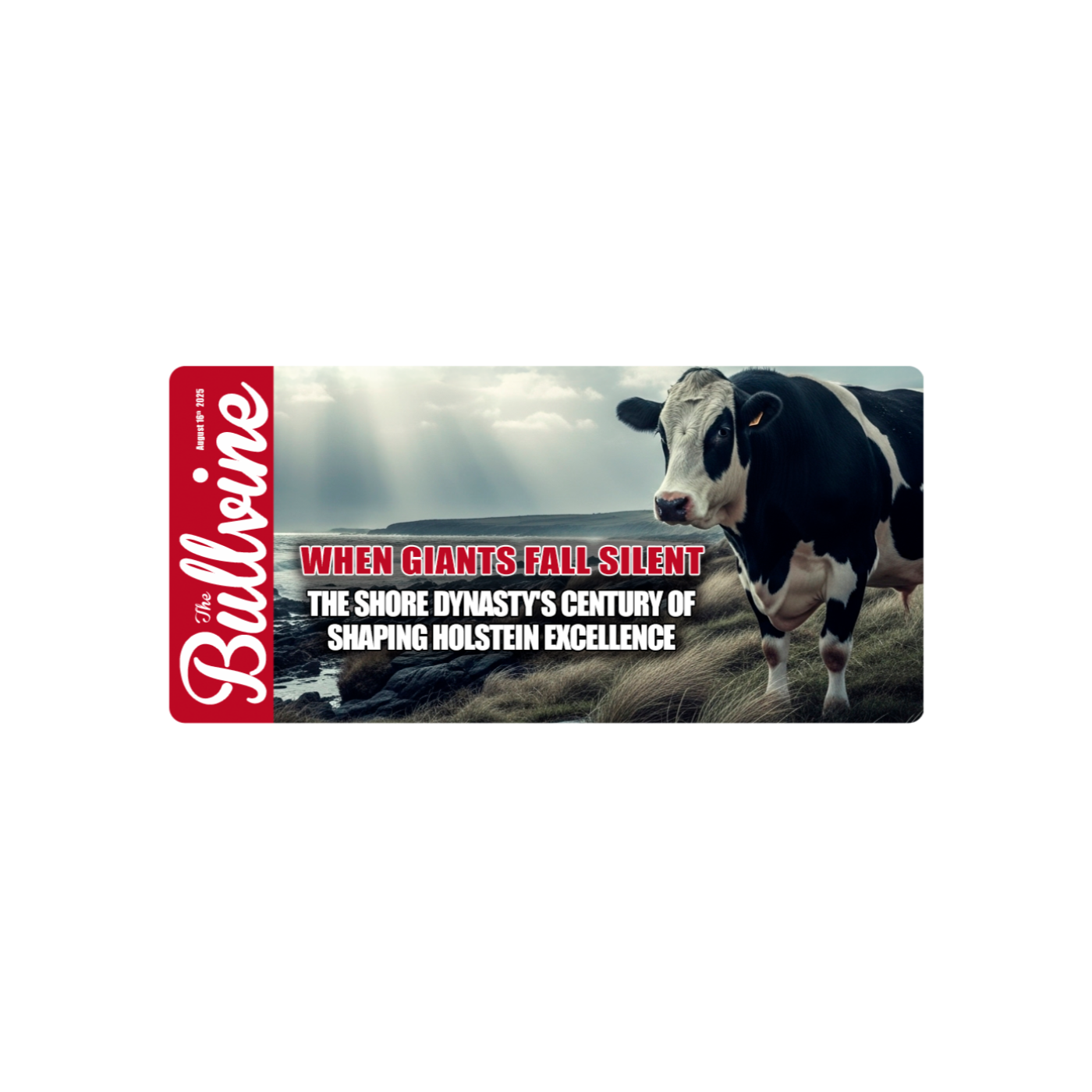
S1 Ep 344E344 When Giants Fall Silent: The Shore Dynasty’s Century of Shaping Holstein Excellence
Think one family can't reshape an entire industry? The Shore dynasty proved otherwise, building a Holstein empire that dominated North America for over 100 years. From William H. Shore's gutsy 1910 purebred gamble to Hardy Jr.'s genomic revolution that produced Braedale Goldwyn, this four-generation saga reveals the strategic thinking that separates industry legends from ordinary producers. Discover why their approach to long-term genetic planning, brand building, and market disruption holds the key to modern dairy profitability.Key Takeaways:Why William Shore's 1910 "crazy" decision to abandon mixed farming for purebreds mirrors today's genomic adoption challengeHow the Shores turned industry disruptions (like the 1950s bulk cooler revolution) into million-dollar opportunitiesThe genetic pathway that led from 1940s breeding decisions to Braedale Goldwyn's eight-time World Dairy Expo dominanceWhy Shoremar Alicia's 32 excellent daughters and Adeen's 51 EX offspring represent the ultimate breeding ROIHow auction mastery and reputation building created premium markets before genomics existedThe hidden costs of innovation: Hardy Jr.'s brilliant genetics coupled with personal strugglesDeeper Dive - Why Listen: This episode dissects a century of strategic decisions that built the most influential Holstein dynasty in history. You'll understand how the Shores consistently spotted industry shifts decades early—from purebred adoption to embryo export markets. The data is staggering: Goldwyn's unprecedented eight Premier Sire titles, Alicia's global genetic influence spanning 30 owners across 17 states and provinces, and breeding decisions from the 1940s that shaped genetics through the 2000s. Whether you're evaluating genomic investments, building your operation's reputation, or planning multi-generational breeding strategies, the Shore approach offers proven frameworks for turning today's challenges into tomorrow's competitive advantages.Subscribe to The Bullvine Podcast for more game-changing dairy insights that challenge industry conventions. Visit https://www.thebullvine.com/breeder-profiles/when-giants-fall-silent-the-shore-dynastys-century-of-shaping-holstein-excellence/ for detailed genetic analyses, breeding strategies, and market intelligence that successful producers rely on. Join the conversation on social media and share how long-term thinking is transforming your operation. The genetics revolution isn't coming—it's here. Are you ready?

S1 Ep 343E343 Transform Heat Stress into Your Carbon Strategy’s Secret Weapon
Heat stress in dairy cattle isn't just cutting your milk yield—it's driving up methane emissions and threatening your farm's profitability and sustainability. This episode exposes the double financial and environmental blow of rising temperatures on your operation and offers scientifically-backed, practical strategies to protect your herd, optimize genetics, and turn climate challenges into competitive advantage.Key Takeaways:Discover how heat stress increases methane emissions by up to 23% per gallon of milk and slashes production—what that means for your bottom lineLearn why the outdated 80°F threshold for heat stress management is costing your operation thousands and how monitoring THI at 68 provides a crucial early warning systemUnderstand how genetic selection for heat tolerance, including the SLICK haplotype, can safeguard your herd's productivity in a warming worldExplore cost-effective cooling technologies and precision monitoring solutions delivering 3:1 ROI while reducing carbon footprintGain insights into why smaller farms suffer disproportionately and how to leverage federal cost-share programs to stay competitiveDeeper Dive - Why Listen: This episode takes a deep dive into cutting-edge research from peer-reviewed journals and USDA reports, unraveling the complex physiological, economic, and environmental impacts of heat stress on dairy cattle. We discuss the metabolic cascade triggered by thermal stress, its disruption of rumen fermentation leading to increased methane intensity, and the economic toll extending beyond the milk check to long-term genetic resilience. We critically challenge the conventional wisdom that heat stress damage can be managed solely through reactive cooling and call for proactive strategies integrating precision ventilation, nutritional adjustments, and genomic selection. Learn why implementing real-time THI monitoring at the lower threshold of 68 is vital to prevent expensive productivity and compliance losses. We provide actionable guidance on optimizing cooling systems, feeding strategies, and breeding programs designed for the climate realities of 2030 and beyond.Resources & Engagement: Subscribe to The Bullvine Podcast and visit https://www.thebullvine.com/management/sustainability/transform-heat-stress-into-your-carbon-strategys-secret-weapon/ for full show notes including research links and practical tools. Join the conversation on social media to share your strategies and experiences managing heat stress and methane emissions. Stay ahead in the rapidly evolving dairy industry by turning climate challenges into your greatest competitive edge.

S1 Ep 342E342 The Charming Nomad: How Alberto Medina Became the Most Beloved Man in Global Dairy Shows
Dive into the world of international shows as we explore the incredible journey of Alberto Medina, the most traveled and respected cattle fitter today. This episode challenges conventional thinking about fitting and preparation, revealing how Alberto's unique blend of humility, intuition, and global experience is reshaping dairy profitability and innovation.Key Takeaways:How embracing global perspectives on cattle fitting can maximize profitabilityWhy adaptability to diverse feeding and showing systems is a business imperativeThe critical role of collaboration and team-building in achieving consistent top resultsHow the evolving definition of the 'ideal' cow impacts breeding and profitabilityThe importance of continuous learning and tech-savviness in raising fitting to an artThe power of charisma and humility in building enduring industry relationshipsChallenging long-held industry myths through groundbreaking experienceDeeper Dive - Why Listen: This episode delves into Alberto Medina's career, from humble beginnings on a family farm in Spain to becoming the global authority in cattle fitting. We break down how success today requires mastery of complex logistics, cross-cultural communication, and technological adaptation — aspects often overlooked in traditional practice.Hear Alberto's innovative perspective on cattle evaluation, emphasizing 'wideness' over height or length, and discover the strategic patience needed for working with complex animal personalities. Learn why collaboration and preparation year-round are non-negotiable for sustained success.Beyond being one of the most charismatic figures in the industry, Alberto redefines fitting as a vital component of dairy profitability, offering actionable insights for breeders, fitters, and industry leaders alike.Resources & Engagement: Subscribe to The Bullvine podcast for cutting-edge dairy insights that challenge the status quo. Visit https://www.thebullvine.com/breeder-profiles/the-charming-nomad-how-alberto-medina-became-the-most-beloved-man-in-global-dairy-shows/ for episode transcripts, detailed articles, and referenced research.Join the conversation with us on social media — your experiences and questions help shape the future of dairy.

S1 Ep 341E341 August 2025 Proofs: New Kings, Big Swings, and What It Means for Your Herd
The August 2025 genetic evaluations just delivered the most dramatic ranking reshuffles in recent memory, with bulls losing 102 points overnight while proven sires deliver consistent $2,400 per cow lifetime advantages. This episode exposes the dangerous gap between genomic promises and economic reality that's forcing progressive breeders to completely rethink their selection strategies. From Canada's shocking #1 leadership change to Italy's genomic volatility that should terrify every breeder, we break down what these global shifts mean for your bottom line.Key Takeaways:Why proven sires are outperforming genomic predictions and delivering measurable ROIHow Genosource's complete Net Merit domination ($1,317+ NM$) reveals the new economic-first breeding strategyThe dramatic ranking swings across US, Canada, UK, Germany, and Italy—and what they signalWhy replacement costs exceeding $2,000 per animal make longevity traits non-negotiableThe 60-70% proven / 30-40% genomic portfolio strategy that's protecting operations from volatilityHow feed efficiency traits like Captain's +255 advantage determine profitability more than production numbersWhy bloodline concentration across markets poses serious long-term genetic diversity risksDeeper Dive - Why Listen: This isn't another proof summary—it's a strategic wake-up call backed by real data from five major Holstein markets. We analyze why Stantons Remover PP's leap from #7 to #1 in Canada validates genomic predictions while Italy's 100+ point swings expose dangerous volatility. The episode reveals how operations are abandoning flashy genetic showmanship for economic reality, with concrete examples like OCD Trooper Sheepster's +113 days lifespan improvement translating to thousands in saved replacement costs. You'll discover why successful breeders are diversifying genetic portfolios instead of betting everything on unproven bulls, and how functional traits—not just production numbers—are becoming the difference between profit and loss in 2025's challenging economic environment.Resources & Engagement: Subscribe to The Bullvine Podcast for weekly genetic intelligence that influences real breeding decisions. Visit https://www.thebullvine.com/genetic-evaluation-review/august-2025-proofs-new-kings-big-swings-and-what-it-means-for-your-herd/ for complete ranking analysis, economic impact calculations, and strategic frameworks mentioned in this episode. Connect with us on social media to share your thoughts on genomic volatility versus proven reliability—we want to hear how these trends are affecting your operation's breeding strategy.
S1 Ep 340340 Why the Smartest Dairy Operators Are Unlocking Over $150,000 in Potential Returns While Others Get Blindsided by Market Chaos
While 80% of dairy producers fly blind through volatile 2025 markets, elite operators are systematically capturing $175,400+ in annual profit optimization. This episode shatters the dangerous myth that "playing it safe" protects your operation—revealing how traditional approaches now guarantee financial vulnerability. We expose the hard data behind automation savings, precision nutrition breakthroughs, and genomic strategies that transform feed costs into competitive advantages, plus the risk management tools keeping revenue within 5% of budget despite wild price swings.Key Takeaways:Discover why robotic milking systems deliver $80,000+ annual savings per farm and how delaying automation costs you thousands dailyLearn precision nutrition secrets that save $0.75-1.25 per hundredweight through data-driven ration formulationUnderstand how 0.1% butterfat improvements add $18,150 annually to a 500-cow operation's bottom lineExplore why Dairy Margin Coverage at $9.50 level historically pays out 87% of the time for just $0.155/cwtUncover global market forces—from China's shifting imports to trade tensions—directly impacting your milk checkDeeper Dive - Why Listen: This episode delivers battlefield-tested intelligence from top-performing dairy operations navigating 2025's unprecedented challenges. We examine real-world case studies, including an 850-cow Wisconsin dairy that cut labor costs 35% while improving feed efficiency 12% through strategic technology deployment. You'll get exclusive access to Cornell research quantifying the $45,000 annual labor volatility facing non-automated operations, plus USDA data showing how supply constraints create opportunities for prepared producers. We challenge the conventional wisdom that's bankrupting farms while revealing the blended risk management strategies—contracting 40% of production ahead, 30% mid-term, 30% spot market—that keep successful operations profitable regardless of market chaos.Resources & Engagement: Subscribe to The Bullvine Podcast for weekly no-nonsense dairy intelligence that challenges industry orthodoxy. Visit https://www.thebullvine.com/risk-management/why-the-smartest-dairy-operators-are-unlocking-over-150000-in-potential-returns-while-others-get-blindsided-by-market-chaos/ for detailed research citations, implementation guides, and exclusive resources mentioned in this episode. Share your automation experiences and risk management questions on social media using #BullvinePodcast—your insights could shape future episodes addressing real-world implementation challenges.
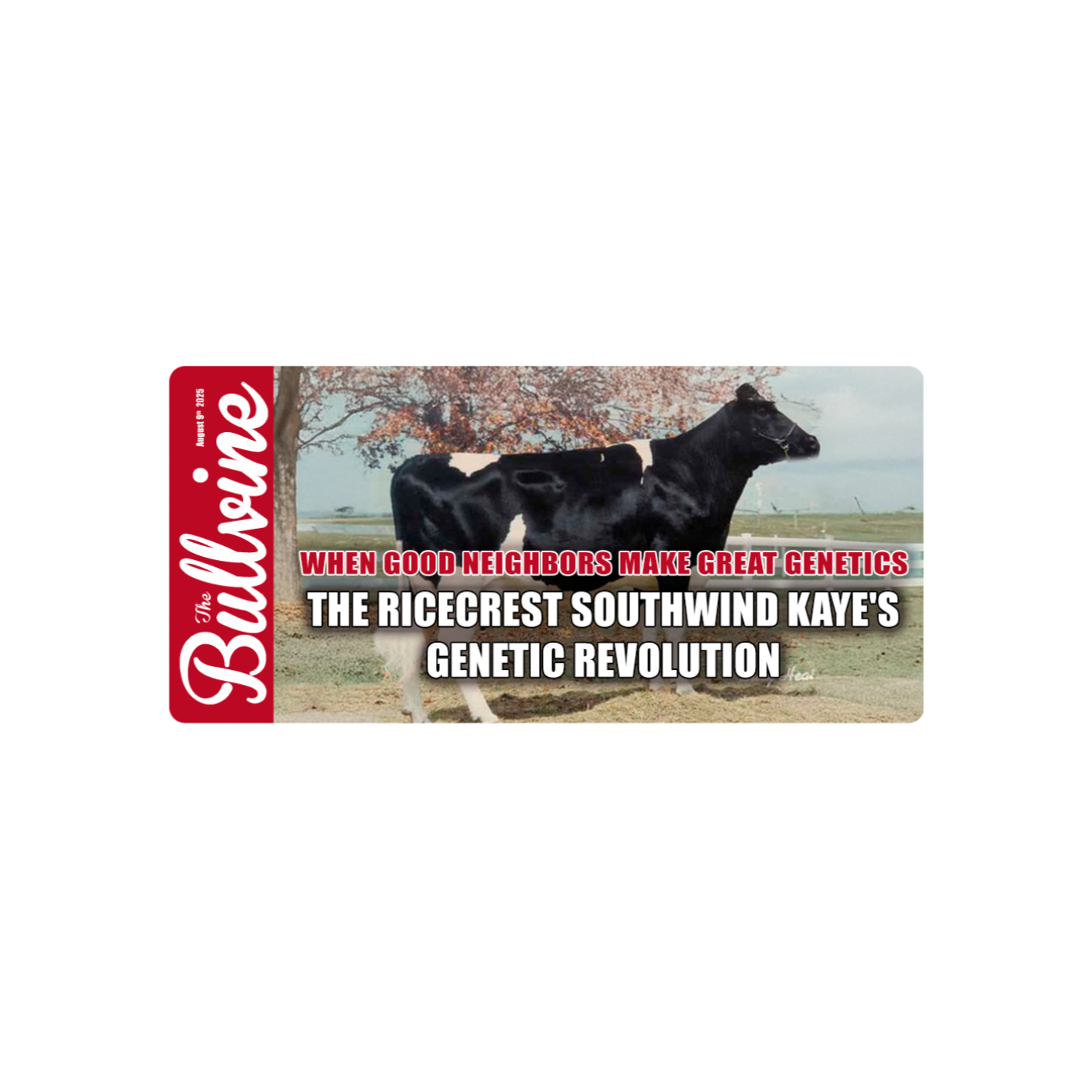
S1 Ep 339E339 When Good Neighbors Make Great Genetics: The Ricecrest Southwind Kaye’s Genetic Revolution
Discover how one Holstein cow, Ricecrest Southwind Kaye, revolutionized dairy genetics and redefined profitability. This episode challenges conventional wisdom, exploring how Kaye's lineage — including three #1 TPI sons — reshaped breeding globally. We reveal the risks and rewards of intense selection and share critical insights to help you future-proof your herd.Key Takeaways:How did Ricecrest Southwind Kaye's genetics reshape global breeding?What lessons does her unprecedented success offer about balancing traits for profitability?Why has dominance of few genetics raised concerns about breed sustainability?How can modern operations harness genomic tools while safeguarding diversity?What role do patience, observation, and community play in creating lasting programs?Deeper Dive - Why Listen: In this episode, we uncover the story behind Ricecrest Southwind Kaye — a foundational cow whose progeny included three bulls topping the Total Performance Index. We analyze her global impact, challenge common breeding drives favoring production at the possible cost of diversity.Listeners gain data-driven perspectives on balancing short-term gains with long-term herd health, plus actionable strategies integrating genomic advances with timeless wisdom.Essential insights for dairy farmers, geneticists, and industry professionals aiming to lead in this evolving field.Read the full article here - https://www.thebullvine.com/donor-profile/when-good-neighbors-make-great-genetics-the-ricecrest-southwind-kayes-genetic-revolution/Resources & Engagement: Subscribe to The Bullvine podcast for authoritative dairy insights and innovative strategies. Visit our website for transcripts, articles, and resources. Join the conversation on social media to share your views on breeding, genetics, and sustainability.
S1 Ep 338E338 Stop Lying to Yourself: Your “Expert Eye” Is Destroying Your Dairy Operation’s Future
While most dairy operations still rely on subjective human assessments that miss over 50% of health issues, forward-thinking producers are leveraging artificial intelligence to achieve unprecedented precision and profitability. This episode exposes how AI technologies—from computer vision systems to large language models—are not just the future of dairy farming, but the present reality for operations ready to embrace data-driven decision making. Discover why traditional methods are scientifically obsolete and how AI adoption is creating a competitive divide that will separate thriving operations from those left behind.Key Takeaways:How computer vision achieves 99% accuracy in body condition scoring versus inconsistent human assessmentWhy AI-powered lameness detection identifies issues days or weeks before human observation, saving $13-99 per cow annuallyThe economic impact of automated estrus detection: reducing calving intervals by 16 days and increasing pregnancy rates above 30%How robotic milking systems slash labor costs by 70% while improving milk quality and udder healthWhy precision feeding optimization saves $31 per cow annually and reduces nitrogen excretion by 5.5 kg per yearThe reality of AI adoption barriers: data requirements, rural connectivity challenges, and implementation costsStrategic pathways for US dairy farms to leverage government support and cost-sharing programsDeeper Dive - Why Listen: This episode breaks down groundbreaking research from the University of Wisconsin-Madison and real-world case studies demonstrating AI's transformative impact on dairy operations. You'll learn how CattleEye's 2D imaging technology operates on farms milking over 100,000 cows, achieving 81-86% agreement with veterinarians in mobility assessments. Discover how the Allflex SenseHub System delivered 30% improvement in estrus detection accuracy and 15% higher insemination success rates in year one.The discussion reveals critical implementation strategies, including how pseudo-labeling techniques improved animal identification accuracy from 77.5% to 92.7%, and why multimodal machine learning is essential for integrating diverse farm data streams. You'll understand the economic reality: robotic milking facilities cost $450,000-$600,000 for 200 cows, but USDA's EQIP program provides up to 75% cost-sharing for precision agriculture technology.Most importantly, this episode challenges the industry's acceptance of subjective assessment methods and presents a clear roadmap for transitioning to objective, quantifiable health monitoring that eliminates human error and maximizes genetic potential.Resources & Engagement: Ready to transform your operation with data-driven precision? Subscribe to The Bullvine Podcast for cutting-edge insights that keep you ahead of industry trends. Visit https://www.thebullvine.com/technology/stop-lying-to-yourself-your-expert-eye-is-destroying-your-dairy-operations-future/ for detailed research links, implementation guides, and exclusive content on AI adoption strategies. Share your AI implementation experiences with us on social media—your success story could inspire the next generation of precision dairy farming.

S1 Ep 337E337 The Heat Reality That's Crushing Your Milk Check: Why Smart Producers Are Fighting Back (And Actually Winning)
While most dairy producers accept summer production drops as "normal," groundbreaking research reveals heat stress is systematically destroying farm profitability in ways never fully understood. This episode exposes how operations lose up to 10% of milk production during heat events, conception rates plummet by 25%, and the cascading effects extend for months beyond the initial stress period. We challenge the industry's passive approach to heat management and reveal the aggressive strategies that forward-thinking producers use to turn climate challenges into competitive advantages.Key Takeaways:Discover why your "normal" summer slump could be costing $142,000 annually on a 500-cow operationLearn how heat stress during dry periods steals 1,000-2,000 pounds of milk from the next lactationUnderstand why traditional cooling methods fail and what precision technologies actually workExplore how the SLICK gene and genomic testing create heat-resistant herds that maintain productionAssess ROI data showing 3:1 to 5:1 returns on comprehensive heat stress management systemsChallenge industry assumptions about protein feeding and discover why reducing protein makes heat stress worseDeeper Dive - Why Listen: This episode dissects peer-reviewed research from Science Advances and leading universities that quantifies heat stress losses most producers never realize they're experiencing. Our analysis reveals how transgenerational effects compound losses across multiple lactations, creating hidden profit drains that traditional accounting misses. We examine real-world case studies from progressive operations implementing variable-speed ventilation, strategic feeding schedules, and genomic selection programs that maintain 90% of peak production through extreme heat. Leading dairy geneticists explain how SLICK gene carriers maintain 0.5-1.0°C lower core temperatures, translating to sustained milk production when conventional genetics fail. Industry veterans share documented results from precision cooling investments that pay for themselves in 3-5 months while building long-term competitive advantages. Whether you manage 100 or 10,000 cows, these insights will fundamentally change how you view climate adaptation as a profit center rather than a cost burden.Resources & Engagement: Subscribe to The Bullvine Podcast for weekly insights that challenge dairy's status quo. Visit https://www.thebullvine.com/management/the-heat-reality-thats-crushing-your-milk-check-why-smart-producers-are-fighting-back-and-actually-winning/ for detailed heat stress management guides, ROI calculators, and implementation checklists referenced in this episode. Share your heat stress experiences and results on our social channels—your data helps build the industry's knowledge base for climate-resilient farming.

S1 Ep 336E336 The Hidden Carbon Challenge: Why Soil Management Could Make or Break Your Dairy’s Path to Net Zero
In this eye-opening episode, we reveal how traditional dairy forage systems, dominated by corn silage, are undermining both the environment and your farm's bottom line. Explore why soil carbon loss is the hidden culprit inflating your milk's true greenhouse gas footprint and discover breakthrough strategies to transform your forage management for optimized profitability and resilience in a changing climate.Key Takeaways:Why current carbon accounting underestimates dairy's true footprint and what this means for your operationHow soil carbon dynamics influenced by forage choices can dramatically impact farm sustainabilityThe economic and environmental benefits of integrating perennial forages and cover cropsBalancing greenhouse gas emissions with innovative manure management and crop rotation strategiesWhat cutting-edge research reveals about measurement, reporting, and verification to unlock carbon creditsDeeper Dive - Why Listen: Join us as we challenge conventional wisdom, bringing data-driven insights and expert perspectives that demand new thinking on how dairies achieve net zero emissions. We unpack complex carbon cycles, revealing how the preferential reliance on corn silage depletes soil carbon stocks — a key but overlooked factor increasing the milk's carbon footprint nearly two-fold.Learn actionable steps from advanced forage rotation designs, including perennial integration and winter cover crops that sequester carbon and boost resilience. Discover how manure management techniques, especially anaerobic digestion, offer both opportunities and challenges in managing the delicate balance of soil carbon.Hear from scientists and industry innovators outlining the critical need for robust carbon measurement and verification protocols, setting the stage for profitable carbon markets. This episode is a must-listen for dairy farmers, geneticists, and professionals committed to profitability and innovation.Resources & Engagement: Subscribe to The Bullvine Podcast on Apple Podcasts and your favorite platform to stay ahead with the latest in dairy innovation. Visit https://www.thebullvine.com/management/sustainability/the-hidden-carbon-challenge-why-soil-management-could-make-or-break-your-dairys-path-to-net-zero/ for detailed research articles and resources referenced in this episode. Join the conversation on social media and connect with fellow dairy leaders pushing the industry forward.

S1 Ep 335E335 Castrolanda & Agroleite: How Dutch Dairy Pioneers Built Brazil’s Dairy Goldmine
In this compelling episode, we challenge common dairy management wisdom and explore how Dutch pioneers transformed a small Brazilian colony into a global dairy powerhouse. Learn how the groundbreaking genetics and community-driven cooperative strategies behind Castrolanda Cooperative and the world-leading Agroleite show deliver unprecedented ROI and sustainability, and why these innovations matter for every progressive dairy operation.Key Takeaways:Why standard feeding and management approaches limit true profitability—and what to do insteadHow genomic selection and breed adaptation tackle heat stress while boosting feed efficiency by 4%What global dairy can learn from the cooperative model powering Castrolanda's $500M+ successHow Agroleite became the Southern Hemisphere's premier genetics showcase, surpassing International Dairy WeekPractical steps to build herd resilience and drive sustainable profit growth of $200+ per cow annuallyDeeper Dive - Why Listen: Hear from leading dairy innovators who unpack the evolution of Castrolanda—started with 61 cows in 1952 and now generating R$520 million in annual business deals. This episode reveals the science and strategy behind breeding dairy herds engineered for today's environmental and economic pressures, including heat-tolerant genetics that increase production 6% over conventional approaches. Learn how cooperative breeding programs reduce costs while accelerating genetic progress, and why multi-generational planning beats short-term fixes every time. The discussion covers actionable strategies from genomic testing ROI calculations to feed efficiency monitoring that can add hundreds to your bottom line per cow. Whether you're managing 100 cows or 2,000, these insights will challenge your assumptions about profitability, sustainability, and competitive advantage in an increasingly consolidated industry.Resources & Engagement: Subscribe now on Apple Podcasts and never miss an episode that questions the status quo. Visit https://www.thebullvine.com/dairy-industry/castrolanda-agroleite-how-dutch-dairy-pioneers-built-brazils-dairy-goldmine/ for comprehensive show notes, episode transcripts, and links to the research studies mentioned. Join the conversation with fellow dairy leaders on social media—share your thoughts and challenges using #BullvinePodcast. Ready to revolutionize your operation's profitability?

S1 Ep 334E334 The $2.46 Dairy Lesson: What Australia’s Deregulation Really Means for Canadian Dairy Farmers
Twenty-five years ago, Australia dismantled its dairy regulations overnight, promising efficiency and competitiveness. The brutal reality? Farm numbers crashed 65%, yet national milk production fell 26% despite surviving operations tripling in size. Some farmers earned just $2.46 per hour during the worst periods. This episode dissects the hard data behind Australia's "get big or get out" transformation, revealing critical lessons for North American dairy farmers navigating their own market pressures, consolidation trends, and innovation imperatives.Key Takeaways:How did 8,000+ Australian farms disappear while survivors grew from 168 to 534 cows per farm—and what does this mean for your operation?Why did productivity gains fail to prevent a 26% national production decline, and what market forces drove this paradox?What happens when five processors control 79% of milk volume and two retailers dominate 65% of grocery sales?How can genetic selection, feed efficiency innovations, and precision technology turn volatility into competitive advantage?Which specific strategies helped Australian survivors thrive despite $1/liter milk wars and extreme price volatility?Deeper Dive - Why Listen:This episode breaks down a landmark 25-year analysis of Australian dairy deregulation—the largest agricultural policy experiment of its kind. We examine granular data showing how market forces reshaped an entire industry: average farm debt doubling to $861,500, processing plant closures creating regional monopsonies, and demographic collapse with only 6% of farmers under 35.But this isn't just a cautionary tale. We spotlight the technological innovations and genetic strategies that enabled survivors to thrive. From precision feeding systems achieving 15-20% efficiency gains to genomic selection programs building climate resilience, progressive farms transformed challenges into opportunities.Industry experts reveal how consolidation patterns, processor relationships, and retail dynamics in Australia mirror emerging trends across North America. Whether you're planning facility investments, negotiating contracts, or developing breeding programs, this analysis provides actionable intelligence for navigating similar pressures.The discussion tackles critical questions: Can family farms survive pure market forces? How do you build bargaining power against consolidated processors? What role should innovation play in your survival strategy? These insights are essential for producers, geneticists, and industry professionals positioning for long-term success.Resources & Engagement:Subscribe to The Bullvine Podcast on Apple Podcasts, Spotify, or your preferred platform for more data-driven dairy insights. Visit https://www.thebullvine.com/dairy-industry/the-2-46-dairy-lesson-what-australias-deregulation-really-means-for-canadian-dairy-farmers/ for complete show notes, referenced studies, and exclusive analysis tools mentioned in this episode. Connect with us @TheBullvine on social media to share your own experiences with market pressures and join the conversation about building resilient, profitable dairy operations in an uncertain world.

S1 Ep 333E333 The S-W-D Valiant Story: How Genetics Promised Everything and Changed How We Think About Breeding
What happens when the industry's most celebrated Holstein sire carries a hidden genetic time bomb? This episode exposes the shocking true cost of S-W-D Valiant's legacy—a bull whose record-breaking genetics revolutionized dairy production while secretly spreading a lethal defect that caused over 500,000 spontaneous abortions worldwide. We challenge everything you think you know about genetic selection, revealing why today's "elite" breeding practices might be repeating the same costly mistakes that nearly crippled the Holstein breed.Key Takeaways:Discover how one "perfect" mating decision in 1973 created both a genetic goldmine and a $420 million industry disasterUncover the hidden connection between Valiant's 55x presence in modern pedigrees and today's fertility challengesLearn why Valiant's negative genetic evaluations today actually prove our industry's massive progressUnderstand how genetic concentration creates dangerous bottlenecks that threaten herd profitabilityMaster the modern tools that prevent another Valiant-scale genetic crisis in your operationChallenge the conventional wisdom that pedigree depth guarantees genetic superiorityDeeper Dive - Why Listen: This episode dissects one of the most consequential breeding decisions in Holstein history, revealing how S-W-D Valiant's meteoric rise from a $2,500 bargain bull to commanding $225 per dose exposes fundamental flaws in pre-genomic selection strategies. Through exclusive analysis of genetic data spanning five decades, we demonstrate how Valiant's sons dominated 98 of the top 400 TPI bulls by 1987—creating unprecedented genetic concentration that amplified both his strengths and his sire's lethal HH1 mutation.The discussion confronts uncomfortable truths about how show-ring aesthetics masked functional weaknesses, why Valiant's daughters were literally "hidden in back barns" despite their production records, and how modern genomic testing now prevents these costly blind spots. Industry professionals gain actionable strategies for using DNA screening, maintaining genetic diversity, and implementing breeding programs that balance immediate gains with long-term sustainability.Whether you're managing 50 cows or 5,000, this episode challenges you to audit your genetic risks and adopt the modern tools that ensure genetic power comes with genetic responsibility.Resources & Engagement: Subscribe to The Bullvine Podcast for more industry-challenging insights that impact your bottom line. Visit https://www.thebullvine.com/sire-spotlight/the-s-w-d-valiant-story-how-genetics-promised-everything-and-changed-how-we-think-about-breeding/ for detailed genetic analysis, breeding calculators, and exclusive research supporting today's discussion. Join the conversation on social media—share your own breeding philosophy and genetic management strategies using #BullvinePodcast.
S1 Ep 332E332 When Your “Elite” Genetics Start Costing You Real Money
The global dairy industry faces an unprecedented paradox—while genomic selection has tripled genetic progress rates, it's simultaneously driving inbreeding to catastrophic levels that could cost producers $24 per cow for every 1% increase. This episode shatters the conventional wisdom of chasing elite genomic indexes, revealing how AI companies have evolved from semen suppliers to genetic risk managers. Discover why "elite outcrossing" has become the industry's most critical strategy and how artificial intelligence is revolutionizing breeding decisions to balance explosive genetic gains with long-term herd viability.Key Takeaways:Why rapidly escalating inbreeding represents the most underestimated financial threat to modern dairy operations worldwideHow genomic selection's 200-300% acceleration in genetic progress created an unintended "vicious circle" of genetic riskThe revolutionary concept of "elite outcrossing" and its role as precision risk mitigation in breeding programsInside analysis of how ABS Global, Semex, and Select Sires are leveraging AI algorithms to optimize genetic management systemsThe economic devastation quantified: milk yield losses of 61kg per 1% genomic inbreeding increase vs. 44kg from pedigree estimatesHow Optimal Contribution Selection (OCS) algorithms are reshaping the competitive landscape from "best bulls" to "best code"Gene editing's potential as the ultimate "elite outcross" and its regulatory challenges across global marketsActionable strategies producers can implement immediately to protect profitability and genetic diversityDeeper Dive - Why Listen: This episode features insights from a senior strategic analyst specializing in global agribusiness and animal genetics, backed by rigorous data from recent Italian Holstein studies and comprehensive industry analysis. Listeners discover how the genomic revolution's promise of unprecedented genetic gains has created an escalating crisis—elite young bulls reaching 12.7% inbreeding levels by 2017, with annual inbreeding rates soaring to +2.2% based on genomic ROH measures. The discussion reveals how AI companies have transformed their business models, evolving from genetic suppliers to sophisticated technology firms managing the very risks their products create. Explore how machine learning algorithms now analyze vast genomic datasets to identify hidden genetic relationships and optimize breeding strategies through advanced Optimal Contribution Selection protocols. Agricultural professionals gain critical understanding of global genetic flow dynamics, where North American genetics dominate 60-90% of international markets, and learn practical implementation strategies for elite outcrossing that maintains profitability while ensuring sustainable genetic diversity.Resources & Engagement: Subscribe to The Bullvine Podcast for cutting-edge dairy industry insights that challenge conventional thinking. Visit https://www.thebullvine.com/inbreeding/when-your-elite-genetics-start-costing-you-real-money/ for comprehensive episode resources, research studies, and exclusive analysis. Join our global community on social media—connect with industry leaders reshaping dairy genetics worldwide.

S1 Ep 331E331 Your Nutritionist Calculates the Ration. But Who Calculates Your Real Profit?
Most dairy farms believe they're managing feed costs well, but what if you're unknowingly underestimating your true feed expenses by over $1,200 per cow each year? In this episode of The Bullvine Podcast, we challenge the notion that "good enough" feed costing suffices amid today's volatile markets. We reveal how systemic errors—from ignoring dry matter basis to excluding feed shrink and unaccounted animals—create a profitability illusion that masks financial instability. Get ready for authoritative insights armed with cutting-edge data and case studies that pinpoint where your profits are leaking and how to plug those holes with modern management and AI-driven tools.Key Takeaways:Why traditional feed cost calculations are dangerously flawed and how that affects profitabilityHow ignoring dry matter adjustments, feed shrink, and herd composition can cost tens of thousands annuallyThe role of Income Over Feed Cost (IOFC) in navigating today's extreme market volatilityHow cutting-edge AI and precision technologies are transforming feed management and widening competitive gapsPractical steps to implement accurate feed costing and reclaim lost profits nowDeeper Dive - Why Listen: This episode takes listeners on a data-driven journey through the financial impact of common feed costing errors plaguing dairy operations. Drawing on recent university research and industry data, it reveals how over $1,200 per cow per year can be lost through flawed assumptions. We explore critical pitfalls including ignoring dry matter adjustment, mispricing homegrown feeds, and excluding dry and replacement animals. Listeners also learn how AI-driven ration optimization and modern management systems deliver substantial margin improvements through enhanced decision-making. Featuring thought leaders and successful farm case studies, the episode challenges dairy farmers, geneticists, and nutritionists to rethink feed cost management as a cornerstone of profitability and innovation.Resources & Engagement: Subscribe to The Bullvine Podcast wherever you listen for cutting-edge insights. Visit https://www.thebullvine.com/management/nutrition/your-nutritionist-calculates-the-ration-but-who-calculates-your-real-profit/ to access episode resources, studies, and detailed reports. Engage with us on social media; share your insights, ask questions, and connect with industry leaders.
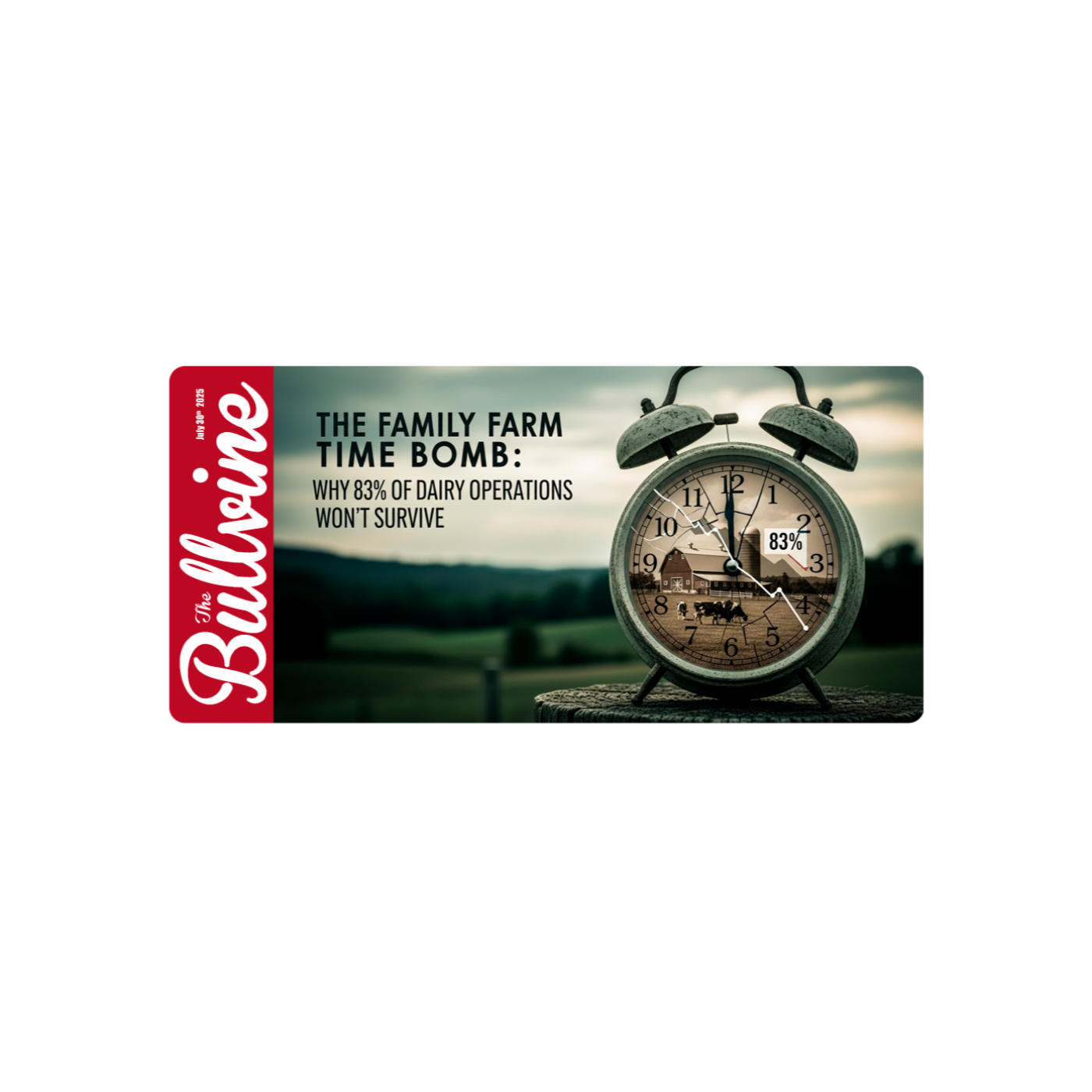
S1 Ep 330E330 The Family Farm Time Bomb: Why 83% of Dairy Operations Won’t Survive (And What Smart Producers Are Doing About It)
The US dairy industry is on the brink of a monumental transformation driven by an unprecedented succession crisis. With over a third of dairy farms vanishing since 2017, consolidation is reshaping the landscape—but this is not just about numbers. Today’s discussion unpacks stark data revealing why most family farms fail to survive multi-generational transfers and how forward-thinking strategies focusing on profitability and innovation can rewrite this fate.Key Takeaways:Understand the demographic cliff threatening dairy farm continuity and how limited succession planning fuels consolidation.Explore the hidden economic impact of a $24 trillion intergenerational wealth transfer and looming changes in federal tax policy.Examine the mental health crisis as a critical and often overlooked factor influencing farmers’ decision-making and succession success.Identify the divide between generations—technology expectations, sustainability priorities, and work-life balance—and its impact on succession planning.Discover actionable frameworks and real-world strategies to overcome succession barriers, leveraging legal instruments and specialized mentorship programs.Challenge the narrative: Why the consolidation driven by failed transitions holds lessons for profitability and smart innovation investments.Deeper Dive – Why Listen: This episode dives deep into original data from the 2022 USDA Census and recent surveys revealing the scale and urgency of the dairy succession crisis. Special attention is given to the $24 trillion wealth transfer looming over two decades, shaped by shrinking farm numbers and growing mega-operations. Listeners will gain a nuanced understanding of how federal tax changes could force sales of family farms if succession plans aren’t in place—and what cutting-edge legal strategies farming professionals can adopt to mitigate risk. We also explore the serious mental health toll borne by dairy families, with suicide rates up to five times higher than the general public, highlighting why emotional resilience is pivotal in navigating succession. Our analysis challenges conventional wisdom, suggesting that bridging generational divides through technology adoption and redefining sustainability and work-life balance as competitive advantages can be game changing. Practical mentorship models and financial tools like phased asset transfers and special loan programs from Farm Credit are discussed as pathways to successful transitions. This episode equips dairy farmers, geneticists, and industry advisors with insights and urgency to drive impactful change—from mindset shifts to innovative planning.Resources & Engagement: Subscribe to The Bullvine Podcast on Apple Podcasts to stay informed with data-driven episodes reshaping dairy’s future. Visit https://www.thebullvine.com/management/financial-managment/the-family-farm-time-bomb-why-83-of-dairy-operations-wont-survive-and-what-smart-producers-are-doing-about-it/ for full reports, detailed charts, and supplemental resources referenced in this episode. Join the conversation with fellow professionals on social media—follow @TheBullvine and engage with our content to influence industry discourse.

S1 Ep 329E329 The Hidden Half: Why Forward-Thinking Dairies Are Finally Paying Attention to What Happens After the Rumen
The dairy industry has long focused on rumen health as the cornerstone of cow productivity—but what if 30% of your cow's energy is coming from a digestive powerhouse you're overlooking? In this episode, we challenge conventional wisdom and reveal how the often-neglected hindgut can transform milk production, feed efficiency, and profitability. Learn about groundbreaking recent research that links hindgut microbial profiles to milk yield predictions with 99% accuracy, and how proactive management of this 'hidden half' can reduce feed and veterinary costs by tens of thousands annually. If you're serious about innovation and profit, this episode will reshape how you think about dairy nutrition.3. Key Takeaways:Discover why the hindgut contributes 30% of fiber fermentation energy and what that means for your herd's productivity.Understand the economic impact of ignoring hindgut health—potentially costing tens of thousands annually in wasted feed and health costs.Explore how advanced microbial profiling can predict milk production efficiency with unprecedented accuracy.Learn actionable feeding strategies that optimize hindgut function across diverse dairy regions—from corn belt winters to California heat stress.Evaluate innovative feed additives designed specifically to target the hindgut and their role in improving cow health and milk quality.What role does heat stress play in compromising gut barrier integrity, and how can you mitigate its costly effects?See why comprehensive gut health management is poised to become the next competitive advantage in dairy farming.4. Deeper Dive - Why Listen:This episode takes you on a deep dive into the cutting-edge science of dairy cow digestive health beyond the rumen. We unpack data from recent peer-reviewed studies linking hindgut bacterial communities to critical production traits—a revolutionary concept that challenges standard feeding and health monitoring practices. Hearing from top researchers and industry innovators, you'll gain insight into the gut microbiome's role as a 'second genome' influencing feed efficiency, methane emissions, and immune resilience. We discuss practical implementation strategies tailored to different operational contexts with real-world examples from diverse regions. From nutritional programming to advanced diagnostics, learn how you can harness microbial ecosystems in the lower gut to improve profitability and sustainability. Whether you're a dairy farmer aiming to increase milk yields, a geneticist mapping herd productivity, or an industry expert seeking innovative solutions, this episode offers data-driven perspectives and actionable intelligence. Don't miss this chance to rethink the digestive system as an integrated ecosystem and unlock hidden profits in your herd.5. Resources & Engagement:Subscribe to The Bullvine Podcast for more bold, evidence-based dairy insights that push the industry forward. Visit https://www.thebullvine.com/management/nutrition/the-hidden-half-why-forward-thinking-dairies-are-finally-paying-attention-to-what-happens-after-the-rumen/ for links to featured articles, studies, and companion resources that deepen your understanding. Join the conversation on social media and connect with progressive dairy professionals transforming the future of dairy farming.

S1 Ep 328E328 A Photographer’s Reckoning: The Crisis in Our Viewfinder
In the competitive world of dairy genetics, images are currency—but what happens when these images are illusions designed to mislead? This episode challenges the industry's acceptance of photo enhancements that inflate animal worth and raise false expectations. Dive into an evidence-based exploration of how unethical photo practices impact profitability, genetic authenticity, and trust in the dairy sector.Key Takeaways:How do photo manipulations distort true animal conformation and genetic value?What financial risks do farmers face when investing based on altered images?Why is there an urgent need for industry-wide ethical photography standards?How are leading professionals advocating for transparency and accountability in dairy marketing?What actionable strategies can breeders implement to protect their investments and reinforce profitability?This episode offers a data-driven discussion featuring key insights from industry veterans and ethical advocates in dairy photography and genetics marketing. Listeners will uncover how misleading visuals compromise decision-making, dilute genetic progress, and jeopardize farm profitability. The conversation spotlights the pioneering Photography Ethics Board initiated by noted expert Brad Cullen, who shares firsthand experiences confronting photo manipulation controversies while championing a code of ethics. The episode also critically examines the Dairy Marketing Code of Conduct, highlighting its role in restoring integrity and fostering sustainable growth. Professionals gain tactical recommendations to demand transparency in marketing materials and leverage digital tools for verification. Those committed to innovation and profit-driven results will find invaluable expertise that challenges the status quo and calls for collective action toward a more honest industry.Subscribe to The Bullvine Podcast for cutting-edge insights into dairy market innovation and ethical practice. Visit https://www.thebullvine.com/dairy-marketing-code-of-conduct/a-photographers-reckoning-the-crisis-in-our-viewfinder/ for episode show notes, detailed articles, and vital resources referenced in this discussion. Connect with us on social media to share your perspectives and join the movement pushing the dairy industry into a profitable and transparent future.

S1 Ep 327E327 The Next Frontier: What's Really Coming for Dairy Cattle Breeding (2025-2030)
What if everything you thought about herd profitability, milk value, and sustainability was about to be upended? This episode of The Bullvine Podcast digs into the biggest shift dairy has seen in a generation—one where gene-editing, smarter genomic selection, AI-driven herd management, and next-level sustainability aren’t just buzzwords, but the keys to bigger margins, better cows, and real global competitive advantage. Get ready to challenge the old “volume is value” playbook—and discover how the tools of tomorrow can deliver market-beating profits starting now.Discover why milk composition—powered by CRISPR and advanced genetics—matters more to your bottom line than raw volume.Learn how precision genomic selection drives 300%+ faster improvements in herd health, milk solids, and longevity—while slashing costly mistakes.See the true ROI numbers behind AI-powered robotic milking, sensor data, and automated feeding: is it hype or a must-have for labor-squeezed dairies?Unpack case studies showing how early-life genomic testing and smart culling can save $1,400–$2,000 per low-merit heifer—and compound genetic gains herd-wide.Hear actionable strategies to turn environmental stewardship into direct profit: carbon credits, methane-cutting feed tech, and marketing premiums for sustainable production.Understand what new research and global dairy leaders are really doing—beyond the headlines—to turn advanced tech into next-level profitability and resilience.Challenge the “net zero is a burden” myth and see why pioneers are reframing sustainability as a bottom-line growth engine.This episode isn’t just about future tech; it’s a roadmap for getting ahead in today’s volatile, margin-pressured dairy market. We sort through the data that matters—like the 17–35% casein bump now possible through genetic engineering, the $87,500–$393,750 annual feed savings unlocked by targeting feed conversion traits, and the 15–25% price premiums real farms are commanding with specialized milk.You’ll hear from leading global examples—like New Zealand farms achieving 8 years’ worth of genetic gain in 3, and Korean dairies using robotics to drive both production and labor efficiencies. We connect with industry experts who break down why the most profitable operations are ditching one-size-fits-all programs in favor of focused, data-driven herd improvement.Critical challenges like fertility bottlenecks, labor shortages, and rising regulatory demands aren’t swept under the rug. Instead, we deliver evidence-backed solutions: how to build flexibility into breeding goals, access innovative financing for farm tech, and make the sustainability gold rush work for your business (not against it).Whether you’re a progressive producer ready to profit from the precision dairy revolution, a geneticist on the cutting edge of herd improvement, or an industry manager hunting for your farm's next strategic advantage—this episode gives you the information, inspiration, and practical steps to lead the pack.Don’t miss an episode—subscribe now to The Bullvine Podcast for ongoing data-driven insights into dairy’s fastest-emerging trends, tools, and technologies. For deep-dive articles, referenced studies, and implementation guides, visit https://www.thebullvine.com/dairy-cattle-breeding-strategies/the-next-frontier-whats-really-coming-for-dairy-cattle-breeding-2025-2030/ where all the bonus resources for this episode are posted. Join the conversation on social media and tag #BullvinePodcast for a chance to be featured in upcoming episodes. Your future herd—and your bank account—will thank you.
S1 Ep 326E326 The Clarkson Effect: What It Really Means for Your Dairy’s Marketing
While most dairy producers focus on genetics and feed efficiency, a former Top Gear host just accidentally proved that radical transparency generates 193% sales increases and premium pricing that commodity markets can't touch. This episode reveals how Jeremy Clarkson's farming show created the largest shift in consumer agricultural awareness in a generation—and why forward-thinking dairy operations are already capitalizing on techniques that deliver 15-40% margin improvements over traditional marketing approaches.Consumer Behavior Revolution: How 7.6 million viewers translated into measurable premium sales increases for British agricultural productsTransparency as Profit Strategy: Why opening your books to consumers builds more trust than decades of feel-good marketingDirect-to-Consumer Implementation: Step-by-step strategies operations use to achieve 60% margin improvements within 18 monthsPolicy Impact Opportunities: How "Clarkson's Clause" legislation creates new revenue streams through simplified building conversionsRegional Market Analysis: Where consumer disposable income and agricultural curiosity create the highest profit potentialInvestment Reality Check: Actual ROI data from operations successfully implementing authenticity-based marketingThis episode dissects hard data showing consumer trust in farming has reached 76%—the highest levels in modern history. We analyze Waitrose's staggering sales increases: British sirloin up 193%, Jersey potatoes up 89%, cheese up 50%—all following authentic agricultural content exposure.The discussion reveals how operations combining operational excellence with transparent storytelling are building 12-month waiting lists for premium products. We examine specific case studies of dairy operations achieving significant margin improvements through direct-sales strategies, from artisan cheese production to educational farm experiences.Critical analysis includes policy implications of streamlined agricultural building conversions, regional market opportunities across North America, and implementation timelines for social media-driven consumer engagement. The episode challenges conventional wisdom about agricultural marketing while providing concrete investment figures and ROI projections based on successful operations.Subscribe to The Bullvine Podcast for cutting-edge dairy industry intelligence. Visit https://www.thebullvine.com/dairy-industry/the-clarkson-effect-what-it-really-means-for-your-dairys-marketing/ for detailed implementation guides, case studies, and market analysis referenced in this episode. Connect with fellow progressive producers on social media using #BullvineInsights to share your direct-to-consumer success stories.

S1 Ep 325E325 From Calf to Classroom: Madison Dyment’s Journey to Impact Agricultural Communications in Canada
Is your farm’s bottom line truly reflecting the quality of your genetics and the hours you put in? Or is the gap between what you do and what consumers think eating away at your margins? This episode challenges an industry blind spot: communication isn’t just “nice to have”—it’s a direct force-multiplier for dairy profitability. Dive into an eye-opening story that traces ag communications from its roots in rural Ontario, all the way to global innovations—revealing why the future’s most profitable herds won’t just have better cows, but smarter narratives.Key Takeaways:Learn why world-class genetics and automation alone can’t maximize profitability without producer-driven communications.Discover data showing how improved outreach and storytelling can cut financial recovery time by up to 30% after a farm crisis.Find out how North American and global trends in transparency, consumer trust, and digital media shape milk contract premiums in 2025.Explore proven steps for defending your brand—on social media, in conversations with processors, and within your own team.See real examples of how communications training has helped farms outpace industry averages in direct sales and ROI.Question if outdated thinking about “just focusing on production” is quietly leaving money and influence on the table.This episode unpacks the bold truth that the new battleground for milk price, market access, and farm survival is now fought first with words—not just with feed, genomics, or technology. Drawing from the journey of Madison Dyment—a leader who’s taken Canadian dairy communications from the kitchen table to the PhD level and back—you’ll get a candid look at how top producers globally are leveraging advanced storytelling, AI-driven communications, and digital transparency to drive both efficiency and public trust.You’ll hear about the game-changing research behind “co-created knowledge,” podcasting as a farm marketing tool, and powerful mentorship in agricultural education. More than theory, this episode delivers playbooks for responding to social media blow-ups, converting your herd data into consumer-winning narratives, and making your operation’s values as visible as its production numbers.World events and shifting subsidies are making transparency and credibility the new currencies of dairy. Step ahead of compliance by proactively shaping your farm’s story. Take away actionable strategies for integrating communications into herd management, succession planning, and day-to-day profitability.If you’re ready to challenge what you think you know about running a “modern dairy," this episode will give you real evidence, global context, and next steps your operation can use tomorrow.For more insights, actionable guides, and referenced studies, visit The Bullvine online (https://www.thebullvine.com/youth-profiles/from-calf-t1o-classroom-madison-dyments-journey-to-impact-agricultural-communications-in-canada/). Be sure to subscribe to our podcast for future strategy-packed episodes and join the conversation on our social channels—share how you’re bridging the gap on your own farm or within your dairy community. Your voice is key to shaping the future of our industry. Listen now and be part of the shift from “just surviving” to leading the new era of profitable, innovative dairy.

S1 Ep 324E324 Why Your Neighbor's Sleeping in While You're Still Getting Up for 4 AM Milking
While dairy producers debate robotic milking ROI, poultry operations have quietly achieved something remarkable: labor costs of just 1.6-2.4% versus dairy's crushing 20-30% burden. This episode exposes the uncomfortable truth about dairy's automation paradox—leading in complex robotics while catastrophically lagging in systemic farm automation. We reveal why this gap isn't just about efficiency anymore; it's about competitive survival in an industry where labor shortages aren't temporary challenges but permanent structural realities.Key TakeawaysLabor Cost Reality Check: Discover why dairy's 10x higher labor costs compared to poultry create an existential competitive disadvantageThe $200K Question: Break down real AMS payback periods and why traditional ROI calculations miss the insurance value against labor collapseMarket Size Shock: Learn how poultry's $2B automation market dwarfs dairy's $642M—and what that means for technology developmentManagement Performance Gap: Uncover the 42% productivity difference between top and bottom AMS operators using identical equipmentStrategic Decision Framework: Get actionable recommendations for technology investment prioritization based on your operation's specific constraintsDeeper Dive - Why ListenThis episode delivers hard data that challenges every assumption about dairy automation strategy. We examine comprehensive research comparing automation adoption across livestock sectors, revealing that dairy's approach—investing heavily in single-task robotics while neglecting systemic automation—creates dangerous vulnerabilities.The analysis exposes critical insights: farms using computerized milking systems represent only 13% of operations but produce 45% of U.S. milk supply, signaling massive consolidation advantages for early adopters. Meanwhile, swine producers achieve 4-month payback periods on precision feeding systems that dairy operators ignore.Most compelling is the workforce reality: 51% of dairy labor is immigrant workers producing 79% of milk supply, while H-2A visa restrictions legally bar year-round livestock operations from accessing stable labor. This creates automation urgency that simple payback calculations can't capture—it's survival insurance against operational collapse.Resources & EngagementSubscribe to The Bullvine Podcast for unfiltered industry analysis that prioritizes your profitability over conventional wisdom. Complete research citations and supplemental resources are available at https://www.thebullvine.com/dairy-industry/why-your-neighbors-sleeping-in-while-youre-still-getting-up-for-4-am-milking/. Join the conversation on social media and share your automation experiences with the hashtag #BullvineAutomation.

S1 Ep 323E323 The Ashes of Meadolake: How Greed and Arson Burned a Holstein Empire
When barn doors are locked from the inside during a deadly fire, it's not an accident—it's a crime scene. This episode exposes the shocking true story of Meadolake Farm's Gordon Atkinson, whose $12 million insurance fraud scheme became agriculture's most notorious scandal. While you might think this 1980s case is ancient history, the same dangerous mindset that destroyed Atkinson's empire is alive and well in today's genomics-driven dairy industry. Are you making the same fatal mistakes?The Prestige Trap: How chasing show-ring success and auction headlines destroys actual profitabilityRed Flags Every Producer Should Know: Identifying when genetic investments become dangerous speculationThe Insurance Fraud Blueprint: Understanding how sophisticated agricultural crimes exploit industry trustFamily Business Destruction: Why criminal enterprises inevitably consume themselves from withinModern Parallels: How today's genomic valuations mirror yesterday's fraudulent appraisalsIntegrity vs. Image: Why substance always trumps spectacle in sustainable dairy operationsThis episode dissects one of agriculture's most complex criminal cases, revealing how Gordon Atkinson systematically exploited the Holstein industry's trust mechanisms for massive financial gain123. You'll discover the chilling details of how he bribed appraiser Vernon Butchers with $100,000 to inflate cattle valuations, leading to a single insurance payout of over $2 million.The story becomes particularly relevant when examining today's dairy landscape. Just as Atkinson bought cattle "regardless of profitability," modern producers face similar temptations with genomic stars that fail to deliver. We explore how artificial intelligence and social media create new vulnerabilities that mirror Atkinson's fraud techniques.The episode reveals Edward Young Morwick's critical insight: "ego always gets ahead of responsibility" in high-stakes cattle operations. Through recorded wiretaps and family testimony, you'll hear how Atkinson's criminal arrogance led to his complete downfall—from record-breaking purchases to cattle selling for "peanuts" at bankruptcy auctions.Most importantly, this cautionary tale provides actionable intelligence for protecting your operation from similar pitfalls, whether they involve genetic investments, insurance decisions, or partnership agreements.Subscribe to The Bullvine Podcast for more industry-challenging content that puts profitability first. Visit https://www.thebullvine.com/breeder-profiles/the-ashes-of-meadolake-how-greed-and-arson-burned-a-holstein-empire/ for detailed analysis, supporting documentation, and additional resources on dairy industry fraud prevention.Share your thoughts on this episode using #BullvinePodcast—we want to hear how this story impacts your approach to genetic investments and farm management decisions.

S1 Ep 322E322 What Dairy Shows Must Learn from the Booming Stock Show World
While dairy cattle shows struggle with declining participation and empty grandstands, stock shows are generating unprecedented economic impact—with events like San Antonio's Stock Show & Rodeo reaching $288 million in annual impact. This isn't just about entertainment; it's about a fundamental shift in how successful agricultural events engage youth, leverage technology, and create sustainable revenue streams. If you're still running dairy shows the same way your grandfather did, you're missing massive opportunities for genetic marketing, youth development, and industry growth.Key Takeaways:Youth Pipeline Crisis: Why dairy shows are losing the next generation while stock shows attract 30% more participants year-over-yearThe $190 Million Revenue Gap: How Houston's Livestock Show generates more revenue than most dairy operations see in a decadeTechnology Integration: Specific apps, streaming platforms, and digital tools that expand show reach globallyJackpot Show Success Model: The proven system that creates skilled showmen and drives long-term participationMarketing Beyond the Barn: Data-driven strategies to attract non-agricultural audiences and sponsorsEthical Standards Evolution: How recent PDCA updates protect industry credibility while enabling innovationThis episode dissects hard data from USDA farm consolidation reports, World Dairy Expo participation trends, and international livestock exhibition research. We examine how stock shows transformed from agricultural competitions into comprehensive entertainment destinations generating hundreds of millions in economic impact. The discussion reveals actionable strategies for dairy show organizers: implementing "People's Choice" voting systems, creating accessible youth jackpot circuits, and leveraging live-streaming technology to reach global audiences.We analyze successful youth development programs showing measurable life skills improvement and career pathway creation. The episode challenges conventional thinking about show traditions versus profitability, presenting evidence-based solutions for reversing participation decline. Industry professionals will gain specific implementation frameworks for modernizing events while maintaining genetic evaluation integrity.Resources & Engagement:Subscribe to The Bullvine Podcast for weekly episodes delivering cutting-edge dairy industry insights that directly impact your operation's profitability. Visit https://www.thebullvine.com/show-reports/what-dairy-shows-must-learn-from-the-booming-stock-show-world/ for comprehensive research data, implementation guides, and exclusive industry analysis referenced in this episode. Share your show modernization experiences and connect with fellow innovators on our social media platforms—your insights could shape the future of dairy exhibitions.
S1 Ep 321E321 Stop Hemorrhaging Money on Feed: The Million-Dollar Risk Management Arsenal That’s Separating Profitable Dairies from the Walking Dead
While most dairy operations treat feed procurement like gambling at a casino, the industry's most profitable players have quietly deployed sophisticated risk management strategies that eliminate guesswork and lock in predictable margins. With feed expenses now devouring 77.2% of operating costs, this episode reveals the exact playbook separating thriving dairies from those barely surviving—including government programs delivering positive returns in 13 out of 15 years and alternative ingredients saving $135,000+ annually.Key TakeawaysGovernment Program Goldmine: Why DMC coverage costing only $0.15/cwt delivers consistent returns while most operations ignore subsidized profit protectionAlternative Feed Revolution: How strategic incorporation of waste byproducts generates massive savings while maintaining identical milk productionProcurement Strategy Transformation: The winning formula combining 60-70% forward contracts with spot market flexibility to reduce volatility by 35%Advanced Hedging Demystified: Micro futures contracts and options strategies that don't require massive capital commitments90-Day Implementation Blueprint: Complete roadmap for transforming reactive buying into strategic risk managementDeeper Dive - Why ListenThis episode challenges the dangerous myth that feed cost management is simply about finding cheaper ingredients. We expose why only 13% of farmers actually quantify their risks, yet 62% believe they can handle operational risks—while 30% have already experienced devastating financial losses.You'll discover the layered defense strategy combining DMC's foundational protection with targeted private hedging instruments, creating margin-focused shields that address both input costs and output prices. The discussion reveals how European producers are already embracing these sophisticated approaches while American operations cling to outdated methods, creating a competitive divide that's separating industry leaders from the walking dead.The episode provides concrete ROI calculations showing how 1,000-cow operations can reduce volatility on $800,000+ in annual expenses while capturing savings opportunities worth $135,000+ through strategic implementation. Critical enrollment windows, specific cost figures, and real-world case studies transform complex financial concepts into immediately actionable strategies.Resources & EngagementSubscribe to The Bullvine Podcast for weekly insights that challenge conventional dairy wisdom. Visit https://www.thebullvine.com/management/nutrition/stop-hemorrhaging-money-on-feed-the-million-dollar-risk-management-arsenal-thats-separating-profitable-dairies-from-the-walking-dead/ for comprehensive articles, implementation guides, and additional resources mentioned in this episode.Join the conversation on social media and share your own risk management experiences—your insights could help fellow producers transform their operations from reactive to strategic.
S1 Ep 320E320 July 2025 Dairy Science Digest: 8 Research Insights Every Herd Manager Should Know
While most producers struggle with razor-thin margins, a select few are quietly implementing breakthrough research from the July 2025 Journal of Dairy Science—and seeing transformational results. This episode reveals eight game-changing findings that challenge everything you thought you knew about antibiotic protocols, nutrition timing, and herd management. From Wisconsin operations jumping treatment success rates by 60% to Pennsylvania farms achieving 96% calf pneumonia recovery, we're breaking down the science that's actually moving the needle on profitability.Key TakeawaysAge-Specific Antibiotic Revolution: Why one-size-fits-all protocols are costing you money and how targeted treatments boost success rates from 67% to 91%Parity-Based Nutrition Strategy: The methionine feeding approach delivering measurable milk component improvements within 14 daysGenomic Health Markers: How progressive breeders are cutting mastitis cases by 23% while competitors stick with outdated selection methodsUltrasound Screening ROI: The simple technology shift that's pushing calf treatment success from 78% to 96%H5N1 Crisis Management: Why 981 affected herds are teaching us about operational resilience and competitive advantageHousing Investment Logic: The real math behind compost barns' 40% higher costs and surprising ROI benefitsAMS Social Dynamics: The hidden productivity losses most operations never measure—and how to fix themDeeper Dive - Why ListenThis isn't theoretical research—it's practical intelligence from operations already implementing these strategies. We analyze real data from Wisconsin, Pennsylvania, and California farms that have broken free from conventional wisdom to achieve measurable results. The episode challenges industry assumptions about treatment timing, nutrition uniformity, and technology adoption while providing specific implementation frameworks you can apply immediately.European producers are already 18 months ahead on genetic health trait selection, and with feed costs at current levels, falling further behind isn't an option. We explore how regulatory changes, global market pressures, and climate variations are reshaping profitable management decisions for 2025 and beyond.Resources & EngagementReady to implement these profit-boosting strategies? Visit www.thebullvine.com for the complete research analysis, implementation guides, and source links. Subscribe to The Bullvine Podcast for weekly insights that transform cutting-edge dairy science into actionable farm management strategies. Share your results and connect with progressive producers on social media using #BullvineInsights.Read full article here https://www.thebullvine.com/journal-of-dairy-science/july-2025-dairy-science-digest-8-research-insights-every-herd-manager-should-know/

S1 Ep 319E319 Temple Grandin’s Message for Dairy Farmers: Why ‘Optimal’ Beats ‘Maximum
At 78, Temple Grandin isn't slowing down—she's sounding the alarm. The woman who revolutionized livestock handling through her autistic "visual thinking" now warns that dairy's relentless pursuit of maximum production is creating "biological system overload" that's quietly bankrupting operations. Fresh from receiving the 2025 AVMA Humane Award, Grandin reveals how her latest research on beef cattle heart failure serves as a canary in the coal mine for dairy genetics, while sharing data-driven strategies that can boost your milk production by 3.5-13% through better animal handling alone.Key TakeawaysWhy dairy farmers underestimate lameness by 50% and how each lame cow costs 800 pounds of milk per lactationThe hidden economics of "bad becoming normal" and why objective measurement systems are your best profit protectionGenetic extremism alert: How single-trait selection is creating reproductive disasters in high-producing herdsBeef-on-dairy boom and bust: Why the industry's swing to extremes is creating replacement shortagesTechnology vs. behavior: Why robotic milking systems fail without understanding cow psychologyThe neurodiversity crisis: How agriculture is losing the visual thinkers who built our infrastructureDeeper Dive - Why ListenDr. Temple Grandin, Professor of Animal Science at Colorado State University and designer of over half of all US cattle facilities, brings 50+ years of industry insight that challenges core assumptions about productivity and genetics. Her groundbreaking research documenting congestive heart failure in beef cattle provides stark warnings for dairy genetics, while her objective scoring systems—adopted by McDonald's and now industry standard—prove that welfare directly impacts profitability.This episode reveals how Grandin's unique perspective has identified critical blind spots in modern dairy operations. Her concept of "biological system overload" explains why some operations use cows for only two years despite $3,800+ replacement costs, while her "optimal vs. maximum" philosophy offers a roadmap for sustainable genetics that prioritize longevity over peak production.Grandin shares specific facility design principles that eliminate stress-induced milk loss, explains why removing grain from parlors was a costly mistake, and demonstrates how her visual thinking approach can solve handling problems that rob dairy operations of productivity daily.Read the fill article at https://www.thebullvine.com/dairy-industry-professionals/temple-grandins-message-for-dairy-farmers-why-optimal-beats-maximum/
S1 Ep 318E318 Inbreeding by the Numbers: What Your Bull Proofs Aren’t Telling You
What if the very breeding strategies designed to future-proof your dairy are quietly eroding your profits and herd resilience? In this episode, The Bullvine Podcast pulls back the curtain on one of the most costly—and least discussed—trends in modern dairying: the hidden price of elite genetics and rising inbreeding. With billions lost to overlooked genetic pitfalls, we challenge conventional wisdom and reveal how the smartest producers are flipping the script to build more profitable, sustainable herds.Key TakeawaysUnmasking the Hidden Costs: Discover why the U.S. Holstein industry lost up to $6 billion to inbreeding—and why this trend isn’t slowing down.Pedigree vs. Genomic Inbreeding: Learn which measurement actually matters for your herd’s health, fertility, and bottom line.Elite Sires Under the Microscope: Are top genomic and proven bulls really less inbred than the average cow? The numbers may surprise you.Breed Strategies Compared: See how Holstein and Jersey herds differ in inbreeding, economic risk, and long-term sustainability.Profit Beyond Milk Yield: Find out why chasing maximum volume can backfire—and how component solids and cow longevity drive true profitability.Actionable Solutions: Get practical steps for using Optimum Contribution Selection (OCS), crossbreeding, and gene banking to safeguard your herd’s future.Implementation Realities: Hear candid insights on the logistical, financial, and cultural hurdles producers face—and how to overcome them.Deeper Dive – Why ListenThis episode doesn’t just rehash genetic theory—it delivers the data, case studies, and actionable strategies that every progressive dairy professional needs now. Drawing on groundbreaking research from Penn State, the CDCB, and the University of Guelph, we reveal how genomic selection has turbocharged genetic gain but also slashed genetic diversity, leaving many herds vulnerable to hidden losses and health crises.You’ll hear real-world scenarios—like the story of two neighboring herds with identical component yields but radically different approaches to breeding and herd health. We break down the difference between pedigree and genomic inbreeding, explain why recent inbreeding is more damaging than “old” inbreeding, and clarify the true meaning behind those inbreeding percentages on bull proofs.If you’re a dairy farmer, geneticist, or industry advisor, this episode will arm you with the knowledge to:Audit your herd’s inbreeding risk using the latest genomic tools from CDCB and Lactanet.Rethink your sire selection strategy—balancing genetic gain with long-term herd resilience.Leverage crossbreeding and OCS to maximize both profitability and sustainability.Avoid the costly mistakes that have already cost the industry billions.Whether you manage 80 cows or 8,000, these insights can transform your breeding program and your bottom line.Read the full article here - https://www.thebullvine.com/inbreeding/inbreeding-by-the-numbers-what-your-bull-proofs-arent-telling-you/
S1 Ep 317E317 The Phone Call That Built a Genetic Empire: The Wesswood-HC Rudy Missy Story
What if the cow everyone walked away from at auction became the foundation of a multi-million dollar genetic empire? This episode exposes the shocking truth behind Wesswood-HC Rudy Missy-ET—a Holstein with an "unbalanced rump" that bidders rejected, only to become the 2014 Global Cow of the Year. We challenge the dangerous industry obsession with conformation over profitability, revealing how two "green" Wisconsin farmers and one visionary phone call from Ohio rewrote the rules of Holstein genetics forever. Prepare to question everything you think you know about breeding decisions.Key TakeawaysWhy perfect conformation kills profits - Discover how focusing on show-ring aesthetics costs dairy farmers millions in lost genetic potentialThe maternal line revolution - Learn why genomic testing now proves maternal influence accounts for 60% of genetic potential, not sire selection aloneFrom $8,100 to global dominance - Uncover the specific breeding strategies that transformed auction rejects into genetics worth hundreds of millionsDurability genetics worth their weight in gold - Calculate how extending productive life by just two lactations adds $3,200 profit per cow in today's feed cost environmentThe phone bidding advantage - Why investing in genetic potential over physical appearance delivers long-term breeding program successThis episode demolishes conventional breeding wisdom with hard data and real-world results. You'll discover how Wesswood-HC Rudy Missy's 40,880-pound lactation at 4.1% fat and 3.4% protein became the genetic foundation for bulls like Supersire and Mogul—sires that continue dominating breeding programs worldwide in 2025.We expose the critical decision-making moments that separated visionary breeders from the crowd: why Steve Wessing and Steve Hayes trusted their stockman instincts over expert opinions, how Matt Steiner's $8,100 phone bid demonstrated the courage to see potential where others saw problems, and why Pine-Tree Dairy's management philosophy centered on cheese merit and component production rather than classification scores.The episode reveals groundbreaking insights into maternal line genetics, demonstrating how Missy's descendants now appear in top-ranked bulls across multiple genetic evaluation systems. You'll learn actionable strategies for identifying similar genetic potential in your own breeding decisions, understanding why component production consistently outperforms show-ring aesthetics in long-term profitability.Read the full article at https://www.thebullvine.com/donor-profile/the-phone-call-that-built-a-genetic-empire-the-wesswood-hc-rudy-missy-story/

S1 Ep 316E316 The Robotic Milker Hangover: The Hard Truths About Automation Your Dealer Won’t Tell You
While equipment dealers showcase glossy automation success stories, the reality behind robotic milking systems tells a dramatically different tale. With 70% of large US dairies choosing new construction over retrofits and payback periods stretching 5-10 years instead of the promised 3-5, this episode exposes the hard truths your dealer won't discuss. Discover why top-performing managers extract 42% more output from identical robots than their neighbors, and learn the critical decision framework that separates automation success from expensive disappointment.Key TakeawaysLabor Reality Check: Why $18+ hourly wages and 3.6% annual increases make automation inevitable, not optionalHidden Cost Analysis: The real $37,800 annual savings potential vs. overlooked maintenance expenses that can hit $22,000 in year twoInternational Intelligence: How European 70% adoption rates reveal completely different automation strategies than North American approachesFailure Factor Exposure: The facility design compromises and management gaps that doom retrofit projects to permanent inefficienciesRegional Strategy Variations: Why Minnesota survival decisions differ drastically from California regulatory compliance automationQuality of Life Trade-offs: The untold stress of 2 AM robot alarms vs. elimination of twice-daily milking schedulesDeeper Dive - Why ListenThis episode cuts through automation marketing hype with data-driven analysis from real farm visits across multiple regions. You'll discover why the $150,000-$275,000 robot investment often becomes secondary to the complete operational transformation required for success. We examine shocking performance gaps where identical robotic hardware produces vastly different results based purely on management execution.The discussion reveals critical insights on nutritional complexity that dealers rarely address—how the delicate balance between partial mixed rations and robot concentrates can make or break voluntary milking behavior. We explore international case studies showing why Danish producers approach automation for survival while North Americans chase efficiency gains, and what these different philosophies mean for ROI calculations.Most importantly, this episode provides a practical decision framework for evaluating whether automation fits your specific operation, moving beyond simple payback calculations to strategic risk assessment. You'll learn when conventional systems still make financial sense and how to avoid the "save now, pay later" mentality that creates permanent bottlenecks.Resources & EngagementSubscribe to The Bullvine Podcast for more unfiltered dairy industry analysis that challenges conventional wisdom. Visit https://www.thebullvine.com/management/robotic-milking/the-robotic-milker-hangover-the-hard-truths-about-automation-your-dealer-wont-tell-you/ for detailed research citations, additional automation resources, and our comprehensive facility planning guides mentioned in this episode. Share your automation experiences and questions on social media using #BullvinePodcast—your insights could shape future episodes addressing real-world implementation challenges.
S1 Ep 315E315 Dairy’s Great Consolidation: What’s Really Behind the Loss of 15,000 Farms
Everyone's blaming immigrant workers for killing the family dairy farm, but what if the entire narrative is backwards? This episode destroys conventional wisdom with hard data, revealing that immigrant labor produces 79% of America's milk supply—and removing this workforce would trigger a $32.1 billion economic catastrophe. While 15,866 farms vanished between 2017-2022, milk production actually increased 5%. The real killer isn't immigration; it's a brutal $10 per hundredweight cost gap that makes smaller operations economically impossible to sustain.Key Takeaways:Scale Economics Dominate: Why farms with 2,000+ cows operate at $23.06/cwt while 100-199 cow operations face $32.83/cwt—and what this means for your survival strategyThe $32 Billion Question: Texas A&M research reveals catastrophic economic impacts if immigrant labor disappears, including 90.4% milk price spikesTechnology Treadmill Reality: How robotic milking systems and precision agriculture create insurmountable capital barriers favoring mega-dairiesProcessor Consolidation Power: Why three cooperatives controlling 80% of milk marketing drives farm-level consolidation regardless of labor policyStrategic Positioning Guide: Actionable strategies for different operation sizes—from 100-cow quality premium focus to 2,000+ cow automation accelerationDeeper Dive - Why Listen:This episode dismantles the immigration scapegoat with Texas A&M's landmark economic modeling showing that complete workforce removal would eliminate 2.1 million dairy cows and 7,011 farms. The analysis reveals that non-feed costs—not labor—create the devastating $19.59/cwt gap between efficient and inefficient operations.Discover why only farms with 2,500+ cows grew between 2017-2022 (from 714 to 834 operations) while controlling 46% of milk production. Learn how processor consolidation demands massive daily volumes that lock smaller producers out, and why federal policy shifts from price supports to margin-based insurance inadvertently favor large-scale operations.The episode provides concrete strategic frameworks: organic transition economics showing $45/cwt premiums versus $21 conventional pricing, technology ROI calculations for selective automation, and geographic expansion versus intensification analysis. These aren't theoretical discussions—they're survival strategies based on economic fundamentals reshaping dairy's future.Read the full article here - https://www.thebullvine.com/dairy-industry/dairys-great-consolidation-whats-really-behind-the-loss-of-15000-farms/
S1 Ep 314E314 Cut Mastitis Treatment Costs 60%: The $2.3 Billion Industry Secret That’s Reshaping Dairy Economics
What if the mastitis treatments you're faithfully following are actually costing you more money than the disease itself? This isn't just a provocative question—it's a documented reality that progressive dairy operations worldwide are exploiting to slash treatment costs by 60% while achieving superior outcomes. In this episode, we expose the $2.3 billion pharmaceutical market built on systematic over-treatment and reveal how farms are banking $50,000+ annually by implementing evidence-based alternatives that challenge veterinary orthodoxy.Key TakeawaysThe Over-Treatment Crisis: Why 90-100% of clinical mastitis cases receive antibiotics when only 30% actually benefitImmediate Cost Reduction: How adhering to minimum treatment durations saves $65.20 per case with zero negative outcomesNorwegian Success Model: How one country achieved 60% antibiotic reduction while cutting mastitis costs from 9.2% to 1.7% of milk priceAlternative Treatment Economics: Why phytotherapy delivers equivalent cure rates with 75-80% reduced milk discard costsResistance Reality Check: How 52% penicillin resistance is forcing a paradigm shift toward precision protocolsImplementation Roadmap: Your 12-month strategy for transitioning from reactive treatment to proactive managementDeeper Dive - Why ListenThis episode dissects groundbreaking research from Michigan State University analyzing 50,000 cows across 37 commercial dairies, revealing that farmers commonly over-treat for five days based on visual milk appearance despite infections being cleared within 2-3 days. We explore how milk discard costs represent 53-80% of direct treatment expenses, creating a powerful economic case for alternatives.The Norwegian Mastitis Control Program serves as our flagship case study, demonstrating how systematic prevention and selective treatment can reduce national mastitis costs by billions through data-driven management, breeding for resistance, and fundamental hygiene improvements. We examine comprehensive analysis of 69 studies from 2013-2025 validating phytotherapy as the most extensively researched alternative, showing zero resistance induction after 150 bacterial generations.Expert insights reveal why conventional protocols persist despite their inefficiencies, including veterinary practice economics and pharmaceutical industry influence on research priorities. You'll discover specific implementation strategies for selective dry cow therapy, on-farm diagnostics, and prevention programs that consistently yield $3-5 return per dollar invested.Resources & EngagementReady to revolutionize your mastitis management? Subscribe to The Bullvine Podcast for more industry-challenging insights that directly impact farm profitability. Visit https://www.thebullvine.com/management/cut-mastitis-treatment-costs-60-the-2-3-billion-industry-secret-thats-reshaping-dairy-economics/ for the complete research analysis, implementation guides, and cost calculators referenced in this episode. Share your own mastitis management experiences and join the conversation on social media using #BullvinePodcast.

S1 Ep 313E313 The Business of Believing: How Sarah Hagenow is Rewriting the Alice in Dairyland Playbook
Forget everything you know about feel-good farm PR. Sarah Hagenow, Wisconsin's 78th Alice in Dairyland, is revolutionizing agricultural advocacy with data-driven approaches. This isn't your grandmother's agricultural ambassador story—this is about turning sustainability metrics into profit margins and transforming show ring evaluation skills into market positioning advantages.Join us as we dive deep into Sarah's remarkable journey from a 13-year-old working with a broken-legged heifer named "Sassy" to becoming half of the first sister pair to hold the Alice in Dairyland title.Key Topics & TimestampsOpening & Introduction* Sarah's data-driven advocacy approach* Component premium increases for Wisconsin dairies* Preview of the transformative Sassy storyThe Sassy Story: Foundation of Trust* 2016 pivotal moment at City Slickers Farm* Mike Hellenbrand's influence and mentorship* From middle-of-the-pack heifer to championship breeding* Business principles in agricultural entrepreneurshipFamily Foundation: Vita Plus Heritage* Bob Hagenow's feed nutrition expertise* Scientific precision in agricultural discussions* Data-driven communication style developmentThe Analytical Training Ground* University of Minnesota dairy cattle judging team* Observation → Analysis → Decision → Articulation process* Translation to agricultural advocacy skillsGlobal Intelligence: The German Experience* January 2024 study abroad program* Saerbeck renewable energy park insights* "Diplomatic intelligence" development* Context-specific solutions philosophySupply Chain Mastery * Viking Dairy Company internship* Understanding "the middle of the supply chain"* Animal Agriculture Alliance transformation* Strategic stakeholder engagementCommunication Strategy in Action* Wisconsin State Fair consumer interactions* Empathy-first approach to difficult questions* Systematic framework for contentious issuesModernizing the Legacy* Digital ambassador strategy* "Hagenow flair" brand differentiation* Sister pair complementary strengthsYouth Engagement & Talent Pipeline* Business-minded approach to workforce development* 353,900 agricultural jobs in Wisconsin* Strategic mentorship programsFull Circle: From Barn to Boardroom* July 7, 2025 tenure beginning* Challenge to progressive dairy producers* The business of believing in agricultureSee full article here -https://www.thebullvine.com/youth-profiles/the-business-of-believing-how-sarah-hagenow-is-rewriting-the-alice-in-dairyland-playbook/

E313 The Business of Believing: How Sarah Hagenow is Rewriting the Alice in Dairyland Playbook
Forget everything you know about feel-good farm PR. Sarah Hagenow, Wisconsin's 78th Alice in Dairyland, is revolutionizing agricultural advocacy with data-driven approaches. This isn't your grandmother's agricultural ambassador story—this is about turning sustainability metrics into profit margins and transforming show ring evaluation skills into market positioning advantages.Join us as we dive deep into Sarah's remarkable journey from a 13-year-old working with a broken-legged heifer named "Sassy" to becoming half of the first sister pair to hold the Alice in Dairyland title.Key Topics & TimestampsOpening & Introduction* Sarah's data-driven advocacy approach* Component premium increases for Wisconsin dairies* Preview of the transformative Sassy storyThe Sassy Story: Foundation of Trust* 2016 pivotal moment at City Slickers Farm* Mike Hellenbrand's influence and mentorship* From middle-of-the-pack heifer to championship breeding* Business principles in agricultural entrepreneurshipFamily Foundation: Vita Plus Heritage* Bob Hagenow's feed nutrition expertise* Scientific precision in agricultural discussions* Data-driven communication style developmentThe Analytical Training Ground* University of Minnesota dairy cattle judging team* Observation → Analysis → Decision → Articulation process* Translation to agricultural advocacy skillsGlobal Intelligence: The German Experience* January 2024 study abroad program* Saerbeck renewable energy park insights* "Diplomatic intelligence" development* Context-specific solutions philosophySupply Chain Mastery * Viking Dairy Company internship* Understanding "the middle of the supply chain"* Animal Agriculture Alliance transformation* Strategic stakeholder engagementCommunication Strategy in Action* Wisconsin State Fair consumer interactions* Empathy-first approach to difficult questions* Systematic framework for contentious issuesModernizing the Legacy* Digital ambassador strategy* "Hagenow flair" brand differentiation* Sister pair complementary strengthsYouth Engagement & Talent Pipeline* Business-minded approach to workforce development* 353,900 agricultural jobs in Wisconsin* Strategic mentorship programsFull Circle: From Barn to Boardroom* July 7, 2025 tenure beginning* Challenge to progressive dairy producers* The business of believing in agricultureSee full article here -https://www.thebullvine.com/youth-profiles/the-business-of-believing-how-sarah-hagenow-is-rewriting-the-alice-in-dairyland-playbook/

S1 Ep 312E312 The Carbon Credit Programs Every Dairy Should Join Before 2026
Progressive dairy farmers are banking $400+ per cow annually through carbon credit programs while most operators remain unaware of these opportunities. This episode exposes the industry's best-kept secret and reveals which programs actually pay versus which will cost you six figures.Key Statistics Revealed$450 per cow annually: Realistic revenue from anaerobic digestion systems producing RNG$1.4 million annually: Documented revenue from 5,500-cow Western U.S. operation$3 million total: Payments to U.S. farmers through feed additive programs (2021-2022)85% cost-share: Maximum government funding through OFCAF program$100,000+ losses: Documented farmer complaints against problematic programsThe Three-Tier StrategyLarge Operations (1,000+ cows)Technology: Anaerobic digestion + RNG productionInvestment: $5-10 million capital costReturns: $400-450 per cow annuallyPayback: 3-7 years with government fundingMedium Operations (300-1,000 cows)Technology: Feed additives (Agolin, 3-NOP/Bovaer)Investment: Minimal capital requiredReturns: $35-160 per cow annuallyTimeline: Positive cash flow within 30 daysSmall Operations (<300 cows)Technology: Cover cropping, soil health practicesInvestment: Low cost, focus on government cost-shareReturns: $2-10 per acreStrategy: Position for future aggregation opportunitiesGovernment Funding OpportunitiesOFCAF: 65-85% cost-share, $75,000 maximum per operationACT Program: 50% cost-share, $2 million maximum for large projectsProvincial Programs: Alberta TIER, Quebec Cap-and-Trade systemsLegitimate Programs vs. Red FlagsTrusted PlatformsAthian: 75% farmer share, dairy value chain focusConcord Agriculture Partners: 85% farmer share, feed additive specialistCarbon by Indigo: 75% farmer share, soil carbon leaderWarning SignsBundled expensive services with vague carbon promisesUnclear payment timelinesAggregator-controlled credit salesNon-guaranteed revenue projectionsThe Insetting RevolutionDairy processors now purchasing credits directly from supplier farms to meet Scope 3 emissions targets, creating stable demand. First verified transaction: Texas farmer Jasper DeVos sold 1,150 metric tons CO2e to Dairy Farmers of America.Read full article here https://www.thebullvine.com/management/sustainability/the-carbon-credit-programs-every-dairy-should-join-before-2026/
S1 Ep 311E311 Osborndale Ivanhoe: How a “Scrawny Bull Calf” Revolutionized an Entire Breed
Sometimes the most profound changes begin with the smallest whispers of possibility. On April 26, 1952, a "thin, scraggy calf" was born at Osborndale Farms in Connecticut—a calf so unimpressive that Professor James Osborn walked away from his option to buy him. That dismissed calf became Osborndale Ivanhoe, the most transformative Holstein sire in history, whose genetic legacy spans seven decades and continues reshaping dairy herds worldwide.This is the incredible story of vision over appearance, patience over immediate gratification, and how one World War II veteran's faith in genetic potential revolutionized an entire breed.Key Episode HighlightsThe Unlikely Beginning April 26, 1952: Birth of Osborndale Ivanhoe at Mrs. W.S. Kellogg's farmProfessor Osborn's dismissal of the "scrawny calf"The moment that would echo through Holstein historyThe Visionary: Aldo PancieraWWII veteran turns to Holstein breeding1946 Connecticut Bred Heifer Classic experience$1,250 investment in genetic potential vs. appearancePartnership with George CauseyYears of Doubt and Criticism Shallow-bodied, rough yearlings at Tum-A-Lum FarmPublic criticism and AI stud rejectionsPanciera's unwavering faith (nearly 100% use in herd)The transformation when daughters began fresheningThe Giant Who Required Everything Bigger6'1" tall, 3,200 pounds of genetic powerDented bull trailer roof (only bull ever to do so)Pen modifications and management challengesFloyd Weidler's quote: "Nice bull to work with for his size"Numbers That Made History 5,499 classified daughters averaged 82.3 points (+1.65 from expectancy)+630 lbs milk, +23 lbs fat improvements8 consecutive years leading U.S. Honor List (1964-1971)100,187 first services, peaking at 24,500 in 1960Legendary Daughters and Sons Allendairy Glamourous Ivy: First million-dollar dairy cowMiss Ivanhoe Scranton: 1969 World Dairy Expo Grand ChampionRound Oak Ivanhoe Eve: Dam of Round Oak Rag Apple ElevationInfluential sons: Hilltop Apollo Ivanhoe, Penstate Ivanhoe StarLegacy for Modern Dairy Operations Three main genetic lines still active todayLessons for genomic breeding eraEarl Groff's assessment: "Got us on the right road to breeding better cattle"Read the full article at https://www.thebullvine.com/sire-spotlight/osborndale-ivanhoe-how-a-scrawny-bull-calf-revolutionized-an-entire-breed/1
S1 Ep 310E310 Transform Your Dairy Operation Into a $100K+ Agritourism Destination This July 4th
While dairy farmers focus on $21/cwt milk prices, smart operators quietly generated $1.26 billion in agritourism revenue. This episode challenges the dangerous conventional wisdom that agritourism is "nice-to-have" and reveals how patriotic displays, farm tours, and technology integration can create six-figure revenue streams completely independent of commodity market volatility.Key Topics Covered🚫 The Conventional Wisdom That's Killing ProfitsWhy commodity-only thinking traps operations in pricing cyclesThe dangerous dependency on government disaster payments ($33.1 billion in 2025)How production-first mentality ignores sustainable revenue diversification💰 The $1.26 Billion OpportunityVerified revenue projections: $25,000-$300,000 annually per operationRegional cost analysis and implementation timelinesUSDA forecast: 25% higher dairy farm income averaging $743,900 in 2025🤖 Technology as an Enabler, Not CompetitorHow robotic milking systems reduce labor costs by 21%Liberation of 4-5 hours daily for premium visitor experiencesCase study: Minnesota's Mike Johnson generated $110,000 additional revenue⚠️ The Sobering Reality CheckConnecticut E. coli outbreak: 51 confirmed cases from poor visitor managementCritical success factors and failure modesSelf-assessment framework for agritourism readiness🗺️ Regional Implementation StrategiesNortheast: $15,000-25,000 investment, 18-24 month ROIMidwest: $10,000-18,000 investment, 12-18 month ROISoutheast: $12,000-20,000 investment, 15-20 month ROIWest Coast: $20,000-35,000 investment, 24-30 month ROI🔬 Next-Generation Technology IntegrationBlockchain traceability for visitor educationAI and precision agriculture showcase opportunitiesComponent premium marketing (4.24% butterfat, 3.29% protein)Read the full article here - https://www.thebullvine.com/management/transform-your-dairy-operation-into-a-100k-agritourism-destination-this-july-4th/
S1 Ep 309E309 Beyond the Tag: Why Ingredient Quality Defines Calf Starter Success
This episode exposes a critical blind spot in dairy calf nutrition that's costing producers thousands of dollars annually. We dive deep into the hidden world of molasses quality in calf starters, revealing why that simple word "molasses" on your feed tag could be silently sabotaging your replacement herd's potential.KEY TOPICS & TIMESTAMPSIntroductionWhy molasses quality matters more than most producers realizeThe $3,600 problem hiding in plain sight on feed tagsThe Science Behind Molasses in Calf NutritionMolasses as more than just a sweetener - its role in rumen developmentHow sugar fermentation drives butyric acid production for papillae growthThe intake paradox: why 12% molasses inclusion reduces consumption by 22%Cane vs. Beet Molasses: Not All Sources Are EqualShocking variability in cane molasses: protein ranges from 2.2% to 9.3%Sugar content swings of 25+ percentage points (39.2% to 67.3% DM)DCAD chaos: how mineral imbalances disrupt rumen developmentThe Hidden Costs of Commodity MolassesEnergy rollercoaster effects on growth ratesPotassium overload causing osmotic diarrheaProcessing inconsistencies and contamination risksQuality Control: The Kalmbach ApproachFixed specifications vs. generic "molasses" listingsVeritas Agrilabs testing protocols and quality verificationProprietary blending techniques for uniform nutrient deliveryReal-World Performance Data18% reduction in scours incidence6% improvement in weaning weights12% greater consistency in daily starter intakeAction Items for ProducersCritical questions to ask your feed representativeHow to calculate the true cost of poor molasses qualityRed flags that indicate variable sourcingRead the full article here - https://www.thebullvine.com/management/nutrition/beyond-the-tag-why-ingredient-quality-defines-calf-starter-success/