
The Bullvine
656 episodes — Page 9 of 14
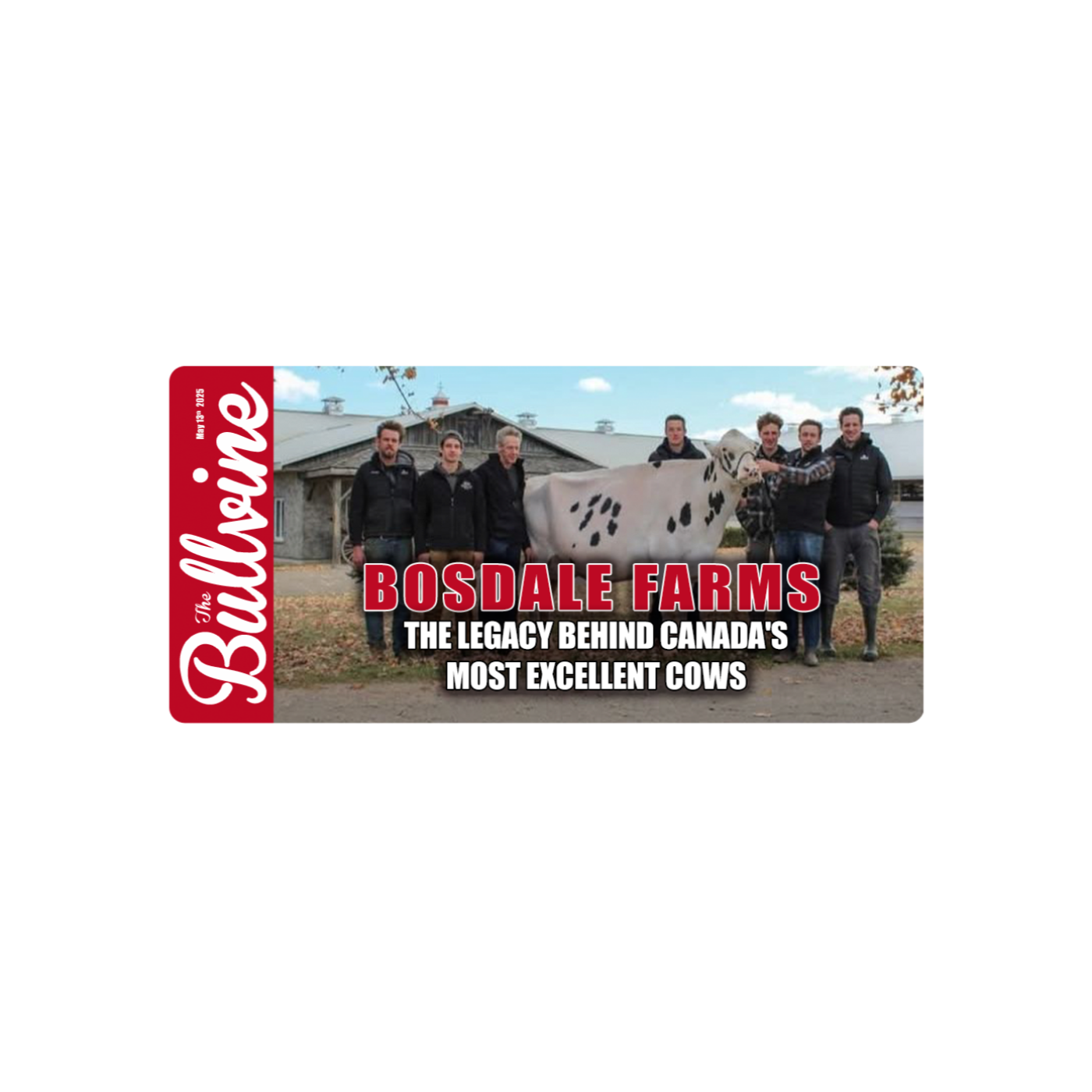
S1 Ep 259E259 Bosdale Farms: The Legacy Behind Canada’s Most Excellent Cows
In this episode, we journey into the heart of Canadian dairy excellence with the incredible story of Bosdale Farms and the Bos family. Discover how over 50 years of dedication, strategic breeding, and unwavering family commitment led to an astounding 415 Excellent (EX) classified Holstein cows – a national record.Tune in to hear about:The Monumental Achievement: Learn how Bosdale Farms bred an unprecedented 415 Excellent cows, placing them at the pinnacle of Canadian dairy breeding.Humble Beginnings to Breeding Excellence: From an unclassified commercial herd of 80 cows in 1972, trace the Bos family's patient and persistent path, including the nearly 11-year wait between their first and second EX classifications.Masters of the Breed: Celebrate their three Holstein Canada Master Breeder shields – the "Stanley Cup" of dairy breeding.The Bosdale Breeding Philosophy: Uncover the "secret sauce" behind their success – a focus on well-balanced, high-type cows for maximum profitability and longevity, with an emphasis on udders, feet & legs, and rumps.Strategic & Patient Genetics: Understand their methodical approach to sire selection, prioritizing proven bulls and avoiding fleeting trends.The Power of Family: Meet the multi-generational Bos family, from the founding members to the enthusiastic next generation, and learn how teamwork and shared responsibility have been crucial to their success.Foundational Cow Families: Delve into the stories of influential lines like "Portrait" and "Barbie," including the pivotal decision that created the "Bosdale Stardust Portrait" lineage.Tradition Meets Technology: Explore Bosdale's balanced embrace of modern advancements like genomic testing and robotic milking, always guided by "good common cow sense."The Passion That Drives Them: Hear the philosophy that "life is too short to milk ugly cows" and understand their continuous pursuit of excellence.Overcoming Adversity: Acknowledge the challenges faced, including profound personal loss and industry pressures, and the resilience that saw them through.Faith & Stewardship: Learn about the spiritual foundation that underpins their work and their view of farming as a stewardship.Wisdom for the Next Generation: Glean valuable advice for aspiring breeders on patience, setting high goals, and the importance of teamwork.A Legacy Beyond Numbers: Reflect on how Bosdale's story is about more than just classifications and awards; it's about family, dedication, and creating something of lasting value.Join us for an inspiring story of grit, faith, and cow-crafting genius that has left an indelible mark on the Canadian dairy industry.Read more at https://www.thebullvine.com/breeder-profiles/bosdale-farms-the-legacy-behind-canadas-most-excellent-cows/

S1 Ep 258E258 The $4,250 Springer: Why Your Calf Nutrition Program Might Be Leaving Money on The Table
Holstein springers are fetching $4,250, and the stakes for calf nutrition have never been higher. In this episode of The Bullvine Podcast, we rip the lid off outdated feeding strategies and show why your calves aren’t just livestock-they’re high-value assets that can make or break your dairy’s bottom line.What You’ll Learn:Why “nutritional cash flow management” is the new gold standard for heifer developmentHow penny-pinching on feed today could cost you $1,000+ in lost value per calfThe ROI math: See how investing $32 in premium antioxidants can return up to $625 at marketHow to build a diversified “antioxidant portfolio” for your calves-and why it matters most during stressThe hard truth about whole milk: Why it’s 50% deficient in vitamin E and selenium, and how to fix itActionable steps to boost calf health, growth, and future profits-no matter your budgetKey Takeaways:Treat every calf as a business investment, not an expenseEnergy is your calf’s working capital-don’t let them run a nutritional deficitThe toughest conditions deliver the highest returns on premium nutritionTrack your metrics and adjust your program for maximum ROIReady to stop leaving money on the table? Find the full article, ROI calculators, and step-by-step checklists at https://www.thebullvine.com/management/the-4250-springer-why-your-calf-nutrition-program-might-be-leaving-money-on-the-table/Subscribe to The Bullvine Podcast for more bold, data-backed insights that challenge the status quo and help you build a more profitable, resilient dairy operation.Have questions or want to share your own calf nutrition success story? Email us or join the conversation on our social channels!

S1 Ep 257E257 Beyond the Barn Door: Unmasking the Real Powerhouse on Your Dairy – The Farm Mom!
This podcast dismantles the outdated image of the “farmer’s wife,” repositioning dairy farm mothers as indispensable operational and strategic leaders. It highlights their multifaceted roles managing everything from intricate herd health and calf care protocols to complex farm financials and family responsibilities, often while facing significant hurdles like limited credit access, intense mental strain from the “triple burden,” and inadequate childcare. The piece argues that their substantial “invisible labor” – encompassing strategic management, emotional support, and human capital development – is critically undervalued, contributing to a stark economic disparity despite their massive contributions. Ultimately, it calls for systemic changes to ensure their visibility and economic parity, emphasizing that empowering these women is not just equitable but essential for the innovation, intergenerational success, and sustainable future of the global dairy industry.Key Takeaways:Dairy farm mothers are not just helpers but central operational managers, decision-makers, and skilled laborers whose contributions in areas like herd health, calf care, and financial planning are vital to farm success.Despite their critical roles, they face significant challenges, including a 40% average income gap compared to male counterparts, limited access to credit, immense mental load (the “triple burden”), and scarce rural childcare.The vast “invisible labor” performed by dairy farm mothers – strategic planning, emotional support, risk management, and raising the next generation – is economically significant yet largely unquantified and uncompensated, masking their true value.Systemic changes, including improved access to credit, mental health resources, affordable childcare, gender-responsive policies, and support for technology adoption, are crucial for achieving their economic parity and amplifying their visibility.Empowering dairy farm mothers is intrinsically linked to the dairy industry’s future sustainability, innovation, and intergenerational continuity, as they often champion long-term viability, holistic practices, and animal welfare.Read complete article here - https://www.thebullvine.com/breeder-profiles/beyond-the-barn-door-unmasking-the-real-powerhouse-on-your-dairy-the-farm-mom/

S1 Ep 256E256 The World Through a Cow's Eyes: How Temple Grandin's Unique Vision Continues to Reshape Dairy
Temple Grandin's neurodivergent thinking has revolutionized dairy operations worldwide. In this episode, we explore how her unique ability to "think in pictures" translates into practical facility designs that improve both animal welfare and profitability through reduced stress, better milk yield, and smoother operations. Fresh from receiving the 2025 AVMA Humane Award, Dr. Grandin's visual thinking approach continues to challenge conventional dairy wisdom and deliver measurable results for farms of all sizes.Key Takeaways• Cattle have fundamentally different sensory perception-including 300-degree panoramic vision and sensitivity to shadows, contrasts, and sounds-explaining why they balk at seemingly insignificant environmental elements.• Small, targeted facility modifications based on understanding bovine perception (like diffusing harsh shadows or adding solid side panels) can dramatically improve handling efficiency and reduce stress.• The "Don't Let Bad Become Normal" principle demands vigilance against overlooking subtle environmental stressors that collectively create chronic, productivity-draining stress.• Conducting a systematic "Cow's-Eye View" audit of your facilities can identify specific environmental factors causing fear or inefficiency, often leading to low-cost, high-impact improvements.• Investing in welfare improvements offers concrete ROI through multiple channels: increased milk yield, reduced lameness, improved reproduction, and extended cow longevity.Executive SummaryTemple Grandin's neurodivergent ability to "think in pictures" has transformed dairy farming by revealing how cows actually perceive their environment-a perspective most farmers miss. Her scientific approach translates cattle's sensory experiences into practical facility designs that minimize stress and promote calm, willing movement. From curved chutes that limit sightlines to removing visual distractions that cause balking, Grandin's principles consistently improve animal welfare while delivering measurable financial returns through increased milk yield (3.5-13% improvement), better components, and reduced veterinary costs. By teaching farmers to see through a "cow's-eye view," she challenges the industry to address often-overlooked stressors that silently erode productivity. Grandin's legacy continues to evolve, influencing industry standards and adapting to new technologies like robotic milking systems.Read more at https://www.thebullvine.com/dairy-industry-professionals/the-world-through-a-cows-eyes-how-temple-grandins-unique-vision-continues-to-reshape-dairy/What changes have you made on your farm inspired by seeing through your cows' eyes? Share your success stories with us at [email protected] or comment on this episode. Don't forget to subscribe to The Bullvine Podcast for more insights on progressive dairy farming, and visit thebullvine.com for the full article and additional resources.

S1 Ep 255E255 72-Hour Calf Survival Guide: Next-Gen Strategies to Slash Mortality Rates in 2025
In this urgent and data-driven episode, we dive into the critical first 72 hours of a calf’s life-a window that determines survival, future productivity, and farm profitability. Discover four groundbreaking strategies revolutionizing neonatal care in 2025, from AI-powered calving alerts to aviation-inspired checklists. Learn how forward-thinking dairy producers are cutting mortality rates by 30–40% while boosting ROI, even in tight-margin operations.Key TakeawaysColostrum 2.0Supplementing maternal colostrum with 50g IgG replacers reduces mortality by 19% at just $18/calf [Source: NC State College of Veterinary Medicine].Heat treatment, while valuable for pathogen control, can degrade IgG by 7.4 g/L-test colostrum quality post-treatment to avoid immune gaps.Wearable TechNeck sensors detect illness 12+ hours before visible symptoms, enabling early intervention. At $45/calf, these systems pay for themselves in <6 months by reducing treatment costs and losses.AI Video MonitoringSystems like Ever.Ag’s Maternity Warden analyze 17 behavioral markers to predict calving with 97.27% accuracy, slashing stillbirths by 1.3–2.8%. Dutch dairies using this tech saw a 19% survival boost in one season.Checklist ProtocolsStandardizing calving procedures (e.g., navel dipping, colostrum timing) cuts deaths by 30% for just $5/calf-the fastest ROI of any strategy.Critical InsightsThe Hidden Cost of Poor Colostrum ManagementCalves from assisted births face a 50% lower survival rate at weaning if IgG levels are suboptimal. Enriching colostrum ensures consistency, especially for high-risk cases like C-sections.Why Human Eyes Can’t CompeteWearables track rumination, temperature, and activity 24/7, flagging subtle changes invisible during barn checks. One farm reduced treatment costs by $43.95/calf using neck-mounted sensors.The Pilot’s Approach to CalvingAviation-style checklists borrowed from airline protocols standardize care. Ohio State University found they reduce stillbirths by 9% (from 15.5% to 6.5%) through systematic training and documentation.3 Steps to Implement TodayAdopt a Calving ChecklistStart with pre-calving verification: body condition scoring, equipment prep, and staff training.Test & Supplement ColostrumUse a Brix refractometer to ensure >22% IgG concentration; add replacers if below threshold.Trial Wearables on High-Risk CalvesFocus on calves from heifers or difficult births to maximize ROI.Read full article here - https://www.thebullvine.com/management/72-hour-calf-survival-guide-next-gen-strategies-to-slash-mortality-rates-in-2025/

S1 Ep 254E254 The Grain Gamble: Why Growing Your Feed Could Make or Break Your Dairy
The decision to grow grain on dairy farms presents a complex trade-off between potential energy savings and significant financial risks that vary dramatically by operation. While Penn State research shows dairy farms producing their own grain can reduce fossil energy inputs by 15% compared to importing feed, the economics only work for specific farm profiles with sufficient scale, existing infrastructure, and management capacity. Success stories typically feature operations with 600+ cows, dedicated grain management teams, and modern storage facilities, while smaller farms often struggle to justify equipment investments that can exceed $500,000 and may take 8-15 years to provide positive returns. Before diversifying, dairy farmers must honestly assess whether grain production advances or distracts from their core mission of producing milk, as specialized dairy operations show 11% higher returns on assets compared to diversified farms below 500 acres.Key TakeawaysOn-farm grain production creates a 15% energy savings by reducing reliance on synthetic fertilizers and transportation, but these environmental benefits don’t always translate to economic advantages.Equipment investments for grain production ($300,000-$500,000 for combine alone) require substantial scale to justify, with small operations (50-100 acres) facing breakeven corn prices of $5.80-$7.25/bushel and 15+ years to positive ROI.Successful grain-producing dairies separate grain operations from dairy management, maintain modern storage with quality monitoring, and often operate at larger scales (600+ cows) or through strategic partnerships.High-producing herds (90+ pounds/cow) are particularly vulnerable to the quality inconsistencies of homegrown grain, making specialized milk production generally more profitable for operations under 500 acres.Before diversifying, use the article’s decision tool to evaluate whether your farm has the favorable conditions (excess acreage, equipment access, management capacity) or warning signs (forage struggles, limited capital, high-production focus) that predict success or failure.See complete article at https://www.thebullvine.com/management/the-grain-gamble-why-growing-your-feed-could-make-or-break-your-dairy/

S1 Ep 253E253 From 4-H Project to Brown Swiss Legacy: The Brothers Three & Josh Hushon Story
Journey with us as we explore how three brothers with no prior dairy experience transformed a humble 4-H project into one of the country's most respected Brown Swiss breeding operations. This inspirational story follows Josh Hushon and his brothers as they balance corporate careers with their passion for elite cattle breeding, showcasing their journey from novices to champions at World Dairy Expo.Episode Highlights & TimestampsIntroduction and Humble BeginningsThe Brothers Three story begins in 1991 with no prior dairy farming experienceJosh explains their "blank slate" approach and the importance of mentorshipFamily dynamics and their philosophy: "To know the road ahead, ask those coming back"Family Dynamics and Farm EvolutionEach brother's specialized role in the operationThe pivotal 2014 decision that saved the Brothers Three prefixDaily life managing show animals while balancing corporate careersBreeding Philosophy and InnovationBalancing show-ring appeal with commercial viabilityShifting to prioritize daughter pregnancy rate (DPR)The strategic use of genomic testing to accelerate genetic progressShow Ring Success StoriesBrothers Three Wisper 2E-92: The foundation female with extraordinary genetic impactThe emotional Woodford journey from heartbreak to Intermediate ChampionUnique show preparation techniques that prioritize long-term developmentJosh's Dual Role: Cargill Executive and BreederHow corporate expertise enhances breeding decisionsKnowledge exchange between professional and personal rolesIndustry service contributions leading to the 2025 Wisconsin Service AwardFuture Vision and Market TrendsBrown Swiss competitive advantages in today's dairy landscapePassing the legacy to "B3 Gen 2" and industry adaptation strategiesJake's perspective on economic opportunities for the breedConclusion and Key LessonsFive breeding strategies from Brothers Three that listeners can applyHow the Brothers Three journey exemplifies innovation, dedication, and lifelong learningKey TakeawaysMentorship drives success: Strategic mentor relationships at each career stage accelerate progress in the show ring and breeding program.Balanced breeding philosophy: Focusing on type, udders, cow families, and milk production while incorporating fertility traits creates animals that succeed in both elite shows and commercial settings.Genomic testing as a game-changer: Testing all females and using data to guide mating decisions has transformed their breeding strategy.Specialty positioning creates opportunity: In a consolidating industry, Brown Swiss offers advantages in component production, heat tolerance, and beef value.Passion projects can achieve excellence: Brothers Three demonstrates how strategic partnerships and dedicated management can build elite genetics without requiring full-time farming.Read the full article - https://www.thebullvine.com/breeder-profiles/from-4-h-project-to-brown-swiss-legacy-the-brothers-three-josh-hushon-story/

S1 Ep 252E252 Dairy’s Ultimate Power Play: Your Insider’s Guide to Conquering World Dairy Expo 2025
In this action-packed episode, we break down everything dairy producers need to conquer World Dairy Expo 2025 (Sept 30–Oct 3) in Madison, Wisconsin. From strategic ticket hacks and hotel booking deadlines to elite cattle show schedules and behind-the-scenes trade show strategies, learn how to extract maximum ROI from the industry’s premier event. Discover why Thursday’s International Reception is a golden networking opportunity, how to leverage the WDE mobile app like a pro, and which educational sessions deliver the best ROI for your operation. Whether you’re a first-time attendee or an Expo veteran, this guide ensures you won’t miss a beat-or a profit opportunity.Key Topics Covered:Dates & Logistics MasterclassWhy booking hotels by July 2025 is critical (and how to snag last-minute deals)On-site camping vs. downtown hotels: Cost comparisons and hidden perksWeather-proof packing list: Layer like a MidwesternerTrade Show IntelligenceHow to navigate 650+ exhibitors using the "Innovation Unveiled" shortcutMust-ask questions for vendors (beyond the sales pitch)Hidden gems: Financial services, sustainability solutions, and export advisorsCattle Show StrategyBreed-specific viewing schedule for genetic goldminesHow to decode showring results into commercial herd improvementsElite sales to target: World Classic Holstein, Top of the World JerseyEducation with ROIDairy Forage Seminars: Cut feed costs without sacrificing qualityVirtual Farm Tours: Real-world tech implementation case studiesExpo en Español: Critical insights for Spanish-speaking teamsNetworking That PaysWhy Happy Hour at The Tanbark is better than business cardsCareer Connections: Snagging talent in a tight labor marketInternational Reception: Building global partnershipsKey Takeaways:Early birds win: Save $5/day on tickets and secure prime lodging by July 2025.Divide & conquer: Send team members with focused agendas (genetics, tech, finance).App essentials: The WDE mobile app is your digital Expo survival kit.Thursday = Power Day: Holstein heifer show, International Reception, and Happy Hour.Biosecurity matters: Review APHIS guidelines if visiting farms pre-Expo.Read the full article here https://www.thebullvine.com/show-reports/world-dairy-expo/dairys-ultimate-power-play-your-insiders-guide-to-conquering-world-dairy-expo-2025/

S1 Ep 251E251 Canada’s New Liberal PM Carney: Friend or Foe to Dairy’s Future?
Liberal PM Mark Carney’s victory shakes North American dairy trade. Can supply management survive Trump’s tariffs and Quebec’s political muscle? Mark Carney’s unexpected Liberal victory reshapes Canada’s dairy landscape amid escalating U.S. trade tensions. While pledging to protect supply management, the former banker faces pressure to modernize the sector as Quebec’s dairy lobby tightens its grip on policy decisions. The article reveals how 200-300% tariffs mask a $1B U.S. trade surplus in dairy, analyzes Carney’s $200M processing fund gamble, and warns of climate policy impacts on feed costs. With equipment tariffs squeezing robotics adoption and Quebec holding parliamentary leverage, Canadian dairy’s stability faces its greatest test since NAFTA renegotiations.Key Takeaways:Supply management likely survives but faces innovation pressure from Carney’s processing investmentsQuebec’s 40% dairy output gives Bloc Québécois outsized policy control in minority governmentU.S. already enjoys 3:1 dairy trade surplus despite “protectionist” Canadian tariff rhetoricClimate policies could add $2-3/hl production costs without price supportsEquipment tariffs delay robotic adoption, risking competitiveness vs EU dairy techRead the full article here https://www.thebullvine.com/politics/canadas-new-liberal-pm-carney-friend-or-foe-to-dairys-future/

S1 Ep 250E250 Beat the Heat: Why Your Half-Measures Are Costing You More Than You Think
Summer heat isn’t just stealing milk-it’s draining $1,500+ per cow annually. In this explosive episode, we dissect the hidden costs of heat stress, from crippled reproduction to multi-generational productivity losses. Discover why sprinklers alone won’t save you and how proactive cooling systems, targeted nutrition, and dry-cow strategies can triple your ROI.Key TakeawaysHeat stress costs the U.S. dairy industry up to $2.9B/year-63% of livestock losses-yet most farms still use outdated band-aid fixes.Milk components take a hit: Protein yields drop, fat content swings wildly, and SCC spikes cost you premiums.Reproductive carnage: Heat-stressed cows suffer 40% lower conception rates, with damage lingering for 50+ days after temperatures cool.Dry cows are profit engines: Cooling late-gestation cows boosts next lactation by 8-11 lbs/day and protects daughters’ lifetime milk potential.ROI reality: Tunnel ventilation and fan-sprinkler combos pay back in 3–7 years, while skipping dry-cow cooling costs $600M/year industry-wide.See complete article here https://www.thebullvine.com/management/beat-the-heat-why-your-half-measures-are-costing-you-more-than-you-think/

S1 Ep 249E249 From Lowest to Legendary: The Extraordinary Tale of Hanoverhill Designer Miss
Join us for a fascinating journey through the world of Holstein breeding as we uncover the unlikely rise of Hanoverhill Designer Miss-a cow who started as the lowest-priced lot at the iconic 1985 Hanover Hill dispersal and went on to become one of the most influential matriarchs in dairy cattle history. This episode explores her unique pedigree, including a surprising link to John Lennon and Yoko Ono, and follows her legacy through generations of high-performing, show-winning descendants who changed the face of global dairy genetics.What You’ll Hear in This Episode:A Legendary Sale: Step into the excitement of the 1985 Hanover Hill dispersal, where record-breaking prices and industry icons like Brookview Tony Charity captured the spotlight-while a day-old calf named Designer Miss quietly made history.Rock Royalty Roots: Discover how Designer Miss’s family tree includes a cow bred by John Lennon and Yoko Ono, adding a touch of rock and roll to her dairy royalty status.From Underdog to Dynasty: Follow Designer Miss’s journey from overlooked bargain to “Complete Cow,” producing generations of Excellent and Very Good daughters, a star AI son, and a maternal line that consistently delivered both production and type.The Mavis and Marcy Legacy: Hear how her descendants, including the celebrated Charwill Attic Marcy, dominated show rings and set new standards for Holstein excellence, proving that greatness can come from the most unexpected places.Lessons for Breeders: We wrap up with key takeaways for today’s dairy producers-why pedigree depth, patience, and a sharp breeder’s eye can matter more than sale-day hype or price tags.Key Takeaways:True genetic potential often hides in the most unassuming animals.Consistent, multi-generational excellence is the real foundation of breed improvement.The best investments in dairy breeding aren’t always the most expensive-they’re the ones with lasting impact.Perfect For: Dairy breeders, Holstein enthusiasts, and anyone who loves a good underdog story with a twist of rock history and a whole lot of cow power.Listen now and be inspired by the legacy of Hanoverhill Designer Miss-a true legend born from humble beginnings!Read full article here - https://www.thebullvine.com/donor-profile/from-lowest-to-legendary-the-extraordinary-tale-of-hanoverhill-designer-miss/

S1 Ep 248E248 Breeding for the Win: From Kentucky Derby Champions to World Dairy Expo Grand Champions
What do 150,000 bourbon-sipping racing fans and a handful of dairy judges have in common? They’re all chasing genetic perfection. In this provocative episode, we dissect how Kentucky Derby-winning Thoroughbred strategies can transform your dairy breeding program. Discover why genomic selection is the new “winning post,” how to avoid turning your herd into a genetic dumpster fire, and why your next Grand Champion might owe her curves to a racehorse’s pedigree.Key Takeaways:🧬 Genomics ≠ Crystal Ball (It’s Better): How dairy’s 2X genetic gain since 2009 dwarfs Thoroughbred progress🏇 The Tapit Effect: Why elite sires like Farnear Delta-Lambda are the new “foundation stallions” of your barn🤝 Strategic Mating > Bull Roulette: Stop using #1 TPI bulls on every cow – lessons from million-dollar horse pairings🥛 Ferrari Looks, Pickup Truck Guts: Why show ring queens must milk like profit machines🎪 Expo’s Missed Marketing Miracle: How to make colored shavings as iconic as mint julepsEpisode Breakdown: The Starting GateWhy Secretariat’s lung capacity matters to your DHIA reportsShocking stat: 71% of US heifers now sired by genomic-tested bullsGenomic GamblesHow Churchill Downs’ “Speed Gene” test compares to dairy’s A2A2 revolutionCase study: One herd’s $50,000 profit jump from doubling REL scoresSire Dynasty BuildingFarnear Delta-Lambda vs. Tapit: Genetic goldmines decodedWhy “corrective mating” beats chasing PTAT aloneBeyond the DNATraining show heifers like Derby contenders: Udder prep = track workoutsThe $2,500 heifer development trap you’re probably ignoring Mainstream or Bust5 Kentucky Derby marketing tricks Expo should steal NOWListener Q&A: “Can we create a Dairy Draft Day?”Read the full article here - https://www.thebullvine.com/dairy-cattle-breeding-strategies/breeding-for-the-win-from-kentucky-derby-champions-to-world-dairy-expo-grand-champions/
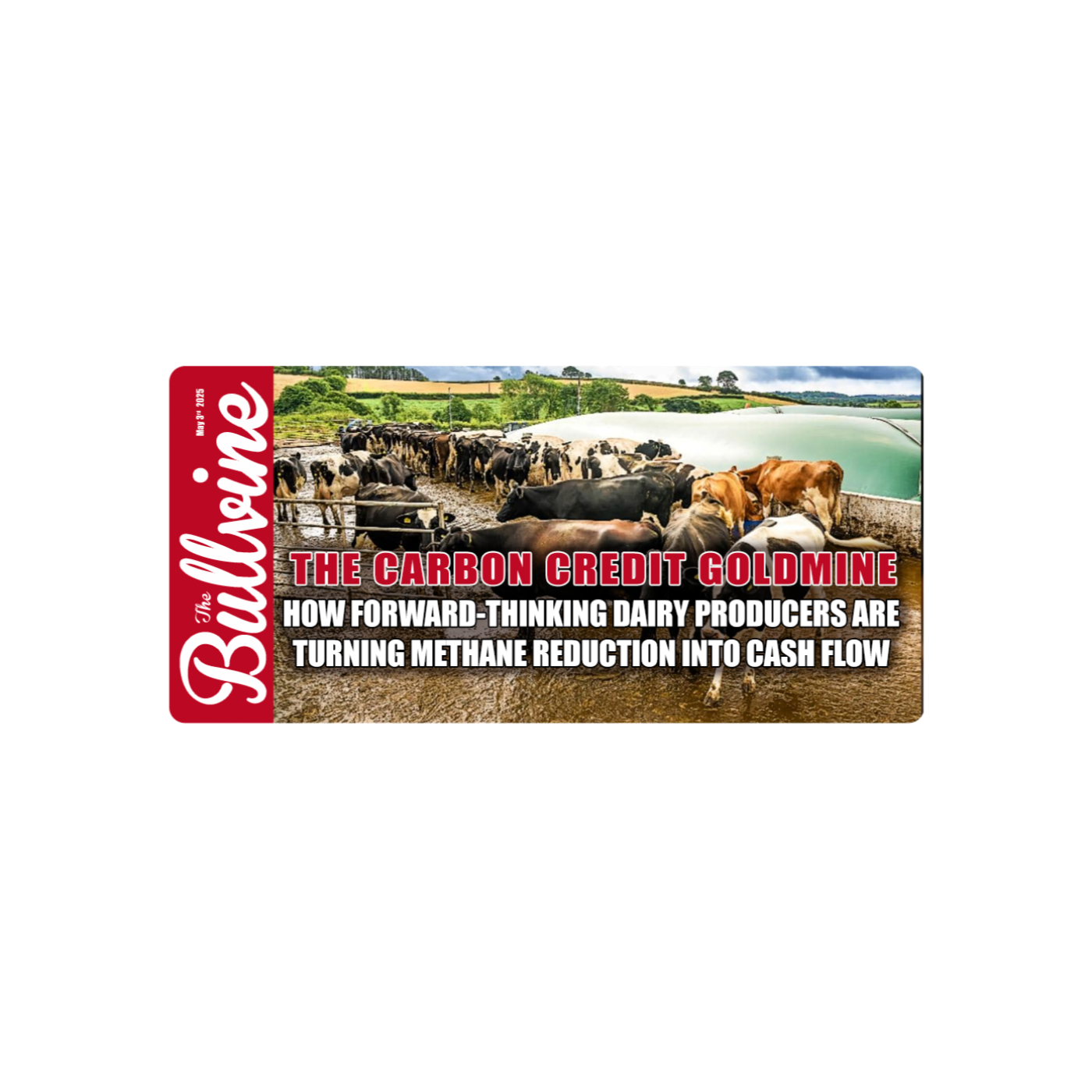
S1 Ep 246E246 The Carbon Credit Goldmine: How Forward-Thinking Dairy Producers Are Turning Methane Reduction into Cash Flow
While the dairy industry faces mounting pressure to reduce methane emissions, savvy producers are flipping environmental compliance into profit. This episode cuts through the barnyard BS to reveal how anaerobic digesters, feed additives, and carbon markets are creating unexpected revenue streams. But is the "$1,200 per cow" claim a goldmine or greenwashing? We break down the real numbers, risks, and strategies for turning cow burps and manure into cash.Key Takeaways:Compliance markets (LCFS/RFS) currently offer the highest payouts for methane reduction-but prices are volatile.Anaerobic digesters dominate profitability (up to $450/cow annually) but require massive upfront costs. Feed additives (like Bovaer®) offer low-barrier entry but depend on carbon credits to offset costs.The $800-$1,200/cow claim is aspirational-realistic returns hover near $400-$450 for RNG projects.Early adopters gain contracts, expertise, and brand advantage-but face policy risks and MRV complexity.Small farms aren’t left out: aggregators and insetting deals with processors can unlock value.Why Listen? This isn’t another greenwashing pep talk. We expose the math, myths, and manure behind dairy’s carbon economy-so you can milk every opportunity without getting milked yourself.Read the full article here - https://www.thebullvine.com/management/sustainability/the-carbon-credit-goldmine-how-forward-thinking-dairy-producers-are-turning-methane-reduction-into-cash-flow/

S1 Ep 245E245 The Silent Epidemic: Why Dairy Farmers Are Uniquely Vulnerable to Opioid Addiction
Dairy farming’s relentless physical demands, chronic pain cycles, and isolation have created a hidden crisis: 74% of dairy operations report direct impacts from opioid misuse, with 26% of farmers personally struggling with dependency16. This episode confronts the industry’s silence around addiction risks tied to musculoskeletal injuries, financial stress, and rural healthcare gaps. We analyze why dairy workers face 3x higher opioid vulnerability than other professions and reveal actionable strategies to protect farmers’ health while maintaining herd productivity.Key TakeawaysPhysical Toll: 50–65% of dairy farmers endure chronic lower back pain from lifting heavy feed bags and milking in poorly designed parlors16. Shoulder injuries affect 47–61% due to repetitive motions, while equipment maintenance often leads to acute injuries treated with opioids.Mental Health Crisis: Volatile milk prices and 80-hour workweeks drive anxiety rates 58% higher in farmers than the general population16. Opioids become a coping mechanism for stress compounded by isolation.Healthcare Barriers: Rural farmers travel 42 miles on average for addiction treatment vs. 5 miles in urban areas16. Telehealth gaps and stigma further delay care.Economic Impact: Opioid-related errors cost farms $8,500–$45,000 annually through milk losses, accidents, and worker turnover16.Read the full article at https://www.thebullvine.com/mental-health/the-silent-epidemic-why-dairy-farmers-are-uniquely-vulnerable-to-opioid-addiction/

S1 Ep 244E244 Mastitis E. Coli: Opportunistic Survivors, Not Specialized Killers
The research from The Journal of Dairy Science challenges the traditional classification of mastitis-causing E. coli as a distinct “mammary pathogenic” pathotype (MPEC), arguing instead for an “ecotype” model (MAEC). Genomic studies show MAEC strains lack conserved virulence genes but thrive due to niche-specific fitness traits like iron acquisition via the fec system and metabolic adaptations to milk. Their genetic diversity mirrors environmental/commensal E. coli, suggesting opportunistic colonization rather than specialized virulence. This reclassification shifts focus from targeting hypothetical virulence factors to managing cow resilience, teat health, and bedding hygiene. The findings urge farmers to prioritize environmental control over pathogen-specific interventions.Key Takeaways:MAEC are ecological opportunists, not specialized pathogens, adapted to mammary gland conditions.Survival hinges on fitness traits (e.g., iron scavenging, lactose metabolism), not universal virulence genes.Prevention should focus on environmental hygiene, teat care, and immune support-not just antibiotics/vaccines.Economic losses ($444/case) demand rethinking mastitis management strategies.Antibiotic resistance varies regionally, underscoring the need for farm-specific treatment protocols.Read the full article here - https://www.thebullvine.com/management/mastitis-e-coli-opportunistic-survivors-not-specialized-killers/

S1 Ep 243E243 From Hokkaido to Holstein Excellence: Tommy Araki’s 50-Year Journey Transforming Japanese Dairy
From Bull Book Letters to Breeding Breakthroughs: How Tommy Araki Transformed Japan's Dairy IndustryKey Discussion Points1. The Making of a Dairy Visionary Tommy’s childhood "calling" to dairy farming in rural Japan1970s hustle: Writing handwritten letters to North American AI centers for bull booksMentorship from Dr. Numata and Mr. Inoshita: "You should go study in the U.S."Life-changing 1979 trip to Select Sires in Ohio2. Genetic Bridge-Building Revolutionizing Japan’s Holstein herds: Importing 1,000+ North American embryos annuallyShift from live animal imports to embryo-based genetic strategiesJapan’s secret weapon: 100% artificial insemination adoption3. The Sexed Semen Revolution Overcoming skepticism: Introducing sexed semen to Japanese farmers in 2013Dual-strategy breeding: Wagyu crossbred calves for profit + elite Holstein replacementsHow ST Japan became a $10M+ semen import business4. Function Over Fashion Tommy’s contrarian philosophy: "Cows aren’t sculptures-they’re milk factories"Why udder structure > show-ring size: "Longevity pays bills, not ribbons"Industry shift: From "bigger is better" to "economic cows"5. Hokkaido’s Dairy HeartlandFeed self-sufficiency vs. imported concentrate dependencyRobotic milking adoption: 484 Hokkaido farms now automatedLabor crisis solutions: Scaling herds while halving workforceFeatured Quotes🎙️ "In Japan, we don’t breed cows-we engineer survival machines."🎙️ "Sexed semen wasn’t a product… it was a cultural reset for dairy."🎙️ "The best cow isn’t the one that stops traffic-it’s the one that outlasts your mortgage."Key TakeawaysGlobal Genetics, Local Grit: Araki’s North American embryo imports closed Japan’s breeding gap by 40% in 20 years.Precision Over Panic: Sexed semen + Wagyu crossbreeding created Japan’s unique "dual-income" dairy model.Robotics ≠ Revolution: 70% of Hokkaido’s productivity gains came from breeding-not just bots.Cultural Milk Shift: Cheese demand tripled Japanese milk solids premiums since 2000.Read complete article here https://www.thebullvine.com/dairy-industry-professionals/from-hokkaido-to-holstein-excellence-tommy-arakis-50-year-journey-transforming-japanese-dairy/

S1 Ep 242E242 Replacement Economics: Why Raising Your Heifers Just Became Profitable Again
Heifer prices are smashing records, inventories are at a 47-year low, and the classic “buy versus raise” debate just got turned on its head. In this episode, we break down why 2025 is the year raising your own replacements is not just smart-it’s 54% cheaper than buying. We’ll dig into the data, expose the hidden costs, and show you how top producers are using genomics, automation, and strategic labor management to build a genetic firewall and future-proof their herds.What You’ll Learn:Why replacement heifer prices have soared above $400/cwt and what’s driving the shortageThe true cost of raising a heifer on-farm in 2025-and how it stacks up against buyingHow labor efficiency and automation can slash your heifer program costs by up to 40%The game-changing impact of genomics: real-world results from Ontario producersCritical benchmarks: payback periods, replacement rates, and what separates profitable programs from money pitsWhy mega-dairies are hoarding heifers and how smaller farms can stay competitiveStep-by-step guidance on using the BCRC Replacement Heifer Calculator to find your break-even pointKey Takeaways:Raising replacements can save you up to 54% compared to buying at today’s prices (700-799 lb heifers: $388.81/cwt)Genomically-selected heifers deliver up to $2,810 more in lifetime revenue and conception rates above 86%Robotic feeders and automation cut labor costs by $261 per heifer annuallyMaintain replacement rates between 10–14% for optimal herd sustainabilityDownload the free Replacement ROI Toolkit at thebullvine.com/replacement-crisisThe Bottom Line: Heifer economics have changed-and the winners are the producers who adapt fastest. Don’t let today’s record prices and shrinking supply catch you off guard. Listen in for the strategies, benchmarks, and tools you need to make the right call for your herd’s future.Read the complete article here - https://www.thebullvine.com/management/replacement-economics-why-raising-your-heifers-just-became-profitable-again/Subscribe, rate, and share if you found this episode valuable. Got questions or want your operation featured? Email us at [email protected].
S1 Ep 241E241 The Family Dairy Time Bomb: Why 83.5% of Operations Fail by the Third Generation
In this explosive episode of The Bullvine Podcast, we uncover the alarming statistics behind dairy farm succession failure and why 83.5% of operations don't survive to the third generation. While many dairy farmers obsess over milk prices and feed costs, the real threat isn't in the barn-it's at the kitchen table. We dive deep into the three critical elements that determine whether your dairy operation survives or fails: family unity, successor talent and drive, and asset growth. Most importantly, we provide a comprehensive five-step action plan to defuse this succession time bomb before it's too late. Whether you're planning to transition your operation in the next few years or decades, this episode delivers crucial insights every dairy farm family needs to hear.Episode OutlineIntroduction: The Startling StatisticsThe 83.5% failure rate of family dairy farms by third generationWhy this isn't just an American problem but exists across culturesThe Real Threats to Your Dairy LegacyWhy market forces aren't the primary killer of family farmsHow internal family dynamics often cause operations to implodeThe dangerous assumption that farms will "magically survive"Dairy's Unique Succession ChallengesCapital-intensive nature of modern dairy operations24/7 operational demands and lifestyle commitmentsSpecialized knowledge transfer requirementsThe Three Pillars of Successful SuccessionUnity: Why family harmony is an illusion (and what real unity looks like)Talent and Drive: Preparing the next generation effectivelyAsset Growth: The mathematical reality most farmers ignoreYour Five-Step Succession Action PlanAssessing your current succession readinessDeveloping supportive financial structuresStarting meaningful family conversationsDeveloping successors intentionallyGetting expert help to test your planAlternative Succession ApproachesOptions when children aren't interested in continuing the operationWorker cooperatives and employee ownership transitionsSelf-Assessment: How Ready Are You?Rating your preparedness across five critical areasUnderstanding what your score means for your dairy's futureConclusion: Building a Legacy, Not a LiabilityThe massive upcoming transfer of farm assetsWhy intentional planning is the only way to beat the statisticsRead the complete article here - https://www.thebullvine.com/management/the-family-dairy-time-bomb-why-83-5-of-operations-fail-by-the-third-generation/

S1 Ep 240E240 Roy Ormiston: The Holstein Man’s Holstein Man Who Revolutionized Modern Breeding
Step back in time to uncover the legendary story of Frederick Roy Ormiston, renowned as "The Holstein Man's Holstein Man." Discover how a shrewd $750 investment in a single, remarkable white cow in 1956 became the cornerstone of the world-famous Roybrook Holstein herd. We delve into Ormiston's visionary breeding philosophy, his masterful use of linebreeding, and how the influence of "The White Cow" and her descendants – including the iconic sires Telstar, Starlite, and Tempo – spread across the globe, revolutionizing Holstein genetics. Learn why Ormiston's focus on balanced traits, longevity, and cow families remains incredibly relevant for breeders navigating today's genomic era.In This Episode, You'll Hear About:The Moment: Setting the scene at the 1956 Royal Winter Fair and the triumph of "The White Cow."The Man: Roy Ormiston's background, his formative years as a Holstein Association fieldman, and the founding of Roybrook Farm.The Gamble: The fascinating story behind the acquisition of Balsam Brae Pluto Sovereign ("The White Cow") for just $750 (plus a potential $50 bonus!).The Matriarch: The White Cow's incredible show career, production, and her unparalleled ability to transmit excellence.The Strategy: How Ormiston recognized the White Cow's genetic power and built his dynasty through careful, strategic linebreeding (and why he insisted it wasn't inbreeding).The Icons: The creation and global impact of the legendary Roybrook sires – Telstar (and his statue in Japan!), Starlite, and Tempo.The Philosophy: Unpacking the "Ormiston Method" – his focus on foundation, cow families, balanced selection (type, production, components, longevity), and his healthy skepticism of relying solely on statistics.The Legacy: Roybrook Farm becoming a global destination, the record-breaking 1990 "Retirement Party" dispersal sale, and Ormiston's lasting influence on the Holstein breed.Modern Relevance: Why Roy Ormiston's principles of breeding trouble-free, efficient, long-lasting cows are more important than ever in the age of genomics.Tune in to hear the captivating story of how one man's vision and one extraordinary cow reshaped the Holstein world!See full article at https://www.thebullvine.com/breeder-profiles/roy-ormiston-the-holstein-mans-holstein-man-who-revolutionized-modern-breeding/
S1 Ep 239E239 Cash from Cow Burps: How Dairy Farmers Are Turning Climate Challenges Into $1,200/Head Profit
In this eye-opening episode of The Bullvine podcast, we explore how forward-thinking dairy farmers are transforming methane reduction from a regulatory burden into a significant profit opportunity-boosting their bottom line by up to $1,200 per head while addressing climate concerns.Episode Highlights:IntroductionWelcome and overview of the $1,200/head profit opportunityWhy methane reduction represents both a challenge and opportunity for dairy farmersThe Dairy Industry at a CrossroadsCanadian dairy farmers have already reduced carbon footprint by 22% since 2011Industry-wide goal of net-zero greenhouse gas emissions by 2050Real farmer testimonial: Martin Brodeur's experience with covered manure storageThe Methane MathBreaking down dairy's actual contribution to greenhouse gas emissionsUnderstanding farm-specific emission sources: enteric methane (40-60%), manure (20-35%)Dalhousie University research findings on typical farm methane productionTurning Methane into MoneyThe Methane Mitigation Roadmap: immediate, mid-term, and long-term strategiesUniversity of Guelph data on profitability of low-emission herdsROI considerations for different approachesFeed Additives: The Low-Hanging FruitDeep dive on 3-nitrooxypropanol (Bovaer) and its 20-40% methane reduction potentialSarah Jennings' real-world experience implementing Bovaer in her TMR systemEconomic analysis of feed additive implementationGrazing and Genetics"Grazing for Green": Research on 20-28% lower methane from pasture-fed cowsUniversity of Guelph's award-winning genetic selection approachHow Semex is developing genetic rankings for lower methane productionThe Methane Money CalculatorInvestment and returns breakdown by herd sizeTechnology comparison: feed additives vs. covered storage vs. anaerobic digestersPayback period analysis for different farm operationsDairy's Secret Weapons in the Climate FightUpcycling champions: How dairy cows transform waste into nutritional treasureNutrient density: Getting more nutritional bang for your environmental buckJean-Pierre Lavoie's experience incorporating 30% byproducts in feed rationsThe Dairy Farmer's Cheat SheetFive immediate actions to boost profits and cut emissionsPractical implementation steps for farms of all sizesLong-term strategies for sustainable dairy productionConclusion and Key TakeawaysProfit + Planet: The $1,200/head opportunity summarizedBalancing emissions reduction with economic viabilityResources for further learningSee full article at https://www.thebullvine.com/management/sustainability/cash-from-cow-burps-how-dairy-farmers-are-turning-climate-challenges-into-1200-head-profit/

S1 Ep 238E238 From Show Ring Legend to Industry Innovator: The David Dyment Story
When seven-year-old David Dyment landed face-down in the dirt during his first show experience, no one could have predicted he'd become one of dairy's most influential contrarians. In this compelling episode, we explore how Dyment's ability to challenge conventional wisdom transformed multiple facets of the dairy industry—from showmanship techniques to organizational restructuring and his groundbreaking "consistency over unpredictability" breeding philosophy at AG3 Genetics.In This EpisodeIntroduction and David's first showing experienceEarly years at Glen Drummond Farm and parental influenceEvolution from reluctant 4-H participant to innovative showmanBuilding a commercial cattle export businessBoardroom leadership and the birth of GencorFounding AG3 Genetics and challenging genomic trendsDyment's intuitive approach to showmanshipMentorship and influential relationshipsOther ventures and personal lifeLegacy and key takeawaysFeatured StoryThe episode highlights a pivotal moment when the Dyment family faced potential disaster after their prized cow, Aero Flower, failed export tests to Japan—a potential $100,000 loss in 1991. Instead of panicking, David's mother Betty announced with characteristic clarity: "There's an easy and hard way. We'll make more money the hard way." The family sold 500 embryos at $1,000 each, turning crisis into opportunity—a perfect example of the innovative thinking that would define David's career.Key Quotes"I wasn't interested in doing things the traditional way just because that's how they'd always been done." —David Dyment"Transformation is my greatest achievement." —David Dyment"Genomics without performance verification is speculation compounded by more speculation." —David Dyment on AG3's founding philosophy"It's never about what I want in that ring. It's about what the cow needs and what the owner deserves." —David Dyment on showmanshipPractical Takeaways for ListenersChallenge conventional wisdom when industry practices don't align with proven resultsFocus on consistency and reliability over flashy statistics and hypeScale operations strategically through volume rather than maximizing margins on individual transactionsContinuously reinvent yourself and your operation to remain relevant and innovativeAbout David DymentDavid Dyment transformed from a reluctant showman to a dairy industry innovator who has influenced multiple facets of the business. From his early days at Glen Drummond Farm to leadership at Gencor and founding AG3 Genetics, his career exemplifies strategic transformation. Now 62, he continues to innovate while enjoying family time at his lakeside retreat in Muskoka, alongside his wife and business partner of 40+ years, Joanne.Read more - https://www.thebullvine.com/breeder-profiles/from-show-ring-legend-to-industry-innovator-the-david-dyment-story/
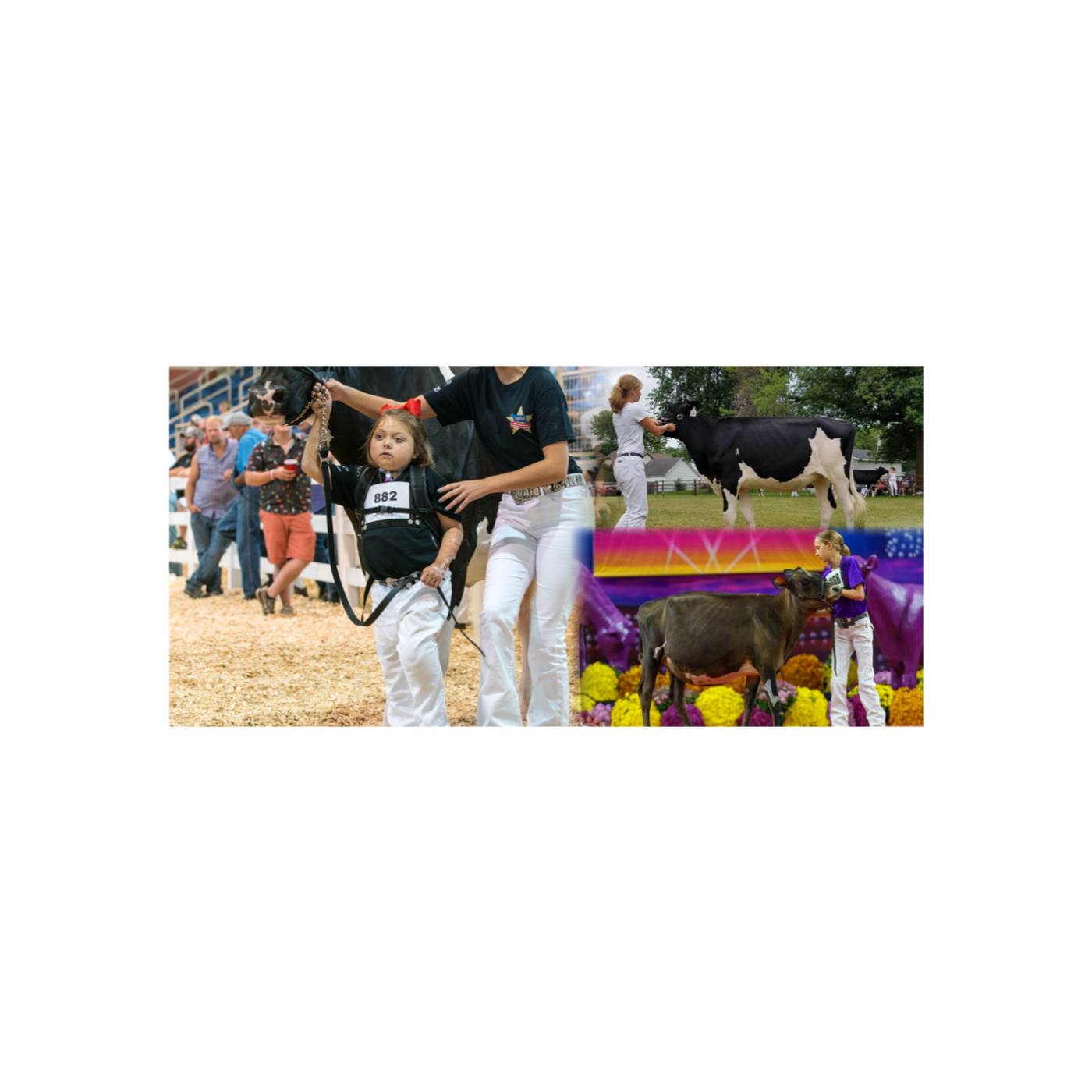
S1 Ep 237E237 Hearts of the Heartland: Young Dairy Farm Girls’ Extraordinary Battles for Life
This episode of The Bullvine Podcast explores the powerful stories of three young women—Lexi Anderson, Reese Burdette, and Sydni Mell—who grew up on dairy farms and faced life-altering adversity at a young age. Lexi’s journey began with a rare heart condition that led to a community-driven fundraising effort and a life-saving heart transplant. Reese survived a devastating house fire, enduring nearly two years in intensive care and overcoming severe burns, multiple surgeries, and the loss of a limb, all while drawing strength from her family, community, and her special show cow, Pantene. Sydni’s life changed after a farm accident left her paralyzed, but she adapted with resilience, shifting her goals, advocating for farm safety, and planning to return to her family’s operation with new skills and determination. Throughout their challenges, each young woman was buoyed by the unwavering support of family, friends, and the agricultural community. Their stories highlight the unique resilience fostered by farm life, the healing power of animals, and the extraordinary solidarity found in rural communities. Ultimately, this episode is a testament to hope, adaptability, and the enduring spirit that defines America’s dairy country.Read more https://www.thebullvine.com/youth-profiles/hearts-of-the-heartland-young-dairy-farm-girls-extraordinary-battles-for-life/

S1 Ep 236E236 5 Powerful Stress-Busting Techniques Every Dairy Farmer Needs This Spring
Spring is one of the most demanding times for dairy farmers, bringing a surge of stressors that can impact both mental health and farm productivity. In this episode, we break down five science-backed techniques that help dairy producers not just survive, but thrive during calving season and beyond. Backed by research and real-world farmer experiences, these strategies are practical, proven, and essential for protecting your most valuable asset—your wellbeing.Key Topics CoveredThe High Cost of Burnout:Suicide rates among farmers are 3.5x higher than the general population76% of farmers report moderate to high stress during peak seasonsStress-related errors cost dairy operations thousands in lost productivity annuallyTechnique 1: The 5-Minute Brain ResetStep outside, breathe deeply, and mindfully observe your surroundingsEven short nature breaks can reduce cortisol and improve focusTechnique 2: Break the IsolationSchedule daily check-ins with family, friends, or fellow producersMeaningful conversations are maintenance for your mindTechnique 3: Invest in Family TimeStructured family breaks lower workplace accidents and improve herd healthEven one protected meal or activity per week makes a differenceTechnique 4: Find Your PurposeConnect daily tasks to your deeper values and farm legacyVisual reminders of achievements boost resilienceTechnique 5: Celebrate Small WinsKeep a daily log of small victories to trigger motivation and counter burnoutRecognizing progress releases dopamine and sustains energyFast FactsMental Health IndicatorFarmersGeneral PopulationDepression (moderate+)~60%17-18%Anxiety disorder55% (adults)~18%Suicide ideation2x higherBaselineLife "not worth living"25%Significantly lowerHeat stress costs the dairy industry $1.5 billion annuallySpring temperatures are rising, increasing early-season stress risksAction StepsStart with one technique that addresses your biggest challengeUse the “5-5-5 Reset” for quick stress reliefSchedule a 10-minute daily conversation to break isolationBlock out family time, even during busy weeksCreate a visible “farm story” board or log daily winsKey TakeawayProtecting your mental health isn’t a luxury—it’s a survival strategy for your farm and your family. Start small, stay consistent, and remember: you can’t pour from an empty cup.If you found this episode helpful, please share it with a fellow producer and subscribe for more practical dairy insights from The Bullvine.This episode is based on the article “5 Powerful Stress-Busting Techniques Every Dairy Farmer Needs This Spring” published at The Bullvine - https://www.thebullvine.com/mental-health/5-powerful-stress-busting-techniques-every-dairy-farmer-needs-this-spring/

S1 Ep 235E235 Mystic Valley Dairy: The Secret Behind Their Jaw-Dropping 125-Pound ECM Average
Discover how Wisconsin’s Mystic Valley Dairy achieves a jaw-dropping 125-pound energy-corrected milk (ECM) average through optimized cow comfort, strategic breeding, and 100 precision practices. In this deep-dive episode, we unpack the secrets behind their industry-leading metrics—4.5% fat, 3.4% protein, and 115 cows surpassing 150,000 pounds of lifetime production.Owner Mitch Breunig reveals why there’s no “magic bullet” in dairy success—just relentless attention to fundamentals. From their 70-30 corn silage and alfalfa forage mix to a 7-step fresh cow protocol that drives 152-pound peak milk yields, learn how this operation balances cutting-edge science with time-tested husbandry.Key Highlights:Cow comfort innovations: How stall sizing for older cows added productive years to their herd.Genetic mastery: Breeding for balanced traits (not extremes) to maximize combined fat and protein.Labor philosophy: Building a team with 20% turnover in an industry plagued by staffing challenges.Market-smart strategies: Selling 140 high-value cows annually to offset tight milk margins.The 100 Little Things: Why Mitch believes excellence comes from perfecting daily routines, not chasing trends.Featured in This Episode:Exclusive insights from Mitch Breunig on balancing family legacy with innovation.The role of Select Sires’ Kevin Jorgensen in shaping Mystic Valley’s genetic program.Future goals: Pushing for 9 pounds of combined fat/protein daily and 130 lb ECM.Links & Resources:Visit https://www.thebullvine.com/breeder-profiles/mystic-valley-dairy-the-secret-behind-their-jaw-dropping-125-pound-ecm-average/ for full show notes and articles.Follow The Bullvine on Twitter/X and Facebook.Subscribe & Review: Love this episode? Leave a 5-star review on Apple Podcasts and share it with fellow dairy professionals!

S1 Ep 234E234 MANURE TO MONEY: How Smart Dairy Farmers Are Turning Waste into Serious Profits
Discover how innovative dairy farmers are transforming manure management from an environmental burden into a profitable venture. This episode reveals strategies to save an average of $18 per acre in fertilizer costs while creating a marketable product selling for $20 per ton. Learn about cutting-edge techniques like biochar addition that slash harmful emissions while potentially earning carbon credits.Key PointsThe Hidden Goldmine: The average 100-cow dairy operation flushes away $15,000 annually in potential soil amendment products.Economic Revolution:69% of farms saved money through compostingAverage savings of approximately $18 per acreFrom Expense to Income:Case study: Bill McPhee of McPhee Farms sells surplus composted manure for $20 per tonJoe Loehr slashed commercial fertilizer bills through strategic compostingEnvironmental Benefits:Biochar addition reduces methane emissions by 58% (±22%)1Reductions in harmful air pollutants:Hydrogen sulfide (H2S) emissions dropped by 67% (±24%)Volatile organic compounds (VOCs) by 61% (±19%)Nitrogen oxides (NOx) by 70% (±22%)Regulatory Compliance: Composting positions farms ahead of tightening environmental regulations.Community Relations: Significant odor reduction improves neighbor relations.Composting 101Biological process transforming raw manure into stable soil amendmentGenerates heat (120°F-140°F) killing pathogens and weed seedsInvestment and ROIBasic windrow composting system for 200-cow dairy:Initial equipment cost: $20,000-45,000Site preparation: $5,000-10,000Monitoring equipment: $500-1,000ROI typically achieved in 2-3 yearsChallenges and SolutionsMoisture managementWeather impactsEquipment maintenanceInnovationsBiochar addition: Potential to earn carbon creditsAnaerobic digestion for larger operations1Action Steps for FarmersAssess current situationConduct soil and manure testingBuild an expert teamDesign your systemTrack resultsThe Bottom LineWith potential annual impacts exceeding $100,000 for a 500-cow dairy through reduced costs, new revenue streams, and environmental benefits, composting is no longer just an environmental nice-to-have—it's a financial imperative for modern dairy operations.Read complete article https://www.thebullvine.com/management/manure-to-money-how-smart-dairy-farmers-are-turning-waste-into-serious-profits/
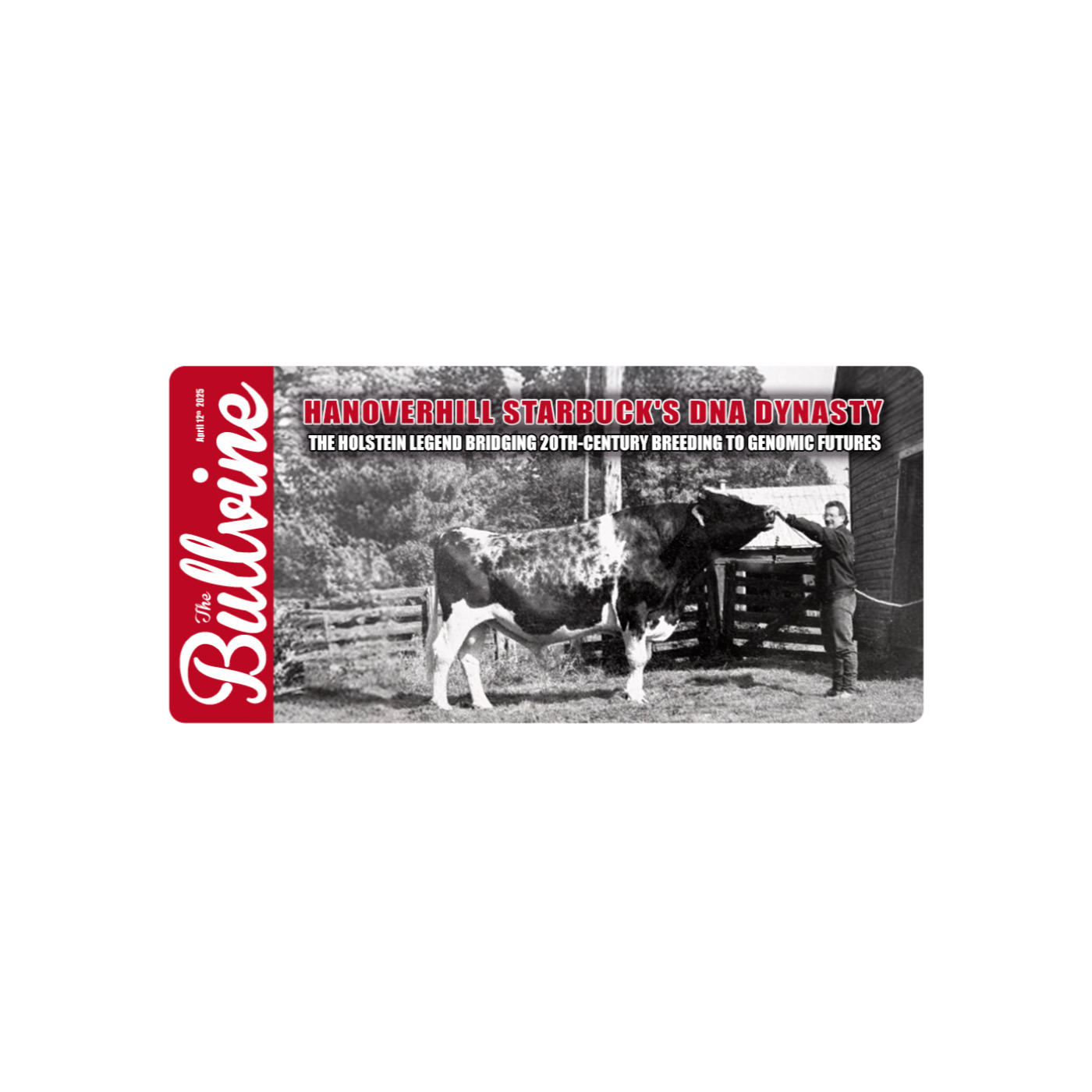
S1 Ep 233E233 Hanoverhill Starbuck’s DNA Dynasty: The Holstein Legend Bridging 20th-Century Breeding to Genomic Futures
Discover the incredible story of Hanoverhill Starbuck, the $2,500 Holstein calf who became a global genetic legend. From his 1979 discovery in an Ontario barn to fathering 200,000 daughters across 45 countries, Starbuck’s legacy reshaped dairy farming—and still raises critical questions about balancing genetic progress with sustainability.Key Topics CoveredThe Discovery: How two analysts spotted Starbuck’s potential in 1979 and turned a $2,500 gamble into a $25M genetic empire.Genetic Perfection: Starbuck’s rare pedigree (sired by Elevation, out of Anacres Astronaut Ivanhoe) and his uncanny ability to transmit udder quality, protein yields, and structural soundness.Global Domination: CIAQ’s strategic marketing sold 685,000 semen doses worldwide, creating show-ring legends and commercial powerhouses.The Dark Side: How 95% of Quebec Holsteins became related to Starbuck by 2000, triggering inbreeding concerns and fertility challenges.Modern Lessons: From cloning failures to CRISPR breakthroughs, how Starbuck’s legacy guides today’s balance of genomics and diversity.Memorable Quotes“He wasn’t just good—he had that look. The kind that makes your clipboard hit the floor.” – Robert Chicoine on first seeing Starbuck.“Genetic progress without diversity is a short-lived triumph.” – Lessons from Starbuck’s inbreeding crisis.“We’re not just selecting cows—we’re curating supply chains.” – A Danish breeder on modern market adaptability.Key Takeaways🐄 Supersire Influence: 83% of North American Holsteins still carry Starbuck’s DNA, proving one bull can redefine an industry.⚖️ Double-Edged Legacy: His 200,000 daughters boosted milk production but caused 6.8% inbreeding rates in Quebec herds.🧬 Tech Evolution: Starbuck’s era of visual selection paved the way for today’s SNP chips and CRISPR editing.🌍 Market Savvy: His 3.2% protein yields met 1980s cheese demands—a lesson in aligning genetics with market trends.🔄 Ethical Breeding: Modern programs limit single-sire influence to 5%, ensuring sustainability without sacrificing progress.Read the feature article at https://www.thebullvine.com/sire-spotlight/hanoverhill-starbucks-dna-dynasty-the-holstein-legend-bridging-20th-century-breeding-to-genomic-futures/

S1 Ep 232E232 Revolutionary Colostrum Protocol Adding $500 Per Heifer to Your Bottom Line
Discover how revolutionary colostrum feeding protocols could add $500 per heifer to your dairy operation's bottom line. In this episode, we explore cutting-edge research from the University of Guelph that challenges conventional wisdom about calf nutrition and reveals the untapped potential of transition milk.Key Points DiscussedTransition milk value: Second-milking colostrum contains 39.3 g/L of IgG—6.5 times higher than conventional milkProtocol options: Choose either 50% colostrum for days 2-3 or 10% colostrum for 14 daysDisease management: Extended colostrum feeding serves both prevention and treatment rolesImplementation simplicity: Requires just 5-10 minutes of daily preparation timeMeasurable results: Treatment rates for scours decreased from 23% to 8% in case study farmsLong-term impact: Nearly a kilogram more fat-corrected milk per day in first lactationFeatured ExpertDr. Michael Steele from the University of Guelph shares his groundbreaking research on extended colostrum feeding and explains why he compares a calf to "a ball rolling down a hill" where early nutrition decisions determine lifetime trajectory.Practical TakeawaysBegin collecting and storing transition milk immediatelyConsider implementing the simpler 2-3 day protocol before transitioning to the full 14-day approachUse colostrum therapy (50/50 mix for four days) for calves showing early signs of digestive challengesDelay weaning until consistent starter intake is achieved, not based on calendar datesImplement proper colostrum preservation methods (freezing or potassium sorbate)Read full article here - https://www.thebullvine.com/management/revolutionary-colostrum-protocol-adding-500-per-heifer-to-your-bottom-line/

S1 Ep 231Top Dairy News for April 11, 2025
This comprehensive report summarizes the most critical developments affecting the dairy industry this week, with detailed analysis of market conditions, policy changes, and emerging threats that dairy producers need to understand. Today's episode unpacks multiple crises hitting the industry simultaneously, from immigration policy to trade wars, alongside strategic advice for navigating these challenging times.Trump’s $998-A-Day Migrant Fines: Is it a Death Sentence for America’s Dairy Industry?https://www.thebullvine.com/news/trumps-998-a-day-migrant-fines-is-it-a-death-sentence-for-americas-dairy-industry/84% Chinese Tariffs Slam US Dairy: Why Whey & Lactose Exports Face Crisishttps://www.thebullvine.com/news/84-chinese-tariffs-slam-us-dairy-why-whey-lactose-exports-face-crisis/CME Dairy Market Report: April 10, 2025 – Cheese Blocks and Butter Prices Surged Despite Bearish USDA Outlookhttps://www.thebullvine.com/news/cme-dairy-market-report-april-10-2025-cheese-blocks-and-butter-prices-surged-despite-bearish-usda-outlook/Dairy’s Perfect Storm: Market Mayhem Reshapes Farm Profitability in 2025https://www.thebullvine.com/news/dairys-perfect-storm-market-mayhem-reshapes-farm-profitability-in-2025/Udder Health: Small Changes That Make a Big Difference in Dairy Profitabilityhttps://www.thebullvine.com/news/udder-health-small-changes-that-make-a-big-difference-in-dairy-profitability/H5N1 Crisis Hits 1,000 U.S. Dairy Herds: California Epicenter and Nevada’s New Viral Threat Demand Immediate Actionhttps://www.thebullvine.com/news/h5n1-crisis-hits-1000-u-s-dairy-herds-california-epicenter-and-nevadas-new-viral-threat-demand-immediate-action/U.S. Dairy Farmers Unlikely to Cash in on Chinese Demandhttps://www.thebullvine.com/news/u-s-dairy-farmers-unlikely-to-cash-in-on-chinese-demand/

S1 Ep 230E230 2024 Holstein Canada Master Breeders: Excellence in Balance, Breeding, and Legacy
Discover how 19 Canadian dairy farms earned the elite 2024 Master Breeder title by mastering the art of balanced genetics, longevity, and innovation. From Quebec’s genomic pioneers to Ontario’s multi-generational dynasties, learn what it takes to breed Holsteins that excel in every category.Key Points CoveredThe Award’s Legacy: The Master Breeder shield’s 95-year history and its role in defining Canadian Holstein excellence.Regional Powerhouses: Why Quebec (9 winners) and Ontario (8 winners) dominated this year’s class.Generational Wisdom: How farms like Heather Holme (4th shield) and Kentville (100+ years registered) sustain success across decades.Innovation Meets Tradition: Genomics, robotics, and bedded packs for dry cows—tools enhancing (not replacing) traditional breeding skills.Cow Families & Longevity: The lasting impact of standout matriarchs like Rotaly’s Allegria (103,500 kg milk) and Quality’s Fran family.Featured FarmsRotaly (QC): Balanced breeding philosophy behind 2024 Cow of the Year, Allegria EX-96.Quality Holsteins (ON): A 4th shield for Canada’s most decorated show herd, built on meticulous detail.Drahoka (QC): How a #1 Herd Performance Index ranking and a bedded pack propelled their first shield.Heather Holme (ON): A closed-herd strategy focusing on “cows dairymen love to milk worldwide.”Mil-En-Roy (SK): Prairie resilience—from 1950s cream shipping to 2024 Master Breeder status.Notable QuotesRock Hebert (Rotaly): “We refuse to sacrifice conformation for production. A great cow must excel in every way.”Curtis McNeil (Heather Holme): “Our grandfather taught us: alternate generations between milk and type. Balance isn’t optional—it’s survival.”Francis Drapeau (Drahoka): “Longevity starts with comfort. Our dry cows’ bedded pack added 2+ lactations per cow—that’s pure profit.”Key Takeaways for BreedersBalance Wins: Prioritize synergy between production, health, and conformation—not extremes.Invest in Cow Comfort: Small upgrades (e.g., bedded packs) yield measurable longevity gains.Leverage Genomics Wisely: Use data to enhance (not replace) your “eye” for great cattle.Build Legacy Families: Identify and nurture maternal lines with proven multi-generational impact.Think Long-Term: Master Breeders plan in decades, not lactation cycles.Call to Action📖 Read the Full Feature: Dive deeper into all 19 Master Breeder stories athttps://www.thebullvine.com/breed-association-news/2024-holstein-canada-master-breeders-excellence-in-balance-breeding-and-legacy/ ⭐ Rate & Review: Love the episode? Leave a 5-star review to help more breeders discover The Bullvine! 🐄 Join the Conversation: Share your breeding philosophy with us on social media @TheBullvine.

S1 Ep 229E229 Dad at 80: How Murray Hunt Revolutionized Canadian Dairy Genetics
In this special episode of The Bullvine Podcast, we celebrate the 80th birthday of Murray Hunt, a visionary whose contributions revolutionized dairy genetics in Canada and beyond. From his early days at Huntsdale Farm to his groundbreaking work with Holstein Canada, Murray’s innovations—like the Dollar Difference Formula and modernized Type Classification systems—helped shape global breeding practices. Told through the lens of his son Andrew, this heartfelt tribute explores how Murray bridged scientific precision with practical wisdom to create a lasting legacy in the dairy industry.Key Highlights:Huntsdale Farms Origins: How Murray’s early responsibilities in animal recording and breeding laid the foundation for his career.The Dollar Difference Formula: A game-changing approach to bull selection that prioritized economic efficiency over show-ring traits.Holstein Canada Contributions: Leading the modernization of Type Classification systems and expanding their global reach.Mentorship and Vision: Murray’s commitment to mentoring future leaders and advocating for progressive breeding strategies.Legacy Reflections: Celebrating Murray’s family and professional accomplishments as his most significant achievements.Read the full article at https://www.thebullvine.com/breeder-profiles/dad-at-80-how-murray-hunt-revolutionized-canadian-dairy-genetics/
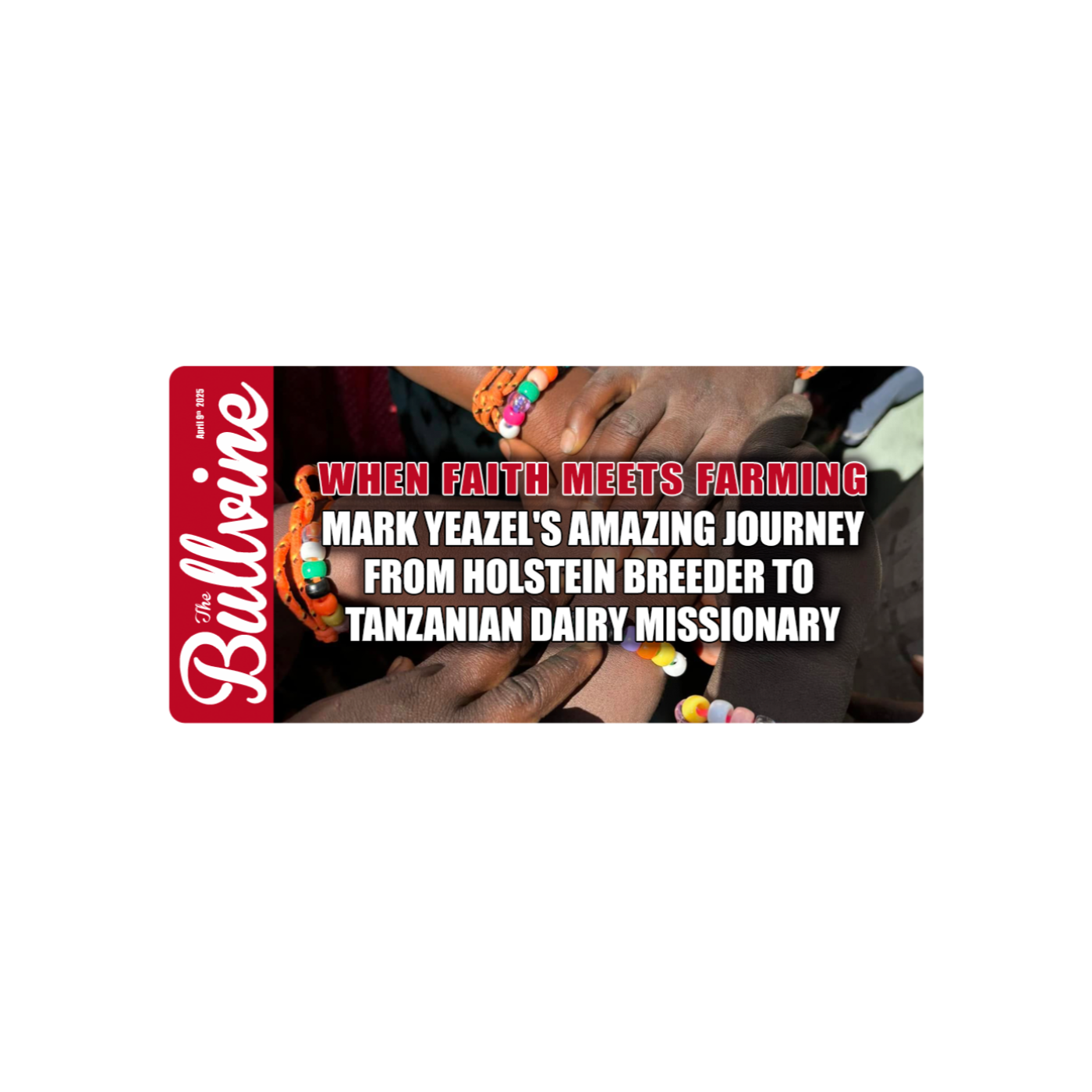
S1 Ep 228E228 When Faith Meets Farming: Mark Yeazel’s Amazing Journey from Holstein Breeder to Tanzanian Dairy Missionary
Mark Yeazel, a top Holstein breeder, shocked the dairy world by selling his elite herd to build a sustainable dairy farm in Tanzania for 130+ orphans. This episode dives into his radical career pivot, the innovative Eternal Families Tanzania (EFT) model, and how dairy expertise is transforming lives in East Africa. Discover grass-roofed barns, Jersey cattle over Holsteins, and why a milk cooling unit could change everything.Key Quotes from Mark YeazelOn his calling: “No, what would be crazy is to believe God tells you to go do something and tell God no.”On Tanzanian ingenuity: “They’re not stupid—they just have less opportunity.”Dairy’s purpose: “Love isn’t a feeling—it’s milk in a pail, a trained worker, a child getting their first taste of real dairy.”Background You’ll HearThe EFT Model: 10 family-style homes with dedicated parents, 120-acre farm, and 800 eggs/dayTanzanian Challenges: 85°F days, Foot and Mouth disease risks, and improvisation cultureGenetic Legacy: Why Mark saved 23 red, polled, slick embryos for TanzaniaShock Factor: Selling 40+ homozygous polled Holsteins to fund the mission5 Key TakeawaysDairy = Development: Milk boosts IQ in children under six by up to 15 points.Grass Roofs & Jerseys: Climate-smart barn designs and cattle choices for Tanzanian heat.Beyond Milk: Plans for butter, yogurt, and mtindi (local cottage cheese) production.Training Legacy: Teaching orphans and locals sustainable farming and management skills.Global Dairy Impact: How breed selection affects smallholders worldwide.How You Can Help (Mark’s Requests)Priority Need: Milk cooling unit for quality control and market expansionEquipment: Second tractor (shared between farms 45 mins apart), pickup truck for rough roadsExpertise: Remote consultation on tropical dairy management or nutritionDonate:Tax-deductible: Remember the Children (Memo: Tanzania Dairy Project) 1100 S. 9th Street, Suite 211, Noblesville, IN 46060Direct support: Checks to Mark & Joy Yeazel 1495 Wolverton Road, Eaton, OH 45320Read complete article at https://www.thebullvine.com/breeder-profiles/when-faith-meets-farming-mark-yeazels-amazing-journey-from-holstein-breeder-to-tanzanian-dairy-missionary/

S1 Ep 227E227 BLACK HIDE BLINDNESS: Why Breeding Only for Color is Destroying Your Dairy-Beef Profits
In this episode of The Bullvine Podcast, we tackle a critical issue facing the dairy-beef industry: the obsession with black-hided calves. While black hide color has been a popular choice for beef-on-dairy crossbreeding, it’s costing producers thousands in lost potential profits.We’ll explore:The skyrocketing shift to beef-on-dairy breeding since 2017 and its economic impact.Why generic black crosses are often "Holstein steers in disguise."The performance gap between generic black calves and premium beef crosses.How strategic genetic selection can improve daily gain, feed efficiency, and carcass value.Practical steps to select sires that deliver real profitability—not just a black hide.If you’re ready to rethink your breeding strategy and secure sustainable profits, this episode is for you.Key Takeaways:Market Reality: Premium beef crosses can command $225-$250 per head compared to $150-$200 for generic black crosses.Performance Gains: Quality beef crosses achieve 8-25% better daily gain and reduce days on feed by up to 26 days.Actionable Advice: Learn the specific traits to prioritize when selecting beef sires for your dairy herd.Resources Mentioned:Full article on "Black Hide Blindness" available at The Bullvine. (https://www.thebullvine.com/beef-on-dairy/black-hide-blindness-why-breeding-only-for-color-is-destroying-your-dairy-beef-profits/)Market data and genetic selection criteria for beef-on-dairy breeding.Expert insights from industry leaders like Denise Schwab and Dan Thomson.Call to Action: Don’t let outdated breeding practices shrink your margins. Visit The Bullvine website for more insights, tools, and resources to maximize your beef-on-dairy profits.Tune in now and start making smarter breeding decisions today!

S1 Ep 225E225 Stud Wars: April 2025 – The Genetic Force Awakens
Sexing Technologies emerges as the Death Star of dairy genetics, commanding 130 total TPI sires (32.5% market share) and a staggering 160 NM$ sires (40% dominance). Their genomic firepower is unmatched, with 79 genomic TPI sires (39.5%) and 107 genomic NM$ sires (53.5%)—marking a +33.5% NM$ surge since June 2024. ABS Global retaliates with a Sith-like grip on polled genetics, controlling 137 Polled NM$ sires (68.5%), up 46.5% year-over-year.Rebel Strongholds & Niche BattlesThe PTAT sector remains the Rebel Alliance’s territory: Blondin Sires, Inc. leads with 56 total PTAT sires (14%), while ASCOL and Semex Alliance secure 15.1% and 17.3% shares, respectively. The "Others" faction dominates here, holding 51.7% of PTAT, proving small studs still thrive in type traits. Meanwhile, Semex Alliance rules Red & White PTAT with 76 sires (38%), a +17% surge since 2024.Proven Genetics: The Old Guard’s Last StandAlta Genetics and Select Sires anchor the proven frontlines:Alta Genetics: 78 proven sires (13% share) across TPI and NM$Select Sires: 74 proven sires (12.3%) but faces -10.6% TPI declineSexing Technologies expands its beachhead with 51 proven TPI sires (25.5%)Special Forces & Stealth ThreatsGENEX: Quietly amasses 82 total sires, including 46 NM$ warriorsJLG Custom Services: A rebel sleeper cell with 28 total sires (3.5% proven PTAT)CRV: Holds 31 total sires, including European-focused geneticsThe Galactic Map of PowerTotal Genomic Empire: Sexing Technologies (230), ABS Global (197), Semex Alliance (172)Proven Rebellion: "Others" cling to 45.4% share (273 sires)Polled Supremacy: ABS Global’s 137 sires dwarf rivals (Sexing Tech: 15, Select Sires: 18)Conclusion: The Stud Wars’ balance has shifted—genomic titans consolidate power, while PTAT remains the rebellion’s hope. Dairy commanders must choose: ally with empires for profit or back rebels for diversity. The future of Holstein genetics hangs in the balance. https://www.thebullvine.com/a-i-industry/stud-wars-april-2025-the-genetic-force-awakens/

S1 Ep 224E224 Dairy Disruption: Survival, Trade Wars, and the Tech Revolution
This week’s episode dives into six seismic shifts reshaping dairy farming globally. From survival math to geopolitical standoffs, elite genetics to disease warfare, we break down the stories every producer needs to understand.In This Episode🔥 1. The Consolidation Crunch Why 50% of U.S. dairies could vanish by 2035The brutal math of scaling: Why 1,000-cow herds now dominate profitabilitySurvival strategies: Specialization vs. expansion vs. exitKey takeaway: "Get big, get niche, or get out"🇺🇸🇨🇦 2. Trump’s $17B Dairy Trade Gambit Can tariffs crack Canada’s supply management system?Why Canada’s Class 7 pricing infuriates U.S. exportersHistorical context: How NAFTA loopholes created today’s standoffKey takeaway: "Political theater with real financial stakes"💰 3. The $77,000 Pony Phenomenon What Tahora’s auction tells us about genetics economicsElite genetics vs. commodity milk: Diverging market realitiesWhy niche breeds are outperforming Holsteins in premium marketsKey takeaway: "Quality still commands luxury pricing"💉 4. Dairy’s Counterpunch Against Ozempic How protein snacks are exploiting the weight-loss drug boomSurprising synergy: Why GLP-1 users crave dairy proteinsCase studies: Fairlife’s 20% growth and new high-protein innovationsKey takeaway: "Reformulate or miss the $50B functional foods wave"🤖 5. 2025’s Make-or-Break Tech The tools separating winners from bankruptcyRobotic milkers 3.0: Now with hormone monitoringMethane-digester ROI: When carbon credits outweigh milk checksKey takeaway: "Adopt now or face 30% cost disadvantages"⚠️ 6. Hungary’s Military vs. Hooves Foot-and-mouth outbreak containment lessonsWhy Europe’s worst outbreak in decades matters globallyBiosecurity protocols every farm should implement tomorrowKey takeaway: "One infected truck could erase your equity"Who Should ListenDairy farmers weighing expansion vs. exit strategiesGenetics marketers targeting premium buyersProcessors betting on protein innovationPolicy analysts tracking trade warsInvestors assessing agtech ROI

S1 Ep 223E223 Genetic Shakeups & Dairy Breakthroughs: April 2025 Evaluation Highlights
Podcast Episode Notes: "Genetic Shakeups & Dairy Breakthroughs: April 2025 Evaluation Highlights" ---Key TopicsIntroduction - Overview of April 2025’s landmark genetic evaluations - Why this month’s base changes matter for global breeding strategies US Holstein Evaluations: The Great Genetic Reset - Production PTAs: Milk (-750 lbs), Fat (-45 lbs), Protein (-25 lbs) - Elite Survivors: RIPCORD (NM$1125) and DARTH VADR (NM$1118) retain top spots. - Inbreeding Alert: EFI up 28% since 2015—prioritize genomic relationship tools. Canadian Sire Shakeups: Balanced Breeding Wins - Genomic Leader: OCD MONKEY-ET (GLPI 4079) excels in fat yield (+125kg) and udder health. - Daughter-Proven Star: S-S-I PR RENEGADE-ET (LPI 3850) dominates longevity (+4.2). - Trend to Watch: Polled genetics gain traction (e.g., FRAHOLME VEC TRITON-PP). Fertility Traits: Global Strategies Compared - US: New Fertility Index prioritizes Cow Conception Rate (CCR) over DPR. - Germany: RZR index links fertility to metabolic health (e.g., -15% calving intervals). - Canada: Multi-trait approach reduces stillbirths by 9% in 5 years. Inbreeding Alert: Hidden Risks in Your Herd - Critical Stat: Holstein EFI now 9.4% (vs. 7.5% in 2015). - Profitability Impact: Every 1% EFI increase = $12/heifer/year loss. - Solution: Use genomic mate pairing (e.g., Semex’s Mating Service). Actionable Insights for Breeders 1. Leverage Base Changes: Compare sires using percentile ranks, not raw PTAs. 2. Diversify Genetics: Incorporate polled or red-carrier sires to curb inbreeding. 3. Fertility Focus: Match metrics to your herd’s needs (e.g., CCR for problem breeders). Closing Thought “Genetic progress isn’t just about chasing numbers—it’s about building resilient herds that thrive in tomorrow’s dairy economy.” Subscribe to The Bullvine Podcast for weekly deep dives into dairy genetics! 🌐 [www.thebullvine.com](https://www.thebullvine.com)

S1 Ep 222E222 From Show Ring to Genomic Legacy: The Transformative Impact of Aitkenbrae Starbuck Ada on Holstein Breeding
This episode explores the remarkable story of Aitkenbrae Starbuck Ada, born September 13, 1986, and how this single cow transformed Holstein breeding worldwide through her exceptional genetic legacy.Key Discussion Points:Ada's journey from Aitkenbrae farm in Ontario to her recognition as Unanimous All-American Senior Three-Year-Old in 1990The strategic breeding decisions that established Ada as one of history's most influential brood cowsThe "Skychief Sisters" - Shoremar S Alicia (EX-97) and MS Kingstead Chief Adeen (EX-94) - and their extraordinary impact on global Holstein breedingDurham Atlee and the legendary "golden flush" to Braedale Goldwyn that produced Atwood and other influential siresHow Ada's descendants continue to dominate show rings while excelling in genomic meritThe economic impact of Ada's lineage, including descendants selling for up to $1.5 millionListener Takeaways:How strategic mating decisions can exponentially amplify desirable traitsThe balance between show ring excellence and production traitsWhy Ada's family remains relevant across multiple eras of dairy breedingLessons for modern breeders from Ada's exceptional genetic legacyhttps://www.thebullvine.com/donor-profile/from-show-ring-to-genomic-legacy-the-transformative-impact-of-aitkenbrae-starbuck-ada-on-holstein-breeding/Related Reading: Available on TheBullvine.com - links in show notes to complementary articles on influential Holstein brood cows, Hanover Hill breeding philosophy, and modern genetic evaluations.

S1 Ep 221E221 Spring Pasture Powerplay: Balancing Grazing Efficiency with Milk Component Goals
Spring Pasture Powerplay: Maximize Milk Components & Profitability with Smart Grazing StrategiesKey TakeawaysThe Spring Transition ChallengeMilk component depression can cost $0.18–$0.32/cwt in lost premiums.Young spring grass’s high sugars and low fiber disrupt rumen health, slashing butterfat by up to 50%.Gradual Adaptation is KeyTransition cows over 2–3 weeks to avoid “stealth rumen burnout” (SARA).Start with 2–3 hours of grazing/day and supplement dry hay for stable rumen pH.Rotational Grazing = Profit MultiplierBoost pasture utilization by 20% with 12–24-hour paddock rotations.Follow optimal grazing heights: 3–4" for ryegrass, 6–8" for fescue.Supplementation Saves Milk ComponentsRumen-protected methionine (15–20g/cow/day) increases milk fat by 0.14–0.40%.Ground corn often outperforms expensive commercial concentrates in ROI.Regenerative Grazing & TechDiverse pastures cut feed costs by 15–30% and improve milk’s nutritional profile.Drone tech provides 94% accurate biomass data for precision grazing decisions.Actionable TipsDo Today: Walk pastures to check residuals (target: 4–6 cm).Buffer Feed: Offer 3–5 lbs of long-stem hay before turnout.Track Components: Monitor milk fat/protein twice weekly.https://www.thebullvine.com/management/spring-pasture-powerplay-balancing-grazing-efficiency-with-milk-component-goals/

S1 Ep 220E220 Unlocking Dairy Robot Financing: How Smart Farmers Are Funding Their Automated Future
Robotic milking systems are revolutionizing dairy farming, delivering 8.66% higher milk yields and 27.84% labor savings despite upfront costs of $150,000–$230,000 per unit. Innovative financing models—including 0% manufacturer promotions, leasing (reducing capital outlays by 15–25%), and pay-per-liter programs—are making automation accessible to farms of all sizes. Early adopters gain competitive advantages through sustainability wins (carbon footprint reductions of 30%) and healthier herds (42% conception rates vs. 32% in parlors). While adoption is exploding globally (85% of new Danish dairies use robots), North American farms lag at 3% penetration—creating urgent opportunities. Strategic implementation requires 4-year transition plans but unlocks $160,600 annual profit potential per optimized robot.Key Discussion PointsThe $500/Day DilemmaWhy delaying robotic adoption costs mid-sized farms up to $160,600/year in lost profit potentialCase study: Wisconsin farmer Dave Kammel’s 3-hour daily labor savings with 2 robots [Quote: “Best investment I’ve ever made”]Financing BreakthroughsLeasing loophole: How $30k down payments replace $200k purchases (15-25% capital reduction)Europe’s pay-per-liter model now in North America: Payments tied to milk output during transition yearsManufacturer deals: 0% financing for 60 months (Lely) vs. 84-month terms (GEA)The Sustainability SecretDevon farm’s carbon footprint drop: 1,729g → 1,204g/liter (30% reduction) via robotic efficiencyUniversity of Waterloo findings: 10% higher conception rates, 44% fewer antibiotics in robotic herdsPerformance Power PlaysTop vs. average robot ROI: $500/day difference per machineTable:MetricLow EfficiencyHigh EfficiencyMilk/Minute1.4 kg2.0 kgAnnual Profit-+$160,600https://www.thebullvine.com/management/robotic-milking/unlocking-dairy-robot-financing-how-smart-farmers-are-funding-their-automated-future/
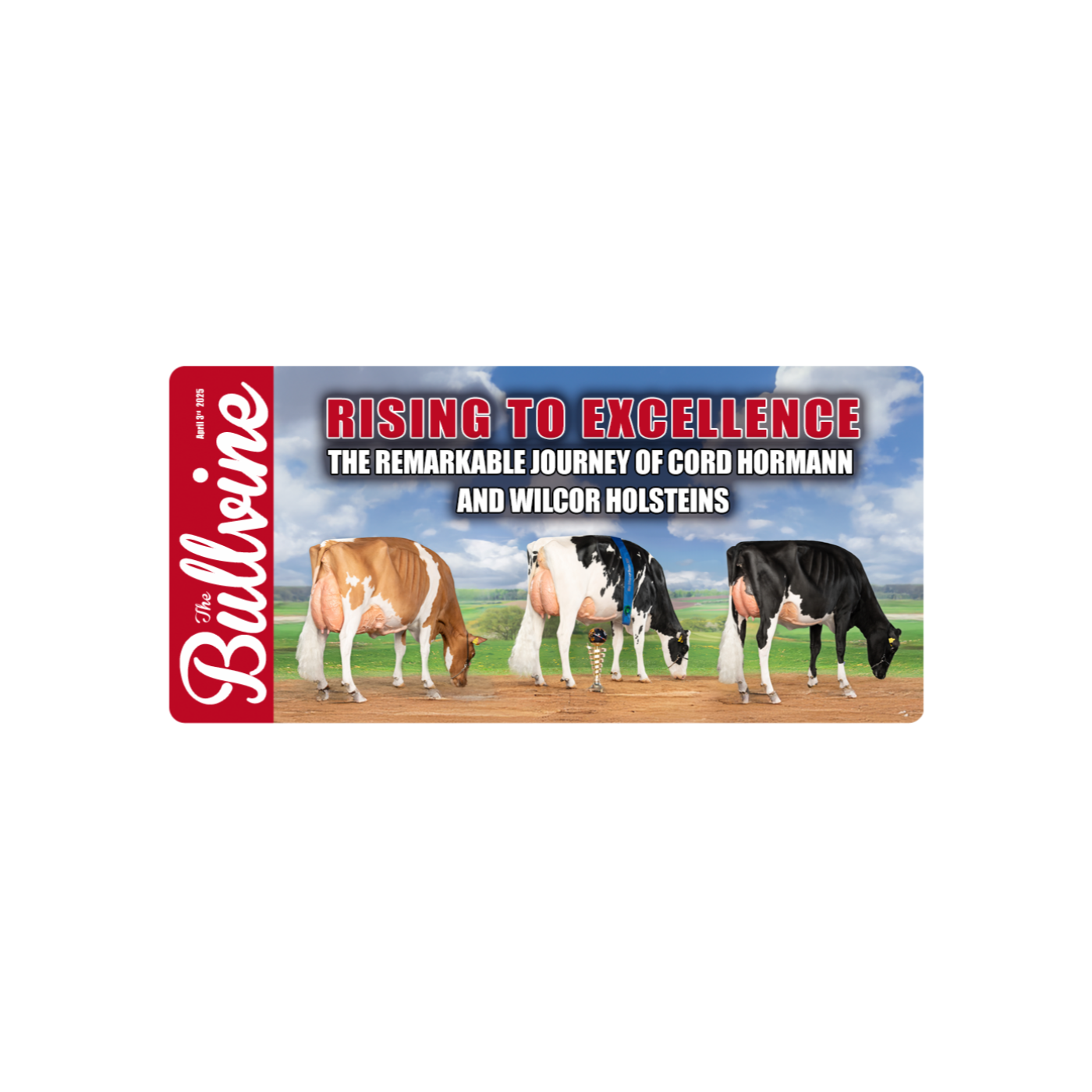
S1 Ep 219E219 Rising to Excellence: The Remarkable Journey of Cord Hormann and Wilcor Holsteins
In this episode, we delve into the inspiring journey of Cord Hormann and Wilcor Holsteins, a German breeding program that has achieved international recognition through its commitment to quality over quantity. Cord shares his early experiences, from growing up on a small farm to becoming a respected breeder and judge. We explore the strategic decisions behind Wilcor’s success, including its focus on balanced breeding goals and deep cow families. The story of O Katy, Wilcor’s Grand Champion at the 51st Schau der Besten, highlights the operation’s dedication to developing exceptional cattle. This episode offers valuable insights for dairy professionals and enthusiasts alike, showcasing how patience, vision, and attention to detail can lead to extraordinary results in Holstein breeding.https://www.thebullvine.com/donor-profile/rising-to-excellence-the-remarkable-journey-of-cord-hormann-and-wilcor-holsteins/

S1 Ep 218E218 April 2025 Global Holstein Evaluations: New Leaders Emerge as Genetic Progress Accelerates Worldwide
Key Discussion PointsUS Genetic Base OverhaulWhy the largest recalibration since 2020 impacts herd benchmarks (even for elite herds).How to interpret relative rankings vs. absolute PTAs post-adjustment.Polled Genetics BreakthroughCase studies: Cardiff P (Germany) and Triton-PP (Canada) redefine "elite" with welfare-friendly traits.Why polled sires now compete on fat yield, fertility, and conformation.Germany’s Single-Step RevolutionHow merging pedigree, genomic, and phenotype data boosts health trait reliability by 14%.Practical impact: Fewer "genomic reruns" for functional traits.Swiss TPI SurprisesSous-Moron BOSTON’s +80-point leap: What commercial herds gain from his fertility focus.Sustainability meets protein: Why Swiss evaluations prioritize eco-efficiency.Global Takeaways for BreedersBalancing act: Production vs. longevity in high-merit sires like DARTH VADR ($1,270 NM$).Red flags: Managing inbreeding spikes amplified by genomic selection.https://www.thebullvine.com/genetic-evaluation-review/april-2025-global-holstein-evaluations-new-leaders-emerge-as-genetic-progress-accelerates-worldwide/
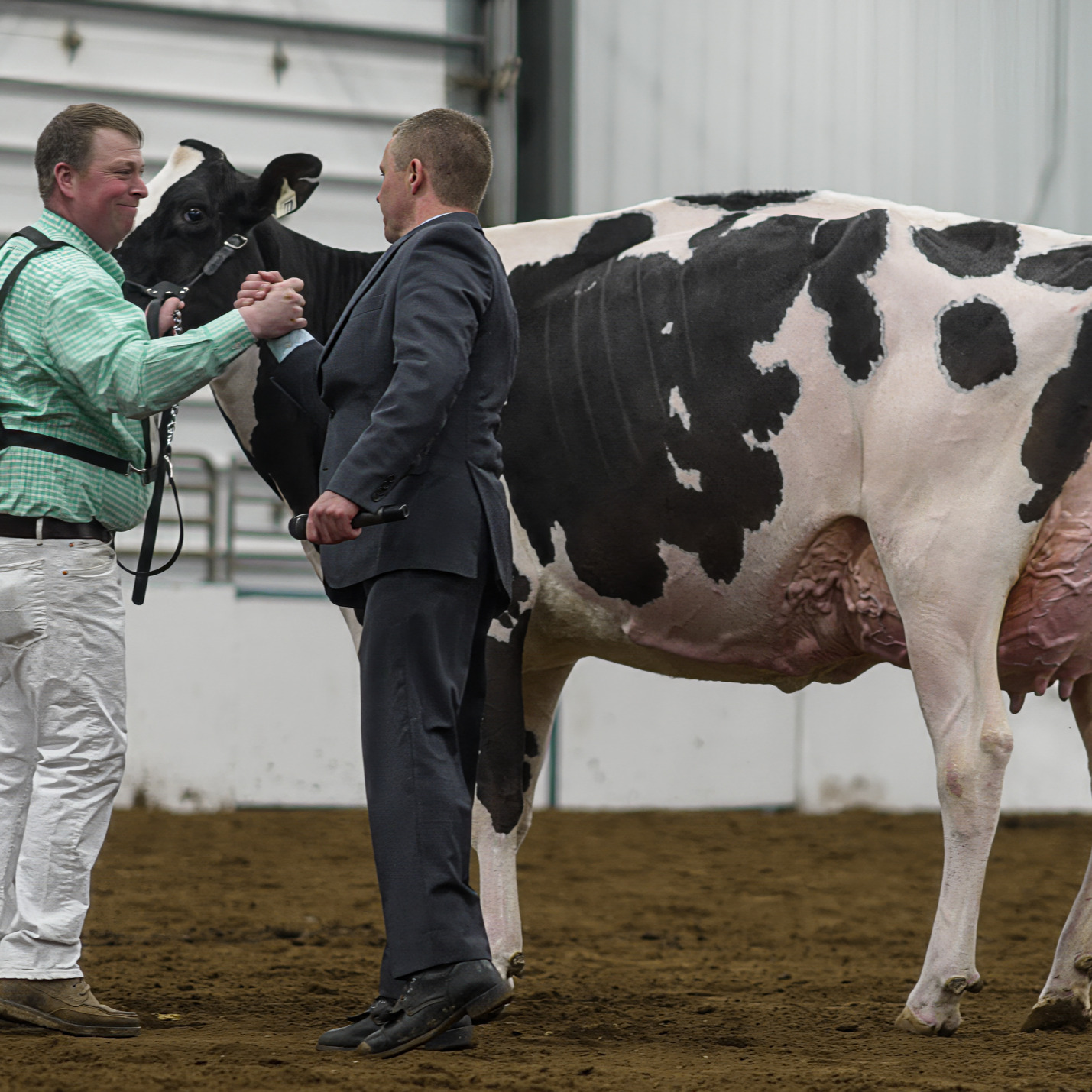
S1 Ep 217E217 Northeast Spring National Holstein Show 2025
Show OverviewJudge: Ryan KrohlowLocation: New York Spring Holstein ShowNotable quality throughout all classes with exceptional depth in heifer and cow divisionsHeifer Division HighlightsWinter & Fall CalvesRIVERDOWN LAMBDA DIVINITY (DELTA-LAMBDA) won Winter Calf with "extreme length" and superior "spring and openness" in her barrelBLACKLILLY BLLSEYE LEONA-ET (BULLSEYE) dominated Fall Calf class with precise tracking and comfortable locomotionYearling ClassesARMCREST SELECT BANDANA (MASTER) topped Spring Yearling with remarkable openness and styleWINRIGHT SK CREME BRULEE (SIDEKICK) led an "unbelievable quality" Winter Yearling class with exceptional width throughoutMILKSOURCE A TIERNEY-RED (ARCHITECT) won Fall Yearling with free movement and balanced frameJunior Champion ResultsJunior Champion: WINRIGHT SK CREME BRULEE (SIDEKICK) - Butlerview FarmReserve Junior Champion: MAPLEBROUGH IPASS P RHONWYN (IPASS-P) - Butlerview FarmHonorable Mention: MILKSOURCE A TIERNEY-RED (ARCHITECT) - Butlerview FarmCow Division HighlightsTwo-Year-Old ClassesWALNUTLAWN BULLSEYE SADIE (BULLSEYE) won Spring Junior Two-Year-Old with exceptional "spring and openness through her midsection"AROLENE SIDEKICK ELDA (SIDEKICK) topped Winter Two-Year-Old with superior blending and mobilityKINGS-RANSOM PRFCT CREED-TW (PARFECT) led Fall Two-Year-Old with "tremendous dairy strength and quality"Three-Year-Old & Intermediate ClassesCOUNTRY AYRE PARSLY 7239 (PARSLY) won Junior Three-Year-Old with superior fore udderDONACIN DELTA-LAMBDA RAIN (DELTA-LAMBDA) dominated Senior Three-Year-Old with exceptional mammary systemIntermediate Champion: DONACIN DELTA-LAMBDA RAIN (DELTA-LAMBDA)Reserve Intermediate: LOYALYN BAROLO JUNIPER (BAROLO)Honorable Mention: AROLENE SIDEKICK ELDA (SIDEKICK)Mature Cow ClassesELM BEND GAPSTER (MASTER) topped Four-Year-Old with "width, power and chest"LOVHILL SIDEKICK KANDY CANE (SIDEKICK) won Five-Year-Old with exceptional udder qualityJACOBS AVALANCHE BRADLY (AVALANCHE) led Aged Cow class with dairy qualityUNDERGROUND ADELINE (AWESOME) won Lifetime Production at 10 years oldSenior Champion ResultsSenior Champion & Best Udder: LOVHILL SIDEKICK KANDY CANE (SIDEKICK) - Alicia & Jonathan LambReserve Senior Champion: UNDERGROUND ADELINE (AWESOME) - Glamourview & Eaton HolsteinsHonorable Mention: JACOBS AVALANCHE BRADLY (AVALANCHE) - Glamourview, Currie & Eaton HolsteinsJudge's Consistent PrioritiesStructural correctness with emphasis on mobilityDairy strength with width and openness of ribUdder quality focusing on texture, veination, and attachmentBalance and symmetry throughoutSee more at https://www.thebullvine.com/show-reports/northeast-spring-national-holstein-show-2025/
S1 Ep 216E216 When Cows Were Kings: Revisiting Carnation’s Golden Age of Dairy Breeding
In 1908, Washington’s Carnation Milk Farms revolutionized dairy breeding through a unique blend of compassionate animal care and rigorous genetics. By treating cows as “mothers” deserving of patience, founder E.A. Stuart boosted milk yields while pioneering humane practices—his prize Holstein Segis Pietertje Prospect (“Possum Sweetheart”) produced 10x the era’s average. Carnation’s data-driven breeding and stress-reduction strategies predated modern welfare science, creating genetics that underpin 30% of North American herds. Their legacy—spanning corporate evolution into pet food giant Friskies—proves ethical farming and productivity aren’t mutually exclusive, offering lessons for today’s climate-smart dairies.Key Takeaways:Compassion as Strategy: Carnation’s “contented cow” philosophy (no swearing near cows, 6x daily milkings) increased yields by reducing stress—a practice validated by modern cortisol studies.Genetic Gold Standard: Their Holstein breeding program produced record-breaking cows like Possum Sweetheart (37,381 lbs milk/year in 1920), whose descendants still dominate herds.Sustainability Blueprint: Carnation’s focus on efficient milk-per-feed ratios (1,900s) aligns with today’s push to cut dairy’s carbon hoofprint by 30% by 2030.Corporate Evolution: What began as an evaporated milk supplier became a research powerhouse, spinning off innovations like Friskies dog food via nutrition studies.Legacy in Stone: The original farm’s barn signs and cow statues remain pilgrimage sites for dairy professionals, symbolizing agriculture’s humane-tech balance.

S1 Ep 215E215 March 22-28, 2205: Top News Stories from the Dairy Industry this Past Week
Key Stories Covered1️⃣ H5N1 Reinfection Crisis in MinnesotaThe alarming reinfection of a Minnesota dairy farm exposes systemic biosecurity failures.🔗 Full ArticleTakeaway: Recurring outbreaks at the same location suggest protocols exist only on paper, not in practice.2️⃣ H5N1 in Sheep Linked to MastitisUK outbreak reveals terrifying new mastitis risk for global dairy herds.🔗 Full ArticleTakeaway: Cross-species transmission pathways demand immediate protocol overhauls.3️⃣ Genetic Milk Component BreakthroughsU.S. herds smash butterfat/protein records through advanced genomics.🔗 https://www.thebullvine.com/news/genetic-revolution-how-record-breaking-milk-components-are-reshaping-dairys-future/Takeaway: Genetic gains now outpace traditional breeding by 4x—evolution or revolution?4️⃣ China’s U.S. Dairy Powder BoycottHistoric $0 export month signals permanent global trade realignment.🔗 Full ArticleTakeaway: Geopolitical tensions reshape commodity markets faster than producers can adapt.Episode Deep Dives • Biosecurity Autopsy: Why “secure” farms keep getting re-infected • Mastitis Mystery: How sheep outbreaks could rewrite dairy disease models • Gene Editing Ethics: Are we engineering cows or creating patented IP? • Trade War Fallout: Decoding China’s pivot to Brazilian & EU suppliers
S1 Ep 214E214 BEEF-ON-DAIRY REVOLUTION: Former Dairy Farmers Finding Gold in the Beef Market Corporate Giants Overlooked
Key Discussion Points 1. The Silent Revolution • Explosive growth of beef semen use in dairy herds (7.9M units in 2023) • Why corporate players missed this trend until it was too late • Quotes from the Edenfield family’s transition success: “Breed everything to Angus bulls—it gives you a deadline and gets you more value.” 2. Economics of Survival • 20% faster finishing times for crossbred calves vs. Holsteins • Direct marketing premiums: $300–600/head vs. commodity milk margins • Regional advantages: Northeast/Midwest processing infrastructure vs. bottlenecks elsewhere 3. Corporate Catch-Up & Risks • Cargill’s “Dairy Beef Accelerator” program and what it means for small farms • Market saturation fears: Will $100–300/calf premiums last? • Listener poll: “Is your co-op supportive or snooping on your breeding program?” 4. Farmer Toolkit • 5-step transition plan for dairy farmers (based on Edenfield family’s approach) • USDA Value-Added Producer Grants: Hidden funding opportunities • Red flags: Residue risks, processing delays, and consumer price sensitivityFeatured Resources • NAAB 2023 Semen Sales Report (Stat source) • Texas Tech University beef-on-dairy quality study • Cornell PRO-DAIRY transition cost analysisQuotable Moment“This isn’t just about beef—it’s about taking back control from a system that told us to ‘get big or get out.’”https://www.thebullvine.com/beef-on-dairy/beef-on-dairy-revolution-former-dairy-farmers-finding-gold-in-the-beef-market-corporate-giants-overlooked/
S1 Ep 213E213 BST Reapproval: The Key to Unlocking Dairy Sustainability
xplore the resurgence of bovine somatotropin (BST) as a sustainability tool in modern dairy farming. This episode unpacks how BST—a once-taboo technology—could slash emissions, boost efficiency, and reshape dairy’s climate future. Featuring farmer testimonials, scientific insights, and a deep dive into the consumer-regulatory tug-of-war, we confront the hard truths about balancing productivity and planetary health.Key Discussion Points 1. The Climate Math • How BST reduces emissions by 7.5% per gallon and cuts land/water use • Scaling impact: 1 million BST-treated cows = 400,000 fewer cars’ worth of CO₂ 2. Farmer Case Study • Mike Peterson’s Wisconsin operation: $73k annual savings, 25 fewer cows, and healthier herds 3. Science vs. Stigma • Debunking myths: Why BST isn’t the animal welfare villain critics claim • Dr. Michael Overton’s take: “Stress comes from poor management, not BST” 4. Global Regulatory Divide • Canada’s pilot programs vs. the EU’s ban—and the Dutch “black milk” underground market 5. Consumer Paradox • Why 68% demand “BST-free” milk but can’t define BSTWhy Listen?Whether you’re a skeptic or BST-curious, this episode offers actionable insights for farmers, regulators, and consumers alike. No spin—just science, savings, and the future of milk. 🐄🌍https://www.thebullvine.com/management/sustainability/bst-reapproval-the-key-to-unlocking-dairy-sustainability/
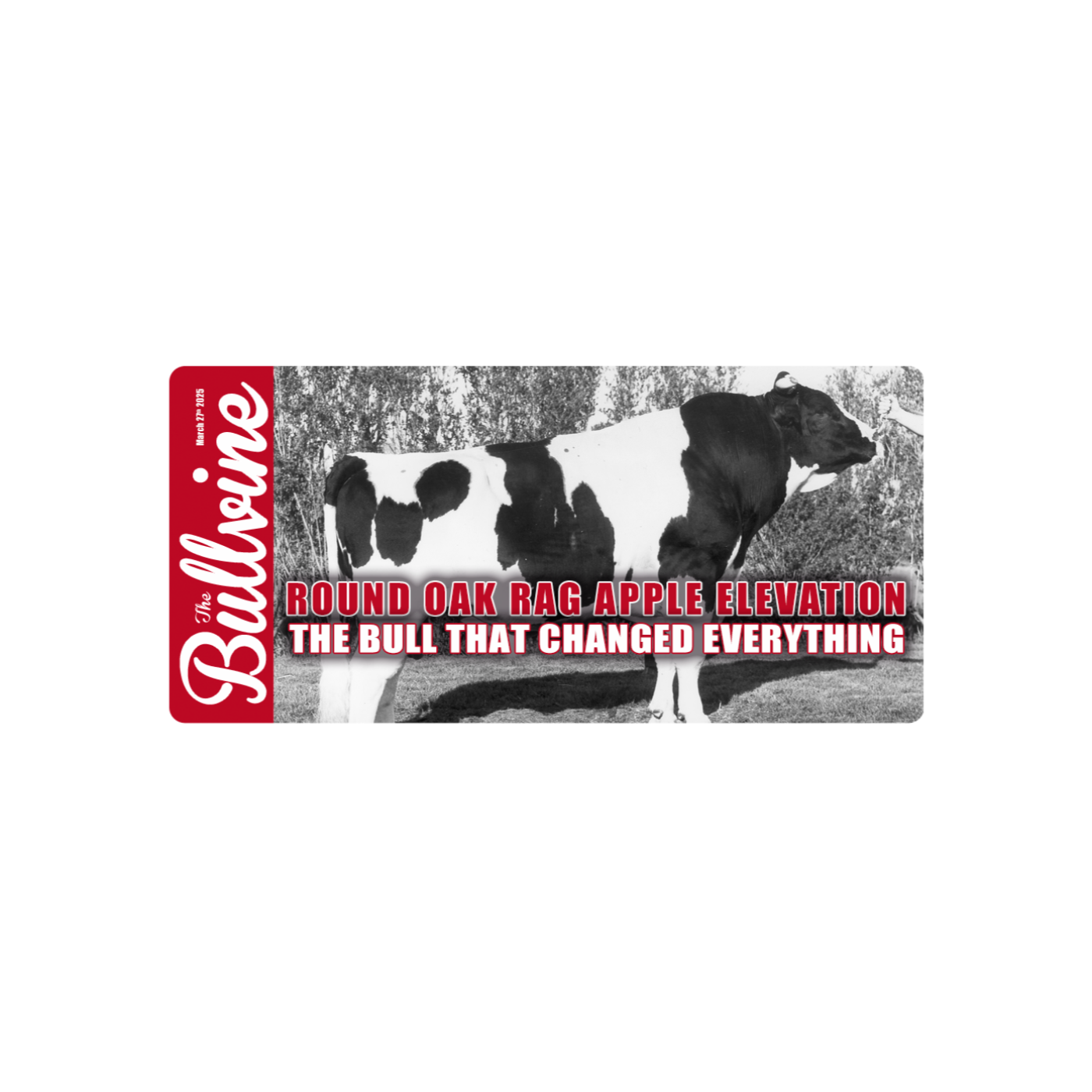
S1 Ep 212E212 Round Oak Rag Apple Elevation: The Bull That Changed Everything
Round Oak Rag Apple Elevation, born in 1965 on a modest Virginia farm, transformed the dairy industry through his unparalleled genetic transmission of five critical traits: production, udder quality, mobility, fertility, and longevity. Dubbed the “Bull of the Century,” Elevation defied conventional breeding wisdom by emerging from an improbable mating between a questionable sire and a slow-maturing dam. His extraordinary ability to elevate mediocre genetics produced daughters averaging 29,500 pounds of milk (15% above contemporaries) while maintaining exceptional udder structure and extended productive lives. With over 10,000 registered sons and an estimated 8.8 million descendants worldwide, his genetic influence continues six decades later, with his DNA present in 14.5% of active Holstein sires despite the genomics revolution that followed him.https://www.thebullvine.com/sire-spotlight/round-oak-rag-apple-elevation-the-bull-that-changed-everything/

S1 Ep 211E211 Cottonseed Showdown: How This Controversial Feed Could Boost Your Milk Check by 15%
Is whole cottonseed (WCS) the secret weapon your dairy operation has been missing? In today's episode, we cut through the barnyard gossip and reveal how this controversial feed ingredient could be your profit game-changer in 2025's tight-margin dairy economy.Episode Highlights:The real story on WCS: New research from the University of Minnesota shows how strategic feeding can add $2.50/cow/day through improved milk componentsMeet Wisconsin's Schlitzer Dairy, where switching to WCS boosted milk fat by 0.3 percentage points, adding $1,200 daily to their 800-cow operationWe break down the impressive nutritional triple-threat of WCS: 21% fiber, 17% fat, and 24% proteinGossypol concerns? We share the latest bloodwork data showing why toxicity fears are largely overblown at recommended inclusion ratesStorage solutions from innovative farms using repurposed grain bins and aeration systemsGlobal insights: Learn what Israeli and Brazilian dairies are doing differently with WCSMoney Matters:The complete financial breakdown: How a $17/ton feed cost increase delivers a $0.54/cow/day profit boostWhy component pricing makes all the difference in your WCS strategyCritical processor contract considerations before implementationImplementation Blueprint:Your step-by-step 90-day roadmap for introducing WCS to your operationMixing mastery: Preventing the sorting headaches in your TMRClimate-specific storage techniques for both humid and arid regionsFollow The Bullvine Podcast for more profit-boosting strategies and subscribe to our newsletter for exclusive content and updates from the dairy industry's leading voices!https://www.thebullvine.com/management/nutrition/cottonseed-showdown-how-this-controversial-feed-could-boost-your-milk-check-by-15/

S1 Ep 210E210 Making Dreams Come True: The Journey of Tom & Kelli Cull
In this episode of The Bullvine Podcast, hosts Bella and Douglas explore the inspiring story of Tom and Kelli Cull, founders of Budjon Farms. Key highlights include: • Tom’s humble beginnings on a 50-cow farm in Pewaukee, Wisconsin • Kelli’s extensive experience in the AI industry, traveling 70,000 miles yearly • The development of Budjon Farms’ unique boarding business model • Tom’s receipt of the prestigious Klussendorf Award in 2024 • Kelli’s remarkable recovery from double hip replacement surgery • Innovative animal care practices, including sand recovery pens and on-farm blood analysis • The Culls’ “Never Give Up” philosophy and its impact on their success • Insights on diversification strategies for dairy farmers • The importance of mentorship in the dairy industryTune in to learn how Tom and Kelli transformed a modest operation into a dairy dynasty through resilience, innovation, and unwavering commitment to excellence.https://www.thebullvine.com/breeder-profiles/making-dreams-come-true-the-journey-of-tom-kelli-cull/

S1 Ep 209Top Dairy Industry News for the week ending March 23rd 2025
Recent dairy industry news covers a range of critical topics impacting producers. Livestock attacks and a farm fatality highlight safety and community support. Market volatility, demonstrated by egg price collapses and fluctuating butter prices alongside USDA forecasts, presents financial risks. Additionally, the industry is navigating international trade issues with China and India, examining feed efficiency through yeast additives, and recognizing innovative leaders. Finally, the sector is analyzing the impact of government programs and potential tariff increases on profitability.Senseless Livestock Shootings Rock Lancaster County: Community Rallies Behind Affected Farmers - https://www.thebullvine.com/news/senseless-livestock-shootings-rock-lancaster-county-community-rallies-behind-affected-farmers/A Father’s Final Legacy: What Reed Hostetler’s Tragic Loss Can Teach Every Dairy Farm - https://www.thebullvine.com/news/deadly-neglect-young-ohio-dairy-farmers-death-exposes-industrys-most-preventable-killer/DAIRY MARKET WARNING: How The Egg Price Collapse Reveals Your Farm’s Hidden Vulnerabilities - https://www.thebullvine.com/news/dairy-market-warning-how-the-egg-price-collapse-reveals-your-farms-hidden-vulnerabilities/Butter Prices Soar 27% While USDA Slashes Dairy Forecasts - https://www.thebullvine.com/news/butter-prices-soar-27-while-usda-slashes-dairy-forecasts/CHINA SLAMS DOOR ON U.S. BEEF: Your Cull Cow Checks Could Take a Massive Hit- https://www.thebullvine.com/news/china-slams-door-on-u-s-beef-your-cull-cow-checks-could-take-a-massive-hit/

S1 Ep 208E208 The Great Holstein Shakeup: How 16 Years Rewrote Breeding Rules
In this illuminating episode of The Bullvine Podcast, hosts Bella and Douglas dive deep into the revolutionary transformation of Holstein breeding over the past 16 years. Analyzing Holstein Canada registration data from 2008 to 2024, they explore how breeding philosophy has shifted from show-ring aesthetics to farm-level profitability and sustainability.Topics CoveredIntroductionHosts introduce the concept of Holstein breeding transformationOverview of the shift from conformation-focused selection to profitable, functional cowsGenetic Diversity: Death of the "Super-Sire" ModelAnalysis of registration data showing dramatic decrease in genetic concentrationDOORMAN, GOLDWYN, and BUCKEYE represented 12% of all registered females in 2008Today's top three sires account for a significantly smaller percentage of the populationHow breeders have become more strategic about genetic diversityFrom Pretty Cows to Profitable CowsThe industry-wide rejection of show-type breeding in favor of functionalityEvolution from the 2008-2012 conformation-focused era to today's balanced approachDiscussion of economic factors driving this transformationAnalysis of total Holstein registrations and market consolidation impactsGenomics RevolutionHow genomic selection democratized access to elite geneticsDetailed breakdown of generation interval reduction (from 10.4 years to just 2.5 years)Analysis of correlation coefficients between genomic predictions and actual performancePreview of the April 2025 genetic base change and its potential impactsBeyond Milk: New Traits Taking Center StageThe surge in interest for polled genetics, A2A2 milk, and health traitsDetailed discussion of upcoming Net Merit index revisionsAnalysis of current fertility statistics and their economic implicationsHow genomic selection is accelerating improvement in historically challenging traitsPower Shift: End of Genetic MonopoliesStatistical evidence of genetic influence rebalancing across the Holstein populationExamination of heritability estimates and their impact on selection progressThe increasing role of international genetics in diversifying bloodlinesHow genomics has corrected negative genetic trends in critical functional traitsFuture Breeding StrategiesPredictions for continued emphasis on health, fertility, and efficiency traitsThe future standardization of A2A2 geneticsThe role of technology in accelerating genetic progress while managing diversityThe growing importance of welfare-oriented traits in response to consumer preferencesConclusionSummary of the 16-year transformation in Holstein breeding philosophyFinal thoughts on strategic genetic management for future successhttps://www.thebullvine.com/dairy-cattle-breeding-strategies/the-great-holstein-shakeup-how-16-years-rewrote-breeding-rules/