
The Bullvine
656 episodes — Page 6 of 14

S1 Ep 407E407 The Eight-Hour Breaking Point: How Immigration Politics and Biology Are Reshaping Dairy’s Future
What if the tipping point for your entire operation was just eight hours away? This episode of The Bullvine Podcast dives into a reality few are willing to confront: America’s milk supply hangs by a biological thread that politics and pay can’t always mend. Discover the data and firsthand accounts proving that for modern dairy, the real currency is time—and losing just a few milkers can trigger a crisis faster than most fleets can respond. If you think your parlor, genetics, or market size insulate you from risk, tune in and find out why so many industry assumptions may be dangerously out of date.Key Takeaways:How the “eight-hour breaking point” transforms a routine labor shortage into a full-blown herd health and farm profitability crisis.The hard truths behind immigrant labor’s role—half of the workforce produces 80% of U.S. milk output.Why even the best automation can only offset around 40% of labor requirements (and why that 60% human gap is growing costlier).Economic and operational realities: consolidation data, the small farm squeeze, and the rise of mega-dairies now responsible for nearly half of U.S. milk.What U.S. farmers can learn—and urgently apply—from Canada’s year-round Temporary Foreign Worker Program.Direct, actionable guidance on sustainable hiring, automation limits, regional differences, and protecting both herd health and profit.Deeper Dive – Why Listen: In this episode, you’ll hear cutting-edge research from Texas A&M and USDA, plus unfiltered stories from farm operators grappling with the eight-hour labor rule that’s reshaping herd management and business strategy. We break down the numbers: what happens to market supply and consumer prices if immigration bottlenecks tighten, and why $7 gallons of milk might be closer than you think. The discussion challenges the narrative that robots or simply paying more solves the crisis—and brings in direct comparison to Canada’s proven labor model, showing what can be changed and scaled right here at home. Whether you milk 100 cows or 5,000, you’ll gain clear-eyed takeaways to navigate this uncertain landscape—before biology sets its own agenda.Resources & Engagement: For more groundbreaking dairy analysis and direct links to research, immigration policy updates, and workforce management guides, visit https://www.thebullvine.com/dairy-industry/the-eight-hour-breaking-point-how-immigration-politics-and-biology-are-reshaping-dairys-future/. Don’t miss future episodes—subscribe on Apple Podcasts, Spotify, or wherever you listen, and join the debate. Share your perspective or questions on social by tagging #TheBullvinePodcast. The future of dairy starts with conversations like these—be part of it.
S1 Ep 406E406 Lovholm Holsteins: The Only Farm to Breed 2 World Dairy Expo Holstein Champions Milks 72 Cows in Tie-Stalls
What if everything the industry tells you about breeding elite cattle is wrong? In this game-changing episode, we sit down with Michael and Jessica Lovich, the ONLY breeders in history to produce TWO different World Dairy Expo Holstein Grand Champions—and they did it with just 72 cows in tie-stalls, zero genomic selection, and pure Saskatchewan stubbornness. While mega-dairies spent millions chasing algorithms, this couple proved that looking at actual cows still beats any breeding index.Key Takeaways:Why rejecting genomics entirely led to breeding TWO World Champions when operations with unlimited budgets have zeroThe shocking economics of breeding cows that last 8-10 years versus the 4-5 year industry averageHow selling both champion cows to survive financially actually proved their breeding philosophy worksThe exact cow family selection criteria that beats million-dollar genetic programsWhy tie-stalls and individual cow attention create champions that rotary parlors can'tThe partnership strategy that turned a difficult heifer into a World ChampionHow their daughters are learning dairy excellence at 5 a.m. in -40°C wintersThe real reason Saskatchewan's isolation became their greatest breeding advantageDeeper Dive - Why Listen: This exclusive interview, recorded just days after their historic second World Dairy Expo victory, reveals the counterintuitive breeding strategies that shattered industry assumptions. The Lovichs share their exact selection process—prioritizing cow families over genomics, visual appraisal over computer printouts, and longevity over peak lactation.You'll discover how their cows averaging 8-10 productive years transforms farm economics, generating roughly DOUBLE the lifetime profit per cow compared to operations pushing for maximum production. They reveal the specific moment when Lovhill Sidekick Kandy Cane caught Judge Aaron Eaton's eye ("When she walked in, it was game over") and how a chance bus conversation with Jonathan Lamb led to the partnership that created a champion.Most importantly, this episode tackles the uncomfortable truth: while the industry consolidates into mega-operations chasing quarterly genomic updates, a 72-cow farm using methods from 20 years ago just beat them all. Twice. The Lovichs don't just share their success—they provide a roadmap for how ANY farm can breed excellence by trusting their eyes over algorithms.Their perspective will change how you view your operation. Despite breeding Holstein history, both championship banners hang in other barns—they sold their champions to keep farming. Yet they see this as victory, not loss, because the Lovholm prefix in those pedigrees lasts forever.Resources & Engagement: Full article & photos: www.thebullvine.com/breeder-profiles/lovholm-holsteins-the-only-farm-to-breed-2-world-dairy-expo-holstein-champions-milks-72-cows-in-tie-stalls/Join the conversation: Are you team genomics or team cow sense? Share using #BullvinePodcastRemember: If a 72-cow farm can beat every unlimited-budget operation twice, what's your excuse? Subscribe now and never miss an episode that could transform your operation.

S1 Ep 405E405 The $50,000 Question: Why Smart Dairies Follow This 8-Point Protocol Before Any Big Decision
Are you making decisions that cost, or decisions that pay? In this episode, The Bullvine Podcast challenges the industry’s sacred cows—literally and figuratively—by exposing the high cost of guesswork and the unspoken advantage of a proven 8-point pre-decision protocol. Discover why the smartest dairies in North America are trading knee-jerk fixes for data-driven strategy—and why skipping this checklist could be your most costly mistake in 2025.Key Takeaways:Learn the specific questions and steps that separate the top profit-makers from the restUncover hidden losses that cost dairies $50,000–$200,000 per major decisionSee why transition cow management is often the real bottleneck, not parlor capacityGet the full walkthrough of the 8-point pre-decision protocol with actionable stepsUnderstand the trust-and-teambuilding impact of preparation—and why it drives faster, better implementationHear how a peer operation converted a potential $380K mistake into a high-ROI $45K fixChallenge conventional thinking on farm size, capital spending, and the importance of “answering before you ask”Deeper Dive – Why Listen: This episode goes beyond generic best practices. It reveals hard numbers, recent Cornell and Wisconsin research, and case studies drawn from both family-owned dairies and large-scale operations. You’ll hear how mapping out herd demographics, conducting simple ‘comfort audits,’ and engaging frontline employees delivers lasting improvements and real profitability. Discover business strategies that not only prevent six-figure waste but also transform employee buy-in and succession planning. Whether you’re managing 100 cows or 5,000, you’ll leave with a toolkit for decision-making that works in today’s volatile market. For those hungry for innovation, new models for ROI, and practical, step-by-step risk reduction, this episode is your action plan.Resources & Engagement: Don’t miss the exclusive downloadable 8-point decision protocol and related tools available at https://www.thebullvine.com/management/the-50000-question-why-smart-dairies-follow-this-8-point-protocol-before-any-big-decision/. Subscribe now to The Bullvine Podcast for high-value, implementable dairy best practices in every episode. For links to studies and featured articles, visit The Bullvine website and join the conversation on social media—share your questions, your experiences, and your own strategies for dairy success.

S1 Ep 404E404 Your Repeat Mastitis Cows Have a 72-Hour Secret - Here's How to Break It
What if the real culprit behind repeat mastitis—and bloated hospital pen costs—isn’t your protocol, but your timing? In this episode, The Bullvine Podcast tackles one of dairy’s most stubborn challenges with a data-driven look at the “72-hour secret” that’s upending conventional thinking on infection control, animal health, and profit margins. Discover what Dutch and US researchers uncovered about bacterial biofilms, why even the best treatments often fail, and how real farms are reversing the pattern in record time.Key Takeaways:Why the “72-hour window” after infection decides if mastitis becomes chronic—or disappears for goodHow biofilm science explains antibiotic failure, even without traditional resistanceReal-world proof: NY and California dairies now report zero hospital pen days and dramatic cost savingsWhat every operation—from 100 to 10,000 cows—can implement tomorrow to capture ROIThe key mindset shift: Why prevention trumps treatment, and what it means for labor, culling, and longevityAnswers to: Are these results achievable at your farm? What data really matters, and how fast can you see payback?Deeper Dive – Why Listen: This episode unpacks the landmark research proving that bacteria form nearly impenetrable biofilm “fortresses” within 72 hours—a discovery that rewrites the playbook for mastitis control and herd health management. Featuring insights from producers like Peter Smith, who went from culling one in three cows to one in seven and achieved zero hospital pen days, we break down the science and economics with practical clarity. Listeners gain early access to strategies tested on over 20,000 US dairy cows, including protocols now delivering $33,000 milk revenue gains and major reductions in reproduction and replacement costs. You’ll hear actionable implementation guidance for every farm size and management style, plus an honest discussion about mindset barriers, team buy-in, and the learning curve. Whether you’re a progressive dairy producer, a genetics consultant, or an industry leader, this episode challenges the status quo with breakthrough data, field-proven solutions, and a relentless focus on profitability and sustainability.Resources & Engagement: Want to dig deeper? Find the latest research, in-depth articles, trial summaries, and farm case studies at https://www.thebullvine.com/management/your-repeat-mastitis-cows-have-a-72-hour-secret-heres-how-to-break-it/. Subscribe to The Bullvine Podcast for cutting-edge interviews and no-nonsense dairy business insights every week. Have a question, success story, or a challenge to share? Join the conversation and connect with our community on social media—just search “The Bullvine” on Facebook, Instagram, X/Twitter, or LinkedIn. Your voice and experience can help lead the industry’s next big breakthrough!

S1 Ep 403E403 Decide or Decline: 2025 and the Future of Mid-Size Dairies
Across North America, mid‑size dairies are standing at a crossroads that will define their future. 2025 isn’t just another tough year—it’s the year when hesitation can cost both equity and opportunity. While mega‑herds rely on scale and micro‑operations capture premiums through niche markets, mid‑size producers are under pressure to pick a path: expand, specialize, or optimize. In this episode, The Bullvine Podcast digs into the data, economics, and management strategies that separate survivors from those being silently squeezed out of the middle. What we uncover might challenge how you’ve measured success on your own dairy.Key Takeaways:Discover the three strategic paths proven to sustain 700‑1,200‑cow herds in 2025—and the data behind why they work.Understand why clarity beats cow count, and how decision paralysis quietly drains profitability from otherwise strong operations.Learn how robotics and automation are reshaping labor dynamics—even in supply‑managed systems like Ontario and Quebec.Examine real‑world benchmarks such as income‑over‑feed‑cost, butterfat premiums, and beef‑on‑dairy margins that reveal where profit is truly captured.Hear what producers and analysts are calling the “professionalization of parity”—the new mindset redefining sustainability and family business succession.Deeper Dive – Why Listen: This episode challenges the comfortable myths of scale and tradition. Drawing on cutting‑edge research from the USDA Economic Research Service, Cornell Dairy Markets, and the University of Vermont Extension, we explore how mid‑size dairies across different regions are rewriting the playbook.Listeners gain firsthand insight into:Expansion‑ready states like Idaho and Texas, where scale still pencils—but only with disciplined cash flow and management structure.The rise of robotic dairies in Vermont and Quebec, where modernization reduces labor costs by up to 30% while maintaining herd performance.Benchmark data from Farm Credit East showing that precision optimization—not expansion—can add hundreds of thousands in annual margin for mid‑size herds.Whether you’re a producer managing 900 cows or an industry advisor guiding clients through volatility, this episode delivers a reality‑check on what’s working in 2025. It reveals where technology meets timing—and how emotional resilience matters as much as capital in securing long‑term viability.Resources & Engagement: For full data charts, regional comparisons, and the accompanying feature article “Decide or Decline: 2025 and the Future of Mid‑Size Dairies,” visit https://www.thebullvine.com/management/financial-managment/decide-or-decline-2025-and-the-future-of-mid-size-dairies/. There you’ll find actionable strategies, research links, and producer‑tested insights to help your dairy make confident, profitable decisions in a changing market.Subscribe to The Bullvine Podcast on Apple Podcasts or Spotify for more data‑driven discussions that challenge dairy’s conventional thinking. Join the conversation on social media and share how your operation is adapting to the 2025 reality—because waiting now costs more than change ever will.

S1 Ep 402E402 Bell’s Paradox: The Worst Best Bull in Holstein History
Your bulk tank is full because of one bull. Your calves die because of that same bull. This is the untold story of Carlin-M Ivanhoe Bell—the Holstein sire who revolutionized dairy production while secretly carrying genetic time bombs that would kill countless calves and cost the global industry hundreds of millions. Through immersive storytelling that puts you directly in the boots of farmers who lived through this crisis, discover how one Kansas breeding decision in 1974 still affects every glass of milk produced today. This isn't just history—it's a warning about the genomic decisions you're making right now.Key TakeawaysHow Bell achieved an unprecedented +1,704 lbs milk advantage while hiding two lethal genetic diseases that wouldn't surface for 25 yearsWhy 31% of elite Holstein bulls worldwide were carrying Bell's deadly genetics by 1999—and what that means for your current herdThe strategic breeding breakthrough that turned Bell's weaknesses into gold: How the Bell x Chief Mark cross created legends from flawed geneticsWhy Bell daughters peaked early and died young, costing more in replacements than they earned in milk—the hidden economics of extreme productionHow modern genomic selection is repeating Bell's mistakes: The uncomfortable parallels between 1980s breeding decisions and today's genomic rankingsThe corrective breeding strategies that saved farms from bankruptcy when Bell's genetic defects emergedWhat Bell's ghost teaches about current genetic concentration risks in your breeding programDeeper Dive - Why ListenThis 90-minute immersive experience transports you to critical moments that shaped modern dairy genetics. You'll stand in the 1971 Oklahoma auction where it all began, experience the euphoria of Bell's production revolution in 1980s milking parlors, and feel the devastating shock when Danish researchers revealed his genetic time bombs in 1999.The episode reveals never-before-told details about how Select Sires almost rejected Bell, why classic breeders called him "a drunken guest at a house party," and how smart operators weaponized his flaws through strategic mating. You'll understand why Bell daughters flooded tanks with milk but crashed after two lactations, creating an economic paradox that still defines breeding decisions.Most critically, you'll discover the alarming parallels between Bell's era and today's genomic revolution. With effective Holstein population size shrunk to fewer than 100 individuals worth of genetic diversity, are we creating Bell 2.0? This episode provides specific strategies for avoiding genetic concentration in your own herd while capturing production gains safely.Whether you're making breeding decisions for 50 cows or 5,000, Bell's story offers essential lessons about balancing production with sustainability, managing genetic risk, and recognizing that today's miracle bull might be tomorrow's industry crisis.Subscribe to The Bullvine Podcast for more deep dives into the decisions that shaped dairy farming and continue to impact your operation today.Visit https://www.thebullvine.com/sire-spotlight/bells-paradox-the-worst-best-bull-in-holstein-history/ for detailed show notes, genetic evaluation resources, and our comprehensive article series on Bell's lasting impact on Holstein genetics. Find links to carrier testing protocols, corrective breeding strategies, and historical breeding records mentioned in this episode.

S1 Ep 401E401 The $100 Per Cow You Never See: How Foreign Subsidies Are Reshaping American Dairy
Every day, three U.S. dairy farms close their doors — not because they lack efficiency or innovation, but because foreign governments are quietly shifting the market from underneath them. In this hard-hitting episode, The Bullvine Podcast uncovers how European and Chinese subsidy systems have created a global trade imbalance that drains roughly $100 per cow from American milk checks each year. More than a policy problem, this is a profitability emergency that’s rewriting the future of U.S. dairy — and it’s time to face it head-on.3. Key Takeaways:Discover the global subsidy mechanisms devaluing American milk by 35–40 cents per hundredweight.Learn how EU intervention buying and Chinese VAT rebates reshape the economics of international trade.Hear why a 500-cow U.S. dairy operation can lose over $45,000 annually without seeing it on the milk check.Explore the three proven survival strategies producers are using: scaling up, capturing premium markets, and coordinated advocacy.Understand how these global forces affect U.S. lending, reinvestment, and generational transition on the farm.Get practical insights on how producers can document their economic impact and engage policymakers for real change.4. Deeper Dive – Why Listen: This episode breaks through the silence surrounding foreign agricultural subsidies — an invisible force undermining U.S. dairy profitability. Grounded in data and industry analysis from Dr. Andrew Novakovic (Cornell University), Dr. Marin Bozic (University of Minnesota), and Mark Stephenson (University of Wisconsin), the discussion connects global policy decisions directly to your balance sheet.We examine how the European Union’s intervention program, identified by the EU Court of Auditors as “market destabilizing,” and China’s export VAT rebate system give their producers permanent pricing advantages in global trade. Listeners will hear real producer stories from Michigan, Wisconsin, and California — dairies experiencing direct losses when contracts disappeared or investments stalled because subsidized products undercut their bids.This episode challenges every industry leader, lender, and producer to rethink how they view fairness, profitability, and long-term sustainability in a global market that no longer plays by the same rules. It’s time to stop blaming “the market” when what we’re dealing with is structured advantage — and start finding practical solutions that keep American dairy competitive.5. Resources & Engagement: Dig deeper into this topic at https://www.thebullvine.com/dairy-markets/the-100-per-cow-you-never-see-how-foreign-subsidies-are-reshaping-american-dairy/ where you’ll find in-depth articles, data visualizations, and resources on global trade policy and dairy profitability.If you value bold, evidence-based conversations that challenge traditional thinking, don’t forget to follow and subscribe to The Bullvine Podcast on Apple Podcasts, Spotify, or wherever you listen.Join the conversation on social media using #TheBullvinePodcast and share how international markets are shaping your own operation. Together, we can turn informed insight into collective action for the future of American dairy.

S1 Ep 400E400 $2 Milk or $20 Milk: The Simple Testing Strategy Creating 1000% Premiums
Is the future of dairy decided by transparency? In this episode of The Bullvine Podcast, we unravel how a simple $500 monthly testing protocol has turned $2 milk into $20-per-gallon profit centers. As 2,800 dairies shut down annually, 13 small producers in Delaware are defying the odds—not by scaling up, but by proving that verified safety and trust can be as valuable as butterfat. This isn’t another raw milk debate. It’s a blueprint for the next era of value-driven, evidence-based dairying.Key Takeaways:How one state’s “over-regulation” became a marketing goldmine for small-scale dairies.The exact ROI behind monthly testing: $500 in, 1000% premium out.Why regulatory compliance may soon become your biggest profit driver—not your biggest threat.The invisible danger facing 200–1,000 cow dairies and why mid-size operations must choose between premium or industrial scale within 18 months.Multiple premium models—organic, A2, grass-fed, micro-pasteurized—and which best suits your farm’s environment and cash flow reality.How to validate customer demand before investing a single dollar.The emerging market shift proving that transparency outperforms tradition in dairy economics.Deeper Dive – Why Listen: In today’s volatile milk markets, efficiency and volume alone no longer guarantee survival. This conversation goes beyond theory to show farmers how to turn compliance into competitive advantage. Backed by USDA data, leading state case studies, and producer interviews, this episode explores the rise of premium-tier milk—a category rooted in science, marketing precision, and direct consumer trust.Listeners will learn how producers in Delaware elevated state-mandated testing into a high-value brand promise, capturing $16–$20 per gallon while conventional peers linger at $2. We’ll break down the operational math—covering supply chain readiness, microbial safety benchmarks, and consumer perception economics—to help you assess whether this model fits your business strategy.You’ll also hear context from national trends: consolidation pressures, the end of mid-size viability, and why 2027 is the tipping point for both premium market entrants and industrial-scale survivors. This is The Bullvine at its best—challenging conventional wisdom, grounding big ideas in farm-level data, and giving real operators frameworks they can execute immediately.If you manage a herd, oversee nutrition, handle genetics, or advise producers, this episode delivers both the strategic vision and practical roadmap you’ll need to compete in a dairy economy built on verified quality and economic precision.Resources & Engagement: For related insights, visit https://www.thebullvine.com/dairy-markets/2-milk-or-20-milk-the-simple-testing-strategy-creating-1000-premiums/ and read the full feature: “$2 Milk or $20 Milk: The Simple Testing Strategy Creating 1000% Premiums.” You’ll also find supporting research, ROI calculators, and our latest market analysis on premium milk and raw milk regulatory reform.Subscribe to The Bullvine Podcast on Apple, Spotify, or wherever you listen for weekly, data-driven dairy intelligence that sharpens your decision-making.Join the conversation on social media at @TheBullvine, share this episode with your peers, and help shape the next generation of profitable, progressive dairying.
S1 Ep 399E399 Feed Quality and the Hidden Economics of Beef-on-Dairy Programs
In beef-on-dairy, big headlines focus on premiums, but the reality on the ground tells a much different story: 68% of producers chasing these profits are losing money. What’s going on? In this episode, The Bullvine Podcast pulls back the curtain on the hidden math and overlooked science separating true winners from those left wondering where the premium went. If you think profitability is just about better genetics or market timing, think again—today, we’re challenging every assumption you have about feed quality, investment, and operational success.Key Takeaways:Discover why spending more per calf can triple your net returns—and how “saving” often kills profit.Learn how something as overlooked as molasses sugar consistency can make or break your entire beef-on-dairy program.Follow the proven 24-36 month roadmap for building a sustainable, data-driven beef-on-dairy system.Find out which regional and management factors impact your bottom line, and what to do about them.Get the actionable steps and expert-backed benchmarks that will futureproof your operation, even after premiums level off.Deeper Dive – Why Listen: This episode goes beyond the “hot topic” chatter and delivers a hard-hitting look at why profitable beef-on-dairy isn’t about luck—or even genetics—it’s about living your numbers and understanding the silent costs in your system. Unpack the significance of feed ingredient variability: university research spotlights how molasses sugar can fluctuate from 39% to 67%, slashing calf starter intake by up to 18%—a margin killer, not just for nutritionists, but for anyone betting on genetic potential. Hear how the most successful programs aren’t built on overnight change, but a strategic, phased approach that combines genomic testing, rigorous tracking, and consistent, quality-controlled nutrition.We examine regional nuances: why winter in Wisconsin adds hidden costs, why processor relationships define profits in the East, and how Western operations can leverage scale and climate. Industry experts and top producers weigh in with practical advice and battle-tested strategies that challenge the “lowest-cost wins” myth and offer actionable ways to stack the odds for your farm.Resources & Engagement: Ready to turn insight into action? Subscribe to The Bullvine Podcast for more episodes where data meets dairy wisdom—and visit https://www.thebullvine.com/beef-on-dairy/feed-quality-and-the-hidden-economics-of-beef-on-dairy-programs/ for in-depth articles, expert studies, and resources mentioned in this episode. Want to share your story or join the conversation? Connect with us on social media using #BullvinePodcast. Don’t just survive industry change—get ahead of it. Listen now and set your operation up for the future your hard work deserves
S1 Ep 398E398 From 4-H Project to 20 All-Americans: The 28-Year-Old Proving Your Succession Plan Is Already Dead
While 83.5% of dairy farms fail by the third generation and we've lost 39% of operations in just five years, one 28-year-old is proving the industry's obituary is premature. Tyler Woodman, recipient of the 2025 Richard Caverly Memorial Dairy Award, manages 400 cows across two Massachusetts farms before your alarm goes off—and his contrarian breeding strategy has produced 20 All-American nominations from a single 4-H project. This episode exposes why traditional succession planning is already dead and reveals the genomic strategies, mentorship models, and 4:30 AM routines that separate survivors from statistics in today's brutal dairy economy.Key Takeaways:The $4.28 Billion Secret: How genomic testing revolutionized dairy genetics—and why half the industry still refuses to use itThe Backwards Breeding Formula: Why using milk bulls on type cows (and vice versa) created 20 All-Americans when conventional wisdom failedManaging Multiple Operations: The brutal reality of running two farms simultaneously while maintaining your own breeding programThe 6-Hour Mentorship Investment: Why driving project calves to youth members beats any genetic investment you'll ever makeSandy's 13-Year Legacy: How one 4-H cow still scoring EX-94 5E proves patience beats chasing genomic trendsThe Morning Routine That Changes Everything: What happens between 4:30-7:00 AM that determines survival vs extinctionCreating Opportunity vs Waiting: How the Stars and Stripes Sale revolutionized youth involvement despite 50-degree Memorial Day weatherDeeper Dive - Why Listen:This isn't another feel-good farm story—it's a wake-up call backed by Census data showing we've plummeted from 40,336 to 24,470 dairy operations since 2017. You'll discover Tyler Woodman's exact genomic selection checklist: testing at 2 months, culling anything under +150 Net Merit to beef, and why spreadsheets beat memory every time. Learn how he integrated Ayrshires into commercial Jersey operations—a management skill only 5% of dairymen possess—while maintaining production across multiple breeds.Most critically, discover why mentorship ROI beats genomics: Woodman's investment in youth like Livi Russo and Maddy Poitras isn't charity—it's the only succession strategy that actually works. While dairy programs close and 4-H participation plummets, this episode provides the blueprint for building a workforce when "kids these days" supposedly don't want to farm.Resources & Engagement:Subscribe to The Bullvine Podcast for weekly episodes that challenge everything you think you know about dairy farming. Visit https://www.thebullvine.com/youth-profiles/from-4-h-project-to-20-all-americans-the-28-year-old-proving-your-succession-plan-is-already-dead/ for Tyler Woodman's complete genomic selection checklist, detailed breeding strategies, and links to all research mentioned in this episode.Join the conversation: Share your succession challenges and breeding philosophy using #BullvinePodcast. Are you part of the 83.5% heading for failure, or the 16.5% building something that lasts?Next Episode: Why 150 well-managed cows beat 500 poorly-run ones by $100,000—the Cornell study that's rewriting everything.

S1 Ep 397E397 Why 150 Well-Managed Cows Beat 500 Poorly-Run Ones - By $100,000
The "get big or get out" mantra has dominated dairy industry thinking for decades. But what if everything you've been told about scale is wrong? Cornell's 2023 Dairy Farm Business Summary just dropped a bombshell: well-managed 150-cow operations are consistently outearning poorly-managed 500-cow dairies by over $100,000 annually. This isn't motivational fluff—it's hard data that challenges the fundamental assumptions driving consolidation. In this paradigm-shifting episode, we dissect the numbers that prove management quality trumps scale every time, and reveal the exact three-phase strategy successful small dairies are using to dominate their markets.Key Takeaways:The $4.32/cwt operating cost gap between top and bottom performers that has nothing to do with herd sizeWhy achieving 50+ cows per worker before any technology investment saves $75,000 annuallyThe component premium opportunity hiding in plain sight: How getting from 3.0% to 3.3% protein generates $20-30K with minimal investmentThe truth about robotic milking ROI: 20-30 year payback periods and why farms still investWhy 40% of dairy exits are retirements, not business failures—and what this means for competitive dynamicsThe three-phase success sequence you can't skip: Foundation → Premiums → TransformationHow community connections generate 1.8-2.6X economic returns beyond direct salesDeeper Dive - Why Listen: This episode goes beyond surface-level analysis to expose the operational benchmarks separating thriving small dairies from struggling larger operations. We break down Cornell Pro-Dairy's data showing top performers achieving $17.39/cwt operating costs versus $21.71 for bottom quartile—regardless of scale. You'll discover why feed efficiency isn't about spending less (both spend ~$9.60/cwt) but achieving superior income over feed cost through precision management.We tackle the robot question head-on with Wisconsin and Minnesota Extension data: yes, the million-dollar investment has a 20+ year payback, but farms with automation are 2.7X more likely to have successors under 35. Is preserving your legacy worth the investment?The organic transition reality check is brutal: 3-year conversion, $150-300K working capital requirement, and quotas limiting initial premium capture. But component premiums? That's immediate money. Major processors like DFA and Chobani are paying $0.50-1.50/cwt for high-protein milk right now—achievable improvements that don't require infrastructure.Most critically, we present the proven strategic sequence: fix your fundamentals first (labor efficiency, operating costs), capture accessible premiums second (components, quality bonuses), and only then pursue transformation (organic, robots, direct sales). Skip steps and you're guaranteed to fail.Resources & Engagement: Ready to implement these strategies? Visit https://www.thebullvine.com/management/why-150-well-managed-cows-beat-500-poorly-run-ones-by-100000/ for the complete article including Cornell's benchmarking data, processor premium schedules, and our downloadable 3-phase roadmap. Subscribe to The Bullvine Podcast for weekly episodes challenging dairy's conventional wisdom with data-driven insights.Don't just survive consolidation—thrive through it. Subscribe now and transform how you think about dairy profitability.

S1 Ep 396E396 After the Storm Breaks: Why Cremona’s 80th Edition Means Everything
For five years, Europe's elite dairy families bred champions in silence—first pandemic, then bluetongue, stealing their stages but never their standards. Now, as November 27-29 approaches, 150 farms from six nations prepare to converge at Cremona with 800+ elite cattle, proving that excellence survived the unthinkable. This episode reveals how operations like Sabbiona Holsteins (12 generations, 175 EX cows) and Bel Holstein (Grand Champions since 1987) maintained world-class genetics with nowhere to show them—and why their reunion matters far beyond ribbons.Key Takeaways:How European dairy survived the cruelest pattern: pandemic closures (2020-2022), false recovery (2023), then bluetongue's devastating return (2024)Why both high-tech operations (Sabbiona's 650-cow robotic system) and traditional farms (Bel Holstein's hands-on approach) thrived using completely different survival strategiesThe surprising story of young handlers who learned showmanship in empty barns—including German youth creating virtual showing leagues and Dutch teenagers practicing with stuffed animalsWhy Judge Nathan Thomas matters: managing just 30 cows to 150+ All-American nominations, fresh from Bailey's third consecutive World Dairy Expo championshipThe powerful breeding philosophies that sustained hope: "The barn doesn't know there's no show next week" and "We breed for our grandchildren's grandchildren"What 20+ country delegations seeking genetics really means for embryo sales and AI contracts worth hundreds of thousandsDeeper Dive - Why Listen:This isn't just another show recap—it's a masterclass in resilience that applies to every operation facing disruption. Discover how Lorenzo Ciserani's Sabbiona Holsteins preserved 12 generations of homebred excellence producing 42kg/day at 4% fat, while the Beltramino brothers at Bel Holstein proved traditional methods still compete globally.The episode explores the youth story nobody's telling: how Greta Beltramino and her generation learned resilience before normalcy, maintaining skills for competitions that kept getting cancelled. You'll hear about "rehearsals for hope"—the dark humor that kept breeders practicing fitting skills week after week on the same animals.Most importantly, understand why November 27-29 represents more than recovery. With England reporting 196 bluetongue cases by August 2025 alone, this gathering proves that maintaining excellence when there's no audience positions you for massive opportunity when markets return. Learn from operations that accelerated breeding programs during lockdowns, refused to lower standards despite no exhibitions, and discovered that "sometimes continuing is the rebellion."Resources & Engagement:Ready to witness history? Get complete Cremona coverage, breeder profiles, and exclusive insights at https://www.thebullvine.com/show-reports/after-the-storm-breaks-why-cremonas-80th-edition-means-everything/. Subscribe to The Bullvine Podcast for weekly episodes that challenge conventional dairy wisdom and celebrate the farmers proving excellence isn't about perfect conditions—it's about standards you refuse to lower.Share your own story of persistence through disruption using #BarnDoorsOpen on social media. Because as this episode proves, the barn doesn't know there's no show next week—and that's exactly why we keep going.Subscribe now on Apple Podcasts and never miss an episode that matters to your operation.

S1 Ep 395E395 The $11 Billion Betrayal: Your Processor Is Building Your Replacement Right Now
If you can't write a $3 million check tomorrow, you're already extinct—the industry just hasn't told you yet. This explosive episode reveals how processors are investing $11 billion in infrastructure designed exclusively for 300 mega-dairies while selling you $650,000 "solutions" that guarantee bankruptcy. Based on verified financial data from Wisconsin's Center for Dairy Profitability and court documents from DFA's $50 million antitrust settlement, we expose the systematic wealth extraction destroying family dairy operations. North Dakota's collapse from 1,810 farms to just 24 isn't an anomaly—it's your future unless you act within the next 24 months.Key Takeaways:The $375,000 Decision: Mathematical proof that continuing to operate while losing $75,000 annually destroys $375,000 in family wealth over five years—versus preserving retirement by exiting todayRobot Reality Check: Why paying $100,000 annually for $38,000 in labor savings makes you the industry's biggest sucker while 2,000-cow operations achieve the same efficiency through scale aloneThe Precision Fermentation Betrayal: How Leprino Foods' July 2024 partnership with lab-protein company Fooditive proves processors are actively planning your replacementCo-op Board Manipulation: Evidence that 8 of 12 DFA board members operate mega-farms, managing your decline while protecting their operations24-Month Extinction Timeline: Why $11 billion in processing overcapacity will crash milk prices by 2027, leaving only 300 operations controlling all US dairyThree Survival Options: The only paths forward—scale beyond 1,000 cows (requires $3M capital), secure premium markets (3-5 year runway), or exit strategically nowDeeper Dive - Why Listen:This episode delivers the financial analysis your banker, co-op, and processor desperately don't want you to see. Using USDA Census data showing 70% consolidation already complete and International Farm Comparison Network projections of just 18,000 dairy farms by 2030, we prove the industry needs you operating at a loss to maintain their economics.The investigation exposes how every institution claiming to help farmers actually profits from delayed exits—Farm Credit restructures bad loans five times rather than report foreclosures, processors need volume for their fixed costs, and extension services are politically prevented from discussing transition planning. We reveal the actual math showing 60-70% of current dairy farmers would maximize wealth by selling immediately, including the 30-50% premium available through disaggregated asset sales.Most critically, this episode provides the exact calculations and timeline markers you need to make an informed decision about your operation's future. From H5N1's threat to mega-dairy biosecurity to organic dairy's 20% failure rate despite premium promises, no uncomfortable truth is left unexamined. This isn't speculation—it's documented evidence from court cases, government reports, and industry insiders who've finally broken their silence.Resources & Engagement:Take Action Now: Visit https://www.thebullvine.com/dairy-industry/the-11-billion-betrayal-your-processor-is-building-your-replacement-right-now/ for the complete investigative article with all sources, financial calculations, and exit strategy worksheets discussed in this episode.

S1 Ep 394E394 $200 Holstein Bulls to $1,400 Beef Crosses: The $150 Fix Your $7,000 Consultant Won’t Tell You
Every Holstein bull calf you're selling for $200 could be bringing $1,400 as a beef cross—that's a seven-fold revenue increase requiring only $25 worth of different semen. Yet the dairy industry has built a $7,000 consulting apparatus around this simple switch, with extension programs designed to maximize workshop attendance rather than farmer profitability. This explosive investigation reveals why 84% of beef semen now goes to dairy farms, exposes the evaluation metrics that reward extension agents for meetings instead of implementation, and provides the exact $150 action plan that one Wisconsin farmer used to bank an extra $68,000 last year—without genomic testing, without consultants, without six months of planning.Key Takeaways:Why behavioral economics research proves farmers who start immediately succeed while comprehensive planners never even beginThe shocking truth about extension evaluation metrics and why workshops happen during morning milkingHow major processors will control 70% of beef-dairy supply through exclusive contracts by 2026Why your banker sees higher implementation rates during financial crisis than educational workshopsThe three red flags that expose consultants pushing unnecessary $12,000 monitoring equipmentHow implementation delay costs you $12,000 monthly in lost opportunityThe exact six-cow strategy to start tomorrow with $150 investmentDeeper Dive - Why Listen:This episode dismantles the planning-industrial complex that's costing dairy farmers millions in lost revenue. Drawing from USDA Agricultural Marketing Service data, NAAB's 2024 annual report showing 7.9 million units of beef semen sold to dairy operations, and peer-reviewed research from Agricultural Systems journal, we expose the implementation intention gap that keeps farmers stuck in planning while their neighbors profit.We present the contrarian truth: crisis clarifies priorities. Agricultural lenders report higher beef-on-dairy adoption rates when farmers face financial pressure versus attending educational workshops during stable times. The difference? Desperate farmers need solutions that work immediately, not six-month genomic optimization strategies.Most critically, this episode provides THE STUPIDLY SIMPLE ACTION PLAN—a seven-month roadmap from $150 investment to $8,400 return, scaling from six cows to forty without genomic testing or consulting fees. Real farmers share how they ignored comprehensive planning, started with obvious culls, and built profitable beef-on-dairy programs through practical iteration.Resources & Engagement:Ready to stop planning and start profiting? Visit https://www.thebullvine.com/beef-on-dairy/200-holstein-bulls-to-1400-beef-crosses-the-150-fix-your-7000-consultant-wont-tell-you/for the complete action plan, including specific cow selection criteria, breeding protocols, and scaling strategies. Access our investigative report with full source documentation, processor consolidation timeline, and state-by-state auction price comparisons.Subscribe to The Bullvine Podcast for weekly contrarian insights that challenge industry orthodoxy and deliver actionable intelligence mainstream ag media won't touch. Join the conversation on social media using #BeefOnDairyTruth and share your implementation results with our community of progressive dairy professionals.Don't wait for the perfect plan—every month of delay costs you $12,000. The window for capturing premiums is closing. Act now.

S1 Ep 393E393 What’s Happening with the $2.7 Billion Hidden Loss in Our Dairy Herds – and How the Industry is Shifting
What if your mastitis problem isn't about infection—but about bacterial communication? In this groundbreaking episode, we expose how biofilm-protected bacteria are costing the global dairy industry $32-35 billion annually while causing 30-70% of treatments to fail. Drawing from field trials across 65,000 cows, we reveal how disrupting bacterial "conversations" through quorum sensing inhibition is helping farms achieve 74.8% antibiotic reductions, extend productive lifespans by 8.5 months, and generate $1,578 additional lifetime profit per cow—all while improving herd health metrics.Key Takeaways:Why biofilm bacteria show 100-1,000x greater antibiotic resistance and how this explains your chronic mastitis casesThe hidden $800-1,500 annual loss per affected cow from subclinical mastitis—and why you're probably underestimating itHow bacterial quorum sensing creates "fortress formations" that antibiotics can't penetrateReal farm data: 11 lbs/day milk advantage during disease outbreaks using biofilm disruption protocolsThe 5:1 ROI achieved within 100 days through strategic dry-off and fresh cow interventionsWhy 49% of robotic milking farms actually decreased mastitis through system-specific adaptationsRegional implementation strategies: Northeast vs. Southern protocols for maximum effectivenessDeeper Dive - Why Listen: This episode features exclusive insights from Dr. Geoff Ackaert, Technical Director at AHV International, who explains how plant-derived quorum sensing inhibitors work at the molecular level to disable bacterial communication without creating resistance. We analyze side-by-side comparisons from Joe Soares Farms during the H5N1 outbreak, where operations using biofilm management protocols maintained production while neighboring farms lost 11 lbs/cow/day. The discussion reveals how this technology represents a paradigm shift from treating symptoms to preventing biofilm establishment, with documented results from trials spanning Netherlands, UK, and US operations totaling over 65,000 animals.Critical data points explored include the 34% reduction in metritis incidence, 71% reduction in retained placenta, and 9.3% improvement in first service conception rates achieved through proactive protocols. We examine why traditional veterinary models often resist this approach and how progressive operations are navigating the transition. The episode also addresses implementation challenges, comparing costs ($54 vs. $27 per treatment) against returns ($803 annual milk revenue increase per cow), providing listeners with actionable frameworks for evaluating their own operations.Resources & Engagement: Subscribe to The Bullvine Podcast for weekly insights that cut through industry noise. Visit thebullvine.com for detailed research citations, implementation guides, and links to the peer-reviewed studies discussed. Join the conversation using #PowerToTheFarmer on social media to share your experiences with biofilm management strategies. Additional resources including ROI calculators and regional protocol recommendations available at https://www.thebullvine.com/management/whats-happening-with-the-2-7-billion-hidden-loss-in-our-dairy-herds-and-how-the-industry-is-shifting/
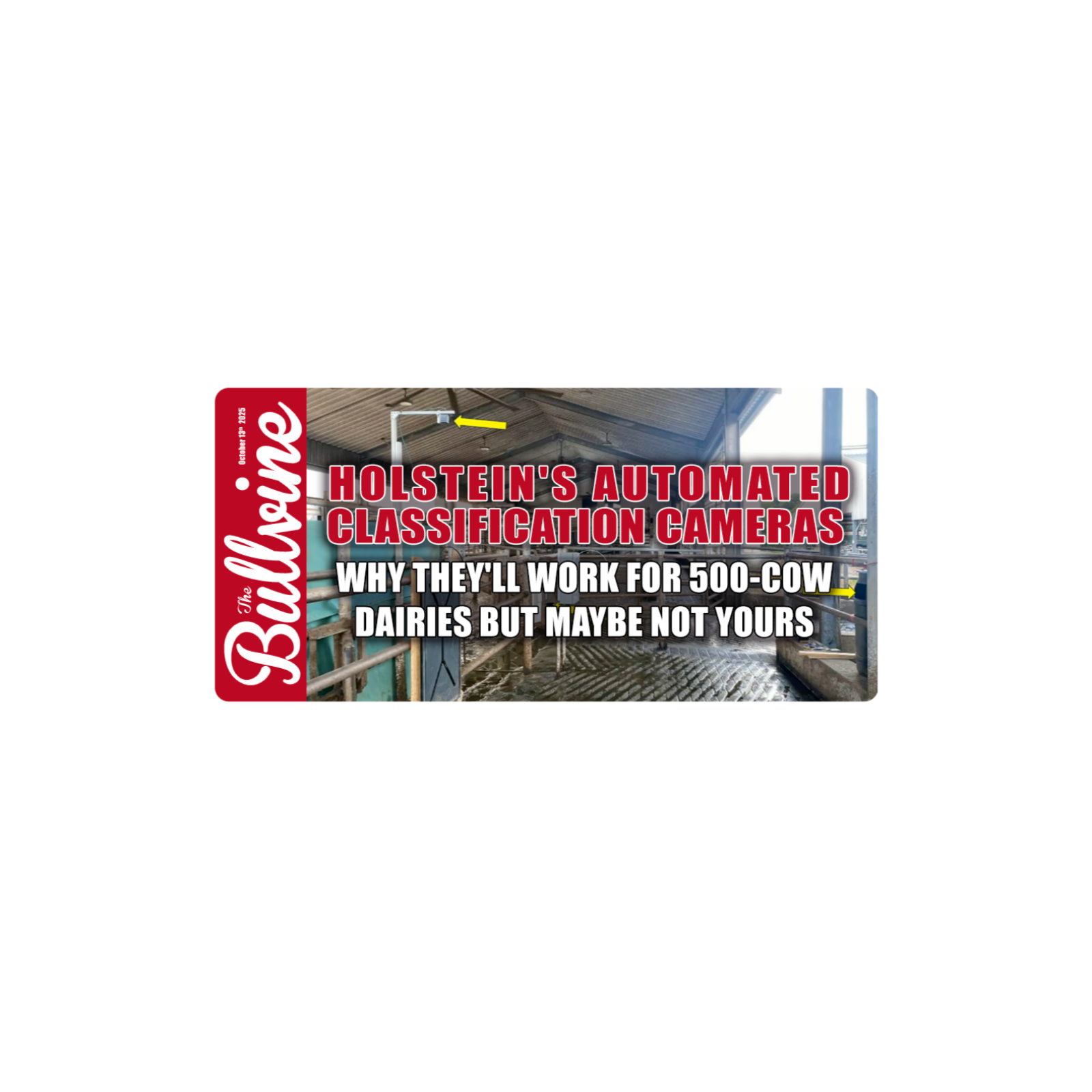
S1 Ep 392E392 Holstein’s Automated Classification Cameras: Why They’ll Work for 500-Cow Dairies but Maybe Not Yours
Holstein Association USA is quietly developing technology that could eliminate human classifiers by 2028—but only if you're milking 500+ cows. Their "Build a Better Cow" project promises automated trait evaluation delivering $66-98 per cow in annual returns, with 3D cameras capturing every conformation trait daily as cows exit the parlor. But here's the uncomfortable truth: at $150,000 investment cost, this revolutionary technology creates a stark divide in the industry. While large operations see 3-5 year payback periods, 200-cow dairies face an untenable 7-11 years, and the 60% of farms with under 100 cows? They're completely priced out. This episode exposes the economics that Holstein doesn't advertise and asks the critical question: Is this innovation advancing dairy genetics or accelerating consolidation?Key Takeaways:The real ROI breakdown: Why 500+ cow operations see $33,000-$49,000 annual returns while smaller dairies face impossible mathInfrastructure reality check: Enterprise-level internet, backup power, and climate protection requirements that could double your investmentThe 40/60 split: How this technology works for only 40% of dairy farms, leaving the majority behindTraditional classification's future: Why human classifiers won't disappear but will fundamentally change rolesEight critical questions every producer must ask before investing in any automated scoring systemRegional challenges exposed: From Wisconsin's lens condensation to Arizona's equipment shutdowns at 105°FThe cooperative solution: Alternative ownership models that could democratize access to this technologyDeeper Dive - Why Listen: This episode delivers the unfiltered economic analysis that technology vendors won't share. We break down Dr. Jeffrey Bewley's vision as Holstein's Executive Director of Genetic Programs and Innovation, examining how his University of Kentucky precision dairy background shapes this ambitious project. You'll discover why early adopters—those 500+ cow operations showcasing at World Dairy Expo—can justify the investment through genetic premiums alone, while mid-size dairies (300-800 cows) find themselves in an impossible middle ground.We reveal the hidden infrastructure costs nobody talks about: why your current farm internet won't cut it, how seasonal extremes from -20°F winters to 105°F summers destroy equipment reliability, and why data integration with the Council on Dairy Cattle Breeding adds layers of complexity. Most critically, we expose the adoption timeline showing how 2027-2029 early adopters will gain competitive advantages that could permanently reshape market dynamics.Resources & Engagement: Get the complete economic breakdown, ROI calculator, and our eight must-ask technology questions at https://www.thebullvine.com/breed-association-news/holsteins-automated-classification-cameras-why-theyll-work-for-500-cow-dairies-but-maybe-not-yours/. Subscribe to The Bullvine Podcast for weekly episodes that cut through industry marketing to deliver insights that actually impact your bottom line. Join the discussion on Twitter @TheBullvine using #DairyTechDivide. The full article includes state-by-state funding opportunities and alternative cooperative models being explored. Don't let technology decisions happen to you—get informed, get prepared, and make the choice that's right for YOUR operation.
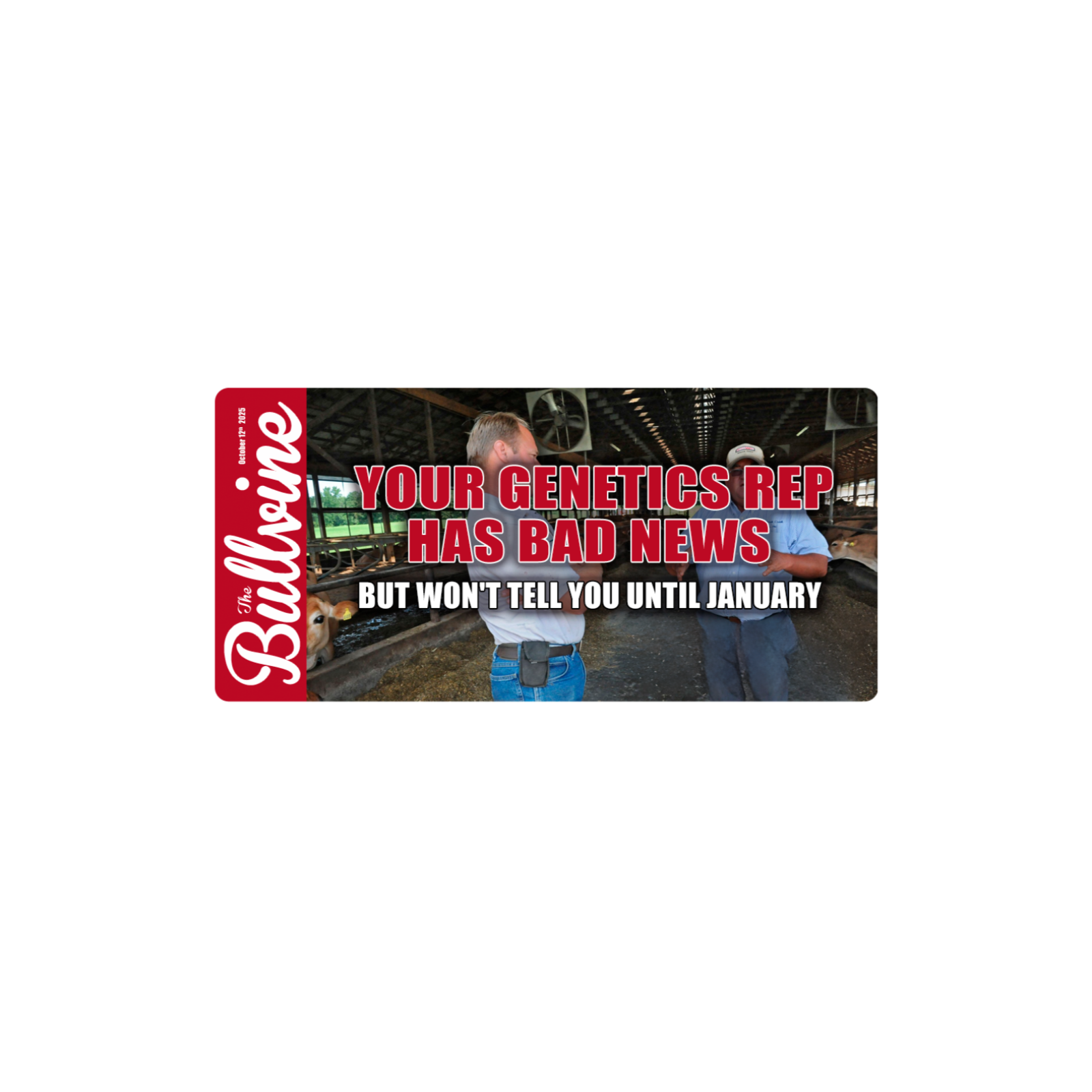
S1 Ep 391E391 Your Genetics Rep Has Bad News – But Won’t Tell You Until January
Those two-year genetics contracts your rep keeps pushing? The delayed field service? There's a reason—and it's costing American dairy producers $100 million. While everyone focuses on milk prices and feed costs, a massive disruption in global genetics markets is secretly driving up your breeding expenses by thousands per year. Russia and five allied nations just cut genetics imports by 64%, creating a market hole that YOU'RE filling through higher prices. This episode exposes the hidden crisis reshaping dairy genetics and reveals the 90-day action plan smart producers are using to survive the coming price explosion.Key Takeaways:Why your genetics bill could jump $12,000 annually starting January—and your rep won't warn youThe $100 million export collapse driving domestic price increases (with exclusive NAAB data breakdown)Which three major genetics companies might not exist by 2026—and how to evaluate your supplier's survival oddsThe Select Sires-STgen merger under DOJ review and what it means for competitionHow Wisconsin producers are already locking 15% discounts while others wait and pay premium pricesThe heifer price explosion: from $1,140 to $4,000 in six years—and why it's acceleratingWhy sexed semen sales jumped 18% and what it reveals about producer desperationThe technology investment that pays back in 18 months while reducing supplier dependenceDeeper Dive - Why Listen:This episode demolishes the industry's silence around the biggest genetics market disruption in decades. We analyze fresh NAAB 2024 data showing U.S. bovine semen sales grew 4% while losing massive Eastern European markets—data your genetics company doesn't want you connecting to your rising costs. You'll discover how the Eurasian Economic Union's 64% import cut created a $100 million hole that companies are filling by extracting more from domestic producers like you.Most critically, we provide the 90-day action framework successful producers are using right now: supplier stability evaluation, buying group formation, strategic contract timing, and technology investments that create independence. This isn't theoretical—we share real examples of producers saving thousands by acting before January's price adjustments hit.This intelligence gives you a massive advantage over producers who remain unaware of the market forces driving up their costs. While your neighbors react to price increases, you'll understand the cause and position your operation strategically.Resources & Engagement:Get the complete analysis, company risk matrix, and downloadable 90-day action plan at https://www.thebullvine.com/a-i-industry/your-genetics-rep-has-bad-news-but-wont-tell-you-until-january/. All NAAB data sources, USDA pricing reports, and extension ROI calculators referenced in this episode are linked on our website.Subscribe to The Bullvine Podcast for dairy industry intelligence you can't get anywhere else. Join the conversation on social media—share your genetics supplier experiences and help other producers navigate this disruption. The industry works better when we're all informed about what's really happening behind the marketing spin.Don't let your genetics rep control the timeline. Take action now.

S1 Ep 390E390 Nipponia Holsteins: How BSE, Divorce, and Debt Created the Ultimate Pivot Story
Security guards at a Holstein dispersal. Hidden cattle trucked in at midnight. A family dynasty reduced to $53,000 after forty years of breeding excellence. The 2009 Nipponia collapse wasn't just another casualty of BSE and bad partnerships—it became dairy's most valuable lesson in survival. When BSE destroyed Ken Kurosawatsu's export market and divorce killed his funding, walking away from Holsteins seemed like failure. Instead, it became the pivot that built something worth ten times more. This is the story every dairy producer facing margin pressure, consolidation threats, or partnership challenges needs to hear right now.Key Takeaways:Why expertise beats capital every time—and how a Japanese immigrant who couldn't speak English built a Holstein empireThe partnership red flags that destroyed two multi-million dollar operations (and how to spot them in your own business)How producing three All-Canadian bulls from one $5,000 cow proves management trumps geneticsThe veterinary malpractice case that changed Ontario law and what it means for your operationWhy your diversification strategy can't be a variation—it must be the complete opposite of your core businessThe six-month pivot rule: why Ken's six years of show ring dominance couldn't save the Holstein operationHow a "crazy" Wagyu investment in the 1990s became salvation when dairy collapsedThe exact moment when walking away becomes smarter than holding onDeeper Dive - Why Listen:This episode unpacks one of dairy's most dramatic transformations through exclusive insights into the Nipponia archives and legal documents. You'll discover how Yukio Kurosawatsu leveraged a chick sexer's life savings to build a genetic powerhouse, why forgetting a caesarean knife cost a veterinarian his first malpractice case, and how the 2003 BSE crisis created a perfect storm that no amount of show ring success could overcome.The conversation reveals the brutal math behind partnership dissolution—why Tom Ikeda got out clean after one year while Giovanni Lucignano's divorce triggered total collapse. You'll learn the specific breeding decisions that created consistent All-Canadian genetics and why Yukio's decision to build a Wagyu herd while Holsteins were printing money might be the smartest risk management strategy in agricultural history.Most critically, this episode provides a framework for evaluating your own operation's vulnerability. With current feed costs, environmental regulations, and consolidation pressure matching or exceeding 2009 levels, the Nipponia playbook offers concrete strategies for building an "opposite model" that thrives when your primary business faces existential threats. The discussion includes specific examples of how current operations are applying these lessons, from Wisconsin partnerships imploding post-COVID to California dairies pivoting into completely different agricultural sectors.Resources & Engagement:Ready to evaluate your own operation's pivot potential? Subscribe to The Bullvine Podcast for weekly episodes that challenge conventional dairy wisdom and deliver actionable strategies for surviving and thriving in today's market. Visit https://www.thebullvine.com/breeder-profiles/nipponia-holsteins-how-bse-divorce-and-debt-created-the-ultimate-pivot-story/ for the full article, historical photos from the Nipponia empire, and our Partnership Protection Checklist. Share your own pivot story or partnership lessons using #BullvinePivot on social media—the best insights will be featured in our next episode on dairy transformation strategies.

S1 Ep 389E389 Charlie Will’s Comeback: How One Rejection Letter Created Holstein History
Select Sires rejected Charlie Will in 1974. Today, his bulls influence virtually every Holstein pedigree on the planet. This special profile episode reveals how a farm kid from Southern Illinois built dairy's greatest genetic empire through the backdoor—and why his contrarian approach to bull selection is your survival blueprint for today's $17/cwt milk reality. We expose the shocking 10-year probation story, decode why ELTON's mediocre dam produced 5,039 Excellent granddaughters, and uncover the three principles that made Charlie's bulls outsell everyone else's by millions of units.Key Takeaways:How Charlie turned rejection into revolution: The MABC backdoor strategy that changed dairy genetics foreverThe BLACKSTAR breakthrough that ended 10 years of secret probation at Select SiresWhy looking at bulls everyone else rejects could transform your herd profitabilityThe ELTON principle: Finding million-dollar genetics in "Good Plus" damsCustomer-first genetics vs. catalog dreams: Why OMAN sold 1,000,000+ units solving real barn problemsEmbracing disruption at 60: How Charlie's genomics pivot created $4 billion in industry valueThree bull selection strategies you can implement next week to improve marginsWhat Charlie's "steward of the breed" philosophy means for Holstein inbreeding concernsDeeper Dive - Why Listen:This isn't just another industry profile—it's a masterclass in contrarian thinking that pays off. Charlie Will, recipient of the 2025 NAAB Pioneer Award, spent 40 years at Select Sires after they initially rejected him, revolutionizing how we select and evaluate dairy genetics. His bulls—including BLACKSTAR, OMAN, DURHAM, MATHIE, and BLITZ—have sold over 10 million units combined, fundamentally altering Holstein genetics across six continents.The episode reveals game-changing insights, including the shocking fact that Charlie was on unofficial probation for his first decade at Select Sires, only vindicated when BLACKSTAR topped global rankings in 1988. We explore how his willingness to look beyond conventional evaluation metrics led to discoveries like ELTON, whose unremarkable dam score would disqualify him today, yet his genetics created thousands of Excellent daughters.Most critically for today's producers, we dissect Charlie's three-pillar philosophy: finding the right people over the smartest ones, treating genetics as a farmer-owned responsibility, and embracing technological disruption regardless of age or industry resistance. His approach to genomics at age 60—when peers were fighting the technology—contributed to a $4 billion industry transformation that's still accelerating today.Resources & Engagement:Subscribe to The Bullvine Podcast wherever you get your podcasts for twice-weekly episodes that cut through industry noise. Visit https://www.thebullvine.com/a-i-industry/charlie-wills-comeback-how-one-rejection-letter-created-holstein-history/ to read the complete Charlie Will profile article and access detailed bull selection resources mentioned in this episode. Join the conversation on social media using #BullvinePodcast and share your own experiences with the genetics Charlie championed—every dairy farmer has a story about OMAN, BLACKSTAR, or DURHAM in their herd.

S1 Ep 388E388 The Smart Money Move Most Dairies Are Missing: Why Pair Housing Your Calves Just Makes Sense
While 70% of North American dairies cling to individual calf hutches, forward-thinking producers are discovering that pair housing delivers $82,500 in combined annual benefits for a typical 500-cow operation. This episode challenges the century-old isolation paradigm with breakthrough UK research tracking over 400 heifers, revealing that pair-housed calves produce 1,000 kg more lifetime milk and experience 30% fewer culls. With October 2025 milk prices at $17.59/cwt and margins razor-thin, this conversation exposes why your calf housing decision today determines your profitability for the next decade.Key Takeaways:How automated milk feeders achieve 80-85% accuracy in disease detection—but only when calves are housed socially, not in individual systemsWhy proper ventilation (20 CFM per calf) matters more than isolation for preventing respiratory disease, debunking the "separation equals safety" mythThe hidden economics: $60,000 in additional milk revenue plus $22,500 in replacement savings annually from pair housingCritical implementation mistakes that derail 40% of transitions—and the exact protocols that guarantee successWhy the convergence of labor shortages, technology adoption, and welfare regulations makes October 2025 the optimal time to transitionThe surprising social dynamics: why two calves thrive but three create chaosDeeper Dive - Why Listen:This episode dismantles decades of conventional wisdom with hard data from the latest 2025 research. We explore the Dairy Calf & Heifer Association's emerging Gold Standards for pair housing and examine why industry leaders like Dr. Jennifer Van Os from UW Extension call pair housing "smart business that pays long-term dividends."The discussion reveals how automated feeding technology becomes worthless with individual housing—essentially throwing away a 40% reduction in treatment costs and 25% decrease in mortality. We analyze real-world implementation strategies, including the optimal 10-12 pair pilot program, age-matching protocols within 2-week windows, and the 4-6 week adjustment period before measurable gains appear.Most critically, we expose why the industry lacks standardized protocols despite overwhelming evidence, and how this knowledge gap costs the average dairy nearly a million dollars over a decade. The conversation addresses Northern climate challenges, comparing Wisconsin's winter ventilation requirements against Southern humidity management, providing region-specific strategies for success.Resources & Engagement:Ready to capture your share of the $82,500 annual opportunity? Subscribe to The Bullvine Podcast for weekly episodes that challenge industry assumptions and deliver actionable insights. Visit https://www.thebullvine.com/management/the-smart-money-move-most-dairies-are-missing-why-pair-housing-your-calves-just-makes-sense/ for the complete article with full citations, implementation guides, and economic calculators specific to your operation size.Join the conversation with progressive producers worldwide on social media @TheBullvine and share your calf housing experiences using #DairyInnovation. Don't let tradition cost you another $225 per day—the evidence is clear, the technology exists, and your competition is already making the switch.
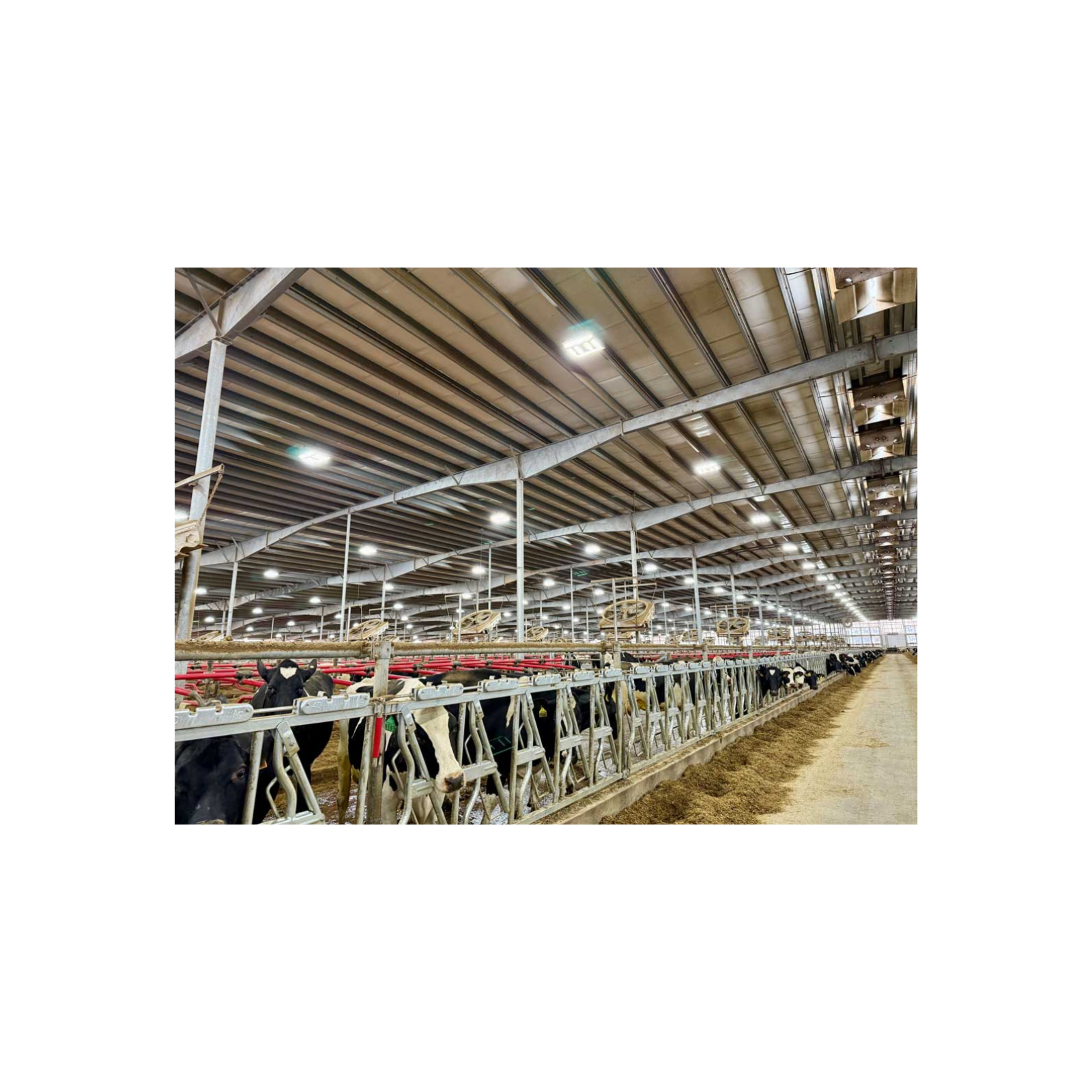
S1 Ep 387E387 Simple LED Lighting Can Boost Production 8% – Here’s Why Most Farms Haven’t Switched
What if everything the lighting companies have been telling you is wrong? Twenty years of rock-solid research from the University of Florida proves that basic LED lighting can boost milk production by 8%, yet the vast majority of dairy operations still run fixtures from the 1980s. Even more shocking: farmers spending $600 on simple LED setups are getting the same results as those dropping $15,000 on "advanced" systems. This episode exposes why complex technology fails when biology refuses to cooperate—and how understanding this pattern could save you thousands on every technology decision you face.Key Takeaways:Why only 30% of your cows will ever respond strongly to photoperiod manipulation—regardless of how much you spend on lighting systemsThe $34,000 annual revenue opportunity hiding in barns with lighting below 50 lux (and how to measure yours in 5 minutes)How 10-fold individual variation in cow melatonin levels makes expensive optimization systems a waste of moneyWhy Upper Midwest operations see 3x better LED lighting ROI than California dairies—and what that means for your regional strategyThe hidden electrical costs ($2,000-$8,000) that lighting vendors never mention until after you've signedHow simple mechanical timers consistently outperform digital controllers in barn environmentsThe counterintuitive reason dry cows need exactly opposite lighting (8 hours light/16 dark) for optimal productionWhy This Episode Matters:This isn't just about barn lighting—it's about exposing a pattern that repeats across every dairy technology from robotic milkers to precision feeding systems. Dr. Geoffrey Dahl's two decades of photoperiod research, published in the Journal of Dairy Science, provides irrefutable evidence that 16-18 hours of proper lighting triggers hormonal changes that boost production. IGF-1 increases 15-30%, prolactin rises 25-40%—these aren't marginal gains, they're transformative.But here's what the technology vendors don't want you to know: Dr. Dong-Hyun Lim's 2021 research proves individual cows show massive variation in light response. Some respond at 50 lux, others need 200 lux, and 30% won't respond meaningfully at all. This biological reality destroys the economic case for complex systems.We break down exactly how to test your barn (spoiler: if you're above 150 lux, save your money), calculate realistic ROI based on your starting conditions, and implement a "test small, scale smart" approach that minimizes risk while maximizing potential gains. Plus, we reveal why farms starting with genuinely poor lighting see dramatic results while those with decent fluorescents waste money chasing marginal improvements.Take Action:Ready to challenge everything you thought you knew about dairy technology adoption? Subscribe to The Bullvine Podcast for more episodes that cut through industry hype to deliver insights that actually improve your bottom line. Visit https://www.thebullvine.com/technology/simple-led-lighting-can-boost-production-8-heres-why-most-farms-havent-switched/ for the complete article, research citations, and our exclusive lighting assessment calculator. Join the conversation on social media using #TheBullvineTruth and share your own technology wins and failures. Remember: in dairy, the difference between profit and loss often comes down to knowing when simple beats complex.
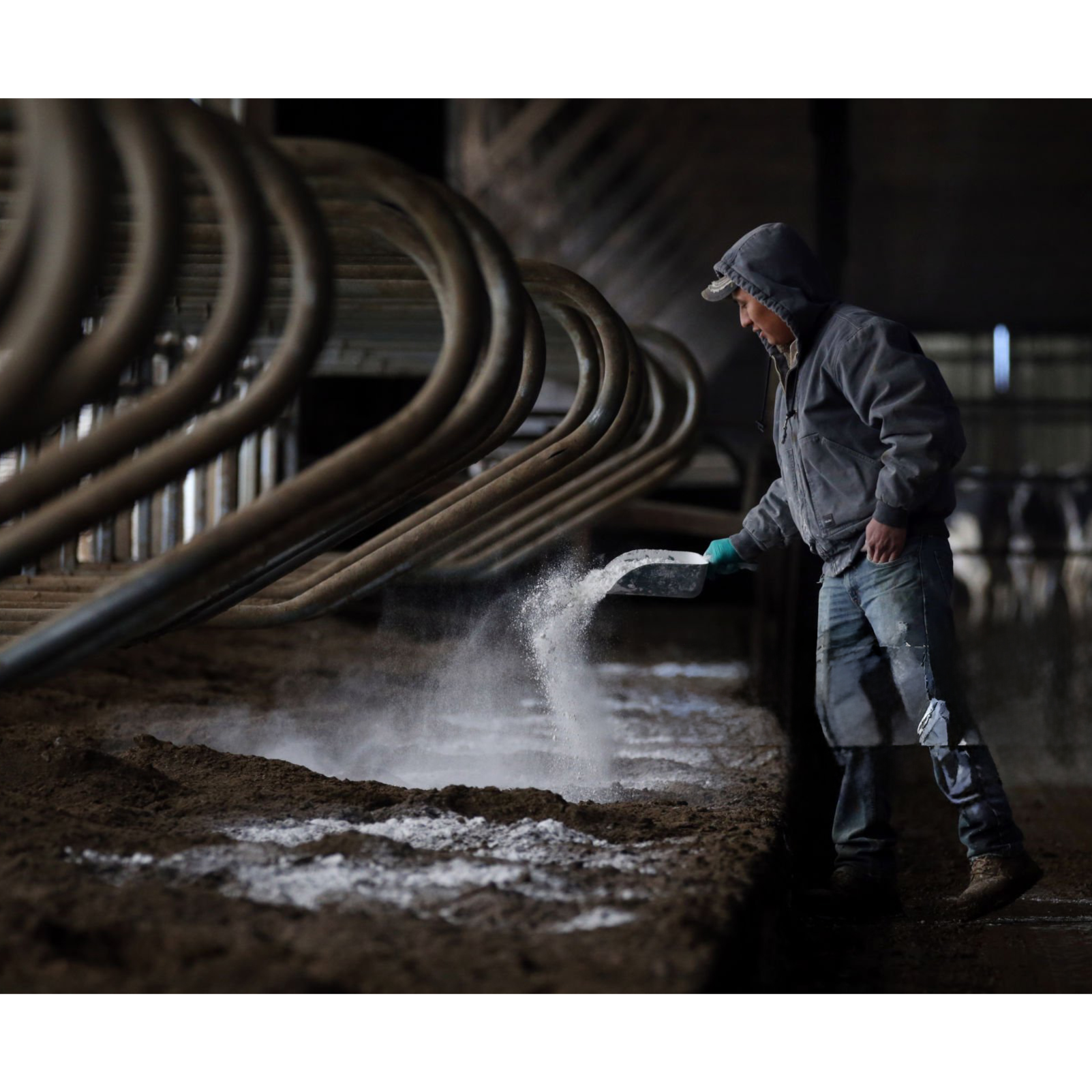
S1 Ep 386E386 The Workers Dairy Can’t Legally Hire – But Can’t Survive Without
Every dairy producer knows the 4 AM anxiety—wondering if your crew will show up or if today's the enforcement action that changes everything. The September 25 Manitowec County arrests exposed what the industry has quietly managed for decades: American dairy depends on workers it can't legally employ while federal programs designed for agricultural labor explicitly exclude year-round dairy operations. This episode reveals the economic data nobody's discussing, the technology investments that actually deliver ROI versus the ones that don't, and the state-level solutions already working in 15 states that your operation could implement tomorrow. With Wisconsin dairy generating $45.6 billion in economic activity while the H-2A program grew 785% yet still excludes dairy entirely, this isn't just about immigration policy—it's about whether your operation survives the next five years.Key Takeaways:Why the H-2A program exploded from 48,336 to 378,961 positions since 2005—while dairy remains completely locked out by regulatory interpretation that contradicts Congressional intentThe real numbers on automation ROI: How $2,000-3,000 automatic takeoffs deliver 18-month payback versus $150,000-200,000 robots requiring 5-7 yearsWhat happened to the farms that lost workers in the Manitowoc operation—and the cascade effect from somatic cell counts to reproduction programs that took months to recoverState-by-state breakdown: Which 15 states implemented driver's license programs that reduced accidents 10% while stabilizing dairy workforce, and why Wisconsin, Idaho, and Texas continue debatingThe geographic enforcement reality: Why counties with agricultural-focused law enforcement report fewer disruptions, and how building local relationships creates operational buffer zonesPractical compliance strategies that strengthen workforce retention without waiting for federal reform—including specific organization contacts for producers ready to engageDeeper Dive - Why Listen:This episode dismantles the false choice between legal compliance and operational survival by exposing the regulatory failures that created this impossible situation. We analyze USDA Census data showing how Wisconsin lost over half its dairy farms (15,904 to 6,949) between 2012 and 2022, while milk production increased to 30.6 billion pounds—a consolidation pattern driven entirely by workforce stability advantages that larger operations achieve through scale.This episode doesn't offer comfortable answers or political talking points. It provides the data-driven analysis and practical strategies dairy producers need to protect their operations while the industry figures out whether it will collectively advocate for workable solutions or continue hoping enforcement doesn't come to their county. Whether you're milking 50 cows or 5,000, your workforce stability determines your operational future—and this episode explains exactly what that means for your specific situation.Resources & Engagement:Subscribe to The Bullvine Podcast for weekly insights that challenge conventional wisdom and focus on dairy profitability. Visit https://www.thebullvine.com/management/the-workers-dairy-cant-legally-hire-but-cant-survive-without/ for the complete article with data visualizations, automation cost comparisons, state-by-state policy maps, and direct links to National Milk Producers Federation resources, state dairy organizations, and Extension research cited in this episode.
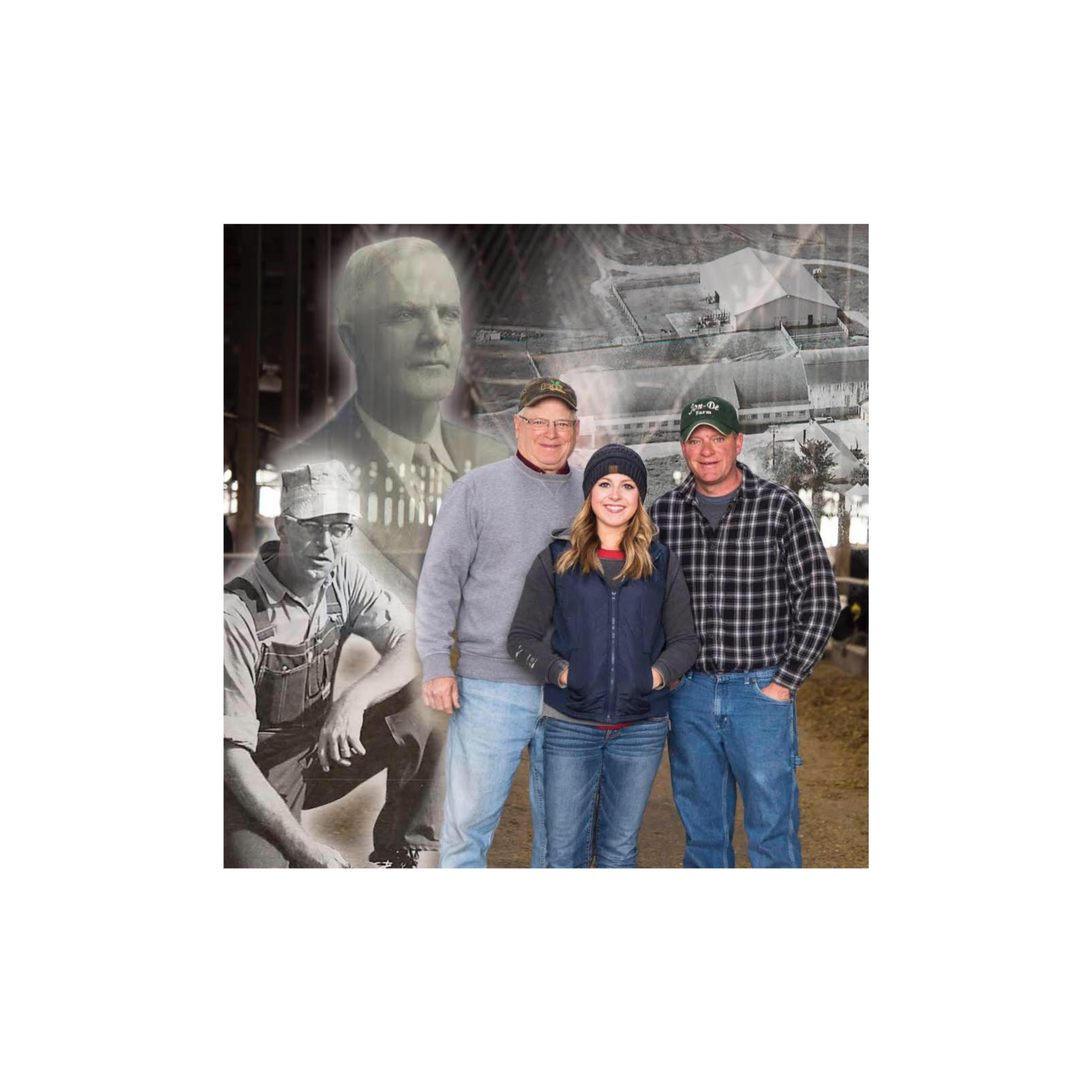
S1 Ep 385E385 Jon-De Farm: The Wisconsin Dairy That Proved Bigger Isn’t Always Better
While 72% of mega-dairies hemorrhaged money in 2024 chasing expansion, one Wisconsin farm discovered the counterintuitive secret to explosive profitability: strategic downsizing. Jon-De Farm slashed their herd from 1,550 to 1,350 cows and unlocked $1.2 million in additional annual profits—all while maintaining identical milk production levels. This episode demolishes the sacred cow of dairy expansion theology, revealing how "right-sizing" operations delivers 34% better margins than blind growth. If you're still believing bigger automatically means better, prepare to have your entire operational philosophy challenged.Key Takeaways:Discover the exact financial formula that proves optimal herd size beats maximum herd size for profitabilityLearn how cutting daily milking hours from 144 to 18 saved $900,000 annually while improving employee retention by 65%Understand why banks now prefer financing "right-sized" operations over expansion projects—and how to position your loan applicationCalculate your operation's efficiency score using the proven threshold metrics that separate profitable dairies from money pitsExplore the 18-month implementation roadmap that transforms chaotic 24/7 operations into strategic, sustainable businessesUncover the labor management strategies that turned employee exhaustion into enthusiasm and boosted productivityAnalyze real-world data showing how fewer cows delivered 38% lower somatic cell counts and superior herd healthDeeper Dive - Why Listen: This episode features exclusive insights from fifth-generation dairy farmer Mikayla McGee, whose data-driven approach to operational optimization challenges three decades of industry dogma. McGee's contrarian decision to invest $3.2 million in a state-of-the-art rotary parlor while simultaneously reducing herd size initially shocked her lender—until the numbers proved her strategy generated 47% better debt coverage ratios than traditional expansion models.The discussion reveals groundbreaking financial modeling that exposes why 87% of U.S. mega-dairies operate below optimal efficiency levels. You'll gain access to the exact decision matrices Jon-De Farm used to identify their perfect herd size, including labor cost calculations, feed efficiency metrics, and the surprising role of "productive downtime" in maximizing profitability.Most critically, this episode provides actionable implementation strategies you can apply immediately. From calculating your operation's current efficiency score (annual profit ÷ total cows) to identifying the labor hour threshold that signals overexpansion, every insight connects directly to bottom-line improvements. The conversation also addresses the human element often ignored in dairy economics—how creating sustainable work schedules and investing in employee satisfaction delivers measurable returns through reduced turnover and improved herd performance.Visit https://www.thebullvine.com/breeder-profiles/jon-de-farm-the-wisconsin-dairy-that-proved-bigger-isnt-always-better/ for the complete article, financial modeling templates, and implementation guides referenced in this episode. Join the conversation on social media using #TheBullvine and share your own right-sizing success stories—or tell us why you think we're wrong. Because real progress happens when the industry stops being polite and starts getting profitable.
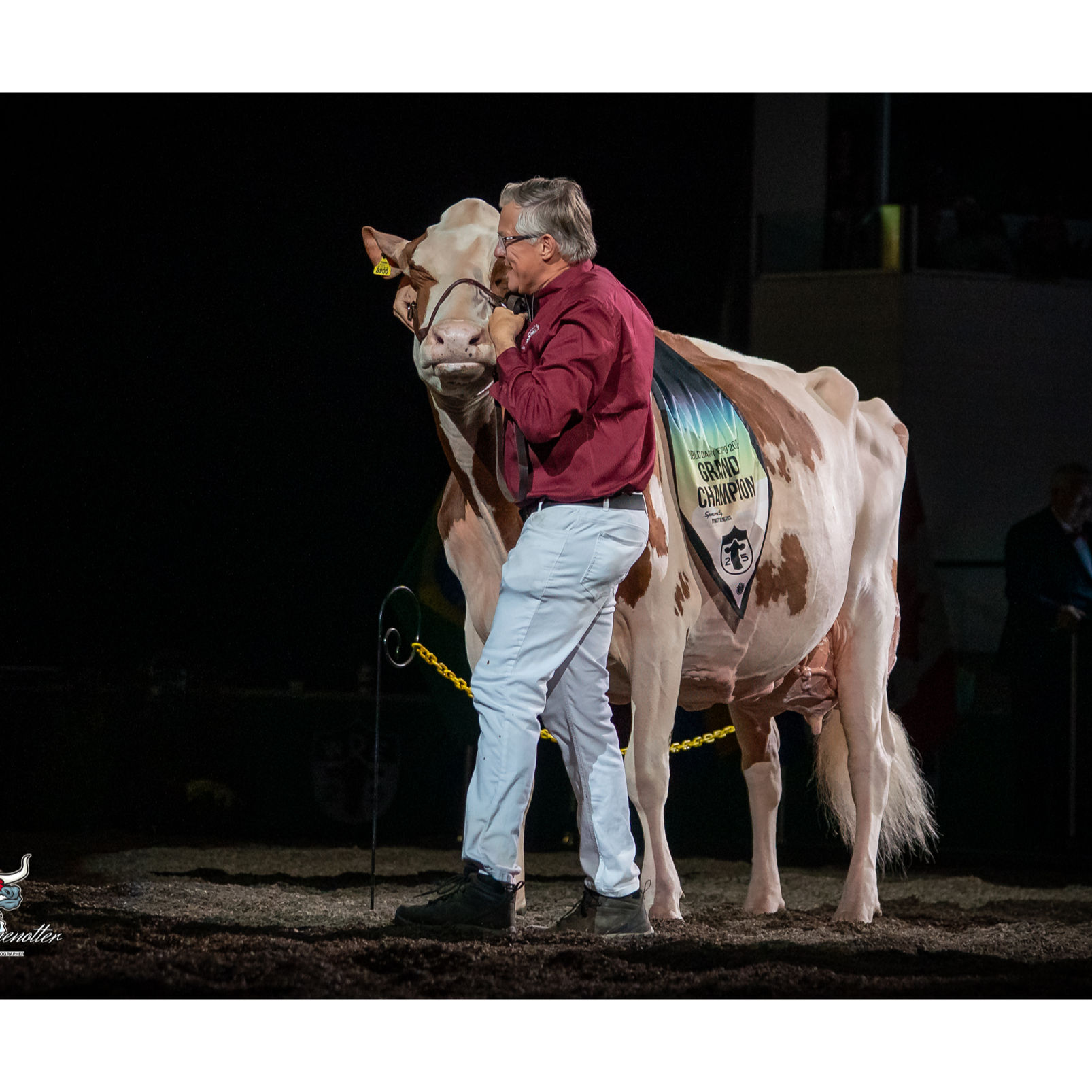
S1 Ep 383E383 World Dairy Expo Final Day Chaos: Bailey Dethroned, Red & White Reigns, 468 Holsteins Make History
Bailey was untouchable. Three-time Jersey Grand Champion. Defending Supreme Champion. First Jersey to claim the ultimate crown since 2016. Then a Red & White nobody saw coming changed everything.In this emergency episode recorded straight from Madison, we break down the final day chaos that has the entire dairy world talking:THE DYNASTY FALLS: Golden-Oaks Temptres-Red-ET (Red & White) defeats Bailey in the Supreme Championship - we explain why this matters for EVERY breeding decision you'll make in 2026THE $4,000 GAMBLE THAT PAID MILLIONS: Ontario's Ronald Grandy brought 4 animals to Madison. All 4 won their classes. His March purchase of Echo Glen Master Ivy just became Supreme Champion Heifer. Learn his acquisition strategy that beat operations with 100x his budget.BUTLERVIEW'S WORLD DOMINATION: Mike Dver flew 400,000 miles in 3 years. His team spans 4 countries. They won 1st, 2nd, AND 3rd in a single class. Discover how international collaboration is rewriting dairy genetics.468 HOLSTEINS IN 2 DAYS: Judge Aaron Eaton reveals how he sorted 61 calves in 90 minutes and why a 16-year-old cow with 11 calves got a 3-minute standing ovationPlus:Clark Woodmancy's Klussendorf Award speech: "It's a 365 day deal"Junior Show emotions that had grown men cryingLovhill Sidekick Kandy Cane's Holstein dominanceJeffrey-Way Hard Rock Twigs' legacy and what happened afterWho Should Listen: ✓ Every dairy farmer making breeding decisions ✓ Geneticists tracking market shifts ✓ Anyone buying/selling genetics in 2025-2026 ✓ Producers wondering if shows still matter (spoiler: they do) ✓ Youth exhibitors planning their next purchaseThe Bottom Line: The genetics shown today determine milk checks in 2030. This episode reveals which bloodlines, strategies, and international partnerships are positioning winners for the next decade. Check out the full article at https://www.thebullvine.com/news/world-dairy-expo-final-day-chaos-bailey-dethroned-red-white-reigns-468-holsteins-make-history/
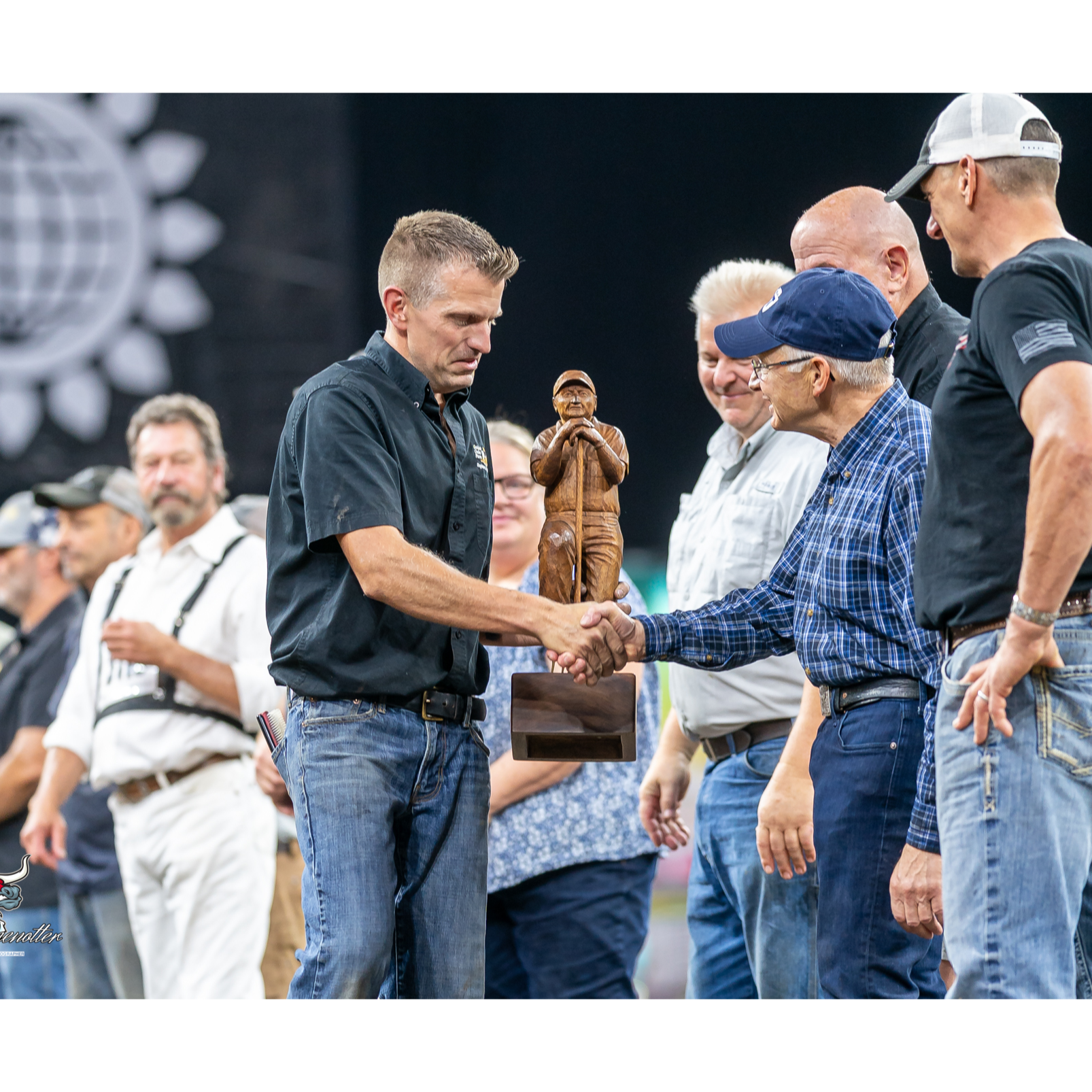
S1 Ep 382E382 Drama, Dreams & Dynasty: Day 5 at World Dairy Expo Sparks a Showdown on the Colored Shavings
Day 5 at the World Dairy Expo 2025 delivered everything: heart-stopping drama, Cinderella stories, and the kind of legacy moments that shape dairy history. Join The Bullvine’s audio recap and relive the highlight reel from Madison—where sweat, adrenaline, and a stadium’s roar crowned new champions and honored the industry’s giants.What You’ll Hear in This Episode:An electrifying ringside retelling of Day 5’s headliners and upsets.How Golden-Oaks Temptres-Red-ET stamped her dynasty, driven by years of planning and grit.The true underdog story: How Emily Fisher and her 18-cow team stormed the big stage with Mountainview TC Fired Up.Why the real power in the Expo ring is heart, teamwork, and belief—not just big barns or big bankrolls.Recognition of the industry’s legends: the Klussendorf and Klussendorf-MacKenzie awards and the champions of character behind the cows.Fast-action summary of all the big winners and legacy moments.Reflection on what makes World Dairy Expo the sport’s biggest, boldest show.Perfect for: Anyone who loves a good story, believes in the power of teamwork, and wants to catch every heartbeat of the dairy show circuit’s biggest day.Don’t miss this high-octane episode—listen now and get your dose of dairy’s wildest dreams, only on The Bullvine, https://www.thebullvine.com/news/drama-dreams-dynasty-day-5-at-world-dairy-expo-sparks-a-showdown-on-the-colored-shavings/
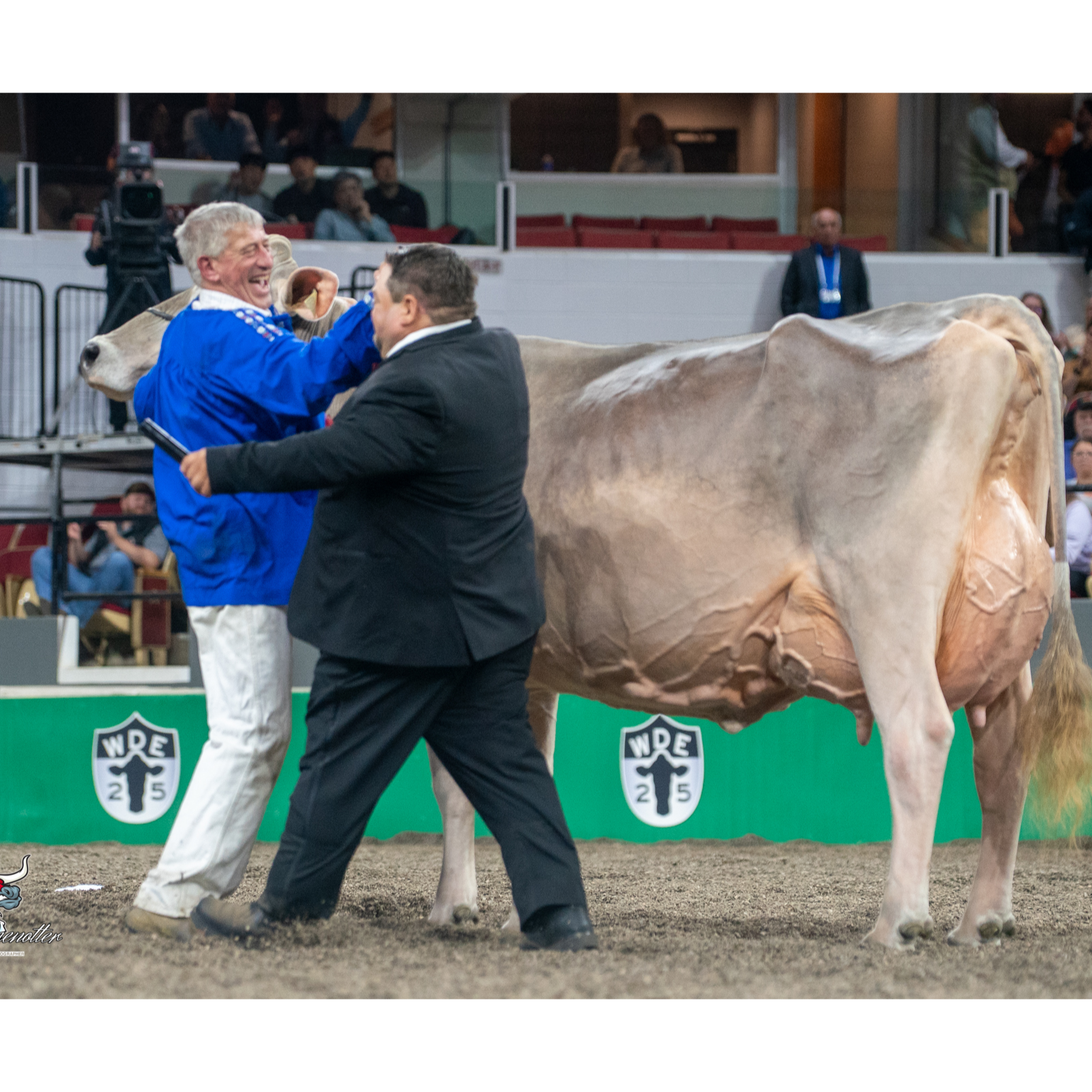
S1 Ep 381E381 World Dairy Expo Day 4: 10-Year-Old Cow Stuns Industry with Second Grand Championship
A decade-old Brown Swiss in her seventh lactation just demolished 379 younger competitors to claim her second Grand Championship at World Dairy Expo—while producing 60 kilos daily. With replacement heifers now exceeding $4,000 and dairy farms culling at three lactations, this unprecedented victory exposes the industry's most expensive mistake: premature culling. This emergency recap from Madison reveals why farms keeping cows to seven lactations are banking $20,000 more per cow than those following conventional wisdom, and how a California-Canada partnership built on trust is rewriting the rules of modern dairy management.Key Takeaways:Why Iroquois Acres Jong Cali's championship at age 10 signals a fundamental shift in replacement economics—and what it means for your bottom lineThe $20,000 question: How keeping cows to seven lactations versus culling at three changes profitability math when replacements cost $3,500-$4,500Inside the 2,000-mile partnership that proves geography means nothing when trust drives management decisionsNew Generation Genetics' Swiss embryo import strategy and why genetic diversity is becoming survival insurance, not luxury spendingThe quality explosion that has judges placing state fair champions in the twenties—and why yesterday's excellence is today's averageRed & White and Milking Shorthorn junior championships that prove the next generation is already outperforming established operationsYour three-step action plan for evaluating every cow over five years old before making another culling decisionDeeper Dive - Why Listen:This isn't just another show recap—it's an economic wake-up call backed by real-world proof. Judge Allyn 'Spud' Paulson, with decades of experience dating back to when "Jades and Jetways were popular," watched this 10-year-old cow move like a three-year-old and dominate animals in their prime. The episode breaks down the brutal economics: while the average U.S. dairy culls at 2.8 lactations for $8,000 lifetime profit, Cali's seven lactations represent $28,000+ in value. With replacement costs hitting record highs and availability at 20-year lows, the math is undeniable.Jake Hushen from New Generation Genetics reveals how Brown Swiss winter calf classes exploded from 30 to 60 animals, with their company claiming 14 class winners from 10 different sires. But the real story is their importation of full-blooded Swiss embryos—a strategic move to combat genomic bottlenecks that most operations ignore until it's too late. Brown Swiss Association President Brian Pacheco confirms the competitive landscape shift: where five or six good cows once dominated, now 15 to 25 exceptional animals compete for top spots.Resources & Engagement:Subscribe to The Bullvine Podcast on Apple Podcasts for weekly episodes that challenge industry assumptions and deliver actionable profitability strategies. Access the complete World Dairy Expo Day 4 championship results, our proprietary longevity profit calculator, and exclusive interview transcripts at https://www.thebullvine.com/news/world-dairy-expo-day-4-10-year-old-cow-stuns-industry-with-second-grand-championship/. Join the conversation using #BullvinePodcast on social media to share your own culling economics and connect with progressive producers worldwide who are rethinking replacement strategies. Email your operation's longevity success stories to [email protected] for potential feature coverage.
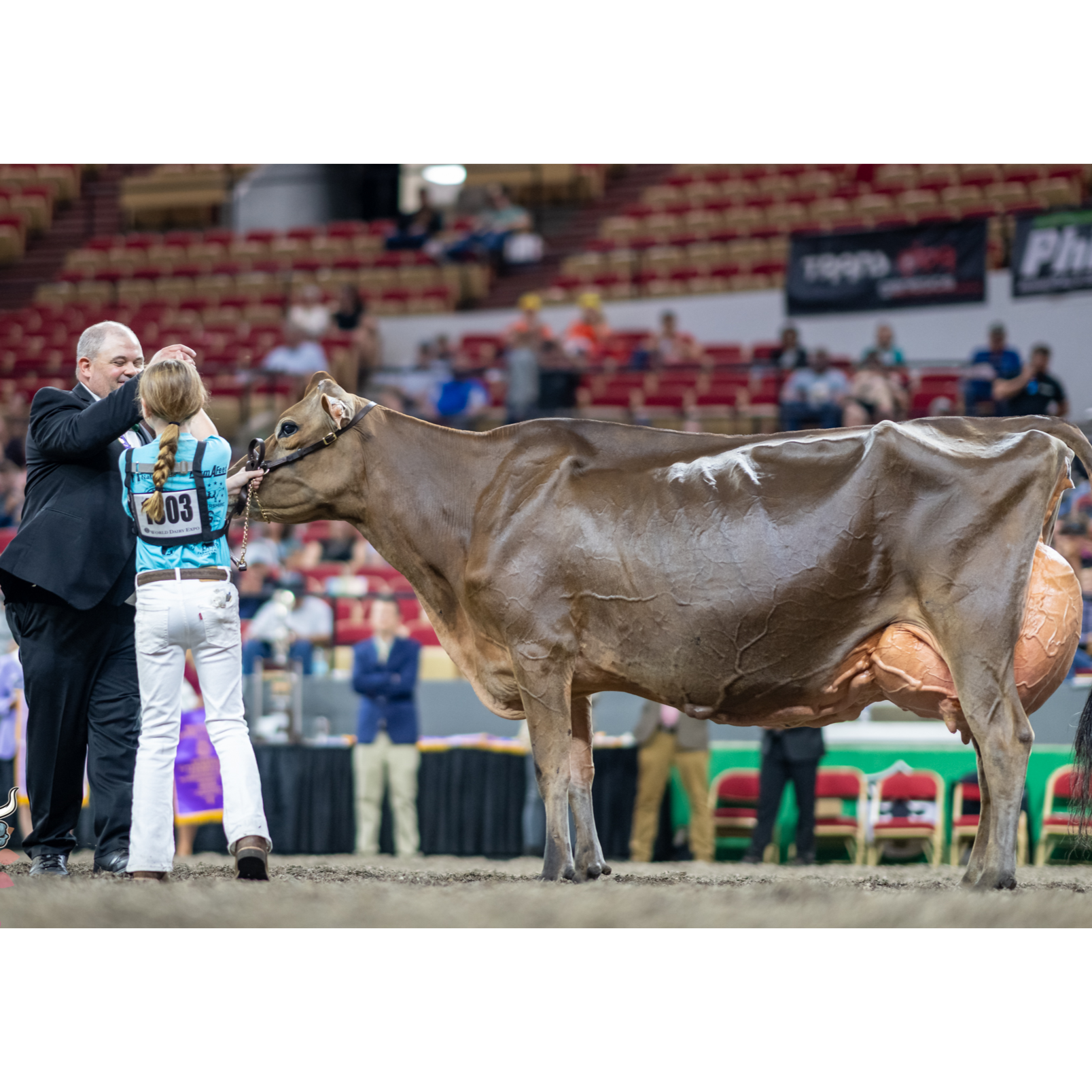
S1 Ep 380E380 World Dairy Expo Day 3: Goosebumps in Madison: How Split-Second Decisions Created Day 3’s Championship Magic
The best breeding decisions at World Dairy Expo 2025 took seconds, not spreadsheets—and the championship banners prove it. From judges getting physical goosebumps to dinner-table purchases that won Grand Champions, Day 3 shattered conventional wisdom about careful genetic analysis. With 371 Jersey entries and 247 Guernseys competing, the real story wasn't just who won—it's how split-second instinct is outperforming committee thinking across the industry. This episode reveals why overthinking is killing profitability and how the Ayrshire explosion signals a massive investment opportunity most producers are missing.Deeper Dive - Why Listen:This episode dissects the most pivotal day at Madison, where traditional breeding philosophy collided with real-world results. When third-generation Ayrshire judge Greg Evans declares the breed has "taken off like a rocket ship" while experiencing physical goosebumps evaluating cattle, you're witnessing a fundamental market shift. The data is compelling: youth exhibitors didn't just compete—they dominated open classes, proving that genomic-driven decisions combined with work ethic trumps experience.The financial implications are staggering. Peter Vail's spontaneous purchase strategy—literally leaving dinner to write checks—challenges the committee-based decision making that's paralyzing operations. Meanwhile, the Ayrshire surge represents what happens when successful Holstein operations diversify: exponential value increases that early adopters are already capitalizing on.Tyler Woodman's Richard Caverly Memorial Award win exemplifies the mentorship revolution—28 years old, nearly 20 All-American nominations, and organizing workshops that are building tomorrow's champions. His approach to genomic testing and youth development provides a blueprint for operations looking to stay competitive.The Jersey barn delivered its own disruption: Stoney Point Joel Bailey's third Grand Championship places her in mythical territory, while Kunde Chocolatier Hot Cocoa's unknown-to-champion journey proves traditional scouting methods are obsolete. With 167 junior entries alone, the message is clear: adapt to youth-driven, data-powered breeding or become irrelevant.Resources & Engagement:Subscribe to The Bullvine Podcast for weekly episodes that challenge industry assumptions and deliver actionable strategies for progressive dairy operations. Visit https://www.thebullvine.com/news/world-dairy-expo-day-3-goosebumps-in-madison-how-split-second-decisions-created-day-3s-championship-magic/ for detailed show reports, breeding analysis, and exclusive content from World Dairy Expo 2025.Join the conversation: Share your split-second breeding decisions that paid off using #BullvinePodcast. Are you investing in Ayrshires before the window closes? Tell us your strategy.Next Episode Preview: The Holstein revolution continues—why fifth-calf champions are beating youth phenoms and what it means for your breeding program.Remember: Championship genetics don't negotiate. While you're analyzing, someone else is already writing the check.
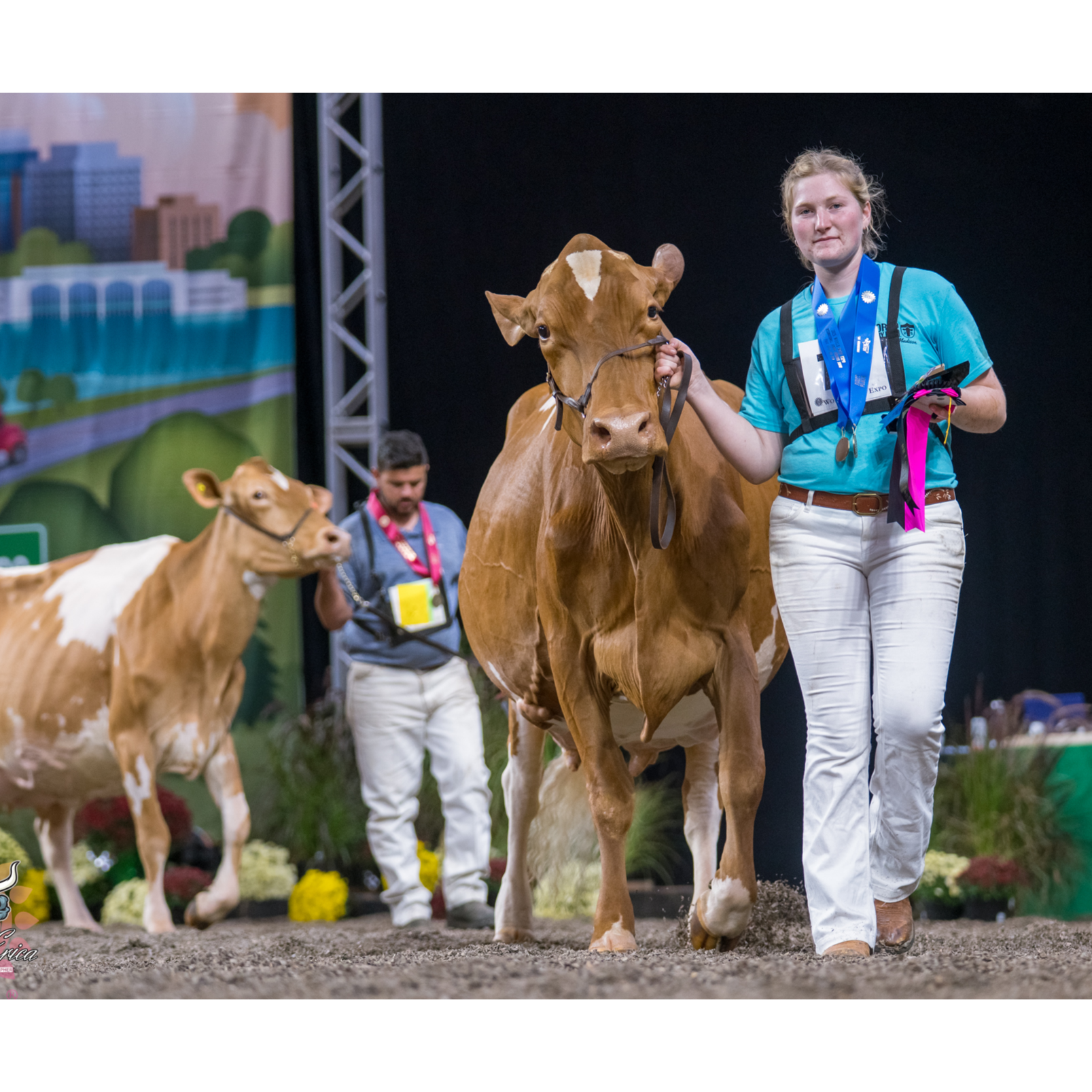
S1 Ep 379E379 The Kids Aren’t Coming – They Already Own Dairy’s Future (World Dairy Expo Proves It)
Think millennials and Gen Z are “the future” of dairy? Think again—at World Dairy Expo 2025, the new generation didn’t wait for their turn, they took control. In a year when juniors outperformed decades-long professionals in every metric that matters, this episode explores the data, the disruption, and what it means for profitability, talent, and the future of your herd. If you’re still betting that experience alone will keep you on top, you can’t afford to miss this bold, evidence-driven debrief.Key Takeaways:Discover how junior exhibitors outpaced seasoned pros to dominate open classes—and what’s fueling their meteoric rise.Unpack the numbers behind the $3,000+ heifer, and why longevity and functional genetics are now your best economic lever.Learn how the genomic revolution is leveling the field and rewriting what “success” means in the dairy show ring and on the farm.Decode the winning strategies from powerhouse youth programs, and why the smartest farms are hiring and partnering with these “kids.”Get industry-tested tips on how to future-proof your herd and avoid obsolescence as the next-gen workforce reshapes every corner of dairy.Deeper Dive – Why Listen: This episode dissects the seismic shift seen at World Dairy Expo 2025, with a spotlight on how junior exhibitors delivered a level of cattle quality—and professional showmanship—industry veterans couldn’t match. Listeners will hear how Judge Mark Rueth’s candid remarks, hard market data, and three consecutive collegiate championship wins by the University of Minnesota all signal that the old playbook is obsolete. Expect a no-nonsense analysis of skyrocketing replacement heifer costs, actionable takeaways from North America’s most aggressive youth breeding and judging programs, and a roadmap for leveraging genomic selection and mentorship to secure your competitive edge. Designed for producers, breeders, and agribusiness leaders who care about profitability as much as tradition, this episode leaves you with real strategies, not just rhetoric.Resources & Engagement: Don’t miss out—subscribe now to The Bullvine Podcast for more episodes packed with unfiltered industry insight, real numbers, and progressive strategies designed to keep your dairy business ahead of the curve. For referenced studies, supporting articles, and links to producer tools or featured interviews, visit https://www.thebullvine.com/news/the-kids-arent-coming-they-already-own-dairys-future-world-dairy-expo-proves-it/. Got questions, feedback, or bold ideas to share? Join the ongoing conversation on The Bullvine’s social platforms. Your future herd—and bottom line—just might depend on it.
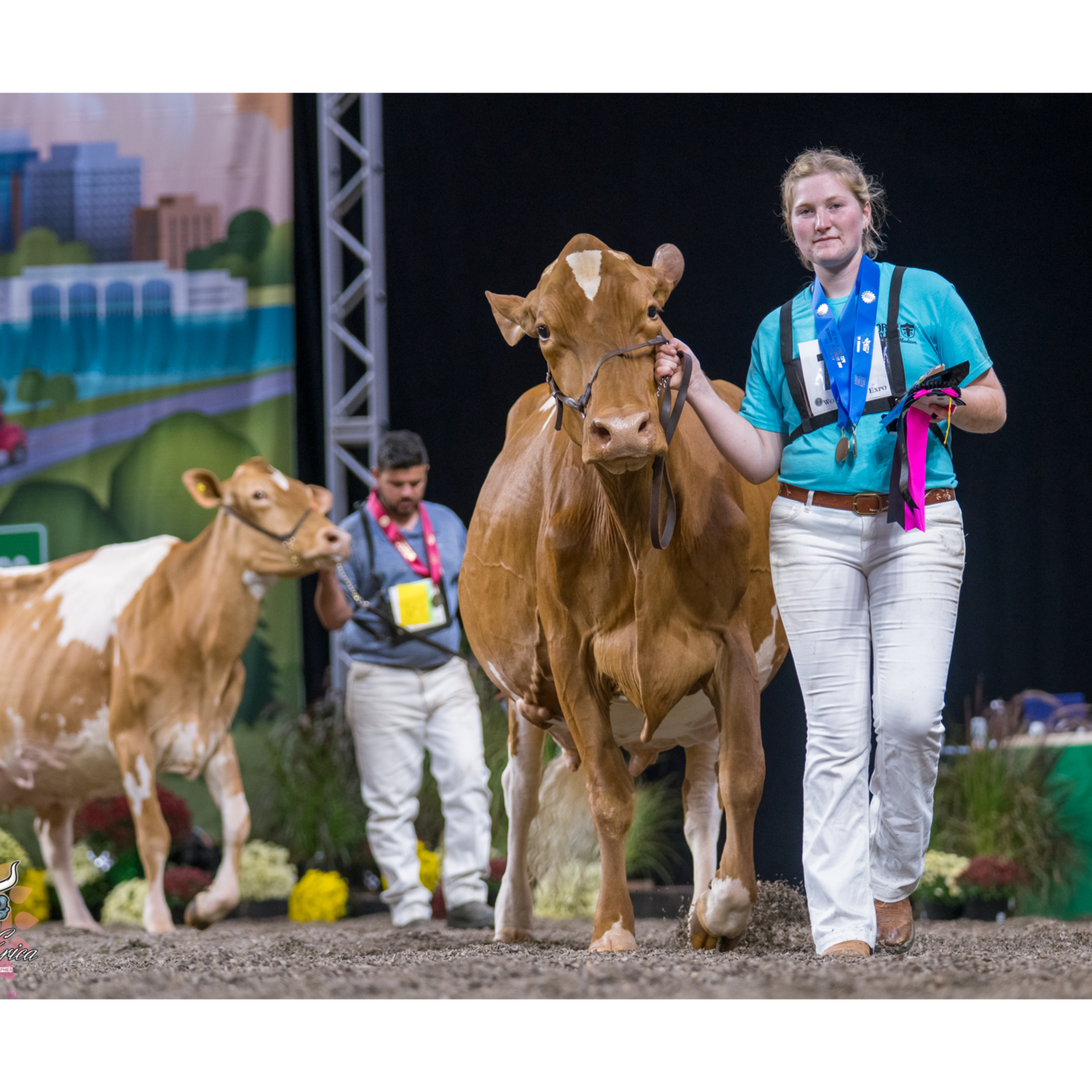
E379 The Kids Aren’t Coming – They Already Own Dairy’s Future (World Dairy Expo Proves It)
Think millennials and Gen Z are “the future” of dairy? Think again—at World Dairy Expo 2025, the new generation didn’t wait for their turn, they took control. In a year when juniors outperformed decades-long professionals in every metric that matters, this episode explores the data, the disruption, and what it means for profitability, talent, and the future of your herd. If you’re still betting that experience alone will keep you on top, you can’t afford to miss this bold, evidence-driven debrief.Key Takeaways:Discover how junior exhibitors outpaced seasoned pros to dominate open classes—and what’s fueling their meteoric rise.Unpack the numbers behind the $3,000+ heifer, and why longevity and functional genetics are now your best economic lever.Learn how the genomic revolution is leveling the field and rewriting what “success” means in the dairy show ring and on the farm.Decode the winning strategies from powerhouse youth programs, and why the smartest farms are hiring and partnering with these “kids.”Get industry-tested tips on how to future-proof your herd and avoid obsolescence as the next-gen workforce reshapes every corner of dairy.Deeper Dive – Why Listen: This episode dissects the seismic shift seen at World Dairy Expo 2025, with a spotlight on how junior exhibitors delivered a level of cattle quality—and professional showmanship—industry veterans couldn’t match. Listeners will hear how Judge Mark Rueth’s candid remarks, hard market data, and three consecutive collegiate championship wins by the University of Minnesota all signal that the old playbook is obsolete. Expect a no-nonsense analysis of skyrocketing replacement heifer costs, actionable takeaways from North America’s most aggressive youth breeding and judging programs, and a roadmap for leveraging genomic selection and mentorship to secure your competitive edge. Designed for producers, breeders, and agribusiness leaders who care about profitability as much as tradition, this episode leaves you with real strategies, not just rhetoric.Resources & Engagement: Don’t miss out—subscribe now to The Bullvine Podcast for more episodes packed with unfiltered industry insight, real numbers, and progressive strategies designed to keep your dairy business ahead of the curve. For referenced studies, supporting articles, and links to producer tools or featured interviews, visit https://www.thebullvine.com/news/the-kids-arent-coming-they-already-own-dairys-future-world-dairy-expo-proves-it/. Got questions, feedback, or bold ideas to share? Join the ongoing conversation on The Bullvine’s social platforms. Your future herd—and bottom line—just might depend on it.
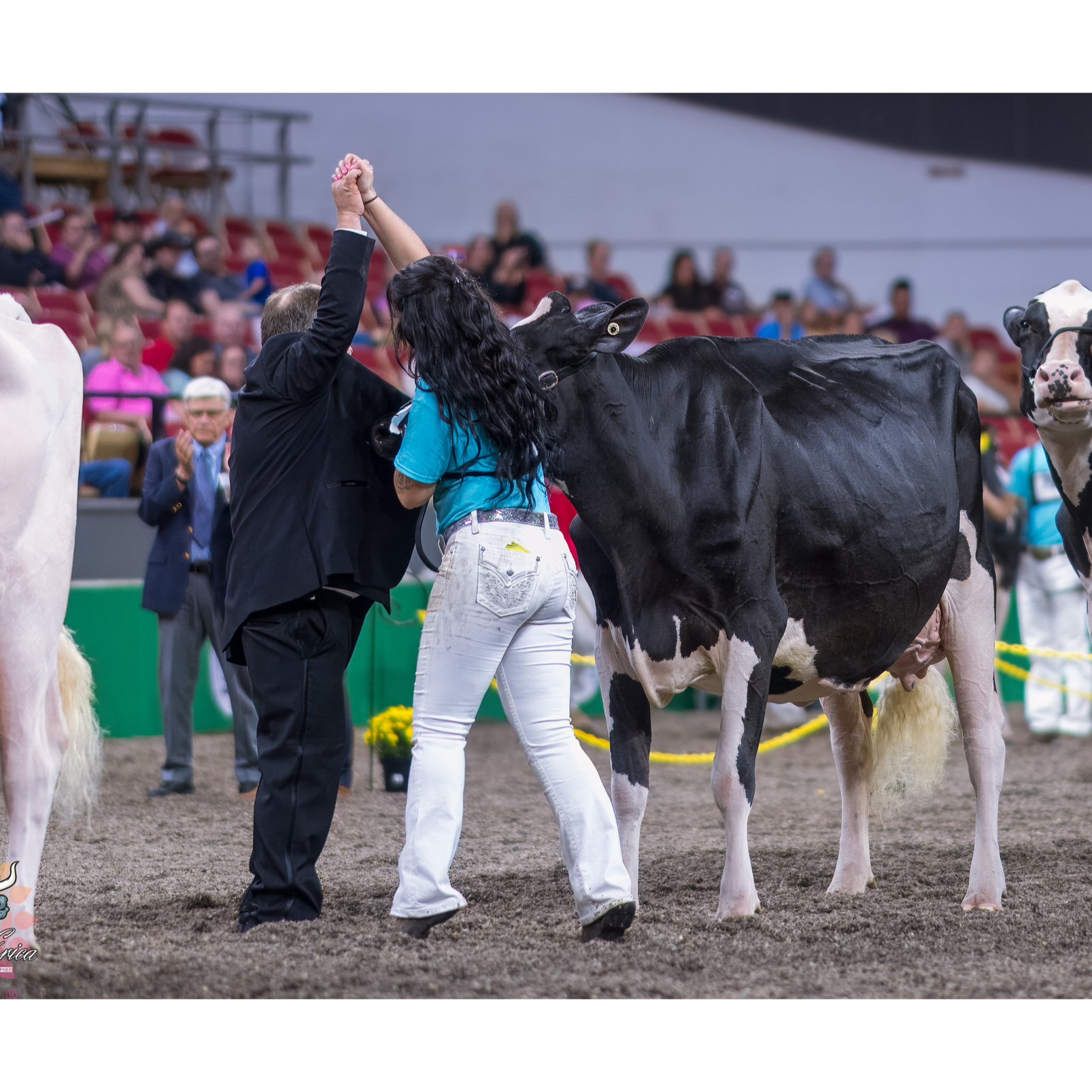
S1 Ep 378E378 Marathon Night at Madison: Holstein Junior Show Crowns Fifth-Calf Champion in Epic 11-Hour Battle
The Bullvine Podcast delivers bold, unfiltered analysis of the global dairy industry. Host Andrew Hunt cuts through the noise to bring you what really matters in dairy farming - from genetics and technology to market trends and controversial topics others won't touch. Each episode features in-depth coverage of major dairy events, exclusive interviews with industry leaders, and actionable insights for progressive dairy operations. Whether you're milking 50 cows or 5,000, The Bullvine gives you the information you need to stay ahead in the rapidly evolving dairy industry. New episodes drop weekly, with special daily coverage during major events like World Dairy Expo. Subscribe now for content that challenges conventional wisdom and drives the industry forward. See more at https://www.thebullvine.com/news/marathon-night-at-madison-holstein-junior-show-crowns-fifth-calf-champion-in-epic-11-hour-battle/

S1 Ep 377E377 Zimmerman and Branter Shine as Champions: Youth Showmanship and Fitting Take Center Stage at World Dairy Expo
Relive all the excitement from World Dairy Expo! In this highlights-packed episode, we recap the unforgettable day in Madison, Wisconsin. Hear how youth competitors stole the show, from William Zimmerman’s emotional Supreme Showman win to Wesley Branter’s fitting artistry and the crowd buzz that defined the event.We recap the top results, honor the mentors who’ve shaped the dairy community, and celebrate the future leaders of our industry. Plus: crowd reactions, standout moments, and behind-the-scenes energy from the Expo grounds.Whether you’re ringside or catching up from the farm, this episode brings you the passion, pride, and tradition of one of dairy’s biggest days. Don’t miss exclusive Expo insights and tomorrow’s must-see stories!Listen, subscribe, and stay passionate about dairying with The Bullvine Podcast.Highlights:Full rundown of youth showmanship and fitting winnersEmotional moments from William Zimmerman and Wesley BranterReserve honorees and division standoutsCommunity, legacy, and Expo atmosphereFor episode links, interviews, and bonus content, visit https://www.thebullvine.com/news/zimmerman-and-branter-shine-as-champions-youth-showmanship-and-fitting-take-center-stage-at-world-dairy-expo/

S1 Ep 376E376 The Integration Advantage: Why 58% of Producers Get Better ROI Building Tech Systems Than Buying Individual Equipment
Most farmers buy technology one piece at a time, then wonder why their ROI calculations never match their bank statements. But university research reveals a shocking truth: 58% of producers building integrated technology systems are seeing returns that individual equipment purchases simply can't deliver. This episode exposes the strategy that's quietly separating profitable operations from those still hoping their next equipment purchase will be the magic bullet.Key TakeawaysThe 58% Secret: Why integrated technology systems consistently outperform individual equipment purchases across milk production, labor efficiency, and management effectivenessThe Hidden 26% Reality: The invisible implementation costs that wreck technology budgets and how successful producers plan for themRegional Integration Strategies: How geography and scale determine whether you need integration for viability or optimization—and why Wisconsin operations face completely different priorities than Texas dairiesThe Three-Stage Framework: The proven 12-24 month implementation approach that prevents costly mistakes while maximizing returnsTechnology Readiness Assessment: How to distinguish between proven integration opportunities and promising concepts that aren't ready for your operationFinancing Method Impact: Why how you pay for technology can matter more than which brand you choose—and the grant opportunities most producers missSuccess Metrics Beyond ROI: The integration performance indicators that predict long-term profitability better than basic return calculationsDeeper Dive - Why ListenThis episode dissects groundbreaking research from the University of Tennessee and a comprehensive Animals journal study tracking real producer experiences with technology integration. While conventional wisdom pushes individual equipment purchases, the data reveals that operations approaching technology strategically are achieving labor cost reductions exceeding 21% and production gains that individual ROI calculations never predicted.We explore why a 150-cow Wisconsin dairy faces completely different integration priorities than a 2,500-cow Texas operation, and how geography fundamentally changes technology economics. The discussion reveals hidden implementation costs that add 20-30% to project budgets—expenses that often determine whether technology investments succeed or fail.Most importantly, this episode challenges the equipment dealer narrative by revealing financing approaches that fundamentally alter actual returns, state-by-state grant opportunities, and the vendor evaluation questions that expose whether systems will integrate effectively with your specific operation.Resources & EngagementSubscribe to The Bullvine Podcast for insights you won't find in mainstream ag media. Visit https://www.thebullvine.com/technology/the-integration-advantage-why-58-of-producers-get-better-roi-building-tech-systems-than-buying-individual-equipment/ for detailed analysis, research citations, and implementation resources referenced in this episode. Share your technology integration experiences and questions on our social media channels—your fellow producers want to learn from your successes and challenges. Don't let another equipment purchase disappoint your ROI expectations when proven integration strategies are available right now.

S1 Ep 375E375 From a $50 Calf to Dairy Royalty: The Peace & Plenty Legacy That Built a Holstein Empire
An 82-year-old Maryland farmer just shattered the dairy industry's most expensive myth: that you need genomic testing and million-dollar genetics to build championship cattle. The Schwartzbecks of Peace & Plenty Farm transformed a teenager's $50 Jersey calf into 181 Excellent Holsteins, a million-dollar sale, and the 2025 McKown Master Breeder Award—using observation and patience instead of algorithms. This episode reveals the contrarian breeding philosophy that's embarrassing tech-obsessed operations and proves why your best genetic investment might be sitting in your barn right now, not in a catalog.Key Takeaways:How ONE foundation female spawned an entire dynasty of excellence—without a single genomic testWhy "hungry cows milk" philosophy beats genomic predictions for consistent 24,000 lb production at 4.0% fatThe three-generation management structure that eliminates ego conflicts and maximizes consistencyWhy Peace & Plenty added IVF only AFTER mastering traditional selection—and what that timing revealsThe $125,100 land gamble that became a 1,100-acre empire producing 240 milking HolsteinsHow sharing breeding decisions between siblings creates better outcomes than solo expertiseWhy focusing on one cow family for 73 years beats diversification strategies every timeThe show ring achievements that validate commercial viability: 7 All-Americans from ONE bloodlineThis isn't another feel-good farm story. It's a data-backed dismantling of modern breeding dogma that could save you hundreds of thousands in unnecessary technology investments. The episode traces the Schwartzbecks' journey from hand-milking Jerseys in the 1950s to commanding $27,000 for a single heifer at their 2025 sale—all while industry "experts" said their approach was outdated.You'll discover how Peace & Plenty's Jubilant cow family produced seven All-American nominations in both 2023 and 2024, proving that patient line-breeding beats genomic gambling. The classification statistics alone will make you reconsider your entire breeding strategy: 181 Excellents including two at 95 points, ten at 94, and systematic excellence that genomic testing can't replicate.Most critically, this episode breaks down their "no pansy cows" selection criteria—focusing on feed aggression and longevity over trendy genomic scores. With input costs crushing margins and labor shortages threatening operations, their multi-generational collaboration model offers a proven alternative to corporate consolidation. You'll learn exactly how they structure family roles to eliminate conflict, why they prioritize fundamentals over technology, and how starting with just $50 proved that scale isn't destiny.Ready to challenge everything you've been told about breeding excellence? Subscribe to The Bullvine Podcast for weekly episodes that expose industry myths and deliver actionable strategies that actually work. Visit https://www.thebullvine.com/breeder-profiles/from-a-50-calf-to-dairy-royalty-the-peace-plenty-legacy-that-built-a-holstein-empire/ for the complete Peace & Plenty breeding philosophy breakdown, classification data analysis, and our exclusive guide to building genetic depth without genomic dependence. Join the conversation on social media using #NoGenomicsNeeded and share your own contrarian breeding successes.

S1 Ep 374E374 The Feed Tag Fine Print: 7 Nutrients That Actually Drive Calf Health
While most producers obsess over protein percentages, the real profit killers are hiding in the fine print of your feed tags. New research from leading agricultural universities reveals that seven specific nutrients—when delivered in the wrong form—are costing dairy operations an average of $400 per calf in treatment expenses and lost growth potential. This episode exposes the bioavailability scandal that feed companies don't want you to understand and provides a systematic approach to decoding feed tags that could transform your calf program economics. We're talking about absorption rate differences of 300% between cheap and premium mineral sources, and why your regional soil conditions determine whether your current nutrition strategy is building immunity or bankrupting your operation.Key Takeaways:Discover why organic selenium delivers 65% absorption while cheap sodium selenite manages only 22%—and what this means for your vaccination programsLearn to identify the "red flag" ingredients that signal inferior feed formulations, including the copper source that's essentially worthlessUnderstand the critical 2-4 week "immunity gap" when maternal protection fades but calf immunity isn't developed—and how targeted nutrition closes this windowExplore regional mineral antagonisms: why high-sulfur water areas need different copper strategies than iron-rich soil regionsCalculate the true cost comparison showing premium minerals save $140 per calf despite higher upfront feed costsMaster the feed tag decoder system that reveals which formulations actually deliver results versus marketing promisesThis episode breaks down groundbreaking nutritional immunology research that's reshaping how progressive producers approach calf nutrition. We examine data showing that calves receiving optimal levels of the "Magnificent Seven" nutrients in bioavailable forms demonstrate 20% fewer scours treatments and significantly smoother weaning transitions. The discussion includes shocking revelations about mineral absorption rates—copper oxide showing 8% bioavailability versus 32% for copper proteinate—and why these differences compound into massive cost variations across your calf crop.We explore the practical economics of this research, revealing how producers spending an additional $30 per calf on superior mineral sources are saving $140 in total expenses through reduced treatments and improved growth performance. The episode provides specific guidance on evaluating feed tags, including exact terminology to seek and avoid, plus regional customization strategies for operations dealing with common soil and water antagonists.Ready to transform your calf program economics? Subscribe to The Bullvine Podcast for more profit-focused dairy insights that challenge industry assumptions. Visit https://www.thebullvine.com/management/nutrition/the-feed-tag-fine-print-7-nutrients-that-actually-drive-calf-health/ for the complete feed tag decoder referenced in this episode, plus regional mineral challenge matrices customized for different geographic areas. Connect with us on social media to share your own feed evaluation discoveries and join the conversation about nutrition strategies that actually move the profit needle. Don't let another calf crop suffer from hidden nutritional deficiencies—the economics are too compelling to ignore.
S1 Ep 373E373 The Farnear Formula: How Strategic Thinking Built a Sixty-Year Dairy Dynasty
In 1960, Iowa farmer Joe Simon paid 5x more for semen than his neighbors—a decision that had them calling him financially reckless. Sixty-four years later, his family operation claimed two Premier Sires at World Dairy Expo, proving that strategic genetic investment isn't an expense—it's the foundation of generational wealth. This immersive documentary reveals how one family's controversial breeding philosophy revolutionized modern dairy genetics and why the most expensive mistake in dairy isn't what you spend on genetics—it's what you lose by not investing wisely.Key Takeaways:Why premium genetics cost 3-5x more upfront but deliver generational ROI that compounds over decades, not quartersHow genomic technology accelerated genetic progress by 300%, allowing selection at 6 months versus 4+ years of waitingThe hidden economics of why robotic dairies require functional perfection—and how superior genetics drive profitability directlyWhy betting on proven cow families like Apple and Lila Z outperforms trait chasing every timeThe strategic mindset that separates operations building dynasties from those managing declineDeeper Dive - Why Listen:This isn't another feel-good farm story—it's a masterclass in strategic thinking that challenges everything the industry teaches about "managing risk." Through exclusive access to the Simon family's breeding records and financial data spanning six decades, we reveal the mathematical reality behind genetic investment that most producers never calculate correctly.You'll discover how Joe Simon's controversial decision to mortgage his farm's future for premium genetics during the 1960s created competitive advantages that compound annually. When the 2008 financial crisis hit and neighbors scaled back, Farnear doubled down on the Apple family bloodline—a calculated risk that produced the 2021 All-American Production Cow and her champion offspring.The episode exposes the brutal mathematics of dairy genetics: it costs identical amounts to feed superior and average cattle, but the lifetime value gap exceeds $4,000 per animal. We analyze how modern genomic evaluations validate breeding principles established through intuition decades before the technology existed to prove them.Industry professionals will appreciate technical insights into how robotic milking systems have transformed functional trait priorities, making genetic decisions from the 1970s suddenly critical for 2025 operational success. Geneticists will understand how the Farnear breeding philosophy anticipated industry-wide adoption of balanced selection indexes by thirty years.Most importantly, you'll learn why conventional wisdom about "managing genetic costs" actually increases long-term expenses while limiting competitive positioning. The data reveals that operations investing 6-8% of production costs in premium genetics consistently outperform those prioritizing short-term cost management.Resources & Engagement:Subscribe to The Bullvine Podcast for more data-driven analysis challenging conventional dairy wisdom. Visit https://www.thebullvine.com/breeder-profiles/the-farnear-formula-how-strategic-thinking-built-a-sixty-year-dairy-dynasty/ for detailed breeding charts, genetic evaluation trends, and exclusive industry insights mentioned in this episode. Connect with us on social media to share how strategic genetic thinking is transforming your operation—and challenge the industry assumptions that limit your potential.
S1 Ep 372E372 The Survival Scorecard: Why Your Balance Sheet Might Not Be Telling the Real Story
While 76% of dairy producers are dealing with high stress levels and watching traditional financial metrics, the farms that'll survive this market shakeout are monitoring completely different warning signs—ones that appear 6-18 months before financial trouble hits. NIOSH data reveals dairy farmers experience depression at 35% rates versus 17% nationally, but here's the kicker: psychological stress is amplifying market volatility by 15-25% beyond pure economics. This episode exposes the 8-point diagnostic framework that predicts operational stress before it becomes financial crisis, revealing why operations scoring above 32 points show 95% survival probability while those below 16 points face systematic failure.Key Takeaways:Why corn at $4.20/bushel is masking production discipline failures and creating artificial market stability that won't lastThe shocking psychological patterns (anchoring bias, decision isolation, family breakdown) that are secretly driving your farm decisionsHow to use the 8-point operational health assessment to predict trouble 6-18 months before it hits your cash flowWhy technology underutilization signals psychological overwhelm that precedes poor financial decisions by 3-9 monthsRegional stress patterns creating profit opportunities—Upper Midwest operations hit breaking points 6-12 months earlier than Southern farmsThe counterintuitive reason operations under financial pressure abandon risk management tools when they need them mostHow family dynamics predict business survival better than debt ratios (when off-farm income exceeds 50%, failure probability jumps to 65%)Deeper Dive - Why Listen: This episode dismantles conventional wisdom about farm financial health by revealing that operational and psychological indicators consistently precede traditional financial trouble. Using verified research from NIOSH and American Farm Bureau, we explore how chronic overwork leads to decision fatigue that creates expensive mistakes, and why producers consistently working 70+ hours weekly show measurably poorer strategic thinking.The centerpiece is a revolutionary 8-point assessment covering maintenance standards, decision consultation patterns, family dynamics, work-life balance, technology utilization, risk management engagement, and personal health priorities. Each category includes specific scoring criteria that transform abstract concepts into measurable diagnostics.Most critically, you'll learn why successful operations maintain preventive maintenance schedules, consultation patterns, and family unity even during margin compression, while struggling farms abandon these practices precisely when they matter most.Resources & Engagement: Subscribe to The Bullvine Podcast for weekly insights that challenge industry orthodoxies and reveal profit opportunities others miss. Visit https://www.thebullvine.com/management/the-survival-scorecard-why-your-balance-sheet-might-not-be-telling-the-real-story/ to access the complete 8-point Survival Scorecard assessment tool, detailed scoring methodology, and supporting research data. Connect with us on social media to share your assessment results and join the conversation about leading indicators versus lagging financial metrics in dairy operations.

S1 Ep 371E371 When Breeding Genius Meets Perfect Timing: How Regancrest-PR Barbie Shaped the Future of Holstein Genetics
While most dairy producers chase the latest genomic superstar, one dead Holstein cow is quietly controlling your breeding decisions—and her genetics just commanded $1.5 million at auction. Regancrest-PR Barbie's descendants dominate 36% of today's elite PTAT rankings, proving that the industry's most valuable genetics didn't emerge from flashy AI marketing or genomic shortcuts, but from a systematic 50-year breeding strategy that most operations abandoned decades ago. This episode reveals how one Iowa family's methodical approach to genetic concentration created the most influential bloodline in modern Holstein breeding, and why understanding their "alignment of stars" strategy could transform your operation's genetic future.Key Takeaways:Discover why systematic linebreeding over eight generations outperforms genomic selection for creating lasting genetic valueLearn how 27 daughters ALL classified VG or better—achieving zero failures in genetic transmissionUnderstand why bulls like Gold Chip, Bradnick, and Cashcoin trace back to traditional bloodlines, not genomic labsExamine the economic data behind $1.5 million genetic sales and what drives these unprecedented valuationsExplore how concentrated excellence beats diversified breeding in creating market-dominating geneticsAnalyze the intersection of genomic technology and traditional breeding expertise for maximum genetic impactDeeper Dive - Why Listen: This episode challenges everything the AI industry tells you about genetic progress. Through immersive storytelling, you'll experience the 20-year journey that transformed a Reserve Grand Champion heifer into the most valuable genetic resource on earth. We examine previously unreported data showing how Barbie's "alignment of stars" pedigree—featuring Walkway Chief Mark three times—created genetic combinations that occur in less than 1% of the Holstein population.You'll discover why the genomic revolution amplified rather than replaced traditional genetic excellence, and how operations combining both approaches achieve genetic progress that neither method accomplishes alone. The episode reveals specific breeding strategies that created zero genetic failures across 27 daughters, and explains why today's top AI sires are grandsons of a cow most producers never heard of.For producers facing 2025's genetic base changes and rising inbreeding coefficients, this episode provides a roadmap for building lasting genetic value through systematic concentration rather than chasing genomic rankings. The economic analysis reveals why smart buyers pay premium prices for proven transmission ability over individual performance metrics.Resources & Engagement: Subscribe to The Bullvine Podcast for weekly episodes challenging conventional dairy wisdom with data-driven insights. Visit https://www.thebullvine.com/donor-profile/when-breeding-genius-meets-perfect-timing-how-regancrest-pr-barbie-shaped-the-future-of-holstein-genetics/ for additional analysis, genetic evaluation resources, and exclusive breeder profiles mentioned in this episode. Join the conversation on social media @TheBullvine and share your own breeding success stories using #BullvineGenetics.

S1 Ep 370E370 The $400 Million Corporate Scam Disguised as Climate Action: Why Most Dairy Farms Are in Their Crosshairs
Sustainability programs promise to save your farm and the planet, but our months-long investigation reveals the shocking truth: carbon credit schemes deliver only $55 per cow after promising $450, while corporate feed additives costing $93-110 annually achieve emission reductions you're already getting through rotational grazing at zero cost. This episode exposes the coordinated global strategy targeting independent dairy producers for systematic elimination while multinational corporations capture billions in "green" profits.Key TakeawaysDiscover why natural farming methods outperform expensive corporate solutions by 90% cost savingsLearn the "72-hour rule" that protects farms from predatory sustainability contractsUnderstand how the Global Dairy Platform coordinates 200+ organizations to control 40% of milk productionUncover the Dutch nitrogen policy blueprint being scaled globally to eliminate family farmsIdentify the six warning signs that corporate sustainability programs are targeting your operationMaster the documentation strategy that prevents corporations from claiming credit for your existing improvementsExplore how Australian producers achieve 30% premium pricing through direct marketing alternativesDeeper Dive - Why ListenCorporate greenwashing investigations reveal companies with the highest sustainability scores actually produce more pollution, while University of Wisconsin research proves organic operations achieve 24% lower emissions through pasture management alone. We expose how McKinsey consultants write agricultural policy for governments while advising corporations that profit from those same policies—the ultimate conflict of interest.The episode reveals Arla Foods' devastating investigation showing only 8.4% actual emission reductions despite massive marketing claims, while Brazilian researchers using machine learning detected systematic environmental deception across corporate sustainability programs. You'll discover why Ambient Carbon's "revolutionary" 90% methane destruction technology is validated by only one 250-cow Danish trial, yet Danone is already funding 30x larger North American systems.Most critically, we document the 2026-2028 tipping point when farmer resistance must reach critical mass or corporate consolidation becomes irreversible. The Netherlands' BBB farmers' party success proves organized resistance works—they went from 2019 startup to 2023 provincial election victory, fundamentally disrupting corporate-government coordination.Resources & EngagementThis investigation includes documented evidence, charts, and specific action steps available at https://www.thebullvine.com/management/sustainability/the-400-million-corporate-scam-disguised-as-climate-action-why-most-dairy-farms-are-in-their-crosshairs/. Subscribe to The Bullvine Podcast for fearless agricultural journalism that challenges industry orthodoxies while empowering independent producers. Share your experiences with sustainability programs on social media using #BullvineTruth—the corporate machine depends on farmers not understanding the real economics behind their elimination.

S1 Ep 369E369 When Your Best Cows Keep Getting Sick: Why Some Dairies Are “Jamming” Bacteria Instead of Killing Them
What if your mastitis treatments are actually feeding the problem? While the dairy industry continues losing $32 billion annually to bovine mastitis, progressive operations from California to Denmark are cutting hospital pen days by 64% and slashing antibiotic use with a revolutionary approach that targets bacterial communication instead of bacterial survival. This episode challenges everything you thought you knew about effective mastitis management and reveals why quorum sensing inhibition is becoming the competitive advantage smart producers can't afford to ignore.Key TakeawaysThe biofilm revelation: Why 60-80% of chronic mastitis cases fail traditional antibiotic treatment and how bacterial "fortresses" shield pathogens from conventional therapiesEconomic game-changer: Real farm data showing cost parity ($135 vs. $134 per case) with dramatically superior outcomes and zero withdrawal periodsRegulatory advantage: How EU bans and FDA restrictions are making alternative approaches essential for future compliance and profitabilityScience simplified: Understanding quorum sensing—the bacterial "phone system" that coordinates attacks and how disrupting it prevents coordinated infectionsImplementation roadmap: Practical strategies for identifying target groups, leveraging existing farm data, and building veterinary partnerships around preventionDeeper Dive - Why ListenThis episode delivers groundbreaking insights from over 125,000 dairy cows across multiple continents, featuring data from Michigan State University's economic analysis, Netherlands longevity studies tracking 64,467 animals, and real-world success stories from 2,000-cow California operations to 140-cow Danish farms.You'll discover how Trevor Nutcher eliminated intramammary mastitis tubes entirely while maintaining cost neutrality, how Dave Dekker achieved over 80% treatment profitability with an 81% SCC reduction, and why cows on quorum sensing inhibition protocols live 8.5 months longer—worth $3,447 per cow in replacement savings.The discussion reveals critical blind spots in traditional SCC monitoring, explains why stress hormones actually trigger bacterial attacks, and provides actionable protocols for dry-off management, fresh cow transitions, and chronic case resolution. Whether you're managing 200 cows or 2,000, this episode offers immediately applicable strategies that position your operation ahead of tightening regulations while improving both animal welfare and profitability.Resources & EngagementReady to revolutionize your mastitis management? Subscribe to The Bullvine Podcast for more cutting-edge dairy insights that challenge industry norms and drive real results. Visit https://www.thebullvine.com/management/when-your-best-cows-keep-getting-sick-why-some-dairies-are-jamming-bacteria-instead-of-killing-them/ for complete research data, implementation guides, and additional resources mentioned in this episode.Share your own mastitis management successes and challenges with our community on social media @TheBullvine—we want to hear how you're innovating on your operation. The future of profitable dairying starts with smart, science-backed decisions. Make your next move count.

S1 Ep 368E368 The New Math of Dairy Genetics: Why This Balanced Breeding Thing is Finally Clicking
For decades, dairy success was all about chasing single-trait stars—those top-ranking sires who promised record books and production glory. But what if those “best” bulls are quietly undermining your herd’s profitability and resilience? In this eye-opening episode of The Bullvine Podcast, we challenge the status quo and reveal how balanced, data-driven breeding is transforming the future of dairy herds. Get ready to reexamine what truly drives profitable, stress-free dairying in 2025.Key Takeaways:Discover why single-index and single-trait selection strategies can leave your herd—and your bottom line—exposed in today’s volatile industry.Unpack the power of Lactanet’s modernized LPI system and the game-changing “five-of-six rule” for selecting sires who deliver consistent, real-world results.Learn how leading producers are using genomic tools and multi-trait indexes to drive measurable improvements in herd health, fertility, and longevity.Explore the true costs, returns, and timeframes of transitioning to a balanced breeding strategy—see what the numbers actually say.Hear firsthand stories and expert insights on how balanced genetics are helping producers weather labor challenges, feed price shocks, and new demands for environmental and financial sustainability.Deeper Dive – Why Listen: This episode goes far beyond buzzwords, grounding every insight in hard data and direct producer experiences. We break down Table 3 from the latest Bullvine article to reveal the surprising number of “top” sires falling short in key genetic areas like fertility and health—critical weaknesses that can erode your profits over time. Expert findings from Dr. Christine Baes (University of Guelph), Dr. Alfons Weersink, and Dr. Dan Weary (UBC) shed scientific light on why a balanced, multi-index approach is the future of sustainable dairying.Listeners will learn exactly how to assess their herd’s genetic gap, implement systematic “no-holes-sire” selection, and leverage advancements like Semex’s groundbreaking genomic platform for maximum return. Real-world case studies from across Canada prove these strategies aren’t just theories—they’re boosting productivity, slashing vet bills, and making herds more resilient to labor and feed cost volatility. Thought-provoking, actionable, and unafraid to question industry traditions, this episode is essential listening for anyone who wants their dairy business to thrive—not just survive—in today’s changing landscape.Whether you’re a progressive producer, a genetics advisor, or ag industry stakeholder, this episode delivers critical knowledge and practical steps you can use right away.Resources & Engagement: Ready to revolutionize your approach to herd genetics? Subscribe to The Bullvine Podcast for regular episodes packed with data-driven insights and practical innovation. For full articles, resources, and cited studies from this episode, visit https://www.thebullvine.com/genetics/the-new-math-of-dairy-genetics-why-this-balanced-breeding-thing-is-finally-clicking/. Join the conversation and share your own experiences—connect with us on social media! Your questions, results, and feedback help drive the next evolution in dairy profitability.

S1 Ep 367E367 Is 2025 the Year Dairy Herd Software Delivers for Real Producers?
Is your digital dairy strategy putting real money in your pocket—or just collecting dust? In this episode, we throw out the hype and dive headfirst into what actually delivers hard-fought profits on today’s progressive dairies. With nearly 40% of U.S. dairy farms gone in just six years—but national milk output at all-time highs—the rules of survival and success have changed. We’re challenging every assumption about herd management software, exposing the gap between shiny tech promises and genuine barn-floor payback. Listen in if you’re ready to turn data into dollars and rethink the way innovation fuels your bottom line.Key Takeaways:Discover why bigger herds and automation aren’t just trends—they’re rewriting how profits are made in North America.Get the real numbers: which management platforms are truly saving up to 6 hours of labor per day and $30,000 in feed costs?Hear what top producers and industry insiders have learned about making technology pay off—for labor, health, and compliance.Find out why record-keeping is a make-or-break factor under Canada’s proAction and the U.S. FSMA.Learn the single most important step you can take before investing in new dairy tech.Challenge everything you thought you knew about software ROI, transparency, and the future shape of dairy business.Deeper Dive – Why Listen: We’re cutting through marketing spin with hard data, bold stories, and the latest research that shows precisely where technology delivers real results for today’s dairies—and where it falls short. You’ll hear how large herds are using robotics and integrated software not just for compliance, but to dominate the market, drive labor savings up to 35%, and turn smart logging into true profit. We break down the top 7 platforms North American producers are betting on—from DairyComp to SenseHub—ranking them not by features, but by their proven return on investment, adaptability to herd size, and resilience in volatile milk markets. This episode unpacks new global trends, like the rise of $5B in herd management tech, and what it means for producers who either adapt or fall behind. You’ll walk away with actionable strategies: how to pick the right platform for your operation, win big with grants and compliance (proAction, FSMA), and turn daily routines into long-term sustainability. With insights rooted in journal research, field trials, and real stories from the barn, this is your roadmap for outsmarting economic headwinds and rising industry expectations.Resources & Engagement: Ready to challenge the status quo in your own dairy? Subscribe now to The Bullvine Podcast—your smartest move for staying ahead in a changing industry. For links to articles, data sources, and our full analysis, visit https://www.thebullvine.com/technology/is-2025-the-year-dairy-herd-software-delivers-for-real-producers/. Join the conversation on social—share your own tech wins, questions, or war stories with #BullvinePodcast. Profit, innovation, and future-proof farming—all in one episode. Don’t miss it.

S1 Ep 366E366 The Holstein Genetics War: What Every Producer Needs to Know About the Battle for Our Breed’s Future
Are you ahead of the genetics curve—or at risk of breeding your way into a bottleneck? In this must-listen episode of The Bullvine Podcast, we pull back the curtain on the high-stakes conflict shaping the future of Holstein cows and the fortune—or fallout—of your dairy. Genomics has turbocharged progress, but the industry’s laser focus on quick gains and elite sires may have a looming cost: soaring inbreeding, tightened gene pools, and billions in hidden losses. Discover what’s really on the line, and how top producers are flipping risk into resilience for the next generation.Key Takeaways:Understand why annual Holstein inbreeding has skyrocketed from 5.7% to over 15%—and what that means for herd health, fertility, and your bottom line.Learn the economic consequences: How inbreeding is draining $3.6–6.7 billion from U.S. dairies and shrinking your profit per cow with every percentage increase.See why beef-on-dairy matings are both a short-term windfall and a long-term genetic threat, and how to leverage this trend without compromising herd viability.Compare the strategic secrets behind “hidden sires” and restricted bloodlines—both past and present—and how these shape who really wins in the AI marketplace.Get a direct comparison of North American vs. European (“outcross”) breeding models, and why some global herds are thriving with remarkable longevity and health.Discover proven, actionable steps—like genomic testing, diversified purchases, and smarter beef-on-dairy use—that can future-proof your breeding decisions now.Deeper Dive - Why Listen: This episode demystifies the ongoing battle between rapid genetic gain and the creeping costs of inbreeding. We dive into exclusive data from the CDCB, USDA, and real-world economic studies to break down the financial and practical impact of rising inbreeding, offering a wakeup call to dairies of every size. We dissect how major AI companies gain the upper hand with selective use of “hidden sires,” reveal the dangers of over-reliance on catalog-topping bulls, and lift the lid on the beef-on-dairy cycle that’s transforming not just the market, but the breed. We also spotlight contrasting philosophies: the high-output, high-risk American model, and the resilient, health-and-efficiency-fueled European co-op approach, showing what each approach delivers for components, longevity, and farm sustainability. Whether you’re a progressive producer, herd geneticist, or industry leader, you’ll get a powerful mix of cutting-edge insight and concrete action plans—so you can make science-backed, profit-driven choices for your operation.Resources & Engagement: For the charts, tables, and complete research referenced in this episode, visit https://www.thebullvine.com/genetics/the-holstein-genetics-war-what-every-producer-needs-to-know-about-the-battle-for-our-breeds-future/. Don’t miss out—subscribe to The Bullvine Podcast for more episodes packed with independent analysis and actionable guidance on dairy’s biggest challenges. Want to join the debate? Share your insights or questions on our website or social media channels, and help drive the genetics conversation that’s shaping your herd’s future.

S1 Ep 365E365 The Kid Who Forgot His White Pants: How Bert Stewart Became Dairy’s Greatest Showman Ever
What if a single purchasing decision at age 28 could reshape an entire industry's approach to genetic evaluation and cattle preparation? In 1960, when Bert Stewart convinced Angelo Agro to spend $4,500 on a nine-week-old calf named Sheffield Climax Pansy, most thought he was crazy. That "little thing" went on to produce offspring worth millions and establish breeding protocols still used today. This episode dissects Stewart's methodical rise from a nervous teenager who forgot his show clothes to the only person in history to lead 16 Grand Champions at the Royal Winter Fair—a record that stands unbroken 45 years later. His systematic approach to cattle evaluation, genetic selection, and youth development created a competitive advantage that modern producers can apply to maximize profitability in today's volatile markets.Key Takeaways:How Stewart's "calm confidence" philosophy reduced stress-related performance losses and improved cattle presentation by up to 84% win ratesThe economic impact of systematic genetic evaluation: turning $4,500 investments into multi-million dollar semen revenue streamsWhy Stewart's approach to judging based purely on functional anatomy and genetic merit—not politics—revolutionized industry standardsThe ROI of youth development programs: how investing in the next generation created lasting competitive advantages for entire operationsBreaking down Stewart's cattle selection criteria that consistently identified superior genetics before performance data proved their valueHow international showing expanded market opportunities and established premium pricing for Canadian genetics worldwideDeeper Dive - Why Listen: This isn't just another feel-good story about a successful showman. Stewart's career represents a masterclass in systematic business development that generated measurable economic impact across decades. When he purchased Sheffield Climax Pansy, he wasn't gambling—he was applying evaluation criteria that consistently identified genetic potential before others recognized it. The resulting bull, Agro Acres Unique, alone generated enough semen revenue to validate his entire selection philosophy.Stewart's international judging career across 16 countries created market access that helped establish Canadian genetics as the global gold standard, directly impacting export values that benefit today's producers. His development of the Canadian 4-H Classic and Ontario judging programs created systematic talent pipelines that continue producing industry leaders, judges, and successful operations.Most critically, Stewart's approach to preparation and presentation—emphasizing systematic conditioning over shortcuts—offers actionable strategies for modern producers facing increased competition and margin pressure. His 21-win-out-of-25-shows record with Sonwill Reflection Bee wasn't luck; it was the result of methodical preparation protocols that any operation can adapt.Resources & Engagement: Ready to apply systematic excellence to your operation? Subscribe to The Bullvine Podcast for more data-driven insights that challenge conventional wisdom and boost profitability. Visit https://www.thebullvine.com/breeder-profiles/the-kid-who-forgot-his-white-pants-how-bert-stewart-became-dairys-greatest-showman/ for detailed analysis, genetic evaluation tools, and exclusive industry reports mentioned in this episode. Share your thoughts on systematic cattle evaluation and youth development strategies—tag us on social media and join the conversation that's reshaping modern dairy genetics.

S1 Ep 364E364 The Future of Dairy: Lessons from World Dairy Expo 2025 Winners
Dive into breakthrough insights from the 2025 World Dairy Expo winners — the McCartys, Juan Moreno, and Jim Mulhern — as they challenge traditional thinking about what drives dairy profitability in today's volatile market. This episode unpacks innovative farm management, cutting-edge genetics, and impactful policy reforms shaping the future of dairy. Prepare to rethink your approach to farm success with data-driven strategies and bold perspectives.Key Takeaways:Discover how scalable success blends technology, sustainability, and workforce investmentUnderstand the economic and environmental impact of genomic testing and sexed semen advancementsLearn the tangible effects of dairy safety net programs and policy reforms on farm income stabilityExplore practical strategies like standardized protocols, genomic selection thresholds, and risk management toolsExamine upcoming challenges including market volatility, environmental pressure, and labor shortagesDeeper Dive - Why Listen: Join us as we unpack exclusive interviews and data revealing how the McCartys transformed their family farm into a 20,000-cow sustainable powerhouse through tech integration and workforce loyalty — achieving remarkable employee retention rates that boost productivity by 18-23%. Hear how Juan Moreno's genetic innovations are reshaping dairy breeding, delivering $75-150 annual returns per animal while reducing environmental impact through improved feed efficiency. Plus, learn from Jim Mulhern's enduring policy impact that has fortified safety nets covering 85% of U.S. milk production and distributed over $2 billion during market downturns. This episode offers actionable advice for farmers, geneticists, and industry professionals navigating today's complex dairy landscape with strategies that scale from 200-cow operations to mega-dairies.Resources & Engagement: Subscribe to The Bullvine Podcast for no-nonsense, data-driven dairy insights that challenge industry conventional wisdom. Visit https://www.thebullvine.com/show-reports/world-dairy-expo/the-future-of-dairy-lessons-from-world-dairy-expo-2025-winners/ to access supporting articles, research studies, and exclusive interviews discussed in this episode. Connect with us on social media @TheBullvine and share how these insights are influencing your farm or work. Your engagement helps drive the future of dairy innovation and profitability.

S1 Ep 363E363 The Feed Room Decision That Defines a Heifer’s Lifetime Value
What if the difference between a profitable heifer and an expensive disappointment comes down to something as simple as feed texture? In this game-changing episode of The Bullvine Podcast, we expose how the dairy industry's obsession with feed composition has blinded producers to the real driver of calf performance: physical feed structure. Armed with cutting-edge research from Cornell, Purdue, and international dairy leaders, we reveal why textured calf starters deliver up to 35% faster growth and add hundreds of dollars per heifer in lifetime milk production. This isn't just another nutrition discussion—it's a complete rethinking of how you build profitable dairy operations from day one.Key Takeaways:Discover how feed texture alone drives 15-25% higher intake and 20-35% faster pre-weaning growthLearn why volatile fatty acids like butyrate are the molecular architects of rumen development—and how texture controls their productionUnderstand the synergistic relationship between chemical stimulation and physical buffering that prevents costly acidosisExplore data showing textured starters add $200-$300 per heifer in first-lactation earningsMaster practical implementation strategies that maximize ROI while minimizing management complexityDeeper Dive - Why Listen: This episode dismantles decades of conventional wisdom by revealing the biological mechanisms that truly drive calf development. We dive deep into groundbreaking research showing how textured feeds create the perfect storm for rumen maturation: chemical signals from grain fermentation building absorptive papillae while physical texture stimulates crucial saliva production for pH buffering. You'll discover why the old "scratch factor" theory was dead wrong, and how modern science has identified the precise molecular pathways that textured starters activate. We analyze compelling international data comparing feeding strategies from intensive US/EU systems to pasture-based operations in New Zealand and Australia, revealing universal principles that apply regardless of your production model. The episode features actionable frameworks for implementing textured starter programs, complete with timing protocols, weaning criteria, and troubleshooting guides that progressive producers are already using to transform their operations.Resources & Engagement: Subscribe to The Bullvine Podcast on Apple Podcasts, Spotify, or your preferred platform to never miss cutting-edge dairy insights that drive real profitability. Visit https://www.thebullvine.com/management/nutrition/the-feed-room-decision-that-defines-a-heifers-lifetime-value/ for detailed show notes, research citations, and implementation guides referenced in this episode. Join the conversation with fellow progressive producers on social media using #BullvineInsights and share how you're revolutionizing your calf program. Don't just follow industry trends—create them with The Bullvine.

S1 Ep 362E362 Tirsvad Genetics: Breeding for Today, Betting on Tomorrow
Explore how Tirvad Genetics challenges traditional dairy breeding norms with a strategic blend of patience, biotechnology, and bold genetic decisions. This episode reveals how long-term investment in polled genetics, the legacy of foundational cows, and resistance to restrictive AI contracts are reshaping profitability and sustainability in modern dairying. Prepare to rethink your breeding program and learn actionable strategies that could transform your operation's bottom line.Key Takeaways:Why persisting with polled genetics can unlock hidden profitability amid changing consumer and regulatory landscapes.How the lineage of Claire EX-92 exemplifies the power of deep, stable genetic families over flash-in-the-pan stars.The value of measured breeding strategies that prioritize embryo harvest quality over rapid turnover.Implications of restrictive AI contracts on breeder autonomy and long-term diversity.How real-world partnerships drive innovation and resilience in elite herds.Lessons from international genetic exchanges enriching herd strength.Actionable advice for the next generation aiming to balance risk, innovation, and sustainability.Deeper Dive - Why Listen: In this episode, we dissect the journey of Tirvad Genetics, a phenom in Scandinavian dairying, known for its forward-looking stance on polled genetics and holistic breeding. We explore the enduring impact of Claire EX-92, a foundation cow whose legacy spans continents and powers elite genetics. We critically examine patient breeding versus the industry's fixation on accelerated generation turnover. We confront growing challenges from restrictive AI contracts threatening farmer control, diversity, and innovation. Listeners gain insights on leveraging technologies like IVF and MOET, integrating global pedigrees, and fostering collaboration. This episode equips dairy pros with data-driven frameworks to rethink and revamp breeding for profitability and resilience. Designed to challenge norms and inspire sustainable innovation.Resources & Engagement: Subscribe to the Bullvine Podcast for cutting-edge insights. Visit https://www.thebullvine.com/breeder-profiles/tirsvad-genetics-breeding-for-today-betting-on-tomorrow/ for detailed articles and data. Join the conversation on social media to connect with peers and professionals. Your feedback shapes future episodes. Engage and help drive profitable farming.

S1 Ep 361E361 Genetic Gatekeepers: The High-Stakes Gamble of Dairy’s Elite Bloodlines
The dairy industry's genomic revolution promised unprecedented gains—and delivered. Genetic progress doubled from $40 to $85 per cow annually, transforming efficiency across the globe. But beneath this success story lurks a crisis that's quietly draining operations nationwide. This episode exposes how genomic inbreeding has skyrocketed from 5% to over 15% in just fifteen years, creating a hidden tax of $23 per cow for every percentage point increase. We reveal how four major AI companies now control nearly 80% of elite genetics, using the same bloodlines sold under different names, and what this concentration means for your herd's future profitability.What You'll DiscoverHow genomic selection revolutionized breeding while accelerating genetic homogenization risksThe shocking market concentration where STgenetics commands 53.5% of genomic sire shareWhy a 500-cow herd at 12% inbreeding bleeds $80,500 annually compared to diverse herdsThe $420 million disaster of Pawnee Farm Arlinda Chief and lessons for today's breedersHow genomic F_ROH measurements reveal hidden inbreeding that pedigree tools missPortfolio breeding strategies: the 40-40-20 approach that balances profit with resilienceRegional challenges from Wisconsin's genetic uniformity to California's climate needsPolicy recommendations and cooperative models reshaping genetic governanceWhy This Episode Matters NowLeading researchers and industry insiders reveal the complex forces driving genetic concentration and its economic consequences. You'll understand why traditional breeding metrics underestimate current risks and how genomic tools are exposing alarming levels of hidden relatedness among elite sires. The episode breaks down contractual gatekeeping mechanisms—like VIP genetics programs—that create two-speed markets favoring elite breeders while narrowing options for commercial producers.Most critically, we provide actionable solutions. Learn the 30-day genetic audit process forward-thinking producers are implementing this season, including practical steps for calculating your herd's inbreeding tax, identifying outcross options, and setting genomic targets below 8%. Industry experts explain why the producers building genetic independence now will have the most resilient and profitable herds by 2030.Take ActionSubscribe to The Bullvine Podcast for cutting-edge dairy intelligence that challenges conventional wisdom. Visit https://www.thebullvine.com/a-i-industry/genetic-gatekeepers-the-high-stakes-gamble-of-dairys-elite-bloodlines/ for the complete investigative report, genetic audit worksheets, and additional resources referenced in this episode. Share this critical information with fellow producers and join the conversation on social media using #GeneticGatekeepers. The future of dairy genetics depends on informed decisions made today.

S1 Ep 360E360 Death of ‘Get Big or Get Out’? Why Tech-Savvy 500-Cow Dairies Are Outperforming Mega-Farms
In this groundbreaking episode, we challenge the long-held belief that bigger means better in dairy farming. Uncover why mid-sized dairies equipped with smart technology are not just surviving—they're thriving financially while mega-farms face mounting pressures. We reveal startling data on farm consolidation, profitability drivers, and the rise of a bifurcated economy. Prepare to rethink what scale really means for your operation's bottom line and learn the strategies that separate the winners from the rest.Key Takeaways:How has the rapid consolidation of dairy farms impacted production and profit distribution?What are the technological advances enabling mid-sized dairies to outperform mega-farms?Why does focusing solely on herd size ignore critical profitability factors like component optimization and operational agility?How do shifting consumer demands for transparency and sustainability create new market opportunities for smaller farms?What strategic choices must farmers and industry players make to thrive in the bifurcated futures of dairy?Deeper Dive - Why Listen: Join us as we dissect data from the USDA and Canadian agriculture stats demonstrating a profound bifurcation in North America's dairy industry, where mega-farms dominate commodity milk volumes but mid-sized operations capture disproportionate profit shares. Explore how robotics, cloud platforms like Milk Moovement and Ever.Ag, and advances in genetics empower farms to reduce costs and increase components—key profitability drivers. We delve into regulatory challenges, agility advantages, and strategic orientations. Guests and analyses offer actionable insights for producers, geneticists, and industry leaders.Resources & Engagement: Subscribe to the Bullvine Podcast for cutting-edge insights you can trust. Visit https://www.thebullvine.com/technology/death-of-get-big-or-get-out-why-tech-savvy-500-cow-dairies-are-outperforming-mega-farms/ for linked articles and resources. Join the conversation on social media—share experiences and questions. Your next strategic breakthrough could be one listen away.

S1 Ep 359E359 When Lightning Strikes: The Goldwyn Story That Changed Everything
What if everything you thought you knew about balancing show-ring genetics with commercial profitability was wrong? This episode dissects the Braedale Goldwyn phenomenon—a bull who shattered industry assumptions by dominating both elite competitions and commercial herds simultaneously. From a strategic $6,839 purchase in 1985 to daughters selling for $1.2 million, we explore how patient maternal line development created a genetic juggernaut that transformed semen into investment-grade assets. But here's the twist: Goldwyn's very success exposed critical flaws in breeding philosophy that modern producers ignore at their financial peril.Key Takeaways:How a 15-year maternal line strategy turned one auction purchase into a genetic dynasty worth millionsWhy Goldwyn's dual-market dominance model remains the blueprint for profitable breeding programsThe shocking economics behind $1,000-per-straw semen pricing and what it reveals about genetic asset valuationCritical analysis of genetic concentration risks: why 12% market saturation nearly compromised breed diversityHow Cholesterol Deficiency (HCD) carriers spread undetected and what it teaches about genomic screeningData-driven breakdown of the "tall cow penalty"—feed costs, fertility issues, and longevity challengesModern genomic integration strategies that combine traditional cow family development with precision breedingActionable frameworks for balancing aesthetics, production, and profitability in volatile marketsDeeper Dive - Why Listen: This episode features perspectives from leading geneticists and industry analysts who break down Goldwyn's unprecedented impact with hard data. Discover why his daughters' 85% Good Plus classification rate and 1,000+ Excellent scorers redefined breed standards, while genomic analysis reveals he transmitted 65% more genetic merit to daughters than sons—insights that reshape sire selection strategies today.We examine Cornell University research quantifying the economic reality of extreme type: $438 extra annual feed costs per tall cow, 26% higher dystocia rates, and 2.5 versus 3.2 average lactations. Industry experts explain how this data sparked the decisive shift toward balanced selection indexes prioritizing longevity and efficiency.The discussion challenges listeners to rethink breeding priorities in an era where sustainability metrics increasingly drive profitability. Learn how progressive operations now integrate genomic testing with proven maternal line frameworks to build resilient herds that thrive regardless of market volatility.Resources & Engagement: Subscribe to The Bullvine Podcast for provocative insights that challenge conventional dairy wisdom and drive profitable innovation. Visit https://www.thebullvine.com/sire-spotlight/when-lightning-strikes-the-goldwyn-story-that-changed-everything/ for complete show notes, research citations, and exclusive industry analysis. Join our social media community to share your breeding philosophy and connect with forward-thinking producers reshaping dairy genetics.

S1 Ep 358E358 The UK’s Sexed Semen Playbook: How UK Dairies Hit 84% While You’re Still Stuck at 50/50
What if I told you the future of profitable dairy genetics isn't a gamble anymore? In this episode, we dive deep into how British dairy farms have defied odds and industry norms to hit a staggering 84% adoption rate of sexed semen in 2024. Linking cutting-edge technology with strategic policy shifts, fueled by data-driven decisions, this conversation challenges traditional breeding practices and sheds light on tangible paths to maximizing farm profitability in 2025 and beyond. Tune in to uncover insights that may reshape your approach to genetic advancement.Key Takeaways:Explore how UK dairies leveraged policy incentives and market rewards to dominate sexed semen adoptionUnderstand the latest technology breakthroughs like enhanced 4M semen doses that transformed conception ratesUnpack the economic impact of beef-on-dairy crossbreeding and its role in boosting calf value amid market volatilityExamine critical readiness factors including conception rates, heat detection accuracy, and financial capacity before adoptionLearn proven strategies to manage genetic diversity and mitigate risks from sire concentrationDeeper Dive - Why Listen: Joining us is a leading expert in dairy reproductive technologies, who reveals how UK dairies have reimagined breeding strategies to drive both sustainability and profitability. We dissect the evolution from 'luxury tech' to core production tool, analyzing breakthrough research—from Teagasc trials showing near-parity conception rates to promising CRISPR gene-editing advances. We also examine how regulatory changes like the 2023 UK Animal Welfare Act forced a complete reimagination of surplus calf management, fundamentally reshaping breeding goals and market dynamics. Whether you're a dairy farmer or geneticist, this episode delivers data-driven guidance on transition strategies, measurable ROI impact, and maintaining genetic health for long-term herd success.Resources & Engagement: Subscribe to The Bullvine Podcast wherever you get your podcasts to stay ahead with hard-hitting dairy industry insights. Visit https://www.thebullvine.com/genetics/the-uks-sexed-semen-playbook-how-uk-dairies-hit-84-while-youre-still-stuck-at-50-50/ for complete show notes, additional articles, and resource links featured in this episode. Join the conversation on social media @thebullvine—we're your go-to source for dairy genetics and innovation.