PLAY PODCASTS
The Bullvine

The Bullvine

578 episodes — Page 3 of 12

S1 Ep 479E479 Diane Hendricks: She Wasn’t Allowed to Milk Cows. Now She’s Worth Over $20 Billion.

She grew up on a small Wisconsin dairy where the rules were clear: the boys milked cows and drove tractor—the girls did not. She watched decisions being made at the kitchen table, knew the numbers, understood the risk, and loved the business, but was never once treated like a future owner. Years later, that “farm daughter” would build a company worth more than many co-ops combined. This episode steps into that gap between what she could have been on the farm and what she became off it—and asks what your operation might be losing in the same blind spot.The Story You’ll Hear· The childhood chore list that quietly decided who was “management material” and who wasn’t· The moment she realised the farm she loved would never truly be hers—and what that did to her drive· Why she left dairy, and how those early barn lessons still shaped every tough call she made in business· The bets she placed that most “experts” said were reckless, and why they worked anyway· What it felt like to outgrow the expectations her own family and community had set for her· How building a multi‑billion‑dollar company still traces back to one belief: treat people like owners, not hired hands· The unspoken cost to the original farm—and to our industry—when someone like this has to leave to be taken seriously· A simple, uncomfortable question every farm family should ask at the kitchen table tonightThis isn’t just the story of one woman who left a dairy and built a massive business; it’s a mirror for every family that has ever assumed “the farm will go to the son” without saying it out loud. It speaks to geneticists trying to move an operation forward but stuck inside old decision hierarchies, to farm kids who feel capable but sidelined, and to owners who know transition planning keeps getting pushed to “someday.” Her journey exposes how culture, not just economics, shapes who gets a real shot at leading—and how much value quietly walks down the laneway when people with ownership potential aren’t invited in. Listeners will not only hear a powerful personal story; they’ll feel the tension between loyalty to tradition and the need to build a future that doesn’t waste talent.For more on this story and the research behind it, visit https://www.thebullvine.com/dairy-industry/diane-hendricks-she-wasnt-allowed-to-milk-cows-now-shes-worth-over-20-billion/ to read the full profile and related articles on succession, leadership, and the hidden economics of who gets a chance to own. Subscribe to The Bullvine Podcast so you don’t miss upcoming episodes that dig into the human decisions behind genetics, technology, and profitability. If this episode hits close to home, share it with your family or team—and if you see your own story in it, we’d love to hear from you on The Bullvine website and social channels.

Feb 2, 202627 min

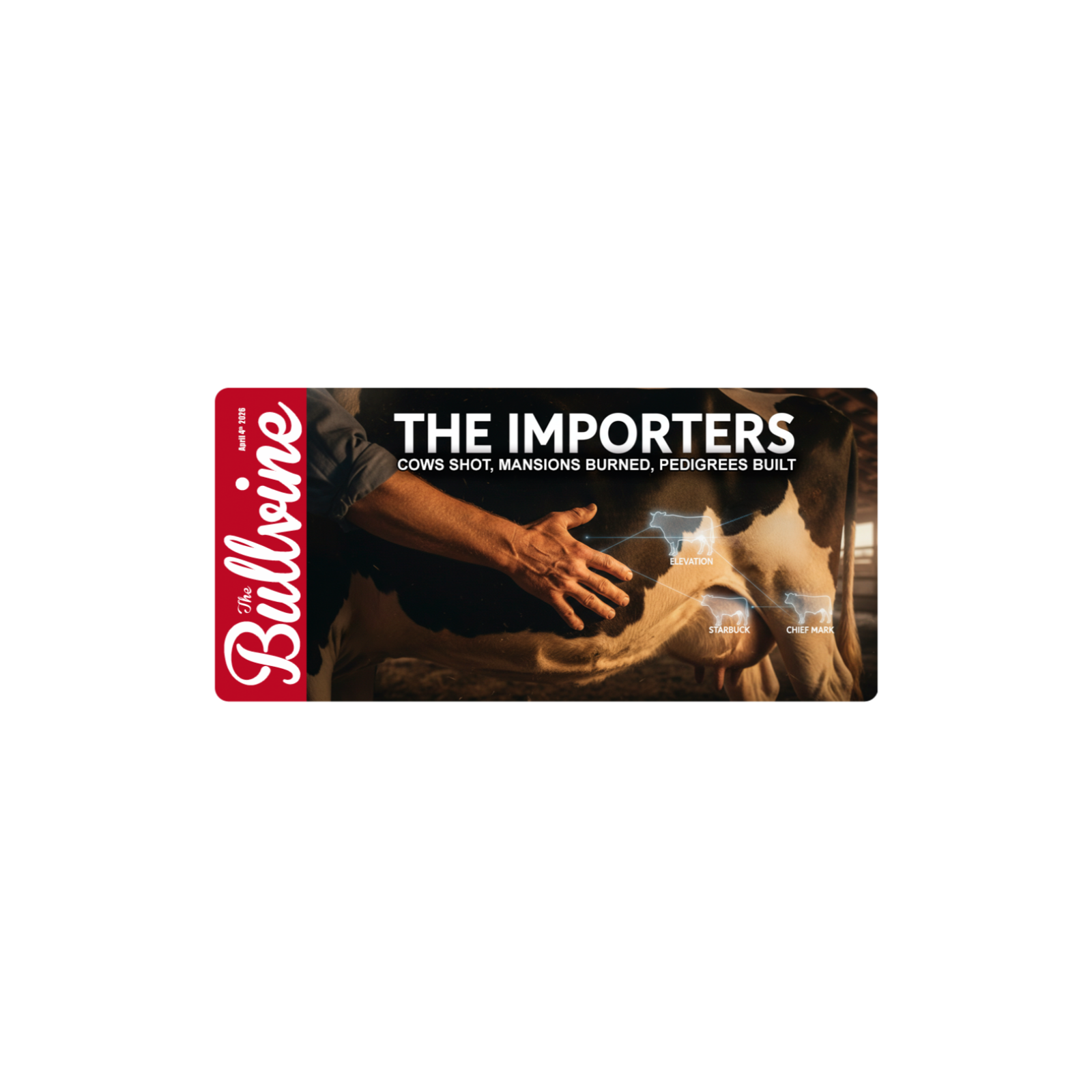
S1 Ep 478E478 The Importers: How 4 Visionaries in 30 Years Built the Foundation of Modern Holstein Genetics

Henry Stevens hadn't seen a cow in years. Illness had taken his sight in middle life. But every morning, he walked through his barn at Brookside Farm, running weathered fingers along toplines and udders, making breeding decisions that confounded rivals with perfect vision. His sons learned to trust their blind father's hands more than their own eyes. In 1912, a cow from his program became the first animal of any breed to produce 1,000 pounds of butterfat in a year. The blind man had seen further than anyone.This is the story of four visionaries who, in just 30 years, transformed an obscure Dutch dairy cow into the dominant force in global milk production. A Boston merchant who ordered replacement cattle the very day the government destroyed his herd. A reformer's grandson who walked his first Holsteins through October snow. Nurserymen who wanted manure for their orchards and accidentally changed an industry. And a blind farmer whose $6,000 gamble now echoes through approximately 7% of every Holstein on the planet.If you milk black-and-white cows, you milk their legacy. And this story will change how you think about the genetics in your barn.The Story You'll HearThe rum ship that docked in Boston Harbor in 1852—and the cow that changed everythingThe devastating cattle plague that destroyed one man's dream, and what he did the very same dayTwo buggies arriving at the same farmyard on the same afternoon—the founding moment of two dynastiesWhy fruit growers became the most important Holstein breeders in AmericaThe Madison Square Garden showdown where the Jersey trophy was pre-engraved—and what happened when the results came inThe bitter feud that tore a community apart but made the breed famousA blind man's hands finding what sighted eyes missedThe mansion fire that ended an era—and the legacy that survivedEvery mating decision you make builds on foundations these men laid 150 years ago. When you pull genomic proofs, you're tracing predictive power back to variation they established. When you check inbreeding coefficients pushing past 8-9%, you're navigating a genetic bottleneck that started in their barns.Subscribe to The Bullvine Podcast wherever you listen, and never miss a story that matters to your operation.Read the full feature article at https://www.thebullvine.com/breeder-profiles/the-importers-how-4-visionaries-in-30-years-built-the-foundation-of-modern-holstein-genetics/, including historical production records, traceable bloodlines to modern champions, and actionable insights for your 2026 breeding program.Have a story of your own? A mentor who changed everything, a decision that defined your herd, a moment when you saw something nobody else could? We want to hear it. Connect with us on social media or reach out through thebullvine.com.Because every registration number started with a handshake. Every great herd started with someone who believed.

Jan 31, 202629 min

S1 Ep 477E477 Dairy Farmers Face a 3.5x Higher Suicide Risk Than Farm Accidents – What Your Cows See First

Farmers are three-and-a-half times more likely to die by suicide than the general population, yet the industry still tracks every decimal of SCC while ignoring the metric that’s quietly taking out experienced operators. This episode cuts through the stigma and sentiment to look at farmer suicide as a hard business risk and a herd-health issue, not a side conversation. You’ll hear how stress shows up in your cows before it shows up in your charts, why the current economic math is pushing even strong dairies to the edge, and what a practical, numbers‑driven response actually looks like on farm.Key Takeaways* Why farmer suicide risk is 3.5x higher than the general population—and what the most credible data actually say.* How a 2021 robotic‑herd study links farmer stress directly to severe lameness, and why that matters to your bottom line.* The structural forces driving today’s mental‑health pressure: consolidation, tariff and policy shocks, labor costs, and succession dread.* How “off‑the‑books” suicides happen without a prior diagnosis—and why traditional mental‑health systems rarely catch farmers in time.* Concrete ways vets, nutritionists, and lenders become first‑line “mental‑health first aid” on the farms they already serve.* A simple, farm‑ready playbook: the 7/10 stress rule, what to watch for in your own data, and the exact question to ask when you’re worried about someone.This isn’t another vague “mental health matters” episode. It’s a hard look at suicide risk as an operational and strategic threat in modern dairy. We walk through the numbers that usually get buried: rural suicide trends, occupational death rates for agricultural managers, and how many farming‑related suicides never show up with a prior diagnosis or recent contact with the mental‑health system. Then we connect those numbers to something every serious dairy operator understands—herd data. You’ll hear how severe lameness, fresh‑cow problems, and slipping protocols often move in step with an owner’s stress level, and why lameness should be treated as both a welfare cost and a mental‑health KPI.The episode also unpacks the current economic squeeze with the same clarity you’d use for a capital‑purchase decision: long‑term attrition in states like Wisconsin, rising cost of production, realistic labor costs in the $30–35/hour range when everything is counted, and the psychological load of succession planning when there’s no clear next generation. Instead of stopping at diagnosis, we lay out what’s actually working: farmer‑specific counselling programs, telehealth and voucher models, peer‑support networks like Farmer Angel Network, and short, targeted trainings such as Mental Health First Aid and QPR that turn existing farm advisors into effective first responders. The goal is simple: give you enough data, context, and language to treat mental health with the same discipline you bring to reproduction, nutrition, and genetics.For links to the research, crisis resources, and The Bullvine feature article behind this episode, visit https://www.thebullvine.com/mental-health/dairy-farmers-face-a-3-5x-higher-suicide-risk-than-farm-accidents-what-your-cows-see-first/ and look for the full “Mental Health Is Herd Health” package. While you’re there, subscribe to The Bullvine’s free updates so you don’t miss future episodes that tie data, genetics, economics, and real‑world barn management together. If this conversation hits close to home—or if you’ve built something that’s working on your farm—join the discussion on The Bullvine’s social channels and Milkhouse community. Your experience, and your voice, might be exactly what keeps another producer in the barn lights.

Jan 30, 202630 min

S1 Ep 476E476 Where the Robots Hum and the Cows Stay Calm: The Four Oak Farms Way

It's 2 a.m. in July 2020. Marcus and Paige Dueck are standing in their tie-stall barn in rural Manitoba, staring at a machine they've never seen before—a rail-mounted robot that just rolled in from Quebec. The instructions are in French. The factory technicians are stuck at home because of COVID travel restrictions. And their newborn daughter is crying in the house.This was supposed to be the moment that changed everything. Instead, it felt like the moment that might break them."I took a deep breath and hoped we'd make it through the night," Paige remembers. "It definitely didn't feel like freedom at first."Five years later, their milk production is up 40%. They've won Manitoba's Outstanding Young Farmers award. And farmers across the Prairies are calling to ask how they did it.This is the story of what happens when you bet your family's future on something everyone says can't be done—and what it actually takes to prove them wrong.The Story You'll HearThe crossroads moment: a new baby, aging parents ready to step back, and a farm that couldn't afford to expandWhy they chose a technology no one in Western Canada had ever triedThe French instruction manual, the absent technicians, and the 72 hours that nearly broke themWhat Paige means when she says "we had to learn the robot's language"The unexpected reason they started replacing Holsteins with Brown Swiss—and it started with Marcus's mom falling in love at a cattle showHow milking three times a day changed everything without adding a single cowThe consulting business that grew from one favour for a neighbourPaige's horse-world connections and the German baler that turned hay into a safety netWhat the Outstanding Young Farmers application forced them to finally confrontThe conversation about "chasing size vs. chasing sanity" that every farm family needs to haveMarcus and Paige Dueck aren't industry celebrities. They're a young couple in their 30s running a mid-sized dairy near Kleefeld, Manitoba, trying to raise kids while keeping a family operation alive in an era when that's getting harder every year.Their story matters because it challenges one of dairy's most persistent assumptions: that you need a new free-stall barn, a bigger herd, or deep pockets to make robotics work. Four Oak Farms proves otherwise. They retrofitted an old tie-stall barn with a Quebec-built Robomax—a rail-mounted robot that travels stall to stall—and turned limitations into leverage.Subscribe to The Bullvine Podcast on Apple Podcasts, Spotify, or wherever you listen—and never miss a story that could change how you think about your operation.Read the full feature on Marcus and Paige Dueck at https://www.thebullvine.com/breeder-profiles/where-the-robots-hum-and-the-cows-stay-calm-the-four-oak-farms-way/, along with related articles on robotic milking, Brown Swiss genetics, and building diversified farm revenue streams.Got a story of your own? A moment that changed everything, a bet that paid off, or a lesson you learned the hard way? We want to hear it. Reach out on social media or email us through The Bullvine website. The best stories in dairy aren't always the biggest—they're the ones that make other farmers stop and think.

Jan 29, 202648 min

S1 Ep 475E475 38.8% Turnover Is Bleeding Dairies Dry. These Dairy Neighbours Turned Kitchen Tables into Labor Plans.

Dairy labor turnover now averages 38.8% a year in the U.S., quietly stripping profit, stability, and succession options out of herds that otherwise look “fine” on paper. This episode pulls apart the real economics of churn and then does what most industry talk doesn’t—it shows how progressive producers are rebuilding their labor models from the kitchen table out. If you’ve ever felt one resignation away from crisis, this conversation will challenge your assumptions about robots, wages, immigration, and “just hiring better people,” and give you practical models you can adapt on your own farm.Key Takeaways· Why a 38.8% turnover rate is not just a labor headache but a major hidden cost center for dairy operations of all sizes.· How to estimate the real cost of losing one experienced employee, including recruiting, retraining, SCC, repro, and cull-rate impacts.· Four community-driven labor models that are actually working on real farms—beyond “just pay more” or “just buy a robot.”· How immigration support circles and legal pathways can stabilize long‑term workers and protect the skills your herd depends on.· What separates successful robot transitions from expensive disappointments when it comes to labor relief and family quality of life.· How high-retention wage and housing strategies can reduce churn and build a crew that shows up for you—and your neighbours—when it counts.· The surprising role refugee and newcomer partnerships can play in solving chronic labor gaps in dairy regions.· A simple decision rule to know when your turnover is no longer “normal” and it’s time to redesign your labor strategy, not just repost the job ad.For deeper detail on the data and farm models discussed in this episode, visit https://www.thebullvine.com/management/38-8-turnover-is-bleeding-dairies-dry-these-dairy-neighbours-turned-kitchen-tables-into-labor-plans/ to read the full feature article and explore related resources on labor, automation, economics, and long-term herd strategy. While you’re there, subscribe to The Bullvine newsletter so you don’t miss future episodes and analysis that put real numbers behind dairy decisions.If this episode gives you something to think about for your own operation, subscribe to The Bullvine Podcast on your favorite platform and leave a rating so more producers can find it. Links to key articles and referenced studies are available on the episode page at TheBullvine.com. Join the conversation on social media by sharing how you’re tackling labor on your farm and tagging The Bullvine—your next idea or collaboration partner might start there.

Jan 28, 202632 min

S1 Ep 474E474 $30 Million, Co‑ops, and Genetic ROI: Who Really Keeps Your Dairy Barn Lights On

It's 1973, and New England dairy farmers just pulled off something that wasn't supposed to happen—$30 million in negotiated premiums in less than two years. Then they lost it all. Not to processors. Not to consumers. To each other, chasing nickels when they could have held out for dollars.This episode isn't about nostalgia. It's about a question you're facing right now, every time you look at a new milk contract: What does this do for my cash flow today—and what does it do to my community's bargaining power tomorrow?From a tired kid in a Connecticut vo-ag classroom to a widow who refused to let an AI company disappear into a candy merger, to a vet in Iowa who bet everything on embryo transfer when neighbours thought it was science fiction—these are the people who built the leverage, the genetics, and the communities that still decide which barns stay lit.By the end of this episode, you'll think differently about your next contract, your semen tank, and the people you'd call at 2 a.m. when everything goes sideways.The Story You'll Hear:The vo-ag teacher who closed the door after class and slid an economics book toward a kid who smelled like the barn—and changed 40 years of milk pricing in his regionWhy $30 million in hard-won premiums vanished, and the brutal lesson Louis Longo never forgotThe clause a candy company widow insisted on—and the day she walked into the president's office of an AI company no one expected her to runParachute semen drops into Indiana backyards, and the clothesline that got hit by mistakePigeons carrying thermoses of genetics across Japan—and why "fair" conception rates were a miracleThe 1980 Iowa bet on embryo transfer that became Trans Ova GeneticsThe question every producer should ask before signing their next milk contractThis episode is for anyone who's ever wondered whether showing up to one more co-op meeting actually matters, whether their genetics investments are paying off, or whether the "soft stuff"—neighbours, mentors, late-night phone calls—actually shows up on the balance sheet.Read the full article with the "nickels vs. dollars" contract framework and the 7-day community checklist at https://www.thebullvine.com/dairy-industry-professionals/30-million-co%e2%80%91ops-and-genetic-roi-who-really-keeps-your-dairy-barn-lights-on/Subscribe to The Bullvine Podcast so you never miss an episode. Share this one with a neighbour, a young farmer, or someone in your co-op who needs to hear it.Have a story about someone who kept your barn lights on? We want to hear it. Connect with us on social media or email [email protected].

Jan 27, 202632 min

S1 Ep 473E473 Only 16.5% of Dairy Farms Make It to the Third Generation – The Succession Decisions That Stop a Buyout from Killing Your Herd

Most dairy families say they want to keep the farm in the family. But the hard data tells a different story: only about 16.5% of family farms actually make it to a third generation of ownership. The culprit isn't a lack of love for the land or the cows—it's a succession model that was designed for a different era. When a traditional "equal shares at full appraised value" buyout loads $600–$750 of debt onto every cow in a business earning a 2% return on assets, you're not planning a transition. You're planning a dispersal in slow motion. This episode breaks down what the families who beat those odds actually do differently—and why most of the conventional wisdom around farm succession is quietly setting operations up to fail.Key Takeaways:Why the "30/13/3" family business survival rule matters for your dairy—and how Tennessee researchers arrived at the 16.5% third-generation figureHow a "fair" full-value buyout can consume nearly all of a herd's annual net return in debt service aloneThe timing decision that separates survivors from the rest: why starting in your 50s beats scrambling at 68Why off-farm experience for successors is an asset, not a threat—and what "absorptive capacity" research tells us about leadershipThe difference between building a leader and just giving more jobs to the person who never says noHow holding/operating company structures, staged buy-ins, and land-lease arrangements can align retirement, fairness, and herd survivalThe "fair vs. equal" conversation: tools like sweat equity recognition and life insurance that balance outcomes without crushing the farmWhy coordinated advisory teams—accountants, lawyers, lenders, and coaches in the same room—prevent six-figure mistakesNon-family succession options when there's no heir in the barn: land-link programs, staged leases, and the Transition Incentives ProgramThe full feature article with all the numbers, the seven-decision framework, and a downloadable action checklist is available at https://www.thebullvine.com/management/only-16-5-of-dairy-farms-make-it-to-the-third-generation-the-succession-decisions-that-stop-a-buyout-from-killing-your-herd/. Head there for links to the FINBIN data, FCC fairness articles, Teagasc resources, and Tennessee's succession workbook referenced in this episode.Subscribe to The Bullvine Podcast so you never miss an episode. Share this one with a fellow producer who's thinking about what comes next for their herd—sometimes the best thing you can do is give someone permission to start a hard conversation.Join the conversation on Facebook and let us know: Where are you in your succession journey? What's the biggest obstacle you're facing? We read every comment.

Jan 26, 202625 min

S1 Ep 472E472 Locked from the Inside: Dairy’s Darkest Crimes and the Weak Spots They Exploited

A barn is burning on a cold February morning. Holsteins are screaming inside, the doors are locked from within, and a Cadillac sits at the road with its engine running while sixty head die in the flames. A few decades later, a semen straw labeled “Roybrook Telstar” turns out to be dishwater—and an Angus calf hits the straw instead of a Holstein. Then a $7,500 cow gets insured for $250,000, and two showmen are dead by their own hands within a week. These aren’t urban legends; they’re real stories pulled from Holstein history. And once you’ve heard how they happened, you’ll never look at your own paperwork, partners, or policies the same way again.The Story You’ll HearThe barn fire where the doors were locked from the inside, the calves were insured for $50,000 each, and neighbors watched a Cadillac instead of a rescue.The “friendly” buyer at the lane who knew your cows better than you did—and cashed cheques on a town that didn’t even exist.The semen dealer who refilled high‑priced straws with dishwater and cheap semen, and how a single Angus calf blew open a $500,000 fraud.The county meat racket that turned deadstock and downers into stamped “Approved” meat—and how the renderers spotted it before regulators did.The Holstein trader whose eye for a cow built great herds—but whose hot cheques and rule‑bending forced everyone around him to pick a side.The big‑name breeder whose insured cows kept dying, the son who refused to sign a false claim, and the family that paid the price.The young showman who over‑insured three cows, chased banners he couldn’t afford, and ended up as a cautionary tale no one in the tanbark world can quite shake.Underneath all the drama, this episode is really about something every dairy person lives with: trust. Trust in the buyer at the lane, trust in the cheque, trust in the semen tank, trust in the inspector’s stamp, trust in the partner who says “sign here, I’ve got it handled.” These seven stories stretch from the 1920s to the 1990s, but the weak spots they expose haven’t moved much—paperwork nobody reads closely, values nobody dares question, and a culture that sometimes puts “he’s a good cow man” ahead of “is this actually safe for my business and my family.” Whether you’re running 60 cows or 6,000, grinding genetic spreadsheets or hauling milk to town, you’ll hear pieces of your own world in these cases. You’ll feel the tension in the kitchen‑table decisions, the sick feeling when the numbers don’t add up, and the quiet courage it takes to say “no” when everyone else wants you to look the other way. This isn’t just crime history—it’s a mirror for how we run our farms, our co‑ops, and our reputations.To dive deeper into the cases we talk about in this episode, read the full feature article “Locked from the Inside: Dairy’s Darkest Crimes and the Weak Spots They Exploited” at https://www.thebullvine.com/breeder-profiles/locked-from-the-inside-dairys-darkest-crimes-and-the-weak-spots-they-exploited/, where you’ll also find related articles, numbers, and tools to pressure‑test your own systems. If this episode hits close to home—or reminds you of a story from your own county—we’d love to hear from you. Subscribe to The Bullvine Podcast so you don’t miss future episodes, and connect with us on social to share your experience, your questions, or the moment you decided where your own line was.

Jan 24, 202633 min

S1 Ep 471E471 One ICE Raid. 35 Workers Gone. A New Mexico Dairy Learned What Community Really Means.

June 4, 2025, started like any other morning at Outlook Dairy in Lovington, New Mexico. Cows lined up. Units clanked on. Spanish and English mixed over the familiar hum of the parlor. By sunset, 35 of 55 workers were gone—detained or terminated in a single federal enforcement action. Production had effectively ceased. The owner's own words: "We're barely able to keep going."But this isn't a story about politics or policy. It's about what happened next. It's about the neighbours who showed up before anyone called, the teenagers who traded summer break for scraping alleys, and the quiet ways a community refused to let one farm carry the crisis alone.If you've ever wondered who would show up on your worst day—or whose call you'd answer—this episode will change how you think about the people around your operation.The Story You'll Hear:The morning everything changed—and the math every listener will do in their own headWhat "production effectively ceased" actually looks like when cows still need to be milkedThe 35 workers who weren't just labour—they were neighbours, parents, and friendsWhy the local feed mill, church, and grocery store all felt the shockwaveThe teenagers and office staff who suddenly became the crewWhat happened at a town hall when a governor, church leaders, and school staff sat in the same roomThe industry-wide reality no one wants to face: who actually milks America's cowsThe quiet, unglamorous acts of community that never made the news but changed everythingA kitchen-table question that every producer needs to answer before the next crisis hitsRead the full feature article and explore related resources on dairy labour, community resilience, and workforce planning at https://www.thebullvine.com/politics/one-ice-raid-35-workers-gone-a-new-mexico-dairy-learned-what-community-really-means/Subscribe to The Bullvine Podcast so you never miss an episode. New stories drop regularly—profiles, insights, and conversations that make dairy producers and the industry more profitable.Have a story about community showing up on your operation's hardest day? We want to hear it. Connect with us on Facebook, Instagram, or X, and share what neighbours mean on your lane. Your story might be the one that helps another producer feel less alone.

Jan 23, 202626 min

S1 Ep 470E470 ‘I Was So Jealous of the Dairy Princesses’: How Hailey Whitters Got Her Full-Circle Moment on a Working Dairy Farm

She was the kid in the baby blue trailer at the edge of an Iowa cornfield, standing at the fair fence line, watching the dairy princesses ride past on the float she’d never be allowed on. Her dad farmed corn and soybeans, not cows, so the crown—and the butter bust—were “never in the cards.” Two decades later, after twelve years of “not yet” in Nashville, that same “corn kid” walked into a working Land O’Lakes member dairy farm with a guitar on her back and cameras rolling. By the time she crouched down to talk to the calves and started playing to Holsteins with a cornfield behind them, it wasn’t a marketing gimmick anymore. It was a full‑circle moment that says as much about rural communities and dairy families as it does about one rising country star—and it might change how you think about your own legacy, whether your kids come back to the parlor or not.The Story You’ll HearThe moment a little girl at the county fair realized she’d never qualify as a dairy princess—and why that stung more than she let on.The baby blue trailer, the night shifts at the plant, and the kind of “keep showing up” work ethic that feels very familiar to anyone who’s ever milked through a bad year.The first trip to Nashville that made her feel like she’d landed on another planet—and the kitchen‑table conversation where she told her parents she was leaving anyway.Twelve years of closed doors, side jobs, and watching everyone else get the big breaks while the bills stacked up and the doubt got louder.The “Ten Year Town” moment when she almost walked away—and what pulled her back into the writing room instead.How a song about eminent domain and losing farms in western Iowa shook her—and why “Middle of America” sounds uncomfortably familiar if you’ve ever watched development creep toward your fenceline.The phone call that put her on a Land O’Lakes member dairy farm with a guitar, a camera crew, and a bunch of cows who didn’t care about charts or streaming numbers. What happened in the parlor and calf pens that proved she wasn’t just another celebrity tourist on a farm set.The quiet ways her hometown still shows up—texts, bar TVs, fairgrounds conversations—and how that mirrors the way dairy communities rally when the headlights line up in the lane.Three small, practical things any producer can do this year to keep their own community from fraying at the edges.On paper, Hailey Whitters is a country artist with a breakout record and a brand partnership. In reality, she’s a farm‑kid‑adjacent “corn queen” who grew up in the same kind of rural web that keeps a lot of dairies alive when the numbers say they shouldn’t be. Her story doesn’t dodge the hard parts: years of rejection that feel a lot like sending in another milk cheque that doesn’t quite cover everything, watching your peers seem to sprint ahead, wondering whether the life you’ve built is actually going anywhere.Read the full feature on Hailey Whitters’ dairy detour (https://www.thebullvine.com/dairy-industry/i-was-so-jealous-of-the-dairy-princesses-how-hailey-whitters-got-her-full-circle-moment-on-a-working-dairy-farm/), and explore more community‑driven stories from the barn aisle, visit thebullvine.com. While you’re there, you’ll find related articles on succession, mental health, and building stronger rural networks, plus tools to spark conversations in your own herd, family, or boardroom.

Jan 22, 202622 min

S1 Ep 469E469 How Your Ketosis Cut‑Point Is Leaking $25,000 a Year – And the Fresh Cow Playbook to Stop It

Most herds still treat the 1.2 mmol/L ketosis cut-point as a hard line: if a fresh cow tests over 1.2, she gets drenched—no questions asked. The problem is, the economics and the latest research strongly suggest that this blanket rule is quietly draining $25,000–$35,000 a year from a typical 500-cow herd while still missing the cows that matter most. In this episode of The Bullvine Podcast, we unpack why the “treat every cow over 1.2” strategy is outdated, how timing, parity, body condition, and system type completely change what a BHB number means, and what a modern, data-driven ketosis playbook looks like for herds that want both healthier fresh cows and stronger margins.Key Takeaways· Why the traditional 1.2 mmol/L subclinical ketosis cut-point was never designed to be a one-size-fits-all treatment trigger.· How realistic cost-per-case models turn “a few ketotic cows” into a $25,000–$35,000 annual hole in a 500-cow herd’s bottom line.· The crucial difference between a 1.3 reading on day 5 in a fat, fourth-lactation cow and the same 1.3 on day 15 in a high-output second-calver.· How global data on subclinical ketosis prevalence redefines what “normal” looks like—and why “normal” is often not good enough.· A practical, risk-based framework for deciding which cows to test, which cows to treat, and when to simply monitor and retest.· How to use rumination collars, milk components, and MIR-based ketosis risk traits as screening tools, not automatic treatment engines.· Why the biggest ketosis gains still come from transition fundamentals—body condition, stocking rate, bunk space, and cooling—not just more propylene glycol.· How emerging genetic tools like MIR-derived pHYK traits can help build “ketosis-resilient” cows over the next decade.If you’re ready to move beyond “treat every cow over 1.2” and build a ketosis strategy that actually protects your margins, this is an episode you don’t want to skip. For related articles, charts, and links to the research and economic models discussed, visit https://www.thebullvine.com/management/how-your-ketosis-cut%e2%80%91point-is-leaking-25000-a-year-and-the-fresh-cow-playbook-to-stop-it/ and search for the ketosis playbook feature.Subscribe to The Bullvine Podcast on Apple Podcasts so you never miss an episode focused on real numbers, real cows, and real-world profitability.Join the conversation on social media—share how you’re managing ketosis in your herd, what’s working, and where you’re still seeing challenges. Tag The Bullvine and let’s push the dairy industry forward together with data, innovation, and smarter fresh cow decisions.

Jan 21, 202625 min

S1 Ep 468E468 They Kept the Barn Lights On

The drought had already taken the cows. Then came the day the office closed and thirteen people waited to hear if they still had jobs. In another barn, a wife’s empty chair at the kitchen table made the next milking feel heavier than any pail. Somewhere else, a young breeder was told, “You’re not good enough,” by the very people who were supposed to believe in him. This episode drops you into those moments—when walking away would’ve been easier, maybe even smarter on paper—and follows the people who chose to stay, persist, or show up for someone else instead. Their choices will change how you think about resilience, loyalty, and what really keeps your own operation going.The Story You’ll Hear· The drought years that wiped out a herd—and the quiet promise to find a job for every last employee.· The phone call that turned “you’re done here” into the first step of a far bigger impact on the dairy world.· Why one husband walked back into the lab after losing the person who’d carried the home side of the farm for decades.· The moment a simple “come along with me” kept a young cow kid from leaving the industry entirely.· How a lifetime of small habits—Christmas cards, barn visits, late-night phone calls—added up to the kind of community you can’t put on a balance sheet.· What happens when genetics, research, and showring success are driven less by ego and more by a stubborn commitment to help the next person in line.This isn’t a highlight reel of trophies and titles; it’s a look at the parts of dairy we don’t usually say out loud—the doubts, the grief, the moments when the numbers say “quit” and the people around you say “keep going.” The episode follows National Dairy Shrine Pioneers whose lives stretched from ten cows milked by hand to global genetics, from small-town beginnings to research that changed human health. Their credentials are impressive, sure, but what makes their stories powerful is how they handled loss, risk, and responsibility when no one was watching.Whether you’re breeding the next generation of show winners, crunching data on fertility and health, or just trying to get chores done before the school bus arrives, you’ll hear yourself in these decisions: Who do you help when the pressure hits? How do you lead when you’re exhausted? Where do you find the courage to pivot instead of fold? This episode offers not just ideas you can steal for your own business, but also a gut-check on what success really means in an industry that never stops asking for more.When the drought, the diagnosis, or the market crash hits your farm, will the story people tell about you be that you protected your own position—or that you were the one who kept the barn lights on for everyone else?For more on the people featured in this episode, visit https://www.thebullvine.com/breeder-profiles/they-kept-the-barn-lights-on/ to read the full written profiles and dig into related articles, insights, and resources that build on the themes you’ll hear today. If this conversation hits close to home, subscribe or follow The Bullvine Podcast on Apple Podcasts and wherever you listen so you don’t miss upcoming stories. And if you’ve lived your own version of this journey, share it with us—reach out through The Bullvine website or connect on social media. Your story might be the one that keeps someone else’s barn lights on.

Jan 20, 202625 min

S1 Ep 467E467 Stop Breeding by Color: Genomics, Heat Stress and Beef‑on‑Dairy Math That Can Add Over $4/cwt to Holstein Margins

Most of us were taught to trust our eye and our “kind” when picking Holstein heifers. But what if breeding by coat color and style is quietly costing you real money in 2025? In this episode of The Bullvine Podcast, we dig into genomic data, heat-stress research, and beef-on-dairy economics that challenge some of the most deeply held assumptions in dairy breeding. You’ll hear how the genes that control color are not the genes that drive milk and fertility, why genomic selection has doubled genetic gain while accelerating inbreeding, and how a smarter semen and replacement strategy can unlock more than $4 per hundredweight in some herds.Key Takeaways· Why pigment genes like MC1R and COPA have almost nothing to do with the main milk and fertility loci driving Net Merit, Pro$ and other profit indexes.· How genomic selection cut sire generation intervals nearly in half and doubled genetic progress in Holsteins—while also pushing genomic inbreeding and ROH higher each year.· Where coat color really does matter: the impact of darker coats on heat load, THI, milk yield, and components in hot climates and dry-lot systems.· How 2025 beef-on-dairy modelling shows cull cows and beef-on-dairy calves can contribute $4+/cwt to margins in well-managed herds, changing the math on which cows get beef semen.· A practical, step-by-step breeding playbook: one-year “test every heifer” genomics, using a single economic index as your compass, genomic mating to manage inbreeding, and aligning sexed Holstein vs beef semen with true replacement needs.· Why your eye is still essential—but as a fresh-cow and daily management tool—while genomics and economics take over more of the long-term selection decisions.For show notes, links to the featured research, and the full Bullvine feature article behind this episode, visit https://www.thebullvine.com/genetics/stop-breeding-by-color-genomics-heat-stress-and-beef%e2%80%91on%e2%80%91dairy-math-that-can-add-over-4-cwt-to-holstein-margins/. If you’re serious about genetics, margins, and staying ahead of the next wave of dairy innovation, make sure you follow The Bullvine Podcast on Apple Podcasts and your preferred platform. Share your thoughts, questions, and on-farm experiences with genomics, heat stress and beef-on-dairy on our social channels—tag The Bullvine on Facebook and X so your ideas can shape future episodes.

Jan 19, 202622 min

S1 Ep 466E466 Snowboots Wis Milky Way: From Gunny Sack Calf to Everyone’s Favorite Brood Cow

Picture this: a two‑month‑old heifer shoved into a gunny sack, riding home on the back seat of a car from a Kansas wheat farm. She’d just sold for seventy‑five dollars in a package deal, placed 21st out of 22 the first time she ever hit a show ring, and almost stayed a 4‑H project no one outside the county fair would remember. That calf became Snowboots Wis Milky Way—EX‑97‑3E‑GMD—and the brood cow behind one of the most influential sires of the 20th century. This episode walks through the decisions, risks, and near‑misses that turned “just another heifer” into a cow whose influence still runs through modern pedigrees—and it might change how you look at the cows standing in your own pen tonight.The Story You’ll HearThe local district show where Snowboots placed second‑last—and why that didn’t stop one breeder from seeing something everyone else missed.The sleepless night a Kansas dairyman spent deciding whether to sell the best cow he’d ever owned, and the reason he finally let her go.The moment Snowboots walked into Paclamar and stood stall‑to‑stall with Harborcrest Rose Milly, setting up one of the greatest two‑cow lineups the Holstein breed has ever seen.The day Paclamar took both Grand and Reserve at Waterloo—and how it felt in the ring when “the old friend” was still winning at nearly twelve years of age.The breeding decision that made no sense on paper: mating one of the top cows in the breed to an unproven young bull, simply because the cow families “felt right.”The dispersal where Bootmaker didn’t impress at first glance, and why the early daughters nearly scared his biggest supporters away.How those same daughters quietly turned into 100 Gold Medal Dams, anchoring cow families from Colorado to Europe.The night Snowboots died in her box stall—no drama, no struggle—and what the people who worked with her every day still say about her temperament and heart.The Italian branch of the family: the Snowboots granddaughter who sold for $20,000, crossed the ocean, and produced a three‑time national champion.The Bigger Question - If a $75 heifer in a gunny sack could end up shaping cow families and sire summaries for decades, what might you be walking past in your own barn today because it doesn’t fit the current fashion or the latest index?To dive deeper into Snowboots Wis Milky Way, Paclamar Bootmaker, and the cow families featured in this episode, visit https://www.thebullvine.com/donor-profile/snowboots-wis-milky-way-from-gunny-sack-calf-to-everyones-favorite-brood-cow/ for the full written profile, photos, and related articles. While you’re there, subscribe to The Bullvine Podcast so you never miss a story that challenges how you think about cows, breeding, and the future of your herd.Have a brood cow, bull, or breeder story you think the industry needs to hear? Share it with us on The Bullvine’s social channels and keep the conversation going.

Jan 17, 202627 min

E465 Unlock $700 Per Cow: The Rumen Microbiome Strategy That Fixes Hidden Feed Efficiency Losses.

Your ration balances perfectly on paper. Your genetics are proven. So why does the bulk tank keep coming up short? A groundbreaking 2024 AI study reveals that the rumen microbiome—not your feed ingredients—accounts for 36% of the variation in feed efficiency among Holstein cows. That's a factor as powerful as genetics and diet combined, yet most operations aren't managing it. This episode exposes the three everyday management gaps quietly draining your tank and lays out a four-phase playbook that progressive herds are using to recover $500–700 per cow annually. If you've ever blamed the ration when the real problem was the routine, this is the episode that changes how you think about feeding cows.Key TakeawaysWhy the rumen microbiome now rivals genetics and ration formulation as a driver of feed efficiency—and what that means for your marginsThe "Saturday Morning Problem": How weekend feed-time drift and overnight bunk gaps cost 3.5 lb of DMI and 7.9 lb of milk per cow per dayTMR dry matter swings: The silent profit thief nobody tests often enoughParticle size and sorting: Why your cows may be eating three different rations from the same bunkThe four-phase microbiome-aware playbook: timing, physical ration, DM checks, then additives—in that orderWhy live yeast and buffers can't fix bad timing or a sortable rationReal economics: Modeling $500,000–700,000 in recoverable margin on a 1,000-cow herdHow this approach scales from 80-cow tiestalls to 8,000-cow dry lot systemsThis episode challenges the assumption that a balanced ration equals optimized performance. Drawing on peer-reviewed research from UC Davis, Penn State extension data, and real-world herd observations, we break down exactly how inconsistent feeding routines destabilize the microbial communities inside your cows—and what that instability costs in milk, butterfat, and dollars.You'll hear how a 10-hour overnight feed gap triggers slug-feeding behavior that crashes rumen pH and washes out fiber-digesting bacteria. We quantify what happens when TMR moisture drifts unnoticed and when cows sort around long particles to eat a starch-heavy diet you never intended.More importantly, we deliver a clear, phased action plan. Phase 1: tighten feed delivery and push-ups. Phase 2: tune particle size with the Penn State Separator. Phase 3: make weekly DM checks routine. Phase 4: layer in live yeast as a fine-tuning tool—not a band-aid.The economic modeling is specific and conservative. Even capturing half the projected upside represents a six-figure annual swing for larger operations. For smaller family herds, the per-cow math is identical—and the advantage is that you're already walking the alleys every day.We also address where this approach goes wrong: partial implementation, overestimating labor capacity, and expecting additives to solve structural problems. This isn't theory. It's a prioritization framework built on data that helps you decide where your next management tweak should be.Ready to put this into action? Visit https://www.thebullvine.com/management/nutrition/unlock-700-per-cow-the-rumen-microbiome-strategy-that-fixes-hidden-feed-efficiency-losses/ to read the full feature article, download the practical starting checklist, and access links to the research cited in this episode.

Jan 16, 202639 min

S1 Ep 464E464 Same Tag, Different Feed: The Molasses Problem Your Calves Can’t Tell You About

Your calf starter's guaranteed analysis says "molasses." What it doesn't say is whether this batch contains 39% sugar or 67%—a swing documented in peer-reviewed research that represents one of the widest compositional variances in animal nutrition. This episode challenges a dangerous assumption most producers make: that identical feed tags deliver identical nutrition. They don't. And for operations investing $5-6 per day raising replacement heifers, that hidden variability may be the difference between calves that survive and calves that thrive. If you've ever noticed performance dips that don't match management changes, unexplained intake variability, or inconsistent weaning results—this episode reveals what might actually be driving those patterns.Key Takeaways:Why molasses sucrose content can swing 28 percentage points between batches—and what that means for rumen developmentThe functional differences between cane and beet molasses that feed tags never specifyHow DCAD variability in molasses affects calves differently than mature cows—and why their limited buffering capacity mattersThe subtle performance indicators that signal ingredient inconsistency before clinical problems appearFive specific questions to ask your feed supplier that reveal their true commitment to qualityA 90-day monitoring approach to identify variability effects without waiting for first-lactation dataThe economic case for ingredient consistency: calculating hidden costs most producers never trackWhy the supply chain makes consistency challenging—and what "Fixed-Process Assurance" actually meansThis episode dissects research from the Journal of Dairy Science (Palmonari et al., 2020) that systematically characterized molasses samples from suppliers worldwide. The findings are striking: crude protein ranges from 2.2% to 15.6% depending on source, potassium varies nearly threefold, and DCAD swings over 200 milliequivalents between batches.But here's what makes this episode essential listening: we connect the science to your calf barn. At typical inclusion rates of 5-7% of starter dry matter, these swings won't cause dramatic clinical crises. Instead, they manifest as the subtle inconsistencies that frustrate calf managers—intake curves that fluctuate after new deliveries, variable manure in older hutch calves, uneven weaning performance.We examine field observations from Upper Midwest dairies where tracking feed deliveries against calf metrics revealed performance dips aligning with new starter batches—often because molasses sources changed without notification. Operations that switched to fixed-formulation starters reported smoother intake curves and more predictable outcomes.The complete article with all research citations, comparison tables, and the full supplier question framework is available at https://www.thebullvine.com/management/nutrition/same-tag-different-feed-the-molasses-problem-your-calves-cant-tell-you-about/. Search "Same Tag Different Feed" or check the show notes for direct links.Share this episode with your nutritionist, calf manager, or feed rep. Tag us on social media with your thoughts: Are you tracking feed deliveries against calf performance? What patterns have you noticed?The Bullvine – Because satisfactory satisfies no one.

Jan 15, 202631 min

S1 Ep 463E463 The Decade Rule: Francisco Rodriguez on Breeding Champions

In 2006, Francisco Rodriguez didn't own a single registered cow. He was a kid from the Colombian hills who fell asleep studying North American bull catalogues, dreaming of championships he had no business chasing. Seventeen years later, cars were honking and crowds were literally chanting his cow's name as Shakira claimed Supreme Champion at World Dairy Expo. But standing there on the colored shavings, Francisco wasn't thinking about the banner. He was thinking about his wife's words a few years earlier: "Francisco, I'm done." This is the story of a man who learned that breeding world-class cows and building a world-class life require the same thing—patience measured in decades, not proof runs. And it might change how you think about what you're really building.The Story You'll Hear:The moment a young vet walked away from a safe career to start a herd with 10 cows and a dream his neighbors thought was crazyWhy he spent years memorizing cow families before he could afford to own one—and how that obsession became his edgeThe car ride with a Canadian Holstein legend that gave him the only breeding advice he'd ever needHow a single mating decision in 2014 launched a ten-year journey to the Supreme bannerThe phone call from his wife that forced him to choose between his ambition and his familyWhat Michael Jordan taught him about success—and why he now refuses to let business consume more than 25% of his lifeThe "shower moment" in Colombia when watching his next champion win finally gave him language for what he'd been living all alongWhy he believes embryos are transformation and semen is evolution—and what that means for your herd's next decadeFrancisco Rodriguez isn't just a breeder who got lucky with one cow. He's a fifth-generation cattleman who built Colganados from 10 cows to 400, bred roughly half of Colombia's national champions in the last decade, co-founded a tropical genetics company now operating across three continents, and still nearly watched his marriage collapse because he couldn't stop chasing the next win.His story matters because it's the story every ambitious producer is living in some version right now—grinding through tight margins, heat stress, processor uncertainty, and the quiet question of whether any of it is actually building toward something that lasts.In a year when GLP-1 drugs are reshaping demand, heat waves are costing farms real milk every July, and processors are getting pickier about who they keep, Francisco's "Decade Rule" isn't just philosophy. It's a survival framework for anyone asking: Am I breeding for the next ribbon, or for the next ten years?You'll hear how he balances genomics with old-school eye, why he line-breeds to Apple without losing sleep, and how his 25-25-25-25 life framework—You, God, Relationships, Create—pulled his family back from the edge.Subscribe to The Bullvine Podcast wherever you listen, and head to https://www.thebullvine.com/breeder-profiles/the-decade-rule-francisco-rodriguez-on-breeding-champions/ to read the full feature article on Francisco Rodriguez and the Decade Rule. You'll find the complete timeline from Shakira to Marsella, his breeding philosophy in detail, and exclusive photos from Colombia to Madison.Because the best stories in this industry aren't just about cows. They're about the people stubborn enough to keep believing in them.

Jan 14, 20261h 2m

S1 Ep 462E462 The Bullvine Dairy Curve: 15,000 U.S. Farms by 2035 and Under 10,000 by 2050 – Who’s Still Milking?

By 2035, roughly 15,000 U.S. dairies will be doing the work that nearly 30,000 did a generation ago. By 2050? We're looking at well under 10,000 herds. This isn't worst-case speculation—it's the middle of the road, based on the same 4% annual decline USDA's Economic Research Service has tracked for over two decades. In this episode, we introduce the Bullvine Dairy Curve: a structural forecast and decision-making framework that shows exactly who survives consolidation—and who gets priced out. If you're running a dairy operation today, this episode lays out the math, the paths, and the five questions you need to answer before the curve answers them for you.Key Takeaways:Why 15,000–16,000 U.S. farms by 2035 and under 10,000 by 2050 is now the baseline—not the worst caseHow Canada's dairy sector tracks a similar path: from 9,256 farms today toward 6,500 by 2035 and 4,000–5,000 by 2050The three structural paths: business-as-usual, faster consolidation, and managed transition—and what drives eachWhy the 150–500 cow "middle" faces the sharpest squeeze, with $75,000–$100,000/year in structural losses for herds running average costsThe only herd size class that actually grew between 2017 and 2022—and what that signals for processor and lender behaviorWhy robots amplify whatever is already in your numbers—and when AMS makes sense vs. when it automates a lossHow to reframe "strategic exit" as harvesting equity, not admitting defeatThe five barn-level questions every producer must answer: lane choice, true cost per cwt, tech ROI, succession, and regional strategyThis episode unpacks the Bullvine Dairy Curve using hard data from the 2017 and 2022 Census of Agriculture, USDA Economic Research Service reports, and Agriculture and Agri-Food Canada's Dairy Sector Profile. Almost 40% of U.S. dairies disappeared between 2017 and 2022—yet total milk production increased. The litres aren't vanishing; they're concentrating into larger freestall and dry-lot systems as processors build $11 billion in new capacity around mega-suppliers, not 300-cow herds.For mid-size operations, the math is brutal. A 300-cow herd running "average" costs and fully exposed to commodity pricing can bleed over $100,000 a year once full labour and capital costs are counted. That's not a bad year—that's structure. The episode walks through a real-world example of a 320-cow Upper Midwest herd that discovered a $0.72/cwt gap they didn't know existed.Finally, we reframe the exit conversation. In every other sector, cashing out when equity is strong is called a successful business cycle. If the curve shows your cost structure is hitting a ceiling, executing a strategic exit is leadership—not failure. It protects generational wealth and lets you define your legacy on your terms, not the bank's.Read the full Bullvine Dairy Curve article, including the three-path scenario table and $100k squeeze breakdown, at https://www.thebullvine.com/dairy-markets/the-bullvine-dairy-curve-15000-u-s-farms-by-2035-and-under-10000-by-2050-whos-still-milking/ Subscribe to The Bullvine Podcast so you never miss an episode. Share this one with a neighbor, a lender, or a family member—these are the kitchen-table conversations that shape what dairy looks like in 2035.

Jan 13, 202638 min

S1 Ep 461E461 Did Genomics Really Deliver What We Think It Did? $238,000 Says Yes – If You Steer It Right

Genomics was supposed to revolutionize dairy breeding—but did it actually show up on your bottom line, or just in semen catalogs and sale flyers? This episode of The Bullvine Podcast digs into hard data from Canadian Holstein herds, modern LPI and Pro$ indexes, and real-world breeding strategies to answer a blunt question: are you truly cashing in on genomic progress, or quietly breeding yourself into higher inbreeding, fragile cows, and lost lifetime profit? Expect a data-driven, no‑fluff breakdown of what genomics has delivered, where it’s gone off-course, and how to redirect it toward cows that last longer, breed back better, and make more money per stall.Key Takeaways· How genomic selection has changed the rate of genetic gain for milk, fat, protein, health, and longevity—and what that actually means in dollars per cow.· Why many herds still fail to capture the full profit potential of genomics, despite using “top” bulls and high-index semen.· How modern LPI and Pro$—and their subindexes—expose the trade‑offs between production, fertility, health, and environmental impact that most proof lists hide.· The quiet cost of rising inbreeding, tighter pedigrees, and overuse of a few elite families—plus what that does to fertility, robustness, and cull rates.· The role of fertility haplotypes and recessive defects, and how ignoring them can silently drain pregnancies and calf value from your herd.· Practical strategies progressive herds use to cap inbreeding, avoid risky matings, and blend “rocket fuel” sires with “workhorse” bulls that protect functional traits.· A realistic roadmap for turning genomic information into an extra five to six figures in lifetime profit in a 400‑cow Holstein herd.This episode challenges the comfortable assumption that “genomics is working because indexes are higher.” Instead, it connects the dots between genetic trends, herd data, and cash flow. You’ll hear how the most‑used Holstein sires in Canada have shifted over the past 15+ years, what their LPI and Pro$ numbers really imply for lifetime profit, and where the gaps still are on Reproduction, Health & Welfare, and Environmental Impact. The discussion breaks down how faster genetic gain has come with a tighter gene pool and higher inbreeding—and why that matters when you’re fighting for pregnancy rate, longevity, and cows that survive past third lactation.For more articles, genetic analyses, and practical breeding frameworks, visit The Bullvine where you’ll find related pieces and references mentioned in this episode. Check https://www.thebullvine.com/genomics/did-genomics-really-deliver-what-we-think-it-did-238000-says-yes-if-you-steer-it-right/ to supporting resources, charts, and further reading on LPI, Pro$, inbreeding, and genomic strategies. If this conversation challenged how you think about genetics and profitability, subscribe to The Bullvine Podcast on Apple Podcasts so you don’t miss future episodes. Join the discussion on social media by sharing your questions, results, and breeding strategies—tag The Bullvine and be part of pushing dairy genetics toward smarter, more profitable innovation.

Jan 12, 202635 min

S1 Ep 460E460 Harborcrest Rose Milly: From Pig Money to Holstein Royalty

It's 1954, and a young Ohio farmer named John Snoddy walks out of an auction barn with a gangly, too-leggy heifer that cost him $375—every cent he made selling market hogs that fall. His neighbors laugh. His wife hopes they haven't wasted the pig money. The heifer doesn't look like much of anything.Seven years later, a man named Dick Brooks sees that heifer's daughter walking over a hillside in West Salem, Ohio, and refuses to leave until she's his. Fifteen years after that, her genetics are flowing into virtually every Holstein herd in North America through a bull calf that sold for a "disappointing" $9,000—a calf who became the most-proven sire in U.S. history.This is the story of Harborcrest Rose Milly, the three-time All-American who scored 97 points when that number meant something almost impossible. But more than that, it's the story of two breeders who saw what others missed—and bet everything on their own eyes.If you've ever looked at an animal and felt something the neighbors couldn't see, this episode is for you.The Story You'll HearThe auction night that started with pig money and ended with a heifer everyone regrettedWhy buyers walked past the same heifer for years—and what John Snoddy kept seeing that they didn'tThe moment Dick Brooks watched cows come over a hill and forgot why he'd come to OhioTwo days of negotiation between friends who both knew exactly what was at stakeThe barn where Milly stood next to her greatest rival and they pushed each other toward historyThirty ballots, thirty firsts—the unanimous All-American that wouldn't be matched for sixteen yearsA sickly bull calf nobody wanted at $9,000 who became the foundation of modern Holstein geneticsThe heartbreaking final calving that ended a dynastyWhy you can't find a high-genomic Holstein today that doesn't trace back to that pig money gambleThis episode isn't just about a legendary cow. It's about the courage it takes to trust your own judgment when everyone around you thinks you're wrong. It's about the patience required to let a breeding program prove itself over years, not months. And it's about the genetic ripples that flow from one good decision across generations of cattle and the people who raise them.Milly's story illuminates something every serious breeder wrestles with: the tension between what the market wants today and what genetics can become tomorrow. She was too leggy when leggy wasn't fashionable. Her son looked sickly at sale time. But the genetics didn't care about fashion or first impressions.What are you seeing in your barn right now that others are walking past? And do you have the patience—and the courage—to find out if you're right?Subscribe to The Bullvine Podcast wherever you listen, and visit https://www.thebullvine.com/donor-profile/harborcrest-rose-milly-from-pig-money-to-holstein-royalty/ to read the full profile of Harborcrest Rose Milly, explore her pedigree, and discover related stories of the cattle and breeders who shaped our industry.Have a story about a cow or a breeder who changed your perspective? We want to hear it. Connect with us on social media or reach out through thebullvine.com. The best stories in dairy aren't always the ones that made the headlines—sometimes they're the ones that happened in a barn when nobody else was watching.

Jan 10, 202629 min

S1 Ep 459E459 438,000 Missing Heifers. $4,100 Price Tags. Beef-on-Dairy’s Reckoning Has Arrived.

The math looked irresistible in 2023. Breed to beef, pocket $400-800 per calf, skip the $40 sexed semen straw. But biology operates on a 30-month timeline—and now that bill is coming due. U.S. dairy faces a structural deficit of 438,844 replacement heifers in 2026, heifer prices have doubled to over $4,100 per head, and the industry is accelerating toward a consolidation that will reshape who survives by decade's end. This episode breaks down exactly what happened, which strategies are actually working, and why the decisions you make in the next 6-12 months could determine your operation's future.Key Takeaways:Why the 438,844-heifer deficit is structural, not cyclical—and can't be reversed quicklyThe real math behind $4,100 heifers: what this means for a 500-cow dairy's bottom lineExtended lactation protocols: which cows qualify and how farms are cutting replacement needs by 15-25%The tiered breeding strategy progressive operations are using to capture beef premiums without mining their futureWhy processors are suddenly offering heifer financing at 4-6% and equipment subsidies—and how long this leverage window stays openThe two business models that will dominate dairy by 2028 (and what's happening to everyone in the middle)When strategic exit beats survival: the indicators that suggest selling at peak cattle prices preserves more family wealthRegional dynamics: why this plays out differently in Wisconsin vs. Texas vs. the NortheastDeeper Dive – Why Listen:This episode goes beyond headlines to deliver the analysis dairy producers actually need. Drawing on CoBank's latest research from lead dairy economist Corey Geiger, University of Florida modeling from Dr. Albert De Vries, and reproduction insights from UW-Madison's Dr. Paul Fricke, we examine why breeding decisions made 30 months ago have locked in today's shortage—and what that means for your planning horizon through 2028.The data is sobering: a 500-cow dairy that spent $241,000 on replacements two years ago now faces $532,000-588,000 in annual heifer costs. Custom heifer raisers across the Upper Midwest are fully booked through 2026. And with $11 billion in new processing capacity coming online, processors are offering partnership terms that would have been unthinkable three years ago—but only through Q1-Q2 2026.We hear directly from producers navigating this reality, including a Wisconsin dairyman processing a $4,100 heifer quote and a Minnesota couple who netted $1.4 million by timing their exit strategically. Whether you're planning to grow, position for a niche market, or evaluating whether this is the right time to transition out of dairy, this episode provides the framework and data to make that decision with clarity.This isn't theory. It's the roadmap for an industry in structural transition—delivered with the depth and candor The Bullvine is known for.Resources & Engagement:The full written analysis, including data tables, expert source links, and the CoBank research cited in this episode, is available at https://www.thebullvine.com/beef-on-dairy/438000-missing-heifers-4100-price-tags-beef-on-dairys-reckoning-has-arrived/.Subscribe to The Bullvine Podcast so you never miss an episode. New insights on genetics, profitability, and dairy's future drop regularly.Biology doesn't negotiate. But smart producers adapt. Hit play.

Jan 9, 202635 min

S1 Ep 458E458 Robert Chicoine and the Bull Nobody Wanted: The Data Revolution That Lives in Your Herd’s DNA

It's 1967, and a young geneticist is staring at an advertisement that makes his heart race. Three generations of proven excellence. Indices that promise something extraordinary. But when he brings this bull to Quebec's breeding community, they laugh him off. The dam's photo is disappointing. Her coat is speckled—meaning hours of tedious hand-drawing on registration forms. Nobody wants to deal with that.So this bull becomes a last resort. Used only when farmers don't bother to name a specific choice.What nobody could see then—what only the numbers revealed—was that this rejected animal would go on to shape more than half of all contemporary Canadian Holsteins. His genetics would flow through Madison Grand Champions. His legacy would prove that everything the industry believed about evaluating cattle was fundamentally incomplete.This is a story about trusting what you can measure over what you can see. And it might change how you think about every breeding decision you'll make tomorrow.The Story You'll Hear:The monthly gift from an uncle that sparked an obsession no one expectedA flock of Bantam chickens that became a farm boy's first genetics laboratoryThe university lecture that shattered everything he thought he knew about evaluating cattleTwenty years of patient persuasion against an industry that insisted he was wrongThe auction bid that brought home a bull the market had already dismissedThe anxious wait for proof—and the vindication that came eleven years laterA sacred rule broken, and the million-dose legend it producedThe corporate crisis that saw a general manager walk out—and the alliance forged from the wreckageOne breeding decision in 1972 that wouldn't reveal its significance for seven generationsWhy This Story Matters:Robert Chicoine grew up on a modest Quebec mixed farm, drawing cattle portraits for registration papers and memorizing pedigrees from borrowed journals. He wasn't born into industry power. He earned his influence through six decades of being right when conventional wisdom was wrong.His story illuminates a tension every modern breeder faces: the pull between what looks impressive and what the data actually shows. In an era of genomic selection, when we're asked to trust indices we can't see expressed in living animals, Chicoine's battles feel urgently relevant.But this isn't just a story about genetics. It's about patience when your strategy doesn't deliver immediate results. About building alliances when fragmentation threatens survival. About recognizing that your most impactful decisions may not reveal themselves for decades.You'll hear how a rejected bull named Senator became Quebec's best-kept genetic secret. How breaking a sacred industry rule produced one of the most-used bulls in Holstein history. How a conversation in France planted seeds that became the Semex Alliance.Resources & Engagement:Read the complete feature article at https://www.thebullvine.com/dairy-industry-professionals/robert-chicoine-and-the-bull-nobody-wanted-the-data-revolution-that-lives-in-your-herds-dna/, including rare photographs from Robert Chicoine's personal collection—the Extra sire ceremony, the Semex Alliance founding handshake, and the global travels that carried Canadian genetics worldwide.

Jan 8, 202633 min

S1 Ep 457E457 Why the A2 Boom Bypassed Heritage Breeds – And What’s Actually Working

The global A2 milk market is racing toward $7.6 billion, yet Guernseys—naturally high in A2 β-casein—just landed on The Livestock Conservancy's Watch list. If A2 was supposed to be the heritage breed comeback story, what went wrong? This episode cuts through the marketing hype to show you exactly why plant design, not genetics, decides who captures the A2 premium. We break down the real numbers on on-farm processing, reveal which heritage herds are actually making money, and explain why the 50,000-pound threshold matters more than your cows' DNA. If you've been waiting for a processor to reward your naturally A2 herd, this episode will change how you think about your next move.Key Takeaways:Why A2 isn't a heritage breed lock-in—and how Holsteins copied the trait faster than anyone expectedThe plant economics that shut out small heritage herds: Why 50,000 lb/run is the real gatekeeper, not geneticsOn-farm processing by the numbers: $175K–$325K capex and what it takes to hit $45+/cwt blended returnsHow Two Guernsey Girls Creamery and Eby Manor turned A2 into a real business by stacking premiums, not chasing contractsWhere heritage genetics actually pay: crossbreeding demand, pasture systems, and the long-term diversity hedgeThe consumer confusion costing you sales: why A2 marketing doesn't solve lactose intolerance—and what doesActionable decision frameworks: when to invest in stainless, when to focus on genetics sales, and when to stay bulkDeeper Dive - Why Listen:This episode pulls apart a decade of A2 hype and shows you the infrastructure reality most breed associations and marketers won't talk about. You'll hear how plant segregation economics favor 5,000-cow Holstein operations that can supply consistent 50,000-pound A2 runs, while 150-cow Guernsey herds see their premium milk disappear into the bulk tank—not because processors are ignoring them, but because the cost per unit doesn't pencil out below that threshold.We walk through detailed case studies of heritage herds that cracked the code. Two Guernsey Girls Creamery in Wisconsin doubled their herd in two years by bottling non-homogenized A2 milk on-farm, winning awards at Wisconsin State Fair, and building a customer base so loyal people drive four hours each way to buy their products. Eby Manor in Ontario built a similar model under Canada's quota system, proving the approach works across regulatory environments.Whether you're milking Guernseys, considering heritage genetics for crossbreeding, or just trying to sort A2 fact from fiction, this episode gives you the plant-level math, the farm-proven models, and the decision frameworks you won't find anywhere else.Resources & Engagement:Subscribe to The Bullvine Podcast on Apple Podcasts, Spotify, or wherever you listen so you never miss an episode. Visit https://www.thebullvine.com/breed-association-news/why-the-a2-boom-bypassed-heritage-breeds-and-whats-actually-working/ for the full feature article, complete with citations, cost breakdowns, case study links, and key takeaways you can screenshot. Connect with us on social media and share your own experiences—are you capturing the A2 premium, or is it disappearing in someone else's silo? Let's talk about it.

Jan 7, 202637 min

S1 Ep 454E454 Beef-on-Dairy’s $500,000 Swing: What 72% of Farms Know That’s Costing You $1,000/Cow Every Year

The breed wars are over. The margin wars have begun. In this episode, we break down the single biggest economic shift in modern dairy breeding: the half-million-dollar annual swing between traditional breeding programs and optimized beef-on-dairy strategies. With dairy bull calves now fetching $750–$1,000 and beef-cross calves commanding $1,250–$1,700, the math has fundamentally changed—and 72% of U.S. dairy farms have already captured it. If you're still breeding your bottom-tier cows to dairy semen, you're not just missing upside. You're leaving $500–$700 per calf on the table while your competitors pocket it. This episode delivers the data, the thresholds, and the 90-day action plan to determine if this strategy works for your operation.Key TakeawaysWhy the $575 per-calf premium between dairy bulls and beef-crosses creates a $340,000–$500,000+ annual swing on a 500-cow herdThe pregnancy rate threshold (28%) that determines whether beef-on-dairy genetics will work for your operation—or expose its weaknessesCoBank's projections showing 800,000 fewer replacement heifers through 2026 and why inventories won't recover until 2027How today's breeding decisions lock in your 2028 replacement costs—the 30-month biology that doesn't negotiateThe new USDA Livestock Risk Protection coverage for unborn calves and how to hedge against beef market volatilityWhy genetic potential improving at 2% annually means nothing if replacement costs are rising at 10%—the genomics paradox explainedThe shift from "closed-loop" breeding to "segmented herd" economics and why it's reshaping dairy profitabilityDeeper Dive – Why ListenThis isn't theory. This is math—backed by data from CoBank, the University of Wisconsin-Madison, USDA pricing reports, and real-world farm economics.We examine why springer heifer prices have surged 75% since 2023, hitting $4,000+ in major markets, while replacement inventories sit at levels not seen since 1978. For operations still relying on purchased replacements, the economics are brutal. For those using sexed semen on elite genetics while converting bottom-tier breedings to premium beef calves, it's a profit center.The episode challenges the assumption that better genetics automatically mean better margins. Peer-reviewed research shows that while genetic milk yield potential has increased 60–70% since genomic selection arrived, actual farm-level production growth has remained flat at 1.3% annually. If your genetics are improving but your margins aren't, you're running faster on a treadmill.We also address the risks head-on: the October 2025 beef market correction that saw calf values drop 11.5% in twelve days, sexed semen conception rate realities, and why crossbreeding programs fail when implementation is inconsistent. This isn't cheerleading—it's the complete picture.Whether you're running 200 cows in Wisconsin or 5,000 in California, this episode provides the framework to evaluate your breeding program against current market realities and make decisions that impact your bottom line for years to come.Get the full analysis: Visit https://www.thebullvine.com/beef-on-dairy/beef-on-dairys-500000-swing-what-72-of-farms-know-thats-costing-you-1000-cow-every-year/ for the complete article, including the 500-cow economics comparison, the "Run Your Own Numbers" worksheet, and the 90-day action plan referenced in this episode.The breed wars are over. The margin wars have begun. Make sure you're on the right side of the math.

Jan 6, 202637 min

S1 Ep 456E456 From $1.5 Million to $150,000: The Dairy Genetics Shakeout and Your Next Move

A decade ago, a well-managed seedstock operation with 50 elite cows could generate over $1.5 million annually in genetics revenue. Today, that same operation might see $150,000—even with better cattle. The genetics didn't decline. They improved. So where did the money go? This episode traces the seismic shift in dairy genetics economics, exposing how genomic testing, juvenile IVF, and corporate consolidation fundamentally restructured who profits from elite cattle. More importantly, we reveal which strategies are actually generating returns for breeding operations in 2025—and why the window to reposition is measured in months, not decades.Key Takeaways:* Why genetics revenue collapsed 90% for independent breeders while genetic quality improved* The $170 million acquisition that signaled a new era of corporate control in dairy genetics* What elite genetics contracts actually say—and the critical questions to ask before signing* How inbreeding levels approaching 10% are quietly eroding genetic progress* The grass-fed and organic genetics opportunity: 400% market growth since 2016* Beef-on-dairy economics: How mid-size herds are adding $100,000+ in annual revenue* A decision framework for operations generating under $200K in genetics revenue* Why "wait and see" may be the riskiest strategy of allDeeper Dive – Why Listen:This episode challenges the assumption that genetic progress automatically translates to breeder profitability. Drawing on SEC filings, USDA data, university research, and candid producer interviews, we examine how companies like URUS and ABS Global captured control of elite females, IVF infrastructure, and genetic data—reshaping the traditional breeder's role in the value chain.We break down the contract terms that independent breeders often overlook: semen collection rights, 24-month purchase options on elite females, and perpetual data licenses that transfer value to corporate nucleus herds. Understanding these provisions before signing could determine whether you participate in value creation or simply supply raw material.But this isn't a doom-and-gloom narrative. We spotlight breeders who've successfully pivoted to grass-fed and organic genetics, serving a market segment that corporate programs largely ignore. We examine beef-on-dairy economics, where University of Wisconsin research shows herds can generate over $6,200 monthly in additional calf income. And we explore vertical integration strategies where elite genetics build production operations rather than depending on volatile semen sales.Resources & Engagement:The full article referenced in this episode—including comparison tables, contract checklists, and the complete decision matrix—is available at https://www.thebullvine.com/genetics/from-1-5-million-to-150000-the-dairy-genetics-shakeout-and-your-next-move/. We're also developing a beef-on-dairy revenue calculator based on Dr. Victor Cabrera's research. Subscribe to our newsletter for early access.If this episode challenged your thinking or confirmed what you've been seeing in the market, share it with a fellow breeder. The conversations happening in pickup trucks and sale barns need to include these realities.Subscribe to The Bullvine Podcast wherever you listen. New episodes drop regularly, covering the genetics, management, and market trends that shape dairy profitability.Connect with us on Facebook, Instagram, and X. Join the conversation using #TheBullvine and tell us—what's your next move?

Jan 5, 202636 min

S1 Ep 455455 Ray Brubacher: The Holstein Legend Who Quit Two Dream Jobs

USDA projects 5,900 dairy operations will disappear by 2028. In this special historical profile episode, we tell the untold story of Ray Brubacher — the Canadian-born Holstein legend who won the Klussendorf Award, judged all four Royal shows connected to the British monarchy, and built a three-generation dynasty by doing what most producers won't: walking away from elite positions when partners broke their word. Twice he quit dream jobs over handshake violations. Both times, everyone said he was finished. Both times, it made his career. This isn't nostalgia — it's a masterclass in the one asset that appreciates while everything else on your balance sheet depreciates: your reputation.Key Takeaways:Why Ray's "Break your word, I walk" principle created more opportunity than any genetics purchase ever couldThe $8,000 decision that ended a 14-year partnership — and launched a Canadian Holstein dynastyHow a Grade 8 education and frozen toes built the foundation for international judging excellenceThe Cecil Snoddon regret: What a $500 decision taught Ray about integrity that haunted him for 30 yearsWhy bad markets are actually your best opportunity to build lifetime loyaltyThe succession model that preserved three generations when ego kills most family operationsA four-test "Integrity Audit" you can run on your operation today — the same standard that kept consignors lining up at Ray's door for 40 yearsDeeper Dive — Why Listen:This episode goes beyond biography into actionable business strategy. Drawing from Ray Brubacher's extensive interview preserved in Legends of the Cattle Breeding Business by Doug Blair and Ronald Eustice, we reconstruct the pivotal moments that defined his career — from Bob Rasmussen's brown paper bag philosophy to the Japan reimbursement betrayal that ended his Wisconsin chapter.The episode examines how Ray transformed Lakeside Farm from "a good basic herd in need of repair" into a Premier Breeder powerhouse that humbled the legendary Romandale herd. We explore his midnight drive to Chicago's Midway Airport for fresh Canadian semen, his eye for cattle that identified Whirlhill Q Rag Apple Ariel before anyone else saw her potential, and the moment he watched a judge search for a cow that should have been there — but wasn't.Most critically, we extract Ray's principles into a framework for surviving consolidation: the Verbal Agreement Test, the Soft Market Protection Test, the Walking Away Test, and the Succession Humility Test. Agricultural lending analysis shows operations with strong trust equity demonstrate significantly higher survival rates during consolidation periods. Ray proved this across six decades. Now it's your turn.Whether you're a third-generation breeder navigating succession, a young producer building your reputation, or an industry professional watching consolidation accelerate, this episode delivers the historical context and practical wisdom to position your operation for what's coming.Resources & Engagement:The full written profile, including the complete four-test Integrity Audit scoring system and historical photographs, is available at https://www.thebullvine.com/breeder-profiles/ray-brubacher-the-holstein-legend-who-quit-two-dream-jobs/.Subscribe to The Bullvine Podcast on Apple Podcasts, Spotify, or wherever you listen — new episodes drop regularly with the no-BS dairy industry analysis you won't find anywhere else.

Jan 3, 202637 min

S1 Ep 453E453 Editor’s Choice 2025: 10 Articles Your Competitors Already Read Twice

We published over 300 feature articles in 2025. Ten of them changed how progressive dairy producers approach breeding, investment, and strategic planning. This special year-end episode breaks down the stories readers bookmarked, argued about, and shared with their lenders and genetics reps months after publication—from a $260,000 gamble in 1926 that put one bull's blood in every registered Holstein alive today, to a bankruptcy sale that spawned three consecutive World Dairy Expo champions. If your competitors seem one step ahead on genetic strategy, these are the articles they've already read twice.Key Takeaways:Why a $15,000 bull purchase in 1926 (worth $260,000 today) created the genetic foundation under every Holstein you're breeding—and what that risk-taking mindset means for modern decision-makingThe Elevation paradox explained: how a bull delivering $6,500/cow in longevity advantage now shows -$821 Net Merit, and what the $2,117 swing to today's #1 bull reveals about sixty years of progressHow one breeder turned a bankruptcy disaster into genetic gold—tracing a $4,500 heifer purchase to three consecutive World Dairy Expo Supreme ChampionsThe data challenging fifty years of "get big or get out" orthodoxy: why certain 500-cow operations are beating mega-farms on margin-per-cwtFour distinct breeding philosophies from five industry legends—and how identifying your own bias reveals blind spots in your 2026 semen purchasesWhy 99% of AI bulls born after 2010 trace back to just two foundation sires, and the uncomfortable questions that raises about concentration riskThe Canadian supply management debate reframed: what American producers actually need to understand about the system's economicsDeeper Dive - Why Listen:This episode isn't a generic "best of" list. It's a strategic briefing on the ideas that moved the needle for serious producers this year.The genetic coverage goes deep. You'll understand why Elevation's negative Net Merit doesn't diminish his legacy—and how misreading that paradox leads to concentration mistakes. The Pawnee Farm Arlinda Chief story asks a question most publications won't touch: would genomics have managed his 15% genome contribution differently if we'd had today's tools?The business strategy content delivers real proof of impact. One Wisconsin producer used our scale analysis to secure $180,000 in automation financing instead of a $2.4M expansion loan. The article gave him the framework to challenge conventional lender assumptions about farm viability.The human stories here aren't filler. The Blackrose piece shows how financial disaster creates genetic buying opportunities that well-funded operations overlook. The Shore dynasty profile connects four generations of breeding decisions to Braedale Goldwyn—demonstrating how choices made in the 1940s shaped genetics through the 2000s.Each selection includes actionable frameworks. This isn't history for history's sake—it's decision architecture for your 2026 breeding strategy, dispersal auction approach, and technology investment evaluation.Resources & Engagement:All ten featured articles are available in full at https://www.thebullvine.com/the-bullvine/editors-choice-2025-10-articles-your-competitors-already-read-twice/, with direct links in our show notes. If you're serious about any topic covered today, the original pieces deliver deeper data, expert quotes, and implementation guidance.

Dec 31, 202528 min

S1 Ep 452E452 The Year Dairy Lost $6.7 Billion: The Bullvine’s Top 15+ Articles of 2025

While you debated TPI rankings, inbreeding quietly climbed to 15.2%. While everyone celebrated beef-on-dairy premiums, replacement heifer costs hit a historic $2,870 per head—because there aren't enough dairy replacements left to go around. This special year-end episode pulls back the curtain on the 16 most consequential stories of 2025 and asks the question nobody wants to answer: Are you a survivor, or a statistic? The numbers don't lie, and the industry's biggest moves happened while most producers were arguing about the wrong things.3. Key TakeawaysWhy the $6.7 billion inbreeding cost isn't theoretical—and how it's already showing up in your fresh cow problemsThe beef-on-dairy reckoning: 72% adoption, but at what long-term cost to your replacement pipeline?What the disruptors (from an eight-family Iowa collaboration to a genetics empire spanning 16 countries) understood that most operations missedThe legendary cows nobody wanted—including an $8,100 phone call and a $4,500 bankruptcy purchase—that built dynasties worth hundreds of millionsWhy genetics consolidation means you could become a captive buyer instead of a customerThe specific inbreeding threshold you should set in your sire search filters before spring breedingThree actionable decisions to make this week, this quarter, and this year to position your operation for 2025Winners and Losers—Examined Honestly: We spotlight the operations and individuals who saw the shift coming: the collaborative model that produced the breed's dominant bull, the contrarian breeder betting against genomic orthodoxy, and the vertical integration plays that most farms can't replicate. But we spend equal time on the failures—because the Stookey collapse and speculative frauds of the past teach more about survival than any success story. The psychology driving six-figure genomic heifer sales with no production data? It's the same gamble, just modern packaging.Practical, Actionable Intelligence: This episode delivers specific decision rules: the 6% inbreeding cap for sire searches, the criteria for strategic beef-cross targeting, and the supplier diversification moves to make before consolidation closes your options. Whether you're running 200 cows or 2,000, these frameworks translate.5. Resources & EngagementAll 16 feature articles discussed in this episode are available at https://www.thebullvine.com/the-bullvine/the-year-dairy-lost-6-7-billion-the-bullvines-top-15-articles-of-2025/, including the full profiles, case studies, genetic analyses, and market breakdowns that inform this year-end review.

Dec 31, 202533 min

S1 Ep 451E451 From $1 Million Cows to 6 Dead Workers: The 10 Stories That Defined Dairy’s 2025 Reckoning

A million-dollar cow. Six workers dead in a manure pit. An industry collapsing from 1,810 farms to 24. Same year. Same industry. Completely different realities.The year 2025 didn't just challenge the dairy industry—it fractured it into two distinct economies: one where elite genetics command record prices and specialized operations thrive, and another where average producers face relentless consolidation pressure with no clear path forward. This episode breaks down the ten stories that defined this pivotal year, exposing the uncomfortable truths the industry doesn't want to discuss and delivering the survival playbook you need before 2026 decides your fate for you.If you're milking 200-800 cows without a differentiation strategy, you're in what the data now calls the "kill zone." This episode explains why—and more importantly, how to get out.Key Takeaways:Why North Dakota's 98.7% dairy farm decline is a preview of your region's future—not a historical anomalyThe $465,000 monthly payment that bankrupted a 27,000-liter operation and what it reveals about lender-enabled riskHow a $1 million Holstein purchase signals where genetics investment is actually headingThe $0 safety investment that killed six workers—and the $500 solution that would have saved themWhy operations in the 200-800 cow range face the highest structural risk in modern dairyFive differentiation strategies with specific ROI projections: organic transition, robotics, digesters, direct sales, and specialty milkThe FDA regulatory collapse that exposed every farm's vulnerability to forces beyond their controlWhat an NHL prospect choosing 5:30 AM milking over draft night fame reveals about successful succession planningThe three-legged stool framework connecting financial discipline, safety protocols, and infrastructure investmentConcrete Q1 2026 action items you can implement immediatelyDeeper Dive — Why Listen:This isn't a typical year-end recap. It's a forensic analysis of an industry at a tipping point.The episode examines how financial pressure creates the conditions for tragedy—connecting the dots between aggressive expansion strategies, deferred maintenance, and safety lapses that cost lives. When Dykman Dairy's debt hit $75 million and interest rates climbed from 2% to 7%, something had to give. When barn electrical systems go uninspected because margins are tight, fires happen. When gas monitors seem like an unnecessary expense, workers die.Perhaps most valuably, the episode addresses what you actually control versus what you don't. The FDA's sudden suspension of milk proficiency testing proved that even perfect on-farm execution can't protect you from regulatory chaos. The discussion frames this reality without despair—acknowledging systemic vulnerability while focusing energy on actionable decisions within your control.Resources & Engagement:Read the complete analysis with full data tables, source citations, and the interactive survival strategies comparison at https://www.thebullvine.com/the-bullvine/from-1-million-cows-to-6-dead-workers-the-10-stories-that-defined-dairys-2025-reckoning/. Search "2025 Year of Reckoning" for the feature article this episode is based on.

Dec 29, 202537 min

S1 Ep 450E450 Four Bulls That Changed the Holstein Breed: Genius, Gambles, and the Price We’re Still Paying

Four bulls. Four gambles. The genetics that doubled milk production—and the hidden costs nobody saw coming.In 1972, Ken Young blew past his spending limit to pay $60,000 for a red calf the entire industry called defective. "It was easier to ask for forgiveness than to ask for permission," he told his bosses. Fifty years later, that "defect" built the modern Red & White breed.But that's just one story.This episode takes you inside the decisions, the risks, and the consequences that shaped every Holstein alive today. You'll stand in the auction barn when the gavel falls. You'll feel the weight of the phone calls nobody wanted to make when Danish researchers traced a lethal gene back to the industry's most celebrated sire. You'll understand why one bull's genetics now flow through 15% of the entire breed—and what that concentration really costs.What You'll Learn:→ How a Swiss dreamer crossed oceans for two units of semen—and changed the breed forever→ The $4,300 pregnant cow that produced the most genetically dominant sire in livestock history→ Why Carlin-M Ivanhoe Bell's legacy is both the milk in your tank AND the genetic testing that protects the breed→ What S-W-D Valiant's "total package" success teaches about the danger of overusing any sire→ The one question every breeder should ask before using the hottest bull in the lineupYoung bulls achieve widespread use faster than Chief or Valiant ever did. Genomic tools give us power Schrago and Fishler couldn't dream of. The temptation toward concentration hasn't diminished—it's accelerated.But so has our wisdom. If we remember the lessons."Every mating decision I make, I think about what happened with Bell and Valiant. That history isn't academic for us—it's operational." — Ontario breederFeatured in this episode: Hanover-Hill Triple Threat | Carlin-M Ivanhoe Bell | Pawnee Farm Arlinda Chief | S-W-D Valiant | Jean-Louis Schrago | Ken Young | Lester Fishler | KHW Regiment Apple-Red | Golden-Oaks Temptres-Red (2025 WDE Supreme Champion)Read the full article here https://www.thebullvine.com/sire-spotlight/four-bulls-that-changed-the-holstein-breed-genius-gambles-and-the-price-were-still-paying/The Bullvine Podcast tells the stories behind the genetics. New episodes explore the history, science, and human decisions that shaped the dairy breeds you work with every day.Subscribe for more. Share with someone making breeding decisions. Rate & Review if these stories matter to your operation.

Dec 27, 202537 min

S1 Ep 449E449 16,000 Dairy Farms Gone: The 5-Question Test to Know If You’ll Survive

Sixteen thousand dairy farms exited between 2017 and 2022—a 40% decline in just five years. Thousands more are projected to follow this decade. But here's what nobody's talking about: the survivors didn't predict markets better. They didn't have insider information. They structured their risk so they could survive being wrong. This episode delivers a battle-tested 5-question framework that separates calculated risk from speculation, drawn from the profiles that resonated most with Bullvine readers this year—from Juan Moreno's infrastructure play at STgenetics to Jack Stookey's 1980s tax-shelter collapse. If you're weighing expansion, evaluating advisors, or planning succession, this episode could change how you make your next major decision.Key TakeawaysWhy the operators who built lasting enterprises didn't necessarily make smarter bets—and what they did insteadThe 5-question framework a Minnesota lender says predicts who's still farming five years after expansionThe $10/cwt structural cost gap facing mid-sized dairies—and why large-scale operations face different fragilityHow the "supertanker vs. response vessel" model reveals hidden advantages for 300-700 cow operationsThe succession trap nobody discusses: why expanding at 55 with $3M debt means you're 70 before transition is possibleWhat the Jack Stookey bankruptcy teaches about the line between risk and speculationPractical strategies from producers who've cut their break-even by $4/cwt through diversificationDeeper Dive – Why ListenThis episode challenges the assumption that growth equals survival. Using 2022 Census data, RaboResearch analysis, and real producer case studies, we examine why operations with 2,500+ cows grew from 714 to 834 herds while everyone else contracted—and why that growth model carries vulnerabilities most people don't see.You'll hear why a 4,500-cow Idaho operation manager warns that "scale creates efficiency and fragility in different places." You'll understand why transaction-based advisors and relationship-based advisors give you fundamentally different recommendations—and how to use both perspectives strategically.The episode introduces the "nimbleness advantage"—a framework showing why mid-sized operations that try to out-commodity large dairies will lose, but those competing on genetic agility, labor intimacy, and market pivot capability can win a different game entirely.Most critically, you'll get the 5-question test to run before any major capital decision:What has to remain true for this to work?Can you test the thesis incrementally?What do you actually control?Does the economics work without the incentive making it attractive right now?What does failure look like, and can you survive it?The contrast between disciplined Midwest expansions that stress-tested at $16/cwt milk and Jack Stookey's tax-shelter empire—which collapsed overnight when the IRS changed one rule—illustrates exactly why structure matters more than strategy.Whether you're running 200 cows or 2,000, this episode provides a decision-making framework you can apply immediately.Resources & EngagementThe complete analysis, including all sourcing, the nimbleness comparison table, and practical strategies for component-focused genetics, niche positioning, and diversified income streams, is available at https://www.thebullvine.com/management/16000-dairy-farms-gone-the-5-question-test-to-know-if-youll-survive/.

Dec 26, 202534 min

S1 Ep 448‘Twas the Night Before Christmas… in the Freestall Barn - Christmas Special

While the world sleeps in matching pajamas, you're in the barn at midnight with a frozen wash line and a robot throwing a fit. This Christmas story is for the dairy families who never get the night off.It's 10:47 p.m. on Christmas Eve, and the Henderson family is exactly where you'd expect them to be—not by the tree, but in the freestall barn. Coveralls over pajamas. Dollar-store Christmas lights on the bulk tank monitor. And a Lely robot they've nicknamed Karen that's about to ruin everyone's plans.What happens next is a story about frozen pipes, a city brother-in-law in ruined dress shoes, a grandpa who remembers hand-milking by flashlight in '87, and a Christmas calf who arrives right on schedule—which is to say, at the worst possible moment.This isn't a Hallmark movie. It's your life. And we wrote it for you.In this episode:The midnight crisis every dairy family knows too wellWhy "just a quick barn check" is the biggest lie in agricultureThe people who show up when it matters—even when they don't know how to helpA reminder that what you do keeps breakfast on the table for millionsFeatured moments:"Cows don't care what the calendar says.""The farm-life Instagram influencers? They're asleep right now.""Nobody writes carols about that—doesn't rhyme as well as 'chestnuts roasting.'"Call to ActionIf this story felt like your Christmas Eve, share it with someone who gets it. Tag us on Facebook or Instagram with your own midnight barn photos—we'd love to see them. And if you're listening to this while doing chores? We see you. Merry Christmas.Read the full written feature: https://www.thebullvine.com/the-bullvine/twas-the-night-before-christmas-in-the-freestall-barn/Subscribe so you never miss an episode. We'll be back after Christmas with more news, market analysis, and the truth the dairy industry needs to hear.

Dec 23, 202512 min

S1 Ep 447E447 Does Your Breeding Program Fit Your Milk Market?

What if the genetics you're selecting are actually costing you money—even when your bulk tank is full and production looks strong? This episode challenges the assumption that higher-ranking bulls automatically mean higher profits. Drawing on USDA's April 2025 Net Merit revision and peer-reviewed inbreeding research, we explore why market alignment—not genetic rank—determines whether your breeding program pays off. The same sire can drain $190,000 annually from one operation and add $57,000 to another. The difference isn't the bull. It's whether your genetics, your market, and your management are working together—or grinding against each other.Key TakeawaysWhy "fit beats rank" when selecting genetics—and how to evaluate alignment before your next semen orderThe three-gear framework (Genetics, Market, Management) that predicts whether breeding decisions will pay off in your specific systemWhat the 2025 NM$ revision's 31.8% butterfat emphasis means for operations NOT shipping to component-heavy marketsHow inbreeding is costing the breed 134 lbs of milk per 1% increase—and accelerating at 0.55% annually in the genomic eraThe 5-minute component revenue analysis that can identify misalignment worth tens of thousands of dollarsWhy processor contracts are tightening and what the April 2026 Canadian pricing shift signals for U.S. producersHow beef-on-dairy decisions interact with genetic strategy when heifer inventories hit 20-year lowsPractical steps to find genuine outcross genetics when "outcross" bulls trace back to Mogul six generations deepDeeper Dive – Why ListenThis episode dismantles the catalog-driven approach to genetic selection that dominates the industry. Using verified research from the Journal of Animal Science (Ablondi et al., 2023) and Journal of Dairy Science (Mugambe et al., 2024), we quantify what misaligned genetics actually cost—not in theory, but in dollars per cow per lactation.The detailed economic breakdown compares two cows in the same 500-cow Midwest herd: one bred for volume, one for components. Using November 2025 Class III pricing and USDA's NM$ feed cost parameters, the component-aligned cow delivers $114 more per lactation—$57,000 annually at the herd level. But here's the kicker: in a fluid market, that math completely reverses.Whether you're running 200 cows on pasture or 3,000 in a dry lot, this episode provides tools you can use immediately: a Quick Math Check for component revenue share, a Red Flag Checklist with five warning signs of misalignment, and three specific actions to take before your next semen order.The full feature article with complete research citations, economic calculations, and downloadable tools is available at https://www.thebullvine.com/dairy-cattle-breeding-strategies/does-your-breeding-program-fit-your-milk-market/. Look for "Does Your Breeding Program Fit Your Milk Market?" to access the Quick Math Check worksheet, Red Flag Checklist, and detailed per-cow economic comparison methodology.Subscribe to The Bullvine Podcast so you never miss an episode. New conversations drop regularly, covering the genetics, management, and market insights that drive real profitability.Share this episode with a fellow producer making breeding decisions right now—the five minutes they spend listening could save thousands in misaligned genetic investments.

Dec 21, 202537 min

S1 Ep 446E446 The Room Went Quiet. Everyone Left. Then an $8,100 Phone Call Changed Holstein History Forever.

In 2003, a roomful of experienced Holstein breeders dismissed a cow with an "unbalanced rump" and headed for the exits. One man—who had never seen her—bid $8,100 by phone from three states away. That cow became the 2014 Global Cow of the Year. Her descendants, including Genosource Captain (#1 TPI for seven consecutive proof runs), have generated hundreds of millions in genetic value. This episode uncovers the untold stories behind Holstein's greatest dynasties and confronts an uncomfortable truth: we are systematically terrible at recognizing genetic value when it stands right in front of us. From barn fires to bankruptcy courts, from fence-line friendships to phone calls that changed everything—this is the episode that will make you look at the heifers in your own barn differently.Key Takeaways:Why a $8,100 "reject" outperformed million-dollar auction favorites—and what that means for your breeding decisions todayThe barn fire that almost ended a genetic dynasty, and the neighbor who refused to let his friend face a dispersal sale aloneHow Louis Prange salvaged Blackrose genetics from bankruptcy court chaos—leading to the first and only Red & White Supreme Champion in World Dairy Expo historyThe 1985 Hanover Hill sale: Designer Miss sold for $2,100, Brookview Tony Charity for $1.45 million—which one built the legacy?Four timeless lessons from the stockmen who saw what the experts couldn't: trust your eyes, build partnerships, focus on transmission, and be patient through adversityWhy genomics alone won't solve the industry's biggest blind spot—and what willDeeper Dive – Why Listen:This episode goes beyond genetics to examine the human decisions that shape breeding outcomes. The story of Rudy Missy reveals how conventional auction-day consensus consistently fails to identify the animals that matter most. Matt Steiner's phone bid wasn't luck—it was thirty years of studying maternal lines and trusting observation over catalog data.The partnership between Steve Wessing and Steve Hayes offers a masterclass in collaboration. When fire forced Wessing's dispersal, Hayes bid on their best cow not to profit, but to share ownership and preserve the genetics. That partnership produced Rudy Missy. In an industry increasingly dominated by corporate breeding programs, this story challenges listeners to consider what they might build with the right partner.The Blackrose saga adds another dimension: world-class genetics don't disappear because of financial failure. Louis Prange's decision to salvage embryos from bankruptcy proceedings seemed foolish to most observers. Fifteen years later, Lavender Ruby Redrose-Red stood alone as Supreme Champion—the only Red & White to ever achieve that distinction.Perhaps most provocative is the episode's central question: Are we any better at identifying genetic value today? Despite genomic tools that tell us more than ever, the fundamental challenge remains unchanged. The biggest mistake in dairy genetics isn't buying the wrong cow—it's walking away from the right one because she doesn't look perfect on paper.Resources & Engagement:The full feature article with complete historical documentation, genetic data, and source citations is available at https://www.thebullvine.com/breeder-profiles/the-room-went-quiet-everyone-left-then-an-8100-phone-call-changed-holstein-history-forever/

Dec 20, 202532 min

S1 Ep 445E445 Beef-on-Dairy’s $6,215 Secret: Why 72% of Herds Are Playing It Wrong

Seventy-two percent of dairy farms have jumped into beef-on-dairy breeding. Most are flying blind. University of Wisconsin research tested 30 different breeding strategies and uncovered a stark reality: herds at 30%+ pregnancy rate can generate $6,215 monthly in net calf income, while herds below 20% have no viable beef semen strategy at all. Zero. With the U.S. beef cow herd at a 64-year low, dairy heifer inventories at a record 2.5 million head, and beef-cross calves fetching $680-$1,160 at auction, the opportunity is massive—but the margin for error is vanishing. This episode breaks down the research, the math, and the three numbers that determine whether you're building wealth or setting yourself up for an expensive heifer-buying spring.Key TakeawaysWhy 72% adoption doesn't mean 72% are doing it right—and where most herds go wrongThe three pregnancy rate tiers that determine your beef-on-dairy economics ($6,215/month vs. $2,001/month vs. not viable)How record-low heifer inventories (2.5M head) change the replacement pipeline calculusThe 25-30% rule for breeding allocation that separates sustainable programs from cautionary talesWhy $1,000 calves can actually cost you money if your replacement math is offThe genomic testing threshold ($40-50/head) that makes targeting beef breedings profitableRegional market variations: New Holland, Wisconsin, Ontario, Texas, and where premiums run strongestThe free decision-support tool that shows exactly which strategy fits your herdWhy current margins (breakeven at $69-$100 vs. market at $700+) provide historic opportunity—for nowDeeper Dive – Why ListenThis episode dives deep into peer-reviewed research from Dr. Victor Cabrera at the University of Wisconsin-Madison, published in JDS Communications. His team's 30-strategy analysis provides the most rigorous economic framework available for beef-on-dairy decision-making—and the findings challenge the "more beef semen = more profit" assumption that's driving too many breeding decisions.The data is clear: reproductive performance is the gatekeeper. High-performing herds have enormous flexibility. Mid-range herds need a measured approach. And herds below 20% pregnancy rate? The research shows they should focus on reproductive fundamentals first—no beef semen strategy works at that level.But here's what makes this episode essential listening: we translate the research into actionable strategy. You'll learn the three numbers that determine your approach (pregnancy rate, replacement allocation, genomic cutoff), hear real-world examples of operations that got it right—and wrong—and get a clear framework for running your own scenarios before your next breeding setup.Whether you're managing a 100-cow tie-stall or a 5,000-cow freestall operation, the economics scale. The question isn't whether to participate in beef-on-dairy. It's whether you're matching your strategy to your actual herd performance.Resources & EngagementFor the complete research breakdown, regional price data, and detailed performance tier analysis, visit https://www.thebullvine.com/beef-on-dairy/beef-on-dairys-6215-secret-why-72-of-herds-are-playing-it-wrong/. The full article includes all source citations, expert quotes, and the decision framework discussed in this episode.Subscribe to The Bullvine Podcast so you never miss an episode. New deep dives on dairy genetics, profitability, and industry trends drop regularly.

Dec 19, 202530 min

S1 Ep 444E444 Zero Mastitis Tubes Since March: The Protocol Change That’s Emptying Hospital Pens

Your antibiotics aren't failing. The bacteria are hiding.That chronic mastitis cow you keep treating—same quarter, same problem, every few weeks—isn't incurable. You've just been fighting the wrong battle. New research reveals that bacteria sheltered in biofilms are up to 1,000 times more resistant to antibiotics than free-floating bacteria. This single insight explains why some cows become permanent hospital pen residents no matter how many tubes you use. In this episode, we break down the science, examine real farm results, and explore why progressive operations are rethinking everything they thought they knew about chronic mastitis management.KEY TAKEAWAYS:Why your best treatment protocols fail on repeat offenders—and what biofilm resistance actually means for udder healthReal results: How one California dairy eliminated mastitis tubes entirely, and another cut udder health culling from 1-in-3 to 1-in-7The economics breakdown: Why protocols costing double upfront are delivering $26,764 net returns per 100 cows annuallyWhere Selective Dry Cow Therapy fits—and why sequencing matters more than most producers realizeWho sees results and who doesn't: The specific farm characteristics that predict success or struggleRegional considerations: Why California protocols don't automatically translate to Wisconsin wintersThe implementation timeline: What to expect at months 1, 3, 6, and 12DEEPER DIVE – WHY LISTEN:This episode challenges one of dairy's most accepted frustrations: the "chronic cow" who cycles through the hospital pen indefinitely.We examine field trial data showing bacteria in biofilms create protective structures—essentially fortresses—that render standard antibiotic treatments ineffective. Rather than developing stronger antibiotics (which accelerates resistance), researchers are now targeting bacterial communication systems before these fortresses can form.The farm-level results are striking. We discuss operations where hospital pens now sit empty most days and udder health culling has dropped dramatically. We also examine the economics honestly—yes, biofilm prevention protocols cost roughly double traditional treatments upfront, but the documented ROI from increased production, reduced treatment costs, eliminated withdrawal losses, and improved reproduction creates compelling returns within months.Critically, we address who this approach works for and who it doesn't. Field observations suggest 5-10% of operations don't see dramatic improvements, typically those with severe existing problems or crisis-driven implementation. Success correlates more with management capacity and timing than herd size.We also explore how biofilm prevention integrates with Selective Dry Cow Therapy—not as competing approaches, but as complementary tools with proper sequencing.Whether you're running 100 cows or several thousand, this episode provides the framework to evaluate whether biofilm prevention makes sense for your operation.RESOURCES & ENGAGEMENT:Ready to dig deeper? The complete article with detailed economic breakdowns and case studies is available at https://www.thebullvine.com/management/zero-mastitis-tubes-since-march-the-protocol-change-thats-emptying-hospital-pens/.Considering biofilm prevention for your operation? Start by asking your technical advisor for a biofilm audit—it's a simple first step to understand where you stand.Subscribe to The Bullvine Podcast so you never miss an episode. New insights on genetics, management, and profitability drop regularly.

Dec 18, 202530 min

S1 Ep 443E443 Trembling Hands, A Decade of Faith, 200 Fewer Cows: Three Paths to the Same Truth

His hands shook so badly he couldn't hold his phone. And he'd already bred one World Dairy Expo Grand Champion.This episode is different. No market analysis. No genomic breakdowns. Just three families and the truth about what excellence really costs.Story One: The Trembling HandsOctober 3, 2025. Michael Lovich sits at World Dairy Expo while his wife Jessica gives up pretending to eat lunch back in Saskatchewan. Their daughters huddle around phones in a school parking lot with permission to skip class.When Judge Aaron Eaton points to Kandy Cane and says "game over," the Lovichs become the only breeders in Holstein history to produce two different World Dairy Expo Grand Champions.From 72 cows in a tie-stall barn.Here's the twist: Kandy Cane was the heifer nobody wanted. Ornery from birth. Assigned as someone else's 4-H project. Their own daughters picked different animals.Until Jessica's dad saw her standing in an Alberta pasture and asked how much she cost."She's not for sale, Dad. She's got to come home."Story Two: The Eleven-Year WaitThe Bos family classified their first herd in 1976. Their first Excellent arrived in 1980. Their second? July 23, 1991.Eleven years between victories.How do you keep showing up for a decade without visible progress? How do you breed toward a standard that refuses to appear?Today, Bosdale Farms has 415 Excellent cows—more than any operation in Canada. Three Master Breeder shields. And a loss that shaped everything: their son Timothy, May 1, 2020."Life is too short to milk ugly cows," they joke. But what drives them is deeper: faith, family, and being good stewards of what they've been given.Story Three: The Kitchen TableMikayla McGee came home to Jon-De Farm in Wisconsin with a dairy science degree and a radical idea: milk fewer cows.In an industry obsessed with expansion, she sat at the kitchen table with her grandfather's financial reports and made a case for 200 less.The result? Daily milking hours dropped from 144 to 18. Labor costs fell $900,000. Net profit increased $1.2 million.But the number that matters most to Mikayla? Zero. As in: "I don't want to be the reason somebody has a bad day."She built a kitchen above their rotary parlor to cook lunch for her team.The Thread That ConnectsThree families. Saskatchewan, Ontario, Wisconsin. Show ring success, classification excellence, operational efficiency.Different goals. Same truth:Excellence doesn't come from following someone else's formula. It comes from understanding what you believe, committing completely, and having the patience to see it through—even when the evidence hasn't arrived yet.Even when you're shaking so badly you can't hold your phone.Even when eleven years pass between victories.Even when the banners hang in someone else's barn.For the Farmer Listening at 5 a.m.If you're wondering whether your commitment will ever pay off, these families would tell you: the scoreboard hasn't finished counting yet.Keep breeding the cows you believe in.Whatever happens next, what you're building matters—whether anyone else ever sees it or not.

Dec 17, 202532 min

S1 Ep 442E442 She Won’t Win Shows, But She Pays the Bills: The Rise of the $3,000 ‘System Cow.’

The prettiest cow on your dairy might be your most expensive mistake. With replacement heifers hitting US$3,000+ and CoBank projecting tight supplies through 2027, the economics of "the ideal cow" have fundamentally shifted. This episode challenges decades of conventional breeding wisdom and asks a question every commercial dairy producer needs to answer: Are you breeding cows to win shows—or to pay bills? We break down the research, the math, and the practical playbook that forward-thinking operations are using to save six figures annually by breeding for system fit, not ribbons.Key Takeaways:Why University of Florida research suggests optimal productive life is 5 years—yet most herds average just 2.5–3.5 lactationsThe replacement rate math: How dropping from 35% to 28% saves approximately US$180,000 per year in a 1,000-cow herd"Dairy Triangle" vs. "Power Rectangle": What genetic research reveals about stature, longevity, and why tall cows tend to leave the herd soonerThe lameness detection gap: Why farmers catch only 1 in 4 lame cows and what it's costing you at US$300+ per caseHow Net Merit 2025 is evolving—and why USDA now applies negative weight to body weight compositeThe beef-on-dairy funding strategy: Using calf premiums to finance more selective genetics programsFive questions to ask your genetics supplier this year that will change the conversationDeeper Dive – Why Listen:This episode synthesizes the latest peer-reviewed research, government data, and real-world producer insights into a practical framework for breeding decisions in 2025 and beyond.We examine findings from Al De Vries, PhD, at the University of Florida, whose Journal of Dairy Science research on longevity economics demonstrates that when heifers get expensive, keeping good cows longer makes more economic sense. Yet there's a striking gap between what's economically optimal and what's actually happening in commercial herds.The episode introduces the "Power Rectangle" concept—a moderate-framed, structurally sound cow built for capacity and durability rather than extreme dairy character. Genetic studies from the Czech Journal of Animal Science and Frontiers in Genetics confirm what progressive producers are seeing on the ground: tall cows tend to have poorer functional longevity.Most importantly, this episode delivers actionable tools. We share four metrics that indicate whether your longevity focus is working and five specific questions to bring to your next genetics conversation. Whether you're running 200 cows or 2,000, the underlying approach scales to your operation.This isn't about abandoning genetic progress—it's about redefining what progress means when a replacement heifer costs more than some used trucks.Resources & Engagement:The full feature article with complete research citations, cost calculations, and downloadable resources is available at https://www.thebullvine.com/genetics/she-wont-win-shows-but-she-pays-the-bills-the-rise-of-the-3000-system-cow/. Search "System Cow" or find the link in our show notes.Subscribe to The Bullvine Podcast so you never miss an episode. New episodes drop regularly with the insights commercial dairy producers need to stay profitable in a challenging market.Have a take on the "System Cow" concept? Share your thoughts on social media and tag The Bullvine. We want to hear what's working on your operation.

Dec 16, 202531 min

S1 Ep 441E441 The 18-Month Window: Why Your Lender Knows Your Dairy’s in Trouble Before You Do

Here's an uncomfortable truth the industry isn't talking about: your lender likely sees your dairy's financial trajectory six to nine months before you do. While you're focused on getting second cutting put up, they're watching debt service ratios and benchmarking you against every other dairy in their portfolio. Rabobank projects 2,800 farms will close in 2025—but the families who preserve their equity won't be the ones who worked hardest. They'll be the ones who recognized the warning signs earliest. This episode breaks down the information asymmetry costing mid-sized producers critical decision-making time, the structural economics that management alone cannot overcome, and the 60-day action framework that separates strategic transitions from crisis liquidations.Key TakeawaysWhy lenders recognize financial deterioration 6-9 months before most producers—and the specific questions to ask that close this gapThe four metrics that actually predict your operation's trajectory (hint: it's not just margin over feed cost)How $11 billion in processor investment is reshaping which farm sizes have a future—and what that means for 300-700 cow operationsThe structural $3-4/cwt cost disadvantage facing mid-sized dairies that excellent management can narrow but not eliminateFMMO changes impact: $337 million pulled from producer pool value in just three monthsWhy only 5-8% of at-risk farmers make proactive decisions—and how to be among themThe 12-18 month decision window: what happens to your options after month nineFour paths forward—exit, pivot, scale, or partner—and how to choose within 60 daysWhat Canada's supply management system reveals about consolidation under price protectionDeeper Dive – Why ListenThis episode challenges the comfortable narrative that tight margins are cyclical and patience will be rewarded. The data tells a different story.USDA Economic Research Service analysis confirms operations with 2,500+ cows produce milk at $3-4/cwt less than 300-500 cow dairies—a 21% cost differential that persists regardless of management quality. Meanwhile, processors investing $11 billion in new capacity have already modeled which farm sizes will supply those facilities in 2028. The infrastructure being built isn't designed for the farm structure we have today.But this isn't a doom-and-gloom forecast. The episode delivers a concrete diagnostic framework: four metrics to calculate this week, specific questions to ask your lender, and a 60-day decision timeline. It examines operations that successfully pivoted—beef-on-dairy transitions, specialty market plays, strategic partnerships—and what separated them from forced liquidations.Whether you're running a mid-sized operation feeling margin pressure or advising producers navigating these decisions, this episode provides the honest analysis and actionable framework the industry needs right now.Resources & EngagementThe complete data analysis, source citations, and diagnostic framework are available at https://www.thebullvine.com/management/the-18-month-window-why-your-lender-knows-your-dairys-in-trouble-before-you-do/ —search "18-Month Window" for the full feature article with links to USDA margin calculators, university cost-of-production benchmarks, and extension resources.Share this episode with a fellow producer who needs to hear it. Sometimes the most valuable thing we can do for each other is share honest information early—before lenders make decisions for us.The math doesn't care about your farm's history. But you do.

Dec 15, 202536 min

S1 Ep 440E440 Four Bets. Five Legends: The Holstein Visionaries Who Built Everything You’re Breeding Today

In 1926, a 69-year-old insurance executive wrote a $15,000 check for a single bull—roughly $260,000 in today's dollars. The entire industry called him insane. Today, that bull's genetics flow through virtually every registered Holstein on the planet. This episode traces the four impossible bets and five legendary breeders whose philosophies built the modern Holstein breed—and reveals why those same principles still determine who succeeds in 2025.What You'll Learn:Why an actuarial approach to breeding predicted component pricing decades before it dominated milk checksThe marketing strategy that turned show ring banners into brand equity worth millionsHow a $750 cow became a dynasty that earned a bronze statue in JapanWhat made one breeding partnership dominate two continents for a decade while others collapsedThe tension between index-chasing and holistic evaluation—and why it's the same argument we're having about genomics todayWhich combination of these four philosophies the most successful modern operations are buildingWhy This Episode Matters:Every time you scroll through bull proofs or analyze genomic evaluations, you're looking at echoes of decisions made by breeders who couldn't run a computer simulation to save their lives. They had paper records, sharp eyes, and conviction.T.B. Macaulay applied actuarial science to cattle breeding before progeny testing was formalized. Stephen Roman understood that great genetics need great marketing—a lesson that hits harder than ever in the age of Instagram breeders and livestreamed embryo sales. Roy Ormiston proved that patient commitment to one cow family outperforms constantly chasing the latest sire. And the Hanover Hill partnership of Peter Heffering and Ken Trevena showed that rejecting index-only thinking isn't stubbornness—it's strategy.This episode doesn't just tell their stories. It connects those stories directly to the decisions you're making right now. With average inbreeding coefficients exceeding 9%, with GLP-1 drugs shifting consumer demand toward protein, with industry consolidation accelerating—understanding where these philosophies came from helps you decide where your operation goes next.The tools have changed. The philosophies haven't.Continue the Conversation:Subscribe to The Bullvine Podcast for weekly episodes covering genetics, markets, management, and the stories that matter to dairy professionals.Read the full companion article with additional historical detail and source documentation at TheBullvine.com—search "Four Philosophies Five Legends."Share this episode with someone in the industry who needs to hear it. Tag us on social media with your answer to the episode's central question: Which combination of these four philosophies are you building?The legends left us the playbook. Now it's on us to write the next chapter.

Dec 13, 202537 min

S1 Ep 439E439 2025 Dairy Year in Review: Ten Forces That Redefined Who’s Positioned to Thrive Through 2028

Everyone's celebrating 2025's policy wins—FMMO passage, DMC extension, record processing investment. But almost nobody's connecting how the 800,000-head heifer deficit, $11 billion in underutilized processing capacity, and permanent component repricing to 3.3% protein interact to create strategic leverage that won't last. This comprehensive year-in-review reveals ten interconnected forces reshaping competitive positioning through 2028, three realistic pathways forward for different operational realities, and the narrow action window that closes as heifer inventories normalize after 2027. The biology is binding. The only variable is how you respond to it.Key Takeaways:Why the 27-month heifer constraint trumps capital and processor demand—and how 2022-2023 breeding decisions are binding today's strategic options regardless of farm sizeHow $11 billion in new processing capacity collided with biology-capped milk supply to create temporary negotiating power for premiums, multi-year contracts, and processor-backed financingWhat FMMO component standards rising to 3.3% protein means for spreads exceeding $1/cwt—and why genetic fixes take 4-6 years, making 2026 breeding decisions critical for 2030 positioningThe three strategic pathways: internal genetic rebuilds (independent but slow), processor-financed growth (faster but relationship-dependent), or hybrid approaches balancing risk and capitalWhy DMC functions as a weapon for sound operations, life support for marginal herds, and underpriced insurance for sophisticated operators—and what that reveals about your fundamentalsHow to distinguish demand-driven exports (Mexico's structural deficit) from supply-driven dumps and political-theater deals that shift with headlinesWhere lower interest rates create competitive advantage (genetics financing, processor arrangements, automation) versus where cheap money can't fix broken fundamentalsWhat New World Screwworm confirmation would mean in 72 hours, why beef-on-dairy income could flip to cash-flow risks overnight, and practical contingency protocolsWhy production growth exceeding domestic consumption by 2-3 points forces exports at market-clearing prices—and how to tell if export "strength" signals oversupplyCritical frameworks for evaluating processor leverage, assessing component gaps, stress-testing NWS exposure, and determining whether fixing genetics or planning strategic exit makes more senseRead the complete analysis with detailed frameworks, capital requirements, and risk protocols at https://www.thebullvine.com/the-bullvine/2025-dairy-year-in-review-ten-forces-that-redefined-whos-positioned-to-thrive-through-2028/. The full article includes expanded coverage of all ten forces, pathway comparisons, and negotiation criteria.Subscribe to The Bullvine Podcast on Apple Podcasts, Spotify, or wherever you listen for strategic dairy industry insights.Join the conversation—tag @TheBullvine and use #DairyStrategy2025.The strategic window is narrow. Your 2026 decisions determine positioning through 2028. Stay informed, stay strategic.

Dec 12, 202530 min

S1 Ep 438E438 The 2025 Gift Guide Built on Four Hard Questions

That 150-piece tool kit looked impressive under the tree. Six months later, half the sockets are lost in the bedding and the ratchet stripped on its first real test. Sound familiar? This episode tackles a question that seems simple but gets complicated fast: what do dairy farmers actually want—and more importantly, what will they actually use? We break down a practical four-question framework that separates gear earning a permanent spot in a farmer's pocket from gear destined for the shop corner. Whether you're buying for someone who works 365 days a year or looking to upgrade your own kit, this episode delivers the operational thinking most gift guides completely miss.Key Takeaways:Why consumer-grade tools fail the "agricultural torque" test—and what to buy insteadThe four questions that predict whether a gift gets used or collects dustHow 61% of dairy workers deal with shoulder pain, and the one tool that changes the mathWhy most "women's work boots" are engineering failures—and what actually worksThe hidden problem with experience gifts (and how to fix it)Specific product recommendations across every price point, from $15 to $500What novelty items and gadgets signal to the farmer receiving themDeeper Dive – Why Listen:This isn't another generic holiday gift guide. We dig into peer-reviewed research from the Journal of Agromedicine and Healthcare journal on the physical toll dairy work takes—47% to 61% of farmers reporting shoulder pain, 65% dealing with lower back complaints. Then we connect that data to practical solutions.The four-question filter gives you a decision-making framework that works year-round: Can they operate it one-handed? Does it solve existing friction or create new routines? Will it survive ammonia, slurry, and sand bedding? Are you filling a gap or replacing something that already works?We get specific with recommendations—Milwaukee's Fastback knife for the farmer cutting dirty twine at 4:47 AM, Knipex Cobra pliers showing up in more pockets because of that one-handed jaw adjustment, cordless grease guns turning a dreaded maintenance task into one that actually happens. For operations with women working the barns (36% of U.S. producers, according to USDA's 2022 Census), we explain why scaled-down men's boots cause heel slip and back pain—and which brands are engineering proper solutions.Resources & Engagement:The full article with verified December 2025 pricing, product links, and source citations is available at https://www.thebullvine.com/the-bullvine/the-2025-gift-guide-built-on-four-hard-questions/. We've included links to the musculoskeletal research for anyone wanting to dig deeper into the occupational health data.Subscribe to The Bullvine Podcast so you never miss an episode. New conversations on genetics, management, and industry trends drop regularly.Follow us on social media and join the conversation. Tag us with your own gear recommendations—we want to know what's actually working on your operation.

Dec 12, 202537 min

S1 Ep 437E437 Colostrum. Lameness. Beef Sires. The December 2025 Journal of Dairy Science Just Changed All Three.

The December 2025 Journal of Dairy Science just published findings that challenge three protocols most dairy operations have been running on autopilot for years—and the financial math is impossible to ignore. If you're feeding 4 liters of colostrum at first meal, relying on activity collars for lameness detection, or selecting beef sires without strict calving ease thresholds, peer-reviewed research now says you're leaving significant money on the table. This episode breaks down seven findings with specific, actionable numbers: why 3.2 liters is the new colostrum ceiling, how you're missing lameness by 23 days, and what 231,000 calving records reveal about beef-on-dairy profitability. No fluff. No hedging. Just data-driven protocol updates you can implement this week.Key TakeawaysWhy University of Guelph researchers found calves fed 4+ liters of colostrum showed 40 colic-like kicking episodes—and what volume actually optimizes IgG absorptionThe 23-day detection gap: How activity collars measure the wrong thing, and what that costs you in treatment dollarsWhat analysis of 231,000 calving records proves about beef-on-dairy profitability—and why breed selection is the wrong focusMethane efficiency at 23% heritability with zero milk yield trade-off: The free addition to your breeding criteriaFour questions to ask any methane additive vendor before signing a purchase orderWhy your DHI reports already contain actionable methane and rumen health data you're probably not reviewingThe cellular reason chronic lameness keeps coming back in certain cows—no matter what you do with footbathsThe colostrum revelation comes from Frederick et al. at the University of Guelph, who tracked 88 Holstein calves across four feeding volumes. The data shows absorption efficiency peaks at 8% body weight, while 12% overwhelms gut capacity and causes measurable distress. For a 40kg calf, that's 3.2 liters maximum—not the 4+ liters many operations feed. The excess passes through unabsorbed while the calf suffers.The lameness economics are equally stark. Wilson et al.'s December 2025 research on digital cushion collagen explains why certain cows become chronically lame regardless of intervention—Type III scar tissue replaces shock-absorbing Type I collagen in a vicious cycle. Meanwhile, CattleEye data shows AI gait analysis catches mobility changes 23 days before activity collars flag problems. That's the difference between a $50 trim and $400+ treatment costs.The beef-on-dairy analysis finally settles the profitability debate with hard genetic data. The December 2025 JDS study of 231,000 calving records proves that calving ease EPDs—not breed—determine whether your program makes money or destroys margins. Operations enforcing strict CE thresholds report no dystocia increase; those ignoring sire selection see rates climb past 25%.The methane opportunity may be the most underweighted finding. At 23% heritability with zero correlation to milk yield, methane efficiency is a cost-free addition to sire selection criteria. Use it as a tie-breaker between otherwise equivalent bulls and quietly strip carbon footprint from your herd with every generation.Visit https://www.thebullvine.com/journal-of-dairy-science/colostrum-lameness-beef-sires-the-december-2025-journal-of-dairy-science-just-changed-all-three/ for the full article with complete source citations,

Dec 11, 202536 min

S1 Ep 436E436 The Woman Who Milks Other People’s Dreams: Michele Schroeder’s Unexpected Path from Historic Dairy Legacy to Relief Milking Pioneer

What happens when a multi-generational dairy family sells their herd—but refuses to leave the industry? This episode profiles Michele Schroeder, a University of Minnesota dairy science graduate who discovered that the secret to staying in dairy isn't owning cows. It's milking everyone else's. Her unconventional path exposes a critical gap in our industry: with labor turnover near 40% and thousands of farms closing annually, qualified relief milkers are nearly impossible to find. Michele's story isn't just inspiring—it's a case study in adaptation that challenges everything we assume about what it means to be a dairy farmer.Key Takeaways:Why the 2018 decision to sell wasn't failure—it was strategic survival that most families can't bring themselves to executeThe industry gap hiding in plain sight: farmers desperate for qualified coverage who literally cannot take a single day offHow relief milking across multiple farm systems creates a dairy education that single-farm upbringing can't matchWhat Michele's fully-booked calendar reveals about the labor crisis nobody wants to discussThe mental health connection: why relief milkers do more than fill shifts—they prevent burnout and preserve familiesProof of concept: how kids without their own dairy herd are winning Holstein Association awardsPractical wisdom for families facing hard decisions about their operation's futureDeeper Dive - Why Listen:This episode goes beyond a feel-good profile to extract actionable lessons for every dairy operation. The discussion examines why Michele Schroeder—a 1997 U of M Dairy Judging Team member who married into a historic dairy family—found herself more valuable to the industry after selling her cows than before.The conversation unpacks the economics and logistics of relief milking: how Michele built trusted relationships with farms across south-central Minnesota, why she had to stop taking new clients in 2025 due to overwhelming demand, and what this scarcity signals about industry-wide workforce challenges.Perhaps most compelling is the unconventional education model that emerged. Michele's three children—ages 10, 13, and 16—have learned dairy management across tiestalls, herringbone parlors, parallel parlors, and operations of varying sizes. The results speak for themselves: two sons have won the Nicollet County Holstein Association Outstanding Junior Boy award despite not milking their own cows daily. This challenges the assumption that dairy kids need their own family operation to develop competitive skills.The episode also confronts the uncomfortable reality of farmer mental health. Michele's insight—that every milking she covered allowed farm families to attend weddings, continue harvest during family illness, or simply take their first vacation in years—reframes relief work as essential infrastructure, not luxury service.Whether you're running a 50-cow tiestall or managing a 2,000-head operation, this episode delivers perspective on labor solutions, next-generation training, and what agricultural legacy looks like when the business model has to change.Resources & Engagement:The full feature article, including exclusive photos of the Schroeder family in action across multiple Minnesota dairy operations, is available at https://www.thebullvine.com/breeder-profiles/the-woman-who-milks-other-peoples-dreams-michele-schroeders-unexpected-path-from-historic-dairy-legacy-to-relief-milking-pioneer/.

Dec 10, 202534 min

S1 Ep 435E435 The $775-Per-Cow Secret: Why This California Dairy's Hospital Pen Stays Empty

What if everything we've been taught about fighting mastitis is fundamentally wrong? One California dairy went from 20+ sick cows cycling through treatment to a consistently empty hospital pen—without using a single antibiotic. The result: $775 more profit per cow. This episode challenges the conventional wisdom that's costing the industry millions in hidden losses and explores why bacteria aren't getting stronger—they're getting smarter. If you've ever wondered why the same cows keep getting sick despite perfect protocols, this episode reveals the science behind chronic infections and the economics most producers never calculate.Key Takeaways:Why traditional antibiotics are fighting the wrong battle—and what bacteria are actually doing inside your cowsThe real cost of mastitis when you factor in milk dump, retreatment cycles, early culling, and lost premiumsHow biofilms make bacteria 10-1,000x more resistant to treatment—and why your protocols keep failingThe Joe Soares H5N1 case study: documented proof of 3-day recovery vs. weeks and $775 per cow ROIIrish trial results: 74.8% antibiotic reduction while improving conception 9.3% and cutting days open by 28Why this approach rewards high-challenge herds most—and where it doesn't workA practical 12-month implementation timeline for operations ready to transitionHow to calculate your true treatment costs using The Bullvine's Hidden Cost CalculatorDeeper Dive – Why Listen:This episode examines groundbreaking field data that's forcing the industry to rethink bacterial management. We explore quorum sensing inhibition—a technology that disrupts bacterial communication rather than trying to kill bacteria—and why this distinction matters for resistance development and long-term herd health.Dr. Geoff Ackaert, Technical Director and Global Head of Ruminants at AHV International, explains why our traditional approach is like "trying to defeat an organized army by capturing individual soldiers." The real breakthrough comes from understanding that bacteria coordinate attacks through chemical signals, timing their assault for maximum impact during stress periods like transition, heat events, and ration changes.We dive deep into the Joe Soares comparative study during H5N1, where two facilities running different protocols created an unintentional experiment with remarkable results. The numbers don't lie: $54.02 upfront investment returned $775 per cow when factoring production recovery and sustained milk output.For producers trapped in chronic retreatment cycles—watching the same cows rotate through the hospital pen month after month—the economics presented here demand attention. The conversation is shifting from "How do we kill bacteria?" to "How do we prevent them from organizing?" That's not just a technical change; it's a fundamental rethinking of animal health management.Resources & Engagement:Ready to calculate what chronic mastitis is really costing your operation? Visit https://www.thebullvine.com/management/the-775-per-cow-secret-why-this-california-dairys-hospital-pen-stays-empty/ for the full feature article including our Hidden Cost Calculator, comparison tables, and implementation timeline.Subscribe to The Bullvine Podcast on Apple Podcasts, Spotify, or wherever you listen so you never miss an episode. New episodes drop weekly with the data-driven insights and contrarian thinking that dairy professionals need to stay ahead.

Dec 9, 202536 min

S1 Ep 434E434 China Promised 100%. Delivered 2.7%. Here’s Your 48-Hour Defense Plan.

China promised 12 million tons of soybeans. They shipped 332,000. That's a 2.7% delivery rate—and your expansion loan doesn't care about the other 97%. In this episode, we expose the consistent gap between government trade announcements and actual market delivery, and give you a concrete 48-hour playbook to protect your operation before the next headline drops. If you've ever made a financial decision based on trade optimism, this episode will change how you read every announcement that follows.Key Takeaways:Why trade promises consistently deliver between 2.7% and 77%—never 100%—and what that means for your budgetThe four real-time indicators that signaled 2022 was a peak, not a sustainable baselineHow the 2025 China tariff escalation is costing a typical 1,000-cow dairy $91,000 annuallyWhy cooperative membership won't insulate you—FrieslandCampina lost €149M; Fonterra members voted 88% to sellThe specific 48-hour framework smart operations use when trade deals are announcedWhich risk management tools actually protect you regardless of whether promises deliverDeeper Dive – Why Listen:This episode challenges one of the most dangerous assumptions in dairy farming: that government trade announcements translate to market reality.We break down the Phase One trade agreement's actual performance—58-77% of agricultural targets delivered—using data tracked by the Peterson Institute for International Economics. We examine why the strong 2021-2022 numbers that justified so many expansion decisions were accurate for that window but represented a cyclical peak driven by temporary factors: African Swine Fever recovery, Phase One expiration, China's self-sufficiency push, and declining GDP growth.The episode gets specific about financial impact. When retaliatory tariffs escalated from 10% to 125% on U.S. dairy into China, whey markets (42% of U.S. exports to China) and lactose markets (72% to China) contracted sharply. USDA revised Class III projections down $0.35/cwt. For a 1,000-cow operation, that's $91,000 gone.We feature real-world perspective from AJ Wormuth of Half Full Dairy—a 3,600-cow New York operation facing what he calls "a double challenge" as steel tariffs added $21,000 to a barn renovation while milk revenues fell.Most critically, we deliver the 48-hour defense plan: Step 1, check historical execution rates using the Peterson Institute tracker. Step 2, model your operation assuming zero revenue from the announced deal. Step 3, verify your Dairy Margin Coverage enrollment before optimism closes the window.Whether you're running 200 cows in Vermont or 5,000 in New Mexico, this episode arms you with the framework to make expansion decisions based on realistic scenarios rather than headline optimism.Resources & Engagement:The full written analysis with complete data sources, verified statistics, and the screenshot-ready 48-hour framework is available at https://www.thebullvine.com/dairy-markets/china-promised-100-delivered-2-7-heres-your-48-hour-defense-plan/.Subscribe to The Bullvine Podcast so you never miss an episode. New insights on dairy profitability, genetics, and industry trends drop regularly.Found this valuable? Share it with a fellow producer facing expansion decisions—or your lender who needs to understand why you're stress-testing against trade volatility.Connect with us on social media. Tag @TheBullvine and tell us: What's your approach when trade headlines hit? We want to hear how you're protecting your operation.

Dec 8, 202533 min

S1 Ep 433E433 They Called Him the Three-Legged Bull. He Created the Modern Red Holstein: The Untold Story of Hanover-Hill Triple Threat-Red

In 1972, a man walked into a sale barn and paid a world-record $60,000 for a red Holstein calf—at a time when red was considered a genetic flaw worth culling. His bosses never authorized the bid. The industry thought he was insane. And the bull himself would spend most of his productive life working on three legs after a crippling injury. Yet Hanover-Hill Triple Threat-Red would go on to revolutionize the global Red & White Holstein population, and his genetics now flow through virtually every elite red cow on the planet. This is the untold story of vision, risk, and the stubborn belief that changed an industry.Key Takeaways:Why Red & White Holsteins were systematically marginalized for decades—and the self-fulfilling prophecy that kept them inferiorThe Swiss visionary who saw European demand before anyone else and spent four years orchestrating a legendary matingHow $2,500 worth of semen imported from Japan created a genetic collision worth millionsThe "chameleon gene" that turned a red calf black and nearly derailed the entire investmentWhy a three-legged bull became the ultimate proof of constitutional vigor and longevity transmissionThe daughter dynasty: From Speckle to Apple-Red—tracing the "Million Dollar Cow" back to her great-great-grandsireThe Paris tragedy of 1979: How French veterinarians nearly destroyed Triple Threat's European legacyModern genomic proof: Why Ranger-Red lineage dominance traces directly to a 1972 gambleDeeper Dive – Why Listen:This episode delivers an immersive, documentary-style deep dive into one of the most consequential genetic decisions in Holstein history. You'll experience the 1972 Hanover Hill sale through second-person narrative, feeling the tension as bidding climbs past every rational limit. You'll understand the technical genetics behind the Black-Red gene, why the Barb maternal line was essential, and how combining Telstar's refinement with Lucky Barb's power created a sire profile that still influences modern breeding.For geneticists, this episode unpacks Triple Threat's unique status as a "daughters bull"—a sire whose superiority transmitted maternally, producing legendary brood cows rather than legacy sons. For commercial dairy farmers, it's a masterclass in recognizing undervalued genetics and the long-term ROI of breeding decisions that defy conventional wisdom.The episode traces Triple Threat's influence across continents—from Wisconsin collection facilities to Swiss alpine farms to the transformation of Germany's Red Pied population. You'll learn how his genetics became the primary vehicle for "Holsteinization" across Europe, converting dual-purpose breeds into specialized dairy cattle.Whether you're making mating decisions today or simply want to understand how the modern Red Holstein came to be, this episode connects historical context to contemporary genomic reality.Resources & Engagement:🎧 Subscribe to The Bullvine Podcast on Apple Podcasts, Spotify, or wherever you listen🌐 Visit https://www.thebullvine.com/donor-profile/they-called-him-the-three-legged-bull-he-created-the-modern-red-holstein-the-untold-story-of-hanover-hill-triple-threat-red/ for extended show notes, pedigree breakdowns, and related articles on Triple Threat's daughter dynasties📱 Share your thoughts on social media—tag @TheBullvine and tell us: What "genetic defect" in your herd turned out to be an asset?Every cow has a pedigree. The great ones have a story. This is one worth knowing.

Dec 6, 202547 min

S1 Ep 432E432 The $500 Transition Gap: Why Your Neighbor’s Fresh Cows May Outperform Yours by Next Winter

Fresh cow crashes are quietly draining dairy profits—and the gap between farms preventing them and farms still reacting to them is widening fast. Research from Penn State, Cornell, and Wisconsin shows targeted transition protocols can cut disease rates by 25-30%, saving $200-$500 per cow per lactation. But here's the uncomfortable truth: roughly 80% of U.S. dairies can't implement these systems yet. This episode breaks down exactly what separates the early adopters from everyone else, why European farms forced to change are now seeing better outcomes than before, and the one ridiculously simple flag you can start using tomorrow—no fancy software required.Key Takeaways:Why clinical ketosis ($300-$350/case) and metritis ($300-$500/case) are just the visible costs—and what the hidden losses really add up toThe three risk windows every dairy is already managing (and how to turn them into intervention points)What Penn State's meloxicam research reveals about timing—and why one-size-fits-all protocols are leaving money on the tableThe "prevention paradox" that explains why farms struggle to value what they preventWhy 80% of U.S. operations lack either the data systems or cash reserves to execute consistentlyWhat happened when European farms were forced to adopt selective protocols in 2022—and the surprising mastitis resultsThe three factors that successful U.S. operations share (hint: it's not herd size)One simple protocol you can implement for 90 days with an orange livestock markerDeeper Dive – Why Listen:This isn't another generic transition cow episode. We're challenging the blanket treatment protocols that have dominated the industry for decades—and backing it up with hard economics.The research is clear: farms executing targeted protocols are cutting fresh cow disease rates by 25-30%. That translates to $200-$500 saved per cow per lactation. But implementation remains the industry's biggest blind spot. We explore why behavioral economics—specifically the "prevention paradox"—makes it psychologically difficult for farmers to value diseases that never happen.We break down Adrian Barragan's work at Penn State on anti-inflammatory timing, including the remarkable finding that first-calf heifers treated prepartum showed up to 10-11 pounds more milk per day and 20 percentage points lower stillbirth rates. But older cows? Completely different story—and that's exactly why blanket protocols fail.The European comparison is eye-opening. When EU Regulation 2019/6 banned prophylactic dry cow therapy in January 2022, farmers changed because they had to. The result? Dutch farms now report lower mastitis rates than they had with blanket treatment. U.S. voluntary adoption? Still under 25%.We also get brutally honest about implementation readiness. If you're struggling to cover operating expenses, this approach isn't your priority right now. But if you've got positive cash flow and six months of reserves, the window to get ahead of your competition is closing.Regional insights span from Vermont's tight winter housing to Arizona's heat stress challenges, with practical adaptations from operations of all sizes—300 cows to 3,000.Resources & Engagement:Ready to close the gap? The full article with complete research citations, implementation timelines, and the three-metric tracking system is available at https://www.thebullvine.com/management/the-500-transition-gap-why-your-neighbors-fresh-cows-may-outperform-yours-by-next-winter/.

Dec 5, 202537 min

S1 Ep 431E431 The Real Reason Dairy Farms Are Disappearing (Hint: It’s Not About Better Farming)

In 2023, approximately 1,500 U.S. dairy farms closed their doors—yet national milk production increased. This isn't a paradox; it's a system working exactly as designed. But here's what conventional dairy media won't tell you: the farms that disappeared weren't failing because of poor cow management, weak genetics, or subpar butterfat numbers. They were outcompeted by forces that have nothing to do with being a good farmer. This episode pulls back the curtain on the hidden economics of dairy consolidation and challenges the dangerous myth that efficiency alone will keep you in business.Key Takeaways:Why the $10/cwt cost gap between large and small farms has almost nothing to do with actual farming abilityThe purchasing power advantages mega-dairies leverage that mid-size operations can never access—and what to do about itHow vertical integration in cooperatives creates a fundamental conflict of interest that may be affecting your milk checkWhat Irish farmers did in just six weeks to reverse processor price cuts—and how U.S. producers can replicate itThe three strategic pivots successful smaller operations are using to escape the commodity trapWhy environmental compliance costs are accelerating consolidation faster than most producers realizePractical benchmarking and collective action strategies you can implement immediatelyDeeper Dive – Why Listen:This episode is built on verified data from USDA, Cornell's Dairy Farm Business Summary, Farm Credit lending reports, and firsthand producer interviews from Wisconsin to California's Central Valley.You'll hear the uncomfortable math: operations over 2,000 cows are getting prime-plus-0.5% financing while 200-cow farms pay prime-plus-two. That's $15,000 annually on a million-dollar note—not because of creditworthiness, but scale. You'll learn why a 5,000-cow operation pays 50 cents/cwt for environmental compliance while a 150-cow farm pays $15 or more for identical paperwork.We examine DFA's $425 million acquisition of Dean Foods' processing plants and ask the question every cooperative member should be asking: when your co-op owns the plant buying your milk, who's actually negotiating on your behalf?But this isn't just diagnosis—it's prescription. We break down how Central Valley producers used simple milk check audits to recover 20 cents/cwt in overcharges. We explore the grass-fed premium strategies earning Wisconsin producers an extra $4/cwt. And we examine international lessons from Canada's quota system and Ireland's successful producer organizing that every American dairy farmer needs to understand.Whether you're running 100 cows or 1,000, this episode delivers the strategic awareness that separates farms positioning for the future from those waiting for a return to "normal" that isn't coming.Resources & Engagement:The full investigative feature this episode is based on is available at https://www.thebullvine.com/management/the-real-reason-dairy-farms-are-disappearing-hint-its-not-about-better-farming/, along with additional resources on milk pricing analysis, cooperative governance, and farm financial benchmarking tools.Subscribe to The Bullvine Podcast wherever you listen, and never miss an episode that challenges the status quo.Share your reaction and tell us if these trends match your regional experience—find us on Facebook and X. Your data and perspective help shape future coverage.The old rules are being rewritten. Make sure you're part of the conversation.

Dec 4, 202532 min

S1 Ep 430E430 The December Genetic Reckoning: Former Champions Fall, New Kings Rise – and Your 2026 Strategy Just Changed

The December 2025 genetic evaluations didn't just reshuffle the global Holstein rankings—they detonated them. Former #1 bulls in Switzerland and Italy saw their indexes collapse by 52 and 98 points overnight, erasing millions in projected genetic value. Meanwhile, one breeding program quietly captured 73% of America's top profit genetics, and component specialists rewrote the rules from Canada to Germany. If you're still making breeding decisions based on last summer's data, you're not just behind—you're bleeding money. This episode breaks down the seismic shifts every dairy professional needs to understand and delivers the strategic playbook for navigating this new genetic landscape.Key Takeaways:Why high-profile genomic bulls are crashing overnight—and what the 75% reliability figure actually means for your risk exposureThe Genosource sweep: How one program now dominates American profit genetics, and why that's both an opportunity and a warningComponent economics decoded: Why fat and protein selection is no longer optional for maximizing your milk checkThe bloodline concentration problem: Altazazzle, Gameday, and the inbreeding time bomb building in elite geneticsProven vs. genomic sires: How to balance cutting-edge potential with the certainty your breeding program needsThe 15-20% rule: A practical framework for diversifying your sire portfolio without sacrificing genetic progressRegional breakdown: What's happening in Canada, the US, UK, Netherlands, Germany, Switzerland, Italy, and Scandinavia—and why it matters for your herdThis episode delivers a comprehensive, data-driven analysis of the most significant genetic evaluation cycle in years. The December 2025 proofs revealed three interconnected forces reshaping the industry: unprecedented genomic volatility, dangerous genetic concentration around specific bloodlines, and the relentless rise of component economics.The discussion examines specific cases that illustrate these trends. Switzerland's Sous-Moron Boston—once untouchable at #1—suffered a 52-point ISET collapse. Italy's celebrated polled star KNO Ecuador P plummeted 98 gPFT points. In Scandinavia, the former leader Fly P dropped 8 points in a single round. These aren't anomalies; they're the statistical reality of genomic reliability risk materializing in real time.On the opportunity side, the episode profiles the new champions: BEYOND HI-LEVEL-ET dominating both Canadian LPI and US GTPI rankings with his 165 kg Fat profile; VH Sheriff's record-breaking +51 NTM debut in Scandinavia; and Genosource Moti shattering the +400 NVI barrier in the Netherlands.Most critically, this episode translates complex global data into actionable strategy. Listeners will learn how to structure their 2026 sire portfolios to capture upside while managing downside risk, why proven sires like OCD Trooper Sheepster and Peak Rainow deserve renewed attention as volatility hedges, and how to position their herds for the component-focused market that's now non-negotiable.For the complete article with full regional breakdowns, bull profiles, and detailed data tables, visit https://www.thebullvine.com/genetic-evaluation-review/the-december-genetic-reckoning-former-champions-fall-new-kings-rise-and-your-2026-strategy-just-changed/. Additional resources on genomic reliability, inbreeding management, and component selection strategies are available on the site.

Dec 3, 202528 min