
The Bullvine
656 episodes — Page 8 of 14
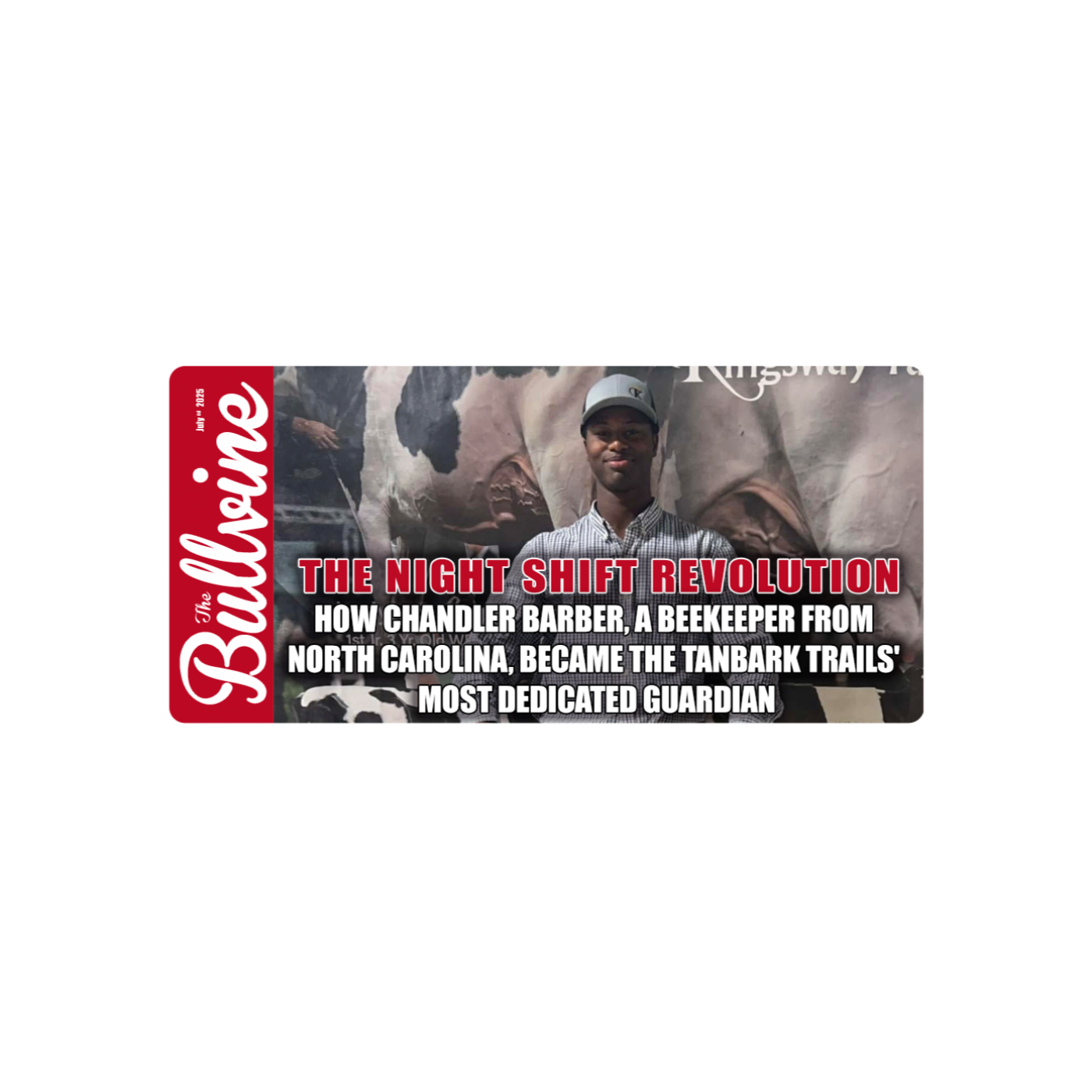
S1 Ep 308E308 The Night Shift Revolution: How Chandler Barber, a Beekeeper from North Carolina, Became the Tanbark Trails’ Most Dedicated Guardian
In this exciting interview, we sit down with Chandler Barber, the first-ever Night Man of the Year at the Royal Agricultural Winter Fair in Toronto, Canada. This groundbreaking 25-year-old from Statesville, North Carolina, has revolutionized the often-invisible role of night shift cattle care at elite dairy shows, transforming it from basic animal maintenance into sophisticated performance optimization.Guest BioChandler Barber - First-ever Night Man of the Year, Royal Agricultural Winter Fair 2024Location: Statesville, North CarolinaBackground: Non-farm origins, started with beekeeping at age 13Current Role: Full-time night shift specialist working 15-25 shows and sales annuallyNotable Achievement: Lifetime contract with Kingsway Farms for Royal Agricultural Winter FairKey Topics CoveredThe Night Man Role DefinedWhat a "night man" actually does during overnight hours at cattle showsThe evolution from basic maintenance to active animal progressionWhy the role is critical to show success and animal marketabilityThe systematic "bell curve" feeding strategy Chandler developedFrom Beekeeping to Cattle CareHow a bee swarm in his neighbor's tree at age 13 started everythingMentorship under Thomas Batty and learning fearlessness with beesThe unexpected connection between bee vigilance and cattle careTaking up to 60 bee stings in a single day during honey seasonThe $900 Night That Changed EverythingFirst experience night shifting at North Carolina State FairWorking nine strings in one night and discovering his callingThe progression from regional shows to elite operations like Kingsway FarmsHow a Facebook post led to World Dairy Expo opportunityProfessional Philosophy and Approach"It's not about you, it's about the animals you're taking care of"Treating cattle as "athletes with contracts"The importance of obsessive attention to detailWhy cleanliness and organization directly impact animal valuesIndustry Impact and RecognitionCreation of the Night Man of the Year award specifically for ChandlerHow his work is inspiring a new generation of agricultural professionalsAddressing the shortage of specialized cattle care professionalsThe economics of elite night shift workPersonal Journey and MentorshipGrowing up with his grandmother in North CarolinaKey mentors: Thomas Batty (beekeeping), Kyle Stockdale, Mark BenderoTransition from beekeeping business "Be Cool" honey to full-time cattle careWorking part-time at Gar-Mac Dairy (5,000+ head operation)Looking ForwardGoals for continuous improvement in cattle care standardsInspiring others to pursue careers in agricultural support rolesThe future evolution of night shift work in the industryMaintaining the lifetime contract with Kingsway FarmsRead the full article here - https://www.thebullvine.com/youth-profiles/the-night-shift-revolution-how-chandler-barber-a-beekeeper-from-north-carolina-became-the-tanbark-trails-most-dedicated-guardian/
S1 Ep 307E307 The $50 Billion Truth: Why Canada’s Supply Management System is Quietly Outperforming Every ‘Free Market’ Dairy System
In this explosive episode, we dive deep into the most controversial analysis in dairy policy today. While economists worship at the altar of free markets, we expose the shocking reality: Canada's supply management system is quietly outperforming every single "free market" dairy system on the planet. From 55% bankruptcy spikes in the U.S. to Australian farmers earning $2.46 per hour, we reveal why the "free market" emperor has no clothes—and why stability might be the most radical choice you can make.Key Topics CoveredOpening Segment: The Free Market FictionThe $33 billion bailout reality: How U.S. "free markets" actually depend on massive taxpayer subsidiesChapter 12 bankruptcy surge: 55% increase in U.S. farm failures in 2024The Australian catastrophe: 55% of producers considering industry exitCore Analysis: Canada vs. The WorldFinancial stability metrics: 0.191 debt-to-equity ratio vs. New Zealand's 47.4%Production efficiency: 10,400 kg per cow yields matching Denmark's world-class outputTechnology adoption: 17% robotic milking penetration under stable pricing systemsHidden Costs ExposedThe subsidy shell game: $0.20-$0.29 per liter in hidden taxpayer costs for "cheap" U.S. milkEnvironmental externalities: Canada's 0.94 kg CO2-equivalent per liter vs. 2.5 kg global averageSocial destruction: 80% farm loss in Australia since 1980Implementation FrameworkROI analysis: 7-10 year payback periods vs. 15+ years under volatile systemsStrategic planning: Policy roadmap for system reformOperation assessment: Tools for evaluating your farm's vulnerabilityKey Statistics & Data Points$33.1 billion: U.S. government farm payments projected for 202555%: Increase in U.S. Chapter 12 farm bankruptcies in 202496 vs. 357: Average herd size in Canada vs. U.S. (cows per farm)0.191 vs. 47.4%: Debt ratios comparing Canadian stability to New Zealand leverage10,400 kg: Canadian milk yield per cow matching world-class Danish output17%: Canadian dairy cows milked by robotic systems$200,000-300,000: Robotic milking system investment with predictable returnsRead the full article here - https://www.thebullvine.com/dairy-industry/the-50-billion-truth-why-canadas-supply-management-system-is-quietly-outperforming-every-free-market-dairy-system/
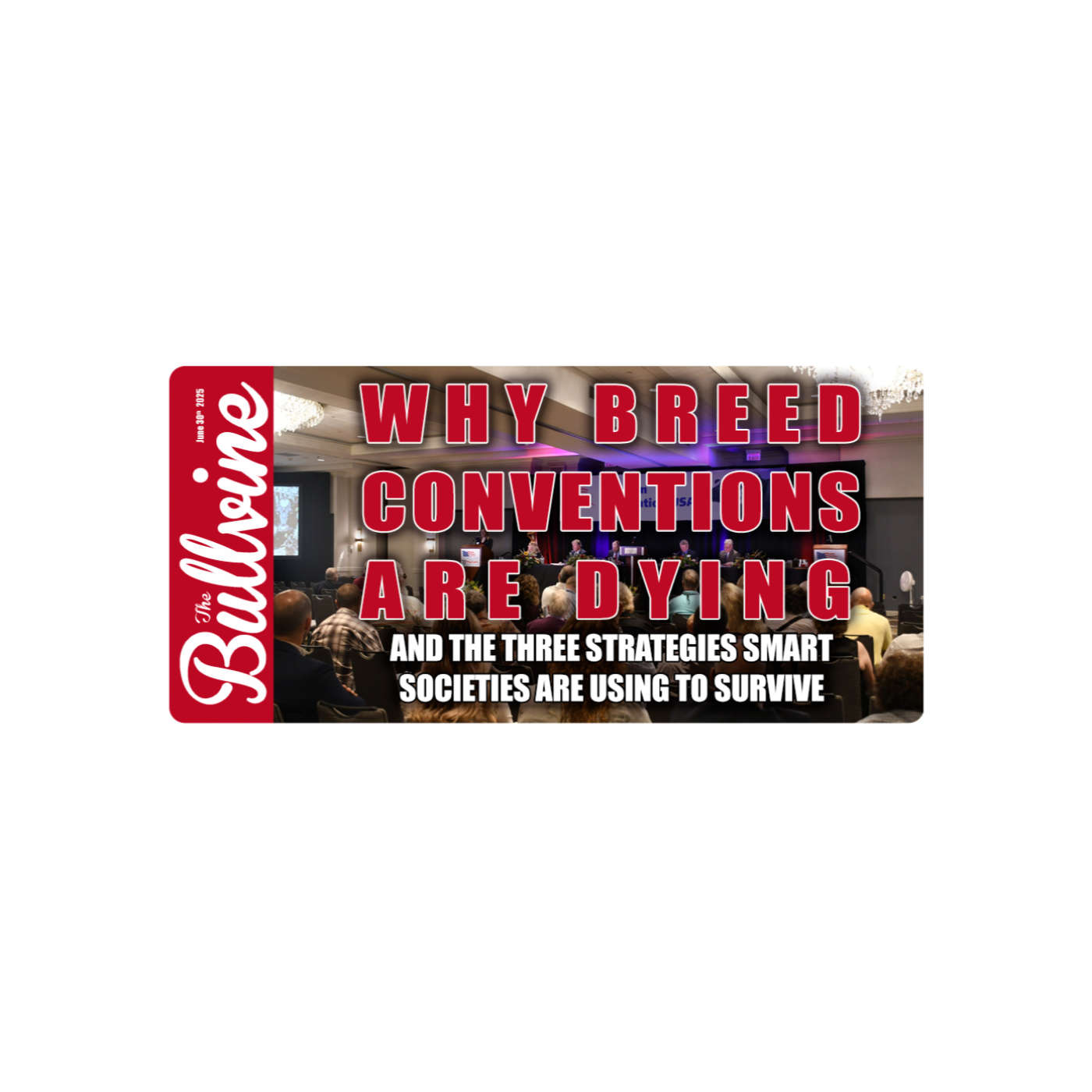
S1 Ep 306E306 Why Breed Conventions Are Dying (And the Three Strategies Smart Societies Are Using to Survive)
When was the last time a breed convention banquet improved your herd's milk production? In this hard-hitting episode, we expose the brutal math behind the slow-motion collapse of traditional breed conventions and reveal why the smartest societies are already pivoting to survive. With U.S. dairy operations collapsing from 70,375 to just 24,094 farms in twenty years while conventions still operate like it's 1985, the disconnect is costing everyone money.Opening: The Uncomfortable QuestionWhy breed convention banquets don't improve milk productionThe dramatic consolidation statistics that breed societies ignoreThe Math That Doesn't Add UpBreaking down the true cost of convention attendanceOpportunity costs for modern mega-dairy managersROI comparison: conventions vs. genomic testingWhy Hotel Ballrooms Are Getting EmptierIndustry bifurcation: mega-dairies vs. small-herd survivorsThe death of the mid-sized family farm convention modelData-driven management vs. dinner conversationsSolution #1: Data Analytics PowerhousesHolstein Canada's $14.4 million transformation success storyRevenue diversification through genetics marketplacesTiered corporate partnerships replacing banquet sponsorshipsSolution #2: Virtual Engagement That WorksLeadership Summits for top 10-15% of producersYear-round digital knowledge hubsHybrid models that respect time constraintsSolution #3: On-Farm Education RevolutionSmart Genetics Field Days on working farmsDemonstration over presentation approachReal performance data vs. theoretical hotel presentationsThe Controversial TruthWhy traditional conventions actively conflict with profit-driven managementIndustry consolidation creating binary choices2030 projections for breed society survivalThe Bottom LineCalculate your convention cost-per-engaged-member challengeTwo-year window for voluntary transformationEvolution or extinction timelineRead the full article here - https://www.thebullvine.com/breed-association-news/why-breed-conventions-are-dying-and-the-three-strategies-smart-societies-are-using-to-survive/
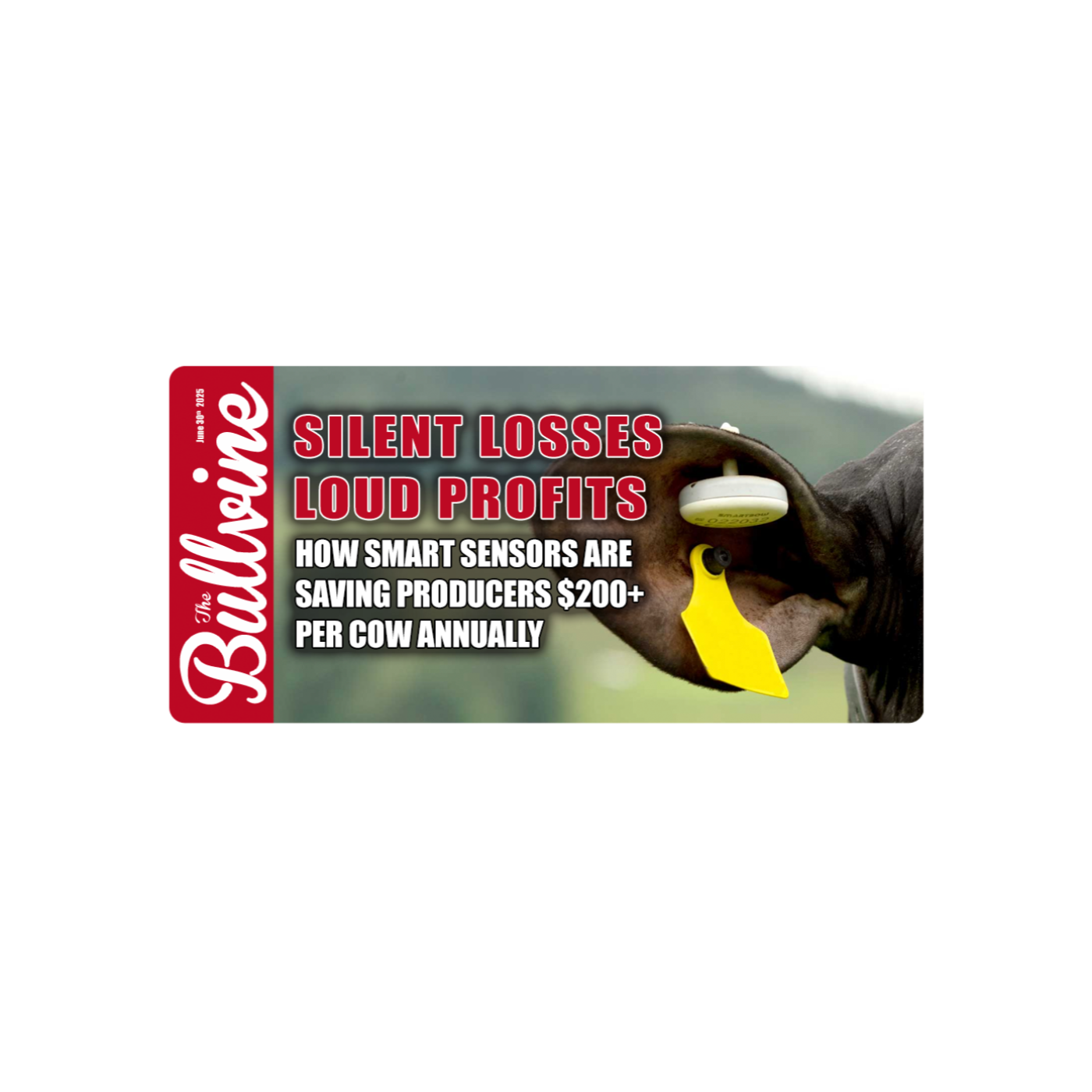
S1 Ep 305E305 Silent Losses, Loud Profits: How Smart Sensors Are Saving Producers $200+ Per Cow Annually
This episode challenges the foundation of dairy health management, revealing why visual observation misses 40% of sick cows and how internal sensor technology is delivering documented returns of $210+ per cow for early adopters. We explore Austrian company SmaXtec's revolutionary bolus technology, the economics of proactive vs. reactive health management, and why the future of herd health lies in seeing inside your cows before they get sick.Key Topics CoveredThe Crisis of Reactive MedicineWhy visual observation has only 61.8% sensitivity for disease detectionMSU research tracking 20,625 mastitis cases across 37 Wisconsin farmsThe true cost: $118-$337 per mastitis case, with 87% from milk discardGlobal antibiotic use projected to reach 143,481 tons by 2040SmaXtec Technology Deep DiveAustrian company revolutionizing North American dairy since 2009Internal bolus sensors with 5-year battery lifeCore metrics: temperature (±0.018°F accuracy), rumination, water intake, activityAI-powered analysis detecting problems 4 days before visual symptomsEconomic Game-ChangersIndependent IFCN study results: $210 per cow increased returnsAdditional $190 per cow in income annually330 kg increase in solids-corrected milk per cow per yearReal farm results: 7.8x ROI and $500,000 annual savingsThe Antibiotic Alternative PipelinePeptobiotics' antimicrobial peptides (AMPs) using synthetic biology$6.2 million Series A funding in April 2024Current focus on aquaculture and poultry marketsFuture applications for cattle industryRead the full article here https://www.thebullvine.com/technology/silent-losses-loud-profits-how-smart-sensors-are-saving-producers-200-per-cow-annually/
S1 Ep 304E304 When Wall Street Invaded the Barn: The Untold Story of Dairy’s Wildest Gold Rush
In this explosive episode, we dive deep into the most dramatic chapter in Holstein history—the investor herd era of the 1970s and 1980s. Discover how a single line buried in Lyndon Johnson's 1968 tax code accidentally triggered a cattle investment frenzy that saw Holstein prices jump 500-1000%, Manhattan millionaires bidding quarter-million dollars for cows, and farmers becoming overnight millionaires. From John Sullivan's empire-building to George Morgan's Dreamstreet dynasty, from John Lennon's surprising Holstein investments to Jack Stookey's tragic downfall, this is the untold story of when high finance collided with dairy genetics—and the critical lessons it holds for today's producers facing their own era of transformation.Key Topics CoveredThe Legislative Accident That Changed EverythingSection 46 of the Internal Revenue Code (1968)Investment purchase credit mechanismHow tax shelters accidentally revolutionized Holstein breedingThe Empire BuildersJohn Sullivan (Erinwood/Leadfield): Cornell farm boy turned Holstein royaltyGeorge Morgan (Dreamstreet Holsteins): Failed real estate broker to cattle investment kingDave Younger (Hilltop-Hanover): Wall Street stockbrokers meet elite Holstein managementThe Celebrity ConnectionJohn Lennon's Holstein investment in DreamstreetSpring Farm Fond Rose: $56,000 investment becomes $250,000 returnWhen The Beatles met bovine geneticsThe Cautionary TaleJack Stookey's rise and tragic fallThe IRS crackdown and audit investigationsBankruptcy, legal chaos, and the human cost of dreamsModern Lessons for Today's ProducersDocumentation and genetic evaluation parallelsCapital structure managementMarket timing strategiesRegulatory disruption preparationSee complete article at https://www.thebullvine.com/breeder-profiles/when-wall-street-invaded-the-barn-the-untold-story-of-dairys-wildest-gold-rush/

S1 Ep 303E303 The $500,000 Precision Dairy Gamble: Why Most Farms Are Being Sold a False Promise
While dairy technology vendors are getting rich selling the "future of dairy," the farms making the biggest profits aren't the ones with the most robots. In this explosive episode, we expose the uncomfortable truths about precision dairy technology that vendors don't want you to know, reveal why a genetics-first strategy delivers superior ROI, and challenge the industry's rush toward expensive automation.Key Topics Covered🎯 The Precision Technology Reality CheckWhy 75% of dairy diseases occur in the first month after calvingThe real cost breakdown: $200,000-$500,000 systems vs. $50 transition cow protocolsFalse positive rates and hidden maintenance costs that vendors don't mention💰 The True Cost of Precision TechnologyDetailed investment analysis: Basic sensors ($75K-$150K) to full systems ($300K-$600K)Real ROI timelines: 18-36 months vs. vendor promises of 12-18 monthsWhy mid-size operations achieve better returns with strategic implementation🧬 The Genetics-First RevolutionHow Purdue research reveals 20+ novel breeding traits from automated systemsCase study comparison: Technology-first vs. genetics-first investment strategiesWhy precision technology amplifies genetic potential rather than creating it🌍 Global Perspective & Future TechnologiesNetherlands success story: 25% robotic adoption in contextDigital Twins and Edge AI: What's coming in 2027-2028Why nanotechnology sensors could make today's investments obsolete⚠️ Implementation WarningsThe three-phase strategic approach that actually worksEnvironmental limitations: 64.3% cold weather failuresData overload reality: Why farmers struggle with system integrationRead the full article here - https://www.thebullvine.com/technology/the-500000-precision-dairy-gamble-why-most-farms-are-being-sold-a-false-promise/

S1 Ep 302E302 The Methane Efficiency Breakthrough: How Smart Breeding Cuts Emissions 30% While Boosting Your Bottom Line
This episode exposes the dairy industry's biggest financial trap: feed additives that promise methane reduction but reduce profitability. While DSM-Firmenich and Elanco convince producers to spend $150/cow annually, genetic leaders build permanent wealth through breeding programs that redirect wasted energy into milk production.Key Revelations:The Hidden Energy DrainEvery cow wastes $300 worth of feed energy annually through methane4-12% of gross energy intake lost as greenhouse gas vs. milk production$20,000-$60,000 wasted annually on 1,000-cow operationsFeed Additive Financial Disaster3-NOP: 30% methane reduction but $0.35/cow daily income lossAnnual shortfall: $128,320 for 1,000-cow operationRecurring costs: $100-$150/cow annually in perpetual expensesRed seaweed: $300-$500/cow—"economics make casino gambling look conservative"Extension Service FailuresPromoting additives without economic analysis3-NOP reduces feed intake 0.5kg, milk 0.7kg dailyNo ROI calculations before recommendationsIndustry-funded research promoted without questioning farmer benefitGenetic Revolution23% heritability with 70-80% reliabilityPermanent improvements compound across generations85% correlation between predicted/actual methane emissionsRedirects 4-12% feed energy into productive outputs10-Year Economics Comparison: Feed Additives (100-cow): $100,000-$150,000 total cost, temporary benefits Genetic Selection (100-cow): $5,000-$10,000 investment, $4,000-$7,000 annual savingsInternational Competition GapCanada: First national genetic evaluations for methaneNetherlands: $27.4M investment for 25% reduction over 25 yearsU.S.: Trapped in expensive additive cyclesNew Revenue StreamsCarbon credits: $1-$15/tonne, up to $30,000 annually (500-head)Processor premiums: Lactalis USA pays $40/metric ton CO2e reductionExport advantages: Early genetic adopters positioned for premium marketsYour Homework:Contact genetics supplier this weekDemand methane efficiency breeding valuesAsk for genetic evaluations in sire lineupRequest case studies with verified resultsCritical Questions:"What genetic evaluations do you have for methane traits?""Show me expected progeny differences for feed efficiency""Provide integration strategies for my breeding program"Key Takeaway: Feed additives = financial trap with documented negative ROI. Genetics = permanent wealth building through 23% heritable trait that compounds across generations.Read full article here - https://www.thebullvine.com/sustainable-farming/the-methane-efficiency-breakthrough-how-smart-breeding-cuts-emissions-30-while-boosting-your-bottom-line/
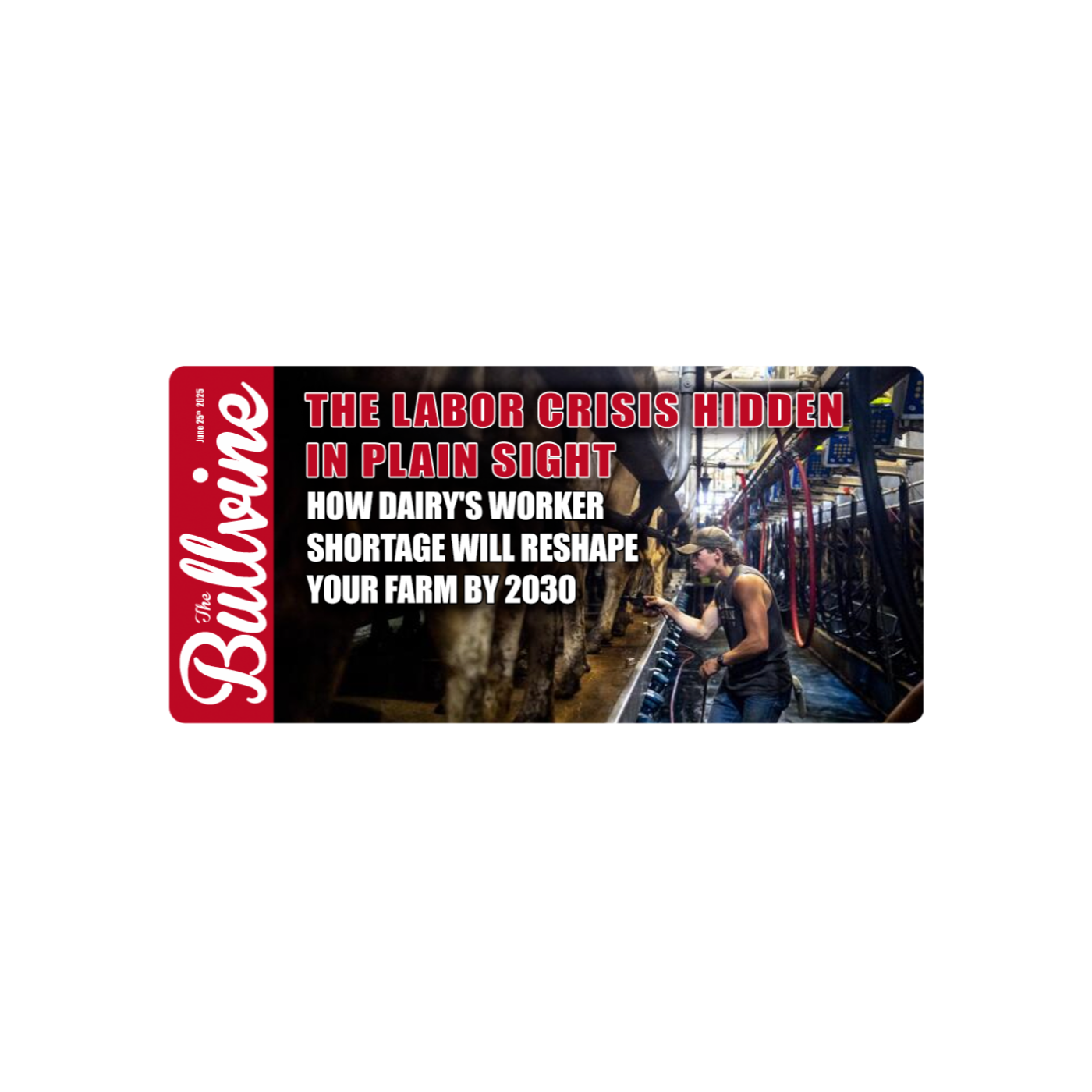
S1 Ep 301E301 The Labor Crisis Hidden in Plain Sight: How Dairy’s Worker Shortage Will Reshape Your Farm by 2030
In this explosive episode, Andrew Hunt exposes the brutal truth about dairy's labor crisis that industry leaders don't want you to hear. While farms chase workers who don't exist, smart operators are cutting labor costs by 60% with strategic automation delivering 18-month ROI. This isn't just another temporary staffing problem—it's a $32.1 billion transformation that will decide which farms dominate the next decade and which become cautionary tales.Key Topics CoveredThe Death of "Hire More Workers" StrategyWhy 268 Americans applied for 6,500 farm jobs, but only 7 stayed the full seasonThe brutal math: 51% immigrant workforce produces 79% of U.S. milk supplyHow farm employment declined 3.4% while dairy herds grew to largest since 2021Global Labor Meltdown AnalysisKansas milk production exploded 15.7% while California declined 1.8%EU demographic disaster: only 12% of farmers under 40 years oldCanada projected to lose 50% of dairy farms by 2030 despite supply managementThe $32 Billion Economic Time BombHidden costs of turnover: 1.8% milk production loss, 1.7% calf mortality increaseImmigration policy disruption could spike milk prices 90.4% to $7.60/gallonWhy 200-cow dairies lose $11,000+ annually just in recruitment costsAutomation: Vendor Fiction vs. Farm RealityCase study: Dave Kammel's Wisconsin success with robotic milkingReal ROI data: $32,000-$45,000 annual savings per robotWhy payback periods accelerate from 4-10 years to just 18-24 months under crisis conditionsStrategic Transformation FrameworkThree-pillar approach: Labor-light operations, human capital revolution, market positioning30-day crisis response plan with specific implementation timelinesInternational lessons from Netherlands' managed mobility modelRead the full article here - https://www.thebullvine.com/management/the-labor-crisis-hidden-in-plain-sight-how-dairys-worker-shortage-will-reshape-your-farm-by-2030/

S1 Ep 300E300 Hannah Woodhouse: From Chocolate Milk to PhD Brilliance Meet the Woman Revolutionizing Milk Quality
Meet Hannah Woodhouse, the "Dairy Queen" who raced for chocolate milk as a kid and revolutionized milk quality research across Canada. From representing Canada in cross-country championships to visiting 300 farms for her PhD research on free fatty acids, Hannah's story perfectly embodies farm-raised intuition meeting world-class science.Key Topics The Perfect Dairy Love StoryFamily background: vet mother meets farmer father during herd checkGrowing up as oldest of four sisters on Ontario dairy farm11 years in 4-H, involvement with agricultural societiesThe Chocolate Milk Origin StoryGrade 8 school race sponsored by dairy farmersRacing for chocolate milk - finishing 4th out of 100 runnersTraining by running up barn hill in rubber bootsAcademic JourneyInitial biomedical sciences pursuit at University of GuelphLanding research position with Dr. David KeltonDiscovery of free fatty acids research opportunityThe Mystery of Frothy MilkWhat are FFAs and why they matter for coffee shopsVisiting 300 farms across Ontario and British ColumbiaResearch findings: seasonal patterns, organic vs conventional herdsPractical SolutionsFilter management recommendationsTemperature control importanceSimple fixes saving farmers $15,000+ annuallyAthletic Excellence & RecognitionRepresenting Canada internationally (2015, 2019)Winning top poster award at 2023 International Dairy FederationUniversity scholarships and academic achievementsFuture VisionCurrent role with Dairy Farmers of CanadaMentoring next generationBridging research and practical applicationRead the full article here - https://www.thebullvine.com/youth-profiles/hannah-woodhouse-from-chocolate-milk-to-phd-brilliance-meet-the-woman-revolutionizing-milk-quality/
S1 Ep 299E299 The Great Dairy Migration: How Regional Economics Are Reshaping America’s Milk Map
This episode exposes the uncomfortable truth about regional dairy economics that traditional industry organizations desperately want to keep buried. We dive deep into comprehensive USDA data revealing a shocking $12.70 per hundredweight profitability gap between the best and worst dairy regions—translating to $178,000 annually for a 1,000-cow operation.Key Topics Covered🎯 The Geographic RevolutionKansas milk production explodes 15.7% while California declines 1.8%Texas surges 8.9% as traditional strongholds struggleWhy "traditional dairy heritage" is bankrupting operationsThe systematic cost advantages driving smart money toward emerging regions💰 Scale Economics Reality CheckUSDA data reveals devastating truth: $42.70 per cwt for herds under 50 cows vs. $19.14 for 2,000+ cow operations$83,220 annual viability gap for 500-cow operationsWhy mid-size operations face "economic death sentence"📊 Regional Profitability BreakdownCalifornia: +$5.42 per cwt (profit)Michigan: -$7.28 per cwt (loss)Pennsylvania: -$7.06 per cwt (loss)Why traditional dairy states are systematically uncompetitive🤖 Technology Adoption UrgencyLabor costs projected to hit $53.5 billion in 2025 (9.5% increase)Strategic automation reduces labor costs from $375 to $165 per cow annuallyRobotic milking systems: 7-year payback vs. 15+ years for conventional parlorsWhy technology adoption is now "survival-critical"🚛 The Transportation "Hidden Tax"Milk hauling charges increased 21% in one year (51¢ to 62¢ per cwt)Operations shipping beyond 50 miles pay 35-93¢ per cwt "hidden tax"$164,000+ annual avoidable expenses for large operationsWhy processor proximity now determines profitability⚡ Federal Tax Policy CliffBonus depreciation drops to 60% in 2025, reaching 0% by 2027Federal estate tax exemption cuts 50% on January 1, 2026Urgent action needed before tax incentives disappear$500,000 robotic milker yields only $300,000 deduction in 2025 vs. full $500,000 in 2022🌍 Global Market OpportunitiesEU milk production declining 0.2% due to environmental regulationsU.S. exports nearly one-fifth of dairy componentsMexico, Canada, and China account for 40% of U.S. dairy export valueStrategic positioning for global competitivenessRead full article here https://www.thebullvine.com/dairy-industry/the-great-dairy-migration-how-regional-economics-are-reshaping-americas-milk-map/

S1 Ep 298E298 Kamps-Hollow Altitude: The Red-Carrying Cow Who Rewrote Breeding History
Join us for an extraordinary tale of genetic legacy and breeding excellence. This episode tells the incredible story of Kamps-Hollow Altitude-ET RC, a Holstein cow born in 2000 who became the most influential Red Holstein in modern breeding history. From her daughter's record-breaking $1 million sale to her global genetic impact spanning six continents, discover how one exceptional cow transformed an entire segment of the Holstein breed.Key Topics CoveredThe Foundation StoryThe formation of KHW Genetics by three college friendsThe strategic acquisition of Clover-Mist geneticsThe legendary D-R-A August bloodline connectionAltitude's Individual ExcellenceEX-95 classification (top 5% for conformation)Production records: 39,690 lbs milk, 4.7% butterfatHer exceptional ability as a brood cowThe Champion OffspringKHW Kite Advent-Red-ET: 7-time Premier Sire winnerKHW Regiment Apple-Red-ET: The $1 million cowJotan-Red-ET: European genetic revolution leaderGlobal ImpactInternational expansion through European AI programsNearly 18,000 Jotan-Red daughters across 10+ countriesGenomic era success through descendants like AikoCommercial Success StoriesKoester Dairy's elite production herd resultsDrouner Holsteins' European breeding programReal-world performance in high-production operationsIndustry Recognition2009 Red Impact Cow of the YearWisconsin Cow of the Year designationGenetic influence statistics: 80%+ of Red Holsteins trace to her linesRead the full article at https://www.thebullvine.com/donor-profile/kamps-hollow-altitude-the-red-carrying-cow-who-rewrote-breeding-history/

S1 Ep 297E297 The $880 Million Lie: Why “Fair Competition” in Global Dairy Is Dead (And What Smart Operators Are Doing About It)
In this explosive episode, we tear down the biggest myth in American dairy: that we compete in a "free market." While U.S. producers squeeze out marginal gains through feed optimization and genomic testing, their government-backed competitors are literally printing money. We expose how Russia's $880 million dairy support allocation, Norway's 30% subsidy rates, and Canada's $328,000 per farm compensation packages have turned global dairy into economic warfare.Key Episode HighlightsOpening BombshellThe uncomfortable truth: American farmers get $3.40 per cow in targeted support while competitors bank tens of thousands annuallyRussia's 50% increase in dairy support for 2025: from economic policy to strategic weaponWhy "fair competition" in global dairy died years ago—and pretending otherwise is bankrupting farmsThe Global Subsidy Arms Race Canada's Fortress Strategy: $3.2 billion trade compensation and 245% import tariffsRussia's War Economy Model: 8.3% concessional loans and 42% cost reimbursementEurope's Green Shield: €400 million annually with environmental conditions that create dual advantagesThe precision agriculture paradox: investing $150,000 while competitors get $200,000+ grantsThe Genetic Defense Revolution Cambridge University research destroys the "subsidies make farmers lazy" mythUK genomic data reveals £193 per animal advantage in lifetime profitabilityCalifornia's beef-on-dairy breakthrough: 81% adoption creating new revenue streamsWhy genetic merit compounds annually while subsidies provide temporary reliefChallenging Industry Orthodoxy The breeding association conspiracy of silence on genomic selectionWhy Holstein Association visual appraisal methods are scientifically inferiorExposing AI organization biases that favor traditional over genetic dataThe uncomfortable question: Why do major breed organizations resist DNA-driven selection?Environmental Subsidy Game-Changer How environmental subsidies create permanent cost advantagesEU farmers getting paid $4,500 for practices U.S. farmers fund privatelyThe genetic environmental solution: building methane-efficient geneticsCarbon credit opportunities vs. subsidized competitor advantagesYour Genetic Survival Playbook Immediate implementation strategies for the next 30 daysComponent-focused breeding programs targeting 4.2% butterfat and 3.3% proteinStrategic beef-on-dairy implementation on 25-30% of eligible animalsBuilding 10-year genetic improvement plans that competitors cannot replicateThe New Zealand Success Story How New Zealand abolished subsidies in 1984 yet remains dominantThe economic theory vindication: efficiency beats government backingWhy genetic merit and operational excellence create sustainable advantagesRead the full article at https://www.thebullvine.com/dairy-industry/the-880-million-lie-why-fair-competition-in-global-dairy-is-dead-and-what-smart-operators-are-doing-about-it/

S1 Ep 296E296 The Biosecurity Myth: Journal of Dairy Science Reveals Why Enhanced Protocols Failed Against H5N1
In this groundbreaking episode, we expose the uncomfortable truth that's shaking the dairy industry to its core: the "enhanced biosecurity" protocols your operation has been following failed catastrophically when faced with H5N1. Based on explosive research published in the Journal of Dairy Science, we reveal how 970+ dairy farms across 17 states contracted H5N1 despite implementing enhanced biosecurity measures—resulting in $950 losses per clinically affected cow.This isn't just another industry update. This episode demolishes decades of conventional biosecurity wisdom and provides the science-based solutions that actually work.Key Topics CoveredThe Biosecurity Myth ExposedHow "enhanced biosecurity" failed on 970+ dairy farmsThe $950 per cow economic reality facing affected operationsWhy this represents the biggest infectious disease outbreak since Foot-and-Mouth Disease in 1929Challenge #1: Your Milking Parlor as Ground ZeroRevolutionary discovery: H5N1 spreads through milking procedures, not respiratory routesWhy traditional mastitis control protocols are useless against viral transmissionEnvironmental sampling reveals 7.0% of surfaces test positive for H5N1 viral RNAThe subclinical crisis: "healthy-looking" cows actively shedding virusChallenge #2: The Worker Protection ScandalShocking statistic: Only 26% of workers used N95 respirators after H5N1 detection8 of 115 dairy workers showed serologic evidence of recent H5N1 infectionThe exploitation problem: Immigration fears preventing illness reportingMental health impacts on dairy workforceChallenge #3: The Wildlife Problem Industry Won't Address212 peridomestic birds tested positive for H5N1 across affected dairiesHow modern dairy infrastructure attracts disease vectors150 detections in 9 different mammalian species including mice and deer miceEconomic Reality CheckRegional impact: Up to 7.9% milk production decrease in CaliforniaHidden costs: $2.1 million potential quarantine losses for 1,000-cow operationsROI analysis: $200-400 prevention investment vs. $950 losses per cowScience-Based Solutions That WorkReengineering milking parlor protocols (Medium difficulty, 2-4 weeks, High ROI)Enhanced environmental controls targeting specific speciesEvidence-based worker protection that gets results90-day implementation roadmapRead the full article here - https://www.thebullvine.com/highly-pathogenic-avian-influenza/the-biosecurity-myth-journal-of-dairy-science-reveals-why-enhanced-protocols-failed-against-h5n1/

S1 Ep 295E295 Stop Throwing Money Away: Why Your Selenium Strategy Is Costing You $700 Per Cow
Discover the hidden profit leak in your mineral program that's costing dairy operations hundreds of dollars per cow annually. This episode exposes the uncomfortable truth about selenium supplementation quality and reveals game-changing research that's revolutionizing trace mineral nutrition for progressive dairy producers.Key Topics Covered:🔍 The Selenium Quality CrisisWhy 60-80% of your selenium supplement may be worthlessVariable selenomethionine content in "premium" selenium yeast (18-71.8% range)The dirty secret of elemental selenium contamination (up to 51.8% in some products)💰 Economic Impact AnalysisHidden costs: $325-457 per mastitis case, $389 per retained placenta caseTotal potential loss: $700+ per affected cow when complications cascadeItalian Holstein study: Documented 9:1 return on investment🧬 The Three Generations of SeleniumFirst Generation: Inorganic forms with 10-30% bioavailabilitySecond Generation: Inconsistent selenium yeast productsThird Generation: Pure organic forms with guaranteed potency📊 Research Breakthrough: Italian Holstein Case StudyBallottino Farm, Cremona, Italy (100 cows)Mario Agovino, Alltech Italy research findingsMeasurable improvements across all key metricsKey Statistics & Research Findings:Production Improvements:1.4 kg/day increased milk yield with organic seleniumSCC reduction: 320,000/mL → 272,000/mLDoubled milk selenium content: 0.058 mg/L vs 0.029 mg/LReproductive Performance:Confirmed pregnancy rates: 83% vs 67%Reduced retained placenta: 6 vs 10 cases per 100 cowsFewer open days: 9-day improvement per cow annuallyEconomic Returns:Investment: €810 per 100-cow herd annuallyBenefits: €7,380 per 100-cow herd annuallyNet ROI: 9:1 return on investmentImplementation Roadmap Discussed:Phase 1: Assessment (Month 1)Blood selenium testing for 10-12 representative animalsTarget plasma levels: 80-100 µg/L (optimal: >100 µg/L)Cost: $15-25 per samplePhase 2: Product Evaluation (Month 1-2)Demand selenomethionine content verificationRequest purity guarantees and analytical testingChallenge suppliers on batch consistencyPhase 3: Strategic Implementation (Month 2-3)Focus on dry cow and early lactation periodsConsider transition period supplementation increasesCoordinate with existing nutritional programsPhase 4: Monitoring (Month 3-6)Retest selenium status at 90 daysTrack SCC trends and mastitis incidenceMonitor reproductive performance metricsRead the complete article here - https://www.thebullvine.com/management/nutrition/stop-throwing-money-away-why-your-selenium-strategy-is-costing-you-700-per-cow/

S1 Ep 294E294 The Red & White Revolution: Molly Westwood’s Journey Building Panda Holsteins
Join us for an incredible conversation with Molly Westwood, the visionary breeder behind Panda Holsteins, one of the UK's most elite Red & White Holstein breeding programs. From receiving a Christmas heifer at age 14 to building a globally recognized genetics operation, Molly's story showcases how passion, strategic thinking, and unwavering dedication can revolutionize conventional dairy models.Key Topics CoveredFrom Farm Girl to DreamerGrowing up on a non-pedigreed dairy farm in northern UKThe Christmas gift that changed everything: Honesberie Charles GemEarly lessons in cattle care and excellence from her fatherFirst taste of showing cattle and the addiction to competitionThe Bold Canadian AdventureMaking the decision at 16 to travel to Alberta, CanadaFour transformative years at Morsan FarmsWorking with world-class Holstein cattleDeveloping skills, connections, and vision for the futureThe Foundation MomentThe story behind Stoneden Fools Gold Red and the VRC geneStrategic embryo purchase that launched Panda HolsteinsThe incredible success of "Lexy," "Ally," and "Alexa"Early show ring dominance across the UKRevolutionary Business ModelCreating a dairy business that doesn't rely on milk pricesThe unique model: elite genetics over volume productionChallenges with traditional banking and financingEvolution during COVID-19 and Brexit (2020-2025)The Red & White DistinctionWhy specialize in Red & White Holstein genetics (95% of herd)Overcoming perception challenges in the industryThe advantages of the VRC gene for breeding flexibilityBuilding value in a minority segment of the breedElite Genetics and Breeding SuccessDeep dive into the Fools Gold family achievementsMultiple generations of champions and Excellent classificationsThe O'Kalibra family and world record achievementsStrategic breeding decisions and corrective mating philosophyDaily OperationsA day in the life at Panda Holsteins (5:30 AM start)Balancing cattle management with role at Blondin SiresThe commitment to being present for every calvingIntegration of robotic milking technologyRecognition and CommunityYoung Farmer of the Year award (2017)Achieving Master Breeder statusThe importance of mentorship and giving backRole in Holstein Young Breeders organizationVision for the FutureGoals for the next five yearsThe upcoming "Pathway of Panda" sale (July 1, 2025)Ambition to breed the first EX97 R&W cow in the UKBuilding "the most elite R&W selection of cattle in the world"Read the complete article here https://www.thebullvine.com/breeder-profiles/the-red-white-revolution-molly-westwoods-journey-building-panda-holsteins/

S1 Ep 293E293 Beat the Heat: How Elite Dairies Are Weaponizing Genetics and Smart Tech to Turn Summer into Profit
Industry-challenging exposé revealing how breeding companies have been selling genetic disasters disguised as production improvements, while elite operations master heat-tolerant genetics and precision cooling to protect $700 per cow annually. University of Illinois research documenting $245 million in industry losses proves thermal resilience now separates market leaders from casualties.Key Topics Covered🔥 The 80°F Heat Stress Myth ExposedModern genetics suffer thermal stress at just 68°F THI, not 80°FEvery additional pound of milk production generates increased metabolic heat500-cow operation loses $31,650 annually from 30 days of inadequate heat management🧬 Genetic Revolution: The SLICK Gene SolutionSLICK gene carriers maintain 0.5-1.0°C lower rumen temperatures when THI exceeds 73LIC New Zealand develops SLICK sires with top breeding worth using only 1/32nd Senepol geneticsValidated genetic markers in TLR4, GRM8, and SMAD3 genes predict both production and heat tolerance💰 Economic Warfare: Small Farms vs. Corporate OperationsSmall farms lose 1.6% annual yield (equivalent to 6 unpaid work days) vs. 1% for larger operationsCorporate operations invest $75,000+ in precision cooling while small farms lack viable optionsClimate projections show 30% increase in milk yield losses within 25 years🔬 Technology Solutions: 24-Hour Early Warning SystemsAdvanced sensors detect heat stress through body surface temperature and respiration monitoringPrecision cooling delivers 5.67-year payback with 1.45 benefit-cost ratioStrategic soaking systems reduce water usage 50-70% while improving cooling effectiveness⚠️ Generational Genetic SabotageHeat-stressed dry cows program daughters for 8-10 pound daily production reductions$515 lost revenue per lactation from genetic damage in maternity penEpigenetic mechanisms affect mammary development and immune function for generationsShocking Statistics Revealed$245 million: Total industry losses over 5 years (1.4 billion pounds of milk)68°F THI: New thermal stress threshold for modern genetics (not 80°F)$700 per cow: Annual protection value from comprehensive heat management24 hours: Early detection advantage from advanced monitoring systems$332 per cow: Justified investment for tunnel ventilation vs. basic systemsAction Plan for ListenersChallenge genetic selection strategy - Demand heat tolerance data from breeding companiesCalculate thermal losses honestly - Quantify production drops during heat eventsInvest in precision cooling with proven ROI - Move beyond basic fans to strategic systemsImplement early warning monitoring - Detect stress before visible symptomsProtect genetic investments systematically - Ensure comprehensive dry cow coolingRead full article here - https://www.thebullvine.com/management/beat-the-heat-how-elite-dairies-are-weaponizing-genetics-and-smart-tech-to-turn-summer-into-profit/
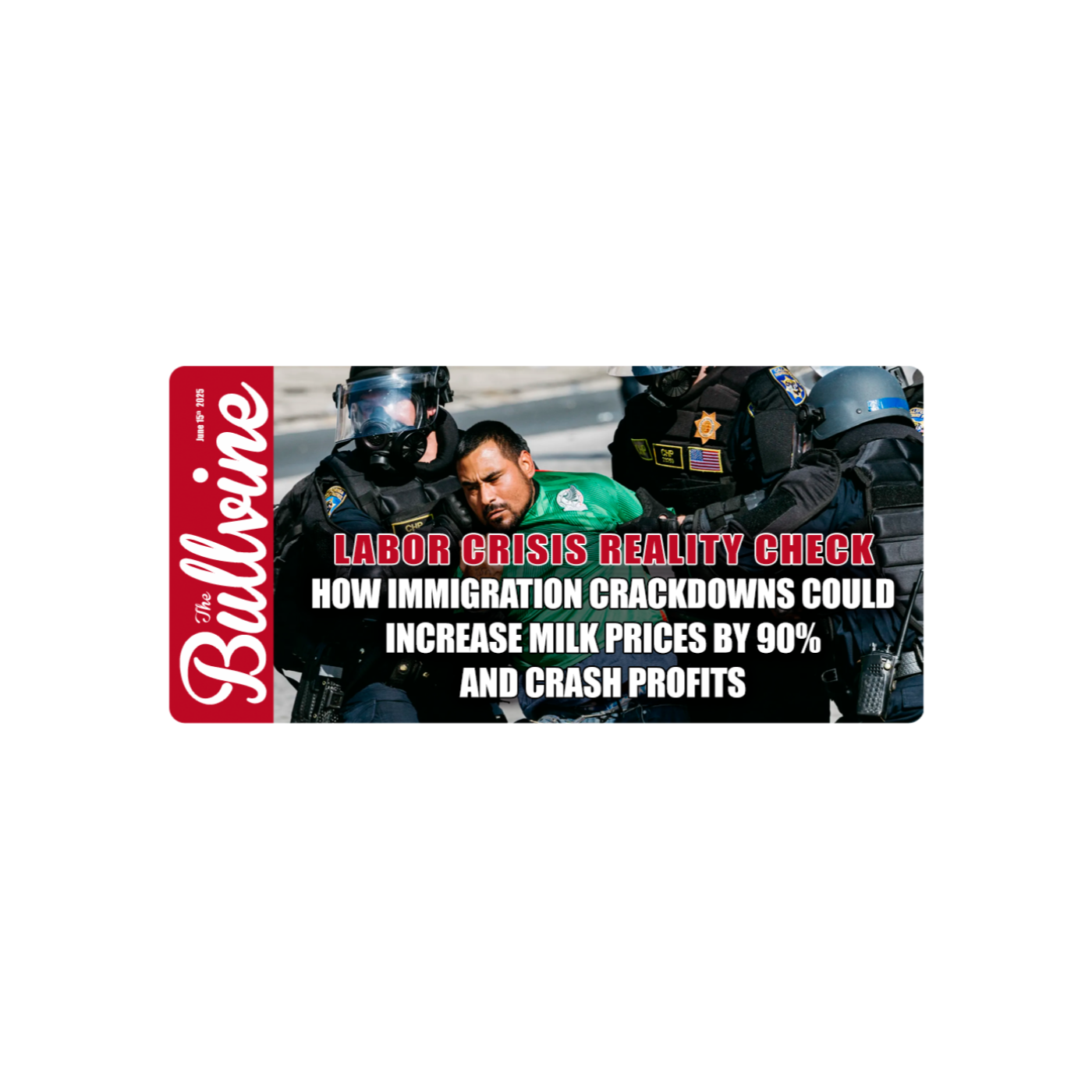
S1 Ep 292E292 Labor Crisis Reality Check: How Immigration Crackdowns Could Increase Milk Prices by 90% and Crash Profits
While Washington plays political theater with immigration enforcement, dairy operators face an existential threat that could slash the U.S. dairy herd by 2.1 million cows and trigger a 90.4% spike in retail milk prices. In this hard-hitting episode, Andrew breaks down the brutal mathematics of America's dairy labor crisis and reveals why 51% of your milking crew could vanish overnight—regardless of your E-Verify compliance or legal protocols.This isn't political rhetoric; it's cold economic reality backed by Texas A&M research and verified industry data. Discover why your $2.5 million parlor investment becomes worthless without skilled workers, how the H-2A "solution" actually costs $30+ per hour, and what smart producers are doing right now to protect their operations.Key Topics CoveredThe Labor Vulnerability Crisis51% of dairy workers lack legal status while producing 79% of U.S. milk supplyReal enforcement examples: Vermont and New York dairy raidsWhy E-Verify compliance won't protect your operationThe economic math: $315,000 monthly revenue at risk for 500-cow operationsComponent Revolution Meets Labor RealityHow butterfat content jumped from 3.70% to 4.40% over two decadesTexas A&M IMPLAN economic modeling resultsThe $32.1 billion economic impact projectionWhy technology can't replace disappearing expertiseThe H-2A Band-Aid FailureReal costs: $15,000+ per worker per seasonWhy year-round dairy operations are excludedMichigan State economist projections on cost doublingNational Milk Producers Federation lobbying effortsFinancial Reality Check90.4% milk price increase projections2.1 million cow herd reduction scenarios4,532 farm closure projectionsState-by-state vulnerability analysisSmart Producer Adaptation StrategiesWorker retention program frameworksI-9 compliance and audit preparation (Penn State guidance)Technology integration for labor efficiencyPolitical engagement through farm organizationsInternational Competitive DisadvantageNew Zealand's Recognised Seasonal Employer schemeCanada's 50-year agricultural worker programEU regional mobility policiesMarket share capture by stable competitorsRead the full article here - https://www.thebullvine.com/management/labor-crisis-reality-check-how-immigration-crackdowns-could-increase-milk-prices-by-90-and-crash-profits/

S1 Ep 291E291 From Depression-Era Auction to Global Dominance: The Picston Shottle Legacy
The dairy industry’s obsession with young genetics just got shattered by an “over-the-hill” 8-year-old Canadian cow whose son became Holstein royalty. Picston Shottle—born from a dam considered “ancient by AI standards”—defied every breeding convention to become the #7 most influential Holstein sire globally and the only European bull in the top 20. His 100,000 daughters generated over £5 billion in milk value while averaging 18 days longer productive life than contemporaries, delivering measurable ROI through reduced replacement costs and veterinary expenses. With 9,674 Excellent daughters worldwide (surpassing legends like Goldwyn and Durham), Shottle’s genetics proved that efficiency and longevity create more value than extreme production alone—producing more milk per unit of feed while reducing methane emissions and management intensity. In 2025’s challenging economic climate where sustainability regulations tighten and labor shortages persist, this story demands every progressive dairy farmer reevaluate their genetic selection priorities.KEY TAKEAWAYSLongevity Trumps Youth: Shottle’s daughters from an 8-year-old dam averaged 18 days longer productive life, directly reducing replacement costs by $300-500 per cow while maximizing return on genetic investment in today’s $2,000+ heifer market.Efficiency Equals Profitability: His daughters’ superior feed conversion ratios and milk-per-unit-feed efficiency addressed 2025’s dual challenges of environmental regulations and feed cost management, delivering both regulatory compliance and improved profit margins.Health Traits Reduce Hidden Costs: Excellent mammary systems and sound feet/legs in Shottle daughters significantly reduced mastitis treatments and lameness issues, cutting veterinary expenses and labor intensity when skilled workers are increasingly scarce.Global Genetic Democratization: As the only European bull in the top 20 most influential sires, Shottle proved that genetic excellence transcends geographical boundaries, offering progressive farmers alternatives to North American genetic monopolies.Sustainable Production Model: With conservative estimates of £5 billion in milk value from his daughters, Shottle demonstrated that balanced genetics focusing on durability and efficiency create generational wealth while meeting 2025’s consumer demands for sustainable dairy practices.Read the full article here - https://www.thebullvine.com/sire-spotlight/from-depression-era-auction-to-global-dominance-the-picston-shottle-legacy/
S1 Ep 290E290 Eliminate Dehorning Forever: Why 100% Polled Herds Outperform Gradual Adoption by $23 Per Head
This episode challenges the dairy industry's biggest financial mistake: gradual polled adoption. This explosive episode reveals why half-polled herds are bleeding money faster than fully horned operations and exposes the "transition trap" costing producers thousands annually.Key Discussion PointsThe $23 Per Head Economic ShockDirect dehorning costs: $17.36 per head in combined expensesHidden costs: Treatment complications (1-8% vs 1-3% for polled cattle)The "half-polled trap": Paying premium genetics prices while still shouldering 50% dehorning costs500-cow operation loses $8,600 annually from dehorning aloneGenetic Revolution Dismantles Old ExcusesElite polled sires now average $1,108 in Net MeritCherry-Lily Luster-P: World's first polled "millionaire sire" (901,300 doses sold)Arizona herd data: Polled cows produce MORE milk (66.5 kg vs 65.9 kg daily)Top polled bulls consistently rank on Top 100 TPI proven sire listsThe Single-Generation TransformationHomozygous polled (PP) sires guarantee 100% hornless offspringComplete herd conversion possible in just one generationStrategic outcrossing with PP females and elite horned bulls90-day implementation action plan breakdownGlobal Market Reality CheckEuropean adoption rates approaching 67% by 2025Major corporate buyers (Nestle, General Mills, Dunkin Brands) prioritizing polled genetics"100% Polled" certification commanding livestock premiumsNorth American producers positioned for export opportunitiesFeatured Success StoriesBurket-Falls Farm: 60+ years of polled breeding, 90% polled herdDrewholme Holsteins: Strategic integration into elite "L" familyCalbrett Kingboy Miranda EX-93: Global Cow winner proving polled excellenceTechnology & Future OutlookGenomic testing providing 99% accuracy for polled status confirmationGene editing potential with CRISPR-Cas9 technologyConsumer acceptance challenges vs. scientific capabilitiesInbreeding risk mitigation through diversified PP bull availabilityRead more.- https://www.thebullvine.com/polled-dairy-cattle/eliminate-dehorning-forever-why-100-polled-herds-outperform-gradual-adoption-by-23-per-head/
S1 Ep 289E289 Stop Blaming Your Robots: The Million-Dollar Management Mistakes Killing Your Dairy’s Profitability
This episode exposes the uncomfortable truth hitting Canadian dairy farms: your expensive robotic milking system isn't failing—your management is. With over 20% of Canadian dairies now using robotic systems, identical robots show drastically different performance based solely on management practices. This episode reveals the four critical management factors separating winners from losers and provides specific, actionable improvements that can transform underperforming systems into profit engines without additional capital investment.Key Topics CoveredOpening Reality CheckThe stark divide between thriving and struggling robotic operationsWhy $200,000+ robot investments are underperformingUniversity of Guelph research across nearly 200 Canadian robotic farmsThe documented 28.5% production increase potential from proper managementChallenging Conventional Wisdom Breaking the twice-daily milking schedule mythNatural cow behavior: 2.4-3.0 voluntary milkings dailyHow rigid human schedules ignore biological rhythmsTransformational vs. incremental performance improvementsThe Four Critical Management Factors Factor #1: The Lameness CrisisLame cows are 2.2x more likely to require fetchingThe farmer mental health-cow lameness connectionSand bedding: immediate 1.5 kg/day production improvementWeekly mobility scoring protocolsFactor #2: Feed Strategy as Behavioral Economics University of Minnesota research: 3 feed types vs. 1 type (85.8 vs 79.2 lbs/cow)Each 5 feed push-ups = +0.35kg milk dailyMolasses-based liquid feeds: 2.7 to 3.0 milkings per dayStrategic concentrate as "motivation currency"Factor #3: The Data Gold Mine 120+ variables measured per cow dailyPenn State Extension's five data categoriesAI integration and "digital twins" conceptProactive vs. reactive management paradigmsFactor #4: Facility Design Economics Free-flow vs. guided traffic systemsUniversity research on housing factors across 197 farmsTraffic system selection matching management capabilitiesImplementation Strategy Three-phase implementation timelineResearch-based success factorsPerformance monitoring against benchmarksComprehensive management assessment protocolsThe Bottom Line Challenge Management accountability vs. technology blameThe virtuous cycle: better management → better cow health → reduced farmer stressLeveraging 120+ daily variables per cowImmediate next steps for listenersRead the full article here - https://www.thebullvine.com/management/robotic-milking/stop-blaming-your-robots-the-million-dollar-management-mistakes-killing-your-dairys-profitability/
S1 Ep 288E288 Revolutionize Dairy Profits: How Microbes Could Boost Your Operation’s Performance by 30%
This episode challenges 50 years of dairy industry dogma by exposing the "sterile milk myth" and revealing how microbiome optimization can deliver $500 annual ROI per cow. This game-changing episode uncovers university research showing that the trillions of microorganisms living inside your cows—not sterile environments—hold the key to dramatic improvements in feed efficiency, reproductive health, and milk quality.Key Topics Covered🔬 The Sterile Milk Myth ExposedWhy the dairy industry's obsession with bacteria-free environments is sabotaging profitabilityResearch proving healthy mammary glands harbor beneficial bacterial communitiesHow "selective sanitization" could replace aggressive sterilization protocols💰 Feed Efficiency RevolutionRumen microbiome composition predicts 32% of feed efficiency variation between animals25% efficiency improvements delivering $375 annual savings per cowWashington State University findings on microbial communities and volatile fatty acid production🐄 Reproductive Performance BreakthroughUniversity of Alberta's ProPreg™ probiotic reducing uterine infections by 50%4-6 liter daily milk increases for 50 days post-calving$155 additional profit per cow per lactation through microbiome optimization📊 Economic Reality CheckTotal potential benefits exceeding $52,000 annually for 100-cow herdsImplementation costs under $25 per cow with 4-6 month payback periodsROI calculations comparing traditional vs. microbiome-optimized operations🗺️ Global Competitive LandscapeEuropean operations leading North American adoption by three yearsChinese state-backed programs targeting 25% efficiency improvements by 2027Why early adopters are capturing sustainable competitive advantages⚙️ Implementation RoadmapPhase 1: Assessment and Education (Months 1-3)Phase 2: Pilot Testing (Months 4-9)Phase 3: Monitoring and Optimization (Months 10-18)Technology integration opportunities with precision agricultureRead full article here - https://www.thebullvine.com/management/nutrition/revolutionize-dairy-profits-how-microbes-could-boost-your-operations-performance-by-30/

S1 Ep 287E287 A Lifetime in the Ring: Tom Morris and the Evolution of a Dairy Dynasty
Join us for an extraordinary journey through seven decades of dairy industry evolution with Tom Morris, the 2025 recipient of Holstein Association USA's Distinguished Leadership Award. From a faded red ribbon earned in 1954 to revolutionizing how the global dairy industry connects and communicates, Tom's story offers both inspiration and practical wisdom for today's dairy professionals.Key Topics Covered🎯 Early Foundations (1950s-1970s)Growing up at Arwyn Farms in WisconsinThe 1954 Royal Winter Fair red ribbon that started it allBecoming high individual at 1971 Intercollegiate Dairy Judging ContestCreating America's first 9-month dairy herdsman program at Northwoods Technical College🐄 Deronda Farm Excellence (1975-1989)Building a merchandising-focused breeding operation with wife SandyDeveloping 200+ Excellent cowsThree record-breaking dispersals - highest averaging sales of their respective yearsStrategic approach to global genetics marketing🎤 Auctioneering Mastery (1970s-Present)Learning from mentor Harvey SwartzPhilosophy: "Good Sales Don't Just Happen – They're Managed"Managing 500+ Holstein auctions across North America and EuropeHandling the emotional complexity of family dispersals🌍 World Dairy Expo Legend (1967-Present)58 consecutive years of attendance - every show since inceptionFrom unloading train boxcars as a student to industry leadership1969 victory with homebred PammieCurrent role as Dairy Committee Chair and VP of Board of Directors🏆 World Classic Innovation (1989-Present)Creating "The International Marketplace"Grossing over $1M fourteen times, $2M three times25% export rate in early decadesIntroducing industry firsts: clones, European genetics, embryo packages📰 Media Revolution (1990-2022)Launching The Cattle Connection at 1990 World Dairy ExpoGrowing to largest circulation dairy breed publication in North AmericaSolving industry communication challenges pre-internetStrategic sale to Holstein International👨🏫 Mentorship Legacy50 consecutive years auctioneering county fair livestock sales250+ students educated during college teaching decadeEstablishing the Merle Howard Award at World Dairy ExpoPhilosophy: "The next generation is our greatest national resourceRead the full article here - https://www.thebullvine.com/breeder-profiles/a-lifetime-in-the-ring-tom-morris-and-the-evolution-of-a-dairy-dynasty/

S1 Ep 286E286 Heat Disaster: How Climate Change Is Bankrupting Small Dairy Farms While Big Ag Profits
In this hard-hitting episode, we dive deep into groundbreaking research from the University of Illinois that exposes a devastating truth: small dairy farms are bearing a disproportionate burden from climate change, experiencing 60% higher heat-related losses than their corporate counterparts. This isn't just about uncomfortable cows—it's about the systematic extinction of family dairy operations while Big Ag profits from superior cooling infrastructure.Key Statistics Covered$245 million: Total industry losses from heat stress over five years (2012-2016)1.4 billion pounds: Milk production lost to heat stress across nine Midwest states1.6% vs 1%: Small farms suffer significantly higher annual losses compared to industry average27%: Share of total heat damages shouldered by small farms (despite producing only 20% of milk)THI 68: Temperature-Humidity Index where Holstein cattle begin experiencing production-damaging stress250-500% ROI: Returns on strategic cooling investments for small operationsMajor Topics DiscussedThe Unequal Climate ImpactWhy small farms with fewer than 100 cows are getting devastatedHow corporate operations are investing millions in cooling while family farms are left behindThe cruel economic reality: farms most vulnerable to heat stress have least capacity to implement solutionsBreed-Specific VulnerabilitiesHolstein vs Jersey heat tolerance differences (THI 68 vs THI 75)Strategic crossbreeding as climate adaptationWhy your neighbor's herd might be thriving while yours suffersAffordable Solutions That WorkShade cloth and portable fans delivering measurable returnsEQIP funding covering up to 75% of cooling system costsEquipment-sharing cooperatives reducing individual costs by 60%Regional Production ImpactsNorthern farms: 7.12% summer production decreaseSouthern operations: 10.16% August lossesWhy August has become the make-or-break month for small dairiesThe Bottom Line for ListenersThis episode reveals an uncomfortable truth: while processors report record profits during heat waves, they've failed to adjust pricing models to account for small farms' disproportionate cooling costs. Without immediate action, we're witnessing a climate-driven extinction event for family dairy operations.Read the complete article here https://www.thebullvine.com/management/heat-disaster-how-climate-change-is-bankrupting-small-dairy-farms-while-big-ag-profits/

S1 Ep 285E285 From Woodstock to Wall Street: How the Dairy Farmer Who Hosted Half a Million Hippies Built a Breeding Empire Worth Copying Today
What if the secret to surviving today's volatile dairy markets isn't found in the latest genomic technology, but in the business playbook of the conservative Republican farmer who made Woodstock possible? This week, we dive deep into the Max Yasgur story - a tale of strategic Holstein breeding, vertical integration, and a $75,000 crisis management masterclass that modern dairy operations desperately need to understand.Max Yasgur built a 650-head Holstein empire and became Sullivan County's largest milk producer decades before accidentally hosting 460,000 hippies at Woodstock. But his real genius wasn't in rock festivals - it was revolutionary dairy business strategies that most modern operations still haven't mastered. From his surgical precision with Dunloggin bloodlines to his pre-Silicon Valley vertical integration model, Yasgur proved that strategic thinking trumps genetic gambling every time.Key Takeaways1. Genetic Concentration Beats Index Chasing While modern breeders jump between 20+ bulls annually, Yasgur concentrated on proven Dunloggin and Harden Farms bloodlines for decades, producing cows like Yasgur Roburke Anny (24,023 lbs milk, 705 lbs fat) that matched today's averages with 1960s technology.2. Vertical Integration = Wealth Creation Yasgur controlled every step from pasture to doorstep through his own processing plants, bottling facilities, and delivery routes. Modern operations exploring value-added processing can increase per-gallon revenue from $0.18 commodity to $0.54+ retail.3. Crisis Asset Monetization Saves Operations The $75,000 Woodstock payment (equivalent to $580,000 today) solved Yasgur's hay crisis and fed his 650-head herd. Modern farms should audit non-core assets for agritourism, renewable energy, and event hosting opportunities worth $25,000-$100,000+ annually.4. Principled Leadership Drives Long-term Success Despite being a conservative Republican who opposed the counterculture movement, Yasgur's "live and let live" philosophy enabled profitable opportunities others rejected due to prejudice - proving that defending principles often aligns with business success.Read full article here https://www.thebullvine.com/breeder-profiles/from-woodstock-to-wall-street-how-the-dairy-farmer-who-hosted-half-a-million-hippies-built-a-breeding-empire-worth-copying-today/
S1 Ep 284E284 Maximizing Calf Performance: The Million-Dollar Investment in Your Dairy’s Future
Most dairy operations treat their calf barn as a necessary cost center, but what if we told you it's actually your biggest untapped profit engine? In this episode, we dive deep into the Cornell University research that's turning conventional calf management on its head - showing how those critical first 60 days can add over 1,000 pounds of milk per lactation to every animal.This episode challenges the industry's outdated approaches to pre-weaning management and breaks down the hard science behind why doubling birth weight by weaning isn't just a nice goal - it's your ticket to building a more profitable herd from the ground up.Key Topics CoveredThe Science Behind Early Calf PerformanceCornell University's groundbreaking ADG research findings1Why 850kg additional milk production per kg of pre-weaning ADG matters to your bottom line1The NAHMS Dairy study results that most producers are ignoring1Challenging Conventional Feeding ProtocolsWhy the "traditional" feeding approach is costing you moneyOptimal feeding volumes: 1 gallon twice daily protocols1The colostrum quality and timing standards that actually workEconomic Impact AnalysisLifetime productivity connections to early growth ratesCost-benefit analysis of intensive vs. conventional feeding programsROI calculations for upgraded pre-weaning managementImplementation StrategiesMeasuring and tracking ADG on every calfQuality control protocols for colostrum (22-23% Brix standards)1Transitioning existing operations to performance-based systemsKey Takeaways & Action ItemsImmediate Actions:Start measuring Average Daily Gain (ADG) on every calf in your operationAudit your current colostrum protocol - timing and quality matter more than you thinkCalculate your current doubling rates and compare to industry benchmarks30-Day Implementation Goals:Establish consistent feeding volumes and schedulesImplement colostrum quality testing using refractometer measurementsBegin tracking correlation between early growth and future performanceLong-Term Strategy:Treat your calf barn as a profit center, not a cost centerConnect early nutrition investments to lifetime productivity metricsChallenge every "that's how we've always done it" practice in your operationRead the full article here - https://www.thebullvine.com/management/maximizing-calf-performance-the-million-dollar-investment-in-your-dairys-future/
S1 Ep 283E283 The Magic Behind Larenwood Farms: How Chris McLaren is Redefining Dairy Excellence
What if everything you think you know about dairy genetics is wrong? This week, we dive deep into the remarkable story of Larenwood Farms in Drumbo, Ontario - a 60+ year closed herd operation that's proving the dairy industry's obsession with purchasing elite genetics is fundamentally flawed. Chris McLaren and his family have achieved 13,100 kg milk averages, earned three consecutive national DHI awards, and obtained the coveted Holstein Canada Master Breeder shield - all without buying a single animal in over six decades. This isn't just a farm profile; it's a masterclass in why internal breeding development crushes expensive genetic purchases every time.Key Topics CoveredThe Closed Herd AdvantageHow 60+ years without external purchases created genetic consistency13,100 kg average production with 4.5% fat and 3.3% proteinDramatic reduction in disease risk through closed breedingGenomic Testing Game-ChangerStrategic implementation across entire herdProduction data by Lifetime Profit Index rankingsROI validation through measurable improvementsFacility Evolution Impact2012 freestall barn transformation2022-2023 calf and heifer facility upgrades1,000 kg additional milk production per first lactation heiferBreeding Philosophy Revolution"Make the daughter better than the mother" approachBalancing genomics with traditional pedigree knowledgeCow family progression tracking across generationsTechnology Integration StrategyProgression from tie-stall to freestall to robotic milkingCow-centered decision making over operational convenienceFuture-proofing through strategic technology adoptionRead the full article here - https://www.thebullvine.com/breeder-profiles/the-magic-behind-larenwood-farms-how-chris-mclaren-is-redefining-dairy-excellence/
S1 Ep 282E282 Heat Stress 2.0: Why Your Current Cooling Strategy Is Costing You Big Money
With summer 2025 approaching, dairy producers across North America are facing an escalating heat stress challenge that's costing the industry $1.5 billion annually. In this comprehensive episode, we expose why basic cooling methods are failing modern high-producing dairy cattle and reveal the advanced strategies that forward-thinking producers are implementing right now. From intelligent soaking systems that slash water use by 70% to genetic selection for heat-tolerant "SLICK gene" carriers, we cover the cutting-edge solutions that protect both cow welfare and your bottom line.Main Topics CoveredThe Hard Truth About Heat Stress Costs$1.5 billion annual losses to U.S. dairy industryRegional variations: $72/cow in Wisconsin vs. $700/cow in Florida/TexasHidden costs beyond milk production: fertility, health, intergenerational impactsWhy basic fans and sprinklers aren't enough anymoreBeyond Basic Cooling: Technology RevolutionIntelligent soaking systems (VES-Artex Intelligent Soaker 2.0)Advanced ventilation: tunnel vs. cross-ventilation systemsSmart controllers and Variable Frequency Drives (VFDs)ROI analysis: Dry cow cooling pays back in 5.7 yearsHolding pen crisis: Why this is your dairy's hottest danger zoneNutritional Interventions That Actually WorkOsmolytes: Betaine supplementation (15g/day) improves milk yieldYeast cultures (Saccharomyces cerevisiae) for rumen stabilityDCAD management for lactating cows under heat stressStrategic fat supplementation with rumen-protected fatsElectrolyte balance: Increasing K to 1.5-1.8% of DMThe Genetic Frontier: Breeding for Heat ToleranceSLICK gene: 10+ lbs more milk per day in hot weatherCommercial availability through Select Sires and othersGenomic selection advances from AustraliaHeritability of heat tolerance traits (0.13-0.17)Balancing heat tolerance with production geneticsSmart Monitoring: Early Detection SystemsRumen boluses: Core temperature monitoringWearable sensors for activity and rumination trackingCritical thresholds: Rumen temps >39.15°C (102.47°F)Automated milk data analysis for herd-level insightsTranslating sensor alerts into management actionsIntegration: The Holistic ApproachWhy piecemeal strategies failFacility design principles: orientation, roofing, ventilationCow flow management to minimize heat accumulationSuccess stories: Kansas dairy case studySmall vs. large farm considerationsYour 2025 Action PlanThree-phase implementation strategyCost-benefit calculation frameworkBuilding long-term climate resilienceEmergency heat stress protocolsSee complete article at https://www.thebullvine.com/management/heat-stress-2-0-why-your-current-cooling-strategy-is-costing-you-big-money/
S1 Ep 281281 Pellet-Free Robotic Milking: The $36,740 Decision Your Operation Needs to Make Now
In this episode, we dive deep into one of the most provocative questions facing progressive dairy producers: Are robot pellets really worth the cost? Join us as our hosts take you on a myth-busting journey through the economics, science, and practical realities of going pellet-free in robotic milking systems. Drawing on global research, expert interviews, and real-world barn experiences, this episode challenges conventional wisdom and lays out a bold new path for maximizing profit and cow health in the age of automation.Key Topics CoveredThe True Cost of Robot Pellets: Discover how the average dairy could be leaving over $36,000 on the table each year by sticking with traditional pellet feeding in robotic milking systems.Science Behind Pellet-Free Success: Learn why a well-balanced TMR (Total Mixed Ration) can drive more visits, higher butterfat, and better rumen health—without the expensive "security blanket" of pellets.Global Perspectives: Hear how leading producers in Europe and beyond have already made the switch, and what North American dairies can learn from their results.The 90-Day Gameplan: Step-by-step guidance for transitioning away from pellets, including feed management, barn layout tweaks, and staff training.Debunking the Myths: We tackle common fears—like drop in visits, lost milk, and labor headaches—and show how data and experience often point the other way.Profitability Breakdown: A clear look at the numbers: feed savings, component bonuses, and labor trade-offs, all backed by university research and on-farm results.Actionable Takeaways: Three things you can do right now to assess your own operation’s pellet dependency and start capturing more value.Read more - https://www.thebullvine.com/management/robotic-milking/pellet-free-robotic-milking-the-36740-decision-your-operation-needs-to-make-now/

S1 Ep 280E280 Retained Placentas Costing You $389 Per Case? Your Nutrition Program Is Bleeding Money
This episode delivers a hard-hitting analysis of retained placentas in dairy operations, exposing how poor transition cow nutrition is costing producers $389 per case in preventable losses. We break down the science behind placental retention, reveal the specific nutritional deficiencies driving this costly condition, and provide the exact supplementation protocols that progressive dairies are using to slash their rates from industry-average 10-15% down to under 5%.Bottom Line: If you're accepting retained placenta rates above 5%, you're not managing a health issue - you're funding a financial disaster that's completely preventable through targeted nutrition.Read the full article here https://www.thebullvine.com/management/retained-placentas-costing-you-389-per-case-your-nutrition-program-is-bleeding-money/

S1 Ep 279E279 World Milk Day’s Dirty Secret: Why India’s Dairy Revolution Exposes Western Industry Complacency
While Western dairy celebrates technological superiority and economies of scale, India’s grassroots cooperative revolution has quietly captured 31% of global milk production through a distributed model that returns 70-80% of consumer prices directly to farmers—compared to the Western average of just 33%. With 185,903 village cooperatives supporting 80 million farmers averaging just 2-3 cows each, India demonstrates that antifragile resilience trumps individual farm efficiency, achieving sustained 6% annual growth while European operations face 0.2% decline and U.S. replacement heifer numbers hit 47-year lows. This isn’t just about production volume—it’s about systematic superiority in farmer empowerment, with democratic technology access delivering free doorstep AI services to 88.7 million animals while Western farmers face $200,000 robotic milker investments that create barriers rather than opportunities. The cooperative model proves that distributed networks absorb market shocks and disease outbreaks more effectively than vulnerable mega-dairies, where single points of failure can devastate massive production volumes. As global dairy power shifts eastward and domestic markets strengthen over export dependence, Western operations must abandon their complacent assumptions about scale and efficiency before market forces expose their systemic vulnerabilities. Your strategic choice is clear: continue defending an increasingly fragile status quo or learn from a revolution that’s already reshaping global dairy through cooperative strength and democratic innovation access.Cooperative Economics Destroy Margin Myths: Indian cooperatives return 70-80% of consumer prices to farmers versus Western’s 33% average, proving distributed ownership can deliver superior ROI compared to corporate processors cutting payments by 20-25% to fund plant overruns.Democratic Technology Beats Capital Barriers: India’s free doorstep AI program covers 88.7 million animals with sex-sorted semen subsidies at $9/dose versus Western farmers paying $35-$50 per unit, demonstrating how collective technology access can democratize genetic improvement without individual $200K investments.Distributed Production Provides Antifragile Resilience: While European mega-dairies face 20-30% yield losses from Bluetongue virus, India’s distributed system absorbed Lumpy Skin Disease impact with minimal national disruption, proving that millions of small operations create superior shock absorption than concentrated mega-facilities.Component Focus Validates Cooperative Genetics: With U.S. butterfat rising from 3.95% to 4.36% and protein from 3.181% to 3.38%, India’s accessible breeding programs position farmers to capture FMMO composition premiums while Western operations struggle with replacement heifer shortages at 47-year lows.Strategic Implementation Roadmap Available Now: Western farmers can immediately reduce input costs 5-10% through cooperative purchasing, pilot shared technology access for fraction of individual investment, and build producer-owned processing to capture value-chain margins—with ROI projections showing 10-15% farmgate price increases through collective marketing.Read more - https://www.thebullvine.com/dairy-industry/world-milk-days-dirty-secret-why-indias-dairy-revolution-exposes-western-industry-complacency/

S1 Ep 278E278 Larcrest Cosmopolitan: How a Spotted Minnesota Cow Built a Dynasty
Discover the remarkable story of Larcrest Cosmopolitan, a spotted calf born in Minnesota in 2005 who defied genetic odds to build a global Holstein empire worth millions. From near-extinction events in her bloodline to commanding $400,000 at auction, this is the incredible journey of how one cow family transformed dairy genetics worldwide.Larcrest Cosmopolitan, a spotted Picston Shottle daughter born in September 2005, overcame genetic near-misses in previous generations to become the foundation of one of the most influential Holstein bloodlines in modern history. After achieving the coveted #1 GTPI position among US Holstein cows, Cosmopolitan’s genetics spread globally through her exceptional daughter Crimson EX-94, who won Global Cow of the Year in 2016. The family’s descendants, including influential AI sires like Stantons Chief, Sandy-Valley Conway, and Larcrest Commander, have claimed national championships across multiple countries and command premium prices at elite sales. With genetics exported to Japan, Germany, France, and the Netherlands, the Cosmopolitan family consistently transmits superior udder quality, high milk components, and enhanced longevity. Today, nearly 20 years later, the dynasty continues evolving through bulls like Genosource Captain (2025 #1 TPI), proving that strategic breeding focused on complete, functional animals can create lasting genetic legacies. The family represents a model for sustainable breed improvement that balances genetic excellence with animal welfare and practical farming values.Key TakeawaysAgainst All Odds Origins: Cosmopolitan’s bloodline survived two genetic near-extinctions—her great-grandmother’s severe calving paralysis and her dam being born co-twin to a bull—before producing a global dynastyRecord-Breaking Market Value: Cosmopolitan daughters commanded astronomical auction prices, with Larcrest Cardigan selling for $400,000 and sister Canto bringing $290,000, validating the family’s genetic worthGlobal Championship Legacy: Family descendants have claimed national championships in Germany, Belgium, and the US, with Stantons Chief alone siring 22,373 daughters worldwide demonstrating consistent genetic improvementSustainable Breeding Model: The family exemplifies modern dairy values by producing cattle with enhanced fitness, longevity, and functionality, with recent generations requiring fewer veterinary interventions while maintaining high productionContinuing Innovation: From achieving #1 GTPI in 2005 to Genosource Captain reaching #1 TPI in 2025, the Cosmopolitan genetics remain at the forefront of Holstein improvement, proving the lasting value of balanced breeding programsRead the full article - https://www.thebullvine.com/donor-profile/larcrest-cosmopolitan-how-a-spotted-minnesota-cow-built-a-dynasty/

S1 Ep 277E277 From Farm Boots to Facebook Fame: How Annaliese Wegner is Changing the Face of Dairy
Discover how Wisconsin dairy farmer Annaliese Wegner built 100,000+ social media followers and multiple revenue streams by challenging conventional agricultural advocacy. Learn why authentic storytelling trumps technical education when connecting with consumers, and how one farm mom's vulnerability-first approach is revolutionizing the way dairy farmers communicate with the public.Key Topics CoveredThe Accidental Influencer JourneyFrom dairy science graduate to social media successThe pivotal mastitis post that changed everythingBuilding authentic connections vs. technical educationContent Strategy That WorksThe 4:1 lifestyle-to-education content ratio"Sliding in the vegetables" approach to ag advocacyConnection-before-curriculum methodologyMonetizing AuthenticityMultiple revenue streams from social media presenceFarm + Grow Co. business modelSpeaking engagements and brand partnershipsFamily Dynamics in Public PlatformsManaging boundaries while sharing farm lifeTom's evolution from reluctant participant to supporterRespecting comfort levels while building brandEmpowering Other Agricultural Voices"Ag's Most Okayest Farm Girls" podcastFarm + Grow Co. workshops and mastermindsOvercoming confidence barriers in storytellingHandling Controversial TopicsPositive approach to myth-bustingBuilding trust through personal relationshipsThe class reunion conversation that changed perspectivesRead the full article here https://www.thebullvine.com/breeder-profiles/from-farm-boots-to-facebook-fame-how-annaliese-wegner-is-changing-the-face-of-dairy/
S1 Ep 276E276 The Real Cost of Cheap Labor: Why Progressive Dairy Farms Are Investing in People
The U.S. dairy industry faces an unprecedented workforce crisis that threatens the very foundation of American milk production. In this comprehensive episode, we explore how labor shortages have evolved from a manageable challenge to an existential threat, and reveal the innovative strategies progressive dairy farms are using to not just survive, but thrive in this new reality.The U.S. dairy industry’s reliance on non-family labor is colliding with unprecedented hiring and retention challenges, driven by wage gaps, grueling work conditions, and rural isolation. Innovative farms are combatting shortages with competitive compensation, robust training, and technology like robotic milkers—yielding measurable gains in productivity and employee retention. However, systemic fixes, including immigration reform and industry-wide upskilling, remain critical for long-term stability. Without rethinking labor as a strategic asset, dairy risks losing its competitive edge and rural economic vitality.In this podcast you will learn:Invest in people: Competitive wages + housing/benefits reduce turnover by up to 54% (ROI: $263K/yr).Automate wisely: Robotics cut milking labor 60% but demand tech-savvy workers for data/equipment management.Fix policy gaps: H-2A visa reforms and pathways to legal status are urgent to stabilize immigrant labor (79% of U.S. milk supply).Culture matters: Peer recognition, bilingual training, and mental health support curb isolation and burnout.Future-proof skills: Hybrid roles (animal care + data literacy) attract younger workers and bridge tech gaps.Read the full article here https://www.thebullvine.com/management/the-real-cost-of-cheap-labor-why-progressive-dairy-farms-are-investing-in-people/
S1 Ep 275E275 The Judge’s Eye: Mastering the Art & Science of Dairy Cattle Evaluation
Ever wondered what separates championship judges from the rest? In this episode, we pull back the curtain on systematic dairy cattle evaluation, revealing the proven methodologies that can transform your breeding decisions and boost your operation's profitability. Whether you're a 4-H member showing your first heifer or a seasoned producer making multi-generational herd decisions, this deep dive into the "judge's eye" will change how you look at cattle forever.What You'll LearnThe systematic 3-point priority system that elite judges use every timeWhy the industry mantra "good uddered, dairy cows with functional feet and legs" could revolutionize your selection decisionsHow proper note-taking techniques translate directly to better farm managementThe critical differences between judging mature cows vs. heifers2025 PDCA scorecard updates and what they mean for your breeding programHow to integrate genomic data with visual assessment for maximum ROIRead the full article: https://www.thebullvine.com/show-reports/dairy-cattle-judging/the-judges-eye-mastering-the-art-science-of-dairy-cattle-evaluation/
S1 Ep 274E274 The Open-Source Revolution That’s About to Destroy the $2 Billion Farm Software Industry
Cornell University just released free software that makes your $26,000 dairy management suite look like a calculator. In this episode, we dive deep into the Ruminant Farm Systems (RuFaS) model - a revolutionary open-source tool that's challenging everything dairy farmers think they know about farm management software. We explore why transparency beats black boxes, how individual cow simulation trumps herd averages, and why the smartest producers are already making the switch.Key Topics Covered🎯 The $2 Billion Black Box ScandalHow proprietary software companies have been overcharging farmersThe true annual cost of farm management software: $9,500-$26,000Why "trust our algorithms" isn't good enough anymore🔬 Meet RuFaS: The Game-Changing TechnologyCornell University's revolutionary approach to farm modelingFour interconnected modules: Animal, Manure, Crop & Soil, Feed StorageMonte Carlo simulation vs. simple herd averagesOpen-source transparency vs. proprietary black boxes💰 The Economic Reality CheckPotential savings: $100,000-$260,000 over a decadeReal research results from Hansen et al. (2021)Feed efficiency improvements saving $50,000-$200,000 annuallyMethane reduction potential: up to 38% with 3-nitrooxypropanol🏆 National Industry ValidationFARM Environmental Stewardship Program Version 3 integrationWhy the national dairy program chose free over expensiveProcess-based modeling vs. outdated emission factors⚡ Implementation RealityLearning curve: 2-3 weeks for initial familiarityFarm size considerations: 300+ cows for maximum valueTechnical requirements and data management5-phase adoption strategy🚀 Industry Disruption AheadPredictable resistance from software companiesThe shift from "farmer as customer" to "farmer as collaborator"Future integration with precision agriculture technologiesKey Takeaways✅ Massive Cost Savings: Access superior modeling technology for free vs. paying $9,500-$26,000 annually for inferior proprietary software✅ Superior Technology: Individual animal simulation, complete algorithmic transparency, and integrated whole-farm optimization✅ National Validation: The FARM Environmental Stewardship Program chose RuFaS over expensive commercial alternatives✅ Transparency Revolution: Open-source access to every equation enables verification, customization, and improvement✅ First-Mover Advantage: Early adopters gain research-grade capabilities while competitors pay premium prices for inferior toolsRead the full article at https://www.thebullvine.com/technology/the-open-source-revolution-thats-about-to-destroy-the-2-billion-farm-software-industry/

S1 Ep 273E273 The Great North American Dairy Divide: Why Your Neighbor’s Grass Isn’t Greener—It’s Just Different Fertilizer
While North Americans celebrated Memorial Day and Victoria Day, two fundamentally opposed dairy philosophies were operating just miles apart across the 49th parallel. This episode explores the shocking truth about Canadian supply management versus American free-market dairy systems—and reveals which approach actually delivers better results for farmers.Through an in-depth analysis of quota systems, price volatility, farm scale, and trade disputes, we uncover the uncomfortable realities both systems refuse to acknowledge. From $50,000-per-cow quota costs to negative farm income statistics, this episode challenges everything you think you know about what makes dairy farming "successful."Key Topics CoveredThe $50,000 Question: Freedom vs. SecurityCanadian quota costs: $30,000-$58,000 per cowAmerican farm income reality: negative returns in most years pre-2019Which system is actually more expensive?The Innovation ParadoxWhy neither system optimizes breakthrough innovationHow quota constraints limit Canadian growth incentivesWhy American survival-focused scaling prevents transformational investmentQuality Wars and Marketing RealityrBST ban differences and their market implicationsSomatic cell count standards: 400,000 vs. 750,000 cells/mLThe truth behind "quality" marketing claimsTrade Disputes and Market AccessUSMCA dairy provisions and their actual impactTRQ fill rates: Why only 26.72% of quotas are being usedThe diplomatic failure of trade negotiationsConsumer Cost Reality CheckCanadian milk: $4.81/gallon vs. American $3.00/gallonThe hidden cost of American subsidies: 73% of farmer returns from governmentWho really pays more: consumers or taxpayers?The Coming DisruptionPlant-based alternatives gaining 20-30% consumer trialPrecision fermentation and cellular agriculture threatsWhy both systems are equally vulnerable to technological disruptionRead the full article here - https://www.thebullvine.com/dairy-industry/the-great-north-american-dairy-divide-why-your-neighbors-grass-isnt-greener-its-just-different-fertilizer/

S1 Ep 272E272 Why Can't Processors Forecast Memorial Day Demand?
Every Memorial Day weekend, while Americans fire up their grills, dairy farmers watch millions of gallons of milk get dumped because processors can't master basic demand forecasting. In this hard-hitting episode, we expose the systemic failures that transform the predictable spring flush into an annual financial disaster, costing farmers millions while processors shift the blame. From AI-powered solutions that already exist to the policy vacuum that enables this waste, we break down why this crisis persists and what farmers can do to fight back.🎯 Key Topics CoveredThe Spring Flush Reality CrisisWhy the 6-7% production surge from March-May catches processors off-guard every yearHow 2024 data proves this is a recurring management failure, not a market surpriseThe biological reality that dairy farmers can't control vs. corporate incompetenceThe Four Systemic FailuresPerishability trap: Racing against the 72-hour countdownProcessing capacity bottlenecks: 85-95% utilization leaves no surge capabilitySchool closure demand crater: 7-10% of fluid milk consumption vanishes overnightTransportation chokepoints: Just-in-time routing fails during peak periodsTechnology Solutions Being IgnoredHow Milk Moovement manages 15% of U.S. dairy market with AI-driven forecastingWhy AI systems can cut food waste by 30% but dairy processors still use 1950s methodsThe retail agriculture innovation gap that's costing farmers millionsFinancial Impact on FarmersThe Federal Milk Marketing Order "pooling" scam that spreads losses to all farmersHow dumping events cost 1,000-cow operations $4,200-$5,600 dailyWhy every gallon dumped steals money from your milk checkRead the full article here https://www.thebullvine.com/dairy-industry/why-memorial-day-is-killing-your-dairy-farm-and-how-smart-farmers-are-fighting-back/

S1 Ep 271E271 The Bull Who Changed Everything: The Johanna Rag Apple Pabst Story
Every Holstein on Earth traces back to one bull from a Wisconsin farm. Join us as we uncover the incredible story of Johanna Rag Apple Pabst - from his humble beginnings in Hartford, Wisconsin to becoming the universal genetic foundation of the modern Holstein breed. This is a tale of vision, science, and the power of recognizing excellence.Key Topics CoveredThe Wisconsin Genesis (1921)Birth of Johanna Rag Apple Pabst on January 24, 1921Philip Linker and Herbert Lepien's breeding decisionsPrincess Johanna Rag Apple Pontiac's exceptional production (26 lbs butter equivalent in 7 days)The role of Pabst Korndyke Star as sireRecognition and Early CareerCounty agent Milton Button's prophetic words: "That's a good bull"Joe Piek's acquisition and ambitious plansAnna Piek's childhood memories feeding the future legendEarly show career at county fairsShow Ring Dominance (1922-1925)Undefeated 1924 season across major showsThe tradition of "On, Wisconsin" playing during entriesThree consecutive All-American titlesGentle temperament despite massive sizeProduction RevolutionDaughters averaging 18+ pounds butter in 7 daysConsistent 4% butterfat transmissionMarket impact of combining show excellence with productionT.B. Macaulay's VisionInsurance magnate's scientific approach to breedingCorn breeding experiments (1924-1928)Goal: genetically pure bloodline for type, udders, and 4% butterfatSystematic evaluation through Joseph I. ChandlerThe Record-Breaking Sale (1926)Colonel O.G. Clark's Holstein Classic$15,000 sale price (equivalent to $200,000+ today)The drama of competitive bidding"Only two bidding on the last five thousand"Mount Victoria DynastyPurpose-built facilities in QuebecSystematic breeding program with index cards"Rag Apple" naming conventionMethodical data collection and analysisGenetic Legacy36% genetic inheritance from four exceptional siresLine breeding to Pontiac Korndyke and Hengerveld DeKolStrategic concentration of proven geneticsBulls like Montvic Pathfinder and Montvic ChieftainTragedy and Transformation (1933)Death from broken leg at age 121942 Mount Victoria dispersalSpread of genetics across North AmericaUniversal Impact100% of registered Holsteins worldwide trace to this bullModern production levels unimaginable in the 1920sConnection between historical breeding principles and genomic selectionRead the complete article here https://www.thebullvine.com/sire-spotlight/the-bull-who-changed-everything-the-johanna-rag-apple-pabst-story/

S1 Ep 270E270 Why 83% of Dairy Farms Will Disappear: How to Beat the Succession Odds Before It’s Too Late
North American dairy faces its greatest crisis - not from market volatility or feed costs, but from failed succession planning. With 83.5% of family dairy operations failing to reach the third generation, we're diving deep into what separates the survivors from the statistics. This episode breaks down the financial, familial, and operational barriers destroying farm legacies and provides a battle-tested roadmap for securing your dairy's future.Key Topics Covered:The Succession CrisisThe Shocking Statistics: 83.5% failure rate for third-generation transfersCurrent State: 71% of retiring farmers lack identified successorsIndustry Impact: From 648,000 farms in 1970 to just 24,000 in 2022Why Most Plans FailFinancial Mountains: Capital requirements vs. successor capacityKitchen Table Time-Bombs: Family conflicts and communication breakdownsEmotional Roadblocks: Control issues and authority strugglesThe "Equal vs. Fair" Trap: How good intentions kill farmsRevolutionary Transition Strategies Early Planning: The 5-10 year runway requirementCommunication Protocols: Monthly meetings and structured discussionsInnovative Financial Structures: Asset-holding vs. operating company splitsAdvisory Team Assembly: Why specialists matter over generalistsSuccessor Development: Systematic approach to building next-generation leadersStrategic Paths Forward Expansion as Succession Tool: When growth powers transitionTechnology Integration: Modern systems changing succession possibilitiesSteady-State Success: The strategic power of maintaining scaleComponent Focus: Why butterfat and protein trump volumeReal-World Success Stories LLC Formation Case Study: 220-cow operation transformationCanadian Asset-Split Model: Separating ownership from operationsIdeal Dairy Farms: Strategic expansion successAlternative Models: Challon's Combe organic transitionYour Action Plan7-Step Succession Roadmap: From planning to implementationCritical Timeline: Why today's action determines tomorrow's outcomeSee the complete article here https://www.thebullvine.com/management/why-83-of-dairy-farms-will-disappear-how-to-beat-the-succession-odds-before-its-too-late/

S1 Ep 269E269 The Hidden Enemy: Why Biofilms Are Costing Your Dairy More Than You Know
Did you know an invisible enemy could be siphoning thousands from your dairy’s profits? In this episode, we dive into the hidden world of biofilms—slimy bacterial fortresses lurking in water troughs, milking equipment, and even your cows. Join us as we reveal why conventional cleaning and antibiotics often fail, how biofilms drive chronic mastitis and antibiotic resistance, and practical strategies to reclaim your herd’s health and productivity.Key Discussion PointsWhat Are Biofilms?The science behind biofilms: protective bacterial communities 1,000x more antibiotic-resistant than free-floating germs.Why Dr. Fink-Gremmels calls them “the normal lifestyle of bacteria” and their role in 60–80% of chronic infections.Biofilm Hotspots on Your FarmWater systems: How “clean” troughs with invisible slime reduce water intake and spread pathogens 24/7.Milking equipment: Why rubber liners and scratched stainless steel become breeding grounds for mastitis-causing bacteria.Inside your cows: Biofilms in the udder, uterus, and rumen—balancing beneficial vs. harmful communities.The Antibiotic Resistance CrisisWhy biofilms aren’t just a physical barrier: Bacteria change their gene expression to evade drugs.How biofilms act as “training grounds” for superbugs, spreading resistance genes across your herd.Quorum Sensing: The Bacterial “Language”How bacteria communicate to coordinate attacks—and how phytogenics (plant-based compounds) can disrupt this chatter.Dr. Fink-Gremmels’ insight: “90% of phytogenic effects come from microbial signaling, not direct action on the cow.”Economic TollA 100-cow farm could lose $58,000/year from reduced water intake alone.The hidden costs of premature culling, milk penalties, and recurrent infections.Read the complete article here https://www.thebullvine.com/management/the-hidden-enemy-why-biofilms-are-costing-your-dairy-more-than-you-know/

S1 Ep 268E268 Words That Win: How Elite Dairy Judges Master the Art and Impact of Oral Reasons
Ever wondered what truly separates good dairy judges from the elite? It's often not just their placings, but their power of persuasion in the reasons room. In this episode, we dive deep into the art and science of oral reasons – a skill that accounts for a massive 50% of a contestant's score and, more importantly, forges the communication powerhouses of our dairy industry.Join our host from The Bullvine as they explore how to transform technical observations into compelling, evidence-based arguments. We'll break down the critical elements of winning content and impactful delivery, discuss why honesty and specific, comparative language are non-negotiable, and question if traditional approaches are fully preparing judges for the fast-paced communication demands of the modern dairy world. This isn't just about contest success; it's about developing invaluable skills for a thriving career, from the farm office to industry leadership.What You'll Learn in This Episode:The True Weight of Words: Why oral reasons constitute 50% of a dairy judging score and their role in decision-making.Content is King:The cardinal rule: Accuracy above all – "Don't lie!"Moving beyond vague statements to specific, detailed, and comparative language.How to prioritize the most significant differences when comparing animals, reflecting both the animals present and scorecard fundamentals.The power of logical organization for clarity and impact.Beyond the Scorecard: Questioning if rigid traditional formats always serve real-world communication needs.The Language of Champions: Mastering essential dairy terminology (especially for Udder and Dairy Strength) and the crucial role of comparative adjectives.From Ringside to Reasons Room: The indispensable value of strategic and detailed note-taking.Delivery with Impact: Projecting confidence through voice, posture, and eye contact, while fostering authenticity over theatrical performance.Training for Excellence: Effective practice techniques like "repeat sets," self-assessment through recording, and incorporating real-world scenarios.Common Pitfalls: Identifying and avoiding frequent mistakes like using "better" vaguely, describing instead of comparing, and disorganized flow.The "Insidious Pitfall": The danger of reciting reasons without genuine functional understanding.Shaping Industry Leaders: How mastering oral reasons develops transferable skills like critical thinking, public speaking, and problem-solving for diverse dairy careers.A Call to Action: Rethinking our approach to teaching and evaluating reasons to ensure relevance and effectiveness for the next generation.Read the full article here - https://www.thebullvine.com/show-reports/dairy-cattle-judging/words-that-win-how-elite-dairy-judges-master-the-art-and-impact-of-oral-reasons/

S1 Ep 267E267 The McCarty Magic: How a Family Farm Became the Dairy Industry’s Brightest Star
Dive into the extraordinary story of McCarty Family Farms, recently crowned World Dairy Expo's 2025 Dairy Producer of the Year! Join us as we unpack the incredible journey of this fourth-generation family operation, tracing their path from a modest 15-cow dairy in Pennsylvania to a nearly 20,000-cow, multi-state powerhouse. Discover the pivotal decisions, innovative strategies, and deep-seated family values that fueled their remarkable growth, their groundbreaking partnership with Danone, and their industry-leading commitment to sustainability and animal welfare. This isn't just a story about scale; it's a testament to vision, resilience, and building a lasting legacy in modern agriculture.In This Episode, You'll Hear About:Humble Beginnings: The McCarty dairy legacy starting in 1914 in Pennsylvania and early signs of their innovative spirit.The Crossroads & The Big Move: The critical decision in the 1990s that led the family to relocate to Northwest Kansas in 2000, transforming their operational efficiency.Growth in Kansas: How the initial 250-cow herd expanded, including a unique partnership with a local economic development group.The Danone Partnership: The game-changing 2010 collaboration that led to a direct supply model and the development of an on-farm milk processing plant.Vertical Integration: The profound impact of their on-farm processing facility on quality control, efficiency, sustainability (75% fewer trucks!), and herd health.East Meets West: The McCarty-VanTilburg Partnership (MVP Dairy) in Ohio and how learnings from one operation enhanced others, including advanced barn designs.The Four Brothers: How Ken, Dave, Clay, and Mike McCarty manage distinct areas of the complex business, fostering harmony and leveraging individual strengths.Commitment to People: Their DIRT principles (Dedication, Integrity, Respect, Teamwork) and focus on employee well-being and retention, leading to a stable, long-term workforce.Data-Driven Dairying & Cow Sense: The blend of standardized protocols, meticulous data analysis, and traditional animal husbandry that optimizes their operations.Sustainability Superstars: Achieving B Corp certification, implementing extensive cover cropping, innovative manure management, significant CO₂ reduction, water reclamation, and becoming the first farm globally with Validus's highest animal welfare status.Strategic Risk Management: Their long-term approach to navigating industry volatility, including securing inputs and fostering strong partnerships.A Day in the Life: Insights into the high-tech, high-touch environment at McCarty Family Farms.Dairy Producer of the Year: The key factors that led to this prestigious recognition from World Dairy Expo.The Future: Thoughts on the fifth generation and the enduring passion for dairying that drives the family.Read the complete article here https://www.thebullvine.com/breeder-profiles/the-mccarty-magic-how-a-family-farm-became-the-dairy-industrys-brightest-star/

E267 The McCarty Magic: How a Family Farm Became the Dairy Industry’s Brightest Star
Join us for The Bullvine Podcast as we unpack the incredible journey of McCarty Family Farms, World Dairy Expo's 2025 Dairy Producer of the Year. Discover how this fourth-generation family operation transformed from a modest 15-cow dairy in Pennsylvania to a nearly 20,000-cow, multi-state enterprise. This episode delves into their pivotal decision to relocate to Kansas, the game-changing direct supply partnership with Danone, and the innovative on-farm milk processing plant that revolutionized their business. Learn about their commitment to sustainability (including B Corp certification), their unique family governance structure, data-driven management, and the unwavering passion that fuels their success. This is more than a story of growth; it’s a masterclass in resilience, innovation, and visionary dairy farming.In This Episode, We Discuss:The rich history of McCarty Family Farms, starting with Taylor McCarty in 1914.Pivotal moments: The strategic move from Pennsylvania to Kansas, weathering industry crises like the 2009 downturn.The groundbreaking partnership with Danone North America and the development of a direct supply model.Vertical Integration Deep Dive: How building their own on-farm milk processing plant transformed quality control, efficiency, environmental impact, and even herd health management.Expansion and Specialization: The growth into Ohio with MVP Dairy and the strategic optimization of their various farm sites.Family Dynamics at Scale: How the four McCarty brothers (Mike, Clay, Dave, and Ken) divide responsibilities and maintain cohesion.Team and Culture: The McCarty's DIRT principles (Dedication, Integrity, Respect, Teamwork) and their commitment to employee well-being and competitive benefits.Operational Excellence: The crucial role of standardization, protocols, and data-driven decision-making across their multiple locations.Sustainability Leadership: Achieving B Corp certification, implementing regenerative agriculture, impressive CO2 reductions, water conservation, and enhancing biodiversity.Risk Management Strategies: How the McCartys navigate market volatility and "black swan events" through long-term planning.The significance of being named World Dairy Expo's 2025 Dairy Producer of the Year.The core values and passion for the dairy industry that drive the McCarty family's vision and success.Read the full article here https://www.thebullvine.com/breeder-profiles/the-mccarty-magic-how-a-family-farm-became-the-dairy-industrys-brightest-star/
S1 Ep 266E266 Dairy’s Bold New Frontier: How Forward-Thinking Producers Are Redefining the Industry
In this episode of The Bullvine Podcast, we explore how forward-thinking dairy producers are redefining the industry through technological innovation, revenue diversification, and strategic adaptation. We examine the major transformations reshaping dairy operations and provide practical insights for producers looking to thrive in this evolving landscape.Topics Covered:The Technology Revolution - How two-thirds of U.S. dairies now employ advanced feeding technologies, with robotic milking systems delivering 5-10% increases in milk yield and labor savings of $0.75-$1.00 per hundredweight. Discussion of the shift from data collection to decision intelligence.Beyond the Milk Check - The beef-on-dairy phenomenon, with 72% of farms now incorporating beef genetics into breeding programs. Detailed breakdown of how crossbred calves command premiums of $350-$700 per head compared to straight Holstein bull calves.Sustainability as Competitive Edge - How 63% of dairy producers implement sustainable practices, with examples from real operations achieving $0.15/cwt premiums through processor sustainability programs.The Human Element Crisis - Critical examination of dairy's workforce challenges, including heavy reliance on immigrant labor and the fact that 25% of operators plan to retire within five years while nearly half lack succession plans.Systems-Thinking Advantage - Case study of the Sanchez family dairy illustrating how successful operations integrate technology, diversification, sustainability, and workforce strategies into cohesive systems.Key Statistics:Two-thirds of dairies use advanced feeding technology80% of operations earn revenue beyond milk sales44% of producers plan to expand in the next five years50%+ of workforces rely on non-family laborOnly one-third of family operations survive transition to the second generationRead the full article here - https://www.thebullvine.com/dairy-industry/dairys-bold-new-frontier-how-forward-thinking-producers-are-redefining-the-industry/

S1 Ep 265E265 Protecting Your Dairy’s Bottom Line: Essential Risk Management Approaches for 2025
Dairy producers face a perfect storm in 2025: volatile markets, HPAI outbreaks, labor shortages, and climate disruptions. In this urgent episode, we break down the non-negotiable strategies to protect your operation’s profitability. From leveraging USDA programs like Dairy Margin Coverage (DMC) to implementing robotic milking systems and climate-resilient practices, learn how to future-proof your dairy.Key Discussion Points:Financial FirewallsWhy layering DMC, DRP, and forward contracts is critical in uncertain marketsJim Matthews (Ever.Ag) on timing risk management: "These programs aren’t about maximizing price-they’re about guaranteeing you’ll still be farming next year."HPAI Defense TacticsBiosecurity protocols that actually work (no more check-the-box nonsense)Why feeding pasteurized milk to calves is your first line of defenseLabor & Tech SolutionsHow robotic milkers cut labor costs by 60%+ while boosting yieldPrecision feeding’s $1.50/cwt advantage over “eyeballed” rationsMarket Shifts You Can’t IgnoreThe butterfat glut: Why component focus matters more than everDirect contracts vs. co-ops: Calculating your true net pay pricePolicy Changes AheadFMMO reforms’ hidden impact on your milk checkNew sustainability mandates-threat or opportunity?Featured Guest Insight: "Feed efficiency isn’t just nutrition-it’s risk management. Farms using precision tech outperform traditional operations by $0.75–$1.50/cwt when prices drop." – Jim Matthews, Vice President, Feed & Dairy Producer Division, Ever.AgRead the complete article here - https://www.thebullvine.com/risk-management/protecting-your-dairys-bottom-line-essential-risk-management-approaches-for-2025/

S1 Ep 264E264 From Saving a Baby’s Life to Transforming Your Dairy Herd: The Gene Editing Revolution Is Here
The same CRISPR technology that recently saved a baby’s life is now poised to transform dairy farming. In this episode, we explore how gene editing could solve some of the industry’s toughest challenges-from mastitis-resistant cows to heat-tolerant herds-while navigating regulatory hurdles, consumer perceptions, and ethical questions.Key Topics Covered:CRISPR 101 for FarmersHow gene editing works (hint: it’s like molecular scissors + a genetic word processor).The critical difference between gene editing and traditional GMOs.On-Farm BenefitsDisease Resistance: Mastitis savings ($2B/year industry-wide), TB-resistant cattle (8–10 years out).Heat Tolerance: SLICK gene’s 8–12% production loss reduction during heat stress.Animal Welfare: Ending dehorning with polled genetics ($40/animal savings).Regulatory RealitiesWhy the U.S. FDA’s multi-generational studies delay timelines.Canada’s “novel trait” vs. “no foreign DNA” distinction.The EU’s strict GMO stance and its impact on competitiveness.Consumer Acceptance71% support gene editing for animal welfare improvements (e.g., polled cattle).Why A2 milk could be the gateway to market trust.The organic dilemma: Principles vs. practical progress.Ethics & EquityBalancing productivity gains with animal welfare.Avoiding a “corporate monopoly” on gene-edited genetics.Whether you’re skeptical or excited about gene editing, this episode equips you with the facts to decide where your herd fits in agriculture’s next genetic revolution. Read the complete article here - https://www.thebullvine.com/genetics/from-saving-a-babys-life-to-transforming-your-dairy-herd-the-gene-editing-revolution-is-here/

S1 Ep 263E263 THE ROMANDALE REVOLUTION: How a Uranium Billionaire & Cow Sense Conquered the Holstein World
The Romandale story represents one of the most remarkable partnerships in Holstein breeding history, where Stephen Roman’s immigrant-to-mining-magnate financial resources combined perfectly with Dave Houck’s exceptional cattle evaluation skills to build a Holstein empire. Beginning with Roman’s strategic hire of 20-year-old Houck in 1953 and the pivotal purchase of Bonnie Lonelm Texal High for $875, Romandale Farms dominated show rings across North America while pioneering innovative marketing approaches that set new standards for Holstein merchandising. Their breeding philosophy, centered on strategic crosses between A.B.C. Reflection Sovereign and the Highcroft female line, produced legendary animals like Romandale Reflection Marquis, whose influence extended worldwide. Despite Roman’s immense wealth, the operation maintained strict fiscal discipline, operating on sustainable business principles while establishing Canadian Holsteins’ international reputation for quality that continues to resonate decades after the final Romandale dispersal in 1990.Read the complete article here - https://www.thebullvine.com/breeder-profiles/the-romandale-revolution-how-a-uranium-billionaire-cow-sense-conquered-the-holstein-world/
S1 Ep 262E262 The $2.2 Billion Secret: How Flies Are Stealing Your Herd's Potential
Heat stress isn't just a summertime nuisance for your milking herd; it's a silent saboteur undermining your heifers' potential from before they're even born. In this episode, we dive deep into the far-reaching impacts of heat stress across every stage of a heifer's life, from in-utero programming that affects her granddaughters, to compromised immunity in neonates, stunted growth in developing animals, and devastating fertility issues in breeding stock. We uncover the hidden economic losses-often running into hundreds of thousands annually for the average farm-and lay out practical, science-backed strategies for cooling, nutrition, and housing that can protect your herd's future profitability. Learn why managing heifer heat stress isn't an expense, but a critical investment in your dairy's resilience and success for generations to come.Key Takeaways:· $300/cow at risk: Uncontrolled horn flies (200+ per animal) cost $1.40 daily in lost productivity· Sanitation is king: Weekly manure removal cuts stable flies by 80% (Kansas State, 2023)· Rotate or regret: Switch insecticide classes yearly to combat resistance—pyrethroids → organophosphates → macrocyclic lactones· Monitor early: 5 stable flies/leg or 10 face flies/muzzle signal economic damage· Feed-throughs matter: Start larvicides 30 days pre-season to break fly life cyclesRead the complete article at https://www.thebullvine.com/management/the-2-2-billion-secret-how-flies-are-stealing-your-herds-potential/

S1 Ep 261E261 The Silent Genetic Squeeze: Is Holstein Breeding Painting Itself into a Corner?
In this episode, The Bullvine Podcast pulls back the curtain on a crisis hiding in plain sight: the dramatic rise of genomic inbreeding in Holstein dairy cattle. Join us as we break down why inbreeding levels in elite Holstein bulls have tripled in just a decade, how industry metrics like Expected Future Inbreeding (EFI) can mislead even savvy breeders, and what this means for your farm’s bottom line. We dig into the root causes-AI stud consolidation, contract restrictions on top sires, and the relentless chase for genetic gain-and connect the dots to real-world impacts like lost milk yield, fertility challenges, and a shrinking gene pool. You’ll also get practical, evidence-backed strategies to protect your herd, from demanding genomic inbreeding data to leveraging crossbreeding and gene banks. If you care about the long-term profitability and resilience of your operation, this is one episode you can’t afford to miss.Key Topics Covered:Why genomic inbreeding in Holsteins has surged from 5% to 15% in ten years-and why EFI doesn’t tell the whole storyThe hidden economic toll: up to $1,890 in lost lifetime profit per cow at 15% inbreedingHow shrinking AI bull numbers and stud consolidation accelerate the genetic squeezeThe “modern type” Holstein: why selection for certain traits could be narrowing your herd’s futureActionable steps: using F_ROH, crossbreeding, and outcross sires to safeguard genetic diversityWhy This Matters: Unchecked inbreeding isn’t just an academic concern-it’s a direct threat to your herd’s productivity, health, and profitability. As the industry doubles down on a handful of elite lines, the risk of recessive defects, reduced fertility, and lost adaptability grows. The time to act is now.Take Action:Ask your genetics supplier for true genomic inbreeding data (F_ROH), not just EFIAudit your replacement heifers for inbreeding hotspotsSet a herd inbreeding threshold and stick to itExplore structured crossbreeding and gene bank resourcesJoin the conversation-demand transparency and diversity from AI companies and breed associationsRead the complete article at https://www.thebullvine.com/inbreeding/the-silent-genetic-squeeze-is-holstein-breeding-painting-itself-into-a-corner/

S1 Ep 260E260 6 Game-Changing ID Technologies Every North American Dairy Farm Needs Now: 17% Efficiency Boost Proven
In this episode, Andrew pulls no punches as he exposes the tech revolution sweeping across North American dairy farms. Forget the old days of relying on ear tags and gut instinct-today’s most profitable dairies are harnessing a new arsenal of identification technologies that deliver a proven 17% efficiency boost and up to $78,000 in annual benefits per 100 cows. From RFID and facial recognition to rumen biosensors, smart collars, AI, and blockchain, we break down how each innovation works, what it costs, and why lagging behind isn’t an option if you want to stay in business.What You’ll Learn:Why labor shortages, market volatility, and consumer demands are forcing a digital transformation in dairyHow RFID, facial recognition, and biosensors are slashing misidentification, improving health, and cutting costsReal-world ROI: Hear from producers and consultants who’ve achieved double-digit efficiency gains and major savingsThe role of AI and machine learning in turning herd data into actionable management goldHow blockchain is unlocking premium markets and bulletproofing traceabilityThe hard truth about laggards: Why two-thirds of U.S. dairy farms disappeared-and how tech-savvy operators are thrivingFeatured Highlights:Simon Lalande (Quebec): Cut full-time staff from six to four with digital tracking and collar techMelissa Burton (Ontario): Used facial recognition to catch lameness three days before symptoms appearedJean-Philippe Breton (Quebec): Reduced acidosis cases by 63% with rumen boluses, saving $18,200 annuallyRyan Woodall (Ontario): Increased heat detection rates from 51% to 76% with smart collars, reducing antibiotic use by 36%Bill Van Nes (Ontario): Earned a $0.04/L premium with blockchain-verified protocols, adding $105,000 to annual revenueKey Takeaways:Advanced ID tech isn’t a luxury-it’s a survival tool for modern dairy operationsMost systems pay for themselves within 8-16 months, regardless of herd sizeEarly adopters are reaping the rewards while traditionalists risk falling behindThe next leap in dairy productivity will come from precision management, not just geneticsThe Bullvine’s Bottom Line: You don’t have to have the latest technology-but you do have to compete with those who do. The future belongs to dairies that embrace digital transformation and use data-driven tools to build more productive, efficient, and sustainable operations.Read full article here https://www.thebullvine.com/management/6-game-changing-id-technologies-every-north-american-dairy-farm-needs-now-17-efficiency-boost-proven/