
The Bullvine
656 episodes — Page 10 of 14

S1 Ep 207E207 Michael Heath’s Enduring Legacy: How One Man’s Passion Redefined Dairy Excellence
Sunday, March 23, 2025 (2nd anniversary of Michael Heath's passing)Key Topics:Introduction to Michael Heath's impact on the dairy industryHeath's multifaceted contributions as a fitter, showman, sales manager, and judgeHis legendary skills in cattle fitting and showingHeath's role as a mentor and friend to all in the industryThe Michael Heath Overall Fitter Award at World Dairy ExpoPersonal remembrances from the dairy communityHeath's lasting legacy and continued influenceNotable Quotes:"If you're going to do it, why not do it right?" - Michael Heath"He's never actually worked a day in his life—every single day of his life, he has done exactly what he loves, and he died doing what he loved." - Close friend of Michael HeathKey Points:Born March 24, 1964; passed away March 23, 2023 at age 58Renowned for his cattle fitting techniques and eye for qualityJudged cattle shows internationally (Canada, Brazil, Australia, Mexico, Switzerland)Known for generous mentorship, especially of young dairy enthusiastsMichael Heath Overall Fitter Award established at World Dairy ExpoGuest Mentions:Nathan Thomas of Triple T Holsteins and JerseysPhotographer Cybil FisherSavannah Crack from Quebec (first recipient of Michael Heath Overall Fitter Award)Call to Action: Listeners encouraged to honor Michael's legacy by pursuing excellence in their herds and showing generosity in mentoring others in the industry.https://www.thebullvine.com/breeder-profiles/michael-heaths-enduring-legacy-how-one-mans-passion-redefined-dairy-excellence/
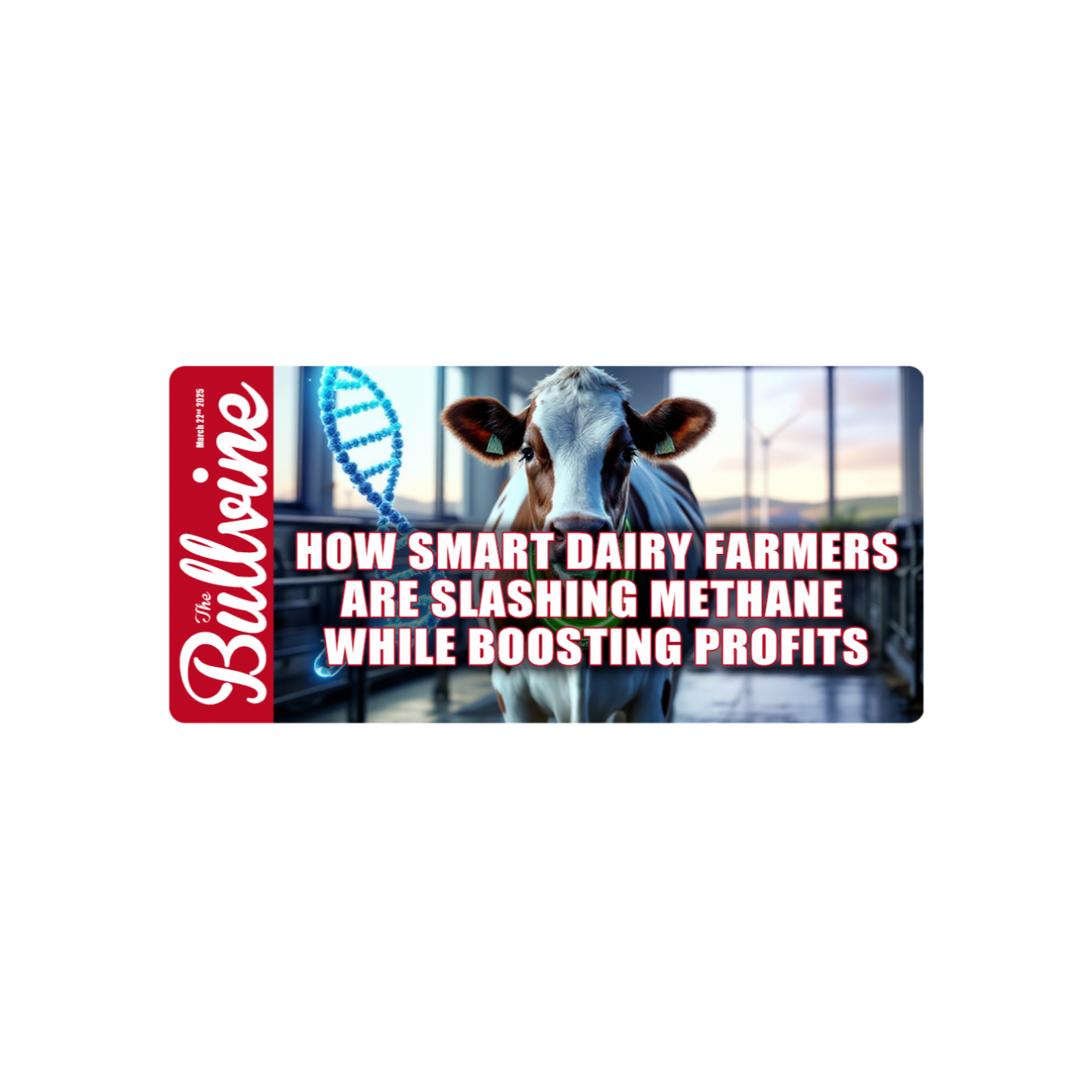
S1 Ep 206E206 How Smart Dairy Farmers Are Slashing Methane While Boosting Profits
In this episode, hosts Bella and Douglas explore how innovative dairy farmers are reducing methane emissions while improving their bottom line. They discuss the FDA's recent approval of Bovaer, alternative approaches like silage management and targeted breeding, and the economic benefits of methane reduction strategies.Key Topics CoveredBovaer feed additive: FDA approval, 30% methane reduction capability, and safety profileSocial media controversy surrounding feed additives in dairySilage management strategies for methane reductionBreeding approaches for naturally lower-methane cowsEconomic benefits and implementation challengesRole of processors and cooperatives in supporting methane reductionNatural solutions for organic producersCarbon market opportunities and financial incentivesFeatured ExamplesPete Larson's Wisconsin dairy operation: 8% feed cost reduction through targeted breedingTom Wilson's silage optimization strategies in YorkshireMelissa Chambers' natural approaches on her Oregon organic dairyExpert InsightsDr. Frank Mitloehner (UC Davis): Implementation costs and ROI considerationsDr. Dipti Pitta (University of Pennsylvania): Science behind low-methane emitting cowsJackie Klippenstein (Dairy Farmers of America): Cooperative support programsGregg Doud (National Milk Producers Federation): Global competitiveness through innovationResources MentionedUSDA Regional Conservation Partnership Program: $90+ million in fundingElanco's UpLook sustainability insights engineCarbon credit verification through Athian and TruterraInnovation Center for U.S. Dairy (www.usdairy.com)Key TakeawaysMultiple reduction strategies exist, giving farmers flexibility based on operation sizeEconomic returns come through improved feed efficiency, premium markets, and carbon creditsStarting small and documenting results is recommended before full implementationEarly adopters will have competitive advantages as regulations evolvehttps://www.thebullvine.com/sustainable-farming/how-smart-dairy-farmers-are-slashing-methane-while-boosting-profits/
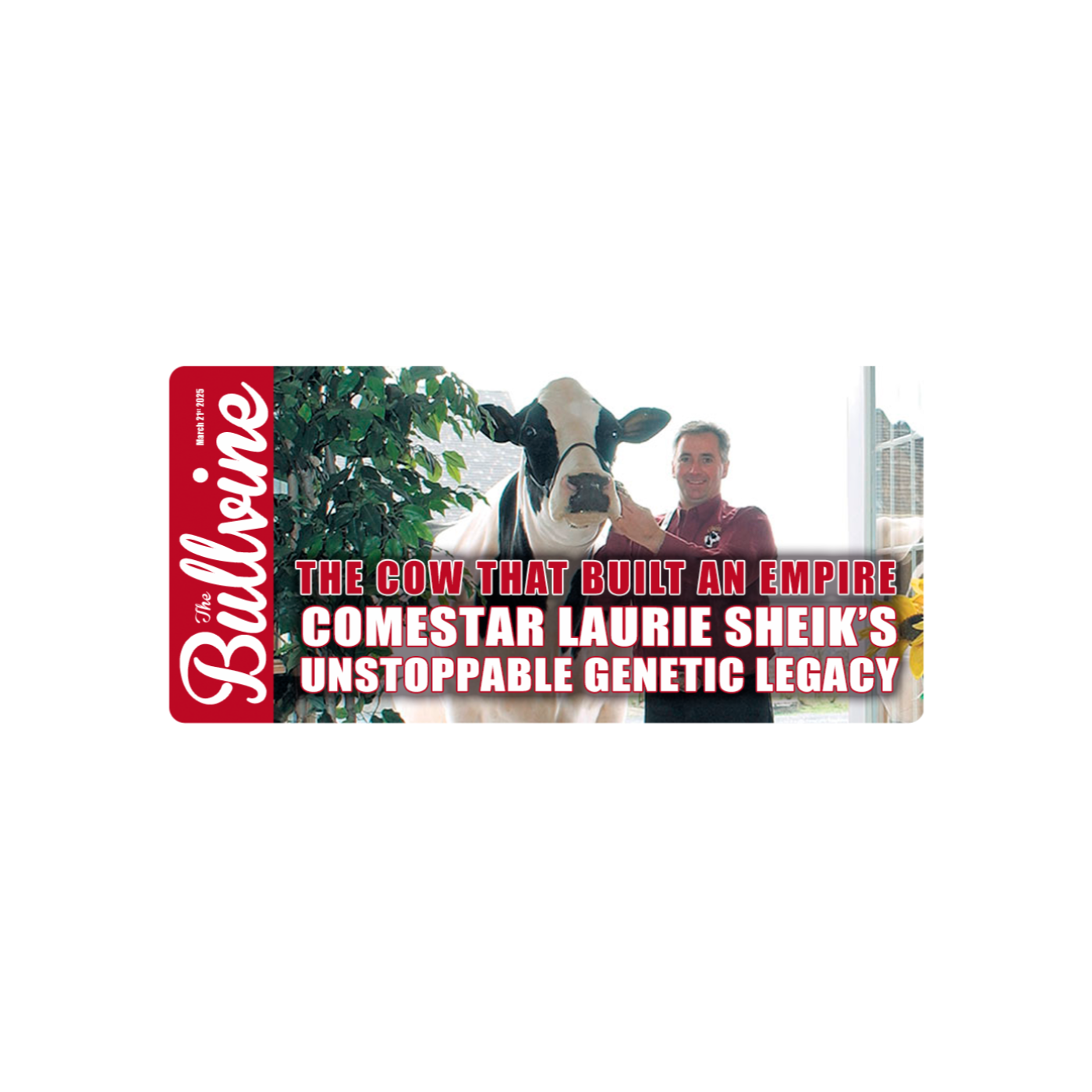
S1 Ep 205E205 The Cow That Built an Empire: Comestar Laurie Sheik’s Unstoppable Genetic Legacy
Join hosts Bella and Douglas as they unravel the extraordinary story of Comestar Laurie Sheik, the Holstein cow whose genetic legacy transformed global dairy breeding. Discover how a modest Canadian heifer became the foundation of a multi-generational dynasty that continues to influence modern genomics, robotic milking systems, and international breeding programs. Perfect for breeders seeking historical insights with modern applications!Key Topics Covered 1. The 1989 Sale That Changed History • Laurie Sheik’s $45,000 sale to Belgian partners • The Pussemier family’s embryo import strategy 2. Marc Comtois: The Visionary Breeder • From farm dropout to global genetic influencer • The unconventional pairing of Elysa Anthony Lea and Puget-Sound Sheik 3. The Three Legendary Daughters • Laura Black (24*), L Or Black (16*), and Lausan Black (23*) 4. Global Domination • Spread to 51 countries via Semex Alliance • Bois Seigneur Holstein’s 70% Laurie Sheik lineage 5. Modern Relevance • Genomics meets tradition: Balancing indexes with maternal prepotency • Robotic milking success: Comestar’s 2020 transition to Delaval V300 robots 6. Actionable Breeding Lessons • Why maternal lines trump trendy sires • Creating a “maternal scorecard” for genetic consistencyKey Takeaways • 🐄 Maternal prepotency matters: 23 brood cow stars aren’t luck—they’re proof of Laurie Sheik’s unparalleled genetic transmission. • 🌍 Think globally: Partnerships like Belgium’s Bois Seigneur Holstein amplified her influence across continents. • 🔄 Adaptability = longevity: Her descendants thrive in systems from 1980s tie-stalls to 2020s robotics. • 🧬 Genomics aren’t everything: Balance cutting-edge tools with time-tested breeding principles.Notable Stats & Facts • 4 millionaire bulls: Leader, Lee, Lheros, Outside • 27-year dominance: 1995–2022 Holstein Canada Cow of the Year awards • 100,000 kg lifetime milk: Blacklaure de Bois Seigneur’s production record • EX-94 classification: Modern descendant Lamadona’s elite statushttps://www.thebullvine.com/donor-profile/the-cow-that-built-an-empire-comestar-laurie-sheiks-unstoppable-genetic-legacy/

S1 Ep 204E204 Bird Flu Bombshell: Dairy Cows Losing a Full Ton of Milk with No Recovery
Cornell University researchers have documented the devastating effects of H5N1 bird flu on dairy cattle, revealing production losses of 900kg of milk per cow with no recovery even after 60 days. Hosts Bella and Douglas break down the financial implications, detection strategies, and immediate actions dairy producers should take to protect their herds.The Cornell Study Findings • 20% infection rate (777 animals) in a 3,900-cow Ohio dairy • 76% of infected cows showed NO symptoms while spreading virus • Infected cows 3.6x more likely to be culled • Entire outbreak traced to one cow from TexasProduction Impacts • 73% milk production collapse (35kg to 10kg daily) • No recovery of production after 60+ days • Total loss of 901.2kg milk per cow over 2 months • H5N1 vs. mastitis comparison chart • Early warning signs 5 days before clinical diagnosisFinancial Devastation • $950 lost per affected cow • Case study: $737,500 total loss for study herd • Financial impact breakdown by herd size • Insurance coverage gaps - fewer than 10% of operations protected • Multiparous (high-producing) cows at greatest riskVirus Evolution and Testing • Original outbreaks: H5N1 clade 2.3.4.4b, genotype B3.13 • New threat: H5N1 clade 2.3.4.4b, genotype D1.1 discovered in Nevada • Mutations enhancing mammalian infection (PB2 D701N and PB2 E627K) • USDA’s National Milk Testing Strategy across 45 states • 915 affected herds across 16 states as of January 2025Consumer Safety and Regulation • FDA testing confirming pasteurized products safe • Raw vs. pasteurized milk: 198 trillion times higher risk • Colorado’s weekly testing mandate • FDA guidance on raw milk salesSuccess Stories and Strategies • Horizon Dairy case study: Early detection saved $1.2 million • 5 key countermeasures smart producers are implementing • Questions to ask your milk buyerFive Immediate Action Steps • 21-day isolation protocol for new animals • H5N1 early warning system configuration • Insurance coverage review • Written response plan development • Employee trainingCritical Statistics • Production Impact: 73% milk production drop (35kg to 10kg daily) • Recovery Time: No recovery after 60+ days • Total Loss: 901.2kg milk over 2 months • Financial Impact: $950 per affected cow • Silent Spread: 76% of infections show no symptoms • Early Detection: 5 days before clinical signs through monitoring • Virus Spread: 915 dairy herds affected across 16 stateshttps://www.thebullvine.com/highly-pathogenic-avian-influenza/bird-flu-bombshell-dairy-cows-losing-a-full-ton-of-milk-with-no-recovery/

S1 Ep 203E203 GENETIC GIANTS DETHRONED: How Dairy Farmers and Beef Upstarts Hijacked 75% of the Beef-on-Dairy Gold Rush
Traditional genetics companies have been caught flat-footed as innovative dairy producers and specialized beef genetics providers capture 75% of the booming beef-on-dairy market. Hosts Bella and Douglas explore this seismic market shift, its economic implications, and how dairy producers can maximize value in this new reality.· Introduction and episode overview· The market upheaval traditional companies didn't see coming· New genetic providers disrupting the marketplace· Economic impact on traditional genetics companies· The disconnect between dairy and beef breeding approaches· Industry initiatives and specialized beef-on-dairy indexes· Detailed comparisons between dairy and beef carcasses· Practical application of the five essential questions· Future outlook for the genetics marketplace· Winners and losers in the new genetics landscape· Conclusion and key takeawaysKey Statistics Mentioned:• Contribution of dairy steers to U.S. fed beef supply increased from 6.9% to 16.3% over two decades• Traditional genetics companies control only about 25% of the beef-on-dairy market• Angus dominates beef breeds used in dairy herds at 89%, followed by Limousin (12%), Charolais (7%), and Simmental (4%)• Dairy steers yield 2-12% less red meat compared to beef steers• Optimized beef-on-dairy breeding can improve dressing percentage by 2-5% and red meat yield by 3-8%• 95% of beef-on-dairy crosses reported from 2016-2019 used Angus semenhttps://www.thebullvine.com/a-i-industry/genetic-giants-dethroned-how-dairy-farmers-and-beef-upstarts-hijacked-75-of-the-beef-on-dairy-gold-rush/

S1 Ep 202E202 Bull in a China Shop: How Juan Moreno Turned the Dairy World Upside Down
Join hosts Bella and Douglas as they explore how Juan Moreno revolutionized the dairy genetics industry through innovations in gender-sorted semen technology and genomic testing. From his early days on a Colombian cattle farm to becoming the 2025 World Dairy Expo International Person of the Year, Moreno’s journey exemplifies how purposeful disruption can transform an entire industry.Introduction • Introduction to Juan Moreno as the “Steve Jobs of dairy genetics” • Explanation of the “bull in a china shop” metaphor as it relates to Moreno’s careerFrom Colombian Roots to Dairy Innovation • Moreno’s early life on his family’s Colombian cattle operation • Education at Ohio State University (Bachelor of Science in Dairy Science) • Graduate work in Reproductive Physiology at Texas A&M University • Founding of Sexing Technologies (ST)Breaking the Traditional Breeding Paradigm • How gender-sorted semen technology revolutionized dairy breeding • The science behind separating X and Y chromosome-bearing sperm • Development of flow cytometry techniques with 90% accuracy • Challenges faced in developing and implementing the technologyExpanding Beyond Gender Sorting • ST’s expansion into genomic testing, whole genome sequencing, and bioelectronics • Introduction to EcoFeed technology for improved feed efficiency • Economic and environmental benefits of feed efficiency innovationPractical Applications for Dairy Farmers • How farmers can implement genomic testing on their operations • Economic breakdown: $30 testing investment vs. $1,400 in potential savings • Customized genetic selection for different farm priorities and markets • Moreno’s rejection of the “super cow” concept in favor of tailored geneticsBuilding a Global Enterprise • ST’s expansion to 60 sperm-sorting facilities across 20 countries • Management of seven bull stud farms globally • Strategic acquisitions including Trans-World Genetics, Taurus, TAG, Cogent, and Inseme • Launch of STgenetics and merger with Select SiresBuilding Bridges Between Academia and Industry • Moreno’s creation of employment pathways for Ohio State graduates • STgenetics’ internship programs for agricultural students • Company employees serving as adjunct faculty at universities • Providing access to STgenetics facilities for academic research projects Industry Impact and Environmental Concerns • 30% of worldwide semen sales now using ST’s sex-sorted technology • Addressing global food security challenges through improved genetics • Balancing innovation with consumer perceptions and environmental concerns • Recognition through the Innovation in Climate Action award (2024)Leadership Style and Recognition • Moreno’s “open-door policy” and non-hierarchical management approach • Hands-on leadership connecting industry needs with scientific solutions • Recognition as one of the “100 COLOMBIANOS” (2013) • World Dairy Expo International Person of the Year (2025) • 78 patents for innovations in reproductive technologies and genomicsFuture Directions and Ethical Boundaries • Focus on global food security and environmental sustainability • Moreno’s stance against genetic modification in favor of natural selection • The importance of consumer trust and perceptions in agriculturehttps://www.thebullvine.com/dairy-industry-professionals/bull-in-a-china-shop-how-juan-moreno-turned-the-dairy-world-upside-down/

S1 Ep 201E201 Transform Your Dairy Economics: How Beef-on-Dairy Crossbreeding Delivers 200% ROI
Hosts Bella and Douglas explore how dairy farmers can transform bull calves from break-even byproducts into significant profit centers through strategic beef-on-dairy crossbreeding. The episode details how this rapidly growing practice can deliver returns exceeding 200% ROI when properly implemented, and provides a comprehensive roadmap for dairy producers looking to maximize their returns through data-driven breeding decisions and strategic marketing.Key Statistics Mentioned • 72% of progressive dairies now strategically breeding to beef sires (Purina Survey, 2024) • U.S. cattle inventory at 73-year low • Crossbred calves commanding premiums of $350-$700 per head • Beef-on-dairy production growth: 50,000 calves (2014) → 3.22 million projected (2024) • Beef semen sales: 3.7 million units (2014) → 9.4 million units (2023), with 84% used in dairy cattle • Potential additional annual revenue: $90,000+ for a 1,000-cow dairy with 30% bred to beef • Italian auction data shows beef-dairy calves valued 50-200% more per kilogram than purebred dairy calvesTopics & TimestampsIntroduction • Welcome and episode overview • Significance of beef-on-dairy crossbreeding in today’s marketThe Untapped Opportunity • Historical mindset: bull calves as byproducts • Current market dynamics creating new opportunities • Premium pricing for crossbred calvesUnderstanding True ROI • Why simplistic ROI calculations fall short • Three financial impact categories: revenue, savings, opportunity gains • The comprehensive ROI formulaMarket Transformation • U.S. cattle inventory and beef production forecasts • Exponential growth in beef-on-dairy production • Global adoption trends across Europe, New Zealand, and AustraliaPerformance Metrics • Superior growth rates of crossbreds (8-25% improvement) • Fewer days on feed • Better dressing percentage and red meat yield • Breed-specific performance differencesImplementation Strategies • Six-step implementation approach • Using genomic testing to identify ideal candidates • How breeding fewer replacements can accelerate genetic progress • Marketing approaches that maximize valueCommon Implementation Errors • Breeding the wrong cows to beef sires • Failing to develop direct marketing relationships • Not having a genetic risk mitigation strategyEconomic Case Studies • Comparing basic, strategic, and advanced implementation approaches • How implementation strategy dramatically affects financial outcomesGlobal Best Practices • New Zealand’s integrated genomic selection models • European marketing cooperatives • Adapting international strategies for North American implementationConclusion • Key takeaways and action steps • Resources for further informationKey Takeaways 1. 200% ROI Potential: Capture $350-$700 premiums per calf plus savings from improved conception rates and reduced heifer costs 2. Data-Driven Breeding: Use genomic testing to identify optimal cows for beef breeding while accelerating dairy genetic progress 3. Strategic Marketing: Develop direct buyer relationships to boost premiums by 30-50% versus auction sales 4. Risk Management: Select appropriate beef sires to avoid calving difficulties 5. Global Perspective: Adapt strategies from European marketing cooperatives and New Zealand’s integrated genomic modelshttps://www.thebullvine.com/beef-on-dairy/transform-your-dairy-economics-how-beef-on-dairy-crossbreeding-delivers-200-roi/
S1 Ep 200E200 The $3.5 Million Buffer Bombshell: How Rumen pH Management Is Revolutionizing Dairy Profits in 2025
In this information-packed episode, hosts Bella and Douglas dive deep into strategic rumen buffer management during heat stress. They explain how this often-overlooked approach can deliver significant returns on investment while improving cow health and milk production. From understanding the basic science to implementing practical buffer protocols, this episode provides a comprehensive guide for dairy producers looking to maximize profits during challenging summer conditions.## Topics CoveredUnderstanding Rumen Function - The rumen as a "biological brewery" producing volatile fatty acids- Optimal pH range (6.2-6.8) for rumen health- How heat stress creates a "triple threat" to rumen stabilityThe Buffer Arsenal - Sodium bicarbonate: The foundation buffer (0.8-1.2% DM)- Potassium carbonate: The heat stress specialist (0.5-0.7% DM)- Supporting cast: Calcium and magnesium compounds- Buffer inclusion rates and application timingDCAD Management - Understanding Dietary Cation-Anion Difference- Optimal DCAD levels during heat stress (+350-400 mEq/kg DM)- Monitoring strategies using urine pHImplementation Strategy - Three-step implementation plan- Importance of forage integration with buffer protocols- Monitoring metrics for successFuture Technologies - Rumen temperature monitoring systems- Automated buffer delivery- Next-generation buffer formulationsConsumer Marketing Opportunities - Premium pricing potential through welfare improvements- Consumer willingness to pay for comfort and welfare attributes## Key Takeaways1. Heat stress costs the U.S. dairy industry approximately $1.5 billion annually through reduced production and health impacts.2. The "Triple Threat" of heat stress includes: - Saliva production reduced by up to 40% - Respiratory bicarbonate loss during panting - Feed behavior changes toward less forage consumption3. Optimal buffer protocol during heat stress combines: - Sodium bicarbonate: 0.8-1.2% DM (1.6-2.4 lbs per cow daily) - Potassium carbonate: 0.5-0.7% DM (1.0-1.4 kg per cow daily)4. Three critical metrics to monitor: - Rumen pH: Target 6.0-6.5 - Milk fat percentage: Target 3.8-4.2% - Urine pH: Target 7.0-8.05. Buffer implementation delivers substantial ROI during heat stress through improved production and health, with potential returns significantly higher than many other dairy investments.https://www.thebullvine.com/management/nutrition/the-3-5-million-buffer-bombshell-how-rumen-ph-management-is-revolutionizing-dairy-profits-in-2025/
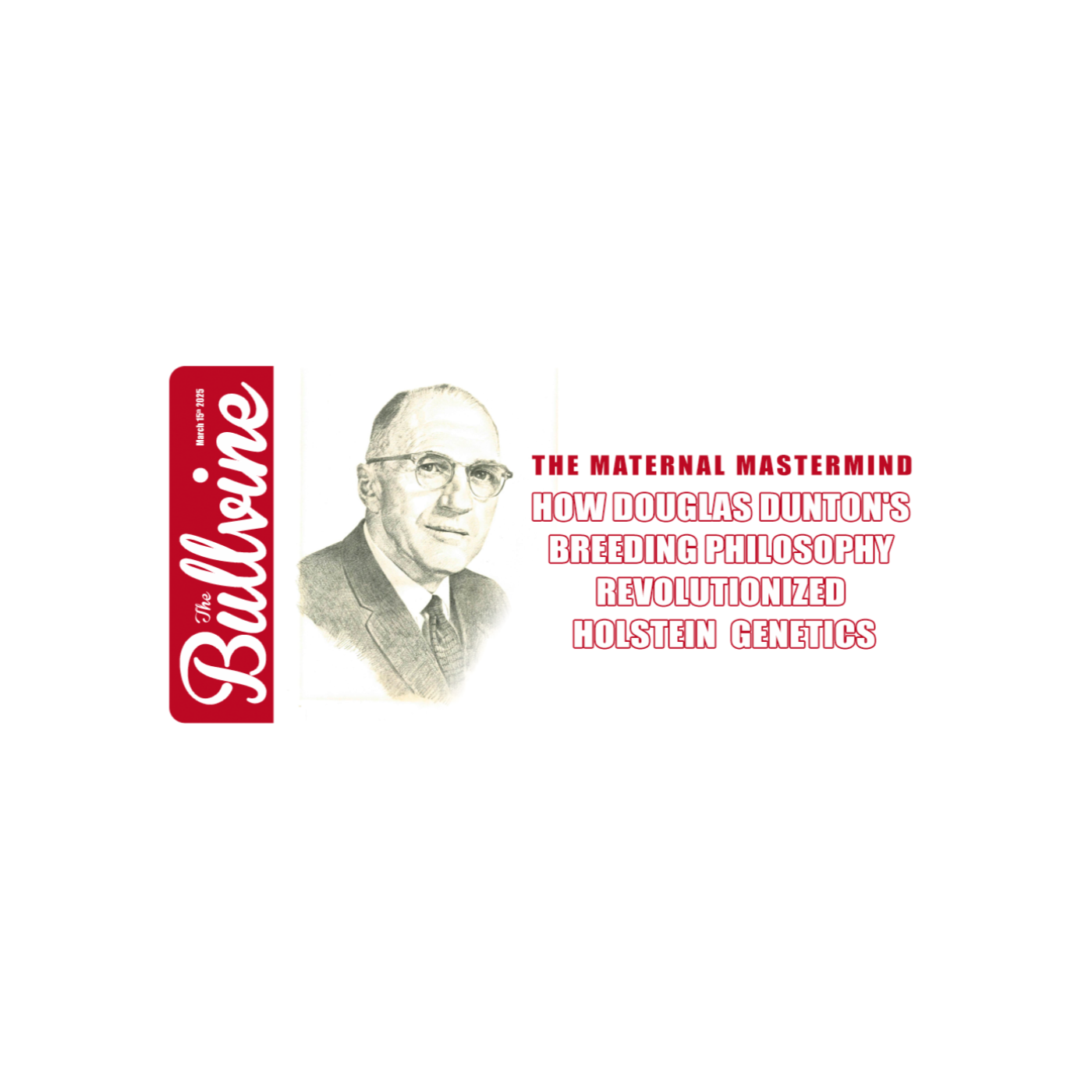
S1 Ep 199E199 The Maternal Mastermind: How Douglas Dunton’s Breeding Philosophy Revolutionized Holstein Genetics
In this episode, hosts Bella and Douglas explore the remarkable legacy of Canadian Holstein breeder Douglas Dunton, whose "breeding warm" philosophy and focus on maternal lines revolutionized dairy cattle genetics worldwide. Learn how Dunton's methodical linebreeding approach and emphasis on balanced traits created cow families that anchored legendary sires like Pawnee Farm Arlinda Chief and Round Oak Rag Apple Elevation - bulls whose genetics appear in virtually every modern Holstein pedigree today, nearly eight decades later.## Episode Highlights- [02:15] Dunton's journey from Shorthorns to Holstein breeding- [08:20] The "breeding warm" philosophy explained- [13:45] The four foundation females that changed Holstein history- [22:30] Connections to legendary sires Chief and Elevation- [29:10] Comparing Dunton's approach with Marc Comtois of Comestar- [35:42] Applying Dunton's principles in today's genomic era## Key Figures Mentioned- Douglas Stewart Dunton - Canadian Holstein breeder whose maternal lines revolutionized the breed- Ralph and Earl Dunton - Douglas's sons who continued the Glenvue legacy- A.B.C. Inka May (EX) - Foundation female, dam of A.B.C. Reflection Sovereign- Glenvue Nettie Jemima (EX-13*) - Extraordinary brood cow, dam of six Excellent offspring- Glenvue Noelle Inka (EX-4) - Royal Winter Fair grand champion (1947)- Glenvue Jean Inka B (VG-2) - Created maternal connection to Pawnee Farm Arlinda Chief- Pawnee Farm Arlinda Chief (EX-GM) - One of the most influential Holstein sires in history- Round Oak Rag Apple Elevation (EX-GM) - Transformational type improver- Marc Comtois - Owner of Comestar Holsteins, contemporary maternal line master- Comestar Laurie Sheik (VG-88 27*) - Foundation female of the Laurie Sheik family## Memorable Quotes- "It takes longer to breed type than production, but once you get type, it is not so difficult to get higher production." - Douglas Dunton- "When asked about outcrossing, Dunton famously stated that he had tried an outcross bull only once, and while 'he didn't do much harm, neither did he do much good.'"- "Is your breeding program building the maternal strength that will influence the breed for generations to come? That's the true measure of breeding success that Douglas Dunton's legacy challenges us to achieve."Read the full article on Douglas Dunton's breeding philosophy at https://www.thebullvine.com/breeder-profiles/the-maternal-mastermind-how-douglas-duntons-breeding-philosophy-revolutionized-holstein-genetics/
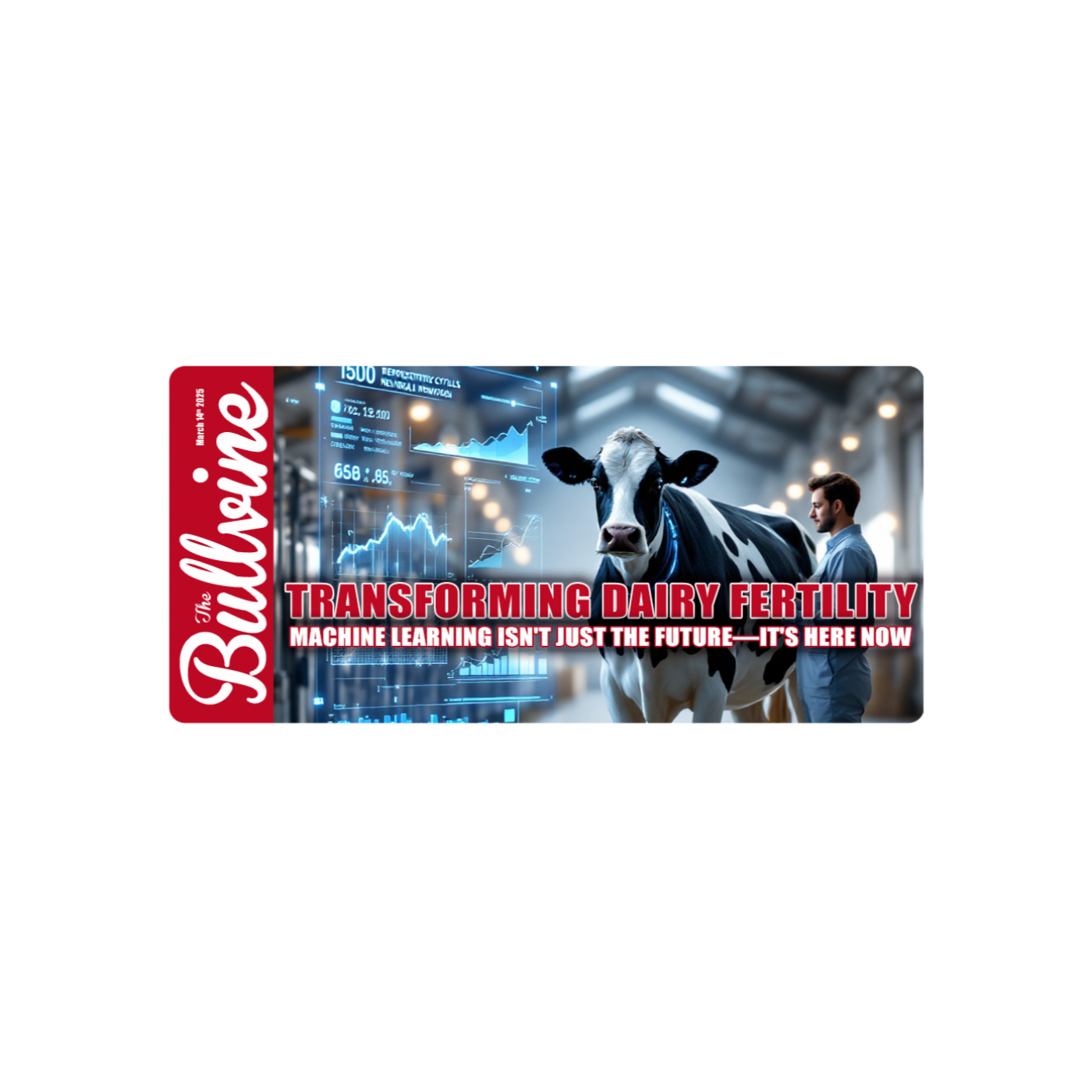
S1 Ep 198E198 Transforming Dairy Fertility: Machine Learning Isn’t Just the Future—It’s Here Now
In this cutting-edge episode of The Bullvine Podcast, hosts Bella and Douglas explore how machine learning and AI are revolutionizing reproductive management on dairy farms. Learn how these technologies are delivering unprecedented improvements in fertility while reducing hormone use, and discover practical steps for implementation that can dramatically improve your operation's bottom line.Episode HighlightsThe Current State of Reproductive Management• 51% of dairy farms still rely primarily on visual observation for heat detection• Visual observation misses more than half of all standing heats• According to Ricardo Chebel (University of Florida), "Reproductive efficiency is a key driver on the economics of a farm"• The impact of suboptimal reproductive performance is typically 30-50% higher than most farmers estimateEconomic Impact of Reproductive Inefficiency• For a 500-cow operation, each additional day of average days open costs approximately $2,500 in lost profit• Operations with days open pushing 140+ days can lose $100,000+ annually compared to herds hitting 110-day averages• Quick calculation: Multiply your average days open beyond 110 by $5 per cow per day to estimate minimum profit lossesMachine Learning Technology Advantages• Back-propagation neural network (BPNN) algorithm with 0.5-hour time window consistently outperforms other methods• Algorithm performance metrics range from:– 73.3% to 99.4% for sensitivity– 50% to 85.7% for specificity– 72.7% to 95.4% for accuracy• Modern systems track 12 distinct behavioral parameters simultaneously, including standing, lying, walking, feeding, drinking, activity switches, step counts, displacement, velocity, and behavioral frequencieshttps://www.thebullvine.com/technology/transforming-dairy-fertility-machine-learning-isnt-just-the-future-its-here-now/
S1 Ep 197E197 FROM TRAGEDY TO TRIUMPH: The Unstoppable Journey of Holstein Legend Nico Bons
Dive into the inspiring story of Dutch Holstein breeder Nico Bons, who transformed tragedy into triumph, building a globally respected dairy operation through sheer passion, family teamwork, and an unrelenting focus on breeding excellence. Key Segments & Takeaways 1. Life-Changing Loss (5:00) - Nico’s father’s suicide in 1999, compounded by his brother’s barn accident, forced him to take over the family farm unexpectedly. - Key Quote: “Losing your dad… the next day he’s not there anymore, it’s unbelievable hard.” - Impact: Fueled Nico’s drive to honor his father’s legacy through breeding success. 2. Canadian Inspiration (12:30) - Transformative 3-month stint at Bosdale Farms (Canada) at age 18: - Learned meticulous show preparation and Ed Bos’s breeding philosophy. - Key Insight: “If I stayed in the Netherlands, it’d take 20 years to learn what I did in 3 months.” - Nearly stayed in Canada, but returned to revolutionize his Dutch operation. 3. Breeding Revolution (20:15) - From 80.2-point commercial herd to 89.7-point elite show cattle: - Sneaky tactics: Altered bull data to convince skeptical father to use Browndale Stardust. - Built radical barn (2002) with wide cubicles for cow comfort – mocked as “crazy” but proved essential. - Motto: “I want a show cow, a winning show cow – tattooed on my head.” 4. Unexpected Triumph (28:40) - 2003 Holland Holstein Show Breakthrough: - Won Champion Two-Year-Old, Reserve Champion, and Best Breeder Herd with zero expectations. - Emotional Moment: Nico’s tearful call to wife Leanne: “We did it. I wish Dad could’ve seen this.” - 19-year quest culminated in 2022 Cremona European Show victory. 5. Price of Perfection (35:50) - Confession: Nico hates show days due to stress-induced vomiting (7-8x/day early on). - Post-show ritual: Midnight udder checks to ensure cow health. - Sacrifice: Skipped weddings, prioritized cattle over social life. 6. Global Judging Wisdom (42:10) - Judged in 17 countries – insights shaped his “true type” breeding ideal. - Skeptical of trends: Uses genomics sparingly (25-30%), dismisses methane-focused breeding as “bullshit.” - Alligator Example: Championed the bull’s daughters for udder quality despite show ring skepticism. 7. Next Generation (50:20) - Daughter Anouk (19): Trained at Rosedale (Canada), mirrors Nico’s Bosdale journey. - Full-Circle Moment: Nico now tells Anouk “Come home first” – echoing his father’s words. - Sister Tessa (16): Won Reserve Champion nationally, plans North American work term. 8. Family Legacy (58:00) - Wife Leanne: The cornerstone – “If she leaves, I follow.” - Team Ethos: “We win as a family – no one is more important.” https://www.thebullvine.com/breeder-profiles/from-tragedy-to-triumph-the-unstoppable-journey-of-holstein-legend-nico-bons/

S1 Ep 196E196 Dairy’s 81-Day Reckoning: 3 States That Win, 5 Facing Financial Bloodbath
The USDA’s June 1, 2025 Federal Milk Marketing Order (FMMO) reforms will radically reshape dairy economics, reversing a flawed 2018 policy that cost farmers $725 million during the pandemic. While restoring the “higher-of” formula benefits some, controversial processor-friendly make allowances could strip $56,000 annually from 100-cow operations. Regional disparities will create clear winners (Northeast) and losers (Midwest, California), with urgent adaptation required as competitors already pivot strategies. The clock is ticking—81 days remain to restructure contracts, risk management, and production plans.Key Points 1. The “Higher-of” Formula Restoration • Reverses the 2018 Farm Bill’s flawed “average + $0.74” formula that transferred $725M from farmers to processors during COVID-19. • Class I milk pricing returns to the “higher of” Class III/IV values, correcting pandemic-era losses. 2. Processor Victory: Make Allowance Surges • 25–42% increases in manufacturing cost margins (e.g., cheese: +25.8%, butter: +32.5%, nonfat dry milk: +42.6%). • Could reduce Class III prices by 90¢/cwt and Class IV by 85¢/cwt if applied retroactively (2019–2023). 3. Regional Warfare • Northeast Wins: High Class I utilization and new processing plants (e.g., New York’s $650M Fairlife facility) create growth opportunities. • Midwest/California Lose: Upper Midwest faces $177M pool value loss; California risks $94M reduction due to Class III/IV reliance. 4. Component Changes Delayed Until December 2025 • True protein (3.1% → 3.3%) and other solids (5.9% → 6.0%) updates incentivize component production but exclude butterfat adjustments. • Six-month delay could cost farmers $100M+ in lost revenue. 5. Hedging Overhaul Required • Removal of 500-lb barrel cheese from pricing calculations increases butterfat risk. • Recalibrate strategies with risk management specialists immediately.Critical Quotes • Douglas: “The return to the ‘higher-of’ formula isn’t a gift—it’s returning what was stolen in 2018.” • Zippy Duvall (Farm Bureau): “USDA’s voluntary processor survey skews make allowances against farmers.” • Mark Stephenson (Dairy Economist): “Co-ops must renegotiate premiums to offset processor gains.”Timeline • June 1, 2025: FMMO reforms take effect (81 days from recording). • December 1, 2025: Component factor updates (protein/solids) begin.Resources • USDA Final Rule (Jan 17, 2025) • Farm Bureau Analysis • Full Article on The BullvineCall to ActionVisit TheBullvine.com for region-specific survival toolkits, hedging guides, and component optimization strategies. Subscribe to stay ahead of dairy’s seismic shifts!“Your competitors aren’t waiting—adapt now or perish later.” – Douglas Millerhttps://www.thebullvine.com/dairy-markets/dairys-81-day-reckoning-3-states-that-win-5-facing-financial-bloodbath/
S1 Ep 195E195 Lucky or Calculated? The Surprising Truth About Genomics and Luck in Dairy Breeding
Hosts Bella and Douglas explore whether modern genomic breeding tools have truly eliminated the role of luck in dairy breeding. They discuss fascinating historical “lucky breaks” that shaped Holstein genetics, examine the limitations of current genomic technology, and offer practical strategies for breeders navigating the upcoming April 2025 genetic evaluation updates. This episode reveals that despite scientific advances, chance still plays a significant role in breeding success.Topics Covered• The 75% Solution: The reliability limits of genomic prediction tools (2:15)• Historical Lucky Breaks: How chance events created legendary Holstein bloodlines (7:30)• The Missing Telephone: The Spring Brook Bess Burke story (9:45)• The Injured Leg: How Montvic Pathfinder changed Holstein history (15:20)• The Change of Clothes: The creation of A.B.C. Reflection Sovereign (22:40)• When Your AI Guy Says “Sorry”: The Almerson Sovereign Supreme story (27:15)• The 25-35% Gap: What genomics still can’t predict (31:05)• ROI on Genomic Testing: Financial perspective on testing (35:20)• April 2025 Updates: Practical advice for the coming changes (39:30)• Four Strategies: Balancing science and serendipity (47:30)Key Takeaways1. Genomic selection offers approximately 75% reliability for production traits, leaving 25-35% of genetic potential unpredictable2. Some of Holstein history’s most influential bloodlines resulted from chance events and “backup plans”3. The April 2025 genetic evaluation updates will require breeders to recalibrate their selection thresholds4. Genomic testing offers an ROI of $75-$200 per animal tested despite its limitations5. Successful breeding requires balancing scientific precision with openness to unexpected opportunitiesNotable Quotes“The 2025 base change is bigger than previous adjustments, but this is good news! It means that our cows are improving faster than ever.”• Chuck Sattler, Select Sires“As I look back now, it was indeed fortunate that we did not have a telephone and that those calves never came to our farm.”• A.J. Lashbrook (historical quote)“The genetics have not changed, and the animals themselves have not changed. What has changed is how we view an animal’s genetic superiority.”• ABS GlobalResources Mentioned• Council on Dairy Cattle Breeding (CDCB): April 2025 genetic evaluation updates• Journal of Dairy Science: Research on genomic reliability percentages• USDA Agricultural Research Service: Net Merit index formula changes• Select Sires & ABS Global: Industry perspectives on the base changeConnect With UsShare your “lucky break” breeding story with us on The Bullvine website or tag us on social media with #BullvineLuckyBreaks!https://www.thebullvine.com/genomics/lucky-or-calculated-the-surprising-truth-about-genomics-and-luck-in-dairy-breeding/
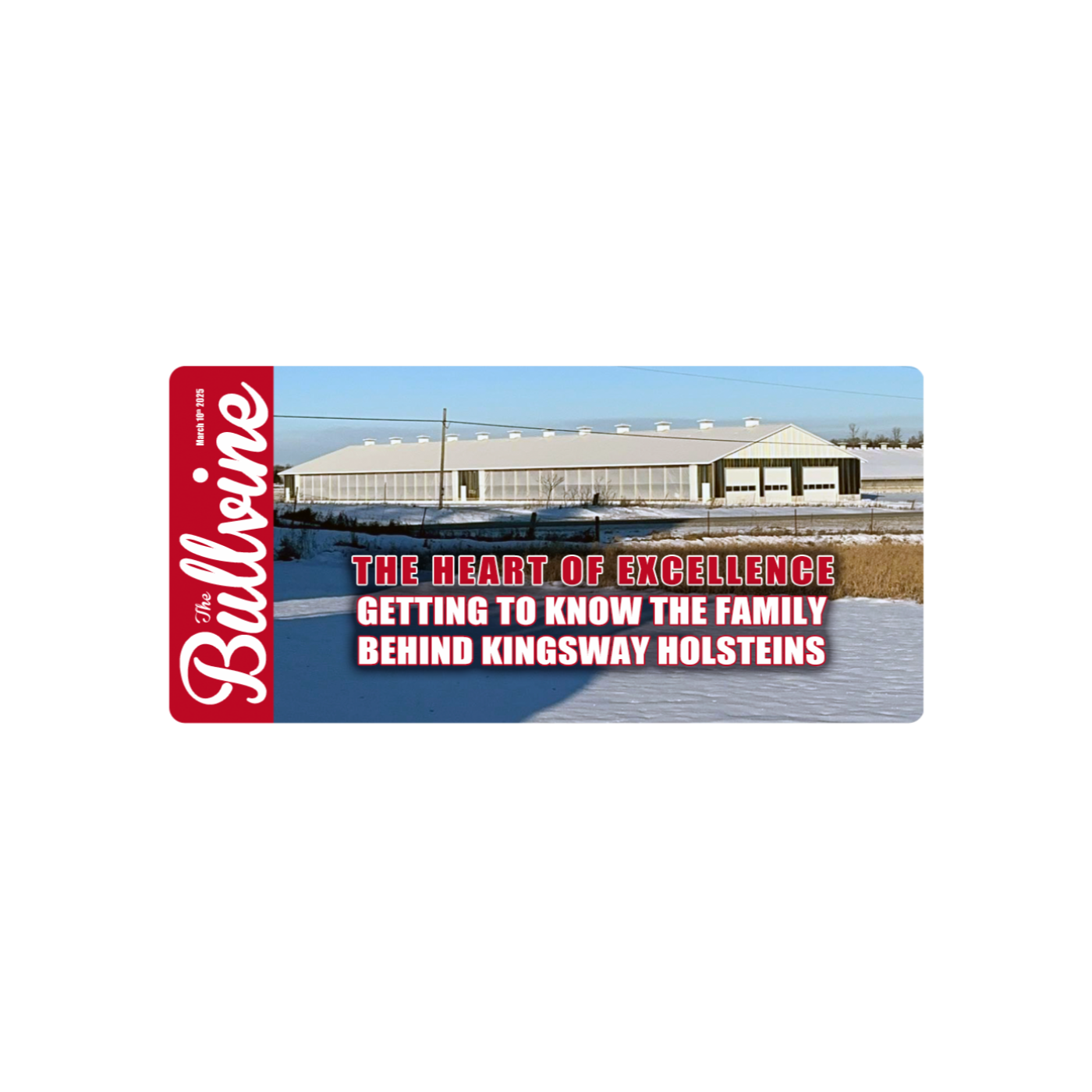
S1 Ep 194194 The Heart of Excellence: Getting to Know the Family Behind Kingsway Holsteins
Discover how Kingsway Holsteins, a modest-sized family farm, became Canada’s #2 breeder of Excellent cows through passion, precision, and community roots.Key Topics Covered 1. Kingsway’s recognition as Canada’s #2 breeder of Excellent cows 2. The McMillan family’s multi-generational commitment to dairy farming 3. Kingsway’s breeding philosophy and approach to genetics 4. Arangatang: The legendary cow that changed everything 5. Global impact of Kingsway genetics 6. Balancing tradition with innovation in modern dairy farming 7. Community involvement and diversification beyond dairyHighlighted Segments • 00:05:30 The significance of being named Canada’s #2 breeder of Excellent cows • 00:12:45 Kingsway’s balanced approach to using proven sires and genomic advancements • 00:18:20 The extraordinary story of Arangatang and her 18 Excellent daughters • 00:25:40 How the youngest McMillans are learning the family business • 00:32:15 The unique tradition of including prize cows in family wedding photos • 00:38:50 Kingsway’s success stories in international show rings and herds • 00:45:30 Navigating challenges in modern dairy farming • 00:52:10 The McMillan family’s community involvement beyond the farmNotable Quotes • “Farming has been something that we have always known growing up.” - Morgan McMillan • “There’s something special about watching a young heifer develop into exactly what you envisioned when you planned that mating.” - Morgan McMillan • “Being consistent everyday and doing your best to do the little things right will pay off in the end.” - Morgan McMillan’s advice to young breedershttps://www.thebullvine.com/breeder-profiles/the-heart-of-excellence-getting-to-know-the-family-behind-kingsway-holsteins/
S1 Ep 193E193 Revolutionizing Calf Rearing: 5 Game-Changing Nutrition Strategies That Deliver $4.20 ROI for Every Dollar Invested
In this episode, Bella Thompson and Douglas Miller explore five groundbreaking calf rearing strategies that are transforming dairy operations across the country. Learn how pair housing, extended colostrum feeding, stress-free weaning, strategic hay introduction, and immunity-boosting nutrition can deliver a remarkable $4.20 return for every dollar invested. Packed with actionable tips, real-world farmer testimonials, and expert insights, this episode will inspire you to rethink your calf program and unlock its full potential. Key Topics Covered:1. The Blind Spot in Calf Rearing: Why the first 60 days of a calf's life represent the highest-return investment opportunity on your farm.2. Pair Housing Benefits: How housing calves in pairs improves feed intake, reduces cross-sucking behaviors, and enhances growth.3. Extended Colostrum Feeding: The untapped potential of colostrum beyond day one to improve gut health and reduce scours.4. Stress-Free Weaning: Gradual weaning methods that slash post-weaning illness rates from 34% to as low as 12%.5. The Hay Paradox: Why moderate-quality hay outperforms premium alfalfa for rumen development.6. Immunity-Boosting Nutrition: Using probiotics and zinc supplementation to reduce antibiotic reliance and enhance calf health. Practical Implementation Tips:• Start small with one strategy—pair housing, extended colostrum feeding, or stress-free weaning—and measure results before scaling up.• Use tools like Brix refractometers for colostrum quality testing or smart collars for data-driven weaning decisions.• Collaborate with neighboring farms to share resources like pasteurizers or specialized calf facilities. Episode Highlights:• ROI Breakdown: How implementing these strategies delivers a net economic impact of $477 per calf within 18 months.• Male Calves as Profit Centers: Transform bull calves into revenue streams through dairy-beef crossbreeding programs.• Consumer Trends: Aligning calf welfare practices with consumer demand for antibiotic-free and grass-fed dairy products.https://www.thebullvine.com/management/revolutionizing-calf-rearing-5-game-changing-nutrition-strategies-that-deliver-4-20-roi-for-every-dollar-invested/
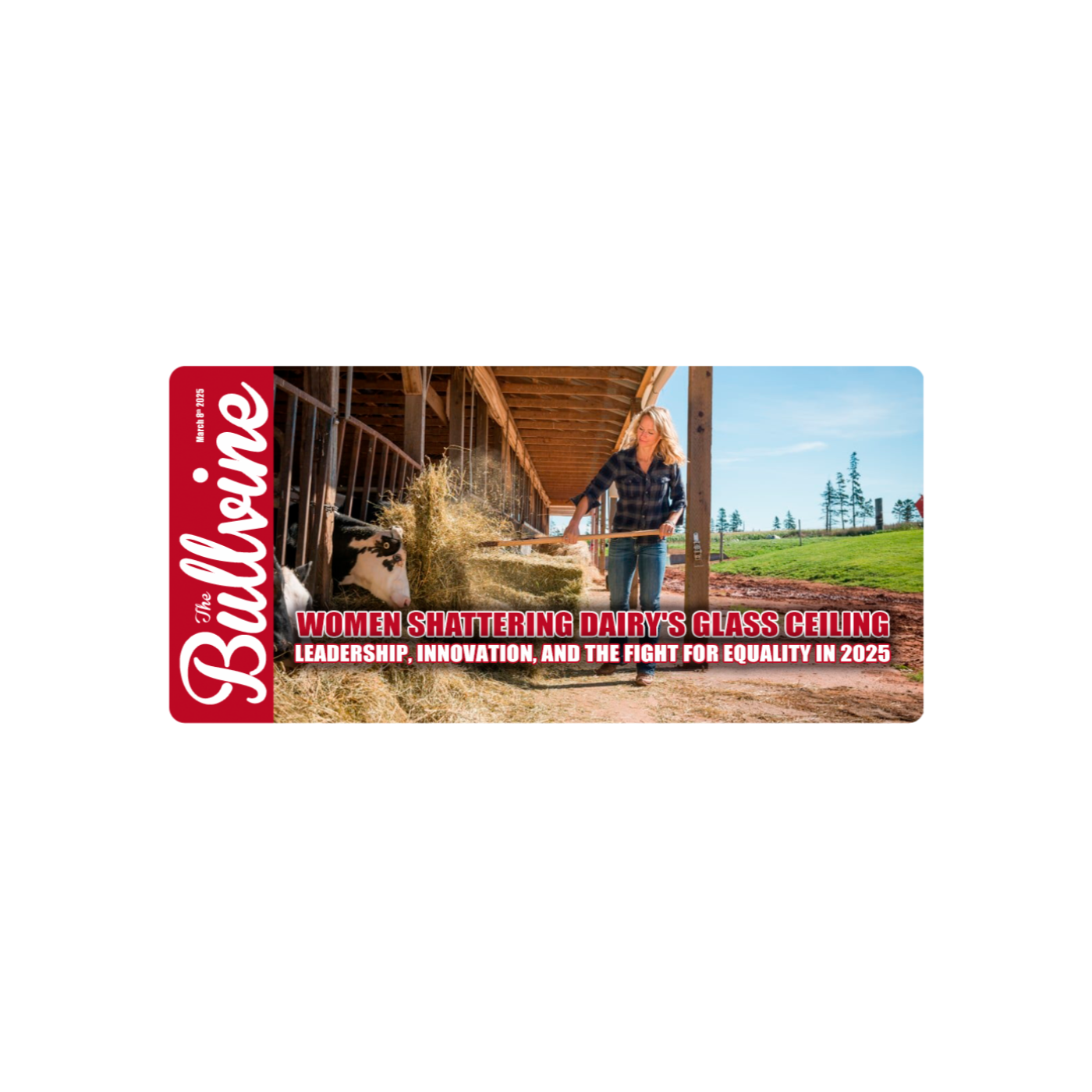
S1 Ep 192E192 Women Shattering Dairy’s Glass Ceiling: Leadership, Innovation, and the Fight for Equality in 2025
In recognition of International Women’s Day 2025, this episode examines the changing landscape for women in the dairy industry. Using the latest data from the IDFA’s 2025 State of Women in Dairy report, hosts Bella and Douglas explore both the remarkable progress women have made in dairy leadership and the persistent challenges they continue to face. From technological innovations to economic implications, this episode offers a comprehensive look at how women are reshaping dairy’s future.Key Topics and Timestamps: • 00:00 - 02:30: Introduction and episode overview • 02:30 - 07:45: Women’s changing roles in modern dairy operations • 07:45 - 14:20: Historical context of women in dairy farming • 14:20 - 21:15: Female trailblazers in leadership positions • 21:15 - 27:30: How technology is leveling the playing field • 27:30 - 34:15: The business case for women’s leadership • 34:15 - 40:30: Networks and programs accelerating women’s advancement • 40:30 - 46:45: Persistent challenges and barriers • 46:45 - 52:00: Future outlook for women in dairy • 52:00 - 55:00: Conclusion and calls to actionKey Statistics Mentioned: • 54% of women in dairy are asking for promotions vs. 47% of men • 62% of women receive promotions when asked - equal to men’s success rate • 48% of women believe they have fewer advancement opportunities than men • 55% of women believe gender negatively impacts their compensation vs. only 5% of men • 41% of Gen Z and Millennial women believe gender will make career advancement harder • 29% of female frontline employees have left jobs due to lack of opportunities • 63% of women expressed satisfaction with career advancement opportunitiesNotable Quotes: • “The question is no longer whether women can lead in dairy, but how quickly the industry will transform to fully leverage the talent, perspective, and innovation that women have always brought to agriculture.” • “What’s most revolutionary about this technological shift is how it’s rendering outdated gender assumptions obsolete.” • “If more than half of women feel their contributions aren’t being fairly compensated, how long will they stay in dairy when other agricultural and food sectors are actively recruiting diverse talent?”People and Organizations Mentioned: • Becky Rasdall Vargas, Senior Vice President at IDFA • Jackie Klippenstein, Senior Vice President at Dairy Farmers of America • Mary Creek, third-generation dairy farmer from Hagerstown, Maryland • International Dairy Foods Association (IDFA) • Women in Dairy network • Dairy Girl Network • National Milk Producers Federation • Newtrienthttps://www.thebullvine.com/dairy-industry-professionals/women-shattering-dairys-glass-ceiling-leadership-innovation-and-the-fight-for-equality-in-2025/
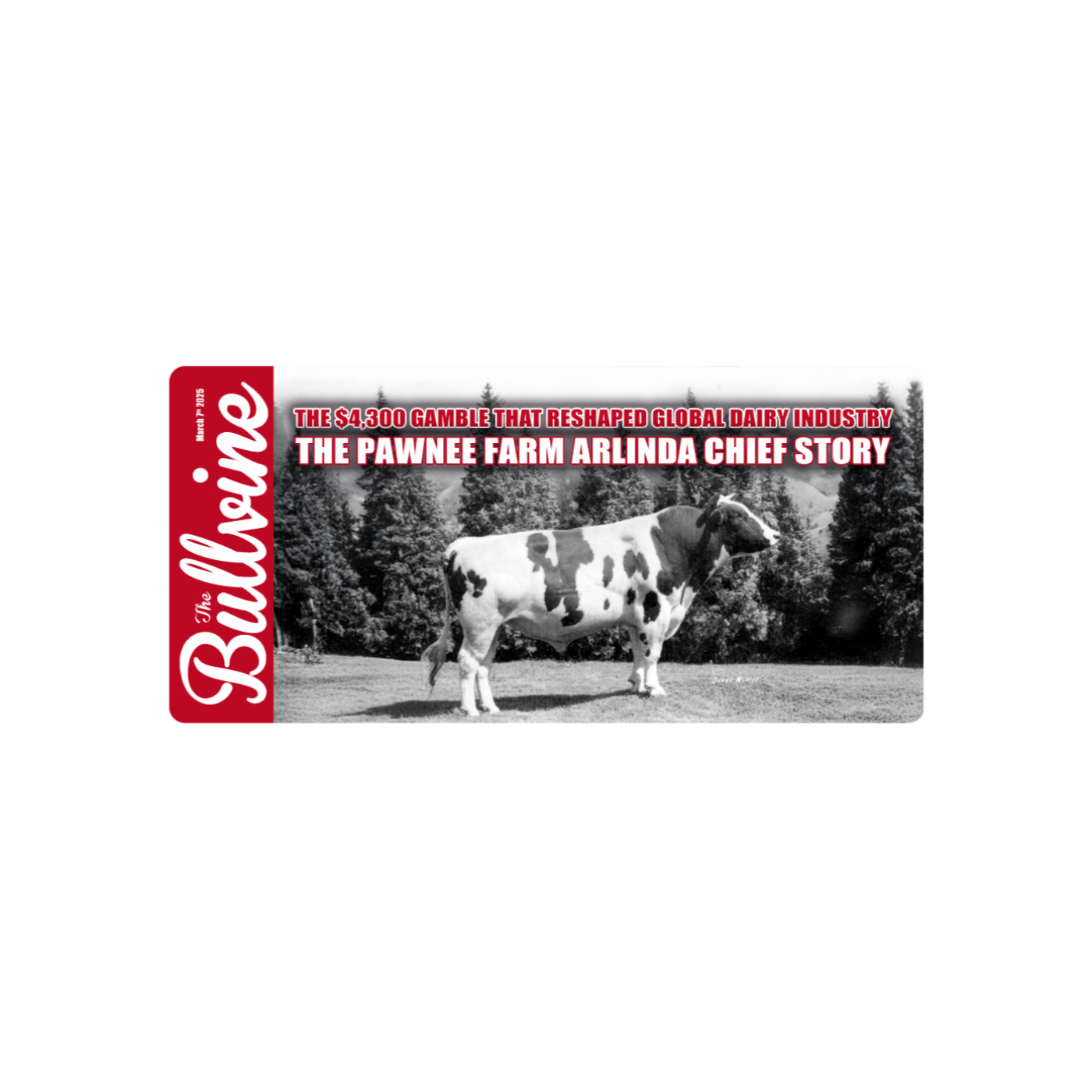
S1 Ep 191191 The $4,300 Gamble That Reshaped Global Dairy Industry: The Pawnee Farm Arlinda Chief Story
n this episode of The Bullvine Podcast, Bella and Douglas explore the extraordinary life and legacy of Pawnee Farm Arlinda Chief, the Holstein bull whose genetics revolutionized global dairy farming. Born in 1962, Chief’s unprecedented influence reshaped milk production and fundamentally altered the Holstein breed. But his story is more than one of triumph—it’s also a cautionary tale about the risks of genetic concentration and the unforeseen consequences of selective breeding. From Chief’s humble beginnings in Nebraska to his lasting impact on modern genomics, this episode dives deep into one of dairy farming’s most influential chapters.https://www.thebullvine.com/sire-spotlight/the-4300-gamble-that-reshaped-global-dairy-industry-the-pawnee-farm-arlinda-chief-story/Key Topics Covered: 1. The Visionary Breeder: Lester Fishler • Fishler’s journey from adversity to becoming a “Holstein breeding wizard.” • The pivotal role of Canadian genetics, including Glenvue Clipper and Rosafe Pearl Hannibal, in shaping Chief’s pedigree. 2. The $4,300 Gamble • The 1962 Pawnee Farm dispersal sale near Central City, Nebraska. • Wally Lindskoog’s purchase of Pawnee Farm Glenvue Beauty and her subsequent journey to California. 3. The Birth of a Legend • Chief’s birth on May 9, 1962, and his near-death experience with bloat at eight months old. • How Chief got his name from Dave Risling during a visit to Arlinda Farms. 4. Chief’s Genetic Legacy • His record-breaking daughters, including Beecher Arlinda Ellen, the first cow to produce over 55,000 pounds of milk in a year. • The contributions of his sons like Walkway Chief Mark and S-W-D Valiant in shaping modern Holstein genetics. 5. The Hidden Cost: APAF1 Mutation • Discovery of the lethal recessive mutation linked to Chief, responsible for 500,000 spontaneous abortions and $420 million in losses. • How genomic tools now help breeders manage this mutation. 6. Modern Genomics and Lessons for Breeders • How genomic testing could have amplified Chief’s strengths while mitigating weaknesses like udder conformation issues. • The importance of balancing genetic progress with diversity to ensure long-term sustainability. 7. Chief vs. Elevation: A Tale of Two Titans • Comparing Chief’s milk production prowess with Elevation’s type improvement traits and how their combined influence shaped the modern Holstein cow.Key Takeaways: • Revolutionary Genetics: Chief contributed nearly 15% to today’s Holstein genome, transforming milk production capabilities worldwide. • Unforeseen Challenges: His APAF1 mutation caused significant losses but highlighted the importance of genomic testing in avoiding genetic recessives. • Lessons for Breeders: Balance production gains with genetic diversity to ensure sustainable herd health and profitability. • Modern Genomics: Today’s tools provide opportunities to amplify strengths while mitigating risks associated with concentrated bloodlines.Related Articles on The Bullvine: • The Four Nations Cup of Holstein Genetics: A Global Dairy Showdown • The Ultimate Guide to Breeding Dairy Cattle: Tips for Optimal Milk Production • Elite Holstein Genetics Shine in 2024 BAA Rankings!Call-to-Action:If you enjoyed today’s episode, subscribe to The Bullvine Podcast on your favorite platform and leave us a review! Visit www.thebullvine.com for more articles on dairy farming and cattle breeding, or connect with us on social media for updates and discussions.
S1 Ep 190E1190 Where Will Tomorrow’s Dairy Herds Come From? U.S. Farmers Navigate Historic Heifer Crisis
Key Points Discussed: 1. Current State of the U.S. Dairy Industry • Heifer inventory at 47-year low: 3.914 million head • Springer prices exceeding $4,000 per head • 70% of dairies now breeding to beef bulls 2. Beef-Dairy Crossbreeding Trend • Economic benefits: Beef-cross calves selling for $1,200+ • Long-term risks: Depleting future dairy herd replacements • Strategies: Sexed semen for top cows, beef bulls for lower tiers 3. HPAI (Highly Pathogenic Avian Influenza) Impact • 18% less milk production in first lactation for affected heifers • 9% of exposed heifers showing ovarian scarring • Regional variations in impact on conception rates and puberty onset 4. Regional Challenges • California: Severe water shortages, high culling rates • Texas: Aggressive expansion, reliance on Mexico exports • Midwest: Aging herds, innovative co-op solutions 5. Genetic Concerns • Slowdown in milk EPD (Expected Progeny Difference) improvements • Projected 4% yield loss by 2030 if current trends continue • “Frozen 500” program and CRISPR technology as potential solutions 6. Policy and Trade Issues • USDA Heifer Insurance Pilot program details • Potential tariffs from Mexico and Canada affecting dairy-beef trade • Importance of farmer engagement in policy discussions 7. Success Story: Klecker Dairy in Wisconsin • Implemented strategic use of sexed semen • Early genomic testing and culling • Participation in heifer time-sharing program 8. Economic Challenges • Rising input costs outpacing milk price increases • Break-even pregnancy rates approaching 85% for some farms 9. Action Plan for Farmers • Immediate steps: EPD audits, securing springer contracts, USDA insurance enrollment • Long-term strategies: Investing in advanced genetics, policy engagement, balanced breeding approachNotable Quotes: • “We’re burning through generations of genetics to pay the feed bill.” - Sarah Klecker, Wisconsin dairy farmer • “At $23 milk, I need 85% pregnancies just to break even. We’re stuck at 78%. Something’s gotta give.” - Jed Collins, Wisconsin dairy farmer • “The next generation of dairy doesn’t need heroes - it needs fighters who’ll plant trees knowing they may never taste the fruit.” - Douglas MillerResources Mentioned: • USDA January Report on heifer inventory • Texas A&M research on HPAI impacts • Purdue University economic projections • Holstein Association’s “Frozen 500” program • UC Davis CRISPR embryo research • USDA Heifer Insurance Pilot programCall to Action:Farmers are urged to: 1. Conduct EBV audits and make tough culling decisions 2. Secure springer contracts before summer price spikes 3. Enroll in USDA Heifer Insurance by March 31st deadline 4. Consider investing in advanced genetics like CRISPR embryos 5. Engage in policy advocacy 6. Shift at least 15% of breeding back to dairy bullshttps://www.thebullvine.com/management/where-will-tomorrows-dairy-herds-come-from-u-s-farmers-navigate-historic-heifer-crisis/
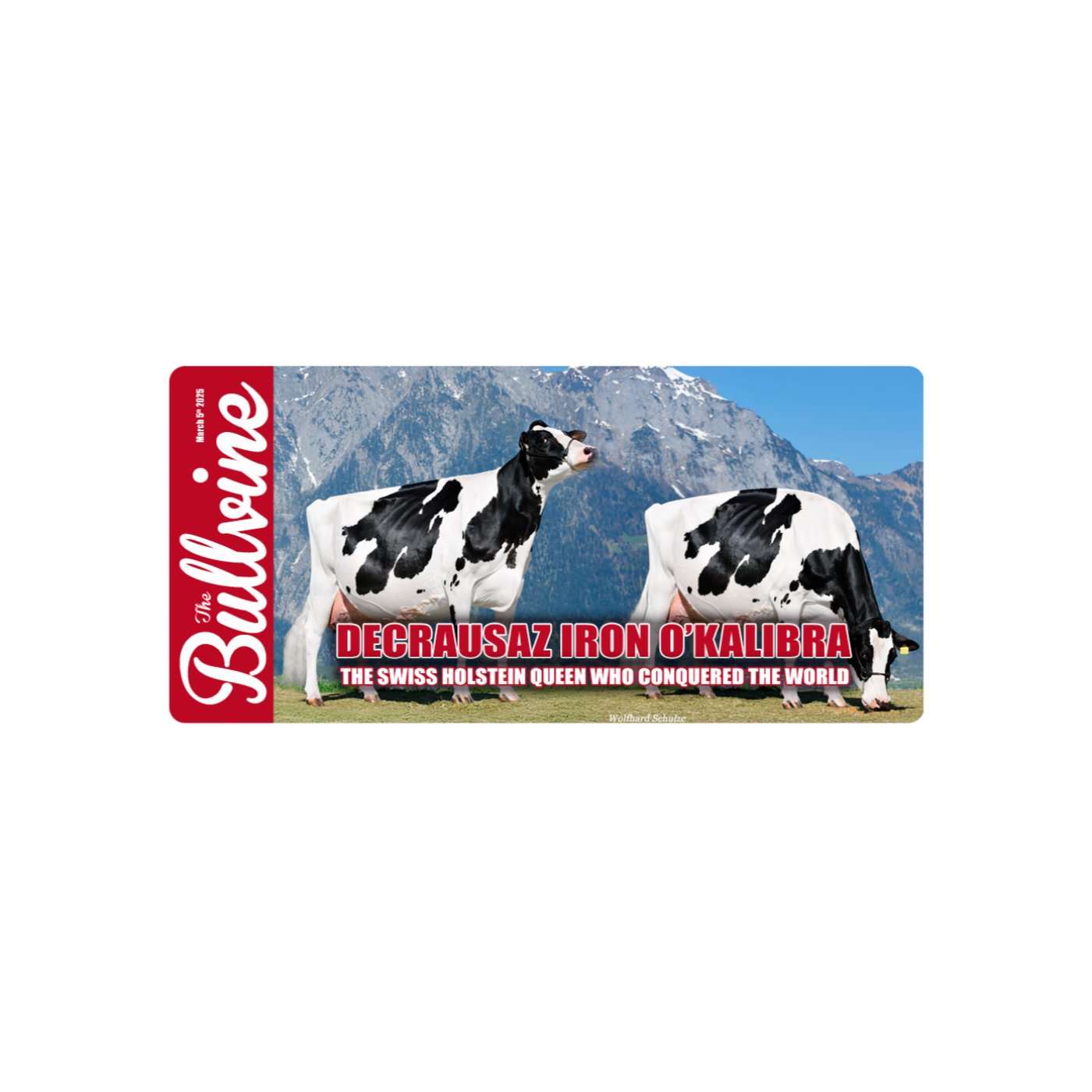
S1 Ep 189E189 Decrausaz Iron O’Kalibra: The Swiss Holstein Queen Who Conquered the World
In this episode, hosts Bella and Douglas explore the extraordinary story of Decrausaz Iron O’Kalibra, a Swiss-bred Holstein who revolutionized global perceptions of European dairy cattle.Key Points Discussed: 1. O’Kalibra’s origins and early life • Born September 4, 2008, in Switzerland • Bred by Fredy Decrausaz and sons • Sired by Boss Iron 2. Show ring achievements • Three-time Supreme Champion at Swiss Expo (2012, 2013, 2015) • European Champion at All-European Holstein Show (2013) 3. Classification excellence • First Swiss cow to achieve EX-97 classification • Exceptional scores in dairy form, mammary system, and overall conformation 4. Production records • Lifetime production: 94,000 kg (206,800 lbs) of milk • Peak lactation: 14,247 kg as a four-year-old 5. Genetic impact and legacy • Influential sons in AI: O’Kalif and O’Kaliber • Notable descendants: Erbacres Snapple Shakira (EX-97-2E) • Recent show ring successes of descendants (Schau der Besten 2025) 6. Global recognition • Two-time Holstein International World Champion (2013, 2015) • Named All-Time World Champion by Holstein International (2021) 7. Impact on global Holstein breeding • Challenged North American dominance in Holstein breeding • Demonstrated the potential of European genetics on a global scaleFeatured Quotes: “What caught our attention was her massive frame, wide chest, and high-quality udder. She was the kind of cow that could look after herself and never had a bad day. In addition to that, she milked like crazy.” - Pat Conroy“Cows that have some power and strength, yet are still dairy, will ultimately outlast and out milk the high style younger cows that seem to be one-hit wonders. I think that Iron O’Kalibra is one example that proves this fact to be true.” - Pat ConroyTakeaways for Breeders: • Importance of balanced breeding goals (conformation and production) • Value of strong cow families and consistent breeding philosophies • Potential for excellence to emerge from any geographical locationhttps://www.thebullvine.com/donor-profile/decrausaz-iron-okalibra-the-swiss-holstein-queen-who-conquered-the-world/

S1 Ep 188E188 Lab-Grown Milk Has Arrived: The Dairy Innovation Farmers Can’t Ignore
# Episode Notes: Lab-Grown Milk Has Arrived - The Dairy Innovation Farmers Can't Ignore## Episode SummaryIn this groundbreaking episode, hosts Bella Thompson and Douglas Parker dive deep into the world of lab-grown milk, exploring its potential to disrupt the dairy industry. They discuss the scientific breakthrough achieved by Boston-based Brown Foods, the environmental implications, market potential, and strategies for dairy farmers to adapt to this emerging technology.## Key Points Discussed1. Scientific Breakthrough: Brown Foods has created "UnReal Milk," containing all eight key dairy proteins, validated by MIT's Whitehead Institute.2. Technology Overview: Explanation of mammalian cell culture technology used to produce lab-grown milk.3. Environmental Impact: Claims of 82% lower carbon footprint, 90% less water use, and 95% less land use compared to traditional dairy farming.4. Market Potential: - Global precision fermentation market projected to reach $34.8 billion by 2031. - Consumer tastings planned for late 2025, market pilot in 2026.5. Consumer Acceptance: Generational divide in interest levels (36% of Millennials vs. 21% of Baby Boomers).6. Challenges: Cost, scaling production, extraction processes, and regulatory hurdles.7. Adaptation Strategies for Dairy Farmers: - Hybrid models (e.g., Senara in Germany) - Land leasing for bioreactors - Institutional partnerships (e.g., FrieslandCampina) - Sustainability differentiation8. Regulatory Considerations: FDA and USDA oversight, labeling debates.9. Future Outlook: Potential for species-specific milk, new markets in cosmetics and pharmaceuticals.## Quotes of Note- "While your grandfather competed with the dairy farm down the road, your children may compete with bioreactors." - Douglas Parker- "We're still milking cows, but now we're also growing cells." - Lüder Hinrichs, early adopter of hybrid model- "We're blending one hundred fifty years of farming tradition with tomorrow's tech to stay relevant." - Jan Derck van Karnebeek, CEO of FrieslandCampina## Resources Mentioned- MIT's Whitehead Institute for Biomedical Research- Perfect Day (precision fermentation company)- Nicholas Institute for Environmental Policy Solutions at Duke University- Sentient Media study on consumer acceptance of cell-cultured dairy## Call to Actionhttps://www.thebullvine.com/technology/lab-grown-milk-has-arrived-the-dairy-innovation-farmers-cant-ignore/
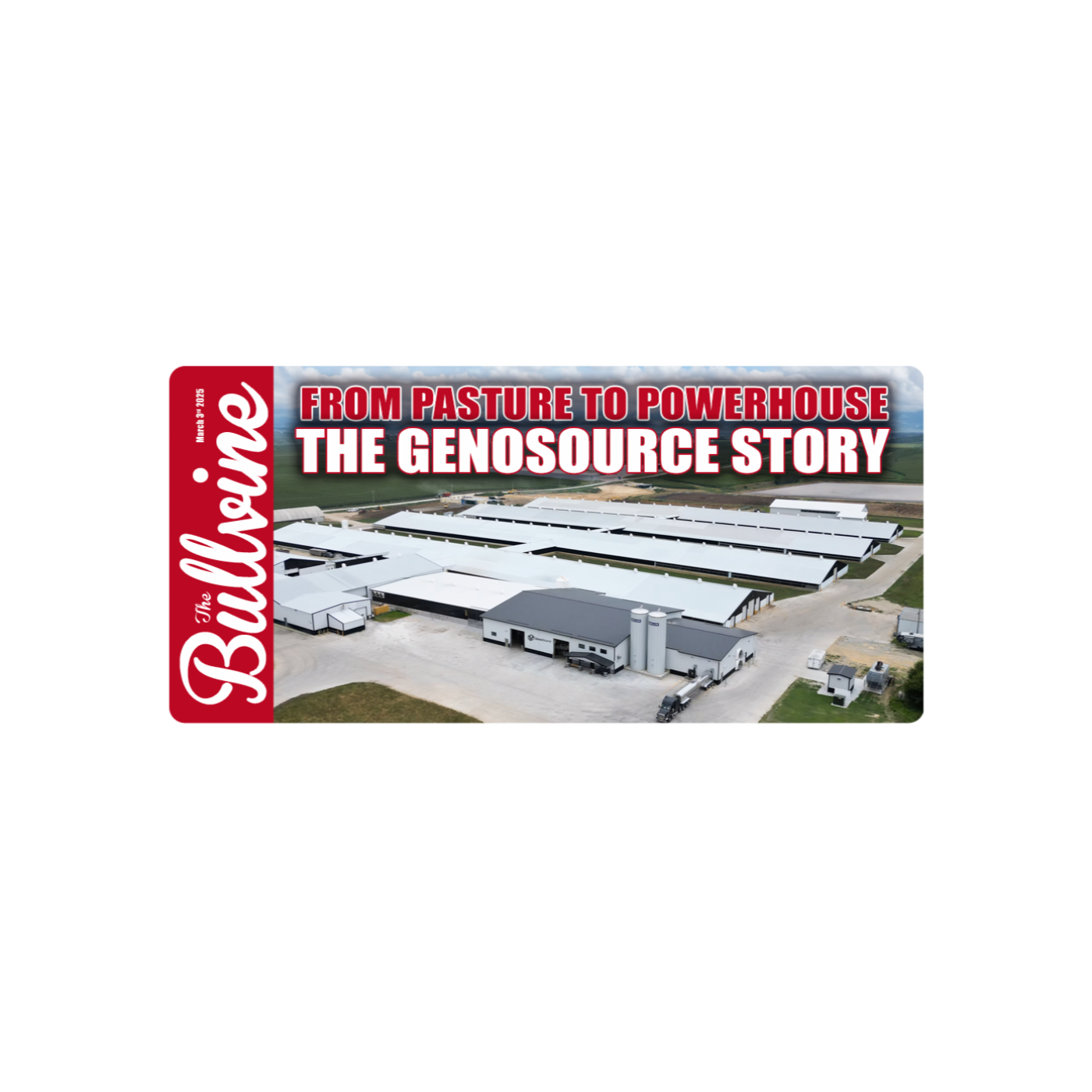
S1 Ep 187E187 From Pasture to Powerhouse: The GenoSource Story
The innovative journey of GenoSource, a family-owned dairy operation in Iowa, from its inception to becoming a global leader in dairy genetics. • Key Points: • Collaborative beginnings among eight farming families. • Revolutionary breeding strategies using genomic testing, sexed semen, and in vitro fertilization. • Balancing show ring success with practical farm economics. • Innovative recovery from a devastating storm. • Emphasis on sustainability and profitability. • Vision for the future of dairy farming.Main Points Covered 1. Genesis of GenoSource • Founded by eight farming families in twenty fourteen. • Initial vision: Develop cows for free-stall environments with high milk solids. • Key leadership roles: Tim Rauen (CEO), Kyle Demmer (COO), Matt Simon (CFO). 2. Revolutionary Breeding Strategies • Use of genomic testing, sexed semen, and in vitro fertilization. • Notable animals: Miss OCD Robust Delicious, GenoSource Captain. • Integration of AI for optimal matings. 3. Balancing Beauty and Productivity • Show ring success with Ladyrose Caught Your Eye-E-T. • Combining type and production traits in breeding programs. 4. Rising from Disaster • Recovery from the twenty twenty derecho storm. • Rebuilding with state-of-the-art facilities and technology. 5. Sustainability and Profitability • Use of STgenetics EcoFeed for feeding efficiency. • Upcoming methane digester for energy independence. • Integration of technology for improved animal welfare. 6. Vision for the Future • Long-term genetic planning. • Expansion of embryo exports. • Legacy of GenoSource Captain.Key Statistics and Figures • Milk Production: Ninety-three pounds per day with butterfat at four point eight percent and protein at three point six percent. • Embryo Production: Eighteen thousand embryos annually. • Greenhouse Gas Reduction: Forty percent reduction expected from methane digester.Key Takeaways • Innovation and Tradition: GenoSource blends cutting-edge technology with traditional farming values. • Sustainability and Profitability: Demonstrates that environmental stewardship and business success can coexist. • Long-term Vision: Focus on creating a genetic legacy that shapes the future of dairy farming.Call to Action • Engagement: Encourage listeners to share their experiences with similar technologies or breeding strategies. • Subscription: Invite listeners to subscribe to The Bullvine Podcast for more insightful episodes. • Feedback: Encourage reviews and feedback on the episode.https://www.thebullvine.com/breeder-profiles/from-pasture-to-powerhouse-the-genosource-story/
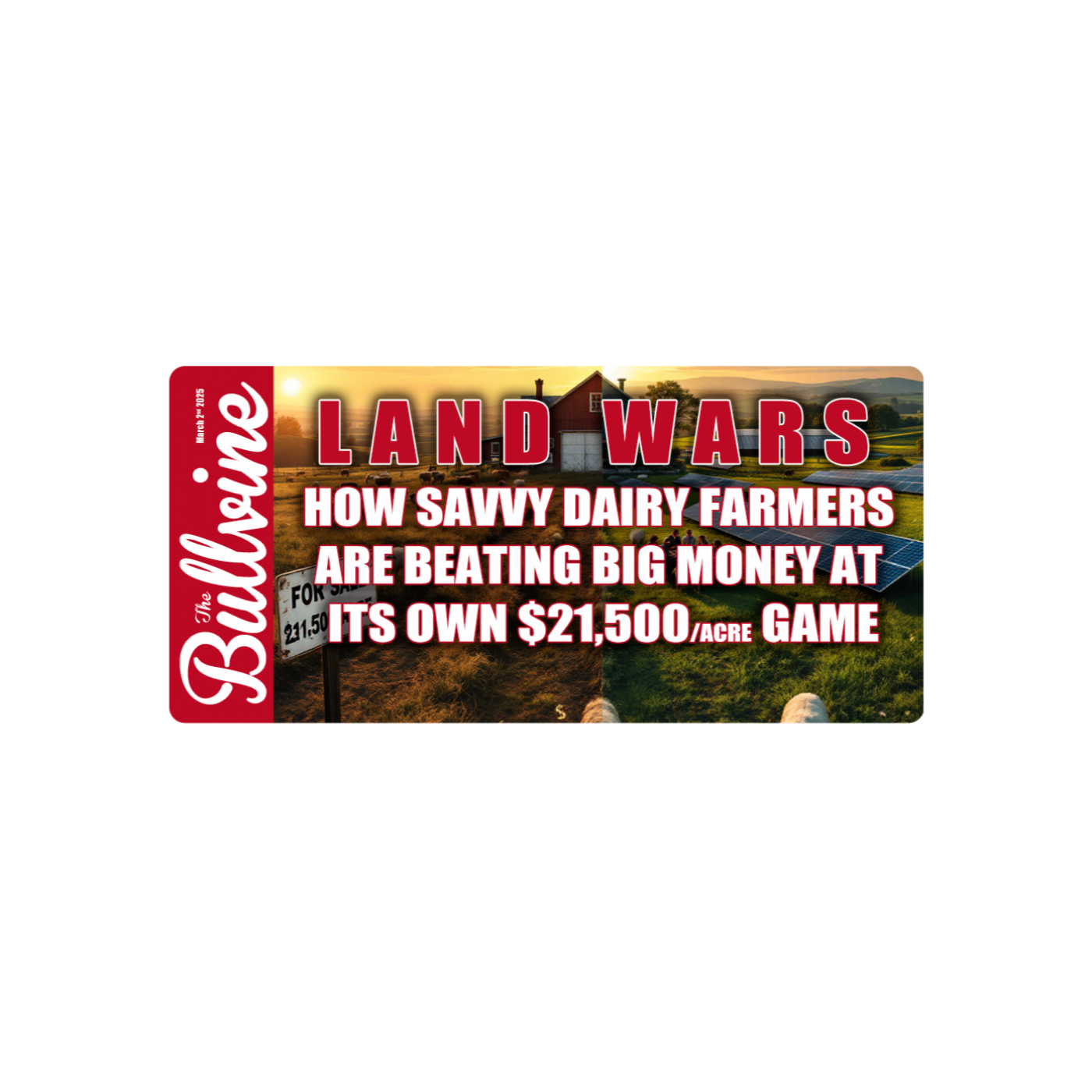
S1 Ep 186E186 LAND WARS: How Savvy Dairy Farmers Are Beating Big Money at Its Own $21,500/Acre Game
# Episode Notes: LAND WARS - How Savvy Dairy Rebels Are Beating Big Money at Its Own Game## Episode OverviewIn this eye-opening episode, hosts Bella and Douglas dive deep into the crisis of skyrocketing farmland prices and explore how innovative dairy farmers are finding creative solutions to stay competitive.## Key Topics Covered1. Current farmland prices across the Midwest2. The threat high land prices pose to traditional dairy operations3. Innovative land access strategies employed by "dairy rebels"4. International models for land management in dairy farming5. The role of solar energy in modern dairy operations6. Rethinking vertical integration in dairy farming7. Practical steps for dairy farmers to adapt to the changing land market## Highlighted Strategies- Guerrilla leasing tactics- Profit-sharing lease arrangements- Collaborative land ownership models- Solar grazing and agrivoltaics- Strategic feed partnerships## Notable Quotes- "When land costs $14,000 an acre, that's over $950 per cow just in land investment for a grazing operation." - Tom Wilson, Wisconsin dairy producer- "The future belongs to dairy specialists, not agricultural generalists." - Innovative producer (unnamed)- "High land prices aren't the end of dairy farming—they're the end of conventional dairy farming." - Douglas## Key Statistics- Minnesota farmland average: $8,364/acre- Missouri farmland average: $15,171/acre- Premium Wisconsin farmland: up to $21,500/acre- Solar leases typically pay: $900-$1,200/acre annually## Action Items for Listeners1. Conduct a land efficiency audit2. Initiate conversations with neighboring landowners3. Identify potential coalition partners4. Explore solar integration opportunities5. Reassess business structure for succession planning## Further Reading- University of Minnesota research on agrivoltaics- Dutch cooperative land ownership models- New Zealand's sharemilking systemhttps://www.thebullvine.com/management/financial-managment/land-wars-how-savvy-dairy-farmers-are-beating-big-money-at-its-own-21500-acre-game/

S1 Ep 185E185 Dairy Cows: Climate Villain or Circular Hero? The Truth Vegan Brands Don’t Want You to Hear
In this eye-opening episode, hosts Bella and Douglas dive into the world of sustainable dairy farming, debunking myths and showcasing innovative practices that are transforming the industry. Here’s what you’ll learn: 1. The hidden waste of plant-based alternatives • Oat milk production waste: 84% of the oat plant • Seitan production waste: 90% of the wheat crop 2. Cows as nature’s upcyclers • Converting inedible agricultural byproducts into nutritious food • The truth about livestock feed: 86% is inedible for humans 3. Circular economy in dairy farming • Biogas plants turning manure into electricity • German dairies aiming for 60% biogas usage by 2025 4. Methane emissions and climate impact • The 12-year methane cycle • Stable herds and carbon neutrality 5. Innovative farming practices • Sarah Thompson’s carbon-negative farm in Wisconsin • High-tech rotational grazing systems 6. Precision agriculture and monitoring systems • Wearable sensors for cows • Thermal cameras for non-invasive health monitoring 7. Methane reduction technologies • 3-NOP feed additive reducing emissions by 22-35% • Improved feed efficiency and milk production 8. Climate change impacts on dairy farming • Heat stress and changing weather patterns • Adaptation strategies: ventilation, feeding schedules, water conservation 9. Industry-wide sustainability initiatives • Canadian dairy industry’s goal for net-zero emissions by 2050 • 2025 outlook: cautiously optimistic despite challenges 10. The balance of sustainability • Environmental needs • Animal welfare • Farmer livelihoodsKey takeaway: Sustainable dairy farming is at the forefront of agricultural innovation, addressing environmental concerns while ensuring food security and economic viability.https://www.thebullvine.com/sustainable-farming/dairy-cows-climate-villain-or-circular-hero-the-truth-vegan-brands-dont-want-you-to-hear/
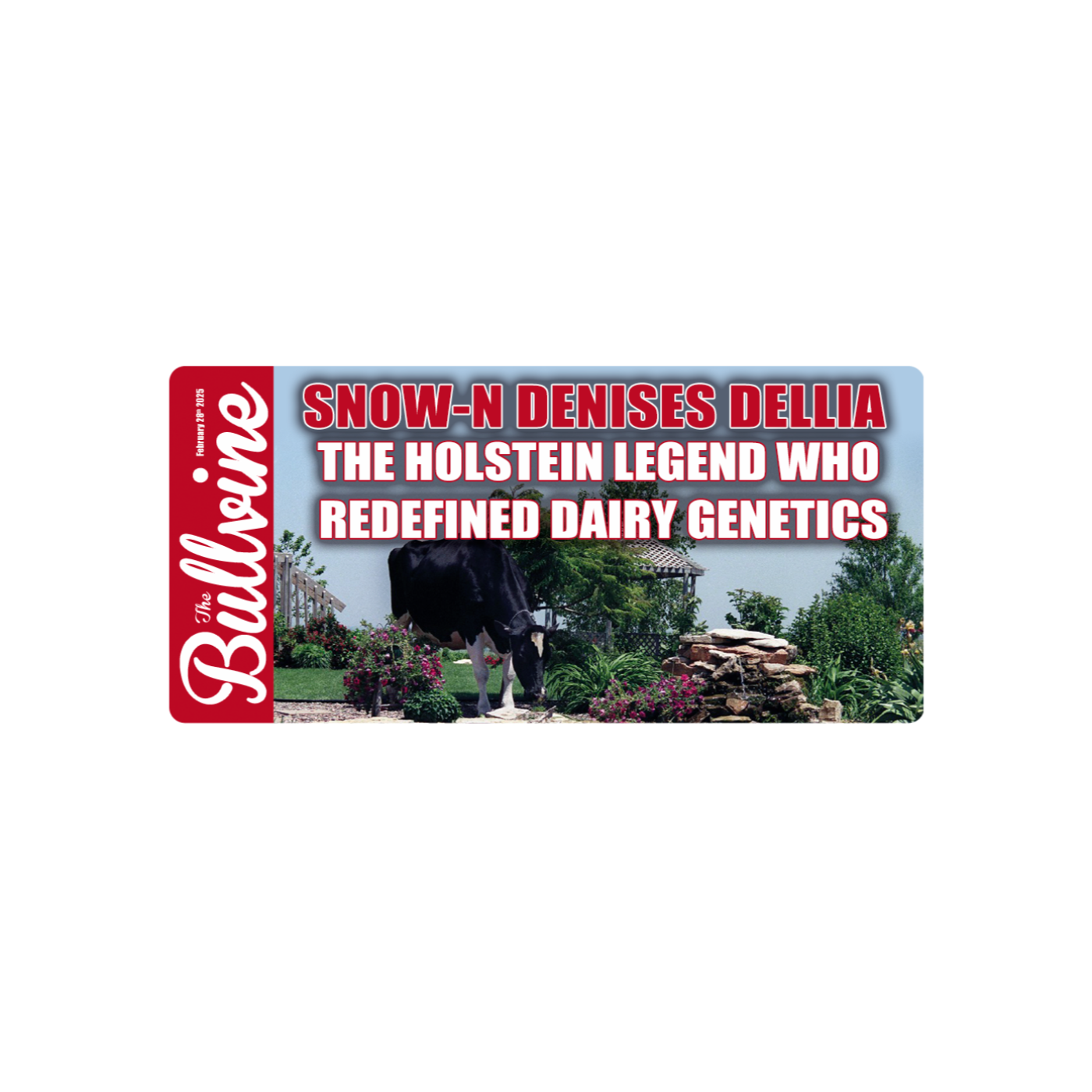
S1 Ep 184E184 Snow-N Denises Dellia: The Holstein Legend Who Redefined Dairy Genetics
Discover the incredible journey of Snow-N Denises Dellia, the Holstein cow that revolutionized dairy genetics. Born in 1986 on a small Wisconsin farm, Dellia’s impact continues to shape dairy herds worldwide nearly four decades later.Key Points Covered:1. Bob Snow’s innovative breeding strategy2. The “Golden Cross” that produced Dellia3. Dellia’s show ring success and sale to Regancrest Farm4. The impact of Dellia’s sons: Durham, Die-Hard, and Million5. Dellia’s granddaughters and their global influence6. The genomic revolution and Dellia’s lasting legacyNotable Quotes:• “I wasn’t interested in the middle or the bottom. If I went to the sale, I would buy off the top.” - Bob Snow• “Dellia shattered the maternal-paternal dichotomy.” - Tim Abbott, ABS Global• “The Sapphires are efficiency queens—great udders, trouble-free, and built for robotic milking.” - Greg Bauer, Sandy-Valley Holsteins• “Dellia’s impact through Durham alone transformed how we approach longevity in herds.” - Scott Culbertson, Select SiresFun Facts:• Dellia produced 76 registered daughters and 44 AI-sampled sons• Her son Die-Hard sired 1.75 million semen doses• Dellia’s great-granddaughter, Sandy-Valley Planet Sapphire, produced Rubicon, the first bull to sell 500,000 sexed semen doseshttps://www.thebullvine.com/donor-profile/snow-n-denises-dellia-the-holstein-legend-who-redefined-dairy-genetics/

S1 Ep 183E183 Rumen-Protected Amino Acids: The Secret to Healthier Cows, Higher Profits, and a Sustainable Future
In this episode, hosts Bella and Douglas dive deep into the world of rumen-protected amino acids (RPAAs) and their game-changing impact on dairy farming. Here’s what you’ll learn: 1. Introduction to RPAAs • What are rumen-protected amino acids? • Why methionine and lysine are crucial for dairy cows 2. The Science Behind RPAAs • How RPAAs bypass the rumen • The pH-sensitive coating technology 3. Benefits of RPAA Supplementation • Increased milk components (protein and fat) • Improved cow health and immune function 4. Economic Impact • Potential profits for a 500-cow herd • Return on investment figures 5. Environmental Benefits • Reduced nitrogen excretion and greenhouse gas emissions • Savings on fertilizer costs 6. Implementation Strategies • Tailoring RPAA use to different feeding systems • Monitoring techniques (e.g., Milk Urea Nitrogen levels) 7. Future Innovations • Advanced delivery systems • Gene-edited high-methionine alfalfa 8. Regulatory Landscape • California’s manure nitrogen tax • Preparing for future environmental regulations 9. Financial Incentives • NRCS Environmental Quality Incentives Program • Carbon credit opportunities 10. Real-World Success Story • Vermont dairy farmer Mark Richardson’s experience with RPAAsKey Takeaway: RPAAs offer dairy farmers a powerful tool to increase profitability, improve sustainability, and stay ahead of regulatory curves.Protected Amino Acids: The Secret to Healthier Cows, Higher Profits, and a Sustainable Future

S1 Ep 182E182 From Escape to Excellence: The Extraordinary Journey of the Ekstein and Loewith Families
Episode Notes: From Escape to Excellence - The Ekstein and Loewith Families’ Journey • Introduction to the extraordinary story of the Ekstein, Loewith, and Abeles families • Historical context: Nazi annexation of Sudetenland in 1938 • Joe Loewith’s pivotal role in warning Karl Abeles of impending Nazi roundups • The families’ daring escape from Czechoslovakia to Canada • Challenges faced during immigration to Canada • Settlement in Mount Hope, Ontario and the five-year farming commitment • Support from the local Jewish community and Canadian Jewish CongressSummitholm Farm (Loewith Family): • Joe Loewith’s transition from window dresser to dairy farmer • Growth of Summitholm Farm from 1951 onwards • Achievements under Carl and David Loewith’s management • Current statistics: 119 cows with lifetime production exceeding 100,000 kg • Ben Loewith’s current management and breeding strategies • Establishment of Summit Station Dairy and CreameryQuality Holsteins (Ekstein Family): • Paul Ekstein’s early interest in Holstein cattle • Ari Ekstein taking over farm management • Winning of fourth Master Breeder Shield in 2025 • Expansion into seed business with third generation involvementIndustry Context: • 2024 Master Breeder Awards announcement • Over 1,100 Master Breeder shields awarded since 1929Key Takeaways: • Resilience and adaptability of both families • Impact on Canadian dairy farming industry • Importance of embracing new technologies and strategies • Legacy of excellence spanning multiple generationshttps://www.thebullvine.com/breeder-profiles/from-escape-to-excellence-the-extraordinary-journey-of-the-ekstein-and-loewith-families/

S1 Ep 181e181 HPAI H5N1: The 2025 Science-Based Dairy Farm Survival Guide (Because Hope Isn’t a Biosecurity Plan)
Key Points Covered:Current impact of HPAI H5N1 on the dairy industry$1.2 billion in losses since March 2024973 herds affectedVirus transmission and survival76% of outbreaks start from migratory waterfowlD1.1 variant survives 22 days in manure slurry pitsEffects on milk production and cow health10-30% drop in milk production for 7-10 days0.3% mortality rate in infected herdsFinancial impact on farmsSmall herds (<500 cows): $100-$200 daily lossesLarge herds (>1,000 cows): $1,500-$3,000 daily lossesGovernment assistance programsELAP: Covers 60% of losses for 21 daysHERDS Act: 50% of HEPA filter costs up to $15,000Biosecurity measuresHEPA filters: 85% effective against airborne viral particlesClosed herd policy: Reduces infection rates by 73%Laser systems to deter birdsUpcoming vaccinesZoetis mRNA vaccine: 89% efficacy, potential Q3 2025 releaseUSDA H5N1-CVX vaccine: 92% efficacy, potential Q1 2026 releaseMilk safetyPasteurization effectively eliminates viable virusRaw milk: 9% of samples showed viral RNAWorker safety7% of dairy workers in Michigan and Colorado have H5N1 antibodiesOnly 40% of workers using proper PPE during high-risk tasksAction steps for farmersEnroll in USDA's Herd Status ProgramImplement strict PPE policiesApply for government assistance programshttps://www.thebullvine.com/highly-pathogenic-avian-influenza/hpai-h5n1-the-2025-science-based-dairy-farm-survival-guide-because-hope-isnt-a-biosecurity-plan/
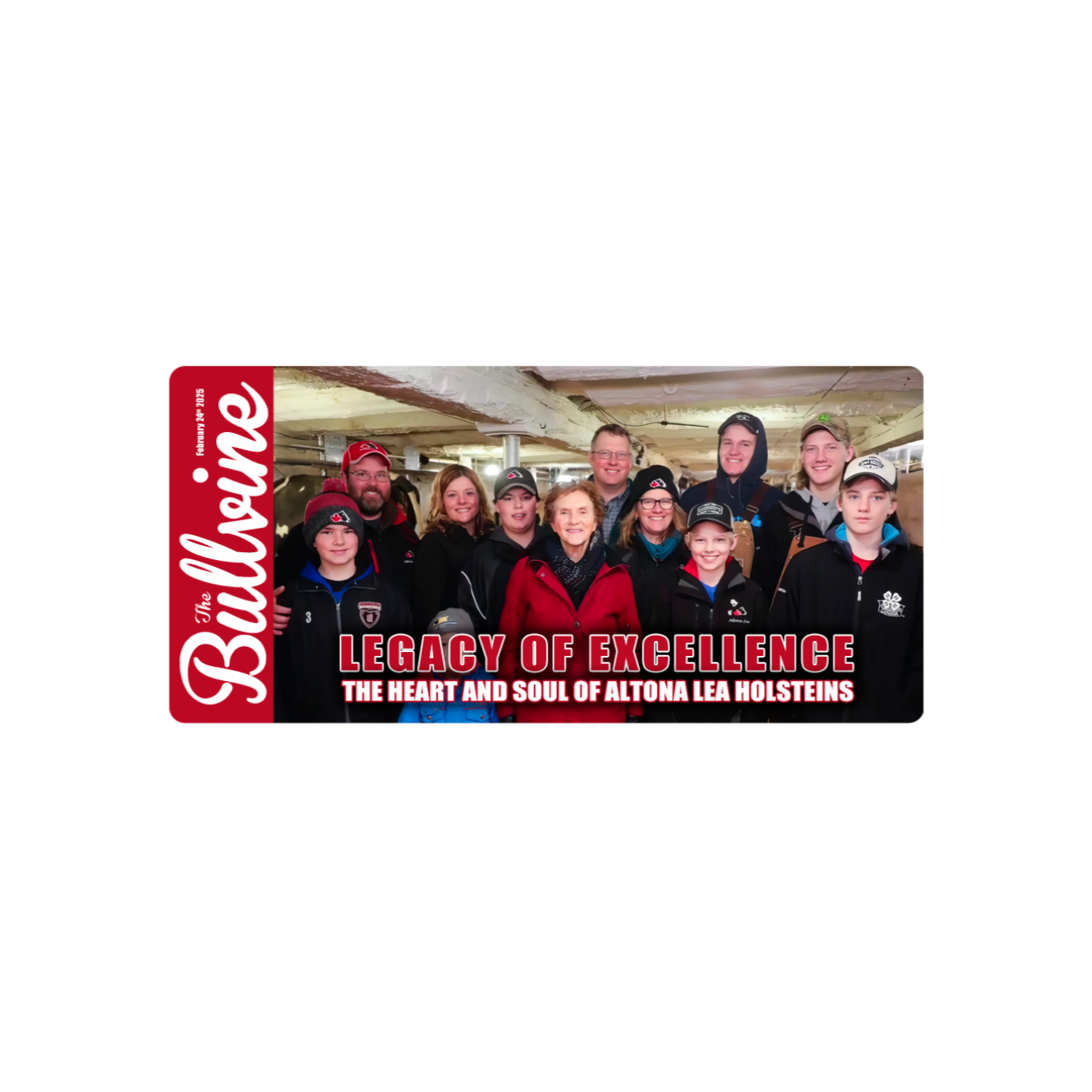
S1 Ep 180E180 Legacy of Excellence: The Heart and Soul of Altona Lea Holsteins
Key Highlights: • 🚜 Generational Legacy: How the Barkey-Puterbough family built a dairy dynasty spanning 187 years, surviving land expropriation (1972) to breed Canada’s first 10-generation EX cows. • 🐮 Foundation Genetics: The story of Harriett EX-9* (purchased as “Roybrook Starlite’s bargain semen”), whose descendants make up 95% of today’s herd and birthed two historic 10-generation EX cows. • 🌟 Show Ring Dominance: From Cooper Puterbough’s 4-H calf (Unix Herminie EX-95) to back-to-back Ontario Summer Holstein Show Grand Championships in 2024. • 🇬🇧 Global Impact: Three Royal Highland Show Grand Champions (Scotland), and Altona Lea Broker Emma EX-96-UK, immortalized in British stained glass. • 🌱 Nurturing the Next Gen: 37 consecutive years providing TD Canadian 4-H Dairy Classic calves, mentoring 300+ youth annually.Notable Statistics: • Herd size: 60 milking cows | 1,350 acres (combined owned/rented) • Production: 11,158 kg milk/cow/year | BCA scores of 260-303-265 • Awards: 4 Master Breeder shields | 12 EX/8 ME cows | 37-year 4-H streakFeatured Cattle: • Altona Lea Classic Jazz EX-91-2E (1st Canadian 10G EX cow) • Altona Lea Cinderdoor Glitz EX-91 (2nd 10G EX cow) • Altona Lea Unix Herminie EX-95 (back-to-back Grand Champion)Key Quotes: • “We’ve provided calves to the 4-H Classic for 37 years. The teamwork those kids learn? It changes lives.” – Glenn Barkey • “Harriett wasn’t just a cow – she’s the backbone of a genetic revolution.” – Host Bellahttps://www.thebullvine.com/breeder-profiles/legacy-of-excellence-the-heart-and-soul-of-altona-lea-holsteins/

S1 Ep 179E179 Gene-Edited Polo Horses: A Genetic Revolution with Dairy Implications
In this eye-opening episode, hosts Bella and Douglas dive into the world of CRISPR gene editing and its potential impact on the dairy industry. Key points covered include: 1. Introduction to CRISPR gene-edited polo horses by Kheiron Biotech in Argentina • 15% faster sprint speeds • No artificial DNA added 2. Potential applications of CRISPR in dairy farming: • Heat-resistant cows (SLICK gene) • Up to 10% higher milk production during heat waves • Disease resistance (CD46 gene) • 20-30% potential reduction in antibiotic use 3. Regulatory landscape: • Argentina’s open approach vs. EU’s caution • US AGRI-TECH Act of 2023 and farmer confusion 4. Economic considerations: • CRISPR-edited embryo costs: $5,000-$10,000 • Licensing fees: 5-10% of offspring revenue 5. Challenges for small farms: • High costs • Knowledge gap (only 15% of US dairy farmers understand gene editing) 6. Innovative solutions: • Brazil’s “Open CRISPR” program • Australia’s dual approach: heat-resistant cattle and methane-reducing feed • DairyTrace blockchain system for CRISPR milk tracking 7. Consumer perceptions: • 52% of Americans cautiously optimistic • 33% of Europeans want more information 8. Competition from alternative dairy: • Lab-grown milk proteins • $2.1 billion market value 9. Key takeaways for farmers: • Stay informed • Be adaptable • Collaborate with other farmersJoin us for this fascinating discussion on the future of dairy farming in the age of CRISPR technology!https://www.thebullvine.com/technology/gene-edited-polo-horses-a-genetic-revolution-with-dairy-implications/

S1 Ep 178E178 The Show Ring Showdown—Why Bigger Isn’t Always Better
The Bullvine Podcast: Episode 177 Title: The Show Ring Showdown: Why Taller Holsteins Are Costing You Thousands Release Date: August 2024 Duration: 45–60 minutes ---### Episode Description The dairy world is at a crossroads: do towering Holsteins truly win in the show ring and the parlor? In this bombshell episode, hosts Bella and Douglas expose the hidden costs of breeding for height, reveal CDN/USDA data threatening tall-cow dominance, and spotlight four sires revolutionizing balanced genetics. Key Takeaways: - 📉 $1.20/day feed bleed: Why every vertical inch drains profits (Cornell data) - 💀 1.7 fewer lactations: The shocking longevity gap (CDN 2023) - 🏆 Judges’ secret shift: Why 58% of 2024 champions have STA ≤1.85 - 🐂 Bull MVPs: DG Bechamel’s $820 NM$ and Carters-Corner Charmer’s fertility secrets - 🔥 Action checklist: 3 non-negotiable rules for profit-driven breeding ---### Featured Data & Sources 1. Tall Cow Economics - $287 avg. dystocia vet bill (Ontario AgriCorp 2024) - +1.5 STA = -0.45 Daughter Pregnancy Rate (CDN) 2. Udder Supremacy - 67% of Expo champs prioritized udder depth (2024 WDE) - 14% mastitis risk drop/+1 Udder Composite (Cornell 2023) 3. Winning Bulls - Genosource Eagle Eye: $48K lifetime profit per 100 cows (USDA) - Maplecrest Farms: 14% milk yield jump via STA reduction ---### Chapters (Timestamps for Platforms) 1. 00:00–05:00 – Intro: The Billion-Dollar Height Hoax 2. 05:01–18:00 – Feed Costs & Early Culls: Tall Cows’ Dirty Secrets 3. 18:01–30:00 – Genetic Gladiators: DG Bechamel & Stealth Bulls 4. 30:01–40:00 – Judges’ New Rules: Udder Depth > Vertical Inches 5. 40:01–End – Your 3-Step Breeding Overhaul https://www.thebullvine.com/the-bullvine/the-show-ring-showdown-why-bigger-isnt-always-better/
S1 Ep 177E177 How Dairy Farmers Are Slashing Costs and Supercharging Herd Health—With Help From Their Nutritionists
In this episode, hosts Bella and Douglas dive deep into cutting-edge strategies that are transforming the dairy industry. They explore how savvy farmers are slashing costs, boosting production, and increasing profitability with the help of their nutritionists.Key Topics Covered: 1. Custom Feed Solutions • Regional alternatives like citrus pulp and potato waste • Potential savings of up to $68/ton on feed costs 2. Technology Investments • NIRS forage analyzers and rumen sensors • Real-world example: $33,000 annual savings from $20,000 tech investment 3. Sustainability Measures • 3-NOP supplements for methane reduction • Balancing environmental benefits with milk production • Carbon credits as a new revenue stream 4. Collaborative Approaches • Co-op nutritionists for smaller farms • Forming collectives to access carbon credit markets 5. Policy Perks and Grants • Farm Bill grants covering up to 50% of precision tech costs • Importance of staying informed about industry policies 6. Practical Implementation Strategies • Step-by-step guide for integrating new technologies • Balancing traditional farming wisdom with modern innovationsExpert Insights: • Dr. Emma Ruiz on integrating tech with farmer intuition • Real-life success stories from farmers like Mike Larson and Linda StoltzfusCall to Action: 1. Contact your nutritionist to discuss implementing new strategies 2. Explore opportunities for collaboration with neighboring farms 3. Investigate policy perks and grants available to dairy farmersThis episode provides a comprehensive look at how dairy farmers can innovate to improve profitability and sustainability, emphasizing the crucial role of nutritionists as strategic partners in this evolving industry.https://www.thebullvine.com/management/how-dairy-farmers-are-slashing-costs-and-supercharging-herd-health-with-help-from-their-nutritionists/
S1 Ep 176E176 Optimizing Postpartum Cow Health: Essential Nutrition and Management Tips for Dairy Farmers
Key Topics Covered: • Importance of the transition period for dairy cows • Carbohydrate balance in postpartum nutrition • Protein and amino acid considerations • Mineral management for cow health • Feed efficiency strategies • Emerging technologies in dairy nutrition • Environmental aspects of dairy farmingHighlights: • 75% of health issues in cows occur within the first month after calving • Optimal NDF range: 28-32%, Starch range: 22-25% • Lysine and methionine are crucial amino acids for milk protein production • Effective mineral management can reduce milk fever rates significantly • AI technologies are revolutionizing personalized cow nutrition • Reducing protein content in cow rations can cut nitrogen emissions and save moneyFun Facts: • A 100-cow herd can gain an extra 50 pounds of milk protein daily with optimized amino acid profiles • A Wisconsin farm reduced milk fever rates from 15% to 3% with a negative DCAD program • A 1,000-cow farm saw a 7% boost in feed efficiency with precision feeding technologyPractical Tips: • For small farms (50-200 cows): Focus on individual cow care and join purchasing groups • For large operations (500+ cows): Invest in automated monitoring technologies and on-farm nutritionists • Explore AI-powered apps for herd health and nutrition monitoringBottom Line:A typical 500-cow dairy operation could gain around $200,000 annually by implementing these strategies – that’s about $400 per cow per year in additional profits!https://www.thebullvine.com/management/optimizing-postpartum-cow-health-essential-nutrition-and-management-tips-for-dairy-farmers/
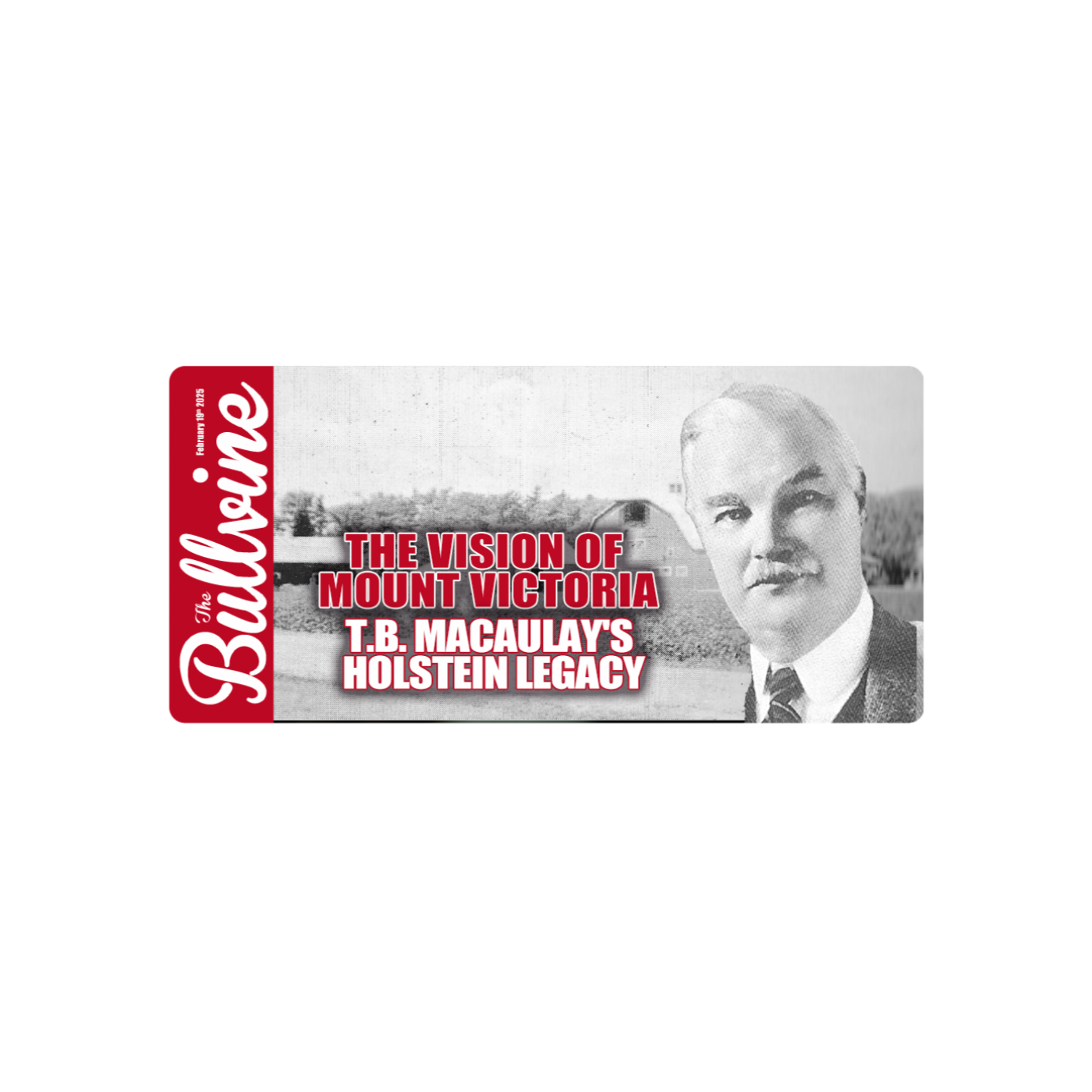
S1 Ep 175E175 The Vision of Mount Victoria: T.B. Macaulay’s Holstein Legacy
Episode Notes: The Legacy of Mount Victoria Farms • Introduction to Mount Victoria Farms, founded by Thomas Bassett Macaulay in Quebec, Canada in 1899 • Macaulay’s background as an insurance executive and actuary • Macaulay’s late start in Holstein breeding at age 69 in 1924 • The acquisition of key foundation animals, including Johanna Rag Apple Pabst for $15,000 in 1926 • Macaulay’s scientific approach to breeding, focusing on high butterfat production and good conformation • The development of influential cow families like the Colanthas, Bonheurs, and Hartogs • The impact of Johanna Rag Apple Pabst and his descendants on the Holstein breed globally • Key sires discussed: Montvic Pathfinder, Montvic Rag Apple Colantha Abbekerk, Montvic Rag Apple Ajax • The global influence of Mount Victoria genetics, with an estimated 90% of Canadian Holsteins tracing back to the herd by the 1950s • The dispersal of the Mount Victoria herd in 1942 and the continued impact of its genetics • Lessons for modern breeders from Macaulay’s methods, including the importance of clear goals, data-driven selection, and challenging conventional wisdom • The enduring legacy of Mount Victoria Farms in shaping the modern Holstein breedhttps://www.thebullvine.com/breeder-profiles/the-vision-of-mount-victoria-t-b-macaulays-holstein-legacy/
S1 Ep 174E174 Bob Hagenow: A Legacy Built on a Handshake
In this episode of The Bullvine Podcast, hosts Bella and Douglas discuss the remarkable career of Bob Hagenow, Key points covered include:1. Bob’s background: Growing up on a registered Holstein dairy farm in Manitowoc County, Wisconsin, and his education at UW-Madison.2. Career at Vita Plus: Bob’s 38-year journey from nutritionist to regional business manager, impacting over 400 employee-owners.3. Industry contributions: Bob’s work in nutrition innovation, team development, and industry leadership.4. World Dairy Expo involvement: 40 years as a ring steward and his contributions to the event’s board and committees.5. Youth development: Bob’s extensive involvement in 4-H, FFA, and mentorship of young professionals.6. Community service: 11 years on the Rio Community Schools board and various volunteer activities.7. Awards and recognitions: Induction into the Wisconsin 4-H Hall of Fame and receiving the Honorary Recognition Award from UW-Madison’s College of Agricultural and Life Sciences.8. Personal philosophy: Bob’s commitment to helping others succeed and his approach to building relationships in the industry.9. Future outlook: Bob’s optimism about the dairy industry’s potential to feed the world.The episode highlights Bob Hagenow’s significant impact on the dairy industry through his technical expertise, genuine care for others, and commitment to developing future leaders.https://www.thebullvine.com/dairy-industry-professionals/bob-hagenow-a-legacy-built-on-a-handshake/
S1 Ep 173E173 Recap of the Top News Stories for the Week Ending February 16th 2025
1. Tragic Tire Explosion at W Hesketh and Sons Dairy Farm • Young father Joshua Hardman (23) killed in tire explosion incident • Farm fined £80,000 for safety violations • Key safety tips for tire inflation on farms 2. Steel Tariffs Impact on Dairy Equipment Costs • 25% steel tariffs driving up to 15% increase in dairy equipment costs • Potential cost increases by farm size: • Small farms (50-200 cows): $150,000 - $300,000 • Medium farms (201-1000 cows): $300,000 - $750,000 • Large farms (1000+ cows): $750,000+ • USDA’s $500 million emergency equipment purchase program mentioned 3. Trump’s Criticism of Canada’s Dairy Policy • Overview of Canada’s dairy supply management system • Ongoing debate leading up to 2026 CUSMA review • Potential impact on U.S.-Canada trade relations 4. Proposed $230 Billion Agriculture Budget Cuts • Potential cuts to SNAP (Supplemental Nutrition Assistance Program) • Impact on dairy demand: $1 change in SNAP benefits = $0.66 shift in grocery sales • Concerns about SNAP Healthy Fluid Milk Incentive program 5. CRV’s 2023-24 Financial Report • Net turnover: €185.4 million • Operating loss: €4.2 million • Net loss after tax: €4.1 million • New breeding value for methane introduced • Increased supply of homozygous hornless bulls • Continued development of FeedExcel breeding strategy

S1 Ep 172E172 Global Weekly Dairy Market Recap 17, 2025: Production Surges, Trade Tensions, and Consumer Shifts
In this episode, hosts Bella and Douglas discuss the latest developments in the global dairy market: 1. Key Market Trends: • Cheese prices rising, butter and powder prices softening • U.S. milk surpluses contrasting with weather-affected Northeast production • New tariffs raising concerns about trade tensions 2. Production Forecasts: • USDA revises 2025 U.S. milk production forecast to 227.2 billion pounds • Global milk supply expected to increase by 0.8% in 2025 3. Regional Production Updates: • U.S.: Midwest experiencing surpluses, Northeast facing weather challenges • European Union: Slight growth expected with regional variations • New Zealand: Production forecast adjusted downward by 2% due to dry conditions • China: Projected 2% growth in dairy import volumes 4. Consumer Trends: • Increasing demand for functional dairy products, low-fat options, and organic/grass-fed products • Growth in on-the-go dairy snacks and single-serve portions 5. Market Projections: • Global dairy market expected to grow from $649.9 billion in 2025 to $813.6 billion by 2030 • All-milk price forecast for 2025: $23.05 per hundredweight 6. Advice for Stakeholders: • Monitor regional production trends • Consider hedging strategies to mitigate price volatility risks • Invest in innovation to meet changing consumer demandsStay tuned to The Bullvine Podcast for more insights into the dairy industry!https://www.thebullvine.com/news/global-weekly-dairy-market-recap-17-2025-production-surges-trade-tensions-and-consumer-shifts/

S1 Ep 171E171 Balancing Act: Controlled vs. High-Energy Diets for Transition Cows
Key Topics Covered:1. The Transition Period• Definition: ~3 weeks before and after calving• Physiological challenges for dairy cows2. Controlled Energy Diets• The “Goldilocks” approach• Use of high-fiber, low-energy ingredients• Benefits: Lower risk of fatty liver, improved insulin sensitivity• Recommended ME intake based on BCS and weight3. Higher Energy Diets• Traditional “steaming up” approach• Potential benefits for under-conditioned cows4. Liver Inflammation• Impact on nutrient processing• Comparison between diet types5. Rumen Health• Importance of forage in controlled energy diets• Risk of subacute ruminal acidosis (SARA) in higher energy diets6. Post-Partum Performance• Dry matter intake and milk production comparisons• Metabolic disorder risks7. Tailoring Your Approach• Factors to consider: genetics, management style, feed resourcesPractical Applications:• Regular body condition scoring and feed testing• Collaboration with nutritionists• Monitoring dry matter intake• Two-group dry cow system consideration• Attention to particle size in dietsMyth Busting:• “Steaming up” necessity• Impact on milk production• Role of straw in diets• Appropriateness of higher energy diets• Complexity of controlled energy dietsKey Takeaways:• Balanced approach of controlled energy diets• Risks associated with high-energy diets• Importance of liver health and rumen function• Tailored strategies for optimal outcomes• Continuous monitoring and adjustment of feeding strategiesThis episode provides comprehensive insights into transition cow nutrition, emphasizing the importance of tailored feeding strategies for optimal herd health and productivity.https://www.thebullvine.com/management/nutrition/balancing-act-controlled-vs-high-energy-diets-for-transition-cows/

S1 Ep 170E170 Weathering the Storm: A Dairy Farmer’s Guide to Blizzard Survival
In this episode of The Bullvine Podcast, hosts Bella and Douglas discuss essential strategies for dairy farmers to prepare for and manage severe winter weather. Key topics include: 1. Current statistics on dairy farms and winter storm frequency 2. Feed and bedding stockpile recommendations 3. Water system maintenance and backup strategies 4. Structural integrity considerations for barns 5. Power backup solutions 6. Staff preparedness and safety measures 7. Herd comfort and health management during storms 8. Impact of cold stress on milk production 9. Feed adjustments for extreme cold conditions 10. Veterinary recommendations for cattle care in winter 11. Financial management strategies for extended storm periods 12. Milk storage and handling during road closures 13. Leveraging technology for farm management in severe weather 14. Regional considerations for different areas (Northern New England/Eastern Canada, Mid-Atlantic, Great Lakes) 15. Post-storm recovery stepsFeatured expert insights from: • Dr. Sarah Johnson, Cornell University • Dr. Emily White, National Weather Service • Tom Brown, Emergency Management Coordinator, Lancaster County, PAResources mentioned: • USDA National Agricultural Statistics Service • National Oceanic and Atmospheric Administration • University of Nebraska-Lincoln Extension • Penn State Extension • University of Wisconsin-Madison Extension • Journal of Dairy Science • Occupational Safety and Health Administration (OSHA) • American Veterinary Medical Association • USDA Risk Management Agency • FDA regulations on milk storage • EPA guidelines for milk disposalFor more information, visit https://www.thebullvine.com/management/weathering-the-storm-a-dairy-farmers-guide-to-blizzard-survival/

S1 Ep 169E169 The Four Nations Cup of Holstein Genetics: A Global Dairy Showdown
In this episode of The Bullvine Podcast, hosts Bella and Douglas dive into the exciting world of international dairy genetics, comparing it to the Four Nations Cup in ice hockey. Here’s what you’ll learn: 1. The Holstein Four Nations Cup concept: • Teams: Canada, USA, Europe, and World • Three “periods”: Offense (Showring Performance), Defense (Genetic Indexes), and Goaltending (Milk Production) 2. Offense (Showring Performance): • Key traits: udder quality, feet and legs, dairy strength, overall appearance • Standout sires mentioned: FARNEAR DELTA-LAMBDA, VAL-BISSON DOORMAN, BRAEDALE GOLDWYN • Judging criteria in the showring 3. Defense (Genetic Indexes): • Important indexes: Net Merit, Lifetime Profit Index, European Total Merit Index • Key traits: productive life, fertility, health, feed efficiency • Spotlight on polled genetics and their growing importance 4. Goaltending (Milk Production): • Focus on milk yield, fat percentage, and protein percentage • Discussion on balancing volume and components for profitability • Regional strengths in production traits 5. The importance of genetic diversity and international collaboration in dairy breeding 6. Predictions for the Holstein Four Nations Cup winners in each category and overall 7. How modern genomic technologies are shaping the future of dairy farmingJoin the conversation! Share your thoughts on which team would win the Holstein Four Nations Cup and how their strategies compare to hockey teams.https://www.thebullvine.com/the-bullvine/the-four-nations-cup-of-holstein-genetics-a-global-dairy-showdown/

S1 Ep 168E168 Moo-ving Love Stories: A Dairy-Inspired Valentine’s Day Celebration
Join hosts Bella and Doug for a heartwarming Valentine’s Day special, exploring love stories from the dairy farming world. Discover how romance blossoms amidst cow barns, county fairs, and milking parlors, proving that true love can flourish in the most unexpected places.Key Stories Covered: 1. Marie and Mark Canon: A love story that began at a Pennsylvania county fair 2. Lindy Feltmate and Scott Brown: College sweethearts who built a dairy farm together 3. Krista and Brett Swanson: Finding love at a farm machinery show 4. Erin Harris and Jared Beaton: A reality TV romance that stood the test of farm life 5. Sadie and Glen Frericks: Blending different dairy farming backgrounds 6. Val and Greg Lavigne: Childhood friends reunited on the family farm 7. Duncan and Courtney Bailey: A unique proposal involving a newborn calfTopics Discussed: • How shared passion for agriculture strengthens relationships • The importance of mutual support and understanding in farm life • Balancing romance with the demands of dairy farming • Creative ways farmers have proposed to their partners • The role of compromise and innovation in farming partnershipsQuotes from the Episode: • “Farming with love is like making the perfect batch of cheese - worth every moment.” • “In dairy farming, love is always in the air… along with the occasional whiff of manure!”Takeaways: • Love in dairy farming is often built on shared values and mutual respect • The most enduring romances in farming are found in everyday moments • Successful farming partnerships require dedication, hard work, and compromisehttps://www.thebullvine.com/the-bullvine/moo-ving-love-stories-a-dairy-inspired-valentines-day-celebration/

S1 Ep 167E167 8 Creative Valentine’s Day Ideas for Dairy Farmers to Rekindle Romance
Key Topics Covered: 1. Unique challenges of romance in dairy farming 2. Creative Valentine’s Day ideas for farmers 3. Importance of strong partnerships in agricultural life 4. Practical tips for maintaining relationships on busy farmsHighlights: • Seek Support: Importance of reaching out to other farming couples, joining support groups, or seeking counseling when needed • Unique Love Stories: How dairy farming relationships are forged through shared experiences like early morning milkings and late-night calvings • Daily Connection: Commit to finding small ways to connect with your partner each day, even during busy seasons • Relationship as Farm Asset: Strong partnerships contribute to better decision-making and stress management on the farmPractical Advice: • Don’t compare your relationship to non-farming couples • Prioritize your relationship like you do your herd’s health • Celebrate the uniqueness of your farming partnership • Consider sharing a cup of coffee before morning milking or watching the sunset together after evening choresResources Mentioned: • Counseling services for farming couples • Workshops designed to strengthen farm partnershipsCall to Action:Listeners are encouraged to share their own stories of keeping romance alive on the farm using the hashtag #DairyLoveStoriesClosing Thoughts:“The love you cultivate on your farm is just as important as the crops you grow and the cows you raise.”https://www.thebullvine.com/the-bullvine/8-creative-valentines-day-ideas-for-dairy-farmers-to-rekindle-romance/
S1 Ep 166E166 From Milk to Mandate: Bloyce Thompson’s Journey from Dairy Farmer to Deputy Premier
Meet PEI’s Deputy Premier Bloyce Thompson, who starts each day at 4:30 AM milking cows before heading to parliament. From breeding world-class Holsteins to championing agricultural policy, he proves effective leadership grows from getting your boots dirty before dawn.Key SegmentsOpening • Introduction to Thompson’s daily routine • Historic 104-vote victory in 2019 • Transition from farmer to Deputy PremierThe Roots of Leadership • Eastside Farm’s legacy of excellence • Co-breeding champion Eastside Lewisdale Gold Missy EX 95 • Innovative marketing through Holstein photo shoots • International recognition in dairy geneticsFrom Parlor to Parliament • Motivation to enter politics • Grassroots campaign strategy • Victory over sitting premier • Mother’s influence in political organizingMaking Change Happen • FarmersTalk.ca mental health initiative • $1.4M Agriculture Energy Systems Pilot Program • Labor shortage solutions • Trade policy advocacyLooking to the Future • Vision for sustainable agriculture • Renewable energy initiatives • Call to action for farmersNotable Quotes • “The dairy farms across the country are the backbone to our rural economies and communities” • “The land doesn’t care about titles or positions; it just needs you to show up and do the work”Key Statistics • Labor shortages projected to reach 114,000 by 2025 • $300,000 secured for Agriculture Labour Sub-Program • $46 million investment in sustainable agriculture (September 2023)Call to ActionFarmers are encouraged to consider involvement in local politics or industry leadership, using their practical experience to shape agricultural policy.https://www.thebullvine.com/uncategorized/from-milk-to-mandate-bloyce-thompsons-journey-from-dairy-farmer-to-deputy-premier/

S1 Ep 165E165 Ketosis: The Silent Threat to Dairy Herd Success
Key Points: 1. Ketosis affects up to 40% of fresh cows, costing farmers $289 per case. 2. For a 100-cow herd, annual losses can range from $5,800 to $11,560. 3. Ketosis occurs when fresh cows can’t get enough energy from feed, forcing them to break down body fat. 4. Subclinical ketosis is often undetected but still impacts milk production and cow health.Detection Methods: 1. Blood testing (BHB levels) 2. Milk testing through DHI services 3. Urine ketone strips 4. Activity monitoring systemsEconomic Impact: • Costs are 50% higher for older cows compared to first-calf heifers. • Ketotic cows are 4.3 times less likely to get pregnant on first breeding. • High-risk operations could lose up to $7,606.87 annually from ketosis-related issues.Treatment Options: • Mild to moderate cases: 300ml propylene glycol once daily for 3-5 days. • Severe cases: IV dextrose treatment (500ml of 50% dextrose) followed by propylene glycol. • Vitamin B12 shots: 1.25 to 5mg per cow daily for 3-5 days. • Temporarily reducing milking frequency can aid recovery.Success Stories: • A 1,000-cow dairy in Wisconsin reduced ketosis rates by 5%, saving $14,500 in the first year. • University of Guelph research on reduced milking frequency showed promising metabolic improvements.Key Takeaways: 1. Early detection and prompt treatment are crucial for managing ketosis. 2. Monitor fresh cows closely, especially in the first week after calving. 3. Develop a solid transition cow program with your veterinarian and nutritionist. 4. Have treatment protocols ready before you need them. 5. Every day of delayed treatment costs money in lost milk production.https://www.thebullvine.com/management/ketosis-the-silent-threat-to-dairy-herd-success/

S1 Ep 164E164 Dairy’s Rollercoaster: Navigating 2025’s Peaks and Valleys
In this episode of The Bullvine Podcast, host Bella and dairy industry expert Douglas discuss the challenges and opportunities facing dairy farmers in 2025. Here’s a summary of the key topics covered:Market Overview • USDA projections for milk and dairy product prices • Risk management strategies for farmersHerd Management • Heifer shortage and its implications • Focus on longevity, efficiency, and geneticsIndustry Trends • Farm consolidation and geographic shifts • Opportunities for smaller operationsRegulatory Changes • New dietary guidelines and FDA classifications • Strategies for farmers to respond to regulatory challengesTechnology and Innovation • Robotic milking systems and data management tools • Considerations for technology adoptionSustainability • Industry goals for emissions reduction • Practical steps for farmers to improve environmental performanceLabor and Workforce • H-2A program and its requirements • Creating attractive work environments and career development opportunitiesConsumer Preferences • Growth in high-protein and organic dairy products • Importance of sustainability in consumer choicesHealth Challenges • Bird flu outbreak and its impact on dairy farms • Biosecurity measures for herd protectionInternational Trade • New tariffs with Canada • Strategies for navigating international market uncertaintiesThis episode provides a comprehensive overview of the dairy industry in 2025, offering practical advice and insights for farmers facing these complex challenges.https://www.thebullvine.com/dairy-industry/dairys-rollercoaster-navigating-2025s-peaks-and-valleys/

S1 Ep 163E163 From Udder to Pizza: Blockchain’s Dairy Revolution Hits the Table – Are You Ready to Ride the Wave?
Key Points Discussed: 1. Consumer demand for transparency in dairy products • 73% of consumers more likely to buy traceable dairy products 2. Blockchain technology in dairy industry • Digital ledger tracking milk from farm to table • Improves traceability, quality control, and fraud prevention 3. ROI of blockchain implementation • Traceability time reduced from 7 days to 2.2 seconds • Average recall costs down from $14 million to $6.5 million • Consumer trust increased from 62% to 89% 4. Real-world examples • FrieslandCampina’s ‘grass to glass’ transparency system • Gopal Enterprises’ contamination detection in India 5. Day in the life of traceable milk • From 6 AM milking to 7 PM pizza delivery • AI sensors, GPS tracking, smart contracts, and QR codes 6. Challenges in blockchain adoption • Initial costs, staff training, data privacy, system integration • Particular difficulties for small businesses 7. Economic impact and market projections • Canadian dairy market growth: $16.2 billion (2025) to $21.3 billion (2030) • Blockchain’s role in market growth and food waste reduction 8. Future trends in dairy blockchain • Integration with AI, IoT, and robotics • “Cow Fitbits” for real-time health data tracking 9. Sustainability improvements • 17% reduction in greenhouse gas emissions • 10% reduction in water usage • 26% reduction in land utilization 10. Call to action for dairy farmers • Embrace blockchain or risk obsolescence • Focus on building consumer trust and improving food safetyNotable Quotes: • “Today’s consumers aren’t just asking where their dairy comes from - they’re demanding to know everything.” • “If you’re not on board, you’re missing out on potential earnings faster than spilled milk on a barn floor.” • “By 2026, consumers will demand traceable dairy.” • “The digital revolution doesn’t wait for anyone.”https://www.thebullvine.com/the-bullvine/from-udder-to-pizza-blockchains-dairy-revolution-hits-the-table-are-you-ready-to-ride-the-wave/

S1 Ep 162E162 From Extinction to Empire: Can U.S. Dairy Learn from India’s White Revolution?
Key Stats That’ll Make You Spit Out Your Milk:• 95% of U.S. dairy farms vanished since 1970• U.S. farmers lose $7.23 per hundredweight under rigged pricing• India’s 80 million smallholders control $80B milk empire• 70% of profits go to processors/traders, not farmersThe U.S. Crisis vs. India’s BlueprintWhy U.S. Dairy Is Bleeding Out:• Class I Pricing Disparities: Mega-dairies exploit 85¢/hundredweight losses in Wisconsin• Debt Tsunami: Average farm debt hit $4.5M in 2025• Succession Collapse: 53% of farmers have no heirs, 9% under 35India’s Game-Changing Model:• Amul Cooperative: 3.6M farmers move 10M liters/day across 18,600 villages• 70% consumer price retention vs. U.S. scraps• 5-minute digital payments vs. weeks-long waits5 Steps to Save U.S. Dairy1. Co-op Revolution• India’s Play: Village co-ops → district unions → global brands• U.S. Action: Cabot Creamery’s $1.1B/year model (800+ family farms)2. Diversify or Die• India’s Edge: 56% of lactose-free markets via buffalo milk (6-8% fat)• U.S. Shift: A2 milk ($8.99/gallon) + $24/lb carbon-negative cheese3. Guerrilla Tech• India’s Hack: WhatsApp AI cuts vet costs 40%• U.S. Fix: $50/month robot milkers + $15K/month manure biogas4. Burn the FMMO• Demand Dairy Farmer Protection Act (15% processor profit cap)5. Women-Led Co-ops• India’s Result: 30% rural poverty drop via female leadership• U.S. Model: Stonyfield’s 18% growth under women leadersThe $7.23/Hundredweight Bloodbath• Market Manipulation: Processors siphon $50M/month via cheese pricing• Labor Crisis: 70% undocumented workforce at ICE raid risk• Disease Disaster: 500 CA herds wiped by HPAI in 2024External Threats• China’s Tariff Roulette: $16.6B at risk despite 2025 rebound• EU’s Buffalo Bias: Favors India’s 0.2% contamination milk over EU’s 5%• Corporate Land Grabs: Tyson’s 2,500-cow feedlots replace family farmsU.S. Farmers Defying the Odds• Organic Valley: 34% organic market share via 1,800 grass-fed farms• Crave Brothers, WI: 30% cost cut via robots + methane credits• Jasper Hill, VT: $24/lb cheese funds Gen Z farmer traininghttps://www.thebullvine.com/dairy-industry/from-extinction-to-empire-can-u-s-dairy-learn-from-indias-white-revolution/
S1 Ep 161E161 TPI vs Net Merit: Why Tall, Pretty, and Infertile Cows Are Bleeding You Dry
In this explosive episode of The Bullvine Podcast, host Bella and breeding expert Douglas expose the stark differences between TPI (Total Performance Index) and Net Merit, two competing dairy breeding indexes that are reshaping the industry.Key Points: 1. Index Evolution: TPI and Net Merit’s correlation has dropped from 0.80 to 0.44, signaling a major shift in breeding priorities. 2. Component Focus: Net Merit 2025 emphasizes butterfat (31.8%) over TPI (28.6%), reflecting market demands. 3. Longevity Impact: Net Merit cows average 4+ lactations vs TPI’s 2.5, translating to $3,000 savings per culled cow. 4. Global Perspective: While the US chases butterfat, the UK’s PLI index prioritizes hoof health, highlighting regional differences. 5. Custom Indexing: Farmers are urged to create personalized indexes, balancing traits like feed efficiency, disease resistance, and livability. 6. Case Study: Rosy-Lane Holsteins’ success with 4.5% butterfat and innovative trait weighting, including milk speed for efficiency. 7. Financial Impact: Custom indexing at Rosy-Lane results in $2.18 million in annual premiums. 8. Time Efficiency: Focus on traits like milk speed can save up to 9 hours daily in large operations.Takeaway: The episode challenges farmers to move beyond traditional indexes and create custom breeding strategies that prioritize profitability and efficiency in their specific market conditions.https://www.thebullvine.com/the-bullvine/tpi-vs-net-merit-why-tall-pretty-and-infertile-cows-are-bleeding-you-dry/

S1 Ep 160E160 USMCA Termination Countdown: Will Your Farm Survive The North American Trade War?
In this hard-hitting episode of The Bullvine Podcast, host Bella and dairy expert Douglas dive deep into the looming crisis facing North American dairy farms as the USMCA (United States-Mexico-Canada Agreement) approaches its review date in 2026.Key Points Discussed:1. The Impending Crisis: - July 1, 2026: Potential "D-Day" for dairy industry - $1.2 billion in trade at risk - 25% tariffs threatening profits and farm survival2. The Butter Bloodbath: - U.S. dairy exports to Canada (2023): $1.09 billion - Butter exports: $118.9 million - Regional impacts: Wisconsin, Quebec, California3. Mexico's Role: - Rerouting 17% of cheese imports to EU - Implications for North American dairy trade4. Supply Management vs. Corporate Greed: - Canada's quota system - Corporate consolidation in U.S. dairy industry - Impact on small and medium-sized farms5. Technological Adaptation and Survival Strategies: - Robotic milking systems - AI-driven production planning - Feed efficiency as a competitive edge6. The Labor Issue: - Immigrant workforce in U.S. dairy industry - Potential labor audits and their implications - Economic impact of labor shortages7. 2026 Scenarios: - Renegotiation Theater - Termination Trauma - Tariff Armageddon8. Call to Action: - Advice for U.S. and Canadian farmers - Market diversification strategies - Importance of lobbying and political engagementThis episode serves as a wake-up call for the North American dairy industry, emphasizing the need for adaptation, innovation, and proactive measures to survive the upcoming challenges posed by the USMCA review.https://www.thebullvine.com/politics/usmca-termination-countdown-will-your-farm-survive-the-north-american-trade-war/
S1 Ep 159E159 Revolutionizing Dairy Farming: How AI, Robotics, and Blockchain Are Shaping the Future of Agriculture in 2025
In this debate-driven episode of The Bullvine Podcast, host Bella and dairy tech expert Douglas explore how cutting-edge technologies like AI, robotics, IoT sensors, and blockchain are reshaping dairy farming. From genomic breeding to methane reduction, discover how farmers balance tradition with innovation to survive—and thrive—in 2025.Actionable Takeaways • For Small Farms: A 100-cow farm using one robot saves $12,000 annually (see Robotics ROI Calculator). • Data Ownership: Blockchain ensures farmers—not Big Ag—control herd health and certification data. • Sustainability: AI-driven biogas digesters align with 2030’s 30% methane reduction targets.Listen Now: Embrace the future of farming—where tradition meets tech. 🐄🚀https://www.thebullvine.com/technology/revolutionizing-dairy-farming-how-ai-robotics-and-blockchain-are-shaping-the-future-of-agriculture-in-2025/
S1 Ep 158E158 India’s Dairy Revolution: Stop Pretending Holsteins Are Kings
India's dairy sector is undergoing a revolutionary transformation, leveraging ancient practices and cutting-edge technology to outpace Western agricultural models. Host Bella and dairy economist Douglas unpack how water buffaloes and innovative cooperatives are rewriting global dairy economics.## The Buffalo Advantage- Biological Powerhouse: Murrah buffaloes produce 8 liters/day of 7% fat milk – double the fat content of Holstein cows. Their four-chambered stomachs convert agricultural waste into high-value milk at ₹15/day feed cost vs. $6 for US dairy cows.- Economic Dominance: - Lifetime Profit: ₹18/liter vs ₹2.50 for Holsteins - Longevity: 18 productive years vs 5 for cows - Scalability: 97 million buffaloes nationwide – more than Canada's total cattle| Metric | Indian Buffalo | US Holstein ||-----------------------|----------------|-------------|| Daily Feed Cost | $0.18 | $6 || Methane Emissions/L | 0.89kg CO2e | 2.5kg CO2e || Farmer Price Share | 70% | 23% |## Cooperative Warfare- Amul Model: Processes 3.3 million daily collections – equivalent to NYC's milk demand every 18 hours- Payment Speed: Farmers receive payment within 12 hours vs 45 days in US systems- Tech Integration: 12,000 solar-powered chillers with IoT sensors monitor milk quality in real-time## Climate Counterintuition- Waste Conversion: 57% of feed comes from crop residues that would otherwise decompose- Product Yield: - 220g paneer/kg milk vs 170g from cows - 45g ghee/kg vs 25g- Soil Impact: Grazing patterns boost soil carbon by 0.8T/ha/year## Genetic Revolution- NDDB's Super Murrah Project: - 50 million cryogenically stored embryos - CRISPR-enhanced lactation periods - 94% female calves through sex-sorted semen- Farmer Impact: Average incomes jumped from ₹15k to ₹28k/month with tech adoption## WhatsApp Warfare- MilkATech handles 2.1 million daily queries via: - AI vet diagnostics (89% resolution rate) - Real-time price alerts - Automated payment systems- Response Time: 47 minutes for emergency vet care vs 38 hours US average## Global Ambitions- Export Targets: $5B by 2030 through: - Lactose-free dominance: $4.20/kg powder vs $6.50 alternatives - Cheese colonization: 41% of Italy's pizza cheese imports - Cold chain investment: $700M to preserve 8% fat content globallyIndia's dairy sector combines ancient bovine wisdom with quantum-leap technology, positioning itself to control 31% of global milk production by 2034. From WhatsApp-enabled farmers to CRISPR-enhanced buffaloes, this distributed mega-dairy model challenges Western agricultural orthodoxy at every turn.https://www.thebullvine.com/dairy-industry/indias-dairy-revolution-stop-pretending-holsteins-are-kings/