
The Autism Mums Podcast
60 episodes — Page 1 of 2
Understanding Sensory Differences in Autism
Before the Diagnosis: What to Do When Your Child Is Struggling and Support Feels Miles Away
Growing Up Together: Siblings and Autism
PDA Parenting
Encore: Challenging Behaviours, A Late Autism Diagnosis and Motherness with Julie Green

Ep 55Travelling with Autistic Children
In this week's episode of The Autism Mums Podcast we're talking about travelling with autistic children. Whether it's a one night stay, a weekend with grandparents, or a long holiday. Trips that other families might find routine can involve a huge amount of planning, uncertainty, and sensory challenges - different beds and pillows, unfamiliar food, noisy or crowded spaces, and even hidden safety hazards in accommodation.We're sharing our experiences - what helped, what didn't, and our suggestions of what might help you too.Key TakeawaysSmall preparations can help. Consider doing short practice stays before a long trip and build up time away gradually if that feels manageable for your family.Bring familiar comforts: favourite pillows, blankets, trusted foods, and familiar toiletries (toothpaste, shampoo) can reduce sensory upset and make sleep and routines easier.Pack a comfort/essentials bag: include fidget toys, calming smells, noise-reducing items, a spare set of safe foods, charging cables and any sensory supports you rely on.Make plans but stay flexible: a loose “what if” plan for meltdowns, exits or separation can help you respond quickly, but be ready to adjust if things change.Think about personal space: shared rooms or cabins can reduce opportunities to retreat. Consider quieter accommodation options, balconies or separate rooms where possible.Check provider policies in advance. Ask hotels, cruise lines or attractions about quieter rooms, room layouts, food policies and any autism-friendly services they offer.Use airport and venue support. Request assistance like fast-track check-in, quiet lounges or sensory rooms where available to reduce waiting and crowd stress.Balance siblings’ needs. Plan some separate activities or downtime so children with different needs can recharge without upsetting each other.Learn from each trip. Make brief notes about what worked and what didn’t so your next trip can be easier to plan.Be kind to yourselves! Not every holiday will go perfectly. Celebrate small wins and prioritise calm and safety over trying to “do it all.”Connect with The Autism MumsWebsite – https://theautismmums.com/Follow us on Instagram https://www.instagram.com/theautismmumsFollow us on Facebook https://www.facebook.com/theautismmums
Ep 54Autistic Burnout in Children
In this week's episode of The Autism Mums Podcast we’re talking about autistic burnout.We share our personal experiences of supporting our children through burnout, from shutdowns and sensory overwhelm to emotional exhaustion and withdrawal. We also open up about how life events (including unexpected changes and disruptions to routine) can tip the balance and lead to burnout.We explore what autistic burnout can look like in children, what can cause it, and most importantly what can help.Key TakeawaysHow autistic burnout can present Increased meltdowns, shutdowns, or physical complaints can be signs your child is overwhelmed and exhaustedSensory sensitivities can intensify during burnout, making everyday things feel unbearableChanges to routine, environment, or support systems can trigger or worsen burnoutBalancing energy-draining and energy-giving activities can support recoveryGentle, low-pressure outings (like time in nature) can help rebuild energy over timeReducing demands and allowing flexibility can support your child’s nervous systemBurnout is usually temporary, and with the right support, children can recover and feel like themselves againMentioned in This EpisodeUnderstanding Autistic Burnout Autistic burnout: When navigating a neurotypical world becomes too muchConnect with The Autism MumsWebsite – https://theautismmums.com/Follow us on Instagram https://www.instagram.com/theautismmumsFollow us on TikTok https://www.tiktok.com/@theautismmumsFollow us on Facebook https://www.facebook.com/theautismmums
Ep 53Toothbrushing Tips for Autistic Children
In this episode of The Autism Mums Podcast we’re tackling a small daily chore that can become a huge battleground — teeth, toothpaste and trips to the dentist.Using our own stories, we explore why toothbrushing can be so difficult for autistic children: the sensory overload, the disruption of routine, strong reactions to flavors and textures, and how a wobbly tooth or a filling can turn a familiar ritual upside down.Key TakeawaysSensory and routine issues can be at the root of toothbrushing struggles — a wobbly tooth, change in texture, or a disrupted order of brushing can cause significant anxiety.We've found it helpful to experiment with alternative toothbrushes (U‑shaped, three‑sided, or electric brushes) and different toothpaste flavours.Small, staged steps and backward chaining (parent starts, child finishes) can rebuild confidence when a routine is interrupted; it may be necessary to take steps back to move forwards.Dental professionals who slow down, explain steps, and ask permission can make appointments far less traumatic — specialist services or hospital dentists may be necessary and very helpful.Mentioned in This EpisodeDr Barman ToothbrushesU-Shaped ToothbrushesHi-Smile ToothpastesConnect with The Autism MumsWebsite – https://theautismmums.com/Follow us on Instagram https://www.instagram.com/theautismmumsFollow us on Facebook https://www.facebook.com/theautismmums
Ep 52Why Friendships Change When You’re Raising an Autistic Child
In this week's episode of The Autism Mums Podcast Victoria and Natalie talk about how relationships can shift when your family begins navigating autism, even before a diagnosis is confirmed. As priorities change and the reality of advocating for your child sets in, friendships can evolve, strengthen, or sometimes drift apart.Key TakeawaysRaising an autistic child can reshape your priorities and change the person you become.How advocacy for your child can challenge social expectations and sometimes make others uncomfortable.Friendships may evolve as your life begins to revolve around meeting your child’s needs.Connecting with other parents of neurodivergent children can create powerful understanding and support.Surrounding yourself with compassionate, supportive people can make the journey feel less isolating.Connect with The Autism MumsWebsite – https://theautismmums.com/Follow us on Instagram https://www.instagram.com/theautismmumsFollow us on TikTok https://www.tiktok.com/@theautismmumsFollow us on Facebook https://www.facebook.com/theautismmumsTranscriptVictoria Bennion: [00:00:00] In today's episode, we're talking about something that doesn't always get discussed openly, but that many parents on the autism journey experience, and that's how friendships can change. When you're raising an autistic child or autistic children, your life can begin to look very different from the one that you imagined or the one that you used to have. Your priorities shift, your time becomes limited, and you often find yourself advocating for your child in ways you never expected.All of that can have an impact on the relationships around you. Some friendships grow stronger, some drift apart, and sometimes you find new connections with people who truly understand your journey.In this episode, we are reflecting honestly on our own experiences, the changes we've noticed in ourselves, the challenges that can arise with longstanding friendships and the new supportive communities we've discovered along the way. if you've ever felt like your world and your relationships have changed we hope this conversation helps you feel a little less alone.It's [00:01:00] interesting, something I've noticed how friendships shift when I was going to say after the diagnosis of autism, but in my life I can go back to the playground when my son was at first school and he was really struggling to go in in the mornings and me being in the playground outside late trying to persuade him to go in and realizing that I wasn't alone and that there were other parents in the same position and it was really lovely from that point of view.As I know we've talked on the podcast before about how you make new relationships, make new friends, but I think it's also important to talk about what happens with existing friendships and situations. It's something that I've been thinking about quite a lot recently. I think that it's a common struggle because your life goes in a very different direction andcertainly I find my priorities changed and I wouldn't have had the understanding that I do [00:02:00] now, and it could just cause me to reflect really.Our journey has now been about three years. In that three years, I would say that I'm quite a different person. Than who I was before.Natalie Tealdi: Yeah, definitely. I think it makes you a lot more resilient. I certainly fight harder. I used to find it hard to speak up in meetings and things like that, but when you're put in the position of you need to get your child the support they need, then you're gonna do whatever it takes.And you're armed with more knowledge. So I didn't know anything about autism before. This was even raised as a possibility. So, you know, you go on this journey, don't you, of gaining all this knowledge, speaking to other people that are going through this similar things and your life kind of becomes consumed by it for a time.Victoria Bennion: Yeah, that's really true. And there's a point, and I remember the point. I was driving in the car back from school and I was at this crossroads mentally, with what direction did I [00:03:00] go in and I really didn't feel like I wanted to fight. I really didn't feel like I had the strength to fight the local authority.And parts of me was thinking, I, may just deregister him, I'm just gonna deregister him, keep him at home. At that point, we didn't have a diagnosis, but autism had been mentioned. But I didn't feel like it was, the right thing to do for this child.What he needed was actually the appropriate support, the appropriate setting. Before I knew it, I had fallen into the fight, the EHCP journey, the pathway for diagnosis, the fighting for, at that time, a reduced timetable, all the things that go with it. And I feel like for me, over that time, I, like you say, I've, certainly changedI'm a much more compassionate person. Because like you said, you learn these things. You go on the courses, like the Early Birds course, you read the books you [00:04:00] g
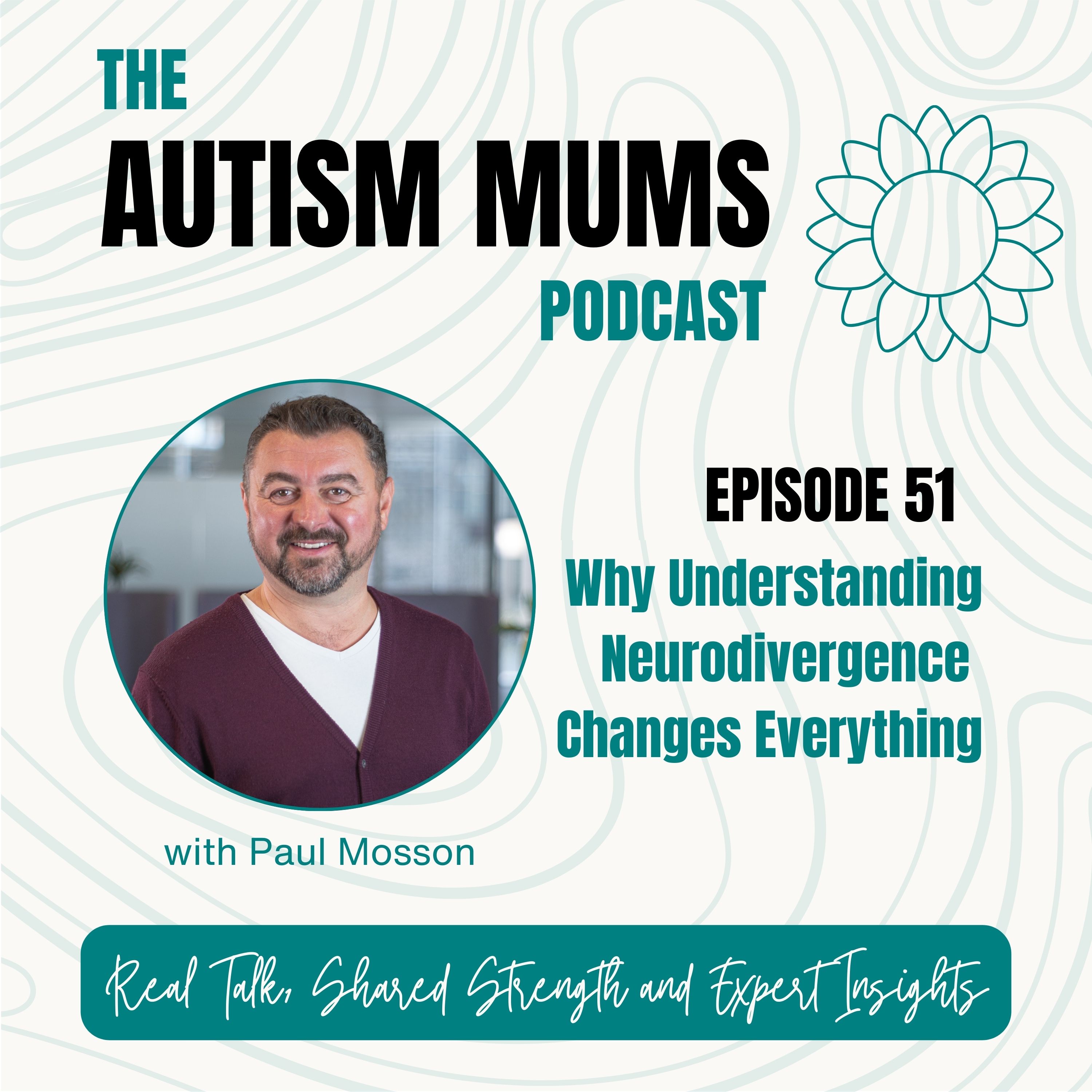
Ep 51Why Understanding Neurodivergence Changes Everything with Paul Mosson
In this week's episode of The Autism Mums Podcast we welcome Paul Mosson, CEO of the Cost Lawyer Standards Board (CLSB) to the show. Paul identifies as a gay man with ADHD and advocates for inclusive and safe environments where individuals can turn up as their true selves confidently and without fear.BiographyPaul (he/him/his) is CEO of the Costs Lawyer Standards Board (CLSB), the organisation responsible for regulating Costs Lawyers in England and Wales. The CLSB plays a vital role in upholding public confidence in the legal system by setting and enforcing the standards of professional conduct for Costs Lawyers. Paul is accountable for the full breadth of the CLSB’s regulatory and operational functions, reporting directly to the Board.Paul is also a coach specialising in working with neurodivergent clients. He is a passionate advocate for equality, diversity and inclusion, which can be seen through his work as a trustee for Disabling Barriers Scotland.Before joining the CLSB, Paul held positions as directors with both the Bar Council of England and Wales and the Law Society of Scotland, as well as being the architect behind innovative approaches to wellbeing and legal tech adoption across the legal sector.Paul identifies as a gay man with ADHD and advocates for inclusive and safe environments where individuals can turn up as their true selves confidently and without fear.Key TakeawaysUnderstanding neurodivergence later in life can bring clarity to years of feeling different or misunderstood.Long-term masking and trying to fit into neurotypical environments can lead to burnout, anxiety, and mental health struggles.Receiving a diagnosis as an adult often brings validation and a new perspective on past experiences.Working with the natural strengths of a neurodivergent brain can unlock confidence, creativity, and new opportunities.Supportive workplaces and environments make a powerful difference in helping neurodivergent individuals thrive.Finding a community that understands neurodivergence can replace years of isolation with connection and belonging.Mentioned in This EpisodeADHD an A-Z by Leanne MaskellRejection Sensitive Dysphoria (RSD)The Pomodoro TechniqueConnect with Paul MossonWebsite: https://pmexec.co.uk/LinkedInConnect with The Autism MumsWebsite – https://theautismmums.com/Follow us on Instagram https://www.instagram.com/theautismmumsFollow us on Facebook https://www.facebook.com/theautismmumsFollow us on TikTok https://www.tiktok.com/@theautismmums

Ep 50Encore: Exploring Sleep Struggles for Autistic Children
We wanted to return to the subject of sleep struggles as this is something that touches many of us.We’re joined by the fabulous Maria Moreno, a paediatric sleep consultant and motherhood life coach. With her wealth of experience, Maria shares insights on the unique sleep struggles faced by autistic children and offers practical advice for parents navigating these challenges. From personalised sleep plans to sensory considerations, this conversation is packed with valuable information to help families find their way to more restful nights.BiographyMaria Moreno is a certified paediatric sleep consultant—with a specialization in neurodivergent sleep—and a motherhood life coach dedicated to supporting moms through the emotional challenges of motherhood. She holds a master’s degree in art education and has spent over 15 years working with neurodivergent children, bringing a deep understanding and empathy to the families she serves. After navigating postpartum depression and severe sleep deprivation, she founded Mindful Mother to help families restore rest and balance. She’s also the co-founder of Tumago, a handmade comfort blanket brand designed with sensory-sensitive and neurodivergent children in mind. Maria blends lived experience, professional training, and compassionate coaching to empower overwhelmed moms with practical, personalized tools that bring calm, connection, and confidence to their motherhood journey.Key TakeawaysUnderstanding Individual Needs: Every child is different, and sleep plans should be tailored to their unique personalities and family dynamics.Importance of Routines: Consistent bedtime routines can help children understand what to expect and ease the transition to sleep.Visual Supports: Utilising visuals, like personalised bedtime books, can aid in preparing children for sleep changes.Sensory Considerations: Addressing sensory sensitivities with appropriate comfort items can significantly improve sleep quality.Environmental Factors: Creating a calming sleep environment, including blackout curtains and white noise machines, can help minimise disruptions.Connect with Maria MorenoEmail - [email protected] - www.mindfulmother.bizInstagram - https://www.instagram.com/mindfulmother_sleep/Facebook - https://www.facebook.com/mindfulmother1Pinterest - https://www.pinterest.com/MindfulMother_LifeCoachLinkedIn - www.linkedin.com/in/mindfulmotherMaria's Gentle Sleep Starter Guide for Kids with Autismhttps://www.mindfulmother.biz/autismsleepThis guide is designed to help parents gently create better sleep routines for their neurodivergent children, without cry-it-out methods or rigid schedules. It’s full of simple, parent-friendly tools that truly make a difference.In addition to this free guide, Maria is kindly offering 20% off Tumago handmade comfort blankets with code AUTISMMOM These sensory-sensitive blankets were inspired by Maria's own daughters and lovingly handmade by her family.https://tumago.etsy.comConnect with The Autism Mumshttps://theautismmums.com/Follow us on Instagram https://www.instagram.com/theautismmumsFollow us on Facebook https://www.facebook.com/theautismmums
Ep 49Encore: It Shouldn’t Be This Hard: Advocating Through the System
In this week’s re-released episode of The Autism Mums Podcast, we’re talking about something that so many families raising autistic children will recognise - the exhausting and often disheartening process of dealing with the local authority.This episode is an honest look at how hard it can be to get what your child needs and how important it is to stay organised, persistent and strong.Key TakeawaysKeeping on top of it all: Parents and carers are often left chasing reports, updates, and decisions just to keep things moving.You Can’t Assume Progress is Happening (unfortunately): If you're not following up, you're at risk of falling off the radar.Options for Your Child: Parents are frequently kept in the dark about available options regarding alternative provision and specialist schoolsTravel Expectations Can Be Unrealistic: Specialist schools may be far from home, making logistics overwhelming.Change is Needed: Better communication, transparency and supportive systems would ease the burden on both families and staff.Connect with The Autism Mumshttps://theautismmums.com/Follow us on Instagram https://www.instagram.com/theautismmumsFollow us on Facebook https://www.facebook.com/theautismmums

Ep 48Encore: Breaking Down Barriers to Education for Neurodivergent Children
We're returning to the archives for this episode of The Autism Mums Podcast. We're talking about some of the real challenges families face with the current education system, especially when it comes to supporting autistic children.Key TakeawaysOutdated Education System: The current education system is often rigid and not designed to accommodate the diverse needs of neurodivergent children.Importance of Flexibility: There's a need for more flexible learning environments that allow for play and creativity, especially for younger children.Struggles with Inclusion: Being in school is different from being included in school; many children face challenges that are not adequately addressed.Identifying Needs Early: Early identification of challenges, such as speech or coordination issues, is crucial, but support often falls short.Training for Educators: There is a significant need for enhanced training for teachers on special educational needs to better support neurodivergent students.Impact of Environment: The classroom environment, including displays and changes, can greatly affect a child’s ability to learn and cope.Communication Gaps: There are often communication breakdowns between schools, parents, and local authorities, leading to misunderstandings and lack of support.Mental Health Considerations: The mental health of both children and parents is deeply affected by the educational experience and the pressure to conform.Advocacy and Trusting Instincts: Parents should trust their instincts regarding their child's needs and advocate strongly for appropriate support.Systemic Challenges: Financial motivations can influence decisions made about educational support, complicating the advocacy process for parents.Mentioned in This EpisodeThe quote Victoria mentioned seeing on social media is: When a child at school is anxious about going home, concerns would be raised. But when a child is anxious about going to school, we as parents are expected to encourage them to go no matter what. Think about that for a second. - seen on CureJoy Kids on Facebook.Connect with The Autism Mumshttps://theautismmums.com/Follow us on Instagram https://www.instagram.com/theautismmumsFollow us on Facebook https://www.facebook.com/theautismmums
Ep 47Encore: Caring for Yourself When Your Child Is Having a Tough Day
In this week's episode of The Autism Mums Podcast we're returning to our earlier episode where we talk about ways to look after yourself when your child is having a tough day.Key TakeawaysHow supporting our children with their emotions can leave us feeling completely drained.Common mistakes we’ve made when trying to "push through" a tough day.Simple ways we try to carve out moments of calm: meditation, breathing space, and gentle resets.How creating a comforting environment - with blankets, candles, soft music - can make a difference.Allowing yourself to cancel non-essential tasks or meetings when you need breathing space.The power of talking it out with someone who truly understands.Finding and building a supportive community around you.The importance of zoning out, resting, and knowing that tomorrow is a new day.Mentioned in This EpisodeGabby Bernstein’s Meditation AppConnect with The Autism Mumshttps://theautismmums.com/Follow us on Instagram https://www.instagram.com/theautismmums
Ep 46Encore: Practical Ways to Help Your Autistic Child with Daily Life
We're re-releasing another episode from the archives this week where we talk about the practical ways we can help our autistic children with daily life.We’re sharing some of the things that have helped us make daily life a bit easier with our autistic children. From using timers and visual timetables to experimenting with tooth brushes and finding softer clothing.These are ideas that have worked for us, they might help you too, or simply offer reassurance that you’re not alone on this journey.Key TakeawaysTimers and visual supports can help ease transitions by giving your child a sense of control and predictability.Choosing soft, seamless clothing may make a difference for children who find layers uncomfortable.Toothbrushing challenges might be eased by trying different tools like U-shaped or triple-angled toothbrushes.Flexibility is key - what works one day might not work the next, and that’s okay.Planning days out in advance with visual itineraries can reduce anxiety about what's coming next.Noise sensitivity might be supported by using ear defenders, earbuds, or listening to favourite music.Strong smells can sometimes be managed with things like balaclavas or carrying scents like orange oil to mask overwhelming smells.Having a sensory kit (with familiar snacks, toys, and calming tools) may offer comfort when you're out and about.Mentioned in This EpisodeHere are some of the tools and resources discussed in this episode:Visual timersLaminated visual timetablesSeamless/sensory-friendly clothingU-shaped toothbrush and triple-angled toothbrushEar defendersBach's Rescue RemedyOrange Essential OilTiger balmThe Early Birds course by the National Autistic SocietyStretchy resistance bands for calming sensory feedbackConnect with The Autism Mumshttps://theautismmums.com/Follow us on Instagram https://www.instagram.com/theautismmumsFollow us on Facebook @theautismmums

Ep 45Encore: What is PDA?
Another episode from the archives this week. We're returning to our episode where we dive into the unique challenges of raising a child with a PDA (Pathological Demand Avoidance) profile. We're sharing our personal stories, strategies, and reflections to help parents and caregivers better understand and support their children navigating PDA-related behaviours.Key TakeawaysPDA is driven by anxiety and a need for control; traditional demands can trigger refusal.Offering controlled choices helps reduce pressure and gives children a sense of agency.Visual schedules and plenty of preparation help ease transitions and reduce stress.Managing your own calm and letting go of nonessential demands are important for low-demand parenting.It’s okay to adjust family routines to what works for your child, even if it looks different from your original parenting ideals.Misunderstandings from others can be painful but focusing on your child’s needs is what matters most.Mentioned in This EpisodePDA SocietyDr. Naomi Fisher webinars and resourcesConnect with The Autism Mumshttps://theautismmums.com/Follow us on Instagram https://www.instagram.com/theautismmumsFollow us on Facebook @theautismmums

Ep 44Encore: Getting an EHCP
We're returning to the archives again this week to our episode all about EHCP's. We’re talking about the journey to getting an EHCP - what it is, why it matters, and what the process looked like for our families.We’ll share the lessons we learned along the way with the hope that it helps you navigate the process and feel a little more prepared.Key TakeawaysAn EHCP can provide vital, legally binding supportYou don't need a formal diagnosis to apply for an EHCPSchools may not always initiate an EHCP request. If they don't parents can.Timelines and deadlines are crucial - keep a track of key dates.Support groups, SENDIASS and organisations like IPSEA can provide guidance and practical help.The right provision can make a huge difference to your child's wellbeing.Mentioned in This EpisodeSENDIASS (Special Educational Needs and Disability Information Advice and Support Services)IPSEA (Independent Provider of Special Education Advice) — ipsea.org.ukEarlyBird course (National Autistic Society support programme for parents)Connect with The Autism Mumshttps://theautismmums.com/Follow us on Instagram https://www.instagram.com/theautismmumsFollow us on Facebook @theautismmums

Ep 43Encore: Victoria's Son's Autism Diagnosis Journey
In this week’s encore episode of The Autism Mums Podcast, Victoria reveals the emotional journey of her son’s autism diagnosis. She reflects on the early signs that were often misunderstood and the battles faced in educational settings, culminating in the significant moment of receiving an official diagnosis. As one of our most popular episodes, we wanted to share this again as there are so many on this path to diagnosis.Key TakeawaysAutism signs can often be masked or misunderstood, especially in young children.Building a support network of other parents is crucial.Professionals may miss signs too, trusting your instincts matters.The diagnosis process can feel long and isolating, but community support makes a difference.Receiving a diagnosis is often a moment of both relief and grief and that's OK.Mentioned in This EpisodeThe Early Birds Course (National Autistic Society)ASDivas and Dudes Support GroupThe Girl with the Curly Hair by Alis RoweThe Complete Guide to Asperger’s Syndrome by Tony AttwoodTADDS Outreach TeamTotal Children's TherapyADOS-2 Autism Diagnostic Observation ScheduleCAMHS (Child and Adolescent Mental Health Services)Connect with The Autism Mumshttps://theautismmums.com/Follow us on Instagram https://www.instagram.com/theautismmumsFollow us on Facebook: @theautismmums
Ep 42Encore: Natalie's Son's Autism Diagnosis Journey
In this week’s encore episode of The Autism Mums Podcast, we are revisiting our look into the journey toward an autism diagnosis. Natalie opens up about her experiences with her son, reflecting on the subtle early signs and the drawn-out process of seeking support.Key TakeawaysEarly signs aren't always obvious: It's common to realize things only in hindsight.Not all settings impact children the same way: Different environments can highlight or mask challenges.The path to diagnosis is often long: Waiting times can be frustrating, but support exists even before official diagnoses.Grief is a natural part of acceptance: It's okay to mourn the loss of expectations while embracing a new, beautiful reality.Practical support makes a difference: Courses like EarlyBirds offer real-world tools tailored for neurodivergent children.Mentioned in This EpisodeEarlyBirds Programme by the National Autistic SocietyConnect with The Autism Mumshttps://theautismmums.com/Follow us on Instagram https://www.instagram.com/theautismmumsFacebook - @theautismmums

Ep 41Encore: Helping Your Autistic Child with Anxiety
In this week’s encore episode of The Autism Mums Podcast, join us as we navigate the complex landscape of anxiety in autistic children. We share our personal insights and experiences, exploring the diverse ways anxiety can manifest, including meltdowns, shutdowns, and sensory overloads.Whether you're early on in your autism journey or navigating school-age challenges, this episode offers reassurance, relatable stories, and real-world strategies that can make a difference.Key TakeawaysAnxiety presents differently in autistic children: It might show up as shutdowns, meltdowns, repetitive questions, anger, or even physical symptoms like tummy aches.Avoidance can be common: Children may retreat to their rooms or refuse to go places when overwhelmed.Sensory overload can be a major trigger: Noisy environments, bright lights, and even scratchy clothing can heighten anxiety.Routine changes, even positive ones, can be stressful: Children may want changes, but still struggle when they occur.Social unpredictability can add pressure: Not knowing who will be present or what will happen in social settings can create discomfort.Masking and perfectionism can lead to burnout and chronic anxiety.Support strategies matter: Ear defenders, visual timetables, sensory tools, role play, and validating feelings can help.Validation and patience are key: Simply saying 'I hear you' can help children feel safe and understood.Mentioned in This EpisodeMindfulness sessions – Supportive techniques that help children become aware of how anxiety feels in their bodies.https://www.mindful.org/mindfulness-for-kids/Visual timetables and planners – Visual supports that help prepare autistic children for transitions and daily routines.Example resources: Twinkl Visual TimetablesNoise-cancelling headphones and sunglassesEdz Kidz Ear DefendersBreathing exercises for childrenhttps://copingskillsforkids.com/deep-breathing-exercises-for-kids BBC Documentary – Inside Our Autistic Minds by Chris PackhamWatch here: BBC iPlayer – Inside Our Autistic MindsHarry Potter Studio Tour (UK)Mentioned as an example of a venue with quiet spaces and autism-friendly accommodations.Accessibility info https://www.wbstudiotour.co.uk/additional-needs/Connect with The Autism Mumshttps://theautismmums.com/Follow us on Instagram https://www.instagram.com/theautismmumsFollow us on Facebook @theautismmums

Ep 40Autism and Challenging Behaviour with Carl Draper (Part 2)
EIn this week’s episode of The Autism Mums Podcast, we welcome back Carl Draper for part two of our conversation.In the first part, Carl shares his personal experiences as a parent, how his understanding of behaviour has changed over time, and why unmet needs and stress responses are so often misunderstood.In this second part, Carl reflects on the challenges we can’t always predict or prevent, the importance of support systems and environment, and what helps parents regulate their own emotions when things feel overwhelming.BiographyCarl Draper was born in a North Nottinghamshire mining village and moved to Bournemouth at 19, where he served as a beach lifeguard and discovered his love for surfing. Accepted into the Royal Marines, his plans changed after a serious leg injury during a heroic rescue, an event that earned him a Local Hero Award and a feature on BBC’s 999 Rescue. He later became RNLI head trainer for lifeguards across Dorset, then served over a decade with Dorset Ambulance Service. Shifting to education, he trained firefighters and police nationwide before retraining as a mental health nurse. Carl is currently studying at Bournemouth University. In 2015, he founded Waveslider, winning the Bournemouth Tourism Award in 2017, and began documenting life with his son Bodhi in 2020.Key TakeawaysNot everything can be planned for, and learning to cope with the unexpected is an essential life skillAvoiding triggers completely can increase anxiety over time rather than reduce itThe right support system — at home, at school, or beyond — can be life-changing for familiesRoutine provides security but can also create vulnerability during periods of changeParents need their own ways to regulate stress and should seek support without guiltConnect with Carl DraperFollow Carl’s journey with his son Bodhi on the Waverslider Photography Facebook PageFollow Carl on InstagramConnect with The Autism Mumshttps://theautismmums.com/Follow us on Instagram https://www.instagram.com/theautismmumsFollow us on Facebook https://www.facebook.com/theautismmumsTranscriptVictoria Bennion: [00:00:00] Hello and welcome back. This is part twoof our conversation with Carl Draper. Carl is currently training to be a mentalhealth nurse and he's the founder of Wave Slider, where he shares his brilliantphotos and documents life with his son Bodhi.Victoria Bennion:Frank Bodi's Assistance Dog is also a regular on Wave slider. If you haven'tlistened to part one yet, we'd really recommend going back first because Carlshares some powerful context about what challenging behavior can look like andhow much can change when we start meeting a child's stress response with calm.Victoria Bennion: Intoday's episode, we pick up the conversation by talking about the things wecan't always predict or control. Those sudden changes, those moments where aplan falls apart and the ways that it can trigger big feelings for our childrenand for us too. So let's jump back in.Victoria Bennion: Arethere any steps that you can take, do you think, to prevent the behaviorsbefore they escalate, [00:01:00] before theyreach that peak?Carl Draper: That'sreally hard question. Because a lot of the times where we're getting to thestage with the things we're speaking about now. What you are now asking is whatdo we do about the things we can't control?Victoria Bennion:true.Carl Draper: What youcan't see coming? For example, there's a plane coming at three 30 thisafternoon.Carl Draper: Fine,we'll go after school, mate, pick you up. You get down to the airport at three15 and the fog rolls inVictoria Bennion: Oh,that's so true.Carl Draper: and nowthe plane's diverted and he can see it on the tracker going the oppositedirection.Carl Draper: Arethings out of your control. So a good one I've had a, a lot of stick on waveslider recently because we've had the fireworks, you know, the bonfire period,bonfire night, where a lot of animals get distressed.Carl Draper: A lot ofpeople get distressed, which I'm very well aware of. However, Frank is trained,calm, uncomfortable to go and watch the fireworks because he's, he goes where [00:02:00] Bodhi goes. So we went to see a fireworksdisplay. He had a great time. We went to Ringwood one weekend and the followingweekend we went to Little downCarl Draper: and Iwasn't gonna take Frank because it's really busy there, and Bodhi wants to goon the rides. With your autistic people, you tend to get two types of autisticpeople, even though. All autistic people have different traits and severitiesand you know, varying degrees of, you tend to get a sensitive.Carl Draper: Autistictype want quietness, you know, earphones, that sort of thing. And then you getyour sensory seeker, that's Bodhi. I want it loud, I want fast, I want more, Iwant adrenaline. So he wants to go on the rides. So I said, well, we won't takeFrank, and then we can go on the rides. And then I spoke to my youngestdaughter, ki.Carl Draper: Who'salso got an autistic son and she said, oh, we're

Ep 39Autism and Challenging Behaviour with Carl Draper (Part 1)
EIn this week’s episode of The Autism Mums Podcast, we welcome back Carl Draper for part one of a two-part conversation.His last episode, learning to hear a child who doesn't speak, sparked so many questions from listeners, that we invited Carl back to talk more about the topic of challenging behaviours and autism. In this first part, Carl shares his personal experiences as a parent, how his understanding of behaviour has changed over time, and why unmet needs and stress responses are so often misunderstood.BiographyCarl Draper was born in a North Nottinghamshire mining village and moved to Bournemouth at 19, where he served as a beach lifeguard and discovered his love for surfing. Accepted into the Royal Marines, his plans changed after a serious leg injury during a heroic rescue, an event that earned him a Local Hero Award and a feature on BBC’s 999 Rescue. He later became RNLI head trainer for lifeguards across Dorset, then served over a decade with Dorset Ambulance Service. Shifting to education, he trained firefighters and police nationwide before retraining as a mental health nurse. Carl is currently studying at Bournemouth University. In 2015, he founded Waveslider, winning the Bournemouth Tourism Award in 2017, and began documenting life with his son Bodhi in 2020.Key TakeawaysEmotional regulation in parents plays a crucial role in reducing escalationChallenging behaviour is often a stress response linked to unmet needsChanges in routine and adult stress can significantly impact a child’s ability to copeA balance between boundaries and flexibility helps create emotional safetyChildren learn regulation by observing the behaviour of those around themLetting go of social judgement and outdated expectations allows families to parent with confidenceConnect with Carl DraperFollow Carl’s journey with his son Bodhi on the Waverslider Photography Facebook PageFollow Carl on InstagramConnect with The Autism Mumshttps://theautismmums.com/Follow us on Instagram https://www.instagram.com/theautismmumsFollow us on Facebook https://www.facebook.com/theautismmumsTranscriptVictoria Bennion: [00:00:00] Today we're joined once again by ourfriend Carl Draper, who many of you will remember from episode nine. For thosewho don't know Carl, he is currently training to be a mental health nurse andis the founder of Wave Slider, where he shares his brilliant photographs anddocuments life with his son Bodhi.Victoria Bennion:Frank Bodie's Assistance Dog is also a regular on wave slider. Carl's lastappearance on the podcast really struck a chord, and after that episode wentlive, he received an overwhelming number of messages from parents and carerswanting to know more about how he supports his son through moments of distress.Victoria Bennion: Andwhat's often labeled as challenging behavior. So today, Carl is back with us totalk honestly and openly about exactly that we could talk to Carl for hours. Sowe've split our conversation into two episodes. In this first part, Carl shareshis personal journey as a parent. How his understanding of [00:01:00] behavior has changed over time.Victoria Bennion: Thepowerful impact of learning to regulate his own emotions and what it reallylooks like to meet chaos with calm, even in the most public and confrontingsituations. This is a really raw, reflective, and incredibly insightfulconversation about unmet needs, stress responses, and the reality of parentingautistic children in a world that doesn't always understand. Natalie Tealdi:Welcome to the podcast, Carl. It's great to have you back.Carl Draper: Hi, howare you?Natalie Tealdi: Good.Thank you. So can we start by explaining how you define challenging behavior inthe context of autism, and can you also give us some examples of what you'veencountered?Carl Draper: Okay, soI guess our definition of challenging behavior is. Changing at the moment interms or context of autism? I think the one thing to remember where the childliked Bodhi is that he [00:02:00] is equallyprofoundly autistic and a DHD. So you have that autism side where, he likes hisroutine.Carl Draper:Everything has to be perfect. Everything's good. And then you've got the A DHDside, which is a constant clash, which is like letting a hand grenade off inthe middle of everything. I quite often think of Bodhi as pizza. He's perfectlyround cut into perfect triangles and comes in a square box.Natalie Tealdi: Ilove that.Carl Draper: He justdoesn't, it doesn't fit, but it's perfect, the challenging behavior, it allcomes with an unmet need and an inability to communicate his needs. So goingback to prior to when he was medicated for his A DHD, we had daily challengingbehavior where every evening at bedtime he would.Carl Draper: Go fromsettle to completely challenging, pinning you against the wall, pulling yourhair, grabbing your [00:03:00] face. And what Irealized is I think I was the biggest cause of this challenging behaviorbecause I come from a world where, I grew up in a
Ep 38Rebuilding Relationships While Supporting Neurodivergent Children with Carla Wainwright
In today’s episode, of The Autism Mums Podcast, Victoria is hosting solo as Nat is home with an unwell little one. She’s joined by the wonderful Carla Wainwright, a Holistic Wellness Coach and Relationship Transformation specialist who supports parents and couples navigating the stress, overwhelm, and emotional load that can come when a child’s health or development needs extra support.Carla Wainwright's BiographyCarla Wainwright is a Holistic Wellness Coach and Relationship Transformation specialist who helps parents and couples navigate the stress, disconnection, and overwhelm that can come when a child’s health or development needs extra support. With a graduate degree in biological sciences, a 4-year practitioner diploma in Homeopathy and Heilkunst, and over 25 years as an embodied yoga teacher, Carla blends science, somatic practice, and coaching to guide couples in rekindling intimacy, deepening connection, and restoring shared purpose. Her compassionate, practical approach creates space for parents to thrive - both individually and together—while walking alongside their child’s unique health journey.Key TakeawaysMany relationship challenges stem from the fact that none of us were taught how to stay connected when life feels overwhelming.Parenting a neurodivergent or high-needs child can magnify existing patterns of disconnection within a couple.Emotional exhaustion and nervous system overload often show up as distance, irritability, or feeling like “roommates” instead of partners.Co-regulation—calming your nervous systems together—is often the first gentle step toward rebuilding intimacy.Small, simple practices like sitting side-by-side, holding hands, or breathing together can create emotional safety.Clear and compassionate communication, especially using “I” language, helps both people feel heard rather than blamed.Loving, well-expressed boundaries can strengthen a relationship rather than push partners apart.Prioritising your relationship supports the whole householdUnderstanding each partner’s unique coping style can ease misunderstandings and reduce conflict.The path back to connection starts with nervous system regulation—first for yourself, and then with each other.Connect with CarlaInstagram: https://www.instagram.com/carlawainwright/ Facebook: https://www.facebook.com/CarlaWainwrightCreatrix/Website: https://www.carlawainwright.com/Free Gift: The Connected Way Forward – Carla’s free 3-minute connection practice for couples, designed to gently rebuild closeness even when life feels overwhelminghttps://www.carlawainwright.com/connected-way-forward Connect with The Autism MumsWebsite https://theautismmums.com/Follow us on Instagram https://www.instagram.com/theautismmumsFollow us on Facebook https://www.facebook.com/theautismmumsTranscriptRebuilding Relationships While Supporting NeurodivergentChildren with Carla Wainwright[00:00:00] Victoria Bennion:Hello and welcome. It's Victoria and I'm on my own today as Nat has an illchild, but I'm grateful to be joined by our guest, Carla Wayne Wright. Carla isa holistic wellness coach and relationship transformation specialist who helpsparents and couples find their way through the stress and emotional load thatcomes with supporting a child whose development or health needs are a littledifferent.Victoria Bennion:Welcome to the podcast, Carla. It's great to have you here with us today.Carla Wainwright: Oh,I'm thrilled to be here. Thank you.Victoria Bennion: Howdid you get into this line of work? I wonder if you Could talk to us about yourown journey.Carla Wainwright:Sure. Yeah. So, you know, my background actually started in science, so Iworked for many years as a wildlife biologist. I always had like a deep passionfor nature and animals, and I began to shift into homeopathy and holistichealth. As a result of, you know, my own healing journey. And when I waspracticing as a homeopath, you know, I was working with families who hadchildren with complex or neurodivergent needs and, you know, [00:01:00] parents is usually the mother would comein, of course wanting to support the child, but it became really clear to me,of course, there was this immense stress that the parents were carrying andthat the stress was showing up in the family dynamic and also in therelationship. And so I would always encourage the mother to get support and,and treatment as well because,Carla Wainwright: it,the mother's falling apart. It's so hard for her to support her, her child, andher family. And so over time, I did this for quite a while and then in my ownjourney , of healing my own trauma, I became a sex, love and relationshipcoach. And that worked naturally expanded to supporting women and couples.Carla Wainwright: AndI have a deep. Passion to support couples, to reconnect to , their intimacy, ,their connection, their emotional resilience. I, I really feel that. You know,the container of the couple., It's like this beautiful, sacred container forgrowth and evol
Ep 37Managing Christmas Challenges for Neurodivergent Families
In this week's episode of The Autism Mums Podcast we're talking about something that many families find really tough, the Christmas season. It's a time that's meant to feel magical, but for many of our autistic children, it can actually be really overwhelming, unpredictable, and stressful.Key TakeawaysUnderstanding Christmas Overwhelm: Many autistic children find the Christmas season stressful due to changes in routine and expectations.Addressing Pre-Christmas Challenges: Difficulties can arise well before Christmas Day, with alterations in school activities and the build-up of holiday expectations.Communication and Preparation: Clear communication about what to expect can help reduce anxiety in children. Discussing plans with them beforehand is crucial.Adjusting Traditions: Families may wish to consider adapting their traditions to better suit their child's needs, such as avoiding large gatherings or adjusting meal times.Managing Social Expectations: The pressure to participate in Christmas events, such as school plays and gatherings, can cause significant distress for neurodivergent children.Sensory Sensitivities: Decorations and festive environments can be overwhelming, emphasising the need for a personalised approach to celebrations.Flexibility on Christmas Day: It can be helpful to allow for breaks and personal space on Christmas Day, adapting activities to match children's comfort levels.Creating a Supportive Environment: Setting up a calm and understanding atmosphere at home can make the season more enjoyable for neurodivergent family members.Encouraging Open Dialogue: Encouraging children to express their needs, such as using visual aids to communicate comfort levels, can help.Finding Joy in Simplicity: Embracing a less traditional Christmas that meets individual family needs can be just as fulfilling as adhering to societal expectations.Connect with The Autism MumsWebsite – https://theautismmums.com/Follow us on Instagram https://www.instagram.com/theautismmumsFollow us on TikTok https://www.tiktok.com/@theautismmumsFollow us on Facebook https://www.facebook.com/theautismmumsTranscriptVictoriaBennion: [00:00:00] Todaywe're talking about something that many families find really tough.It's the Christmas season. It's a time that's meant to feel magical,but for many of our autistic children, it can actually be reallyoverwhelming, unpredictable, and stressful.NatalieTealdi: We're gonna talk through some of the commonchallenges that come long before Christmas Day. What happens on theday itself, and what we've learned works for our families. Hopefullyit helps you feel a little more understood and a little moresupported this year.VictoriaBennion: For many of our children, the struggles start waybefore Christmas day when everything starts to change. Routines aredifferent expectations, the look and the feel of a school. For one ofmy children, these struggles were really apparent from preschool ageand they had a lot of trauma to work through in subsequent years of,it sounds awful, doesn't it?But the trauma from Christmas,from doing Christmas at school every year.NatalieTealdi: I know it's something that you think will bereally fun and I know that's where it comes from. It comes from a[00:01:00] place of yeah, let's be a bitmore relaxed and make it really fun for the kids in a build up toChristmas. But actually for some children it's just horrific.VictoriaBennion: Absolutely. And for some it is fun. I think worthacknowledging that, but for our children, it's really not fun. Iremember there was an instance we went into school and they werecompletely off timetable and. He was having so much anxiety. And Isaid to the TA on the door, can you tell him what to expect from theday? What have you got planned? And she said, oh, you know, lots offun things. And I thought we might as well just go back to the carright now. He was horrified.NatalieTealdi: Yeah. It's that not knowing what's happening,isn't it? And everything being different and looking different.VictoriaBennion: The decorations there was one year the PTA didthis lovely winter wonderland outside the school and it was asurprise to the children as they came in and we walked up thepavement and there's all these oohs and ahs and there was a snowmachine and people dressed [00:02:00] upand my son was completely white. Really, really anxious. I think hemade it into school, but he couldn't speak. He was just absolutelyhorrified by it.NatalieTealdi: Yeah, what used to upset my son was the Christmasjumper days, so not wearing a school uniform that really upset himbecause, you know, when we go to school we wear uniform and that'sjust how it is and well, why are they changing it? And that createsanxiety and uncertainty and it is things that are supposed to be funand that are fun for a lot of people, but not others.VictoriaBennion: Yeah, and actually when, I didn't know back thenthat. Change had such an impact. That was in my oblivious era. Butactually
Ep 36Charmaine Champ: Supporting Neurodivergent Children with Toileting Challenges
Toileting challenges can feel overwhelming for parents of neurodivergent children, especially when withholding, accidents, or anxiety become part of everyday life. In this episode, we’re joined by the compassionate and highly experienced Charmaine Champ, who brings over 30 years of professional and lived experience to help families understand what’s really happening inside their child’s body. Charmaine shares why toileting can feel so hard, the small steps that make progress possible, and the gentle, practical strategies that help children feel safe and confident. BiographyCharmaine Champ is a Registered Nurse in Learning Disability (RNLD), Community Nurse Specialist (BSc Hons), Queen’s Nursing Institute Award winner, and a Continence, Sleep, and Understanding Emotions Consultant with over 30 years’ experience supporting children and young people. Drawing on a rich background across clinics, schools, charities, NHS services, and family homes, as well as her own lived experience as a mum in a neurodivergent household, Charmaine specialises in helping children recognise, understand, and respond to the messages their bodies send, so wees and poos can happen comfortably and safely. Her approach blends research-backed guidance with a compassionate, gut-health-informed lens, empowering families, carers, and professionals to support neurodivergent children with toileting, sleep, and emotional regulation in a way that truly meets their individual needs.Key TakeawaysWhy recognising internal body cues matters for understanding a child’s toileting challenges and choosing the right starting point.What withholding really signals and how seeing it as communication—not behaviour—shift the whole approach.Breaking skills into tiny, achievable steps helps children feel safe, confident, and less overwhelmed.Identifying missed signals such as difficulty noticing hunger, fullness, or the need to poo or wee can unlock new progress.Sensory needs play a powerful role, influencing where, when, and how a child feels able to use the toilet.Consistency across home, school, and healthcare builds familiarity and reduces anxiety for neurodivergent children.Medications like Movicol require proper guidance, and understanding dosage and purpose helps parents advocate with clarity.Using visuals and accessible communication makes environments more supporting and inclusive for all children.Understanding the ‘why’ behind toileting patterns gives parents reassurance, confidence, and a clearer sense of direction.Mentioned in This EpisodeBristol Stool Chart Connect with Charmaine ChampFree gift: https://clear-steps-consultancy.newzenler.com/courses/what-to-do-about-poo Email: [email protected] Website: https://www.clearstepsconsultancy.co.uk Facebook: https://www.facebook.com/ContinenceConsultantTrainer Instagram: https://www.instagram.com/continenceconsultanttrainerConnect with The Autism MumsWebsite – https://theautismmums.com/Follow us on Instagram https://www.instagram.com/theautismmumsFollow us on Facebook https://www.facebook.com/theautismmumsFollow us on TikTok https://www.tiktok.com/@theautismmumsTranscriptVictoria Bennion:Today, we’re talking about toileting - it's a topic that many families navigate behind closed doors without proper guidance and clarity. To help us bring light, understanding, and practical support to this area, we’re joined by the wonderful Charmaine Champ. Charmaine is a Queen’s Nursing Institute Award–winning specialist with over 30 years of experience supporting children and young people with their toileting, sleep, and emotional regulation needs. She’s also a mum in a neurodivergent household, so she understands these challenges from both a professional and a personal perspective. In our conversation, she explains why toileting can be so complex for our children, what might be happening inside their bodies, and how small, gentle steps can lead to real progress. If your child struggles with toileting we think you’re going to find this episode incredibly helpful. Welcome to the podcast, Charmaine.Charmaine Champ:Thank you very much..Victoria Bennion: Canyou share your journey and talk a little bit about what inspired you todedicate over 30 years to supporting children and young people, particularlythose with learning disabilities?Charmaine Champ:Yeah, of course. . It probably started when I had a school placement. So youremember when you were at sort of school? Many years ago. I don't think they doit now, but many years ago I used to have like a work placement and I worked ina special needs school as from my work placement and absolutely loved it.Charmaine Champ: AndI was like, oh, I really. I really like doing this. I'd like to do more of it.And then I decided that I was going to become a nurse, but I wanted to be alearn disability nurse. And when I was doing my different placements, I wasworking with lots of different people, families, children's, all differentages.Charmaine Champ:
Ep 35Creating Inclusive Holidays for Neurodivergent Families with Karen Mason
In this week's episode of The Autism Mums Podcast we welcome Karen Mason to the show.BiographyKaren Mason grew up in Hertfordshire with five brothers and built a 35-year career with Bourne Leisure, one of the UK’s leading holiday park operators. Alongside her professional journey, she supported three neurodivergent family members and cared for her father through dementia. These personal experiences highlighted the lack of support for neurodivergent families in holiday parks. Driven to make a difference, Karen founded My Safe Place, combining her industry expertise with her passion for inclusion. Her mission is to create safe, welcoming environments for all families to enjoy accessible and stress-free holidays.Key TakeawaysUnderstanding Personal Experiences: Karen Mason's journey emphasises the importance of personal experiences in shaping her understanding of neurodivergent needs and challenges.The Importance of Inclusion: Karen's mission with My Safe Place focuses on creating inclusive environments that cater specifically to the needs of neurodivergent families.Recognising the Need for Support: The lack of support for neurodivergent families in holiday settings highlights a significant gap in accessibility and understanding within the hospitality industry.Creating Safe Spaces: Karen's work is dedicated to fostering safe, welcoming spaces that allow families to enjoy stress-free holidays together.Industry Expertise Meets Compassion: Karen combines her professional background in the holiday sector with her passion for inclusion, showcasing how expertise can drive meaningful change.Mentioned in This Episodewww.mysafeplacesouthern.co.ukConnect with KarenEmail: [email protected]: @mysafeplacesouthernInstagram: @mysafeplacesouthernukConnect with The Autism MumsWebsite – https://theautismmums.com/Follow us on Instagram https://www.instagram.com/theautismmumsFollow us on Facebook https://www.facebook.com/theautismmumsFollow us on TikTok https://www.tiktok.com/@theautismmumsTranscriptCreating Inclusive Holidays for Neurodivergent Families with Karen MasonVictoria Bennion: [00:00:00] Welcome to the podcast. Karen,Karen Mason: Thanks.Victoria Bennion: could you start by talking us through your journey to starting my safe place please?Karen Mason: Yeah, sure. So I've actually worked in the park industry, holiday parks for over 35 years now, and worked in various roles operationally, managing parks, all sort of jobs. I decided about 18 months ago after an episode supporting my brother and his neurodivergent children that I wanted to pivot where I was in the business and help and encourage parks to become more inclusive when it came to neurodivergent guests.So I literally stopped what I was doing and. Spent now researching, talking to lots of families, working with local charities, and my Safe place evolved. And here we are. We're to ready to [00:01:00] go.Natalie Tealdi: Oh, that's brilliant. Excellent. I understand you pivoted overnight. Your business was it the experience with your nephew that was the catalyst for that?Karen Mason: Absolutely. So my brother has three neurodivergent children that I've helped support over the years and the stress of that situation actually led to my brother being admitted to hospital 18 months ago. So I stepped in to help support the family in many different ways. And it was a conversation one day with my brother where I was saying, look you guys.Need a holiday break. He just looked at me in disbelief, said where are we gonna go? Nowhere is geared up for us and we've tried to have two breaks on holiday parks and it failed and it was really stressful. And I just had a light bulb moment because I work in that industry and why hadn't I, it was so true that there isn't [00:02:00] accommodation that's safe and secure for neurodivergent families. There's no provision in terms of staff training, sensory areas, and I went to bed and I woke up the next day and I said to my husband, I'm setting up a new business and it's called My Safe Place, and this is what we're doing.Natalie Tealdi: how brilliant. Yeah, I can talk from my experience really. 'cause we used to have a caravan of our own and we. He took our son, I think only a handful of times, but every time was really difficult. I think he got overexcited and it just ended up being a really stressful experience for us. And I think you've really tapped into a gap there because if they were better set up, then there'd be places to go when they're dysregulated and just having that more supportive environment, you don't feel like such an outsider.Karen Mason: Absolutely. I've heard from so many families now I didn't realize it was such a problem actually to get [00:03:00] away. It evolved because originally I thought, okay, what can we do? Can we maybe just look at encouraging parks to maybe have a sensory room on site, and then you go one step further and think actually that's not enough.The main feedback
Ep 34Every Pair Tells a Story
In this week's episode of The Autism Mums Podcast reflect on attending the peaceful protest Every Pair Tells a Story, led by The SEND Sanctuary.Key TakeawaysThe Every Pair Tells a Story protest shone a light on thousands of children across the UK who have been left without the education or support they deserve.Each pair of shoes represented a child and the pain, resilience, and determination of the families standing behind them.Parents and carers united peacefully to demand accountability, compassion, and systemic change.The stories of children like Archie, Harper, Izzy, Lucas, and Jackson highlighted the devastating human cost of a broken system.Long waiting lists, inconsistent support, and poor understanding within schools continue to fail neurodivergent children.Mentioned in This EpisodeThe SEND SanctuaryASDivas & DudesFix SEND DorsetASCapeThe SEND Nurture NetworkConnect with The Autism MumsWebsite – https://theautismmums.com/Follow us on Instagram https://www.instagram.com/theautismmumsFollow us on Facebook https://www.facebook.com/theautismmumsTranscriptVictoria Bennion:Welcome back to the Autism Mums podcast. Thank you for joining us for today'sepisode, which is both a bit emotional and I think quite historic.Natalie Tealdi: Yeah,I mean, last Monday across England and Scotland, parents and carers cametogether for a peaceful protest called Every Pair Tells a Story.Victoria Bennion:Pairs of shoes were laid outside council buildings, and each pair represented achild who's been failed by the education and support systems. Whether that'sbeen waiting for years for an assessment, missing out on a school place, orbeing left without help.Natalie Tealdi: Thismovement led by the Send Sanctuary is about visibility and accountability. It'sabout family showing through the quiet power of empty shoes. That our childrendeserve better.Victoria Bennion:Yeah. And we went along to support the protest, didn't we? Nat, which wasoutside Dorsett County Council at County Hall in Dorchester. And I dunno aboutyou, but I did find it really moving. [00:01:00]I think there were more than 70 pairs of shoes laid outside those counciloffices and each pair of shoes represented a child who's been let down by thesystem in some way, which I don't know.Victoria Bennion:It's really sad. And I think thinking of the shoes as a symbol, they werereally powerful. They represent. The steps that our children should be takinginto school with friendships, with independence, and yet so many can't becausethe system just keeps letting them down.Natalie Tealdi: Imean, it was so powerful sort of seeing them all laid out and thinking, gosh,thinking about what that rep represents, like 70 pairs of shoes for 70children. I mean, yeah, it was quiteVictoria Bennion:it's shocking and when you see it visually like that, that's the amount ofchildren who maybe aren't in school or are traumatized by school,Natalie Tealdi:that's only in DorsetVictoria Bennion:That's only in Dorset it. And when you buy [00:02:00]those shoes, I don't know if you can remember when you bought your children'sfirst shoes for school, there is quite a lot of excitement.Victoria Bennion: Youhave so much hope. And then when your child doesn't go to school, these shoesand you know, for a lot of us, the whole uniforms, they stay there new andactually what they become is like. That symbol of hope and excitement in thebeginnings are replaced by, feelings of exclusion, waiting, disappointment,sadness for your child that they can't access something that all their peerscan.Natalie Tealdi: Yeah,and I think it's sad for them too because they want to be able to access thosethings and they can't.Victoria Bennion:It's so much more than the education. It's, the missed friendships. It's theskills that they don't get to develop. It's the emotional toll on not just thechildren, but the families of these children.Natalie Tealdi: Yeah,I dunno about you, but I could sort of feel the sadness in the airVictoria Bennion:Yeah.Natalie Tealdi: thatyou know, it, it [00:03:00] was very peacefuland it was calm and we were all coming together in unity. 'cause we all havevery. Similar stories.Victoria Bennion:Yeah, a hundred percent. I think particularly when families came along to addtheir shoes to the collection of shoes outside, it was definitely felt verysad, and it was a really peaceful day. I mean, the organizers from the SENDSanctuary, Aimee, she made it clear that it was about. The loss, thefrustration, and the unity that you mentioned and not anger and yeah, you coulddefinitely feel that.Natalie Tealdi: Itwas a really sort of proud moment. I mean, it's nice to get together with otherparents who have gone through the same thing. 'cause you, we all have similarstories and we're on this journey together and exchanging tips and just generalsupport really standing together.Victoria Bennion:Yeah, you're definitely among people who get it, and that is encouraging insome way. I mean, it was so busy, wa

Ep 33Navigating the Waiting Game: Essential Tips for Parents of Kids with Autism
In this week's episode of The Autism Mums Podcast, we discuss the challenges faced by parents navigating the waiting period for their child's autism diagnosis. We explore strategies for gathering evidence, advocating for support, and managing the differences in behaviour between home and school settings. With practical tips and personal insights, we aim to empower parents to take proactive steps during this often frustrating and isolating time.Key TakeawaysUnderstanding the Waiting Game: Many parents face the challenge of navigating the waiting period for their child's autism diagnosis, often feeling isolated and unsure of the next steps.Coping at Home vs. School: Children may present differently at school compared to home, leading to discrepancies in support. It’s vital to gather evidence of behaviours at home to advocate effectively.Gathering Evidence: Documenting your child's struggles through video recordings or diaries can provide crucial evidence when communicating with schools and professionals.Utilising School Resources: Engage with schools to explore options like re-engagement sessions, youth workers, or alternative therapies that can provide support and evidence for assessments.Professional Input Matters: Involving various professionals—such as therapists, tutors, and behavioural nurses—can strengthen your case for support and diagnosis by offering diverse perspectives on your child's needs.Stay Proactive: Regularly follow up with schools and professionals regarding assessments, and don’t hesitate to reach out to your MP if you encounter significant delays in the process.Explore Alternative Routes: Consider different pathways for assessments, such as CAMHS or private assessments, which may have shorter waiting times compared to traditional routes.Community Support: Connecting with other parents and support groups can provide invaluable advice and encouragement during the challenging waiting period.Self-Care for Parents: Acknowledge the emotional toll that waiting for a diagnosis can take, and we really recommend prioritising self-care to maintain your well-being while advocating for your child.Resource Recommendations: Explore recommended books and resources that can provide further insight and support for navigating autism-related challenges.Mentioned in This EpisodeThe Explosive Child by Ross GreeneRaising The SEN-Betweeners by Lisa LloydAspergers Syndrome by Tony AttwoodThe Girl with the Curly Hair by Alis RoweConnect with The Autism MumsWebsite – https://theautismmums.com/Follow us on Instagram https://www.instagram.com/theautismmumsFollow us on TikTok https://www.tiktok.com/@theautismmumsFollow us on Facebook https://www.facebook.com/theautismmumsTranscriptNavigating the Waiting Game: Essential Tips for Parents of Kids with AutismNatalie Tealdi: [00:00:00] in this episode, we discuss the challenges faced by parents navigating the waiting period for their child's autism diagnosis. We explorestrategies for gathering evidence, advocating for support, andmanaging the differences in behavior between home and schoolsettings.Practical tips and personalinsights. We want parents to know that we get how frustrating andisolating this time can be. It really can be so hard, but there arethings you can do to feel more empowered, and we are going to sharesome of this with you today. VictoriaBennion: That's right. And we really hope it makes adifference to you.NatalieTealdi: So I've had a few conversations this week withparents who have children who are in that in-between stage wherethey're waiting for a diagnosis and , they're not attending schooland they're stuck. They have no support and they're not really surewhat to do. And I think that's one of the hardest.Parts. One of the families thechild is at school and seemingly coping at school, but [00:01:00]at home really not coping at all. And then there seems to be abarrier of support there because there's no diagnosis. And thenanother has been off school for, I think it was two yearsVictoriaBennion: Two. NatalieTealdi: Yeah. And then waiting for a specialist placement,denied one and then left VictoriaBennion: What? NatalieTealdi: I know with the parent not really knowing what todo. So I thought it might be helpful to talk around what you can doin those situationsso we talked about eh, HCPsand the fact that you can do a parental one,we've talked about before,haven't we? And I think, but the key thing here is the evidence. Sothe, stumbling block is if school aren't seeing those behaviors, ifthey're masking or if they're keeping it all in, what can they do?VictoriaBennion: So I've spoken to people in the past where thishas been an issue. This is a really common issue,Their approaches both of thosewas to video their children when they were having meltdowns and showthe school that might be what you see, but this is what we see.This is how they're [00:02:00]struggling. And I know certainly for one of my friends, that wasreally key in the schoo
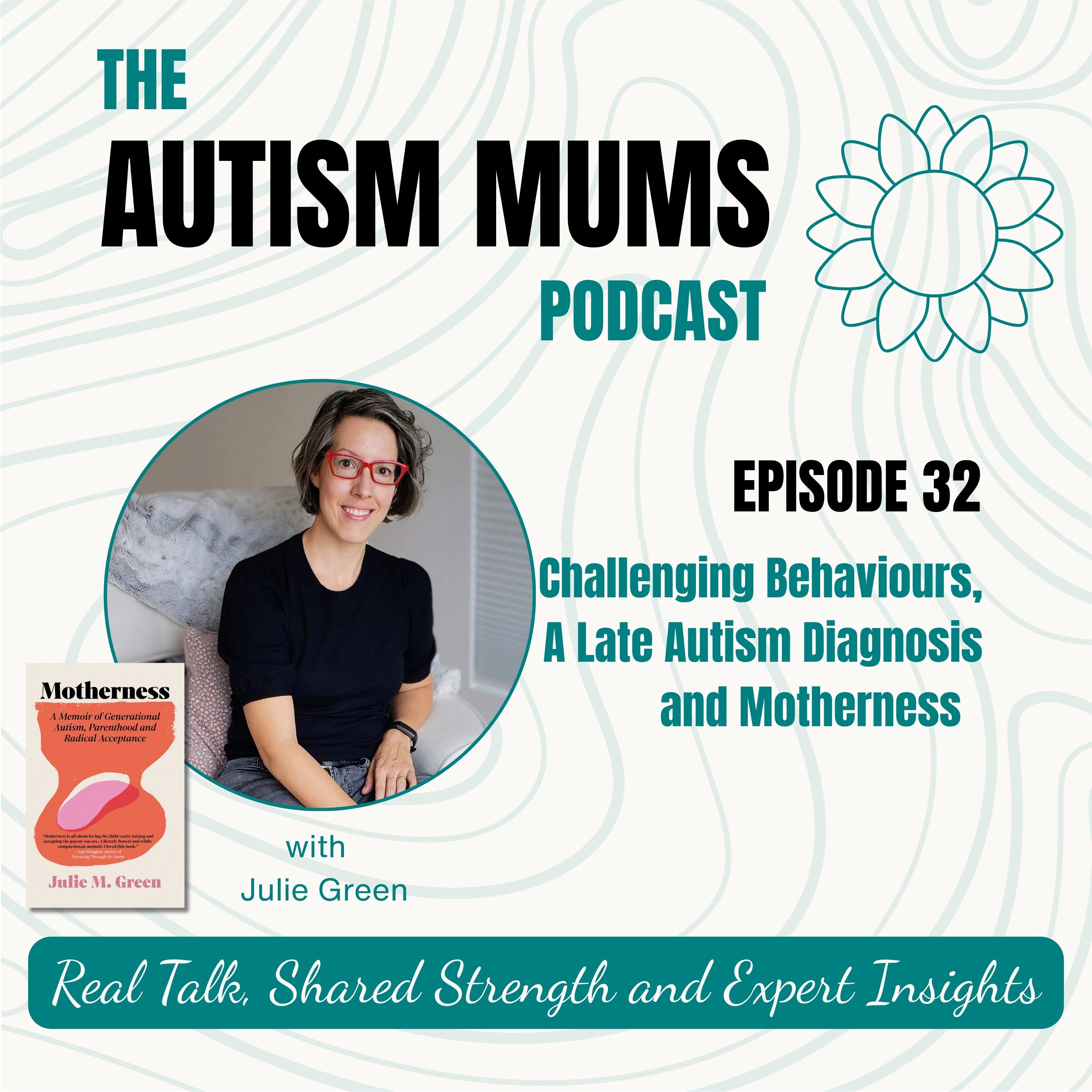
Ep 32Challenging Behaviours, A Late Autism Diagnosis and Motherness with Julie Green
In this episode Victoria and Natalie chat with Julie Green, author of Motherness, to explore the realities of parenting through autism both as a mum to an autistic son and as a woman who discovered her own autism later in life.BiographyJulie M. Green is a Canadian writer whose work has been featured in the Washington Post, HuffPost, The Globe and Mail, Today’s Parent, and Chatelaine. She has appeared on CTV, BBC Radio, SiriusXM, and CBC Radio. She writes The Autistic Mom on Substack. For more information, visit JulieMGreen.ca.Key TakeawaysAutism in girls and women can look very different from the traditional stereotypes. Julie explains that while boys can be identified through visible traits like lining up toys or having clear special interests, girls may channel their autistic traits into more socially acceptable interestsMany girls mask their differences by copying peersThe importance of seeing challenging behaviour as communication, not defiance.How self-compassion and reframing past experiences can heal years of misunderstanding and self-blameThe need for schools and systems to replace punishment with understanding and co-regulation.Mentioned in This EpisodeMotherness: A Memoir of Generational Autism, Parenthood, and Radical AcceptanceThe Autistic Mom Substack The Explosive Child: A New Approach for Understanding and Parenting Easily Frustrated, Chronically Inflexible by Ross W GreenNational Autistic SocietyConnect with Julie GreenWebsite: juliemgreen.caInstagram: https://www.instagram.com/juliem.greenSubstack: https://theautisticmom.substack.com/LinkedIn: https://www.linkedin.com/in/julie-m-green-34bb1845/Connect with The Autism MumsWebsite – https://theautismmums.com/Follow us on Instagram https://www.instagram.com/theautismmumsFollow us on Facebook https://www.facebook.com/theautismmumsFollow us on TikTok https://www.tiktok.com/@theautismmumsTranscriptVictoria Bennion:[00:00:00] Today we are joined by author Julie Green, whose new book, mother Ness ExploresLife as both an autistic mom and the parent of an autistic son. We talk aboutlate diagnosis, what autism can look like in women and girls and navigatingchallenging behavior. Victoria Bennion and NatalieTealdi: Welcome to the podcast, Julie. It's great to have you here.Julie Green: Thanks for having me.Victoria Bennion and NatalieTealdi: So you are a mom to an autistic son, and you also discoveredlater in life that you are also autistic. Can you start by telling us what ledyou to consider that you might be autistic?Julie Green: Oh my.When I say it was a process, it took. Almost exactly 10 years, a very longtime. So needless to say, ooh, going back when my son was diagnosed at three Ididn't know much about autism generally, let alone. Autism in girls and womenand how that could look different. So it was very much a process.Julie Green: Theinformation just wasn't even out there. It wasn't necessarily [00:01:00] that it wasn't on my radar. I don't evenreally think you had Temple Grandin at that point. It was just, it was such alearning curve just to learn about it with my son. And then. Every now andthen, I was just struck by these similarities, thinking, oh I was reallysensitive with clothing and oh, I was really certain noises and, the need forroutine.Julie Green: So therewere some similarities with my son, but in a lot of respects, he was very muchthe typical. Image that we have of a little boy, lining up the Thomas trains.And that just did not really fit because I was fairly social. All these sort ofthings. And then I think ultimately, I became involved in it was like theblogging sphere back then, and I came across, I was writing about parenting andI started to write about autism and our experiences, but I eventually did comeacross an autistic woman through the community and got chatting with her and [00:02:00] realized in getting to know her that, oh,okay, so this is this looks very different and.Julie Green: She andI were very similar, and that gradually led me to think, okay maybe I am alsoautistic. And then again, took a little while longer for me to actually decideto pursue being assessed. So at the time, even here in Canada, the wait listwasn't that bad. I waited maybe a year through my GP and it was through ouroip, which I'm in Ontario, so our province has the equivalent of the NHS.Julie Green: Ididn't, initially, I was thinking, oh, do I wanna go through with this and, paythousands of dollars and for what? Even if I am diagnosed, just, it was a lotof, it was a long process, as I say, 10 years till it really fully clicked. Itclicked and then, officially got the diagnosis.Julie Green: So I.Victoria Bennion and NatalieTealdi: Did it help you when you looked back at past events? Did itmake more [00:03:00] sense of your life?Julie Green: Oh, enormously. 'cause I think a lot of people are like, why do this? I was 44, sowhy do this? It's not as though you're going to really qualify for any. Any funding or any supports, but I ju

Ep 31Essential Advocacy Tips for Parents of Neurodivergent Children with Greer Jones
In this week's episode of The Autism Mums Podcast we welcome Greer Jones to the show.BiographyGreer Jones is a speaker, writer, and podcast host passionate about building understanding and connection in the neurodiverse world. As a mom raising an autistic and ADHD child, and part of a neurodivergent couple herself, she brings honesty, empathy, and lived experience to her work. She is the creator of The Unfinished Idea podcast and online community, where she provides encouragement, practical tools, and a reminder that no one has to walk this journey alone. Her story has been featured in podcasts, conferences, and publications, inspiring families to embrace their unique path with hope and courage.Key TakeawaysUnderstanding Neurodiversity: Greer emphasises that autism and ADHD manifest differently in each individual, highlighting the importance of recognising and valuing each child's unique strengths and challenges.Advocacy Experience: Greer shares her experience of advocating for her son, stressing the need for parents to be proactive in navigating educational and healthcare systems.Building Community: Connecting with other parents and families facing similar challenges can provide invaluable support, encouragement, and shared strategies for managing daily life.Positive Framing: Starting meetings with positive affirmations about a child helps shift the focus from deficits to strengths, fostering a more collaborative atmosphere.Partnership with Schools: Greer advocates for a partnership approach with educators, emphasising the importance of regular communication and collaboration to support a child's needs effectively.Managing Expectations: Understanding that neurodivergent children may struggle with transitions and choices allows parents to adjust their expectations and provide necessary support.Embracing Flexibility: Greer discusses the importance of adapting plans and routines according to a child's needs, especially during challenging periods, to minimise overwhelm.Creating Safe Spaces: Providing children with tools and strategies, such as sensory items or designated "fun bags," can help them navigate overwhelming situations more comfortably.Mentioned in This EpisodeThe Unfinished Idea Podcast with Greer JonesConnect with GreerWebsite – http://theunfinishedidea.comInstagram - https://www.instagram.com/theunfinishedidea/Connect with The Autism MumsWebsite – https://theautismmums.com/Follow us on Instagram https://www.instagram.com/theautismmumsFollow us on Facebook https://www.facebook.com/theautismmumsFollow us on TikTok https://www.tiktok.com/@theautismmumsTranscriptVictoria Bennion: Welcome to the podcast.Greer Jones: Thank you. Yeah. Thanks for having me. , I'm glad to be here.Victoria Bennion: It's great to have the chance to talk to you after meeting you at the Send RallyGreer Jones: Yeah, it was fun. I found that really just be really impactful because I got to meet so many people in person that I know online and have seen online. So yeah, it was good.Natalie Tealdi: Can you start by [00:02:00] telling us what your family's journey through diagnosis has taught you about resilience and hope?Greer Jones: Yeah, that's a great question. So just a little bit about me. I have a son who's autistic, A DHD. I'm married to someone who is autistic, and then I have a DHD. And then I have another son who, we don't know where he's at. He's only three, so it's,Natalie Tealdi: Early days.Greer Jones: Yeah. Early days. Yeah. I definitely think there's maybe some sensory processing, but I don't know if that's added into anything so really our journey started when our oldest son, who is autistic, A DHD, was two. And we were just coming outta the pandemic and we were just realizing that. He was processing and receiving the world differently and along with his speech being delayed. And so we were trying to really pursue that.And in the process, kinda asking questions like, oh, is this typical or is this not? 'Cause he'd hit all of his kind of milestone markers, he could say mama and dad, but he couldn't say anything really beyond that. [00:03:00] But he could count, he could say numbers, which.It's like I look back and I'm like, yes, this makes all sense. But like at the time I was like, how can you count to 20 when you're two, but not say fridge, or not say milk or like those kind of we call basic word words.Whereas now I'm like, oh, this all makes sense.My first conversation actually with the GP was particularly more around his speech, but he basically said that my child's speech delay and while he was processing the world differently was because I'm American. To which I said very quickly. Nice try. Tell me something else. , I thought may, maybe if it's a different, completely different language where I'm like, American come on, that's silly. But anyways, so that was, I think maybe even our first little taste of what we were entering into of kind of even advocacy of people are going to try and tell

Ep 30This Week in Our World: Reflecting on Panorama, EHCPs and Everyday Struggles
In this week's episode of The Autism Mums Podcast we're reflecting on the Panorama documentary, EHCPs and everyday struggles from socks to lunch boxes.Key TakeawaysThe reality behind EHCPs – why the process can be emotionally draining, time-consuming, and often leaves families feeling powerless.When inclusion isn’t inclusion – the difference between being in school and actually being supported to thrive.The ripple effect of sensory struggles – how something as small as socks or a change in routine can unravel a whole morning.Food battles and 'safe foods' – understanding why eating can be so complex for autistic children and why parents shouldn’t face judgment for feeding what works.Navigating seasonal changes – how weather, clothing, and sensory shifts can bring new challenges for children who rely on predictability.The need for empathy over judgment – whether it’s food, clothes, or school attendance, understanding should always come before criticism.Mentioned in This EpisodeBBC Panorama Documentary: Autism, School and Families on the Edge presented by Kellie BrightEHCP (Education, Health and Care Plans) - learn more hereARFID and sensory-based eating challenges - learn more hereConnect with The Autism MumsWebsite – https://theautismmums.com/Follow us on Instagram https://www.instagram.com/theautismmumsFollow us on TikTok https://www.tiktok.com/@theautismmumsFollow us on Facebook https://www.facebook.com/theautismmumsTranscriptThis Week in Our World:Reflecting on Panorama, EHCPs and Everyday Struggles [00:00:00] Victoria Bennion:This week we watched Kelly Bright's Panorama documentary called Autism Schooland Families on the Edge, and it was really interesting watching. So we wantedto take today to reflect on the program and chat about things in general thathave come up for us and our childrenVictoria Bennion: .so what did you think about the program? Nat.Natalie Tealdi: Ithought it was really great to give. Exposure about the issues of EHCPs. Imean, it was largely based around EHCPs, wasn't it? And it definitely broughtback lots of memories. I think it's that, that place where you are at, whereyou don't really know much about what's going on and you're kind of trying towork out how to support your child.Victoria Bennion:Yeah. Natalie Tealdi: theright environment is for them, getting them the right support, not reallyknowing what that support is or what even are the options for support.Victoria Bennion:That's right. It's a really stressful time. And I think that it, hopefully, ithighlighted that it's quite a lengthy process and that it requires quite a lotof you as [00:01:00] parents and carers beingon it with all the dates. And then even when you get a yes, if you get a yes atcertain points, like, yes, we agree to assess your child, it's, you're notnecessarily then going to get the plan that your child needs.Victoria Bennion: Sowith the family there? And , it had named mainstream. That was, that wastotally familiar to me. That's what happened with my first child going throughthe process and he was barely attending school. And it brought back for methose feelings, those memories of like, oh my God, what, we've just beenthrough all this.Victoria Bennion: Andyou are saying, well, they basically said good luck at middle school. It's likehe can't even get into first school. How have you written a whole plan and putmainstream? So I did really feel for them. I think it was a really accuratedepiction of the processNatalie Tealdi: Yeah,I mean, very similar for us too. , It's clearly the setting isn't working andyou do all the paperwork and all the fighting and all the meetingsVictoria Bennion: allthe assessments.Natalie Tealdi: thenit comes back with the same place that they're not coping at. I mean, that [00:02:00] doesn't even make any sense. It is just sofrustrating,Victoria Bennion: ,It's a very tiring process. Natalie Tealdi: Andyou can feel really powerless. I think that's something they highlighted in thedocumentary 'cause. Yeah, you have to learn about all the processes and thelaws and what you're entitled to, and it's exhausting.Victoria Bennion: Itis exhausting, and especially on top of when you're trying to look after yourchildren charge the EHCP for everything is not well, otherwise you wouldn't bedoing it. So you've got that on top of everything. And then holding the localauthority to their deadlines is my experience of, Hey, it's the X date.Victoria Bennion: Isthere any news on this yet?Natalie Tealdi:exactly. You can't just sort of hand it over to them and expect it all to runsmoothly into time. You have to be there nudging them.Victoria Bennion:Yeah, it's horrible actually. It's extra stress that parents don't need. So Ithought that was depicted really well. There was one, one thing that reallystruck me as being potentially really divisive. I [00:03:00]don't know if it struck you too, but it was when she was speaking to thatcounselor.Victoria Bennion:They were referencing the amou

Ep 29Redefining Success for Families with Neurodivergent Children with Talia Zamora
In this week's episode of The Autism Mums Podcast we welcome Talia Zamora to the show.BiographyTalia Zamora, Award-Winning Coach and bestselling co-author, encourages and uplifts women from Neurodivergent families who are struggling to find balance, clarity, and direction through bespoke one-to-one coaching. With a supportive, accepting, and inclusive approach, she helps clients reconnect with their self-worth, build confidence, and set realistic, meaningful goals that align with their lives. Drawing on both lived experience and professional expertise, Talia’s unique coaching style empowers women to take control, make progress, and redefine success on their own terms. Her work is grounded in simplicity, compassion, and the power of being truly seen and understood.Key TakeawaysAccidental Journey to Coaching: Talia’s path to becoming a coach began unexpectedly, driven by her own experiences as a parent of neurodivergent children.Identifying Common Struggles: Many neurodivergent families face challenges related to societal expectations and the pressure to conform to typical parenting norms.The Importance of Self-Compassion: Talia emphasizes the need for parents to recognize their unique family dynamics and to approach parenting with kindness toward themselves.Momentum vs. Balance: Talia discusses the concept of prioritizing momentum over traditional work-life balance, focusing on maintaining progress rather than achieving a perfect equilibrium.Breakthrough Moments: Clients often experience significant breakthroughs when they learn to communicate their needs and establish boundaries in both personal and professional contexts.Creating a Supportive Environment: Talia highlights the value of creating a nurturing atmosphere at home that accommodates the unique needs of neurodivergent children.Practical Tools for Change: The episode offers actionable strategies for parents, including the idea of a "done list" to celebrate achievements and the importance of questioning societal norms in parenting.Mentioned in This EpisodeTalia's 101 Neurodivergent Traits download is available here: https://www.taliazamora.com/Talia's Wellness Day:Unmask & UnwindA Neurodivergent-Friendly Wellness Day on Saturday 19th October 2025 for Women Who Want to Thrive. If you’ve been craving a day to slow down, breathe, and refill your cup this is your invitation.Find out more here: https://www.taliazamora.com/wellnessdayConnect with [email protected] www.taliazamora.comhttps://www.linkedin.com/in/taliazamora/ https://www.facebook.com/TaliaZamoraBusinessandFamilyCoachConnect with The Autism MumsWebsite – https://theautismmums.com/Follow us on Instagram https://www.instagram.com/theautismmumsFollow us on Facebook https://www.facebook.com/theautismmumsFollow us on TikTok https://www.tiktok.com/@theautismmumsTranscript[00:00:00] Victoria Bennion: Welcome to the podcast, Talia. It's great to have you here with us today.Talia Zamora: Thank you very much. It's lovely to be here.Natalie Tealdi: Can you start by telling us what inspired you to start your coaching journey and how your personal experience helped to shape your approach?Talia Zamora: My coaching journey, probably happened by accident. What I mean by that is that it wasn't really a lifelong dream to work for myself and, to be a coach. I'd been working in business improvement and. Continuous improvement. Within industry there's something called Lean Six Sigma, and it's about practicing different ways and systems and process to improve your business and make it easier and, manage it well. I came to an end of a contract and I was struggling to find something that would fit around my kids because as you know, your kids have more need for hospital appointments and for you to pick them up from school because they don't necessarily want to, go to the clubs and they get exhausted and burn out and they need to be at home. So I, I really needed something part time and flexible. [00:01:00] So at the end of the contract I was on, I just thought, okay, let's. C, give myself a bit of a break to be there for the kids and then retrain as something that I can do for myself. So it took a few months, I got myself a coach and then was talking to her about what would be best to do with my skills, and that's when it highlighted that actually being a coach would. Worked well for me because of all the business improvement and continuous improvement that I'd got, and in the background at the same time was I was starting to train as a coach. I was doing quite a lot of training for my kids, so as, again, you might well know the system when you get your kids diagnosed because both mine are autistic. At the time I hadn't had a diagnosis, so the system suggests that you go to parenting courses, which at the time I got really annoyed about and didn't see the logic and thought that, you know, I'm not a bad parent, are you judging me? But actually realized very quickly how, valuable th

Ep 28Nervous System First Parenting with Kimberley Guche
In this week's episode of The Autism Mums Podcast we welcome Kimberley Guche to the show. Kim explains how our children read our inner signals (even when we’re 'holding it together), why we can’t think our way out of overwhelm and the simple, compassionate resets that help us move from chaos to calm. Kimberley's BiographyKim Guche is a pediatric speech-language pathologist, certified hypnotherapist, NLP coach, and the creator of Nervous System First Parenting™ — a revolutionary, body-based approach that helps overwhelmed moms calm their own nervous system so they can lead with steadiness and intention. Drawing on trauma-informed tools, vagus nerve science, and her own journey as a single mom of four, Kim teaches the part most parenting books miss: how to shift chaos by regulating the energy inside you. Her 5-minute Chaos to Calm™ Reset isn’t just for your kids — it’s for you, so you can finally stop white-your way through motherhood.Key TakeawaysCalm is a body state: regulation has to be felt, not forced by thoughts.Children read our nervous systems - even when we’re 'holding it together.'Five-minute resets that work anywhere: breath, havening, tapping, shaking, cold-water splash.Visual anchors (trees, sunflowers, happy snapshots) create a rapid route back to safety.Grounding touch and proprioceptive input can soothe dysregulation when touch is OK.Micro 'pattern interrupts' sprinkled through the day raise your resilience floor.Congruence matters: when your inner and outer signals match, kids settle faster.Anchor the good: pair a physical cue with a joyful memory for instant state-shifts.Work with mums and kids to amplify results and reduce trigger loops.Progress over perfection - self-kindness keeps everyone steadier.Connect with KimberleyAccess Kim's meditations: Peaceful ParentingChaos to Calm ResetAccess Kim's free Skool group where mums can find help to get calmer inside of the chaos. Website: www.entrancinginspirations.comInstagram: https://www.instagram.com/chaostocalmnlp/Connect with The Autism MumsWebsite – https://theautismmums.com/Follow us on Instagram https://www.instagram.com/theautismmumsFollow us on TikTok https://www.tiktok.com/@theautismmumsFollow us on Facebook https://www.facebook.com/theautismmumsTranscriptNatalie Tealdi: [00:00:00] welcome to the podcast, Kim. It's great tohave you here.Kim Guche: It's greatto be here. Thank you.Natalie Tealdi: Soyou've got a really interesting background. Can you talk a little bit aboutyour journey to becoming the creator of the Nervous System First Parentingplease.Kim Guche: My journeyis started I think probably when I was a speech. I'm a speech languagepathologist and I, and I also have four children. I, when I was, had a turningpoint in my speech pathology career where I, it just wasn't working for meanymore. And I knew I needed to do something different 'cause something elsefelt like it was calling me and I ended up finding my way to look, going intohypnosis, but for myself.Kim Guche: 'cause Iwanted to see what is this about? How could I use it for me? And, so the minuteI walked in to the appointment that I had, it was like just something hit me.Like I knew oh, I feel like this is what I'm supposed to do now, but I didn'tknow why or how or really what I [00:01:00] wasgonna do with it.Kim Guche: And I justknew it is I gotta open this up more. And then when I learned about it. And Istarted, I started working with it. And you know how much it helped me. Ithought this would really be great for all the kids that I work with, thatbecause I had said when I was working with the kids every time I'd go back toschool on Monday, wouldn't it be great if there was a way.Kim Guche: That wecould make all this stuff that I tell you all the time, stick, and then wewouldn't have to start over again every Monday. And I didn't know that. Usingthe subconscious mind, that's exactly what happens. So once I learned that, ithit me like, oh, that's how you do it. You use the other side of the brain andnot just for learning, but for so many things.Kim Guche: Justmindset and letting go of the old. Like the fears that we have and theself-doubts and the the anxiety. And so I had thought I do wanna [00:02:00] use this. It helped me so much. I wannahelp people, but I'm passionate about kids. So I thought, how can I use this?How can I use this to help the kids that I work with?Kim Guche: And thenit just started happening that, moms, I had a people finding me and saying, canyou know, how can you help my kid? And it started out with I was getting a lotof children for sports improvement gymnasts and kids who were getting in theirhead for their sport and had fear.Kim Guche: And so Istarted doing that and and that's of course, that's wonderful because you, youwanna see kids excel because that's how their self-esteem and they grow in somany ways through their sport and you never want them to give up. So I startedlike that and then I thought,

Ep 27Fighting for Change: The SEND Rally Experience
In this week's episode of The Autism Mums Podcast we wanted to share with you our experiences of attending the fight for Ordinary Send Rally at Parliament Square Gardens in London last Monday, the 15th September. Key TakeawaysCommunity Support: The rally highlighted the importance of community and connection among parents and advocates in the SEND space, fostering a sense of solidarity.The Importance of Advocacy: Attending the rally underscored the need for collective advocacy to bring attention to the challenges faced by SEND families.Emotional Experiences: Both hosts shared their feelings of anxiety and excitement about attending the rally, illustrating the complexity of leaving their children to advocate for change.Speaker Impact: Key speakers at the rally, including politicians and advocates, provided hope and insight into the ongoing struggles and needs within the SEND system.Parliamentary Debate: Following the rally, a significant parliamentary debate took place, emphasising the urgency of addressing SEND issues and the need for accountability in the system.Recommendations for Change: The episode detailed recommendations made by MPs to improve SEND accountability, including strengthening the SEND Tribunal and ensuring compliance with existing laws.Connect with The Autism MumsWebsite – https://theautismmums.com/Follow us on Instagram https://www.instagram.com/theautismmumsFollow us on TikTok https://www.tiktok.com/@theautismmumsFollow us on Facebook https://www.facebook.com/theautismmumsTranscript VictoriaBennion: [00:00:00] Welcomeback to the Autism Mums podcast. Today we wanted to share with youour experiences of attending the fight for Ordinary Send Rally atParliament Square Gardens in London last Monday, the 15th. It was soamazing to come together with the rest of the community but we justwanted to jump on quickly and do a short episode about it to letthose of you know who couldn't be there, what went down.NatalieTealdi: It was so good to be there. We know many otherswanted to come but couldn't. It isn't easy to coordinate, but somehowthe stars aligned for us to attend. Please know that we took you allthere with us in spirit.VictoriaBennion: I felt really lucky that we could be there. Idon't know about you, Nat, but it wouldn't always be possible. And Iknow for so many parents and carers who wanted to be there, but theycouldn't. Ironically, because some of them have got their childrenout of school, they're driving miles to get their children intoschool.You know, it's specialistprovision. So. [00:01:00] Yeah, I thinkwe were really lucky that we had the opportunity to be there in thefirst place.NatalieTealdi: It was a strange day for me because it's the firsttime I've left both of my children for the whole day. It felt veryweird just packing a bag for myself and no one else. It was nice tonot have to feel like a pack horse for once. I did have some anxietyabout how they would be without me, but I felt it was so importantfor us to be there, so I just had to focus on that.VictoriaBennion: To set the picture, so I got up at five 30 towalk the dog. I know, many of you will know, sometimes it's not easyand it takes a lot of planning to be able to get out of the house fora day.We're in Dorset, so it's abouta three hour train ride to London. I walked the dog on the beach withmy mom in the pitch black. First, and then Natalie drove over to usand then we got the car down to the station and my daughter came withus as, she's not in school at the moment. [00:02:00]She's been out of school for a year now.And it was so nice. When wegot onto the next station, some of our friends joined and actuallyone of our friends, we took a moment. We were just talking about howwe actually met in the school playground when our children werestruggling, and she assumed that., My son had autism as sheoffered to land defenders. Natalie, you'd already met, her separatelyat a party. I know. It was just funny that we've been on this journeytogether and that we were off to London to the protest there camesome other moms who belonged to Carmen's Fix Send Dorsett group.So that was great to meet somenew faces. And again, you have so much in common and everybody'sfighting for the same thing.NatalieTealdi: Yeah, that was really lovely.VictoriaBennion: Obviously over the weekend there had been someother very large rallies in London. So we'd certainly had familymembers who were a bit nervous about us going up to London, but[00:03:00] there was absolutely no signof it when we arrived. It was a really peaceful rally. It's my firstrally.Was it for your first rallytoo? Nat??NatalieTealdi: Yes, it waswe were there early and as wewalked over the bridge, a few people were already gathered. Theground was damp and boggy, from the rain, and the wind was quitestrong. But that didn't dampen our spirits. Did it look.VictoriaBennion: It was a nice, friendly atmosphere. We were justsurrounded by other people just like us who were all on t

Ep 26Food Anxiety: When Eating Becomes a Struggle
In this week’s episode of The Autism Mums Podcast, we talk openly about what happens when eating stops feeling simple and starts feeling scary. We unpack ARFID (Avoidant/Restrictive Food Intake Disorder) and explore how it differs from 'picky eating, sharing our real-life experiences.Key TakeawaysIdentical packaging and familiar brands can build trust.Safe foods can be very limited, for some children under 10 itemsWhen anxiety spikes with transitions like back-to-school often shrink food choices.“They’ll eat if they’re hungry” advice can escalate fear and refusal.Texture, temperature, smell, colour and broken food can be deal-breakers.We've found reintroducing once-safe foods during calm periods and follow the child’s curiosity can sometimes be successfulMentioned in This EpisodeBEAT Eating DisordersARFID Awareness UK National Autistic SocietyConnect with The Autism MumsWebsite – https://theautismmums.com/Follow us on Instagram https://www.instagram.com/theautismmumsFollow us on TikTok https://www.tiktok.com/@theautismmumsFollow us on Facebook https://www.facebook.com/theautismmumsTranscriptVictoria Bennion:Hello and welcome back to the Autism Moms podcast. Today we're talking aboutsomething that many families quietly battle with every day. When eating stopsfeeling simple and starts feeling scary. You'll hear us mention ARFID quite alot.Natalie Tealdi: ARFIDis avoidant restrictive food intake disorder, which is more commonly known asARFID. It's a condition characterized by , the person avoiding certain foods ortypes of foods having restricted intake in terms of overall amount eaten orboth?Any anyone of any age can have a i. It occurs in children,teenagers, and adults. Although people with ARFID may lose weight or have lowweight, this is not a criteria for ARFID. It can occur at any weight and variesin different people.Victoria Bennion: Ifyou are wondering, is this just picky eating? We'll talk about a few signpoststhat could indicate it may be more. We'll share our family's [00:01:00] experiences and the ways we found tosupport our children. As always, we are here to share our own experiences inthe hope that they may be useful.Not to diagnose. If anything you hear raises concerns, do speakwith your GP or a qualified clinician. Natalie Tealdi: SoVictoria, I think you have the best knowledge out of both of us on this one. Doyou wanna talk a bit about yourexperiences? Victoria Bennion:Yeah. I can talk about our experiences. So my son doesn't have a diagnosis of aARFID, but in his autism diagnosis, he's noted as having ARFID behaviors. Thiswas explained to me as the reason was there very strict criteria that a childhad to meet to actually get a diagnosis of ARFID.That you can have behaviors and a lot of autistic children areaffected by a ARFID,And so this is because. Many autistic people experience sensoryissues and sensory [00:02:00] overload, andthat then leads to a heightened sensitivity when it comes to eating, resultingin the symptoms and behaviors of ARFID.Natalie Tealdi: Howwould you say, you know, if it's picky eating or if it's ARFID?Victoria Bennion: Ican talk about that with my son. If you're looking at your child, and arewondering if this is more than picky eating, so things to be aware of or arethey avoiding major food groups? I know my son certainly was. So fruit, meat,vegetables are they reacting to the different temperatures?Are they having sensitivity to the textures? Could they begagging, retching? Have they gone over that spell of, they're not toddlersanymore. They may be plus six. That's something to consider. And if their dietis limited, I believe it's to less than 10 foods. That's another indicator ofARFID or a behaviors.Perhaps not noticing that they're hungry. I know that'ssomething my son certainly struggles with, [00:03:00]identifying that he's hungry or just missing meals entirely. Avoiding food atsocial events or avoiding social events where there is food Parties were alwaysso difficult for us. We would never sit at the food table.We would have to go well away from that. Thank you very much.Struggling to stay at the table during meal times.In terms of timeline. I think he was about one and a half whathe would eat really narrowed. But that's quite common for this sage group andit's often called food neo phobia. And I took him to the doctor at the time,and I was just told that he would outgrow it. It was pickyeating. It was very normal for this stage of development. I don't know. I wentwith that at the time. I was a bit uneasy about it. The things that he waseating were waffles and I think it was probably fish finger. I've got thiswritten down somewhere because we did take him to an occupational therapist atthe time because it was really concerning.We didn't think [00:04:00] hewas eating enough. The only fruit he would eat was raspberries at that time.And then interestingly, it had to be a specific number of raspberries. And heclearly was very anxious around eating.

Ep 25The UK Government's Proposed SEND Reforms
In this week’s episode of The Autism Mums Podcast, we’re talking about the UK Government's proposed SEND reforms and what they might mean for families like ours.Key TakeawaysUnderstanding EHCPs: An EHCP (Education, Health and Care Plan) is a legal document that outlines a child's special educational needs and the necessary support for their educational journey.Rising Demand: The number of EHCPs has significantly increased, with 638,745 in place as of January 2025, reflecting a 10.8% rise from the previous year, highlighting the growing demand for support.Concerns About Reforms: There is considerable concern that the upcoming SEND reforms may reduce support rather than improve the system, especially given the government’s acknowledgment that local authorities are struggling to meet demand.Legal Protections: Many families fear that proposed changes could eliminate essential legal protections currently provided by EHCPs, which are crucial for ensuring children receive the support they need.Impact of Delays: Families often experience delays in securing EHCPs, with only 46.4% of new plans issued within the statutory timeframe of 20 weeks, leading to unmet educational needs.Emotional Toll on Families: The process of securing an EHCP can be overwhelming, contributing to stress and burnout for families, who often feel they are fighting an uphill battle for their children's rights.Consequences of Exclusion: Statistics indicate that permanent exclusions from schools have risen by 39%, disproportionately affecting children with SEND and leading to significant emotional and academic consequences.Teacher Training Needs: Many teachers report a lack of adequate training to support children with SEND, impacting classroom management and the overall learning environment.Investment in Support: Investing in early support and adequate resources for both children and educators is essential for fostering a productive and inclusive educational environment.Call to Action: Parents and carers are encouraged to advocate for their children's needs by engaging with local MPs, participating in consultations, and joining community efforts like the Fight for Ordinary SEND Rally to ensure their voices are heard.Connect with The Autism MumsWebsite – https://theautismmums.com/Follow us on Instagram https://www.instagram.com/theautismmumsFollow us on TikTok https://www.tiktok.com/@theautismmumsFollow us on Facebook https://www.facebook.com/theautismmumsTranscriptVictoria Bennion: [00:00:00] Todaywe're talking about a topic that's been on many parents' minds, theUK government's proposed send reforms, and what they might mean for families like ours.Natalie Tealdi: To start things off, let's define what an EHCP isand why it matters. An EHCP or Education, health and Care plan is alegal document that outlines a child's special educational needs andthe support that they must receive at school and beyond.VictoriaBennion: Yeah. The thing is that these plans are essentialbecause they ensure that children receive the necessary support tothrive. However, the possibility of eh HCPs being scrapped has likeunderstandably left so many of us feeling anxious about the future ofour children. Eh, HCPs aren't often something that are easy to getand a lot of families have fought really hard to secure them.NatalieTealdi: So what's changing? The government has stated thatthe send system is on its knees and that local authorities arestruggling to meet. Demand [00:01:00]reforms are expected to be announced in October, but there'sconsiderable concern among parents and professionals that thesechanges could reduce support rather than address existing problems. VictoriaBennion: Yeah, that's a significant worry. An EHCP is alegally binding document that ensures children and young people withspecial educational needs in England receive appropriate support fromtheir local authority. It's vital for their educational journey andoverall wellbeing.NatalieTealdi: Definitely full details of the proposed changesare due in October, but ministers have not ruled out scrapping theeducation plans altogether, insisting that no decisions have beenmade yet. This uncertainty is particularly troubling, especially inlight of recent welfare changes prompted by a rebellion among backbench labor mps.The education secretaryindicated that this has made future spending decisions harder, whichjust adds to the anxietyVictoriaBennion: right, and, the numbers tell a compelling[00:02:00] story. Data from theDepartment for Education released in June showed that the number ofEH HCPs had increased significantly in January, 2025. There were ,638,745 eh HCPs in place, reflecting a 10.8% increase from theprevious year.NatalieTealdi: and it doesn't end there. The number of new plansinitiated during 2024 grew by 15.8% compared to the previous yearreaching 97,747. Requests for children to be assessed for eh HCPsrose by 11.8% to 154,489 in 2023. Just illustrating the increasingdemand for suppo

Ep 24Back to School Challenges for Autistic Children
In this week’s episode of The Autism Mums Podcast, we’re talking about the big transition back to school after the summer holidays. Key TakeawaysEarly signs of school anxiety often show up in unexpected ways, like food refusal or “I’m not going back” language.Preparation can be supportive—but too much talk or change too far in advance can fuel anxiety instead.Creating “worry boundaries” helps keep August feeling like summer rather than weeks of dread.New timetables, new staff, and classroom changes can be huge triggers—meet-and-greets and phased starts make a difference.Reduced demands can ease pressure, but they need to be handled carefully so they don’t harden into new rigid routines.Safe foods and small wins (like trips to McDonald’s) can tide children over through anxiety spikes.Parents need realistic self-care—short breaks, slower mornings, or supportive rituals—to stay resilient.Trust and reassurance are more powerful than pressure: children need to know they won’t be forced into situations they can’t cope with.Mentioned in This EpisodeVictoria talked about her experience with Emotional Freedom Technique (tapping) for anxiety with her client, psychotherapist and Founding EFT Master Carol Look. You can learn more about Carol's work at www.carollook.comListener LetterThis week we’re so grateful to share a message from Kirsty, one of our listeners:“...I just wanted you both to know you’ve become a lifeline to me with tips that actually work. Please keep going ladies! One not-so-stressed-out mom thanks to you both. Thank you for being open, honest and willing to share. It makes the world of difference to know we aren’t alone.”Warmest wishes,Kirsty & T 💛Connect with The Autism MumsWebsite – https://theautismmums.com/Follow us on Instagram https://www.instagram.com/theautismmumsFollow us on TikTok https://www.tiktok.com/@theautismmumsFollow us on Facebook https://www.facebook.com/theautismmumsTranscript[00:00:00] Hello and welcome tothe Autism Mums podcast. I'm Victoria. And I'm Natalie. We are two sistersraising autistic children who know the joy, the challenges, and the everydaymoments. This is a supportive space for honest conversations, practical tips,shared strength and expert advice. Whether you are celebrating a win, survivinga meltdown, or just trying to make it through the day, we are right here withyou.Join us as we share the ups, the downs, and everything inbetween parenting autistic children.Victoria Bennion:Welcome back to the Autism Moms Podcast. In today's episode, we're talking about the transition back to school after the summer holidays.Natalie Tealdi:But before we get started, we just want to share a lovely letter we had from our listener, Kirsty, with her permission. Messages like this remind us why these conversations are so important. Here's what Kirsty wrote:‘Firstly, thank you so much for doing this podcast! I find it incredibly easy to listen to, full of practical tips to help my child and very informative. While we don't have an official diagnosis yet, my three-year-old son ticks many of the ASD boxes as well as having a bit of a PDA spiky profile. I knew something wasn’t quite right when he was a year old, but pushed it to the back of my mind until it became obvious.Struggles with food, sleep issues, needing deep pressure hugs and weighted blankets, problems socialising, very sensitive hearing and huge problems with transitions — the list goes on! Luckily, his speech and language hasn’t been affected apart from a bit of echolalia when he’s excited or stressed.I just wanted you both to know you’ve become a lifeline to me with tips that actually work. Please keep going ladies! One not-so-stressed-out mom thanks to you both. Thank you for being open, honest and willing to share. It makes the world of difference to know we aren’t alone.Victoria Bennion:Thanks so much, Kirsty and t. If Kirsty's words resonated with you, do knowthat there are so many of us walking this path together, and like Kirsty, ifyou'd ever like to share your story with us, big or small, we'd love to hearfrom you. [00:01:00] Right?Natalie Tealdi: Howwas your summer?Victoria Bennion: Oursummer was really good for, I'm trying to think, four weeks. Yeah, our summerwas really good for about four weeks. I know we, we, so we have our oppositeexperiences, don't we? So mine was nice and light until about a week and a halfago, I would say.Victoria Bennion: Andthat's when for one of my children, the anxiety of back to school starts.Natalie Tealdi: Andthen what does that look like?Victoria Bennion: Doyou know the first signs probably was that he started talking about how hewasn't going back, isn't going back. Quite graphic really, and it is not just,I'd rather not go with back, it's, I'd rather die than go back.Victoria Bennion:That kind of extreme, language stopped eating dinner. So you can see all thesigns that the anxiety's really rising in him.Natalie Tealdi: It'sgreat he's communicating it

Ep 23Using Somatic Awareness to Support Your Neurodivergent Child with Kate Lynch
We're so grateful this week to be joined by Kate Lynch. Kate is a somatic mindfulness coach dedicated to creating a kinder, more inclusive future for all families. Since 2002, she has supported thousands of parents around the world with mindfulness, self-compassion, and somatic movement, helping them avoid burnout while raising their neurodivergent children.Kate shares some really valuable insights and practical advice that we hope will resonate with you.BiographyKate Lynch (she/her) is a somatic mindfulness coach on a mission to create a kinder, more inclusive future. Since 2002, she has supported thousands of parents internationally with mindfulness, self-compassion, and somatic movement, so they can enjoy raising their neurodivergent kids and avoid parental burnout. She facilitates Parent Support Groups for Extreme Kids and Parent Clubs for Good Inside. Kate is author of the upcoming book, Atypical Kids, Mindful Parents: The joys and struggles of raising neurodivergent kids. She has been featured in ADDitude Magazine, Mutha Magazine, Autism Parenting Magazine, and more. Her little neurodiverse family lives in Brooklyn, NY. Key TakeawaysUnderstanding Somatic Mindfulness: Somatic mindfulness focuses on the mind-body connection, emphasising self-care and emotional regulation through body awareness.The Impact of Parenting on Children: Parents' emotional states, such as anxiety or stress, can significantly affect their neurodivergent children, highlighting the importance of parental self-regulation.Mindfulness Practices for Parents: Simple mindfulness techniques, such as feeling the soles of your feet on the ground, can be integrated into daily routines to support emotional well-being.Community Support: Connecting with other parents is invaluable. Sharing experiences and advice can empower you and provide essential resources.Advocacy and Navigating Educational Systems: Understanding your rights and advocating for your child’s needs in educational settings is crucial, as parents often face systemic challenges.The Role of the Vagus Nerve: The vagus nerve plays a vital role in regulating stress responses and emotional states, influencing how we react to situations.The Therapeutic Nature of Activities: Engaging in activities like surfing or working with animals can be therapeutic for neurodivergent children, providing joy and confidence.Connect with Kate LynchEmail: [email protected] Substack: https://katelynch.substack.com/ Instagram: https://www.instagram.com/selfregulatedparentKate's offerMindful Meltdown Cheat Sheet:4 quick and simple mindfulness tools just for parents of neurodivergent kids4 meltdown essentials based on core values. https://www.healthyhappyyoga.com/meltdownor 1 month trial membership: https://katelynch.substack.com/monthConnect with The Autism Mumshttps://theautismmums.com/Follow us on Instagram https://www.instagram.com/theautismmumsFollow us on TikTok https://www.tiktok.com/@theautismmumsFollow us on Facebook https://www.facebook.com/theautismmumsTranscriptNatalie Tealdi: Hi, it's Natalie. Unfortunately, I was unable to be in today's interview, but before we begin, I wanted to take a moment to introduce our brilliant guest.Victoria Bennion:That's right! Today, I'm thrilled to welcome Kate Lynch. Kate is a somatic mindfulness coach dedicated to creating a kinder, more inclusive future for all families. Since 2002, she has supported thousands of parents around the world with mindfulness, self-compassion, and somatic movement, helping them avoid burnout while raising their neurodivergent children.Natalie Tealdi: If you've ever felt overwhelmed or uncertain on your parenting journey, this episode could really help you. Kate has some really practical advice that could be easily implemented into your daily life.So, let’s hand over to Victoria and Kate!Victoria Bennion: [00:00:00] Hello andwelcome to the podcast, Kate. It's great to have you here today.Kate Lynch: Thanks. It's so great to be here, Victoria.Victoria Bennion: So you are a somatic mindfulness coach, Ibelieve. Did I say that right?Kate Lynch: You said it perfectly. And the reason I use the bigword somatic, which a lot of people ask what that means, it justmeans of the body. I've been a yoga teacher for over 20 years, andthese days, a lot of times people don't understand, they really takethat as like a kind of a gym exercise teacher.And what I do is much moreabout the mind body connection about self-care and specificallyserving parents who are really struggling with how to even begin tofocus on themselves. They may be neurodivergent themselves or justreally struggling with this unexpected change of having a child witha neurodivergent brain.What I was doing before when Ifirst [00:01:00] started teaching isvery, very different from what I'm doing now and it's moretherapeutic. So that's why I use that. That word somatic mindfulnesscoach. 'cause it's not just about staying in your head, it is reallyab

Ep 22Meltdowns, Sleep Struggles and Routine Changes in the Summer Holidays
In this week’s episode of The Autism Mums Podcast, we’re diving into the reality of summer holidays when your autistic child thrives on school routine. Natalie shares how her son, who has been doing brilliantly during term time, has found the transition to the long break unexpectedly tough - from meltdowns and aggressive behaviours to disrupted sleep during a melatonin break. We talk about pacing activities, managing sensory needs, and finding that fine balance between structure and rest.Key TakeawaysHow losing the school routine can trigger heightened anxiety and challenging behaviours and why this is so common for autistic children.How disrupted sleep, including during a melatonin break, can ripple through the day and impact mood, patience, and coping ability.How favourite activities and special interests like metal detecting, magnet fishing, and trampoline time can help regulate emotions.Pacing social interaction and physical activity to avoid sensory overload or burnout during the holidays.How visual tools like Google Maps and travel timers can reduce anxiety during car journeys and transitions.Managing expectations around events and invitations from saying 'no' to busy festivals to choosing carefully between activities that may or may not be accessible.How preparation can help make big days out go more smoothly.Mentioned in This EpisodeBlue BadgeConnect with The Autism MumsWebsite – https://theautismmums.com/Follow us on Instagram https://www.instagram.com/theautismmumsFollow us on TikTok https://www.tiktok.com/@theautismmumsFollow us on Facebook https://www.facebook.com/theautismmumsTranscript[00:00:00] Hello and welcome tothe Autism Mums podcast. I'm Victoria. And I'm Natalie. We are two sistersraising autistic children who know the joy, the challenges, and the everydaymoments. This is a supportive space for honest conversations, practical tips,shared strength and expert advice. Whether you are celebrating a win, survivinga meltdown, or just trying to make it through the day, we are right here withyou.Join us as we share the ups, the downs, and everything inbetween parenting autistic children.Victoria Bennion:Today, we're talking about something that so many parents of autistic childrenwill understand, and that's why the summer holidays can feel like the hardestpart of the year. We're gonna talk about what's been going on in our homes thissummer, from unexpected meltdowns to sleep struggles, and the ripple effect oflosing that familiar school routine.Victoria Bennion:We'll be sharing our real life [00:01:00]stories, the strategies that have helped, and the moments that have trulytested us. If you are navigating the ups and downs of the school holidays, youare absolutely not alone. We are right here in it with you.Natalie Tealdi: Onething that's come up for us is our son has been coping so well. During termtime, so well at school, absolutely loving school. He's been doing so well andit's been quite surprising how tricky he's finding the holidays.Natalie Tealdi: It'salways a time of year that he struggles with, but he's gone from being able tocope quite well when he's stressed to. Not coping so well and we're seeingaggressive behaviors again, which we haven't seen for months. So it is taken meby surprise a little bit.Victoria Bennion:What's he reacting to? What do you think is causing him the problem?Natalie Tealdi: It'sbeing out of his routine. He just wants to be at school all the time. He likesit. , He just feels comfortable there. That's his routine. That's [00:02:00] what we do Monday to Friday, and becausewe're out of that, it's upsetting for him.Victoria Bennion:What do the summers look like in terms of structure?Natalie Tealdi: Wehaven't got a lot of structure. It can vary because some days he needs a lot ofrest. In the mornings he can be quite tired. We're going through a melatoninbreak at the moment, so sleep is becoming difficult. He's not going to sleeptill really late now because he hasn't got anything to help him.Victoria Bennion: Canyou talk about why you're having a melatonin break while we're on that?Natalie Tealdi: Yeah,so that was recommended by his pediatrician because we were noticing it wasn'thaving such an effect anymore, which isn't apparently your, body gets used toit, so. You do need to take breaks now and again for, for it to becomeeffective again. So we were at that point where bedtime was taking a long timeanyway, so we needed to have the break really, but now they're taking evenlonger.Natalie Tealdi: So heis not really going to bed until we go to bed, which [00:03:00]is really quite late. So he's more tired.Victoria Bennion:There'll be a lot of parents in the same position as you. I mean, we will be ina couple of weeks. With the melatonin break, it's the most natural time to tryto do that if it's something that your child takes regularly. And we aredefinitely gonna be planning a melatonin break as well.Victoria Bennion: ButI'm gonna wait until I'm havin

Ep 21Supporting Autistic Children: Expert Insights from Tanya Kemp
We're joined by a really special guest this week, Tanya Kemp. Tanya is a registered counsellor and parent consultant specialising in neurodiversity trauma and the parent Child Connection. Tanya's own journey has equipped her with unique insights on supporting autistic children.BiographyTanya Kemp is a registered counsellor and parent consultant, specialising in neurodiversity, trauma, and parent-child connection. With over two decades of clinical experience and additional training in mindfulness, somatic work, and neurodiversity-affirming practice, she supports families raising autistic and neurodivergent children. Tanya is also a solo mum to her 11-year-old autistic daughter, and together they’re traveling the world—learning, living, and world-schooling along the way. Her lived experience, combined with global research and integrative therapeutic approaches, makes her a trusted and compassionate guide for families navigating neurodivergence.Key TakeawaysUnderstanding Neurodiversity: Tanya emphasises the importance of recognising and embracing neurodiversity as a valuable aspect of human variation rather than a deficit.Parent-Child Connections: Building strong relationships with autistic children involves active listening, empathy, and validation of their feelings and experiences.Practical Strategies for Support: Tanya shares actionable techniques that parents can use to support their autistic children, including creating structured routines and sensory-friendly environments.Empowering Families: She highlights the need for parents to feel empowered and informed, equipping them with the tools they need to advocate effectively for their children.Celebrating Differences: Emphasising the uniqueness of each autistic child, Tanya encourages families to celebrate their strengths and individuality.Community Support: The importance of finding and fostering community connections is crucial for both parents and children, providing a sense of belonging and shared experiences.Navigating Challenges: Tanya discusses common challenges faced by families and offers insights on how to navigate them with resilience and positivity.Education and Advocacy: She stresses the role of education in breaking down stereotypes and fostering a more inclusive society for neurodivergent individuals.Self-Care for Parents: Tanya reminds parents to prioritise their own well-being, as caring for themselves enables them to better support their children.Continuous Learning: The journey of understanding and supporting neurodiversity is ongoing, and Tanya encourages parents to remain open to learning and adapting as they grow alongside their children.Connect with Tanya KempWebsite: https://www.tanyakemp.com/Facebook - https://facebook.com/parentingautisticchildrenmattersInstagram - https://www.instagram.com/parentingautisticchildren/LinkedIn - https://www.linkedin.com/in/tanya-kemp-0b32022ab/YouTube - https://www.youtube.com/@parentingautisticchildrenTanya's offersA 5 day video series on the 5 things every parent should know when their child receives an autism diagnosis.A free training for parents and carers on the autism brain through the lens that Tanya parents - a neurodiversity affirming lens that really shifts how parents and carers think about their child's day to day challenges and what kind of support they need. Also to understand the neurodiversity movement, ableism and be part of the solution for a better future for autistic people. You can access these offers via Tanya's website here: https://www.tanyakemp.com/Connect with The Autism Mumshttps://theautismmums.com/Follow us on Instagram https://www.instagram.com/theautismmumsFollow us on TikTok https://www.tiktok.com/@theautismmumsFollow us on Facebook https://www.facebook.com/theautismmumsTranscript[00:00:00]Natalie Tealdi: Hi, it's Natalie. Unfortunately, I was unable tobe in today's interview, but before we begin, I just wanted to sayhello and let you know. It's a really good one. Hopefully you'llagreeVictoria Bennion: That's right. Today I'm joined by a reallyspecial guest, Tanya Kemp. Tanya is a registered counselor and parentconsultant specializing in neurodiversity trauma and the parent ChildConnection. Tanya's own journey has equipped her with unique insightson supporting autistic children.Natalie Tealdi: If you've ever felt overwhelmed or unsure in yourparenting journey, this episode has some really valuable, practicaladvice and stories that we hope will be helpful to you.Okay, let's hand over toVictoria and Tanya.Victoria Bennion: Welcome to the podcast, Tanya.Tanya Kemp: Thank you so much. Thank you for having me.Victoria Bennion: So you've taken quite an unconventional path, Iguess you would say, in supporting your daughter. So I wondered ifyou could start by talking a little bit about your journey with herand [00:01:00] how you found your way toneurodiversity affirming parenting.Tanya Kemp: My daughter was really young when I started noticingdifferences in

Ep 20Navigating Family Gatherings with our Autistic Children
In this episode of The Autism Mums Podcast, Victoria and Natalie share how they navigated their dad’s 80th birthday, which included family gatherings that came with lots of excitement, and its fair share of sensory challenges.If family events sometimes leave you feeling anxious or wondering if it’s even worth the effort, this episode is for you. Key TakeawaysHow preparing in advance can ease anxiety - Visual supports like calendars, photos of the venue and explaining the schedule ahead of time helped both children feel more secure.How respecting your child’s boundaries leads to better outcomes - Giving our children space and letting them decide if and when they’re ready made a big difference in their ability to cope.How food doesn’t have to be the focus of the gathering - When meals are difficult, removing pressure and creating positive experiences around connection and play can still make the outing worthwhile.How tech, sensory tools, and safe items can be lifelines - From ear defenders to iPads, bringing the right tools can help children stay regulated in unfamiliar or overwhelming settings.How staying calm as a parent is so important - Holding your emotional ground can help avoid escalation and builds trust with your child.Connect with The Autism MumsWebsite - https://theautismmums.com/Follow us on Instagram https://www.instagram.com/theautismmumsFollow us on TikTok https://www.tiktok.com/@theautismmums Follow us on Facebook https://www.facebook.com/theautismmumsTranscript[00:00:00] Hello and welcome tothe Autism Mums podcast. I'm Victoria. And I'm Natalie. We are two sistersraising autistic children who know the joy, the challenges, and the everydaymoments. This is a supportive space for honest conversations, practical tips,shared strength and expert advice. Whether you are celebrating a win, survivinga meltdown, or just trying to make it through the day, we are right here withyou.Join us as we share the ups, the downs, and everything inbetween parenting autistic children.Victoria Bennion:This week we wanted to talk about something that so many of us find reallytricky, but often don't talk a lot about, and that's family gatherings. Last month was quite abusy one for us. It was our dad's 80th birthday, and that meant a couple of bigfamily meals, which is lovely in theory, but if you have autistic children,these events come with a whole lot more to consider. So in this episode,Natalie and I are [00:01:00] sharing how weapproached these gatherings, what we did to prepare.Our children, the moments that didn't go to plan and some ofthe wins.We know that autism is a spectrum and every child's needs andreactions vary hugely, and of course, every family's journey looks different aswell, so take what's useful for you and leave the rest. Our hope is that bysharing our stories, you'll feel a little more supported and maybe pick up afew ideas to try.So Nat, can you talk about how you prepared for the meals?Natalie Tealdi: Withmy son, I made sure he was aware so. A couple of weeks beforehand mentioned,you know, it's Grandpa P's big birthday, and we're gonna be going out for twomeals. One is at a pub, which was near to where we live, so he is quitefamiliar with that setting.And then the other one was at a place that we, he has neverbeen to And it's a, a bit of a posh restaurant, isn't it?Victoria Bennion:Yeah, it's An oldmanor house. Natalie Tealdi:There's dressing up involved. [00:02:00] It'sjust got a very different feel. So I showed him pictures of the place so hecould see what it was like, and I talked him through what it would be likeinside.So first we'd have drinks in the lounge area, then we go intoanother room to have our meal. And I showed him pictures of the gardens and youknow, we can have a look around the garden. So if if you need time to gooutside, you can do that. So that's really how I prepared him for it. What didyou do?Victoria Bennion:We've been before at Christmas with just a smaller group, so I didn't do awhole lot to prepare. My child has a calendar, he's now 11, so that's. for himas a visual aide. He finds the calendar helpful. What he wants to know is howlong we're going to be there, how long it's going to take to get there.The biggest stress for him. Was always going to be the food.It's always the food. We'd pre-ordered the food. They're very flexible. Very, [00:03:00] very good. So There's an adult menu, whichI think when our mom and dad used to take us when we were young, we justordered off the adult menu.I don't think was thought of, you know, to ask for anythingelse. Not that we had difficulties in that area, but for my son, that's. I seeit as the experience. So I've long ago accepted that no food may be eaten if wego to these places, but I see it as, helping their granddad celebrate hisbirthday.Let's make it an enjoyable experience in all the other ways andtake the stress off the food. So We pre-ordered the food, we pre-orderedchicken nuggets and chips that can be hit to miss.

Ep 19Nutritional Insights for Autism with Lisa Katz
In this week’s episode of The Autism Mums Podcast, we’re exploring the powerful connection between nutrition and wellbeing with the incredibly insightful Lisa Katz, mum, nutritional practitioner, and passionate advocate for holistic autism support.BiographyLisa Katz is a passionate advocate, devoted mum, and inspirational voice for families navigating the unique journey of severe Autism. As the mother of triplet boys, Lisa draws strength from her personal experiences. Lisa has embraced a path of purpose championing healthy eating, clean living, and holistic wellness as essential tools for empowering both her family and other families.She is focused on helping others make simple changes that will help not only the child with special needs but will truly benefit the entire family. Key TakeawaysThe gut-brain connection and its significance in autism.Overview of the GAPS Diet and its focus on healing the gut.The importance of eliminating gluten and dairy for some children.Practical tips for becoming an informed consumer and reading food labels.Strategies for integrating dietary changes into family life.Signs that may indicate dietary issues affecting a child with autism.The idea that food is medicine and its implications for health.Tips for navigating social situations and dining out.The importance of community support for parents of neurodivergent children.Mentioned in this EpisodeThe GAPS Diet – Gut and Psychology Syndrome by Dr. Natasha Campbell-McBrideARFID (Avoidant/Restrictive Food Intake Disorder) Connect with Lisa KatzFacebook - https://www.facebook.com/lisa.sobelkatz.5 Instagram - https://www.instagram.com/lisasobelkatzLisa's Kitchen Reset Package discount offerContact Lisa through Facebook or Instagram (links above) to take up her generous offer of $50 off her Kitchen Reset Package. Simply let her know you heard about the offer here.Connect with The Autism Mumshttps://theautismmums.com/Follow us on Instagram https://www.instagram.com/theautismmumsFollow us on TikTok https://www.tiktok.com/@theautismmumsFollow us on Facebook https://www.facebook.com/theautismmumsTranscript[00:00:00] Hello and welcome tothe Autism Mums podcast. I'm Victoria. And I'm Natalie. We are two sistersraising autistic children who know the joy, the challenges, and the everydaymoments. This is a supportive space for honest conversations, practical tips,shared strength and expert advice. Whether you are celebrating a win, survivinga meltdown, or just trying to make it through the day, we are right here withyou.Join us as we share the ups, the downs, and everything inbetween parenting autistic children.Natalie Tealdi: Hi,it's Natalie. Although you won't hear me in today's interview, I really wantedto jump on at the start just to say hello and share a few thoughts with youbefore we begin.Victoria Bennion:That's right. This episode is a conversation I had with Lisa Katz, who's anutritional practitioner who has supported her autistic son through quitesignificant dietary changes. Lisa shares her experience of using the [00:01:00] GAPS diet and making big shifts in foodchoices to support her son's health and behavior.Natalie Tealdi: Nowbefore we start, we do want to give a little heads up because if your child hasARFID or ARFID behaviors, this episode might not feel entirely relevant to yourjourney. Victoria Bennion:Exactly. So one of my children has ARFID behaviors and as wonderful as it is,what's worked for Lisa, I know that it wouldn't work for my child. And that'sokay because as you know, every child is different and no one size fits alladvice exists, especially when it comes to foodNatalie Tealdi: butwe also know there are families out there for whom this episode will resonate.Lisa shares helpful tips about label reading, gut health, and empoweringparents to feel confident making small changes. If you are in a place where youare considering how food might play a role in your child's wellbeing, you mightfind this really inspiring.Victoria Bennion: Sotake what works for your family and leave the restNatalie Tealdi: allright, let's hand over to [00:02:00] Lisa andVictoria and as always, we are sending love to you wherever you are on yourjourney. Okay.Victoria Bennion:hello Lisa, and welcome to the podcast.Lisa Katz: Hi. It'sso nice to be here. Thank you so much for having me.Victoria Bennion: Itis great to have the chance to talk to you and explore more about your journeyand talk to you about diets and food and everything. I'm looking forward to it.Lisa Katz: I am too.Thank you so much.Victoria Bennion:Could you start by talking a bit about your journey with autism?Lisa Katz: My journeywith autism is different than I think a lot of people because. For my son, ourfirst diagnosis was actually mitochondrial disorder and we got that diagnosiswhen he was very young. I should start by saying my son is 21 years old at thetime when he was diagnosed 21 years ago, we had had never heard aboutmitochondrial disorder but that was hi

Ep 18Summer Holiday Struggles and Strategies for SEND Families
In this week's episode of The Autism Mums Podcast Victoria and Natalie open up about the often-overlooked challenges that school holidays bring for families of autistic children. While many look forward to summer as a time to unwind, for SEND families, it can mean disrupted routines, inaccessible childcare, and emotional overload for both children and parents.Key TakeawaysThe change in routine of the summer holidays can cause emotional distress for autistic children (such as Natalie's son.)Traditional holiday clubs are often not suitable for neurodivergent childrenPlanning can be helpful for some families -Structured days with visual timetables and pre-planned outingsFinding clubs with adequate support for older children—or any children under 8—is still a major barrier for many families.Even the best laid plans can need flexibility, especially when emotions run high or children have different needs on the day.You may find it works best to create moments for each child to have their needs met, sometimes separately.Finding other parents in similar situations provides not just understanding, but practical help from playdates to moral support.Self-care can be challenging but it's still important, even it you can find small moments for an evening meditation or a chat with a friend.Joy can be found in simpler, slower summer momentsMentioned in This EpisodeLearn more about visual timetables - https://www.caudwellchildren.com/visual-timetables-for-autistic-children/ASCape - https://ascapegroup.org/Connect with The Autism Mumshttps://theautismmums.com/Follow us on Instagram https://www.instagram.com/theautismmumsFollow us on TikTok https://www.tiktok.com/@theautismmumsFollow us on Facebook https://www.facebook.com/theautismmumsTranscript[00:00:00] Hello and welcome tothe Autism Mums podcast. I'm Victoria. And I'm Natalie. We are two sistersraising autistic children who know the joy, the challenges, and the everydaymoments. This is a supportive space for honest conversations, practical tips,shared strength and expert advice. Whether you are celebrating a win, survivinga meltdown, or just trying to make it through the day, we are right here withyou.Join us as we share the ups, the downs, and everything inbetween parenting autistic children.Victoria Bennion:Hello, I'm Victoria, and today we're talking about something that can beespecially tough for many families. The school holidays, when you hear the wordholiday, most people think of relaxing, unwinding, and quality family time. Butif you're raising an autistic child, the reality can look very different.Victoria Bennion: Itdoes for Natalie. So in this episode, we're sharing honest stories from our ownlives. [00:01:00] We're talking about what'sworked, what hasn't, and sharing a few simple strategies that we've foundhelpful that we hope might help you to make Summer a little more manageable. Natalie Tealdi: thisis a time of year that we really struggle with because our son really loves hisroutine, so now he's in A school he enjoys, he likes to go there every day andhe'd quite happily go there every day of the week. Thank you very much. Allyear round, which I'm sure his teachers would absolutely love.Natalie Tealdi: So wenotice as school holidays are approaching perhaps. Two weeks before eachholiday, he starts to get more stressed. We see more stimming, moredysregulated behaviors, his diet's affected, doesn't eat as much, those kind ofthings. So when it actually gets to holidays, he just doesn not like being outof his routine, Victoria Bennion:I've heard other parents say the same struggle, but for my son, he's countingdown [00:02:00] to the holidays and he lovesthat all the pressure has taken off. I so it's really interesting always for meto hear I'm sorry for you that it's challenging.Natalie Tealdi: Yeah,and I think it is also, it's a bit of a mindset thing because you hear holidayand you think, oh, time to relax. Oh, it'd be so nice if it was like that. AndI know that it is like that for some families and that's brilliant. But for usit actually means more work, more planning needs to be involved.Natalie Tealdi: He'svery physical, so it's not only the mental planning that needs to go into it,it's the physical as well. I need to be on it. I need to be doing things withhim because he needs that physical stimulation.Victoria Bennion: Iremember when he was quite little and you were trying to find suitable clubsand you had a bad experience with the holiday club. That was quite early on, .That was when you were starting to realize that there were some issues here.Things were not all Okay.Natalie Tealdi: Thatclub [00:03:00] was, I'd put him in for threefull days a week. I think it was two or three, so that I could work. At thatpoint I was working at a university. So I put him into. This club, and it was adisaster. He just could not cope. He tried to run away several times. He waskicking out. He just did not want to be there, did not want to join in andwasn't coping.Natalie

Ep 17Exploring Sleep Struggles for Autistic Children
In this episode we’re joined by Maria Moreno, a paediatric sleep consultant and motherhood life coach. With her wealth of experience, Maria shares insights on the unique sleep struggles faced by autistic children and offers practical advice for parents navigating these challenges. From personalised sleep plans to sensory considerations, this conversation is packed with valuable information to help families find their way to more restful nights.BiographyMaria Moreno is a certified paediatric sleep consultant—with a specialization in neurodivergent sleep—and a motherhood life coach dedicated to supporting moms through the emotional challenges of motherhood. She holds a master’s degree in art education and has spent over 15 years working with neurodivergent children, bringing a deep understanding and empathy to the families she serves. After navigating postpartum depression and severe sleep deprivation, she founded Mindful Mother to help families restore rest and balance. She’s also the co-founder of Tumago, a handmade comfort blanket brand designed with sensory-sensitive and neurodivergent children in mind. Maria blends lived experience, professional training, and compassionate coaching to empower overwhelmed moms with practical, personalized tools that bring calm, connection, and confidence to their motherhood journey.Key TakeawaysUnderstanding Individual Needs: Every child is different, and sleep plans should be tailored to their unique personalities and family dynamics.Importance of Routines: Consistent bedtime routines can help children understand what to expect and ease the transition to sleep.Visual Supports: Utilising visuals, like personalised bedtime books, can aid in preparing children for sleep changes.Sensory Considerations: Addressing sensory sensitivities with appropriate comfort items can significantly improve sleep quality.Environmental Factors: Creating a calming sleep environment, including blackout curtains and white noise machines, can help minimise disruptions.Connect with Maria MorenoEmail - [email protected] - www.mindfulmother.bizInstagram - https://www.instagram.com/mindfulmother_sleep/Facebook - https://www.facebook.com/mindfulmother1Pinterest - https://www.pinterest.com/MindfulMother_LifeCoachLinkedIn - www.linkedin.com/in/mindfulmother Maria's Gentle Sleep Starter Guide for Kids with Autism https://www.mindfulmother.biz/autismsleepThis guide is designed to help parents gently create better sleep routines for their neurodivergent children, without cry-it-out methods or rigid schedules. It’s full of simple, parent-friendly tools that truly make a difference.In addition to this free guide, Maria is kindly offering 20% off Tumago handmade comfort blankets with code AUTISMMOM These sensory-sensitive blankets were inspired by Maria's own daughters and lovingly handmade by her family. https://tumago.etsy.com Connect with The Autism Mumshttps://theautismmums.com/Follow us on Instagram https://www.instagram.com/theautismmumsFollow us on TikTok https://www.tiktok.com/@theautismmumsFollow us on Facebook https://www.facebook.com/theautismmumsTranscriptVictoria Bennion: [00:00:00] today, we're excited to welcome to the podcast Maria Marino, a certified pediatric sleep consultant and motherhood life coach. After our last episode about sleep, many of you reached out with questions about sleep challenges, so we thought it would be great to explore these themes further if you don't know Maria, she holds a Master's degree in art education and has over 15 years experience working with neurodivergent children. After navigating her own struggles with postpartum depression and sleep deprivation, she founded Mindful Mother to help families restore balance and rest.Maria is the co-founder of Tumago. A handmade comfort blanket brand designed specifically for sensory sensitive children. Her blend of lived experience andprofessional expertise empowers overwhelmed parents with practical,personalized tools to enhance their journey. Natalie Tealdi: Welcome to the podcast Maria. Maria Moreno: Thank you so much for having me. Natalie Tealdi: We would love to know more about what inspired youto become a [00:01:00] pediatric sleepconsultant and motherhood life coach especially for neurodivergentfamilies, I.Maria Moreno: I have a master's in art education and I haveworked with kids for over 15 years. Being in the arts or being inelective class I. I have very single type of kid coming in and out ofmy classroom I find that as a blessing'cause I've been able to work with kids with autism, with kids, withA DHD, so on and so forth. I have my fair share of experience and Ihave always have a special place in my heart because it's just.Amazing. I love it I became a mom during COVID my little one hadreflux, had a heart condition, had a bunch of things going on at thesame time, and she was a very poor sleeper. She would wake up most.Five, six times a night for at least the first six months before Ihired my own

Ep 16Fitness and Autism - Transforming Lives Through Movement with Mark Fleming
In this inspiring episode of The Autism Mums Podcast, we’re joined by Mark Fleming, an autistic fitness coach and founder of a fitness brand dedicated to supporting neurodivergent individuals. Mark shares how sport and movement helped him regulate his own system growing up and how he now empowers others through exercise.From working with Special Olympics athletes to seeing remarkable transformations in his clients — including improved focus, reduced anxiety, and even newfound verbal skills — Mark’s work highlights the life-changing benefits of accessible, neurodiversity-informed fitness.We explore:How exercise can support sensory regulation, cognitive functioning, and behaviour in autistic children and adults.Practical strategies to help children ease into movement, even if they are reluctant.Mark’s own journey to becoming a fitness entrepreneur and advocate for neurodivergent athletes.Whether you’re wondering how to help your child build confidence through movement, or looking for hope and inspiration, this episode is full of practical wisdom and encouragement.BiographyDr. Mark Fleming is an autistic entrepreneur who owns and runs a fitness brand called Equally Fit where he provides exercise training and consulting to those with disabilities. He obtained his Bachelor’s and Master’s degrees in Exercise Science from The University of Alabama and his PhD in Kinesiology from Concordia University at St. Paul. He has spent time working in Applied Behavior Analysis and has coached Special Olympics, where his athlete's all won gold at the state competition level. He has been featured on CNN.com, Mens Health magazine, various websites and other magazines as well as on every local news channel in Tampa. He served as the first autistic chair for the constituency board for C.A.R.D-USF in 2023-24.Key TakeawaysHow exercise helps regulate sensory systems and supports emotional balance in autistic individuals.How small, consistent steps can help children and adults embrace movement without overwhelm.How structured exercise can reduce stimming, improve focus, and open new possibilities for learning and socialising.How supporting children with ADHD through exercise can channel energy positively and improve self-awareness.How gradual progress and celebrating small wins can build lifelong confidence and resilience.How Mark's lived experience inspires families to reimagine what's possible for their children and themselves.Mentioned in This EpisodeSpecial Olympics - Dedicated to empowering individuals with intellectual disabilities through sport.Center for Autism and Related Disabilities at the University of South Florida - Where Mark served as the first autistic chair on the constituency board.Connect with Mark FlemingWebsite - www.equallyfit.comFacebook - https://www.facebook.com/dr.markf31Instagram - https://www.instagram.com/official_drmark/Connect with The Autism Mumshttps://theautismmums.com/Follow us on Instagram https://www.instagram.com/theautismmumsFollow us on TikTok https://www.tiktok.com/@theautismmumsFollow us on Facebook https://www.facebook.com/theautismmumsTranscriptHello and welcome to the Autism Mums podcast. I'm Victoria. AndI'm Natalie. We are two sisters raising autistic children who know the joy, thechallenges, and the everyday moments. This is a supportive space for honestconversations, practical tips, shared strength and expert advice. Whether youare celebrating a win, surviving a meltdown, or just trying to make it throughthe day, we are right here with you.Join us as we share the ups, the downs, and everything inbetween parenting autistic children.Victoria Bennion:Today we're joined by an incredibly inspiring guest, Mark Fleming, an autisticfitness coach and founder of a fitness brand dedicated to supportingneurodivergent individuals. In this conversation, mark shares how sport helpedhim regulate his own system, growing up his journey, starting his own business,and his work with the special Olympic athletes, plus the [00:01:00] transformations he's seen in his clients.Victoria Bennion:Hello and welcome to the podcast, mark. It's lovely to get the chance to talkto you again. Can I start by asking you, has exercise always been important inyour life?Mark Fleming: Yeah, Igrew up loving sports I was a three varsity ladder athlete in high school. AndI think part of the reason why is I. That it regulated my system is that, itwas ingrained in me that if I was active, I was, able to focus on schooling alittle bit better and being able to deal with all the anxiety and stuff thatcomes with being autistic.Victoria Bennion:That's really good. That's really interesting to know.Natalie Tealdi: Canyou talk us through your journey to starting a fitness brand in 2017?Mark Fleming: Shortlyafter getting my master's, I didn't know the direction I was going in life.Ended up working for a b, A company. I. As a behavior assistant. And [00:02:00] through that, and also being a coach forSpecial Olympics, because I wanted to be

Ep 15Insights from Jamie Oliver's Dyslexia Revolution
This week we are discussing Jamie Oliver's Channel four documentary Jamie's Dyslexia Revolution. We found this programme hugely impactful and we felt compelled to discuss the critical issues it raises about dyslexia, the shortcomings of our education system and how it affects neurodivergent children.Key TakeawaysDyslexia as a Brain Difference: Understanding that dyslexia is a brain difference rather than a lack of intelligence can be transformative. It shifts the narrative from feeling inadequate to recognising unique cognitive strengths and learning styles.Impact of Early Screening: Early screening in schools can significantly change the trajectory for neurodivergent children. Identifying dyslexia early allows for tailored support, helping children feel understood and empowered rather than left behind.Need for Teacher Training: The lack of adequate training for teachers on neurodivergence can hinder a child's educational experience. Proper training equips educators with the tools to recognise and support diverse learning needs, fostering a more inclusive classroom environment.Importance of Advocacy: Advocacy plays a crucial role in driving change within the education system. By voicing concerns and pushing for better resources and support, parents can help create a more equitable environment for all children.Empowering Children: Empowering children and celebrating their strengths is vital for their self-esteem. When children feel valued for who they are, they are more likely to thrive and develop a positive self-image.Jamie's Dyslexia RevolutionWatch and share the documentary hereLet’s get the word out. Share it with friends, family – anyone who needs to see what’s really going on.Tell the Secretary of State, Bridget PhillipsonPost on Twitter/X (@bphillipsonMP) or Instagram (@bridgetphillipsonmp) using #ComeOnBridget. Tell her what’s happening, what needs to change – and why kids can’t wait. Write to your MPLet them know you’re part of Jamie’s Dyslexia Revolution. Ask them to stand up in Parliament and speak out for change. Jamie has templates and tips here, but Jamie says your own story is the most powerful thing you can share.Connect with The Autism Mumshttps://theautismmums.com/Follow us on Instagram https://www.instagram.com/theautismmumsFollow us on TikTok https://www.tiktok.com/@theautismmumsFollow us on Facebook https://www.facebook.com/theautismmumsTranscriptEpisode 15 Insights from Jamie Oliver's Dyslexia Revolution[00:00:00]Hello and welcome to the Autism Mums podcast. I'm Victoria. And I'm Natalie. We are two sisters raising autistic children who know the joy, the challenges, and the everyday moments. This is a supportive space for honest conversations, practical tips, shared strength and expert advice.Whether you are celebrating a win, surviving a meltdown, or justtrying to make it through the day, we are right here with you.Join us as we share the ups, the downs, and everything in between parenting autistic children.Today we are discussing Jamie Oliver's Channel four documentary Jamie's Dyslexia Revolution. We found this program hugely impactful and we felt compelled to discuss the critical issues it raises about dyslexia, the shortcomings of our education system, and how it affects neurodivergent [00:01:00] children.Victoria Bennion: This morning I finished watching Jamie Oliver'sdyslexia revolution, and this was after Natalie, you told me that Ireally needed to watch it when it came out, and I knew that you'dseen it. And I can see why you said that it was really important. So we just thought we would chat round for anyone who hasn't seen it or even if you have seen it, some of the issues that were covered is for anyone who's worried right now that their child is being left behind.Natalie Tealdi: It got me all riled up.Victoria Bennion: Yeah, it did. I think it highlights again, whatis wrong with the school system, what's failing our children?So. What is dyslexia? Yes, dyslexia is a brain difference. It's not a lack of intelligence, but unfortunately a lot of people with dyslexia can end up feeling like they're stupid or they're dumb.This was something that the program highlighted because they don't learn in the same way as others.Natalie Tealdi: You could see how emotional Jamie Oliver was whenhe was just talking about what his school days were like, and youthink how much time has [00:02:00] passed and how successful he is.Yet that still leaves such a mark.Victoria Bennion: It's shocking that children of such a young atage can believe that they're stupid. They just have a braindifference. They're talented. They've got so much to offer, but thatisn't being celebrated and they're not being made to feel that. It'shighlighting to them because of the way of the education system, theway of the teaching, that they can't access that.I guess there's something wrong with you that you're not worthy, and that was also highlighted in the children that he spoke to, which is just so sad and

Ep 14Diagnosis, Discovery & Doing It Your Way with Claire Grayshan
In this week's episode of The Autism Mums Podcast we welcome, Claire Grayshan, business coach and mother to three neurodivergent children to the show. Claire opens up about her journey to receiving both an autism and ADHD diagnosis later in life, how it transformed her parenting and why recognising your strengths can be the key to building a life that truly works for you. BiographyClaire is a late-diagnosed autistic ADHDer, mum of three neurodivergent kids, and a passionate advocate for better mainstream school support, as both a parent and school governor. She spent years masking, overachieving, and burning out, first navigating a system that doesn't fit her children, then growing a business using strategies that didn’t fit her brain.After autistic burnout, she rebuilt her business on her own terms. Now, as founder of The Virtual Vibe Coaching, she helps online service providers and coaches realign their strategy and simplify sales, so they can grow sustainably, without burnout, or forcing what doesn’t fit.Key TakeawaysHow late diagnosis can shape how you see yourself. It can bring clarity, self-compassion, and validation after years of internal doubt and masking.How recognising shared neurodivergent traits can strengthen your parenting. It can fostering deeper connection and more empathetic support for your children.How the school system falls short - what small, practical changes could make classrooms more inclusive and less overwhelming for neurodivergent learners.How receiving a diagnosis can boost your confidence as an advocate - helping you trust your instincts and push past self-doubt when navigating EHCPs and school challenges.How building a business around your energy and strengths is important - especially when traditional models drain you and don’t reflect your reality as a neurodivergent parent.Quote"We are the best people to parent our children because we’re perfect for them." — Claire GrayshanConnect with Claire GrayshanSales Strategy Selector QuizUncover how you sell best and which strategy suits you — based on your natural style and personality — so you can align your strategy, play to your strengths, and see your content convert. https://www.thevirtualvibe.co.uk/salesstrategyselector Website - www.thevirtualvibe.co.ukInstagram - https://www.instagram.com/thevirtualvibeuk/LinkedIn - https://www.linkedin.com/in/claire-grayshan-48a707143/ TikTok - https://www.tiktok.com/@thevirtualvibeukConnect with The Autism Mumshttps://theautismmums.com/Follow us on Instagram https://www.instagram.com/theautismmumsFollow us on TikTok https://www.tiktok.com/@theautismmumsTranscript[00:00:00] Hello and welcome tothe Autism Mums podcast. I'm Victoria. And I'm Natalie. We are two sistersraising autistic children who know the joy, the challenges, and the everydaymoments. This is a supportive space for honest conversations, practical tips,shared strength and expert advice. Whether you are celebrating a win, survivinga meltdown, or just trying to make it through the day, we are right here withyou.Join us as we share the ups, the downs, and everything inbetween parenting autistic children.Victoria Bennion:Today we're joined by Claire Gration, a brilliant business coach, a mom tothree neurodivergent children. Claire shares her powerful story of beingdiagnosed with autism and A DHD in her late thirties, and she talks about howthat moment changed, not just how she sees herself, but also how she parentsadvocates and runs her business.Victoria Bennion:Welcome to the podcast, Claire. It's great to have the [00:01:00]chance to chat with you today. Claire Grayshan:Thank you Thank you for having me on..Victoria Bennion:Could you begin by talking about what it was like getting your autism and a DHDdiagnosis later in life, while also parenting neuro divergent children.Claire Grayshan:Yeah. Oh, where do I even begin? That is such a huge question, isn't it? Ithink, so for me, what led to my diagnosis was through, through my children,their needs and identifying those and then actually realizing we're reallyalike. We're alike in so many ways, which is brilliant, and it enhances ourbond.Claire Grayshan: Butthen it also makes you think, actually if they're autistic, then I've gotta beautistic. And I wasn't actually gonna explore it further. I was quite happywith my own. Self validation of that. But my, it was one of my children thatsaid if I've had an, I, I appreciate the honesty and the bluntness 'cause I'mthe same, and she said, if I've had an assessment, why aren't you having anassessment? And I said that's a good point. Do you feel that it would be usefulif mommy, we had an assessment? And she said [00:02:00]yes. So that's what sort of initiated that. In terms of the diagnosis itself, Iactually went through the right to choose and it turned out that I hadliterally a week between my autism diagnosis and my A DHD diagnosis.Claire Grayshan: Soit was a bit it was a bit of a chaotic time. I didn't expect my A DHD diagnosisto come a

Ep 13Understanding and Overcoming Sleep Issues
Today we're exploring a topic that many parents of autistic children can relate to: Sleep struggles. We'll explore the challenges surrounding sleepless nights. We are sharing our personal experiences and discussing strategies that have helped us navigate this exhausting journey.Key TakeawaysCommon Sleep Struggles: Many parents of autistic children face significant sleep challenges, often exacerbated by anxiety and sensory sensitivities.Impact of Sleep Deprivation: Lack of sleep can worsen not only behavioral issues but also sensory struggles and overall well-being for both the child and the parents.Trial and Error: Finding effective sleep solutions often involves trying various strategies, such as bedtime routines, environmental adjustments, and calming techniques.Role of Melatonin: Melatonin can be beneficial for autistic children who struggle with sleep, but its usage requires careful monitoring and sometimes experimentation with different forms.Communication and Support: Open communication with children about their sleep needs and preferences is crucial in finding solutions that work for them.Self-Care for Parents: Managing sleep challenges can be exhausting, highlighting the importance of self-care strategies for parents, including seeking support and prioritizing rest when possible.Connect with The Autism Mumshttps://theautismmums.com/Follow us on Instagram https://www.instagram.com/theautismmumsFollow us on TikTok https://www.tiktok.com/@theautismmumsFollow us on Facebook https://www.facebook.com/theautismmums Transcript[00:00:00]Hello and welcome to the Autism Mums podcast. I'm Victoria. And I'mNatalie. We are two sisters raising autistic children who know thejoy, the challenges, and the everyday moments. This is a supportivespace for honest conversations, practical tips, shared strength andexpert advice. Whether you are celebrating a win, surviving ameltdown, or just trying to make it through the day, we are righthere with you.Join us as we share the ups,the downs, and everything in between parenting autistic children.Natalie Tealdi: Today we are exploring a topic that many parentsof autistic children can relate to. Sleep struggles. We'll explorethe challenges surrounding sleepless nights. We are sharing ourpersonal experiences and discussing strategies that have helped usnavigate this exhausting journey.VictoriaBennion: For us, the sleep challenges started in line withwhen my son's [00:01:00] anxiety hit areal peak, and , it was all coming together at the same time. All thestruggles were getting so much worse and lack of sleep was one ofthem. . He would just be up till the early hours of the morning.It would get to 2:00 AM he'djust be completely unable to go to sleep. And it was at a time whenhe was so anxious as well. The lack of sleep was making everythingelse so much worse.It was making the sensorystruggle so much worse. It was making the anxiety the next day somuch worse 'cause he hadn't even rested and he's running on empty.Natalie Tealdi: What sort of age was he then?Victoria Bennion: He was eight. It was just something thatgradually, got worse., It was really, really exhausting. And weweren't yet at the pediatricians, and I didn't know anything aboutthe link even because this was before we had a diagnosis, I justdidn't know why he couldn't sleep and we were trying everything.We tried, going to bedearlier. Maybe he's overtired, and we're getting to the point he's inbed and we're past it. We tried baths, we tried [00:02:00]turning the screens off earlier.We tried, , listening tomusic. We tried this lovely projectorWe tried blackout blindsagain, which we still have from when he was little. , We moved theroom around. . He, didn't like to be under the window for a while, somove the bed. Mum found a, a spray, it was supposed to aid sleep andyou sprayed it on the pillow. We tried that. , Oh, weighted blanketWe certainly went down that route of trying all the things that wecould think of.But actually for us, at thatpoint, nothing was helping. It was leading up to the pediatricianappointment, , and I was talking fairly regularly to the secretary,just sort of checking in on the list and things and talking about thestruggles.And she said to me, do yougive him melatonin? She said, you need to talk to the doctor when youget your appointment. Which I did, and she explained to me that a lotof autistic people don't make enough [00:03:00]melatonin and that's why they can't sleep.And she suggested trying amelatonin gummy but then it explained that she couldn't prescribe itand gave me a website where I needed to go and order it from America.So that's what I did.While I was waiting for us toarrive, ' I mentioned it to a friend and she told me that she usedmelatonin for her autistic child. At that point, we were getting verylittle sleep so , she gave me a some of hers. She didn't have thegummy, she had liquid and , with his very restricted diet. I didn'teven know how I was gonna get it into him, but I remember p

Ep 12It Shouldn’t Be This Hard: Advocating Through the System
In this week’s episode of The Autism Mums Podcast, we’re talking about something that so many families raising autistic children will recognise - the exhausting and often disheartening process of dealing with the local authority.This episode is an honest look at how hard it can be to get what your child needs and how important it is to stay organised, persistent and strong.Key TakeawaysKeeping on top of it all: Parents and carers are often left chasing reports, updates, and decisions just to keep things moving.You Can’t Assume Progress is Happening (unfortunately): If you're not following up, you're at risk of falling off the radar.Options for Your Child: Parents are frequently kept in the dark about available options regarding alternative provision and specialist schoolsTravel Expectations Can Be Unrealistic: Specialist schools may be far from home, making logistics overwhelming.Change is Needed: Better communication, transparency and supportive systems would ease the burden on both families and staff.Connect with The Autism Mumshttps://theautismmums.com/Follow us on Instagram https://www.instagram.com/theautismmumsFollow us on TikTok https://www.tiktok.com/@theautismmumsFollow us on Facebook https://www.facebook.com/theautismmumsTranscript[00:00:00] Hello and welcome tothe Autism Mums podcast. I'm Victoria. And I'm Natalie. We are two sistersraising autistic children who know the joy, the challenges, and the everydaymoments. This is a supportive space for honest conversations, practical tips,shared strength and expert advice. Whether you are celebrating a win, survivinga meltdown, or just trying to make it through the day, we are right here withyou.Join us as we share the ups, the downs, and everything inbetween parenting autistic children.Victoria Bennion: Intoday's episode, we're gonna talk about the challenges that so many familiesface when navigating support through the local authority for their children. Weare gonna talk about the EHCP delays to the mystery surrounding alternativeprovision and specialist schools.If you've ever felt like you're fighting an uphill battle justto get your child what they need, you're not alone. We are sharing our own [00:01:00] experiences, frustrations, and the lessonswe've learned.There's much to say. Okay, you go.Natalie Tealdi: I washaving a think about when we have had to deal with the local authority and it,and it started off with the EHCP process. And then. There was also alternativeprovision as part of that when the school placement was breaking down.Victoria Bennion: Youcan come across dealing with a local authority before you get to the HCP stage.If your child isn't attending school, , you can be put in touch with inclusionofficer and ask to attend regular meetings. That's what happened with usNatalie Tealdi: In myexperience it has involved lots of chasing up. So with various reports you needto gather for the HCP and making sure it's all on track. And just to paint thepicture, when you have a child that's struggling at home, they're strugglinggenerally with school home they don't yet have.A diagnosis. So you're trying to learn everything you possiblycan about a [00:02:00] SD and you're dealingwith daily meltdowns. They're being sent home from school. So you've got all ofthat going on. And then on top of that, you need to deal with the localauthority and they're really frustrating processes.Victoria Bennion:Yes.Natalie Tealdi: Wewere looking at alternative provision. For our child and. I found that reallyfrustrating because I asked for a list because I wanted to have a look at whatthe options might be myself, and there's quite a lot of secrecy involved andI'm not really sure why. So I wasn't able to view a list even though oneobviously exists.So I had to do my own research and I contacted these placesmyself because we were going into a half term. That is usually a really quiettime. A lot of people take holiday during half term, so it's hard to get holdof anyone at the local authority at that point, so you're trying to progressthings, but I was just trying to do what I could, so I made my own inquiries,found out that there [00:03:00] were a possiblefew placements for my son.Then we go back to school. We go to a meeting and I'm told thecouncil have done their own inquiries and there are no placements available,which is not what I found. But at that point, because I've done my ownresearch, I was able to say, well, I've spoken to this place, this place, andthis place, and they all say they have a place.Um, so you know, that's frustrating. So they then go back and,eventually we found somewhere, but. It's that added.Victoria Bennion: You have to be on top of it.Natalie Tealdi: Yes.Yes. And I just think there should be a better way. And I, I know so manystories from other parents it's standard, isn't it? And there seems to be a lotof staff turnover, staff sickness, as well as the usual annual leave. I'm not,I'm not saying they shouldn't go on their annual leave. Victor

Ep 11Breaking Down Barriers to Education for Neurodivergent Children
In this week's episode of The Autism Mums Podcast we're talking about some of the real challenges families face with the current education system, especially when it comes to supporting autistic children.Key TakeawaysOutdated Education System: The current education system is often rigid and not designed to accommodate the diverse needs of neurodivergent children.Importance of Flexibility: There's a need for more flexible learning environments that allow for play and creativity, especially for younger children.Struggles with Inclusion: Being in school is different from being included in school; many children face challenges that are not adequately addressed.Identifying Needs Early: Early identification of challenges, such as speech or coordination issues, is crucial, but support often falls short.Training for Educators: There is a significant need for enhanced training for teachers on special educational needs to better support neurodivergent students.Impact of Environment: The classroom environment, including displays and changes, can greatly affect a child’s ability to learn and cope.Communication Gaps: There are often communication breakdowns between schools, parents, and local authorities, leading to misunderstandings and lack of support.Mental Health Considerations: The mental health of both children and parents is deeply affected by the educational experience and the pressure to conform.Advocacy and Trusting Instincts: Parents should trust their instincts regarding their child's needs and advocate strongly for appropriate support.Systemic Challenges: Financial motivations can influence decisions made about educational support, complicating the advocacy process for parents.Mentioned in This EpisodeThe quote Victoria mentioned seeing on social media is: When a child at school is anxious about going home, concerns would be raised. But when a child is anxious about going to school, we as parents are expected to encourage them to go no matter what. Think about that for a second. - seen on CureJoy Kids on Facebook.Connect with The Autism Mumshttps://theautismmums.com/Follow us on Instagram https://www.instagram.com/theautismmumsFollow us on TikTok https://www.tiktok.com/@theautismmumsFollow us on Facebook https://www.facebook.com/theautismmumsTranscriptEpisode 10 - TAM Podcast - Breaking Down Barriers to Education for Neurodivergent Children[00:00:00]Hello and welcome to the Autism Mums podcast. I'm Victoria. And I'mNatalie. We are two sisters raising autistic children who know thejoy, the challenges, and the everyday moments. This is a supportivespace for honest conversations, practical tips, shared strength andexpert advice. Whether you are celebrating a win, surviving ameltdown, or just trying to make it through the day, we are righthere with you.Join us as we share the ups, the downs, and everything in between parenting autistic children. Victoria Bennion: In this episode, Natalie and I are diving intosome of the real challenges families face with the current educationsystem, especially when it comes to supporting autistic children.We talk about how mainstream school isn't always inclusive and what happens when children are expected to fit into a rigid system, and the emotional toll it takes when the support just isn't there. This is a personal [00:01:00]conversation drawn from our own experiences, and sadly, we know some of you may relate.Natalie Tealdi: It's getting everyone to fit into a box, and I don't think that is a model that worksVictoria Bennion: No, it's not.Natalie Tealdi: in my personal view. The education system is really outdated. Very outdated. They're so young when they start andit doesn't need to be so rigid. If they could be a bit moreflexible, a bit more play into the learning environment, expectingfour and five year olds to sit on a chair and listen to lessons Idon't think is realistic.Victoria Bennion: There's a difference between being in school andbeing included in school as well. And when your child is struggling.When my son started school he was struggling from day one. He wasstruggling before he arrived.There were difficulties he was having with speech, with food. They were probably the most obvious things before he started school because I was having conversations with the teachers or I was trying [00:02:00]to, because I was so worried about the lack of clarity of the speech.How he would be understood and what support he would get. And we were on a long waiting list at that time for speech therapy and we weretrying to push to get some support before he started, because so manysounds were missing from his vocabulary. And I remember getting thisletter from the NHS just saying good news, he'd been allocated, abatch of speech therapy with some other children.It was gonna be in a group setting and it was to work on one sound. And I remember thinking, oh my God, one sound isn't gonna cut it. We are missing most sounds, more sounds than we've got, and. You have those settling in sess