
Talking HealthTech
660 episodes — Page 3 of 14

541 - Connected Care: Bridging Gaps in Modern Healthcare: The Future is on FHIR!
In this episode of Talking HealthTech, host Peter Birch speaks with Marvin Malcolm, Head of Data and Integration Architecture at Telstra Health; Duncan Weatherston, CEO of Smile Digital Health; and Keith Kranz, Manager ICT at SA Pathology.The discussion explores the role of interoperability and data standardisation in modern healthcare, focusing on connected care. The guests share their perspectives from both Australian and global viewpoints, diving into real-world experiences, challenges, and future solutions in pathology and health information exchange.The episode looks at technology choices like HL7 FHIR, the evolution of data-driven healthcare, and how digital transformation impacts clinicians and patients.This episode is part four of a 4-part series by Talking HealthTech in collaboration with Telstra Health and Smile Digital Health called Connected Care: Bridging Gaps in Modern Healthcare.Key Takeaways🏥 Interoperability Requires Collaboration: Achieving interoperability in healthcare demands participation from a broad community - no single organisation can accomplish it alone. Collaboration across healthcare providers, government agencies, and technology partners is essential.🌍 Australian and Global Perspectives: The interoperability and data fragmentation challenges are not unique to Australia. Similar issues (including North America and Europe) are seen globally, but approaches can differ based on local regulations, systems, and clinical workflows.ℹ️ Role of Standards like FHIR: Moving towards data-driven models and FHIR-based solutions is central to breaking down data silos, improving data quality, and ensuring meaningful use of clinical information.💻 Patient-Centred, Computable Data: The shift to giving patients direct access to health information and making results more understandable is highlighted. Clinicians and patients benefit from better visualisation, interpretability, and predictive analytics.🤖 Future-Proofing Healthcare: The ability to scale and adapt technology (such as with FHIR) ensures that healthcare organisations can meet growing data, research, and clinical needs, as well as adapt to ongoing innovations, including AI and predictive modelling.Check out the episode and full show notes on the Talking HealthTech website.Loving the show? Leave us a review, and share it with someone who might get some value from it. Keen to take your healthtech to the next level? Become a THT+ Member for access to our online community forum, meet ups, special offers and more exclusive content. For more information visit talkinghealthtech.com/thtplus

540 - HLTH Europe 2025 Feature Episode: Leveraging Technology for Community and Home-Based Care
In this episode of Talking HealthTech, host Peter Birch speaks with healthcare leaders and innovators, including Auður Gudmundsdottir from Reykjavik City, Paula Bellostas Muguerza from Kearney, and fellow podcast host Shubs, along with Sophie Turner as co-host. The episode explores the digital transformation of community care services in Iceland, global efforts in women's health equity, practical challenges for clinicians working in health tech, and the impact of innovation in underserved populations.This episode was recorded during HLTH Europe 2025 in Amsterdam. To catch all the discussions that Talking HealthTech had during HLTH, including discussions with all the Australian organisations participating on the ANDHealth delegation, visit a dedicated playlist on our YouTube channel.Key Takeaways👴 Digital Transformation in Community Care: Reykjavik is implementing digital health solutions to assist elderly residents stay independent at home, including video visits, automated medication dispensers, and remote rehabilitation. Challenges include workforce shortages, shifting staff mindsets, and the need for national strategy.🏥 Scaling Technology in Care Delivery: There is a significant opportunity to expand remote care models, with estimates that up to 40% of current home nursing could be delivered through technology-enabled services.🤰 Women's Health Equity on a Global Stage: Women's health remains a critical topic globally, with a focus on making systemic changes in clinical research, guideline development, investment, and practical steps organisations can take daily. The importance of investment to drive real innovation was highlighted.👩⚕️ Role of Clinicians in Digital Health: Integrating clinicians into health tech teams requires a shift from token advisory roles to active participation in product development and quality improvement. Building collaborative relationships before formalising processes helps generate better outcomes.🧑🤝🧑 Underserved Communities and Technology Implementation: Global lessons can be learnt from the use of digital health and AI in low- and middle-income settings. Emphasising context-specific solutions and working backwards from real community needs is more effective than technology-driven interventions.Timestamps00:00 - 01:26 Introduction01:28 - 14:53 Audur Gudmundsdottir, Reykjavík City Welfare Department14:57 - 23:00 Paula Bellostas Muguerza, Kearney23:04 - 36:10 Shubs Upadhyay, Global Perspectives on Digital HealthCheck out the episode and full show notes on the Talking HealthTech website.Loving the show? Leave us a review, and share it with someone who might get some value from it. Keen to take your healthtech to the next level? Become a THT+ Member for access to our online community forum, meet ups, special offers and more exclusive content. For more information visit talkinghealthtech.com/thtplus
539 - HIMSS Europe 2025: Femtech, Synthetic Data, AI + more
In this episode of Talking HealthTech, Peter Birch speaks with Ida Tin from Femtech Assembly, Jessica Morley from the Yale Digital Ethics Center, Sharmini Alagaratnam from DNV, and Ricardo Baptista Leite from HealthAI about the evolution of digital health in Europe, the future of femtech, responsible AI in healthcare, the challenges of synthetic data, and the importance of data governance. They highlight perspectives on innovation, ethics, and the role of technology across health systems.This episode was recorded at HIMSS Europe 2025 in Paris and features a selection of the conversations captured at the event on Podcast Row. For a full list of interviews recorded during the event, check out the dedicated playlist on the Talking HealthTech YouTube channel.Key Takeaways👩⚕️ Femtech as an Industry: Ida Tin, who coined the term "femtech," discusses the journey of women's health technologies from niche to a substantial market sector, underlining both the business case and societal impacts of investment in women’s health.👩👧👦 Societal Infrastructure and Women’s Health: Recognising women’s health as foundational to society’s functioning, paralleling other types of infrastructure, and emphasising the regenerative nature of investing in this area.🤖 Responsible AI Implementation: Ricardo Baptista Leite addresses the need for intentional and purposeful adoption of AI in health, stressing governance structures, regulatory frameworks, and the urgency of scalable, ethical deployment especially in low- and middle-income countries.🤝 Synthetic Data and Trust: Sharmini Alagaratnam explains the growing use of synthetic data in healthcare for AI development, its role in addressing data scarcity and privacy, and the need for clear quality frameworks to assess effectiveness and representation.⚖️ Ethics of AI and Health Data Usage: Jessica Morley explores the complexities of secondary data use, the balance between personalisation and population health, privacy risks, and the ethical considerations required when deploying AI and data-driven solutions in healthcare.🛜 Data Sharing as an Enabler: All guests touch on the need for better data sharing across health systems to unlock value not just for individuals, but also for wider population health and cross-industry insights.Timestamps00:00 - 01:02 Introduction01:03 - 11:11 Ida Tin, Femtech Assembly11:15 - 21:49 Jessica Morley, Yale Digital Ethics Centre21:54 - 32:06 Sharmini Alagaratnam, DNV32:10 - 49:06 Ricardo Baptista Leite, HealthAICheck out the episode and full show notes on the Talking HealthTech website.Loving the show? Leave us a review, and share it with someone who might get some value from it. Keen to take your healthtech to the next level? Become a THT+ Member for access to our online community forum, meet ups, special offers and more exclusive content. For more information visit talkinghealthtech.com/thtplus

538 - From Ambulance to Hospital – Bridging the Interoperability Gap in Emergency Care
In this episode of Talking HealthTech, host Peter Birch speaks with Stacey Clifford and Chris Roll from Daedalus about interoperability, structured data, and ambulance workflows in the Australian healthcare context. The discussion covers the development and implementation of the amPHI platform, which enables connected electronic patient care records for ambulance services, and explores how structured data and interoperability are being used to transform pre-hospital care, support clinical decision-making, and improve continuity of care. The episode also touches on the real-world deployment of amPHI in South Australia and lessons learned from international implementations.Key Takeaways:📄 amPHI is not simply a digitised version of paper records, but a comprehensive electronic patient care record (ePCR) system designed for ambulance services. It allows live data sharing between dispatched units and hospitals, facilitating smooth patient handovers and early hospital preparation.✍️ The use of structured data and standard nomenclature (e.g. SNOMED CT-AU) supports accurate, consistent, and interoperable documentation. This reduces reliance on free text, enhances reporting, and underpins meaningful data mining for quality reviews and clinical research.Integrating amPHI with national health systems like My Health Record allows paramedics not only to access patient histories in real-time but also to contribute records directly, improving patient care and information continuity across the healthcare system.🚑 The rollout in South Australia marks a transition from paper to digital for ambulance records, promising single patient records viewable by all involved and feeding back into My Health Record. Clinicians are engaged and eager to use the new platform.🤝 The discussion highlights that implementing standards like FHIR is only one part of effective interoperability. True benefits come from aligning on profiles, terminology, and ongoing collaboration between providers.🔍 Case studies from Denmark demonstrate how a mature digital ambulance record system can yield rich data for research and care improvement, such as assessing oxygen delivery to trauma patients.Check out the episode and full show notes on the Talking HealthTech website.Loving the show? Leave us a review, and share it with someone who might get some value from it. Keen to take your healthtech to the next level? Become a THT+ Member for access to our online community forum, meet ups, special offers and more exclusive content. For more information visit talkinghealthtech.com/thtplus

537 - Empowering Patients: What Changes When Patients Have Access to Their Own Health Records?
In this episode of Talking HealthTech, Peter Birch speaks with Jane Thompson, Chief Product Officer at MediRecords, and Dr. Max Mollenkopf, a GP and practice owner in Newcastle.The discussion explores the evolving landscape of patient empowerment through access to their own health records, the impact of technology on general practice, and how MediRecords is shaping both the clinician and patient experience.The episode covers the challenges and opportunities in digitising healthcare workflows, the changing expectations of consumers, and the development of patient portals as a bridge between clinicians and their patients.Key Takeaways:👩💻 Patient empowerment and engagement are becoming increasingly important, with younger, digitally-savvy patients expecting more access and control over their health information.🏥 Traditional general practice models are under pressure from new customer-centred digital solutions and changing funding structures.🖥️ MediRecords is developing and delivering a patient portal, Engage, that allows patients to access appointments, results, documents, and to-do lists assigned by their GP.🔍 Data transparency and default sharing of lab results, referral letters, and clinical notes enhance patient experience and continuity of care.🩺 Technology must serve both clinicians and patients, requiring solutions that streamline clinician workflows while also delivering value and usability to patients.📃 Uptake of digital solutions like Engage is strong when patients see immediate, clear value, such as access to their own records for sharing with healthcare teams.📈 Efficiency, productivity, and removing friction from administrative tasks are critical for independent clinics to thrive.👩⚕️ The healthcare landscape is shifting, with more competition, consumer awareness, and an increasing need for innovative, validated health data integrations, such as wearable device tracking and AI-enabled workflows.Check out the episode and full show notes on the Talking HealthTech website.Loving the show? Leave us a review, and share it with someone who might get some value from it. Keen to take your healthtech to the next level? Become a THT+ Member for access to our online community forum, meet ups, special offers and more exclusive content. For more information visit talkinghealthtech.com/thtplus

536 - Enhancing Healthcare Access: How CareZen Pods Provide Virtual Care Access for Rural and Remote Australians
Virtual healthcare has become a fixture in the Australian health landscape, but not everyone has the same privilege to easy access. Distance, availability, digital literacy, and cultural safety remain major barriers, especially in regional, rural, and remote communities. This episode of Talking HealthTech with Margot Morton from CareZen explores how virtual care pods, purpose-built environments for virtual care, are attempting to bridge these gaps. The conversation delves into the design, deployment, and early impact of these solutions, and what it takes to improve healthcare access across diverse Australian communities.Access the full episode article: www.talkinghealtech.com/podcastJoin the Talking HealthTech newsletter: www.talkinghealthtech.com/newsletterBecome a THT+ Member: www.talkinghealthtech.com/thtplus
535 - Digital Health Festival 2025 Feature Episode: AI, Productivity, Equity, and Innovation in Australian Healthcare
In this episode of Talking HealthTech, Peter Birch speaks with Alan Pritchard (Director EMR and ICT Services, Austin Health), Catherine de Fontenay (Commissioner, Productivity Commission), Dr Shannon Nott (Chief Medical Officer, Royal Flying Doctor Service South Eastern Section), and Karen Gallagher (General Manager of Strategy & Consumer Experience, Healthdirect) about innovation, digital health adoption, productivity, and patient-centred care in Australian healthcare.The discussion covers challenges and approaches to technology implementation, productivity gains and system efficiencies, digital health equity, and empowering consumers through self-care and trustworthy health information.This episode was recorded during the Digital Health Festival 2025 in Melbourne, Australia and features several of the conversations that Talking HealthTech captured on the ground during the event.Timestamps:00:00 - 01:06 Introduction01:07 - 11:33 Alan Pritchard, Director EMR and ICT Services, Austin Health11:34 - 18:37 Catherine de Fontenay, Commissioner, Productivity Commission18:37 - 23:30 Dr Shannon Nott, Chief Medical officer, Royal Flying Doctor Service (South Eastern Section)23:30 - 30:08 Karen Gallagher, General Manager, Strategy & Consumer Experience, HealthdirectKey Takeaways- The Digital Health Festival 2025 brought together thousands of professionals from the healthcare technology sector, promoting networking, collaboration, and the exchange of ideas from across Australia and the world.📃Alan discusses Victoria’s approach to electronic medical records (EMR), the benefits and drawbacks of decentralisation, and recent advancements in AI adoption at Austin Health, including research projects with generative AI.📊 Catherine explains how the Productivity Commission is now measuring productivity in healthcare based on quality of life and life expectancy, noting that productivity growth in health has outpaced much of the economy, but cost containment remains a pressing concern.✈️ Shannon shares the history and ongoing role of the Royal Flying Doctor Service in linking innovation and technology to address rural and remote healthcare inequities and highlights the continuing importance of sector-wide collaboration in designing care models.🏥 Karen discusses Healthdirect’s focus on supporting self-care, understanding barriers to following medical advice outside acute settings, and consumer research into building confidence and addressing health anxiety post-pandemic.Check out the episode and full show notes on the Talking HealthTech website.To catch even more of the discussions recorded at DHF, head over to the THT Youtube channel for a dedicated playlist of all the interviews captured at the event. Loving the show? Leave us a review, and share it with someone who might get some value from it. Keen to take your healthtech to the next level? Become a THT+ Member for access to our online community forum, meet ups, special offers and more exclusive content. For more information visit talkinghealthtech.com/thtplus

534 - Human Empathy or Artificial Intelligence in Healthcare, Dr James Somauroo
In this episode of Talking HealthTech, host Peter Birch speaks with James Somauroo, the host of The Healthtech Podcast.The episode covers the evolving landscape of digital health, the practical impact and deployment of AI in healthcare, the digital divide, and the future role of empathy in health technology. This episode was recorded live on stage during the Digital Health Festival 2025 in Melbourne, Australia.Key Takeaways✒️ The current wave of AI adoption in healthcare is progressing rapidly, with significant moves such as deploying AI scribes in UK general practices and AI-driven dermatology services being approved for use.🏥 The healthcare industry still faces significant gaps in digital maturity, especially in areas like clinical coding and post-discharge data management. Many private hospitals struggle with the basics of electronic medical records, limiting the immediate impact of advanced technologies.🤖 Deploying AI "because we can" raises ethical questions. Pete and James discuss the need for frameworks to determine where AI is appropriate, especially when empathy and human touch may be required.📈 The rapid progress of AI risks widening the digital divide in healthcare, potentially leading to unequal access to human care versus AI-driven services, particularly in primary care settings or among those unable to pay for premium care.Check out the episode and full show notes on the Talking HealthTech website.Loving the show? Leave us a review, and share it with someone who might get some value from it. Keen to take your healthtech to the next level? Become a THT+ Member for access to our online community forum, meet ups, special offers and more exclusive content. For more information visit talkinghealthtech.com/thtplus

533 - From Vision to Impact: Uniting’s Journey with RLDatix to Enhance Workforce and Care
In this episode of Talking HealthTech, host Peter Birch speaks with Brad Kearns, Head of Strategic Workforce Planning & Talent Acquisition at Uniting NSW.ACT, about the realities of workforce management in aged care and the organisation’s journey with RLDatix’s technology platforms. Recorded from the RLDatix booth at the Digital Health Festival 2025, the conversation explores how Uniting leverages workforce management systems to improve rostering, enhance staff experience, and drive operational efficiency across their residential aged care and community services.Key TakeawaysTechnology implementation in aged care goes beyond just adding new systems; true value comes from equipping people with the right skills to make the most of these tools.Uniting NSW.ACT's transition from legacy rostering to RLDatix’s Optima platform focused on workforce management compliance, payroll accuracy, and continuous process improvement rather than a one-off change.The main challenge is not the abundance of technology but consistently embedding and integrating it into operational culture, along with ongoing staff engagement and training.Workflow integration and interoperability enable systems to handle administrative work so humans can focus on high-value tasks and staff engagement, rather than manual data handling.Continuous measurement and learning are synthesised into organisational improvement, aiming never to settle but to keep pushing towards better operational and care outcomes.Check out the episode and full show notes on the Talking HealthTech website.Loving the show? Leave us a review, and share it with someone who might get some value from it.Keen to take your healthtech to the next level? Become a THT+ Member for access to our online community forum, meet ups, special offers and more exclusive content. For more information visit talkinghealthtech.com/thtplus

532 - Healthcare Facilities: How Hospital Connectivity is Evolving
In this episode of Talking HealthTech, host Peter Birch speaks with Kevin Zhu and Adrian Ha from BAI Communications about the crucial role of mobile connectivity in healthcare settings. The discussion explores how BAI Communications, with its background in broadcast technology, is working to improve mobile coverage inside hospitals and other healthcare facilities through solutions like distributed antenna systems (DAS) and private mobile networks (PMNs), as well as the impact of reliable connectivity on healthcare operations and patient care.This episode was recorded at the Digital Health Festival 2025 and features a conversation providing perspective on mobile connectivity challenges and solutions within Australian healthcare.Key Takeaways:- Reliable mobile connectivity is now an essential expectation in healthcare, impacting staff workflows and patient experience.- Building materials, hospital layouts, and underground or dense environments can cause significant mobile black spots, making it challenging for staff and patients to make calls and access data.- Distributed antenna systems (DAS) extend public mobile operator signals indoors, targeting coverage for critical hospital areas such as emergency departments, lifts, basements, and stairwells.- Private mobile networks (PMNs) serve specific operational needs within a hospital, providing enhanced internal communications, real-time patient monitoring, and supporting advanced use cases like AR/VR technology in surgical theatres.Check out the episode and full show notes on the Talking HealthTech website.Loving the show? Leave us a review, and share it with someone who might get some value from it.Keen to take your healthtech to the next level? Become a THT+ Member for access to our online community forum, meet ups, special offers and more exclusive content. For more information visit talkinghealthtech.com/thtplus
531 - No Patient Left Behind –Updoc CMO’s Lessons From The Battlefield
In this episode of Talking HealthTech, host Peter Birch speaks with Dr Jamie Phillips, Chief Medical Officer at Updoc, about the evolution of digital health, governance, and the challenges of delivering remote healthcare in Australia. Recorded live at Digital Health Festival 2025, the discussion covers Jamie’s journey from military medicine in the UK to rural Australia, his experiences with innovation under pressure, how Updoc addresses the healthcare access gap, and the critical need for robust digital and virtual care governance.Key Takeaways- There are strong similarities between digital health innovation and military operations: both require bold missions, robust governance, and a willingness to embrace failure as a learning opportunity.- Governance is positioned as fundamental for safe, effective, and innovative digital healthcare, offering both patient safety and freedom to innovate within clear boundaries.- Australia currently lacks a fit-for-purpose digital health governance framework; industry leaders actively seek regulation and guidance to support the rapid pace of technological change.- Updoc is focused on closing the healthcare access gap in Australia by providing unscheduled, AI-native primary care services to rural and metropolitan communities.Check out the episode and full show notes on the Talking HealthTech website.Loving the show? Leave us a review, and share it with someone who might get some value from it.Keen to take your healthtech to the next level? Become a THT+ Member for access to our online community forum, meet ups, special offers and more exclusive content. For more information visit talkinghealthtech.com/thtplus

530 - Not Another Healthcare Start-up: Inside the vision for McCrae Tech
In this episode of Talking HealthTech, host Peter Birch speaks with Niru Rajakumar, CEO of hospitals at McCrae Tech, about the company’s formation, its relationship with Orion Health, and the current direction of healthcare technology focused on AI and electronic patient records. The conversation explores McCrae Tech’s origins as a spin-off from Orion Health after a significant acquisition, the legacy of Ian McCrae, and how the company is positioned to innovate in digital health solutions for hospitals and health data platforms.This episode was recorded during the Digital Health Festival 2025, capturing the developments and conversations at the McCrae Tech booth.Key TakeawaysMcCrae Tech was launched as an innovation hub, spun off from Orion Health following the sale of half its assets related to population health.Orion Health and McCrae Tech maintain close ties, sharing board members and reciprocal agreements to utilise each other's technologies. AI is a primary strategic focus for McCrae Tech, intending to embed AI across all business areas, from automated clinical documentation and decision support to population health analytics.McCrae Tech is developing its own AI tools and is looking to partner with other healthtech AI organisations to enhance interoperability and capabilities.Check out the episode and full show notes on the Talking HealthTech website.Loving the show? Leave us a review, and share it with someone who might get some value from it.Keen to take your healthtech to the next level? Become a THT+ Member for access to our online community forum, meet ups, special offers and more exclusive content. For more information visit talkinghealthtech.com/thtplus
529 - Transforming Care: A collaborative Approach for implementing electronic medication management
In this episode of Talking HealthTech, host Peter Birch speaks with Catherine Lambert, Director of Clinical Operations at Chris O'Brien Lifehouse; Cailin Lowry, IT Project Manager at Chris O'Brien Lifehouse; Matthew McBride, Solutions Executive for MEDITECH Asia Pacific; and Douglas Murray, Managing Director at MEDITECH Asia Pacific. The discussion centres around their collaborative approach to electronic medication management implementation, the phased digital transformation at Chris O'Brien Lifehouse, and the ongoing partnership with MEDITECH to improve clinical workflows and patient care. This episode was recorded live from the MEDITECH booth at the Digital Health Festival 2025 in Melbourne, Australia.Key TakeawaysChris O'Brien Lifehouse has evolved from a newly established hospital to an organisation prioritising holistic cancer care, research, and wellbeing, with technology playing a central role in delivering coordinated patient services.The hospital’s journey with MEDITECH has spanned more than ten years, beginning with basic systems and expanding towards a comprehensive electronic medical record suite, implemented through a phased, adaptable, and collaborative approach.The partnership between Chris O'Brien Lifehouse and MEDITECH is strengthened by transparent communication, adaptability to feedback, and a focus on maintaining consistent clinical workflows without forcing dramatic shifts in daily practice.MEDITECH as a Service (MaaS) and its implementation on Google Cloud infrastructure is attracting attention across Australia, with further expansion in private and not-for-profit healthcare settings.Check out the episode and full show notes on the Talking HealthTech website.Loving the show? Leave us a review, and share it with someone who might get some value from it.Keen to take your healthtech to the next level? Become a THT+ Member for access to our online community forum, meet ups, special offers and more exclusive content. For more information visit talkinghealthtech.com/thtplus
528 - The PX Factor: Driving Behaviour Change and Better Outcomes in Healthcare
In this episode of Talking HealthTech, host Peter Birch speaks with Shelley Thomson, Co-founder and Director of Patient Experience Agency, about embedding patient voice and human-centred design into healthcare reform. Shelley shares Patient Experience Agency’s approach to co-designing healthcare services to deliver more personalised, outcomes-driven care, discusses the vital distinction between patient feedback and patient-reported measures, and unpacks practical strategies for clinicians and organisations to meaningfully involve patients, carers, and their families in shaping healthcare experiences.Key Takeaways: “Nothing About Me, Without Me” means co-designing healthcare with patients and carers, not just collecting feedback after making decisions.There is a crucial difference between patient satisfaction surveys (feedback on services) and Patient-Reported Outcome/Experience Measures (PROMs/PREMs), which reflect how patients are doing and what matters to them.Truly personalised care focuses on what is most important to each patient, considering their life goals, needs, and circumstances, not just clinical outcomes.Embedding patient-reported measures requires more than collecting data; the real shift happens when clinicians use this information to tailor care and drive better outcomes.Behaviour change programs, including structured learning and peer support, are much more effective than isolated attempts to implement PROMs/PREMs in driving sustained improvements in patient experience and uptake.Check out the episode and full show notes on the Talking HealthTech website.Loving the show? Leave us a review, and share it with someone who might get some value from it.Keen to take your healthtech to the next level? Become a THT+ Member for access to our online community forum, meet ups, special offers and more exclusive content. For more information visit talkinghealthtech.com/thtplus
527 - Access to Equity: Democratising Healthcare in Regional Australia
In this episode of Talking HealthTech, host Peter Birch speaks with Elizabeth Holm Rannaleet, Head of Product for Data and Insights at Telstra Health, and Dr. Matt Burton, Lead Physician Informatician at Smile Digital Health. The discussion explores population health data in Australia, the challenges of fragmented health information, the role of data infrastructure and open standards, and the recent partnership between Telstra Health and Smile Digital Health. The guests examine how improved data sharing and the adoption of modern infrastructure can enable better health outcomes, inform policy, and support clinicians, researchers, and government agencies in Australia and globally.This episode is part three of a 4-part series by Talking HealthTech in collaboration with Telstra Health and Smile Digital Health called Connected Care: Bridging Gaps in Modern Healthcare.Key Takeaways:Defining Population Health Data: Population health focuses on the health outcomes of groups, tracking the prevalence and incidence of conditions in defined communities. Analytics in this space inform health policy and system design.Data Fragmentation Challenges: In Australia, health data is highly fragmented across general practices, pharmacies, hospitals, and government systems, making it challenging to draw timely or comprehensive insights for individual and population-level interventions.Role of Centralised Repositories: Establishing centralised population health data repositories would make it easier to identify health trends, allocate resources, perform preventative health planning, and respond to emerging health issues.Enabling Technologies and Standards: Open standards such as HL7 FHIR help connect disparate systems securely and enable meaningful, permissioned data sharing. This not only improves interoperability but also supports real-time, longitudinal analytics.Building Public Trust: Ensuring strong governance, clear consent models, robust access controls, and transparent communication is crucial to establishing public trust and realising the benefits of health data sharing.Check out the episode and full show notes on the Talking HealthTech website.Loving the show? Leave us a review, and share it with someone who might get some value from it.Keen to take your healthtech to the next level? Become a THT+ Member for access to our online community forum, meet ups, special offers and more exclusive content. For more information visit talkinghealthtech.com/thtplus
526 - Access to Equity: Democratising Healthcare in Regional Australia
In this episode of Talking HealthTech, host Peter Birch speaks with Julie Sturgess, Chief Executive Officer of Country to Coast Queensland (CCQ), about democratising healthcare and driving equity in regional Australia. Julie shares her perspective on the complexities of delivering care across CCQ’s diverse region, which spans remote, rural, and outer metro areas, including Central Queensland, Wide Bay, and the Sunshine Coast.The conversation explores how data, technology, and genuine community partnerships influence new models of care, advance mental health reform, and build resilience in the face of major challenges such as disasters and homelessness.Key TakeawaysEquity as a Design Principle: Equity is not just an outcome but a foundational principle for CCQ. Achieving true health equity demands factoring in social determinants and measuring impact beyond clinical outcomes, including using sustainability frameworks like the UN Sustainable Development Goals.Integrated, Community-led Solutions: CCQ emphasises community co-design, putting local voices at the centre of system reforms and program delivery. Data and community insights shape the priorities and development of healthcare solutions.Resilience and Preparedness: CCQ works with local agencies and communities to strengthen disaster preparedness and support recovery, recognising that building resilience is key to ongoing community health.Early Detection and Demand Management: Projects like PHASES and collecting homelessness data aim to reduce long-term systemic pressure through proactive, targeted, and data-driven approaches.Mental Health Reform: CCQ focuses on diversifying referral pathways and using data to streamline access to relevant care, recognising the need for tailored solutions in mental health support across regional Australia.Check out the episode and full show notes on the Talking HealthTech website.Loving the show? Leave us a review, and share it with someone who might get some value from it. Keen to take your healthtech to the next level? Become a THT+ Member for access to our online community forum, meet ups, special offers and more exclusive content. For more information visit talkinghealthtech.com/thtplus
525 - Interoperability in practice – bridging the gap between hype and healthcare reality
In this episode of Talking HealthTech, host Peter Birch speaks with Nicole Allan and Federica Lanzo from Orion Health about the realities of interoperability in healthcare. Nicole, VP of Solutioning and Delivery, brings decades of experience implementing digital health systems globally, while Federica, Product Director for Interoperability, offers a technical perspective on integrating data standards and leveraging new technology. Together, they discuss what interoperability means at the point of care, why FHIR compliance is just the beginning, the practical challenges of working across sectors and geographies, the role of AI, and how initiatives like the International Patient Summary (IPS) are shaping the future of connected healthcare.Key Takeaways:🩺 Interoperability in a clinical setting is about securely ensuring relevant, accurate, and timely patient information flows between providers, reducing repeated tests, improving coordination, and enhancing safety for patients and clinicians.⚙️ The challenge of achieving true interoperability goes beyond just technical standards like FHIR; it requires broad adoption, stakeholder engagement, flexible approaches for legacy systems, and governance that aligns with local needs and realities.🏥 Real-world implementations that work are driven by phased rollouts, practical engagement with clinicians and stakeholders, and integration within hospitals and GPs and across community, social care, and justice sector settings.🌐 The adoption of standards such as FHIR and IPS is increasing momentum globally, yet transitioning from compliance to data utility means focusing on context-rich, easily consumable information tailored for clinicians and patients alike.🤝 Progress in interoperability is as much about social and organisational change as it is about technology; stakeholder collaboration, alignment on data governance, and willingness to evolve long-standing practices are essential.Check out the episode and full show notes on the Talking HealthTech website.Loving the show? Leave us a review, and share it with someone who might get some value from it.Keen to take your healthtech to the next level? Become a THT+ Member for access to our online community forum, meet ups, special offers and more exclusive content. For more information visit talkinghealthtech.com/thtplus
[BONUS EPISODE] The Citizen Leadership Research Project: Debra Letica and Dr Viktoria Stein on Integrated Care
bonusIn this episode of Consumer Health Partnerships, we speak with Debra Letica, former carer and citizen leader, and Dr Viktoria Stein from the International Foundation for Integrated Care, about the Citizens Leadership Research Project. They highlight the significant role of citizen leaders in co-creating integrated care systems and the impact of genuinely involving consumers in health care reform.Debra shares her journey of becoming a citizen leader and how her personal experiences as a carer helped her advocate for better healthcare systems. Dr Viktoria Stein explains the origins of the Citizen Leadership Research Project, and their move to involve citizen leaders from around the globe. Both discuss the importance of genuine partnerships between health professionals and consumers, offering insights into how these relationships can enhance care delivery.Key Takeaways:Importance of Inclusion: Including citizen leaders from the very start of the project to shape priorities and questions.Diverse Perspectives: Recognise that different communities want and need to be involved in various ways.Mentorship Value: Mentors play a crucial role in building confidence and guiding new citizen leaders.Collaborative Networks: Leverage existing networks and international collaborations to find and engage citizen leaders.Shared Challenges: Citizen leaders worldwide face similar barriers and motivations, reinforcing the universal need for integrated, consumer-driven care.Links & Resources:Debra Letica: https://www.linkedin.com/in/debra-l-14b79b74/Viktoria Stein: https://www.linkedin.com/in/vikstein/Citizen Leadership Research: https://www.birmingham.ac.uk/research/health-and-social-care-leadership/research/citizen-leadershipRACP: https://www.linkedin.com/company/royal-australasian-college-of-physicians/posts/?feedView=allInternational Journal of Integrated Care: https://ijic.org/Consumer Health Forum Canberra (National Body) : https://www.linkedin.com/company/consumers-health-forum/posts/?feedView=allHealth Consumer Council WA : https://www.linkedin.com/company/healthconsumerscouncil/posts/?feedView=allHealth Consumers NSW: https://www.linkedin.com/company/health-consumers-nsw/posts/?feedView=allCarers WA: https://www.linkedin.com/company/carers-wa/posts/?feedView=allCarers Australia: https://www.linkedin.com/company/carers-australia/posts/?feedView=allConsumer Health Partnerships is a podcast for healthcare stakeholders that spotlights the synergistic power of partnering with consumers to share a human-centred health system. We share inspiring stories and practical strategies from healthcare professionals at the forefront of embracing a human-centred approach to patient experience and a patient-centred approach to patient experience and co-design. We are redefining care by respecting their patients’ equal place in conversations about their health.This show is a proud member of the Talking HealthTech Podcast Network - the premier audio destination for cutting-edge insights and thought leadership in healthcare delivery, innovation, digital health, healthcare ICT, and commercialisation. Learn more at www.talkinghealthtech.com/podcast/network.
524 - Mental Health as a Business Priority: Why Prevention Matters
In this episode of Talking HealthTech, host Peter Birch speaks with Sam Wood, Head of Product at Meddbase, and Greg Jennings, Chief Engagement Officer at Beyond Blue. The discussion centres on the current state of workplace mental health in Australia, the increasing importance of prevention and early intervention, and how technology and partnerships are reframing mental health support at work. Sam shares the story behind Meddbase's collaboration with Beyond Blue to deliver the Before Blue programme, while Greg outlines the realities facing Australian workplaces and the measurable impact of practical, data-driven solutions for mental health.Key Takeaways🧠 The prevalence of mental health issues remains high in Australia, with 1 in 5 people experiencing a mental health condition each year, and almost half the population affected in their lifetime.🛑 Prevention and early intervention are essential; initiatives like Before Blue focus on building practical skills and supporting staff before issues escalate — shifting from reactive support to proactive care.🔐 Secure data management and straightforward service design are critical for building trust in digital mental health tools, enabling measurable outcomes for individuals and organisations.🏢 Effective workplace mental health strategies require commitment from leadership, integration into company culture, and a move beyond awareness campaigns to actions with real, measurable benefits.🤝 Partnerships between technology providers and mental health organisations, like Meddbase and Beyond Blue, are delivering solutions that are accessible, evidence-based, and scalable for Australian workplaces.Check out the episode and full show notes on the Talking HealthTech website.Loving the show? Leave us a review, and share it with someone who might get some value from it.Keen to take your healthtech to the next level? Become a THT+ Member for access to our online community forum, meet ups, special offers and more exclusive content. For more information visit talkinghealthtech.com/thtplus

523 - Digital Health in Action: Inside Western Health’s Care Connect Innovation
In this episode of Talking HealthTech, Peter Birch speaks with Lily Liu, the Divisional Director of Digital Health at Western Health. They discuss Western Health's recent efforts in digital health transformation, focusing on Western Health Care Connect (WHCC), a system designed to consolidate patient medical information across various visits into a single, accessible view.Key Takeaways:🩺 Care Connect is there to make life easier for medical staff by bringing together all the important bits of a patient's record, like demographics, allergies, and visit history, into one handy view.💻 The setup tackles the usual EMR headaches like endless clicking and browsing for details by giving clinicians an easy-to-use landing page.📲 They're also working on getting info to GPs more smoothly, moving away from the old fax system to secure messaging.🌍 Western Health is stepping up and is taking tips from big players in the UK and Canada to nail the implementation of Care Connect.Check out the episode and full show notes on the Talking HealthTech website.Loving the show? Leave us a review, and share it with someone who might get some value from it.Keen to take your healthtech to the next level? Become a THT+ Member for access to our online community forum, meet ups, special offers and more exclusive content. For more information visit talkinghealthtech.com/thtplus

522 - Important considerations for Australian GPs when choosing an AI scribe
In this episode of Talking HealthTech, host Peter Birch speaks with Kai Van Lieshout, cofounder and CEO of Lyrebird Health, about the rise of AI scribe technology in healthcare. The discussion explores the growing role of artificial intelligence in reducing clinicians' administrative workload, AI in primary care consultation workflows, data privacy considerations, practical realities of adopting AI scribes, and documentation automation in medical practice.Key Takeaways📝 AI Scribes in Healthcare: AI scribes can speed up medical workflows by automating notetaking and document generation, significantly reducing clinicians' time on paperwork.🔗 Integration with Practice Management Systems: Deep integration between AI scribe solutions and existing electronic medical records or practice management software makes deployment seamless and more valuable for clinicians.🤝 Patient Experience and Consent: Patient acceptance of AI scribes in consultations is high when doctors explain the benefit of improved attention; information transparency builds trust.✅ Trusted AI Outputs: AI scribe recommendations and extractions are verified against patient records to ensure accuracy. The final responsibility and liability remain with the clinician, making trusted system design important.🔍 Choosing the Right AI Scribe: Key decision factors are data sovereignty, product integrations, and how well the AI matches and represents a clinician’s documentation style.Check out the episode and full show notes on the Talking HealthTech website.Loving the show? Leave us a review, and share it with someone who might get some value from it.Keen to take your healthtech to the next level? Become a THT+ Member for access to our online community forum, meet ups, special offers and more exclusive content. For more information visit talkinghealthtech.com/thtplus
521 - How to build better healthcare technology
In this episode of Talking HealthTech, host Peter Birch speaks with Dr Jason Brown, Chief Digital Health Officer at Metro North Health; Dr Rae Donovan, Acting Chief Clinical Information Officer of eHealth Queensland; Dr Mia McLanders, Manager of Research and Innovation at Metro North Health; Fiona Armstrong, CEO at Liquid; and Kate Wylie, Director of Health at Liquid, exploring why healthcare technology so often misses the mark. The discussion dives into why projects fail to scale, how local needs can be balanced with system reform, the importance of genuine co-design, and why adoption, rather than rollout, decides whether healthtech delivers benefit for clinicians and patients.This episode was recorded at the Clinical Skills Development Service at Metro North Health in Brisbane, during a special Future Led panel event hosted by THT+ partners Liquid. The event brought together clinicians, designers and innovators to discuss collaboration, smarter procurement, and systemic reform in healthcare technology.Key TakeawaysTechnology in healthcare is frequently bolted on as an afterthought, often addressing symptoms rather than fundamental causes. This results in fragmented, clunky workflows for clinicians and patients.The healthcare system is highly interconnected, and solving one workflow in isolation may create issues elsewhere. Successful innovation requires a systems approach.Systemic reform needs proactive planning, investment in 'invisible plumbing' (like data standards and interoperability), and a shift away from short-term, patchwork funding.True co-design puts every stakeholder at the table from the beginning, not just for sign-off at the end. Sustainable change comes from interdisciplinary collaboration, not silos.Check out the episode and full show notes on the Talking HealthTech website.Loving the show? Leave us a review, and share it with someone who might get some value from it.Keen to take your healthtech to the next level? Become a THT+ Member for access to our online community forum, meet ups, special offers and more exclusive content. For more information visit talkinghealthtech.com/thtplus

520 - Lost in Translation: Fixing the Communication Gap in Healthcare
In this episode of Talking HealthTech, Peter Birch speaks with Chris Pymble from Graphics et al., Dr Bhavesh Patel from Queensland Children’s Hospital, and Dr Brent Richards from Gold Coast Hospital. They dive into why good communication in healthcare is such a big deal and how it affects patient care and system efficiency.Key Takeaways:• Effective communication is crucial in healthcare, impacting not just patient outcomes but also the efficiency of healthcare systems.• Current systems often result in fragmented communication due to lack of integration, stressing the need for streamlined processes.• Digital tools, including AI, can personalise patient information, making healthcare communication more effective and accessible.• Making sure patients get what's going on involves changing up how doctors communicate, using visuals, and translating information when needed.Check out the episode and full show notes on the Talking HealthTech website.Loving the show? Leave us a review, and share it with someone who might get some value from it.Keen to take your healthtech to the next level? Become a THT+ Member for access to our online community forum, meet-ups, special offers, and more exclusive content. For more information visit talkinghealthtech.com/thtplus

519 - The Role of AI, Policy, and Governance in Transforming Healthcare Systems
In this episode of Talking HealthTech, Peter Birch speaks with Dan Michelson, CEO of RLDatix, Leanne Lind, Head of Policy Governance at St. John of God Health Care, Imtiaz Bhayat, CIO at Regis Aged Care, and Barbara Staruk, Chief Product Officer at RLDatix. They discuss how tech, AI, and innovation are changing healthcare policy, compliance, and more. This episode was recorded at the Connected Health & Care Summit Asia-Pacific 2025 in Melbourne, hosted by RLDatix.Key Takeaways:🌍 RLDatix is making waves globally with its impressive risk, safety, workforce, and data management portfolio.🤝 Health systems benefit from a partnership approach rather than just viewing vendors as product providers, highlighting collaboration for solving pressing challenges in healthcare IT.🤖 The role of AI in making clinical systems more efficient by capturing data and predicting potential outcomes was discussed.Check out the episode and full show notes on the Talking HealthTech website.Loving the show? Leave us a review, and share it with someone who might get some value from it.Keen to take your healthtech to the next level? Become a THT+ Member for access to our online community forum, meet-ups, special offers, and more exclusive content. For more information visit talkinghealthtech.com/thtplus
[BONUS EPISODE] Power of Co-Design in Healthcare: Insights from Jeremy Kerr and Anja Christoffersen
bonusIn this episode of Consumer Health Partnerships, we speak with Anja Christoffersen from Champion Health Agency and Jeremy Kerr from QUT Design Lab about the importance and application of co-design in the healthcare sector.Anja and Jeremy shared their extensive experience in co-designing health services and projects, highlighting the need for genuine consumer collaboration. Discussing their respective roles and achievements, including Jeremy's project on resources for health professionals and Anja's integrated design methods. They aim to demystify co-design, explaining its methods and the significance of creative and empathetic collaboration. As well as addressing the benefits and challenges involved in implementing co-design practices in healthcare environments.Key Takeaways: Participation Importance: Highlighting that co-design needs practical participation to fully understand its value. Co-Design Methods: Various methods like journey mapping and empathy mapping are critical in understanding lived and professional experiences. Starting Small: They recommend starting small with co-design methods, focusing on comfort and practicality. Framework Adaptability: Emphasising that co-design frameworks must be adaptable to different contexts and needs. Creative Collaboration: Successful co-design relies on creativity and empathetic collaboration, with no predetermined outcomes.Links & Resources: Anja Christoffersen: https://www.linkedin.com/in/anja-christoffersen-999446152/ Jeremy Kerr: https://www.qut.edu.au/about/our-people/academic-profiles/jeremy.kerr QUT, School of Design: https://www.qut.edu.au/about/faculty-of-creative-industries-education-social-justice/school-of-design Design for Health: https://research.qut.edu.au/designlab/programs/References mentioned by Jeremy during the podcast: Link for the book via Australian distributor (cheaper than international publishers): https://www.hachette.com.au/jeremy-kerr/the-art-of-co-design-solving-problems-through-creative-collaboration Eating disorder co-design podcast link (In Full Bloom): https://open.spotify.com/show/6uhfJm0F2oUFOEdW1Y4K1W (it’s on Apple podcasts too!)Consumer Health Partnerships is a podcast for healthcare stakeholders that spotlights the synergistic power of partnering with consumers to share a human-centred health system. We share inspiring stories and practical strategies from healthcare professionals at the forefront of embracing a human-centred approach to patient experience and co-design. We are redefining care by respecting their patients’ equal place in conversations about their health.This show is a proud member of the Talking HealthTech Podcast Network - the premier audio destination for cutting-edge insights and thought leadership in healthcare delivery, innovation, digital health, healthcare ICT, and commercialisation. Learn more at www.talkinghealthtech.com/podcast/network.

518 - Telehealth’s second act. Diana Pitts, Coviu Global
In this episode of Talking HealthTech, host Peter Birch speaks with Diana Pitts, CEO of Coviu Global, about telehealth's journey from the early days of 2018 to its rapid growth during COVID-19 and what the future holds. They dive into how clinics across Australia can weave telehealth into everyday operations, making it a vital part of healthcare delivery.Key Takeaways:🦠 During COVID-19, telehealth became a critical tool rather than a mere convenience, challenging clinics to adapt quickly.⚙️ Many clinics grappled with integrating telehealth into their practice, often relying on inadequate tools that lack clinical workflows' specific needs.🌍 Telehealth offers clinics ways to expand their reach without expanding physical space, allowing greater flexibility in care delivery and operational hours.📞 Coviu is seamlessly integrating phone consultations alongside a video, leveraging AI medical scribes that respect patient consent, and providing more efficient practice management solutionsCheck out the episode and full show notes on the Talking HealthTech website.Loving the show? Leave us a review, and share it with someone who might get some value from it.Keen to take your healthtech to the next level? Become a THT+ Member for access to our online community forum, meet-ups, special offers and more exclusive content. For more information visit talkinghealthtech.com/thtplus

517 - From Cybersecurity to AI: Insights from HIMSS 2025
In this episode of Talking HealthTech, host Peter Birch speaks with some big names in healthcare during HIMSS 2025 in Las Vegas. Among the guests from HIMSS are Hal Wolf, President and CEO; Lee Kim, Senior Principal of Cybersecurity and Privacy; Dr Anne Snowdon, Chief Scientific Research Officer; Christina Caraballo, Vice President of Informatics; and Ronan O’Connor, Vice President and Managing Director for EMEA. They discuss topics like AI, boosting interoperability, tackling cybersecurity, and how digital health is shaping up across the globe.This episode was recorded live from HIMSS 2025, an event that pulls together digital health pros from all over to check out the latest and greatest in healthtech.These are just some of the discussions that Pete captured at HIMSS 2025 - check out a full playlist of all interviews at HIMSS25 on the Talking HealthTech YouTube Channel.Key Takeaways:• This year's HIMSS conference saw a significant increase in professional attendance, focusing on decision-makers and industry leaders driving digital transformation in healthcare.• Hal Wolf talks about how HIMSS brings together diverse voices in healthcare to spark collaboration and change.• Lee Kim highlights the increasing cybersecurity threats due to advancing tech and stresses the importance of strong multifactor authentication and insider threat policies.• Dr Anne Snowdon points to the gap between cool tech advancements and real-world use, stressing the need for preventative healthcare models supported by digital tools.• Christina Caraballo shares insights into interoperability, emphasising that setting the right data standards is key to making everything work smoothly across systems.• Ronan O’Connor explains how Europe's healthcare needs vary, pointing out the importance of regional strategies and global best practices coming together.Check out the episode and full show notes on the Talking HealthTech website.Loving the show? Leave us a review, and share it with someone who might get some value from it.Keen to take your healthtech to the next level? Become a THT+ Member for access to our online community forum, meet-ups, special offers, and more exclusive content. For more information, visit talkinghealthtech.com/thtplus

516 - Solving administrative burden in general practice
In this episode of Talking HealthTech, Peter Birch chats with Vince Farrell, Operations Manager of Nuvo Health and Melvin Chen, CEO and Co-founder of Care GP. They dive into the headache-inducing world of admin pressures that GPs face daily. Vince and Melvin share how they've teamed up to use AI to lighten the load, focusing on how their virtual assistant, Samantha, is stepping up to handle document processing.You'll hear how they’re making a real-world difference for GP clinics, easing the admin chaos, and paving the way for tech to make a splash in healthcare processes.Key Takeaways:• GP clinics are drowning in admin work, and technology like AI can help them focus more on patient care.• Samantha, the AI agent from Care GP, is cutting through the paperwork mess, saving time, and keeping things accurate.• Nuvo Health is seeing big improvements in speed and accuracy using this tech across their locations.• Feedback shows AI tackles some admin tasks even better than humans, freeing up staff to concentrate more on patients.Check out the episode and full show notes on the Talking HealthTech website.Loving the show? Leave us a review, and share it with someone who might get some value from it.Keen to take your healthtech to the next level? Become a THT+ Member for access to our online community forum, meet ups, special offers, and more exclusive content. For more information visit talkinghealthtech.com/thtplus

515 - From Cybersecurity to Patient Experience: Key Insights from Australian Healthcare Week 2025
In this episode of Talking HealthTech, hosts Peter Birch and Sophie Turner speak with Emily Mailes, Ed Marx, and River Nygryn about the mix of digital health strategy, cybersecurity, and patient experience.This episode was recorded during Australian Healthcare Week 2025 in Sydney, Australia, and features conversations from various speakers, bringing insights from the event floor.Key Takeaways:• Emily Mailes talks about setting Victoria’s healthcare system up for the next decade with a solid digital health strategy that’s not just about tech but also focuses on outcomes for the system, patients, and staff.• Ed Marx shares tips on boosting patient experience without breaking the bank. He stresses the power of empathy and seeing healthcare services as a seamless process instead of isolated tasks.• River Nygryn highlights the importance of monitoring third-party risks and ensuring healthcare data stays secure. She’s all about monitoring data to prevent security mishaps.Check out the episode and full show notes on the Talking HealthTech website. Loving the show? Leave us a review, and share it with someone who might get some value from it. Keen to take your healthtech to the next level? Become a THT+ Member for access to our online community forum, meet-ups, special offers, and more exclusive content. For more information visit talkinghealthtech.com/thtplus

514 - Streamline Solutions Acquires Medicity
In this episode of Talking HealthTech, Peter Birch speaks with Peter Rady and Brendan Tang during the hustle and bustle of Australian Healthcare Week. They dive into how Medicity is evolving now that they're part of Streamline Solutions and what that means for the future of healthtech.Recorded live at Australian Healthcare Week, this episode captures some interesting discussions and insights happening in the healthtech scene.Key Takeaways:• Medicity's Big Move: Medicity is now under the Streamline Solutions umbrella, thanks to a successful partnership over the last eight years.• Strong Cabrini Ties: Originating from the Cabrini Technology Group, Medicity maintains a solid relationship with Cabrini, fueling their continuous growth and innovation.• Streamline's Experience: With a wide experience across sectors, especially in healthcare, Streamline Solutions offers a solid platform for Medicity to broaden their impact.Check out the episode and full show notes on the Talking HealthTech website.Loving the show? Leave us a review, and share it with someone who might get some value from it.Keen to take your healthtech to the next level? Become a THT+ Member for access to our online community forum, meet ups, special offers and more exclusive content. For more information visit talkinghealthtech.com/thtplus
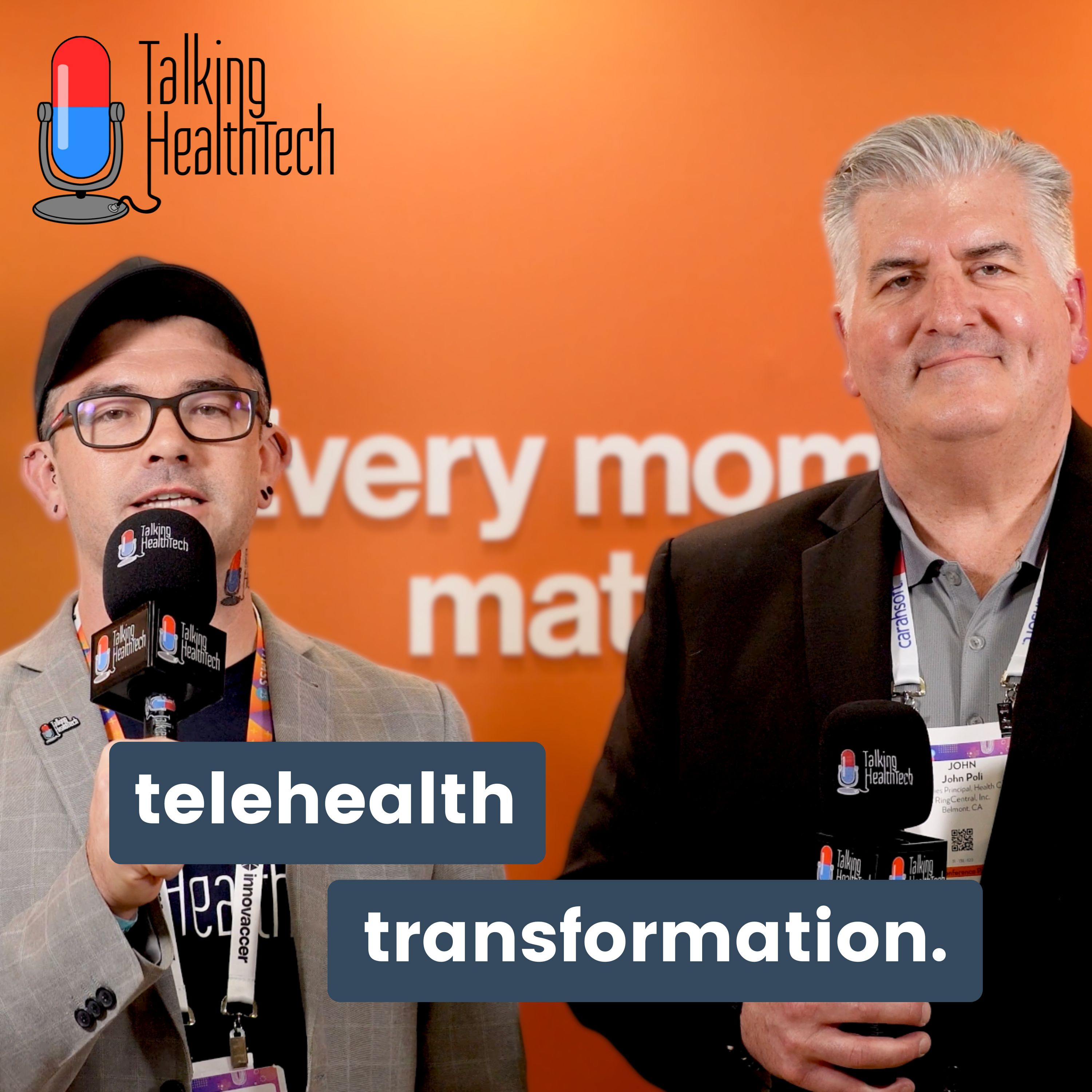
513 - Communications in Healthcare: On the Precipice of Change
In this episode of Talking HealthTech, Peter Birch chats with John Poli from RingCentral at the HIMSS 2025 conference in Las Vegas. They dive into how RingCentral is shaking up healthcare communications and what that means for patients and providers.Key Takeaways• RingCentral is a big player in cloud-based communications, especially in healthcare, operating in over 49 countries.• AI is changing the game by pulling insights from conversations with patients, both during and after calls.• There's a big focus on making healthcare more engaging and coordinated for patients, fueled by tech and changes brought on by COVID-19.• In the US, it's all about using tech to cut healthcare costs and make things smoother for patients. Australia's healthcare scene is seen as quite progressive, with efforts to meet local compliance needs.Check out the episode and full show notes on the Talking HealthTech website.Loving the show? Leave us a review, and share it with someone who might get some value from it.Keen to take your healthtech to the next level? Become a THT+ Member for access to our online community forum, meet ups, special offers and more exclusive content. For more information visit talkinghealthtech.com/thtplus
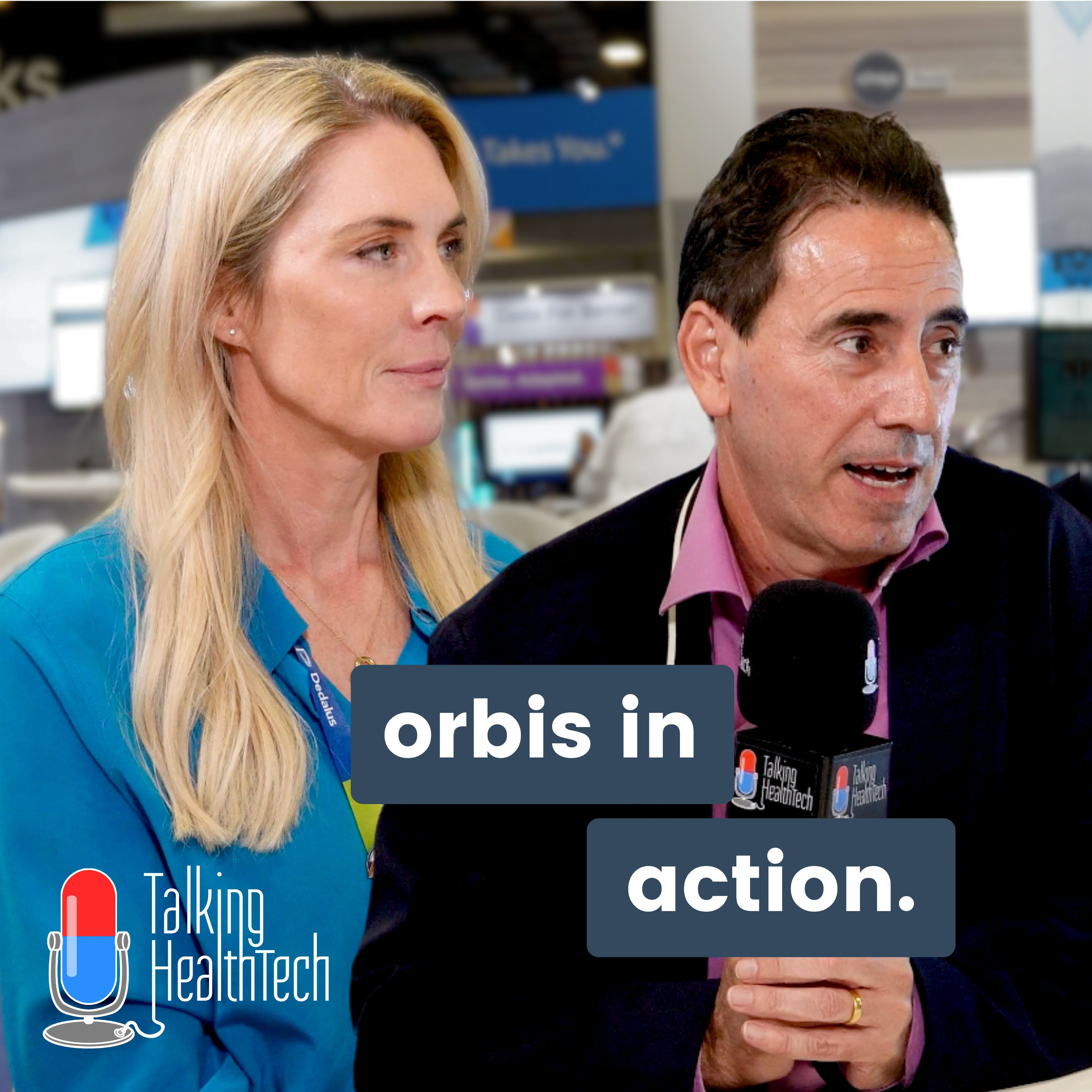
512 - HIMMS25: Dedalus ORBIS EMR and AI - ANZ Briefing
In this episode of Talking HealthTech, host Peter Birch speaks with Tracy McClelland, CCIO UK and George Patapis, ANZ Sales and Business Lead at Dedalus, about the innovative uses of the ORBIS electronic patient record (EPR) in healthcare. Recorded at the HIMSS 2025 conference, the conversation explores the integration of localised content, clinician-focused technology, and the role of artificial intelligence in enhancing clinical decision-making.This episode was recorded in the Dedalus booth, providing a deep dive into the current trends and innovations in healthcare technology being discussed at the event.Key Takeaways:• ORBIS is Dedalus’s EPR system used all over Europe and is now moving into the UK and Australian markets, complete with content tailored to each country's standards.• The team at Dedalus is all about making sure the tech works for, not against, clinicians. They've designed ORBIS to give healthcare professionals all the info they need in one spot to make clinical workflows smoother.• AI is a big part of the game with ORBIS, offering tools for predicting patient conditions like sepsis, plus AI-driven support like ambient listening and wound care assistance. Thanks to a dedicated ethics committee, they make sure all their AI tech is ethical and safe.Check out the episode and full show notes on the Talking HealthTech website.Loving the show? Leave us a review, and share it with someone who might get some value from it.Keen to take your healthtech to the next level? Become a THT+ Member for access to our online community forum, meetups, special offers, and more exclusive content. For more information visit talkinghealthtech.com/thtplus

511 - from data to dollars: optimising the revenue cycle.
In this episode of Talking HealthTech, host Peter Birch speaks with Charles Lie from Healthscope, Cathy Ryan from Cabrini Health, and Dean Breckenridge from Ramsay Health Care about the hurdles private hospitals in Australia are dealing with. They dive into outdated coding rules, workforce shortages, and the hiccups in revenue cycle management. They also cover how AI and automation come into play, discuss policy and funding roadblocks, and share some handy tips for staying financially sustainable.This episode was recorded as a live session in partnership with InfoMedix, bringing together representatives from across Australia's digital health ecosystem, including private hospitals, vendors, consulting firms, and government bodies, highlighting a broad interest and engagement with the topics discussed.Key Takeaways:• Coding complexity is a real headache for hospital cash flow, highlighting the need for skilled coders and efficient systems.• Bringing AI and automation into healthcare isn't smooth sailing because of specific coding standards and existing inefficiencies.• Everyone needs to team up to reduce admin redundancies and make systems more efficient.• Public vs. private hospital funding models are another ball game, making financial sustainability a big challenge.• Simplifying funding models helps reduce the admin burden and improve the quality of patient care.Check out the episode and full show notes on the Talking HealthTech website.Loving the show? Leave us a review, and share it with someone who might get some value from it.Keen to take your healthtech to the next level? Become a THT+ Member for access to our online community forum, meet-ups, special offers, and more exclusive content. For more information visit talkinghealthtech.com/thtplus
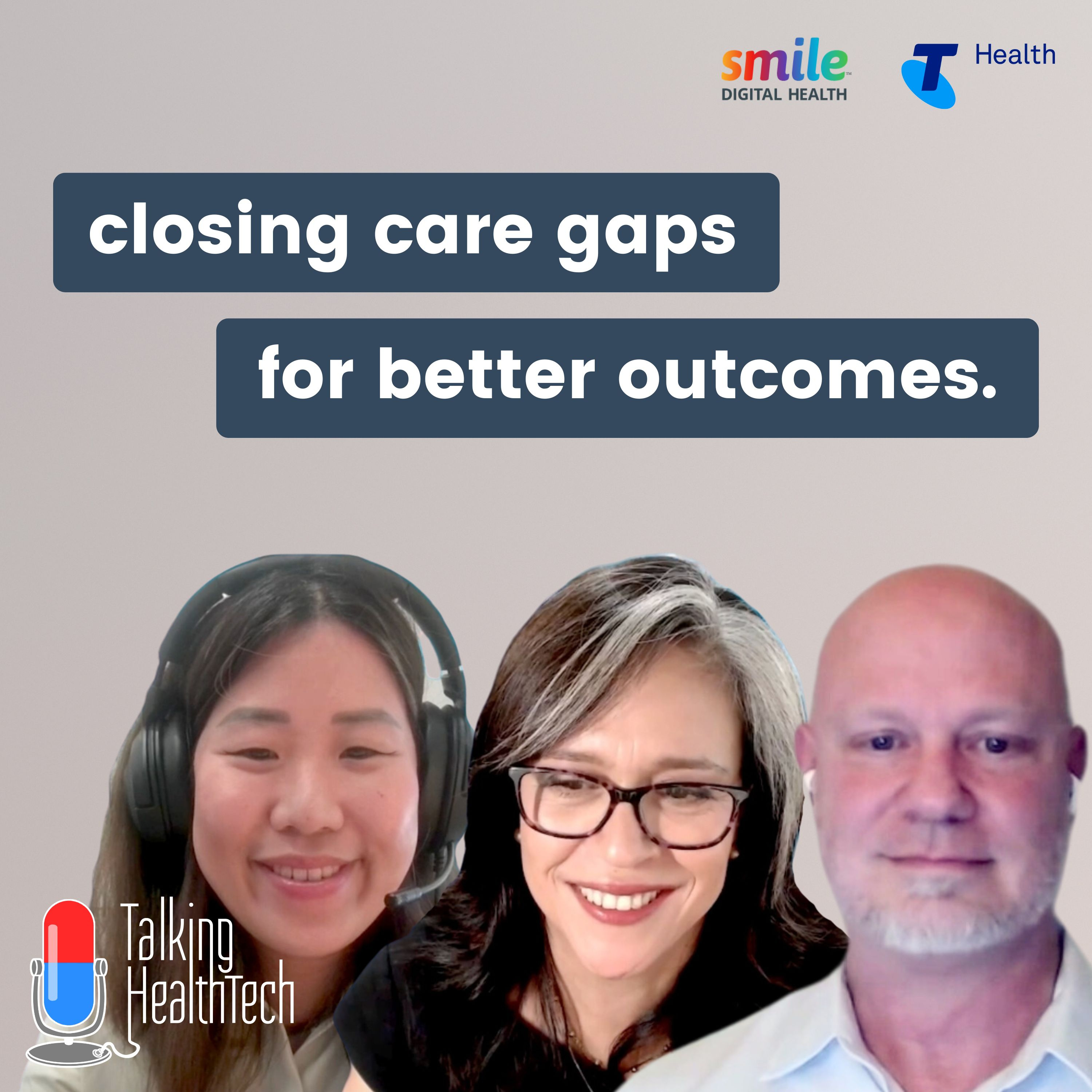
510 - Interoperability: Closing care gaps for better outcomes
In this episode of Talking HealthTech, host Peter Birch speaks with Dr Monica Trujillo, Chief Health and Risk Officer at Telstra Health; Rob Reynolds, Vice President of Clinical Reasoning at Smile Digital Health; and Dr Janice Tan, Clinical Director at Telstra Health. Together, they explore the significance of interoperability in healthcare, discussing how health information exchanges (HIEs) and emerging technology play a vital role in closing care gaps and improving patient outcomes across various healthcare settings.Key Takeaways:Interoperability is crucial for effective healthcare delivery, enabling clinicians to access and trust comprehensive patient data. Embracing standards like FHIR is pivotal for creating cohesive health information exchanges.- Clinical reasoning elevates data to provide more relevant insights to clinicians, aiding in informed decision-making. This, in combination with improved data accessibility, empowers both clinicians and patients.To ensure equitable health outcomes, addressing care gaps is essential, especially in rural and regional areas. Australia can learn from international experiences and leapfrog towards better integrated care.Emerging technologies should empower rather than replace clinicians, and co-design between tech developers and healthcare professionals is vital to ensure practical and useful applications.Check out the episode and full show notes on the Talking HealthTech website.Loving the show? Leave us a review, and share it with someone who might get some value from it.Keen to take your healthtech to the next level? Become a THT+ Member for access to our online community forum, meet ups, special offers, and more exclusive content. For more information visit talkinghealthtech.com/thtplus
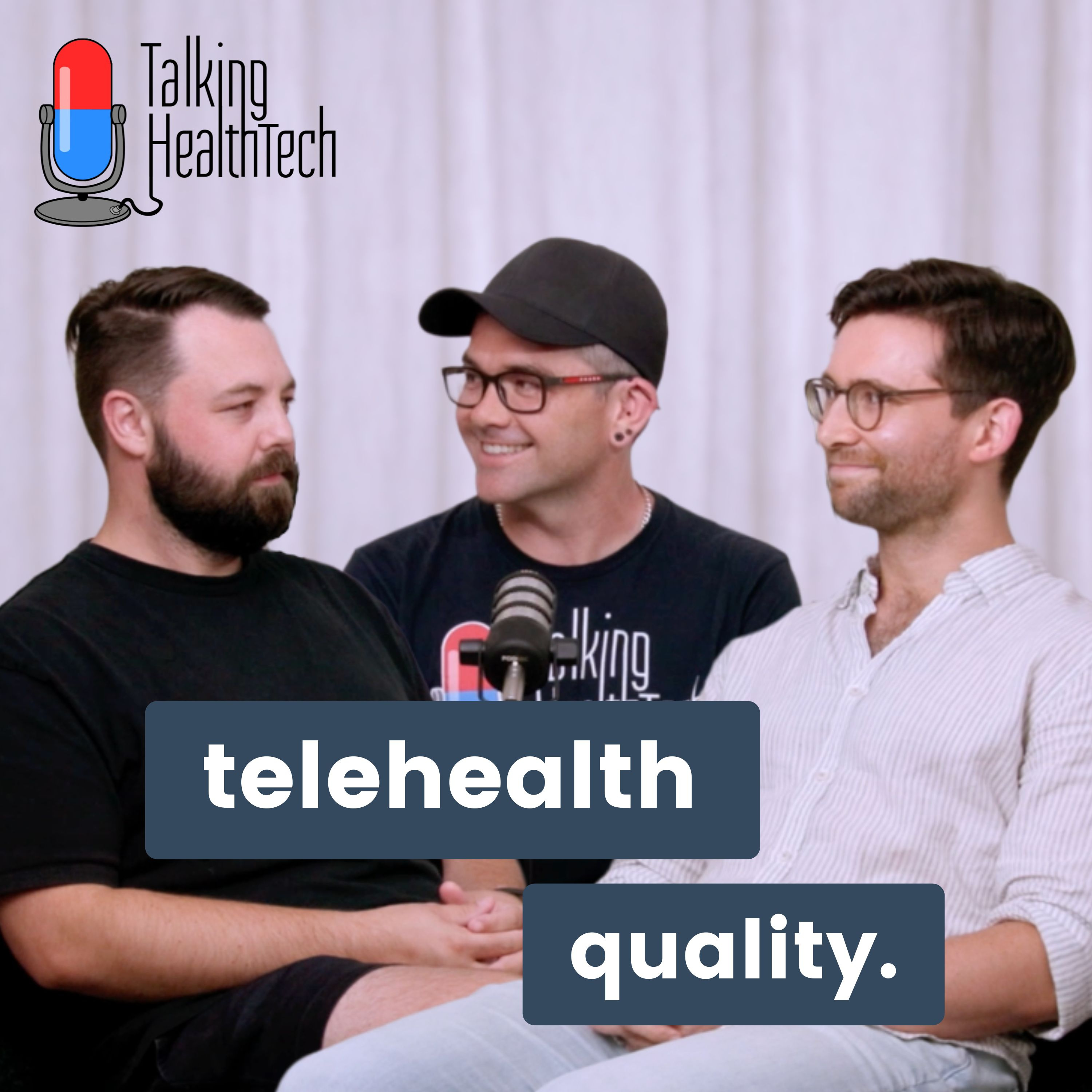
509 - The opportunity to implement safety and quality telehealth standards in Australia
In this episode of Talking HealthTech, host Peter Birch speaks with Lyndon Goddard and Dr Matthew Vickers from Eucalyptus about the evolution of the telehealth landscape in Australia over the past 12 months and the importance of regulatory standards in telehealth. This episode was recorded in the Eucalyptus studio.Key Takeaways:Evolution of Telehealth: The transition from asynchronous to synchronous telehealth models in response to new medical board guidelines has been a significant change, with positive feedback from practitioners and patients.Market Dynamics: The past year has seen a surge in telehealth clinics, especially those offering instant medical certificates and medical cannabis consultations. Regulatory scrutiny is increasing in these areas to ensure safety and compliance.AI in Telehealth: AI is gradually integrating into telehealth services, particularly clinical decision support and automation within digital health workflows.Call for Regulation: There is a strong need for standardised accreditation frameworks specifically tailored for telehealth services in Australia to ensure minimum safety and quality standards are met.International Comparisons: The UK’s approach to telehealth regulation, which includes multiple layers of oversight, offers valuable insights for potential frameworks in Australia.Check out the episode and full show notes on the Talking HealthTech website.Loving the show? Leave us a review, and share it with someone who might get some value from it.Keen to take your healthtech to the next level? Become a THT+ Member for access to our online community forum, meet-ups, special offers, and more exclusive content. For more information, visittalkinghealthtech.com/thtplus.

508 - Skin Deep: Revolutionising Skin Cancer Diagnosis with DermR Health
In this episode of Talking HealthTech, host Nathan Moore speaks with Stefan Mazy, the CEO of DermR Health Solutions. They discuss DermR Health's innovative approach to diagnosing skin cancer through their DermR Patch technology. Stefan shares his personal motivation behind the technology and the journey of developing a solution to improve diagnostic accuracy while reducing the burden on healthcare systems worldwide.Key Takeaways:DermR Patch technology offers a novel approach to skin cancer diagnosis using a microsampling tool that can potentially reduce unnecessary biopsies, which is projected to save significant healthcare costs and improve patient outcomes.The current global challenge with skin cancer diagnostics is the over-reliance on biopsies, with a significant percentage being unnecessary.The technology also addresses incorrect data classifications in skin cancer statistics, aiming to provide more accurate data for informed health decisions.The potential for nurses and other healthcare professionals to administer the DermR Patch, demonstrating the potential for optimising healthcare resources.The anticipated decline in GPs and rise in skin cancer cases by 2030 highlights the need for innovative diagnostic solutions such as DermR Patch.Check out the episode and full show notes on the Talking HealthTech website.Loving the show? Leave us a review, and share it with someone who might get some value from it.Keen to take your healthtech to the next level? Become a THT+ Member for access to our online community forum, meet-ups, special offers and more exclusive content. For more information visit talkinghealthtech.com/thtplus
507 - Transforming outcomes by advancing sustainable health
In this episode of Talking HealthTech, host Peter Birch speaks with Steve Gomes, the Managing Director of Rauland Australia and New Zealand, about integrating digital health technologies in healthcare and aged care settings. They discuss the development of the Concentric Care Platform, collaboration with clinicians, and the evolution of technology to meet the needs of health professionals and patients.This episode was recorded at the Rauland offices in Sydney, Australia, providing an in-depth look at how technology is implemented in Australia and New Zealand healthcare and aged care sectors.Key Takeaways:Rauland focuses on engaging with clinicians early in the technology deployment process to ensure solutions meet their needs effectively.The Concentric Care Platform has been a key development by Rauland since 2017, emphasising integration with electronic medical records like the single digital patient record system.Rauland’s approach includes a quiet environment in hospitals, reducing noise by directing alerts to the smartphones of assigned nurses and enhancing patient care and staff efficiency.The importance of partnerships and industry-standard integrations like HL7 and FHIR are discussed, ensuring smooth interoperability within the complex landscape of healthcare systems.Check out the episode and full show notes on the Talking HealthTechwebsite.Loving the show? Leave us a review, and share it with someone who might get some value from it.Keen to take your healthtech to the next level? Become a THT+ Member for access to our online community forum, meet ups, special offers and more exclusive content. For more information visittalkinghealthtech.com/thtplus

506 - Is a Health Information Exchange a Destination or a Journey?
In this episode of Talking HealthTech, host Peter Birch speaks with Alex MacLeod, the Director for Healthcare Solution Innovation at InterSystems, about the evolving landscape of Health Information Exchanges (HIEs). Pete and Alex explore how HIEs have developed over time, the practical use cases of these systems, and the lessons learned from global implementations, particularly in the US and Australia.Key Takeaways:Evolution of HIEs:HIEs have matured and often reinvented themselves, incorporating new use cases such as public health and AI to remain relevant and useful.Success Criteria:Effective HIEs provide early value through basic functionalities like real-time notifications and gradually layer on complex use cases, ensuring continuous utility and engagement.Engagement and Adoption:Early stakeholder engagement and inclusion of diverse perspectives from clinical and business sides are crucial for successful HIE implementation.Challenges in Measuring Impact: Quantifying the impact of HIEs on clinical outcomes and cost savings is challenging, but focusing on intermediary metrics like engagement rates and reduced readmissions can provide valuable insights.Data Utility and Privacy:Balancing comprehensive data collection with privacy considerations and practical adoption practices is crucial for long-term success.Check out the episode and full show notes on the Talking HealthTechwebsite.Loving the show? Leave us a review, and share it with someone who might get some value from it.Keen to take your healthtech to the next level? Become a THT+ Member for access to our online community forum, meet-ups, special offers, and more exclusive content. For more information visittalkinghealthtech.com/thtplus
505 - Reaching your destination healthy and well!
In this episode of Talking HealthTech, host Sophie Turner speaks with Whitney Luxford, who has extensive experience in aviation medicine and recently founded fit2fly. The discussion dives into Whitney’s career journey from paramedic to aviation medicine specialist and explores the innovations introduced by fit2fly to streamline the medical clearance process for airline passengers.Key Takeaways:Aviation Medicine Insights: Whitney shares her career journey, integrating her experience as a paramedic and her pivotal role in setting up a medical department for Virgin Australia.In-flight Medical Events: An overview of frequent in-flight medical events and their challenges, including costly diversions and emergency landings.fit2fly Solution: fit2fly aims to digitize and expedite the medical clearance process for airline passengers, significantly reducing approval times from weeks to minutes.Technological Integration: The platform leverages clinical algorithms and decision trees to provide immediate clearance, reducing passengers' anxiety and airline inefficiencies.Future Prospects: Whitney outlines plans to incorporate disability and accessibility travel information into the fit2fly platform, further simplifying the travel process for passengers with medical needs.Check out the episode and full show notes on the Talking HealthTechwebsite.Loving the show? Leave us a review, and share it with someone who might get some value from it.Keen to take your healthtech to the next level? Become a THT+ Member for access to our online community forum, meet ups, special offers and more exclusive content. For more information visittalkinghealthtech.com/thtplus

504 - Secure and Simple: Imprivata's Approach to Healthcare Authentication
In this episode of Talking HealthTech, host Peter Birch speaks with Jason Potts and Jamie Robertson from Imprivata about their roles, the company's solutions, and the digital identity challenges in healthcare.This episode was recorded during Digital Health Week New Zealand 2024, hosted by HiNZ, and dives into how Imprivata is helping healthcare providers manage secure access to patient information across various settings.Key Takeaways• Imprivata's Core Function: Imprivata focuses on digital identity solutions, primarily offering a simple and secure way for healthcare professionals to access multiple applications using technologies like Tap and Go and multifactor authentication.• Global Application: The solution is implemented globally, from large hospital systems to smaller clinics and commercial environments such as banking and gaming.• Local Context: In Australia and New Zealand, Imprivata adapts its workflows to fit local healthcare systems, integrating large EMR systems and smaller platforms.• Passwordless Journey: Imprivata is moving towards a passwordless environment, incorporating facial biometric authentication and other innovative approaches.• Mobility in Healthcare: They offer solutions for secure access via mobile devices, essential for clinicians working remotely or in various locations.Check out the episode and full show notes on the Talking HealthTechwebsite.Loving the show? Leave us a review, and share it with someone who might get some value from it.Keen to take your healthtech to the next level? Become a THT+ Member for access to our online community forum, meet-ups, special offers and more exclusive content. For more information visittalkinghealthtech.com/thtplus

503 - Revolutionising ADHD and Mental Health Care Through Teamwork and Innovative Technology Solutions
In this episode of Talking HealthTech, host Peter Birch speaks with Martyn Weir and Dr Kyle Hoath from Oqea about ADHD and mental health care through teamwork and innovative technology solutions. Key Takeaways: • Hybrid Care Model: Leveraging technology to offer patients flexibility in accessing care, such as seamlessly switching between face-to-face and telehealth appointments. • Technological Integration: Use of AI and other digital tools to streamline and enhance the diagnostic process for ADHD and other mental health conditions. • Collaborative Care: Importance of teamwork among different healthcare providers to improve patient outcomes, particularly in the mental health sector. • Access and Demand: Addressing the challenges around long wait times for ADHD services and improving efficiency through better organisation and resource management. • Role of Good Information: Providing patients with reliable, evidence-based resources to help them understand conditions and navigate the healthcare system. Check out the episode and full show notes on the Talking HealthTech website. Loving the show? Leave us a review, and share it with someone who might get some value from it. Keen to take your healthtech to the next level? Become a THT+ Member for access to our online community forum, meet ups, special offers and more exclusive content. For more information visit talkinghealthtech.com/thtplus
[BONUS EPISODE] Partnering for Better Health: Co-Design Strategies with Anja Christoffersen and Adrienne Young
bonusIn this episode of Consumer Health Partnerships, we speak with Anja Christoffersen, founder of Champion Health Agency, and Dr Adrienne Young, dietitian researcher at the Royal Brisbane and Women's Hospital and Senior Research Fellow at the University of Queensland, about co-designing a co-design framework for Metro North Health in Queensland. They delve deep into the need for a co-design framework to enhance patient nutrition and food experiences in hospitals. Anja and Adrienne share their journey of working together, the challenges they faced, and the significant impact of their collaborative efforts. They also touch upon the essential elements of building a successful collaboration between consumers and healthcare professionals to improve healthcare delivery. Key Takeaways: Understanding Co-Design: Co-design involves genuine partnerships and shared decision-making between consumers and healthcare professionals. Building Trust: Successful co-design projects are built on strong, trusting relationships and ongoing dialogue. Flexibility and Adaptability: Being adaptable and prepared to revisit and revise plans is crucial for overcoming unforeseen challenges. Emphasising Equity: Addressing power imbalances through proper funding and acknowledgment of contributions is essential for effective co-design. Legacy and Impact: The developed co-design framework has seen significant use, indicating its value and impact on improving healthcare practices. Links & Resources: Anja Christoffersen: https://www.linkedin.com/in/anja-christoffersen-999446152/ Dr Adrienne Young: https://www.linkedin.com/in/adrienne-young-5bb06316b/ Metro North Health co-design framework: https://metronorth.health.qld.gov.au/get-involved/co-design Consumer Health Partnerships is a podcast for healthcare stakeholders that spotlights the synergistic power of partnering with consumers to share a human-centred health system. We share inspiring stories and practical strategies from healthcare professionals at the forefront of embracing a human-centred approach to patient experience and a patient-centred approach to patient experience and co-design. We are redefining care by respecting their patients’ equal place in conversations about their health. This show is a proud member of the Talking HealthTech Podcast Network - the premier audio destination for cutting-edge insights and thought leadership in healthcare delivery, innovation, digital health, healthcare ICT, and commercialisation. Learn more at www.talkinghealthtech.com/podcast/network.

502 - Enhancing Patient Care: Technology Innovations at Dunedin's Outpatient Facility
In this episode of Talking HealthTech, host Peter Birch speaks with Phil Baskerville, Digital Project Director for New Dunedin Hospital, Dan Owen, Director of Health at NTT DATA, and Rachel Wolfe, Chief Customer Officer at Five Faces. They discuss integrating digital technologies in the new outpatient facility at Dunedin Hospital and the importance of building patient-centred and culturally inclusive healthcare solutions. This episode was recorded during Digital Health Week NZ 2024, hosted by HiNZ. Key Takeaways: • Collaborative Approach: The project exemplifies the importance of collaboration among technology providers to create a seamless healthcare experience. • Scalable Infrastructure: Emphasis on building a repeatable and scalable digital infrastructure to support multiple hospital projects over the next decade. • Patient Experience: Innovations aimed at enhancing patient and clinician experience through technology, such as location-grade Wi-Fi for equipment tracking and user-friendly digital interfaces. • Cultural Integration: Incorporating local dialect and cultural elements into the digital tools to ensure inclusivity and representation. • Prototyping and Testing: Establishing a design lab for early prototyping and real-world testing to ensure the system meets user needs before the facility's official opening. • Global Trends: Insights into how global trends in smart hospitals and patient-centric care models influence the project. Check out the episode and full show notes on the Talking HealthTech website. Loving the show? Leave us a review, and share it with someone who might get some value from it. Keen to take your healthtech to the next level? Become a THT+ Member for access to our online community forum, meet ups, special offers and more exclusive content. For more information visit talkinghealthtech.com/thtplus
501 - Why open, standard APIs are key for collaboration, innovation and a competitive marketplace
In this episode of Talking HealthTech, host Sophie Turner speaks with Andy Bond and Michael Strachan from Magentus about adopting open standards to ensure national usability of developed IP, the importance of interoperability, and enhancing collaborative care through sustainable practices. Key Takeaways: • Adopting open standards to address interoperability challenges, moving away from bespoke integrations. • Focus on enhancing collaboration between clinical endpoints, facilitated by FHIR Implementation Guides. 🔄 The pivotal role of workflow in integrating systems and improving processes like e-requesting and e-bookings. • Transition from older web services to modern FHIR-based APIs, supported by industry and government initiatives. • Emphasis on involving patients in their healthcare journey for better access to clinical information. • Developing a platform-based approach using FHIR APIs at Magentus, aiming to replace paper requests with digital ones by early 2025. Check out the episode and full show notes on the Talking HealthTech website. Loving the show? Leave us a review, and share it with someone who might get some value from it. Keen to take your healthtech to the next level? Become a THT+ Member for access to our online community forum, meet ups, special offers and more exclusive content. For more information visit talkinghealthtech.com/thtplus

500 - Behind the Scenes: What 500 Episodes of Talking HealthTech Have Taught Us
In this episode of Talking HealthTech, hosts Peter Birch, Nathan Moore, and Sophie Turner celebrate the milestone of the 500th episode. Reflecting on the podcast's journey from its beginnings to its plans for the future, the conversation dives into personal experiences, the evolution of health technology, and the importance of collaboration in the healthcare ecosystem. This discussion also touches on key topics such as AI, the role of digital health, and potential future directions for the podcast and the industry. Key Takeaways • Journey and Evolution of Talking HealthTech: The hosts reflect on the growth of the podcast, from Pete’s initial concept to the current production team and the collaboration with a diverse range of guests and co-hosts. • Personal Reflections: Each host shares their personal journey into health technology, highlighting the various paths and experiences that brought them to the current point. • Significance of Collaboration: The discussion emphasises the importance of collaboration within the healthtech space and the value of connecting different sectors and stakeholders. • Future Directions: The podcast aims to continue exploring impactful topics, including the integration of technology in rural and remote healthcare settings and the potential for new content formats and partnerships. • Community and Ecosystem: There is a shared commitment to enhancing the Talking HealthTech community and providing valuable content that supports the healthcare ecosystem. Check out the episode and full show notes on the Talking HealthTech website. Loving the show? Leave us a review, and share it with someone who might get some value from it. Keen to take your healthtech to the next level? Become a THT+ Member for access to our online community forum, meet ups, special offers and more exclusive content. For more information visit talkinghealthtech.com/thtplus

499 - Getting Back Up from a Major Health Set Back: Patient-led Project Delivery and Innovation from Core Connect Group
In this episode of Talking HealthTech, host Peter Birch speaks with Pat Wheaton, founder of Core Connect Group, and Elif Kücüktas, Specialist Advisor – Healthcare of Core Connect Group, about improving efficiencies in healthcare tasks, supporting frontline workers, and developing innovative healthcare products. Key Takeaways: • Progress in Technologies: Advancements in electronic medical records (EMR) and handheld tablets have been made, with opportunities to enrich clinical notes further. • Frontline Worker Focus: The importance of supporting frontline healthcare workers to make their jobs easier and more impactful is emphasised. • Innovation Framework: A structured framework for healthcare product and service innovation is developed to improve outcomes for patients and staff. • Collaboration Over Competition: Effective solutions in healthcare often come from collaboration between tech companies and clinicians, rather than independent problem-solving. Check out the episode and full show notes on the Talking HealthTech website. Loving the show? Leave us a review, and share it with someone who might get some value from it. Keen to take your healthtech to the next level? Become a THT+ Member for access to our online community forum, meet ups, special offers, and more exclusive content. For more information visit talkinghealthtech.com/thtplus
498 - HiNZ: Digital Health Week NZ 2024, Feature Episode
In this episode of Talking HealthTech, hosts Peter Birch and Rebecca McBeth speak with various leaders in digital health at the Digital Health Week NZ 2024 hosted by Health Informatics New Zealand (HiNZ). Guests include Scott Arrol, James Field, Charlene Tan-Smith, Dr Bryan Tan, Martin Chadwick, Lisa Knowles, Kate Tulp, Dr Kaveh Safavi, and Lara Hopley, covering the state and future of health technology in New Zealand amidst budget cuts and evolving digital landscapes. Key Takeaways: • Budget and Policy Changes: Exploring the federal budget cuts to technology and innovation in New Zealand healthcare and their implications. • Opportunities in HealthTech: Despite challenges, opportunities exist to thrive through collaboration and essential tech improvements. • Clinical Informatics and Allied Health: Highlighting the role of clinical informatics in patient management and cross-discipline collaboration. • Technology Integration and Workforce: Discussing how AI and new technologies can tackle workforce shortages and boost healthcare efficiency. Check out the episode and full show notes on the Talking HealthTech website. These are just a handful of the conversations we had at Digital Health Week NZ 2024. To catch all the other interviews, head over to our YouTube channel for a full playlist of all the discussions. Loving the show? Leave us a review, and share it with someone who might get some value from it. Keen to take your healthtech to the next level? Become a THT+ Member for access to our online community forum, meetups, special offers and more exclusive content. For more information visit talkinghealthtech.com/thtplus
497 - Enhancing General Practice: CPD, AI, and Business Strategies Discussed at GP24
In this episode of Talking HealthTech, host Peter Birch speaks with Dr Krystyna de Lange, Host of The Good GP Podcast; Dr Sean Stevens, Host of The Good GP Podcast; Chris Smeed, CEO of Cubiko; Paul Copeland, Partner - Business Advisory at William Buck Australia; George Sotiris, Director, HR In Health; and Dr Michael Wright, President of the Royal Australian College of General Practitioners (RACGP) about a wide range of topics, including CPD integration, practice management, AI in healthcare, and future leadership in general practice. This episode was recorded during GP24 in Perth, organised by the RACGP, covering the sector's innovations, technology, and sustainability. Key Takeaways: - Business and Financial Management: General practitioners are encouraged to deepen their understanding of business operations alongside clinical duties, focusing on leveraging software tools for financial and operational improvements. - Professional Development for GPs: Efforts through platforms like The Good GP Podcast aim to mentor new podcasters and educators in general practice, fostering professional growth. - Future Leaders Program: The RACGP's Future Leaders Program encourages involvement to expand influence and mentorship within the profession. • Healthcare Software & CPD: Integrating Continuing Professional Development (CPD) into Cubiko aims to enhance patient outcomes and streamline healthcare practices. • Improving Practice Culture: Emphasis is placed on improving practice culture, compliance, and systems while addressing challenges such as staff retention and accountability. Check out the episode and full show notes on the Talking HealthTech website. Loving the show? Leave us a review, and share it with someone who might get some value from it. Keen to take your healthtech to the next level? Become a THT+ Member for access to our online community forum, meet ups, special offers and more exclusive content. For more information visit talkinghealthtech.com/thtplus
496 - Exploring Digital Health Strategies and Innovations at the ANDHealth 2024 Summit
In this episode of Talking HealthTech, host Peter Birch speaks with Liz Ashall-Payne, Megan Robertson, and Christopher Bain about the latest developments in digital healthcare. Recorded at the ANDHealth Digital Health Summit 2024 in Melbourne, Australia, the discussion explores system-based trust in healthcare technology, the transformative role of technological integrations in healthcare, regulation and policy challenges, and the future aspirations for digital health impact and accessibility. Key Takeaways: 📋 System Building in Healthcare Technology: Developing a standardised framework for evaluating healthcare technology is essential to foster trust and ensure the distribution of high-quality digital health solutions. This approach aims to achieve global impact, particularly in supporting underserved regions. 💊 Technological Transformations: Advancements such as electronic medication prescribing and real-time prescription monitoring have significantly improved safety and accessibility in healthcare. Integrated digital systems ensure smoother care transitions and better patient outcomes. 🖥️ Future of Digital Health Management: Electronic medical records (EMRs) and synthetic data can transform healthcare by enhancing efficiency and innovation. Current initiatives focus on making medical reports more accessible to patients and leveraging synthetic data to develop secure and effective healthcare solutions. ⚖️ Regulation and Policy in Digital Health: Digital health and AI regulation presents complex challenges in a rapidly evolving environment. Adequate government funding and addressing the divide between federal and state healthcare systems are critical factors for success. 🚀 Digital Health Transformation Stages: The progression from digitisation to full digital transformation is a key focus, emphasising value-based digital health initiatives that aim to improve patient care and healthcare system efficiency. Check out the episode and full show notes on the Talking HealthTech website. Loving the show? Leave us a review, and share it with someone who might get some value from it. Keen to take your healthtech to the next level? Become a THT+ Member for access to our online community forum, meet-ups, special offers, and more exclusive content. For more information visit talkinghealthtech.com/thtplus

495 - HLTH US 2024 Las Vegas, Feature Episode
In this episode of Talking HealthTech, host Peter Birch speaks with a range of experts at HLTH 2024. The discussions dive into various aspects of healthcare technology, virtual care, genetic sequencing, AI solutions, and the importance of demographic data in healthcare. Featured guests include Monica Soni, Michelle Stephens, Dr. Noura Abul-Husn, Pano Anthos, Justin Mardjuki, and Mitesh Rao. This episode was recorded during the HLTH 24 event in Las Vegas and features a handful of the conversations that Talking HealthTech captured during the event. Key Takeaways 🏥 Corporate Efforts in Healthcare: The challenges major corporations face in delivering healthcare services are attributed to their inability to meet consumer needs effectively. 🌐 Shift Towards Virtual Care: A growing trend comparable to the rise of e-commerce is emerging, which could transform healthcare delivery through virtual care solutions. 🧬 Genetic Sequencing and Preventative Care: Insights are shared on the role of genetic sequencing in predicting health outcomes and providing personalized health recommendations. 📊 Demographic Data in Healthcare: The importance of collecting demographic data, such as race and gender identity, is underscored to enhance healthcare delivery and ensure equitable access. 🤖 AI Safety and Reliability: The need for transparency and robust data in AI tools is emphasized to ensure patient care safety, reliability, and accuracy. 📈 Healthcare Data Management: Efforts to develop a data layer that transforms healthcare data into actionable insights are described as a step toward improving overall healthcare management. Check out the episode and full show notes on the Talking HealthTech website. Loving the show? Leave us a review, and share it with someone who might get some value from it. Keen to take your healthtech to the next level? Become a THT+ Member for access to our online community forum, meet ups, special offers and more exclusive content. For more information visit talkinghealthtech.com/thtplus