Talking HealthTech
660 episodes — Page 2 of 14
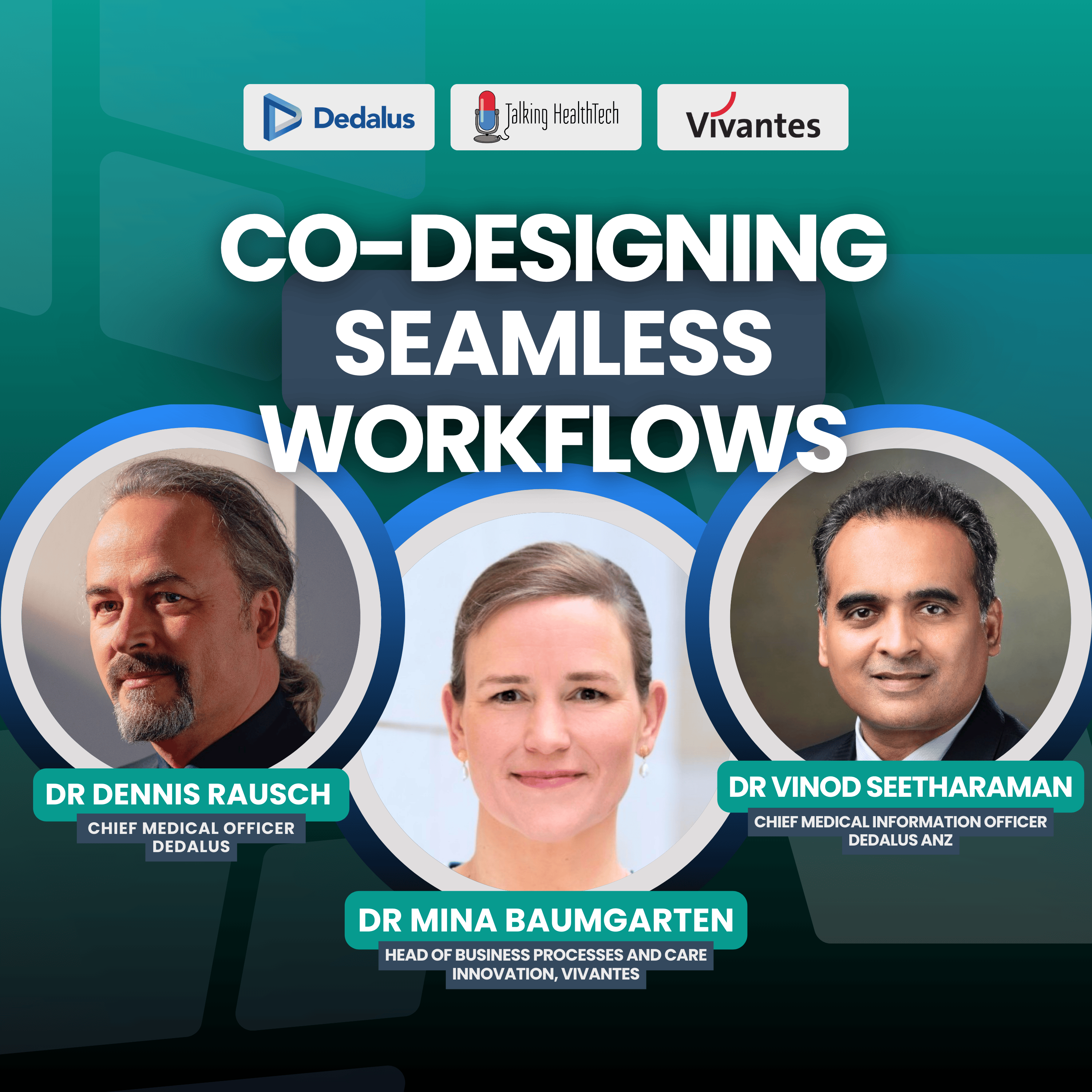
Ep 589589 - The Future of Care: Enhancing Patient Outcomes with Digital Health Collaboration
In this episode of Talking HealthTech, Peter Birch speaks with Dr. Mina Baumgarten, Head of Business Process and Care Innovation at Vivantes, Dr Dennis Rausch, Chief Medical Officer at Dedalus, and Vinod Seetharaman, CMIO for ANZ at Dedalus.The conversation examines the challenges and strategies involved in large-scale digital health transformations, highlighting the long-standing partnership between Vivantes and Dedalus.It also explores the implementation of electronic medical records, the shift from traditional vendor relationships to collaborative transformation partnerships, and how lessons from Europe can inform Australia’s digital health journey.The discussion provides insights into interoperability, digital maturity, workflow optimisation, and the use of AI to support clinicians.It highlights real-world examples of successes and challenges, demonstrating approaches to building sustainable, adaptable, and effective digital health systems.Key Takeaways🚀 Digital transformation relies on strategic, collaborative partnerships rather than basic buyer-vendor relationships.🏥 Unifying multiple hospital sites under one digital system boosts scalability and efficiency.🧩 True interoperability requires integrating numerous IT platforms to support complex care environments.🤖 AI and automation are being used for clinical decision support, monitoring, and enhancing patient safety.📊 Rigorous evaluation of digital and AI solutions is essential, prioritising real-world demand, measurable benefits, and strategic alignment.Timestamps00:00 — Introduction01:17 — Vivantes health system overview04:40 — Dedalus' long-term partnership history09:06 — Key elements of digital infrastructure17:53 — Interoperability challenges in Australia20:48 — AI and automation use cases25:17 — Innovation implementation standards--------Want to keep the conversation going?The full article and extended show notes for this episode are available inside the THT+ Community here: View Full Article HereIn the THT+ Community, our members keep the discussion going, share perspectives, and unpack what this episode actually means in practice with other people working in healthtech.If you’re enjoying the show and want access to full articles, episode discussions, meetups, and member-only content, you can learn more about becoming a THT+ Solo Member here: talkinghealthtech.com/thtplus.And if this episode was useful, leaving a review or sharing it with someone in the industry always helps.
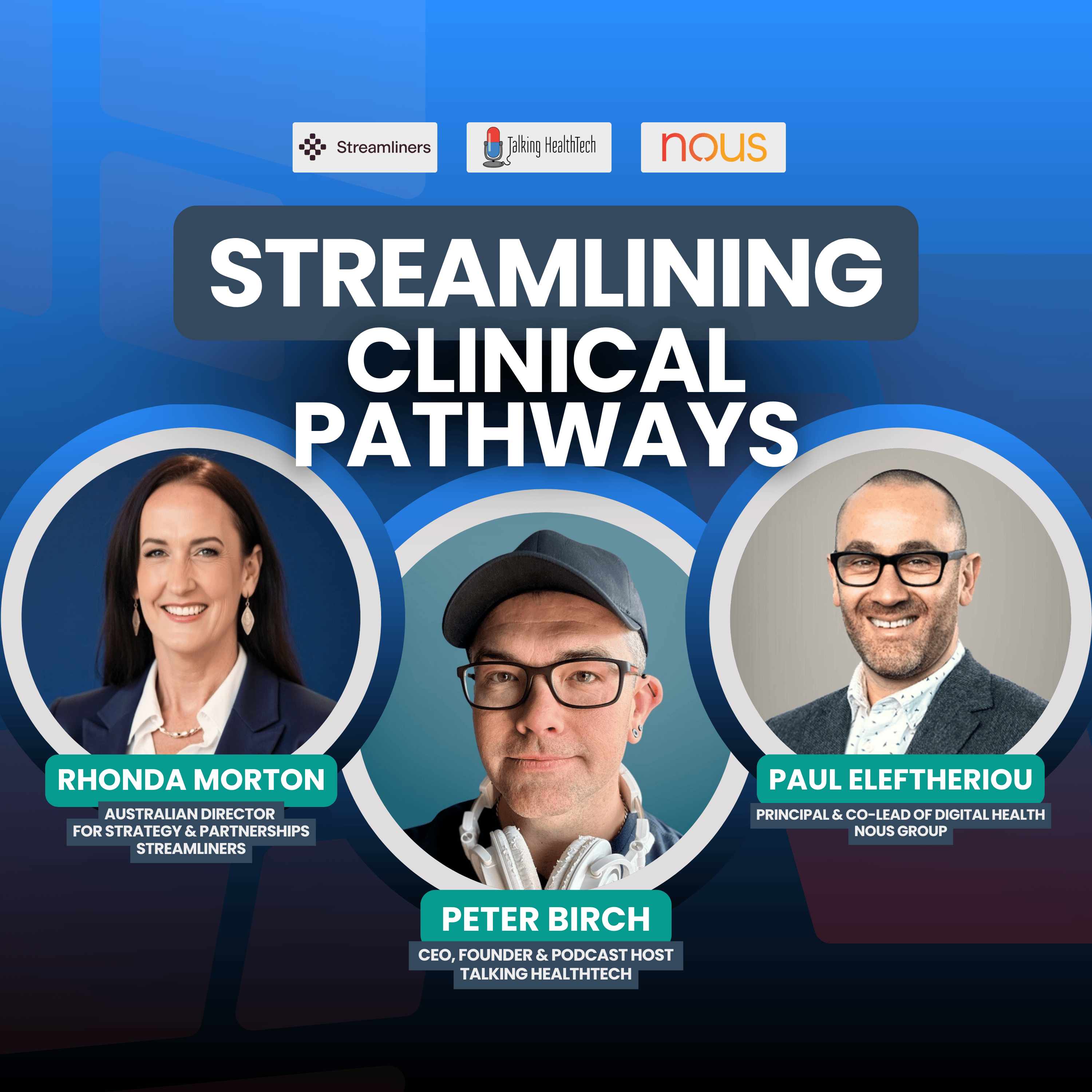
Ep 588588 - Clinical Pathways: Improving Patient Journeys and Efficiency with Digital Health Solutions
In this episode of Talking HealthTech, host Peter Birch speaks with Paul Eleftheriou, Principal and Co-Lead of Digital Health at Nous Group, and Rhonda Morton, Australian Director for Strategy and Partnerships at Streamliners, about the role of clinical pathways in modern healthcare.The conversation explores what clinical pathways are, why they are important, how they interact with technology like medical records, e-referrals, and AI tools, and how they can address inefficiencies and improve patient and clinician experiences across Australia.The discussion also dives into the challenges of translating evidence into practice, the impact of fragmentation in the health system, and the critical role of workforce engagement, leadership culture, and patient-centred design.The conversation provides practical insights into how clear, collaborative clinical pathways can reduce clinician burnout, promote health equity, and create a foundation for safe, smart digital innovation.It examines how evidence-based pathways interact with technology such as electronic medical records, e-referrals, and AI tools, and explores strategies to overcome system fragmentation while improving consistency, efficiency, and patient-centred care across healthcare settings.Key Takeaways✨ Clinical pathways standardise care, providing consistent, evidence-based guidance for clinicians and supporting a seamless patient journey across fragmented health systems.🤝 Integrating clinical pathways with digital tools improves communication, reduces inefficiencies, and helps prevent patients from falling through the cracks in a federated healthcare environment.📉 Pathways can address “hidden taxes” on the system, such as unnecessary tests and duplicated processes, unlocking both cost savings and safer care.👩⚕️ Effective pathways reduce clinician burnout by delivering point-of-care tools that streamline decision-making, and must be co-designed with both workforce and patient needs in mind.🤖 Solid foundational systems are needed before leveraging advanced technologies like AI, ensuring that any innovations support, rather than overwhelm, clinicians and patients.Timestamps00:00 — Introduction00:36 — What are clinical pathways?04:49 — Clinical pathways analogy: restaurants06:09 — Pathways as patient journeys07:42 — Digital’s role and “filling the cracks”12:09 — Inefficiencies and hidden taxes16:58 — Interoperability vs. care pathways24:12 — Clinician burnout and enabling workforce28:04 — AI, tech foundations, and implementation41:20 — Future directions for Streamliners--------Want to keep the conversation going?The full article and extended show notes for this episode are available inside the THT+ Community here: View Full ArticleIn the THT+ Community, our members keep the discussion going, share perspectives, and unpack what this episode actually means in practice with other people working in healthtech.If you’re enjoying the show and want access to full articles, episode discussions, meetups, and member-only content, you can learn more about becoming a THT+ Solo Member here: talkinghealthtech.com/thtplus.
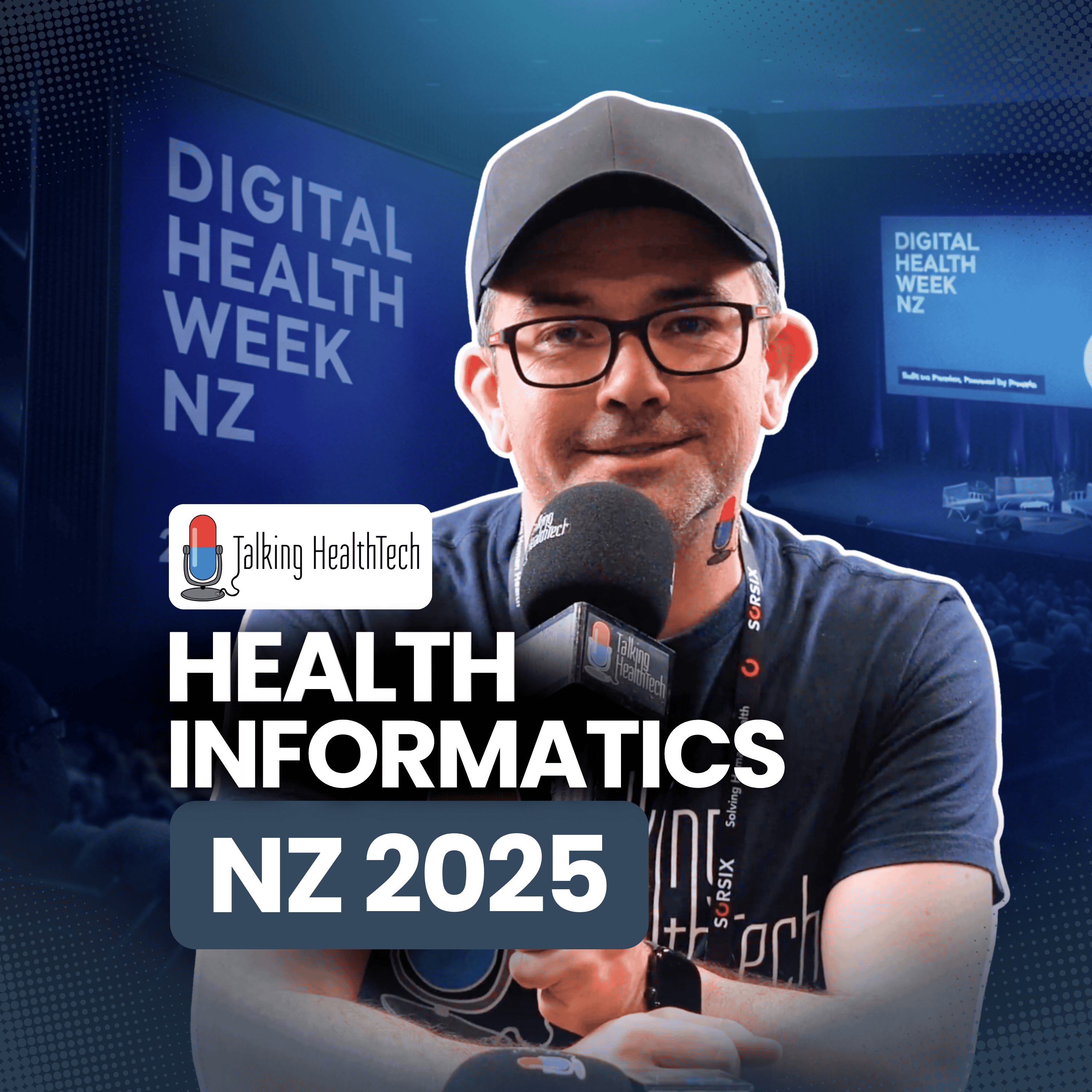
Ep 587587 - Collaboration, Equity, and Change: Driving Innovation at HiNZ 2025
In this episode of Talking HealthTech, Peter Birch and Rebecca McBeth from HiNZ speak with Hon. Tracey Martin, Darren Douglass, Debbie Hughes, and Alex Kemp about digital health innovation and challenges in New Zealand.This episode explores the latest developments in digital health and aged care in New Zealand, recorded during Digital Health Week in Christchurch, hosted by Health Informatics New Zealand (HiNZ).The discussion covers the digital transformation roadmap for Health New Zealand, highlighting how technology, clinical leadership, and inclusive design are shaping the future of care.The episode examines the challenges and opportunities in residential aged care, including workforce pressures, funding reforms, and the practical use of AI and digital tools to support frontline staff.The evolving role of HiNZ within the health sector is explored, including efforts to foster cross-sector collaboration, drive innovation, and provide long-term governance.The conversation captures insights from industry leaders and practitioners, offering a comprehensive view of New Zealand’s approach to digital health transformation, grounded in practical, human-centred strategies.Key Takeaways✨ The future of aged residential care in NZ faces both political and practical challenges, with technology positioned to streamline processes and enable more human-centred care.🧠 Co-design and direct involvement of disabled people in digital health solutions is crucial; early engagement helps address accessibility and diversity in technological development.💼 Health New Zealand’s ten-year digital investment plan focuses on stabilising infrastructure, modernising platforms with AI and automation, and ultimately transforming clinical care and patient access.🤝 Building trust and breaking down silos in healthcare are priority strategies for HiNZ, fostering connection and collaboration across the health sector.👥 Leadership, change management, and digital upskilling initiatives are central to delivering sustainable transformation for NZ’s health workforce and systems.Timestamps00:00: Introduction00:43: Hon. Tracey Martin - Aged Care Association, NZ07:27: Darren Douglass - Acting Chief Information Technology Officer, Health NZ17:42: Debbie Hughes - Chief Executive, NZ Disability Support Network22:05: Alex Kemp - Director of Engagement/CEO, HiNZ--------Want to keep the conversation going?The full article and extended show notes for this episode are available inside the THT+ Community here: View Full ArticleIn the THT+ Community, our members keep the discussion going, share perspectives, and unpack what this episode actually means in practice with other people working in healthtech.If you’re enjoying the show and want access to full articles, episode discussions, meetups, and member-only content, you can learn more about becoming a THT+ Solo Member here: talkinghealthtech.com/thtplus.And if this episode was useful, leaving a review or sharing it with someone in the industry always helps.
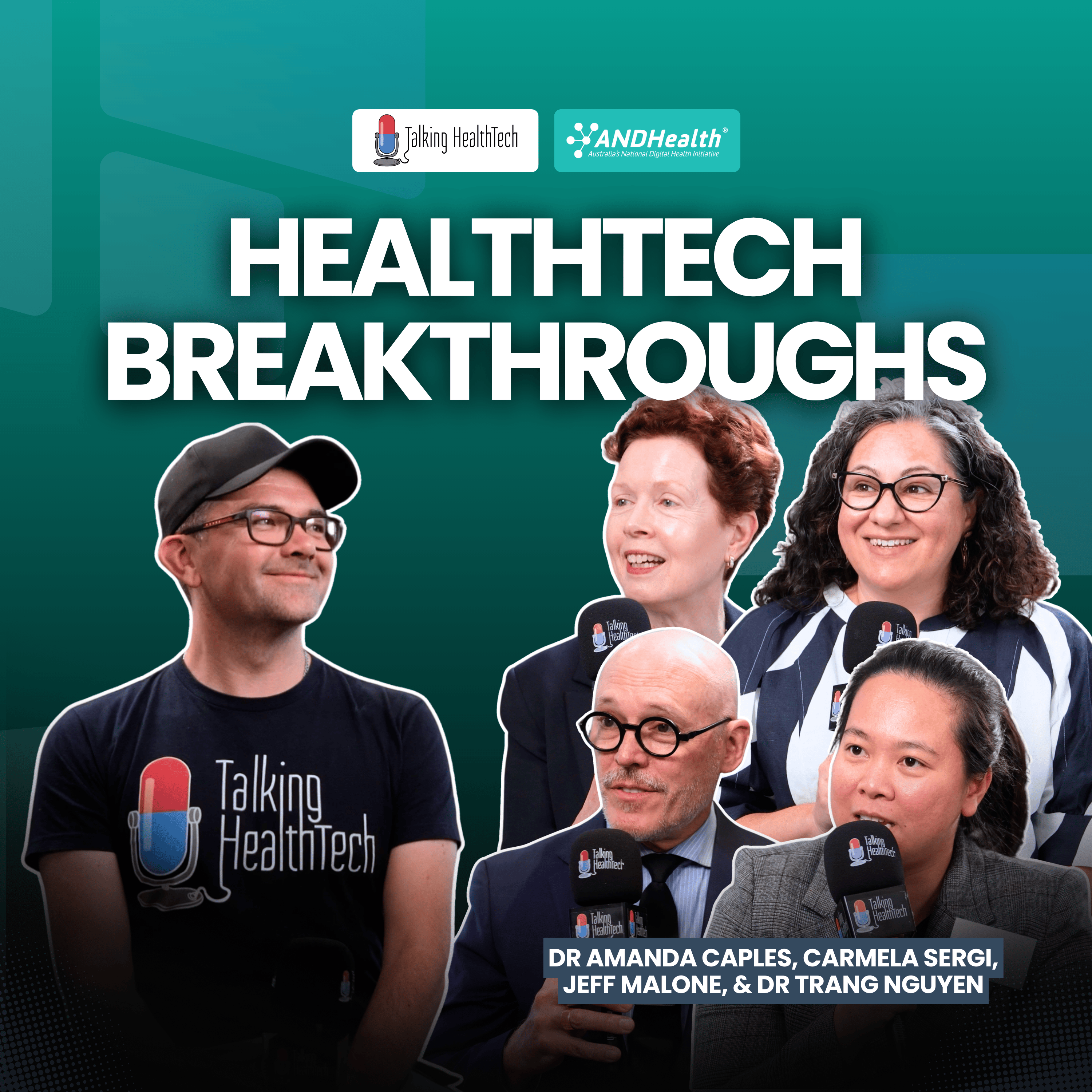
Ep 586586 - Innovating Aged Care and Cancer Treatment: Inside ANDHealth Unfiltered 2025
In this episode of Talking HealthTech, host Peter Birch speaks with Carmela Sergi, CEO of the Care Economy CRC, Amanda Caples, Victoria's Chief Scientist, Jeff Malone, CEO of the Aikenhead Centre for Medical Discovery (ACMD), and Trang Nguyen, CEO and Founder of SeeTreat, about the intersection of digital health, innovation, and commercialisation in Australia.The conversations explore how health technology is designed, implemented, and scaled in real care settings, with a focus on patient outcomes, workforce realities, and practical adoption.The episode includes in-depth discussion on the future of the care economy and how co-design and end-user involvement are driving more effective, compassionate, and practical solutions.The discussion also dives into the emerging role of quantum technology in healthcare, strategies for translating research into real-world products, and how cross-sector collaboration can accelerate home-grown innovation.This episode was recorded during the ANDHealth Unfiltered 2025 event in Melbourne, Australia, and features several discussions that highlight evolving trends and front-line experiences in Australian healthtech.Key Takeaways🧑🤝🧑 The Care Economy CRC focuses on integrating technology and data to uplift productivity and outcomes across aged care, disability care, early childhood education, and more, with a major emphasis on co-design and workforce involvement.🤝 Effective health innovation requires collaboration among government, academia, and industry, with models like ACMD and event conveners like ANDHealth driving partnerships.📉Technology uptake in healthcare faces barriers including workflow integration, clinician overload, and the risk of unintended consequences, making co-design with end users critical to success.🦠 Quantum technologies and advanced analytics are emerging as significant contributors to research, service delivery, and patient outcomes, with Victoria positioning itself as an ecosystem leader.💊 Translation from research to commercialisation is improving in Australia, but ongoing focus on ecosystem navigation, workforce engagement, and industry partnerships remains essential.Timestamps00:00 – Introduction00:28 – Carmela Sergi, CEO, Care Economy CRC08:34 – Amanda Caples, Victoria’s Chief Scientist16:34 – Jeff Malone, CEO, ACMD26:37 –Trang Nguyen, CEO & Founder, SeeTreat--------Want to keep the conversation going?The full article and extended show notes for this episode are available inside the THT+ Community here: View Full Article HereIn the THT+ Community, our members keep the discussion going, share perspectives, and unpack what this episode actually means in practice with others working in healthtech.If you’re enjoying the show and want access to full articles, episode discussions, meetups, and member-only content, you can learn more about becoming a THT+ Solo Member here: talkinghealthtech.com/thtplus.And if this episode was useful, leaving a review or sharing it with someone in the industry always helps.

Ep 585585 - Optimising Patient Flow: Mindset, Metrics, and Continuous Improvement for Hospital Leaders
In this episode of Talking HealthTech, Peter Birch speaks with Dr Paul Deffley and Nick White from Alcidion about their new handbook on improving patient flow within healthcare systems.The conversation explores why the handbook has been released now, its intended audience, and how its concepts can support leaders and clinicians in enhancing the movement of patients through hospitals.The discussion examines the current pressures facing hospitals, including rising patient demand, workforce challenges, and system inefficiencies, and considers why traditional approaches to patient flow are no longer sufficient.Lessons from other industries are explored, highlighting how principles such as systems thinking and Lean methodology can be adapted for healthcare.The episode emphasises the combination of real-time data, organisational culture, and continuous improvement as central to creating safer, more efficient, and patient-centred hospital systems.Key Takeaways✅ Patient flow is more than implementing digital solutions—real change requires cultural and behavioural transformation within health organisations✅ Real-time, system-wide visibility is critical for effective patient flow management and making data-driven decisions✅ Adopting approaches from other industries, like Lean principles, must be tailored to the unique clinical and operational environment of healthcare✅ Measuring a broad range of indicators beyond standard KPIs (e.g., length of stay, outliers, medically ready to discharge) provides better insights and guides improvement✅ Practical actions like shop floor engagement and prioritising system-wide visibility can drive immediate and meaningful changeTimestamps00:00 – Introduction00:47 – Who the handbook is for and its purpose01:33 – Why address patient flow now02:41 – The importance of system-wide visibility03:39 – Practical tools from the handbook05:29 – Comparing healthcare to other industries07:52 – Customising industry methods for clinical environments08:57 – Differentiating patient flow discussions from electronic patient records10:46 – The challenge of demonstrating return on investment in patient flow initiatives14:30 – Rethinking metrics for measuring success in patient flow17:27 – Actions health leaders can take today19:01 – Actionable advice for immediate implementation20:25 – How to access the handbook--------Want to keep the conversation going?The full article and extended show notes for this episode are available inside the THT+ Community here: View Full Article HereIn the THT+ Community, our members keep the discussion going, share perspectives, and unpack what this episode actually means in practice with other people working in healthtech.If you’re enjoying the show and want access to full articles, episode discussions, meetups, and member-only content, you can learn more about becoming a THT+ Solo Member here: talkinghealthtech.com/thtplus.And if this episode was useful, leaving a review or sharing it with someone in the industry always helps.
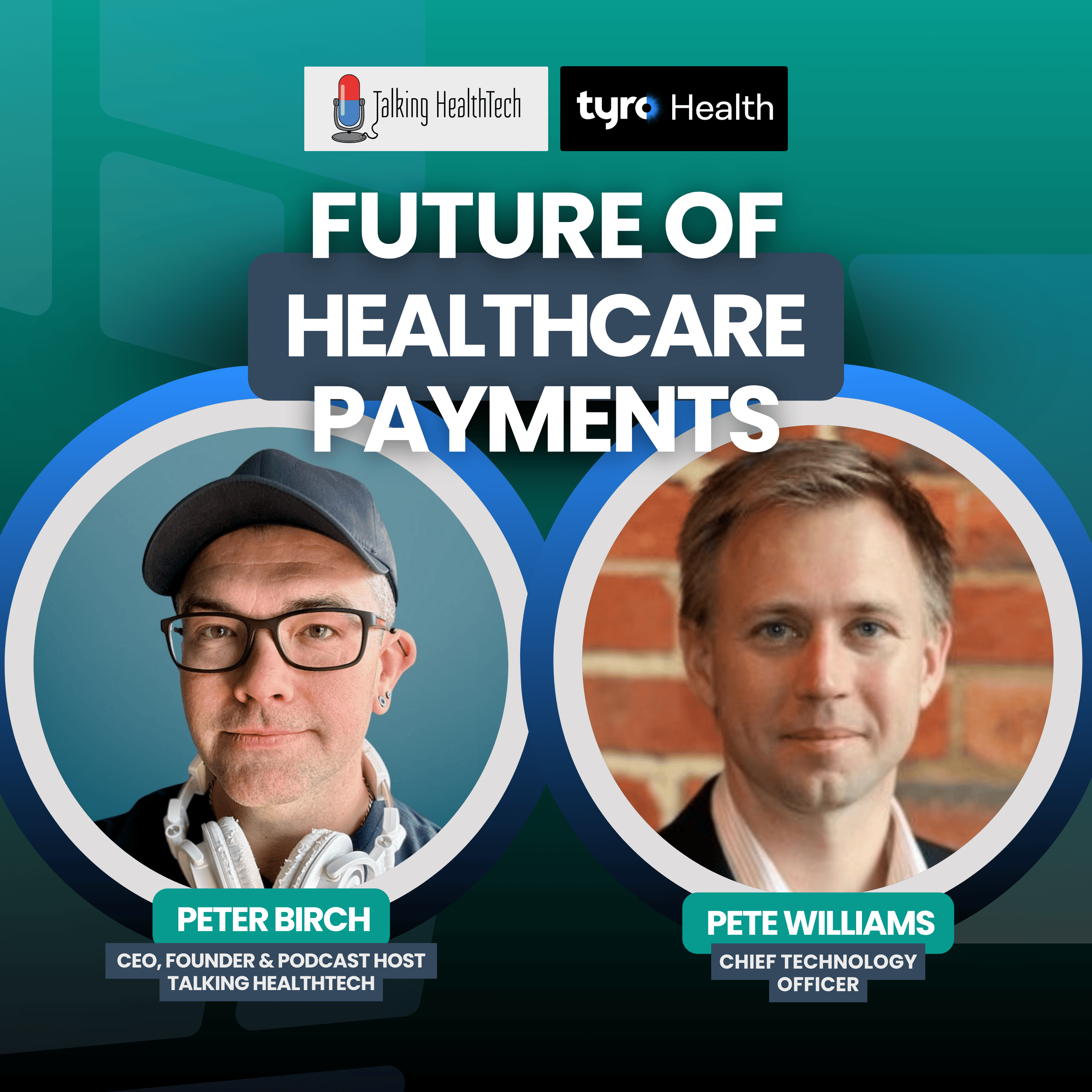
Ep 584584 - The Next Wave of Healthcare Payments: Integration, Transparency & Trust
In this episode of Talking HealthTech, Peter Birch speaks with Pete Williams, CTO of Tyro Health.The episode explores the evolution of healthcare payments, including the transition from Medipass to Tyro Health and the latest trends in digital wallets.It also covers the practicalities of surcharging, regulatory changes, integrated payment solutions, and the potential impact of technologies like stablecoin and PayTo on medical payments for clinics and patients in Australia.Peter and Pete break down what these changes mean for clinics of all sizes, from day-to-day operations to long-term strategy.They discuss how seamless payment experiences can improve efficiency, reduce errors, and enhance patient satisfaction, while also highlighting the risks and challenges practices face in a fast-moving digital payments landscape.The conversation offers practical insights, real-world examples, and a forward-looking view of where healthcare payments are heading.Key Takeaways💳 The shift to digital wallets has reshaped payments in healthcare, with over 90% of card-present transactions now happening via Apple Pay, Google Pay, or similar options.🔁 Surcharging remains a significant consideration for clinics, with around 40% of medical businesses enabling it, though regulations may change.📲 Integration between payment systems and practice management platforms is now common, driving efficiency with over 70% of clinics automating their payment and reconciliation workflows.🪙 Emerging payment innovations such as programmable money and advanced bank-to-bank systems like PayTo have the potential to change how recurring and complex healthcare payments are managed.🏦 Less than 35% of overall healthcare payments are processed through Medicare, making integration with private insurers and funders increasingly critical for clinics.Timestamps00:00 – Introduction00:31 – Changes since Medipass and acquisition by Tyro Health01:32 – Payment technology experiences in healthcare02:46 – Growth of the Tyro Health team03:18 – Clinic perspective on payments04:36 – Impact of digital wallets05:39 – Clinic decisions and recent regulatory changes07:22 – Surcharging rules for debit vs credit cards08:04 – Balancing payment convenience for patients08:43 – Percentage impact of payment costs on clinic margins10:03 – Integrating payments with practice management systems10:52 – Automation and three-way matching in clinics12:29 – Approaches to optimising payments13:53 – Programmable money, stablecoin, and use cases15:46 – Payment innovation and health system challenges17:01 – Distributed autonomous organisations17:21 – PayTo, direct debit, and recurring payments20:37 – Integrating more funders and improving patient experience22:29 – Wrap up and resources--------Want to keep the conversation going?The full article and extended show notes for this episode are available inside the THT+ Community here: View Full Article HereIn the THT+ Community, our members keep the discussion going, share perspectives, and unpack what this episode actually means in practice with other people working in healthtech.If you’re enjoying the show and want access to full articles, episode discussions, meetups, and member-only content, you can learn more about becoming a THT+ Solo Member here: talkinghealthtech.com/thtplus.And if this episode was useful, leaving a review or sharing it with someone in the industry always helps.

Ep 583583 - Navigating Health Technology Assessments: Overcoming Barriers to Patient Access
In this episode of Talking HealthTech, Peter Birch speaks with Associate Professor Colman Taylor and Alasdair Godfrey from HTANALYSTS about the evolving landscape of health technology assessment in Australia.The conversation explores how regulatory change, patient engagement and real-world evidence are reshaping the way new technologies are assessed, funded and adopted.It also examines the challenges health tech companies face when bringing innovation to market in Australia and across international settings.They share practical insights into what these changes mean for innovators, clinicians and policy-makers navigating an increasingly complex system.This episode looks at how value is defined beyond the limits of clinical trials. It also highlights why patient experience and practical implementation are becoming increasingly important in decisions about health technology.Together, these insights offer a grounded and timely perspective on the forces shaping the future of Australian health technology.Key Takeaways🔍 The "valley of death" is a significant hurdle for Australian health tech innovators, where promising technologies struggle to secure funding and market access.💡 Health Technology Assessment (HTA) frameworks are adapting to consider new dimensions such as equity, patient-centred outcomes, and system impact, beyond traditional cost and clinical effectiveness.👥 Patient engagement is increasingly recognised as critical, with patients now actively involved in advisory boards and decision-making processes, offering perspectives beyond those of clinicians.📊 Real-world evidence is helping to fill gaps left by clinical trials, providing insight into system readiness, implementation feasibility, and outcomes for diverse populations.🌏 International policy changes, particularly from the US and UK, are influencing Australia’s HTA processes and impacting access to innovative therapies for patients.Timestamps00:00:00 – Introduction00:02:05 – Overview of HTANALYSTS and their purpose00:03:26 – The “valley of death”00:05:56 – Explaining Health Technology Assessment00:07:09 – Traditional metrics vs. evolving HTA frameworks00:08:33 – Government reviews in HTA00:10:46 – The role of patient engagement and inclusion in HTA00:12:29 – Application of patient engagement00:14:10 – Real-world evidence: its role and impact00:16:27 – Faster access, data barriers, and implementation challenges00:18:21 – Agility in assessment processes00:20:09 – Examples of flexibility in healthcare guidelines00:22:26 – What innovators can do now00:23:47 – MFN policy changes in the US00:26:07 – HTANALYSTS’ role as middlemen bridging stakeholders00:27:15 – Lessons about collaboration, evidence, and early alignment00:29:06 – Importance of implementation00:29:55 – Future directions--------Want to keep the conversation going?The full article and extended show notes for this episode are available inside the THT+ Community here: View Full Article HereIn the THT+ Community, our members keep the discussion going, share perspectives, and unpack what this episode actually means in practice with other people working in healthtech.If you’re enjoying the show and want access to full articles, episode discussions, meetups, and member-only content, you can learn more about becoming a THT+ Solo Member here: talkinghealthtech.com/thtplus.
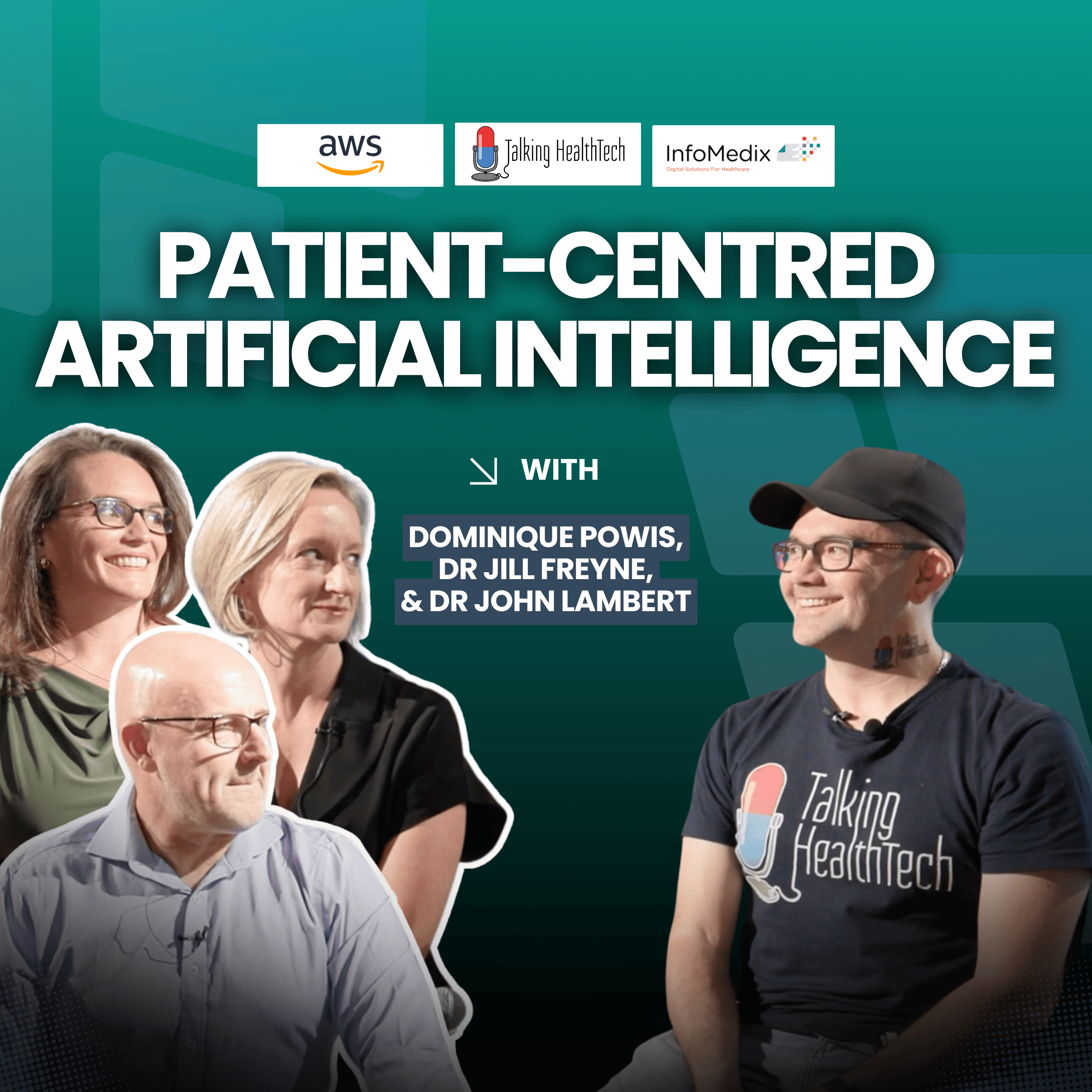
Ep 582582 - North Star vs Shiny Star: Supporting Healthcare Workers and Patient Outcomes with AI
In this episode of Talking HealthTech, Peter Birch speaks with Dominique Powis, Chief Technology Officer at Infomedix, Dr John Lambert, Chief Clinical Information Officer for the Department of Health Tasmania, and Dr Jill Freyne, Health Industry Lead at Amazon Web Services.They discuss the practical applications of artificial intelligence in healthcare and explore its real-world operational impact.The conversation also includes insights from attendees during a live Q&A session, offering a unique opportunity to hear questions and challenges directly from healthcare professionals and technology leaders.The panel dives into real-world use cases of AI, including diagnostics, predictive analytics, improving patient outcomes, and boosting administrative efficiency.They also examine the critical importance of governance, privacy, and practical implementation when integrating AI into everyday clinical workflows.This episode was recorded live at AWS in Sydney, Australia, and is supported by Infomedix, providing an up-close look at how healthcare AI is being applied in local and global contexts.Key Takeaways ⭐ Clear problem definition, high-quality data, and context-specific solutions are crucial to successful AI applications in healthcare🤖 Predictive AI currently offers proven impact in areas such as diagnostics and early detection, while generative AI introduces unique challenges🧑⚕️ Human-centred design, usability, and workflow integration are critical to successful technology adoption and patient benefit🔒 Privacy, compliance, and ethical guardrails must evolve with technological advancements, particularly in data handling and patient confidentiality🌏 Sustainability, change management, and continuous improvement are essential considerations in deploying and scaling AI across the health ecosystemTimestamps 00:00 – Introduction & event overview02:00 – Panellist introductions & AI use cases06:35 – AI pattern recognition benefits08:39 – Sniff test for viable AI solutions10:23 – Administrative AI applications12:45 – Impact opportunities: patient & clinician14:28 – Administrative vs clinical AI focus15:35 – Evidence and business cases for ambient scribes20:06 – Guardrails and governance in AI22:35 – Change management for AI rollouts26:30 – Practical advice: North Star vs shiny distractions32:09 – Audience Q&A: patient privacy, data use37:39 – Use of AI in culturally diverse aged care settings44:06 – AI risks, safety, technical guardrails48:11 – Sustainability and long-term impact----------Want to keep the conversation going? The full article and extended show notes for this episode are available inside the THT+ Community here: View Full ArticleIn the THT+ Community, our members keep the discussion going, share perspectives, and unpack what this episode actually means in practice with other people working in healthtech.If you’re enjoying the show and want access to full articles, episode discussions, meetups, and member-only content, you can learn more about becoming a THT+ Solo Member here: talkinghealthtech.com/thtplus.And if this episode was useful, leaving a review or sharing it with someone in the industry always helps.

Ep 581581 - Advice and Guidance in Practice: Improving Equity and Outcomes for Patients and Clinicians
In this episode of Talking HealthTech, Peter Birch speaks with a panel of healthcare experts, including Stephanie Hodgson, physiotherapist, health project manager and industry PhD candidate at ConsultMed; Dr Shoma Dutt, paediatric gastroenterologist and senior staff specialist at the Children’s Hospital at Westmead; Dr Matthew Lam, GP and clinical advisor to ConsultMed at Riverstone Family Medical Practice; Charlie Winstanley, general manager of cardiovascular at Guy’s and St Thomas’s NHS Foundation Trust; and Dalia Croxton, senior project manager for digital health and business systems at Mater Group.The conversation dives into the evolving role of advice and guidance (A&G) models in shaping patient outcomes, clinician workflows, and healthcare access across Australia and the UK.The panel discusses practical benefits, such as reducing wait times, improving triage, and supporting GPs to manage complex cases more confidently.Gain insights into how digital referral pathways and emerging technologies like AI are changing the way specialists and primary care providers collaborate.This episode also highlights lessons learned, the importance of leadership and culture, and the challenges that remain in making A&G work effectively for both clinicians and patients.Key Takeaways👩⚕️ Advice and guidance (A&G) allows GPs and primary care providers to obtain timely specialist input without formal referrals, helping address outpatient waitlists and geographical inequities in access to care.🚀 Examples from paediatrics, mental health, endocrinology, and other specialties show A&G resolves a significant proportion of referrals, keeping patients managed in primary care or redirecting them to more suitable services.🌏 Both Australian and UK health systems are implementing A&G at scale, with New South Wales and Queensland adopting statewide models and the NHS seeing significant appointment diversion, reducing waiting times and improving resource use.🤝 Effective A&G relies on streamlined workflows, bi-directional communication between primary and specialist care, clear referral criteria, and support for GPs as central care coordinators.🤖 The future of A&G may include multidisciplinary expansion, integration with allied health, and advanced technology such as AI to improve efficiency and access for patients—while ensuring the focus remains on better outcomes and equity.Timestamps0:00 – Introduction1:18 – Stephanie Hodgson defines advice and guidance3:02 – Dr Shoma Dutt shares real-world impacts in paediatric gastroenterology 5:32 – Dr Matthew Lam describes case studies where A&G adds value and boosts equity9:54 – Stephanie Hodgson discusses the impact of data and equity 13:01 – Dr Shoma Dutt on developing a statewide referral criteria 16:43 – Charlie Winstanley talks about A&G adoption 23:11 – Panel consensus on key ingredients for scaling A&G: leadership, technology, education, making it frictionless for GPs, and measuring impact33:07 – Dalia Croxton on A&G transparency for patients35:20 – Charlie Winstanley and Stephanie Hodgson explore future directions40:21 – Dr Matthew Lam on keeping patient outcomes at the centre-------Want to keep the conversation going?The full article and extended show notes for this episode are available inside the THT+ Community here: View Full Article HereIn the THT+ Community, our members keep the discussion going, share perspectives, and unpack what this episode actually means in practice with other people working in healthtech.If you’re enjoying the show and want access to full articles, episode discussions, meetups, and member-only content, you can learn more about becoming a THT+ Solo Member here: talkinghealthtech.com/thtplus.And if this episode was useful, leaving a review or sharing it with someone in the industry always helps.

Ep 580580 - Beyond Episodic Care: How Digital Health Platforms Transform Care Coordination
In this episode of Talking HealthTech, Peter Birch speaks with Nalaka Withanage, CEO and co-founder of Data Capture Experts, the organisation behind the Digital Health Platform DC2Vue.The discussion explores the fragmentation of data in healthcare and the importance of longitudinal care records.They also examine the evolving role of digital health platforms compared to traditional EHRs, along with the opportunities and challenges associated with artificial intelligence and data governance in healthcare innovation.Dive into the practical steps healthcare organisations can take to build strong data foundations, improve interoperability, and create workflows that truly support person-centred care.The conversation also goes beyond the hype around AI, examining how real value emerges only when technology is underpinned by complete, accurate, and context-rich data.Key Takeaways🗂️ Data fragmentation in healthcare is a core challenge, often caused by the use of multiple, siloed systems across various care settings.👩⚕️ Longitudinal care records provide a continuous, patient-centred view across different healthcare touchpoints, improving care coordination and outcomes.🔑 Foundational data quality and integration are essential for enabling advanced analytics, artificial intelligence adoption, and workflow optimisation.🔒 Privacy, consent management, and security, using principles like zero trust, must be embedded in digital health platforms to balance innovation with safety.🚀 To unlock the full value of AI in healthcare, organisations should focus on strong data foundations, process-oriented thinking, and workflow automation before layering in advanced technologies.Timestamps00:00:00 — Introduction00:01:25 — Why data fragmentation persists in healthcare00:02:54 — What is a longitudinal care record00:03:59 — Highlighting benefits of longitudinal health records00:05:08 — Differences between Digital Health platforms and traditional EHRs00:07:38 — The role of AI in digital health00:11:12 — Balancing innovation with privacy, security, and governance00:14:04 — Key advice for healthcare CIOs on leveraging data and AI00:15:14 — The roadmap for DC2 View and trends in virtual care and remote patient monitoring———Want to keep the conversation going?The full article and extended show notes for this episode are available inside the THT+ Community here: View Full Article HereIn the THT+ Community, our members keep the discussion going, share perspectives, and unpack what this episode actually means in practice with other people working in healthtech.If you’re enjoying the show and want access to full articles, episode discussions, meetups, and member-only content, you can learn more about becoming a THT+ Solo Member here: talkinghealthtech.com/thtplus.And if this episode was useful, leaving a review or sharing it with someone in the industry always helps.
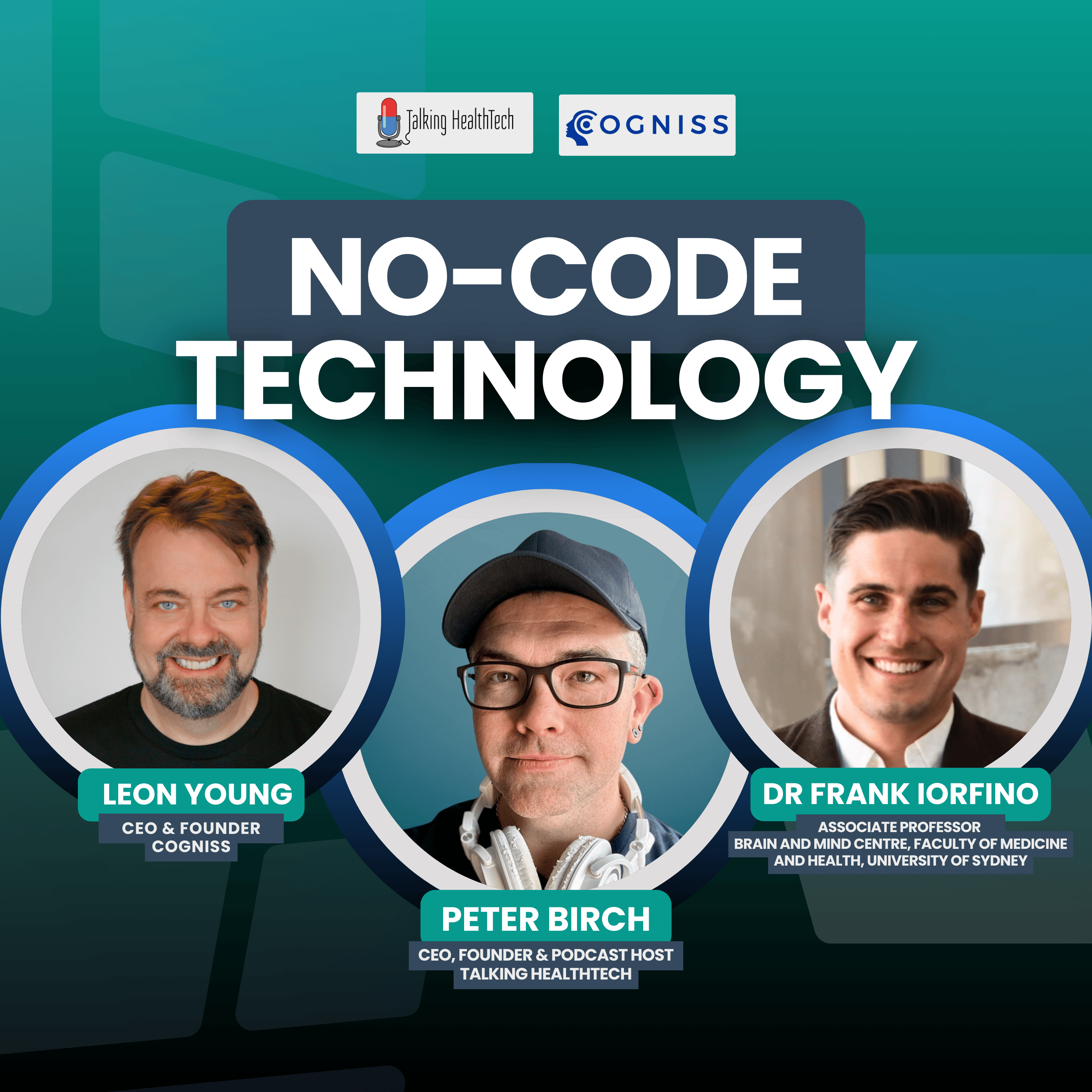
Ep 579579 - Scaling Predictive Healthcare: How No Code Platforms Drive Personalised Digital Therapeutics
In this episode of Talking HealthTech, Peter Birch speaks with Leon Young, CEO and Founder at Cogniss, and Dr Frank Iorfino, Associate Professor at the Brain and Mind Centre, University of Sydney.The discussion focuses on no-code health technology platforms, digital mental health solutions, and the challenges and opportunities in delivering predictive and preventative healthcare, particularly in youth mental health.The episode covers Cogniss' evolution, the role of digital and predictive tools in healthcare systems, and real-world applications in clinical research and practice.The conversation offers insights into how health professionals can use no-code platforms to build, refine, and scale digital solutions, the importance of personalisation in mental health care, and the ways predictive analytics can identify risks and support early intervention.It also examines the barriers to scaling innovation in health systems and how collaborative approaches are helping to bridge the gap between pilots and broader implementation.Practical examples of digital health tools in action are highlighted, from apps supporting youth mental health to predictive solutions for conditions such as sepsis and chronic illness.Key Takeaways✨ No-code technology enables health professionals and researchers to build, maintain, and scale digital health solutions more efficiently, reducing development costs and barriers to market entry.🤝 Effective prediction and early intervention in healthcare, particularly mental health, require accessible digital solutions that can personalise care, track outcomes, and help prevent illness escalation.📱 Real-world applications, such as using wearables and health data integration for predictive models, are being developed for youth mental health and chronic conditions like cancer and autoimmune diseases.🔗 The challenge of delivering digital therapeutics at scale stems from complex procurement, a lack of clear ownership in health systems, and the need for unified infrastructures that support solution interoperability and patient data control.🌏 Initiatives like Ripple aim to support priority populations and address gaps in digital health by building a catalogue of evidence-based solutions targeted to specific health challenges, such as women’s health and youth mental health.Timestamps & Main Topics00:00 Introduction01:08 Leon Young introduces himself and Cogniss02:57 Dr Frank Iorfino shares his experience in youth mental health and digital solutions04:08 Discussion on the importance of early intervention06:21 The vision for predictive tools08:28 Dr Frank Iorfino explains the Mind Your Mind app10:54 Researcher challenges and the value of no-code platforms13:01 Adapting no-code solutions beyond white-labelled apps14:09 Growing the platform through demand-driven development17:03 The need for infrastructure that can deploy multiple digital solutions19:49 Areas of highest potential for predictive healthcare technologies20:36 Examples of predictive health projects22:12 Dr Iorfino expands on why youth mental health is a pressing priority24:51 Barriers to scaling predictive and preventative healthcare solutions26:11 Developing a marketplace approach to better match innovations30:37 Closing remarks and how to connect with Cogniss----Want to keep the conversation going?The full article and extended show notes for this episode are available inside the THT+ Community here: View Full Article HereIn the THT+ Community, our members keep the discussion going, share perspectives, and unpack what this episode actually means in practice with other people working in healthtech.If you’re enjoying the show and want access to full articles, episode discussions, meetups, and member-only content, you can learn more about becoming a THT+ Solo Member here: talkinghealthtech.com/thtplus.And if this episode was useful, leaving a review or sharing it with someone in the industry always helps.
Ep 578578 - The Passwordless Future of Healthcare: Lessons from Imprivata’s Implementation Journey
In this episode of Talking HealthTech, Peter Birch sits down with Brad Gwyther, Principal Consultant at Imprivata, to explore the evolving landscape of secure access and identity management in clinical settings. The conversation focuses on the New Zealand healthcare ecosystem while highlighting trends and challenges that resonate globally.Brad and Peter discuss the daily struggles clinicians face with password management, the risks of weak access controls, and the impact of inefficient authentication on both patient safety and clinical workflow.They also examine modern approaches to secure access, including passwordless authentication, biometric logins, single sign-on, and mobile device management.These solutions can streamline clinical workflows while maintaining rigorous security and meeting audit requirements.The discussion also delves into practical lessons for implementing authentication solutions across desktop and mobile environments, addressing the complexities of shared workstations, roving staff, and multiple applications.This episode was recorded live at the Imprivata booth during HiNZ Digital Healthcare Week in New Zealand, providing listeners with real-world examples of how hospitals are modernising access management to improve efficiency, accountability, and patient care.Key takeaways🔑 Password management and the shift towards passwordless authentication are key concerns in healthcare, due to multiple system access requirements🩺 Implementing secure, efficient authentication methods that can help clinicians provide better patient care without interruption🛡️ Security needs to be balanced with ease of access, tailored to different workflows and physical locations within healthcare facilities📱 Mobile device management and secure shared device usage are becoming increasingly important as clinical mobility grows🌏 The drive towards efficient, secure access is a global issue, with maturity and practices varying across organisations, but a common goal shared worldwideTimestamps00:00 – Introduction00:50 – Brad Gwyther explains his role at Imprivata01:25 – Needs of Imprivata’s customers in New Zealand02:52 – Balancing security and ease of use in clinical authentication04:01 – Passwordless authentication and ongoing challenges05:55 – Implementation process07:18 – Integrating clinical applications and systems08:36 – Mobile device management and traceability09:44 – Global challenges in secure access for healthcare11:15 – Innovations in authentication and aligning tech with clinical workflows___Want to keep the conversation going?The full article and extended show notes for this episode are available inside the THT+ Community here: View Full Article HereIn the THT+ Community, our members keep the discussion going, share perspectives, and unpack what this episode actually means in practice with other people working in healthtech.If you’re enjoying the show and want access to full articles, episode discussions, meetups, and member-only content, you can learn more about becoming a THT+ Solo Member here: talkinghealthtech.com/thtplus.And if this episode was useful, leaving a review or sharing it with someone in the industry always helps.
Ep 577577 - Hybrid and Digital Care: Balancing Technology, Regulation, and Human Touch in General Practice
In this audio-only episode of Talking HealthTech, Dr Max Mollenkopf, a Newcastle GP and practice owner, speaks with Tim Doyle, founder and CEO of Eucalyptus, about the evolution and future of primary care in Australia.The discussion explores Eucalyptus’s digital health model, how it is changing patient experiences, supporting clinicians, and connecting with traditional general practice.The conversation covers key challenges facing healthcare today, including continuity of care, regulatory considerations, clinician engagement, and the shifting expectations of patients in a digital era.They share candid insights on scaling digital clinics, balancing technology with human connection, and the opportunities and limitations of hybrid care models.This episode offers practical perspectives on how digital and traditional care can work together, the evolving role of the GP, and what the next generation of Australian healthcare may look like.Key Takeaways🩺 The rise of digital-first clinics is changing how patients interact with primary care, focusing on convenience and continuity through technology.👩⚕️ Clinician independence and quality assurance, including pre-screening and audit systems, are central to responsible digital healthcare delivery.💡 Patient engagement is evolving, with increased demand for more data, self-ownership of health, and a desire for ongoing support beyond traditional appointments.💬 The lines between wellness, primary care, and marketplace health products are blurring, raising questions around clinician roles, value, and regulation.🔗 Integrating digital and in-person (hybrid) care paths is viewed as essential for the future, with attention to necessary safeguards, incentives, and patient consent.Timestamps00:00 — Introduction00:36 —Dr. Max Mollenkopf on panel experiences and challenging ideas02:02 —Tim Doyle explains Eucalyptus’s origins and vision06:11 — Addressing continuity, fragmentation, and care platforms13:29 — Access to health information and regulatory challenges17:33 — Business models, clinician obligations, and monetisation24:45 — Regulation, industrial standards, and cannabis clinics26:58 — Quality audits and the role of technology in large-scale care32:23 — Value in care, rebates, and consulting models37:00 — The intersection of wellness, screening, and preventative health42:38 — A hybrid model for future healthcareWant to keep the conversation going?The full article and extended show notes for this episode are available inside the THT+ Community here:View Full Article HereIn the THT+ Community, our members keep the discussion going, share perspectives, and unpack what this episode actually means in practice with other people working in healthtech.If you’re enjoying the show and want access to full articles, episode discussions, meetups, and member-only content, you can learn more about becoming a THT+ Solo Member here: talkinghealthtech.com/thtplus.And if this episode was useful, leaving a review or sharing it with someone in the industry always helps.
Ep 576576 - Exploring Healthcare in Space: How Extreme Environments Shape Healthcare Innovation
In this episode of Talking HealthTech, Peter Birch sits down with Dr Vienna Tran, Professor Gordon Cable, and Dr Lisa Brown to explore the fascinating intersection of healthcare and space.The discussion focuses on space medicine and how clinicians care for astronauts living in microgravity, exposed to radiation, and operating far from Earth’s hospitals.Learn about the unique challenges of human physiology in space, from fluid shifts and bone loss to immune changes and heightened cancer risks.The panel also examines how technologies developed for astronauts, including wearable health monitors, AI-driven diagnostics, telemedicine systems, and on-demand medical tools, are now being adapted for remote and resource-limited healthcare settings on Earth.The conversation highlights the parallels between rural healthcare in Australia and medicine in space, drawing on lessons from the Royal Flying Doctor Service and other innovative programs.It also explores the role of international collaboration, cross-disciplinary research, and microgravity studies in shaping the future of both space missions and terrestrial medicine.Key Takeaways🚀 Space medicine is likened to extreme remote healthcare, highlighting autonomy and resourcefulness.🧑🔬 Technologies originally developed for space, like telemedicine and imaging tools, now benefit rural healthcare in Australia.🌱 Innovations such as plant growth research and pharmaceuticals in microgravity have Earth applications, impacting food security and medicine shelf-life.🧠 Deep space missions require new psychological and physical support systems due to isolation and altered gravity.🩺 Collaborative research in Australia and New Zealand is advancing knowledge in areas like organ health, gallstone formation, and cancer associated with space environments.Timestamps00:00 – Introduction02:13 – Dr Vienna Tran22:25 – Professor Gordon Cable39:20 – Dr Lisa BrownWant to keep the conversation going?The full article and extended show notes for this episode are available inside the THT+ Community here:View the Full Article HereIn the THT+ Community, our members keep the discussion going, share perspectives, and unpack what this episode actually means in practice with other people working in healthtech.If you’re enjoying the show and want access to full articles, episode discussions, meetups, and member-only content, you can learn more about becoming a THT+ Solo Member here: talkinghealthtech.com/thtplus.And if this episode was useful, leaving a review or sharing it with someone in the industry always helps.

BONUS EPISODE: MSIA - The Good Tech: Essential software for GP’s and Specialists: Making a Difference for a Safer and Smarter Patient Care
bonusThis is a special bonus episode of the Talking Healthtech podcast featuring one of the shows in our Podcast Network called MSIA - The Good Tech Podcast.In this episode of the MSIA Good Tech Podcast, we speak with Kirk Kikirekov from HealthTrack, Chris Smeed from Cubico, Dr Safwan Sayyal from Sayyal Health Services, Helen Souris from Cardihab, Cameron Sampson from Telstra Health, Maxwell Holmes from MediRecords, Marcus Wilson from Surgical Partners, Robert Best from MIMS, Jan Chaffey and Cameron Jaffrey from Stat Health. This special episode is focused on essential software tools for GPs and specialists, highlighting the leading solutions helping Australian healthcare providers streamline processes, maintain safety, improve efficiency, and support sustainability.A series of in-depth interviews with founders, CEOs, clinicians, and product leads from multiple companies serving primary and specialist care. Covering the development and evolution of clinical and practice management systems, data integration, digital transformation, medication safety, multidisciplinary care, billing and business optimisation, and prevention. Key Takeaways:Integrating digital capture of medical devices and medication usage at the point of care improves workflow efficiency. Helping clinicians respond swiftly to recalls and ensure accurate billing and stock management (Kirk Kikirekov, Dr Safwan Sayyal).The transition from on-premises to cloud-based practice management systems is an ongoing journey, with organisations navigating security, connectivity, regulatory requirements, and clinician preferences. (Maxwell Holmes, Cameron Sampson, Jan Chaffey, Cameron Jaffrey).Evidence-based digital therapeutics and preventive care technologies, such as remote cardiac rehabilitation platforms, demonstrate improved outcomes (e.g., reduction in hospital bed days), greater equity of access, and cost-effectiveness compared to traditional care. (Helen Souris).Robust reporting, analytics, and care optimisation tools help practices spot care opportunities, improve outcomes, and strengthen financial health. Seamless integration with existing systems delivers daily data-driven insights while supporting compliance and long-term sustainability. (Chris Smeed, Marcus Wilson).Authoritative medication information and up-to-date decision support enable safe prescribing and dispensing. Centralised resources like MIMS provide clinicians with real-time PBS updates, reliable medication guidance, and safe management tools, while also supporting IT vendors through trusted partnerships. (Robert Best).Interoperability across platforms within practices and large organisations is becoming essential. Open APIs, FHIR standards, and marketplace models make it easier to connect add-ons, integrate technologies like AI scribes, and tailor workflows to varied clinical needs.(Maxwell Holmes, Cameron Sampson, Jan Chaffey, Cameron Jaffrey).Business efficiency in healthcare relies not only on clinical excellence but also transparent, automated financial management. (Marcus Wilson).Industry collaboration among software vendors, government, professional groups, and clinicians is essential in navigating digital health challenges, supporting innovation, and driving adoption of tools that demonstrably improve care quality and organisational sustainability.The MSIA Good Tech Podcast responds to hot health topics through expert commentary with practical working responses from industry. Each episode brings you expert commentary and practical insights from industry leaders and professionals. The MSIA addresses pressing health topics and offering tangible solutions. Our goal is to spotlight challenges, bridge gaps, and uncover opportunities that enhance healthcare standards. Whether you're a professional within health service delivery or committed to staying abreast of best practices in Australia, join us for a deep dive into critical issues like AI, aged care, interoperability, primary health care tools and more. With real-life case studies, we demonstrate how cutting-edge technology is transforming healthcare, one solution at a time.This show is a proud member of the Talking HealthTech Podcast Network - the premier audio destination for cutting-edge insights and thought leadership in healthcare delivery, innovation, digital health, healthcare ICT, and commercialisation. Learn more at www.talkinghealthtech.com/podcast/network.

BONUS EPISODE: MSIA - The Good Tech: Industry Founders, Inventors and Stars: Real-Life Tales of Grit, Growth, and Going Global
bonusThis is a special bonus episode of the Talking Healthtech podcast featuring one of the shows in our Podcast Network called MSIA - The Good Tech Podcast.In this episode of the MSIA - The Good Tech Podcast, we speak with Gerard Stevens from Webster Care, Dr Ben Hurst from HotDoc, Dr Frank Pyefinch and Lorraine Pyefinch from Best Practice, and Jenny O’Neil from Episoft about the journeys of industry founders, inventors, and stars who have shaped the landscape of Australian health technology.Covering the personal stories behind the development of well-known products such as the Webster Pack, HotDoc, Best Practice, and Episoft. Each guest shares the inspiration that led to their innovations, challenges faced during their development, and the ongoing impact of their work within healthcare. Exploring topics in creating practical technology for medication management, driving efficiency in clinical settings, the role of practitioner founders in product success, interoperability, and advice for new entrants to the sector. Focusing on real-world problems, the iterative nature of health tech innovation, and the critical need to address evolving requirements in the industry.Key Takeaways:The Webster Pack was developed to improve medication compliance and patient independence, now widely recognised in aged care and community settings.HotDoc enables GPs to reduce administrative burden and focus on quality patient care, offering digital solutions for bookings and patient engagement.Best Practice originated from the direct needs of clinicians and grew through continuous feedback, practical innovation, and strong industry standards.Founders with clinical backgrounds are well-placed to identify practical problems and build relevant solutions, as demonstrated by Best Practice and Episoft.Addressing interoperability and standardisation (such as adopting FHIR) is critical for efficiency and future-proofing industry partnerships.The MSIA Good Tech Podcast responds to hot health topics through expert commentary with practical working responses from industry. Each episode brings you expert commentary and practical insights from industry leaders and professionals. The MSIA addresses pressing health topics and offering tangible solutions. Our goal is to spotlight challenges, bridge gaps, and uncover opportunities that enhance healthcare standards. Whether you're a professional within health service delivery or committed to staying abreast of best practices in Australia, join us for a deep dive into critical issues like AI, aged care, interoperability, primary health care tools and more. With real-life case studies, we demonstrate how cutting-edge technology is transforming healthcare, one solution at a time.This show is a proud member of the Talking HealthTech Podcast Network - the premier audio destination for cutting-edge insights and thought leadership in healthcare delivery, innovation, digital health, healthcare ICT, and commercialisation. Learn more at www.talkinghealthtech.com/podcast/network.

575 - GP25 Insights: Private Health Insurers, Bulk Billing Shifts, Climate Impact & AI in Australia
In this episode of Talking HealthTech, Peter Birch speaks with Dr Max Mollenkopf, Dr Michael Bonning, and Dr Nicole Sleeman at GP25, the annual conference for the Royal Australian College of General Practitioners (RACGP) in Brisbane.The episode covers the changing landscape of general practice in Australia, with a focus on the involvement of private health insurers in primary care, recent bulk billing changes, the environmental impact of healthcare, and the role of artificial intelligence.This episode was recorded during GP25 in Brisbane, the largest national gathering dedicated to general practice, organised by RACGP.Key Takeaways🌱 The increasing presence of private health insurers in primary care raises questions about patient outcomes, funding models, and the viability of independent clinics.💸 Changes to bulk billing are shifting the financial landscape for GPs, with government policy aiming to relieve cost-of-living pressures for patients but introducing new considerations for clinic owners.🌏 Healthcare contributes significantly to carbon emissions in Australia, and there are opportunities to decarbonise the sector by focusing on prevention, reducing low-value care, and adopting low-carbon options in clinical practice.🤝 The general practice sector must define and advocate for its core strengths amidst disruption by corporate interests and technology, particularly the integration of AI in supporting clinical decision making.🚦 Clinicians and clinic owners can take actionable steps, such as joining advocacy groups, reviewing care practices, and engaging in preventative health, to respond proactively to these sector changes.Timestamps00:00 – Introduction01:02 – Dr Max Mollenkopf06:43 – Dr Michael Bonning16:33 – Dr Nicole SleemanCheck out the episode and full show notes on the Talking HealthTech website.Loving the show? Leave us a review, and share it with someone who might get some value from it. Keen to take your healthtech to the next level? Become a THT+ Member for access to our online community forum, meet-ups, special offers and more exclusive content. For more information, visit talkinghealthtech.com/thtplus

574 - Artificial Intelligence in Healthcare: Hype, Implementation, and Workforce Readiness with AusHSI 2025
In this episode of Talking HealthTech, Peter Birch speaks with technology consultant, Dr Shane Black, and Associate Professor Amina Tariq and Professor Steven McPhail from The Australian Centre for Health Services Innovation (AusHSI) at Queensland University of Technology (QUT).The discussion covers the current wave of artificial intelligence in healthcare, exploring its real-world implementation, governance, workforce readiness, and how clinicians and technologists can collaborate effectively.The guests share their experience and perspectives on digital health transformation, the challenges of adopting new technologies, and the evolving role of AI in Australian healthcare.They also dive into practical examples of AI in action, from AI-powered scribes easing administrative burdens to tools that support clinical decision-making.The episode highlights the importance of human-centred design, adaptive governance, and building trust among clinicians and patients.Listeners will gain insight into how AI is being thoughtfully integrated into Australian healthcare, balancing innovation with safety, workforce needs, and patient outcomes.Key Takeaways✨ AI adoption happens in waves, moving from hype to normalisation, requiring realistic expectations and robust capability building🧠 Effective governance in healthcare doesn’t have to slow innovation; adaptive frameworks can support safe and agile implementation💬 Human factors and real-world workflows are critical when designing and implementing healthcare technology solutions🤝 Workforce readiness and co-design, embedding digital health concepts into clinical education and involving clinicians in design, leads to better outcomes⚡ AI tools are increasingly seen as essential infrastructure, with growing clinician and patient comfort, but trust and ongoing usability remain crucialTimestamps00:00 – Introductions and overview of panellist backgrounds05:18 – Is the AI bubble in healthcare about to burst, or just mature?07:59 – Differences in risk tolerance between tech and health, and how that affects adoption10:33 – Sustainability and the risk of “serial piloters” in healthcare AI13:22 – Sentiment toward AI in healthcare vs other industries18:08 – How real-world workflows affect technology adoption20:02 – Growing public and healthcare professional awareness and trust in AI tools21:53 – Governance strategies and balancing safety with speed25:22 – The need for responsive, risk-tiered governance frameworks28:02 – AI’s place in healthcare: from a “bubble” to essential infrastructure30:43 – Role of flexibility and user choice in AI adoption32:03 – Trust, augmentation vs automation, and failed AI pilots34:47 – Real use cases: AI scribes and clinician-patient interaction36:34 – Building meaningful workforce readiness for AI38:08 – Embedding digital health and AI literacy in clinical training43:07 – Rethinking workforce composition to support technology adoption44:23 – Closing remarks and further resourcesCheck out the episode and full show notes on the Talking HealthTech website.Loving the show? Leave us a review, and share it with someone who might get some value from it. Keen to take your healthtech to the next level? Become a THT+ Member for access to our online community forum, meet-ups, special offers and more exclusive content. For more information, visit talkinghealthtech.com/thtplus
573 - Bulk Billing vs Mixed Billing: Market Dynamics and Solutions for GPs
In this episode of Talking HealthTech, Peter Birch speaks with Dan Wijeratne from Modern Innovations about the evolving landscape of billing and operational efficiency in Australian primary care clinics.They discuss the recent and upcoming changes to Medicare bulk billing incentives, the challenges faced by general practices in adapting to shifting business models, and how tools like MyGPMPtool are helping clinics manage chronic disease care more effectively.The conversation also explores the broader impact of technology on patient experience and clinic sustainability. Listeners will learn how digital tools can streamline workflows, reduce administrative burdens, and support coordinated chronic disease management, allowing practices to deliver higher-quality care while maintaining financial viability. The discussion highlights practical strategies for both bulk billing and mixed billing clinics to adapt to policy changes and remain resilient in a rapidly evolving healthcare environment.Key Takeaways🔄 The shift between bulk billing and mixed billing models is having a significant impact on clinic operations, influenced by new Medicare incentives and changing patient demographics.📝 Effective chronic disease management (CDM) relies heavily on operational efficiency and the adoption of digital tools to streamline care planning, eligibility tracking, and patient engagement.👩⚕️ Clinics are facing challenges in workforce adaptation, particularly in redistributing CDM-related workflows between nurses and GPs as expectations and demands increase.⏱️ Simple digital process improvements, such as removing paperwork and automating reminders, can result in substantial time and cost savings for clinics.📈 Modern Innovations is developing new CRM and AI features within MyGPMPtool to further support practice efficiency, patient engagement, and care continuity, including upcoming modules for aged care and advanced patient segmentation.Timestamps:00:00:00 – Introduction and overview of MyGPMP tool with Dan Wijeratne00:00:43 – Differences between acute and chronic disease management in general practice00:01:54 – Understanding Medicare item numbers and billing for CDM services00:03:04 – Changes to CDM workflows post-1 July and impacts on GPs00:05:22 – How technology addresses administrative burdens and inefficiencies in care planning00:07:05 – Key features of MyGPMP tool and use of AI for workflow optimisation00:08:44 – The benefits of streamlined CDM processes for patient outcomes00:10:24 – Importance of collaborative, cloud-based solutions for multidisciplinary care00:11:21 – Current priorities and opportunities for GPs in 2025, and market trends00:13:30 – The future of healthcare technology, CRM systems, and patient engagementCheck out the episode and full show notes on the Talking HealthTech website.Loving the show? Leave us a review, and share it with someone who might get some value from it. Keen to take your healthtech to the next level? Become a THT+ Member for access to our online community forum, meet-ups, special offers and more exclusive content. For more information, visit talkinghealthtech.com/thtplus
572 - The Future of Hybrid Care: Strategies for Efficiency, Flexibility and Patient Experience
In this episode of Talking HealthTech, Peter Birch speaks with Ben Hurst, CEO of HotDoc, about evolving patient engagement, clinic efficiency, compliance burdens, and the future of hybrid healthcare delivery in Australia.The conversation explores how HotDoc supports GPs and medical centres with digital tools to automate administrative processes, balance regulatory changes, offer flexible work arrangements, and improve access to care for patients in an increasingly virtual environment.The discussion also highlights the growing pressures on general practice, including workforce shortages, rising patient demand, and competition from virtual-only providers and digital health apps.Listeners will gain insight into how clinics can leverage technology to streamline workflows, capture patient information more effectively, and deliver personalised care, all while supporting doctors in managing burnout and maintaining work-life balance.This episode offers practical perspectives for GPs, practice managers, and healthtech innovators looking to navigate the rapidly changing landscape of primary care.Key Takeaways🩺 The burden of compliance and administrative changes, such as payroll regulations and MyMedicare requirements, creates significant process challenges for GP clinics.⚙️ Automating tasks like recalls, reminders, and bulk-billing consent can improve efficiency and free up time for doctors to focus on clinical care.🌐 The rise of virtual healthcare and online consults is changing patient expectations, with convenience and accessibility taking priority, leading clinics to adapt with solutions like asynchronous quick consults and telehealth on demand.👨⚕️ Flexibility for doctors, including hybrid and virtual care models, is crucial to address burnout and ensure sustainable practice amid an impending GP shortage.🔍 Capturing patient intent, matching them with specialised providers, and leveraging technology to serve up relevant information are opportunities for further innovation in patient care pathways.Timestamps00:00 – Introduction and HotDoc’s mission01:04 – 13 years of HotDoc and supporting GPs with administration02:11 – Patient engagement and streamlining workflows03:32 – Compliance challenges: MyMedicare, assignment of benefit04:38 – GP clinic operations and shifting processes06:00 – Impact of regulatory changes on clinic efficiency08:00 – Competition from virtual providers and patient expectations10:03 – Quick consults, asynchronous care, and responding to convenience demands14:05 – GP workforce shortages, burnout, and capacity challenges16:42 – Flexibility in GP work patterns and reducing burnout18:53 – Benefits of virtual care for information capture20:08 – Personalised intent-based patient matching and technology’s role24:06 – Clinics’ priorities for 2025: automation, differentiation, sub-specialisation, and hybrid-care models27:47 – Closing thoughts and future priorities for HotDocCheck out the episode and full show notes on the Talking HealthTech website.Loving the show? Leave us a review, and share it with someone who might get some value from it. Keen to take your healthtech to the next level? Become a THT+ Member for access to our online community forum, meet-ups, special offers and more exclusive content. For more information, visit talkinghealthtech.com/thtplus
571 - Commercialisation Journeys at the ANDHealth Digital Health Showcase 2025
In this episode of Talking HealthTech, Peter Birch speaks with a line-up of innovators, founders and CEOs participating in the ANDHealth Digital and Connected Health Commercialisation Showcase and the ANDHealth Plus Programme.Recorded at the event in Canberra, this episode highlights successes from Australian digital health companies and explores topics surrounding commercialisation, global expansion, regulatory hurdles, funding models, and lessons learned from building scalable healthtech solutions.This episode was recorded at the ANDHealth Digital and Connected Health Commercialisation Showcase in Canberra, celebrating milestone achievements for the participant companies in the ANDHealth Plus Programme, as well as the 10th anniversary of the Medical Research Future Fund.Key Takeaways🎤 The importance of collaboration and building global networks for healthtech commercialisation.🚀 Scaling digital health innovations internationally requires adapting to local markets and understanding cultural nuances.💡 Knowing your funding, payment, and commercialisation models is crucial for successfully bringing products to market.🧑⚕️ Listening to clinicians and end-users, rather than presuming their needs, drives effective product uptake.🛠 Regulatory approval, such as TGA registrations and clinical validation, remain significant steps for healthtech companies.Timestamps00:00 – Introduction and event background: ANDHealth Plus Programme and MRFF anniversary00:30 – Sanji Kanaglingam on WeGuide’s expansion, scalability, and digital biomarkers03:08 – Simon Green discusses Immunosis, diagnostics for immune deficiency, and commercialisation06:31 – Carolyn Mee from Soundscouts: Funding, regulatory milestones, and sector expansion10:42 – Tina Campbell on Healthily’s approach to patient education and voice AI for engagement15:16 – Arthur Shih explains Humanetix’s clinical decision support and lessons from aged care19:07 – Dr James Waldie of Cape Bionics: Translating space sciences into compression garments24:24 – John Wright shares about Metabolic Health Solutions: Device-to-software integration and market focus27:22 – Fiona Hammond - Perx Health provides updates on Perx Health’s gamification tech and cognitive decline solutions30:30 – Bronwyn Le Grice - CEO, ANDHealth on commercialisation, digital health sector growth, and ecosystem priorities34:03 – Episode wrap up and call to actionCheck out the episode and full show notes on the Talking HealthTech website.Loving the show? Leave us a review, and share it with someone who might get some value from it. Keen to take your healthtech to the next level? Become a THT+ Member for access to our online community forum, meet-ups, special offers and more exclusive content. For more information visit talkinghealthtech.com/thtplus
570 - Virtual Care’s Challenges and Triumphs: Co-Design, Technology, and Rural Reach with Telecare
In this episode of Talking HealthTech, Peter Birch speaks with Dr Raymond Wen, Chief Growth Officer and Medical Director for Primary Care Services at Telecare Australia, about the evolution of telehealth, challenges in delivering virtual care, and Telecare's unique approach to technology-enabled healthcare service delivery.Check this episode out to gain insights into how virtual care is transforming access for rural and regional communities, from mental health support to specialist consultations.The conversation explores practical strategies for workforce flexibility, process automation, and co-designed service models, showing how Telecare combines clinical expertise and innovative technology to improve safety, efficiency, and patient outcomes across Australia.Key Takeaways🌏 Telehealth in Australia addresses the challenges of providing quality specialist care to rural and remote populations, leveraging virtual consultations and remote technology.🩺 Around 30–50% of clinical scenarios can be safely and effectively managed through telehealth, increasing access without compromising care quality.🔗 Co-designing new models of virtual care with stakeholders enables healthcare organisations to balance risk, optimise workflows, and support community needs when traditional service provision is under strain.💻 Telecare developed its own technology solutions, including a mobile native e-script platform and healthcare process automation tools, to solve practical issues in care delivery and staff optimisation.💡 The future of virtual care involves continued innovation in automation and integration, focusing first on solving “boring” admin and engagement challenges before fully harnessing AI potential.Timestamps00:00 – Introduction and overview of Telecare’s background02:33 – Telecare's role and services in Australian healthcare04:40 – The impact and evolution of telehealth for rural communities06:14 – Types of care best suited for telehealth and what Telecare does10:41 – Risk assessment and co-design in developing new care models13:23 – Building technology versus using market solutions; motivations and outcomes17:35 – Service enablement, process automation, and operational efficiency20:23 – Telecare’s acquisition by Teladoc and implications for future growth22:14 – The future of telehealth/virtual care and the role of AI24:43 – Final thoughts and episode wrap-upCheck out the episode and full show notes on the Talking HealthTech website.Loving the show? Leave us a review, and share it with someone who might get some value from it. Keen to take your healthtech to the next level? Become a THT+ Member for access to our online community forum, meet-ups, special offers and more exclusive content. For more information, visit talkinghealthtech.com/thtplus

569 - Inside HealthTech Funding: What Investors Look for in Australian HealthTech Startups
In this episode of Talking HealthTech, Peter Birch speaks with Josh Ayscough, Utiliti Group Partner, about investment in healthtech, navigating innovation in healthcare, and the different approaches to scaling health technology businesses in Australia and globally.They explore Josh Ayscough's background, the investment focus at Utiliti Group, and how founders can effectively pitch their healthtech solutions to investors and customers.The conversation also delves into the shift towards consumer-centric healthcare, the practical applications of AI, and the importance of building interdisciplinary teams.Listeners will gain insight into the challenges of funding, regulation, and scaling in the Australian health tech ecosystem, as well as strategies for forming partnerships and driving meaningful impact.This episode offers a comprehensive look at what it takes to innovate and succeed in a complex, evolving industry.Key Takeaways🧑💼 Founder-market fit is critical: Investors look for founders who deeply understand the problem they’re solving, ideally with sector experience or a strong advisory board.💸 Demonstrating clear patient or sector benefit is a priority for healthtech investors, not just the commercial proposition.🌏 Australia’s healthtech ecosystem is strong but highly regulated, compared to the “guardrails-off” landscape in markets like the US.🤖 AI isn’t mandatory for healthtech success, but founders need to articulate their position on AI and its relevance for their solution.🔗 Early-stage healthtech solutions should nail a core problem first, then build strategic partnerships to enhance growth, scaling globally is not always necessary, and local impact can also be a meaningful goal.Check out the episode and full show notes on the Talking HealthTech website.Loving the show? Leave us a review, and share it with someone who might get some value from it. Keen to take your healthtech to the next level? Become a THT+ Member for access to our online community forum, meet ups, special offers and more exclusive content. For more information visit talkinghealthtech.com/thtplus

568 - Reducing the Hidden Tax on Healthcare: Real Solutions with AI and Technology
In this episode of Talking HealthTech, Peter Birch speaks with Dr Greg McDavitt, physician executive and director of healthcare industry strategy at ServiceNow, and Andrew Dome, Chief Digital Information Officer at Uniting New South Wales Act, about the "hidden tax" on healthcare.The discussion examines the non-financial burdens that affect efficiency and patient care, and how technology can help reduce administrative overhead.It also looks at the emerging role of artificial intelligence in streamlining workflows across healthcare organisations.The episode explores the practical challenges facing care providers and examines how technology can improve outcomes for both staff and patients.Key Takeaways🚀 The "hidden tax" in healthcare refers to the unrecognised administrative tasks that consume clinicians’ and care workers’ time, impacting their ability to focus on direct patient care.📱 Leveraging mobile tools and voice-to-text technology can save valuable minutes per day for frontline staff, enhancing both efficiency and quality of care.🤖 Technology is not always the solution; digitising poor processes can create more friction, but AI and better-designed systems hold the promise of fundamentally changing or removing burdensome workflows.🧑💼 A successful tech transition requires buy-in across all levels, from frontline workers to boards, and must be business-driven rather than solely led by IT.🔄 The adoption and role of artificial intelligence in healthcare is evolving rapidly; organisations must continuously review use cases, ethical boundaries, and investment rationale to harness AI effectively and responsibly.Check out the episode and full show notes on the Talking HealthTech website.Loving the show? Leave us a review, and share it with someone who might get some value from it. Keen to take your healthtech to the next level? Become a THT+ Member for access to our online community forum, meet ups, special offers and more exclusive content. For more information visit talkinghealthtech.com/thtplus

567 - How Digital Health Is Reshaping Musculoskeletal Care in Australia and Beyond
In this episode of Talking HealthTech, Peter Birch speaks with Jason Ward, co-founder and CEO of EQL, about the evolution of digital health in musculoskeletal (MSK) care across Australia and the UK. Jason discusses the story behind founding EQL and the factors that shaped its approach to digital MSK care. He also examines the different funding and access challenges faced in Australia and the UK, highlighting how local healthcare structures influence the delivery of care.Key Takeaways💡 EQL uses technology to empower patients and clinicians, enhancing access to MSK care through digital triage and rehabilitation pathways.🌏 Differences between the UK and Australian healthcare systems, including funding models, rural access issues, and workers’ compensation, shape how digital MSK solutions are deployed.📊 Demonstrating return on investment (ROI) is central to EQL’s model, evidenced by recent pilots in Australia that delivered a 14:1 ROI for employers and insurance partners.🤝 EQL works both with in-house clinicians and partner organisations, delivering care via digital, in-person, and hybrid pathways to meet diverse workplace and population needs.🔮 The future of digital MSK care involves careful adoption of AI and scaled technology, with a focus on safety, sustainability, and equitable access, especially in remote or underserved communities.Check out the episode and full show notes on the Talking HealthTech website.Loving the show? Leave us a review, and share it with someone who might get some value from it. Keen to take your healthtech to the next level? Become a THT+ Member for access to our online community forum, meet-ups, special offers and more exclusive content. For more information visit talkinghealthtech.com/thtplus
566 - Balancing Technology and Human Touch: Delivering Better Outcomes for Patients and Clinicians
In this episode of Talking HealthTech, Peter Birch speaks with Mecaela Couper, specialist solution consultant for healthcare, Colby Rook, senior account executive for healthcare, and Dr Greg McDavitt, physician executive and director for healthcare, all from ServiceNow.The discussion covers the role of artificial intelligence and technology in reducing administrative burden for clinicians, improving patient outcomes, and optimising workflows within the healthcare sector.The episode explores the intersection of digital transformation and the unique human elements that are central to effective healthcare delivery, based on insights from both clinical and technology backgrounds.Key Takeaways💡 The critical importance of freeing clinicians from administrative tasks to allow more time for patient care and improving outcomes.🖥️ Effective digital transformation in healthcare is often "invisible" to the patient, improving systems and processes behind the scenes rather than at the point of care.🤝 Co-designing technology solutions with frontline clinicians and gathering feedback ensures tools are genuinely useful and easy to adopt in practice.🔒 Implementing strong governance and risk management around AI tools is vital, including controlling access and monitoring data privacy.🔄 Transformation efforts should be holistic, considering impacts across the whole healthcare ecosystem, from frontline staff to back-office operations and the broader continuum of care.Check out the episode and full show notes on the Talking HealthTech website.Loving the show? Leave us a review, and share it with someone who might get some value from it. Keen to take your healthtech to the next level? Become a THT+ Member for access to our online community forum, meet ups, special offers and more exclusive content. For more information visit talkinghealthtech.com/thtplus

565 - Leading Change in Healthcare: Women’s Health, Ethics, and Inclusive Innovation at HIC 2025
In this episode of Talking HealthTech, Peter Birch speaks with Dr Ramya Raman, Rafiah Ansari, Andrew Aho, and Farhoud Salimi about the latest trends, challenges, and opportunities in digital health.Topics covered include clinical governance, digital health ethics, women’s health data, interoperability, AI, connected care, and the importance of partnerships across healthcare and technology.This episode was recorded during HIC 2025, hosted by the Australasian Institute of Digital Health (AIDH) in Melbourne.It features conversations captured in the Digital Health Studio throughout the event, covering panels, keynotes, and interview sessions with innovators and leaders from across the healthcare technology space.Key Takeaways✨ Clinical governance, ethics, and research translation are critical for driving sustainable digital health innovation🌏 Global perspectives (UK, Canada, US) offer lessons for local implementations in Australia🧑⚕️ Women’s health data has historical biases; femtech and digital health can help address gaps for diverse populations🔗 Connected care depends on interoperability, collaboration, and data standards to support clinicians and improve patient outcomes🤖 Artificial intelligence and unified data platforms are expanding capabilities but require strong privacy, governance, and clinician involvementCheck out the episode and full show notes on the Talking HealthTech website.Loving the show? Leave us a review, and share it with someone who might get some value from it.Keen to take your healthtech to the next level? Become a THT+ Member for access to our online community forum, meet-ups, special offers and more exclusive content. For more information, visit talkinghealthtech.com/thtplus
564 - Empowering Better Patient Outcomes: Lessons in Healthcare and Resilience with Steve Lewis
In this episode of Talking HealthTech, Peter Birch speaks with Steve Lewis, founder of Nabu, about his personal journey into health tech, the creation of Nabu, and the challenges of coordinating complex healthcare for patients with special needs.Steve shares how his own experiences caring for his daughter Bowie inspired him to develop tools that help patients, families, and support workers better manage the demands of the healthcare system.They cover the realities of patient navigation, the role of digital tools in improving outcomes, and the importance of human collaboration alongside technology.Key Takeaways🧩 Lived experience shapes innovation: Steve’s journey as a parent navigating paediatric and intensive care environments drove the creation of Nabu, aiming to bridge gaps he faced first-hand in the healthcare system.📲 Practical patient empowerment: Nabu focuses on helping patients and families easily coordinate appointments, medications, and care plans without overwhelming them or relying solely on electronic health records.🔄 Communication and collaboration matter: The app streamlines sharing critical information with family members, support workers, and professionals, reducing the risks of missed details and improving overall continuity of care.🛡️ Safety in support: Features verifying support worker credentials and making handovers simpler are emphasised to mitigate risks for vulnerable patients.🌏 Piloting for impact: The next steps for Nabu involves coordinated pilot programs with providers in Australia and overseas, to quantify its effect on health outcomes and demonstrate support for patients, families, and clinicians.Check out the episode and full show notes on the Talking HealthTech website.Loving the show? Leave us a review, and share it with someone who might get some value from it. Keen to take your healthtech to the next level? Become a THT+ Member for access to our online community forum, meet ups, special offers and more exclusive content. For more information visit talkinghealthtech.com/thtplus
563 - Managed Services for FHIR Interoperability
In this episode of Talking HealthTech, Peter Birch speaks with Charles Papp (Founder and CEO, KRE8 IT and KRE8 My Health) and Steven Whittington (allied health consultant and co-founder, KRE8 My Health) about interoperability in healthcare.The discussion covers the challenges of connecting fragmented health data, the role of FHIR standards, their journey forming KRE8 My Health, and practical examples of how better data exchange can improve outcomes for clinicians and patients. The episode explores recent developments such as Smart Health Link and Australian Patient Summary standards, as well as how managed services can bridge the gap between legacy systems and modern interoperability requirements.Key Takeaways🩺 Interoperability remains a major challenge in healthcare, with legacy systems and inconsistent data standards making it difficult to exchange information effectively.🖥️ FHIR (Fast Healthcare Interoperability Resources) and new standards like Smart Health Link are helping enable secure, standardised sharing of patient summaries and health data between systems and individuals.🔗 Managed interoperability services can allow software vendors and startups to achieve compliance and connectivity without becoming experts in complex health data standards.👩⚕️ Improved interoperability empowers both clinicians and patients to access and share medical information, boosting health literacy and supporting safer, more timely care.📱 Tools like Smart Health Exchange allow sharing of health records via encrypted links or QR codes, making data accessible even for those without advanced IT systems.Check out the episode and full show notes on the Talking HealthTech website.Loving the show? Leave us a review, and share it with someone who might get some value from it. Keen to take your healthtech to the next level? Become a THT+ Member for access to our online community forum, meet ups, special offers and more exclusive content. For more information visit talkinghealthtech.com/thtplus

562 - The Future of Referral Management: Co-design, AI, and Statewide Collaboration
In this episode of Talking HealthTech, Peter Birch speaks with Dr Simon Kos, Chief Clinical Officer for ANZ at Microsoft; Georgia James, Director for VicKey Statewide CRM at Austin Health; and Alan Pritchard, Director of EMR and ICT Services at Austin Health.The conversation covers the development and rollout of a statewide Microsoft Dynamics-based CRM for health services in Victoria, with a focus on digital referral management, patient communication, automation, and the use of AI in improving health system processes and outcomes.Key Takeaways🏥 The Victorian Statewide CRM project, based on Microsoft Dynamics, began as a solution to surgical audit and patient communication challenges at Austin Health. It has since expanded, now supporting referral management and inter-hospital transfer processes across metropolitan and regional health services in Victoria.📋 Managing healthcare referrals is typically a complex, paper-driven and inefficient process. The new digital referral management system standardises and digitises this workflow, improving efficiency, reducing environmental impact, and ensuring timely patient care.🤝 The importance of co-design and collaboration between health services, IT teams, and clinicians was highlighted. Rollouts involved extensive workshops and change management, with an emphasis on capturing the "80%" common process across services while allowing flexibility for local variation.🤖 AI is being explored to support and augment referral processes, such as classifying incoming documents, summarising referral content, and identifying hidden health issues within referrals. The approach ensures clinical oversight and gradual adoption for trust and safety.🔗 The system is designed to promote federated innovation—allowing a collaborative framework where new features can be rolled out at scale and shared across services, rather than every service building in isolation.📊 Leveraging enterprise data and digitising previously manual or paper-based MVPs (like post-it note reminders or spreadsheets) enables ongoing process improvement and scalable healthcare innovation.⚖️ Equity considerations were also discussed: digital solutions need to be accessible, especially for vulnerable populations, to avoid widening the digital divide in healthcare.Check out the episode and full show notes on the Talking HealthTech website.Loving the show? Leave us a review, and share it with someone who might get some value from it. Keen to take your healthtech to the next level? Become a THT+ Member for access to our online community forum, meet ups, special offers and more exclusive content. For more information visit talkinghealthtech.com/thtplus
561 - Transforming Medical Decision Making: The Future of Knowledge Management in Hospitals
In this episode of Talking HealthTech, Peter Birch speaks with Declan Kelly, CEO and co-founder of Eolas Medical, about the challenges and opportunities in healthcare knowledge management. They explore how clinicians can better access both external medical evidence and context-specific internal knowledge, the importance of technology in surfacing reliable information at the point of care, and the emerging role of artificial intelligence in supporting decision making in healthcare environments.Key Takeaways:📚 Knowledge Management in Healthcare: Declan explains that clinicians need access to both external, evidence-based guidelines and internal, site-specific procedures to make informed decisions. Both are often difficult to surface when needed, leading to inefficiency and frustration.💡 Origin of Eolas Medical: The platform was created out of a real need identified within hospitals—difficulty in finding practical information quickly, particularly context-specific pathways and contacts. "Eolas" is derived from the Irish word for knowledge.🤖 Technology and Extraction: Eolas uses computer vision and artificial intelligence to extract and visually ground information from both internal documents (like policies and flowcharts buried on intranets) and external sources, ensuring that clinicians can trace answers to their original sources.🔒 AI's Role and Safety Considerations: Artificial intelligence, especially large language models, can support information retrieval but must be carefully governed, regulated, and validated for safety and trust. The adoption of such solutions varies globally due to differing regulatory environments.⚖️ Balancing Usability and Governance: Declan shares the tension between making technology user-friendly for clinicians and maintaining rigorous governance, security, and privacy—finding the right balance is ongoing and vital for uptake.📈 Adoption and Impact: Eolas has seen significant uptake among clinicians by addressing their need for immediate, trustworthy, actionable information at the point of care. The company emphasises a careful, department-by-department rollout in healthcare organisations to build evidence and trust.🚀 Future Directions: The conversation touches on the broad future of healthcare technology, speculating about the combined power of AI, knowledge management, and system interoperability over the next decades.Check out the episode and full show notes on the Talking HealthTech website.Loving the show? Leave us a review, and share it with someone who might get some value from it. Keen to take your healthtech to the next level?Become a THT+ Member for access to our online community forum, meet ups, special offers and more exclusive content. For more information visit talkinghealthtech.com/thtplus

560 - Implementing New Tech in Healthcare: Lessons from Austin Health and Data Capture Experts
In this episode of Talking HealthTech, host Peter Birch speaks with Claire Holt, Technical Health Information Manager at Austin Health, about the role of data management and digital health transformation in tertiary hospitals. The discussion focuses on the integration of new data capture solutions within Austin Health, with a special emphasis on the challenges and opportunities surrounding legacy systems, workflow transformation, stakeholder engagement, and mandatory reporting.This episode was recorded live at HIC 2025 in Melbourne, Australia, at the Data Capture Experts booth on the expo floor.Key Takeaways:🏥 Austin Health's Digital Landscape: With over 200 clinical systems, Austin Health's approach to technology must consider integration, interoperability, and minimising workflow disruption for clinicians.🔗 The Role of Health Information Managers: Health information managers bridge the gap between IT, clinical operations, and data reporting, ensuring legislative compliance and meaningful use of collected data.⚙️ Addressing Legacy System Challenges: Facing an end-of-life legacy software system that processed over 120,000 annual client contacts, Austin Health identified the need for a modern solution that could expand functionality and support broader use cases.🚀 Implementation and Change Management: Accelerated timelines and the addition of new modules – such as community mental health – required robust collaboration, business process engagement, and agile change management strategies.💻 Data Capture Experts Solution: Streamlined administrative functions allowed for improved referral, appointment booking, care management, and reporting – moving away from siloed spreadsheets towards integrated workflows.📊 Workflow Evolution: The new system enabled better visibility across teams, accurate activity reporting, and improved patient care continuity, especially for patients accessing multiple services.🤝 Advice for Vendors: Collaborative approaches with health information managers and strong technical-business translation are essential when building and implementing solutions in health settings.Check out the episode and full show notes on the Talking HealthTech website.Loving the show? Leave us a review, and share it with someone who might get some value from it. Keen to take your healthtech to the next level? Become a THT+ Member for access to our online community forum, meet ups, special offers and more exclusive content. For more information visit talkinghealthtech.com/thtplus
559 - Faster, Smarter, Safer: The Future of Referral Management
A referral should be the start of a patient’s care journey, not a roadblock. Yet too often, paper forms, phone tag and admin delays get in the way.In this episode of Talking HealthTech, Peter Birch speaks with Emily Manning, Sales Manager at Global Health, about how smarter referral management is reshaping Australian healthcare. Emily explains how MasterCare+ streamlines workflows for clinics, hospitals and community providers – reducing risk, freeing up staff time and improving the patient experience.Key Takeaways:🔄 Referral management is a critical but often overlooked part of healthcare workflows – getting it right improves both admin efficiency and patient care.🧩 MasterCare+ is a modular SaaS platform that can run standalone or integrate with existing systems, making adoption easier.🏥 The platform was co-designed with Peninsula Health in Victoria to ensure it fits local workflows, with secure messaging, triage tools and automated intake.📊 Moving away from paper reduces errors, increases visibility via dashboards and KPIs, and frees staff for higher-value work.⚠️ The risks of sticking with paper include lost referrals, heavier admin loads, compliance issues and slower patient journeys.📈 Incremental adoption helps organisations modernise without full-scale system overhauls.🤖 Future directions include AI-powered triage, risk stratification and ongoing development guided by user feedback.Check out the episode and full show notes at Talking HealthTech.If you’re enjoying the podcast, leave us a review and share it with someone who’ll find it useful.Want to connect with other digital health leaders? Join THT+ for access to our online community, meetups, exclusive content and more: talkinghealthtech.com/thtplus.
558 - Speech Recognition and AI: Enhancing Clinical Workflows in Healthcare
In this episode of Talking HealthTech, Peter Birch speaks with Ricardo Herreros-Symons, Chief Strategy Officer at Speechmatics, about the evolving role of speech-to-text technologies and AI-driven ambient scribing in the healthcare sector. Ricardo shares insights from his 11 years at Speechmatics, discussing the challenges and opportunities of adapting speech recognition for medical applications, the move toward innovative AI solutions, and the importance of accuracy, privacy, and regulatory compliance in handling sensitive healthcare data.Key Takeaways:🎤 Speech-to-Text in Healthcare: Speechmatics, while established in media, live captioning, and government, has recently seen growing demand in healthcare, driven by clinicians' needs rather than top-down mandates.🩺 Ambient Scribing and Clinician Workflow: There is a shift from manual transcription—where secretaries or clinicians would type up notes—to AI-powered tools that can automatically transcribe and structure patient conversations, improving efficiency and reducing clinician cognitive load.🎯 Accuracy and Context: In healthcare, accuracy is critical due to the potential for life-or-death consequences. Effective speech recognition requires comprehensive vocabularies, the ability to handle diverse accents, and context awareness to distinguish medical terminology.🤝 Collaborative Role in Solution Delivery: Speechmatics provides foundational transcription technology behind the scenes, enabling ambient scribing platforms and EMR providers to build workflow solutions tailored for their users.🌍 Language and Localisation: Healthcare consultations occur in many languages, requiring multilingual speech recognition models. Ricardo discusses how existing language models often excel in English but may need translation pipelines and continued development for long-tail languages.🔒 Privacy and Regulation: Sensitive healthcare data requires robust privacy controls and compliance with regulations like ISO 27001 and HIPAA. Deployment options include on-premise and on-device solutions to meet varying security needs.🚀 The Future of Voice AI in Healthcare: There is a growing acceptance of AI in patient interactions, particularly among younger demographics who are comfortable with bots. Voice agents and further AI integration are seen as significant opportunities for the future of healthcare technology.Check out the episode and full show notes on the Talking HealthTech website.Loving the show? Leave us a review, and share it with someone who might get some value from it. Keen to take your healthtech to the next level? Become a THT+ Member for access to our online community forum, meet ups, special offers and more exclusive content. For more information visit talkinghealthtech.com/thtplus

557 - Breaking Barriers: Transforming Medication Management in Aged Care
In this episode of Talking HealthTech, Peter Birch speaks with Phil Offer, CEO of BestMed, about the evolving landscape of medication management across aged care, primary care, and pharmacy in Australia.They discuss the challenges around syncing data between these sectors, the clinical and operational impact of medication errors, and how technology platforms like BestMed are shaping safer, more connected workflows. The episode covers the origins of BestMed, the importance of interoperability, regulatory drivers, stakeholder benefits, and the future of intelligence and AI in digital health.Key Takeaways:📊 Medication discrepancies between aged care, GPs, and pharmacies are widespread, with a University of Sydney study showing 72.6 discrepancies per 100 records—many with potential for clinical harm.💻 Digitisation and interoperability between care providers reduce manual transcription errors and potential incidents, with some facilities reporting a 63% drop in medication-related incidents.☁️ BestMed's cloud-based platform is accessed by aged care staff, pharmacists, GPs, and families, with real-time medication records for safer and more efficient management.🏛️ Regulatory standards and government support have been crucial in advancing interoperability and uptake of digital medication management in aged care.🎯 Guiding principles for product design include minimising data retranscription, integrating into user workflows, and actively seeking feedback from stakeholders.🔗 BestMed's recent integration with Best Practice Software aims to further streamline processes for GPs, minimising double-entry and enhancing workflow efficiency.💝 The emotional impact of better systems is notable—staff feel more supported, and families gain visibility, ultimately improving experience and reducing stress.🤖 Artificial intelligence is already in use for pharmacy packing checks, and future projects include AI-driven deprescribing and decision support—keeping solutions focused on practical clinical impact.Check out the episode and full show notes on the Talking HealthTech website.Loving the show? Leave us a review, and share it with someone who might get some value from it. Keen to take your healthtech to the next level? Become a THT+ Member for access to our online community forum, meet ups, special offers and more exclusive content. For more information visit talkinghealthtech.com/thtplus
556 - Best Practice Summit 2025: Exploring Innovation and AI in General Practice
In this episode of Talking HealthTech, Peter Birch speaks with Dr Jaspreet Saini (GP, practice owner and Chief Medical Officer at HotDoc), Nicole Gartrell (Programme Director of Health Connect Australia at the Australian Digital Health Agency), Craig Hodges (Group Chief Executive at Best Practice Software), Jessica White (Executive Director of Partners & Strategies at Best Practice Software), Frank Pyefinch, and Lorraine Pyefinch about innovations, challenges, and collaboration shaping the future of primary care. They discuss technology’s evolving role in general practice - from AI-powered efficiencies and foundational IT, to national health information exchange and ongoing engagement with clinicians. This episode was recorded during the Best Practice Summit 2025 in Brisbane and features a selection of conversations with GPs, practice managers, and technology leaders captured by Talking HealthTech during the event.Key Takeaways:🖨️ Foundations Before Innovation: Dr Jaspreet Saini shares the importance of ensuring basic technology—like printers and seamless workflows—works reliably before implementing more advanced tools such as AI scribes in general practice.👨⚕️ Addressing Clinician Burnout: Nearly half of GPs are experiencing burnout; technology should be implemented to reduce everyday frustrations and increase efficiencies, rather than adding complexity.🎯 Real-World Problem Solving: Understanding daily tasks and pain points from frontline staff enables meaningful tech adoption. Stakeholder consultation—listening to GPs, nurses, and practice managers—remains central.🔗 Health Information Exchange: Nicole Gartrell outlines Health Connect Australia's approach to connecting healthcare information systems nationally, focusing on enabling easy, behind-the-scenes data sharing across different clinical platforms.☁️ Practice Management Software Evolution: Craig Hodges and Jessica White discuss the direction for Best Practice, including cloud migration, interoperability, and AI, while reaffirming commitment to customer feedback and practical functionality.🤝 Industry Collaboration: Continued engagement with vendors, clinicians, government, and software partners is essential for sustainable change and responding to evolving needs in primary care.🤖 Responsible AI Adoption: AI can facilitate easier access to patient data and streamline administrative tasks, but clinician involvement is necessary to guide responsible implementation and maintain patient safety.🎓 Community and Education: Events like the Best Practice Summit foster connection, networking, and collective learning, while ongoing education around technology and new tools is pivotal for clinicians and practice staff.Check out the episode and full show notes on the Talking HealthTech website.Loving the show? Leave us a review, and share it with someone who might get some value from it. Keen to take your healthtech to the next level? Become a THT+ Member for access to our online community forum, meet ups, special offers and more exclusive content. For more information visit talkinghealthtech.com/thtplus
555 - The Vision for Patient Engagement. Dan Stinton, Healthengine
In this episode of Talking HealthTech, Peter Birch speaks with Dan Stinton, CEO of Healthengine, about the changing landscape of digital health platforms in Australia. They discuss Dan’s transition from digital media into the health tech sector, Healthengine’s evolution from a healthcare marketplace to a comprehensive patient engagement platform, and the introduction of new technologies like AI-powered receptionists. The conversation also covers trends in patient engagement, the impact of cost-of-living pressures on healthcare access, and the future of technology-driven healthcare delivery. Key Takeaways🔄 Over the years, Healthengine has shifted from being purely a healthcare marketplace to emphasising patient engagement tools and SaaS products, such as online bookings, recalls, reminders, and custom forms.🌐 The platform is expanding beyond GPs to include dental, allied health, specialists, and pharmacy - aiming to enable patients to manage their entire care team from one place.🤖 Healthengine has launched "Helen," an AI receptionist designed to handle administrative phone calls for GP clinics, allowing reception staff to focus on more complex tasks. Helen is already being piloted and operates strictly on non-clinical tasks for privacy and accuracy.📊 Research by Healthengine indicates around 80% of people are comfortable interacting with bots for administrative healthcare tasks, especially given the benefit of never waiting on hold.💰 Cost-of-living pressures are causing more Australians to delay essential medical care, as reflected in the upcoming Australian Healthcare Index—a survey run in partnership with Patients Australia.💻 Virtual care is on the rise, but still makes up a small proportion of Healthengine's bookings, with most telehealth appointments occurring outside regular business hours for transactional needs like repeat prescriptions.🎯 Healthengine's current strategy is to continue investment in patient engagement technology, leveraging AI for administrative efficiency without entering the space of clinical care itself.Check out the episode and full show notes on the Talking HealthTech website.Loving the show? Leave us a review, and share it with someone who might get some value from it. Keen to take your healthtech to the next level? Become a THT+ Member for access to our online community forum, meet ups, special offers and more exclusive content. For more information visit talkinghealthtech.com/thtplus
554 - Exporting Innovation: NZ HealthTech Part 3 of 3
In this episode of Talking HealthTech, Peter Birch speaks with Rob Milsom from NZTE, along with Matt Russell and Matt Boyles from Aranz Medical, Will Hewitt from HeartLab, Greg O’Grady from Alimetry, and Abby Moore from Chiptech.Together, they explore the latest developments in New Zealand’s healthtech ecosystem, focusing on the future of medical technology and diagnostics, specifically AI, wearable diagnostics, medtech, and the need to keep patients, clinicians, and the wider system at the centre of innovation. The episode showcases how Kiwi companies are driving global impact in wound care, cardiac diagnostics, gut health, and personal emergency response systems.This episode is part 3 of a 3-part series created by Talking HealthTech in partnership with New Zealand Trade & Enterprise (NZTE), exploring how New Zealand’s healthtech innovators are taking their ideas from home to the world. Key Takeaways⚙️ Silhouette, developed by Aranz Medical, is transforming wound care through 3D imaging and data-driven insights, making wound management more efficient and scalable in both hospital and community settings.🤖 HeartLab is advancing cardiac diagnostics using AI, with a focus on enabling clinicians to easily and quickly access and interpret cardiac scans remotely, emphasising speed, workflow, and responsiveness across global markets.📏 Alimetry provides a wearable diagnostic solution for gut disorders, allowing for non-invasive measurement and better clinical insight into gastrointestinal symptoms, while also showcasing the process of commercialising research-driven technology in global health markets.👵 Chiptech is delivering technology-enabled care systems for ageing populations, offering scalable and adaptable personal emergency response solutions that support independence at home and address broader sector challenges.🔬 The export journeys of these companies highlight the value of deep research, user insight, collaboration, and tailored solutions in creating medtech products that resonate globally while addressing local needs.Check out the episode and full show notes on the Talking HealthTech website.Loving the show? Leave us a review, and share it with someone who might get some value from it.Keen to take your healthtech to the next level? Become a THT+ Member for access to our online community forum, meet ups, special offers and more exclusive content. For more information visit talkinghealthtech.com/thtplus
553 - How To Turn Healthcare Data into AI-Driven Action
In this episode of Talking HealthTech, Peter Birch speaks with Rafic Habib, Managing Director for APAC and the Middle East at Clinovera, the healthcare division of First Line Software. The conversation explores Rafic's extensive healthcare IT experience and delves into how Clinovera and First Line Software work with organisations ranging from start-ups to government bodies to address the challenges of healthcare data management. The discussion covers the rise of generative AI and its applications, how to harness unstructured health data, the ongoing impact of interoperability standards like HL7 and FHIR, and the practical considerations for implementing new health IT tools within complex healthcare systems.Key Takeaways:🤖 Generative AI (Gen AI) is increasingly sought after by healthcare organisations. While the technology presents new opportunities, there is industry-wide uncertainty about potential applications and best practices, especially with sensitive health data.👨💻 Clinovera provides a wide range of services, including Gen AI consulting, software engineering, interoperability support (with a deep focus on HL7 and FHIR), application architecture, and cloud integration across Microsoft Azure, AWS, and Google Cloud.📄 Unstructured data, such as handwritten notes, scanned records, faxes, and PDFs, continues to be a barrier for efficient healthcare delivery. This type of data is pervasive in everyday practice and remains difficult to extract and integrate into electronic health records (EHRs) and health information systems.⚙️ The team at Clinovera has developed AI-driven tools that can ingest, analyse, and structure unstructured data from multiple sources (including different languages and poor handwriting), turning it into interoperable formats like FHIR. These capabilities allow clinicians and healthcare administrators to more easily find, analyse, and leverage crucial patient data that would otherwise remain buried.🔬 As organisations look to better integrate AI and automation, considerations like compliance, security, information governance, and the ability to deploy solutions on-site or in the cloud come to the fore. Customisation is key to meeting diverse and region-specific data requirements and regulatory standards.⏳ The best time to engage engineering support and consulting, according to Rafic, is as early as possible — whether organisations are just shaping their digital health strategy or already knee-deep in a digital transformation project. Early, collaborative engagement with engineering partners ensures that real-world problems are addressed, and organisations benefit from broader expertise during planning, pilots, and scale-up.Check out the episode and full show notes on the Talking HealthTech website.Loving the show? Leave us a review, and share it with someone who might get some value from it. Keen to take your healthtech to the next level? Become a THT+ Member for access to our online community forum, meet ups, special offers and more exclusive content. For more information visit talkinghealthtech.com/thtplus

552 - Exporting Innovation: NZ HealthTech Part 2 of 3
In this episode of Talking HealthTech, Peter Birch speaks with Dr Kieran Holland from Streamliners, Ron Tenenbaum from The Clinician, Dr Stephen Pool from Core Schedule, and Niru Rajakumar from McCrae Tech about the role of people-centred innovation in healthcare.The discussion explores how New Zealand companies are redesigning clinical workflows, supporting patient engagement, and implementing technology solutions that bridge policy and practice, empower both clinicians and patients, and support sustainable system transformation.This episode is part 2 of a miniseries produced in collaboration with New Zealand Trade & Enterprise (NZTE), focusing on exporting New Zealand’s health technology to global markets.Key Takeaways🧑🤝👩 People are Central to Health Innovation: Across each conversation, a core theme is putting people—clinicians, patients, and users—at the centre of digital health solutions. Listening to real-world needs and collaborating with frontline staff is critical to building trust in new technologies.🔬 HealthPathways Bridges Policy and Practice: HealthPathways, supported by Streamliners, offers evidence-based clinical guidance blended with local system navigation, reducing variation in care and enhancing collaboration. Its model showcases the benefits of cross-jurisdictional learning and the opportunities for more national collaboration, including in places like Australia.🩺 PROMs and PREMs Shape Value-Based Care: Ron Tenenbaum explains how Patient Reported Outcome Measures (PROMs) and Patient Reported Experience Measures (PREMs) are increasingly fundamental in value-based healthcare. The challenge is not only technological, but also cultural—integrating the patient voice requires clinician buy-in and workflow adaptation.💼 Workforce Management and Fatigue Risk: Dr Stephen Pool outlines the real-world consequences of manual, disconnected rostering—such as clinician fatigue and increased risk to patient safety. Core Schedule demonstrates how digitised, clinician-driven rostering can reduce administrative burden and improve wellbeing and compliance.🏥 Hospital Modernisation Relies on Flexible, Modular Tech: Niru Rajakumar highlights the growing complexity and workforce shortages in hospitals, pointing to the need for modular, flexible hospital information systems. Starting with small changes and scaling smartly, rather than implementing one-size-fits-all solutions, can deliver value efficiently.🤖 AI’s Role is Foundational, Not a Quick Fix: Each guest emphasises that emerging tools like AI should be built on solid foundations of system integration and must address frontline realities, rather than being seen as a “silver bullet.”Check out the episode and full show notes on the Talking HealthTech website.Loving the show? Leave us a review, and share it with someone who might get some value from it.Keen to take your healthtech to the next level? Become a THT+ Member for access to our online community forum, meet ups, special offers and more exclusive content. For more information visit talkinghealthtech.com/thtplus

551 - Guardrails, Regulation and Responsibility: Using AI Safely in Healthcare
In this episode of Talking HealthTech, Peter Birch speaks with Mark Nevin, an executive leader and policy strategist in healthcare, and Dr. Sandra LJ Johnson, a paediatrician and expert in medical law, about the duties and responsibilities of the medical workforce in overseeing artificial intelligence (AI) in health services. The discussion explores the evolving regulatory landscape, medical duty of care, risk management, and the need for collaboration between clinicians, technologists, and regulators as AI becomes increasingly integrated into healthcare delivery.Key Takeaways🤖 Regulation of AI in healthcare should be risk-based, leveraging existing frameworks while addressing the unique challenges posed by dynamic and learning systems.⚙️ The duty of care for clinicians extends to understanding the tools and technologies they use, including the basics of how AI systems are trained and their limitations.🏥 Adoption of AI in clinical settings requires a holistic approach with multiple levels of guardrails—regulatory, specialist, clinician-patient, and consumer feedback—to ensure safety and accountability.👩🏫 Ongoing education and competency development are essential for clinicians, as medical colleges and educational bodies are now incorporating AI and digital health into their curricula.🤝 Collaboration across disciplines—between clinicians, engineers, software developers, regulators, and consumers—is key to safe and effective AI adoption in healthcare.✒️ The complexity of liability in AI-driven care highlights the importance of clear governance and delineation of responsibilities among stakeholders before issues arise.🌏 Australia is keeping pace with global advancements in AI regulation and implementation, drawing on strong collaboration between its scientific, medical, and regulatory communities.Check out the episode and full show notes on the Talking HealthTech website.Loving the show? Leave us a review, and share it with someone who might get some value from it. Keen to take your healthtech to the next level? Become a THT+ Member for access to our online community forum, meet ups, special offers and more exclusive content. For more information visit talkinghealthtech.com/thtplus

550 - Exporting Innovation: NZ HealthTech Part 1 of 3
We’re excited to collaborate with New Zealand Trade & Enterprise (NZTE) to bring you a mini-series of episodes titled: “Exporting Innovation: NZ HealthTech”, exploring how New Zealand’s healthtech innovators are taking their ideas from home to the world. This episode is part 1 of 3, so stay tuned for more episodes in the series coming soon!In this episode of Talking HealthTech, Peter Birch and Rob Milsom from New Zealand Trade & Enterprise (NZTE) introduce Rei Ishikawa (Karo Data Management), Paris Majot (Orion Health), Phil Xue (Odin Health), and Nick Burns (2iQ Health). The episode focuses on how New Zealand healthtech companies are powering smart healthcare through digital infrastructure, interoperability, and data-driven solutions, both at home and globally. They cover themes like hospital capacity management, primary/community care innovation, digital integration at massive scale, and the role of credible AI in healthcare transformation.Key Takeaways👨💻 NZTE highlights New Zealand’s approach to healthtech: innovative, necessity-driven, and values-led, with global ambition to solve hard problems in healthcare delivery.🏢 Odin Health’s journey from a small NZ operation to supporting over 450 million outpatient visits globally is driven by addressing real pain points in system integration, stability, and scalability.🌍 Real-world examples show how Norwegian digital infrastructure has been deployed not just in NZ but also at scale in large Chinese hospital settings, demonstrating the power and flexibility of Kiwi technology.🤝 Karo Data Management’s work underscores the importance of trust, indigenous values, and capturing holistic wellbeing data in primary and community care, making outcomes more relevant and reporting more meaningful.📶 Orion Health’s focus is on seamless data connectivity, patient engagement, and operational analytics, supporting clinicians with unified clinical records and enabling large-scale AI-driven workflows for preventative care.🏥 2iQ Health explores proactive public hospital capacity management, making hospital operations more efficient by anticipating demand patterns, maximising limited resources, and streamlining planning for leaders and clinicians.🔗 Across all companies, the importance of interoperability, real-time data access, cloud infrastructure, and patient-centred design is emphasised as vital for improving both patient outcomes and cost efficiency in healthcare systems.🤖 AI’s role is becoming increasingly important, but its effectiveness relies on access to quality, well-structured clinical data and meaningful integration into existing workflows.💡 A global healthtech export mindset, rooted in strong local values, positions New Zealand companies to partner with Australian organisations and those beyond for scalable healthcare innovation.Check out the episode and full show notes on the Talking HealthTech website.Loving the show? Leave us a review, and share it with someone who might get some value from it. Keen to take your healthtech to the next level? Become a THT+ Member for access to our online community forum, meet ups, special offers and more exclusive content. For more information visit talkinghealthtech.com/thtplus

549 - Modernising Consent in Healthcare: Digital Innovations and Shared Decision Making
In this episode of Talking HealthTech, Peter Birch speaks with Patrick Hart, a medical doctor and product lead at Concentric Health, about the vital topic of consent in healthcare. The discussion explores digital consent solutions, the current challenges with paper-based consent processes, how shared decision making can be improved, and what modernising the consent process means for patient experience and clinical outcomes. Patrick shares insights from Concentric's experience in the UK and their upcoming expansion into the Australian and New Zealand healthcare systems.Key Takeaways✅ Consent in healthcare is often treated as a tick-box paper exercise, conducted at the last minute with minimal patient engagement.🗨️ Shared decision making involves clinicians and patients collaborating, leading to better treatment choices and improved patient outcomes.🖥️ Concentric Health provides a digital, template-based consent platform that standardises information while allowing personalisation for each patient.📈 Standardised digital consent can increase shared-decision making from 28% (with paper) to 72%, significantly improving patient involvement.📊 Digitising consent reduces administrative burden, decreases on-the-day treatment delays and cancellations, and minimises errors and medico-legal risks.🌍 In the UK, Concentric is used in over 30 NHS organisations and across private health groups, entirely replacing paper consent in many settings.👩💻 The current Australian consent process mirrors where the UK was several years ago; there is opportunity for improvement through digital adoption.⚙️ Digital consent tools enhance efficiency, reduce environmental impact, and improve patient and clinician satisfaction.🔍 Concentric is seeking pilot partners in Australia and New Zealand to adapt and deploy their digital consent system.Check out the episode and full show notes on the Talking HealthTech website.Loving the show? Leave us a review, and share it with someone who might get some value from it. Keen to take your healthtech to the next level? Become a THT+ Member for access to our online community forum, meet ups, special offers and more exclusive content. For more information visit talkinghealthtech.com/thtplus
548 - Priority Digital Health Challenge Feature Episode 2025
In this episode of Talking HealthTech, Peter Birch speaks with Leon Young, Founder of Cogniss, Dr Sarah Hanieh, paediatrician and public health researcher, Professor Caroline Donovan, clinical psychologist at Griffith University, and Adjunct Professor Annette Schmiede. The episode covers the 2025 Priority Digital Health Challenge, delivered by Cogniss AWS and the Validatron, supported by the AIDH, the Digital Health CRC, NextGen, and Talking HealthTech. You’ll hear from members of the expert judging panel and the two winners from the challenge.We explore how digital health solutions are being co-designed and developed for underserved, priority populations, with a focus on bridging the gap between research, evidence-based innovation, and real-world impact. Key Takeaways🏢 The Priority Digital Health Challenge supports the creation of digital health solutions for underserved and priority populations, focusing on real-world needs that often do not fit traditional commercial models.🤝 Initiatives like the Challenge help surface solutions arising from lived experience and subject matter expertise, particularly for communities and conditions often overlooked by mainstream systems.👩⚕️ A strong emphasis is placed on making the process less daunting for health professionals and researchers, who may not be traditional entrepreneurs, by avoiding typical startup competition formats.⚙️ Winning projects included Project Shine, a culturally tailored nutrition literacy tool for refugee and migrant communities, and Lights Out, an evidence-based child sleep intervention programme being transformed into an app.💰 There is a significant challenge in translating research-led solutions into accessible, procured offerings within health systems due to limitations in procurement pathways and funding.🗣️ Democratizing innovation opportunities and using co-design principles ensures voices from diverse communities are heard, leading to more impactful and culturally relevant solutions.🌏 Upcoming initiatives, like the Ripple programme, aim to scale the Challenge internationally, provide more sustained support to cohorts of solutions, and address systemic gaps in distribution and uptake.Check out the episode and full show notes on the Talking HealthTech website.Loving the show? Leave us a review, and share it with someone who might get some value from it. Keen to take your healthtech to the next level? Become a THT+ Member for access to our online community forum, meet ups, special offers and more exclusive content. For more information visit talkinghealthtech.com/thtplus

547 - Stronger Together: Building High-Impact Multidisciplinary Teams in Healthcare
In this episode of Talking HealthTech, Peter Birch speaks with Bettina McMahon (CEO of HealthDirect Australia), Sanka Amadoru (Geriatrician and Founding Director of ARIA Health), and Elise Ford (Account Manager at Informedix) about the challenges and opportunities involved in building and sustaining multidisciplinary teams (MDTs) in healthcare.They explore approaches to fostering effective collaboration across hospitals, the community, and aged care settings, examining the key barriers such as siloed systems, workforce shortages, and the evolving role of technology, including AI. This episode was recorded live online as part of a special session with Talking HealthTech company partners, Infomedix. Key Takeaways🗨️ Barriers to MDT Effectiveness: The panel discusses the main obstacles to effective multidisciplinary teams, with the majority of the audience survey identifying siloed systems, data, and technology as the biggest barrier, followed by poor communication and unclear team roles.🧑🤝👩 The Consumer-Centred Approach: Future-ready teams will need to be structured around patient-centred care. Consumers are increasingly expecting to be active participants, managing their own health conditions with support from their care teams, technology, and peer communities.👨💻 Integration of Technology: Technology is seen as essential for providing visibility and coordination across MDTs. However, it's stressed that technology solutions must align with the real-world workflow of clinical teams and shouldn’t add unnecessary administrative burden.🤖 Role of AI in Healthcare Teams: There is optimism about the potential for AI to augment MDTs, from triaging patients to supporting decision-making. However, adoption must be pragmatic, with safety, trust, and workforce adaptation in focus.🔍 Evolving Models of Care: The panel highlights real-world MDT case studies in settings like ‘Better at Home’ rehabilitation, aged care, and digital health navigation, underscoring both successful integrations and ongoing gaps, especially where external providers or systems remain siloed.🩺 Pragmatism and Flexibility: The importance of practical flexibility in MDTs is emphasised, both in adapting to unique patient needs and in navigating imperfect or incomplete technology solutions.💼 Workforce Pressures and Training: The growing demands on the healthcare workforce, particularly in nursing, are creating urgency for technology to take on a greater role. The significance of digital literacy and ongoing professional development is also explored.Check out the episode and full show notes on the Talking HealthTech website.Loving the show? Leave us a review, and share it with someone who might get some value from it. Keen to take your healthtech to the next level? Become a THT+ Member for access to our online community forum, meet ups, special offers and more exclusive content. For more information visit talkinghealthtech.com/thtplus
546 - Implementing Digital Health Solutions: Winning Over Clinicians and Leaders
In this episode of Talking HealthTech, Peter Birch speaks with Silvia Fazekas and Tracy Pemberton from Miller Blue Group about the critical role of change management in the successful implementation of digital health technology.Drawing on nearly two decades of practical experience in Australian healthcare and digital transformation, Sylvia and Tracy share their perspectives on the people side of tech projects, the importance of user engagement, and the need for ongoing support beyond the initial rollout. The conversation covers strategies for ensuring benefits realisation, managing stakeholders at all levels, and the concept of "enthusiasm as a service" to drive adoption of digital solutions in complex healthcare environments.Key Takeaways🤝 Change management is essential in digital health implementations because technology alone does not deliver benefits—people and processes are key.👩⚕️ Healthcare environments are complicated, and technology is often not the top priority for clinicians dealing with immediate patient care.🏥 Understanding clinical context, including terminology and frontline pressures, is crucial for effective change management.➕ Implementation support should go beyond emails and documentation, providing hands-on, in-context assistance and follow-up to ensure new systems embed successfully.🗣️ Engaging everyone, from frontline clinicians to executive leadership, is important for successful adoption. Senior leaders should understand and even use the systems being implemented.💰 Change management is often under-resourced in budgets, yet ongoing user support is necessary to realise the full benefits of digital transformation.🫂 Peer-to-peer support among users and visibility of improvements based on user feedback can significantly increase engagement and buy-in.🗨️ Users are encouraged to engage with change teams, provide feedback, and approach new systems with an open mind to maximise productivity gains and improve patient care.Check out the episode and full show notes on the Talking HealthTech website.Loving the show? Leave us a review, and share it with someone who might get some value from it. Keen to take your healthtech to the next level?Become a THT+ Member for access to our online community forum, meet ups, special offers and more exclusive content. For more information visit talkinghealthtech.com/thtplus
545 - Beyond the Prototype: The Hidden Work Behind HealthTech Commercialisation
In this episode of Talking HealthTech, Peter Birch speaks with Greg Rosenbauer, CEO and co-founder of Your Brain Health, and Lynette Reeves, Digital Health Lead at Miroma Project Factory (MPF), about the process of building digital health solutions. The conversation explores challenges faced by founders, the importance of early-stage consultation before writing code, and the unique hurdles of commercialising research and scaling health technology products.Key Takeaways🔍 Building digital health products should not start with coding. Early focus needs to be on understanding the problem, the end users, and identifying who will actually pay for the solution.🧠 Validation through stakeholder engagement, workflow mapping, and customer experience analysis is essential before moving into technology development.✍️ Health technology projects require consideration of compliance, regulation, integration with electronic health records (EHR/EMR), and can rarely be solved in a single development cycle.📃 Many innovations stem from clinicians or researchers dealing with fragmented or inefficient processes, often starting as paper-based or spreadsheet solutions before evolving into scalable platforms.👩🏫 The commercialisation journey is especially complex for academic researchers, as there can be a significant gap between evidence generation and market readiness. Consultancy and grant support are key enablers.🏥 Accelerators, grants, and support organisations like ANDHealth and Cicada Innovations are available in Australia to help bridge the “messy middle” between research and commercialisation, but the process remains competitive and challenging.💻 Co-design with diverse clients and iterative development enable digital health solutions to remain flexible and relevant as user needs and market opportunities evolve.Check out the episode and full show notes on the Talking HealthTech website.Loving the show? Leave us a review, and share it with someone who might get some value from it. Keen to take your healthtech to the next level? Become a THT+ Member for access to our online community forum, meet ups, special offers and more exclusive content. For more information visit talkinghealthtech.com/thtplus
544 - Tackling Sexual Health Stigma and Building Better Healthcare for Marginalised Communities
In this episode of Talking HealthTech, Peter Birch speaks with James Sneddon from Hyphen Health, along with advocates and creators Harper Valentine and Nova Hawthorne, about sexual health stigma and the systems that need to be fixed to make healthcare genuinely accessible for marginalised and underserved communities.Key Takeaways♀️Sexual health stigma remains a major barrier: Many individuals, particularly sex workers, avoid testing and seeking care due to experiences of judgement and misunderstanding in traditional health settings.👩💻 Online services increase accessibility and dignity: Virtual clinics and online platforms provide more tailored, empathetic, and user-friendly health services for sex workers, offering greater privacy and speed.🧑🤝🧑Importance of co-design and community feedback: Involving people with lived experience in the design and ongoing improvement of healthcare services is essential for genuine patient-centred care.👩⚕️ Advice for practitioners and the ecosystem: Treating everyone with dignity, listening to patient feedback, and maintaining a continuous inclusivity feedback loop are crucial for breaking down stigma and improving care.Check out the episode and full show notes on the Talking HealthTech website.Loving the show? Leave us a review, and share it with someone who might get some value from it. Keen to take your healthtech to the next level? Become a THT+ Member for access to our online community forum, meet ups, special offers and more exclusive content. For more information visit talkinghealthtech.com/thtplus
543 - Developing a Business Case for Advanced Patient Flow. Nick White, Alcidion
In this episode of Talking HealthTech, host Peter Birch speaks with Nick White from Alcidion about the challenges, strategies, and frameworks involved in developing business cases for digital technology initiatives in healthcare, with a particular focus on patient flow.Nick shares his experience on aligning technology adoption with organisational priorities, the complexity of healthcare funding and stakeholders, and ways to evaluate and communicate the impact of digital solutions, including real-time data platforms and AI capabilities.Key Takeaways:💼 Business cases in healthcare are complex due to the critical nature of outcomes, the many stakeholder groups, and unique funding models.🗣️ The aim is to explain, not justify, the rationale for adopting digital health solutions, ensuring alignment with strategic priorities rather than merely convincing stakeholders.😷 Patient flow is a national priority in Australia, presenting challenges such as ageing populations, staff shortages, and resource constraints that require better decision-making tools and operational workflows.👩⚕️Unlike other sectors, healthcare business cases must balance quantifiable financial benefits with intangible benefits like patient experience, staff wellbeing, and clinician workflows.🏛️ Frameworks like the quadruple aim (patient experience, population health, financial impact, and clinician experience) help structure business cases to reflect the multi-faceted value of technology.🔍 Using independent impact studies and evidence-based research is key to substantiating expected benefits and outcomes in business cases.♒ Ripple effects, such as reductions in length of stay or administrative burden, can free up resources elsewhere in the system, but translating these benefits into financial figures can be nuanced.💡Strategic alignment with existing technical architecture and organisational direction is essential to avoid unnecessary complexity and to maximise the impact of digital investments.🩺 Clinician engagement and change management are crucial, with a focus on making improvements that support, rather than disrupt, patient care.🤖 The future of patient flow technology involves greater AI integration, advanced mobile capabilities, and real-time information delivery at the point of care.Check out the episode and full show notes on the Talking HealthTech website.Loving the show? Leave us a review, and share it with someone who might get some value from it. Keen to take your healthtech to the next level? Become a THT+ Member for access to our online community forum, meet ups, special offers and more exclusive content. For more information visit talkinghealthtech.com/thtplus
542 - Improving Healthcare Systems: Using Structured Data to Enhance Quality and Safety
In this episode of Talking HealthTech, Peter Birch speaks with Dr Dennis Rausch, Chief Medical Officer at Dedalus, and Viti Handyside, ANZ Country Product Manager for ORBIS at Dedalus, about the importance and benefits of structured data in Health IT. The episode explores the challenges and opportunities associated with embedding structured data in electronic medical records (EMRs), the impact on clinicians’ daily workflows, and the broader implications for patient outcomes, operational efficiency, and health system innovation. They cover both local and global perspectives, examining how structured data enables better care, supports research, and sets the foundation for advances such as artificial intelligence in healthcare.Key Takeaways:🏥 Structured data in healthcare is critical for accurate data analytics, decision support, interoperability, and operational efficiency.📝 Free-text notes, while common in clinical workflows, can create ambiguity, increase cognitive load, and make it difficult for machines to interpret and leverage health data.🔗 Embedding structured data entry into clinicians’ natural workflows is key to adoption, reducing manual data entry burden, and improving data quality.🤖 New technologies, including ambient AI, natural language processing, and smart EMR interfaces, are enabling more seamless capture and utilisation of both structured and unstructured clinical information.🔍 Structured data enhances research capabilities, supports the development of digital twins, reduces errors, facilitates compliance, and helps avoid costly duplicate testing and administrative inefficiencies.🌍 There is still a journey required for widespread adoption in regions like Australia, but growing interest and investment in digital health is driving progress.💊 Future healthcare ecosystems will rely even more on structured data to power clinical decision support, population health analytics, and personalised medicine.Check out the episode and full show notes on the Talking HealthTech website.Loving the show? Leave us a review, and share it with someone who might get some value from it. Keen to take your healthtech to the next level? Become a THT+ Member for access to our online community forum, meet ups, special offers and more exclusive content. For more information visit talkinghealthtech.com/thtplus