Raise the Line
600 episodes — Page 5 of 12
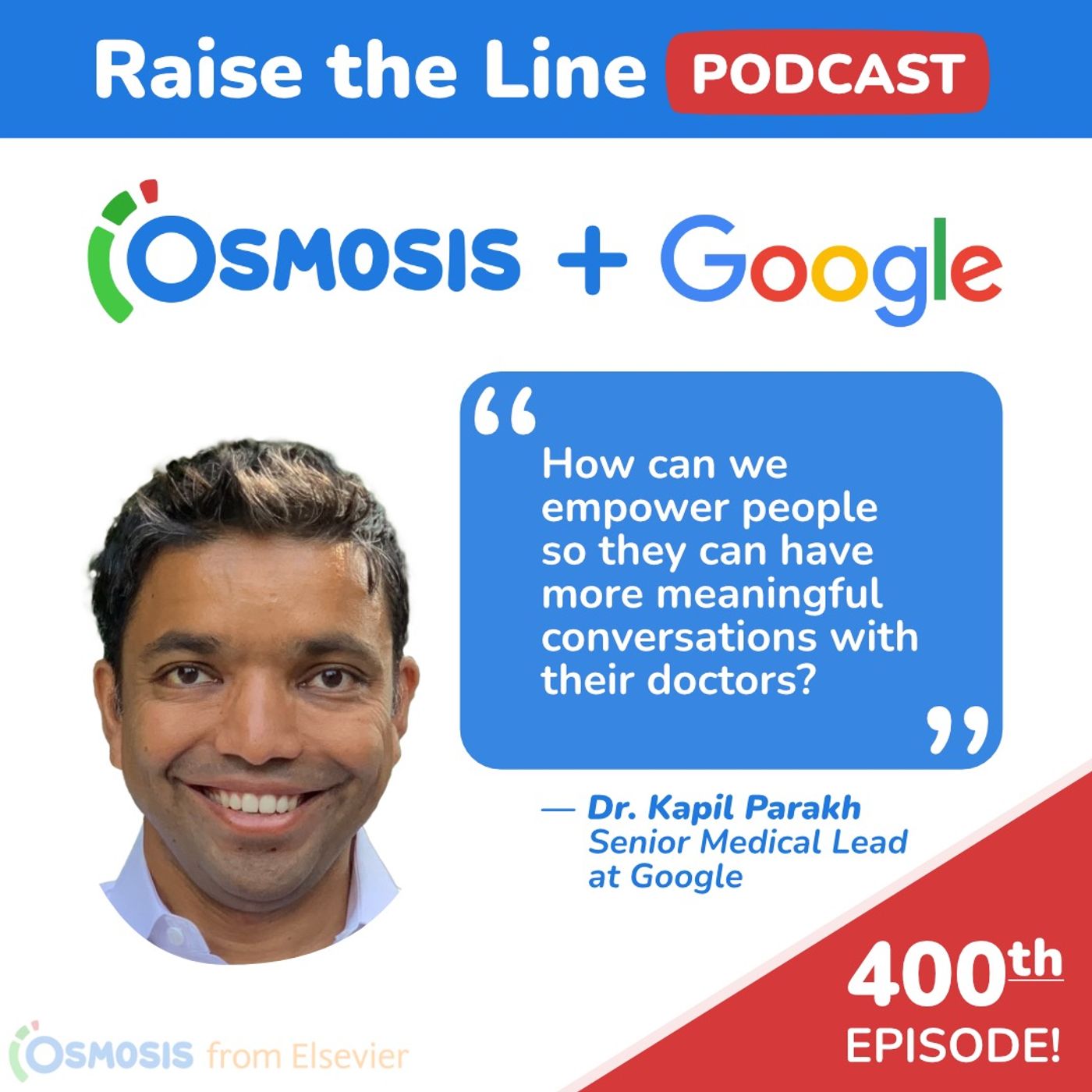
Ep 400Empowering Better Health with Wearables and Other Digital Tools - Dr. Kapil Parakh, Senior Medical Lead at Google
For our 400th episode we’re happy to be diving into one of our favorite topics -- direct-to-consumer healthcare -- with a leading force in the space, Dr. Kapil Parakh. In his role as senior medical lead at Google, Dr. Parakh has led projects to expand access to health information and help people achieve their fitness goals using Fitbit and other means. He’s also helped launch products that reach a billion people and pioneered partnerships with a range of organizations, including the World Health Organization and the American Heart Association. “I've found my passion around innovation and digital health, and the intersection of consumers and health,” he tells host Shiv Gaglani. Tune in to gain from Parakh’s broad insight into how AI and digital tools are making a difference in the science of health, and the opportunities for wearables and other digital tools to help doctors and patients work together to improve health. “You can take these consumer-grade tools and intelligently use them in many different clinical and population health settings. You just have to understand what that data means and how to use it.”Mentioned in this episode: https://www.google.com/fit/ If you like this podcast, please share it on your social channels. You can also subscribe to the series and check out all of our episodes at www.osmosis.org/podcast
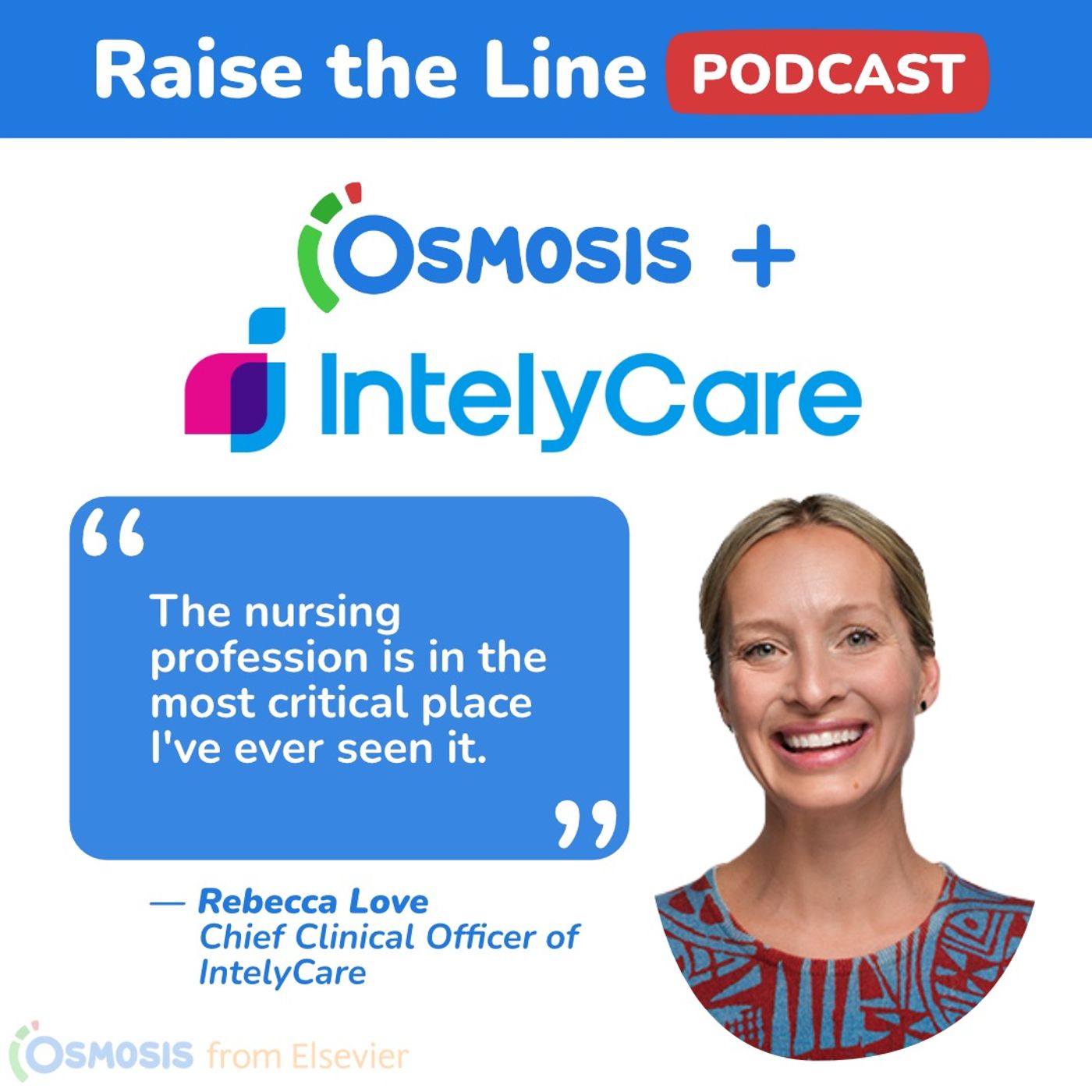
Ep 399Helping Nurses Find Their Voice - Rebecca Love, IntelyCare
“We don't have a shortage of nurses in this country. We have a shortage of nurses willing to practice in the healthcare environments as they are today,” says Rebecca Love, an educator, innovator and leader who has devoted her career to improving the profession of nursing from multiple angles. She’s currently pursuing one of those efforts as chief clinical officer at IntelyCare, an app which smooths out the scheduling process for nurses looking to pick up extra shifts. “We created a platform that allows nurses more of a credentialing passport to work anywhere they want, when they want to.” Love is also involved in a broader effort to change how nurses are paid, correcting an historical artifact of their services being included in the daily rate of a hospital room instead of being billed as a separate service, as she explains to host Michael Carrese. “Nursing is still the only healthcare profession that does not have a billable service which makes them a cost center to hospitals and as long as that’s the case, healthcare systems are never going to invest in anything to make the lives of nurses better.” Tune in for a powerful perspective shift on one of the biggest challenges facing healthcare today from a leading advocate for the nursing profession.Mentioned in this episode: https://www.intelycare.com/ If you like this podcast, please share it on your social channels. You can also subscribe to the series and check out all of our episodes at www.osmosis.org/podcast
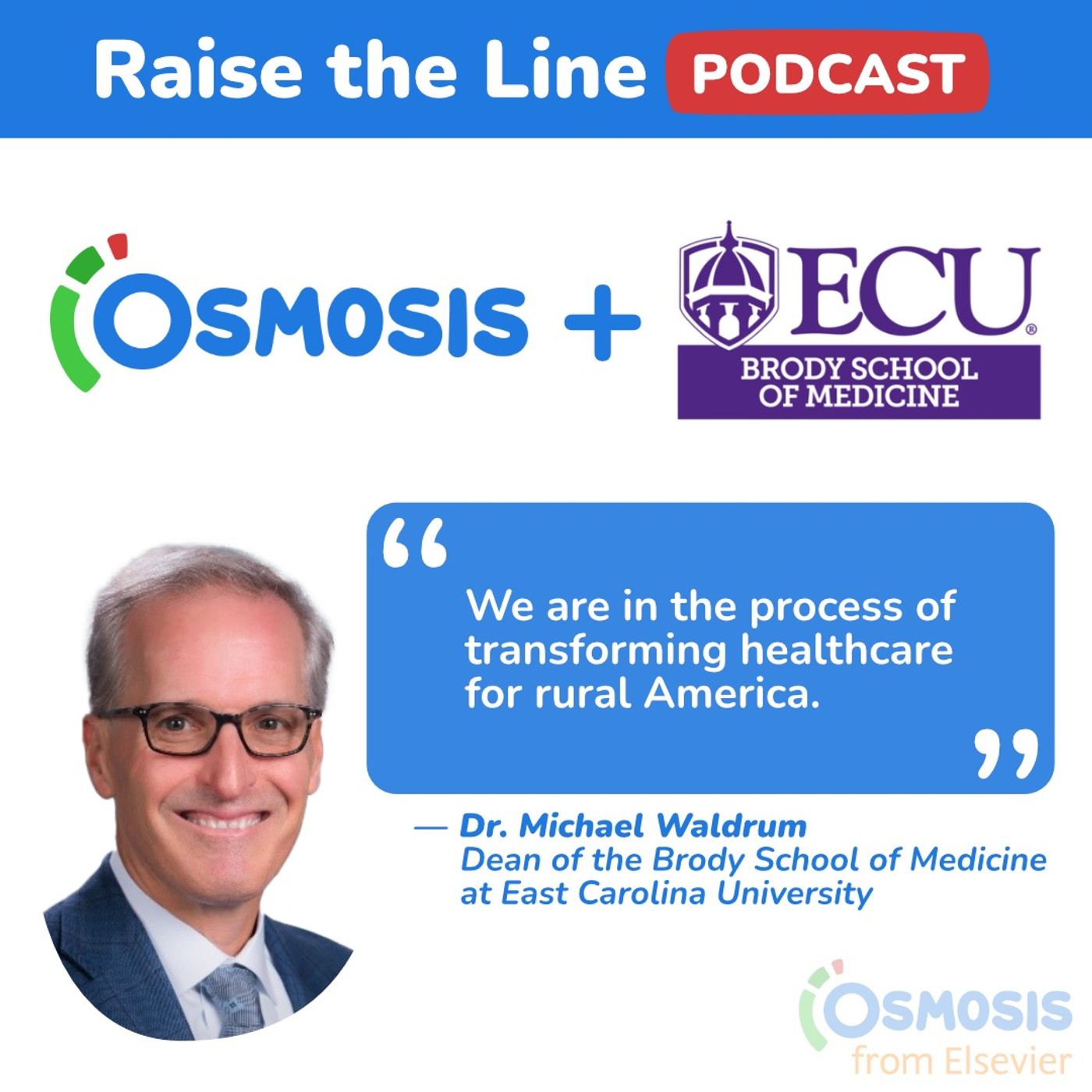
Ep 398Creating a Model for Healthcare in Rural America - Dr. Mike Waldrum, Dean of the Brody School of Medicine at East Carolina University and CEO of ECU Health
Twenty years ago, health outcomes in Eastern North Carolina lagged behind state averages but those deficits have largely been erased, and Dr. Mike Waldrum, Dean of the Brody School of Medicine at East Carolina University, thinks he knows why. “We’ve done it primarily with a community-based focus and taking students only from North Carolina that we know have a propensity to want to practice medicine in the environments that we're here to serve. That's kind of our sauce,” he tells host Shiv Gaglani. Building on that approach, the university started a rural residency program in recent years, and out of four graduates in its first cohort, two have agreed to stay in the communities in which they trained. And while that kind of incremental progress on the ground level is important, Dr. Waldrum knows change is needed at the system level as well. Some things ECU Health can do on its own, such as implementing a unified electronic medical record across all of its care sites that allows it to model where health needs are and intervene early. But what he sees as the necessary restructuring of how the healthcare system is organized and financed will take a group effort. “We need Medicare, Medicaid, the insurance industry and others as partners in how we transform the system.” Tune in for a thoughtful look at the challenges of improving healthcare in rural communities, and the special role academic “safety-net” health systems play in that effort. Mentioned in this episode: https://medicine.ecu.edu/ If you like this podcast, please share it on your social channels. You can also subscribe to the series and check out all of our episodes at www.osmosis.org/podcast
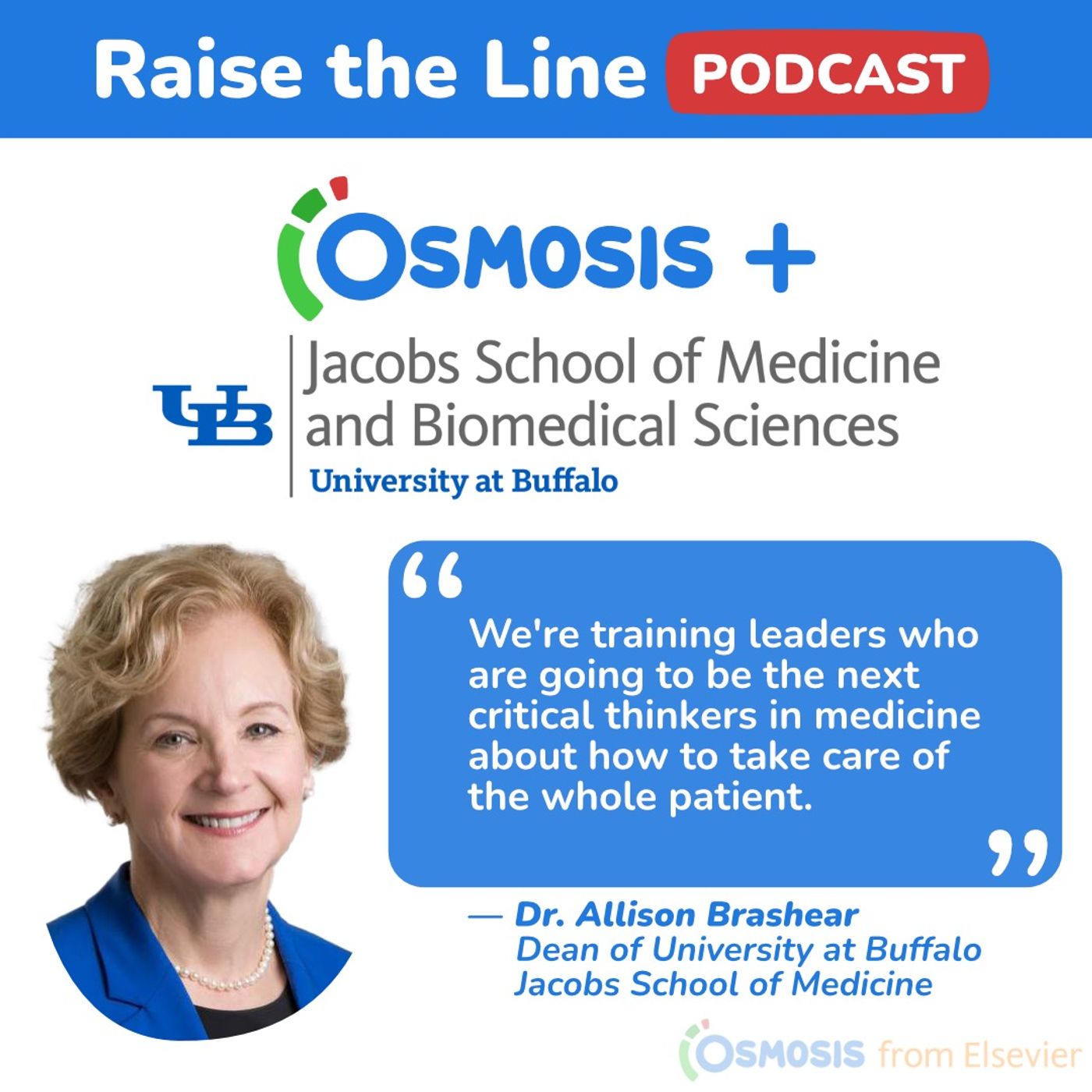
Ep 397Deep Community Ties Enhance Medical Education – Dr. Allison Brashear, Dean and Vice President for Health Sciences at the University at Buffalo Jacobs School of Medicine
If you were to make a word cloud based on this episode of Raise the Line, community would be the most prominent term. For starters, Dr. Allison Brashear was attracted to Buffalo for its reputation as a welcoming community -- a city of good neighbors, as she puts it -- which reminded her of her roots in the Midwest. She was also encouraged that the University at Buffalo Jacobs School of Medicine already had a well-established reputation as a community partner. And, as she tells host Derek Apanovitch, she has seen the impressive strength of the Buffalo community in the wake of the deadly, racially motivated shooting at a supermarket last May. Part of the school’s response to that tragedy has been developing an anti-racist curriculum and focusing students on addressing health inequities. “There's an elective where students can go provide healthcare in the neighborhood, so they actually kind of walk in a patient's shoes... because if you don't understand the social determinants of health of your patient, then you're not going to be able to make a difference.” Brashear adds that the school’s wide variety of partners -- from the VA to community-based primary care clinics -- further enriches the educational experience. “There's a wealth of opportunities to learn here in Buffalo, and that's one of the things that makes it really great.” You’ll also learn about Brashear’s efforts to boost the number of graduates who stay in the region to practice medicine, the University’s research strengths, and her own work as an internationally renowned researcher in several rare neurologic disorders in this in-depth conversation.Mentioned in this episode: medicine.buffalo.edu/atp1a3 If you like this podcast, please share it on your social channels. You can also subscribe to the series and check out all of our episodes at www.osmosis.org/podcast

Ep 396A Father-Son Team Helps Shape Psychedelic-Assisted Therapy - Dr. Bill Richards and Dr. Brian Richards, Sunstone Therapies
“We thought it was the end of psychedelic research, and the great dreams we had were for some future generation,” says Dr. Bill Richards, referring to the 1970s when the Nixon administration criminalized psychedelic compounds. At that point, he could not have imagined there would once again be the thriving interest in psychedelics for both therapeutic and non-clinical purposes that we see today. On this episode of Raise the Line with host Shiv Gaglani, we take a unique, multi-generational look at psychedelic research with two guests who happen to be related to each other. Dr. Bill Richards' extraordinary contributions to the field started sixty years ago and he was instrumental in helping Dr. Roland Griffiths reignite psychedelic research in 1999 at Johns Hopkins University after decades of dormancy. His son, Dr. Brian Richards, has made his own significant mark in the space, contributing to some of the original research administering psilocybin with cancer patients and healthy normal adults. He also teaches and mentors students at the California Institute for Integral Studies, the leading psychedelic medicine certificate program worldwide. They’re currently colleagues working with cancer patients at Sunstone Therapies, a company focused on defining the standards for optimal delivery of psychedelic-assisted therapy. You’ll hear about the range of patient experiences they’ve witnessed, the critical role of therapists who guide the sessions, what it’s like to work together and whether they think the US is ready to integrate psychedelics into medical care, among many other dimensions to this fascinating issue. Mentioned in this episode:https://www.sunstonetherapies.com/Sacred Knowledge by William A. Richards If you like this podcast, please share it on your social channels. You can also subscribe to the series and check out all of our episodes at www.osmosis.org/podcast

Ep 395Shifting Healthcare to a Preventive Model - Andrew Lacy, Founder & CEO of Prenuvo
“After an hour in this machine, I learned more about my health than the health system had told me my entire life.” That’s our Raise the Line guest Andrew Lacy describing a full body MRI scan he underwent several years ago in Canada that sparked the idea for the company he subsequently founded, Prenuvo, which uses advanced MRI technology for preventive screenings. Growing curiosity about the state of his health as middle age approached had prompted Lacy to undergo a diagnostic gauntlet: colonoscopy, genetic screening, blood tests and more. But he didn’t get the comprehensive answer he was seeking until the MRI. “Seeing the results of that scan felt like I was seeing the future of healthcare. From that moment on, my mission was to figure out how can I take this and bring it to the world,” says Lacy, a serial entrepreneur, investor and advisor in a wide range of industries. He has taken big steps toward fulfilling that mission by raising $70 million to establish scanning centers in nine locations in North America with plans for many more. Prenuvo’s MRI technology candetect solid cancer at Stage 1 as well as 500 other medical conditions, and has already proven to be invaluable for many clients, as he tells host Shiv Gaglani. “There's a potential to have a lifesaving diagnosis in one out of every twenty people who are scanned.” Tune in to learn how Prenuvo is hoping to deepen our understanding of aging and early disease progression, shift the healthcare system toward a prevention-first model and help people take control of their own health. Mentioned in this episode: https://www.prenuvo.com/Use this promo code for a $300 discount on a whole-body scan: OSMOSIS If you like this podcast, please share it on your social channels. You can also subscribe to the series and check out all of our episodes at www.osmosis.org/podcast

Ep 394Challenging Medical Dogma to Save Her Child - Dr. Tracy Dixon-Salazar, Executive Director of the LGS Foundation
When Tracy Dixon-Salazar was a young mother of two she described herself as a mediocre high school student with no real academic or career ambitions. Today, she has a PhD in Neurobiology and Neurosciences, is credited with uncovering the genetic driver of a rare form of childhood-onset epilepsy, and she also identified the first precision therapy for it. Unfortunately, the spark for this remarkable change of course was her daughter Savannah’s battle with Lennox-Gastaut Syndrome (LGS) which caused hundreds of seizures a day, stopped her cognitive development and nearly killed her several times. It all started thirty years ago at a time when the condition was poorly understood. “Nobody really knew what to do with this kid so I realized I had to fight, I had to become her advocate. You'll do anything for your babies and so I had to become educated,” she explains to host Michael Carrese. Dixon-Salazar moved on from her academic life several years ago to become a full-time advocate as executive director of the LGS Foundation where she works with over 200 gene-specific advocacy groups for rare diseases. “It gives me so much hope. The ability for patients to have a voice in the whole process has changed. Now patients have a platform.” Don’t miss this incredible story of a mother’s persistence that changed the prevailing dogma about epilepsy and LGS and ushered in new approaches to treatment that have affected many children beyond Savannah. Mentioned in this episode: https://www.lgsfoundation.org/ If you like this podcast, please share it on your social channels. You can also subscribe to the series and check out all of our episodes at www.osmosis.org/podcast
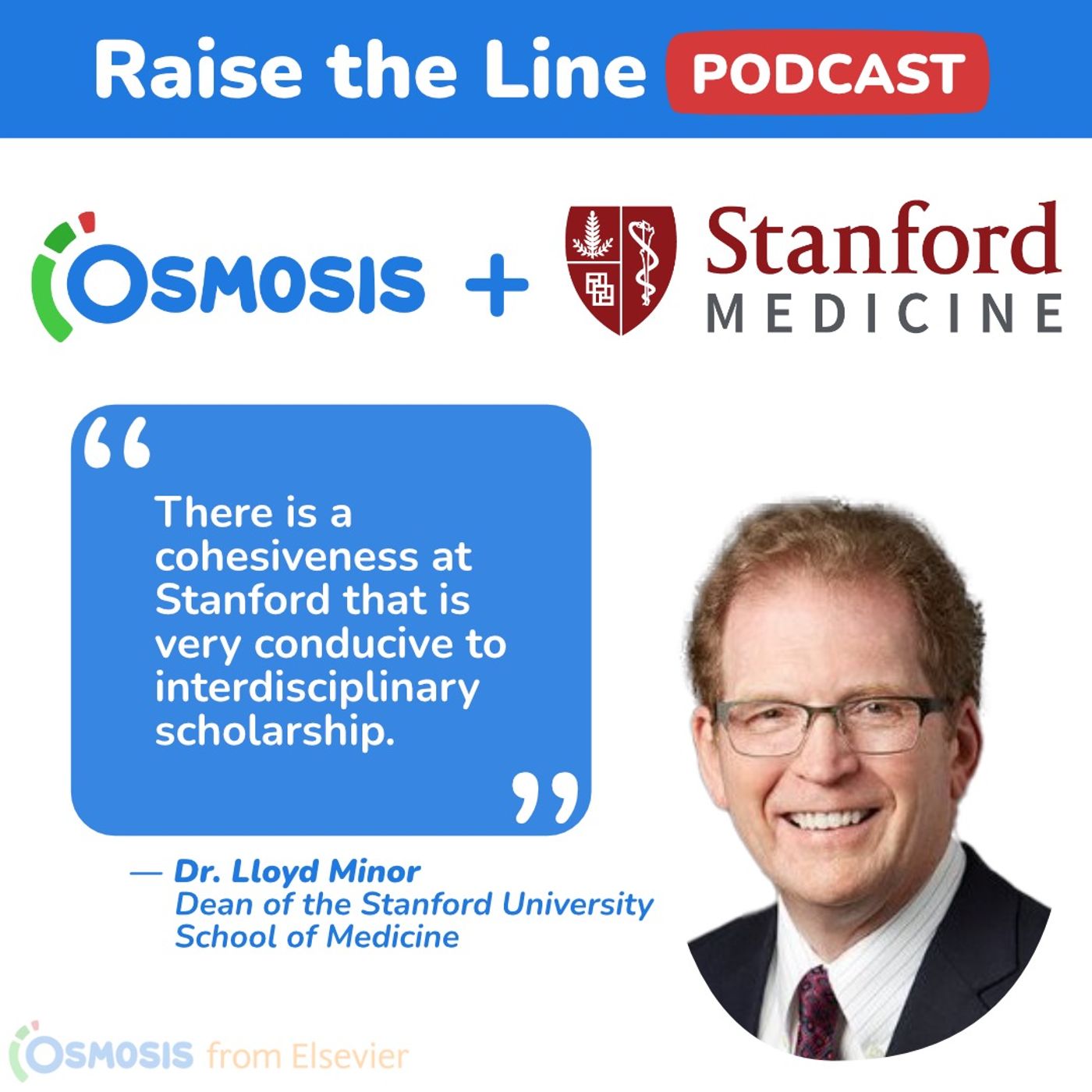
Ep 393The “Four Cs” of Innovation - Dr. Lloyd Minor, Dean of Stanford University School of Medicine
“There's never been a better time to do what we do in our fields and the future of life sciences is so incredibly bright,” says Dr. Lloyd Minor. From his perch as dean of Stanford University School of Medicine, Minor sees the convergence of biomedicine, information science and technology dramatically increasing the pace of discovery-driven science and translational science. As a result of observing and contributing to the culture of discovery at Stanford, and based on his own groundbreaking work as a physician-scientist in otolaryngology, Minor has distilled the necessary elements of innovation into what he calls the “Four Cs of Innovation” -- combination, collaboration, chance, and culture. “A culture of inquiry and collaboration is so important to making scientific advances that benefit patients and there is a level of collaboration and cohesiveness here that I think is very, very conducive to interdisciplinary scholarship,” he tells Raise the Line host Shiv Gaglani. But Minor acknowledges that this time of unprecedented change and new technology in healthcare has been stressful for providers, which informs his approach to leadership. “There's never been a more important time for empathy in leadership and for leaders to be engaged listeners.” Tune in for a fascinating look at how academic medicine is both driving change and adapting to it, how Stanford is applying precision medicine for preventive health and the importance of balancing the opportunities and risks of AI in healthcare. Mentioned in this episode: https://med.stanford.edu/ If you like this podcast, please share it on your social channels. You can also subscribe to the series and check out all of our episodes at www.osmosis.org/podcast
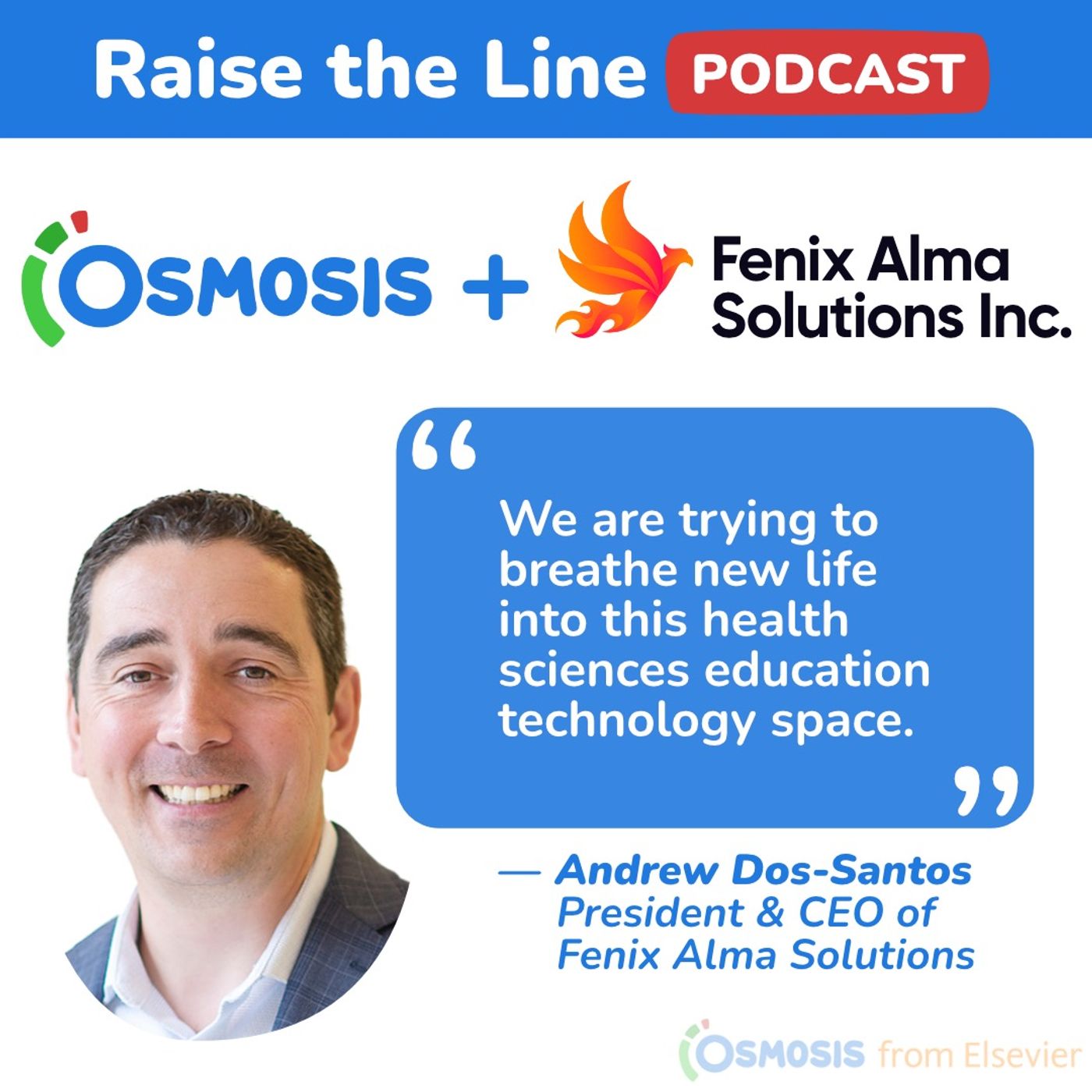
Ep 392Visualizing Health Sciences Education - Andrew Dos-Santos, Founder, President & CEO of Fenix Alma Solutions
Educating someone to be a nurse, physician or allied health professional is obviously a complex process for learners, faculty and administrators. Today, our new Raise the Line co-host (and Osmosis COO) Derek Apanovitch takes a look at tools that help all of those stakeholders visualize the overall curriculum, where a student is on their learning path, and how they are performing. Our guide is Andrew Dos-Santos a veteran of healthcare and higher education IT who has launched the edtech company Fenix Alma Solutions to apply the insights he’s gained in his long career. “Over the last twenty years working so closely with faculty and staff it became clear that disconnected, disparate systems weren't the answer, and this is the landscape most institutions are still working within.” Fenix Alma, and its curriculum management platform VidaNovaVLE, provides the ability to see both the big picture and a granular view to ensure that educators and learners can target where performance improvements should be made. As a unified platform, it also gives administrators the ability to connect the data needed to answer critical questions about what is being taught at what level, what is being assessed, and how are learners doing. “We are trying to breathe new life into this health sciences education technology space.” Tune in to learn about customizing content for students, integrating with external content providers such as Osmosis, and how AI might benefit health sciences education. Mentioned in this episode: https://fenixalma.com/ If you like this podcast, please share it on your social channels. You can also subscribe to the series and check out all of our episodes at www.osmosis.org/podcast
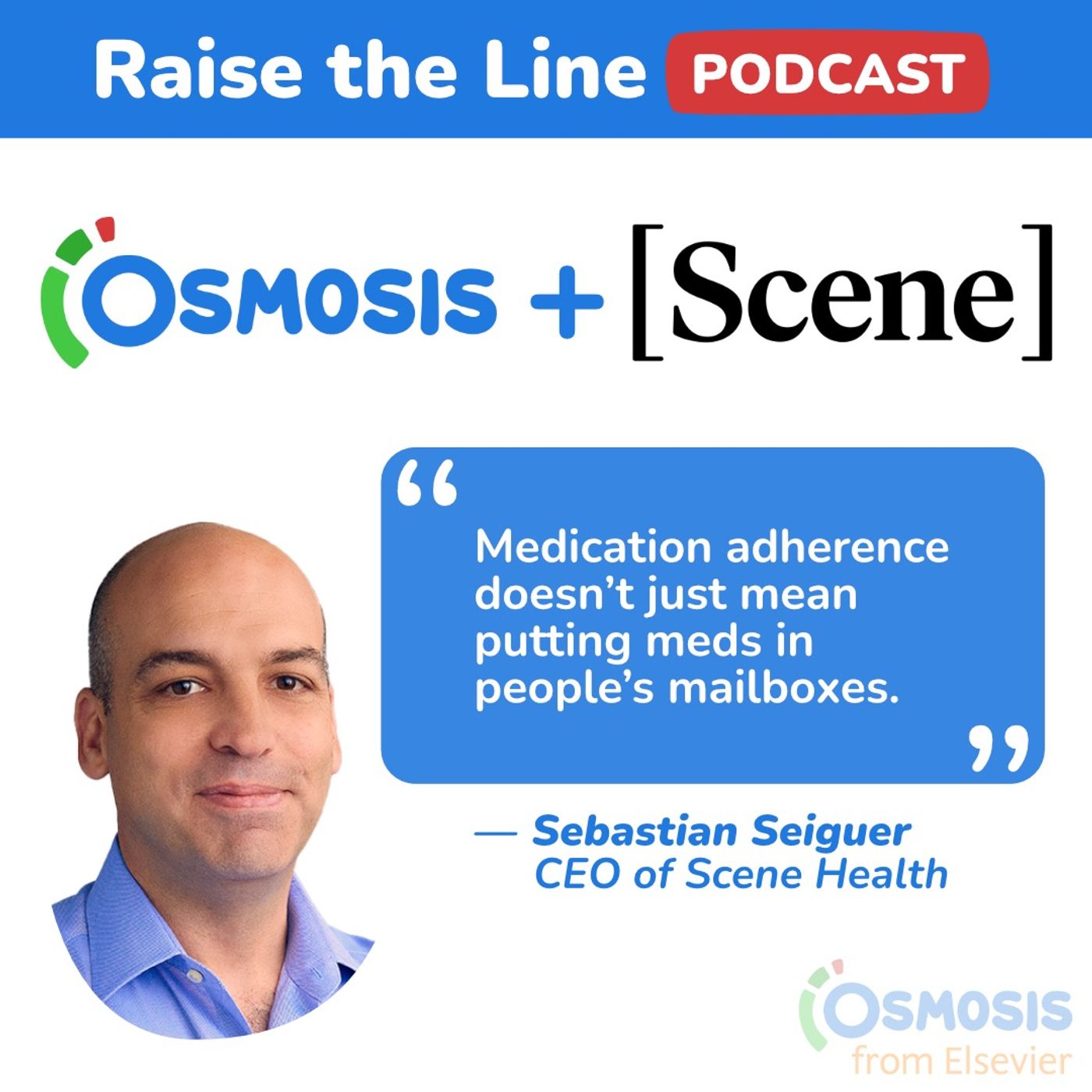
Ep 391Increasing Medication Adherence with Video Technology - Sebastian Seiguer, CEO of Scene Health
The failure of patients to take their medications as prescribed costs the U.S. healthcare system more than $500 billion a year, not to mention the adverse health outcomes it causes. Today’s Raise the Line guest, Sebastian Seiguer, co-founded and leads a company called Scene Health that is tackling this problem with a system that combines video technology, clinical coaching and validated interventions to improve medication adherence rates. Based on evidence gathered in multiple clinical trials, the Centers for Disease Control recently concluded that using asynchronous video is equivalent to an in-person Directly Observed Therapy - the current gold standard for adherence. “It’s an incredible thing. It's the first time in healthcare that an asynchronous video appointment is being treated the same as an in-person appointment,” Seiguer tells host Shiv Gaglani. Scene Health is currently supporting patients across multiple chronic and infectious conditions, including diabetes, asthma, opioid use disorder, tuberculosis and hypertension. Check out this enlightening conversation to learn why adherence is so low in the first place, how Scene Health is educating patients on how and why their medications work, and other applications for this approach.Mentioned in this episode: https://www.scene.health/ If you like this podcast, please share it on your social channels. You can also subscribe to the series and check out all of our episodes at www.osmosis.org/podcast
Ep 390The Challenge of Providing the Right Data at the Right Time - Jake Engle, Senior Director at Oracle Cerner and Dr. Sam Engle, Pediatric Endocrinologist at Children’s Wisconsin
To the uninitiated, interoperability may sound like a surgical term, but it actually refers to how IT systems and other technologies communicate with each other. The goal, of course, is seamless communication to improve efficiency and quality of care, but that's obviously a big challenge. Today on Raise the Line, we dive into this important issue with two people who come at it from different professional perspectives, but who share that goal. Oh, and they also happen to be brothers! Jake Engle is a Senior Director at Oracle Cerner, a supplier of health information technology used at thousands of facilities worldwide. His brother, Dr. Sam Engle, is a pediatric endocrinologist at Children’s Wisconsin. On the patient care side, Dr. Engle talks about the value of having a complete patient history in hand prior to appointments to maximize the efficiency of the time spent, but also to avoid doing duplicate tests. “Especially with kids, you never want to have to repeat labs if you don't need to. I feel very strongly about that.” From the tech side, Jake Engle addresses the challenge of trying to synthesize data from multiple sources such as EHRs, insurance records, public health databases or commercial products focused on one niche of healthcare. “I think the healthcare systems are a bit late to the game and it's much a more complicated game.” You’ll also learn about efforts to make it easier for patients to access their health data, the need for data standards in the industry and how their personal relationship contributes to this work. If you like this podcast, please share it on your social channels. You can also subscribe to the series and check out all of our episodes at www.osmosis.org/podcast
Ep 389Using Psychedelics to Understand Spiritual Experiences - Dr. David Yaden, Roland R. Griffiths Professor in Psychedelic Research on Secular Spirituality and Well-Being at Johns Hopkins University School of Medicine
Dr. David Yaden’s interest in studying spiritual experiences started with one of his own. As he describes it, it was a totally spontaneous experience involving an intensely altered state of consciousness that left him with an enhanced, positive perspective on life. “This became an obsession, really, to understand this. I learned that these experiences have been studied throughout history by scholars and increasingly by scientists,” he tells host Shiv Gaglani. “As I learned more, it became more and more clear that this is what I wanted to study, and that's what I still do.” He happens to be in a perfect spot to do it as the Roland R. Griffiths Professor in Psychedelic Research on Secular Spirituality and Well-Being at Johns Hopkins, named for a leading figure in the modern renaissance in psychedelic research. The basic scope of the project he’s managing is non-clinical. Topics of study include better quantifying the risk-benefit ratio of psychedelics as a positive intervention; looking into how psychedelic experiences that have a spiritual character relate to similar experiences not triggered by psychedelics; and collecting data from non-Western population centers across the world to provide a more complete picture of how much cultural expectations play a role in influencing these experiences, as well as how similar they are across cultures. There is much to learn in this probing look at a fascinating dimension of psychedelic research.Mentioned in this episode: https://griffithsfund.org/ If you like this podcast, please share it on your social channels. You can also subscribe to the series and check out all of our episodes at www.osmosis.org/podcast
Ep 388“The Time for Innovation is Upon Us” - Dr. Julie Pilitsis, Dean of the Charles E. Schmidt College of Medicine and Vice President of Medical Affairs at Florida Atlantic University
“I think we're doing something really special here to change the way healthcare is delivered in South Florida, so keep an eye on us,” says Dr. Julie Pilitsis, dean of the Charles E. Schmidt College of Medicine and Vice President of Medical Affairs at Florida Atlantic University. For one thing, class sizes in the medical and nursing programs are both increasing to tackle less than ideal access to health services. “If you get diagnosed with a lump on your breast in Florida, it takes you thirty days on average to see a doctor, while the national average is three to five days,” she notes. And just as FAU’s educational and clinical programs are supporting the communities they serve, Pilitsis tells host Shiv Gaglani that they need support in return. “I think academic medicine and academic hospitals are essential. Everybody wants good healthcare, but I think sometimes they don't understand the economic impact that good healthcare brings to the area.” Shiv and Dr. Pilitsis also explore advancements in functional neurosurgery, the role of artificial intelligence in reducing burnout and her landmark career as the first female neurosurgeon to become a dean in this enlightening episode.Mentioned in this episode: https://www.fau.edu/medicine/ If you like this podcast, please share it on your social channels. You can also subscribe to the series and check out all of our episodes at www.osmosis.org/podcast
Ep 387Injecting Ancient Philosophy Into Modern Medical Education - Dr. Charles Lockwood, Executive Vice President of USF Health in Tampa
Shortly after starting his job as Dean of the USF Health Morsani College of Medicine in 2014, Dr. Charles Lockwood was presented with the exciting opportunity to help design a new medical education building. In contemplating requirements for the new space, he raised the challenge to colleagues that when the facility was completed in 2020, medical knowledge would be doubling every seventy-three days. “That fundamentally altered the way we thought about the building, and we accelerated the process of curricular reform that we had started,” he explains to Raise the Line host Shiv Gaglani. That reform included dramatically reducing the amount and length of lectures, substantially increasing active and problem-based learning, introducing more assessments and requiring students to learn how to be good researchers to help them discern what’s credible within the ever-growing amount of information available. But Dr. Lockwood also sensed a need to address the way students manage the rigors of a medical education and clinical practice. “What we've tried to do is to stress the need for grit and for embracing the classic stoic teaching about taking on obstacles and challenges as wonderful opportunities to grow and become more resilient.” Lockwood credits this perspective for the institution performing well through the worst of the pandemic. “I think the most surprising thing was the relative lack of burnout at the end of it. We're moving on to new challenges, but it didn't leave us hollowed out.” Tune in for a fascinating conversation about adopting an “anti-fragile” mindset, the dangers of overreliance on heuristics in making clinical decisions, and the implications of generative AI for medical education and patient care. Mentioned in this episode: https://health.usf.edu/medicine/ If you like this podcast, please share it on your social channels. You can also subscribe to the series and check out all of our episodes at www.osmosis.org/podcast
Ep 386“We Want to Be the Most Inclusive University in the Country” - Dr. Janelle Sokolowich, Academic Vice President and Dean of the Leavitt School of Health at Western Governors University
After battling chronic illness as a child, Dr. Janelle Sokolowich swore she’d never step foot in a hospital again and started pursuing a different path in college. But life had a way of bringing her back to the world of medicine. “I started thinking back to all the nurses that made such an impact on me as a child and helped me to grow up to be a functioning adult,” she explains to host Michel Carrese. Now as academic vice president and dean of the Leavitt School of Health at Western Governors University, Dr. Sokolowich is in a position to help many others like herself pay it forward by becoming healthcare providers. The school serves 20,000 to 30,000 students per month and seventeen percent of all BSN holders in the country are graduates, but Sokolowich is keenly aware this can be an unattainable dream when cost and other factors come into play. That’s why Leavitt strives to keep tuition low and her performance as Dean is evaluated based on how much debt students have when they graduate, and if they are earning a livable wage two years post-graduation. “We want to be the most inclusive university in the country and we see ourselves as personally responsible for advancing health equity through education.” Check out this thoughtful conversation about competency-based education, strategies for meeting health needs in rural America and the importance of mentoring. “I want to build that next set of nurse leaders and I take it personally, because I have been gifted and blessed with many that have done it for me.”Mentioned in this episode: https://www.wgu.edu/online-nursing-health-degrees.html If you like this podcast, please share it on your social channels. You can also subscribe to the series and check out all of our episodes at www.osmosis.org/podcast
Ep 385“A Fascinating Time to Be Involved in This Work”- Dr. Al Garcia-Romeu, Assistant Professor of Psychiatry and Behavioral Sciences at Johns Hopkins University
Major depression, smoking, anorexia nervosa, obsessive-compulsive disorder, Alzheimer’s disease...is it possible for psychedelics to play a positive role in all of these conditions? There are indications the answer may be yes, which is why Dr. Al Garcia-Romeu and his colleagues at The Johns Hopkins Center for Psychedelic and Consciousness Research are so busy. “We're learning more, but as we learn more, the rabbit hole gets deeper and so it's a really fascinating time to be involved in this work and to see the expansion in all these different areas.” As he explains to Raise the Line host Shiv Gaglani, this is not about research for the sake of research. “A big part of the end goal here is to get this in a place where anybody who wants to quit smoking in the country can go to a clinic and get this type of treatment because we’ve shown that it seems to work.” Garcia-Romeu recognizes there are many steps to be taken before that’s a reality --including, of course, FDA approvals if clinical trials are successful -- but there is also a need to train a national corps of providers to guide psychedelic-assisted therapy sessions, a better system for recruiting diverse populations for studies, and insight into how current and future providers perceive psychedelics and their potential utility, a topic the Center is also researching. Don’t miss this in-depth look at the challenges and opportunities in a fascinating area of medical research.Mentioned in this episode: https://hopkinspsychedelic.org/ If you like this podcast, please share it on your social channels. You can also subscribe to the series and check out all of our episodes at www.osmosis.org/podcast
Ep 384Bringing Efficiency to the Prescription Process for Providers and Patients - Deepak Thomas, Co-Founder of Phil, Inc.
When Deepak Thomas contracted Lyme disease in his twenties, he quickly discovered how difficult it can be for a person to navigate the healthcare system, particularly when filling prescriptions. “When it came to accessing medications that could keep me healthy and eventually kick this condition, I found myself making three to four trips to the pharmacy every week, despite being covered by a generous healthcare plan.” So, by drawing on many years of experience working for leading tech companies such as Oracle and eBay, Thomas co-founded Phil, which offers a platform designed to remove provider and patient barriers to starting and continuing prescriptions. It’s an important problem to tackle because 50% of treatment failures and 25% of hospitalizations in the U.S. can be attributed to people failing to take their medicines. Thomas says a differentiating feature of Phil’s system is it works with the electronic health record or prior authorization programs the provider already uses while the automation runs behind the scenes. “The prescriber gets the benefits of automation without having to learn a new set of tools.” As for patients, they are sent a link -- often while still in the prescriber’s office - which takes them through the process. "The enrollment rates into the patient access programs offered by the manufacturers are easily 90% on average across all of our programs." Check out this episode of Raise The Line with host Michael Carrese to learn about a new approach to solving a vexing problem in healthcare, and the other areas of pharma services Thomas wants to focus on next.Mentioned in this episode: https://phil.us/ If you like this podcast, please share it on your social channels. You can also subscribe to the series and check out all of our episodes at www.osmosis.org/podcast
Ep 383“A Pull From Below On the Whole Central Nervous System”- Dr. Miguel Bautista Royo-Salvador, Director of the Institut Chiari & Syringomyelia Escoliosis de Barcelona
As our Year of the Zebra focus on rare diseases continues, we’re putting several neurological conditions in the spotlight whose symptoms include neck pain, vertigo, swallowing issues, memory trouble and many more: idiopathic syringomyelia; idiopathic scoliosis; and the Arnold-Chiari Syndrome type 1 caused variously by cavities in the spinal cord and brain herniation. Fortunately, our guide is one of the world’s leading experts in this area, Dr. Miguel Bautista Royo-Salvador, Director of the Institut Chiari & Syringomyelia Escoliosis de Barcelona, and President of the Chiari and Scoliosis and Syringomyelia Foundation. In his fifty-plus years of focus on these conditions, Dr. Royo-Salvador has alternated between research activity and clinical practice in which he applies a treatment method he developed called the Filum System. Inventing this new approach was sparked by a patient who experienced very little improvement from what was the standard surgical treatment at the time. “I have come to the conclusion that an abnormally intense caudal traction of the entire central nervous system is the cause of the descent of the cerebellar herniation in Chiari Syndrome type 1, as well as of scoliosis and syringomyelia and others. To speak figuratively, it's like a pull from below on the whole central nervous system,” he explains to host Michael Carrese. After 2,100 procedures with a subjective improvement rate of 95%, Dr. Royo-Salvador and the Institute are working to broaden awareness of this minimally invasive approach. Tune-in for an educational journey into these rare conditions and a proven technique to relieve patient suffering.Mentioned in this episode: https://institutchiaribcn.com/ If you like this podcast, please share it on your social channels. You can also subscribe to the series and check out all of our episodes at www.osmosis.org/podcast

Ep 382AI Draws New Value from Old Medical Technology - Dr. Jacob Donoghue, Co-Founder & CEO of Beacon Biosignals
In this episode of Raise the Line, we dive into the fascinating story of a very old technology, EEGs, being mined for data using a very new technology, AI, that's changing the way treatments are being developed for disorders of the brain. Joining host Michael Carrese to explain is Dr. Jake Donoghue, co-founder and CEO of Beacon Biosignals, a startup that’s using AI to unlock precision medicine for various neurological, psychiatric and sleep disorders. “We utilize our AI tools to bring quantitative endpoints into clinical trials to see if the drugs are impacting brain activity,” Donoghue explains. AI’s ability to quickly recognize subtle changes in electrical activity that might otherwise go unnoticed can accelerate the trial process and hopefully, approval of new therapies. Donoghue is also interested in the area of sleep medicine because of its connection to a wide variety of issues including depression, PTSD, Parkinson’s and Alzheimer’s disease. “We think there's a lot of opportunity to bring quantitative insights to this fundamental state that all humans go through and map some of these really robust features of brain activity to increase understanding of disease and health.”Mentioned in this episode: https://beacon.bio/ If you like this podcast, please share it on your social channels. You can also subscribe to the series and check out all of our episodes at www.osmosis.org/podcast
Ep 381The Broadening Exploration of Potential Uses for Psychedelics: Dr. Fred Barrett, Associate Director of The Johns Hopkins Center for Psychedelic and Consciousness Research
If psychedelics are eventually authorized by the FDA for use in mental health treatment, much credit will go to The Johns Hopkins Center for Psychedelic and Consciousness Research which sparked a renaissance of interest in the compounds starting in 2006 under the guidance of Dr. Roland Griffiths. The first study was actually not about clinical applications of hallucinogens but rather it observed their impact on healthy people. “One of the most remarkable findings Roland Griffiths encountered early on was that people would endorse the statement that they had one of the top five or the single most personally meaningful and spiritually significant experiences of their lives,” says Associate Center Director Dr. Fred Barrett, who met host Shiv Gaglani in his office in Baltimore for this extended conversation. And while the Center is actively researching potential clinical use of psychedelics, which is promising, it remains interested in how they may improve the lives of those not in need of mental health treatment. “What are the opportunities for spiritual growth? What are the opportunities for increasing well-being? There's an opportunity for exploration here that, if we're very careful, may have utility and value outside of the medicalization of these compounds,” adds Barrett. Don’t miss this expansive (dare we say mind-expanding?) discussion of the possible reasons psychedelics may help people with depression, why they are not prone to misuse, and what they tell us about the nature of consciousness itself. Mentioned in this episode: https://hopkinspsychedelic.org/ If you like this podcast, please share it on your social channels. You can also subscribe to the series and check out all of our episodes at www.osmosis.org/podcast
Ep 380A Look at Emerging Healthcare Innovations From a Veteran Investor- Gurdane Bhutani, Managing Partner & Co-Founder at MBX Capital
“The unifying theme across our portfolio is that whatever a company we invest in is building can make a population-level health impact. For us, that means that what they're doing is going to lead to innovation that is ultimately accessible to huge portions of the global population,” says Gurdane Bhutani, co-founder and managing partner of MBX Capital, a venture capital partnership dedicated to investing in early-stage companies focused on big public health problems. As he explains to host Shiv Gaglani, that ambitious mission is focused on three main themes: accumulated environmental exposure (exposome), biosecurity and biodefense, and healthcare infrastructure. “The majority of disease pathogenesis today is environmental in nature, not genetic. So we're looking at companies that are developing exposomic sequencing technologies that help us better understand these environmental exposures.” One such company is using human-relevant tissue models to test for environmental contaminants. Others include a nurse scheduling platform and a firm that’s localizing radiology systems for underdeveloped areas. Bhutani has a track record of investing in interesting and impactful companies in healthcare (in fact, he was an early backer of Osmosis!) so you won’t want to miss his insightful perspective on promising ideas for improving health and healthcare systems.Mentioned in this episode: https://www.mbxcapital.com/ If you like this podcast, please share it on your social channels. You can also subscribe to the series and check out all of our episodes at www.osmosis.org/podcast
Ep 379Mining Data to Aid in Rare Disease Research and Improve Quality of Care - Dr. Michael Mbagwu, Senior Medical Director at Verana Health
One challenge in developing treatments for rare diseases is finding enough people with the condition to mount valid clinical trials. Databases that contain diagnostic codes for specific conditions can help, but those miss people who may have the condition but have yet to be conclusively diagnosed. That’s where Verana Health comes in, a digital health company that uses AI to mine its data network of more than 20,000 healthcare providers and the clinic notes they make about patient encounters. “If you wanted to find somebody with a specific genetic defect, or a specific condition for which a diagnostic code doesn't even exist, clinic notes represent really the only place you could discover that information,” explains Dr. Michael Mbagwu, an ophthalmologist and Verana’s Senior Medical Director. Verana partners with the American Academy of Ophthalmology, the American Academy of Neurology and the American Urologic Association to manage their clinical registries which were built to improve quality of care, answer research questions and help physicians report quality metrics. Join host Michael Carrese for an exploration of the ways medicine is being changed by the ever-growing amount of data available and the new technologies which allow clinicians and others to analyze and use all of that information. “Some of the things that we just assumed were never possible or were kind of hopeless endeavors are now possible for the first time thanks to AI.” Mentioned in this episode: https://www.veranahealth.com/ If you like this podcast, please share it on your social channels. You can also subscribe to the series and check out all of our episodes at www.osmosis.org/podcast
Ep 378Helping Medical Students Manage Information Overload - Dr. Ted O’Connell, Regional Director of Medical Education at Kaiser Permanente, Northern California
“In 2010, it took three-and-a-half years for medical knowledge to double. Now it takes around seventy-three days,” says Dr. Ted O’Connell, who is among the many medical educators who wrestle with how to help students manage that kind of information load. Artificial intelligence can be a tool for synthesizing vast amounts of data, he says, but it also has the potential to massively increase the amount of information coming at a student. “I think it will be very important for learners to understand what their learning style is so they can harness AI to help them,” he tells host Shiv Gaglani. O’Connell plays an important role in the field, serving as regional director of undergraduate, graduate and continuing medical education at Kaiser Permanente in Northern California and the author of eighteen medical textbooks with Elsevier where he also serves as editor-in-chief of ClinicalKey MedEd. Don’t miss a wisdom drop from this best-selling author, podcast host, speaker, company founder and family physician about the importance of mentorship for medical students, the need for further diversity of images in medical learning materials, and other ways to improve medical education. If you like this podcast, please share it on your social channels. You can also subscribe to the series and check out all of our episodes at www.osmosis.org/podcast
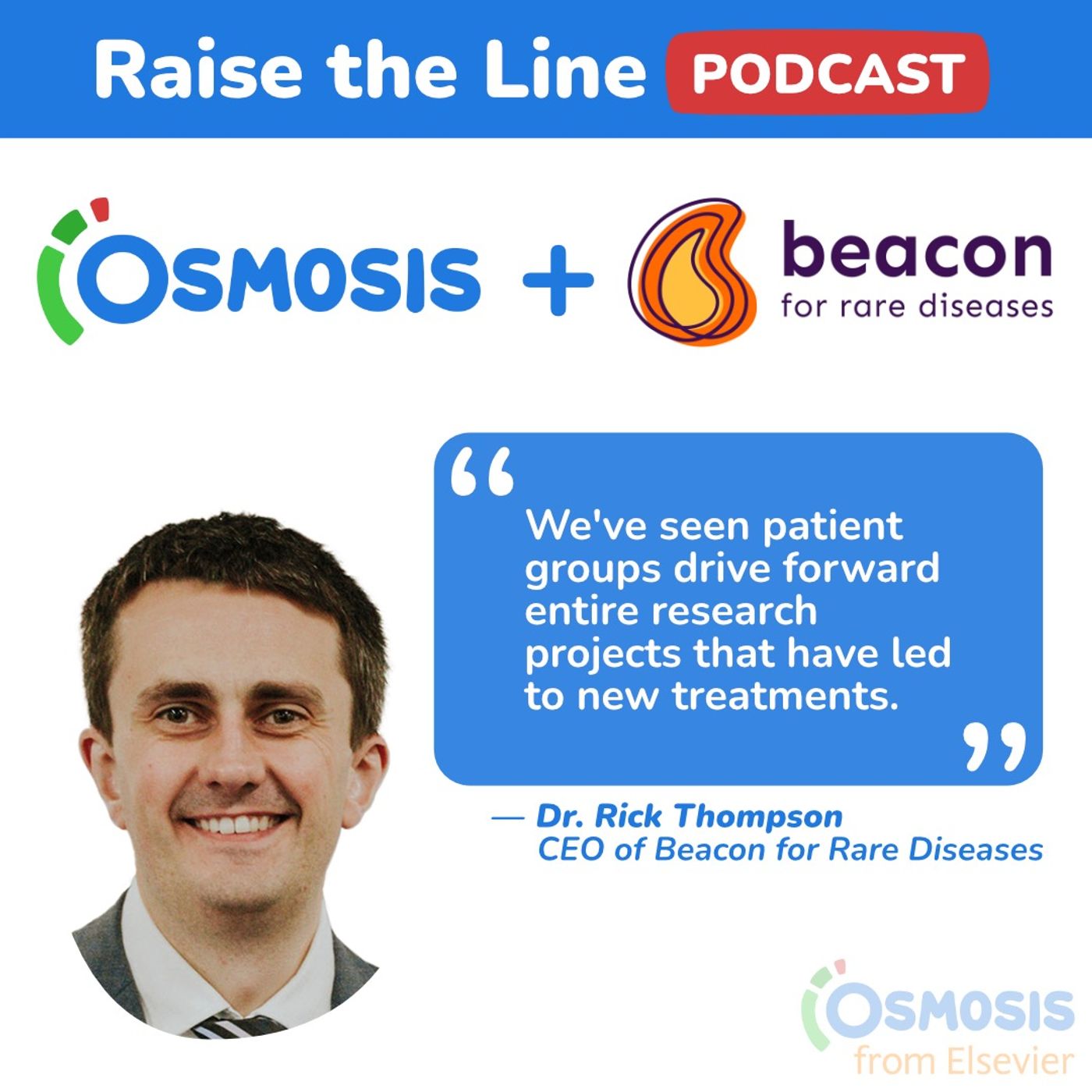
Ep 377The Power in Connecting Rare Disease Patient Groups - Dr. Rick Thompson, CEO of Beacon for Rare Diseases
We've heard many stories on Raise the Line about patients and their family members who, upon getting a rare disease diagnosis, build a non-profit organization from scratch to boost advocacy and research for the condition in question. This is obviously a pretty big hill to climb for people with no background in such things. Well, today we're going to learn about Beacon for Rare Diseases, a UK non-profit designed to provide the expertise and support needed to get a rare disease patient group off the ground, and to connect these groups with each other for the purpose of mutual education and support. “What we've seen is that people forming and building patient organizations can help really trigger a new community around that, and help drive the field forward,” Beacon CEO Dr. Rick Thompson tells host Shiv Gaglani. “What we want to do as an organization is help those patient groups form, to grow, and to professionalize their work.” Tune in to find out how Dr. Thompson’s background in evolutionary biology, research and education impacts his work at Beacon, why rare diseases should be approached in the same way as cancer, and his interest in repurposing existing drugs for use in treating rare diseases. Mentioned in this episode: https://www.rarebeacon.org/ If you like this podcast, please share it on your social channels. You can also subscribe to the series and check out all of our episodes at www.osmosis.org/podcast
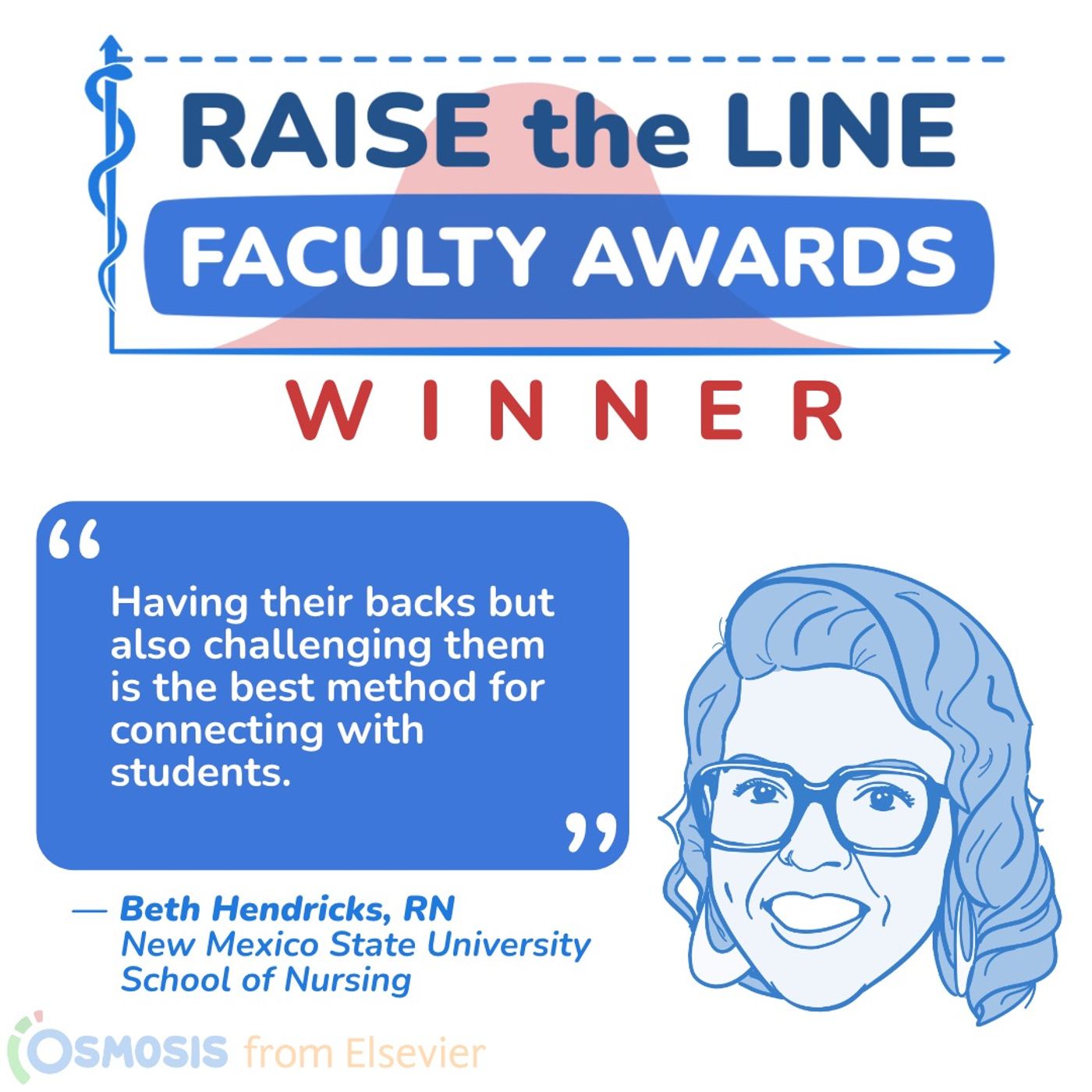
Ep 376The Importance of Mentorship in Nursing Education - Beth Hendricks, Assistant Professor at New Mexico State University School of Nursing
“It is my deepest wish for all of my students to find me as a mentor and a coach,” says Beth Hendricks, RN, MSN and assistant professor at New Mexico State University School of Nursing. That can be traced back in part to a nursing educator early in her career who took that approach and built her confidence. Being devoted to paying that forward is one reason Hendricks is the winner of the 2022 Osmosis Raise The Line Faculty Awards in the RN-Nurse Practitioner category. Her student nominators describe her as both empathetic and driven to see them succeed, which is a deliberate balance Hendricks tries to strike. “Having their backs but also challenging them is the best method for connecting with students,” she tells host Michael Carrese. Check out this insightful conversation on how to motivate students to fight through “imposter syndrome,” the importance of learning to think like a nurse, and why she encourages students to find their unique learning style among many other tips for educators. Mentioned in this episode: www.osmosis.org/faculty-awards If you like this podcast, please share it on your social channels. You can also subscribe to the series and check out all of our episodes at www.osmosis.org/podcast
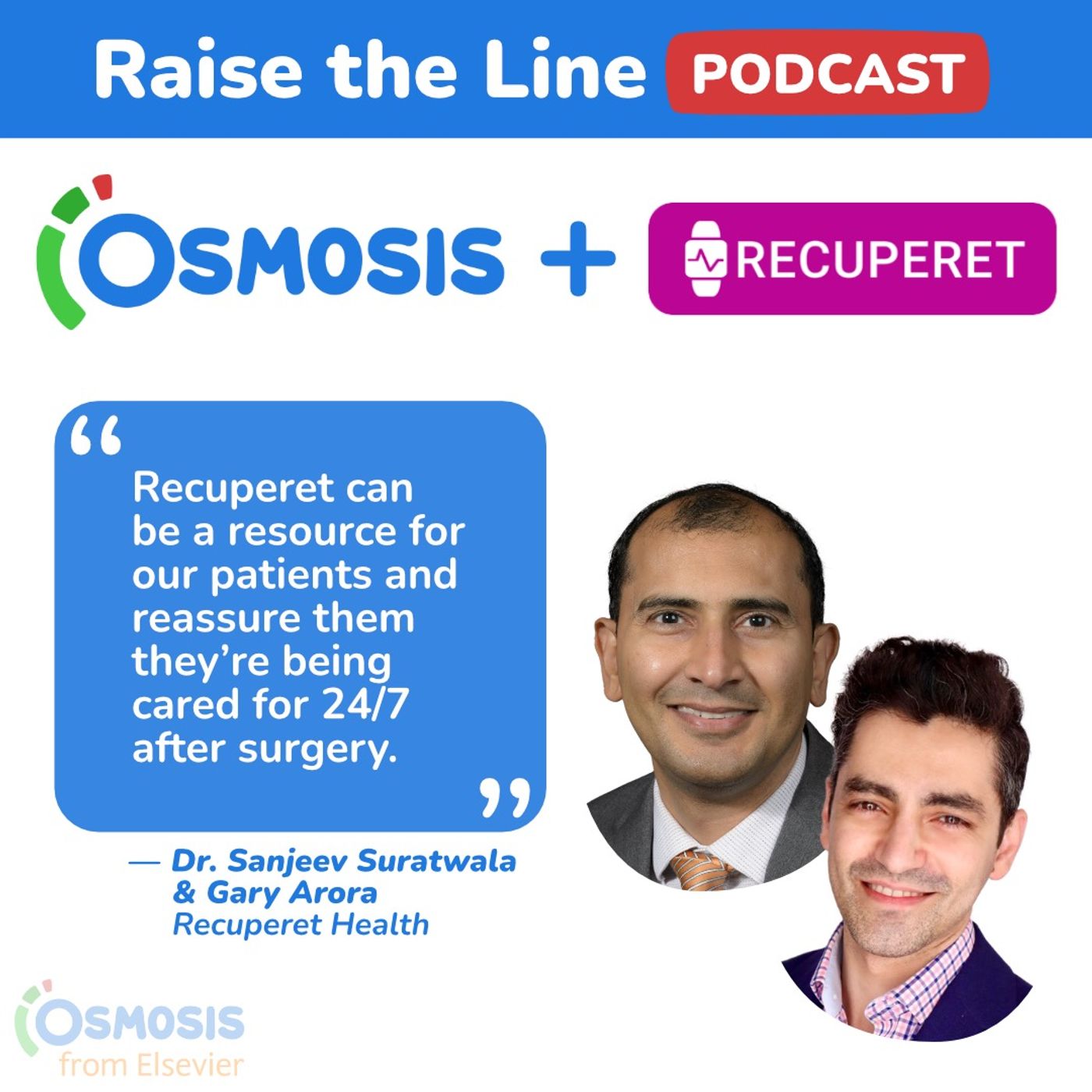
Ep 375Improving At-Home Surgical Recovery - Dr. Sanjeev Suratwala and Gary Arora of Recuperet Health
We've learned quite a bit on Raise the Line about at-home monitoring technology for chronic disease management, but on this episode we're going to explore the use of tech for a different aspect of the patient experience: post-surgical care. It’s a significant issue because hospitals are incentivized to discharge patients as soon as possible, leaving many to recover at home with varying degrees of support. “The whole postoperative period is a huge black box of missing information. We really don't know how patients are doing after their surgery because we’re not capturing the 24-7 experience the patient is living through,” says Dr. Sanjeev Suratwala, an orthopedic spine surgeon who co-founded Recuperet Health to fill that information gap. He tapped software engineer and management consultant Gary Arora to develop Recuperet’s technology platform with the aim of keeping it simple for users. “You simply log in with your credentials. It's like watching Netflix on your browser. You don't need to download or install anything,” he tells host Michael Carrese. Patients wear Fitbits that track vital signs, and the system is designed to send alerts to providers -- and a patient-designated caretaker - if something seems concerning. Tune in to learn how Recuperet is leveraging AI and gamification as part of its approach, and how this solution can be broadened to other specialties beyond orthopedics. Mentioned in this episode: https://recuperet.io If you like this podcast, please share it on your social channels. You can also subscribe to the series and check out all of our episodes at www.osmosis.org/podcast
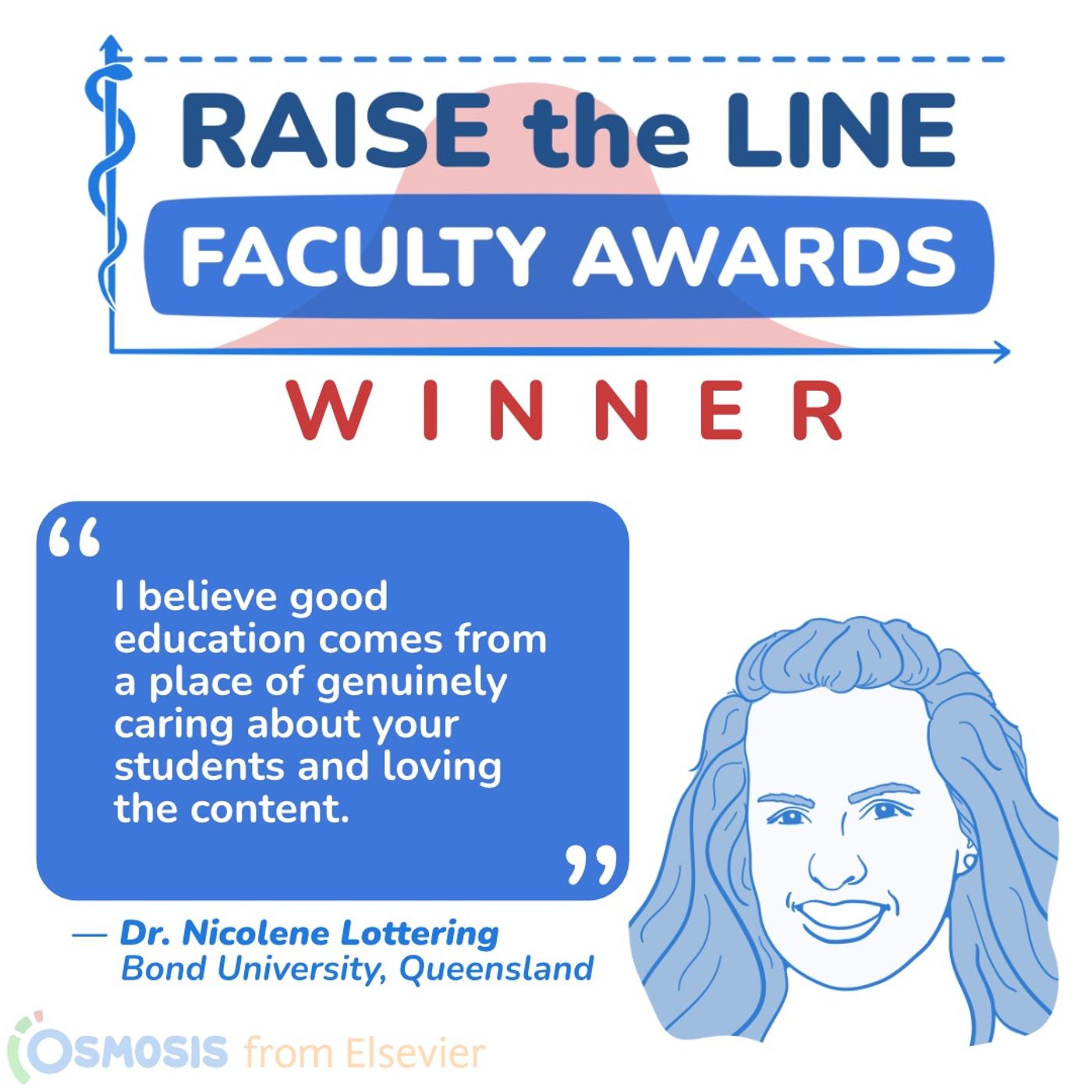
Ep 374Insights on the Use of Technology in Education - Dr. Nicolene Lottering, Assistant Professor at Bond University, Queensland
“I noticed early on in my academic career that the traditional methods of engagement and the lecture was no longer working for millennials and Gen Z, which is the first generation to completely grow up being immersed in technology,” says Dr. Nicolene “Nikki” Lottering of Bond University in Queensland. That set the assistant professor of anatomy and forensic anthropologist on the path of determining how to use technology effectively without going too far. “For me, it's about the responsible use of technology to meet students halfway and harness that power to engage them and make them excited about what they're learning.” This thoughtful approach is one of the reasons Lottering is the winner of the 2022 Osmosis Raise the Line Faculty Award in the Anatomy and Physiology category. Another, according to her student nominators, is her compassion for her students. This became particularly pronounced during COVID which presented enormous challenges to educators and students alike. “I believe good education comes from a place of genuinely caring about your students,” she tells host Michael Carrese. “We can learn as a community and we can, through learning, find coping strategies as well. It's not always about the content, but it's actually about the community.” Don’t miss this inspiring conversation from an educator with many insights on how to connect students to their learning and to each other. Mentioned in this episode: www.Osmosis.org/faculty-awards If you like this podcast, please share it on your social channels. You can also subscribe to the series and check out all of our episodes at www.osmosis.org/podcast
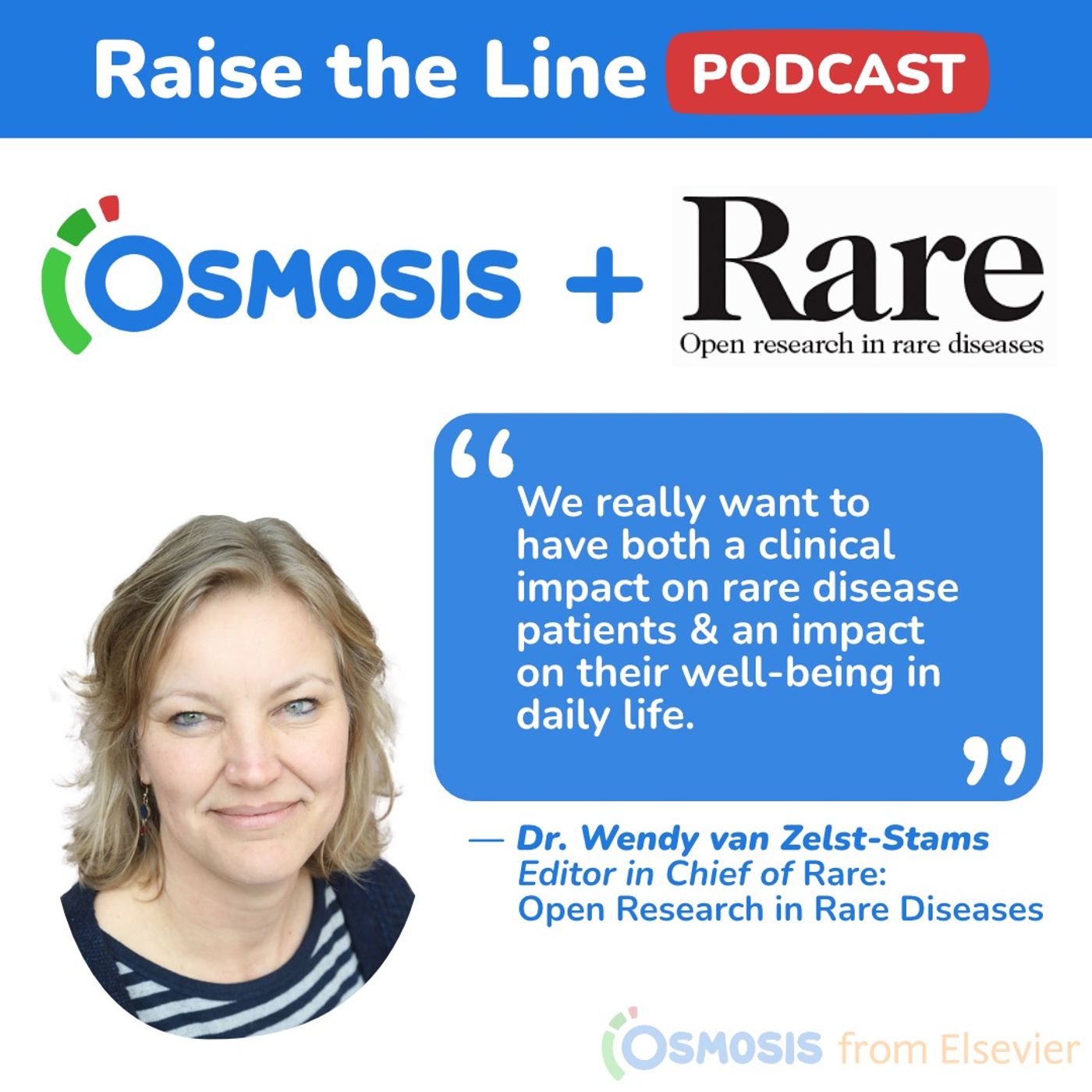
Ep 373Including the Patient Voice in Rare Disease Research - Dr. Wendy van Zelst-Stams, Editor-in-Chief of the Journal Rare
Perhaps the most noteworthy element of Osmosis from Elsevier’s Year of the Zebra educational initiative is the new, open-access, peer-reviewed journal Rare. Open Research in Rare Diseases.It joins Elsevier's leading collection of 2,500 publications in science and medicine. Rare is an open journal in multiple senses because, in an unusual step, contributions are being welcomed from patients as well as scientists. “We need the patient's voice to find out what their needs and challenges are every day,” says editor-in-chief, Dr. Wendy van Zelst-Stams. “We really want to have both a clinical impact on rare disease patients and an impact on their well-being in daily life.” Dr. van Zelst-Stams is taking on this new role in addition to her work leading the Clinical Genetics Section in the Department of Human Genetics of the Radboud University Medical Center and the Dutch Society of Clinical Genetics. In this enlightening conversation with host Shiv Gaglani, you’ll learn about Europe’s efforts to improve care for rare disease patients, the “DNA-first” approach her program takes to reduce the diagnostic odyssey, and the types of content that will be featured in this multidisciplinary scientific journal. Mentioned in this episode: https://www.sciencedirect.com/journal/rare If you like this podcast, please share it on your social channels. You can also subscribe to the series and check out all of our episodes at www.osmosis.org/podcast
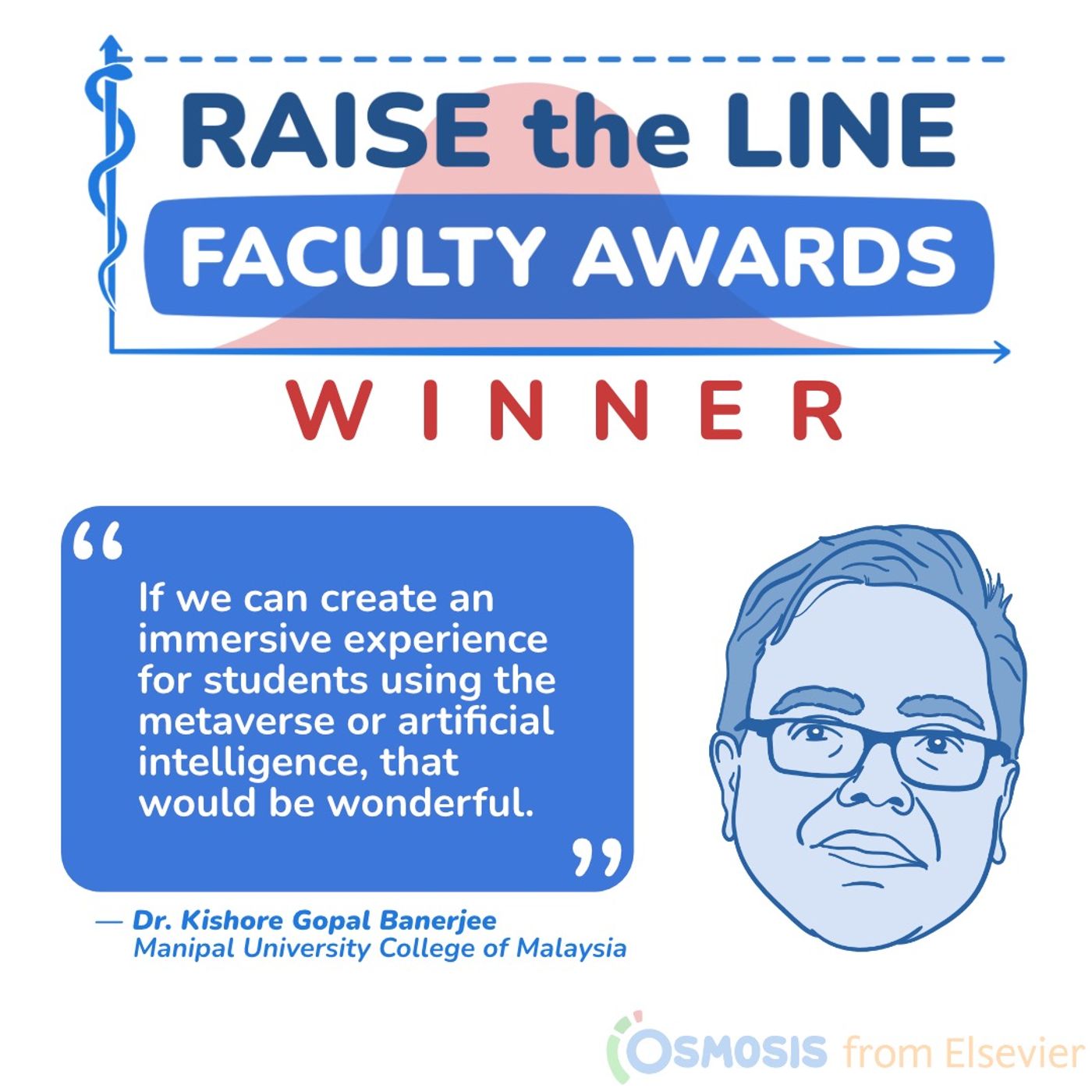
Ep 372Making Learning Fun Makes It Effective - Dr. Kishore Gopal Banerjee, Associate Professor at Manipal University College of Malaysia
“Even my mother always told me that my biggest strength is my explanation capability,” says Dr. Kishore Banerjee, the winner of the 2022 Osmosis Raise the Line Faculty Awards in the Medicine - Osteopathy category. It’s a skill the pathologist and educator has continued to hone over many years of teaching. “If you can create analogies and compare things with a real-life experience, then it becomes very easy for the student.” Better yet, Dr. Banerjee tells host Michael Carrese, is the prospect of enhancing the images he is trying to create for students using new technologies. “If we can create an immersive experience for students using the metaverse or artificial intelligence, that would be wonderful.” Throughout the podcast, Dr. Banerjee emphasizes the importance of making the learning process an enjoyable experience, one that students look forward to, which aligns him perfectly with the core Osmosis value of Spread Joy. “If the learning is happening in a fun environment, only then can you learn it properly.” By the end of this delightful conversation, you’ll understand why Dr. Banerjee was selected as a winner out of the thousands of nominations Osmosis received from nearly 400 institutions worldwide. Mentioned in this episode: www.osmosis.org/faculty-awards If you like this podcast, please share it on your social channels. You can also subscribe to the series and check out all of our episodes at www.osmosis.org/podcast
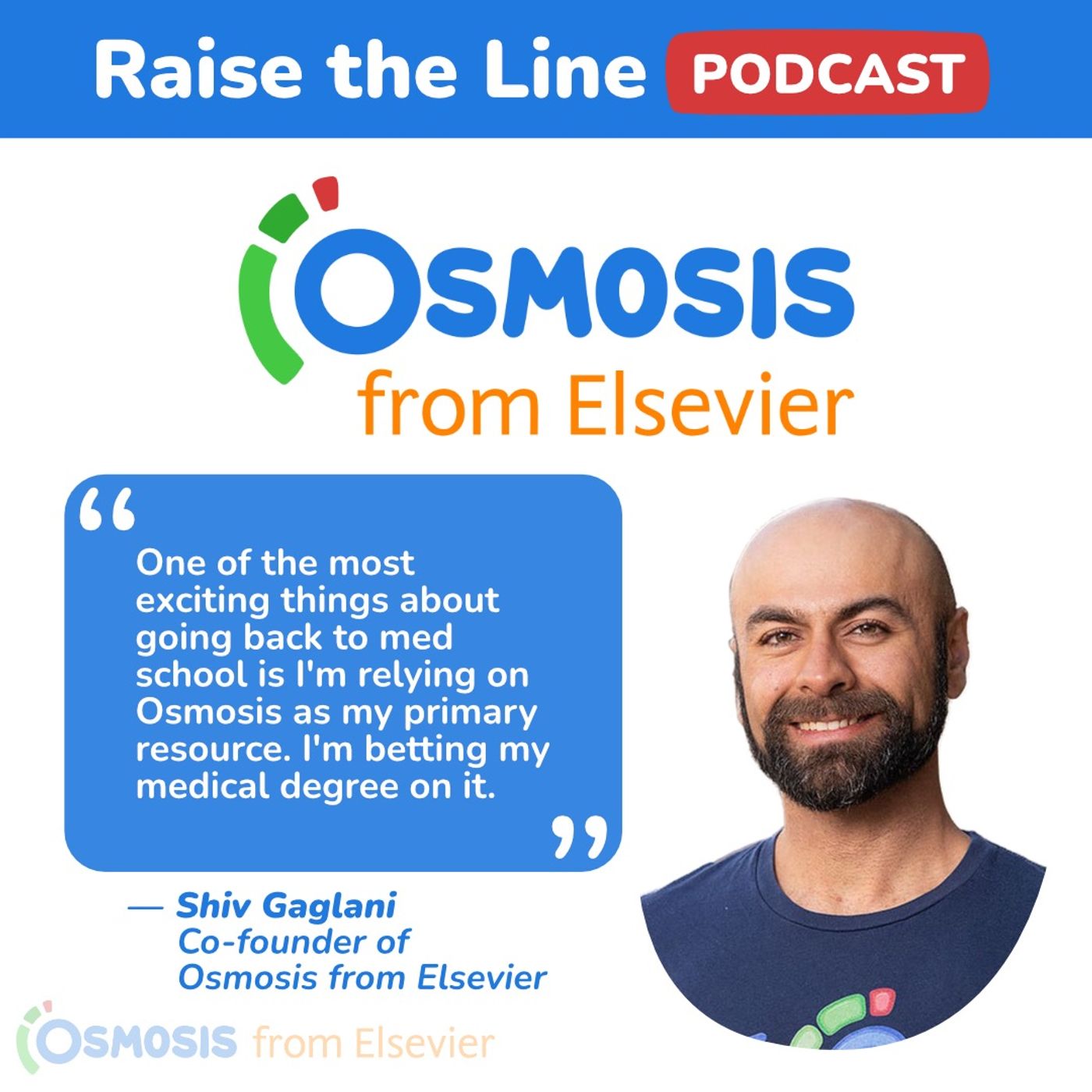
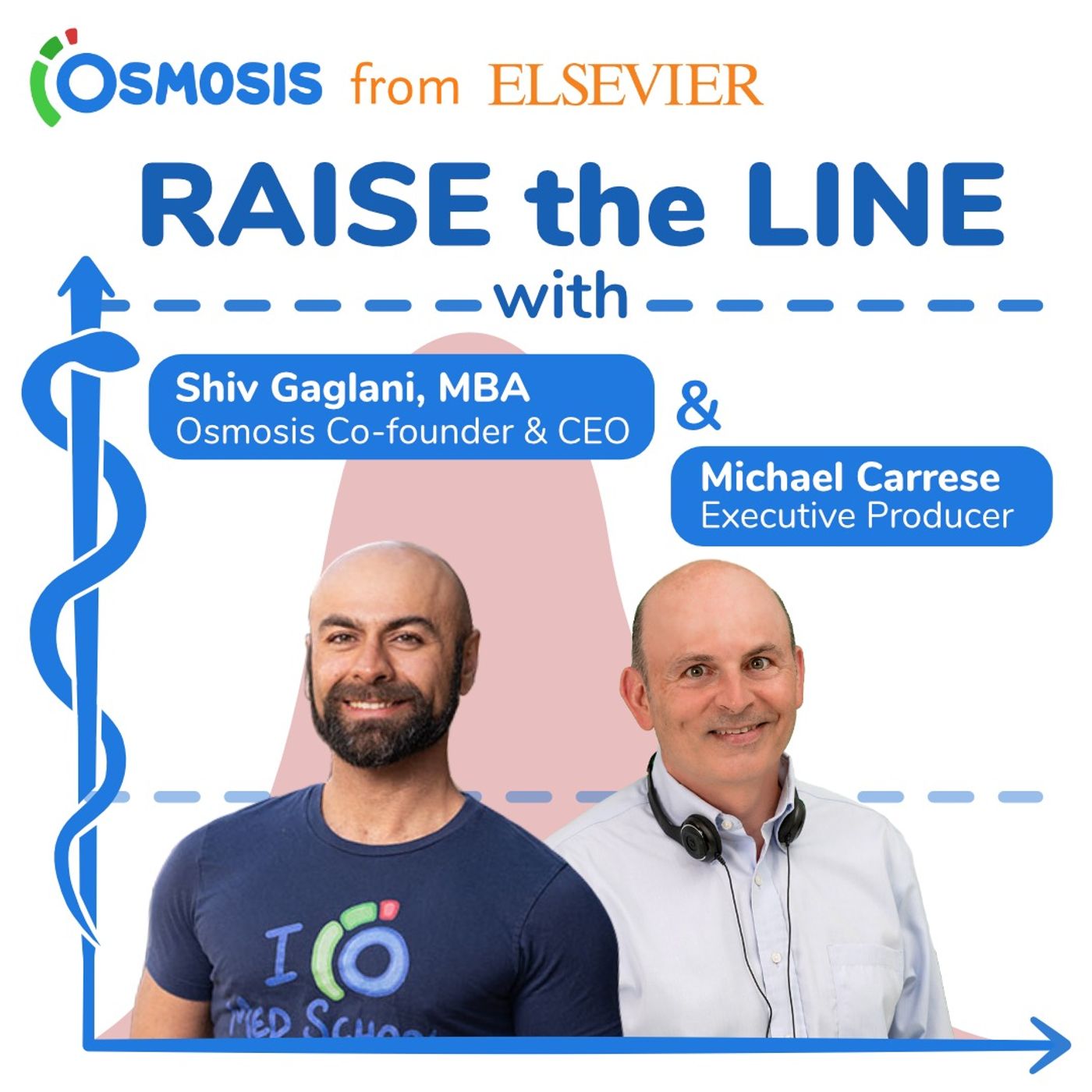
Ep 371Osmosis.org Co-founder & CEO Relies on His Own Learning Platform for Return to Med School
Some of you may have a general idea about how Osmosis got started, but today you are going to get the full, fascinating story from one of its co-founders, Shiv Gaglani, who we welcome back to the Raise the Line podcast as our special guest. Shortly into his first year of medical school at Johns Hopkins in 2011, Shiv, and his co-founder Ryan Haynes, realized medical education was overdue for an upgrade. “The research was clear on how people learn and how to get them to engage in their education, but professors weren't being taught how to teach. We wanted to bring evidence-based education tools like spaced repetition, test-enhanced learning, memory palaces and flipped classrooms to medical education.” They also wanted to make it fun, efficient and personalized, keying off the customized recommendations media giants such as Netflix and Facebook were using. After completing their second year, both took a leave from med school to build Osmosis based on those insights. After growing it from a crowdsourced question bank for classmates into a global education platform serving millions of future healthcare professionals, Shiv shepherded the acquisition of the company by Elsevier in 2021, freeing him to return to Johns Hopkins to complete his degree which he recently moved to Baltimore to do. So, what’s it like to go from running the company to being a student using the product he helped build? Tune in to this delightful episode to find out, to learn what specialties he’s considering and for advice on using “negative” emotions to achieve productive outcomes. If you like this podcast, please share it on your social channels. You can also subscribe to the series and check out all of our episodes at www.osmosis.org/podcast
Ep 370A Librarian’s Passion for Student Success - Theodosia Adanu, Principal Librarian and Head at University of Ghana
Join us on this special episode of Raise the Line as we speak with Theodosia Adanu, Principal Librarian and Head at University of Ghana and winner of the 2022 Raise the Line Faculty Award in the Librarian category. When host Lindsey Smith asked Adanu which of the Osmosis values she resonated with most, her response was immediate. “When I think of the heart, I think of passion. I think for anyone to be able to make a difference, you ought to be passionate about things, and this is one thing I'm passionate about.” According to her students, Adanu’s unwavering drive to affect change and encourage them to succeed are just two of the reasons she was nominated and chosen for the award. In her conversation with Lindsey, Adanu describes the parts of the job she loves most, including helping students discover and learn new things. She also touches on concerns about information literacy. “I do my best to make sure that everybody knows about it and is practicing the tenets of information literacy. That's a gap I'd like to see through.”Mentioned in this episode: www.osmosis.org/faculty-awards If you like this podcast, please share it on your social channels. You can also subscribe to the series and check out all of our episodes at www.osmosis.org/podcast
Ep 369Tools to Personalize Medical Education - Dr. Phil Xiu, Editor-in-Chief for Elsevier’s ClinicalKey Student Assessment
One effective approach to teaching is to identify where students may have some weaknesses and then provide them with additional resources or information to shore up their understanding of that topic. Well, that’s exactly what Elsevier’s ClinicalKey Student Assessment is designed to do, and because it’s an online platform, the process is efficient for both instructors and students. “It’s a foundation to help students in that journey of self-discovery and self-learning which, hopefully, will set them up for the rest of their careers,” says Dr. Phil Xiu, the platform’s editor-in-chief. Xiu’s journey to that role includes many years of involvement in medical education and health tech, from writing textbooks to becoming the series editor of Elsevier’s Crash Course book series which has sold over a million copies and been translated into eight different languages. In this enlightening conversation with host Michael Carrese you'll also learn about efforts to improve diversity, equity and inclusion in medical training, how blockchain technology is being used to enhance patient access to their complete medical record, and how being a practicing family physician shapes Xiu’s work as an educator. If you like this podcast, please share it on your social channels. You can also subscribe to the series and check out all of our episodes at www.osmosis.org/podcast
Ep 368The Connection Between Female Orgasms and Health - Anna Lee, Co-Founder of Lioness
What if your vibrator not only brought you pleasure but also provided valuable health data? That's precisely what Anna Lee, co-founder of Lioness, is striving to achieve. In this episode of Raise the Line, our host Shiv Gaglani sits down with Anna to discuss her journey from being an engineer at Amazon to starting a company focused on women's sexual pleasure and health. Despite the stigma around female pleasure, Lioness is dedicated to serving an underserved community, and the data they've collected is shedding light on the importance of sexual wellness. As Anna puts it, "Orgasms are the canary in the coal mine for healthcare implications and overall health." Join us to hear Anna's inspiring story and learn about the challenges of creating a smart vibrator in a male-dominated industry.Mentioned in this episode: https://lioness.io/ If you like this podcast, please share it on your social channels. You can also subscribe to the series and check out all of our episodes at www.osmosis.org/podcast
Ep 367Helping Students Manage the Transition to Post-Graduate Education - Susan Spielberg, Education Specialist at Lake Erie College of Osteopathic Medicine
It’s another special episode of Raise the Line, where we have the honor of speaking with Susan Spielberg, overall winner of the Student Advisor category in the 2022 Osmosis Raise the Line Faculty Awards. Chosen from a pool of over 1,000 nominees representing 377 institutions worldwide, Susan truly embodies the six core values of Osmosis, as evidenced by the glowing testimonials and videos submitted by her students and colleagues. Join host Michael Carrese as he dives into Susan's educational career and her current role at Lake Erie College of Osteopathic Medicine, where she serves as a student advisor across the pharmacy and dental schools. In this engaging conversation, Susan shares her approach which involves proactively seeking out those who may be hesitant to ask for help. "I find that many people have difficulty asking for help. That's why I feel the need to go out and find them." Tune in to learn more about the types of support students increasingly need, why she thinks teaching the affective is just as important as academics, and why she’s known as the “grandma” of LECOM.Mentioned in this episode: www.osmosis.org/faculty-awards If you like this podcast, please share it on your social channels. You can also subscribe to the series and check out all of our episodes at www.osmosis.org/podcast
Ep 366Bringing Cultural Competence to Health Insurance - Myong Lee, Co-Founder and CEO of Clever Care Health Plan
Even for those with experience in the healthcare system, dealing with health insurance can be confusing and complicated. And for millions of Americans, they have the additional challenge of navigating this complexity in something other than their native language, which is a real barrier to access. Knocking down those barriers is where today’s Raise the Line guest enters the picture. Myong Lee is co-founder and CEO of Clever Care Health Plan, a culturally sensitive Medicare Advantage plan that's tailored to the customs, values and linguistic needs of the diverse communities it serves. The company was sparked by Lee's experience watching his Korean American parents struggle with a system that wasn't designed for them. The mission goes beyond just providing customer service in different languages to including different health customs as well. “My parents certainly have never been to a gym. We saw the opportunity to be able to allow seniors to be able to practice healthcare the way they want to with access to herbal medicine and Tai Chi classes.” Join host Michael Carrese for an exploration of incorporating Eastern and Western medical traditions, assisting seniors in accessing the care they need and deserve and launching a company during a pandemic.Mentioned in this episode: https://clevercarehealthplan.com/ If you like this podcast, please share it on your social channels. You can also subscribe to the series and check out all of our episodes at www.osmosis.org/podcast
Ep 365Preparing PAs for Their Increasingly Important Role On the Healthcare Team - Michael Moore, Clinical Assistant Professor in the Physician Assistant Program, University of Michigan-Flint
Join us for this special episode as we continue a series of conversations with the winners of the Osmosis from Elsevier 2022 Raise the Line Faculty Awards which recognize the inspirational educators who are responsible for training future generations of healthcare professionals. Winners were chosen fromover 1,000 nominations received from 377 institutions around the world. The interviews feature testimonials from the students and peers who nominated the eventual winners focusing on how they embody the six Osmosis core values. Today we feature Michael Moore, the overall winner for the Physician Assistant category. Tapping into his deep passion for education and helping students to succeed, Professor Moore has played an integral role in launching two PA training programs in rural Indiana and Michigan. In his conversation with host Michael Carrese, Moore discusses the growing role of physician assistants on the healthcare team, what he loves about interacting with students, and the need for them to prioritize critical thinking skills. "Something that I think we can work on in even the undergrad years is more critical thinking." From PA education and training to day-to-day responsibilities, you'll gain valuable insights into this critically important and growing profession.Mentioned in this episode: www.osmosis.org/faculty-awards If you like this podcast, please share it on your social channels. You can also subscribe to the series and check out all of our episodes at www.osmosis.org/podcast

Ep 364The Inside Story of the Year of the Zebra Campaign - Shiv Gaglani, Co-Founder of Osmosis from Elsevier
We’re turning the tables on Raise the Line co-host Shiv Gaglani today who will be answering questions, instead of asking them, about Osmosis from Elsevier’s Year of the Zebra campaign.As Shiv explains to host Michael Carrese, he first became interested in rare diseases meeting patients as a medical student at Johns Hopkins University a decade ago. His discomfort with the standard advice given to medical students to think of horses (the common condition) and not zebras (the rare condition) when determining a diagnosis sparked an interest in learning more. In the ensuing years he created a partnership between Osmosis and NORD, one of the leading rare disease organizations in the world. One result of that relationship is 200 Osmosis educational videos on rare conditions which provide critically needed information to health students, providers and patients. He has also sought out rare disease patients and parents of children with rare conditions to find out what more could be done to help them. “The more of them I've met, the more inspired I am by their stories and the things they've done as community organizers, researchers, scientists, advocates and policy changemakers.” Don’t miss this lively conversation about the components of the campaign - including Elsevier’s new open access journal on rare diseases - and how you can get involved. And, you won’t want to miss Shiv’s recounting of his climb of Mt. Kilimanjaro to raise money for the campaign, including the special photo taken at the summit. Mentioned in this episode: www.osmosis.org/zebra If you like this podcast, please share it on your social channels. You can also subscribe to the series and check out all of our episodes at www.osmosis.org/podcast
Ep 363Drawing on Māori Values to Inform Medical Education - Dr. Joanne Baxter, Dean of the Dunedin School of Medicine at the University of Ōtākou in New Zealand
Join us on this special episode as we continue a series of conversations with the winners of the Osmosis from Elsevier 2022 Raise the Line Faculty Awards which recognize the inspirational educators who are responsible for training future generations of healthcare professionals. Winners were chosen fromover 1,000 nominations received from 377 institutions around the world. The interviews feature testimonials from the students and peers who nominated the eventual winners focusing on how they embody the six Osmosis core values. On today’s episode, hostLindsey Smith speaks with Dr. Joanne Baxter, the first female dean of Dunedin School of Medicine at the University of Ōtākou in 148 years. As a champion of diversity, equity, and inclusion, Dr. Baxter discusses the importance of DEI in both the medical field and society at large. Drawing from her Māori heritage, she emphasizes the significance of collaborating with marginalized communities to ensure equitable healthcare access. Through her conversation with Lindsey, she explains the importance of understanding the roots of inequality and highlights how the younger generations are leading the way. “This next generation really embraces and engages with conversations about equity and diversity in a way that is much more open and progressive.” Mentioned in this episode: www.osmosis.org/faculty-awards If you like this podcast, please share it on your social channels. You can also subscribe to the series and check out all of our episodes at www.osmosis.org/podcast

Ep 362How At-Home Monitoring Empowers Patients and Improves Healthcare - Carol Lucarelli, Executive Director of Marketing and Ecommerce at OMRON Healthcare
One of our favorite themes on Raise the Line is how technology can help people become better informed about their own health, allowing them to participate more actively in maintaining and improving it. Well, today, we're going to take a deeper look at that issue with the help of Carol Lucarelli, Executive Director of Marketing and E-Commerce at Omron Healthcare, the global leader in remote blood pressure monitoring and personal health technology. “We want individuals to take responsibility for understanding what ails them and be part of the care plan to get better.” The medical devices Omron makes can help do that by providing patients and their providers with timely data from remote monitors of various types. One of the most common is blood pressure monitors, which Lucarelli says could go a long way in preventing strokes and heart attacks if used diligently. And it stands to reason that if providers are on top of changes in key health measurements taken at home, they can catch problems early lessening the need for trips to the doctor’s office or emergency room. Join host Michael Carrese for an informative look at the current role of remote monitoring, what’s coming down the road and how medical devices can help facilitate a dialogue between providers and patients. Mentioned in this episode: https://omronhealthcare.com/ If you like this podcast, please share it on your social channels. You can also subscribe to the series and check out all of our episodes at www.osmosis.org/podcast
Ep 361Supporting Healthcare Leaders in Tumultuous Times - Deborah Bowen, President and CEO of the American College of Healthcare Executives
How will the healthcare system navigate unprecedented workforce and financial challenges? What can be done about staff and leader burnout? How can healthcare systems increase diversity and equity? These are the types of big picture questions Deborah Bowen and her colleagues confront at the American College of Healthcare Executives, an international society of more than 48,000 executives in hospitals, healthcare systems and other healthcare organizations. After nearly three decades with the organization, Bowen has a deeply informed take on the kinds of support leaders need in motivating teams to realize their vision. But she is also quick to point out that change in healthcare is not just about who is sitting in the C-suite. “What I love most about healthcare is there are very influential people all throughout the organization. I think anybody who really has the intention to be a leader can be a leader,” she tells host Shiv Gaglani. Don’t miss this chance to hear from someone who has been named one of the most influential people in healthcare about COVID’s impact, why she’s excited about the future of the field and what emerging healthcare professionals can do to change the system.Mentioned in this episode: https://www.ache.org/ If you like this podcast, please share it on your social channels. You can also subscribe to the series and check out all of our episodes at www.osmosis.org/podcast
Ep 360Letting the Student Voice Drive Teaching Innovation - Dr. Athanasios Hassoulas, Director of the Master of Science Psychiatry Program Cardiff University and Winner of a 2022 Osmosis Raise the Line Faculty Award
Join us on this special episode as we start a series of conversations with the winners of the Osmosis from Elsevier 2022 Raise the Line Faculty Awards which recognize the inspirational educators who are responsible for training future generations of healthcare professionals. Winners were chosen fromover 1,000 nominations received from 377 institutions around the world. The interviews feature testimonials from the students and peers who nominated the eventual winners focusing on how they embody the six Osmosis core values. We start with Dr. Athanasios Hassoulas, Director of the Master of Science Psychiatry Program and Digital Education Lead at Cardiff University in Wales who won the “Other Health Professionals” category. Dr. Hassoulas tells host Michael Carrese about how his teaching innovations are informed by students and about the challenges and opportunities of incorporating digital technology into teaching practices. Dr. Hassoulas also shares how his personal experience with OCD led him to pursue a career in psychiatry and inspires his teaching philosophy. "I think care is the philosophy that underpins what I do.” Don't miss this insightful conversation with a remarkable educator who is breaking down barriers and raising the bar for excellence in medical education.Mentioned in this episode: www.osmosis.org/faculty-awards If you like this podcast, please share it on your social channels. You can also subscribe to the series and check out all of our episodes at www.osmosis.org/podcast
Ep 359The Connection Between Rare Disease Research and Treatments for Common Diseases - Dr. Jules Berman, Pathologist and Author
Regular listeners to Raise the Line know that research into rare diseases should matter to everybody because it has led to treatments for much more common conditions that have improved and saved millions of lives. Statins are usually the prime example of that. Well, on this episode we're going to get into much more detail on this point with someone who literally wrote the book on the subject: Dr. Jules Berman. His 2014 work published by Elsevier, Rare Diseases and Orphan Drugs, Keys to Understanding and Treating the Common Diseases, shows that much of what we now know about common diseases has been achieved by studying rare diseases, and therefore, accelerating progress in the field of rare diseases will lead to yet more advances affecting common conditions. “If you have a rare disease and you think about the phenotype that results from it, you can often find that same phenotype occurring much more commonly in acquired disease, so the treatment for the rare disease can often help people with the acquired disease.” Don’t miss this provocative conversation with host Michael Carrese as Dr. Berman shares why he thinks researching one rare disease at a time is a flawed approach, especially in light of his belief that there are more than 50,000 rare conditions. If you like this podcast, please share it on your social channels. You can also subscribe to the series and check out all of our episodes at www.osmosis.org/podcast
Ep 358Physicians Fight for Their Daughter and All Children with Single Gene Disorders - Dr. Geri Landman, Co-Founder of Moonshots for Unicorns
Lucy Landman is one of only a few children known worldwide to have a genetic disorder called PGAP3, in which a single missing gene can cause seizures and severe physical and cognitive limitations. Luckily for Lucy, her parents Geri and Zach Landman are both physicians whose expertise has been a big help in obtaining a diagnosis and in advocating for her. The Landmans are bringing that know-how and a fervent desire to help all children with single gene disorders to the non-profit they founded, Moonshots for Unicorns, which is already working with Nationwide Children’s Hospital on a promising gene therapy. “There are so many of these single gene disorders that should be amenable to things like gene therapy and drug repurposing. So, we don't want this just to focus on PGAP3.” Listen to this moving episode with host Michael Carrese to learn what causes PGAP3, how the rare genetic disorder has impacted Lucy’s life and health, and the suspected connection between PGAP3 and Autism. Dr. Landman also addresses the big gaps she sees in newborn screening, medical education and research efforts from a rare disease perspective.Mentioned in this episode: www.moonshotsforunicorns.org If you like this podcast, please share it on your social channels. You can also subscribe to the series and check out all of our episodes at www.osmosis.org/podcast
Ep 357Unlocking Potential Cures For Rare Diseases With Gene Therapy - Dr. Gaurav Shah, CEO of Rocket Pharma
Eighty percent of rare diseases are caused by genetic mutations, which is why many of our recent guests have highlighted the importance of pursuing gene therapies as potential treatments and cures. That’s why we’re particularly pleased to have Dr. Gaurav Shah on Raise the Line today. He’s the CEO of Rocket Pharma, a company that’s in hot pursuit of developing curative gene therapies for patients with inherited genetic diseases, and showing remarkable results in some cases. For instance, a gene therapy for a rare and fatal heart condition called Danon disease is moving every parameter in the right direction, a result Dr. Shah is understandably proud of. “When gene therapy works, it really works. We were able to demonstrate the power of gene therapy for heart disease for the first time in our species,” he tells host Michael Carrese. Don’t miss this fascinating look at the art, science and practicalities of developing gene therapies and where Rocket Pharma is seeing progress. You’ll also learn about the many career options in drug development and hear how Dr. Shah’s background as a Grammy-winning artist informs his approach to leadership.Mentioned in this episode: https://rocketpharma.com/ If you like this podcast, please share it on your social channels. You can also subscribe to the series and check out all of our episodes at www.osmosis.org/podcast
Ep 356Turning What You Know Into a Business - Justin Welsh, Founder of The Saturday Solopreneur
“Burnout to me is about losing control, not overwork. It's about being unable to solve problems, and problems beginning to stack up with no end in sight.” Today’s Raise the Line guest Justin Welsh earned that insight the hard way after a demanding corporate job led to a panic attack so severe it prompted a 911 call. Five years later, after founding a one-man business called “The Saturday Solopreneur,” he’s gained full control of his work life and has the number one rated course on LinkedIn which helps more than 10,000 people identify, share and monetize the knowledge they already possess. Listen in to this enlightening episode with host Shiv Gaglani as Justin shares his journey from successful digital health executive to self-employment and what he’s learned along the way about himself and what really matters to him. He details how he gained such a large following in short order, and offers advice for healthcare workers and digital health entrepreneurs on advancing their careers and preventing burnout. And stay tuned for an insightful take on the impact of AI that should reassure those with real world knowledge and experience, and the wisdom that can come from both. “Try not to look for ways to cut the line in place of real learning. Do the work, make the mistakes, analyze the mistakes, iterate, repeat.”Mentioned in this episode: linkedin.com/in/justinwelsh If you like this podcast, please share it on your social channels. You can also subscribe to the series and check out all of our episodes at www.osmosis.org/podcast
Ep 355Educating Doctors to Be Leaders and Changemakers - Dr. Abebe Bekele, Dean of the School of Medicine at University of Global Health Equity, Rwanda
“The qualities of a provider that were envisioned fifty years ago are completely different from what the world needs for tomorrow. It’s completely different,” insists Dr. Abebe Bekele, who is entrusted with educating this new breed of physician at the University of Global Health Equity in Rwanda. As Bekele explains to host Shiv Gaglani in this special in-person interview on the campus of UGHE in Butaro, Rwanda, COVID-19 has demonstrated that doctors now need to be able to serve as leaders of institutions, manage large projects, raise money and interface with influential public sector players such as policymakers and journalists. The program at UGHE has been designed with that in mind by providing a grounding in liberal arts and humanities along with the necessary medical content. As you’ll learn in this insightful conversation, the relatively young school -- which was established by Partners in Health in 2015 -- is taking a thoughtful approach to meeting healthcare needs in the region through admissions policies and scholarships that are boosting the number of female physicians and incentivizing its graduates to practice medicine in their home communities. Beyond connecting with Dr. Bekele, Shiv’s visit gave him a chance to meet with students and faculty to gain a deeper understanding of the partnership Osmosis has with UGHE which is part of a larger effort to support medical education in Sub-Saharan Africa, including in Namibia where he was born. As you’ll hear, Shiv came away seeing UGHE as a model for health education in an increasingly interconnected world. Mentioned in this episode: https://ughe.org/ If you like this podcast, please share it on your social channels. You can also subscribe to the series and check out all of our episodes at www.osmosis.org/podcast
Ep 354Empowering Rare Disease Patients to Solve Problems - Annie Kennedy, Chief of Policy, Advocacy and Patient Engagement at the EveryLife Foundation
“Our rare disease community is looking to solve for many different types of policy barriers because we have a very diverse patient community,” says Annie Kennedy, who was drawn to the rare disease issue due to some personal experience early in her life. After spending many years as a patient advocate -- including being with patients during provider visits -- she has developed a keen understanding of where the healthcare system can be improved to do justice to rare disease patients and families. That insight informs her work as chief of Policy, Advocacy and Patient Engagement at the EveryLife Foundation where she helps provide patient communities with tools and resources they can use to make their voice heard in the policy arena. In fact, next week, EveryLife is holding its annual Rare Disease Week on Capitol Hill during which members of the rare disease community will meet with lawmakers in Washington to provide meaningful perspectives and encourage their support. “There are more than thirty million Americans living with rare diseases, so this is a real public health priority,” she tells Raise the Line host Michael Carrese. One resource EveryLife has brought to the table is a study on the total cost of living with a rare disease, not just the costs of medical care, which is helping to inform policy discussions. You’ll also learn about some key steps pharma companies, insurers and providers can take to support the rare disease community and where the field is heading in the next few years. Mentioned in this episode: https://everylifefoundation.org/ If you like this podcast, please share it on your social channels. You can also subscribe to the series and check out all of our episodes at www.osmosis.org/podcast
Ep 353Lessons From ‘Patient School’ That Medical School Doesn’t Teach - Dr. Alin Gragossian, Heart Transplant Recipient and Emergency Medicine Specialist
“In about three weeks, I went from a completely normal thirty-year-old to somebody with a heart transplant. It was crazy,” says Dr. Alin Gragossian, who shares her remarkable experience on this edition of Raise the Line. What makes her tale even more interesting is that at the time of the life-threatening heart episode that necessitated the transplant, she was finishing up a residency in emergency medicine. In fact, Dr. Gragossian is dually trained in emergency medicine and critical care medicine. Since her transplant, she’s been using her platform to share her unique experiences with other health professionals and raise awareness about the importance of organ donation. “I’ve had a lot of amazing lessons from what I call ‘patient school’ that medical school never really taught me,” she tells host Michael Carrese. Listen in to this fascinating episode to hear Dr. Gragossian describe what life is like after an organ transplant and the lessons learned as a transplant patient that she’s applying to her medical career. She gets candid about what she would change about medical school curriculums and what would encourage more people to become organ donors. Then, she talks about her podcast, “Both Sides of the Stethoscope” and emphasizes the power of strong patient communities and support groups. If you like this podcast, please share it on your social channels. You can also subscribe to the series and check out all of our episodes at www.osmosis.org/podcast
Ep 352Navigating Changes, Choices and Challenges Facing Med Students and Faculty - Dr. Kim Tartaglia of Ohio State University Wexner College of Medicine
There are so many choices to make as an undergrad in med school: selecting which medical field to go into; whether to go down the academic path; and how to use your knowledge and skills to find success and create positive change in the world, to name a few. On today’s episode we’re going to hear from someone who helps students work through all of those questions and also assists faculty colleagues with adjusting to the changing medical education landscape. Dr. Kim Tartaglia does all of this wearing several hats at Ohio State University Wexner College of Medicine including Professor of Medicine, Director of the “IMWell” program for internal medicine residents and Director of Faculty Mentorship. “There are so many different ways to make an impact that there’s not one path to success and there’s not one path to be impactful,” she tells host Michael Carrese. Listen in to this episode as Dr. Tartaglia shares her perspective on how medical education has changed since the pandemic as well as how students and academic leaders are relating to each other differently as they work to improve the med ed system. You’ll also learn how she chose her specialty in med school, what drew her to stay in academics, how she established an enjoyable career in medical academics, and the benefits of attending OSU’s College of Medicine. And stay tuned to the end for an enlightening discussion of the role of lifestyle medicine in treating and reversing disease, and the benefits of coaching and mentorship for med school residents.Mentioned in this episode: https://medicine.osu.edu/ If you like this podcast, please share it on your social channels. You can also subscribe to the series and check out all of our episodes at www.osmosis.org/podcast
Ep 351Patients Can Be the Most Effective Teachers - Dr. Mark Korson, Director of Education and Physician Support Services at VMP Genetics
A singing guest! A poetic chat bot! This special episode of Raise the Line features those unusual artistic highpoints along with the substantive and interesting conversation you always get with host Shiv Gaglani. Our guest, Dr. Mark Korson, is a metabolic geneticist and Director of Education and Physician Support Services at VMP Genetics who believes patients have a crucial role to play in the education of both learners and practicing clinicians, especially when dealing with rare diseases. “Patients teach about disease a whole lot better than I do because they tell stories and storytelling is so incredibly powerful as a teaching tool.” Tune in as Korson talks about career opportunities in genetics and metabolic disease, the ways he integrates patient voices into his teaching, and the biggest opportunities and challenges in treating genetic and metabolic diseases and biochemical disorders. Plus, he shares his advice for learners about pursuing a career in the increasingly complex and demanding healthcare field. “You have to protect your personal life and protect it greedily because if you don't do that, at some point it's going to impact how you like your career.”Mentioned in this episode: https://www.vmpgenetics.com/ If you like this podcast, please share it on your social channels. You can also subscribe to the series and check out all of our episodes at www.osmosis.org/podcast