Raise the Line
600 episodes — Page 3 of 12

Ep 500Being a Doctor Will Give Me Meaningful Monday Mornings: Parsa Mohri, Medical Student at Acibadem University
Given Osmosis from Elsevier’s mission to educate the next generation of healthcare providers, it’s fitting that our 500th episode of the Raise the Line podcast features a conversation with Parsa Mohri, a medical student at Acibadem University in Turkey. As you’ll learn in this thoughtful interview with host Hillary Acer, Parsa applied a “Monday morning” test in choosing medicine as a career: what kind of job would he feel motivated to go to at the start of every work week for decades. “I picked medicine because I could find meaning and value in the work as well as enjoying it at the same time,” he explains. Parsa has also sought out meaningful roles on campus, including serving as a member of a committee that gathers feedback from students on the effectiveness of the education they are receiving and shares it with faculty. “This gives faculty a chance to offer any form of alternatives so when the next students come by, they will have a smoother and a more efficient education.” That drive to improve medical education also explains Parsa’s involvement in the Osmosis Health Leadership Initiative where he is guiding and mentoring fellow medical students and helping to foster a supportive and inclusive learning community. Parsa is a great example of the many compassionate and creative medical learners we have featured throughout the 500 episodes of Raise the Line, and we hope to introduce you to many more inspiring future clinicians as the podcast continues. Mentioned in this episode:Acibadem University If you like this podcast, please share it on your social channels. You can also subscribe to the series and check out all of our episodes at www.osmosis.org/podcast

Ep 499Pathologists Are the Most Important Doctor You’ll Never Meet: Dr. Jennifer Hunt, Interim Dean at the University of Florida College of Medicine
“When I make a diagnosis of cancer, that's changing the landscape of that patient's life forever. Their trajectory is being set by the words I write down on my report. So, that’s why I say pathologists are the most important doctors you’ll never meet,” explains Dr. Jennifer Hunt, interim dean at the University of Florida College of Medicine. As she tells host Michael Carrese, it was the intervention of mentors that facilitated her exploration of pathology, sparking a passion in her for the importance of mentorship and sponsorship. Her career as a practitioner, educator and leader at some of the most prestigious health systems in the country has provided Dr. Hunt with many opportunities to pay that assistance forward and has led to an interest in coaching as an additional modality for career and personal development. “In medicine, coaching has been underutilized but as a dean, I'm seeing more requests for recruitment packages that include coaching, and I think that shows it's becoming a more mainstream tool.” This Raise the Line episode also covers how the college is preparing students to practice medicine in a world being reshaped by artificial intelligence, and the advantage of being able to offer them a wide range of clinical settings from urban to rural, and academic to community-based. “We have educational venues that cover all of the practice of medicine and that also opens up possibilities for doing community-based research and clinical trials enrollment across lots of different settings.” Mentioned in this episode: University of Florida College of Medicine If you like this podcast, please share it on your social channels. You can also subscribe to the series and check out all of our episodes at www.osmosis.org/podcast

Ep 498Innovative Models for Bringing Care to the Home and Community: Dr. Sarah Szanton, Dean of the Johns Hopkins School of Nursing
“Nurses have a lot of answers. We're problem solvers. We're innovators,” says Dr. Sarah Szanton, who is a case in point for using her experience doing home visits as a nurse practitioner to help pioneer an innovative model of elder care called CAPABLE. It’s a four-month long program in which a nurse, occupational therapist and handy worker address difficulties an older adult may have in daily living as well as the safety issues in their home so they are able to age in place while achieving the best possible health status and quality of life. So far, it has served 10,000 people in twenty-three states, and efforts are underway to scale the model as broadly as possible to meet the needs of the country’s burgeoning senior population. “If the CAPABLE program were a drug, it would be a blockbuster. It cuts disability in half and saves seven times what it costs,” she explains. As you’ll learn in this informative conversation with our new Raise the Line host Caleb Furnas, Dr. Szanton is in a position to shape healthcare delivery far beyond elder care in her role as dean of the Johns Hopkins School of Nursing. Tune in to learn about a community healthcare model being developed based on work in Costa Rica, and how the school deploys simulation technologies to hone difficult skills and develop empathy for both patients and fellow providers.Mentioned in this episode: Johns Hopkins School of NursingCAPABLE If you like this podcast, please share it on your social channels. You can also subscribe to the series and check out all of our episodes at www.osmosis.org/podcast

Ep 497How Endurance Sports Inform My Approach to Medical Training: Dr. Estello Hill, Gastroenterology Fellow at the University of British Columbia
You might think training for and completing ultramarathons while managing the long hours and other demands of a medical residency would be too much to handle, but in the case of Dr. Estello Hill, athletics have fueled his success on the job. “It's really taught me what I'm capable of, how I can push myself and when I should dial back. I think it's given me an intense sense of balance with everything,” he explains. Dr. Hill just wrapped up his internal medicine residency at the University of British Columbia and has begun a fellowship there in gastroenterology where he can pursue his special interest in the gut microbiome. “It's an exciting space that I think is going to open up some new understanding for a lot of disease processes that we don't actively understand now, and also potentially open up new treatment pathways.” In this inspiring installment in our NextGen Journeys series, Hill and host Hillary Acer also discuss how he sees AI being integrated into medical care, and his interest in longevity medicine, complete with book recommendations on nutrition and other keys to a healthy lifestyle. Mentioned in this episode: The University of British Columbia If you like this podcast, please share it on your social channels. You can also subscribe to the series and check out all of our episodes at www.osmosis.org/podcast

Ep 496Reflections At the Dawn Of A Physician’s Career: Dr. Brian Le, Urgent Care Physician and Osmosis Consultant
For our NextGen Journeys series, host Hillary Acer sat down with Dr. Brian Le at a major moment of transition as he was just finishing up his residency in family medicine at Adventist Health in Glendale, California. As he embarks on his next chapter, Dr. Le reflects on the highlights of his medical education journey and takes stock of the key lessons he will bring forward with him. “I think the biggest thing that I've learned so far is you really don't know what you don't know, which goes to one of the reasons why I wanted to pursue medicine... there's always an endless pursuit of knowledge and of improving yourself,” he shares. There’s also an endless amount of knowledge coming at today’s clinicians which, he says, requires a good dose of humility. “Those who don't remain humble, in my opinion, can't really thrive in this environment just because there's always something new to learn.” Dr. Le’s learning journey included earning a DO from A.T. Still University School of Osteopathic Medicine in Mesa, Arizona -- one of Osmosis’ key learning partners -- a master's degree in medical health sciences from Touro University in California, and serving as an Osmosis Medical Education Fellow and curriculum consultant. Considering that wealth of education and experience, it’s no wonder you’re in for a wisdom drop on learning, medicine, and the future of healthcare from one of the newest members of the next generation of caregivers.Mentioned in this episode: A.T. Still University School of Osteopathic Medicine If you like this podcast, please share it on your social channels. You can also subscribe to the series and check out all of our episodes at www.osmosis.org/podcast

Ep 495Understanding the Promise and Limitations of AI in Healthcare Delivery: Dr. Bradley Max Segal, Department of Health, South Africa
In this installment of in our Next Gen Journeys series featuring conversations with learners and early career practitioners in medical professions around the globe, we introduce you to Dr. Bradley Max Segal, a physician in the Department of Health, South Africa with a self-described passion for technology and innovation. Although he’s only a few years out of medical school, Dr. Segal has worked extensively at the intersection of healthcare and data science to develop solutions to the challenges found in low resource health systems, often serving as a bridge between technical and clinical teams. “Oftentimes you have groups that are speaking a completely different language so the approach I take is about being aligned in terms of what the problem is, aligning the language and aligning the solution,” he tells Raise the Line host Lindsey Smith. Of course one of the biggest questions in healthcare regarding the use of technology is the role of AI. On the plus side, Dr. Segal sees great potential for AI chatbots to be used as an extension of very limited clinical staff in under resourced areas leading to improved patient engagement and understanding of their health. He cautions, though, that providers need to develop the ability to discern the quality of the many AI tools that are coming their way at a fast pace. “I think the main skillset that's going to become increasingly relevant is the ability to understand how these systems are evaluated and where they can go wrong. Understanding how not to use them is oftentimes more important than when to use them.” Join us for an insightful conversation on the realities of deploying technology in healthcare especially in low-resource areas.Department of Health South Africa If you like this podcast, please share it on your social channels. You can also subscribe to the series and check out all of our episodes at www.osmosis.org/podcast

Ep 494A Look at Medical Education in Northern Europe: Dr. Povilas Ignatavicius, Vice Dean at Lithuanian University of Health Sciences
Today on Raise the Line, we make a stop in Northern Europe on our ongoing tour of medical education around the globe and bring you the perspective of Dr. Povilas Ignatavicius, a hepato-pancreato-biliary and liver transplant surgeon and vice dean at Lithuanian University of Health Sciences, which is the largest institution of higher education for biomedical sciences in that country. In particular, Dr. Ignatavicius shares his insights on medical simulation and student evaluations, which are among his areas of responsibility. As he describes to host Michael Carrese, his school takes an approach to simulation that values a continual presence of instructors and distributes resources so that individual programs such as surgery and nursing can offer access to what he describes as improved simulation technology. “Our students are exposed to medical simulation starting in year one. Our plan for the next year is that they will spend about 30% of the time with medical simulation at different levels,” he explains. This enlightening conversation also touches on the growth of international students at the university, how AI is impacting education, and a key quality that he thinks sets his school apart from others in Europe. Mentioned in this episode: Lithuanian University of Health Sciences If you like this podcast, please share it on your social channels. You can also subscribe to the series and check out all of our episodes at www.osmosis.org/podcast

Ep 493The Role of Social Prescribing in Treatment of Chronic Illness: Special Series from The Cohen Center for Recovery from Complex Chronic Illnesses at Mount Sinai
Last year’s declaration by the U.S Surgeon General that loneliness and isolation are a public health crisis was based on research showing that they have a negative impact on mental health, blood pressure, cognitive performance and, most relevant to our discussion today on Raise the Line, immune system function. That’s why it’s important for people dealing with chronic illnesses to stay socially connected at whatever level they are capable of, says our guest Dr. Rose Perry, a neuroscientist and executive director of an applied research non-profit called Social Creatures. “When your symptoms aren't good, being isolated can be like throwing gasoline on the fire. I don't think lack of social connection is a cause of chronic illness, it's really about setting conditions that make healing maximally possible,” she says. At Social Creatures, Dr. Perry and her team create programs designed to help populations at risk for social isolation feel like they are connected and supported. As she explains to host Raven Baxter of the Cohen Center for Recovery from Complex Chronic Illnesses at Mount Sinai, providers should be aware of programs like hers and affinity groups (e.g. knitting clubs) in their locality and engage in “social prescribing” as part of a treatment plan. “A lot of doctors will develop a resource list so they can pull it up and then kind of matchmake their patient with an organization.” Don’t miss this final episode in our special series on Post-Acute Infection Syndromes where you’ll hear about practical strategies providers can use to help address an often overlooked factor in someone’s ability to be as healthy as possible. Mentioned in this episode:Mount Sinai Health System Steven & Alexandra Cohen Foundation If you like this podcast, please share it on your social channels. You can also subscribe to the series and check out all of our episodes at www.osmosis.org/podcast

Ep 492Balancing Work and Wellbeing as a Resident: Dr. Kyle Dymanus, Urology Resident at Rush University Medical Center
Medical school and residency are daunting enough without dealing with a chronic illness on top of it, but that has been the reality for our guest today, Dr. Kyle Dymanus. In this candid interview with Raise the Line host Hillary Acer, Dymanus shares a wealth of wisdom about balancing studies, work and wellbeing gained during her years as a med student at Medical College of Georgia and her current residency in urology at Rush University Medical Center. A key for her was having a network of supporters outside of her professional circle to help her manage ulcerative colitis, a condition she was hesitant to disclose to colleagues and supervisors. “My friends and family were literally the ones on the ground calling my doctors to schedule appointments and following up when they didn't send medications to my pharmacy. I honestly could not have done it without them,” she shares. On a promising note, Dymanus believes more support is being made available within residency programs as recognition grows about the mental and physical health impacts that can result from the demanding, high stakes work involved. “The traditional thinking with residents and doctors is you need to be strong, you need to kind of suffer through this, but I think a lot of programs are now being more proactive, and they’re providing supportive resources for residents ahead of time.” Hillary and Dr. Dymanus also touch on her interests in medical device development, outcomes research, quality improvement, and global health inequities. You won’t want to miss this inspiring episode in our Next Gen Journeys series featuring fresh perspectives on education, medicine, and the future of healthcare.Mentioned in this episode:Rush University Medical Center If you like this podcast, please share it on your social channels. You can also subscribe to the series and check out all of our episodes at www.osmosis.org/podcast
Ep 491Guidance for Treating Children with Post-Acute Infection Syndromes: Special Series from The Cohen Center for Recovery from Complex Chronic Illnesses at Mount Sinai
Having a child with a complex illness can be especially challenging for parents because of differing opinions among providers about causes, symptoms and treatments for disorders such as long COVID and chronic Lyme. “A common theme I would hear from parents is that they really had to push their providers to consider Lyme. Sometimes they even had to beg for testing to be done because it just wasn't considered a possibility,” says Dr. Charlotte Mao, a pediatric infectious disease physician working with leading foundations in the Lyme disease and associated infections arena. Adding to challenge is that kids often have trouble explaining their symptoms, says Dr. Lael Yonker, a pediatric pulmonologist at Massachusetts General Hospital. “I think takes a lot of patience by the pediatrician, listening carefully to the parents and patient, and really trying to dig into what their symptoms actually mean.” Join host Raven Baxter of The Cohen Center for Recovery from Complex Chronic Illnesses at Mount Sinai as she draws out valuable guidance on how providers can work effectively with both children and parents during a journey laden with uncertainty. Key tips include having humility for the limits of your own knowledge, keeping an open mind for unexpected possibilities and having respect for what patients know about their own body. Don’t miss this wisdom drop from these deeply experienced pediatricians and researchers as our series on Post-Acute Infection Syndromes continues. Mentioned in this episode:Mount Sinai Health System Steven & Alexandra Cohen Foundation If you like this podcast, please share it on your social channels. You can also subscribe to the series and check out all of our episodes at www.osmosis.org/podcast
Ep 490Why Treating Complex Illness is Like Rock Climbing: Special Series from The Cohen Center for Recovery from Complex Chronic Illnesses at Mount Sinai
“Helping patients with complex illnesses is a lot like rock climbing. You're looking for toe holds and finger grips that you can use to get from where you are to where this patient wants to be,” says Dr. Leo Galland, an internist and author who specializes in undiagnosed or difficult to treat illnesses. His fellow guest on this episode of Raise the Line, co-founder of the California Center for Functional Medicine Dr. Sunjya Schweig, agrees and says figuring out that next anchor point depends on taking the time to learn about all aspects of a patient’s life and lifestyle, and building a cooperative relationship with them. “Listening is the first therapeutic step,” he tells host Raven Baxter of The Cohen Center for Recovery from Complex Chronic Illnesses (CoRE) at Mount Sinai. In this deeply informative conversation, both experts underscore that working in this realm requires moving past differential diagnosis and symptom management and persisting in the search for root causes. “You have to embrace the complexity and the individuality of illness. Thinking for yourself and always questioning is really important and, you know, being a real pain in the butt kind of person is what you've got to be,” adds Galland. This special episode is packed with valuable insights on the limits of testing, the role of disease triggers and mediators, the power of lifestyle changes and much more as our series on Post-Acute Infection Syndromes continues. Mentioned in this episode:Mount Sinai Health System Steven & Alexandra Cohen Foundation If you like this podcast, please share it on your social channels. You can also subscribe to the series and check out all of our episodes at www.osmosis.org/podcast
Ep 489The Role of Physical Therapy in Post Acute Infection Syndromes: Special Series from The Cohen Center for Recovery from Complex Chronic Illnesses at Mount Sinai
One key theme in this episode of Raise the Line is that attention to details matters for both patients with post-acute infection syndromes and the clinicians helping them as they grapple with often debilitating symptoms caused by dysautonomia, cardiac complications and other disorders. For patients, it’s about paying close attention to their bodies and diet, and being intentional about their use of energy. For providers, it’s listening very carefully to patients as they describe their fatigue, pain, lightheadedness and other symptoms and keeping up with the latest research on treatments so there are options to offer if there’s little or no progress being made in physical therapy, which is sometimes the case. “Don't just assume therapy is gonna go smooth. It rarely goes smooth. So, have an answer for the patient who says, ‘I'm not feeling better, what should I try next,’” says Dr. David Putrino, director of the Cohen Center for Recovery from Complex Chronic Illnesses (CoRE) at Mount Sinai. It’s also important to set expectations for patients who may think a few weeks of PT will resolve their issues, as is often the case with recovery from an injury. “What we're looking to do is reduce the number of flare-ups that happen, reduce the severity of those flare-ups, and ideally reach a point of symptom stability,” says Dr. Jenna Tosto, a leading expert in neurophysiological rehabilitation at Mount Sinai. To help patients understand the amount of progress happening, if any, host Dr. Raven Baxter, a long COVID patient herself, says keeping a daily journal and using fitness trackers can reveal important details. This expansive conversation includes valuable insights for patients and providers alike on breathwork, emotional regulation and other techniques to try during the search for improvement and recovery in complex chronic illnesses. Mentioned in this episode:Mount Sinai Health SystemSteven & Alexandra Cohen Foundation If you like this podcast, please share it on your social channels. You can also subscribe to the series and check out all of our episodes at www.osmosis.org/podcast
Ep 488Voice As a Vital Sign: Caitlyn Brooksby, Vice President of Marketing and Strategic Partnership at Canary Speech
We continue our Year of the Zebra focus on rare diseases today by exploring the ability of AI technology to aid in the diagnosis of rare and other conditions by analyzing the voice and speech of the patient. This approach is promising enough that the National Institutes of Health has invested in research projects to test its effectiveness, and the private sector is pursuing it as well, including the company Canary Speech whose technology can be trained to detect conditions that are traditionally difficult to identify, or those where early identification is crucial to treatment. “With just seconds of conversational speech, we can screen for multiple behavioral and cognitive conditions,” says Caitlyn Brooksby, Canary's vice president of Marketing and Strategic Partnership. One prime example she offers is a study on Huntington’s disease done in collaboration with Beth Israel Deaconess Medical Center in which more than a thousand features of speech were identified differentiating healthy patients from those with the disease. “Every ten seconds, we're looking at millions of data points, but we don't look at the words you say. We're looking at biomarkers within speech such as duration per word, word-per-second, bandwidth and contrast. It's really incredible what we can gather from speech alone,” she explains. Canary is in the second iteration of its Huntington’s model which is showing accuracy rates of 90% and above, and it recently added mild cognitive impairment, Alzheimer's, and Parkinson's disease to its offerings. Join host Lindsey Smith on this episode of Raise the Line to learn more about this promising approach to diagnosis.Mentioned in this episode:Canary Speech If you like this podcast, please share it on your social channels. You can also subscribe to the series and check out all of our episodes at www.osmosis.org/podcast
Ep 487Unraveling the Mysteries of Post-Exertional Malaise: Special Series from The Cohen Center for Recovery from Complex Chronic Illnesses at Mount Sinai
Exercise is good for you, except in very specific cases when it isn’t. One of the few examples, post-exertional malaise (PEM), is the subject of today’s Raise the Line episode in our series on post-acute infection syndromes produced in collaboration with the Cohen Center for Recovery from Complex Chronic Illnesses at Mt. Sinai. “The key to understanding PEM is that it's not just fatigue. It's really the worsening of symptoms or the onset of new symptoms after exercise,” says Dr. Rob Wust of Vrije University Amsterdam. His research group is one of several around the world now focused on this previously obscure phenomenon due to the prevalence of long COVID in which PEM is a nearly universal symptom. And while it’s good news that this debilitating affliction is receiving new attention, no clear picture of causes and treatments has yet emerged. In terms of suspects, the body’s energy suppliers, mitochondria, are a popular target, but while Wust’s team and others attempt to unravel the mysteries of mitochondrial dysfunction, millions of patients suffering with PEM need strategies to avoid exhaustion. In that regard, Dr. David Putrino of the Cohen Center says patients and clinicians alike need to take all use of bodily energy into account, not just obvious activities such as walking. “The brain uses a lot of energy, so cognitive exertion will cause crashes. Emotional exertion will cause crashes and so will digestion and even sweating.” Join host Raven Baxter of the Cohen Center as she explores what can be done for patients as the race to find better diagnostics and treatments for PEM continues in some of the world’s top scientific centers. Mentioned in this episode:Mount Sinai Health System Steven & Alexandra Cohen Foundation Long COVID Physio If you like this podcast, please share it on your social channels. You can also subscribe to the series and check out all of our episodes at www.osmosis.org/podcast
Ep 486Neuropsychiatric Impacts in Post-Acute Infection Syndromes: Special Series from The Cohen Center for Recovery from Complex Chronic Illnesses at Mount Sinai
It’s hard for many to believe a tick bite or case of COVID can lead to severe mental illness, but we’ll be hearing from someone on this episode of Raise the Line who lived through just that experience. Dr. Raven Baxter also happens to be the host of this special series on post-acute infection syndromes produced in collaboration with the Cohen Center for Recovery from Complex Chronic Illnesses at Mt. Sinai. While struggling with long COVID, Raven developed panic attacks and other mental health problems, and even though she explained to providers that she previously had no history of mental illness, there was reluctance to attribute the symptoms to her body’s reaction to SARS‑CoV‑2. Unfortunately, this is not surprising to Dr. Shannon Delaney, a psychiatrist whose patients share similar stories. “People who are going through this can be suffering a lot, not only because of their symptoms, but because of invalidation from the medical community,” says Delaney, who believes brain inflammation caused by immune system dysregulation can explain why mental health issues emerge in this context. While Raven’s other guest, Dr. Mike VanElzakker, concurs, his research at Massachusetts General Hospital and the PolyBio Research Foundation focuses on the vagus nerve as a contributing factor to symptoms of various types. “I would argue at least part of what people with these complex chronic illnesses are experiencing is an ongoing sickness response and that may be because there is a signal that's constantly bombarding the vagus nerve, which may be sensitized by inflammation.” This is an eye-opening look at mind-body connections that are challenging conventional wisdom. Mentioned in this episode:Mount Sinai Health System Steven & Alexandra Cohen Foundation If you like this podcast, please share it on your social channels. You can also subscribe to the series and check out all of our episodes at www.osmosis.org/podcast
Ep 485Education As An Art: Alex Kendall, Program Director of the Emory University School of Medicine's Physician Assistant Program
“I think education is very much of an artistic process. I love to think of this as kind of being in a museum. It's about curation of an experience,” says Alex Kendall who oversees the physician assistant training program at Emory University. As he takes on the role of director, Kendall’s background in art and anthropology give him an interesting perspective from which to build on and realize the program’s vision and mission, which are rooted in evidence-based education, leadership development, interprofessional education and creating patient-centered, community-oriented clinicians. Toward that end, one curated experience is participation in the longstanding Emory Farm Worker project in which students care for thousands of migrant workers from Florida, Georgia and other states. Among other things, it’s a great opportunity to deepen awareness of the social determinants of health and practice caring for diverse populations. Looking to the future, Kendall and colleagues are keen to prepare their students for growing trends that will impact their work as clinicians including team-based care, the aging of the population and the increase in climate-related health problems. “We ask ourselves what does the future of health and society look like in ten years and what is needed from physician assistants? Our job is to identify what medical education then needs to look like in order to meet those future challenges.” This expansive conversation with host Hillary Acer also touches on Emory’s cognitive apprenticeship curriculum, scaffolded learning, making primary care an easier choice of specialty and the growing interest in point of care ultrasound.Mentioned in this episode:Emory University School of Medicine PA Program Emory Farm Worker Project If you like this podcast, please share it on your social channels. You can also subscribe to the series and check out all of our episodes at www.osmosis.org/podcast
Ep 484The Role of Clotting in Long COVID: Special Series from The Cohen Center for Recovery from Complex Chronic Illnesses at Mount Sinai
Why do patients with long COVID have such a wide array of symptoms affecting so many bodily systems? That bedeviling question is the focus of this episode of Raise the Line featuring Dr. Resia Pretorius, head of the Department of Physiological Sciences at Stellenbosch University in South Africa and a renowned researcher in coagulation. “The underlying concept of what is happening, in our minds, is that long COVID is a widespread vascular endotheliitis, which is driven by the presence of all sorts of inflammatory molecules in circulation,” she tells host Dr. Raven Baxter of the Cohen Center for Recovery from Complex Chronic Illnesses (CoRE). Because endothelial cells line blood vessels that travel to every part of the body, their impairment produces a range of symptoms. Dr. Pretorius and her research colleagues have discovered that “microclots” – abnormal proteins that prevent clots from breaking down – are another ingredient in the long COVID recipe due to their possible role in reducing oxygen flow to the brain and other organs. Because of their unusual structure, microclots are not detected by customary blood tests, leading Dr. Pretorius to add her voice to the chorus of stakeholders calling for the development of new diagnostic tests and additional treatments. “We need a concerted effort for trials. We need FDA approval for the laboratory test that we developed. I’m confident we will get it done, but it will take time, which is sad.” Tune in to learn about the possible causes of microclots, promising research on anticoagulation therapy and why long COVID is not a “checklist” disease, as our special series on post-acute infection syndromes continues. Mentioned in this episode:Mount Sinai Health SystemSteven & Alexandra Cohen Foundation If you like this podcast, please share it on your social channels. You can also subscribe to the series and check out all of our episodes at www.osmosis.org/podcast
Ep 483Clinical Manifestations in Post Acute Infection Syndromes: Special Series from The Cohen Center for Recovery from Complex Chronic Illnesses at Mount Sinai
In a word cloud generated from this episode of Raise the Line, ‘communication’ would dominate: communication between the immune system, nervous system and connective tissue; communication between patients and providers; and communication among providers to solve challenging diagnostic puzzles. As our special series on post-acute infection syndromes continues, host Raven Baxter of the Cohen Center for Recovery from Complex Chronic Illnesses (CoRE) is joined by neurologist Dr. Ilene Ruhoy, immunologist Dr. Anne Maitland and physical therapist Dr. Valerie Iovine Rogers to unravel the interconnectedness at work in these diseases and reveal key insights about caring for patients. “In the complex disease world, there isn’t a nice protocol that we have in other parts of medicine, so it takes a lot of listening and a lot of trial and error,” says Dr. Ruhoy. “The most important thing is to continue digging into that story and building that practitioner-patient relationship so that there's trust there,” adds Dr. Maitland. All agree that a lack of specialists in mast cell activation syndrome, hypermobility disorders and related areas puts a premium on developing referral networks so that diagnostic roadblocks do not end the search for answers. “It really harps on the importance of an interdisciplinary care team where all of us have to communicate with one another and educate the patient so they know what they're advocating for and where they need to go,” Dr. Rogers explains. Don’t miss this instructive conversation on both the art of patient care and the science of these often debilitating illnesses. Mentioned in this episode:Mount Sinai Health System Steven & Alexandra Cohen Foundation If you like this podcast, please share it on your social channels. You can also subscribe to the series and check out all of our episodes at www.osmosis.org/podcast
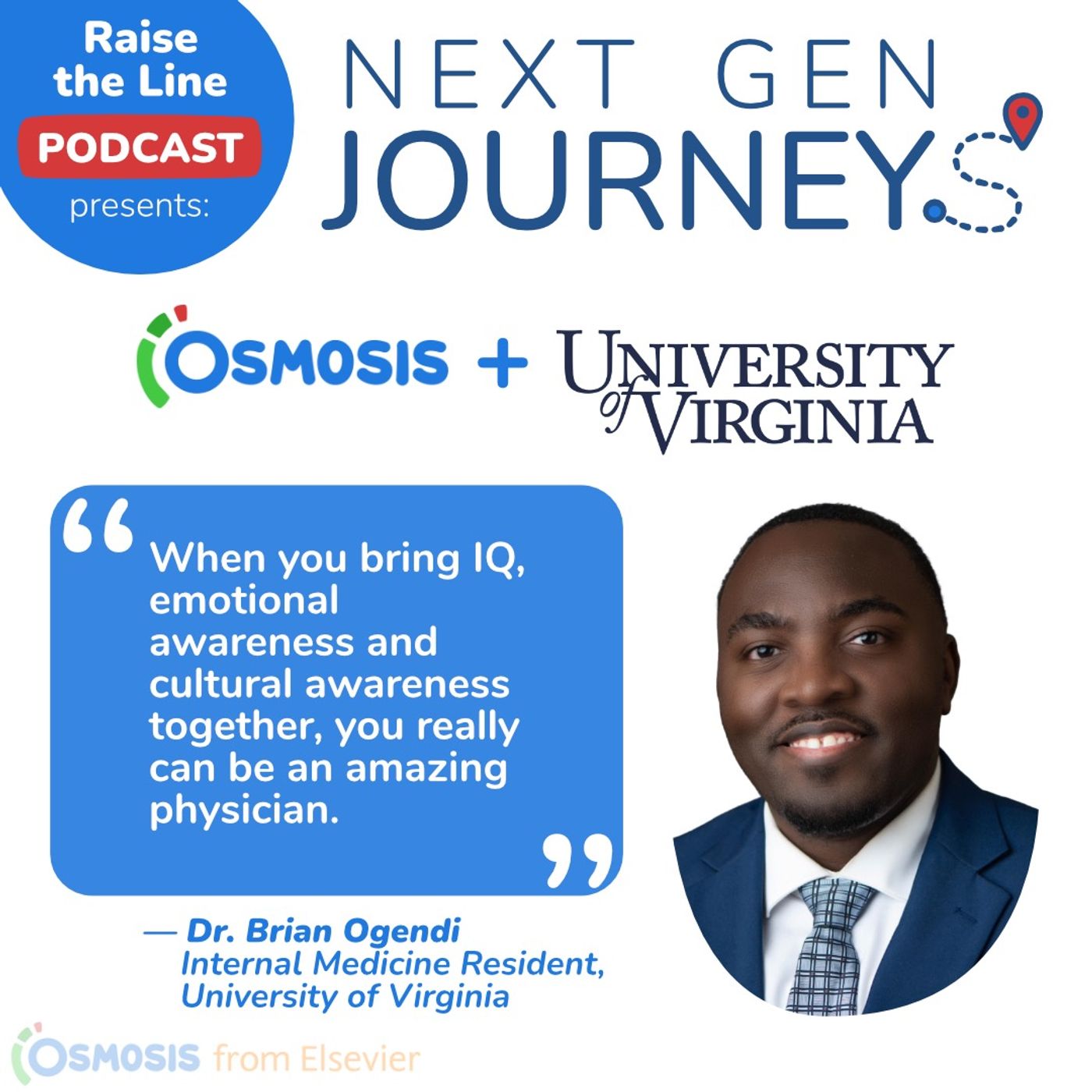
Ep 482Next Gen Journeys Series: Dr. Brian Ogendi, Resident Physician at UVA Health
If we didn’t know Dr. Brian Ogendi, we might be concerned about someone being able to pull off a residency and two fellowships while being a father of two young boys, but we do know Brian through his work with our Osmosis Medical Education Fellows (OMEF) program in which he played a major role while earning both his MD and MBA degrees. In other words, we’re not worried. Host Hillary Acer checked in with Brian recently as he was wrapping up med school and preparing to start a residency in Internal Medicine/Physician-Scientist Pathway at UVA Health with a fellowship in infectious disease and critical care medicine. “For me, medicine and research really go hand in hand. They enhance each other, they sharpen each other,” he explains. He’s already demonstrated that in his role as research advisor to the OMEF program where he drew on his work at the NIH and elsewhere to provide grounding and encouragement to learners. Brian is hoping to put all of this education and experience to work providing care to underserved communities both in the United States and in his native Kenya, leveraging a global network built through Osmosis to do so. Don’t miss this uplifting installment in our Next Gen Journeys series full of advice on juggling heavy workloads and family responsibilities while gaining the skills to become an effective, community-minded physician.Mentioned in this episode: UVA Health If you like this podcast, please share it on your social channels. You can also subscribe to the series and check out all of our episodes at www.osmosis.org/podcast
Ep 481Diagnosing Post-Acute Infection Syndromes: Special Series from The Cohen Center for Recovery from Complex Chronic Illnesses at Mount Sinai
Diagnosing Post-Acute Infection Syndromes: Special Series from The Cohen Center for Recovery from Complex Chronic Illnesses at Mount Sinai“Tick-borne illnesses are incredibly stealthy and complicated and if I wasn't living and breathing it every day and seeing the intensity of these symptoms in patients, I would never believe it,” says Shannon Delaney, a psychiatrist in private practice in New York City. The complexity of such illnesses and the symptoms they cause is a key reason it can often take years to reach a diagnosis, which is the focus of this episode of Raise the Line, part of a special series on post-acute infection syndromes that Osmosis from Elsevier has created in partnership with the Cohen Center for Recovery from Complex Chronic Illnesses (CoRE) at the Icahn School of Medicine at Mount Sinai Hospital. In addition to Dr. Delaney, host Dr. Raven Baxter of CoRE welcomes Dr. Amy Kontorovich, an associate professor in Cardiology and Genomic Medicine at the Icahn School and Dr. David Putrino, director of Rehabilitation Innovation at Mount Sinai, to explore the limitations of current diagnostic tools and protocols and what changes are needed to improve patient care. Key themes include developing better tests for pathogens and educating providers to listen more carefully to patients. “In a typical medical encounter, the biggest dropped ball is completely disregarding an acute infection in the medical history,” stresses Putrino. All agree that providers need to be more comfortable with uncertainty and resist the urge to develop treatment plans that don’t address root causes. “If more doctors could just say, ‘I don't know’ I think it would do a great service to patients," adds Kontorovich. This is a candid and enlightening discussion about the importance of developing a collaborative, patient-centered mindset to provide the best care for those suffering with a range of post-acute infection syndromes.Mentioned in this episode: Mount Sinai Health SystemSteven & Alexandra Cohen Foundation If you like this podcast, please share it on your social channels. You can also subscribe to the series and check out all of our episodes at www.osmosis.org/podcast
Ep 480Looking Abroad for Solutions to the Nursing Shortage in the US: Bhavdeep Singh, Founder and CEO of Global MedTeam
Today, we add another voice to our ongoing conversation on Raise the Line about how to improve the nurse staffing crisis faced by the US healthcare system. That voice belongs to Bhavdeep Singh, founder and CEO of Global MedTeam, a startup focused on bringing foreign-born nurses to the US to fill staff shortages. When Singh, who has deep experience in healthcare management, learned from a hospital executive that the annualized cost of employing one travel nurse can reach into hundreds of thousands of dollars in some locations, he realized there was room, and a need, for new approaches. “There's some wonderful work being done in this space, whether it's process improvement, remote monitoring, or software to make sure that we have the right kind of scheduling…all of these things are very helpful, but that's not going to get us to where we need to be. We will still have a huge shortage.” Singh believes employing pre-credentialed nurses from abroad, especially from the Philippines which has a long history of sending nurses to the US, is a viable part of the solution and his firm has put processes in place to make it a turnkey experience for employers. “We handle everything for the client including immigration from start to finish.” Join host Michael Carrese as he explores potential healthcare impacts on the “supplying” countries, the storied reputation of Filipino nurses and how this approach might also work for shortages in allied health professions. Mentioned in this episode: Global MedTeam If you like this podcast, please share it on your social channels. You can also subscribe to the series and check out all of our episodes at www.osmosis.org/podcast
Ep 479The Building Blocks of Post-Acute Infection Syndromes: Special Series from The Cohen Center for Recovery from Complex Chronic Illnesses at Mount Sinai
Today, we’re excited to bring you the first episode in a special Raise the Line series that Osmosis from Elsevier has created in partnership with the Cohen Center for Recovery from Complex Chronic Illnesses (CoRE) at the Icahn School of Medicine at Mount Sinai Hospital. PAIS: Root Causes, Drivers, and Actionable Solutions is a ten-part examination of a range of post-acute infection syndromes such as long COVID, tick-borne illness, chronic fatigue syndrome, and connective tissue disorders. Your host, Dr. Raven Baxter, a molecular biologist and Director of Science Communication at CoRE, will be joined by an impressive array of specialists in the field to explore causes, symptoms, diagnoses and treatments, as well as the devastating impact on patients who often struggle for many months or even years with a troubling span of symptoms affecting everything from muscle movement to mental health. As you’ll learn in the series, diagnostic protocols are lacking for many of these conditions, leading to delayed treatment and prolonged suffering for patients. In this inaugural episode, Dr. Baxter is joined by microbiologist Dr. Amy Proal, CEO of the PolyBio Research Foundation; Yale University Professor of Immunobiology, Dr. Akiko Iwasaki; and Dr. Edward Breitschwerdt, Professor of Medicine and Infectious Diseases at North Carolina State University College of Veterinary Medicine who will discuss the Building Blocks of PAIS.Mentioned in this episode: Mount Sinai Health System Steven & Alexandra Cohen Foundation If you like this podcast, please share it on your social channels. You can also subscribe to the series and check out all of our episodes at www.osmosis.org/podcast
Ep 478Growing the Workforce for Psychedelic Assisted Therapy: Dr. Ingmar Gorman & Dr. Elizabeth Nielson, Co-Founders of Fluence Training
For those proponents of psychedelic-assisted therapy concerned that demand for therapists will outstrip supply in the coming years, you may be reassured by today’s conversation with Dr. Ingmar Gorman and Dr. Elizabeth Nielson, psychologists who have been involved in FDA-approved clinical trials of MDMA and psilocybin, and the co-founders of a company called Fluence Training which is working to scale education for this purpose. As they explain to host Shiv Gaglani, they see their task, broadly speaking, as serving three categories of people: those with general interest in the field; all types of clinicians who want to be able to have informed conversations with patients wishing to discuss their current and/or future use; and those who want to become therapists in this modality. Fluence is especially well-positioned for that last group because of Gorman’s and Nielson’s involvement in designing therapy protocols in clinical trials, but also because of their work developing therapy manuals for drug companies. “If and when their drugs go to market, we’ll be able to train clinicians in the community who will be working with those compounds,” says Gorman. One bottom line message in this richly-informed discussion is that the field needs all comers and they hope people aren’t dissuaded by misconceptions about what’s required. “We hear all the time, 'I want to be involved, but I’d have to go back to school and get all these years of clinical experience' when the reality is there's just so many ways now to get involved,” says Nielson. This is a great overview of the status of training, the potential pitfalls awaiting the field, the importance of managing patient expectations, and much more.Mentioned in this episode: https://www.fluencetraining.com/ If you like this podcast, please share it on your social channels. You can also subscribe to the series and check out all of our episodes at www.osmosis.org/podcast
Ep 477Scalable Education for Cancer Patients and Their Loved Ones: Dr. David Grew, Founder and CEO of PRIMR
Part of why we love bringing Raise the Line to you is we get to introduce you to creative, committed people who see challenges in the healthcare system as opportunities to improve it. Today’s guest, radiation oncologist Dr. David Grew, is a perfect example. In the depths of COVID when his patients had to meet with him unaccompanied by a support person, he realized his ability to help people understand the complexities of their care was more important than ever, so he doubled-down on his practice of making simple drawings for them on whatever piece of paper was handy. When patients told them they were bringing the papers home so they could explain things to family members, he realized he needed to up his game. “That’s when the light bulb went off. I need to digitize these drawings so that we can scale this educational moment between a doctor and a patient,” he tells host Michael Carrese. Armed with a laptop and basic educational software, Dr. Grew founded the company PRIMR and started building a library of short, animated videos containing the most common explanations he would give patients. When clinical trial managers noticed what he was doing, they wanted in and so a major focus of PRIMR is educating potential trial participants as well. “I'm on a mission to make sure that patients have an easy way to understand clinical trials.” Listen in to find out about a major medical and societal benefit to better education about these trials and to learn how Dr. Grew thinks PRIMR can help with the crisis of physician burnout.Mentioned in this episode: https://www.primrmed.com/ If you like this podcast, please share it on your social channels. You can also subscribe to the series and check out all of our episodes at www.osmosis.org/podcast
Ep 476“Less Fear, More Go For It”: Dr. Desiree Franco Lugo, Regional Lead in the Osmosis Medical Education Fellowship
“Maybe we think we’re just students and we’re just learning, but you can have an impact as a medical student,” says Dr. Desiree Franco Lugo, who has acted on that insight throughout her recently completed journey at Anáhuac University, Mexico and during her participation in the Osmosis Medical Education Fellowship, where she has served as a Regional Lead for the past two years. Des, as we’ve come to know her, has happily embraced one of the most important roles Regional Leads play: being a mentor to fellow med students. “I love talking to them and seeing how they develop and follow their own dreams. I literally feel like a proud mom with them,” she tells host Hillary Acer. Speaking of which, Hillary, as leader of the OMEF program, has the same pride in all that Des has done to support her peers through hosting events, writing blogs, conducting research and so much more. Beyond Osmosis, Des has developed a global footprint in medical education through internships and being selected to participate in prestigious international conferences. All of those experiences have stoked a previously unknown passion for medical education, and given her confidence to pursue other passions for entrepreneurship and leadership. This is an invigorating conversation in our NextGen Journeys series that underscores what can come from jumping at opportunities, or as Des puts it, having an attitude of ‘less fear and more go for it.’Mentioned in this episode: Osmosis Health Leadership Initiative https://www.osmosis.org/community If you like this podcast, please share it on your social channels. You can also subscribe to the series and check out all of our episodes at www.osmosis.org/podcast
Ep 475Bringing Innovation and Hope to Alzheimer's and Dementia Care: Eleonora Tornatore-Mikesh, Stephani Shivers and Dr. Anne Kenney of CaringKind
Promising research, a growing respect for the patient voice and innovative ways of using technology to support patients might be adding up to a new reality of Alzheimer’s and other dementias being experienced as chronic diseases like some cancers are now considered to be. We’re going to learn about that trend and other positive developments in the space on this special episode of Raise the Line with the leaders of CaringKind - one of the nation’s premier organizations focused on Alzheimer’s and dementia caregiving - who took time out from preparing for its annual gala on June 3 for an in-depth discussion of what’s new, what’s coming and what’s most important for the individuals and families affected by dementia. One welcome theme is that the voices of those with lived experience are being given more weight. “We're going to see more grassroots-driven change where people living with dementia are not just participants in research, but they are partners in research, and they’re actually pushing policy change," says Chief Innovation Officer Stephani Shivers. Tune in as host Michael Carrese explores advancements in diagnostics and research with CaringKind adviser Dr. Anne Kenney; gets briefed on a new Medicare pilot program from Stephani; and learns about the “Forget-Me-Not” gala -- which includes dancing robots -- from CEO Eleonora Tornatore-Mikesh. “For the gala, we're really excited about weaving in the work that we're diving into in the next couple of years to ‘connect to living’ -- to culture and music, people, science and services. Being able to utilize technology to bring joy and socialization back to your life is part of that.” This is a revealing look at the current and future state of caregiving for diseases that are affecting a rapidly growing number of Americans and their families. Mentioned in this episode: https://www.caringkindnyc.org/gala/ If you like this podcast, please share it on your social channels. You can also subscribe to the series and check out all of our episodes at www.osmosis.org/podcast

Ep 474A Revolutionary Moment in Transplant Surgery: Dr. Andrew Cameron, Surgeon-in-Chief of Johns Hopkins Medicine
“There is a revolution at hand in which, after years of struggling to locate a new source of organs, there may finally be an answer and to everyone's surprise it is animal organs. Pigs may save the day,” says Dr. Andrew Cameron, chief of the Division of Transplantation at Johns Hopkins Medicine. While he’s encouraged by recent progress in using genetically-modified pig organs in humans, Cameron points to other ways of addressing this chronic shortage which include creative use of social media to raise awareness of the need, and even compensating people for donations. But, as you’ll learn on this episode of Raise the Line with host Shiv Gaglani, running the transplant program is just one of the hats Cameron wears. As director of the Department of Surgery and surgeon-in-chief, he has a hand in overseeing all surgical subspecialties, so Shiv also explores his thoughts on the role of robotics and other technologies in both performing operations and in training surgeons. And in what is perhaps an unexpected turn, Cameron expresses his excitement about non-surgical developments to improve health such as the new class of weight loss drugs. “We're not here for me to do fancy surgeries. We're here to take care of sick people, so if there is a non-operative solution that’s better for the patient, we're all in on that, too.” It’s an expansive and fascinating conversation you won’t want to miss.Mentioned in this episode:Johns Hopkins Department of Surgery: www.hopkinsmedicine.org/surgeryDONOR App: www.thedonorapp.comTEDx Talk on Xenotransplantation If you like this podcast, please share it on your social channels. You can also subscribe to the series and check out all of our episodes at www.osmosis.org/podcast
Ep 473A Mother’s Perspective on Childhood Cancer: Bethan Keall
Today’s Raise the Line guest has a simple but powerful message for medical providers, born of a mother’s heartbreak. “It's going to be rare in your career to meet a zebra but the impact you can have is phenomenal. An early diagnosis could make the difference between life and death for these children,” says Bethan Keall who lost her young daughter Matilda (Tilly) in 2022 to neuroblastoma, a rare cancer most commonly found in children. Because some symptoms of the disease can be easily attributed to other causes, early diagnosis is difficult, particularly if providers are not on the lookout for it. Tilly’s diagnosis of an aggressive form of neuroblastoma introduced Bethan and her husband to the unfortunate realities of a lack of funding and coordination in the UK around pediatric oncology. “For childhood cancer you really need as much collaboration among doctors as possible to understand how treatments can get better because there are relatively few cases,” she explains to host Lindsey Smith. In coping with Tilly’s tragic death at the age of four, her parents have dedicated themselves to Neuroblastoma UK to support research efforts and have benefitted from the emotional and social support provided by a charity called Jak’s Den, founded by the family of a victim of childhood cancer. This is a wrenching, illuminating episode in our Year of the Zebra series offering important insights from a parent’s perspective for providers and policymakers alike. Mentioned in this episode: Jak’s Den https://www.teamjak.org.uk/Neuroblastoma UK https://www.neuroblastoma.org.uk/ If you like this podcast, please share it on your social channels. You can also subscribe to the series and check out all of our episodes at www.osmosis.org/podcast
Ep 472The Many Paths to Excellence in Emergency Medicine: Dr. Sharon Bord and Dr. Amelia Pousson, Emergency Medicine Clerkship Leaders at Johns Hopkins University
Today, we're continuing our close look at clerkships and residency programs and what students can do to be successful in them with Dr. Sharon Bord and Dr. Amelia Pousson, who are both physicians and assistant professors in emergency medicine at Johns Hopkins University, where, as most listeners know, Osmosis co-founder and Raise the Line host Shiv Gaglani is pursuing his third year of medical school. “I think one of the things that students really feel when they rotate in the ED is the team-based atmosphere. Emergency medicine providers help each other be the best versions of ourselves that we can in medicine. That is really unique,” explains Dr. Bord, who serves as the emergency medicine clerkship and sub-internship director. For her part, Dr. Pousson wants students to realize there are many paths to becoming a wonderful emergency physician. “There's lots of ways to sort of peel the orange and get it just right even if the path there looks a little bit different for each person,” she says. Both agree that among the keys for success are rigorous honesty and self-reflection about your goals and limitations, and whether the specialty is a good fit. Tune in for an expansive conversation that provides valuable wisdom and fascinating insights into one of the most vital and challenging of medical specialties. Mentioned in this episode: Johns Hopkins Core Clerkship in Emergency Medicine If you like this podcast, please share it on your social channels. You can also subscribe to the series and check out all of our episodes at www.osmosis.org/podcast
Ep 471Current and Future Changemakers in Healthcare: Drs. Lawsen Parker, Rebecca Wolff and Stephanie Koplitz of the Student Osteopathic Medical Association
Medical school is so demanding that it’s always impressive to meet students who make time for other activities, and doubly impressive when what they devote their precious free time to is intended to improve healthcare. That’s why we’re delighted to welcome Drs. Lawsen Parker, Rebecca Wolff and Stephanie Koplitz to Raise the Line today. As they were wrapping up their terms as leaders of the Student Osteopathic Medical Association this Spring, they joined host Hillary Acer for an inspiring conversation about medical education, the role of students as advocates, and the future of healthcare. Lawsen, Rebecca and Stephanie also reflect on what being a medical student in the COVID era has been like and how it has shaped their perspectives on healthcare and leadership. Perhaps Lawsen sums it up best by telling Hillary that after his experience in SOMA, “I can’t imagine my career without being a leader, and an advocate for my colleagues, my patients and myself.” Don’t miss this opportunity to hear what is on the minds of these future leaders in healthcare. Mentioned in this episode: https://studentdo.org/ If you like this podcast, please share it on your social channels. You can also subscribe to the series and check out all of our episodes at www.osmosis.org/podcast

Ep 470Changing the Culture and Climate of Medicine: Dr. Susan Mackinnon, Director of the Center for Nerve Injury and Paralysis at Washington University School of Medicine
Today’s guest is a trailblazing surgeon who performed the first successful nerve allograft, among other important achievements, but that’s actually not what host Shiv Gaglani wanted to focus on in this interview with Dr. Susan Mackinnon. After seeing her speak recently at a Johns Hopkins Grand Rounds presentation, Shiv immediately asked her to be a guest on Raise the Line because of her passion to change the culture and climate in the medical profession, partly by reconnecting it with its core mission. “We need to get it to a point where you can take the Hippocratic oath, which says if I don't agree to look after the care for prince and slave alike, I should die. We need to get back to that.” Mackinnon candidly details her own journey to being able to recognize and regulate her energy state so that she can perform at the highest level of creativity with colleagues and rise above the counterproductive “I win, you lose” mindset that often prevails in medicine. This free-flowing conversation is packed with insights gathered over a long career and offers much food for thought about how to find happiness and spur innovation at work, and the importance of self-care for providers. There’s also more book recommendations than in any other Raise the Line episode!Mentioned in this episode: Energy Leadership by Bruce SchneiderTaking the Leap by Pema ChodronWhere Good Ideas Come From by Steven Johnson If you like this podcast, please share it on your social channels. You can also subscribe to the series and check out all of our episodes at www.osmosis.org/podcast
Ep 469A Partner for Nursing Programs: Dr. Kathy Chappell, CEO of the Accreditation Commission for Education in Nursing
There are more than 2,600 colleges and universities with nursing degree programs in the United States, offering a mix of options from associate-level degrees to doctorates. Ensuring that those programs deliver high-quality education is the focus of today's guest, Kathy Chappell, PhD, RN, the CEO of the Accreditation Commission for Education in Nursing, also known as ACEN. “We have this regulatory compliance function as an accreditor, but at the end of the day, it's about high-quality education for nurses. We want their students to excel so it's really our job to be their support and partner in understanding and meeting the standards,” Chappell tells host Hillary Acer. The veteran clinician and educator says ACEN is also assuming the role of partner in the broader cause of addressing the nursing shortage by using its influence to support the expansion of education programs, which she thinks should be a national priority. “I would consider it to be a public health crisis. I really do. I think it's as critical as the COVID pandemic.” This is a great scan of nursing education that includes a discussion of international accreditation, interprofessional education and the challenges nursing programs face in preparing students for a very demanding profession. Mentioned in this episode: https://www.acenursing.org/ If you like this podcast, please share it on your social channels. You can also subscribe to the series and check out all of our episodes at www.osmosis.org/podcast

Ep 468Creating Therapeutic Journeys with Music: Kerry Devlin, MMT, Senior Music Therapist at the Johns Hopkins Center for Music and Medicine
When Raise the Line host and third year medical student Shiv Gaglani witnessed the creation of a “heart song” at the bedside of a terminal patient during his recent neurology clerkship, he immediately wanted to know more about the clinical applications of music therapy and realized the Osmosis audience would want to as well. That’s why we’re happy to bring you this fascinating episode featuring Shiv’s interview with Kerry Devlin, MMT, a senior music therapist at the Johns Hopkins Center for Music and Medicine. “I like to describe music therapy as a relational therapeutic encounter. Music is both the tool that I'm using as a music therapist, but it's also the medium that we're working in. And we're using that tool and that therapeutic medium to travel together to work towards someone's individualized healthcare goals,” Devlin says. In the case of dying patients, she creates music that incorporates recordings of their heartbeat and breath sounds with their favorite song and gives the result to the family as a keepsake. For other patients, she adapts her work to suit their clinical situation such as taking a rhythmic approach with people dealing with movement disorders or singing with someone with Parkinson’s disease to help them maintain articulation. As you’ll learn, the applications are wide ranging and include group work as well as one-on-one sessions. This is a meaningful and memorable episode you won’t want to miss about a powerful therapeutic tool whose use is growing. Mentioned in this episode: https://www.hopkinsmedicine.org/center-for-music-and-medicine If you like this podcast, please share it on your social channels. You can also subscribe to the series and check out all of our episodes at www.osmosis.org/podcast
Ep 467Building a New Appreciation for the Value of Nursing: Jennifer Mensik Kennedy, President of the American Nurses Association
We've had the pleasure of speaking to nursing leaders at a variety of health systems and at nursing schools on past episodes of Raise the Line, but today we're going to zoom out for a big picture perspective on the profession and its current and future challenges and opportunities with Jennifer Mensik Kennedy, PhD, RN, MBA, president of the American Nurses Association, which advocates for the nation's 5.5 million RNs. In a frank assessment, Mensik Kennedy says nursing is actually not in need of new ideas to solve the problems it faces. “We've known about the solutions for decades, but yet we for some reason or another have not put those solutions into play,” she explains to host Hillary Acer. Mensik Kennedy thinks the slow pace of progress on issues such as staffing challenges, workplace violence, DEI, burnout and wellbeing can be attributed in part to the fact that only 5% of hospitals have a nurse on the board of directors. “When decisions need to be made, nurses' voices often are not heard or at that table to make needed changes.” Don’t miss this chance to hear a wealth of insight on the true value of nurses from a leader recognized nationally as one of the 100 most influential people in healthcare, and be sure to stay tuned to learn about an innovative “tribrid” model of delivering care.Mentioned in this episode: https://www.nursingworld.org/ana/ If you like this podcast, please share it on your social channels. You can also subscribe to the series and check out all of our episodes at www.osmosis.org/podcast
Ep 466Facilitating Mentorship, Advocacy and Professional Development - Lauren Lodico, President of the National Student Nurses Association
If you like this podcast, please share it on your social channels. You can also subscribe to the series and check out all of our episodes at www.osmosis.org/podcast
Ep 465Bringing Best Practices and Clinical Tools to Under-resourced Providers - Dr. Rebecca Weintraub, Director of Better Evidence at Ariadne Labs
After working alongside healthcare providers in under-resourced countries, today’s Raise the Line guest Dr. Rebecca Weintraub came to see that the desire to serve patients and the curiosity to learn how to be the best clinician possible are universal, but the best tools to do so are not. That’s what led her to launch the Better Evidence program at Ariadne Labs which designs, tests and scales data-driven digital tools that help manage diagnostic and therapeutic uncertainty. Currently, Better Evidence engages over 200,000 current and future clinicians and public health leaders in 147 medical schools and clinical sites across 182 countries. “If you are an isolated provider or a trainee, we believe evidence-based clinical tools help you improve your clinical confidence and clinical acumen. We're trying to help create the habits of educating yourself on the journey to being an excellent clinician.” In this illuminating conversation with host Hillary Acer, Weintraub also talks about other capacity-building work such as helping to prepare clinicians for major public health roles, and the critical importance of providers having reliable internet and cell connectivity, something she expects will improve in the near future. Don’t miss this on-the-ground view of some key elements in improving the delivery of healthcare across the globe. Mentioned in this episode: https://www.better-evidence.org/ If you like this podcast, please share it on your social channels. You can also subscribe to the series and check out all of our episodes at www.osmosis.org/podcast
Ep 464Empowering Patients and Their Families to Solve Rare Disease Mysteries: Dr. Lukas Lange, CEO & Co-Founder of Probably Genetic
As we’ve learned on previous episodes of Raise the Line, people dealing with rare diseases usually wait 4-7 years before receiving a diagnosis, during which time their condition can deteriorate significantly. Shortening this “diagnostic odyssey” is the mission of today’s guest, Lukas Lange, and in an interesting twist, he’s doing it by involving the patients themselves. The company he co-founded, Probably Genetic, has developed a system that starts with rare disease patients, or the parents of children with rare conditions, describing the symptoms involved on a website. “We run algorithms on that data in real time as you're on the website and if the algorithms think that this person might have a specific genetic disease, then we have a whole telemedicine system built in the background where we process that information and you get your test kit within about 48 hours of being on the website,” he explains to host Hillary Acer. Once the at-home test results are processed, a genetic counseling session is conducted via telemedicine. Tune in to find out why Lange believes having this knowledge is powerful for patients even if there may be no treatment available yet for their condition, and how it may be useful down the road with clinical trial recruitment, real world evidence tracking, and even early stage R&D for treatments.Mentioned in this episode: https://www.probablygenetic.com/ If you like this podcast, please share it on your social channels. You can also subscribe to the series and check out all of our episodes at www.osmosis.org/podcast

Ep 463New Approaches Are Needed to Improve Access to Veterinary Medicine - Dr. Kathryn Meurs, Dean at North Carolina State University College of Veterinary Medicine
We've devoted quite a bit of time on Raise the Line to learning about persistent workforce shortages in human healthcare and what is being done about them, but as yet have not turned our attention to the fact that veterinary medicine is facing the same headwinds. To find out more about how that challenge is being addressed and to learn about other current issues in veterinary medicine we turn today to Dr. Kathryn Meurs, Dean at North Carolina State University College of Veterinary Medicine. One cause of the lack of veterinarians is too few slots for students, but Meurs says there is good news on that front. “There are several new veterinary schools coming online and many existing schools have increased their class size like we have.” Meurs says the profession is starting to think outside the box for other ways to build capacity including getting practices to offer more flexible work schedules, asking vets planning to retire to stay on part-time and expanding the role of veterinary technicians. Join host Hillary Acer to learn all about that and about the educational and research career tracks open to veterinarians, the importance of vet students developing great people skills, and the many clinical trials underway at NC State that sit at the intersection of human and animal health. Mentioned in this episode: https://cvm.ncsu.edu/ If you like this podcast, please share it on your social channels. You can also subscribe to the series and check out all of our episodes at www.osmosis.org/podcast
Ep 462Strategies for Integrating Technology Into Medical Education: Dr. Warren Wiechmann, Senior Associate Dean of Clinical Science Education and Educational Technologies at University of California Irvine
The question of how generative AI and other recent advances in technology will change medical education is one we're continually seeking answers to on Raise the Line, and today we're turning to a really well-placed expert to weigh in on this issue. He's Dr. Warren Wiechmann, senior associate dean of Clinical Science Education and Educational Technologies at University of California Irvine, a school known for its embrace of technology. Dr. Wiechmann is considered the architect of the school's iMedEd Initiative, a comprehensive curriculum that uses everything from augmented reality to 3D printing as catalysts for curricular innovation. As he tells host Michael Carrese, integration of technology across subjects has been a key element of UCI’s approach. “We have our physiologists working closely with our anatomists, working closely with our clinical skills people. We're integrating point-of-care ultrasound into very early physiology lectures. We even have our physiologists doing a session using EKG devices.” Wiechmann stresses, though, that new tech has to meet a high bar for effectiveness before being used instructionally. “Just because it's new technology doesn't mean it's going to be useful.” As for the impact of generative AI, Wiechmann is keeping his eye on managing for inherent bias in large data sets and leveraging AI to help level the playing field for students with learning differences. Tune in to learn more about this fascinating educational evolution. Mentioned in this episode: https://medschool.uci.edu/ If you like this podcast, please share it on your social channels. You can also subscribe to the series and check out all of our episodes at www.osmosis.org/podcast

Ep 461Helping Busy Physicians Earn Passive Income: Brett Riggins, Founder of Physician Wealth Systems
Most people associate being a physician with achieving financial security, but according to a recent report issued by Medscape, only about half of physicians in the United States report having a net worth over $1 million. That's where today's guest comes in. Brett Riggins founded Physician Wealth Systems in 2022 to help doctors achieve financial security through real estate investments that generate passive income. “Real estate could be that ‘means to an end’ kind of thing. It could produce this situation where it allows you to separate your time from your money and we can allow physicians to practice with passion, not practice because they have to,” Riggins tells host Michael Carrese. In this illuminating conversation, Riggins addresses the level of knowledge and time commitment involved, steps for getting started and determining your fundamental “why” for engaging in real estate investing. “No matter what profession you're going into, self-realization is the biggest piece of separating yourself from who you used to be and understanding where you want to go,” he counsels. And for those paying off student loans who think their options to make outside income are limited until they are debt free, stay tuned to learn about some strategies that could get you started.Mentioned in this episode:https://physicianwealthsystems.com If you like this podcast, please share it on your social channels. You can also subscribe to the series and check out all of our episodes at www.osmosis.org/podcast
Ep 460A Passion for Providing Better Care to Diverse Patient Populations - Omer Rott, Graduating Medical Student and Osmosis Medical Education Fellowship Regional Lead
On today’s Raise the Line, we continue our Next Gen Journeys series featuring conversations with learners in medical professions around the globe. Our special guest is Omer Rott, a longtime participant in our Osmosis Medical Education Fellowship and Osmosis Health Leadership Initiative programs. Omer will soon be earning his medical degree from Masaryk University in the Czech Republic. In addition to pursuing a career as a pediatrician, he’s an aspiring diversity and inclusion medical educator who has founded DiverseMedEd, an organization dedicated to improving how healthcare professionals interact with and treat patients from different backgrounds. “There is a big gap in medical education about diverse patient populations. I think healthcare providers and many other people are afraid about how to approach someone or how to ask about their situation, which might lead them to not say anything or not even act the way they think they might need to.” Through a website (link) and social media posts, Omer has already built a following, many of whom are patients happy to be seeing these issues addressed. Join host Hillary Acer for a refreshing look at how the healthcare provider community can be more inclusive, and what lessons Omer has drawn from his extensive work mentoring fellow students over the past five years.Mentioned in this episode:DiverseMedEdEquity GraphicElsevier Blog - Is Wearing Pins Appropriate? If you like this podcast, please share it on your social channels. You can also subscribe to the series and check out all of our episodes at www.osmosis.org/podcast
Ep 459How Veterinarians Contribute to Advancing Human Health - Dr. Susan VandeWoude, Dean of the College of Veterinary Medicine and Biomedical Sciences at Colorado State University
The importance of understanding the connections between animal and human health reached new heights due to the COVID-19 pandemic, but this has long been a rich area of study and it’s also the foundation of the long and impressive career of today’s Raise the Line guest, Dr. Sue VandeWoude, dean of the College of Veterinary Medicine and Biomedical Sciences at Colorado State University. Before assuming that role, Dr. VandeWoude was Director of CSU’s One Health Institute, an interdisciplinary center dedicated to advancing translational science. In this revealing conversation with host Hillary Acer, you’ll learn about developments in research and teaching in this area, what’s behind a curricular overhaul at the school, and about plans to enhance collaboration between basic science faculty and clinical instructors at CSU. Mentioned in this episode: https://vetmedbiosci.colostate.edu/ If you like this podcast, please share it on your social channels. You can also subscribe to the series and check out all of our episodes at www.osmosis.org/podcast
Ep 458Maddie McNeer and Her Mom Loren - Raising Awareness About Coats Disease
Raise the Line has been honored to be part of Osmosis from Elsevier’s Year of the Zebra campaign and we’re happy to share that this successful effort will continue throughout 2024. To mark that commitment and to celebrate Rare Disease Day, we have a very special episode of the podcast for our listeners in which, for the first time, we interview a child faced with the challenge of living with a rare condition. She is Maddie McNeer, a seven-year-old from Kansas who developed a rare eye disorder called Coats disease which is characterized by abnormal development of blood vessels in the retina. According to the National Organization for Rare Disorders, affected individuals may experience loss of vision due to changes in the retina and, in severe cases, retinal detachment. Maddie and her mom, Loren McNeer, join host Lindsey Smith to share their family’s journey with Coats disease including the multiple treatments she’s had, the challenges in finding information and support, the positive experiences with healthcare providers and Maddie’s remarkable ability to rise above it all and, as she says, not let Coats disease hold her down. This is a super informative and inspiring episode that you won’t want to miss. Mentioned in this episode:https://www.coatsdiseasefoundation.org/https://www.osmosis.org/zebra If you like this podcast, please share it on your social channels. You can also subscribe to the series and check out all of our episodes at www.osmosis.org/podcast
Ep 457Can Psychedelics Help Treat Chronic Pain Disorders? - Dr. Peter Hendricks, Endowed Professor of Psychiatry at the University of Alabama Birmingham
“I feel like I'm living a dream in many ways. It's really gratifying to be working in this area,” says Dr. Peter Hendricks, a clinical psychologist at University of Alabama Birmingham who is pursuing a long-held interest in the therapeutic potential of psychedelics. In addition to being anEndowed Professor of Psychiatry there, he is also a professor in the Center for Addiction and Pain Prevention and Intervention which explains why he is researching the use of psilocybin in patients with fibromyalgia, a condition which commonly involves chronic pain. “Pain involves a physiological sensation but also a psychological reaction to that pain. If we can alter psychological processes, we might be able to help people better cope with the experience of pain,” he tells host Michael Carrese. Although Hendricks has been excited about the prospect of being able to add this “new” tool to help treat addictions, PTSD, depression and other mental health conditions that are not well served by current therapies, he realizes the dangers of hype and the need for a balanced perspective. “I think it’s important to note that those of us who were enthusiastic were never under the impression that this would cure everything for everybody. It could really change your life or it may not -- and that's OK -- but it would be nice for that to be an option for those who could benefit from it.” Tune in for a super thoughtful Raise the Line episode on both the promise and challenges of psychedelics and the daunting amount of work left to be done to develop sustainable therapeutic protocols and business models. Mentioned in this episode: https://www.uab.edu/cappi/ If you like this podcast, please share it on your social channels. You can also subscribe to the series and check out all of our episodes at www.osmosis.org/podcast
Ep 456Normalizing the Mental Health Struggles of Healthcare Professionals - Dr. Michael Foti, Clinical Assistant Professor at Touro College of Osteopathic Medicine
After many months of emotionally wrenching, exhausting work on the frontlines of COVID, and the unexpected death of his mother, Dr. Michael Foti found himself in an emergency room dealing with what he suspected was a heart attack, but it was actually a panic attack caused by untreated anxiety and depression. “As healthcare providers, we're afraid to speak up about our mental health because it's seen as a weakness,” he explains. He’s trying to change that culture in his role as a clinical assistant professor of Internal Medicine at Touro College of Osteopathic Medicine. One key message he tries to get across to students is that healthcare providers have to be healthy themselves before they can do the most effective job possible helping patients. As he tells host Michael Carrese, he’s also urging providers experiencing mental health issues to speak up to help normalize the experience. “The more that we can share these stories amongst colleagues, then they will feel more empowered to get the help that they need.” On this insightful episode of Raise the Line, you’ll also have the opportunity to hear Dr. Foti describe Touro’s standardized patient program and its efforts to increase self-directed learning and interdisciplinary education. Mentioned in this episode: https://tourocom.touro.edu/ If you like this podcast, please share it on your social channels. You can also subscribe to the series and check out all of our episodes at www.osmosis.org/podcast
Ep 455Bridging The Information Gap In Patient Education - Jack Needham and James Naylor, Co-Founders of Sanctuary Health
Our guests today have set a big goal to tackle a big problem. Jack Needham and James Naylor co-founded Sanctuary Health to build the largest video library for patient education motivated by the fact that patients forget approximately half of what doctors tell them in appointments. The young British entrepreneurs are aiming to move the healthcare system beyond the practice of handing every patient with a new diagnosis the same generic pamphlet as they leave an appointment. Based on research, they’ve chosen short-form video as the most effective vehicle. “Studies have consistently shown that if you break a video down into small topics with one learning outcome, then information recall and confidence levels around that information are consistently higher,” Naylor tells host Michael Carrese. And thanks to recent advancements in AI technology, videos can be easily translated into multiple languages, creating efficiency for providers and relevance for patients. Having built a presence with providers of virtual healthcare, Sanctuary is now working to license its ready-to-use content to payers, hospitals, and other stakeholders. Tune-in for a lively discussion the various ways Sanctuary Health is helping healthcare providers tackle this critically important problem. Mentioned in this episode: https://www.sanctuaryhealth.io/ If you like this podcast, please share it on your social channels. You can also subscribe to the series and check out all of our episodes at www.osmosis.org/podcast
Ep 454The Role of Naturopathic Medicine In the Broader Healthcare System - Dr. Kristina Conner, Dean of the School of Naturopathic Medicine at Bastyr University
Due to rising awareness of the importance of nutrition to good health and patient demand for alternatives to so-called Western medicine, the number of medical schools offering naturopathic programs has grown in the past two decades in the United States. Today on Raise the Line, we're going to learn more about this approach to medicine, the education and training involved, and where the field is heading with Dr. Kristina Conner, Dean of the School of Naturopathic Medicine at Bastyr University. As she explains to host Michael Carrese, Dr. Conner believes the rising interest is partially rooted in people wanting to have an array of options to improve their health. “They understand ‘maybe I do need to be on this medication for the rest of my life, but what else can I do to optimize my day to day life’ and that's where we can fill in the gaps as naturopathic doctors because we do have a different tool set and a different approach.” Tune in to learn about the similarities and differences in training compared to more traditional medical professions, the different modalities naturopaths use, and the challenges and opportunities involved in expanding the profession. “I think there's better understanding about naturopathic physicians and our level of training and the role that we can play within the healthcare system.”Mentioned in this episode: https://bastyr.edu/academics/naturopathic-medicine If you like this podcast, please share it on your social channels. You can also subscribe to the series and check out all of our episodes at www.osmosis.org/podcast
Ep 453Creating a Medical Career From Your Passions - Dr. Josh Bliss, Internal Medicine Resident at NewYork-Presbyterian/Weill Cornell Medical Center
Today we continue our series Next-Gen Journeys, featuring conversations with students, residents, and early career medical professionals around the globe to get their fresh perspectives on education, medicine, and the future of healthcare. We’re delighted to do that today with Dr. Josh Bliss, a third-year internal medicine resident at NewYork-Presbyterian/Weill Cornell Medicine, who will continue his training there next year as a hematology-oncology fellow. Josh was actually one of the first Osmosis Medical Education Fellows, later transitioning to a role creating and editing pharmacology content with our education team. In this heartfelt conversation with host Hillary Acer, Josh shares how his mother’s death from cancer when he was young spurred his interest in medicine and how his passion for the field has expanded over time to include the relatively new science of exercise oncology. “We are starting to look at exercise both in the lab and in clinical trials with patients where you could potentially dose exercise like you would a drug. You can measure it and standardize it and look at clinical effects.” For those hoping to build a multi-dimensional career in medicine, there is plenty of inspiration to draw from in this episode. Mentioned in this episode: https://www.nyp.org/ If you like this podcast, please share it on your social channels. You can also subscribe to the series and check out all of our episodes at www.osmosis.org/podcast
Ep 452Building a Better Primary Care System In A Rural Region - Dr. Timothy Collins, CEO of University of California Riverside Health
About one-third of Californians live in areas where there's a shortage of primary care providers, and this gap is especially apparent in what's known as the Inland Empire -- a rural region in the southern part of the state. As we’ll learn on today’s episode, the barriers to access this creates might only get worse because population is expected to grow sharply in that area. Our guest, Dr. Timothy Collins, has the challenge and opportunity of developing solutions to these thorny problems as CEO of UCR Health, a clinical enterprise affiliated with the University of California Riverside School of Medicine. “I think tremendous opportunities exist to create a more integrated network that's focused on quality and access to be able to address all of these challenges,” he tells host Michael Carrese. Strategies including connecting with K-12 students to get them to see themselves as future physicians and helping to clear the pathways to med school. “You can change the game if you can move backwards to create opportunities for individuals that may not see a pathway towards success.” Tune in to learn about other tactics being used -- including debt forgiveness and optimizing healthcare teams -- and find out how UCR Riverside is working to increase the level of engagement by patients in their own care.Mentioned in this episode: https://www.ucrhealth.org/ If you like this podcast, please share it on your social channels. You can also subscribe to the series and check out all of our episodes at www.osmosis.org/podcast
Ep 451Creative Solutions to the Nursing Shortage - Mandy Richards, Chief Nursing Executive for Intermountain Health
How do we solve for nursing shortages in a thoughtful way in which we're reinventing the way we deliver care? That question is asked and answered on today’s episode of Raise the Line by Mandy Richards, Chief Nursing Executive for Intermountain Health which operates thirty-three hospitals in seven states. The veteran nurse leader believes the go-to strategies of doing a better job at recruitment and retention, while important, will not be enough, so it will be necessary to reskill the current workforce and redesign nursing education. Or as she puts it to host Michael Carrese, “Are we ensuring that our students in nursing school are getting taught and equipped with what they're going to need when they come out?” Richards is also keenly interested in improving the transition from education to practice -- in fact she’s pursuing her PhD at Yale on that topic -- especially at the very start of the clinical work experience to avoid what is known as “transition shock.” As part of her academic work, she’s created a research project featuring a dedicated educational unit that trains new graduate nurses in cohorts in the first month on the job. In addition to reinforcing critical thinking skills, the experience helps establishes peer relationships the new nurses can rely on going forward. Tune-in for a wealth of other ideas and insights on this key challenge in modern healthcare including establishing travel pools within health systems and the potential for ambient listening technology to improve nursing efficiency. Mentioned in this episode: https://intermountainhealthcare.org/ If you like this podcast, please share it on your social channels. You can also subscribe to the series and check out all of our episodes at www.osmosis.org/podcast