Raise the Line
600 episodes — Page 4 of 12
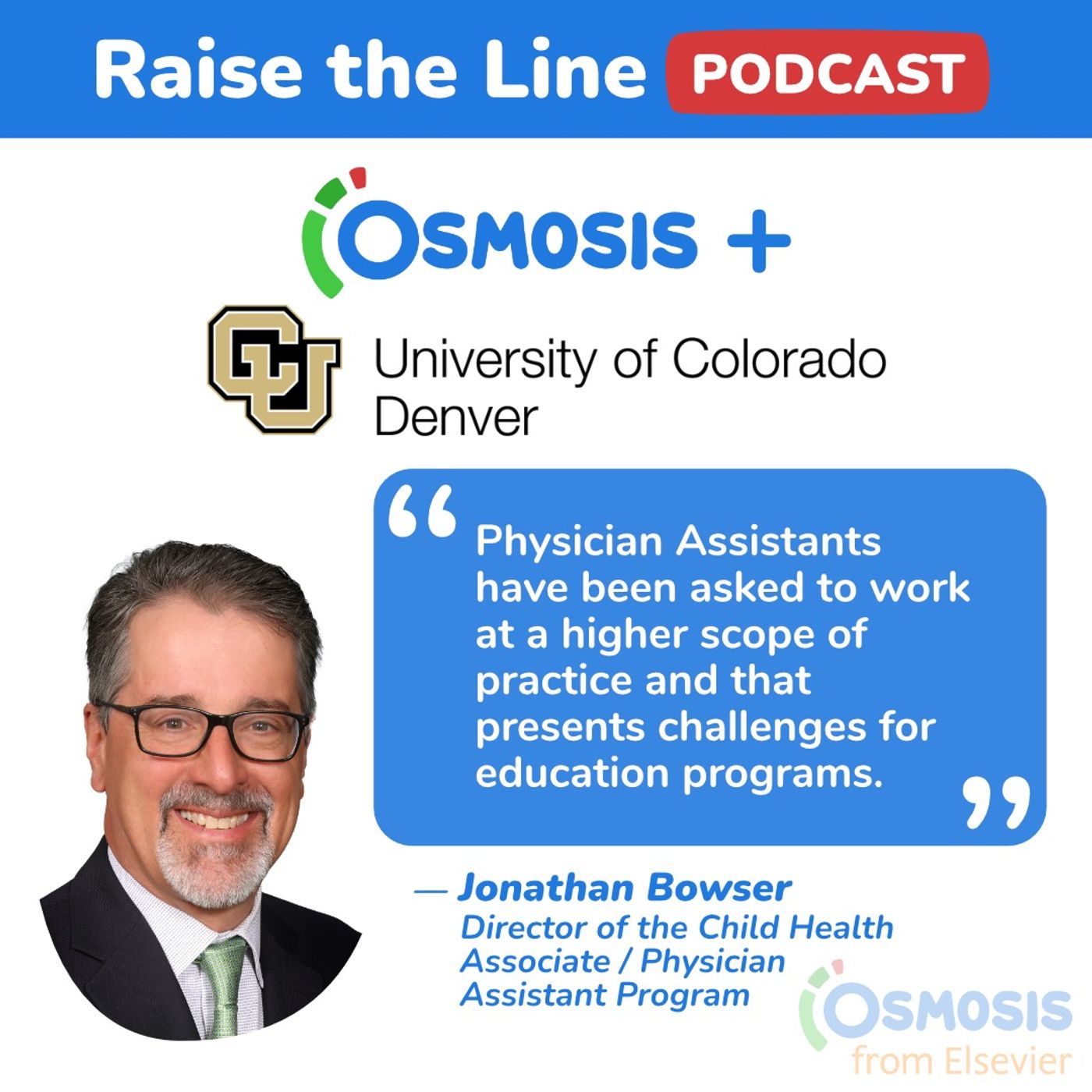
Ep 450PA Education Programs Prepare Students for Expanding Roles - Jonathan Bowser, Director of the Child Health Associate/Physician Assistant Program at the University of Colorado Denver
Physician Assistant remains one of the fastest growing professions in the US, and the expansion of their role in healthcare delivery seems to be growing just as quickly. One of the biggest changes in that regard, according to Jonathan Bowser of the University of Colorado Denver School of Medicine, is that states are opening up opportunities for PAs to practice with more autonomy to fill needs in the healthcare system. “That requires PA education programs to think about who are we putting out there, what environments they are going into, and how do we best prepare them for those environments,” says Bowser, who runs the school’s Child Health Associate/Physician Assistant Program (CHAPA), one of the oldest PA training programs in the country. The need to adapt their program to these new realities and the desire to take advantage of advances in learning science led CHAPA to overhaul its curriculum in recent years. The result is a ‘spiral curriculum’ - an iterative approach to learning that reinforces key concepts and knowledge as students progress through their years of training. Join host Hillary Acer as she learns about the underpinnings of CHAPA’s curricular approach, what the program is doing to prepare PAs to be leaders and the growing importance of residencies and fellowships to prepare PAs to work in clinical specialties. Mentioned in this episode: CHA/PA Program OverviewManaging Transitions by William BridgesMake It Stick by Peter Brown If you like this podcast, please share it on your social channels. You can also subscribe to the series and check out all of our episodes at www.osmosis.org/podcast
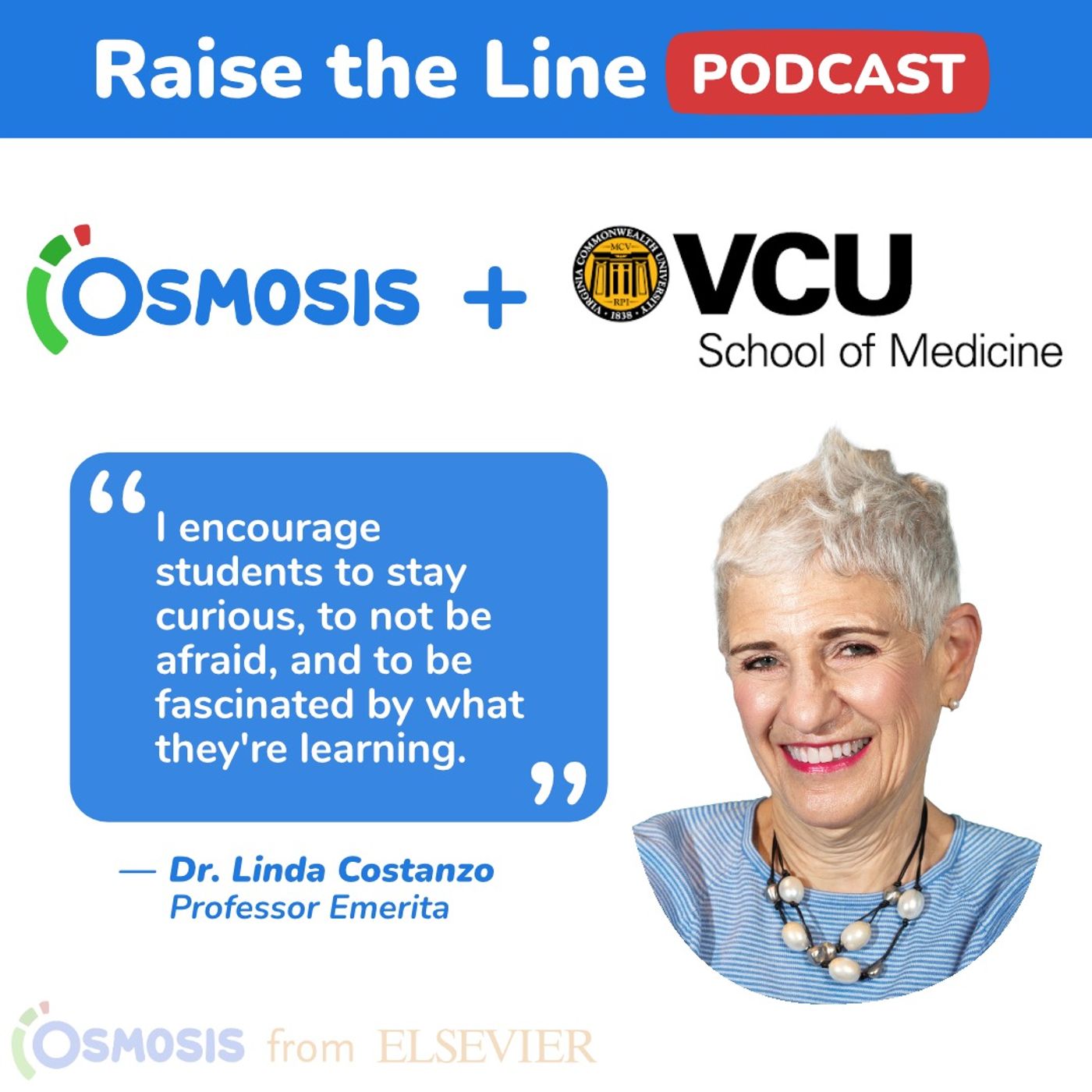
Ep 449How to Maintain Passion in Teaching and Learning - Dr. Linda Costanzo, Professor Emerita at Virginia Commonwealth University School of Medicine
We're marking a couple of firsts on today's episode of Raise the Line. In the hundreds of podcasts we’ve done, we've never interviewed a goddess before, nor had a guest who has won an astounding seventy-five teaching awards, but that is the happy situation we face today in welcoming Dr. Linda Costanzo to the show. She’s been on the faculty of Virginia Commonwealth University School of Medicine for forty-three years, earning the nickname “Physiology Goddess” for her trio of books -- including Costanzo Physiology 7th Edition, published by Elsevier -- that have been translated into thirteen languages. One key factor in Costanzo’s longevity as an effective teacher is finding new challenges in long-taught material. “I sort of concocted a scheme to dig into areas of comfort to get that edge back, that fear of falling short, I would call it,” she explains to host Michael Carrese. This lively conversation is packed with valuable insights on teaching and learning including tips for how students can maintain enthusiasm for their studies, standards teachers should set for themselves and the “stepwise” approach to teaching that she has also employed in her textbooks. Mentioned in this episode:https://medschool.vcu.edu/Costanzo Physiology, 7th Edition If you like this podcast, please share it on your social channels. You can also subscribe to the series and check out all of our episodes at www.osmosis.org/podcast
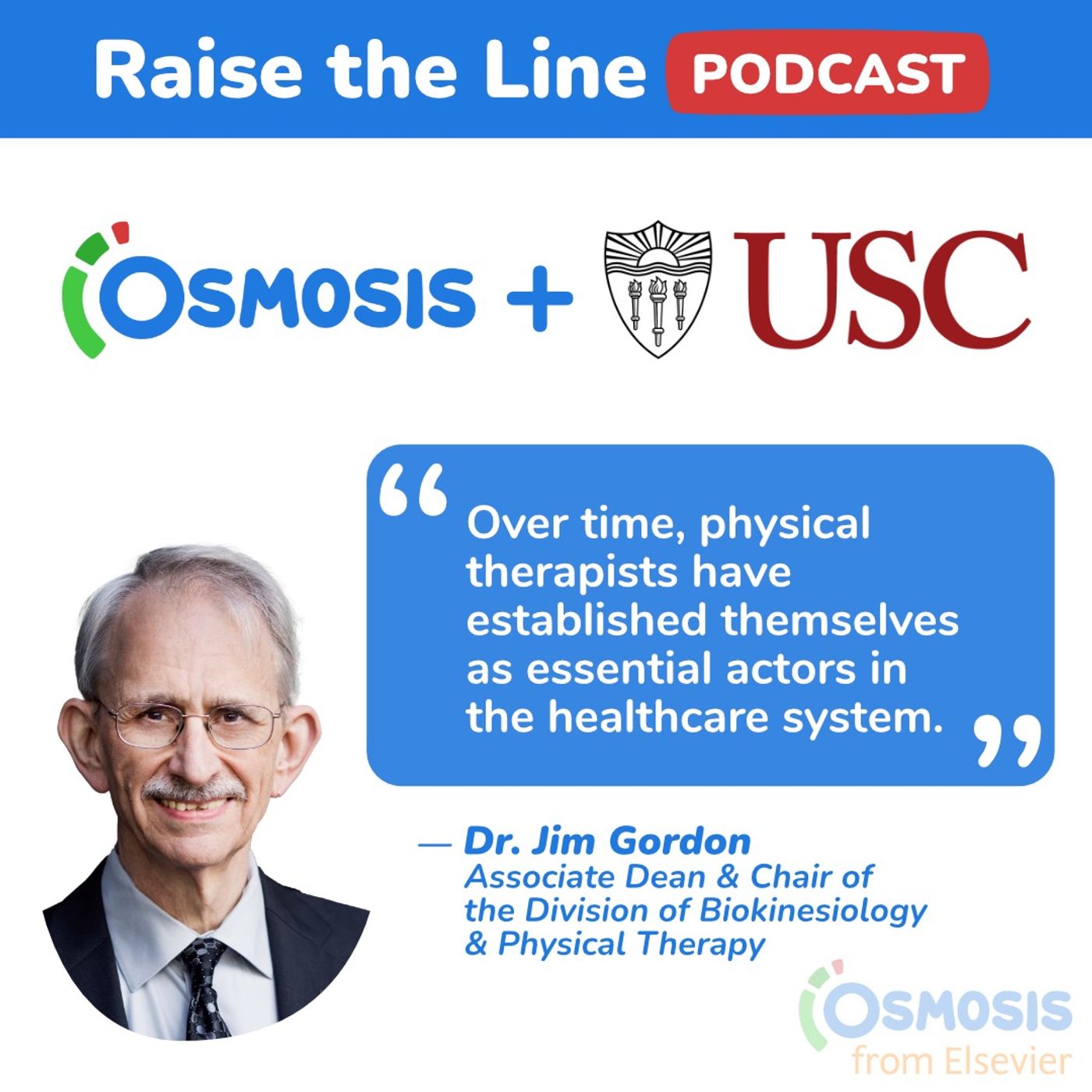
Ep 448A Unique Look at the Evolving Role of Physical Therapists - Dr. James Gordon, Chair of the Division of Biokinesiology and Physical Therapy at the University of Southern California
It’s not often that you have the chance to benefit from the sweeping perspective of someone who has been in the same profession for 50 years, but that is the fortunate circumstance we find ourselves in on this episode of Raise the Line. Our guest, Dr. Jim Gordon, describes the remarkable evolution of physical therapists from being limited to hospital-based, post-op rehabilitation to becoming community-based providers of choice in a wide and growing list of specialties from orthopedics to oncology. “We have established ourselves as essential actors in the healthcare system. We have the education and research behind us, but most important, I think we have credibility among other healthcare professionals and with patients.” As the leader of one of the top ranked physical therapy programs in the US at the University of Southern California, Gordon is in a position to shape the future of the field as well. As he tells host Hillary Acer, he sees a greater role for physical therapists in prevention and primary care, and also expects changes in the application of new technologies in neurorehabilitation, his area of specialty. “What we’re trying to do is not look at technologies as a solution in and of themselves and instead develop a patient-centered approach which focuses on how people are able to use these technologies to make their lives better.” Don’t miss this great opportunity for a unique look at the current and future state of a vital part of the healthcare system from a leading figure in the field.Mentioned in this episode: https://pt.usc.edu/ If you like this podcast, please share it on your social channels. You can also subscribe to the series and check out all of our episodes at www.osmosis.org/podcast
Ep 447Bridging the Gap Between Nursing Education and Clinical Practice - Dr. Lisa Beals, Nursing Department Chair at Missouri Southern State University
"Our faculty are really dedicated to trying to bridge that gap between academics and clinical practice," says Dr. Lisa Beals, the Nursing Department Chair at Missouri Southern State University and today’s Raise the Line guest. A key factor in that effort is recording students while they perform clinical simulations and providing the students themselves, their peers and faculty an opportunity to watch the playback and weigh in on what happened, an area of expertise for Beals based on her research in the field. “It's just like a constant motion or cycle of feedback, which the literature speaks to of being so important to develop student learning.” As Beals tells host Hillary Acer, one of the department’s other main missions is to foster a culture of caring. “We're here to help them and support them in whatever way we can knowing that they face so many challenges, particularly now, to further their education.” Learn more about the successful recipe for training tomorrow’s nursing workforce from a pioneer in nursing education.Mentioned in this episode: MSSU Nursing Program If you like this podcast, please share it on your social channels. You can also subscribe to the series and check out all of our episodes at www.osmosis.org/podcast
Ep 446Getting a New Medical School Ready for Take-Off - Dr. Stephen Halm, Dean of Des Moines University College of Osteopathic Medicine
February marks a major transition for Dr. Steven Halm as he moves on from leading one of the nation’s oldest schools of osteopathic medicine, at Des Moines University, to launching of one of its newest, at Xavier University, which is set to welcome its first class in 2027. Launch is actually a fitting word to use due to his background in aviation as a licensed pilot and former Senior Aviation Medical Examiner for the FAA. In fact, Halm believes medicine has a lot to learn from commercial aviation in the use of simulation to achieve the highest standards of safety. “One of my goals for the first week of the new medical school at Xavier is to have students in a simulation lab, working with task trainers and interacting with standardized patients in real scenarios of taking care of patients.” Other plans include an emphasis on newer teaching approaches such as small group and active learning paired with what he considers to be the fundamentals. “Student success depends on a combination of great faculty and great resources.” Join host Hillary Acer for a birds-eye view of osteopathic medical education and stay tuned to learn about Halm’s leadership education program for medical students and residents.Mentioned in this episode:Xavier University College of Osteopathic MedicineWhy Hospitals Should Fly by John Nance If you like this podcast, please share it on your social channels. You can also subscribe to the series and check out all of our episodes at www.osmosis.org/podcast
Ep 445The Role of Philanthropy in Innovation: Dr. Bennett Nemser, Chief Program Officer at the Steven & Alexandra Cohen Foundation
“I think philanthropy’s role oftentimes is to come in and be the innovator,” says Dr. Bennett Nemser who is in a good position to do that as chief program officer at the Steven & Alexandra Cohen Foundation managing its health portfolios. Perhaps the best example of this is its involvement in psychedelic research where the Foundation is one of the largest private funders in the country including being a major backer of the Center for Psychedelic and Consciousness Research at Johns Hopkins Medicine. While he is excited about the progress being made in that space, Nemser says the Foundation is intent on ensuring equitable access to any new therapies that emerge, one of the organization’s chief overall aims. “We need to get the price point down so that we can make sure we have access to a lot more people that can benefit from this.” As Nemser tells Raise the Line host Shiv Gaglani, the Foundation is seeking to have similar impact in other critical areas. “We’ve provided over a billion dollars in charitable support to underserved communities, children's health and education, the arts, Lyme and tick-borne disease, psychedelics, veterans services and sustainability.” Don’t miss this expansive look at philanthropy’s change-making potential.Mentioned in this episode: https://www.steveandalex.org/ If you like this podcast, please share it on your social channels. You can also subscribe to the series and check out all of our episodes at www.osmosis.org/podcast

Ep 444The Current and Future State of the Largest Primary Care System in the US - Dr. Kyu Rhee, CEO of the National Association of Community Health Centers
All health organizations aim to be ‘patient-centered’ but not many actually give patients decision making power. That’s not the case with the 1,400 Community Health Centers (CHC) across the US which require 51% of board members to be patients. “That does so many things that I think changes the dynamics of healthcare and how it's delivered,” says Dr. Kyu Rhee, president and CEO of the National Association of Community Health Centers. Impacts include co-locating oral and mental healthcare with primary care and ensuring culturally appropriate delivery of care. Although CHCs already comprise the largest primary care system in the country -- serving 31.5 million Americans (1 in 11 people) regardless of ability to pay -- Rhee envisions eventually serving 30% of Americans. As he explains to host Michael Carrese, getting there will require a deepening of existing partnerships with local communities and more funding from state and federal governments. “An investment in Community Health Centers actually saves lives and saves money.” This is a great chance to learn about an innovative model of healthcare that looks beyond the exam room to address all factors in a patient’s life that may be barriers to better health, focuses on addressing health disparities and supports the resiliency of impoverished and underserved communities. Mentioned in this episode: https://www.nachc.org/ If you like this podcast, please share it on your social channels. You can also subscribe to the series and check out all of our episodes at www.osmosis.org/podcast
Ep 443A Seamless Way to Deliver Patient Education and Build Trust - David Neyhart, Co-Founder and CEO of Encap Health
“Patient engagement is shockingly bad across the system. Doctors just don't have the time or mechanisms to educate their patients,” says former Amazon product manager David Neyhart. It’s something he learned firsthand during a scary health odyssey that included many rushed appointments where there was no chance to ask questions, and at best he’d be handed subpar educational materials. He’s filling this information gap through a company he co-founded called Encap Health which provides physicians with a seamless and customized way to give their patients the information they need to manage and improve their health. “We integrate with their EHR, so based on what the doctor's already entering - billing codes, prescriptions or visit notes -- we extract that and send related content to that patient automatically.” It comes in the form of an email from the doctor’s office with a list of health information and links where they can learn more. A patient with osteoporosis, for example, would get information on options for exercise and nutritional guidance specific to that condition. Importantly, neither party has to learn how to navigate a new app or web portal. Tune in as Neyhart fills in host Michael Carrese on how this process builds trust between patients and providers, and how he is eyeing a future in which Encap provides more personalized, proactive content journeys to guide patients on a path to improved health.Mentioned in this episode: https://encaphealth.com/ If you like this podcast, please share it on your social channels. You can also subscribe to the series and check out all of our episodes at www.osmosis.org/podcast
Ep 442Partnering with Providers to Improve the Cancer Care Experience - Dr. Brad Diephuis, Chief Business Officer of Thyme Care
For the two million Americans diagnosed with cancer each year, the emotional toll of absorbing the news is often exacerbated by uncertainty about the variety of treatments, and confusion trying to navigate a fragmented healthcare system. Accompanying patients on that journey and smoothing the way for them is where Thyme Care enters the picture, a company that supports and supplements the care provided by oncology practices at no cost to patients. “We do the types of things that everybody in the oncology space knows should be done, but it’s often hard to operationalize them at scale,” says Dr. Brad Diephuis, the company’s chief business officer and a cancer survivor himself. Those things include tracking patient reported outcomes and providing proactive symptom monitoring throughout cancer treatment in order to catch problems early and prevent unnecessary interventions and hospitalizations. Data presented at the American Society of Clinical Oncology conference in 2022 indicates Thyme Care is delivering on its value proposition for insurance plans and other payers: reducing costs and increasing patient satisfaction. Join host Michael Carrese in learning why Diephuis thinks its shared savings model is succeeding, how its “care pod” model works, and what the company’s plans are for growth.Mentioned in this episode: https://www.thymecare.com/ If you like this podcast, please share it on your social channels. You can also subscribe to the series and check out all of our episodes at www.osmosis.org/podcast
Ep 441Inside the Nursing Program at the Nation’s Largest HBCU - Dr. Tiffany Morris, Director of Nursing at the North Carolina Agricultural and Technical State University
“I did not see myself as a leader, to be honest. I had my mind made up on doing something else, but it has been an amazing journey,” says Dr. Tiffany Morris, director of Nursing at North Carolina Agricultural and Technical State University. That journey includes being the inaugural department chair in the nursing program at Elon University School of Health Sciences and serving as an interim dean in North Carolina A&T’s School of Nursing. She returned to North Carolina A&T earlier this year partly because of the larger impact she can have due to the school being the largest Historically Black College and University in the nation. “The opportunity to serve students who are normally underrepresented and be able to produce healthcare providers that look like the people that they're serving is an amazing opportunity,” she tells host Michael Carrese. Highlights of the curriculum include an accelerated nursing program which allows those with bachelor’s degrees to earn an RN in twelve months, advanced simulation training -- including access to new 3D technology that allows for virtual dissection -- and an emphasis on providing culturally appropriate care, which Morris stresses goes well beyond race to include culturally-based food preferences and spiritual practices and beliefs. Morris has a research interest in the latter where she focuses on why African-Americans have a lower rate of hospice enrollment. Find out about one key factor in turning that around, why the university is pursuing R1 research status and new degree offerings coming soon.Mentioned in this episode: North Carolina A&T School of Nursing If you like this podcast, please share it on your social channels. You can also subscribe to the series and check out all of our episodes at www.osmosis.org/podcast
Ep 440Insights on Providing Healthcare in One of America’s Most Diverse Cities - Dr. David Lubarsky, Vice Chancellor of Human Health Sciences and CEO for UC Davis Health
Sacramento, California has long been one of America’s most racially diverse cities, so it stands to reason that reducing disparities in healthcare delivery is a focus of Dr. David Lubarsky, the CEO for UC Davis Health in Sacramento. “We've realized that health equity can really only be achieved if you actually have the time and resources to get what's needed to make yourself well or keep yourself well,” he tells host Michael Carrese. With that tight correlation between economics and equity in mind, UC Davis Health leaned into its role as an employer and launched an effort to hire more people from the communities it serves. “We've managed in two years' time to go from having 6% to 20% of our unlicensed workforce from the ten most underserved zip codes in the city.” Lubarsky is also focused on the diversity of learners in the UC Davis School of Medicine, which he also oversees, because it’s been well established that patients from historically marginalized groups have better outcomes when their providers look like them. Tune in to learn about the strategies he’s pursuing to that end, where he sees AI fitting into healthcare delivery and what’s included in the system’s historic $7 billion capital building campaign.Mentioned in this episode: UC Davis Health If you like this podcast, please share it on your social channels. You can also subscribe to the series and check out all of our episodes at www.osmosis.org/podcast

Ep 439Bringing Harmony to the ‘Family’ Within Our Minds - Dr. Richard Schwartz, Founder of Internal Family Systems Institute
Having a waiting list of 20,000 people to take your training is a pretty good sign you’re onto something important. That’s the mixed blessing Dr. Richard Schwartz faces as interest in Internal Family Systems -- an innovative therapeutic approach to trauma and other mental disorders he developed -- continues to grow. The “family” in this case are the multiple parts of a person’s psyche that, in Schwartz’s view, need to listen to each other in order for people to overcome traumas and function well. “This is an alternative paradigm for understanding all kinds of what are seen as mental illnesses. Part of my goal is to bring this different perspective to all of these things that have been so medicalized,” he explains to host Shiv Gaglani. A welcome discovery of IFS is that among the parts, there is a core Self that can't be damaged and knows how to heal. As Schwartz explains it, IFS therapy works by opening enough space for the Self to pop out and start relating to, and leading, the other parts that may be critical, protective or play other roles. Don’t miss this fascinating look at an evidence-based therapeutic approach that challenges conventional thinking and offers hope to patients with a long history of struggle. "There are many heavily diagnosed people who feel hugely relieved to know they're not sick."Mentioned in this episode: https://ifs-institute.com/ If you like this podcast, please share it on your social channels. You can also subscribe to the series and check out all of our episodes at www.osmosis.org/podcast
Ep 438Lessons From A Healthcare Entrepreneur’s Journey - Ari Blum, CEO and Founder of Clover Learning
Lessons From A Healthcare Entrepreneur’s Journey - Ari Blum, CEO and Founder of Clover LearningToday’s guest, Ari Blum, enjoyed working as a hospital-based radiologic technologist and became a successful edtech entrepreneur, but he’s not one to sugarcoat either experience. That’s why this in-depth conversation with host Shiv Gaglani is a great learning opportunity for those interested in a healthcare career, or entrepreneurship, or both as Ari describes his remarkable journey creating and running Clover Learning, which helps medical imaging students prepare for certification exams and empowers working professionals to efficiently earn their continuing education credits. A longstanding entrepreneurial mindset spurred Ari to convert what was a side hustle creating short continuing education videos into an ed-tech platform that has been used by more than 50,000 learners. And while he loves what he does and the impact he has, he cautions that entrepreneurship is not for the faint of heart. “If you take the time -- and in many cases, people's money -- and you're convincing people to leave a job and come work for you and spend their money on your product or service, there's a stewardship with that and there's a weight and there's a sacrifice.” But for those motivated to manage those challenges, Ari says this is a better time than ever to get projects off the ground. Tune in to find out why he thinks that’s the case, where he thinks AI is going in healthcare and what plans he has for expanding the reach of Clover Learning into other medical fields and beyond. Mentioned in this episode:Clover Learning"This" - Song by Darius Rucker If you like this podcast, please share it on your social channels. You can also subscribe to the series and check out all of our episodes at www.osmosis.org/podcast
Ep 437How to Support Dentists to Be the Best They Can Be - Dr. Rick Workman, Founder and Pat Bauer, CEO of Heartland Dental
Group dental practices are common now, but that was not the case thirty years ago when solo practitioners dominated the space. On this special episode of Raise the Line produced in collaboration with Areo Dental, we’re going to hear from two leading figures in changing that paradigm, Dr. Rick Workman, the founder and executive chairman of Heartland Dental and Pat Bauer, the company’s CEO. As you’ll learn in this fascinating conversation led by Areo Dental’s co-CEOs -- Dr. Anushka Gaglani and Dr. Abhishek Nagaraj -- Workman and Bauer grew Heartland from a handful of practices into the largest dental support organization in the US with more than 1,700 locations. Workman attributes that success to thinking of their members as customers, and making sure to create value for them and respect for dentistry. “We have to understand they have to have clinical autonomy and our job is to do everything we can to make their lives better and easier and to always honor the patient.” Heartland does that by providing everything from operational support to benchmarking for quality assurance to vetting technology, among many other services. From a business perspective, Bauer thinks an additional factor in Heartland’s growth has been being in synch with the needs and goals of the practices. “It's about alignment with our doctors, alignment with the owners, alignment with all the teams, and that led us to be able to continue to grow because more and more people become successful.” Don’t miss this unique opportunity to learn about the evolution of dental practices in the US, what it means for patients, and what lies ahead for the field. Mentioned in this episode:https://www.areodental.com/https://heartland.com/ If you like this podcast, please share it on your social channels. You can also subscribe to the series and check out all of our episodes at www.osmosis.org/podcast
Ep 436Uber’s Growing Role in Healthcare - Dr. Mike Cantor, Chief Medical Officer of Uber Health
It's safe to say the majority of people reading this post have used Uber as a ride service, and many have also tapped Uber Eats for food delivery. What you might be less familiar with is the Uber Health platform that enables healthcare organizations to arrange rides and services on behalf of patients including deliveries of prescriptions, groceries, and over-the-counter items to their homes. Patients don’t need to have an Uber account, credit card or even a smartphone because everything is handled for them by a care coordinator. According to our guest Dr. Mike Cantor, the company’s chief medical officer, the aim is to make the healthcare system more efficient and effective by improving access to the services people need to stay healthy. “In the value-based care system where you can save money by being preventive and keeping people away from hospitals, Uber is potentially a really good set of solutions for the healthcare system and ultimately for the patients as well,” he says. Cantor is well-placed to help guide Uber’s potential impact on healthcare because of his rich background as a clinician and executive working on quality improvement and care management programs for healthcare providers and health plans. Don’t miss this fascinating discussion with host Derek Apanovitch about how healthcare delivery is being impacted by one of today’s most disruptive and innovative companies, and learn what partnerships Uber is forming to grow its healthcare role including support for caregivers. Mentioned in this episode: https://www.uberhealth.com/ If you like this podcast, please share it on your social channels. You can also subscribe to the series and check out all of our episodes at www.osmosis.org/podcast
Ep 435Creating Positive Social Impact As A Physician Entrepreneur - Dr. Navin Goyal, Co-founder of LOUD Capital
Today's guest fits into one of Raise the Line’s favorite categories of people: physician entrepreneur. We've talked before on the podcast about the overlapping qualities of drive, curiosity, and desire for impact that both share, and that last trait is the core interest of Dr. Navin Goyal. A great example is OFFOR Health, a mobile healthcare company he co-founded that expedites care for children in the US who face long waits for procedures. “If you’re a four-year-old with dental disease and you're on Medicaid, you have an average nine-to-twelve month wait to get into an operating room. We can enable that procedure within one month,” says Goyal. His experience with OFFOR led to the formation of LOUD Capital, which allows Goyal and his partners to seek out other business opportunities that have a social impact. Since launching in 2015, LOUD has partnered with over seventy portfolio companies in healthcare and beyond. But despite his success, Goyal has embraced the concept of being an underdog, hence the title of the book about his journey, Physician Underdog, and his weekly newsletter Underdog for Good. Check out this episode with host Shiv Gaglani to find out why he likes the term, what qualities a potential investment needs to have to get him excited and what he sees as a key upside to having physicians working in a variety of industries. Mentioned in this episode:https://www.loud.vc/Underdog for Good NewsletterPhysician Underdog BookBeyond Physician If you like this podcast, please share it on your social channels. You can also subscribe to the series and check out all of our episodes at www.osmosis.org/podcast
Ep 434Communication About Public Health Should Be A Conversation - Dr. Jan Carney, Associate Dean for Public Health and Health Policy at The Larner College of Medicine at the University of Vermont
One silver lining of the COVID-19 pandemic is a jump in enrollments in public health degree programs and that’s welcome news to Dr. Jan Carney, director of the Master of Public Health program at the University of Vermont's Larner College of Medicine, who believes the field needs a massive injection of personnel. “We need probably an 80% increase in people working in state and local health departments to have the essentials of public health.” As Vermont’s former Commissioner of Health, Carney knows the challenges public health officials face and brings those insights to Larner’s online-only MPH program, which covers the broad domains of the field from epidemiology to biostatistics to environmental health and also exposes students to the particular health challenges in rural communities. The program also prepares students for perhaps the biggest challenge facing the field: communication of health information in an era of misinformation. To that end, Carney is urging more ascertainment of how different groups of people prefer to receive information and is suggesting a major change in approach. “Maybe we can start to think of public health communication more as a conversation than a one-way information flow.” Join host Michael Carrese for insights from a national force in public health into how education is evolving to prepare public health practitioners for their vital work in challenging times for the profession.Mentioned in this episode: https://www.uvm.edu/publichealth/ If you like this podcast, please share it on your social channels. You can also subscribe to the series and check out all of our episodes at www.osmosis.org/podcast
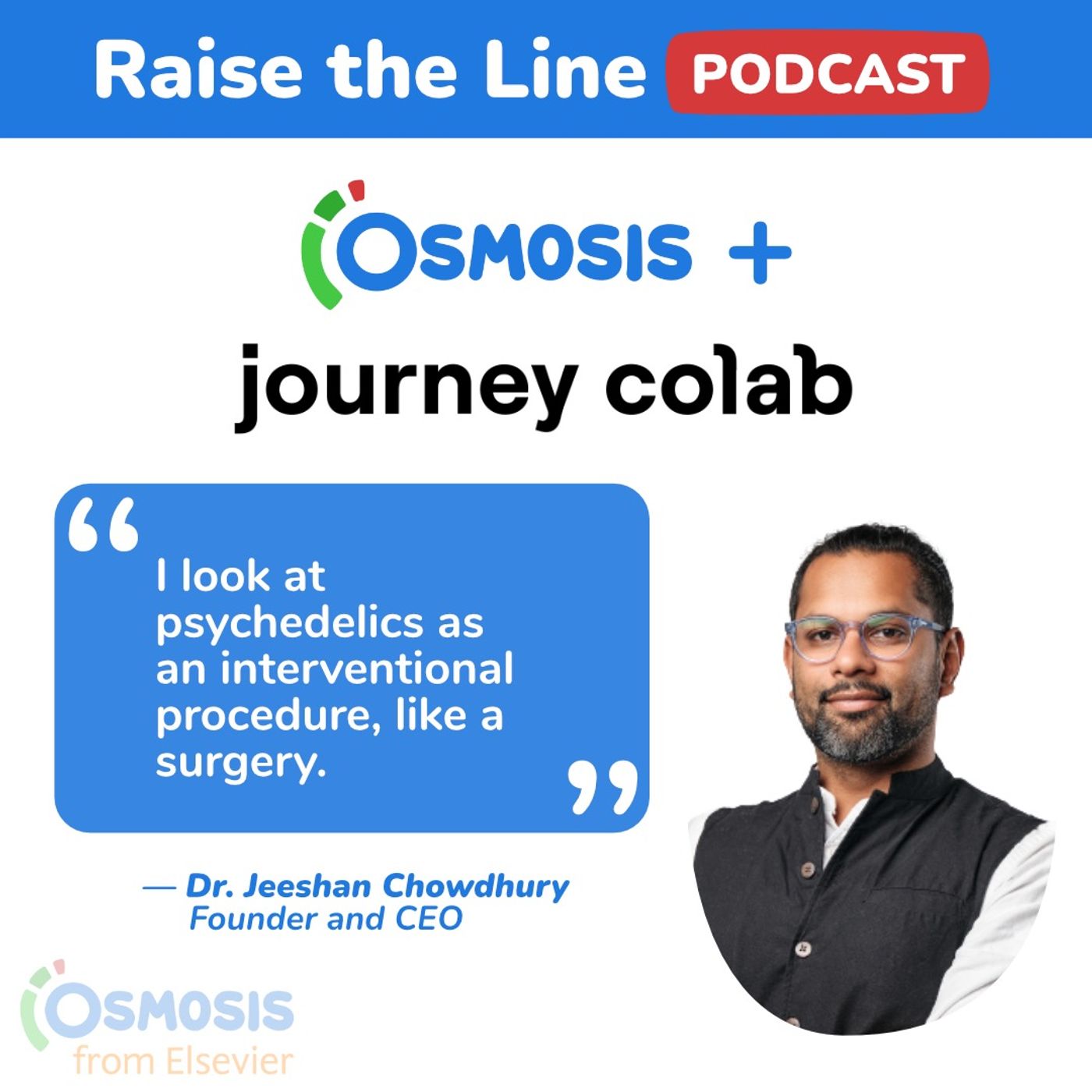
Ep 433An Approach to Psychedelic Therapy Inspired by Indigenous Traditions - Dr. Jeeshan Chowdhury, Founder and CEO of Journey Colab
Raise the Line’s in-depth look at the potential use of psychedelic compounds in mental health treatment continues today with a focus on the role they may play in helping people overcome substance use disorders. Our guest is Dr. Jeeshan Chowdhury, whose own mental health journey led him to found Journey Colab, a company combating addiction through psychedelic care while employing a unique stakeholder model that includes indigenous communities in ownership. “We have put 10% of the founding equity of the company into an irrevocable purpose trust so that the land, the traditions and the people that our medicines and our work are inspired from can benefit from it,” explains Chowdhury. He tells host Shiv Gaglani that indigenous traditions also inform how the company approaches psychedelic therapy itself. “When we look at their use, it is always done in the context of an expert healer, often called a shaman, and it's done as part of a very well-honed protocol and in the context of a larger community.” Check out this thoughtful discussion to find out why Chowdhury thinks of the therapeutic use of psychedelics as akin to surgery, and how Journey Colab is working with rehab center partners to integrate psychedelic care through clinical trials with the goal of creating an integrated treatment program.Mentioned in this episode: https://www.journeycolab.com If you like this podcast, please share it on your social channels. You can also subscribe to the series and check out all of our episodes at www.osmosis.org/podcast
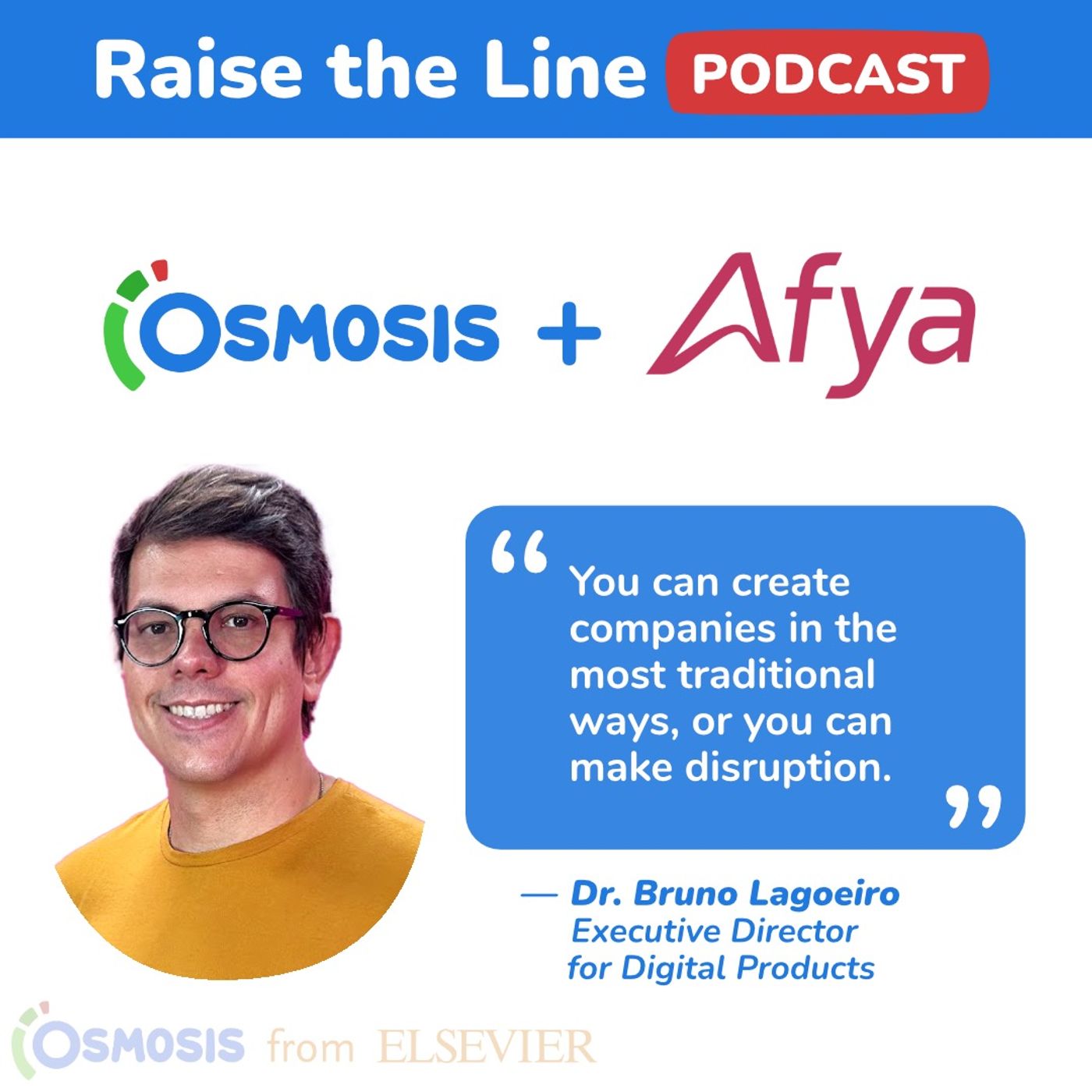
Ep 432The Power of Providers to Improve Healthcare - Dr. Bruno Lagoeiro, Executive Director for Digital Products at Afya
Today’s episode touches on some regular themes we explore on Raise the Line such as equal access to quality healthcare, provider burnout and the impact of AI on medicine, but on this episode, we have the welcome opportunity to take a look at these key issues from the perspective of a doctor-turned-entrepreneur in Brazil. Today, Dr. Bruno Lagoeiro is an executive at Afya, one of the largest medical education groups in Brazil, but he started out as a med student who was interested in solving problems he and his classmates were encountering. After years of experimentation, and guidance from a business mentor, the solution they developed was Whitebook, a mobile app for clinical decision-support that’s used in tens of millions of patient encounters every year in Brazil. Join host Shiv Gaglani as he draws out the details of Dr. Lagoeiro’s amazing journey to improve healthcare in a huge and diverse country that faces delivery challenges in poor and remote communities and a provider workforce being drained by bureaucracy. Despite these hurdles, Dr. Lagoeiro has an optimistic message to share about the power of providers to change healthcare and the promise of AI to allow them to focus more on the human aspects of medicine. Mentioned in this episode: Afya If you like this podcast, please share it on your social channels. You can also subscribe to the series and check out all of our episodes at www.osmosis.org/podcast
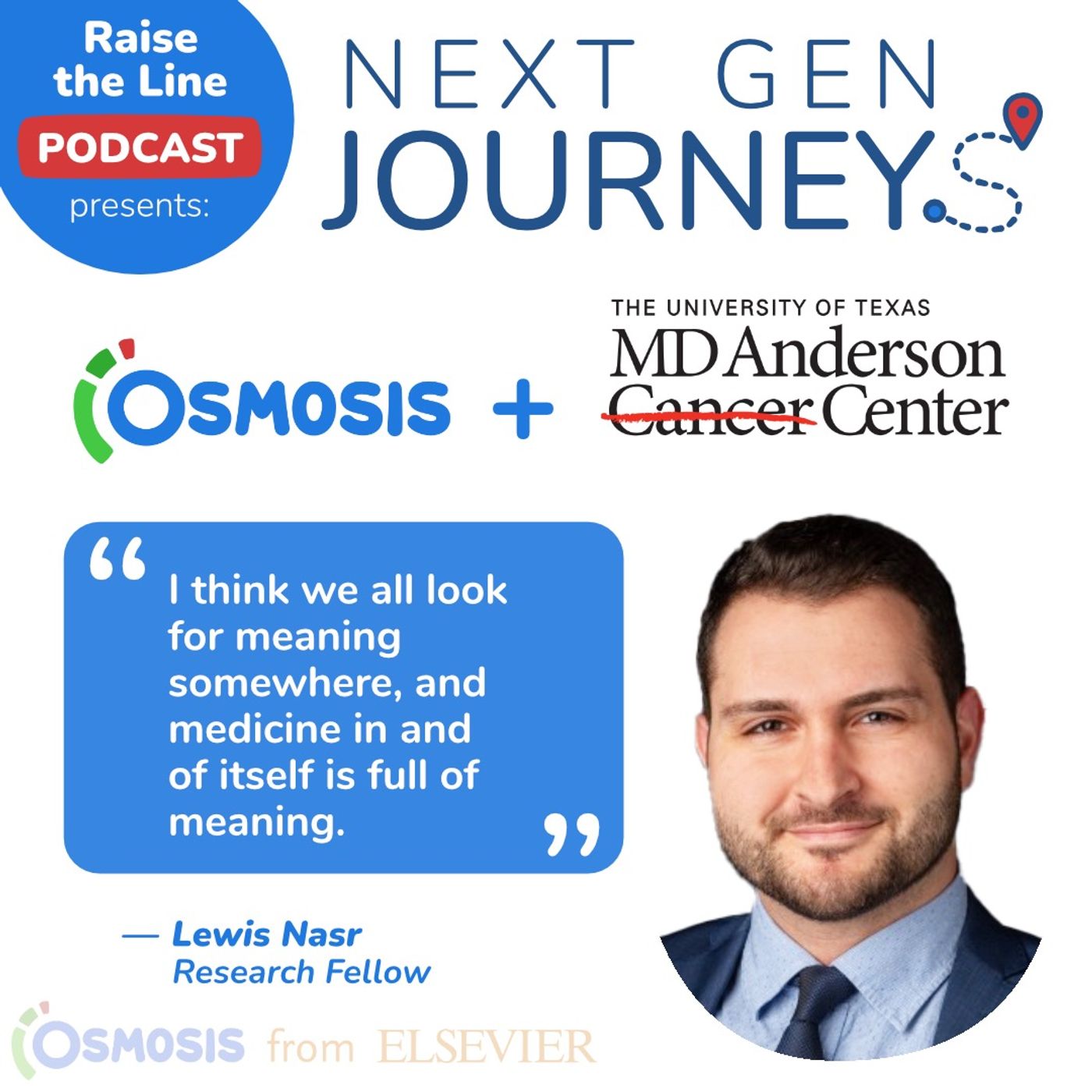
Ep 431Being A Problem Solver In A Moment Of Need - Dr. Lewis Nasr, Research Fellow at MD Anderson Cancer Center
Among the key qualities everyone wants in their healthcare providers is a love of learning and desire to serve others. That’s why we at Osmosis are confident Dr. Lewis Nasr will be a great physician and why we chose him to be the first guest in a new series of interviews on Raise the Line we’re calling “Next Gen Journeys.” The series will highlight fresh perspectives on medical education and the future of healthcare offered by students and recent graduates from around the globe. Starting with Dr. Nasr is a natural choice because of the many contributions he's made to Osmosis over the last several years including service in the Osmosis Medical Education Fellowship program and being a key contributor to our Year of the Zebra initiative. In this engaging conversation with host Hillary Acer, Lewis brings the perspective of medical students trying to learn in very challenging circumstances in which their personal safety and access to basic needs can be at risk. “It's another layer of obstacles that you have to get through. This gives international students a resilience and adaptability that they can bring to clinical practice.” Lewis also discusses his interest in hematology-oncology and reflects on entering the field at a time of remarkable clinical and technical advancements. “It's exciting to see cancer go from what is perceived as a death sentence to something manageable. I really hope to be part of the scientific wave of making cancer history.” We have no doubt that he will be, and neither will you after hearing from this thoughtful, compassionate young physician. Mentioned in this episode: https://www.osmosis.org/worldhttps://www.osmosis.org/zebrahttps://www.mdanderson.org/ If you like this podcast, please share it on your social channels. You can also subscribe to the series and check out all of our episodes at www.osmosis.org/podcast
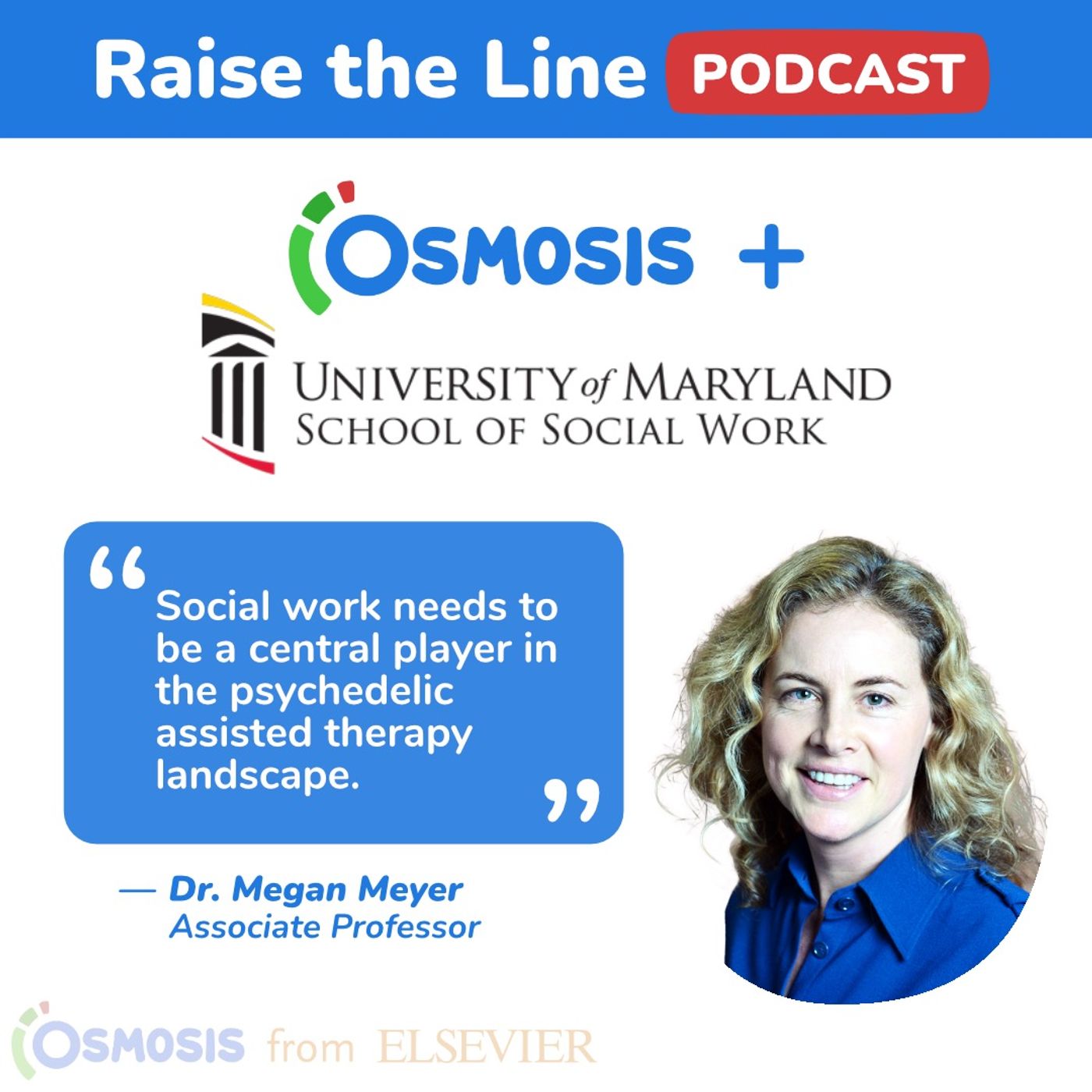
Ep 430The Psychedelic Renaissance Can’t Achieve Its Aims Without Social Workers - Dr. Megan Meyer, University of Maryland School of Social Work
Today’s Raise the Line guest, Dr. Megan Meyer, has a pretty simple message for proponents of psychedelic-assisted therapy (PAT) who are concerned that demand for therapists will outstrip supply in the coming years: don’t overlook the largest group of mental health providers in the nation. “Social workers provide more mental health services than psychologists, psychiatrists and psychiatric nurses combined and we’re embedded everywhere. I don't think the psychedelic renaissance can actually achieve its aims without us,” says Meyer, who is an associate professor at the University of Maryland School of Social Work. Meyers adds that social workers also happened to be well-equipped for PAT because they’re trained to act as guides in helping clients find their own voice and not impose their own perspectives or biases. Getting large numbers trained will require collaboration across disciplines, universities and training institutes such as the project she’s working on with colleagues at the university’s Schools of Pharmacy and Nursing to survey social workers and nurses regarding their current knowledge and training needs related to psychedelics. Join host Michael Carrese for an expansive conversation about the role social workers can play in minimizing the risks and realizing the potential of psychedelics including issues of bias and diversity, community-based models of post-therapy integration and learning from the practices of indigenous societies.Mentioned in this episode: https://www.ssw.umaryland.edu/ If you like this podcast, please share it on your social channels. You can also subscribe to the series and check out all of our episodes at www.osmosis.org/podcast
Ep 429A New Medical School Aims to Meet Health Needs in America’s Fastest Growing Region - Dr. Robert Hasty, Dean and Chief Academic Officer at Orlando College of Osteopathic Medicine
There's a relatively small number of people who have had the opportunity to create a medical school from the ground up, which is why today’s Raise the Line guest, Dr. Robert Hasty, is particularly interesting to talk to because he’s had that chance three times. Currently, he is involved in launching one of the nation's newest medical schools, the Orlando College of Osteopathic Medicine, in one of its fastest growing areas, Central Florida. “I think one of the things I've learned is that everything is incredibly connected at a medical school -- the facility, the curriculum, the culture, the clinical rotation partners...it all has to work together, so that's one of the things that we've done.” Hasty and his team have also designed a modern curriculum that’s taking a “lecture-less,” team-based, case-based, systems-based approach that interweaves clinical skills and knowledge of basic science throughout the four years. And on top of all that, given the school’s proximity to Disney World, you can see fireworks every night from campus! Join host Shiv Gaglani for this hopeful look at the cutting-edge of medical education. Mentioned in this episode: https://ocom.org/ If you like this podcast, please share it on your social channels. You can also subscribe to the series and check out all of our episodes at www.osmosis.org/podcast
Ep 428Breathing New Life Into Patient Care and Provider Wellness - Dr. Michelle Thompson, Medical Director of the Lifestyle Medicine Institute at the University of Pittsburgh Medical Center
If you get nothing else from listening to this memorable episode of Raise the Line, you’ll at least have the chance to do a breathing exercise in real time along with host Shiv Gaglani and his guest, Dr. Michelle Thompson, who is triple board certified in lifestyle, integrative, and osteopathic family medicine. Dr. Thompson has come to rely on a breathing practice for her own daily wellbeing and offers to do it along with all of her patients as well as countless medical students, residents and colleagues. In fact, as a strong advocate for provider wellness, she's created full-day programs for physicians and nurses to learn tools like breathwork for resilience and self-care. “Self-care is not selfish. If we are caring for ourselves, we are more available to others,” she explains. In addition to her role as medical director of the Lifestyle Medicine Institute at the University of Pittsburgh Medical Center, Thompson is a national force in establishing lifestyle medicine programs in health systems across the country, as nearly 100 organizations have done. Taking it a step further, UPMC is building a new hospital in the city that Thompson says is going to have a “lifestyle village” on the first three floors to facilitate the efforts of community members to choose healthy habits. Join us as we explore the impact lifestyle and mind-body medicine is having on patient care, employee wellness and medical education in Pittsburgh and far beyond in this perspective-shifting conversation.Mentioned in this episode: University of Pittsburgh Medical Center If you like this podcast, please share it on your social channels. You can also subscribe to the series and check out all of our episodes at www.osmosis.org/podcast
Ep 412The Potential for AI to Improve the Doctor-Patient Relationship - Morgan Cheatham, VP at Bessemer Venture Partners
Today’s Raise the Line guest has created two new degree programs at Brown University, is a vice president and board director at one of the oldest venture capital firms in the nation, and was CEO at a groundbreaking digital healthcare company. Oh, and he’s still in his twenties. As an investor, Morgan Cheatham -- who is also a third-year medical student at Brown University -- is applying his impressive experience, intellect and energy to the use of computation in improving patient care, and he’s encouraged by what he sees. A prime example is Abridge, a company that uses an AI audio system to capture and summarize the information patients share during appointments, allowing the doctor to focus on the patient, not on typing notes. “A guiding light in my career has been how we take this sacred one-to-one relationship and scale it one to many, and Abridge is the company that does just that,” Cheatham tells host Shiv Gaglani, who also happens to be a successful healthcare entrepreneur and third-year medical student. And while Cheatham is excited by the potential application of AI in healthcare, he notes that the medical community needs to move quicky to establish quality standards for its use. “How do we build the right validation benchmarks and evaluation criteria to know whether or not it is performing well?” Don’t miss this fun and fascinating conversation that also covers the necessity of embracing ambiguity, remaining curious and seeking diverse perspectives to navigate the rapidly evolving landscape of healthcare and technology. Mentioned in this episode: Bessemer Venture Partners If you like this podcast, please share it on your social channels. You can also subscribe to the series and check out all of our episodes at www.osmosis.org/podcast
Ep 427The Role of New Compounds in Psychedelic Therapy - Ronan Levy, Co-Founder of Field Trip Health and Reunion Neuroscience
As researchers continue to explore therapeutic applications of existing psychedelic drugs such as LSD and psilocybin, there's been a parallel effort to create new compounds that produce the same beneficial effects, but that come without the lengthy protocols and regulatory obstacles attached to those currently criminalized substances. "If you could develop new molecules that were more targeted and shorter acting, you may actually be able to create medicines as potent as the existing ones, but administratively and medically more efficient so we can reach more people," says Ronan Levy, a serial entrepreneur in the space. After a foray into creating a business model for ketamine-assisted therapy, Levy is now looking to support the community of millions of people who are already using psychedelics in various capacities through his Non-Ordinary Therapy Company instead of providing the therapeutic experience directly. “Wherever you're having your psychedelic experiences, that's wonderful. We're there to help you get the maximum impact from your sessions.” Join host Shiv Gaglani for this fascinating conversation about responsibly pushing regulatory boundaries, whether hallucinatory effects are essential to therapeutic benefit, and the rapid pace of change in a field that holds the potential to, as Levy puts it, “displace most forms of mental health care currently provided.” Mentioned in this episode: Non-Ordinary Therapy CompanyThe Ketamine Breakthrough (book) If you like this podcast, please share it on your social channels. You can also subscribe to the series and check out all of our episodes at www.osmosis.org/podcast
Ep 426A Focus on Cost, Quality and Customization in Online Education - Geordie Hyland, President and CEO of the American College of Education
Distance learning continues to grow in popularity with most college students in the U.S. now taking at least some classes online offered by hundreds of brick-and-mortar and exclusively online institutions. We’re going to learn about one of the highest ranked programs in the space today with Geordie Hyland, president and CEO of the American College of Education. One way ACE sets itself apart in a crowded field is that 85% of its students graduate with no debt, which Hyland says is reflective of the school’s mission. “ACE was founded with a key consideration about return on the students' time and financial investment so we have some of the lowest tuition in the nation, but we also provide a fully online, high-quality experience.” Check out this informative conversation with host Derek Apanovitch to learn about ACE’s programs that are tailored to address pressing staffing shortages in healthcare, its data-driven approach to student support, and the collaborative interactions it facilitates among its 10,000 students. "It's fascinating to see students from very different geographic regions be able to share ideas and collaborate," says Hyland.Mentioned in this episode: https://ace.edu/ If you like this podcast, please share it on your social channels. You can also subscribe to the series and check out all of our episodes at www.osmosis.org/podcast
Ep 425Wearable Music For Your Body - Dr. David Rabin, Co-Founder and Chief Medical Officer at Apollo Neuroscience
Chronic stress can be at the root of everything from mental health struggles to digestive problems to heart disease. Today on Raise the Line, we’re going to learn about a wearable device made by Apollo Neuroscience that uses gentle vibrations to help the body adjust to stress. “Apollo is based on all the same principles that music is based on. It's wearable music for your body,” explains the company’s co-founder and chief medical officer Dr. David Rabin, a neuroscientist, psychiatrist, health tech entrepreneur and inventor who has been studying the impact of chronic stress in humans for over fifteen years. A close reading of non-Western medical practices led him to realize that, generally speaking, the focus was on reducing the “fight or flight” response and increasing our parasympathetic rest and recovery system. With that in mind, the Apollo device acts on the vagal nervous system with a gentle vibration that delivers safety signals to your skin in the form of low frequency music that you can't really hear, but you can feel. In this revealing conversation with host Shiv Gaglani, you’ll learn more about how and why Apollo works and its connection to Rabin’s interests in psychedelic-assisted therapy, the importance of safety in the provider-patient relationship, and how to effectively blend Western, Eastern and tribal approaches to medicine and healing. Mentioned in this episode: https://apolloneuro.com/ If you like this podcast, please share it on your social channels. You can also subscribe to the series and check out all of our episodes at www.osmosis.org/podcast
Ep 424The Art, and Heart, Of Teaching - Dr. Raj Dasgupta, Associate Professor at the Keck School of Medicine of USC
You may have seen today’s guest, Dr. Raj Dasgupta, on Chasing the Cure, The Doctors, CNN or ABC News and if so, you’ll understand why he is an award-winning medical educator and a force in the field. His irrepressible enthusiasm for patient care and teaching pours out in every moment of this fun and illuminating conversation with host Shiv Gaglani. “I really have this desire to make my teaching engaging and educational at the same time. To be a good teacher, you have to change your style with the times and for who your audience is,” Dasgupta says. Beyond his work with students, residents and fellows at the Keck School of Medicine of USC and the many attendees at his USMLE exam prep classes around the world over the past twenty years, Dr. Raj has touched a multitude of others through a series of books published by Elsevier that include the popular Morning Report: Beyond the Pearls and Case Reports: Beyond the Pearls. It’s a wide-ranging discussion -- he is quadruple board certified in pulmonary, critical care, sleep, and internal medicine, after all -- that offers insight on everything from licensing exams to AI to mentorship to battling burnout to the power of a smile. Don’t miss this whirlwind wisdom drop from the kind of teacher you always wish you had. Mentioned in this episode: The Dr. Raj Podcast If you like this podcast, please share it on your social channels. You can also subscribe to the series and check out all of our episodes at www.osmosis.org/podcast
Ep 423A New Medical School Designed For A New Generation - Dr. Ramin Ahmadi, Dean and Chief Academic Officer of the American Canadian School of Medicine
Something as complicated as starting a medical school is bound to include unanticipated obstacles, but few schools can match the roller coaster ride of the American Canadian School of Medicine in the Commonwealth of Dominica which just welcomed its first class of students. Our Raise the Line guest, Dr. Ramin Ahmadi, along with colleagues from Yale and Penn State medical schools, had worked for years to design an innovative curriculum and train faculty for a new medical school in Kazan, Russia. Then came Russia’s invasion of Ukraine. “Because of the war, we had to pull out. That was the end of the project at that point and we were all very sad,” Ahmadi tells host Shiv Gaglani. Tune in to learn how the project was given new life and how Ahmadi and his team are meeting the needs and preferences of modern students with a flipped-classroom, case-based approach to education. You’ll also hear about ACSOM’s different approach to clinical training, new model for residency programs and other innovations. And be sure to stay tuned to hear about his remarkable experiences in global health and human rights, and gain from his insights on how physicians can protect themselves from burnout.Mentioned in this episode: https://www.acsom.edu.dm If you like this podcast, please share it on your social channels. You can also subscribe to the series and check out all of our episodes at www.osmosis.org/podcast

Ep 422The Path Ahead for MDMA-Assisted Therapy - Dr. Michael Mithoefer, Clinical Investigator at MAPS Public Benefit Corporation
Of the many hopeful developments in psychedelic research in recent years, perhaps the most important is that FDA approval of MDMA-assisted therapy for treating post-traumatic stress disorder appears likely within the next year. That prospect is due in no small part to our Raise the Line guest, Dr. Michael Mithoefer, who has spearheaded clinical trials of MDMA-assisted therapy for more than twenty years and is a senior leader at the Multidisciplinary Association for Psychedelic Studies Public Benefit Corporation which has led this groundbreaking research. Although he notes that FDA approval isn’t guaranteed, Mithoefer is contemplating what the practicalities will be of implementing this multi-stage therapy regimen, and he has cause for concern. “I think now the question is going to be, if it's approved, how does it fit into this medical system we have, which I think is quite dysfunctional, especially with mental health. To me, the challenge is going to be not to try to distort the treatment to fit the system,” he tells host Shiv Gaglani. In this enlightening conversation, Shiv and Dr. Mithoefer discuss the need for specialized therapist training, the importance of making the therapy available regardless of ability to pay, and other potential therapeutic uses for MDMA. This is a great opportunity to hear from an important voice about the current and future state of psychedelics as a treatment modality. Mentioned in this episode: https://mapsbcorp.com/ If you like this podcast, please share it on your social channels. You can also subscribe to the series and check out all of our episodes at www.osmosis.org/podcast
Ep 421A Data-Driven Approach to Treatment Resistant Mental Health Conditions - Jimmy Qian, Co-Founder and President of Osmind
On this episode of Raise the Line, we’ll introduce you to a relatively new company in the digital health space focused on treatment-resistant mental health patients, which constitute about 30% of people in the US with a mental health diagnosis. Our guest is Jimmy Qian, the co-founder and president of Osmind, who believes mental health practitioners could benefit from a more data-driven approach. “We can't understand the biology of neuropsychiatry unless we get more and more multimodal data and work together as a scientific community to really understand how mental health even works, and that requires rethinking diagnosis and treatments from the ground up using data,” says Qian. As he tells host Shiv Gaglani, Osmind is sharing its data with researchers to help improve scientific understanding of hard-to-treat conditions and has already published two studies with Stanford, including the largest ever real-world analysis of ketamine as a treatment for depression. Check out this informative conversation to learn how Osmind’s platform is also giving patients the opportunity to provide real-time information on how they're doing between visits and helping providers smooth out their workflow.Mentioned in this episode: https://www.osmind.org/ If you like this podcast, please share it on your social channels. You can also subscribe to the series and check out all of our episodes at www.osmosis.org/podcast

Ep 420How Empathy Improves the Patient and Provider Experience - Dr. Helen Riess, CEO of Empathetics, Inc.
If you were to name one thing that could simultaneously increase patient satisfaction and reduce provider burnout, would empathy come to mind? Well, based on research published in peer-reviewed journals, it should, as we’ll learn from our Raise the Line guest Dr. Helen Riess, a clinical professor at Harvard Medical School and author of the book, The Empathy Effect. Trained as a psychiatrist, Riess has built a training program based on the neuroscience of emotion that bucks the prevailing wisdom that empathy is an inborn trait that can’t be taught. “I feel your pain is not just a figure of speech. We actually do feel other people's pain and our very survival depends on it,” Riess explains to host Shiv Gaglani. The company Riess founded and leads, Empathetics, has put thousands of clinicians and frontline staff through its e-learning courses with impressive results including major increases in patient experience scores and improvements in staff retention with the longest follow-up case study showing an 82.9% decrease in turnover among participating clinicians. In a nutshell, the training builds perception of emotion and fosters a deeper understanding of what Riess calls ‘the whole person.’ “You know, not just the broken wrist, but what does the broken wrist mean for a sixty-five-year-old woman who is the only caretaker for her grandchild?” Join us for a fascinating look at the neuroscience of empathy and its role in transforming the culture of healthcare.Mentioned in this episode: https://www.empathetics.com/ If you like this podcast, please share it on your social channels. You can also subscribe to the series and check out all of our episodes at www.osmosis.org/podcast

Ep 419Capturing Cancer Signals to Aid Early Detection - Dr. Josh Ofman, President of GRAIL
The value of early detection is perhaps greater for cancer than many other diseases because it remains the second leading cause of death worldwide. On this episode of Raise the Line we're going to learn about a new testing approach that leverages genomic technology and machine learning to detect signals circulating in the blood across more than 50 types of cancers -- far beyond the number currently screened for -- and helps physicians target locations for diagnostic evaluation. “We can look at this epigenetic pattern on very specific regions of the DNA and say this is only seen in cancer, and make a call,” says Dr. Josh Ofman, the president of GRAIL, a spinoff of the genomic sequencing company Illumina. “We have an opportunity now to dramatically improve the number of cancers found in the population through early detection. We could reduce the death rate over the next five years by almost forty percent,” he tells host Shiv Gaglani. Tune in to find out who qualifies for the test, what obstacles lie ahead and how GRAIL is working to educate physicians about this potentially powerful new option Mentioned in this episode: https://grail.com/ If you like this podcast, please share it on your social channels. You can also subscribe to the series and check out all of our episodes at www.osmosis.org/podcast
Ep 418Science in the Service of Furthering Mental Health - Dr. Joshua Gordon, Director of the National Institute of Mental Health
On this episode of Raise the Line, we have the privilege of hearing from one of the nation's top healthcare leaders, Dr. Joshua Gordon, who is the director of the National Institute of Mental Health. In that role, he oversees an extensive portfolio of basic and clinical research that seeks to transform the understanding and treatment of mental illnesses, paving the way for prevention, recovery and cure. “Our main role is in trying to make sure that good science is conducted in the service of furthering public mental health,” he tells host Shiv Gaglani. One area of NIMH research that gets less attention than breakthrough medicines is how to make it easier for healthcare systems and practices to adopt best practices and proven treatments. This not only helps improve patient outcomes, but Gordon says it is one element in addressing feelings of a lack of effectiveness that contribute to provider burnout. “If we can increase individuals’ efficacy by ensuring that they are trained in evidence-based approaches, and continue to make new treatments available to help those who aren't responding to the old ones, that's one way we can do that.” This is a rare opportunity to hear from a federal agency executive on some of the most pressing and interesting issues in healthcare including the shortage of providers, health equity, social determinants of health, telemedicine and the potential for psychedelics to treat mental health problems. Mentioned in this episode: https://www.nimh.nih.gov/ If you like this podcast, please share it on your social channels. You can also subscribe to the series and check out all of our episodes at www.osmosis.org/podcast
Ep 417The Crucial Role of Psychedelic Therapy Guides - Mary Cosimano, Director of Guide and Facilitator Services at The Johns Hopkins Center for Psychedelic and Consciousness Research
The Crucial Role of Psychedelic Therapy Guides - Mary Cosimano, Former Director of Guide and Facilitator Services at The Johns Hopkins Center for Psychedelic and Consciousness ResearchAll of the promising research into the potential benefits of psychedelics in mental health treatment depends on having skilled professionals who can create a therapeutic alliance with participants and guide the sessions in which the compounds are administered. We could not have a betterRaise the Line guest for understanding this role than Mary Cosimano, LMSW, former director of Guide and Facilitator Services at the Johns Hopkins Center for Psychedelics & Consciousness Research. Since the genesis of psychedelic research there two decades ago, she has conducted over 500 sessions herself as well as serving as a research coordinator. In this fascinating conversation with host Shiv Gaglani, Cosimano discusses how she prepares for and processes the often-taxing sessions, the common themes that emerge from participants, and what qualities effective guides need to have. On that point, she thinks the role needs to be open to chaplains, nurses, hospice care workers, and others with the right combination of experience and personal qualities, not just to licensed medical personnel. “What’s as important is who they are, what they've done in their life and career, how much work have they done on themselves, do you feel comfortable with them?” This is a fascinating look into the heart of psychedelic-assisted therapy and the meaningful experiences participants can have when they are in the right hands. Mentioned in this episode: https://hopkinspsychedelic.org/ If you like this podcast, please share it on your social channels. You can also subscribe to the series and check out all of our episodes at www.osmosis.org/podcast
Ep 416Partnerships Are Key to Building the Future Healthcare Workforce - Geoffrey Roche, Director of Workforce Development in North America for Siemens Healthineers
“We're really heading to a cliff when it comes to those expressing interest in healthcare careers,” cautions today’s Raise the Line guest Geoffrey Roche, director of Workforce Development in North America for Siemens Healthineers. Unfortunately, this drop-off in interest is happening as statistics on the current and future shortage of healthcare workers seemingly get worse by the day. One strategy the veteran hospital administrator and educator advocates is partnering with the K-12 system to provide early exposure to healthcare careers. “We have to show young people what the possibilities are. We've got to visually help an individual understand ‘this is what your career ladder could be.’ It could also help, he tells host Rishi Desai, if young people understood how much healthcare technology is powered by the same type of systems as video games. Citing the concerns that other industries do a better job of recruiting young people, Roche urges all healthcare organizations to have deep working relationships with educators. “If you’re not working with an academic institution to look at your needs of today and tomorrow proactively, strategically and tactically, then you're behind.” The good news is Roche sees examples of community partnerships and creative approaches to certification and apprenticeships that could yield results. Tune in to find out how bringing healthcare and education together at all levels can help fill the daunting gap in clinical and non-clinical staff that confronts our healthcare system. Mentioned in this episode: www.siemens-healthineers.com If you like this podcast, please share it on your social channels. You can also subscribe to the series and check out all of our episodes at www.osmosis.org/podcast
Ep 415The Power of Active Learning and Engaged Learners - Dr. Amin Azzam, Faculty Engagement Coordinator at Osmosis
Active and fun are rarely the first words associated with medical education, but today’s Raise the Line guest, Dr. Amin Azzam, contends learners get the most value when they can engage with their education rather than passively receive knowledge. As Azzam relates to host Hillary Acer, the vice president of Strategic Operations at Osmosis, he remembers first seeing the power of active learning while observing a class of med students as a psychiatry resident. “I sat behind a one-way mirror and watched these students leading their own small-group learning and it was just palpably infectious how excited they were to learn medicine.” In the ensuing years, Azzam has happily been utilizing and developing active learning strategies as a professor at three Bay Area universities and in his role as Faculty Engagement Coordinator at Osmosis, one of many key roles he has played as a longtime team member. One of his most impactful creative strokes was creating the first medical school course dedicated to improving the quality of health information on Wikipedia, both providing a unique learning experience and improving health content that has been viewed 88 million times by people around the world. Speaking of global impact, he’s also been instrumental in Osmosis initiatives to facilitate learning by medical students in war-torn Syria and refugees seeking medical care. Check out this lively and fascinating look at learner-centric education and the power of providing opportunities for students to do social good while learning. Mentioned in this episode:Osmosis OMEF-ONSA ProgramWikipedia Education Foundation If you like this podcast, please share it on your social channels. You can also subscribe to the series and check out all of our episodes at www.osmosis.org/podcast
Ep 414Forging a New Approach to Menopause Care - Dr. Anna Barbieri, Founding Physician of Elektra Health and Assistant Clinical Professor, Mount Sinai Health System
“When we say ‘treatment for menopause,’ it implies that menopause is a disease, when really it’s a normal and expected time of life,” says Dr. Anna Barbieri, an integrative medicine physician and specialist in menopause certified by the North American Menopause Society. That attentiveness to word choice is reflective of a new perspective that’s driving Dr. Barbieri and her peers to see menopause more holistically than in the past and to forge new approaches to the care they provide. "Menopause care is not checkbox medicine. We have to work with our patients individually," Barbieri shares with special guest host Dr. Deborah Enegess, herself a practicing gynecologist as well as a clinical content writer for Osmosis. A personalized approach involves tailoring care plans that take exercise, nutrition, sleep, stress management and other lifestyle and psychological factors into account in an effort to help patients feel better in the short term and longer term. Providers also have to contend with a shift in long-held thinking about the use of hormone therapy and a bewildering array of supplements that are touted as effective remedies for various symptoms. To help sort through all of this complexity, new resources have come on the scene in recent years, including the digital platform Elektra Health -- of which Barbieri is the founding physician -- that describes its mission as “smashing the menopause taboo.” Check out this engaging exploration of what looks to be a promising time for women in search of individualized, integrated and informed care during their menopause journey.Mentioned in this episode: https://www.elektrahealth.com/ If you like this podcast, please share it on your social channels. You can also subscribe to the series and check out all of our episodes at www.osmosis.org/podcast
Ep 413Understanding the Therapy Part of Psychedelic-Assisted Therapy - Dr. Mary "Bit" Yaden, Assistant Professor of Psychiatry and Behavioral Sciences at Johns Hopkins University
We've been careful on Raise the Line to use the term psychedelic-assisted therapy because, as we've heard from previous guests, these compounds are best administered in the context of a therapeutic relationship in a safe, controlled setting. Today, we're going to focus on the therapy part of the equation with Dr. Mary “Bit” Yaden, an assistant professor of Psychiatry and Behavioral Sciences at Johns Hopkins University. Yaden contends that administering a two-to-three-month course of psychedelic-assisted therapy will be vastly different for professionals used to conventional mental health treatments that involve taking medications daily and which might or might not include long-term courses of talk therapy. “This is taking a pill twice, and participating in psychotherapy is integral to its success. This is not ‘maybe I feel better today taking an SSRI, but I'm not quite sure.’ This is deliberately taking a medicine that changes your mental state in a way that is not ordinary,” she tells host Shiv Gaglani. And while she’s encouraged by growing evidence that psilocybin and other compounds are showing therapeutic promise, she’s concerned about history repeating itself, as reflected in a 2021 article in JAMA Psychiatry she co-authored entitledPsychedelics and Psychiatry, Keeping the Renaissance from Going Off the Rails. “I think a great tragedy could be if there is so much overblown hype that we become disenchanted too early or that we start allowing for practices that are not safe.” Don’t miss this highly engaging and instructive conversation on the full picture of psychedelic-assisted therapy.Mentioned in this episode: https://hopkinspsychedelic.org/ If you like this podcast, please share it on your social channels. You can also subscribe to the series and check out all of our episodes at www.osmosis.org/podcast
Ep 411Innovating to Prepare Future Clinicians for New Roles - Dr. Mary Klotman, Dean of Duke University School of Medicine
“I really have challenged the students that have graduated from Duke the last couple of years to consider being ambassadors for science and for communication of what is good science,” says Dr. Mary Klotman, executive vice president for Health Affairs and dean of the School of Medicine at Duke University. She notes that the stakes of disinformation are too high to do otherwise, as up to 300,000 COVID-19 deaths can be attributed to unfounded fears about one of the safest vaccines ever produced. It's just one of many educational imperatives Klotman is pursuing to prepare future clinicians for a constantly changing healthcare landscape. Others include helping students put new tools such as AI in the context of patient care, creating more opportunities to learn in ambulatory settings where 90% of healthcare is now delivered, and more multidisciplinary training to reflect a growing team approach to medical care. To help develop those interprofessional habits, Klotman has championed a “One Duke” approach. “Whether you're a student, senior investigator or a clinician, take advantage of the broad expertise here to solve a problem whether it's engineering in medicine, or it's data science. That is the nature of scientific problem solving today.” Join host Shiv Gaglani on this episode of Raise the Line for a wide-ranging look at how a leading academic center is innovating to adjust to dynamic changes in society, technology and healthcare.Mentioned in this episode: Duke University School of MedicineDuke's Program on Medical Misinformation If you like this podcast, please share it on your social channels. You can also subscribe to the series and check out all of our episodes at www.osmosis.org/podcast
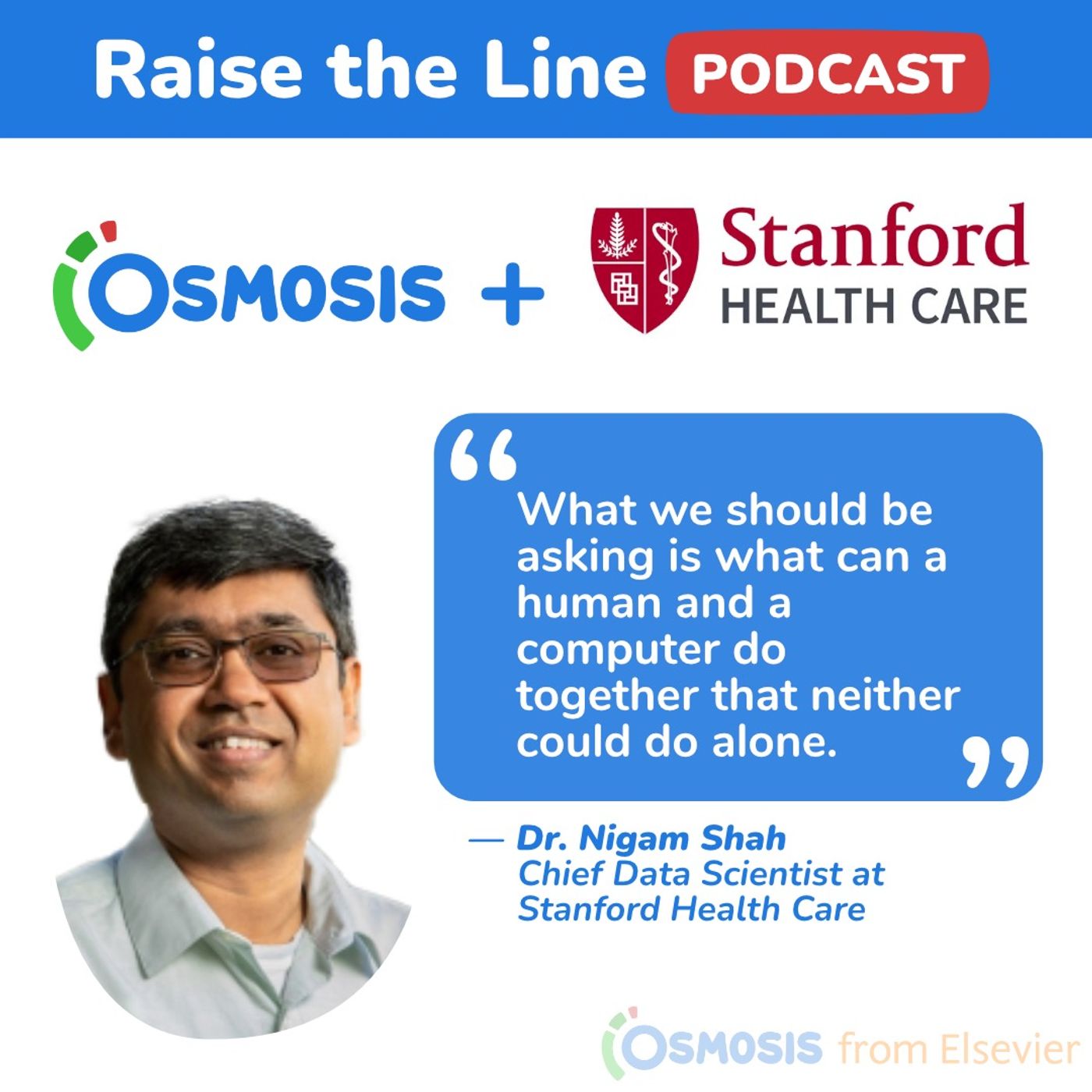
Ep 410Don’t Fear the Power of AI, Leverage It - Dr. Nigam Shah, Chief Data Scientist at Stanford University
Instead of fretting about AI replacing jobs humans currently do, Dr. Nigam Shah is urging people to adopt a perspective about the technology that echoes President John Kennedy’s famous charge in his inaugural address: ‘ask not what this technology can do to you, ask what you can do with this technology.’ “If medicine simply automated everything we were doing 200 years ago, we’d have a machine that would do bloodletting. But we didn't fall into that trap,” says Shah, the chief data scientist at Stanford University. Instead, he suggests, people in the healthcare arena should think about what a human and a computer can do together that neither of them could do alone. In this fascinating episode of Raise the Line with host Shiv Gaglani, Shah also issues a call to action to the medical community about training AI for medical purposes. “If you really want to use these things, we have to create the instruction-tuning data so that they produce the output that we expect.” As for predictions of AI being the author of our salvation or doom, count him as skeptical. “I'm quite sure both sides are overblowing it for different reasons, and the truth will land somewhere in the middle. We’ve got to proactively pick the amazing and stay away from all the fearmongering.” There is much to be learned in this engaging conversation about the history of AI hype cycles, how to use AI to maximize productivity and the challenges inherent in AI-human interaction. If you like this podcast, please share it on your social channels. You can also subscribe to the series and check out all of our episodes at www.osmosis.org/podcast

Ep 409How Artificial Intelligence is Shaping the Work of Medical Educators - Dr. Adam Rodman, Co-Director of iMED at the Beth Israel Deaconess Medical Center
“What's really exciting and scary in medical education right now is we're seeing large language models enter the scene,” says today’s Raise the Line guest Dr. Adam Rodman, who is well-placed to make such an assessment. As co-director of the Innovations in Media and Education Delivery Initiative (iMED) at the Beth Israel Deaconess Medical Center, Rodman is witnessing, and influencing, how new technologies are shaping both medical education and the future of healthcare. In his view, AI can’t replace a doctor right now, but it can make remarkable insights into how humans think. “We need to start to grapple with what it means when a lot of these cognitive processes that medical education is designed to train for get offloaded to a machine,” he tells host Shiv Gaglani. He summarized his thoughts on AI, with co-author Dr. Avraham Cooper, in a piece for the August issue of the New England Journal of Medicineentitled “AI and Medical Education: A 21st-Century Pandora's Box” and invokes another concept rooted in ancient Greece as he describes AI as a ‘pharmakon.’ “There really is a way these technologies could dramatically improve what it means to be a patient -- and hopefully what it means to be a physician -- but the same technologies could be used to make things worse.” The ancient references are not surprising coming from Rodman, a medical historian who enjoys exploring the roots and evolution of the field on his long-running podcast Bedside Rounds. Don’t miss this richly informed conversation on how humans perform when interacting with AI, the advent of virtual tutors, and how AI might be used to improve student assessments and enhance the doctor-patient relationship. If you like this podcast, please share it on your social channels. You can also subscribe to the series and check out all of our episodes at www.osmosis.org/podcast
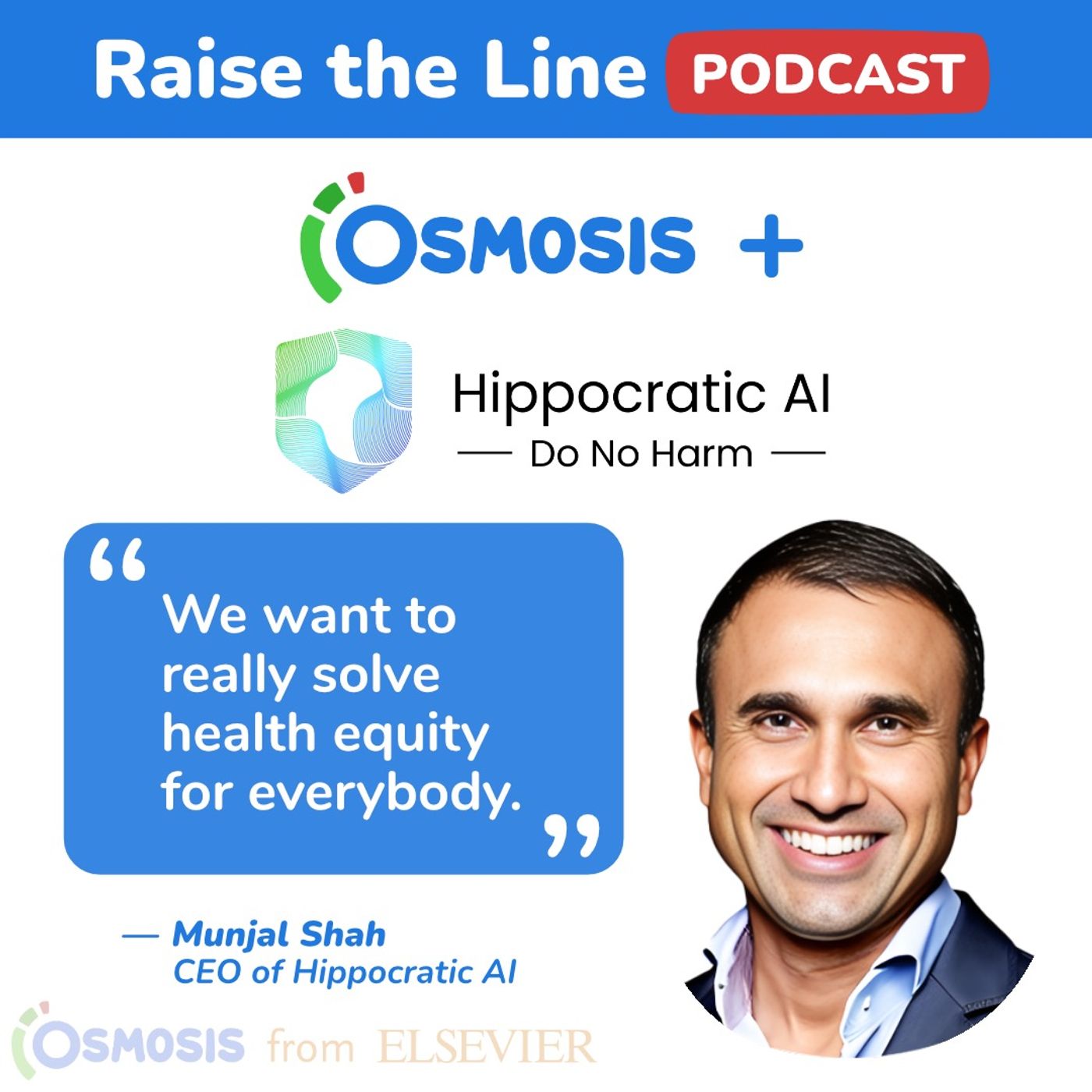
Ep 408Is Artificial Intelligence the Answer to Health Equity? - Munjal Shah, CEO of Hippocratic AI
When Munjal Shah and his colleagues chose to use Hippocratic in the name of their new AI-based company, it wasn’t just about signaling their product was involved with healthcare, it was also intended to leverage the ‘do no harm’ philosophy associated with the term. After all, formerly fanciful fears of ‘robots’ replacing doctors have become more realistic since the advent of generative AI last year. Shah addresses that issue up front in this revealing Raise the Line episode with host Shiv Gaglani. “We're going to be restricting the product when it comes out. It's not going to be able to do diagnoses.” Instead, the platform will focus on serving the needs of patients after their diagnosis, especially for those with chronic conditions. Shah sees his healthcare-specific chatbots answering questions about symptoms, medications, post-op care and other routine matters as a vast, virtual and low-cost expansion of the healthcare workforce. “What would happen in the world if we could have 30 million nurses? How much would America's health improve? That's the vision we're after.” And he argues that healthcare expertise available in every home in every language, 24-7 would be a major factor in improving access. “We want to really solve health equity for everybody.” Tune in to find out how Hippocratic AI plans to establish itself as a trusted source of accurate healthcare information, how they intend to manage AI’s ‘hallucination’ problem and how his system could actually improve patient engagement. Mentioned in this episode: https://www.hippocraticai.com/ If you like this podcast, please share it on your social channels. You can also subscribe to the series and check out all of our episodes at www.osmosis.org/podcast
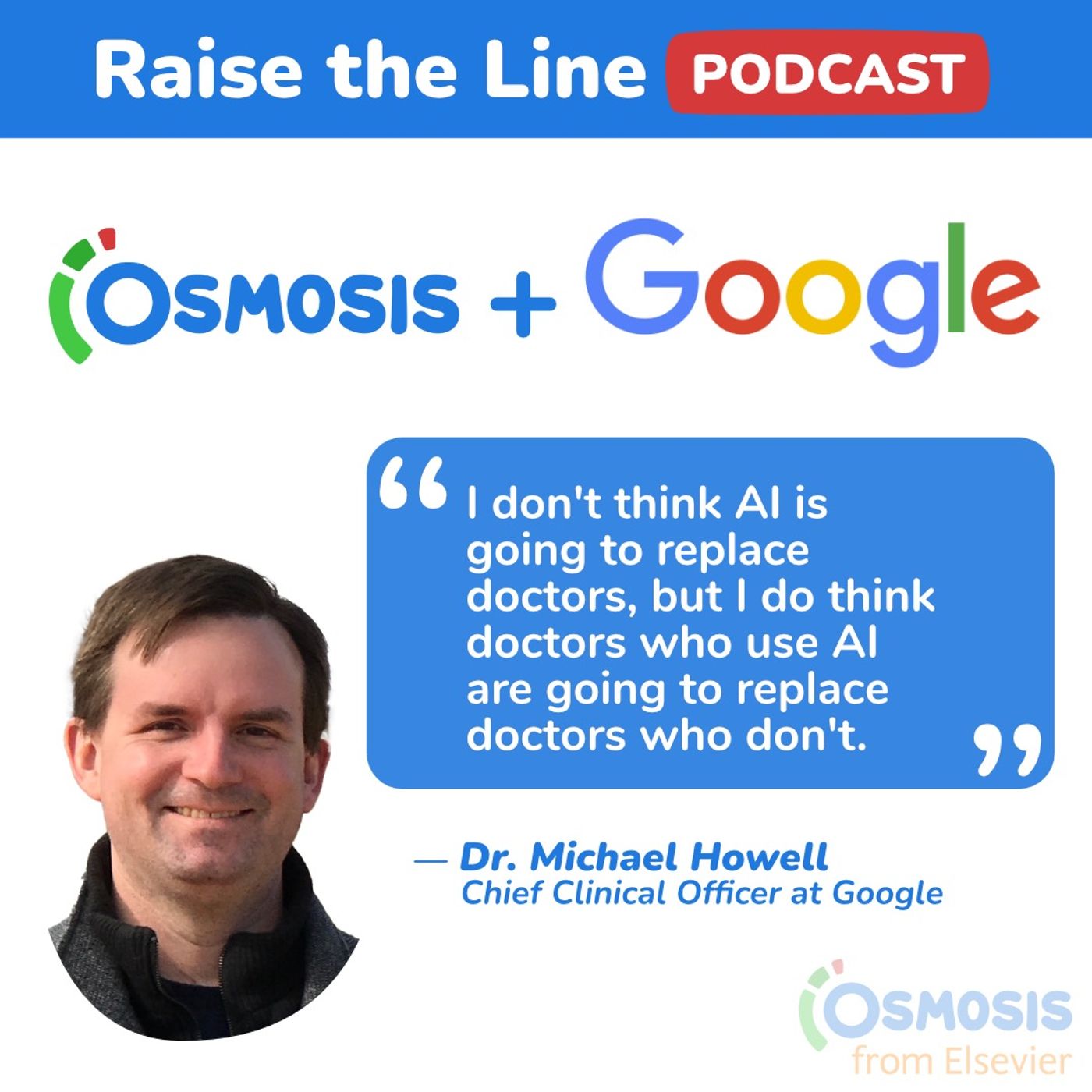
Ep 407What AI’s Rapid Progress Means for Healthcare and Health Information - Dr. Michael Howell, Chief Clinical Officer at Google
If you like this podcast, please share it on your social channels. You can also subscribe to the series and check out all of our episodes at www.osmosis.org/podcast
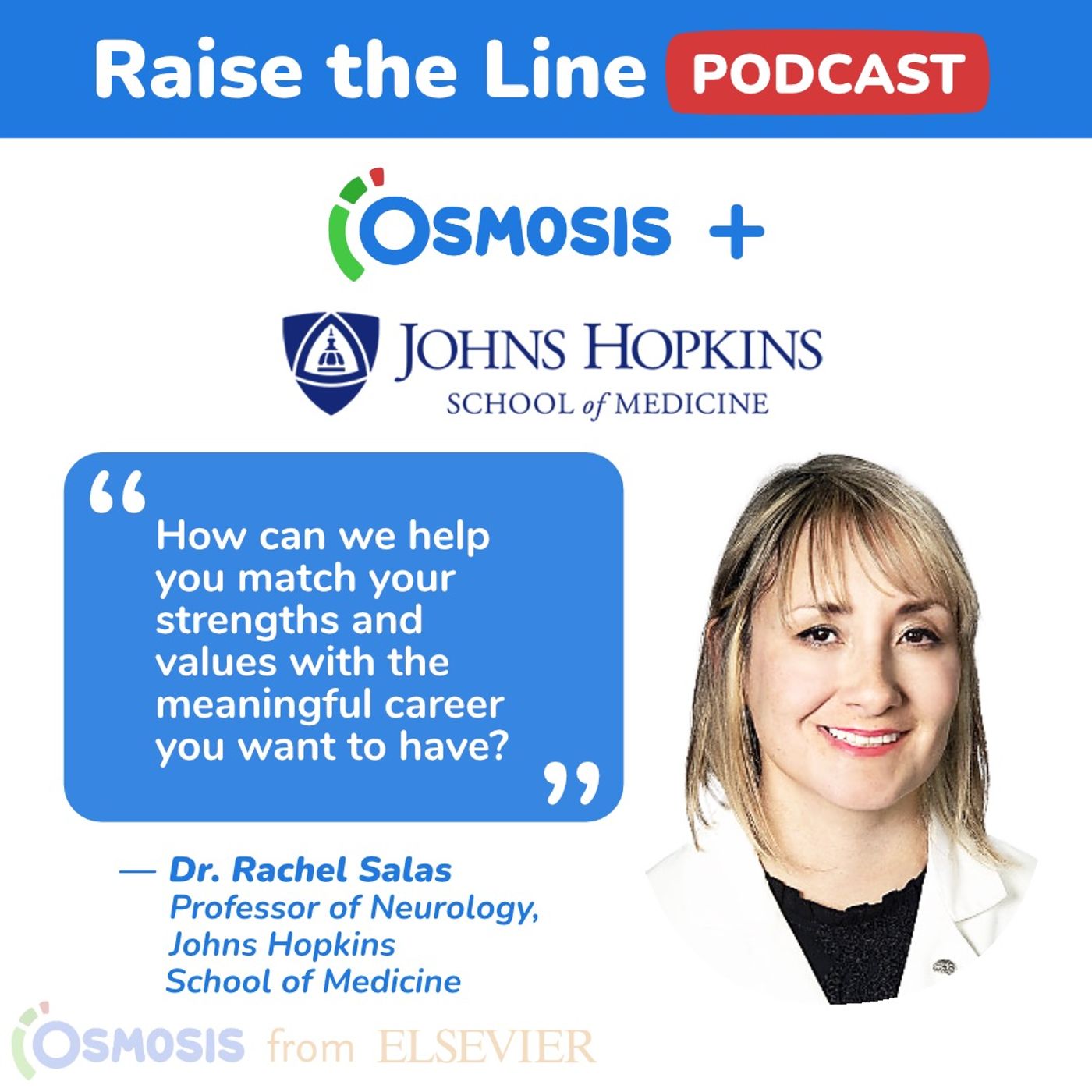
Ep 406A Strengths-Based Approach to Medical Education & Patient Care - Dr. Rachel Salas, Professor of Neurology at Johns Hopkins University
“I have coaching involved in all of my programs. It's just done wonders not only for the work I do, but for me personally,” says Dr. Rachel Salas, a professor of Neurology at Johns Hopkins University and certified strength and life coach. It wasn’t always this way. Salas was well into her career as a sleep specialist and clerkship director before being introduced to a strengths-based approach to personal and professional development. As she tells host Shiv Gaglani on this episode of Raise the Line, focusing on her strengths was a transformative shift and she is committed to sharing this powerful technique with students, colleagues and even patients. “If a patient is a learner, I know they’re going to like some materials to read about their diagnosis. If someone has a strength of being analytical, I'll probably need to spend a little bit more time talking about the different numbers in their sleep study report.” Knowing yourself and your strengths, she says, is also a valuable tool in helping medical students decide what specialty to pursue. “We want people to be their authentic selves. Who are they? Who do they want to be? How can we help you match your strengths with the meaningful career you want to have?” Based on the success she’s seen at Johns Hopkins, Salas is helping to spread the philosophy to other medical schools. Check out this enlightening conversation that also includes insights on applying precision medicine to treat problems with sleep. If you like this podcast, please share it on your social channels. You can also subscribe to the series and check out all of our episodes at www.osmosis.org/podcast
Ep 405Using Music Based on DNA to Drive Rare Disease Awareness - Dr. Aditi Kantipuly, Professor Stephen Taylor and Casey McPherson
You’re going to hear something in this episode of Raise the Line that you most likely have never heard before: what DNA sounds like. Our guests today all had an interest in musically representing DNA for different reasons, and have come together to pursue this theme as a way to raise awareness for rare diseases. Dr. Aditi Kantipuly had used the arts once before to achieve that goal by writing the children’s book The Zebra Alphabet. After coming across music based on genetic sequences composed by University of Chicago professor Stephen Taylor, a new idea formed. “Can we make a song for rare genetic conditions?” She expanded the possibilities by connecting with Casey McPherson, a Texas-based musician who had written a song based on his daughter Rose’s rare gene mutation. How do they do it? “DNA consists of four letters -- A, T, C, and G -- and you can map those to anything,” explains Taylor. McPherson built melodies based on the amino acids involved in Rose’s condition. “Being a pop artist, I was looking for patterns. I was looking for motifs.” The aim is to engage people emotionally and intellectually in the fight against rare diseases. As McPherson puts it: “We have the technology to cure many of these diseases, we just don't have the structures to do it at scale. Music is a huge way of inspiring us to think differently.” Don’t miss this fascinating discussion with host Michael Carrese on a unique intersection of art and science.Mentioned in this episode:To Cure a Rose Foundationhttp://stephenandrewtaylor.net/https://thezebrabook.com/ If you like this podcast, please share it on your social channels. You can also subscribe to the series and check out all of our episodes at www.osmosis.org/podcast
Ep 404A Clicks & Mortar Future for Healthcare - Dr. Marc Harrison, Healthcare Executive and Author of Possibility Unleashed
“I see health systems being systematically disintermediated by certain payers and some tech companies who are eager to take the easy stuff and leave health systems with really complex, sick and often very poor patients,” says veteran healthcare executive Dr. Marc Harrison. “I need a speedboat to change that.” He’s building that speedboat in partnership with venture capital firm General Catalyst, and will leverage his deep experience -- most recently as CEO of Intermountain Healthcare -- to set a new course for healthcare in the US. “Healthcare should be accessible, affordable, of high quality, consumer-centric and a combination of the digital and legacy world,” he tells host Shiv Gaglani. “A ‘clicks & mortar’ future, as we like to say.” In this thoughtful episode of Raise the Line, Harrison also touches on his own health struggles and discusses his book Possibility Unleashed which examines how to create environments where people get to do their very best work. “How do they get to run hard, run fast, be collaborative and do more in that context than they could ever do on their own?” Don’t miss this wisdom drop from one of the country’s leading figures in healthcare reform.Mentioned in this episode: Dr. Marc Harrison’s book, Possibility Unleashed. If you like this podcast, please share it on your social channels. You can also subscribe to the series and check out all of our episodes at www.osmosis.org/podcast
Ep 403Creating Moments of Cultural Connection and Joy with Patients - Dr. Raj Sundar, Family Medicine Physician and Host of the Healthcare for Humans Podcast
While it’s encouraging that efforts to provide culturally competent care have gained a foothold in the wake of COVID, today’s Raise the Line guest says it is time to expand the conversation to encompass the concepts of cultural safety - which involves awareness of historical power dynamics -- and cultural humility -- which requires an inward look. “Are you reflecting on your own values, beliefs, and background and what you're bringing to the table,” Dr. Raj Sundar explains to host Michael Carrese. Sundar tries to practice all of this himself with patients in his family medicine practice in Washington, but also works at a broader level as a community organizer with culturally diverse populations and reaches an even wider audience through his Health Care for Humans podcast aimed at educating clinicians on cultural safety in healthcare. He acknowledges up front how challenging this work can be, especially because well-intentioned efforts to connect culturally with patients can backfire unless they are well-informed, but it is more than worth the effort. “This work is messy and sometimes doesn't have a black or white answer, but it can provide moments of joy. When patients feel known, seen, and heard they feel like they can trust you.” Sundar is a thoughtful source of guidance in this enlightening look at what can be done at the individual and institutional level to facilitate cultural connection in healthcare. Mentioned in this episode: https://www.healthcareforhumans.org/ If you like this podcast, please share it on your social channels. You can also subscribe to the series and check out all of our episodes at www.osmosis.org/podcast
Ep 402Using Psychedelics to Learn How the Brain Works - Dr. Michael Silver, Director of the UC Berkeley Center for the Science of Psychedelics
Our focus on the renaissance in research into psychedelics continues on this episode of Raise the Line, but instead of looking at their potential therapeutic applications, we're going to hear about using them as a tool for learning how the brain works. “We don't have a great idea about the neural basis of self-conception, and psychedelics make us question so many of our fundamental assumptions about the nature of reality,” says Dr. Michael Silver, director of the UC Berkeley Center for the Science of Psychedelics. Dr. Silver, who is also a professor of Optometry, has the advantage of using the extensive knowledge we already have of how visual activity works in the brain as a predicate for his research. “We have the ability to do human neuroimaging and objectively define many areas in the visual cortex, while it’s still unclear how some higher order areas of the brain are defined,” he tells host Shiv Gaglani. The Center was established in 2020 in part to fill a need for credible information about psychedelics and its work is informed by a wide range of disciplines including molecular and cell biology, psychology, neuroscience and journalism. In fact, one of the Center’s founding members is journalist Michael Pollan, author of the bestselling books How to Change Your Mind and This is Your Mind on Plants. This is a truly fascinating conversation on the nature of visual perception, standards for training psychedelic facilitators and the possible recategorization of mental health disorders, among other implications of psychedelic research. Mentioned in this episode:UC Berkeley Center for the Study of PsychedelicsUC Berkeley Online Course: Psychedelics and the MindSam Harris Podcast If you like this podcast, please share it on your social channels. You can also subscribe to the series and check out all of our episodes at www.osmosis.org/podcast
Ep 401The Promise and Peril of the New Psychedelic Era - Dr. Matthew Johnson, Professor in Psychedelics and Consciousness at Johns Hopkins University
“I'm betting it's going to be more good than bad, but I have some big concerns about where things are headed,” warns Dr. Matthew Johnson of Johns Hopkins University when prognosticating about what impact the use of psychedelics in mental health treatment will have on society at large. As he tells host Shiv Gaglani, once these compounds are more widely available, there is real potential for unscrupulous actors to take advantage of people and cults to form. “One of the critiques is about this “new religion” component. I've been really concerned about that because I see even within the deepest layers of science, it’s very difficult to trust people with the magnitude of effect psychedelics have in people.” It's perhaps surprising for one of the scientists responsible for the renaissance in psychedelic research to articulate those concerns, but Dr. Johnson notes there is a long history, going back centuries, of psychedelics waxing and waning due to social and political factors. For now, he is focused on the efficacy of psychedelics in combating nicotine addiction, an area he pioneered starting a decade ago. Preliminary results of a study building on his early work indicate psychedelic-assisted therapy may be twice as effective as the leading nicotine replacement therapy. Up next is a multi-site trial on nicotine, plus studies on using LSD to treat chronic pain and psylocibin to deal with opioid addiction and PTSD. Don’t miss this thoughtful, nuanced and super informative discussion on one of the most interesting areas in medical science today. If you like this podcast, please share it on your social channels. You can also subscribe to the series and check out all of our episodes at www.osmosis.org/podcast