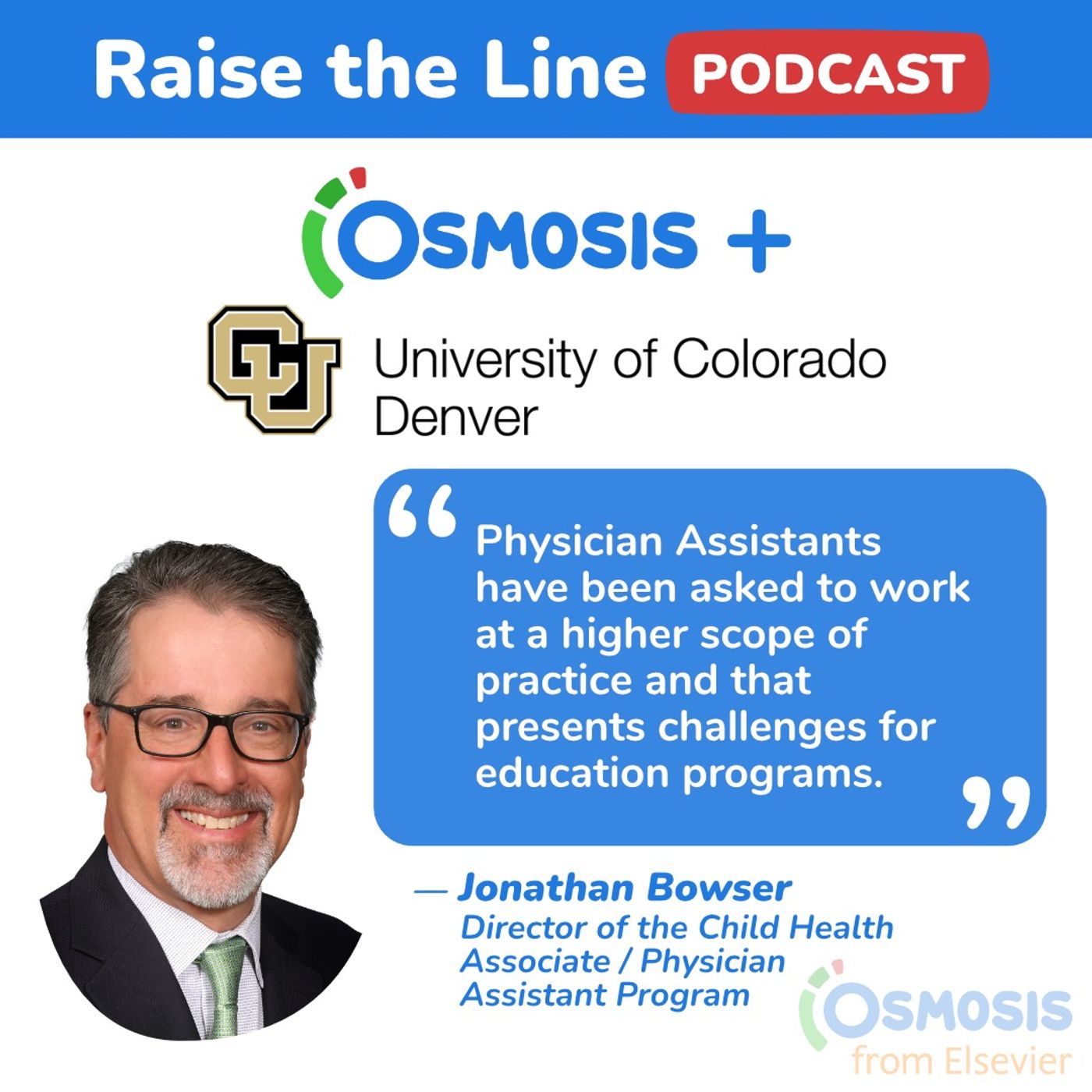
PA Education Programs Prepare Students for Expanding Roles - Jonathan Bowser, Director of the Child Health Associate/Physician Assistant Program at the University of Colorado Denver
Physician Assistant remains one of the fastest growing professions in the US, and the expansion of their role in healthcare delivery seems to be growing just as quickly. One of the biggest changes in that regard, according to Jonathan Bowser of the University of Colorado Denver School of Medicine, is that states are opening up opportunities for PAs to practice with more autonomy to fill needs in the healthcare system. “That requires PA education programs to think about who are we putting out there, what environments they are going into, and how do we best prepare them for those environments,” says Bowser, who runs the school’s Child Health Associate/Physician Assistant Program (CHAPA), one of the oldest PA training programs in the country. The need to adapt their program to these new realities and the desire to take advantage of advances in learning science led CHAPA to overhaul its curriculum in recent years. The result is a ‘spiral curriculum’ - an iterative approach to learning that reinforces key concepts and knowledge as students progress through their years of training. Join host Hillary Acer as she learns about the underpinnings of CHAPA’s curricular approach, what the program is doing to prepare PAs to be leaders and the growing importance of residencies and fellowships to prepare PAs to work in clinical specialties.
Raise the Line · Jonathan Bowser, Hillary Acer
Audio is streamed directly from the publisher (cdn.simplecast.com) as published in their RSS feed. Play Podcasts does not host this file. Rights-holders can request removal through the copyright & takedown page.
Show Notes
Physician Assistant remains one of the fastest growing professions in the US, and the expansion of their role in healthcare delivery seems to be growing just as quickly. One of the biggest changes in that regard, according to Jonathan Bowser of the University of Colorado Denver School of Medicine, is that states are opening up opportunities for PAs to practice with more autonomy to fill needs in the healthcare system. “That requires PA education programs to think about who are we putting out there, what environments they are going into, and how do we best prepare them for those environments,” says Bowser, who runs the school’s Child Health Associate/Physician Assistant Program (CHAPA), one of the oldest PA training programs in the country. The need to adapt their program to these new realities and the desire to take advantage of advances in learning science led CHAPA to overhaul its curriculum in recent years. The result is a ‘spiral curriculum’ - an iterative approach to learning that reinforces key concepts and knowledge as students progress through their years of training. Join host Hillary Acer as she learns about the underpinnings of CHAPA’s curricular approach, what the program is doing to prepare PAs to be leaders and the growing importance of residencies and fellowships to prepare PAs to work in clinical specialties.
Mentioned in this episode:
Managing Transitions by William Bridges
If you like this podcast, please share it on your social channels. You can also subscribe to the series and check out all of our episodes at www.osmosis.org/podcast